SB 1274: Industrial cities.
- Session Year: 2025-2026
- House: Senate
- Latest Version Date: 2026-09-14
Current Status:
Passed
(2026-09-14: Chaptered by Secretary of State. Chapter 231, Statutes of 2026.)
Introduced
In Committee
Awaiting First Chamber Vote
Passed First Chamber
In Committee
Awaiting Second Chamber Vote
Passed Second Chamber
Enacted
Existing law defines terms for the identification of state and local governmental entities.
This bill would define an industrial city.
Existing law defines terms for the identification of state and local governmental entities.
This bill would define an industrial city.
Existing law defines terms for the identification of state and local governmental entities.
This bill would define an industrial city.
Existing law provides for the operation of various programs and services.This bill would define industrial city for purposes of state programs, policies, and funding formulas that expressly incorporate the definition.Existing law provides for the operation of various programs and services.
This bill would define industrial city for purposes of state programs, policies, and funding formulas that expressly incorporate the definition. The bill would authorize state agencies to adopt regulations necessary to implement the definition.
Existing law provides for the operation of various programs and services.
This bill would define industrial city for purposes of state programs, policies, and funding formulas that expressly incorporate the definition. The bill would authorize state agencies to adopt regulations necessary to implement the definition.
Existing law establishes that cities organized under a charter shall be charter cities and cities organized under the general law shall be general cities. Existing law sets forth various provisions governing cities.This bill would state the intent of the Legislature to enact legislation to define industrial cities.Existing law establishes that cities organized under a charter shall be charter cities and cities organized under the general law shall be general cities. Existing law sets forth various provisions governing cities.
This bill would state the intent of the Legislature to enact legislation to define industrial cities.
(a)Industrial city means a city that meets all of the following criteria:
(1)The city has a resident population of fewer than 25,000.
(2)A majority of the citys jurisdiction is zoned or used for industrial, manufacturing, logistics, warehousing, energy production, or other large-scale commercial use. Large-scale commercial use means any commercial use with 250,000 or more square feet of building space.
(3)The city supports a daytime workforce that exceeds its resident population.
(b)This section shall not be deemed to modify or affect Chapter 2.8 (commencing with section 65098) of Division 1 of Title 7, including, but not limited to, affecting any special benefit, exemption, exception, or special preference for a development or jurisdiction governed by that chapter.
(a)Industrial city means a city that meets all of the following criteria:
(1)The city has a resident population of fewer than 25,000.
(2)A majority of the citys land area is zoned for, or primarily devoted to, industrial, manufacturing, logistics, warehouses, energy production, or other employment-generating commercial uses, rather than residential use.(2)A majority of the citys jurisdiction is zoned or used for industrial, manufacturing, logistics, warehousing, energy production, or other large-scale commercial use. Large-scale commercial use means any commercial use with 250,000 or more square feet of building space.
(3)The city supports a daytime workforce that exceeds its resident population.
(b)A city meeting the definition in subdivision (a) shall be deemed an industrial city for purposes of any state program, policy, or funding formula that expressly references this section.(b)This section shall not be deemed to modify or affect Chapter 2.8 (commencing with section 65098) of Division 1 of Title 7, including, but not limited to, affecting any special benefit, exemption, exception, or special preference for a development or jurisdiction governed by that chapter.
(a)Industrial city means a city that meets all of the following criteria:
(1)The city has a resident population of fewer than 25,000.
(2)The city encompasses a total incorporated land area of less than 12.1 square miles. (3)(2)A majority of the citys land area is zoned for, or primarily devoted to, industrial, manufacturing, logistics, warehouses, energy production, or other employment-generating commercial uses, rather than residential use.
(4)(3)The city supports a daytime workforce that exceeds its resident population.
(b)A city meeting the definition in subdivision (a) shall be deemed an industrial city for purposes of any state program, policy, or funding formula that expressly references this section.
(c)This section shall not be construed to do any of the following:(1)Alter a citys status as a general law city or charter city.(2)Limit or expand local land use authority.(3)Mandate residential development or changes to existing zoning.(d)A state agency may adopt regulations or guidance necessary to implement this section provided that the regulations are consistent with, and do not expand, the criteria specified in subdivision (a).(a)Industrial city means a city that meets all of the following criteria:
(1)The city has a resident population of fewer than 25,000.
(2)The city encompasses a total incorporated land area of less than 12.1 square miles.
(3)A majority of the citys land area is zoned for, or primarily devoted to, industrial, manufacturing, logistics, warehouses, energy production, or other employment-generating commercial uses, rather than residential use.
(4)The city supports a daytime workforce that exceeds its resident population.
(b)A city meeting the definition in subdivision (a) shall be deemed an industrial city for purposes of any state program, policy, or funding formula that expressly references this section.
(c)This section shall not be construed to do any of the following:
(1)Alter a citys status as a general law city or charter city.
(2)Limit or expand local land use authority.
(3)Mandate residential development or changes to existing zoning.
(d)A state agency may adopt regulations or guidance necessary to implement this section provided that the regulations are consistent with, and do not expand, the criteria specified in subdivision (a).
SECTION 1.It is the intent of the Legislature to enact legislation to define industrial cities.It is the intent of the Legislature to enact legislation to define industrial cities.
|
Date
|
Status
|
|---|---|
| Sep 14, 2026 | Chaptered by Secretary of State. Chapter 231, Statutes of 2026. |
| Sep 14, 2026 | Approved by the Governor. |
| Aug 21, 2026 | Enrolled and presented to the Governor at 3 p.m. |
| Aug 18, 2026 | Assembly amendments concurred in. (Ayes 40. Noes 0.) Ordered to engrossing and enrolling. |
| Aug 18, 2026 | Assembly amendments concurred in. (Ayes 40. Noes 0. Page 5515.) Ordered to engrossing and enrolling. |
| Aug 18, 2026 | Assembly amendments concurred in. (Ayes 39. Noes 0.) Ordered to engrossing and enrolling. |
| Aug 13, 2026 | In Senate. Concurrence in Assembly amendments pending. |
| Aug 13, 2026 | Read third time. Passed. (Ayes 68. Noes 0. Page 6149.) Ordered to the Senate. |
| Aug 13, 2026 | Read third time. Passed. Ordered to the Senate. |
| Aug 3, 2026 | Read second time. Ordered to third reading. |
| Jul 2, 2026 | Read second time and amended. Ordered to second reading. |
| Jul 2, 2026 | From committee: Do pass as amended. (Ayes 10. Noes 0.) (July 1). |
| May 11, 2026 | Referred to Com. on L. GOV. |
| Apr 30, 2026 | In Assembly. Read first time. Held at Desk. |
| Apr 30, 2026 | Read third time. Passed. (Ayes 36. Noes 0.) Ordered to the Assembly. |
| Apr 30, 2026 | Read third time. Passed. (Ayes 36. Noes 0. Page 4113.) Ordered to the Assembly. |
| Apr 23, 2026 | Read second time. Ordered to consent calendar. |
| Apr 22, 2026 | From committee: Do pass. Ordered to consent calendar. (Ayes 7. Noes 0.) (April 22). |
| Apr 22, 2026 | From committee: Do pass. Ordered to consent calendar. (Ayes 7. Noes 0. Page 4015.) (April 22). |
| Apr 13, 2026 | From committee with author's amendments. Read second time and amended. Re-referred to Com. on L. GOV. |
| Apr 9, 2026 | Set for hearing April 22. |
| Apr 8, 2026 | Re-referred to Com. on L. GOV. |
| Mar 24, 2026 | From committee with author's amendments. Read second time and amended. Re-referred to Com. on RLS. |
| Mar 4, 2026 | Referred to Com. on RLS. |
| Feb 23, 2026 | Read first time. |
| Feb 23, 2026 | From printer. May be acted upon on or after March 23. |
| Feb 20, 2026 | Introduced. To Com. on RLS. for assignment. To print. |
|
Date
|
Description
|
Location
|
Votes
|
|
|---|---|---|---|---|
| Aug 18, 2026 | Unfinished Business SB1274 Archuleta et al. Concurrence | Senate Floor |
Passed |
|
| Aug 13, 2026 | SB 1274 Archuleta Senate Third Reading By Pacheco | Assembly Floor |
Passed |
|
| Jul 1, 2026 | Do pass as amended. | Assembly Standing Committee on Local Government |
Passed |
|
| Apr 30, 2026 | Consent Calendar 2nd SB1274 Archuleta | Senate Floor |
Passed |
|
| Apr 22, 2026 | Do pass and be ordered to the Consent Calendar | Senate Standing Committee on Local Government |
Passed |
This list shows positions taken on this bill by organizations on the date displayed, which is linked to the original source.
Positions by individuals are not included.
|
Organization
|
Position
|
Date
|
|---|---|---|
| 934 Individuals | ** Against | |
| California Contract Cities Association | ** Support | |
| City Of Commerce | ** Support | |
| City Of Industry | ** Support | |
| City of Santa Fe Springs | ** Support | |
| City Of Vernon | ** Support | |
| Clean Air Coalition of North Whittier and Avocado Heights | ** Against | |
| Community Shield | ** Against | |
| No Data Center Mpk | ** Against | |
| No Data Centers Sgv | ** Against | |
| Pasadena Privacy | ** Against | |
| Puente Hills Community Preservation Association | ** Against | |
| Sgv Progressive Action | ** Against |
SENATE RULES COMMITTEE Office of Senate Floor Analyses (916) 651-4171 | SB 1274 |
UNFINISHED BUSINESS
Bill No: SB 1274
Author: Archuleta (D), et al.
Amended: 7/2/26
Vote: 21
SENATE LOCAL GOVERNMENT COMMITTEE: 7-0, 4/22/26
AYES: Durazo, Choi, Arreguín, Ashby, Cervantes, Laird, Seyarto
SENATE FLOOR: 36-0, 4/30/26 (Consent)
AYES: Allen, Alvarado-Gil, Archuleta, Ashby, Becker, Blakespear, Cabaldon, Cervantes, Choi, Cortese, Dahle, Durazo, Gonzalez, Grayson, Grove, Hurtado, Jones, Laird, Limón, McGuire, McNerney, Menjivar, Niello, Ochoa Bogh, Padilla, Pérez, Reyes, Richardson, Rubio, Seyarto, Smallwood-Cuevas, Stern, Strickland, Umberg, Weber Pierson, Wiener
NO VOTE RECORDED: Arreguín, Caballero, Valladares, Wahab
ASSEMBLY FLOOR: 68-0, 8/13/26 - See last page for vote
SUBJECT: Industrial cities
SOURCE: Author
DIGEST:
This bill defines the term industrial cities.
Assembly Amendments
provide that the measure does not modify or affect local government warehouse standards, and make technical and clarifying changes.
ANALYSIS:
Existing law:
- Allows cities and counties to make and enforce within its limits, all local, police, sanitary and other ordinances and regulations not in conflict with general laws.
- Allows cities and counties that adopt charters to control their own municipal affairs, and makes these laws supreme over all laws inconsistent therewith.
This bill:
- Defines industrial city to mean a city:
- With a resident population under 25,000;
- A majority of the city’s jurisdiction is zoned or used for industrial, manufacturing, logistics, warehousing, energy production, or other large-scale commercial use; and
- Supports a daytime workforce that exceeds its resident population.
- Provides that it does not modify or affect local government warehouse standards.
Background
Whether living in general law or charter cities, city residents receive a variety of municipal services including police and fire protection, libraries, parks and recreation, road maintenance, public transit, street trees, lighting and landscaping, water, sewers, planning and development. Full service cities provide these services themselves. Partial service and contract cities rely on special districts and counties to provide many of these services to their residents. Cities come in all shapes and sizes. The state’s largest city is Los Angeles with nearly 3.9 million residents. The state’s smallest city is Amador City with about 200 residents.
Comments
Purpose of this bill. According to the author, “California is home to a small number of unique cities that have a higher daytime workforce population than nighttime residential population. In these cities, the number of jobs exceeds the number of residents, industrial land use often dominates the municipal footprint, and freight and commercial traffic often represent a significant share of roadway demand. This phenomenon typically occurs when a city is primarily zoned for industrial use and is experiencing large numbers of workers commuting to and from the city every day. One of the many unique challenges faced by industrial cities is the lack of financial resources for infrastructure maintenance and transportation. Because many transportation funding formulas rely heavily upon a city’s residential population, industrials cities in California are not receiving funding that reflects the reality of roadway wear, freight demand, and infrastructure usage in their jurisdictions.”
Necessary? SB 1274 adds a definition of industrial city to state law, but does not do anything beyond define the term. The cities sponsoring the legislation indicate that this definition will allow them to craft future legislative efforts to consider their unique concerns. Is this sufficient to justify legislation?
FISCAL EFFECT: Appropriation: No Fiscal Com.: No Local: No
SUPPORT: (Verified 8/13/26)
City of Industry
City of Santa Fe Springs
City of Vernon
OPPOSITION: (Verified 8/13/26)
None received
ASSEMBLY FLOOR: 68-0, 8/13/26
AYES: Addis, Aguiar-Curry, Ahrens, Alanis, Arambula, Ávila Farías, Bains, Bauer-Kahan, Bennett, Boerner, Bryan, Calderon, Caloza, Carrillo, Castillo, Chen, Davies, DeMaio, Dixon, Elhawary, Ellis, Flora, Garcia, Gipson, Jeff Gonzalez, Mark González, Hadwick, Haney, Harabedian, Hart, Hoover, Irwin, Jackson, Johnson, Kalra, Krell, Lackey, Lowenthal, Macedo, McKinnor, Nguyen, Ortega, Pacheco, Papan, Patel, Patterson, Pellerin, Quirk-Silva, Ramos, Ransom, Celeste Rodriguez, Michelle Rodriguez, Blanca Rubio, Sanchez, Schiavo, Sharp-Collins, Solache, Soria, Stefani, Ta, Tangipa, Valencia, Wallis, Ward, Wicks, Wilson, Zbur, Rivas
NO VOTE RECORDED: Alvarez, Berman, Bonta, Connolly, Fong, Gabriel, Lee, Muratsuchi, Petrie-Norris, Rogers, Schultz
Prepared by: Jonathan Peterson / L. GOV. / (916) 651-4119
8/14/26 17:04:32
**** END ****
SENATE THIRD READING
STR Bill Id:SB 1274
Author:(Archuleta)
As Amended Ver:July 2, 2026
Majority vote
SUMMARY
Defines the term "industrial city."
Major Provisions
- Defines "industrial city" to mean a city that meets all of the following criteria:
- The city has a resident population of fewer than 25,000.
- A majority of the city's jurisdiction is zoned or used for industrial, manufacturing, logistics, warehousing, energy production, or other large-scale commercial use. "Large-scale commercial use" means any commercial use with 250,000 or more square feet of building space.
- The city supports a daytime workforce that exceeds its resident population.
- Provides that this bill shall not be deemed to modify or affect provisions of law enacted by AB 98 (Juan Carrillo and Reyes), Chapter 931, Statutes of 2024, and SB 415 (Reyes), Chapter 316, Statutes of 2025, including, but not limited to, affecting any special benefit, exemption, exception, or special preference for a development or jurisdiction governed by that law, as specified.
COMMENTS
- Background. The California Constitution allows cities and counties to "make and enforce within its limits, all local, police, sanitary and other ordinances and regulations not in conflict with general laws." It is from this fundamental power (commonly called the police power) that cities and counties derive their authority to regulate behavior to preserve the health, safety, and welfare of the public—including land use authority.
California has 483 cities. The California Constitution allows cities and counties that adopt charters to control their own "municipal affairs," and makes these laws supreme over "all laws inconsistent therewith." This municipal affairs doctrine grants charter cities broad authority to enact laws governing local matters, including the power to tax for local purposes. In all other matters, charter cities must follow the general, statewide laws.
Whether living in general law or charter cities, city residents receive a variety of municipal services including police and fire protection, libraries, parks and recreation, road maintenance, public transit, street trees, lighting and landscaping, water, sewers, planning and development. Full-service cities provide these services themselves. Partial service and contract cities rely on special districts and counties to provide many of these services to their residents.
Cities come in all shapes and sizes. The state's largest city is Los Angeles with nearly 3.9 million residents. The state's smallest city is Amador City with about 200 residents.
- AB 98 of 2024 and SB 415 of 2025. In response to growing concerns about the effects of warehouse development on surrounding areas, and multiple legislative efforts to address these concerns, the Legislature enacted AB 98 (Juan Carrillo and Reyes), Chapter 931, Statutes of 2024. AB 98 established minimum requirements that must be met for local agencies to approve development of new or expanded logistics uses (warehouses) on or after January 1, 2026, that have loading bays within 900 feet of "sensitive receptors" such as schools, homes, daycare centers, nursing homes, hospitals, and parks or playgrounds. These standards required logistics uses to be located on larger roads, unless it is impractical to do so, and established additional requirements for the development and approval of logistics uses. SB 415 (Reyes), Chapter 316, Statutes of 2025, made a number of clarifying changes to AB 98.
According to the Author
"California is home to a small number of unique cities that have a higher daytime workforce population than nighttime residential population. In these cities, the number of jobs exceeds the number of residents, industrial land use often dominates the municipal footprint, and freight and commercial traffic often represent a significant share of roadway demand. This phenomenon typically occurs when a city is primarily zoned for industrial use and is experiencing large numbers of workers commuting to and from the city every day."
"One of the many unique challenges faced by industrial cities is the lack of financial resources for infrastructure maintenance and transportation. Because many transportation funding formulas rely heavily upon a city's residential population, industrials cities in California are not receiving funding that reflects the reality of roadway wear, freight demand, and infrastructure usage in their jurisdictions."
"In recent years, these industrial cities have formed a coalition and are asking for recognition of their unique needs. SB 1274 legitimizes the status of industrial cities by creating an official definition in state code, to be used for the purposes of state programs, policies, and funding formulas. SB 1274 does not modify existing formulas or change any requirements or prioritizations requirements for existing formulas."
Arguments in Support
The City of Industry, co-sponsor of this measure, writes, "SB 1274 is intended solely to establish a definition of an 'industrial city' in state law. The bill recognizes the unique characteristics of a small number of jurisdictions whose limited residential populations stand in contrast to their outsized roles as employment centers, manufacturing hubs, and centers of commerce that support regional economies throughout California."
"Importantly, SB 1274 is strictly definitional in nature. It is not intended to modify, supersede, or otherwise affect any existing statute, program, funding formula, or regulatory framework. Nor is it intended to create any new rights, exemptions, or preferences for any city."
"In particular, the City of Industry wishes to make clear that SB 1274 is not intended to impact, directly or indirectly, any existing laws, regulations, or programs governing warehouses, logistics facilities, distribution centers, or data centers. The bill should not be construed as providing any special treatment, exemptions, or advantages with respect to the development, permitting, operation, or regulation of such facilities, nor is it intended to alter the application of any existing environmental, land use, or public health statutes."
"Rather, SB 1274 simply establishes a descriptive classification that may help policymakers better understand and evaluate the unique characteristics of certain employment-centered jurisdictions. Any future application of this definition to a state program or policy would require separate legislative action."
Arguments in Opposition
A large coalition of opponents write, "Proponents characterize the designation as a neutral administrative category intended to facilitate future infrastructure funding (such as road repair), but the definition as drafted is fundamentally deficient. It omits the defining environmental and public health consequences of concentrated industrial land use, and in doing so would legitimize a structural arrangement that externalizes harm onto surrounding communities while retaining fiscal and economic benefits within city limits…"
"(T)he bill's deficiencies are not merely oversights. They reveal a designation framework that is so incomplete and disconnected from the lived reality of industrial land use that no set of amendments can rescue it. The bill would actively distort the regulatory landscape and undermine California's longstanding commitment to environmental justice. It should therefore be rejected outright…"
"Proponents have stated that SB 1274 itself confers no direct benefits. It merely creates a label for use in future legislation. This framing makes the bill's deficiencies more dangerous, not less. Statutory definitions shape political reality. A definition that describes an 'industrial city' only by its workforce and land use, while omitting the health costs it imposes on its neighbors, does not merely fail to capture the health costs and potential fiscal burden of residents living alongside concentrated industrial land use. It actively constructs a legislative foundation designed to exclude those considerations from the outset. Any future program, policy, or funding formula built upon this incomplete foundation would perpetuate rather than correct the inequities these cities have created…"
"How we define categories for regulatory purposes matters profoundly, because those definitions determine the scope of future policy and the interests that future policy will, and will not, serve. If California is going to recognize 'industrial cities' in statute, it must do so with a definition that is grounded in the full reality of how these cities operate and who bears the consequences. SB 1274 fails that standard so completely that it cannot be salvaged through amendment."
FISCAL COMMENTS
None
VOTES
SENATE FLOOR: 36-0-4
YES: Allen, Alvarado-Gil, Archuleta, Ashby, Becker, Blakespear, Cabaldon, Cervantes, Choi, Cortese, Dahle, Durazo, Gonzalez, Grayson, Grove, Hurtado, Jones, Laird, Limón, McGuire, McNerney, Menjivar, Niello, Ochoa Bogh, Padilla, Pérez, Reyes, Richardson, Rubio, Seyarto, Smallwood-Cuevas, Stern, Strickland, Umberg, Weber Pierson, Wiener
ABS, ABST OR NV: Arreguín, Caballero, Valladares, Wahab
ASM LOCAL GOVERNMENT: 10-0-0
YES: Carrillo, Ta, Johnson, Pacheco, Ramos, Ransom, Blanca Rubio, Stefani, Ward, Wilson
UPDATED
VERSION: July 2, 2026
CONSULTANT: Angela Mapp / L. GOV. / (916) 319-3958 FN: 0003305
Date of Hearing: July 1, 2026
ASSEMBLY COMMITTEE ON LOCAL GOVERNMENT
Juan Carrillo, Chair
SBPCA Bill Id:SB 1274
Author:(Archuleta) – As Amended Ver:April 13, 2026
SENATE VOTE: 36-0
SUBJECT: Industrial cities
SUMMARY: Defines the term “industrial cities.” Specifically, this bill:
- Defines “industrial city” to mean a city that meets all of the following criteria:
- The city has a resident population of fewer than 25,000.
- A majority of the city’s land area is zoned for, or primarily devoted to, industrial, manufacturing, logistics, warehouses, energy production, or other employment-generating commercial uses, rather than residential use.
- The city supports a daytime workforce that exceeds its resident population.
- Requires a city meeting the definition above to be deemed an industrial city for purposes of any state program, policy, or funding formula that expressly references this definition.
FISCAL EFFECT: None
COMMENTS:
- Bill Summary. This bill defines “industrial city” to mean a city that meets all of the following criteria:
- The city has a resident population of fewer than 25,000.
- A majority of the city’s land area is zoned for, or primarily devoted to, industrial, manufacturing, logistics, warehouses, energy production, or other employment-generating commercial uses, rather than residential use.
- The city supports a daytime workforce that exceeds its resident population.
This bill requires a city meeting the definition above to be deemed an industrial city for purposes of any state program, policy, or funding formula that expressly references this definition.
This bill is sponsored by the cities of Commerce, Industry, Santa Fe Springs, and Vernon.
- Author’s Statement. According to the author, “California is home to a small number of unique cities that have a higher daytime workforce population than nighttime residential population. In these cities, the number of jobs exceeds the number of residents, industrial land use often dominates the municipal footprint, and freight and commercial traffic often represent a significant share of roadway demand. This phenomenon typically occurs when a city is primarily zoned for industrial use and is experiencing large numbers of workers commuting to and from the city every day.
“One of the many unique challenges faced by industrial cities is the lack of financial resources for infrastructure maintenance and transportation. Because many transportation funding formulas rely heavily upon a city’s residential population, industrials cities in California are not receiving funding that reflects the reality of roadway wear, freight demand, and infrastructure usage in their jurisdictions.
“In recent years, these industrial cities have formed a coalition and are asking for recognition of their unique needs. SB 1274 legitimizes the status of industrial cities by creating an official definition in state code, to be used for the purposes of state programs, policies, and funding formulas. SB 1274 does not modify existing formulas or change any requirements or prioritizations requirements for existing formulas.”
- Background. The California Constitution allows cities and counties to “make and enforce within its limits, all local, police, sanitary and other ordinances and regulations not in conflict with general laws.” It is from this fundamental power (commonly called the police power) that cities and counties derive their authority to regulate behavior to preserve the health, safety, and welfare of the public—including land use authority.
California has 483 cities. The California Constitution allows cities and counties that adopt charters to control their own “municipal affairs,” and makes these laws supreme over “all laws inconsistent therewith.” This municipal affairs doctrine grants charter cities broad authority to enact laws governing local matters, including the power to tax for local purposes. In all other matters, charter cities must follow the general, statewide laws.
Whether living in general law or charter cities, city residents receive a variety of municipal services including police and fire protection, libraries, parks and recreation, road maintenance, public transit, street trees, lighting and landscaping, water, sewers, planning and development. Full-service cities provide these services themselves. Partial service and contract cities rely on special districts and counties to provide many of these services to their residents.
Cities come in all shapes and sizes. The state’s largest city is Los Angeles with nearly 3.9 million residents. The state’s smallest city is Amador City with about 200 residents.
- AB 98 of 2024 and SB 415 of 2025. In response to growing concerns about the effects of warehouses on sensitive receptors, the Legislature enacted AB 98 (Juan Carrillo and Reyes), Chapter 931, Statutes of 2024. AB 98 established minimum requirements that must be met for local agencies to approve development of new or expanded logistics uses (warehouses) on or after January 1, 2026, that have loading bays within 900 feet of schools, homes, daycares, nursing homes, hospitals, and parks or playgrounds. These standards required logistics uses to be located on larger roads, unless it is impractical to do so, and established a number of other requirements for the development and approval of logistics uses. SB 415 (Reyes), Chapter 316, Statutes of 2025, made a number of clarifying changes to AB 98.
- Policy Considerations and Committee Amendments. AB 98 and SB 415 required a tremendous amount of work and careful negotiations over a period of two years to develop the resulting law governing logistics uses/warehouses in this state. In order to ensure that this bill does not upend these efforts, the Committee may wish to adopt the following amendments:
Revise and recast the bill to read:
(a) “Industrial city” means a city that meets all of the following criteria:
(1) The city has a resident population of fewer than 25,000.
(2) A majority of the city’s jurisdiction is zoned or used for industrial, manufacturing, logistics, warehouse, energy production, or other large-scale commercial uses. Large-scale commercial use means any commercial use with 250,000 or more square feet of building space.
(3) The city supports a daytime workforce that exceeds its resident population.
(b) This section shall not be deemed to modify or affect Chapter 2.8 (commencing with section 65098) of Division 1 of Title 7, including, but not limited to, affecting any special benefit, exemption, exception, or special preference for a development or jurisdiction governed by that chapter.
- Arguments in Support. The City of Industry, co-sponsor of this measure, writes, “SB 1274 is intended solely to establish a definition of an ‘industrial city’ in state law. The bill recognizes the unique characteristics of a small number of jurisdictions whose limited residential populations stand in contrast to their outsized roles as employment centers, manufacturing hubs, and centers of commerce that support regional economies throughout California.
“Importantly, SB 1274 is strictly definitional in nature. It is not intended to modify, supersede, or otherwise affect any existing statute, program, funding formula, or regulatory framework. Nor is it intended to create any new rights, exemptions, or preferences for any city.
“In particular, the City of Industry wishes to make clear that SB 1274 is not intended to impact, directly or indirectly, any existing laws, regulations, or programs governing warehouses, logistics facilities, distribution centers, or data centers. The bill should not be construed as providing any special treatment, exemptions, or advantages with respect to the development, permitting, operation, or regulation of such facilities, nor is it intended to alter the application of any existing environmental, land use, or public health statutes.
“Rather, SB 1274 simply establishes a descriptive classification that may help policymakers better understand and evaluate the unique characteristics of certain employment-centered jurisdictions. Any future application of this definition to a state program or policy would require separate legislative action.”
- Arguments in Opposition. A large coalition of opponents write, “Proponents characterize the designation as a neutral administrative category intended to facilitate future infrastructure funding (such as road repair), but the definition as drafted is fundamentally deficient. It omits the defining environmental and public health consequences of concentrated industrial land use, and in doing so would legitimize a structural arrangement that externalizes harm onto surrounding communities while retaining fiscal and economic benefits within city limits…
"(T)he bill's deficiencies are not merely oversights. They reveal a designation framework that is so incomplete and disconnected from the lived reality of industrial land use that no set of amendments can rescue it. The bill would actively distort the regulatory landscape and undermine California's longstanding commitment to environmental justice. It should therefore be rejected outright…
Proponents have stated that SB 1274 itself confers no direct benefits. It merely creates a label for use in future legislation. This framing makes the bill's deficiencies more dangerous, not less. Statutory definitions shape political reality. A definition that describes an ‘industrial city’ only by its workforce and land use, while omitting the health costs it imposes on its neighbors, does not merely fail to capture the health costs and potential fiscal burden of residents living alongside concentrated industrial land use. It actively constructs a legislative foundation designed to exclude those considerations from the outset. Any future program, policy, or funding formula built upon this incomplete foundation would perpetuate rather than correct the inequities these cities have created…
“How we define categories for regulatory purposes matters profoundly, because those definitions determine the scope of future policy and the interests that future policy will, and will not, serve. If California is going to recognize ‘industrial cities’ in statute, it must do so with a definition that is grounded in the full reality of how these cities operate and who bears the consequences. SB 1274 fails that standard so completely that it cannot be salvaged through amendment.”
REGISTERED SUPPORT / OPPOSITION:
Support
City of Commerce [CO-SPONSOR]
City of Industry [CO-SPONSOR]
City of Santa Fe Springs [CO-SPONSOR]
City of Vernon [CO-SPONSOR]
California Contract Cities Association
Opposition
934 Individuals
Clean Air Coalition of North Whittier and Avocado Heights
Community Shield
Kim De LA Peza, Dvm, INC
No Data Center Mpk
No Data Centers Sgv
Pasadena Privacy
Puente Hills Community Preservation Association
Sgv Progressive Action
Analysis Prepared by: Angela Mapp / L. GOV. / (916) 319-3958
SENATE RULES COMMITTEE Office of Senate Floor Analyses (916) 651-4171 | SB 1274 |
CONSENT
Bill No: SB 1274
Author: Archuleta (D)
Amended: 4/13/26
Vote: 21
SENATE LOCAL GOVERNMENT COMMITTEE: 7-0, 4/22/26
AYES: Durazo, Choi, Arreguín, Ashby, Cervantes, Laird, Seyarto
SUBJECT: Industrial cities
SOURCE: Author
DIGEST:
This bill defines the term industrial cities.
ANALYSIS:
Existing law:
- Allows cities and counties to make and enforce within its limits, all local, police, sanitary and other ordinances and regulations not in conflict with general laws.
- Allows cities and counties that adopt charters to control their own municipal affairs, and makes these laws supreme over all laws inconsistent therewith.
This bill defines industrial city to mean a city:
- With a resident population under 25,000;
- A majority of the city’s land area is zoned for, or primarily devoted to, industrial, manufacturing, logistics, warehouses, energy production, or other employment-generating commercial uses, rather than residential use; and
- Supports a daytime workforce that exceeds its resident population.
Background
Whether living in general law or charter cities, city residents receive a variety of municipal services including police and fire protection, libraries, parks and recreation, road maintenance, public transit, street trees, lighting and landscaping, water, sewers, planning and development. Full service cities provide these services themselves. Partial service and contract cities rely on special districts and counties to provide many of these services to their residents. Cities come in all shapes and sizes. The state’s largest city is Los Angeles with nearly 3.9 million residents. The state’s smallest city is Amador City with about 200 residents.
Comments
Purpose of this bill. According to the author, “California is home to a small number of unique cities that have a higher daytime workforce population than nighttime residential population. In these cities, the number of jobs exceeds the number of residents, industrial land use often dominates the municipal footprint, and freight and commercial traffic often represent a significant share of roadway demand. This phenomenon typically occurs when a city is primarily zoned for industrial use and is experiencing large numbers of workers commuting to and from the city every day. One of the many unique challenges faced by industrial cities is the lack of financial resources for infrastructure maintenance and transportation. Because many transportation funding formulas rely heavily upon a city’s residential population, industrials cities in California are not receiving funding that reflects the reality of roadway wear, freight demand, and infrastructure usage in their jurisdictions.”
Necessary? SB 1274 adds a definition of industrial city to state law, but does not do anything beyond define the term. The cities sponsoring the legislation indicate that this definition will allow them to craft future legislative efforts to consider their unique concerns. Is this sufficient to justify legislation?
FISCAL EFFECT: Appropriation: No Fiscal Com.: No Local: No
SUPPORT: (Verified 4/23/26)
City of Industry
City of Santa Fe Springs
City of Vernon
OPPOSITION: (Verified 4/23/26)
None received
Prepared by: Jonathan Peterson / L. GOV. / (916) 651-4119
4/24/26 11:07:15
**** END ****
SENATE COMMITTEE ON LOCAL GOVERNMENT
Senator María Elena Durazo, Chair
2025 - 2026 Regular
Bill No: | SB 1274 | Hearing Date: | 4/22/26 |
Author: | Archuleta | Fiscal: | No |
Version: | 4/13/26 | Consultant: | Peterson |
Industrial cities
Defines the term “industrial cities.”
Background
The California Constitution allows cities and counties to “make and enforce within its limits, all local, police, sanitary and other ordinances and regulations not in conflict with general laws.” It is from this fundamental power (commonly called the police power) that cities and counties derive their authority to regulate behavior to preserve the health, safety, and welfare of the public—including land use authority.
California has 483 cities. The California Constitution allows cities and counties that adopt charters to control their own “municipal affairs,” and makes these laws supreme over “all laws inconsistent therewith.” This municipal affairs doctrine grants charter cities broad authority to enact laws governing local matters, including the power to tax for local purposes. In all other matters, charter cities must follow the general, statewide laws.
Whether living in general law or charter cities, city residents receive a variety of municipal services including police and fire protection, libraries, parks and recreation, road maintenance, public transit, street trees, lighting and landscaping, water, sewers, planning and development. Full service cities provide these services themselves. Partial service and contract cities rely on special districts and counties to provide many of these services to their residents.
Cities come in all shapes and sizes. The state’s largest city is Los Angeles with nearly 3.9 million residents. The state’s smallest city is Amador City with about 200 residents.
To make it easier for future legislation to account for the specific needs and characteristics of cities that have more industrial uses than residential uses, the Cities of Santa Fe Springs, Vernon, and Industry want to put a definition of industrial cities in state law.
Proposed Law
Senate Bill 1274 defines “industrial city” to mean a city:
- With a resident population under 25,000;
- A majority of the city’s land area is zoned for, or primarily devoted to, industrial, manufacturing, logistics, warehouses, energy production, or other employment-generating commercial uses, rather than residential use; and
- Supports a daytime workforce that exceeds its resident population.
Comments
1. Purpose of the bill. According to the author, “California is home to a small number of unique cities that have a higher daytime workforce population than nighttime residential population. In these cities, the number of jobs exceeds the number of residents, industrial land use often dominates the municipal footprint, and freight and commercial traffic often represent a significant share of roadway demand. This phenomenon typically occurs when a city is primarily zoned for industrial use and is experiencing large numbers of workers commuting to and from the city every day.
“One of the many unique challenges faced by industrial cities is the lack of financial resources for infrastructure maintenance and transportation. Because many transportation funding formulas rely heavily upon a city’s residential population, industrials cities in California are not receiving funding that reflects the reality of roadway wear, freight demand, and infrastructure usage in their jurisdictions.
“In recent years, these industrial cities have formed a coalition and are asking for recognition of their unique needs. SB 1274 legitimizes the status of industrial cities by creating an official definition in state code, to be used for the purposes of state programs, policies, and funding formulas. SB 1274 does not modify existing formulas or change any requirements or prioritizations requirements for existing formulas.”
2. Necessary? SB 1274 adds a definition of industrial city to state law, but does not do anything beyond define the term. The cities sponsoring the legislation indicate that this definition will allow them to craft future legislative efforts to consider their unique concerns. Is this sufficient to justify legislation?
Support and Opposition
(4/17/2026)
Support: City of Industry
City of Santa Fe Springs
City of Vernon
Opposition: None Submitted
-- END --
Discussed in Hearing
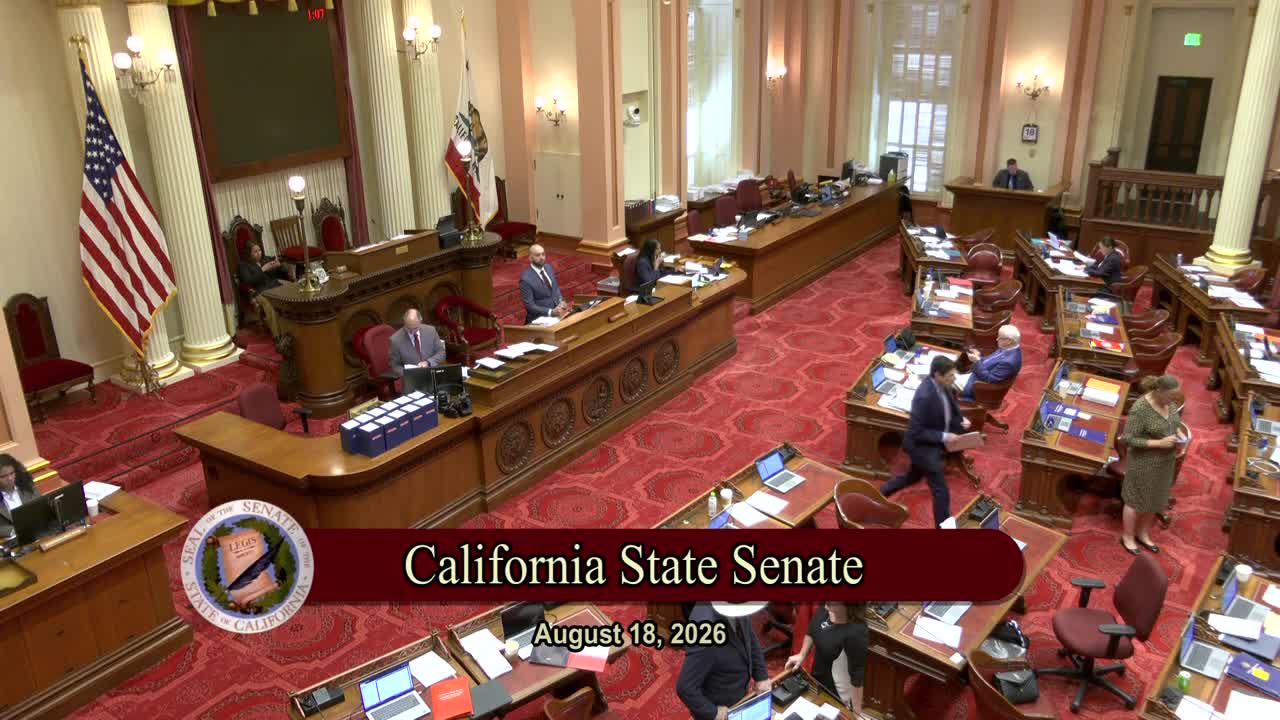 1MIN
Senate Floor
 1MIN
Assembly Floor
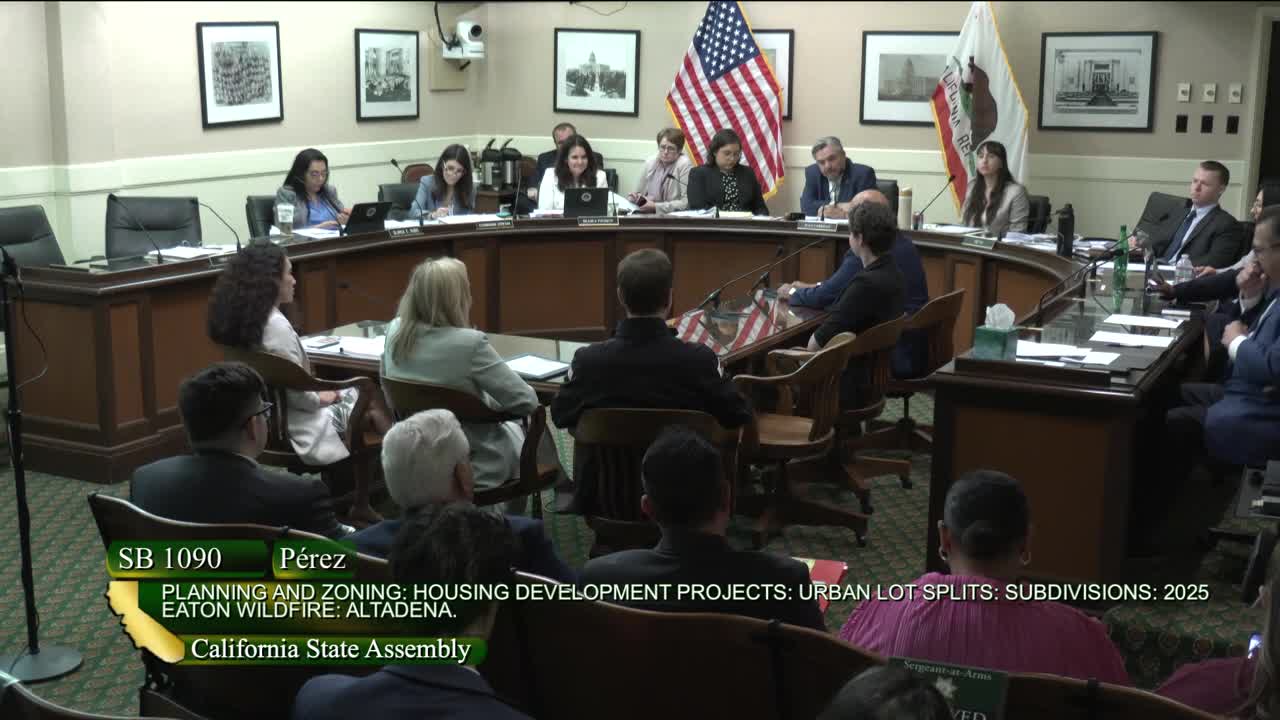 8MIN
Assembly Standing Committee on Local Government
Bill Author