SB 1323: Health care providers: patient access: immigration enforcement.
- Session Year: 2025-2026
- House: Senate
- Latest Version Date: 2026-09-27
Current Status:
Passed
(2026-09-27: Chaptered by Secretary of State. Chapter 698, Statutes of 2026.)
Introduced
In Committee
Awaiting First Chamber Vote
Passed First Chamber
In Committee
Awaiting Second Chamber Vote
Passed Second Chamber
Enacted
Existing law requires a health care provider entity, as defined, to designate areas where a patient is receiving treatment or care, or where a patient is discussing protected health information, as nonpublic, in order to enhance privacy available to facility users and promote a safe environment conducive to the facilitys mission and patient care. Unless required by state or federal law, existing law prohibits a health care provider entity and its personnel from allowing any person access to the nonpublic areas of the facility for immigration enforcement purposes, unless that person has a valid judicial warrant or court order that specifically grants access to the nonpublic areas of the facility.
Existing law requires a health care provider entity to inform staff and relevant volunteers on how to respond to requests relating to immigration enforcement that grants access to health care provider entity sites or to patients.
This bill would also require a health care provider entity to inform staff and relevant volunteers on how to respond to requests by a person who is in custody by immigration enforcement to notify a family member or designated support person about their current location.
Existing law requires a health care provider entity, to the extent possible, to establish or amend procedures for monitoring, documenting, and receiving visitors to health care provider entities consistent with the above-described and related provisions. Under existing law, a health care provider entity is encouraged to post a notice to authorities at facility entrances that states that no person will be permitted to access nonpublic areas of a facility for immigration enforcement purposes unless required by state or federal law or pursuant to a valid physical judicial warrant or court order.
This bill would instead require the health care provider entity to establish or amend those procedures, without the qualification that the process be to the extent possible. The bill would also require, instead of encouraging, the entity to post the above-described notice, at the facilitys main public entrances, as defined.
The bill would repeal these changes on January 1, 2030.
To the extent that the bill would create new duties for health care provider entities administered by a county, city, or other local public jurisdiction, the bill would impose a state-mandated local program.
The California Constitution requires the state to reimburse local agencies and school districts for certain costs mandated by the state. Statutory provisions establish procedures for making that reimbursement.
This bill would provide that, if the Commission on State Mandates determines that the bill contains costs mandated by the state, reimbursement for those costs shall be made pursuant to the statutory provisions noted above.
Existing law requires a health care provider entity, as defined, to designate areas where a patient is receiving treatment or care, or where a patient is discussing protected health information, as nonpublic, in order to enhance privacy available to facility users and promote a safe environment conducive to the facilitys mission and patient care. Unless required by state or federal law, existing law prohibits a health care provider entity and its personnel from allowing any person access to the nonpublic areas of the facility for immigration enforcement purposes, unless that person has a valid judicial warrant or court order that specifically grants access to the nonpublic areas of the facility.
Existing law requires a health care provider entity to inform staff and relevant volunteers on how to respond to requests relating to immigration enforcement that grants access to health care provider entity sites or to patients.
This bill would also require a health care provider entity to inform staff and relevant volunteers on how to respond to requests by a person who is in custody by immigration enforcement to notify a family member or designated support person about their current location.
Existing law requires a health care provider entity, to the extent possible, to establish or amend procedures for monitoring, documenting, and receiving visitors to health care provider entities consistent with the above-described and related provisions. Under existing law, a health care provider entity is encouraged to post a notice to authorities at facility entrances that states that no person will be permitted to access nonpublic areas of a facility for immigration enforcement purposes unless required by state or federal law or pursuant to a valid physical judicial warrant or court order.
This bill would instead require the health care provider entity to establish or amend those procedures, without the qualification that the process be to the extent possible. The bill would also require, instead of encouraging, the entity to post the above-described notice, at the facilitys main public entrances, as defined.
The bill would repeal these changes on January 1, 2030.
To the extent that the bill would create new duties for health care provider entities administered by a county, city, or other local public jurisdiction, the bill would impose a state-mandated local program.
The California Constitution requires the state to reimburse local agencies and school districts for certain costs mandated by the state. Statutory provisions establish procedures for making that reimbursement.
This bill would provide that, if the Commission on State Mandates determines that the bill contains costs mandated by the state, reimbursement for those costs shall be made pursuant to the statutory provisions noted above.
Existing law requires a health care provider entity, as defined, to designate areas where a patient is receiving treatment or care, or where a patient is discussing protected health information, as nonpublic, in order to enhance privacy available to facility users and promote a safe environment conducive to the facilitys mission and patient care. Unless required by state or federal law, existing law prohibits a health care provider entity and its personnel from allowing any person access to the nonpublic areas of the facility for immigration enforcement purposes, unless that person has a valid judicial warrant or court order that specifically grants access to the nonpublic areas of the facility.
Existing law requires a health care provider entity to inform staff and relevant volunteers on how to respond to requests relating to immigration enforcement that grants access to health care provider entity sites or to patients.
This bill would also require a health care provider entity to inform staff and relevant volunteers on how to respond to requests by a person who is in lawful custody by immigration enforcement to notify a family member or designated support person about their current location.
Existing law requires a health care provider entity, to the extent possible, to establish or amend procedures for monitoring, documenting, and receiving visitors to health care provider entities consistent with the above-described and related provisions. Under existing law, a health care provider entity is encouraged to post a notice to authorities at facility entrances that states that no person will be permitted to access nonpublic areas of a facility for immigration enforcement purposes unless required by state or federal law or pursuant to a valid physical judicial warrant or court order.
This bill would instead require the health care provider entity to establish or amend those procedures, without the qualification that the process be to the extent possible. The bill would also require, instead of encouraging, the entity to post the above-described notice, at the facilitys main public entrances, as defined.
The bill would repeal these changes on January 1, 2030.
To the extent that the bill would create new duties for health care provider entities administered by a county, city, or other local public jurisdiction, the bill would impose a state-mandated local program.
The California Constitution requires the state to reimburse local agencies and school districts for certain costs mandated by the state. Statutory provisions establish procedures for making that reimbursement.
This bill would provide that, if the Commission on State Mandates determines that the bill contains costs mandated by the state, reimbursement for those costs shall be made pursuant to the statutory provisions noted above.
Existing law requires a health care provider entity, as defined, to designate areas where a patient is receiving treatment or care, or where a patient is discussing protected health information, as nonpublic, in order to enhance privacy available to facility users and promote a safe environment conducive to the facilitys mission and patient care. Unless required by state or federal law, existing law prohibits a health care provider entity and its personnel from allowing any person access to the nonpublic areas of the facility for immigration enforcement purposes, unless that person has a valid judicial warrant or court order that specifically grants access to the nonpublic areas of the facility.
Existing law requires a health care provider entity to inform staff and relevant volunteers on how to respond to requests relating to immigration enforcement that grants access to health care provider entity sites or to patients.
This bill would also require a health care provider entity to inform staff and relevant volunteers on how to respond to requests by a person who is in lawful custody by immigration enforcement to notify a family member or designated support person about their current location.
Existing law requires a health care provider entity, to the extent possible, to establish or amend procedures for monitoring, documenting, and receiving visitors to health care provider entities consistent with the above-described and related provisions. Under existing law, a health care provider entity is encouraged to post a notice to authorities at facility entrances that states that no person will be permitted to access nonpublic areas of a facility for immigration enforcement purposes unless required by state or federal law or pursuant to a valid physical judicial warrant or court order.
This bill would instead require the health care provider entity to establish or amend those procedures, without the qualification that the process be to the extent possible. The bill would also require, instead of encouraging, the entity to post the above-described notice. notice, at the facilitys main public entrances, as defined.
The bill would repeal these changes on January 1, 2030.
To the extent that the bill would create new duties for health care provider entities administered by a county, city, or other local public jurisdiction, the bill would impose a state-mandated local program.
The California Constitution requires the state to reimburse local agencies and school districts for certain costs mandated by the state. Statutory provisions establish procedures for making that reimbursement.
This bill would provide that, if the Commission on State Mandates determines that the bill contains costs mandated by the state, reimbursement for those costs shall be made pursuant to the statutory provisions noted above.
Existing law requires a health care provider entity, as defined, to designate areas where a patient is receiving treatment or care, or where a patient is discussing protected health information, as nonpublic, in order to enhance privacy available to facility users and promote a safe environment conducive to the facilitys mission and patient care. Unless required by state or federal law, existing law prohibits a health care provider entity and its personnel from allowing any person access to the nonpublic areas of the facility for immigration enforcement purposes, unless that person has a valid judicial warrant or court order that specifically grants access to the nonpublic areas of the facility.
Existing law requires a health care provider entity to inform staff and relevant volunteers on how to respond to requests relating to immigration enforcement that grants access to health care provider entity sites or to patients.
This bill would also require a health care provider entity to inform staff and relevant volunteers on how to respond to requests by a person who is in lawful custody by immigration enforcement to notify a family member or designated support person about their current location.
Existing law requires a health care provider entity, to the extent possible, to establish or amend procedures for monitoring, documenting, and receiving visitors to health care provider entities consistent with the above-described and related provisions. Under existing law, a health care provider entity is encouraged to post a notice to authorities at facility entrances. entrances that states that no person will be permitted to access nonpublic areas of a facility for immigration enforcement purposes unless required by state or federal law or pursuant to a valid physical judicial warrant or court order.
This bill would instead require the health care provider entity to establish or amend those procedures, without the qualification that the process be to the extent possible. The bill would also require, instead of encouraging, the entity to post the above-described notice.
To the extent that the bill would create new duties for health care provider entities administered by a county, city, or other local public jurisdiction, the bill would impose a state-mandated local program.
The California Constitution requires the state to reimburse local agencies and school districts for certain costs mandated by the state. Statutory provisions establish procedures for making that reimbursement.
This bill would provide that, if the Commission on State Mandates determines that the bill contains costs mandated by the state, reimbursement for those costs shall be made pursuant to the statutory provisions noted above.
Existing law requires a health care provider entity, as defined, to designate areas where a patient is receiving treatment or care, or where a patient is discussing protected health information, as nonpublic, in order to enhance privacy available to facility users and promote a safe environment conducive to the facilitys mission and patient care. Unless required by state or federal law, existing law prohibits a health care provider entity and its personnel from allowing any person access to the nonpublic areas of the facility for immigration enforcement purposes, unless that person has a valid judicial warrant or court order that specifically grants access to the nonpublic areas of the facility.
Existing law requires a health care provider entity to inform staff and relevant volunteers on how to respond to requests relating to immigration enforcement that grants access to health care provider entity sites or to patients.
This bill would also require a health care provider entity to inform staff and relevant volunteers on how to respond to requests by a person who is in lawful custody by immigration enforcement to notify a family member or designated support person about their current location.
Existing law requires a health care provider entity, to the extent possible, to establish or amend procedures for monitoring, documenting, and receiving visitors to health care provider entities consistent with the above-described and related provisions. Under existing law, a health care provider entity is encouraged to post a notice to authorities at facility entrances.
This bill would instead require the health care provider entity to establish or amend those procedures, without the qualification that the process be to the extent possible. The bill would also require, instead of encouraging, the entity to post the above-described notice.
To the extent that the bill would create new duties for health care provider entities administered by a county, city, or other local public jurisdiction, the bill would impose a state-mandated local program.
The California Constitution requires the state to reimburse local agencies and school districts for certain costs mandated by the state. Statutory provisions establish procedures for making that reimbursement.
This bill would provide that, if the Commission on State Mandates determines that the bill contains costs mandated by the state, reimbursement for those costs shall be made pursuant to the statutory provisions noted above.
Existing law establishes the State Department of Public Health in the California Health and Human Services Agency. Existing law provides for the licensing and regulation of health facilities, including hospitals, by the department.This bill would state the intent of the Legislature to enact legislation relating to hospitals.Existing law establishes the State Department of Public Health in the California Health and Human Services Agency. Existing law provides for the licensing and regulation of health facilities, including hospitals, by the department.
This bill would state the intent of the Legislature to enact legislation relating to hospitals.
(a)(1)A health care provider entity shall establish or amend procedures for monitoring, documenting, and receiving visitors to health care provider entities consistent with this chapter. Health care provider entities shall post a notice to authorities at the facilitys main public entrances. The notice shall state that no person will be permitted to access nonpublic areas of a facility for immigration enforcement purposes unless required by state or federal law or pursuant to a valid physical judicial warrant or court order.
(2)For the purposes of this subdivision, main public entrance means a singular entrance, as designated by the facility, that serves as a primary point of access that patients and visitors use to enter the main health facilitys building.
(b)(1)Health care provider entity personnel shall immediately notify health care provider entity management, administration, or legal counsel of any request for access to a health care provider entity site or patient for immigration enforcement.
(2)Health care provider entity personnel shall immediately provide any requests for review of health care provider entity documents, including through a lawfully issued subpoena, warrant, or court order, to health care provider entity management, administration, or legal counsel.
(3)If a request is made to access a health care provider entity site or patient, including to obtain information about a patient or their family, for immigration enforcement, health care provider entity personnel shall direct that request to the designated health care provider entity management, administrator, or legal counsel.
(c)This section shall remain in effect only until January 1, 2030, and as of that date is repealed.
SEC. 2.Section 24250 is added to the Health and Safety Code, to read:24250.(a)A health care provider entity shall, to the extent possible, establish or amend procedures for monitoring, documenting, and receiving visitors to health care provider entities consistent with this chapter. Health care provider entities are encouraged to post a notice to authorities at facility entrances.
(b)(1)Health care provider entity personnel shall immediately notify health care provider entity management, administration, or legal counsel of any request for access to a health care provider entity site or patient for immigration enforcement.
(2)Health care provider entity personnel shall immediately provide any requests for review of health care provider entity documents, including through a lawfully issued subpoena, warrant, or court order, to health care provider entity management, administration, or legal counsel.
(3)If a request is made to access a health care provider entity site or patient, including to obtain information about a patient or their family, for immigration enforcement, health care provider entity personnel shall direct that request to the designated health care provider entity management, administrator, or legal counsel.
(c)This section shall become operative on January 1, 2030.
SEC. 3.Section 24251 of the Health and Safety Code is amended to read:24251.(a)To enhance privacy available to facility users and promote a safe environment conducive to the facilitys mission and patient care, a health care provider entity shall designate areas where patients are receiving treatment or care, or where a patient is discussing protected health information, as nonpublic. The facility is encouraged to designate these areas through mapping, signage, key entry, policy, or a combination of those.
(b)Unless required by state or federal law, a health care provider entity and its personnel shall not allow any person access to the nonpublic areas of the facility, as described in subdivision (a), for immigration enforcement purposes, unless that person has a valid physical judicial warrant or court order that specifically grants access to the nonpublic areas of the facility.
(c)A health care provider entity and its personnel shall, to the extent possible, have the denial of permission for access to nonpublic areas of the facility pursuant to subdivision (b) witnessed and documented by at least one health care provider entity personnel.
(d)Health care provider entities shall inform staff and relevant volunteers on how to respond to requests relating to immigration enforcement that grants access to health care provider entity sites or to patients.
(e)Health care provider entities shall inform staff and relevant volunteers on how to respond to requests by a person who is in custody by immigration enforcement to notify a family member or designated support person about their current location.
(f)This section shall remain in effect only until January 1, 2030, and as of that date is repealed.
SEC. 4.Section 24251 is added to the Health and Safety Code, to read:24251.(a)To enhance privacy available to facility users and promote a safe environment conducive to the facilitys mission and patient care, a health care provider entity shall designate areas where patients are receiving treatment or care, or where a patient is discussing protected health information, as nonpublic. The facility is encouraged to designate these areas through mapping, signage, key entry, policy, or a combination of those.
(b)Unless required by state or federal law, a health care provider entity and its personnel shall not allow any person access to the nonpublic areas of the facility, as described in subdivision (a), for immigration enforcement purposes, unless that person has a valid judicial warrant or court order that specifically grants access to the nonpublic areas of the facility.
(c)A health care provider entity and its personnel shall, to the extent possible, have the denial of permission for access to nonpublic areas of the facility pursuant to subdivision (b) witnessed and documented by at least one health care provider entity personnel.
(d)Health care provider entities shall inform staff and relevant volunteers on how to respond to requests relating to immigration enforcement that grants access to health care provider entity sites or to patients.
(e)This section shall become operative on January 1, 2030.
SEC. 5.If the Commission on State Mandates determines that this act contains costs mandated by the state, reimbursement to local agencies and school districts for those costs shall be made pursuant to Part 7 (commencing with Section 17500) of Division 4 of Title 2 of the Government Code.
(a)(1)A health care provider entity shall establish or amend procedures for monitoring, documenting, and receiving visitors to health care provider entities consistent with this chapter. Health care provider entities shall post a notice to authorities at the facilitys main public entrances. The notice shall state that no person will be permitted to access nonpublic areas of a facility for immigration enforcement purposes unless required by state or federal law or pursuant to a valid physical judicial warrant or court order.
(2)For the purposes of this subdivision, main public entrance means a singular entrance, as designated by the facility, that serves as a primary point of access that patients and visitors use to enter the main health facilitys building.
(b)(1)Health care provider entity personnel shall immediately notify health care provider entity management, administration, or legal counsel of any request for access to a health care provider entity site or patient for immigration enforcement.
(2)Health care provider entity personnel shall immediately provide any requests for review of health care provider entity documents, including through a lawfully issued subpoena, warrant, or court order, to health care provider entity management, administration, or legal counsel.
(3)If a request is made to access a health care provider entity site or patient, including to obtain information about a patient or their family, for immigration enforcement, health care provider entity personnel shall direct that request to the designated health care provider entity management, administrator, or legal counsel.
(c)This section shall remain in effect only until January 1, 2030, and as of that date is repealed.
SEC. 2.Section 24250 is added to the Health and Safety Code, to read:24250.(a)A health care provider entity shall, to the extent possible, establish or amend procedures for monitoring, documenting, and receiving visitors to health care provider entities consistent with this chapter. Health care provider entities are encouraged to post a notice to authorities at facility entrances.
(b)(1)Health care provider entity personnel shall immediately notify health care provider entity management, administration, or legal counsel of any request for access to a health care provider entity site or patient for immigration enforcement.
(2)Health care provider entity personnel shall immediately provide any requests for review of health care provider entity documents, including through a lawfully issued subpoena, warrant, or court order, to health care provider entity management, administration, or legal counsel.
(3)If a request is made to access a health care provider entity site or patient, including to obtain information about a patient or their family, for immigration enforcement, health care provider entity personnel shall direct that request to the designated health care provider entity management, administrator, or legal counsel.
(c)This section shall become operative on January 1, 2030.
SEC. 3.Section 24251 of the Health and Safety Code is amended to read:24251.(a)To enhance privacy available to facility users and promote a safe environment conducive to the facilitys mission and patient care, a health care provider entity shall designate areas where patients are receiving treatment or care, or where a patient is discussing protected health information, as nonpublic. The facility is encouraged to designate these areas through mapping, signage, key entry, policy, or a combination of those.
(b)Unless required by state or federal law, a health care provider entity and its personnel shall not allow any person access to the nonpublic areas of the facility, as described in subdivision (a), for immigration enforcement purposes, unless that person has a valid physical judicial warrant or court order that specifically grants access to the nonpublic areas of the facility.
(c)A health care provider entity and its personnel shall, to the extent possible, have the denial of permission for access to nonpublic areas of the facility pursuant to subdivision (b) witnessed and documented by at least one health care provider entity personnel.
(d)Health care provider entities shall inform staff and relevant volunteers on how to respond to requests relating to immigration enforcement that grants access to health care provider entity sites or to patients.
(e)Health care provider entities shall inform staff and relevant volunteers on how to respond to requests by a person who is in custody by immigration enforcement to notify a family member or designated support person about their current location.
(f)This section shall remain in effect only until January 1, 2030, and as of that date is repealed.
SEC. 4.Section 24251 is added to the Health and Safety Code, to read:24251.(a)To enhance privacy available to facility users and promote a safe environment conducive to the facilitys mission and patient care, a health care provider entity shall designate areas where patients are receiving treatment or care, or where a patient is discussing protected health information, as nonpublic. The facility is encouraged to designate these areas through mapping, signage, key entry, policy, or a combination of those.
(b)Unless required by state or federal law, a health care provider entity and its personnel shall not allow any person access to the nonpublic areas of the facility, as described in subdivision (a), for immigration enforcement purposes, unless that person has a valid judicial warrant or court order that specifically grants access to the nonpublic areas of the facility.
(c)A health care provider entity and its personnel shall, to the extent possible, have the denial of permission for access to nonpublic areas of the facility pursuant to subdivision (b) witnessed and documented by at least one health care provider entity personnel.
(d)Health care provider entities shall inform staff and relevant volunteers on how to respond to requests relating to immigration enforcement that grants access to health care provider entity sites or to patients.
(e)This section shall become operative on January 1, 2030.
SEC. 5.If the Commission on State Mandates determines that this act contains costs mandated by the state, reimbursement to local agencies and school districts for those costs shall be made pursuant to Part 7 (commencing with Section 17500) of Division 4 of Title 2 of the Government Code.
(a)(1)A health care provider entity shall establish or amend procedures for monitoring, documenting, and receiving visitors to health care provider entities consistent with this chapter. Health care provider entities shall post a notice to authorities at the facilitys main public entrances. The notice shall state that no person will be permitted to access nonpublic areas of a facility for immigration enforcement purposes unless required by state or federal law or pursuant to a valid physical judicial warrant or court order.
(2)For the purposes of this subdivision, main public entrance means a singular entrance, as designated by the facility, that serves as a primary point of access that patients and visitors use to enter the main health facilitys building.
(b)(1)Health care provider entity personnel shall immediately notify health care provider entity management, administration, or legal counsel of any request for access to a health care provider entity site or patient for immigration enforcement.
(2)Health care provider entity personnel shall immediately provide any requests for review of health care provider entity documents, including through a lawfully issued subpoena, warrant, or court order, to health care provider entity management, administration, or legal counsel.
(3)If a request is made to access a health care provider entity site or patient, including to obtain information about a patient or their family, for immigration enforcement, health care provider entity personnel shall direct that request to the designated health care provider entity management, administrator, or legal counsel.
(c)This section shall remain in effect only until January 1, 2030, and as of that date is repealed.
SEC. 2.Section 24250 is added to the Health and Safety Code, to read:24250.(a)A health care provider entity shall, to the extent possible, establish or amend procedures for monitoring, documenting, and receiving visitors to health care provider entities consistent with this chapter. Health care provider entities are encouraged to post a notice to authorities at facility entrances.
(b)(1)Health care provider entity personnel shall immediately notify health care provider entity management, administration, or legal counsel of any request for access to a health care provider entity site or patient for immigration enforcement.
(2)Health care provider entity personnel shall immediately provide any requests for review of health care provider entity documents, including through a lawfully issued subpoena, warrant, or court order, to health care provider entity management, administration, or legal counsel.
(3)If a request is made to access a health care provider entity site or patient, including to obtain information about a patient or their family, for immigration enforcement, health care provider entity personnel shall direct that request to the designated health care provider entity management, administrator, or legal counsel.
(c)This section shall become operative on January 1, 2030.
SEC. 3.Section 24251 of the Health and Safety Code is amended to read:24251.(a)To enhance privacy available to facility users and promote a safe environment conducive to the facilitys mission and patient care, a health care provider entity shall designate areas where patients are receiving treatment or care, or where a patient is discussing protected health information, as nonpublic. The facility is encouraged to designate these areas through mapping, signage, key entry, policy, or a combination of those.
(b)Unless required by state or federal law, a health care provider entity and its personnel shall not allow any person access to the nonpublic areas of the facility, as described in subdivision (a), for immigration enforcement purposes, unless that person has a valid physical judicial warrant or court order that specifically grants access to the nonpublic areas of the facility.
(c)A health care provider entity and its personnel shall, to the extent possible, have the denial of permission for access to nonpublic areas of the facility pursuant to subdivision (b) witnessed and documented by at least one health care provider entity personnel.
(d)Health care provider entities shall inform staff and relevant volunteers on how to respond to requests relating to immigration enforcement that grants access to health care provider entity sites or to patients.
(e)Health care provider entities shall inform staff and relevant volunteers on how to respond to requests by a person who is in lawful custody by immigration enforcement to notify a family member or designated support person about their current location.
(f)This section shall remain in effect only until January 1, 2030, and as of that date is repealed.
SEC. 4.Section 24251 is added to the Health and Safety Code, to read:24251.(a)To enhance privacy available to facility users and promote a safe environment conducive to the facilitys mission and patient care, a health care provider entity shall designate areas where patients are receiving treatment or care, or where a patient is discussing protected health information, as nonpublic. The facility is encouraged to designate these areas through mapping, signage, key entry, policy, or a combination of those.
(b)Unless required by state or federal law, a health care provider entity and its personnel shall not allow any person access to the nonpublic areas of the facility, as described in subdivision (a), for immigration enforcement purposes, unless that person has a valid judicial warrant or court order that specifically grants access to the nonpublic areas of the facility.
(c)A health care provider entity and its personnel shall, to the extent possible, have the denial of permission for access to nonpublic areas of the facility pursuant to subdivision (b) witnessed and documented by at least one health care provider entity personnel.
(d)Health care provider entities shall inform staff and relevant volunteers on how to respond to requests relating to immigration enforcement that grants access to health care provider entity sites or to patients.
(e)This section shall become operative on January 1, 2030.
SEC. 5.If the Commission on State Mandates determines that this act contains costs mandated by the state, reimbursement to local agencies and school districts for those costs shall be made pursuant to Part 7 (commencing with Section 17500) of Division 4 of Title 2 of the Government Code.
(a)(1)A health care provider entity shall establish or amend procedures for monitoring, documenting, and receiving visitors to health care provider entities consistent with this chapter. Health care provider entities shall post a notice to authorities at facility entrances. the facilitys main public entrances. The notice shall state that no person will be permitted to access nonpublic areas of a facility for immigration enforcement purposes unless required by state or federal law or pursuant to a valid physical judicial warrant or court order.
(2)For the purposes of this subdivision, main public entrance means a singular entrance, as designated by the facility, that serves as a primary point of access that patients and visitors use to enter the main health facilitys building.
(b)(1)Health care provider entity personnel shall immediately notify health care provider entity management, administration, or legal counsel of any request for access to a health care provider entity site or patient for immigration enforcement.
(2)Health care provider entity personnel shall immediately provide any requests for review of health care provider entity documents, including through a lawfully issued subpoena, warrant, or court order, to health care provider entity management, administration, or legal counsel.
(3)If a request is made to access a health care provider entity site or patient, including to obtain information about a patient or their family, for immigration enforcement, health care provider entity personnel shall direct that request to the designated health care provider entity management, administrator, or legal counsel.
(c)This section shall remain in effect only until January 1, 2030, and as of that date is repealed.
SEC. 2.Section 24250 is added to the Health and Safety Code, to read:24250.(a)A health care provider entity shall, to the extent possible, establish or amend procedures for monitoring, documenting, and receiving visitors to health care provider entities consistent with this chapter. Health care provider entities are encouraged to post a notice to authorities at facility entrances.
(b)(1)Health care provider entity personnel shall immediately notify health care provider entity management, administration, or legal counsel of any request for access to a health care provider entity site or patient for immigration enforcement.
(2)Health care provider entity personnel shall immediately provide any requests for review of health care provider entity documents, including through a lawfully issued subpoena, warrant, or court order, to health care provider entity management, administration, or legal counsel.
(3)If a request is made to access a health care provider entity site or patient, including to obtain information about a patient or their family, for immigration enforcement, health care provider entity personnel shall direct that request to the designated health care provider entity management, administrator, or legal counsel.
(c)This section shall become operative on January 1, 2030.
SEC. 2.SEC. 3.Section 24251 of the Health and Safety Code is amended to read:24251.(a)To enhance privacy available to facility users and promote a safe environment conducive to the facilitys mission and patient care, a health care provider entity shall designate areas where patients are receiving treatment or care, or where a patient is discussing protected health information, as nonpublic. The facility is encouraged to designate these areas through mapping, signage, key entry, policy, or a combination of those.
(b)Unless required by state or federal law, a health care provider entity and its personnel shall not allow any person access to the nonpublic areas of the facility, as described in subdivision (a), for immigration enforcement purposes, unless that person has a valid judicial warrant or court order that specifically grants access to the nonpublic areas of the facility.
(c)A health care provider entity and its personnel shall, to the extent possible, have the denial of permission for access to nonpublic areas of the facility pursuant to subdivision (b) witnessed and documented by at least one health care provider entity personnel.
(d)Health care provider entities shall inform staff and relevant volunteers on how to respond to requests relating to immigration enforcement that grants access to health care provider entity sites or to patients.
(e)Health care provider entities shall inform staff and relevant volunteers on how to respond to requests by a person who is in lawful custody by immigration enforcement to notify a family member or designated support person about their current location.
(f)This section shall remain in effect only until January 1, 2030, and as of that date is repealed.
SEC. 4.Section 24251 is added to the Health and Safety Code, to read:24251.(a)To enhance privacy available to facility users and promote a safe environment conducive to the facilitys mission and patient care, a health care provider entity shall designate areas where patients are receiving treatment or care, or where a patient is discussing protected health information, as nonpublic. The facility is encouraged to designate these areas through mapping, signage, key entry, policy, or a combination of those.
(b)Unless required by state or federal law, a health care provider entity and its personnel shall not allow any person access to the nonpublic areas of the facility, as described in subdivision (a), for immigration enforcement purposes, unless that person has a valid judicial warrant or court order that specifically grants access to the nonpublic areas of the facility.
(c)A health care provider entity and its personnel shall, to the extent possible, have the denial of permission for access to nonpublic areas of the facility pursuant to subdivision (b) witnessed and documented by at least one health care provider entity personnel.
(d)Health care provider entities shall inform staff and relevant volunteers on how to respond to requests relating to immigration enforcement that grants access to health care provider entity sites or to patients.
(e)This section shall become operative on January 1, 2030.
SEC. 3.SEC. 5.If the Commission on State Mandates determines that this act contains costs mandated by the state, reimbursement to local agencies and school districts for those costs shall be made pursuant to Part 7 (commencing with Section 17500) of Division 4 of Title 2 of the Government Code.
(a)A health care provider entity shall establish or amend procedures for monitoring, documenting, and receiving visitors to health care provider entities consistent with this chapter. Health care provider entities shall post a notice to authorities at facility entrances. The notice shall state that no person will be permitted to access nonpublic areas of a facility for immigration enforcement purposes unless required by state or federal law or pursuant to a valid physical judicial warrant or court order.
(b)(1)Health care provider entity personnel shall immediately notify health care provider entity management, administration, or legal counsel of any request for access to a health care provider entity site or patient for immigration enforcement.
(2)Health care provider entity personnel shall immediately provide any requests for review of health care provider entity documents, including through a lawfully issued subpoena, warrant, or court order, to health care provider entity management, administration, or legal counsel.
(3)If a request is made to access a health care provider entity site or patient, including to obtain information about a patient or their family, for immigration enforcement, health care provider entity personnel shall direct that request to the designated health care provider entity management, administrator, or legal counsel.
SEC. 2.Section 24251 of the Health and Safety Code is amended to read:24251.(a)To enhance privacy available to facility users and promote a safe environment conducive to the facilitys mission and patient care, a health care provider entity shall designate areas where patients are receiving treatment or care, or where a patient is discussing protected health information, as nonpublic. The facility is encouraged to designate these areas through mapping, signage, key entry, policy, or a combination of those.
(b)Unless required by state or federal law, a health care provider entity and its personnel shall not allow any person access to the nonpublic areas of the facility, as described in subdivision (a), for immigration enforcement purposes, unless that person has a valid judicial warrant or court order that specifically grants access to the nonpublic areas of the facility.
(c)A health care provider entity and its personnel shall, to the extent possible, have the denial of permission for access to nonpublic areas of the facility pursuant to subdivision (b) witnessed and documented by at least one health care provider entity personnel.
(d)Health care provider entities shall inform staff and relevant volunteers on how to respond to requests relating to immigration enforcement that grants access to health care provider entity sites or to patients.
(e)Health care provider entities shall inform staff and relevant volunteers on how to respond to requests by a person who is in lawful custody by immigration enforcement to notify a family member or designated support person about their current location.
SEC. 3.If the Commission on State Mandates determines that this act contains costs mandated by the state, reimbursement to local agencies and school districts for those costs shall be made pursuant to Part 7 (commencing with Section 17500) of Division 4 of Title 2 of the Government Code.
(a)A health care provider entity shall, to the extent possible, shall establish or amend procedures for monitoring, documenting, and receiving visitors to health care provider entities consistent with this chapter. Health care provider entities are encouraged to shall post a notice to authorities at facility entrances.
(b)(1)Health care provider entity personnel shall immediately notify health care provider entity management, administration, or legal counsel of any request for access to a health care provider entity site or patient for immigration enforcement.
(2)Health care provider entity personnel shall immediately provide any requests for review of health care provider entity documents, including through a lawfully issued subpoena, warrant, or court order, to health care provider entity management, administration, or legal counsel.
(3)If a request is made to access a health care provider entity site or patient, including to obtain information about a patient or their family, for immigration enforcement, health care provider entity personnel shall direct that request to the designated health care provider entity management, administrator, or legal counsel.
SEC. 2.Section 24251 of the Health and Safety Code is amended to read:24251.(a)To enhance privacy available to facility users and promote a safe environment conducive to the facilitys mission and patient care, a health care provider entity shall designate areas where patients are receiving treatment or care, or where a patient is discussing protected health information, as nonpublic. The facility is encouraged to designate these areas through mapping, signage, key entry, policy, or a combination of those.
(b)Unless required by state or federal law, a health care provider entity and its personnel shall not allow any person access to the nonpublic areas of the facility, as described in subdivision (a), for immigration enforcement purposes, unless that person has a valid judicial warrant or court order that specifically grants access to the nonpublic areas of the facility.
(c)A health care provider entity and its personnel shall, to the extent possible, have the denial of permission for access to nonpublic areas of the facility pursuant to subdivision (b) witnessed and documented by at least one health care provider entity personnel.
(d)Health care provider entities shall inform staff and relevant volunteers on how to respond to requests relating to immigration enforcement that grants access to health care provider entity sites or to patients.
(e)Health care provider entities shall inform staff and relevant volunteers on how to respond to requests by a person who is in lawful custody by immigration enforcement to notify a family member or designated support person about their current location.
SEC. 3.If the Commission on State Mandates determines that this act contains costs mandated by the state, reimbursement to local agencies and school districts for those costs shall be made pursuant to Part 7 (commencing with Section 17500) of Division 4 of Title 2 of the Government Code.
SECTION 1.It is the intent of the Legislature to enact legislation relating to hospitals.It is the intent of the Legislature to enact legislation relating to hospitals.
|
Date
|
Status
|
|---|---|
| Sep 27, 2026 | Chaptered by Secretary of State. Chapter 698, Statutes of 2026. |
| Sep 27, 2026 | Approved by the Governor. |
| Aug 31, 2026 | Enrolled and presented to the Governor at 6 p.m. |
| Aug 26, 2026 | Assembly amendments concurred in. (Ayes 30. Noes 10.) Ordered to engrossing and enrolling. |
| Aug 26, 2026 | Assembly amendments concurred in. (Ayes 30. Noes 10. Page 5874.) Ordered to engrossing and enrolling. |
| Aug 25, 2026 | In Senate. Concurrence in Assembly amendments pending. |
| Aug 25, 2026 | Read third time. Passed. (Ayes 62. Noes 12. Page 6527.) Ordered to the Senate. |
| Aug 25, 2026 | Read third time. Passed. Ordered to the Senate. |
| Aug 6, 2026 | Read second time. Ordered to third reading. |
| Aug 5, 2026 | From committee: Do pass. (Ayes 11. Noes 3.) (August 5). |
| Jun 23, 2026 | From committee: Do pass and re-refer to Com. on APPR. (Ayes 9. Noes 3.) (June 23). Re-referred to Com. on APPR. |
| Jun 18, 2026 | From committee with author's amendments. Read second time and amended. Re-referred to Com. on JUD. |
| Jun 11, 2026 | Read second time and amended. Re-referred to Com. on JUD. |
| Jun 10, 2026 | From committee: Do pass as amended and re-refer to Com. on JUD. (Ayes 11. Noes 3.) (June 9). |
| May 26, 2026 | Referred to Coms. on HEALTH and JUD. |
| May 20, 2026 | In Assembly. Read first time. Held at Desk. |
| May 19, 2026 | Read third time. Passed. (Ayes 30. Noes 9.) Ordered to the Assembly. |
| May 19, 2026 | Read third time. Passed. (Ayes 30. Noes 9. Page 4349.) Ordered to the Assembly. |
| May 14, 2026 | Read second time. Ordered to third reading. |
| May 14, 2026 | From committee: Do pass. (Ayes 5. Noes 2.) (May 14). |
| May 14, 2026 | From committee: Do pass. (Ayes 5. Noes 2. Page 4273.) (May 14). |
| May 8, 2026 | Set for hearing May 14. |
| May 4, 2026 | May 4 hearing: Placed on APPR. suspense file. |
| Apr 28, 2026 | Set for hearing May 4. |
| Apr 23, 2026 | Read second time and amended. Re-referred to Com. on APPR. |
| Apr 22, 2026 | From committee: Do pass as amended and re-refer to Com. on APPR. (Ayes 11. Noes 2.) (April 21). |
| Apr 22, 2026 | From committee: Do pass as amended and re-refer to Com. on APPR. (Ayes 11. Noes 2. Page 3980.) (April 21). |
| Apr 17, 2026 | Set for hearing April 21. |
| Apr 16, 2026 | From committee: Do pass and re-refer to Com. on JUD. (Ayes 7. Noes 2.) (April 15). Re-referred to Com. on JUD. |
| Apr 16, 2026 | From committee: Do pass and re-refer to Com. on JUD. (Ayes 7. Noes 2. Page 3902.) (April 15). Re-referred to Com. on JUD. |
| Apr 9, 2026 | Set for hearing April 15. |
| Apr 8, 2026 | Re-referred to Coms. on HEALTH and JUD. |
| Mar 25, 2026 | From committee with author's amendments. Read second time and amended. Re-referred to Com. on RLS. |
| Mar 4, 2026 | Referred to Com. on RLS. |
| Feb 23, 2026 | Read first time. |
| Feb 23, 2026 | From printer. May be acted upon on or after March 23. |
| Feb 20, 2026 | Introduced. To Com. on RLS. for assignment. To print. |
|
Date
|
Description
|
Location
|
Votes
|
|
|---|---|---|---|---|
| Aug 26, 2026 | Unfinished Business SB1323 Rubio et al. Concurrence | Senate Floor |
Passed |
|
| Aug 25, 2026 | SB 1323 Rubio Senate Third Reading By Celeste Rodriguez | Assembly Floor |
Passed |
|
| Aug 5, 2026 | Do pass. | Assembly Standing Committee on Appropriations |
Passed |
|
| Jun 23, 2026 | Do pass and be re-referred to the Committee on [Appropriations] | Assembly Standing Committee on Judiciary |
Passed |
|
| Jun 9, 2026 | Do pass as amended and be re-referred to the Committee on [Judiciary] | Assembly Standing Committee on Health |
Passed |
|
| May 19, 2026 | Senate 3rd Reading SB1323 Rubio | Senate Floor |
Passed |
|
| May 14, 2026 | Do pass | Senate Standing Committee on Appropriations |
Passed |
|
| May 4, 2026 | Placed on suspense file | Senate Standing Committee on Appropriations |
Passed |
|
| Apr 21, 2026 | Do pass as amended, but first amend, and re-refer to the Committee on [Appropriations] | Senate Standing Committee on Judiciary |
Passed |
|
| Apr 15, 2026 | Do pass, but first be re-referred to the Committee on [Judiciary] | Senate Standing Committee on Health |
Passed |
This list shows positions taken on this bill by organizations on the date displayed, which is linked to the original source.
Positions by individuals are not included.
|
Organization
|
Position
|
Date
|
|---|---|---|
| American Academy Of Pediatrics, California | ** Support | |
| California Chapter of the American College of Emergency Physicians | ** Support | |
| California Dental Association | ** Against | |
| California Immigrant Policy Center | ** Support | |
| Inland Coalition for Immigrant Justice | ** Support | |
| Women Lawyers of Sacramento | ** Support |
SENATE RULES COMMITTEE Office of Senate Floor Analyses (916) 651-4171 | SB 1323 |
UNFINISHED BUSINESS
Bill No: SB 1323
Author: Rubio (D), et al.
Amended: 6/18/26
Vote: 21
SENATE HEALTH COMMITTEE: 7-2, 4/15/26
AYES: Weber Pierson, Caballero, Durazo, Gonzalez, Padilla, Rubio, Smallwood-Cuevas
NOES: Valladares, Grove
NO VOTE RECORDED: Menjivar, Pérez
SENATE JUDICIARY COMMITTEE: 11-2, 4/21/26
AYES: Umberg, Allen, Ashby, Caballero, Durazo, Laird, Reyes, Stern, Wahab, Weber Pierson, Wiener
NOES: Niello, Valladares
SENATE APPROPRIATIONS COMMITTEE: 5-2, 5/14/26
AYES: Cervantes, Cabaldon, Grayson, Richardson, Wahab
NOES: Seyarto, Dahle
SENATE FLOOR: 30-9, 5/19/26
AYES: Allen, Archuleta, Arreguín, Ashby, Becker, Blakespear, Cabaldon, Caballero, Cervantes, Cortese, Durazo, Gonzalez, Grayson, Hurtado, Laird, Limón, McGuire, McNerney, Menjivar, Padilla, Pérez, Reyes, Richardson, Rubio, Smallwood-Cuevas, Stern, Umberg, Wahab, Weber Pierson, Wiener
NOES: Alvarado-Gil, Choi, Dahle, Grove, Jones, Ochoa Bogh, Seyarto, Strickland, Valladares
NO VOTE RECORDED: Niello
ASSEMBLY FLOOR: 62-12, 8/25/26 - See last page for vote
SUBJECT: Health care providers: patient access: immigration enforcement
SOURCE: Author
DIGEST:
This bill 1) requires health care providers to inform staff on how to respond to requests by a person who is in custody by immigration enforcement to notify a family member or support person about their current location; 2) requires, rather than encourages under existing law, providers to post a notice to authorities at facility entrances regarding the visitation and access policy; and 3) requires this notice to state that no person will be permitted to access nonpublic areas of a facility for immigration enforcement purposes unless required by state or federal law or pursuant to a valid physical judicial warrant or court order.
Assembly Amendments limited the posting requirement to the main public entrances, as defined, added a January 1, 2030 sunset date, and made technical and clarifying changes.
ANALYSIS:
Existing law:
- Establishes the Confidentiality of Medical Information Act, which prohibits a health care provider, health plan, or contractor from disclosing medical information regarding a patient without first obtaining authorization. [Civil Code (CIV) §56, et. seq.]
- Establishes, in federal law, the Health Information Portability and Accountability Act of 1996, which provides privacy protections for a patient’s “protected health information,” and prohibits a “covered entity,” defined as a health plan, health care provider, or health care clearing house, from using or disclosing protected health information except as specified or as authorized by the patient in writing. [Title 45, Code of Federal Regulations (CFR) §164.500, et seq.]
- Requires, under federal law, hospitals to protect and promote patient’s rights, including the right to have a family member or representative of his or her choice and his or her own physician notified promptly of his or her admission to the hospital. [42 CFR §482.13]
- Requires hospitals to adopt a written policy on patients’ rights and lists certain rights that must be included. Among these rights is to designate visitors of patients’ choosing, whether or not the visitor is related by blood, marriage, or registered domestic partner status, unless:
- No visitors are allowed; or,
- The facility reasonably determines that the presence of a particular visitor would endanger the health or safety of a patient, a member of the staff, or other visitor to the facility, or would significantly disrupt the operations of the facility. [22 California Code of Regulations (CCR) §70707]
- Prohibits a health care provider entity and its personnel, unless required by state and federal law, from allowing any person access to the nonpublic areas of the facility for immigration enforcement purposes, unless that person has a valid judicial warrant or court order that specifically grants access to the nonpublic areas of the facility. Defines “health care provider entity” broadly, to include hospitals, clinics, and individual health providers. [Health and Safety Code (HSC) §24251(b) and §24252]
- Requires a health care provider entity, to the extent possible, establish procedures for monitoring, documenting, and receiving visitors to health care provider entities that are consistent with 5) above, and encourages health care provider entities to post a “notice to authorities” at facility entrances. [HSC §24250(a)]
- Requires health care provider entities to inform staff and relevant volunteers on how to respond to requests relating to immigration enforcement that grants access to its sites or to patients. [HSC §24250(d)]
- Establishes the California Values Act (CVA), which prohibits California law enforcement agencies from using agency or department moneys or personnel to investigate, interrogate, detain, detect, or arrest persons for immigration enforcement purposes, among other provisions. [Government Code (GOV) §7284, et seq.]
- Requires the Attorney General, as part of the CVA, to publish model policies limiting assistance with immigration enforcement to the fullest extent possible consistent with federal and state law at public schools, public libraries, health facilities operated by the state or a political subdivision of the state, and other state facilities, as specified, and requires all public schools, health facilities operated by the state or a political subdivision of the state, and courthouses to implement the model policy, or an equivalent policy. [GOV §7284.8]
This bill:
- Requires health care providers to inform staff and relevant volunteers on how to respond to requests by a person who is in custody by immigration enforcement to notify a family member or designated support person about their current location.
- Revises a requirement that a health care provider, to the extent possible, establish or amend procedures for monitoring, documenting, and receiving visitors to health care entities, related to restricting access to nonpublic areas of the facility for immigration enforcement purposes, by removing “to the extent possible,” so that this is an absolute requirement.
- Requires health care providers, rather than encourages under existing law, to post a “notice to authorities” at the facility’s main public entrances regarding the visitation and access policy. Requires this notice to state that no person will be permitted to access nonpublic areas of a facility for immigration enforcement purposes unless required by state or federal law or pursuant to a valid physical judicial warrant or court order.
- Defines “main public entrance,” for purposes of the notice in 3) above, as a singular entrance, as designated by the facility, that serves as a primary point of access that patients and visitors use to enter the main health facility’s building.
- Sunsets the provisions of this bill on January 1, 2030.
Background
KFF Health News article on hospitalized ICE detainees. In an article published by KFF Health News on January 30, 2026 (‘I Can’t Tell You’: Attorneys, Relatives Struggle to Find Hospitalized ICE Detainees), family members and attorneys for patients hospitalized after being detained by federal immigration officials said they are facing extreme difficulty trying to locate patients, get information about their well-being, and provide them emotional and legal support. Many hospitals refuse to provide information or allow contact with these patients, and instead are allowing immigration officers to call the shots on how much, if any, contact is allowed. The article cited a case of a 43-year-old man with terminal kidney disease who survived a heart attack in November 2025 and was detained on December 8 while resting outside after coming home from dialysis treatment. His wife was able to follow him when he was moved from a temporary holding facility in downtown Los Angeles to the Adelanto detention center, but when he was hospitalized, she was not able to locate him. Eventually, two days before Christmas, ICE called to inform them he was at Victor Valley Global Medical Center, where they found him intubated and unconscious, his arm and leg still handcuffed to the hospital bed. He’d had a severe seizure on December 20, but no one had told his family or legal team. He was eventually cleared to go home on January 5, and still faces deportation proceedings. According to the article, hospitals have used blackout policies, which can include registering a patient under a pseudonym, removing their name from the hospital directory, or prohibiting staff from even confirming that a patient is in the hospital.
A California Hospital Association spokesperson was quoted as saying that “there are times when hospitals will, at the request of law enforcement, maintain confidentiality of patients names and other identifying characteristics.” When a patient is in law enforcement custody, hospitals frequently agree to restrict this kind of information sharing and access. According to an emergency physician in Minnesota quoted by the article, the rationale is that these measures prevent unauthorized outsiders from threatening the patient or law enforcement personnel, given that hospitals lack the security infrastructure of a prison or detention center. High profile patients, such as celebrities, also sometimes request this type of protection. According to the article, ICE guidelines say contact and visits from family and friends should be allowed within security and operational constraints, and detainees have a constitutional right to speak confidentially with an attorney. However, the Minnesota emergency physician was quoted as saying that hospitals fall into a gray area on enforcing these rights, since they are primarily focused on treating medical needs.
Patient rights. There are hospital patient rights requirements under both federal and state law. California regulations (22 CCR §70707) require hospitals and medical staffs to adopt a written policy on patient’s rights, which are required to be posted in both Spanish and English in appropriate places within the hospital so that such rights may be read by patients. These regulations require patients to be able to exercise their rights without discrimination, including on the basis of national origin. The rights include, but are not limited to, the following (pertinent to this bill):
- Participate actively in decisions regarding medical care, and to the extent permitted by law, this includes the right to refuse treatment;
- Full consideration of privacy concerning the medical care program. Case discussion, consultation, examination and treatment are confidential and should be conducted discreetly. The patient has the right to be advised as to the reason for the presence of any individual;
- Confidential treatment of all communications and records pertaining to the care and stay in the hospital. Written permission shall be obtained before the medical records can be made available to anyone not directly concerned with the care;
- Be informed of continuing health care requirements following discharge from the hospital; and
- Designate visitors of the patient’s choosing, whether or not the visitor is related by blood, marriage, or registered domestic partner status, unless: no visitors are allowed; or, the facility reasonably determines that the presence of a particular visitor would endanger the health or safety of a patient, a member of the health facility staff, or other visitor to the health facility, or would significantly disrupt the operations of the facility.
Federal regulations also require hospitals to protect and promote patient’s rights (42 CFR §482.13). Under these federal regulations, hospitals are required to inform each patient, or when appropriate, the patient’s representative, of the patient’s rights, in advance of furnishing or discontinuing patient care whenever possible. The federal regulations have some overlap in the listing of patient’s rights, but among other rights, it includes the right to have a family member or representative of his or her choice and his or her own physician notified promptly of his or her admission to the hospital.
The CVA and guidance from California Department of Justice. The CVA was enacted in 2017 following the first Trump Administration’s executive orders outlining a deportation strategy that planned to rely on local law enforcement as “force multipliers’ of immigration agents. The CVA prohibited California law enforcement agencies from using their resources to investigate, interrogate, detain, detect, or arrest persons for immigration purposes, including inquiring into an individual’s immigration status, or detaining an individual on the basis of a hold request issued by an immigration authority, with certain exceptions. Additionally, the CVA directed the Attorney General to prepare and publish model policies limiting assistance with immigration enforcement to the fullest extent possible consistent with federal and state law at public schools, libraries, health facilities operated by the state or a political subdivision of the state, and “all other organizations and entities that provide services related to physical or mental health and wellness,” among other locations.
In compliance with the CVA, then-Attorney General Xavier Becerra issued a guide to California’s health care facilities in 2018, and Attorney General Bonta published a new edition in December of 2024, entitled “Promoting Safe and Secure Healthcare Access for All: Guidance and Model Policies to Assist California’s Healthcare Facilities in Responding to Immigration Issues.” This guide issued policy recommendations in the following topics: gathering and handling patient and family health information; sharing patient and family health information; and, responding to requests for physical access to facilities for immigration enforcement purposes. On gathering information, the policy recommendations include limiting collection of information about immigration status and national origin to only that which facilities are required by law to collect, such as when required for health insurance coverage, and to avoid including that information in the patient’s medical and billing records. On sharing information, the guide notes that health care facilities and their providers are required to protect patient information, and in most circumstances must obtain consent from the patient before any information is disclosed.
Still, the guide recommends that health care facilities have policies and procedures in place regarding disclosure of protected health information in response to court orders, warrants, subpoenas, summonses, and administrative requests, and the procedures should provide sufficient details to help employees determine how to respond. The guide includes model policies for these procedures. With regard to responding requests for physical access to health facilities, the guide recommended establishing procedures for monitoring and receiving visitors and designating restricted-access areas. The guide recommends considering which areas of their facilities can benefit from restricted access and clearly designate those areas through mapping, signage, key-entry or a combination, and that policies applying to visitors should apply to immigration enforcement officers. There are a number of other recommendations regarding how to respond to an immigration officer’s physical presence at a facility, parental notification of immigration enforcement actions, and training programs for facility staff.
Comments
According to the author of this bill:
This bill reinforces a basic principle: people do not lose their fundamental rights when they are in custody, especially when they are receiving medical care. This bill strengthens patient privacy protections and ensures that individuals in U.S. Immigration and Customs Enforcement (ICE) custody are treated with dignity while hospitalized. Recent cases show that individuals in ICE custody are sometimes denied access to their loved ones, legal counsel, and support systems while in the hospital. This bill makes clear that these rights must be respected. It ensures that people in ICE custody can communicate with family members and receive support during medical treatment. This bill is about preventing isolation and protecting patient well-being. Being in custody should not mean being cut off from loved ones or basic human support, particularly during times of illness or injury. Access to communication and care is essential to a patient’s health, safety, and dignity. By clarifying and strengthening these protections, this bill promotes accountability and ensures that individuals in custody are treated fairly and humanely. California has long been a leader in protecting patient rights, and this bill continues that commitment. This bill affirms that everyone deserves respect, care, and connection no matter their circumstances.
Related/Prior Legislation
SB 81 (Arreguín, Chapter 123, Statutes of 2025) prohibited a health care provider entity and its personnel, unless required by state and federal law, from granting access to the nonpublic areas of the facility for immigration enforcement without a valid judicial warrant or court order.
SB 54 (De Leon, Chapter 495, Statutes of 2017) enacted the CVA to limit the involvement of state and local law enforcement agencies in federal immigration enforcement.
AB 699 (O’Donnell, Chiu, and Kalra, Chapter 493, Statutes of 2017) requires the Attorney General to publish model policies limiting assistance with immigration enforcement at public schools, requires local educational agencies to adopt the model policies or equivalent policies, and provides education and support to immigrant students and their families.
FISCAL EFFECT: Appropriation: No Fiscal Com.: Yes Local: Yes
According to the Assembly Appropriations Committee potential costs of an unknown but likely minor amount to a health care provider entity administered by a county, city, or other local public jurisdiction, to inform staff and volunteers on how to respond to requests in immigration enforcement situations and to establish procedures and post a “notice to authorities” at a facility’s public entrances. These costs are potentially state-reimbursable from the General Fund, subject to a determination by the Commission on State Mandates, should a facility submit a claim. The California Department of Public Health anticipates no costs.
SUPPORT: (Verified 8/25/26)
American Academy of Pediatrics, California
California Chapter of the American College of Emergency Physicians
California Immigrant Policy Center
Inland Coalition for Immigrant Justice
Women Lawyers of Sacramento
OPPOSITION: (Verified 8/25/26)
None received
ARGUMENTS IN SUPPORT: The California Chapter of the American College of Emergency Physicians (California ACEP) states in support that recent immigration efforts have raised questions and concerns about the safety of medical care for immigrant populations, and that no one should delay seeking emergency medical care out of fear. California ACEP states that it is also a confusing time for health care providers whose expertise is clinical care, not the legality of immigration enforcement in hospitals. This bill helps providers to understand hospital policies with regard to the rights of patients in immigration enforcement custody. The California Immigrant Policy Center states in support that this bill requires health care entities to establish procedures for responding to requests made by individuals in immigration custody to notify and emergency contact of their current location while receiving medical care. This requirement is intended to ensure communication and accountability across health care settings, reduce delays or confusion in responding to requests, and help prevent the isolation of individuals in custody during medical treatment.
Assembly Floor 62 12 5
Ayes: Addis, Aguiar-Curry, Ahrens, Alanis, Alvarez, Arambula, Ávila Farías, Bains, Bauer-Kahan, Bennett, Berman, Boerner, Bonta, Bryan, Calderon, Caloza, Carrillo, Connolly, Elhawary, Fong, Gabriel, Garcia, Gipson, Jeff Gonzalez, Mark González, Haney, Harabedian, Hart, Irwin, Jackson, Kalra, Krell, Lee, Lowenthal, Muratsuchi, Nguyen, Ortega, Pacheco, Papan, Patel, Pellerin, Petrie-Norris, Quirk-Silva, Ramos, Ransom, Celeste Rodriguez, Michelle Rodriguez, Rogers, Blanca Rubio, Schiavo, Schultz, Sharp-Collins, Solache, Soria, Stefani, Valencia, Wallis, Ward, Wicks, Wilson, Zbur, Rivas
Noes: DeMaio, Dixon, Ellis, Flora, Hadwick, Johnson, Lackey, Macedo, Patterson, Sanchez, Ta, Tangipa
No Vote Recorded: Castillo, Chen, Davies, Hoover, McKinnor
Prepared by: Vincent Marchand / HEALTH / (916) 651-4111
11/6/26 11:15:40
**** END ****
SENATE RULES COMMITTEE Office of Senate Floor Analyses (916) 651-4171 | SB 1323 |
UNFINISHED BUSINESS
Bill No: SB 1323
Author: Rubio (D), et al.
Amended: 6/18/26
Vote: 21
SENATE HEALTH COMMITTEE: 7-2, 4/15/26
AYES: Weber Pierson, Caballero, Durazo, Gonzalez, Padilla, Rubio, Smallwood-Cuevas
NOES: Valladares, Grove
NO VOTE RECORDED: Menjivar, Pérez
SENATE JUDICIARY COMMITTEE: 11-2, 4/21/26
AYES: Umberg, Allen, Ashby, Caballero, Durazo, Laird, Reyes, Stern, Wahab, Weber Pierson, Wiener
NOES: Niello, Valladares
SENATE APPROPRIATIONS COMMITTEE: 5-2, 5/14/26
AYES: Cervantes, Cabaldon, Grayson, Richardson, Wahab
NOES: Seyarto, Dahle
SENATE FLOOR: 30-9, 5/19/26
AYES: Allen, Archuleta, Arreguín, Ashby, Becker, Blakespear, Cabaldon, Caballero, Cervantes, Cortese, Durazo, Gonzalez, Grayson, Hurtado, Laird, Limón, McGuire, McNerney, Menjivar, Padilla, Pérez, Reyes, Richardson, Rubio, Smallwood-Cuevas, Stern, Umberg, Wahab, Weber Pierson, Wiener
NOES: Alvarado-Gil, Choi, Dahle, Grove, Jones, Ochoa Bogh, Seyarto, Strickland, Valladares
NO VOTE RECORDED: Niello
ASSEMBLY FLOOR: Passed, 8/25/26
SUBJECT: Health care providers: patient access: immigration enforcement
SOURCE: Author
DIGEST:
This bill 1) requires health care providers to inform staff on how to respond to requests by a person who is in custody by immigration enforcement to notify a family member or support person about their current location; 2) requires, rather than encourages under existing law, providers to post a notice to authorities at facility entrances regarding the visitation and access policy; and 3) requires this notice to state that no person will be permitted to access nonpublic areas of a facility for immigration enforcement purposes unless required by state or federal law or pursuant to a valid physical judicial warrant or court order.
Assembly Amendments limited the posting requirement to the main public entrances, as defined, added a January 1, 2030 sunset date, and made technical and clarifying changes.
ANALYSIS:
Existing law:
- Establishes the Confidentiality of Medical Information Act, which prohibits a health care provider, health plan, or contractor from disclosing medical information regarding a patient without first obtaining authorization. [Civil Code (CIV) §56, et. seq.]
- Establishes, in federal law, the Health Information Portability and Accountability Act of 1996, which provides privacy protections for a patient’s “protected health information,” and prohibits a “covered entity,” defined as a health plan, health care provider, or health care clearing house, from using or disclosing protected health information except as specified or as authorized by the patient in writing. [Title 45, Code of Federal Regulations (CFR) §164.500, et seq.]
- Requires, under federal law, hospitals to protect and promote patient’s rights, including the right to have a family member or representative of his or her choice and his or her own physician notified promptly of his or her admission to the hospital. [42 CFR §482.13]
- Requires hospitals to adopt a written policy on patients’ rights and lists certain rights that must be included. Among these rights is to designate visitors of patients’ choosing, whether or not the visitor is related by blood, marriage, or registered domestic partner status, unless:
- No visitors are allowed; or,
- The facility reasonably determines that the presence of a particular visitor would endanger the health or safety of a patient, a member of the staff, or other visitor to the facility, or would significantly disrupt the operations of the facility. [22 California Code of Regulations (CCR) §70707]
- Prohibits a health care provider entity and its personnel, unless required by state and federal law, from allowing any person access to the nonpublic areas of the facility for immigration enforcement purposes, unless that person has a valid judicial warrant or court order that specifically grants access to the nonpublic areas of the facility. Defines “health care provider entity” broadly, to include hospitals, clinics, and individual health providers. [Health and Safety Code (HSC) §24251(b) and §24252]
- Requires a health care provider entity, to the extent possible, establish procedures for monitoring, documenting, and receiving visitors to health care provider entities that are consistent with 5) above, and encourages health care provider entities to post a “notice to authorities” at facility entrances. [HSC §24250(a)]
- Requires health care provider entities to inform staff and relevant volunteers on how to respond to requests relating to immigration enforcement that grants access to its sites or to patients. [HSC §24250(d)]
- Establishes the California Values Act (CVA), which prohibits California law enforcement agencies from using agency or department moneys or personnel to investigate, interrogate, detain, detect, or arrest persons for immigration enforcement purposes, among other provisions. [Government Code (GOV) §7284, et seq.]
- Requires the Attorney General, as part of the CVA, to publish model policies limiting assistance with immigration enforcement to the fullest extent possible consistent with federal and state law at public schools, public libraries, health facilities operated by the state or a political subdivision of the state, and other state facilities, as specified, and requires all public schools, health facilities operated by the state or a political subdivision of the state, and courthouses to implement the model policy, or an equivalent policy. [GOV §7284.8]
This bill:
- Requires health care providers to inform staff and relevant volunteers on how to respond to requests by a person who is in custody by immigration enforcement to notify a family member or designated support person about their current location.
- Revises a requirement that a health care provider, to the extent possible, establish or amend procedures for monitoring, documenting, and receiving visitors to health care entities, related to restricting access to nonpublic areas of the facility for immigration enforcement purposes, by removing “to the extent possible,” so that this is an absolute requirement.
- Requires health care providers, rather than encourages under existing law, to post a “notice to authorities” at the facility’s main public entrances regarding the visitation and access policy. Requires this notice to state that no person will be permitted to access nonpublic areas of a facility for immigration enforcement purposes unless required by state or federal law or pursuant to a valid physical judicial warrant or court order.
- Defines “main public entrance,” for purposes of the notice in 3) above, as a singular entrance, as designated by the facility, that serves as a primary point of access that patients and visitors use to enter the main health facility’s building.
- Sunsets the provisions of this bill on January 1, 2030.
Background
KFF Health News article on hospitalized ICE detainees. In an article published by KFF Health News on January 30, 2026 (‘I Can’t Tell You’: Attorneys, Relatives Struggle to Find Hospitalized ICE Detainees), family members and attorneys for patients hospitalized after being detained by federal immigration officials said they are facing extreme difficulty trying to locate patients, get information about their well-being, and provide them emotional and legal support. Many hospitals refuse to provide information or allow contact with these patients, and instead are allowing immigration officers to call the shots on how much, if any, contact is allowed. The article cited a case of a 43-year-old man with terminal kidney disease who survived a heart attack in November 2025 and was detained on December 8 while resting outside after coming home from dialysis treatment. His wife was able to follow him when he was moved from a temporary holding facility in downtown Los Angeles to the Adelanto detention center, but when he was hospitalized, she was not able to locate him. Eventually, two days before Christmas, ICE called to inform them he was at Victor Valley Global Medical Center, where they found him intubated and unconscious, his arm and leg still handcuffed to the hospital bed. He’d had a severe seizure on December 20, but no one had told his family or legal team. He was eventually cleared to go home on January 5, and still faces deportation proceedings. According to the article, hospitals have used blackout policies, which can include registering a patient under a pseudonym, removing their name from the hospital directory, or prohibiting staff from even confirming that a patient is in the hospital.
A California Hospital Association spokesperson was quoted as saying that “there are times when hospitals will, at the request of law enforcement, maintain confidentiality of patients names and other identifying characteristics.” When a patient is in law enforcement custody, hospitals frequently agree to restrict this kind of information sharing and access. According to an emergency physician in Minnesota quoted by the article, the rationale is that these measures prevent unauthorized outsiders from threatening the patient or law enforcement personnel, given that hospitals lack the security infrastructure of a prison or detention center. High profile patients, such as celebrities, also sometimes request this type of protection. According to the article, ICE guidelines say contact and visits from family and friends should be allowed within security and operational constraints, and detainees have a constitutional right to speak confidentially with an attorney. However, the Minnesota emergency physician was quoted as saying that hospitals fall into a gray area on enforcing these rights, since they are primarily focused on treating medical needs.
Patient rights. There are hospital patient rights requirements under both federal and state law. California regulations (22 CCR §70707) require hospitals and medical staffs to adopt a written policy on patient’s rights, which are required to be posted in both Spanish and English in appropriate places within the hospital so that such rights may be read by patients. These regulations require patients to be able to exercise their rights without discrimination, including on the basis of national origin. The rights include, but are not limited to, the following (pertinent to this bill):
- Participate actively in decisions regarding medical care, and to the extent permitted by law, this includes the right to refuse treatment;
- Full consideration of privacy concerning the medical care program. Case discussion, consultation, examination and treatment are confidential and should be conducted discreetly. The patient has the right to be advised as to the reason for the presence of any individual;
- Confidential treatment of all communications and records pertaining to the care and stay in the hospital. Written permission shall be obtained before the medical records can be made available to anyone not directly concerned with the care;
- Be informed of continuing health care requirements following discharge from the hospital; and
- Designate visitors of the patient’s choosing, whether or not the visitor is related by blood, marriage, or registered domestic partner status, unless: no visitors are allowed; or, the facility reasonably determines that the presence of a particular visitor would endanger the health or safety of a patient, a member of the health facility staff, or other visitor to the health facility, or would significantly disrupt the operations of the facility.
Federal regulations also require hospitals to protect and promote patient’s rights (42 CFR §482.13). Under these federal regulations, hospitals are required to inform each patient, or when appropriate, the patient’s representative, of the patient’s rights, in advance of furnishing or discontinuing patient care whenever possible. The federal regulations have some overlap in the listing of patient’s rights, but among other rights, it includes the right to have a family member or representative of his or her choice and his or her own physician notified promptly of his or her admission to the hospital.
The CVA and guidance from California Department of Justice. The CVA was enacted in 2017 following the first Trump Administration’s executive orders outlining a deportation strategy that planned to rely on local law enforcement as “force multipliers’ of immigration agents. The CVA prohibited California law enforcement agencies from using their resources to investigate, interrogate, detain, detect, or arrest persons for immigration purposes, including inquiring into an individual’s immigration status, or detaining an individual on the basis of a hold request issued by an immigration authority, with certain exceptions. Additionally, the CVA directed the Attorney General to prepare and publish model policies limiting assistance with immigration enforcement to the fullest extent possible consistent with federal and state law at public schools, libraries, health facilities operated by the state or a political subdivision of the state, and “all other organizations and entities that provide services related to physical or mental health and wellness,” among other locations.
In compliance with the CVA, then-Attorney General Xavier Becerra issued a guide to California’s health care facilities in 2018, and Attorney General Bonta published a new edition in December of 2024, entitled “Promoting Safe and Secure Healthcare Access for All: Guidance and Model Policies to Assist California’s Healthcare Facilities in Responding to Immigration Issues.” This guide issued policy recommendations in the following topics: gathering and handling patient and family health information; sharing patient and family health information; and, responding to requests for physical access to facilities for immigration enforcement purposes. On gathering information, the policy recommendations include limiting collection of information about immigration status and national origin to only that which facilities are required by law to collect, such as when required for health insurance coverage, and to avoid including that information in the patient’s medical and billing records. On sharing information, the guide notes that health care facilities and their providers are required to protect patient information, and in most circumstances must obtain consent from the patient before any information is disclosed.
Still, the guide recommends that health care facilities have policies and procedures in place regarding disclosure of protected health information in response to court orders, warrants, subpoenas, summonses, and administrative requests, and the procedures should provide sufficient details to help employees determine how to respond. The guide includes model policies for these procedures. With regard to responding requests for physical access to health facilities, the guide recommended establishing procedures for monitoring and receiving visitors and designating restricted-access areas. The guide recommends considering which areas of their facilities can benefit from restricted access and clearly designate those areas through mapping, signage, key-entry or a combination, and that policies applying to visitors should apply to immigration enforcement officers. There are a number of other recommendations regarding how to respond to an immigration officer’s physical presence at a facility, parental notification of immigration enforcement actions, and training programs for facility staff.
Comments
According to the author of this bill:
This bill reinforces a basic principle: people do not lose their fundamental rights when they are in custody, especially when they are receiving medical care. This bill strengthens patient privacy protections and ensures that individuals in U.S. Immigration and Customs Enforcement (ICE) custody are treated with dignity while hospitalized. Recent cases show that individuals in ICE custody are sometimes denied access to their loved ones, legal counsel, and support systems while in the hospital. This bill makes clear that these rights must be respected. It ensures that people in ICE custody can communicate with family members and receive support during medical treatment. This bill is about preventing isolation and protecting patient well-being. Being in custody should not mean being cut off from loved ones or basic human support, particularly during times of illness or injury. Access to communication and care is essential to a patient’s health, safety, and dignity. By clarifying and strengthening these protections, this bill promotes accountability and ensures that individuals in custody are treated fairly and humanely. California has long been a leader in protecting patient rights, and this bill continues that commitment. This bill affirms that everyone deserves respect, care, and connection no matter their circumstances.
Related/Prior Legislation
SB 81 (Arreguín, Chapter 123, Statutes of 2025) prohibited a health care provider entity and its personnel, unless required by state and federal law, from granting access to the nonpublic areas of the facility for immigration enforcement without a valid judicial warrant or court order.
SB 54 (De Leon, Chapter 495, Statutes of 2017) enacted the CVA to limit the involvement of state and local law enforcement agencies in federal immigration enforcement.
AB 699 (O’Donnell, Chiu, and Kalra, Chapter 493, Statutes of 2017) requires the Attorney General to publish model policies limiting assistance with immigration enforcement at public schools, requires local educational agencies to adopt the model policies or equivalent policies, and provides education and support to immigrant students and their families.
FISCAL EFFECT: Appropriation: No Fiscal Com.: Yes Local: Yes
According to the Assembly Appropriations Committee potential costs of an unknown but likely minor amount to a health care provider entity administered by a county, city, or other local public jurisdiction, to inform staff and volunteers on how to respond to requests in immigration enforcement situations and to establish procedures and post a “notice to authorities” at a facility’s public entrances. These costs are potentially state-reimbursable from the General Fund, subject to a determination by the Commission on State Mandates, should a facility submit a claim.
The California Department of Public Health anticipates no costs.
SUPPORT: (Verified 8/25/26)
American Academy of Pediatrics, California
California Chapter of the American College of Emergency Physicians
California Immigrant Policy Center
Inland Coalition for Immigrant Justice
Women Lawyers of Sacramento
OPPOSITION: (Verified 8/25/26)
None received
ARGUMENTS IN SUPPORT: The California Chapter of the American College of Emergency Physicians (California ACEP) states in support that recent immigration efforts have raised questions and concerns about the safety of medical care for immigrant populations, and that no one should delay seeking emergency medical care out of fear. California ACEP states that it is also a confusing time for health care providers whose expertise is clinical care, not the legality of immigration enforcement in hospitals. This bill helps providers to understand hospital policies with regard to the rights of patients in immigration enforcement custody. The California Immigrant Policy Center states in support that this bill requires health care entities to establish procedures for responding to requests made by individuals in immigration custody to notify and emergency contact of their current location while receiving medical care. This requirement is intended to ensure communication and accountability across health care settings, reduce delays or confusion in responding to requests, and help prevent the isolation of individuals in custody during medical treatment.
Prepared by: Vincent D. Marchand / HEALTH / (916) 651-4111
8/25/26 17:42:44
**** END ****
SENATE THIRD READING
STR Bill Id:SB 1323
Author:(Rubio)
As Amended Ver:June 18, 2026
Majority vote
SUMMARY
Requires, until January 1, 2030, a health care provider entity to inform staff and relevant volunteers on how to respond to requests by a person who is in custody by immigration enforcement to notify a family member or designated support person about their current location. Strengthens existing provisions of law regarding health care providers establishing procedures restricting access to nonpublic areas of the facility for immigration enforcement purposes by removing "to the extent possible," and by requiring, rather than encouraging, providers to post a notice to authorities at facility entrances regarding the visitation and access policy. Requires the notice to state that no person will be permitted to access nonpublic areas of a facility for immigration enforcement purposes unless required by state or federal law or pursuant to a valid physical judicial warrant or court order.
Major Provisions
COMMENTS
KFF Health News article on hospitalized ICE detainees. In an article published by KFF Health News on January 30, 2026 ('I Can’t Tell You': Attorneys, Relatives Struggle to Find Hospitalized ICE Detainees), family members and attorneys for patients hospitalized after being detained by federal immigration officials said they are facing extreme difficulty trying to locate patients, get information about their well-being, and provide them emotional and legal support. Many hospitals refuse to provide information or allow contact with these patients, and instead are allowing immigration officers to call the shots on how much, if any, contact is allowed. The article cited a case of a 43-year-old man with terminal kidney disease who survived a heart attack in November 2025 and was detained on December 8 while resting outside after coming home from dialysis treatment. His wife was able to follow him when he was moved from a temporary holding facility in downtown Los Angeles to the Adelanto detention center, but when he was hospitalized, she was not able to locate him. Eventually, two days before Christmas, ICE called to inform them he was at Victor Valley Global Medical Center, where they found him intubated and unconscious, his arm and leg still handcuffed to the hospital bed. He had a severe seizure on December 20, but no one had told his family or legal team. He was eventually cleared to go home on January 5, and still faces deportation proceedings. According to the article, hospitals have used blackout policies, which can include registering a patient under a pseudonym, removing their name from the hospital directory, or prohibiting staff from even confirming that a patient is in the hospital. A California Hospital Association spokesperson was quoted as saying that “there are times when hospitals will, at the request of law enforcement, maintain confidentiality of patients names and other identifying characteristics."
Patients' Rights. California regulations, as noted above, require hospitals and medical staffs to adopt a written policy on patient's rights, which are required to be posted in both Spanish and English in appropriate places within the hospital so that such rights may be read by patients. These regulations require patients to be able to exercise their rights without discrimination, including on the basis of national origin. The rights include, but are not limited to, the following (pertinent to this bill):
- Participate actively in decisions regarding medical care, and to the extent permitted by law, this includes the right to refuse treatment;
- Full consideration of privacy concerning the medical care program. Case discussion, consultation, examination and treatment are confidential and should be conducted discreetly. The patient has the right to be advised as to the reason for the presence of any individual;
- Confidential treatment of all communications and records pertaining to the care and stay in the hospital. Written permission shall be obtained before the medical records can be made available to anyone not directly concerned with the care;
- Be informed of continuing health care requirements following discharge from the hospital; and,
- Designate visitors of the patient's choosing, whether or not the visitor is related by blood, marriage, or registered domestic partner status, unless:
- No visitors are allowed; or,
- The facility reasonably determines that the presence of a particular visitor would endanger the health or safety of a patient, a member of the health facility staff, or other visitor to the health facility, or would significantly disrupt the operations of the facility.
Under federal regulations, hospitals are required to inform each patient, or when appropriate, the patient's representative, of the patient's rights, in advance of furnishing or discontinuing patient care whenever possible. The federal regulations have some overlap in the listing of patient's rights, but among other rights they include the right to have a family member or representative of their choice and their own physician notified promptly of their admission to the hospital.
California Values Act (CVA) and Attorney General Guidance. SB 54 (De León), Chapter 495, Statutes of 2017, enacted the CVA, which limits state and local law enforcement involvement in federal immigration enforcement. In addition, SB 54 requires the Attorney General (AG) to publish model policies limiting assistance with immigration enforcement to the fullest extent possible consistent with federal and state law at public schools, public libraries, health facilities operated by the state or a political subdivision of the state, courthouses, Division of Labor Standards Enforcement facilities, the Agricultural Labor Relations Board, the Division of Workers Compensation, and shelters, and ensuring that they remain safe and accessible to all California residents, regardless of immigration status. SB 54 requires all public schools, health facilities operated by the state or a political subdivision of the state, and courthouses to implement the model policy, or an equivalent policy.
In 2018, then-California AG Xavier Becerra issued a guide to California's healthcare facilities, and current AG Rob Bonta issued updated guidance in December 2024 titled "Promoting Safe and Secure Healthcare Access for All - Guidance and Model Policies to Assist California's Healthcare Facilities in Responding to Immigration Issues." The guide promulgates model policies that must be adopted and implemented (unless equivalent policies are adopted and implemented) by all health care facilities operated by the State or a political subdivision of the State (such as a county), and that all other related organizations and entities are encouraged to adopt. The language in the guide states it is intended to help California health care facility officials form practical plans to protect the rights of patients and their families, and it discusses procedures for responding to immigration enforcement actions and requests for immigration-related information directed at health care facilities.
According to the Author
This bill reinforces a basic principle: people do not lose their fundamental rights when they are in custody, especially when they are receiving medical care. This bill strengthens patient privacy protections and ensures that individuals in Immigration and Customs Enforcement (ICE) custody are treated with dignity while hospitalized. Recent cases show that individuals in ICE custody are sometimes denied access to their loved ones, legal counsel, and support systems while in the hospital. The author states that this bill makes clear that these rights must be respected and ensures that people in ICE custody can communicate with family members and receive support during medical treatment. The author argues that being in ICE custody should not mean being cut off from loved ones or basic human support, particularly during times of illness or injury. The author continues that by clarifying and strengthening these protections, this promotes accountability and ensures that individuals in custody are treated fairly and humanely. The author concludes that this bill affirms that everyone deserves respect, care, and connection no matter their circumstances.
Arguments in Support
The Inland Coalition for Immigrant Justice (IC4IJ) is a cosponsor of this bill and states that it strengthens existing patient privacy protections by clarifying that individuals in ICE custody retain their fundamental rights while receiving medical care. The bill ensures detainees have the opportunity to inform their emergency contact of their injuries and treatment plan. IC4IJ notes that since the beginning of the current federal administration IC4IJ has documented the increasing abuses immigrant detainees are being subjected to in federal custody, including severe medical neglect and inhumane living conditions. 2025 was the deadliest year for ICE detention since the creation of the Department of Homeland Security. In fact, there have been at least 4 deaths at the Adelanto ICE Processing Center since 2025, and these deaths can be traced back to systemic and intentional medical neglect. In many of these cases, and in those that don’t end in death, detainees are rushed to the hospital after being consistently denied medical care and forced to endure until their conditions become deadly. IC4IJ concludes that this bill requires health care entities to establish procedures for responding to requests made by individuals in immigration custody to notify an emergency contact of their current location while receiving medical care. This requirement is intended to ensure communication and accountability across health care settings, reduce delays or confusion in responding to requests, and help prevent the isolation of individuals in custody during medical treatment.
The California Chapter of the American College of Emergency Physicians (California ACEP) holds firmly to the bedrock principle that emergency departments are a safe space for all individuals to seek and receive care. Recent immigration enforcement efforts have raised questions and concerns about the safety of medical care for immigrant populations. This is a confusing and frightening time for many patients, their loved ones, and our member physicians. California ACEP states that no one should delay seeking emergency medical care out of fear.
Arguments in Opposition
None on file.
FISCAL COMMENTS
According to the Assembly Appropriations Committee, potential costs of an unknown but likely minor amount to a health care provider entity administered by a county, city, or other local public jurisdiction, to inform staff and volunteers on how to respond to requests in immigration enforcement situations and to establish procedures and post a "notice to authorities" at a facility's public entrances. These costs are potentially state-reimbursable from the General Fund, subject to a determination by the Commission on State Mandates, should a facility submit a claim. The California Department of Public Health anticipates no costs.
VOTES
SENATE FLOOR: 30-9-1
YES: Allen, Archuleta, Arreguín, Ashby, Becker, Blakespear, Cabaldon, Caballero, Cervantes, Cortese, Durazo, Gonzalez, Grayson, Hurtado, Laird, Limón, McGuire, McNerney, Menjivar, Padilla, Pérez, Reyes, Richardson, Rubio, Smallwood-Cuevas, Stern, Umberg, Wahab, Weber Pierson, Wiener
NO: Alvarado-Gil, Choi, Dahle, Grove, Jones, Ochoa Bogh, Seyarto, Strickland, Valladares
ABS, ABST OR NV: Niello
ASM HEALTH: 11-3-2
YES: Bonta, Addis, Aguiar-Curry, Ahrens, Caloza, Carrillo, Elhawary, Patel, Celeste Rodriguez, Sharp-Collins, Stefani
NO: Johnson, Patterson, Sanchez
ABS, ABST OR NV: Chen, Schiavo
ASM JUDICIARY: 9-3-0
YES: Kalra, Bauer-Kahan, Bryan, Connolly, Harabedian, Pacheco, Papan, Stefani, Zbur
NO: Macedo, Dixon, Sanchez
ASM APPROPRIATIONS: 11-3-1
YES: Wicks, Arambula, Calderon, Caloza, Fong, Mark González, Krell, Pacheco, Pellerin, Sharp-Collins, Solache
NO: Dixon, Ta, Tangipa
ABS, ABST OR NV: Hoover
UPDATED
VERSION: June 18, 2026
CONSULTANT: Lara Flynn / HEALTH / (916) 319-2097 FN: 0003347
Date of Hearing: August 5, 2026
ASSEMBLY COMMITTEE ON APPROPRIATIONS
Buffy Wicks, Chair
SBPCA Bill Id:SB 1323
Author:(Rubio) – As Amended Ver:June 18, 2026
Policy Committee: | Health | Vote: | 11 - 3 |
Judiciary | 9 - 3 | ||
|
|
Urgency: No State Mandated Local Program: Yes Reimbursable: Yes
SUMMARY:
This bill requires a health care provider entity inform staff and relevant volunteers on how to respond to requests by a person who is in custody by immigration enforcement to notify a family member or designated support person about their current location. The bill also requires a health care provider entity establish or amend procedures for monitoring, documenting, and receiving visitors, and to post at its main public entrances a “notice to authorities” stating that no person will be permitted access to nonpublic areas of the facility for immigration enforcement purposes unless required by state or federal law or pursuant to a valid physical judicial warrant or court order. The bill sunsets on January 1, 2030.
FISCAL EFFECT:
Potential costs of an unknown but likely minor amount to a health care provider entity administered by a county, city, or other local public jurisdiction, to inform staff and volunteers on how to respond to requests in immigration enforcement situations and to establish procedures and post a “notice to authorities” at a facility’s public entrances. These costs are potentially state-reimbursable from the General Fund, subject to a determination by the Commission on State Mandates, should a facility submit a claim.
The California Department of Public Health (CDPH) anticipates no costs.
COMMENTS:
- Purpose. This bill is sponsored by the Inland Coalition for Immigrant Justice. According to the author:
This bill strengthens patient privacy protections and ensures that individuals in ICE custody are treated with dignity while hospitalized. Recent cases show that individuals in ICE custody are sometimes denied access to their loved ones, legal counsel, and support systems while in the hospital. SB 1323…ensures that people in ICE custody can communicate with family members and receive support during medical treatment… Being in custody should not mean being cut off from loved ones or basic human support, particularly during times of illness or injury. Access to communication and care is essential to a patient’s health, safety, and dignity. By clarifying and strengthening these protections, SB 1323 promotes accountability and ensures that individuals in custody are treated fairly and humanely.
- Background. This bill makes two provisions from SB 81 (Arreguín), Chapter 123, Statutes of 2025, mandatory, rather than discretionary: (a) the bill requires a health care provider entity establish or amend procedures for monitoring, documenting, and receiving visitors, rather than requiring the entity to do so “to the extent possible” and (b) the bill requires a health care provider entity to post at its main public entrances a “notice to authorities” stating that no person will be permitted access to nonpublic areas of facility for immigration enforcement purposes, rather than encouraging the entity to post the notices.
- Related Legislation. SB 81 prohibits a health care provider entity and its personnel, unless required by state and federal law, from granting access to the nonpublic areas of the facility for immigration enforcement without a valid judicial warrant or court order and requires a health care provider entity, to the extent possible, establish or amend procedures for monitoring, documenting, and receiving visitors, among other things.
SB 942 (Caballero) establishes the Civil Detainees’ Bill of Rights Act of 2026, enumerating the rights of persons detained for purposes of civil immigration proceedings at any state, county, local, or private locked detention facility in California, requiring facility operators to ensure those rights are protected, and authorizing the Attorney General to bring civil actions to enforce those rights. SB 942 is pending in this committee.
SB 995 (Pérez), the Masuma Khan Justic Act, authorizes CDPH to inspect an involuntary residential facility (IRF) for the purpose of ensuring safe conditions and requires the operator of an IRF to provide access to CDPH for inspection.
Analysis Prepared by: Allegra Kim / APPR. / (916) 319-2081
Date of Hearing: June 23, 2026
ASSEMBLY COMMITTEE ON JUDICIARY
Ash Kalra, Chair
SBPCA Bill Id:SB 1323
Author:(Rubio) – As Amended Ver:June 18, 2026
SENATE VOTE: 30-9
SUBJECT: Health care providers: patient access: immigration enforcement
SYNOPSIS
Last year, in response to immigration enforcement activity in and around hospitals and other health care facilities, the Legislature enacted SB 81 (Arreguin) Chap. 123, Stats. 2025. In part, SB 81 codified the Attorney General’s guidance regarding responding to immigration enforcement and required certain health care entities to restrict access to nonpublic areas of their facilities, absent a valid judicial warrant. This bill seeks to further strengthen those provisions by specifying the content of a required notice, clarifying where the notice should be posted, and, most notably, requiring health care providers to educate staff and volunteers on how to respond to requests by individuals in immigration custody who wish to notify a family member or designated support person about their location. This last provision reflects a devastating trend that has arisen of individuals in immigration detention who suffer health challenges being unable to alert their loved ones when they are hospitalized or need treatment during their detention. Until recently, this bill was opposed by the California Dental Association (CDA) who requested that private dental offices be excluded from the bill, but recent amendments appear to have assuaged their concerns.
This bill is sponsored by the Inland Coalition for Immigrant Justice. It is further supported by the American Academy of Pediatrics, California, the California Chapter of the American College of Emergency Physicians, the California Immigrant Policy Center, and the Women Lawyers of Sacramento. This bill was previously heard by the Assembly Committee on Health where it passed on a vote of 11-3.
SUMMARY: Strengthens the existing notice requirement for health care facilities relating to immigration enforcement in nonpublic areas and requires health care entities to inform staff and volunteers on how to respond to requests by a person who is in immigration custody to notify a family member or designated support person about their location. Specifically, this bill:
- Eliminates the flexibility that health care provider entities establish or amend procedures for monitoring, documenting, and receiving visitors to health care providers, and posting a “notice to authorities” at the facility entrances “to the extent possible,” thereby making the directives mandatory.
- Requires the notice to state that no person will be permitted to access nonpublic areas of a facility for immigration enforcement purposes unless required by state or federal law or pursuant to a valid physical judicial warrant or court order.
- Defines “main public entrance” as a singular entrance, as designated by the facility, that serves as a primary point of access that patients and visitors use to enter the main health facility’s building.
- Prohibits health care provider personnel from allowing access to nonpublic areas of the facility, unless required by state or federal law, unless the person requesting access has a valid physical judicial warrant.
- Requires health care provider entities to inform staff and relevant volunteers on how to respond to requests by a person who is in custody by immigration enforcement to notify a family member or designated support person about their current location.
- Sunsets 1) – 5) and their respective sections on January 1, 2030.
- Establishes all of the following, beginning of January 1, 2030:
- Requires a health care provider entity, to the extent possible, to establish or amend procedures for monitoring, documenting, and receiving visitors to health care provider entities as specified. Encourages health care providers to post a “notice to authorities” at facility entrances;
- Requires health care provider entity personnel to immediately notify health care provider entity management, administration, or legal counsel of any request for access to a health care provider entity site or patient for immigration enforcement;
- Requires health care provider entity personnel to immediately provide any requests for review of health care provider entity documents, including through a lawfully issued subpoena, warrant, or court order, to health care provider entity management, administration, or legal counsel.
- Requires health care provider entity personnel to direct any request made to access a health care provider entity site or patient, including to obtain information about a patient or their family, for immigration enforcement, to the designated health care provider entity management, administrator, or legal counsel.
- Requires a health care provider entity to designate areas where patients are receiving treatment or care, or where a patient is discussing protected health information, as nonpublic in order to enhance privacy available to facility users and promote a safe environment conducive to the facility’s mission and patient care. Encourages facilities to designate these areas through mapping, signage, key entry, policy, or a combination of those.
- Prohibits a health care provider entity and its personnel from allowing any person access to the nonpublic areas of the facility, unless required by state or federal law, for immigration purposes, unless that person has a valid physical judicial warrant or court order that specifically grants access to the nonpublic areas of the facility.
- Requires a health care provider entity and its personnel, to the extent possible, to have the denial of permission for access to nonpublic areas of the facility witnessed and documented by at least one health care provider entity personnel.
- Requires health care provider entities to inform staff and relevant volunteers on how to respond to requests relating to immigration enforcement that grants access to health care provider entity sites or to patients.
EXISTING LAW:
- Establishes the Confidentiality of Medical Information Act (CMIA), which prohibits a health care provider, health plan, or contractor from disclosing medical information regarding a patient without first obtaining authorization. (Civil Code Section 56 et seq.)
- Establishes, in federal law, the Health Information Portability and Accountability Act of 1996 (HIPAA), which provides privacy protections for a patient’s “protected health information,” and prohibits a “covered entity,” defined as a health plan, health care provider, or health care clearing house, from using or disclosing protected health information except as specified or as authorized by the patient in writing. (45 Code of Federal Regulations (CFR) Section 164.500 et seq.)
- Requires, under federal law, hospitals to protect and promote patient’s rights, including the right to have a family member or representative of his or her choice present and his or her own physician notified promptly of his or her admission to the hospital. (42 CFR Section 482.13.)
- Requires hospitals to adopt a written policy on patients’ rights and lists certain rights that must be included. Includes the right to designate visitors of patients’ choosing, whether or not the visitor is related by blood, marriage, or registered domestic partner status, unless:
- No visitors are allowed; or,
- The facility reasonably determines that the presence of a particular visitor would endanger the health or safety of a patient, a member of the staff, or other visitor to the facility, or would significantly disrupt the operations of the facility. (Title 22 California Code of Regulations Section 70707.)
- Prohibits a health care provider entity and its personnel, unless required by state and federal law, from allowing any person access to the nonpublic areas of the facility for immigration enforcement purposes, unless that person has a valid judicial warrant or court order that specifically grants access to the nonpublic areas of the facility. Defines “health care provider entity” broadly, to include hospitals, clinics, and individual health care providers. (Health and Safety Code Sections 24251 (b), 24252.)
- Requires a health care provider entity, to the extent possible, to establish procedures for monitoring, documenting, and receiving visitors to health care provider entities that are consistent with 5) above, and encourages health care provider entities to post a “notice to authorities” at facility entrances. (Health and Safety Code Section 24250 (a).)
- Requires health care provider entities to inform staff and relevant volunteers on how to respond to requests relating to immigration enforcement that grants access to its sites or to patients. (Health and Safety Code Section 24250 (d).)
- Establishes the California Values Act, which prohibits California law enforcement agencies from using agency or department moneys or personnel to investigate, interrogate, detain, detect, or arrest persons for immigration enforcement purposes, among other provisions. (Government Code Section 7284 et seq.)
- Requires the Attorney General, as part of the Values Act, to publish model policies limiting assistance with immigration enforcement to the fullest extent possible consistent with federal and state law at public schools, public libraries, health facilities operated by the state or a political subdivision of the state, and other state facilities, as specified, and requires all public schools, health facilities operated by the state or a political subdivision of the state, and courthouses to implement the model policy, or an equivalent policy. (Government Code Section 7284.8.)
FISCAL EFFECT: As currently in print this bill is keyed fiscal.
COMMENTS: Since at least 2007, Immigrations and Customs Enforcement (ICE) had considered healthcare facilities to be “sensitive locations,” and sharply restricted ICE activity at or surrounding such facilities absent exigent circumstances. The Biden administration reiterated that restriction in a 2021 memo that directed “[t]o the fullest extent possible, [ICE and CBP] should not take enforcement action in or near a location that would restrain people’s access to essential services or engagement in essential activities. Such a location is referred to as a ‘protected area.’” The memo went on to describe a number of protected areas, including “a medical or mental healthcare facility, such as a hospital, doctor’s office, health clinic, vaccination or testing site, urgent care center, site that serves pregnant individuals, or community health center.” In justifying the directive, the memo stated the “need to consider the fact that an enforcement action taken near – and not necessarily in—the protected area can have the same restraining impact on an individual’s access to the protected area itself. […] The fundamental question is whether our enforcement action would restrain people from accessing the protected area to receive essential services or engage in essential activities.” (U.S. Department of Homeland Security, Guidelines for Enforcement Actions in or Near Protected Areas, October 27, 2021 available at: https://www.dhs.gov/sites/default/files/2022-06/ICE%20-%20Immigration%20Enforcement%20at%20Sensitive%20Locations.pdf.)
On January 21, 2025, the first full day of the second Trump administration, Acting Department of Homeland Security (DHS) Secretary Benjamine Huffman rescinded the Biden directive stating that it “thwart[ed] law enforcement in or near so-called ‘sensitive’ areas.’” (U.S. Department of Homeland Security, Statement from a DHS Spokesperson on Directives Expanding Law Enforcement and Ending the Abuse of Humanitarian Parole, January 21, 2025 available at: https://www.dhs.gov/news/2025/01/21/statement-dhs-spokesperson-directives-expanding-law-enforcement-and-ending-abuse.) On January 31, 2025, DHS issued a new directive stating they were “not issuing rules regarding where immigration laws are permitted to be enforced. Instead […] the ICE Director charges Assistant Field Office Directors and Assistant Special Agents in Charge with responsibility for making case-by-case determinations regarding whether, where and when to conduct an immigration enforcement action in or near a protected area.” (U.S. Department of Homeland Security, ICE Directive Common Sense Enforcement Actions in or Near Protected Areas, January 31, 2025 available at: https://www.ice.gov/about-ice/ero/protected-areas.) In March, the Department issued yet another directive reverting back to the 2021 policy only in relation to places of worship. (U.S. Department of Homeland Security, Enforcement Actions in or Near Places of Worship – Injunction, March 2025 available at: https://www.ice.gov/about-ice/ero/protected-areas.) Whatever the status of “sensitive locations,” President Trump has carried out an undeniably austere immigration enforcement campaign that has pushed communities into the shadows due to the fear that they may be taken from their families and communities if they opt to access critical services at these locations.
Moreover, many people have been restricted from accessing necessary health care while in immigration detention. Last year, 58-year-old Emma Marcela Crespin de Paz, a food vendor from Los Angeles, was detained for five months in the Adelanto immigration detention facility. Prior to her detention, de Paz was already battling high blood pressure and diabetes. She was detained without her medication, and had to be hospitalized at least twice during her time in detention. Neither the hospital nor ICE notified de Paz’s family about her hospitalization, instead the family was alerted through community networks. (George B. Sanchez-Tello, After ICE arrests come health scares for the detained (December 2, 2025) CalMatters available at: https://calmatters.org/commentary/2025/12/ice-health-scares-for-detained/.)
Pursuant to requirements imposed by the California Values Act, the Attorney General has developed and published model policies for certain entities to limit assistance with immigration enforcement to the greatest extent possible consistent with federal and state law. These entities include public schools, libraries, and health facilities operated by the state, courthouses, among various others. Recognizing the threat to immigrant communities who need access to health care facilities, last year the Legislature approved SB 81 (Arreguin) Chap. 123, Stats. 2025. In part, SB 81 codified the Attorney General’s model policies. SB 81 imposes various requirements on health care providers to protect the privacy and wellbeing of patients by developing procedures for monitoring visitors to the entities, notifying administrators and legal counsel of requests for access for purposes of immigration enforcement, and designating certain areas of the facility as nonpublic and require a valid judicial warrant or court order to access those areas.
This bill aims to strengthen those existing standards in order to ensure patients in California’s health care provider facilities the greatest degree of privacy possible and promote their ability to alert their family members to their wellbeing.
According to the author:
SB 1323 reinforces a basic principle: people do not lose their fundamental rights when they are in custody, especially when they are receiving medical care. This bill strengthens patient privacy protections and ensures that individuals in ICE custody are treated with dignity while hospitalized. Recent cases show that individuals in ICE custody are sometimes denied access to their loved ones, legal counsel, and support systems while in the hospital. SB 1323 makes clear that these rights must be respected. It ensures that people in ICE custody can communicate with family members and receive support during medical treatment. This bill is about preventing isolation and protecting patient well-being. Being in custody should not mean being cut off from loved ones or basic human support, particularly during times of illness or injury. Access to communication and care is essential to a patient’s health, safety, and dignity. By clarifying and strengthening these protections, SB 1323 promotes accountability and ensures that individuals in custody are treated fairly and humanely. California has long been a leader in protecting patient rights, and this bill continues that commitment. SB 1323 affirms that everyone deserves respect, care, and connection no matter their circumstances.
This bill amends two of the statutes enacted via SB 81.
Currently, Health and Safety Code Section 24250 requires health care provider entities to develop procedures for monitoring, documenting, and receiving visitors consistent with the provisions of SB 81, to the extent possible. It also requires entities to post a “notice to authorities” at facility entrances, notify management or counsel of any request for access to a facility for immigration enforcement or review of health documents, and to direct any request for access to a site or patient or their family for purposes of immigration enforcement to management or legal counsel.
SB 1323 amends Section 24250 to eliminate the flexibility in the statute’s mandate by striking the clause “to the extent possible,” making the language wholly mandatory. The bill also requires the notice to be posted at the facility’s main public entrance, rather than at “facility entrances,” and defines “main public entrance” as a singular entrance, as designated by the facility, that serves as a primary point of access that patients and visitors use to enter the main health facility’s building. The bill also specifies that the notice must state that “no person will be permitted to access nonpublic areas of a facility for immigration enforcement purposes unless required by state or federal law or pursuant to a valid physical judicial warrant or court order.” The bill also includes a sunset clause which would repeal the statute on January 1, 2030.
Existing Section 24251 imposes requirements on health care providers to designate areas where patients are receiving treatment or care as nonpublic, and to require a warrant prior to authorizing entry to those areas. SB 1323 also amends Section 24251 to add two provisions: one requiring provider entities to inform staff and relevant volunteers on how to respond to requests by a person who is in custody by immigration enforcement to notify a family member or designated support person about their current location; and another sunsetting the statute on January 1, 2030. To conform Section 24751 with the new provision relating to valid physical warrants in Section 24250, the bill also modifies Section 24751 to require a valid physical warrant from an individual intending to enter the entity’s nonpublic areas.
The bill also enacts a new Section 24250 and 24251, effective January 1, 2030, which revert both to how the relevant statute reads today.
ARGUMENTS IN SUPPORT: This bill is sponsored by the Inland Coalition for Immigrant Justice. It is further supported by the American Academy of Pediatrics, California, the California Chapter of the American College of Emergency Physicians, the California Immigrant Policy Center, and the Women Lawyers of Sacramento. In support of their bill, the Inland Coalition for Immigrant Justice submits:
SB 1323 strengthens existing patient privacy protections by clarifying that individuals in ICE custody retain their fundamental rights while receiving medical care. The bill ensures detainees have the opportunity to inform their emergency contact of their injuries and treatment plan. By reinforcing these protections, the measure aims to safeguard patient well-being and promote accountability in the treatment of individuals in custody.
[…]
Since the beginning of the current federal administration, we’ve documented the increasing abuses immigrant detainees are being subjected to in federal custody, including severe medical neglect and inhumane living conditions. 2025 was the deadliest year for ICE detention since the creation of the Department of Homeland Security.1 In fact, there have been at least 4 deaths at the Adelanto ICE Processing Center since 2025, and these deaths can be traced back to systemic and intentional medical neglect. In many of these cases, and in those that don’t end in death, detainees are rushed to the hospital after being consistently denied medical care and forced to endure until their conditions become deadly. Through our legal services, we have worked with clients who have been hospitalized when they were in federal custody, and they’ve shared the blockades ICE places on their communications, in many cases outright denying them emergency phone calls to inform their loved ones of their condition or location. Legal providers we work with have frequently shared the difficulties they experience locating their clients when they are hospitalized because federal agents abuse existing “black out” policies to hide where detainees are hospitalized. SB 1323 is necessary to protect against these abuses and ensure detainees retain their rights, especially when they are in incredibly vulnerable positions.
According to ICE guidelines, individuals in custody should have access to a telephone, receive visits from family and friends, and be afforded private consultation with legal counsel. While the agency may make certain administrative decisions, including those related to visitation when a detainee is hospitalized, it is expected to defer to hospital policies regarding contact with next of kin in cases of serious illness. However, recent cases suggest that ICE has failed to uphold these basic human rights standards, resulting in denied rights, worsening medical conditions, and, in some instances, death.
SB 1323 requires health care entities to establish procedures for responding to requests made by individuals in immigration custody to notify an emergency contact of their current location while receiving medical care. This requirement is intended to ensure communication and accountability across health care settings, reduce delays or confusion in responding to requests, and help prevent the isolation of individuals in custody during medical treatment.
REGISTERED SUPPORT / OPPOSITION:
Support
Inland Coalition for Immigrant Justice (sponsor)
American Academy of Pediatrics, California
California Chapter of the American College of Emergency Physicians
California Immigrant Policy Center
Women Lawyers of Sacramento
Opposition
None on file
Analysis Prepared by: Manuela Boucher-de la Cadena / JUD. / (916) 319-2334
Date of Hearing: June 9, 2026
ASSEMBLY COMMITTEE ON HEALTH
Mia Bonta, Chair
SBPCA Bill Id:SB 1323
Author:(Rubio) – As Amended Ver:April 23, 2026
SENATE VOTE: 30-9
SUBJECT: Health care providers: patient access: immigration enforcement.
SUMMARY: Requires a health care provider entity to inform staff and relevant volunteers on how to respond to requests by a person who is in lawful custody by immigration enforcement to notify a family member or designated support person about their current location. Strengthens existing provisions of law regarding health care providers establishing procedures restricting access to nonpublic areas of the facility for immigration enforcement purposes by removing “to the extent possible,” and by requiring, rather than encouraging, providers to post a notice to authorities at facility entrances regarding the visitation and access policy. Requires the notice to state that no person will be permitted to access nonpublic areas of a facility for immigration enforcement purposes unless required by state or federal law or pursuant to a valid physical judicial warrant or court order.
EXISTING LAW:
- Establishes the Confidentiality of Medical Information Act (CMIA), which prohibits a health care provider, health plan, or contractor from disclosing medical information regarding a patient without first obtaining authorization. [Civil Code (CIV) § 56, et. seq.]
- Establishes, in federal law, the Health Information Portability and Accountability Act of 1996 (HIPAA), which provides privacy protections for a patient’s “protected health information,” and prohibits a “covered entity,” defined as a health plan, health care provider, or health care clearing house, from using or disclosing protected health information except as specified or as authorized by the patient in writing. [45 Code of Federal Regulations (CFR) § 164.500, et seq.]
- Requires, under federal law, hospitals to protect and promote patient’s rights, including the right to have a family member or representative of his or her choice and his or her own physician notified promptly of his or her admission to the hospital. [42 CFR § 482.13]
- Requires hospitals to adopt a written policy on patients’ rights and lists certain rights that must be included. Includes the right to designate visitors of patients’ choosing, whether or not the visitor is related by blood, marriage, or registered domestic partner status, unless:
- No visitors are allowed; or,
- The facility reasonably determines that the presence of a particular visitor would endanger the health or safety of a patient, a member of the staff, or other visitor to the facility, or would significantly disrupt the operations of the facility. [Title 22 California Code of Regulations § 70707]
- Prohibits a health care provider entity and its personnel, unless required by state and federal law, from allowing any person access to the nonpublic areas of the facility for immigration enforcement purposes, unless that person has a valid judicial warrant or court order that specifically grants access to the nonpublic areas of the facility. Defines “health care provider entity” broadly, to include hospitals, clinics, and individual health care providers. [Health and Safety Code (HSC) § 24251(b) and § 24252]
- Requires a health care provider entity, to the extent possible, to establish procedures for monitoring, documenting, and receiving visitors to health care provider entities that are consistent with 5) above, and encourages health care provider entities to post a “notice to authorities” at facility entrances. [HSC § 24250(a)]
- Requires health care provider entities to inform staff and relevant volunteers on how to respond to requests relating to immigration enforcement that grants access to its sites or to patients. [HSC § 24250(d)]
- Establishes the California Values Act (CVA), which prohibits California law enforcement agencies from using agency or department moneys or personnel to investigate, interrogate, detain, detect, or arrest persons for immigration enforcement purposes, among other provisions. [Government Code (GOV) § 7284, et seq.]
- Requires the Attorney General, as part of the CVA, to publish model policies limiting assistance with immigration enforcement to the fullest extent possible consistent with federal and state law at public schools, public libraries, health facilities operated by the state or a political subdivision of the state, and other state facilities, as specified, and requires all public schools, health facilities operated by the state or a political subdivision of the state, and courthouses to implement the model policy, or an equivalent policy. [GOV § 7284.8]
FISCAL EFFECT: According to the Senate Appropriations Committee, unknown ongoing costs, likely hundreds of thousands, for the California Department of Public Health (DPH) for state administration (Licensing and Certification Fund).
COMMENTS:
- PURPOSE OF THIS BILL. According to the author, this bill reinforces a basic principle: people do not lose their fundamental rights when they are in custody, especially when they are receiving medical care. This bill strengthens patient privacy protections and ensures that individuals in Immigration and Customs Enforcement (ICE) custody are treated with dignity while hospitalized. Recent cases show that individuals in ICE custody are sometimes denied access to their loved ones, legal counsel, and support systems while in the hospital. The author states that this bill makes clear that these rights must be respected and ensures that people in ICE custody can communicate with family members and receive support during medical treatment. The author argues that being in ICE custody should not mean being cut off from loved ones or basic human support, particularly during times of illness or injury. The author continues that by clarifying and strengthening these protections, this promotes accountability and ensures that individuals in custody are treated fairly and humanely. The author concludes that this bill affirms that everyone deserves respect, care, and connection no matter their circumstances.
- BACKGROUND.
- KFF Health News article on hospitalized ICE detainees. In an article published by KFF Health News on January 30, 2026 (‘I Can’t Tell You’: Attorneys, Relatives Struggle to Find Hospitalized ICE Detainees), family members and attorneys for patients hospitalized after being detained by federal immigration officials said they are facing extreme difficulty trying to locate patients, get information about their well-being, and provide them emotional and legal support. Many hospitals refuse to provide information or allow contact with these patients, and instead are allowing immigration officers to call the shots on how much, if any, contact is allowed. The article cited a case of a 43-year-old man with terminal kidney disease who survived a heart attack in November 2025 and was detained on December 8 while resting outside after coming home from dialysis treatment. His wife was able to follow him when he was moved from a temporary holding facility in downtown Los Angeles to the Adelanto detention center, but when he was hospitalized, she was not able to locate him. Eventually, two days before Christmas, ICE called to inform them he was at Victor Valley Global Medical Center, where they found him intubated and unconscious, his arm and leg still handcuffed to the hospital bed. He’d had a severe seizure on December 20, but no one had told his family or legal team. He was eventually cleared to go home on January 5, and still faces deportation proceedings. According to the article, hospitals have used blackout policies, which can include registering a patient under a pseudonym, removing their name from the hospital directory, or prohibiting staff from even confirming that a patient is in the hospital. A California Hospital Association spokesperson was quoted as saying that “there are times when hospitals will, at the request of law enforcement, maintain confidentiality of patients names and other identifying characteristics.”
- Patients’ Rights. California regulations, as noted above, require hospitals and medical staffs to adopt a written policy on patient’s rights, which are required to be posted in both Spanish and English in appropriate places within the hospital so that such rights may be read by patients. These regulations require patients to be able to exercise their rights without discrimination, including on the basis of national origin. The rights include, but are not limited to, the following (pertinent to this bill):
- Participate actively in decisions regarding medical care, and to the extent permitted by law, this includes the right to refuse treatment;
- Full consideration of privacy concerning the medical care program. Case discussion, consultation, examination and treatment are confidential and should be conducted discreetly. The patient has the right to be advised as to the reason for the presence of any individual;
- Confidential treatment of all communications and records pertaining to the care and stay in the hospital. Written permission shall be obtained before the medical records can be made available to anyone not directly concerned with the care;
- Be informed of continuing health care requirements following discharge from the hospital; and,
- Designate visitors of the patient’s choosing, whether or not the visitor is related by blood, marriage, or registered domestic partner status, unless:
- No visitors are allowed; or,
- The facility reasonably determines that the presence of a particular visitor would endanger the health or safety of a patient, a member of the health facility staff, or other visitor to the health facility, or would significantly disrupt the operations of the facility.
Under federal regulations, hospitals are required to inform each patient, or when appropriate, the patient’s representative, of the patient’s rights, in advance of furnishing or discontinuing patient care whenever possible. The federal regulations have some overlap in the listing of patient’s rights, but among other rights they include the right to have a family member or representative of their choice and their own physician notified promptly of their admission to the hospital.
- CVA and Attorney General Guidance. SB 54 (De León), Chapter 495, Statutes of 2017, enacted the CVA, which limits state and local law enforcement involvement in federal immigration enforcement. In addition, SB 54 requires the Attorney General (AG) to publish model policies limiting assistance with immigration enforcement to the fullest extent possible consistent with federal and state law at public schools, public libraries, health facilities operated by the state or a political subdivision of the state, courthouses, Division of Labor Standards Enforcement facilities, the Agricultural Labor Relations Board, the Division of Workers Compensation, and shelters, and ensuring that they remain safe and accessible to all California residents, regardless of immigration status. SB 54 requires all public schools, health facilities operated by the state or a political subdivision of the state, and courthouses to implement the model policy, or an equivalent policy.
In 2018, then-California AG Xavier Becerra issued a guide to California’s healthcare facilities, and current AG Rob Bonta issued updated guidance in December 2024 titled “Promoting Safe and Secure Healthcare Access for All - Guidance and Model Policies to Assist California’s Healthcare Facilities in Responding to Immigration Issues.” The guide promulgates model policies that must be adopted and implemented (unless equivalent policies are adopted and implemented) by all health care facilities operated by the State or a political subdivision of the State (such as a county), and that all other related organizations and entities are encouraged to adopt. The language in the guide states it is intended to help California health care facility officials form practical plans to protect the rights of patients and their families, and it discusses procedures for responding to immigration enforcement actions and requests for immigration-related information directed at health care facilities.
- SUPPORT. The Inland Coalition for Immigrant Justice (IC4IJ) is a cosponsor of this bill and states that it strengthens existing patient privacy protections by clarifying that individuals in ICE custody retain their fundamental rights while receiving medical care. The bill ensures detainees have the opportunity to inform their emergency contact of their injuries and treatment plan. IC4IJ notes that since the beginning of the current federal administration IC4IJ has documented the increasing abuses immigrant detainees are being subjected to in federal custody, including severe medical neglect and inhumane living conditions. 2025 was the deadliest year for ICE detention since the creation of the Department of Homeland Security. In fact, there have been at least 4 deaths at the Adelanto ICE Processing Center since 2025, and these deaths can be traced back to systemic and intentional medical neglect. In many of these cases, and in those that don’t end in death, detainees are rushed to the hospital after being consistently denied medical care and forced to endure until their conditions become deadly. IC4IJ concludes that SB 1323 requires health care entities to establish procedures for responding to requests made by individuals in immigration custody to notify an emergency contact of their current location while receiving medical care. This requirement is intended to ensure communication and accountability across health care settings, reduce delays or confusion in responding to requests, and help prevent the isolation of individuals in custody during medical treatment.
The California Chapter of the American College of Emergency Physicians (California ACEP) holds firmly to the bedrock principle that emergency departments are a safe space for all individuals to seek and receive care. Recent immigration enforcement efforts have raised questions and concerns about the safety of medical care for immigrant populations. This is a confusing and frightening time for many patients, their loved ones, and our member physicians. California ACEP states that no one should delay seeking emergency medical care out of fear.
- RELATED LEGISLATION.
- SB 942 (Caballero) would require a civil confinement facility not otherwise licensed, certified, designated, or approved under state law or local ordinance to file an annual registration with DPH in a form and manner it prescribes. SB 942 would require the facility, in its registration, to identify the operator, facility location, contracting entity, maximum capacity, and the standards of care and confinement in any operating contract of the facility. SB 942 would prohibit DPH from denying registration except for failure to submit required information. SB 942 would require an operator to comply with specified standards and requirements, including any applicable federal, state, and local health and safety law, and any standards of care and confinement set forth in a contract or agreement. SB 942 would permit DPH, for civil confinement facilities that are not licensed or certified but are instead registered under the bill, to enforce it with cease and desist orders, with civil penalties not exceeding $25,000 per violation per day, and by suspending the facility’s registration for repeated or uncured violations. SB 942 is pending referral in the Assembly.
- SB 995 (Pérez) would enact the Masuma Khan Justice Act to permit DPH to inspect an involuntary residential facility, which is defined to include a civil commitment facility, for the limited purpose of ensuring sanitary, hygienic, and safe conditions, to enforce penalties for any violations based on the administrative penalty structure for DPH-licensed long term care facilities, and would require DPH to establish objective, measurable standards for all involuntary residential facilities to ensure the health and safety of residents. SB 995 would specify that its provisions permitting inspection and enforcement do not require licensure or otherwise subject an involuntary residential facility to the regulatory scheme applicable to facilities licensed by DPH. SB 995 is pending referral in the Assembly.
- PREVIOUS LEGISLATION.
- AB 894 (Carrillo), Chapter 384, Statutes of 2025 requires a general acute care hospital to inform a patient, at the time of admitting, or at the earliest time possible in cases of patient incapacity or an emergency treatment circumstance, that the patient may restrict or prohibit the use or disclosure of protected health information in the hospital's patient directory by using a separate document or having hospital personnel verbally inform the patient, as specified.
- SB 81 (Arreguín), Chapter 123, Statutes of 2025 prohibits a health care provider entity and its personnel, unless required by state and federal law, from granting access to the nonpublic areas of the facility for immigration enforcement without a valid judicial warrant or court order.
- SB 54 (De León), Chapter 495, Statutes of 2017 enacted the CVA to limit the involvement of state and local law enforcement agencies in federal immigration enforcement.
- AB 699 (O’Donnell, Chiu, and Kalra), Chapter 493, Statutes of 2017 requires the AG to publish model policies limiting assistance with immigration enforcement at public schools, requires local educational agencies to adopt the model policies or equivalent policies, and provides education and support to immigrant students and their families.
- DOUBLE REFERRAL. This bill is double referred, upon passage of this committee, it will be referred to the Assembly Judiciary Committee.
- AMENDMENTS. In order to address committee and stakeholder concerns, the author is proposing to amend this bill as follows:
- To clarify that the “notice to authorities” must only be posted at the main entrance to a facility;
- To delete the word “lawful” from the requirement that staff and volunteers be informed on how to respond to requests by a person who is in “lawful” custody, as a facility will not know if custody is “lawful” or not; and,
- To sunset the provisions of this bill on January 1, 2030.
REGISTERED SUPPORT / OPPOSITION:
Support
Inland Coalition for Immigrant Justice (sponsor)
California Chapter of the American College of Emergency Physicians
Opposition
None on file
Analysis Prepared by: Lara Flynn / HEALTH / (916) 319-2097
SENATE RULES COMMITTEE Office of Senate Floor Analyses (916) 651-4171 | SB 1323 |
THIRD READING
Bill No: SB 1323
Author: Rubio (D)
Amended: 4/23/26
Vote: 21
SENATE HEALTH COMMITTEE: 7-2, 4/15/26
AYES: Weber Pierson, Caballero, Durazo, Gonzalez, Padilla, Rubio, Smallwood-Cuevas
NOES: Valladares, Grove
NO VOTE RECORDED: Menjivar, Pérez
SENATE JUDICIARY COMMITTEE: 11-2, 4/21/26
AYES: Umberg, Allen, Ashby, Caballero, Durazo, Laird, Reyes, Stern, Wahab, Weber Pierson, Wiener
NOES: Niello, Valladares
SENATE APPROPRIATIONS COMMITTEE: 5-2, 5/14/26
AYES: Cervantes, Cabaldon, Grayson, Richardson, Wahab
NOES: Seyarto, Dahle
SUBJECT: Health care providers: patient access: immigration enforcement
SOURCE: Author
DIGEST:
This bill 1) requires health care providers to inform staff on how to respond to requests by a person who is in custody by immigration enforcement to notify a family member or support person about their current location; 2) requires, rather than encourages under existing law, providers to post a notice to authorities at facility entrances regarding the visitation and access policy; and 3) requires this notice to state that no person will be permitted to access nonpublic areas of a facility for immigration enforcement purposes unless required by state or federal law or pursuant to a valid physical judicial warrant or court order.
ANALYSIS:
Existing law:
- Establishes the Confidentiality of Medical Information Act, which prohibits a health care provider, health plan, or contractor from disclosing medical information regarding a patient without first obtaining authorization. [Civil Code (CIV) §56, et. seq.]
- Establishes, in federal law, the Health Information Portability and Accountability Act of 1996, which provides privacy protections for a patient’s “protected health information,” and prohibits a “covered entity,” defined as a health plan, health care provider, or health care clearing house, from using or disclosing protected health information except as specified or as authorized by the patient in writing. [Title 45, Code of Federal Regulations (CFR) §164.500, et seq.]
- Requires, under federal law, hospitals to protect and promote patient’s rights, including the right to have a family member or representative of his or her choice and his or her own physician notified promptly of his or her admission to the hospital. [42 CFR §482.13]
- Requires hospitals to adopt a written policy on patients’ rights and lists certain rights that must be included. Among these rights is to designate visitors of patients’ choosing, whether or not the visitor is related by blood, marriage, or registered domestic partner status, unless:
- No visitors are allowed; or,
- The facility reasonably determines that the presence of a particular visitor would endanger the health or safety of a patient, a member of the staff, or other visitor to the facility, or would significantly disrupt the operations of the facility. [22 California Code of Regulations (CCR) §70707]
- Prohibits a health care provider entity and its personnel, unless required by state and federal law, from allowing any person access to the nonpublic areas of the facility for immigration enforcement purposes, unless that person has a valid judicial warrant or court order that specifically grants access to the nonpublic areas of the facility. Defines “health care provider entity” broadly, to include hospitals, clinics, and individual health providers. [Health and Safety Code (HSC) §24251(b) and §24252]
- Requires a health care provider entity, to the extent possible, establish procedures for monitoring, documenting, and receiving visitors to health care provider entities that are consistent with 5) above, and encourages health care provider entities to post a “notice to authorities” at facility entrances. [HSC §24250(a)]
- Requires health care provider entities to inform staff and relevant volunteers on how to respond to requests relating to immigration enforcement that grants access to its sites or to patients. [HSC §24250(d)]
- Establishes the California Values Act (CVA), which prohibits California law enforcement agencies from using agency or department moneys or personnel to investigate, interrogate, detain, detect, or arrest persons for immigration enforcement purposes, among other provisions. [Government Code (GOV) §7284, et seq.]
- Requires the Attorney General, as part of the CVA, to publish model policies limiting assistance with immigration enforcement to the fullest extent possible consistent with federal and state law at public schools, public libraries, health facilities operated by the state or a political subdivision of the state, and other state facilities, as specified, and requires all public schools, health facilities operated by the state or a political subdivision of the state, and courthouses to implement the model policy, or an equivalent policy. [GOV §7284.8]
This bill:
- Requires health care providers to inform staff and relevant volunteers on how to respond to requests by a person who is in lawful custody by immigration enforcement to notify a family member or designated support person about their current location.
- Revises a requirement that a health care provider, to the extent possible, establish or amend procedures for monitoring, documenting, and receiving visitors to health care entities, related to restricting access to nonpublic areas of the facility for immigration enforcement purposes, by removing “to the extent possible,” so that this is an absolute requirement.
- Requires health care providers, rather than encourages under existing law, to post a “notice to authorities” at facility entrances regarding the visitation and access policy. Requires this notice to state that no person will be permitted to access nonpublic areas of a facility for immigration enforcement purposes unless required by state or federal law or pursuant to a valid physical judicial warrant or court order.
Comments
According to the author of this bill:
This bill reinforces a basic principle: people do not lose their fundamental rights when they are in custody, especially when they are receiving medical care. This bill strengthens patient privacy protections and ensures that individuals in U.S. Immigration and Customs Enforcement (ICE) custody are treated with dignity while hospitalized. Recent cases show that individuals in ICE custody are sometimes denied access to their loved ones, legal counsel, and support systems while in the hospital. This bill makes clear that these rights must be respected. It ensures that people in ICE custody can communicate with family members and receive support during medical treatment. This bill is about preventing isolation and protecting patient well-being. Being in custody should not mean being cut off from loved ones or basic human support, particularly during times of illness or injury. Access to communication and care is essential to a patient’s health, safety, and dignity. By clarifying and strengthening these protections, this bill promotes accountability and ensures that individuals in custody are treated fairly and humanely. California has long been a leader in protecting patient rights, and this bill continues that commitment. This bill affirms that everyone deserves respect, care, and connection no matter their circumstances.
Background
KFF Health News article on hospitalized ICE detainees. In an article published by KFF Health News on January 30, 2026 (‘I Can’t Tell You’: Attorneys, Relatives Struggle to Find Hospitalized ICE Detainees), family members and attorneys for patients hospitalized after being detained by federal immigration officials said they are facing extreme difficulty trying to locate patients, get information about their well-being, and provide them emotional and legal support. Many hospitals refuse to provide information or allow contact with these patients, and instead are allowing immigration officers to call the shots on how much, if any, contact is allowed. The article cited a case of a 43-year-old man with terminal kidney disease who survived a heart attack in November 2025 and was detained on December 8 while resting outside after coming home from dialysis treatment. His wife was able to follow him when he was moved from a temporary holding facility in downtown Los Angeles to the Adelanto detention center, but when he was hospitalized, she was not able to locate him. Eventually, two days before Christmas, ICE called to inform them he was at Victor Valley Global Medical Center, where they found him intubated and unconscious, his arm and leg still handcuffed to the hospital bed. He’d had a severe seizure on December 20, but no one had told his family or legal team. He was eventually cleared to go home on January 5, and still faces deportation proceedings. According to the article, hospitals have used blackout policies, which can include registering a patient under a pseudonym, removing their name from the hospital directory, or prohibiting staff from even confirming that a patient is in the hospital.
A California Hospital Association spokesperson was quoted as saying that “there are times when hospitals will, at the request of law enforcement, maintain confidentiality of patients names and other identifying characteristics.” When a patient is in law enforcement custody, hospitals frequently agree to restrict this kind of information sharing and access. According to an emergency physician in Minnesota quoted by the article, the rationale is that these measures prevent unauthorized outsiders from threatening the patient or law enforcement personnel, given that hospitals lack the security infrastructure of a prison or detention center. High profile patients, such as celebrities, also sometimes request this type of protection. According to the article, ICE guidelines say contact and visits from family and friends should be allowed within security and operational constraints, and detainees have a constitutional right to speak confidentially with an attorney. However, the Minnesota emergency physician was quoted as saying that hospitals fall into a gray area on enforcing these rights, since they are primarily focused on treating medical needs.
Patient rights. There are hospital patient rights requirements under both federal and state law. California regulations (22 CCR §70707) require hospitals and medical staffs to adopt a written policy on patient’s rights, which are required to be posted in both Spanish and English in appropriate places within the hospital so that such rights may be read by patients. These regulations require patients to be able to exercise their rights without discrimination, including on the basis of national origin. The rights include, but are not limited to, the following (pertinent to this bill):
- Participate actively in decisions regarding medical care, and to the extent permitted by law, this includes the right to refuse treatment;
- Full consideration of privacy concerning the medical care program. Case discussion, consultation, examination and treatment are confidential and should be conducted discreetly. The patient has the right to be advised as to the reason for the presence of any individual;
- Confidential treatment of all communications and records pertaining to the care and stay in the hospital. Written permission shall be obtained before the medical records can be made available to anyone not directly concerned with the care;
- Be informed of continuing health care requirements following discharge from the hospital; and
- Designate visitors of the patient’s choosing, whether or not the visitor is related by blood, marriage, or registered domestic partner status, unless: no visitors are allowed; or, the facility reasonably determines that the presence of a particular visitor would endanger the health or safety of a patient, a member of the health facility staff, or other visitor to the health facility, or would significantly disrupt the operations of the facility.
Federal regulations also require hospitals to protect and promote patient’s rights (42 CFR §482.13). Under these federal regulations, hospitals are required to inform each patient, or when appropriate, the patient’s representative, of the patient’s rights, in advance of furnishing or discontinuing patient care whenever possible. The federal regulations have some overlap in the listing of patient’s rights, but among other rights, it includes the right to have a family member or representative of his or her choice and his or her own physician notified promptly of his or her admission to the hospital.
The CVA and guidance from California Department of Justice. The CVA was enacted in 2017 following the first Trump Administration’s executive orders outlining a deportation strategy that planned to rely on local law enforcement as “force multipliers’ of immigration agents. The CVA prohibited California law enforcement agencies from using their resources to investigate, interrogate, detain, detect, or arrest persons for immigration purposes, including inquiring into an individual’s immigration status, or detaining an individual on the basis of a hold request issued by an immigration authority, with certain exceptions. Additionally, the CVA directed the Attorney General to prepare and publish model policies limiting assistance with immigration enforcement to the fullest extent possible consistent with federal and state law at public schools, libraries, health facilities operated by the state or a political subdivision of the state, and “all other organizations and entities that provide services related to physical or mental health and wellness,” among other locations.
In compliance with the CVA, then-Attorney General Xavier Becerra issued a guide to California’s health care facilities in 2018, and Attorney General Bonta published a new edition in December of 2024, entitled “Promoting Safe and Secure Healthcare Access for All: Guidance and Model Policies to Assist California’s Healthcare Facilities in Responding to Immigration Issues.” This guide issued policy recommendations in the following topics: gathering and handling patient and family health information; sharing patient and family health information; and, responding to requests for physical access to facilities for immigration enforcement purposes. On gathering information, the policy recommendations include limiting collection of information about immigration status and national origin to only that which facilities are required by law to collect, such as when required for health insurance coverage, and to avoid including that information in the patient’s medical and billing records. On sharing information, the guide notes that health care facilities and their providers are required to protect patient information, and in most circumstances must obtain consent from the patient before any information is disclosed.
Still, the guide recommends that health care facilities have policies and procedures in place regarding disclosure of protected health information in response to court orders, warrants, subpoenas, summonses, and administrative requests, and the procedures should provide sufficient details to help employees determine how to respond. The guide includes model policies for these procedures. With regard to responding requests for physical access to health facilities, the guide recommended establishing procedures for monitoring and receiving visitors and designating restricted-access areas. The guide recommends considering which areas of their facilities can benefit from restricted access and clearly designate those areas through mapping, signage, key-entry or a combination, and that policies applying to visitors should apply to immigration enforcement officers. There are a number of other recommendations regarding how to respond to an immigration officer’s physical presence at a facility, parental notification of immigration enforcement actions, and training programs for facility staff.
Related/Prior Legislation
SB 81 (Arreguín, Chapter 123, Statutes of 2025) prohibited a health care provider entity and its personnel, unless required by state and federal law, from granting access to the nonpublic areas of the facility for immigration enforcement without a valid judicial warrant or court order.
SB 54 (De Leon, Chapter 495, Statutes of 2017) enacted the CVA to limit the involvement of state and local law enforcement agencies in federal immigration enforcement.
AB 699 (O’Donnell, Chiu, and Kalra, Chapter 493, Statutes of 2017) requires the Attorney General to publish model policies limiting assistance with immigration enforcement at public schools, requires local educational agencies to adopt the model policies or equivalent policies, and provides education and support to immigrant students and their families.
FISCAL EFFECT: Appropriation: No Fiscal Com.: Yes Local: Yes
According to the Senate Appropriations Committee there are unknown ongoing costs, likely hundreds of thousands, for California Department of Public Health for state administration (Licensing and Certification Fund).
SUPPORT: (Verified 5/14/26)
California Chapter of the American College of Emergency Physicians
Inland Coalition for Immigrant Justice
OPPOSITION: (Verified 5/14/26)
California Dental Association
ARGUMENTS IN SUPPORT: The California Chapter of the American College of Emergency Physicians (California ACEP) states in support that recent immigration efforts have raised questions and concerns about the safety of medical care for immigrant populations, and that no one should delay seeking emergency medical care out of fear. California ACEP states that it is also a confusing time for health care providers whose expertise is clinical care, not the legality of immigration enforcement in hospitals. This bill helps providers to understand hospital policies with regard to the rights of patients in immigration enforcement custody.
ARGUMENTS IN OPPOSITION: Oppose unless amended. The California Dental Association (CDA) is opposed to this bill unless amended, stating that they are concerned that this bill revises provisions related to immigration officers and access to patient care facilities, making formerly permissive and protective requirements mandatory. CDA requests that the author narrow this bill to settings where these actions are most likely to occur. Additionally, CDA recommends including a sunset date so that these requirements can be reevaluated and allowed to expire if conditions change and the risks to patient safety diminish.
Prepared by: Vincent D. Marchand / HEALTH / (916) 651-4111
5/14/26 16:53:48
SENATE COMMITTEE ON
Senator Sabrina Cervantes, Chair
2025 - 2026 Regular Session
SB 1323 (Rubio) - Health care providers: patient access: immigration enforcement
Version: | Policy Vote: |
Urgency: | Mandate: |
Hearing Date: | Consultant: |
Bill Summary:
SB 1323 would require health care provider entities to inform staff and relevant volunteers on how to respond to requests by a person who is in lawful custody by immigration enforcement to notify a family member or designated support person about their current location.
Fiscal Impact:
Unknown ongoing costs, likely hundreds of thousands, for the California Department of Public Health (CDPH) for state administration (Licensing and Certification Fund).
Background:
Current state law requires a health care provider entity, to the extent possible, to establish or amend procedures for monitoring, documenting, and receiving visitors to health care provider entities. Health care provider entities are encouraged to post a “notice to authorities” at facility entrances. Health care provider entity personnel must immediately notify health care provider entity management, administration, or legal counsel of any request for access to a health care provider entity site or patient for immigration enforcement. Health care provider entity personnel must also immediately provide any requests for review of health care provider entity documents, including through a lawfully issued subpoena, warrant, or court order, to health care provider entity management, administration, or legal counsel. If a request is made to access a health care provider entity site or patient, including to obtain information about a patient or their family, for immigration enforcement, health care provider entity personnel must direct that request to the designated health care provider entity management, administrator, or legal counsel.
Current state law also requires a health care provider entity to designate areas where patients are receiving treatment or care, or where a patient is discussing protected health information, as nonpublic. The facility is encouraged to designate these areas through mapping, signage, key entry, policy, or a combination of those. Unless required by state or federal law, a health care provider entity and its personnel cannot allow any person access to the nonpublic areas of the facility for immigration enforcement purposes, unless that person has a valid judicial warrant or court order that specifically grants access to the nonpublic areas of the facility. A health care provider entity and its personnel must, to the extent possible, have the denial of permission for access to nonpublic areas of the facility witnessed and documented by at least one health care provider entity personnel. Health care provider entities must inform staff and relevant volunteers on how to respond to requests relating to immigration enforcement that grants access to health care provider entity sites or to patients.
Proposed Law:
Specific provisions of the bill would:
- Require, rather than require “to the extent possible,” a health care provider entity to establish or amend procedures for monitoring, documenting, and receiving visitors to health care provider entities.
- Require, rather than encourage, health care provider entities to post a “notice to authorities” at facility entrances.
- Require the “notice to authorities” to state that no person will be permitted to access nonpublic areas of a facility for immigration enforcement purposes unless required by state or federal law or pursuant to a valid physical judicial warrant or court order.
- Require health care provider entities to inform staff and relevant volunteers on how to respond to requests by a person who is in lawful custody by immigration enforcement to notify a family member or designated support person about their current location.
Related Legislation:
SB 915 (Menjivar) would impose requirements at health care provider entity facilities when a patient is accompanied by an immigration enforcement officer while receiving treatment or care. The bill is scheduled to be heard May 4, 2026 in this committee.
-- END --
Senator Thomas Umberg, Chair
2025-2026 Regular Session
Bill No: SB 1323 (Author:Rubio)
Version: March 25, 2026
Hearing Date: April 21, 2026
Fiscal: Yes
Urgency: No
Consultant: ID
SUBJECT
Health care providers: patient access: immigration enforcement
DIGEST
This bill requires a health care provider entity to establish or amend procedures for monitoring, documenting, and receiving visitors, requires health care provider entities to post a “notice to authorities” at facility entrances, and requires health care provider entities to inform staff and relevant volunteers on how to respond to requests by a person in lawful custody of immigration enforcement to notify a family member or designated support person of their location.
EXECUTIVE SUMMARY
Immigration enforcement activities at health care facilities across the state has been an growing issue over the past year alongside the federal government’s increase in immigration enforcement. To address this concern, the Legislature enacted SB 81 (Arreguín, Ch. 123, Stats. 2025) last year to, among other things, require health care provider entities to provide their staff and volunteers with trainings on responding to immigration enforcement requests, and encourage health care provider entities to post “notice to authorities” at facility entrances. It also requires health care provider entities to establish or amend, to the extent possible, procedures for monitoring and receiving visitors to their facilities. SB 1323 removes the “to the extent possible” language in this requirement, and makes the posting of a “notice to authorities” at the health care provider entity’s facility entrances mandatory. In addition, SB 1323 requires a health care provider entity to inform staff and relevant volunteers on how to respond to requests by a person who is in the lawful custody of immigration enforcement to notify a family member or designated support person about their current location.
SB 1323 is author-sponsored, and the Committee has received no letters of support. It is opposed by the California Dental Association. SB 1323 previously passed out of the Senate Health Committee by a vote of 7 to 2.
PROPOSED CHANGES TO THE LAW
Existing law:
- Establishes the Confidentiality of Medical Information Act (CMIA), which prohibits a health care provider, health plan, or contractor from disclosing medical information regarding a patient without first obtaining authorization, and includes in the definition of medical information a patient’s immigration status, as specified. (Civ. Code § 56 et. seq.)
- Prohibits law enforcement agencies from using agency or department moneys or personnel to investigate, interrogate, detain, detect, or arrest persons for immigration enforcement purposes, as specified, place peace officers under the supervision of federal agencies, use immigration authorities as interpreters for law enforcement matters, transfer an individual to immigration authorities unless authorized by a judicial warrant, provide office space exclusively dedicated to immigration authorities, and contract with the federal government for the use of law enforcement agency facilities to house individuals as federal detainees for the purposes of civil immigration custody, as specified. (Gov. Code § 7284.6.)
- Requires the Attorney General, by April 1, 2018, and in consultation with the appropriate stakeholders, to publish model policies limiting assistance with immigration enforcement at public schools, public libraries, health facilities operated by the state or a political subdivision thereof, courthouses, Division of Labor Standards Enforcement facilities, the Agricultural Labor Relations Board, the Division of Workers Compensation, and shelters, to the fullest extent possible consistent with federal and state law, and ensuring that public schools remain safe and accessible to all California residents, regardless of immigration status.
- Requires all public schools, health facilities operated by the state or a political division thereof, and courthouses to implement the Attorney General’s model policy, or an equivalent.
- Encourages the Agricultural Relations Board, the Division of Workers’ Compensation, the Division of Labor Standards Enforcement, shelters, libraries, and all other organizations and entities that provide services related to physical or mental health and wellness, education, or access to justice, including the University of California, to adopt the model policy. (Gov. Code § 7284.8.)
- Prohibits providers of health care, health care service plans, or contractors from disclosing medical information, including information regarding immigration status if known or collected, regarding a patient of the provider of health care or an enrollee or subscriber without first obtaining authorization, except for as provided. Specifies that a provider of health care, health care service plan, or a contractor must disclose medical information if the disclosure is compelled, as specified. (Civ. Code § 56.05.)
- Requires health care providers to establish or amend, to the extent possible, procedures for monitoring, documenting, and receiving visitors to health care provider entities consistent with the below-described requirements, and encourages health care providers to post a “notice to authorities” at facility entrances. (Health & Saf. Code § 24250(a).)
- Requires a health care provider entity personnel to immediately notify the entity’s management, administration, or legal counsel of any request for access to a health care provider entity site or patient for immigration enforcement, and of any requests for review of health care provider entity documents, including through a lawfully issued subpoena, warrant, or court order. (Health & Saf. Code § 24250(b).)
- Requires a health provider entity personnel to direct any request for access to the entity’s site or patient for immigration enforcement, including to obtain information about a patient or their family, to the designated health care provider entity management, administrator, or legal counsel. (Health & Saf. Code § 24250(b)(3).)
- Requires a health care provider entity to designate areas where patients are receiving treatment or care, or where a patient is discussing protected health information, as nonpublic, in order to enhance privacy available to facility users and promote a safe environment conducive to the facility’s mission and patient care. Encourages a facility to designate these areas through mapping, signage, key entry, policy, or any combination of such actions. (Health & Saf. Code § 24251.)
- Unless required by state or federal law, prohibits a health care provider entity and its personnel from allowing any person access to the nonpublic areas of the facility for immigration enforcement purposes, unless that person has a valid judicial warrant or court order that specifically grants access to the nonpublic areas of the facility. (Health & Saf. Code § 24251(b).)
- Requires the health care provider entity and its personnel, to the extent possible, to have the denial of permission for access to nonpublic areas of the facility witnessed and documented by at least one health care provider entity personnel. (Health & Saf. Code § 24251(c).)
- Requires health care provider entities to inform staff and relevant volunteers on how to respond to requests relating to immigration enforcement that grants access to health care provider entity sites or to patients. (Health & Saf. Code § 24251(d).)
- Defines, for the purposes of the provisions described in 4) through 10), above, the following:
- “health care provider entity” to include: public hospitals, as defined; nonpublic hospitals that meet specified conditions; clinics; a physician organization; providers, as specified in Health and Safety Code section 127500.2; integrated health care delivery systems; and other health care providers that deliver or furnish services related to physical or mental health and wellness, education, and access to justice;
- “immigration enforcement” to mean any and all efforts to investigate, enforce, or assist in the investigation or enforcement of any federal civil immigration law, including any and all efforts to investigate, enforce, or assist in the investigation or enforcement of any federal criminal immigration law that penalizes a person’s presence in, entry or reentry to, or employment in, the United States.
This bill:
- Amends the requirements described in 5), above, to eliminate the requirement that the health care provider entity establish or amend procedures to the extent possible.
- Makes the provision described in 5) above, for a health care provider entity to post a “notice to authorities” at facility entrances mandatory.
- Requires a health care provider entity to inform staff and relevant volunteers on how to respond to requests by a person who is in lawful custody by immigration enforcement to notify a family member or designated support person about their current location.
COMMENTS
- Author’s statement
According to the author:
SB 1323 reinforces a basic principle: people do not lose their fundamental rights when they are in custody, especially when they are receiving medical care. This bill strengthens patient privacy protections and ensures that individuals in ICE custody are treated with dignity while hospitalized. Recent cases show that individuals in ICE custody are sometimes denied access to their loved ones, legal counsel, and support systems while in the hospital. SB 1323 makes clear that these rights must be respected. It ensures that people in ICE custody can communicate with family members and receive support during medical treatment. This bill is about preventing isolation and protecting patient well-being. Being in custody should not mean being cut off from loved ones or basic human support, particularly during times of illness or injury. Access to communication and care is essential to a patient’s health, safety, and dignity. By clarifying and strengthening these protections, SB 1323 promotes accountability and ensures that individuals in custody are treated fairly and humanely. California has long been a leader in protecting patient rights, and this bill continues that commitment. SB 1323 affirms that everyone deserves respect, care, and connection no matter their circumstances. Do you plan to amend your bill? If so, explain the substance of your amendments. Make sure to review the attached document regarding our policies on author amendments.
- Increased immigration enforcement under the Trump Administration
Since the start of its second term, the Trump Administration has expanded immigration enforcement and altered the immigration system at an unprecedented scale. In early 2025, the administration announced an arrest quota of 3,000 arrests a day.[1] To fund this effort, the budget reconciliation bill, signed into law by President Trump in July 2025, included 170 billion dollars for immigration detention and enforcement, including 85 billion dollars for ICE.[2] That windfall represents an eight-fold increase in ICE’s budget from previous years, and makes ICE’s budget larger than that of all other federal law enforcement agencies - combined. President Trump also ended long-standing federal policy that limited immigration enforcement activity at “sensitive locations” like schools, places of worship, shelters, medical facilities, funerals, and religious ceremonies.[3] In reversing this policy, the Trump administration’s new guidance explicitly permits immigration enforcement officers to conduct enforcement activities at any location at their individual discretion.[4]
Starting in early summer of 2025, ICE and CBP began conducting massive immigration enforcement sweeps and raids of entire communities and cities across California. Hundreds of federal agents conducted raids and immigration sweeps across Los Angeles, detaining and arresting individuals through “at large” arrests on the street, and often through blatant racial profiling.[5] Federal agents often conducted raids in civilian clothing or military uniforms, and often while masked, heavily armed, and without providing identification.[6] There have also been numerous reports of federal agents using excessive force and causing injury and property damage while conducting these raids, as well as reports that agents have denied those detained access to legal counsel.[7] As a result of these raids, there was a four-fold increase in arrests by ICE in 2025, including a record 14,000 arrests in Los Angeles alone.[8]
With this increased immigration enforcement in the past year, there have been numerous reports of immigration officers entering health care facilities and carrying out immigration enforcement in the facility or on its grounds. Federal officers have guarded detained patients in their hospital rooms, attempted to enter mobile health clinics, and abducted individuals outside of community health centers.[9] Reports have described immigration enforcement officers detaining children in their hospital rooms and deporting the family of a 10 year old U.S. Citizen with brain cancer as they were on the way to the hospital for an emergency check up.[10] In one instance, immigration officers occupied the lobby of a hospital in Southern California for 15 days waiting for a patient to be discharged.[11] In another instance, immigration officers brought a man into a hospital for medical care following his detention outside of immigration court, but when attorneys and the man’s family arrived at the hospital, they were denied access to see the man, even after initially saying that family could visit him.[12]
Part of the cause of that instance, according to a local leader of the Nurses Association, was a lack of training for staff on how to respond to immigration enforcement and officers at the hospital. When immigration officers chased an individual into a surgical center in Ontario in July, workers at the center confronted the officers and told them to leave if they did not show identification or a warrant.[13] The workers were later charged with felony assaulting an officer and interfering with the officer’s duties. These incidents have raised significant concerns within the medical community, as well as calls for more training and guidance regarding how hospitals and their workers should handle immigration officers and immigration enforcement in their facilities.
- The Legislature passed SB 81 last year to limit immigration enforcement in state health facilities
In light of the administration’s rescission of the “sensitive locations” policy, the Legislature passed SB 81 (Arreguín, Ch. 123, Stats. 2025) last year. SB 81 enacted the provisions that this bill amends, requiring health care provider entities to establish or amend procedures for monitoring, documenting, and receiving visitors to their facilities, to the extent possible. (Health & Saf. Code § 24250.) It also encourages a health care provider entity to post a “notice to authorities” at facility entrances.
- SB 1323 amends the requirements of SB 81 to require health facilities to do more
SB 1323 amends and builds upon SB 81. It removes the requirement that health care provider entities establish or amend procedures to the extent possible, instead making the requirements to establish or amend such procedures mandatory. It also revises the provision regarding health care provider entities posting a “notice to authorities” at facility entrances to make this mandatory instead of permissive. Lastly, SB 1323 would require health care provider entities to inform staff and relevant volunteers on how to respond to requests by a person who is in lawful custody for immigration enforcement to notify a family member or designated support person about their current location.
According to the author, this strengthens patient privacy protections and ensures that individuals in ICE custody are treated with dignity while hospitalized. They argue that it ensures that people in ICE custody can communicate with family members and receive support during medical treatment, and prevents isolation and protects patient well-being.
The California Dental Association (CDA) is opposed to SB 1323, stating that they are concerned that it makes originally permissive requirements mandatory. CDA requests that the bill be narrowed to settings where these actions are most likely to occur, and recommends including a sunset date so that these requirements can be allowed to expire if conditions change and the risks to patient safety diminish. It is worth mentioning that SB 81, the bill that enacted the provisions amended by this bill, only applies to health care facilities that receive public funding.
- Amendments
The author has agreed to the following amendments that clarify what the “notice to authorities” required by the bill must contain:
“The notice shall state that no person will be permitted to access nonpublic areas of a facility for immigration enforcement purposes unless required by state or federal law or pursuant to a valid physical judicial warrant or court order.”
A mock-up of these amendments is attached to the end of this analysis.
- Arguments in opposition
According to the California Dental Association, which is opposed to SB 1323:
Last year, CDA supported SB 81 (Arreguín), which strengthened protections for patients’ personal health information against unauthorized access by immigration officials. We are concerned that SB 1323 revises provisions related to immigration officers and access to patient facilities, making formerly permissive and protective requirements mandatory. Specifically, the bill amends current law to require that all healthcare care provider entities establish procedures for monitoring, documenting, and receiving visitors and posting of notices to immigration authorities. Additionally, SB 1323 requires healthcare entities to inform staff and relevant volunteers on how to respond to requests by a person who is in lawful custody by immigration enforcement to notify a family member or designated support person about their current location.
CDA urges the author to narrow the bill’s scope to settings where these interactions are most likely to occur. Reports have identified ICE activity in hospitals, clinics, and surgical centers, but CDA is not aware of similar incidents in private dental offices.
Finally, the circumstances addressed by this bill reflect a specific and evolving moment in our nation’s history. CDA recommends including a sunset date so that these requirements can be reevaluated and allowed to expire if conditions change and the risks to patient safety diminish.
SUPPORT
None received
OPPOSITION
California Dental Association
RELATED LEGISLATION
Pending Legislation:
SB 915 (Menjivar, 2026) requires a health care provider entity, upon arrival of a patient accompanied by an immigration enforcement officer, to verify and document the identities and agencies of the accompanying immigration enforcement officers, and requires health care provider entity personnel to ask that the officer step out of the patient’s room when discussing any matters pertaining to patient care or providing medical care or physical examinations. SB 915 also prohibits an immigration enforcement officer from having any authority to participate in or influence medical decisions for the patient, and prohibits a health care provider entity from using blackout policies when admitting a patient accompanied by an immigration enforcement officer, as defined. SB 915 is set to heard in this Committee on same day as this bill.
AB 1807 (Gabriel, 2026) prohibits the use of state-owned property for purposes of immigration enforcement, including for staging, assembling, mobilizing, or deploying vehicles, equipment, or personnel, and requires the Department of General Services to identify state-owned property previously or likely to be used for immigration enforcement purposes. It also requires state agencies to take various actions to limit access to such state-owned property for immigration enforcement purposes, as specified. AB 1807 is currently pending before the Assembly Governmental Organization Committee.
Prior Legislation:
SB 81 (Arreguín, Ch. 123, Stats. 2025) includes immigration status and place of birth in the definition of medical information for the purposes of the Confidential Medical Information Act; prohibits a health care provider entity’s employees from permitting access to the nonpublic spaces of the entity’s facilities without a valid judicial warrant, as specified; requires a health care provider entity to establish or amend, to the extent possible, policies and procedures for receiving and monitoring visitors in accordance with the bill’s requirements, and encourages a health care provider entity to post a “notice to authorities” at facility entrances.
SB 54 (De León, Ch. 495, Stats. 2017) prohibited state and local law enforcement agencies from using money or personnel to investigate, interrogate, detain, detect, or arrest persons for immigration enforcement purposes, subject to exception, and required the issuance and adoption by various entities of model policies limiting assistance with immigration enforcement and limiting the availability of information for immigration enforcement.
PRIOR VOTES:
Senate Health Committee (Ayes 7, Noes 2)
**************
Proposed Mock-up of Amendments for 2025-2026 SB-1323 (Rubio)
(Amendments may be subject to technical changes required by Legislative Counsel)
Mock-up based on Version Number 98 - Amended Senate 3/25/26
The people of the State of California do enact as follows:
SECTION 1. Section 24250 of the Health and Safety Code is amended to read:
24250. (a) A health care provider entity shall establish or amend procedures for monitoring, documenting, and receiving visitors to health care provider entities consistent with this chapter. Health care provider entities shall post a “notice to authorities” at facility entrances. The notice shall state that no person will be permitted to access nonpublic areas of a facility for immigration enforcement purposes unless required by state or federal law or pursuant to a valid physical judicial warrant or court order.
(b) (1) Health care provider entity personnel shall immediately notify health care provider entity management, administration, or legal counsel of any request for access to a health care provider entity site or patient for immigration enforcement.
(2) Health care provider entity personnel shall immediately provide any requests for review of health care provider entity documents, including through a lawfully issued subpoena, warrant, or court order, to health care provider entity management, administration, or legal counsel.
(3) If a request is made to access a health care provider entity site or patient, including to obtain information about a patient or their family, for immigration enforcement, health care provider entity personnel shall direct that request to the designated health care provider entity management, administrator, or legal counsel.
SEC. 2. Section 24251 of the Health and Safety Code is amended to read:
24251. (a) To enhance privacy available to facility users and promote a safe environment conducive to the facility’s mission and patient care, a health care provider entity shall designate areas where patients are receiving treatment or care, or where a patient is discussing protected health information, as nonpublic. The facility is encouraged to designate these areas through mapping, signage, key entry, policy, or a combination of those.
(b) Unless required by state or federal law, a health care provider entity and its personnel shall not allow any person access to the nonpublic areas of the facility, as described in subdivision (a), for immigration enforcement purposes, unless that person has a valid judicial warrant or court order that specifically grants access to the nonpublic areas of the facility.
(c) A health care provider entity and its personnel shall, to the extent possible, have the denial of permission for access to nonpublic areas of the facility pursuant to subdivision (b) witnessed and documented by at least one health care provider entity personnel.
(d) Health care provider entities shall inform staff and relevant volunteers on how to respond to requests relating to immigration enforcement that grants access to health care provider entity sites or to patients.
(e) Health care provider entities shall inform staff and relevant volunteers on how to respond to requests by a person who is in lawful custody by immigration enforcement to notify a family member or designated support person about their current location.
SEC. 3. If the Commission on State Mandates determines that this act contains costs mandated by the state, reimbursement to local agencies and school districts for those costs shall be made pursuant to Part 7 (commencing with Section 17500) of Division 4 of Title 2 of the Government Code.
José Olivares, “Trump Administration sets quota to arrest 3,000 people a day in anti-immigration agenda,” The Guardian (May 29, 2025), https://www.theguardian.com/us-news/2025/may/29/trump-ice-arrest-quota. ↑
Bill Chappel, “How ICE grew to be the highest-funded U.S. law enforcement agency,” NPR (Jan. 21, 2026) https://www.npr.org/2026/01/21/nx-s1-5674887/ice-budget-funding-congress-trump. ↑
See Benjamine C. Huffman, Memorandum: Enforcement Actions in or Near Protected Areas, Dept. of Homeland Sec. (Jan. 20, 2025), available at https://www.nafsa.org/regulatory-information/dhs-rescinds-biden-protected-areas-enforcement-policy (hereafter Huffman memo); James A. Puleo, Memorandum: Enforcement Activities at Schools, Places of Worship, or at funerals or other religious ceremonies, Imm. & Nationality Svcs., HQ 807-P (May 17, 1993) (hereafter 1993 memo). It should be noted that President Biden expanded the protections provided in the Puleo memo to additional locations, and that the Huffman memo rescinded that policy, along with the long-standing 1993 memo. ↑
See, Huffman memo, supra note 5. ↑
Wendy Fry, “Trump’s immigration crackdown upended life in California. It continues as the new year begins,” Cal Matters (Dec. 29, 2025) https://calmatters.org/justice/2025/12/immigration-2025-year-in-review/. ↑
Id. ↑
Id. ↑
Elly Yu and Jordan Rynning, “ICE arrests tripled last year in LA – and more than half of those arrested had no criminal record,” LAist (Mar. 31, 2026), https://laist.com/news/ice-arrests-tripled-los-angeles-immigration-customs-enforcement-data. ↑
Claudia Boyd-Barrett, “California faces limits as it directs health facilities to push back on immigration raids,” Kaiser Family Foundation (Oct. 30, 2025), https://kffhealthnews.org/news/article/california-ice-immigrant-protections-hospitals-clinics-agents/. ↑
Barbara Campbell, “Girl detained by border patrol after emergency surgery released to parents,” NPR (Nov. 3, 2017), https://www.npr.org/sections/thetwo-way/2017/11/03/562003841/girl-detained-by-border-patrol-after-emergency-surgery-is-released-to-parents#:~:text=Climate-,Rosa%20Maria%20Hernandez%2C%20Girl%20Held%20By%20Border%20Patrol%20After%20Surgery,housed%20away%20from%20her%20family; Nicole Acevedo, “U.S. Citizen child recovering from brain cancer removed from Mexico with undocumented parents,” NBC News (Mar. 13, 2025), https://www.nbcnews.com/news/latino/us-citizen-child-recovering-brain-cancer-deported-mexico-undocumented-rcna196049. ↑
Boyd-Barrett, supra note 9. ↑
Lynn La, “ICE agents create fear at California hospitals,” Cal Matters (Aug. 26, 2025), https://calmatters.org/newsletter/ice-hospitals-newsletter/. ↑
Ana B. Ibarra and Kristen Hwang, “ICE is suddenly showing up in California hospitals. Workers want more guidance on what to do,” Cal Matters (Aug. 26, 2025), https://calmatters.org/health/2025/08/immigration-hospitals-workers-fear/. ↑
SENATE COMMITTEE ON HEALTH
Senator Dr. Akilah Weber Pierson, Chair
BILL NO: SB 1323
AUTHOR: | Rubio | ||
VERSION: | March 25, 2026 | ||
HEARING DATE: | April 15, 2026 | ||
CONSULTANT: | Vincent D. Marchand | ||
SUBJECT: Health care providers: patient access: immigration enforcement
SUMMARY:
- Requires health care providers to inform staff and relevant volunteers on how to respond to requests by a person who is in lawful custody by immigration enforcement to notify a family member or designated support person about their current location. Strengthens existing provisions of law regarding health care providers establishing procedures restricting access to nonpublic areas of the facility for immigration enforcement purposes by removing “to the extent possible,” and by requiring, rather than encouraging, providers to post a notice to authorities at facility entrances regarding the visitation and access policy.
Existing law:
- Establishes the Confidentiality of Medical Information Act (CMIA), which prohibits a health care provider, health plan, or contractor from disclosing medical information regarding a patient without first obtaining authorization. [CIV §56, et. seq.]
- Establishes, in federal law, the Health Information Portability and Accountability Act of 1996 (HIPAA), which provides privacy protections for a patient’s “protected health information,” and prohibits a “covered entity,” defined as a health plan, health care provider, or health care clearing house, from using or disclosing protected health information except as specified or as authorized by the patient in writing. [45 CFR §164.500, et seq.]
- Requires, under federal law, hospitals to protect and promote patient’s rights, including the right to have a family member or representative of his or her choice and his or her own physician notified promptly of his or her admission to the hospital. [42 CFR §482.13]
- Requires hospitals to adopt a written policy on patients’ rights and lists certain rights that must be included. Among these rights is to designate visitors of patients’ choosing, whether or not the visitor is related by blood, marriage, or registered domestic partner status, unless:
- No visitors are allowed; or,
- The facility reasonably determines that the presence of a particular visitor would endanger the health or safety of a patient, a member of the staff, or other visitor to the facility, or would significantly disrupt the operations of the facility. [22 CCR §70707]
- Prohibits a health care provider entity and its personnel, unless required by state and federal law, from allowing any person access to the nonpublic areas of the facility for immigration enforcement purposes, unless that person has a valid judicial warrant or court order that specifically grants access to the nonpublic areas of the facility. Defines “health care provider entity” broadly, to include hospitals, clinics, and individual health care providers. [HSC §24251(b) and §24252]
- Requires a health care provider entity, to the extent possible, establish procedures for monitoring, documenting, and receiving visitors to health care provider entities that are consistent with 5) above, and encourages health care provider entities to post a “notice to authorities” at facility entrances. [HSC §24250(a)]
- Requires health care provider entities to inform staff and relevant volunteers on how to respond to requests relating to immigration enforcement that grants access to its sites or to patients. [HSC §24250(d)]
- Establishes the California Values Act (CVA), which prohibits California law enforcement agencies from using agency or department moneys or personnel to investigate, interrogate, detain, detect, or arrest persons for immigration enforcement purposes, among other provisions. [GOV §7284, et seq.]
- Requires the Attorney General, as part of the CVA, to publish model policies limiting assistance with immigration enforcement to the fullest extent possible consistent with federal and state law at public schools, public libraries, health facilities operated by the state or a political subdivision of the state, and other state facilities, as specified, and requires all public schools, health facilities operated by the state or a political subdivision of the state, and courthouses to implement the model policy, or an equivalent policy. [GOV §7284.8]
This bill:
- Requires health care providers to inform staff and relevant volunteers on how to respond to requests by a person who is in lawful custody by immigration enforcement to notify a family member or designated support person about their current location.
- Revises a requirement that a health care provider, to the extent possible, establish or amend procedures for monitoring, documenting, and receiving visitors to health care entities, related to restricting access to nonpublic areas of the facility for immigration enforcement purposes, by removing “to the extent possible,” so that this is an absolute requirement.
- Requires health care providers, rather than encourages under existing law, to post a “notice to authorities” at facility entrances regarding the visitation and access policy.
FISCAL EFFECT:
This bill has not been analyzed by a fiscal committee.
COMMENTS:
- Author’s statement. According to the author, this bill reinforces a basic principle: people do not lose their fundamental rights when they are in custody, especially when they are receiving medical care. This bill strengthens patient privacy protections and ensures that individuals in U.S. Immigration and Customs Enforcement (ICE) custody are treated with dignity while hospitalized. Recent cases show that individuals in ICE custody are sometimes denied access to their loved ones, legal counsel, and support systems while in the hospital. This bill makes clear that these rights must be respected. It ensures that people in ICE custody can communicate with family members and receive support during medical treatment. This bill is about preventing isolation and protecting patient well-being. Being in custody should not mean being cut off from loved ones or basic human support, particularly during times of illness or injury. Access to communication and care is essential to a patient’s health, safety, and dignity. By clarifying and strengthening these protections, this bill promotes accountability and ensures that individuals in custody are treated fairly and humanely. California has long been a leader in protecting patient rights, and this bill continues that commitment. This bill affirms that everyone deserves respect, care, and connection no matter their circumstances.
- KFF Health News article on hospitalized ICE detainees. In an article published by KFF Health News on January 30, 2026 (‘I Can’t Tell You’: Attorneys, Relatives Struggle to Find Hospitalized ICE Detainees), family members and attorneys for patients hospitalized after being detained by federal immigration officials said they are facing extreme difficulty trying to locate patients, get information about their well-being, and provide them emotional and legal support. Many hospitals refuse to provide information or allow contact with these patients, and instead are allowing immigration officers to call the shots on how much, if any, contact is allowed. The article cited a case of a 43-year-old man with terminal kidney disease who survived a heart attack in November 2025 and was detained on December 8 while resting outside after coming home from dialysis treatment. His wife was able to follow him when he was moved from a temporary holding facility in downtown Los Angeles to the Adelanto detention center, but when he was hospitalized, she was not able to locate him. Eventually, two days before Christmas, ICE called to inform them he was at Victor Valley Global Medical Center, where they found him intubated and unconscious, his arm and leg still handcuffed to the hospital bed. He’d had a severe seizure on December 20, but no one had told his family or legal team. He was eventually cleared to go home on January 5, and still faces deportation proceedings. According to the article, hospitals have used blackout policies, which can include registering a patient under a pseudonym, removing their name from the hospital directory, or prohibiting staff from even confirming that a patient is in the hospital. A California Hospital Association spokesperson was quoted as saying that “there are times when hospitals will, at the request of law enforcement, maintain confidentiality of patients names and other identifying characteristics.” When a patient is in law enforcement custody, hospitals frequently agree to restrict this kind of information sharing and access. According to an emergency physician in Minnesota quoted by the article, the rationale is that these measures prevent unauthorized outsiders from threatening the patient or law enforcement personnel, given that hospitals lack the security infrastructure of a prison or detention center. High profile patients, such as celebrities, also sometimes request this type of protection. According to the article, ICE guidelines say contact and visits from family and friends should be allowed within security and operational constraints, and detainees have a constitutional right to speak confidentially with an attorney. However, the Minnesota emergency physician was quoted as saying that hospitals fall into a gray area on enforcing these rights, since they are primarily focused on treating medical needs.
- Patient rights. There are hospital patient rights requirements under both federal and state law. California regulations (22 CCR §70707) require hospitals and medical staffs to adopt a written policy on patient’s rights, which are required to be posted in both Spanish and English in appropriate places within the hospital so that such rights may be read by patients. These regulations require patients to be able to exercise their rights without discrimination, including on the basis of national origin. The rights include, but are not limited to, the following (pertinent to this bill):
- Participate actively in decisions regarding medical care, and to the extent permitted by law, this includes the right to refuse treatment;
- Full consideration of privacy concerning the medical care program. Case discussion, consultation, examination and treatment are confidential and should be conducted discreetly. The patient has the right to be advised as to the reason for the presence of any individual;
- Confidential treatment of all communications and records pertaining to the care and stay in the hospital. Written permission shall be obtained before the medical records can be made available to anyone not directly concerned with the care;
- Be informed of continuing health care requirements following discharge from the hospital; and
- Designate visitors of the patient’s choosing, whether or not the visitor is related by blood, marriage, or registered domestic partner status, unless:
- No visitors are allowed; or,
- The facility reasonably determines that the presence of a particular visitor would endanger the health or safety of a patient, a member of the health facility staff, or other visitor to the health facility, or would significantly disrupt the operations of the facility.
Federal regulations also require hospitals to protect and promote patient’s rights (42 CFR §482.13). Under these federal regulations, hospitals are required to inform each patient, or when appropriate, the patient’s representative, of the patient’s rights, in advance of furnishing or discontinuing patient care whenever possible. The federal regulations have some overlap in the listing of patient’s rights, but among other rights, it includes the right to have a family member or representative of his or her choice and his or her own physician notified promptly of his or her admission to the hospital.
- The CVA and guidance from California Department of Justice. The CVA was enacted in 2017 following the first Trump Administration’s executive orders outlining a deportation strategy that planned to rely on local law enforcement as “force multipliers’ of immigration agents. The CVA prohibited California law enforcement agencies from using their resources to investigate, interrogate, detain, detect, or arrest persons for immigration purposes, including inquiring into an individual’s immigration status, or detaining an individual on the basis of a hold request issued by an immigration authority, with certain exceptions. Additionally, the CVA directed the Attorney General to prepare and publish model policies limiting assistance with immigration enforcement to the fullest extent possible consistent with federal and state law at public schools, libraries, health facilities operated by the state or a political subdivision of the state, and “all other organizations and entities that provide services related to physical or mental health and wellness,” among other locations.
In compliance with the CVA, then-Attorney General Xavier Becerra issued a guide to California’s health care facilities in 2018, and Attorney General Bonta published a new edition in December of 2024, entitled “Promoting Safe and Secure Healthcare Access for All: Guidance and Model Policies to Assist California’s Healthcare Facilities in Responding to Immigration Issues.” This guide issued policy recommendations in the following topics: gathering and handling patient and family health information; sharing patient and family health information; and, responding to requests for physical access to facilities for immigration enforcement purposes. On gathering information, the policy recommendations include limiting collection of information about immigration status and national origin to only that which facilities are required by law to collect, such as when required for health insurance coverage, and to avoid including that information in the patient’s medical and billing records. On sharing information, the guide notes that health care facilities and their providers are required to protect patient information, and in most circumstances must obtain consent from the patient before any information is disclosed. Still, the guide recommends that health care facilities have policies and procedures in place regarding disclosure of protected health information in response to court orders, warrants, subpoenas, summonses, and administrative requests, and the procedures should provide sufficient details to help employees determine how to respond. The guide includes model policies for these procedures. With regard to responding requests for physical access to health facilities, the guide recommended establishing procedures for monitoring and receiving visitors and designating restricted-access areas. The guide recommends considering which areas of their facilities can benefit from restricted access and clearly designate those areas through mapping, signage, key-entry or a combination, and that policies applying to visitors should apply to immigration enforcement officers. There are a number of other recommendations regarding how to respond to an immigration officer’s physical presence at a facility, parental notification of immigration enforcement actions, and training programs for facility staff. - Double referral. This bill is double referred. Should it pass out of this Committee, it will be referred to the Senate Committee on Judiciary.
- Related legislation. SB 915 (Menjivar) requires a health care provider, when a patient is accompanied by an immigration enforcement officer, to verify and document the identities of the officers to the extent possible, and inform the patient of specified rights. SB 915 prohibits an immigration enforcement officer from remaining in a patient’s room or care area unless with a valid judicial warrant or court order, and requires health care providers to request immigration enforcement officers to step out of the room when discussing matters pertaining to patient care or performing any physical examination. SB 915 prohibits health care providers from deferring to an immigration enforcement officer on any matter pertaining to patient treatment or care, or from utilizing the immigration officers to provide interpretation or consent. SB 915 requires health care providers to report a refusal by the immigration officer to comply with the provisions of this bill to the health care provider management, which is required to document the actions, and to the extent possible, the name and badge number of the immigration officer. SB 915 requires health care providers, prior to discharging a patient who is accompanied by an immigration enforcement officer, to ensure the receiving facility meets the needs and acuity of the patient, as specified. SB 915 is set to be heard in this Committee on April 15, 2026.
SB 942 (Caballero) requires a civil confinement facility not otherwise licensed, certified, designated, or approved under state law or local ordinance to file an annual registration with the California Department of Public Health (CDPH) in a form and manner it prescribes. SB 942 requires the facility, in its registration, to identify the operator, facility location, contracting entity, maximum capacity, and the standards of care and confinement in any operating contract of the facility. SB 942 prohibits CDPH from denying registration except for failure to submit required information. SB 942 requires an operator to comply with specified standards and requirements, including any applicable federal, state, and local health and safety law, and any standards of care and confinement set forth in a contract or agreement. SB 942 permits CDPH, for civil confinement facilities that are not licensed or certified but are instead registered under the bill, to enforce it with cease and desist orders, with civil penalties not exceeding $25,000 per violation per day, and by suspending the facility’s registration for repeated or uncured violations. SB 942 is set to be heard in this Committee on April 15, 2026.
SB 995 (Pérez) enacts the Masuma Khan Justice Act to permit CDPH to inspect an involuntary residential facility, which is defined to include a civil commitment facility, for the limited purpose of ensuring sanitary, hygienic, and safe conditions, to enforce penalties for any violations based on the administrative penalty structure for CDPH-licensed long term care facilities, and requires CDPH to establish objective, measurable standards for all involuntary residential facilities to ensure the health and safety of residents. SB 995 specifies that its provisions permitting inspection and enforcement do not require licensure or otherwise subject an involuntary residential facility to the regulatory scheme applicable to facilities licensed by CDPH. SB 995 is also set to be heard in this Committee on April 15, 2026. - Prior legislation. SB 81 (Arreguín, Chapter 123, Statutes of 2025) prohibits a health care provider entity and its personnel, unless required by state and federal law, from granting access to the nonpublic areas of the facility for immigration enforcement without a valid judicial warrant or court order.
SB 54 (De Leon, Chapter 495, Statutes of 2017) enacted the CVA to limit the involvement of state and local law enforcement agencies in federal immigration enforcement.
AB 699 (O’Donnell, Chiu, and Kalra, Chapter 493, Statutes of 2017) requires the Attorney General to publish model policies limiting assistance with immigration enforcement at public schools, requires local educational agencies to adopt the model policies or equivalent policies, and provides education and support to immigrant students and their families. - Oppose unless amended. The California Dental Association (CDA) is opposed to this bill unless amended, stating that they are concerned that this bill revises provisions related to immigration officers and access to patient care facilities, making formerly permissive and protective requirements mandatory. CDA requests that the author narrow this bill to settings where these actions are most likely to occur. Additionally, CDA recommends including a sunset date so that these requirements can be reevaluated and allowed to expire if conditions change and the risks to patient safety diminish.
SUPPORT AND OPPOSITION:
Support: None received
Oppose: California Dental Association (unless amended)
-- END --
Discussed in Hearing
 1MIN
Senate Floor
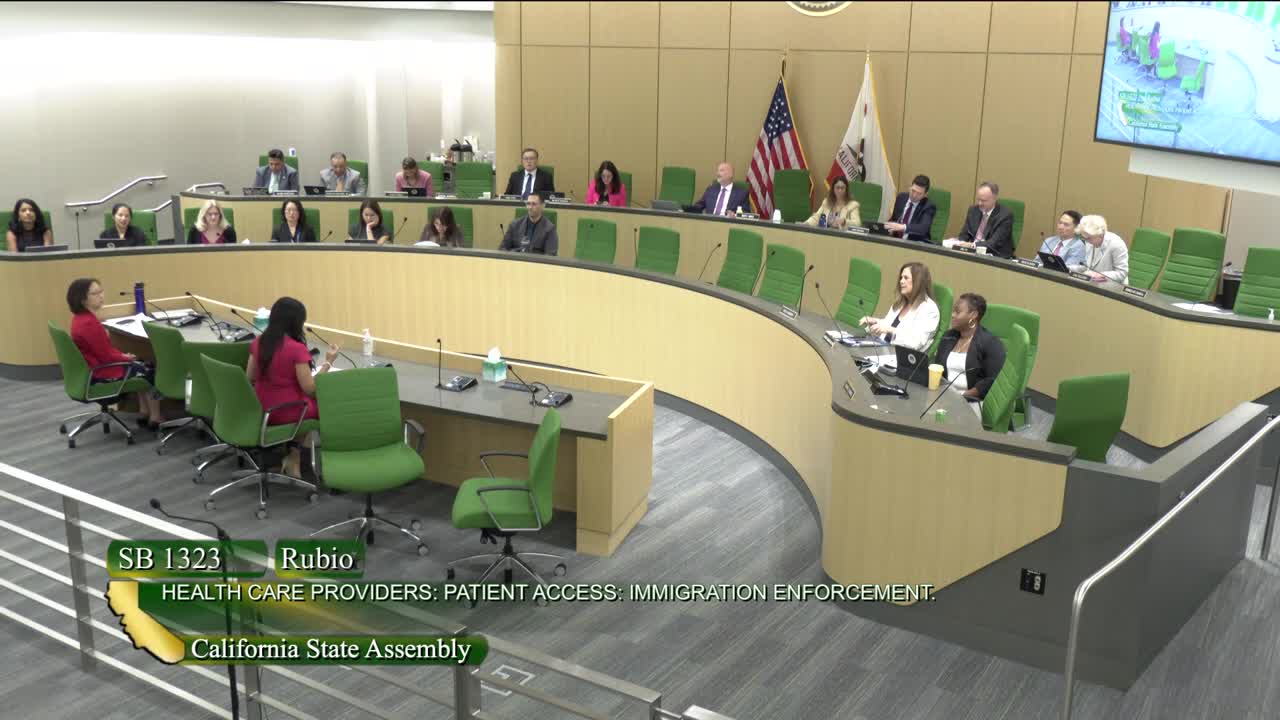 3MIN
Assembly Standing Committee on Appropriations
 5MIN
Assembly Standing Committee on Judiciary
 10MIN
Assembly Standing Committee on Health
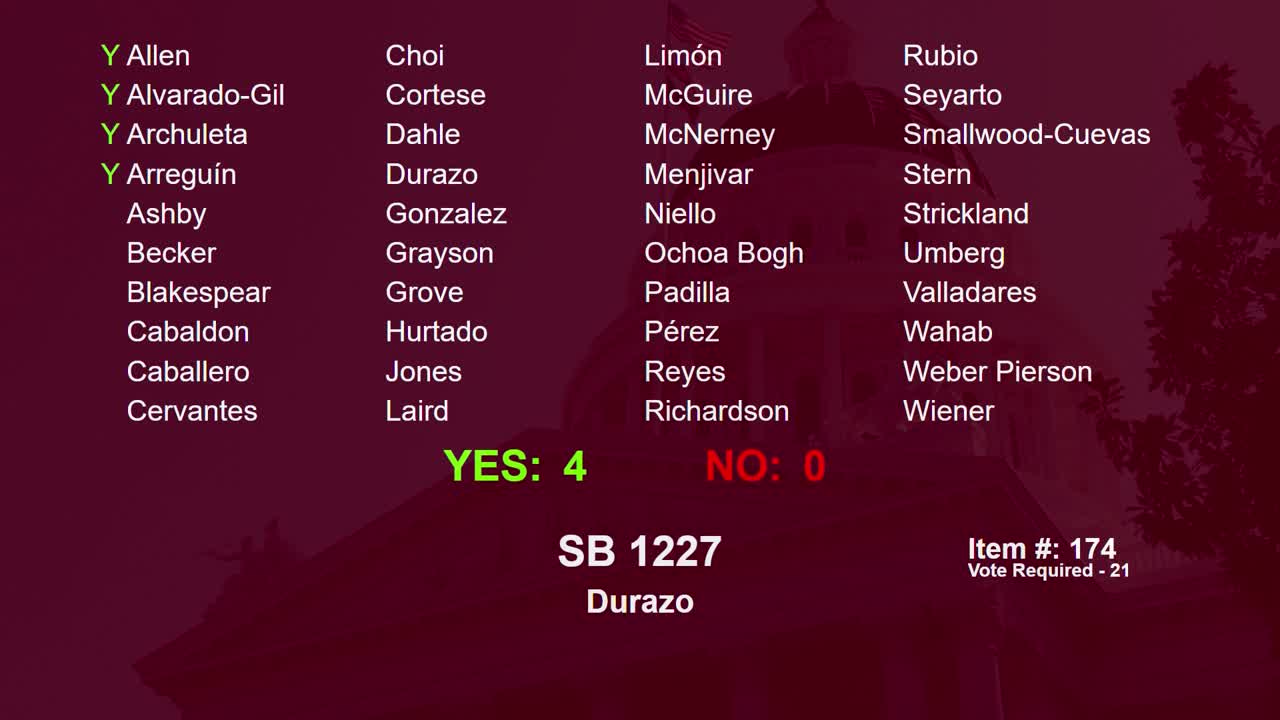 2MIN
Senate Floor
 5MIN
Senate Standing Committee on Judiciary
Bill Author
Bill Co-Author(s):