SB 1328: Public postsecondary education: Equity in Higher Education Act: campus contact.
- Session Year: 2025-2026
- House: Senate
- Latest Version Date: 2026-09-26
Current Status:
Passed
(2026-09-26: Chaptered by Secretary of State. Chapter 472, Statutes of 2026.)
Introduced
In Committee
Awaiting First Chamber Vote
Passed First Chamber
In Committee
Awaiting Second Chamber Vote
Passed Second Chamber
Enacted
What does this bill do?
The bill requires the Trustees of the California State University and community college boards to name an employee as a point of contact for LGBTQ+ and related faculty, staff, and students at branch campuses, satellite locations, or other non‑main sites, and asks the UC Regents to do the same. The contact’s name and information must be posted on the site’s website and directories; campuses can appoint a local contact or have the main‑campus contact hold regular office hours at the site; and that contact is not the campus’s Title IX coordinator, is not required to report sexual harassment or violence, and must keep information confidential unless the person agrees.
The summary is provided by generative AI which can make mistakes. For original language, please view the details in the table below.
The Equity in Higher Education Act establishes the policy of the state to afford all persons, regardless of specified characteristics, including gender, gender identity, gender expression, and sexual orientation, equal rights and opportunities in the postsecondary educational institutions of the state. The act requires the Trustees of the California State University and the governing board of a community colleges district, and requests the Regents of the University of California, to designate an employee at each of their respective campuses as a point of contact for the needs of lesbian, gay, bisexual, asexual, pansexual, transgender, gender-nonconforming, intersex, and two-spirit faculty, staff, and students.
This bill would require the trustees and the governing board of a community college district, and would request the regents, to also designate an employee as a point of contact for the needs of the above-described faculty, staff, and students of a branch campus, satellite location, or site other than the main campus, as specified. The bill would define branch campus, satellite location, and main campus for this purpose. To the extent the bill would impose new duties on a community college district, the bill would impose a state-mandated local program.
The California Constitution requires the state to reimburse local agencies and school districts for certain costs mandated by the state. Statutory provisions establish procedures for making that reimbursement.
This bill would provide that, if the Commission on State Mandates determines that the bill contains costs mandated by the state, reimbursement for those costs shall be made pursuant to the statutory provisions noted above.
The Equity in Higher Education Act establishes the policy of the state to afford all persons, regardless of specified characteristics, including gender, gender identity, gender expression, and sexual orientation, equal rights and opportunities in the postsecondary educational institutions of the state. The act requires the Trustees of the California State University and the governing board of a community colleges district, and requests the Regents of the University of California, to designate an employee at each of their respective campuses as a point of contact for the needs of lesbian, gay, bisexual, asexual, pansexual, transgender, gender-nonconforming, intersex, and two-spirit faculty, staff, and students.
This bill would request the trustees, the regents, and the governing board of a community college district require the trustees and the governing board of a community college district, and would request the regents, to also designate an employee as a point of contact for the needs of the above-described faculty, staff, and students of any satellite, branch, or outreach center of a campus, as specified. a branch campus, satellite location, or site other than the main campus, as specified. The bill would define branch campus, satellite location, and main campus for this purpose. To the extent the bill would impose new duties on a community college district, the bill would impose a state-mandated local program.
The California Constitution requires the state to reimburse local agencies and school districts for certain costs mandated by the state. Statutory provisions establish procedures for making that reimbursement.
This bill would provide that, if the Commission on State Mandates determines that the bill contains costs mandated by the state, reimbursement for those costs shall be made pursuant to the statutory provisions noted above.
The Equity in Higher Education Act establishes the policy of the state to afford all persons, regardless of specified characteristics, including gender, gender identity, gender expression, and sexual orientation, equal rights and opportunities in the postsecondary educational institutions of the state. The act requires the Trustees of the California State University and the governing board of a community colleges district, and requests the Regents of the University of California, to designate an employee at each of their respective campuses as a point of contact for the needs of lesbian, gay, bisexual, asexual, pansexual, transgender, gender-nonconforming, intersex, and two-spirit faculty, staff, and students.
This bill would request the trustees, the regents, and the governing board of a community college district to also designate an employee as a point of contact for the needs of the above-described faculty, staff, and students of any satellite, branch, or outreach center of a campus, as specified.
(a)(1)The Trustees of the California State University and the governing board of a community college district shall designate an employee at each of their respective main campuses as a point of contact for the needs of lesbian, gay, bisexual, asexual, pansexual, transgender, gender-nonconforming, intersex, and two-spirit faculty, staff, and students at the respective main campus. At minimum, the name and contact information of that designated employee shall be published on the internet website for the respective main campus, and shall be included in any of the main campuss printed and online campus directories.
(2)(A)The Trustees of the California State University and the governing board of a community college district shall designate an employee as a point of contact for the needs of lesbian, gay, bisexual, asexual, pansexual, transgender, gender-nonconforming, intersex, and two-spirit faculty, staff, and students of a branch campus, satellite location, or site other than the main campus by complying with either of the following:
(i)Designating an additional employee under paragraph (1) for the branch campus, satellite location, or site other than the main campus.
(ii)Requiring the employee described in paragraph (1) for the main campus to hold virtual or in-person office hours every week, every month, or regularly as determined by the employee, at a branch campus, satellite location, or site other than the main campus.
(B)At minimum, the name and contact information of the employee described in subparagraph (A) shall be published on the internet website for the branch campus, satellite location, or site other than the main campus, and shall be included in any printed and online directories for the branch campus, satellite location, or site other than the main campus.
(3)For purposes of this subdivision, the following definitions apply:
(A)Branch campus means a site other than the main campus or satellite location.
(B)Main campus means the campuss sole or primary teaching location.
(C)Satellite location means an auxiliary classroom or teaching site within 50 miles of the main campus or a branch campus serving at least 100 students for at least one term. Satellite location does not include a site whose primary purpose is providing health care services, clinical training, research activities, or telehealth services, and that is not primarily used for classroom instruction. Satellite location does not include a dual enrollment program offered in partnership with a local educational agency that enrolls pupils in kindergarten or grades 1 to 12, inclusive. Satellite location does not include postsecondary educational classes for inmates of institutions or facilities under the jurisdiction of the Department of Corrections and Rehabilitation.
(b)An employee designated as a point of contact pursuant to subdivision (a) shall not be considered a responsible employee for purposes of Section 66281.8 or Title IX of the federal Education Amendments of 1972 (20 U.S.C. Sec. 1681, et seq.). An employee designated as a campus point of contact pursuant to subdivision (a) shall not disclose confidential information provided to them by faculty, staff, or students about any alleged act of sexual harassment, sexual violence, or discrimination without the prior written consent of the person who provided the information to the designated employee.
(c)An employee designated as a point of contact pursuant to subdivision (a) shall not be the campuss Title IX coordinator.
(d)The University of California is requested to comply with this section. This section shall apply to the University of California only to the extent that the Regents of the University of California, by appropriate resolution, make it applicable.
SEC. 2.If the Commission on State Mandates determines that this act contains costs mandated by the state, reimbursement to local agencies and school districts for those costs shall be made pursuant to Part 7 (commencing with Section 17500) of Division 4 of Title 2 of the Government Code.
(a)(1)The Trustees of the California State University and the governing board of a community college district shall designate an employee at each of their respective main campuses as a point of contact for the needs of lesbian, gay, bisexual, asexual, pansexual, transgender, gender-nonconforming, intersex, and two-spirit faculty, staff, and students at the respective main campus. At minimum, the name and contact information of that designated employee shall be published on the internet website for the respective main campus, and shall be included in any of the main campuss printed and online campus directories.
(2)(A)The Trustees of the California State University and the governing board of a community college district shall designate an employee as a point of contact for the needs of lesbian, gay, bisexual, asexual, pansexual, transgender, gender-nonconforming, intersex, and two-spirit faculty, staff, and students of a branch campus, satellite location, or site other than the main campus by complying with either of the following:
(i)Designating an additional employee under paragraph (1) for the branch campus, satellite location, or site other than the main campus.
(ii)Requiring the employee described in paragraph (1) for the main campus to hold virtual or in-person office hours every week, every month, or regularly as determined by the employee, at a branch campus, satellite location, or site other than the main campus.
(B)At minimum, the name and contact information of the employee described in subparagraph (A) shall be published on the internet website for the branch campus, satellite location, or site other than the main campus, and shall be included in any printed and online directories for the branch campus, satellite location, or site other than the main campus.
(3)For purposes of this subdivision, the following definitions apply:
(A)Branch campus means a site other than the main campus or satellite location.
(B)Main campus means the campuss sole or primary teaching location.
(C)Satellite location means an auxiliary classroom or teaching site within 50 miles of the main campus or a branch campus. campus serving at least 100 students for at least one term. Satellite location does not include a site whose primary purpose is providing health care services, clinical training, research activities, or telehealth services, and that is not primarily used for classroom instruction.
(D)Site means a main campus, branch campus, or satellite location.(b)An employee designated as a point of contact pursuant to subdivision (a) shall not be considered a responsible employee for purposes of Section 66281.8 or Title IX of the federal Education Amendments of 1972 (20 U.S.C. Sec. 1681, et seq.). An employee designated as a campus point of contact pursuant to subdivision (a) shall not disclose confidential information provided to them by faculty, staff, or students about any alleged act of sexual harassment, sexual violence, or discrimination without the prior written consent of the person who provided the information to the designated employee.
(c)An employee designated as a point of contact pursuant to subdivision (a) shall not be the campuss Title IX coordinator.
(d)The University of California is requested to comply with this section. This section shall apply to the University of California only to the extent that the Regents of the University of California, by appropriate resolution, make it applicable.
SEC. 2.If the Commission on State Mandates determines that this act contains costs mandated by the state, reimbursement to local agencies and school districts for those costs shall be made pursuant to Part 7 (commencing with Section 17500) of Division 4 of Title 2 of the Government Code.
(a)(1)The Trustees of the California State University and the governing board of a community college district shall designate an employee at each of their respective main campuses as a point of contact for the needs of lesbian, gay, bisexual, asexual, pansexual, transgender, gender-nonconforming, intersex, and two-spirit faculty, staff, and students at the respective main campus. At minimum, the name and contact information of that designated employee shall be published on the internet website for the respective main campus, and shall be included in any of the main campuss printed and online campus directories.
(2)(A)The Trustees of the California State University, the Regents of the University of California, University and the governing board of a community college district are requested to designate an employee as a point of contact for the needs of lesbian, gay, bisexual, asexual, pansexual, transgender, gender-nonconforming, intersex, and two-spirit faculty, staff, and students of any satellite, branch, or outreach center of a campus. At shall designate an employee as a point of contact for the needs of lesbian, gay, bisexual, asexual, pansexual, transgender, gender-nonconforming, intersex, and two-spirit faculty, staff, and students of a branch campus, satellite location, or site other than the main campus by complying with either of the following:
(i)Designating an additional employee under paragraph (1) for the branch campus, satellite location, or site other than the main campus.
(ii)Requiring the employee described in paragraph (1) for the main campus to hold virtual or in-person office hours every week, every month, or regularly as determined by the employee, at a branch campus, satellite location, or site other than the main campus.
(B)At minimum, the name and contact information of that designated employee the employee described in subparagraph (A) shall be published on the internet website for the satellite, branch, or outreach center of the campus, branch campus, satellite location, or site other than the main campus, and shall be included in any printed and online directories for the satellite, branch, or outreach center of the branch campus, satellite location, or site other than the main campus.
(3)For purposes of this subdivision, the following definitions apply:
(A)Branch campus means a site other than the main campus or satellite location.
(B)Main campus means the campuss sole or primary teaching location.
(C)Satellite location means an auxiliary classroom or teaching site within 50 miles of the main campus or a branch campus.
(D)Site means a main campus, branch campus, or satellite location.
(b)An employee designated as a campus point of contact pursuant to subdivision (a) shall not be considered a responsible employee for purposes of Section 66281.8. 66281.8 or Title IX of the federal Education Amendments of 1972 (20 U.S.C. Sec. 1681, et seq.). An employee designated as a campus point of contact pursuant to subdivision (a) shall not disclose confidential information provided to them by faculty, staff, or students about any alleged act of sexual harassment, sexual violence, or discrimination without the prior written consent of the person who provided the information to the designated employee.
(c)(1)Notice provided to an employee designated as a campus point of contact pursuant to subdivision (a), or a service provided by the designated employee, pursuant to this section regarding an alleged act of sexual harassment, sexual violence, or discrimination, shall not be construed as actual or constructive notice to the public postsecondary educational institution of that alleged act for purposes of investigations under Title IX of the Education Amendments of 1972 (20 U.S.C. Sec. 1681, et seq.).(2)Paragraph (1) shall only be construed in a manner that is consistent with Title IX of the Education Amendments of 1972 (20 U.S.C. Sec. 1681, et seq.).(c)An employee designated as a point of contact pursuant to subdivision (a) shall not be the campuss Title IX coordinator.
(d)The University of California is requested to comply with this section. This section shall apply to the University of California only to the extent that the Regents of the University of California, by appropriate resolution, make it applicable.SEC. 2.If the Commission on State Mandates determines that this act contains costs mandated by the state, reimbursement to local agencies and school districts for those costs shall be made pursuant to Part 7 (commencing with Section 17500) of Division 4 of Title 2 of the Government Code.
(a)(1)The Trustees of the California State University and the governing board of each a community college district shall designate an employee at each of their respective campuses as a point of contact for the needs of lesbian, gay, bisexual, asexual, pansexual, transgender, gender-nonconforming, intersex, and two-spirit faculty, staff, and students at the respective campus. At a minimum, the name and contact information of that designated employee shall be published on the internet website for the respective campus, and shall be included in any printed and online campus directories.
(2)The Trustees of the California State University, the Regents of the University of California, and the governing board of a community college district are requested to designate an employee as a point of contact for the needs of lesbian, gay, bisexual, asexual, pansexual, transgender, gender-nonconforming, intersex, and two-spirit faculty, staff, and students of any satellite, branch, or outreach center of a campus. At minimum, the name and contact information of that designated employee shall be published on the internet website for the satellite, branch, or outreach center of the campus, and shall be included in any printed and online directories for the satellite, branch, or outreach center of the campus.
(b)An employee designated as a campus point of contact pursuant to subdivision (a) shall not be considered a responsible employee for purposes of Section 66281.8. An employee designated as a campus point of contact pursuant to subdivision (a) shall not disclose confidential information provided to them by faculty, staff, or students about any alleged act of sexual harassment, sexual violence, or discrimination without the prior written consent of the person who provided the information to the designated employee.
(c)(1)Notice provided to an employee designated as a campus point of contact pursuant to subdivision (a), or a service provided by the designated employee, pursuant to this section regarding an alleged act of sexual harassment, sexual violence, or discrimination, shall not be construed as actual or constructive notice to the public postsecondary educational institution of that alleged act for purposes of investigations under Title IX of the Education Amendments of 1972 (20 U.S.C. Sec. 1681, et seq.).
(2)Paragraph (1) shall only be construed in a manner that is consistent with Title IX of the Education Amendments of 1972 (20 U.S.C. Sec. 1681, et seq.).
(d)The University of California is requested to comply with this section. This section shall apply to the University of California only to the extent that the Regents of the University of California, by appropriate resolution, make it applicable.
|
Date
|
Status
|
|---|---|
| Sep 26, 2026 | Chaptered by Secretary of State. Chapter 472, Statutes of 2026. |
| Sep 26, 2026 | Approved by the Governor. |
| Aug 28, 2026 | Enrolled and presented to the Governor at 4 p.m. |
| Aug 24, 2026 | Assembly amendments concurred in. (Ayes 30. Noes 8.) Ordered to engrossing and enrolling. |
| Aug 24, 2026 | Assembly amendments concurred in. (Ayes 30. Noes 8. Page 5692.) Ordered to engrossing and enrolling. |
| Aug 20, 2026 | In Senate. Concurrence in Assembly amendments pending. |
| Aug 20, 2026 | Read third time. Passed. (Ayes 61. Noes 13. Page 6303.) Ordered to the Senate. |
| Aug 20, 2026 | Read third time. Passed. Ordered to the Senate. |
| Aug 13, 2026 | Read second time. Ordered to third reading. |
| Aug 13, 2026 | From committee: Do pass. (Ayes 11. Noes 3.) (August 13). |
| Aug 13, 2026 | Assembly Rule 63 suspended. |
| Aug 5, 2026 | August 5 set for first hearing. Placed on suspense file. |
| Jun 25, 2026 | Read second time and amended. Re-referred to Com. on APPR. |
| Jun 24, 2026 | From committee: Do pass as amended and re-refer to Com. on APPR. (Ayes 7. Noes 3.) (June 23). |
| Jun 15, 2026 | From committee with author's amendments. Read second time and amended. Re-referred to Com. on HIGHER ED. |
| May 26, 2026 | Referred to Com. on HIGHER ED. |
| May 20, 2026 | In Assembly. Read first time. Held at Desk. |
| May 19, 2026 | Read third time. Passed. (Ayes 30. Noes 7.) Ordered to the Assembly. |
| May 19, 2026 | Read third time. Passed. (Ayes 30. Noes 7. Page 4355.) Ordered to the Assembly. |
| May 14, 2026 | Read second time. Ordered to third reading. |
| May 14, 2026 | From committee: Do pass. (Ayes 5. Noes 2.) (May 14). |
| May 14, 2026 | From committee: Do pass. (Ayes 5. Noes 2. Page 4273.) (May 14). |
| May 8, 2026 | Set for hearing May 14. |
| May 4, 2026 | May 4 hearing: Placed on APPR. suspense file. |
| Apr 24, 2026 | Set for hearing May 4. |
| Apr 22, 2026 | From committee: Do pass and re-refer to Com. on APPR. (Ayes 5. Noes 1.) (April 22). Re-referred to Com. on APPR. |
| Apr 22, 2026 | From committee: Do pass and re-refer to Com. on APPR. (Ayes 5. Noes 1. Page 4008.) (April 22). Re-referred to Com. on APPR. |
| Apr 13, 2026 | From committee with author's amendments. Read second time and amended. Re-referred to Com. on ED. |
| Apr 10, 2026 | Set for hearing April 22. |
| Mar 4, 2026 | Referred to Com. on ED. |
| Feb 23, 2026 | Read first time. |
| Feb 23, 2026 | From printer. May be acted upon on or after March 23. |
| Feb 20, 2026 | Introduced. To Com. on RLS. for assignment. To print. |
|
Date
|
Description
|
Location
|
Votes
|
|
|---|---|---|---|---|
| Aug 24, 2026 | Unfinished Business SB1328 Cervantes Concurrence | Senate Floor |
Passed |
|
| Aug 20, 2026 | SB 1328 Cervantes Senate Third Reading By Solache | Assembly Floor |
Passed |
|
| Aug 13, 2026 | Do pass. | Assembly Standing Committee on Appropriations |
Passed |
|
| Jun 23, 2026 | Do pass as amended and be re-referred to the Committee on [Appropriations] | Assembly Standing Committee on Higher Education |
Passed |
|
| May 19, 2026 | Senate 3rd Reading SB1328 Cervantes | Senate Floor |
Passed |
|
| May 14, 2026 | Do pass | Senate Standing Committee on Appropriations |
Passed |
|
| May 4, 2026 | Placed on suspense file | Senate Standing Committee on Appropriations |
Passed |
|
| Apr 22, 2026 | Do pass, but first be re-referred to the Committee on [Appropriations] | Senate Standing Committee on Education |
Passed |
This list shows positions taken on this bill by organizations on the date displayed, which is linked to the original source.
Positions by individuals are not included.
|
Organization
|
Position
|
Date
|
|---|---|---|
| Academic Senate California State University | ** Support | |
| Academic Senate California State University (ASCSU) | ** Support | |
| Alliance for Transyouth Liberation | ** Support | |
| California Legislative LGBTQ Caucus | ** Support | |
| CFT – a Union of Educators & Classified Professionals, AFT, AFL-CIO | ** Support | |
| Courage California | ** Support | |
| El/La Para TransLatinas | ** Support | |
| Equality California (Source) | ** Support | |
| Faculty Association Of California Community Colleges | ** Support | |
| Gender Affirming Professionals | ** Support | |
| LGBTQ+ Inclusivity, Visibility, and Empowerment | ** Support | |
| LGBTQ+ Inclusivity, Visibility, and Empowerment (LIVE) | ** Support | |
| Lyon-Martin Community Health Services | ** Support | |
| Pflag Danville-san Ramon Valley Chapter | ** Support | |
| PFLAG Sacramento | ** Support | |
| Public Counsel | ** Support | |
| Rainbow Families Action Bay Area | ** Support | |
| San Diego Pride | ** Support | |
| The Source Lgbt+ Center | ** Support | |
| The Translatin@ Coalition | ** Support | |
| University of California | ** Support |
SENATE RULES COMMITTEE Office of Senate Floor Analyses (916) 651-4171 | SB 1328 |
UNFINISHED BUSINESS
Bill No: SB 1328
Author: Cervantes (D)
Amended: 6/25/26
Vote: 21
SENATE EDUCATION COMMITTEE: 5-1, 4/22/26
AYES: Pérez, Cabaldon, Cortese, Gonzalez, Reyes
NOES: Choi
NO VOTE RECORDED: Ochoa Bogh
SENATE APPROPRIATIONS COMMITTEE: 5-2, 5/14/26
AYES: Cervantes, Cabaldon, Grayson, Richardson, Wahab
NOES: Seyarto, Dahle
SENATE FLOOR: 30-7, 5/19/26
AYES: Allen, Archuleta, Arreguín, Ashby, Becker, Blakespear, Cabaldon, Caballero, Cervantes, Cortese, Durazo, Gonzalez, Grayson, Hurtado, Laird, Limón, McGuire, McNerney, Menjivar, Padilla, Pérez, Reyes, Richardson, Rubio, Smallwood-Cuevas, Stern, Umberg, Wahab, Weber Pierson, Wiener
NOES: Alvarado-Gil, Choi, Dahle, Grove, Jones, Seyarto, Strickland
NO VOTE RECORDED: Niello, Ochoa Bogh, Valladares
ASSEMBLY FLOOR: 61-13, 8/20/26 - See last page for vote
SUBJECT: Public postsecondary education: Equity in Higher Education Act: campus contact
SOURCE: Equality California
DIGEST:
This bill requires the California State University (CSU) Trustees and each governing board of a community college district (CCD), and requests of the University of California (UC) Regents, to designate an employee as a point of contact for the needs of lesbian, gay, bisexual, asexual, pansexual, transgender, gender-nonconforming, intersex, and two-spirit faculty, staff, and students at a branch campus, satellite location, or site other than the main campus.
Assembly Amendments
- (1) remove the definition of a “site”; (2) revise the definition for a “satellite location” to specify that it must be a location that serves at least 100 students for at least one term; and (3) specify that a “satellite location” does not include: a) a site whose primary purpose is providing health care services, clinical training, research activities, or telehealth services, and that is not primarily used for classroom instruction; b) a dual enrollment program offered in partnership with a local educational agency that enrolls pupils in kindergarten or grades 1 to 12; or c) postsecondary educational classes for inmates of institutions or facilities under the jurisdiction of the Department of Corrections and Rehabilitation.
ANALYSIS:
Existing federal law:
- Establishes Title IX, providing that, in part, “no person in the United States shall, on the basis of sex, be excluded from participation in, be denied the benefits of, or be subjected to discrimination under any educational program or activity receiving Federal financial assistance.” (United States Code (USC) Title 20, Chapter 38, § 1681 (colloquially known as Title IX))
- Provides for various exemptions from these provisions, including for fraternities and sororities, military institutions, institutions that are traditionally male or female, and institutions controlled by religious organizations. (USC Title 20, Chapter 38, § 1681)
- Outlines the required response, pursuant to Title IX, of a postsecondary higher education institution when the institution is made aware of an alleged sexual harassment incident on campus, which include a requirement for a formal complaint, a grievance procedure for an investigation into whether the incident based on a standard of evidence occurred, a hearing by which advisors are provided an opportunity to cross-examine, and a method of appealing the outcome of the grievance process. (Code of Federal Regulations (CFR) Title 34, Subtitle B, Chapter 1, Part 106, Subpart D, § 106.45)
- Defines sexual harassment as a form of sex discrimination and as conduct on the basis of sex that satisfies at least one of the following: a) quid pro quo harassment, b) hostile environment harassment, or c) specific offenses. (CFR, Title 34, Subtitle B, Chapter 1, Part 106, Subpart A, § 106.2)
Existing state law:
- Establishes the Equity in Higher Education Act (Act) to prohibit a person from being subjected to discrimination on the basis of disability, gender, gender identity, gender expression, nationality, race or ethnicity, religion, sexual orientation, or any other characteristic that is contained in the statutory definition of hate crimes, in any program or activity conducted by a postsecondary educational institution that receives, or benefits from, state financial assistance or enrolls pupils who receive state student financial aid. (Education Code (EC) § 66270)
- Requires the CSU Trustees and the governing board of a CCD, and would request of the UC Regents, to designate an employee at each of their respective campuses as a point of contact for the needs of lesbian, gay, bisexual, asexual, pansexual, transgender, gender-nonconforming, intersex, and two-spirit faculty, staff, and students. (EC § 66271.2)
- Prohibits an employee designated as a campus point of contact pursuant to #2 above from being considered a responsible employee, which means the employee does not have the duty to report sexual harassment to an appropriate school official who has that authority. (EC § 66271.2)
- Prohibits an employee designated as a campus point of contact pursuant to #2 above shall not disclose confidential information provided to them by faculty, staff, or students about any alleged act of sexual harassment, sexual violence, or discrimination without the prior written consent of the person who provided the information to the designated point of contact. (EC § 66271.2)
- Excludes notice to or the providing of services by the designated point of contact from being considered “actual or constructive notice” to the California community colleges (CCC), CSU, or UC alleging acts of sexual harassment, sexual violence, or discrimination, for purposes of investigations under Title IX. (EC § 66271.2)
- Defines “sexual harassment” as unwelcomed sexual advances, requests for sexual favors, and other verbal, visual, or physical conduct of a sexual nature made by someone from or in the work or educational setting in which specific conditions are met; this definition also includes sexual battery, sexual violence, and sexual exploitation. (EC § 66262.5)
- Defines “sexual violence” as physical sexual acts perpetrated against a person without the affirmed consent of the person, and these acts include rape and sexual battery. (EC § 66262.5)
- Provides that no person shall be subjected to discrimination on the basis of disability, gender, gender identity, gender expression, nationality, race or ethnicity, religion, sexual orientation, sex, color, ancestry, age, medical condition, genetic information, marital status, or any specified characteristic contained in the prohibition of hate crimes in any program or activity conducted by any postsecondary educational institution that receives, or benefits from, state financial assistance or enrolls students who receive state student financial aid. (EC § 66270)
- Provides that statutes related to UC (and most other aspects of the governance and operation of UC) are applicable only to the extent that the Regents of UC make such provisions applicable. (EC § 67400)
This bill:
- Requires the CSU Trustees and each governing board of a CCD, and requests of the UC Regents, to designate an employee as a point of contact for the needs of lesbian, gay, bisexual, asexual, pansexual, transgender, gender-nonconforming, intersex, and two-spirit faculty, staff, and students of a branch campus, satellite location, or site other than the main campus by complying with either of the following: a) designating an additional employee for the branch campus, satellite location, or site other than the main campus, or b) requiring the designated point of contact for the main campus to hold virtual or in-person office hours every week, every month, or regularly as determined by the employee, at a branch campus, satellite location, or site other than the main campus.
- Requires that the CSU Trustees and each governing board of a CCD publish the name and contact information of the designated point of contact on the internet website for the branch campus, satellite location, or site other than the main campus, and that this information be included in any printed and online directories for the branch campus, satellite location, or site other than the main campus.
- Clarifies that the existing requirement for the CSU Trustees and each governing board of a CCD, and would request of the UC Regents, to designate an employee as a point of contact for the needs of lesbian, gay, bisexual, asexual, pansexual, transgender, gender-nonconforming, intersex, and two-spirit faculty, staff, and students at each of their respective main campuses. Also clarifies that the existing requirement for the name and contact information of that designated employee shall be published on the internet website for the respective main campus, and shall be included in any of the main campus’ printed and online campus directories.
- Defines the following terms: a) “Branch campus” as a site other than the main campus or satellite location; b) “Main campus” as the campus’s sole or primary teaching location; and c) “Satellite location” as an auxiliary classroom or teaching site within 50 miles of the main campus or a branch campus serving at least 100 students for at least one term.
- Specifies that a “satellite location” does not include: a) a site whose primary purpose is providing health care services, clinical training, research activities, or telehealth services, and that is not primarily used for classroom instruction; b) a dual enrollment program offered in partnership with a local educational agency that enrolls pupils in kindergarten or grades 1 to 12; or c) postsecondary educational classes for inmates of institutions or facilities under the jurisdiction of the Department of Corrections and Rehabilitation.
- Requires that the employee designated as the point of contact for a main campus, branch campus, satellite location, or site other than the main campus shall not be the campus’s Title IX coordinator.
- Clarifies that the definition of those not considered responsible employees should align with Title IX (in addition to state law), and removes language that excludes notice to or the providing of services by the designated employee from being considered “actual or constructive notice” to the CCC, CSU, or UC alleging acts of sexual harassment, sexual violence, or discrimination, for purposes of investigations under Title IX.
Comments
- Need for this bill. According to the author, “LGBTQ+ students, especially LGBTQ+ women, face disproportionate amounts of sexual harassment and violence on college campuses. … This bill will expand upon the work done by the LGBTQ Caucus through Senate Bill (SB) 1491 (Eggman, Chapter 490, Statutes of 2024) … One gap in SB 1491 was that it did not cover satellite campuses. … This forces students at these sites to travel to the main campus of their institution to access confidential culturally competent care. … This can require several hours-long journeys for students depending on the location of their site. This creates serious barriers to care and support, especially for students in rural areas. … Every satellite campus is different. Some are down the street from the main campus, and some are in other counties entirely. … All LGBTQ+ students in California should be able to access support no matter if they take classes at a main campus or a satellite campus.”
- Point of contact is prohibited from being a responsible employee or from disclosing confidential information without prior written consent. Though current law does not define the specific duties and responsibilities of these designated employees, statute does indicate that these points of contact: a) serve the needs of the students specified in this bill, b) shall not be considered responsible employees, and c) shall not disclose confidential information provided to them about an alleged act of sexual harassment, sexual violence, or discrimination without the prior written consent of the person providing that information to the designated employee. Current law defines a “responsible employee” as an employee who has the authority to take action to redress sexual harassment or provide supportive measures to students, or who has the duty to report sexual harassment to an appropriate school authority who has that authority.
According to the author, these designated points of contact are intended to provide students with control over if, how, and when to start an investigation—as well as discretion over their personal stories—which is why SB 1491 prohibits these designated employees from being considered responsible employees and disclosing confidential information without an individual’s prior written consent. This bill specifically clarifies that these designated employees are prohibited from being Title IX coordinators because most Title IX coordinators are required to immediately report incidents of sexual harassment, sexual violence, or discrimination, and this may put an individual in a position to recount the harm perpetrated onto them before they may be ready to do so.
- Recent changes to Title IX regulations. On January 9, 2025, a federal judge issued a nationwide order invalidating the Biden Administration’s 2024 Title IX regulations. According to the National Women’s Law Center:
These 2024 Title IX regulations “had strengthened regulatory protections for students against sex-based harassment, anti-LGBTQI+ discrimination, and discrimination based on pregnancy or related conditions.” This order put the 2020 Title IX regulations back into effect.
In response to this change, this bill removes language that excludes notice to or the providing of services by the designated point of contact from being considered “actual or constructive notice” to the CCC, CSU, or UC alleging acts of sexual harassment, sexual violence, or discrimination, for purposes of investigations under Title IX. Because the 2024 Title IX regulations have been invalidated, the authority to determine who is confidential is re-relegated to the institutions, and the removal of this language is intended to clarify confusion regarding which employees are considered confidential.
- This bill requires a point of contact to be accessible to sites other than the main campus. This bill requires the CSU Trustees and each governing board of a CCD provide a designated employee as a point of contact for the needs of the specified faculty, staff, and students at a branch campus, satellite location, or site other than the main campus for these specified faculty, staff, and students. There are 20 and 83 of these locations for the CSU and CCC systems, respectively, according to their system offices. There is diversity among branch campuses, satellite locations, and sites other than the main campus within the CSU and CCC systems, as relates to size, available educational programming, distance from the main campus, and how students use these locations.
This bill defines the terms “branch campus” and “satellite location”, but each of the CCC, CSU, and UC system offices use terminology to describe their sites that is different from the definitions referenced in this bill. For example, the CCC Chancellor’s Office indicates that the CCC system uses the terms “college” and “educational center” (which are approved by the Board of Governors for the CCCs), which are both defined in the California Code of Regulations, and they do not use the terms defined in this bill, which are “branch campus” and “satellite location”.
This bill provides flexibility for CSU campuses and CCDs to comply with this provision at their branch campus or satellite location by either: (1) designating an additional employee for these additional sites, or (2) requiring the designated point of contact of the main campus to hold virtual or in-person office hours at a regular interval determined by the employee. It is likely that most CSU campuses and CCDs would comply with this bill by requiring the point of contact of the main campus to offer virtual office hours. This bill also requires the name and contact information of the designated point of contact to be published on the website for the branch campus, satellite location, or site other than the main campus.
Related/Prior Legislation
SB 1491 (Eggman, Chapter 490, Statutes of 2024) required: (1) the CSU Trustees and the governing board of each CCD to designate an employee at each of their respective campuses as a point of contact for the needs of lesbian, gay, bisexual, asexual, pansexual, transgender, gender-nonconforming, intersex and two-spirit faculty, staff, and students at the respective campus; (2) the point of contact to be a confidential employee, as specified; (3) the CSU Trustees and the governing board of each CCD to adopt and publish policies on harassment, intimidation, and bullying and include these policies within the rules and regulations governing student behavior; and (4) the California Student Aid Commission, beginning with the 2026-27 school year, to provide written notice to students who receive state financial aid whether their college has a religious school exemption from Title IX.
AB 2047 (Mike Fong, Chapter 693, Statutes of 2024) required the CSU and the UC to establish a systemwide Title IX office, a systemwide Office of Civil Rights (OCR), a position of civil rights officer, and establishes duties for the systemwide OCR, the civil rights coordinator, and Title IX coordinator.
AB 2048 (Mike Fong, Chapter 694, Statutes of 2024) required the CCC Chancellor, in consultation with stakeholders, to submit a report to the Legislature by December 1, 2025, with recommendations for establishing systemic campus reforms that effectively prevent, detect, and address sexual harassment on CCC campuses.
FISCAL EFFECT: Appropriation: No Fiscal Com.: Yes Local: Yes
According to the Assembly Appropriations Committee:
- Ongoing General Fund costs between approximately $300,000 and $450,000 for the UC to hire two to three additional staff to meet the requirements of this bill, particularly for satellite sites such as UC San Francisco Fresno and UC extension programs.
- Minor and absorbable costs for the CSU.
- Ongoing Proposition 98 General Fund costs, likely minor, for community college districts (CCDs) to have a designated point of contact as prescribed by the bill. According to the California Community Colleges Chancellor’s Office (CCCCO), while the CCDs statewide maintain 83 educational centers, which would likely fall under the definition of a branch or satellite campus under the bill, most CCDs will likely assign the same existing LGBTQ+ point of contact serving the main campus, significantly reducing any implementation costs.
SUPPORT: (Verified 8/20/26)
Equality California (source)
Academic Senate California State University
Alliance for TransYouth Liberation
California Legislative LGBTQ Caucus
CFT – A Union of Educators & Classified Professionals, AFT, AFL-CIO
Courage California
El/La Para TransLatinas
Gender Affirming Professionals
LGBTQ+ Inclusivity, Visibility, and Empowerment
Lyon-Martin Community Health Services
PFLAG Danville-San Ramon Valley Chapter
PFLAG Sacramento
Public Counsel
Rainbow Families Action Bay Area
San Diego Pride
The Source LGBT+ Center
The TransLatin@ Coalition
OPPOSITION: (Verified 8/20/26)
None received
ASSEMBLY FLOOR: 61-13, 8/20/26
AYES: Addis, Aguiar-Curry, Ahrens, Alvarez, Arambula, Ávila Farías, Bains, Bauer-Kahan, Bennett, Berman, Boerner, Bonta, Bryan, Calderon, Caloza, Carrillo, Connolly, Elhawary, Fong, Gabriel, Garcia, Gipson, Mark González, Haney, Harabedian, Hart, Irwin, Jackson, Kalra, Krell, Lee, Lowenthal, McKinnor, Muratsuchi, Nguyen, Ortega, Pacheco, Papan, Patel, Pellerin, Petrie-Norris, Quirk-Silva, Ramos, Ransom, Celeste Rodriguez, Michelle Rodriguez, Rogers, Blanca Rubio, Schiavo, Schultz, Sharp-Collins, Solache, Soria, Stefani, Valencia, Wallis, Ward, Wicks, Wilson, Zbur, Rivas
NOES: Davies, DeMaio, Dixon, Ellis, Jeff Gonzalez, Hadwick, Johnson, Lackey, Macedo, Patterson, Sanchez, Ta, Tangipa
NO VOTE RECORDED: Alanis, Castillo, Chen, Flora, Hoover
Prepared by: Michelle Nguyen / ED. / (916) 651-4105
8/20/26 13:53:08
**** END ****
SENATE THIRD READING
STR Bill Id:SB 1328
Author:(Cervantes)
As Amended Ver:June 25, 2026
Majority vote
SUMMARY
Requires a non-main campus location of the California Community Colleges (CCC) and the California State University (CSU), and request a non-main campus location of the University of California (UC) to designate a confidential point of contact for lesbian, gay, bisexual, asexual, pansexual, transgender, gender-nonconforming, intersex, and two-spirit (LGBTQ+) students and faculty for the non-main campus location, as defined.
Major Provisions
- Requires the Trustees of the CSU and the governing board of a community college to designate an employee as the point of contact for the needs of LGBTQ+ faculty, staff, and students of a branch campus, satellite location, or site other than a main campus. In order to "designate" an employee, the location must do one of the following:
- Designate an additional employee – beyond the person identified at the main campus location – for the branch campus, satellite location, or site other than the main campus; and,
- Require the main campus LGBTQ+ designated employee to hold virtual or in-person office hours at a branch campus, satellite location, or site other than the main campus. The frequency of the office hours will either be weekly, monthly, or at a frequency as determined by the main campus LGBTQ+ designated employee.
- Requires the Trustees of the CSU and the governing board of a community college to provide the name and contact information of the LGBTQ+ designated employee on the website for the branch campus, satellite location, or site other than the main campus. Further, requires the name and contact information of the LGBTQ+ designated employee to be included in the printed and online directories of the branch campus, satellite location, or site other than the main campus.
- Clarifies the LGBTQ+ designated employee regardless of their location (main or non-main campus) is considered exempt from the reporting requirements of Title IX and the campus-based sexual harassment requirements pursuant to Education Code Section 66281.8. Furthermore, the LGBTQ+ designated employee is not permitted to share information given to them by faculty, staff, and students about any alleged act of sexual harassment, sexual violence, or discrimination unless the designee has received expressed written permission from the person who shared information.
- Requires the LGBTQ+ designated employee to be someone other than the campus’ Title IX coordinator.
- Defines the following:
- "Branch campus" as a site other than a main campus or satellite location;
- "Main campus" as the campus's sole or primary teaching location; and,
- "Satellite location" as an auxiliary classroom or teaching site within 50 miles of the main campus or branch campus serving at least 100 students for at least one academic term. "Satellite location" does not include site whose primary purpose is providing health care services, clinical training, research activities, or telehealth services, and that is not primarily used for classroom instruction. "Satellite location" does not include any satellite location that offers dual enrollment programs. "Satellite Location" does not include locations under the jurisdiction of the Department of Corrections and Rehibition that offer postsecondary education courses to justice-involved students.
- Requests the University of California (UC) to implement the above pursuant to a resolution adopted by the UC Board of Regents.
COMMENTS
Implementation of SB 1491 (Eggman), Chapter 490, Statutes of 2024. In 2024, as part of the "A Call to Action" bill package, Senator Eggman introduced SB 1491 which required campuses of the CSU and CCC to designate an employee to be a point of contact for LGBTQ+ staff and to ensure this person was considered exempt from the reporting requirements of both Title IX and the institution's procedures for reporting incidents of sexual harassment. According to the background documents provided to the Committee by the author, "100% of CSU campuses and 98% of California Community College Campuses are now in compliance in regards to their main campuses." Each UC campus has LGBTQ+ centers with multiple dedicated staff to assist LGBTQ+ students, faculty, and staff; however, the UC has not published which staff member is confidential. Furthermore, Committee staff were unable to determine which employees are considered confidential as the UC has not provided to the Legislature their annual report in compliance with Education Code Section 66282.2 on system’s handling of sexual harassment complaints.
SB 1328 (Cervantes) builds upon the success of SB 1491 to ensure LGBTQ+ identifying students and employees at non-main campus educational sites operated by the public higher education institutions are provided a confidential point of contact.
Clarity on "confidential employee or non-responsible employee." In an implementation memorandum published by the Chancellor’s Office of the CCC, community colleges were informed that SB 1491 (Eggman) required that confidential designated employee be, "from duties of a "responsible employee" for purposes of sexual harassment reporting consistent with Education Code Section 66281.8."[1] However, this guidance is not fully accurate as the designated employee is also exempt from reporting Title IX related incidents to the Title IX coordinator. Committee staff have learned from an array of community college staff, that additional guidance from legal counsels at the community colleges have suggested that anyone in the college's LGBTQ+ center may also be considered confidential if they provide services to a LGBTQ+ student or employee.
At the time of publication of SB 1491 (Eggman), the Federal Government had issued new 2024 Title IX regulations which included additional clauses as to who could be considered "confidential" or exempt from the reporting requirement listed in the Title IX regulations. SB 1491 (Eggman) was written to comply with the new Title IX regulations; however, since the 2024 Title IX regulations have been vacated by the Federal courts, the term "confidential employee" is no longer defined by the current Title IX regulations. In Code of Regulations Title 32, Subtitle B, Chapter 1, Part 106, Subpart D, Section 106.30 defines "Actual Knowledge" as either a notification to a Title IX coordinator or a notification to an administrator who has authority to institute corrective measures on behalf of the college or university. Actual knowledge is when a college or university has a duty to address the allegation of sexual harassment. By this definition any employee would not be considered "mandated" to report allegations of sexual harassment; however, the Title IX coordinator or an administrator with oversight over civil rights compliance would be duty bound to address, investigate, and remediate incidents of sexual harassment.
The confidential exemptions contained in SB 1328 (Cervantes) for the designated employee for LGBTQ+ employees and students extend only to reporting requirements of incidents pertaining to Title IX violations or sexual harassment as defined by the Sex Equity in Education Act. This reporting exemption is limited to the two pathways by which an employee may be required by law to report an incident of sexual harassment to the institution; however, the reporting exemption does not extend to mandated reporting laws for crimes nor crimes against children.
Non-main campuses of the CCC, CSU, and UC. Each public higher education system in California has different names for their non-main campus locations within their respective system. According to the CSU Physical Campus Master Plan, there are nine off-campus centers (satellite locations) which offer educational services to students. In past Committee analyses, the CCC identified 83 non-main campus locations that would be affected by the measure, and the UC identified 390 sites. Committee staff note the sites identified by the UC were based on a different definition of "Satellite Campus" and the author has worked with the UC to reduce the number of sites the measure would impact.
According to the Author
As articulated by the author, "LGBTQ+ students, especially LGBTQ+ women, face disproportionate amounts of sexual harassment and violence on college campuses. Without access to culturally competent support, this issue will continue to worsen. Geography should not determine whether our students have a safe and supportive learning environment at our public institutions of higher education. Whether they are on the main campus or a satellite site, our students deserve the right to further your education without fear of discrimination, harassment, or violence. This bill will expand upon the work done by the LGBTQ Caucus through Senate Bill 1491 (Eggman, 2024) and further ensure that there is a point of contact for our LGBTQ+ students, faculty, and staff at satellite or branch campuses of the University of California, California State University, and community colleges."
Arguments in Support
As the sponsor of the measure, the California Legislative LGBTQ Caucus expresses their support as "in 2024, Governor Newsom signed SB 1491 (Eggman), which required the California State University (CSU) and California Community Colleges (CCC) systems to designate confidential LGBTQ+ liaisons at each campus. While both higher education systems are expected to achieve full compliance this spring semester, the law did not extend to satellite or auxiliary campus locations. There are more than 100 satellite campuses across the CSU and CCC systems that currently lack a dedicated confidential liaison for LGBTQ+ students. As a result, students at these sites must often travel to their institution’s main campus to access culturally competent and confidential support services. For many students, particularly those in rural communities, this can mean traveling several hours, creating significant barriers to accessing care. SB 1328 addresses existing gaps in protections by requiring public colleges and universities to designate an employee at each satellite or auxiliary campus to serve as a confidential LGBTQ+ liaison and to publish that individual's contact information in publicly accessible materials for students, faculty, and staff."
Arguments in Opposition
None on file.
FISCAL COMMENTS
According to the Assembly Committee on Appropriations:
- Ongoing General Fund costs between approximately $300,000 and $450,000 for the UC to hire two to three additional staff to meet the requirements of this bill, particularly for satellite sites such as UC San Francisco Fresno and UC extension programs.
- Minor and absorbable costs for the CSU.
- Ongoing Proposition 98 General Fund costs, likely minor, for community college districts (CCDs) to have a designated point of contact as prescribed by the bill. According to the California Community Colleges Chancellor's Office (CCCCO), while the CCDs statewide maintain 83 educational centers, which would likely fall under the definition of a branch or satellite campus under the bill, most CCDs will likely assign the same existing LGBTQ+ point of contact serving the main campus, significantly reducing any implementation costs.
VOTES
SENATE FLOOR: 30-7-3
YES: Allen, Archuleta, Arreguín, Ashby, Becker, Blakespear, Cabaldon, Caballero, Cervantes, Cortese, Durazo, Gonzalez, Grayson, Hurtado, Laird, Limón, McGuire, McNerney, Menjivar, Padilla, Pérez, Reyes, Richardson, Rubio, Smallwood-Cuevas, Stern, Umberg, Wahab, Weber Pierson, Wiener
NO: Alvarado-Gil, Choi, Dahle, Grove, Jones, Seyarto, Strickland
ABS, ABST OR NV: Niello, Ochoa Bogh, Valladares
ASM HIGHER EDUCATION: 7-3-0
YES: Fong, Boerner, Jackson, Muratsuchi, Patel, Celeste Rodriguez, Sharp-Collins
NO: DeMaio, Jeff Gonzalez, Tangipa
ASM APPROPRIATIONS: 11-3-1
YES: Wicks, Arambula, Calderon, Caloza, Fong, Mark González, Krell, Pacheco, Pellerin, Sharp-Collins, Solache
NO: Dixon, Ta, Tangipa
ABS, ABST OR NV: Hoover
UPDATED
VERSION: June 25, 2026
CONSULTANT: Ellen Cesaretti-Monroy / HIGHER ED. / (916) 319-3960 FN: 0003560
https://www.cccco.edu/-/media/CCCCO-Website/docs/memo/ess-25-27-sb-1491-implementation-a11y.pdf ↑
Date of Hearing: August 5, 2026
ASSEMBLY COMMITTEE ON APPROPRIATIONS
Buffy Wicks, Chair
SBPCA Bill Id:SB 1328
Author:(Cervantes) – As Amended Ver:June 25, 2026
Policy Committee: | Higher Education | Vote: | 7 - 3 |
|
| ||
|
|
Urgency: No State Mandated Local Program: Yes Reimbursable: Yes
SUMMARY:
This bill modifies existing protections for lesbian, gay, bisexual, asexual, pansexual, transgender, gender-nonconforming, intersex, and two-spirit (LGBTQ+) faculty, staff, and students in higher education by requiring the California State University (CSU) and the California Community Colleges (CCC), and requesting the University of California (UC), to designate an employee as the point of contact for the needs of such individuals attending or working at a branch campus, satellite location, or site other than the main campus, as defined. The bill also bars a campus of the CSU, CCC, or UC from designating a campus’s Title IX coordinator as its designated point of contact pursuant to this bill. Lastly, the bill prohibits a designated employee from disclosing information shared with them without consent.
FISCAL EFFECT:
- Ongoing General Fund costs between approximately $300,000 and $450,000 for the UC to hire two to three additional staff to meet the requirements of this bill, particularly for satellite sites such as UC San Francisco Fresno and UC extension programs.
- Minor and absorbable costs for the CSU.
- Ongoing Proposition 98 General Fund costs, likely minor, for community college districts (CCDs) to have a designated point of contact as prescribed by the bill. According to the California Community Colleges Chancellor’s Office (CCCCO), while the CCDs statewide maintain 83 educational centers, which would likely fall under the definition of a branch or satellite campus under the bill, most CCDs will likely assign the same existing LGBTQ+ point of contact serving the main campus, significantly reducing any implementation costs.
COMMENTS:
- Purpose. According to the author:
Geography should not determine whether our students have a safe and supportive learning environment at our public institutions of higher education. Whether they are on the main campus or a satellite site, our students deserve the right to further your education without fear of discrimination, harassment, or violence. This bill will expand upon the work done by the LGBTQ Caucus through Senate Bill 1491 (Eggman, 2024) and further ensure that there is a point of contact for our LGBTQ+ students, faculty, and staff at satellite or branch campuses of the University of California, California State University, and community colleges.
- Background. Points of Contact and Policies. Current law, established by Chapter 490, Statutes of 2024 (SB 1491, Eggman), requires the CSU and CCC, and requests the UC, to designate a point of contact for LGBTQ+ students and to adopt policies regarding harassment. This bill requires the CSU and CCC, and requests the UC, to designate a point of contact, other than the campus’s Title IX coordinator, for LGBTQ+ individuals who may be at a site other than the main campus, defined as the campus’s sole or primary teaching location. This designated staff person may be the existing LGBTQ+ point of contact for an institution’s main campus, provided the person holds regular virtual or in-person office hours.
The Budget Act of 2021 provided $10 million to the CCCs to support LGBTQ+ students and authorized the funding to be used to create safe and inclusive spaces for LGBTQ+ students.
Equity in Higher Education Act and Title IX. State law, under the Equity in Higher Education Act, prohibits a person from being subjected to discrimination on the basis of specified attributes, including sex, in any program or activity conducted by an institution of higher education that receives, or benefits from, state financial assistance or enrolls students who receive state student financial aid. Federal law, under Title IX of the Education Amendments of 1972, prohibits a person, on the basis of sex, from being excluded from participation in, being denied the benefits of, or being subject to discrimination under, any education program or activity receiving federal financial assistance.
Analysis Prepared by: Aaron Heredia / APPR. / (916) 319-2081
Date of Hearing: June 23, 2026
ASSEMBLY COMMITTEE ON HIGHER EDUCATION
Mike Fong, Chair
SBPCA Bill Id:SB 1328
Author:(Cervantes) – As Amended Ver:June 15, 2026
SENATE VOTE: 30-7
SUBJECT: Public postsecondary education: Equity in Higher Education Act: campus contact
SUMMARY: Requires a non-main campus location of the California Community Colleges (CCC) and the California State University (CSU), and request a non-main campus location of the University of California (UC) to designate a confidential point of contact for lesbian, gay, bisexual, asexual, pansexual, transgender, gender-nonconforming, intersex, and two-spirit (LGBTQ+) students and faculty for the non-main campus location, as defined. Specifically, this bill:
- Requires the Trustees of the CSU and the governing board of a community college to designate an employee as the point of contact for the needs of LGBTQ+ faculty, staff, and students of a branch campus, satellite location, or site other than a main campus. In order to “designate” an employee, the location must do one of the following:
- Designate an additional employee – beyond the person identified at the main campus location – for the branch campus, satellite location, or site other than the main campus; and,
- Require the main campus LGBTQ+ designated employee to hold virtual or in-person office hours at a branch campus, satellite location, or site other than the main campus. The frequency of the office hours will either be weekly, monthly, or at a frequency as determined by the main campus LGBTQ+ designated employee.
- Requires the Trustees of the CSU and the governing board of a community college to provide the name and contact information of the LGBTQ+ designated employee on the website for the branch campus, satellite location, or site other than the main campus. Further, requires the name and contact information of the LGBTQ+ designated employee to be included in the printed and online directories of the branch campus, satellite location, or site other than the main campus.
- Clarifies the LGBTQ+ designated employee regardless of their location (main or non-main campus) is considered exempt from the reporting requirements of Title IX and the campus-based sexual harassment requirements pursuant to Education Code Section 66281.8. Furthermore, the LGBTQ+ designated employee is not permitted to share information given to them by faculty, staff, and students about any alleged act of sexual harassment, sexual violence, or discrimination unless the designee has received expressed written permission from the person who shared information.
- Requires the LGBTQ+ designated employee to be someone other than the campus’ Title IX coordinator.
- Defines the following:
- “Branch campus” as a site other than a main campus or satellite location;
- “Main campus” as the campus’s sole or primary teaching location; and,
- “Satellite location” as an auxiliary classroom or teaching site within 50 miles of the main campus or branch campus serving at least 100 students for at least one academic term. “Satellite location” does not include site whose primary purpose is providing health care services, clinical training, research activities, or telehealth services, and that is not primarily used for classroom instruction.
- Requests the University of California (UC) to implement the above pursuant to a resolution adopted by the UC Board of Regents.
- States if the Commission on State Mandates determines there is a cost associated with the implementation of the measure, the State will reimburse local agencies and school districts for the determined cost.
EXISTING LAW: Federal law.
- No person in the United States will, on the basis of sex, be excluded from participation in, be denied the benefits of, or be subjected to discrimination under any education program or activity receiving Federal financial assistance except for specified circumstances including membership of fraternities and sororities (United States Code Title 20, Chapter 38, Section 1681 (Title IX)).
- Requires a postsecondary education institution, that receives federal funding, to respond promptly to address sexual harassment in an education program or activity, once the institution has actual knowledge of the harassment. Actual knowledge means the notice of sexual harassment or allegation to the Title IX coordinator or any official who has the authority to institute corrective measures (Federal Code of Regulations Title 34, Subtitle B, Chapter 1, Subpart D, Section 106.44 (a) and 160.30 (a).
State law.
- Defines “sexual orientation” for the Equity in Higher Education Act as, a person’s physical, emotional, and romantic attraction to other peoples. Sexual orientation for purposes of the Equity in Higher Education includes heterosexuality, homosexuality, bisexuality, asexuality, and pansexuality (Education Code (EDC) Section 66262.7).
- Requests the Trustees of the CSU, the Regents of the UC, and each governing board of the community colleges to designate an employee at each campus to be the point of contact for lesbian, gay, bisexual, asexual, pansexual, transgender, gender-nonconforming, intersex, and two-spirit faculty, staff, and students at the respective campuses. It is further requested that the contact information for the designated employee be included on the campus website and in the campus directories. Exempts the designated person from the institution’s mandated reporting requirements for purposes of Title IX and the institution’s sexual harassment obligations under state law, unless the designated person receives explicit written consent from the person who shared the information (EDC Section 66271.2).
- Establishes requirements for how higher education institutions in California are to adjudicate sexual harassment complaints. The provision stipulate most academic or student life employees on campus are considered mandatory reporters with very few exemptions including but not limited to therapist, UC CARE employees, CSU victim advocates, or person’s whose confidentiality is mandated by law (EDC Section 66281.8).
FISCAL EFFECT: According to the Senate Committee on Appropriations:
- The Chancellor’s Office estimates ongoing Proposition 98 General Fund costs of $996,000 each year for community college districts to designate an employee at each of their satellite campuses as a point of contact for the needs of these students. This estimate assumes a cost of $12,000 for each of the 83 educational centers located throughout the state. These costs could be lower if an existing college point of contact is able to serve the same role at an educational center.
- The UC estimates ongoing General Fund costs of $4.8 million each year. This estimate assumes that the bill would apply to 390 sites throughout the state which includes medical clinics, hospitals, and research sites, and the equivalent time base of 30 full-time employees across the system.
- The CSU estimates that the cost for CSU to comply with this bill would be minor and absorbable within existing resources.
COMMENTS: Author’s statement. As articulated by the author, “LGBTQ+ students, especially LGBTQ+ women, face disproportionate amounts of sexual harassment and violence on college campuses. Without access to culturally competent support, this issue will continue to worsen. Geography should not determine whether our students have a safe and supportive learning environment at our public institutions of higher education. Whether they are on the main campus or a satellite site, our students deserve the right to further your education without fear of discrimination, harassment, or violence. This bill will expand upon the work done by the LGBTQ Caucus through Senate Bill 1491 (Eggman, 2024) and further ensure that there is a point of contact for our LGBTQ+ students, faculty, and staff at satellite or branch campuses of the University of California, California State University, and community colleges.”
Implementation of SB 1491 (Eggman), Chapter 490, Statutes of 2024. In 2024, as part of the “A Call to Action” bill package, Senator Eggman introduced SB 1491 which required campuses of the CSU and CCC to designate an employee to be a point of contact for LGBTQ+ staff and to ensure this person was considered exempt from the reporting requirements of both Title IX and the institution’s procedures for reporting incidents of sexual harassment. According to the background documents provided to the Committee by the author, “100% of CSU campuses and 98% of California Community College Campuses are now in compliance in regards to their main campuses.” Each UC campus has LGBTQ+ centers with multiple dedicated staff to assist LGBTQ+ students, faculty, and staff; however, the UC has not published which staff member is confidential. Furthermore, Committee staff were unable to determine which employees are considered confidential as the UC has not provided to the Legislature their annual report in compliance with Education Code Section 66282.2 on system’s handling of sexual harassment complaints.
SB 1328 (Cervantes) builds upon the success of SB 1491 to ensure LGBTQ+ identifying students and employees at non-main campus educational sites operated by the public higher education institutions are provided a confidential point of contact.
Clarity on “confidential employee or non-responsible employee.” In an implementation memorandum published by the Chancellor’s Office of the CCC, community colleges were informed that SB 1491 (Eggman) required that confidential designated employee be, “from duties of a “responsible employee” for purposes of sexual harassment reporting consistent with Education Code Section 66281.8.”[1] However, this guidance is not fully accurate as the designated employee is also exempt from reporting Title IX related incidents to the Title IX coordinator. Committee staff have learned from an array of community college staff, that additional guidance from legal counsels at the community colleges have suggested that anyone in the college’s LGBTQ+ center may also be considered confidential if they provide services to a LGBTQ+ student or employee.
At the time of publication of SB 1491 (Eggman), the Federal Government had issued new 2024 Title IX regulations which included additional clauses as to who could be considered “confidential” or exempt from the reporting requirement listed in the Title IX regulations. SB 1491 (Eggman) was written to comply with the new Title IX regulations; however, since the 2024 Title IX regulations have been vacated by the Federal courts, the term “confidential employee” is no longer defined by the current Title IX regulations. In Code of Regulations Title 32, Subtitle B, Chapter 1, Part 106, Subpart D, Section 106.30 defines “Actual Knowledge” as either a notification to a Title IX coordinator or a notification to an administrator who has authority to institute corrective measures on behalf of the college or university. Actual knowledge is when a college or university has a duty to address the allegation of sexual harassment. By this definition any employee would not be considered “mandated” to report allegations of sexual harassment; however, the Title IX coordinator or an administrator with oversight over civil rights compliance would be duty bound to address, investigate, and remediate incidents of sexual harassment.
SB 1328 (Cervantes) eliminates the confusion regarding who and to what extent the designated employee for LGBTQ+ faculty, staff, and students are exempt from reporting requirements; and expands the liaison coverage to include non-main campus sites operated by the CCC, CSU, and UC.
To ensure the language complies with current Title IX regulations, SB 1328 (Cervantes) prevents the campus from designating the Title IX coordinator as the LGBTQ+ designated employee.
The confidential exemptions contained in SB 1328 (Cervantes) for the designated employee for LGBTQ+ employees and students extend only to reporting requirements of incidents pertaining to Title IX violations or sexual harassment as defined by the Sex Equity in Education Act. This reporting exemption is limited to the two pathways by which an employee may be required by law to report an incident of sexual harassment to the institution; however, the reporting exemption does not extend to mandated reporting laws for crimes nor crimes against children.
Non-main campuses of the CCC, CSU, and UC. Each public higher education system in California has different names for their non-main campus locations within their respective system. According to the CSU Physical Campus Master Plan, there are nine off-campus centers (satellite locations) which offer educational services to students. As indicated in the Fiscal Effect section of this analysis, the CCC identified 83 non-main campus locations that would be affected by the measure, and the UC identified 390 sites. Since the publication of the Senate Committee on Appropriation’s analysis the author has narrowed the scope of the definition of a satellite location to exclude – (1) locations with less than 100 students being served in a single term; and (2) locations that provide health care services, clinical training, research activities, telehealth services, and that is not primarily used for classroom instruction.
By adopting this definition, the author has addressed some of the concern raised in the Senate Education Committee’s analysis regarding the inclusion of K-12 students and justice involved students who are being educated at an off-main campus location that would not be conducive to the requirements of the measure. However, the possibility remains that dual enrollment programs and programs which provide educational resources to justice involved students could still be interpreted as part of the “satellite location” definition, if the program enrolls more than 100 students at a given site for an academic term. Since K-12 schools have different reporting requirements under Title IX, the designated employee may not be considered “confidential” pursuant to Federal Regulations for K-12 students but would be considered “confidential” for postsecondary education students. This could cause confusion and could result in the postsecondary education institutions and their K-12 partners inadvertently violating the reporting requirements for Title IX. Furthermore, postsecondary education institutions may face implementation barriers to offering a designated employee for students in educational programs offered to justice involved students at facilities run by the California Department of Corrections.
To address these concerns, the Committee has suggested and the author has agreed to take amendments that exempts dual enrolment programs and any program that requires an institution to partner with the California Department of Corrections from the provision of the bill. The amendments are as follows:
- Amends Education Code Section 66271.1, subdivision (a), paragraph (3), subparagraph (C) to read as follows:
(C) “Satellite location” means an auxiliary classroom or teaching site within 50 miles of the main campus or a branch campus serving at least 100 students for at least one term. “Satellite location” does not include a site whose primary purpose is providing health care services, clinical training, research activities, or telehealth services, and that is not primarily used for classroom instruction. “Satellite location” does not include a dual enrollment program offered in partnership with a local education agency that enrolls K-12 students. “Satellite location” does not include postsecondary classes for inmates of institutions or facilities under the jurisdiction of the Department of Corrections.
Arguments in support. As the sponsor of the measure, the California Legislative LGBTQ Caucus expresses their support as “ in 2024, Governor Newsom signed SB 1491 (Eggman), which required the California State University (CSU) and California Community Colleges (CCC) systems to designate confidential LGBTQ+ liaisons at each campus. While both higher education systems are expected to achieve full compliance this spring semester, the law did not extend to satellite or auxiliary campus locations. There are more than 100 satellite campuses across the CSU and CCC systems that currently lack a dedicated confidential liaison for LGBTQ+ students. As a result, students at these sites must often travel to their institution’s main campus to access culturally competent and confidential support services. For many students, particularly those in rural communities, this can mean traveling several hours, creating significant barriers to accessing care. SB 1328 addresses existing gaps in protections by requiring public colleges and universities to designate an employee at each satellite or auxiliary campus to serve as a confidential LGBTQ+ liaison and to publish that individual’s contact information in publicly accessible materials for students, faculty, and staff.”
REGISTERED SUPPORT / OPPOSITION:
Support
Academic Senate California State University (ASCSU)
Alliance for Transyouth Liberation
California Legislative Lgbtq Caucus
Cft – a Union of Educators & Classified Professionals, Aft, Afl-cio
Courage California
El/la Para Translatinas
Equality California
Faculty Association of California Community Colleges
Gender Affirming Professionals
Lgbtq+ Inclusivity, Visibility, and Empowerment (LIVE)
Lyon-martin Community Health Services
Pflag Danville-san Ramon Valley Chapter
Pflag Sacramento
Public Counsel
Rainbow Families Action Bay Area
San Diego Pride
The Source Lgbt+ Center
The Translatin@ Coalition
University of California
Opposition
None on file.
Analysis Prepared by: Ellen Cesaretti-Monroy / HIGHER ED. / (916) 319-3960
https://www.cccco.edu/-/media/CCCCO-Website/docs/memo/ess-25-27-sb-1491-implementation-a11y.pdf ↑
SENATE RULES COMMITTEE Office of Senate Floor Analyses (916) 651-4171 | SB 1328 |
THIRD READING
Bill No: SB 1328
Author: Cervantes (D)
Amended: 4/13/26
Vote: 21
SENATE EDUCATION COMMITTEE: 5-1, 4/22/26
AYES: Pérez, Cabaldon, Cortese, Gonzalez, Reyes
NOES: Choi
NO VOTE RECORDED: Ochoa Bogh
SENATE APPROPRIATIONS COMMITTEE: 5-2, 5/14/26
AYES: Cervantes, Cabaldon, Grayson, Richardson, Wahab
NOES: Seyarto, Dahle
SUBJECT: Public postsecondary education: Equity in Higher Education Act: campus contact
SOURCE: Equality California
DIGEST:
This bill requires the California State University (CSU) Trustees and each governing board of a community college district (CCD), and requests of the University of California (UC) Regents, to designate an employee as a point of contact for the needs of lesbian, gay, bisexual, asexual, pansexual, transgender, gender-nonconforming, intersex, and two-spirit faculty, staff, and students at a branch campus, satellite location, or site other than the main campus.
ANALYSIS:
Existing federal law:
- Establishes Title IX, providing that, in part, “no person in the United States shall, on the basis of sex, be excluded from participation in, be denied the benefits of, or be subjected to discrimination under any educational program or activity receiving Federal financial assistance.” (United States Code (USC) Title 20, Chapter 38, § 1681 (colloquially known as Title IX))
- Provides for various exemptions from these provisions, including for fraternities and sororities, military institutions, institutions that are traditionally male or female, and institutions controlled by religious organizations. (USC Title 20, Chapter 38, § 1681)
- Outlines the required response, pursuant to Title IX, of a postsecondary higher education institution when the institution is made aware of an alleged sexual harassment incident on campus, which include a requirement for a formal complaint, a grievance procedure for an investigation into whether the incident based on a standard of evidence occurred, a hearing by which advisors are provided an opportunity to cross-examine, and a method of appealing the outcome of the grievance process. (Code of Federal Regulations (CFR) Title 34, Subtitle B, Chapter 1, Part 106, Subpart D, § 106.45)
- Defines sexual harassment as a form of sex discrimination and as conduct on the basis of sex that satisfies at least one of the following: a) quid pro quo harassment, b) hostile environment harassment, or c) specific offenses. (CFR, Title 34, Subtitle B, Chapter 1, Part 106, Subpart A, § 106.2)
Existing state law:
- Establishes the Equity in Higher Education Act (Act) to prohibit a person from being subjected to discrimination on the basis of disability, gender, gender identity, gender expression, nationality, race or ethnicity, religion, sexual orientation, or any other characteristic that is contained in the statutory definition of hate crimes, in any program or activity conducted by a postsecondary educational institution that receives, or benefits from, state financial assistance or enrolls pupils who receive state student financial aid. (Education Code (EC) § 66270)
- Requires the CSU Trustees and the governing board of a CCD, and would request of the UC Regents, to designate an employee at each of their respective campuses as a point of contact for the needs of lesbian, gay, bisexual, asexual, pansexual, transgender, gender-nonconforming, intersex, and two-spirit faculty, staff, and students. (EC § 66271.2)
- Prohibits an employee designated as a campus point of contact pursuant to #2 above from being considered a responsible employee, which means the employee does not have the duty to report sexual harassment to an appropriate school official who has that authority. (EC § 66271.2)
- Prohibits an employee designated as a campus point of contact pursuant to #2 above shall not disclose confidential information provided to them by faculty, staff, or students about any alleged act of sexual harassment, sexual violence, or discrimination without the prior written consent of the person who provided the information to the designated point of contact. (EC § 66271.2)
- Excludes notice to or the providing of services by the designated point of contact from being considered “actual or constructive notice” to the California community colleges (CCC), CSU, or UC alleging acts of sexual harassment, sexual violence, or discrimination, for purposes of investigations under Title IX. (EC § 66271.2)
- Defines “sexual harassment” as unwelcomed sexual advances, requests for sexual favors, and other verbal, visual, or physical conduct of a sexual nature made by someone from or in the work or educational setting in which specific conditions are met; this definition also includes sexual battery, sexual violence, and sexual exploitation. (EC § 66262.5)
- Defines “sexual violence” as physical sexual acts perpetrated against a person without the affirmed consent of the person, and these acts include rape and sexual battery. (EC § 66262.5)
- Provides that no person shall be subjected to discrimination on the basis of disability, gender, gender identity, gender expression, nationality, race or ethnicity, religion, sexual orientation, sex, color, ancestry, age, medical condition, genetic information, marital status, or any specified characteristic contained in the prohibition of hate crimes in any program or activity conducted by any postsecondary educational institution that receives, or benefits from, state financial assistance or enrolls students who receive state student financial aid. (EC § 66270)
- Provides that statutes related to UC (and most other aspects of the governance and operation of UC) are applicable only to the extent that the Regents of UC make such provisions applicable. (EC § 67400)
This bill:
- Requires the CSU Trustees and each governing board of a CCD, and requests of the UC Regents, to designate an employee as a point of contact for the needs of lesbian, gay, bisexual, asexual, pansexual, transgender, gender-nonconforming, intersex, and two-spirit faculty, staff, and students of a branch campus, satellite location, or site other than the main campus by complying with either of the following: a) designating an additional employee for the branch campus, satellite location, or site other than the main campus, or b) requiring the designated point of contact for the main campus to hold virtual or in-person office hours every week, every month, or regularly as determined by the employee, at a branch campus, satellite location, or site other than the main campus.
- Requires that the CSU Trustees and each governing board of a CCD publish the name and contact information of the designated point of contact on the internet website for the branch campus, satellite location, or site other than the main campus, and that this information be included in any printed and online directories for the branch campus, satellite location, or site other than the main campus.
- Clarifies that the existing requirement for the CSU Trustees and each governing board of a CCD, and would request of the UC Regents, to designate an employee as a point of contact for the needs of lesbian, gay, bisexual, asexual, pansexual, transgender, gender-nonconforming, intersex, and two-spirit faculty, staff, and students at each of their respective main campuses. Also clarifies that the existing requirement for the name and contact information of that designated employee shall be published on the internet website for the respective main campus, and shall be included in any of the main campus’ printed and online campus directories.
- Defines the following terms for a subdivision of this bill: a) “branch campus” as a site other than the main campus or satellite location; b) “main campus” as the campus’s sole or primary teaching location; c) “satellite location” as an auxiliary classroom or teaching site within 50 miles of the main campus or a branch campus; and d) “site” as a main campus, branch campus, or satellite location.
- Requires that the employee designated as the point of contact for a main campus, branch campus, satellite location, or site other than the main campus shall not be the campus’s Title IX coordinator.
- Clarifies that the definition of those not considered responsible employees should align with Title IX (in addition to state law), and removes language that excludes notice to or the providing of services by the designated employee from being considered “actual or constructive notice” to the CCC, CSU, or UC alleging acts of sexual harassment, sexual violence, or discrimination, for purposes of investigations under Title IX.
Comments
- Need for this bill. According to the author, “LGBTQ+ students, especially LGBTQ+ women, face disproportionate amounts of sexual harassment and violence on college campuses. … This bill will expand upon the work done by the LGBTQ Caucus through Senate Bill (SB) 1491 (Eggman, Chapter 490, Statutes of 2024) … One gap in SB 1491 was that it did not cover satellite campuses. … This forces students at these sites to travel to the main campus of their institution to access confidential culturally competent care. … This can require several hours-long journeys for students depending on the location of their site. This creates serious barriers to care and support, especially for students in rural areas. … Every satellite campus is different. Some are down the street from the main campus, and some are in other counties entirely. … All LGBTQ+ students in California should be able to access support no matter if they take classes at a main campus or a satellite campus.”
- Point of contact is prohibited from being a responsible employee or from disclosing confidential information without prior written consent. Though current law does not define the specific duties and responsibilities of these designated employees, statute does indicate that these points of contact: a) serve the needs of the students specified in this bill, b) shall not be considered responsible employees, and c) shall not disclose confidential information provided to them about an alleged act of sexual harassment, sexual violence, or discrimination without the prior written consent of the person providing that information to the designated employee. Current law defines a “responsible employee” as an employee who has the authority to take action to redress sexual harassment or provide supportive measures to students, or who has the duty to report sexual harassment to an appropriate school authority who has that authority.
According to the author, these designated points of contact are intended to provide students with control over if, how, and when to start an investigation—as well as discretion over their personal stories—which is why SB 1491 prohibits these designated employees from being considered responsible employees and disclosing confidential information without an individual’s prior written consent. This bill specifically clarifies that these designated employees are prohibited from being Title IX coordinators because most Title IX coordinators are required to immediately report incidents of sexual harassment, sexual violence, or discrimination, and this may put an individual in a position to recount the harm perpetrated onto them before they may be ready to do so.
- Recent changes to Title IX regulations. On January 9, 2025, a federal judge issued a nationwide order invalidating the Biden Administration’s 2024 Title IX regulations. According to the National Women’s Law Center:
These 2024 Title IX regulations “had strengthened regulatory protections for students against sex-based harassment, anti-LGBTQI+ discrimination, and discrimination based on pregnancy or related conditions.” This order put the 2020 Title IX regulations back into effect.
In response to this change, this bill removes language that excludes notice to or the providing of services by the designated point of contact from being considered “actual or constructive notice” to the CCC, CSU, or UC alleging acts of sexual harassment, sexual violence, or discrimination, for purposes of investigations under Title IX. Because the 2024 Title IX regulations have been invalidated, the authority to determine who is confidential is re-relegated to the institutions, and the removal of this language is intended to clarify confusion regarding which employees are considered confidential.
- This bill requires a point of contact to be accessible to sites other than the main campus, but questions remain over the definition of those other sites. This bill requires the CSU Trustees and each governing board of a CCD provide a designated employee as a point of contact for the needs of the specified faculty, staff, and students at a branch campus, satellite location, or site other than the main campus for these specified faculty, staff, and students. There are 20 and 83 of these locations for the CSU and CCC systems, respectively, according to their system offices. There is diversity among branch campuses, satellite locations, and sites other than the main campus within the CSU and CCC systems, as relates to size, available educational programming, distance from the main campus, and how students use these locations.
This bill defines the terms “branch campus”, “satellite location”, and “site”, but each of the CCC, CSU, and UC system offices use terminology to describe their sites that is different from the definitions referenced in this bill. For example, the CCC Chancellor’s Office indicates that the CCC system uses the terms “college” and “educational center” (which are approved by the Board of Governors for the CCCs), which are both defined in the California Code of Regulations, and they do not use the terms defined in this bill, which are “branch campus”, “satellite location”, or “site other than main campus”. Moreover, many CSU campuses and CCDs offer dual enrollment at schools and provide education to currently incarcerated individuals in jails and prisons, and though it does not seem the intent of this bill to require compliance in these settings, it may be worth clarifying.
This bill provides flexibility for CSU campuses and CCDs to comply with this provision at their branch campus, satellite location, or site other than the main campus by either: (1) designating an additional employee for these additional sites, or (2) requiring the designated point of contact of the main campus to hold virtual or in-person office hours at a regular interval determined by the employee. It is likely that most CSU campuses and CCDs would comply with this bill by requiring the point of contact of the main campus to offer virtual office hours. This bill also requires the name and contact information of the designated point of contact to be published on the website for the branch campus, satellite location, or site other than the main campus.
Related/Prior Legislation
SB 1491 (Eggman, Chapter 490, Statutes of 2024) required: (1) the CSU Trustees and the governing board of each CCD to designate an employee at each of their respective campuses as a point of contact for the needs of lesbian, gay, bisexual, asexual, pansexual, transgender, gender-nonconforming, intersex and two-spirit faculty, staff, and students at the respective campus; (2) the point of contact to be a confidential employee, as specified; (3) the CSU Trustees and the governing board of each CCD to adopt and publish policies on harassment, intimidation, and bullying and include these policies within the rules and regulations governing student behavior; and (4) the California Student Aid Commission, beginning with the 2026-27 school year, to provide written notice to students who receive state financial aid whether their college has a religious school exemption from Title IX.
AB 2047 (Mike Fong, Chapter 693, Statutes of 2024) required the CSU and the UC to establish a systemwide Title IX office, a systemwide Office of Civil Rights (OCR), a position of civil rights officer, and establishes duties for the systemwide OCR, the civil rights coordinator, and Title IX coordinator.
AB 2048 (Mike Fong, Chapter 694, Statutes of 2024) required the CCC Chancellor, in consultation with stakeholders, to submit a report to the Legislature by December 1, 2025, with recommendations for establishing systemic campus reforms that effectively prevent, detect, and address sexual harassment on CCC campuses.
FISCAL EFFECT: Appropriation: No Fiscal Com.: Yes Local: Yes
According to the Senate Appropriations Committee:
- The Chancellor’s Office estimates ongoing Proposition 98 General Fund costs of $996,000 each year for community college districts to designate an employee at each of their satellite campuses as a point of contact for the needs of these students. This estimate assumes a cost of $12,000 for each of the 83 educational centers located throughout the state. These costs could be lower if an existing college point of contact is able to serve the same role at an educational center.
- The UC estimates ongoing General Fund costs of $4.8 million each year. This estimate assumes that the bill would apply to 390 sites throughout the state which includes medical clinics, hospitals, and research sites, and the equivalent time base of 30 full-time employees across the system.
- The CSU estimates that the cost for CSU to comply with this bill would be minor and absorbable within existing resources.
SUPPORT: (Verified 5/14/26)
Equality California (source)
Alliance for TransYouth Liberation
California Legislative LGBTQ Caucus
CFT – A Union of Educators & Classified Professionals, AFT, AFL-CIO
Courage California
El/La Para TransLatinas
Gender Affirming Professionals
LGBTQ+ Inclusivity, Visibility, and Empowerment
Lyon-Martin Community Health Services
PFLAG Danville-San Ramon Valley Chapter
PFLAG Sacramento
Public Counsel
Rainbow Families Action Bay Area
San Diego Pride
The Source LGBT+ Center
The TransLatin@ Coalition
OPPOSITION: (Verified 5/14/26)
None received
Prepared by: Michelle Nguyen / ED. / (916) 651-4105
5/16/26 11:12:17
SENATE COMMITTEE ON
Senator Sabrina Cervantes, Chair
2025 - 2026 Regular Session
SB 1328 (Cervantes) - Public postsecondary education: Equity in Higher Education Act: campus contact
Version: | Policy Vote: |
Urgency: | Mandate: |
Hearing Date: | Consultant: |
Bill Summary:
This bill requires the California State University (CSU) and each community college district, and requests the University of California (UC), to designate an employee as a point of contact for the needs of lesbian, gay, bisexual, asexual, pansexual, transgender, gender-nonconforming, intersex, and two-spirit faculty, staff, and students at a branch campus, satellite location, or site other than the main campus.
Fiscal Impact:
- The Chancellor’s Office estimates ongoing Proposition 98 General Fund costs of $996,000 each year for community college districts to designate an employee at each of their satellite campuses as a point of contact for the needs of these students. This estimate assumes a cost of $12,000 for each of the 83 educational centers located throughout the state. These costs could be lower if an existing college point of contact is able to serve the same role at an educational center.
- The UC estimates ongoing General Fund costs of $4.8 million each year. This estimate assumes that the bill would apply to 390 sites throughout the state which includes medical clinics, hospitals, and research sites, and the equivalent time base of 30 full-time employees across the system.
- The CSU estimates that the cost for CSU to comply with this bill would be minor and absorbable within existing resources.
Background:
Existing law establishes Title IX which provides that, in part, "no person in the United States shall, on the basis of sex, be excluded from participation in, be denied the benefits of, or be subjected to discrimination under any educational program of activity receiving Federal financial assistance." Enforcement of compliance is initiated upon the filing of a complaint alleging a violation of Title IX. The law also requires each school district and county office of education, or a local public or private agency that receives funding from the state or federal government, to designate a person to serve as the Title IX compliance coordinator to enforce compliance at the local level, including coordinating any complaints of non-compliance.
Existing law requires each educational institution in California (K-12 and postsecondary education) to have a written policy on sexual harassment, and requires schools to display the policy in a prominent location in the main administrative building or other area of the campus or schoolsite, be provided as part of any orientation program for new students, provided to each faculty member, administrative staff and support staff, and appear in any publication of the school that sets forth the rules, regulations, procedures and standards of conduct.
Existing law establishes the Equity in Higher Education Act to prohibit a person from being subjected to discrimination on the basis of disability, gender, gender identity, gender expression, nationality, race or ethnicity, religion, sexual orientation, or any other characteristic that is contained in the statutory definition of hate crimes, in any program or activity conducted by a postsecondary educational institution that receives, or benefits from, state financial assistance or enrolls pupils who receive state student financial aid.
Existing law requires the CSU Trustees and the governing board of a community college district, and requests the UC Regents, to designate an employee at each of their respective campuses as a point of contact for the needs of lesbian, gay, bisexual, asexual, pansexual, transgender, gender-nonconforming, intersex, and two-spirit faculty, staff, and students.
Proposed Law:
This bill requires the CSU Trustees and each governing board of a community college district, and requests the UC Regents, to designate an employee as a point of contact for the needs of lesbian, gay, bisexual, asexual, pansexual, transgender, gender-nonconforming, intersex, and two-spirit faculty, staff, and students of a branch campus, satellite location, or site other than the main campus by complying with either of the following: designating an additional employee for the branch campus, satellite location, or site other than the main campus; or requiring the designated point of contact for the main campus to hold virtual or in-person office hours every week, every month, or regularly as determined by the employee, at a branch campus, satellite location, or site other than the main campus.
This bill requires that the CSU Trustees and each governing board of a community college district to publish the name and contact information of the designated point of contact on the internet website for the branch campus, satellite location, or site other than the main campus, and that this information be included in any printed and online directories for the branch campus, satellite location, or site other than the main campus.
This bill clarifies that the existing requirement for the name and contact information of that designated employee shall be published on the internet website for the respective main campus and shall be included in any of the main campus’ printed and online campus directories.
This bill provides that the employee designated as the point of contact for a main campus, branch campus, satellite location, or site other than the main campus shall not be the campus’s Title IX coordinator.
This bill defines the following terms for purposes of the bill:
- “Branch campus” as a site other than the main campus or satellite location.
- “Main campus” as the campus’s sole or primary teaching location.
- “Satellite location” as an auxiliary classroom or teaching site within 50 miles of the main campus or a branch campus.
- “Site” as a main campus, branch campus, or satellite location.
Related Legislation:
SB 1491 (Eggman, Chapter 490, Statutes of 2024) requires the CSU Trustees and the governing board of each community college district to designate an employee at each of their respective campuses as a point of contact for the needs of lesbian, gay, bisexual, asexual, pansexual, transgender, gender-nonconforming, intersex and two-spirit faculty, staff, and students at the respective campus.
Staff Comments:
This bill requires the CSU and community college districts, and requests the UC, to provide a designated employee as a point of contact for the needs of faculty, staff, and students at a branch campus, satellite location, or other sites, which is different from the requirement under current law that only applies to the main campuses for each segment. There are 20 and 83 of these locations for the CSU and CCC systems, respectively, according to their system offices. The bill provides flexibility for the segments to comply by designating an additional employee for additional sites or allowing the designated point of contact of the main campus to hold virtual or in-person office hours at a regular interval determined by the employee.
According to the author, “LGBTQ+ students, especially LGBTQ+ women, face disproportionate amounts of sexual harassment and violence on college campuses. Without access to culturally competent support, this issue will continue to worsen. … This bill will expand upon the work done by the LGBTQ Caucus through Senate Bill 1491 (Eggman, 2024) and further ensure that there is a point of contact for our LGBTQ+ students, faculty, and staff at satellite or branch campuses of the University of California, California State University, and community colleges. … Geography should not determine whether our students have a safe and supportive learning environment at our public institutions of higher education. Whether they are on the main campus or a satellite site, our students deserve the right to further your education without fear of discrimination, harassment, or violence.”
“One gap in SB 1491 was that it did not cover satellite campuses. … This forces students at these sites to travel to the main campus of their institution to access confidential culturally competent care. … This can require several hours-long journeys for students depending on the location of their site. This creates serious barriers to care and support, especially for students in rural areas. … Every satellite campus is different. Some are down the street from the main campus, and some are in other counties entirely. … All LGBTQ+ students in California should be able to access support no matter if they take classes at a main campus or a satellite campus.”
-- END --
SENATE COMMITTEE ON EDUCATION
Senator Sasha Renée Pérez, Chair
2025 - 2026 Regular
Bill No: Hearing Date: April 22, 2026
Author: | |||
Version: |
| ||
Urgency: | Fiscal: | ||
Consultant: | |||
Subject: .
SUMMARY
This bill requires the California State University (CSU) Trustees and each governing board of a community college district (CCD), and requests of the University of California (UC) Regents, to designate an employee as a point of contact for the needs of lesbian, gay, bisexual, asexual, pansexual, transgender, gender-nonconforming, intersex, and two-spirit faculty, staff, and students at a branch campus, satellite location, or site other than the main campus.
BACKGROUND
Existing federal law:
- Establishes Title IX, providing that, in part, “no person in the United States shall, on the basis of sex, be excluded from participation in, be denied the benefits of, or be subjected to discrimination under any educational program or activity receiving Federal financial assistance.” (United States Code (USC) Title 20, Chapter 38, § 1681 (colloquially known as Title IX))
- Provides for various exemptions from these provisions, including for fraternities and sororities, military institutions, institutions that are traditionally male or female, and institutions controlled by religious organizations. (USC Title 20, Chapter 38, § 1681)
- Outlines the required response, pursuant to Title IX, of a postsecondary higher education institution when the institution is made aware of an alleged sexual harassment incident on campus, which include a requirement for a formal complaint, a grievance procedure for an investigation into whether the incident based on a standard of evidence occurred, a hearing by which advisors are provided an opportunity to cross-examine, and a method of appealing the outcome of the grievance process. (Code of Federal Regulations (CFR) Title 34, Subtitle B, Chapter 1, Part 106, Subpart D, § 106.45)
- Defines sexual harassment as a form of sex discrimination and as conduct on the basis of sex that satisfies at least one of the following:
- Quid pro quo harassment. An employee of the postsecondary education institution conditions aid, benefit, or services to a postsecondary education institution’s education program or activity on the individual’s participation in unwelcome sexual conduct.
- Hostile environment harassment. Unwelcome conduct determined by a reasonable person to be so severe, pervasive, and objectively offensive that it effectively denies a person equal access to the recipient’s education program or activity.
- Specific offenses. Sexual assault, dating violence, domestic violence, and stalking, as defined in the USC. (CFR, Title 34, Subtitle B, Chapter 1, Part 106, Subpart A, § 106.2)
Existing state law:
- Establishes the Equity in Higher Education Act (Act) to prohibit a person from being subjected to discrimination on the basis of disability, gender, gender identity, gender expression, nationality, race or ethnicity, religion, sexual orientation, or any other characteristic that is contained in the statutory definition of hate crimes, in any program or activity conducted by a postsecondary educational institution that receives, or benefits from, state financial assistance or enrolls pupils who receive state student financial aid. (Education Code (EC) § 66270)
- Requires the CSU Trustees and the governing board of a CCD, and would request of the UC Regents, to designate an employee at each of their respective campuses as a point of contact for the needs of lesbian, gay, bisexual, asexual, pansexual, transgender, gender-nonconforming, intersex, and two-spirit faculty, staff, and students. (EC § 66271.2)
- Prohibits an employee designated as a campus point of contact pursuant to #6 above from being considered a responsible employee, which means the employee does not have the duty to report sexual harassment to an appropriate school official who has that authority. (EC § 66271.2)
- Prohibits an employee designated as a campus point of contact pursuant to #6 above shall not disclose confidential information provided to them by faculty, staff, or students about any alleged act of sexual harassment, sexual violence, or discrimination without the prior written consent of the person who provided the information to the designated point of contact. (EC § 66271.2)
- Excludes notice to or the providing of services by the designated point of contact from being considered “actual or constructive notice” to the California community colleges (CCC), CSU, or UC alleging acts of sexual harassment, sexual violence, or discrimination, for purposes of investigations under Title IX. (EC § 66271.2)
- Defines sexual harassment and sexual violence as the following:
- “Sexual harassment” as unwelcomed sexual advances, requests for sexual favors, and other verbal, visual, or physical conduct of a sexual nature made by someone from or in the work or educational setting in which specific conditions are met. “Sexual harassment” also includes sexual battery, sexual violence, and sexual exploitation.
- “Sexual violence” as physical sexual acts perpetrated against a person without the affirmed consent of the person, and these acts include rape and sexual battery. (EC § 66262.5).
- Provides that no person shall be subjected to discrimination on the basis of disability, gender, gender identity, gender expression, nationality, race or ethnicity, religion, sexual orientation, sex, color, ancestry, age, medical condition, genetic information, marital status, or any specified characteristic contained in the prohibition of hate crimes in any program or activity conducted by any postsecondary educational institution that receives, or benefits from, state financial assistance or enrolls students who receive state student financial aid. (EC § 66270)
- Provides that statutes related to UC (and most other aspects of the governance and operation of UC) are applicable only to the extent that the Regents of UC make such provisions applicable. (EC § 67400)
ANALYSIS
This bill:
- Requires the CSU Trustees and each governing board of a CCD, and requests of the UC Regents, to designate an employee as a point of contact for the needs of lesbian, gay, bisexual, asexual, pansexual, transgender, gender-nonconforming, intersex, and two-spirit faculty, staff, and students of a branch campus, satellite location, or site other than the main campus by complying with either of the following:
- Designating an additional employee for the branch campus, satellite location, or site other than the main campus.
- Requiring the designated point of contact for the main campus to hold virtual or in-person office hours every week, every month, or regularly as determined by the employee, at a branch campus, satellite location, or site other than the main campus.
- Requires that the CSU Trustees and each governing board of a CCD publish the name and contact information of the designated point of contact on the internet website for the branch campus, satellite location, or site other than the main campus, and that this information be included in any printed and online directories for the branch campus, satellite location, or site other than the main campus.
- Clarifies that the existing requirement for the CSU Trustees and each governing board of a CCD, and would request of the UC Regents, to designate an employee as a point of contact for the needs of lesbian, gay, bisexual, asexual, pansexual, transgender, gender-nonconforming, intersex, and two-spirit faculty, staff, and students at each of their respective main campuses. Also clarifies that the existing requirement for the name and contact information of that designated employee shall be published on the internet website for the respective main campus, and shall be included in any of the main campus’ printed and online campus directories.
- Defines the following terms for a subdivision of this bill:
- “Branch campus” as a site other than the main campus or satellite location.
- “Main campus” as the campus’s sole or primary teaching location.
- “Satellite location” as an auxiliary classroom or teaching site within 50 miles of the main campus or a branch campus.
- “Site” as a main campus, branch campus, or satellite location.
- Requires that the employee designated as the point of contact for a main campus, branch campus, satellite location, or site other than the main campus shall not be the campus’s Title IX coordinator.
- Clarifies that the definition of those not considered responsible employees should align with Title IX (in addition to state law).
- Removes language that excludes notice to or the providing of services by the designated employee from being considered “actual or constructive notice” to the CCC, CSU, or UC alleging acts of sexual harassment, sexual violence, or discrimination, for purposes of investigations under Title IX.
STAFF COMMENTS
- Need for this bill. According to the author, “LGBTQ+ students, especially LGBTQ+ women, face disproportionate amounts of sexual harassment and violence on college campuses. Without access to culturally competent support, this issue will continue to worsen. … This bill will expand upon the work done by the LGBTQ Caucus through Senate Bill 1491 (Eggman, 2024) and further ensure that there is a point of contact for our LGBTQ+ students, faculty, and staff at satellite or branch campuses of the University of California, California State University, and community colleges. … Geography should not determine whether our students have a safe and supportive learning environment at our public institutions of higher education. Whether they are on the main campus or a satellite site, our students deserve the right to further your education without fear of discrimination, harassment, or violence.”
“One gap in SB 1491 was that it did not cover satellite campuses. … This forces students at these sites to travel to the main campus of their institution to access confidential culturally competent care. … This can require several hours-long journeys for students depending on the location of their site. This creates serious barriers to care and support, especially for students in rural areas. … Every satellite campus is different. Some are down the street from the main campus, and some are in other counties entirely. … All LGBTQ+ students in California should be able to access support no matter if they take classes at a main campus or a satellite campus.”
- Implementation update on SB 1491. Prior to the enactment of SB 1491 (Eggman, Chapter 490, Statutes of 2024), state law requested of the UC Regents, the CSU Trustees, and the governing boards of CCDs to designate an employee at each of their campuses as a point of contact for lesbian, gay, bisexual and transgender faculty, staff, and students. In 2024, roughly 25% of CCC campuses and 17% of CSU campuses had these designated employees, according to the author.
With the enactment of SB 1491, these designated employees are now also the point of contact for the needs of asexual, pansexual, transgender, gender non-conforming, intersex, and two-spirit faculty, staff, and students (in addition to lesbian, gay, bisexual, and transgender faculty, staff, and students). As of April 2026, all UC campuses, all CSU campuses, and 93% of CCC campuses have a designated point of contact for this specified purpose. The CCCs also provided the following breakdown of the types of staff serving as a designated point of contact pursuant to SB 1491 (not counting non-respondents): 59% are administrators, 19% are faculty, 8% are classified, and 14% are part of multiple staff categories.
- Point of contact is prohibited from being a responsible employee or from disclosing confidential information without prior written consent. Though current law does not define the specific duties and responsibilities of these designated employees, statute does indicate that these points of contact: a) serve the needs of the students specified in this bill, b) shall not be considered responsible employees, and c) shall not disclose confidential information provided to them about an alleged act of sexual harassment, sexual violence, or discrimination without the prior written consent of the person providing that information to the designated employee. Current law defines a “responsible employee” as an employee who has the authority to take action to redress sexual harassment or provide supportive measures to students, or who has the duty to report sexual harassment to an appropriate school authority who has that authority.
According to the author, these designated points of contact are intended to provide students with control over if, how, and when to start an investigation—as well as discretion over their personal stories—which is why SB 1491 prohibits these designated employees from being considered responsible employees and disclosing confidential information without an individual’s prior written consent. This bill specifically clarifies that these designated employees are prohibited from being Title IX coordinators because most Title IX coordinators are required to immediately report incidents of sexual harassment, sexual violence, or discrimination, and this may put an individual in a position to recount the harm perpetrated onto them before they may be ready to do so.
- Recent changes to Title IX regulations. On January 9, 2025, a federal judge issued a nationwide order invalidating the Biden Administration’s 2024 Title IX regulations. According to the National Women’s Law Center, these 2024 Title IX regulations “had strengthened regulatory protections for students against sex-based harassment, anti-LGBTQI+ discrimination, and discrimination based on pregnancy or related conditions.” This order put the 2020 Title IX regulations back into effect.
In response to this change, this bill removes language that excludes notice to or the providing of services by the designated point of contact from being considered “actual or constructive notice” to the CCC, CSU, or UC alleging acts of sexual harassment, sexual violence, or discrimination, for purposes of investigations under Title IX. Because the 2024 Title IX regulations have been invalidated, the authority to determine who is confidential is re-relegated to the institutions, and the removal of this language is intended to clarify confusion regarding which employees are considered confidential.
- This bill requires a point of contact to be accessible to sites other than the main campus, but questions remain over the definition of those other sites. This bill requires the CSU Trustees and each governing board of a CCD provide a designated employee as a point of contact for the needs of the specified faculty, staff, and students at a branch campus, satellite location, or site other than the main campus for these specified faculty, staff, and students. There are 20 and 83 of these locations for the CSU and CCC systems, respectively, according to their system offices. There is diversity among branch campuses, satellite locations, and sites other than the main campus within the CSU and CCC systems, as relates to size, available educational programming, distance from the main campus, and how students use these locations.
For a few examples of that diversity, CSU Bakersfield Antelope Valley is tailored to local students transferring from a community college by offering only upper-division major courses, and the Fresno State South Valley Campus is a partnership between Fresno State and College of the Sequoias, serving transfer students from Tulare, Kings, and North Kern who cannot commute or relocate to the main campus. Some students primarily obtain their education through these sites, and they provide more comprehensive instruction and services. Other sites are relatively closer to the main campus and are not designed to be comprehensive, but a student may access libraries and student services at these locations and may use a site as a place to study away from the main campus and be closer to home.
This bill defines the terms “branch campus”, “satellite location”, and “site”, but each of the CCC, CSU, and UC system offices use terminology to describe their sites that is different from the definitions referenced in this bill. For example, the CCC Chancellor’s Office indicates that the CCC system uses the terms “college” and “educational center” (which are approved by the Board of Governors for the CCCs), which are both defined in the California Code of Regulations, and they do not use the terms defined in this bill, which are “branch campus”, “satellite location”, or “site other than main campus”. Moreover, many CSU campuses and CCDs offer dual enrollment at schools and provide education to currently incarcerated individuals in jails and prisons, and though it does not seem the intent of this bill to require compliance in these settings, it may be worth clarifying.
This bill provides flexibility for CSU campuses and CCDs to comply with this provision at their branch campus, satellite location, or site other than the main campus by either: (1) designating an additional employee for these additional sites, or (2) requiring the designated point of contact of the main campus to hold virtual or in-person office hours at a regular interval determined by the employee. It is likely that most CSU campuses and CCDs would comply with this bill by requiring the point of contact of the main campus to offer virtual office hours. This bill also requires the name and contact information of the designated point of contact to be published on the website for the branch campus, satellite location, or site other than the main campus.
The committee may wish to consider the following regarding the reach of this bill to sites other than a college’s main campus:
- For the requirements of this bill relating to a branch campus, satellite location, or site other than the main campus, these terms may mean something different for each segment. Moreover, many colleges may have a presence in school districts, prisons and jails, medical centers, or other locations, and the author may wish to clarify if there are specific settings not intended to be included in this bill’s scope and/or more narrowly define these locations. Though this bill’s definitions are general and intended to be broad to apply to all three segments, it may create confusion with implementation unless these terms are further refined.
- Currently, the definitions of “branch campus” and “site” appear to have overlapping definitions, which may create confusion. Whereas a site is defined as a main campus, branch campus, or satellite location, a branch campus is defined as a site other than the main campus or satellite location, and this may be viewed as a circular definition.
- Depending on how broadly this bill is defining the locations for which a designated point of contact is required, this bill’s notification requirements may be difficult to administer if some locations do not have their own dedicated website to publish the name and contact information of the designated point of contact.
- Prior and Related Legislation.
SB 1491 (Eggman, Chapter 490, Statutes of 2024) makes the following changes: (1) requires the CSU Trustees and the governing board of each CCD to designate an employee at each of their respective campuses as a point of contact for the needs of lesbian, gay, bisexual, asexual, pansexual, transgender, gender-nonconforming, intersex and two-spirit faculty, staff, and students at the respective campus; (2) requires the point of contact to be a confidential employee, as specified; (3) requires the CSU Trustees and the governing board of each CCD to adopt and publish policies on harassment, intimidation, and bullying and include these policies within the rules and regulations governing student behavior; and (4) requires California Student Aid Commission (CSAC), beginning with the 2026-27 school year, to provide written notice to students who receive state financial aid whether their college or university has a religious school exemption from Title IX.
SB 1146 (Lara, Chapter 888, Statutes of 2016) requires a postsecondary educational institution that claims a religious exemption from federal Title IX of the Education Amendments of 1972 or the California Equity in Higher Education Act to be accompanied by specified disclosures. SB 1146 also requires that related materials be submitted to, and posted by, CSAC on its website, as specified.
AB 620 (Block, Chapter 637, Statutes of 2011) establishes the Sexual Orientation and Gender Identity Equity in Higher Education Act which (1) adds the attributes of sexual orientation, gender identity, and gender expression to existing nondiscrimination laws affecting postsecondary educational institutions, programs, and requirements; (2) requires the CSU Trustees and requests the UC Regents and the governing board of each CCD to take specified actions related to data collection, campus services and policies; and (3) encourages the Legislative Analyst’s Office to undertake specified related activities.
AB 2987 (Ortega, Chapter 205, Statutes of 2024) requires each campus of the CSU and the CCCs, and requests each campus of the UC to provide (1) status updates on complaints of sex discrimination, including, but not limited to, complaints of sexual harassment, to complainants and respondents; and (2) a notification of the disciplinary action to the respondent and complainant, within five business days of a decision of disciplinary action being made against a respondent in response to a complaint of sex discrimination.
AB 810 (Friedman, Chapter 673, Statutes of 2024) (1) requests the governing board or body of an independent institution of higher education that receives state financial assistance, as part of the hiring process for specified positions, to require an applicant to disclose any final administrative decision or final judicial decision issued within the last seven years determining that the applicant committed sexual harassment; (2) requires the governing board of CCDs and the CSU Trustees (and requests of the UC Regents), to require an applicant for an specified position to sign a release form that authorizes the release of information by the previous employer concerning any substantiated allegations of misconduct and, (3) requires the UC, CSU, CCCs, independent institutions of higher education, and private postsecondary educational institutions, during the process to authorize a volunteer in an athletic department, to contact the current or former employer to determine if the applicant violated any employment policies.
AB 1575 (Irwin, Chapter 808, Statutes of 2024) authorizes students who receive a disciplinary notification the right to have an adviser of their choosing and requires postsecondary education institutions to provide training for the aforementioned adviser.
AB 1790 (Connolly, Chapter 86, Statutes of 2024) requires the CSU to implement the recommendations provided in a 2023 California State Auditor (CSA) report related to the CSU’s handling of allegations of sexual harassment.
AB 1905 (Addis, Chapter 813, Statutes of 2024) requires the CCCs, CSU, and the UC, as a condition of receiving state financial assistance, to each adopt a written policy that prohibits an employee from being eligible for retreat rights and from receiving a letter of recommendation if the employee is the respondent in a sexual harassment complaint where a final determination has been made, the employee resigned, or the employee enters into a settlement with the institution.
AB 2047 (Mike Fong, Chapter 693, Statutes of 2024) requires the CSU and the UC to establish a systemwide Title IX office, a systemwide Office of Civil Rights (OCR), a position of civil rights officer, and establishes duties for the systemwide OCR, the civil rights coordinator, and Title IX coordinator.
AB 2048 (Mike Fong, Chapter 694, Statutes of 2024) requires the CCC Chancellor, in consultation with stakeholders, to submit a report to the Legislature by December 1, 2025, with recommendations for establishing systemic campus reforms that effectively prevent, detect, and address sexual harassment on CCC campuses.
AB 2326 (Alvarez, Chapter 827, Statutes of 2024) recasts and modifies statutes that specify which individual or office within each public higher education segment is responsible for ensuring campus programs are free from discrimination, and who has the authority to oversee and monitor compliance with state and federal laws related to anti-discrimination, specifically including sexual harassment.
AB 2407 (Hart, Chapter 830, Statutes of 2024) requires the CSA to report (1) by September 1, 2026, and every three years thereafter, the results of an audit of the ability of the CSU, and the UC to address and prevent sexual harassment on campus; and, (2) by September 1, 2028, and every five years thereafter, the results of an audit of a sample of no less than three CCDs.
AB 2608 (Gabriel, Chapter 110, Statutes of 2024) expands currently required annual training for students on sexual violence and sexual harassment to also include topics related to alcohol- and drug-facilitated sexual assault and confidential support and care resources for situations that arise as a result of an act of sexual violence and/or sexual harassment.
SB 1166 (Dodd, Chapter 883, Statutes of 2024) (1) expands the scope of a currently-required CSU report containing a summation of the activities undertaken by each campus and by the systemwide Title IX office to also include outcomes of appeals, a list of personnel who are exempt from being a “responsible employee”; and, (2) requests the UC and requires each CCD to submit a similar report.
SUPPORT
Equality California (sponsor)
Alliance for TransYouth Liberation
California Legislative LGBTQ Caucus
CFT – A Union of Educators & Classified Professionals, AFT, AFL-CIO
Courage California
El/La Para TransLatinas
Gender Affirming Professionals
LGBTQ+ Inclusivity, Visibility, and Empowerment
Lyon-Martin Community Health Services
PFLAG Sacramento
Public Counsel
Rainbow Families Action Bay Area
San Diego Pride
The Source LGBT+ Center
The TransLatin@ Coalition
OPPOSITION
None received
-- END --
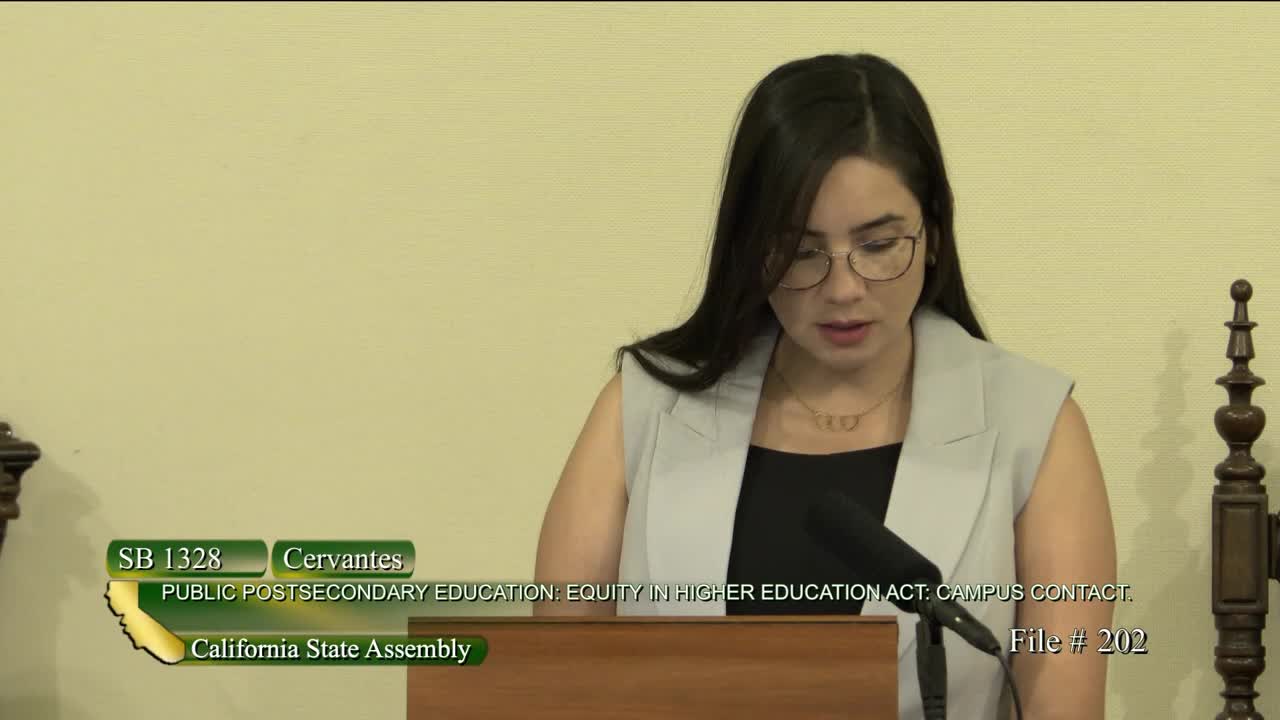
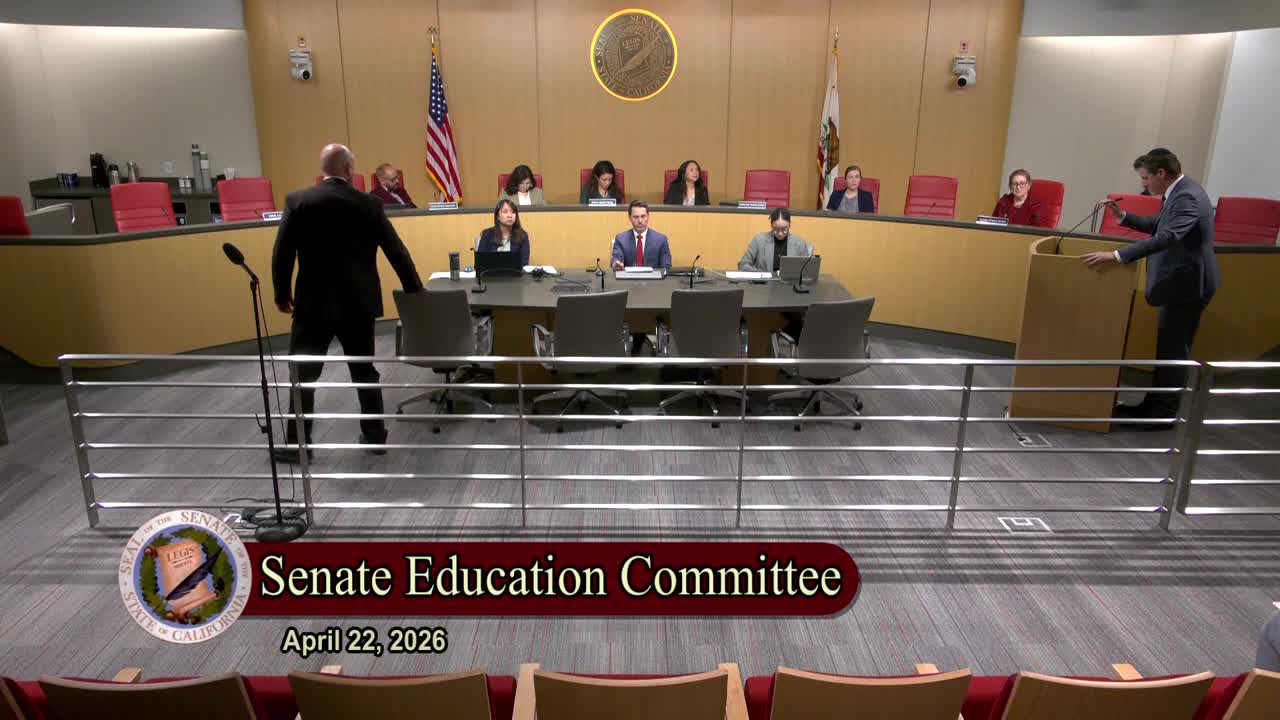
Bill Author

Bill Co-Author(s):