SB 245: Criminal procedure.
- Session Year: 2025-2026
- House: Senate
- Latest Version Date: 2025-10-13
Current Status:
Passed
(2025-10-13: Chaptered by Secretary of State. Chapter 746, Statutes of 2025.)
Introduced
In Committee
Awaiting First Chamber Vote
Passed First Chamber
In Committee
Awaiting Second Chamber Vote
Passed Second Chamber
Enacted
Existing law allows a defendant who successfully participated in the California Conservation Camp program as an incarcerated individual hand crew member, successfully participated as a member of a county incarcerated individual hand crew, or participated in an institutional firehouse program, except as specified, to petition the court to have the pleading dismissed, as described, thus releasing the person of any penalties and disabilities of conviction, except as otherwise provided. Existing law requires the court to provide a copy of the petition to the Department of Corrections and Rehabilitation or the appropriate county authority. Under existing regulations of the Emergency Medical Services Authority, specified public safety personnel, including peace officers and firefighters, are required to have specified emergency medical services training, which may be satisfied by certification as an emergency medical technician.
This bill would require the Department of Corrections and Rehabilitation or a county authority, upon the release of a defendant, to certify to the court in the county where the defendant was sentenced that the individual successfully participated in one of the above-described programs and to provide a copy of that certification to the defendant. The bill would delete the requirement that a court provide a copy of a defendants petition to the department or a county authority. The bill would prohibit an individual who has had their criminal pleading dismissed under these provisions from being denied a certification as an emergency medical technician or any other license or certification required to work as a firefighter based solely on their arrest or conviction history, as described. By requiring additional reporting from county authorities, the bill would impose a state-mandated local program.
The California Constitution requires the state to reimburse local agencies and school districts for certain costs mandated by the state. Statutory provisions establish procedures for making that reimbursement.
This bill would provide that, if the Commission on State Mandates determines that the bill contains costs mandated by the state, reimbursement for those costs shall be made pursuant to the statutory provisions noted above.
Existing law allows a defendant who successfully participated in the California Conservation Camp program as an incarcerated individual hand crew member, successfully participated as a member of a county incarcerated individual hand crew, or participated in an institutional firehouse program, except as specified, to petition the court to have the pleading dismissed, as described, thus releasing the person of any penalties and disabilities of conviction, except as otherwise provided. Existing law requires the court to provide a copy of the petition to the Department of Corrections and Rehabilitation or the appropriate county authority. Under existing regulations of the Emergency Medical Services Authority, specified public safety personnel, including peace officers and firefighters, are required to have specified emergency medical services training, which may be satisfied by certification as an emergency medical technician.
This bill would require the Department of Corrections and Rehabilitation and county authorities to report biannually to the Department of Justice those individuals who have been released from custody and have successfully participated as an incarcerated individual hand crew member or have successfully completed an institutional firehouse program in the prior 30 days. The bill would require the Department of Justice to evaluate the information provided and additional records, as specified, to determine whether the defendant is entitled to the above-described conviction relief. The bill would require the Department of Justice to contact those defendants that it determines are entitled to relief. TheThis bill would require the Department of Corrections and Rehabilitation or a county authority, upon the release of a defendant, to certify to the court in the county where the defendant was sentenced that the individual successfully participated in one of the above-described programs and to provide a copy of that certification to the defendant. The bill would delete the requirement that a court provide a copy of a defendants petition to the department or a county authority. The bill would prohibit an individual who has had their criminal pleading dismissed under these provisions from being denied a certification as an emergency medical technician or any other license or certification required to work as a firefighter based solely on their arrest or conviction history, as described. By requiring additional reporting from county authorities, the bill would impose a state-mandated local program.
This bill would, in addition to the procedure described above, allow a defendant to have their pleading dismissed by requiring the Department of Justice, beginning July 1, 2026, to review the records in the state summary criminal history information database and to identify persons who successfully participated in the California Conservation Camp program, as specified. The bill would require the Department of Justice to notify the prosecution that those persons are potentially eligible to have a pleading dismissed. Upon receipt and within 30 days of notice from the Department of Justice, the bill would require the prosecution to determine whether to oppose relief and to either inform the court when they are not opposing relief or inform the court and the applicable public defenders office when they are opposing relief. The bill would require the court to determine, in its discretion, whether to issue an order to grant relief, as specified. The bill would require the Department of Justice to update its records, as described. The bill would clarify that a person, if denied relief, is still entitled to file a petition on their own behalf, as described above.The California Constitution requires the state to reimburse local agencies and school districts for certain costs mandated by the state. Statutory provisions establish procedures for making that reimbursement.
This bill would provide that, if the Commission on State Mandates determines that the bill contains costs mandated by the state, reimbursement for those costs shall be made pursuant to the statutory provisions noted above.
Existing law allows a defendant who successfully participated in the California Conservation Camp program as an incarcerated individual hand crew member, successfully participated as a member of a county incarcerated individual hand crew, or participated in an institutional firehouse program, except as specified, to petition the court to have the pleading dismissed, as described, thus releasing the person of any penalties and disabilities of conviction, except as otherwise provided. Under existing regulations of the Emergency Medical Services Authority, specified public safety personnel, including peace officers and firefighters, are required to have specified emergency medical services training, which may be satisfied by certification as an emergency medical technician.
This bill would require the Department of Corrections and Rehabilitation and county authorities to report biannually to the Department of Justice those individuals who have been released from custody and have successfully participated as an incarcerated individual hand crew member or have successfully completed an institutional firehouse program in the prior 30 days. The bill would require the Department of Justice to evaluate the information provided and additional records, as specified, to determine whether the defendant is entitled to the above-described conviction relief. The bill would require the Department of Justice to contact those defendants that it determines are entitled to relief. The bill would prohibit an individual who has had their criminal pleading dismissed under these provisions from being denied a certification as an emergency medical technician or any other license or certification required to work as a firefighter based solely on their arrest or conviction history, as described. By requiring additional reporting from county authorities, the bill would impose a state-mandated local program.
This bill would, in addition to the procedure described above, allow a defendant to have their pleading dismissed by requiring the Department of Justice, beginning July 1, 2026, to review the records in the state summary criminal history information database and to identify persons who successfully participated in the California Conservation Camp program, as specified. The bill would require the Department of Justice to notify the prosecution that those persons are potentially eligible to have a pleading dismissed. Upon receipt and within 30 days of notice from the Department of Justice, the bill would require the prosecution to determine whether to oppose relief and to either inform the court when they are not opposing relief or inform the court and the applicable public defenders office when they are opposing relief. The bill would require the court to determine, in its discretion, whether to issue an order to grant relief, as specified. The bill would require the Department of Justice to update its records, as described. The bill would clarify that a person, if denied relief, is still entitled to file a petition on their own behalf, as described above.
The California Constitution requires the state to reimburse local agencies and school districts for certain costs mandated by the state. Statutory provisions establish procedures for making that reimbursement.
This bill would provide that, if the Commission on State Mandates determines that the bill contains costs mandated by the state, reimbursement for those costs shall be made pursuant to the statutory provisions noted above.
Existing law allows a defendant who successfully participated in the California Conservation Camp program as an incarcerated individual hand crew member, successfully participated as a member of a county incarcerated individual hand crew, or participated in an institutional firehouse program, except as specified, to petition the court to have the pleading dismissed, as described, thus releasing the person of any penalties and disabilities of conviction, except as otherwise provided. Under existing regulations of the Emergency Medical Services Authority, specified public safety personnel, including peace officers and firefighters, are required to have specified emergency medical services training, which may be satisfied by certification as an emergency medical technician.
This bill would require the Department of Corrections and Rehabilitation and county authorities to report monthly biannually to the Department of Justice those individuals who have been released from custody and have successfully participated as an incarcerated individual hand crew member or have successfully completed an institutional firehouse program in the prior 30 days. The bill would require the Department of Justice to evaluate the information provided and additional records, as specified, to determine whether the defendant is entitled to the above-described conviction relief. The bill would require the Department of Justice to contact those defendants that it determines are entitled to relief and, upon the defendants request, to file a petition on the defendants behalf. relief. The bill would prohibit an individual who has had their criminal pleading dismissed under these provisions from being denied a certification as an emergency medical technician or any other license or certification required to work as a firefighter based solely on their arrest or conviction history, as described. By requiring additional reporting from county authorities, the bill would impose a state-mandated local program.
The California Constitution requires the state to reimburse local agencies and school districts for certain costs mandated by the state. Statutory provisions establish procedures for making that reimbursement.
This bill would provide that, if the Commission on State Mandates determines that the bill contains costs mandated by the state, reimbursement for those costs shall be made pursuant to the statutory provisions noted above.
Existing law allows a defendant who successfully participated in the California Conservation Camp program as an incarcerated individual hand crew member, successfully participated as a member of a county incarcerated individual hand crew, or participated in an institutional firehouse program, except as specified, to petition the court to have the pleading dismissed, as described, thus releasing the person of any penalties and disabilities of conviction, except as otherwise provided. Under existing regulations of the Emergency Medical Services Authority, specified public safety personnel, including peace officers and firefighters, are required to have specified emergency medical services training, which may be satisfied by certification as an emergency medical technician.
This bill would require the Department of Corrections and Rehabilitation and county authorities to report monthly to the Department of Justice those individuals who have been released from custody and have successfully participated as an incarcerated individual hand crew member or have successfully completed an institutional firehouse program in the prior 30 days. The bill would require the Department of Justice to evaluate the information provided and additional records, as specified, to determine whether the defendant is entitled to the above-described conviction relief. The bill would require the Department of Justice to contact those defendants that it determines are entitled to relief and, upon the defendants request, to file a petition on the defendants behalf. The bill would prohibit an individual who has had their criminal pleading dismissed under these provisions from being denied a certification as an emergency medical technician or any other license or certification required to work as a firefighter based solely on their arrest or conviction history, as described. By requiring additional reporting from county authorities, the bill would impose a state-mandated local program.
The California Constitution requires the state to reimburse local agencies and school districts for certain costs mandated by the state. Statutory provisions establish procedures for making that reimbursement.
This bill would provide that, if the Commission on State Mandates determines that the bill contains costs mandated by the state, reimbursement for those costs shall be made pursuant to the statutory provisions noted above.
Existing law allows a defendant who successfully participated in the California Conservation Camp program as an incarcerated individual hand crew member, or successfully participated as a member of a county incarcerated individual hand crew, or participated in an institutional firehouse program, except as specified, to petition the court to have the pleading dismissed, as described, thus releasing the person of any penalties and disabilities of conviction, except as otherwise provided. Under existing regulations of the Emergency Medical Services Authority, specified public safety personnel, including peace officers and firefighters, are required to have specified emergency medical services training, which may be satisfied by certification as an emergency medical technician.
This bill would make technical, nonsubstantive changes to this provision. require the Department of Corrections and Rehabilitation and county authorities to report monthly to the Department of Justice those individuals who have been released from custody and have successfully participated as an incarcerated individual hand crew member or have successfully completed an institutional firehouse program in the prior 30 days. The bill would require the Department of Justice to evaluate the information provided and additional records, as specified, to determine whether the defendant is entitled to the above-described conviction relief. The bill would require the Department of Justice to contact those defendants that it determines are entitled to relief and, upon the defendants request, to file a petition on the defendants behalf. The bill would prohibit an individual who has had their criminal pleading dismissed under these provisions from being denied a certification as an emergency medical technician or any other license or certification required to work as a firefighter based solely on their arrest or conviction history, as described. By requiring additional reporting from county authorities, the bill would impose a state-mandated local program.
The California Constitution requires the state to reimburse local agencies and school districts for certain costs mandated by the state. Statutory provisions establish procedures for making that reimbursement.
This bill would provide that, if the Commission on State Mandates determines that the bill contains costs mandated by the state, reimbursement for those costs shall be made pursuant to the statutory provisions noted above.
Existing law allows a defendant who successfully participated in the California Conservation Camp program as an incarcerated individual hand crew member, or successfully participated as a member of a county incarcerated individual hand crew, except as specified, to petition the court to have the pleading dismissed, as described, thus releasing the person of any penalties and disabilities of conviction, except as otherwise provided.
This bill would make technical, nonsubstantive changes to this provision.
(a)(1)If a defendant successfully participated in the California Conservation Camp program as an incarcerated individual hand crew member, pursuant to regulations adopted by the Secretary of the Department of Corrections and Rehabilitation, or successfully participated as a member of a county incarcerated individual hand crew, as determined by the appropriate county authority, or successfully participated at an institutional firehouse, pursuant to regulations adopted by the Secretary of the Department of Corrections and Rehabilitation, and has been released from custody, the defendant is eligible for relief pursuant to this section, except that incarcerated individuals who have been convicted of any of the following crimes are automatically ineligible for relief pursuant to this section:
(A)Murder.
(B)Kidnapping.
(C)Rape as defined in paragraph (2) or (6) of subdivision (a) of Section 261 or paragraph (1) or (4) of subdivision (a) of Section 262.
(D)Lewd acts on a child under 14 years of age, as defined in Section 288.
(E)A felony punishable by death or imprisonment in the state prison for life.
(F)A sex offense requiring registration pursuant to Section 290.
(G)Escape from a secure perimeter within the previous 10 years.
(H)Arson.
(2)Any denial of relief pursuant to this section shall be without prejudice.
(3)For purposes of this subdivision, successful participation in a conservation camp program or a program at an institutional firehouse and successful participation as a member of a county incarcerated individual hand crew, as determined by the appropriate county authority, means the incarcerated individual adequately performed their duties without any conduct that warranted removal from the program.
(b)(1)The defendant may file a petition for relief with the court in the county where the defendant was sentenced.
(2)(A)Upon the release from custody of the defendant, the Department of Corrections and Rehabilitation shall certify to the court in the county where the defendant was sentenced that the individual successfully participated in the California Conservation Camp program as an incarcerated individual hand crew member, or successfully participated at an institutional firehouse. The department shall provide a copy of this certification to the defendant upon their release and shall include information regarding the expungement process. The department may promulgate regulations to implement this process.
(B)Upon the release from custody of the defendant, a county authority shall certify to the court in the county where the defendant was sentenced that the individual successfully participated as a member of a county incarcerated individual hand crew. The county authority shall provide a copy of this certification to the defendant upon their release and shall include information regarding the expungement process. A county authority may promulgate rules to implement this process.
(3)If the secretary or appropriate county authority certifies to the court that the defendant successfully participated in the incarcerated individual conservation camp program, or institutional firehouse, or successfully participated as a member of a county incarcerated individual hand crew, as determined by the appropriate county authority, as specified in subdivision (a), and has been released from custody, the court, in its discretion and in the interests of justice, may issue an order pursuant to subdivision (c).
(4)To be eligible for relief pursuant to this section, the defendant is not required to complete the term of their probation, parole, or supervised release. Notwithstanding any other law, the court, in providing relief pursuant to this section, shall order early termination of probation, parole, or supervised release if the court determines that the defendant has not violated any terms or conditions of probation, parole, or supervised release prior to, and during the pendency of, the petition for relief pursuant to this section.
(5)All convictions for which the defendant is serving a sentence at the time the defendant successfully participates in a program as specified in subdivision (a) are subject to relief pursuant to this section, except that a defendant convicted of any offense listed in subparagraphs (A) to (H), inclusive, of paragraph (1) of subdivision (a) is ineligible for relief pursuant to this section.
(6)(A)A defendant who is granted an order pursuant to this section shall not be required to disclose the conviction on an application for licensure by any state or local agency.
(B)This paragraph does not apply to an application for licensure by the Commission on Teacher Credentialing, a position as a peace officer, public office, or for contracting with the California State Lottery Commission.
(7)Notwithstanding Division 2.5 (commencing with Section 1797) of the Health and Safety Code or any other law and except as provided in paragraph (1) of subdivision (a), a defendants arrest and conviction history at the time of their participation as an incarcerated individual hand crew member, as described in subdivision (a), or the acts underlying that arrest and conviction history, shall not form the basis for any state or local agency to deny a defendant who is granted an order pursuant to this section an emergency medical technician certification or any other license or certification necessary to work as a firefighter.
(c)(1)If the requirements of this section are met, the court, in its discretion and in the interest of justice, may permit the defendant to withdraw the plea of guilty or plea of nolo contendere and enter a plea of not guilty, or, if the defendant has been convicted after a plea of not guilty, the court shall set aside the verdict of guilty, and, in either case, the court shall thereupon dismiss the accusations or information against the defendant and the defendant shall thereafter be released from all penalties and disabilities resulting from the offense of which the defendant has been convicted, except as provided in Section 13555 of the Vehicle Code.
(2)The relief available pursuant to this section shall not be granted if the defendant is currently charged with the commission of any other offense.
(3)The defendant may make the application and change of plea in person or by attorney.
(4)(A)A petition for relief under this section shall not be denied due to an unfulfilled order of restitution or restitution fine.
(B)An unfulfilled order of restitution or restitution fine shall not be grounds for finding that a defendant did not successfully participate in the California Conservation Camp program as an incarcerated individual hand crew member or at an institutional firehouse, or that the defendant did not successfully participate as a member of a county incarcerated individual hand crew.
(C)When the court considers a petition for relief under this section, in its discretion and in the interest of justice, an unpaid order of restitution or restitution fine shall not be grounds for denial of the petition for relief.
(d)Relief granted pursuant to this section is subject to the following conditions:
(1)In any subsequent prosecution of the defendant for any other offense, the prior conviction may be pleaded and proved and shall have the same effect as if the accusation or information had not been dismissed.
(2)The order shall state, and the defendant shall be informed, that the order does not relieve the defendant of the obligation to disclose the conviction in response to any direct question contained in any questionnaire or application for licensure by the Commission on Teacher Credentialing, a peace officer, public office, or for contracting with the California State Lottery Commission.
(3)Dismissal of an accusation or information pursuant to this section does not permit a person to own, possess, or have in the persons custody or control any firearm or prevent their conviction under Chapter 2 (commencing with Section 29800) of Division 9 of Title 4 of Part 6.
(4)Dismissal of an accusation or information underlying a conviction pursuant to this section does not permit a person prohibited from holding public office as a result of that conviction to hold public office.
(5)Dismissal of an accusation or information pursuant to this section does not release the defendant from the terms and conditions of any unexpired criminal protective order that has been issued by the court pursuant to paragraph (1) of subdivision (i) of Section 136.2, subdivision (j) of Section 273.5, subdivision (l) of Section 368, or subdivision (k) of Section 646.9. These protective orders shall remain in full effect until expiration or until any further order by the court modifying or terminating the order, despite the dismissal of the underlying accusation or information.
(e)(1)Relief shall not be granted under this section unless the prosecuting attorney has been given 15 days notice of the petition for relief.
(2)It shall be presumed that the prosecuting attorney has received notice if proof of service is filed with the court.
(f)If, after receiving notice pursuant to subdivision (e), the prosecuting attorney fails to appear and object to a petition for dismissal, the prosecuting attorney may not move to set aside or otherwise appeal the grant of that petition.
SEC. 2.If the Commission on State Mandates determines that this act contains costs mandated by the state, reimbursement to local agencies and school districts for those costs shall be made pursuant to Part 7 (commencing with Section 17500) of Division 4 of Title 2 of the Government Code.
(a)(1)If a defendant successfully participated in the California Conservation Camp program as an incarcerated individual hand crew member, pursuant to regulations adopted by the Secretary of the Department of Corrections and Rehabilitation, or successfully participated as a member of a county incarcerated individual hand crew, as determined by the appropriate county authority, or successfully participated at an institutional firehouse, pursuant to regulations adopted by the Secretary of the Department of Corrections and Rehabilitation, and has been released from custody, the defendant is eligible for relief pursuant to this section, except that incarcerated individuals who have been convicted of any of the following crimes are automatically ineligible for relief pursuant to this section:
(A)Murder.
(B)Kidnapping.
(C)Rape as defined in paragraph (2) or (6) of subdivision (a) of Section 261 or paragraph (1) or (4) of subdivision (a) of Section 262.
(D)Lewd acts on a child under 14 years of age, as defined in Section 288.
(E)A felony punishable by death or imprisonment in the state prison for life.
(F)A sex offense requiring registration pursuant to Section 290.
(G)Escape from a secure perimeter within the previous 10 years.
(H)Arson.
(2)Any denial of relief pursuant to this section shall be without prejudice.
(3)For purposes of this subdivision, successful participation in a conservation camp program or a program at an institutional firehouse and successful participation as a member of a county incarcerated individual hand crew, as determined by the appropriate county authority, means the incarcerated individual adequately performed their duties without any conduct that warranted removal from the program.
(b)(1)The defendant may file a petition for relief with the court in the county where the defendant was sentenced. The court shall provide a copy of the petition to the secretary, or, in the case of a county incarcerated individual hand crew member, the appropriate county authority.
(2)(A)Upon the release from custody of the defendant, the Department of Corrections and Rehabilitation shall certify to the court in the county where the defendant was sentenced that the individual successfully participated in the California Conservation Camp program as an incarcerated individual hand crew member, or successfully participated at an institutional firehouse. The department shall provide a copy of this certification to the defendant upon their release and shall include information regarding the expungement process. The department may promulgate regulations to implement this process.
(B)Upon the release from custody of the defendant, a county authority shall certify to the court in the county where the defendant was sentenced that the individual successfully participated as a member of a county incarcerated individual hand crew. The county authority shall provide a copy of this certification to the defendant upon their release and shall include information regarding the expungement process. A county authority may promulgate rules to implement this process.
(2)(3)If the secretary or appropriate county authority certifies to the court that the defendant successfully participated in the incarcerated individual conservation camp program, or institutional firehouse, or successfully participated as a member of a county incarcerated individual hand crew, as determined by the appropriate county authority, as specified in subdivision (a), and has been released from custody, the court, in its discretion and in the interests of justice, may issue an order pursuant to subdivision (c).
(3)(4)To be eligible for relief pursuant to this section, the defendant is not required to complete the term of their probation, parole, or supervised release. Notwithstanding any other law, the court, in providing relief pursuant to this section, shall order early termination of probation, parole, or supervised release if the court determines that the defendant has not violated any terms or conditions of probation, parole, or supervised release prior to, and during the pendency of, the petition for relief pursuant to this section.
(4)(5)All convictions for which the defendant is serving a sentence at the time the defendant successfully participates in a program as specified in subdivision (a) are subject to relief pursuant to this section, except that a defendant convicted of any offense listed in subparagraphs (A) to (H), inclusive, of paragraph (1) of subdivision (a) is ineligible for relief pursuant to this section.
(5)(6)(A)A defendant who is granted an order pursuant to this section shall not be required to disclose the conviction on an application for licensure by any state or local agency.
(B)This paragraph does not apply to an application for licensure by the Commission on Teacher Credentialing, a position as a peace officer, public office, or for contracting with the California State Lottery Commission.
(6)(7)Notwithstanding Division 2.5 (commencing with Section 1797) of the Health and Safety Code or any other law and except as provided in paragraph (1) of subdivision (a), a defendants arrest and conviction history at the time of their participation as an incarcerated individual hand crew member, as described in subdivision (a), or the acts underlying that arrest and conviction history, shall not form the basis for any state or local agency to deny a defendant who is granted an order pursuant to this section an emergency medical technician certification or any other license or certification necessary to work as a firefighter.
(c)(1)If the requirements of this section are met, the court, in its discretion and in the interest of justice, may permit the defendant to withdraw the plea of guilty or plea of nolo contendere and enter a plea of not guilty, or, if the defendant has been convicted after a plea of not guilty, the court shall set aside the verdict of guilty, and, in either case, the court shall thereupon dismiss the accusations or information against the defendant and the defendant shall thereafter be released from all penalties and disabilities resulting from the offense of which the defendant has been convicted, except as provided in Section 13555 of the Vehicle Code.
(2)The relief available pursuant to this section shall not be granted if the defendant is currently charged with the commission of any other offense.
(3)The defendant may make the application and change of plea in person or by attorney.
(4)(A)A petition for relief under this section shall not be denied due to an unfulfilled order of restitution or restitution fine.
(B)An unfulfilled order of restitution or restitution fine shall not be grounds for finding that a defendant did not successfully participate in the California Conservation Camp program as an incarcerated individual hand crew member or at an institutional firehouse, or that the defendant did not successfully participate as a member of a county incarcerated individual hand crew.
(C)When the court considers a petition for relief under this section, in its discretion and in the interest of justice, an unpaid order of restitution or restitution fine shall not be grounds for denial of the petition for relief.
(d)Relief granted pursuant to this section is subject to the following conditions:
(1)In any subsequent prosecution of the defendant for any other offense, the prior conviction may be pleaded and proved and shall have the same effect as if the accusation or information had not been dismissed.
(2)The order shall state, and the defendant shall be informed, that the order does not relieve the defendant of the obligation to disclose the conviction in response to any direct question contained in any questionnaire or application for licensure by the Commission on Teacher Credentialing, a peace officer, public office, or for contracting with the California State Lottery Commission.
(3)Dismissal of an accusation or information pursuant to this section does not permit a person to own, possess, or have in the persons custody or control any firearm or prevent their conviction under Chapter 2 (commencing with Section 29800) of Division 9 of Title 4 of Part 6.
(4)Dismissal of an accusation or information underlying a conviction pursuant to this section does not permit a person prohibited from holding public office as a result of that conviction to hold public office.
(5)Dismissal of an accusation or information pursuant to this section does not release the defendant from the terms and conditions of any unexpired criminal protective order that has been issued by the court pursuant to paragraph (1) of subdivision (i) of Section 136.2, subdivision (j) of Section 273.5, subdivision (l) of Section 368, or subdivision (k) of Section 646.9. These protective orders shall remain in full effect until expiration or until any further order by the court modifying or terminating the order, despite the dismissal of the underlying accusation or information.
(e)(1)Relief shall not be granted under this section unless the prosecuting attorney has been given 15 days notice of the petition for relief.
(2)It shall be presumed that the prosecuting attorney has received notice if proof of service is filed with the court.
(f)If, after receiving notice pursuant to subdivision (e), the prosecuting attorney fails to appear and object to a petition for dismissal, the prosecuting attorney may not move to set aside or otherwise appeal the grant of that petition.
(g)(1)The Department of Corrections and Rehabilitation and a county authority shall report biannually to the Department of Justice those individuals who have been released from custody and have successfully participated as an incarcerated individual hand crew member or have successfully completed an institutional firehouse program in the prior six months. The report shall include, but not be limited to, the date of completion of the program and the date of release of the individual.(2)The Department of Justice shall collect and maintain data relating to the number of individuals who successfully participated as an incarcerated individual hand crew member or successfully completed an institutional firehouse program and the outcomes of petitions filed pursuant to this section.(h)(1)Beginning July 1, 2026, the Department of Justice shall review records in the state summary criminal history information database and the information described in subdivision (g) and shall identify and notify the prosecution of all convictions that are potentially eligible for dismissal and set aside pursuant to this section.(2)Upon receipt of notice from the department, the prosecution shall have 30 days to review any cases and determine whether to oppose relief.(3)(A)Within 30 days of notice from the department, the prosecution shall inform the court and the public defenders office in their county when they are opposing relief. The prosecution shall inform the court when they are not opposing relief.(B)The public defenders office, upon receiving notice from the prosecution pursuant to subparagraph (A), shall make a reasonable effort to notify the person whose case is being opposed.(4)(A)Within 30 days of receipt of notice from the prosecution, the court may, in its discretion and in the interest of justice, issue an order pursuant to subdivision (c). If the court issues an order pursuant to subdivision (c), it shall update its records in accordance with this section and shall report all cases in which relief has been granted to the Department of Justice for adjustment of the state summary criminal history information database.(B)Within 30 days of notice from the court, the Department of Justice shall ensure all of the records in the state summary criminal history information database that have been dismissed and set aside pursuant to this section have been updated, and shall ensure that inaccurate state summary criminal history is not disseminated. For those individuals whose state summary criminal history information was disseminated pursuant to Section 11105 in the 30 days prior to an update based on this section, and the requesting entity is still entitled to receive the state summary criminal history information, the Department of Justice shall provide a notice to the entity.(5)A person denied relief pursuant to this subdivision shall continue to be eligible for relief, including, but not limited to, filing a petition pursuant to subdivision (b) of this section at a later date.SEC. 2.If the Commission on State Mandates determines that this act contains costs mandated by the state, reimbursement to local agencies and school districts for those costs shall be made pursuant to Part 7 (commencing with Section 17500) of Division 4 of Title 2 of the Government Code.
(a)(1)If a defendant successfully participated in the California Conservation Camp program as an incarcerated individual hand crew member, pursuant to regulations adopted by the Secretary of the Department of Corrections and Rehabilitation, or successfully participated as a member of a county incarcerated individual hand crew, as determined by the appropriate county authority, or successfully participated at an institutional firehouse, pursuant to regulations adopted by the Secretary of the Department of Corrections and Rehabilitation, and has been released from custody, the defendant is eligible for relief pursuant to this section, except that incarcerated individuals who have been convicted of any of the following crimes are automatically ineligible for relief pursuant to this section:
(A)Murder.
(B)Kidnapping.
(C)Rape as defined in paragraph (2) or (6) of subdivision (a) of Section 261 or paragraph (1) or (4) of subdivision (a) of Section 262.
(D)Lewd acts on a child under 14 years of age, as defined in Section 288.
(E)A felony punishable by death or imprisonment in the state prison for life.
(F)A sex offense requiring registration pursuant to Section 290.
(G)Escape from a secure perimeter within the previous 10 years.
(H)Arson.
(2)Any denial of relief pursuant to this section shall be without prejudice.
(3)For purposes of this subdivision, successful participation in a conservation camp program or a program at an institutional firehouse and successful participation as a member of a county incarcerated individual hand crew, as determined by the appropriate county authority, means the incarcerated individual adequately performed their duties without any conduct that warranted removal from the program.
(b)(1)The defendant may file a petition for relief with the court in the county where the defendant was sentenced. The court shall provide a copy of the petition to the secretary, or, in the case of a county incarcerated individual hand crew member, the appropriate county authority.
(2)If the secretary or appropriate county authority certifies to the court that the defendant successfully participated in the incarcerated individual conservation camp program, or institutional firehouse, or successfully participated as a member of a county incarcerated individual hand crew, as determined by the appropriate county authority, as specified in subdivision (a), and has been released from custody, the court, in its discretion and in the interests of justice, may issue an order pursuant to subdivision (c).
(3)To be eligible for relief pursuant to this section, the defendant is not required to complete the term of their probation, parole, or supervised release. Notwithstanding any other law, the court, in providing relief pursuant to this section, shall order early termination of probation, parole, or supervised release if the court determines that the defendant has not violated any terms or conditions of probation, parole, or supervised release prior to, and during the pendency of, the petition for relief pursuant to this section.
(4)All convictions for which the defendant is serving a sentence at the time the defendant successfully participates in a program as specified in subdivision (a) are subject to relief pursuant to this section, except that a defendant convicted of any offense listed in subparagraphs (A) to (H), inclusive, of paragraph (1) of subdivision (a) is ineligible for relief pursuant to this section.
(5)(A)A defendant who is granted an order pursuant to this section shall not be required to disclose the conviction on an application for licensure by any state or local agency.
(B)This paragraph does not apply to an application for licensure by the Commission on Teacher Credentialing, a position as a peace officer, public office, or for contracting with the California State Lottery Commission.
(6)Notwithstanding Division 2.5 (commencing with Section 1797) of the Health and Safety Code or any other law and except as provided in paragraph (1) of subdivision (a), a defendants arrest and conviction history at the time of their participation as an incarcerated individual hand crew member, as described in subdivision (a), or the acts underlying that arrest and conviction history, shall not form the basis for any state or local agency to deny a defendant who is granted an order pursuant to this section an emergency medical technician certification or any other license or certification necessary to work as a firefighter.
(c)(1)If the requirements of this section are met, the court, in its discretion and in the interest of justice, may permit the defendant to withdraw the plea of guilty or plea of nolo contendere and enter a plea of not guilty, or, if the defendant has been convicted after a plea of not guilty, the court shall set aside the verdict of guilty, and, in either case, the court shall thereupon dismiss the accusations or information against the defendant and the defendant shall thereafter be released from all penalties and disabilities resulting from the offense of which the defendant has been convicted, except as provided in Section 13555 of the Vehicle Code.
(2)The relief available pursuant to this section shall not be granted if the defendant is currently charged with the commission of any other offense.
(3)The defendant may make the application and change of plea in person or by attorney.
(4)(A)A petition for relief under this section shall not be denied due to an unfulfilled order of restitution or restitution fine.
(B)An unfulfilled order of restitution or restitution fine shall not be grounds for finding that a defendant did not successfully participate in the California Conservation Camp program as an incarcerated individual hand crew member or at an institutional firehouse, or that the defendant did not successfully participate as a member of a county incarcerated individual hand crew.
(C)When the court considers a petition for relief under this section, in its discretion and in the interest of justice, an unpaid order of restitution or restitution fine shall not be grounds for denial of the petition for relief.
(d)Relief granted pursuant to this section is subject to the following conditions:
(1)In any subsequent prosecution of the defendant for any other offense, the prior conviction may be pleaded and proved and shall have the same effect as if the accusation or information had not been dismissed.
(2)The order shall state, and the defendant shall be informed, that the order does not relieve the defendant of the obligation to disclose the conviction in response to any direct question contained in any questionnaire or application for licensure by the Commission on Teacher Credentialing, a peace officer, public office, or for contracting with the California State Lottery Commission.
(3)Dismissal of an accusation or information pursuant to this section does not permit a person to own, possess, or have in the persons custody or control any firearm or prevent their conviction under Chapter 2 (commencing with Section 29800) of Division 9 of Title 4 of Part 6.
(4)Dismissal of an accusation or information underlying a conviction pursuant to this section does not permit a person prohibited from holding public office as a result of that conviction to hold public office.
(5)Dismissal of an accusation or information pursuant to this section does not release the defendant from the terms and conditions of any unexpired criminal protective order that has been issued by the court pursuant to paragraph (1) of subdivision (i) of Section 136.2, subdivision (j) of Section 273.5, subdivision (l) of Section 368, or subdivision (k) of Section 646.9. These protective orders shall remain in full effect until expiration or until any further order by the court modifying or terminating the order, despite the dismissal of the underlying accusation or information.
(e)(1)Relief shall not be granted under this section unless the prosecuting attorney has been given 15 days notice of the petition for relief.
(2)It shall be presumed that the prosecuting attorney has received notice if proof of service is filed with the court.
(f)If, after receiving notice pursuant to subdivision (e), the prosecuting attorney fails to appear and object to a petition for dismissal, the prosecuting attorney may not move to set aside or otherwise appeal the grant of that petition.
(g)(1)The Department of Corrections and Rehabilitation and a county authority shall report biannually to the Department of Justice those individuals who have been released from custody and have successfully participated as an incarcerated individual hand crew member or have successfully completed an institutional firehouse program in the prior 30 days. six months. The report shall include, but not be limited to, the date of completion of the program and the date of release of the individual.
(2)The Department of Justice shall collect and maintain data relating to the number of individuals who successfully participated as an incarcerated individual hand crew member or successfully completed an institutional firehouse program and the outcomes of petitions filed pursuant to this section.
(h)(1)The Department of Justice, upon receipt of the information described in paragraph (1) of subdivision (g), shall evaluate the information provided and any records in the California Law Enforcement Telecommunications System to determine whether the defendant is entitled to relief pursuant to this section.(2)The Department of Justice shall notify any defendant it determines to be eligible that they may be entitled to relief pursuant to this section.(h)(1)Beginning July 1, 2026, the Department of Justice shall review records in the state summary criminal history information database and the information described in subdivision (g) and shall identify and notify the prosecution of all convictions that are potentially eligible for dismissal and set aside pursuant to this section.
(2)Upon receipt of notice from the department, the prosecution shall have 30 days to review any cases and determine whether to oppose relief.
(3)(A)Within 30 days of notice from the department, the prosecution shall inform the court and the public defenders office in their county when they are opposing relief. The prosecution shall inform the court when they are not opposing relief.
(B)The public defenders office, upon receiving notice from the prosecution pursuant to subparagraph (A), shall make a reasonable effort to notify the person whose case is being opposed.
(4)(A)Within 30 days of receipt of notice from the prosecution, the court may, in its discretion and in the interest of justice, issue an order pursuant to subdivision (c). If the court issues an order pursuant to subdivision (c), it shall update its records in accordance with this section and shall report all cases in which relief has been granted to the Department of Justice for adjustment of the state summary criminal history information database.
(B)Within 30 days of notice from the court, the Department of Justice shall ensure all of the records in the state summary criminal history information database that have been dismissed and set aside pursuant to this section have been updated, and shall ensure that inaccurate state summary criminal history is not disseminated. For those individuals whose state summary criminal history information was disseminated pursuant to Section 11105 in the 30 days prior to an update based on this section, and the requesting entity is still entitled to receive the state summary criminal history information, the Department of Justice shall provide a notice to the entity.
(5)A person denied relief pursuant to this subdivision shall continue to be eligible for relief, including, but not limited to, filing a petition pursuant to subdivision (b) of this section at a later date.
SEC. 2.If the Commission on State Mandates determines that this act contains costs mandated by the state, reimbursement to local agencies and school districts for those costs shall be made pursuant to Part 7 (commencing with Section 17500) of Division 4 of Title 2 of the Government Code.
(a)(1)If a defendant successfully participated in the California Conservation Camp program as an incarcerated individual hand crew member, as determined pursuant to regulations adopted by the Secretary of the Department of Corrections and Rehabilitation, or successfully participated as a member of a county incarcerated individual hand crew, as determined by the appropriate county authority, or successfully participated at an institutional firehouse, as determined pursuant to regulations adopted by the Secretary of the Department of Corrections and Rehabilitation, and has been released from custody, the defendant is eligible for relief pursuant to this section, except that incarcerated individuals who have been convicted of any of the following crimes are automatically ineligible for relief pursuant to this section:
(A)Murder.
(B)Kidnapping.
(C)Rape as defined in paragraph (2) or (6) of subdivision (a) of Section 261 or paragraph (1) or (4) of subdivision (a) of Section 262.
(D)Lewd acts on a child under 14 years of age, as defined in Section 288.
(E)A felony punishable by death or imprisonment in the state prison for life.
(F)A sex offense requiring registration pursuant to Section 290.
(G)Escape from a secure perimeter within the previous 10 years.
(H)Arson.
(2)Any denial of relief pursuant to this section shall be without prejudice.
(3)For purposes of this subdivision, successful participation in a conservation camp program or a program at an institutional firehouse and successful participation as a member of a county incarcerated individual hand crew, as determined by the appropriate county authority, means the incarcerated individual adequately performed their duties without any conduct that warranted removal from the program.
(b)(1)The defendant may file a petition for relief with the court in the county where the defendant was sentenced. The court shall provide a copy of the petition to the secretary, or, in the case of a county incarcerated individual hand crew member, the appropriate county authority.
(2)If the secretary or appropriate county authority certifies to the court that the defendant successfully participated in the incarcerated individual conservation camp program, or institutional firehouse, or successfully participated as a member of a county incarcerated individual hand crew, as determined by the appropriate county authority, as specified in subdivision (a), and has been released from custody, the court, in its discretion and in the interests of justice, may issue an order pursuant to subdivision (c).
(3)To be eligible for relief pursuant to this section, the defendant is not required to complete the term of their probation, parole, or supervised release. Notwithstanding any other law, the court, in providing relief pursuant to this section, shall order early termination of probation, parole, or supervised release if the court determines that the defendant has not violated any terms or conditions of probation, parole, or supervised release prior to, and during the pendency of, the petition for relief pursuant to this section.
(4)All convictions for which the defendant is serving a sentence at the time the defendant successfully participates in a program as specified in subdivision (a) are subject to relief pursuant to this section, except that a defendant convicted of any offense listed in subparagraphs (A) to (H), inclusive, of paragraph (1) of subdivision (a) is ineligible for relief pursuant to this section.
(5)(A)A defendant who is granted an order pursuant to this section shall not be required to disclose the conviction on an application for licensure by any state or local agency.
(B)This paragraph does not apply to an application for licensure by the Commission on Teacher Credentialing, a position as a peace officer, public office, or for contracting with the California State Lottery Commission.
(6)Notwithstanding Division 2.5 (commencing with Section 1797) of the Health and Safety Code or any other law and except as provided in paragraph (1) of subdivision (a), a defendants arrest and conviction history at the time of their participation as an incarcerated individual hand crew member, as described in subdivision (a), or the acts underlying that arrest and conviction history, shall not form the basis for any state or local agency to deny a defendant who is granted an order pursuant to this section an emergency medical technician certification or any other license or certification necessary to work as a firefighter.
(c)(1)If the requirements of this section are met, the court, in its discretion and in the interest of justice, may permit the defendant to withdraw the plea of guilty or plea of nolo contendere and enter a plea of not guilty, or, if the defendant has been convicted after a plea of not guilty, the court shall set aside the verdict of guilty, and, in either case, the court shall thereupon dismiss the accusations or information against the defendant and the defendant shall thereafter be released from all penalties and disabilities resulting from the offense of which the defendant has been convicted, except as provided in Section 13555 of the Vehicle Code.
(2)The relief available pursuant to this section shall not be granted if the defendant is currently charged with the commission of any other offense.
(3)The defendant may make the application and change of plea in person or by attorney.
(4)(A)A petition for relief under this section shall not be denied due to an unfulfilled order of restitution or restitution fine.
(B)An unfulfilled order of restitution or restitution fine shall not be grounds for finding that a defendant did not successfully participate in the California Conservation Camp program as an incarcerated individual hand crew member or at an institutional firehouse, or that the defendant did not successfully participate as a member of a county incarcerated individual hand crew.
(C)When the court considers a petition for relief under this section, in its discretion and in the interest of justice, an unpaid order of restitution or restitution fine shall not be grounds for denial of the petition for relief.
(d)Relief granted pursuant to this section is subject to the following conditions:
(1)In any subsequent prosecution of the defendant for any other offense, the prior conviction may be pleaded and proved and shall have the same effect as if the accusation or information had not been dismissed.
(2)The order shall state, and the defendant shall be informed, that the order does not relieve the defendant of the obligation to disclose the conviction in response to any direct question contained in any questionnaire or application for licensure by the Commission on Teacher Credentialing, a peace officer, public office, or for contracting with the California State Lottery Commission.
(3)Dismissal of an accusation or information pursuant to this section does not permit a person to own, possess, or have in the persons custody or control any firearm or prevent their conviction under Chapter 2 (commencing with Section 29800) of Division 9 of Title 4 of Part 6.
(4)Dismissal of an accusation or information underlying a conviction pursuant to this section does not permit a person prohibited from holding public office as a result of that conviction to hold public office.
(5)Dismissal of an accusation or information pursuant to this section does not release the defendant from the terms and conditions of any unexpired criminal protective order that has been issued by the court pursuant to paragraph (1) of subdivision (i) of Section 136.2, subdivision (j) of Section 273.5, subdivision (l) of Section 368, or subdivision (k) of Section 646.9. These protective orders shall remain in full effect until expiration or until any further order by the court modifying or terminating the order, despite the dismissal of the underlying accusation or information.
(e)(1)Relief shall not be granted under this section unless the prosecuting attorney has been given 15 days notice of the petition for relief.
(2)It shall be presumed that the prosecuting attorney has received notice if proof of service is filed with the court.
(f)If, after receiving notice pursuant to subdivision (e), the prosecuting attorney fails to appear and object to a petition for dismissal, the prosecuting attorney may not move to set aside or otherwise appeal the grant of that petition.
(g)(1)The Department of Corrections and Rehabilitation and a county authority shall report monthly biannually to the Department of Justice those individuals who have been released from custody and have successfully participated as an incarcerated individual hand crew member or have successfully completed an institutional firehouse program in the prior 30 days. The report shall include, but not be limited to, the date of completion of the program and the date of release of the individual.
(2)The Department of Justice shall collect and maintain data relating to the number of individuals who successfully participated as an incarcerated individual hand crew member or successfully completed an institutional firehouse program and the outcomes of petitions filed pursuant to this section.
(h)(1)The Department of Justice, upon receipt of the information described in paragraph (1) of subdivision (g), shall evaluate the information provided and any records in the California Law Enforcement Telecommunications System to determine whether the defendant is entitled to relief pursuant to this section.
(2)The Department of Justice shall notify any defendant it determines to be eligible that they may be entitled to relief pursuant to this section and shall, upon the defendants request, file a petition for relief on the defendants behalf. section.
SEC. 2.If the Commission on State Mandates determines that this act contains costs mandated by the state, reimbursement to local agencies and school districts for those costs shall be made pursuant to Part 7 (commencing with Section 17500) of Division 4 of Title 2 of the Government Code.
(a)(1)If a defendant successfully participated in the California Conservation Camp program as an incarcerated individual hand crew member, as determined by the Secretary of the Department of Corrections and Rehabilitation, or successfully participated as a member of a county incarcerated individual hand crew, as determined by the appropriate county authority, or successfully participated at an institutional firehouse, as determined by the Secretary of the Department of Corrections and Rehabilitation, and has been released from custody, the defendant is eligible for relief pursuant to this section, except that incarcerated individuals who have been convicted of any of the following crimes are automatically ineligible for relief pursuant to this section:
(A)Murder.
(B)Kidnapping.
(C)Rape as defined in paragraph (2) or (6) of subdivision (a) of Section 261 or paragraph (1) or (4) of subdivision (a) of Section 262.
(D)Lewd acts on a child under 14 years of age, as defined in Section 288.
(E)A felony punishable by death or imprisonment in the state prison for life.
(F)A sex offense requiring registration pursuant to Section 290.
(G)Escape from a secure perimeter within the previous 10 years.
(H)Arson.
(2)Any denial of relief pursuant to this section shall be without prejudice.
(3)For purposes of this subdivision, successful participation in a conservation camp program or a program at an institutional firehouse and successful participation as a member of a county incarcerated individual hand crew, as determined by the appropriate county authority, means the incarcerated individual adequately performed their duties without any conduct that warranted removal from the program.
(b)(1)The defendant may file a petition for relief with the court in the county where the defendant was sentenced. The court shall provide a copy of the petition to the secretary, or, in the case of a county incarcerated individual hand crew member, the appropriate county authority.
(2)If the secretary or appropriate county authority certifies to the court that the defendant successfully participated in the incarcerated individual conservation camp program, or institutional firehouse, or successfully participated as a member of a county incarcerated individual hand crew, as determined by the appropriate county authority, as specified in subdivision (a), and has been released from custody, the court, in its discretion and in the interests of justice, may issue an order pursuant to subdivision (c).
(3)To be eligible for relief pursuant to this section, the defendant is not required to complete the term of their probation, parole, or supervised release. Notwithstanding any other law, the court, in providing relief pursuant to this section, shall order early termination of probation, parole, or supervised release if the court determines that the defendant has not violated any terms or conditions of probation, parole, or supervised release prior to, and during the pendency of, the petition for relief pursuant to this section.
(4)All convictions for which the defendant is serving a sentence at the time the defendant successfully participates in a program as specified in subdivision (a) are subject to relief pursuant to this section, except that a defendant convicted of any offense listed in subparagraphs (A) to (H), inclusive, of paragraph (1) of subdivision (a) is ineligible for relief pursuant to this section.
(5)(A)A defendant who is granted an order pursuant to this section shall not be required to disclose the conviction on an application for licensure by any state or local agency.
(B)This paragraph does not apply to an application for licensure by the Commission on Teacher Credentialing, a position as a peace officer, public office, or for contracting with the California State Lottery Commission.
(6)Notwithstanding Division 2.5 (commencing with Section 1797) of the Health and Safety Code or any other law and except as provided in paragraph (1) of subdivision (a), a defendants arrest and conviction history at the time of their participation as an incarcerated individual hand crew member, as described in subdivision (a), or the acts underlying that arrest and conviction history, shall not form the basis for any state or local agency to deny a defendant who is granted an order pursuant to this section an emergency medical technician certification or any other license or certification necessary to work as a firefighter.
(c)(1)If the requirements of this section are met, the court, in its discretion and in the interest of justice, may permit the defendant to withdraw the plea of guilty or plea of nolo contendere and enter a plea of not guilty, or, if the defendant has been convicted after a plea of not guilty, the court shall set aside the verdict of guilty, and, in either case, the court shall thereupon dismiss the accusations or information against the defendant and the defendant shall thereafter be released from all penalties and disabilities resulting from the offense of which the defendant has been convicted, except as provided in Section 13555 of the Vehicle Code.
(2)The relief available pursuant to this section shall not be granted if the defendant is currently charged with the commission of any other offense.
(3)The defendant may make the application and change of plea in person or by attorney.
(4)(A)A petition for relief under this section shall not be denied due to an unfulfilled order of restitution or restitution fine.
(B)An unfulfilled order of restitution or restitution fine shall not be grounds for finding that a defendant did not successfully participate in the California Conservation Camp program as an incarcerated individual hand crew member or at an institutional firehouse, or that the defendant did not successfully participate as a member of a county incarcerated individual hand crew.
(C)When the court considers a petition for relief under this section, in its discretion and in the interest of justice, an unpaid order of restitution or restitution fine shall not be grounds for denial of the petition for relief.
(d)Relief granted pursuant to this section is subject to the following conditions:
(1)In any subsequent prosecution of the defendant for any other offense, the prior conviction may be pleaded and proved and shall have the same effect as if the accusation or information had not been dismissed.
(2)The order shall state, and the defendant shall be informed, that the order does not relieve the defendant of the obligation to disclose the conviction in response to any direct question contained in any questionnaire or application for licensure by the Commission on Teacher Credentialing, a peace officer, public office, or for contracting with the California State Lottery Commission.
(3)Dismissal of an accusation or information pursuant to this section does not permit a person to own, possess, or have in the persons custody or control any firearm or prevent their conviction under Chapter 2 (commencing with Section 29800) of Division 9 of Title 4 of Part 6.
(4)Dismissal of an accusation or information underlying a conviction pursuant to this section does not permit a person prohibited from holding public office as a result of that conviction to hold public office.
(5)Dismissal of an accusation or information pursuant to this section does not release the defendant from the terms and conditions of any unexpired criminal protective order that has been issued by the court pursuant to paragraph (1) of subdivision (i) of Section 136.2, subdivision (j) of Section 273.5, subdivision (l) of Section 368, or subdivision (k) of Section 646.9. These protective orders shall remain in full effect until expiration or until any further order by the court modifying or terminating the order, despite the dismissal of the underlying accusation or information.
(e)(1)Relief shall not be granted under this section unless the prosecuting attorney has been given 15 days notice of the petition for relief.
(2)It shall be presumed that the prosecuting attorney has received notice if proof of service is filed with the court.
(f)If, after receiving notice pursuant to subdivision (e), the prosecuting attorney fails to appear and object to a petition for dismissal, the prosecuting attorney may not move to set aside or otherwise appeal the grant of that petition.
(g)(1)The Department of Corrections and Rehabilitation, the Board of State and Community Corrections, Rehabilitation and a county authority shall report monthly to the Department of Justice those individuals who have been released from custody and have successfully participated as an incarcerated individual hand crew member or have successfully completed an institutional firehouse program in the prior 30 days. The report shall include, but not be limited to, the date of completion of the program and the date of release of the individual.
(2)The Department of Justice shall collect and maintain data relating to the number of individuals who successfully participated as an incarcerated individual hand crew member or successfully completed an institutional firehouse program and the outcomes of petitions filed pursuant to this section.
(h)(1)The Department of Justice, upon receipt of the information described in paragraph (1) of subdivision (g), shall evaluate the information provided and any records in the California Law Enforcement Telecommunications System to determine whether the defendant is entitled to relief pursuant to this section.
(2)The Department of Justice shall notify any defendant it determines to be eligible that they may be entitled to relief pursuant to this section and shall, upon the defendants request, file a petition for relief on the defendants behalf.
SEC. 2.If the Commission on State Mandates determines that this act contains costs mandated by the state, reimbursement to local agencies and school districts for those costs shall be made pursuant to Part 7 (commencing with Section 17500) of Division 4 of Title 2 of the Government Code.
(a)(1)If a defendant successfully participated in the California Conservation Camp program as an incarcerated individual hand crew member, as determined by the Secretary of the Department of Corrections and Rehabilitation, or successfully participated as a member of a county incarcerated individual hand crew, as determined by the appropriate county authority, or successfully participated at an institutional firehouse, as determined by the Secretary of the Department of Corrections and Rehabilitation, and has been released from custody, the defendant is eligible for relief pursuant to this section, except that incarcerated individuals who have been convicted of any of the following crimes are automatically ineligible for relief pursuant to this section:
(A)Murder.
(B)Kidnapping.
(C)Rape as defined in paragraph (2) or (6) of subdivision (a) of Section 261 or paragraph (1) or (4) of subdivision (a) of Section 262.
(D)Lewd acts on a child under 14 years of age, as defined in Section 288.
(E)A felony punishable by death or imprisonment in the state prison for life.
(F)A sex offense requiring registration pursuant to Section 290.
(G)Escape from a secure perimeter within the previous 10 years.
(H)Arson.
(2)Any denial of relief pursuant to this section shall be without prejudice.
(3)For purposes of this subdivision, successful participation in a conservation camp program or a program at an institutional firehouse and successful participation as a member of a county incarcerated individual hand crew, as determined by the appropriate county authority, means the incarcerated individual adequately performed their duties without any conduct that warranted removal from the program.
(b)(1)The defendant may file a petition for relief with the court in the county where the defendant was sentenced. The court shall provide a copy of the petition to the secretary, or, in the case of a county incarcerated individual hand crew member, the appropriate county authority.
(2)If the secretary or appropriate county authority certifies to the court that the defendant successfully participated in the incarcerated individual conservation camp program, or institutional firehouse, or successfully participated as a member of a county incarcerated individual hand crew, as determined by the appropriate county authority, as specified in subdivision (a), and has been released from custody, the court, in its discretion and in the interests of justice, may issue an order pursuant to subdivision (c).
(3)To be eligible for relief pursuant to this section, the defendant is not required to complete the term of their probation, parole, or supervised release. Notwithstanding any other law, the court, in providing relief pursuant to this section, shall order early termination of probation, parole, or supervised release if the court determines that the defendant has not violated any terms or conditions of probation, parole, or supervised release prior to, and during the pendency of, the petition for relief pursuant to this section.
(4)All convictions for which the defendant is serving a sentence at the time the defendant successfully participates in a program as specified in subdivision (a) are subject to relief pursuant to this section, except that a defendant convicted of any offense listed in subparagraphs (A) to (H), inclusive, of paragraph (1) of subdivision (a) is ineligible for relief pursuant to this section.
(5)(A)A defendant who is granted an order pursuant to this section shall not be required to disclose the conviction on an application for licensure by any state or local agency.
(B)This paragraph does not apply to an application for licensure by the Commission on Teacher Credentialing, a position as a peace officer, public office, or for contracting with the California State Lottery Commission.
(6)Notwithstanding Division 2.5 (commencing with Section 1797) of the Health and Safety Code or any other law and except as provided in paragraph (1) of subdivision (a), a defendants arrest and conviction history at the time of their participation as an incarcerated individual hand crew member, as described in subdivision (a), or the acts underlying that arrest and conviction history, shall not form the basis for any state or local agency to deny a defendant who is granted an order pursuant to this section an emergency medical technician certification or any other license or certification necessary to work as a firefighter.
(c)(1)If the requirements of this section are met, the court, in its discretion and in the interest of justice, may permit the defendant to withdraw the plea of guilty or plea of nolo contendere and enter a plea of not guilty, or, if the defendant has been convicted after a plea of not guilty, the court shall set aside the verdict of guilty, and, in either case, the court shall thereupon dismiss the accusations or information against the defendant and the defendant shall thereafter be released from all penalties and disabilities resulting from the offense of which the defendant has been convicted, except as provided in Section 13555 of the Vehicle Code.
(2)The relief available pursuant to this section shall not be granted if the defendant is currently charged with the commission of any other offense.
(3)The defendant may make the application and change of plea in person or by attorney.
(4)(A)A petition for relief under this section shall not be denied due to an unfulfilled order of restitution or restitution fine.
(B)An unfulfilled order of restitution or restitution fine shall not be grounds for finding that a defendant did not successfully participate in the California Conservation Camp program as an incarcerated individual hand crew member or at an institutional firehouse, or that the defendant did not successfully participate as a member of a county incarcerated individual hand crew.
(C)When the court considers a petition for relief under this section, in its discretion and in the interest of justice, an unpaid order of restitution or restitution fine shall not be grounds for denial of the petition for relief.
(d)Relief granted pursuant to this section is subject to the following conditions:
(1)In any subsequent prosecution of the defendant for any other offense, the prior conviction may be pleaded and proved and shall have the same effect as if the accusation or information had not been dismissed.
(2)The order shall state, and the defendant shall be informed, that the order does not relieve the defendant of the obligation to disclose the conviction in response to any direct question contained in any questionnaire or application for licensure by the Commission on Teacher Credentialing, a peace officer, public office, or for contracting with the California State Lottery Commission.
(3)Dismissal of an accusation or information pursuant to this section does not permit a person to own, possess, or have in the persons custody or control any firearm or prevent their conviction under Chapter 2 (commencing with Section 29800) of Division 9 of Title 4 of Part 6.
(4)Dismissal of an accusation or information underlying a conviction pursuant to this section does not permit a person prohibited from holding public office as a result of that conviction to hold public office.
(5)Dismissal of an accusation or information pursuant to this section does not release the defendant from the terms and conditions of any unexpired criminal protective order that has been issued by the court pursuant to paragraph (1) of subdivision (i) of Section 136.2, subdivision (j) of Section 273.5, subdivision (l) of Section 368, or subdivision (k) of Section 646.9. These protective orders shall remain in full effect until expiration or until any further order by the court modifying or terminating the order, despite the dismissal of the underlying accusation or information.
(e)(1)Relief shall not be granted under this section unless the prosecuting attorney has been given 15 days notice of the petition for relief.
(2)It shall be presumed that the prosecuting attorney has received notice if proof of service is filed with the court.
(f)If, after receiving notice pursuant to subdivision (e), the prosecuting attorney fails to appear and object to a petition for dismissal, the prosecuting attorney may not move to set aside or otherwise appeal the grant of that petition.
(g)(1)The Department of Corrections and Rehabilitation, the Board of State and Community Corrections, and a county authority shall report monthly to the Department of Justice those individuals who have been released from custody and have successfully participated as an incarcerated individual hand crew member or have successfully completed an institutional firehouse program in the prior 30 days. The report shall include, but not be limited to, the date of completion of the program and the date of release of the individual.
(2)The Department of Justice shall collect and maintain data relating to the number of individuals who successfully participated as an incarcerated individual hand crew member or successfully completed an institutional firehouse program and the outcomes of petitions filed pursuant to this section.
(h)(1)The Department of Justice, upon receipt of the information described in paragraph (1) of subdivision (g), shall evaluate the information provided and any records in the California Law Enforcement Telecommunications System to determine whether the defendant is entitled to relief pursuant to this section.
(2)The Department of Justice shall notify any defendant it determines to be eligible that they may be entitled to relief pursuant to this section and shall, upon the defendants request, file a petition for relief on the defendants behalf.
SEC. 2.If the Commission on State Mandates determines that this act contains costs mandated by the state, reimbursement to local agencies and school districts for those costs shall be made pursuant to Part 7 (commencing with Section 17500) of Division 4 of Title 2 of the Government Code.
(a)(1)If a defendant successfully participated in the California Conservation Camp program as an incarcerated individual hand crew member, as determined by the Secretary of the Department of Corrections and Rehabilitation, or successfully participated as a member of a county incarcerated individual hand crew, as determined by the appropriate county authority, or successfully participated at an institutional firehouse, as determined by the Secretary of the Department of Corrections and Rehabilitation, and has been released from custody, the defendant is eligible for relief pursuant to this section, except that incarcerated individuals who have been convicted of any of the following crimes are automatically ineligible for relief pursuant to this section:
(A)Murder.
(B)Kidnapping.
(C)Rape as defined in paragraph (2) or (6) of subdivision (a) of Section 261 or paragraph (1) or (4) of subdivision (a) of Section 262.
(D)Lewd acts on a child under 14 years of age, as defined in Section 288.
(E)Any A felony punishable by death or imprisonment in the state prison for life.
(F)Any A sex offense requiring registration pursuant to Section 290.
(G)Escape from a secure perimeter within the previous 10 years.
(H)Arson.
(2)Any denial of relief pursuant to this section shall be without prejudice.
(3)For purposes of this subdivision, successful participation in a conservation camp program or a program at an institutional firehouse and successful participation as a member of a county incarcerated individual hand crew, as determined by the appropriate county authority, means the incarcerated individual adequately performed their duties without any conduct that warranted removal from the program.
(b)(1)The defendant may file a petition for relief with the court in the county where the defendant was sentenced. The court shall provide a copy of the petition to the secretary, or, in the case of a county incarcerated individual hand crew member, the appropriate county authority.
(2)If the secretary or appropriate county authority certifies to the court that the defendant successfully participated in the incarcerated individual conservation camp program, or institutional firehouse, or successfully participated as a member of a county incarcerated individual hand crew, as determined by the appropriate county authority, as specified in subdivision (a), and has been released from custody, the court, in its discretion and in the interests of justice, may issue an order pursuant to subdivision (c).
(3)To be eligible for relief pursuant to this section, the defendant is not required to complete the term of their probation, parole, or supervised release. Notwithstanding any other law, the court, in providing relief pursuant to this section, shall order early termination of probation, parole, or supervised release if the court determines that the defendant has not violated any terms or conditions of probation, parole, or supervised release prior to, and during the pendency of, the petition for relief pursuant to this section.
(4)All convictions for which the defendant is serving a sentence at the time the defendant successfully participates in a program as specified in subdivision (a) are subject to relief pursuant to this section, except that a defendant convicted of any offense listed in subparagraphs (A) to (H), inclusive, of paragraph (1) of subdivision (a) is ineligible for relief pursuant to this section.
(5)(A)A defendant who is granted an order pursuant to this section shall not be required to disclose the conviction on an application for licensure by any state or local agency.
(B)This paragraph does not apply to an application for licensure by the Commission on Teacher Credentialing, a position as a peace officer, public office, or for contracting with the California State Lottery Commission.
(c)(1)If the requirements of this section are met, the court, in its discretion and in the interest of justice, may permit the defendant to withdraw the plea of guilty or plea of nolo contendere and enter a plea of not guilty, or, if the defendant has been convicted after a plea of not guilty, the court shall set aside the verdict of guilty, and, in either case, the court shall thereupon dismiss the accusations or information against the defendant and the defendant shall thereafter be released from all penalties and disabilities resulting from the offense of which the defendant has been convicted, except as provided in Section 13555 of the Vehicle Code.
(2)The relief available pursuant to this section shall not be granted if the defendant is currently charged with the commission of any other offense.
(3)The defendant may make the application and change of plea in person or by attorney.
(4)(A)A petition for relief under this section shall not be denied due to an unfulfilled order of restitution or restitution fine.
(B)An unfulfilled order of restitution or restitution fine shall not be grounds for finding that a defendant did not successfully participate in the California Conservation Camp program as an incarcerated individual hand crew member or at an institutional firehouse, or that the defendant did not successfully participate as a member of a county incarcerated individual hand crew.
(C)When the court considers a petition for relief under this section, in its discretion and in the interest of justice, an unpaid order of restitution or restitution fine shall not be grounds for denial of the petition for relief.
(d)Relief granted pursuant to this section is subject to the following conditions:
(1)In any subsequent prosecution of the defendant for any other offense, the prior conviction may be pleaded and proved and shall have the same effect as if the accusation or information had not been dismissed.
(2)The order shall state, and the defendant shall be informed, that the order does not relieve the defendant of the obligation to disclose the conviction in response to any direct question contained in any questionnaire or application for licensure by the Commission on Teacher Credentialing, a peace officer, public office, or for contracting with the California State Lottery Commission.
(3)Dismissal of an accusation or information pursuant to this section does not permit a person to own, possess, or have in the persons custody or control any firearm or prevent their conviction under Chapter 2 (commencing with Section 29800) of Division 9 of Title 4 of Part 6.
(4)Dismissal of an accusation or information underlying a conviction pursuant to this section does not permit a person prohibited from holding public office as a result of that conviction to hold public office.
(5)Dismissal of an accusation or information pursuant to this section does not release the defendant from the terms and conditions of any unexpired criminal protective order that has been issued by the court pursuant to paragraph (1) of subdivision (i) of Section 136.2, subdivision (j) of Section 273.5, subdivision (l) of Section 368, or subdivision (k) of Section 646.9. These protective orders shall remain in full effect until expiration or until any further order by the court modifying or terminating the order, despite the dismissal of the underlying accusation or information.
(e)(1)Relief shall not be granted under this section unless the prosecuting attorney has been given 15 days notice of the petition for relief.
(2)It shall be presumed that the prosecuting attorney has received notice if proof of service is filed with the court.
(f)If, after receiving notice pursuant to subdivision (e), the prosecuting attorney fails to appear and object to a petition for dismissal, the prosecuting attorney may not move to set aside or otherwise appeal the grant of that petition.
|
Date
|
Status
|
|---|---|
| Oct 13, 2025 | Chaptered by Secretary of State. Chapter 746, Statutes of 2025. |
| Oct 13, 2025 | Approved by the Governor. |
| Sep 23, 2025 | Enrolled and presented to the Governor at 2 p.m. |
| Sep 13, 2025 | In Senate. Concurrence in Assembly amendments pending. |
| Sep 13, 2025 | Assembly amendments concurred in. (Ayes 29. Noes 7. Page 3030.) Ordered to engrossing and enrolling. |
| Sep 12, 2025 | Read third time. Passed. (Ayes 65. Noes 5. Page 3411.) Ordered to the Senate. |
| Sep 4, 2025 | Read third time and amended. |
| Sep 4, 2025 | Ordered to third reading. |
| Sep 2, 2025 | Read second time. Ordered to third reading. |
| Aug 29, 2025 | From committee: Do pass. (Ayes 11. Noes 0.) (August 29). |
| Aug 20, 2025 | August 20 set for first hearing. Placed on APPR. suspense file. |
| Jul 16, 2025 | From committee: Do pass and re-refer to Com. on APPR. (Ayes 7. Noes 0.) (July 15). Re-referred to Com. on APPR. |
| Jul 8, 2025 | From committee with author's amendments. Read second time and amended. Re-referred to Com. on PUB. S. |
| Jul 1, 2025 | July 1 set for first hearing canceled at the request of author. |
| Jun 9, 2025 | Referred to Com. on PUB. S. |
| Jun 3, 2025 | In Assembly. Read first time. Held at Desk. |
| Jun 2, 2025 | Read third time. Passed. (Ayes 29. Noes 9. Page 1400.) Ordered to the Assembly. |
| May 27, 2025 | Read second time. Ordered to third reading. |
| May 23, 2025 | Read second time and amended. Ordered to second reading. |
| May 23, 2025 | From committee: Do pass as amended. (Ayes 5. Noes 1. Page 1192.) (May 23). |
| May 16, 2025 | Set for hearing May 23. |
| May 5, 2025 | May 5 hearing: Placed on APPR. suspense file. |
| Apr 25, 2025 | Set for hearing May 5. |
| Apr 23, 2025 | From committee: Do pass and re-refer to Com. on APPR. (Ayes 5. Noes 1. Page 840.) (April 22). Re-referred to Com. on APPR. |
| Apr 21, 2025 | From committee with author's amendments. Read second time and amended. Re-referred to Com. on PUB. S. |
| Apr 10, 2025 | Set for hearing April 22. |
| Apr 2, 2025 | Re-referred to Com. on PUB. S. |
| Mar 26, 2025 | From committee with author's amendments. Read second time and amended. Re-referred to Com. on RLS. |
| Feb 14, 2025 | Referred to Com. on RLS. |
| Feb 3, 2025 | From printer. May be acted upon on or after March 2. |
| Jan 30, 2025 | Introduced. Read first time. To Com. on RLS. for assignment. To print. |
|
Date
|
Description
|
Location
|
Votes
|
|
|---|---|---|---|---|
| Sep 13, 2025 | Unfinished Business SB245 Reyes Concurrence | Senate Floor |
Passed |
|
| Sep 12, 2025 | SB 245 Reyes Senate Third Reading By Bryan | Assembly Floor |
Passed |
|
| Sep 12, 2025 | Unfinished Business SB245 Reyes Concurrence | Senate Floor |
Passed |
|
| Aug 29, 2025 | Do pass. | Assembly Standing Committee on Appropriations |
Passed |
|
| Jul 15, 2025 | Do pass and be re-referred to the Committee on [Appropriations] | Assembly Standing Committee on Public Safety |
Passed |
|
| Jun 2, 2025 | Senate 3rd Reading SB245 Reyes By Arreguín | Senate Floor |
Passed |
|
| May 23, 2025 | Do pass as amended | Senate Standing Committee on Appropriations |
Passed |
|
| May 5, 2025 | Placed on suspense file | Senate Standing Committee on Appropriations |
Passed |
|
| Apr 22, 2025 | Do pass, but first be re-referred to the Committee on [Appropriations] | Senate Standing Committee on Public Safety |
Passed |
This list shows positions taken on this bill by organizations on the date displayed, which is linked to the original source.
Positions by individuals are not included.
|
Organization
|
Position
|
Date
|
|---|---|---|
| Aclu California Action | ** Support | |
| All of Us or None Los Angeles | ** Support | |
| Anti Recidivism Coalition | ** Support | |
| California Alliance for Youth and Community Justice | ** Support | |
| California Civil Liberties Advocacy | ** Support | |
| California Forestry Association | ** Support | |
| California Public Defenders Association | ** Support | |
| Californians for Safety and Justice | ** Support | |
| Californians United for a Responsible Budget | ** Support | |
| Communities United for Restorative Youth Justice | ** Support | |
| Community Legal Services in East Palo Alto | ** Support | |
| Courage California | ** Support | |
| Democratic Party of the San Fernando Valley | ** Support | |
| East Bay Community Law Center | ** Support | |
| Ella Baker Center For Human Rights | ** Support | |
| Fair Chance Project | ** Support | |
| Felony Murder Elimination Project | ** Support | |
| Indivisible Ca Statestrong | ** Support | |
| Initiate Justice | ** Support | |
| Initiate Justice Action | ** Support | |
| Justice2jobs Coalition | ** Support | |
| LA Defensa | ** Support | |
| Legal Aid At Work | ** Support | |
| Legal Services for Prisoners with Children | ** Support | |
| Michelson Center For Public Policy | ** Support | |
| Prosecutors Alliance Action | ** Support | |
| Root & Rebound | ** Support | |
| Rubicon Programs | ** Support | |
| San Francisco Public Defender | ** Support | |
| Silicon Valley De-Bug | ** Support | |
| Smart Justice California | ** Support | |
| The Change Parallel Project | ** Support | |
| The Forestry and Fire Recruitment Program | ** Support | |
| The W. Haywood Burns Institute | ** Support | |
| Vera Institute Of Justice | ** Support |
SENATE RULES COMMITTEE Office of Senate Floor Analyses (916) 651-1520 Fax: (916) 327-4478 | SB 245 |
UNFINISHED BUSINESS
Bill No: SB 245
Author: Reyes (D)
Amended: 9/4/25
Vote: 21
SENATE PUBLIC SAFETY COMMITTEE: 5-1, 4/22/25
AYES: Arreguín, Caballero, Gonzalez, Pérez, Wiener
NOES: Seyarto
SENATE APPROPRIATIONS COMMITTEE: 5-1, 5/23/25
AYES: Caballero, Cabaldon, Grayson, Richardson, Wahab
NOES: Seyarto
NO VOTE RECORDED: Dahle
SENATE FLOOR: 29-9, 6/2/25
AYES: Allen, Archuleta, Arreguín, Ashby, Becker, Blakespear, Cabaldon, Caballero, Cervantes, Cortese, Dahle, Durazo, Gonzalez, Grayson, Laird, Limón, McGuire, McNerney, Menjivar, Padilla, Pérez, Richardson, Rubio, Smallwood-Cuevas, Stern, Umberg, Wahab, Weber Pierson, Wiener
NOES: Alvarado-Gil, Choi, Grove, Jones, Niello, Ochoa Bogh, Seyarto, Strickland, Valladares
NO VOTE RECORDED: Hurtado, Reyes
ASSEMBLY FLOOR: 65-5, 9/12/25 – See last page for vote.
SUBJECT: Criminal procedure
SOURCE: Anti-Recidivism Coalition, Californians for Safety and Justice, Root and Rebound, & Initiate Justice Action
DIGEST:
This bill requires the California Department of Corrections and Rehabilitation (CDCR) to notify the Department of Justice (DOJ) of formerly-incarcerated fire crew members who are potentially eligible for expungement, requires DOJ to regularly identify convictions that are eligible for expungement on the basis of a person’s service as an incarcerated firefighter, and creates a court process for ordering such expungements.
Assembly Amendments
of 7/8/25 require, beginning July 1, 2026, DOJ to review state summary criminal information for convictions that are eligible for expungement on the basis of a person’s service as an incarcerated firefighter, and create a court process for ordering such expungements.
ANALYSIS:
Existing Law:
- Allows a person who has successfully participated in the California Conservation Camp Program, at an institutional firehouse, or in a county incarcerated hand crew to petition for expungement of their conviction. (Penal (Pen.) Code, § 1203.4b, subds. (a)(1) & (c)(1).
- Disqualifies individuals convicted of specified crimes from seeking expungement relief. (Pen. Code, § 1203.4b, subd. (a)(1).)
- States that “successful participation” means the incarcerated individual adequately performed their duties without any conduct that warranted removal from the program. (Pen. Code, § 1203.4b, subd. (a)(3).)
- States that the defendant may file a petition for relief with the court in the county where the defendant was sentenced. The court shall provide a copy of the petition to the CDCR secretary, or in the case of a county incarcerated individual hand crew member, the appropriate county authority. (Pen. Code, § 1203.4b, subd. (b)(1).)
- Provides that if the Secretary of CDCR or the appropriate county authority certifies to the court that the person successfully completed the incarcerated conservation camp program, the court, in its discretion and in the interests of justice, may issue an order to dismiss the accusations or information against them. (Pen. Code, § 1203.4b, subd. (b)(2).)
- Prohibits the court from granting relief if the person is currently charged with the commission of any other offense. (Pen. Code, § 1203.4b, subd. (c)(2).)
- Specifies that the person is not required to complete the term of their probation, parole, or supervised release in order to be eligible for relief. Notwithstanding any other law, the court shall order early termination of probation, parole, or supervised release if the court determines that the defendant has not violated any terms of probation, parole or supervised release prior to, and during the pendency of, the petition for relief. (Pen. Code, § 1203.4b, subd. (b)(3).)
- Makes expungement relief available for all convictions for which the person is serving a sentence at the time they successfully complete one of the required programs. (Pen. Code, § 1203.4b, subd. (b)(4).)
- Specifies that a person who is granted expungement shall not be required to disclose the conviction on an application for licensure by any state or local agency, except in an application for a position as a peace officer, public office, or for contracting with the California State Lottery Commission. (Pen. Code, § 203.4b, subd. (b)(5).)
This bill:
- Prohibits any state or local agency from denying a defendant whose conviction was expunged based on their participation as an incarcerated hand crew member an emergency medical technician certification or any other license or certification necessary to work as a firefighter.
- Requires CDCR and a county authority to report biannually to the DOJ those individuals who have been released from custody and have successfully participated as an incarcerated hand crew member or have successfully completed an institutional firehouse program in the past six months. The report shall include the date of completion of the program and the individual’s release date.
- Requires, beginning July 1, 2026, DOJ to review records in the state summary criminal history information database and the information provided by CDCR to identify and notify the prosecution of all convictions that are potentially eligible for dismissal and set aside pursuant to this section.
- States that upon receipt of notice from DOJ, the prosecution shall have 30 days to review any cases and determine whether to oppose relief.
- Mandates that, within 30 days of notice from the DOJ, the prosecution shall inform the court and the public defender’s office in their county when they are opposing relief. The prosecution shall also inform the court when they are not opposing relief. The public defender’s office shall make a reasonable effort to notify the person whose case is being opposed.
- States within 30 days of receipt of notice from the prosecution, the court may, in its discretion and in the interest of justice, issue an order to allow a defendant to withdraw their plea or set aside a conviction and dismiss the case, and if it does so, the court shall update its records to reflect its decision.
- Requires a court that orders dismissal to report all cases in which relief has been granted to the DOJ for adjustment of the state summary criminal history information database.
- Requires, within 30 days of notice from the court, DOJ to ensure all of the records in the state summary criminal history information database that have been dismissed and set aside, and ensure that inaccurate state summary criminal history is not disseminated.
- States for those individuals whose state summary criminal history information was disseminated pursuant to existing law related to mandated reporters in the 30 days prior to an update based on the court’s dismissal, and the requesting entity is still entitled to receive the state summary criminal history information, DOJ must provide a notice to the entity.
- Provides that if a person is denied relief, they are entitled to file a petition at a later date.
- Requires DOJ to collect data relating to the number of individuals who successfully participated as an incarcerated hand crew member or successfully completed an institutional firehouse program and the outcomes of petitions filed.
Background
Expungement Process for Formerly Incarcerated Fire Camp Participants. Penal Code section 1203.4b, allows a formerly incarcerated firefighter to petition the court to withdraw their guilty plea or nolo contendere, set aside their guilty verdict in a conviction, and/or terminate parole or post release community supervision. This is important because while Cal Fire, the United States Forest Service, and interagency hot shot crews do not require Emergency Medical Technician (EMT) certification to become employed as a firefighter, many municipal fire departments do.
To be eligible for expungement relief, the formerly incarcerated firefighter must petition the court in the county where they were sentenced. Once the petition is filed, the court sends a copy to CDCR or to the appropriate county authority, depending on whether the individual was serving a prison sentence or was incarcerated locally. (Pen. Code, § 1203.4b, subd. (b)(1).)
Then CDCR or the county authority must certify that the individual successfully participated in the fire camp program. (Pen. Code, § 1203.4b, subd. (b)(2).) This means that the formerly incarcerated individual adequately performed their duties without any conduct that warranted removal from the program. (Pen. Code, § 1203.4b, subd. (a)(3).) Then the court, in its discretion and in the interests of justice, may issue an order allowing the person to withdraw their plea, or in the case of a trial the court sets aside the verdict. The court then dismisses the charges and the person’s conviction is expunged. (Pen. Code, § 1203.4b, subds. (b)(2) & (c)(1).) Expungement relief applies only to all convictions for which the individual was serving a sentence at the time of the successful participation in the program. (Pen. Code, § 1203.4b, subd. (b)(4).)
There are some crimes which make a formerly incarcerated firefighter ineligible for expungement relief. (Pen. Code, § 1203.4b, subd. (a)(1).) Further, if the person is currently charged with the commission of any other offense, this also disqualifies them. (Pen. Code, § 1203.4b, subds. (c)(2).)
This bill creates a process alleviating the formerly incarcerated firefighter of the burden of filing a petition for expungement relief. This bill requires CDCR and local county authorities to proactively provide a biannual list to DOJ of persons who have successfully completed the fire camp program in the prior six months. This bill requires DOJ to evaluate the information provided as well as criminal history information to determine if an individual is eligible for relief and to notify the prosecution of those convictions so they can determine whether to oppose relief. This bill establishes a specific court process for those cases. Finally, this bill prohibits an agency from denying a necessary certification on the basis of a person’s criminal history at the time they were an incarcerated firefighter.
FISCAL EFFECT: Appropriation: No Fiscal Com.: Yes Local: Yes
According to the Assembly Appropriations Committee:
Costs (General Fund) to CDCR to develop a process to track and report individuals who successfully participated as hand crew members or completed an institutional firehouse program upon their release from custody. CDCR anticipates these costs will be in the hundreds of thousands of dollars annually for staffing augmentations for its correctional counselors, classification and parole representatives, and institutional case records staff. Costs (General Fund) to DOJ, likely in the hundreds of thousands to low millions of dollars annually. DOJ estimates costs of $263,000 in fiscal year (FY) 2025-26 and $1.6 million in FY 2026-27 and ongoing. These costs include seven legal positions in DOJ’s Post-Conviction Justice Unit and consultants in its California Justice Information Services division for necessary database and application changes. Cost pressures (Trial Court Trust Fund, General Fund) of an unknown but potentially significant amount to the courts to consider cases and issue expungement orders. Actual costs will depend on the number of cases and the amount of court time needed to resolve each case. Although courts are not funded on the basis of workload, increased pressure on the Trial Court Trust Fund may create a demand for increased funding for courts from the General Fund. Potentially reimbursable costs (local fund, General Fund) of an unknown but potentially significant amount to county authorities to provide the required data to DOJ on a biannual basis, and to county district attorney and public defender offices to participate in the expungement process established by the bill. The state must reimburse county costs from the General Fund if the Commission on State Mandates determines the duties imposed by this bill constitute a reimbursable state mandate.
SUPPORT: (Verified 9/2/25)
Anti Recidivism Coalition (co-source)
Californians for Safety and Justice (co-source)
Initiate Justice Action (co-source)
Root & Rebound (co-source)
ACLU California Action
All of US or None Los Angeles
California Public Defenders Association
Californians United for a Responsible Budget
Communities United for Restorative Youth Justice
Community Legal Services in East Palo Alto
Courage California
Democratic Party of the San Fernando Valley
East Bay Community Law Center
Ella Baker Center for Human Rights
Initiate Justice
LA Defensa
Legal Aid At Work
Legal Services for Prisoners With Children
Michelson Center for Public Policy
Prosecutors Alliance Action
Rubicon Programs
San Francisco Public Defender
Silicon Valley De-bug
Smart Justice California
The Change Parallel Project
The W. Haywood Burns Institute
Vera Institute of Justice
OPPOSITION: (Verified 9/2/25)
None received
ARGUMENTS IN SUPPORT:
According to Californians for Safety and Justice, a co-sponsor of this bill:
In 2020, the California Legislature took a critical step forward by passing AB 2147 (Reyes, 2020) which allows people who successfully completed fire camp, institutional fire house, or county incarcerated hand crew programs to petition for expungement of their records, provided that they meet certain criteria. While AB 2147 established a critical foundation, eligible applicants have experienced operational challenges in receiving their expungements. There are significant delays in courts receiving certificates of fire camp or institutional fire house completion from the California Department of Corrections and Rehabilitation (CDCR) which further delays expungements. The burden currently falls squarely on the individual petitioning for the expungement, which can be very difficult and costly for a returning citizen to navigate.
SB 245 corrects these inefficiencies and streamlines the process by doing all of the following:
● Automates the expungement process through the Department of Justice (DOJ), which can then provide the verification to the courts;
● Requires CDCR to periodically provide updated lists of individuals who have completed fire camp or fire house programs directly to DOJ;
● Shifts the responsibility of initiating the expungement process to the DOJ, relieving returning citizens of this burden;
● Improves data sharing between CDCR, DOJ, and the judicial system;
● Streamlines opportunities for returning citizens to pursue an EMT or similar license.
SB 245 will help formerly incarcerated individuals, who have done exceptional work in safeguarding life, land and property, be able to pursue a meaningful and rewarding career. By fostering greater opportunities for gainful employment, this bill will also help reduce recidivism and make California safer for all.
ASSEMBLY FLOOR: 65-5, 9/12/26
AYES: Addis, Aguiar-Curry, Ahrens, Alanis, Alvarez, Arambula, Ávila Farías, Bains, Bauer-Kahan, Bennett, Berman, Boerner, Bonta, Bryan, Calderon, Caloza, Carrillo, Connolly, Davies, Elhawary, Fong, Gabriel, Garcia, Gipson, Mark González, Hadwick, Haney, Harabedian, Hart, Hoover, Irwin, Jackson, Kalra, Krell, Lee, Lowenthal, McKinnor, Muratsuchi, Nguyen, Ortega, Pacheco, Papan, Patel, Pellerin, Petrie-Norris, Quirk-Silva, Ramos, Ransom, Celeste Rodriguez, Michelle Rodriguez, Rogers, Blanca Rubio, Schiavo, Schultz, Sharp-Collins, Solache, Soria, Stefani, Valencia, Wallis, Ward, Wicks, Wilson, Zbur, Rivas
NOES: DeMaio, Dixon, Jeff Gonzalez, Johnson, Macedo
NO VOTE RECORDED: Castillo, Chen, Ellis, Flora, Gallagher, Lackey, Patterson, Sanchez, Ta, Tangipa
Prepared by: Sandy Uribe / PUB. S. / (916) 651-4118
9/14/26 11:11:21
**** END ****
SENATE RULES COMMITTEE Office of Senate Floor Analyses (916) 651-1520 Fax: (916) 327-4478 | SB 245 |
UNFINISHED BUSINESS
Bill No: SB 245
Author: Reyes (D)
Amended: 9/4/25 in Assembly
Vote: 21
SENATE PUBLIC SAFETY COMMITTEE: 5-1, 4/22/25
AYES: Arreguín, Caballero, Gonzalez, Pérez, Wiener
NOES: Seyarto
SENATE APPROPRIATIONS COMMITTEE: 5-1, 5/23/25
AYES: Caballero, Cabaldon, Grayson, Richardson, Wahab
NOES: Seyarto
NO VOTE RECORDED: Dahle
SENATE FLOOR: 29-9, 6/2/25
AYES: Allen, Archuleta, Arreguín, Ashby, Becker, Blakespear, Cabaldon, Caballero, Cervantes, Cortese, Dahle, Durazo, Gonzalez, Grayson, Laird, Limón, McGuire, McNerney, Menjivar, Padilla, Pérez, Richardson, Rubio, Smallwood-Cuevas, Stern, Umberg, Wahab, Weber Pierson, Wiener
NOES: Alvarado-Gil, Choi, Grove, Jones, Niello, Ochoa Bogh, Seyarto, Strickland, Valladares
NO VOTE RECORDED: Hurtado, Reyes
ASSEMBLY FLOOR: 61-3, 9/12/25 – Roll call not available
SUBJECT: Criminal procedure
SOURCE: Anti-Recidivism Coalition, Californians for Safety and Justice, Root and Rebound, & Initiate Justice Action
DIGEST:
This bill requires the California Department of Corrections and Rehabilitation (CDCR) to notify the Department of Justice (DOJ) of formerly-incarcerated fire crew members who are potentially eligible for expungement, requires DOJ to regularly identify convictions that are eligible for expungement on the basis of a person’s service as an incarcerated firefighter, and creates a court process for ordering such expungements.
Assembly Amendments
of 7/8/25 require, beginning July 1, 2026, DOJ to review state summary criminal information for convictions that are eligible for expungement on the basis of a person’s service as an incarcerated firefighter, and create a court process for ordering such expungements.
ANALYSIS:
Existing Law:
- Allows a person who has successfully participated in the California Conservation Camp Program, at an institutional firehouse, or in a county incarcerated hand crew to petition for expungement of their conviction. (Penal (Pen.) Code, § 1203.4b, subds. (a)(1) & (c)(1).
- Disqualifies individuals convicted of specified crimes from seeking expungement relief. (Pen. Code, § 1203.4b, subd. (a)(1).)
- States that “successful participation” means the incarcerated individual adequately performed their duties without any conduct that warranted removal from the program. (Pen. Code, § 1203.4b, subd. (a)(3).)
- States that the defendant may file a petition for relief with the court in the county where the defendant was sentenced. The court shall provide a copy of the petition to the CDCR secretary, or in the case of a county incarcerated individual hand crew member, the appropriate county authority. (Pen. Code, § 1203.4b, subd. (b)(1).)
- Provides that if the Secretary of CDCR or the appropriate county authority certifies to the court that the person successfully completed the incarcerated conservation camp program, the court, in its discretion and in the interests of justice, may issue an order to dismiss the accusations or information against them. (Pen. Code, § 1203.4b, subd. (b)(2).)
- Prohibits the court from granting relief if the person is currently charged with the commission of any other offense. (Pen. Code, § 1203.4b, subd. (c)(2).)
- Specifies that the person is not required to complete the term of their probation, parole, or supervised release in order to be eligible for relief. Notwithstanding any other law, the court shall order early termination of probation, parole, or supervised release if the court determines that the defendant has not violated any terms of probation, parole or supervised release prior to, and during the pendency of, the petition for relief. (Pen. Code, § 1203.4b, subd. (b)(3).)
- Makes expungement relief available for all convictions for which the person is serving a sentence at the time they successfully complete one of the required programs. (Pen. Code, § 1203.4b, subd. (b)(4).)
- Specifies that a person who is granted expungement shall not be required to disclose the conviction on an application for licensure by any state or local agency, except in an application for a position as a peace officer, public office, or for contracting with the California State Lottery Commission. (Pen. Code, § 203.4b, subd. (b)(5).)
This bill:
- Prohibits any state or local agency from denying a defendant whose conviction was expunged based on their participation as an incarcerated hand crew member an emergency medical technician certification or any other license or certification necessary to work as a firefighter.
- Requires CDCR and a county authority to report biannually to the DOJ those individuals who have been released from custody and have successfully participated as an incarcerated hand crew member or have successfully completed an institutional firehouse program in the past six months. The report shall include the date of completion of the program and the individual’s release date.
- Requires, beginning July 1, 2026, DOJ to review records in the state summary criminal history information database and the information provided by CDCR to identify and notify the prosecution of all convictions that are potentially eligible for dismissal and set aside pursuant to this section.
- States that upon receipt of notice from DOJ, the prosecution shall have 30 days to review any cases and determine whether to oppose relief.
- Mandates that, within 30 days of notice from the DOJ, the prosecution shall inform the court and the public defender’s office in their county when they are opposing relief. The prosecution shall also inform the court when they are not opposing relief. The public defender’s office shall make a reasonable effort to notify the person whose case is being opposed.
- States within 30 days of receipt of notice from the prosecution, the court may, in its discretion and in the interest of justice, issue an order to allow a defendant to withdraw their plea or set aside a conviction and dismiss the case, and if it does so, the court shall update its records to reflect its decision.
- Requires a court that orders dismissal to report all cases in which relief has been granted to the DOJ for adjustment of the state summary criminal history information database.
- Requires, within 30 days of notice from the court, DOJ to ensure all of the records in the state summary criminal history information database that have been dismissed and set aside, and ensure that inaccurate state summary criminal history is not disseminated.
- States for those individuals whose state summary criminal history information was disseminated pursuant to existing law related to mandated reporters in the 30 days prior to an update based on the court’s dismissal, and the requesting entity is still entitled to receive the state summary criminal history information, DOJ must provide a notice to the entity.
- Provides that if a person is denied relief, they are entitled to file a petition at a later date.
- Requires DOJ to collect data relating to the number of individuals who successfully participated as an incarcerated hand crew member or successfully completed an institutional firehouse program and the outcomes of petitions filed.
Background
Expungement Process for Formerly Incarcerated Fire Camp Participants. Penal Code section 1203.4b, allows a formerly incarcerated firefighter to petition the court to withdraw their guilty plea or nolo contendere, set aside their guilty verdict in a conviction, and/or terminate parole or post release community supervision. This is important because while Cal Fire, the United States Forest Service, and interagency hot shot crews do not require Emergency Medical Technician (EMT) certification to become employed as a firefighter, many municipal fire departments do.
To be eligible for expungement relief, the formerly incarcerated firefighter must petition the court in the county where they were sentenced. Once the petition is filed, the court sends a copy to CDCR or to the appropriate county authority, depending on whether the individual was serving a prison sentence or was incarcerated locally. (Pen. Code, § 1203.4b, subd. (b)(1).)
Then CDCR or the county authority must certify that the individual successfully participated in the fire camp program. (Pen. Code, § 1203.4b, subd. (b)(2).) This means that the formerly incarcerated individual adequately performed their duties without any conduct that warranted removal from the program. (Pen. Code, § 1203.4b, subd. (a)(3).) Then the court, in its discretion and in the interests of justice, may issue an order allowing the person to withdraw their plea, or in the case of a trial the court sets aside the verdict. The court then dismisses the charges and the person’s conviction is expunged. (Pen. Code, § 1203.4b, subds. (b)(2) & (c)(1).) Expungement relief applies only to all convictions for which the individual was serving a sentence at the time of the successful participation in the program. (Pen. Code, § 1203.4b, subd. (b)(4).)
There are some crimes which make a formerly incarcerated firefighter ineligible for expungement relief. (Pen. Code, § 1203.4b, subd. (a)(1).) Further, if the person is currently charged with the commission of any other offense, this also disqualifies them. (Pen. Code, § 1203.4b, subds. (c)(2).)
This bill creates a process alleviating the formerly incarcerated firefighter of the burden of filing a petition for expungement relief. This bill requires CDCR and local county authorities to proactively provide a biannual list to DOJ of persons who have successfully completed the fire camp program in the prior six months. This bill requires DOJ to evaluate the information provided as well as criminal history information to determine if an individual is eligible for relief and to notify the prosecution of those convictions so they can determine whether to oppose relief. This bill establishes a specific court process for those cases. Finally, this bill prohibits an agency from denying a necessary certification on the basis of a person’s criminal history at the time they were an incarcerated firefighter.
FISCAL EFFECT: Appropriation: No Fiscal Com.: Yes Local: Yes
According to the Assembly Appropriations Committee:
Costs (General Fund) to CDCR to develop a process to track and report individuals who successfully participated as hand crew members or completed an institutional firehouse program upon their release from custody. CDCR anticipates these costs will be in the hundreds of thousands of dollars annually for staffing augmentations for its correctional counselors, classification and parole representatives, and institutional case records staff. Costs (General Fund) to DOJ, likely in the hundreds of thousands to low millions of dollars annually. DOJ estimates costs of $263,000 in fiscal year (FY) 2025-26 and $1.6 million in FY 2026-27 and ongoing. These costs include seven legal positions in DOJ’s Post-Conviction Justice Unit and consultants in its California Justice Information Services division for necessary database and application changes. Cost pressures (Trial Court Trust Fund, General Fund) of an unknown but potentially significant amount to the courts to consider cases and issue expungement orders. Actual costs will depend on the number of cases and the amount of court time needed to resolve each case. Although courts are not funded on the basis of workload, increased pressure on the Trial Court Trust Fund may create a demand for increased funding for courts from the General Fund. Potentially reimbursable costs (local fund, General Fund) of an unknown but potentially significant amount to county authorities to provide the required data to DOJ on a biannual basis, and to county district attorney and public defender offices to participate in the expungement process established by the bill. The state must reimburse county costs from the General Fund if the Commission on State Mandates determines the duties imposed by this bill constitute a reimbursable state mandate.
SUPPORT: (Verified 9/2/2025)
Anti Recidivism Coalition (co-source)
Californians for Safety and Justice (co-source)
Initiate Justice Action (co-source)
Root & Rebound (co-source)
ACLU California Action
All of US or None Los Angeles
California Public Defenders Association
Californians United for a Responsible Budget
Communities United for Restorative Youth Justice
Community Legal Services in East Palo Alto
Courage California
Democratic Party of the San Fernando Valley
East Bay Community Law Center
Ella Baker Center for Human Rights
Initiate Justice
LA Defensa
Legal Aid At Work
Legal Services for Prisoners With Children
Michelson Center for Public Policy
Prosecutors Alliance Action
Rubicon Programs
San Francisco Public Defender
Silicon Valley De-bug
Smart Justice California
The Change Parallel Project
The W. Haywood Burns Institute
Vera Institute of Justice
OPPOSITION: (Verified 9/2/2025)
None received
ARGUMENTS IN SUPPORT:
According to Californians for Safety and Justice, a co-sponsor of this bill:
In 2020, the California Legislature took a critical step forward by passing AB 2147 (Reyes, 2020) which allows people who successfully completed fire camp, institutional fire house, or county incarcerated hand crew programs to petition for expungement of their records, provided that they meet certain criteria. While AB 2147 established a critical foundation, eligible applicants have experienced operational challenges in receiving their expungements. There are significant delays in courts receiving certificates of fire camp or institutional fire house completion from the California Department of Corrections and Rehabilitation (CDCR) which further delays expungements. The burden currently falls squarely on the individual petitioning for the expungement, which can be very difficult and costly for a returning citizen to navigate.
SB 245 corrects these inefficiencies and streamlines the process by doing all of the following:
● Automates the expungement process through the Department of Justice (DOJ), which can then provide the verification to the courts;
● Requires CDCR to periodically provide updated lists of individuals who have completed fire camp or fire house programs directly to DOJ;
● Shifts the responsibility of initiating the expungement process to the DOJ, relieving returning citizens of this burden;
● Improves data sharing between CDCR, DOJ, and the judicial system;
● Streamlines opportunities for returning citizens to pursue an EMT or similar license.
SB 245 will help formerly incarcerated individuals, who have done exceptional work in safeguarding life, land and property, be able to pursue a meaningful and rewarding career. By fostering greater opportunities for gainful employment, this bill will also help reduce recidivism and make California safer for all.Click here to enter text.
Prepared by: Sandy Uribe / PUB. S. /
9/12/25 20:34:40
**** END ****
SENATE THIRD READING
STR Bill Id:SB 245
Author:(Reyes)
As Amended Ver:September 4, 2025
Majority vote
SUMMARY
Requires the California Department of Corrections and Rehabilitation (CDCR) or a county authority, upon the release of a defendant, to certify to the court in the county where the defendant was sentenced, if the individual successfully participated in an inmate fire crew, as specified, and to provide a copy of that certification to the defendant.
Major Provisions
- Requires CDCR or a county authority to include with a copy of the certification, information regarding the expungement process.
- Authorizes CDCR and a county authority to promulgate regulations regarding the certification process to the court, as specified.
- Prohibits any state or local agency from denying a defendant whose conviction was expunged based on their participation as an incarcerated hand crew member an emergency medical technician certification or any other license or certification necessary to work as a firefighter.
COMMENTS
According to the Author
"In 2020, the Governor signed my AB 2147 (Chapter 60, Statutes of 2020), which eliminated barriers for formerly incarcerated fire crews from pursuing a career in firefighting. Incarcerated fire crew members have proven themselves as true heroes, courageously protecting homes and communities from destruction, most recently exemplified during the LA fires earlier this year. Many of these individuals, however, still struggle to obtain AB 2147 expungements upon reentry. Eligible applicants under AB 2147 face several operational challenges such as delays in certificate confirmations by the California Department of Corrections and Rehabilitation (CDCR), lack of legal assistance to initiate their expungement, insufficient data sharing between CDCR, courts, and other agencies, as well as restrictions on licensing opportunities for those with prior convictions.
"SB 245 addresses these issues by: automating the certification process for program completion and shifting the responsibility of initiating the expungement process from the eligible individuals to the Department of Justice (DOJ), ensuring individuals are not burdened with additional bureaucracy. The bill also includes improved data sharing between CDCR, the DOJ, and the judiciary to facilitate better tracking of program completions, eligibility status, and outcomes of expungement petitions. It also ensures expungement recipients are not denied emergency medical technician certification or any other license or certification necessary to work as a firefighter."
Arguments in Support
According to Smart Justice: "In 2020, the California Legislature took a critical step forward in recognizing the contributions of currently and formerly incarcerated hand crews by passing AB 2147 (Reyes, 2020). That law allows people who successfully completed fire camp, institutional fire house, or county incarcerated hand crew programs to petition for expungement of their records, provided that they meet certain criteria. While AB 2147 established a critical foundation, there are operational challenges that have hindered its implementation.
"These challenges include significant delays in courts receiving certificates of fire camp or institutional fire house completion from the California Department of Corrections and Rehabilitation (CDCR). The burden also falls squarely on the individual petitioning for the expungement, which can be very difficult and costly for a returning citizen to navigate. Furthermore, AB 2147 did not allow for expungements for prior convictions, thereby limiting its ability to remove barriers for individuals pursuing an Emergency Medical Technician (EMT) or similar license. SB 245 corrects these inefficiencies and streamlines the process by automating the expungement process through the DOJ, which can then provide the verification to the courts and shifts the responsibility of initiating the expungement process to the DOJ."
Arguments in Opposition
None submitted.
FISCAL COMMENTS
According to the Assembly Appropriations Committee:
- Costs (General Fund) to CDCR to develop a process to track and report individuals who successfully participated as hand crew members or completed an institutional firehouse program upon their release from custody. CDCR anticipates these costs will be in the hundreds of thousands of dollars annually for staffing augmentations for its correctional counselors, classification and parole representatives, and institutional case records staff.
- Costs (General Fund) to DOJ, likely in the hundreds of thousands to low millions of dollars annually. DOJ estimates costs of $263,000 in fiscal year (FY) 2025-26 and $1.6 million in FY 2026-27 and ongoing. These costs include seven legal positions in DOJ's Post-Conviction Justice Unit and consultants in its California Justice Information Services division for necessary database and application changes.
- Cost pressures (Trial Court Trust Fund, General Fund) of an unknown but potentially significant amount to the courts to consider cases and issue expungement orders. Actual costs will depend on the number of cases and the amount of court time needed to resolve each case. Although courts are not funded on the basis of workload, increased pressure on the Trial Court Trust Fund may create a demand for increased funding for courts from the General Fund. The fiscal year 2025-26 state budget provides $82 million ongoing General Fund to the Trial Court Trust Fund for court operations.
- Potentially reimbursable costs (local fund, General Fund) of an unknown but potentially significant amount to county authorities to provide the required data to DOJ on a biannual basis, and to county district attorney and public defender offices to participate in the expungement process established by the bill. The state must reimburse county costs from the General Fund if the Commission on State Mandates determines the duties imposed by this bill constitute a reimbursable state mandate.
VOTES
SENATE FLOOR: 29-9-2
YES: Allen, Archuleta, Arreguín, Ashby, Becker, Blakespear, Cabaldon, Caballero, Cervantes, Cortese, Dahle, Durazo, Gonzalez, Grayson, Laird, Limón, McGuire, McNerney, Menjivar, Padilla, Pérez, Richardson, Rubio, Smallwood-Cuevas, Stern, Umberg, Wahab, Weber Pierson, Wiener
NO: Alvarado-Gil, Choi, Grove, Jones, Niello, Ochoa Bogh, Seyarto, Strickland, Valladares
ABS, ABST OR NV: Hurtado, Reyes
ASM PUBLIC SAFETY: 7-0-2
YES: Schultz, Alanis, Mark González, Haney, Harabedian, Nguyen, Sharp-Collins
ABS, ABST OR NV: Lackey, Ramos
ASM APPROPRIATIONS: 11-0-4
YES: Wicks, Arambula, Calderon, Caloza, Elhawary, Fong, Mark González, Ahrens, Pacheco, Pellerin, Solache
ABS, ABST OR NV: Sanchez, Dixon, Ta, Tangipa
UPDATED
VERSION: September 4, 2025
CONSULTANT: Kimberly Horiuchi / PUB. S. / (916) 319-3744 FN: 0001695
SENATE THIRD READING
STR Bill Id:SB 245
Author:(Reyes)
As Amended Ver:July 8, 2025
Majority vote
SUMMARY
Requires the California Department of Corrections and Rehabilitation (CDCR) to notify the Department of Justice (DOJ) of potentially eligible formerly incarcerated fire crew members for possible expungement.
Major Provisions
- Prohibits any state or local agency from denying a defendant whose conviction was expunged based on their participation as an incarcerated hand crew member an emergency medical technician certification or any other license or certification necessary to work as a firefighter.
- Requires CDCR and a county authority to report biannually to the DOJ those individuals who have been released from custody and have successfully participated as an incarcerated hand crew member or have successfully completed an institutional firehouse program in the past 30 days. The report shall include the date of completion of the program and the individual's release date.
- Requires, beginning July 1, 2026, DOJ to review records in the state summary criminal history information database and the information provided by CDCR to identify and notify the prosecution of all convictions that are potentially eligible for dismissal and set aside pursuant to this section.
- States that upon receipt of notice from DOJ, the prosecution shall have 30 days to review any cases and determine whether to oppose relief.
- Mandates that, within 30 days of notice from the DOJ, the prosecution shall inform the court and the public defender's office in their county when they are opposing relief. The prosecution shall also inform the court when they are not opposing relief. The public defender's office shall make a reasonable effort to notify the person whose case is being opposed.
- States within 30 days of receipt of notice from the prosecution, the court may, in its discretion and in the interest of justice, issue an order to allow a defendant to withdraw their plea or set aside a conviction and dismiss the case, and if it does so, the court shall update its records to reflect its decision.
- Requires a court that orders dismissal to report all cases in which relief has been granted to the DOJ for adjustment of the state summary criminal history information database.
- Requires, within 30 days of notice from the court, DOJ to ensure all of the records in the state summary criminal history information database that have been dismissed and set aside, and ensure that inaccurate state summary criminal history is not disseminated.
- States for those individuals whose state summary criminal history information was disseminated pursuant to existing law related to mandated reporters in the 30 days prior to an update based on the court's dismissal, and the requesting entity is still entitled to receive the state summary criminal history information, DOJ must provide a notice to the entity.
- Provides that if a person is denied relief, they are entitled to file a petition at a later date.
- Requires DOJ to collect data relating to the number of individuals who successfully participated as an incarcerated hand crew member or successfully completed an institutional firehouse program and the outcomes of petitions filed.
COMMENTS
According to the Author
"In 2020, the Governor signed my AB 2147 (Chapter 60, Statutes of 2020), which eliminated barriers for formerly incarcerated fire crews from pursuing a career in firefighting. Incarcerated fire crew members have proven themselves as true heroes, courageously protecting homes and communities from destruction, most recently exemplified during the LA fires earlier this year. Many of these individuals, however, still struggle to obtain AB 2147 expungements upon reentry. Eligible applicants under AB 2147 face several operational challenges such as delays in certificate confirmations by the California Department of Corrections and Rehabilitation (CDCR), lack of legal assistance to initiate their expungement, insufficient data sharing between CDCR, courts, and other agencies, as well as restrictions on licensing opportunities for those with prior convictions.
"SB 245 addresses these issues by: automating the certification process for program completion and shifting the responsibility of initiating the expungement process from the eligible individuals to the Department of Justice (DOJ), ensuring individuals are not burdened with additional bureaucracy. The bill also includes improved data sharing between CDCR, the DOJ, and the judiciary to facilitate better tracking of program completions, eligibility status, and outcomes of expungement petitions. It also ensures expungement recipients are not denied emergency medical technician certification or any other license or certification necessary to work as a firefighter."
Arguments in Support
According to Smart Justice: "In 2020, the California Legislature took a critical step forward in recognizing the contributions of currently and formerly incarcerated hand crews by passing AB 2147 (Reyes, 2020). That law allows people who successfully completed fire camp, institutional fire house, or county incarcerated hand crew programs to petition for expungement of their records, provided that they meet certain criteria. While AB 2147 established a critical foundation, there are operational challenges that have hindered its implementation.
"These challenges include significant delays in courts receiving certificates of fire camp or institutional fire house completion from the California Department of Corrections and Rehabilitation (CDCR). The burden also falls squarely on the individual petitioning for the expungement, which can be very difficult and costly for a returning citizen to navigate. Furthermore, AB 2147 did not allow for expungements for prior convictions, thereby limiting its ability to remove barriers for individuals pursuing an Emergency Medical Technician (EMT) or similar license. SB 245 corrects these inefficiencies and streamlines the process by automating the expungement process through the DOJ, which can then provide the verification to the courts and shifts the responsibility of initiating the expungement process to the DOJ."
Arguments in Opposition
None Submitted.
FISCAL COMMENTS
According to the Assembly Appropriations Committee:
- Costs (General Fund) to CDCR to develop a process to track and report individuals who successfully participated as hand crew members or completed an institutional firehouse program upon their release from custody. CDCR anticipates these costs will be in the hundreds of thousands of dollars annually for staffing augmentations for its correctional counselors, classification and parole representatives, and institutional case records staff.
- Costs (General Fund) to DOJ, likely in the hundreds of thousands to low millions of dollars annually. DOJ estimates costs of $263,000 in fiscal year (FY) 2025-26 and $1.6 million in FY 2026-27 and ongoing. These costs include seven legal positions in DOJ's Post-Conviction Justice Unit and consultants in its California Justice Information Services division for necessary database and application changes.
- Cost pressures (Trial Court Trust Fund, General Fund) of an unknown but potentially significant amount to the courts to consider cases and issue expungement orders. Actual costs will depend on the number of cases and the amount of court time needed to resolve each case. Although courts are not funded on the basis of workload, increased pressure on the Trial Court Trust Fund may create a demand for increased funding for courts from the General Fund. The fiscal year 2025-26 state budget provides $82 million ongoing General Fund to the Trial Court Trust Fund for court operations.
- Potentially reimbursable costs (local fund, General Fund) of an unknown but potentially significant amount to county authorities to provide the required data to DOJ on a biannual basis, and to county district attorney and public defender offices to participate in the expungement process established by the bill. The state must reimburse county costs from the General Fund if the Commission on State Mandates determines the duties imposed by this bill constitute a reimbursable state mandate.
VOTES
SENATE FLOOR: 29-9-2
YES: Allen, Archuleta, Arreguín, Ashby, Becker, Blakespear, Cabaldon, Caballero, Cervantes, Cortese, Dahle, Durazo, Gonzalez, Grayson, Laird, Limón, McGuire, McNerney, Menjivar, Padilla, Pérez, Richardson, Rubio, Smallwood-Cuevas, Stern, Umberg, Wahab, Weber Pierson, Wiener
NO: Alvarado-Gil, Choi, Grove, Jones, Niello, Ochoa Bogh, Seyarto, Strickland, Valladares
ABS, ABST OR NV: Hurtado, Reyes
ASM PUBLIC SAFETY: 7-0-2
YES: Schultz, Alanis, Mark González, Haney, Harabedian, Nguyen, Sharp-Collins
ABS, ABST OR NV: Lackey, Ramos
ASM APPROPRIATIONS: 11-0-4
YES: Wicks, Arambula, Calderon, Caloza, Elhawary, Fong, Mark González, Ahrens, Pacheco, Pellerin, Solache
ABS, ABST OR NV: Sanchez, Dixon, Ta, Tangipa
UPDATED
VERSION: July 8, 2025
CONSULTANT: Kimberly Horiuchi / PUB. S. / (916) 319-3744 FN: 0001320
Date of Hearing: August 20, 2025
ASSEMBLY COMMITTEE ON APPROPRIATIONS
Buffy Wicks, Chair
SBPCA Bill Id:SB 245
Author:(Reyes) – As Amended Ver:July 8, 2025
Policy Committee: | Public Safety | Vote: | 7 - 0 |
|
| ||
|
|
Urgency: No State Mandated Local Program: Yes Reimbursable: Yes
SUMMARY:
This bill requires the Department of Justice (DOJ) to regularly identify convictions that are eligible for expungement on the basis of a person’s service as an incarcerated firefighter and creates a court process for ordering such expungements.
Specifically, among other provisions, this bill:
- Requires the California Department of Corrections and Rehabilitation (CDCR) and a county authority to report biannually to DOJ those individuals who have been released from custody and have successfully participated as an incarcerated hand crew member or have successfully completed an institutional firehouse program (collectively, “qualifying fire programs”) in the past six months.
- Requires DOJ to collect and maintain data relating to the number of people who participated in a qualifying fire program and the outcomes of expungement petitions filed for people based on their participation in a qualifying fire program.
- Requires DOJ to review criminal history database records and information provided by CDCR to identify and notify the prosecution of all convictions that are potentially eligible for expungement on the basis of a person’s participation in a qualifying fire program.
- Establishes procedures under which a court may grant an order for expungement for conviction identified by DOJ and procedures that govern participation in the court process by the prosecution, public defender, and the person whose conviction is at issue.
- Requires DOJ to update its criminal history database to reflect an expungement granted under item 4, above, within 30 days of notice from the court and take other actions to ensure inaccurate criminal history information is not disseminated.
- Prohibits a state or local agency from using a defendant’s arrest and conviction history, as specified, as the basis to deny the person a license or certification necessary to work as a firefighter if the person’s criminal record is expunged based on their participation in a qualifying fire program.
FISCAL EFFECT:
- Costs (General Fund) to CDCR to develop a process to track and report individuals who successfully participated as hand crew members or completed an institutional firehouse program upon their release from custody. CDCR anticipates these costs will be in the hundreds of thousands of dollars annually for staffing augmentations for its correctional counselors, classification and parole representatives, and institutional case records staff.
- Costs (General Fund) to DOJ, likely in the hundreds of thousands to low millions of dollars annually. DOJ estimates costs of $263,000 in fiscal year (FY) 2025-26 and $1.6 million in FY 2026-27 and ongoing. These costs include seven legal positions in DOJ’s Post-Conviction Justice Unit and consultants in its California Justice Information Services division for necessary database and application changes.
- Cost pressures (Trial Court Trust Fund, General Fund) of an unknown but potentially significant amount to the courts to consider cases and issue expungement orders. Actual costs will depend on the number of cases and the amount of court time needed to resolve each case. Although courts are not funded on the basis of workload, increased pressure on the Trial Court Trust Fund may create a demand for increased funding for courts from the General Fund. The fiscal year 2025-26 state budget provides $82 million ongoing General Fund to the Trial Court Trust Fund for court operations.
- Potentially reimbursable costs (local fund, General Fund) of an unknown but potentially significant amount to county authorities to provide the required data to DOJ on a biannual basis, and to county district attorney and public defender offices to participate in the expungement process established by the bill. The state must reimburse county costs from the General Fund if the Commission on State Mandates determines the duties imposed by this bill constitute a reimbursable state mandate.
COMMENTS:
- Background. CDCR operates 35 minimum-security conservation camps with California Department of Forestry and Fire Protection and the Los Angeles County Fire Department. Conservation camp workers support government agencies during emergency responses to fires, floods, and other disasters. CDCR reports that as of January 2025, there were approximately 1,872 incarcerated people working in conservation camps, 1,150 of whom were fire line-qualified crew members. Incarcerated hand crews use hand tools to aid fire suppression by clearing brush and establishing firelines during wildland fires. Incarcerated people working in conservation camps may also earn credits to reduce the length of their incarceration, and may be eligible for expedited criminal record expungement upon release.
However, according to the author:
Many of these individuals, however, still struggle to obtain AB 2147 expungements upon reentry. Eligible applicants under AB 2147 face several operational challenges such as delays in certificate confirmations by the [CDCR], lack of legal assistance to initiate their expungement, insufficient data sharing between CDCR, courts, and other agencies, as well as restrictions on licensing opportunities for those with prior convictions.
This bill addresses these barriers by establishing a process for regularly identifying convictions eligible for expungement on the basis of a person’s service in a qualifying fire program, and prohibiting an agency from denying a necessary certification on the basis of a person’s criminal history at the time they were an incarcerated firefighter.
- Related Legislation. AB 812 (Lowenthal) requires CDCR to promulgate regulations to govern its referral of incarcerated firefighters for recall and resentencing by the court. AB 812 is pending in the Senate Appropriations Committee.
Analysis Prepared by: Annika Carlson / APPR. / (916) 319-2081
Date of Hearing: July 15, 2025
Counsel: Kimberly Horiuchi
ASSEMBLY COMMITTEE ON PUBLIC SAFETY
Nick Schultz, Chair
SBPCA Bill Id:SB 245
Author:(Reyes) – As Amended Ver:July 8, 2025
SUMMARY: Requires the California Department of Corrections and Rehabilitation (CDCR) to notify the Department of Justice (DOJ) of potentially eligible formerly incarcerated fire crew members for possible expungement. Specifically, this bill:
- Prohibits any state or local agency from denying a defendant whose conviction was expunged based on their participation as an incarcerated hand crew member an emergency medical technician certification or any other license or certification necessary to work as a firefighter.
- Requires CDCR and a county authority to report biannually to the DOJ those individuals who have been released from custody and have successfully participated as an incarcerated hand crew member or have successfully completed an institutional firehouse program in the past 30 days. The report shall include the date of completion of the program and the individual’s release date.
- Requires, beginning July 1, 2026, DOJ to review records in the state summary criminal history information database and the information provided by CDCR to identify and notify the prosecution of all convictions that are potentially eligible for dismissal and set aside pursuant to this section.
- States that upon receipt of notice from DOJ, the prosecution shall have 30 days to review any cases and determine whether to oppose relief.
- Mandates that, within 30 days of notice from the DOJ, the prosecution shall inform the court and the public defender’s office in their county when they are opposing relief. The prosecution shall also inform the court when they are not opposing relief. The public defender’s office shall make a reasonable effort to notify the person whose case is being opposed.
- States within 30 days of receipt of notice from the prosecution, the court may, in its discretion and in the interest of justice, issue an order to allow a defendant to withdraw their plea or set aside a conviction and dismiss the case, and if it does so, the court shall update its records to reflect its decision.
- Requires a court that orders dismissal to report all cases in which relief has been granted to the DOJ for adjustment of the state summary criminal history information database.
- Requires, within 30 days of notice from the court, DOJ to ensure all of the records in the state summary criminal history information database that have been dismissed and set aside, and ensure that inaccurate state summary criminal history is not disseminated.
- States for those individuals whose state summary criminal history information was disseminated pursuant to existing law related to mandated reporters in the 30 days prior to an update based on the court’s dismissal, and the requesting entity is still entitled to receive the state summary criminal history information, DOJ must provide a notice to the entity.
- Provides that if a person is denied relief, they are entitled to file a petition at a later date.
- Requires DOJ to collect data relating to the number of individuals who successfully participated as an incarcerated hand crew member or successfully completed an institutional firehouse program and the outcomes of petitions filed.
EXISTING LAW:
- Allows a person who has successfully participated in the California Conservation Camp (CCC) Program, at an institutional firehouse, or in a county incarcerated hand crew to petition for expungement of their conviction, except specified individuals are disqualified from seeking relief. (Pen. Code, § 1203.4b, subd. (a)(1) and (c)(1).)
- States that “successful participation” means the incarcerated individual adequately performed their duties without any conduct that warranted removal from the program. (Pen. Code, § 1203.4b, subd. (a)(3).)
- Allows the participant to file a petition for relief with the court in the county where the person was sentenced. The court shall provide a copy of the petition to the CDCR secretary, or in the case of a county incarcerated individual hand crew member, the appropriate county authority. (Pen. Code, § 1203.4b, subd. (b)(1).)
- Provides that if the Secretary of CDCR or the appropriate county authority certifies to the court that the person successfully completed the incarcerated conservation camp program, the court, in its discretion and in the interests of justice, may issue an order to dismiss the accusations or information against them. (Pen. Code, § 1203.4b, subd. (b)(2).)
- Prohibits the court from granting relief if the person is currently charged with the commission of any other offense. (Pen. Code, § 1203.4b, subd. (c)(2).)
- Makes expungement relief available for all convictions for which the person is serving a sentence at the time they successfully complete one of the required programs. (Pen. Code, § 1203.4b, subd. (b)(4).)
- Specifies that a person who is granted expungement shall not be required to disclose the conviction on an application for licensure by any state or local agency, except in an application for a position as a peace officer, public office, or for contracting with the California State Lottery Commission. (Pen. Code, § 203.4b, subd. (b)(5).)
FISCAL EFFECT: Unknown.
COMMENTS:
- Author's Statement: According to the author, “In 2020, the Governor signed my AB 2147 (Chapter 60, Statutes of 2020), which eliminated barriers for formerly incarcerated fire crews from pursuing a career in firefighting. Incarcerated fire crew members have proven themselves as true heroes, courageously protecting homes and communities from destruction, most recently exemplified during the LA fires earlier this year. Many of these individuals, however, still struggle to obtain AB 2147 expungements upon reentry. Eligible applicants under AB 2147 face several operational challenges such as delays in certificate confirmations by the California Department of Corrections and Rehabilitation (CDCR), lack of legal assistance to initiate their expungement, insufficient data sharing between CDCR, courts, and other agencies, as well as restrictions on licensing opportunities for those with prior convictions.
“SB 245 addresses these issues by: automating the certification process for program completion and shifting the responsibility of initiating the expungement process from the eligible individuals to the Department of Justice (DOJ), ensuring individuals are not burdened with additional bureaucracy. The bill also includes improved data sharing between CDCR, the DOJ, and the judiciary to facilitate better tracking of program completions, eligibility status, and outcomes of expungement petitions. It also ensures expungement recipients are not denied emergency medical technician certification or any other license or certification necessary to work as a firefighter.”
- Conservation (Fire) Camps: The primary mission of the Conservation Camp Program is to support state, local and federal government agencies as they respond to emergencies such as fires, floods, and other natural or manmade disasters. CDCR, in cooperation with the California Department of Forestry and Fire Protection (CAL FIRE) and the Los Angeles County Fire Department (LAC FIRE), jointly operates 35 conservation camps, commonly known as fire camps, located in 25 counties. All camps are minimum-security facilities and all are staffed with correctional employees.[1]
Overall, there are approximately 3,000 inmates working at fire camps currently. Approximately 1,600 of those are fire line-qualified inmates. In addition to inmate firefighters, camp inmates can work as support staff for the camps. All inmates receive the same entry-level training that CAL FIRE’s seasonal firefighters receive in addition to ongoing training from CAL FIRE throughout the time they are in the program. An inmate must volunteer for the fire camp program; no one is involuntarily assigned to work in a fire camp. Volunteers must have “minimum custody” status, or the lowest classification for inmates based on their sustained good behavior in prison, their conforming to rules within the prison and participation in rehabilitative programming.
Adult male inmates receive fire-fighting training at the California Correctional Center, Susanville; Sierra Conservation Center, Jamestown; the California Men’s Colony, and San Luis Obispo, among others. Female inmates are trained at the California Institution for Women, Corona. Juvenile offenders are trained at the Pine Grove Conservation Camp in Amador County.
Some convictions automatically make an inmate ineligible for conservation camp assignment, even if they have minimum custody status. Those convictions include sexual offenses, arson and any history of escape with force or violence. Inmates considered potential fire crew members are evaluated for their physical fitness by CDCR and are trained in fire-fighting techniques by CAL FIRE, which includes a week of classroom instruction and a second week of field exercises.[2]
- Expungement Relief in General: Expungement relief – or the clearing of prior convictions - was previously only available to defendants placed on probation. Then, after the enactment of Realignment, expungement was extended to persons sentenced for a realigned felony who served their sentence in county jail. (Pen. Code, § 1203.41.)
In 2017, expungement relief was extended to those who were convicted of the same crimes eligible for expungement under Penal Code section 1203.41, but who served their sentence in state prison instead of county jail because they were sentenced before the enactment of Realignment. Under existing law, expungements are not available to individuals sentenced to state prison and a few specified offenses.
As noted above, expungement means that a person “shall be released from all penalties and disabilities resulting from [an] offense.” (People v. Field (1995) 31 Cal.App.4th 1778, 1786.) However, in California, expungement does not completely wipe away a person’s record of conviction. When expungement relief is granted, the conviction is set aside and the charging document is dismissed. This neither erases nor seals the record of conviction. Despite the dismissal order, the conviction record remains a public document. In fact, a person who is eligible to have their record expunged still faces many of the consequences of a criminal conviction, such as the inability to have a firearm or hold public office, if the conviction is one that prevents a person from holding such a position. An expunged conviction has the same effects in subsequent criminal cases as convictions that are not expunged. Applicants applying for employment do not have to disclose the conviction on an application for employment, but must disclose the conviction on an application for licensure by any state or local agency. (See Lab. Code, § 432.7, subd. (c)-(d).)
This bill would require CDCR and local county authorities to proactively provide a list to DOJ of persons who have successfully completed the fire camp program on a biannual basis. This bill would also require DOJ to evaluate the information provided as well as criminal history information to determine if the individual is eligible for relief and notify those individuals of eligibility and to file a petition for expungement relief on their behalf, if the person requests.
This bill is similar to other automatic expungement relief laws enacted by the Legislature.
For example, in 2019, the Legislature passed AB 1076 (Ting), Chapter 578, Statutes of 2019, which established a procedure in which persons could have certain convictions dismissed and have such information withheld from disclosure without having to file a petition with the court. (Pen. Code, § 1203.425.) SB 731 (Durazo), Chapter 814, Statutes of 2022, expanded automatic conviction record relief to include additional felonies but delayed the effective date to July 1, 2023.
AB 567 (Ting), Chapter 444, Statutes of 2023, again expanded automatic conviction record relief to include misdemeanor convictions where the sentence has been successfully completed following revocation of probation and again delayed implementation. Most recently, AB 168 (Comm. on Budget), Chapter 49, Statutes of 2024, delayed the implementation of automatic conviction record relief to October 1, 2024, and extended relief to eligible individuals with convictions on or after January 1, 1973. This bill would work in a similar manner as those measures.
- Employment Barriers for People with Criminal History Records: Getting a job with a criminal record may be very difficult. According to the U.S. Equal Employment Opportunity Commission (EEOC), as many as 92 percent of employers subject their applicants to criminal background checks. Some employers ask applicants whether they have been convicted of any crimes up front on the application and turn away anyone who checks the box. Others run background checks and reject anyone who turns up with a criminal history without further review.
The criminal justice system is known to disproportionately affect people of color, therefore the barriers to employment caused by criminal history also impact people of color disproportionately. The EEOC reports that one in every 17 white men will be incarcerated at some point in their lifetimes. That figure for Latino men is one in six; for African-American men it is one in three.
Existing law provides procedures in which a person who has been arrested for, or convicted of, a criminal offense, can petition a court to have his or her conviction dismissed or “expunged.” When these procedures are successful, they generally treat the conviction as if it had never occurred. This allows persons formally arrested or convicted to lawfully withhold information about their arrest or conviction when applying for jobs. Under existing law, an expungement does not relieve a person of the duty to disclose such a conviction when seeking licensing by the state. California has a large number of professions which require an individual to be licensed in order to engage in those activities.
Inmate firefighters can have difficulty getting an EMT or paramedic license because of their prior convictions. Without at least an EMT license, these same individuals can be excluded from jobs with firefighting organizations. This bill would allow an inmate firefighter to expunge the conviction that led to their most recent incarceration for licensing purposes, but will not clear other convictions that might be on their record. This bill seeks to relieve individuals that have had their conviction expunged from disclosing a conviction and prohibits any local or state agency, including local or state Emergency Medical Licensing Agencies (EMSA) from denying a formerly incarcerated hand crew member a license based on an expunged arrest or conviction.
Additionally, Labor Code section 432.7 generally prohibits local governments from automatically denying an applicant because of a prior conviction if they meet the minimum qualifications.
An employer, whether a public agency or private individual or corporation, shall not ask an applicant for employment to disclose, through any written form or verbally, information concerning an arrest or detention that did not result in conviction, or information concerning a referral to, and participation in, any pretrial or post-trial diversion program, or concerning a conviction that has been judicially dismissed or ordered sealed pursuant to law, as specified.
However, Labor Code section 432.7 does not apply to employees of, or applicants to, a “criminal justice agency.” Criminal justice agency means “any agency at any levels of government which perform as their principal functions, activities which either: Relate to the apprehension, prosecution, adjudication, incarceration, or correction of criminal offenders; or
Relate to the collection, storage, dissemination or usage of criminal offender record information. (Pen. Code, § 13101.) However, the definition of “criminal justice agency” does not appear to include an EMT.
Given that the bill states an arrest or conviction may not be used to deny a person certification “notwithstanding specified sections the Health and Safety Code or any other law,” this signals to the courts that the Legislature intended for formerly incarcerated inmate hand crew members to be eligible for licensing.
- Argument in Support: According to Smart Justice: “In 2020, the California Legislature took a critical step forward in recognizing the contributions of currently and formerly incarcerated hand crews by passing AB 2147 (Reyes, 2020). That law allows people who successfully completed fire camp, institutional fire house, or county incarcerated hand crew programs to petition for expungement of their records, provided that they meet certain criteria. While AB 2147 established a critical foundation, there are operational challenges that have hindered its implementation.
“These challenges include significant delays in courts receiving certificates of fire camp or institutional fire house completion from the California Department of Corrections and Rehabilitation (CDCR). The burden also falls squarely on the individual petitioning for the expungement, which can be very difficult and costly for a returning citizen to navigate. Furthermore, AB 2147 did not allow for expungements for prior convictions, thereby limiting its ability to remove barriers for individuals pursuing an Emergency Medical Technician (EMT) or similar license. SB 245 corrects these inefficiencies and streamlines the process by automating the expungement process through the DOJ, which can then provide the verification to the courts and shifts the responsibility of initiating the expungement process to the DOJ.”
- Argument in Opposition: None on file.
- Related Legislation:
- AB 247 (Bryan), would require incarcerated individual hand crew members from county jails and state prison, and youth placed at the Pine Grove Youth Conservation Camp to be paid an hourly wage of $7.25 while assigned to an active fire incident and to have the wage rate updated on an annual basis. AB 247 is pending hearing in the Senate Public Safety Committee.
- AB 812 (Lowenthal), would authorize an incarcerated firefighter to petition the court for recall and resentencing. AB 812 is pending hearing in the Senate Public Safety Committee.
- AB 247 (Bryan), would require incarcerated individual hand crew members from county jails and state prison, and youth placed at the Pine Grove Youth Conservation Camp to be paid an hourly wage of $7.25 while assigned to an active fire incident and to have the wage rate updated on an annual basis. AB 247 is pending hearing in the Senate Public Safety Committee.
- Prior Legislation:
- AB 567 (Ting), Chapter 444, Statutes of 2023, extended automatic conviction record relief to misdemeanor convictions where the sentence has been successfully completed following a revocation of probation.
- AB 1038 (Ting), of the 2021-2022 Legislative Session, would have required DOJ, on a monthly basis, to review the records in the statewide criminal justice databases and to identify persons who are eligible for arrest record relief or automatic conviction record relief by having their arrest records, or their criminal conviction records, withheld from disclosure or modified, as specified, for all convictions that occurred on or after January 1, 1973, rather than just those that occurred on or after January 1, 2021. AB 1038 was not heard in the Senate Public Safety Committee.
- AB 88 (Committee on Budget), of the 2019-2020 Legislative Session, would have adjusted the timeline for implementation of AB 1076 (Ting), Chapter 578, Statutes of 2019. AB 88 died on the Senate inactive file.
- AB 1076 (Ting), Chapter 578, Statutes of 2019, required the DOJ, as of January 1, 2021, and subject to an appropriation, to review its criminal justice databases on a weekly basis, identify persons who are eligible for relief by having either their arrest records or conviction records withheld from disclosure, with specified exceptions, and required the DOJ to grant that relief to the eligible person without a petition or motion to being filed on the person's behalf.
- SB 763 (Durazo), of the 2023-24 Legislative Session, would apply automatic conviction record relief to specified felony convictions occurring on or after January 1, 1973, instead of on or after January 1, 2005. SB 763 was held in the Senate Appropriations Committee.
- SB 731 (Durazo), Chapter 814, Statutes 2022, as relevant here, expanded automatic arrest record and conviction relief to additional felony offenses, as specified.
- SB 118 (Committee on Budget and Fiscal Review), Chapter 29, Statutes of 2020, adjusted the timeline for implementation of AB 1076 (Ting), Chapter 578, Statutes of 2019.
- AB 567 (Ting), Chapter 444, Statutes of 2023, extended automatic conviction record relief to misdemeanor convictions where the sentence has been successfully completed following a revocation of probation.
REGISTERED SUPPORT / OPPOSITION:
Support
ACLU California Action
All of US or None Los Angeles
Anti Recidivism Coalition
California Alliance for Youth and Community Justice
California Civil Liberties Advocacy
California Forestry Association
California Public Defenders Association
California Public Defenders Association (CPDA)
Californians for Safety and Justice
Californians United for a Responsible Budget
Communities United for Restorative Youth Justice (CURYJ)
Community Legal Services in East Palo Alto
Courage California
Democratic Party of the San Fernando Valley
East Bay Community Law Center
Ella Baker Center for Human Rights
Fair Chance Project
Felony Murder Elimination Project
Indivisible CA Statestrong
Initiate Justice
Initiate Justice Action
Justice2jobs Coalition
LA Defensa
Legal Aid At Work
Legal Services for Prisoners With Children
Michelson Center for Public Policy
Prosecutors Alliance Action
Rubicon Programs
San Francisco Public Defender
Silicon Valley De-bug
Smart Justice California, a Project of Tides Advocacy
The Change Parallel Project
The Forestry and Fire Recruitment Program
The W. Haywood Burns Institute
Vera Institute of Justice
Opposition
None submitted.
Analysis Prepared by: Kimberly Horiuchi / PUB. S. / (916) 319-3744
SENATE RULES COMMITTEE Office of Senate Floor Analyses (916) 651-1520 Fax: (916) 327-4478 | SB 245 |
THIRD READING
Bill No: SB 245
Author: Reyes (D)
Amended: 5/23/25
Vote: 21
SENATE PUBLIC SAFETY COMMITTEE: 5-1, 4/22/25
AYES: Arreguín, Caballero, Gonzalez, Pérez, Wiener
NOES: Seyarto
SENATE APPROPRIATIONS COMMITTEE: 5-1, 5/23/25
AYES: Caballero, Cabaldon, Grayson, Richardson, Wahab
NOES: Seyarto
NO VOTE RECORDED: Dahle
SUBJECT: Criminal procedure
SOURCE: Anti-Recidivism Coalition
DIGEST:
This bill expedites expungement relief for formerly incarcerated fire crew members by requiring the California Department of Corrections and Rehabilitation (CDCR) to notify the Department of Justice (DOJ) of potentially eligible individuals, and then requiring DOJ to notify those persons that they may be entitled to relief.
ANALYSIS:
Existing Law:
- Allows a person who has successfully participated in the California Conservation Camp Program, at an institutional firehouse, or in a county incarcerated hand crew to petition for expungement of their conviction, except specified individuals are disqualified from seeking relief. (Penal (Pen.) Code, § 1203.4b, subdivision (subd.) (a)(1) & (c)(1).)
- States that “successful participation” means the incarcerated individual adequately performed their duties without any conduct that warranted removal from the program. (Pen. Code, § 1203.4b, subd. (a)(3).)
- Allows the participant to file a petition for relief with the court in the county where the person was sentenced. The court shall provide a copy of the petition to the CDCR secretary, or in the case of a county incarcerated individual hand crew member, the appropriate county authority. (Pen. Code, § 1203.4b, subd. (b)(1).)
- Provides that if the Secretary of CDCR or the appropriate county authority certifies to the court that the person successfully completed the incarcerated conservation camp program, the court, in its discretion and in the interests of justice, may issue an order to dismiss the accusations or information against them. (Pen. Code, § 1203.4b, subd. (b)(2).)
- Prohibits the court from granting relief if the person is currently charged with the commission of any other offense. (Pen. Code, § 1203.4b, subd. (c)(2).)
- Makes expungement relief available for all convictions for which the person is serving a sentence at the time they successfully complete one of the required programs. (Pen. Code, § 1203.4b, subd. (b)(4).)
- Specifies that a person who is granted expungement shall not be required to disclose the conviction on an application for licensure by any state or local agency, except in an application for a position as a peace officer, public office, or for contracting with the California State Lottery Commission. (Pen. Code, § 203.4b, subd. (b)(5).)
This bill:
- Provides that a defendant’s arrest and conviction history at the time of their participation as an incarcerated hand crew member shall not form the basis for any state or local agency to deny a defendant whose conviction was expunged an emergency medical technician certification or any other license or certification necessary to work as a firefighter.
- Requires CDCR and a county authority to report biannually to the DOJ those individuals who have been released from custody and have successfully participated as an incarcerated hand crew member or have successfully completed an institutional firehouse program in the past 30 days. The report shall include the date of completion of the program and the individual’s release date.
- Requires DOJ to evaluate the information received in the reports and any records in the California Law Enforcement Telecommunications System to determine whether the person is entitled to expungement relief.
- Requires DOJ to notify any person it determines to be eligible that they may be entitled to relief.
- Requires DOJ to collect data relating to the number of individuals who successfully participated as an incarcerated hand crew member or successfully completed an institutional firehouse program and the outcomes of petitions filed.
Comments
Expungement Process for Formerly Incarcerated Fire Camp Participants. Penal Code section 1203.4b, allows a formerly incarcerated firefighter to petition the court to withdraw their guilty plea or nolo contendere, set aside their guilty verdict in a conviction, and/or terminate parole or post release community supervision. This is important because while Cal Fire, the United States Forest Service, and interagency hot shot crews do not require Emergency Medical Technician (EMT) certification to become employed as a firefighter, many municipal fire departments do.
To be eligible for expungement relief, the formerly incarcerated firefighter must petition the court in the county where they were sentenced. Once the petition is filed, the court sends a copy to CDCR or to the appropriate county authority, depending on whether the individual was serving a prison sentence or was incarcerated locally. (Pen. Code, § 1203.4b, subd. (b)(1).) Then CDCR or the county authority must certify that the individual successfully participated in the fire camp program. (Pen. Code, § 1203.4b, subd. (b)(2).) This means that the formerly incarcerated individual adequately performed their duties without any conduct that warranted removal from the program. (Pen. Code, § 1203.4b, subd. (a)(3).) Then the court, in its discretion and in the interests of justice, may issue an order allowing the person to withdraw their plea, or in the case of a trial the court sets aside the verdict. The court then dismisses the charges and the person’s conviction is expunged. (Pen. Code, § 1203.4b, subds. (b)(2) & (c)(1).) Expungement relief applies only to all convictions for which the individual was serving a sentence at the time of the successful participation in the program. (Pen. Code, § 1203.4b, subd. (b)(4).)
There are some crimes which make a formerly incarcerated firefighter ineligible for expungement relief. (Pen. Code, § 1203.4b, subd. (a)(1).). Further, if the person is currently charged with the commission of any other offense, this also disqualifies them. (Pen. Code, § 1203.4b, subds. (c)(2).)
This bill would require CDCR and local county authorities to proactively provide a biannual list to DOJ of persons who have successfully completed the fire camp program. This bill would require DOJ to evaluate the information provided as well as criminal history information to determine if the individual is eligible for relief. This bill would require DOJ to notify those individuals of eligibility.
FISCAL EFFECT: Appropriation: No Fiscal Com.: Yes Local: Yes
According to the Senate Appropriations Committee:
Significant Impact to CDCR (General Fund), potentially in the hundreds of thousands of dollars. Given that more than 2,000 incarcerated individuals currently participate in the incarcerated hand crew and institutional firehouse programs, CDCR would need to make significant changes to its prerelease processes. Specifically, CDCR would need to develop a new process to proactively track and report individuals who successfully participated as hand crew members or completed an institutional firehouse program upon their release from custody. This process would impose additional duties on correctional counselors, classification and parole representatives, and institutional case records staff, which would need to be collectively bargained. Given the significant workload increase, CDCR anticipates needing staffing augmentations that could result in hundreds of thousands of dollars in ongoing fiscal impact.
SUPPORT: (Verified 5/23/25)
ACLU California Action
All of US or None Los Angeles
Anti Recidivism Coalition
California Public Defenders Association
Californians for Safety and Justice
Californians United for a Responsible Budget
Communities United for Restorative Youth Justice
Community Legal Services in East Palo Alto
Courage California
Democratic Party of the San Fernando Valley
East Bay Community Law Center
Ella Baker Center for Human Rights
Initiate Justice
Initiate Justice Action
LA Defensa
Legal Aid At Work
Legal Services for Prisoners With Children
Michelson Center for Public Policy
Prosecutors Alliance Action
Rubicon Programs
San Francisco Public Defender
Silicon Valley De-Bug
Smart Justice California
The Change Parallel Project
The W. Haywood Burns Institute
Vera Institute of Justice
OPPOSITION: (Verified 5/23/25)
None received
ARGUMENT IN SUPPORT:
According to Californians for Safety and Justice, a co-sponsor of this bill:
In 2020, the California Legislature took a critical step forward by passing AB 2147 (Reyes, 2020) which allows people who successfully completed fire camp, institutional fire house, or county incarcerated hand crew programs to petition for expungement of their records, provided that they meet certain criteria. While AB 2147 established a critical foundation, eligible applicants have experienced operational challenges in receiving their expungements. There are significant delays in courts receiving certificates of fire camp or institutional fire house completion from the California Department of Corrections and Rehabilitation (CDCR) which further delays expungements. The burden currently falls squarely on the individual petitioning for the expungement, which can be very difficult and costly for a returning citizen to navigate.
SB 245 corrects these inefficiencies and streamlines the process by doing all of the following:
● Automates the expungement process through the Department of Justice (DOJ), which can then provide the verification to the courts;
● Requires CDCR to periodically provide updated lists of individuals who have completed fire camp or fire house programs directly to DOJ;
● Shifts the responsibility of initiating the expungement process to the DOJ, relieving returning citizens of this burden;
● Improves data sharing between CDCR, DOJ, and the judicial system;
● Streamlines opportunities for returning citizens to pursue an EMT or similar license.
SB 245 will help formerly incarcerated individuals, who have done exceptional work in safeguarding life, land and property, be able to pursue a meaningful and rewarding career. By fostering greater opportunities for gainful employment, this bill will also help reduce recidivism and make California safer for all.
Prepared by: Sandy Uribe / PUB. S. /
5/27/25 11:17:07
**** END ****
SENATE COMMITTEE ON
Senator Anna Caballero, Chair
2025 - 2026 Regular Session
SB 245 (Reyes) - Criminal procedure
Version: | Policy Vote: |
Urgency: | Mandate: |
Hearing Date: | Consultant: |
Bill Summary:
SB 245 expedites expungement relief for formerly incarcerated fire crew members by requiring the California Department of Corrections and Rehabilitation (CDCR) to notify the Department of Justice (DOJ) of potentially eligible individuals.
*********** ANALYSIS ADDENDUM – SUSPENSE FILE ***********
The following information is revised to reflect amendments
adopted by the committee on May 23, 2025
Fiscal Impact:
Significant Impact to CDCR (General Fund), potentially in the hundreds of thousands of dollars. Given that more than 2,000 incarcerated individuals currently participate in the incarcerated hand crew and institutional firehouse programs, CDCR would need to make significant changes to its prerelease processes. Specifically, CDCR would need to develop a new process to proactively track and report individuals who successfully participated as hand crew members or completed an institutional firehouse program upon their release from custody. This process would impose additional duties on correctional counselors, classification and parole representatives, and institutional case records staff, which would need to be collectively bargained. Given the significant workload increase, CDCR anticipates needing staffing augmentations that could result in hundreds of thousands of dollars in ongoing fiscal impact
Committee Amendments:
- Require CDCR and county authorities to report biannually instead of monthly to the Department of Justice those individuals who have been released from custody and have successfully participated as an incarcerated individual hand crew member.
- Strike the requirement that the DOJ file petitions on behalf of eligible persons.
- Make other technical chances.
-- END --
SENATE COMMITTEE ON
Senator Anna Caballero, Chair
2025 - 2026 Regular Session
SB 245 (Reyes) - Criminal procedure
Version: | Policy Vote: |
Urgency: | Mandate: |
Hearing Date: | Consultant: |
Bill Summary:
SB 245 expedites expungement relief for formerly incarcerated fire crew members by requiring the California Department of Corrections and Rehabilitation (CDCR) to notify the Department of Justice (DOJ) of potentially eligible individuals and requiring DOJ to file petitions for relief on their behalf.
Fiscal Impact:
Significant ongoing fiscal impact to CDCR (General Fund), potentially in the hundreds of thousands of dollars. Given that more than 2,000 incarcerated individuals currently participate in the incarcerated hand crew and institutional firehouse programs, CDCR would need to make significant changes to its prerelease processes. Specifically, CDCR would need to develop a new process to proactively track and report individuals who successfully participated as hand crew members or completed an institutional firehouse program upon their release from custody. This process would impose additional duties on correctional counselors, classification and parole representatives, and institutional case records staff, which would need to be collectively bargained. Given the significant workload increase, CDCR anticipates needing staffing augmentations that could result in hundreds of thousands of dollars in ongoing fiscal impact.
Background:
CDCR, in cooperation with California Department of Forestry and Fire Protection (Cal Fire) and the Los Angeles County Fire Department, jointly operates 35 conservation camps, commonly referred to as fire camps, located in 25 counties. The primary mission of the Conservation Camp Program is to support state, local and federal government agencies as they respond to emergencies such as fires, floods, and other natural or manmade disasters.
Incarcerated individual participating in fire camps receive the same entry-level training as Cal Fire’s seasonal firefighters as well as ongoing training from Cal Fire throughout their time in the program. An incarcerated person must volunteer for the fire camp program, and some convictions automatically make an inmate ineligible for fire camp assignment, including sex offenses, arson, and escape with force or violence. CDCR is responsible for the selection, supervision, care and discipline of the inmates. Cal Fire maintains the camp, supervises the work of the inmate fire crews, and is responsible for inmate custody while on daily grade projects. In addition to fighting fires, inmate firefighters perform conservation and community service projects, including clearing brush and fallen trees to reduce the chance of fire, maintaining parks, sand bagging, flood protection and reforestation.
Individuals who volunteer for fire camp must complete Cal Fire’s Firefighting Training Program. After completion, program participants become certified wildland firefighters. Cal Fire, CDCR, and the California Conservation Corps, in partnership with the Anti-Recidivism Coalition, have developed an 18-month enhanced firefighter and certification training program at the Ventura Training Center. Cadets who complete the program are qualified to apply for entry-level firefighting jobs with local, state, and federal firefighting agencies.
To be eligible for expungement relief, a formerly incarcerated firefighter must petition the court in the county where they were sentenced. Once the formerly incarcerated individual files a petition, the court contacts the parent institution of the conservation camp that the formerly incarcerated individual identified that they were assigned to during their sentence. The court sends a document to the institution’s Classification and Parole Service Representative to verify whether the petitioner successfully participated as an incarcerated hand crew member. This verification is completed by the Classification and Parole Service Representative, which is then returned to the court and processed accordingly.
Recognizing that formerly incarcerated firefighters have valuable training and have provided a vital service to the State, individuals who have successfully participated in firecamp, are given the opportunity to expunge their conviction. As a result, barriers are removed so they can seek jobs as firefighters in the community.
Proposed Law:
- Provides that a defendant’s arrest and conviction history at the time of their participation as an incarcerated individual hand crew member shall not form the basis for any state or local agency to deny a defendant whose conviction was expunged an emergency medical technician certification or any other license or certification necessary to work as a firefighter.
- Requires CDCR and a county authority shall report monthly to the DOJ those individuals who have been released from custody and have successfully participated as an incarcerated individual hand crew member or have successfully completed an institutional firehouse program in the prior 30 days. The report shall include, but not be limited to, the date of completion of the program and the date of release of the individual.
- Requires the DOJ to collect and maintain data relating to the number of individuals who successfully participated as an incarcerated individual hand crew member or successfully completed an institutional firehouse program and the outcomes of expungement petitions filed.
- Requires the DOJ to evaluate the information provided and any records in the California Law Enforcement Telecommunications System to determine whether the defendant is entitled to relief pursuant to this section.
- Requires DOJ to notify any defendant it determines to be eligible that they may be entitled to relief pursuant to this section and shall, upon the defendant’s request, file a petition for relief on the defendant’s behalf.
-- END --
SENATE COMMITTEE ON PUBLIC SAFETY
Senator Jesse Arreguín, Chair
2025 - 2026 Regular
Bill No: SB 245 Hearing Date: April 22, 2025
Author: | Reyes | ||
Version: | April 21, 2025 | ||
Urgency: | No | Fiscal: | Yes |
Consultant: | SU | ||
Subject: Criminal procedure
HISTORY
Source: Anti-Recidivism Coalition
Prior Legislation: AB 2147 (Reyes), Ch. 60, Stats. of 2020
Support: All of US or None Los Angeles; ACLU California Action; California Public Defenders Association; Californians for Safety and Justice; Californians United for a Responsible Budget; Communities United for Restorative Youth Justice; Community Legal Services in East Palo Alto; Courage California; Democratic Party of the San Fernando Valley; East Bay Community Law Center; Ella Baker Center for Human Rights; Initiate Justice; Initiate Justice Action; LA Defensa; Legal Aid At Work; Legal Services for Prisoners With Children; Prosecutors Alliance Action; Rubicon Programs; Silicon Valley De-Bug; Smart Justice California; The Change Parallel Project; The W. Haywood Burns Institute; Vera Institute of Justice
Opposition: None known
PURPOSE
The purpose of this bill is to expedite expungement relief for formerly incarcerated fire crew members by requiring the California Department of Corrections and Rehabilitation (CDCR) to notify the Department of Justice (DOJ) of potentially eligible individuals and requiring DOJ to file petitions for relief on their behalf.
Existing law allows a person who has successfully participated in the California Conservation Camp Program, at an institutional firehouse, or in a county incarcerated hand crew to petition for expungement of their conviction. (Pen. Code, § 1203.4b, subds. (a)(1) & (c)(1).)
Existing law disqualifies individuals convicted of the following crimes from seeking expungement relief:
- Murder;
- Kidnapping;
- Rape and spousal rape (by force or threats)
- Lewd acts on a child under 14 years of age;
- Any felony punishable by death or imprisonment in the state prison for life;
- Any sex offense requiring registration;
- Escape from a secure perimeter within the previous 10 years; or,
- Arson. (Pen. Code, § 1203.4b, subd. (a)(1).)
Existing law states that “successful participation” means the incarcerated individual adequately performed their duties without any conduct that warranted removal from the program. (Pen. Code, § 1203.4b, subd. (a)(3).)
Existing law states that the defendant may file a petition for relief with the court in the county where the defendant was sentenced. The court shall provide a copy of the petition to the CDCR secretary, or in the case of a county incarcerated individual hand crew member, the appropriate county authority. (Pen. Code, § 1203.4b, subd. (b)(1).)
Existing law provides that if the Secretary of CDCR or the appropriate county authority certifies to the court that the person successfully completed the incarcerated conservation camp program, the court, in its discretion and in the interests of justice, may issue an order to dismiss the accusations or information against them. (Pen. Code, § 1203.4b, subd. (b)(2).)
Existing law prohibits the court from granting relief if the person is currently charged with the commission of any other offense. (Pen. Code, § 1203.4b, subd. (c)(2).)
Existing law specifies that the person is not required to complete the term of their probation, parole, or supervised release in order to be eligible for relief. Notwithstanding any other law, the court shall order early termination of probation, parole, or supervised release if the court determines that the defendant has not violated any terms of probation, parole or supervised release prior to, and during the pendency of, the petition for relief. (Pen. Code, § 1203.4b, subd. (b)(3).)
Existing law makes expungement relief available for all convictions for which the person is serving a sentence at the time they successfully complete one of the required programs. (Pen. Code, § (Pen. Code, § 1203.4b, subd. (b)(4).)
Existing law specifies that a person who is granted expungement shall not be required to disclose the conviction on an application for licensure by any state or local agency, except in an application for a position as a peace officer, public office, or for contracting with the California State Lottery Commission. (Pen. Code, § 203.4b, subd. (b)(5).)
Existing law requires, commencing October 1, 2024 and subject to an appropriation in the annual Budget Act, the DOJ to review the records in the statewide criminal justice databases and based on information in the state criminal history repository and the Supervised Release File on a monthly basis, and identify persons with convictions that meet the specified criteria and are eligible for automatic conviction record relief. (Pen. Code, § 1203.425, subd. (a)(1)(A).)
This bill requires CDCR and a county authority to report to DOJ on a monthly basis those individuals who have been released from custody and have successfully participated as an incarcerated hand crew member or have successfully completed an institutional firehouse program in the prior 30 days.
This bill states that the monthly report must include the date of completion of the program and the individual’s release date.
This bill requires DOJ to evaluate the information received in the monthly report and any records in the California Law Enforcement Telecommunications System to determine whether the person is entitled to expungement relief.
This bill requires DOJ to notify any person it determines to be eligible that they may be entitled to relief and requires DOJ to file a petition for relief on the person’s behalf if they request.
This bill requires DOJ to collect and maintain data relating to the number of individuals who successfully participated as an incarcerated hand crew member or successfully completed an institutional firehouse program and the outcomes of petitions filed.
This bill provides that notwithstanding any other law, arrest and conviction history at the time of participation as an incarcerated hand crew member, or the acts underlying that arrest and conviction history, shall not form the basis for any state or local agency to deny a former fire crew member who is granted expungement relief an emergency medical technician certification or any other license or certification necessary to work as a firefighter.
COMMENTS
- Need for This Bill
According to the author:
In 2020, the Governor signed my AB 2147 (Chapter 60, Statutes of 2020), which eliminated barriers for formerly incarcerated fire crews from pursuing a career in firefighting. Incarcerated fire crew members have proven themselves as true heroes, courageously protecting homes and communities from destruction, most recently exemplified during the LA fires earlier this year. Many of these individuals, however, still struggle to obtain AB 2147 expungements upon reentry. Eligible applicants under AB 2147 face several operational challenges such as delays in certificate confirmations by the California Department of Corrections and Rehabilitation (CDCR), lack of legal assistance to initiate their expungement, insufficient data sharing between CDCR, courts, and other agencies, as well as restrictions on licensing opportunities for those with prior convictions.
SB 245 addresses these issues by: automating the certification process for program completion and shifting the responsibility of initiating the expungement process from the eligible individuals to the Department of Justice (DOJ), ensuring individuals are not burdened with additional bureaucracy. The bill also includes improved data sharing between CDCR, the DOJ, and the judiciary to facilitate better tracking of program completions, eligibility status, and outcomes of expungement petitions. It also ensures expungement recipients are not denied emergency medical technician certification or any other license or certification necessary to work as a firefighter.
- Conservation (Fire) Camp Program
CDCR, in cooperation with California Department of Forestry and Fire Protection (Cal Fire) and the Los Angeles County Fire Department, jointly operates 35 conservation camps, commonly referred to as fire camps, located in 25 counties. The primary mission of the Conservation Camp Program is to support state, local and federal government agencies as they respond to emergencies such as fires, floods, and other natural or manmade disasters. (See <https://www.cdcr.ca.gov/conservation-camps/> [as of April 10, 2025].)
Incarcerated individual participating in fire camps receive the same entry-level training as Cal Fire’s seasonal firefighters as well as ongoing training from Cal Fire throughout their time in the program. An incarcerated person must volunteer for the fire camp program, and some convictions automatically make an inmate ineligible for fire camp assignment, including sex offenses, arson, and escape with force or violence. CDCR is responsible for the selection, supervision, care and discipline of the inmates. Cal Fire maintains the camp, supervises the work of the inmate fire crews, and is responsible for inmate custody while on daily grade projects. In addition to fighting fires, inmate firefighters perform conservation and community service projects, including clearing brush and fallen trees to reduce the chance of fire, maintaining parks, sand bagging, flood protection and reforestation. (https://www.cdcr.ca.gov/facility-locator/conservation-camps/faq-conservation-fire-camp-program/ [as of April 10, 2025].)
Individuals who volunteer for fire camp must complete Cal Fire’s Firefighting Training Program. After completion, program participants become certified wildland firefighters. (https://www.cdcr.ca.gov/facility-locator/conservation-camps/faq-conservation-fire-camp-program/ [as of April 10, 2025].) Cal Fire, CDCR, and the California Conservation Corps, in partnership with the Anti-Recidivism Coalition, have developed an 18-month enhanced firefighter and certification training program at the Ventura Training Center. Cadets who complete the program are qualified to apply for entry-level firefighting jobs with local, state, and federal firefighting agencies. (https://www.cdcr.ca.gov/facility-locator/conservation-camps/ventura/ [As of April 10, 2025].)
Recognizing that formerly incarcerated firefighters have valuable training and have provided a vital service to the State, individuals who have successfully participated in firecamp, are given the opportunity to expunge their conviction. As a result, barriers are removed so they can seek jobs as firefighters in the community.
- Expungement Process for Formerly Incarcerated Fire Camp Participants
Penal Code section 1203.4b, allows a formerly incarcerated firefighter to petition the court to withdraw their guilty plea or nolo contendere, set aside their guilty verdict in a conviction, and/or terminate parole or post release community supervision. This is important because while Cal Fire, the United States Forest Service, and interagency hot shot crews do not require Emergency Medical Technician (EMT) certification to become employed as a firefighter, many municipal fire departments do.
To be eligible for expungement relief, the formerly incarcerated firefighter must petition the court in the county where they were sentenced. Once the petition is filed, the court
sends a copy to CDCR or to the appropriate county authority, depending on whether the individual was serving a prison sentence or was incarcerated locally. (Pen. Code, § 1203.4b, subd. (b)(1).) Then CDCR or the county authority must certify that the individual successfully participated in the fire camp program. (Pen. Code, § 1203.4b, subd. (b)(2).) This means that the formerly incarcerated individual adequately performed their duties without any conduct that warranted removal from the program. (Pen. Code, § 1203.4b, subd. (a)(3).) Then the court, in its discretion and in the interests of justice, may issue an order allowing the person to withdraw their plea, or in the case of a trial the court sets aside the verdict. The court then dismisses the charges and the person’s conviction is expunged. (Pen. Code, § 1203.4b, subds. (b)(2) & (c)(1).) Expungement relief applies only to all convictions for which the individual was serving a sentence at the time of the successful participation in the program. (Pen. Code, § 1203.4b, subd. (b)(4).)
There are some crimes which make a formerly incarcerated firefighter ineligible for expungement relief. (Pen. Code, § 1203.4b, subd. (a)(1).) Further, if the person is currently charged with the commission of any other offense, this also disqualifies them. (Pen. Code, § 1203.4b, subds. (c)(2).)
This bill would alleviate the formerly incarcerated firefighter of the burden of filing a petition for expungement relief. This bill would require CDCR and local county authorities to proactively provide a monthly list to DOJ of persons who have successfully completed the fire camp program. This bill would require DOJ to evaluate the information provided as well as criminal history information to determine if the individual is eligible for relief. This bill would require DOJ to notify those individuals of eligibility and to file a petition for expungement relief on their behalf, if the person requests.
This bill is similar to other automatic expungement relief enacted by the Legislature.
For example, in 2019, the Legislature passed AB 1076 (Ting), Chapter 578, Statutes of 2019 which established a procedure in which persons could have certain convictions dismissed and have such information withheld from disclosure without having to file a petition with the court. (Pen. Code, § 1203.425.) SB 731 (Durazo), Chapter 814, Statutes of 2022, expanded automatic conviction record relief to include additional felonies but delayed the effective date to July 1, 2023. AB 567 (Ting), Chapter 444, Statutes of 2023, again expanded automatic conviction record relief to include misdemeanor convictions where the sentence has been successfully completed following revocation of probation and again delayed implementation. Most recently AB 168 (Comm. on Budget), Chapter 49, Statutes of 2024, delayed the implementation of automatic conviction record relief to October 1, 2024, and extended relief to eligible individuals with convictions on or after January 1, 1973. This bill would work in a similar manner as those measures.
- Barriers to Licensing
As noted above, in order to be employed as a firefighter, some fire departments require EMT certification. The impetus of the incarcerated fire fighter expungement bill was to remove convictions which would prohibit formerly incarcerated participants from seeking employment in the field for which they had already received training and hands on experience. However, the statute applies only to those convictions for which the individual was serving a sentence at the time of the successful participation in the
program. (Pen. Code, § 1203.4b, subd. (b)(4).) If an individual has prior convictions which were not expunged, that may continue to serve as a barrier to obtaining an EMT certification, or other certifications.
A local Emergency Medical Services Agency and certifying entity must adhere to the relevant California regulations governing the certification of EMTs. Part of the certification process entails a complete criminal history background check through the California DOJ and the FBI. Applicant conviction and incarceration history must be reviewed and evaluated for certification eligibility based on California Code of Regulations Title 22, section 100214.3. Subdivision (c) provides, in pertinent part:
The medical director shall deny or revoke an EMT or Advanced EMT certificate if any of the following apply to the applicant:
(1) Has committed any sexually related offense specified under Section 290 of the Penal Code.
(2) Has been convicted of murder, attempted murder, or murder for hire.
(3) Has been convicted of two (2) or more felonies.
(4) Is on parole or probation for any felony.
(5) Has been convicted and released from incarceration for said offense during the preceding fifteen (15) years for the crime of manslaughter or involuntary manslaughter.
(6) Has been convicted and released from incarceration for said offense during the preceding ten (10) years for any offense punishable as a felony.
(7) Has been convicted of two (2) or more misdemeanors within the preceding five (5) years for any offense relating to the use, sale, possession, or transportation of narcotics or addictive or dangerous drugs.
(8) Has been convicted of two (2) or more misdemeanors within the preceding five (5) years for any offense relating to force, threat, violence, or intimidation.
(9) Has been convicted within the preceding five (5) years of any theft related misdemeanor.
In addition, Health and Safety Code section 1798.200, subdivision (c) enumerates conduct which “shall be considered evidence of a threat to the public health and safety and may result in the denial, suspension, or revocation of a certificate or license, or in the placement on probation of a certificate holder or licenseholder.” These include: conviction of any crime that is substantially related to the qualifications, functions, and duties of prehospital personnel, and violating or attempting to violate any federal or state statute or regulation that regulates narcotics, dangerous drugs, or controlled substances.
Consequently, even though a formerly incarcerated fire fighter may have had their conviction expunged for successful participation in a fire camp, the applicant may have other prior convictions which preclude certification.
This bill states that, notwithstanding specified sections the Health and Safety Code or any other law, a defendant’s arrest and conviction history at the time of their participation as an incarcerated individual hand crew member, or the acts underlying that arrest and conviction history, shall not form the basis for any state or local agency to deny a defendant who is granted expungement relief an emergency medical technician certification or any other license or
certification necessary to work as a firefighter. Read in context with the rest of the statute, it is unclear whether this language means that the certifying entity should ignore all of an applicant’s prior convictions, even though they have not been expunged. If the intended goal is to ignore all prior convictions, should the expungement statute be amended to allow expungement of the applicant’s prior convictions? Should the regulations and or statute be amended to specifically prohibit the licensing/certifying agency from considering all prior convictions of an applicant who successfully participated in fire camp?
- Argument in Support
According to Californians for Safety and Justice, a co-sponsor of this bill:
In 2020, the California Legislature took a critical step forward by passing AB 2147 (Reyes, 2020) which allows people who successfully completed fire camp, institutional fire house, or county incarcerated hand crew programs to petition for expungement of their records, provided that they meet certain criteria. While AB 2147 established a critical foundation, eligible applicants have experienced operational challenges in receiving their expungements. There are significant delays in courts receiving certificates of fire camp or institutional fire house completion from the California Department of Corrections and Rehabilitation (CDCR) which further delays expungements. The burden currently falls squarely on the individual petitioning for the expungement, which can be very difficult and costly for a returning citizen to navigate.
SB 245 corrects these inefficiencies and streamlines the process by doing all of the following:
● Automates the expungement process through the Department of Justice (DOJ), which can then provide the verification to the courts;
● Requires CDCR to periodically provide updated lists of individuals who have completed fire camp or fire house programs directly to DOJ;
● Shifts the responsibility of initiating the expungement process to the DOJ, relieving returning citizens of this burden;
● Improves data sharing between CDCR, DOJ, and the judicial system;
● Streamlines opportunities for returning citizens to pursue an EMT or similar license.
SB 245 will help formerly incarcerated individuals, who have done exceptional work in safeguarding life, land and property, be able to pursue a meaningful and rewarding career. By fostering greater opportunities for gainful employment, this bill will also help reduce recidivism and make California safer for all.
-- END –
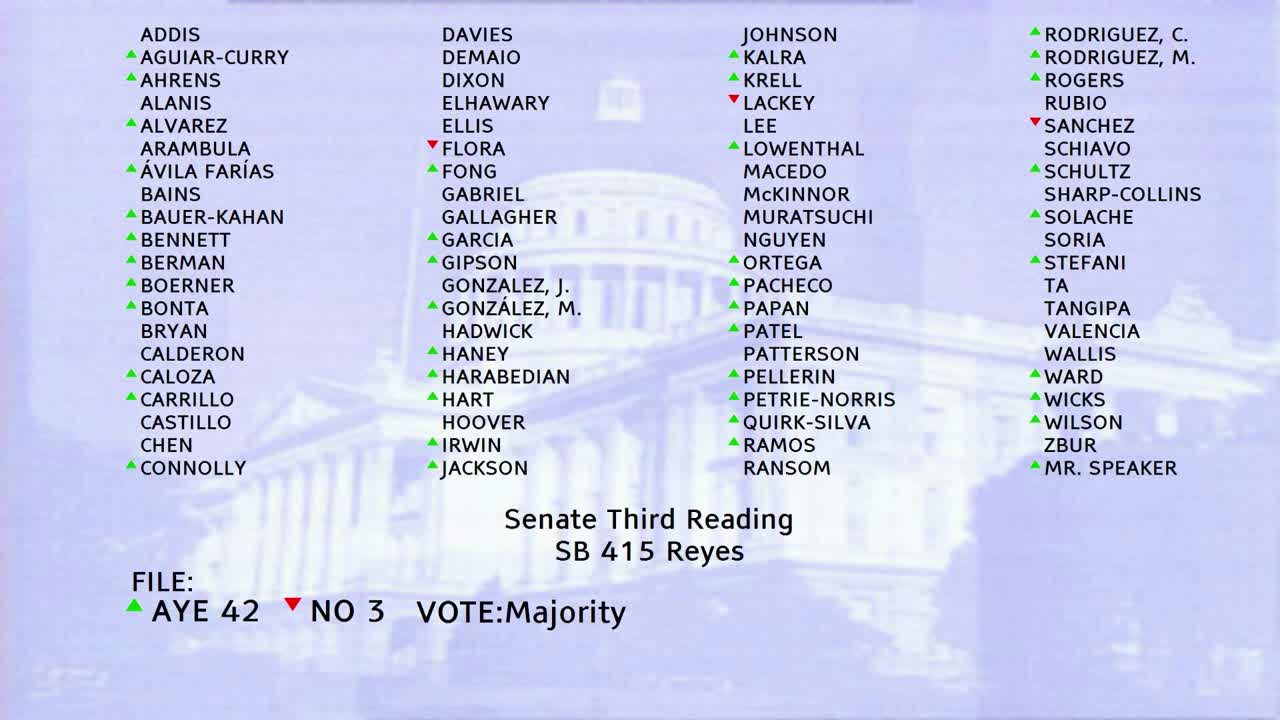
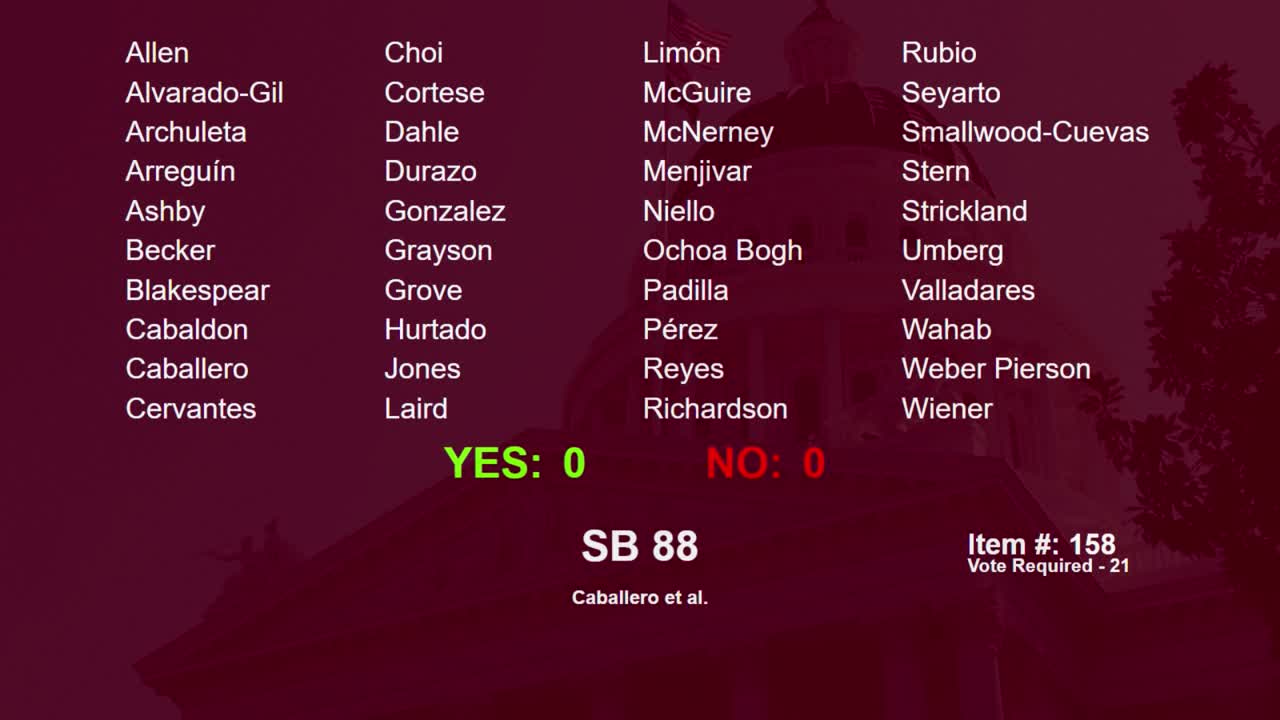
Bill Author

Bill Co-Author(s):