SB 259: Elections: vote by mail ballots.
- Session Year: 2025-2026
- House: Senate
- Latest Version Date: 2026-09-19
Current Status:
Passed
(2026-09-19: Chaptered by Secretary of State. Chapter 331, Statutes of 2026.)
Introduced
In Committee
Awaiting First Chamber Vote
Passed First Chamber
In Committee
Awaiting Second Chamber Vote
Passed Second Chamber
Enacted
What does this bill do?
This bill makes it a crime for anyone who handles a vote-by-mail ballot to willfully interfere with delivering the ballot to a voter or returning a completed ballot to the local elections official, and makes it a felony for a supervisor or other person with authority who directs others to do so. Interference includes unauthorized access, breaking the ballot’s chain of custody, tampering, or failing to return a ballot someone was designated to return; a misdemeanor can bring up to six months in county jail or a $10,000 fine, while directing others to interfere is punishable by 2–4 years in prison.
The summary is provided by generative AI which can make mistakes. For original language, please view the details in the table below.
Existing law makes it a misdemeanor for any person having charge of a completed vote by mail ballot to interfere with a ballots return to the local elections official.
This bill would additionally make it a misdemeanor for any person having charge of a vote by mail ballot to interfere, as defined, with a ballots delivery to a voter. The bill would make it a felony for a person with authority to direct one or more persons subject to their supervision or authority to interfere with a ballots return to the local elections official or delivery to a voter. By expanding the scope of an existing crime, this bill would impose a state-mandated local program.
The California Constitution requires the state to reimburse local agencies and school districts for certain costs mandated by the state. Statutory provisions establish procedures for making that reimbursement.
This bill would provide that no reimbursement is required by this act for a specified reason.
This bill would declare that it is to take effect immediately as an urgency statute.
The California Consumer Privacy Act of 2018 grants to a consumer various rights with respect to personal information, as defined, that is collected by a business, as defined, including the right to request that a business delete personal information about the consumer that the business has collected from the consumer and to direct a business that sells or shares personal information about the consumer to third parties not to sell or share the consumers personal information.This bill, the Fair Online Pricing Act, would, subject to specified exceptions, prohibit a price offered to a consumer through the consumers online device, as defined, from being generated in whole, or in part, based on any of certain input data, including the presence or absence of any software on the online device.The California Consumer Privacy Act of 2018 grants to a consumer various rights with respect to personal information, as defined, that is collected by a business, as defined, including the right to request that a business delete personal information about the consumer that the business has collected from the consumer and to direct a business that sells or shares personal information about the consumer to third parties not to sell or share the consumers personal information.
This bill, the Fair Online Pricing Act, would, subject to specified exceptions, prohibit a price offered to a consumer through the consumers online device, as defined, from being generated in whole, or in part, based on any of certain input data, including the presence or absence of any software on the online device.
The California Consumer Privacy Act of 2018 grants to a consumer various rights with respect to personal information, as defined, that is collected by a business, as defined, including the right to request that a business delete personal information about the consumer that the business has collected from the consumer and to direct a business that sells or shares personal information about the consumer to third parties not to sell or share the consumers personal information.
This bill, the Fair Online Pricing Act, would, subject to specified exceptions, prohibit a price offered to a consumer through the consumers online device, as defined, from being generated in whole, or in part, based on any of certain input data, including the presence or absence of any software on the online device. The bill would also require a person to cause to be placed a clear and conspicuous disclosure adjacent to any price for which an algorithmic pricing system, as defined, was used, in whole or in part, to determine the price.
The California Consumer Privacy Act of 2018 grants to a consumer various rights with respect to personal information, as defined, that is collected by a business, as defined, including the right to request that a business delete personal information about the consumer that the business has collected from the consumer and to direct a business that sells or shares personal information about the consumer to third parties not to sell or share the consumers personal information.
This bill, the Fair Online Pricing Act, would would, subject to specified exceptions, prohibit a price offered to a consumer through the consumers online device, as defined, from being generated in whole, or in part, based on any of certain input data, including the presence or absence of any software on the online device. The bill would require, subject to specified exceptions, also require a person to cause to be placed a clear and conspicuous disclosure adjacent to any price for which an algorithmic pricing system, as defined, was used, in whole or in part, to determine the price.
The California Consumer Privacy Act of 2018 grants to a consumer various rights with respect to personal information, as defined, that is collected by a business, as defined, including the right to request that a business delete personal information about the consumer that the business has collected from the consumer and to direct a business that sells or shares personal information about the consumer to third parties not to sell or share the consumers personal information.
This bill, the Fair Online Pricing Act, would prohibit a price offered to a consumer through the consumers online device, as defined, from being generated in whole, or in part, based on any of certain input data, including the presence or absence of any software on the online device. The bill would require, subject to specified exceptions, a person to cause to be placed a clear and conspicuous disclosure adjacent to any price displayed by the person to a consumer on the consumers online device a conspicuous link that, among other things, is clickable text that, if clicked, displays or links to a list containing any input data used to generate the price, and, if an online device cannot display a link because it lacks a physical display, would require the person to create an alternate mechanism for providing access to the list of input data, as specified. for which an algorithmic pricing system, as defined, was used, in whole or in part, to determine the price.
The California Consumer Privacy Act of 2018 grants to a consumer various rights with respect to personal information, as defined, that is collected by a business, as defined, including the right to request that a business delete personal information about the consumer that the business has collected from the consumer and to direct a business that sells or shares personal information about the consumer to third parties not to sell or share the consumers personal information.
This bill, the Fair Online Pricing Act, would prohibit a price, surcharge, or fee displayed on a price offered to a consumer through the consumers online device, as defined, from being generated in whole, or in part, based on any of certain input data, including the presence or absence of any software on the online device. The bill would require, subject to a specified exception for an online device that lacks a physical display, exceptions, a person to cause to be placed adjacent to any price, surcharge, or fee price displayed by the person to a consumer on the consumers online device a conspicuous link that, among other things, is clickable text that, if clicked, displays or links to a list containing any input data used to generate the price, surcharge, or fee. price, and, if an online device cannot display a link because it lacks a physical display, would require the person to create an alternate mechanism for providing access to the list of input data, as specified.
The California Consumer Privacy Act of 2018 (CCPA), grants to a consumer various rights with respect to personal information, as defined, that is collected by a business, as defined, including the right to request that a business delete personal information about the consumer that the business has collected from the consumer. Existing law, the California Privacy Rights Act of 2020, approved by the voters as Proposition 24 at the November 3, 2020, statewide general election, amended, added to, and reenacted the CCPA. consumer and to direct a business that sells or shares personal information about the consumer to third parties not to sell or share the consumers personal information.
Existing law, the Unruh Civil Rights Act, specifies that all persons within the jurisdiction of the state are free and equal, and no matter their sex, race, color, religion, ancestry, national origin, disability, medical condition, genetic information, marital status, sexual orientation, citizenship, primary language, or immigration status are entitled to the full and equal accommodations, advantages, facilities, privileges, or services in all business establishments of every kind.This bill would state the intent of the Legislature to enact legislation that would ban the practice of affinity-based algorithmic pricing, which combines personalized pricing and dynamic pricing to determine differential pricing for a targeted group of consumers based on explicit or perceived characteristics gathered from personal data, and creates opaque and discriminatory pricing structures.This bill, the Fair Online Pricing Act, would prohibit a price, surcharge, or fee displayed on a consumers online device, as defined, from being generated in whole, or in part, based on any of certain input data, including the software on the online device. The bill would require, subject to a specified exception for an online device that lacks a physical display, a person to cause to be placed adjacent to any price, surcharge, or fee displayed by the person to a consumer on the consumers online device a conspicuous link that, among other things, is clickable text that, if clicked, displays or links to a list containing any input data used to generate the price, surcharge, or fee.
Existing law, the California Consumer Privacy Act of 2018 (CCPA), grants to a consumer various rights with respect to personal information, as defined, that is collected by a business, as defined, including the right to request that a business delete personal information about the consumer that the business has collected from the consumer. Existing law, the California Privacy Rights Act of 2020, approved by the voters as Proposition 24 at the November 3, 2020, statewide general election, amended, added to, and reenacted the CCPA.
Existing law, the Unruh Civil Rights Act, specifies that all persons within the jurisdiction of the state are free and equal, and no matter their sex, race, color, religion, ancestry, national origin, disability, medical condition, genetic information, marital status, sexual orientation, citizenship, primary language, or immigration status are entitled to the full and equal accommodations, advantages, facilities, privileges, or services in all business establishments of every kind.
This bill would state the intent of the Legislature to enact legislation that would ban the practice of affinity-based algorithmic pricing, which combines personalized pricing and dynamic pricing to determine differential pricing for a targeted group of consumers based on explicit or perceived characteristics gathered from personal data, and creates opaque and discriminatory pricing structures.
(a)Any person having charge of a completed vote by mail ballot who willfully interferes or causes interference with its return to the local elections official having jurisdiction over the election is guilty of a misdemeanor punishable by imprisonment in the county jail not exceeding six months, by a fine not exceeding ten thousand dollars ($10,000), or by both the fine and imprisonment.
(b)Any person having charge of a vote by mail ballot who willfully interferes or causes interference with its delivery to a voter is guilty of a misdemeanor punishable by imprisonment in the county jail not exceeding six months, by a fine not exceeding ten thousand dollars ($10,000), or by both the fine and imprisonment.
(c)Any person with authority who directs one or more other persons subject to their supervision or authority to engage in the conduct prohibited by subdivision (a) or (b) is guilty of a felony, punishable by imprisonment pursuant to subdivision (h) of Section 1170 of the Penal Code for two, three, or four years.
(d)For purposes of this section, interference includes, but is not limited to, providing unauthorized access to, breaking the chain of custody for, or tampering with a vote by mail ballot, or, having been designated to return a ballot under Section 3017, failing to return that ballot to the applicable elections official.
SEC. 2.No reimbursement is required by this act pursuant to Section 6 of Article XIIIB of the California Constitution because the only costs that may be incurred by a local agency or school district will be incurred because this act creates a new crime or infraction, eliminates a crime or infraction, or changes the penalty for a crime or infraction, within the meaning of Section 17556 of the Government Code, or changes the definition of a crime within the meaning of Section 6 of Article XIIIB of the California Constitution.
SEC. 3.This act is an urgency statute necessary for the immediate preservation of the public peace, health, or safety within the meaning of Article IV of the California Constitution and shall go into immediate effect. The facts constituting the necessity are:
In order for the important election security protections in this act to apply to the November 3, 2026, statewide general election, it is necessary that this act take effect immediately.
SECTION 1.This act shall be known, and may be cited, as the Fair Online Pricing Act.SEC. 2.Chapter 40 (commencing with Section 22949.82) is added to Division 8 of the Business and Professions Code, to read:40.Device-Based Pricing22949.82.(a)Coupon means any method by which a consumer receives a discount on the purchase of any item that is funded, produced, sponsored, promoted, or furnished, either directly or indirectly, by a business, including, but not limited to, a paper coupon, a digital coupon, or an instant redeemable coupon.(b)Discount means any reduction from the regular or advertised price offered to consumers on a temporary or conditional basis.(c)Hardware state means a condition or mode of existence of a system, component, or simulation, including, but not limited to, battery life, number of wireless connections detected, hardware performance characteristics, and age of the device, data that is erased when an online device is restarted or powered down, and data that is retained when an online device is restarted or powered down.(d)Online device means a physical object that has built-in resources that allow it to communicate through the internet or a short-range wireless technology and react to interface conditions, including, but not limited to, a laptop computer, a desktop computer, a tablet, a smartphone, or other smart hardware.22949.82.1.(a)A price offered to a consumer through the consumers online device shall not be generated in whole, or in part, based on any of the following input data:(1)(A)The hardware or hardware state of the online device.(B)This paragraph shall not prohibit the generation of a price offered to a consumer based on the hardware or hardware state of the online device for the following purposes:(i)Repairs or maintenance of the online device.(ii)Calculating a trade-in value of the online device.(2)The presence or absence of any software on the online device.(3)(A)Geolocation data of the online device, when used to set a price based on inferences about the consumer made from this data.(B)Subparagraph (A) shall not prohibit the use of geolocation data of the online device and the consumers location to generate a price for reasons not specified in subparagraph (A), including, but not limited to, either of the following: (i)To determine pricing based on the real-time demand for the product or service in the consumers vicinity, if the product or service is provided immediately upon request.(ii)To provide accurate pricing information based on price variances at different physical locations, due to legitimate cost differentials associated with providing a good or service to different consumers or state or local government taxes, duties, or other fees imposed by state or local government on the transaction.(b)Nothing in this chapter shall prohibit any coupon, discount, or other bona fide rebate, sale, or promotion that is separate from the price, that reduces the price of goods or services, that is issued or offered to the general public on the same terms, and does not incorporate input data as specified in subdivision (a).22949.82.2.The duties and obligations imposed by this chapter are cumulative with any other duties or obligations imposed under other law and shall not be construed to relieve any party from any duties or obligations imposed under other law, including, but not limited to, duties or obligations related to the accurate advertising, displaying, or offering of prices.SEC. 3.The Legislature finds and declares that cellular broadcast technology is a critical service, especially during a state of emergency, and that this technology is inherently privacy preserving as it does not use personal data, and as a unilateral one-to-many system that does not rely on the geolocation of an individual consumers device, is not encompassed by the broadly understood term geolocation for purposes of this act.This act shall be known, and may be cited, as the Fair Online Pricing Act.
SEC. 2.Chapter 40 (commencing with Section 22949.82) is added to Division 8 of the Business and Professions Code, to read:40.Device-Based Pricing22949.82.(a)Coupon means any method by which a consumer receives a discount on the purchase of any item that is funded, produced, sponsored, promoted, or furnished, either directly or indirectly, by a business, including, but not limited to, a paper coupon, a digital coupon, or an instant redeemable coupon.
(b)Discount means any reduction from the regular or advertised price offered to consumers on a temporary or conditional basis.
(c)Hardware state means a condition or mode of existence of a system, component, or simulation, including, but not limited to, battery life, number of wireless connections detected, hardware performance characteristics, and age of the device, data that is erased when an online device is restarted or powered down, and data that is retained when an online device is restarted or powered down.
(d)Online device means a physical object that has built-in resources that allow it to communicate through the internet or a short-range wireless technology and react to interface conditions, including, but not limited to, a laptop computer, a desktop computer, a tablet, a smartphone, or other smart hardware.
22949.82.1.(a)A price offered to a consumer through the consumers online device shall not be generated in whole, or in part, based on any of the following input data:
(1)(A)The hardware or hardware state of the online device.
(B)This paragraph shall not prohibit the generation of a price offered to a consumer based on the hardware or hardware state of the online device for the following purposes:
(i)Repairs or maintenance of the online device.
(ii)Calculating a trade-in value of the online device.
(2)The presence or absence of any software on the online device.
(3)(A)Geolocation data of the online device, when used to set a price based on inferences about the consumer made from this data.
(B)Subparagraph (A) shall not prohibit the use of geolocation data of the online device and the consumers location to generate a price for reasons not specified in subparagraph (A), including, but not limited to, either of the following:
(i)To determine pricing based on the real-time demand for the product or service in the consumers vicinity, if the product or service is provided immediately upon request.
(ii)To provide accurate pricing information based on price variances at different physical locations, due to legitimate cost differentials associated with providing a good or service to different consumers or state or local government taxes, duties, or other fees imposed by state or local government on the transaction.
(b)Nothing in this chapter shall prohibit any coupon, discount, or other bona fide rebate, sale, or promotion that is separate from the price, that reduces the price of goods or services, that is issued or offered to the general public on the same terms, and does not incorporate input data as specified in subdivision (a).
22949.82.2.The duties and obligations imposed by this chapter are cumulative with any other duties or obligations imposed under other law and shall not be construed to relieve any party from any duties or obligations imposed under other law, including, but not limited to, duties or obligations related to the accurate advertising, displaying, or offering of prices.
SEC. 3.The Legislature finds and declares that cellular broadcast technology is a critical service, especially during a state of emergency, and that this technology is inherently privacy preserving as it does not use personal data, and as a unilateral one-to-many system that does not rely on the geolocation of an individual consumers device, is not encompassed by the broadly understood term geolocation for purposes of this act.
This act shall be known known, and may be cited, as the Fair Online Pricing Act.
SEC. 2.Chapter 40 (commencing with Section 22949.82) is added to Division 8 of the Business and Professions Code, to read:40.Device-Based Pricing22949.82.(a)Coupon means any method by which a consumer receives a discount on the purchase of any item that is funded, produced, sponsored, promoted, or furnished, either directly or indirectly, by a business, including, but not limited to, a paper coupon, a digital coupon, or an instant redeemable coupon.
(b)Discount means any reduction from the regular or advertised price offered to consumers on a temporary or conditional basis.
(c)Hardware state means a condition or mode of existence of a system, component, or simulation, including, but not limited to, battery life, number of wireless connections detected, hardware performance characteristics, and age of the device, data that is erased when an online device is restarted or powered down, and data that is retained when an online device is restarted or powered down.
(d)Online device means a physical object that has built-in resources that allow it to communicate through the internet or a short-range wireless technology and react to interface conditions, including, but not limited to, a laptop computer, a desktop computer, a tablet, a smartphone, or other smart hardware.
22949.82.1.(a)A price offered to a consumer through the consumers online device shall not be generated in whole, or in part, based on any of the following input data:
(1)The hardware or hardware state of the online device.
(2)The presence or absence of any software on the online device.
(3)(A)Geolocation data of the online device. device, when used to set a price based on inferences about the consumer made from this data.
(B)Notwithstanding subparagraph (A), the Subparagraph (A) shall not prohibit the use of geolocation data of the online device may be used, and the consumers location may be accounted for, to generate a price for either of the following reasons: reasons not specified in subparagraph (A), including, but not limited to, either of the following:
(i)To the extent related to differences in the costs or demands associated with providing a good or service to different consumers. (ii)(i)To determine a surcharge pricing based on the real-time demand for the product or service in the consumers vicinity, if the product or service is provided immediately upon request.
(iii)(ii)To provide accurate pricing information based on price variances at different physical locations, due to legitimate cost or demand differentials associated with providing a good or service to different consumers or state or local government taxes, duties, or other fees. fees imposed by state or local government on the transaction.
(b)This chapter shall not apply to any coupon that is separate from the price, any Nothing in this chapter shall prohibit any coupon, discount, or any other bona fide rebates, sales, or promotions rebate, sale, or promotion that is separate from the price, that reduce reduces the price of goods or services, that are available is issued or offered to the general public on the same terms, and do does not incorporate input data as specified in subdivision (a).
22949.82.2.The duties and obligations imposed by this chapter are cumulative with any other duties or obligations imposed under other law and shall not be construed to relieve any party from any duties or obligations imposed under other law. law, including, but not limited to, duties or obligations related to the accurate advertising, displaying, or offering of prices.
This act shall be known as the Fair Online Pricing Act.
SEC. 2.Chapter 40 (commencing with Section 22949.82) is added to Division 8 of the Business and Professions Code, to read:40.Device-Based Pricing22949.82.(a)Coupon means any method by which a consumer receives a discount on the purchase of any item that is funded, produced, sponsored, promoted, or furnished, either directly or indirectly, by a business, including, but not limited to, a paper coupon, a digital coupon, or an instant redeemable coupon.
(b)Discount means any reduction from the regular or advertised price offered to consumers on a temporary or conditional basis.
(b)(c)Hardware state means a condition or mode of existence of a system, component, or simulation, including, but not limited to, battery life, number of wireless connections detected, and age of the device, and the content of volatile data and nonvolatile data. data that is erased when an online device is restarted or powered down, and data that is retained when an online device is restarted or powered down.
(c)Nonvolatile data means data that persists even after an online device is powered down.(d)Online device means a physical object that has built-in resources that allow it to communicate through the internet or a short-range wireless technology and react to interface conditions, including, but not limited to, a laptop computer, a desktop computer, a tablet, a smartphone, or other smart hardware.
(e)Volatile data means data on a live system that is lost after an online device is powered down.22949.82.1.(a)A price offered to a consumer through the consumers online device shall not be generated in whole, or in part, based on any of the following input data:
(1)The hardware or hardware state of the online device.
(2)The presence or absence of any software on the online device.
(3)(A)Geolocation data of the online device.
(B)Notwithstanding subparagraph (A), the geolocation data of the online device may be used, and the consumers location may be accounted for, to generate a price for either of the following reasons:
(i)To the extent necessary to reflect related to differences in the costs or demands associated with providing a good or service to different consumers.
(ii)To determine a surcharge based on the real-time demand for the product or service in the consumers vicinity, if the product or service is provided immediately upon request.
(iii)To provide accurate pricing information based on price variances at different physical locations, due to legitimate cost or demand differentials or state or local government taxes, duties, or other fees.
(b)This chapter shall not apply to any optional coupon that is wholly distinguishable separate from the price, is any discount, or any other bona fide rebates, sales, or promotions that reduce the price of goods or services, that are available to the general public on the same terms, and does do not incorporate device-specific input data as specified in this section. subdivision (a).
22949.82.2.The duties and obligations imposed by this chapter are cumulative with any other duties or obligations imposed under other law and shall not be construed to relieve any party from any duties or obligations imposed under other law.
This act shall be known as the Fair Online Pricing Act.
SEC. 2.Chapter 40 (commencing with Section 22949.82) is added to Division 8 of the Business and Professions Code, to read:40.Device-Based Pricing22949.82.As used in this chapter:(a)Algorithmic pricing system means a software, computer system, computer process, algorithmic program, or artificial intelligence that automates the setting of price.(b)Artificial intelligence means an engineered or machine-based system that varies in its level of autonomy and that can, for explicit or implicit objectives, infer from the input it receives how to generate outputs that can influence physical or virtual environments.(c)22949.82.(a)Coupon means any method by which a consumer receives a discount on the purchase of any item that is funded, produced, sponsored, promoted, or furnished, either directly or indirectly, by a business, including, but not limited to, a paper coupon, a digital coupon, or an instant redeemable coupon.
(d)(b)Hardware state means a condition or mode of existence of a system, component, or simulation, including, but not limited to, battery life, number of wireless connections detected, and age of the device, and the content of volatile data and nonvolatile data.
(e)(c)Nonvolatile data means data that persists even after an online device is powered down.
(f)(d)Online device means a physical object that has built-in resources that allow it to communicate through the internet or a short-range wireless technology and react to interface conditions, including, but not limited to, a laptop computer, a desktop computer, a tablet, a smartphone, or other smart hardware.
(g)(e)Volatile data means data on a live system that is lost after an online device is powered down.
22949.82.1.(a)A price offered to a consumer through the consumers online device shall not be generated in whole, or in part, based on any of the following input data:
(1)The hardware or hardware state of the online device.
(2)The presence or absence of any software on the online device.
(3)(A)Geolocation data of the online device.
(B)Notwithstanding subparagraph (A), the geolocation data of the online device may be used, and the consumers location may be accounted for, to generate a price for either of the following reasons:
(i)To the extent necessary to reflect differences in the costs associated with providing a good or service to different consumers.
(ii)To determine a surcharge based on the real-time demand for the product or service in the consumers vicinity, when if the product or service is provided immediately upon request.
(b)Subject to subdivision (c), to the extent it is technically feasible, a person shall cause to be placed clearly and conspicuously and adjacent to any price for which an algorithmic pricing system was used, in whole or in part, to determine the price, the following disclosure: Price personalized with your personal information.(c)Subdivision (b) shall not apply to a pricing offer that is made on the same terms to the general public and does not incorporate device-specific data in devising the price.(d)(b)This chapter shall not apply to any optional coupon that is wholly distinguishable from the price, is available to the general public on the same terms, and does not incorporate device-specific data as specified in this section.
22949.82.2.(a)The duties and obligations imposed by this chapter are cumulative with any other duties or obligations imposed under other law, law and shall not be construed to relieve any party from any duties or obligations imposed under other law.
(b)The remedies or penalties provided by this chapter are cumulative to each other and to the remedies or penalties available under all other laws of the state.This act shall be known as the Fair Online Pricing Act.
SEC. 2.Chapter 40 (commencing with Section 22949.82) is added to Division 8 of the Business and Professions Code, to read:40.Device-Based Pricing22949.82.As used in this chapter:
(a)Algorithmic pricing system means a software, computer system, computer process, algorithmic program, or artificial intelligence that automates the setting of price.
(b)Artificial intelligence means an engineered or machine-based system that varies in its level of autonomy and that can, for explicit or implicit objectives, infer from the input it receives how to generate outputs that can influence physical or virtual environments.
(c)Coupon means any method by which a consumer receives a discount on the purchase of any item that is funded, produced, sponsored, promoted, or furnished, either directly or indirectly, by a business, including, but not limited to, a paper coupon, a digital coupon, or an instant redeemable coupon.
(c)(d)Hardware state means a condition or mode of existence of a system, component, or simulation, including, but not limited to, battery life, number of wireless connections detected, and age of the device, and the content of volatile data and nonvolatile data.
(d)(e)Nonvolatile data means data that persists even after an online device is powered down.
(e)(f)Online device means a physical object that has built-in resources that allow it to communicate through the internet or a short-range wireless technology and react to interface conditions, including, but not limited to, a laptop computer, a desktop computer, a tablet, a smartphone, or other smart hardware.
(f)(g)Volatile data means data on a live system that is lost after an online device is powered down.
22949.82.1.(a)A price offered to a consumer through the consumers online device shall not be generated in whole, or in part, based on any of the following input data:
(1)The hardware or hardware state of the online device.
(2)The presence or absence of any software on the online device.
(3)(A)Geolocation data of the online device.
(B)Notwithstanding subparagraph (A), the geolocation data of the online device may be used, and the consumers location may be accounted for, to generate a price for any either of the following reasons:
(i)To account for the estimated distance and travel time necessary for a service provider to reach the consumer.(ii)To account for the estimated distance and travel time necessary for a service provider to transport the consumer to another location, or to transport a product to the consumer.(i)To the extent necessary to reflect differences in the costs associated with providing a good or service to different consumers.
(iii)(ii)To determine a surcharge based on the real-time demand for the product or service in the consumers vicinity, when the product or service is provided immediately upon request.
(b)Subject to subdivision (c), to the extent it is technically feasible, a person shall cause to be placed clearly and conspicuously and adjacent to any price for which an algorithmic pricing system was used, in whole or in part, to determine the price, the following disclosure: Price generated with an algorithmic pricing system. personalized with your personal information.
(c)Subdivision (b) shall not apply to a pricing offer that is made on the same terms to the general public and does not incorporate device-specific data in devising the price.
(d)This chapter shall not apply to any optional coupon that is wholly distinguishable from the price, is available to the general public on the same terms, and does not incorporate device-specific data as specified in this section.
22949.82.2.(a)The duties and obligations imposed by this chapter are cumulative with any other duties or obligations imposed under other law, and shall not be construed to relieve any party from any duties or obligations imposed under other law.
(b)The remedies or penalties provided by this chapter are cumulative to each other and to the remedies or penalties available under all other laws of the state.
This act shall be known as the Fair Online Pricing Act.
SEC. 2.Chapter 40 (commencing with Section 22949.82) is added to Division 8 of the Business and Professions Code, to read:40.Device-Based Pricing22949.82.As used in this chapter:
(a)Algorithmic pricing system means a software, computer system, computer process, algorithmic program, or artificial intelligence that automates the setting of price.
(b)Artificial intelligence means an engineered or machine-based system that varies in its level of autonomy and that can, for explicit or implicit objectives, infer from the input it receives how to generate outputs that can influence physical or virtual environments.
(a)(c)Hardware state means a condition or mode of existence of a system, component, or simulation, including, but not limited to, battery life, number of wireless connections detected, and age of the device, and the content of volatile data and nonvolatile data.
(b)(d)Nonvolatile data means data that persists even after an online device is powered down.
(c)(e)Online device means a physical object that has built-in resources that allow it to communicate through the internet or a short-range wireless technology and react to interface conditions, including, but not limited to, a laptop computer, a desktop computer, a tablet, a smartphone, or other smart hardware.
(d)(f)Volatile data means data on a live system that is lost after an online device is powered down.
22949.82.1.(a)A price offered to a consumer through the consumers online device shall not be generated in whole, or in part, based on any of the following input data:
(1)The hardware or hardware state of the online device.
(2)The presence or absence of any software on the online device.
(3)(A)Geolocation data of the online device.
(B)Notwithstanding subparagraph (A), the geolocation data of the online device may be used, and the consumers location may be accounted for, to generate a price for any of the following reasons:
(i)To account for the estimated distance and travel time necessary for a service provider to reach the consumer.
(ii)To account for the estimated distance and travel time necessary for a service provider to transport the consumer to another location, or to transport a product to the consumer.
(iii)To determine a surcharge based on the real-time demand for the product or service in the consumers vicinity, when the product or service is provided immediately upon request.
(b)Subject to subdivisions (c) and (d), subdivision (c), to the extent it is technically feasible, a person shall cause to be placed clearly and conspicuously and adjacent to any price displayed by the person to a consumer on the consumers online device a conspicuous link that meets all of the following criteria: for which an algorithmic pricing system was used, in whole or in part, to determine the price, the following disclosure: Price generated with an algorithmic pricing system.
(1)The link is clickable text that, if clicked, displays or links to a list containing any input data used to generate the price.(2)The text of the link is in a type size that is at least 90 percent of the type size of the displayed price.(3)The link can be used to download the list of input data or to have the list of input data sent to an email address of the consumers choice.(c)(1)If an online device cannot display a link pursuant to subdivision (b) because the online device lacks a physical display, the person shall create an alternate mechanism for providing access to the list of input data.(2)Access to the list of input data specified in paragraph (1) shall be made available for no less than 14 calendar days.(d)(c)Subdivision (b) shall not apply to a pricing offer that is made on the same terms to the general public and does not incorporate device-specific data in devising the price.
22949.82.2.(a)The duties and obligations imposed by this chapter are cumulative with any other duties or obligations imposed under other law, and shall not be construed to relieve any party from any duties or obligations imposed under other law.
(b)The remedies or penalties provided by this chapter are cumulative to each other and to the remedies or penalties available under all other laws of the state.
This act shall be known as the Fair Online Pricing Act.
SEC. 2.Chapter 40 (commencing with Section 22949.82) is added to Division 8 of the Business and Professions Code, to read:40.Online Device-Based Pricing22949.82.As used in this chapter:
(a)Hardware state means a condition or mode of existence of a system, component, or simulation, including, but not limited to, battery life, number of wireless connections detected, and age of the device. device, and the content of volatile data and nonvolatile data.
(b)Nonvolatile data means data that persists even after an online device is powered down.
(b)(c)Online device means a physical object that has built-in resources that allow it to communicate through the internet or a short-range wireless technology and react to interface conditions, including, but not limited to, a laptop computer, a desktop computer, a tablet, a smartphone, or other smart hardware.
(d)Volatile data means data on a live system that is lost after an online device is powered down.
22949.82.1.(a)A price, surcharge, or fee displayed on a price offered to a consumer through the consumers online device shall not be generated in whole, or in part, based on any of the following input data:
(1)The hardware or hardware state of the online device.
(2)Software The presence or absence of any software on the online device.
(3)(A)Geolocation data. data of the online device.
(B)Notwithstanding subparagraph (A), the geolocation data of the online device may be used, and the consumers location may be accounted for, to generate a price for any of the following reasons:
(i)To account for the estimated distance and travel time necessary for a service provider to reach the consumer.
(ii)To account for the estimated distance and travel time necessary for a service provider to transport the consumer to another location, or to transport a product to the consumer.
(iii)To determine a surcharge based on the real-time demand for the product or service in the consumers vicinity, when the product or service is provided immediately upon request.
(b)Subject to subdivision (c), subdivisions (c) and (d), a person shall cause to be placed adjacent to any price, surcharge, or fee price displayed by the person to a consumer on the consumers online device a conspicuous link that meets all of the following criteria:
(1)The link is clickable text that, if clicked, displays or links to a list containing any input data used to generate the price, surcharge, or fee. price.
(2)The text of the link is in a type size that is at least 90 percent of the type size of the displayed price, surcharge, or fee. price.
(3)The link can be used to download the list of input data or to have the list of input data sent to an email address of the consumers choice.
(c)(1)If an online device cannot display a link pursuant to subdivision (b) because the online device lacks a physical display, the person shall create an alternate mechanism for providing access to the list of input data.
(2)Access to the list of input data specified in paragraph (1) shall be made available for no less than 14 calendar days.
(d)Subdivision (b) shall not apply to a pricing offer that is made on the same terms to the general public and does not incorporate device-specific data in devising the price.
This act shall be known as the Fair Online Pricing Act.
SEC. 2.Chapter 40 (commencing with Section 22949.82) is added to Division 8 of the Business and Professions Code, to read:40.Online Pricing22949.82.As used in this chapter:
(a)Hardware state means a condition or mode of existence of a system, component, or simulation, including, but not limited to, battery life, number of wireless connections detected, and age of the device.
(b)Online device means a physical object that has built-in resources that allow it to communicate through the internet or a short-range wireless technology and react to interface conditions, including, but not limited to, a laptop computer, a desktop computer, a tablet, a smartphone, or other smart hardware.
22949.82.1.(a)A price, surcharge, or fee displayed on a consumers online device shall not be generated in whole, or in part, based on any of the following input data:
(1)The hardware or hardware state of the online device.
(2)Software on the online device.
(3)Geolocation data.
(b)Subject to subdivision (c), a person shall cause to be placed adjacent to any price, surcharge, or fee displayed by the person to a consumer on the consumers online device a conspicuous link that meets all of the following criteria:
(1)The link is clickable text that, if clicked, displays or links to a list containing any input data used to generate the price, surcharge, or fee.
(2)The text of the link is in a type size that is at least 90 percent of the type size of the displayed price, surcharge, or fee.
(3)The link can be used to download the list of input data or to have the list of input data sent to an email address of the consumers choice.
(c)If an online device cannot display a link pursuant to subdivision (b) because the online device lacks a physical display, the person shall create an alternate mechanism for providing access to the list of input data.
SECTION 1.It is the intent of the Legislature to enact legislation that would ban the practice of affinity-based algorithmic pricing, which combines personalized pricing and dynamic pricing to determine differential pricing for a targeted group of consumers based on explicit or perceived characteristics gathered from personal data, and creates opaque and discriminatory pricing structures.It is the intent of the Legislature to enact legislation that would ban the practice of affinity-based algorithmic pricing, which combines personalized pricing and dynamic pricing to determine differential pricing for a targeted group of consumers based on explicit or perceived characteristics gathered from personal data, and creates opaque and discriminatory pricing structures.
|
Date
|
Status
|
|---|---|
| Sep 19, 2026 | Chaptered by Secretary of State. Chapter 331, Statutes of 2026. |
| Sep 19, 2026 | Approved by the Governor. |
| Aug 30, 2026 | Enrolled and presented to the Governor at 6 p.m. |
| Aug 30, 2026 | Urgency clause adopted. |
| Aug 30, 2026 | Assembly amendments concurred in. (Ayes 30. Noes 10.) Ordered to engrossing and enrolling. |
| Aug 28, 2026 | In Senate. Concurrence in Assembly amendments pending. |
| Aug 28, 2026 | Read third time. Urgency clause adopted. Passed. (Ayes 59. Noes 16. Page 6778.) Ordered to the Senate. |
| Aug 28, 2026 | Read third time. Urgency clause adopted. Passed. Ordered to the Senate. |
| Aug 27, 2026 | Read second time. Ordered to third reading. |
| Aug 27, 2026 | From committee: Do pass. (Ayes 9. Noes 3.) (August 27). |
| Aug 25, 2026 | Joint Rule 62(a) suspended. |
| Aug 25, 2026 | From committee: Do pass and re-refer to Com. on APPR. (Ayes 6. Noes 2.) (August 25). Re-referred to Com. on APPR. |
| Aug 25, 2026 | From committee: Do pass and re-refer to Com. on ELECTIONS. (Ayes 7. Noes 2.) (August 25). Re-referred to Com. on ELECTIONS. |
| Aug 24, 2026 | Re-referred to Coms. on PUB. S., ELECTIONS, and APPR. pursuant to Assembly Rule 77.2. |
| Aug 24, 2026 | Joint Rule 62(a) suspended. |
| Aug 24, 2026 | Assembly Rule 56 suspended. |
| Aug 20, 2026 | Read third time and amended. |
| Aug 20, 2026 | Ordered to third reading. |
| Aug 19, 2026 | Ordered to third reading. |
| Aug 19, 2026 | From inactive file. |
| Aug 18, 2026 | Notice of intention to remove from inactive file given by Assembly Member Aguiar-Curry. |
| Sep 12, 2025 | Ordered to inactive file on request of Assembly Member Aguiar-Curry. |
| Sep 9, 2025 | Read third time and amended. |
| Sep 9, 2025 | Ordered to third reading. |
| Sep 9, 2025 | Joint Rule 61(a)(13) suspended. (Ayes 60. Noes 20. Page 3128.) |
| Sep 5, 2025 | Read third time and amended. |
| Sep 5, 2025 | Ordered to third reading. |
| Jul 17, 2025 | Read second time. Ordered to third reading. |
| Jul 16, 2025 | From committee: Do pass. (Ayes 8. Noes 3.) (July 15). |
| Jul 10, 2025 | From committee with author's amendments. Read second time and amended. Re-referred to Com. on JUD. |
| Jul 2, 2025 | July 8 hearing postponed by committee. |
| Jun 25, 2025 | From committee: Do pass and re-refer to Com. on JUD. (Ayes 10. Noes 4.) (June 24). Re-referred to Com. on JUD. |
| Jun 19, 2025 | From committee with author's amendments. Read second time and amended. Re-referred to Com. on P. & C.P. |
| Jun 13, 2025 | From committee with author's amendments. Read second time and amended. Re-referred to Com. on P. & C.P. |
| Jun 5, 2025 | Referred to Coms. on P. & C.P. and JUD. |
| May 28, 2025 | In Assembly. Read first time. Held at Desk. |
| May 28, 2025 | Read third time. Passed. (Ayes 30. Noes 9. Page 1295.) Ordered to the Assembly. |
| Apr 24, 2025 | Read second time and amended. Ordered to third reading. |
| Apr 23, 2025 | From committee: Do pass as amended. (Ayes 11. Noes 1. Page 833.) (April 22). |
| Apr 8, 2025 | From committee with author's amendments. Read second time and amended. Re-referred to Com. on JUD. |
| Apr 4, 2025 | Set for hearing April 22. |
| Apr 2, 2025 | Re-referred to Com. on JUD. |
| Mar 24, 2025 | From committee with author's amendments. Read second time and amended. Re-referred to Com. on RLS. |
| Feb 14, 2025 | Referred to Com. on RLS. |
| Feb 4, 2025 | From printer. May be acted upon on or after March 6. |
| Feb 3, 2025 | Introduced. Read first time. To Com. on RLS. for assignment. To print. |
|
Date
|
Description
|
Location
|
Votes
|
|
|---|---|---|---|---|
| Aug 30, 2026 | Unfinished Business SB259 Wahab Urgency Clause Concurrence | Senate Floor |
Passed |
|
| Aug 28, 2026 | SB 259 Wahab Third Reading Urgency By Pellerin | Assembly Floor |
Passed |
|
| Aug 27, 2026 | Do pass. | Assembly Standing Committee on Appropriations |
Passed |
|
| Aug 25, 2026 | Do pass and be re-referred to the Committee on [Elections] | Assembly Standing Committee on Public Safety |
Passed |
|
| Aug 25, 2026 | Do pass and be re-referred to the Committee on [Appropriations] | Assembly Standing Committee on Elections |
Passed |
|
| Jul 15, 2025 | Do pass. | Assembly Standing Committee on Judiciary |
Passed |
|
| Jun 24, 2025 | Do pass and be re-referred to the Committee on [Judiciary] | Assembly Standing Committee on Privacy and Consumer Protection |
Passed |
|
| May 28, 2025 | Senate 3rd Reading SB259 Wahab | Senate Floor |
Passed |
|
| Apr 22, 2025 | Do pass as amended | Senate Standing Committee on Judiciary |
Passed |
This list shows positions taken on this bill by organizations on the date displayed, which is linked to the original source.
Positions by individuals are not included.
|
Organization
|
Position
|
Date
|
|---|---|---|
| AFSCME | ** Support | |
| American Property Casualty Insurance Association | ** Against | |
| Association of National Advertisers | ** Against | |
| CalBroadband | ** Against | |
| California Apartment Association | ** Against | |
| California Bankers Association | ** Against | |
| California Business Roundtable | ** Against | |
| California Chamber Of Commerce | ** Against | |
| California Credit Union League | ** Against | |
| California Federation of Labor Unions, Afl-cio | ** Support | |
| California Fuels And Convenience Alliance | ** Against | |
| California Grocers Association | ** Against | |
| California Hotel & Lodging Association | ** Against | |
| California Restaurant Association | ** Against | |
| California Retailers Association | ** Against | |
| California Travel Association | ** Against | |
| Chamber Of Progress | ** Against | |
| Civil Justice Association Of California | ** Against | |
| CTIA | ** Against | |
| Economic Security California Action | ** Support | |
| National Association of Mutual Insurance Companies | ** Against | |
| Open Markets Institute | ** Support | |
| Personal Insurance Federation Of California | ** Against | |
| SEIU California | ** Support | |
| Software & Information Industry Association | ** Against | |
| Techequity Action | ** Support | |
| Technet | ** Against | |
| UDW/AFSCME Local 3930 | ** Support | |
| United Domestic Workers/American Federation of State, County, and Municipal Workers Local 3930 | ** Support |
SENATE RULES COMMITTEE Office of Senate Floor Analyses (916) 651-4171 | SB 259 |
UNFINISHED BUSINESS
Bill No: SB 259
Author: Wahab (D)
Amended: 8/20/26
Vote: 27 - Urgency
SENATE JUDICIARY COMMITTEE: 11-1, 4/22/25
AYES: Umberg, Allen, Arreguín, Ashby, Caballero, Durazo, Laird, Stern, Wahab, Weber Pierson, Wiener
NOES: Niello
NO VOTE RECORDED: Valladares
ASSEMBLY FLOOR: 59-16, 8/28/26 - See last page for vote
SUBJECT: Elections: vote by mail ballots
SOURCE: Author
DIGEST:
This bill makes it a felony for a person with authority to direct a person subject to their supervision or authority to interfere with the delivery or return of a vote by mail (VBM) ballot. This bill also makes it a misdemeanor for a person who has charge of a VBM ballot to interfere with its delivery to a voter.
Assembly Amendments
replaced the contents of the bill with this bill’s current language pertaining to interference and VBM ballots.
ANALYSIS:
Existing law:
- Requires an elections official to mail a ballot to every active registered voter at least 29 days before the election for every election in which the voter is eligible to participate.
- Makes it a misdemeanor, punishable by imprisonment in the county jail for up to six months, a fine of up to $10,000, or both, for a person who has charge of a completed VBM ballot to willfully interfere or cause interference with its return to the local elections official having jurisdiction over the election.
- Makes it a felony, punishable by imprisonment for 16 months or two or three years, a fine of up to $1,000, or both, for a person to apply for, or to vote or attempt to vote, a VBM ballot by fraudulently signing the name of a fictitious person, or of a regularly qualified voter, or of a person who is not qualified to vote.
This bill:
- Makes any person with authority who directs one or more other persons subject to their supervision or authority to willfully interfere or cause interference with a VBM ballot’s delivery to a voter or a VBM ballot’s return from a voter guilty of a felony punishable by imprisonment for two, three, or four years.
- Makes any person having charge of a VBM ballot who willfully interferes or causes interference with its delivery to a voter guilty of a misdemeanor punishable by imprisonment in the county jail not exceeding six months, by a fine not exceeding $10,000, or by both the fine and imprisonment.
- Provides that “interference” includes, but is not limited to the following:
- Providing unauthorized access to a VBM ballot.
- Breaking the chain of custody for a VBM ballot.
- Tampering with a VBM ballot.
- Failing to return a VBM ballot to the appropriate elections official after being designated by the voter to return the ballot.
- Contains an urgency clause to take immediate effect.
Background
Vote by Mail Statistics. For the November 4, 2025, statewide special election, the Secretary of State indicated that approximately 10.3 million of the 11.6 million total voters voted by mail. This equates to 88.89%.
For the June 2, 2026, statewide primary election, the Secretary of State indicated that approximately 8.4 million of the 9.5 million total voters voted by mail. This equates to 89.17%.
Executive Order #14399 on Elections. On March 31, 2026, President Trump issued Executive Order #14399 (EO), Ensuring Citizenship Verification and Integrity in Federal Elections.
The EO directs the Department of Homeland Security and the Social Security Administration (SSA) to compile and provide each state’s election official with a “State Citizenship List” of confirmed U.S. citizens. This list would be generated using federal citizenship and naturalization records, SSA records, and other federal databases, and is intended to identify individuals who are eligible to vote in federal elections in each state.
The EO also requires states to notify the United States Postal Service (USPS) at least 90 days before a federal election if they intend to allow mail-in voting and provides for specific design requirements for VBM ballot envelopes. States would also be required to provide the USPS, at least 60 days before the election, with a list of voters to whom ballots will be sent. It further directs the USPS not to transmit VBM ballots from any individual who is not included on such a state-submitted list.
Finally, the EO directs states and localities to preserve all records and materials related to voter participation in federal elections, including ballot envelopes but excluding cast ballots, for a period of five years.
The EO faced immediate legal challenges. On April 3, 2026, California Attorney General Rob Bonta announced that he was co-leading a coalition of 23 attorneys general and the Governor of Pennsylvania in filing a lawsuit challenging the EO. The lawsuit, which was filed in the U.S. District Court for the District of Massachusetts, alleges that the EO violates provisions of the U.S. Constitution granting states the authority to determine the times, places, and manner for holding elections for U.S. Senators and Representatives, subject to preemption only by Congress.
On August 21, 2026, USPS issued regulations clarifying how the Postal Service will implement the EO. This includes, among other procedural steps, that the USPS will not deliver VBM ballots in states that do not share their voter data with USPS.
On August 24, 2026, the U.S. Supreme Court stayed the District Court’s injunction, finding that the lower court was wrong to block provisions of the EO before the Department of Homeland Security and the USPS issued rules consistent with the EO. The Supreme Court concluded the appropriate time for states to challenge those rules is once they are finalized. In its opinion, the U.S. Supreme Court noted that its decision “does not mean that any measure taken by the Government to implement the Order will necessarily be lawful.” Litigation concerning the EO is ongoing.
Comments
Author’s Statement. This bill protects and strengthens California’s commitment to accessible, secure, and trustworthy elections by ensuring that VBM ballots are protected from tampering. For millions of Californians, voting by mail provides the flexibility they need to make their voices heard. Whether a voter is working long hours, caring for family, living with a disability, serving in the military, or attending school, voting by mail removes unnecessary barriers to participation.
Our democracy is strongest when every eligible voter can cast a ballot freely, securely, and with confidence that it will be counted. This bill comes at a critical moment, as the federal administration continues to sow doubt about the integrity of our election system. We must vigorously protect the security of our elections without allowing false claims of voter fraud to be used as a pretext to restrict lawful access to the ballot.
Election security and voting access are not competing values. We can and must protect both. This bill does exactly that. To ensure these safeguards are in place before the November 2026 General Election, it is essential that this bill take effect immediately.
Related/Prior Legislation
AJR 29 (Berman, Resolution Chapter 195, Statutes of 2026) stated the Legislature’s opposition to the EO that seeks to impose new restrictions on VBM voting, and calls on the Congress to protect the constitutional authority of states to administer their own elections.
SB 460 (McCorquodale, Chapter 466, Statutes of 1987), among other provisions, made it a misdemeanor for a person who has charge of a completed VBM ballot to willfully interfere or cause interference with its return to the local elections official having jurisdiction over the election.
FISCAL EFFECT: Appropriation: No Fiscal Com.: Yes Local: Yes
According to the Assembly Committee on Appropriations:
- Ongoing cost pressures of an unknown amount to the courts in additional workload by creating a new misdemeanor and felony, for which a defendant is entitled to no-cost legal representation and a jury trial (General Fund (GF) or Trial Court Trust Fund (TCTF)). It is unclear how many prosecutions may commence statewide and how much court time may be needed to resolve each case, but it generally costs approximately $1,000 to operate a courtroom for one hour. Although courts are not funded on the basis of workload, increased pressure on staff and the TCTF may create a demand for increased court funding from the GF. The state budget provides annual GF backfills to the TCTF to offset revenue reductions, totaling approximately $117.3 million in fiscal year 2025-26.
- Potential incarceration costs of an unknown amount, likely to the counties instead of the state, to the extent prosecutions of the crimes created by this bill result in imprisonment (local funds, GF cost pressures). Actual incarceration costs will depend on the number of convictions and the length and location of each county jail sentence. The average annual cost to incarcerate one person in county jail is approximately $29,000, with higher costs in larger counties. Although county incarceration costs are generally not considered reimbursable state mandates pursuant to Proposition 30 (2012), overcrowding in county jails creates GF cost pressures because the state has historically granted new funding to counties to offset overcrowding resulting from 2011 public safety realignment.
SUPPORT: (Verified 8/30/26)
California Federation of Labor Unions, AFL-CIO
SEIU California
UDW/AFSCME Local 3930
OPPOSITION: (Verified 8/30/26)
None received
ASSEMBLY FLOOR: 59-16, 8/28/26
AYES: Addis, Aguiar-Curry, Ahrens, Alvarez, Arambula, Ávila Farías, Bains, Bauer-Kahan, Bennett, Berman, Boerner, Bonta, Bryan, Calderon, Caloza, Carrillo, Connolly, Elhawary, Fong, Gabriel, Garcia, Gipson, Mark González, Haney, Harabedian, Hart, Irwin, Jackson, Kalra, Krell, Lee, Lowenthal, Muratsuchi, Nguyen, Ortega, Pacheco, Papan, Patel, Pellerin, Petrie-Norris, Quirk-Silva, Ramos, Ransom, Celeste Rodriguez, Michelle Rodriguez, Rogers, Blanca Rubio, Schiavo, Schultz, Sharp-Collins, Solache, Soria, Stefani, Valencia, Ward, Wicks, Wilson, Zbur, Rivas
NOES: Alanis, Castillo, Chen, DeMaio, Dixon, Ellis, Flora, Jeff Gonzalez, Hadwick, Johnson, Lackey, Macedo, Patterson, Sanchez, Ta, Tangipa
NO VOTE RECORDED: Davies, Hoover, McKinnor, Wallis
Prepared by: Scott Matsumoto / E. & C.A. / (916) 651-4106
8/30/26 14:04:27
SENATE THIRD READING
STR Bill Id:SB 259
Author:(Wahab)
As Amended Ver:August 20, 2026
2/3 vote
SUMMARY
Makes it a misdemeanor for any person having charge of a vote by mail (VBM) ballot to interfere, as defined, with a ballot’s delivery to a voter, and makes it a felony for a person with authority to direct one or more persons subject to their supervision or authority to interfere with a ballot’s return to the local elections official or delivery to a voter.
Major Provisions
- States that any person having charge of a VBM ballot who willfully interferes or causes interference with its delivery to a voter is guilty of a misdemeanor punishable by imprisonment in the county jail not exceeding six months, by a fine not exceeding $10,000, or by both the fine and imprisonment.
- Provides that any person with authority who directs one or more other persons subject to their supervision or authority to engage in the specified conduct prohibited is guilty of a felony punishable by imprisonment for two, three, or four years.
- Defines “interference” to include, but is not limited to, providing unauthorized access to, breaking the chain of custody for, or tampering with a vote by mail ballot, or, having been designated to return a ballot, as specified, failing to return that ballot to the applicable elections official.
- Contains an urgency clause.
COMMENTS
Effect of this Bill: SB 259 would punish any person having charge of a VBM ballot who willfully interferes or causes interference with its delivery to a voter with a misdemeanor, including imprisonment in the county jail not exceeding six months, by a fine not exceeding ten thousand dollars ($10,000), or by both the fine and imprisonment. This bill also would punish with a felony any person with authority who directs one or more other persons subject to their supervision or authority to engage in certain prohibited conduct with a felony, punishable by imprisonment for two, three, or four years. Interference under this bill would be defined to include “providing unauthorized access to, breaking the chain of custody for, or tampering with a vote by mail ballot, or, having been designated to return a ballot, as specified, failing to return that ballot to the applicable elections official,” but not limit the definition to such conduct.
The need to create these new crimes is somewhat unclear. Existing law establishes numerous crimes that may already encompass the type of conduct these new crimes seek to address. It is also a felony to threaten or make use of any force, violence, tactic, coercion, or intimidation, or to induce or compel another person to vote or refrain from voting. (Elec. Code, § 18540, subd. (a); see also 52 U.S.C. § 10307(b).) Additionally, it is a felony, punishable by imprisonment for up to 4 years to knowingly take a package containing voted ballots or their contents from the custody of an election official in violation of the prohibition that “in no event shall a package containing the voted ballots or its contents be taken from the custody of the election official.” (Elec. Code, §§ 18568; 15551, subd. (d)). Furthermore it is a felony punishable by imprisonment for up to 3 years to carry away or destroy, or knowingly allow another to carry away or destroy, any poll list, ballot container, or ballots lawfully polled or to willfully detain, mutilate, or destroy any election returns, or to remove any unvoted ballots from the polling place before the completion of the ballot count. (Elec. Code, § 18568, subd. (e).) Finally, it is a felony, also punishable by imprisonment for up to 4 years to tamper with or interfere with the correct operation of, or willfully damage to prevent the use of, any voting machine, voting device, voting system, vote tabulating device, or ballot tally software program source code. (Elec. Code, § 18564).
According to the Author
“SB 259 protects and strengthens California’s commitment to accessible, secure, and trustworthy elections by ensuring that vote-by-mail (VBM) ballots are protected from tampering. For millions of Californians, voting by mail provides the flexibility they need to make their voices heard. Whether a voter is working long hours, caring for family, living with a disability, serving in the military, or attending school, voting by mail removes unnecessary barriers to participation.
“Our democracy is strongest when every eligible voter can cast a ballot freely, securely, and with confidence that it will be counted. SB 259 comes at a critical moment, as the federal administration continues to sow doubt about the integrity of our election system. We must vigorously protect the security of our elections without allowing false claims of voter fraud to be used as a pretext to restrict lawful access to the ballot.
“Election security and voting access are not competing values—we can and must protect both. SB 259 does exactly that. To ensure these safeguards are in place before the November 2026 General Election, it is essential that SB 259 take effect immediately.”
Arguments in Support
According to the United Domestic Workers/American Federation of State, County, and Municipal Workers Local 3930, “This bill would establish a new felony for a person in a position of authority who directs another person subject to their supervision or authority to interfere with a ballot’s delivery to a voter or return to a local elections official.
Additionally, this bill adds a misdemeanor punishing anyone who interferes with the
delivery of a vote by mail (VBM) ballot to a voter.
Recent federal actions have significantly undermined our elections process. Our nation’s highest office holders, including the Trump Administration and their allies, also seek to further falsehoods to sow doubt in our nation’s elections, discourage voting, and encourage interference in the certification of election results. While we would hope our nation would never be home to such brazen activities to undermine democracy, just this year, in California and Georgia, conspiracy theorists seeking to undermine long-ago certified election results seized and attempted to seize ballots and election records. These growing threats highlight why California must act now to strengthen California law ahead of this year's elections.
We stand with the legislature in creating new protections against illegal federal interference with ballots and safeguards to block any efforts to undermine confidence in free and fair elections — whether they stem from the Trump Administration, local offices, or other bad actors. Building on prior election safeguarding bills, SB 259 (Wahab), and AB 282 (Pelerin), an “Election Protection” legislative package builds on lessons learned from recent actions and threats to interfere with election administration — ensuring California has the strongest legal protections and the greatest confidence in our election systems. Through actions of this Legislature, California can lead the nation in responding to threats to our democracy and ensure that all lawful votes are counted.
Arguments in Opposition
None submitted.
FISCAL COMMENTS
According to the Assembly Appropriations Committee:
- Ongoing cost pressures of an unknown amount to the courts in additional workload by creating a new misdemeanor and felony, for which a defendant is entitled to no-cost legal representation and a jury trial (General Fund (GF) or Trial Court Trust Fund (TCTF)). It is unclear how many prosecutions may commence statewide and how much court time may be needed to resolve each case, but it generally costs approximately $1,000 to operate a courtroom for one hour. Although courts are not funded on the basis of workload, increased pressure on staff and the TCTF may create a demand for increased court funding from the GF. The state budget provides annual GF backfills to the TCTF to offset revenue reductions, totaling approximately $117.3 million in fiscal year 2025-26.
- Potential incarceration costs of an unknown amount, likely to the counties instead of the state, to the extent prosecutions of the crimes created by this bill result in imprisonment (local funds, GF cost pressures). Actual incarceration costs will depend on the number of convictions and the length and location of each county jail sentence. The average annual cost to incarcerate one person in county jail is approximately $29,000, with higher costs in larger counties. Although county incarceration costs are generally not considered reimbursable state mandates pursuant to Proposition 30 (2012), overcrowding in county jails creates GF cost pressures because the state has historically granted new funding to counties to offset overcrowding resulting from 2011 public safety realignment.
VOTES
SENATE FLOOR: 30-9-1
YES: Allen, Archuleta, Arreguín, Ashby, Becker, Blakespear, Cabaldon, Caballero, Cervantes, Choi, Cortese, Durazo, Gonzalez, Grayson, Hurtado, Laird, Limón, McGuire, McNerney, Menjivar, Padilla, Pérez, Richardson, Rubio, Smallwood-Cuevas, Stern, Umberg, Wahab, Weber Pierson, Wiener
NO: Alvarado-Gil, Dahle, Grove, Jones, Niello, Ochoa Bogh, Seyarto, Strickland, Valladares
ABS, ABST OR NV: Reyes
ASM PRIVACY AND CONSUMER PROTECTION: 10-4-1
YES: Bennett, Bryan, Irwin, Lowenthal, McKinnor, Ortega, Pellerin, Ward, Wicks, Wilson
NO: Dixon, DeMaio, Hoover, Patterson
ABS, ABST OR NV: Petrie-Norris
ASM JUDICIARY: 8-3-1
YES: Kalra, Bauer-Kahan, Bryan, Connolly, Harabedian, Papan, Stefani, Zbur
NO: Dixon, Macedo, Sanchez
ABS, ABST OR NV: Pacheco
ASM ELECTIONS: 6-2-0
YES: Pellerin, Bennett, Haney, Elhawary, Solache, Stefani
NO: Johnson, Ellis
ASM PUBLIC SAFETY: 7-2-0
YES: Schultz, Mark González, Haney, Harabedian, Nguyen, Ramos, Sharp-Collins
NO: Alanis, Lackey
ASM APPROPRIATIONS: 9-3-3
YES: Wicks, Calderon, Caloza, Fong, Mark González, Krell, Pellerin, Sharp-Collins, Solache
NO: Dixon, Ta, Tangipa
ABS, ABST OR NV: Hoover, Arambula, Pacheco
UPDATED
VERSION: August 20, 2026
CONSULTANT: Dustin Weber / PUB. S. / (916) 319-3744 FN:
Date of Hearing: August 27, 2026
ASSEMBLY COMMITTEE ON APPROPRIATIONS
Buffy Wicks, Chair
SBPCA Bill Id:SB 259
Author:(Wahab) – As Amended Ver:August 20, 2026
Policy Committee: | Privacy and Consumer Protection | Vote: | Vote not relevant |
Public Safety | 7 - 2 | ||
Elections | 6 - 2 |
Urgency: Yes State Mandated Local Program: Yes Reimbursable: No
SUMMARY:
This bill makes it a crime to interfere with a ballot’s delivery to a voter or return to the local elections official.
More specifically, this bill:
- Makes it a misdemeanor for a person having charge of a vote by mail (VBM) ballot to willfully interfere or cause interference with the ballot’s delivery to a voter.
- Makes it a felony for a person with authority to direct another person to willfully interfere or cause interference with a ballot’s delivery to a voter or return to the local elections official.
- Defines “interference” to include providing unauthorized access to, breaking the chain of custody for, or tampering with a VBM ballot, as well as failing to return a VBM ballot to the local elections official after having been designated to return the ballot pursuant to certain rules prescribed under existing law.
FISCAL EFFECT:
- Ongoing cost pressures of an unknown amount to the courts in additional workload by creating a new misdemeanor and felony, for which a defendant is entitled to no-cost legal representation and a jury trial (General Fund (GF) or Trial Court Trust Fund (TCTF)). It is unclear how many prosecutions may commence statewide and how much court time may be needed to resolve each case, but it generally costs approximately $1,000 to operate a courtroom for one hour. Although courts are not funded on the basis of workload, increased pressure on staff and the TCTF may create a demand for increased court funding from the GF. The state budget provides annual GF backfills to the TCTF to offset revenue reductions, totaling approximately $117.3 million in fiscal year 2025-26.
- Potential incarceration costs of an unknown amount, likely to the counties instead of the state, to the extent prosecutions of the crimes created by this bill result in imprisonment (local funds, GF cost pressures). Actual incarceration costs will depend on the number of convictions and the length and location of each county jail sentence. The average annual cost to incarcerate one person in county jail is approximately $29,000, with higher costs in larger counties. Although county incarceration costs are generally not considered reimbursable state mandates pursuant to Proposition 30 (2012), overcrowding in county jails creates GF cost pressures because the state has historically granted new funding to counties to offset overcrowding resulting from 2011 public safety realignment.
COMMENTS:
- Purpose. According to the author:
Our democracy is strongest when every eligible voter can cast a ballot freely, securely, and with confidence that it will be counted. SB 259 comes at a critical moment, as the federal administration continues to sow doubt about the integrity of our election system. We must vigorously protect the security of our elections without allowing false claims of voter fraud to be used as a pretext to restrict lawful access to the ballot.
This bill is supported by labor organizations.
- Background. Federal VBM Restrictions. On March 31, 2026, President Trump issued Executive Order (EO) 14399 to restrict voting by mail to individuals included on federally created lists of U.S. citizens. The EO directs the Department of Homeland Security and Social Security Administration to compile and provide each state’s elections official with a “State Citizenship List” that identifies individuals eligible to vote in federal elections in each state. The EO also requires each state to provide the United States Postal Service (USPS) a list of voters to whom ballots will be sent and directs the USPS not to transmit VBM ballots from an individual not included on the state-submitted list. California and other states have filed legal challenges against the EO. On August 24, 2026, the U.S. Supreme Court stayed a district court’s injunction blocking key provisions of the EO from taking effect, concluding that the appropriate time for states to challenge the rules is once they are finalized.
State VBM Protections. AB 860 (Berman), Chapter 4, Statutes of 2020, required a county elections official to mail a ballot to every active registered voter for the November 3, 2020, statewide general election to facilitate voting during the COVID-19 pandemic. Since then, the practice has continued and more than 80% of Californians at each statewide election have voted using a VBM ballot. Existing law makes it a misdemeanor for a person having charge of a completed VBM ballot to willfully interfere or cause interference with the ballot’s return to the local elections official. This bill makes it a misdemeanor to interfere with a VBM ballot’s delivery to a voter and makes it a felony for a person with authority to direct another person to interfere with the return or delivery of a VBM ballot.
- Related Legislation. SB 73 (Cervantes), Chapter 10, Statutes of 2026, makes it a crime for a person to knowingly take a package containing voted ballots from the custody of the elections official, among other provisions.
SB 1418 (Cervantes) expands the list of elections-related items protected from destruction or seizure by SB 73 and other existing laws. SB 1418 is pending concurrence in Assembly amendments.
AB 282 (Pellerin) makes it a felony to seize or direct another person to seize ballots, election records, or certified voting technology before election results are certified by the elections official. AB 282 is pending hearing by the Senate Appropriations Committee.
Analysis Prepared by: Irene Ho / APPR. / (916) 319-2081
Date of Hearing: August 25, 2026
Counsel: Dustin Weber
ASSEMBLY COMMITTEE ON PUBLIC SAFETY
Nick Schultz, Chair
SBPCA Bill Id:SB 259
Author:(Wahab) – As Amended Ver:August 20, 2026
SUMMARY:
Makes it a misdemeanor for any person having charge of a vote by mail (VBM) ballot to interfere, as defined, with a ballot’s delivery to a voter, and makes it a felony for a person with authority to direct one or more persons subject to their supervision or authority to interfere with a ballot’s return to the local elections official or delivery to a voter. Specifically, this bill:
- States that any person having charge of a VBM ballot who willfully interferes or causes interference with its delivery to a voter is guilty of a misdemeanor punishable by imprisonment in the county jail not exceeding six months, by a fine not exceeding $10,000, or by both the fine and imprisonment.
- Provides that any person with authority who directs one or more other persons subject to their supervision or authority to engage in the specified conduct prohibited is guilty of a felony punishable by imprisonment for two, three, or four years.
- Defines “interference” to include, but is not limited to, providing unauthorized access to, breaking the chain of custody for, or tampering with a vote by mail ballot, or, having been designated to return a ballot, as specified, failing to return that ballot to the applicable elections official.
- Contains an urgency clause.
EXISTING FEDERAL LAW
- Prohibits a person, whether acting under color of law or otherwise, from intimidating, threatening, or coercing any person, or attempting to intimidate, threaten, or coerce any person for voting or attempting to vote, as specified. (52 U.S.C. § 10307(b).)
- Prohibits a person employed in any administrative position by the United States, or any department of agency thereof, in connection with any activity which is financed by loans or grants made by the United States, from using their official authority for the purposes of interfering with or affecting the election of any candidate to specified elective offices, and punishes this offense by imprisonment for up to one year. (18 U.S.C. § 595.)
EXISTING STATE LAW:
- Prohibits a peace officer from interfering in any manner with the administration of any election in this state and in the discharge of duties by the Secretary of State (SOS), a county elections official, an election worker, or a volunteer performing required elections-related tasks, as prescribed, except as necessary to respond to urgent threats to public health and safety. (Elec. Code, § 15007, subd. (a).)
- Prohibits an individual from permitting an agent of a law enforcement agency to access, disrupt, modify, or take possession of rosters, combined rosters, or voter lists unless authorized by a court order. (Elec. Code, § 15553, subd. (a).)
- States that the processing of vote by mail (VBM) ballot return envelopes, and the processing and counting of vote by mail ballots, shall be open to the public, both prior to and after the election. (Elec. Code, § 15104, subd. (a).)
- Prohibits a VBM voter observer from interfering with the orderly processing of VBM ballot return envelopes or the processing and counting of VBM ballots, including the touching or handling of the ballots. (Elec. Code, § 15104, subd. (e).)
- Prohibits a person from intimidating, threatening, coercing, or attempting to intimidate or coerce any other person for any of the following: 1) voting or attempting to vote; 2) urging or aiding any person to vote or attempt to vote, whether as part of official election administration activity or otherwise; 3) exercising any powers or duties to administer elections, including counting votes, canvassing and certifying an election; or 4) that other person’s status as a past or present participant in the administration of elections. (Elec. Code, §§ 18581, subd. (a).)
- Prohibits a person, other than a member of a precinct board or other official responsible for the conduct of the election, from challenging or questioning any voter concerning the voter’s qualifications to vote. (Elec. Code, § 14240, subd. (b).)
- Establishes specified election and voting crimes, as follows:
- Makes it a jail-eligible felony punishable by imprisonment for 16 months, two years, or three years, for a person charged with the performance of any duty under any law of this state related to elections to willfully neglect or refuse to perform it; or, in the person’s official capacity, to knowingly and fraudulently act in violation of any of those laws, except where a different punishment is provided by the Elections Code. (Elec. Code, § 18002, subd. (a).)
- Makes it a felony to interfere with the officers holding an election or conducting a canvass, as to prevent the election or canvass from being fairly and lawfully conducted, or with the voters lawfully exercising their rights of voting at an election, punishable by imprisonment for 16 months, two years, or three years. (Elec. Code, § 18502, subd. (a).)
- Makes it a felony to make use of or threaten to make use of any force, violence, or tactic of coercion or intimidation, to induce or compel any other person to vote or refrain from voting or to vote or refrain from voting for any particular person or measure, or because any person voted or refrained from voting at an election, as specified, or to hire or arrange for a person to engage in such conduct, punishable as a felony by 16 months, two years, or three years. (Elec. Code, § 18540, subds. (a) & (b).)
- Prohibits a person, with the intent of dissuading another person from voting, from, within the immediate vicinity of a voter in line to cast a ballot or drop off a ballot, soliciting a vote, speaking to a voter about marking their ballot, or disseminating visible or audible electioneering information, punishable by up to one year in county jail or by 16 months, two year, or three years in state prison, and as a straight felony if a person conspires to violate these offenses. (Elec. Code, § 18541, subd. (c) & (d).)
- Prohibits a person from knowingly challenging a person’s right to vote without probable cause or on fraudulent or spurious grounds, or from engaging in mass, indiscriminate, and groundless challenging of voters solely for the purpose of preventing voters from voting or to delay the process of voting, or from fraudulently advising any person that they are not eligible to vote or is not registered to vote when in fact that person is eligible or is registered, and makes this offense a wobbler by up to one year in county jail, or by 16 months, two years, or three years in state prison, and as a felony if a person conspires to violate this offense. (Elec. Code, § 18543.)
- Makes it a jail-eligible felony punishable by imprisonment for 16 months, two years or three years, or a fine up to $1,000, or by both that fine and imprisonment, for a person to engage in any of the following:
- Aid in changing or destroying any poll list or official ballot.
- Carry away or destroy, attempt to carry away or destroy, or knowingly allow another to carry away or destroy, any poll list, ballot container, or ballots lawfully polled, or willfully detain, mutilate, or destroy any election returns.
- Remove any unvoted ballots from the polling place before the completion of the ballot count.
- Display a container or provide an envelope for the purpose of collecting or returning ballots, with the intent to deceive a voter into casting a ballot in an unofficial ballot or returning a ballot in an unofficial ballot return envelope.
- Direct or solicit a voter to place a ballot in a container or envelope described above. (Elec. Code, § 18568.)
FISCAL EFFECT:
Unknown
COMMENTS:
- Sponsor: Author-sponsored
- Author's Statement: According to the author, “SB 259 protects and strengthens California’s commitment to accessible, secure, and trustworthy elections by ensuring that vote-by-mail (VBM) ballots are protected from tampering. For millions of Californians, voting by mail provides the flexibility they need to make their voices heard. Whether a voter is working long hours, caring for family, living with a disability, serving in the military, or attending school, voting by mail removes unnecessary barriers to participation.
“Our democracy is strongest when every eligible voter can cast a ballot freely, securely, and with confidence that it will be counted. SB 259 comes at a critical moment, as the federal administration continues to sow doubt about the integrity of our election system. We must vigorously protect the security of our elections without allowing false claims of voter fraud to be used as a pretext to restrict lawful access to the ballot.
“Election security and voting access are not competing values—we can and must protect both. SB 259 does exactly that. To ensure these safeguards are in place before the November 2026 General Election, it is essential that SB 259 take effect immediately.”
- Effect of this Bill: SB 259 would punish any person having charge of a VBM ballot who willfully interferes or causes interference with its delivery to a voter with a misdemeanor, including imprisonment in the county jail not exceeding six months, by a fine not exceeding ten thousand dollars ($10,000), or by both the fine and imprisonment. This bill also would punish with a felony any person with authority who directs one or more other persons subject to their supervision or authority to engage in certain prohibited conduct with a felony, punishable by imprisonment for two, three, or four years. Interference under this bill would be defined to include “providing unauthorized access to, breaking the chain of custody for, or tampering with a vote by mail ballot, or, having been designated to return a ballot, as specified, failing to return that ballot to the applicable elections official,” but not limit the definition to such conduct.
The need to create these new crimes is somewhat unclear. Existing law establishes numerous crimes that may already encompass the type of conduct these new crimes seek to address. It is also a felony to threaten or make use of any force, violence, tactic, coercion, or intimidation, or to induce or compel another person to vote or refrain from voting. (Elec. Code, § 18540, subd. (a); see also 52 U.S.C. § 10307(b).) Additionally, it is a felony, punishable by imprisonment for up to 4 years to knowingly take a package containing voted ballots or their contents from the custody of an election official in violation of the prohibition that “in no event shall a package containing the voted ballots or its contents be taken from the custody of the election official.” (Elec. Code, §§ 18568; 15551, subd. (d)). Furthermore it is a felony punishable by imprisonment for up to 3 years to carry away or destroy, or knowingly allow another to carry away or destroy, any poll list, ballot container, or ballots lawfully polled or to willfully detain, mutilate, or destroy any election returns, or to remove any unvoted ballots from the polling place before the completion of the ballot count. (Elec. Code, § 18568, subd. (e).) Finally, it is a felony, also punishable by imprisonment for up to 4 years to tamper with or interfere with the correct operation of, or willfully damage to prevent the use of, any voting machine, voting device, voting system, vote tabulating device, or ballot tally software program source code. (Elec. Code, § 18564).
- Argument in Support: None submitted
- Argument in Opposition: None submitted
- Related Legislation:
- SB 884 (Umberg), among other things, would prohibit a federal, state, or local law enforcement officer shall not arresting any person within 200 feet of a polling place on election day during the time in which the polling place is open, except for a crime related to disrupting the operation of the polling place, a violent or serious felony, as defined, or larceny; and provides that this provision does not provide legal amnesty for any crime within the buffer zone on election day. SB 884 has been ordered to third reading in the Assembly.
- AB 282 (Pellerin) would make it a felony, punishable by imprisonment for 16 months or 2 or 3 years, to seize or cause or assist in the seizure of ballots, election records, or certified voting technology before election results are certified by the elections official, and also make it a felony punishable by imprisonment for 2, 3, or 4 years for any person with authority to direct another person subject to their supervision or authority to seize ballots, election records, or certified voting technology before election results are certified. AB 282 has been ordered to third reading in the Senate.
- AB 1664 (Jackson) would require local agencies and elections officials to notify the SOS and AG within one business day of becoming aware of any warrant, subpoena, or active law enforcement investigation pertaining to election records or voting systems. AB 1664 has been ordered to third reading in the Senate.
- AB 2105 (Macedo) would have required the SOS to identify geographic areas where a vote by mail ballot deposited with the United States Postal Service on election day may not receive a postmark until the following day because of mail collection and processing practices in that region, as specified. AB 2105 was held in the Assembly Elections Committee.
- Prior Legislation:
- SB 73 (Cervantes), Chapter 10, Statutes of 2026, prohibited a peace officer from interfering with the administration of an election, as specified, and prohibited a vote by mail observer from challenging a signature on a VBM ballot that has been verified by the voter, among other things.
- SB 851 (Cervantes), Chapter 238, Statutes of 2025, expended the crime of hiring or arranging for any person in possession of a firearm or any uniformed officer to be stationed in the immediate vicinity of, or posted at, a polling place without authorization of the appropriate elections official, which includes an officer or agent of a federal law enforcement agency and exempts a person stationed at a polling place or county elections official’s office pursuant to a federal court order.
- AB 930 (Ward), Chapter 282, Statutes of 2025, prohibited unauthorized access to the voting system in use by the elections office and impose other protections on access to a voter’s personal identifying information, among other things.
- AB 2642 (Berman), Chapter 533, Statutes of 2024, prohibited a person from intimidating, threatening, or coercing, or attempting to intimidate, threaten, or coerce, any other person for engaging in specified election-related activities, and authorized an aggrieved person, an officer holding an election or conducting a canvass, or the AG to file a civil action to enforce those prohibitions.
- SB 485 (Becker), Chapter 611, Statutes of 2023, established additional specificity for penal provisions within the Elections Code as it pertains to a person who interferes with the officers holding an election, officers conducting a canvass, or with voters lawfully exercising their voting rights.
- SB 35 (Umberg), Chapter 318, Statutes of 2021, among other things, prohibited a person from engaging in electioneering and prescribed political activities within the immediate vicinity of a voter in line to cast a ballot or drop off a VBM ballot, as specified.
- SB 1376 (Perata), Chapter 813, Statutes of 2004, authorized the SOS, and in some cases the AG and county elections officials, to take legal actions regarding the security of voting systems and the conduct of elections.
REGISTERED SUPPORT / OPPOSITION:
Support
None
Opposition
None
Analysis Prepared by: Samarpreet Kaur / PUB. S. / (916) 319-3744
Date of Hearing: August 25, 2026
ASSEMBLY COMMITTEE ON ELECTIONS
Gail Pellerin, Chair
SBPCA Bill Id:SB 259
Author:(Wahab) – As Amended Ver:August 20, 2026
SENATE VOTE: [not relevant]
SUBJECT: Elections: vote by mail ballots.
SUMMARY: Makes it a felony for a person with authority to direct a person subject to their supervision or authority to interfere with the delivery of a vote by mail (VBM) ballot. Makes it a misdemeanor for a person who has charge of a VBM ballot to interfere with its delivery to a voter. Specifically, this bill:
- Makes it a misdemeanor, punishable by imprisonment in county jail for up to six months, a fine of up to $10,000, or both, for a person who has charge of a VBM ballot to willfully interfere or cause interference with its delivery to a voter.
- Makes it a felony, punishable by imprisonment for two, three, or four years, for a person with authority to direct one or more other persons subject to their supervision or authority to interfere with the delivery of a VBM ballot to a voter or to interfere with the return of a voter’s completed VBM ballot to the elections official.
- Provides, for the purpose of this bill, that “interference” includes providing unauthorized access to, breaking the chain of custody for, or tampering with a VBM ballot, or failing to return it to the applicable election official after being designated by the voter to return the ballot.
- Contains an urgency clause, allowing this bill to take effect immediately upon enactment. Specifies that the need for the urgency clause is so that the bill will apply to the November 3, 2026, statewide general election.
EXISTING LAW:
- Requires an elections official to mail a ballot to every active registered voter for every election in which the voter is eligible to participate. Requires the elections official to begin mailing VBM ballots not later than 29 days before the election, as specified. (Elections Code §§3000.5, 3001, 3010)
- Makes it a misdemeanor, punishable by imprisonment in the county jail for up to six months, a fine of up to $10,000, or both, for a person who has charge of a completed VBM ballot to willfully interfere or cause interference with its return to the local elections official having jurisdiction over the election. (Elections Code §18577)
- Makes it a felony, punishable by imprisonment for 16 months or two or three years, a fine of up to $1,000, or both, for a person to apply for, or to vote or attempt to vote, a VBM ballot by fraudulently signing the name of a fictitious person, or of a regularly qualified voter, or of a person who is not qualified to vote. (Elections Code §18578)
FISCAL EFFECT: Unknown. State-mandated local program; contains a crimes and infractions disclaimer.
COMMENTS:
- New Bill: This bill recently was amended at the request of the author to delete its prior contents and add the current provisions. As a result, prior votes and analyses are not relevant. The current version of this bill proposes policy changes that have not been heard in an Assembly or Senate policy committee during this legislative session.
- Purpose of the Bill: According to the author:
SB 259 protects and strengthens California’s commitment to accessible, secure, and trustworthy elections by ensuring that vote-by-mail (VBM) ballots are protected from tampering. For millions of Californians, voting by mail provides the flexibility they need to make their voices heard. Whether a voter is working long hours, caring for family, living with a disability, serving in the military, or attending school, voting by mail removes unnecessary barriers to participation.
Our democracy is strongest when every eligible voter can cast a ballot freely, securely, and with confidence that it will be counted. SB 259 comes at a critical moment, as the federal administration continues to sow doubt about the integrity of our election system. We must vigorously protect the security of our elections without allowing false claims of voter fraud to be used as a pretext to restrict lawful access to the ballot.
Election security and voting access are not competing values—we can and must protect both. SB 259 does exactly that. To ensure these safeguards are in place before the November 2026 General Election, it is essential that SB 259 take effect immediately.
- March 2026 Executive Order on Elections: On March 31, 2026, President Trump issued an executive order titled “Ensuring Citizenship Verification and Integrity in Federal Elections” (Executive Order No. 14399). The order purports to restrict voting by mail to individuals included on federally created lists of United States (US) citizens.
Specifically, the order directs the Department of Homeland Security (DHS) and the Social Security Administration (SSA) to compile and provide each state’s election official with a “State Citizenship List” of confirmed US citizens. This list would be generated using federal citizenship and naturalization records, SSA records, and other federal databases, and is intended to identify individuals who are eligible to vote in federal elections in each state.
The order also requires states to notify the United Stated Postal Service (USPS) at least 90 days before a federal election if they intend to allow mail-in voting. In addition, states would be required to provide the USPS, at least 60 days before the election, with a list of voters to whom ballots will be sent. The order further directs the USPS not to transmit VBM ballots from any individual who is not included on such a state-submitted list. Additionally, the order instructs the USPS to propose rules for mail-in ballots.
In April, California Attorney General Rob Bonta announced that he was co-leading a coalition of 23 attorneys general and the Governor of Pennsylvania in filing a lawsuit challenging the executive order. The lawsuit, which was filed in the US District Court for the District of Massachusetts, alleges that the executive order violates provisions of the US Constitution granting states the authority to determine the times, places, and manner for holding elections for US Senators and Representatives (subject to preemption by Congress).
The lawsuit seeks declaratory and injunctive relief against several provisions of the order, including those that: (1) direct federal agencies to create and distribute State Citizenship Lists to state elections officials, (2) require the USPS to adopt new policies for mail voting, including prohibiting the transmission of VBM ballots from individuals not included on state-submitted lists of VBM voters, and (3) mandate states to maintain certain election records for a 5-year period.
On June 25, 2016, US District Court for the District of Massachusetts granted the coalition’s motion for summary judgment and permanently blocked key provisions of executive order from taking effect in the 24 plaintiff states through the November 3, 2026 general election. Specifically, the court struck down the provision ordering the DHS to create “State Citizenship Lists” of eligible voters and threatening prosecution of state officials who mail ballots to ineligible voters, as well as the provision directing the USPS to initiate rulemaking to create its own voter eligibility lists and limit the mailing of absentee ballots to voters not included on those lists.
The ruling was appealed and on July 26, 2026, the US Court of Appeals for the First Circuit denied requests by the US Department of Justice and intervenor states to pause a district court order blocking key provisions of the executive order in the plaintiff states for the upcoming fall midterm elections while the appeal proceeds. On August 24, 2026, the US Supreme Court stayed the District Court’s injunction, finding that the lower court was wrong to block provisions of the executive order before the DHS and the USPS issued rules consistent with that order, and concluding that the appropriate time for states to challenge those rules is once they were finalized. In its opinion, the Supreme Court noted that its decision “does not mean that any measure taken by the Government to implement the Order will necessarily be lawful.”
- Voting by Mail and Previous Legislation: As an accommodation to facilitate voting at the 2020 general election during the height of the COVID-19 pandemic, the Legislature approved and Governor Newsom signed AB 860 (Berman), Chapter 4, Statutes of 2020, which required county elections officials to mail a ballot to every active registered voter for the November 3, 2020, statewide general election, among other provisions. AB 37 (Berman), Chapter 312, Statutes of 2021, made this policy of requiring county elections officials to mail a ballot to all active registered voters permanent. At every statewide election held since California began mailing a ballot to every active registered voter, more than 80% of Californians who voted did so using a VBM ballot.
- Increases Penalties: Existing law makes it a crime for any person having charge of a VBM ballot to interfere with its return to the local elections official. This bill expands existing law and makes it a crime for any person who has charge of a VBM ballot to interfere with its delivery to a voter.
Additionally, this bill creates a new crime and makes it a felony for a person with authority to direct one or more persons subject to their supervision or authority to interfere with the delivery of a VBM ballot to a voter or to interfere with the return of a voter’s completed VBM ballot to the elections official.
- Current Protections in California: California law has long included robust protections against election interference, and the Legislature has strengthened these protections in recent years in response to escalating hostility and contentious discourse surrounding elections.
This bill seeks to add further safeguards against potential interference by the federal government or other actors. According to the author, this bill will provide additional protections for California’s VBM process before the November 2026 general election.
- Related Legislation: AJR 29 (Berman), Resolution Chapter 195, Statutes of 2026, states the Legislature’s opposition to a recent Presidential executive order that seeks to impose new restrictions on VBM voting, and calls on the US Congress to protect the constitutional authority of states to administer their own elections. AJR 29 was adopted by the Legislature on August 20, 2026.
- Double Referral: This bill has also been referred to the Assembly Public Safety Committee. It was scheduled to be heard in that committee on the morning of August 25, 2026. If this bill is approved by the Assembly Public Safety Committee, it subsequently is scheduled to be heard by this committee.
This analysis focuses on policy issues within the jurisdiction of the Assembly Elections Committee.
REGISTERED SUPPORT / OPPOSITION:
Support
None on file.
Opposition
None on file.
Analysis Prepared by: Nichole Becker / ELECTIONS / (916) 319-2094
SENATE THIRD READING
STR Bill Id:SB 259
Author:(Wahab)
As Amended Ver:August 20, 2026
Majority vote
SUMMARY
Makes it a felony for a person with authority to direct a person subject to their supervision or authority to interfere with the delivery of a vote by mail (VBM) ballot. Makes it a misdemeanor for a person who has charge of a VBM ballot to interfere with its delivery to a voter.
Major Provisions
- Makes it a misdemeanor, punishable by imprisonment in county jail for up to six months, a fine of up to $10,000, or both, for a person who has charge of a VBM ballot to willfully interfere or cause interference with its delivery to a voter.
- Makes it a felony, punishable by imprisonment for two, three, or four years, for a person with authority to direct one or more other persons subject to their supervision or authority to interfere with the delivery of a VBM ballot to a voter or to interfere with the return of a voter's completed VBM ballot to the elections official.
- Provides, for the purpose of this bill, that "interference" includes providing unauthorized access to, breaking the chain of custody for, or tampering with a VBM ballot, or failing to return it to the applicable election official after being designated by the voter to return the ballot.
- Contains an urgency clause, allowing this bill to take effect immediately upon enactment. Specifies that the need for the urgency clause is so that the bill will apply to the November 3, 2026, statewide general election.
COMMENTS
As previously approved by policy and fiscal committees in this house, this bill would have prohibited businesses from using certain device-specific data to generate prices offered to consumers through their online devices. Subsequently, this bill was amended on the Assembly Floor to delete the contents of the bill, and to add the current provisions. As a result, prior votes and analyses are not relevant to the current version of this bill. The current version of this bill proposes policy changes that have not been heard in an Assembly or Senate policy committee during this legislative session.
According to the Author
None available.
Arguments in Support
None received to the current version of the bill.
Arguments in Opposition
None received to the current version of the bill.
FISCAL COMMENTS
Unknown. State-mandated local program; contains a crimes and infractions disclaimer.
VOTES
SENATE FLOOR: Votes Not Relevant
YES:
NO:
ABS, ABST OR NV:
ASM PRIVACY AND CONSUMER PROTECTION: Votes Not Relevant
YES:
NO:
ABS, ABST OR NV:
ASM JUDICIARY: Votes Not Relevant
YES:
NO:
ABS, ABST OR NV:
UPDATED
VERSION: August 20, 2026
CONSULTANT: Nichole Becker / ELECTIONS / (916) 319-2094 FN: 0003927
SENATE THIRD READING
STR Bill Id:SB 259
Author:(Wahab)
As Amended Ver:September 9, 2025
Majority vote
SUMMARY
Prohibits businesses from using certain device-specific data to generate prices offered to consumers through their online devices.
Major Provisions
- Prohibits businesses from generating a price offered to a consumer through their online device based, in whole or in part, on any of the following input data:
- The hardware or hardware state of the device (e.g., battery life, wireless connections, device age, hardware performance characteristics), unless the price is for repairs, maintenance, or the cost of a trade-in.
- The presence or absence of software on the device.
- Geolocation data of the device, when used to set a price based on inference about the consumer. Allows geolocation data to be used to generate prices for other reasons, including to determine pricing based on real-time demand for a product or service in the consumer's vicinity, as specified, and to provide accurate pricing information based on price variances at different physical locations due to legitimate cost differential, as specified. Finds and declares that cellular broadcast technology is not encompassed in the term "geolocation."
- Does not apply to any coupon, discount, or other bona fide rebate, sale, or promotion that meets specified conditions.
COMMENTS
Surveillance pricing, also known as individualized pricing, uses AI or other technology for the real-time processing of personal information about a consumer to set a price specific to that consumer. The Federal Trade Commission (FTC) has described surveillance pricing as "an ecosystem designed to use large-scale data collection to help sellers maximize their revenues by customizing the pricing, as well as the selection of products and services, offered to each consumer."[1]
It is important to distinguish surveillance pricing from dynamic pricing, which adjusts prices in response to market demand. For example, Ticketmaster uses dynamic pricing to increase ticket prices for all consumers when demand rises.[2] In contrast, surveillance pricing treats each consumer as their own economy, using algorithms to assess their willingness to pay based on personal information such as browsing history, purchase behavior, and location.
In 2022, Target was found to have used an algorithm to adjust the price of a TV once a customer entered the parking lot, leading to a $5 million settlement with the City of San Diego for false advertising and unfair business practices related to surveillance pricing.[3] Similarly, an investigative journalist from the SF Gate recently reported that Bay Area consumers are offered a higher price than users in either Phoenix or Kansas City for the same exact hotel reservations on various hotel booking websites, suggesting that geolocation information was used to inform the price setting.[4]
Moreover, the use of AI to set prices raises concerns regarding biases within the algorithms that may disadvantage different groups. A 2021 study from George Washington University found that Uber and Lyft charged, on average, higher prices for pickups and drop-offs in predominantly non-white neighborhoods or neighborhoods with lower incomes.[5] While it is unclear whether these disparities stem from market forces or algorithmic bias because these companies use opaque algorithms to set prices, a possible conclusion is that algorithmic price setting could reinforce structural inequities.
Because businesses often operate without transparency, the extent of surveillance pricing remains uncertain. In the summer of 2024, the Federal Trade Commission launched a study to investigate how companies leverage AI, other technologies, and consumer data to set individualized prices. A preliminary report released in January revealed that at least 250 businesses have adopted technologies capable of implementing surveillance pricing. Lina Khan, former FTC Chair, concludes in this report:
Initial staff findings show that retailers frequently use people's personal information to set targeted, tailored prices for goods and services—from a person's location and demographics, down to their mouse movements on a webpage. The FTC should continue to investigate surveillance pricing practices because Americans deserve to know how their private data is being used to set the prices they pay and whether firms are charging different people different prices for the same good or service.[6]
According to the Author
We are seeing more instances of companies using our own phones and computers against us to engage in predatory pricing practices. Your battery running low, the type of browser you use, or the neighborhood you live in should not determine the price charged to a consumer. SB 259 addresses these issues by ensuring these characteristics cannot be used as a determinant of the price presented to a consumer. According to the PPIC, 69% of Californians expect bad times economically in the coming year. Meanwhile, these discriminatory pricing tools are being used to extract more money from consumers for the same goods and services being offered to their neighbor for a lower price. According to a January poll by Consumer Reports on loyalty programs, consumers don't even want retailers using this type of data as a consideration for discounts they are given. These pricing tools are crushing both consumers and innovation, as businesses no longer need to improve their products and services to earn customer confidence— they simply scrape customer data to figure out how much they can squeeze out of a customer.
Arguments in Support
The Open Markets Institute writes:
For over a decade, media reports have been exposing the price discrimination schemes employed by companies via surveillance algorithms. Examples of businesses actually and allegedly engaging in these practices include The Princeton Review, Uber, and Staples. Earlier this year, the Federal Trade Commission published a report on surveillance pricing, describing how corporations can use troves of data mined from consumers, directly and indirectly, to set individualized prices for consumers, exploiting their needs and vulnerabilities to charge as high a price as possible.
There is also reporting that indicates the device itself is used to determine pricing. For example, an iPhone or Mac user may be served a higher price because of their presumed higher socio-economic status.
SB 259 will target these discriminatory pricing practices by excluding specific data relative to a consumer's device for the purposes of calculating a price. The excluded data is defined as the hardware, hardware state such as age and battery life, presence or absence of software on the device, and geolocation data.
SB 259 is a critical piece of pro-consumer legislation that will rein in exploitative surveillance pricing practices and support efforts to increase affordability for all Californians.
Arguments in Opposition
A coalition of industry opponents, led by California Chamber of Commerce, writing in opposition to an earlier version of the bill, states:
SB 259 would prohibit offering any price to a consumer through their online device that is generated, even in part, based on any of the following "input data": (1) the hardware or hardware state of an online device; (2) the presence or absence of any software on an online device; or (3) geolocation data of the device. SB 259 seems to assume that any consideration of this information is inherently predatory or otherwise unfair. As a result, the bill would unfairly cause companies to overhaul their pricing models and strategies at significant cost, to the detriment of both the businesses themselves and their consumers. This threatens not only the profitability of businesses, but also potentially reduces the availability of discounts and personalized deals for consumers.
A law that imposes a broad prohibition on the use of certain data—while carving out only narrow exceptions—fundamentally differs in impact from a legal framework that generally permits data use but targets and prohibits specific, harmful practices. The former chills innovation, constrains legitimate business models, and limits consumer benefit by default. The latter enables responsible data use, encourages economic growth, and focuses enforcement on truly harmful conduct. Imagine if SB 259 predated the gig economy: what would the Covid 19 pandemic have looked like? How many more businesses would have permanently shut their doors?
And while we appreciate that the author has sought to and is open to adding amendments with various exceptions that might recognize various legitimate uses of the geolocation data, the inescapable reality is that narrow exceptions may not account for all legitimate applications of geolocation data in pricing models used, today, and simply cannot account for potential future legitimate applications of this data that could help increase market competition with more fair and less arbitrary pricing models, tomorrow. Given the likelihood of this bill to have devesting [sic] impacts on our economy, we find it troubling that SB 259 seeks to enact the broadest prohibitions possible with the narrowest expectations necessary – as opposed to surgically drafting narrow prohibitions that are tailored to specific, predatory or unfair pricing practices – particularly when there are extensive protections for how businesses set pricing under existing law. (Emphasis in original.)
FISCAL COMMENTS
As currently in print, this bill is keyed nonfiscal.
VOTES
SENATE FLOOR: 30-9-1
YES: Allen, Archuleta, Arreguín, Ashby, Becker, Blakespear, Cabaldon, Caballero, Cervantes, Choi, Cortese, Durazo, Gonzalez, Grayson, Hurtado, Laird, Limón, McGuire, McNerney, Menjivar, Padilla, Pérez, Richardson, Rubio, Smallwood-Cuevas, Stern, Umberg, Wahab, Weber Pierson, Wiener
NO: Alvarado-Gil, Dahle, Grove, Jones, Niello, Ochoa Bogh, Seyarto, Strickland, Valladares
ABS, ABST OR NV: Reyes
ASM PRIVACY AND CONSUMER PROTECTION: 10-4-1
YES: Bennett, Bryan, Irwin, Lowenthal, McKinnor, Ortega, Pellerin, Ward, Wicks, Wilson
NO: Dixon, DeMaio, Hoover, Patterson
ABS, ABST OR NV: Petrie-Norris
ASM JUDICIARY: 8-3-1
YES: Kalra, Bauer-Kahan, Bryan, Connolly, Harabedian, Papan, Stefani, Zbur
NO: Dixon, Macedo, Sanchez
ABS, ABST OR NV: Pacheco
UPDATED
VERSION: September 9, 2025
CONSULTANT: Josh Tosney / P. & C.P. / (916) 319-2200 FN: 0001900
Federal Trade Commission, "Issue Spotlight: The Rise of Surveillance Pricing" (January 17, 2025), https://www.ftc.gov/news-events/news/press-releases/2025/01/ftc-surveillance-pricing-study-indicates-wide-range-personal-data-used-set-individualized-consumer. ↑
Cody Mello-Klein, "What is dynamic pricing and why is it hiking ticket prices for Oasis, Taylor Swift and your favorite artist?" Northeastern Global News (Oct. 2, 2024), https://news.northeastern.edu/2024/10/02/dynamic-pricing-ticketmaster-oasis-taylor-swift/. ↑
Chris Hrapsky, "Target settles lawsuit alleging false advertising, overpricing; fined $5M", KARE (Apr. 27, 2022), https://www.kare11.com/article/news/local/kare11-extras/target-settles-ca-lawsuit-alleging-false-advertising-overpricing-fined-5m/89-ba4a5441-c38e-4c9f-b524-b0d13414042f. ↑
Keith A. Spencer, "Hotel booking sites show higher prices to travelers from Bay Area," SFGATE (Feb. 3, 2025), https://www.sfgate.com/travel/article/hotel-booking-sites-overcharge-bay-area-travelers-20025145.php. ↑
Akshat Pandey and Aylin Caliskan, "Disparate Impact of Artificial Intelligence Bias in Ridehailing Economy's Price Discrimination Algorithms" arXiv (May 3, 2021), https://arxiv.org/abs/2006.04599. ↑
Federal Trade Commission, "FTC Surveillance Pricing Study Indicates Wide Range of Personal Data Used to Set Individualized Consumer Prices" (Mar. 10, 2025), https://www.ftc.gov/news-events/news/press-releases/2025/01/ftc-surveillance-pricing-study-indicates-wide-range-personal-data-used-set-individualized-consumer. ↑
SENATE THIRD READING
STR Bill Id:SB 259
Author:(Wahab)
As Amended Ver:September 5, 2025
Majority vote
SUMMARY
Prohibits businesses from using certain device-specific data to generate prices offered to consumers through their online devices.
Major Provisions
- Prohibits businesses from generating a price offered to a consumer through their online device based, in whole or in part, on any of the following input data:
- The hardware or hardware state of the device (e.g., battery life, wireless connections, device age, hardware performance characteristics).
- The presence or absence of software on the device.
- Geolocation data of the device when used to set a price based on inference about the consumer. Allows geolocation data to be used to generate price for other reasons, including to determine pricing based on real-time demand for a product or service in the consumer's vicinity, as specified, and to provide accurate pricing information based on price variances at different physical locations due to legitimate cost differential, as specified.
- Does not apply to any coupon, discount, or other bona fide rebate, sale, or promotion that meets specified conditions.
COMMENTS
Surveillance pricing, also known as individualized pricing, uses AI or other technology for the real-time processing of personal information about a consumer to set a price specific to that consumer. The Federal Trade Commission (FTC) has described surveillance pricing as "an ecosystem designed to use large-scale data collection to help sellers maximize their revenues by customizing the pricing, as well as the selection of products and services, offered to each consumer."[1]
It is important to distinguish surveillance pricing from dynamic pricing, which adjusts prices in response to market demand. For example, Ticketmaster uses dynamic pricing to increase ticket prices for all consumers when demand rises.[2] In contrast, surveillance pricing treats each consumer as their own economy, using algorithms to assess their willingness to pay based on personal information such as browsing history, purchase behavior, and location.
In 2022, Target was found to have used an algorithm to adjust the price of a TV once a customer entered the parking lot, leading to a $5 million settlement with the City of San Diego for false advertising and unfair business practices related to surveillance pricing.[3] Similarly, an investigative journalist from the SF Gate recently reported that Bay Area consumers are offered a higher price than users in either Phoenix or Kansas City for the same exact hotel reservations on various hotel booking websites, suggesting that geolocation information was used to inform the price setting.[4]
Moreover, the use of AI to set prices raises concerns regarding biases within the algorithms that may disadvantage different groups. A 2021 study from George Washington University found that Uber and Lyft charged, on average, higher prices for pickups and drop-offs in predominantly non-white neighborhoods or neighborhoods with lower incomes.[5] While it is unclear whether these disparities stem from market forces or algorithmic bias because these companies use opaque algorithms to set prices, a possible conclusion is that algorithmic price setting could reinforce structural inequities.
Because businesses often operate without transparency, the extent of surveillance pricing remains uncertain. In the summer of 2024, the Federal Trade Commission launched a study to investigate how companies leverage AI, other technologies, and consumer data to set individualized prices. A preliminary report released in January revealed that at least 250 businesses have adopted technologies capable of implementing surveillance pricing. Lina Khan, former FTC Chair, concludes in this report:
Initial staff findings show that retailers frequently use people's personal information to set targeted, tailored prices for goods and services—from a person's location and demographics, down to their mouse movements on a webpage. The FTC should continue to investigate surveillance pricing practices because Americans deserve to know how their private data is being used to set the prices they pay and whether firms are charging different people different prices for the same good or service.[6]
According to the Author
We are seeing more instances of companies using our own phones and computers against us to engage in predatory pricing practices. Your battery running low, the type of browser you use, or the neighborhood you live in should not determine the price charged to a consumer. SB 259 addresses these issues by ensuring these characteristics cannot be used as a determinant of the price presented to a consumer. According to the PPIC, 69% of Californians expect bad times economically in the coming year. Meanwhile, these discriminatory pricing tools are being used to extract more money from consumers for the same goods and services being offered to their neighbor for a lower price. According to a January poll by Consumer Reports on loyalty programs, consumers don't even want retailers using this type of data as a consideration for discounts they are given. These pricing tools are crushing both consumers and innovation, as businesses no longer need to improve their products and services to earn customer confidence— they simply scrape customer data to figure out how much they can squeeze out of a customer.
Arguments in Support
The Open Markets Institute writes:
For over a decade, media reports have been exposing the price discrimination schemes employed by companies via surveillance algorithms. Examples of businesses actually and allegedly engaging in these practices include The Princeton Review, Uber, and Staples. Earlier this year, the Federal Trade Commission published a report on surveillance pricing, describing how corporations can use troves of data mined from consumers, directly and indirectly, to set individualized prices for consumers, exploiting their needs and vulnerabilities to charge as high a price as possible.
There is also reporting that indicates the device itself is used to determine pricing. For example, an iPhone or Mac user may be served a higher price because of their presumed higher socio-economic status.
SB 259 will target these discriminatory pricing practices by excluding specific data relative to a consumer's device for the purposes of calculating a price. The excluded data is defined as the hardware, hardware state such as age and battery life, presence or absence of software on the device, and geolocation data.
SB 259 is a critical piece of pro-consumer legislation that will rein in exploitative surveillance pricing practices and support efforts to increase affordability for all Californians.
Arguments in Opposition
A coalition of industry opponents, led by California Chamber of Commerce, writing in opposition to an earlier version of the bill, states:
SB 259 would prohibit offering any price to a consumer through their online device that is generated, even in part, based on any of the following "input data": (1) the hardware or hardware state of an online device; (2) the presence or absence of any software on an online device; or (3) geolocation data of the device. SB 259 seems to assume that any consideration of this information is inherently predatory or otherwise unfair. As a result, the bill would unfairly cause companies to overhaul their pricing models and strategies at significant cost, to the detriment of both the businesses themselves and their consumers. This threatens not only the profitability of businesses, but also potentially reduces the availability of discounts and personalized deals for consumers.
A law that imposes a broad prohibition on the use of certain data—while carving out only narrow exceptions—fundamentally differs in impact from a legal framework that generally permits data use but targets and prohibits specific, harmful practices. The former chills innovation, constrains legitimate business models, and limits consumer benefit by default. The latter enables responsible data use, encourages economic growth, and focuses enforcement on truly harmful conduct. Imagine if SB 259 predated the gig economy: what would the Covid 19 pandemic have looked like? How many more businesses would have permanently shut their doors?
And while we appreciate that the author has sought to and is open to adding amendments with various exceptions that might recognize various legitimate uses of the geolocation data, the inescapable reality is that narrow exceptions may not account for all legitimate applications of geolocation data in pricing models used, today, and simply cannot account for potential future legitimate applications of this data that could help increase market competition with more fair and less arbitrary pricing models, tomorrow. Given the likelihood of this bill to have devesting [sic] impacts on our economy, we find it troubling that SB 259 seeks to enact the broadest prohibitions possible with the narrowest expectations necessary – as opposed to surgically drafting narrow prohibitions that are tailored to specific, predatory or unfair pricing practices – particularly when there are extensive protections for how businesses set pricing under existing law. (Emphasis in original.)
FISCAL COMMENTS
As currently in print, this bill is keyed nonfiscal.
VOTES
SENATE FLOOR: 30-9-1
YES: Allen, Archuleta, Arreguín, Ashby, Becker, Blakespear, Cabaldon, Caballero, Cervantes, Choi, Cortese, Durazo, Gonzalez, Grayson, Hurtado, Laird, Limón, McGuire, McNerney, Menjivar, Padilla, Pérez, Richardson, Rubio, Smallwood-Cuevas, Stern, Umberg, Wahab, Weber Pierson, Wiener
NO: Alvarado-Gil, Dahle, Grove, Jones, Niello, Ochoa Bogh, Seyarto, Strickland, Valladares
ABS, ABST OR NV: Reyes
ASM PRIVACY AND CONSUMER PROTECTION: 10-4-1
YES: Bennett, Bryan, Irwin, Lowenthal, McKinnor, Ortega, Pellerin, Ward, Wicks, Wilson
NO: Dixon, DeMaio, Hoover, Patterson
ABS, ABST OR NV: Petrie-Norris
ASM JUDICIARY: 8-3-1
YES: Kalra, Bauer-Kahan, Bryan, Connolly, Harabedian, Papan, Stefani, Zbur
NO: Dixon, Macedo, Sanchez
ABS, ABST OR NV: Pacheco
UPDATED
VERSION: September 5, 2025
CONSULTANT: Josh Tosney / P. & C.P. / (916) 319-2200 FN: 0001759
Federal Trade Commission, "Issue Spotlight: The Rise of Surveillance Pricing" (January 17, 2025), https://www.ftc.gov/news-events/news/press-releases/2025/01/ftc-surveillance-pricing-study-indicates-wide-range-personal-data-used-set-individualized-consumer. ↑
Cody Mello-Klein, "What is dynamic pricing and why is it hiking ticket prices for Oasis, Taylor Swift and your favorite artist?" Northeastern Global News (Oct. 2, 2024), https://news.northeastern.edu/2024/10/02/dynamic-pricing-ticketmaster-oasis-taylor-swift/. ↑
Chris Hrapsky, "Target settles lawsuit alleging false advertising, overpricing; fined $5M", KARE (Apr. 27, 2022), https://www.kare11.com/article/news/local/kare11-extras/target-settles-ca-lawsuit-alleging-false-advertising-overpricing-fined-5m/89-ba4a5441-c38e-4c9f-b524-b0d13414042f. ↑
Keith A. Spencer, "Hotel booking sites show higher prices to travelers from Bay Area," SFGATE (Feb. 3, 2025), https://www.sfgate.com/travel/article/hotel-booking-sites-overcharge-bay-area-travelers-20025145.php. ↑
Akshat Pandey and Aylin Caliskan, "Disparate Impact of Artificial Intelligence Bias in Ridehailing Economy's Price Discrimination Algorithms" arXiv (May 3, 2021), https://arxiv.org/abs/2006.04599. ↑
Federal Trade Commission, "FTC Surveillance Pricing Study Indicates Wide Range of Personal Data Used to Set Individualized Consumer Prices" (Mar. 10, 2025), https://www.ftc.gov/news-events/news/press-releases/2025/01/ftc-surveillance-pricing-study-indicates-wide-range-personal-data-used-set-individualized-consumer. ↑
SENATE THIRD READING
STR Bill Id:SB 259
Author:(Wahab)
As Amended Ver:July 10, 2025
Majority vote
SUMMARY
Prohibits businesses from using device-specific data to generate or adjust prices offered to consumers through online devices.
Major Provisions
- Prohibits businesses from generating or offering a price to a consumer through their online device based, in whole or in part, on any of the following:
- The hardware or hardware state of the device (e.g., battery life, wireless connections, device age).
- The presence or absence of software on the device.
- The geolocation of the device, with narrow exceptions.
- Permits use of geolocation data only when necessary:
- To reflect legitimate cost or demand differences associated with providing a good or service in different locations.
- To apply a real-time surcharge for goods or services delivered immediately upon request (e.g., rideshare pricing).
- To provide accurate pricing information based on price variances at different physical locations, due to legitimate cost or demand differentials or state or local government taxes, duties, or other fees.
- Does not apply to any coupon, discount, rebate, sale or other bona fide promotion that reduces the price of goods or service, provided it is (a) made available to the general public on the same terms and (b) not based on any input data specified in 1).
COMMENTS
Surveillance pricing, also known as individualized pricing, uses AI or other technology for the real-time processing of personal information about a consumer to set a price specific to that consumer. The Federal Trade Commission (FTC) has described surveillance pricing as "an ecosystem designed to use large-scale data collection to help sellers maximize their revenues by customizing the pricing, as well as the selection of products and services, offered to each consumer."[1]
It is important to distinguish surveillance pricing from dynamic pricing, which adjusts prices in response to market demand. For example, Ticketmaster uses dynamic pricing to increase ticket prices for all consumers when demand rises.[2] In contrast, surveillance pricing treats each consumer as their own economy, using algorithms to assess their willingness to pay based on personal information such as browsing history, purchase behavior, and location.
In 2022, Target was found to have used an algorithm to adjust the price of a TV once a customer entered the parking lot, leading to a $5 million settlement with the City of San Diego for false advertising and unfair business practices related to surveillance pricing.[3] Similarly, an investigative journalist from the SF Gate recently reported that Bay Area consumers are offered a higher price than users in either Phoenix or Kansas City for the same exact hotel reservations on various hotel booking websites, suggesting that geolocation information was used to inform the price setting.[4]
Moreover, the use of AI to set prices raises concerns regarding biases within the algorithms that may disadvantage different groups. A 2021 study from George Washington University found that Uber and Lyft charged, on average, higher prices for pickups and drop-offs in predominantly non-white neighborhoods or neighborhoods with lower incomes.[5] While it is unclear whether these disparities stem from market forces or algorithmic bias because these companies use opaque algorithms to set prices, a possible conclusion is that algorithmic price setting could reinforce structural inequities.
Because businesses often operate without transparency, the extent of surveillance pricing remains uncertain. In the summer of 2024, the Federal Trade Commission launched a study to investigate how companies leverage AI, other technologies, and consumer data to set individualized prices. A preliminary report released in January revealed that at least 250 businesses have adopted technologies capable of implementing surveillance pricing. Lina Khan, former FTC Chair, concludes in this report:
"Initial staff findings show that retailers frequently use people's personal information to set targeted, tailored prices for goods and services—from a person's location and demographics, down to their mouse movements on a webpage. The FTC should continue to investigate surveillance pricing practices because Americans deserve to know how their private data is being used to set the prices they pay and whether firms are charging different people different prices for the same good or service."[6]
For a full discussion of surveillance pricing please see the policy committees' analyses of this bill.
According to the Author
We are seeing more instances of companies using our own phones and computers against us to engage in predatory pricing practices. Your battery running low, the type of browser you use, or the neighborhood you live in should not determine the price charged to a consumer. SB 259 addresses these issues by ensuring these characteristics cannot be used as a determinant of the price presented to a consumer. According to the PPIC, 69% of Californians expect bad times economically in the coming year. Meanwhile, these discriminatory pricing tools are being used to extract more money from consumers for the same goods and services being offered to their neighbor for a lower price. According to a January poll by Consumer Reports on loyalty programs, consumers don’t even want retailers using this type of data as a consideration for discounts they are given. These pricing tools are crushing both consumers and innovation, as businesses no longer need to improve their products and services to earn customer confidence— they simply scrape customer data to figure out how much they can squeeze out of a customer.
Arguments in Support
The Open Markets Institute writes:
For over a decade, media reports have been exposing the price discrimination schemes employed by companies via surveillance algorithms. Examples of businesses actually and allegedly engaging in these practices include The Princeton Review, Uber, and Staples. Earlier this year, the Federal Trade Commission published a report on surveillance pricing, describing how corporations can use troves of data mined from consumers, directly and indirectly, to set individualized prices for consumers, exploiting their needs and vulnerabilities to charge as high a price as possible.
There is also reporting that indicates the device itself is used to determine pricing. For example, an iPhone or Mac user may be served a higher price because of their presumed higher socio-economic status.
SB 259 will target these discriminatory pricing practices by excluding specific data relative to a consumer's device for the purposes of calculating a price. The excluded data is defined as the hardware, hardware state such as age and battery life, presence or absence of software on the device, and geolocation data.
SB 259 is a critical piece of pro-consumer legislation that will rein in exploitative surveillance pricing practices and support efforts to increase affordability for all Californians.
Arguments in Opposition
A coalition of industry opponents, led by California Chamber of Commerce, writes:
SB 259 would prohibit offering any price to a consumer through their online device that is generated, even in part, based on any of the following "input data": (1) the hardware or hardware state of an online device; (2) the presence or absence of any software on an online device; or (3) geolocation data of the device. SB 259 seems to assume that any consideration of this information is inherently predatory or otherwise unfair. As a result, the bill would unfairly cause companies to overhaul their pricing models and strategies at significant cost, to the detriment of both the businesses themselves and their consumers. This threatens not only the profitability of businesses, but also potentially reduces the availability of discounts and personalized deals for consumers.
A law that imposes a broad prohibition on the use of certain data—while carving out only narrow exceptions—fundamentally differs in impact from a legal framework that generally permits data use but targets and prohibits specific, harmful practices. The former chills innovation, constrains legitimate business models, and limits consumer benefit by default. The latter enables responsible data use, encourages economic growth, and focuses enforcement on truly harmful conduct. Imagine if SB 259 predated the gig economy: what would the Covid 19 pandemic have looked like? How many more businesses would have permanently shut their doors?
And while we appreciate that the author has sought to and is open to adding amendments with various exceptions that might recognize various legitimate uses of the geolocation data, the inescapable reality is that narrow exceptions may not account for all legitimate applications of geolocation data in pricing models used, today, and simply cannot account for potential future legitimate applications of this data that could help increase market competition with more fair and less arbitrary pricing models, tomorrow. Given the likelihood of this bill to have devesting [sic] impacts on our economy, we find it troubling that SB 259 seeks to enact the broadest prohibitions possible with the narrowest expectations necessary – as opposed to surgically drafting narrow prohibitions that are tailored to specific, predatory or unfair pricing practices – particularly when there are extensive protections for how businesses set pricing under existing law. (Emphasis in original.)
FISCAL COMMENTS
As currently in print, this bill is keyed nonfiscal.
VOTES
SENATE FLOOR: 30-9-1
YES: Allen, Archuleta, Arreguín, Ashby, Becker, Blakespear, Cabaldon, Caballero, Cervantes, Choi, Cortese, Durazo, Gonzalez, Grayson, Hurtado, Laird, Limón, McGuire, McNerney, Menjivar, Padilla, Pérez, Richardson, Rubio, Smallwood-Cuevas, Stern, Umberg, Wahab, Weber Pierson, Wiener
NO: Alvarado-Gil, Dahle, Grove, Jones, Niello, Ochoa Bogh, Seyarto, Strickland, Valladares
ABS, ABST OR NV: Reyes
ASM PRIVACY AND CONSUMER PROTECTION: 10-4-1
YES: Bennett, Bryan, Irwin, Lowenthal, McKinnor, Ortega, Pellerin, Ward, Wicks, Wilson
NO: Dixon, DeMaio, Hoover, Patterson
ABS, ABST OR NV: Petrie-Norris
ASM JUDICIARY: 8-3-1
YES: Kalra, Bauer-Kahan, Bryan, Connolly, Harabedian, Papan, Stefani, Zbur
NO: Dixon, Macedo, Sanchez
ABS, ABST OR NV: Pacheco
UPDATED
VERSION: July 10, 2025
CONSULTANT: Josh Tosney / P. & C.P. / (916) 319-2200 FN: 0001142
Federal Trade Commission, "Issue Spotlight: The Rise of Surveillance Pricing" (January 17, 2025), https://www.ftc.gov/news-events/news/press-releases/2025/01/ftc-surveillance-pricing-study-indicates-wide-range-personal-data-used-set-individualized-consumer. ↑
Cody Mello-Klein, "What is dynamic pricing and why is it hiking ticket prices for Oasis, Taylor Swift and your favorite artist?" Northeastern Global News (Oct. 2, 2024), https://news.northeastern.edu/2024/10/02/dynamic-pricing-ticketmaster-oasis-taylor-swift/. ↑
Chris Hrapsky, "Target settles lawsuit alleging false advertising, overpricing; fined $5M", KARE (Apr. 27, 2022), https://www.kare11.com/article/news/local/kare11-extras/target-settles-ca-lawsuit-alleging-false-advertising-overpricing-fined-5m/89-ba4a5441-c38e-4c9f-b524-b0d13414042f. ↑
Keith A. Spencer, "Hotel booking sites show higher prices to travelers from Bay Area," SFGATE (Feb. 3, 2025), https://www.sfgate.com/travel/article/hotel-booking-sites-overcharge-bay-area-travelers-20025145.php. ↑
Akshat Pandey and Aylin Caliskan, "Disparate Impact of Artificial Intelligence Bias in Ridehailing Economy's Price Discrimination Algorithms" arXiv (May 3, 2021), https://arxiv.org/abs/2006.04599. ↑
Federal Trade Commission, "FTC Surveillance Pricing Study Indicates Wide Range of Personal Data Used to Set Individualized Consumer Prices" (Mar. 10, 2025), https://www.ftc.gov/news-events/news/press-releases/2025/01/ftc-surveillance-pricing-study-indicates-wide-range-personal-data-used-set-individualized-consumer. ↑
Date of Hearing: July 15, 2025
ASSEMBLY COMMITTEE ON JUDICIARY
Ash Kalra, Chair
SBPCA Bill Id:SB 259
Author:(Wahab) – As Amended Ver:July 10, 2025
SENATE VOTE: 30-9
SUBJECT: Fair Online Pricing Act
KEY ISSUE: Should THE LEGISLATURE prohibit businesses from generating or offering prices to consumers based on device-specific data—such as hardware characteristics, software presence, or geolocation?
SYNOPSIS
This bill prohibits businesses from generating or offering prices to consumers through online devices based on certain types of device-specific data. In today’s digital marketplace, consumers increasingly encounter prices tailored not by supply and demand but by hidden inferences drawn from their own devices. Businesses are quietly using technical data—such as the battery level, device model, installed software, or physical location of a user’s phone or laptop—to segment consumers, assess their perceived willingness to pay, and vary prices accordingly. Unlike traditional dynamic pricing, which adjusts prices for everyone based on market conditions, surveillance pricing creates a world where two people shopping for the same product on the same site at the same time may see entirely different prices—simply because one has a newer phone or is browsing from a wealthier ZIP code. Real-world investigations have documented retailers raising prices when consumers’ phones enter parking lots, booking platforms charging more to users in high-income areas, and apps using battery status as a proxy for purchase urgency. These practices are not disclosed, and consumers typically have no way to detect that they are being charged more—or why.
To address these concerns, the bill prohibits businesses from using three categories of input data to generate price offers: (1) the hardware or hardware state of a consumer’s device; (2) the presence or absence of software; and (3) the geolocation of the device, subject to narrow exceptions for cost-based regional pricing or real-time delivery surcharges. The bill also clarifies that coupons, discounts, rebates, and sales that are made available to the general public on equal terms, and not based on any of the prohibited three inputs remain permissible. For example, a platform may offer a “50% off for Memorial Day” discount to all users, or a travel site may provide airfare promotions based on airport codes voluntarily entered by consumers—but it may not vary prices using a consumer’s IP address, battery level, or local Wi-Fi signals. This author-sponsored measure is supported by a coalition of labor and equity groups, including the California Federation of Labor Unions and Economic Security California Action. It is opposed by a broad coalition of industry, financial, insurance, and tech stakeholders including the California Chamber of Commerce. SB 259 was heard and passed by the Assembly Committee on Privacy and Consumer Protection by a 10-4 vote.
SUMMARY: Prohibits businesses from using device-specific data to generate or adjust prices offered to consumers through online devices. Specifically, this bill:
- Defines key terms, including:
- “Hardware state” means a condition or mode of existence of a system, component, or simulation, including, but not limited to, battery life, number of wireless connections detected, and age of the device, data that is erased when an online device is restarted or powered down, and data that is retained when an online device is restarted or powered down.
- “Online device” means a physical object that has built-in resources that allow it to communicate through the internet or a short-range wireless technology and react to interface conditions, including, but not limited to, a laptop computer, a desktop computer, a tablet, a smartphone, or other smart hardware.
- Prohibits businesses from generating or offering a price to a consumer through their online device based, in whole or in part, on any of the following:
- The hardware or hardware state of the device (e.g., battery life, wireless connections, device age).
- The presence or absence of software on the device.
- The geolocation of the device, with narrow exceptions.
- Permits use of geolocation data only when necessary:
- To reflect legitimate cost or demand differences associated with providing a good or service in different locations.
- To apply a real-time surcharge for goods or services delivered immediately upon request (e.g., rideshare pricing).
- To provide accurate pricing information based on price variances at different physical locations, due to legitimate cost or demand differentials or state or local government taxes, duties, or other fees.
- Clarifies that the bill does not apply to any coupon, discount, rebate, sale or other bona fide promotion that reduces the price of goods or service, provided it is (a) made available to the general public on the same terms and (b) not based on any input data specified 2).
- Affirms that the duties imposed by this chapter are cumulative and do not displace or diminish any obligations imposed under other laws.
EXISTING LAW:
- Establishes the California Consumer Privacy Act (CCPA). (Civil Code Sections 1798.100-1798.199.100. All further statutory references are to the Civil Code, unless otherwise specified.)
- Prohibits a business from selling or sharing the personal information of a child that is 16 years of age or younger, if the business has actual knowledge of the child’s age, unless the child, or the child’s parent or guardian in the case of children less than 13 years old has affirmatively authorized the sharing or selling of the personal information. (Section 1798.120 (c).)
- Provides a consumer, subject to exemptions and qualifications, various rights, including the following:
- The right to know the business or commercial purpose for collecting, selling, or sharing personal information and the categories of persons to whom the business discloses personal information. (Section 1798.110.)
- The right to request that a business disclose the specific pieces of information the business has collected about the consumer, and the categories of third parties to whom the personal information was disclosed. (Section 1798.110.)
- The right to request deletion of personal information that a business has collected from the consumer. (Section 1798.105.)
- The right to opt-out of the sale of the consumer’s personal information if the consumer is over 16 years of age. (Sale of the personal information of a consumer below the age of 16 is barred unless the minor opts-in to its sale.) (Section 1798.12.)
- The right to direct a business that collects sensitive personal information about the consumer to limit its use of that information to specified necessary uses. (Section 1798.121.)
- The right to equal service and price, despite the consumer’s exercise of any of these rights, unless the difference in price is reasonably related to the value of the customer’s data. (Section 1798.125.)
- Requires a business to provide clear and conspicuous links on its homepage allowing consumers to opt-out of the sale or sharing of their personal information and use or disclosure of their sensitive personal information. (Section 1798.135 (a).)
- Establishes the California Privacy Protection Agency (Privacy Agency), vested with full administrative power, authority, and jurisdiction to implement and enforce the CCPA. The Privacy Agency is governed by a five-member board, with the chairperson and one member appointed by the Governor, and the three remaining members are appointed by the Attorney General, the Senate Rules Committee, and the Speaker of the Assembly. (Section 1798.199.10.)
- Defines the following terms under the CCPA:
- “Personal information” means information that identifies, relates to, describes, is reasonably capable of being associated with, or could reasonably be linked, directly or indirectly, with a particular consumer or household. Personal information includes such information as:
- Name, alias, postal address, unique personal identifier, online identifier, IP address, email address, account name, social security number, driver’s license number, passport number, or other identifier.
- Commercial information, including records of personal property, products or services purchased, obtained, or considered, or other purchasing or consuming histories or tendencies.
- Biometric information.
- Internet activity information, including browsing history and search history.
- Geolocation data.
- Audio, electronic, visual, thermal, olfactory, or similar information.
- Professional or employment-related information. (Section 1798.140 (v).)
- “Sensitive personal information” means personal information that reveals a person’s:
- Social security, driver’s license, state identification card, or passport number.
- Account log-in, financial account, debit card, or credit card number in combination with any required security or access code, password, or credentials.
- Precise geolocation.
- Racial or ethnic origin, citizenship or immigration status, religious or philosophical beliefs, or union membership.
- Email, mail and text messages.
- Genetic data.
- Information collected and analyzed relating to health.
- Information concerning sex life or sexual orientation. (Section 1798.140 (ae).)
- “Personal information” means information that identifies, relates to, describes, is reasonably capable of being associated with, or could reasonably be linked, directly or indirectly, with a particular consumer or household. Personal information includes such information as:
FISCAL EFFECT: As currently in print this bill is keyed non-fiscal.
COMMENTS: This bill seeks to address the growing use of consumer device surveillance to facilitate individualized pricing in online commerce. As e-commerce platforms increasingly deploy algorithms that scan device characteristics—such as hardware specifications, installed software, and geolocation—businesses may silently tailor prices in ways that disadvantage certain consumers based on inferred purchasing power or location. This bill prohibits businesses from using these specific categories of device data to generate or adjust prices, unless strictly necessary to account for legitimate cost differences or real-time delivery logistics. By establishing clear boundaries around the use of device-based inputs in pricing, SB 259 aims to safeguard marketplace transparency and prevent covert forms of digital price discrimination.
As explained by the author:
We are seeing more instances of companies using our own phones and computers against us to engage in predatory pricing practices. Your battery running low, the type of browser you use, or the neighborhood you live in should not determine the price charged to a consumer. SB 259 addresses these issues by ensuring these characteristics cannot be used as a determinant of the price presented to a consumer. According to the PPIC, 69% of Californians expect bad times economically in the coming year. Meanwhile, these discriminatory pricing tools are being used to extract more money from consumers for the same goods and services being offered to their neighbor for a lower price. According to a January poll by Consumer Reports on loyalty programs, consumers don’t even want retailers using this type of data as a consideration for discounts they are given. These pricing tools are crushing both consumers and innovation, as businesses no longer need to improve their products and services to earn customer confidence— they simply scrape customer data to figure out how much they can squeeze out of a customer.
Surveillance pricing: efficient or unfair? The growing use of personal device data to generate individualized prices—what the Federal Trade Commission and others call surveillance pricing—has emerged as a covert yet widespread practice in the digital marketplace. According to the initial findings from FTC’s 2025 Surveillance Pricing 6(b) Study, surveillance pricing is driven by three categories of tools: (1) price targeting tools, (2) consumer segmentation and profiling tools, and (3) search and product ranking tools. (Federal Trade Commission, FTC Surveillance Pricing 6(b) Study: Research Summaries, A Staff Perspective (January 2025), available at https://www.ftc.gov/system/files/ftc_gov/pdf/p246202_surveillancepricing6bstudy_researchsummaries_redacted.pdf.) This bill specifically targets the second category—profiling tools that use device-level data to infer characteristics about a user, which then influence the price they see. Profiling tools rely on a wide range of “inputs,” such as device model, operating system, battery life, browser type, keyboard language, and location. These inputs can serve as proxies for income, race, behavior, or purchasing power, enabling businesses to algorithmically adjust prices for the same product or service based not on objective cost factors but on the perceived characteristics of the user.
Real-world examples illustrate how device-level profiling is already shaping consumer experiences. In 2022, Target paid $5 million to settle a lawsuit in California alleging that it used geolocation signals to increase online prices when a consumer’s phone entered a store parking lot—without disclosing the price change. (KARE11, Target settles CA lawsuit alleging false advertising, Dec. 2022, https://www.kare11.com/article/news/local/kare11-extras/target-settles-ca-lawsuit-alleging-false-advertising-overpricing-fined-5m/89-ba4a5441-c38e-4c9f-b524-b0d13414042f.) Similarly, a 2025 SF Gate investigation found that hotel booking websites charged Bay Area users up to $500 more for identical listings shown to consumers in lower-income regions, based solely on geolocation data. (SF Gate, Hotel sites quietly raising prices based on your location, Jan. 2025, https://www.sfgate.com/travel/article/hotel-booking-sites-overcharge-bay-area-travelers-20025145.php.) Earlier reporting revealed that Staples adjusted online prices based on a user’s ZIP code, often correlating with local income levels. (The Verge, Retailers adjusting prices depending on income and location, Dec. 2012, https://www.theverge.com/2012/12/24/3800472/retailers-adjusting-online-prices-depending-on-income-and-location.)
Device surveillance extends well beyond location. Uber has been accused of charging higher surge prices to consumers with low phone battery—interpreted as a sign they are less likely to delay a purchase. (Vice, Uber surge pricing and phone battery, Jan. 2024. https://www.vice.com/en/article/uber-surge-pricing-phone-battery.) Researchers have found that apps like Facebook, TikTok, and X (formerly Twitter) routinely collect data from iPhones—including system uptime, memory, language settings, and battery status—via push notifications (Mashable, Facebook, TikTok, X collect data when sending iPhone push notifications, Jan. 2024, https://mashable.com/article/iphone-apps-push-notifications-data-collection-report.) A UK-based mobile developer notes that even basic apps can access device model, display resolution, charging status, regional settings, and network type. (Glance, What Data Can I Collect in My Mobile App?, 2023, https://thisisglance.com/learning-centre/what-data-can-i-collect-in-my-mobile-app.)
Most consumers are unaware that these practices are occurring, let alone that they may influence pricing. Consumers often accept vague or misleading privacy policies without understanding that their data may be sold or repurposed for price targeting. (MSU Today, How companies are using cell phone data, Feb. 2019, https://msutoday.msu.edu/news/2019/how-companies-are-using-cell-phone-data.) Meanwhile, surveillance infrastructure has become deeply embedded in apps via location tracking mechanisms invisible to the average user (NYT, Smartphones Are Spies, Dec. 2019, https://www.nytimes.com/interactive/2019/12/20/opinion/location-tracking-smartphone-marketing.html; ZDNet, Big Tech is Actually Doing All This, June 2023, https://www.zdnet.com/article/big-tech-is-actually-doing-all-this-with-your-personal-data-true-or-false/.)
Public opposition to these practices is strong. A nationally representative survey by Consumer Reports in January 2025 found that 76% of loyalty program participants opposed the use of demographic information to determine personalized discounts; and 72% opposed using device data or online behavior for pricing. (Consumer Reports, Loyalty Programs Survey, Jan. 2025, p. 9.).
Existing law. Although California’s existing privacy laws—such as the California Consumer Privacy Act (CCPA)—give consumers certain rights over their data, including the right to opt out of the sale or sharing (Civil Code Section 1798.120), they do not prohibit the use of that data to generate discriminatory prices. In fact, Civil Code Section 1798.125 (b) explicitly allows businesses to charge different prices based on the “value provided to the business by the consumer’s data.” This statutory permission, even when paired with notice and choice obligations, offers little recourse against opaque, algorithmically driven price disparities that rely on technical device features invisible to consumers. A further discussion of the intersection of this bill and the CCPA is discussed on pp. 7-8 of the Privacy and Consumer Protection Committee’s analysis of this measure.
International and federal regulators have taken note. The Organization for Economic Co-operation and Development (OECD) has acknowledged that while personalized pricing may improve efficiency, it poses serious distributional concerns and is perceived by consumers as unfair and deceptive, particularly when implemented without transparency or consent. (OECD, Personalized Pricing in the Digital Era, Apr. 2020, available at https://one.oecd.org/document/DAF/COMP/M(2018)2/ANN10/FINAL/en/pdf.) The FTC’s 2025 findings similarly emphasize that these tools are primarily valued by firms for their ability to “boost revenue” and “lower costs.” (FTC, 6(b) Study, supra, p. 10.)
This bill responds to these developments by establishing a narrow but critical restriction: it prohibits price generation based on a consumer’s device hardware, software presence, or geolocation, unless justified by real-time logistics or regional cost variation. By setting guardrails around the use of device-level surveillance for price discrimination, this bill aims to preserve transparency, prevent unfair economic profiling, and uphold consumer trust in the digital marketplace. This bill prohibits businesses from using certain device-specific data to generate or offer prices to consumers through online devices. Specifically, the bill makes it unlawful for a price to be generated, in whole or in part, based on the hardware or hardware state of a consumer’s internet-connected device, such as its battery life, number of detected wireless connections, or device age. It also bars the use of information about the presence or absence of software installed on the device, as well as the device’s geolocation data, except in three narrowly defined circumstances: (1) when location-based pricing reflects legitimate cost differences associated with providing a good or service to a consumer, (2) when it reflects real-time demand for products or services that are delivered immediately upon request (e.g., rideshare surge pricing), or (3) when it accurately reflects price variances at different physical locations, due to legitimate cost or demand differentials or state or local government taxes, duties, or other fees. Pricing based on input data regarding the presence or type of hardware or software on the online device is always prohibited.
In order to assuage opposition’s concerns that the bill bans coupons or discounts entirely, subdivision (b) of proposed Section 22949.82 clarifies that coupons, discounts, rebates, promotions, or sales that are offered to the general public and do not use one of the three prohibited inputs ((1) hardware/hardware state, (2) presence/absence of software, (3) geolocation of device) are permitted. This provision clarifies that widely advertised, non-discriminatory discounts—such as 50% off for Memorial Day or other seasonal sales that are offered equally to all users—are not affected by the bill and remain fully permissible.
This provision also seeks to clarify that common marketing practices that rely on user-supplied information, as opposed to data passively or covertly extracted from a consumer’s device, likewise remain permitted. For example, if a travel platform such as Expedia is trying to promote air travel out of Sacramento International Airport (SMF), it would be permitted to offer a discount to a consumer who selects “SMF” from the “Departure” field on their site. In contrast, Expedia would be prohibited from offering the same discount to users whose device IP address or GPS signal indicates that they are physically located in the Sacramento area.
In sum, the distinction this bill draws is between pricing that is generated based on affirmative consumer inputs (which remain permissible) and pricing that is generated based on device-level surveillance (which is prohibited).
Enforcement. This bill does not create a standalone enforcement mechanism but instead operates within California’s existing consumer protection framework, most notably the Unfair Competition Law (UCL) (Business and Professions Code Section 17200 et seq.). The bill’s core prohibitions—against generating or offering prices based on certain inputs—establish clear statutory duties that may be enforced through public and private actions under the UCL and related statutes.
This allows the Attorney General, district attorneys, city attorneys, and county counsel to seek injunctive relief, restitution, and civil penalties. Injured private plaintiffs may also bring actions for injunctive relief and, where appropriate, restitution. Thus, while SB 259 does not impose administrative fines or create a private right of action for damages, it establishes clear statutory boundaries that may serve as predicates for enforcement under existing consumer protection laws.
ARGUMENTS IN SUPPORT: The Open Markets Institute writes:
For over a decade, media reports have been exposing the price discrimination schemes employed by companies via surveillance algorithms. Examples of businesses actually and allegedly engaging in these practices include The Princeton Review, Uber, and Staples. Earlier this year, the Federal Trade Commission published a report on surveillance pricing, describing how corporations can use troves of data mined from consumers, directly and indirectly, to set individualized prices for consumers, exploiting their needs and vulnerabilities to charge as high a price as possible.
There is also reporting that indicates the device itself is used to determine pricing. For example, an iPhone or Mac user may be served a higher price because of their presumed higher socio-economic status.
SB 259 will target these discriminatory pricing practices by excluding specific data relative to a consumer’s device for the purposes of calculating a price. The excluded data is defined as the hardware, hardware state such as age and battery life, presence or absence of software on the device, and geolocation data.
SB 259 is a critical piece of pro-consumer legislation that will rein in exploitative surveillance pricing practices and support efforts to increase affordability for all Californians.
ARGUMENTS IN OPPOSITION: A coalition of industry opponents, led by the California Chamber of Commerce, argue that this bill is a COST DRIVER “due to its significant implications for businesses that rely on dynamic or targeted algorithmic pricing models or strategies.” The coalition argues that the SB 259 incorrectly assumes that the collection of the data targeted by the bill is inherently predatory or otherwise unfair. They oppose the broad prohibition with limited exceptions, arguing that it closes the door on potentially unknown and innovative use of such data:
And while we appreciate that the author has sought to and is open to adding amendments with various exceptions that might recognize various legitimate uses of the geolocation data, the inescapable reality is that narrow exceptions may not account for all legitimate applications of geolocation data in pricing models used, today, and simply cannot account for potential future legitimate applications of this data that could help increase market competition with more fair and less arbitrary pricing models, tomorrow. Given the likelihood of this bill to have devesting [sic] impacts on our economy, we find it troubling that SB 259 seeks to enact the broadest prohibitions possible with the narrowest expectations necessary – as opposed to surgically drafting narrow prohibitions that are tailored to specific, predatory or unfair pricing practices –particularly when there are extensive protections for how businesses set pricing under existing law.
They are particularly opposed to the prohibition on the use of geolocation data, arguing that at the very least the term should be narrowly defined:
As it stands, the bill provides no definition of “geolocation data” leaving it open to interpretation as to what level of granularity would suffice to be considered “geolocation data”—would the mere presence in a city, let alone region or state be geolocation data under the bill?
The coalition argues that there are already legal disincentives to unfair pricing under California’s robust consumer protection statutes, and that market forces themselves provide a sufficient disincentive:
Specifically, in a free market, businesses must compete to survive, which drives better pricing and innovation for consumers. Start-ups disrupt markets by introducing innovative products, forcing inefficient incumbents to adapt or fail. Manufacturers provide discounts to resellers who promote their products over competitors. Loyalty programs are utilized to reward customers who consistently choose one brand over another. Companies generally compete by undercutting rivals with lower prices, improving products, and offering incentives such as rebates and exclusive reseller discounts. They shift constantly based on consumer trends, or market demand.
To make these strategic decisions, businesses rely on data and use algorithmic pricing to understand market conditions and respond in real-time to competitive changes, such as by personalizing deals, offering discounts, and optimizing prices based on demand. Restricting this flexibility by prohibiting the use of certain data or technologies only impairs their ability to respond to market changes, leading to less competitive pricing and reduced consumer benefits, and leading to higher baseline prices for everyone, rather than lower prices under certain times and conditions if you allow businesses to respond to market conditions. And, because so many more small businesses and startups rely on dynamic pricing to compete, overregulation in this area will disfavor them over larger companies, further widening the gap between them and the companies that have fixed pricing structures.
Again, those same market forces that businesses respond to also naturally help keep businesses in check. If they were to truly engage in unfair pricing practices, they would not only risk facing backlash from their own customer base that they need to survive, but they also risk losing customers to their competition, which they cannot afford to do if they wish to thrive. In the end, overregulating legitimate pricing mechanisms limits the ability of businesses to respond to market changes, leading to less competitive prices, and also harming small businesses who rely more heavily on dynamic pricing to compete.
REGISTERED SUPPORT / OPPOSITION:
Support
American Federation of State, County and Municipal Employees
California Federation of Labor Unions, AFL-CIO
Economic Security California Action
Open Markets Institute
Techequity Action
Opposition
American Property Casualty Insurance Association
Association of National Advertisers
Calbroadband
California Apartment Association
California Bankers Association
California Business Roundtable
California Chamber of Commerce
California Credit Union League
California Fuels and Convenience Alliance
California Grocers Association
California Hotel & Lodging Association
California Restaurant Association
California Retailers Association
California Travel Association
Chamber of Progress
Civil Justice Association of California (CJAC)
CTIA
National Association of Mutual Insurance Companies
Personal Insurance Federation of California
Software Information Industry Association
Technet
Analysis Prepared by: Shiran Zohar / JUD. / (916) 319-2334
Date of Hearing: June 24, 2025
Fiscal:
ASSEMBLY COMMITTEE ON PRIVACY AND CONSUMER PROTECTION
Rebecca Bauer-Kahan, Chair
SBPCA Bill Id:SB 259
Author:(Wahab) – As Amended Ver:June 19, 2025
SENATE VOTE: 30-9
SUBJECT: Fair Online Pricing Act
SYNOPSIS
Surveillance pricing is the practice of using consumers’ personal information – including location, device type, demographics, and credit, browsing, or shopping history – to set the price of a good or service based on the consumer’s perceived willingness to pay. This can lead to different consumers being charged different prices for the same good or service based on data-driven inferences and personal characteristics. While proponents of this practice claim it enhances price efficiency, critics contend that it is a surreptitious form of economic discrimination that disproportionately impacts lower-income communities that lack adequate options for purchasing essential goods and services.
This author-sponsored bill tackles this problem by prohibiting prices that are offered to a consumer through the consumer’s online device that are generated based on input data related to the device’s (1) hardware or hardware state, including battery life; (2) the presence or absence of software, such as apps; or (3) the device’s geolocation, unless necessary to reflect the cost of providing the service or as part of real-time dynamic pricing for services such as ride-hailing. The bill also expressly allows for optional coupons, as specified.
The bill is supported by Economic Security California Action and TechEquity Action. It is opposed by a coalition of industry opponents led by California Chamber of Commerce. If passed by this Committee, the bill will next be heard by the Judiciary Committee.
THIS BILL:
- Defines, among other terms:
- “Coupon” as any method by which a consumer receives a discount on the purchase of any item that is funded, produced, sponsored, promoted, or furnished, either directly or indirectly, by a business, including, but not limited to, a paper coupon, a digital coupon, or an instant redeemable coupon.
- “Hardware state” as a condition or mode of existence of a system, component, or simulation, including, but not limited to, battery life, number of wireless connections detected, and age of the device, and the content of data, as specified.
- “Online device” as a physical object that has built-in resources that allow it to communicate through the internet or a short-range wireless technology and react to interface conditions, including, but not limited to, a laptop computer, a desktop computer, a tablet, a smartphone, or other smart hardware.
- Prohibits prices that are offered to a consumer through the consumer’s online device that are generated based on input data related to the device’s hardware or hardware state, the presence or absence of software, or geolocation.
- Allows for the use of geolocation data to the extent necessary to reflect differences in the costs associated with providing a good or service to different consumers, or to determine a surcharge based on the real-time demand for the product or service in the consumer’s vicinity, when the product or service is provided immediately upon request.
- Excepts from the bill’s scope optional coupons that are wholly distinguishable from the price, are available to the general public on the same terms, and that do not incorporate device-specific data as specified above.
- Provides that the bill does not override duties, obligations, remedies, or penalties under other laws.
EXISTING LAW:
- Establishes the California Consumer Privacy Act (CCPA). (Civ. Code §§ 1798.100-1798.199.100.)
- Prohibits a business from selling or sharing the personal information of a child that is 16 years of age or younger, if the business has actual knowledge of the child’s age, unless the child, or the child’s parent or guardian in the case of children less than 13 years old has affirmatively authorized the sharing of selling of the personal information. (Civ. Code § 1798.120(c).)
- Provides a consumer, subject to exemptions and qualifications, various rights, including the following:
- The right to know the business or commercial purpose for collecting, selling, or sharing personal information and the categories of persons to whom the business discloses personal information. (Civ. Code § 1798.110.)
- The right to request that a business disclose the specific pieces of information the business has collected about the consumer, and the categories of third parties to whom the personal information was disclosed. (Civ. Code § 1798.110.)
- The right to request deletion of personal information that a business has collected from the consumer. (Civ. Code § 1798.105.)
- The right to opt-out of the sale of the consumer’s personal information if the consumer is over 16 years of age. (Sale of the personal information of a consumer below the age of 16 is barred unless the minor opts-in to its sale.) (Civ. Code § 1798.12.)
- The right to direct a business that collects sensitive personal information about the consumer to limit its use of that information to specified necessary uses. (Civ. Code § 1798.121.)
- The right to equal service and price, despite the consumer’s exercise of any of these rights, unless the difference in price is reasonably related to the value of the customer’s data. (Civ. Code § 1798.125.)
- Requires a business to provide clear and conspicuous links on its homepage allowing consumers to opt-out of the sale or sharing of their personal information and use or disclosure of their sensitive personal information. (Civ. Code § 1798.135(a).)
- Establishes the California Privacy Protection Agency (Privacy Agency), vested with full administrative power, authority, and jurisdiction to implement and enforce the CCPA. The Privacy Agency is governed by a five-member board, with the chairperson and one member appointed by the Governor, and the three remaining members are appointed by the Attorney General, the Senate Rules Committee, and the Speaker of the Assembly. (Civ. Code § 1798.199.10.)
- Defines the following terms under the CCPA:
- “Personal information” means information that identifies, relates to, describes, is reasonably capable of being associated with, or could reasonably be linked, directly or indirectly, with a particular consumer or household. Personal information includes such information as:
- Name, alias, postal address, unique personal identifier, online identifier, IP address, email address, account name, social security number, driver’s license number, passport number, or other identifier.
- Commercial information, including records of personal property, products or services purchased, obtained, or considered, or other purchasing or consuming histories or tendencies.
- Biometric information.
- Internet activity information, including browsing history and search history.
- Geolocation data.
- Audio, electronic, visual, thermal, olfactory, or similar information.
- Professional or employment-related information. (Civ. Code § 1798.140(v).)
- “Sensitive personal information” means personal information that reveals a person’s:
- Social security, driver’s license, state identification card, or passport number.
- Account log-in, financial account, debit card, or credit card number in combination with any required security or access code, password, or credentials.
- Precise geolocation.
- Racial or ethnic origin, citizenship or immigration status, religious or philosophical beliefs, or union membership.
- Email, mail and text messages.
- Genetic data.
- Information collected and analyzed relating to health.
- Information concerning sex life or sexual orientation. (Civ. Code § 1798.140(ae).)
- “Personal information” means information that identifies, relates to, describes, is reasonably capable of being associated with, or could reasonably be linked, directly or indirectly, with a particular consumer or household. Personal information includes such information as:
COMMENTS:
1) Author’s statement. According to the author:
We are seeing more instances of companies using our own phones and computers against us to engage in predatory pricing practices. Your battery running low, the type of browser you use, or the neighborhood you live in should not determine the price charged to a consumer. SB 259 addresses these issues by ensuring these characteristics cannot be used as a determinant of the price presented to a consumer. According to the PPIC, 69% of Californians expect bad times economically in the coming year. Meanwhile, these discriminatory pricing tools are being used to extract more and more money from consumers for the same goods and services being offered to their neighbor for a lower price. According to a January poll by Consumer Reports on loyalty programs, consumers don’t even want retailers using this type of data as a consideration for discounts they are given. These pricing tools are crushing both consumers and innovation, as businesses no longer need to improve their products and services to earn customer confidence— they simply scrape customer data to figure out how much they can squeeze out of a customer.
2) Surveillance pricing. Surveillance pricing, also known as individualized pricing, uses AI or other technology for the real-time processing of personal information about a consumer to set a price specific to that consumer. The Federal Trade Commission (FTC) has described surveillance pricing as “an ecosystem designed to use large-scale data collection to help sellers maximize their revenues by customizing the pricing, as well as the selection of products and services, offered to each consumer.”[1]
It is important to distinguish surveillance pricing from dynamic pricing, which adjusts prices in response to market demand. For example, Ticketmaster uses dynamic pricing to increase ticket prices for all consumers when demand rises.[2] In contrast, surveillance pricing treats each consumer as their own economy, using algorithms to assess their willingness to pay based on personal information such as browsing history, purchase behavior, and location.
Surveillance Pricing has already impacted consumers. In 2012, The Wall Street Journal reported that the retailer Staples used an algorithm that set higher prices for consumers who lived further from a rival store.[3] Target also used an algorithm to adjust the price of a TV once a customer entered the parking lot, leading to a $5 million settlement with the City of San Diego for false advertising and unfair business practices related to surveillance pricing.[4] The SF Gate recently reported that Bay Area consumers are offered a higher price than users in either Phoenix or Kansas City for the same exact hotel reservations on various hotel booking websites.[5] Additionally, some reporting has indicated that iPhone or Mac users may receive higher prices because of their presumed higher socio-economic status.[6]
Moreover, the use of AI to set prices raises concerns regarding biases within the algorithms that may disadvantage different groups. A 2021 study from George Washington University found that Uber and Lyft charged, on average, higher prices for pickups and drop-offs in predominantly non-white neighborhoods or neighborhoods with lower incomes.[7] While it is unclear whether these disparities stem from market forces or algorithmic bias because these companies use opaque algorithms to set prices, a possible conclusion is that algorithmic price setting could reinforce structural inequities.
The extent of surveillance pricing remains uncertain. In the summer of 2024, the FTC launched a study to investigate how companies leverage AI, other technologies, and consumer data to set individualized prices. A preliminary report released in January revealed that at least 250 businesses have adopted technologies capable of implementing surveillance pricing. Lina Khan, former FTC Chair, concludes in this report:
“Initial staff findings show that retailers frequently use people’s personal information to set targeted, tailored prices for goods and services—from a person’s location and demographics, down to their mouse movements on a webpage. The FTC should continue to investigate surveillance pricing practices because Americans deserve to know how their private data is being used to set the prices they pay and whether firms are charging different people different prices for the same good or service.”[8]
More efficient markets vs competition. Surveillance pricing has the potential to create more efficient markets. By accurately scaling prices to a consumer’s willingness to pay, businesses can sell more goods and services to a broader customer base. Underserved populations could benefit from greater discounts, increasing their access to markets that were previously unavailable to them. In theory, this could enhance overall consumer welfare.
However, this would also suggest that someone with a high willingness to pay would be charged a higher price to offset those discounts. This raises concerns about fairness and could have a chilling effect on those high willingness consumers, making them less likely to participate in the marketplace.
Surveillance pricing is an example of perfect price discrimination. Under perfect price discrimination, consumer surplus, the difference between what a consumer is willing to pay and what they actually pay disappears as each consumer is charged exactly what they are willing to pay.[9] Therefore, all surplus in the market is captured by the producer, which can reduce consumer welfare. The FTC has reported on this phenomena finding that businesses that had implemented surveillance pricing had already seen 1-5% increases in revenue.[10] In contrast, traditional competitive pricing exerts downward pressure on prices, increasing consumer surplus and overall consumer welfare, though at the cost of some inefficiency, or deadweight loss, for producers.
Research suggests that surveillance pricing, under highly competitive pressures, could lead to aggressive pricing strategies taken by all firms that result in lower prices.[11] However, this outcome depends on consumer data being used solely for pricing, equally available, and not used for other strategic purposes. In less competitive markets, or where one firm has superior access to consumer data, surveillance pricing can instead be used to target specific consumers with personalized discounts, ads, and product recommendations. This strategy fosters customer loyalty, making those consumers less price-sensitive and increasing the cost for competitors to attract them. Competition then softens, leading to higher costs for consumers. Smaller firms that cannot afford to collect, purchase, or process vast consumer datasets will face increasing disadvantages if surveillance pricing becomes widespread. This imbalance could further entrench market power among large corporations, reducing competition and ultimately harming consumers.
3) What this bill would do. This bill prohibits prices that are offered to a consumer through the consumer’s online device that are generated based on input data related to the device’s (1) hardware or hardware state, including battery life; (2) the presence or absence of software, such as apps; or (3) the device’s geolocation, except in two circumstances. First, geolocation data may be used to the extent necessary to reflect differences in the costs associated with providing a good or service to different consumers. Thus, legitimate price differences based on providing a good or service to customers in different locations continue to be permissible. A delivery service, for example, could continue to charge higher prices for deliveries to more remote locations. Second, geolocation data can be used to determine a surcharge based on the real-time demand for the product or service in the consumer’s vicinity, when the product or service is provided immediately upon request. This would allow for dynamic pricing, such as for ride-hailing. Finally, the bill does not apply to optional coupons that are wholly distinguishable from the price, are available to the general public on the same terms, and that do not incorporate device-specific data as specified above. The bill does not contain enforcement provisions but would be enforceable under the Unfair Competition Law.[12]
4) Related legislation. AB 446 (Ward), which passed this Committee on a 10-3 vote, would prohibit surveillance pricing – defined as offering or setting a customized price for a good or service for a specific consumer or group of consumers, based, in whole or in part, on covered information – personally identifiable information or aggregate consumer information – collected through electronic surveillance technology, except (1) price differences based solely on actual cost differentials; (2) publicly disclosed promotional discounts; (3) group-based discounts (e.g., for seniors, students, or veterans); (4) discounts offered through loyalty or membership programs affirmatively joined by the consumer; and (5) pricing by insurers regulated under the Insurance Code.
AB 446 requires that eligibility criteria for qualifying discounts be clearly and conspicuously disclosed before any data is collected and that such discounts be offered uniformly to similarly situated consumers. Covered information collected under an exemption may only be used to administer the discount or program and may not be repurposed for profiling, targeted advertising, or further individualized price setting. Civil penalties of up to $12,500 per violation apply, with treble penalties and disgorgement for intentional violations. The bill also provides for injunctive and declaratory relief and attorney’s fees for prevailing plaintiffs.
5) Intersection with the CCPA. Opponents contend that the bill is unnecessary and inconsistent with the California Consumer Privacy Act (CCPA). Proponents, on the other hand, contend that existing law is insufficient to protect consumers from the predatory use of their device’s information.
In 2018, the Legislature enacted the CCPA,[13] which gave consumers certain rights regarding their personal information,[14] such as the right to: (1) know what personal categories of information about them are collected and sold; (2) request the deletion of personal information; and (3) opt out of the sale of their personal information, or opt in, in the case of minors under 16 years of age.
Two years later, California voters passed Proposition 24, the California Privacy Rights Act, to clarify and expand the protections of the CCPA. Among the new rights granted by Proposition 24 were the right to limit sharing of personal information, correct personal information, and limit use of “sensitive” personal information, which includes the precise geolocation of a person.[15] In adopting the Proposition, voters evinced a clear intent that the CCPA serve as a regulatory floor, not a ceiling. Section 25(a) of Proposition 24 expressly grants the Legislature the authority to amend the CCPA by a majority vote, provided that the amendments are consistent with and further the purpose and intent of the CCPA – namely, “to further protect consumers’ rights, including the constitutional right to privacy.”[16] Furthermore, the Proposition states that “in the event of a conflict with other laws and the provisions of this title, the provisions of the law that afford the greatest protection for the right of privacy for consumers shall control.”[17]
Opponents note that consumers can exercise their opt-out rights and limit sharing of their information, including their geolocation data. Opponents also point to the provision in the CCPA that prohibits businesses from discriminating against customers who exercise their privacy rights. Additionally, opponents note that the CCPA allows businesses to offer financial incentives for the collection, sale, sharing, or retention of personal information, including different prices to consumers so long as the price is reasonably related to the value provided by the consumer’s data.[18]
While the CCPA offers significant privacy protections, it applies only to businesses that (1) earn more than $25 million in annual revenue; (2) buy, sell, or share the personal data of 100,000 or more consumers, households, or devices annually; or (3) earn 50 percent or more of their annual revenues from selling personal information. This bill applies regardless of the size of the business. Furthermore, the CCPA’s protections generally place the burden on consumers to affirmatively exercise their rights with respect to each business that collects, shares, sells, or uses their personal information. By contrast, 16 other states allow selling and sharing of sensitive information such as geolocation data only if the consumer opts in, and one state, Maryland, prohibits the sharing of sensitive information entirely.[19] These states have concluded that, with respect to sensitive information, privacy should be the default.
This bill, although not a privacy measure, stands for the proposition that there are certain cases in which the exploitation of consumer information for financial gain should not be the norm. Supporters argue that the categories of information covered in the bill have no bearing on the actual cost of the good or service; thus, the use of such information to set targeted prices is exploitative. Absent regulation, they contend, the practice of setting prices based on such information could undermine consumer trust in market fairness and deepen inequality. In essence, both sides view the bill as a “cost driver”; the question for this Committee is whether the direction is up or down.
ARGUMENTS IN SUPPORT: The Open Markets Institute writes:
For over a decade, media reports have been exposing the price discrimination schemes employed by companies via surveillance algorithms. Examples of businesses actually and allegedly engaging in these practices include The Princeton Review, Uber, and Staples. Earlier this year, the Federal Trade Commission published a report on surveillance pricing, describing how corporations can use troves of data mined from consumers, directly and indirectly, to set individualized prices for consumers, exploiting their needs and vulnerabilities to charge as high a price as possible.
There is also reporting that indicates the device itself is used to determine pricing. For example, an iPhone or Mac user may be served a higher price because of their presumed higher socio-economic status.
SB 259 will target these discriminatory pricing practices by excluding specific data relative to a consumer’s device for the purposes of calculating a price. The excluded data is defined as the hardware, hardware state such as age and battery life, presence or absence of software on the device, and geolocation data.
SB 259 is a critical piece of pro-consumer legislation that will rein in exploitative surveillance pricing practices and support efforts to increase affordability for all Californians
ARGUMENTS IN OPPOSITION: A coalition of industry opponents, led by California Chamber of Commerce, writes:
SB 259 would prohibit offering any price to a consumer through their online device that is generated, even in part, based on any of the following “input data”: (1) the hardware or hardware state of an online device; (2) the presence or absence of any software on an online device; or (3) geolocation data of the device. SB 259 seems to assume that any consideration of this information is inherently predatory or otherwise unfair. As a result, the bill would unfairly cause companies to overhaul their pricing models and strategies at significant cost, to the detriment of both the businesses themselves and their consumers. This threatens not only the profitability of businesses, but also potentially reduces the availability of discounts and personalized deals for consumers.
A law that imposes a broad prohibition on the use of certain data—while carving out only narrow exceptions—fundamentally differs in impact from a legal framework that generally permits data use but targets and prohibits specific, harmful practices. The former chills innovation, constrains legitimate business models, and limits consumer benefit by default. The latter enables responsible data use, encourages economic growth, and focuses enforcement on truly harmful conduct. Imagine if SB 259 predated the gig economy: what would the Covid 19 pandemic have looked like? How many more businesses would have permanently shut their doors?
And while we appreciate that the author has sought to and is open to adding amendments with various exceptions that might recognize various legitimate uses of the geolocation data, the inescapable reality is that narrow exceptions may not account for all legitimate applications of geolocation data in pricing models used, today, and simply cannot account for potential future legitimate applications of this data that could help increase market competition with more fair and less arbitrary pricing models, tomorrow. Given the likelihood of this bill to have devesting [sic] impacts on our economy, we find it troubling that SB 259 seeks to enact the broadest prohibitions possible with the narrowest expectations necessary – as opposed to surgically drafting narrow prohibitions that are tailored to specific, predatory or unfair pricing practices – particularly when there are extensive protections for how businesses set pricing under existing law. (Emphasis in original.)
REGISTERED SUPPORT / OPPOSITION:
Support
American Federation of State, County and Municipal Employees, Afl-cio
California Federation of Labor Unions, Afl-cio
Economic Security California Action
Open Markets Institute
Techequity Action
Oppose
American Property Casualty Insurance Association
Calbroadband
California Apartment Association
California Bankers Association
California Business Roundtable
California Chamber of Commerce
California Credit Union League
California Hotel & Lodging Association
California Restaurant Association
California Retailers Association
California Travel Association
Chamber of Progress
Civil Justice Association of California (CJAC)
National Association of Mutual Insurance Companies
Personal Insurance Federation of California
Software Information Industry Association
Technet
Analysis Prepared by: Josh Tosney / P. & C.P. / (916) 319-2200
Federal Trade Commission, “Issue Spotlight: The Rise of Surveillance Pricing” (January 17, 2025), https://www.ftc.gov/news-events/news/press-releases/2025/01/ftc-surveillance-pricing-study-indicates-wide-range-personal-data-used-set-individualized-consumer. ↑
Cody Mello-Klein, “What is dynamic pricing and why is it hiking ticket prices for Oasis, Taylor Swift and your favorite artist?”, Northeastern Global News (Oct. 2, 2024), https://news.northeastern.edu/2024/10/02/dynamic-pricing-ticketmaster-oasis-taylor-swift/. ↑
Jennifer Valentino-DeVries, Jeremy Singer-Vine and Ashkan Soltani, “Websites Vary Prices, Deals Based on Users’ Information,” Wall Street Journal (Dec. 24, 2012), https://www.wsj.com/articles/SB10001424127887323777204578189391813881534. ↑
Chris Hrapsky, “Target settles lawsuit alleging false advertising, overpricing; fined $5M”, KARE (Apr. 27, 2022), https://www.kare11.com/article/news/local/kare11-extras/target-settles-ca-lawsuit-alleging-false-advertising-overpricing-fined-5m/89-ba4a5441-c38e-4c9f-b524-b0d13414042f. ↑
Keith A. Spencer, “Hotel booking sites show higher prices to travelers from Bay Area,” SFGATE (Feb. 3, 2025), https://www.sfgate.com/travel/article/hotel-booking-sites-overcharge-bay-area-travelers-20025145.php. While it is likely that some differences in prices could be due to the compelled fee disclosures, the difference per night for an SF resident compared to a Phoenix resident at the same hotel for the same booking was $511 higher – which simply cannot be due solely to discrepancies from transparency. ↑
See e.g. Ram Sundaram, “Do apps charge higher cab fares on iPhones than on Android devices?” The Times of India (Dec. 26, 2024), https://timesofindia.indiatimes.com/india/do-apps-charge-higher-cab-fares-on-iphones-than-on-android-devices/articleshow/116665663.cms. ↑
Akshat Pandey and Aylin Caliskan, “Disparate Impact of Artificial Intelligence Bias in Ridehailing Economy's Price Discrimination Algorithms” arXiv (May 3, 2021), https://arxiv.org/abs/2006.04599. ↑
Federal Trade Commission, “FTC Surveillance Pricing Study Indicates Wide Range of Personal Data Used to Set Individualized Consumer Prices” (Mar. 10, 2025), https://www.ftc.gov/news-events/news/press-releases/2025/01/ftc-surveillance-pricing-study-indicates-wide-range-personal-data-used-set-individualized-consumer. ↑
Organisation for Economic Co-operation and Development “Personalised Pricing in the Digital Era” (Mar. 10, 2025), https://web-archive.oecd.org/temp/2022-02-22/494784-personalised-pricing-in-the-digital-era.htm ↑
Federal Trade Commission, “FTC Surveillance Pricing 6(b) Study: Research Summaries A Staff Perspective” (Jan. 17, 2025), p. 10. ↑
Zhijun Chen, Chongwoo Choe, Noriaki Matsushima, “Competitive Personalized Pricing”, Management science, vol. 66, No. 9, September 2020, p. 3799 ↑
Bus. & Prof. Code § 17200 et seq. ↑
AB 375 (Chau, Stats. 2018, Ch. 55). ↑
Civ. Code § 1798.140(v). ↑
Civ. Code §§ 1798.121, 1798.140(ae). ↑
Prop. 24, §§ 3, 25. ↑
Civ. Code § 1798.175. ↑
Civ. Code § 1798.125. ↑
A comparison chart of state privacy laws can be accessed at https://45555314.fs1.hubspotusercontent-na1.net/hubfs/45555314/Slides%20and%20one-pagers/US%20state%20law%20comparison%20chart_2024_July_1.pdf. ↑
SENATE RULES COMMITTEE Office of Senate Floor Analyses (916) 651-1520 Fax: (916) 327-4478 | SB 259 |
THIRD READING
Bill No: SB 259
Author: Wahab (D)
Amended: 4/24/25
Vote: 21
SENATE JUDICIARY COMMITTEE: 11-1, 4/22/25
AYES: Umberg, Allen, Arreguín, Ashby, Caballero, Durazo, Laird, Stern, Wahab, Weber Pierson, Wiener
NOES: Niello
NO VOTE RECORDED: Valladares
SUBJECT: Fair Online Pricing Act
SOURCE: Author
DIGEST:
This bill prohibits a price from being offered to a consumer based on specified data about the consumer’s device or location, and requires sellers that use surveillance pricing to disclose their use of a pricing algorithm to devise a pricing offer, as specified.
ANALYSIS:
Existing law:
- Establishes the California Consumer Privacy Act, which grants consumers certain rights with regard to their personal information, including enhanced notice, access, and disclosure; the right to deletion; the right to restrict the sale of information; and protection from discrimination for exercising these rights. It places attendant obligations on businesses to respect those rights. (Civil (Civ.) Code, pt. 4, tit. 1.81.5, §§ 1798.100 et seq.)
- Establishes a general prohibition on unfair competition, known as the Unfair Competition Law (UCL), which covers any unlawful, unfair, or fraudulent business act or practice and unfair, deceptive, untrue, or misleading advertising, and any act prohibited under the False Advertising Law. (Business & Professions Code (Bus. & Prof.), div. 7, pt. 2, ch. 5, §§ 17200.)
- Provides remedies for a violation of the UCL as follows:
- Any person who has been injured by a violation of the UCL may seek restitution injunctive relief in a court of competent jurisdiction. (Bus. & Prof. Code, §§ 17203, 17204.)
- The Attorney General, a district attorney, a county counsel authorized by agreement with the district attorney in actions involving violation of a county ordinance, a city attorney of a city having a population in excess of 750,000, a county counsel of any county within which a city has a population in excess of 750,000, a city attorney in a city and county, or, with the consent of the district attorney, a city prosecutor in a city having a full-time city prosecutor, may, in an action in the name of the people of the State of California, seek injunctive relief, restitution, and a civil penalty. (Bus & Prof. Code, §§ 17204, 17206.)
- Unless otherwise expressly provided, the UCL’s remedies are cumulative to each other and to any other remedies or penalties available under state law. (Bus. & Prof. Code, § 17205.)
This bill:
- Establishes the Fair Online Pricing Act.
- Defines the following terms:
- “Algorithmic pricing system” means a software, computer system, computer process, algorithmic program, or artificial intelligence that automates the setting of price.
- “Artificial intelligence” means an engineered or machine-based system that varies in its level of autonomy and that can, for explicit or implicit objectives, infer from the input it receives how to generate outputs that can influence physical or virtual environments.
- “Hardware state” means a condition or mode of existence of a system, component, or simulation, including, but not limited to, battery life, number of wireless connections detected, and age of the device, and the content of the volatile data and nonvolatile data.
- “Nonvolatile data” means data that persists even after an online device is powered down.
- “Online device” means a physical object that has built-in resources that allow it to communicate through the internet or a short-range wireless technology and react to interface conditions, including, but not limited to, a laptop computer, a desktop computer, a tablet, a smartphone, or other smart hardware.
- “Volatile data” means data on a live system that is lost after an online device is powered down.
- Provides that a price offered to a consumer through the consumer’s online device shall not be generated in whole, or in part, based upon any of the following input data:
- The hardware or hardware state of the online device.
- The presence or absence of any software on the online device.
- Geolocation data of the online device.
- Provides that, notwithstanding 3)(c), the geolocation data of the online device may be used, and the consumer’s location may be accounted for, to generate a price for any of the following reasons:
- To account for the estimated distance and travel time necessary for a service provider to reach the consumer.
- To account for the estimated distance and travel time necessary for a service provider to transport the consumer to another location, or to transport a product to the consumer.
- To determine a surcharge based on the real-time demand for the product or service in the consumer’s immediate vicinity, when the product or service is provided immediately upon request.
- Provides that, subject to 6), below, to the extent it is technically feasible, a person shall cause to be placed clearly and conspicuously and adjacent to any price for which an algorithmic pricing system was used, in whole or in part, to determine the price, the following disclosure: “Price generated with al algorithmic pricing system.”
- Provides that 5) does not apply to a pricing offer that is made on the same terms to the general public and does not incorporate device-specific data in devising the price.
- Provides that the duties and obligations imposed by 1)-6) are cumulative with any other duties or obligations imposed under other law, and shall not be construed to relieve any party from any duties or obligations imposed under other law, and that the remedies or penalties provided in 1)-6) are cumulative to each other and to the remedies or penalties available under all other laws of the state.
Comments
Broadly speaking, “surveillance pricing” is “the use of advanced algorithms, artificial intelligence and other technologies, along with personal information about consumers—such as their location, demographics, credit history, and browsing or shopping history—to categorize individuals and set a targeted price for a product or service.”[1] The FTC is currently conducting an investigation into surveillance pricing and identified, in its initial findings, three main types of surveillance pricing:
- Price-targeting tools: these tools “use algorithms that take data collected about consumer behavior and market conditions as inputs and generate targeted prices for a buyer.”[2]
- Consumer segmentation and profiling tools: these tools “create unique consumer profiles and divide consumers into segments based on attributes or behaviors that are either inferred or explicitly defined.”[3]
- Search and product ranking tools: these tools “can use consumer segments or real-time behavioral data associated with a shopper to affect what products are given prominence on a given webpage.”[4]
This bill is intended to prohibit surveillance pricing when it results in two consumers being offered different prices for the exact same good or service, when the difference in price is calculated based on information about the consumers’ device or location. To that end, the bill prohibits a seller from incorporating into its pricing offer (1) information about the device’s hardware or hardware state (this includes battery life); (2) the presence or absence of any software on the online device (such as apps); or (3) the device’s geolocation data. The bill contains exceptions to the geolocation prohibition to ensure that a seller can still use geolocation data where the information is relevant (e.g., when Lyft needs to know where the customer needs to be picked up and how far they need to be driven). The bill also requires sellers who use pricing algorithms to offer different prices for the same goods to consumers to disclose that fact adjacent to the price; the disclosure requirement does not apply to a pricing offer that is made on the same terms to the general public and does not incorporate device-specific data,
FISCAL EFFECT: Appropriation: No Fiscal Com.: No Local: No
SUPPORT: (Verified 4/25/25)
Economic Security California Action
TechEquity Action
OPPOSITION: (Verified 4/25/25)
American Property Casualty Insurance Association
California Chamber of Commerce
California Credit Union League
California Retailers Association
Chamber of Progress
Civil Justice Association of California
National Association of Mutual Insurance Companies
Personal Insurance Federation of California
Software Information Industry Association
TechNet
ARGUMENTS IN SUPPORT: According to Economic Security California Action:
SB 259 addresses discriminatory pricing practices that exploit consumers based on their device, including:
- tracking whether a competing app is installed and using that fact to adjust pricing in their favor;
- charging a consumer using an older phone or one with low battery life more than someone with a newer device in perfect condition; or
- using the device’s s geographic location to determine what price the user sees, regardless of the actual cost of the good or service
None of these factors have any legitimate bearing on the value of the product or service being sold. Instead, they reflect a troubling trend: the use of one’s personal device to segment consumers and extract maximum profit, often at the expense of those with fewer resources.
SB 259 brings much-needed transparency and fairness to online pricing by limiting how information about a l device can be used and requiring clear disclosures when differential pricing is employed.
ARGUMENTS IN OPPOSITION: According to the Chamber of Progress:
SB 259 adopts an expansive and inflexible approach to regulating how companies use device-related information in pricing, prohibiting consideration of factors such as hardware state, device type, and software presence. The sweeping restrictions in Section 22949.82.1(a) risks outlawing many legitimate and consumer-benefiting uses of contextual data. For example, a retailer might reasonably use the age or operating system of a device to offer relevant promotions to users on mobile devices, time-sensitive discounts to users on older smartphones, provide promotional pricing for users on budget devices that often correlate with price sensitivity, or test regionally relevant price points based on common device types—all actions that are not exploitative, but rather tailored to expand access and deliver more affordable options to consumers.
Banning the use of this information entirely assumes a one-size-fits-all model of fairness that ignores the diversity of consumer needs and preferences. In doing so, it risks stifling innovation in dynamic pricing and digital commerce, particularly innovations that aim to reduce friction, increase inclusivity, and lower costs for consumers.
Prepared by: Allison Whitt Meredith / JUD. / (916) 651-4113
4/30/25 9:32:42
**** END ****
Federal Trade Commission (FTC), Press Release: FTC Issues Orders to Eight Companies Seeking Information on Surveillance Pricing (Jul. 23, 2024), available at https://www.ftc.gov/news-events/news/press-releases/2024/07/ftc-issues-orders-eight-companies-seeking-information-surveillance-pricing. All links in this analysis are current as of April 17, 2025. ↑
FTC, FTC Surveillance Pricing 6(b) Study: Research Summaries (Jan. 2025), p. 3, available at https://www.ftc.gov/news-events/news/press-releases/2025/01/ftc-surveillance-pricing-study-indicates-wide-range-personal-data-used-set-individualized-consumer. ↑
Id. at p. 4. ↑
Id. at pp. 4-5. ↑
SENATE RULES COMMITTEE Office of Senate Floor Analyses (916) 651-1520 Fax: (916) 327-4478 | SB 259 |
THIRD READING
Bill No: SB 259
Author: Wahab (D)
Amended: 4/24/25
Vote: 21
SENATE JUDICIARY COMMITTEE: 11-1, 4/22/25
AYES: Umberg, Allen, Arreguín, Ashby, Caballero, Durazo, Laird, Stern, Wahab, Weber Pierson, Wiener
NOES: Niello
NO VOTE RECORDED: Valladares
SUBJECT: Fair Online Pricing Act
SOURCE: Author
DIGEST:
This bill prohibits a price from being offered to the seller based on specified data about the consumer’s device or location, and requires sellers that use surveillance pricing to disclose their use of a pricing algorithm to devise a pricing offer, as specified.
ANALYSIS:
Existing law:
- Establishes the California Consumer Privacy Act, which grants consumers certain rights with regard to their personal information, including enhanced notice, access, and disclosure; the right to deletion; the right to restrict the sale of information; and protection from discrimination for exercising these rights. It places attendant obligations on businesses to respect those rights. (Civil (Civ.) Code, pt. 4, tit. 1.81.5, §§ 1798.100 et seq.)
- Establishes a general prohibition on unfair competition, known as the Unfair Competition Law (UCL), which covers any unlawful, unfair, or fraudulent business act or practice and unfair, deceptive, untrue, or misleading advertising, and any act prohibited under the False Advertising Law. (Business & Professions Code (Bus. & Prof.), div. 7, pt. 2, ch. 5, §§ 17200.)
- Provides remedies for a violation of the UCL as follows:
- Any person who has been injured by a violation of the UCL may seek restitution injunctive relief in a court of competent jurisdiction. (Bus. & Prof. Code, §§ 17203, 17204.)
- The Attorney General, a district attorney, a county counsel authorized by agreement with the district attorney in actions involving violation of a county ordinance, a city attorney of a city having a population in excess of 750,000, a county counsel of any county within which a city has a population in excess of 750,000, a city attorney in a city and county, or, with the consent of the district attorney, a city prosecutor in a city having a full-time city prosecutor, may, in an action in the name of the people of the State of California, seek injunctive relief, restitution, and a civil penalty. (Bus & Prof. Code, §§ 17204, 17206.)
- Unless otherwise expressly provided, the UCL’s remedies are cumulative to each other and to any other remedies or penalties available under state law. (Bus. & Prof. Code, § 17205.)
This bill:
- Establishes the Fair Online Pricing Act.
- Defines the following terms:
- “Algorithmic pricing system” means a software, computer system, computer process, algorithmic program, or artificial intelligence that automates the setting of price.
- “Artificial intelligence” means an engineered or machine-based system that varies in its level of autonomy and that can, for explicit or implicit objectives, infer from the input it receives how to generate outputs that can influence physical or virtual environments.
- “Hardware state” means a condition or mode of existence of a system, component, or simulation, including, but not limited to, battery life, number of wireless connections detected, and age of the device, and the content of the volatile data and nonvolatile data.
- “Nonvolatile data” means data that persists even after an online device is powered down.
- “Online device” means a physical object that has built-in resources that allow it to communicate through the internet or a short-range wireless technology and react to interface conditions, including, but not limited to, a laptop computer, a desktop computer, a tablet, a smartphone, or other smart hardware.
- “Volatile data” means data on a live system that is lost after an online device is powered down.
- Provides that a price offered to a consumer through the consumer’s online device shall not be generated in whole, or in part, based upon any of the following input data:
- The hardware or hardware state of the online device.
- The presence or absence of any software on the online device.
- Geolocation data of the online device.
- Provides that, notwithstanding 3)(c), the geolocation data of the online device may be used, and the consumer’s location may be accounted for, to generate a price for any of the following reasons:
- To account for the estimated distance and travel time necessary for a service provider to reach the consumer.
- To account for the estimated distance and travel time necessary for a service provider to transport the consumer to another location, or to transport a product to the consumer.
- To determine a surcharge based on the real-time demand for the product or service in the consumer’s immediate vicinity, when the product or service is provided immediately upon request.
- Provides that, subject to 6), below, to the extent it is technically feasible, a person shall cause to be placed clearly and conspicuously and adjacent to any price for which an algorithmic pricing system was used, in whole or in part, to determine the price, the following disclosure: “Price generated with al algorithmic pricing system.”
- Provides that 5) does not apply to a pricing offer that is made on the same terms to the general public and does not incorporate device-specific data in devising the price.
- Provides that the duties and obligations imposed by 1)-6) are cumulative with any other duties or obligations imposed under other law, and shall not be construed to relieve any party from any duties or obligations imposed under other law, and that the remedies or penalties provided in 1)-6) are cumulative to each other and to the remedies or penalties available under all other laws of the state.
Comments
Broadly speaking, “surveillance pricing” is “the use of advanced algorithms, artificial intelligence and other technologies, along with personal information about consumers—such as their location, demographics, credit history, and browsing or shopping history—to categorize individuals and set a targeted price for a product or service.”[1] The FTC is currently conducting an investigation into surveillance pricing and identified, in its initial findings, three main types of surveillance pricing:
- Price-targeting tools: these tools “use algorithms that take data collected about consumer behavior and market conditions as inputs and generate targeted prices for a buyer.”[2]
- Consumer segmentation and profiling tools: these tools “create unique consumer profiles and divide consumers into segments based on attributes or behaviors that are either inferred or explicitly defined.”[3]
- Search and product ranking tools: these tools “can use consumer segments or real-time behavioral data associated with a shopper to affect what products are given prominence on a given webpage.”[4]
This bill is intended to prohibit surveillance pricing when it results in two consumers being offered different prices for the exact same good or service, when the difference in price is calculated based on information about the consumers’ device or location. To that end, the bill prohibits a seller from incorporating into its pricing offer (1) information about the device’s hardware or hardware state (this includes battery life); (2) the presence or absence of any software on the online device (such as apps); or (3) the device’s geolocation data. The bill contains exceptions to the geolocation prohibition to ensure that a seller can still use geolocation data where the information is relevant (e.g., when Lyft needs to know where the customer needs to be picked up and how far they need to be driven). The bill also requires sellers who use pricing algorithms to offer different prices for the same goods to consumers to disclose that fact adjacent to the price; the disclosure requirement does not apply to a pricing offer that is made on the same terms to the general public and does not incorporate device-specific data,
FISCAL EFFECT: Appropriation: No Fiscal Com.: No Local: No
SUPPORT: (Verified 4/25/25)
Economic Security California Action
TechEquity Action
OPPOSITION: (Verified 4/25/25)
American Property Casualty Insurance Association
California Chamber of Commerce
California Credit Union League
California Retailers Association
Chamber of Progress
Civil Justice Association of California
National Association of Mutual Insurance Companies
Personal Insurance Federation of California
Software Information Industry Association
TechNet
ARGUMENTS IN SUPPORT: According to Economic Security California Action:
SB 259 addresses discriminatory pricing practices that exploit consumers based on their device, including:
- tracking whether a competing app is installed and using that fact to adjust pricing in their favor;
- charging a consumer using an older phone or one with low battery life more than someone with a newer device in perfect condition; or
- using the device’s s geographic location to determine what price the user sees, regardless of the actual cost of the good or service
None of these factors have any legitimate bearing on the value of the product or service being sold. Instead, they reflect a troubling trend: the use of one’s personal device to segment consumers and extract maximum profit, often at the expense of those with fewer resources.
SB 259 brings much-needed transparency and fairness to online pricing by limiting how information about a l device can be used and requiring clear disclosures when differential pricing is employed.
ARGUMENTS IN OPPOSITION: According to the Chamber of Progress:
SB 259 adopts an expansive and inflexible approach to regulating how companies use device-related information in pricing, prohibiting consideration of factors such as hardware state, device type, and software presence. The sweeping restrictions in Section 22949.82.1(a) risks outlawing many legitimate and consumer-benefiting uses of contextual data. For example, a retailer might reasonably use the age or operating system of a device to offer relevant promotions to users on mobile devices, time-sensitive discounts to users on older smartphones, provide promotional pricing for users on budget devices that often correlate with price sensitivity, or test regionally relevant price points based on common device types—all actions that are not exploitative, but rather tailored to expand access and deliver more affordable options to consumers.
Banning the use of this information entirely assumes a one-size-fits-all model of fairness that ignores the diversity of consumer needs and preferences. In doing so, it risks stifling innovation in dynamic pricing and digital commerce, particularly innovations that aim to reduce friction, increase inclusivity, and lower costs for consumers.
Prepared by: Allison Whitt Meredith / JUD. / (916) 651-4113
4/25/25 14:51:04
**** END ****
Federal Trade Commission (FTC), Press Release: FTC Issues Orders to Eight Companies Seeking Information on Surveillance Pricing (Jul. 23, 2024), available at https://www.ftc.gov/news-events/news/press-releases/2024/07/ftc-issues-orders-eight-companies-seeking-information-surveillance-pricing. All links in this analysis are current as of April 17, 2025. ↑
FTC, FTC Surveillance Pricing 6(b) Study: Research Summaries (Jan. 2025), p. 3, available at https://www.ftc.gov/news-events/news/press-releases/2025/01/ftc-surveillance-pricing-study-indicates-wide-range-personal-data-used-set-individualized-consumer. ↑
Id. at p. 4. ↑
Id. at pp. 4-5. ↑
Senator Thomas Umberg, Chair
2025-2026 Regular Session
Bill No: SB 259 (Author:Wahab)
Version: April 8, 2025
Hearing Date: April 22, 2025
Fiscal: No
Urgency: No
Consultant: AWM
SUBJECT
Fair Online Pricing Act
DIGEST
This bill prohibits a price from being offered to the seller based on specified data about the consumer’s device or location, and requires sellers that use surveillance pricing to disclose their pricing inputs to a consumer upon request, as specified.
EXECUTIVE SUMMARY
Broadly speaking, “surveillance pricing” is the use of advanced algorithms, artificial intelligence and other technologies, along with personal information about consumers—such as their location, demographics, credit history, and browsing or shopping history—to categorize individuals and set a targeted price for a product or service. Surveillance pricing can include sending consumers different ads based on their demographic data, arranging products in different orders based on consumers’ locations, and even sending targeted emails to consumers based on their proximity to natural disasters. There are also reports that some businesses are using surveillance pricing to actually offer different prices to consumers for the same product, based on information the business knows, or thinks it knows, about the consumer.
This bill is intended to prohibit surveillance pricing when it results in two consumers being offered different prices for the exact same good or service, when the difference in price is calculated based on information about the consumers’ device or location. To that end, the bill prohibits a seller from incorporating into its pricing offer (1) information about the device’s hardware or hardware state (this includes battery life); (2) the presence or absence of any software on the online device (such as apps); or (3) the device’s geolocation data, with an exception for services that explicitly need to take the consumers location into account (e.g. a ride-sharing service). The bill also requires a seller that uses surveillance pricing to provide a link adjacent to any online price offer that allows a consumer to view or download the input data used to generate the price. The author has agreed to amend the bill to eliminate the link requirement and instead require a notice to a consumer that a price was generated via an algorithm, and also to clarify that this bill does not displace other existing law that may address practices related to surveillance pricing.
This bill is sponsored by the author and is supported by Economic Security California Action and TechEquity Action. This bill is opposed by the American Property Casualty Insurance Association, the California Chamber of Commerce, the California Credit Union League, the California Retailers Association, Chamber of Progress, the Civil Justice Association of California, the National Association of Mutual Insurance Companies, the Personal Insurance Federation of California, the Software Information Industry Association, and TechNet.
PROPOSED CHANGES TO THE LAW
Existing law:
- Establishes the California Consumer Privacy Act (CCPA), which grants consumers certain rights with regard to their personal information, including enhanced notice, access, and disclosure; the right to deletion; the right to restrict the sale of information; and protection from discrimination for exercising these rights. It places attendant obligations on businesses to respect those rights. (Civ. Code, pt. 4, tit. 1.81.5, §§ 1798.100 et seq.)
- Establishes the Unfair Practices Act (UPA), which is intended to safeguard the public against the creation or perpetuation of monopolies and to foster and encourage competition by prohibiting unfair, dishonest, deceptive, destructive, fraudulent, and discriminatory practices by which fair and honest competition is destroyed or prevented. (Bus. & Prof. Code, div. 7, pt. 2, ch. 4, §§ 17000 et seq.)
- Defines the following relevant terms within the UPA:
- “Person” includes any person, firm, association, organization, partnership, business trust, company, corporation, or municipal or other public corporation. (Bus. & Prof. Code, § 17021.)
- “Locality discrimination” means a discrimination between sections, communities, or cities, or portions thereof, or between different locations in such sections, communities, cities, or portions thereof, in this State, by selling or furnishing an article or product, at a lower price in one segment of a location than in another. (Bus. & Prof. Code, § 17301.)
- Provides that it is unlawful for any person engaged in the production, manufacture, distribution, or sale of any article or product of general use or consumption, with intent to destroy the competition of any regular established dealer in such article or product, or to prevent the competition of any person who, in good faith, intends and attempts to become such a dealer, to create locality discriminations; nothing prevents a person from meeting, in good faith, a competitive price; however, a seller may not embrace any scheme of special rebates, collateral contracts, or any device of any nature whereby such discrimination is in substance or fact effected in violation of the spirit of the UPA. (Bus. & Prof. Code, §§ 17040, 17049.)
- Provides that, notwithstanding 4), a person may engage in locality discrimination to the extent it makes allowances for differences, if any, in the grade, quality, or quantity when based and justified in the cost of manufacture, sale, or delivery, or the actual cost of transportation from the point of production, if a raw product or commodity, or from the point of manufacture if a manufactured product or commodity, or from the point of shipment to the point of destination. (Bus. & Prof. Code, § 17041.)
- Provides that nothing in the UPA prevents:
- A selection of customers.
- A functional classification by any person of any customer as broker, jobber, wholesaler, or retailer.
- A differential price for any article or product as between any customers in different functional classifications. (Bus. & Prof. Code, § 17042.)
- Provides that the secret payment of allowances of rebates, refunds, commissions, or unearned discounts, whether in the form of money or otherwise, or secretly extending to certain purchasers special services or privileges not extended to all purchasers upon like terms and conditions, to the injury of a competitor and where such payment or allowance tends to destroy competition, is unlawful. (Bus. & Prof. Code, § 17045.)
- Establishes a general prohibition on unfair competition, known as the Unfair Competition Law (UCL), which covers any unlawful, unfair, or fraudulent business act or practice and unfair, deceptive, untrue, or misleading advertising, and any act prohibited under the False Advertising Law (FAL). (Bus. & Prof. Code, div. 7, pt. 2, ch. 5, §§ 17200.)
- Provides remedies for a violation of the UCL as follows:
- Any person who has been injured by a violation of the UCL may seek restitution injunctive relief in a court of competent jurisdiction. (Bus. & Prof. Code, §§ 17203, 17204.)
- The Attorney General, a district attorney, a county counsel authorized by agreement with the district attorney in actions involving violation of a county ordinance, a city attorney of a city having a population in excess of 750,000, a county counsel of any county within which a city has a population in excess of 750,000, a city attorney in a city and county, or, with the consent of the district attorney, a city prosecutor in a city having a full-time city prosecutor, may, in an action in the name of the people of the State of California, seek injunctive relief, restitution, and a civil penalty. (Bus & Prof. Code, §§ 17204, 17206.)
- Unless otherwise expressly provided, the UCL’s remedies are cumulative to each other and to any other remedies or penalties available under state law. (Bus. & Prof. Code, § 17205.)
This bill:
- Establishes the Fair Online Pricing Act.
- Defines the following terms:
- “Hardware state” means a condition or mode of existence of a system, component, or simulation, including, but not limited to, battery life, number of wireless connections detected, and age of the device, and the content of the volatile data and nonvolatile data.
- “Nonvolatile data” means data that persists even after an online device is powered down.
- “Online device” means a physical object that has built-in resources that allow it to communicate through the internet or a short-range wireless technology and react to interface conditions, including, but not limited to, a laptop computer, a desktop computer, a tablet, a smartphone, or other smart hardware.
- “Volatile data” means data on a live system that is lost after an online device is powered down.
- Provides that a price offered to a consumer through the consumer’s online device shall not be generated in whole, or in part, based upon any of the following input data:
- The hardware or hardware state of the online device.
- The presence or absence of any software on the online device.
- Geolocation data of the online device.
- Provides that, notwithstanding 3)(c), the geolocation data of the online device may be used, and the consumer’s location may be accounted for, to generate a price for any of the following reasons:
- To account for the estimated distance and travel time necessary for a service provider to reach the consumer.
- To account for the estimated distance and travel time necessary for a service provider to transport the consumer to another location, or to transport a product to the consumer.
- To determine a surcharge based on the real-time demand for the product or service in the consumer’s immediate vicinity, when the product or service is provided immediately upon request.
- Provides that, subject to 6) and 7), below, a person shall cause to be placed adjacent to any price displayed by the person to a consumer on the consumer’s online device a conspicuous link that meets all of the following criteria:
- The link is clickable text that, if clicked, displays or links to a list containing any input data used to generate the price.
- The text of the link is in a type size that is at least 90 percent of the type size of the displayed price.
- The link can be used to download a list of input data or to have the list of input data sent to an email address of the consumer’s choice.
- Provides that, if an online device cannot display a link pursuant to 5) because the online device lacks a physical display, the person shall create an alternate mechanism for providing access to the list of input data, which shall be available for no fewer than 14 calendar days.
- Provides that 5) does not apply to a pricing offer that is made on the same terms to the general public and does not incorporate device-specific data in devising the price.
COMMENTS
- Author’s comment
According to the author:
We are seeing more instances of companies using our own phones and computers against us to engage in predatory pricing practices. Your battery running low, the type of browser you use, or the neighborhood you live in should not determine the price charged to a consumer. SB 259 directly targets these issues. According to the Public Policy Institute of California, 69% of Californians expect bad times economically in the coming year. Meanwhile, these discriminatory pricing tools are being used to extract more and more money from consumers for the same goods and services being offered to their neighbor for a lower price. These pricing tools are crushing both consumers and innovation as businesses no longer need to improve their products and services to earn customer confidence—they simply scrape customer data to figure out how much they can squeeze out of a customer.
2. Surveillance pricing: Big Business is watching
Broadly speaking, “surveillance pricing” is “the use of advanced algorithms, artificial intelligence and other technologies, along with personal information about consumers—such as their location, demographics, credit history, and browsing or shopping history—to categorize individuals and set a targeted price for a product or service.[1] The FTC is currently conducting an investigation into surveillance pricing and identified, in its initial findings, three main types of surveillance pricing:
- Price-targeting tools: these tools “use algorithms that take data collected about consumer behavior and market conditions as inputs and generate targeted prices for a buyer.”[2]
- Consumer segmentation and profiling tools: these tools “create unique consumer profiles and divide consumers into segments based on attributes or behaviors that are either inferred or explicitly defined.”[3]
- Search and product ranking tools: these tools “can use consumer segments or real-time behavioral data associated with a shopper to affect what products are given prominence on a given webpage.”[4]
These tools are enabled by data gleaned from browser cookies and mobile software development kits, data provided directly to the seller by the consumer, and inferences made by the seller (or, more likely, the seller’s algorithm or AI) based on other information gleaned about the consumer.[5]
There are too many real-world applications of surveillance pricing to list, but examples include:
- The Princeton Review charged higher fees for its test preparation services based on customers’ zip codes—prices ranged from $6,600 to $8,400—and “Asians [were] almost twice as likely to be offered a higher price than non-Asians.”[6]
- Target was found to offer different prices based on the consumer’s proximity to a Target store, increasing the offered price of a television by $100 and the offered price of a car seat by $72 when the user was in a Target parking lot.[7]
- United Airlines charged more for fares based on whether the user purchased the ticket through the airline’s mobile app (lower price) or a desktop computer (higher price).[8]
- Orbitz changes its ordering of suggested hotels based on the brand of device the consumer is using, displaying pricier hotels more prominently to Mac users than PC users.[9]
The FTC also floated a number of hypothetical “use cases” in its preliminary findings that it did not attribute to a particular company:
- A “health supplies company that has identified some of its customers as homeowners living in an area that is undergoing flooding could target them with promotional campaigns for stress-relief supplements.”[10]
- If a “customer who visits a sports betting website demonstrates hesitation by lingering on the homepage longer than expected or moves their cursor towards the button to close out their browser, the website may trigger a pop-up showing popular sporting events to incentivize the visitor to remain on the website and place a bet.”[11]
- “[I]f a consumer is profiled as a new parent, the consumer may be intentionally shown higher[-]priced baby thermometers on the first page of their in-app purchases based on their residential zip code and time of purchase. These tools could also potentially be used to collect behavioral details that a retailer could use to forecast a customer’s state of mind, like using a shopper’s selection of “fast-delivery” shipping on an order of infant formula to infer that a shopper could be a rushed parent who may be less price-sensitive.”[12]
Letters from the opposition to this bill also appear to confirm that businesses are using data collected about a consumer’s device, the device’s battery life, and the consumer’s location when determining what prices to offer a consumer: a coalition of the bill’s opponents state that the surveillance pricing prohibitions in this bill would “unfairly cause companies to overhaul their pricing models and strategies at significant cost.”
3. This bill prohibits a narrow category of surveillance pricing and requires sellers who use surveillance pricing to disclose their inputs
This bill is intended to prohibit surveillance pricing when it results in two consumers being offered different prices for the exact same good or service, when the difference in price is calculated based on information about the consumers’ device or location. To that end, the bill prohibits a seller from incorporating into its pricing offer (1) information about the device’s hardware or hardware state (this includes battery life); (2) the presence or absence of any software on the online device (such as apps); or (3) the device’s geolocation data. The bill contains exceptions to the geolocation prohibition to ensure that a seller can still use geolocation data where the information is relevant (e.g., when Lyft needs to know where the customer needs to be picked up and how far they need to be driven).
The bill also requires a seller that uses surveillance pricing to provide a link adjacent to any online price offer that allows a consumer to view or download the input data used to generate the price. A seller that does not use surveillance pricing—i.e., by offering the same price to all potential buyers—is not required to include such a link. In response to concerns from opposition about the practicality of this provision, the author has agreed to remove the link requirement and replace it with a requirement that a seller that uses an algorithm to generate a price include a clear and conspicuous notice of that fact adjacent to the price. The author has also agreed to amend the bill to make clear that this bill is intended to apply in addition to, not instead of, other existing laws that may bear on surveillance pricing conduct. [13] The amendments are set forth in Part 5 of this analysis.
SB 259 does not contain an independent remedy; however, a person harmed by a violation of the bill’s requirements could seek restitution or injunctive relief under the UCL, and the Attorney General and other public prosecutors could seek civil damages from a violator in the name of the People of the State of California.
4. Is surveillance pricing already prohibited by law?
California has a web of legal frameworks which could overlap with some forms of surveillance pricing. As discussed below, however, it does not appear that any legal regime squarely addresses the types of surveillance pricing addressed in this bill. As noted above, the author has agreed to amend the bill to make clear that this bill does not preclude recovery under any other relevant law. This Part discusses three frameworks which may, but do not directly, address surveillance pricing.
- The CCPA
The CCPA grants consumers certain rights with regard to their personal information, as defined.[14] With passage of the California Privacy Rights Act in 2020, the CCPA got an overhaul. Consumers are now afforded the right to receive notice from businesses at the point of collection of personal information and the right to access that information at any time.[15] The CCPA also grants a consumer the right to request that a business delete any personal information about the consumer the business has collected from the consumer.[16] A coalition of the bill’s opponents argues that this bill is, at least in spirit, contrary to the CCPA. Under this theory, the CCPA’s provisions allowing a user to opt out of the sale of their data, and allowing them to limit the use of their precise geolocation data, prevent the state from adopting any other laws relating to the use of consumer data. But the CCPA does not purport to occupy the field: “in the event of a conflict between other laws and the provision of the [CCPA], the provisions of the law that afford the greatest protection for the right of privacy shall control.”[17] And more fundamentally, this bill is a consumer protection measure, not a privacy-focused measure; the opponents have not cited, and Committee staff are not aware of, anything suggesting the CCPA is intended to prevent the Legislature from enacting consumer protection measures that happen to relate to the use of consumer data. It therefore seems unlikely that the CCPA already provides the protections this bill seeks to provide, or that the CCPA would prevent this bill from taking effect.
- The UPA
The UPA bans a range of business practices, including locality discrimination and offering “secret payments” in the form of discounts or rebates, but with the caveat that the person engaging in these practices is doing so to thwart competition.[18] While the California Supreme Court has held that the UPA’s protection of competition sometimes extend to purchasers[19]—so that a seller cannot discriminate between purchasers who are competitors in the market—it does not appear that the UPA’s protections have been extended to consumers in a case where the seller did not intend to harm its competitors or to destroy competition among its purchasers.[20] To the extent surveillance pricing is used to raise consumer prices, without an intent to harm competition, it is not clear that surveillance pricing could fall under the UPA.
- The UCL
Finally, there’s the UCL. As explained by the California Supreme Court:
The [UCL] defines “unfair competition” to mean and include “any unlawful, unfair, or fraudulent business practice act or practice and unfair, deceptive, untrue or misleading advertising and any act prohibited by the [FAL]. The UCL’s purpose is to protect both consumers and competitors by promoting fair competition in commercial markets for goods and services.[21]
The UCL’s prohibition on unlawful, unfair, or fraudulent business practices creates three separate theories of liability: a business practice violates the UCL if it is unlawful or unfair or fraudulent.[22] “In creating this distinction, the Legislature recognized that unfair or fraudulent business practices may run the gamut of human ingenuity and chicanery and sought to account for the creative nature of the scheming mind.”[23] Committee staff are not aware of any case law considering whether the UCL is broad enough to cover surveillance pricing under the unfair or fraudulent prongs.
5. Amendments
As discussed above, the author has agreed to amend the bill to include (1) a scaled-back disclosure mechanism, and (2) a provision clarifying that the bill’s obligations and remedies are not exclusive. The amendments also include additional definitions required for the new disclosure mechanism. The amendments are as follows, subject to any nonsubstantive changes the Office of Legislative Counsel may make:
Amendment 1
At page 2, between lines 8 and 9, add the following:
(a) “Algorithmic pricing system” means a software, computer system, computer process, algorithmic program, or artificial intelligence that automates the setting of price.
(b) “Artificial intelligence” means an engineered or machine-based system that varies in its level of autonomy and that can, for explicit or implicit objectives, infer from the input it receives how to generate outputs that can influence physical or virtual environments.
Amendment 2
At page 3, delete lines 13 through 31, and insert:
(b) Subject to subdivision (c), to the extent it is technically feasible, a person shall cause to be placed clearly and conspicuously and adjacent to any price for which an algorithmic pricing system was used in whole, or in part, to determine the price, the following disclosure: “Price generated with an algorithmic pricing system”.
Amendment 3
At page 3, in line 32, delete “(d)” and insert “(c)”
Amendment 4
At page 3, after line 34, insert the following:
22949.81.2 (a) The duties and obligations imposed by this chapter are cumulative with any other duties or obligations imposed under other law, and shall not be construed to relieve any party from any duties or obligations imposed under other law.
(b) The remedies or penalties provided by this chapter are cumulative to each other and to the remedies or penalties available under all other laws of the state.
6. Arguments in support
According to Economic Security California Action:
SB 259 addresses discriminatory pricing practices that exploit consumers based on their device, including:
- tracking whether a competing app is installed and using that fact to adjust pricing in their favor;
- charging a consumer using an older phone or one with low battery life more than someone with a newer device in perfect condition; or
- using the device’s s geographic location to determine what price the user sees, regardless of the actual cost of the good or service
None of these factors have any legitimate bearing on the value of the product or service being sold. Instead, they reflect a troubling trend: the use of one’s personal device to segment consumers and extract maximum profit, often at the expense of those with fewer resources.
SB 259 brings much-needed transparency and fairness to online pricing by limiting how information about a l device can be used and requiring clear disclosures when differential pricing is employed.
7. Arguments in opposition
According to the Chamber of Progress:
SB 259 adopts an expansive and inflexible approach to regulating how companies use device-related information in pricing, prohibiting consideration of factors such as hardware state, device type, and software presence. The sweeping restrictions in Section 22949.82.1(a) risks outlawing many legitimate and consumer-benefiting uses of contextual data. For example, a retailer might reasonably use the age or operating system of a device to offer relevant promotions to users on mobile devices, time-sensitive discounts to users on older smartphones, provide promotional pricing for users on budget devices that often correlate with price sensitivity, or test regionally relevant price points based on common device types—all actions that are not exploitative, but rather tailored to expand access and deliver more affordable options to consumers.
Banning the use of this information entirely assumes a one-size-fits-all model of fairness that ignores the diversity of consumer needs and preferences. In doing so, it risks stifling innovation in dynamic pricing and digital commerce, particularly innovations that aim to reduce friction, increase inclusivity, and lower costs for consumers.
SUPPORT
Economic Security California Action
TechEquity Action
OPPOSITION
American Property Casualty Insurance Association
California Chamber of Commerce
California Credit Union League
California Retailers Association
Chamber of Progress
Civil Justice Association of California
National Association of Mutual Insurance Companies
Personal Insurance Federation of California
Software Information Industry Association
TechNet
RELATED LEGISLATION
Pending legislation: AB 446 (Ward, 2025) prohibits a person or business from engaging in surveillance pricing, defined as using specific or aggregated information about a consumer or consumers gathered through the use of electronic surveillance technology to set the price of a commercial good or service that differs from the standard price, unless certain conditions are met. AB 446 is pending before the Assembly Judiciary Committee.
Prior legislation: None known.
**************
Federal Trade Commission (FTC), Press Release: FTC Issues Orders to Eight Companies Seeking Information on Surveillance Pricing (Jul. 23, 2024), available at https://www.ftc.gov/news-events/news/press-releases/2024/07/ftc-issues-orders-eight-companies-seeking-information-surveillance-pricing. All links in this analysis are current as of April 17, 2025. ↑
FTC, FTC Surveillance Pricing 6(b) Study: Research Summaries (Jan. 2025), p. 3, available at https://www.ftc.gov/news-events/news/press-releases/2025/01/ftc-surveillance-pricing-study-indicates-wide-range-personal-data-used-set-individualized-consumer. ↑
Id. at p. 4. ↑
Id. at pp. 4-5. ↑
Id. at pp. 5, 8. ↑
Angwin, et al. The Tiger Mom Tax: Asians Are Nearly Twice as Likely to Get a Higher Price from Princeton Review (Sept. 1, 2015) ProPublica, available at https://www.propublica.org/article/asians-nearly-twice-as-likely-to-get-higher-price-from-princeton-review. ↑
Hrapsky, The Target app price switch: What you need to know (Jan. 27, 2019; updated Feb. 6, 2019) KARE11.com, https://www.kare11.com/article/money/consumer/the-target-app-price-switch-what-you-need-to-know/89-9ef4106a-895d-4522-8a00-c15cff0a0514. ↑
Elliott, Why you’re seeing wild price differences on 2 tickets for the same flight, and how to beat that (Aug. 31, 2020; updated Sept. 21, 2020) Seattle Times, https://www.seattletimes.com/life/travel/understanding-dynamic-pricing-for-airfare-travel-troubleshooter/. ↑
Memmott, Orbitz Shows Mac Users Pricier Hotel Options: Big Deal or No Brainer? (Jun. 26, 2012) NPR, https://www.ftc.gov/news-events/news/press-releases/2025/01/ftc-surveillance-pricing-study-indicates-wide-range-personal-data-used-set-individualized-consumer. ↑
Surveillance Pricing 6(b) Study: Research Summaries, supra, at p. 6. ↑
Ibid. ↑
Id. at p. 5. ↑
For example, offering the same product to different consumers on the basis of the consumer’s membership in a protected class could violate the Unruh Civil Rights Act. (See Civ. Code, § 51.) ↑
Civ. Code, div. 3, tit. 1.81.5, §§ 1798.100 et seq. ↑
Id., §§ 1798.100, 1798.110, 1798.115. ↑
Id., § 1798.105. ↑
Id., § 1798.175. ↑
Bus. & Prof. Code, §§ 17040-17151. ↑
See ABC International Traders, Inc. v. Matsushita Electric Corp. (1997) 14 Cal.4th 1247, ↑
Id. at p. 1268. ↑
Kasky v. Nike (2002) 27 Cal.4th 939, 949 (cleaned up). ↑
E.g., Beverage v. Apple, Inc. (2024) 101 Cal.App.5th 736, 747-748. ↑
Id. at p. 748. ↑
Discussed in Hearing
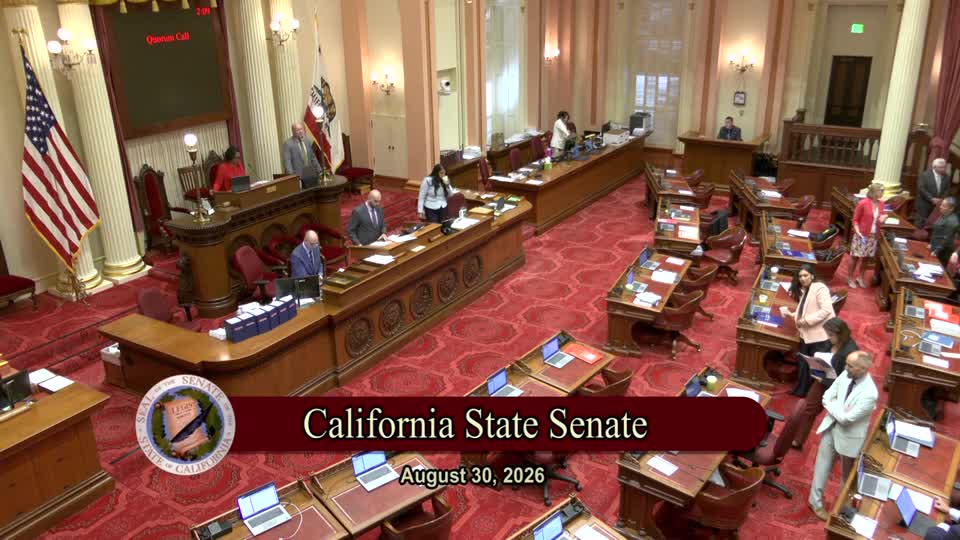 5MIN
Senate Floor
 5MIN
Assembly Floor
 11MIN
Assembly Standing Committee on Appropriations
 27MIN
Assembly Standing Committee on Public Safety
 13MIN
Assembly Standing Committee on Elections
 10MIN
Assembly Standing Committee on Judiciary
 21MIN
Assembly Standing Committee on Privacy and Consumer Protection
 3MIN
Senate Floor
Bill Author