SB 333: Transactions and use taxes: San Luis Obispo Council of Governments.
- Session Year: 2025-2026
- House: Senate
- Latest Version Date: 2025-10-13
Current Status:
Passed
(2025-10-13: Chaptered by Secretary of State. Chapter 750, Statutes of 2025.)
Introduced
In Committee
Awaiting First Chamber Vote
Passed First Chamber
In Committee
Awaiting Second Chamber Vote
Passed Second Chamber
Enacted
Existing law authorizes various local governmental entities, subject to certain limitations and approval requirements, to levy a transactions and use tax for general or specific purposes, in accordance with the procedures and requirements set forth in the Transactions and Use Tax Law, including a requirement that the combined rate of all taxes that may be imposed in accordance with that law in any county not exceed 2%.
This bill would authorize the San Luis Obispo Council of Governments, by an ordinance adopted by the council, to levy a tax pursuant to the Transactions and Use Tax Law at a rate not to exceed 1%, for general and special purposes, subject to voter approval on or after January 1, 2026, and before January 1, 2032. The bill would authorize the board to exceed the 2% limit described above to impose the retail transactions and use tax.
This bill would make legislative findings and declarations as to the necessity of a special statute for the County of San Luis Obispo.
Existing law authorizes various local governmental entities, subject to certain limitations and approval requirements, to levy a transactions and use tax for general or specific purposes, in accordance with the procedures and requirements set forth in the Transactions and Use Tax Law, including a requirement that the combined rate of all taxes that may be imposed in accordance with that law in any county not exceed 2%.
This bill would authorize the San Luis Obispo Council of Governments, by an ordinance adopted by the council, to levy a tax pursuant to the Transactions and Use Tax Law at a rate not to exceed 1%, for general and special purposes, subject to voter approval on or after January 1, 2026, and before January 1, 2032. The bill would authorize the board to exceed the 2% limit described above to impose the retail transactions and use tax.
This bill would make legislative findings and declarations as to the necessity of a special statute for the County of San Luis Obispo.
Existing law authorizes various local governmental entities, subject to certain limitations and approval requirements, to levy a transactions and use tax for general or specific purposes, in accordance with the procedures and requirements set forth in the Transactions and Use Tax Law, including a requirement that the combined rate of all taxes that may be imposed in accordance with that law in any county not exceed 2%.
This bill would authorize the San Luis Obispo Council of Governments, by an ordinance adopted by the council, to levy a tax pursuant to the Transactions and Use Tax Law at a rate not to exceed 1%, for general and special purposes, subject to voter approval on or after January 1, 2026. 2026, and before January 1, 2032. The bill would authorize the board to exceed the 2% limit described above to impose the retail transactions and use tax.
This bill would make legislative findings and declarations as to the necessity of a special statute for the County of San Luis Obispo.
Existing law authorizes various local governmental entities, subject to certain limitations and approval requirements, to levy a transactions and use tax for general or specific purposes, in accordance with the procedures and requirements set forth in the Transactions and Use Tax Law, including a requirement that the combined rate of all taxes that may be imposed in accordance with that law in any county not exceed 2%.
This bill would authorize the San Luis Obispo Council of Governments, by an ordinance adopted by the council, to levy a tax pursuant to the Transactions and Use Tax Law at a rate not to exceed 1%, for general and special purposes, subject to voter approval on or after January 1, 2026. The bill would authorize the board to exceed the 2% limit described above to impose the retail transactions and use tax.
This bill would make legislative findings and declarations as to the necessity of a special statute for County of San Luis Obispo.
(a)Notwithstanding any other law, the San Luis Obispo Council of Governments, established pursuant to Chapter 5 (commencing with Section 6500) of Division 7 of Title 1 of the Government Code, may impose a transactions and use tax for general or specific purposes at a rate of no more than 1 percent that would, in combination with all taxes imposed in accordance with Part 1.6 (commencing with Section 7251), exceed the limit established in Section 7251.1, if all of the following requirements are met:
(1)The San Luis Obispo Council of Governments adopts an ordinance proposing the transactions and use tax by the applicable voting approval requirement.
(2)The ordinance proposing the transactions and use tax is submitted to the electorate and is approved by the voters voting on the ordinance by the applicable voting approval requirement in accordance with the California Constitution.
(3)The ordinance proposing the transactions and use tax is approved by the voters on or after January 1, 2026, and before January 1, 2032.
(4)The transactions and use tax conforms to the Transactions and Use Tax Law (Part 1.6 (commencing with Section 7251)), other than Section 7251.1.
(b)Notwithstanding Section 7251.1, a transactions and use tax rate imposed pursuant to subdivision (a) shall not be considered for purposes of the combined rate limitation established by Section 7251.1.
SEC. 2.The Legislature finds and declares that a special statute is necessary and that a general statute cannot be made applicable within the meaning of Section 16 of Article IV of the California Constitution because of the unique fiscal pressures in the County of San Luis Obispo.
(a)Notwithstanding any other law, the San Luis Obispo Council of Governments, established pursuant to Chapter 5 (commencing with Section 6500) of Division 7 of Title 1 of the Government Code, may impose a transactions and use tax for general or specific purposes at a rate of no more than 1 percent that would, in combination with all taxes imposed in accordance with Part 1.6 (commencing with Section 7251), exceed the limit established in Section 7251.1, if all of the following requirements are met:
(1)The San Luis Obispo Council of Governments adopts an ordinance proposing the transactions and use tax by the applicable voting approval requirement.
(2)The ordinance proposing the transactions and use tax is submitted to the electorate and is approved by the voters voting on the ordinance by the applicable voting approval requirement in accordance with the California Constitution.
(3)The ordinance proposing the transactions and use tax is approved by the voters on or after January 1, 2026, and before January 1, 2032.
(4)The transactions and use tax conforms to the Transactions and Use Tax Law (Part 1.6 (commencing with Section 7251)), other than Section 7251.1.
(b)Notwithstanding Section 7251.1, a transactions and use tax rate imposed pursuant to subdivision (a) shall not be considered for purposes of the combined rate limitation established by Section 7251.1.
SEC. 2.The Legislature finds and declares that a special statute is necessary and that a general statute cannot be made applicable within the meaning of Section 16 of Article IV of the California Constitution because of the unique fiscal pressures in the County of San Luis Obispo.
(a)Notwithstanding any other law, the San Luis Obispo Council of Governments, established pursuant to Chapter 5 (commencing with Section 6500) of Division 7 of Title 1 of the Government Code, may impose a transactions and use tax for general or specific purposes at a rate of no more than 1 percent that would, in combination with all taxes imposed in accordance with Part 1.6 (commencing with Section 7251), exceed the limit established in Section 7251.1, if all of the following requirements are met:
(1)The San Luis Obispo Council of Governments adopts an ordinance proposing the transactions and use tax by the applicable voting approval requirement.
(2)The ordinance proposing the transactions and use tax is submitted to the electorate and is approved by the voters voting on the ordinance by the applicable voting approval requirement in accordance with the California Constitution.
(3)The ordinance proposing the transactions and use tax is approved by the voters on or after January 1, 2026. 2026, and before January 1, 2032.
(4)The transactions and use tax conforms to the Transactions and Use Tax Law (Part 1.6 (commencing with Section 7251)), other than Section 7251.1.
(b)Notwithstanding Section 7251.1, a transactions and use tax rate imposed pursuant to subdivision (a) shall not be considered for purposes of the combined rate limitation established by Section 7251.1.
SEC. 2.The Legislature finds and declares that a special statute is necessary and that a general statute cannot be made applicable within the meaning of Section 16 of Article IV of the California Constitution because of the unique fiscal pressures in the County of San Luis Obispo.
(a)Notwithstanding any other law, the San Luis Obispo Council of Governments, established pursuant to Chapter 5 (commencing with Section 6500) of Division 7 of Title 1 of the Government Code, may impose a transactions and use tax for general or specific purposes at a rate of no more than 1 percent that would, in combination with all taxes imposed in accordance with Part 1.6 (commencing with Section 7251), exceed the limit established in Section 7251.1, if all of the following requirements are met:
(1)The San Luis Obispo Council of Governments adopts an ordinance proposing the transactions and use tax by the applicable voting approval requirement.
(2)The ordinance proposing the transactions and use tax is submitted to the electorate and is approved by the voters voting on the ordinance by the applicable voting approval requirement in accordance with the California Constitution.
(3)The ordinance proposing the transactions and use tax is approved by the voters on or after January 1, 2026.
(4)The transactions and use tax conforms to the Transactions and Use Tax Law (Part 1.6 (commencing with Section 7251)), other than Section 7251.1.
(b)Notwithstanding Section 7251.1, a transactions and use tax rate imposed pursuant to subdivision (a) shall not be considered for purposes of the combined rate limitation established by Section 7251.1.
SEC. 2.The Legislature finds and declares that a special statute is necessary and that a general statute cannot be made applicable within the meaning of Section 16 of Article IV of the California Constitution because of the unique fiscal pressures in the County of San Luis Obispo.
|
Date
|
Status
|
|---|---|
| Oct 13, 2025 | Chaptered by Secretary of State. Chapter 750, Statutes of 2025. |
| Oct 13, 2025 | Approved by the Governor. |
| Sep 17, 2025 | Enrolled and presented to the Governor at 2 p.m. |
| Sep 10, 2025 | Assembly amendments concurred in. (Ayes 30. Noes 10. Page 2804.) Ordered to engrossing and enrolling. |
| Sep 9, 2025 | In Senate. Concurrence in Assembly amendments pending. |
| Sep 9, 2025 | Read third time. Passed. (Ayes 54. Noes 19. Page 3063.) Ordered to the Senate. |
| Jul 16, 2025 | Read second time. Ordered to third reading. |
| Jul 15, 2025 | Read second time and amended. Ordered to second reading. |
| Jul 14, 2025 | From committee: Do pass as amended. (Ayes 5. Noes 2.) (July 7). |
| Jun 18, 2025 | From committee: Do pass and re-refer to Com. on REV. & TAX. (Ayes 7. Noes 2.) (June 18). Re-referred to Com. on REV. & TAX. |
| Jun 5, 2025 | Referred to Coms. on L. GOV. and REV. & TAX. |
| May 29, 2025 | In Assembly. Read first time. Held at Desk. |
| May 29, 2025 | Read third time. Passed. (Ayes 28. Noes 10. Page 1331.) Ordered to the Assembly. |
| Apr 10, 2025 | Read second time. Ordered to third reading. |
| Apr 9, 2025 | From committee: Do pass. (Ayes 4. Noes 1. Page 740.) (April 9). |
| Mar 19, 2025 | From committee: Do pass and re-refer to Com. on REV. & TAX. (Ayes 5. Noes 2. Page 422.) (March 19). Re-referred to Com. on REV. & TAX. |
| Mar 18, 2025 | Set for hearing April 9 in REV. & TAX. pending receipt. |
| Mar 4, 2025 | Set for hearing March 19. |
| Feb 19, 2025 | Referred to Coms. on L. GOV. and REV. & TAX. |
| Feb 13, 2025 | From printer. May be acted upon on or after March 15. |
| Feb 12, 2025 | Introduced. Read first time. To Com. on RLS. for assignment. To print. |
|
Date
|
Description
|
Location
|
Votes
|
|
|---|---|---|---|---|
| Sep 10, 2025 | Unfinished Business SB333 Laird et al. Concurrence | Senate Floor |
Passed |
|
| Sep 9, 2025 | SB 333 Laird Senate Third Reading By Addis | Assembly Floor |
Passed |
|
| Jul 7, 2025 | Do pass as amended. | Assembly Standing Committee on Revenue and Taxation |
Passed |
|
| Jun 18, 2025 | Do pass and be re-referred to the Committee on [Revenue and Taxation] | Assembly Standing Committee on Local Government |
Passed |
|
| May 29, 2025 | Senate 3rd Reading SB333 Laird et al. | Senate Floor |
Passed |
|
| Apr 9, 2025 | Do pass | Senate Standing Committee on Revenue and Taxation |
Passed |
|
| Mar 19, 2025 | Do pass, but first be re-referred to the Committee on [Revenue and Taxation] | Senate Standing Committee on Local Government |
Passed |
This list shows positions taken on this bill by organizations on the date displayed, which is linked to the original source.
Positions by individuals are not included.
|
Organization
|
Position
|
Date
|
|---|---|---|
| California Taxpayers Association | ** Against | |
| City Of Arroyo Grande | ** Support | |
| City of Grover Beach | ** Support | |
| City of Morro Bay | ** Support | |
| City of Paso Robles | ** Support | |
| City of Pismo Beach | ** Support | |
| City of San Luis Obispo | ** Support | |
| County Supervisor Dawn Ortiz-Legg, County of San Luis Obispo | ** Support | |
| County Supervisor Jimmy Paulding, County of San Luis Obispo | ** Support | |
| Dawn Ortiz-Legg | ** Support | |
| Howard Jarvis Taxpayers Association | ** Against | |
| Jimmy Paulding | ** Support | |
| San Luis Obispo Council of Governments | ** Support | |
| Tri County Chamber Alliance | ** Support |
SENATE RULES COMMITTEE Office of Senate Floor Analyses (916) 651-1520 Fax: (916) 327-4478 | SB 333 |
UNFINISHED BUSINESS
Bill No: SB 333
Author: Laird (D), et al.
Amended: 7/16/25
Vote: 21
SENATE LOCAL GOVERNMENT COMMITTEE: 5-2, 3/19/25
AYES: Durazo, Arreguín, Cabaldon, Laird, Wiener
NOES: Choi, Seyarto
SENATE REVENUE AND TAXATION COMMITTEE: 4-1, 4/9/25
AYES: McNerney, Ashby, Grayson, Umberg
NOES: Valladares
SENATE FLOOR: 28-10, 5/29/25
AYES: Allen, Archuleta, Arreguín, Ashby, Becker, Blakespear, Cabaldon, Caballero, Cervantes, Cortese, Durazo, Gonzalez, Grayson, Hurtado, Laird, McGuire, McNerney, Menjivar, Padilla, Pérez, Richardson, Rubio, Smallwood-Cuevas, Stern, Umberg, Wahab, Weber Pierson, Wiener
NOES: Alvarado-Gil, Choi, Dahle, Grove, Jones, Niello, Ochoa Bogh, Seyarto, Strickland, Valladares
NO VOTE RECORDED: Limón, Reyes
ASSEMBLY FLOOR: 54-19, 9/9/25 - See last page for vote
SUBJECT: Transactions and use taxes: San Luis Obispo Council of Governments
SOURCE: San Luis Obispo Council of Governments
DIGEST:
This bill allows the San Luis Obispo Council of Governments to impose a district tax by ordinance of up to 1% even if it exceeds the 2% cap.
Assembly Amendments
prohibit the adoption of a new tax above the cap on or after January 1, 2032.
ANALYSIS:
Existing law:
- Imposes the sales tax on every retailer engaged in business in this state that sells tangible personal property, and requires them to collect the appropriate tax from the purchase and remit the amount to the California Department of Tax and Fee Administration.
- Applies whenever a retail sale is made, which is basically any sale other than one for resale in the regular course of business.
- Provides that unless the person pays the sales tax to the retailer, he or she is liable for the use tax, which is imposed on any person consuming tangible personal property in the state. The use tax rate is the same rate as the sales tax rate, and must be remitted on or before the last day of the month following the quarterly period in which the person made the purchase.
- Levies the sales and use tax at a current rate of 7.25%.
- States that taxes levied by local governments are either general taxes, subject to majority approval of its voters, or special taxes, subject to 2/3 vote (California Constitution, Article XIII C).
- Allows cities, counties, and specified special districts, including the San Francisco Bay Area Rapid Transit District and the Santa Cruz County Metropolitan Transit District, to increase the sales and use tax applied within their jurisdictions, also known as district or transactions and use taxes, for either specific or general purposes pursuant to the California Constitution’s voter approval requirements.
- Allows counties to impose a district tax solely in the unincorporated area of a county (AB 2119, Stone, Chapter 148, Statutes of 2014).
- Caps the maximum district tax rate at 2% within a county; however, allows exceptions from the cap for the Cities of El Cerrito and Santa Fe Springs, Contra Costa County, Humboldt County, San Mateo County, Sonoma County (and any city in Sonoma County), the Transportation Agency for Monterey County, and the Los Angeles Metropolitan Transportation Authority, among others.
This bill authorizes the San Luis Obispo Council of Governments to impose a district tax, by ordinance or voter initiative, of up to 1%, that exceeds the 2% cap if:
- The city council of the city adopts an ordinance imposing the tax, and submits it to the electorate;
- The voters approve the tax in accordance with Article XIII C of the California Constitution before January 1, 2032; and
- The tax otherwise conforms to the Transactions and Use Tax Law, other than the 2% cap.
Background
San Luis Obispo County. San Luis Obispo County does not impose a countywide district tax; however, five cities have 1.5% rates (Atascadero, Grover Beach, Morro Bay, Paso Robles, and San Luis Obispo), a sixth, Arroyo Grande, increased its rate to 1.5% on April 1, 2025. As a result, there is currently .5% under the cap. However, if any of the above cities imposes an additional 0.5% tax, the county could not impose a tax at all.
In 1968, the County of San Luis Obispo and its seven member cities formed the San Luis Obispo Counties and Cities Area Planning and Coordinating Council to serve as the region’s planning and transportation agency. These local governments formed the Council under the Joint Exercise of Powers Act, which allows it to exercise any powers the county and cities share, like the power to impose district taxes. In 1985, the Council renamed itself the San Luis Obispo Council of Governments (SLOCOG).
In 2016, SLOCOG placed Measure J on the November ballot. The measure would have imposed a 0.5% district tax for nine years to fund transportation improvements based on the San Luis Obispo County Self-Help Local Transportation Investment Plan. Since the measure funded only transportation projects, it was a special tax that required a 2/3 voter approval. Only 66.31% of voters supported the measures, falling just shy of the 66.67% approval needed to pass the tax.
Comments
Too high? While the state sales and use tax rate decreased from 7.5% to 7.25% on January 1, 2017, California’s sales and use tax rate is high compared to other states, especially when incorporating locally imposed district taxes. Tax experts generally agree that sales and use taxes are regressive, meaning the tax incidence falls more heavily on low-income individuals than on high-income individuals, because those of lesser means generally spend a greater percentage of their income on taxable sales, even if California exempts many necessities such as food and prescription medication. SB 333 could lead to a 10.25% tax rate in six San Luis Obispo County cities if both SLOCOG and the cities impose the maximum tax rate allowed under the bill. While local voters must approve any tax, the Committee may wish to consider whether SB 333 allows for rates that are too high.
FISCAL EFFECT: Appropriation: No Fiscal Com.: No Local: No
SUPPORT: (Verified 9/9/25)
San Luis Obispo Council of Governments (Source)
County Supervisor Dawn Ortiz-Legg, County of San Luis Obispo
County Supervisor Jimmy Paulding, County of San Luis Obispo
City of Arroyo Grande
City of Grover Beach
City of Morro Bay
City of Paso Robles
City of Pismo Beach
City of San Luis Obispo
Tri County Chamber Alliance
OPPOSITION: (Verified 9/9/25)
California Taxpayers Association
Howard Jarvis Taxpayers Association
ASSEMBLY FLOOR: 54-19, 9/9/25
AYES: Addis, Aguiar-Curry, Ahrens, Alvarez, Arambula, Ávila Farías, Bains, Bennett, Berman, Boerner, Bonta, Bryan, Calderon, Caloza, Carrillo, Connolly, Elhawary, Fong, Gabriel, Garcia, Gipson, Mark González, Haney, Harabedian, Hart, Jackson, Kalra, Krell, Lee, Lowenthal, McKinnor, Nguyen, Ortega, Pacheco, Papan, Pellerin, Petrie-Norris, Quirk-Silva, Ramos, Ransom, Celeste Rodriguez, Michelle Rodriguez, Rogers, Blanca Rubio, Schultz, Sharp-Collins, Solache, Soria, Stefani, Ward, Wicks, Wilson, Zbur, Rivas
NOES: Alanis, Castillo, Chen, Davies, DeMaio, Dixon, Ellis, Gallagher, Jeff Gonzalez, Hadwick, Hoover, Johnson, Lackey, Macedo, Patterson, Sanchez, Ta, Tangipa, Wallis
NO VOTE RECORDED: Bauer-Kahan, Flora, Irwin, Muratsuchi, Patel, Schiavo, Valencia
Prepared by: Anton Favorini-Csorba / L GOV. / (916) 651-4119
9/22/26 13:01:09
**** END ****
SENATE RULES COMMITTEE Office of Senate Floor Analyses (916) 651-1520 Fax: (916) 327-4478 | SB 333 |
UNFINISHED BUSINESS
Bill No: SB 333
Author: Laird (D), et al.
Amended: 7/15/25
Vote: 21
SENATE LOCAL GOVERNMENT COMMITTEE: 5-2, 3/19/25
AYES: Durazo, Arreguín, Cabaldon, Laird, Wiener
NOES: Choi, Seyarto
SENATE REVENUE AND TAXATION COMMITTEE: 4-1, 4/9/25
AYES: McNerney, Ashby, Grayson, Umberg
NOES: Valladares
SENATE FLOOR: 28-10, 5/29/25
AYES: Allen, Archuleta, Arreguín, Ashby, Becker, Blakespear, Cabaldon, Caballero, Cervantes, Cortese, Durazo, Gonzalez, Grayson, Hurtado, Laird, McGuire, McNerney, Menjivar, Padilla, Pérez, Richardson, Rubio, Smallwood-Cuevas, Stern, Umberg, Wahab, Weber Pierson, Wiener
NOES: Alvarado-Gil, Choi, Dahle, Grove, Jones, Niello, Ochoa Bogh, Seyarto, Strickland, Valladares
NO VOTE RECORDED: Limón, Reyes
ASSEMBLY FLOOR: 44-12, 9/9/25 – Roll call vote not available
SUBJECT: Transactions and use taxes: San Luis Obispo Council of Governments
SOURCE: San Luis Obispo Council of Governments
DIGEST:
This bill allows the San Luis Obispo Council of Governments to impose a district tax by ordinance of up to 1% even if it exceeds the 2% cap.
Assembly Amendments
prohibit the adoption of a new tax above the cap on or after January 1, 2032.
ANALYSIS:
Existing law:
- Imposes the sales tax on every retailer engaged in business in this state that sells tangible personal property, and requires them to collect the appropriate tax from the purchase and remit the amount to the California Department of Tax and Fee Administration.
- Applies whenever a retail sale is made, which is basically any sale other than one for resale in the regular course of business.
- Provides that unless the person pays the sales tax to the retailer, he or she is liable for the use tax, which is imposed on any person consuming tangible personal property in the state. The use tax rate is the same rate as the sales tax rate, and must be remitted on or before the last day of the month following the quarterly period in which the person made the purchase.
- Levies the sales and use tax at a current rate of 7.25%.
- States that taxes levied by local governments are either general taxes, subject to majority approval of its voters, or special taxes, subject to 2/3 vote (California Constitution, Article XIII C).
- Allows cities, counties, and specified special districts, including the San Francisco Bay Area Rapid Transit District and the Santa Cruz County Metropolitan Transit District, to increase the sales and use tax applied within their jurisdictions, also known as district or transactions and use taxes, for either specific or general purposes pursuant to the California Constitution’s voter approval requirements.
- Allows counties to impose a district tax solely in the unincorporated area of a county (AB 2119, Stone, Chapter 148, Statutes of 2014).
- Caps the maximum district tax rate at 2% within a county; however, allows exceptions from the cap for the Cities of El Cerrito and Santa Fe Springs, Contra Costa County, Humboldt County, San Mateo County, Sonoma County (and any city in Sonoma County), the Transportation Agency for Monterey County, and the Los Angeles Metropolitan Transportation Authority, among others.
This bill authorizes the San Luis Obispo Council of Governments to impose a district tax, by ordinance or voter initiative, of up to 1%, that exceeds the 2% cap if:
- The city council of the city adopts an ordinance imposing the tax, and submits it to the electorate;
- The voters approve the tax in accordance with Article XIII C of the California Constitution before January 1, 2032; and
- The tax otherwise conforms to the Transactions and Use Tax Law, other than the 2% cap.
Background
San Luis Obispo County. San Luis Obispo County does not impose a countywide district tax; however, five cities have 1.5% rates (Atascadero, Grover Beach, Morro Bay, Paso Robles, and San Luis Obispo), a sixth, Arroyo Grande, increased its rate to 1.5% on April 1, 2025. As a result, there is currently .5% under the cap. However, if any of the above cities imposes an additional 0.5% tax, the county could not impose a tax at all.
In 1968, the County of San Luis Obispo and its seven member cities formed the San Luis Obispo Counties and Cities Area Planning and Coordinating Council to serve as the region’s planning and transportation agency. These local governments formed the Council under the Joint Exercise of Powers Act, which allows it to exercise any powers the county and cities share, like the power to impose district taxes. In 1985, the Council renamed itself the San Luis Obispo Council of Governments (SLOCOG).
In 2016, SLOCOG placed Measure J on the November ballot. The measure would have imposed a 0.5% district tax for nine years to fund transportation improvements based on the San Luis Obispo County Self-Help Local Transportation Investment Plan. Since the measure funded only transportation projects, it was a special tax that required a 2/3 voter approval. Only 66.31% of voters supported the measures, falling just shy of the 66.67% approval needed to pass the tax.
Comments
Too high? While the state sales and use tax rate decreased from 7.5% to 7.25% on January 1, 2017, California’s sales and use tax rate is high compared to other states, especially when incorporating locally imposed district taxes. Tax experts generally agree that sales and use taxes are regressive, meaning the tax incidence falls more heavily on low-income individuals than on high-income individuals, because those of lesser means generally spend a greater percentage of their income on taxable sales, even if California exempts many necessities such as food and prescription medication. SB 333 could lead to a 10.25% tax rate in six San Luis Obispo County cities if both SLOCOG and the cities impose the maximum tax rate allowed under the bill. While local voters must approve any tax, the Committee may wish to consider whether SB 333 allows for rates that are too high.
FISCAL EFFECT: Appropriation: No Fiscal Com.: No Local: No
SUPPORT: (Verified 9/9/25)
San Luis Obispo Council of Governments (Source)
County Supervisor Dawn Ortiz-Legg, County of San Luis Obispo
County Supervisor Jimmy Paulding, County of San Luis Obispo
City of Arroyo Grande
City of Grover Beach
City of Morro Bay
City of Paso Robles
City of Pismo Beach
City of San Luis Obispo
Tri County Chamber Alliance
OPPOSITION: (Verified 9/9/25)
California Taxpayers Association
Howard Jarvis Taxpayers Association
Prepared by: Anton Favorini-Csorba / L. GOV. / (916) 651-4119
9/9/25 12:35:09
**** END ****
SENATE THIRD READING
STR Bill Id:SB 333
Author:(Laird)
As Amended Ver:July 15, 2025
Majority vote
SUMMARY
Authorizes the San Luis Obispo Council of Governments (SLOCOG) to impose a transactions and use tax (TUT) that exceeds the 2% statutory limitation.
Major Provisions
- Allows SLOCOG to impose a TUT for general or specific purposes at a rate of no more than 1% that would, in combination with all taxes imposed, exceed the 2% cap established by law, if all of the following requirements are met:
- SLOCOG adopts an ordinance proposing the TUT by the applicable voting approval requirement.
- The ordinance proposing the TUT is submitted to the electorate and is approved by the voters voting on the ordinance by the applicable voting approval requirement in accordance with the California Constitution.
- The ordinance proposing the TUT is approved by the voters on or after January 1, 2026, and before January 1, 2032.
- The TUT conforms to TUT Law, as specified.
- Specifies that a TUT imposed pursuant to 1) above, shall not be considered for purposes of the combined rate limitation established by law.
COMMENTS
Sales and Use Taxes. State law imposes the sales tax on every retailer "engaged in business in this state" that sells tangible personal property, and requires them to register with the California Department of Tax and Fee Administration (CDTFA), as well as collect the appropriate tax at purchase and remit the amount to CDFTA. Sales tax applies whenever a retail sale occurs, which is generally any sale other than one for resale in the regular course of business. The current rate is 7.25%.
Unless the purchaser pays the sales tax to the retailer, he or she is liable for the use tax, which the law imposes on any person consuming tangible personal property in the state. The use tax is the same rate as the sales tax, and also like the sales tax, must be remitted on or before the last day of the month following the quarterly period in which the person made the purchase.
Transactions and Use Taxes. The California Constitution states that taxes levied by local governments are either general taxes, subject to majority approval of its voters, or special taxes, subject to 2/3 vote (Article XIII C). Proposition 13 (1978) required a 2/3 vote of each house of the Legislature for state tax increases, and a 2/3 vote for local special taxes. Proposition 62 (1986) prohibited local agencies from imposing general taxes without majority approval of local voters, and a 2/3 vote for special taxes. Proposition 218 (1996) extended those vote thresholds to charter cities, and limited local agencies' powers to levy new assessments, fees, and taxes. Local agencies generally propose to increase taxes by adopting an ordinance or a resolution at a public hearing.
State law allows cities, counties, and specified special districts to increase the sales and use tax applicable in their jurisdiction, also known as district taxes or TUTs. Generally, the combined TUT tax rate imposed within a local jurisdiction cannot exceed 2%. To determine whether a county has reached this rate limitation, all countywide taxes and the highest combined rate imposed by a city within the county are counted towards the county's rate limit. For example, if a county imposes three 0.5% countywide taxes and two cities within the county each impose a 0.5% tax, the combined rate in those two cities would be 2%. In such a circumstance, the two cities could not impose another TUT, and the county could not impose another countywide TUT, absent special authority to exceed the rate limitation.
Prior to 2003, cities lacked the ability to place TUTs before their voters without first obtaining approval by the Legislature to bring an ordinance before the city council, and, if approved at the council level, to the voters. This was remedied by SB 566 (Scott), Chapter 709, Statutes of 2003, which imposed the uniform 2% countywide cap.
AB 464 (Mullin) of 2015 would have increased the maximum combined rate of all TUTs that may be levied by authorized entities within a county from 2% to 3%. This bill was vetoed by Governor Brown stating, "This bill would raise, on a blanket basis, the limit on local transactions and use tax for all counties and cities from 2% to 3%. Although I have approved raising the limit for individual counties, I am reluctant to approve this measure in view of all the taxes being discussed and proposed for the 2016 ballot."
State law allows cities, counties, and specified special districts to increase the sales and use tax applicable in their jurisdiction, also known as district or TUTs. As of April 1, 2025, local agencies impose 478 district taxes for general or special purposes: 401 imposed citywide, 71 imposed countywide, and six imposed in unincorporated county areas. Generally, local agencies impose these taxes throughout the entire area of a single county, the entire unincorporated area within a single county, or a single incorporated city. However, three transportation operators in the Bay Area have regional district taxes:
- The Bay Area Rapid Transit (BART) District, which covers Alameda, Contra Costa, and San Francisco counties.
- The Peninsula Corridor Joint Powers Board (CalTrain), which covers San Francisco, San Mateo, and Santa Clara counties.
- The Sonoma-Marin Rail Transit District, which includes Sonoma and Marin counties.
San Luis Obispo County TUTs. San Luis Obispo County does not impose any countywide TUTs. However, seven cities within the county each impose TUTs. The cities of Arroyo Grande, Atascadero, Grover Beach, Morro Bay, Paso Robles, and San Luis Obispo each impose a district tax rate of 1.50%, the highest city tax rate in the County of San Luis Obispo. Since the highest city tax subject to the rate limitation in the county is 1.50%, the County of San Luis Obispo has not yet reached the 2.00% combined rate limitation. This means an additional 0.50% is available for either the county, or any city within the county, to impose a general or specific purpose district tax before exceeding the 2.00% combined rate limitation on a first come, first served basis.
San Luis Obispo Council of Governments. In 1968, San Luis Obispo County and its seven member cities formed the San Luis Obispo County and Cities Area Planning and Coordinating Council to serve as the region's planning and transportation agency. These local governments formed the Council under the Joint Exercise of Powers Act, which allows it to exercise any powers the county and cities share, like the power to impose taxes. In 1985, the Council renamed itself SLOCOG. In 2016, SLOCOG placed Measure J on the November ballot. The measure would have imposed a 0.5% TUT for nine years to fund transportation improvements based on the San Luis Obispo County Self-Help Local Transportation Investment Plan. Since the measure funded only transportation projects, it was a special tax requiring 2/3 voter approval. 66.31% of voters supported the measure, falling just shy of the 66.67% approval needed to pass the tax. Since 2016, multiple cities have passed their own district tax measures, meaning that a countywide tax measure only has 0.5% room under the 2% cap.
According to the Author
According to the author, "The San Luis Obispo Council of Governments (SLOCOG) is responsible for addressing the growing demands on San Luis Obispo's transportation network and for funding any new improvements. However, a 2% combined local tax rate limit will prevent SLOCOG from implementing a tax to fund transportation improvements if any of the seven cities within San Luis Obispo County pass their own tax of at least half a percent. Senate Bill 333 allows SLOCOG to exceed this 2% limit by up to 1%, providing them with the authority to pursue a local sales tax measure and seek approval by the voters."
Arguments in Support
According to SLOCOG, the sponsor of this bill, "SLOCOG is considering a ½ cent countywide transportation investment measure for the November 2026 ballot. However, with other non-transportation tax measures proposed by San Luis Obispo County jurisdictions, there may not be sufficient capacity under the countywide 2% local option sales tax cap. The enactment of this legislation would ensure that SLOCOG, the County of San Luis Obispo, and all seven cities would be able to engage in a public process to develop an expenditure plan for voters' consideration. This is an opportunity for San Luis Obispo residents to consider resources to improve its transportation infrastructure, including safety and mobility needs."
Arguments in Opposition
According to the California Taxpayers Association and the Howard Jarvis Taxpayers Association, "The sales and use tax is a regressive tax that has the greatest impact on low-income residents because it makes it more expensive for these taxpayers to purchase everyday necessities. Inflation has increased the cost of most goods, which in turn increases the sales tax that is imposed as a percentage of the retail price. Adding to the cost of living with a sales tax increase would harm Californians and will disproportionately impact the state's most vulnerable residents. Within the past four years, the California Legislature has authorized 12 local governments to enact sales taxes that exceed the 2% transactions and use tax cap. Cumulatively, these exemptions to the cap have impacted more than 15 million California residents, making the state less affordable for low- and medium-income families.
"...Businesses engaged in manufacturing, research-and-development, and agriculture face a significant sales and use tax burden in California. Under existing law, when a business purchases equipment that will be used in manufacturing, R&D, or agriculture, the purchase is subject to a one-time local sales tax of 1.25% plus any additional voter-approved transactions and use taxes. Taxing business inputs increases overall business operating costs and results in tax pyramiding, ultimately increasing prices for consumers.
"San Luis Obispo County plays a critical role in California's agricultural economy, with the county producing $1.1 billion in crops in 2023 alone. The county is also home to a thriving wine industry, with over 250 wineries located in the district, employing thousands of local residents. Authorizing the county to exceed the 2% transactions and use tax cap would increase the cost of doing business for the region's agricultural producers, making the producers less competitive in the global market and potentially resulting in job losses for California workers.
"...Unlike the federal government, which receives an exemption for all state and local sales taxes, municipal and state agencies must pay state and local sales taxes on their purchases. Increasing the local sales tax would increase costs for cities and counties, local schools, and California Polytechnic State University, without providing any additional benefits or services to the public.
"...The 2% cap on local taxes has served the state well and should not be circumvented. In 1953, the Senate Committee on State and Local Taxation recommended that California adopt a uniform state and local sales tax with a rate cap. The committee reported that with a cap, the local sales tax would have a 'minimum adverse' impact on taxpayers. The committee noted that local sales and use taxes 'may and frequently do place unduly heavy compliance costs upon retailers,' and 'Local business taxes levied under various ordinances and at different rates may produce artificial and unfair discrimination between retailers in the jurisdictions.' The cap mitigates these problems."
FISCAL COMMENTS
None.
VOTES
SENATE FLOOR: 28-10-2
YES: Allen, Archuleta, Arreguín, Ashby, Becker, Blakespear, Cabaldon, Caballero, Cervantes, Cortese, Durazo, Gonzalez, Grayson, Hurtado, Laird, McGuire, McNerney, Menjivar, Padilla, Pérez, Richardson, Rubio, Smallwood-Cuevas, Stern, Umberg, Wahab, Weber Pierson, Wiener
NO: Alvarado-Gil, Choi, Dahle, Grove, Jones, Niello, Ochoa Bogh, Seyarto, Strickland, Valladares
ABS, ABST OR NV: Limón, Reyes
ASM LOCAL GOVERNMENT: 7-2-1
YES: Carrillo, Pacheco, Ramos, Blanca Rubio, Stefani, Haney, Wilson
NO: Ta, Hoover
ABS, ABST OR NV: Ransom
ASM REVENUE AND TAXATION: 5-2-0
YES: Gipson, Bains, Carrillo, McKinnor, Quirk-Silva
NO: Ta, DeMaio
UPDATED
VERSION: July 15, 2025
CONSULTANT: Jimmy MacDonald / L. GOV. / (916) 319-3958 FN: 0001117
Date of Hearing: June 18, 2025
ASSEMBLY COMMITTEE ON LOCAL GOVERNMENT
Juan Carrillo, Chair
SBPCA Bill Id:SB 333
Author:(Laird) – As Introduced Ver:February 12, 2025
SENATE VOTE: 28-10
SUBJECT: Transactions and use taxes: San Luis Obispo Council of Governments.
SUMMARY: Authorizes the San Luis Obispo Council of Governments (SLOCOG) to impose a transactions and use tax (TUT) that exceeds the 2% statutory limitation. Specifically, this bill:
- Allows SLOCOG to impose a TUT for general or specific purposes at a rate of no more than 1% that would, in combination with all taxes imposed, exceed the 2% cap established by law, if all of the following requirements are met:
- SLOCOG adopts an ordinance proposing the TUT by the applicable voting approval requirement.
- The ordinance proposing the TUT is submitted to the electorate and is approved by the voters voting on the ordinance by the applicable voting approval requirement in accordance with the California Constitution.
- The ordinance proposing the TUT is approved by the voters on or after January 1, 2026.
- The TUT conforms to TUT Law, as specified.
- Specifies that a TUT imposed pursuant to 1) above, shall not be considered for purposes of the combined rate limitation established by law.
- Finds and declares that a special statute is necessary and that a general statute cannot be made applicable because of the unique fiscal pressures in San Luis Obispo County.
FISCAL EFFECT: None.
COMMENTS:
- Sales and Use Taxes. State law imposes the sales tax on every retailer “engaged in business in this state” that sells tangible personal property, and requires them to register with the California Department of Tax and Fee Administration (CDTFA), as well as collect the appropriate tax at purchase and remit the amount to CDFTA. Sales tax applies whenever a retail sale occurs, which is generally any sale other than one for resale in the regular course of business. The current rate is 7.25% as shown in the table below.
Rate | Jurisdiction | Purpose/Authority | |
|---|---|---|---|
3.9375% | State (General Fund) | State general purposes | |
1.0625% |
| Local governments to fund local public safety services | |
0.50% | State (1991 Realignment) | Local governments to fund health and welfare programs | |
0.50% | State (Proposition 172 - 1993) | Local governments to fund public safety services | |
1.25% | Local (City/County) |
| |
7.25% | Total Statewide Rate |
Unless the purchaser pays the sales tax to the retailer, he or she is liable for the use tax, which the law imposes on any person consuming tangible personal property in the state. The use tax is the same rate as the sales tax, and also like the sales tax, must be remitted on or before the last day of the month following the quarterly period in which the person made the purchase.
- Transactions and Use Taxes. The California Constitution states that taxes levied by local governments are either general taxes, subject to majority approval of its voters, or special taxes, subject to 2/3 vote (Article XIII C). Proposition 13 (1978) required a 2/3 vote of each house of the Legislature for state tax increases, and a 2/3 vote for local special taxes. Proposition 62 (1986) prohibited local agencies from imposing general taxes without majority approval of local voters, and a 2/3 vote for special taxes. Proposition 218 (1996) extended those vote thresholds to charter cities, and limited local agencies' powers to levy new assessments, fees, and taxes. Local agencies generally propose to increase taxes by adopting an ordinance or a resolution at a public hearing.
State law allows cities, counties, and specified special districts to increase the sales and use tax applicable in their jurisdiction, also known as district taxes or TUTs. Generally, the combined TUT tax rate imposed within a local jurisdiction cannot exceed 2%. To determine whether a county has reached this rate limitation, all countywide taxes and the highest combined rate imposed by a city within the county are counted towards the county's rate limit. For example, if a county imposes three 0.5% countywide taxes and two cities within the county each impose a 0.5% tax, the combined rate in those two cities would be 2%. In such a circumstance, the two cities could not impose another TUT, and the county could not impose another countywide TUT, absent special authority to exceed the rate limitation.
Prior to 2003, cities lacked the ability to place TUTs before their voters without first obtaining approval by the Legislature to bring an ordinance before the city council, and, if approved at the council level, to the voters. This was remedied by SB 566 (Scott), Chapter 709, Statutes of 2003, which imposed the uniform 2% countywide cap.
AB 464 (Mullin) of 2015 would have increased the maximum combined rate of all TUTs that may be levied by authorized entities within a county from 2% to 3%. This bill was vetoed by Governor Brown stating, "This bill would raise, on a blanket basis, the limit on local transactions and use tax for all counties and cities from two percent to three percent. Although I have approved raising the limit for individual counties, I am reluctant to approve this measure in view of all the taxes being discussed and proposed for the 2016 ballot."
State law allows cities, counties, and specified special districts to increase the sales and use tax applicable in their jurisdiction, also known as district or TUTs. As of April 1, 2025, local agencies impose 478 district taxes for general or special purposes: 401 imposed citywide, 71 imposed countywide, and six imposed in unincorporated county areas. Generally, local agencies impose these taxes throughout the entire area of a single county, the entire unincorporated area within a single county, or a single incorporated city. However, three transportation operators in the Bay Area have regional district taxes:
- The Bay Area Rapid Transit (BART) District, which covers Alameda, Contra Costa, and San Francisco counties.
- The Peninsula Corridor Joint Powers Board (CalTrain), which covers San Francisco, San Mateo, and Santa Clara counties.
- The Sonoma-Marin Rail Transit District, which includes Sonoma and Marin counties.
- The Bay Area Rapid Transit (BART) District, which covers Alameda, Contra Costa, and San Francisco counties.
- San Luis Obispo County TUTs. San Luis Obispo County does not impose any countywide TUTs. However, seven cities within the county each impose TUTs. The cities of Arroyo Grande, Atascadero, Grover Beach, Morro Bay, Paso Robles, and San Luis Obispo each impose a district tax rate of 1.50%, the highest city tax rate in the County of San Luis Obispo. Since the highest city tax subject to the rate limitation in the county is 1.50%, the County of San Luis Obispo has not yet reached the 2.00% combined rate limitation. This means an additional 0.50% is available for either the county, or any city within the county, to impose a general or specific purpose district tax before exceeding the 2.00% combined rate limitation on a first come, first served basis.
- San Luis Obispo Council of Governments. In 1968, San Luis Obispo County and its seven member cities formed the San Luis Obispo County and Cities Area Planning and Coordinating Council to serve as the region’s planning and transportation agency. These local governments formed the Council under the Joint Exercise of Powers Act, which allows it to exercise any powers the county and cities share, like the power to impose taxes. In 1985, the Council renamed itself SLOCOG. In 2016, SLOCOG placed Measure J on the November ballot. The measure would have imposed a 0.5% TUT for nine years to fund transportation improvements based on the San Luis Obispo County Self-Help Local Transportation Investment Plan. Since the measure funded only transportation projects, it was a special tax requiring 2/3 voter approval. 66.31% of voters supported the measure, falling just shy of the 66.67% approval needed to pass the tax. Since 2016, multiple cities have passed their own district tax measures, meaning that a countywide tax measure only has 0.5% room under the 2% cap.
- Bill Summary and Author’s Statement. This bill authorizes SLOCOG to impose a TUT for general or specific purposes at a rate of no more than 1% that would, in combination with all taxes imposed, exceed the 2% cap established by law, if specified conditions are met. SLOCOG is the sponsor of this bill.
According to the author, “The San Luis Obispo Council of Governments (SLOCOG) is responsible for addressing the growing demands on San Luis Obispo’s transportation network and for funding any new improvements. However, a 2% combined local tax rate limit will prevent SLOCOG from implementing a tax to fund transportation improvements if any of the seven cities within San Luis Obispo County pass their own tax of at least half a percent. Senate Bill 333 allows SLOCOG to exceed this 2% limit by up to 1%, providing them with the authority to pursue a local sales tax measure and seek approval by the voters.”
- Policy Consideration. California’s sales tax rate is currently at 7.25%, which is high compared to other states, especially when incorporating locally imposed TUTs. Some tax experts argue that sales and use taxes are regressive, meaning that the tax incidence falls more heavily on low-income individuals than high-income individuals because those of lesser means generally spend a greater percentage of their income on taxable sales, instead of intangible products or services which are not taxed. With this bill, the sales tax rate could grow as high as 10.25% in certain cities. While any increase would have to be approved by the voters, the Committee may wish to consider whether SB 333 allows for rates that are too high.
- Related Legislation. AB 761 (Addis) makes changes to Monterey-Salinas Transit District's authority to impose a TUT. This bill is currently in the Senate Committee on Transportation.
- Previous Legislation. AB 618 (Stone) of 2019 would have permitted the Cities of Emeryville (Alameda County) and Scotts Valley (Santa Cruz County) to impose a tax of up to 0.25% that exceeds the 2% cap. 9.75AB 618 was vetoed with a message that stated, “The Cities of Emeryville and Scotts Valley have not yet reached the statewide cap of 2 percent, making it unclear why additional tax authority is needed.”
AB 723 (Quirk), Chapter 747, Statutes of 2019, provided that neither the tax imposed by BART nor the tax imposed by the Alameda County Transportation Commission counts against the 2% cap, and made a similar change in Santa Cruz County.
SB 1349 (Glazer), Chapter 369, Statutes of 2020, permitted Contra Costa County, and cities within Contra Costa County, additional legal flexibility to impose local TUTs.
AB 2453 (Bennett), Chapter 286, Statutes of 2022, authorized the Ventura County Transportation Commission to impose a TUT of no more than 0.5% that does not count against the cap in Ventura County.
AB 1256 (Wood), Chapter 572, Statutes of 2023, authorized Humboldt County to impose a TUT of up to 1% that exceeds the 2% statutory limitation.
AB 1385 (Garcia), Chapter 578, Statutes of 2023, raised the maximum TUT that RCTC may impose, from 1% to 1.5%.
AB 1679 (Santiago), Chapter 731, Statutes of 2023, authorizes Los Angeles County to impose a TUT of up to .5% that exceeds the 2% statutory limitation, as specified.
SB 335 (Cortese), Chapter 391, Statutes of 2023, allows the Santa Clara County Board of Supervisors to propose a TUT of up to .625% in Santa Clara County that exceeds the 2% cap and shifted the authority to impose a TUT for countywide transportation purposes in Ventura County that exceeds the 2% cap from the Ventura County Transportation Commission to the County.
SB 862 (Laird), Chapter 296, Statutes of 2023, authorized the board of directors of the Santa Cruz Metropolitan Transit District to impose a retail TUT of up to .5% after January 1, 2024, that is excluded from the 2% combined rate limit, if certain conditions are met.
AB 2431 (Mathis) of 2024 would have authorized a city, county, or city and county to impose a TUT at an unspecified rate that exceeds the 2% statutory limitation if certain conditions are met. This bill died in the Assembly Local Government Committee.
AB 2443 (Carrillo), Chapter 961, Statutes of 2024, authorized the cities of Lancaster, Palmdale, and Victorville to impose a transaction and use tax (TUT) that exceeds the 2% statutory limitation.
AB 3259 (Wilson), Chapter 852, Statutes of 2024, allowed the cities of Campbell and Pinole, the Solano County Board of Supervisors and a city council in Solano County to impose a TUT, by ordinance or voter initiative, of up to 0.5% even if it exceeds the 2% cap. This bill is currently pending on the Senate Floor.
- Arguments in Support. According to SLOCOG, the sponsor of this bill, “SLOCOG is considering a ½ cent countywide transportation investment measure for the November 2026 ballot. However, with other non-transportation tax measures proposed by San Luis Obispo County jurisdictions, there may not be sufficient capacity under the countywide 2% local option sales tax cap. The enactment of this legislation would ensure that SLOCOG, the County of San Luis Obispo, and all seven cities would be able to engage in a public process to develop an expenditure plan for voters' consideration. This is an opportunity for San Luis Obispo residents to consider resources to improve its transportation infrastructure, including safety and mobility needs.”
- Arguments in Opposition. According to the California Taxpayers Association and the Howard Jarvis Taxpayers Association, “The sales and use tax is a regressive tax that has the greatest impact on low-income residents because it makes it more expensive for these taxpayers to purchase everyday necessities. Inflation has increased the cost of most goods, which in turn increases the sales tax that is imposed as a percentage of the retail price. Adding to the cost of living with a sales tax increase would harm Californians and will disproportionately impact the state’s most vulnerable residents. Within the past four years, the California Legislature has authorized 12 local governments to enact sales taxes that exceed the 2 percent transactions and use tax cap. Cumulatively, these exemptions to the cap have impacted more than 15 million California residents, making the state less affordable for low- and medium-income families.
“...Businesses engaged in manufacturing, research-and-development, and agriculture face a significant sales and use tax burden in California. Under existing law, when a business purchases equipment that will be used in manufacturing, R&D, or agriculture, the purchase is subject to a one-time local sales tax of 1.25 percent plus any additional voter-approved transactions and use taxes. Taxing business inputs increases overall business operating costs and results in tax pyramiding, ultimately increasing prices for consumers.
“San Luis Obispo County plays a critical role in California’s agricultural economy, with the county producing $1.1 billion in crops in 2023 alone. The county is also home to a thriving wine industry, with over 250 wineries located in the district, employing thousands of local residents. Authorizing the county to exceed the 2 percent transactions and use tax cap would increase the cost of doing business for the region’s agricultural producers, making the producers less competitive in the global market and potentially resulting in job losses for California workers.
“...Unlike the federal government, which receives an exemption for all state and local sales taxes, municipal and state agencies must pay state and local sales taxes on their purchases. Increasing the local sales tax would increase costs for cities and counties, local schools, and California Polytechnic State University, without providing any additional benefits or services to the public.
“...The 2 percent cap on local taxes has served the state well and should not be circumvented. In 1953, the Senate Committee on State and Local Taxation recommended that California adopt a uniform state and local sales tax with a rate cap. The committee reported that with a cap, the local sales tax would have a ‘minimum adverse’ impact on taxpayers. The committee noted that local sales and use taxes ‘may and frequently do place unduly heavy compliance costs upon retailers,’ and ‘Local business taxes levied under various ordinances and at different rates may produce artificial and unfair discrimination between retailers in the jurisdictions.’ The cap mitigates these problems.”
- Double-Referral. This bill is double-referred to the Assembly Committee on Revenue and Taxation.
REGISTERED SUPPORT / OPPOSITION:
Support
San Luis Obispo Council of Governments [SPONSOR]
City of Arroyo Grande
City of Grover Beach
City of Morro Bay
City of Paso Robles
City of Pismo Beach
City of San Luis Obispo
Tri-County Chamber Alliance
Opposition
California Taxpayers Association
Howard Jarvis Taxpayers Association
Analysis Prepared by: Jimmy MacDonald / L. GOV. / (916) 319-3958
SENATE RULES COMMITTEE Office of Senate Floor Analyses (916) 651-1520 Fax: (916) 327-4478 | SB 333 |
THIRD READING
Bill No: SB 333
Author: Laird (D), et al.
Introduced: 2/12/25
Vote: 21
SENATE LOCAL GOVERNMENT COMMITTEE: 5-2, 3/19/25
AYES: Durazo, Arreguín, Cabaldon, Laird, Wiener
NOES: Choi, Seyarto
SENATE REVENUE AND TAXATION COMMITTEE: 4-1, 4/9/25
AYES: McNerney, Ashby, Grayson, Umberg
NOES: Valladares
SUBJECT: Transactions and use taxes: San Luis Obispo Council of Governments
SOURCE: San Luis Obispo Council of Governments
DIGEST:
This bill allows the San Luis Obispo Council of Governments to impose a district tax by ordinance of up to 1% even if it exceeds the 2% cap.
ANALYSIS:
Existing law:
- Imposes the sales tax on every retailer engaged in business in this state that sells tangible personal property, and requires them to collect the appropriate tax from the purchase and remit the amount to the California Department of Tax and Fee Administration.
- Applies whenever a retail sale is made, which is basically any sale other than one for resale in the regular course of business.
- Provides that unless the person pays the sales tax to the retailer, he or she is liable for the use tax, which is imposed on any person consuming tangible personal property in the state. The use tax rate is the same rate as the sales tax rate, and must be remitted on or before the last day of the month following the quarterly period in which the person made the purchase.
- Levies the sales and use tax at a current rate of 7.25%.
- States that taxes levied by local governments are either general taxes, subject to majority approval of its voters, or special taxes, subject to 2/3 vote (California Constitution, Article XIII C).
- Allows cities, counties, and specified special districts, including the San Francisco Bay Area Rapid Transit District and the Santa Cruz County Metropolitan Transit District, to increase the sales and use tax applied within their jurisdictions, also known as district or transactions and use taxes, for either specific or general purposes pursuant to the California Constitution’s voter approval requirements.
- Allows counties to impose a district tax solely in the unincorporated area of a county AB 2119 (Stone, Chapter 148, Statutes of 2014).
- Caps the maximum district tax rate at 2% within a county; however, allows exceptions from the cap for the Cities of El Cerrito and Santa Fe Springs, Contra Costa County, Humboldt County, San Mateo County, Sonoma County (and any city in Sonoma County), the Transportation Agency for Monterey County, and the Los Angeles Metropolitan Transportation Authority, among others.
This bill authorizes the San Luis Obispo Council of Governments to impose a district tax, by ordinance or voter initiative, of up to 1%, that exceeds the 2% cap if:
- The city council of the city adopts an ordinance imposing the tax, and submits it to the electorate.
- The voters approve the tax in accordance with Article XIII C of the California Constitution.
- The tax otherwise conforms to the Transactions and Use Tax Law, other than the 2% cap.
Background
San Luis Obispo County. San Luis Obispo County does not impose a countywide district tax; however, five cities have 1.5% rates (Atascadero, Grover Beach, Morro Bay, Paso Robles, and San Luis Obispo), a sixth, Arroyo Grande, increased its rate to 1.5% on April 1, 2025. As a result, there is currently .5% under the cap. However, if any of the above cities imposes an additional 0.5% tax, the county could not impose a tax at all.
In 1968, the County of San Luis Obispo and its seven member cities formed the San Luis Obispo Counties and Cities Area Planning and Coordinating Council to serve as the region’s planning and transportation agency. These local governments formed the Council under the Joint Exercise of Powers Act, which allows it to exercise any powers the county and cities share, like the power to impose district taxes. In 1985, the Council renamed itself the San Luis Obispo Council of Governments (SLOCOG).
In 2016, SLOCOG placed Measure J on the November ballot. The measure would have imposed a 0.5% district tax for nine years to fund transportation improvements based on the San Luis Obispo County Self-Help Local Transportation Investment Plan. Since the measure funded only transportation projects, it was a special tax that required a 2/3 voter approval. Only 66.31% of voters supported the measures, falling just shy of the 66.67% approval needed to pass the tax.
Comments
Too high? While the state sales and use tax rate decreased from 7.5% to 7.25% on January 1, 2017, California’s sales and use tax rate is high compared to other states, especially when incorporating locally imposed district taxes. Tax experts generally agree that sales and use taxes are regressive, meaning the tax incidence falls more heavily on low-income individuals than on high-income individuals, because those of lesser means generally spend a greater percentage of their income on taxable sales, even if California exempts many necessities such as food and prescription medication. SB 333 could lead to a 10.25% tax rate in six San Luis Obispo County cities if both SLOCOG and the cities impose the maximum tax rate allowed under the bill. While local voters must approve any tax, the Committee may wish to consider whether SB 333 allows for rates that are too high.
FISCAL EFFECT: Appropriation: No Fiscal Com.: No Local: No
SUPPORT: (Verified 4/9/25)
San Luis Obispo Council of Governments (Source)
County Supervisor Dawn Ortiz-Legg, County of San Luis Obispo
County Supervisor Jimmy Paulding, County of San Luis Obispo
City of Arroyo Grande
City of Grover Beach
City of Morro Bay
City of Paso Robles
City of Pismo Beach
City of San Luis Obispo
OPPOSITION: (Verified 4/9/25)
California Taxpayers Association
Howard Jarvis Taxpayers Association
ARGUMENTS IN SUPPORT: According to the author, “The San Luis Obispo Council of Governments (SLOCOG) is responsible for addressing the growing demands on San Luis Obispo’s transportation network and for funding new improvements. However, local jurisdictions within San Luis Obispo County are subject to a 2% combined local tax rate limit. If any of the seven cities within the County pass their own tax of at least half a percent, the County will reach the 2% limit and SLOCOG will be prevented from implementing a tax to fund transportation improvements. Senate Bill 333 allows voters to decide if SLOCOG should exceed the existing 2% combined tax cap to fund County transportation improvements.”
ARGUMENTS IN OPPOSITION: According to the California Taxpayers Association, “The sales and use tax is a regressive tax that has the greatest impact on low-income residents because it makes it more expensive for these taxpayers to purchase everyday necessities. Inflation has increased the cost of most goods, which in turn increases the sales tax that is imposed as a percentage of the retail price. Adding to the cost of living with a sales tax increase would harm Californians and will disproportionately impact the state’s most vulnerable residents. Within the past four years, the California Legislature has authorized 12 local governments to enact sales taxes that exceed the 2% transactions and use tax cap. Cumulatively, these exemptions to the cap have impacted more than 15
million California residents, making the state less affordable for low- and medium-income families.”
Prepared by: Jonathan Peterson / L. GOV. / (916) 651-4119
4/18/25 9:36:25
**** END ****
SENATE COMMITTEE ON REVENUE AND TAXATION
Senator Jerry McNerney, Chair
2025 - 2026 Regular
Bill No: | SB 333 | Hearing Date: | 4/9/25 |
Author: | Laird | Tax Levy: | No |
Version: | 2/12/25 > | Fiscal: | No |
Consultant: | Grinnell | ||
Transactions and use taxes: San Luis Obispo Council of Governments
Allows the San Luis Obispo Council of Governments to impose a district tax, by ordinance, of up to 1% even if it exceeds the 2% cap when combined with other district taxes local agencies impose.
Background
Sales and use tax. State law imposes the sales tax on every retailer “engaged in business in this state” that sells tangible personal property, requires them to register with the California Department of Fee & Tax Administration (CDTFA), and remit taxes collected from purchasers to CDTFA. Sales tax applies whenever there is a retail sale. The current sales and use tax rate is 7.25%. Additionally, cities, counties, and specified special districts may increase the sales and use tax, also known as district or transactions and use taxes.
Rate | Jurisdiction | Purpose/Authority |
|---|---|---|
3.9375% | State (General Fund) | State general purposes |
1.0625% | Local Revenue Fund (2011 Realignment) | Local governments to fund local public safety services |
0.50% | State (1991 Realignment) | Local governments to fund health and welfare programs |
0.50% | State (Proposition 172 - 1993) | Local governments to fund public safety services |
1.25% | Local (City/County) 1.00% City and County | City and county general operations. Dedicated to county transportation purposes |
7.25% | Total Statewide Rate |
CDTFA collects sales taxes from retailers, deposits the state share in the General Fund, and then allocates the local share of the Bradley-Burns sales tax and any district tax to the appropriate jurisdiction. Unless the purchaser pays the sales tax to the retailer, they are liable for the use tax, which the law imposes on any person consuming tangible personal property in the state. The use tax is assessed at the same rate as the sales tax and must be remitted on or before the last day of the month following the quarterly period in which the purchase was made.
District Taxes. The California Constitution states that taxes levied by local governments are either general taxes or special taxes. General taxes are levied to fund general governmental purposes, without being imposed for any specific purpose, and are subject to majority approval by voters. Special taxes are subject to a 2/3 vote approval by voters. Proposition 13 (1978) required a 2/3 vote of each house of the Legislature for state tax increases, and a 2/3 vote for local special taxes. Proposition 62 (1986) prohibited local agencies from imposing general taxes without majority approval of local voters, or a 2/3 vote for special taxes. Proposition 218 (1996) extended those vote thresholds to charter cities and limited local agencies’ powers to levy new assessments, fees, and taxes. Local agencies generally propose to increase taxes by adopting an ordinance or a resolution at a public hearing.
State law allows cities, counties, and specified special districts to increase the sales and use tax applicable in their jurisdiction, also known as district or transactions and use taxes. As of January 1, 2025, local agencies impose 424 district taxes for general or special purposes, including 350 imposed citywide, 69 imposed countywide, and five imposed in unincorporated county areas. Generally, local agencies impose these taxes throughout one entire jurisdiction, such as a single county, an unincorporated area within a single county, or an incorporated city. However, three transportation operators in the Bay Area have regional district taxes:
- The Bay Area Rapid Transit (BART) District, which covers Alameda, Contra Costa, and San Francisco;
- The Peninsula Corridor Joint Powers Board (CalTrain), which covers San Francisco, San Mateo, and Santa Clara counties; and
- The Sonoma-Marin Rail Transit District, which includes Sonoma and Marin counties.
State law caps the total rate for district or transactions and use taxes in any county to 2%. The cap applies countywide, so if one agency imposes a district tax, it may limit the ability of another agency in the same county to impose an additional district tax. For example, if city x (located in county a) imposes a 1% district tax, then county a could not impose an additional county-wide district tax of 1.5% because, now, city x would be subject to district taxes of 2.5%, which is above the 2% cap. Therefore, county a could only enact an additional district tax of up to 1%. Anything greater would exceed the 2% cap.
The Legislature has enacted several exceptions to the 2% cap, including in the cities of Alameda, Berkeley, Emeryville, and Santa Fe Springs; as well as Alameda, Contra Costa, Humboldt, Los Angeles, and Santa Clara counties, among others. Last year, the Legislature enacted 2% cap exemptions for Solano County, any of its cities, and the Cities of Pinole and Campbell (AB 3259, Wilson); as well as for the Cities of Lancaster, Palmdale, and Victorville (AB 2443, J. Carrillo).
San Luis Obispo County. San Luis Obispo County does not impose a countywide district tax; however, five cities have 1.5% rates (Atascadero, Grover Beach, Morro Bay, Paso Robles, and San Luis Obispo), a sixth, Arroyo Grande, increased its rate to 1.5% on April 1, 2025. As a result, there is currently .5% under the cap. However, if any of the above cities imposes an additional 0.5% tax, the county could not impose a tax at all.
In 1968, the County of San Luis Obispo and its seven member cities formed the San Luis Obispo Counties and Cities Area Planning and Coordinating Council to serve as the region’s planning and transportation agency. These local governments formed the Council under the Joint Exercise of Powers Act, which allows it to exercise any powers the county and cities share, like the power to impose district taxes. In 1985, the Council renamed itself the San Luis Obispo Council of Governments (SLOCOG).
In 2016, SLOCOG placed Measure J on the November ballot. The measure would have imposed a 0.5% district tax for nine years to fund transportation improvements based on the San Luis Obispo County Self-Help Local Transportation Investment Plan. Since the measure funded only transportation projects, it was a special tax that required a 2/3 voter approval. Only 66.31% of voters supported the measures, falling just shy of the 66.67% approval needed to pass the tax.
SLOCOG wants to place a measure similar to 2016’s Measure J on the ballot as soon as the 2026 election. While SLOCOG could impose a tax of 0.5% without legislation, it is concerned that another city will place their own district tax on the ballot and eliminate the remaining room under the cap. SLOCOG wants to ensure that it has the ability to impose additional district taxes.
Proposed Law
Senate Bill 333 allows the San Luis Obispo Council of Governments to impose a district tax, by ordinance, of up to 1% even if it exceeds the 2% cap when combined with other district taxes local agencies impose.
The governing board must adopt an ordinance proposing the tax, submit the ordinance to the electorate for approval, and receive voter approval. The tax must also conform to state and district tax law.
State Revenue Impact
According to CDTFA, “There is no immediate revenue impact. However, the SLOCG could see increased revenues if voters approve the ordinance to impose a district tax.”
Comments
1. Purpose of the bill. According to the author, “The San Luis Obispo Council of Governments (SLOCOG) is responsible for addressing the growing demands on San Luis Obispo’s transportation network and for funding new improvements. However, local jurisdictions within San Luis Obispo County are subject to a 2% combined local tax rate limit. If any of the seven cities within the County pass their own tax of at least half a percent, the County will reach the 2% limit and SLOCOG will be prevented from implementing a tax to fund transportation improvements. Senate Bill 333 allows voters to decide if SLOCOG should exceed the existing 2% combined tax cap to fund County transportation improvements.”
2. Too high? While the state sales and use tax rate decreased from 7.5% to 7.25% on January 1, 2017, California’s sales and use tax rate is high compared to other states, especially when incorporating locally imposed district taxes. Tax experts generally agree that sales and use taxes are regressive, meaning the tax incidence falls more heavily on low-income individuals than on high-income individuals, because those of lesser means generally spend a greater percentage of their income on taxable sales, even if California exempts many necessities such as food and prescription medication. SB 333 could lead to a 10.25% tax rate in six San Luis Obispo County cities if both SLOCOG and the cities impose the maximum tax rate allowed under the bill. While local voters must approve any tax, the Committee may wish to consider whether AB 3259 and AB 2443 allow for rates that are too high.
3. Existing cap. SB 566 (Scott, 2003) imposed the uniform 2% cap for both cities and counties, in response to a multitude of jurisdiction-specific bills seeking to authorize district taxes. The cap set an upper limit on the local rate, since, as noted above, California’s sales and use tax rate is very high. In 2015, AB 464 (Mullin) attempted to raise the cap to 3%, however, Governor Brown vetoed the bill, stating:
“This bill would raise, on a blanket basis, the limit on local transactions and use tax for all counties and cities from two percent to three percent. Although I have approved raising the limit for individual counties, I am reluctant to approve this measure in view of all the taxes being discussed and proposed for the 2016 ballot.”
4. Special legislation. The California Constitution prohibits special legislation when a general law can apply (Section 16 of Article IV). SB 333 contains findings and declarations explaining the need for legislation that applies only to transaction and use taxes imposed within the County of San Luis Obispo.
5. Hello friend. The Senate Local Government Committee approved SB 333 by a vote of 5 to 2 on March 19th. The Senate Revenue and Taxation Committee is hearing the measure as the committee of second reference.
Support and Opposition
(4/4/2025)
Support: San Luis Obispo Council of Governments (Sponsor)
County Supervisor Dawn Ortiz-Legg, County of San Luis Obispo
County Supervisor Jimmy Paulding, County of San Luis Obispo
City of Arroyo Grande
City of Grover Beach
City of Morro Bay
City of Paso Robles
City of Pismo Beach
City of San Luis Obispo
Opposition: California Taxpayers Association
Howard Jarvis Taxpayers Association
-- END --
SENATE COMMITTEE ON LOCAL GOVERNMENT
Senator María Elena Durazo, Chair
2025 - 2026 Regular
Bill No: | SB 333 | Hearing Date: | 3/19/25 |
Author: | Laird | Fiscal: | No |
Version: | 2/12/25 | Consultant: | Peterson |
Transactions and use taxes: San Luis Obispo Council of Governments
Allows the San Luis Obispo Council of Governments to impose a district tax by ordinance of up to 1% even if it exceeds the 2% cap.
Background
Sales and use tax. State law imposes the sales tax on every retailer “engaged in business in this state” that sells tangible personal property, and requires them to register with the California Department of Tax and Fee Administration (CDTFA), as well as collect and remit appropriate tax at purchase and remit the amount to CDTFA. Sales tax applies whenever a retail sale occurs, which is generally any sale other than one for resale in the regular course of business. The current rate is 7.25% as shown in the table below.
Rate | Jurisdiction | Purpose/Authority |
|---|---|---|
3.9375% | State (General Fund) | State general purposes |
1.0625% | Local Revenue Fund (2011 Realignment) | Local governments to fund local public safety services |
0.50% | State (1991 Realignment) | Local governments to fund health and welfare programs |
0.50% | State (Proposition 172 - 1993) | Local governments to fund public safety services |
1.25% | Local (City/County) 1.00% City and County | City and county general operations. Dedicated to county transportation purposes |
7.25% | Total Statewide Rate |
Unless the purchaser pays the sales tax to the retailer, they are liable for the use tax, which the law imposes on any person consuming tangible personal property in the state. The use tax is the same rate as the sales tax, and like the sales tax, must be remitted on or before the last day of the month following the quarterly period in which the person made the purchase. CDTFA collects sales taxes from retailers, deposits the state share in the General Fund, and then allocates the local share of the Bradley-Burns sales tax and any district tax to the appropriate jurisdiction.
District taxes. The California Constitution states that taxes levied by local governments are either general taxes, subject to majority approval of its voters, or special taxes, subject to 2/3 vote (Article XIII C). Proposition 13 (1978) required a 2/3 vote of each house of the Legislature for state tax increases, and 2/3 vote for local special taxes. Proposition 62 (1986) prohibited local agencies from imposing general taxes without the majority approval of local voters, and a 2/3 vote for special taxes. Proposition 218 (1996) extended those vote thresholds to charter cities, and limited local agencies’ powers to levy new assessments, fees, and taxes. Local agencies generally propose to increase taxes by enacting an ordinance or adopting a resolution at a public hearing.
State law allows cities, counties, and specified special districts to increase the sales and use tax applicable in their jurisdiction, also known as district or transactions and use taxes. As of March 2025, local agencies impose 424 district taxes for general or special purposes: 350 imposed citywide, 69 imposed countywide, and 5 imposed in unincorporated county areas. Generally, local agencies impose these taxes throughout the entire area of a single county, the entire unincorporated area within a single county, or a single incorporated city. However, three transportation operators in the Bay Area have regional district taxes:
- The Bay Area Rapid Transit (BART) District, which covers Alameda, Contra Costa, and San Francisco;
- The Peninsula Corridor Joint Powers Board (CalTrain), which covers San Francisco, San Mateo, and Santa Clara counties; and
- The Sonoma-Marin Rail Transit District, which includes Sonoma and Marin counties.
State law caps the total tax rate for any county district tax at 2%. The cap applies countywide, so if one agency imposes a district tax, it may limit the ability of another agency in the same jurisdiction to impose a district tax if there is no remaining room under 2% cap. For example, if city X imposes a 1% tax in county A, county A in which city X is located could not impose an additional district tax above 1%. The Legislature has enacted numerous exceptions to the countywide 2% cap as outlined in the table below.
Counties | Cities | Other |
Alameda | Alameda | Peninsula Corridor Joint Powers Board |
Contra Costa | Berkeley | |
Humboldt | Campbell | |
Los Angeles | El Cerrito | |
Monterey | Lancaster | |
San Mateo | Palmdale | |
Santa Clara | Pinole | |
Solano | Santa Fe Springs | |
Sonoma | Solano County cities | |
Ventura | Victorville |
San Luis Obispo County. While the County of San Luis Obispo does not impose a countywide tax, each of the county’s cities imposes at least one district tax.
Local government | District Taxes | Total Rate | Room Under the Cap |
San Luis Obispo County | 0% | 7.25% | 0.5% |
Arroyo Grande | 1.5% | 8.75% | 0.5% |
Atascadero | 1.5% | 8.75% | 0.5% |
Grover Beach | 1.5% | 8.75% | 0.5% |
Morro Bay | 1.5% | 8.75% | 0.5% |
Paso Robles | 1.5% | 8.75% | 0.5% |
Pismo Beach | 1.0%% | 8.25% | 1.0% |
San Luis Obispo City | 1.5% | 8.75% | 0.5% |
In 1968, the County of San Luis Obispo and its seven member cities formed the San Luis Obispo Counties and Cities Area Planning and Coordinating Council to serve as the region’s planning and transportation agency. These local governments formed the Council under the Joint Exercise of Powers Act, which allows it to exercise any powers the county and cities share, like the power to impose taxes. In 1985, the Council renamed itself the San Luis Obispo Council of Governments (SLOCOG). In 2016, SLOCOG placed Measure J on the November ballot. The measure would have imposed a 0.5% district tax for nine years to fund transportation improvements based on the San Luis Obispo County Self-Help Local Transportation Investment Plan. Since the measure funded only transportation projects, it was a special tax requiring 2/3 voter approval. 66.31% of voters supported the measures, falling just shy of the 66.67% approval needed to pass the tax. Since 2016, multiple cities have passed their own district tax measures, meaning that a countywide tax measure only has 0.5% room under the 2% cap.
SLOCOG wants to place a measure similar to that in 2016 on the ballot as soon as the 2026 election. While SLOCOG could impose a tax of 0.5% without legislation, it is concerned that another city will place their own district tax on the ballot and eliminate the remaining room under the cap. SLOCOG wants to ensure that it has the ability to impose additional district taxes.
Proposed Law
Senate Bill 333 allows the San Luis Obispo Council of Governments to impose a district tax, by ordinance, of up to 1% even if it exceeds the 2% cap when combined with other district taxes local agencies impose.
The governing board must adopt an ordinance proposing the tax, submit the ordinance to the electorate for approval, and receive voter approval. The tax must also conform to state district tax law.
Comments
1. Purpose of the bill. According to the author, “The San Luis Obispo Council of Governments (SLOCOG) is responsible for addressing the growing demands on San Luis Obispo’s transportation network and for funding new improvements. However, local jurisdictions within San Luis Obispo County are subject to a 2% combined local tax rate limit. If any of the seven cities within the County pass their own tax of at least half a percent, the County will reach the 2% limit and SLOCOG will be prevented from implementing a tax to fund transportation improvements. Senate Bill 333 allows voters to decide if SLOCOG should exceed the existing 2% combined tax cap to fund County transportation improvements.”
2. Too high? While the state sales and use tax rate decreased from 7.5% to 7.25% on January 1, 2017, California’s rate is high compared to other states, especially when incorporating locally imposed district taxes. Tax experts generally agree that sales and use taxes are regressive, meaning the tax incidence falls more on low-income individuals than high-income individuals. This is because low-income individuals tend to spend a greater percentage of their income on taxable sales than high-income individuals.
Local government | District Taxes | Total Rate | Room Under the Cap | Rate after 1% SLOCOG Tax |
San Luis Obispo County | 0% | 7.25% | 0.5% | 8.25% |
Arroyo Grande | 1.5% | 8.75% | 0.5% | 9.75% |
Atascadero | 1.5% | 8.75% | 0.5% | 9.75% |
Grover Beach | 1.5% | 8.75% | 0.5% | 9.75% |
Morro Bay | 1.5% | 8.75% | 0.5% | 9.75% |
Paso Robles | 1.5% | 8.75% | 0.5% | 9.75% |
Pismo Beach | 1.0%% | 8.25% | 1.0% | 9.25% |
San Luis Obispo City | 1.5% | 8.75% | 0.5% | 9.75% |
SB 333 could lead to a rate of 9.75% in most cities in San Luis Obispo County if SLOCOG imposed the maximum 1% tax rate allowed under the bill. Since SB 333 states the SLOCOG tax would not count against the 2% cap, the county and individual cities would still have additional room under the cap, which could raise tax rates further to a maximum rate of 10.25%. While local voters must approve any tax, the Committee may wish to consider whether SB 333 allows for rates that are too high.
3. Existing cap. SB 566 (Scott, 2003) imposed the uniform 2% cap for both cities and counties, in response to a multitude of jurisdiction-specific bills seeking to authorize district taxes. The cap sets an upper limit on the local rate, as California’s sales and use tax rate is very high as noted above. In 2015, AB 464 (Mullin) attempted to raise the cap to 3%, however, Governor Brown vetoed the bill, stating:
“This bill would raise, on a blanket basis, the limit on local transactions and use tax for all counties and cities from two percent to three percent. Although I have approved raising the limit for individual counties, I am reluctant to approve this measure in view of all the taxes being discussed and proposed for the 2016 ballot.”
Since no legislator has succeeded in increasing the cap in the intervening years, local governments must request increases on a case-by-case basis.
4. Special legislation. The California Constitution prohibits special legislation when a general law can apply (Section 16 of Article IV). SB 333 contains findings and declarations explaining the need for legislation that applies only to transaction and use taxes imposed within the County of San Luis Obispo.
5. Hello friend. The Senate Rules Committee has ordered a double referral of SB 333: first to the Senate Local Government Committee to hear issues related to local government, and second to the Senate Revenue and Taxation Committee.
Support and Opposition
(3/14/2025)
Support: San Luis Obispo Council of Governments (Sponsor)
County Supervisor Dawn Ortiz-Legg, County of San Luis Obispo
County Supervisor Jimmy Paulding, County of San Luis Obispo
City of Arroyo Grande
City of Grover Beach
City of Morro Bay
City of Paso Robles
City of Pismo Beach
City of San Luis Obispo
Opposition: California Taxpayers Association
-- END --
Discussed in Hearing
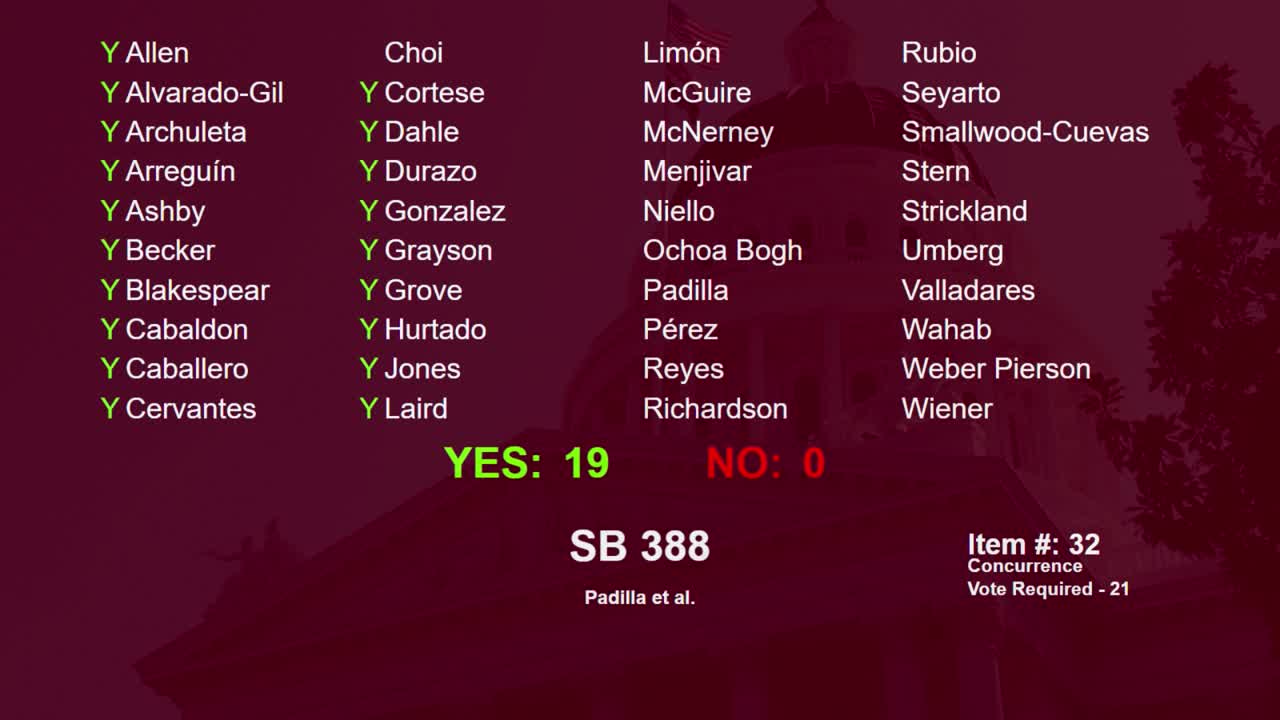 1MIN
Senate Floor
 39SEC
Assembly Floor
 9MIN
Assembly Standing Committee on Revenue and Taxation
 3MIN
Assembly Standing Committee on Local Government
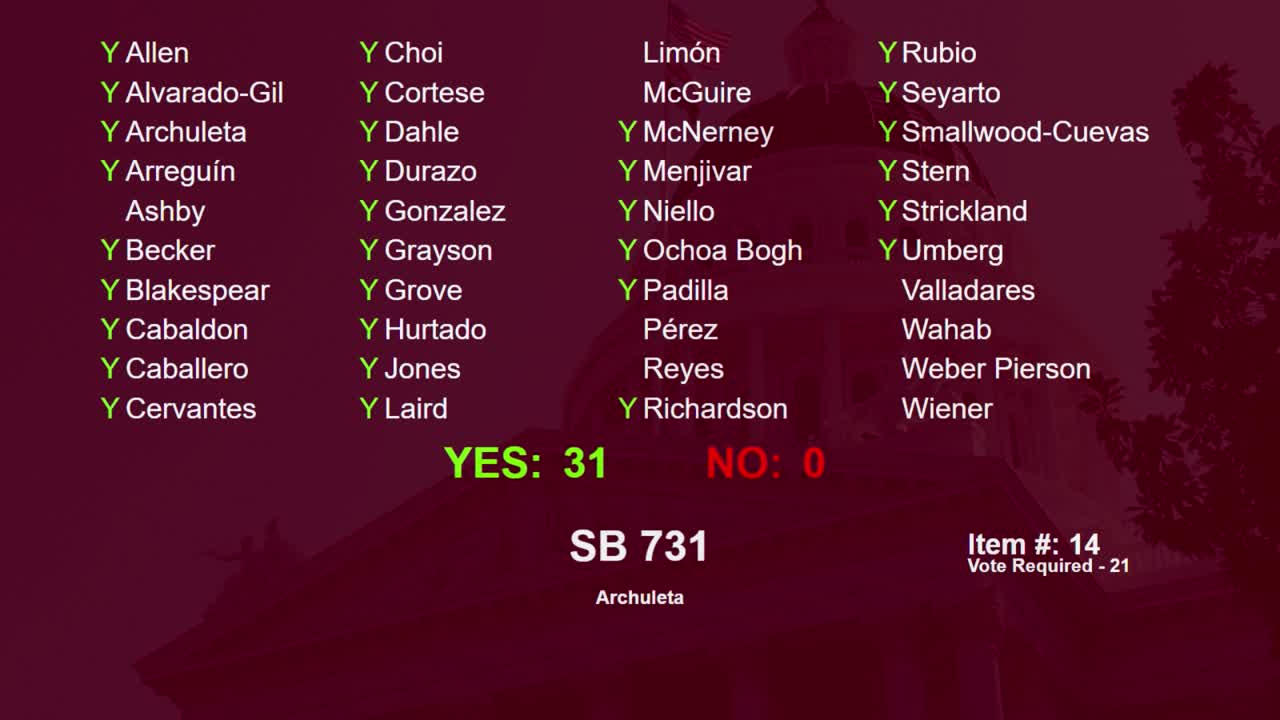 1MIN
Senate Floor
 5MIN
Senate Standing Committee on Revenue and Taxation
 6MIN
Senate Standing Committee on Local Government
Bill Author