SB 352: Environmental justice: Department of Justice: Bureau of Environmental Justice: community air monitoring.
- Session Year: 2025-2026
- House: Senate
- Latest Version Date: 2025-09-19
Current Status:
Passed
(2025-09-19: Chaptered by Secretary of State. Chapter 120, Statutes of 2025.)
Introduced
In Committee
Awaiting First Chamber Vote
Passed First Chamber
In Committee
Awaiting Second Chamber Vote
Passed Second Chamber
Enacted
Existing provisions of the California Constitution make the Attorney General, subject to the powers and duties of the Governor, the chief law officer of the state. Under existing law, the Attorney General may maintain an action for equitable relief in the name of the people of the State of California against any person for the protection of the natural resources of the state from pollution, impairment, or destruction.
This bill would continue in existence in the Department of Justice a Bureau of Environmental Justice.
Existing law requires the State Air Resources Board to prepare, in consultation with specified entities, a monitoring plan regarding the availability and effectiveness of toxic air contaminant and criteria air pollutant advanced sensing monitoring technologies and existing community air monitoring systems, as specified, and based on the findings and recommendations of that plan, select, in consultation with the air pollution control districts and air quality management districts, the highest priority locations around the state to deploy community air monitoring systems, as provided.
This bill would require monitoring in a location selected by the state board to remain active for no fewer than 5 years, with an option for the air district and the state board to agree to extend active monitoring for additional 5-year periods, as necessary. The bill would require the state board to update the above-described monitoring plan by July 1, 2026, and every 5 years thereafter. The bill would require the update to be considered and approved by the state board before it is implemented. The bill would subject these requirement to available funding. The bill would require, by March 1, 2027, and annually thereafter, the state board, in consultation with the air districts, to report to specified committees of the Legislature about the progress the state board and the air districts have made in implementing these and other provisions, as specified. The bill would require the chair of the state board and the executive directors or air pollution control officers of the relevant air districts to appear before the relevant policy committees of the Legislature to present on the progress in implementing those requirements. By imposing additional requirements on air districts, this bill would impose a state-mandated local program.
The California Constitution requires the state to reimburse local agencies and school districts for certain costs mandated by the state. Statutory provisions establish procedures for making that reimbursement.
This bill would provide that, if the Commission on State Mandates determines that the bill contains costs mandated by the state, reimbursement for those costs shall be made pursuant to the statutory provisions noted above.
Existing law establishes an Aging and Disability Resource Connection (ADRC) program, administered by the California Department of Aging, to provide information to consumers and their families on available long-term services and supports (LTSS) programs and to assist older adults, caregivers, and persons with disabilities in accessing LTSS programs at the local level. Existing law requires ADRC programs to provide specified services, including, among other things, enhanced information and referral services and other assistance at hours that are convenient for the public.This bill would further require ADRC programs to provide disaster and emergency preparedness training specifically designed to help older adults and people with disabilities prepare for emergencies and ensure their safety before, during, and after natural disasters and other emergency events, as specified.Existing law establishes an Aging and Disability Resource Connection (ADRC) program, administered by the California Department of Aging, to provide information to consumers and their families on available long-term services and supports (LTSS) programs and to assist older adults, caregivers, and persons with disabilities in accessing LTSS programs at the local level. Existing law requires ADRC programs to provide specified services, including, among other things, enhanced information and referral services and other assistance at hours that are convenient for the public.
This bill would further require ADRC programs to provide disaster and emergency preparedness training specifically designed to help older adults and people with disabilities prepare for emergencies and ensure their safety before, during, and after natural disasters and other emergency events, as specified.
The California Emergency Services Act generally prescribes duties with regard to various types of emergencies and disasters. The act requires the Office of Emergency Services, in consultation with specified persons and entities, including the access and functional needs community, to develop guidelines for alerting and warning the public of an emergency, as specified, and then to provide those guidelines to each city, county, and city and county. If a state of emergency is proclaimed, the act authorizes an eligible private nonprofit organization to receive state assistance for distribution of supplies and other disaster or emergency assistance activities resulting in extraordinary cost, as specified.
This bill would require eligible area agencies on aging and independent living centers that provide transportation and evacuation services to individuals with access and functional needs during a state of emergency to be prioritized for the state assistance described above.
Existing law establishes an Aging and Disability Resource Connection (ADRC) program, administered by the California Department of Aging, to provide information to consumers and their families on available long-term services and supports (LTSS) programs and to assist older adults, caregivers, and persons with disabilities in accessing LTSS programs at the local level. Existing law requires ADRC programs to provide specified services, including, among other things, enhanced information and referral services and other assistance at hours that are convenient for the public.
This bill would further require ADRC programs to provide disaster and emergency preparedness training specifically designed to help older adults and people with disabilities prepare for emergencies and ensure their safety before, during, and after natural disasters and other emergency events, as specified.
Existing law requires a county, including a city and county to, upon the next update to its emergency plan, integrate access and functional needs into its emergency plan by addressing, at a minimum, how the access and functional needs population is being served by emergency communications, evacuations, and sheltering, as specified.This bill would state the intent of the Legislature to enact legislation relating to evacuation plans for individuals that have access and functional needs.Existing law requires a county, including a city and county to, upon the next update to its emergency plan, integrate access and functional needs into its emergency plan by addressing, at a minimum, how the access and functional needs population is being served by emergency communications, evacuations, and sheltering, as specified.
This bill would state the intent of the Legislature to enact legislation relating to evacuation plans for individuals that have access and functional needs.
There is continued in existence in the Department of Justice a Bureau of Environmental Justice.
SEC. 2.Section 42705.5 of the Health and Safety Code is amended to read:42705.5.(a)For purposes of this section, the following definitions and related provisions shall apply:
(1)Community air monitoring system means advanced sensing monitoring equipment that measures and records air pollutant concentrations in the ambient air at or near sensitive receptor locations and in disadvantaged communities and that may be useful for estimating associated pollutant exposures and health risks, determining trends in air pollutant levels over time, and in supporting enforcement efforts.
(2)Disadvantaged community means a community identified as disadvantaged pursuant to Section 39711.
(3)Fence-line monitoring system means monitoring equipment that measures and records air pollutant concentrations at or adjacent to a stationary source that may be useful for detecting or estimating emissions of pollutants from the source, including the quantity of fugitive emissions, and in supporting enforcement efforts.
(4)Nonattainment pollutant has the same meaning as in Section 39607.1.
(5)Sensitive receptors includes hospitals, schools and day care centers, and such other locations as the district or state board may determine.
(6)Stationary source has the same meaning as in Section 39607.1.
(b)On or before October 1, 2018, the state board shall prepare, in consultation with the Scientific Review Panel on Toxic Air Contaminants, the districts, the Office of Environmental Health Hazard Assessment, environmental justice organizations, affected industries, and other interested stakeholders, a monitoring plan regarding the availability and effectiveness of toxic air contaminant and criteria air pollutant advanced sensing monitoring technologies and existing community air monitoring systems, as well as the need for and benefits of establishing additional community air monitoring systems. In preparing the monitoring plan, the state board shall conduct at least one public workshop in each of the northern, central, and southern parts of the state.
(c)(1)Based on findings and recommendations in the monitoring plan prepared pursuant to subdivision (b), the state board shall select, concurrent with the monitoring plan, in consultation with the districts and based on an assessment of the locations of sensitive receptors and disadvantaged communities, the highest priority locations around the state to deploy community air monitoring systems, which shall be communities with high exposure burdens for toxic air contaminants and criteria air pollutants. By July 1, 2019, any district containing a location selected pursuant to this subdivision shall deploy a community air monitoring system in the selected location or locations. In implementing this subdivision, the district may require any stationary source that emits pollutants in, or that materially affect, the highest priority locations identified pursuant to this subdivision to deploy a fence-line monitoring system or other appropriate real-time, on-site monitoring, taking into account technical capabilities, cost, and the degree to which additional data would materially contribute to an understanding of community risk.
(2)Subject to available funding, monitoring in a location selected under this subdivision shall be active for no fewer than five years, with an option for the district and the state board to agree to extend active monitoring for additional five-year periods, as necessary.
(d)Subject to available funding, by January 1, 2020, and January 1 of every year thereafter, the state board shall select additional locations pursuant to subdivision (c), as the state board deems appropriate based on the monitoring plan described in subdivision (b). Any district containing a location selected pursuant to this subdivision shall deploy a community air monitoring system in the selected location within one year of the state board selecting the location. The state board shall hold an annual public hearing on the status of implementing the network of community air monitoring systems and make recommendations for improvements.
(e)Subject to available funding, by July 1, 2026, and every five years thereafter, the state board shall update the monitoring plan detailed in subdivision (b). The update shall be considered and approved by the state board before it is implemented.
(f)Subject to available funding, the districts shall provide to the state board the air quality data produced by the community air monitoring systems deployed pursuant to this section. The state board shall publish the air quality data on its internet website.
(g)(1)Notwithstanding Section 10231.5 of the Government Code, by March 1, 2027, and annually thereafter, the state board, in consultation with the districts, shall report to the appropriate subcommittees of the budget committee of each house of the Legislature about the progress the state board and the districts have made in implementing this section. This report shall include, but is not limited to, all of the following:
(A)The status of implementation in each selected community.
(B)Best practices identified.
(C)Lessons learned through implementation.
(D)Enforcement activities.
(E)Any outcome data that is available, either through air monitoring or other means, including, but not limited to, achieved emissions reductions.
(F)A report of expenditures made in furtherance of this section.
(2)A report submitted to the Legislature pursuant to this subdivision shall also be submitted in compliance with Section 9795 of the Government Code.
(3)The chair of the state board and the executive directors or air pollution control officers of the relevant districts shall appear before the relevant policy committees or budget subcommittees of the Legislature, upon request of the chair of those committees, to present on the progress in implementing this section. This presentation may be done at a hearing that is held jointly with the relevant Assembly and Senate standing committees.
SEC. 3.If the Commission on State Mandates determines that this act contains costs mandated by the state, reimbursement to local agencies and school districts for those costs shall be made pursuant to Part 7 (commencing with Section 17500) of Division 4 of Title 2 of the Government Code.
There is continued in existence in the Department of Justice a Bureau of Environmental Justice.
SEC. 2.Section 42705.5 of the Health and Safety Code is amended to read:42705.5.(a)For purposes of this section, the following definitions and related provisions shall apply:
(1)Community air monitoring system means advanced sensing monitoring equipment that measures and records air pollutant concentrations in the ambient air at or near sensitive receptor locations and in disadvantaged communities and that may be useful for estimating associated pollutant exposures and health risks, determining trends in air pollutant levels over time, and in supporting enforcement efforts.
(2)Disadvantaged community means a community identified as disadvantaged pursuant to Section 39711.
(3)Fence-line monitoring system means monitoring equipment that measures and records air pollutant concentrations at or adjacent to a stationary source that may be useful for detecting or estimating emissions of pollutants from the source, including the quantity of fugitive emissions, and in supporting enforcement efforts.
(4)Nonattainment pollutant has the same meaning as in Section 39607.1.
(5)Sensitive receptors includes hospitals, schools and day care centers, and such other locations as the district or state board may determine.
(6)Stationary source has the same meaning as in Section 39607.1.
(b)On or before October 1, 2018, the state board shall prepare, in consultation with the Scientific Review Panel on Toxic Air Contaminants, the districts, the Office of Environmental Health Hazard Assessment, environmental justice organizations, affected industries, and other interested stakeholders, a monitoring plan regarding the availability and effectiveness of toxic air contaminant and criteria air pollutant advanced sensing monitoring technologies and existing community air monitoring systems, as well as the need for and benefits of establishing additional community air monitoring systems. In preparing the monitoring plan, the state board shall conduct at least one public workshop in each of the northern, central, and southern parts of the state.
(c)(1)Based on findings and recommendations in the monitoring plan prepared pursuant to subdivision (b), the state board shall select, concurrent with the monitoring plan, in consultation with the districts and based on an assessment of the locations of sensitive receptors and disadvantaged communities, the highest priority locations around the state to deploy community air monitoring systems, which shall be communities with high exposure burdens for toxic air contaminants and criteria air pollutants. By July 1, 2019, any district containing a location selected pursuant to this subdivision shall deploy a community air monitoring system in the selected location or locations. In implementing this subdivision, the district may require any stationary source that emits pollutants in, or that materially affect, the highest priority locations identified pursuant to this subdivision to deploy a fence-line monitoring system or other appropriate real-time, on-site monitoring, taking into account technical capabilities, cost, and the degree to which additional data would materially contribute to an understanding of community risk.
(2)Subject to available funding, monitoring in a location selected under this subdivision shall be active for no fewer than five years, with an option for the district and the state board to agree to extend active monitoring for additional five-year periods, as necessary.
(d)By Subject to available funding, by January 1, 2020, and January 1 of every year thereafter, the state board shall select additional locations pursuant to subdivision (c), as the state board deems appropriate based on the monitoring plan described in subdivision (b). Any district containing a location selected pursuant to this subdivision shall deploy a community air monitoring system in the selected location within one year of the state board selecting the location. The state board shall hold an annual public hearing on the status of implementing the network of community air monitoring systems and make recommendations for improvements.
(e)Subject to available funding, by July 1, 2026, and every five years thereafter, the state board shall update the monitoring plan detailed in subdivision (b). The update shall be considered and approved by the state board before it is implemented.
(e)The(f)Subject to available funding, the districts shall provide to the state board the air quality data produced by the community air monitoring systems deployed pursuant to this section. The state board shall publish the air quality data on its Internet Web site. internet website.
(g)(1)Notwithstanding Section 10231.5 of the Government Code, by March 1, 2027, and annually thereafter, the state board, in consultation with the districts, shall report to the appropriate subcommittees of the budget committee of each house of the Legislature about the progress the state board and the districts have made in implementing this section. This report shall include, but is not limited to, all of the following:
(A)The status of implementation in each selected community.
(B)Best practices identified.
(C)Lessons learned through implementation.
(D)Enforcement activities.
(E)Any outcome data that is available, either through air monitoring or other means, including, but not limited to, achieved emissions reductions.
(F)A report of expenditures made in furtherance of this section.
(2)A report submitted to the Legislature pursuant to this subdivision shall also be submitted in compliance with Section 9795 of the Government Code.
(3)The chair of the state board and the executive directors or air pollution control officers of the relevant districts shall appear before the relevant policy committees or budget subcommittees of the Legislature, upon request of the chair of those committees, to present on the progress in implementing this section. This presentation may be done at a hearing that is held jointly with the relevant Assembly and Senate standing committees.
SEC. 3.If the Commission on State Mandates determines that this act contains costs mandated by the state, reimbursement to local agencies and school districts for those costs shall be made pursuant to Part 7 (commencing with Section 17500) of Division 4 of Title 2 of the Government Code.
SECTION 1.The Legislature finds and declares all of the following:(a)When a natural disaster occurs, certain individuals may have needs that cannot be effectively addressed through traditional emergency response and recovery methods. These needs, referred to as access and functional needs within the emergency management community, arise from a variety of factors, including, but not limited to, developmental or intellectual disabilities, physical disabilities, chronic health conditions, injuries, limited English proficiency, age, including older adults and children, institutional living, low income, homelessness, transportation challenges, including reliance on public transportation, and pregnancy. Emergencies impact individuals in distinct ways depending on their specific needs.(b)While all individuals are vulnerable during a natural disaster, those with access and functional needs face heightened vulnerabilities due to their unique circumstances. Historical evidence demonstrates that these individuals are disproportionately affected by disasters. According to a 2019 report conducted by the California State Auditor, people with certain access and functional needs are two to four times more likely to perish in a natural disaster compared to the general population. These individuals can constitute a significant portion of the affected population, underscoring the importance of incorporating strategies into emergency plans that specifically address the protection and assistance of these vulnerable groups.(c)Despite the critical importance of this issue, emergency agencies have often faced challenges in adequately supporting individuals with access and functional needs during natural disasters. Notably, alerting and warning, evacuation, and sheltering have historically posed significant obstacles in meeting the needs of these individuals.SEC. 2.Section 9120 of the Welfare and Institutions Code is amended to read:9120.(a)There is hereby established an Aging and Disability Resource Connection (ADRC) program to provide information to consumers and their families on available long-term services and supports (LTSS) programs and to assist older adults, caregivers, and persons with disabilities in accessing LTSS programs at the local level through ADRC programs operated jointly by area agencies on aging and independent living centers.(b)This article shall be administered and implemented by the California Department of Aging, in collaboration with the Department of Rehabilitation and the State Department of Health Care Services.(c)Area agencies on aging and independent living centers shall be the core local partners in developing ADRC programs. The California Department of Aging shall assist interested and qualified area agencies on aging and independent living centers in completing an application to be designated as an ADRC program.(d)An ADRC program operated by an area agency on aging and an independent living center shall provide all of the following:(1)Enhanced information and referral services and other assistance at hours that are convenient for the public.(2)Options counseling concerning available LTSS programs and public and private benefits programs.(3)Short-term service coordination.(4)Transition services from hospitals to home and from skilled nursing facilities to the community.(5)Disaster and emergency preparedness training specifically designed to help older adults and people with disabilities prepare for emergencies and ensure their safety before, during, and after natural disasters and other emergency events.(A)The training shall utilize existing emergency preparedness and response tools developed by the Office of Emergency Services, the California Department of Aging, the Department of Rehabilitation, and other relevant community partners.(B)The training shall raise awareness of existing available resources and guidance, including, but not limited to, local alert systems, local emergency plans, information from the local fire department, information on emergency transportation and evacuation resources, and information related to utility services during emergencies and natural disasters.(e)An ADRC program operated by an area agency on aging and an independent living center shall do both of the following:(1)Provide services within the geographic area served.(2)Provide information to the public about the services provided by the program.(f)(1)The California Department of Aging, in consultation with the Aging and Disability Resource Connection Advisory Committee within the California Department of Aging, shall develop a core model of ADRC best practices. These best practices shall be implemented by July 1, 2022, by all ADRC programs operated by area agencies on aging and independent living centers. To the extent feasible, the best practices shall be considered in the development and continued updating of the master plan on aging. In the development of these best practices, the department and advisory committee shall consider, at a minimum, all of the following practices:(A)A person-centered counseling process.(B)Public outreach and coordination with key referral sources, including, but not limited to, caregiver resource centers, the medical centers of the United States Department of Veterans Affairs, acute care systems, local 211 programs, local multipurpose senior service programs, Programs of All-Inclusive Care for the Elderly (PACE), adult day care services, and LTSS providers.(C)A formal followup procedure to ensure that services for which a person received a referral were received and methods for correcting service provision if needed.(D)A model for the best ways for area agencies on aging and independent living centers to share necessary data and client information.(E)A model for the collection and reporting of data to the California Department of Aging, which shall include, but not be limited to, the demographic information for each individual counseled, the number of consumers served by category of service, and the number of caregivers served.(2)The California Department of Aging shall review implementation of the ADRC Infrastructure Grants Program described in Section 9121 for consideration in developing and updating the best practices model.(g)The implementation of this section is contingent on an appropriation in the annual Budget Act, or another act, for that express purpose. REVISIONS: HeadingLine 1.The Legislature finds and declares all of the following:
(a)When a natural disaster occurs, certain individuals may have needs that cannot be effectively addressed through traditional emergency response and recovery methods. These needs, referred to as access and functional needs within the emergency management community, arise from a variety of factors, including, but not limited to, developmental or intellectual disabilities, physical disabilities, chronic health conditions, injuries, limited English proficiency, age, including older adults and children, institutional living, low income, homelessness, transportation challenges, including reliance on public transportation, and pregnancy. Emergencies impact individuals in distinct ways depending on their specific needs.
(b)While all individuals are vulnerable during a natural disaster, those with access and functional needs face heightened vulnerabilities due to their unique circumstances. Historical evidence demonstrates that these individuals are disproportionately affected by disasters. According to a 2019 report conducted by the California State Auditor, people with certain access and functional needs are two to four times more likely to perish in a natural disaster compared to the general population. These individuals can constitute a significant portion of the affected population, underscoring the importance of incorporating strategies into emergency plans that specifically address the protection and assistance of these vulnerable groups.
(c)Despite the critical importance of this issue, emergency agencies have often faced challenges in adequately supporting individuals with access and functional needs during natural disasters. Notably, alerting and warning, evacuation, and sheltering have historically posed significant obstacles in meeting the needs of these individuals.
SEC. 2.Section 8692 of the Government Code is amended to read:8692.(a)If a state of emergency is proclaimed, an eligible private nonprofit organization may receive state assistance for distribution of supplies and other disaster or emergency assistance activities resulting in extraordinary cost.(b)A private nonprofit organization is eligible for assistance under this section if it is eligible for disaster assistance under the federal Robert T. Stafford Disaster Relief and Emergency Assistance Act (42 U.S.C. Sec. 5121).(c)An organization is not eligible for assistance under this section if it employs religious content in the provision of emergency assistance.(d)Area agencies on aging and independent living centers shall be prioritized for the state assistance provided pursuant to this section if both of the following apply:(1)The entity provides transportation and evacuation services to individuals with access and functional needs during a state of emergency. The services described in this paragraph include emergency transportation and evacuation services provided by an emergency transportation provider that is contracted with the entity to provide on-demand transportation and evacuation services 24 hours a day, seven days a week, to users at no cost during a state of emergency.(2)The entity is an eligible private nonprofit organization pursuant to subdivision (b).(e)Any grant of assistance under this section shall comply with Section 4 of Article I and Section 5 of Article XVI of the California Constitution, state and federal civil rights laws, and the First Amendment to the United States Constitution in regard to the funding of religious organizations and activities. These legal constraints include prohibitions on the discrimination against beneficiaries and staff based on protected categories, on the use of public funds for proselytizing of religious doctrine, religious instruction, or worship, and on the use of other religious means to accomplish programmatic goals.(f)The Office of Emergency Services shall adopt regulations to implement this section.SEC. 3.SEC. 2.Section 9120 of the Welfare and Institutions Code is amended to read:9120.(a)There is hereby established an Aging and Disability Resource Connection (ADRC) program to provide information to consumers and their families on available long-term services and supports (LTSS) programs and to assist older adults, caregivers, and persons with disabilities in accessing LTSS programs at the local level through ADRC programs operated jointly by area agencies on aging and independent living centers.
(b)This article shall be administered and implemented by the California Department of Aging, in collaboration with the Department of Rehabilitation and the State Department of Health Care Services.
(c)Area agencies on aging and independent living centers shall be the core local partners in developing ADRC programs. The California Department of Aging shall assist interested and qualified area agencies on aging and independent living centers in completing an application to be designated as an ADRC program.
(d)An ADRC program operated by an area agency on aging and an independent living center shall provide all of the following:
(1)Enhanced information and referral services and other assistance at hours that are convenient for the public.
(2)Options counseling concerning available LTSS programs and public and private benefits programs.
(3)Short-term service coordination.
(4)Transition services from hospitals to home and from skilled nursing facilities to the community.
(5)Disaster and emergency preparedness training specifically designed to help older adults and people with disabilities prepare for emergencies and ensure their safety before, during, and after natural disasters and other emergency events.
(A)The training shall utilize existing emergency preparedness and response tools developed by the Office of Emergency Services, the California Department of Aging, the Department of Rehabilitation, and other relevant community partners.
(B)The training shall raise awareness of existing available resources and guidance, including, but not limited to, local alert systems, local emergency plans, information from the local fire department, information on emergency transportation and evacuation resources, and information related to utility services during emergencies and natural disasters.
(e)An ADRC program operated by an area agency on aging and an independent living center shall do both of the following:
(1)Provide services within the geographic area served.
(2)Provide information to the public about the services provided by the program.
(f)(1)The California Department of Aging, in consultation with the Aging and Disability Resource Connection Advisory Committee within the California Department of Aging, shall develop a core model of ADRC best practices. These best practices shall be implemented by July 1, 2022, by all ADRC programs operated by area agencies on aging and independent living centers. To the extent feasible, the best practices shall be considered in the development and continued updating of the master plan on aging. In the development of these best practices, the department and advisory committee shall consider, at a minimum, all of the following practices:
(A)A person-centered counseling process.
(B)Public outreach and coordination with key referral sources, including, but not limited to, caregiver resource centers, the medical centers of the United States Department of Veterans Affairs, acute care systems, local 211 programs, local multipurpose senior service programs, Programs of All-Inclusive Care for the Elderly (PACE), adult day care services, and LTSS providers.
(C)A formal followup procedure to ensure that services for which a person received a referral were received and methods for correcting service provision if needed.
(D)A model for the best ways for area agencies on aging and independent living centers to share necessary data and client information.
(E)A model for the collection and reporting of data to the California Department of Aging, which shall include, but not be limited to, the demographic information for each individual counseled, the number of consumers served by category of service, and the number of caregivers served.
(2)The California Department of Aging shall review implementation of the ADRC Infrastructure Grants Program described in Section 9121 for consideration in developing and updating the best practices model.
(g)The implementation of this section is contingent on an appropriation in the annual Budget Act, or another act, for that express purpose.
The Legislature finds and declares all of the following:
(a)When a natural disaster occurs, certain individuals may have needs that cannot be effectively addressed through traditional emergency response and recovery methods. These needs, referred to as access and functional needs within the emergency management community, arise from a variety of factors, including, but not limited to, developmental or intellectual disabilities, physical disabilities, chronic health conditions, injuries, limited English proficiency, age, including older adults and children, institutional living, low income, homelessness, transportation challenges, including reliance on public transportation, and pregnancy. Emergencies impact individuals in distinct ways depending on their specific needs.
(b)While all individuals are vulnerable during a natural disaster, those with access and functional needs face heightened vulnerabilities due to their unique circumstances. Historical evidence demonstrates that these individuals are disproportionately affected by disasters. According to a 2019 report conducted by the California State Auditor, people with certain access and functional needs are two to four times more likely to perish in a natural disaster compared to the general population. These individuals can constitute a significant portion of the affected population, underscoring the importance of incorporating strategies into emergency plans that specifically address the protection and assistance of these vulnerable groups.
(c)Despite the critical importance of this issue, emergency agencies have often faced challenges in adequately supporting individuals with access and functional needs during natural disasters. Notably, alerting and warning, evacuation, and sheltering have historically posed significant obstacles in meeting the needs of these individuals.
SEC. 2.Section 8692 of the Government Code is amended to read:8692.(a)If a state of emergency is proclaimed, an eligible private nonprofit organization may receive state assistance for distribution of supplies and other disaster or emergency assistance activities resulting in extraordinary cost.
(b)A private nonprofit organization is eligible for assistance under this section if it is eligible for disaster assistance under the federal Robert T. Stafford Disaster Relief and Emergency Assistance Act (42 U.S.C. Sec. 5121).
(c)An organization is not eligible for assistance under this section if it employs religious content in the provision of emergency assistance.
(d)Area agencies on aging and independent living centers shall be prioritized for the state assistance provided pursuant to this section if both of the following apply:
(1)The entity provides transportation and evacuation services to individuals with access and functional needs during a state of emergency. The services described in this paragraph include emergency transportation and evacuation services provided by an emergency transportation provider that is contracted with the entity to provide on-demand transportation and evacuation services 24 hours a day, seven days a week, to users at no cost during a state of emergency.
(2)The entity is an eligible private nonprofit organization pursuant to subdivision (b).
(e)Any grant of assistance under this section shall comply with Section 4 of Article I and Section 5 of Article XVI of the California Constitution, state and federal civil rights laws, and the First Amendment to the United States Constitution in regard to the funding of religious organizations and activities. These legal constraints include prohibitions on the discrimination against beneficiaries and staff based on protected categories, on the use of public funds for proselytizing of religious doctrine, religious instruction, or worship, and on the use of other religious means to accomplish programmatic goals.
(f)The Office of Emergency Services shall adopt regulations to implement this section.
SEC. 3.Section 9120 of the Welfare and Institutions Code is amended to read:9120.(a)There is hereby established an Aging and Disability Resource Connection (ADRC) program to provide information to consumers and their families on available long-term services and supports (LTSS) programs and to assist older adults, caregivers, and persons with disabilities in accessing LTSS programs at the local level through ADRC programs operated jointly by area agencies on aging and independent living centers.
(b)This article shall be administered and implemented by the California Department of Aging, in collaboration with the Department of Rehabilitation and the State Department of Health Care Services.
(c)Area agencies on aging and independent living centers shall be the core local partners in developing ADRC programs. The California Department of Aging shall assist interested and qualified area agencies on aging and independent living centers in completing an application to be designated as an ADRC program.
(d)An ADRC program operated by an area agency on aging and an independent living center shall provide all of the following:
(1)Enhanced information and referral services and other assistance at hours that are convenient for the public.
(2)Options counseling concerning available LTSS programs and public and private benefits programs.
(3)Short-term service coordination.
(4)Transition services from hospitals to home and from skilled nursing facilities to the community.
(5)Disaster and emergency preparedness training specifically designed to help older adults and people with disabilities prepare for emergencies and ensure their safety before, during, and after natural disasters and other emergency events.
(A)The training shall utilize existing emergency preparedness and response tools developed by the Office of Emergency Services, the California Department of Aging, the Department of Rehabilitation, and other relevant community partners.
(B)The training shall raise awareness of existing available resources and guidance, including, but not limited to, local alert systems, local emergency plans, information from the local fire department, and information related to utility services during emergencies and natural disasters.
(e)An ADRC program operated by an area agency on aging and an independent living center shall do both of the following:
(1)Provide services within the geographic area served.
(2)Provide information to the public about the services provided by the program.
(f)(1)The California Department of Aging, in consultation with the Aging and Disability Resource Connection Advisory Committee within the California Department of Aging, shall develop a core model of ADRC best practices. These best practices shall be implemented by July 1, 2022, by all ADRC programs operated by area agencies on aging and independent living centers. To the extent feasible, the best practices shall be considered in the development and continued updating of the master plan on aging. In the development of these best practices, the department and advisory committee shall consider, at a minimum, all of the following practices:
(A)A person-centered counseling process.
(B)Public outreach and coordination with key referral sources, including, but not limited to, caregiver resource centers, the medical centers of the United States Department of Veteran Veterans Affairs, acute care systems, local 211 programs, local multipurpose senior service programs, Programs of All-Inclusive Care for the Elderly (PACE), adult day care services, and LTSS providers.
(C)A formal followup procedure to ensure that services for which a person received a referral were received and methods for correcting service provision if needed.
(D)A model for the best ways for area agencies on aging and independent living centers to share necessary data and client information.
(E)A model for the collection and reporting of data to the California Department of Aging, which shall include, but not be limited to, the demographic information for each individual counseled, the number of consumers served by category of service, and the number of caregivers served.
(2)The California Department of Aging shall review implementation of the ADRC Infrastructure Grants Program described in Section 9121 for consideration in developing and updating the best practices model.
(g)The implementation of this section is contingent on an appropriation in the annual Budget Act, or another act, for that express purpose.
The Legislature finds and declares all of the following:
(a)When a natural disaster occurs, certain individuals may have needs that cannot be effectively addressed through traditional emergency response and recovery methods. These needs, referred to as access and functional needs within the emergency management community, arise from a variety of factors, including, but not limited to, developmental or intellectual disabilities, physical disabilities, chronic health conditions, injuries, limited English proficiency, age, including older adults and children, institutional living, low income, homelessness, transportation challenges, including reliance on public transportation, and pregnancy. Emergencies impact individuals in distinct ways depending on their specific needs.
(b)While all individuals are vulnerable during a natural disaster, those with access and functional needs face heightened vulnerabilities due to their unique circumstances. Historical evidence demonstrates that these individuals are disproportionately affected by disasters. According to a 2019 report conducted by the California State Auditor, people with certain access and functional needs are two to four times more likely to perish in a natural disaster compared to the general population. These individuals can constitute a significant portion of the affected population, underscoring the importance of incorporating strategies into emergency plans that specifically address the protection and assistance of these vulnerable groups.
(c)Despite the critical importance of this issue, emergency agencies have often faced challenges in adequately supporting individuals with access and functional needs during natural disasters. Notably, alerting and warning, evacuation, and sheltering have historically posed significant obstacles in meeting the needs of these individuals.
SEC. 2.Section 8692 of the Government Code is amended to read:8692.(a)If a state of emergency is proclaimed, an eligible private nonprofit organization may receive state assistance for distribution of supplies and other disaster or emergency assistance activities resulting in extraordinary cost.
(b)A private nonprofit organization is eligible for assistance under this section if it is eligible for disaster assistance under the federal Robert T. Stafford Disaster Relief and Emergency Assistance Act (42 U.S.C. Sec. 5121).
(c)An organization is not eligible for assistance under this section if it employs religious content in the provision of emergency assistance.
(d)Area agencies on aging and independent living centers shall be prioritized for the state assistance provided pursuant to this section if both of the following apply:
(1)The entity provides transportation and evacuation services to individuals with access and functional needs during a state of emergency.
(2)The entity is an eligible private nonprofit organization pursuant to subdivision (b).
(d)(e)Any grant of assistance under this section shall comply with Section 4 of Article I and Section 5 of Article XVI of the California Constitution, state and federal civil rights laws, and the First Amendment to the United States Constitution in regard to the funding of religious organizations and activities. These legal constraints include prohibitions on the discrimination against beneficiaries and staff based on protected categories, on the use of public funds for proselytizing of religious doctrine, religious instruction, or worship, and on the use of other religious means to accomplish programmatic goals.
(e)(f)The Office of Emergency Services shall adopt regulations to implement this section.
SEC. 3.Section 9120 of the Welfare and Institutions Code is amended to read:9120.(a)There is hereby established an Aging and Disability Resource Connection (ADRC) program to provide information to consumers and their families on available long-term services and supports (LTSS) programs and to assist older adults, caregivers, and persons with disabilities in accessing LTSS programs at the local level through ADRC programs operated jointly by area agencies on aging and independent living centers.
(b)This article shall be administered and implemented by the California Department of Aging, in collaboration with the Department of Rehabilitation and the State Department of Health Care Services.
(c)Area agencies on aging and independent living centers shall be the core local partners in developing ADRC programs. The California Department of Aging shall assist interested and qualified area agencies on aging and independent living centers in completing an application to be designated as an ADRC program.
(d)An ADRC program operated by an area agency on aging and an independent living center shall provide all of the following:
(1)Enhanced information and referral services and other assistance at hours that are convenient for the public.
(2)Options counseling concerning available LTSS programs and public and private benefits programs.
(3)Short-term service coordination.
(4)Transition services from hospitals to home and from skilled nursing facilities to the community.
(5)Disaster and emergency preparedness training specifically designed to help older adults and people with disabilities prepare for emergencies and ensure their safety before, during, and after natural disasters and other emergency events.
(A)The training shall utilize emergency preparedness and response tools developed by the Office of Emergency Services, the California Department of Aging, the Department of Rehabilitation, and other relevant community partners.
(B)The training shall raise awareness of existing available resources and guidance, including, but not limited to, local alert systems, local emergency plans, information from the local fire department, and information related to utility services during emergencies and natural disasters.
(e)An ADRC program operated by an area agency on aging and an independent living center shall do both of the following:
(1)Provide services within the geographic area served.
(2)Provide information to the public about the services provided by the program.
(f)(1)The California Department of Aging, in consultation with the Aging and Disability Resource Connection Advisory Committee within the California Department of Aging, shall develop a core model of ADRC best practices. These best practices shall be implemented by July 1, 2022, by all ADRC programs operated by area agencies on aging and independent living centers. To the extent feasible, the best practices shall be considered in the development and continued updating of the master plan on aging. In the development of these best practices, the department and advisory committee shall consider, at a minimum, all of the following practices:
(A)A person-centered counseling process.
(B)Public outreach and coordination with key referral sources, including, but not limited to, caregiver resource centers, the medical centers of the United States Department of Veteran Affairs, acute care systems, local 211 programs, local multipurpose senior service programs, Programs of All-Inclusive Care for the Elderly (PACE), adult day care services, and LTSS providers.
(C)A formal followup procedure to ensure that services for which a person received a referral were received and methods for correcting service provision if needed.
(D)A model for the best ways for area agencies on aging and independent living centers to share necessary data and client information.
(E)A model for the collection and reporting of data to the California Department of Aging, which shall include, but not be limited to, the demographic information for each individual counseled, the number of consumers served by category of service, and the number of caregivers served.
(2)The California Department of Aging shall review implementation of the ADRC Infrastructure Grants Program described in Section 9121 for consideration in developing and updating the best practices model.
(g)The implementation of this section is contingent on an appropriation in the annual Budget Act, or another act, for that express purpose.
SECTION 1.It is the intent of the Legislature to enact legislation relating to evacuation plans for individuals that have access and functional needs.It is the intent of the Legislature to enact legislation relating to evacuation plans for individuals that have access and functional needs.
|
Date
|
Status
|
|---|---|
| Sep 19, 2025 | Chaptered by Secretary of State. Chapter 120, Statutes of 2025. |
| Sep 19, 2025 | Approved by the Governor. |
| Sep 15, 2025 | Enrolled and presented to the Governor at 2 p.m. |
| Sep 13, 2025 | Assembly amendments concurred in. (Ayes 29. Noes 6. Page 3055.) Ordered to engrossing and enrolling. |
| Sep 13, 2025 | In Senate. Concurrence in Assembly amendments pending. |
| Sep 13, 2025 | Read third time. Passed. (Ayes 55. Noes 19. Page 3489.) Ordered to the Senate. |
| Sep 13, 2025 | Joint Rule 61(a)(14) and 51(a)(4) suspended. (Ayes 59. Noes 20. Page 3413.) |
| Sep 12, 2025 | Assembly Rule 63 suspended. (Ayes 57. Noes 20. Page 3441.) |
| Sep 12, 2025 | Coauthors revised. |
| Sep 12, 2025 | From committee: Do pass. (Ayes 10. Noes 4.) (September 12). |
| Sep 10, 2025 | Read third time and amended. |
| Sep 10, 2025 | Re-referred to Com. on NAT. RES. pursuant to Assembly Rule 77.2. |
| Sep 10, 2025 | Ordered to third reading. |
| Sep 10, 2025 | Joint Rule 62(a) suspended. |
| Sep 10, 2025 | Joint Rule 61(a)13 suspended. (Ayes 68. Noes 0. Page 3191.) |
| Sep 10, 2025 | Joint Rule 61 and 62(a) suspended. (Ayes 31. Noes 9. Page 2801.) |
| Sep 5, 2025 | Read third time and amended. |
| Sep 5, 2025 | Ordered to third reading. |
| Sep 3, 2025 | Read second time. Ordered to third reading. |
| Sep 2, 2025 | Read second time and amended. Ordered to second reading. |
| Aug 29, 2025 | From committee: Do pass as amended. (Ayes 11. Noes 0.) (August 29). |
| Aug 20, 2025 | August 20 set for first hearing. Placed on APPR. suspense file. |
| Jul 15, 2025 | From committee: Do pass and re-refer to Com. on APPR. with recommendation: To consent calendar. (Ayes 7. Noes 0.) (July 14). Re-referred to Com. on APPR. |
| Jun 25, 2025 | From committee: Do pass and re-refer to Com. on E.M with recommendation: To consent calendar. (Ayes 7. Noes 0.) (June 24). Re-referred to Com. on E.M. |
| Jun 5, 2025 | Referred to Coms. on AGING & L.T.C and E.M. |
| May 29, 2025 | In Assembly. Read first time. Held at Desk. |
| May 29, 2025 | Read third time. Passed. (Ayes 38. Noes 0. Page 1325.) Ordered to the Assembly. |
| May 27, 2025 | Ordered to special consent calendar. |
| May 23, 2025 | Read second time. Ordered to third reading. |
| May 23, 2025 | From committee: Do pass. (Ayes 6. Noes 0. Page 1197.) (May 23). |
| May 16, 2025 | Set for hearing May 23. |
| May 5, 2025 | May 5 hearing: Placed on APPR. suspense file. |
| Apr 25, 2025 | Set for hearing May 5. |
| Apr 22, 2025 | From committee: Do pass and re-refer to Com. on APPR. with recommendation: To consent calendar. (Ayes 14. Noes 0. Page 830.) (April 22). Re-referred to Com. on APPR. |
| Apr 10, 2025 | Set for hearing April 22. |
| Apr 8, 2025 | From committee: Do pass and re-refer to Com. on G.O. with recommendation: To consent calendar. (Ayes 5. Noes 0. Page 682.) (April 7). Re-referred to Com. on G.O. |
| Apr 2, 2025 | Re-referred to Coms. on HUMAN S. and G.O. |
| Apr 1, 2025 | Set for hearing April 7 in HUMAN S. pending receipt. |
| Mar 26, 2025 | From committee with author's amendments. Read second time and amended. Re-referred to Com. on RLS. |
| Feb 19, 2025 | Referred to Com. on RLS. |
| Feb 13, 2025 | From printer. May be acted upon on or after March 15. |
| Feb 12, 2025 | Introduced. Read first time. To Com. on RLS. for assignment. To print. |
|
Date
|
Description
|
Location
|
Votes
|
|
|---|---|---|---|---|
| Sep 13, 2025 | SB 352 Reyes Senate Third Reading By BRYAN | Assembly Floor |
Passed |
|
| Sep 13, 2025 | W/O REF. TO FILE SB352 Reyes | Senate Floor |
Passed |
|
| Sep 12, 2025 | W/O REF. TO FILE SB352 Reyes | Senate Floor |
Passed |
|
| Sep 12, 2025 | Do pass. | Assembly Standing Committee on Natural Resources |
Passed |
|
| Aug 29, 2025 | Do pass as amended. | Assembly Standing Committee on Appropriations |
Passed |
|
| Jul 14, 2025 | Do pass and be re-referred to the Committee on [Appropriations] with recommendation: To Consent Calendar | Assembly Standing Committee on Emergency Management |
Passed |
|
| Jun 24, 2025 | Do pass and be re-referred to the Committee on [Emergency Management] with recommendation: To Consent Calendar | Assembly Standing Committee on Aging and Long-Term Care |
Passed |
|
| May 29, 2025 | Special Consent SB352 Reyes | Senate Floor |
Passed |
|
| May 23, 2025 | Do pass | Senate Standing Committee on Appropriations |
Passed |
|
| May 5, 2025 | Placed on suspense file | Senate Standing Committee on Appropriations |
Passed |
|
| Apr 22, 2025 | Do pass, but first be re-referred to the Committee on [Appropriations] with the recommendation: To Consent Calendar | Senate Standing Committee on Governmental Organization |
Passed |
|
| Apr 7, 2025 | Do pass, but first be re-referred to the Committee on [Governmental Organization] with the recommendation: To Consent Calendar | Senate Standing Committee on Human Services |
Passed |
This list shows positions taken on this bill by organizations on the date displayed, which is linked to the original source.
Positions by individuals are not included.
|
Organization
|
Position
|
Date
|
|---|---|---|
| AARP | ** Support | |
| Brightline Action | ** Support | |
| Brightline Defense Project | ** Support | |
| California Commission on Aging | ** Support | |
| California Foundation For Independent Living Centers | ** Support | |
| Center For Environmental Health | ** Support | |
| City Of Ontario | ** Against | |
| Disability Rights California | ** Support | |
| LeadingAge California | ** Support |
SENATE RULES COMMITTEE Office of Senate Floor Analyses (916) 651-1520 Fax: (916) 327-4478 | SB 352 |
UNFINISHED BUSINESS
Bill No: SB 352
Author: Reyes (D) and Bryan (D)
Amended: 9/10/25
Vote: 21
SENATE HUMAN SERVICES COMMITTEE: 5-0, 4/7/25
AYES: Arreguín, Ochoa Bogh, Becker, Limón, Pérez
SENATE GOVERNMENTAL ORG. COMMITTEE: 14-0, 4/22/25
AYES: Padilla, Valladares, Archuleta, Ashby, Blakespear, Cervantes, Dahle, Jones, Ochoa Bogh, Richardson, Rubio, Smallwood-Cuevas, Wahab, Weber Pierson
NO VOTE RECORDED: Hurtado
SENATE APPROPRIATIONS COMMITTEE: 6-0, 5/23/25
AYES: Caballero, Seyarto, Cabaldon, Grayson, Richardson, Wahab
NO VOTE RECORDED: Dahle
SENATE FLOOR: 38-0, 5/29/25
AYES: Allen, Alvarado-Gil, Archuleta, Arreguín, Ashby, Becker, Blakespear, Cabaldon, Caballero, Cervantes, Choi, Cortese, Dahle, Durazo, Gonzalez, Grayson, Grove, Hurtado, Jones, Laird, McGuire, McNerney, Menjivar, Niello, Ochoa Bogh, Padilla, Pérez, Richardson, Rubio, Seyarto, Smallwood-Cuevas, Stern, Strickland, Umberg, Valladares, Wahab, Weber Pierson, Wiener
NO VOTE RECORDED: Limón, Reyes
ASSEMBLY FLOOR: 55-19, 9/13/25 - See last page for vote
SUBJECT: Environmental justice: Department of Justice: Bureau of Environmental Justice: community air monitoring
SOURCE: Author
DIGEST:
This bill modifies requirements for community air monitoring systems and monitoring plan established by AB 617 (C. Garcia, Chapter 136, Statutes of 2017) and requires the California Air Resources Board (CARB) to report and appear before the Legislature regarding monitoring progress.
Assembly Amendments
of 9/10/25 rewrite this bill entirely.
ANALYSIS:
Existing law:
- Establishes the California Air Resources Board (CARB) as the air pollution control agency in California and requires CARB, among other things, to control emissions from a wide array of mobile sources and coordinate with local air districts to control emissions from stationary sources in order to implement the Federal Clean Air Act. (Health and Safety Code (HSC) § 39500 et seq.)
- Requires air pollution control districts (air districts) to adopt and enforce rules and regulations, subject to the powers and duties of CARB, to achieve and maintain the state and federal ambient air quality standards in all areas affected by emission sources under their jurisdiction. (HSC § 40001)
- Requires CARB to prepare a monitoring plan regarding the availability and effectiveness of toxic air contaminant (TACs) and criteria air pollutant monitoring technologies and existing community air monitoring systems (CAMS) in consultation with various relevant entities on or before October 1, 2018. (HSC § 42705.5)
- Requires CARB to select the highest priority locations to deploy CAMS and any district containing a selected location to deploy a CAMS, based on the findings and recommendations of the monitoring plan. (HSC § 42705.5)
- Requires CARB to select additional locations for the deployment of CAMS annually, beginning January 1, 2020, and requires the respective districts to deploy a CAMS within one year of selection. (HSC § 42705.5)
- Requires districts to provide CARB air quality data produced by the CAMS and CARB to publish the data on its internet website. (HSC § 42705.5)
- Requires CARB to prepare a statewide strategy, and update that strategy at least once every five years, to reduce emissions of TACs and criteria air pollutants in communities affected by a high cumulative exposure burden, including criteria based on the monitoring plan for the development of community emissions reduction programs (CERPs). (HSC § 44391.2)
This bill:
- Codifies the Bureau of Environmental Justice in the Department of Justice.
- Requires (subject to available funding) CAMS deployed at a location selected by CARB to be active for no fewer than five years and authorizes CARB and the districts to extend active monitoring for additional five-year periods.
- Requires (subject to available funding) CARB to update the monitoring plan every five years beginning July 1, 2026, and subjects the updated monitoring plan to approval by CARB before implementation.
- Makes the existing requirement for districts to provide CARB air quality data subject to the availability of funding.
- Requires CARB, in consultation with the districts, to report annually to the appropriate budget subcommittee of each house of the Legislature about the progress in implementing these provisions. The report is required to include, but may not be limited to:
- The status of implementation in each selected community;
- Best practices identified;
- Lessons learned through implementation;
- Enforcement activities;
- Any outcome data, as specified; and,
- Expenditures made.
- Requires the Chair of CARB and executive directors or officers of relevant districts to appear before the relevant policy committees or budget subcommittees of the Legislature, upon request of the Chair of those committees, to present on the progress in implementing these provisions.
Background
AB 617: giving pollution-burdened communities a seat at the table. Passed alongside the last cap-and-trade reauthorization, AB 617 provides a community-focused action framework to improve air quality in communities most impacted by air pollution. The bill recognized that while California has seen tremendous improvement in air quality, some communities still suffer greater impacts than others. It is these communities that require special attention and accelerated action.
Based on direction from AB 617, CARB established the Community Air Protection Program, which directs CARB and local air districts to more effectively measure and reduce exposure in communities most impacted by air pollution. Among other requirements, the program includes the following components:
- Community Air Monitoring Systems (CAMS): AB 617 requires CARB to identify high priority areas subject to criteria pollutant and TAC exposure. A local air district with jurisdiction over a high priority area must deploy community air monitoring systems and provide CARB with data from the monitoring systems, which CARB must post on its internet website.
- Community Emissions Reduction Programs (CERPs): AB 617 requires CARB to select locations around the state for preparation of CERPs. AB 617 requires an air district with jurisdiction over a location selected by CARB to implement a CERP in consultation with a variety of entities, and within one year of CARB selecting the location, each air district must submit its CERP to CARB for approval, with specified timelines and public processes. AB 617 specifies that compliance with CERPs is enforceable by the local air districts and CARB.
There were also provisions of AB 617 unrelated to CAMS and CERPs involving best available control technology and similar air permitting-related reforms. Those are outside the scope of SB 352, but have been a focus of recent legislation as well (see SB 318 (Becker, 2025)).
Community Air Protection Program Blueprint 2.0. Approved in October 2023, the Community Air Protection Program Blueprint 2.0 (Blueprint 2.0) is CARB’s Statewide Strategy and implementation guidance to reduce harmful emissions and exposures to air pollution in communities most impacted by poor air quality. Blueprint 2.0 reflects the experience and lessons learned since the beginning of the Community Air Protection Program (Program). It was significantly informed by The People’s Blueprint, which was developed by environmental justice leaders, and recommended an equity-centered approach for Program implementation.
Blueprint 2.0 consists of two parts. Part One contains goals, objectives, and priority actions for CARB and air districts in implementing Program activities. Part Two consists of updated implementation guidance to help all Program partners achieve the goal of reducing harmful emissions and exposure to toxic air contaminants and criteria air pollution in communities most impacted by poor air quality.
Bureau of Environmental Justice. In February of 2018, then-Attorney General Xavier Becerra established a Bureau of Environmental Justice within the California DOJ. The Bureau’s stated mission is to, “Protect people and communities that endure a disproportionate share of environmental pollution and public health hazards.” Specifically, a press release alongside the announcement of the Bureau stated that they would focus their oversight and enforcement work on Ensuring compliance with the California Environmental Quality Act (CEQA) and land use planning laws; Remediating contaminated drinking water; Eliminating or reducing exposure to lead and other toxins in the environment and consumer products; Challenging the federal government’s actions that repeal or reduce public health and environmental protections; and Penalizing and preventing illegal discharges to air and water from facilities located in communities already burdened disproportionately with pollution.
Although the Bureau of Environmental Justice is not formally assigned with any role in this bill, enshrining it in law seems well-aligned with the bill’s intent to address many of these same problems through improvements to AB 617.
Comments
Purpose of Bill. According to the author, “SB 352 will promote environmental justice by codifying the Bureau of Environmental Justice in the Department of Justice. The past and ongoing work of the Bureau is extremely important to California residents, but there is no guarantee that future Attorney Generals will continue to have the Bureau of Environmental Justice. Codifying the Bureau of Environmental Justice will give these communities a guaranteed ally in the fight against environmental injustice and ensure that there will always be a dedicated entity in the state to take up these issues.
“The bill would also promote accountability and transparency by requiring additional reporting from CARB and the air districts regarding the expenditure of funds pursuant to AB 617. AB 617 (2017) authorized CARB and the air districts to identify communities disproportionately impacted by air pollution and established a process to incorporate community input into community emission reduction plans. While the goal of the program was to empower communities with identifying local solutions, there has been delays in implementation. Additional oversight is needed to ensure that we are maximizing state dollars while maintaining a commitment to our most vulnerable. Informing the Legislature on the progress of this program is crucial for lawmakers to be able to make informed decisions on how state funding is being used and to be able to respond to barriers to implementing the emission reductions plans.
Program work ahead? I sure hope it does. In the implementation of AB 617, some notable challenges have arisen. Some significant pollution sources fall outside the scope of CARB and the air districts. These can include local land use practices that increase exposure to air pollution, practices under the authority of another state agency such as pesticide application or highway construction, and sources of air pollution regulated primarily by the federal government, such as rail and aviation. It has been an ongoing challenge—without a clear or straightforward solution—to compel entities that are not required to comply with AB 617 to take actions called for in CERPs.
The main new provision for AB 617 created by SB 352 is an annual progress report required from CARB to the Legislature. This will include certain specified information that may be helpful in future efforts to further improve the Program. There are currently 19 AB 617 communities in California, many of which have been working on developing and implementing their CERPs for years. Creating an environment where learning in one community can inform successes in another has the potential to benefit many Californians facing environmental injustices.
Nevertheless, this progress report alone will not make AB 617 live up to its full potential. As the effects of climate change continue to rapidly worsen (affecting the most disadvantaged Californians the most), new sources of air pollution (such as warehouses and data centers) proliferate in already-afflicted communities, and covered entities under the state’s flagship climate program often continue to prioritize compliance through the purchase of compliance instruments rather than actively reducing their own emissions, the need for a robust environmental justice framework in California becomes clearer and clearer.
Market-based compliance mechanisms have never been the favored climate policy solutions for most environmental justice advocates and their allies, and yet they continue to engage and provide feedback wherever possible. When cap-and-trade was reauthorized in 2017, it came tied together with the promise of AB 617. Although any step forward is arguably better than no step at all, this reauthorization must not leave the principles of environmental justice behind. It is incumbent upon the Legislature to ensure the information reported by CARB pursuant to this bill motivates real, impactful reforms to AB 617, and pushes this body towards deferring justice no longer.
FISCAL EFFECT: Appropriation: No Fiscal Com.: Yes Local: Yes
SUPPORT: (Verified 9/13/25)
Brightline Defense Project
OPPOSITION: (Verified 9/13/25)
Ontario; City of
ASSEMBLY FLOOR: 55-19, 9/13/25
AYES: Addis, Aguiar-Curry, Ahrens, Alvarez, Arambula, Ávila Farías, Bauer-Kahan, Bennett, Berman, Boerner, Bonta, Bryan, Calderon, Caloza, Connolly, Elhawary, Fong, Gabriel, Garcia, Gipson, Jeff Gonzalez, Mark González, Haney, Harabedian, Hart, Irwin, Jackson, Kalra, Krell, Lee, Lowenthal, McKinnor, Muratsuchi, Ortega, Pacheco, Papan, Patel, Pellerin, Petrie-Norris, Quirk-Silva, Ransom, Celeste Rodriguez, Michelle Rodriguez, Schiavo, Schultz, Sharp-Collins, Solache, Soria, Stefani, Valencia, Ward, Wicks, Wilson, Zbur, Rivas
NOES: Alanis, Carrillo, Castillo, Chen, Davies, DeMaio, Dixon, Ellis, Flora, Gallagher, Hadwick, Hoover, Johnson, Lackey, Macedo, Patterson, Sanchez, Tangipa, Wallis
NO VOTE RECORDED: Bains, Nguyen, Ramos, Rogers, Blanca Rubio, Ta
Prepared by: Heather Walters / E.Q. / (916) 651-4108
9/22/26 15:15:27
**** END ****
SENATE RULES COMMITTEE Office of Senate Floor Analyses (916) 651-1520 Fax: (916) 327-4478 | SB 352 |
UNFINISHED BUSINESS
Bill No: SB 352
Author: Reyes (D) and Bryan (D)
Amended: 9/10/25 in Assembly
Vote: 21
SENATE HUMAN SERVICES COMMITTEE: 5-0, 4/7/25
AYES: Arreguín, Ochoa Bogh, Becker, Limón, Pérez
SENATE GOVERNMENTAL ORG. COMMITTEE: 14-0, 4/22/25
AYES: Padilla, Valladares, Archuleta, Ashby, Blakespear, Cervantes, Dahle, Jones, Ochoa Bogh, Richardson, Rubio, Smallwood-Cuevas, Wahab, Weber Pierson
NO VOTE RECORDED: Hurtado
SENATE APPROPRIATIONS COMMITTEE: 6-0, 5/23/25
AYES: Caballero, Seyarto, Cabaldon, Grayson, Richardson, Wahab
NO VOTE RECORDED: Dahle
SENATE FLOOR: 38-0, 5/29/25
AYES: Allen, Alvarado-Gil, Archuleta, Arreguín, Ashby, Becker, Blakespear, Cabaldon, Caballero, Cervantes, Choi, Cortese, Dahle, Durazo, Gonzalez, Grayson, Grove, Hurtado, Jones, Laird, McGuire, McNerney, Menjivar, Niello, Ochoa Bogh, Padilla, Pérez, Richardson, Rubio, Seyarto, Smallwood-Cuevas, Stern, Strickland, Umberg, Valladares, Wahab, Weber Pierson, Wiener
NO VOTE RECORDED: Limón, Reyes
ASSEMBLY FLOOR: 43-19, 9/13/25 – Roll call vote not available.
SUBJECT: Environmental justice: Department of Justice: Bureau of Environmental Justice: community air monitoring
SOURCE: Author
DIGEST:
This bill modifies requirements for community air monitoring systems and monitoring plan established by AB 617 (C. Garcia, Chapter 136, Statutes of 2017) and requires the California Air Resources Board (CARB) to report and appear before the Legislature regarding monitoring progress.
Assembly Amendments
of 9/10/25 rewrite this bill entirely.
ANALYSIS:
Existing law:
- Establishes the California Air Resources Board (CARB) as the air pollution control agency in California and requires CARB, among other things, to control emissions from a wide array of mobile sources and coordinate with local air districts to control emissions from stationary sources in order to implement the Federal Clean Air Act. (Health and Safety Code (HSC) § 39500 et seq.)
- Requires air pollution control districts (air districts) to adopt and enforce rules and regulations, subject to the powers and duties of CARB, to achieve and maintain the state and federal ambient air quality standards in all areas affected by emission sources under their jurisdiction. (HSC § 40001)
- Requires CARB to prepare a monitoring plan regarding the availability and effectiveness of toxic air contaminant (TACs) and criteria air pollutant monitoring technologies and existing community air monitoring systems (CAMS) in consultation with various relevant entities on or before October 1, 2018. (HSC § 42705.5)
- Requires CARB to select the highest priority locations to deploy CAMS and any district containing a selected location to deploy a CAMS, based on the findings and recommendations of the monitoring plan. (HSC § 42705.5)
- Requires CARB to select additional locations for the deployment of CAMS annually, beginning January 1, 2020, and requires the respective districts to deploy a CAMS within one year of selection. (HSC § 42705.5)
- Requires districts to provide CARB air quality data produced by the CAMS and CARB to publish the data on its internet website. (HSC § 42705.5)
- Requires CARB to prepare a statewide strategy, and update that strategy at least once every five years, to reduce emissions of TACs and criteria air pollutants in communities affected by a high cumulative exposure burden, including criteria based on the monitoring plan for the development of community emissions reduction programs (CERPs). (HSC § 44391.2)
This bill:
- Codifies the Bureau of Environmental Justice in the Department of Justice.
- Requires (subject to available funding) CAMS deployed at a location selected by CARB to be active for no fewer than five years and authorizes CARB and the districts to extend active monitoring for additional five-year periods.
- Requires (subject to available funding) CARB to update the monitoring plan every five years beginning July 1, 2026, and subjects the updated monitoring plan to approval by CARB before implementation.
- Makes the existing requirement for districts to provide CARB air quality data subject to the availability of funding.
- Requires CARB, in consultation with the districts, to report annually to the appropriate budget subcommittee of each house of the Legislature about the progress in implementing these provisions. The report is required to include, but may not be limited to:
- The status of implementation in each selected community;
- Best practices identified;
- Lessons learned through implementation;
- Enforcement activities;
- Any outcome data, as specified; and,
- Expenditures made.
- Requires the Chair of CARB and executive directors or officers of relevant districts to appear before the relevant policy committees or budget subcommittees of the Legislature, upon request of the Chair of those committees, to present on the progress in implementing these provisions.
Background
AB 617: giving pollution-burdened communities a seat at the table. Passed alongside the last cap-and-trade reauthorization, AB 617 provides a community-focused action framework to improve air quality in communities most impacted by air pollution. The bill recognized that while California has seen tremendous improvement in air quality, some communities still suffer greater impacts than others. It is these communities that require special attention and accelerated action.
Based on direction from AB 617, CARB established the Community Air Protection Program, which directs CARB and local air districts to more effectively measure and reduce exposure in communities most impacted by air pollution. Among other requirements, the program includes the following components:
- Community Air Monitoring Systems (CAMS): AB 617 requires CARB to identify high priority areas subject to criteria pollutant and TAC exposure. A local air district with jurisdiction over a high priority area must deploy community air monitoring systems and provide CARB with data from the monitoring systems, which CARB must post on its internet website.
- Community Emissions Reduction Programs (CERPs): AB 617 requires CARB to select locations around the state for preparation of CERPs. AB 617 requires an air district with jurisdiction over a location selected by CARB to implement a CERP in consultation with a variety of entities, and within one year of CARB selecting the location, each air district must submit its CERP to CARB for approval, with specified timelines and public processes. AB 617 specifies that compliance with CERPs is enforceable by the local air districts and CARB.
There were also provisions of AB 617 unrelated to CAMS and CERPs involving best available control technology and similar air permitting-related reforms. Those are outside the scope of SB 352, but have been a focus of recent legislation as well (see SB 318 (Becker, 2025)).
Community Air Protection Program Blueprint 2.0. Approved in October 2023, the Community Air Protection Program Blueprint 2.0 (Blueprint 2.0) is CARB’s Statewide Strategy and implementation guidance to reduce harmful emissions and exposures to air pollution in communities most impacted by poor air quality. Blueprint 2.0 reflects the experience and lessons learned since the beginning of the Community Air Protection Program (Program). It was significantly informed by The People’s Blueprint, which was developed by environmental justice leaders, and recommended an equity-centered approach for Program implementation.
Blueprint 2.0 consists of two parts. Part One contains goals, objectives, and priority actions for CARB and air districts in implementing Program activities. Part Two consists of updated implementation guidance to help all Program partners achieve the goal of reducing harmful emissions and exposure to toxic air contaminants and criteria air pollution in communities most impacted by poor air quality.
Bureau of Environmental Justice. In February of 2018, then-Attorney General Xavier Becerra established a Bureau of Environmental Justice within the California DOJ. The Bureau’s stated mission is to, “Protect people and communities that endure a disproportionate share of environmental pollution and public health hazards.” Specifically, a press release alongside the announcement of the Bureau stated that they would focus their oversight and enforcement work on Ensuring compliance with the California Environmental Quality Act (CEQA) and land use planning laws; Remediating contaminated drinking water; Eliminating or reducing exposure to lead and other toxins in the environment and consumer products; Challenging the federal government’s actions that repeal or reduce public health and environmental protections; and Penalizing and preventing illegal discharges to air and water from facilities located in communities already burdened disproportionately with pollution.
Although the Bureau of Environmental Justice is not formally assigned with any role in this bill, enshrining it in law seems well-aligned with the bill’s intent to address many of these same problems through improvements to AB 617.
Comments
Purpose of Bill. According to the author, “SB 352 will promote environmental justice by codifying the Bureau of Environmental Justice in the Department of Justice. The past and ongoing work of the Bureau is extremely important to California residents, but there is no guarantee that future Attorney Generals will continue to have the Bureau of Environmental Justice. Codifying the Bureau of Environmental Justice will give these communities a guaranteed ally in the fight against environmental injustice and ensure that there will always be a dedicated entity in the state to take up these issues.
“The bill would also promote accountability and transparency by requiring additional reporting from CARB and the air districts regarding the expenditure of funds pursuant to AB 617. AB 617 (2017) authorized CARB and the air districts to identify communities disproportionately impacted by air pollution and established a process to incorporate community input into community emission reduction plans. While the goal of the program was to empower communities with identifying local solutions, there has been delays in implementation. Additional oversight is needed to ensure that we are maximizing state dollars while maintaining a commitment to our most vulnerable. Informing the Legislature on the progress of this program is crucial for lawmakers to be able to make informed decisions on how state funding is being used and to be able to respond to barriers to implementing the emission reductions plans.
Program work ahead? I sure hope it does. In the implementation of AB 617, some notable challenges have arisen. Some significant pollution sources fall outside the scope of CARB and the air districts. These can include local land use practices that increase exposure to air pollution, practices under the authority of another state agency such as pesticide application or highway construction, and sources of air pollution regulated primarily by the federal government, such as rail and aviation. It has been an ongoing challenge—without a clear or straightforward solution—to compel entities that are not required to comply with AB 617 to take actions called for in CERPs.
The main new provision for AB 617 created by SB 352 is an annual progress report required from CARB to the Legislature. This will include certain specified information that may be helpful in future efforts to further improve the Program. There are currently 19 AB 617 communities in California, many of which have been working on developing and implementing their CERPs for years. Creating an environment where learning in one community can inform successes in another has the potential to benefit many Californians facing environmental injustices.
Nevertheless, this progress report alone will not make AB 617 live up to its full potential. As the effects of climate change continue to rapidly worsen (affecting the most disadvantaged Californians the most), new sources of air pollution (such as warehouses and data centers) proliferate in already-afflicted communities, and covered entities under the state’s flagship climate program often continue to prioritize compliance through the purchase of compliance instruments rather than actively reducing their own emissions, the need for a robust environmental justice framework in California becomes clearer and clearer.
Market-based compliance mechanisms have never been the favored climate policy solutions for most environmental justice advocates and their allies, and yet they continue to engage and provide feedback wherever possible. When cap-and-trade was reauthorized in 2017, it came tied together with the promise of AB 617. Although any step forward is arguably better than no step at all, this reauthorization must not leave the principles of environmental justice behind. It is incumbent upon the Legislature to ensure the information reported by CARB pursuant to this bill motivates real, impactful reforms to AB 617, and pushes this body towards deferring justice no longer.
FISCAL EFFECT: Appropriation: No Fiscal Com.: Yes Local: Yes
SUPPORT: (Verified 9/13/25)
Brightline Defense Project
OPPOSITION: (Verified 9/13/25)
Prepared by: Heather Walters / E.Q. / (916) 651-4108
9/13/25 12:16:58
**** END ****
SENATE THIRD READING
STR Bill Id:SB 352
Author:(Reyes and Bryan)
As Amended Ver:September 10, 2025
Majority vote
SUMMARY
Codifies the Bureau of Environmental Justice (Bureau) within the Department of Justice. Requires air monitoring in a location selected by the Air Resources Board (ARB) to remain active for a minimum of five years, which can be extended for additional five-year periods. Requires ARB to update its air monitoring plan.
Major Provisions
- Codifies the continued existence of the Bureau in the Department of Justice.
- Requires, subject to available funding, air monitoring in a specified location to be active for no fewer than five years, with an option for a district and ARB to agree to extend active monitoring for additional five-year periods, as necessary.
- Requires, subject to available funding, ARB to update the monitoring plan regarding the availability and effectiveness of toxic air contaminant and criteria air pollutant advanced sensing monitoring technologies and existing community air monitoring systems by July 1, 2026, and no fewer than every five years thereafter. Requires the monitoring plan to be approved by ARB before implementation.
- Requires air districts to provide ARB with the air quality data produced by community air monitoring systems subject to the availability of funding.
- Requires ARB, by March 1, 2027, and annually thereafter, in consultation with air districts, to report to the appropriate subcommittees of the Senate and Assembly Budget Committees the progress ARB and the air districts have made to implement the community air monitoring requirements. Requires the report to include:
- The status of implementation in each selected community;
- Best practices identified;
- Enforcement activities;
- Any outcome data available; and,
- A report of expenditures made.
- Requires the chair of the ARB and the executive directors or air pollution control officers of the relevant air districts to appear before the relevant policy committees or budget subcommittees, upon request of the chair of the committee, to present on the progress of implementing the community air monitoring requirements.
- Specifies that if the Commission on State Mandates determines that this bill has costs mandated by the state, reimbursement for those costs shall be made, as specified.
COMMENTS
- Bureau of Environmental Justice. Attorney General Becerra established the Bureau within the California Department of Justice in 2018. The Bureau's goal is to protect people and communities that endure a disproportionate share of environmental pollution and public health hazards by increased oversight, investigation, and enforcement of the law. In 2021, Attorney General Bonta expanded the Bureau to increase efforts to ensure compliance with the California Environmental Quality Act, enforce illegal discharges to air and water, reduce exposure to lead and other toxics, clean up drinking water, and challenge federal governmental actions that repeal or reduce public health and environmental protections. This bill codifies the Bureau to ensure that it continues to exist and operate under future Attorney Generals to ensure that frontline communities continue to have the protections it provides.
- Community air monitoring. AB 617 (Cristina Garcia), Chapter 136, Statutes of 2017, established the Community Air Protection Program, which encompassed a variety of requirements and programs to reduce air emissions on pollution-burdened communities. AB 617 increased data collection and reporting, expedited pollution control retrofits, increased civil and criminal penalties for specified air pollution violations, enhanced community monitoring, established a statewide emissions reduction strategy targeting pollution-burdened communities, and established community emissions reduction programs.
This bill strengthens the community air monitoring requirements established by AB 617 by requiring community air monitoring systems to be active for a minimum of five years. The bill further requires ARB to update the monitoring plan and requires enhanced reporting from ARB and air districts. This bill also increases reporting to the Legislature on the progress made to implement community air monitoring systems.
According to the Author
SB 352 will promote environmental justice by codifying the Bureau of Environmental Justice in the Department of Justice. The past and ongoing work of the Bureau is extremely important to California residents, but there is no guarantee that future Attorney Generals will continue to have the Bureau of Environmental Justice. Codifying the Bureau of Environmental Justice will give these communities a guaranteed ally in the fight against environmental injustice and ensure that there will always be a dedicated entity in the state to take up these issues.
The bill would also promote accountability and transparency by requiring additional reporting from CARB and the air districts regarding the expenditure of funds pursuant to AB 617. AB 617 (2017) authorized CARB and the air districts to identify communities disproportionately impacted by air pollution and established a process to incorporate community input into community emission reduction plans. While the goal of the program was to empower communities with identifying local solutions, there has been delays in implementation. Additional oversight is needed to ensure that we are maximizing state dollars while maintaining a commitment to our most vulnerable. Informing the Legislature on the progress of this program is crucial for lawmakers to be able to make informed decisions on how state funding is being used and to be able to respond to barriers to implementing the emission reductions plans.
Arguments in Support
Brightline Action states that SB 352 "increases ongoing funding for [ARB's] Community Air Protection to support community-led initiatives to reduce local pollution" and "enacts new reporting requirements for [ARB] and local air districts to increase [the program's] effectiveness and positive impact in frontine communities."
Arguments in Opposition
The City of Ontario writes that "the proposed legislation would create duplicative efforts and cost the state unnecessary funding."
FISCAL COMMENTS
Unknown
VOTES
SENATE FLOOR: 38-0-2
YES: Allen, Alvarado-Gil, Archuleta, Arreguín, Ashby, Becker, Blakespear, Cabaldon, Caballero, Cervantes, Choi, Cortese, Dahle, Durazo, Gonzalez, Grayson, Grove, Hurtado, Jones, Laird, McGuire, McNerney, Menjivar, Niello, Ochoa Bogh, Padilla, Pérez, Richardson, Rubio, Seyarto, Smallwood-Cuevas, Stern, Strickland, Umberg, Valladares, Wahab, Weber Pierson, Wiener
ABS, ABST OR NV: Limón, Reyes
ASM AGING AND LONG-TERM CARE: 7-0-0
YES: Ellis, Ahrens, Ávila Farías, Arambula, Jeff Gonzalez, Blanca Rubio, Sharp-Collins
ASM EMERGENCY MANAGEMENT: 7-0-0
YES: Ransom, Hadwick, Arambula, Bains, Bennett, Calderon, DeMaio
ASM APPROPRIATIONS: 11-0-4
YES: Wicks, Arambula, Calderon, Caloza, Elhawary, Fong, Mark González, Ahrens, Pacheco, Pellerin, Solache
ABS, ABST OR NV: Sanchez, Dixon, Ta, Tangipa
UPDATED
VERSION: September 10, 2025
CONSULTANT: Elizabeth MacMillan / NAT. RES. / (916) 319-2092 FN: 0002087
Date of Hearing: September 12, 2025
ASSEMBLY COMMITTEE ON NATURAL RESOURCES
Isaac G. Bryan, Chair
SBPCA Bill Id:SB 352
Author:(Reyes) – As Amended Ver:September 10, 2025
SENATE VOTE: 38-0 (not relevant)
SUBJECT: Environmental justice: Department of Justice: Bureau of Environmental Justice: community air monitoring
SUMMARY: Codifies the Bureau of Environmental Justice (Bureau) within the Department of Justice. Requires air monitoring in a location selected by the Air Resources Board (ARB) to remain active for a minimum of five years, which can be extended for additional five-year periods. Requires ARB to update the air monitoring plan.
EXISTING LAW:
- Requires ARB, on or before October 1, 2018, to prepare a monitoring plan regarding the availability and effectiveness of toxic air contaminants (TAC) and criteria pollutant advanced sensing monitoring technologies and existing community air monitoring systems, as well as the need for and benefits of establishing additional community air monitoring systems. (Health and Safety Code (HSC) 42705.5 (b))
- Requires ARB, based on the monitoring plan, in consultation with air districts, and based on an assessment of the locations of sensitive receptors and disadvantaged communities, to select the highest priority locations around the state to deploy community air monitoring systems in communities with high exposure burdens for TACs and criteria pollutants. Requires any district with a location selected by ARB to deploy a community air monitoring system by July 1, 2019. Authorizes districts to require a stationary source to deploy a fence-line monitoring system or other appropriate real-time, on-site monitoring. (HSC 42705.5 (c))
- Requires ARB to select additional locations by January 1, 2020, and January 1 of every year thereafter, and requires air districts to deploy a community air monitoring system within one year. (HSC 42705.5 (d))
- Requires the air districts to provide ARB the air quality data produced by the community air monitoring systems and requires ARB to publish the data on its website. (HSC 42705.5 (e))
THIS BILL:
- Codifies the Bureau in the Department of Justice.
- Requires, subject to available funding, air monitoring in a specified location to be active for no fewer than five years, with an option for a district and ARB to agree to extend active monitoring for additional five-year periods, as necessary.
- Requires, subject to available funding, ARB to update the monitoring plan by July 1, 2026, and no fewer than every five years thereafter. Requires the monitoring plan to be approved by ARB before implementation.
- Requires air districts to provide ARB with the air quality data produced by community air monitoring systems subject to the availability of funding.
- Requires ARB, by March 1, 2027, and annually thereafter, in consultation with air districts, to report to the appropriate subcommittees of the Senate and Assembly Budget Committees the progress ARB and the air districts have made to implement the community air monitoring requirements. Requires the report to include:
- The status of implementation in each selected community;
- Best practices identified;
- Enforcement activities;
- Any outcome data available; and,
- A report of expenditures made.
- Requires the chair of the ARB and the executive directors or air pollution control officers of the relevant air districts to appear before the relevant policy committees or budget subcommittees, upon request of the chair of the committee, to present on the progress of implementing the community air monitoring requirements.
- Specifies that if the Commission on State Mandates determines that this bill has costs mandated by the state, reimbursement for those costs shall be made, as specified.
FISCAL EFFECT: Unknown
COMMENTS:
- Bureau of Environmental Justice. Attorney General Becerra established the Bureau within the California Department of Justice in 2018. The Bureau’s goal is to protect people and communities that endure a disproportionate share of environmental pollution and public health hazards by increased oversight, investigation, and enforcement of the law. In 2021, Attorney General Bonta expanded the Bureau to increase efforts to ensure compliance with the California Environmental Quality Act, enforce illegal discharges to air and water, reduce exposure to lead and other toxics, clean up drinking water, and challenge federal governmental actions that repeal or reduce public health and environmental protections. This bill codifies the Bureau to ensure that it continues to exist and operate under future Attorney Generals to ensure that frontline communities continue to have the protections it provides.
- Community air monitoring. AB 617 (Cristina Garcia), Chapter 136, Statutes of 2017, established the Community Air Protection Program, which encompassed a variety of requirements and programs to reduce air emissions on pollution-burdened communities. AB 617 increased data collection and reporting, expedited pollution control retrofits, increased civil and criminal penalties for specified air pollution violations, enhanced community monitoring, established a statewide emissions reduction strategy targeting pollution-burdened communities, and established community emissions reduction programs.
This bill strengthens the community air monitoring requirements established by AB 617 by requiring community air monitoring systems to be active for a minimum of five years. The bill further requires ARB to update the monitoring plan and requires enhanced reporting from ARB and air districts. This bill also increases reporting to the Legislature on the progress made to implement community air monitoring systems. - Author’s statement:
SB 352 will promote environmental justice by codifying the Bureau of Environmental Justice in the Department of Justice. The past and ongoing work of the Bureau is extremely important to California residents, but there is no guarantee that future Attorney Generals will continue to have the Bureau of Environmental Justice. Codifying the Bureau of Environmental Justice will give these communities a guaranteed ally in the fight against environmental injustice and ensure that there will always be a dedicated entity in the state to take up these issues.
The bill would also promote accountability and transparency by requiring additional reporting from ARB and the air districts regarding the expenditure of funds pursuant to AB 617. AB 617 (2017) authorized CARB and the air districts to identify communities disproportionately impacted by air pollution and established a process to incorporate community input into community emission reduction plans. While the goal of the program was to empower communities with identifying local solutions, there has been delays in implementation. Additional oversight is needed to ensure that we are maximizing state dollars while maintaining a commitment to our most vulnerable. Informing the Legislature on the progress of this program is crucial for lawmakers to be able to make informed decisions on how state funding is being used and to be able to respond to barriers to implementing the emission reductions plans.
REGISTERED SUPPORT / OPPOSITION:
Support
Brightline Defense Project
Opposition
City of Ontario
Analysis Prepared by: Elizabeth MacMillan / NAT. RES. /
SENATE THIRD READING
STR Bill Id:SB 352
Author:(Reyes)
As Amended Ver:September 5, 2025
Majority vote
SUMMARY
Requires Aging and Disability Resource Connection programs (ADRCs) to provide disaster and emergency preparedness training specifically designed to help older adults and people with disabilities prepare for emergencies and ensure their safety before, during, and after natural disasters and other emergency events using existing resources.
Major Provisions
COMMENTS
Area Agencies on Aging: The California Department of Aging (CDA) administers programs serving older adults through contracts with local agencies in 33 locations across the state which provide a wide array of services on a community level to seniors and adults with disabilities. AAAs are designated to address the needs and concerns of older adults at the regional and local level. Each county is required to have an AAA to ensure all communities have access to local aging programs and provide information and services for older adults. While California is home to 58 counties, not all counties have a stand-alone AAA. Some AAAs represent multiple counties to serve the region.
Independent Living Centers: According to the Department of Rehabilitation (DOR)[1], an ILC is a consumer-controlled, community-based, nonresidential private nonprofit agency that is designed and operated within a local community by individuals with a range of disabilities. Each center offers five core services that are mandated by the federal Rehabilitation Act of 1973, including cross-disability peer support, independent living skill development, advocacy and systems advocacy, information and referrals, assistive technology services and transition services. California added two core services: personal assistance services and housing.
Aging and Disability Resource Centers/Connections: In 2003, the federal Administration for Community Living and the federal Centers for Medicare and Medicaid Services established a joint funding opportunity through the ADRC initiative.[2] This initiative was designed to provide visible and trusted sources of information, one-on-one counseling, and streamlined access to long-term services and supports (LTSS).
In 2015, CDA established the ADRC and an advisory committee to engage stakeholders in identifying and implementing strategies to strengthen, sustain, and expand ADRC services throughout the state. The committee is the primary advisor to the CDA in the ongoing development and implementation of the state's ADRCs. Committee members include representatives from the CDA, Department of Health Care Services (DHCS), DOR and the Department of Veterans Affairs, as well as representatives of providers and advocates in the LTSS community. California's ADRC program was codified by AB 1200 (Cervantes, Chapter 618, Statutes of 2017).
CDA contracts with local area agencies on aging and independent living centers, which coordinate a variety of supportive services to seniors and adults with disabilities. Not all area agencies on aging provide ADRC services. Anyone, regardless of age, income, or disability, may receive ADRC services.
ADRC services may include:
- Enhanced information and referral services, such as comprehensive resource information, follow-ups, and "warm hand-off" referrals.
- Options counseling, such as assisting in identifying goals and needs through person-centered counseling and coordinating access to public and private-funded long-term services and supports in the community.
- Short-term service coordination, including expedited access to services and supports for individuals at risk of institutionalization, generally for 90 days or less, until a longer-term plan is in place.
- Transition services for people who are currently in a hospital, nursing facility, or other institution and wishes to receive long-term services and supports at home or in a community-based setting.
Auditor Report: A 2019 report from the State Auditor, "California Is Not Adequately Prepared to Protect Its Most Vulnerable Residents From Natural Disasters"[3] sites the three counties audited had not met the needs of vulnerable populations in their emergency planning. As California recovers from the most devastating fires in our history, we know the data shows older adults and people with disabilities perish in higher numbers during disasters.
As floods, earthquakes and wildfires, as well as other natural disasters continue to plague California from coasts to deserts and north to south, we continue to identify how well we provide services to older adults and people with disabilities.
In recent years, California has experienced an increase in the frequency and severity of wildfires, and experts project that these events will continue to occur more frequently.[4] Consequently, the state will likely need to protect its residents more often and from more dangerous natural disasters in the future than it has in the past.
According to the Author
"The state has long been aware that individuals with disabilities and older adults face a disproportionate risk of death during natural disasters. A 2019 audit by the California State Auditor highlighted the critical gap in emergency management agencies' ability to support these vulnerable populations, revealing a lack of guidelines for assisting these individual in cases of emergency. Recently, wildfires in Southern California claimed the lives of several individuals with disabilities, many of whom were over the age of 70. Despite the longstanding dangers faced by this community, the state has repeatedly failed to take meaningful action."
Arguments in Support
AARP writes in support, "The AARP Disaster Resilience Toolkit states "[a] key to ensuring that older adults are properly served by disaster preparedness and emergency planning is to acknowledge — and address — the gaps that exist between local emergency management teams and the organizations and municipal offices that work with and on behalf of older community members." AARP believes that more integrated disaster planning will help local governments better protect older residents, whether they are living independently or residing in an assisted living or health care facility."
Arguments in Opposition
None.
FISCAL COMMENTS
The Assembly Committee on Appropriations states the following fiscal effect,
- CDA anticipates minor and absorbable costs to provide information on existing emergency preparedness and response tools and resources.
CDA also indicates GF costs of an unknown amount for ADRC programs to provide the disaster and emergency preparedness training required by this bill. The state provides an annual $10 million GF appropriation, administered by CDA, to the nearly two dozen designated ADRCs throughout the state. This bill adds additional training requirements on the ADRCs, but does not provide additional funding likely necessary to develop and provide the training.
- DOR anticipates minor and absorbable costs to provide information on existing emergency preparedness and response tools and resources.
VOTES
SENATE FLOOR: 38-0-2
YES: Allen, Alvarado-Gil, Archuleta, Arreguín, Ashby, Becker, Blakespear, Cabaldon, Caballero, Cervantes, Choi, Cortese, Dahle, Durazo, Gonzalez, Grayson, Grove, Hurtado, Jones, Laird, McGuire, McNerney, Menjivar, Niello, Ochoa Bogh, Padilla, Pérez, Richardson, Rubio, Seyarto, Smallwood-Cuevas, Stern, Strickland, Umberg, Valladares, Wahab, Weber Pierson, Wiener
ABS, ABST OR NV: Limón, Reyes
ASM AGING AND LONG-TERM CARE: 7-0-0
YES: Ellis, Ahrens, Ávila Farías, Arambula, Jeff Gonzalez, Blanca Rubio, Sharp-Collins
ASM EMERGENCY MANAGEMENT: 7-0-0
YES: Ransom, Hadwick, Arambula, Bains, Bennett, Calderon, DeMaio
ASM APPROPRIATIONS: 11-0-4
YES: Wicks, Arambula, Calderon, Caloza, Elhawary, Fong, Mark González, Ahrens, Pacheco, Pellerin, Solache
ABS, ABST OR NV: Sanchez, Dixon, Ta, Tangipa
UPDATED
VERSION: September 5, 2025
CONSULTANT: Elizabeth Fuller / AGING & L.T.C. / (916) 319-3990 FN: 0001737
Independent Living - CA Department of Rehabilitation ↑
Administration for Community Living National Study of Aging and Disability Resource Centers ↑
https://information.auditor.ca.gov/pdfs/reports/2019-103.pdf ↑
https://wildfiretaskforce.org/wp-content/uploads/2022/04/californiawildfireandforestresilienceactionplan.pdf ↑
SENATE THIRD READING
STR Bill Id:SB 352
Author:(Reyes)
As Amended Ver:September 02, 2025
Majority vote
SUMMARY
Requires eligible area agencies on aging (AAAs) and independent living centers (ILCs) that provide transportation and evacuation services to individuals with access and functional needs(AFN) during a state of emergency to be prioritized for state assistance as prescribed.
It further requires Aging and Disability Resource Connection programs (ADRCs) to provide disaster and emergency preparedness training specifically designed to help older adults and people with disabilities prepare for emergencies and ensure their safety before, during, and after natural disasters and other emergency events using existing resources.
Major Provisions
COMMENTS
BACKGROUND
Population data: California's aging population is growing faster than any other age group. By 2030, over 25% of the population in California will be 60 and older.[1]
California is projected to be one of the fastest growing States in the nation in total population. In 2016, California comprised 12% of the nation's population[2] and is expected to grow 30% by the year 2060 (an increase of 11.7 million people.[3] In California, the population aged 60 years and over is expected to grow more than three times as fast as the total population and this growth will vary by region.
The population over age 60 will have an overall increase of 166% during the period from 2010 to 2060. More than half the counties will have over a 100% increase in this age group. Nearly half of these counties will have growth rates of over 150%. These counties are located throughout the central and southern areas of the State. The influence of the 60 and over age group on California is expected to emerge most strongly between 2010 to 2030.3
The population over age 85 will increase at an even a faster rate than those over 60 years of age, having an overall increase of 489% during the period from 2010 to 2060. Counties can expect to experience even higher growth rates after 2020. In particular, the influence of the 85 and over age group on California will emerge most strongly between 2030 to 2040 as the first of the baby boomers reach 85 years of age.3
Area Agencies on Aging: The California Department of Aging (CDA) administers programs serving older adults through contracts with local agencies in 33 locations across the state which provide a wide array of services on a community level to seniors and adults with disabilities. AAAs are designated to address the needs and concerns of older adults at the regional and local level. Each county is required to have an AAA to ensure all communities have access to local aging programs and provide information and services for older adults. While California is home to 58 counties, not all counties have a stand-alone AAA. Some AAAs represent multiple counties to serve the region.
Independent Living Centers: According to the Department of Rehabilitation (DOR)[4], an ILC is a consumer-controlled, community-based, nonresidential private nonprofit agency that is designed and operated within a local community by individuals with a range of disabilities. Each center offers five core services that are mandated by the federal Rehabilitation Act of 1973, including cross-disability peer support, independent living skill development, advocacy and systems advocacy, information and referrals, assistive technology services and transition services. California added two core services: personal assistance services and housing.
Aging and Disability Resource Centers/Connections: In 2003, the federal Administration for Community Living and the federal Centers for Medicare and Medicaid Services established a joint funding opportunity through the ADRC initiative.[5] This initiative was designed to provide visible and trusted sources of information, one-on-one counseling, and streamlined access to long-term services and supports (LTSS).
In 2015, CDA established the ADRC and an advisory committee to engage stakeholders in identifying and implementing strategies to strengthen, sustain, and expand ADRC services throughout the state. The committee is the primary advisor to the CDA in the ongoing development and implementation of the state's ADRCs. Committee members include representatives from the CDA, Department of Health Care Services (DHCS), DOR and the Department of Veterans Affairs, as well as representatives of providers and advocates in the LTSS community. California's ADRC program was codified by AB 1200 (Cervantes, Chapter 618, Statutes of 2017).
CDA contracts with local area agencies on aging and independent living centers, which coordinate a variety of supportive services to seniors and adults with disabilities. Not all area agencies on aging provide ADRC services. Anyone, regardless of age, income, or disability, may receive ADRC services.
ADRC services may include:
- Enhanced information and referral services, such as comprehensive resource information, follow-ups, and "warm hand-off" referrals.
- Options counseling, such as assisting in identifying goals and needs through person-centered counseling and coordinating access to public and private-funded long-term services and supports in the community.
- Short-term service coordination, including expedited access to services and supports for individuals at risk of institutionalization, generally for 90 days or less, until a longer-term plan is in place.
- Transition services for people who are currently in a hospital, nursing facility, or other institution and wishes to receive long-term services and supports at home or in a community-based setting.
State Emergency Plan (SEP): California Government Code Section 8650 establishes the SEP. The SEP is the primary plan for the California Emergency Support Functions (CA-ESFs). Emergency support functions are intended to provide a planning framework for local, tribal, state, and federal governments, as well as the private sector. This framework enables these entities to work together to mitigate, prepare for, respond to, and recover from the effects of emergencies regardless of the cause, size, location, or complexity.
As part of its response-support role, in coordination with other CA-ESFs and the Office of Access and Functional Needs (OAFN) within California Office of Emergency Services (CalOES), the CA-ESF 6 will support the mass care community in addressing individuals with disabilities, older adults, and others with AFN.
No two disasters are ever the same; yet, virtually all incidents disproportionately affect individuals with AFN (i.e. people with disabilities, older adults, children, limited English proficiency, and transportation disadvantaged). Understanding this harsh reality, in 2008 California established OAFN within the Governor’s Office of Emergency Services.
The purpose of OAFN is to identify the needs of individuals with disabilities and others with access or functional needs before, during, and after disasters and to integrate them into the State’s emergency management systems. OAFN plans for the realities of disasters by integrating access and functional needs into everything CalOES does including partnership development, outreach, training, guidance and providing technical assistance.
opens in a new window
Auditor Report: A 2019 report from the State Auditor, "California Is Not Adequately Prepared to Protect Its Most Vulnerable Residents From Natural Disasters"[6] sites the three counties audited had not met the needs of vulnerable populations in their emergency planning. As California recovers from the most devastating fires in our history, we know the data shows older adults and people with disabilities perish in higher numbers during disasters.
As floods, earthquakes and wildfires, as well as other natural disasters continue to plague California from coasts to deserts and north to south, we continue to identify how well we provide services to older adults and people with disabilities.
In recent years, California has experienced an increase in the frequency and severity of wildfires, and experts project that these events will continue to occur more frequently.[7] Consequently, the state will likely need to protect its residents more often and from more dangerous natural disasters in the future than it has in the past.
Master Plan for Aging: In January of 2021, the Governor released his Master Plan for Aging (MPA). The MPA prioritizes the health and well-being of older Californians and the need for policies that promote healthy aging. The MPA serves as a blueprint for state government, local government, the private sector, and philanthropy to prepare the state for the coming demographic changes and continue California’s leadership in aging, disability, and equity.
The work plan laid out in the MPA four years after its release continues to highlight the urgent needs facing California’s older adults, people with disabilities, caregivers, their families, advocates and the workforce supporting these populations.. In 2025-26, the MPA outlines five bold goals and currently seeks to advance 81 initiatives to build a California for All Ages by 2030. Each initiative features a designated area of focus; to deliver, to analyze and to communicate. It also includes a Data Dashboard on Aging to measure progress.
According to the Author
"The state has long been aware that individuals with disabilities and older adults face a disproportionate risk of death during natural disasters. A 2019 audit by the California State Auditor highlighted the critical gap in emergency management agencies' ability to support these vulnerable populations, revealing a lack of guidelines for assisting these individual in cases of emergency. Recently, wildfires in Southern California claimed the lives of several individuals with disabilities, many of whom were over the age of 70. Despite the longstanding dangers faced by this community, the state has repeatedly failed to take meaningful action."
Arguments in Support
AARP writes in support, "The AARP Disaster Resilience Toolkit states "[a] key to ensuring that older adults are properly served by disaster preparedness and emergency planning is to acknowledge — and address — the gaps that exist between local emergency management teams and the organizations and municipal offices that work with and on behalf of older community members." AARP believes that more integrated disaster planning will help local governments better protect older residents, whether they are living independently or residing in an assisted living or health care facility."
Arguments in Opposition
None.
FISCAL COMMENTS
The Assembly Committee on Appropriations states the following fiscal effect,
- Cal OES, if requested to support implementation, estimates General Fund (GF) costs of up to $400,000 annually for potential contract and personnel resource needs for the Office of Access and Functional Needs and the California Specialized Training Institute.
- CDA anticipates minor and absorbable costs to provide information on existing emergency preparedness and response tools and resources.
CDA also indicates GF costs of an unknown amount for ADRC programs to provide the disaster and emergency preparedness training required by this bill. The state provides an annual $10 million GF appropriation, administered by CDA, to the nearly two dozen designated ADRCs throughout the state. This bill adds additional training requirements on the ADRCs, but does not provide additional funding likely necessary to develop and provide the training.
- DOR anticipates minor and absorbable costs to provide information on existing emergency preparedness and response tools and resources.
VOTES
SENATE FLOOR: 38-0-2
YES: Allen, Alvarado-Gil, Archuleta, Arreguín, Ashby, Becker, Blakespear, Cabaldon, Caballero, Cervantes, Choi, Cortese, Dahle, Durazo, Gonzalez, Grayson, Grove, Hurtado, Jones, Laird, McGuire, McNerney, Menjivar, Niello, Ochoa Bogh, Padilla, Pérez, Richardson, Rubio, Seyarto, Smallwood-Cuevas, Stern, Strickland, Umberg, Valladares, Wahab, Weber Pierson, Wiener
ABS, ABST OR NV: Limón, Reyes
ASM AGING AND LONG-TERM CARE: 7-0-0
YES: Ellis, Ahrens, Ávila Farías, Arambula, Jeff Gonzalez, Blanca Rubio, Sharp-Collins
ASM EMERGENCY MANAGEMENT: 7-0-0
YES: Ransom, Hadwick, Arambula, Bains, Bennett, Calderon, DeMaio
ASM APPROPRIATIONS: 11-0-4
YES: Wicks, Arambula, Calderon, Caloza, Elhawary, Fong, Mark González, Ahrens, Pacheco, Pellerin, Solache
ABS, ABST OR NV: Sanchez, Dixon, Ta, Tangipa
UPDATED
VERSION: September 02, 2025
CONSULTANT: Elizabeth Fuller / AGING & L.T.C. / (916) 319-3990 FN: 0001302
https://dof.ca.gov/forecasting/demographics/projections/ ↑
https://factfinder.census.gov ↑
http://www.dof.ca.gov/Forecasting/Demographics/Projections ↑
Independent Living - CA Department of Rehabilitation ↑
Administration for Community Living National Study of Aging and Disability Resource Centers ↑
https://information.auditor.ca.gov/pdfs/reports/2019-103.pdf ↑
https://wildfiretaskforce.org/wp-content/uploads/2022/04/californiawildfireandforestresilienceactionplan.pdf ↑
Date of Hearing: August 20, 2025
ASSEMBLY COMMITTEE ON APPROPRIATIONS
Buffy Wicks, Chair
SBPCA Bill Id:SB 352
Author:(Reyes) – As Amended Ver:March 26, 2025
Policy Committee: | Aging and Long Term Care | Vote: | 7 - 0 |
Emergency Management | 7 - 0 | ||
|
|
Urgency: No State Mandated Local Program: No Reimbursable: No
SUMMARY:
This bill requires state disaster assistance be prioritized for eligible area agencies on aging (AAAs) and independent living centers (ILCs) that provide transportation and evacuation services to individuals with access and functional needs.
This bill also requires an Aging and Disability Resource Connection program (ADRC) to provide disaster and emergency preparedness training designed to help older adults and people with disabilities prepare for emergencies.
Specifically, this bill:
- Requires, during a state of emergency, AAAs and ILCs be prioritized for state disaster assistance for distribution of supplies and other disaster or emergency assistance activities, as specified, if both of the following apply:
- The AAA or ILC provides transportation and evacuation services to individuals with access and functional needs during a state of emergency.
- The entity is a private nonprofit organization eligible for disaster assistance pursuant to federal law.
- Requires an ADRC program additionally provide disaster and emergency preparedness training specifically designed to help older adults and people with disabilities prepare for emergencies and ensure their safety before, during, and after natural disasters and other emergency events, as specified. The training must do both of the following:
- Utilize emergency preparedness and response tools developed by the California Office of Emergency Services (Cal OES), the California Department of Aging (CDA), the Department of Rehabilitation (DOR), and relevant community partners.
- Raise awareness of existing available emergency resources and guidance, as specified.
FISCAL EFFECT:
- Cal OES, if requested to support implementation, estimates General Fund (GF) costs of up to $400,000 annually for potential contract and personnel resource needs for the Office of Access and Functional Needs and the California Specialized Training Institute.
- CDA anticipates minor and absorbable GF costs to provide information on existing emergency preparedness and response tools and resources, but notes the potential creation of new tools may impose GF cost pressures on the department.
CDA also indicates GF costs of an unknown amount for ADRC programs to provide the disaster and emergency preparedness training required by this bill. The state provides an annual $10 million GF appropriation, administered by CDA, to the nearly two dozen designated ADRCs throughout the state. This bill adds additional training requirements on the ADRCs, but does not provide additional funding likely necessary to develop and provide the training.
- DOR anticipates minor and absorbable costs to provide information on existing emergency preparedness and response tools and resources, but notes the potential creation of new tools may impose cost pressures on the department (GF and federal funds).
COMMENTS:
- Purpose. According to the author:
The state has long been aware that individuals with disabilities and older adults face a disproportionate risk of death during natural disasters. A 2019 audit by the California State Auditor highlighted the critical gap in emergency management agencies' ability to support these vulnerable populations, revealing a lack of guidelines for assisting these individual in cases of emergency. Recently, wildfires in Southern California claimed the lives of several individuals with disabilities, many of whom were over the age of 70. Despite the longstanding dangers faced by this community, the state has repeatedly failed to take meaningful action.
- Background. In recent years, California has experienced an increase in the frequency and severity of natural disasters, particularly wildfires, and experts project these events will continue to occur more frequently. In December 2019, the California State Auditor released an audit highlighting deficiencies in state and local emergency preparations for addressing the needs of people with “access and functional needs.” This population includes those with developmental, intellectual, or physical disabilities, chronic conditions or injuries, limited English proficiency, older adults, those living in institutional settings, and those who are low income or homeless, among others.
Emergency and Disaster Response. Cal OES is responsible for the state’s emergency and disaster response. Existing law, among many duties, requires Cal OES, in consultation with specified persons and entities, including the access and functional needs community, to develop guidelines for alerting and warning the public of an emergency, as specified, and to provide those guidelines to each city, county, and city and county.
Existing law authorizes Cal OES to administer a disaster assistance program that provides financial assistance from the state for costs incurred by local governments due to a disaster event. Existing law also provides, during a proclaimed state of emergency, an eligible private nonprofit organization, as specified, may receive state assistance for distribution of supplies and other disaster or emergency assistance activities resulting in extraordinary cost.
This bill requires otherwise eligible AAAs and ILCs that transport individuals with access and functional needs receive priority for state disaster assistance.
AAAs, ILCs, and ADRCs. CDA contracts with and provides leadership and direction to 33 (primarily nonprofit) AAAs that coordinate a wide array of services to seniors and adults with disabilities at the community level and serve as the focal point for local aging concerns. Overseen by DOR, ILCs are nonresidential nonprofit entities created and run by individuals with disabilities to help individuals with disabilities lead independent lives within a local community.
ADRCs act as a "No Wrong Door" system to provide a single coordinated system for people seeking reliable information and access to Long-Term Services and Supports. California’s ADRCs are led by a core partnership between ILCs and AAAs, and include extended partner organizations. However, not all AAAs offer ADRC services.
Advocates assert that when a disaster occurs, traditional emergency response and recovery methods may not effectively meet the needs of individuals with access and functional needs. By ensuring that AAAs and ILCs receive priority for nonprofit state disaster assistance and by requiring ADRC programs to provide disaster and emergency preparedness training for older adults and individuals with disabilities, advocates contend this bill will help address the gap between local emergency management teams and organizations that work with and on behalf of community members.
Master Plan for Aging (MPA). California’s senior population is growing faster than any other age group. By 2030, over 25% of the population in California will be 60 and older. In January of 2021, the Governor released his MPA, which prioritizes the health and well-being of older Californians and the need for policies that promote healthy aging. This bill advances the goals of the MPA regarding the needs and wellbeing of older Californians.
- Related Legislation. AB 1068 (Bains), of this legislative session, requires the California Health and Human Services Agency to develop a working group to make recommendations, and submit a report, regarding the evacuation and sheltering needs of older adults and persons with disabilities living in long-term care facilities during emergencies. AB 1068 is pending in the Senate Appropriations Committee.
AB 1069 (Bains), of this legislative session, requires a lead agency, as defined, to coordinate with an AAA or an ADRC program through a memorandum of understanding to ensure these organizations have access to emergency shelters during disasters. AB 1069 is pending in the Senate Appropriations Committee.
Analysis Prepared by: Jennifer Swenson / APPR. / (916) 319-2081
Date of Hearing: July 14, 2025
ASSEMBLY COMMITTEE ON EMERGENCY MANAGEMENT
Rhodesia Ransom, Chair
SBPCA Bill Id:SB 352
Author:(Reyes) – As Amended Ver:March 26, 2025
SENATE VOTE: 38-0
SUBJECT: Disaster preparedness
SUMMARY: This bill requires state assistance during an emergency to be prioritized for area agencies on aging (AAA) and independent living centers (ILC), as specified, that provide transportation and evacuation services to access and functional needs (AFN) individuals and requires Aging and Disability Resource Connection (ADRC) programs to provide disaster and emergency preparedness training, as specified, for older adults and people with disabilities. Specifically, this bill:
- Requires, during a state of emergency, AAAs and ILCs be prioritized for state assistance for distribution of supplies and other disaster or emergency assistance activities, as specified, if the AAA or ILC provides transportation and evacuation services to individuals with AFN needs during a state of emergency and is a private nonprofit organization eligible for disaster assistance under the federal Robert T. Stafford Disaster Relief and Emergency Assistance Act.
- Requires ADRC programs to provide disaster and emergency preparedness training specifically designed to help older adults and people with disabilities prepare for emergencies and ensure their safety before, during, and after natural disasters and other emergency events, as specified.
- Requires the above training to use tools developed by the California Office of Emergency Services (Cal OES), the California Department of Aging (CDA), the Department of Rehabilitation (DOR), and relevant community partners.
- Requires the training to raise awareness of existing available emergency resources and guidance, as specified.
- Makes findings and declarations regarding the needs, vulnerabilities, and challenges for AFN individuals during an emergency and their disproportionate impact by disasters, as specified.
EXISTING LAW:
- Establishes, in federal law, the Older Americans Act (OAA), which promotes the well-being of Americans 60 years old and above through services and programs designed to meet their needs. (42 United States Code (USC.) § 3001, et seq.)
- Establishes the Mello-Granlund Older Californians Act (OCA), which establishes CDA, and sets forth its duties and powers, including, among other things, entering into a contract for the development of information and materials to educate Californians on the concept of “aging in place.” (WIC § 9100 et seq.)
- Requires the Secretary of California Health and Human Services (CalHHS), in coordination with the Director of CDA, to lead the development and implementation of the Master Plan for Aging established pursuant to Executive Order N-14-19. (WIC § 9850).
- Establishes the Aging and Disability Resource Connection (ADRC) program to provide information to consumers and their families on available long-term services and supports (LTSS) programs and to assist older adults, caregivers, and persons with disabilities in accessing LTSS programs at the local level through ADRC programs operated jointly by area agencies on aging (AAAs) and independent living centers(ILCs). (WIC § 9120)
- Requires AAAs and ILCs to be the core local partners in developing ADRC programs, outlines the requirements for an ADRC program, as specified, and requires the ADRC program to be administered by CDA, in collaboration with California Department of Rehabilitation (DOR) and Department of Health Care Services (DHCS), upon appropriations (WIC § 9120)
- Vests in DOR the responsibility and authority to encourage the planning, development, and funding of ILCs, which are private, nonprofit organizations that provide specified services to individuals with disabilities, in order to assist those individuals in their attempts to live fuller and freer lives outside institutions. (WIC § 19000 et seq.)
- Defines “residential care facility for the elderly” (RCFE) to mean a housing arrangement chosen voluntarily by individuals ages 60 and older, or their authorized representative, where varying levels and intensities of care and supervision, protective supervision, personal care, or health-related services are provided, based upon their varying needs, as determined in order to be admitted and to remain in the facility. (HSC § 1569.2)
- Mandates RCFEs have an emergency and disaster plans, as specified (HSC §1569.695)
- Establishes the California Office of Emergency Services (Cal OES) within the office of the Governor and makes Cal OES responsible for the state’s emergency and disaster response services for natural, technological, or manmade disasters and emergencies, including responsibility for activities necessary to prevent, respond to, recover from, and mitigate the effects of emergencies and disasters to people and property. (Government Code § 8550)
- Authorizes the Governor to proclaim a state of emergency, when specified disaster conditions are met (Government Code § 8625 and § 8558)
- Under the California Emergency Services Act, defines a state of emergency to mean the duly proclaimed existence of conditions of disaster or of extreme peril to the safety of persons and property within the state caused by conditions such as, among others, air pollution, fire, flood, and storm. (Government Code § 8558)
- Authorizes the Governor to make, amend, and rescind orders and regulations necessary to carry out the provisions of the California Emergency Services Act, requires the orders and regulations to have the force and effect of law, and requires orders and regulations, or amendments or rescissions to orders and regulations, issued during a state of war emergency or state of emergency to be in writing and to take effect immediately upon their issuance. (Government. Code § 8567)
- Requires the Governor to coordinate the State Emergency Plan (SEP) and integrate plans and programs that mitigate against emergencies into the SEP, as specified (Government Code § 8569).
- Requires Cal OES to coordinate with representantives, as specified, from the access and functional needs (AFN) population to integrate the AFN population into the SEP (Government Code § 8570.4).
- Requires a county, upon the next update to its emergency plan, to integrate access and functional needs into its emergency plan, as specified (Government Code 8593.3)
FISCAL EFFECT:
The Senate Committee on Appropriations states, “The Office of Emergency Services (Cal OES) indicates that should Cal OES be requested to support implementation, potential contract and personnel resource needs for the Office of Access and Functional Needs and California Specialized Training Institute (CSTI) could be up to $400,000 annually (General Fund).
The California Department of Aging (CDA) indicates no immediate fiscal impact to the department, but notes that providing information on existing emergency preparedness and response tools and resources could result in minor and absorbable costs and the potential creation of new tools could result in additional cost pressures on the department (General Fund). The CDA also indicates unknown likely costs to Aging and Disability Resource Connection programs to provide the disaster and emergency preparedness training (General Fund).
The Department of Rehabilitation (DOR) anticipates minor and absorbable costs, but notes that any changes needed to DOR’s existing emergency preparedness and response tools could result in potential cost pressures to the department (General Fund and federal funds).”
COMMENTS:
Purpose of the bill: According to the author, “The state has long been aware that individuals with disabilities and older adults face a disproportionate risk of death during natural disasters. A 2019 audit by the California State Auditor highlighted the critical gap in emergency management agencies' ability to support these vulnerable populations, revealing a lack of guidelines for assisting these individual in cases of emergency. Recently, wildfires in Southern California claimed the lives of several individuals with disabilities, many of whom were over the age of 70. Despite the longstanding dangers faced by this community, the state has repeatedly failed to take meaningful action.”
The author continues, “SB 352 (Reyes) aims to address this urgent issue and ensure that we prevent further tragedies. This bill will require Aging and Disability Resource Connection programs to provide disaster and emergency preparedness training tailored to the needs of older adults and people with disabilities, equipping them with the knowledge and resources necessary to stay safe before, during, and after an emergency. Additionally, it will prioritize funding for area agencies on aging and independent living centers that provide critical transportation and evacuation services during emergencies under the California Disaster Assistance Act.”
Equity Impact: According to the findings and declaration s in Section 1 of the bill, “When a natural disaster occurs, certain individuals may have needs that cannot be effectively addressed through traditional emergency response and recovery methods… While all individuals are vulnerable during a natural disaster, those with access and functional needs face heightened vulnerabilities due to their unique circumstances.”
The text continues, “According to a 2019 report conducted by the California State Auditor, people with certain access and functional needs are two to four times more likely to perish in a natural disaster compared to the general population. These individuals can constitute a significant portion of the affected population, underscoring the importance of incorporating strategies into emergency plans that specifically address the protection and assistance of these vulnerable groups.”
Area Agencies on Aging: The California Department of Aging contracts with and provides leadership and direction to 33 Area Agencies on Aging (AAA) that coordinate a wide array of services to seniors and adults with disabilities at the community level and serve as the focal point for local aging concerns.
Independent Living Centers: Independent Living Centers (ILCs) are nonresidential nonprofit entities created and ran by individuals with disabilities with the purpose of helping individuals with disabilities lead independent lives within a local community. ILCs in California are required to offer seven services: cross-disability peer support, independent living skill development, advocacy and systems advocacy, information and referrals, assistive technology services, transition services, personal assistance services, and housing. Many ILCs provide additional services in order to provide the tools and resources that allow people with disabilities to fully integrate into their communities.
Aging and Disability Resource Connection: The Aging and Disability Resource Connection’s (ADRC) purpose is to provide a single more coordinated system for people seeking reliable information and access to Long-Term Services and Supports. ADRCs are intended to act as a "No Wrong Door" system which enables people of all ages, incomes, and disabilities to connect with any one ADRC partner organization for accessing a wide array of Long-Term Services and Support options in the community. California’s ADRCs are led by a core partnership between Independent Living Centers and Area Agencies on Aging (AAA), and includes extended partner organizations. However, not all AAAs offer ADRC services.
State Emergency Plan: The SEP describes how response to natural or human- caused emergencies occurs in California. The plan is a requirement of the California Emergency Services Act (ESA), and describes methods for conducting emergency operations, the process for rendering mutual aid, emergency services of government agencies, how resources are mobilized, how the public is informed, and how continuity of government is maintained during emergency. The SEP defines Emergency Support Functions (ESF) which are discipline-specific groups that develop functional annexes to set goals, objectives, operational concepts, capabilities, organization structures, and related policies and procedures.
Under the SEP, there are 18 ESFs led by a state agency and represent an alliance of state government and other stakeholders with similar functional responsibilities.
Transportation CA-ESF 1: The CA-ESF 1 Transportation annex dictates the coordination at the state level related to ensuring the safety and security of the state’s transportation system by supporting the availability of multiple transportation options during an emergency. The California State Transportation Agency acts as the lead agency for this ESF. This function is responsible for roads, maritime, railroad, transit, and aviation modes of transportation. Local transportation polices and plans are used during an emergency with the state coordinating with local entities in need of state or federal resources.
Mass Care and Shelter CA-ESF 6: The CA-ESF 6 Mass Care and Shelter (MCS) is one of the annexes in the SEP. The lead agency for CA-ESF 6 is the California Department of Social Services (CDSS). The stakeholders participating in CA-ESF 6 provide coordination, collaboration, and resource identification for MCS activities. This function supports the local and state emergency management capabilities and minimizes the humanitarian impact of disasters and other emergencies through all phases of emergency management: mitigation, preparedness, response, and recovery.
MCS coordination includes, but is not limited to:
- Mass feeding services.
- Human services at congregate and non-congregate shelters
- Support for distribution of humanitarian supplies.
- Reunification services.
- Support for individuals with disabilities, older adults, and others with access and functional needs (AFN).
- Sheltering support.
Law Enforcement CA-ESF 13: The Evacuation CA-ESF 16 was absorbed into the CA-ESF 13 annex, thus placing evacuations during disasters under the jurisdiction of law enforcement. Cal OES acts as the lead agency of this function. CA-ESF 13 stakeholders coordinate state law enforcement personnel and equipment to support law enforcement agencies, coroner activities and public safety in accordance with Law Enforcement, Search & Rescue, and Coroners’ Mutual Aid Plans when disasters strike.
Whole Community Preparedness: FEMA, in both their 2022-2026 Strategic Plan and their emergency planning guidelines (Comprehensive Preparedness Guide 101, Version 2.0) articulate the need to build a culture of preparedness by ensuring representation, equity, and services for under-represented diverse populations that may be more impacted by disasters including children, seniors, individuals with disabilities or access and functional needs, individuals with diverse culture and language use, individuals with lower economic capacity, LGBTQ+ communities, and other underserved populations.
Cal OES’s Office of Diversity, Equity, and Inclusion: In response to Governor Newsom’s 2022 Executive Order, N-15-22, Cal OES created the Office of Diversity, Equity, and Inclusion. The goals of this Office is to make emergency management equity-centered, elevate and expand current equity and access programs, and integrate equity and engagement principles throughout Cal OES’s actions, policies, programs, and procedures, both internally and externally. According to Cal OES, the Office of Diversity, Equity, and Inclusion works to ensure that principles of equity, justice, inclusion, transparency, and accountability govern all aspects of emergency services.
Cal OES's Office of Access and Functional Needs: In 2008, Cal OES established the Office of Access and Functional Needs (AFN). The office identifies the needs of persons with AFN, defined as those with developmental, intellectual, or physical disabilities; chronic conditions or injuries; limited English proficiency or non-English speaking; older adults; children, or pregnant women; those living in institutional settings; who are low-income; homeless; and from diverse cultures. Cal OES offers AFN-related training, guidance, and technical assistance to emergency managers, disability advocates, and other service providers.
If requested, Cal OES will review each county’s emergency plans, in consultation with individuals with various AFNs, to determine whether the plans are consistent with best practices and guidance issued by FEMA.
Cal OES's current role in assisting with local EOPs: Cal OES, per statute, was required to develop best practices for counties developing and updating a county emergency plan, by January 1, 2022. They have since issued a draft document of these best practices that includes a compilation of methods and techniques successfully employed by a diverse group of public and private emergency management practitioners. The best practices were selected from reviews of After Action Reports, Listos California community discussions, federal planning guidance such as Comprehensive Planning Guidance 101 (CPG 101), and Whole Community Planning Specialist Committee meetings.
Each county is required to submit their local emergency plan, and any subsequent updates, to Cal OES. Cal OES, on or before January 1, 2023, must review the plans of at least 10 counties at high risk for natural disasters. Each year after, Cal OES must review at least 10 counties emergency plans. By January 1, 2028, Cal OES must have completed a review of the plans from all counties.
California State Auditor Report: On December 5, 2019, the California State Auditor released an audit entitled "California Is Not Adequately Prepared to Protect Its Most Vulnerable Residents from Natural Disasters" (Report No. 2019-134). The report highlighted deficiencies in state and local emergency preparations for addressing the needs of people with access and functional needs. The report states, "Cal OES is uniquely positioned to observe, collect, and disseminate information about lessons learned during natural disasters across the State. As the agency tasked with coordinating state resources and mutual aid in response to those jurisdictions requesting assistance during an emergency, Cal OES has the opportunity to observe those jurisdictions' successes and struggles during natural disasters. It can identify problems caused by gaps in the jurisdictions' emergency preparedness and determine how frequently similar issues arise across jurisdictions."
Double Referred: This bill was first referred to the Assembly Committee on Aging and Long-Term Care and passed with a 7-0-0 vote on June 24, 2025.
Arguments in Support: According to the California Commission on Aging, “When a natural disaster occurs, individuals with "access and functional needs" may have needs that cannot be effectively addressed through traditional emergency response and recovery methods. “Access and functional needs” include: developmental or intellectual disabilities, physical disabilities, chronic health conditions, injuries, limited or no English proficiency, age (including older adults and children), institutional living, low income, homelessness, transportation challenges (including reliance on public transportation), and pregnancy.”
They continue, “SB 352 is a necessary step toward closing this gap and ensuring that every Californian has a fighting chance in the face of natural disasters. This bill will equip older adults and people with disabilities with the tools they need to navigate emergencies.”
Related Legislation:
AB 1068 (Bains) of this session. Requires the Secretary of the California Health and Human Services Agency to develop a working group to make recommendations, and submit a report, regarding the evacuation and sheltering needs of older adults and persons with disabilities living in long-term care facilities during emergencies, including, but not limited to, mutual aid evacuations. (Pending in the Senate Governmental Organization Committee)
AB 1069 (Bains) of this session. Requires local jurisdictions, as specified, to coordinate with Area Agencies on Aging (AAAs) or Aging and Disability Resource Connection (ADRC) programs through a memorandum of understanding (MOU) to ensure these organizations have access to emergency shelters during disasters. (Pending in the Senate Governmental Organization Committee)
AB 719 (Calderon) of this session. Requires each county to review and update its emergency plan at least every 2 years. (Pending in the Assembly Emergency Management Committee)
AB 3267 (Smith), Chapter 260, Statutes of 2020, required OES to coordinate with representatives from the access and functional needs population when updating the SEP; and, provides OES with additional time to complete an after-action report following each declared disaster.
REGISTERED SUPPORT / OPPOSITION:
Support
AARP
California Commission on Aging
California Foundation for Independent Living Centers
Center for Environmental Health
Disability Rights California
LeadingAge California
Opposition
None on file.
Analysis Prepared by: Ryan Fleming / E.M. / (916) 319-3802
Date of Hearing:
ASSEMBLY COMMITTEE ON AGING AND LONG-TERM CARE
Jasmeet Bains, Chair
SBPCA Bill Id:SB 352
Author:(Reyes) – As Amended Ver:March 26, 2025
SENATE VOTE: 38-0
SUBJECT: Disaster preparedness
SUMMARY: Requires eligible area agencies on aging (AAAs) and independent living centers (ILCs) that provide transportation and evacuation services to individuals with access and functional needs during a state of emergency to be prioritized for state assistance as prescribed.
It further requires Aging and Disability Resource Connection programs (ADRCs) to provide disaster and emergency preparedness training specifically designed to help older adults and people with disabilities prepare for emergencies and ensure their safety before, during, and after natural disasters and other emergency events.
EXISTING LAW:
- Establishes, in federal law, the Older Americans Act (OAA), which promotes the well-being of Americans 60 years old and above through services and programs designed to meet their needs. (42 United States Code (USC.) §3001, et seq.)
- Establishes the Mello-Granlund Older Californians Act (OCA), which establishes California Department of Aging (CDA), and sets forth its duties and powers, including, among other things, entering into a contract for the development of information and materials to educate Californians on the concept of “aging in place.” (WIC §9100 et seq.)
- Requires the Secretary of California Health and Human Services (CalHHS), in coordination with the Director of CDA, to lead the development and implementation of the Master Plan for Aging (MPA) established pursuant to Executive Order N-14-19. (WIC §9850)
- Establishes ADRCs to provide information to consumers and their families on available long-term services and supports (LTSS) programs and to assist older adults, caregivers, and persons with disabilities in accessing LTSS programs at the local level through ADRC programs operated jointly by area AAAs and ILCs. (WIC §9120(a))
- Requires AAAs and ILCs to be the core local partners in developing ADRC programs. (WIC §9120 (c))
- Requires and ADRC program to provide all of the following:
- Enhanced information and referral services and other assistance at hours convenient to the public;
- Options counseling concerning LTSS programs and public and private benefits programs;
- Short –term service coordination; and,
- Transition services from hospitals to home and from skilled nursing facilities to the community. (WIC §9120 (d))
- Requires the ADRC provide services within the geographic area serviced and provide information to the public about services provided by the programs. (WIC §9120 (e))
- Requires the ADRC program to be administered by CDA, in collaboration with California Department of Rehabilitation (DOR) and Department of Health Care Services (DHCS), and further provides provisions related to ADRCs only become operative contingent upon appropriation of funds for that purpose by the Legislature. (WIC §9120 (b) and (g))
- Develops a core model of ADRC best practices by CDA and the ADRC Advisory Committee to include person-centered practices; public outreach and coordination with key referral sources; formal follow up and data sharing. (WIC §9120 (f))
- Vests in DOR the responsibility and authority to encourage the planning, development, and funding of ILCs, which are private, nonprofit organizations that provide specified services to individuals with disabilities, in order to assist those individuals in their attempts to live fuller and freer lives outside institutions. (WIC §19000 et seq.)
- Establishes the California Emergency Services Act (Act), which provides the Governor with the authority to proclaim a state of emergency, and provides the Governor, during a state of emergency, with complete authority over all agencies of the state government and the right to exercise within the area all police power vested in the state by the Constitution and laws of California, and in exercising these powers, gives the Governor the authority to promulgate, issue, and enforce such orders and regulations as he deems necessary. Permits the Governor to suspend any regulatory statute, or statute prescribing the procedure for conduct of state business, or the orders, rules, or regulations of any state agency, where the Governor determines that strict compliance with any statute, order, rule, or regulation would in any way prevent, hinder, or delay the mitigation of the effects of the emergency. (GOV) §8625, §8627, and §8571)
- Defines three conditions of emergency for purposes of the Act, including a “state of war emergency,” a “local emergency” that is within the territorial limits of a city or county, and a “state of emergency,” which could be caused by air pollution, fire, flood, storm, epidemic, riot, drought, cyberterrorism, sudden and severe energy shortage, plant or animal infestation or disease, or an earthquake or other conditions, which are likely to be beyond the control of the services, personnel, equipment, and facilities of any single county or city and require the combined forces of a mutual aid region or regions to combat. (GOV §8558)
- Under the Act, coordinates the State Emergency Plan (SEP) and those programs necessary for the mitigation of the effects of an emergency in this state; and he shall coordinate the preparation of plans and programs for the mitigation of the effects of an emergency by the political subdivisions of this state, such plans and programs to be integrated into and coordinated with the SEP and the plans and programs of the federal government and of other states to the fullest possible extent. (GOV §8569)
- Under the SEP, requires the Office of Emergency Services (Cal OES) to coordinate with representatives, including, but not limited to, social service agencies, nonprofit organizations, and transportation providers, from the access and functional needs population regarding the integration of access and functional needs into the SEP (GOV § 8570.4)
FISCAL EFFECT: The Senate Committee on Appropriations states the following fiscal effect, “The Office of Emergency Services (Cal OES) indicates that should Cal OES be requested to support implementation, potential contract and personnel resource needs for the Office of Access and Functional Needs and California Specialized Training Institute (CSTI) could be up to $400,000 annually (General Fund).
The California Department of Aging (CDA) indicates no immediate fiscal impact to the department, but notes that providing information on existing emergency preparedness and response tools and resources could result in minor and absorbable costs and the potential creation of new tools could result in additional cost pressures on the department (General Fund). The CDA also indicates unknown likely costs to Aging and Disability Resource Connection programs to provide the disaster and emergency preparedness training (General Fund).
The Department of Rehabilitation (DOR) anticipates minor and absorbable costs, but notes that any changes needed to DOR’s existing emergency preparedness and response tools could result in potential cost pressures to the department (General Fund and federal funds).”
COMMENTS:
Author’s Statement: “The state has long been aware that individuals with disabilities and older adults face a disproportionate risk of death during natural disasters. A 2019 audit by the California State Auditor highlighted the critical gap in emergency management agencies' ability to support these vulnerable populations, revealing a lack of guidelines for assisting these individual in cases of emergency. Recently, wildfires in Southern California claimed the lives of several individuals with disabilities, many of whom were over the age of 70. Despite the longstanding dangers faced by this community, the state has repeatedly failed to take meaningful action."
BACKGROUND
Population data: California’s aging population is growing faster than any other age group. By 2030, over 25 percent of the population in California will be 60 and older.[1]
California is projected to be one of the fastest growing States in the nation in total population. In 2016, California comprised 12 percent of the nation's population[2] and is expected to grow 30 percent by the year 2060 (an increase of 11.7 million people.[3] In California, the population aged 60 years and over is expected to grow more than three times as fast as the total population and this growth will vary by region.
The population over age 60 will have an overall increase of 166 percent during the period from 2010 to 2060. More than half the counties will have over a 100 percent increase in this age group. Nearly half of these counties will have growth rates of over 150 percent. These counties are located throughout the central and southern areas of the State. The influence of the 60 and over age group on California is expected to emerge most strongly between 2010 to 2030.3
The population over age 85 will increase at an even a faster rate than those over 60 years of age, having an overall increase of 489 percent during the period from 2010 to 2060. Counties can expect to experience even higher growth rates after 2020. In particular, the influence of the 85 and over age group on California will emerge most strongly between 2030 to 2040 as the first of the baby boomers reach 85 years of age.3
Life expectancy continues to rise,[4] however during 2019-2021 overall life expectancy for Californians fell from 81.4 years to 78.4 years. For Hispanics, life expectancy declined by nearly 6 years, a difference three times greater than their white counterparts. And the difference between those in California’s highest and lowest income brackets increased by three-and-a-half years to greater than 15 years (11.5 years before the pandemic to more than 15 years in 2021).[5]
Area Agencies on Aging
CDA administers programs serving older adults through contracts with local agencies in 33 locations across the state which provide a wide array of services on a community level to seniors and adults with disabilities. AAAs are designated to address the needs and concerns of older adults at the regional and local level. Each county is required to have an AAA to ensure all communities have access to local aging programs and provide information and services for older adults. While California is home to 58 counties, not all counties have a stand-alone AAA. Some AAAs represent multiple counties to serve the region.
Independent Living Centers
According to the DOR[6], an ILC is a consumer-controlled, community-based, nonresidential private nonprofit agency that is designed and operated within a local community by individuals with a range of disabilities. Each center offers five core services that are mandated by the federal Rehabilitation Act of 1973, including cross-disability peer support, independent living skill development, advocacy and systems advocacy, information and referrals, assistive technology services and transition services. California added two core services: personal assistance services and housing.
Aging and Disability Resource Centers/Connections
In 2003, the federal Administration for Community Living and the federal Centers for Medicare and Medicaid Services established a joint funding opportunity through the ADRC initiative.[7] This initiative was designed to provide visible and trusted sources of information, one-on-one counseling, and streamlined access to LTSS.
In 2015, the California Department of Aging established the ADRC and an advisory committee to engage stakeholders in identifying and implementing strategies to strengthen, sustain, and expand ADRC services throughout the state. The committee is the primary advisor to the California Department of Aging in the ongoing development and implementation of the state’s ADRCs. Committee members include representatives from the CDA, DHCS, DOR and the Department of Veterans Affairs, as well as representatives of providers and advocates in the LTSS community. California’s ADRC program was codified by AB 1200 (Cervantes, Chapter 618, Statutes of 2017).
The California Department of Aging contracts with local area agencies on aging and independent living centers, which coordinate a variety of supportive services to seniors and adults with disabilities. Not all area agencies on aging provide ADRC services. Anyone, regardless of age, income, or disability, may receive ADRC services.
ADRC services may include:
- Enhanced information and referral services, such as comprehensive resource information, follow-ups, and “warm hand-off” referrals.
- Options counseling, such as assisting in identifying goals and needs through person-centered counseling and coordinating access to public and private-funded long-term services and supports in the community.
- Short-term service coordination, including expedited access to services and supports for individuals at risk of institutionalization, generally for 90 days or less, until a longer-term plan is in place.
- Transition services for people who are currently in a hospital, nursing facility, or other institution and wishes to receive long-term services and supports at home or in a community-based setting.
State Emergency Plan
California Government Code Section 8650 establishes the SEP. The SEP is the primary plan for the California Emergency Support Functions (CA-ESFs). Emergency support functions are intended to provide a planning framework for local, tribal, state, and federal governments, as well as the private sector. This framework enables these entities to work together to mitigate, prepare for, respond to, and recover from the effects of emergencies regardless of the cause, size, location, or complexity.
As part of its response-support role, in coordination with other CA-ESFs and the Office of Access and Functional Needs (OAFN) within CalOES, the CA-ESF 6 will support the mass care community in addressing individuals with disabilities, older adults, and others with AFN.
No two disasters are ever the same; yet, virtually all incidents disproportionately affect individuals with AFN (i.e. people with disabilities, older adults, children, limited English proficiency, and transportation disadvantaged). Understanding this harsh reality, in 2008 California established OAFN within the Governor’s Office of Emergency Services.
The purpose of OAFN is to identify the needs of individuals with disabilities and others with access or functional needs before, during, and after disasters and to integrate them into the State’s emergency management systems. OAFN plans for the realities of disasters by integrating access and functional needs into everything CalOES does including partnership development, outreach, training, guidance and providing technical assistance.
Auditor Report
A 2019 report from the State Auditor, “California Is Not Adequately Prepared to Protect Its Most Vulnerable Residents From Natural Disasters”[8] sites the three counties audited had not met the needs of vulnerable populations in their emergency planning. As California recovers from the most devastating fires in our history, we know the data shows older adults and people with disabilities perish in higher numbers during disasters.
As floods, earthquakes and wildfires, as well as other natural disasters continue to plague California from coasts to deserts and north to south, we continue to identify how well we provide services to older adults and people with disabilities.
In recent years, California has experienced an increase in the frequency and severity of wildfires, and experts project that these events will continue to occur more frequently.[9] Consequently, the state will likely need to protect its residents more often and from more dangerous natural disasters in the future than it has in the past.
Master Plan for Aging
In January of 2021, the Governor released his Master Plan for Aging (MPA). The MPA prioritizes the health and well-being of older Californians and the need for policies that promote healthy aging. The MPA serves as a blueprint for state government, local government, the private sector, and philanthropy to prepare the state for the coming demographic changes and continue California’s leadership in aging, disability, and equity.
After work began on the MPA, the COVID-19 pandemic reached California. The virus disproportionately harmed older and other at-risk adults, and it strained aging and disability services that were perpetually underfunded. Worldwide, older adults experienced unprecedented death rates. California’s diverse population saw disproportionate numbers, particularly among Latino, Black and Asian Pacific Islander communities and those living in nursing homes. The pandemic intensified social isolation.
The work plan laid out in the MPA four years after its release continues to highlight the urgent needs facing California’s older adults, people with disabilities, caregivers, their families, advocates and the workforce supporting these populations..
In 2025-26, the MPA outlines five bold goals and currently seeks to advance 81 initiatives to build a California for All Ages by 2030. Each initiative features a designated area of focus; to deliver, to analyze and to communicate. It also includes a Data Dashboard on Aging to measure progress.
Related legislation/History: AB 1068 (Bains) of the current session, requires the Secretary of CalHHS in coordination with various state departments to develop a working group to make recommendations regarding the evacuation and sheltering needs of older adults and people with disabilities living in long-term care facilities during natural, technical or manmade disasters and emergencies.
AB 1069 (Bains) of the current session, requires as part of disaster planning and response, an AAA or an Aging and Disability Resource Connection program have access to an emergency shelter in order to ensure older adults and persons with disabilities receive continuous services and necessary support.
AB 3267 (Smith), Chapter 260, Statutes of 2020, required OES to coordinate with representatives from the access and functional needs population when updating the SEP; and, provides OES with additional time to complete an after-action report following each declared disaster.
AB 2064 (Patterson) of 2020, requires OES to review the emergency plans of all local governments to determine if they are consistent with the proposed best practices provisions and, upon request by a local government, provide necessary technical assistance to that local government. This bill would require Cal OES to develop and update annually, in coordination with organizations representing the access and functional needs population, a guidance document for local governments based, in part, on a review of recent emergency and natural disaster incidents and what did or did not go well in the response efforts. This bill was held in the Assembly Committee on Appropriations.
AB 2428 (Fong) of 2020, requires OES to work with representatives from the access and functional needs population when updating the SEP and further requires OES to develop and post on its website a guidance document regarding best practices for, and the lessons learned regarding, emergency and natural preparedness, for use by local governments. This bill was held in Assembly Committee on Governmental Organization.
Dual referral: This bill is dual-referred and upon passage out of the Committee on Aging and Long-Term Care will be referred to the Committee on Emergency Management.
Arguments in Support: AARP writes in support, “The AARP Disaster Resilience Toolkit states “[a] key to ensuring that older adults are properly served by disaster preparedness and emergency planning is to acknowledge — and address — the gaps that exist between local emergency management teams and the organizations and municipal offices that work with and on behalf of older community members.” AARP believes that more integrated disaster planning will help local governments better protect older residents, whether they are living independently or residing in an assisted living or health care facility.”
Arguments in Opposition: None.
REGISTERED SUPPORT / OPPOSITION:
Support
AARP
LeadingAge California
Opposition
None on file.
Analysis Prepared by: Elizabeth Fuller / AGING & L.T.C. / (916) 319-3990
http://www.dof.ca.gov/Forecasting/Demographics/Projections ↑
https://longevity.stanford.edu/the-new-map-of-life-initiative/ ↑
https://newsroom.ucla.edu/releases/covid-life-expectancy-drops-by-race-and-income ↑
Administration for Community Living National Study of Aging and Disability Resource Centers ↑
https://information.auditor.ca.gov/pdfs/reports/2019-103.pdf ↑
https://wildfiretaskforce.org/wp-content/uploads/2022/04/californiawildfireandforestresilienceactionplan.pdf ↑
SENATE RULES COMMITTEE Office of Senate Floor Analyses (916) 651-1520 Fax: (916) 327-4478 | SB 352 |
THIRD READING
Bill No: SB 352
Author: Reyes (D)
Amended: 3/26/25
Vote: 21
SENATE HUMAN SERVICES COMMITTEE: 5-0, 4/7/25
AYES: Arreguín, Ochoa Bogh, Becker, Limón, Pérez
SENATE GOVERNMENTAL ORG. COMMITTEE: 14-0, 4/22/25
AYES: Padilla, Valladares, Archuleta, Ashby, Blakespear, Cervantes, Dahle, Jones, Ochoa Bogh, Richardson, Rubio, Smallwood-Cuevas, Wahab, Weber Pierson
NO VOTE RECORDED: Hurtado
SENATE APPROPRIATIONS COMMITTEE: 6-0, 5/23/25
AYES: Caballero, Seyarto, Cabaldon, Grayson, Richardson, Wahab
NO VOTE RECORDED: Dahle
SUBJECT: Disaster preparedness
SOURCE: Author
DIGEST:
This bill requires, in specified circumstances, that area agencies on aging and independent living centers be prioritized for state assistance when a state of emergency is proclaimed. This bill requires Aging and Disability Resource Connection (ADRC) programs to provide disaster and emergency preparedness training specifically designed to help older adults and people with disabilities prepare for emergencies and ensure their safety before, during, and after natural disasters and other emergency events. This bill requires that the training utilize emergency preparedness and response tools developed by the Office of Emergency Services, the California Department of Aging, the Department of Rehabilitation, and other relevant community partners. This bill requires that the training raise awareness of existing available resources and guidance.
ANALYSIS:
Existing law:
- Establishes an ADRC program to provide information to consumers and their families on available long-term services and supports (LTSS) programs and to assist older adults, caregivers, and persons with disabilities in accessing LTSS programs at the local level through ADRC programs operated jointly by area agencies on aging and independent living centers. (Welfare and Institutions Code (WIC) 9120)
- Provides that area agencies on aging and independent living centers shall be the core local partners in developing ADRC programs. Requires the California Department of Aging to assist interested and qualified area agencies on aging and independent living centers in completing an application to be designated as an ADRC program. (WIC 9120)
- Provides that an ADRC program operated by an area agency on aging and an independent living center shall provide all of the following:
- Enhanced information and referral services and other assistance at hours that are convenient for the public.
- Options counseling concerning available LTSS programs and public and private benefits programs.
- Short-term service coordination.
- Transition services from hospitals to home and from skilled nursing facilities to the community. (WIC 9120)
- Provides that an ADRC program operated by an area agency on aging and an independent living center shall do both of the following:
- Provide services within the geographic area served.
- Provide information to the public about the services provided by the program. (WIC 9120)
- Provides that the California Department of Aging, in consultation with the ADRC Advisory Committee within the California Department of Aging, shall develop a core model of ADRC best practices. These best practices shall be implemented by July 1, 2022, by all ADRC programs operated by area agencies on aging and independent living centers. To the extent feasible, the best practices shall be considered in the development and continued updating of the master plan on aging. In the development of these best practices, the department and advisory committee shall consider, at a minimum, all of the following practices:
- A person-centered counseling process.
- Public outreach and coordination with key referral sources, including, but not limited to, caregiver resource centers, the medical centers of the United States Department of Veteran Affairs, acute care systems, local 211 programs, local multipurpose senior service programs, Programs of All-Inclusive Care for the Elderly (PACE), adult day care services, and LTSS providers.
- A formal followup procedure to ensure that services for which a person received a referral were received and methods for correcting service provision if needed.
- A model for the best ways for area agencies on aging and independent living centers to share necessary data and client information.
- A model for the collection and reporting of data to the California Department of Aging, which shall include, but not be limited to, the demographic information for each individual counseled, the number of consumers served by category of service, and the number of caregivers served. (WIC 9120)
- Provides that the California Department of Aging shall review implementation of the ADRC Infrastructure Grants Program described in WIC 9121 for consideration in developing and updating the best practices model. (WIC 9120)
This Bill:
- Makes legislative findings and declarations regarding individuals who are especially vulnerable during a disaster and the challenges in adequately supporting this population during national disasters.
- Provides that area agencies on aging and independent living centers shall be prioritized for state assistance provided when a state of emergency is proclaimed if both of the following apply:
- The entity provides transportation and evacuation services to individuals with access and functional needs during a state of emergency.
- The entity is an eligible private non-profit organization.
- Provides that ADRC programs operated by an area agency on aging and independent living centers shall provide disaster and emergency preparedness training specifically designed to help older adults and people with disabilities prepare for emergencies and ensure their safety before, during, and after natural disasters and other emergency events.
- Provides that this training shall utilize emergency preparedness and response tools developed by the Office of Emergency Services, the California Department of Aging, the Department of Rehabilitation, and other relevant community partners.
- Provides that training shall raise awareness of existing available resources and guidance, including, but not limited to: local alert systems; local emergency plans; information from the local fire department; and information related to utility services during emergencies and natural disasters.
Comments
According to the author. “The state has long been aware that individuals with disabilities and older adults face a disproportionate risk of death during natural disasters. A 2019 audit by the California State Auditor highlighted the critical gap in emergency management agencies' ability to support these vulnerable populations, revealing a lack of guidelines for assisting these individual in cases of emergency. Recently, wildfires in Southern California claimed the lives of several individuals with disabilities, many of whom were over the age of 70. Despite the longstanding dangers faced by this community, the state has repeatedly failed to take meaningful action.
“SB 352 (Reyes) aims to address this urgent issue and ensure that we prevent further tragedies. This bill will require Aging and Disability Resource Connection programs to provide disaster and emergency preparedness training tailored to the needs of older adults and people with disabilities, equipping them with the knowledge and resources necessary to stay safe before, during, and after an emergency. Additionally, it will prioritize funding for area agencies on aging and independent living centers that provide critical transportation and evacuation services during emergencies under the California Disaster Assistance Act.”
Area Agencies on Aging. The California Department of Aging administers programs serving older adults through contracts with local agencies in 33 locations across the state which provide a wide array of services on a community level to seniors and adults with disabilities. Each county is required to have an area agency on aging to ensure all communities have access to local aging programs and provide information and services for older adults. There are fewer area agencies on aging than counties in California, so some area agencies on aging serve multiple counties. This includes the Eureka location that services Del Norte and Humboldt Counties, the Sonora location that serves Calaveras, Mariposa, Tuolumne, Alpine and Amador Counties, and the Santa Maria location that serves Santa Barbara and San Luis Obispo Counties, among others.
Independent Living Centers. According to the Department of Rehabilitation, an independent living center is a consumer-controlled, community-based, nonresidential private nonprofit agency that is designed and operated within a local community by individuals with a range of disabilities. Each center offers five core services that are mandated by the federal Rehabilitation Act of 1973, including cross-disability peer support, independent living skill development, advocacy and systems advocacy, information and referrals, assistive technology services and transition services. California added two core services: personal assistance services and housing.
Aging and Disability Resource Centers/Connections (ADRC). In 2003, the federal Administration for Community Living and the federal Centers for Medicare and Medicaid Services established a joint funding opportunity through the ADRC initiative. This initiative was designed to provide visible and trusted sources of information, one-on-one counseling, and streamlined access to LTSS.
In 2015, the California Department of Aging established the ADRC and an advisory committee to engage stakeholders in identifying and implementing strategies to strengthen, sustain, and expand ADRC services throughout the state. The committee is the primary advisor to the California Department of Aging in the ongoing development and implementation of the state’s ADRCs. Committee members include representatives from the California Departments of Aging, Healthcare Services, Rehabilitation and Veterans Affairs, as well as representatives of providers and advocates in the LTSS community. California’s ADRC program was codified by AB 1200 (Cervantes, Chapter 618, Statutes of 2017).
The California Department of Aging contracts with local area agencies on aging and independent living centers, which coordinate a variety of supportive services to seniors and adults with disabilities. Not all area agencies on aging provide ADRC services. Anyone, regardless of age, income, or disability, may receive ADRC services.
ADRC services may include:
- Enhanced information and referral services, such as comprehensive resource information, follow-ups, and “warm hand-off” referrals.
- Options counseling, such as assisting in identifying goals and needs through person-centered counseling and coordinating access to public and private-funded long-term services and supports in the community.
- Short-term service coordination, including expedited access to services and supports for individuals at risk of institutionalization, generally for 90 days or less, until a longer-term plan is in place.
- Transition services for people who are currently in a hospital, nursing facility, or other institution and wishes to receive long-term services and supports at home or in a community-based setting.
Related/Prior Legislation
AB 1069 (Bains) of 2025 would have required an area agency on aging or ADRC program, as part of disaster planning and response, to have access to an emergency shelter to evacuate to during an active event to ensure that older adults and persons with disabilities receive continuous services and supports. This bill was held in the Assembly Appropriations Committee.
FISCAL EFFECT: Appropriation: No Fiscal Com.: Yes Local: No
According to the Senate Appropriations Committee analysis:
- The Office of Emergency Services (Cal OES) indicates that should Cal OES be requested to support implementation, potential contract and personnel resource needs for the Office of Access and Functional Needs and California Specialized Training Institute (CSTI) could be up to $400,000 annually (General Fund).
- The California Department of Aging (CDA) indicates no immediate fiscal impact to the department, but notes that providing information on existing emergency preparedness and response tools and resources could result in minor and absorbable costs and the potential creation of new tools could result in additional cost pressures on the department (General Fund). The CDA also indicates unknown likely costs to Aging and Disability Resource Connection programs to provide the disaster and emergency preparedness training (General Fund).
- The Department of Rehabilitation (DOR) anticipates minor and absorbable costs, but notes that any changes needed to DOR’s existing emergency preparedness and response tools could result in potential cost pressures to the department (General Fund and federal funds).
SUPPORT: (5/23/25)
California Foundation for Independent Living Centers
Center for Environmental Health
Disability Rights California
OPPOSITION: (5/23/25)
Prepared by: Heather Hopkins / HUMAN S. / (916) 651-1524
5/25/25 16:15:07
**** END ****
SENATE COMMITTEE ON
Senator Anna Caballero, Chair
2025 - 2026 Regular Session
SB 352 (Reyes) - Disaster preparedness
Version: | Policy Vote: |
Urgency: | Mandate: |
Hearing Date: | Consultant: |
Bill Summary:
SB 352 would require that area agencies on aging and independent living centers be prioritized for state assistance during a disaster, as specified; and require that Aging and Disability Resource Connection programs additionally provide disaster and emergency preparedness training, as specified.
Fiscal Impact:
- The Office of Emergency Services (Cal OES) indicates that should Cal OES be requested to support implementation, potential contract and personnel resource needs for the Office of Access and Functional Needs and California Specialized Training Institute (CSTI) could be up to $400,000 annually (General Fund).
- The California Department of Aging (CDA) indicates no immediate fiscal impact to the department, but notes that providing information on existing emergency preparedness and response tools and resources could result in minor and absorbable costs and the potential creation of new tools could result in additional cost pressures on the department (General Fund). The CDA also indicates unknown likely costs to Aging and Disability Resource Connection programs to provide the disaster and emergency preparedness training (General Fund).
- The Department of Rehabilitation (DOR) anticipates minor and absorbable costs, but notes that any changes needed to DOR’s existing emergency preparedness and response tools could result in potential cost pressures to the department (General Fund and federal funds).
Background:
Independent Living Centers (ILCs). The DOR oversees ILCs, which are consumer-controlled, community-based, nonresidential private nonprofit agencies that are designed and operated within a local community by individuals with a range of disabilities. ILC services include:
• Information and Referral
• Independent Living Skills
• Transition and Diversion
• Housing
• Advocacy
• Peer Counseling
• Personal Assistance Services
• Assistive Technology
Area Agencies on Aging. The CDA administers programs serving older adults through contracts with local area agencies on aging in 33 locations across the state which provide a wide array of services on a community level to seniors and adults with disabilities. Each county is required to have an area agency on aging to ensure all communities have access to local aging programs and provide information and services for older adults. There are fewer area agencies on aging than counties in California, so some area agencies on aging serve multiple counties.
Aging and Disability Resource Connection (ADRC) Program. Current law establishes the ADRC program to provide information to consumers and their families on available long-term services and supports (LTSS) programs and to assist older adults, caregivers, and persons with disabilities in accessing LTSS programs at the local level through ADRC programs operated jointly by area agencies on aging and ILCs. An ADRC program operated by an area agency on aging and an ILC must provide all of the following:
- Enhanced information and referral services and other assistance at hours that are convenient for the public.
- Options counseling concerning available LTSS programs and public and private benefits programs.
- Short-term service coordination.
- Transition services from hospitals to home and from skilled nursing facilities to the community.
California Disaster Assistance Act. Current law authorizes the Director of Cal OES to administer a disaster assistance program that provides financial assistance from the state for costs incurred by local governments as a result of a disaster event. Current law also provides that if a state of emergency is proclaimed, an eligible private nonprofit organization, as specified, may receive state assistance for distribution of supplies and other disaster or emergency assistance activities resulting in extraordinary cost.
Proposed Law:
Specific provisions of the bill would:
- Require that area agencies on aging and ILCs be prioritized for currently authorized state disaster assistance for private nonprofit organizations, if both of the following apply:
- The entity provides transportation and evacuation services to individuals with access and functional needs during a state of emergency.
- The entity is an eligible private nonprofit organization pursuant to existing provisions in state law.
- Require that an ADRC additionally provide disaster and emergency preparedness training specifically designed to help older adults and people with disabilities prepare for emergencies and ensure their safety before, during, and after natural disasters and other emergency events; and require that the training:
- Utilize emergency preparedness and response tools developed by the Cal OES, the CDA, the DOR, and other relevant community partners; and
- Raise awareness of existing available resources and guidance, including, but not limited to, local alert systems, local emergency plans, information from the local fire department, and information related to utility services during emergencies and natural disasters.
Related Legislation:
AB 1069 (Bains) would relate to disaster planning and response for area agencies on aging and ADRC programs, as specified. The bill is currently in the Assembly Appropriations Committee.
-- END --
SENATE COMMITTEE ON GOVERNMENTAL ORGANIZATION
Senator Steve Padilla
Chair
2025 - 2026 Regular
Bill No: 352 Hearing Date: 4/22/2025
Author: | |||
Version: | 3/26/2025 Amended | ||
Urgency: | No | Fiscal: | Yes |
Consultant: | Brian Duke | ||
SUBJECT: Disaster preparedness
DIGEST: This bill requires eligible area agencies on aging and independent living centers that provide transportation and evacuation services to individual with access and functional needs (AFN) during a state of emergency to be prioritized for state assistance, as specified, and requires Aging and Disability Resource Connection (ADRC) programs to provide disaster and emergency preparedness training, as specified.
ANALYSIS:
Existing law:
- The California Emergency Services Act (ESA) generally prescribes duties with regard to various types of emergencies and disasters and requires the California Office of Emergency Services (OES), in consultation with specified persons and entities, including the AFN community, to develop guidelines for alerting and warning the public of an emergency, as specified.
- Requires OES to provide those guidelines to each city, county, and city and county.
- Authorizes, during a declared state of emergency, an eligible private nonprofit organization to receive state assistance for distribution of supplies and other disaster or emergency assistance activities resulting in extraordinary cost, as specified.
- Provides that a private nonprofit organization is eligible for the above described assistance if it is eligible for disaster assistance under the federal Robert T. Stafford Disaster Relief and Emergency Assistance Act (42 U.S.C. Sec. 5121).
- Establishes an Aging and Disability Resource Connection (ADRC) program, administered by the California Department of Aging (CDA), to provide information to consumers and their families on available long-term services and supports (LTSS) programs and to assist older adults, caregivers, and persons with disabilities in accessing LTSS programs at the local level.
- Requires ADRC programs to provide specified services, including, among other things, enhanced information and referral services and other assistance at hours that are convenient for the public.
This bill:
- Requires, during a declared state of emergency, area agencies on aging and independent living centers be prioritized for the state assistance provided, pursuant to existing law, if both of the following apply:
- The entity provides transportation and evacuation services to individuals with access and functional needs during a state of emergency.
- The entity is an eligible private nonprofit organization, as specified.
- Requires an ADRC program operated by an area agency on aging and an independent living center to provide disaster and emergency preparedness training specifically designed to help older adults and people with disabilities prepare for emergencies and ensure their safety before, during, and after natural disasters and other emergency events.
- Requires the training to utilize emergency preparedness and response tools developed by OES, CDA, the Department of Rehabilitation (DOR), and other relevant community partners.
- Requires the training to raise awareness of existing available resources and guidance, including, but not limited to, local alert systems, local emergency plans, information from the local fire department, and information related to utility services during emergencies and natural disasters.
- Includes related legislative findings and declarations.
Background
Author Statement. According to the author’s office, “the state has long been aware that individuals with disabilities and older adults face a disproportionate risk of death during natural disasters. A 2019 audit by the California State Auditor highlighted the critical gap in emergency management agencies' ability to support these vulnerable populations, revealing a lack of guidelines for assisting these individual in cases of emergency. Recently, wildfires in Southern California claimed the lives of several individuals with disabilities, many of whom were over the age of 70. Despite the longstanding dangers faced by this community, the state has repeatedly failed to take meaningful action.”
Further, “SB 352 (Reyes) aims to address this urgent issue and ensure that we prevent further tragedies. This bill will require Aging and Disability Resource Connection programs to provide disaster and emergency preparedness training tailored to the needs of older adults and people with disabilities, equipping them with the knowledge and resources necessary to stay safe before, during, and after an emergency. Additionally, it will prioritize funding for area agencies on aging and independent living centers that provide critical transportation and evacuation services during emergencies under the California Disaster Assistance Act.”
January 2025 Southern California Conflagration. In January of this year, a series of 14 destructive wildfires affected the Los Angeles metropolitan area and San Diego County. The fires killed at least 29 people, forced more than 200,000 to evacuate or otherwise be displaced, and destroyed more than 18,000 homes and structures while burning over 57,000 acres of land in total. Several of the people who were killed in the fires were disabled and the majority were over the age of 70, according to news reports identifying the victims. Following the fires, a coalition of 126 organizations that included the AARP, Justice in Aging, and the Alzheimer’s Association wrote a letter asking the Governor and lawmakers to prioritize disabled and older residents as the state distributes wildfire recovery funds and to allocate more resources and centralized planning to prepare for the next disaster.
These dangers have been apparent for decades, especially since Hurricane Katrina, the most deadly natural disaster in recent U.S. history, causing nearly 1,400 fatalities. In California, the deadly fires that struck Sonoma and Butte counties in 2017 and 2018 resurfaced these issues, leading to a state audit in 2019 that showed that historically, emergency response by state and county agencies have struggled to properly assist people with disabilities and limited mobility.
State Auditor: California Is Not Adequately Prepared to Protect Its Most Vulnerable Residents From Natural Disasters. According to Report 2019-13 issued by the California State Auditor (Auditor) in December of 2019, “[d]espite available guidance for emergency planning for people with access and functional needs from [Federal Emergency Management Agency] FEMA, OES, and other disaster response entities, the three counties [Butte, Sonoma, and Ventura] we reviewed are not adequately prepared to protect vulnerable residents during natural disasters.”
The report notes that although OES is responsible for the state’s emergency management system and disaster response services, local governments are primarily responsible for emergency preparedness and response. Local governments may request assistance from the next level up in the emergency management system when a natural disaster exceeds their capacity to manage it. FEMA manages the federal emergency response which applies to all levels of government, including cities, counties, and state.
The audit recommended that the Legislature should require OES to: review each county’s emergency plans to determine whether the plans are consistent with FEMA best practices, including those practices that relate to adequately addressing access and functional needs; review 10 county plans each year, prioritizing counties that were included as part of the audit and that are at high risk for natural disasters; report the results of its plan reviews to the Legislature and on its website at least once every year; provide technical assistance to counties in developing and revising their emergency plans to address the issues that OES identifies in its review; and include representatives of people with a variety of access and functional needs in its review of county emergency plans.
Subsequently, the Legislature approved a number of bills that have been signed into law including AB 580 (Rodriguez, Chapter 744, Statutes of 2021) which requires a county to send a copy of its emergency plan to OES and requires OES, if requested, and in consultation with representatives of the AFN population, to review the emergency plan of each county to determine whether the plans are consistent with best practices and guidance issued by FEMA. Additionally, OES is required to annually review a minimum of 10 county emergency plans to determine if they substantially conform to or exceed specified recommendations made by FEMA.
Additionally, AB 3267 (Smith, Chapter 260, Statutes of 2020) requires OES to coordinate with representatives of the AFN population when it updates the state plan and to complete an after-action report within 180 days after each declared disaster. Earlier this year, the Joint Legislative Audit Committee, Joint Legislative Committee on Emergency Management, and the Assembly Committee on Emergency Management held an oversight hearing to review progress since the release of the audit.
Area Agencies on Aging. The CDA administers programs serving older adults through contracts with local agencies in 33 locations across the state, which provide a wide array of services on a community level to seniors and adults with disabilities. Each county is required to have an area agency on aging to ensure all communities have access to local aging programs and provide information and services for older adults. There are fewer area agencies on aging than counties in California, so some area agencies on aging serve multiple counties. This includes the Eureka location that services Del Norte and Humboldt Counties, the Sonora location that serves Calaveras, Mariposa, Tuolumne, Alpine and Amador Counties, and the Santa Maria location that serves Santa Barbara and San Luis Obispo Counties, among others.
Independent Living Centers. According to the DOR, an independent living center is a consumer-controlled, community-based, nonresidential private nonprofit agency that is designed and operated within a local community by individuals with a range of disabilities. Each center offers five core services that are mandated by the federal Rehabilitation Act of 1973, including cross-disability peer support, independent living skill development, advocacy and systems advocacy, information and referrals, assistive technology services and transition services. California added two core services: personal assistance services and housing.
Aging and Disability Resource Centers/Connections. In 2003, the federal Administration for Community Living and the federal Centers for Medicare and Medicaid Services established a joint funding opportunity through the ADRC initiative. This initiative was designed to provide visible and trusted sources of information, one-on-one counseling, and streamlined access to LTSS.
In 2015, the CDA established the ADRC and an advisory committee to engage stakeholders in identifying and implementing strategies to strengthen, sustain, and expand ADRC services throughout the state. The committee is the primary advisor to the CDA in the ongoing development and implementation of the state’s ADRCs. Committee members include representatives from the California Departments of Aging, Healthcare Services, Rehabilitation and Veterans Affairs, as well as representatives of providers and advocates in the LTSS community. California’s ADRC program was codified by AB 1200 (Cervantes, Chapter 618, Statutes of 2017).
The CDA contracts with local area agencies on aging and independent living centers, which coordinate a variety of supportive services to seniors and adults with disabilities. Not all area agencies on aging provide ADRC services. Anyone, regardless of age, income, or disability, may receive ADRC services.
ADRC services may include:
- Enhanced information and referral services, such as comprehensive resource information, follow-ups, and “warm hand-off” referrals.
- Options counseling, such as assisting in identifying goals and needs through person-centered counseling and coordinating access to public and private-funded long-term services and supports in the community.
- Short-term service coordination, including expedited access to services and supports for individuals at risk of institutionalization, generally for 90 days or less, until a longer-term plan is in place.
- Transition services for people who are currently in a hospital, nursing facility, or other institution and wishes to receive long-term services and supports at home or in a community-based setting.
Disaster Preparedness. This bill requires that area agencies on aging and independent living centers be prioritized for specified state assistance if both of the following apply: the entity provides transportation and evacuation services to individuals with access and functional needs during a state of emergency; and the entity is an eligible private nonprofit organization if that entity is eligible for disaster assistance under the federal Robert T. Stafford Disaster Relief and Emergency Assistance Act.
Additionally, this bill requires an ADRC program operated by an area agency on aging and an independent living center to provide disaster and emergency preparedness training specifically designed to help older adults and people with disabilities prepare for emergencies and ensure their safety before, during, and after natural disasters and other emergency events.
This bill requires the training to utilize emergency preparedness and response tools developed by OES, the CDA, DOR, and other relevant community partners. The training is required to raise awareness of existing available resources and guidance, including, but not limited to, local alert systems, local emergency plans, information from the local fire department, and information related to utility services during emergencies and natural disasters.
Prior/Related Legislation
SB 90 (Seyarto, 2025) adds new eligible projects under the $10 billion Safe Drinking Water, Wildfire Prevention, Drought Preparedness, and Clean Air Bond Act (Bond Act), allowing grants for among other things, public evacuation route improvements, as specified. (Pending in the Senate Natural Resources & Water Committee)
SB 465 (Perez, 2025) requires OES to establish a statewide emergency alert system called California Alert, as specified. (Pending in the Senate Governmental Organization Committee)
AB 262 (Caloza, 2025) requires the Director of OES to prioritize local agencies that are not eligible for federal funding, pursuant to specified federal regulation, due to the agency’s inability to meet minimum damage thresholds. (Pending in the Assembly Appropriations Committee)
AB 294 (Gallagher, 2025) authorizes OES to prioritize funding and technical assistance for infrastructure and housing recovery projects in communities that suffered losses of population and business due to a local, state, or federal emergency or disaster. (Pending in the Assembly Appropriations Committee)
AB 1069 (Bains, 2025) requires an area agency on aging or ADRC program, as part of disaster planning and response, to have access to an emergency shelter to evacuate to during an active event to ensure that older adults and persons with disabilities receive continuous services and supports, as specified. (Pending in the Assembly Aging and Long-Term Care Committee)
AB 580 (Rodriguez, Chapter 744, Statues of 2021) requires the director of OES to appoint representatives of the AFN population to serve on pertinent committees related to the emergency management system and to ensure the needs of that population are met within that system, as specified.
AB 2386 (Bigelow, Chapter 254, Statutes of 2020) requires OES to annually review a minimum of 10 county emergency plans to determine if they substantially conform to or exceed specified recommendations made by FEMA.
AB 3267 (Smith, Chapter 260, Statutes of 2020) requires OES to coordinate with representatives from the AFN population when updating the State Emergency Plan and provides OES with additional time to complete an after-action report following each declared disaster, as specified.
FISCAL EFFECT: Appropriation: Fiscal Com.: Local:
SUPPORT:
Center for Environmental Health
Disability Rights California
OPPOSITION:
None received
ARGUMENTS IN SUPPORT: In support of the bill, Disability Rights California writes, “SB 352 (Reyes) seeks to remedy deficiencies in California’s disaster response infrastructure by ensuring that individuals with disabilities and older adults are not left behind when disaster strikes. Specifically, the bill would ensure that area agencies on aging and independent living centers are prioritized for state assistance under the California Disaster Assistance Act. The bill would also require Aging and Disability Resource Connection programs to provide disaster and emergency preparedness training for older adults and individuals with disabilities.”
Further, “[a] 2019 audit by the California State Auditor revealed a significant gap in emergency management agencies’ ability to support older adults and people with disabilities. Recently the wildfires in Southern California made this point excruciatingly clear when it tragically claimed the lives of several individuals with disabilities, many of whom were over the age of 70. SB 352 is a necessary step toward closing this gap and ensuring that every California has a fighting chance in the face of natural disasters. This bill will equip older adults and people with disabilities with the tools they need to navigate emergencies.”
DUAL REFERRAL: Senate Human Services Committee (5-0) & Senate Governmental Organization Committee
SENATE COMMITTEE ON HUMAN SERVICES
Senator Arreguín, Chair
2025 - 2026 Regular
Bill No: | SB 352 | ||
Author: | Reyes | ||
Version: | March 26, 2025 | Hearing Date: | April 7, 2025 |
Urgency: | No | Fiscal: | Yes |
Consultant: | Heather Hopkins | ||
Subject: Disaster preparedness
SUMMARY
This bill requires, in specified circumstances, that area agencies on aging and independent living centers shall be prioritized for state assistance when a state of emergency is proclaimed. This bill requires Aging and Disability Resource Connection (ADRC) programs to provide disaster and emergency preparedness training specifically designed to help older adults and people with disabilities prepare for emergencies and ensure their safety before, during, and after natural disasters and other emergency events. This bill requires that the training utilize emergency preparedness and response tools developed by the Office of Emergency Services, the California Department of Aging, the Department of Rehabilitation, and other relevant community partners. This bill requires that the training raise awareness of existing available resources and guidance.
ABSTRACT
Existing Law:
- Establishes an ADRC program to provide information to consumers and their families on available long-term services and supports (LTSS) programs and to assist older adults, caregivers, and persons with disabilities in accessing LTSS programs at the local level through ADRC programs operated jointly by area agencies on aging and independent living centers. (WIC 9120)
- Provides that area agencies on aging and independent living centers shall be the core local partners in developing ADRC programs. Requires the California Department of Aging to assist interested and qualified area agencies on aging and independent living centers in completing an application to be designated as an ADRC program. (WIC 9120)
- Provides that an ADRC program operated by an area agency on aging and an independent living center shall provide all of the following:
- Enhanced information and referral services and other assistance at hours that are convenient for the public.
- Options counseling concerning available LTSS programs and public and private benefits programs.
- Short-term service coordination.
- Transition services from hospitals to home and from skilled nursing facilities to the community. (WIC 9120)
- Provides that an ADRC program operated by an area agency on aging and an independent living center shall do both of the following:
- Provide services within the geographic area served.
- Provide information to the public about the services provided by the program. (WIC 9120)
- Provides that the California Department of Aging, in consultation with the ADRC Advisory Committee within the California Department of Aging, shall develop a core model of ADRC best practices. These best practices shall be implemented by July 1, 2022, by all ADRC programs operated by area agencies on aging and independent living centers. To the extent feasible, the best practices shall be considered in the development and continued updating of the master plan on aging. In the development of these best practices, the department and advisory committee shall consider, at a minimum, all of the following practices:
- A person-centered counseling process.
- Public outreach and coordination with key referral sources, including, but not limited to, caregiver resource centers, the medical centers of the United States Department of Veteran Affairs, acute care systems, local 211 programs, local multipurpose senior service programs, Programs of All-Inclusive Care for the Elderly (PACE), adult day care services, and LTSS providers.
- A formal followup procedure to ensure that services for which a person received a referral were received and methods for correcting service provision if needed.
- A model for the best ways for area agencies on aging and independent living centers to share necessary data and client information.
- A model for the collection and reporting of data to the California Department of Aging, which shall include, but not be limited to, the demographic information for each individual counseled, the number of consumers served by category of service, and the number of caregivers served. (WIC 9120)
- Provides that the California Department of Aging shall review implementation of the ADRC Infrastructure Grants Program described in WIC 9121 for consideration in developing and updating the best practices model. (WIC 9120)
This Bill:
- Makes legislative findings and declarations regarding individuals who are especially vulnerable during a disaster and the challenges in adequately supporting this population during national disasters.
- Provides that area agencies on aging and independent living centers shall be prioritized for state assistance provided when a state of emergency is proclaimed if both of the following apply:
- The entity provides transportation and evacuation services to individuals with access and functional needs during a state of emergency.
- The entity is an eligible private non-profit organization.
- Provides that ADRC programs operated by an area agency on aging and independent living centers shall provide disaster and emergency preparedness training specifically designed to help older adults and people with disabilities prepare for emergencies and ensure their safety before, during, and after natural disasters and other emergency events.
- Provides that this training shall utilize emergency preparedness and response tools developed by the Office of Emergency Services, the California Department of Aging, the Department of Rehabilitation, and other relevant community partners.
- Provides that training shall raise awareness of existing available resources and guidance, including, but not limited to: local alert systems; local emergency plans; information from the local fire department; and information related to utility services during emergencies and natural disasters.
FISCAL IMPACT
This bill has not yet been analyzed by a fiscal committee.
BACKGROUND AND DISCUSSION
Purpose of the Bill:
According to the author, “The state has long been aware that individuals with disabilities and older adults face a disproportionate risk of death during natural disasters. A 2019 audit by the California State Auditor highlighted the critical gap in emergency management agencies' ability to support these vulnerable populations, revealing a lack of guidelines for assisting these individual in cases of emergency. Recently, wildfires in Southern California claimed the lives of several individuals with disabilities, many of whom were over the age of 70. Despite the longstanding dangers faced by this community, the state has repeatedly failed to take meaningful action.
“SB 352 (Reyes) aims to address this urgent issue and ensure that we prevent further tragedies. This bill will require Aging and Disability Resource Connection programs to provide disaster and emergency preparedness training tailored to the needs of older adults and people with disabilities, equipping them with the knowledge and resources necessary to stay safe before, during, and after an emergency. Additionally, it will prioritize funding for area agencies on aging and independent living centers that provide critical transportation and evacuation services during emergencies under the California Disaster Assistance Act.”
Area Agencies on Aging
The California Department of Aging administers programs serving older adults through contracts with local agencies in 33 locations across the state which provide a wide array of services on a community level to seniors and adults with disabilities. Each county is required to have an area agency on aging to ensure all communities have access to local aging programs and provide information and services for older adults. There are fewer area agencies on aging than counties in California, so some area agencies on aging serve multiple counties. This includes the Eureka location that services Del Norte and Humboldt Counties, the Sonora location that serves Calaveras, Mariposa, Tuolumne, Alpine and Amador Counties, and the Santa Maria location that serves Santa Barbara and San Luis Obispo Counties, among others.
Independent Living Centers
According to the Department of Rehabilitation, an independent living center is a consumer-controlled, community-based, nonresidential private nonprofit agency that is designed and operated within a local community by individuals with a range of disabilities. Each center offers five core services that are mandated by the federal Rehabilitation Act of 1973, including cross-disability peer support, independent living skill development, advocacy and systems advocacy, information and referrals, assistive technology services and transition services. California added two core services: personal assistance services and housing.
Aging and Disability Resource Centers/Connections (ADRC)
In 2003, the federal Administration for Community Living and the federal Centers for Medicare and Medicaid Services established a joint funding opportunity through the ADRC initiative. This initiative was designed to provide visible and trusted sources of information, one-on-one counseling, and streamlined access to LTSS.
In 2015, the California Department of Aging established the ADRC and an advisory committee to engage stakeholders in identifying and implementing strategies to strengthen, sustain, and expand ADRC services throughout the state. The committee is the primary advisor to the California Department of Aging in the ongoing development and implementation of the state’s ADRCs. Committee members include representatives from the California Departments of Aging, Healthcare Services, Rehabilitation and Veterans Affairs, as well as representatives of providers and advocates in the LTSS community. California’s ADRC program was codified by AB 1200 (Cervantes, Chapter 618, Statutes of 2017).
The California Department of Aging contracts with local area agencies on aging and independent living centers, which coordinate a variety of supportive services to seniors and adults with disabilities. Not all area agencies on aging provide ADRC services. Anyone, regardless of age, income, or disability, may receive ADRC services.
ADRC services may include:
- Enhanced information and referral services, such as comprehensive resource information, follow-ups, and “warm hand-off” referrals.
- Options counseling, such as assisting in identifying goals and needs through person-centered counseling and coordinating access to public and private-funded long-term services and supports in the community.
- Short-term service coordination, including expedited access to services and supports for individuals at risk of institutionalization, generally for 90 days or less, until a longer-term plan is in place.
- Transition services for people who are currently in a hospital, nursing facility, or other institution and wishes to receive long-term services and supports at home or in a community-based setting.
Prior/Related Legislation:
AB 1069 (Bains, 2025) would require an area agency on aging or ADRC program, as part of disaster planning and response, to have access to an emergency shelter to evacuate to during an active event to ensure that older adults and persons with disabilities receive continuous services and supports. This bill is pending in the Assembly Aging and Long-Term Care Committee.
COMMENTS
The recent fires in Los Angeles highlighted the need to improve disaster and emergency response and evacuation plans for the elderly for those with disabilities. The median age of those killed in the fire was 77 and at least one-third had mobility impairments. This bill seeks to address this issue by increasing disaster and emergency training to support vulnerable communities.
POSITIONS
Support:
Disability Rights California
Oppose:
-- END --
Discussed in Hearing
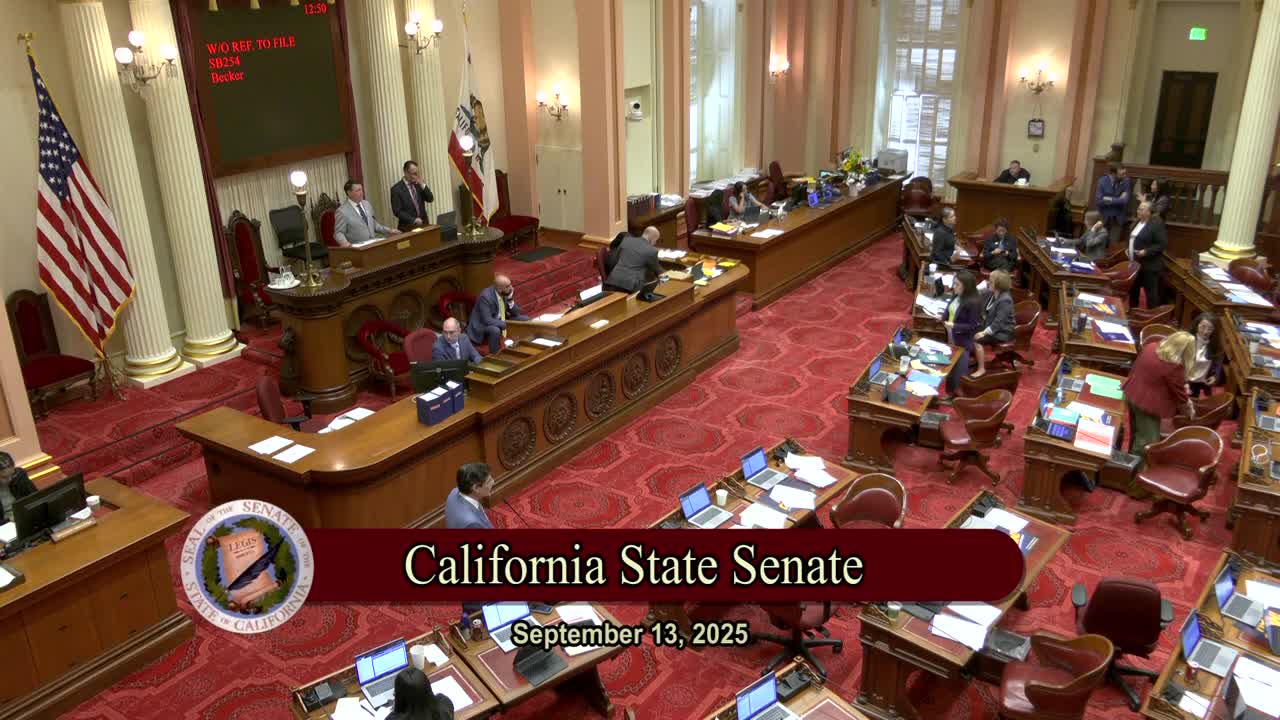 5MIN
Senate Floor
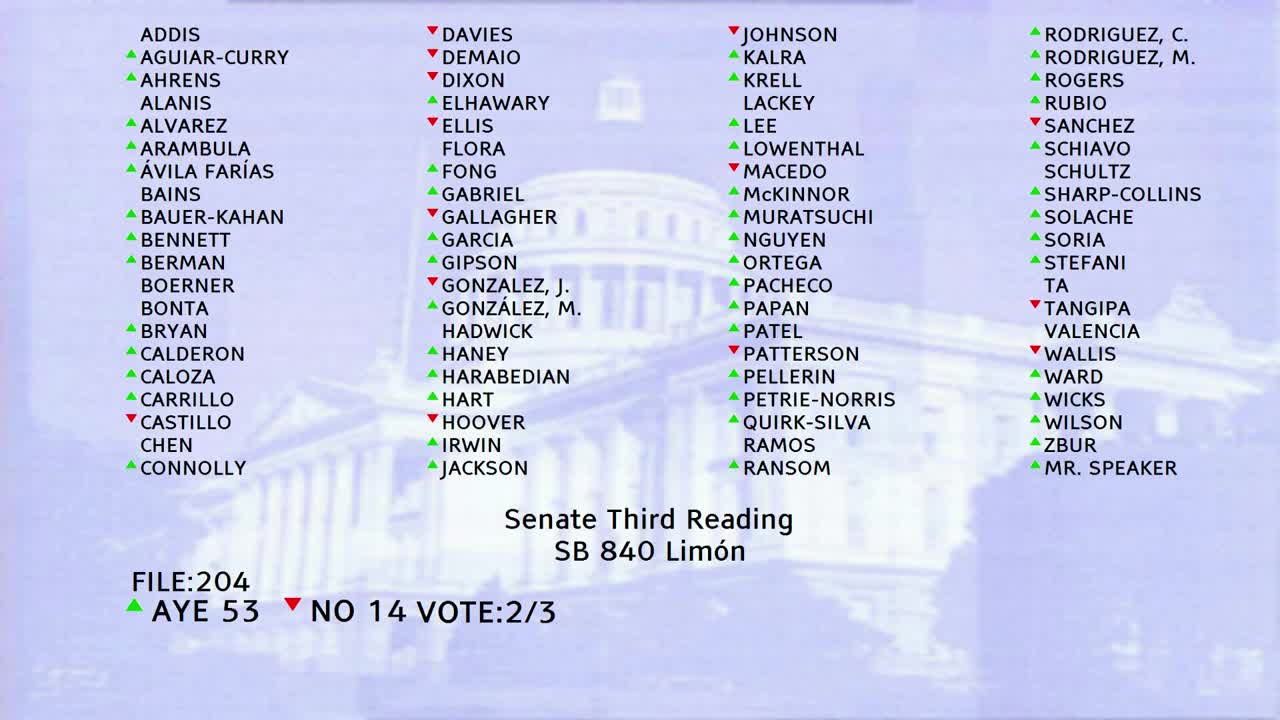 2MIN
Assembly Floor
 17MIN
Assembly Standing Committee on Natural Resources
 30MIN
Senate Standing Committee on Environmental Quality


Bill Co-Author(s):