SB 41: Pharmacy benefits.
- Session Year: 2025-2026
- House: Senate
- Latest Version Date: 2025-10-11
Current Status:
Passed
(2025-10-11: Chaptered by Secretary of State. Chapter 605, Statutes of 2025.)
Introduced
In Committee
Awaiting First Chamber Vote
Passed First Chamber
In Committee
Awaiting Second Chamber Vote
Passed Second Chamber
Enacted
Existing law, the Knox-Keene Health Care Service Plan Act of 1975, provides for the licensure and regulation of health care service plans by the Department of Managed Health Care, and makes a willful violation of the act a crime. Existing law provides for the regulation of health insurers by the Department of Insurance. Existing law requires a pharmacy benefit manager engaging in business with a health care service plan or health insurer to secure a license from the Department of Managed Health Care on or after January 1, 2027, or the date on which the department has established the licensure process, whichever is later.
This bill would prohibit a pharmacy benefit manager from, among other things, requiring use of only an affiliated pharmacy, as specified, and from imposing requirements, conditions, or exclusions that discriminate against a nonaffiliated pharmacy in connection with dispensing drugs. The bill would limit a pharmacy benefit managers income to that derived from a pharmacy benefit management fee for pharmacy benefit management services provided, and would require a pharmacy benefit manager to use a passthrough pricing model. The bill would authorize the Attorney General to recover specified civil penalties and receive equitable relief for violations of the pharmacy benefit manager licensing provisions. Because a violation of these provisions would be a crime, the bill would impose a state-mandated local program. The bill would also require a contract between a health insurer and a pharmacy benefit manager issued, amended, or renewed on or after January 1, 2027, or the date on which the Department of Managed Health Care has established the pharmacy benefit manager licensure process, whichever is later, to require the pharmacy benefit manager to be licensed and in good standing with the Department of Managed Health Care.
Existing law requires a health care service plan contract or health insurance policy that provides coverage for outpatient prescription drugs to cover medically necessary prescription drugs and subjects those policies to certain limitations on cost sharing and the placement of drugs on formularies. Existing law limits the maximum amount an enrollee or insured may be required to pay at the point of sale for a covered prescription drug to the lesser of the applicable cost-sharing amount or the retail price, and requires that payment apply to the applicable deductible.
This bill would prohibit a health care service plan contract or health insurance policy issued, amended, or renewed on or after January 1, 2026, that provides prescription drug coverage from calculating an enrollees or insureds cost sharing at an amount that exceeds the actual rate paid by the plan or insurer for the prescription drug, except as specified, and would require the contract or policy to include specified cost-sharing provisions. The bill would prohibit a contract between a pharmacy benefit manager and a health care service plan or health insurer that is executed, amended, or renewed on or after January 1, 2026, from authorizing spread pricing. Because a willful violation of the bills requirements relative to health care service plans would be a crime, the bill would impose a state-mandated local program.
This bill would declare that it does not narrow, abrogate, or otherwise alter the authority of the Attorney General to maintain or restore competitive, fair, and honest markets and prosecute violations of law, and would declare that the provisions of this bill are severable.
Existing constitutional provisions require that a statute that limits the right of access to the meetings of public bodies or the writings of public officials and agencies be adopted with findings demonstrating the interest protected by the limitation and the need for protecting that interest.
This bill would make legislative findings to that effect.
The California Constitution requires the state to reimburse local agencies and school districts for certain costs mandated by the state. Statutory provisions establish procedures for making that reimbursement.
This bill would provide that no reimbursement is required by this act for a specified reason.
Existing law, the Knox-Keene Health Care Service Plan Act of 1975, provides for the licensure and regulation of health care service plans by the Department of Managed Health Care, and makes a willful violation of the act a crime. Existing law provides for the regulation of health insurers by the Department of Insurance. Existing law requires a pharmacy benefit manager engaging in business with a health care service plan or health insurer to secure a license from the Department of Managed Health Care on or after January 1, 2027, or the date on which the department has established the licensure process, whichever is later.
This bill would prohibit a pharmacy benefit manager from, among other things, requiring use of only an affiliated pharmacy, as specified, and from imposing requirements, conditions, or exclusions that discriminate against a nonaffiliated pharmacy in connection with dispensing drugs. The bill would limit a pharmacy benefit managers income to that derived from a pharmacy benefit management fee for pharmacy benefit management services provided, and would require a pharmacy benefit manager to use a passthrough pricing model. The bill would authorize the Attorney General to recover specified civil penalties and receive equitable relief for violations of the pharmacy benefit manager licensing provisions. Because a violation of these provisions would be a crime, the bill would impose a state-mandated local program. The bill would also require a contract between a health insurer and a pharmacy benefit manager issued, amended, or renewed on or after January 1, 2027, or the date on which the Department of Managed Health Care has established the pharmacy benefit manager licensure process, whichever is later, to require the pharmacy benefit manager to be licensed and in good standing with the Department of Managed Health Care.
Existing law requires a health care service plan contract or health insurance policy that provides coverage for outpatient prescription drugs to cover medically necessary prescription drugs and subjects those policies to certain limitations on cost sharing and the placement of drugs on formularies. Existing law limits the maximum amount an enrollee or insured may be required to pay at the point of sale for a covered prescription drug to the lesser of the applicable cost-sharing amount or the retail price, and requires that payment apply to the applicable deductible.
This bill would prohibit a health care service plan contract or health insurance policy issued, amended, or renewed on or after January 1, 2026, that provides prescription drug coverage from calculating an enrollees or insureds cost sharing at an amount that exceeds the actual rate paid by the plan or insurer for the prescription drug, except as specified, and would require the contract or policy to include specified cost-sharing provisions. The bill would prohibit a contract between a pharmacy benefit manager and a health care service plan or health insurer that is executed, amended, or renewed on or after January 1, 2026, from authorizing spread pricing. Because a willful violation of the bills requirements relative to health care service plans would be a crime, the bill would impose a state-mandated local program.
This bill would declare that it does not narrow, abrogate, or otherwise alter the authority of the Attorney General to maintain or restore competitive, fair, and honest markets and prosecute violations of law, and would declare that the provisions of this bill are severable.
Existing constitutional provisions require that a statute that limits the right of access to the meetings of public bodies or the writings of public officials and agencies be adopted with findings demonstrating the interest protected by the limitation and the need for protecting that interest.
This bill would make legislative findings to that effect.
The California Constitution requires the state to reimburse local agencies and school districts for certain costs mandated by the state. Statutory provisions establish procedures for making that reimbursement.
This bill would provide that no reimbursement is required by this act for a specified reason.
Existing law, the Knox-Keene Health Care Service Plan Act of 1975, provides for the licensure and regulation of health care service plans by the Department of Managed Health Care, and makes a willful violation of the act a crime. Existing law provides for the regulation of health insurers by the Department of Insurance. Existing law requires a pharmacy benefit manager engaging in business with a health care service plan or health insurer to secure a license from the Department of Managed Health Care on or after January 1, 2027, or the date on which the department has established the licensure process, whichever is later.
This bill would prohibit a pharmacy benefit manager from, among other things, requiring use of only an affiliated pharmacy, as specified, and from imposing requirements, conditions, or exclusions that discriminate against a nonaffiliated pharmacy in connection with dispensing drugs. The bill would limit a pharmacy benefit managers income to that derived from a pharmacy benefit management fee for pharmacy benefit management services provided, and would require a pharmacy benefit manager to use a passthrough pricing model. The bill would authorize the Attorney General to recover specified civil penalties and receive equitable relief for violations of the pharmacy benefit manager licensing provisions. Because a violation of these provisions would be a crime, the bill would impose a state-mandated local program. The bill would also require a contract between a health insurer and a pharmacy benefit manager issued, amended, or renewed on or after January 1, 2027, or the date on which the Department of Managed Health Care has established the pharmacy benefit manager licensure process, whichever is later, to require the pharmacy benefit manager to be licensed and in good standing with the Department of Managed Health Care.
Existing law requires a health care service plan contract or health insurance policy that provides coverage for outpatient prescription drugs to cover medically necessary prescription drugs and subjects those policies to certain limitations on cost sharing and the placement of drugs on formularies. Existing law limits the maximum amount an enrollee or insured may be required to pay at the point of sale for a covered prescription drug to the lesser of the applicable cost-sharing amount or the retail price, and requires that payment apply to the applicable deductible.
This bill would prohibit a health care service plan contract or health insurance policy issued, amended, or renewed on or after January 1, 2026, that provides prescription drug coverage from calculating an enrollees or insureds cost sharing at an amount that exceeds the actual rate paid by the plan or insurer for the prescription drug, except as specified, and would require the contract or policy to include specified cost-sharing provisions. The bill would prohibit a contract between a pharmacy benefit manager and a health care service plan or health insurer that is executed, amended, or renewed on or after January 1, 2026, from authorizing spread pricing. Because a willful violation of the bills requirements relative to health care service plans would be a crime, the bill would impose a state-mandated local program.
This bill would declare that it does not narrow, abrogate, or otherwise alter the authority of the Attorney General to maintain or restore competitive, fair, and honest markets and prosecute violations of law, and would declare that the provisions of this bill are severable.
Existing constitutional provisions require that a statute that limits the right of access to the meetings of public bodies or the writings of public officials and agencies be adopted with findings demonstrating the interest protected by the limitation and the need for protecting that interest.
This bill would make legislative findings to that effect.
The California Constitution requires the state to reimburse local agencies and school districts for certain costs mandated by the state. Statutory provisions establish procedures for making that reimbursement.
This bill would provide that no reimbursement is required by this act for a specified reason.
Existing law, the Knox-Keene Health Care Service Plan Act of 1975, provides for the licensure and regulation of health care service plans by the Department of Managed Health Care, and makes a willful violation of the act a crime. Existing law provides for the regulation of health insurers by the Department of Insurance. Existing law requires a pharmacy benefit manager engaging in business with a health care service plan or health insurer to secure a license from the Department of Managed Health Care on or after January 1, 2027, or the date on which the department has established the licensure process, whichever is later.
This bill would prohibit a pharmacy benefit manager from, among other things, unreasonably obstructing or interfering with a patients right to timely access a prescription drug or device at a contract pharmacy, requiring use of only an affiliated pharmacy, as specified, and from imposing requirements, conditions, or exclusions that discriminate against a nonaffiliated pharmacy in connection with dispensing drugs. The bill would limit a pharmacy benefit managers income to that derived from a pharmacy benefit management fee for pharmacy benefit management services provided, and would require a pharmacy benefit manager to use a passthrough pricing model. The bill would authorize the Attorney General to recover specified civil penalties and receive equitable relief for violations of the pharmacy benefit manager licensing provisions. Because a violation of these provisions would be a crime, the bill would impose a state-mandated local program.
Existing law requires a health care service plan contract or health insurance policy that provides coverage for outpatient prescription drugs to cover medically necessary prescription drugs and subjects those policies to certain limitations on cost sharing and the placement of drugs on formularies. Existing law limits the maximum amount an enrollee or insured may be required to pay at the point of sale for a covered prescription drug to the lesser of the applicable cost-sharing amount or the retail price, and requires that payment apply to the applicable deductible. Existing law requires a plan or insurer that reports rate information to report specified prescription drug information to the relevant department no later than October 1 of each year.
This bill would prohibit a health care service plan contract or health insurance policy issued, amended, or renewed on or after January 1, 2026, that provides prescription drug coverage from calculating an enrollees or insureds cost sharing at an amount that exceeds the actual rate paid by the plan or insurer for the prescription drug, except as specified, and would require the contract or policy to include specified cost-sharing provisions. The bill would prohibit a contract between a pharmacy benefit manager and a health care service plan or health insurer that is executed, amended, or renewed on or after January 1, 2026, from authorizing spread pricing. The bill would require a plan or insurer to include additional information in its annual prescription drug data reporting, including the aggregate amount of rebates received by the pharmacy benefit manager for each drug. Because a willful violation of the bills requirements relative to health care service plans would be a crime, the bill would impose a state-mandated local program.
This bill would declare that it does not narrow, abrogate, or otherwise alter the authority of the Attorney General to maintain or restore competitive, fair, and honest markets and prosecute violations of law, and would declare that the provisions of this bill are severable.
Existing constitutional provisions require that a statute that limits the right of access to the meetings of public bodies or the writings of public officials and agencies be adopted with findings demonstrating the interest protected by the limitation and the need for protecting that interest.
This bill would make legislative findings to that effect.
The California Constitution requires the state to reimburse local agencies and school districts for certain costs mandated by the state. Statutory provisions establish procedures for making that reimbursement.
This bill would provide that no reimbursement is required by this act for a specified reason.
Existing law, the Knox-Keene Health Care Service Plan Act of 1975, provides for the licensure and regulation of health care service plans by the Department of Managed Health Care, and makes a willful violation of the act a crime. Existing law provides for the regulation of health insurers by the Department of Insurance. Existing law requires a pharmacy benefit manager engaging in business with a health care service plan or health insurer to secure a license from the Department of Managed Health Care on or after January 1, 2027, or the date on which the department has established the licensure process, whichever is later.
This bill would prohibit a pharmacy benefit manager from, among other things, unreasonably obstructing or interfering with a patients right to timely access a prescription drug or device at a contract pharmacy, requiring use of only an affiliated pharmacy, as specified, and from imposing requirements, conditions, or exclusions that discriminate against a nonaffiliated pharmacy in connection with dispensing drugs. The bill would limit a pharmacy benefit managers income to that derived from a pharmacy benefit management fee for pharmacy benefit management services provided, and would require a pharmacy benefit manager to use a passthrough pricing model. The bill would authorize the Attorney General to recover specified civil penalties and receive equitable relief for violations of the pharmacy benefit manager licensing provisions. Because a violation of these provisions would be a crime, the bill would impose a state-mandated local program.
Existing law requires a health care service plan contract or health insurance policy that provides coverage for outpatient prescription drugs to cover medically necessary prescription drugs and subjects those policies to certain limitations on cost sharing and the placement of drugs on formularies. Existing law limits the maximum amount an enrollee or insured may be required to pay at the point of sale for a covered prescription drug to the lesser of the applicable cost-sharing amount or the retail price, and requires that payment apply to the applicable deductible. Existing law requires a plan or insurer that reports rate information to report specified prescription drug information to the relevant department no later than October 1 of each year.
This bill would prohibit a health care service plan contract or health insurance policy issued, amended, or renewed on or after January 1, 2026, that provides prescription drug coverage from calculating an enrollees or insureds cost sharing at an amount that exceeds the actual rate paid by the plan or insurer for the prescription drug, except as specified, and would require the contract or policy to include specified cost-sharing provisions. The bill would prohibit a contract between a pharmacy benefit manager and a health care service plan or health insurer that is executed, amended, or renewed on or after January 1, 2026, from authorizing spread pricing. The bill would require a plan or insurer to include additional information in its annual prescription drug data reporting, including the aggregate amount of rebates received by the pharmacy benefit manager for each drug. Because a willful violation of the bills requirements relative to health care service plans would be a crime, the bill would impose a state-mandated local program.
This bill would declare that it does not narrow, abrogate, or otherwise alter the authority of the Attorney General to maintain or restore competitive, fair, and honest markets and prosecute violations of law, and would declare that the provisions of this bill are severable.
Existing constitutional provisions require that a statute that limits the right of access to the meetings of public bodies or the writings of public officials and agencies be adopted with findings demonstrating the interest protected by the limitation and the need for protecting that interest.
This bill would make legislative findings to that effect.
The California Constitution requires the state to reimburse local agencies and school districts for certain costs mandated by the state. Statutory provisions establish procedures for making that reimbursement.
This bill would provide that no reimbursement is required by this act for a specified reason.
Existing law, the Knox-Keene Health Care Service Plan Act of 1975, provides for the licensure and regulation of health care service plans by the Department of Managed Health Care, and makes a willful violation of the act a crime. Existing law requires a pharmacy benefit manager under contract with a health care service plan to, among other things, register with the Department of Managed Health Care. Existing law provides for the regulation of health insurers by the Department of Insurance. Existing law requires a pharmacy benefit manager engaging in business with a health care service plan or health insurer to secure a license from the Department of Managed Health Care on or after January 1, 2027, or the date on which the department has established the licensure process, whichever is later.
This bill would instead require a pharmacy benefit manager engaging in business with a health care service plan or health insurer to secure a license from the Department of Managed Health Care on or after January 1, 2027, or the date on which the department has established the licensure process, whichever is later. The bill would establish application requirements, and would require a pharmacy benefit manager applying for licensure to reimburse the Director of the Department of Managed Health Care for the actual cost of processing the application, including overhead, up to an amount not to exceed $25,000. The bill would require a pharmacy benefit manager to submit financial statements to the department at specified intervals, and would require those statements and other proprietary information to be kept confidential, as specified. The bill would authorize the director to suspend or revoke a pharmacy benefit manager license, but would provide that, once issued, a license remains in effect until revoked or suspended. The bill would authorize a pharmacy benefit manager whose license has been revoked, or suspended for more than one year to petition the director to reinstate the license, and would authorize the director to prescribe a fee, not to exceed $500, for the actual cost of processing the petition. The bill would create the Pharmacy Benefit Manager Fund in the State Treasury, into which fees, fines, penalties, and reimbursements collected from pharmacy benefit managers would be deposited, except fines and administrative penalties for specified acts or omissions would be deposited into the newly created Pharmacy Benefit Manager Administrative Fines and Penalties Fund in the State Treasury. The bill would additionally authorize the Attorney General to recover specified civil penalties and receive equitable relief for violations of these provisions. Because a violation of these provisions would be a crime, the bill would impose a state-mandated local program.Existing law requires the Department of Health Care Access and Information to implement and administer the Health Care Payments Data System to learn about and seek to improve public health, population health, social determinants of health, and the health care system.This bill would require a pharmacy benefit manager to provide specified data to the Department of Health Care Access and Information regarding drug pricing, fees, and other information, and would require the department to include data regarding pharmacy benefit managers operational and financial drug costs in its annual analysis. The bill would require a licensed health care service plan, excluding a specialized health care service plan, to pay an annual fee for the 202526 and 202627 fiscal years for the reasonably necessary expenses of the Department of Health Care Access and Information to fund the Health Care Payments Data Program. The bill would also require a licensed pharmacy benefit manager to pay amounts twice per year to fund the actual and reasonably necessary expenses of the department to implement pharmacy benefit manager licensing and the actual and reasonably necessary expenses of the Department of Health Care Access and Information pertaining to data reporting by pharmacy benefit managers. The bill would require the Health Care Payments Data Program advisory committee to include pharmacy benefit managers.This bill would prohibit a pharmacy benefit manager from, among other things, unreasonably obstructing or interfering with a patients right to timely access a prescription drug or device at a contract pharmacy, requiring use of only an affiliated pharmacy, as specified, and from imposing requirements, conditions, or exclusions that discriminate against a nonaffiliated pharmacy in connection with dispensing drugs. The bill would limit a pharmacy benefit managers income to that derived from a pharmacy benefit management fee for pharmacy benefit management services provided, and would require a pharmacy benefit manager to use a passthrough pricing model. The bill would authorize the Attorney General to recover specified civil penalties and receive equitable relief for violations of the pharmacy benefit manager licensing provisions. Because a violation of these provisions would be a crime, the bill would impose a state-mandated local program.
Existing law requires a health care service plan contract or health insurance policy that provides coverage for outpatient prescription drugs to cover medically necessary prescription drugs and subjects those policies to certain limitations on cost sharing and the placement of drugs on formularies. Existing law limits the maximum amount an enrollee or insured may be required to pay at the point of sale for a covered prescription drug to the lesser of the applicable cost-sharing amount or the retail price, and requires that payment apply to the applicable deductible. Existing law requires a plan or insurer that reports rate information to report specified prescription drug information to the relevant department no later than October 1 of each year.
This bill would prohibit a health care service plan contract or health insurance policy issued, amended, or renewed on or after January 1, 2026, that provides prescription drug coverage from calculating an enrollees or insureds cost sharing at an amount that exceeds the price paid by the pharmacy benefit manager or group purchasing organization actual rate paid by the plan or insurer for the prescription drug, except as specified, and would require the contract or policy to include specified cost-sharing provisions. The bill would prohibit a contract between a pharmacy benefit manager and a health care service plan or health insurer that is executed, amended, or renewed on or after January 1, 2026, from authorizing spread pricing. The bill would require a plan or insurer to include additional information in its annual prescription drug data reporting, including the aggregate amount of rebates received by the pharmacy benefit manager for each drug. Because a willful violation of the bills requirements relative to health care service plans would be a crime, the bill would impose a state-mandated local program.
This bill would declare that it does not narrow, abrogate, or otherwise alter the authority of the Attorney General to maintain or restore competitive, fair, and honest markets and prosecute violations of law, and would declare that the provisions of this bill are severable.
Existing constitutional provisions require that a statute that limits the right of access to the meetings of public bodies or the writings of public officials and agencies be adopted with findings demonstrating the interest protected by the limitation and the need for protecting that interest.
This bill would make legislative findings to that effect.
The California Constitution requires the state to reimburse local agencies and school districts for certain costs mandated by the state. Statutory provisions establish procedures for making that reimbursement.
This bill would provide that no reimbursement is required by this act for a specified reason.
Existing law, the Knox-Keene Health Care Service Plan Act of 1975, provides for the licensure and regulation of health care service plans by the Department of Managed Health Care, and makes a willful violation of the act a crime. Existing law requires a pharmacy benefit manager under contract with a health care service plan to, among other things, register with the Department of Managed Health Care. Existing law provides for the regulation of health insurers by the Department of Insurance.
This bill would additionally require a pharmacy benefit manager to apply for and obtain a license from the Department of Insurance to operate as a pharmacy benefit manager no later than January 1, 2027. The bill would establish application qualifications and requirements, and would require initial license and renewal fees to be collected into the newly created Pharmacy Benefit Manager Account in the Insurance Fund to be available to the department for use, upon appropriation by the Legislature, as specified, for costs related to licensing and regulating pharmacy benefit managers. The bill would impose specified duties on pharmacy benefit managers and requirements for pharmacy benefit manager services and pharmacy benefit manager contracts, including requiring a pharmacy benefit manager to file specified reports with the department, the contents of which are not to be disclosed to the public. The bill would require the department, at specified intervals, to submit reports to the Legislature based on the reports submitted by pharmacy benefit managers, and would require the department to post the reports on the departments internet website.This bill would make a violation of these provisions subject to specified civil penalties. The bill would create the Pharmacy Benefit Manager Fines and Penalties Account in the General Fund, into which fines and administrative penalties would be deposited.This bill would instead require a pharmacy benefit manager engaging in business with a health care service plan or health insurer to secure a license from the Department of Managed Health Care on or after January 1, 2027, or the date on which the department has established the licensure process, whichever is later. The bill would establish application requirements, and would require a pharmacy benefit manager applying for licensure to reimburse the Director of the Department of Managed Health Care for the actual cost of processing the application, including overhead, up to an amount not to exceed $25,000. The bill would require a pharmacy benefit manager to submit financial statements to the department at specified intervals, and would require those statements and other proprietary information to be kept confidential, as specified. The bill would authorize the director to suspend or revoke a pharmacy benefit manager license, but would provide that, once issued, a license remains in effect until revoked or suspended. The bill would authorize a pharmacy benefit manager whose license has been revoked, or suspended for more than one year to petition the director to reinstate the license, and would authorize the director to prescribe a fee, not to exceed $500, for the actual cost of processing the petition. The bill would create the Pharmacy Benefit Manager Fund in the State Treasury, into which fees, fines, penalties, and reimbursements collected from pharmacy benefit managers would be deposited, except fines and administrative penalties for specified acts or omissions would be deposited into the newly created Pharmacy Benefit Manager Administrative Fines and Penalties Fund in the State Treasury. The bill would additionally authorize the Attorney General to recover specified civil penalties and receive equitable relief for violations of these provisions. Because a violation of these provisions would be a crime, the bill would impose a state-mandated local program.
Existing law requires the Department of Health Care Access and Information to implement and administer the Health Care Payments Data System to learn about and seek to improve public health, population health, social determinants of health, and the health care system.
This bill would require a pharmacy benefit manager to provide specified data to the Department of Health Care Access and Information regarding drug pricing, fees, and other information, and would require the department to include data regarding pharmacy benefit managers operational and financial drug costs in its annual analysis. The bill would require a licensed health care service plan, excluding a specialized health care service plan, to pay an annual fee for the 202526 and 202627 fiscal years for the reasonably necessary expenses of the Department of Health Care Access and Information to fund the Health Care Payments Data Program. The bill would also require a licensed pharmacy benefit manager to pay amounts twice per year to fund the actual and reasonably necessary expenses of the department to implement pharmacy benefit manager licensing and the actual and reasonably necessary expenses of the Department of Health Care Access and Information pertaining to data reporting by pharmacy benefit managers. The bill would require the Health Care Payments Data Program advisory committee to include pharmacy benefit managers.
Existing law requires a health care service plan contract or health insurance policy that provides coverage for outpatient prescription drugs to cover medically necessary prescription drugs and subjects those policies to certain limitations on cost sharing and the placement of drugs on formularies. Existing law limits the maximum amount an enrollee or insured may be required to pay at the point of sale for a covered prescription drug to the lesser of the applicable cost-sharing amount or the retail price, and requires that payment apply to the applicable deductible. Existing law requires a plan or insurer that reports rate information to report specified prescription drug information to the relevant department no later than October 1 of each year.
This bill would prohibit a health care service plan contract or health insurance policy issued, amended, or renewed on or after January 1, 2026, that provides prescription drug coverage from calculating an enrollees or insureds cost sharing at an amount that exceeds the actual rate paid by the plan or insurer price paid by the pharmacy benefit manager or group purchasing organization for the prescription drug, and would require the contract or policy to include specified cost-sharing provisions. The bill would prohibit a contract between a pharmacy benefit manager and a health care service plan or health insurer that is executed, amended, or renewed on or after January 1, 2026, from authorizing spread pricing. The bill would require a plan or insurer to include additional information in its annual prescription drug data reporting, including the aggregate amount of rebates received by the pharmacy benefit manager for each drug. The bill would require a pharmacy benefit manager to report to a plan or insurer on or before July 1, 2027, and on or before each July 1 thereafter, specified information necessary for a plan or insurer to complete its annual reporting. Because a willful violation of the bills requirements relative to health care service plans would be a crime, the bill would impose a state-mandated local program.
This bill would declare that it does not narrow, abrogate, or otherwise alter the authority of the Attorney General to maintain or restore competitive, fair, and honest markets and prosecute violations of law, and would declare that the provisions of this bill are severable.
Existing constitutional provisions require that a statute that limits the right of access to the meetings of public bodies or the writings of public officials and agencies be adopted with findings demonstrating the interest protected by the limitation and the need for protecting that interest.
This bill would make legislative findings to that effect.
The California Constitution requires the state to reimburse local agencies and school districts for certain costs mandated by the state. Statutory provisions establish procedures for making that reimbursement.
This bill would provide that no reimbursement is required by this act for a specified reason.
Existing law, the Knox-Keene Health Care Service Plan Act of 1975, provides for the licensure and regulation of health care service plans by the Department of Managed Health Care, and makes a willful violation of the act a crime. Existing law requires a pharmacy benefit manager under contract with a health care service plan to, among other things, register with the Department of Managed Health Care. Existing law provides for the regulation of health insurers by the Department of Insurance.
This bill would additionally require a pharmacy benefit manager to apply for and obtain a license from the Department of Insurance to operate as a pharmacy benefit manager no later than January 1, 2027. The bill would establish application qualifications and requirements, and would require initial license and renewal fees to be collected into the newly created Pharmacy Benefit Manager Account in the Insurance Fund to be available to the department for use, upon appropriation by the Legislature, as specified, for costs related to licensing and regulating pharmacy benefit managers. The bill would impose specified duties on pharmacy benefit managers and requirements for pharmacy benefit manager services and pharmacy benefit manager contracts, including requiring a pharmacy benefit manager to file specified reports with the department, the contents of which are not to be disclosed to the public. The bill would require the department, at specified intervals, to submit reports to the Legislature based on the reports submitted by pharmacy benefit managers, and would require the department to post the reports on the departments internet website.
This bill would make a violation of these provisions subject to specified civil penalties. The bill would create the Pharmacy Benefit Manager Fines and Penalties Account in the General Fund, into which fines and administrative penalties would be deposited.
Existing law requires a health care service plan contract or health insurance policy that provides coverage for outpatient prescription drugs to cover medically necessary prescription drugs and subjects those policies to certain limitations on cost sharing and the placement of drugs on formularies. Existing law limits the maximum amount an enrollee or insured may be required to pay at the point of sale for a covered prescription drug to the lesser of the applicable cost-sharing amount or the retail price, and requires that payment apply to the applicable deductible. Existing law requires a plan or insurer that reports rate information to report specified prescription drug information to the relevant department no later than October 1 of each year.
This bill would prohibit a health care service plan contract or health insurance policy issued, amended, or renewed on or after January 1, 2026, that provides prescription drug coverage from calculating an enrollees or insureds cost sharing at an amount that exceeds the actual rate paid by the plan or insurer for the prescription drug, and would require the contract or policy to include specified cost-sharing provisions. The bill would prohibit a contract between a pharmacy benefit manager and a health care service plan or health insurer that is executed, amended, or renewed on or after January 1, 2026, from authorizing spread pricing. The bill would require a plan or insurer to include additional information in its annual prescription drug data reporting, including the aggregate amount of rebates received by the pharmacy benefit manager for each drug. The bill would require a pharmacy benefit manager to report to a plan or insurer on or before July 1, 2027, and on or before each July 1 thereafter, specified information necessary for a plan or insurer to complete its annual reporting. Because a willful violation of the bills requirements relative to health care service plans would be a crime, the bill would impose a state-mandated local program.
This bill would declare that it does not narrow, abrogate, or otherwise alter the authority of the Attorney General to maintain or restore competitive, fair, and honest markets and prosecute violations of law, and would declare that the provisions of this bill are severable.
Existing constitutional provisions require that a statute that limits the right of access to the meetings of public bodies or the writings of public officials and agencies be adopted with findings demonstrating the interest protected by the limitation and the need for protecting that interest.
This bill would make legislative findings to that effect.
The California Constitution requires the state to reimburse local agencies and school districts for certain costs mandated by the state. Statutory provisions establish procedures for making that reimbursement.
This bill would provide that no reimbursement is required by this act for a specified reason.
Existing constitutional provisions require that a statute that limits the right of access to the meetings of public bodies or the writings of public officials and agencies be adopted with findings demonstrating the interest protected by the limitation and the need for protecting that interest.This bill would make legislative findings to that effect.Existing law, the Knox-Keene Health Care Service Plan Act of 1975, provides for the licensure and regulation of health care service plans by the Department of Managed Health Care, and makes a willful violation of the act a crime. Existing law requires a pharmacy benefit manager under contract with a health care service plan to, among other things, register with the Department of Managed Health Care. Existing law provides for the regulation of health insurers by the Department of Insurance.
This bill would additionally require a pharmacy benefit manager to apply for and obtain a license from the Department of Insurance to operate as a pharmacy benefit manager no later than January 1, 2027. The bill would establish application qualifications and requirements, and would require initial license and renewal fees to be collected into the newly created Pharmacy Benefit Manager Account in the Insurance Fund to be available to the department for use, upon appropriation by the Legislature, as specified, for costs related to licensing and regulating pharmacy benefit managers. The bill would impose specified duties on pharmacy benefit managers and requirements for pharmacy benefit manager services and pharmacy benefit manager contracts, including requiring a pharmacy benefit manager to file specified reports with the department, the contents of which are not to be disclosed to the public. The bill would require the department, at specified intervals, to submit reports to the Legislature based on the reports submitted by pharmacy benefit managers, and would require the department to post the reports on the departments internet website.
This bill would make a violation of these provisions subject to specified civil penalties. The bill would create the Pharmacy Benefit Manager Fines and Penalties Account in the General Fund, into which fines and administrative penalties would be deposited.
Existing law requires a health care service plan contract or health insurance policy that provides coverage for outpatient prescription drugs to cover medically necessary prescription drugs and subjects those policies to certain limitations on cost sharing and the placement of drugs on formularies. Existing law limits the maximum amount an enrollee or insured may be required to pay at the point of sale for a covered prescription drug to the lesser of the applicable cost-sharing amount or the retail price, and requires that payment apply to the applicable deductible. Existing law requires a plan or insurer that reports rate information to report specified prescription drug information to the relevant department no later than October 1 of each year.
This bill would prohibit a health care service plan contract or health insurance policy issued, amended, or renewed on or after January 1, 2026, that provides prescription drug coverage from calculating an enrollees or insureds cost sharing at an amount that exceeds the actual rate paid for the prescription drug, and would require the contract or policy to include specified cost-sharing provisions. The bill would prohibit a contract between a pharmacy benefit manager and a health care service plan or health insurer that is executed, amended, or renewed on or after January 1, 2026, from authorizing spread pricing. The bill would require a plan or insurer to include additional information in its annual prescription drug data reporting, including the aggregate amount of rebates received by the pharmacy benefit manager for each drug. Because a willful violation of the bills requirements relative to health care service plans would be a crime, the bill would impose a state-mandated local program.
This bill would declare that it does not narrow, abrogate, or otherwise alter the authority of the Attorney General to maintain or restore competitive, fair, and honest markets and prosecute violations of law, and would declare that the provisions of this bill are severable.
The California Constitution requires the state to reimburse local agencies and school districts for certain costs mandated by the state. Statutory provisions establish procedures for making that reimbursement.
This bill would provide that no reimbursement is required by this act for a specified reason.
Existing constitutional provisions require that a statute that limits the right of access to the meetings of public bodies or the writings of public officials and agencies be adopted with findings demonstrating the interest protected by the limitation and the need for protecting that interest.
This bill would make legislative findings to that effect.
Existing law, the Knox-Keene Health Care Service Plan Act of 1975, provides for the licensure and regulation of health care service plans by the Department of Managed Health Care, and makes a willful violation of the act a crime. Existing law requires a pharmacy benefit manager under contract with a health care service plan to, among other things, register with the Department of Managed Health Care. Existing law provides for the regulation of health insurers by the Department of Insurance.
This bill would additionally require a pharmacy benefit manager to apply for and obtain a license from the Department of Insurance to operate as a pharmacy benefit manager no later than January 1, 2027. The bill would establish application qualifications and requirements, and would require initial license and renewal fees to be collected into the newly created Pharmacy Benefit Manager Account in the Insurance Fund to be available to the department for use, upon appropriation by the Legislature, as specified, for costs related to licensing and regulating pharmacy benefit managers. The bill would impose specified duties on pharmacy benefit managers and requirements for pharmacy benefit manager services and pharmacy benefit manager contracts, including requiring a pharmacy benefit manager to file specified reports with the department, the contents of which are not to be disclosed to the public. The bill would require the department, at specified intervals, to submit reports to the Legislature based on the reports submitted by pharmacy benefit managers, and would require the department to post the reports on the departments internet website.
This bill would make a violation of these provisions subject to specified civil penalties. The bill would create the Pharmacy Benefit Manager Fines and Penalties Account in the General Fund, into which fines and administrative penalties would be deposited.
Existing law requires a health care service plan contract or health insurance policy that provides coverage for outpatient prescription drugs to cover medically necessary prescription drugs and subjects those policies to certain limitations on cost sharing and the placement of drugs on formularies. Existing law limits the maximum amount an enrollee or insured may be required to pay at the point of sale for a covered prescription drug to the lesser of the applicable cost-sharing amount or the retail price, and requires that payment apply to the applicable deductible. Existing law requires a plan or insurer that reports rate information to report specified prescription drug information to the relevant department no later than October 1 of each year.
This bill would prohibit a health care service plan contract or health insurance policy issued, amended, or renewed on or after January 1, 2026, that provides prescription drug coverage from calculating an enrollees or insureds cost sharing at an amount that exceeds the actual rate paid for the prescription drug, and would require the contract or policy to include specified cost-sharing provisions. The bill would prohibit a contract between a pharmacy benefit manager and a health care service plan or health insurer that is executed, amended, or renewed on or after January 1, 2026, from authorizing spread pricing. The bill would require a plan or insurer to include additional information in its annual prescription drug data reporting, including the aggregate amount of rebates received by the pharmacy benefit manager for each drug. Because a willful violation of the bills requirements relative to health care service plans would be a crime, the bill would impose a state-mandated local program.
This bill would declare that it does not narrow, abrogate, or otherwise alter the authority of the Attorney General to maintain or restore competitive, fair, and honest markets and prosecute violations of law, and would declare that the provisions of this bill are severable.
The California Constitution requires the state to reimburse local agencies and school districts for certain costs mandated by the state. Statutory provisions establish procedures for making that reimbursement.
This bill would provide that no reimbursement is required by this act for a specified reason.
Existing constitutional provisions require that a statute that limits the right of access to the meetings of public bodies or the writings of public officials and agencies be adopted with findings demonstrating the interest protected by the limitation and the need for protecting that interest.
This bill would make legislative findings to that effect.
(a)For purposes of this section, the following definitions shall apply:
(1)Labeler means a person or entity that receives prescription drugs from a manufacturer or wholesaler and repackages those drugs for later retail sale and who has a labeler code from the federal Food and Drug Administration under Part 207 of Title 21 of the Code of Federal Regulations.
(2)Proprietary information means information on pricing, costs, revenue, taxes, market share, negotiating strategies, customers, and personnel that is held by a pharmacy benefit manager and used for its business purposes.
(3)Purchaser means a health benefit plan sponsor or other third-party payer with whom a pharmacy benefit manager contracts to provide the administration and management of prescription drug benefits, except for a health care service plan licensed pursuant to Chapter 2.2 (commencing with Section 1340) of Division 2 of the Health and Safety Code.
(b)This section shall apply to pharmacy benefit manager contracts that are entered into, amended, or renewed on or after January 1, 2019.
(c)(1)A pharmacy benefit manager shall exercise good faith and fair dealing.
(2)A pharmacy benefit manager has a fiduciary duty to a self-insured employer plan that includes a duty to be fair and truthful toward the client, to act in the clients best interests, to avoid conflicts of interest, and to perform its duties with care, skill, prudence, and diligence.
(d)A pharmacy benefit manager shall notify a purchaser in writing of any activity, policy, or practice of the pharmacy benefit manager that directly or indirectly presents a conflict of interest that interferes with the discharge of the pharmacy benefit managers duty to the purchaser to exercise good faith and fair dealing pursuant to subdivision (c).
(e)The pharmacy benefit manager shall, on a quarterly basis, disclose, upon the request of the purchaser, the following information with respect to prescription product benefits specific to the purchaser:
(1)The aggregate wholesale acquisition costs from a pharmaceutical manufacturer or labeler for each therapeutic category of drugs containing three or more drugs, as outlined in the states essential health benefits benchmark plan pursuant to Section 1367.005 of the Health and Safety Code.
(2)The aggregate amount of rebates received by the pharmacy benefit manager by therapeutic category of drugs containing three or more drugs, as outlined in the states essential health benefits benchmark plan pursuant to Section 1367.005 of the Health and Safety Code. The aggregate amount of rebates shall include any utilization discounts the pharmacy benefit manager receives from a pharmaceutical manufacturer or labeler.
(3)Any administrative fees received from the pharmaceutical manufacturer or labeler.
(4)Whether the pharmacy benefit manager has a contract, agreement, or other arrangement with a pharmaceutical manufacturer to exclusively dispense or provide a drug to a purchasers employees, insureds, or enrollees, and the application of all consideration or economic benefits collected or received pursuant to that arrangement.
(5)Prescription drug utilization information for the purchasers enrollees or insureds that is not specific to any individual enrollee or insured.
(6)The aggregate of payments, or the equivalent economic benefit, made by the pharmacy benefit manager to pharmacies owned or controlled by the pharmacy benefit manager.
(7)The aggregate of payments made by the pharmacy benefit manager to pharmacies not owned or collected by the pharmacy benefit manager.
(8)The aggregate amount of the fees imposed on, or collected from, network pharmacies or other assessments against network pharmacies, and the application of those amounts collected pursuant to the contract with the purchaser.
(f)The information disclosed pursuant to subdivision (e) shall apply to all retail, mail order, specialty, and compounded prescription products.
(g)Except for utilization information specified in paragraph (5) of subdivision (e), a pharmacy benefit manager is not required to make the disclosures required by subdivision (e) unless and until the purchaser agrees, in writing, to maintain as confidential any proprietary information.
(h)A pharmacy benefit manager shall not impose a penalty or offer an inducement to a purchaser for the purpose of deterring the purchaser from requesting the information set forth in subdivision (e).
(i)A pharmacy benefit manager shall disclose to a pharmacy network provider or its contracting agent any material change to a contract provision that affects the terms of reimbursement, the process for verifying benefits and eligibility, dispute resolution, procedures for verifying drugs included on the formulary, and contract termination at least 30 days before the date of the change to the provision.
(j)A pharmacy benefit manager shall not notify an individual receiving benefits through the pharmacy benefit manager that a pharmacy has been terminated from the pharmacy benefit managers network until the notification of termination has been provided to that pharmacy pursuant to subdivision (i).
(k)A pharmacy benefit manager shall not include in a contract with a pharmacy network provider or its contracting agent a provision that prohibits the provider from informing a patient of a less costly alternative to a prescribed medication.
(l)This section shall not apply to the following:
(1)A health care service plan or health insurer, if the health care service plan or health insurer offers, provides, or administers pharmacy benefit management services and if those services are offered, provided, or administered only to enrollees, subscribers, policyholders, or insureds who are also covered by health benefits offered, provided, or administered by that health care service plan or health insurer.
(2)An affiliate, subsidiary, related entity, or contracted medical group of a health care service plan or health insurer that would otherwise qualify as a pharmacy benefit manager, but offers, provides, or administers services only to enrollees, subscribers, policyholders, or insureds who are also covered by health benefits offered, provided, or administered by the health care service plan or health insurer.
(3)A contract authorized by Section 4600.2 of the Labor Code.
(m)The provisions of this section are severable. If any provision of this section or its application is held invalid, that invalidity shall not affect other provisions or applications that can be given effect without the invalid provision or application.
SEC. 2.Section 1367.2075 is added to the Health and Safety Code, immediately following Section 1367.207, to read:1367.2075.(a)A health care service plan contract issued, amended, or renewed on or after January 1, 2026, that provides prescription drug coverage shall not calculate an enrollees cost sharing at an amount that exceeds the actual rate paid by the plan for the prescription drug, and shall include cost-sharing provisions consistent with Section 4079 of the Business and Professions Code. Cost sharing shall include deductibles and copayments.
(b)To the extent that a health care service plan contract with a pharmacy benefit manager issued, amended, or renewed on or after January 1, 2026, includes disclosure on the net price paid by the pharmacy benefit manager or group purchasing organization, then an enrollees cost share shall not be calculated at an amount that exceeds that net price paid.
(c)(1)Commencing January 1, 2026, if a preexisting contract between a pharmacy benefit manager licensed pursuant to Article 6.1 (commencing with Section 1385.001) and a health care service plan authorizes spread pricing, as that term is defined by Section 1385.001, any subsequent amendment or renewal of that contract shall not authorize spread pricing.
(2)A contract that is executed on or after January 1, 2026, between a pharmacy benefit manager licensed pursuant to Article 6.1 (commencing with Section 1385.001) and a health care service plan shall not authorize spread pricing, as that term is defined by Section 1385.001.
SEC. 3.Section 1385.001 of the Health and Safety Code, as added by Section 11 of Chapter 21 of the Statutes of 2025, is amended to read:1385.001.For the purposes of this article:
(a)Affiliated entity means any of the following:
(1)An applicable group purchasing organization, drug manufacturer, distributor, wholesaler, rebate aggregator or other purchasing entity designed to aggregate rebates, or associated third party.
(2)A subsidiary, parent, affiliate, or subcontractor of a health care service plan or health insurer, an entity that provides pharmacy benefit management services on behalf of a health care service plan or health insurer, or an entity described in paragraph (1).
(3)Any other entity as designated by the department.
(b)Affiliated pharmacy means a contract pharmacy that directly, or indirectly through one or more intermediaries, controls, is controlled by, or is under common control with a pharmacy benefit manager.
(c)Claim means a request for payment for administering, filling, or refilling a drug or for providing a pharmacy service or a medical supply or device to an enrollee or insured.
(d)Contract pharmacy means a pharmacy that contracts directly or through a pharmacy services administration organization with a pharmacy benefit manager.
(e)Department means the Department of Managed Health Care.
(f)Director means the Director of the Department of Managed Health Care.
(g)Drug has the same meaning as defined in Section 4025 of the Business and Professions Code.
(h)Group purchasing organization means a third party or affiliated person, including an out-of-state or international organization, employed by, contracted with, affiliated with, under common ownership or control by, or otherwise utilized by an entity that provides pharmacy benefit management services or by a pharmacy benefit manager to negotiate, obtain, or otherwise procure rebates from drug manufacturers or wholesalers.
(i)Health insurer means an entity licensed to provide health insurance, as defined in Section 106 of the Insurance Code.
(j)Manufacturer has the same meaning as defined in Section 4033 of the Business and Professions Code.
(k)Nonaffiliated pharmacy means a contract pharmacy that directly, or indirectly through one or more intermediaries, does not control, is not controlled by, and is not under common control with a pharmacy benefit manager.
(l)Passthrough pricing model means a payment model used by a pharmacy benefit manager in which the payments made by the health care service plan or health insurer client to the pharmacy benefit manager for the covered outpatient drugs are both of the following:
(1)Equivalent to the payments the pharmacy benefit manager makes to a pharmacy or provider for those drugs, including any contracted professional dispensing fee between the pharmacy benefit manager and its network of pharmacies. That dispensing fee would be paid if the health care service plan or health insurer was making the payments directly.
(2)Passed through in their entirety by the health care service plan or health insurer client or by the pharmacy benefit manager to the pharmacy or provider that dispenses the drugs, and the payments are made in a manner that is not offset by any reconciliation.
(m)Payer means a health care service plan licensed by the department or a health insurer licensed by the Department of Insurance.
(n)Person has the same meaning as defined in Section 4035 of the Business and Professions Code.
(o)Personal representative means an individual who has authority to make a health care decision on behalf of another individual pursuant to Division 4.7 (commencing with Section 4600) of the Probate Code.
(p)Pharmacist has the same meaning as defined in Section 4036 of the Business and Professions Code.
(q)Pharmacist services means products, goods, and services, or any combination of products, goods, and services, provided as a part of the practice of pharmacy.
(r)Pharmacy has the same meaning as defined in Section 4037 of the Business and Professions Code.
(s)Pharmacy benefit management fee means a flat, defined, dollar-amount fee that covers the cost of providing one or more pharmacy benefit management services and that does not exceed the bona fide value of the itemized service or services actually performed by the pharmacy benefit manager on behalf of the payer, that the payer would otherwise perform or contract for in the absence of the service arrangement, whether or not the payer takes title to the prescription drug. The value of the service or services shall be based on the value to the health insurer or health care service plan. A pharmacy benefit management fee may not directly or indirectly be based on or contingent upon any of the following:
(1)The price of prescription drugs, including direct or indirect rebates, discounts, wholesale acquisition cost, drug benchmark price, such as average wholesale price, or other price concessions.
(2)The amount of savings, rebates, or other fees charged, realized, or collected by, or generated based on the activity of, the pharmacy benefit manager or its affiliated entities, that is retained by the pharmacy benefit manager or its affiliated entities.
(3)The amount of premiums, deductibles, or other cost sharing or fees charged, realized, or collected by the pharmacy benefit manager or its affiliated entities from patients or other persons on behalf of a patient.
(4)Coverage or formulary placement decisions or the volume or value of any referrals or business generated between the parties to the arrangement.
(5)Any other amounts or methodologies as defined by the director.
(t)(1)Pharmacy benefit manager means a person, business, or other entity that, either directly or through an intermediary, affiliate, or both, acts as a price negotiator or group purchaser on behalf of a payer, or manages the prescription drug coverage provided by the payer, including, but not limited to, the processing and payment of claims for prescription drugs, the performance of drug utilization review, the processing of drug prior authorization requests, the adjudication of appeals or grievances related to prescription drug coverage, contracting with network pharmacies, or controlling the cost of covered prescription drugs.
(2)Pharmacy benefit manager includes an entity performing the duties specified in paragraph (1) that is under common ownership with, or control by, a payer.
(3)Pharmacy benefit manager does not include any of the following:
(A)An entity providing services pursuant to a contract authorized by Section 4600.2 of the Labor Code.
(B)A fully self-insured employee welfare benefit plan under the Employee Retirement Income Security Act of 1974 (Public Law 93-406), as amended (29 U.S.C. Sec. 1001 et seq.).
(C)A health care service plan licensed pursuant to this chapter or an individual employee of a health care service plan.
(D)A health insurer licensed to provide health insurance, as defined in Section 106 of the Insurance Code, or an individual employee of a health insurer.
(E)A city or county that develops or manages drug coverage programs for uninsured patients for which no reimbursement is received.
(F)An entity exclusively providing services to patients covered by Part 418 (commencing with Section 418.1) of Subchapter B of Chapter IV of Title 42 of the Code of Federal Regulations.
(G)The State Department of Health Care Services, including any contracts between the State Department of Health Care Services and another entity related to the negotiation and collection of drug or medical supply rebates.
(u)Plan participant means an individual who is enrolled in health care coverage provided by a payer.
(v)(1)Rebates means compensation or remuneration of any kind received or recovered from a pharmaceutical manufacturer by a pharmacy benefit manager, affiliated entity, or subcontractor, including a group purchasing organization, directly or indirectly, regardless of how the compensation or remuneration is categorized, including incentive rebates, credits, market share incentives, promotional allowances, commissions, educational grants, market share of utilization, drug pullthrough programs, implementation allowances, clinical detailing, rebate submission fees, and administrative or management fees.
(2)Rebates also includes fees, including manufacturer administrative fees or corporate fees, that a pharmacy benefit manager, affiliated entity, or subcontractor, including a group purchasing organization, receives from a pharmaceutical manufacturer.
(3)Rebates does not include pharmacy purchase discounts and related service fees a pharmacy benefit manager, affiliated entity, or subcontractor receives from pharmaceutical companies that are attributable to or based on the purchase of product to stock, or the dispensing of products from a pharmacy benefit managers affiliated mail order and specialty drug pharmacies. Rebates does not include a pharmacy benefit management fee.
(w)Spread pricing means the model of prescription drug pricing in which a pharmacy benefit manager charges a health care service plan or health insurer a contracted price for prescription drugs, and the contracted price for the prescription drugs differs from the amount the pharmacy benefit manager directly or indirectly pays the pharmacist or pharmacy.
(x)Third party means a person that is not a plan participant or pharmacy benefit manager.
SEC. 4.Section 1385.0011 of the Health and Safety Code is amended to read:1385.0011.(a)A pharmacy benefit manager shall submit to the department financial statements prepared as of the close of its fiscal year within 120 days after the close of the fiscal year. These financial statements shall be accompanied by a report, certificate, or opinion of an independent certified public accountant or independent public accountant. An audit shall be conducted in accordance with generally accepted auditing standards and the rules and regulations of the director.
(b)Within 45 days after the close of each quarter of its fiscal year, a pharmacy benefit manager shall submit its quarterly unaudited financial statement, prepared in accordance with generally accepted accounting principles and consisting of at least a balance sheet, statement of income, statement of cash flows, statement of changes in equity, and notes to financial statements as of the date and for the period specified by the director. The director may require the submission of these reports on a monthly or other periodic basis.
(c)A pharmacy benefit manager shall make special reports to the director as the director may require.
(d)For good cause and upon written request, the director may extend the time for compliance with subdivisions (a) to (c), inclusive.
(e)If the report, certificate, or opinion of the independent accountant required pursuant to subdivision (a) is qualified, the director may require the pharmacy benefit manager to take action that the director deems appropriate to permit an independent accountant to remove the qualification from the report, certificate, or opinion.
(f)The director may reject a financial statement, report, certificate, or opinion filed pursuant to this section by notifying the pharmacy benefit manager of the rejection and its cause. Within 30 days after the receipt of the notice, the pharmacy benefit manager shall correct the deficiency, and the failure so to do shall be deemed a violation of this chapter. The director shall retain a copy of all rejected filings.
(g)The director may make rules and regulations specifying the form and content of the reports and financial statements required by this section, and may require that these reports and financial statements be verified by the pharmacy benefit manager in a manner as the director may prescribe. Revenue reported by pharmacy benefit managers shall include revenue from manufacturers, payers, and other sources, including from affiliates. Types of revenue reported shall be inclusive of rebates of any type or form. Expenses reported by pharmacy benefit managers shall include payments to pharmacies, claims processing, special programs, administrative costs, and all other expenses. The director may require the reporting of any additional revenue, expenses, or related information that the department requires to assist in determining the overall impact of pharmacy benefit manager business practices on the cost of drugs in this state.
(h)To the extent applicable, the department may direct licensure applicants to use the forms and processes available to and required of health care service plans and other entities reporting financial data created pursuant to this chapter and their implementing regulations, including Section 1384 and the forms and exhibits described in regulations, as amended, implementing that section.
(i)Financial and other records produced, disclosed, or otherwise made available by an organization pursuant to this section shall be received and maintained on a confidential basis and protected from public disclosure as provided in Section 1385.0021.
SEC. 5.Section 1385.0021 of the Health and Safety Code is amended to read:1385.0021.(a)Notwithstanding the California Public Records Act (Division 10 (commencing with Section 7920.000) of Title 1 of the Government Code), the director is not required to disclose any of the following records, or any portion thereof, that are filed by a pharmacy benefit manager with the director in compliance with the requirements of this article, that have not previously been made public:
(1)Corporate financial records, including trade secrets, the information has been confidentially maintained by the business entity, and the release of the information would be damaging or prejudicial to the business concern.
(2)Any application, including an application for an interpretive opinion, including all records that are submitted with the application that are necessary for purposes of the application.
(3)Any record the disclosure of which is exempt under express provisions of the California Public Records Act, the disclosure of which is exempt or prohibited pursuant to federal or state law, including, but not limited to, provisions of the Evidence Code relating to privilege, or that, on the facts of the particular case, the public interest served by not disclosing the record clearly outweighs the public interest served by disclosure of the record.
(b)Notwithstanding any request for confidentiality of information submitted to and processed by the department consistent with regulations adopted and amended pursuant to this chapter relating to the request for confidentiality of information, the disclosure of records, or any portion thereof, is governed by this section.
(c)Notwithstanding any other provision of this article, the director shall disclose information or records submitted to the director in compliance with this article to the Attorney General, upon request, in order to investigate, prosecute, or defend any legal claim or cause or action related to this article, or to use the reports in any court or proceeding related to this article.
SEC. 6.Section 1385.0022 of the Health and Safety Code is amended to read:1385.0022.A pharmacy benefit manager has a fiduciary duty to its payer client that includes a duty to be fair and truthful toward the payer, to act in the payers best interests, to avoid conflicts of interest, and to perform its duties with care, skill, prudence, and diligence. This section does not limit a payers obligations under applicable law with respect to the administration of health care coverage for plan participants.
SEC. 7.Section 1385.0023 of the Health and Safety Code is amended to read:1385.0023.(a)The department may conduct periodic routine and nonroutine surveys of a pharmacy benefit manager. These surveys shall be conducted in accordance with Section 1380, as applicable.
(b)The department may conduct periodic routine and nonroutine examinations of the fiscal and administrative affairs of a pharmacy benefit manager. These examinations shall be conducted in accordance with Section 1382, as applicable.
(c)A complaint made by an enrollee that includes potential violations by a pharmacy benefit manager of the terms of this article shall be considered by the department to be a complaint against the health care service plan. A complaint made by an insured that includes potential violations by a pharmacy benefit manager of the terms of this article may be considered by the Department of Insurance to be a complaint against the insurer.
SEC. 8.Section 1385.0026 is added to the Health and Safety Code, to read:1385.0026.(a)A pharmacy benefit manager shall not impose any requirements, conditions, or exclusions that discriminate against a nonaffiliated pharmacy in connection with dispensing drugs.
(b)Discrimination prohibited pursuant to subdivision (a) includes all of the following:
(1)Terms or conditions applied to nonaffiliated pharmacies based on their status as a nonaffiliated pharmacy.
(2)Refusing to contract with or terminating a contract with a nonaffiliated pharmacy on the basis that the pharmacy is a nonaffiliated pharmacy or for reasons other than those that apply equally to affiliated pharmacies.
(3)Retaliation against a nonaffiliated pharmacy based on its exercise of any right or remedy under this article.
(4)Engaging in an unlawful action against a covered entity, including a violation of Section 127471.
(5)Reimbursing a nonaffiliated pharmacy less for a pharmacist service than the pharmacy benefit manager would reimburse an affiliated pharmacy for the same pharmacist service.
(c)This article does not preclude a pharmacy benefit manager or a purchaser of pharmacy benefit manager services from establishing a network of contracting pharmacies.
SEC. 9.Section 1385.0027 is added to the Health and Safety Code, to read:1385.0027.A pharmacy benefit manager shall not do any of the following:
(a)Require a plan participant to use only an affiliated pharmacy if there are nonaffiliated pharmacies in the network.
(b)Financially induce a plan participant to transfer a prescription only to an affiliated pharmacy if there are nonaffiliated pharmacies in the network.
(c)Require a nonaffiliated pharmacy to transfer a prescription to an affiliated pharmacy if there are nonaffiliated pharmacies in the network. This section does not prevent a purchaser or pharmacy benefit manager from offering to plan participants financial incentives to use a particular pharmacy, such as lower copays, coinsurance, or any other cost sharing for a prescription when the prescription is dispensed.
(d)Unreasonably restrict a plan participant from using a particular contracted pharmacy for the purpose of receiving pharmacist services covered by the plan participants contract or policy.
(e)Communicate to or mislead a plan participant, in any manner, that the plan participant is required to have a prescription dispensed at, or pharmacy services provided by, a particular affiliated pharmacy or pharmacies if there are other nonaffiliated pharmacies that have the ability to dispense the medication or provide the services and are also in network.
(f)Deny a nonaffiliated contract pharmacy the opportunity to participate in a pharmacy benefit manager network as preferred participation status if the pharmacy is willing to accept the same terms and conditions that the pharmacy benefit manager has established for affiliated pharmacies as a condition of preferred network participation status.
SEC. 10.Section 1385.0028 is added to the Health and Safety Code, to read:1385.0028.(a)A contract issued, amended, or renewed on or after January 1, 2026, between a nonaffiliated pharmacy and a pharmacy benefit manager shall not prohibit the pharmacy from offering either of the following as an ancillary service of the pharmacy:
(1)The delivery of a prescription drug by mail or common carrier to a patient or personal representative on request of the patient or personal representative if the request is made before the drug is delivered.
(2)The delivery of a prescription to a patient or personal representative by an employee or contractor of the pharmacy.
(b)Except as otherwise provided in a contract described in subdivision (a), the pharmacy shall not charge a pharmacy benefit manager for the delivery service described in subdivision (a). This section does not prohibit the use of remote pharmacies, secure locker systems, or other types of pickup stations if those services are otherwise permitted by law.
(c)Contracts entered into pursuant to this section shall be open for inspection by the department.
SEC. 11.Section 1385.0029 is added to the Health and Safety Code, to read:1385.0029.(a)A pharmacy benefit manager shall not derive income from pharmacy benefit management services provided to a payer in this state except for income derived from a pharmacy benefit management fee for pharmacy benefit management services provided. The amount of any pharmacy benefit management fee shall be set forth in the agreement between the pharmacy benefit manager and the payer. The pharmacy benefit manager shall disclose the amount and types of the pharmacy benefit management fees to the payer.
(b)A pharmacy benefit manager shall use a passthrough pricing model.
(c)A pharmacy benefit manager, group purchasing organization, and affiliated entity shall direct 100 percent of all prescription drug manufacturer rebates received to the payer or program, if the contractual arrangement delegates the negotiation of rebates to the pharmacy benefit manager, group purchasing organization, or affiliated entity, for the sole purpose of offsetting defined cost sharing, deductibles, and coinsurance contributions and reducing premiums of plan participants.
(d)(1)This section does not preclude a payer from paying performance bonuses to a pharmacy benefit manager based on savings to the payer that decrease premiums paid by the plan participant or that result in plan participants paying the lowest level of cost sharing, deductibles, and coinsurance for a drug, as long as the performance bonus is not based or contingent on any of the following:
(A)The acquisition or ingredient cost of a drug.
(B)The amount of savings, rebates, or other fees charged, realized, or collected by, or generated based on the activity of, the pharmacy benefit manager or its affiliated entities that is retained by the pharmacy benefit manager.
(C)The amount of premiums, deductibles, or other cost sharing or fees charged, realized, or collected by the pharmacy benefit manager or its affiliated entities from patients or other persons on behalf of a patient, except for performance bonuses that are based or contingent on a decrease in premiums, deductibles, or other cost sharing.
(2)Compensation arrangements governed by this section shall be open for inspection by the department.
(e)A pharmacy benefit manager shall not make or permit any reduction of payment for pharmacist services by a pharmacy benefit manager or a payer directly or indirectly to a pharmacy under a reconciliation process to an effective rate of reimbursement, including without limitation generic effective rates, brand effective rates, direct and indirect remuneration fees, or any other reduction or aggregate reduction of payment.
(f)A claim or aggregate of claims for pharmacist services shall not be directly or indirectly retroactively denied or reduced after adjudication of the claim or aggregate of claims unless any of the following have occurred:
(1)The original claim was submitted fraudulently.
(2)The original claim payment was incorrect because the pharmacy or pharmacist had already been paid for the pharmacist services.
(3)The pharmacist services were not properly rendered by the pharmacy or pharmacist.
(g)A pharmacy benefit manager shall not reverse and resubmit the claim of a contract pharmacy under any of the following circumstances:
(1)Without prior written notification to the contract pharmacy.
(2)Without just cause or attempt to first reconcile the claim with the pharmacy.
(3)More than 90 days after the claim was first affirmatively adjudicated.
(h)A pharmacy benefit manager shall not charge a pharmacy or pharmacist a fee to process a claim electronically.
(i)The termination of a contract with a nonaffiliated pharmacy by a pharmacy benefit manager shall not release the pharmacy benefit manager from the obligation to make a payment due to the pharmacy for an affirmatively adjudicated claim unless payments are withheld because of an investigation relating to insurance fraud.
(j)A pharmacy benefit manager shall not retaliate against a pharmacist or pharmacy based on the pharmacists or pharmacys exercise of a right or remedy under this chapter. Prohibited retaliation includes any of the following:
(1)Terminating or refusing to renew a contract with the pharmacist or pharmacy.
(2)Subjecting the pharmacist or pharmacy to increased audits without cause.
(3)Failing to promptly pay the pharmacist or pharmacy money owed by the pharmacy benefit manager to the pharmacist or pharmacy.
SEC. 12.Section 1385.0031 is added to the Health and Safety Code, to read:1385.0031.Commencing January 1, 2026, a pharmacy benefit manager shall not conduct spread pricing in this state. If a preexisting contract between a pharmacy benefit manager and a payer authorizes spread pricing, a subsequent amendment or renewal of that contract shall not contain that authorization. Spread pricing contract terms shall be void on and after January 1, 2029.
SEC. 13.Section 1385.0032 is added to the Health and Safety Code, to read:1385.0032.(a)Notwithstanding any other law, a pharmacy benefit manager shall not enter into, amend, enforce, or renew a contract on or after January 1, 2026, with manufacturers that do business in California that implement implicit or express exclusivity for those manufacturers drugs, unless the pharmacy benefit manager can demonstrate the extent to which exclusivity results in the lowest cost to the payer, and the lowest cost sharing for the plan participant.
(b)Notwithstanding any other law, a pharmacy benefit manager shall not enter into, amend, enforce, or renew a contract on or after January 1, 2026, with pharmacies or pharmacy services administration organizations that do business in California that expressly or implicitly restrict, or impose implicit or express exclusivity on, nonaffiliated pharmacies ability to contract with employers and payers.
(c)Contracts entered into pursuant to this section shall be open for inspection and audit by the department.
SEC. 14.Section 1385.0033 is added to the Health and Safety Code, to read:1385.0033.(a)A person that violates this article shall be subject to an injunction and liable for a civil penalty of not less than one thousand dollars ($1,000) or more than seven thousand five hundred dollars ($7,500) for each violation, which shall be assessed and recovered in a civil action brought in the name of the people of the State of California by the Attorney General.
(b)Notwithstanding any other law, the Attorney General shall be entitled to specific performance, injunctive relief, and other equitable remedies a court deems appropriate for enforcement of this article and shall be entitled to recover attorneys fees and costs incurred in remedying each violation.
SEC. 15.Section 1385.0034 is added to the Health and Safety Code, to read:1385.0034.This article does not apply to a collectively bargained Taft-Hartley self-insured prescription drug plan offered pursuant to the federal Employee Retirement Income Security Act of 1974 (29 U.S.C. Sec. 1001 et seq.) or to a pharmacy benefit managers provision of pharmacy benefit management services pursuant to that Taft-Hartley plan. To the extent a pharmacy benefit manager is providing services for other payers in addition to a collectively bargained self-insured plan that provides prescription drug plans governed by federal law, this article shall apply to the pharmacy benefit manager in its performance of pharmacy benefit management services pursuant to those other payers.
SEC. 16.Section 10123.2045 is added to the Insurance Code, immediately following Section 10123.204, to read:10123.2045.(a)A health insurance policy issued, amended, or renewed on or after January 1, 2026, that provides prescription drug coverage shall not calculate an insureds cost sharing at an amount that exceeds the actual rate paid by the insurer for the prescription drug. Cost sharing shall include deductibles and coinsurance.
(b)To the extent that a health insurance policy with a pharmacy benefit manager issued, amended, or renewed on or after January 1, 2026, includes disclosure of the net price paid by the pharmacy benefit manager or group purchasing organization, then an insureds cost sharing shall not be calculated at an amount that exceeds that net price paid.
(c)(1)Commencing January 1, 2026, if a preexisting contract between a pharmacy benefit manager licensed pursuant to Article 6.1 (commencing with Section 1385.001) of Chapter 2.2 of Division 2 of the Health and Safety Code and a health insurer authorizes spread pricing, as that term is defined by Section 1385.001 of the Health and Safety Code, any subsequent amendment or renewal of that contract shall not authorize spread pricing.
(2)A contract that is executed on or after January 1, 2026, between a pharmacy benefit manager licensed pursuant to Article 6.1 (commencing with Section 1385.001) of Chapter 2.2 of Division 2 of the Health and Safety Code and a health insurer shall not authorize spread pricing, as that term is defined by Section 1385.001 of the Health and Safety Code.
SEC. 17.Section 10125.2 of the Insurance Code is amended to read:10125.2.(a)A pharmacy benefit manager that contracts with a health insurer shall comply with Article 6.1 (commencing with Section 1385.001) of Chapter 2.2 of Division 2 of the Health and Safety Code, including Sections 1385.004 and 1385.006 of the Health and Safety Code.
(b)A complaint made by an insured that includes potential violations by a pharmacy benefit manager of the terms of Article 6.1 (commencing with Section 1385.001) of Chapter 2.2 of Division 2 of the Health and Safety Code may be considered by the department to be a complaint against the health insurer.
(c)If a health insurer delegates functions to a pharmacy benefit manager, the pharmacy benefits manager shall comply with this code, as applicable. A health insurer shall specify by contract the pharmacy benefits managers responsibilities and shall monitor the pharmacy benefit manager to ensure compliance with this code. Notwithstanding delegation pursuant to this subdivision, the health insurer shall remain responsible for compliance with this code.
(d)A contract between a health insurer and a pharmacy benefit manager issued, amended, or renewed on or after January 1, 2027, or the date on which the Department of Managed Health Care has established the pharmacy benefit manager licensure process, whichever is later, shall require the pharmacy benefit manager to be licensed and in good standing with the Department of Managed Health Care. A contract term that violates Article 6.1 (commencing with Section 1385.001) of Chapter 2.2 of Division 2 of the Health and Safety Code shall be void on and after January 1, 2029.
(e)The department may issue guidance regarding implementation of, and compliance with, this section and Sections 10125.2, 10123.2045, and 10123.205. This guidance shall not be subject to the Administrative Procedure Act (Chapter 3.5 (commencing with Section 1340) of Part 1 of Division 3 of Title 2 of the Government Code), until January 1, 2030. The department shall consult with stakeholders in developing guidance pursuant to this subdivision.
SEC. 18.The authority of the Attorney General to maintain or restore competitive, fair, and honest markets and prosecute violations of state and federal antitrust, consumer protection, unfair competition, unfair practices, or any other related law shall not be narrowed, abrogated, or otherwise altered by this act.
SEC. 19.The provisions of this act are severable. If any provision of this act or its application is held invalid, that invalidity shall not affect other provisions or applications that can be given effect without the invalid provision or application.
SEC. 20.The Legislature finds and declares that Section 5 of this act, which amends Section 1385.0021 of the Health and Safety Code, imposes a limitation on the publics right of access to the meetings of public bodies or the writings of public officials and agencies within the meaning of Section 3 of Article I of the California Constitution. Pursuant to that constitutional provision, the Legislature makes the following findings to demonstrate the interest protected by this limitation and the need for protecting that interest:
In order to protect the confidentiality of information received by state agencies from pharmacy benefit managers and in order to conform this law with existing confidentiality laws in the state, it is necessary that records are exempted from public disclosure in a manner that is consistent with the California Public Records Act.
SEC. 21.No reimbursement is required by this act pursuant to Section 6 of Article XIIIB of the California Constitution because the only costs that may be incurred by a local agency or school district will be incurred because this act creates a new crime or infraction, eliminates a crime or infraction, or changes the penalty for a crime or infraction, within the meaning of Section 17556 of the Government Code, or changes the definition of a crime within the meaning of Section 6 of Article XIIIB of the California Constitution.
(a)For purposes of this section, the following definitions shall apply:
(1)Labeler means a person or entity that receives prescription drugs from a manufacturer or wholesaler and repackages those drugs for later retail sale and who has a labeler code from the federal Food and Drug Administration under Part 207 of Title 21 of the Code of Federal Regulations.
(2)Proprietary information means information on pricing, costs, revenue, taxes, market share, negotiating strategies, customers, and personnel that is held by a pharmacy benefit manager and used for its business purposes.
(3)Purchaser means a health benefit plan sponsor or other third-party payer with whom a pharmacy benefit manager contracts to provide the administration and management of prescription drug benefits, except for a health care service plan licensed pursuant to Chapter 2.2 (commencing with Section 1340) of Division 2 of the Health and Safety Code.
(b)This section shall apply to pharmacy benefit manager contracts that are entered into, amended, or renewed on or after January 1, 2019.
(c)(1)A pharmacy benefit manager shall exercise good faith and fair dealing.
(2)A pharmacy benefit manager has a fiduciary duty to a self-insured employer plan that includes a duty to be fair and truthful toward the client, to act in the clients best interests, to avoid conflicts of interest, and to perform its duties with care, skill, prudence, and diligence.
(d)A pharmacy benefit manager shall notify a purchaser in writing of any activity, policy, or practice of the pharmacy benefit manager that directly or indirectly presents a conflict of interest that interferes with the discharge of the pharmacy benefit managers duty to the purchaser to exercise good faith and fair dealing pursuant to subdivision (c).
(e)The pharmacy benefit manager shall, on a quarterly basis, disclose, upon the request of the purchaser, the following information with respect to prescription product benefits specific to the purchaser:
(1)The aggregate wholesale acquisition costs from a pharmaceutical manufacturer or labeler for each therapeutic category of drugs containing three or more drugs, as outlined in the states essential health benefits benchmark plan pursuant to Section 1367.005 of the Health and Safety Code.
(2)The aggregate amount of rebates received by the pharmacy benefit manager by therapeutic category of drugs containing three or more drugs, as outlined in the states essential health benefits benchmark plan pursuant to Section 1367.005 of the Health and Safety Code. The aggregate amount of rebates shall include any utilization discounts the pharmacy benefit manager receives from a pharmaceutical manufacturer or labeler.
(3)Any administrative fees received from the pharmaceutical manufacturer or labeler.
(4)Whether the pharmacy benefit manager has a contract, agreement, or other arrangement with a pharmaceutical manufacturer to exclusively dispense or provide a drug to a purchasers employees, insureds, or enrollees, and the application of all consideration or economic benefits collected or received pursuant to that arrangement.
(5)Prescription drug utilization information for the purchasers enrollees or insureds that is not specific to any individual enrollee or insured.
(6)The aggregate of payments, or the equivalent economic benefit, made by the pharmacy benefit manager to pharmacies owned or controlled by the pharmacy benefit manager.
(7)The aggregate of payments made by the pharmacy benefit manager to pharmacies not owned or collected by the pharmacy benefit manager.
(8)The aggregate amount of the fees imposed on, or collected from, network pharmacies or other assessments against network pharmacies, and the application of those amounts collected pursuant to the contract with the purchaser.
(f)The information disclosed pursuant to subdivision (e) shall apply to all retail, mail order, specialty, and compounded prescription products.
(g)Except for utilization information specified in paragraph (5) of subdivision (e), a pharmacy benefit manager is not required to make the disclosures required by subdivision (e) unless and until the purchaser agrees, in writing, to maintain as confidential any proprietary information.
(h)A pharmacy benefit manager shall not impose a penalty or offer an inducement to a purchaser for the purpose of deterring the purchaser from requesting the information set forth in subdivision (e).
(i)A pharmacy benefit manager shall disclose to a pharmacy network provider or its contracting agent any material change to a contract provision that affects the terms of reimbursement, the process for verifying benefits and eligibility, dispute resolution, procedures for verifying drugs included on the formulary, and contract termination at least 30 days before the date of the change to the provision.
(j)A pharmacy benefit manager shall not notify an individual receiving benefits through the pharmacy benefit manager that a pharmacy has been terminated from the pharmacy benefit managers network until the notification of termination has been provided to that pharmacy pursuant to subdivision (i).
(k)A pharmacy benefit manager shall not include in a contract with a pharmacy network provider or its contracting agent a provision that prohibits the provider from informing a patient of a less costly alternative to a prescribed medication.
(l)This section shall not apply to the following:
(1)A health care service plan or health insurer, if the health care service plan or health insurer offers, provides, or administers pharmacy benefit management services and if those services are offered, provided, or administered only to enrollees, subscribers, policyholders, or insureds who are also covered by health benefits offered, provided, or administered by that health care service plan or health insurer.
(2)An affiliate, subsidiary, related entity, or contracted medical group of a health care service plan or health insurer that would otherwise qualify as a pharmacy benefit manager, but offers, provides, or administers services only to enrollees, subscribers, policyholders, or insureds who are also covered by health benefits offered, provided, or administered by the health care service plan or health insurer.
(3)A contract authorized by Section 4600.2 of the Labor Code.
(m)The provisions of this section are severable. If any provision of this section or its application is held invalid, that invalidity shall not affect other provisions or applications that can be given effect without the invalid provision or application.
SEC. 2.Section 1367.2075 is added to the Health and Safety Code, immediately following Section 1367.207, to read:1367.2075.(a)A health care service plan contract issued, amended, or renewed on or after January 1, 2026, that provides prescription drug coverage shall not calculate an enrollees cost sharing at an amount that exceeds the actual rate paid by the plan for the prescription drug, and shall include cost-sharing provisions consistent with Section 4079 of the Business and Professions Code. Cost sharing shall include deductibles and copayments.
(b)To the extent that a health care service plan contract with a pharmacy benefit manager issued, amended, or renewed on or after January 1, 2026, includes disclosure on the net price paid by the pharmacy benefit manager or group purchasing organization, then an enrollees cost share shall not be calculated at an amount that exceeds that net price paid.
(c)(1)Commencing January 1, 2026, if a preexisting contract between a pharmacy benefit manager licensed pursuant to Article 6.1 (commencing with Section 1385.001) and a health care service plan authorizes spread pricing, as that term is defined by Section 1385.001, any subsequent amendment or renewal of that contract shall not authorize spread pricing.
(2)A contract that is executed on or after January 1, 2026, between a pharmacy benefit manager licensed pursuant to Article 6.1 (commencing with Section 1385.001) and a health care service plan shall not authorize spread pricing, as that term is defined by Section 1385.001.
SEC. 3.Section 1385.001 of the Health and Safety Code, as added by Section 11 of Chapter 21 of the Statutes of 2025, is amended to read:1385.001.For the purposes of this article:
(a)Affiliated entity means any of the following:
(1)An applicable group purchasing organization, drug manufacturer, distributor, wholesaler, rebate aggregator or other purchasing entity designed to aggregate rebates, or associated third party.
(2)A subsidiary, parent, affiliate, or subcontractor of a health care service plan or health insurer, an entity that provides pharmacy benefit management services on behalf of a health care service plan or health insurer, or an entity described in paragraph (1).
(3)Any other entity as designated by the department.
(b)Affiliated pharmacy means a contract pharmacy that directly, or indirectly through one or more intermediaries, controls, is controlled by, or is under common control with a pharmacy benefit manager.
(c)Claim means a request for payment for administering, filling, or refilling a drug or for providing a pharmacy service or a medical supply or device to an enrollee or insured.
(d)Contract pharmacy means a pharmacy that contracts directly or through a pharmacy services administration organization with a pharmacy benefit manager.
(e)Department means the Department of Managed Health Care.
(f)Director means the Director of the Department of Managed Health Care.
(g)Drug has the same meaning as defined in Section 4025 of the Business and Professions Code.
(h)Group purchasing organization means a third party or affiliated person, including an out-of-state or international organization, employed by, contracted with, affiliated with, under common ownership or control by, or otherwise utilized by an entity that provides pharmacy benefit management services or by a pharmacy benefit manager to negotiate, obtain, or otherwise procure rebates from drug manufacturers or wholesalers.
(i)Health insurer means an entity licensed to provide health insurance, as defined in Section 106 of the Insurance Code.
(j)Manufacturer has the same meaning as defined in Section 4033 of the Business and Professions Code.
(k)Nonaffiliated pharmacy means a contract pharmacy that directly, or indirectly through one or more intermediaries, does not control, is not controlled by, and is not under common control with a pharmacy benefit manager.
(l)Passthrough pricing model means a payment model used by a pharmacy benefit manager in which the payments made by the health care service plan or health insurer client to the pharmacy benefit manager for the covered outpatient drugs are both of the following:
(1)Equivalent to the payments the pharmacy benefit manager makes to a pharmacy or provider for those drugs, including any contracted professional dispensing fee between the pharmacy benefit manager and its network of pharmacies. That dispensing fee would be paid if the health care service plan or health insurer was making the payments directly.
(2)Passed through in their entirety by the health care service plan or health insurer client or by the pharmacy benefit manager to the pharmacy or provider that dispenses the drugs, and the payments are made in a manner that is not offset by any reconciliation.
(m)Payer means a health care service plan licensed by the department or a health insurer licensed by the Department of Insurance.
(n)Person has the same meaning as defined in Section 4035 of the Business and Professions Code.
(o)Personal representative means an individual who has authority to make a health care decision on behalf of another individual pursuant to Division 4.7 (commencing with Section 4600) of the Probate Code.
(p)Pharmacist has the same meaning as defined in Section 4036 of the Business and Professions Code.
(q)Pharmacist services means products, goods, and services, or any combination of products, goods, and services, provided as a part of the practice of pharmacy.
(r)Pharmacy has the same meaning as defined in Section 4037 of the Business and Professions Code.
(s)Pharmacy benefit management fee means a flat, defined, dollar-amount fee that covers the cost of providing one or more pharmacy benefit management services and that does not exceed the bona fide value of the itemized service or services actually performed by the pharmacy benefit manager on behalf of the payer, that the payer would otherwise perform or contract for in the absence of the service arrangement, whether or not the payer takes title to the prescription drug. The value of the service or services shall be based on the value to the health insurer or health care service plan. A pharmacy benefit management fee may not directly or indirectly be based on or contingent upon any of the following:
(1)The price of prescription drugs, including direct or indirect rebates, discounts, wholesale acquisition cost, drug benchmark price, such as average wholesale price, or other price concessions.
(2)The amount of savings, rebates, or other fees charged, realized, or collected by, or generated based on the activity of, the pharmacy benefit manager or its affiliated entities, that is retained by the pharmacy benefit manager or its affiliated entities.
(3)The amount of premiums, deductibles, or other cost sharing or fees charged, realized, or collected by the pharmacy benefit manager or its affiliated entities from patients or other persons on behalf of a patient.
(4)Coverage or formulary placement decisions or the volume or value of any referrals or business generated between the parties to the arrangement.
(5)Any other amounts or methodologies as defined by the director.
(t)(1)Pharmacy benefit manager means a person, business, or other entity that, either directly or through an intermediary, affiliate, or both, acts as a price negotiator or group purchaser on behalf of a payer, or manages the prescription drug coverage provided by the payer, including, but not limited to, the processing and payment of claims for prescription drugs, the performance of drug utilization review, the processing of drug prior authorization requests, the adjudication of appeals or grievances related to prescription drug coverage, contracting with network pharmacies, or controlling the cost of covered prescription drugs.
(2)Pharmacy benefit manager includes an entity performing the duties specified in paragraph (1) that is under common ownership with, or control by, a payer.
(3)Pharmacy benefit manager does not include any of the following:
(A)An entity providing services pursuant to a contract authorized by Section 4600.2 of the Labor Code.
(B)A fully self-insured employee welfare benefit plan under the Employee Retirement Income Security Act of 1974 (Public Law 93-406), as amended (29 U.S.C. Sec. 1001 et seq.).
(C)A health care service plan licensed pursuant to this chapter or an individual employee of a health care service plan.
(D)A health insurer licensed to provide health insurance, as defined in Section 106 of the Insurance Code, or an individual employee of a health insurer.
(E)A city or county that develops or manages drug coverage programs for uninsured patients for which no reimbursement is received.
(F)An entity exclusively providing services to patients covered by Part 418 (commencing with Section 418.1) of Subchapter B of Chapter IV of Title 42 of the Code of Federal Regulations.
(G)The State Department of Health Care Services, including any contracts between the State Department of Health Care Services and another entity related to the negotiation and collection of drug or medical supply rebates.
(u)Plan participant means an individual who is enrolled in health care coverage provided by a payer.
(v)(1)Rebates means compensation or remuneration of any kind received or recovered from a pharmaceutical manufacturer by a pharmacy benefit manager, affiliated entity, or subcontractor, including a group purchasing organization, directly or indirectly, regardless of how the compensation or remuneration is categorized, including incentive rebates, credits, market share incentives, promotional allowances, commissions, educational grants, market share of utilization, drug pullthrough programs, implementation allowances, clinical detailing, rebate submission fees, and administrative or management fees.
(2)Rebates also includes fees, including manufacturer administrative fees or corporate fees, that a pharmacy benefit manager, affiliated entity, or subcontractor, including a group purchasing organization, receives from a pharmaceutical manufacturer.
(3)Rebates does not include pharmacy purchase discounts and related service fees a pharmacy benefit manager, affiliated entity, or subcontractor receives from pharmaceutical companies that are attributable to or based on the purchase of product to stock, or the dispensing of products from a pharmacy benefit managers affiliated mail order and specialty drug pharmacies. Rebates does not include a pharmacy benefit management fee.
(w)Spread pricing means the model of prescription drug pricing in which a pharmacy benefit manager charges a health care service plan or health insurer a contracted price for prescription drugs, and the contracted price for the prescription drugs differs from the amount the pharmacy benefit manager directly or indirectly pays the pharmacist or pharmacy.
(x)Third party means a person that is not a plan participant or pharmacy benefit manager.
SEC. 4.Section 1385.0011 of the Health and Safety Code is amended to read:1385.0011.(a)A pharmacy benefit manager shall submit to the department financial statements prepared as of the close of its fiscal year within 120 days after the close of the fiscal year. These financial statements shall be accompanied by a report, certificate, or opinion of an independent certified public accountant or independent public accountant. An audit shall be conducted in accordance with generally accepted auditing standards and the rules and regulations of the director.
(b)Within 45 days after the close of each quarter of its fiscal year, a pharmacy benefit manager shall submit its quarterly unaudited financial statement, prepared in accordance with generally accepted accounting principles and consisting of at least a balance sheet, statement of income, statement of cash flows, statement of changes in equity, and notes to financial statements as of the date and for the period specified by the director. The director may require the submission of these reports on a monthly or other periodic basis.
(c)A pharmacy benefit manager shall make special reports to the director as the director may require.
(d)For good cause and upon written request, the director may extend the time for compliance with subdivisions (a) to (c), inclusive.
(e)If the report, certificate, or opinion of the independent accountant required pursuant to subdivision (a) is qualified, the director may require the pharmacy benefit manager to take action that the director deems appropriate to permit an independent accountant to remove the qualification from the report, certificate, or opinion.
(f)The director may reject a financial statement, report, certificate, or opinion filed pursuant to this section by notifying the pharmacy benefit manager of the rejection and its cause. Within 30 days after the receipt of the notice, the pharmacy benefit manager shall correct the deficiency, and the failure so to do shall be deemed a violation of this chapter. The director shall retain a copy of all rejected filings.
(g)The director may make rules and regulations specifying the form and content of the reports and financial statements required by this section, and may require that these reports and financial statements be verified by the pharmacy benefit manager in a manner as the director may prescribe. Revenue reported by pharmacy benefit managers shall include revenue from manufacturers, payers, and other sources, including from affiliates. Types of revenue reported shall be inclusive of rebates of any type or form. Expenses reported by pharmacy benefit managers shall include payments to pharmacies, claims processing, special programs, administrative costs, and all other expenses. The director may require the reporting of any additional revenue, expenses, or related information that the department requires to assist in determining the overall impact of pharmacy benefit manager business practices on the cost of drugs in this state.
(h)To the extent applicable, the department may direct licensure applicants to use the forms and processes available to and required of health care service plans and other entities reporting financial data created pursuant to this chapter and their implementing regulations, including Section 1384 and the forms and exhibits described in regulations, as amended, implementing that section.
(i)Financial and other records produced, disclosed, or otherwise made available by an organization pursuant to this section shall be received and maintained on a confidential basis and protected from public disclosure as provided in Section 1385.0021.
SEC. 5.Section 1385.0021 of the Health and Safety Code is amended to read:1385.0021.(a)Notwithstanding the California Public Records Act (Division 10 (commencing with Section 7920.000) of Title 1 of the Government Code), the director is not required to disclose any of the following records, or any portion thereof, that are filed by a pharmacy benefit manager with the director in compliance with the requirements of this article, that have not previously been made public:
(1)Corporate financial records, including trade secrets, the information has been confidentially maintained by the business entity, and the release of the information would be damaging or prejudicial to the business concern.
(2)Any application, including an application for an interpretive opinion, including all records that are submitted with the application that are necessary for purposes of the application.
(3)Any record the disclosure of which is exempt under express provisions of the California Public Records Act, the disclosure of which is exempt or prohibited pursuant to federal or state law, including, but not limited to, provisions of the Evidence Code relating to privilege, or that, on the facts of the particular case, the public interest served by not disclosing the record clearly outweighs the public interest served by disclosure of the record.
(b)Notwithstanding any request for confidentiality of information submitted to and processed by the department consistent with regulations adopted and amended pursuant to this chapter relating to the request for confidentiality of information, the disclosure of records, or any portion thereof, is governed by this section.
(c)Notwithstanding any other provision of this article, the director shall disclose information or records submitted to the director in compliance with this article to the Attorney General, upon request, in order to investigate, prosecute, or defend any legal claim or cause or action related to this article, or to use the reports in any court or proceeding related to this article.
SEC. 6.Section 1385.0022 of the Health and Safety Code is amended to read:1385.0022.A pharmacy benefit manager has a fiduciary duty to its payer client that includes a duty to be fair and truthful toward the payer, to act in the payers best interests, to avoid conflicts of interest, and to perform its duties with care, skill, prudence, and diligence. This section does not limit a payers obligations under applicable law with respect to the administration of health care coverage for plan participants.
SEC. 7.Section 1385.0023 of the Health and Safety Code is amended to read:1385.0023.(a)The department may conduct periodic routine and nonroutine surveys of a pharmacy benefit manager. These surveys shall be conducted in accordance with Section 1380, as applicable.
(b)The department may conduct periodic routine and nonroutine examinations of the fiscal and administrative affairs of a pharmacy benefit manager. These examinations shall be conducted in accordance with Section 1382, as applicable.
(c)A complaint made by an enrollee that includes potential violations by a pharmacy benefit manager of the terms of this article shall be considered by the department to be a complaint against the health care service plan. A complaint made by an insured that includes potential violations by a pharmacy benefit manager of the terms of this article may be considered by the Department of Insurance to be a complaint against the insurer.
SEC. 8.Section 1385.0026 is added to the Health and Safety Code, to read:1385.0026.(a)A pharmacy benefit manager shall not impose any requirements, conditions, or exclusions that discriminate against a nonaffiliated pharmacy in connection with dispensing drugs.
(b)Discrimination prohibited pursuant to subdivision (a) includes all of the following:
(1)Terms or conditions applied to nonaffiliated pharmacies based on their status as a nonaffiliated pharmacy.
(2)Refusing to contract with or terminating a contract with a nonaffiliated pharmacy on the basis that the pharmacy is a nonaffiliated pharmacy or for reasons other than those that apply equally to affiliated pharmacies.
(3)Retaliation against a nonaffiliated pharmacy based on its exercise of any right or remedy under this article.
(4)Engaging in an unlawful action against a covered entity, including a violation of Section 127471.
(5)Reimbursing a nonaffiliated pharmacy less for a pharmacist service than the pharmacy benefit manager would reimburse an affiliated pharmacy for the same pharmacist service.
(c)This article does not preclude a pharmacy benefit manager or a purchaser of pharmacy benefit manager services from establishing a network of contracting pharmacies.
SEC. 9.Section 1385.0027 is added to the Health and Safety Code, to read:1385.0027.A pharmacy benefit manager shall not do any of the following:
(a)Require a plan participant to use only an affiliated pharmacy if there are nonaffiliated pharmacies in the network.
(b)Financially induce a plan participant to transfer a prescription only to an affiliated pharmacy if there are nonaffiliated pharmacies in the network.
(c)Require a nonaffiliated pharmacy to transfer a prescription to an affiliated pharmacy if there are nonaffiliated pharmacies in the network. This section does not prevent a purchaser or pharmacy benefit manager from offering to plan participants financial incentives to use a particular pharmacy, such as lower copays, coinsurance, or any other cost sharing for a prescription when the prescription is dispensed.
(d)Unreasonably restrict a plan participant from using a particular contracted pharmacy for the purpose of receiving pharmacist services covered by the plan participants contract or policy.
(e)Communicate to or mislead a plan participant, in any manner, that the plan participant is required to have a prescription dispensed at, or pharmacy services provided by, a particular affiliated pharmacy or pharmacies if there are other nonaffiliated pharmacies that have the ability to dispense the medication or provide the services and are also in network.
(f)Deny a nonaffiliated contract pharmacy the opportunity to participate in a pharmacy benefit manager network as preferred participation status if the pharmacy is willing to accept the same terms and conditions that the pharmacy benefit manager has established for affiliated pharmacies as a condition of preferred network participation status.
SEC. 10.Section 1385.0028 is added to the Health and Safety Code, to read:1385.0028.(a)A contract issued, amended, or renewed on or after January 1, 2026, between a nonaffiliated pharmacy and a pharmacy benefit manager shall not prohibit the pharmacy from offering either of the following as an ancillary service of the pharmacy:
(1)The delivery of a prescription drug by mail or common carrier to a patient or personal representative on request of the patient or personal representative if the request is made before the drug is delivered.
(2)The delivery of a prescription to a patient or personal representative by an employee or contractor of the pharmacy.
(b)Except as otherwise provided in a contract described in subdivision (a), the pharmacy shall not charge a pharmacy benefit manager for the delivery service described in subdivision (a). This section does not prohibit the use of remote pharmacies, secure locker systems, or other types of pickup stations if those services are otherwise permitted by law.
(c)Contracts entered into pursuant to this section shall be open for inspection by the department.
SEC. 11.Section 1385.0029 is added to the Health and Safety Code, to read:1385.0029.(a)A pharmacy benefit manager shall not derive income from pharmacy benefit management services provided to a payer in this state except for income derived from a pharmacy benefit management fee for pharmacy benefit management services provided. The amount of any pharmacy benefit management fee shall be set forth in the agreement between the pharmacy benefit manager and the payer. The pharmacy benefit manager shall disclose the amount and types of the pharmacy benefit management fees to the payer.
(b)A pharmacy benefit manager shall use a passthrough pricing model.
(c)A pharmacy benefit manager, group purchasing organization, and affiliated entity shall direct 100 percent of all prescription drug manufacturer rebates received to the payer or program, if the contractual arrangement delegates the negotiation of rebates to the pharmacy benefit manager, group purchasing organization, or affiliated entity, for the sole purpose of offsetting defined cost sharing, deductibles, and coinsurance contributions and reducing premiums of plan participants.
(d)(1)This section does not preclude a payer from paying performance bonuses to a pharmacy benefit manager based on savings to the payer that decrease premiums paid by the plan participant or that result in plan participants paying the lowest level of cost sharing, deductibles, and coinsurance for a drug, as long as the performance bonus is not based or contingent on any of the following:
(A)The acquisition or ingredient cost of a drug.
(B)The amount of savings, rebates, or other fees charged, realized, or collected by, or generated based on the activity of, the pharmacy benefit manager or its affiliated entities that is retained by the pharmacy benefit manager.
(C)The amount of premiums, deductibles, or other cost sharing or fees charged, realized, or collected by the pharmacy benefit manager or its affiliated entities from patients or other persons on behalf of a patient, except for performance bonuses that are based or contingent on a decrease in premiums, deductibles, or other cost sharing.
(2)Compensation arrangements governed by this section shall be open for inspection by the department.
(e)A pharmacy benefit manager shall not make or permit any reduction of payment for pharmacist services by a pharmacy benefit manager or a payer directly or indirectly to a pharmacy under a reconciliation process to an effective rate of reimbursement, including without limitation generic effective rates, brand effective rates, direct and indirect remuneration fees, or any other reduction or aggregate reduction of payment.
(f)A claim or aggregate of claims for pharmacist services shall not be directly or indirectly retroactively denied or reduced after adjudication of the claim or aggregate of claims unless any of the following have occurred:
(1)The original claim was submitted fraudulently.
(2)The original claim payment was incorrect because the pharmacy or pharmacist had already been paid for the pharmacist services.
(3)The pharmacist services were not properly rendered by the pharmacy or pharmacist.
(g)A pharmacy benefit manager shall not reverse and resubmit the claim of a contract pharmacy under any of the following circumstances:
(1)Without prior written notification to the contract pharmacy.
(2)Without just cause or attempt to first reconcile the claim with the pharmacy.
(3)More than 90 days after the claim was first affirmatively adjudicated.
(h)A pharmacy benefit manager shall not charge a pharmacy or pharmacist a fee to process a claim electronically.
(i)The termination of a contract with a nonaffiliated pharmacy by a pharmacy benefit manager shall not release the pharmacy benefit manager from the obligation to make a payment due to the pharmacy for an affirmatively adjudicated claim unless payments are withheld because of an investigation relating to insurance fraud.
(j)A pharmacy benefit manager shall not retaliate against a pharmacist or pharmacy based on the pharmacists or pharmacys exercise of a right or remedy under this chapter. Prohibited retaliation includes any of the following:
(1)Terminating or refusing to renew a contract with the pharmacist or pharmacy.
(2)Subjecting the pharmacist or pharmacy to increased audits without cause.
(3)Failing to promptly pay the pharmacist or pharmacy money owed by the pharmacy benefit manager to the pharmacist or pharmacy.
SEC. 12.Section 1385.0031 is added to the Health and Safety Code, to read:1385.0031.Commencing January 1, 2026, a pharmacy benefit manager shall not conduct spread pricing in this state. If a preexisting contract between a pharmacy benefit manager and a payer authorizes spread pricing, a subsequent amendment or renewal of that contract shall not contain that authorization. Spread pricing contract terms shall be void on and after January 1, 2029.
SEC. 13.Section 1385.0032 is added to the Health and Safety Code, to read:1385.0032.(a)Notwithstanding any other law, a pharmacy benefit manager shall not enter into, amend, enforce, or renew a contract on or after January 1, 2026, with manufacturers that do business in California that implement implicit or express exclusivity for those manufacturers drugs, unless the pharmacy benefit manager can demonstrate the extent to which exclusivity results in the lowest cost to the payer, and the lowest cost sharing for the plan participant.
(b)Notwithstanding any other law, a pharmacy benefit manager shall not enter into, amend, enforce, or renew a contract on or after January 1, 2026, with pharmacies or pharmacy services administration organizations that do business in California that expressly or implicitly restrict, or impose implicit or express exclusivity on, nonaffiliated pharmacies ability to contract with employers and payers.
(c)Contracts entered into pursuant to this section shall be open for inspection and audit by the department.
SEC. 14.Section 1385.0033 is added to the Health and Safety Code, to read:1385.0033.(a)A person that violates this article shall be subject to an injunction and liable for a civil penalty of not less than one thousand dollars ($1,000) or more than seven thousand five hundred dollars ($7,500) for each violation, which shall be assessed and recovered in a civil action brought in the name of the people of the State of California by the Attorney General.
(b)Notwithstanding any other law, the Attorney General shall be entitled to specific performance, injunctive relief, and other equitable remedies a court deems appropriate for enforcement of this article and shall be entitled to recover attorneys fees and costs incurred in remedying each violation.
SEC. 15.Section 1385.0034 is added to the Health and Safety Code, to read:1385.0034.This article does not apply to a collectively bargained Taft-Hartley self-insured prescription drug plan offered pursuant to the federal Employee Retirement Income Security Act of 1974 (29 U.S.C. Sec. 1001 et seq.) or to a pharmacy benefit managers provision of pharmacy benefit management services pursuant to that Taft-Hartley plan. To the extent a pharmacy benefit manager is providing services for other payers in addition to a collectively bargained self-insured plan that provides prescription drug plans governed by federal law, this article shall apply to the pharmacy benefit manager in its performance of pharmacy benefit management services pursuant to those other payers.
SEC. 16.Section 10123.2045 is added to the Insurance Code, immediately following Section 10123.204, to read:10123.2045.(a)A health insurance policy issued, amended, or renewed on or after January 1, 2026, that provides prescription drug coverage shall not calculate an insureds cost sharing at an amount that exceeds the actual rate paid by the insurer for the prescription drug. Cost sharing shall include deductibles and coinsurance.
(b)To the extent that a health insurance policy with a pharmacy benefit manager issued, amended, or renewed on or after January 1, 2026, includes disclosure of the net price paid by the pharmacy benefit manager or group purchasing organization, then an insureds cost sharing shall not be calculated at an amount that exceeds that net price paid.
(c)(1)Commencing January 1, 2026, if a preexisting contract between a pharmacy benefit manager licensed pursuant to Article 6.1 (commencing with Section 1385.001) of Chapter 2.2 of Division 2 of the Health and Safety Code and a health insurer authorizes spread pricing, as that term is defined by Section 1385.001 of the Health and Safety Code, any subsequent amendment or renewal of that contract shall not authorize spread pricing.
(2)A contract that is executed on or after January 1, 2026, between a pharmacy benefit manager licensed pursuant to Article 6.1 (commencing with Section 1385.001) of Chapter 2.2 of Division 2 of the Health and Safety Code and a health insurer shall not authorize spread pricing, as that term is defined by Section 1385.001 of the Health and Safety Code.
SEC. 17.Section 10125.2 of the Insurance Code is amended to read:10125.2.(a)A pharmacy benefit manager that contracts with a health insurer shall comply with Article 6.1 (commencing with Section 1385.001) of Chapter 2.2 of Division 2 of the Health and Safety Code, including Sections 1385.004 and 1385.006 of the Health and Safety Code.
(b)A complaint made by an insured that includes potential violations by a pharmacy benefit manager of the terms of Article 6.1 (commencing with Section 1385.001) of Chapter 2.2 of Division 2 of the Health and Safety Code may be considered by the department to be a complaint against the health insurer.
(c)If a health insurer delegates functions to a pharmacy benefit manager, the pharmacy benefits manager shall comply with this code, as applicable. A health insurer shall specify by contract the pharmacy benefits managers responsibilities and shall monitor the pharmacy benefit manager to ensure compliance with this code. Notwithstanding delegation pursuant to this subdivision, the health insurer shall remain responsible for compliance with this code.
(d)A contract between a health insurer and a pharmacy benefit manager issued, amended, or renewed on or after January 1, 2027, or the date on which the Department of Managed Health Care has established the pharmacy benefit manager licensure process, whichever is later, shall require the pharmacy benefit manager to be licensed and in good standing with the Department of Managed Health Care. A contract term that violates Article 6.1 (commencing with Section 1385.001) of Chapter 2.2 of Division 2 of the Health and Safety Code shall be void on and after January 1, 2029.
(e)The department may issue guidance regarding implementation of, and compliance with, this section and Sections 10125.2, 10123.2045, and 10123.205. This guidance shall not be subject to the Administrative Procedure Act (Chapter 3.5 (commencing with Section 1340) of Part 1 of Division 3 of Title 2 of the Government Code), until January 1, 2030. The department shall consult with stakeholders in developing guidance pursuant to this subdivision.
SEC. 18.The authority of the Attorney General to maintain or restore competitive, fair, and honest markets and prosecute violations of state and federal antitrust, consumer protection, unfair competition, unfair practices, or any other related law shall not be narrowed, abrogated, or otherwise altered by this act.
SEC. 19.The provisions of this act are severable. If any provision of this act or its application is held invalid, that invalidity shall not affect other provisions or applications that can be given effect without the invalid provision or application.
SEC. 20.The Legislature finds and declares that Section 5 of this act, which amends Section 1385.0021 of the Health and Safety Code, imposes a limitation on the publics right of access to the meetings of public bodies or the writings of public officials and agencies within the meaning of Section 3 of Article I of the California Constitution. Pursuant to that constitutional provision, the Legislature makes the following findings to demonstrate the interest protected by this limitation and the need for protecting that interest:
In order to protect the confidentiality of information received by state agencies from pharmacy benefit managers and in order to conform this law with existing confidentiality laws in the state, it is necessary that records are exempted from public disclosure in a manner that is consistent with the California Public Records Act.
SEC. 21.No reimbursement is required by this act pursuant to Section 6 of Article XIIIB of the California Constitution because the only costs that may be incurred by a local agency or school district will be incurred because this act creates a new crime or infraction, eliminates a crime or infraction, or changes the penalty for a crime or infraction, within the meaning of Section 17556 of the Government Code, or changes the definition of a crime within the meaning of Section 6 of Article XIIIB of the California Constitution.
(a)For purposes of this section, the following definitions shall apply:
(1)Labeler means a person or entity that receives prescription drugs from a manufacturer or wholesaler and repackages those drugs for later retail sale and who has a labeler code from the federal Food and Drug Administration under Part 207 of Title 21 of the Code of Federal Regulations.
(2)Proprietary information means information on pricing, costs, revenue, taxes, market share, negotiating strategies, customers, and personnel that is held by a pharmacy benefit manager and used for its business purposes.
(3)Purchaser means a health benefit plan sponsor or other third-party payer with whom a pharmacy benefit manager contracts to provide the administration and management of prescription drug benefits, except for a health care service plan licensed pursuant to Chapter 2.2 (commencing with Section 1340) of Division 2 of the Health and Safety Code.
(b)This section shall apply to pharmacy benefit manager contracts that are entered into, amended, or renewed on or after January 1, 2019.
(c)(1)A pharmacy benefit manager shall exercise good faith and fair dealing.
(2)A pharmacy benefit manager has a fiduciary duty to a self-insured employer plan that includes a duty to be fair and truthful toward the client, to act in the clients best interests, to avoid conflicts of interest, and to perform its duties with care, skill, prudence, and diligence.
(d)A pharmacy benefit manager shall notify a purchaser in writing of any activity, policy, or practice of the pharmacy benefit manager that directly or indirectly presents a conflict of interest that interferes with the discharge of the pharmacy benefit managers duty to the purchaser to exercise good faith and fair dealing pursuant to subdivision (c).
(e)The pharmacy benefit manager shall, on a quarterly basis, disclose, upon the request of the purchaser, the following information with respect to prescription product benefits specific to the purchaser:
(1)The aggregate wholesale acquisition costs from a pharmaceutical manufacturer or labeler for each therapeutic category of drugs containing three or more drugs, as outlined in the states essential health benefits benchmark plan pursuant to Section 1367.005 of the Health and Safety Code.
(2)The aggregate amount of rebates received by the pharmacy benefit manager by therapeutic category of drugs containing three or more drugs, as outlined in the states essential health benefits benchmark plan pursuant to Section 1367.005 of the Health and Safety Code. The aggregate amount of rebates shall include any utilization discounts the pharmacy benefit manager receives from a pharmaceutical manufacturer or labeler.
(3)Any administrative fees received from the pharmaceutical manufacturer or labeler.
(4)Whether the pharmacy benefit manager has a contract, agreement, or other arrangement with a pharmaceutical manufacturer to exclusively dispense or provide a drug to a purchasers employees, insureds, or enrollees, and the application of all consideration or economic benefits collected or received pursuant to that arrangement.
(5)Prescription drug utilization information for the purchasers enrollees or insureds that is not specific to any individual enrollee or insured.
(6)The aggregate of payments, or the equivalent economic benefit, made by the pharmacy benefit manager to pharmacies owned or controlled by the pharmacy benefit manager.
(7)The aggregate of payments made by the pharmacy benefit manager to pharmacies not owned or collected by the pharmacy benefit manager.
(8)The aggregate amount of the fees imposed on, or collected from, network pharmacies or other assessments against network pharmacies, and the application of those amounts collected pursuant to the contract with the purchaser.
(f)The information disclosed pursuant to subdivision (e) shall apply to all retail, mail order, specialty, and compounded prescription products.
(g)Except for utilization information specified in paragraph (5) of subdivision (e), a pharmacy benefit manager is not required to make the disclosures required by subdivision (e) unless and until the purchaser agrees, in writing, to maintain as confidential any proprietary information.
(h)A pharmacy benefit manager shall not impose a penalty or offer an inducement to a purchaser for the purpose of deterring the purchaser from requesting the information set forth in subdivision (e).
(i)A pharmacy benefit manager shall disclose to a pharmacy network provider or its contracting agent any material change to a contract provision that affects the terms of reimbursement, the process for verifying benefits and eligibility, dispute resolution, procedures for verifying drugs included on the formulary, and contract termination at least 30 days before the date of the change to the provision.
(j)A pharmacy benefit manager shall not notify an individual receiving benefits through the pharmacy benefit manager that a pharmacy has been terminated from the pharmacy benefit managers network until the notification of termination has been provided to that pharmacy pursuant to subdivision (i).
(k)A pharmacy benefit manager shall not include in a contract with a pharmacy network provider or its contracting agent a provision that prohibits the provider from informing a patient of a less costly alternative to a prescribed medication.
(l)This section shall not apply to the following:
(1)A health care service plan or health insurer, if the health care service plan or health insurer offers, provides, or administers pharmacy benefit management services and if those services are offered, provided, or administered only to enrollees, subscribers, policyholders, or insureds who are also covered by health benefits offered, provided, or administered by that health care service plan or health insurer.
(2)An affiliate, subsidiary, related entity, or contracted medical group of a health care service plan or health insurer that would otherwise qualify as a pharmacy benefit manager, but offers, provides, or administers services only to enrollees, subscribers, policyholders, or insureds who are also covered by health benefits offered, provided, or administered by the health care service plan or health insurer.
(3)A contract authorized by Section 4600.2 of the Labor Code.
(m)The provisions of this section are severable. If any provision of this section or its application is held invalid, that invalidity shall not affect other provisions or applications that can be given effect without the invalid provision or application.
SEC. 2.Section 1367.2075 is added to the Health and Safety Code, immediately following Section 1367.207, to read:1367.2075.(a)A health care service plan contract issued, amended, or renewed on or after January 1, 2026, that provides prescription drug coverage shall not calculate an enrollees cost sharing at an amount that exceeds the actual rate paid by the plan for the prescription drug, and shall include cost-sharing provisions consistent with Section 4079 of the Business and Professions Code. Cost sharing shall include deductibles and copayments.
(b)To the extent that a health care service plan contract with a pharmacy benefit manager issued, amended, or renewed on or after January 1, 2026, includes disclosure on the net price paid by the pharmacy benefit manager or group purchasing organization, then an enrollees cost share shall not be calculated at an amount that exceeds that net price paid.
(c)(1)Commencing January 1, 2026, if a preexisting contract between a pharmacy benefit manager licensed pursuant to Article 6.1 (commencing with Section 1385.001) and a health care service plan authorizes spread pricing, as that term is defined by Section 1385.001, any subsequent amendment or renewal of that contract shall not authorize spread pricing.
(2)A contract that is executed on or after January 1, 2026, between a pharmacy benefit manager licensed pursuant to Article 6.1 (commencing with Section 1385.001) and a health care service plan shall not authorize spread pricing, as that term is defined by Section 1385.001.
SEC. 3.Section 1385.001 of the Health and Safety Code, as added by Section 11 of Chapter 21 of the Statutes of 2025, is amended to read:1385.001.For the purposes of this article:
(a)Affiliated entity means any of the following:
(1)An applicable group purchasing organization, drug manufacturer, distributor, wholesaler, rebate aggregator or other purchasing entity designed to aggregate rebates, or associated third party.
(2)A subsidiary, parent, affiliate, or subcontractor of a health care service plan or health insurer, an entity that provides pharmacy benefit management services on behalf of a health care service plan or health insurer, or an entity described in paragraph (1).
(3)Any other entity as designated by the department.
(b)Affiliated pharmacy means a contract pharmacy that directly, or indirectly through one or more intermediaries, controls, is controlled by, or is under common control with a pharmacy benefit manager.
(c)Claim means a request for payment for administering, filling, or refilling a drug or for providing a pharmacy service or a medical supply or device to an enrollee or insured.
(d)Contract pharmacy means a pharmacy that contracts directly or through a pharmacy services administration organization with a pharmacy benefit manager.
(e)Department means the Department of Managed Health Care.
(f)Director means the Director of the Department of Managed Health Care.
(g)Drug has the same meaning as defined in Section 4025 of the Business and Professions Code.
(h)Group purchasing organization means a third party or affiliated person, including an out-of-state or international organization, employed by, contracted with, affiliated with, under common ownership or control by, or otherwise utilized by an entity that provides pharmacy benefit management services or by a pharmacy benefit manager to negotiate, obtain, or otherwise procure rebates from drug manufacturers or wholesalers.
(i)Health insurer means an entity licensed to provide health insurance, as defined in Section 106 of the Insurance Code.
(j)Manufacturer has the same meaning as defined in Section 4033 of the Business and Professions Code.
(k)Nonaffiliated pharmacy means a contract pharmacy that directly, or indirectly through one or more intermediaries, does not control, is not controlled by, and is not under common control with a pharmacy benefit manager.
(l)Passthrough pricing model means a payment model used by a pharmacy benefit manager in which the payments made by the health care service plan or health insurer client to the pharmacy benefit manager for the covered outpatient drugs are both of the following:
(1)Equivalent to the payments the pharmacy benefit manager makes to a pharmacy or provider for those drugs, including any contracted professional dispensing fee between the pharmacy benefit manager and its network of pharmacies. That dispensing fee would be paid if the health care service plan or health insurer was making the payments directly.
(2)Passed through in their entirety by the health care service plan or health insurer client or by the pharmacy benefit manager to the pharmacy or provider that dispenses the drugs, and the payments are made in a manner that is not offset by any reconciliation.
(m)Payer means a health care service plan licensed by the department or a health insurer licensed by the Department of Insurance.
(n)Person has the same meaning as defined in Section 4035 of the Business and Professions Code.
(o)Personal representative means an individual who has authority to make a health care decision on behalf of another individual pursuant to Division 4.7 (commencing with Section 4600) of the Probate Code.
(p)Pharmacist has the same meaning as defined in Section 4036 of the Business and Professions Code.
(q)Pharmacist services means products, goods, and services, or any combination of products, goods, and services, provided as a part of the practice of pharmacy.
(r)Pharmacy has the same meaning as defined in Section 4037 of the Business and Professions Code.
(s)Pharmacy benefit management fee means a flat, defined, dollar-amount fee that covers the cost of providing one or more pharmacy benefit management services and that does not exceed the bona fide value of the itemized service or services actually performed by the pharmacy benefit manager on behalf of the payer, that the payer would otherwise perform or contract for in the absence of the service arrangement, whether or not the payer takes title to the prescription drug. The value of the service or services shall be based on the value to the health insurer or health care service plan. A pharmacy benefit management fee may not directly or indirectly be based on or contingent upon any of the following:
(1)The price of prescription drugs, including direct or indirect rebates, discounts, wholesale acquisition cost, drug benchmark price, such as average wholesale price, or other price concessions.
(2)The amount of savings, rebates, or other fees charged, realized, or collected by, or generated based on the activity of, the pharmacy benefit manager or its affiliated entities, that is retained by the pharmacy benefit manager or its affiliated entities.
(3)The amount of premiums, deductibles, or other cost sharing or fees charged, realized, or collected by the pharmacy benefit manager or its affiliated entities from patients or other persons on behalf of a patient.
(4)Coverage or formulary placement decisions or the volume or value of any referrals or business generated between the parties to the arrangement.
(5)Any other amounts or methodologies as defined by the director.
(t)(1)Pharmacy benefit manager means a person, business, or other entity that, either directly or through an intermediary, affiliate, or both, acts as a price negotiator or group purchaser on behalf of a payer, or manages the prescription drug coverage provided by the payer, including, but not limited to, the processing and payment of claims for prescription drugs, the performance of drug utilization review, the processing of drug prior authorization requests, the adjudication of appeals or grievances related to prescription drug coverage, contracting with network pharmacies, or controlling the cost of covered prescription drugs.
(2)Pharmacy benefit manager includes an entity performing the duties specified in paragraph (1) that is under common ownership with, or control by, a payer.
(3)Pharmacy benefit manager does not include any of the following:
(A)An entity providing services pursuant to a contract authorized by Section 4600.2 of the Labor Code.
(B)A fully self-insured employee welfare benefit plan under the Employee Retirement Income Security Act of 1974 (Public Law 93-406), as amended (29 U.S.C. Sec. 1001 et seq.).
(C)A health care service plan licensed pursuant to this chapter or an individual employee of a health care service plan.
(D)A health insurer licensed to provide health insurance, as defined in Section 106 of the Insurance Code, or an individual employee of a health insurer.
(E)A city or county that develops or manages drug coverage programs for uninsured patients for which no reimbursement is received.
(F)An entity exclusively providing services to patients covered by Part 418 (commencing with Section 418.1) of Subchapter B of Chapter IV of Title 42 of the Code of Federal Regulations.
(G)The State Department of Health Care Services, including any contracts between the State Department of Health Care Services and another entity related to the negotiation and collection of drug or medical supply rebates.
(u)Plan participant means an individual who is enrolled in health care coverage provided by a payer.
(v)(1)Rebates means compensation or remuneration of any kind received or recovered from a pharmaceutical manufacturer by a pharmacy benefit manager, affiliated entity, or subcontractor, including a group purchasing organization, directly or indirectly, regardless of how the compensation or remuneration is categorized, including incentive rebates, credits, market share incentives, promotional allowances, commissions, educational grants, market share of utilization, drug pullthrough programs, implementation allowances, clinical detailing, rebate submission fees, and administrative or management fees.
(2)Rebates also includes fees, including manufacturer administrative fees or corporate fees, that a pharmacy benefit manager, affiliated entity, or subcontractor, including a group purchasing organization, receives from a pharmaceutical manufacturer.
(3)Rebates does not include pharmacy purchase discounts and related service fees a pharmacy benefit manager, affiliated entity, or subcontractor receives from pharmaceutical companies that are attributable to or based on the purchase of product to stock, or the dispensing of products from a pharmacy benefit managers affiliated mail order and specialty drug pharmacies. Rebates does not include a pharmacy benefit management fee.
(w)Spread pricing means the model of prescription drug pricing in which a pharmacy benefit manager charges a health care service plan or health insurer a contracted price for prescription drugs, and the contracted price for the prescription drugs differs from the amount the pharmacy benefit manager directly or indirectly pays the pharmacist or pharmacy.
(x)Third party means a person that is not a plan participant or pharmacy benefit manager.
SEC. 4.Section 1385.0011 of the Health and Safety Code is amended to read:1385.0011.(a)A pharmacy benefit manager shall submit to the department financial statements prepared as of the close of its fiscal year within 120 days after the close of the fiscal year. These financial statements shall be accompanied by a report, certificate, or opinion of an independent certified public accountant or independent public accountant. An audit shall be conducted in accordance with generally accepted auditing standards and the rules and regulations of the director.
(b)Within 45 days after the close of each quarter of its fiscal year, a pharmacy benefit manager shall submit its quarterly unaudited financial statement, prepared in accordance with generally accepted accounting principles and consisting of at least a balance sheet, statement of income, statement of cash flows, statement of changes in equity, and notes to financial statements as of the date and for the period specified by the director. The director may require the submission of these reports on a monthly or other periodic basis.
(c)A pharmacy benefit manager shall make special reports to the director as the director may require.
(d)For good cause and upon written request, the director may extend the time for compliance with subdivisions (a) to (c), inclusive.
(e)If the report, certificate, or opinion of the independent accountant required pursuant to subdivision (a) is qualified, the director may require the pharmacy benefit manager to take action that the director deems appropriate to permit an independent accountant to remove the qualification from the report, certificate, or opinion.
(f)The director may reject a financial statement, report, certificate, or opinion filed pursuant to this section by notifying the pharmacy benefit manager of the rejection and its cause. Within 30 days after the receipt of the notice, the pharmacy benefit manager shall correct the deficiency, and the failure so to do shall be deemed a violation of this chapter. The director shall retain a copy of all rejected filings.
(g)The director may make rules and regulations specifying the form and content of the reports and financial statements required by this section, and may require that these reports and financial statements be verified by the pharmacy benefit manager in a manner as the director may prescribe. Revenue reported by pharmacy benefit managers shall include revenue from manufacturers, payers, and other sources, including from affiliates. Types of revenue reported shall be inclusive of rebates of any type or form. Expenses reported by pharmacy benefit managers shall include payments to pharmacies, claims processing, special programs, administrative costs, and all other expenses. The director may require the reporting of any additional revenue, expenses, or related information that the department requires to assist in determining the overall impact of pharmacy benefit manager business practices on the cost of drugs in this state.
(h)To the extent applicable, the department may direct licensure applicants to use the forms and processes available to and required of health care service plans and other entities reporting financial data created pursuant to this chapter and their implementing regulations, including Section 1384 and the forms and exhibits described in regulations, as amended, implementing that section.
(i)Financial and other records produced, disclosed, or otherwise made available by an organization pursuant to this section shall be received and maintained on a confidential basis and protected from public disclosure as provided in Section 1385.0021.
SEC. 5.Section 1385.0021 of the Health and Safety Code is amended to read:1385.0021.(a)Notwithstanding the California Public Records Act (Division 10 (commencing with Section 7920.000) of Title 1 of the Government Code), the director is not required to disclose any of the following records, or any portion thereof, that are filed by a pharmacy benefit manager with the director in compliance with the requirements of this article, that have not previously been made public:
(1)Corporate financial records, including trade secrets, the information has been confidentially maintained by the business entity, and the release of the information would be damaging or prejudicial to the business concern.
(2)Any application, including an application for an interpretive opinion, including all records that are submitted with the application that are necessary for purposes of the application.
(3)Any record the disclosure of which is exempt under express provisions of the California Public Records Act, the disclosure of which is exempt or prohibited pursuant to federal or state law, including, but not limited to, provisions of the Evidence Code relating to privilege, or that, on the facts of the particular case, the public interest served by not disclosing the record clearly outweighs the public interest served by disclosure of the record.
(b)Notwithstanding any request for confidentiality of information submitted to and processed by the department consistent with regulations adopted and amended pursuant to this chapter relating to the request for confidentiality of information, the disclosure of records, or any portion thereof, is governed by this section.
(c)Notwithstanding any other provision of this article, the director shall disclose information or records submitted to the director in compliance with this article to the Attorney General, upon request, in order to investigate, prosecute, or defend any legal claim or cause or action related to this article, or to use the reports in any court or proceeding related to this article.
SEC. 6.Section 1385.0022 of the Health and Safety Code is amended to read:1385.0022.(a)A pharmacy benefit manager has a fiduciary duty to its payer client that includes a duty to be fair and truthful toward the payer, to act in the payers best interests, to avoid conflicts of interest, and to perform its duties with care, skill, prudence, and diligence. This section does not limit a payers obligations under applicable law with respect to the administration of health care coverage for plan participants.
(b)This section does not limit a payers obligations under applicable law with respect to the administration of health care coverage for plan participants.SEC. 7.Section 1385.0023 of the Health and Safety Code is amended to read:1385.0023.(a)The department may conduct periodic routine and nonroutine surveys of a pharmacy benefit manager. These surveys shall be conducted in accordance with Section 1380, as applicable.
(b)The department may conduct periodic routine and nonroutine examinations of the fiscal and administrative affairs of a pharmacy benefit manager. These examinations shall be conducted in accordance with Section 1382, as applicable.
(c)A complaint made by an enrollee that includes potential violations by a pharmacy benefit manager of the terms of this article shall be considered by the department to be a complaint against the health care service plan. A complaint made by an insured that includes potential violations by a pharmacy benefit manager of the terms of this article shall may be considered by the Department of Insurance to be a complaint against the insurer.
SEC. 8.Section 1385.0026 is added to the Health and Safety Code, to read:1385.0026.(a)A pharmacy benefit manager shall not impose any requirements, conditions, or exclusions that discriminate against a nonaffiliated pharmacy in connection with dispensing drugs.
(b)Discrimination prohibited pursuant to subdivision (a) includes all of the following:
(1)Terms or conditions applied to nonaffiliated pharmacies based on their status as a nonaffiliated pharmacy.
(2)Refusing to contract with or terminating a contract with a nonaffiliated pharmacy on the basis that the pharmacy is a nonaffiliated pharmacy or for reasons other than those that apply equally to affiliated pharmacies.
(3)Retaliation against a nonaffiliated pharmacy based on its exercise of any right or remedy under this article.
(4)Engaging in an unlawful action against a covered entity, including a violation of Section 127471.
(5)Reimbursing a nonaffiliated pharmacy less for a pharmacist service than the pharmacy benefit manager would reimburse an affiliated pharmacy for the same pharmacist service.
(c)This article does not preclude a pharmacy benefit manager or a purchaser of pharmacy benefit manager services from establishing a network of contracting pharmacies.
SEC. 9.Section 1385.0027 is added to the Health and Safety Code, to read:1385.0027.A pharmacy benefit manager shall not do any of the following:
(a)Require a plan participant to use only an affiliated pharmacy if there are nonaffiliated pharmacies in the network.
(b)Financially induce a plan participant to transfer a prescription only to an affiliated pharmacy if there are nonaffiliated pharmacies in the network.
(c)Require a nonaffiliated pharmacy to transfer a prescription to an affiliated pharmacy if there are nonaffiliated pharmacies in the network. This section does not prevent a purchaser or pharmacy benefit manager from offering to plan participants financial incentives to use a particular pharmacy, such as lower copays, coinsurance, or any other cost sharing for a prescription when the prescription is dispensed.
(d)Unreasonably restrict a plan participant from using a particular contracted pharmacy for the purpose of receiving pharmacist services covered by the plan participants contract or policy.
(e)Communicate to or mislead a plan participant, in any manner, that the plan participant is required to have a prescription dispensed at, or pharmacy services provided by, a particular affiliated pharmacy or pharmacies if there are other nonaffiliated pharmacies that have the ability to dispense the medication or provide the services and are also in network.
(f)Deny a nonaffiliated contract pharmacy the opportunity to participate in a pharmacy benefit manager network as preferred participation status if the pharmacy is willing to accept the same terms and conditions that the pharmacy benefit manager has established for affiliated pharmacies as a condition of preferred network participation status.
SEC. 10.Section 1385.0028 is added to the Health and Safety Code, to read:1385.0028.(a)A contract issued, amended, or renewed on or after January 1, 2026, between a nonaffiliated pharmacy and a pharmacy benefit manager shall not prohibit the pharmacy from offering either of the following as an ancillary service of the pharmacy:
(1)The delivery of a prescription drug by mail or common carrier to a patient or personal representative on request of the patient or personal representative if the request is made before the drug is delivered.
(2)The delivery of a prescription to a patient or personal representative by an employee or contractor of the pharmacy.
(b)Except as otherwise provided in a contract described in subdivision (a), the pharmacy shall not charge a pharmacy benefit manager for the delivery service described in subdivision (a). This section does not prohibit the use of remote pharmacies, secure locker systems, or other types of pickup stations if those services are otherwise permitted by law.
(c)Contracts entered into pursuant to this section shall be open for inspection by the department.
SEC. 11.Section 1385.0029 is added to the Health and Safety Code, to read:1385.0029.(a)A pharmacy benefit manager shall not derive income from pharmacy benefit management services provided to a payer in this state except for income derived from a pharmacy benefit management fee for pharmacy benefit management services provided. The amount of any pharmacy benefit management fee shall be set forth in the agreement between the pharmacy benefit manager and the payer. The pharmacy benefit manager shall disclose the amount and types of the pharmacy benefit management fees to the payer.
(b)A pharmacy benefit manager shall use a passthrough pricing model.
(c)A pharmacy benefit manager, group purchasing organization, and affiliated entity shall direct 100 percent of all prescription drug manufacturer rebates received to the payer or program, if the contractual arrangement delegates the negotiation of rebates to the pharmacy benefit manager, group purchasing organization, or affiliated entity, for the sole purpose of offsetting defined cost sharing, deductibles, and coinsurance contributions and reducing premiums of plan participants.
(d)(1)This section does not preclude a payer from paying performance bonuses to a pharmacy benefit manager based on savings to the payer that decrease premiums paid by the plan participant or that result in plan participants paying the lowest level of cost sharing, deductibles, and coinsurance for a drug, as long as the performance bonus is not based or contingent on any of the following:
(A)The acquisition or ingredient cost of a drug.
(B)The amount of savings, rebates, or other fees charged, realized, or collected by, or generated based on the activity of, the pharmacy benefit manager or its affiliated entities that is retained by the pharmacy benefit manager.
(C)The amount of premiums, deductibles, or other cost sharing or fees charged, realized, or collected by the pharmacy benefit manager or its affiliated entities from patients or other persons on behalf of a patient, except for performance bonuses that are based or contingent on a decrease in premiums, deductibles, or other cost sharing.
(2)Compensation arrangements governed by this section shall be open for inspection by the department.
(e)A pharmacy benefit manager shall not make or permit any reduction of payment for pharmacist services by a pharmacy benefit manager or a payer directly or indirectly to a pharmacy under a reconciliation process to an effective rate of reimbursement, including without limitation generic effective rates, brand effective rates, direct and indirect remuneration fees, or any other reduction or aggregate reduction of payment.
(f)A claim or aggregate of claims for pharmacist services shall not be directly or indirectly retroactively denied or reduced after adjudication of the claim or aggregate of claims unless any of the following have occurred:
(1)The original claim was submitted fraudulently.
(2)The original claim payment was incorrect because the pharmacy or pharmacist had already been paid for the pharmacist services.
(3)The pharmacist services were not properly rendered by the pharmacy or pharmacist.
(g)A pharmacy benefit manager shall not reverse and resubmit the claim of a contract pharmacy under any of the following circumstances:
(1)Without prior written notification to the contract pharmacy.
(2)Without just cause or attempt to first reconcile the claim with the pharmacy.
(3)More than 90 days after the claim was first affirmatively adjudicated.
(h)A pharmacy benefit manager shall not charge a pharmacy or pharmacist a fee to process a claim electronically.
(i)The termination of a contract with a nonaffiliated pharmacy by a pharmacy benefit manager shall not release the pharmacy benefit manager from the obligation to make a payment due to the pharmacy for an affirmatively adjudicated claim unless payments are withheld because of an investigation relating to insurance fraud.
(j)A pharmacy benefit manager shall not retaliate against a pharmacist or pharmacy based on the pharmacists or pharmacys exercise of a right or remedy under this chapter. Prohibited retaliation includes any of the following:
(1)Terminating or refusing to renew a contract with the pharmacist or pharmacy.
(2)Subjecting the pharmacist or pharmacy to increased audits without cause.
(3)Failing to promptly pay the pharmacist or pharmacy money owed by the pharmacy benefit manager to the pharmacist or pharmacy.
SEC. 12.Section 1385.0031 is added to the Health and Safety Code, to read:1385.0031.Commencing January 1, 2026, a pharmacy benefit manager shall not conduct spread pricing in this state. If a preexisting contract between a pharmacy benefit manager and a payer authorizes spread pricing, a subsequent amendment or renewal of that contract shall not contain that authorization. Spread pricing contract terms shall be void on and after January 1, 2029.
SEC. 13.Section 1385.0032 is added to the Health and Safety Code, to read:1385.0032.(a)Notwithstanding any other law, a pharmacy benefit manager shall not enter into, amend, enforce, or renew a contract on or after January 1, 2026, with manufacturers that do business in California that implement implicit or express exclusivity for those manufacturers drugs, unless the pharmacy benefit manager can demonstrate the extent to which exclusivity results in the lowest cost to the payer, and the lowest cost sharing for the plan participant.
(b)Notwithstanding any other law, a pharmacy benefit manager shall not enter into, amend, enforce, or renew a contract on or after January 1, 2026, with pharmacies or pharmacy services administration organizations that do business in California that expressly or implicitly restrict, or impose implicit or express exclusivity on, nonaffiliated pharmacies ability to contract with employers and payers.
(c)Contracts entered into pursuant to this section shall be open for inspection and audit by the department.
SEC. 14.Section 1385.0033 is added to the Health and Safety Code, to read:1385.0033.(a)A person that violates this article shall be subject to an injunction and liable for a civil penalty of not less than one thousand dollars ($1,000) or more than seven thousand five hundred dollars ($7,500) for each violation, which shall be assessed and recovered in a civil action brought in the name of the people of the State of California by the Attorney General.
(b)Notwithstanding any other law, the Attorney General shall be entitled to specific performance, injunctive relief, and other equitable remedies a court deems appropriate for enforcement of this article and shall be entitled to recover attorneys fees and costs incurred in remedying each violation.
SEC. 15.Section 1385.0034 is added to the Health and Safety Code, to read:1385.0034.This article does not apply to a collectively bargained Taft-Hartley self-insured prescription drug plan offered pursuant to the federal Employee Retirement Income Security Act of 1974 (29 U.S.C. Sec. 1001 et seq.) or to a pharmacy benefit managers provision of pharmacy benefit management services pursuant to that Taft-Hartley plan. To the extent a pharmacy benefit manager is providing services for other payers in addition to a collectively bargained self-insured plan that provides prescription drug plans governed by federal law, this article shall apply to the pharmacy benefit manager in its performance of pharmacy benefit management services pursuant to those other payers.
SEC. 16.Section 10123.2045 is added to the Insurance Code, immediately following Section 10123.204, to read:10123.2045.(a)A health insurance policy issued, amended, or renewed on or after January 1, 2026, that provides prescription drug coverage shall not calculate an insureds cost sharing at an amount that exceeds the actual rate paid by the insurer for the prescription drug. Cost sharing shall include deductibles and coinsurance.
(b)To the extent that a health insurance policy with a pharmacy benefit manager issued, amended, or renewed on or after January 1, 2026, includes disclosure of the net price paid by the pharmacy benefit manager or group purchasing organization, then an insureds cost sharing shall not be calculated at an amount that exceeds that net price paid.
(c)(1)Commencing January 1, 2026, if a preexisting contract between a pharmacy benefit manager licensed pursuant to Article 6.1 (commencing with Section 1385.001) of Chapter 2.2 of Division 2 of the Health and Safety Code and a health insurer authorizes spread pricing, as that term is defined by Section 1385.001 of the Health and Safety Code, any subsequent amendment or renewal of that contract shall not authorize spread pricing.
(2)A contract that is executed on or after January 1, 2026, between a pharmacy benefit manager licensed pursuant to Article 6.1 (commencing with Section 1385.001) of Chapter 2.2 of Division 2 of the Health and Safety Code and a health insurer shall not authorize spread pricing, as that term is defined by Section 1385.001 of the Health and Safety Code.
SEC. 17.Section 10125.2 of the Insurance Code is amended to read:10125.2.(a)A pharmacy benefit manager that contracts with a health insurer shall comply with Article 6.1 (commencing with Section 1385.001) of Chapter 2.2 of Division 2 of the Health and Safety Code, including Sections 1385.004 and 1385.006 of the Health and Safety Code.
(b)A complaint made by an insured that includes potential violations by a pharmacy benefit manager of the terms of Article 6.1 (commencing with Section 1385.001) of Chapter 2.2 of Division 2 of the Health and Safety Code shall may be considered by the department to be a complaint against the health insurer.
(c)If a health insurer delegates functions to a pharmacy benefit manager, the pharmacy benefits manager shall comply with this code, as applicable. A health insurer shall specify by contract the pharmacy benefits managers responsibilities and shall monitor the pharmacy benefit manager to ensure compliance with this code. Notwithstanding delegation pursuant to this subdivision, the health insurer shall remain responsible for compliance with this code.
(d)A contract between a health insurer and a pharmacy benefit manager issued, amended, or renewed on or after January 1, 2027, or the date on which the Department of Managed Health Care has established the pharmacy benefit manager licensure process, whichever is later, shall require the pharmacy benefit manager to be licensed and in good standing with the Department of Managed Health Care. A contract term that violates Article 6.1 (commencing with Section 1385.001) of Chapter 2.2 of Division 2 of the Health and Safety Code shall be void on and after January 1, 2029.
(e)The department may issue guidance regarding implementation of, and compliance with, this section and Sections 10125.2, 10123.2045, and 10123.205. This guidance shall not be subject to the Administrative Procedure Act (Chapter 3.5 (commencing with Section 1340) of Part 1 of Division 3 of Title 2 of the Government Code), until January 1, 2030. The department shall consult with stakeholders in developing guidance pursuant to this subdivision.
SEC. 17.SEC. 18.The authority of the Attorney General to maintain or restore competitive, fair, and honest markets and prosecute violations of state and federal antitrust, consumer protection, unfair competition, unfair practices, or any other related law shall not be narrowed, abrogated, or otherwise altered by this act.
SEC. 18.SEC. 19.The provisions of this act are severable. If any provision of this act or its application is held invalid, that invalidity shall not affect other provisions or applications that can be given effect without the invalid provision or application.
SEC. 19.SEC. 20.The Legislature finds and declares that Section 5 of this act, which amends Section 1385.0021 of the Health and Safety Code, imposes a limitation on the publics right of access to the meetings of public bodies or the writings of public officials and agencies within the meaning of Section 3 of Article I of the California Constitution. Pursuant to that constitutional provision, the Legislature makes the following findings to demonstrate the interest protected by this limitation and the need for protecting that interest:
In order to protect the confidentiality of information received by state agencies from pharmacy benefit managers and in order to conform this law with existing confidentiality laws in the state, it is necessary that records are exempted from public disclosure in a manner that is consistent with the California Public Records Act.
SEC. 20.SEC. 21.No reimbursement is required by this act pursuant to Section 6 of Article XIIIB of the California Constitution because the only costs that may be incurred by a local agency or school district will be incurred because this act creates a new crime or infraction, eliminates a crime or infraction, or changes the penalty for a crime or infraction, within the meaning of Section 17556 of the Government Code, or changes the definition of a crime within the meaning of Section 6 of Article XIIIB of the California Constitution.
(a)For purposes of this section, the following definitions shall apply:
(1)Labeler means a person or entity that receives prescription drugs from a manufacturer or wholesaler and repackages those drugs for later retail sale and who has a labeler code from the federal Food and Drug Administration under Part 207 of Title 21 of the Code of Federal Regulations.
(2)Proprietary information means information on pricing, costs, revenue, taxes, market share, negotiating strategies, customers, and personnel that is held by a pharmacy benefit manager and used for its business purposes.
(3)Purchaser means a health benefit plan sponsor or other third-party payer with whom a pharmacy benefit manager contracts to provide the administration and management of prescription drug benefits, except for a health care service plan licensed pursuant to Chapter 2.2 (commencing with Section 1340) of Division 2 of the Health and Safety Code.
(b)This section shall apply to pharmacy benefit manager contracts that are entered into, amended, or renewed on or after January 1, 2019.
(c)(1)A pharmacy benefit manager shall exercise good faith and fair dealing.
(2)A pharmacy benefit manager has a fiduciary duty to a self-insured employer plan that includes a duty to be fair and truthful toward the client, to act in the clients best interests, to avoid conflicts of interest, and to perform its duties with care, skill, prudence, and diligence.
(d)A pharmacy benefit manager shall notify a purchaser in writing of any activity, policy, or practice of the pharmacy benefit manager that directly or indirectly presents a conflict of interest that interferes with the discharge of the pharmacy benefit managers duty to the purchaser to exercise good faith and fair dealing pursuant to subdivision (c).
(e)The pharmacy benefit manager shall, on a quarterly basis, disclose, upon the request of the purchaser, the following information with respect to prescription product benefits specific to the purchaser:
(1)The aggregate wholesale acquisition costs from a pharmaceutical manufacturer or labeler for each therapeutic category of drugs containing three or more drugs, as outlined in the states essential health benefits benchmark plan pursuant to Section 1367.005 of the Health and Safety Code.
(2)The aggregate amount of rebates received by the pharmacy benefit manager by therapeutic category of drugs containing three or more drugs, as outlined in the states essential health benefits benchmark plan pursuant to Section 1367.005 of the Health and Safety Code. The aggregate amount of rebates shall include any utilization discounts the pharmacy benefit manager receives from a pharmaceutical manufacturer or labeler.
(3)Any administrative fees received from the pharmaceutical manufacturer or labeler.
(4)Whether the pharmacy benefit manager has a contract, agreement, or other arrangement with a pharmaceutical manufacturer to exclusively dispense or provide a drug to a purchasers employees, insureds, or enrollees, and the application of all consideration or economic benefits collected or received pursuant to that arrangement.
(5)Prescription drug utilization information for the purchasers enrollees or insureds that is not specific to any individual enrollee or insured.
(6)The aggregate of payments, or the equivalent economic benefit, made by the pharmacy benefit manager to pharmacies owned or controlled by the pharmacy benefit manager.
(7)The aggregate of payments made by the pharmacy benefit manager to pharmacies not owned or collected by the pharmacy benefit manager.
(8)The aggregate amount of the fees imposed on, or collected from, network pharmacies or other assessments against network pharmacies, and the application of those amounts collected pursuant to the contract with the purchaser.
(f)The information disclosed pursuant to subdivision (e) shall apply to all retail, mail order, specialty, and compounded prescription products.
(g)Except for utilization information specified in paragraph (5) of subdivision (e), a pharmacy benefit manager is not required to make the disclosures required by subdivision (e) unless and until the purchaser agrees, in writing, to maintain as confidential any proprietary information.
(h)A pharmacy benefit manager shall not impose a penalty or offer an inducement to a purchaser for the purpose of deterring the purchaser from requesting the information set forth in subdivision (e).
(i)A pharmacy benefit manager shall disclose to a pharmacy network provider or its contracting agent any material change to a contract provision that affects the terms of reimbursement, the process for verifying benefits and eligibility, dispute resolution, procedures for verifying drugs included on the formulary, and contract termination at least 30 days before the date of the change to the provision.
(j)A pharmacy benefit manager shall not notify an individual receiving benefits through the pharmacy benefit manager that a pharmacy has been terminated from the pharmacy benefit managers network until the notification of termination has been provided to that pharmacy pursuant to subdivision (i).
(k)A pharmacy benefit manager shall not include in a contract with a pharmacy network provider or its contracting agent a provision that prohibits the provider from informing a patient of a less costly alternative to a prescribed medication.
(l)This section shall not apply to the following:
(1)A health care service plan or health insurer, if the health care service plan or health insurer offers, provides, or administers pharmacy benefit management services and if those services are offered, provided, or administered only to enrollees, subscribers, policyholders, or insureds who are also covered by health benefits offered, provided, or administered by that health care service plan or health insurer.
(2)An affiliate, subsidiary, related entity, or contracted medical group of a health care service plan or health insurer that would otherwise qualify as a pharmacy benefit manager, but offers, provides, or administers services only to enrollees, subscribers, policyholders, or insureds who are also covered by health benefits offered, provided, or administered by the health care service plan or health insurer.
(3)A contract authorized by Section 4600.2 of the Labor Code.
(m)The provisions of this section are severable. If any provision of this section or its application is held invalid, that invalidity shall not affect other provisions or applications that can be given effect without the invalid provision or application.
SECTION 1.SEC. 2.Section 1367.2075 is added to the Health and Safety Code, immediately following Section 1367.207, to read:1367.2075.(a)A health care service plan contract issued, amended, or renewed on or after January 1, 2026, that provides prescription drug coverage shall not calculate an enrollees cost sharing at an amount that exceeds the actual rate paid by the plan for the prescription drug, and shall include cost-sharing provisions consistent with Section 4079 of the Business and Professions Code. Cost sharing shall include deductibles and copayments.
(b)To the extent that a health care service plan contract with a pharmacy benefit manager issued, amended, or renewed on or after January 1, 2026, includes disclosure on the net price paid by the pharmacy benefit manager or group purchasing organization, then an enrollees cost share shall not be calculated at an amount that exceeds that net price paid.
(c)(1)Commencing January 1, 2026, if a preexisting contract between a pharmacy benefit manager licensed pursuant to Article 6.1 (commencing with Section 1385.001) and a health care service plan authorizes spread pricing, as that term is defined by Section 1385.001, any subsequent amendment or renewal of that contract shall not authorize spread pricing.
(2)A contract that is executed on or after January 1, 2026, between a pharmacy benefit manager licensed pursuant to Article 6.1 (commencing with Section 1385.001) and a health care service plan shall not authorize spread pricing, as that term is defined by Section 1385.001.
SEC. 2.Section 1367.243 of the Health and Safety Code is amended to read:1367.243.(a)(1)A health care service plan that reports rate information pursuant to Section 1385.03 or 1385.045 shall report the information described in paragraph (2) to the department no later than October 1 of each year, beginning October 1, 2018.(2)For all covered prescription drugs, including generic drugs, brand name drugs, and specialty drugs dispensed at a plan pharmacy, network pharmacy, or mail order pharmacy for outpatient use, all of the following shall be reported:(A)The 25 most frequently prescribed drugs.(B)The 25 most costly drugs by total annual plan spending.(C)The 25 drugs with the highest year-over-year increase in total annual plan spending.(D)For each list in subparagraphs (A) to (C), inclusive, all of the following:(i)The aggregate wholesale acquisition costs from a pharmaceutical manufacturer or labeler for each drug.(ii)The aggregate amount of rebates received by the pharmacy benefit manager for each drug.(iii)Any administrative fees received from the pharmaceutical manufacturer or labeler.(iv)The aggregate of payments, or the equivalent economic benefit, made by the pharmacy benefit manager to pharmacies owned or controlled by the pharmacy benefit manager for each drug.(v)The aggregate of payments made by the pharmacy benefit manager to pharmacies not owned or controlled by the pharmacy benefit manager for each drug.(vi)The aggregate fees that pharmacy benefit managers receive.(b)The department shall compile the information reported pursuant to subdivision (a) into a report for the public and legislators that demonstrates the overall impact of drug costs on health care premiums. The data in the report shall be aggregated and shall not reveal information specific to individual health care service plans.(c)For the purposes of this section, a specialty drug is one that exceeds the threshold for a specialty drug under the Medicare Part D program (Medicare Prescription Drug, Improvement, and Modernization Act of 2003 (Public Law 108-173)).(d)By January 1 of each year, beginning January 1, 2019, the department shall publish on its internet website the report required pursuant to subdivision (b).(e)After the report required in subdivision (b) is released, the department shall include the report as part of the public meeting required pursuant to subdivision (b) of Section 1385.045.(f)Except for the report required pursuant to subdivision (b), all information and records submitted to the department pursuant to this section shall be deemed confidential information that shall not be made public by the department and are exempt from disclosure under the California Public Records Act (Division 10 (commencing with Section 7920.000) of Title 1 of the Government Code).SEC. 3.Section 1367.2431 is added to the Health and Safety Code, immediately following Section 1367.243, to read:1367.2431.In preparing the report required as set forth in subdivision (b) of Section 1367.243, the department shall ensure that the information regarding rebates is aggregated and does not reveal information specific to individual health care service plans or manufacturers, or reveal any manufacturers individual or aggregated discounted prices for a drug.SEC. 4.SEC. 3.Section 1385.001 of the Health and Safety Code, as added by Section 11 of Chapter 21 of the Statutes of 2025, is amended to read:1385.001.For the purposes of this article:
(a)Affiliated entity means any of the following:
(1)An applicable group purchasing organization, drug manufacturer, distributor, wholesaler, rebate aggregator or other purchasing entity designed to aggregate rebates, or associated third party.
(2)A subsidiary, parent, affiliate, or subcontractor of a health care service plan or health insurer, an entity that provides pharmacy benefit management services on behalf of a health care service plan or health insurer, or an entity described in paragraph (1).
(3)Any other entity as designated by the department.
(b)Affiliated pharmacy means a contract pharmacy that directly, or indirectly through one or more intermediaries, controls, is controlled by, or is under common control with a pharmacy benefit manager.
(c)Claim means a request for payment for administering, filling, or refilling a drug or for providing a pharmacy service or a medical supply or device to an enrollee or insured.
(d)Contract pharmacy means a pharmacy that contracts directly or through a pharmacy services administration organization with a pharmacy benefit manager.
(e)Department means the Department of Managed Health Care.
(f)Director means the Director of the Department of Managed Health Care.
(g)Drug has the same meaning as defined in Section 4025 of the Business and Professions Code.
(h)Group purchasing organization means a third party or affiliated person, including an out-of-state or international organization, employed by, contracted with, affiliated with, under common ownership or control by, or otherwise utilized by an entity that provides pharmacy benefit management services or by a pharmacy benefit manager to negotiate, obtain, or otherwise procure rebates from drug manufacturers or wholesalers.
(i)Health insurer means an entity licensed to provide health insurance, as defined in Section 106 of the Insurance Code.
(1)A health insurer acting as a pharmacy benefit manager that provides services in this state is subject to this article.(2)Services provided by a pharmacy benefit manager acting on behalf of a self-insured plan are subject to this article, unless preempted by federal law.(j)Manufacturer has the same meaning as defined in Section 4033 of the Business and Professions Code.
(k)Nonaffiliated pharmacy means a contract pharmacy that directly, or indirectly through one or more intermediaries, does not control, is not controlled by, and is not under common control with a pharmacy benefit manager.
(l)Passthrough pricing model means a payment model used by a pharmacy benefit manager in which the payments made by the health care service plan or health insurer client to the pharmacy benefit manager for the covered outpatient drugs are both of the following:
(1)Equivalent to the payments the pharmacy benefit manager makes to a pharmacy or provider for those drugs, including any contracted professional dispensing fee between the pharmacy benefit manager and its network of pharmacies. That dispensing fee would be paid if the health care service plan or health insurer was making the payments directly.
(2)Passed through in their entirety by the health care service plan or health insurer client or by the pharmacy benefit manager to the pharmacy or provider that dispenses the drugs, and the payments are made in a manner that is not offset by any reconciliation.
(m)Payer means a health care service plan licensed by the department or a health insurer licensed by the Department of Insurance.
(n)Person has the same meaning as defined in Section 4035 of the Business and Professions Code.
(o)Personal representative means an individual who has authority to make a health care decision on behalf of another individual pursuant to Division 4.7 (commencing with Section 4600) of the Probate Code.
(p)Pharmacist has the same meaning as defined in Section 4036 of the Business and Professions Code.
(q)Pharmacist services means products, goods, and services, or any combination of products, goods, and services, provided as a part of the practice of pharmacy.
(r)Pharmacy has the same meaning as defined in Section 4037 of the Business and Professions Code.
(s)Pharmacy benefit management fee means a flat, defined, dollar-amount fee that covers the cost of providing one or more pharmacy benefit management services and that does not exceed the bona fide value of the itemized service or services actually performed by the pharmacy benefit manager. manager on behalf of the payer, that the payer would otherwise perform or contract for in the absence of the service arrangement, whether or not the payer takes title to the prescription drug. The value of the service or services shall be based on the value to the health insurer or health care service plan. A pharmacy benefit management fee may not directly or indirectly be based on or contingent upon any of the following:
(1)The price of prescription drugs, including direct or indirect rebates, discounts, wholesale acquisition cost, drug benchmark price, such as average wholesale price, or other price concessions.
(2)The amount of savings, rebates, or other fees charged, realized, or collected by, or generated based on the activity of, the pharmacy benefit manager or its affiliated entities, that is retained by the pharmacy benefit manager or its affiliated entities.
(3)The amount of premiums, deductibles, or other cost sharing or fees charged, realized, or collected by the pharmacy benefit manager or its affiliated entities from patients or other persons on behalf of a patient.
(4)Coverage or formulary placement decisions or the volume or value of any referrals or business generated between the parties to the arrangement.
(5)Any other amounts or methodologies as defined by the director.
(t)(1)Pharmacy benefit manager means a person, business, or other entity that, either directly or through an intermediary, affiliate, or both, acts as a price negotiator or group purchaser on behalf of a payer, or manages the prescription drug coverage provided by the payer, including, but not limited to, the processing and payment of claims for prescription drugs, the performance of drug utilization review, the processing of drug prior authorization requests, the adjudication of appeals or grievances related to prescription drug coverage, contracting with network pharmacies, or controlling the cost of covered prescription drugs.
(2)Pharmacy benefit manager includes an entity performing the duties specified in paragraph (1) that is under common ownership with, or control by, a payer.
(3)Pharmacy benefit manager does not include any of the following:
(A)An entity providing services pursuant to a contract authorized by Section 4600.2 of the Labor Code.
(B)A fully self-insured employee welfare benefit plan under the Employee Retirement Income Security Act of 1974 (Public Law 93-406), as amended (29 U.S.C. Sec. 1001 et seq.).
(C)A health care service plan licensed pursuant to this chapter or an individual employee of a health care service plan.
(D)A health insurer licensed to provide health insurance, as defined in Section 106 of the Insurance Code, or an individual employee of a health insurer.
(E)A city or county that develops or manages drug coverage programs for uninsured patients for which no reimbursement is received.
(F)An entity exclusively providing services to patients covered by Part 418 (commencing with Section 418.1) of Subchapter B of Chapter IV of Title 42 of the Code of Federal Regulations.
(G)The State Department of Health Care Services, including any contracts between the State Department of Health Care Services and another entity related to the negotiation and collection of drug or medical supply rebates.
(u)Plan participant means an individual who is enrolled in health care coverage provided by a payer.
(v)(1)Rebates means compensation or remuneration of any kind received or recovered from a pharmaceutical manufacturer by a pharmacy benefit manager, affiliated entity, or subcontractor, including a group purchasing organization, directly or indirectly, regardless of how the compensation or remuneration is categorized, including incentive rebates, credits, market share incentives, promotional allowances, commissions, educational grants, market share of utilization, drug pullthrough programs, implementation allowances, clinical detailing, rebate submission fees, and administrative or management fees.
(2)Rebates also includes fees, including manufacturer administrative fees or corporate fees, that a pharmacy benefit manager, affiliated entity, or subcontractor, including a group purchasing organization, receives from a pharmaceutical manufacturer.
(3)Rebates does not include pharmacy purchase discounts and related service fees a pharmacy benefit manager, affiliated entity, or subcontractor receives from pharmaceutical companies that are attributable to or based on the purchase of product to stock, or the dispensing of products from a pharmacy benefit managers affiliated mail order and specialty drug pharmacies. Rebates does not include a pharmacy benefit management fee.
(w)Spread pricing means the model of prescription drug pricing in which a pharmacy benefit manager charges a health care service plan or health insurer a contracted price for prescription drugs, and the contracted price for the prescription drugs differs from the amount the pharmacy benefit manager directly or indirectly pays the pharmacist or pharmacy.
(x)Third party means a person that is not a plan participant or pharmacy benefit manager.
SEC. 4.Section 1385.0011 of the Health and Safety Code is amended to read:1385.0011.(a)A pharmacy benefit manager shall submit to the department financial statements prepared as of the close of its fiscal year within 120 days after the close of the fiscal year. These financial statements shall be accompanied by a report, certificate, or opinion of an independent certified public accountant or independent public accountant. An audit shall be conducted in accordance with generally accepted auditing standards and the rules and regulations of the director.
(b)Within 45 days after the close of each quarter of its fiscal year, a pharmacy benefit manager shall submit its quarterly unaudited financial statement, prepared in accordance with generally accepted accounting principles and consisting of at least a balance sheet, statement of income, statement of cash flows, statement of changes in equity, and notes to financial statements as of the date and for the period specified by the director. The director may require the submission of these reports on a monthly or other periodic basis.
(c)A pharmacy benefit manager shall make special reports to the director as the director may require.
(d)For good cause and upon written request, the director may extend the time for compliance with subdivisions (a) to (c), inclusive.
(e)If the report, certificate, or opinion of the independent accountant required pursuant to subdivision (a) is qualified, the director may require the pharmacy benefit manager to take action that the director deems appropriate to permit an independent accountant to remove the qualification from the report, certificate, or opinion.
(f)The director may reject a financial statement, report, certificate, or opinion filed pursuant to this section by notifying the pharmacy benefit manager of the rejection and its cause. Within 30 days after the receipt of the notice, the pharmacy benefit manager shall correct the deficiency, and the failure so to do shall be deemed a violation of this chapter. The director shall retain a copy of all rejected filings.
(g)The director may make rules and regulations specifying the form and content of the reports and financial statements required by this section, and may require that these reports and financial statements be verified by the pharmacy benefit manager in a manner as the director may prescribe. Revenue reported by pharmacy benefit managers shall include revenue from manufacturers, payers, and other sources, including from affiliates. Types of revenue reported shall be inclusive of rebates of any type or form. Expenses reported by pharmacy benefit managers shall include payments to pharmacies, claims processing, special programs, administrative costs, and all other expenses. The director may require the reporting of any additional revenue, expenses, or related information that the department requires to assist in determining the overall impact of pharmacy benefit manager business practices on the cost of drugs in this state.
(h)To the extent applicable, the department may direct licensure applicants to use the forms and processes available to and required of health care service plans and other entities reporting financial data created pursuant to this chapter and their implementing regulations, including Section 1384 and the forms and exhibits described in regulations, as amended, implementing that section.
(i)Financial and other records produced, disclosed, or otherwise made available by an organization pursuant to this section shall be received and maintained on a confidential basis and protected from public disclosure. disclosure as provided in Section 1385.0021.
SEC. 5.Section 1385.0021 of the Health and Safety Code is amended to read:1385.0021.(a)The director shall withhold from public inspection, pursuant to the applicable state or federal law, information received in connection with an application, including applications for interpretive opinions, submissions, or reports filed by a pharmacy benefit manager, if, in the opinion of the director, the public inspection of the information is not necessary for the purposes of the law under which the information was filed, and the information is reasonably shown to meet either of the following:1385.0021.(a)Notwithstanding the California Public Records Act (Division 10 (commencing with Section 7920.000) of Title 1 of the Government Code), the director is not required to disclose any of the following records, or any portion thereof, that are filed by a pharmacy benefit manager with the director in compliance with the requirements of this article, that have not previously been made public:
(1)The information is proprietary or of a confidential business nature, Corporate financial records, including trade secrets, the information has been confidentially maintained by the business entity, and the release of the information would be damaging or prejudicial to the business concern.
(2)The information is such that the private or public interest is served by withholding the information.(2)Any application, including an application for an interpretive opinion, including all records that are submitted with the application that are necessary for purposes of the application.
(3)Any record the disclosure of which is exempt under express provisions of the California Public Records Act, the disclosure of which is exempt or prohibited pursuant to federal or state law, including, but not limited to, provisions of the Evidence Code relating to privilege, or that, on the facts of the particular case, the public interest served by not disclosing the record clearly outweighs the public interest served by disclosure of the record.
(b)Requests Notwithstanding any request for confidentiality of information shall be submitted to and processed by the department consistent with regulations adopted and amended pursuant to this chapter relating to the request for confidentiality of information. information, the disclosure of records, or any portion thereof, is governed by this section.
(c)Notwithstanding any other provision of this article, the director shall disclose information or records submitted to the director in compliance with this article to the Attorney General, upon request, in order to investigate, prosecute, or defend any legal claim or cause or action related to this article, or to use the reports in any court or proceeding related to this article.
SEC. 5.SEC. 6.Section 1385.0022 of the Health and Safety Code, as added by Section 30 of Chapter 21 of the Statutes of 2025, is amended to read:1385.0022.(a)A pharmacy benefit manager has a fiduciary duty to its payer client that includes a duty to be fair and truthful toward the payer, to act in the payers best interests, to avoid conflicts of interest, and to perform its duties with care, skill, prudence, and diligence. This section does not limit a payers obligations under applicable law with respect to the administration of health care coverage for plan participants.
(b)A pharmacy benefit manager has a fiduciary duty to a self-insured employer plan that includes a duty to be fair and truthful toward the client, to act in the clients best interests, to avoid conflicts of interest, and to perform its duties with care, skill, prudence, and diligence.(c)(b)This section does not limit a payers obligations under applicable law with respect to the administration of health care coverage for plan participants.
SEC. 6.SEC. 7.Section 1385.0023 of the Health and Safety Code, as added by Section 31 of Chapter 21 of the Statutes of 2025, is amended to read:1385.0023.(a)The department may conduct periodic routine and nonroutine surveys of a pharmacy benefit manager. These surveys shall be conducted in accordance with Section 1380, as applicable.
(b)The department may conduct periodic routine and nonroutine examinations of the fiscal and administrative affairs of a pharmacy benefit manager. These examinations shall be conducted in accordance with Section 1382, as applicable.
(c)A complaint made by an enrollee that includes potential violations by a pharmacy benefit manager of the terms of this article shall be considered by the department to be a complaint against the health care service plan. A complaint made by an insured that includes potential violations by a pharmacy benefit manager of the terms of this article shall be considered by the Department of Insurance to be a complaint against the insurer.
SEC. 7.SEC. 8.Section 1385.0026 is added to the Health and Safety Code, to read:1385.0026.(a)A pharmacy benefit manager shall not impose any requirements, conditions, or exclusions that discriminate against a nonaffiliated pharmacy in connection with dispensing drugs.
(b)Discrimination prohibited pursuant to subdivision (a) includes all of the following:
(1)Terms or conditions applied to nonaffiliated pharmacies based on their status as a nonaffiliated pharmacy.
(2)Refusing to contract with or terminating a contract with a nonaffiliated pharmacy on the basis that the pharmacy is a nonaffiliated pharmacy or for reasons other than those that apply equally to affiliated pharmacies.
(3)Retaliation against a nonaffiliated pharmacy based on its exercise of any right or remedy under this article.
(4)Engaging in an unlawful action against a covered entity, including a violation of Section 127471.
(5)Reimbursing a nonaffiliated pharmacy less for a pharmacist service than the pharmacy benefit manager would reimburse an affiliated pharmacy for the same pharmacist service.
(c)This article does not preclude a pharmacy benefit manager or a purchaser of pharmacy benefit manager services from establishing a network of contracting pharmacies.
SEC. 8.SEC. 9.Section 1385.0027 is added to the Health and Safety Code, to read:1385.0027.A pharmacy benefit manager shall not do any of the following:
(a)Require a plan participant to use only an affiliated pharmacy if there are nonaffiliated pharmacies in the network.
(b)Financially induce a plan participant to transfer a prescription only to an affiliated pharmacy if there are nonaffiliated pharmacies in the network.
(c)Require a nonaffiliated pharmacy to transfer a prescription to an affiliated pharmacy if there are nonaffiliated pharmacies in the network. This section does not prevent a purchaser or pharmacy benefit manager from offering to plan participants financial incentives to use a particular pharmacy, such as lower copays, coinsurance, or any other cost sharing for a prescription when the prescription is dispensed.
(d)Unreasonably restrict a plan participant from using a particular contracted pharmacy for the purpose of receiving pharmacist services covered by the plan participants contract or policy.
(e)Communicate to or mislead a plan participant, in any manner, that the plan participant is required to have a prescription dispensed at, or pharmacy services provided by, a particular affiliated pharmacy or pharmacies if there are other nonaffiliated pharmacies that have the ability to dispense the medication or provide the services and are also in network.
(f)Deny a nonaffiliated contract pharmacy the opportunity to participate in a pharmacy benefit manager network as preferred participation status if the pharmacy is willing to accept the same terms and conditions that the pharmacy benefit manager has established for affiliated pharmacies as a condition of preferred network participation status.
SEC. 9.SEC. 10.Section 1385.0028 is added to the Health and Safety Code, to read:1385.0028.(a)A contract issued, amended, or renewed on or after January 1, 2026, between a nonaffiliated pharmacy and a pharmacy benefit manager shall not prohibit the pharmacy from offering either of the following as an ancillary service of the pharmacy:
(1)The delivery of a prescription drug by mail or common carrier to a patient or personal representative on request of the patient or personal representative if the request is made before the drug is delivered.
(2)The delivery of a prescription to a patient or personal representative by an employee or contractor of the pharmacy.
(b)Except as otherwise provided in a contract described in subdivision (a), the pharmacy shall not charge a pharmacy benefit manager for the delivery service described in subdivision (a). This section does not prohibit the use of remote pharmacies, secure locker systems, or other types of pickup stations if those services are otherwise permitted by law.
(c)Contracts entered into pursuant to this section shall be open for inspection by the department.
SEC. 10.SEC. 11.Section 1385.0029 is added to the Health and Safety Code, to read:1385.0029.(a)A pharmacy benefit manager shall not derive income from pharmacy benefit management services provided to a payer in this state except for income derived from a pharmacy benefit management fee for pharmacy benefit management services provided. The amount of any pharmacy benefit management fee shall be set forth in the agreement between the pharmacy benefit manager and the payer. The pharmacy benefit manager shall disclose the amount and types of the pharmacy benefit management fees to the payer.
(b)A pharmacy benefit manager shall use a passthrough pricing model.
(c)A pharmacy benefit manager, group purchasing organization, and affiliated entity shall direct 100 percent of all prescription drug manufacturer rebates received to the payer or program, if the contractual arrangement delegates the negotiation of rebates to the pharmacy benefit manager, group purchasing organization, or affiliated entity, for the sole purpose of offsetting defined cost sharing, deductibles, and coinsurance contributions and reducing premiums of plan participants.
(d)(1)This section does not preclude a payer from paying performance bonuses to a pharmacy benefit manager based on savings to the payer that decrease premiums paid by the plan participant or that result in plan participants paying the lowest level of cost sharing, deductibles, and coinsurance for a drug, as long as the performance bonus is not based or contingent on any of the following:
(A)The acquisition or ingredient cost of a drug.
(B)The amount of savings, rebates, or other fees charged, realized, or collected by, or generated based on the activity of, the pharmacy benefit manager or its affiliated entities that is retained by the pharmacy benefit manager.
(C)The amount of premiums, deductibles, or other cost sharing or fees charged, realized, or collected by the pharmacy benefit manager or its affiliated entities from patients or other persons on behalf of a patient, except for performance bonuses that are based or contingent on a decrease in premiums, deductibles, or other cost sharing.
(2)Compensation arrangements governed by this section shall be open for inspection by the department.
(e)A pharmacy benefit manager shall not make or permit any reduction of payment for pharmacist services by a pharmacy benefit manager or a payer directly or indirectly to a pharmacy under a reconciliation process to an effective rate of reimbursement, including without limitation generic effective rates, brand effective rates, direct and indirect remuneration fees, or any other reduction or aggregate reduction of payment.
(f)A claim or aggregate of claims for pharmacist services shall not be directly or indirectly retroactively denied or reduced after adjudication of the claim or aggregate of claims unless any of the following have occurred:
(1)The original claim was submitted fraudulently.
(2)The original claim payment was incorrect because the pharmacy or pharmacist had already been paid for the pharmacist services.
(3)The pharmacist services were not properly rendered by the pharmacy or pharmacist.
(g)A pharmacy benefit manager shall not reverse and resubmit the claim of a contract pharmacy under any of the following circumstances:
(1)Without prior written notification to the contract pharmacy.
(2)Without just cause or attempt to first reconcile the claim with the pharmacy.
(3)More than 90 days after the claim was first affirmatively adjudicated.
(h)A pharmacy benefit manager shall not charge a pharmacy or pharmacist a fee to process a claim electronically.
(i)The termination of a contract with a nonaffiliated pharmacy by a pharmacy benefit manager shall not release the pharmacy benefit manager from the obligation to make a payment due to the pharmacy for an affirmatively adjudicated claim unless payments are withheld because of an investigation relating to insurance fraud.
(j)A pharmacy benefit manager shall not retaliate against a pharmacist or pharmacy based on the pharmacists or pharmacys exercise of a right or remedy under this chapter. Prohibited retaliation includes any of the following:
(1)Terminating or refusing to renew a contract with the pharmacist or pharmacy.
(2)Subjecting the pharmacist or pharmacy to increased audits without cause.
(3)Failing to promptly pay the pharmacist or pharmacy money owed by the pharmacy benefit manager to the pharmacist or pharmacy.
SEC. 11.Section 1385.0030 is added to the Health and Safety Code, to read:1385.0030.(a)Except as permitted under existing law, a pharmacy benefit manager shall not unreasonably obstruct or interfere with a patients right to timely access a prescription drug or device that has been legally prescribed for that patient at a contract pharmacy of their choice.(b)A pharmacy benefit manager shall not make, disseminate, or cause or permit the use of an advertisement, promotion, solicitation, representation, proposal, or offer that is known to be, or reasonably should be known to be, untrue, deceptive, or misleading.(c)The department may investigate referrals provided by the California State Board of Pharmacy.SEC. 12.Section 1385.0031 is added to the Health and Safety Code, to read:1385.0031.Commencing January 1, 2026, a pharmacy benefit manager shall not conduct spread pricing in this state. If a preexisting contract between a pharmacy benefit manager and a payer authorizes spread pricing, a subsequent amendment or renewal of that contract shall not contain that authorization. Spread pricing contract terms shall be void on and after January 1, 2029.
SEC. 13.Section 1385.0032 is added to the Health and Safety Code, to read:1385.0032.(a)Notwithstanding any other law, a pharmacy benefit manager shall not enter into, amend, enforce, or renew a contract on or after January 1, 2026, with manufacturers that do business in California that implement implicit or express exclusivity for those manufacturers drugs, unless the pharmacy benefit manager can demonstrate the extent to which exclusivity results in the lowest cost to the payer, and the lowest cost sharing for the plan participant.
(b)Notwithstanding any other law, a pharmacy benefit manager shall not enter into, amend, enforce, or renew a contract on or after January 1, 2026, with pharmacies or pharmacy services administration organizations that do business in California that expressly or implicitly restrict, or impose implicit or express exclusivity on, nonaffiliated pharmacies ability to contract with employers and payers.
(c)Contracts entered into pursuant to this section shall be open for inspection and audit by the department.
SEC. 14.Section 1385.0033 is added to the Health and Safety Code, to read:1385.0033.(a)A person that violates this article shall be subject to an injunction and liable for a civil penalty of not less than one thousand dollars ($1,000) or more than seven thousand five hundred dollars ($7,500) for each violation, which shall be assessed and recovered in a civil action brought in the name of the people of the State of California by the Attorney General.
(b)Notwithstanding any other law, the Attorney General shall be entitled to specific performance, injunctive relief, and other equitable remedies a court deems appropriate for enforcement of this article and shall be entitled to recover attorneys fees and costs incurred in remedying each violation.
SEC. 15.Section 1385.0034 is added to the Health and Safety Code, to read:1385.0034.(a)This article does not apply to a collectively bargained Taft-Hartley self-insured prescription drug plan offered pursuant to the federal Employee Retirement Income Security Act of 1974 (29 U.S.C. Sec. 1001 et seq.) or to a pharmacy benefit managers provision of pharmacy benefit management services pursuant to that Taft-Hartley plan. To the extent a pharmacy benefit manager is providing services for other payers in addition to a collectively bargained self-insured plan that provides prescription drug plans governed by federal law, this article shall apply to the pharmacy benefit manager in its performance of pharmacy benefit management services pursuant to those other payers.
(b)Any activity conducted by a pharmacy benefit manager contracting with a health insurer shall be construed as the business of insurance.SEC. 16.Section 10123.2045 is added to the Insurance Code, immediately following Section 10123.204, to read:10123.2045.(a)A health insurance policy issued, amended, or renewed on or after January 1, 2026, that provides prescription drug coverage shall not calculate an insureds cost sharing at an amount that exceeds the actual rate paid by the insurer for the prescription drug. Cost sharing shall include deductibles and coinsurance.
(b)To the extent that a health insurance policy with a pharmacy benefit manager issued, amended, or renewed on or after January 1, 2026, includes disclosure of the net price paid by the pharmacy benefit manager or group purchasing organization, then an insureds cost sharing shall not be calculated at an amount that exceeds that net price paid.
(c)(1)Commencing January 1, 2026, if a preexisting contract between a pharmacy benefit manager licensed pursuant to Article 6.1 (commencing with Section 1385.001) of Chapter 2.2 of Division 2 of the Health and Safety Code and a health insurer authorizes spread pricing, as that term is defined by Section 1385.001 of the Health and Safety Code, any subsequent amendment or renewal of that contract shall not authorize spread pricing.
(2)A contract that is executed on or after January 1, 2026, between a pharmacy benefit manager licensed pursuant to Article 6.1 (commencing with Section 1385.001) of Chapter 2.2 of Division 2 of the Health and Safety Code and a health insurer shall not authorize spread pricing, as that term is defined by Section 1385.001 of the Health and Safety Code.
SEC. 17.Section 10123.205 of the Insurance Code is amended to read:10123.205.(a)(1)A health insurer that reports rate information pursuant to Section 10181.3 or 10181.45 shall report the information described in paragraph (2) to the department no later than October 1 of each year, beginning October 1, 2018.(2)For all covered prescription drugs, including generic drugs, brand name drugs, and specialty drugs dispensed at a plan pharmacy, network pharmacy, or mail order pharmacy for outpatient use, all of the following shall be reported:(A)The 25 most frequently prescribed drugs.(B)The 25 most costly drugs by total annual plan spending.(C)The 25 drugs with the highest year-over-year increase in total annual plan spending.(D)For each list in subparagraphs (A) to (C), inclusive, all of the following:(i)The aggregate wholesale acquisition costs from a pharmaceutical manufacturer or labeler for each drug.(ii)The aggregate amount of rebates received by the pharmacy benefit manager for each drug.(iii)Any administrative fees received from the pharmaceutical manufacturer or labeler.(iv)The aggregate of payments, or the equivalent economic benefit, made by the pharmacy benefit manager to pharmacies owned or controlled by the pharmacy benefit manager for each drug.(v)The aggregate of payments made by the pharmacy benefit manager to pharmacies not owned or controlled by the pharmacy benefit manager for each drug.(vi)The aggregate income from service fees that pharmacy benefit managers receive.(b)The department shall compile the information reported pursuant to subdivision (a) into a report for the public and legislators that demonstrates the overall impact of drug costs on health care premiums. The data in the report shall be aggregated and shall not reveal information specific to individual health insurers.(c)For the purposes of this section, a specialty drug is one that exceeds the threshold for a specialty drug under the Medicare Part D program (Medicare Prescription Drug, Improvement, and Modernization Act of 2003 (Public Law 108-173)).(d)By January 1 of each year, beginning January 1, 2018, the department shall publish on its internet website the report required pursuant to subdivision (b).(e)After the report required in subdivision (b) is released, the department shall include the report as part of the public meeting required pursuant to subdivision (b) of Section 10181.45.(f)Except for the report required pursuant to subdivision (b), all information and records submitted to the department pursuant to this section shall be deemed confidential information that shall not be made public by the department and are exempt from disclosure under the California Public Records Act (Division 10 (commencing with Section 7920.000) of Title 1 of the Government Code).SEC. 18.Section 10123.2051 is added to the Insurance Code, immediately following Section 10123.205, to read:10123.2051.In preparing the report required as set forth in subdivision (b) of Section 10123.205, the department shall ensure that the information regarding rebates is aggregated and does not reveal information specific to individual health insurers or manufacturers, or reveal any manufacturers individual or aggregated discounted prices for a drug.SEC. 19.SEC. 17.The authority of the Attorney General to maintain or restore competitive, fair, and honest markets and prosecute violations of state and federal antitrust, consumer protection, unfair competition, unfair practices, or any other related law shall not be narrowed, abrogated, or otherwise altered by this act.
SEC. 20.SEC. 18.The provisions of this act are severable. If any provision of this act or its application is held invalid, that invalidity shall not affect other provisions or applications that can be given effect without the invalid provision or application.
SEC. 21.SEC. 19.The Legislature finds and declares that Sections 2 and 17 Section 5 of this act, which amend Section 1367.243 amends Section 1385.0021 of the Health and Safety Code, and amend Section 10123.205 of the Insurance Code, impose imposes a limitation on the publics right of access to the meetings of public bodies or the writings of public officials and agencies within the meaning of Section 3 of Article I of the California Constitution. Pursuant to that constitutional provision, the Legislature makes the following findings to demonstrate the interest protected by this limitation and the need for protecting that interest:
In order to protect the confidentiality of information received by state agencies from pharmacy benefit managers, it is necessary that those documents be presumptively confidential, except as otherwise provided by law. managers and in order to conform this law with existing confidentiality laws in the state, it is necessary that records are exempted from public disclosure in a manner that is consistent with the California Public Records Act.
SEC. 22.SEC. 20.No reimbursement is required by this act pursuant to Section 6 of Article XIIIB of the California Constitution because the only costs that may be incurred by a local agency or school district will be incurred because this act creates a new crime or infraction, eliminates a crime or infraction, or changes the penalty for a crime or infraction, within the meaning of Section 17556 of the Government Code, or changes the definition of a crime within the meaning of Section 6 of Article XIIIB of the California Constitution.
(a)A health care service plan contract issued, amended, or renewed on or after January 1, 2026, that provides prescription drug coverage shall not calculate an enrollees cost sharing at an amount that exceeds the actual rate paid by the plan for the prescription drug, and shall include cost-sharing provisions consistent with Section 4079 of the Business and Professions Code. Cost sharing shall include deductibles and copayments.
(b)To the extent that a health care service plan contract with a pharmacy benefit manager issued, amended, or renewed on or after January 1, 2026, includes disclosure on the net price paid by the pharmacy benefit manager or group purchasing organization, then an enrollees cost share shall not be calculated at an amount that exceeds that net price paid.
(c)(1)Commencing January 1, 2026, if a preexisting contract between a pharmacy benefit manager licensed pursuant to Article 6.1 (commencing with Section 1385.001) and a health care service plan authorizes spread pricing, as that term is defined by Section 1385.001, any subsequent amendment or renewal of that contract shall not authorize spread pricing.
(2)A contract that is executed on or after January 1, 2026, between a pharmacy benefit manager licensed pursuant to Article 6.1 (commencing with Section 1385.001) and a health care service plan shall not authorize spread pricing, as that term is defined by Section 1385.001.
SEC. 2.Section 1367.243 of the Health and Safety Code is amended to read:1367.243.(a)(1)A health care service plan that reports rate information pursuant to Section 1385.03 or 1385.045 shall report the information described in paragraph (2) to the department no later than October 1 of each year, beginning October 1, 2018.
(2)For all covered prescription drugs, including generic drugs, brand name drugs, and specialty drugs dispensed at a plan pharmacy, network pharmacy, or mail order pharmacy for outpatient use, all of the following shall be reported:
(A)The 25 most frequently prescribed drugs.
(B)The 25 most costly drugs by total annual plan spending.
(C)The 25 drugs with the highest year-over-year increase in total annual plan spending.
(D)For each list in subparagraphs (A) to (C), inclusive, all of the following:
(i)The aggregate wholesale acquisition costs from a pharmaceutical manufacturer or labeler for each drug.
(ii)The aggregate amount of rebates received by the pharmacy benefit manager for each drug.
(iii)Any administrative fees received from the pharmaceutical manufacturer or labeler.
(iv)The aggregate of payments, or the equivalent economic benefit, made by the pharmacy benefit manager to pharmacies owned or controlled by the pharmacy benefit manager for each drug.
(v)The aggregate of payments made by the pharmacy benefit manager to pharmacies not owned or controlled by the pharmacy benefit manager for each drug.
(vi)The aggregate fees that pharmacy benefit managers receive.
(b)The department shall compile the information reported pursuant to subdivision (a) into a report for the public and legislators that demonstrates the overall impact of drug costs on health care premiums. The data in the report shall be aggregated and shall not reveal information specific to individual health care service plans.
(c)For the purposes of this section, a specialty drug is one that exceeds the threshold for a specialty drug under the Medicare Part D program (Medicare Prescription Drug, Improvement, and Modernization Act of 2003 (Public Law 108-173)).
(d)By January 1 of each year, beginning January 1, 2019, the department shall publish on its internet website the report required pursuant to subdivision (b).
(e)After the report required in subdivision (b) is released, the department shall include the report as part of the public meeting required pursuant to subdivision (b) of Section 1385.045.
(f)Except for the report required pursuant to subdivision (b), the department shall keep confidential all of the information provided to the department pursuant to this section, and the information shall be protected from public disclosure. all information and records submitted to the department pursuant to this section shall be deemed confidential information that shall not be made public by the department and are exempt from disclosure under the California Public Records Act (Division 10 (commencing with Section 7920.000) of Title 1 of the Government Code).
SEC. 3.Section 1367.2431 is added to the Health and Safety Code, immediately following Section 1367.243, to read:1367.2431.In preparing the report required as set forth in subdivision (b) of Section 1367.243, the department shall ensure that the information regarding rebates is aggregated and does not reveal information specific to individual health care service plans or manufacturers, or reveal any manufacturers individual or aggregated discounted prices for a drug.
SEC. 4.Section 1385.001 of the Health and Safety Code, as added by Section 11 of Chapter 21 of the Statutes of 2025, is amended to read:1385.001.For the purposes of this article:
(a)Affiliated entity means any of the following:
(1)An applicable group purchasing organization, drug manufacturer, distributor, wholesaler, rebate aggregator or other purchasing entity designed to aggregate rebates, or associated third party.
(2)A subsidiary, parent, affiliate, or subcontractor of a health care service plan or health insurer, an entity that provides pharmacy benefit management services on behalf of a health care service plan or health insurer, or an entity described in paragraph (1).
(3)Any other entity as designated by the department.
(b)Affiliated pharmacy means a contract pharmacy that directly, or indirectly through one or more intermediaries, controls, is controlled by, or is under common control with a pharmacy benefit manager.
(c)Claim means a request for payment for administering, filling, or refilling a drug or for providing a pharmacy service or a medical supply or device to an enrollee or insured.
(d)Contract pharmacy means a pharmacy that contracts directly or through a pharmacy services administration organization with a pharmacy benefit manager.
(e)Department means the Department of Managed Health Care.
(f)Director means the Director of the Department of Managed Health Care.
(g)Drug has the same meaning as defined in Section 4025 of the Business and Professions Code.
(h)Group purchasing organization means a third party or affiliated person, including an out-of-state or international organization, employed by, contracted with, affiliated with, under common ownership or control by, or otherwise utilized by an entity that provides pharmacy benefit management services or by a pharmacy benefit manager to negotiate, obtain, or otherwise procure rebates from drug manufacturers or wholesalers.
(i)Health insurer means an entity licensed to provide health insurance, as defined in Section 106 of the Insurance Code.
(1)A health insurer acting as a pharmacy benefit manager that provides services in this state is subject to this article.
(2)Services provided by a pharmacy benefit manager acting on behalf of a self-insured plan are subject to this article, unless preempted by federal law.
(j)Manufacturer has the same meaning as defined in Section 4033 of the Business and Professions Code.
(k)Nonaffiliated pharmacy means a contract pharmacy that directly, or indirectly through one or more intermediaries, does not control, is not controlled by, and is not under common control with a pharmacy benefit manager.
(l)Passthrough pricing model means a payment model used by a pharmacy benefit manager in which the payments made by the health care service plan or health insurer client to the pharmacy benefit manager for the covered outpatient drugs are both of the following:
(1)Equivalent to the payments the pharmacy benefit manager makes to a pharmacy or provider for those drugs, including any contracted professional dispensing fee between the pharmacy benefit manager and its network of pharmacies. That dispensing fee would be paid if the health care service plan or health insurer was making the payments directly.
(2)Passed through in their entirety by the health care service plan or health insurer client or by the pharmacy benefit manager to the pharmacy or provider that dispenses the drugs, and the payments are made in a manner that is not offset by any reconciliation.
(m)Payer means a health care service plan licensed by the department or a health insurer licensed by the Department of Insurance.
(n)Person has the same meaning as defined in Section 4035 of the Business and Professions Code.
(o)Personal representative means an individual who has authority to make a health care decision on behalf of another individual pursuant to Division 4.7 (commencing with Section 4600) of the Probate Code.
(p)Pharmacist has the same meaning as defined in Section 4036 of the Business and Professions Code.
(q)Pharmacist services means products, goods, and services, or any combination of products, goods, and services, provided as a part of the practice of pharmacy.
(r)Pharmacy has the same meaning as defined in Section 4037 of the Business and Professions Code.
(s)Pharmacy benefit management fee means a flat, defined, dollar-amount fee that covers the cost of providing one or more pharmacy benefit management services and that does not exceed the value of the service or services actually performed by the pharmacy benefit manager. The value of the service or services shall be based on the value to the health insurer or health care service plan. A pharmacy benefit management fee may not directly or indirectly be based on or contingent upon any of the following:
(1)The price of prescription drugs, including direct or indirect rebates, discounts, or other price concessions.
(2)The amount of savings, rebates, or other fees charged, realized, or collected by, or generated based on the activity of, the pharmacy benefit manager or its affiliated entities, that is retained by the pharmacy benefit manager or its affiliated entities.
(3)The amount of premiums, deductibles, or other cost sharing or fees charged, realized, or collected by the pharmacy benefit manager or its affiliated entities from patients or other persons on behalf of a patient.
(t)(1)Pharmacy benefit manager means a person, business, or other entity that, either directly or through an intermediary, affiliate, or both, acts as a price negotiator or group purchaser on behalf of a payer, or manages the prescription drug coverage provided by the payer, including, but not limited to, the processing and payment of claims for prescription drugs, the performance of drug utilization review, the processing of drug prior authorization requests, the adjudication of appeals or grievances related to prescription drug coverage, contracting with network pharmacies, or controlling the cost of covered prescription drugs.
(2)Pharmacy benefit manager includes an entity performing the duties specified in paragraph (1) that is under common ownership with, or control by, a payer.
(3)Pharmacy benefit manager does not include any of the following:
(A)An entity providing services pursuant to a contract authorized by Section 4600.2 of the Labor Code.
(B)A fully self-insured employee welfare benefit plan under the Employee Retirement Income Security Act of 1974 (Public Law 93-406), as amended (29 U.S.C. Sec. 1001 et seq.).
(C)A health care service plan licensed pursuant to this chapter or an individual employee of a health care service plan.
(D)A health insurer licensed to provide health insurance, as defined in Section 106 of the Insurance Code, or an individual employee of a health insurer.
(E)A city or county that develops or manages drug coverage programs for uninsured patients for which no reimbursement is received.
(F)An entity exclusively providing services to patients covered by Part 418 (commencing with Section 418.1) of Subchapter B of Chapter IV of Title 42 of the Code of Federal Regulations.
(G)The State Department of Health Care Services, including any contracts between the State Department of Health Care Services and another entity related to the negotiation and collection of drug or medical supply rebates.
(u)Plan participant means an individual who is enrolled in health care coverage provided by a payer.
(v)(1)Rebates means compensation or remuneration of any kind received or recovered from a pharmaceutical manufacturer by a pharmacy benefit manager, affiliated entity, or subcontractor, including a group purchasing organization, directly or indirectly, regardless of how the compensation or remuneration is categorized, including incentive rebates, credits, market share incentives, promotional allowances, commissions, educational grants, market share of utilization, drug pullthrough programs, implementation allowances, clinical detailing, rebate submission fees, and administrative or management fees.
(2)Rebates also includes fees, including manufacturer administrative fees or corporate fees, that a pharmacy benefit manager, affiliated entity, or subcontractor, including a group purchasing organization, receives from a pharmaceutical manufacturer.
(3)Rebates does not include pharmacy purchase discounts and related service fees a pharmacy benefit manager, affiliated entity, or subcontractor receives from pharmaceutical companies that are attributable to or based on the purchase of product to stock, or the dispensing of products from a pharmacy benefit managers affiliated mail order and specialty drug pharmacies.
(w)Spread pricing means the model of prescription drug pricing in which a pharmacy benefit manager charges a health care service plan or health insurer a contracted price for prescription drugs, and the contracted price for the prescription drugs differs from the amount the pharmacy benefit manager directly or indirectly pays the pharmacist or pharmacy.
(x)Third party means a person that is not a plan participant or pharmacy benefit manager.
SEC. 5.Section 1385.0022 of the Health and Safety Code, as added by Section 30 of Chapter 21 of the Statutes of 2025, is amended to read:1385.0022.(a)A pharmacy benefit manager has a fiduciary duty to its payer client that includes a duty to be fair and truthful toward the payer, to act in the payers best interests, to avoid conflicts of interest, and to perform its duties with care, skill, prudence, and diligence.
(b)A pharmacy benefit manager has a fiduciary duty to a self-insured employer plan that includes a duty to be fair and truthful toward the client, to act in the clients best interests, to avoid conflicts of interest, and to perform its duties with care, skill, prudence, and diligence.
(c)This section does not limit a payers obligations under applicable law with respect to the administration of health care coverage for plan participants.
SEC. 6.Section 1385.0023 of the Health and Safety Code, as added by Section 31 of Chapter 21 of the Statutes of 2025, is amended to read:1385.0023.(a)The department may conduct periodic routine and nonroutine surveys of a pharmacy benefit manager. These surveys shall be conducted in accordance with Section 1380, as applicable.
(b)The department may conduct periodic routine and nonroutine examinations of the fiscal and administrative affairs of a pharmacy benefit manager. These examinations shall be conducted in accordance with Section 1382, as applicable.
(c)A complaint made by an enrollee that includes potential violations by a pharmacy benefit manager of the terms of this article shall be considered by the department to be a complaint against the health care service plan. A complaint made by an insured that includes potential violations by a pharmacy benefit manager of the terms of this article shall be considered by the Department of Insurance to be a complaint against the insurer.
SEC. 7.Section 1385.0026 is added to the Health and Safety Code, to read:1385.0026.(a)A pharmacy benefit manager shall not impose any requirements, conditions, or exclusions that discriminate against a nonaffiliated pharmacy in connection with dispensing drugs.
(b)Discrimination prohibited pursuant to subdivision (a) includes all of the following:
(1)Terms or conditions applied to nonaffiliated pharmacies based on their status as a nonaffiliated pharmacy.
(2)Refusing to contract with or terminating a contract with a nonaffiliated pharmacy on the basis that the pharmacy is a nonaffiliated pharmacy or for reasons other than those that apply equally to affiliated pharmacies.
(3)Retaliation against a nonaffiliated pharmacy based on its exercise of any right or remedy under this article.
(4)Engaging in an unlawful action against a covered entity, including a violation of Section 127471.
(5)Reimbursing a nonaffiliated pharmacy less for a pharmacist service than the pharmacy benefit manager would reimburse an affiliated pharmacy for the same pharmacist service.
(c)This article does not preclude a pharmacy benefit manager or a purchaser of pharmacy benefit manager services from establishing a network of contracting pharmacies.
SEC. 8.Section 1385.0027 is added to the Health and Safety Code, to read:1385.0027.A pharmacy benefit manager shall not do any of the following:
(a)Require a plan participant to use only an affiliated pharmacy if there are nonaffiliated pharmacies in the network.
(b)Financially induce a plan participant to transfer a prescription only to an affiliated pharmacy if there are nonaffiliated pharmacies in the network.
(c)Require a nonaffiliated pharmacy to transfer a prescription to an affiliated pharmacy if there are nonaffiliated pharmacies in the network. This section does not prevent a purchaser or pharmacy benefit manager from offering to plan participants financial incentives to use a particular pharmacy, such as lower copays, coinsurance, or any other cost sharing for a prescription when the prescription is dispensed.
(d)Unreasonably restrict a plan participant from using a particular contracted pharmacy for the purpose of receiving pharmacist services covered by the plan participants contract or policy.
(e)Communicate to or mislead a plan participant, in any manner, that the plan participant is required to have a prescription dispensed at, or pharmacy services provided by, a particular affiliated pharmacy or pharmacies if there are other nonaffiliated pharmacies that have the ability to dispense the medication or provide the services and are also in network.
(f)Deny a nonaffiliated contract pharmacy the opportunity to participate in a pharmacy benefit manager network as preferred participation status if the pharmacy is willing to accept the same terms and conditions that the pharmacy benefit manager has established for affiliated pharmacies as a condition of preferred network participation status.
SEC. 9.Section 1385.0028 is added to the Health and Safety Code, to read:1385.0028.(a)A contract issued, amended, or renewed on or after January 1, 2026, between a nonaffiliated pharmacy and a pharmacy benefit manager shall not prohibit the pharmacy from offering either of the following as an ancillary service of the pharmacy:
(1)The delivery of a prescription drug by mail or common carrier to a patient or personal representative on request of the patient or personal representative if the request is made before the drug is delivered.
(2)The delivery of a prescription to a patient or personal representative by an employee or contractor of the pharmacy.
(b)Except as otherwise provided in a contract described in subdivision (a), the pharmacy shall not charge a pharmacy benefit manager for the delivery service described in subdivision (a). This section does not prohibit the use of remote pharmacies, secure locker systems, or other types of pickup stations if those services are otherwise permitted by law.
(c)Contracts entered into pursuant to this section shall be open for inspection by the department.
SEC. 10.Section 1385.0029 is added to the Health and Safety Code, to read:1385.0029.(a)A pharmacy benefit manager shall not derive income from pharmacy benefit management services provided to a payer in this state except for income derived from a pharmacy benefit management fee for pharmacy benefit management services provided. The amount of any pharmacy benefit management fee shall be set forth in the agreement between the pharmacy benefit manager and the payer. The pharmacy benefit manager shall disclose the amount and types of the pharmacy benefit management fees to the payer.
(b)A pharmacy benefit manager shall use a passthrough pricing model.
(c)A pharmacy benefit manager, group purchasing organization, and affiliated entity shall direct 100 percent of all prescription drug manufacturer rebates received to the payer or program, if the contractual arrangement delegates the negotiation of rebates to the pharmacy benefit manager, group purchasing organization, or affiliated entity, for the sole purpose of offsetting defined cost sharing, deductibles, and coinsurance contributions and reducing premiums of plan participants.
(d)(1)This section does not preclude a payer from paying performance bonuses to a pharmacy benefit manager based on savings to the payer that decrease premiums paid by the plan participant or that result in plan participants paying the lowest level of cost sharing, deductibles, and coinsurance for a drug, as long as the performance bonus is not based or contingent on any of the following:
(A)The acquisition or ingredient cost of a drug.
(B)The amount of savings, rebates, or other fees charged, realized, or collected by, or generated based on the activity of, the pharmacy benefit manager or its affiliated entities that is retained by the pharmacy benefit manager.
(C)The amount of premiums, deductibles, or other cost sharing or fees charged, realized, or collected by the pharmacy benefit manager or its affiliated entities from patients or other persons on behalf of a patient, except for performance bonuses that are based or contingent on a decrease in premiums, deductibles, or other cost sharing.
(2)Compensation arrangements governed by this section shall be open for inspection by the department.
(e)A pharmacy benefit manager shall not make or permit any reduction of payment for pharmacist services by a pharmacy benefit manager or a payer directly or indirectly to a pharmacy under a reconciliation process to an effective rate of reimbursement, including without limitation generic effective rates, brand effective rates, direct and indirect remuneration fees, or any other reduction or aggregate reduction of payment.
(f)A claim or aggregate of claims for pharmacist services shall not be directly or indirectly retroactively denied or reduced after adjudication of the claim or aggregate of claims unless any of the following have occurred:
(1)The original claim was submitted fraudulently.
(2)The original claim payment was incorrect because the pharmacy or pharmacist had already been paid for the pharmacist services.
(3)The pharmacist services were not properly rendered by the pharmacy or pharmacist.
(g)A pharmacy benefit manager shall not reverse and resubmit the claim of a contract pharmacy under any of the following circumstances:
(1)Without prior written notification to the contract pharmacy.
(2)Without just cause or attempt to first reconcile the claim with the pharmacy.
(3)More than 90 days after the claim was first affirmatively adjudicated.
(h)A pharmacy benefit manager shall not charge a pharmacy or pharmacist a fee to process a claim electronically.
(i)The termination of a contract with a nonaffiliated pharmacy by a pharmacy benefit manager shall not release the pharmacy benefit manager from the obligation to make a payment due to the pharmacy for an affirmatively adjudicated claim unless payments are withheld because of an investigation relating to insurance fraud.
(j)A pharmacy benefit manager shall not retaliate against a pharmacist or pharmacy based on the pharmacists or pharmacys exercise of a right or remedy under this chapter. Prohibited retaliation includes any of the following:
(1)Terminating or refusing to renew a contract with the pharmacist or pharmacy.
(2)Subjecting the pharmacist or pharmacy to increased audits without cause.
(3)Failing to promptly pay the pharmacist or pharmacy money owed by the pharmacy benefit manager to the pharmacist or pharmacy.
SEC. 11.Section 1385.0030 is added to the Health and Safety Code, to read:1385.0030.(a)Except as permitted under existing law, a pharmacy benefit manager shall not unreasonably obstruct or interfere with a patients right to timely access a prescription drug or device that has been legally prescribed for that patient at a contract pharmacy of their choice.
(b)A pharmacy benefit manager shall not make, disseminate, or cause or permit the use of an advertisement, promotion, solicitation, representation, proposal, or offer that is known to be, or reasonably should be known to be, untrue, deceptive, or misleading.
(c)The department may investigate referrals provided by the California State Board of Pharmacy.
SEC. 12.Section 1385.0031 is added to the Health and Safety Code, to read:1385.0031.Commencing January 1, 2026, a pharmacy benefit manager shall not conduct spread pricing in this state. If a preexisting contract between a pharmacy benefit manager and a payer authorizes spread pricing, a subsequent amendment or renewal of that contract shall not contain that authorization. Spread pricing contract terms shall be void on and after January 1, 2029.
SEC. 13.Section 1385.0032 is added to the Health and Safety Code, to read:1385.0032.(a)Notwithstanding any other law, a pharmacy benefit manager shall not enter into, amend, enforce, or renew a contract on or after January 1, 2026, with manufacturers that do business in California that implement implicit or express exclusivity for those manufacturers drugs, unless the pharmacy benefit manager can demonstrate the extent to which exclusivity results in the lowest cost to the payer, and the lowest cost sharing for the plan participant.
(b)Notwithstanding any other law, a pharmacy benefit manager shall not enter into, amend, enforce, or renew a contract on or after January 1, 2026, with pharmacies or pharmacy services administration organizations that do business in California that expressly or implicitly restrict, or impose implicit or express exclusivity on, nonaffiliated pharmacies ability to contract with employers and payers.
(c)Contracts entered into pursuant to this section shall be open for inspection and audit by the department.
SEC. 14.Section 1385.0033 is added to the Health and Safety Code, to read:1385.0033.(a)If a violation of this article is alleged and is at issue in a proceeding in the Supreme Court, a state court of appeal, or the appellate division of a superior court, a person filing a brief or petition with the court in that proceeding shall serve, within three days of filing with the court, a copy of the brief or petition on the Attorney General at a service address designated on the Attorney Generals internet website for service of papers under this section, or, if a service address is not designated, at the Attorney Generals office in the City and County of San Francisco. Upon the Attorney Generals request, a person who has filed any other document, including all or a portion of the appellate record, with the court in addition to a brief or petition shall provide a copy of that document, without charge, to the Attorney General within five days of the request. The time for service may be extended by the Chief Justice of California or presiding justice or judge for good cause shown. A judgment or relief, temporary or permanent, shall not be granted, nor shall an opinion be issued, until proof of service of the brief or petition on the Attorney General is filed with the court.(b)1385.0033.(a)A person that violates this article shall be subject to an injunction and liable for a civil penalty of not less than one thousand dollars ($1,000) or more than seven thousand five hundred dollars ($7,500) for each violation, which shall be assessed and recovered in a civil action brought in the name of the people of the State of California by the Attorney General.
(c)(b)Notwithstanding any other law, the Attorney General shall be entitled to specific performance, injunctive relief, and other equitable remedies a court deems appropriate for enforcement of this article and shall be entitled to recover attorneys fees and costs incurred in remedying each violation.
(d)This section does not alter or abrogate the departments authority to enforce this article.SEC. 15.Section 1385.0034 is added to the Health and Safety Code, to read:1385.0034.(a)This article does not apply to a collectively bargained Taft-Hartley self-insured prescription drug plan offered pursuant to the federal Employee Retirement Income Security Act of 1974 (29 U.S.C. Sec. 1001 et seq.) or to a pharmacy benefit managers provision of pharmacy benefit management services pursuant to that Taft-Hartley plan. To the extent a pharmacy benefit manager is providing services for other payers in addition to a collectively bargained self-insured plan that provides prescription drug plans governed by federal law, this article shall apply to the pharmacy benefit manager in its performance of pharmacy benefit management services pursuant to those other payers.
(b)Any activity conducted by a pharmacy benefit manager contracting with a health insurer shall be construed as the business of insurance.
SEC. 16.Section 10123.2045 is added to the Insurance Code, immediately following Section 10123.204, to read:10123.2045.(a)A health insurance policy issued, amended, or renewed on or after January 1, 2026, that provides prescription drug coverage shall not calculate an insureds cost sharing at an amount that exceeds the actual rate paid by the insurer for the prescription drug. Cost sharing shall include deductibles and coinsurance.
(b)To the extent that a health insurance policy with a pharmacy benefit manager issued, amended, or renewed on or after January 1, 2026, includes disclosure of the net price paid by the pharmacy benefit manager or group purchasing organization, then an insureds cost sharing shall not be calculated at an amount that exceeds that net price paid.
(c)(1)Commencing January 1, 2026, if a preexisting contract between a pharmacy benefit manager licensed pursuant to Article 6.1 (commencing with Section 1385.001) of Chapter 2.2 of Division 2 of the Health and Safety Code and a health insurer authorizes spread pricing, as that term is defined by Section 1385.001 of the Health and Safety Code, any subsequent amendment or renewal of that contract shall not authorize spread pricing.
(2)A contract that is executed on or after January 1, 2026, between a pharmacy benefit manager licensed pursuant to Article 6.1 (commencing with Section 1385.001) of Chapter 2.2 of Division 2 of the Health and Safety Code and a health insurer shall not authorize spread pricing, as that term is defined by Section 1385.001 of the Health and Safety Code.
SEC. 17.Section 10123.205 of the Insurance Code is amended to read:10123.205.(a)(1)A health insurer that reports rate information pursuant to Section 10181.3 or 10181.45 shall report the information described in paragraph (2) to the department no later than October 1 of each year, beginning October 1, 2018.
(2)For all covered prescription drugs, including generic drugs, brand name drugs, and specialty drugs dispensed at a plan pharmacy, network pharmacy, or mail order pharmacy for outpatient use, all of the following shall be reported:
(A)The 25 most frequently prescribed drugs.
(B)The 25 most costly drugs by total annual plan spending.
(C)The 25 drugs with the highest year-over-year increase in total annual plan spending.
(D)For each list in subparagraphs (A) to (C), inclusive, all of the following:
(i)The aggregate wholesale acquisition costs from a pharmaceutical manufacturer or labeler for each drug.
(ii)The aggregate amount of rebates received by the pharmacy benefit manager for each drug.
(iii)Any administrative fees received from the pharmaceutical manufacturer or labeler.
(iv)The aggregate of payments, or the equivalent economic benefit, made by the pharmacy benefit manager to pharmacies owned or controlled by the pharmacy benefit manager for each drug.
(v)The aggregate of payments made by the pharmacy benefit manager to pharmacies not owned or controlled by the pharmacy benefit manager for each drug.
(vi)The aggregate income from service fees that pharmacy benefit managers receive.
(b)The department shall compile the information reported pursuant to subdivision (a) into a report for the public and legislators that demonstrates the overall impact of drug costs on health care premiums. The data in the report shall be aggregated and shall not reveal information specific to individual health insurers.
(c)For the purposes of this section, a specialty drug is one that exceeds the threshold for a specialty drug under the Medicare Part D program (Medicare Prescription Drug, Improvement, and Modernization Act of 2003 (Public Law 108-173)).
(d)By January 1 of each year, beginning January 1, 2018, the department shall publish on its internet website the report required pursuant to subdivision (b).
(e)After the report required in subdivision (b) is released, the department shall include the report as part of the public meeting required pursuant to subdivision (b) of Section 10181.45.
(f)Except for the report required pursuant to subdivision (b), the department shall keep confidential all of the information provided to the department pursuant to this section, and the information shall be protected from public disclosure. all information and records submitted to the department pursuant to this section shall be deemed confidential information that shall not be made public by the department and are exempt from disclosure under the California Public Records Act (Division 10 (commencing with Section 7920.000) of Title 1 of the Government Code).
SEC. 18.Section 10123.2051 is added to the Insurance Code, immediately following Section 10123.205, to read:10123.2051.In preparing the report required as set forth in subdivision (b) of Section 10123.205, the department shall ensure that the information regarding rebates is aggregated and does not reveal information specific to individual health insurers or manufacturers, or reveal any manufacturers individual or aggregated discounted prices for a drug.
SEC. 19.The authority of the Attorney General to maintain or restore competitive, fair, and honest markets and prosecute violations of state and federal antitrust, consumer protection, unfair competition, unfair practices, or any other related law shall not be narrowed, abrogated, or otherwise altered by this act.
SEC. 20.The provisions of this act are severable. If any provision of this act or its application is held invalid, that invalidity shall not affect other provisions or applications that can be given effect without the invalid provision or application.
SEC. 21.The Legislature finds and declares that Sections 2 and 17 of this act, which amend Section 1367.243 of the Health and Safety Code, and amend Section 10123.205 of the Insurance Code, impose a limitation on the publics right of access to the meetings of public bodies or the writings of public officials and agencies within the meaning of Section 3 of Article I of the California Constitution. Pursuant to that constitutional provision, the Legislature makes the following findings to demonstrate the interest protected by this limitation and the need for protecting that interest:
In order to protect the confidentiality of information received by state agencies from pharmacy benefit managers, it is necessary that those documents be presumptively confidential, except as otherwise provided by law.
SEC. 22.No reimbursement is required by this act pursuant to Section 6 of Article XIIIB of the California Constitution because the only costs that may be incurred by a local agency or school district will be incurred because this act creates a new crime or infraction, eliminates a crime or infraction, or changes the penalty for a crime or infraction, within the meaning of Section 17556 of the Government Code, or changes the definition of a crime within the meaning of Section 6 of Article XIIIB of the California Constitution.
(a)A health care service plan contract issued, amended, or renewed on or after January 1, 2026, that provides prescription drug coverage shall not calculate an enrollees cost sharing at an amount that exceeds the price paid by the pharmacy benefit manager or group purchasing organization actual rate paid by the plan for the prescription drug, and shall include cost-sharing provisions consistent with Section 4079 of the Business and Professions Code. Cost sharing shall include deductibles and copayments.
(b)To the extent that a health care service plan contract with a pharmacy benefit manager issued, amended, or renewed on or after January 1, 2026, includes disclosure on the net price paid by the pharmacy benefit manager or group purchasing organization, then an enrollees cost share shall not be calculated at an amount that exceeds that net price paid.
(b)(c)(1)Commencing January 1, 2026, if a preexisting contract between a pharmacy benefit manager licensed pursuant to Article 6.1 (commencing with Section 1385.001) and a health care service plan authorizes spread pricing, as that term is defined by Section 1385.001, any subsequent amendment or renewal of that contract shall not authorize spread pricing.
(2)A contract that is executed on or after January 1, 2026, between a pharmacy benefit manager licensed pursuant to Article 6.1 (commencing with Section 1385.001) and a health care service plan shall not authorize spread pricing, as that term is defined by Section 1385.001.
(c)A pharmacy benefit manager shall reimburse a pharmacy the cost of a prescription drug in an amount that is no less than the National Average Drug Acquisition Cost for that drug at the time of the pharmacys dispensing of that drug, or the pharmacys wholesale acquisition cost of that drug if the drug does not appear on the National Average Drug Acquisition Cost index.(d)A pharmacy benefit manager shall pay a pharmacy a dispensing fee that is no less than the dispensing fee that is paid by Medi-Cal.(e)For purposes of this section, the National Average Drug Acquisition Cost means the average acquisition cost of a drug as determined by the monthly survey of retail pharmacies conducted by the federal Centers for Medicare and Medicaid Services to determine average acquisition cost of Medicaid-covered outpatient drugs as set forth in Part 447 (commencing with Section 447.1) of Title 42 of the Code of Federal Regulations.SEC. 3.SEC. 2.Section 1367.243 of the Health and Safety Code is amended to read:1367.243.(a)(1)A health care service plan that reports rate information pursuant to Section 1385.03 or 1385.045 shall report the information described in paragraph (2) to the department no later than October 1 of each year, beginning October 1, 2018.
(2)For all covered prescription drugs, including generic drugs, brand name drugs, and specialty drugs dispensed at a plan pharmacy, network pharmacy, or mail order pharmacy for outpatient use, all of the following shall be reported:
(A)The 25 most frequently prescribed drugs.
(B)The 25 most costly drugs by total annual plan spending.
(C)The 25 drugs with the highest year-over-year increase in total annual plan spending.
(D)For each list in subparagraphs (A) to (C), inclusive, all of the following:
(i)The aggregate wholesale acquisition costs from a pharmaceutical manufacturer or labeler for each drug.
(ii)The aggregate amount of rebates received by the pharmacy benefit manager for each drug.
(iii)Any administrative fees received from the pharmaceutical manufacturer or labeler.
(iv)The aggregate of payments, or the equivalent economic benefit, made by the pharmacy benefit manager to pharmacies owned or controlled by the pharmacy benefit manager for each drug.
(v)The aggregate of payments made by the pharmacy benefit manager to pharmacies not owned or controlled by the pharmacy benefit manager for each drug.
(vi)The aggregate fees that pharmacy benefit managers receive.
(b)The department shall compile the information reported pursuant to subdivision (a) into a report for the public and legislators that demonstrates the overall impact of drug costs on health care premiums. The data in the report shall be aggregated and shall not reveal information specific to individual health care service plans.
(c)For the purposes of this section, a specialty drug is one that exceeds the threshold for a specialty drug under the Medicare Part D program (Medicare Prescription Drug, Improvement, and Modernization Act of 2003 (Public Law 108-173)).
(d)By January 1 of each year, beginning January 1, 2019, the department shall publish on its internet website the report required pursuant to subdivision (b).
(e)After the report required in subdivision (b) is released, the department shall include the report as part of the public meeting required pursuant to subdivision (b) of Section 1385.045.
(f)Except for the report required pursuant to subdivision (b), the department shall keep confidential all of the information provided to the department pursuant to this section, and the information shall be protected from public disclosure.
SEC. 4.SEC. 3.Section 1367.2431 is added to the Health and Safety Code, immediately following Section 1367.243, to read:1367.2431.In preparing the report required as set forth in subdivision (b) of Section 1367.243, the department shall ensure that the information regarding rebates is aggregated and does not reveal information specific to individual health care service plans or manufacturers, or reveal any manufacturers individual or aggregated discounted prices for a drug.
SEC. 5.The heading of Article 6.1 (commencing with Section 1385.001) of Chapter 2.2 of Division 2 of the Health and Safety Code is amended to read:6.1.Pharmacy Benefit ManagersSEC. 6.Section 1385.001 of the Health and Safety Code is repealed.SEC. 7.Section 1385.001 is added to the Health and Safety Code, to read:1385.001.For the purposes of this article:(a)Affiliated entity means any of the following:(1)An applicable group purchasing organization, drug manufacturer, distributor, wholesaler, rebate aggregator or other purchasing entity designed to aggregate rebates, or associated third party.(2)Any subsidiary, parent, affiliate, or subcontractor of a group health plan, any entity that provides pharmacy benefit management services on behalf of a group health plan, or any entity described in paragraph (1).(3)Any other entity as designated by the department.(b)Affiliated pharmacy means a contract pharmacy that directly, or indirectly through one or more intermediaries, controls, is controlled by, or is under common control with a pharmacy benefit manager.(c)Claim means a request for payment for administering, filling, or refilling a drug or for providing a pharmacy service or a medical supply or device to an enrollee or insured.(d)Contract pharmacy means a pharmacy that contracts directly or through a pharmacy services administration organization with a pharmacy benefit manager.(e)Department means the Department of Managed Health Care.(f)Director means the Director of the Department of Managed Health Care.(g)Drug has the same meaning as defined in Section 4025 of the Business and Professions Code.(h)Group purchasing organization means a third party or affiliated person, including an out-of-state or international organization, employed by, contracted with, affiliated with, under common ownership or control by, or otherwise utilized by an entity that provides pharmacy benefit management services or by a pharmacy benefit manager to negotiate, obtain, or otherwise procure rebates from drug manufacturers or wholesalers.(i)Health insurer means an entity licensed to provide health insurance, as defined in Section 106 of the Insurance Code.(1)A health insurer acting as a pharmacy benefit manager that provides services in this state is subject to this article.(2)Services provided by a pharmacy benefit manager acting on behalf of a self-insured plan are subject to this article, unless preempted by federal law.(j)Manufacturer has the same meaning as defined in Section 4033 of the Business and Professions Code.(k)Nonaffiliated pharmacy means a contract pharmacy that directly, or indirectly through one or more intermediaries, does not control, is not controlled by, and is not under common control with a pharmacy benefit manager.(l)Passthrough pricing model means a payment model used by a pharmacy benefit manager in which the payments made by the health care service plan or health insurer client to the pharmacy benefit manager for the covered outpatient drugs are both of the following:(1)Equivalent to the payments the pharmacy benefit manager makes to a pharmacy or provider for those drugs, including any contracted professional dispensing fee between the pharmacy benefit manager and its network of pharmacies. That dispensing fee would be paid if the health care service plan or health insurer was making the payments directly.(2)Passed through in their entirety by the health care service plan or health insurer client or by the pharmacy benefit manager to the pharmacy or provider that dispenses the drugs, and the payments are made in a manner that is not offset by any reconciliation.(m)Payer means a health care service plan licensed by the department or a health insurer licensed by the Department of Insurance.(n)Person has the same meaning as defined in Section 4035 of the Business and Professions Code.(o)Personal representative means an individual who has authority to make a health care decision on behalf of another individual pursuant to Division 4.7 (commencing with Section 4600) of the Probate Code.(p)Pharmacist has the same meaning as defined in Section 4036 of the Business and Professions Code.(q)Pharmacist services means products, goods, and services, or any combination of products, goods, and services, provided as a part of the practice of pharmacy.(r)Pharmacy has the same meaning as defined in Section 4037 of the Business and Professions Code.(s)Pharmacy benefit management fee means a flat, defined, dollar-amount fee that covers the cost of providing one or more pharmacy benefit management services and that does not exceed the value of the service or services actually performed by the pharmacy benefit manager. The value of the service or services shall be based on the value to the health insurer or health care service plan. A pharmacy benefit management fee may not directly or indirectly be based on or contingent upon any of the following:(1)Negotiating the price of prescription drugs, including negotiating and contracting for direct or indirect rebates, discounts, or other price concessions.(2)The amount of savings, rebates, or other fees charged, realized, or collected by, or generated based on the activity of, the pharmacy benefit manager or its affiliated entities, that is retained by the pharmacy benefit manager or its affiliated entities.(3)The amount of premiums, deductibles, or other cost sharing or fees charged, realized, or collected by the pharmacy benefit manager or its affiliated entities from patients or other persons on behalf of a patient.(t)(1)Pharmacy benefit manager means a person, business, or other entity that, either directly or through an intermediary, affiliate, or both, acts as a price negotiator or group purchaser on behalf of a payer, or manages the prescription drug coverage provided by the payer, including the processing and payment of claims for prescription drugs, the performance of drug utilization review, the processing of drug prior authorization requests, the adjudication of appeals or grievances related to prescription drug coverage, contracting with network pharmacies, or controlling the cost of covered prescription drugs.(2)Pharmacy benefit manager includes an entity performing the duties specified in paragraph (1) that is under common ownership with, or control by, a payer.(3)Pharmacy benefit manager does not include any of the following:(A)An entity providing services pursuant to a contract authorized by Section 4600.2 of the Labor Code.(B)A fully self-insured employee welfare benefit plan under the Employee Retirement Income Security Act of 1974 (Public Law 93-406), as amended (29 U.S.C. Sec. 1001 et seq.).(C)A health care service plan licensed pursuant to this chapter, or an individual employee of a health care service plan.(D)A health insurer licensed to provide health insurance, as defined in Section 106 of the Insurance Code, or an individual employee of a health insurer.(E)A city or county that develops or manages drug coverage programs for uninsured patients for which no reimbursement is received.(F)An entity exclusively providing services to patients covered by Part 418 (commencing with Section 418.1) of Subchapter B of Chapter IV of Title 42 of the Code of Federal Regulations.(G)The State Department of Health Care Services, including any contracts between the State Department of Health Care Services and another entity related to the negotiation and collection of drug or medical supply rebates.(u)Plan participant means an individual who is enrolled in health care coverage provided by a payer.(v)(1)Rebates mean compensation or remuneration of any kind received or recovered from a pharmaceutical manufacturer by a pharmacy benefit manager, affiliated entity, or subcontractor, including a group purchasing organization, directly or indirectly, regardless of how the compensation or remuneration is categorized, including incentive rebates, credits, market share incentives, promotional allowances, commissions, educational grants, market share of utilization, drug pullthrough programs, implementation allowances, clinical detailing, rebate submission fees, and administrative or management fees.(2)Rebates also includes fees, including manufacturer administrative fees or corporate fees, that a pharmacy benefit manager, affiliated entity, or subcontractor, including a group purchasing organization, receives from a pharmaceutical manufacturer.(3)Rebates does not include pharmacy purchase discounts and related service fees a pharmacy benefit manager, affiliated entity, or subcontractor receives from pharmaceutical companies that are attributable to or based on the purchase of product to stock, or the dispensing of products from a pharmacy benefit managers affiliated mail order and specialty drug pharmacies.(w)Spread pricing means the model of prescription drug pricing in which a pharmacy benefit manager charges a health care service plan or health insurer a contracted price for prescription drugs, and the contracted price for the prescription drugs differs from the amount the pharmacy benefit manager directly or indirectly pays the pharmacist or pharmacy.(x)Third party means a person that is not a plan participant or pharmacy benefit manager.SEC. 8.Section 1385.002 of the Health and Safety Code is amended to read:1385.002.(a)The department has the authority to enforce the provisions of this article, including the authority to adopt, amend, or repeal any rules and regulations, not inconsistent with the laws of this state, as may be necessary for the protection of the public and to implement this article, including, but not limited to, the directors enforcement authority under this chapter.(b)Notwithstanding Chapter 3.5 (commencing with Section 11340) of Part 1 of Division 3 of Title 2 of the Government Code, the department may implement, interpret, or make specific this article by means of all-plan letters or similar instructions to plans and pharmacy benefit managers, without taking regulatory action, until such time as regulations are adopted.(c)Until June 30, 2028, for purposes of implementing this article, the department may contract with a consultant or consultants, including information technology consultants and vendors, with relevant expertise to assist the department with implementing this article. The departments contract with a consultant shall include conflict-of-interest provisions to prohibit a person from participating in any report in which the person knows or has reason to know the person has a material financial interest, including, but not limited to, a person who has a consulting or other agreement with a person or organization that would be affected by the results of the report.(d)Contracts entered into pursuant to the authority in this section shall be exempt from Chapter 6 (commencing with Section 14825) of Part 5.5 of Division 3 of Title 2 of the Government Code, Section 19130 of the Government Code, and Part 2 (commencing with Section 10100) of Division 2 of the Public Contract Code, and shall be exempt from the review or approval of any division of the Department of General Services.SEC. 9.Section 1385.004 of the Health and Safety Code is amended to read:1385.004.(a)A health care service plan that contracts with a pharmacy benefit manager for management of any or all of its prescription drug coverage shall require the pharmacy benefit manager to do all of the following:(1)Comply with the provisions of Section 1385.003.(2)Register with the department pursuant to the requirements of this article, or, if licensure of the pharmacy benefit manager is required pursuant to this article, obtain a license and keep it in good standing with the department.(3)Exercise good faith and fair dealing in the performance of its contractual duties to a health care service plan.(4)Comply with the requirements of Chapter 9.5 (commencing with Section 4430) of Division 2 of the Business and Professions Code, as applicable.(5)Inform all pharmacists under contract with or subject to contracts with the pharmacy benefit manager of the pharmacists rights to submit complaints to the department under Section 1371.39 and of the pharmacists rights as a provider under Section 1375.7.(b)Contracts issued, amended, or renewed on or after January 1, 2026, between a health care service plan and a pharmacy benefit manager shall require the pharmacy benefit manager to submit to the Department of Health Care Access and Information all information required to be reported pursuant to Chapter 8.5 (commencing with Section 127671) of Part 2 of Division 107.(c)A pharmacy benefit manager shall notify a health care service plan in writing of any activity, policy, or practice of the pharmacy benefit manager that directly or indirectly presents a conflict of interest that interferes with the discharge of the pharmacy benefit managers duty to the health care service plan to exercise good faith and fair dealing in the performance of its contractual duties pursuant to subdivision (a).SEC. 10.Section 1385.005 of the Health and Safety Code is amended to read:1385.005.(a)A pharmacy benefit manager required to register with the department pursuant to Section 1385.004 shall complete an application for registration with the department that shall include, but not be limited to, all of the information required by subdivision (c).(b)A pharmacy benefit manager registration obtained pursuant to this section is not transferable.(c)The department shall develop an application form for pharmacy benefit manager registration. The application form for a pharmacy benefit manager registration shall require the pharmacy benefit manager to submit the following information to the department:(1)The name of the pharmacy benefit manager.(2)The address and contact telephone number for the pharmacy benefit manager.(3)The name and address of the pharmacy benefit managers agent for service of process in the state.(4)The name and address of each person beneficially interested in the pharmacy benefit manager.(5)The name and address of each person with management or control over the pharmacy benefit manager.(d)If the applicant is a partnership or other unincorporated association, a limited liability company, or a corporation, and the number of partners, members, or stockholders, as the case may be, exceeds five, the application shall so state, and shall further state the name, address, usual occupation, and professional qualifications of each of the five partners, members, or stockholders who own the five largest interests in the applicant entity. Upon request by the department, the applicant shall furnish the department with the name, address, usual occupation, and professional qualifications of partners, members, or stockholders not named in the application, or shall refer the department to an appropriate source for that information.(e)The application shall contain a statement to the effect that the applicant has not been convicted of a felony and has not violated any of the provisions of this article. If the applicant cannot make this statement, the application shall contain a statement of the violation, if any, or shall describe the reasons that prevent the applicant from being able to comply with the requirements with respect to the statement.(f)The department may set a fee for a registration required by this article. The application fee shall not exceed the reasonable costs of the department in carrying out its duties under this article.(g)Within 30 days of a change in any of the information disclosed to the department on an application for a registration, the pharmacy benefit manager shall notify the department of that change in writing.(h)For purposes of this section, person beneficially interested with respect to a pharmacy benefit manager means and includes the following:(1)If the applicant is a partnership or other unincorporated association, each partner or member.(2)If the applicant is a corporation, each of its officers, directors, and stockholders, provided that a natural person shall not be deemed to be beneficially interested in a nonprofit corporation.(3)If the applicant is a limited liability company, each officer, manager, or member.(i)This section shall become inoperative on January 1, 2027, or the date on which the department has established the licensure process pursuant to Section 1385.009, whichever is later, and, as of the following January 1, is repealed.SEC. 11.Section 1385.006 of the Health and Safety Code is amended to read:1385.006.The failure by a health care service plan to comply with the contractual requirements and to maintain appropriate oversight of a contracted pharmacy benefit manager to ensure the pharmacy benefit managers compliance pursuant to this article shall constitute grounds for disciplinary action. The director shall, as appropriate, investigate and take enforcement action against a health care service plan that fails to comply with these requirements and shall periodically evaluate contracts between health care service plans and pharmacy benefit managers to determine if any audit, evaluation, or enforcement actions should be undertaken by the department.SEC. 12.Section 1385.008 is added to the Health and Safety Code, to read:1385.008.On or after January 1, 2027, or the date on which the department has established the licensure process pursuant to Section 1385.009, whichever is later, a person shall not engage in business as a pharmacy benefit manager for a payer in this state unless that person has first secured a license from the director. A license issued pursuant to this article is not transferable without the express and specific permission of the director.SEC. 13.Section 1385.009 is added to the Health and Safety Code, to read:1385.009.An application for licensure as a pharmacy benefit manager under this article shall be verified by an authorized representative of the applicant and shall be in a form prescribed by the department. To the extent applicable, the department may direct licensure applicants to use the forms and processes available to and required of health care service plan licensure applicants and licensees created pursuant to this chapter and its implementing regulations, including Section 1351 and the forms and exhibits described in regulations, as amended, implementing that section. The application for licensure as a pharmacy benefit manager shall be accompanied by the fee prescribed by Section 1385.0016 and shall set forth or be accompanied by all of the following:(a)The basic organizational documents of the applicant, such as the articles of incorporation, articles of association, partnership agreement, trust agreement, or other applicable documents, and all amendments to those documents.(b)A copy of the bylaws, rules and regulations, or similar documents regulating the conduct of the internal affairs of the applicant.(c)A list of the names, addresses, and official positions of the persons who are to be responsible for the conduct of the affairs of the applicant, including all members of the board of directors, board of trustees, executive committee, or other governing board or committee, the principal officers, each shareholder with more than 5 percent interest in the case of a corporation, all partners or members in the case of a partnership or association, and each person who has loaned funds to the applicant for the operation of its business.(d)A statement of whether, within the preceding 10 years, the applicant, its management company, an affiliate of the applicant, a controlling person, officer, director, or other person occupying a principal management or supervisory position in the pharmacy benefit manager, management company, or affiliate, or a person intended to hold that relationship or position, has been convicted of or pleaded nolo contendere to a felony, been held to have committed an act involving dishonesty, fraud, or deceit in a judicial or administrative proceeding to which the person was a party, or has had a license or certificate to operate as a pharmacy benefit manager denied or revoked in another jurisdiction.(e)For an applicant not domiciled in this state, a power of attorney duly executed appointing the director the true and lawful attorney in fact of the applicant for the purposes of service of all lawful process in a legal action or proceeding against the pharmacy benefit manager on a cause of action arising in this state.(f)Financial statements accompanied by a report, certificate, or opinion of an independent certified public accountant that demonstrates the financial viability of the applicant. Submission of financial statements may, at the direction of the department, be completed using the same forms and processes as required for health care service plans licensed pursuant to this chapter.(g)An affirmation that the applicants business practices and contracts comply with the applicable provisions of this chapter, including the requirements of pharmacy benefit manager contracts and business practices set forth in this article.(h)An affirmation that the applicant shall comply with all requirements for reporting data to the Department of Health Care Access and Information in accordance with this article and Chapter 8.5 (commencing with Section 127671) of Part 2 of Division 107.(i)A description of the business operations of the applicant, including descriptions of its services, facilities, and personnel.(j)A list of all jurisdictions in which the applicant operates as a pharmacy benefit manager, including those in which the applicant holds a license, registration, or certification as a pharmacy benefit manager.(k)The applicants organization chart or charts that show the lines of responsibility and authority in the administration of the applicants business as a pharmacy benefit manager. The applicant shall include a narrative explanation of the organization chart, including the responsibility and authority of each entity, board, committee, and position, and identify the persons who serve on the boards and committees and in those positions.(l)A list of all pharmaceutical supply chain entities, including drug manufacturers, wholesalers, and distributors, that are contracted or affiliated with the applicant.(m)A list of all health care providers, including pharmacies and pharmacists, that are contracted or affiliated with the applicant.(n)A list of each payer with which the applicant is affiliated or has a contract for the provision of pharmacy benefit manager services, including a description of all services provided and the number of individual enrollees covered under the contract or contracts with each payer.(o)A statement describing how the applicant shall provide for separation of medical and clinical decisionmaking from fiscal and administrative management to ensure that medical and clinical decisions shall not be unduly influenced by fiscal and administrative management, including a description of what controls will be put into place to assure compliance with this requirement.SEC. 14.Section 1385.0010 is added to the Health and Safety Code, to read:1385.0010.In addition to the requirements of Section 1385.009, and upon request of the director, an application shall be accompanied by authorization for disclosure to the director of financial records of each pharmacy benefit manager licensed under this chapter, pursuant to Section 7473 of the Government Code. For purposes of this chapter, the authorization for disclosure shall also include the financial records of an association, partnership, or corporation controlling, controlled by, or otherwise affiliated with the pharmacy benefit manager.SEC. 15.Section 1385.0011 is added to the Health and Safety Code, to read:1385.0011.(a)A pharmacy benefit manager shall submit to the department financial statements prepared as of the close of its fiscal year within 120 days after the close of the fiscal year. These financial statements shall be accompanied by a report, certificate, or opinion of an independent certified public accountant or independent public accountant. An audit shall be conducted in accordance with generally accepted auditing standards and the rules and regulations of the director.(b)Within 45 days after the close of each quarter of its fiscal year, a pharmacy benefit manager shall submit its quarterly unaudited financial statement, prepared in accordance with generally accepted accounting principles and consisting of at least a balance sheet, statement of income, statement of cash flows, statement of changes in equity, and notes to financial statements as of the date and for the period specified by the director. The director may require the submission of these reports on a monthly or other periodic basis.(c)A pharmacy benefit manager shall make special reports to the director as the director may require.(d)For good cause and upon written request, the director may extend the time for compliance with subdivisions (a) to (c), inclusive.(e)If the report, certificate, or opinion of the independent accountant required pursuant to subdivision (a) is qualified, the director may require the pharmacy benefit manager to take action that the director deems appropriate to permit an independent accountant to remove the qualification from the report, certificate, or opinion.(f)The director may reject a financial statement, report, certificate, or opinion filed pursuant to this section by notifying the pharmacy benefit manager of the rejection and its cause. Within 30 days after the receipt of the notice, the pharmacy benefit manager shall correct the deficiency, and the failure so to do shall be deemed a violation of this chapter. The director shall retain a copy of all rejected filings.(g)The director may make rules and regulations specifying the form and content of the reports and financial statements required by this section, and may require that these reports and financial statements be verified by the pharmacy benefit manager in a manner as the director may prescribe. Revenue reported by pharmacy benefit managers shall include revenue from manufacturers, payers, and other sources, including from affiliates. Types of revenue reported shall be inclusive of rebates of any type or form. Expenses reported by pharmacy benefit managers shall include payments to pharmacies, claims processing, special programs, administrative costs, and all other expenses. The director may require the reporting of any additional revenue, expenses, or related information that the department requires to assist in determining the overall impact of pharmacy benefit manager business practices on the cost of drugs in this state.(h)To the extent applicable, the department may direct licensure applicants to use the forms and processes available to and required of health care service plans and other entities reporting financial data created pursuant to this chapter and their implementing regulations, including Section 1384 and the forms and exhibits described in regulations, as amended, implementing that section.(i)Financial and other records produced, disclosed, or otherwise made available by an organization pursuant to this section shall be received and maintained on a confidential basis and protected from public disclosure.SEC. 16.Section 1385.0012 is added to the Health and Safety Code, to read:1385.0012.(a)A pharmacy benefit manager licensed pursuant to this article shall submit to the Department of Health Care Access and Information all information required to be reported pursuant to Chapter 8.5 (commencing with Section 127671) of Part 2 of Division 107.(b)The obligation of a pharmacy benefit manager to comply with this section shall not be waived if the pharmacy benefit manager delegates any of its services or business operations to another entity via a contractual relationship or otherwise.(c)Failure by a pharmacy benefit manager to timely or completely submit required reporting to the Department of Health Care Access and Information shall be grounds for enforcement action by the department pursuant to this chapter.SEC. 17.Section 1385.0013 is added to the Health and Safety Code, to read:1385.0013.(a)(1)A licensed pharmacy benefit manager shall, within 30 days after a change in the information contained in its application, other than financial or statistical information, file an amendment to the application in the manner prescribed by rule by the director.(2)Notwithstanding paragraph (1), if an association, partnership, or corporation is added in a controlling, controlled, or affiliated status relative to the pharmacy benefit manager, the pharmacy benefit manager shall file within 30 days an authorization for disclosure to the director of financial records of the person pursuant to Section 7473 of the Government Code.(b)Before a material modification of its operations, a pharmacy benefit manager shall give notice of the change to the director, who shall approve, disapprove, suspend, or postpone the effectiveness of the change by order, within 20 business days or within additional time specified by the pharmacy benefit manager, subject to Section 1385.0014.(c)A pharmacy benefit manager shall, within five days, give written notice to the director, in the form prescribed by rule by the director, of a change in the officers, directors, partners, controlling shareholders, principal creditors, or persons occupying similar positions or performing similar functions, of the pharmacy benefit manager and of a management company of the pharmacy benefit manager, and of a parent company of the pharmacy benefit manager or management company. The director may define by rule the positions, duties, and relationships that shall be reported pursuant to this subdivision.(d)The fee for filing a notice of material modification pursuant to subdivision (b) shall be the actual cost to the director of processing the notice, including overhead, but shall not exceed seven hundred fifty dollars ($750).(e)Rules and regulations promulgated and amended by the department pursuant to this chapter relating to health care service plan license amendments and material modifications, including those promulgated to implement and make specific Section 1352, shall, to the extent applicable, apply to pharmacy benefit managers licensed pursuant to this article.SEC. 18.Section 1385.0014 is added to the Health and Safety Code, to read:1385.0014.Upon denial of an application for licensure, or the issuance of an order pursuant to Section 1385.0013 disapproving, suspending, or postponing a material modification, the director shall notify the applicant in writing, stating the reason for the denial and that the applicant has the right to a hearing if the applicant makes a written request within 30 days after the date of mailing of the notice of denial. Service of the notice required by this section may be made by certified mail addressed to the applicant at the latest address filed by the applicant in writing with the department.SEC. 19.Section 1385.0015 is added to the Health and Safety Code, to read:1385.0015.A pharmacy benefit manager license issued under this article shall remain in effect until revoked or suspended by the director.SEC. 20.Section 1385.0016 is added to the Health and Safety Code, to read:1385.0016.(a)A pharmacy benefit manager applying for licensure under this article shall reimburse the director for the actual cost of processing the application, including overhead, up to an amount not to exceed twenty-five thousand dollars ($25,000). The cost shall be billed not more frequently than monthly and shall be remitted by the applicant to the director within 30 days of the date of billing. The director shall not issue a license to an applicant before receiving payment in full from that applicant for all amounts charged pursuant to this subdivision.(b)(1)In addition to other fees, fines, penalties, and reimbursements required to be paid under this article, a licensed pharmacy benefit manager shall pay to the director an amount estimated by the director, in consultation with the Department of Health Care Access and Information, to be necessary to fund the actual and reasonably necessary expenses of the department to implement this article and the actual and reasonably necessary expenses of the Department of Health Care Access and Information pertaining to data reporting by pharmacy benefit managers, including for any portion of the Health Care Payments Data Program established by Section 127671.1 that is necessary to implement the provisions of this article, for the ensuing fiscal year. The amount may be paid in two equal installments. The first installment shall be paid on or before August 1 of each year, and the second installment shall be paid on or before December 15 of each year.(2)The total assessment cost for all licensed pharmacy benefit managers determined by the director pursuant to paragraph (1) shall be divided pro rata among licensees based upon each licensees share of the aggregate number of claims adjudicated in this state by licensed pharmacy benefit managers. The aggregate number of claims adjudicated in this state and each licensees share of that number shall be calculated based on the report that licensees are required to submit pursuant to paragraph (3).(3)A licensed pharmacy benefit manager shall, by January 31 of each year, file with the director a report stating the total number of claims it adjudicated for drugs in this state for the preceding calendar year. For purposes of this paragraph, adjudicated claims are claims for reimbursement for drugs dispensed by a provider to a beneficiary under the drug benefit administered by the pharmacy benefit manager for which payment was authorized and made by the pharmacy benefit manager. Reports submitted shall be in the form and manner directed by the department. Notwithstanding Chapter 3.5 (commencing with Section 11340) of Part 1 of Division 3 of Title 2 of the Government Code, the department may issue instructions on reporting without taking regulatory action.(4)The amount paid by each pharmacy benefit manager shall be fixed by the director by notice to all licensed pharmacy benefit managers on or before June 15 of each year. A pharmacy benefit manager that is unable to report the number of adjudicated claims shall provide the director with an estimate of the number and the method used for determining the estimate. The director may, upon giving written notice to the pharmacy benefit manager, revise the estimate if the director determines that the method used for determining the estimate was not reasonable.(5)In determining the amount assessed, the director shall consider all appropriations from the Pharmacy Benefit Manager Fund for the support of the administration of this article and other relevant reimbursements provided for in this chapter.(6)A refund or reduction of the amount assessed shall not be provided if a miscalculated assessment is based on a pharmacy benefit managers overestimate of adjudicated claims.SEC. 21.Section 1385.0017 is added to the Health and Safety Code, to read:1385.0017.(a)To support the department in the administration of this article and the effective regulation of pharmacy benefit managers under this chapter, and to support the Department of Health Care Access and Information as it pertains to data regarding pharmacy benefit managers and the cost of drugs in this state, the Pharmacy Benefit Manager Fund, administered by the Department of Managed Health Care, is hereby established in the State Treasury.(b)All revenues of the department received pursuant to this article, including fees, fines, penalties, and reimbursements, except those collected pursuant to Sections 1385.0018 and 1385.0033, shall be deposited into the Pharmacy Benefit Manager Fund and subject to an appropriation by the Legislature.(c)The department may transfer any revenues deposited into the Pharmacy Benefit Manager Fund to the Health Care Payments Data Fund, established pursuant to Section 127674, for use by the Department of Health Care Access and Information, upon appropriation by the Legislature, for the administration of the Health Care Payments Data System.(d)In any fiscal year, the Pharmacy Benefit Manager Fund shall maintain not more than a prudent 5-percent reserve unless otherwise determined by the Department of Finance.SEC. 22.Section 1385.0018 is added to the Health and Safety Code, to read:1385.0018.(a)The director may, after appropriate notice and opportunity for a hearing, by order suspend or revoke a license issued under this article to a pharmacy benefit manager or assess administrative penalties if the director determines that the licensee has committed an act or omission constituting grounds for disciplinary action.(b)All of the following acts or omissions constitute grounds for disciplinary action by the director:(1)The pharmacy benefit manager is operating at variance with basic organizational documents as filed pursuant to Section 1385.009, or with its published plan, or in a manner contrary to that described in, and reasonably inferred from, the plan as contained in its application for licensure and annual report, or any modification thereof, unless amendments allowing the variation have been submitted to, and approved by, the director.(2)The continued operation of the pharmacy benefit manager shall constitute a substantial risk to its subscribers and enrollees.(3)The pharmacy benefit manager has violated, attempted to violate, or conspired to violate, directly or indirectly, or assisted in or abetted a violation or conspiracy to violate a provision of this chapter, a rule or regulation adopted by the director pursuant to this chapter, or an order issued by the director pursuant to this chapter.(4)The pharmacy benefit manager has engaged in conduct that constitutes fraud, dishonest dealing, or unfair competition, as defined by Section 17200 of the Business and Professions Code.(5)The pharmacy benefit manager has permitted, aided, or abetted a violation by an employee or contractor who is a holder of a certificate, license, permit, registration, or exemption issued pursuant to the Business and Professions Code or this code that would constitute grounds for discipline against the certificate, license, permit, registration, or exemption.(6)The pharmacy benefit manager has permitted, aided, or abetted the commission of an illegal act.(7)The pharmacy benefit manager, its management company, another affiliate of the pharmacy benefit manager, or a controlling person, officer, director, or other person occupying a principal management or supervisory position in the pharmacy benefit manager, management company, or affiliate, has been convicted of or pleaded nolo contendere to a crime, or committed an act involving dishonesty, fraud, or deceit, which crime or act is substantially related to the qualifications, functions, or duties of a person engaged in business in accordance with this chapter. The director may revoke or deny a license hereunder irrespective of a subsequent order under Section 1203.4 of the Penal Code.(8)The pharmacy benefit manager has been subject to a final disciplinary action taken by this state, another state, an agency of the federal government, or another country for an act or omission that would constitute a violation of this chapter.(9)The pharmacy benefit manager violated the Confidentiality of Medical Information Act (Part 2.6 (commencing with Section 56) of Division 1 of the Civil Code).(10)The pharmacy benefit manager violated Chapter 8.5 (commencing with Section 127671) of Part 2 of Division 107, including the data submission requirements of that chapter.(c)The assessment of administrative penalties against a pharmacy benefit manager shall use the same factors described in subdivision (d) of Section 1386 for health care service plans.(d)A pharmacy benefit manager shall be subject, if applicable, to all enforcement authority of the department set forth in Article 8 (commencing with Section 1390), and civil penalties for violation of the licensure requirement of Section 1385.009.(e)Fines and administrative penalties collected pursuant to this section shall be deposited into the Pharmacy Benefit Manager Administrative Fines and Penalties Fund established pursuant to Section 1385.0024. These fines and administrative penalties shall not be used to reduce the assessments imposed on pharmacy benefit managers pursuant to Section 1385.0016.SEC. 23.Section 1385.0019 is added to the Health and Safety Code, to read:1385.0019.(a)A pharmacy benefit manager whose license has been revoked, or suspended for more than one year, may petition the director to reinstate the license as provided by Section 11522 of the Government Code. A petition shall not be considered if the petitioner is under criminal sentence for a violation of this chapter, or an offense that would constitute grounds for discipline or denial of licensure under this chapter, including any period of probation or parole.(b)The petition for restoration shall be in the form prescribed by the director. The director may condition the granting of the petition upon additional information and undertakings as the director requires to determine if the person, if restored, would engage in business in full compliance with this chapter and the rules and regulations adopted by the director pursuant to this chapter.(c)The director may prescribe a fee not to exceed five hundred dollars ($500) for the filing of a petition for restoration pursuant to this section, which shall be the actual cost to the director of processing the petition. In addition, the director may condition the granting of a petition to a pharmacy benefit manager upon payment of the assessment due and unpaid pursuant to subdivision (b) of Section 1385.0016 as of December 15 in the preceding 12 calendar months and, if the pharmacy benefit managers suspension or revocation was in effect for more than 12 months, upon the filing of a new pharmacy benefit manager licensure application and the payment of the fee prescribed by subdivision (a) of Section 1385.0016.SEC. 24.Section 1385.0020 is added to the Health and Safety Code, to read:1385.0020.(a)Surrender of a pharmacy benefit manager license shall become effective 30 days after receipt of an application to surrender the license or within a shorter period of time as the director may determine to be in the public interest and not detrimental to the protection of subscribers, enrollees, or persons regulated under this chapter, unless a revocation or suspension proceeding is pending when the application is filed or a proceeding to revoke or suspend or to impose conditions upon the surrender is instituted within 30 days after the application is filed. If this proceeding is pending or instituted, surrender becomes effective at the time and upon the conditions as the director determines by order.(b)If the director finds that a pharmacy benefit manager is no longer in existence, has ceased to do business, has failed to initiate business activity as a licensee within six months after licensure, or cannot be located after reasonable search, the director may, by order, summarily revoke the license of the pharmacy benefit manager.(c)The director may summarily suspend or revoke the license of a pharmacy benefit manager upon failure to pay a fee required by this chapter within 15 days after notice by the director that the fee is due and unpaid or failure to file an amendment or report required under this article within 15 days after notice by the director that the report is due.SEC. 25.Section 1385.0021 is added to the Health and Safety Code, to read:1385.0021.(a)The director shall withhold from public inspection, pursuant to the applicable state or federal law, information received in connection with an application, including applications for interpretive opinions, submissions, or reports filed by a pharmacy benefit manager, if, in the opinion of the director, the public inspection of the information is not necessary for the purposes of the law under which the information was filed, and the information is reasonably shown to meet either of the following:(1)The information is proprietary or of a confidential business nature, including trade secrets, the information has been confidentially maintained by the business entity, and the release of the information would be damaging or prejudicial to the business concern.(2)The information is such that the private or public interest is served by withholding the information.(b)Requests for confidentiality of information shall be submitted to and processed by the department consistent with regulations adopted and amended pursuant to this chapter relating to the request for confidentiality of information.SEC. 26.Section 1385.0022 is added to the Health and Safety Code, to read:1385.0022.A pharmacy benefit manager has a fiduciary duty to its payer client that includes a duty to be fair and truthful toward the payer, to act in the payers best interests, and to perform its duties with care, skill, prudence, and diligence. This section does not limit a payers obligations under applicable law with respect to the administration of health care coverage for plan participants.SEC. 27.Section 1385.0023 is added to the Health and Safety Code, to read:1385.0023.(a)The department may conduct periodic routine and nonroutine surveys of a pharmacy benefit manager. These surveys shall be conducted in accordance with Section 1380, as applicable.(b)The department may conduct periodic routine and nonroutine examinations of the fiscal and administrative affairs of a pharmacy benefit manager. These examinations shall be conducted in accordance with Section 1382, as applicable.(c)A complaint made by an enrollee that includes potential violations by a pharmacy benefit manager of the terms of this article shall be considered by the department to be a complaint against the health care service plan. A complaint made by an insured that includes potential violations by a pharmacy benefit manager of the terms of this article shall be considered by the Department of Insurance to be a complaint against the insurer.SEC. 28.Section 1385.0024 is added to the Health and Safety Code, to read:1385.0024.(a)The Pharmacy Benefit Manager Administrative Fines and Penalties Fund is hereby created in the State Treasury.(b)On and after July 1, 2025, the fines and administrative penalties collected pursuant to Section 1385.0018 shall be deposited into the Pharmacy Benefit Manager Administrative Fines and Penalties Fund.(c)Fines and administrative penalties deposited into the Pharmacy Benefit Manager Administrative Fines and Penalties Fund may be transferred into the Health Care Payments Data Fund, established pursuant to Section 127674, for use by the Department of Health Care Access and Information, upon appropriation by the Legislature, for the administration of the Health Care Payments Data System.(d)Fines and administrative penalties deposited into the Pharmacy Benefit Manager Administrative Fines and Penalties Fund may be transferred, subject to the annual budget process, to the Health Care Services Plan Fines and Penalties Fund, established pursuant to Section 15893 of the Welfare and Institutions Code.(e)Fines and administrative penalties deposited into the Pharmacy Benefit Manager Administrative Fines and Penalties Fund shall not be used to reduce the assessments imposed on pharmacy benefit managers pursuant to Section 1385.0016.SEC. 4.Section 1385.001 of the Health and Safety Code, as added by Section 11 of Chapter 21 of the Statutes of 2025, is amended to read:1385.001.For the purposes of this article:
(a)Affiliated entity means any of the following:
(1)An applicable group purchasing organization, drug manufacturer, distributor, wholesaler, rebate aggregator or other purchasing entity designed to aggregate rebates, or associated third party.
(2)A subsidiary, parent, affiliate, or subcontractor of a health care service plan or health insurer, an entity that provides pharmacy benefit management services on behalf of a health care service plan or health insurer, or an entity described in paragraph (1).
(3)Any other entity as designated by the department.
(b)Affiliated pharmacy means a contract pharmacy that directly, or indirectly through one or more intermediaries, controls, is controlled by, or is under common control with a pharmacy benefit manager.
(c)Claim means a request for payment for administering, filling, or refilling a drug or for providing a pharmacy service or a medical supply or device to an enrollee or insured.
(d)Contract pharmacy means a pharmacy that contracts directly or through a pharmacy services administration organization with a pharmacy benefit manager.
(a)(e)Department means the Department of Managed Health Care.
(b)(f)Director means the Director of the Department of Managed Health Care.
(c)(g)Drug has the same meaning as defined in Section 4025 of the Business and Professions Code.
(h)Group purchasing organization means a third party or affiliated person, including an out-of-state or international organization, employed by, contracted with, affiliated with, under common ownership or control by, or otherwise utilized by an entity that provides pharmacy benefit management services or by a pharmacy benefit manager to negotiate, obtain, or otherwise procure rebates from drug manufacturers or wholesalers.
(d)(i)Health insurer means an entity licensed to provide health insurance, as defined in Section 106 of the Insurance Code.
(1)A health insurer acting as a pharmacy benefit manager that provides services in this state is subject to this article.
(2)Services provided by a pharmacy benefit manager acting on behalf of a self-insured plan are subject to this article, unless preempted by federal law.
(e)(j)Manufacturer has the same meaning as defined in Section 4033 of the Business and Professions Code.
(k)Nonaffiliated pharmacy means a contract pharmacy that directly, or indirectly through one or more intermediaries, does not control, is not controlled by, and is not under common control with a pharmacy benefit manager.
(l)Passthrough pricing model means a payment model used by a pharmacy benefit manager in which the payments made by the health care service plan or health insurer client to the pharmacy benefit manager for the covered outpatient drugs are both of the following:
(1)Equivalent to the payments the pharmacy benefit manager makes to a pharmacy or provider for those drugs, including any contracted professional dispensing fee between the pharmacy benefit manager and its network of pharmacies. That dispensing fee would be paid if the health care service plan or health insurer was making the payments directly.
(2)Passed through in their entirety by the health care service plan or health insurer client or by the pharmacy benefit manager to the pharmacy or provider that dispenses the drugs, and the payments are made in a manner that is not offset by any reconciliation.
(f)(m)Payer means a health care service plan licensed by the department or a health insurer licensed by the Department of Insurance.
(n)Person has the same meaning as defined in Section 4035 of the Business and Professions Code.
(o)Personal representative means an individual who has authority to make a health care decision on behalf of another individual pursuant to Division 4.7 (commencing with Section 4600) of the Probate Code.
(g)(p)Pharmacist has the same meaning as defined in Section 4036 of the Business and Professions Code.
(q)Pharmacist services means products, goods, and services, or any combination of products, goods, and services, provided as a part of the practice of pharmacy.
(h)(r)Pharmacy has the same meaning as defined in Section 4037 of the Business and Professions Code.
(s)Pharmacy benefit management fee means a flat, defined, dollar-amount fee that covers the cost of providing one or more pharmacy benefit management services and that does not exceed the value of the service or services actually performed by the pharmacy benefit manager. The value of the service or services shall be based on the value to the health insurer or health care service plan. A pharmacy benefit management fee may not directly or indirectly be based on or contingent upon any of the following:
(1)The price of prescription drugs, including direct or indirect rebates, discounts, or other price concessions.
(2)The amount of savings, rebates, or other fees charged, realized, or collected by, or generated based on the activity of, the pharmacy benefit manager or its affiliated entities, that is retained by the pharmacy benefit manager or its affiliated entities.
(3)The amount of premiums, deductibles, or other cost sharing or fees charged, realized, or collected by the pharmacy benefit manager or its affiliated entities from patients or other persons on behalf of a patient.
(i)(t)(1)Pharmacy benefit manager means a person, business, or other entity that, either directly or through an intermediary, affiliate, or both, acts as a price negotiator or group purchaser on behalf of a payer, or manages the prescription drug coverage provided by the payer, including, but not limited to, the processing and payment of claims for prescription drugs, the performance of drug utilization review, the processing of drug prior authorization requests, the adjudication of appeals or grievances related to prescription drug coverage, contracting with network pharmacies, or controlling the cost of covered prescription drugs.
(2)Pharmacy benefit manager includes an entity performing the duties specified in paragraph (1) that is under common ownership with, or control by, a payer.
(3)Pharmacy benefit manager does not include any of the following:
(A)An entity providing services pursuant to a contract authorized by Section 4600.2 of the Labor Code.
(B)A fully self-insured employee welfare benefit plan under the Employee Retirement Income Security Act of 1974 (Public Law 93-406), as amended (29 U.S.C. Sec. 1001 et seq.).
(C)A health care service plan licensed pursuant to this chapter or an individual employee of a health care service plan.
(D)A health insurer licensed to provide health insurance, as defined in Section 106 of the Insurance Code, or an individual employee of a health insurer.
(E)A city or county that develops or manages drug coverage programs for uninsured patients for which no reimbursement is received.
(F)An entity exclusively providing services to patients covered by Part 418 (commencing with Section 418.1) of Subchapter B of Chapter IV of Title 42 of the Code of Federal Regulations.
(G)The State Department of Health Care Services, including any contracts between the State Department of Health Care Services and another entity related to the negotiation and collection of drug or medical supply rebates.
(j)(u)Plan participant means an individual who is enrolled in health care coverage provided by a payer.
(v)(1)Rebates means compensation or remuneration of any kind received or recovered from a pharmaceutical manufacturer by a pharmacy benefit manager, affiliated entity, or subcontractor, including a group purchasing organization, directly or indirectly, regardless of how the compensation or remuneration is categorized, including incentive rebates, credits, market share incentives, promotional allowances, commissions, educational grants, market share of utilization, drug pullthrough programs, implementation allowances, clinical detailing, rebate submission fees, and administrative or management fees.
(2)Rebates also includes fees, including manufacturer administrative fees or corporate fees, that a pharmacy benefit manager, affiliated entity, or subcontractor, including a group purchasing organization, receives from a pharmaceutical manufacturer.
(3)Rebates does not include pharmacy purchase discounts and related service fees a pharmacy benefit manager, affiliated entity, or subcontractor receives from pharmaceutical companies that are attributable to or based on the purchase of product to stock, or the dispensing of products from a pharmacy benefit managers affiliated mail order and specialty drug pharmacies.
(w)Spread pricing means the model of prescription drug pricing in which a pharmacy benefit manager charges a health care service plan or health insurer a contracted price for prescription drugs, and the contracted price for the prescription drugs differs from the amount the pharmacy benefit manager directly or indirectly pays the pharmacist or pharmacy.
(x)Third party means a person that is not a plan participant or pharmacy benefit manager.
SEC. 5.Section 1385.0022 of the Health and Safety Code, as added by Section 30 of Chapter 21 of the Statutes of 2025, is amended to read:1385.0022.(a)A pharmacy benefit manager has a fiduciary duty to its payer client that includes a duty to be fair and truthful toward the payer, to act in the payers best interests, to avoid conflicts of interest, and to perform its duties with care, skill, prudence, and diligence. This
(b)A pharmacy benefit manager has a fiduciary duty to a self-insured employer plan that includes a duty to be fair and truthful toward the client, to act in the clients best interests, to avoid conflicts of interest, and to perform its duties with care, skill, prudence, and diligence.
(c)This section does not limit a payers obligations under applicable law with respect to the administration of health care coverage for plan participants.
SEC. 6.Section 1385.0023 of the Health and Safety Code, as added by Section 31 of Chapter 21 of the Statutes of 2025, is amended to read:1385.0023.(a)The department may conduct periodic routine and nonroutine surveys of a pharmacy benefit manager. These surveys shall be conducted in accordance with Section 1380, as applicable.
(b)The department may conduct periodic routine and nonroutine examinations of the fiscal and administrative affairs of a pharmacy benefit manager. These examinations shall be conducted in accordance with Section 1382, as applicable.
(c)A complaint made by an enrollee that includes potential violations by a pharmacy benefit manager of the terms of this article shall be considered by the department to be a complaint against the health care service plan. A complaint made by an insured that includes potential violations by a pharmacy benefit manager of the terms of this article shall be considered by the Department of Insurance to be a complaint against the insurer.
SEC. 29.Section 1385.0025 is added to the Health and Safety Code, to read:SEC. 7.Section 1385.0026 is added to the Health and Safety Code, to read:1385.0025.1385.0026.(a)A pharmacy benefit manager shall not impose any requirements, conditions, or exclusions that discriminate against a nonaffiliated pharmacy in connection with dispensing drugs.
(b)Discrimination prohibited pursuant to subdivision (a) includes all of the following:
(1)Terms or conditions applied to nonaffiliated pharmacies based on their status as a nonaffiliated pharmacy.
(2)Refusing to contract with or terminating a contract with a nonaffiliated pharmacy on the basis that the pharmacy is a nonaffiliated pharmacy or for reasons other than those that apply equally to affiliated pharmacies.
(3)Retaliation against a nonaffiliated pharmacy based on its exercise of any right or remedy under this article.
(4)Engaging in an unlawful action against a covered entity, including a violation of Section 127471.
(5)Reimbursing a nonaffiliated pharmacy less for a pharmacist service than the pharmacy benefit manager would reimburse an affiliated pharmacy for the same pharmacist service.
(c)This article does not preclude a pharmacy benefit manager or a purchaser of pharmacy benefit manager services from establishing a network of contracting pharmacies.
SEC. 30.SEC. 8.Section 1385.0027 is added to the Health and Safety Code, to read:1385.0027.A pharmacy benefit manager shall not do any of the following:
(a)Require a plan participant to use only an affiliated pharmacy if there are nonaffiliated pharmacies in the network.
(b)Financially induce a plan participant to transfer a prescription only to an affiliated pharmacy if there are nonaffiliated pharmacies in the network.
(c)Require a nonaffiliated pharmacy to transfer a prescription to an affiliated pharmacy if there are nonaffiliated pharmacies in the network. This section does not prevent a purchaser or pharmacy benefit manager from offering to plan participants financial incentives to use a particular pharmacy, such as lower copays, coinsurance, or any other cost sharing for a prescription when the prescription is dispensed.
(d)Unreasonably restrict a plan participant from using a particular contracted pharmacy for the purpose of receiving pharmacist services covered by the plan participants contract or policy.
(e)Communicate to or mislead a plan participant, in any manner, that the plan participant is required to have a prescription dispensed at, or pharmacy services provided by, a particular affiliated pharmacy or pharmacies if there are other nonaffiliated pharmacies that have the ability to dispense the medication or provide the services and are also in network.
(f)Deny a nonaffiliated contract pharmacy the opportunity to participate in a pharmacy benefit manager network as preferred participation status if the pharmacy is willing to accept the same terms and conditions that the pharmacy benefit manager has established for affiliated pharmacies as a condition of preferred network participation status.
SEC. 31.SEC. 9.Section 1385.0028 is added to the Health and Safety Code, to read:1385.0028.(a)A contract issued, amended, or renewed on or after January 1, 2026, between a nonaffiliated pharmacy and a pharmacy benefit manager shall not prohibit the pharmacy from offering either of the following as an ancillary service of the pharmacy:
(1)The delivery of a prescription drug by mail or common carrier to a patient or personal representative on request of the patient or personal representative if the request is made before the drug is delivered.
(2)The delivery of a prescription to a patient or personal representative by an employee or contractor of the pharmacy.
(b)Except as otherwise provided in a contract described in subdivision (a), the pharmacy shall not charge a pharmacy benefit manager for the delivery service described in subdivision (a). This section does not prohibit the use of remote pharmacies, secure locker systems, or other types of pickup stations if those services are otherwise permitted by law.
(c)Contracts entered into pursuant to this section shall be open for inspection by the department.
SEC. 32.SEC. 10.Section 1385.0029 is added to the Health and Safety Code, to read:1385.0029.(a)A pharmacy benefit manager shall not derive income from pharmacy benefit management services provided to a payer in this state except for income derived from a pharmacy benefit management fee for pharmacy benefit management services provided. The amount of any pharmacy benefit management fee shall be set forth in the agreement between the pharmacy benefit manager and the payer. The pharmacy benefit manager shall disclose the amount and types of the pharmacy benefit management fees to the payer.
(b)A pharmacy benefit manager shall use a passthrough pricing model.
(c)A pharmacy benefit manager, group purchasing organization, and affiliated entity shall direct 100 percent of all prescription drug manufacturer rebates received to the payer or program, if the contractual arrangement delegates the negotiation of rebates to the pharmacy benefit manager, group purchasing organization, or affiliated entity, for the sole purpose of offsetting defined cost sharing, deductibles, and coinsurance contributions and reducing premiums of plan participants.
(d)(1)This section does not preclude a payer from paying performance bonuses to a pharmacy benefit manager based on savings to the payer that decrease premiums paid by the plan participant or that result in plan participants paying the lowest level of cost sharing, deductibles, and coinsurance for a drug, as long as the performance bonus is not based or contingent on any of the following:
(A)The wholesale acquisition or ingredient cost of a drug.
(B)The amount of savings, rebates, or other fees charged, realized, or collected by, or generated based on the activity of, the pharmacy benefit manager or its affiliated entities that is retained by the pharmacy benefit manager.
(C)The amount of premiums, deductibles, or other cost sharing or fees charged, realized, or collected by the pharmacy benefit manager or its affiliated entities from patients or other persons on behalf of a patient, except for performance bonuses that are based or contingent on a decrease in premiums, deductibles, or other cost sharing.
(2)Compensation arrangements governed by this section shall be open for inspection by the department.
(e)A pharmacy benefit manager shall not make or permit any reduction of payment for pharmacist services by a pharmacy benefit manager or a payer directly or indirectly to a pharmacy under a reconciliation process to an effective rate of reimbursement, including without limitation generic effective rates, brand effective rates, direct and indirect remuneration fees, or any other reduction or aggregate reduction of payment.
(f)A claim or aggregate of claims for pharmacist services shall not be directly or indirectly retroactively denied or reduced after adjudication of the claim or aggregate of claims unless any of the following have occurred:
(1)The original claim was submitted fraudulently.
(2)The original claim payment was incorrect because the pharmacy or pharmacist had already been paid for the pharmacist services.
(3)The pharmacist services were not properly rendered by the pharmacy or pharmacist.
(g)A pharmacy benefit manager shall not reverse and resubmit the claim of a contract pharmacy under any of the following circumstances:
(1)Without prior written notification to the contract pharmacy.
(2)Without just cause or attempt to first reconcile the claim with the pharmacy.
(3)More than 90 days after the claim was first affirmatively adjudicated.
(h)A pharmacy benefit manager shall not charge a pharmacy or pharmacist a fee to process a claim electronically.
(i)The termination of a contract with a nonaffiliated pharmacy by a pharmacy benefit manager shall not release the pharmacy benefit manager from the obligation to make a payment due to the pharmacy for an affirmatively adjudicated claim unless payments are withheld because of an investigation relating to insurance fraud.
(j)A pharmacy benefit manager shall not retaliate against a pharmacist or pharmacy based on the pharmacists or pharmacys exercise of a right or remedy under this chapter. Prohibited retaliation includes any of the following:
(1)Terminating or refusing to renew a contract with the pharmacist or pharmacy.
(2)Subjecting the pharmacist or pharmacy to increased audits without cause.
(3)Failing to promptly pay the pharmacist or pharmacy money owed by the pharmacy benefit manager to the pharmacist or pharmacy.
SEC. 33.SEC. 11.Section 1385.0030 is added to the Health and Safety Code, to read:1385.0030.(a)Except as permitted under existing law, a pharmacy benefit manager shall not unreasonably obstruct or interfere with a patients right to timely access a prescription drug or device that has been legally prescribed for that patient at a contract pharmacy of their choice.
(b)A pharmacy benefit manager shall not make, disseminate, or cause or permit the use of an advertisement, promotion, solicitation, representation, proposal, or offer that is known to be, or reasonably should be known to be, untrue, deceptive, or misleading.
(c)The department may investigate referrals provided by the California State Board of Pharmacy.
SEC. 34.SEC. 12.Section 1385.0031 is added to the Health and Safety Code, to read:1385.0031.Commencing January 1, 2026, a pharmacy benefit manager shall not conduct spread pricing in this state. If a preexisting contract between a pharmacy benefit manager and a payer authorizes spread pricing, a subsequent amendment or renewal of that contract shall not contain that authorization. Spread pricing contract terms shall be void on and after January 1, 2029.
SEC. 35.SEC. 13.Section 1385.0032 is added to the Health and Safety Code, to read:1385.0032.(a)Notwithstanding any other law, a pharmacy benefit manager shall not enter into, amend, enforce, or renew a contract on or after January 1, 2026, with manufacturers that do business in California that implement implicit or express exclusivity for those manufacturers drugs, unless the pharmacy benefit manager can demonstrate the extent to which exclusivity results in the lowest cost to the payer, and the lowest cost sharing for the plan participant.
(b)Notwithstanding any other law, a pharmacy benefit manager shall not enter into, amend, enforce, or renew a contract on or after January 1, 2026, with pharmacies or pharmacy services administration organizations that do business in California that expressly or implicitly restrict, or impose implicit or express exclusivity on, nonaffiliated pharmacies ability to contract with employers and payers.
(c)Contracts entered into pursuant to this section shall be open for inspection and audit by the department.
SEC. 36.SEC. 14.Section 1385.0033 is added to the Health and Safety Code, to read:1385.0033.(a)If a violation of this article is alleged and is at issue in a proceeding in the Supreme Court, a state court of appeal, or the appellate division of a superior court, a person filing a brief or petition with the court in that proceeding shall serve, within three days of filing with the court, a copy of the brief or petition on the Attorney General at a service address designated on the Attorney Generals internet website for service of papers under this section, or, if a service address is not designated, at the Attorney Generals office in the City and County of San Francisco. Upon the Attorney Generals request, a person who has filed any other document, including all or a portion of the appellate record, with the court in addition to a brief or petition shall provide a copy of that document, without charge, to the Attorney General within five days of the request. The time for service may be extended by the Chief Justice of California or presiding justice or judge for good cause shown. A judgment or relief, temporary or permanent, shall not be granted, nor shall an opinion be issued, until proof of service of the brief or petition on the Attorney General is filed with the court.
(b)A person that violates this article shall be subject to an injunction and liable for a civil penalty of not less than one thousand dollars ($1,000) or more than seven thousand five hundred dollars ($7,500) for each violation, which shall be assessed and recovered in a civil action brought in the name of the people of the State of California by the Attorney General.
(c)Notwithstanding any other law, the Attorney General shall be entitled to specific performance, injunctive relief, and other equitable remedies a court deems appropriate for enforcement of this article and shall be entitled to recover attorneys fees and costs incurred in remedying each violation.
(d)This section does not alter or abrogate the departments authority to enforce this article.
SEC. 37.SEC. 15.Section 1385.0034 is added to the Health and Safety Code, to read:1385.0034.(a)This article does not apply to a collectively bargained Taft-Hartley self-insured prescription drug plan offered pursuant to the federal Employee Retirement Income Security Act of 1974 (29 U.S.C. Sec. 1001 et seq.) or to a pharmacy benefit managers provision of pharmacy benefit management services pursuant to that Taft-Hartley plan. To the extent a pharmacy benefit manager is providing services for other payers in addition to a collectively bargained self-insured plan that provides prescription drug plans governed by federal law, this article shall apply to the pharmacy benefit manager in its performance of pharmacy benefit management services pursuant to those other payers.
(b)Any activity conducted by a pharmacy benefit manager contracting with a health insurer shall be construed as the business of insurance.
SEC. 38.Section 1385.0035 is added to the Health and Safety Code, to read:1385.0035.The provisions of this article are severable. If any provision of this article or its application is held invalid, that invalidity shall not affect other provisions or applications that can be given effect without the invalid provision or application.SEC. 39.Section 127672 of the Health and Safety Code is amended to read:127672.(a)(1)The Department of Health Care Access and Information shall convene a Health Care Payments Data Program advisory committee, composed of health care stakeholders and experts, including, but not limited to, all of the following:(A)Health care service plans, including specialized health care service plans.(B)Insurers that have a certificate of authority from the Insurance Commissioner to provide health insurance, as defined in Section 106 of the Insurance Code.(C)Suppliers, as defined in paragraph (3) of subdivision (b) of Section 1367.50.(D)Providers, as defined in paragraph (2) of subdivision (b) of Section 1367.50.(E)Self-insured employers.(F)Multiemployer self-insured plans that are responsible for paying for health care services provided to beneficiaries or the trust administrator for a multiemployer self-insured plan.(G)Businesses that purchase health care coverage for their employees.(H)Organized labor.(I)Organizations representing consumers.(J)Pharmacy benefit managers, as defined in Section 127673.05.(2)The advisory committee shall consist of no fewer than 10 and no more than 12 persons.(3)In addition to the members specified by paragraph (2), the director of the department, the director of the State Department of Health Care Services, and the executive director of the California Health Benefit Exchange, or their officially designated representatives, shall be nonvoting ex officio members of the advisory committee.(4)Each appointed member shall serve a term of two years, except one-half of the initial appointments shall be for one year. Each appointed member shall serve at the discretion of the director and may be removed at any time.(5)The chairperson of the advisory committee shall be an appointed member and shall be elected by a majority of the appointed members.(6)The advisory committee shall meet at least quarterly or when requested by the director.(7)The advisory committee shall assist and advise the director in formulating program policies regarding data collection, management, use, and access, and development of public information to meet the goals of the program. The advisory committee shall, through its meetings, provide a forum for stakeholder and public engagement. Upon request of the director, the advisory committee may assist and advise on the departments other data programs.(8)On or before July 1, 2024, the advisory committee shall make recommendations to the department on how existing state public health data functions may be integrated into the system. The advisory committee shall also recommend options for state public health data integration. These recommendations shall be published on the departments internet website.(9)The advisory committee shall not have decisionmaking authority related to the administration of the system and shall not have a financial interest, individually or through a family member, in the recommendations made to the department. The advisory committee shall hold public meetings with stakeholders, solicit input, and set its own meeting agendas. Meetings of the advisory committee are subject to the Bagley-Keene Open Meeting Act (Article 9 (commencing with Section 11120) of Chapter 1 of Part 1 of Division 3 of Title 2 of the Government Code).(10)The members of the advisory committee appointed from outside government shall serve without compensation, but shall receive a per diem for each days attendance at an advisory committee meeting. All members shall be reimbursed for any actual and necessary expenses incurred in connection with their duties as members of the committee.(b)The department may convene other committees or workgroups as necessary to support effective operation of the system. These committees may be standing committees or time-limited workgroups, at the discretion of the director.SEC. 40.Section 127672.9 of the Health and Safety Code is amended to read:127672.9.Until June 30, 2028, for purposes of implementing this chapter, including, but not limited to, hiring staff and consultants, facilitating and conducting meetings, conducting research and analysis, and developing the required reports, the department may enter into exclusive or nonexclusive contracts on a bid or negotiated basis. Contracts entered into or amended pursuant to this section are exempt from Chapter 6 (commencing with Section 14825) of Part 5.5 of Division 3 of Title 2 of the Government Code and Part 2 (commencing with Section 10100) of Division 2 of the Public Contract Code, and are exempt from the review or approval of any division of the Department of General Services.SEC. 41.Section 127673.05 is added to the Health and Safety Code, to read:127673.05.(a)Notwithstanding any other state law, for the purpose of providing information for inclusion in the system, pharmacy benefit managers shall provide to the department data regarding drug pricing, the fees paid for pharmacy benefit management services, payments or rebates to or from pharmacy benefits managers regarding drugs or services, and other information as needed to provide transparency on pricing and payments related to prescription drugs. This may include all of the following:(1)Drug codes, names, therapeutic category, and manufacturer.(2)Wholesale acquisition costs.(3)Average wholesale prices.(4)National average drug acquisition cost.(5)Fees paid to pharmacy benefit managers by manufacturers, health care service plans, health insurers, employers, and pharmacies.(6)Prescription counts.(7)Member counts.(8)Payment amounts collected and paid by pharmacy benefit managers.(9)Discounts and rebate amounts collected and paid by pharmacy benefit managers.(10)Information grouped by National Drug Code and Generic Product Identifier.(11)Information grouped by pharmacies owned by, under common control of, or both owned by and under control of, the pharmacy benefit manager, and not owned by, or under common control of, the pharmacy benefit manager.(12)Information grouped by business relationship, including by exclusive relationships under a contract, agreement, or other arrangement between a pharmacy benefit manager and a pharmaceutical manufacturer to exclusively dispense or provide a drug to a health care service plans or health insurers employees, enrollees, or insureds.(13)Information needed to calculate any of the following:(A)The number of participants or beneficiaries who filled a prescription.(B)Total out-of-pocket spending by participants or beneficiaries.(C)Total net price by drug.(D)Payer total net spending by drug.(E)Payer average net spending per 30-day and 90-day supply.(F)Percentage of prescriptions dispensed by pharmacies owned by, under common control of, or both owned by and under control of, the pharmacy benefit manager.(G)Comparisons of the amounts charged to patients and payers by pharmacies owned by, under common control of, or both owned by and under control of, the pharmacy benefit manager, with the amounts charged by pharmacies not owned by, or under common control of, the pharmacy benefit manager.(H)Average sales price of drugs dispensed at pharmacies owned by, under common control of, or both owned by and under control of, the pharmacy benefit manager.(I)Average wholesale acquisition cost of drugs dispensed at pharmacies owned by, under common control of, or both owned by and under control of, the pharmacy benefit manager.(J)Average drug acquisition cost per dosage unit of drugs dispensed at pharmacies owned by, under common control of, or both owned by and under control of, the pharmacy benefit manager.(K)Average drug acquisition cost per 30-day and 90-day supply.(b)The department shall promulgate regulations for the purpose of carrying out this section, including regulations relating to the content, file formats, frequency, and timelines for data submission by pharmacy benefit managers. In the development of regulations, the department may consider national or regional standards and standards from other databases.(c)Until January 1, 2028, any necessary rules and regulations for the purpose of implementing this section may be adopted as emergency regulations in accordance with the Administrative Procedure Act (Chapter 3.5 (commencing with Section 11340) of Part 1 of Division 3 of Title 2 of the Government Code). The adoption of emergency regulations pursuant to this section shall be deemed to be an emergency and necessary for the immediate preservation of the public peace, health and safety, or general welfare.(d)Notwithstanding Chapter 3.5 (commencing with Section 11340) of Part 1 of Division 3 of Title 2 of the Government Code, including subdivisions (e) and (h) of Section 11346.1 of the Government Code, an emergency regulation adopted pursuant to this section shall be repealed by operation of law unless the adoption, amendment, or repeal of the regulation is promulgated by the office pursuant to Chapter 3.5 (commencing with Section 11340) of Part 1 of Division 3 of Title 2 of the Government Code within two years of the initial adoption of the emergency regulation.(e)In its initial implementation of this section, the department shall seek historical data for three years before the effective date of the regulations described in subdivision (c).(f)For purposes of this section:(1)Payer means a health care service plan licensed by the Department of Managed Health Care or a health insurer licensed by the Department of Insurance.(2)Pharmacy benefits manager means an entity that is required to be licensed pursuant to Section 1385.008.(g)The provisions of this section are severable. If any provision of this section or its application is held invalid, that invalidity shall not affect other provisions or applications that can be given effect without the invalid provision or application.SEC. 42.SEC. 16.Section 10123.2045 is added to the Insurance Code, immediately following Section 10123.204, to read:10123.2045.(a)A health insurance policy issued, amended, or renewed on or after January 1, 2026, that provides prescription drug coverage shall not calculate an insureds cost sharing at an amount that exceeds the price paid by the pharmacy benefit manager or group purchasing organization actual rate paid by the insurer for the prescription drug. Cost sharing shall include deductibles and coinsurance.
(b)To the extent that a health insurance policy with a pharmacy benefit manager issued, amended, or renewed on or after January 1, 2026, includes disclosure of the net price paid by the pharmacy benefit manager or group purchasing organization, then an insureds cost sharing shall not be calculated at an amount that exceeds that net price paid.
(b)(c)(1)Commencing January 1, 2026, if a preexisting contract between a pharmacy benefit manager licensed pursuant to Article 6.1 (commencing with Section 1385.001) of Chapter 2.2 of Division 2 of the Health and Safety Code and a health insurer authorizes spread pricing, as that term is defined by Section 1385.001 of the Health and Safety Code, any subsequent amendment or renewal of that contract shall not authorize spread pricing.
(2)A contract that is executed on or after January 1, 2026, between a pharmacy benefit manager licensed pursuant to Article 6.1 (commencing with Section 1385.001) of Chapter 2.2 of Division 2 of the Health and Safety Code and a health insurer shall not authorize spread pricing, as that term is defined by Section 1385.001 of the Health and Safety Code.
(c)A pharmacy benefit manager shall reimburse a pharmacy the cost of a prescription drug in an amount that is no less than the National Average Drug Acquisition Cost for that drug at the time of the pharmacys dispensing of that drug, or the pharmacys wholesale acquisition cost of that drug if the drug does not appear on the National Average Drug Acquisition Cost index.(d)A pharmacy benefit manager shall pay a pharmacy a dispensing fee that is no less than the dispensing fee that is paid by Medi-Cal.(e)For purposes of this section, the National Average Drug Acquisition Cost means the average acquisition cost of a drug as determined by the monthly survey of retail pharmacies conducted by the federal Centers for Medicare and Medicaid Services to determine average acquisition cost of Medicaid-covered outpatient drugs as set forth in Part 447 (commencing with Section 447.1) of Title 42 of the Code of Federal Regulations.SEC. 43.SEC. 17.Section 10123.205 of the Insurance Code is amended to read:10123.205.(a)(1)A health insurer that reports rate information pursuant to Section 10181.3 or 10181.45 shall report the information described in paragraph (2) to the department no later than October 1 of each year, beginning October 1, 2018.
(2)For all covered prescription drugs, including generic drugs, brand name drugs, and specialty drugs dispensed at a plan pharmacy, network pharmacy, or mail order pharmacy for outpatient use, all of the following shall be reported:
(A)The 25 most frequently prescribed drugs.
(B)The 25 most costly drugs by total annual plan spending.
(C)The 25 drugs with the highest year-over-year increase in total annual plan spending.
(D)For each list in subparagraphs (A) to (C), inclusive, all of the following:
(i)The aggregate wholesale acquisition costs from a pharmaceutical manufacturer or labeler for each drug.
(ii)The aggregate amount of rebates received by the pharmacy benefit manager for each drug.
(iii)Any administrative fees received from the pharmaceutical manufacturer or labeler.
(iv)The aggregate of payments, or the equivalent economic benefit, made by the pharmacy benefit manager to pharmacies owned or controlled by the pharmacy benefit manager for each drug.
(v)The aggregate of payments made by the pharmacy benefit manager to pharmacies not owned or controlled by the pharmacy benefit manager for each drug.
(vi)The aggregate income from service fees that pharmacy benefit managers receive.
(b)The department shall compile the information reported pursuant to subdivision (a) into a report for the public and legislators that demonstrates the overall impact of drug costs on health care premiums. The data in the report shall be aggregated and shall not reveal information specific to individual health insurers.
(c)For the purposes of this section, a specialty drug is one that exceeds the threshold for a specialty drug under the Medicare Part D program (Medicare Prescription Drug, Improvement, and Modernization Act of 2003 (Public Law 108-173)).
(d)By January 1 of each year, beginning January 1, 2018, the department shall publish on its internet website the report required pursuant to subdivision (b).
(e)After the report required in subdivision (b) is released, the department shall include the report as part of the public meeting required pursuant to subdivision (b) of Section 10181.45.
(f)Except for the report required pursuant to subdivision (b), the department shall keep confidential all of the information provided to the department pursuant to this section, and the information shall be protected from public disclosure.
SEC. 44.SEC. 18.Section 10123.2051 is added to the Insurance Code, immediately following Section 10123.205, to read:10123.2051.In preparing the report required as set forth in subdivision (b) of Section 10123.205, the department shall ensure that the information regarding rebates is aggregated and does not reveal information specific to individual health insurers or manufacturers, or reveal any manufacturers individual or aggregated discounted prices for a drug.
SEC. 45.SEC. 19.The authority of the Attorney General to maintain or restore competitive, fair, and honest markets and prosecute violations of state and federal antitrust, consumer protection, unfair competition, unfair practices, or any other related law shall not be narrowed, abrogated, or otherwise altered by this act.
SEC. 46.SEC. 20.The provisions of this act are severable. If any provision of this act or its application is held invalid, that invalidity shall not affect other provisions or applications that can be given effect without the invalid provision or application.
SEC. 47.SEC. 21.The Legislature finds and declares that Sections 3, 15, 25, and 43 2 and 17 of this act, which amend Section 1367.243 of, and add Sections 1385.0011 and 1385.0021 to, of the Health and Safety Code, and amend Section 10123.205 of the Insurance Code, impose a limitation on the publics right of access to the meetings of public bodies or the writings of public officials and agencies within the meaning of Section 3 of Article I of the California Constitution. Pursuant to that constitutional provision, the Legislature makes the following findings to demonstrate the interest protected by this limitation and the need for protecting that interest:
In order to protect the confidentiality of information received by state agencies from pharmacy benefit managers, it is necessary that those documents be presumptively confidential, except as otherwise provided by law.
SEC. 48.SEC. 22.No reimbursement is required by this act pursuant to Section 6 of Article XIIIB of the California Constitution because the only costs that may be incurred by a local agency or school district will be incurred because this act creates a new crime or infraction, eliminates a crime or infraction, or changes the penalty for a crime or infraction, within the meaning of Section 17556 of the Government Code, or changes the definition of a crime within the meaning of Section 6 of Article XIIIB of the California Constitution.
(a)For the 202526 to 202627 fiscal years, inclusive, a health care service plan licensed by the department shall be assessed an annual fee in an amount determined by the department, in consultation with the Department of Health Care Access and Information. The annual fee shall be limited to the amount necessary to fund the actual and reasonably necessary expenses of the department to implement Article 6.1 (commencing with Section 1385.001) and the actual and reasonably necessary expenses of the Department of Health Care Access and Information pertaining to data reporting by pharmacy benefit managers, including that portion of the Health Care Payments Data Program established by Section 127671.1 that concerns pharmacy benefit managers.
(b)The fees received pursuant to this section shall be transferred from the Managed Care Fund to the Pharmacy Benefit Manager Fund established by Section 1385.0017 and disbursed pursuant to that section, upon appropriation by the Legislature.
SECTION 1.SEC. 2.Section 1367.2075 is added to the Health and Safety Code, immediately following Section 1367.207, to read:1367.2075.(a)A health care service plan contract issued, amended, or renewed on or after January 1, 2026, that provides prescription drug coverage shall not calculate an enrollees cost sharing at an amount that exceeds the actual rate paid by the plan price paid by the pharmacy benefit manager or group purchasing organization for the prescription drug, and shall include cost-sharing provisions consistent with Section 4079 of the Business and Professions Code. Cost sharing shall include deductibles and copayments.
(b)(1)Commencing January 1, 2026, if a preexisting contract between a pharmacy benefit manager licensed pursuant to Division 6 (commencing with Section 17000) of the Insurance Code Article 6.1 (commencing with Section 1385.001) and a health care service plan authorizes spread pricing, as that term is defined by Section 17000 of the Insurance Code, 1385.001, any subsequent amendment or renewal of that contract shall not authorize spread pricing.
(2)A contract that is executed on or after January 1, 2026, between a pharmacy benefit manager licensed pursuant to Division 6 (commencing with Section 17000) of the Insurance Code Article 6.1 (commencing with Section 1385.001) and a health care service plan shall not authorize spread pricing, as that term is defined by Section 17000 of the Insurance Code. 1385.001.
(c)A pharmacy benefit manager shall reimburse a pharmacy the cost of a prescription drug in an amount that is no less than the National Average Drug Acquisition Cost for that drug at the time of the pharmacys dispensing of that drug, or the pharmacys wholesale acquisition cost of that drug if the drug does not appear on the National Average Drug Acquisition Cost index.
(d)A pharmacy benefit manager shall pay a pharmacy a dispensing fee that is no less than the dispensing fee that is paid by Medi-Cal.
(e)For purposes of this section, the National Average Drug Acquisition Cost means the average acquisition cost of a drug as determined by the monthly survey of retail pharmacies conducted by the federal Centers for Medicare and Medicaid Services to determine average acquisition cost of Medicaid-covered outpatient drugs as set forth in Part 447 (commencing with Section 447.1) of Title 42 of the Code of Federal Regulations.
SEC. 2.SEC. 3.Section 1367.243 of the Health and Safety Code is amended to read:1367.243.(a)(1)A health care service plan that reports rate information pursuant to Section 1385.03 or 1385.045 shall report the information described in paragraph (2) to the department no later than October 1 of each year, beginning October 1, 2018.
(2)For all covered prescription drugs, including generic drugs, brand name drugs, and specialty drugs dispensed at a plan pharmacy, network pharmacy, or mail order pharmacy for outpatient use, all of the following shall be reported:
(A)The 25 most frequently prescribed drugs.
(B)The 25 most costly drugs by total annual plan spending.
(C)The 25 drugs with the highest year-over-year increase in total annual plan spending.
(D)For each list in subparagraphs (A) to (C), inclusive, all of the following:
(i)The aggregate wholesale acquisition costs from a pharmaceutical manufacturer or labeler for each drug.
(ii)The aggregate amount of rebates received by the pharmacy benefit manager for each drug.
(iii)Any administrative fees received from the pharmaceutical manufacturer or labeler.
(iv)The aggregate of payments, or the equivalent economic benefit, made by the pharmacy benefit manager to pharmacies owned or controlled by the pharmacy benefit manager for each drug.
(v)The aggregate of payments made by the pharmacy benefit manager to pharmacies not owned or controlled by the pharmacy benefit manager for each drug.
(vi)The aggregate fees that pharmacy benefit managers receive.
(b)The department shall compile the information reported pursuant to subdivision (a) into a report for the public and legislators that demonstrates the overall impact of drug costs on health care premiums. The data in the report shall be aggregated and shall not reveal information specific to individual health care service plans.
(c)For the purposes of this section, a specialty drug is one that exceeds the threshold for a specialty drug under the Medicare Part D program (Medicare Prescription Drug, Improvement, and Modernization Act of 2003 (Public Law 108-173)).
(d)By January 1 of each year, beginning January 1, 2019, the department shall publish on its internet website the report required pursuant to subdivision (b).
(e)After the report required in subdivision (b) is released, the department shall include the report as part of the public meeting required pursuant to subdivision (b) of Section 1385.045.
(f)Except for the report required pursuant to subdivision (b), the department shall keep confidential all of the information provided to the department pursuant to this section, and the information shall be protected from public disclosure.
SEC. 3.SEC. 4.Section 1367.2431 is added to the Health and Safety Code, immediately following Section 1367.243, to read:1367.2431.In preparing the report required as set forth in subdivision (b) of Section 1367.243, the department shall ensure that the information regarding rebates is aggregated and does not reveal information specific to individual health care service plans or manufacturers, or reveal any manufacturers individual or aggregated discounted prices for a drug.
SEC. 4.Section 1385.005 of the Health and Safety Code is amended to read:1385.005.(a)A pharmacy benefit manager required to register with the department pursuant to Section 1385.004 shall complete an application for registration with the department that shall include, but not be limited to, all of the information required by subdivision (c).(b)A pharmacy benefit manager registration obtained pursuant to this section is not transferable.(c)The department shall develop an application form for pharmacy benefit manager registration. The application form for a pharmacy benefit manager registration shall require the pharmacy benefit manager to submit the following information to the department:(1)The name of the pharmacy benefit manager.(2)The address and contact telephone number for the pharmacy benefit manager.(3)The name and address of the pharmacy benefit managers agent for service of process in the state.(4)The name and address of each person beneficially interested in the pharmacy benefit manager.(5)The name and address of each person with management or control over the pharmacy benefit manager.(d)If the applicant is a partnership or other unincorporated association, a limited liability company, or a corporation, and the number of partners, members, or stockholders, as the case may be, exceeds five, the application shall so state, and shall further state the name, address, usual occupation, and professional qualifications of each of the five partners, members, or stockholders who own the five largest interests in the applicant entity. Upon request by the department, the applicant shall furnish the department with the name, address, usual occupation, and professional qualifications of partners, members, or stockholders not named in the application, or shall refer the department to an appropriate source for that information.(e)The application shall contain a statement to the effect that the applicant has not been convicted of a felony and has not violated any of the provisions of this article. If the applicant cannot make this statement, the application shall contain a statement of the violation, if any, or shall describe the reasons that prevent the applicant from being able to comply with the requirements with respect to the statement.(f)The department may set a fee for a registration required by this article. The application fee shall not exceed the reasonable costs of the department in carrying out its duties under this article.(g)Within 30 days of a change in any of the information disclosed to the department on an application for a registration, the pharmacy benefit manager shall notify the department of that change in writing.(h)On or before July 1, 2027, and on or before each July 1 thereafter, a pharmacy benefit manager shall report to a plan with which it contracts the information necessary for a plan to report to the department pursuant to subparagraph (D) of paragraph (2) of subdivision (a) of Section 1367.243.(i)For purposes of this section, person beneficially interested with respect to a pharmacy benefit manager means and includes the following:(1)If the applicant is a partnership or other unincorporated association, each partner or member.(2)If the applicant is a corporation, each of its officers, directors, and stockholders, provided that a natural person shall not be deemed to be beneficially interested in a nonprofit corporation.(3)If the applicant is a limited liability company, each officer, manager, or member.SEC. 5.The heading of Article 6.1 (commencing with Section 1385.001) of Chapter 2.2 of Division 2 of the Health and Safety Code is amended to read:6.1.Pharmacy Benefit Management Services ManagersSEC. 6.Section 1385.001 of the Health and Safety Code is repealed.1385.001.For the purposes of this article, pharmacy benefit manager means a person, business, or other entity that, pursuant to a contract with a health care service plan, manages the prescription drug coverage provided by the health care service plan, including, but not limited to, the processing and payment of claims for prescription drugs, the performance of drug utilization review, the processing of drug prior authorization requests, the adjudication of appeals or grievances related to prescription drug coverage, contracting with network pharmacies, and controlling the cost of covered prescription drugs. This definition shall not include a health care service plan licensed under this chapter or any individual employee of a health care service plan or its contracted provider, as defined in subdivision (i) of Section 1345, performing the services described in this section.SEC. 7.Section 1385.001 is added to the Health and Safety Code, to read:1385.001.For the purposes of this article:
(a)Affiliated entity means any of the following:
(1)An applicable group purchasing organization, drug manufacturer, distributor, wholesaler, rebate aggregator or other purchasing entity designed to aggregate rebates, or associated third party.
(2)Any subsidiary, parent, affiliate, or subcontractor of a group health plan, any entity that provides pharmacy benefit management services on behalf of a group health plan, or any entity described in paragraph (1).
(3)Any other entity as designated by the department.
(b)Affiliated pharmacy means a contract pharmacy that directly, or indirectly through one or more intermediaries, controls, is controlled by, or is under common control with a pharmacy benefit manager.
(c)Claim means a request for payment for administering, filling, or refilling a drug or for providing a pharmacy service or a medical supply or device to an enrollee or insured.
(d)Contract pharmacy means a pharmacy that contracts directly or through a pharmacy services administration organization with a pharmacy benefit manager.
(e)Department means the Department of Managed Health Care.
(f)Director means the Director of the Department of Managed Health Care.
(g)Drug has the same meaning as defined in Section 4025 of the Business and Professions Code.
(h)Group purchasing organization means a third party or affiliated person, including an out-of-state or international organization, employed by, contracted with, affiliated with, under common ownership or control by, or otherwise utilized by an entity that provides pharmacy benefit management services or by a pharmacy benefit manager to negotiate, obtain, or otherwise procure rebates from drug manufacturers or wholesalers.
(i)Health insurer means an entity licensed to provide health insurance, as defined in Section 106 of the Insurance Code.
(1)A health insurer acting as a pharmacy benefit manager that provides services in this state is subject to this article.
(2)Services provided by a pharmacy benefit manager acting on behalf of a self-insured plan are subject to this article, unless preempted by federal law.
(j)Manufacturer has the same meaning as defined in Section 4033 of the Business and Professions Code.
(k)Nonaffiliated pharmacy means a contract pharmacy that directly, or indirectly through one or more intermediaries, does not control, is not controlled by, and is not under common control with a pharmacy benefit manager.
(l)Passthrough pricing model means a payment model used by a pharmacy benefit manager in which the payments made by the health care service plan or health insurer client to the pharmacy benefit manager for the covered outpatient drugs are both of the following:
(1)Equivalent to the payments the pharmacy benefit manager makes to a pharmacy or provider for those drugs, including any contracted professional dispensing fee between the pharmacy benefit manager and its network of pharmacies. That dispensing fee would be paid if the health care service plan or health insurer was making the payments directly.
(2)Passed through in their entirety by the health care service plan or health insurer client or by the pharmacy benefit manager to the pharmacy or provider that dispenses the drugs, and the payments are made in a manner that is not offset by any reconciliation.
(m)Payer means a health care service plan licensed by the department or a health insurer licensed by the Department of Insurance.
(n)Person has the same meaning as defined in Section 4035 of the Business and Professions Code.
(o)Personal representative means an individual who has authority to make a health care decision on behalf of another individual pursuant to Division 4.7 (commencing with Section 4600) of the Probate Code.
(p)Pharmacist has the same meaning as defined in Section 4036 of the Business and Professions Code.
(q)Pharmacist services means products, goods, and services, or any combination of products, goods, and services, provided as a part of the practice of pharmacy.
(r)Pharmacy has the same meaning as defined in Section 4037 of the Business and Professions Code.
(s)Pharmacy benefit management fee means a flat, defined, dollar-amount fee that covers the cost of providing one or more pharmacy benefit management services and that does not exceed the value of the service or services actually performed by the pharmacy benefit manager. The value of the service or services shall be based on the value to the health insurer or health care service plan. A pharmacy benefit management fee may not directly or indirectly be based on or contingent upon any of the following:
(1)Negotiating the price of prescription drugs, including negotiating and contracting for direct or indirect rebates, discounts, or other price concessions.
(2)The amount of savings, rebates, or other fees charged, realized, or collected by, or generated based on the activity of, the pharmacy benefit manager or its affiliated entities, that is retained by the pharmacy benefit manager or its affiliated entities.
(3)The amount of premiums, deductibles, or other cost sharing or fees charged, realized, or collected by the pharmacy benefit manager or its affiliated entities from patients or other persons on behalf of a patient.
(t)(1)Pharmacy benefit manager means a person, business, or other entity that, either directly or through an intermediary, affiliate, or both, acts as a price negotiator or group purchaser on behalf of a payer, or manages the prescription drug coverage provided by the payer, including the processing and payment of claims for prescription drugs, the performance of drug utilization review, the processing of drug prior authorization requests, the adjudication of appeals or grievances related to prescription drug coverage, contracting with network pharmacies, or controlling the cost of covered prescription drugs.
(2)Pharmacy benefit manager includes an entity performing the duties specified in paragraph (1) that is under common ownership with, or control by, a payer.
(3)Pharmacy benefit manager does not include any of the following:
(A)An entity providing services pursuant to a contract authorized by Section 4600.2 of the Labor Code.
(B)A fully self-insured employee welfare benefit plan under the Employee Retirement Income Security Act of 1974 (Public Law 93-406), as amended (29 U.S.C. Sec. 1001 et seq.).
(C)A health care service plan licensed pursuant to this chapter, or an individual employee of a health care service plan.
(D)A health insurer licensed to provide health insurance, as defined in Section 106 of the Insurance Code, or an individual employee of a health insurer.
(E)A city or county that develops or manages drug coverage programs for uninsured patients for which no reimbursement is received.
(F)An entity exclusively providing services to patients covered by Part 418 (commencing with Section 418.1) of Subchapter B of Chapter IV of Title 42 of the Code of Federal Regulations.
(G)The State Department of Health Care Services, including any contracts between the State Department of Health Care Services and another entity related to the negotiation and collection of drug or medical supply rebates.
(u)Plan participant means an individual who is enrolled in health care coverage provided by a payer.
(v)(1)Rebates mean compensation or remuneration of any kind received or recovered from a pharmaceutical manufacturer by a pharmacy benefit manager, affiliated entity, or subcontractor, including a group purchasing organization, directly or indirectly, regardless of how the compensation or remuneration is categorized, including incentive rebates, credits, market share incentives, promotional allowances, commissions, educational grants, market share of utilization, drug pullthrough programs, implementation allowances, clinical detailing, rebate submission fees, and administrative or management fees.
(2)Rebates also includes fees, including manufacturer administrative fees or corporate fees, that a pharmacy benefit manager, affiliated entity, or subcontractor, including a group purchasing organization, receives from a pharmaceutical manufacturer.
(3)Rebates does not include pharmacy purchase discounts and related service fees a pharmacy benefit manager, affiliated entity, or subcontractor receives from pharmaceutical companies that are attributable to or based on the purchase of product to stock, or the dispensing of products from a pharmacy benefit managers affiliated mail order and specialty drug pharmacies.
(w)Spread pricing means the model of prescription drug pricing in which a pharmacy benefit manager charges a health care service plan or health insurer a contracted price for prescription drugs, and the contracted price for the prescription drugs differs from the amount the pharmacy benefit manager directly or indirectly pays the pharmacist or pharmacy.
(x)Third party means a person that is not a plan participant or pharmacy benefit manager.
SEC. 8.Section 1385.002 of the Health and Safety Code is amended to read:1385.002.(a)Except as specified in Section 1385.007, the requirements of this article shall become operative on January 1, 2020.(b)Notwithstanding subdivision (a), the1385.002.(a)The department has the authority to enforce the provisions of this article, including the authority to adopt, amend, or repeal any rules and regulations, not inconsistent with the laws of this state, as may be necessary for the protection of the public and to implement this article, including, but not limited to, the directors enforcement authority under this chapter.
(c)(b)Notwithstanding subdivision (a) and Chapter 3.5 (commencing with Section 11340) of Part 1 of Division 3 of Title 2 of the Government Code, the department may implement, interpret, or make specific this article by means of all-plan letters or similar instructions to plans and pharmacy benefit managers, without taking regulatory action, until such time as regulations are adopted.
(d)The(c)Until June 30, 2028, for purposes of implementing this article, the department may contract with a consultant or consultants with expertise in this subject area to assist the department in developing guidance or instructions described in subdivision (c), or the report required pursuant to Section 1385.007. consultants, including information technology consultants and vendors, with relevant expertise to assist the department with implementing this article. The departments contract with a consultant shall include conflict-of-interest provisions to prohibit a person from participating in any report in which the person knows or has reason to know he or she the person has a material financial interest, including, but not limited to, a person who has a consulting or other agreement with a person or organization that would be affected by the results of the report.
(e)(d)Contracts entered into pursuant to the authority in this article section shall be exempt from Chapter 6 (commencing with Section 14825) of Part 5.5 of Division 3 of Title 2 of the Government Code, Section 19130 of the Government Code, and Part 2 (commencing with Section 10100) of Division 2 of the Public Contract Code, and shall be exempt from the review or approval of any division of the Department of General Services.
SEC. 9.Section 1385.004 of the Health and Safety Code is amended to read:1385.004.(a)A health care service plan that contracts with a pharmacy benefit manager for management of any or all of its prescription drug coverage shall require the pharmacy benefit manager to do all of the following:
(1)Comply with the provisions of Section 1385.003.
(2)Register with the department pursuant to the requirements of this article. article, or, if licensure of the pharmacy benefit manager is required pursuant to this article, obtain a license and keep it in good standing with the department.
(3)Exercise good faith and fair dealing in the performance of its contractual duties to a health care service plan.
(4)Comply with the requirements of Chapter 9.5 (commencing with Section 4430) of Division 2 of the Business and Professions Code, as applicable.
(5)Inform all pharmacists under contract with or subject to contracts with the pharmacy benefit manager of the pharmacists rights to submit complaints to the department under Section 1371.39 and of the pharmacists rights as a provider under Section 1375.7.
(b)Contracts issued, amended, or renewed on or after January 1, 2026, between a health care service plan and a pharmacy benefit manager shall require the pharmacy benefit manager to submit to the Department of Health Care Access and Information all information required to be reported pursuant to Chapter 8.5 (commencing with Section 127671) of Part 2 of Division 107.
(b)(c)A pharmacy benefit manager shall notify a health care service plan in writing of any activity, policy, or practice of the pharmacy benefit manager that directly or indirectly presents a conflict of interest that interferes with the discharge of the pharmacy benefit managers duty to the health care service plan to exercise good faith and fair dealing in the performance of its contractual duties pursuant to subdivision (a).
SEC. 10.Section 1385.005 of the Health and Safety Code is amended to read:1385.005.(a)A pharmacy benefit manager required to register with the department pursuant to Section 1385.004 shall complete an application for registration with the department that shall include, but not be limited to, all of the information required by subdivision (c).
(b)A pharmacy benefit manager registration obtained pursuant to this section is not transferable.
(c)The department shall develop an application form for pharmacy benefit manager registration. The application form for a pharmacy benefit manager registration shall require the pharmacy benefit manager to submit the following information to the department:
(1)The name of the pharmacy benefit manager.
(2)The address and contact telephone number for the pharmacy benefit manager.
(3)The name and address of the pharmacy benefit managers agent for service of process in the state.
(4)The name and address of each person beneficially interested in the pharmacy benefit manager.
(5)The name and address of each person with management or control over the pharmacy benefit manager.
(d)If the applicant is a partnership or other unincorporated association, a limited liability company, or a corporation, and the number of partners, members, or stockholders, as the case may be, exceeds five, the application shall so state, and shall further state the name, address, usual occupation, and professional qualifications of each of the five partners, members, or stockholders who own the five largest interests in the applicant entity. Upon request by the department, the applicant shall furnish the department with the name, address, usual occupation, and professional qualifications of partners, members, or stockholders not named in the application, or shall refer the department to an appropriate source for that information.
(e)The application shall contain a statement to the effect that the applicant has not been convicted of a felony and has not violated any of the provisions of this article. If the applicant cannot make this statement, the application shall contain a statement of the violation, if any, or shall describe the reasons that prevent the applicant from being able to comply with the requirements with respect to the statement.
(f)The department may set a fee for a registration required by this article. The application fee shall not exceed the reasonable costs of the department in carrying out its duties under this article.
(g)Within 30 days of a change in any of the information disclosed to the department on an application for a registration, the pharmacy benefit manager shall notify the department of that change in writing.
(h)For purposes of this section, person beneficially interested with respect to a pharmacy benefit manager means and includes the following:
(1)If the applicant is a partnership or other unincorporated association, each partner or member.
(2)If the applicant is a corporation, each of its officers, directors, and stockholders, provided that a natural person shall not be deemed to be beneficially interested in a nonprofit corporation.
(3)If the applicant is a limited liability company, each officer, manager, or member.
(i)This section shall become inoperative on January 1, 2027, or the date on which the department has established the licensure process pursuant to Section 1385.009, whichever is later, and, as of the following January 1, is repealed.
SEC. 5.SEC. 11.Section 1385.006 of the Health and Safety Code is amended to read:1385.006.The failure by a health care service plan or pharmacy benefit manager to comply with the contractual requirements and to maintain appropriate oversight of a contracted pharmacy benefit manager to ensure the pharmacy benefit managers compliance pursuant to this article shall constitute grounds for disciplinary action. The director shall, as appropriate, investigate and take enforcement action against a health care service plan or pharmacy benefit manager that fails to comply with these requirements and shall periodically evaluate contracts between health care service plans and pharmacy benefit managers to determine if any audit, evaluation, or enforcement actions should be undertaken by the department.
SEC. 12.Section 1385.008 is added to the Health and Safety Code, to read:1385.008.On or after January 1, 2027, or the date on which the department has established the licensure process pursuant to Section 1385.009, whichever is later, a person shall not engage in business as a pharmacy benefit manager for a payer in this state unless that person has first secured a license from the director. A license issued pursuant to this article is not transferable without the express and specific permission of the director.
SEC. 13.Section 1385.009 is added to the Health and Safety Code, to read:1385.009.An application for licensure as a pharmacy benefit manager under this article shall be verified by an authorized representative of the applicant and shall be in a form prescribed by the department. To the extent applicable, the department may direct licensure applicants to use the forms and processes available to and required of health care service plan licensure applicants and licensees created pursuant to this chapter and its implementing regulations, including Section 1351 and the forms and exhibits described in regulations, as amended, implementing that section. The application for licensure as a pharmacy benefit manager shall be accompanied by the fee prescribed by Section 1385.0016 and shall set forth or be accompanied by all of the following:
(a)The basic organizational documents of the applicant, such as the articles of incorporation, articles of association, partnership agreement, trust agreement, or other applicable documents, and all amendments to those documents.
(b)A copy of the bylaws, rules and regulations, or similar documents regulating the conduct of the internal affairs of the applicant.
(c)A list of the names, addresses, and official positions of the persons who are to be responsible for the conduct of the affairs of the applicant, including all members of the board of directors, board of trustees, executive committee, or other governing board or committee, the principal officers, each shareholder with more than 5 percent interest in the case of a corporation, all partners or members in the case of a partnership or association, and each person who has loaned funds to the applicant for the operation of its business.
(d)A statement of whether, within the preceding 10 years, the applicant, its management company, an affiliate of the applicant, a controlling person, officer, director, or other person occupying a principal management or supervisory position in the pharmacy benefit manager, management company, or affiliate, or a person intended to hold that relationship or position, has been convicted of or pleaded nolo contendere to a felony, been held to have committed an act involving dishonesty, fraud, or deceit in a judicial or administrative proceeding to which the person was a party, or has had a license or certificate to operate as a pharmacy benefit manager denied or revoked in another jurisdiction.
(e)For an applicant not domiciled in this state, a power of attorney duly executed appointing the director the true and lawful attorney in fact of the applicant for the purposes of service of all lawful process in a legal action or proceeding against the pharmacy benefit manager on a cause of action arising in this state.
(f)Financial statements accompanied by a report, certificate, or opinion of an independent certified public accountant that demonstrates the financial viability of the applicant. Submission of financial statements may, at the direction of the department, be completed using the same forms and processes as required for health care service plans licensed pursuant to this chapter.
(g)An affirmation that the applicants business practices and contracts comply with the applicable provisions of this chapter, including the requirements of pharmacy benefit manager contracts and business practices set forth in this article.
(h)An affirmation that the applicant shall comply with all requirements for reporting data to the Department of Health Care Access and Information in accordance with this article and Chapter 8.5 (commencing with Section 127671) of Part 2 of Division 107.
(i)A description of the business operations of the applicant, including descriptions of its services, facilities, and personnel.
(j)A list of all jurisdictions in which the applicant operates as a pharmacy benefit manager, including those in which the applicant holds a license, registration, or certification as a pharmacy benefit manager.
(k)The applicants organization chart or charts that show the lines of responsibility and authority in the administration of the applicants business as a pharmacy benefit manager. The applicant shall include a narrative explanation of the organization chart, including the responsibility and authority of each entity, board, committee, and position, and identify the persons who serve on the boards and committees and in those positions.
(l)A list of all pharmaceutical supply chain entities, including drug manufacturers, wholesalers, and distributors, that are contracted or affiliated with the applicant.
(m)A list of all health care providers, including pharmacies and pharmacists, that are contracted or affiliated with the applicant.
(n)A list of each payer with which the applicant is affiliated or has a contract for the provision of pharmacy benefit manager services, including a description of all services provided and the number of individual enrollees covered under the contract or contracts with each payer.
(o)A statement describing how the applicant shall provide for separation of medical and clinical decisionmaking from fiscal and administrative management to ensure that medical and clinical decisions shall not be unduly influenced by fiscal and administrative management, including a description of what controls will be put into place to assure compliance with this requirement.
SEC. 14.Section 1385.0010 is added to the Health and Safety Code, to read:1385.0010.In addition to the requirements of Section 1385.009, and upon request of the director, an application shall be accompanied by authorization for disclosure to the director of financial records of each pharmacy benefit manager licensed under this chapter, pursuant to Section 7473 of the Government Code. For purposes of this chapter, the authorization for disclosure shall also include the financial records of an association, partnership, or corporation controlling, controlled by, or otherwise affiliated with the pharmacy benefit manager.
SEC. 15.Section 1385.0011 is added to the Health and Safety Code, to read:1385.0011.(a)A pharmacy benefit manager shall submit to the department financial statements prepared as of the close of its fiscal year within 120 days after the close of the fiscal year. These financial statements shall be accompanied by a report, certificate, or opinion of an independent certified public accountant or independent public accountant. An audit shall be conducted in accordance with generally accepted auditing standards and the rules and regulations of the director.
(b)Within 45 days after the close of each quarter of its fiscal year, a pharmacy benefit manager shall submit its quarterly unaudited financial statement, prepared in accordance with generally accepted accounting principles and consisting of at least a balance sheet, statement of income, statement of cash flows, statement of changes in equity, and notes to financial statements as of the date and for the period specified by the director. The director may require the submission of these reports on a monthly or other periodic basis.
(c)A pharmacy benefit manager shall make special reports to the director as the director may require.
(d)For good cause and upon written request, the director may extend the time for compliance with subdivisions (a) to (c), inclusive.
(e)If the report, certificate, or opinion of the independent accountant required pursuant to subdivision (a) is qualified, the director may require the pharmacy benefit manager to take action that the director deems appropriate to permit an independent accountant to remove the qualification from the report, certificate, or opinion.
(f)The director may reject a financial statement, report, certificate, or opinion filed pursuant to this section by notifying the pharmacy benefit manager of the rejection and its cause. Within 30 days after the receipt of the notice, the pharmacy benefit manager shall correct the deficiency, and the failure so to do shall be deemed a violation of this chapter. The director shall retain a copy of all rejected filings.
(g)The director may make rules and regulations specifying the form and content of the reports and financial statements required by this section, and may require that these reports and financial statements be verified by the pharmacy benefit manager in a manner as the director may prescribe. Revenue reported by pharmacy benefit managers shall include revenue from manufacturers, payers, and other sources, including from affiliates. Types of revenue reported shall be inclusive of rebates of any type or form. Expenses reported by pharmacy benefit managers shall include payments to pharmacies, claims processing, special programs, administrative costs, and all other expenses. The director may require the reporting of any additional revenue, expenses, or related information that the department requires to assist in determining the overall impact of pharmacy benefit manager business practices on the cost of drugs in this state.
(h)To the extent applicable, the department may direct licensure applicants to use the forms and processes available to and required of health care service plans and other entities reporting financial data created pursuant to this chapter and their implementing regulations, including Section 1384 and the forms and exhibits described in regulations, as amended, implementing that section.
(i)Financial and other records produced, disclosed, or otherwise made available by an organization pursuant to this section shall be received and maintained on a confidential basis and protected from public disclosure.
SEC. 16.Section 1385.0012 is added to the Health and Safety Code, to read:1385.0012.(a)A pharmacy benefit manager licensed pursuant to this article shall submit to the Department of Health Care Access and Information all information required to be reported pursuant to Chapter 8.5 (commencing with Section 127671) of Part 2 of Division 107.
(b)The obligation of a pharmacy benefit manager to comply with this section shall not be waived if the pharmacy benefit manager delegates any of its services or business operations to another entity via a contractual relationship or otherwise.
(c)Failure by a pharmacy benefit manager to timely or completely submit required reporting to the Department of Health Care Access and Information shall be grounds for enforcement action by the department pursuant to this chapter.
SEC. 17.Section 1385.0013 is added to the Health and Safety Code, to read:1385.0013.(a)(1)A licensed pharmacy benefit manager shall, within 30 days after a change in the information contained in its application, other than financial or statistical information, file an amendment to the application in the manner prescribed by rule by the director.
(2)Notwithstanding paragraph (1), if an association, partnership, or corporation is added in a controlling, controlled, or affiliated status relative to the pharmacy benefit manager, the pharmacy benefit manager shall file within 30 days an authorization for disclosure to the director of financial records of the person pursuant to Section 7473 of the Government Code.
(b)Before a material modification of its operations, a pharmacy benefit manager shall give notice of the change to the director, who shall approve, disapprove, suspend, or postpone the effectiveness of the change by order, within 20 business days or within additional time specified by the pharmacy benefit manager, subject to Section 1385.0014.
(c)A pharmacy benefit manager shall, within five days, give written notice to the director, in the form prescribed by rule by the director, of a change in the officers, directors, partners, controlling shareholders, principal creditors, or persons occupying similar positions or performing similar functions, of the pharmacy benefit manager and of a management company of the pharmacy benefit manager, and of a parent company of the pharmacy benefit manager or management company. The director may define by rule the positions, duties, and relationships that shall be reported pursuant to this subdivision.
(d)The fee for filing a notice of material modification pursuant to subdivision (b) shall be the actual cost to the director of processing the notice, including overhead, but shall not exceed seven hundred fifty dollars ($750).
(e)Rules and regulations promulgated and amended by the department pursuant to this chapter relating to health care service plan license amendments and material modifications, including those promulgated to implement and make specific Section 1352, shall, to the extent applicable, apply to pharmacy benefit managers licensed pursuant to this article.
SEC. 18.Section 1385.0014 is added to the Health and Safety Code, to read:1385.0014.Upon denial of an application for licensure, or the issuance of an order pursuant to Section 1385.0013 disapproving, suspending, or postponing a material modification, the director shall notify the applicant in writing, stating the reason for the denial and that the applicant has the right to a hearing if the applicant makes a written request within 30 days after the date of mailing of the notice of denial. Service of the notice required by this section may be made by certified mail addressed to the applicant at the latest address filed by the applicant in writing with the department.
SEC. 19.Section 1385.0015 is added to the Health and Safety Code, to read:1385.0015.A pharmacy benefit manager license issued under this article shall remain in effect until revoked or suspended by the director.
SEC. 20.Section 1385.0016 is added to the Health and Safety Code, to read:1385.0016.(a)A pharmacy benefit manager applying for licensure under this article shall reimburse the director for the actual cost of processing the application, including overhead, up to an amount not to exceed twenty-five thousand dollars ($25,000). The cost shall be billed not more frequently than monthly and shall be remitted by the applicant to the director within 30 days of the date of billing. The director shall not issue a license to an applicant before receiving payment in full from that applicant for all amounts charged pursuant to this subdivision.
(b)(1)In addition to other fees, fines, penalties, and reimbursements required to be paid under this article, a licensed pharmacy benefit manager shall pay to the director an amount estimated by the director, in consultation with the Department of Health Care Access and Information, to be necessary to fund the actual and reasonably necessary expenses of the department to implement this article and the actual and reasonably necessary expenses of the Department of Health Care Access and Information pertaining to data reporting by pharmacy benefit managers, including for any portion of the Health Care Payments Data Program established by Section 127671.1 that is necessary to implement the provisions of this article, for the ensuing fiscal year. The amount may be paid in two equal installments. The first installment shall be paid on or before August 1 of each year, and the second installment shall be paid on or before December 15 of each year.
(2)The total assessment cost for all licensed pharmacy benefit managers determined by the director pursuant to paragraph (1) shall be divided pro rata among licensees based upon each licensees share of the aggregate number of claims adjudicated in this state by licensed pharmacy benefit managers. The aggregate number of claims adjudicated in this state and each licensees share of that number shall be calculated based on the report that licensees are required to submit pursuant to paragraph (3).
(3)A licensed pharmacy benefit manager shall, by January 31 of each year, file with the director a report stating the total number of claims it adjudicated for drugs in this state for the preceding calendar year. For purposes of this paragraph, adjudicated claims are claims for reimbursement for drugs dispensed by a provider to a beneficiary under the drug benefit administered by the pharmacy benefit manager for which payment was authorized and made by the pharmacy benefit manager. Reports submitted shall be in the form and manner directed by the department. Notwithstanding Chapter 3.5 (commencing with Section 11340) of Part 1 of Division 3 of Title 2 of the Government Code, the department may issue instructions on reporting without taking regulatory action.
(4)The amount paid by each pharmacy benefit manager shall be fixed by the director by notice to all licensed pharmacy benefit managers on or before June 15 of each year. A pharmacy benefit manager that is unable to report the number of adjudicated claims shall provide the director with an estimate of the number and the method used for determining the estimate. The director may, upon giving written notice to the pharmacy benefit manager, revise the estimate if the director determines that the method used for determining the estimate was not reasonable.
(5)In determining the amount assessed, the director shall consider all appropriations from the Pharmacy Benefit Manager Fund for the support of the administration of this article and other relevant reimbursements provided for in this chapter.
(6)A refund or reduction of the amount assessed shall not be provided if a miscalculated assessment is based on a pharmacy benefit managers overestimate of adjudicated claims.
SEC. 21.Section 1385.0017 is added to the Health and Safety Code, to read:1385.0017.(a)To support the department in the administration of this article and the effective regulation of pharmacy benefit managers under this chapter, and to support the Department of Health Care Access and Information as it pertains to data regarding pharmacy benefit managers and the cost of drugs in this state, the Pharmacy Benefit Manager Fund, administered by the Department of Managed Health Care, is hereby established in the State Treasury.
(b)All revenues of the department received pursuant to this article, including fees, fines, penalties, and reimbursements, except those collected pursuant to Sections 1385.0018 and 1385.0033, shall be deposited into the Pharmacy Benefit Manager Fund and subject to an appropriation by the Legislature.
(c)The department may transfer any revenues deposited into the Pharmacy Benefit Manager Fund to the Health Care Payments Data Fund, established pursuant to Section 127674, for use by the Department of Health Care Access and Information, upon appropriation by the Legislature, for the administration of the Health Care Payments Data System.
(d)In any fiscal year, the Pharmacy Benefit Manager Fund shall maintain not more than a prudent 5-percent reserve unless otherwise determined by the Department of Finance.
SEC. 22.Section 1385.0018 is added to the Health and Safety Code, to read:1385.0018.(a)The director may, after appropriate notice and opportunity for a hearing, by order suspend or revoke a license issued under this article to a pharmacy benefit manager or assess administrative penalties if the director determines that the licensee has committed an act or omission constituting grounds for disciplinary action.
(b)All of the following acts or omissions constitute grounds for disciplinary action by the director:
(1)The pharmacy benefit manager is operating at variance with basic organizational documents as filed pursuant to Section 1385.009, or with its published plan, or in a manner contrary to that described in, and reasonably inferred from, the plan as contained in its application for licensure and annual report, or any modification thereof, unless amendments allowing the variation have been submitted to, and approved by, the director.
(2)The continued operation of the pharmacy benefit manager shall constitute a substantial risk to its subscribers and enrollees.
(3)The pharmacy benefit manager has violated, attempted to violate, or conspired to violate, directly or indirectly, or assisted in or abetted a violation or conspiracy to violate a provision of this chapter, a rule or regulation adopted by the director pursuant to this chapter, or an order issued by the director pursuant to this chapter.
(4)The pharmacy benefit manager has engaged in conduct that constitutes fraud, dishonest dealing, or unfair competition, as defined by Section 17200 of the Business and Professions Code.
(5)The pharmacy benefit manager has permitted, aided, or abetted a violation by an employee or contractor who is a holder of a certificate, license, permit, registration, or exemption issued pursuant to the Business and Professions Code or this code that would constitute grounds for discipline against the certificate, license, permit, registration, or exemption.
(6)The pharmacy benefit manager has permitted, aided, or abetted the commission of an illegal act.
(7)The pharmacy benefit manager, its management company, another affiliate of the pharmacy benefit manager, or a controlling person, officer, director, or other person occupying a principal management or supervisory position in the pharmacy benefit manager, management company, or affiliate, has been convicted of or pleaded nolo contendere to a crime, or committed an act involving dishonesty, fraud, or deceit, which crime or act is substantially related to the qualifications, functions, or duties of a person engaged in business in accordance with this chapter. The director may revoke or deny a license hereunder irrespective of a subsequent order under Section 1203.4 of the Penal Code.
(8)The pharmacy benefit manager has been subject to a final disciplinary action taken by this state, another state, an agency of the federal government, or another country for an act or omission that would constitute a violation of this chapter.
(9)The pharmacy benefit manager violated the Confidentiality of Medical Information Act (Part 2.6 (commencing with Section 56) of Division 1 of the Civil Code).
(10)The pharmacy benefit manager violated Chapter 8.5 (commencing with Section 127671) of Part 2 of Division 107, including the data submission requirements of that chapter.
(c)The assessment of administrative penalties against a pharmacy benefit manager shall use the same factors described in subdivision (d) of Section 1386 for health care service plans.
(d)A pharmacy benefit manager shall be subject, if applicable, to all enforcement authority of the department set forth in Article 8 (commencing with Section 1390), and civil penalties for violation of the licensure requirement of Section 1385.009.
(e)Fines and administrative penalties collected pursuant to this section shall be deposited into the Pharmacy Benefit Manager Administrative Fines and Penalties Fund established pursuant to Section 1385.0024. These fines and administrative penalties shall not be used to reduce the assessments imposed on pharmacy benefit managers pursuant to Section 1385.0016.
SEC. 23.Section 1385.0019 is added to the Health and Safety Code, to read:1385.0019.(a)A pharmacy benefit manager whose license has been revoked, or suspended for more than one year, may petition the director to reinstate the license as provided by Section 11522 of the Government Code. A petition shall not be considered if the petitioner is under criminal sentence for a violation of this chapter, or an offense that would constitute grounds for discipline or denial of licensure under this chapter, including any period of probation or parole.
(b)The petition for restoration shall be in the form prescribed by the director. The director may condition the granting of the petition upon additional information and undertakings as the director requires to determine if the person, if restored, would engage in business in full compliance with this chapter and the rules and regulations adopted by the director pursuant to this chapter.
(c)The director may prescribe a fee not to exceed five hundred dollars ($500) for the filing of a petition for restoration pursuant to this section, which shall be the actual cost to the director of processing the petition. In addition, the director may condition the granting of a petition to a pharmacy benefit manager upon payment of the assessment due and unpaid pursuant to subdivision (b) of Section 1385.0016 as of December 15 in the preceding 12 calendar months and, if the pharmacy benefit managers suspension or revocation was in effect for more than 12 months, upon the filing of a new pharmacy benefit manager licensure application and the payment of the fee prescribed by subdivision (a) of Section 1385.0016.
SEC. 24.Section 1385.0020 is added to the Health and Safety Code, to read:1385.0020.(a)Surrender of a pharmacy benefit manager license shall become effective 30 days after receipt of an application to surrender the license or within a shorter period of time as the director may determine to be in the public interest and not detrimental to the protection of subscribers, enrollees, or persons regulated under this chapter, unless a revocation or suspension proceeding is pending when the application is filed or a proceeding to revoke or suspend or to impose conditions upon the surrender is instituted within 30 days after the application is filed. If this proceeding is pending or instituted, surrender becomes effective at the time and upon the conditions as the director determines by order.
(b)If the director finds that a pharmacy benefit manager is no longer in existence, has ceased to do business, has failed to initiate business activity as a licensee within six months after licensure, or cannot be located after reasonable search, the director may, by order, summarily revoke the license of the pharmacy benefit manager.
(c)The director may summarily suspend or revoke the license of a pharmacy benefit manager upon failure to pay a fee required by this chapter within 15 days after notice by the director that the fee is due and unpaid or failure to file an amendment or report required under this article within 15 days after notice by the director that the report is due.
SEC. 25.Section 1385.0021 is added to the Health and Safety Code, to read:1385.0021.(a)The director shall withhold from public inspection, pursuant to the applicable state or federal law, information received in connection with an application, including applications for interpretive opinions, submissions, or reports filed by a pharmacy benefit manager, if, in the opinion of the director, the public inspection of the information is not necessary for the purposes of the law under which the information was filed, and the information is reasonably shown to meet either of the following:
(1)The information is proprietary or of a confidential business nature, including trade secrets, the information has been confidentially maintained by the business entity, and the release of the information would be damaging or prejudicial to the business concern.
(2)The information is such that the private or public interest is served by withholding the information.
(b)Requests for confidentiality of information shall be submitted to and processed by the department consistent with regulations adopted and amended pursuant to this chapter relating to the request for confidentiality of information.
SEC. 26.Section 1385.0022 is added to the Health and Safety Code, to read:1385.0022.A pharmacy benefit manager has a fiduciary duty to its payer client that includes a duty to be fair and truthful toward the payer, to act in the payers best interests, and to perform its duties with care, skill, prudence, and diligence. This section does not limit a payers obligations under applicable law with respect to the administration of health care coverage for plan participants.
SEC. 27.Section 1385.0023 is added to the Health and Safety Code, to read:1385.0023.(a)The department may conduct periodic routine and nonroutine surveys of a pharmacy benefit manager. These surveys shall be conducted in accordance with Section 1380, as applicable.
(b)The department may conduct periodic routine and nonroutine examinations of the fiscal and administrative affairs of a pharmacy benefit manager. These examinations shall be conducted in accordance with Section 1382, as applicable.
(c)A complaint made by an enrollee that includes potential violations by a pharmacy benefit manager of the terms of this article shall be considered by the department to be a complaint against the health care service plan. A complaint made by an insured that includes potential violations by a pharmacy benefit manager of the terms of this article shall be considered by the Department of Insurance to be a complaint against the insurer.
SEC. 28.Section 1385.0024 is added to the Health and Safety Code, to read:1385.0024.(a)The Pharmacy Benefit Manager Administrative Fines and Penalties Fund is hereby created in the State Treasury.
(b)On and after July 1, 2025, the fines and administrative penalties collected pursuant to Section 1385.0018 shall be deposited into the Pharmacy Benefit Manager Administrative Fines and Penalties Fund.
(c)Fines and administrative penalties deposited into the Pharmacy Benefit Manager Administrative Fines and Penalties Fund may be transferred into the Health Care Payments Data Fund, established pursuant to Section 127674, for use by the Department of Health Care Access and Information, upon appropriation by the Legislature, for the administration of the Health Care Payments Data System.
(d)Fines and administrative penalties deposited into the Pharmacy Benefit Manager Administrative Fines and Penalties Fund may be transferred, subject to the annual budget process, to the Health Care Services Plan Fines and Penalties Fund, established pursuant to Section 15893 of the Welfare and Institutions Code.
(e)Fines and administrative penalties deposited into the Pharmacy Benefit Manager Administrative Fines and Penalties Fund shall not be used to reduce the assessments imposed on pharmacy benefit managers pursuant to Section 1385.0016.
SEC. 29.Section 1385.0025 is added to the Health and Safety Code, to read:1385.0025.(a)A pharmacy benefit manager shall not impose any requirements, conditions, or exclusions that discriminate against a nonaffiliated pharmacy in connection with dispensing drugs.
(b)Discrimination prohibited pursuant to subdivision (a) includes all of the following:
(1)Terms or conditions applied to nonaffiliated pharmacies based on their status as a nonaffiliated pharmacy.
(2)Refusing to contract with or terminating a contract with a nonaffiliated pharmacy on the basis that the pharmacy is a nonaffiliated pharmacy or for reasons other than those that apply equally to affiliated pharmacies.
(3)Retaliation against a nonaffiliated pharmacy based on its exercise of any right or remedy under this article.
(4)Engaging in an unlawful action against a covered entity, including a violation of Section 127471.
(c)This article does not preclude a pharmacy benefit manager or a purchaser of pharmacy benefit manager services from establishing a network of contracting pharmacies.
SEC. 30.Section 1385.0027 is added to the Health and Safety Code, to read:1385.0027.A pharmacy benefit manager shall not do any of the following:
(a)Require a plan participant to use only an affiliated pharmacy if there are nonaffiliated pharmacies in the network.
(b)Financially induce a plan participant to transfer a prescription only to an affiliated pharmacy if there are nonaffiliated pharmacies in the network.
(c)Require a nonaffiliated pharmacy to transfer a prescription to an affiliated pharmacy if there are nonaffiliated pharmacies in the network. This section does not prevent a purchaser or pharmacy benefit manager from offering to plan participants financial incentives to use a particular pharmacy, such as lower copays, coinsurance, or any other cost sharing for a prescription when the prescription is dispensed.
(d)Unreasonably restrict a plan participant from using a particular contracted pharmacy for the purpose of receiving pharmacist services covered by the plan participants contract or policy.
(e)Communicate to or mislead a plan participant, in any manner, that the plan participant is required to have a prescription dispensed at, or pharmacy services provided by, a particular affiliated pharmacy or pharmacies if there are other nonaffiliated pharmacies that have the ability to dispense the medication or provide the services and are also in network.
(f)Deny a nonaffiliated contract pharmacy the opportunity to participate in a pharmacy benefit manager network as preferred participation status if the pharmacy is willing to accept the same terms and conditions that the pharmacy benefit manager has established for affiliated pharmacies as a condition of preferred network participation status.
SEC. 31.Section 1385.0028 is added to the Health and Safety Code, to read:1385.0028.(a)A contract issued, amended, or renewed on or after January 1, 2026, between a nonaffiliated pharmacy and a pharmacy benefit manager shall not prohibit the pharmacy from offering either of the following as an ancillary service of the pharmacy:
(1)The delivery of a prescription drug by mail or common carrier to a patient or personal representative on request of the patient or personal representative if the request is made before the drug is delivered.
(2)The delivery of a prescription to a patient or personal representative by an employee or contractor of the pharmacy.
(b)Except as otherwise provided in a contract described in subdivision (a), the pharmacy shall not charge a pharmacy benefit manager for the delivery service described in subdivision (a). This section does not prohibit the use of remote pharmacies, secure locker systems, or other types of pickup stations if those services are otherwise permitted by law.
(c)Contracts entered into pursuant to this section shall be open for inspection by the department.
SEC. 32.Section 1385.0029 is added to the Health and Safety Code, to read:1385.0029.(a)A pharmacy benefit manager shall not derive income from pharmacy benefit management services provided to a payer in this state except for income derived from a pharmacy benefit management fee for pharmacy benefit management services provided. The amount of any pharmacy benefit management fee shall be set forth in the agreement between the pharmacy benefit manager and the payer. The pharmacy benefit manager shall disclose the amount and types of the pharmacy benefit management fees to the payer.
(b)A pharmacy benefit manager shall use a passthrough pricing model.
(c)A pharmacy benefit manager, group purchasing organization, and affiliated entity shall direct 100 percent of all prescription drug manufacturer rebates received to the payer or program, if the contractual arrangement delegates the negotiation of rebates to the pharmacy benefit manager, group purchasing organization, or affiliated entity, for the sole purpose of offsetting defined cost sharing, deductibles, and coinsurance contributions and reducing premiums of plan participants.
(d)(1)This section does not preclude a payer from paying performance bonuses to a pharmacy benefit manager based on savings to the payer that decrease premiums paid by the plan participant or that result in plan participants paying the lowest level of cost sharing, deductibles, and coinsurance for a drug, as long as the performance bonus is not based or contingent on any of the following:
(A)The wholesale acquisition cost of a drug.
(B)The amount of savings, rebates, or other fees charged, realized, or collected by, or generated based on the activity of, the pharmacy benefit manager or its affiliated entities that is retained by the pharmacy benefit manager.
(C)The amount of premiums, deductibles, or other cost sharing or fees charged, realized, or collected by the pharmacy benefit manager or its affiliated entities from patients or other persons on behalf of a patient, except for performance bonuses that are based or contingent on a decrease in premiums, deductibles, or other cost sharing.
(2)Compensation arrangements governed by this section shall be open for inspection by the department.
(e)A pharmacy benefit manager shall not make or permit any reduction of payment for pharmacist services by a pharmacy benefit manager or a payer directly or indirectly to a pharmacy under a reconciliation process to an effective rate of reimbursement, including without limitation generic effective rates, brand effective rates, direct and indirect remuneration fees, or any other reduction or aggregate reduction of payment.
(f)A claim or aggregate of claims for pharmacist services shall not be directly or indirectly retroactively denied or reduced after adjudication of the claim or aggregate of claims unless any of the following have occurred:
(1)The original claim was submitted fraudulently.
(2)The original claim payment was incorrect because the pharmacy or pharmacist had already been paid for the pharmacist services.
(3)The pharmacist services were not properly rendered by the pharmacy or pharmacist.
(g)A pharmacy benefit manager shall not reverse and resubmit the claim of a contract pharmacy under any of the following circumstances:
(1)Without prior written notification to the contract pharmacy.
(2)Without just cause or attempt to first reconcile the claim with the pharmacy.
(3)More than 90 days after the claim was first affirmatively adjudicated.
(h)A pharmacy benefit manager shall not charge a pharmacy or pharmacist a fee to process a claim electronically.
(i)The termination of a contract with a nonaffiliated pharmacy by a pharmacy benefit manager shall not release the pharmacy benefit manager from the obligation to make a payment due to the pharmacy for an affirmatively adjudicated claim unless payments are withheld because of an investigation relating to insurance fraud.
(j)A pharmacy benefit manager shall not retaliate against a pharmacist or pharmacy based on the pharmacists or pharmacys exercise of a right or remedy under this chapter. Prohibited retaliation includes any of the following:
(1)Terminating or refusing to renew a contract with the pharmacist or pharmacy.
(2)Subjecting the pharmacist or pharmacy to increased audits without cause.
(3)Failing to promptly pay the pharmacist or pharmacy money owed by the pharmacy benefit manager to the pharmacist or pharmacy.
SEC. 33.Section 1385.0030 is added to the Health and Safety Code, to read:1385.0030.(a)Except as permitted under existing law, a pharmacy benefit manager shall not unreasonably obstruct or interfere with a patients right to timely access a prescription drug or device that has been legally prescribed for that patient at a contract pharmacy of their choice.
(b)A pharmacy benefit manager shall not make, disseminate, or cause or permit the use of an advertisement, promotion, solicitation, representation, proposal, or offer that is known to be, or reasonably should be known to be, untrue, deceptive, or misleading.
(c)The department may investigate referrals provided by the California State Board of Pharmacy.
SEC. 34.Section 1385.0031 is added to the Health and Safety Code, to read:1385.0031.Commencing January 1, 2026, a pharmacy benefit manager shall not conduct spread pricing in this state. If a preexisting contract between a pharmacy benefit manager and a payer authorizes spread pricing, a subsequent amendment or renewal of that contract shall not contain that authorization. Spread pricing contract terms shall be void on and after January 1, 2029.
SEC. 35.Section 1385.0032 is added to the Health and Safety Code, to read:1385.0032.(a)Notwithstanding any other law, a pharmacy benefit manager shall not enter into, amend, enforce, or renew a contract on or after January 1, 2026, with manufacturers that do business in California that implement implicit or express exclusivity for those manufacturers drugs, unless the pharmacy benefit manager can demonstrate the extent to which exclusivity results in the lowest cost to the payer, and the lowest cost sharing for the plan participant.
(b)Notwithstanding any other law, a pharmacy benefit manager shall not enter into, amend, enforce, or renew a contract on or after January 1, 2026, with pharmacies or pharmacy services administration organizations that do business in California that expressly or implicitly restrict, or impose implicit or express exclusivity on, nonaffiliated pharmacies ability to contract with employers and payers.
(c)Contracts entered into pursuant to this section shall be open for inspection and audit by the department.
SEC. 36.Section 1385.0033 is added to the Health and Safety Code, to read:1385.0033.(a)If a violation of this article is alleged and is at issue in a proceeding in the Supreme Court, a state court of appeal, or the appellate division of a superior court, a person filing a brief or petition with the court in that proceeding shall serve, within three days of filing with the court, a copy of the brief or petition on the Attorney General at a service address designated on the Attorney Generals internet website for service of papers under this section, or, if a service address is not designated, at the Attorney Generals office in the City and County of San Francisco. Upon the Attorney Generals request, a person who has filed any other document, including all or a portion of the appellate record, with the court in addition to a brief or petition shall provide a copy of that document, without charge, to the Attorney General within five days of the request. The time for service may be extended by the Chief Justice of California or presiding justice or judge for good cause shown. A judgment or relief, temporary or permanent, shall not be granted, nor shall an opinion be issued, until proof of service of the brief or petition on the Attorney General is filed with the court.
(b)A person that violates this article shall be subject to an injunction and liable for a civil penalty of not less than one thousand dollars ($1,000) or more than seven thousand five hundred dollars ($7,500) for each violation, which shall be assessed and recovered in a civil action brought in the name of the people of the State of California by the Attorney General.
(c)Notwithstanding any other law, the Attorney General shall be entitled to specific performance, injunctive relief, and other equitable remedies a court deems appropriate for enforcement of this article and shall be entitled to recover attorneys fees and costs incurred in remedying each violation.
(d)This section does not alter or abrogate the departments authority to enforce this article.
SEC. 37.Section 1385.0034 is added to the Health and Safety Code, to read:1385.0034.(a)This article does not apply to a collectively bargained Taft-Hartley self-insured prescription drug plan offered pursuant to the federal Employee Retirement Income Security Act of 1974 (29 U.S.C. Sec. 1001 et seq.) or to a pharmacy benefit managers provision of pharmacy benefit management services pursuant to that Taft-Hartley plan. To the extent a pharmacy benefit manager is providing services for other payers in addition to a collectively bargained self-insured plan that provides prescription drug plans governed by federal law, this article shall apply to the pharmacy benefit manager in its performance of pharmacy benefit management services pursuant to those other payers.
(b)Any activity conducted by a pharmacy benefit manager contracting with a health insurer shall be construed as the business of insurance.
SEC. 38.Section 1385.0035 is added to the Health and Safety Code, to read:1385.0035.The provisions of this article are severable. If any provision of this article or its application is held invalid, that invalidity shall not affect other provisions or applications that can be given effect without the invalid provision or application.
SEC. 39.Section 127672 of the Health and Safety Code is amended to read:127672.(a)(1)The Department of Health Care Access and Information shall convene a Health Care Payments Data Program advisory committee, composed of health care stakeholders and experts, including, but not limited to, all of the following:
(A)Health care service plans, including specialized health care service plans.
(B)Insurers that have a certificate of authority from the Insurance Commissioner to provide health insurance, as defined in Section 106 of the Insurance Code.
(C)Suppliers, as defined in paragraph (3) of subdivision (b) of Section 1367.50.
(D)Providers, as defined in paragraph (2) of subdivision (b) of Section 1367.50.
(E)Self-insured employers.
(F)Multiemployer self-insured plans that are responsible for paying for health care services provided to beneficiaries or the trust administrator for a multiemployer self-insured plan.
(G)Businesses that purchase health care coverage for their employees.
(H)Organized labor.
(I)Organizations representing consumers.
(J)Pharmacy benefit managers, as defined in Section 127673.05.
(2)The advisory committee shall consist of no fewer than nine 10 and no more than 11 12 persons.
(3)In addition to the members specified by paragraph (2), the director of the department, the director of the State Department of Health Care Services, and the executive director of the California Health Benefit Exchange, or their officially designated representatives, shall be nonvoting ex officio members of the advisory committee.
(4)Each appointed member shall serve a term of two years, except one-half of the initial appointments shall be for one year. Each appointed member shall serve at the discretion of the director and may be removed at any time.
(5)The chairperson of the advisory committee shall be an appointed member and shall be elected by a majority of the appointed members.
(6)The advisory committee shall meet at least quarterly or when requested by the director.
(7)The advisory committee shall assist and advise the director in formulating program policies regarding data collection, management, use, and access, and development of public information to meet the goals of the program. The advisory committee shall, through its meetings, provide a forum for stakeholder and public engagement. Upon request of the director, the advisory committee may assist and advise on the departments other data programs.
(8)On or before July 1, 2024, the advisory committee shall make recommendations to the department on how existing state public health data functions may be integrated into the system. The advisory committee shall also recommend options for state public health data integration. These recommendations shall be published on the departments internet website.
(9)The advisory committee shall not have decisionmaking authority related to the administration of the system and shall not have a financial interest, individually or through a family member, in the recommendations made to the department. The advisory committee shall hold public meetings with stakeholders, solicit input, and set its own meeting agendas. Meetings of the advisory committee are subject to the Bagley-Keene Open Meeting Act (Article 9 (commencing with Section 11120) of Chapter 1 of Part 1 of Division 3 of Title 2 of the Government Code).
(10)The members of the advisory committee appointed from outside government shall serve without compensation, but shall receive a per diem for each days attendance at an advisory committee meeting. All members shall be reimbursed for any actual and necessary expenses incurred in connection with their duties as members of the committee.
(b)The department may convene other committees or workgroups as necessary to support effective operation of the system. These committees may be standing committees or time-limited workgroups, at the discretion of the director.
SEC. 40.Section 127672.9 of the Health and Safety Code is amended to read:127672.9.Until January 1, 2026, June 30, 2028, for purposes of implementing this chapter, including, but not limited to, hiring staff and consultants, facilitating and conducting meetings, conducting research and analysis, and developing the required reports, the department may enter into exclusive or nonexclusive contracts on a bid or negotiated basis. Contracts entered into or amended pursuant to this section are exempt from Chapter 6 (commencing with Section 14825) of Part 5.5 of Division 3 of Title 2 of the Government Code and Part 2 (commencing with Section 10100) of Division 2 of the Public Contract Code, and are exempt from the review or approval of any division of the Department of General Services.
SEC. 41.Section 127673.05 is added to the Health and Safety Code, to read:127673.05.(a)Notwithstanding any other state law, for the purpose of providing information for inclusion in the system, pharmacy benefit managers shall provide to the department data regarding drug pricing, the fees paid for pharmacy benefit management services, payments or rebates to or from pharmacy benefits managers regarding drugs or services, and other information as needed to provide transparency on pricing and payments related to prescription drugs. This may include all of the following:
(1)Drug codes, names, therapeutic category, and manufacturer.
(2)Wholesale acquisition costs.
(3)Average wholesale prices.
(4)National average drug acquisition cost.
(5)Fees paid to pharmacy benefit managers by manufacturers, health care service plans, health insurers, employers, and pharmacies.
(6)Prescription counts.
(7)Member counts.
(8)Payment amounts collected and paid by pharmacy benefit managers.
(9)Discounts and rebate amounts collected and paid by pharmacy benefit managers.
(10)Information grouped by National Drug Code and Generic Product Identifier.
(11)Information grouped by pharmacies owned by, under common control of, or both owned by and under control of, the pharmacy benefit manager, and not owned by, or under common control of, the pharmacy benefit manager.
(12)Information grouped by business relationship, including by exclusive relationships under a contract, agreement, or other arrangement between a pharmacy benefit manager and a pharmaceutical manufacturer to exclusively dispense or provide a drug to a health care service plans or health insurers employees, enrollees, or insureds.
(13)Information needed to calculate any of the following:
(A)The number of participants or beneficiaries who filled a prescription.
(B)Total out-of-pocket spending by participants or beneficiaries.
(C)Total net price by drug.
(D)Payer total net spending by drug.
(E)Payer average net spending per 30-day and 90-day supply.
(F)Percentage of prescriptions dispensed by pharmacies owned by, under common control of, or both owned by and under control of, the pharmacy benefit manager.
(G)Comparisons of the amounts charged to patients and payers by pharmacies owned by, under common control of, or both owned by and under control of, the pharmacy benefit manager, with the amounts charged by pharmacies not owned by, or under common control of, the pharmacy benefit manager.
(H)Average sales price of drugs dispensed at pharmacies owned by, under common control of, or both owned by and under control of, the pharmacy benefit manager.
(I)Average wholesale acquisition cost of drugs dispensed at pharmacies owned by, under common control of, or both owned by and under control of, the pharmacy benefit manager.
(J)Average drug acquisition cost per dosage unit of drugs dispensed at pharmacies owned by, under common control of, or both owned by and under control of, the pharmacy benefit manager.
(K)Average drug acquisition cost per 30-day and 90-day supply.
(b)The department shall promulgate regulations for the purpose of carrying out this section, including regulations relating to the content, file formats, frequency, and timelines for data submission by pharmacy benefit managers. In the development of regulations, the department may consider national or regional standards and standards from other databases.
(c)Until January 1, 2028, any necessary rules and regulations for the purpose of implementing this section may be adopted as emergency regulations in accordance with the Administrative Procedure Act (Chapter 3.5 (commencing with Section 11340) of Part 1 of Division 3 of Title 2 of the Government Code). The adoption of emergency regulations pursuant to this section shall be deemed to be an emergency and necessary for the immediate preservation of the public peace, health and safety, or general welfare.
(d)Notwithstanding Chapter 3.5 (commencing with Section 11340) of Part 1 of Division 3 of Title 2 of the Government Code, including subdivisions (e) and (h) of Section 11346.1 of the Government Code, an emergency regulation adopted pursuant to this section shall be repealed by operation of law unless the adoption, amendment, or repeal of the regulation is promulgated by the office pursuant to Chapter 3.5 (commencing with Section 11340) of Part 1 of Division 3 of Title 2 of the Government Code within two years of the initial adoption of the emergency regulation.
(e)In its initial implementation of this section, the department shall seek historical data for three years before the effective date of the regulations described in subdivision (c).
(f)For purposes of this section:
(1)Payer means a health care service plan licensed by the Department of Managed Health Care or a health insurer licensed by the Department of Insurance.
(2)Pharmacy benefits manager means an entity that is required to be licensed pursuant to Section 1385.008.
(g)The provisions of this section are severable. If any provision of this section or its application is held invalid, that invalidity shall not affect other provisions or applications that can be given effect without the invalid provision or application.
SEC. 6.SEC. 42.Section 10123.2045 is added to the Insurance Code, immediately following Section 10123.204, to read:10123.2045.(a)A health insurance policy issued, amended, or renewed on or after January 1, 2026, that provides prescription drug coverage shall not calculate an insureds cost sharing at an amount that exceeds the actual rate paid by the insurer price paid by the pharmacy benefit manager or group purchasing organization for the prescription drug. Cost sharing shall include deductibles and coinsurance.
(b)(1)Commencing January 1, 2026, if a preexisting contract between a pharmacy benefit manager licensed pursuant to Division 6 (commencing with Section 17000) Article 6.1 (commencing with Section 1385.001) of Chapter 2.2 of Division 2 of the Health and Safety Code and a health insurer authorizes spread pricing, as that term is defined by Section 17000, 1385.001 of the Health and Safety Code, any subsequent amendment or renewal of that contract shall not authorize spread pricing.
(2)A contract that is executed on or after January 1, 2026, between a pharmacy benefit manager licensed pursuant to Division 6 (commencing with Section 17000) Article 6.1 (commencing with Section 1385.001) of Chapter 2.2 of Division 2 of the Health and Safety Code and a health insurer shall not authorize spread pricing, as that term is defined by Section 17000. 1385.001 of the Health and Safety Code.
(c)A pharmacy benefit manager shall reimburse a pharmacy the cost of a prescription drug in an amount that is no less than the National Average Drug Acquisition Cost for that drug at the time of the pharmacys dispensing of that drug, or the pharmacys wholesale acquisition cost of that drug if the drug does not appear on the National Average Drug Acquisition Cost index.
(d)A pharmacy benefit manager shall pay a pharmacy a dispensing fee that is no less than the dispensing fee that is paid by Medi-Cal.
(e)For purposes of this section, the National Average Drug Acquisition Cost means the average acquisition cost of a drug as determined by the monthly survey of retail pharmacies conducted by the federal Centers for Medicare and Medicaid Services to determine average acquisition cost of Medicaid-covered outpatient drugs as set forth in Part 447 (commencing with Section 447.1) of Title 42 of the Code of Federal Regulations.
SEC. 7.SEC. 43.Section 10123.205 of the Insurance Code is amended to read:10123.205.(a)(1)A health insurer that reports rate information pursuant to Section 10181.3 or 10181.45 shall report the information described in paragraph (2) to the department no later than October 1 of each year, beginning October 1, 2018.
(2)For all covered prescription drugs, including generic drugs, brand name drugs, and specialty drugs dispensed at a plan pharmacy, network pharmacy, or mail order pharmacy for outpatient use, all of the following shall be reported:
(A)The 25 most frequently prescribed drugs.
(B)The 25 most costly drugs by total annual plan spending.
(C)The 25 drugs with the highest year-over-year increase in total annual plan spending.
(D)For each list in subparagraphs (A) to (C), inclusive, all of the following:
(i)The aggregate wholesale acquisition costs from a pharmaceutical manufacturer or labeler for each drug.
(ii)The aggregate amount of rebates received by the pharmacy benefit manager for each drug.
(iii)Any administrative fees received from the pharmaceutical manufacturer or labeler.
(iv)The aggregate of payments, or the equivalent economic benefit, made by the pharmacy benefit manager to pharmacies owned or controlled by the pharmacy benefit manager for each drug.
(v)The aggregate of payments made by the pharmacy benefit manager to pharmacies not owned or controlled by the pharmacy benefit manager for each drug.
(vi)The aggregate income from service fees that pharmacy benefit managers receive.
(b)The department shall compile the information reported pursuant to subdivision (a) into a report for the public and legislators that demonstrates the overall impact of drug costs on health care premiums. The data in the report shall be aggregated and shall not reveal information specific to individual health insurers.
(c)For the purposes of this section, a specialty drug is one that exceeds the threshold for a specialty drug under the Medicare Part D program (Medicare Prescription Drug, Improvement, and Modernization Act of 2003 (Public Law 108-173)).
(d)By January 1 of each year, beginning January 1, 2018, the department shall publish on its internet website the report required pursuant to subdivision (b).
(e)After the report required in subdivision (b) is released, the department shall include the report as part of the public meeting required pursuant to subdivision (b) of Section 10181.45.
(f)Except for the report required pursuant to subdivision (b), the department shall keep confidential all of the information provided to the department pursuant to this section, and the information shall be protected from public disclosure.
SEC. 8.SEC. 44.Section 10123.2051 is added to the Insurance Code, immediately following Section 10123.205, to read:10123.2051.In preparing the report required as set forth in subdivision (b) of Section 10123.205, the department shall ensure that the information regarding rebates is aggregated and does not reveal information specific to individual health insurers or manufacturers, or reveal any manufacturers individual or aggregated discounted prices for a drug.
SEC. 9.Division 6 (commencing with Section 17000) is added to the Insurance Code, to read:6.Regulation of Pharmacy Benefit Managers1.General Provisions17000.For purposes of this division:(a)Affiliated pharmacy means a contract pharmacy that directly, or indirectly through one or more intermediaries, controls, is controlled by, or is under common control with, a pharmacy benefit manager.(b)Claim means a request for payment for administering, filling, or refilling a drug or for providing a pharmacy service or a medical supply or device to an enrollee or insured.(c)Contract pharmacy means a pharmacy that contracts directly or through a pharmacy services administration organization with a pharmacy benefit manager.(d)Dispensing fee means the fee paid to a pharmacy for the preparation, packaging, and dispensing of a prescription drug.(e)Drug has the same meaning as defined in Section 4025 of the Business and Professions Code.(f)Financially viable means that either of the following conditions is met:(1)The pharmacy benefit manager has received an unqualified opinion from an independent public accountant, as described in Section 260.613(b) of Title 10 of the California Code of Regulations.(2)If an independent public accountant opinion is not obtained, the pharmacy benefit manager remains solvent after adjusting for goodwill and intangible assets.(g)Group purchasing organization means a third party or affiliated person employed by, contracted with, or otherwise utilized by a pharmacy benefit manager to negotiate, obtain, or otherwise procure rebates from drug manufacturers or wholesalers.(h)Health care service plan means an entity licensed pursuant to the Knox-Keene Health Care Service Plan Act of 1975 (Chapter 2.2 (commencing with Section 1340) of Division 2 of the Health and Safety Code).(i)Health insurer means a disability insurer that issues health insurance, as defined in Section 106.(1)A health insurer acting as a pharmacy benefit manager that provides services in this state is subject to this division.(2)Services provided by a pharmacy benefit manager acting on behalf of a self-insured plan are subject to this division, unless preempted by federal law.(j)Manufacturer has the same meaning as defined in Section 4033 of the Business and Professions Code.(k)Nonaffiliated pharmacy means a contract pharmacy that directly, or indirectly through one or more intermediaries, does not control, is not controlled by, and is not under common control with, a pharmacy benefit manager.(l)Passthrough pricing model means a payment model used by a pharmacy benefit manager in which the payments made by the health care service plan or health insurer client to the pharmacy benefit manager for the covered outpatient drugs are both of the following:(1)Equivalent to the payments the pharmacy benefit manager makes to a pharmacy or provider for those drugs, including any contracted professional dispensing fee between the pharmacy benefit manager and its network of pharmacies. That dispensing fee would be paid if the health care service plan or health insurer was making the payments directly.(2)Passed through in their entirety by the health care service plan or health insurer client or by the pharmacy benefit manager to the pharmacy or provider that dispenses the drugs, and the payments are made in a manner that is not offset by any reconciliation.(m)Person has the same meaning as defined in Section 4035 of the Business and Professions Code.(n)Personal representative means an individual who has authority to make a health care decision on behalf of another individual pursuant to Division 4.7 (commencing with Section 4600) of the Probate Code.(o)Pharmacist has the same meaning as defined in Section 4036 of the Business and Professions Code.(p)Pharmacist services means products, goods, and services, or any combination of products, goods, and services, provided as a part of the practice of pharmacy.(q)Pharmacy has the same meaning as defined in Section 4037 of the Business and Professions Code.(r)Pharmacy benefit management fee means a flat, defined, dollar-amount fee that covers the cost of providing one or more pharmacy benefit management services and that does not exceed the value of the service or services actually performed by the pharmacy benefit manager. The value of the service or services shall be based on the value to the health insurer or health care service plan. A pharmacy benefit management fee may not be based on or contingent upon any of the following:(1)Negotiating the price of prescription drugs, including negotiating and contracting for direct or indirect rebates, discounts, or other price concessions.(2)The amount of savings, rebates, or other fees charged, realized, or collected by, or generated based on the activity of, the pharmacy benefit manager, that is retained by the pharmacy benefit manager.(3)The amount of premiums, deductibles, or other cost sharing or fees charged, realized, or collected by the pharmacy benefit manager from patients or other persons on behalf of a patient.(s)Pharmacy benefit management service means all of the following:(1)Negotiating the price of prescription drugs, including negotiating and contracting for direct or indirect rebates, discounts, or other price concessions.(2)Managing any aspect of a prescription drug benefit, including, but not limited to, developing or managing a drug formulary, including utilization management or quality assurance programs, the processing and payment of claims for prescription drugs, the performance of drug utilization review, the processing of drug prior authorization requests, the adjudication of appeals or grievances related to the prescription drug benefit, contracting with pharmacies, management of retail, mail order, or specialty pharmacies, controlling the cost of covered prescription drugs, managing or providing data relating to the prescription drug benefit, or the provision of services related thereto.(3)Performing any administrative, managerial, clinical, pricing, financial, reimbursement, data administration or reporting, or billing service.(4)Other services as the department may define in regulation.(t)Pharmacy benefit manager means a person, business, or other entity that, either directly or indirectly, manages the prescription drug coverage, including, but not limited to, the following: clinical or other formulary or preferred drug list development or management; the processing and payment of claims for prescription drugs; the negotiation or administration of rebates, discounts, payment differentials, or other incentives; the inclusion of particular prescription drugs in a particular category or to promote the purchase of particular prescription drugs; the performance of drug utilization review; the processing of drug prior authorization requests; the adjudication of appeals or grievances related to prescription drug coverage; contracting with pharmacies; and controlling the cost of covered prescription drugs. Pharmacy benefit manager does not include any of the following:(1)A health care service plan that is part of a fully integrated delivery system in which enrollees primarily use pharmacies that are entirely owned and operated by the health care service plan, and the health care service plans enrollees may use any pharmacy in the health care service plans network that has the ability to dispense the medication or provide the services.(2)An entity providing services pursuant to a contract authorized by Section 4600.2 of the Labor Code.(3)A health care service plan or its contracted provider, as defined in subdivision (i) of Section 1345 of the Health and Safety Code, performing the services described in this subdivision.(4)A health insurer.(5)A city or county that develops or manages drug coverage programs for uninsured patients for which no reimbursement is received.(6)An entity exclusively providing services to patients covered by Part 418 (commencing with Section 418.1) of Subchapter B of Chapter IV of Title 42 of the Code of Federal Regulations.(u)Pharmacy services administration organization means an entity that provides contracting and other administrative services relating to prescription drug benefits to pharmacies.(v)Rebate means a formulary discount or remuneration attributable to the use of prescription drugs that is paid by a manufacturer or third party, directly or indirectly, to a pharmacy benefit manager after a claim has been adjudicated at a pharmacy. Rebate includes any payments by a manufacturer or third party, based on, in whole or in part, or contingent on the wholesale acquisition cost of a prescription drug or any similar pricing metric. Rebate does not include a fee, including a bona fide service fee or administrative fee, that is not a formulary discount or remuneration.(w)Spread pricing means the model of prescription drug pricing in which a pharmacy benefit manager charges a health care service plan or health insurer a contracted price for prescription drugs, and the contracted price for the prescription drugs differs from the amount the pharmacy benefit manager directly or indirectly pays the pharmacist or pharmacy.(x)Third party means a person that is not an enrollee, insured, or pharmacy benefit manager.17003.Any activity conducted by a pharmacy benefit manager, as defined in this division, shall be construed as the business of insurance.17004.This division does not apply to a collectively bargained Taft-Hartley self-insured prescription drug plan offered pursuant to the federal Employee Retirement Income Security Act of 1974 (29 U.S.C. Sec. 1001 et seq.) or to a pharmacy benefit managers provision of pharmacy benefit management services pursuant to that Taft-Hartley plan. To the extent a pharmacy benefit manager is providing services for other health care service plans or health insurers in addition to a collectively bargained self-insured plan that provides prescription drug plans governed by federal law, this division shall apply to the pharmacy benefit manager in its performance of pharmacy benefit management services pursuant to those other health care service plans or health insurers.17005.The department shall adopt regulations necessary to implement this division, including, but not limited to, regulations regarding group purchasing organizations and the use of those organizations.(a)Until January 1, 2028, necessary regulations for the purpose of implementing this division may be adopted as emergency regulations in accordance with the Administrative Procedure Act (Chapter 3.5 (commencing with Section 11340) of Part 1 of Division 3 of Title 2 of the Government Code). The adoption of emergency regulations pursuant to this section shall be deemed to be an emergency and necessary for the immediate preservation of the public peace, health and safety, or general welfare.(b)Notwithstanding Chapter 3.5 (commencing with Section 11340) of Part 1 of Division 3 of Title 2 of the Government Code, including subdivisions (e) and (h) of Section 11346.1, an emergency regulation adopted pursuant to this section shall be repealed by operation of law unless the adoption, amendment, or repeal of the regulation is promulgated by the department pursuant to Chapter 3.5 (commencing with Section 11340) of Part 1 of Division 3 of Title 2 of the Government Code within five years of the initial adoption of the emergency regulation.(c)The department may adopt regulations regarding group purchasing organizations or the use of group purchasing organizations.(d)A regulation adopted pursuant to this section shall be discussed by the department during at least one public stakeholder meeting before the department adopts the regulation.17006.(a)The department shall establish procedures for receiving, investigating, tracking, and publicly reporting consumer complaints against pharmacy benefit managers.(b)The department shall publish on its internet website a record of consumer complaints against a pharmacy benefit manager that have been determined by the department to be justified. Complaint data shall not be published unless it has been provided to the pharmacy benefit manager in accordance with subdivision (c) of Section 12921.1.2.Licensing17010.(a)The department shall license and regulate pharmacy benefit managers. The department shall have the authority to enforce this division and Chapter 9.5 (commencing with Section 4430) of Division 2 of the Business and Professions Code and Article 3 (commencing with Section 127470) of Chapter 2.5 of Part 2 of Division 107 of the Health and Safety Code.(b)No later than January 1, 2027, a pharmacy benefit manager that provides services in this state shall apply for a license to operate as a pharmacy benefit manager from the department. A pharmacy benefit manager shall maintain its license in good standing.(c)An application for a pharmacy benefit manager license shall be submitted in a form and manner determined by the department, and shall be signed by an officer or individual responsible for the conduct or affairs of the pharmacy benefit manager verifying that the contents of the application form and any attachments are correct. The application shall include all of the following:(1)A nonrefundable application fee in an amount established by the department under Section 17015.(2)A list of every health care service plan or health insurer on behalf of which the pharmacy benefit manager contracts with a pharmacy or a pharmacy services administration organization to provide health services to individuals covered by the health care service plan or health insurer.(3)A statement indicating all jurisdictions where the applicant has an application pending or has been registered, licensed, or otherwise certified to transact business as a pharmacy benefit manager.(4)A statement indicating whether either of the following has occurred:(A)The pharmacy benefit manager or any individual responsible for the conduct of the affairs of the pharmacy benefit manager has had a pharmacy benefit manager certificate of authority or license denied or revoked for cause in another state.(B)Any individual responsible for the conduct of the affairs of the pharmacy benefit manager has been convicted of, or has entered a plea of guilty or nolo contendere to a felony without regard to whether adjudication was withheld.(5)A copy of a power of attorney duly executed by the pharmacy benefit manager if not domiciled in this state, appointing the department, the departments successors in office, and the departments authorized deputies as the attorney of the pharmacy benefit manager in and for this state, on whom process in any legal action or proceeding against the pharmacy benefit manager on a cause of action arising in this state may be served.(6)The names, addresses, official positions, and professional qualifications of each individual who is responsible for the conduct of the affairs of the pharmacy benefit manager.(7)A copy of a recent financial statement showing the pharmacy benefit managers assets, liabilities, and sources of financial support that the department determines are sufficient to show that the pharmacy benefit manager is financially viable. If the pharmacy benefit managers financial statements are prepared by an independent public accountant, a copy of the most recent regular financial statement satisfies the requirement to show financial viability unless the department determines that additional or more recent financial information is required for the proper administration of this act.(8)A document providing the names, addresses, dates of birth, social security numbers, official positions, and professional qualifications of each individual who owns, legally or the information as to each person beneficially, 10 percent or more in equity in the entity interested therein or any person with management or control over the pharmacy benefit manager.(9)A copy of all basic organizational and governing documents of the pharmacy benefit manager, including, but not limited to, the articles of incorporation, bylaws, articles of association, trade name certificate, and other similar documents and all amendments to those documents.(10)A description of the pharmacy benefit manager, its services, facilities, and personnel.(11)A document in which the pharmacy benefit manager confirms that its business practices and each ongoing contract comply with this chapter.(12)Any other relevant information required by the department.(d)The individual responsible for the conduct or affairs of the pharmacy benefit manager and any of the organizations partners, members, controlling persons, officers, directors, and managers shall comply with the background check requirements as required by the commissioner.(e)Within 30 days after a modification of the information or documents submitted pursuant to subdivision (b), a pharmacy benefit manager shall file a notice of the modification with the department.(f)An applicant for a pharmacy benefit manager license or licensed pharmacy benefit manager shall be subject to Sections 1702 and 1703, Article 6.5 (commencing with Section 790) of Chapter 1 of, and Article 3 (commencing with Section 1631), Article 4 (commencing with Section 1652), Article 6 (commencing with Section 1666), Article 10 (commencing with Section 1708), Article 12 (commencing with Section 1724), and Article 13 (commencing with Section 1737) of Chapter 5 of Part 2 of Division 1, and Article 1 (commencing with Section 12919), Article 3.5 (commencing with Section 12962), and Article 4 (commencing with Section 12970) of Chapter 2 of Division 3, excluding Sections 1634, 1635, 1640, 1642, 1647.5, 1649.5, 1661, 1725, 1725.5, 1726, 1728, 1729.5, 1730.5, 1730.6, 1731, 1732, and 1735.5.(g)A pharmacy benefit manager shall not operate in this state unless it is licensed pursuant to this division.(h)This division does not abrogate compliance by a pharmacy benefit manager with any applicable requirements of Chapter 5A (commencing with Section 1759) of Part 2 of Division 1.(i)A violation of this division constitutes an unfair practice under Article 6.5 (commencing with Section 790) of Chapter 1 of Part 2 of Division 1.(j)Notwithstanding any other law, the commissioner shall be entitled to specific performance, injunctive relief, and other equitable remedies a court deems appropriate for enforcement of this chapter and shall be entitled to recover attorneys fees and costs incurred in remedying each violation.17015.(a)A pharmacy benefit manager license applicant shall pay the initial application fee as determined by the department. A license shall be renewed every two years, beginning on the last calendar day of the month in which the initial license was issued. The license is nontransferable.(b)To renew a pharmacy benefit manager license, an applicant shall submit to the department both of the following:(1)A renewal application in a form and manner determined by the department that is signed by an officer or individual responsible for the conduct or affairs of the pharmacy benefit manager verifying that the contents of the renewal form are correct.(2)A renewal schedule and fee as determined by the department.(c)(1)A pharmacy benefit manager license shall expire if a complete renewal filing and fee is not received by the due date established by the department.(2)The application for renewal of an expired license may be filed after the expiration date and until that same month and day of the next succeeding year. The fee for a renewal application under this subdivision shall be the fee specified in subdivision (d) and a delinquent fee in the amount specified for a one-year period in subdivision (d) for the filing. Each licensee shall be subject to payment of delinquent fees under this section.(d)An application fee of eleven thousand one hundred sixty dollars ($11,160), and for each year of the two-year license term thereafter, a fee of five thousand sixty dollars ($5,060), for a total renewal fee of ten thousand one hundred twenty dollars ($10,120). The commissioner may increase or decrease fees, and schedule fees and charges as set forth in Section 12978.17020.Beginning no earlier than January 1, 2027, the fees for a pharmacy benefit manager initial license and renewal application shall be sufficient to fund the departments duties in relation to responsibilities under this chapter, but in no case shall the fee exceed the reasonable regulatory cost to administer the act. Fees received under the act shall be deposited into the Pharmacy Benefit Manager Account, which is hereby created in the Insurance Fund, and shall be subject to an annual appropriation each fiscal year for the support of the Department of Insurance related to the licensing and regulation of pharmacy benefit managers.3.Licensee Duties17025.(a)On or before July 1, 2028, and on or before each July 1 thereafter, a pharmacy benefit manager shall file with the department a report that contains all of the information required by subdivision (e) of Section 4441 of the Business and Professions Code from the preceding calendar year.(b)On or before January 1, 2029, and on or before each January 1 thereafter, the department shall prepare a report based on the information received by the department pursuant to subdivision (a) and shall publish the report on its internet website. The report shall contain aggregate data and shall exclude any information that the department determines would cause financial, competitive, or proprietary harm to a pharmacy benefit manager.(c)On or before July 1, 2027, and on or before each July 1 thereafter, a pharmacy benefit manager shall report to the department all of the following information:(1)A list of the 50 costliest drugs, the 50 most frequently prescribed drugs, and the 50 highest revenue-producing drugs, grouped by generic, brand, specialty, and other. For each drug that falls into the above categories, the pharmacy benefit manager shall report both of the following:(A)The pharmacy type used to fill the drug prescription, such as integrated, chain, independent, specialty, and mail order pharmacies.(B)Pricing and rebate information, including the net price paid, the amount of rebate the pharmacy benefit manager receives from the manufacturer, the amount of rebate the pharmacy benefit manager passes to the health care service plan or health insurer, the amount the health care service plan or health insurer pays the pharmacy benefit manager, and the amount the pharmacy benefit manager pays the pharmacy.(C)For each list in subparagraphs (A) and (B), all of the following:(i)The aggregate wholesale acquisition costs from a pharmaceutical manufacturer or labeler for each drug.(ii)The aggregate amount of rebates received by the pharmacy benefit manager for each drug.(iii)Any administrative fees received from the pharmaceutical manufacturer or labeler.(iv)The aggregate of payments, or the equivalent economic benefit, made by the pharmacy benefit manager to pharmacies owned or controlled by the pharmacy benefit manager for each drug.(v)The aggregate of payments made by the pharmacy benefit manager to pharmacies not owned or controlled by the pharmacy benefit manager for each drug.(vi)Deidentified claims level information in electronic format that allows the commissioner to sort and analyze the following information for each claim, whether the claim required prior authorization.(vii)The amount paid to the pharmacy for each prescription, net of the aggregate amount of fees or other assessments imposed on the pharmacy, including point-of-sale and retroactive charges. These data are confidential pursuant to subdivision (e).(2)All of the following information in the aggregate:(A)The purchasers, as described in paragraphs (1) to (4), inclusive, of subdivision (a) of Section 127675 of the Health and Safety Code, with which the pharmacy benefit manager contracts, the scope of services provided to the purchasers, and the number of enrollees, insureds, and plan members served.(B)Pharmacy benefit manager revenue, including revenue from manufacturers, purchasers, and other revenue.(C)Pharmacy benefit manager expenses, including payments to pharmacies, claims processing, special programs, administration, and other expenses.(3)The following regarding group purchasing organizations:(A)The identity of any group purchasing organization that the pharmacy benefit manager employed, contracted with, utilized, or otherwise has any affiliation with.(B)A copy of any contract with an identified group purchasing organization.(C)The aggregate financial benefit derived from the use of the identified group purchasing organizations.(d)The department shall compile the information reported pursuant to subdivision (c) into a report for the public and Legislature that demonstrates the overall impact of pharmacy benefit managers on drug costs. The data in the report shall be aggregated and shall not reveal information specific to individual purchasers or individual manufacturers, or reveal a manufacturers individual or aggregated discounted prices for a drug.(1)On or before January 1, 2029, and on or before each January 1 thereafter, the department shall publish the report on its internet website.(2)The department shall include the report as part of the public meeting required pursuant to subdivision (b) of Section 10181.45.(3)The department may consolidate the reports required by this section.(e)On or before July 1, 2027, and on or before each July 1 thereafter, a pharmacy benefit manager shall report to an insurer with which it contracts the information necessary for an insurer to report to the department pursuant to subparagraph (D) of paragraph (2) of subdivision (a) of Section 10123.205.(f)Except for the reports required pursuant to subdivisions (b) and (d), the information submitted to the department pursuant to subdivisions (a) and (c) shall be deemed confidential and shall not be disclosed to the public pursuant to the California Public Records Act (Division 10 (commencing with Section 7920.000) of Title 1 of the Government Code). This section does not prevent disclosure to the Attorney General to investigate, prosecute, or defend any legal claim or cause or action, or to use the reports in any court or proceeding of law.(g)For purposes of this section, a specialty drug is one that exceeds the threshold for a specialty drug under the Medicare Part D program (Medicare Prescription Drug, Improvement, and Modernization Act of 2003 (Public Law 108-173)).17030.(a)A pharmacy benefit manager shall not impose any requirements, conditions, or exclusions that discriminate against a nonaffiliated pharmacy in connection with dispensing drugs.(b)Discrimination prohibited pursuant to subdivision (a) includes all of the following:(1)Terms or conditions applied to nonaffiliated pharmacies based on their status as a nonaffiliated pharmacy.(2)Refusing to contract with or terminating a contract with a nonaffiliated pharmacy on the basis that the pharmacy is a nonaffiliated pharmacy or for reasons other than those that apply equally to affiliated pharmacies.(3)Retaliation against a nonaffiliated pharmacy based on its exercise of any right or remedy under this chapter.(4)Engaging in any unlawful action against a covered entity, including a violation of Section 127471 of the Health and Safety Code.(c)This division does not preclude a pharmacy benefit manager or a purchaser of pharmacy benefit manager services from establishing a network of contracting pharmacies.17035.A pharmacy benefit manager shall not do any of the following:(a)Require an enrollee or insured to use only an affiliated pharmacy if there are nonaffiliated pharmacies in the network.(b)Financially induce an enrollee, insured, or prescriber to transfer a prescription only to an affiliated pharmacy if there are nonaffiliated pharmacies in the network.(c)Require a nonaffiliated pharmacy to transfer a prescription to an affiliated pharmacy if there are nonaffiliated pharmacies in the network. This section does not prevent a purchaser or pharmacy benefit manager from offering to enrollees or insureds financial incentives to use a particular pharmacy, such as lower copays, coinsurance, or any other cost sharing for a prescription when the prescription is dispensed.(d)Unreasonably restrict an enrollee or insured from using a particular contracted pharmacy for the purpose of receiving pharmacist services covered by the enrollees or insureds contract or policy.(e)Communicate to or mislead an enrollee or insured, in any manner, that the enrollee or insured is required to have a prescription dispensed at, or pharmacy services provided by, a particular affiliated pharmacy or pharmacies if there are other nonaffiliated pharmacies that have the ability to dispense the medication or provide the services and are also in network.(f)Deny a nonaffiliated contract pharmacy the opportunity to participate in a pharmacy benefit manager network as preferred participation status if the pharmacy is willing to accept the same terms and conditions that the pharmacy benefit manager has established for affiliated pharmacies as a condition of preferred network participation status.17040.(a)A contract issued, amended, or renewed on or after January 1, 2026, between a nonaffiliated pharmacy and a pharmacy benefit manager shall not prohibit the pharmacy from offering either of the following as an ancillary service of the pharmacy:(1)The delivery of a prescription drug by mail or common carrier to a patient or personal representative on request of the patient or personal representative if the request is made before the drug is delivered.(2)The delivery of a prescription to a patient or personal representative by an employee or contractor of the pharmacy.(b)Except as otherwise provided in a contract described in subdivision (a), the pharmacy shall not charge a pharmacy benefit manager for the delivery service described in subdivision (a). This section does not prohibit the use of remote pharmacies, secure locker systems, or other types of pickup stations if those services are otherwise permitted by law.(c)Contracts entered into pursuant to this section shall be open for inspection by the department.17050.(a)A pharmacy benefit manager shall not derive income from pharmacy benefit management services provided to a health insurer or health care service plan in this state except for income derived from a pharmacy benefit management fee for pharmacy benefit management services provided. The amount of any pharmacy benefit management fee shall be set forth in the agreement between the pharmacy benefit manager and the health insurer or health care service plan. The pharmacy benefit manager shall disclose the amount and types of the pharmacy benefit management fees to the health insurer or health care service plan.(b)A pharmacy benefit manager shall use a passthrough pricing model.(c)Pharmacy benefit managers shall direct 100 percent of all prescription drug manufacturer rebates received to the health care service plan, health insurer, or program, if the contractual arrangement delegates the negotiation of rebates to the pharmacy benefit manager, for the sole purpose of offsetting defined cost sharing, deductibles, and coinsurance contributions and reducing premiums of enrollees or insureds.(d)(1)This section does not preclude a health insurer or health care service plan from paying performance bonuses to a pharmacy benefit manager based on savings to the health care service plan or health insurer that decreases premiums paid by the enrollee and insured or subscriber and policyholder, or that results in enrollees or insureds paying the lowest level of cost sharing, deductibles, and coinsurance for a drug, as long as the performance bonus is not based or contingent on any of the following:(A)The wholesale acquisition cost of a drug.(B)The amount of savings, rebates, or other fees charged, realized, or collected by, or generated based on the activity of, the pharmacy benefit manager, that is retained by the pharmacy benefit manager.(C)The amount of premiums, deductibles, or other cost sharing or fees charged, realized, or collected by the pharmacy benefit manager from patients or other persons on behalf of a patient, except for performance bonuses that are based or contingent on a decrease in premiums, deductibles, or other cost sharing.(2)Compensation arrangements governed by this section shall be open for inspection by the department.(e)A pharmacy benefit manager shall not make or permit any reduction of payment for pharmacist services by a pharmacy benefit manager or a health insurer or health care service plan directly or indirectly to a pharmacy under a reconciliation process to an effective rate of reimbursement, including without limitation generic effective rates, brand effective rates, direct and indirect remuneration fees, or any other reduction or aggregate reduction of payment.(f)A claim or aggregate of claims for pharmacist services shall not be directly or indirectly retroactively denied or reduced after adjudication of the claim or aggregate of claims unless any of the following have occurred:(1)The original claim was submitted fraudulently.(2)The original claim payment was incorrect because the pharmacy or pharmacist had already been paid for the pharmacist services.(3)The pharmacist services were not properly rendered by the pharmacy or pharmacist.(g)A pharmacy benefit manager shall not reverse and resubmit the claim of a contract pharmacy under any of the following circumstances:(1)Without prior written notification to the contract pharmacy.(2)Without just cause or attempt to first reconcile the claim with the pharmacy.(3)More than 90 days after the claim was first affirmatively adjudicated.(h)A pharmacy benefit manager shall not charge a pharmacy or pharmacist a fee to process a claim electronically.(i)The termination of a contract with a nonaffiliated pharmacy by a pharmacy benefit manager shall not release the pharmacy benefit manager from the obligation to make a payment due to the pharmacy for an affirmatively adjudicated claim unless payments are withheld because of an investigation relating to insurance fraud.(j)A pharmacy benefit manager shall not retaliate against a pharmacist or pharmacy based on the pharmacists or pharmacys exercise of a right or remedy under this chapter. Prohibited retaliation includes any of the following:(1)Terminating or refusing to renew a contract with the pharmacist or pharmacy.(2)Subjecting the pharmacist or pharmacy to increased audits without cause.(3)Failing to promptly pay the pharmacist or pharmacy money owed by the pharmacy benefit manager to the pharmacist or pharmacy.17055.(a)Except as permitted under existing law, a pharmacy benefit manager shall not unreasonably obstruct or interfere with a patients right to timely access a prescription drug or device that has been legally prescribed for that patient at a contract pharmacy of their choice.(b)A pharmacy benefit manager shall not make, disseminate, or cause or permit the use of an advertisement, promotion, solicitation, representation, proposal, or offer that is known to be, or reasonably should be known to be, untrue, deceptive, or misleading.(c)The department may investigate referrals provided by the California State Board of Pharmacy.17060.Commencing January 1, 2026, a pharmacy benefit manager shall not conduct spread pricing in this state. If a preexisting contract between a pharmacy benefit manager and a health care service plan or health insurer authorizes spread pricing, any subsequent amendment or renewal of that contract shall not contain that authorization. Any such spread pricing terms shall be void on and after January 1, 2029.17065.(a)Notwithstanding any other law, a pharmacy benefit manager shall not enter into, amend, enforce, or renew a contract on or after January 1, 2026, with manufacturers that do business in California that implement implicit or express exclusivity for those manufacturers drugs, unless the pharmacy benefit manager can demonstrate the extent to which exclusivity results in the lowest cost to the plan or insurer, and the lowest cost sharing for the plans enrollee or insurers insured.(b)Notwithstanding any other law, a pharmacy benefit manager shall not enter into, amend, enforce, or renew a contract on or after January 1, 2026, with pharmacies or pharmacy services administration organizations that do business in California that expressly or implicitly restrict, or impose implicit or express exclusivity on, nonaffiliated pharmacies ability to contract with employers, health insurers, and health care service plans.(c)Contracts entered into pursuant to this section shall be open for inspection and audit by the department.4.Enforcement17070.(a)In addition to any of the grounds to deny a license listed in Section 17010, the department may deny, suspend, or revoke the license of a pharmacy benefit manager if the department finds that any of the following are true:(1)The pharmacy benefit manager has violated a statute or regulation applicable to the pharmacy benefit manager.(2)The pharmacy benefit manager has refused to be examined or to produce its accounts, records, and files for examination by the department, or an individual responsible for the conduct of affairs of the pharmacy benefit manager has refused to give information with respect to its affairs or has refused to perform any other legal obligation as to an examination required by the department.(3)The pharmacy benefit manager has, without just cause, exhibited a pattern or practice of refusing to pay proper claims or perform services arising under its contracts or has, without just cause, caused enrollees or insureds to accept less than the amount due them.(4)The pharmacy benefit manager is required under this chapter to have a license and fails to continue to meet the qualifications for licensure during its active licensure.(5)The pharmacy benefit manager failed to file a timely report as required by Section 17025.(6)The pharmacy benefit manager is not financially viable.(b)If a hearing is held pursuant to this section, it shall be conducted in accordance with the Administrative Procedure Act (Chapter 5 (commencing with Section 11500) of Part 1 of Division 3 of Title 2 of the Government Code).17075.(a)The department may examine or audit any books and records of a pharmacy benefit manager pursuant to Article 4 (commencing with Section 729) of Chapter 1 of Part 2 of Division 1 to determine if the pharmacy benefit manager is in compliance with this division. A pharmacy benefit manager shall pay for reasonable expenses for any examinations or audits conducted pursuant to this section. Those payments shall be deposited into the Pharmacy Benefit Manager Account.(b)The department may produce and disclose publicly an examination report describing any act or omission committed by a pharmacy benefit manager that violates this division.(c)(1)The department shall establish a retention schedule for all records, books, papers, and other data on file with the department related to the enforcement of this chapter.(2)The department shall not order the destruction or other disposal of a record, book, paper, or other data that is required to be filed or kept on file with the department during the retention period.(d)Section 735.5 does not prevent disclosure of information and data acquired during an examination to the Attorney General to investigate, prosecute, or defend any legal claim or cause of action, or to use the information and data in any court or proceeding of law. In any matter arising under this chapter, the department may provide to the Attorney General information related to competition and obtain an opinion from a consultant or consultants with the expertise to assess the competitive impact of the matter.17080.(a)(1)Notwithstanding Section 4441 of the Business and Professions Code and Article 6.1 (commencing with Section 1385.001) of Chapter 2.2 of Division 2 of the Health and Safety Code, a pharmacy benefit manager shall have a duty and obligation to the health care service plan, the subscriber and enrollee covered by the health care service plan contract, the health insurer, and the policyholder and the insured of the health insurance policy, and shall perform its services with care, skill, prudence, diligence, and professionalism.(2)A pharmacy benefit manager shall disclose to a health insurer or health care service plan information of clinical efficacy and clinical evidence regarding the inclusion, exclusion, or limitation of prescription drugs in the formulary.(b)Any pharmacy benefit manager that violates this division shall, in addition to any other penalty provided by law, be liable for restitution to any enrollee or insured harmed by the violation.(c)If a violation of this section, or Section 17030 or 17035 is alleged and is at issue in any proceeding in the Supreme Court, a state court of appeal, or the appellate division of a superior court, a person filing a brief or petition with the court in that proceeding shall serve, within three days of filing with the court, a copy of the brief or petition on the Attorney General at a service address designated on the Attorney Generals internet website for service of papers under this section, or, if a service address is not designated, at the Attorney Generals office in San Francisco. Upon the Attorney Generals request, a person who has filed any other document, including all or a portion of the appellate record, with the court in addition to a brief or petition shall provide a copy of that document, without charge, to the Attorney General within five days of the request. The time for service may be extended by the Chief Justice of California or presiding justice or judge for good cause shown. No judgment or relief, temporary or permanent, shall be granted or opinion issued until proof of service of the brief or petition on the Attorney General is filed with the court.(d)This section does not alter or abrogate the departments authority to enforce this division.17085.(a)Any person that violates this division shall be subject to an injunction and liable for a civil penalty of not less than one thousand dollars ($1,000) or more than seven thousand five hundred dollars ($7,500) for each violation which shall be assessed and recovered in a civil action brought in the name of the people of the State of California by the Attorney General.(b)(1)A violation of Section 17030 or 17035 is an act of unfair competition within the meaning of Chapter 5 (commencing with Section 17200) of Part 2 of Division 7 of the Business and Professions Code. However, this subdivision does not limit any other statutory or common law rights or remedies, including liability pursuant to the Unfair Competition Law (Chapter 5 (commencing with Section 17200) of Part 2 of Division 7 of the Business and Professions Code).(2)This subdivision does not alter or abrogate the departments authority to enforce this division.(c)Notwithstanding any other law, the Attorney General shall be entitled to specific performance, injunctive relief, and other equitable remedies a court deems appropriate for enforcement of this division and shall be entitled to recover attorneys fees and costs incurred in remedying each violation.(d)The remedies or penalties provided by this chapter are cumulative to each other and to the remedies or penalties available under all other laws of this state.17086.The provisions of this division are severable. If any provision of this division or its application is held invalid, that invalidity shall not affect other provisions or applications that can be given effect without the invalid provision or application.17090.Beginning on or after January 1, 2027, the fines and administrative penalties collected pursuant to this chapter shall be deposited into the Pharmacy Benefit Manager Fines and Penalties Account, which is hereby established in the General Fund.SEC. 10.SEC. 45.The authority of the Attorney General to maintain or restore competitive, fair, and honest markets and prosecute violations of state and federal antitrust, consumer protection, unfair competition, unfair practices, or any other related law shall not be narrowed, abrogated, or otherwise altered by this act.
SEC. 11.SEC. 46.The provisions of this act are severable. If any provision of this act or its application is held invalid, that invalidity shall not affect other provisions or applications that can be given effect without the invalid provision or application.
SEC. 12.SEC. 47.The Legislature finds and declares that Section 9 Sections 3, 15, 25, and 43 of this act, which adds Sections 17025 and 17075 to amend Section 1367.243 of, and add Sections 1385.0011 and 1385.0021 to, the Health and Safety Code, and amend Section 10123.205 of the Insurance Code, imposes impose a limitation on the publics right of access to the meetings of public bodies or the writings of public officials and agencies within the meaning of Section 3 of Article I of the California Constitution. Pursuant to that constitutional provision, the Legislature makes the following findings to demonstrate the interest protected by this limitation and the need for protecting that interest:
In order to protect the confidentiality of information received by state agencies from pharmacy benefit managers, it is necessary that those documents be presumptively confidential, except as otherwise provided by law.
SEC. 13.SEC. 48.No reimbursement is required by this act pursuant to Section 6 of Article XIIIB of the California Constitution because the only costs that may be incurred by a local agency or school district will be incurred because this act creates a new crime or infraction, eliminates a crime or infraction, or changes the penalty for a crime or infraction, within the meaning of Section 17556 of the Government Code, or changes the definition of a crime within the meaning of Section 6 of Article XIIIB of the California Constitution.
(a)A health care service plan contract issued, amended, or renewed on or after January 1, 2026, that provides prescription drug coverage shall not calculate an enrollees cost sharing at an amount that exceeds the actual rate paid by the plan for the prescription drug, and shall include cost-sharing provisions consistent with Section 4079 of the Business and Professions Code. Cost sharing shall include deductibles and copayments.
(b)(1)Commencing January 1, 2026, if a preexisting contract between a pharmacy benefit manager licensed pursuant to Division 6 (commencing with Section 17000) of the Insurance Code and a health care service plan authorizes spread pricing, as that term is defined by Section 17000 of the Insurance Code, any subsequent amendment or renewal of that contract shall not authorize spread pricing.
(2)A contract that is executed on or after January 1, 2026, between a pharmacy benefit manager licensed pursuant to Division 6 (commencing with Section 17000) of the Insurance Code and a health care service plan shall not authorize spread pricing, as that term is defined by Section 17000 of the Insurance Code.
(c)A pharmacy benefit manager shall reimburse a pharmacy the cost of a prescription drug in an amount that is no less than the National Average Drug Acquisition Cost for that drug at the time of the pharmacys dispensing of that drug, or the pharmacys wholesale acquisition cost of that drug if the drug does not appear on the National Average Drug Acquisition Cost index.
(d)A pharmacy benefit manager shall pay a pharmacy a dispensing fee that is no less than the dispensing fee that is paid by Medi-Cal.
(e)For purposes of this section, the National Average Drug Acquisition Cost means the average acquisition cost of a drug as determined by the monthly survey of retail pharmacies conducted by the federal Centers for Medicare and Medicaid Services to determine average acquisition cost of Medicaid covered Medicaid-covered outpatient drugs as set forth in Part 447 (commencing with Section 447.1) of Title 42 of the Code of Federal Regulations.
SEC. 2.Section 1367.243 of the Health and Safety Code is amended to read:1367.243.(a)(1)A health care service plan that reports rate information pursuant to Section 1385.03 or 1385.045 shall report the information described in paragraph (2) to the department no later than October 1 of each year, beginning October 1, 2018.
(2)For all covered prescription drugs, including generic drugs, brand name drugs, and specialty drugs dispensed at a plan pharmacy, network pharmacy, or mail order pharmacy for outpatient use, all of the following shall be reported:
(A)The 25 most frequently prescribed drugs.
(B)The 25 most costly drugs by total annual plan spending.
(C)The 25 drugs with the highest year-over-year increase in total annual plan spending.
(D)For each list in subparagraphs (A) to (C), inclusive, all of the following:
(i)The aggregate wholesale acquisition costs from a pharmaceutical manufacturer or labeler for each drug.
(ii)The aggregate amount of rebates received by the pharmacy benefit manager for each drug.
(iii)Any administrative fees received from the pharmaceutical manufacturer or labeler.
(iv)The aggregate of payments, or the equivalent economic benefit, made by the pharmacy benefit manager to pharmacies owned or controlled by the pharmacy benefit manager for each drug.
(v)The aggregate of payments made by the pharmacy benefit manager to pharmacies not owned or collected controlled by the pharmacy benefit manager for each drug.
(vi)The aggregate fees that pharmacy benefit managers receive.
(b)The department shall compile the information reported pursuant to subdivision (a) into a report for the public and legislators that demonstrates the overall impact of drug costs on health care premiums. The data in the report shall be aggregated and shall not reveal information specific to individual health care service plans.
(c)For the purposes of this section, a specialty drug is one that exceeds the threshold for a specialty drug under the Medicare Part D program (Medicare Prescription Drug, Improvement, and Modernization Act of 2003 (Public Law 108-173)).
(d)By January 1 of each year, beginning January 1, 2019, the department shall publish on its internet website the report required pursuant to subdivision (b).
(e)After the report required in subdivision (b) is released, the department shall include the report as part of the public meeting required pursuant to subdivision (b) of Section 1385.045.
(f)Except for the report required pursuant to subdivision (b), the department shall keep confidential all of the information provided to the department pursuant to this section, and the information shall be protected from public disclosure.
SEC. 3.Section 1367.2431 is added to the Health and Safety Code, immediately following Section 1367.243, to read:1367.2431.In preparing the report required as set forth in subdivision (b) of Section 1367.243, the department shall ensure that the information regarding rebates is aggregated and does not reveal information specific to individual health care service plans or manufacturers, or reveal any manufacturers individual or aggregated discounted prices for a drug.
SEC. 4.Section 1385.005 of the Health and Safety Code is amended to read:1385.005.(a)A pharmacy benefit manager required to register with the department pursuant to Section 1385.004 shall complete an application for registration with the department that shall include, but not be limited to, all of the information required by subdivision (c).
(b)A pharmacy benefit manager registration obtained pursuant to this section is not transferable.
(c)The department shall develop an application form for pharmacy benefit manager registration. The application form for a pharmacy benefit manager registration shall require the pharmacy benefit manager to submit the following information to the department:
(1)The name of the pharmacy benefit manager.
(2)The address and contact telephone number for the pharmacy benefit manager.
(3)The name and address of the pharmacy benefit managers agent for service of process in the state.
(4)The name and address of each person beneficially interested in the pharmacy benefit manager.
(5)The name and address of each person with management or control over the pharmacy benefit manager.
(d)If the applicant is a partnership or other unincorporated association, a limited liability company, or a corporation, and the number of partners, members, or stockholders, as the case may be, exceeds five, the application shall so state, and shall further state the name, address, usual occupation, and professional qualifications of each of the five partners, members, or stockholders who own the five largest interests in the applicant entity. Upon request by the department, the applicant shall furnish the department with the name, address, usual occupation, and professional qualifications of partners, members, or stockholders not named in the application, or shall refer the department to an appropriate source for that information.
(e)The application shall contain a statement to the effect that the applicant has not been convicted of a felony and has not violated any of the provisions of this article. If the applicant cannot make this statement, the application shall contain a statement of the violation, if any, or shall describe the reasons that prevent the applicant from being able to comply with the requirements with respect to the statement.
(f)The department may set a fee for a registration required by this article. The application fee shall not exceed the reasonable costs of the department in carrying out its duties under this article.
(g)Within 30 days of a change in any of the information disclosed to the department on an application for a registration, the pharmacy benefit manager shall notify the department of that change in writing.
(h)On or before July 1, 2027, and on or before each July 1 thereafter, a pharmacy benefit manager shall report to a plan with which it contracts the information necessary for a plan to report to the department pursuant to subparagraph (D) of paragraph (2) of subdivision (a) of Section 1367.243.
(h)(i)For purposes of this section, person beneficially interested with respect to a pharmacy benefit manager means and includes the following:
(1)If the applicant is a partnership or other unincorporated association, each partner or member.
(2)If the applicant is a corporation, each of its officers, directors, and stockholders, provided that a natural person shall not be deemed to be beneficially interested in a nonprofit corporation.
(3)If the applicant is a limited liability company, each officer, manager, or member.
SEC. 5.Section 1385.006 of the Health and Safety Code is amended to read:1385.006.The failure by a health care service plan or pharmacy benefit manager to comply with the contractual requirements pursuant to this article shall constitute grounds for disciplinary action. The director shall, as appropriate, investigate and take enforcement action against a health care service plan or pharmacy benefit manager that fails to comply with these requirements and shall periodically evaluate contracts between health care service plans and pharmacy benefit managers to determine if any audit, evaluation, or enforcement actions should be undertaken by the department.
SEC. 4.SEC. 6.Section 10123.2045 is added to the Insurance Code, immediately following Section 10123.204, to read:10123.2045.(a)A health insurance policy issued, amended, or renewed on or after January 1, 2026, that provides prescription drug coverage shall not calculate an insureds cost sharing at an amount that exceeds the actual rate paid by the insurer for the prescription drug. Cost sharing shall include deductibles and coinsurance.
(b)(1)Commencing January 1, 2026, if a preexisting contract between a pharmacy benefit manager licensed pursuant to Division 6 (commencing with Section 17000) and a health insurer authorizes spread pricing, as that term is defined by Section 17000, any subsequent amendment or renewal of that contract shall not authorize spread pricing.
(2)A contract that is executed on or after January 1, 2026, between a pharmacy benefit manager licensed pursuant to Division 6 (commencing with Section 17000) and a health insurer shall not authorize spread pricing, as that term is defined by Section 17000.
(c)A pharmacy benefit manager shall reimburse a pharmacy the cost of a prescription drug in an amount that is no less than the National Average Drug Acquisition Cost for that drug at the time of the pharmacys dispensing of that drug, or the pharmacys wholesale acquisition cost of that drug if the drug does not appear on the National Average Drug Acquisition Cost index.
(d)A pharmacy benefit manager shall pay a pharmacy a dispensing fee that is no less than the dispensing fee that is paid by Medi-Cal.
(e)For purposes of this section, the National Average Drug Acquisition Cost means the average acquisition cost of a drug as determined by the monthly survey of retail pharmacies conducted by the federal Centers for Medicare and Medicaid Services to determine average acquisition cost of Medicaid covered Medicaid-covered outpatient drugs as set forth in Part 447 (commencing with Section 447.1) of Title 42 of the Code of Federal Regulations.
SEC. 5.SEC. 7.Section 10123.205 of the Insurance Code is amended to read:10123.205.(a)(1)A health insurer that reports rate information pursuant to Section 10181.3 or 10181.45 shall report the information described in paragraph (2) to the department no later than October 1 of each year, beginning October 1, 2018.
(2)For all covered prescription drugs, including generic drugs, brand name drugs, and specialty drugs dispensed at a plan pharmacy, network pharmacy, or mail order pharmacy for outpatient use, all of the following shall be reported:
(A)The 25 most frequently prescribed drugs.
(B)The 25 most costly drugs by total annual plan spending.
(C)The 25 drugs with the highest year-over-year increase in total annual plan spending.
(D)For each list in subparagraphs (A) to (C), inclusive, all of the following:
(i)The aggregate wholesale acquisition costs from a pharmaceutical manufacturer or labeler for each drug.
(ii)The aggregate amount of rebates received by the pharmacy benefit manager for each drug.
(iii)Any administrative fees received from the pharmaceutical manufacturer or labeler.
(iv)The aggregate of payments, or the equivalent economic benefit, made by the pharmacy benefit manager to pharmacies owned or controlled by the pharmacy benefit manager for each drug.
(v)The aggregate of payments made by the pharmacy benefit manager to pharmacies not owned or collected controlled by the pharmacy benefit manager for each drug.
(vi)The aggregate income from service fees that pharmacy benefit managers receive.
(b)The department shall compile the information reported pursuant to subdivision (a) into a report for the public and legislators that demonstrates the overall impact of drug costs on health care premiums. The data in the report shall be aggregated and shall not reveal information specific to individual health insurers.
(c)For the purposes of this section, a specialty drug is one that exceeds the threshold for a specialty drug under the Medicare Part D program (Medicare Prescription Drug, Improvement, and Modernization Act of 2003 (Public Law 108-173)).
(d)By January 1 of each year, beginning January 1, 2018, the department shall publish on its internet website the report required pursuant to subdivision (b).
(e)After the report required in subdivision (b) is released, the department shall include the report as part of the public meeting required pursuant to subdivision (b) of Section 10181.45.
(f)Except for the report required pursuant to subdivision (b), the department shall keep confidential all of the information provided to the department pursuant to this section, and the information shall be protected from public disclosure.
SEC. 6.SEC. 8.Section 10123.2051 is added to the Insurance Code, immediately following Section 10123.205, to read:10123.2051.In preparing the report required as set forth in subdivision (b) of Section 10123.205, the department shall ensure that the information regarding rebates is aggregated and does not reveal information specific to individual health insurers or manufacturers, or reveal any manufacturers individual or aggregated discounted prices for a drug.
SEC. 7.SEC. 9.Division 6 (commencing with Section 17000) is added to the Insurance Code, to read:6.Regulation of Pharmacy Benefit Managers1.General Provisions17000.For purposes of this division:
(a)Affiliated pharmacy means a contract pharmacy that directly, or indirectly through one or more intermediaries, controls, is controlled by, or is under common control with, a pharmacy benefit manager.
(b)Claim means a request for payment for administering, filling, or refilling a drug or for providing a pharmacy service or a medical supply or device to an enrollee or insured.
(c)Contract pharmacy means a pharmacy that contracts directly or through a pharmacy services administration organization with a pharmacy benefit manager.
(d)Dispensing fee means the fee paid to a pharmacy for the preparation, packaging, and dispensing of a prescription drug.
(e)Drug has the same meaning as defined in Section 4025 of the Business and Professions Code.
(f)Financially viable means that either of the following conditions is met:
(1)The pharmacy benefit manager has received an unqualified opinion from an independent public accountant, as described in Section 260.613(b) of Title 10 of the California Code of Regulations.
(2)If an independent public accountant opinion is not obtained, the pharmacy benefit manager remains solvent after adjusting for goodwill and intangible assets.
(g)Group purchasing organization means a third party or affiliated person employed by, contracted with, or otherwise utilized by a pharmacy benefit manager to negotiate, obtain, or otherwise procure rebates from drug manufacturers or wholesalers.
(h)Health care service plan means an entity licensed pursuant to the Knox-Keene Health Care Service Plan Act of 1975 (Chapter 2.2 (commencing with Section 1340) of Division 2 of the Health and Safety Code).
(i)Health insurer means a disability insurer that issues health insurance, as defined in Section 106.
(1)A health insurer acting as a pharmacy benefit manager that provides services in this state is subject to this division.
(2)Services provided by a pharmacy benefit manager acting on behalf of a self-insured plan are subject to this division, unless preempted by federal law.
(j)Manufacturer has the same meaning as defined in Section 4033 of the Business and Professions Code.
(k)Nonaffiliated pharmacy means a contract pharmacy that directly, or indirectly through one or more intermediaries, does not control, is not controlled by, and is not under common control with, a pharmacy benefit manager.
(l)Passthrough pricing model means a payment model used by a pharmacy benefit manager in which the payments made by the health care service plan or health insurer client to the pharmacy benefit manager for the covered outpatient drugs are both of the following:
(1)Equivalent to the payments the pharmacy benefit manager makes to a pharmacy or provider for those drugs, including any contracted professional dispensing fee between the pharmacy benefit manager and its network of pharmacies. That dispensing fee would be paid if the health care service plan or health insurer was making the payments directly.
(2)Passed through in their entirety by the health care service plan or health insurer client or by the pharmacy benefit manager to the pharmacy or provider that dispenses the drugs, and the payments are made in a manner that is not offset by any reconciliation.
(m)Person has the same meaning as defined in Section 4035 of the Business and Professions Code.
(n)Personal representative means an individual who has authority to make a health care decision on behalf of another individual pursuant to Division 4.7 (commencing with Section 4600) of the Probate Code.
(o)Pharmacist has the same meaning as defined in Section 4036 of the Business and Professions Code.
(p)Pharmacist services means products, goods, and services, or any combination of products, goods, and services, provided as a part of the practice of pharmacy.
(q)Pharmacy has the same meaning as defined in Section 4037 of the Business and Professions Code.
(r)Pharmacy benefit management fee means a flat, defined, dollar-amount fee that covers the cost of providing one or more pharmacy benefit management services and that does not exceed the value of the service or services actually performed by the pharmacy benefit manager. The value of the service or services shall be based on the value to the health insurer or health care service plan. A pharmacy benefit management fee may not be based on or contingent upon any of the following:
(1)Negotiating the price of prescription drugs, including negotiating and contracting for direct or indirect rebates, discounts, or other price concessions.
(2)The amount of savings, rebates, or other fees charged, realized, or collected by, or generated based on the activity of, the pharmacy benefit manager, that is retained by the pharmacy benefit manager.
(3)The amount of premiums, deductibles, or other cost sharing or fees charged, realized, or collected by the pharmacy benefit manager from patients or other persons on behalf of a patient.
(s)Pharmacy benefit management service means all of the following:
(1)Negotiating the price of prescription drugs, including negotiating and contracting for direct or indirect rebates, discounts, or other price concessions.
(2)Managing any aspect of a prescription drug benefit, including, but not limited to, developing or managing a drug formulary, including utilization management or quality assurance programs, the processing and payment of claims for prescription drugs, the performance of drug utilization review, the processing of drug prior authorization requests, the adjudication of appeals or grievances related to the prescription drug benefit, contracting with pharmacies, management of retail, mail order, or specialty pharmacies, controlling the cost of covered prescription drugs, managing or providing data relating to the prescription drug benefit, or the provision of services related thereto.
(3)Performing any administrative, managerial, clinical, pricing, financial, reimbursement, data administration or reporting, or billing service.
(4)Other services as the department may define in regulation.
(t)Pharmacy benefit manager means a person, business, or other entity that, either directly or indirectly, manages the prescription drug coverage, including, but not limited to, the following: clinical or other formulary or preferred drug list development or management; the processing and payment of claims for prescription drugs; the negotiation or administration of rebates, discounts, payment differentials, or other incentives; the inclusion of particular prescription drugs in a particular category or to promote the purchase of particular prescription drugs; the performance of drug utilization review; the processing of drug prior authorization requests; the adjudication of appeals or grievances related to prescription drug coverage; contracting with pharmacies; and controlling the cost of covered prescription drugs. Pharmacy benefit manager does not include any of the following:
(1)A health care service plan that is part of a fully integrated delivery system in which enrollees primarily use pharmacies that are entirely owned and operated by the health care service plan, and the health care service plans enrollees may use any pharmacy in the health care service plans network that has the ability to dispense the medication or provide the services.
(2)An entity providing services pursuant to a contract authorized by Section 4600.2 of the Labor Code.
(3)A health care service plan or its contracted provider, as defined in subdivision (i) of Section 1345 of the Health and Safety Code, performing the services described in this subdivision.
(4)A health insurer.
(5)A city or county that develops or manages drug coverage programs for uninsured patients for which no reimbursement is received.
(6)An entity exclusively providing services to patients covered by Part 418 (commencing with Section 418.1) of Subchapter B of Chapter IV of Title 42 of the Code of Federal Regulations.
(u)Pharmacy services administration organization means an entity that provides contracting and other administrative services relating to prescription drug benefits to pharmacies.
(v)Rebate means a formulary discount or remuneration attributable to the use of prescription drugs that is paid by a manufacturer or third party, directly or indirectly, to a pharmacy benefit manager after a claim has been adjudicated at a pharmacy. Rebate includes any payments by a manufacturer or third party, based on, in whole or in part, or contingent on the wholesale acquisition cost of a prescription drug or any similar pricing metric. Rebate does not include a fee, including a bona fide service fee or administrative fee, that is not a formulary discount or remuneration.
(w)Spread pricing means the model of prescription drug pricing in which a pharmacy benefit manager charges a health care service plan or health insurer a contracted price for prescription drugs, and the contracted price for the prescription drugs differs from the amount the pharmacy benefit manager directly or indirectly pays the pharmacist or pharmacy.
(x)Third party means a person that is not an enrollee, insured, or pharmacy benefit manager.
17003.Any activity conducted by a pharmacy benefit manager, as defined in this division, shall be construed as the business of insurance.
17004.This division does not apply to a collectively bargained Taft-Hartley self-insured prescription drug plan offered pursuant to the federal Employee Retirement Income Security Act of 1974 (29 U.S.C. Section Sec. 1001 et seq.) or to a pharmacy benefit managers provision of pharmacy benefit management services pursuant to that Taft-Hartley plan. To the extent a pharmacy benefit manager is providing services for other health care service plans or health insurers in addition to a collectively bargained self-insured plan that provides prescription drug plans governed by federal law, this division shall apply to the pharmacy benefit manager in its performance of pharmacy benefit management services pursuant to those other health care service plans or health insurers.
17005.The department shall adopt regulations necessary to implement this division, including, but not limited to, regulations regarding group purchasing organizations and the use of those organizations.
(a)Until January 1, 2028, necessary regulations for the purpose of implementing this division may be adopted as emergency regulations in accordance with the Administrative Procedure Act (Chapter 3.5 (commencing with Section 11340) of Part 1 of Division 3 of Title 2 of the Government Code). The adoption of emergency regulations pursuant to this section shall be deemed to be an emergency and necessary for the immediate preservation of the public peace, health and safety, or general welfare.
(b)Notwithstanding Chapter 3.5 (commencing with Section 11340) of Part 1 of Division 3 of Title 2 of the Government Code, including subdivisions (e) and (h) of Section 11346.1, an emergency regulation adopted pursuant to this section shall be repealed by operation of law unless the adoption, amendment, or repeal of the regulation is promulgated by the department pursuant to Chapter 3.5 (commencing with Section 11340) of Part 1 of Division 3 of Title 2 of the Government Code within five years of the initial adoption of the emergency regulation.
(c)The department may adopt regulations regarding group purchasing organizations or the use of group purchasing organizations.
(d)A regulation adopted pursuant to this section shall be discussed by the department during at least one public stakeholder meeting before the department adopts the rule or regulation.
17006.(a)The department shall establish procedures for receiving, investigating, tracking, and publicly reporting consumer complaints against pharmacy benefit managers.
(b)The department shall publish on its internet website a record of consumer complaints against a pharmacy benefit manager that have been determined by the department to be justified. Complaint data shall not be published unless it has been provided to the pharmacy benefit manager in accordance with subdivision (c) of Section 12921.1.
2.Licensing17010.(a)The department shall license and regulate pharmacy benefit managers. The department shall have the authority to enforce this division and Chapter 9.5 (commencing with Section 4430) of Division 2 of the Business and Professions Code and Article 3 (commencing with Section 127470) of Chapter 2.5 of Part 2 of Division 107 of the Health and Safety Code.
(b)No later than January 1, 2027, a pharmacy benefit manager that provides services in this state shall apply for a license to operate as a pharmacy benefit manager from the department. A pharmacy benefit manager shall maintain its license in good standing.
(c)An application for a pharmacy benefit manager license shall be submitted in a form and manner determined by the department, and shall be signed by an officer or individual responsible for the conduct or affairs of the pharmacy benefit manager verifying that the contents of the application form and any attachments are correct. The application shall include all of the following:
(1)A nonrefundable application fee in an amount established by the department under Section 17015.
(2)A list of every health care service plan or health insurer on behalf of which the pharmacy benefit manager contracts with a pharmacy or a pharmacy services administration organization to provide health services to individuals covered by the health care service plan or health insurer.
(3)A statement indicating all jurisdictions where the applicant has an application pending or has been registered, licensed, or otherwise certified to transact business as a pharmacy benefit manager.
(4)A statement indicating whether either of the following has occurred:
(A)The pharmacy benefit manager or any individual responsible for the conduct of the affairs of the pharmacy benefit manager has had a pharmacy benefit manager certificate of authority or license denied or revoked for cause in another state.
(B)Any individual responsible for the conduct of the affairs of the pharmacy benefit manager has been convicted of, or has entered a plea of guilty or nolo contendere to a felony without regard to whether adjudication was withheld.
(5)A copy of a power of attorney duly executed by the pharmacy benefit manager if not domiciled in this state, appointing the department, the departments successors in office, and the departments authorized deputies as the attorney of the pharmacy benefit manager in and for this state, on whom process in any legal action or proceeding against the pharmacy benefit manager on a cause of action arising in this state may be served.
(6)The names, addresses, official positions, and professional qualifications of each individual who is responsible for the conduct of the affairs of the pharmacy benefit manager.
(7)A copy of a recent financial statement showing the pharmacy benefit managers assets, liabilities, and sources of financial support that the department determines are sufficient to show that the pharmacy benefit manager is financially viable. If the pharmacy benefit managers financial statements are prepared by an independent public accountant, a copy of the most recent regular financial statement satisfies the requirement to show financial viability unless the department determines that additional or more recent financial information is required for the proper administration of this act.
(8)A document providing the names, addresses, dates of birth, social security numbers, official positions, and professional qualifications of each individual who owns, legally or the information as to each person beneficially, 10 percent or more in equity in the entity interested therein or any person with management or control over the pharmacy benefit manager.
(9)A copy of all basic organizational and governing documents of the pharmacy benefit manager, including, but not limited to, the articles of incorporation, bylaws, articles of association, trade name certificate, and other similar documents and all amendments to those documents.
(10)A description of the pharmacy benefit manager, its services, facilities, and personnel.
(11)A document in which the pharmacy benefit manager confirms that its business practices and each ongoing contract comply with this chapter.
(12)Any other relevant information required by the department.
(d)The individual responsible for the conduct or affairs of the pharmacy benefit manager and any of the organizations partners, members, controlling persons, officers, directors, and managers shall comply with the background check requirements as required by the commissioner.
(e)Within 30 days after a modification of the information or documents submitted pursuant to subdivision (b), a pharmacy benefit manager shall file a notice of the modification with the department.
(f)An applicant for a pharmacy benefit manager license or licensed pharmacy benefit manager shall be subject to Sections 1702 and 1703, Article 6.5 (commencing with Section 790) of Chapter 1 of, and Article 3 (commencing with Section 1631), Article 4 (commencing with Section 1652), Article 6 (commencing with Section 1666), Article 10 (commencing with Section 1708), Article 12 (commencing with Section 1724), and Article 13 (commencing with Section 1737) of Chapter 5 of Part 2 of Division 1, and Article 1 (commencing with Section 12919), Article 3.5 (commencing with Section 12962), and Article 4 (commencing with Section 12970) of Chapter 2 of Division 3, excluding Sections 1634, 1635, 1640, 1642, 1647.5, 1649.5, 1661, 1725, 1725.5, 1726, 1728, 1729.5, 1730.5, 1730.6, 1731, 1732, and 1735.5.
(g)A pharmacy benefit manager shall not operate in this state unless it is licensed pursuant to this division.
(h)This division does not abrogate compliance by a pharmacy benefit manager with any applicable requirements of Chapter 5A (commencing with Section 1759) of Part 2 of Division 1.
(i)A violation of this division constitutes an unfair practice under Article 6.5 (commencing with Section 790) of Chapter 1 of Part 2 of Division 1.
(j)Notwithstanding any other law, the commissioner shall be entitled to specific performance, injunctive relief, and other equitable remedies a court deems appropriate for enforcement of this chapter and shall be entitled to recover attorneys fees and costs incurred in remedying each violation.
17015.(a)A pharmacy benefit manager license applicant shall pay the initial application fee as determined by the department. A license shall be renewed every two years, beginning on the last calendar day of the month in which the initial license was issued. The license is nontransferable.
(b)To renew a pharmacy benefit manager license, an applicant shall submit to the department both of the following:
(1)A renewal application in a form and manner determined by the department that is signed by an officer or individual responsible for the conduct or affairs of the pharmacy benefit manager verifying that the contents of the renewal form are correct.
(2)A renewal schedule and fee as determined by the department.
(c)(1)A pharmacy benefit manager license shall expire if a complete renewal filing and fee is not received by the due date established by the department.
(2)The application for renewal of an expired license may be filed after the expiration date and until that same month and day of the next succeeding year. The fee for a renewal application under this subdivision shall be the fee specified in subdivision (d) and a delinquent fee in the amount specified for a one-year period in subdivision (d) for the filing. Each licensee shall be subject to payment of delinquent fees under this section.
(d)An application fee of eleven thousand one hundred sixty dollars ($11,160), and for each year of the two-year license term thereafter, a fee of five thousand sixty dollars ($5,060), for a total renewal fee of ten thousand one hundred twenty dollars ($10,120). The commissioner may increase or decrease fees, and schedule fees and charges as set forth in Section 12978.
17020.Beginning no earlier than January 1, 2027, the fees for a pharmacy benefit manager initial license and renewal application shall be sufficient to fund the departments duties in relation to responsibilities under this chapter, but in no case shall the fee exceed the reasonable regulatory cost to administer the act. Fees received under the act shall be deposited into the Pharmacy Benefit Manager Account, which is hereby created in the Insurance Fund, and shall be subject to an annual appropriation each fiscal year for the support of the Department of Insurance related to the licensing and regulation of pharmacy benefit managers.
3.Licensee Duties17025.(a)On or before July 1, 2028, and on or before each July 1 thereafter, a pharmacy benefit manager shall file with the department a report that contains all of the information required by subdivision (e) of Section 4441 of the Business and Professions Code from the preceding calendar year.
(b)On or before January 1, 2029, and on or before each January 1 thereafter, the department shall prepare a report based on the information received by the department pursuant to subdivision (a) and shall publish the report on its internet website. The report shall contain aggregate data and shall exclude any information that the department determines would cause financial, competitive, or proprietary harm to a pharmacy benefit manager.
(c)On or before July 1, 2027, and on or before each July 1 thereafter, a pharmacy benefit manager shall report to the department all of the following information:
(1)A list of the 50 costliest drugs, the 50 most frequently prescribed drugs, and the 50 highest revenue-producing drugs, grouped by generic, brand, specialty, and other. For each drug that falls into the above categories, the pharmacy benefit manager shall report both of the following:
(A)The pharmacy type used to fill the drug prescription, such as integrated, chain, independent, specialty, and mail order pharmacies.
(B)Pricing and rebate information, including the net price paid, the amount of rebate the pharmacy benefit manager receives from the manufacturer, the amount of rebate the pharmacy benefit manager passes to the health care service plan or health insurer, the amount the health care service plan or health insurer pays the pharmacy benefit manager, and the amount the pharmacy benefit manager pays the pharmacy.
(C)For each list in subparagraphs (A) and (B), all of the following:
(i)The aggregate wholesale acquisition costs from a pharmaceutical manufacturer or labeler for each drug.
(ii)The aggregate amount of rebates received by the pharmacy benefit manager for each drug.
(iii)Any administrative fees received from the pharmaceutical manufacturer or labeler.
(iv)The aggregate of payments, or the equivalent economic benefit, made by the pharmacy benefit manager to pharmacies owned or controlled by the pharmacy benefit manager for each drug.
(v)The aggregate of payments made by the pharmacy benefit manager to pharmacies not owned or collected controlled by the pharmacy benefit manager for each drug.
(vi)Deidentified claims level information in electronic format that allows the commissioner to sort and analyze the following information for each claim, whether the claim required prior authorization.
(vii)The amount paid to the pharmacy for each prescription, net of the aggregate amount of fees or other assessments imposed on the pharmacy, including point-of-sale and retroactive charges. These data are confidential pursuant to subdivision (e).
(2)All of the following information in the aggregate:
(A)The purchasers, as described in paragraphs (1) to (4), inclusive, of subdivision (a) of Section 127675 of the Health and Safety Code, with which the pharmacy benefit manager contracts, the scope of services provided to the purchasers, and the number of enrollees, insureds, and plan members served.
(B)Pharmacy benefit manager revenue, including revenue from manufacturers, purchasers, and other revenue.
(C)Pharmacy benefit manager expenses, including payments to pharmacies, claims processing, special programs, administration, and other expenses.
(3)The following regarding group purchasing organizations:
(A)The identity of any group purchasing organization that the pharmacy benefit manager employed, contracted with, utilized, or otherwise has any affiliation with.
(B)A copy of any contract with an identified group purchasing organization.
(C)The aggregate financial benefit derived from the use of the identified group purchasing organizations.
(d)The department shall compile the information reported pursuant to subdivision (c) into a report for the public and Legislature that demonstrates the overall impact of pharmacy benefit managers on drug costs. The data in the report shall be aggregated and shall not reveal information specific to individual purchasers or individual manufacturers, or reveal a manufacturers individual or aggregated discounted prices for a drug.
(1)On or before January 1, 2029, and on or before each January 1 thereafter, the department shall publish the report on its internet website.
(2)The department shall include the report as part of the public meeting required pursuant to subdivision (b) of Section 10181.45.
(3)The department may consolidate the reports required by this section.
(e)On or before July 1, 2027, and on or before each July 1 thereafter, a pharmacy benefit manager shall report to an insurer with which it contracts the information necessary for an insurer to report to the department pursuant to subparagraph (D) of paragraph (2) of subdivision (a) of Section 10123.205.
(e)(f)Except for the reports required pursuant to subdivisions (b) and (d), the information submitted to the department pursuant to subdivisions (a) and (c) shall be deemed confidential and shall not be disclosed to the public pursuant to the California Public Records Act (Division 10 (commencing with Section 7920.000) of Title 1 of the Government Code). This section does not prevent disclosure to the Attorney General to investigate, prosecute, or defend any legal claim or cause or action, or to use the reports in any court or proceeding of law.
(f)(g)For purposes of this section, a specialty drug is one that exceeds the threshold for a specialty drug under the Medicare Part D program (Medicare Prescription Drug, Improvement, and Modernization Act of 2003 (Public Law 108-173)).
17030.(a)A pharmacy benefit manager shall not impose any requirements, conditions, or exclusions that discriminate against a nonaffiliated pharmacy in connection with dispensing drugs.
(b)Discrimination prohibited pursuant to subdivision (a) includes all of the following:
(1)Terms or conditions applied to nonaffiliated pharmacies based on their status as a nonaffiliated pharmacy.
(2)Refusing to contract with or terminating a contract with a nonaffiliated pharmacy on the basis that the pharmacy is a nonaffiliated pharmacy or for reasons other than those that apply equally to affiliated pharmacies.
(3)Retaliation against a nonaffiliated pharmacy based on its exercise of any right or remedy under this chapter.
(4)Engaging in any unlawful action against a covered entity, including a violation of Section 127471 of the Health and Safety Code.
(c)This division does not preclude a pharmacy benefit manager or a purchaser of pharmacy benefit manager services from establishing a network of contracting pharmacies.
17035.A pharmacy benefit manager shall not do any of the following:
(a)Require an enrollee or insured to use only an affiliated pharmacy if there are nonaffiliated pharmacies in the network.
(b)Financially induce an enrollee, insured, or prescriber to transfer a prescription only to an affiliated pharmacy if there are nonaffiliated pharmacies in the network.
(c)Require a nonaffiliated pharmacy to transfer a prescription to an affiliated pharmacy if there are nonaffiliated pharmacies in the network. This subdivision section does not prevent a purchaser or pharmacy benefit manager from offering and communicating to enrollees or insureds financial incentives to use a particular pharmacy, such as lower copays, coinsurance, or any other cost sharing for a prescription when the prescription is dispensed.
(d)Unreasonably restrict an enrollee or insured from using a particular contracted pharmacy for the purpose of receiving pharmacist services covered by the enrollees or insureds contract or policy.
(e)Communicate to or mislead an enrollee or insured, in any manner, that the enrollee or insured is required to have a prescription dispensed at, or pharmacy services provided by, a particular affiliated pharmacy or pharmacies if there are other nonaffiliated pharmacies that have the ability to dispense the medication or provide the services and are also in network.
(f)Deny a nonaffiliated contract pharmacy the opportunity to participate in a pharmacy benefit manager network as preferred participation status if the pharmacy is willing to accept the same terms and conditions that the pharmacy benefit manager has established for affiliated pharmacies as a condition of preferred network participation status.
17040.(a)A contract issued, amended, or renewed on or after January 1, 2026, between a nonaffiliated pharmacy and a pharmacy benefit manager shall not prohibit the pharmacy from offering either of the following as an ancillary service of the pharmacy:
(1)The delivery of a prescription drug by mail or common carrier to a patient or personal representative on request of the patient or personal representative if the request is made before the drug is delivered.
(2)The delivery of a prescription to a patient or personal representative by an employee or contractor of the pharmacy.
(b)Except as otherwise provided in a contract described in subdivision (a), the pharmacy shall not charge a pharmacy benefit manager for the delivery service described in subdivision (a). This section does not prohibit the use of remote pharmacies, secure locker systems, or other types of pickup stations if those services are otherwise permitted by law.
(c)Contracts entered into pursuant to this section shall be open for inspection by the department.
17050.(a)A pharmacy benefit manager shall not derive income from pharmacy benefit management services provided to a health insurer or health care service plan in this state except for income derived from a pharmacy benefit management fee for pharmacy benefit management services provided. The amount of any pharmacy benefit management fee shall be set forth in the agreement between the pharmacy benefit manager and the health insurer or health care service plan. The pharmacy benefit manager shall disclose the amount and types of the pharmacy benefit management fees to the health insurer or health care service plan.
(b)A pharmacy benefit manager shall use a passthrough pricing model.
(c)Pharmacy benefit managers shall direct 100 percent of all prescription drug manufacturer rebates received to the health care service plan, health insurer, or program, if the contractual arrangement delegates the negotiation of rebates to the pharmacy benefit manager, for the sole purpose of offsetting defined cost sharing, deductibles, and coinsurance contributions and reducing premiums of enrollees or insureds.
(d)(1)This section does not preclude a health insurer or health care service plan from paying performance bonuses to a pharmacy benefit manager based on savings to the health care service plan or health insurer that affects rated decreases premiums paid by the enrollee and insured or subscriber and policy holder, policyholder, or that results in enrollees or insureds paying the lowest level of cost sharing, deductibles, and coinsurance for a drug, as long as the performance bonus is not based or contingent on any of the following:
(1)(A)The wholesale acquisition cost or any other price metric of a drug.
(2)(B)The amount of savings, rebates, or other fees charged, realized, or collected by, or generated based on the activity of, the pharmacy benefit manager, that is retained by the pharmacy benefit manager.
(3)(C)The amount of premiums, deductibles, or other cost sharing or fees charged, realized, or collected by the pharmacy benefit manager from patients or other persons on behalf of a patient. patient, except for performance bonuses that are based or contingent on a decrease in premiums, deductibles, or other cost sharing.
(4)(2)Compensation arrangements governed by this section shall be open for inspection by the department.
(e)A pharmacy benefit manager shall not make or permit any reduction of payment for pharmacist services by a pharmacy benefit manager or a health insurer or health care service plan directly or indirectly to a pharmacy under a reconciliation process to an effective rate of reimbursement, including without limitation generic effective rates, brand effective rates, direct and indirect remuneration fees, or any other reduction or aggregate reduction of payment.
(f)A claim or aggregate of claims for pharmacist services shall not be directly or indirectly retroactively denied or reduced after adjudication of the claim or aggregate of claims unless any of the following have occurred:
(1)The original claim was submitted fraudulently.
(2)The original claim payment was incorrect because the pharmacy or pharmacist had already been paid for the pharmacist services.
(3)The pharmacist services were not properly rendered by the pharmacy or pharmacist.
(g)A pharmacy benefit manager shall not reverse and resubmit the claim of a contract pharmacy under any of the following circumstances:
(1)Without prior written notification to the contract pharmacy.
(2)Without just cause or attempt to first reconcile the claim with the pharmacy.
(3)More than 90 days after the claim was first affirmatively adjudicated.
(h)A pharmacy benefit manager shall not charge a pharmacy or pharmacist a fee to process a claim electronically.
(i)The termination of a contract with a nonaffiliated pharmacy by a pharmacy benefit manager shall not release the pharmacy benefit manager from the obligation to make a payment due to the pharmacy for an affirmatively adjudicated claim unless payments are withheld because of an investigation relating to insurance fraud.
(j)A pharmacy benefit manager shall not retaliate against a pharmacist or pharmacy based on the pharmacists or pharmacys exercise of a right or remedy under this chapter. Prohibited retaliation includes any of the following:
(1)Terminating or refusing to renew a contract with the pharmacist or pharmacy.
(2)Subjecting the pharmacist or pharmacy to increased audits. audits without cause.
(3)Failing to promptly pay the pharmacist or pharmacy money owed by the pharmacy benefit manager to the pharmacist or pharmacy.
17055.(a)Except as permitted under existing law, a pharmacy benefit manager shall not unreasonably obstruct or interfere with a patients right to timely access a prescription drug or device that has been legally prescribed for that patient at a contract pharmacy of their choice.
(b)A pharmacy benefit manager shall not make, disseminate, or cause or permit the use of an advertisement, promotion, solicitation, representation, proposal, or offer that is known to be, or reasonably should be known to be, untrue, deceptive, or misleading.
(c)The department may investigate referrals provided by the California State Board of Pharmacy.
17060.Commencing January 1, 2026, a pharmacy benefit manager shall not conduct spread pricing in this state. If a preexisting contract between a pharmacy benefit manager and a health care service plan or health insurer authorizes spread pricing, any subsequent amendment or renewal of that contract shall not contain that authorization. Any such spread pricing terms shall be void on and after January 1, 2029.
17065.(a)Notwithstanding any other law, a pharmacy benefit manager shall not enter into, amend, enforce, or renew a contract on or after January 1, 2026, with manufacturers that do business in California that expressly or implicitly restrict, or implement implicit or express exclusivity for, for those manufacturers drugs, medical devices, or other products. unless the pharmacy benefit manager can demonstrate the extent to which exclusivity results in the lowest cost to the plan or insurer, and the lowest cost sharing for the plans enrollee or insurers insured.
(b)Notwithstanding any other law, a pharmacy benefit manager shall not enter into, amend, enforce, or renew a contract on or after January 1, 2026, with pharmacies or pharmacy services administration organizations that do business in California that expressly or implicitly restrict, or impose implicit or express exclusivity on, nonaffiliated pharmacies ability to contract with employers, health insurers, and health care service plans.
(c)Contracts entered into pursuant to this section shall be open for inspection and audit by the department.
4.Enforcement17070.(a)In addition to any of the grounds to deny a license listed in Section 17010, the department may deny, suspend, or revoke the license of a pharmacy benefit manager if the department finds that any of the following are true:
(1)The pharmacy benefit manager has violated a statute or regulation applicable to the pharmacy benefit manager.
(2)The pharmacy benefit manager has refused to be examined or to produce its accounts, records, and files for examination by the department, or an individual responsible for the conduct of affairs of the pharmacy benefit manager has refused to give information with respect to its affairs or has refused to perform any other legal obligation as to an examination required by the department.
(3)The pharmacy benefit manager has, without just cause, exhibited a pattern or practice of refusing to pay proper claims or perform services arising under its contracts or has, without just cause, caused enrollees or insureds to accept less than the amount due them.
(4)The pharmacy benefit manager is required under this chapter to have a license and fails to continue to meet the qualifications for licensure during its active licensure.
(5)The pharmacy benefit manager failed to file a timely report as required by Section 17025.
(6)The pharmacy benefit manager is not financially viable.
(b)If a hearing is held pursuant to this section, it shall be conducted in accordance with the Administrative Procedure Act (Chapter 5 (commencing with Section 11500) of Part 1 of Division 3 of Title 2 of the Government Code).
17075.(a)The department may examine or audit any books and records of a pharmacy benefit manager pursuant to Article 4 (commencing with Section 729) of Chapter 1 of Part 2 of Division 1 to determine if the pharmacy benefit manager is in compliance with this division. A pharmacy benefit manager shall pay for reasonable expenses for any examinations or audits conducted pursuant to this section. Those payments shall be deposited into the Pharmacy Benefit Manager Account.
(b)The department may produce and disclose publicly an examination report describing any act or omission committed by a pharmacy benefit manager that violates this division.
(c)(1)The department shall establish a retention schedule for all records, books, papers, and other data on file with the department related to the enforcement of this chapter.
(2)The department shall not order the destruction or other disposal of a record, book, paper, or other data that is required to be filed or kept on file with the department during the retention period.
(d)Section 735.5 does not prevent disclosure of information and data acquired during an examination to the Attorney General to investigate, prosecute, or defend any legal claim or cause of action, or to use the information and data in any court or proceeding of law. In any matter arising under this chapter, the department may provide to the Attorney General information related to competition and obtain an opinion from a consultant or consultants with the expertise to assess the competitive impact of the matter.
17080.(a)(1)Notwithstanding Section 4441 of the Business and Professions Code and Article 6.1 (commencing with Section 1385.001) of Chapter 2.2 of Division 2 of the Health and Safety Code, a pharmacy benefit manager shall have a duty and obligation to the health care service plan, the subscriber and enrollee covered by the health care service plan contract, the health insurer, and the policyholder and the insured of the health insurance policy, and shall perform its services with care, skill, prudence, diligence, and professionalism.
(2)A pharmacy benefit manager shall disclose to a health insurer or health care service plan information of clinical efficacy and clinical evidence regarding the inclusion, exclusion, or limitation of prescription drugs in the formulary.
(b)Any pharmacy benefit manager that violates this division shall, in addition to any other penalty provided by law, be liable for restitution to any enrollee or insured harmed by the violation.
(c)If a violation of this section, or Section 17030 or 17035 is alleged and is at issue in any proceeding in the Supreme Court, a state court of appeal, or the appellate division of a superior court, a person filing a brief or petition with the court in that proceeding shall serve, within three days of filing with the court, a copy of the brief or petition on the Attorney General at a service address designated on the Attorney Generals internet website for service of papers under this section, or, if a service address is not designated, at the Attorney Generals office in San Francisco. Upon the Attorney Generals request, a person who has filed any other document, including all or a portion of the appellate record, with the court in addition to a brief or petition shall provide a copy of that document, without charge, to the Attorney General within five days of the request. The time for service may be extended by the Chief Justice of California or presiding justice or judge for good cause shown. No judgment or relief, temporary or permanent, shall be granted or opinion issued until proof of service of the brief or petition on the Attorney General is filed with the court.
(d)This section does not alter or abrogate the departments authority to enforce this division.
17085.(a)Any person that violates this division shall be subject to an injunction and liable for a civil penalty of not less than one thousand dollars ($1,000) or more than seven thousand five hundred dollars ($7,500) for each violation which shall be assessed and recovered in a civil action brought in the name of the people of the State of California by the Attorney General.
(b)(1)A violation of Section 17030 or 17035 is an act of unfair competition within the meaning of Chapter 5 (commencing with Section 17200) of Part 2 of Division 7 of the Business and Professions Code. However, this subdivision does not limit any other statutory or common law rights or remedies, including liability pursuant to the Unfair Competition Law (Chapter 5 (commencing with Section 17200) of Part 2 of Division 7 of the Business and Professions Code).
(2)This subdivision does not alter or abrogate the departments authority to enforce this division.
(c)Notwithstanding any other law, the Attorney General shall be entitled to specific performance, injunctive relief, and other equitable remedies a court deems appropriate for enforcement of this division and shall be entitled to recover attorneys fees and costs incurred in remedying each violation.
(d)The remedies or penalties provided by this chapter are cumulative to each other and to the remedies or penalties available under all other laws of this state.
17086.The provisions of this division are severable. If any provision of this division or its application is held invalid, that invalidity shall not affect other provisions or applications that can be given effect without the invalid provision or application.
17090.Beginning on or after January 1, 2027, the fines and administrative penalties collected pursuant to this chapter shall be deposited into the Pharmacy Benefit Manager Fines and Penalties Account, which is hereby established in the General Fund.
SEC. 8.SEC. 10.The authority of the Attorney General to maintain or restore competitive, fair, and honest markets and prosecute violations of state and federal antitrust, consumer protection, unfair competition, unfair practices, or any other related law shall not be narrowed, abrogated, or otherwise altered by this act.
SEC. 9.SEC. 11.The provisions of this act are severable. If any provision of this act or its application is held invalid, that invalidity shall not affect other provisions or applications that can be given effect without the invalid provision or application.
SEC. 12.The Legislature finds and declares that Section 9 of this act, which adds Sections 17025 and 17075 to the Insurance Code, imposes a limitation on the publics right of access to the meetings of public bodies or the writings of public officials and agencies within the meaning of Section 3 of Article I of the California Constitution. Pursuant to that constitutional provision, the Legislature makes the following findings to demonstrate the interest protected by this limitation and the need for protecting that interest:
In order to protect the confidentiality of information received by state agencies from pharmacy benefit managers, it is necessary that those documents be presumptively confidential, except as otherwise provided by law.
SEC. 10.SEC. 13.No reimbursement is required by this act pursuant to Section 6 of Article XIIIB of the California Constitution because the only costs that may be incurred by a local agency or school district will be incurred because this act creates a new crime or infraction, eliminates a crime or infraction, or changes the penalty for a crime or infraction, within the meaning of Section 17556 of the Government Code, or changes the definition of a crime within the meaning of Section 6 of Article XIIIB of the California Constitution.
SEC. 11.The Legislature finds and declares that Section 7 of this act, which adds Sections 17025 and 17075 to the Insurance Code, imposes a limitation on the publics right of access to the meetings of public bodies or the writings of public officials and agencies within the meaning of Section 5 of Article I of the California Constitution. Pursuant to that constitutional provision, the Legislature makes the following findings to demonstrate the interest protected by this limitation and the need for protecting that interest:In order to protect the confidentiality of information received by state agencies from pharmacy benefit managers, it is necessary that those documents be presumptively confidential, except as otherwise provided by law.(a)A health care service plan contract issued, amended, or renewed on or after January 1, 2026, that provides prescription drug coverage shall not calculate an enrollees cost sharing at an amount that exceeds the actual rate paid for the prescription drug, and shall include cost-sharing provisions consistent with Section 4079 of the Business and Professions Code.
(b)(1)Commencing January 1, 2026, if a preexisting contract between a pharmacy benefit manager licensed pursuant to Division 6 (commencing with Section 17000) of the Insurance Code and a health care service plan authorizes spread pricing, as that term is defined by Section 17000 of the Insurance Code, any subsequent amendment or renewal of that contract shall not authorize spread pricing.
(2)A contract that is executed on or after January 1, 2026, between a pharmacy benefit manager licensed pursuant to Division 6 (commencing with Section 17000) of the Insurance Code and a health care service plan shall not authorize spread pricing, as that term is defined by Section 17000 of the Insurance Code.
(c)A pharmacy benefit manager shall reimburse a pharmacy the cost of a prescription drug in an amount that is no less than the National Average Drug Acquisition Cost for that drug at the time of the pharmacys dispensing of that drug, or the pharmacys wholesale acquisition cost of that drug if the drug does not appear on the National Average Drug Acquisition Cost index.
(d)A pharmacy benefit manager shall pay a pharmacy a dispensing fee that is no less than the dispensing fee that is paid by Medi-Cal.
(e)For purposes of this section, the National Average Drug Acquisition Cost means the average acquisition cost of a drug as determined by the monthly survey of retail pharmacies conducted by the federal Centers for Medicare and Medicaid Services to determine average acquisition cost of Medicaid covered outpatient drugs as set forth in Part 447 (commencing with Section 447.1) of Title 42 of the Code of Federal Regulations.
SEC. 2.Section 1367.243 of the Health and Safety Code is amended to read:1367.243.(a)(1)A health care service plan that reports rate information pursuant to Section 1385.03 or 1385.045 shall report the information described in paragraph (2) to the department no later than October 1 of each year, beginning October 1, 2018.
(2)For all covered prescription drugs, including generic drugs, brand name drugs, and specialty drugs dispensed at a plan pharmacy, network pharmacy, or mail order pharmacy for outpatient use, all of the following shall be reported:
(A)The 25 most frequently prescribed drugs.
(B)The 25 most costly drugs by total annual plan spending.
(C)The 25 drugs with the highest year-over-year increase in total annual plan spending.
(D)For each list in subparagraphs (A) to (C), inclusive, all of the following:
(i)The aggregate wholesale acquisition costs from a pharmaceutical manufacturer or labeler for each drug.
(ii)The aggregate amount of rebates received by the pharmacy benefit manager for each drug.
(iii)Any administrative fees received from the pharmaceutical manufacturer or labeler.
(iv)The aggregate of payments, or the equivalent economic benefit, made by the pharmacy benefit manager to pharmacies owned or controlled by the pharmacy benefit manager for each drug.
(v)The aggregate of payments made by the pharmacy benefit manager to pharmacies not owned or collected by the pharmacy benefit manager for each drug.
(vi)The aggregate fees that pharmacy benefit managers receive.
(b)The department shall compile the information reported pursuant to subdivision (a) into a report for the public and legislators that demonstrates the overall impact of drug costs on health care premiums. The data in the report shall be aggregated and shall not reveal information specific to individual health care service plans.
(c)For the purposes of this section, a specialty drug is one that exceeds the threshold for a specialty drug under the Medicare Part D program (Medicare Prescription Drug, Improvement, and Modernization Act of 2003 (Public Law 108-173)).
(d)By January 1 of each year, beginning January 1, 2019, the department shall publish on its internet website the report required pursuant to subdivision (b).
(e)After the report required in subdivision (b) is released, the department shall include the report as part of the public meeting required pursuant to subdivision (b) of Section 1385.045.
(f)Except for the report required pursuant to subdivision (b), the department shall keep confidential all of the information provided to the department pursuant to this section, and the information shall be protected from public disclosure.
SEC. 3.Section 1367.2431 is added to the Health and Safety Code, immediately following Section 1367.243, to read:1367.2431.In preparing the report required as set forth in subdivision (b) of Section 1367.243, the department shall ensure that the information regarding rebates is aggregated and does not reveal information specific to individual health care service plans or manufacturers, or reveal any manufacturers individual or aggregated discounted prices for a drug.
SEC. 4.Section 10123.2045 is added to the Insurance Code, immediately following Section 10123.204, to read:10123.2045.(a)A health insurance policy issued, amended, or renewed on or after January 1, 2026, that provides prescription drug coverage shall not calculate an insureds cost sharing at an amount that exceeds the actual rate paid for the prescription drug.
(b)(1)Commencing January 1, 2026, if a preexisting contract between a pharmacy benefit manager licensed pursuant to Division 6 (commencing with Section 17000) and a health insurer authorizes spread pricing, as that term is defined by Section 17000, any subsequent amendment or renewal of that contract shall not authorize spread pricing.
(2)A contract that is executed on or after January 1, 2026, between a pharmacy benefit manager licensed pursuant to Division 6 (commencing with Section 17000) and a health insurer shall not authorize spread pricing, as that term is defined by Section 17000.
(c)A pharmacy benefit manager shall reimburse a pharmacy the cost of a prescription drug in an amount that is no less than the National Average Drug Acquisition Cost for that drug at the time of the pharmacys dispensing of that drug, or the pharmacys wholesale acquisition cost of that drug if the drug does not appear on the National Average Drug Acquisition Cost index.
(d)A pharmacy benefit manager shall pay a pharmacy a dispensing fee that is no less than the dispensing fee that is paid by Medi-Cal.
(e)For purposes of this section, the National Average Drug Acquisition Cost means the average acquisition cost of a drug as determined by the monthly survey of retail pharmacies conducted by the federal Centers for Medicare and Medicaid Services to determine average acquisition cost of Medicaid covered outpatient drugs as set forth in Part 447 (commencing with Section 447.1) of Title 42 of the Code of Federal Regulations.
SEC. 5.Section 10123.205 of the Insurance Code is amended to read:10123.205.(a)(1)A health insurer that reports rate information pursuant to Section 10181.3 or 10181.45 shall report the information described in paragraph (2) to the department no later than October 1 of each year, beginning October 1, 2018.
(2)For all covered prescription drugs, including generic drugs, brand name drugs, and specialty drugs dispensed at a plan pharmacy, network pharmacy, or mail order pharmacy for outpatient use, all of the following shall be reported:
(A)The 25 most frequently prescribed drugs.
(B)The 25 most costly drugs by total annual plan spending.
(C)The 25 drugs with the highest year-over-year increase in total annual plan spending.
(D)For each list in subparagraphs (A) to (C), inclusive, all of the following:
(i)The aggregate wholesale acquisition costs from a pharmaceutical manufacturer or labeler for each drug.
(ii)The aggregate amount of rebates received by the pharmacy benefit manager for each drug.
(iii)Any administrative fees received from the pharmaceutical manufacturer or labeler.
(iv)The aggregate of payments, or the equivalent economic benefit, made by the pharmacy benefit manager to pharmacies owned or controlled by the pharmacy benefit manager for each drug.
(v)The aggregate of payments made by the pharmacy benefit manager to pharmacies not owned or collected by the pharmacy benefit manager for each drug.
(vi)The aggregate income from service fees that pharmacy benefit managers receive.
(b)The department shall compile the information reported pursuant to subdivision (a) into a report for the public and legislators that demonstrates the overall impact of drug costs on health care premiums. The data in the report shall be aggregated and shall not reveal information specific to individual health insurers.
(c)For the purposes of this section, a specialty drug is one that exceeds the threshold for a specialty drug under the Medicare Part D program (Medicare Prescription Drug, Improvement, and Modernization Act of 2003 (Public Law 108-173)).
(d)By January 1 of each year, beginning January 1, 2018, the department shall publish on its internet website the report required pursuant to subdivision (b).
(e)After the report required in subdivision (b) is released, the department shall include the report as part of the public meeting required pursuant to subdivision (b) of Section 10181.45.
(f)Except for the report required pursuant to subdivision (b), the department shall keep confidential all of the information provided to the department pursuant to this section, and the information shall be protected from public disclosure.
SEC. 6.Section 10123.2051 is added to the Insurance Code, immediately following Section 10123.205, to read:10123.2051.In preparing the report required as set forth in subdivision (b) of Section 10123.205, the department shall ensure that the information regarding rebates is aggregated and does not reveal information specific to individual health insurers or manufacturers, or reveal any manufacturers individual or aggregated discounted prices for a drug.
SEC. 7.Division 6 (commencing with Section 17000) is added to the Insurance Code, to read:6.Regulation of Pharmacy Benefit Managers1.General Provisions17000.For purposes of this division:
(a)Affiliated pharmacy means a contract pharmacy that directly, or indirectly through one or more intermediaries, controls, is controlled by, or is under common control with, a pharmacy benefit manager.
(b)Claim means a request for payment for administering, filling, or refilling a drug or for providing a pharmacy service or a medical supply or device to an enrollee or insured.
(c)Contract pharmacy means a pharmacy that contracts directly or through a pharmacy services administration organization with a pharmacy benefit manager.
(d)Dispensing fee means the fee paid to a pharmacy for the preparation, packaging, and dispensing of a prescription drug.
(d)(e)Drug has the same meaning as defined in Section 4025 of the Business and Professions Code.
(e)(f)Financially viable means that either of the following conditions is met:
(1)The pharmacy benefit manager has received an unqualified opinion from an independent public accountant, as described in Section 260.613(b) of Title 10 of the California Code of Regulations.
(2)If an independent public accountant opinion is not obtained, the pharmacy benefit manager remains solvent after adjusting for goodwill and intangible assets.
(f)(g)Group purchasing organization means a third party or affiliated person employed by, contracted with, or otherwise utilized by a pharmacy benefit manager to negotiate, obtain, or otherwise procure rebates from drug manufacturers or wholesalers.
(g)(h)Health care service plan means an entity licensed pursuant to the Knox-Keene Health Care Service Plan Act of 1975 (Chapter 2.2 (commencing with Section 1340) of Division 2 of the Health and Safety Code).
(h)(i)Health insurer means a disability insurer that issues health insurance, as defined in Section 106.
(1)A health insurer acting as a pharmacy benefit manager that provides services in this state is subject to this division.
(2)Services provided by a pharmacy benefit manager acting on behalf of a self-insured plan are subject to this division, unless preempted by federal law.
(i)(j)Manufacturer has the same meaning as defined in Section 4033 of the Business and Professions Code.
(j)(k)Nonaffiliated pharmacy means a contract pharmacy that directly, or indirectly through one or more intermediaries, does not control, is not controlled by, and is not under common control with, a pharmacy benefit manager.
(k)(l)Passthrough pricing model means a payment model used by a pharmacy benefit manager in which the payments made by the health care service plan or health insurer client to the pharmacy benefit manager for the covered outpatient drugs are both of the following:
(1)Equivalent to the payments the pharmacy benefit manager makes to a pharmacy or provider for those drugs, including any contracted professional dispensing fee between the pharmacy benefit manager and its network of pharmacies. That dispensing fee would be paid if the health care service plan or health insurer was making the payments directly.
(2)Passed through in their entirety by the health care service plan or health insurer client or by the pharmacy benefit manager to the pharmacy or provider that dispenses the drugs, and the payments are made in a manner that is not offset by any reconciliation.
(l)(m)Person has the same meaning as defined in Section 4035 of the Business and Professions Code.
(m)(n)Personal representative means an individual who has authority to make a health care decision on behalf of another individual pursuant to Division 4.7 (commencing with Section 4600) of the Probate Code.
(n)(o)Pharmacist has the same meaning as defined in Section 4036 of the Business and Professions Code.
(o)(p)Pharmacist services means products, goods, and services, or any combination of products, goods, and services, provided as a part of the practice of pharmacy.
(p)(q)Pharmacy has the same meaning as defined in Section 4037 of the Business and Professions Code.
(q)(r)Pharmacy benefit management fee means a flat, defined, dollar-amount fee that covers the cost of providing one or more pharmacy benefit management services and that does not exceed the value of the service or services actually performed by the pharmacy benefit manager. The value of the service or services shall be based on the value to the health insurer or health care service plan. A pharmacy benefit management fee may not be based on or contingent upon any of the following:
(1)Negotiating the price of prescription drugs, including negotiating and contracting for direct or indirect rebates, discounts, or other price concessions.
(2)The amount of savings, rebates, or other fees charged, realized, or collected by, or generated based on the activity of, the pharmacy benefit manager, that is retained by the pharmacy benefit manager.
(3)The amount of premiums, deductibles, or other cost sharing or fees charged, realized, or collected by the pharmacy benefit manager from patients or other persons on behalf of a patient.
(r)(s)Pharmacy benefit management service means all of the following:
(1)Negotiating the price of prescription drugs, including negotiating and contracting for direct or indirect rebates, discounts, or other price concessions.
(2)Managing any aspect of a prescription drug benefit, including, but not limited to, developing or managing a drug formulary, including utilization management or quality assurance programs, the processing and payment of claims for prescription drugs, the performance of drug utilization review, the processing of drug prior authorization requests, the adjudication of appeals or grievances related to the prescription drug benefit, contracting with pharmacies, management of retail, mail order, or specialty pharmacies, controlling the cost of covered prescription drugs, managing or providing data relating to the prescription drug benefit, or the provision of services related thereto.
(3)Performing any administrative, managerial, clinical, pricing, financial, reimbursement, data administration or reporting, or billing service.
(4)Other services as the department may define in regulation.
(s)(t)Pharmacy benefit manager means a person, business, or other entity that, either directly or indirectly, manages the prescription drug coverage, including, but not limited to, the following: clinical or other formulary or preferred drug list development or management; the processing and payment of claims for prescription drugs; the negotiation or administration of rebates, discounts, payment differentials, or other incentives; the inclusion of particular prescription drugs in a particular category or to promote the purchase of particular prescription drugs; the performance of drug utilization review; the processing of drug prior authorization requests; the adjudication of appeals or grievances related to prescription drug coverage; contracting with pharmacies; and controlling the cost of covered prescription drugs. Pharmacy benefit manager does not include any of the following:
(1)A health care service plan that is part of a fully integrated delivery system in which enrollees primarily use pharmacies that are entirely owned and operated by the health care service plan, and the health care service plans enrollees may use any pharmacy in the health care service plans network that has the ability to dispense the medication or provide the services.
(2)An entity providing services pursuant to a contract authorized by Section 4600.2 of the Labor Code.
(3)A health care service plan or its contracted provider, as defined in subdivision (i) of Section 1345 of the Health and Safety Code, performing the services described in this subdivision.
(4)A health insurer.
(5)A city or county that develops or manages drug coverage programs for uninsured patients for which no reimbursement is received.
(6)An entity exclusively providing services to patients covered by Part 418 (commencing with Section 418.1) of Subchapter B of Chapter IV of Title 42 of the Code of Federal Regulations.
(t)(u)Pharmacy services administration organization means an entity that provides contracting and other administrative services relating to prescription drug benefits to pharmacies.
(u)(v)Rebate means a formulary discount or remuneration attributable to the use of prescription drugs that is paid by a manufacturer or third party, directly or indirectly, to a pharmacy benefit manager after a claim has been adjudicated at a pharmacy. Rebate includes any payments by a manufacturer or third party, based on, in whole or in part, or contingent on the wholesale acquisition cost of a prescription drug or any similar pricing metric. Rebate does not include a fee, including a bona fide service fee or administrative fee, that is not a formulary discount or remuneration.
(v)(w)Spread pricing means the model of prescription drug pricing in which a pharmacy benefit manager charges a health care service plan or health insurer a contracted price for prescription drugs, and the contracted price for the prescription drugs differs from the amount the pharmacy benefit manager directly or indirectly pays the pharmacist or pharmacy.
(w)(x)Third party means a person that is not an enrollee, insured, or pharmacy benefit manager.
17003.Any activity conducted by a pharmacy benefit manager, as defined in this division, shall be construed as the business of insurance.
17004.This division does not apply to a collectively bargained Taft-Hartley self-insured prescription drug plan offered pursuant to the federal Employee Retirement Income Security Act of 1974 (29 U.S.C. Section 1001 et seq.) or to a pharmacy benefit managers provision of pharmacy benefit management services pursuant to that Taft-Hartley plan. To the extent a pharmacy benefit manager is providing services for other health care service plans or health insurers in addition to a collectively bargained self-insured plan that provides prescription drug plans governed by federal law, this division shall apply to the pharmacy benefit manager in its performance of pharmacy benefit management services pursuant to those other health care service plans or health insurers.
17005.The department shall adopt regulations necessary to implement this division, including, but not limited to, regulations regarding group purchasing organizations and the use of those organizations.
(a)Until January 1, 2028, necessary regulations for the purpose of implementing this division may be adopted as emergency regulations in accordance with the Administrative Procedure Act (Chapter 3.5 (commencing with Section 11340) of Part 1 of Division 3 of Title 2 of the Government Code). The adoption of emergency regulations pursuant to this section shall be deemed to be an emergency and necessary for the immediate preservation of the public peace, health and safety, or general welfare.
(b)Notwithstanding Chapter 3.5 (commencing with Section 11340) of Part 1 of Division 3 of Title 2 of the Government Code, including subdivisions (e) and (h) of Section 11346.1, an emergency regulation adopted pursuant to this section shall be repealed by operation of law unless the adoption, amendment, or repeal of the regulation is promulgated by the department pursuant to Chapter 3.5 (commencing with Section 11340) of Part 1 of Division 3 of Title 2 of the Government Code within five years of the initial adoption of the emergency regulation.
(c)The department may adopt regulations regarding group purchasing organizations or the use of group purchasing organizations.
(d)A regulation adopted pursuant to this section shall be discussed by the department during at least one public stakeholder meeting before the department adopts the rule or regulation.
17006.(a)The department shall establish procedures for receiving, investigating, tracking, and publicly reporting consumer complaints against pharmacy benefit managers.
(b)The department shall publish on its internet website a record of consumer complaints against a pharmacy benefit manager that have been determined by the department to be justified. Complaint data shall not be published unless it has been provided to the pharmacy benefit manager in accordance with subdivision (c) of Section 12921.1.
2.Licensing17010.(a)The department shall license and regulate pharmacy benefit managers. The department shall have the authority to enforce this division and Chapter 9.5 (commencing with Section 4430) of Division 2 of the Business and Professions Code and Article 3 (commencing with Section 127470) of Chapter 2.5 of Part 2 of Division 107 of the Health and Safety Code.
(b)No later than January 1, 2027, a pharmacy benefit manager that provides services in this state shall apply for a license to operate as a pharmacy benefit manager from the department. A pharmacy benefit manager shall maintain its license in good standing.
(c)An application for a pharmacy benefit manager license shall be submitted in a form and manner determined by the department, and shall be signed by an officer or individual responsible for the conduct or affairs of the pharmacy benefit manager verifying that the contents of the application form and any attachments are correct. The application shall include all of the following:
(1)A nonrefundable application fee in an amount established by the department under Section 17015.
(2)A list of every health care service plan or health insurer on behalf of which the pharmacy benefit manager contracts with a pharmacy or a pharmacy services administration organization to provide health services to individuals covered by the health care service plan or health insurer.
(3)A statement indicating all jurisdictions where the applicant has an application pending or has been registered, licensed, or otherwise certified to transact business as a pharmacy benefit manager.
(4)A statement indicating whether either of the following has occurred:
(A)The pharmacy benefit manager or any individual responsible for the conduct of the affairs of the pharmacy benefit manager has had a pharmacy benefit manager certificate of authority or license denied or revoked for cause in another state.
(B)Any individual responsible for the conduct of the affairs of the pharmacy benefit manager has been convicted of, or has entered a plea of guilty or nolo contendere to a felony without regard to whether adjudication was withheld.
(5)A copy of a power of attorney duly executed by the pharmacy benefit manager if not domiciled in this state, appointing the department, the departments successors in office, and the departments authorized deputies as the attorney of the pharmacy benefit manager in and for this state, on whom process in any legal action or proceeding against the pharmacy benefit manager on a cause of action arising in this state may be served.
(6)The names, addresses, official positions, and professional qualifications of each individual who is responsible for the conduct of the affairs of the pharmacy benefit manager.
(7)A copy of a recent financial statement showing the pharmacy benefit managers assets, liabilities, and sources of financial support that the department determines are sufficient to show that the pharmacy benefit manager is financially viable. If the pharmacy benefit managers financial statements are prepared by an independent public accountant, a copy of the most recent regular financial statement satisfies the requirement to show financial viability unless the department determines that additional or more recent financial information is required for the proper administration of this act.
(8)A document providing the names, addresses, dates of birth, social security numbers, official positions, and professional qualifications of each individual who owns, legally or the information as to each person beneficially, 10 percent or more in equity in the entity interested therein or any person with management or control over the pharmacy benefit manager.
(9)A copy of all basic organizational and governing documents of the pharmacy benefit manager, including, but not limited to, the articles of incorporation, bylaws, articles of association, trade name certificate, and other similar documents and all amendments to those documents.
(10)A description of the pharmacy benefit manager, its services, facilities, and personnel.
(11)A document in which the pharmacy benefit manager confirms that its business practices and each ongoing contract comply with this chapter.
(12)Any other relevant information required by the department.
(d)The individual responsible for the conduct or affairs of the pharmacy benefit manager and any of the organizations partners, members, controlling persons, officers, directors, and managers shall comply with the background check requirements as required by the commissioner.
(e)Within 30 days after a modification of the information or documents submitted pursuant to subdivision (b), a pharmacy benefit manager shall file a notice of the modification with the department.
(f)An applicant for a pharmacy benefit manager license or licensed pharmacy benefit manager shall be subject to Sections 1702 and 1703, Article 6.5 (commencing with Section 790) of Chapter 1 of, and Article 3 (commencing with Section 1631), Article 4 (commencing with Section 1652), Article 6 (commencing with Section 1666), Article 10 (commencing with Section 1708), Article 12 (commencing with Section 1724), and Article 13 (commencing with Section 1737) of Chapter 5 of Part 2 of Division 1, and Article 1 (commencing with Section 12919), Article 3.5 (commencing with Section 12962), and Article 4 (commencing with Section 12970) of Chapter 2 of Division 3, excluding Sections 1634, 1635, 1640, 1642, 1647.5, 1649.5, 1661, 1725, 1725.5, 1726, 1728, 1729.5, 1730.5, 1730.6, 1731, 1732, and 1735.5.
(g)A pharmacy benefit manager shall not operate in this state unless it is licensed pursuant to this division.
(h)This division does not abrogate compliance by a pharmacy benefit manager with any applicable requirements of Chapter 5A (commencing with Section 1759) of Part 2 of Division 1.
(i)A violation of this division constitutes an unfair practice under Article 6.5 (commencing with Section 790) of Chapter 1 of Part 2 of Division 1.
(j)Notwithstanding any other law, the commissioner shall be entitled to specific performance, injunctive relief, and other equitable remedies a court deems appropriate for enforcement of this chapter and shall be entitled to recover attorneys fees and costs incurred in remedying each violation.
17015.(a)A pharmacy benefit manager license applicant shall pay the initial application fee as determined by the department. A license shall be renewed every two years, beginning on the last calendar day of the month in which the initial license was issued. The license is nontransferable.
(b)To renew a pharmacy benefit manager license, an applicant shall submit to the department both of the following:
(1)A renewal application in a form and manner determined by the department that is signed by an officer or individual responsible for the conduct or affairs of the pharmacy benefit manager verifying that the contents of the renewal form are correct.
(2)A renewal schedule and fee as determined by the department.
(c)(1)A pharmacy benefit manager license shall expire if a complete renewal filing and fee is not received by the due date established by the department.
(2)The application for renewal of an expired license may be filed after the expiration date and until that same month and day of the next succeeding year. The fee for a renewal application under this subdivision shall be the fee specified in subdivision (d) and a delinquent fee in the amount specified for a one-year period in subdivision (d) for the filing. Each licensee shall be subject to payment of delinquent fees under this section.
(d)An application fee of eleven thousand one hundred sixty dollars ($11,160), and for each year of the two-year license term thereafter, a fee of five thousand sixty dollars ($5,060), for a total renewal fee of ten thousand one hundred twenty dollars ($10,120). The commissioner may increase or decrease fees, and schedule fees and charges as set forth in Section 12978.
17020.Beginning no earlier than January 1, 2027, the fees for a pharmacy benefit manager initial license and renewal application shall be sufficient to fund the departments duties in relation to responsibilities under this chapter, but in no case shall the fee exceed the reasonable regulatory cost to administer the act. Fees received under the act shall be deposited into the Pharmacy Benefit Manager Account, which is hereby created in the Insurance Fund, and shall be subject to an annual appropriation each fiscal year for the support of the Department of Insurance related to the licensing and regulation of pharmacy benefit managers.
3.Licensee Duties17025.(a)On or before July 1, 2028, and on or before each July 1 thereafter, a pharmacy benefit manager shall file with the department a report that contains all of the information required by subdivision (e) of Section 4441 of the Business and Professions Code from the preceding calendar year.
(b)On or before January 1, 2029, and on or before each January 1 thereafter, the department shall prepare a report based on the information received by the department pursuant to subdivision (a) and shall publish the report on its internet website. The report shall contain aggregate data and shall exclude any information that the department determines would cause financial, competitive, or proprietary harm to a pharmacy benefit manager.
(c)On or before July 1, 2027, and on or before each July 1 thereafter, a pharmacy benefit manager shall report to the department all of the following information:
(1)A list of the 50 costliest drugs, the 50 most frequently prescribed drugs, and the 50 highest revenue-producing drugs, grouped by generic, brand, specialty, and other. For each drug that falls into the above categories, the pharmacy benefit manager shall report both of the following:
(A)The pharmacy type used to fill the drug prescription, such as integrated, chain, independent, specialty, and mail order pharmacies.
(B)Pricing and rebate information, including the net price paid, the amount of rebate the pharmacy benefit manager receives from the manufacturer, the amount of rebate the pharmacy benefit manager passes to the health care service plan or health insurer, the amount the health care service plan or health insurer pays the pharmacy benefit manager, and the amount the pharmacy benefit manager pays the pharmacy.
(C)For each list in subparagraphs (A) and (B), all of the following:
(i)The aggregate wholesale acquisition costs from a pharmaceutical manufacturer or labeler for each drug.
(ii)The aggregate amount of rebates received by the pharmacy benefit manager for each drug.
(iii)Any administrative fees received from the pharmaceutical manufacturer or labeler.
(iv)The aggregate of payments, or the equivalent economic benefit, made by the pharmacy benefit manager to pharmacies owned or controlled by the pharmacy benefit manager for each drug.
(v)The aggregate of payments made by the pharmacy benefit manager to pharmacies not owned or collected by the pharmacy benefit manager for each drug.
(vi)Deidentified claims level information in electronic format that allows the commissioner to sort and analyze the following information for each claim, whether the claim required prior authorization.
(vii)The amount paid to the pharmacy for each prescription, net of the aggregate amount of fees or other assessments imposed on the pharmacy, including point-of-sale and retroactive charges. These data are confidential pursuant to subdivision (e).
(2)All of the following information in the aggregate:
(A)The purchasers, as described in paragraphs (1) to (4), inclusive, of subdivision (a) of Section 127675 of the Health and Safety Code, with which the pharmacy benefit manager contracts, the scope of services provided to the purchasers, and the number of enrollees, insureds, and plan members served.
(B)Pharmacy benefit manager revenue, including revenue from manufacturers, purchasers, and other revenue.
(C)Pharmacy benefit manager expenses, including payments to pharmacies, claims processing, special programs, administration, and other expenses.
(3)The following regarding group purchasing organizations:
(A)The identity of any group purchasing organization that the pharmacy benefit manager employed, contracted with, utilized, or otherwise has any affiliation with.
(B)A copy of any contract with an identified group purchasing organization.
(C)The aggregate financial benefit derived from the use of the identified group purchasing organizations.
(d)The department shall compile the information reported pursuant to subdivision (c) into a report for the public and Legislature that demonstrates the overall impact of pharmacy benefit managers on drug costs. The data in the report shall be aggregated and shall not reveal information specific to individual purchasers or individual manufacturers, or reveal a manufacturers individual or aggregated discounted prices for a drug.
(1)On or before January 1, 2029, and on or before each January 1 thereafter, the department shall publish the report on its internet website.
(2)The department shall include the report as part of the public meeting required pursuant to subdivision (b) of Section 10181.45.
(3) The department may consolidate the reports required by this section.
(e)Except for the reports required pursuant to subdivisions (b) and (d), the information submitted to the department pursuant to subdivisions (a) and (c) shall be deemed confidential and shall not be disclosed to the public pursuant to the California Public Records Act (Division 10 (commencing with Section 7920.000) of Title 1 of the Government Code). This section does not prevent disclosure to the Attorney General to investigate, prosecute, or defend any legal claim or cause or action, or to use the reports in any court or proceeding of law.
(f)For purposes of this section, a specialty drug is one that exceeds the threshold for a specialty drug under the Medicare Part D program (Medicare Prescription Drug, Improvement, and Modernization Act of 2003 (Public Law 108-173)).
17030.(a)A pharmacy benefit manager shall not impose any requirements, conditions, or exclusions that discriminate against a nonaffiliated pharmacy in connection with dispensing drugs.
(b)Discrimination prohibited pursuant to subdivision (a) includes all of the following:
(1)Terms or conditions applied to nonaffiliated pharmacies based on their status as a nonaffiliated pharmacy.
(2)Refusing to contract with or terminating a contract with a nonaffiliated pharmacy on the basis that the pharmacy is a nonaffiliated pharmacy or for reasons other than those that apply equally to affiliated pharmacies.
(3)Retaliation against a nonaffiliated pharmacy based on its exercise of any right or remedy under this chapter.
(4)Reimbursing a nonaffiliated pharmacy less for a pharmacist service than the pharmacy benefit manager would reimburse an affiliated pharmacy for the same pharmacist service.(5)(4)Engaging in any unlawful action against a covered entity, as defined in Section 256b of Title 42 of the United States Code. including a violation of Section 127471 of the Health and Safety Code.
(c)This division does not preclude a pharmacy benefit manager or a purchaser of pharmacy benefit manager services from establishing a network of contracting pharmacies.
17035.A pharmacy benefit manager shall not do any of the following:
(a)Require an enrollee or insured to use only an affiliated pharmacy if there are nonaffiliated pharmacies in the network.
(b)Financially induce an enrollee, insured, or prescriber to transfer a prescription only to an affiliated pharmacy if there are nonaffiliated pharmacies in the network.
(c)Require a nonaffiliated pharmacy to transfer a prescription to an affiliated pharmacy if there are nonaffiliated pharmacies in the network. This subdivision does not prevent a purchaser or pharmacy benefit manager from offering and communicating to enrollees or insureds financial incentives to use a particular pharmacy, such as lower copays, coinsurance, or any other cost sharing for a prescription when the prescription is dispensed.
(d)Unreasonably restrict an enrollee or insured from using a particular contracted pharmacy for the purpose of receiving pharmacist services covered by the enrollees or insureds contract or policy.
(e)Communicate to an enrollee or insured, in any manner, that the enrollee or insured is required to have a prescription dispensed at, or pharmacy services provided by, a particular affiliated pharmacy or pharmacies if there are other nonaffiliated pharmacies that have the ability to dispense the medication or provide the services and are also in network.
(f)Deny a nonaffiliated contract pharmacy the opportunity to participate in a pharmacy benefit manager network as preferred participation status if the pharmacy is willing to accept the same terms and conditions that the pharmacy benefit manager has established for affiliated pharmacies as a condition of preferred network participation status.
17040.(a)A contract issued, amended, or renewed on or after January 1, 2026, between a nonaffiliated pharmacy and a pharmacy benefit manager shall not prohibit the pharmacy from offering either of the following as an ancillary service of the pharmacy:
(1)The delivery of a prescription drug by mail or common carrier to a patient or personal representative on request of the patient or personal representative if the request is made before the drug is delivered.
(2)The delivery of a prescription to a patient or personal representative by an employee or contractor of the pharmacy.
(b)Except as otherwise provided in a contract described in subdivision (a), the pharmacy shall not charge a pharmacy benefit manager for the delivery service described in subdivision (a). This section does not prohibit the use of remote pharmacies, secure locker systems, or other types of pickup stations if those services are otherwise permitted by law.
(c)Contracts entered into pursuant to this section shall be open for inspection by the department.
17050.(a)A pharmacy benefit manager shall not derive income from pharmacy benefit management services provided to a health insurer or health care service plan in this state except for income derived from a pharmacy benefit management fee for pharmacy benefit management services provided. The amount of any pharmacy benefit management fee shall be set forth in the agreement between the pharmacy benefit manager and the health insurer or health care service plan. The pharmacy benefit manager shall disclose the amount and types of the pharmacy benefit management fees to the health insurer or health care service plan.
(b)A pharmacy benefit manager shall use a passthrough pricing model.
(c)Pharmacy benefit managers shall direct 100 percent of all prescription drug manufacturer rebates received to the health care service plan, health insurer, or program, if the contractual arrangement delegates the negotiation of rebates to the pharmacy benefit manager, for the sole purpose of offsetting defined cost sharing, deductibles, and coinsurance contributions and reducing premiums of enrollees or insureds.
(d)This section does not preclude a health insurer or health care service plan from paying performance bonuses to a pharmacy benefit manager based on savings to the health care service plan or health insurer that affects rated paid by the enrollee and insured or subscriber and policy holder, as long as the performance bonus is not based or contingent on any of the following:
(1)The acquisition cost or any other price metric of a drug.
(2)The amount of savings, rebates, or other fees charged, realized, or collected by, or generated based on the activity of, the pharmacy benefit manager, that is retained by the pharmacy benefit manager.
(3)The amount of premiums, deductibles, or other cost sharing or fees charged, realized, or collected by the pharmacy benefit manager from patients or other persons on behalf of a patient.
(4)Compensation arrangements governed by this section shall be open for inspection by the department.
(e)A pharmacy benefit manager shall not make or permit any reduction of payment for pharmacist services by a pharmacy benefit manager or a health insurer or health care service plan directly or indirectly to a pharmacy under a reconciliation process to an effective rate of reimbursement, including without limitation generic effective rates, brand effective rates, direct and indirect remuneration fees, or any other reduction or aggregate reduction of payment.
(f)A claim or aggregate of claims for pharmacist services shall not be directly or indirectly retroactively denied or reduced after adjudication of the claim or aggregate of claims unless any of the following have occurred:
(1)The original claim was submitted fraudulently.
(2)The original claim payment was incorrect because the pharmacy or pharmacist had already been paid for the pharmacist services.
(3)The pharmacist services were not properly rendered by the pharmacy or pharmacist.
(g)A pharmacy benefit manager shall not reverse and resubmit the claim of a contract pharmacy under any of the following circumstances:
(1)Without prior written notification to the contract pharmacy.
(2)Without just cause or attempt to first reconcile the claim with the pharmacy.
(3)More than 90 days after the claim was first affirmatively adjudicated.
(h)A pharmacy benefit manager shall not charge a pharmacy or pharmacist a fee to process a claim electronically.
(i)The termination of a contract with a nonaffiliated pharmacy by a pharmacy benefit manager shall not release the pharmacy benefit manager from the obligation to make a payment due to the pharmacy for an affirmatively adjudicated claim unless payments are withheld because of an investigation relating to insurance fraud.
(j)A pharmacy benefit manager shall not retaliate against a pharmacist or pharmacy based on the pharmacists or pharmacys exercise of a right or remedy under this chapter. Prohibited retaliation includes any of the following:
(1)Terminating or refusing to renew a contract with the pharmacist or pharmacy.
(2)Subjecting the pharmacist or pharmacy to increased audits.
(3)Failing to promptly pay the pharmacist or pharmacy money owed by the pharmacy benefit manager to the pharmacist or pharmacy.
17055.(a)Except as permitted under existing law, a pharmacy benefit manager shall not unreasonably obstruct or interfere with a patients right to timely access a prescription drug or device that has been legally prescribed for that patient at a contract pharmacy of their choice.
(b)A pharmacy benefit manager shall not make, disseminate, or cause or permit the use of an advertisement, promotion, solicitation, representation, proposal, or offer that is known to be, or reasonably should be known to be, untrue, deceptive, or misleading.
(c)The department may investigate referrals provided by the California State Board of Pharmacy.
17060.Commencing January 1, 2026, a pharmacy benefit manager shall not conduct spread pricing in this state. If a preexisting contract between a pharmacy benefit manager and a health care service plan or health insurer authorizes spread pricing, any subsequent amendment or renewal of that contract shall not contain that authorization. Any such spread pricing terms shall be void on and after January 1, 2029.
17065.(a)Notwithstanding any other law, a pharmacy benefit manager shall not enter into, amend, enforce, or renew a contract on or after January 1, 2026, with manufacturers that do business in California that expressly or implicitly restrict, or implement implicit or express exclusivity for, those manufacturers drugs, medical devices, or other products.
(b)Notwithstanding any other law, a pharmacy benefit manager shall not enter into, amend, enforce, or renew a contract on or after January 1, 2026, with pharmacies or pharmacy services administration organizations that do business in California that expressly or implicitly restrict, or impose implicit or express exclusivity on, nonaffiliated pharmacies ability to contract with employers, health insurers, and health care service plans.
4.Enforcement17070.(a)In addition to any of the grounds to deny a license listed in Section 17010, the department may deny, suspend, or revoke the license of a pharmacy benefit manager if the department finds that any of the following are true:
(1)The pharmacy benefit manager has violated a statute or regulation applicable to the pharmacy benefit manager.
(2)The pharmacy benefit manager has refused to be examined or to produce its accounts, records, and files for examination by the department, or an individual responsible for the conduct of affairs of the pharmacy benefit manager has refused to give information with respect to its affairs or has refused to perform any other legal obligation as to an examination required by the department.
(3)The pharmacy benefit manager has, without just cause, exhibited a pattern or practice of refusing to pay proper claims or perform services arising under its contracts or has, without just cause, caused enrollees or insureds to accept less than the amount due them.
(4)The pharmacy benefit manager is required under this chapter to have a license and fails to continue to meet the qualifications for licensure during its active licensure.
(5)The pharmacy benefit manager failed to file a timely report as required by Section 17025.
(6)The pharmacy benefit manager is not financially viable.
(b)If a hearing is held pursuant to this section, it shall be conducted in accordance with the Administrative Procedure Act (Chapter 5 (commencing with Section 11500) of Part 1 of Division 3 of Title 2 of the Government Code).
17075.(a)The department may examine or audit any books and records of a pharmacy benefit manager pursuant to Article 4 (commencing with Section 729) of Chapter 1 of Part 2 of Division 1 to determine if the pharmacy benefit manager is in compliance with this division. A pharmacy benefit manager shall pay for reasonable expenses for any examinations or audits conducted pursuant to this section. Those payments shall be deposited into the Pharmacy Benefit Manager Account.
(b)The department may produce and disclose publicly an examination report describing any act or omission committed by a pharmacy benefit manager that violates this division.
(c)(1)The department shall establish a retention schedule for all records, books, papers, and other data on file with the department related to the enforcement of this chapter.
(2)The department shall not order the destruction or other disposal of a record, book, paper, or other data that is required to be filed or kept on file with the department during the retention period.
(d)Section 735.5 does not prevent disclosure of information and data acquired during an examination to the Attorney General to investigate, prosecute, or defend any legal claim or cause of action, or to use the information and data in any court or proceeding of law. In any matter arising under this chapter, the department may provide to the Attorney General information related to competition and obtain an opinion from a consultant or consultants with the expertise to assess the competitive impact of the matter.
17080.(a)(1)Notwithstanding Section 4441 of the Business and Professions Code and Article 6.1 (commencing with Section 1385.001) of Chapter 2.2 of Division 2 of the Health and Safety Code, a pharmacy benefit manager shall have a duty and obligation to the health care service plan, the subscriber and enrollee covered by the health care service plan contract, the health insurer, and the policyholder and the insured of the health insurance policy, and shall perform its services with care, skill, prudence, diligence, and professionalism.
(2)A pharmacy benefit manager shall disclose to a health insurer or health care service plan information of clinical efficacy and clinical evidence regarding the inclusion, exclusion, or limitation of prescription drugs in the formulary.
(b)Any pharmacy benefit manager that violates this division shall, in addition to any other penalty provided by law, be liable for restitution to any enrollee or insured harmed by the violation.
(c)If a violation of this section, or Section 17030 or 17035 is alleged and is at issue in any proceeding in the Supreme Court, a state court of appeal, or the appellate division of a superior court, a person filing a brief or petition with the court in that proceeding shall serve, within three days of filing with the court, a copy of the brief or petition on the Attorney General at a service address designated on the Attorney Generals internet website for service of papers under this section, or, if a service address is not designated, at the Attorney Generals office in San Francisco. Upon the Attorney Generals request, a person who has filed any other document, including all or a portion of the appellate record, with the court in addition to a brief or petition shall provide a copy of that document, without charge, to the Attorney General within five days of the request. The time for service may be extended by the Chief Justice of California or presiding justice or judge for good cause shown. No judgment or relief, temporary or permanent, shall be granted or opinion issued until proof of service of the brief or petition on the Attorney General is filed with the court.
(d)This section does not alter or abrogate the departments authority to enforce this division.
17085.(a)Any person that violates this division shall be subject to an injunction and liable for a civil penalty of not less than one thousand dollars ($1,000) or more than seven thousand five hundred dollars ($7,500) for each violation which shall be assessed and recovered in a civil action brought in the name of the people of the State of California by the Attorney General.
(b)(1)A violation of Section 17030 or 17035 is an act of unfair competition within the meaning of Chapter 5 (commencing with Section 17200) of Part 2 of Division 7 of the Business and Professions Code. However, this subdivision does not limit any other statutory or common law rights or remedies, including liability pursuant to the Unfair Competition Law (Chapter 5 (commencing with Section 17200) of Part 2 of Division 7 of the Business and Professions Code).
(2)This subdivision does not alter or abrogate the departments authority to enforce this division.
(c)Notwithstanding any other law, the Attorney General shall be entitled to specific performance, injunctive relief, and other equitable remedies a court deems appropriate for enforcement of this division and shall be entitled to recover attorneys fees and costs incurred in remedying each violation.
(d)The remedies or penalties provided by this chapter are cumulative to each other and to the remedies or penalties available under all other laws of this state.
17086.The provisions of this division are severable. If any provision of this division or its application is held invalid, that invalidity shall not affect other provisions or applications that can be given effect without the invalid provision or application.
17090.Beginning on or after January 1, 2027, the fines and administrative penalties collected pursuant to this chapter shall be deposited into the Pharmacy Benefit Manager Fines and Penalties Account, which is hereby established in the General Fund.
SEC. 8.The authority of the Attorney General to maintain or restore competitive, fair, and honest markets and prosecute violations of state and federal antitrust, consumer protection, unfair competition, unfair practices, or any other related law shall not be narrowed, abrogated, or otherwise altered by this act.
SEC. 9.The provisions of this act are severable. If any provision of this act or its application is held invalid, that invalidity shall not affect other provisions or applications that can be given effect without the invalid provision or application.
SEC. 10.No reimbursement is required by this act pursuant to Section 6 of Article XIIIB of the California Constitution because the only costs that may be incurred by a local agency or school district will be incurred because this act creates a new crime or infraction, eliminates a crime or infraction, or changes the penalty for a crime or infraction, within the meaning of Section 17556 of the Government Code, or changes the definition of a crime within the meaning of Section 6 of Article XIIIB of the California Constitution.
SEC. 11.The Legislature finds and declares that Section 7 of this act, which adds Sections 17025 and 17075 to the Insurance Code, imposes a limitation on the publics right of access to the meetings of public bodies or the writings of public officials and agencies within the meaning of Section 5 of Article I of the California Constitution. Pursuant to that constitutional provision, the Legislature makes the following findings to demonstrate the interest protected by this limitation and the need for protecting that interest:
In order to protect the confidentiality of information received by state agencies from pharmacy benefit managers, it is necessary that those documents be presumptively confidential, except as otherwise provided by law.
(a)A health care service plan contract issued, amended, or renewed on or after January 1, 2026, that provides prescription drug coverage shall not calculate an enrollees cost sharing at an amount that exceeds the actual rate paid for the prescription drug, and shall include cost-sharing provisions consistent with Section 4079 of the Business and Professions Code.
(b)(1)Commencing January 1, 2026, if a preexisting contract between a pharmacy benefit manager licensed pursuant to Division 6 (commencing with Section 17000) of the Insurance Code and a health care service plan authorizes spread pricing, as that term is defined by Section 17000 of the Insurance Code, any subsequent amendment or renewal of that contract shall not authorize spread pricing.
(2)A contract that is executed on or after January 1, 2026, between a pharmacy benefit manager licensed pursuant to Division 6 (commencing with Section 17000) of the Insurance Code and a health care service plan shall not authorize spread pricing, as that term is defined by Section 17000 of the Insurance Code.
SEC. 2.Section 1367.243 of the Health and Safety Code is amended to read:1367.243.(a)(1)A health care service plan that reports rate information pursuant to Section 1385.03 or 1385.045 shall report the information described in paragraph (2) to the department no later than October 1 of each year, beginning October 1, 2018.
(2)For all covered prescription drugs, including generic drugs, brand name drugs, and specialty drugs dispensed at a plan pharmacy, network pharmacy, or mail order pharmacy for outpatient use, all of the following shall be reported:
(A)The 25 most frequently prescribed drugs.
(B)The 25 most costly drugs by total annual plan spending.
(C)The 25 drugs with the highest year-over-year increase in total annual plan spending.
(D)For each list in subparagraphs (A) to (C), inclusive, all of the following:
(i)The aggregate wholesale acquisition costs from a pharmaceutical manufacturer or labeler for each drug.
(ii)The aggregate amount of rebates received by the pharmacy benefit manager for each drug.
(iii)Any administrative fees received from the pharmaceutical manufacturer or labeler.
(iv)The aggregate of payments, or the equivalent economic benefit, made by the pharmacy benefit manager to pharmacies owned or controlled by the pharmacy benefit manager for each drug.
(v)The aggregate of payments made by the pharmacy benefit manager to pharmacies not owned or collected by the pharmacy benefit manager for each drug.
(vi)The aggregate fees that pharmacy benefit managers receive.
(b)The department shall compile the information reported pursuant to subdivision (a) into a report for the public and legislators that demonstrates the overall impact of drug costs on health care premiums. The data in the report shall be aggregated and shall not reveal information specific to individual health care service plans.
(c)For the purposes of this section, a specialty drug is one that exceeds the threshold for a specialty drug under the Medicare Part D program (Medicare Prescription Drug, Improvement, and Modernization Act of 2003 (Public Law 108-173)).
(d)By January 1 of each year, beginning January 1, 2019, the department shall publish on its Internet Web site internet website the report required pursuant to subdivision (b).
(e)After the report required in subdivision (b) is released, the department shall include the report as part of the public meeting required pursuant to subdivision (b) of Section 1385.045.
(f)Except for the report required pursuant to subdivision (b), the department shall keep confidential all of the information provided to the department pursuant to this section, and the information shall be protected from public disclosure.
SEC. 3.Section 1367.2431 is added to the Health and Safety Code, immediately following Section 1367.243, to read:1367.2431.In preparing the report required as set forth in subdivision (b) of Section 1367.243, the department shall ensure that the information regarding rebates is aggregated and does not reveal information specific to individual health care service plans or manufacturers, or reveal any manufacturers individual or aggregated discounted prices for a drug.
SEC. 4.Section 10123.2045 is added to the Insurance Code, immediately following Section 10123.204, to read:10123.2045.(a)A health insurance policy issued, amended, or renewed on or after January 1, 2026, that provides prescription drug coverage shall not calculate an insureds cost sharing at an amount that exceeds the actual rate paid for the prescription drug.
(b)(1)Commencing January 1, 2026, if a preexisting contract between a pharmacy benefit manager licensed pursuant to Division 6 (commencing with Section 17000) and a health insurer authorizes spread pricing, as that term is defined by Section 17000, any subsequent amendment or renewal of that contract shall not authorize spread pricing.
(2)A contract that is executed on or after January 1, 2026, between a pharmacy benefit manager licensed pursuant to Division 6 (commencing with Section 17000) and a health insurer shall not authorize spread pricing, as that term is defined by Section 17000.
SEC. 5.Section 10123.205 of the Insurance Code is amended to read:10123.205.(a)(1)A health insurer that reports rate information pursuant to Section 10181.3 or 10181.45 shall report the information described in paragraph (2) to the department no later than October 1 of each year, beginning October 1, 2018.
(2)For all covered prescription drugs, including generic drugs, brand name drugs, and specialty drugs dispensed at a plan pharmacy, network pharmacy, or mail order pharmacy for outpatient use, all of the following shall be reported:
(A)The 25 most frequently prescribed drugs.
(B)The 25 most costly drugs by total annual plan spending.
(C)The 25 drugs with the highest year-over-year increase in total annual plan spending.
(D)For each list in subparagraphs (A) to (C), inclusive, all of the following:
(i)The aggregate wholesale acquisition costs from a pharmaceutical manufacturer or labeler for each drug.
(ii)The aggregate amount of rebates received by the pharmacy benefit manager for each drug.
(iii)Any administrative fees received from the pharmaceutical manufacturer or labeler.
(iv)The aggregate of payments, or the equivalent economic benefit, made by the pharmacy benefit manager to pharmacies owned or controlled by the pharmacy benefit manager for each drug.
(v)The aggregate of payments made by the pharmacy benefit manager to pharmacies not owned or collected by the pharmacy benefit manager for each drug.
(vi)The aggregate income from service fees that pharmacy benefit managers receive.
(b)The department shall compile the information reported pursuant to subdivision (a) into a report for the public and legislators that demonstrates the overall impact of drug costs on health care premiums. The data in the report shall be aggregated and shall not reveal information specific to individual health insurers.
(c)For the purposes of this section, a specialty drug is one that exceeds the threshold for a specialty drug under the Medicare Part D program (Medicare Prescription Drug, Improvement, and Modernization Act of 2003 (Public Law 108-173)).
(d)By January 1 of each year, beginning January 1, 2018, the department shall publish on its Internet Web site internet website the report required pursuant to subdivision (b).
(e)After the report required in subdivision (b) is released, the department shall include the report as part of the public meeting required pursuant to subdivision (b) of Section 10181.45.
(f)Except for the report required pursuant to subdivision (b), the department shall keep confidential all of the information provided to the department pursuant to this section, and the information shall be protected from public disclosure.
SEC. 6.Section 10123.2051 is added to the Insurance Code, immediately following Section 10123.205, to read:10123.2051.In preparing the report required as set forth in subdivision (b) of Section 10123.205, the department shall ensure that the information regarding rebates is aggregated and does not reveal information specific to individual health insurers or manufacturers, or reveal any manufacturers individual or aggregated discounted prices for a drug.
SEC. 7.Division 6 (commencing with Section 17000) is added to the Insurance Code, to read:6.Regulation of Pharmacy Benefit Managers1.General Provisions17000.For purposes of this division:
(a)Affiliated pharmacy means a contract pharmacy that directly, or indirectly through one or more intermediaries, controls, is controlled by, or is under common control with, a pharmacy benefit manager.
(b)Claim means a request for payment for administering, filling, or refilling a drug or for providing a pharmacy service or a medical supply or device to an enrollee or insured.
(c)Contract pharmacy means a pharmacy that contracts directly or through a pharmacy services administration organization with a pharmacy benefit manager.
(d)Drug has the same meaning as defined in Section 4025 of the Business and Professions Code.
(e)Financially viable means that either of the following conditions is met:
(1)The pharmacy benefit manager has received an unqualified opinion from an independent public accountant, as described in Section 260.613(b) of Title 10 of the California Code of Regulations.
(2)If an independent public accountant opinion is not obtained, the pharmacy benefit manager remains solvent after adjusting for goodwill and intangible assets.
(f)Group purchasing organization means a third party or affiliated person employed by, contracted with, or otherwise utilized by a pharmacy benefit manager to negotiate, obtain, or otherwise procure rebates from drug manufacturers or wholesalers.
(g)Health care service plan means an entity licensed pursuant to the Knox-Keene Health Care Service Plan Act of 1975 (Chapter 2.2 (commencing with Section 1340) of Division 2 of the Health and Safety Code).
(h)Health insurer means a disability insurer that issues health insurance, as defined in Section 106.
(i)Manufacturer has the same meaning as defined in Section 4033 of the Business and Professions Code.
(j)Nonaffiliated pharmacy means a contract pharmacy that directly, or indirectly through one or more intermediaries, does not control, is not controlled by, and is not under common control with, a pharmacy benefit manager.
(k)Passthrough pricing model means a payment model used by a pharmacy benefit manager in which the payments made by the health care service plan or health insurer client to the pharmacy benefit manager for the covered outpatient drugs are both of the following:
(1)Equivalent to the payments the pharmacy benefit manager makes to a pharmacy or provider for those drugs, including any contracted professional dispensing fee between the pharmacy benefit manager and its network of pharmacies. That dispensing fee would be paid if the health care service plan or health insurer was making the payments directly.
(2)Passed through in their entirety by the health care service plan or health insurer client or by the pharmacy benefit manager to the pharmacy or provider that dispenses the drugs, and the payments are made in a manner that is not offset by any reconciliation.
(l)Person has the same meaning as defined in Section 4035 of the Business and Professions Code.
(m)Personal representative means an individual who has authority to make a health care decision on behalf of another individual pursuant to Division 4.7 (commencing with Section 4600) of the Probate Code.
(n)Pharmacist has the same meaning as defined in Section 4036 of the Business and Professions Code.
(o)Pharmacist services means products, goods, and services, or any combination of products, goods, and services, provided as a part of the practice of pharmacy.
(p)Pharmacy has the same meaning as defined in Section 4037 of the Business and Professions Code.
(q)Pharmacy benefit management fee means a flat, defined, dollar-amount fee that covers the cost of providing one or more pharmacy benefit management services and that does not exceed the value of the service or services actually performed by the pharmacy benefit manager. The value of the service or services shall be based on the value to the health insurer or health care service plan. A pharmacy benefit management fee may not be based on or contingent upon any of the following:
(1)Negotiating the price of prescription drugs, including negotiating and contracting for direct or indirect rebates, discounts, or other price concessions.
(2)The amount of savings, rebates, or other fees charged, realized, or collected by, or generated based on the activity of, the pharmacy benefit manager, that is retained by the pharmacy benefit manager.
(3)The amount of premiums, deductibles, or other cost sharing or fees charged, realized, or collected by the pharmacy benefit manager from patients or other persons on behalf of a patient.
(r)Pharmacy benefit management service means all of the following:
(1)Negotiating the price of prescription drugs, including negotiating and contracting for direct or indirect rebates, discounts, or other price concessions.
(2)Managing any aspect of a prescription drug benefit, including, but not limited to, developing or managing a drug formulary, including utilization management or quality assurance programs, the processing and payment of claims for prescription drugs, the performance of drug utilization review, the processing of drug prior authorization requests, the adjudication of appeals or grievances related to the prescription drug benefit, contracting with pharmacies, management of retail, mail order, or specialty pharmacies, controlling the cost of covered prescription drugs, managing or providing data relating to the prescription drug benefit, or the provision of services related thereto.
(3)Performing any administrative, managerial, clinical, pricing, financial, reimbursement, data administration or reporting, or billing service.
(4)Other services as the department may define in regulation.
(s)Pharmacy benefit manager means a person, business, or other entity that, either directly or indirectly, manages the prescription drug coverage, including, but not limited to, the following: clinical or other formulary or preferred drug list development or management; the processing and payment of claims for prescription drugs; the negotiation or administration of rebates, discounts, payment differentials, or other incentives; the inclusion of particular prescription drugs in a particular category or to promote the purchase of particular prescription drugs; the performance of drug utilization review; the processing of drug prior authorization requests; the adjudication of appeals or grievances related to prescription drug coverage; contracting with pharmacies; and controlling the cost of covered prescription drugs. Pharmacy benefit manager does not include any of the following:
(1)A health care service plan that is part of a fully integrated delivery system in which enrollees primarily use pharmacies that are entirely owned and operated by the health care service plan, and the health care service plans enrollees may use any pharmacy in the health care service plans network that has the ability to dispense the medication or provide the services.
(2)An entity providing services pursuant to a contract authorized by Section 4600.2 of the Labor Code.
(3)A health care service plan or its contracted provider, as defined in subdivision (i) of Section 1345 of the Health and Safety Code, performing the services described in this subdivision.
(4)A health insurer.
(5)A city or county that develops or manages drug coverage programs for uninsured patients for which no reimbursement is received.
(6)An entity exclusively providing services to patients covered by Part 418 (commencing with Section 418.1) of Subchapter B of Chapter IV of Title 42 of the Code of Federal Regulations.
(t)Pharmacy services administration organization means an entity that provides contracting and other administrative services relating to prescription drug benefits to pharmacies.
(u)Rebate means a formulary discount or remuneration attributable to the use of prescription drugs that is paid by a manufacturer or third party, directly or indirectly, to a pharmacy benefit manager after a claim has been adjudicated at a pharmacy. Rebate includes any payments by a manufacturer or third party, based on, in whole or in part, or contingent on the wholesale acquisition cost of a prescription drug or any similar pricing metric. Rebate does not include a fee, including a bona fide service fee or administrative fee, that is not a formulary discount or remuneration.
(v)Spread pricing means the model of prescription drug pricing in which a pharmacy benefit manager charges a health care service plan or health insurer a contracted price for prescription drugs, and the contracted price for the prescription drugs differs from the amount the pharmacy benefit manager directly or indirectly pays the pharmacist or pharmacy.
(w)Third party means a person that is not an enrollee, insured, or pharmacy benefit manager.
17003.Any activity conducted by a pharmacy benefit manager, as defined in this division, shall be construed as the business of insurance.
17004.This division does not apply to a collectively bargained Taft-Hartley self-insured prescription drug plan offered pursuant to the federal Employee Retirement Income Security Act of 1974 (29 U.S.C. Section 1001 et seq.) or to a pharmacy benefit managers provision of pharmacy benefit management services pursuant to that Taft-Hartley plan. To the extent a pharmacy benefit manager is providing services for other health care service plans or health insurers in addition to a collectively bargained self-insured plan that provides prescription drug plans governed by federal law, this division shall apply to the pharmacy benefit manager in its performance of pharmacy benefit management services pursuant to those other health care service plans or health insurers.
17005.The department shall adopt regulations necessary to implement this division, including, but not limited to, regulations regarding group purchasing organizations and the use of those organizations.
(a)Until January 1, 2028, necessary regulations for the purpose of implementing this division may be adopted as emergency regulations in accordance with the Administrative Procedure Act (Chapter 3.5 (commencing with Section 11340) of Part 1 of Division 3 of Title 2 of the Government Code). The adoption of emergency regulations pursuant to this section shall be deemed to be an emergency and necessary for the immediate preservation of the public peace, health and safety, or general welfare.
(b)Notwithstanding Chapter 3.5 (commencing with Section 11340) of Part 1 of Division 3 of Title 2 of the Government Code, including subdivisions (e) and (h) of Section 11346.1, an emergency regulation adopted pursuant to this section shall be repealed by operation of law unless the adoption, amendment, or repeal of the regulation is promulgated by the department pursuant to Chapter 3.5 (commencing with Section 11340) of Part 1 of Division 3 of Title 2 of the Government Code within five years of the initial adoption of the emergency regulation.
(c)The department may adopt regulations regarding group purchasing organizations or the use of group purchasing organizations.
(d)A regulation adopted pursuant to this section shall be discussed by the department during at least one public stakeholder meeting before the department adopts the rule or regulation.
17006.(a)The department shall establish procedures for receiving, investigating, tracking, and publicly reporting consumer complaints against pharmacy benefit managers.
(b)The department shall publish on its internet website a record of consumer complaints against a pharmacy benefit manager that have been determined by the department to be justified. Complaint data shall not be published unless it has been provided to the pharmacy benefit manager in accordance with subdivision (c) of Section 12921.1.
2.Licensing17010.(a)The department shall license and regulate pharmacy benefit managers. The department shall have the authority to enforce this division and Chapter 9.5 (commencing with Section 4430) of Division 2 of the Business and Professions Code and Article 3 (commencing with Section 127470) of Chapter 2.5 of Part 2 of Division 107 of the Health and Safety Code.
(b)No later than January 1, 2027, a pharmacy benefit manager that provides services in this state shall apply for a license to operate as a pharmacy benefit manager from the department. A pharmacy benefit manager shall maintain its license in good standing.
(c)An application for a pharmacy benefit manager license shall be submitted in a form and manner determined by the department, and shall be signed by an officer or individual responsible for the conduct or affairs of the pharmacy benefit manager verifying that the contents of the application form and any attachments are correct. The application shall include all of the following:
(1)A nonrefundable application fee in an amount established by the department under Section 17015.
(2)A list of every health care service plan or health insurer on behalf of which the pharmacy benefit manager contracts with a pharmacy or a pharmacy services administration organization to provide health services to individuals covered by the health care service plan or health insurer.
(3)A statement indicating all jurisdictions where the applicant has an application pending or has been registered, licensed, or otherwise certified to transact business as a pharmacy benefit manager.
(4)A statement indicating whether either of the following has occurred:
(A)The pharmacy benefit manager or any individual responsible for the conduct of the affairs of the pharmacy benefit manager has had a pharmacy benefit manager certificate of authority or license denied or revoked for cause in another state.
(B)Any individual responsible for the conduct of the affairs of the pharmacy benefit manager has been convicted of, or has entered a plea of guilty or nolo contendere to a felony without regard to whether adjudication was withheld.
(5)A copy of a power of attorney duly executed by the pharmacy benefit manager if not domiciled in this state, appointing the department, the departments successors in office, and the departments authorized deputies as the attorney of the pharmacy benefit manager in and for this state, on whom process in any legal action or proceeding against the pharmacy benefit manager on a cause of action arising in this state may be served.
(6)The names, addresses, official positions, and professional qualifications of each individual who is responsible for the conduct of the affairs of the pharmacy benefit manager.
(7)A copy of a recent financial statement showing the pharmacy benefit managers assets, liabilities, and sources of financial support that the department determines are sufficient to show that the pharmacy benefit manager is financially viable. If the pharmacy benefit managers financial statements are prepared by an independent public accountant, a copy of the most recent regular financial statement satisfies the requirement to show financial viability unless the department determines that additional or more recent financial information is required for the proper administration of this act.
(8)A document providing the names, addresses, dates of birth, social security numbers, official positions, and professional qualifications of each individual who owns, legally or the information as to each person beneficially, 10 percent or more in equity in the entity interested therein or any person with management or control over the pharmacy benefit manager.
(9)A copy of all basic organizational and governing documents of the pharmacy benefit manager, including, but not limited to, the articles of incorporation, bylaws, articles of association, trade name certificate, and other similar documents and all amendments to those documents.
(10)A description of the pharmacy benefit manager, its services, facilities, and personnel.
(11)A document in which the pharmacy benefit manager confirms that its business practices and each ongoing contract comply with this chapter.
(12)Any other relevant information required by the department.
(d)The individual responsible for the conduct or affairs of the pharmacy benefit manager and any of the organizations partners, members, controlling persons, officers, directors, and managers shall comply with the background check requirements as required by the commissioner.
(e)Within 30 days after a modification of the information or documents submitted pursuant to subdivision (b), a pharmacy benefit manager shall file a notice of the modification with the department.
(f)An applicant for a pharmacy benefit manager license or licensed pharmacy benefit manager shall be subject to Sections 1702 and 1703, Article 6.5 (commencing with Section 790) of Chapter 1 of, and Article 3 (commencing with Section 1631), Article 4 (commencing with Section 1652), Article 6 (commencing with Section 1666), Article 10 (commencing with Section 1708), Article 12 (commencing with Section 1724), and Article 13 (commencing with Section 1737) of Chapter 5 of Part 2 of Division 1, and Article 1 (commencing with Section 12919), Article 3.5 (commencing with Section 12962), and Article 4 (commencing with Section 12970) of Chapter 2 of Division 3, excluding Sections 1634, 1635, 1640, 1642, 1647.5, 1649.5, 1661, 1725, 1725.5, 1726, 1728, 1729.5, 1730.5, 1730.6, 1731, 1732, and 1735.5.
(g)A pharmacy benefit manager shall not operate in this state unless it is licensed pursuant to this division.
(h)This division does not abrogate compliance by a pharmacy benefit manager with any applicable requirements of Chapter 5A (commencing with Section 1759) of Part 2 of Division 1.
(i)A violation of this division constitutes an unfair practice under Article 6.5 (commencing with Section 790) of Chapter 1 of Part 2 of Division 1.
(j)Notwithstanding any other law, the commissioner shall be entitled to specific performance, injunctive relief, and other equitable remedies a court deems appropriate for enforcement of this chapter and shall be entitled to recover attorneys fees and costs incurred in remedying each violation.
17015.(a)A pharmacy benefit manager license applicant shall pay the initial application fee as determined by the department. A license shall be renewed every two years, beginning on the last calendar day of the month in which the initial license was issued. The license is nontransferable.
(b)To renew a pharmacy benefit manager license, an applicant shall submit to the department both of the following:
(1)A renewal application in a form and manner determined by the department that is signed by an officer or individual responsible for the conduct or affairs of the pharmacy benefit manager verifying that the contents of the renewal form are correct.
(2)A renewal schedule and fee as determined by the department.
(c)(1)A pharmacy benefit manager license shall expire if a complete renewal filing and fee is not received by the due date established by the department.
(2)The application for renewal of an expired license may be filed after the expiration date and until that same month and day of the next succeeding year. The fee for a renewal application under this subdivision shall be the fee specified in subdivision (d) and a delinquent fee in the amount specified for a one-year period in subdivision (d) for the filing. Each licensee shall be subject to payment of delinquent fees under this section.
(d)An application fee of eleven thousand one hundred sixty dollars ($11,160), and for each year of the two-year license term thereafter, a fee of five thousand sixty dollars ($5,060), for a total renewal fee of ten thousand one hundred twenty dollars ($10,120). The commissioner may increase or decrease fees, and schedule fees and charges as set forth in Section 12978.
17020.Beginning no earlier than January 1, 2027, the fees for a pharmacy benefit manager initial license and renewal application shall be sufficient to fund the departments duties in relation to responsibilities under this chapter, but in no case shall the fee exceed the reasonable regulatory cost to administer the act. Fees received under the act shall be deposited into the Pharmacy Benefit Manager Account, which is hereby created in the Insurance Fund, and shall be subject to an annual appropriation each fiscal year for the support of the Department of Insurance related to the licensing and regulation of pharmacy benefit managers.
3.Licensee Duties17025.(a)On or before July 1, 2028, and on or before each July 1 thereafter, a pharmacy benefit manager shall file with the department a report that contains all of the information required by subdivision (e) of Section 4441 of the Business and Professions Code from the preceding calendar year.
(b)On or before January 1, 2029, and on or before each January 1 thereafter, the department shall prepare a report based on the information received by the department pursuant to subdivision (a) and shall publish the report on its internet website. The report shall contain aggregate data and shall exclude any information that the department determines would cause financial, competitive, or proprietary harm to a pharmacy benefit manager.
(c)On or before July 1, 2027, and on or before each July 1 thereafter, a pharmacy benefit manager shall report to the department all of the following information:
(1)A list of the 50 costliest drugs, the 50 most frequently prescribed drugs, and the 50 highest revenue-producing drugs, grouped by generic, brand, specialty, and other. For each drug that falls into the above categories, the pharmacy benefit manager shall report both of the following:
(A)The pharmacy type used to fill the drug prescription, such as integrated, chain, independent, specialty, and mail order pharmacies.
(B)Pricing and rebate information, including the net price paid, the amount of rebate the pharmacy benefit manager receives from the manufacturer, the amount of rebate the pharmacy benefit manager passes to the health care service plan or health insurer, the amount the health care service plan or health insurer pays the pharmacy benefit manager, and the amount the pharmacy benefit manager pays the pharmacy.
(C)For each list in subparagraphs (A) and (B), all of the following:
(i)The aggregate wholesale acquisition costs from a pharmaceutical manufacturer or labeler for each drug.
(ii)The aggregate amount of rebates received by the pharmacy benefit manager for each drug.
(iii)Any administrative fees received from the pharmaceutical manufacturer or labeler.
(iv)The aggregate of payments, or the equivalent economic benefit, made by the pharmacy benefit manager to pharmacies owned or controlled by the pharmacy benefit manager for each drug.
(v)The aggregate of payments made by the pharmacy benefit manager to pharmacies not owned or collected by the pharmacy benefit manager for each drug.
(vi)Deidentified claims level information in electronic format that allows the commissioner to sort and analyze the following information for each claim, whether the claim required prior authorization.
(vii)The amount paid to the pharmacy for each prescription, net of the aggregate amount of fees or other assessments imposed on the pharmacy, including point-of-sale and retroactive charges. These data are confidential pursuant to subdivision (e).
(2)All of the following information in the aggregate:
(A)The purchasers, as described in paragraphs (1) to (4), inclusive, of subdivision (a) of Section 127675 of the Health and Safety Code, with which the pharmacy benefit manager contracts, the scope of services provided to the purchasers, and the number of enrollees, insureds, and plan members served.
(B)Pharmacy benefit manager revenue, including revenue from manufacturers, purchasers, and other revenue.
(C)Pharmacy benefit manager expenses, including payments to pharmacies, claims processing, special programs, administration, and other expenses.
(3)The following regarding group purchasing organizations:
(A)The identity of any group purchasing organization that the pharmacy benefit manager employed, contracted with, utilized, or otherwise has any affiliation with.
(B)A copy of any contract with an identified group purchasing organization.
(C)The aggregate financial benefit derived from the use of the identified group purchasing organizations.
(d)The department shall compile the information reported pursuant to subdivision (c) into a report for the public and Legislature that demonstrates the overall impact of pharmacy benefit managers on drug costs. The data in the report shall be aggregated and shall not reveal information specific to individual purchasers or individual manufacturers, or reveal a manufacturers individual or aggregated discounted prices for a drug.
(1)On or before January 1, 2029, and on or before each January 1 thereafter, the department shall publish the report on its internet website.
(2)The department shall include the report as part of the public meeting required pursuant to subdivision (b) of Section 10181.45.
(3) The department may consolidate the reports required by this section.
(e)Except for the reports required pursuant to subdivisions (b) and (d), the information submitted to the department pursuant to subdivisions (a) and (c) shall be deemed confidential and shall not be disclosed to the public pursuant to the California Public Records Act (Division 10 (commencing with Section 7920.000) of Title 1 of the Government Code). This section does not prevent disclosure to the Attorney General to investigate, prosecute, or defend any legal claim or cause or action, or to use the reports in any court or proceeding of law.
(f)For purposes of this section, a specialty drug is one that exceeds the threshold for a specialty drug under the Medicare Part D program (Medicare Prescription Drug, Improvement, and Modernization Act of 2003 (Public Law 108-173)).
17030.(a)A pharmacy benefit manager shall not impose any requirements, conditions, or exclusions that discriminate against a nonaffiliated pharmacy in connection with dispensing drugs.
(b)Discrimination prohibited pursuant to subdivision (a) includes all of the following:
(1)Terms or conditions applied to nonaffiliated pharmacies based on their status as a nonaffiliated pharmacy.
(2)Refusing to contract with or terminating a contract with a nonaffiliated pharmacy on the basis that the pharmacy is a nonaffiliated pharmacy or for reasons other than those that apply equally to affiliated pharmacies.
(3)Retaliation against a nonaffiliated pharmacy based on its exercise of any right or remedy under this chapter.
(4)Reimbursing a nonaffiliated pharmacy less for a pharmacist service than the pharmacy benefit manager would reimburse an affiliated pharmacy for the same pharmacist service.
(5)Engaging in any unlawful action against a covered entity, as defined in Section 256b of Title 42 of the United States Code.
(c)This division does not preclude a pharmacy benefit manager or a purchaser of pharmacy benefit manager services from establishing a network of contracting pharmacies.
17035.A pharmacy benefit manager shall not do any of the following:
(a)Require an enrollee or insured to use only an affiliated pharmacy if there are nonaffiliated pharmacies in the network.
(b)Financially induce an enrollee, insured, or prescriber to transfer a prescription only to an affiliated pharmacy if there are nonaffiliated pharmacies in the network.
(c)Require a nonaffiliated pharmacy to transfer a prescription to an affiliated pharmacy if there are nonaffiliated pharmacies in the network. This subdivision does not prevent a purchaser or pharmacy benefit manager from offering and communicating to enrollees or insureds financial incentives to use a particular pharmacy, such as lower copays, coinsurance, or any other cost sharing for a prescription when the prescription is dispensed.
(d)Unreasonably restrict an enrollee or insured from using a particular contracted pharmacy for the purpose of receiving pharmacist services covered by the enrollees or insureds contract or policy.
(e)Communicate to an enrollee or insured, in any manner, that the enrollee or insured is required to have a prescription dispensed at, or pharmacy services provided by, a particular affiliated pharmacy or pharmacies if there are other nonaffiliated pharmacies that have the ability to dispense the medication or provide the services and are also in network.
(f)Deny a nonaffiliated contract pharmacy the opportunity to participate in a pharmacy benefit manager network as preferred participation status if the pharmacy is willing to accept the same terms and conditions that the pharmacy benefit manager has established for affiliated pharmacies as a condition of preferred network participation status.
17040.(a)A contract issued, amended, or renewed on or after January 1, 2026, between a nonaffiliated pharmacy and a pharmacy benefit manager shall not prohibit the pharmacy from offering either of the following as an ancillary service of the pharmacy:
(1)The delivery of a prescription drug by mail or common carrier to a patient or personal representative on request of the patient or personal representative if the request is made before the drug is delivered.
(2)The delivery of a prescription to a patient or personal representative by an employee or contractor of the pharmacy.
(b)Except as otherwise provided in a contract described in subdivision (a), the pharmacy shall not charge a pharmacy benefit manager for the delivery service described in subdivision (a). This section does not prohibit the use of remote pharmacies, secure locker systems, or other types of pickup stations if those services are otherwise permitted by law.
(c)Contracts entered into pursuant to this section shall be open for inspection by the department.
17050.(a)A pharmacy benefit manager shall not derive income from pharmacy benefit management services provided to a health insurer or health care service plan in this state except for income derived from a pharmacy benefit management fee for pharmacy benefit management services provided. The amount of any pharmacy benefit management fee shall be set forth in the agreement between the pharmacy benefit manager and the health insurer or health care service plan. The pharmacy benefit manager shall disclose the amount and types of the pharmacy benefit management fees to the health insurer or health care service plan.
(b)A pharmacy benefit manager shall use a passthrough pricing model.
(c)Pharmacy benefit managers shall direct 100 percent of all prescription drug manufacturer rebates received to the health care service plan, health insurer, or program, if the contractual arrangement delegates the negotiation of rebates to the pharmacy benefit manager, for the sole purpose of offsetting defined cost sharing, deductibles, and coinsurance contributions and reducing premiums of enrollees or insureds.
(d)This section does not preclude a health insurer or health care service plan from paying performance bonuses to a pharmacy benefit manager based on savings to the health care service plan or health insurer that affects rated paid by the enrollee and insured or subscriber and policy holder, as long as the performance bonus is not based or contingent on any of the following:
(1)The acquisition cost or any other price metric of a drug.
(2)The amount of savings, rebates, or other fees charged, realized, or collected by, or generated based on the activity of, the pharmacy benefit manager, that is retained by the pharmacy benefit manager.
(3)The amount of premiums, deductibles, or other cost sharing or fees charged, realized, or collected by the pharmacy benefit manager from patients or other persons on behalf of a patient.
(4)Compensation arrangements governed by this section shall be open for inspection by the department.
(e)A pharmacy benefit manager shall not make or permit any reduction of payment for pharmacist services by a pharmacy benefit manager or a health insurer or health care service plan directly or indirectly to a pharmacy under a reconciliation process to an effective rate of reimbursement, including without limitation generic effective rates, brand effective rates, direct and indirect remuneration fees, or any other reduction or aggregate reduction of payment.
(f)A claim or aggregate of claims for pharmacist services shall not be directly or indirectly retroactively denied or reduced after adjudication of the claim or aggregate of claims unless any of the following have occurred:
(1)The original claim was submitted fraudulently.
(2)The original claim payment was incorrect because the pharmacy or pharmacist had already been paid for the pharmacist services.
(3)The pharmacist services were not properly rendered by the pharmacy or pharmacist.
(g)A pharmacy benefit manager shall not reverse and resubmit the claim of a contract pharmacy under any of the following circumstances:
(1)Without prior written notification to the contract pharmacy.
(2)Without just cause or attempt to first reconcile the claim with the pharmacy.
(3)More than 90 days after the claim was first affirmatively adjudicated.
(h)A pharmacy benefit manager shall not charge a pharmacy or pharmacist a fee to process a claim electronically.
(i)The termination of a contract with a nonaffiliated pharmacy by a pharmacy benefit manager shall not release the pharmacy benefit manager from the obligation to make a payment due to the pharmacy for an affirmatively adjudicated claim unless payments are withheld because of an investigation relating to insurance fraud.
(j)A pharmacy benefit manager shall not retaliate against a pharmacist or pharmacy based on the pharmacists or pharmacys exercise of a right or remedy under this chapter. Prohibited retaliation includes any of the following:
(1)Terminating or refusing to renew a contract with the pharmacist or pharmacy.
(2)Subjecting the pharmacist or pharmacy to increased audits.
(3)Failing to promptly pay the pharmacist or pharmacy money owed by the pharmacy benefit manager to the pharmacist or pharmacy.
17055.(a)Except as permitted under existing law, a pharmacy benefit manager shall not unreasonably obstruct or interfere with a patients right to timely access a prescription drug or device that has been legally prescribed for that patient at a contract pharmacy of their choice.
(b)A pharmacy benefit manager shall not make, disseminate, or cause or permit the use of an advertisement, promotion, solicitation, representation, proposal, or offer that is known to be, or reasonably should be known to be, untrue, deceptive, or misleading.
(c)The department may investigate referrals provided by the California State Board of Pharmacy.
17060.Commencing January 1, 2026, a pharmacy benefit manager shall not conduct spread pricing in this state. If a preexisting contract between a pharmacy benefit manager and a health care service plan or health insurer authorizes spread pricing, any subsequent amendment or renewal of that contract shall not contain that authorization. Any such spread pricing terms shall be void on and after January 1, 2029.
17065.(a)Notwithstanding any other law, a pharmacy benefit manager shall not enter into, amend, enforce, or renew a contract on or after January 1, 2026, with manufacturers that do business in California that expressly or implicitly restrict, or implement implicit or express exclusivity for, those manufacturers drugs, medical devices, or other products.
(b)Notwithstanding any other law, a pharmacy benefit manager shall not enter into, amend, enforce, or renew a contract on or after January 1, 2026, with pharmacies or pharmacy services administration organizations that do business in California that expressly or implicitly restrict, or impose implicit or express exclusivity on, nonaffiliated pharmacies ability to contract with employers, health insurers, and health care service plans.
4.Enforcement17070.(a)In addition to any of the grounds to deny a license listed in Section 17010, the department may deny, suspend, or revoke the license of a pharmacy benefit manager if the department finds that any of the following are true:
(1)The pharmacy benefit manager has violated a statute or regulation applicable to the pharmacy benefit manager.
(2)The pharmacy benefit manager has refused to be examined or to produce its accounts, records, and files for examination by the department, or an individual responsible for the conduct of affairs of the pharmacy benefit manager has refused to give information with respect to its affairs or has refused to perform any other legal obligation as to an examination required by the department.
(3)The pharmacy benefit manager has, without just cause, exhibited a pattern or practice of refusing to pay proper claims or perform services arising under its contracts or has, without just cause, caused enrollees or insureds to accept less than the amount due them.
(4)The pharmacy benefit manager is required under this chapter to have a license and fails to continue to meet the qualifications for licensure during its active licensure.
(5)The pharmacy benefit manager failed to file a timely report as required by Section 17025.
(6)The pharmacy benefit manager is not financially viable.
(b)If a hearing is held pursuant to this section, it shall be conducted in accordance with the Administrative Procedure Act (Chapter 5 (commencing with Section 11500) of Part 1 of Division 3 of Title 2 of the Government Code).
17075.(a)The department may examine or audit any books and records of a pharmacy benefit manager pursuant to Article 4 (commencing with Section 729) of Chapter 1 of Part 2 of Division 1 to determine if the pharmacy benefit manager is in compliance with this division. A pharmacy benefit manager shall pay for reasonable expenses for any examinations or audits conducted pursuant to this section. Those payments shall be deposited into the Pharmacy Benefit Manager Account.
(b)The department may produce and disclose publicly an examination report describing any act or omission committed by a pharmacy benefit manager that violates this division.
(c)(1)The department shall establish a retention schedule for all records, books, papers, and other data on file with the department related to the enforcement of this chapter.
(2)The department shall not order the destruction or other disposal of a record, book, paper, or other data that is required to be filed or kept on file with the department during the retention period.
(d)Section 735.5 does not prevent disclosure of information and data acquired during an examination to the Attorney General to investigate, prosecute, or defend any legal claim or cause of action, or to use the information and data in any court or proceeding of law. In any matter arising under this chapter, the department may provide to the Attorney General information related to competition and obtain an opinion from a consultant or consultants with the expertise to assess the competitive impact of the matter.
17080.(a)(1)Notwithstanding Section 4441 of the Business and Professions Code and Article 6.1 (commencing with Section 1385.001) of Chapter 2.2 of Division 2 of the Health and Safety Code, a pharmacy benefit manager shall have a duty and obligation to the health care service plan, the subscriber and enrollee covered by the health care service plan contract, the health insurer, and the policyholder and the insured of the health insurance policy, and shall perform its services with care, skill, prudence, diligence, and professionalism.
(2)A pharmacy benefit manager shall disclose to a health insurer or health care service plan information of clinical efficacy and clinical evidence regarding the inclusion, exclusion, or limitation of prescription drugs in the formulary.
(b)Any pharmacy benefit manager that violates this division shall, in addition to any other penalty provided by law, be liable for restitution to any enrollee or insured harmed by the violation.
(c)If a violation of this section, or Section 17030 or 17035 is alleged and is at issue in any proceeding in the Supreme Court, a state court of appeal, or the appellate division of a superior court, a person filing a brief or petition with the court in that proceeding shall serve, within three days of filing with the court, a copy of the brief or petition on the Attorney General at a service address designated on the Attorney Generals internet website for service of papers under this section, or, if a service address is not designated, at the Attorney Generals office in San Francisco. Upon the Attorney Generals request, a person who has filed any other document, including all or a portion of the appellate record, with the court in addition to a brief or petition shall provide a copy of that document, without charge, to the Attorney General within five days of the request. The time for service may be extended by the Chief Justice of California or presiding justice or judge for good cause shown. No judgment or relief, temporary or permanent, shall be granted or opinion issued until proof of service of the brief or petition on the Attorney General is filed with the court.
(d)This section does not alter or abrogate the departments authority to enforce this division.
17085.(a)Any person that violates this division shall be subject to an injunction and liable for a civil penalty of not less than one thousand dollars ($1,000) or more than seven thousand five hundred dollars ($7,500) for each violation which shall be assessed and recovered in a civil action brought in the name of the people of the State of California by the Attorney General.
(b)(1)A violation of Section 17030 or 17035 is an act of unfair competition within the meaning of Chapter 5 (commencing with Section 17200) of Part 2 of Division 7 of the Business and Professions Code. However, this subdivision does not limit any other statutory or common law rights or remedies, including liability pursuant to the Unfair Competition Law (Chapter 5 (commencing with Section 17200) of Part 2 of Division 7 of the Business and Professions Code).
(2)This subdivision does not alter or abrogate the departments authority to enforce this division.
(c)Notwithstanding any other law, the Attorney General shall be entitled to specific performance, injunctive relief, and other equitable remedies a court deems appropriate for enforcement of this division and shall be entitled to recover attorneys fees and costs incurred in remedying each violation.
(d)The remedies or penalties provided by this chapter are cumulative to each other and to the remedies or penalties available under all other laws of this state.
17086.The provisions of this division are severable. If any provision of this division or its application is held invalid, that invalidity shall not affect other provisions or applications that can be given effect without the invalid provision or application.
17090.Beginning on or after January 1, 2027, the fines and administrative penalties collected pursuant to this chapter shall be deposited into the Pharmacy Benefit Manager Fines and Penalties Account, which is hereby established in the General Fund.
SEC. 8.The authority of the Attorney General to maintain or restore competitive, fair, and honest markets and prosecute violations of state and federal antitrust, consumer protection, unfair competition, unfair practices, or any other related law shall not be narrowed, abrogated, or otherwise altered by this act.
SEC. 9.The provisions of this act are severable. If any provision of this act or its application is held invalid, that invalidity shall not affect other provisions or applications that can be given effect without the invalid provision or application.
SEC. 10.No reimbursement is required by this act pursuant to Section 6 of Article XIIIB of the California Constitution because the only costs that may be incurred by a local agency or school district will be incurred because this act creates a new crime or infraction, eliminates a crime or infraction, or changes the penalty for a crime or infraction, within the meaning of Section 17556 of the Government Code, or changes the definition of a crime within the meaning of Section 6 of Article XIIIB of the California Constitution.
SEC. 11.The Legislature finds and declares that Section 7 of this act, which adds Sections 17025 and 17075 to the Insurance Code, imposes a limitation on the publics right of access to the meetings of public bodies or the writings of public officials and agencies within the meaning of Section 5 of Article I of the California Constitution. Pursuant to that constitutional provision, the Legislature makes the following findings to demonstrate the interest protected by this limitation and the need for protecting that interest:
In order to protect the confidentiality of information received by state agencies from pharmacy benefit managers, it is necessary that those documents be presumptively confidential, except as otherwise provided by law.
|
Date
|
Status
|
|---|---|
| Oct 11, 2025 | Chaptered by Secretary of State. Chapter 605, Statutes of 2025. |
| Oct 11, 2025 | Approved by the Governor. |
| Sep 17, 2025 | Enrolled and presented to the Governor at 2 p.m. |
| Sep 10, 2025 | Assembly amendments concurred in. (Ayes 40. Noes 0. Page 2819.) Ordered to engrossing and enrolling. |
| Sep 9, 2025 | In Senate. Concurrence in Assembly amendments pending. |
| Sep 9, 2025 | Read third time. Passed. (Ayes 69. Noes 2. Page 3081.) Ordered to the Senate. |
| Sep 4, 2025 | Read third time and amended. |
| Sep 4, 2025 | Ordered to third reading. |
| Sep 3, 2025 | Read second time. Ordered to third reading. |
| Sep 2, 2025 | Read second time and amended. Ordered to second reading. |
| Aug 29, 2025 | From committee: Do pass as amended. (Ayes 11. Noes 0.) (August 29). |
| Aug 20, 2025 | August 20 set for first hearing. Placed on APPR. suspense file. |
| Jul 17, 2025 | Read second time and amended. Re-referred to Com. on APPR. |
| Jul 16, 2025 | From committee: Do pass as amended and re-refer to Com. on APPR. (Ayes 11. Noes 0.) (July 15). |
| Jul 9, 2025 | From committee: Do pass and re-refer to Com. on JUD. (Ayes 14. Noes 0.) (July 8). Re-referred to Com. on JUD. |
| Jul 9, 2025 | From committee with author's amendments. Read second time and amended. Re-referred to Com. on JUD. |
| Jun 30, 2025 | From committee with author's amendments. Read second time and amended. Re-referred to Com. on HEALTH. |
| Jun 5, 2025 | Referred to Coms. on HEALTH and JUD. |
| May 28, 2025 | In Assembly. Read first time. Held at Desk. |
| May 28, 2025 | Read third time. Passed. (Ayes 37. Noes 0. Page 1276.) Ordered to the Assembly. |
| May 23, 2025 | Read second time. Ordered to third reading. |
| May 23, 2025 | From committee: Do pass. (Ayes 6. Noes 0. Page 1189.) (May 23). |
| May 16, 2025 | Set for hearing May 23. |
| May 12, 2025 | May 12 hearing: Placed on APPR. suspense file. |
| May 2, 2025 | Set for hearing May 12. |
| May 1, 2025 | From committee with author's amendments. Read second time and amended. Re-referred to Com. on APPR. |
| Apr 30, 2025 | From committee: Do pass and re-refer to Com. on APPR. (Ayes 13. Noes 0. Page 938.) (April 29). Re-referred to Com. on APPR. |
| Apr 24, 2025 | From committee: Do pass and re-refer to Com. on JUD. (Ayes 11. Noes 0. Page 867.) (April 23). Re-referred to Com. on JUD. |
| Apr 8, 2025 | Set for hearing April 29 in JUD. pending receipt. |
| Apr 2, 2025 | Set for hearing April 23. |
| Mar 17, 2025 | From committee with author's amendments. Read second time and amended. Re-referred to Com. on HEALTH. |
| Jan 29, 2025 | Referred to Coms. on HEALTH and JUD. |
| Jan 6, 2025 | Read first time. |
| Dec 4, 2024 | From printer. May be acted upon on or after January 3. |
| Dec 3, 2024 | Introduced. To Com. on RLS. for assignment. To print. |
|
Date
|
Description
|
Location
|
Votes
|
|
|---|---|---|---|---|
| Sep 10, 2025 | Unfinished Business SB41 Wiener et al. Concurrence | Senate Floor |
Passed |
|
| Sep 9, 2025 | SB 41 Wiener Senate Third Reading By Bonta | Assembly Floor |
Passed |
|
| Aug 29, 2025 | Do pass as amended. | Assembly Standing Committee on Appropriations |
Passed |
|
| Jul 15, 2025 | Do pass as amended and be re-referred to the Committee on [Appropriations] | Assembly Standing Committee on Judiciary |
Passed |
|
| Jul 8, 2025 | Do pass and be re-referred to the Committee on [Judiciary] | Assembly Standing Committee on Health |
Passed |
|
| May 28, 2025 | Senate 3rd Reading SB41 Wiener et al. | Senate Floor |
Passed |
|
| May 23, 2025 | Do pass | Senate Standing Committee on Appropriations |
Passed |
|
| May 12, 2025 | Placed on suspense file | Senate Standing Committee on Appropriations |
Passed |
|
| Apr 29, 2025 | Do pass, but first be re-referred to the Committee on [Appropriations] | Senate Standing Committee on Judiciary |
Passed |
|
| Apr 23, 2025 | Do pass, but first be re-referred to the Committee on [Judiciary] | Senate Standing Committee on Health |
Passed |
This list shows positions taken on this bill by organizations on the date displayed, which is linked to the original source.
Positions by individuals are not included.
|
Organization
|
Position
|
Date
|
|---|---|---|
| Abate-A-Weed | ** Against | |
| Abel Glass & Screen Company | ** Against | |
| AFSCME Local 685 | ** Against | |
| AiArthritis | ** Support | |
| Aids Healthcare Foundation | ** Support | |
| Alfonso & Berriz, APC | ** Against | |
| Alliance for Patient Access | ** Support | |
| ALS Association | ** Support | |
| America'S Health Insurance Plans | ** Against | |
| American Benefits Council | ** Against | |
| American Diabetes Association | ** Support | |
| American Muslims for Sustainability | ** Against | |
| America’s Health Insurance Plans | ** Against | |
| Applied Pharmacy Solutions | ** Support | |
| Asian Industry B2b | ** Against | |
| Association Of California Life & Health Insurance Companies | ** Against | |
| AT Industrial Products | ** Against | |
| Axis Advocacy | ** Support | |
| Bell Chamber of Commerce | ** Against | |
| Biocom California | ** Support | |
| Blue Shield Of California | ** Support | |
| California Academy of Child and Adolescent Psychiatry | ** Support | |
| California Access Coalition | ** Support | |
| California African American Chamber Of Commerce | ** Against | |
| California Alliance for Prescription Affordability | ** Against | |
| California Asian Chamber of Commerce | ** Against | |
| California Association Of Health Plans | ** Against | |
| California Chamber Of Commerce | ** Against | |
| California Chronic Care Coalition | ** Support | |
| California Clothing Recyclers | ** Against | |
| California Health Collaborative | ** Support | |
| California Hispanic Chambers Of Commerce | ** Against | |
| California Life Sciences Association | ** Support | |
| California Medical Association | ** Support | |
| California Pharmacists Association | ** Support | |
| California Physicians Alliance | ** Support | |
| California Poultry Association | ** Against | |
| California Retail Hardware Association | ** Against | |
| California Rheumatology Alliance | ** Support | |
| California Society of Health System Pharmacists | ** Support | |
| California State Board of Pharmacy | ** Support | |
| Californians for Lower Drug Costs | ** Against | |
| Cerna Home Care | ** Against | |
| Cjb & Associates LLC | ** Against | |
| Clergy and Laity United for Economic Justice | ** Against | |
| Coalition of Small & Disabled Veteran Business Owners | ** Against | |
| Coalition of State Rheumatology Organizations | ** Support | |
| Community Church | ** Against | |
| Community Clinic Association of Los Angeles County | ** Support | |
| Crisp Catering | ** Against | |
| Crohns And Colitis Foundation | ** Support | |
| Cystic Fibrosis Research, Inc. | ** Support | |
| End the Epidemics | ** Support | |
| Ethnos Community Church | ** Against | |
| Ew Packaging | ** Against | |
| Flasher Barricade Association | ** Against | |
| Glide | ** Support | |
| Granite Bay Benefits | ** Against | |
| Hardesty LLC | ** Against | |
| Health Access California | ** Support | |
| Hemophilia Council Of California | ** Support | |
| Indivisible Ca: Statestrong | ** Support | |
| Infusion Access Foundation | ** Support | |
| International Bipolar Foundation | ** Support | |
| Keck Medicine of USC | ** Support | |
| Kiwanis Club of Huntington Beach | ** Against | |
| La Verne Chamber of Commerce | ** Against | |
| Liver Coalition of San Diego | ** Support | |
| Los Angeles Civil Rights Association | ** Against | |
| Los Angeles LGBT Center | ** Support | |
| Lucky Boy Burgers | ** Against | |
| Lupus and Allied Diseases Association | ** Support | |
| Lupus and Allied Diseases Association, INC. | ** Support | |
| Lupus LA | ** Support | |
| Menifee Bicycles | ** Against | |
| MOTEL 6 | ** Against | |
| National Association Of Chain Drug Stores | ** Support | |
| National Community Pharmacists Association | ** Support | |
| National Infusion Center Association | ** Support | |
| National Multiple Sclerosis Society | ** Support | |
| National Psoriasis Foundation | ** Support | |
| North East Medical Services | ** Support | |
| North Hollywood Hardware | ** Against | |
| Orange County Hispanic Chamber of Commerce | ** Against | |
| Pharmaceutical Care Management Association | ** Against | |
| Pharmaceutical Research And Manufacturers Of America | ** Support | |
| Relles Florist | ** Against | |
| Sal's Mexican Restaurant | ** Against | |
| San Francisco Aids Foundation | ** Support | |
| san francisco marin medical society | ** Support | |
| San Juan Capistrano Chamber of Commerce | ** Against | |
| Santa Monica Democratic Club | ** Support | |
| Saputo Construction Company | ** Against | |
| Seabreeze Books & Charts | ** Against | |
| Service Employees International Union 721, Bargaining Unit 702 | ** Against | |
| Several individuals | ** Against | |
| Several individuals | ** Support | |
| Shalom International | ** Against | |
| Sherman Oaks United Methodist Church | ** Against | |
| slavic-american chamber of commerce | ** Against | |
| South Gate Chamber Of Commerce | ** Against | |
| SPACES RENEWED | ** Against | |
| Sperantia Foundation | ** Against | |
| Spondylitis Association of America | ** Support | |
| Supremas | ** Against | |
| Tournament Advisors LLC | ** Against | |
| United Nurses Association Of California/Union Of Health Care Professionals | ** Support | |
| University of Southern California | ** Support | |
| Western Steel Council | ** Against |
SENATE RULES COMMITTEE Office of Senate Floor Analyses (916) 651-1520 Fax: (916) 327-4478 | SB 41 |
UNFINISHED BUSINESS
Bill No: SB 41
Author: Wiener (D) and Wahab (D), et al.
Amended: 10/11/25
Vote: 21
SENATE HEALTH COMMITTEE: 11-0, 4/23/25
AYES: Menjivar, Valladares, Durazo, Gonzalez, Grove, Limón, Padilla, Richardson, Rubio, Weber Pierson, Wiener
SENATE JUDICIARY COMMITTEE: 13-0, 4/29/25
AYES: Umberg, Niello, Allen, Arreguín, Ashby, Caballero, Durazo, Laird, Stern, Valladares, Wahab, Weber Pierson, Wiener
SENATE APPROPRIATIONS COMMITTEE: 6-0, 5/23/25
AYES: Caballero, Seyarto, Cabaldon, Grayson, Richardson, Wahab
NO VOTE RECORDED: Dahle
SENATE FLOOR: 37-0, 5/28/25
AYES: Allen, Alvarado-Gil, Archuleta, Arreguín, Ashby, Becker, Blakespear, Cabaldon, Caballero, Choi, Cortese, Dahle, Durazo, Gonzalez, Grayson, Grove, Hurtado, Jones, Laird, McGuire, McNerney, Menjivar, Niello, Ochoa Bogh, Padilla, Pérez, Richardson, Rubio, Seyarto, Smallwood-Cuevas, Stern, Strickland, Umberg, Valladares, Wahab, Weber Pierson, Wiener
NO VOTE RECORDED: Cervantes, Limón, Reyes
ASSEMBLY FLOOR: 69-2, 9/9/25 – See last page for vote
SUBJECT: Pharmacy benefits
SOURCE: California Chronic Care Coalition
California Pharmacists Association
Los Angeles LGBT Center
San Francisco AIDS Foundation
DIGEST:
This bill prohibits pharmacy benefit managers (PBMs) from retaining the difference in payment to a pharmacy compared to the amount paid by the health plan or insurer (spread pricing); requires 100% pass through of rebates to health plans and insurers that PBMs negotiate with drug manufacturers; bans PBM and drug manufacturer contracts that require exclusivity for a manufacturer’s drugs, medical devices, or other products unless low premiums and cost-sharing can be demonstrated; bans PBM and pharmacy or pharmacy services administration organization contracts that restrict or impose exclusivity on a nonaffiliated pharmacies’ ability to contract with employers, health insurers, and health plans; prohibits numerous additional PBM activities impacting pharmacies.
Assembly Amendments eliminate specified payment requirements and dispensing fees for pharmacies. Clarify provisions of this bill and adjust the bill in recognition of the passage of AB 116, Chapter 21, Statutes of 2025 which establishes PBM licensure at the Department of Managed Health Care (DMHC) on or after January 1, 2027. Require a PBM to have a fiduciary duty to a self-insured employer plan that includes a duty to be fair and truthful toward the client, to act in the client’s best interests, to avoid conflicts of interest, and to perform its duties with care, skill, prudence, and diligence. Require disclosure on the net price paid by the PBM or group purchasing organization, and prohibit an enrollee’s or insured’s cost-share from being calculated at an amount that exceeds that net price. Revise definitions. Revise DMHC disclosure requirements regarding PBMs. Eliminate prohibition on PBM from interfering with patient’s right to timely access.Require a PBM that contracts with an insurer to comply with specified sections of law, and states that consumer complaints against PBM are considered complaints against the insurer. Specify requirements on PBMs licensed by DMHC that contract with insurers.
ANALYSIS:
Existing state law:
- Establishes DMHC to regulate health plans under the Knox-Keene Health Care Service Plan Act of 1975 (Knox-Keene Act); CDI to regulate health and other insurance; and, the Department of Health Care Services (DHCS) to administer the Medi-Cal program. [Health and Safety Code (HSC) §1340, et seq., INS §106, et seq., and WIC §14000, et seq.]
- Prohibits on or after January 1, 2027, or the date DMHC has established a PBM licensure process, a person from engaging in business as a PBM for a health plan or insurer in California unless that person has first secured a licensed from the director of DMHC. Require PBMs to report data to DMHC and the Department of Health Care Access and Information. Subjects PBMs to enforcement authority by DMHC, including civil penalties, fines, and administrative penalties.[HSC §1385.008, et seq.,]
This bill:
- Prohibits, beginning January 1, 2026, a health plan contract or health insurance policy that provides prescription drug coverage from calculating an enrollee’s or insured’s cost-sharing, at an amount that exceeds the actual rate paid for the prescription drug by the plan, and, requires cost-sharing provisions consistent with specified existing law. Requires cost-sharing to include deductibles and copayments.
- Prohibits a PBM from imposing requirements, conditions, or exclusions that discriminate against a nonaffiliated pharmacy in connection with dispensing drugs, as specified.
- Prohibits a contract issued, amended, or renewed on or after January 1, 2026, between a nonaffiliated pharmacy and a PBM from prohibiting the pharmacy from offering either of the following as an ancillary service of the pharmacy:
- The delivery of a prescription drug by mail or common carrier to a patient or personal representative on request of the patient or personal representative if the request is made before the drug is delivered; or,
- The delivery of a prescription to a patient or personal representative by an employee or contractor of the pharmacy.
- Prohibits the pharmacy from charging a PBM for the delivery service. This does not prohibit the use of remote pharmacies, secure locker systems, or other types of pickup stations if those services are otherwise permitted by law.
- Requires the PBM to use a pass through pricing model. Requires PBMs to direct 100% of all prescription drug manufacturer rebates received to the health plan, health insurer, or program, if the contractual arrangement delegates the negotiation of rebates to the PBM, for the sole purpose of offsetting defined cost-sharing, deductibles, and coinsurance contributions and reducing premiums of plan participants.
- Prohibits a PBM from deriving income from PBM services provided to a health plan or insurer except from a PBM fee for PBM services provided. Requires the amount to be set forth in the agreement between the PBM and health plan or insurer, and requires the PBM to disclose the amount and types of PBM fees to the health insurer and health plan.
- Permits the payment of performance bonuses based on savings to the health plan or insurer that decreases payments paid by the enrollee and insured or subscriber and policy holder, or that results in enrollees or insureds paying the lowest level cost-sharing, deductibles, and coinsurance for a drug, as long as the bonuses are not based or contingent on the following:
- The acquisition or ingredient cost of a drug;
- The amount of savings, rebates, or other fees charged, realized, or collected by, or generated based on the activity of, the PBM, that is retained by the PBM; or,
- The amount of premiums, deductibles, or other cost-sharing or fees charged, realized, or collected by the PBM from patients or other persons on behalf of a patient, except for performance bonuses that are based or contingent on a decrease in premiums, deductibles, or other cost-sharing.
- Makes compensation arrangements, as specified, open for inspection by DMHC.
- Prohibits, beginning January 1, 2026, a contract executed, or a contract amendment or renewal between a PBM and health plan or insurer from authorizing spread pricing. Defines “spread pricing” as the model of prescription drug pricing in which a PBM charges a health plan or health insurer a contracted price for prescription drugs, and the contracted price differs from the amount the PBM directly or indirectly pays the pharmacist or pharmacy.
- Prohibits a PBM from making or permitting any reduction of payment for pharmacist services by a PBM, health plan, or a health insurer directly or indirectly to a pharmacy under a reconciliation process to an effective rate of reimbursement, including without limitation generic effective rates, brand effective rates, direct and indirect remuneration fees, or any other reduction or aggregate reduction of payment.
Comments
According to the author of this bill:
This bill reins in the worst abuses by PBMs, insurance-industry middlemen who are driving up the price of prescription medication for Californians. This legislation will protect consumer choice, provide transparency on prescription drug prices, and improve our healthcare system by ensuring that PBMs are appropriately regulated. Vertical integration and a lack of oversight have allowed some PBMs to engage in unfair business practices that undermine healthcare access and drive up the cost of prescription drugs. PBMs have developed a compensation scheme that creates perverse incentives to raise drug prices in some circumstances, and the complete lack of oversight has also allowed some PBMs to steer patients toward pharmacies they own, pocket large portions of the rebates they negotiate with drug manufacturers, and make misleading statements to customers. By raising fees and lowering reimbursement rates, PBMs are also making it hard for many independent pharmacies to stock vital medications, and forcing many of them to close. These business practices drive up the cost of prescription drugs, and force consumers and pharmacies to pay the price. This bill fills that regulatory gap by requiring that all PBMs be licensed by CDI and disclose basic information regarding their business practices to the state.
FISCAL EFFECT: Appropriation: No Fiscal Com.: Yes Local: Yes
According to the Assembly Appropriations Committee:
DMHC estimates costs of approximately $2.8 million for nine additional staff positions in fiscal year (FY) 2026-27 and $3.3 million in FY 2027-28 and annually thereafter for 12 positions to address provider complaints, conduct legal research and provide guidance to plans, review compensation arrangements of PBM contracts, develop survey methodology and tools to access health plan compliance, address enforcement referrals, and provide technological and administrative support (Managed Care Fund).
CDI estimates costs of $541,000 in FY 2025-26, $1.0 million in FY 2026-27, and $935,000 in FY 2027-28 and ongoing, to compile and report additional information, inform insurers of new requirements, address complaints and enforcement referrals, and review PBM contracts (Insurance Fund).
The Department of Justice (DOJ) anticipates costs of approximately $250,000 to $5 million in FY 2025-26 and $1 million to $10 million in FY 2026-27 and ongoing to defend the bill against litigation by PBMs or their trade association; DOJ could bill DHMC for these costs (Legal Services Revolving Fund). DOJ also notes costs of an unknown but potentially significant amount to investigate potential violations; such costs could potentially be recovered out of an award of attorney’s fees and costs.
SUPPORT: (Verified 9/9/25)
California Chronic Care Coalition (co-source)
California Pharmacists Association (co-source)
Los Angeles LGBT Center (co-source)
San Francisco AIDS Foundation (co-source)
AiArthritis
AIDS Healthcare Foundation
Alliance for Patient Access
ALS Association
American Diabetes Association
Biocom California
California Access Coalition
California Health Collaborative
California Life Sciences Association
California Medical Association
California Physicians Alliance
California Rheumatology Alliance
California Society of Health System Pharmacists
California State Board of Pharmacy
Coalition of State Rheumatology Organizations
Crohns and Colitis Foundation
Cystic Fibrosis Research, Inc.
End the Epidemics
Glide
Hemophilia Council of California
Indivisible CA: StateStrong
Infusion Access Foundation
International Bipolar Foundation
Keck Medicine of USC
Liver Coalition of San Diego
Lupus and Allied Diseases Association, Inc.
Lupus LA
National Association of Chain Drug Stores
National Community Pharmacists Association
National Infusion Center Association
National Multiple Sclerosis Society
National Psoriasis Foundation
North East Medical Services
Pharmaceutical Research and Manufacturers of America
San Francisco Marin Medical Society
Santa Monica Democratic Club
Spondylitis Association of America
United Nurses Association of California/Union of Health Care Professionals
Several individuals
OPPOSITION: (Verified 9/9/25)
AFSCME Local 685
America’s Health Insurance Plans
American Muslims for Sustainability
Association of California Life & Health Insurance Companies
California African American Chamber of Commerce
California Asian Chamber of Commerce
California Association of Health Plans
California Chamber of Commerce
California Hispanic Chambers of Commerce
California Poultry Association
Clergy and Laity United for Economic Justice
Community Church
Hardesty LLC
Los Angeles Civil Rights Association
Pharmaceutical Care Management Association
Service Employees International Union 721, Bargaining Unit 702
Shalom International
Sherman Oaks United Methodist Church
Sperantia Foundation
Several individuals
ARGUMENTS IN SUPPORT: The California Pharmacist Association, the California Chronic Care Coalition, San Francisco AIDS Foundation, and Los Angeles LGBT Center cosponsor this bill. The cosponsors write, “The self-dealing nature of PBMs is on full display when they steer patients to their company-owned mail-order, community and specialty pharmacies, all of which calls into question the ability of PBMs to fairly represent the employers, providers, and patients they purport to serve. With soaring healthcare costs, there is increasing scrutiny on providers, hospitals, manufacturers and insurance companies. The only healthcare entities that have seemingly avoided transparency and oversight are PBMs. The FTC has issued a scathing report on the business practices of PBMs. By providing transparency and oversight of PBMs, harmful practices can be subject to scrutiny and in some cases, prohibited.” The ALS Association writes, “Some PBMs own their own pharmacy chains and mail order pharmacies, creating potential conflicts of interest in which they may prioritize their own pharmacies in network contracts or steer patients towards them, regardless of whether another pharmacy might offer better service or prices or to the detriment of ALS and other patients who rely on medications. In addition to owning pharmacies, in many cases, health plans and PBMs are now one in the same. While there may be some efficiencies, vertical integration can create conflicts of interest that prioritize the financial interests of the integrated company over patient care. The closure of community pharmacies is another concern and can have broader public health implications, as it may lead to poorer health outcomes for affected populations.” The California State Board of Pharmacy writes complaints from consumers and health care providers have ranged from delays accessing essential medication to concerns about the impact of PBM business practices on patient care, and believes that legislative action is imperative to address these challenges effectively.
ARGUMENTS IN OPPOSITION: The Pharmaceutical Care Management Association (PCMA) writes that PBMs administer prescription drug benefits and operate mail-order and specialty pharmacies for nearly 29 million Californians and are projected to save Californians more than $108 billion over the next ten years, including more than $11 billion in Medi-Cal, and, this bill will not only diminish these savings but result in higher costs for all Californians. PCMA believes greater transparency across the supply chain will help the state make truly informed decisions about public policy relating to prescription drugs. PCMA also believes DMHC may be the more logical entity to license and oversee PBMs. PCMA believes this bill will benefit drug manufactures and some pharmacies but it does nothing to help consumers and believes it would result in premium increases of at least $150 per member per month. PCMA believes the current pay-for-PBM performance model is effective and should be an option for PBM clients. Banning performance-based contracts would cause health insurance premiums to increase by $3.1 billion. The California Chamber of Commerce (Chamber) writes that this bill would weaken preferred networks, eliminate cost-efficient benefit design approaches and likely result in increased drug cost for patients. The Chamber believes that spread pricing reduces the risk of higher pharmaceutical spending for employers since it holds the employer harmless for enrollee’s pharmacy shopping choices and aligns the interests of the PBM, pharmacy, and plan sponsor to achieve the lowest possible cost. The Los Angeles Civil Rights Association and other opponents write that this bill would levy a new health care tax on California employers, employees, and patients by mandating a new pharmacy fee that is about five times higher than the current fee.
ASSEMBLY FLOOR, 9/9/25
AYES: Addis, Aguiar-Curry, Ahrens, Alanis, Alvarez, Arambula, Bains, Bauer-Kahan, Bennett, Berman, Boerner, Bonta, Bryan, Calderon, Caloza, Carrillo, Connolly, Davies, Dixon, Elhawary, Flora, Fong, Gabriel, Garcia, Gipson, Jeff Gonzalez, Mark González, Hadwick, Haney, Harabedian, Hart, Hoover, Irwin, Johnson, Kalra, Krell, Lackey, Lee, Lowenthal, Muratsuchi, Nguyen, Ortega, Pacheco, Papan, Patel, Patterson, Pellerin, Petrie-Norris, Quirk-Silva, Ramos, Ransom, Celeste Rodriguez, Michelle Rodriguez, Rogers, Blanca Rubio, Sanchez, Schiavo, Schultz, Sharp-Collins, Solache, Soria, Stefani, Ta, Valencia, Wallis, Ward, Wicks, Wilson, Rivas
NOES: Ávila Farías, McKinnor
NO VOTE RECORDED: Castillo, Chen, DeMaio, Ellis, Gallagher, Jackson, Macedo, Tangipa, Zbur
Prepared by: Teri Boughton / HEALTH / (916) 651-4111
7/21/26 10:26:59
**** END ****
SENATE RULES COMMITTEE Office of Senate Floor Analyses (916) 651-1520 Fax: (916) 327-4478 | SB 41 |
UNFINISHED BUSINESS
Bill No: SB 41
Author: Wiener (D) and Wahab (D), et al.
Amended: 9/4/25 in Assembly
Vote: 21
SENATE HEALTH COMMITTEE: 11-0, 4/23/25
AYES: Menjivar, Valladares, Durazo, Gonzalez, Grove, Limón, Padilla, Richardson, Rubio, Weber Pierson, Wiener
SENATE JUDICIARY COMMITTEE: 13-0, 4/29/25
AYES: Umberg, Niello, Allen, Arreguín, Ashby, Caballero, Durazo, Laird, Stern, Valladares, Wahab, Weber Pierson, Wiener
SENATE APPROPRIATIONS COMMITTEE: 6-0, 5/23/25
AYES: Caballero, Seyarto, Cabaldon, Grayson, Richardson, Wahab
NO VOTE RECORDED: Dahle
SENATE FLOOR: 37-0, 5/28/25
AYES: Allen, Alvarado-Gil, Archuleta, Arreguín, Ashby, Becker, Blakespear, Cabaldon, Caballero, Choi, Cortese, Dahle, Durazo, Gonzalez, Grayson, Grove, Hurtado, Jones, Laird, McGuire, McNerney, Menjivar, Niello, Ochoa Bogh, Padilla, Pérez, Richardson, Rubio, Seyarto, Smallwood-Cuevas, Stern, Strickland, Umberg, Valladares, Wahab, Weber Pierson, Wiener
NO VOTE RECORDED: Cervantes, Limón, Reyes
SUBJECT: Pharmacy benefits
SOURCE: California Chronic Care Coalition
California Pharmacists Association
Los Angeles LGBT Center
San Francisco AIDS Foundation
DIGEST:
This bill prohibits pharmacy benefit managers (PBMs) from retaining the difference in payment to a pharmacy compared to the amount paid by the health plan or insurer (spread pricing); requires 100% pass through of rebates to health plans and insurers that PBMs negotiate with drug manufacturers; bans PBM and drug manufacturer contracts that require exclusivity for a manufacturer’s drugs, medical devices, or other products unless low premiums and cost-sharing can be demonstrated; bans PBM and pharmacy or pharmacy services administration organization contracts that restrict or impose exclusivity on a nonaffiliated pharmacies’ ability to contract with employers, health insurers, and health plans; prohibits numerous additional PBM activities impacting pharmacies.
Assembly Amendments eliminate specified payment requirements and dispensing fees for pharmacies. Clarify provisions of this bill and adjust the bill in recognition of the passage of AB 116, Chapter 21, Statutes of 2025 which establishes PBM licensure at the Department of Managed Health Care (DMHC) on or after January 1, 2027. Require a PBM to have a fiduciary duty to a self-insured employer plan that includes a duty to be fair and truthful toward the client, to act in the client’s best interests, to avoid conflicts of interest, and to perform its duties with care, skill, prudence, and diligence. Require disclosure on the net price paid by the PBM or group purchasing organization, and prohibit an enrollee’s or insured’s cost-share from being calculated at an amount that exceeds that net price. Revise definitions. Revise DMHC disclosure requirements regarding PBMs. Eliminate prohibition on PBM from interfering with patient’s right to timely access.Require a PBM that contracts with an insurer to comply with specified sections of law, and states that consumer complaints against PBM are considered complaints against the insurer. Specify requirements on PBMs licensed by DMHC that contract with insurers.
ANALYSIS:
Existing state law:
- Establishes DMHC to regulate health plans under the Knox-Keene Health Care Service Plan Act of 1975 (Knox-Keene Act); CDI to regulate health and other insurance; and, the Department of Health Care Services (DHCS) to administer the Medi-Cal program. [Health and Safety Code (HSC) §1340, et seq., INS §106, et seq., and WIC §14000, et seq.]
- Prohibits on or after January 1, 2027, or the date DMHC has established a PBM licensure process, a person from engaging in business as a PBM for a health plan or insurer in California unless that person has first secured a licensed from the director of DMHC. Require PBMs to report data to DMHC and the Department of Health Care Access and Information. Subjects PBMs to enforcement authority by DMHC, including civil penalties, fines, and administrative penalties.[HSC §1385.008, et seq.,]
This bill:
- Prohibits, beginning January 1, 2026, a health plan contract or health insurance policy that provides prescription drug coverage from calculating an enrollee’s or insured’s cost-sharing, at an amount that exceeds the actual rate paid for the prescription drug by the plan, and, requires cost-sharing provisions consistent with specified existing law. Requires cost-sharing to include deductibles and copayments.
- Prohibits a PBM from imposing requirements, conditions, or exclusions that discriminate against a nonaffiliated pharmacy in connection with dispensing drugs, as specified.
- Prohibits a contract issued, amended, or renewed on or after January 1, 2026, between a nonaffiliated pharmacy and a PBM from prohibiting the pharmacy from offering either of the following as an ancillary service of the pharmacy:
- The delivery of a prescription drug by mail or common carrier to a patient or personal representative on request of the patient or personal representative if the request is made before the drug is delivered; or,
- The delivery of a prescription to a patient or personal representative by an employee or contractor of the pharmacy.
- Prohibits the pharmacy from charging a PBM for the delivery service. This does not prohibit the use of remote pharmacies, secure locker systems, or other types of pickup stations if those services are otherwise permitted by law.
- Requires the PBM to use a pass through pricing model. Requires PBMs to direct 100% of all prescription drug manufacturer rebates received to the health plan, health insurer, or program, if the contractual arrangement delegates the negotiation of rebates to the PBM, for the sole purpose of offsetting defined cost-sharing, deductibles, and coinsurance contributions and reducing premiums of plan participants.
- Prohibits a PBM from deriving income from PBM services provided to a health plan or insurer except from a PBM fee for PBM services provided. Requires the amount to be set forth in the agreement between the PBM and health plan or insurer, and requires the PBM to disclose the amount and types of PBM fees to the health insurer and health plan.
- Permits the payment of performance bonuses based on savings to the health plan or insurer that decreases payments paid by the enrollee and insured or subscriber and policy holder, or that results in enrollees or insureds paying the lowest level cost-sharing, deductibles, and coinsurance for a drug, as long as the bonuses are not based or contingent on the following:
- The acquisition or ingredient cost of a drug;
- The amount of savings, rebates, or other fees charged, realized, or collected by, or generated based on the activity of, the PBM, that is retained by the PBM; or,
- The amount of premiums, deductibles, or other cost-sharing or fees charged, realized, or collected by the PBM from patients or other persons on behalf of a patient, except for performance bonuses that are based or contingent on a decrease in premiums, deductibles, or other cost-sharing.
- Makes compensation arrangements, as specified, open for inspection by DMHC.
- Prohibits, beginning January 1, 2026, a contract executed, or a contract amendment or renewal between a PBM and health plan or insurer from authorizing spread pricing. Defines “spread pricing” as the model of prescription drug pricing in which a PBM charges a health plan or health insurer a contracted price for prescription drugs, and the contracted price differs from the amount the PBM directly or indirectly pays the pharmacist or pharmacy.
- Prohibits a PBM from making or permitting any reduction of payment for pharmacist services by a PBM, health plan, or a health insurer directly or indirectly to a pharmacy under a reconciliation process to an effective rate of reimbursement, including without limitation generic effective rates, brand effective rates, direct and indirect remuneration fees, or any other reduction or aggregate reduction of payment.
Comments
According to the author of this bill:
This bill reins in the worst abuses by PBMs, insurance-industry middlemen who are driving up the price of prescription medication for Californians. This legislation will protect consumer choice, provide transparency on prescription drug prices, and improve our healthcare system by ensuring that PBMs are appropriately regulated. Vertical integration and a lack of oversight have allowed some PBMs to engage in unfair business practices that undermine healthcare access and drive up the cost of prescription drugs. PBMs have developed a compensation scheme that creates perverse incentives to raise drug prices in some circumstances, and the complete lack of oversight has also allowed some PBMs to steer patients toward pharmacies they own, pocket large portions of the rebates they negotiate with drug manufacturers, and make misleading statements to customers. By raising fees and lowering reimbursement rates, PBMs are also making it hard for many independent pharmacies to stock vital medications, and forcing many of them to close. These business practices drive up the cost of prescription drugs, and force consumers and pharmacies to pay the price. This bill fills that regulatory gap by requiring that all PBMs be licensed by CDI and disclose basic information regarding their business practices to the state.
FISCAL EFFECT: Appropriation: No Fiscal Com.: Yes Local: Yes
According to the Assembly Appropriations Committee:
DMHC estimates costs of approximately $2.8 million for nine additional staff positions in fiscal year (FY) 2026-27 and $3.3 million in FY 2027-28 and annually thereafter for 12 positions to address provider complaints, conduct legal research and provide guidance to plans, review compensation arrangements of PBM contracts, develop survey methodology and tools to access health plan compliance, address enforcement referrals, and provide technological and administrative support (Managed Care Fund).
CDI estimates costs of $541,000 in FY 2025-26, $1.0 million in FY 2026-27, and $935,000 in FY 2027-28 and ongoing, to compile and report additional information, inform insurers of new requirements, address complaints and enforcement referrals, and review PBM contracts (Insurance Fund).
The Department of Justice (DOJ) anticipates costs of approximately $250,000 to $5 million in FY 2025-26 and $1 million to $10 million in FY 2026-27 and ongoing to defend the bill against litigation by PBMs or their trade association; DOJ could bill DHMC for these costs (Legal Services Revolving Fund). DOJ also notes costs of an unknown but potentially significant amount to investigate potential violations; such costs could potentially be recovered out of an award of attorney’s fees and costs.
SUPPORT: (Verified 9/9/25)
California Chronic Care Coalition (co-source)
California Pharmacists Association (co-source)
Los Angeles LGBT Center (co-source)
San Francisco AIDS Foundation (co-source)
AiArthritis
AIDS Healthcare Foundation
Alliance for Patient Access
ALS Association
American Diabetes Association
Biocom California
California Access Coalition
California Health Collaborative
California Life Sciences Association
California Medical Association
California Physicians Alliance
California Rheumatology Alliance
California Society of Health System Pharmacists
California State Board of Pharmacy
Coalition of State Rheumatology Organizations
Crohns and Colitis Foundation
Cystic Fibrosis Research, Inc.
End the Epidemics
Glide
Hemophilia Council of California
Indivisible CA: StateStrong
Infusion Access Foundation
International Bipolar Foundation
Keck Medicine of USC
Liver Coalition of San Diego
Lupus and Allied Diseases Association, Inc.
Lupus LA
National Association of Chain Drug Stores
National Community Pharmacists Association
National Infusion Center Association
National Multiple Sclerosis Society
National Psoriasis Foundation
North East Medical Services
Pharmaceutical Research and Manufacturers of America
San Francisco Marin Medical Society
Santa Monica Democratic Club
Spondylitis Association of America
United Nurses Association of California/Union of Health Care Professionals
Several individuals
OPPOSITION: (Verified 9/9/25)
AFSCME Local 685
America’s Health Insurance Plans
American Muslims for Sustainability
Association of California Life & Health Insurance Companies
California African American Chamber of Commerce
California Asian Chamber of Commerce
California Association of Health Plans
California Chamber of Commerce
California Hispanic Chambers of Commerce
California Poultry Association
Clergy and Laity United for Economic Justice
Community Church
Hardesty LLC
Los Angeles Civil Rights Association
Pharmaceutical Care Management Association
Service Employees International Union 721, Bargaining Unit 702
Shalom International
Sherman Oaks United Methodist Church
Sperantia Foundation
Several individuals
ARGUMENTS IN SUPPORT: The California Pharmacist Association, the California Chronic Care Coalition, San Francisco AIDS Foundation, and Los Angeles LGBT Center cosponsor this bill. The cosponsors write, “The self-dealing nature of PBMs is on full display when they steer patients to their company-owned mail-order, community and specialty pharmacies, all of which calls into question the ability of PBMs to fairly represent the employers, providers, and patients they purport to serve. With soaring healthcare costs, there is increasing scrutiny on providers, hospitals, manufacturers and insurance companies. The only healthcare entities that have seemingly avoided transparency and oversight are PBMs. The FTC has issued a scathing report on the business practices of PBMs. By providing transparency and oversight of PBMs, harmful practices can be subject to scrutiny and in some cases, prohibited.” The ALS Association writes, “Some PBMs own their own pharmacy chains and mail order pharmacies, creating potential conflicts of interest in which they may prioritize their own pharmacies in network contracts or steer patients towards them, regardless of whether another pharmacy might offer better service or prices or to the detriment of ALS and other patients who rely on medications. In addition to owning pharmacies, in many cases, health plans and PBMs are now one in the same. While there may be some efficiencies, vertical integration can create conflicts of interest that prioritize the financial interests of the integrated company over patient care. The closure of community pharmacies is another concern and can have broader public health implications, as it may lead to poorer health outcomes for affected populations.” The California State Board of Pharmacy writes complaints from consumers and health care providers have ranged from delays accessing essential medication to concerns about the impact of PBM business practices on patient care, and believes that legislative action is imperative to address these challenges effectively.
ARGUMENTS IN OPPOSITION: The Pharmaceutical Care Management Association (PCMA) writes that PBMs administer prescription drug benefits and operate mail-order and specialty pharmacies for nearly 29 million Californians and are projected to save Californians more than $108 billion over the next ten years, including more than $11 billion in Medi-Cal, and, this bill will not only diminish these savings but result in higher costs for all Californians. PCMA believes greater transparency across the supply chain will help the state make truly informed decisions about public policy relating to prescription drugs. PCMA also believes DMHC may be the more logical entity to license and oversee PBMs. PCMA believes this bill will benefit drug manufactures and some pharmacies but it does nothing to help consumers and believes it would result in premium increases of at least $150 per member per month. PCMA believes the current pay-for-PBM performance model is effective and should be an option for PBM clients. Banning performance-based contracts would cause health insurance premiums to increase by $3.1 billion. The California Chamber of Commerce (Chamber) writes that this bill would weaken preferred networks, eliminate cost-efficient benefit design approaches and likely result in increased drug cost for patients. The Chamber believes that spread pricing reduces the risk of higher pharmaceutical spending for employers since it holds the employer harmless for enrollee’s pharmacy shopping choices and aligns the interests of the PBM, pharmacy, and plan sponsor to achieve the lowest possible cost. The Los Angeles Civil Rights Association and other opponents write that this bill would levy a new health care tax on California employers, employees, and patients by mandating a new pharmacy fee that is about five times higher than the current fee.
Prepared by: Teri Boughton / HEALTH / (916) 651-4111
9/9/25 14:46:23
**** END ****
SENATE THIRD READING
STR Bill Id:SB 41
Author:(Wiener and Wahab)
As Amended Ver:September 4, 2025
Majority vote
SUMMARY
Prohibits a pharmacy benefit manager (PBM) from deriving income from pharmacy benefit management services provided to a health plan or health insurer, except for a "pharmacy benefit management fee." Requires a PBM to use a pass-through pricing model. Prohibits a PBM from conducting spread pricing (when a PBM charges a health plan a price for prescription drugs, and that price differs from the amount the PBM pays the pharmacist or pharmacy). Requires a PBM to direct 100% of all prescription drug manufacturer rebates for the sole purpose of offsetting cost-sharing, deductibles, and coinsurance contributions and reducing premiums. Prohibits numerous PBM activities affecting pharmacies.
Major Provisions
- Defines a "pharmacy benefit management fee" to mean a flat, defined, dollar-amount fee that covers the cost of providing pharmacy benefit management services, and that does not exceed the bona fide value of the service or services actually performed by the PBM on behalf of a payer (a "payer" is defined as a health plan or health insurer).
- Prohibits a pharmacy benefit management fee from directly or indirectly being based on or contingent upon specified factors, including prescription drug prices, the amount of savings, rebates, or other fees charged, realized, collected, or generated, the amount of premiums, deductibles, or other cost-sharing or fees charged, realized, or collected, coverage or formulary placement decisions, the volume or value of any referrals or business generated, or any other amounts or methodologies, as defined by the Department of Managed Health Care (DMHC) director.
- Requires a PBM to use a pass-through pricing model, defined to mean a PBM payment model in which health plan/insurer payments to the PBM for outpatient drugs are equivalent to the payments the PBM makes to a pharmacy for those drugs, including any dispensing fee, and passed through in their entirety by the health plan or health insurer or by the PBM to the pharmacy, and the payments are made in a manner that is not offset by any reconciliation.
- Defines "rebates" for purposes of the requirement that PBMs direct 100% of all prescription drug manufacturer rebates received to the payer or program, to mean compensation or remuneration of any kind, including fees, received or recovered from a pharmaceutical manufacturer by a PBM, affiliated entity, or subcontractor, including a group purchasing organization (GPO).
- Prohibits the above-described provisions from precluding a payer from paying performance bonuses to a PBM based on savings to the payer that decrease premiums paid or that result in paying the lowest level of cost sharing, deductibles, and coinsurance for a drug, as long as the performance bonus is not based or contingent on specified factors.
- Prohibits a PBM from contracting with drug manufacturers that implements exclusivity (on a PBM formulary) for those drug manufacturers' drugs, unless the PBM can demonstrate the extent to which exclusivity results in the lowest cost to the payer and the lowest cost-sharing for the plan participant.
- Prohibits a PBM from making or permitting any reduction of payment for pharmacist services to a pharmacy under a reconciliation process to an effective rate of reimbursement, including without limitation, generic effective rates, brand effective rates, direct and indirect remuneration fees, or any other reduction or aggregate reduction of payment.
- Prohibits a claim or claims for pharmacist services from being retroactively denied or reduced after adjudication of the claim unless the original claim was submitted fraudulently, the payment was incorrect because the pharmacy or pharmacist had already been paid, or the pharmacist services were not properly rendered.
- Prohibits a PBM from reversing and resubmitting the claim of a contract pharmacy without prior written notification to the contract pharmacy, without just cause or attempting to first reconcile the claim with the pharmacy, or more than 90 days after the claim was first affirmatively adjudicated.
- Prohibits a PBM from charging a pharmacy or pharmacist a fee to process a claim electronically.
- Prohibits a PBM contract termination with a nonaffiliated pharmacy from releasing the PBM from making a payment due to the pharmacy for an affirmatively adjudicated claim, unless payments are withheld because of an insurance fraud investigation.
- Prohibits a PBM from imposing any requirements, conditions, or exclusions that discriminate against a "nonaffiliated pharmacy" in connection with dispensing drugs, including terms or conditions applied to nonaffiliated pharmacies based on their status as a nonaffiliated pharmacy, refusing to contract or terminating a contract with a nonaffiliated pharmacy on the basis that the pharmacy is a nonaffiliated pharmacy or for reasons other than those that apply equally to affiliated pharmacies, retaliation against a nonaffiliated pharmacy based on its exercise of any right or remedy under this DMHC licensing provisions, engaging in an unlawful action against a covered entity, including a violation of existing law provisions barring discrimination by PBMs against covered entities or specified pharmacies, or reimbursing a nonaffiliated pharmacy less for a pharmacist service than the PBM would reimburse an affiliated pharmacy for the same pharmacist service.
- Defines a "nonaffiliated pharmacy" to mean a contract pharmacy that directly, or indirectly through one or more intermediaries, does not control, is not controlled by, and is not under common control with a PBM.
- Prohibits a contract between a nonaffiliated pharmacy and a PBM from prohibiting the pharmacy from offering as an ancillary service the mail or common carrier delivery of a prescription drug on request, if the request is made before drug delivery, or the prescription delivery is by a pharmacy employee or contractor. Prohibits, except as otherwise provided in a contract between the PBM and the pharmacy, the pharmacy from charging a PBM for the delivery service. Allows the use of remote pharmacies, secure locker systems, or other types of pickup stations if those services are otherwise permitted by law.
- Prohibits a PBM from doing any of the following:
- Requiring a plan participant to use only an affiliated pharmacy if there are nonaffiliated pharmacies in the network (an "affiliated pharmacy" is defined as a contract pharmacy that directly, or indirectly through one or more intermediaries, controls, is controlled by, or is under common control with a PBM);
- Financially inducing a plan participant to transfer a prescription only to an affiliated pharmacy if there are nonaffiliated pharmacies in the network;
- Requiring a nonaffiliated pharmacy to transfer a prescription to an affiliated pharmacy if there are nonaffiliated pharmacies in the network;
- Unreasonably restricting a plan participant from using a particular contracted pharmacy for the purpose of receiving pharmacist services covered by the plan participant's contract or policy;
- Communicating to or misleading a plan participant, in any manner, that the plan participant is required to have a prescription dispensed at, or pharmacy services provided by, a particular affiliated pharmacy or pharmacies if there are other nonaffiliated pharmacies that have the ability to dispense the medication or provide the services and are also in network; or,
- Denying a nonaffiliated contract pharmacy the opportunity to participate in a PBM network with preferred participation status if the pharmacy is willing to accept the same terms and conditions that the PBM has established for affiliated pharmacies as a condition of preferred network participation status.
- Prohibits a PBM from retaliating (as defined) against a pharmacist or pharmacy based on the pharmacist's or pharmacy's exercise of a right or remedy under this bill.
- Prohibits the provisions of this bill from precluding a PBM or a purchaser of pharmacy benefit manager services from establishing a network of contracting pharmacies.
- Requires a PBM to have a fiduciary duty to a self-insured employer plan that includes a duty to be fair and truthful toward the client, to act in the client's best interests, to avoid conflicts of interest, and to perform its duties with care, skill, prudence, and diligence, and expands the existing fiduciary duty requirement on PBM contracts with payers to include a duty to avoid conflicts of interest.
- Prohibits this bill from applying to a collectively bargained Taft-Hartley self-insured prescription drug plan offered pursuant to the federal Employee Retirement Income Security Act of 1974 (ERISA) or to a PBM's provision of pharmacy benefit management services pursuant to that Taft-Hartley plan. Requires, to the extent a PBM is providing services for other payers in addition to a collectively bargained self-insured plan that provides prescription drug plans governed by federal law, this bill to apply to the PBM in its performance of pharmacy benefit management services pursuant to those other payers.
- Prohibits health plans and health insurers that provide prescription drug coverage from calculating an enrollee's cost sharing at an amount that exceeds the actual rate paid by the plan for the prescription drug, and requires that to include cost sharing provisions consistent with the existing law requirement that a pharmacy inform a customer at the point of sale whether the retail price is lower than the applicable cost-sharing amount for the prescription drug, unless the pharmacy automatically charges the customer the lower price.
- Requires, to the extent that a health plan or health insurance contract with a PBM includes disclosure on the net price paid by the PBM or GPO, then an enrollee's cost share from being calculated at an amount that exceeds that net price paid.
- Authorizes a complaint made by an insured that includes a potential violations by a PBM of the terms of the PBM licensure provisions of existing law and those provisions amended by this bill to be considered by the California Department of Insurance (CDI) to be a complaint against the health insurer, instead of requiring such a complaint to be considered a complaint against the health insurer in existing law.
- Requires, if a health insurer delegates functions to a PBM, the PBM to comply with the Insurance Code (IC), as applicable. Requires a health insurer to specify by contract the PBM's responsibilities, and to monitor the PBM to ensure compliance with the IC. Requires the health insurer, notwithstanding the delegation, to remain responsible for compliance with the IC.
- Requires a contract between a health insurer and a PBM issued, amended, or renewed on or after January 1, 2027, or the date on which the DMHC has established the PBM licensure process, whichever is later, to require the PBM to be licensed and in good standing with the DMHC, and requires a contract term that violates the PBM licensure provisions to be void on and after January 1, 2029.
- Permits CDI to issue guidance regarding implementation of, and compliance with, the requirements in 20) through 24) above and related provisions, and exempts this guidance from the rule-making provisions of the Administrative Procedure Act until January 1, 2030. Requires CDI to consult with stakeholders in developing guidance.
- Makes a person that violates the PBM regulation provisions under the jurisdiction of DMHC subject to an injunction and liable for a civil penalty of $1,000 to $7,500 for each violation, assessed and recovered in a civil action brought by the Attorney General (AG). Entitles the AG to specific performance, injunctive relief, and other equitable remedies a court deems appropriate for enforcement of the PBM regulation provisions, and entitles the AG to recover attorney's fees and costs incurred in remedying each violation.
- Prohibits the DMHC director from being required to disclose specified records, including corporate financial records and any record which is exempt from disclosure under express provisions of the California Public Records Act, that are filed by the PBM in compliance with the DMHC licensure requirements that have not previously been made public, and requires the DMHC director to disclose information or records to the AG in order to investigate, prosecute or defend any legal claim or cause of action related to PBM regulation, or to use the reports in any court or proceeding related to PBM regulation.
COMMENTS
Health plans and insurers often contract with PBMs to manage their prescription drug benefit. Major PBM functions including processing pharmacy claims for reimbursement, negotiating with pharmaceutical manufacturers, establishing formularies (lists of which drugs are covered and at what level of cost-sharing for a patient), and contracting with pharmacies to establish pharmacy networks where patients can fill prescriptions. AB 116 (Committee on Budget), Chapter 21, Statutes of 2025 contained the Governor's 2025-26 May Revise proposal to directly license and regulate PBMs contracting with payers through DMHC. In addition, AB 116 requires a PBM to provide specified data to the Department of Health Care Access and Information regarding drug pricing, fees paid for pharmacy benefit management services, payments or rebates to or from PBMs regarding drugs or services, and other information as needed to provide transparency on pricing and payments related to prescription drugs.
According to the Author
This bill reins in the worst abuses by PBMs, insurance-industry middlemen who are driving up the price of prescription medication for Californians. This bill will protect consumer choice, provide transparency on prescription drug prices, and improve our health care system by ensuring that PBMs are appropriately regulated. Vertical integration and a lack of oversight have allowed some PBMs to engage in unfair business practices that undermine health care access and drive up the cost of prescription drugs. PBMs have developed a compensation scheme that creates perverse incentives to raise drug prices in some circumstances, and the complete lack of oversight has also allowed some PBMs to steer patients toward pharmacies they own, pocket large portions of the rebates they negotiate with drug manufacturers, and make misleading statements to customers. By raising fees and lowering reimbursement rates, PBMs are also making it hard for many independent pharmacies to stock vital medications, and forcing many of them to close. These business practices drive up the cost of prescription drugs, and force consumers and pharmacies to pay the price.
Arguments in Support
This bill is jointly sponsored by the California Pharmacists Association (CPhA), California Chronic Care Coalition (CCCC), San Francisco AIDS Foundation (SFAF), and Los Angeles LGBT Center to address a number of unfair business practices by some PBMs The sponsors state pharmacies are closing at record numbers. The recent announcement that Rite Aid is going out of business is further proof. Over 300 Rite Aid Pharmacies in California alone are closing, representing 5% of community pharmacies and over 4,000 jobs. Walgreens has also closed a number of stores, most recently a dozen in San Francisco, and every day, the sponsors state they see independent pharmacies closing throughout the state.
The sponsors note that PBMs were originally created to negotiate on behalf of health plans, but now operate with serious conflicts of interest and minimal transparency. They control nearly every aspect of the prescription drug supply chain, including pricing, rebates, and formularies, and often steer patients to their own affiliated mail-order or specialty pharmacies. Recent mergers between major PBMs and insurers (e.g., CVS/Aetna, Cigna/Express Scripts, UnitedHealth/OptumRx) have amplified these conflicts and inflated profit margins. Additionally, these three PBMs also own pharmacies. This vertical integration creates perverse incentives that harm patients, restrict choice, and drive independent pharmacies out of business by reimbursing them below cost while favoring their own pharmacies. The sponsors contend that, as other sectors of health care face increasing oversight, PBMs have largely escaped scrutiny, despite their central role in rising drug costs and shrinking pharmacy access. The sponsors argue this bill is a necessary step to bring fairness, transparency, and accountability to this powerful and opaque industry to address multiple issues identified in a scathing Federal Trade Commission report on the business practices of PBMs, including massive price mark-ups, self-serving reimbursement practices, steering profitable prescriptions to affiliated pharmacies, excessive revenue from prescriptions filled at affiliated pharmacies, and charging plan sponsors more than they reimbursed pharmacies.
Blue Shield of California, various health care provider associations, and disease specific groups write in support that this would prohibit harmful practices such as spread pricing, would ensure rebates directly lower patient costs, and prevent PBMs from steering patients to affiliated pharmacies. The Pharmaceutical Research and Manufacturers of America and Biocom California write the PBM industry has become increasingly dominated by a small number of companies, operates without accountability, and the current PBM compensation model has created misaligned incentives that can perpetuate PBMs favoring medicines with high list prices and large rebates.
Arguments in Opposition
The Pharmaceutical Care Management Association (PCMA) writes in opposition that, while this legislation will benefit drug manufacturers and potentially help some pharmacies, it does nothing to directly help consumers, and it estimates premiums would increase by at least $150 per fully insured member per month for Californians. PCMA objects to multiple provisions of this bill including the provisions of this bill mandating how PBMs are reimbursed by payers, arguing that prohibiting employers and health plan sponsors from choosing how to compensate PBMs based on the savings they provide will encourage drug manufacturers to raise their prices. PCMA states PBM clients should have the option to pay a PBM based on the discount achieved by PBM negotiations with drug manufacturers. PCMA argues enacting this provision could increase annual insurance premiums by $150 per month per commercially insured patients in California. PCMA states this bill exempts self-funded Taft-Hartley plans but not self-funded union and trust health plans, and PCMA states it fails to see the policy rationale in exempting some unions and trusts but not all self-funded union and trusts. PCMA also objects to the prohibition against the use of spread pricing contracts, stating that spread pricing enables health plans and employers to better manage their total drug spend with greater certainty, and these contracts are not imposed on health plans and employers, and that health plans and employers often ask for them when issuing their requests for proposals so they can compare different PBM payment models and determine which one best suit their specific needs. PCMA argues the definition of "rebates" would not allow PBMs to link fees to the cost of a drug, which it argues would remove a tool used to disincentive pharmaceutical manufacturers from raising the list price of a drug.
PCMA also objects to the provision allowing pharmacies to participate in a PBM network without having to agree to the PBMs terms and conditions, which PCMA states typically include quality standards as well as reimbursement rates, stating that pharmacies would be free to charge whatever amount they wanted for the drugs they dispense.
Finally, PCMA objects to the exclusivity provisions, stating this provision would impact patient costs as brand drug manufacturers will often seek greater market share impact by providing a significantly deeper discount than another drug in the same therapeutic class. PCMA states PBMs advantage of this competition between competing brand drugs by giving the deepest discounted drug exclusive formulary placement, and PCMA states this provision would upend drug discounts, leading to higher profits for drug manufacturers and higher costs for patients.
The Chamber of Commerce, various local businesses, health plans, community and religious groups, write in opposition that this bill, by banning spread pricing and abolishing performance-based payments to PBM, will increase premium and drug costs for the millions of California patients who receive their health insurance coverage through the commercial market.
FISCAL COMMENTS
According to the Assembly Appropriations Committee:
- DMHC estimates costs of approximately $2.8 million for nine additional staff positions in fiscal year (FY) 2026-27 and $3.3 million in FY 2027-28 and annually thereafter for 12 positions to address provider complaints, conduct legal research and provide guidance to plans, review compensation arrangements of PBM contracts, develop survey methodology and tools to access health plan compliance, address enforcement referrals, and provide technological and administrative support (Managed Care Fund).
- The Department of Justice (DOJ) anticipates costs of approximately $250,000 to $5 million in FY 2025-26 and $1 million to $10 million in FY 2026-27 and ongoing to defend the bill against litigation by PBMs or their trade association; DOJ could bill DHMC for these costs (Legal Services Revolving Fund). DOJ also notes costs of an unknown but potentially significant amount to investigate potential violations; such costs could potentially be recovered out of an award of attorney's fees and costs.
VOTES
SENATE FLOOR: 37-0-3
YES: Allen, Alvarado-Gil, Archuleta, Arreguín, Ashby, Becker, Blakespear, Cabaldon, Caballero, Choi, Cortese, Dahle, Durazo, Gonzalez, Grayson, Grove, Hurtado, Jones, Laird, McGuire, McNerney, Menjivar, Niello, Ochoa Bogh, Padilla, Pérez, Richardson, Rubio, Seyarto, Smallwood-Cuevas, Stern, Strickland, Umberg, Valladares, Wahab, Weber Pierson, Wiener
ABS, ABST OR NV: Cervantes, Limón, Reyes
ASM HEALTH: 14-0-2
YES: Bonta, Addis, Aguiar-Curry, Caloza, Rogers, Flora, Mark González, Elhawary, Patel, Celeste Rodriguez, Sanchez, Schiavo, Sharp-Collins, Stefani
ABS, ABST OR NV: Chen, Ellis
ASM JUDICIARY: 11-0-1
YES: Kalra, Dixon, Bauer-Kahan, Bryan, Connolly, Harabedian, Pacheco, Papan, Sanchez, Stefani, Zbur
ABS, ABST OR NV: Macedo
ASM APPROPRIATIONS: 11-0-4
YES: Wicks, Arambula, Calderon, Caloza, Elhawary, Fong, Mark González, Ahrens, Pacheco, Pellerin, Solache
ABS, ABST OR NV: Sanchez, Dixon, Ta, Tangipa
UPDATED
VERSION: September 4, 2025
CONSULTANT: Scott Bain / HEALTH / (916) 319-2097 FN: 0001738
SENATE THIRD READING
STR Bill Id:SB 41
Author:(Wiener and Wahab)
As Amended Ver:September 02, 2025
Majority vote
SUMMARY
Prohibits a pharmacy benefit manager (PBM) from deriving income from pharmacy benefit management services provided to a health plan or health insurer, except for a "pharmacy benefit management fee." Requires a PBM to use a pass-through pricing model. Prohibits a PBM from conducting spread pricing (when a PBM charges a health plan a price for prescription drugs, and that price differs from the amount the PBM pays the pharmacist or pharmacy). Requires a PBM to direct 100% of all prescription drug manufacturer rebates for the sole purpose of offsetting cost-sharing, deductibles, and coinsurance contributions and reducing premiums. Prohibits numerous PBM activities affecting pharmacies.
Major Provisions
- Defines a "pharmacy benefit management fee" to mean a flat, defined, dollar-amount fee that covers the cost of providing pharmacy benefit management services, and that does not exceed the bona fide value of the service or services actually performed by the PBM on behalf of a payer (a "payer" is defined as a health plan or health insurer).
- Prohibits a pharmacy benefit management fee from directly or indirectly being based on or contingent upon specified factors, including prescription drug prices, the amount of savings, rebates, or other fees charged, realized, collected, or generated, the amount of premiums, deductibles, or other cost-sharing or fees charged, realized, or collected, coverage or formulary placement decisions, the volume or value of any referrals or business generated, or any other amounts or methodologies, as defined by the Department of Managed Health Care (DMHC) director.
- Requires a PBM to use a pass-through pricing model, defined to mean a PBM payment model in which health plan/insurer payments to the PBM for outpatient drugs are equivalent to the payments the PBM makes to a pharmacy for those drugs, including any dispensing fee, and passed through in their entirety by the health plan or health insurer or by the PBM to the pharmacy, and the payments are made in a manner that is not offset by any reconciliation.
- Defines "rebates" for purposes of the requirement that PBMs direct 100% of all prescription drug manufacturer rebates received to the payer or program, to mean compensation or remuneration of any kind, including fees, received or recovered from a pharmaceutical manufacturer by a PBM, affiliated entity, or subcontractor, including a group purchasing organization (GPO).
- Prohibits the above-described provisions from precluding a payer from paying performance bonuses to a PBM based on savings to the payer that decrease premiums paid or that result in paying the lowest level of cost sharing, deductibles, and coinsurance for a drug, as long as the performance bonus is not based or contingent on specified factors.
- Prohibits a PBM from contracting with drug manufacturers that implements exclusivity (on a PBM formulary) for those drug manufacturers' drugs, unless the PBM can demonstrate the extent to which exclusivity results in the lowest cost to the payer and the lowest cost-sharing for the plan participant.
- Prohibits a PBM from making or permitting any reduction of payment for pharmacist services to a pharmacy under a reconciliation process to an effective rate of reimbursement, including without limitation, generic effective rates, brand effective rates, direct and indirect remuneration fees, or any other reduction or aggregate reduction of payment.
- Prohibits a claim or claims for pharmacist services from being retroactively denied or reduced after adjudication of the claim unless the original claim was submitted fraudulently, the payment was incorrect because the pharmacy or pharmacist had already been paid, or the pharmacist services were not properly rendered.
- Prohibits a PBM from reversing and resubmitting the claim of a contract pharmacy without prior written notification to the contract pharmacy, without just cause or attempting to first reconcile the claim with the pharmacy, or more than 90 days after the claim was first affirmatively adjudicated.
- Prohibits a PBM from charging a pharmacy or pharmacist a fee to process a claim electronically.
- Prohibits a PBM contract termination with a nonaffiliated pharmacy from releasing the PBM from making a payment due to the pharmacy for an affirmatively adjudicated claim, unless payments are withheld because of an insurance fraud investigation.
- Prohibits a PBM from imposing any requirements, conditions, or exclusions that discriminate against a "nonaffiliated pharmacy" in connection with dispensing drugs, including terms or conditions applied to nonaffiliated pharmacies based on their status as a nonaffiliated pharmacy, refusing to contract or terminating a contract with a nonaffiliated pharmacy on the basis that the pharmacy is a nonaffiliated pharmacy or for reasons other than those that apply equally to affiliated pharmacies, retaliation against a nonaffiliated pharmacy based on its exercise of any right or remedy under this DMHC licensing provisions, engaging in an unlawful action against a covered entity, including a violation of existing law provisions barring discrimination by PBMs against covered entities or specified pharmacies, or reimbursing a nonaffiliated pharmacy less for a pharmacist service than the PBM would reimburse an affiliated pharmacy for the same pharmacist service.
- Defines a "nonaffiliated pharmacy" to mean a contract pharmacy that directly, or indirectly through one or more intermediaries, does not control, is not controlled by, and is not under common control with a PBM.
- Prohibits a contract between a nonaffiliated pharmacy and a PBM from prohibiting the pharmacy from offering as an ancillary service the mail or common carrier delivery of a prescription drug on request, if the request is made before drug delivery, or the prescription delivery is by a pharmacy employee or contractor. Prohibits, except as otherwise provided in a contract between the PBM and the pharmacy, the pharmacy from charging a PBM for the delivery service. Allows the use of remote pharmacies, secure locker systems, or other types of pickup stations if those services are otherwise permitted by law.
- Prohibits a PBM from doing any of the following:
- Requiring a plan participant to use only an affiliated pharmacy if there are nonaffiliated pharmacies in the network (an "affiliated pharmacy" is defined as a contract pharmacy that directly, or indirectly through one or more intermediaries, controls, is controlled by, or is under common control with a PBM);
- Financially inducing a plan participant to transfer a prescription only to an affiliated pharmacy if there are nonaffiliated pharmacies in the network;
- Requiring a nonaffiliated pharmacy to transfer a prescription to an affiliated pharmacy if there are nonaffiliated pharmacies in the network;
- Unreasonably restricting a plan participant from using a particular contracted pharmacy for the purpose of receiving pharmacist services covered by the plan participant's contract or policy;
- Communicating to or misleading a plan participant, in any manner, that the plan participant is required to have a prescription dispensed at, or pharmacy services provided by, a particular affiliated pharmacy or pharmacies if there are other nonaffiliated pharmacies that have the ability to dispense the medication or provide the services and are also in network; or,
- Denying a nonaffiliated contract pharmacy the opportunity to participate in a PBM network with preferred participation status if the pharmacy is willing to accept the same terms and conditions that the PBM has established for affiliated pharmacies as a condition of preferred network participation status.
- Prohibits a PBM from retaliating (as defined) against a pharmacist or pharmacy based on the pharmacist's or pharmacy's exercise of a right or remedy under this bill.
- Prohibits the provisions of this bill from precluding a PBM or a purchaser of pharmacy benefit manager services from establishing a network of contracting pharmacies.
- Requires a PBM to have a fiduciary duty to a self-insured employer plan that includes a duty to be fair and truthful toward the client, to act in the client's best interests, to avoid conflicts of interest, and to perform its duties with care, skill, prudence, and diligence.
- Prohibits this bill from applying to a collectively bargained Taft-Hartley self-insured prescription drug plan offered pursuant to the federal Employee Retirement Income Security Act of 1974 (ERISA) or to a PBM's provision of pharmacy benefit management services pursuant to that Taft-Hartley plan. Requires, to the extent a PBM is providing services for other payers in addition to a collectively bargained self-insured plan that provides prescription drug plans governed by federal law, this bill to apply to the PBM in its performance of pharmacy benefit management services pursuant to those other payers.
- Prohibits health plans and health insurers that provide prescription drug coverage from calculating an enrollee's cost sharing at an amount that exceeds the actual rate paid by the plan for the prescription drug, and requires that to include cost sharing provisions consistent with the existing law requirement that a pharmacy inform a customer at the point of sale whether the retail price is lower than the applicable cost-sharing amount for the prescription drug, unless the pharmacy automatically charges the customer the lower price.
- Requires, to the extent that a health plan or health insurance contract with a PBM includes disclosure on the net price paid by the PBM or GPO, then an enrollee's cost share from being calculated at an amount that exceeds that net price paid.
- Makes a person that violates the PBM regulation provisions under the jurisdiction of DMHC subject to an injunction and liable for a civil penalty of $1,000 to $7,500 for each violation, assessed and recovered in a civil action brought by the Attorney General (AG). Entitles the AG to specific performance, injunctive relief, and other equitable remedies a court deems appropriate for enforcement of the PBM regulation provisions, and entitles the AG to recover attorney's fees and costs incurred in remedying each violation.
- Prohibits the DMHC director from being required to disclose specified records, including corporate financial records and any record which is exempt from disclosure under express provisions of the California Public Records Act, that are filed by the PBM in compliance with the DMHC licensure requirements that have not previously been made public, and requires the DMHC director to disclose information or records to the AG in order to investigate, prosecute or defend any legal claim or cause of action related to PBM regulation, or to use the reports in any court or proceeding related to PBM regulation.
COMMENTS
Health plans and insurers often contract with PBMs to manage their prescription drug benefit. Major PBM functions including processing pharmacy claims for reimbursement, negotiating with pharmaceutical manufacturers, establishing formularies (lists of which drugs are covered and at what level of cost-sharing for a patient), and contracting with pharmacies to establish pharmacy networks where patients can fill prescriptions. AB 116 (Committee on Budget), Chapter 21, Statutes of 2025 contained the Governor's 2025-26 May Revise proposal to directly license and regulate PBMs contracting with payers through DMHC. In addition, AB 116 requires a PBM to provide specified data to the Department of Health Care Access and Information regarding drug pricing, fees paid for pharmacy benefit management services, payments or rebates to or from PBMs regarding drugs or services, and other information as needed to provide transparency on pricing and payments related to prescription drugs.
According to the Author
This bill reins in the worst abuses by PBMs, insurance-industry middlemen who are driving up the price of prescription medication for Californians. This bill will protect consumer choice, provide transparency on prescription drug prices, and improve our health care system by ensuring that PBMs are appropriately regulated. Vertical integration and a lack of oversight have allowed some PBMs to engage in unfair business practices that undermine health care access and drive up the cost of prescription drugs. PBMs have developed a compensation scheme that creates perverse incentives to raise drug prices in some circumstances, and the complete lack of oversight has also allowed some PBMs to steer patients toward pharmacies they own, pocket large portions of the rebates they negotiate with drug manufacturers, and make misleading statements to customers. By raising fees and lowering reimbursement rates, PBMs are also making it hard for many independent pharmacies to stock vital medications, and forcing many of them to close. These business practices drive up the cost of prescription drugs, and force consumers and pharmacies to pay the price.
Arguments in Support
This bill is jointly sponsored by the California Pharmacists Association (CPhA), California Chronic Care Coalition (CCCC), San Francisco AIDS Foundation (SFAF), and Los Angeles LGBT Center to address a number of unfair business practices by some PBMs The sponsors state pharmacies are closing at record numbers. The recent announcement that Rite Aid is going out of business is further proof. Over 300 Rite Aid Pharmacies in California alone are closing, representing 5% of community pharmacies and over 4,000 jobs. Walgreens has also closed a number of stores, most recently a dozen in San Francisco, and every day, the sponsors state they see independent pharmacies closing throughout the state.
The sponsors note that PBMs were originally created to negotiate on behalf of health plans, but now operate with serious conflicts of interest and minimal transparency. They control nearly every aspect of the prescription drug supply chain, including pricing, rebates, and formularies, and often steer patients to their own affiliated mail-order or specialty pharmacies. Recent mergers between major PBMs and insurers (e.g., CVS/Aetna, Cigna/Express Scripts, UnitedHealth/OptumRx) have amplified these conflicts and inflated profit margins. Additionally, these three PBMs also own pharmacies. This vertical integration creates perverse incentives that harm patients, restrict choice, and drive independent pharmacies out of business by reimbursing them below cost while favoring their own pharmacies. The sponsors contend that, as other sectors of health care face increasing oversight, PBMs have largely escaped scrutiny, despite their central role in rising drug costs and shrinking pharmacy access. The sponsors argue this bill is a necessary step to bring fairness, transparency, and accountability to this powerful and opaque industry to address multiple issues identified in a scathing Federal Trade Commission report on the business practices of PBMs, including massive price mark-ups, self-serving reimbursement practices, steering profitable prescriptions to affiliated pharmacies, excessive revenue from prescriptions filled at affiliated pharmacies, and charging plan sponsors more than they reimbursed pharmacies.
Blue Shield of California, various health care provider associations, and disease specific groups write in support that this would prohibit harmful practices such as spread pricing, would ensure rebates directly lower patient costs, and prevent PBMs from steering patients to affiliated pharmacies. The Pharmaceutical Research and Manufacturers of America and Biocom California write the PBM industry has become increasingly dominated by a small number of companies, operates without accountability, and the current PBM compensation model has created misaligned incentives that can perpetuate PBMs favoring medicines with high list prices and large rebates.
Arguments in Opposition
The Pharmaceutical Care Management Association (PCMA) writes in opposition that, while this legislation will benefit drug manufacturers and potentially help some pharmacies, it does nothing to directly help consumers, and it estimates premiums would increase by at least $150 per fully insured member per month for Californians. PCMA objects to multiple provisions of this bill including the provisions of this bill mandating how PBMs are reimbursed by payers, arguing that prohibiting employers and health plan sponsors from choosing how to compensate PBMs based on the savings they provide will encourage drug manufacturers to raise their prices. PCMA states PBM clients should have the option to pay a PBM based on the discount achieved by PBM negotiations with drug manufacturers. PCMA argues enacting this provision could increase annual insurance premiums by $150 per month per commercially insured patients in California. PCMA states this bill exempts self-funded Taft-Hartley plans but not self-funded union and trust health plans, and PCMA states it fails to see the policy rationale in exempting some unions and trusts but not all self-funded union and trusts. PCMA also objects to the prohibition against the use of spread pricing contracts, stating that spread pricing enables health plans and employers to better manage their total drug spend with greater certainty, and these contracts are not imposed on health plans and employers, and that health plans and employers often ask for them when issuing their requests for proposals so they can compare different PBM payment models and determine which one best suit their specific needs. PCMA argues the definition of "rebates" would not allow PBMs to link fees to the cost of a drug, which it argues would remove a tool used to disincentive pharmaceutical manufacturers from raising the list price of a drug.
PCMA also objects to the provision allowing pharmacies to participate in a PBM network without having to agree to the PBMs terms and conditions, which PCMA states typically include quality standards as well as reimbursement rates, stating that pharmacies would be free to charge whatever amount they wanted for the drugs they dispense.
Finally, PCMA objects to the exclusivity provisions, stating this provision would impact patient costs as brand drug manufacturers will often seek greater market share impact by providing a significantly deeper discount than another drug in the same therapeutic class. PCMA states PBMs advantage of this competition between competing brand drugs by giving the deepest discounted drug exclusive formulary placement, and PCMA states this provision would upend drug discounts, leading to higher profits for drug manufacturers and higher costs for patients.
The Chamber of Commerce, various local businesses, health plans, community and religious groups, write in opposition that this bill, by banning spread pricing and abolishing performance-based payments to PBM, will increase premium and drug costs for the millions of California patients who receive their health insurance coverage through the commercial market.
FISCAL COMMENTS
According to the Assembly Appropriations Committee:
- DMHC estimates costs of approximately $2.8 million for nine additional staff positions in fiscal year (FY) 2026-27 and $3.3 million in FY 2027-28 and annually thereafter for 12 positions to address provider complaints, conduct legal research and provide guidance to plans, review compensation arrangements of PBM contracts, develop survey methodology and tools to access health plan compliance, address enforcement referrals, and provide technological and administrative support (Managed Care Fund).
- The Department of Justice (DOJ) anticipates costs of approximately $250,000 to $5 million in FY 2025-26 and $1 million to $10 million in FY 2026-27 and ongoing to defend the bill against litigation by PBMs or their trade association; DOJ could bill DHMC for these costs (Legal Services Revolving Fund). DOJ also notes costs of an unknown but potentially significant amount to investigate potential violations; such costs could potentially be recovered out of an award of attorney's fees and costs.
VOTES
SENATE FLOOR: 37-0-3
YES: Allen, Alvarado-Gil, Archuleta, Arreguín, Ashby, Becker, Blakespear, Cabaldon, Caballero, Choi, Cortese, Dahle, Durazo, Gonzalez, Grayson, Grove, Hurtado, Jones, Laird, McGuire, McNerney, Menjivar, Niello, Ochoa Bogh, Padilla, Pérez, Richardson, Rubio, Seyarto, Smallwood-Cuevas, Stern, Strickland, Umberg, Valladares, Wahab, Weber Pierson, Wiener
ABS, ABST OR NV: Cervantes, Limón, Reyes
ASM HEALTH: 14-0-2
YES: Bonta, Addis, Aguiar-Curry, Caloza, Rogers, Flora, Mark González, Elhawary, Patel, Celeste Rodriguez, Sanchez, Schiavo, Sharp-Collins, Stefani
ABS, ABST OR NV: Chen, Ellis
ASM JUDICIARY: 11-0-1
YES: Kalra, Dixon, Bauer-Kahan, Bryan, Connolly, Harabedian, Pacheco, Papan, Sanchez, Stefani, Zbur
ABS, ABST OR NV: Macedo
ASM APPROPRIATIONS: 11-0-4
YES: Wicks, Arambula, Calderon, Caloza, Elhawary, Fong, Mark González, Ahrens, Pacheco, Pellerin, Solache
ABS, ABST OR NV: Sanchez, Dixon, Ta, Tangipa
UPDATED
VERSION: September 02, 2025
CONSULTANT: Scott Bain / HEALTH / (916) 319-2097 FN: 0001482
Date of Hearing: August 20, 2025
ASSEMBLY COMMITTEE ON APPROPRIATIONS
Buffy Wicks, Chair
SBPCA Bill Id:SB 41
Author:(Wiener) – As Amended Ver:July 17, 2025
Policy Committee: | Health | Vote: | 14 - 0 |
Judiciary | 11 - 0 | ||
|
|
Urgency: No State Mandated Local Program: Yes Reimbursable: No
SUMMARY:
This bill places various restrictions on the practices of a pharmacy benefit manager (PBM), including how the PBM pays pharmacies and how the PBM is compensated. The bill also requires a health plan or insurer include additional information in its annual prescription drug data report and authorizes the Attorney General to enforce PBM licensing.
For a complete enumeration of the provisions of this bill, please refer to the Assembly Health Committee or Assembly Judiciary Committee analysis. Since the policy committee analyses were published, the bill has been amended as follows:
- Requires all information and records a health plan or insurer submits to the Department of Managed Health Care (DMHC) or the Department of Insurance (CDI) pursuant to the reporting requirements in this bill be deemed confidential information that DMHC or CDI must not make public and exempts the information from disclosure under the California Public Records Act.
- Deletes a provision requiring a party that sues for an alleged violation of the provisions of this bill notify the AG of the lawsuit.
FISCAL EFFECT:
DMHC estimates costs of approximately $2.8 million for nine additional staff positions in fiscal year (FY) 2026-27 and $3.3 million in FY 2027-28 and annually thereafter for 12 positions to address provider complaints, conduct legal research and provide guidance to plans, review compensation arrangements of PBM contracts, develop survey methodology and tools to access health plan compliance, address enforcement referrals, and provide technological and administrative support (Managed Care Fund).
CDI estimates costs of $541,000 in FY 2025-26, $1.0 million in FY 2026-27, and $935,000 in FY 2027-28 and ongoing, to compile and report additional information, inform insurers of new requirements, address complaints and enforcement referrals, and review PBM contracts (Insurance Fund).
The Department of Justice (DOJ) anticipates costs of approximately $250,000 to $5 million in FY 2025-26 and $1 million to $10 million in FY 2026-27 and ongoing to defend the bill against litigation by PBMs or their trade association; DOJ could bill DHMC for these costs (Legal Services Revolving Fund). DOJ also notes costs of an unknown but potentially significant amount to investigate potential violations; such costs could potentially be recovered out of an award of attorney’s fees and costs.
COMMENTS:
- Purpose. This bill is sponsored by the California Pharmacists Association (CPhA), California Chronic Care Coalition, San Francisco AIDS Foundation, and Los Angeles LGBT Center. According to the author:
[This bill] reins in the worst abuses by [PBMs], insurance-industry middlemen who are driving up the price of prescription medication for Californians. This legislation will protect consumer choice, provide transparency on prescription drug prices, and improve our healthcare system by ensuring that PBMs are appropriately regulated. Vertical integration and a lack of oversight have allowed some PBMs to engage in unfair business practices that undermine healthcare access and drive up the cost of prescription drugs.
PBMs have developed a compensation scheme that creates perverse incentives to raise drug prices in some circumstances, and the complete lack of oversight has also allowed some PBMs to steer patients toward pharmacies they own, pocket large portions of the rebates they negotiate with drug manufacturers, and make misleading statements to customers. By raising fees and lowering reimbursement rates, PBMs are also making it hard for many independent pharmacies to stock vital medications, and forcing many of them to close. These business practices drive up the cost of prescription drugs, and force consumers and pharmacies to pay the price.
- Background. PBMs manage prescription drug benefits on behalf of third-party payers (health plans, insurers, self-insured employers, labor trusts, Medicare and Medicaid, and state and local governments). According to the Assembly Health Committee analysis, PBMs were originally established to set reimbursement rates, process claims, and pay pharmacies on behalf of payers. PBMs’ roles vary by payer, but major PBM functions now include processing claims for prescription medications; negotiating with pharmaceutical manufacturers for discounts, rebates, and pricing structures to reduce the cost of prescription drugs; developing formularies, which are lists of preferred medications that PBMs establish and manage on behalf of third-party payers; establishing pharmacy networks by contracting with pharmacies; and utilization management.
PBMs are increasingly vertically integrated, with several large PBMs being owned by or affiliated with pharmacy chains, insurance companies, specialty pharmacies, mail order pharmacies, or health care providers. According to a Congressional Research Service publication, in 2022, the three largest PBMs processed a large majority of prescription drug claims in the U.S. PBMs have also acquired mail order pharmacies and specialty pharmacies.
A recent New York Times investigation revealed that the largest PBMs often engage in business practices that advance their own financial interest at the expense of their clients and patients, including overcharging customers, driving independent drugstores out of business, and delaying or even preventing patients from getting their prescriptions. - Health Budget Trailer Bill. AB 116 (Committee on Budget), Chapter 21, Statutes of 2025, the health budget trailer bill, establishes PBM license and application requirements, requires the payment of an application fee, requires a PBM to submit financial statements, authorizes the director of DMHC to suspend or revoke a PBM license, requires a PBM have a fiduciary duty to its payer client, and establishes a Pharmacy Benefit Manager Fund in the State Treasury, into which fees, fines, penalties, and reimbursements collected from PBMs would be deposited. Fines and administrative penalties for specified acts or omissions would be deposited into the newly created Pharmacy Benefit Manager Administrative Fines and Penalties Fund in the State Treasury.
- Support. The sponsors of this bill point to pharmacies closing at record numbers and that every day, independent pharmacies are closing throughout the state. The sponsors note that PBMs were originally created to negotiate on behalf of health plans, but now operate with serious conflicts of interest and minimal transparency. The sponsors state PBMs control nearly every aspect of the prescription drug supply chain, including pricing, rebates, and formularies, and often steer patients to their own affiliated mail-order or specialty pharmacies. Recent mergers between major PBMs and insurers (CVS/Aetna, Cigna/Express Scripts, UnitedHealth/OptumRx) have amplified these conflicts and inflated profit margins. Additionally, these three PBMs own pharmacies. The sponsors contend this vertical integration creates perverse incentives that harm patients, restrict choice, and drive independent pharmacies out of business by reimbursing them below cost while favoring their own pharmacies. The sponsors argue PBMs have largely escaped scrutiny, despite their central role in rising drug costs and shrinking pharmacy access. The sponsors argue this bill is a necessary step to bring fairness, transparency, and accountability to this powerful and opaque industry to address multiple issues identified in a scathing Federal Trade Commission report on the business practices of PBMs, including massive price mark-ups, self-serving reimbursement practices, steering profitable prescriptions to affiliated pharmacies, excessive revenue from prescriptions filled at affiliated pharmacies, and charging plan sponsors more than the PBM reimbursed pharmacies.
Blue Shield of California, various health care provider associations, and disease-specific groups also write in support of this bill. The Pharmaceutical Research and Manufacturers of America and Biocom California write the PBM industry operates without accountability and the current PBM compensation model has created misaligned incentives that can perpetuate PBMs favoring medicines with high list prices and large rebates. - Opposition. The Pharmaceutical Care Management Association (PCMA) writes in opposition that this legislation will benefit drug manufacturers, but does nothing to directly help consumers, and argues premiums would increase by at least $150 per fully insured member per month as a result. PCMA contends that until data is collected from all entities in the drug supply chain, the state will have very limited insight into the real cost of prescription drugs, rendering this bill premature. PCMA objects to multiple provisions, including the mandatory reimbursement and dispensing fees for pharmacies, which PCMA argues removes any market factors in private sector negotiations. PCMA contends specific provisions of this bill could cost the state over $11 billion over the next ten years.
PCMA also objects to the reporting requirements in this bill for several reasons, including the idea that drug manufacturers might be able to reverse engineer pricing information from their competitors. PCMA also objects to the provision allowing pharmacies to participate in a PBM’s network without having to agree to the PBM’s terms and conditions, which PCMA states typically include quality standards as well as reimbursement rates, and that pharmacies would be free to charge whatever amount they wanted. PCMA also objects to provisions mandating how PBMs are reimbursed by payers and the prohibition on spread pricing contracts, among others. PCMA contends prohibiting a PBM from linking fees to the cost of a drug would result in drug manufacturers increasing the cost of a drug.
- Related Legislation. AB 910 (Bonta) requires a PBM to hold a fiduciary duty in the performance of its contracted duties to a health plan, and specifies the obligations of the PBM to carry out that duty. AB 910 requires a PBM report to DMHC specified information, and requires DMHC compile the information into a report that demonstrates the overall effects of drug costs, rebates, PBMs, and PBMs’ relationships with affiliated entities on health care costs. AB 910 was made a two-year bill in this committee.
- Prior Legislation. SB 966 (Wiener), of the 2023-24 Legislative Session, was similar to this bill, but also included PBM licensing. In his veto message, Governor Newsom stated:
I believe that PBMs must be held accountable to ensure that prescription drugs remain accessible throughout pharmacies across California and available at the lowest price possible. However, I am not convinced that SB 966's expansive licensing scheme will achieve such results…
I am directing the California Health and Human Services Agency to propose a legislative approach to gather much needed data on PBMs next year, which can be considered in conjunction with data from our entire health care delivery system…[W]e need more granular information to fully understand the cost drivers in the prescription drug market and the role that [PBMs] play in pricing. Specifically, California should collect comprehensive information from the pharmacy delivery system about the total cost of care for providing individual prescription drug products, including but not limited to wholesale acquisition costs, fees, payments, discounts, and rebates paid to and received by PBMs.
These next steps, together with the CalRx program and the Office of Health Care Affordability's work, will offer a multi-pronged approach to improving affordability of prescription drugs in California.
Analysis Prepared by: Allegra Kim / APPR. / (916) 319-2081
Date of Hearing: July 15, 2025
ASSEMBLY COMMITTEE ON JUDICIARY
Ash Kalra, Chair
SBPCA Bill Id:SB 41
Author:(Wiener) – As Amended Ver:July 9, 2025
As Proposed to be Amended
SENATE VOTE: 37-0
SUBJECT: PHARMACY BENEFITS
KEY ISSUE: SHOULD RECORDS AND INFORMATION ABOUT PRESCRIPTION DRUGS SUBMITTED BY HEALTH INSURERS TO THE CALIFORNIA DEPARTMENT OF INSURANCE AND BY HEALTH PLANS TO THE DEPARTMENT OF MANAGED HEALTH CARE BE EXEMPT FROM PUBLIC DISCLOSURE; AND SHOULD THE ATTORNEY GENERAL HAVE ENFORCEMENT AUTHORITY OVER RECENTLY ENACTED LAWS REGULATING PHARMACY BENEFIT MANAGERS?
SYNOPSIS
This bill, co-sponsored by the California Pharmacists Association (CPhA), California Chronic Care Coalition (CCCC), San Francisco AIDS Foundation (SFAF), and Los Angeles LGBT Center, seeks to address longstanding criticisms of Pharmacy Benefit Managers (PBMs) and their influence on drug pricing to ensure that PBMs’ activities are driven by patient concerns and provider judgment, rather than profit motives. The Assembly Committee on Health, which recently approved the bill by a vote of 15-0, thoroughly analyzed issues relating to the regulation of PBMs. This analysis therefore focuses on the portions of the bill that are in this Committee’s jurisdiction: (1) limits on public access to records in the possession of the Department of Insurance (CDI) and the Department of Managed Health Care (DMHC); and (2) the Attorney General (AG)’s authority to enforce this bill and existing laws relating to regulation of PBMs.
The prior version of this bill required PBMs to be regulated by CDI. The amendments of June 30 incorporated the DMHC-regulatory provisions of AB 116 into this bill and removed from the bill language relating to California Department of Insurance (CDI) oversight of PBMs. AB 116 was recently signed into law, so as a result of Assembly Health Committee amendments on July 9, 2025, provisions that duplicated AB 116 were either removed from this bill; or updated, as needed. The bill retains several provisions, however, that are related to PBM regulation, but not incorporated into AB 116, including sections regarding mandatory reports about prescription drugs submitted by health insurers to CDI and by health plans to DMHC and the confidentiality of such reports; and AG enforcement of laws regulating PBMs.
The bill authorizes the Attorney General (AG) to recover specified civil penalties and receive specific forms of relief for violations of the pharmacy benefit manager licensing provisions. Given that it no longer authorizes any private enforcement, the author has agreed to amend the bill to remove language requiring parties that sue in relation to laws regulating PBMs to notify the AG of their lawsuits. The author also has agreed to non-substantive clarifying amendments to bring two section of existing law that exempts certain information from public disclosure into alignment with the California Public Records Act (CPRA). The amendments are incorporated into the bill SUMMARY, below, and explained in the analysis. The analysis also points out that, because language in a prior version of this bill authorizing the AG’s access to otherwise confidential records, was not incorporated into AB 116—but confidentiality language out of alignment with the CPRA was codified – that the Legislature may wish to consider additional changes to the records confidentiality provisions enacted in AB 116.
This bill is supported by numerous healthcare advocacy organizations, rare disease foundations, academics, and political organizations, among others. It is opposed by California Alliance for Prescription Affordability (CAPA), California Association of Health Plans and numerous business groups.
SUMMARY: Limits public access to records submitted by Pharmacy Benefit Managers (PBM) to the California Department of Insurance and provides the Attorney General with enforcement authority over the recently enacted PBM Act. Specifically, this bill:
- Prohibits a PBM from deriving income from pharmacy benefit management services provided to a payer in this state except for income derived from a “pharmacy benefit management fee” for pharmacy benefit management services provided.
- Defines a “pharmacy benefit management fee” to mean a flat, defined, dollar-amount fee that covers the cost of providing one or more pharmacy benefit management services and that does not exceed the value of the service or services actually performed by the pharmacy benefit manager. Requires the value of the service or services to be based on the value to the health insurer or health plan.
- Prohibits a pharmacy benefit management fee from directly or indirectly being based on or contingent upon any of the following:
- The price of prescription drugs, including direct or indirect rebates, discounts, or other price concessions;
- The amount of savings, rebates, or other fees charged, realized, or collected by, or generated based on the activity of, the PBM or its affiliated entities, that is retained by the PBM or its affiliated entities; or,
- The amount of premiums, deductibles, or other cost-sharing or fees charged, realized, or collected by the PBM or its affiliated entities from patients or other persons on behalf of a patient.
- Defines a “payer” to mean a health plan licensed by the Department of Managed Health Care (DMHC) or a health insurer licensed by the California Department of Insurance (CDI).
- Requires a “health insurer” acting as a PBM that provides services in this state to be subject to this bill.
- Requires services provided by a PBM acting on behalf of a self-insured plan to be subject to this bill, unless preempted by federal law.
- Requires the amount of any pharmacy benefit management fee to be set forth in the agreement between the PBM and the payer, and requires the PBM to disclose the amount and types of PBM fees to the payer.
- Requires a PBM to use a “pass-through pricing model.”
- Defines a “pass-through pricing model” to mean a payment model used by a PBM in which the payments made by the health plan or health insurer client to the PBM for the covered outpatient drugs are both of the following:
- Equivalent to the payments the PBM makes to a pharmacy or provider for those drugs, including any contracted professional dispensing fee between the PBM and its network of pharmacies, if the dispensing fee would be paid if the health plan or health insurer was making the payments directly; and,
- Passed through in their entirety by the health plan or health insurer client or by the PBM to the pharmacy or provider that dispenses the drugs, and the payments are made in a manner that is not offset by any reconciliation.
- Prohibits the above-described provisions from precluding a payer from paying performance bonuses to a PBM based on savings to the payer that decrease premiums paid by the plan participant or that result in plan participants paying the lowest level of cost-sharing, deductibles, and coinsurance for a drug, as long as the performance bonus is not based or contingent on any of the following:
- The acquisition or ingredient cost of a drug;
- The amount of savings, rebates, or other fees charged, realized, or collected by, or generated based on the activity of, the PBM or its affiliated entities that is retained by the PBM; or,
- The amount of premiums, deductibles, or other cost-sharing or fees charged, realized, or collected by the PBM or its affiliated entities from patients or other persons on behalf of a patient, except for performance bonuses that are based or contingent on a decrease in premiums, deductibles, or other cost-sharing.
- Requires compensation arrangements governed by the above-described requirements to be open for inspection by the DMHC.
- Requires a PBM, group purchasing organization (GPO), and affiliated entity to direct 100% of all prescription drug manufacturer rebates received to the payer or program, if the contractual arrangement delegates the negotiation of rebates to the PBM, GPO, or affiliated entity, for the sole purpose of offsetting defined cost-sharing, deductibles, and coinsurance contributions and reducing premiums of plan participants.
- Defines a “rebate” to mean:
- Compensation or remuneration of any kind received or recovered from a pharmaceutical manufacturer by a PBM, affiliated entity, or subcontractor, including a GPO, directly or indirectly, regardless of how the compensation or remuneration is categorized; and,
- Fees that a PBM, affiliated entity, or subcontractor, including a GPO, receives from a pharmaceutical manufacturer.
- Defines a “GPO” to mean a third party or affiliated person, including an out-of-state or international organization, employed by, contracted with, affiliated with, under common ownership or control by, or otherwise utilized by an entity that provides pharmacy benefit management services or by a PBM to negotiate, obtain, or otherwise procure rebates from drug manufacturers or wholesalers.
- Defines an “affiliated entity” to mean any of the following:
- An applicable group purchasing organization, drug manufacturer, distributor, wholesaler, rebate aggregator or other purchasing entity designed to aggregate rebates, or associated third party;
- Any subsidiary, parent, affiliate, or subcontractor of a health care service plan or health insurer, any entity that provides pharmacy benefit management services on behalf of a health care service plan or health insurer, or any entity described in paragraph a); or,
- Any other entity as designated by DMHC.
- Prohibits, commencing January 1, 2026, a PBM from conducting spread pricing in this state.
- Defines “spread pricing” to mean the model of prescription drug pricing in which a PBM charges a health plan or health insurer a contracted price for prescription drugs, and the contracted price for the prescription drugs differs from the amount the PBM directly or indirectly pays the pharmacist or pharmacy.
- Prohibits, if a preexisting contract between a PBM and a payer authorizes spread pricing, a subsequent amendment or renewal of that contract from containing that authorization. Requires spread pricing contract terms to be void on and after January 1, 2029.
- Prohibits, commencing January 1, 2026, if a preexisting contract between a PBM, a health plan, or health insurer authorizes spread pricing, any subsequent amendment or renewal of that contract from authorizing spread pricing.
- Prohibits a contract that is executed on or after January 1, 2026, between a PBM and a health plan or a health insurer from authorizing spread pricing.
- Requires a PBM to have a fiduciary duty to a self-insured employer plan that includes a duty to be fair and truthful toward the client, to act in the client’s best interests, to avoid conflicts of interest, and to perform its duties with care, skill, prudence, and diligence.
- Expands the existing fiduciary duty requirement PBMs have to payers enacted by AB 116, the health budget trailer bill, to also include a duty to avoid conflicts of interest.
- Prohibits a PBM, notwithstanding any other law, from entering into, amending, enforcing, or renewing a contract on or after January 1, 2026, with manufacturers that do business in California that implement implicit or express exclusivity for those manufacturers’ drugs, unless the PBM can demonstrate the extent to which exclusivity results in:
- The lowest cost to the payer; and,
- The lowest cost-sharing for the plan participant.
- Prohibits a PBM, notwithstanding any other law, from entering into, amending, enforcing, or renewing a contract on or after January 1, 2026, with pharmacies or pharmacy services administration organizations that do business in California that expressly or implicitly restricts, or imposes implicit or express exclusivity on, nonaffiliated pharmacies’ ability to contract with employers and payers.
- Requires contracts entered into pursuant to the above-described provisions to be open for inspection and audit by the DMHC.
- Prohibits a PBM from making or permitting any reduction of payment for pharmacist services by a PBM or a payer directly or indirectly to a pharmacy under a reconciliation process to an effective rate of reimbursement, including without limitation, generic effective rates, brand effective rates, direct and indirect remuneration fees, or any other reduction or aggregate reduction of payment.
- Prohibits a claim or aggregate of claims for pharmacist services from being directly or indirectly retroactively denied or reduced after adjudication of the claim or aggregate of claims unless any of the following have occurred:
- The original claim was submitted fraudulently;
- The original claim payment was incorrect because the pharmacy or pharmacist had already been paid for the pharmacist services; or,
- The pharmacist services were not properly rendered by the pharmacy or pharmacist.
- Prohibits a PBM from reversing and resubmitting the claim of a contract pharmacy under any of the following circumstances:
- Without prior written notification to the contract pharmacy;
- Without just cause or attempt to first reconcile the claim with the pharmacy; or,
- More than 90 days after the claim was first affirmatively adjudicated.
- Prohibits a PBM from charging a pharmacy or pharmacist a fee to process a claim electronically.
- Prohibits the termination of a contract with a nonaffiliated pharmacy by a PBM from releasing the PBM from the obligation to make a payment due to the pharmacy for an affirmatively adjudicated claim unless payments are withheld because of an investigation relating to insurance fraud.
- Prohibits a PBM from imposing any requirements, conditions, or exclusions that discriminate against a “nonaffiliated pharmacy” in connection with dispensing drugs.
- Defines a “nonaffiliated pharmacy” to mean a contract pharmacy that directly, or indirectly through one or more intermediaries, does not control, is not controlled by, and is not under common control with a PBM.
- Defines prohibited discrimination to include all of the following:
- Terms or conditions applied to nonaffiliated pharmacies based on their status as a nonaffiliated pharmacy;
- Refusing to contract with or terminating a contract with a nonaffiliated pharmacy on the basis that the pharmacy is a nonaffiliated pharmacy or for reasons other than those that apply equally to affiliated pharmacies;
- Retaliation against a nonaffiliated pharmacy based on its exercise of any right or remedy under this bill; or,
- Engaging in an unlawful action against a covered entity, including a violation of existing law that prohibits a PBM from discriminating against a covered entity or a specified pharmacy in connection with dispensing covered drugs, or that prevent a covered entity from retaining the benefits of discounted pricing for the purchase of covered drugs.
- Reimbursing a nonaffiliated pharmacy less for a pharmacist service than the PBM would reimburse an affiliated pharmacy for the same pharmacist service.
- Prohibits a contract issued, amended, or renewed on or after January 1, 2026, between a nonaffiliated pharmacy and a PBM from prohibiting the pharmacy from offering either of the following as an ancillary service of the pharmacy:
- The delivery of a prescription drug by mail or common carrier to a patient or personal representative on request of the patient or personal representative if the request is made before the drug is delivered; or,
- The delivery of a prescription to a patient or personal representative by an employee or contractor of the pharmacy.
- Prohibits, except as otherwise provided in a contract between the PBM and the pharmacy, the pharmacy from charging a PBM for the delivery service. Allows the use of remote pharmacies, secure locker systems, or other types of pickup stations if those services are otherwise permitted by law.
- Requires contracts entered into pursuant to the provisions above to be open for inspection by DMHC.
- Prohibits a PBM from doing any of the following:
- Requiring a plan participant to use only an affiliated pharmacy if there are nonaffiliated pharmacies in the network (an “affiliated pharmacy” is defined as a contract pharmacy that directly, or indirectly through one or more intermediaries, controls, is controlled by, or is under common control with a PBM);
- Financially inducing a plan participant to transfer a prescription only to an affiliated pharmacy if there are nonaffiliated pharmacies in the network;
- Requiring a nonaffiliated pharmacy to transfer a prescription to an affiliated pharmacy if there are nonaffiliated pharmacies in the network. Allows a purchaser or PBM to offer to plan participants financial incentives to use a particular pharmacy, such as lower copays, coinsurance, or any other cost-sharing for a prescription when the prescription is dispensed;
- Unreasonably restricting a plan participant from using a particular contracted pharmacy for the purpose of receiving pharmacist services covered by the plan participant’s contract or policy;
- Communicating to or misleading a plan participant, in any manner, that the plan participant is required to have a prescription dispensed at, or pharmacy services provided by, a particular affiliated pharmacy or pharmacies if there are other nonaffiliated pharmacies that have the ability to dispense the medication or provide the services and are also in network; or,
- Denying a nonaffiliated contract pharmacy the opportunity to participate in a PBM network with preferred participation status if the pharmacy is willing to accept the same terms and conditions that the PBM has established for affiliated pharmacies as a condition of preferred network participation status.
- Prohibits a PBM from retaliating against a pharmacist or pharmacy based on the pharmacist’s or pharmacy’s exercise of a right or remedy under this bill. Defines “retaliation” to include any of the following:
- Terminating or refusing to renew a contract with the pharmacist or pharmacy;
- Subjecting the pharmacist or pharmacy to increased audits without cause; or,
- Failing to promptly pay the pharmacist or pharmacy money owed by the PBM to the pharmacist or pharmacy.
- Prohibits the provisions of this bill from precluding a PBM or a purchaser of pharmacy benefit manager services from establishing a network of contracting pharmacies.
- Requires services provided by a PBM manager acting on behalf of a self-insured plan to be subject to this bill, unless preempted by federal law.
- Prohibits health plans and insurers that provide prescription drug coverage from calculating an enrollee’s cost-sharing at an amount that exceeds the actual rate paid by the plan or insurer, and requires that to include cost-sharing (defined to include deductibles and copayments) provisions consistent with the existing law requirement that a pharmacy inform a customer at the point of sale whether the retail price is lower than the applicable cost-sharing amount for the prescription drug, unless the pharmacy automatically charges the customer the lower price.
- Requires, to the extent a health plan or health insurer contract with a PBM issued, amended or renewed on or after January 1, 2026 includes disclosure on the net price paid by the PBM or GPO, then an enrollee’s cost share is prohibited from being calculated at an amount that exceeds that net price paid.
- Prohibits a PBM, except as permitted under existing law, from unreasonably obstructing or interfering with a patient’s right to timely access a prescription drug or device that has been legally prescribed for that patient at a contract pharmacy of their choice.
- Prohibits a PBM from making, disseminating, or causing or permitting the use of an advertisement, promotion, solicitation, representation, proposal, or offer that is known to be, or reasonably should be known to be, untrue, deceptive, or misleading.
- Permits the DMHC to investigate referrals provided by the California State Board of Pharmacy.
- Prohibits this bill from applying to a collectively bargained Taft-Hartley self-insured prescription drug plan offered pursuant to the federal Employee Retirement Income Security Act of 1974 (ERISA) or to a PBM’s provision of pharmacy benefit management services pursuant to that Taft-Hartley plan.
- Requires, to the extent a PBM is providing services for other payers in addition to a collectively bargained self-insured plan that provides prescription drug plans governed by federal law, this bill to apply to the PBM in its performance of pharmacy benefit management services pursuant to those other payers.
- Requires a complaint made by an insured that includes potential violations by a PBM of the terms of the licensure provisions and this bill to be considered by the Department of Insurance to be a complaint against the insurer.
- Requires any activity conducted by a PBM contracting with a health insurer to be construed as the business of insurance.
- Expands the existing scope of reporting to DMHC on covered prescription drugs, (which currently includes reporting on the 25 most frequently prescribed drugs, the 25 most costly drugs by total annual plan spending, the 25 drugs with the highest year-over-year increase in total annual plan spending), to also include:
- The aggregate WAC from a pharmaceutical manufacturer or labeler for each drug;
- The aggregate amount of rebates received by the PBM for each drug;
- Any administrative fees received from the pharmaceutical manufacturer or labeler;
- The aggregate of payments, or the equivalent economic benefit, made by the PBM to pharmacies owned or controlled by the PBM for each drug;
- The aggregate of payments made by the PBM to pharmacies not owned or controlled by the PBM for each drug; and,
- The aggregate fees that pharmacy benefit managers receive.
- Requires DMHC, in preparing the required report, to ensure that the information regarding rebates is aggregated and does not reveal information specific to individual health plans or manufacturers, or reveal any manufacturer’s individual or aggregated discounted prices for a drug.
- Provides that except for the required report, all information and records submitted to the department pursuant to this section shall be deemed confidential, shall not be made public by the department, and shall be exempt from disclosure under the California Public Records Act (Division 10 (commencing with Section 7920.000) of Title 1 of the Government Code).
- Requires health insurers that report their rate information to the California Department of Insurance to report the following about the aggregate wholesale acquisition costs from a pharmaceutical manufacturer or labeler for each drug:
- The aggregate amount of rebates received by the pharmacy benefit manager for each drug.
- Any administrative fees received from the pharmaceutical manufacturer or labeler.
- The aggregate of payments, or the equivalent economic benefit, made by the pharmacy benefit manager to pharmacies owned or controlled by the pharmacy benefit manager for each drug.
- The aggregate of payments made by the pharmacy benefit manager to pharmacies not owned or controlled by the pharmacy benefit manager for each drug.
- The aggregate income from service fees that pharmacy benefit managers receive.
- Clarifies that except for the public report that the Department of Insurance reports about the rate information provided by health insurers, all information and records submitted to the department pursuant to this section shall be deemed confidential, shall not be made public by the department, and shall be exempt from disclosure under the California Public Records Act (Division 10 (commencing with Section 7920.000) of Title 1 of the Government Code).
- Makes a person that violates this bill subject to an injunction and liable for a civil penalty of not less than $1,000 or more than $7,500 for each violation, which is required to be assessed and recovered in a civil action brought in the name of the people of the State of California by the AG.
- Requires, notwithstanding any other law, the Attorney General to be entitled to specific performance, injunctive relief, and other equitable remedies a court deems appropriate for enforcement of this bill, and requires the AG to be entitled to recover attorney’s fees and costs incurred in remedying each violation.
- Prohibits the above-described provisions from altering or abrogating the DMHC’s authority to enforce this bill.
EXISTING LAW:
- Provides that the people have the right of access to information concerning the conduct of the people’s business and, therefore, the writings of public officials and agencies shall be open to public scrutiny. Specifies that any law or rule that limits the public right of access shall be adopted with findings demonstrating the interest protected by the limitation. (California Constitution, art. I, Section 3.)
- Provides that, in enacting the California Public Records Act (CPRA), the Legislature, mindful of the right of individuals to privacy, finds and declares that access to information concerning the conduct of the people’s business is a fundamental and necessary right of every person in this state. (Government Code Section 7921.000. All further statutory references are to this code, unless otherwise indicated.)
- Provides that public records are open to inspection at all times during the office hours of a state or local agency and every person has a right to inspect any public record, exempted as otherwise provided; and that any reasonably segregable portion of a record shall be available for inspection by any person requesting the record after deletion of the portions that are exempted by law. (Section 7922.525.)
- Requires a public agency to justify withholding any record by demonstrating that the record in question is exempt under express provisions of this division, or that on the facts of the particular case the public interest served by not disclosing the record clearly outweighs the public interest served by disclosure of the record. (Section 7922.000.)
- Provides that a public agency’s disclosure of confidential information or records to another governmental agency that agrees to treat the disclosed material as confidential does not constitute a waiver of any exemptions or privileges when the receiving government agency agrees to maintain confidentiality of the information. (Section 7921.505 (c).)
- Establishes DMHC to regulate health plans in the Health and Safety Code under the Knox-Keene Act, and requires CDI to regulate health insurers under the Insurance Code. (Health and Safety Code (HSC) Section 1340 et seq. and Insurance Code Section 106 et seq.)
- Prohibits, pursuant to the recently enacted health budget trailer bill AB 116 (Committee on Budget), Chapter 21, Statutes of 2025, on or after January 1, 2027, or the date on which the DMHC has established the licensure process, a person from engaging in business as a PBM for a payer (a payer is defined as a state-regulated health plan or health insurer) in this state unless that person has first secured a license from the director of the DMHC. (HSC Section 1385.008.)
- Defines a “PBM” to mean a person, business, or other entity that, either directly or through an intermediary, affiliate, or both, acts as a price negotiator or group purchaser on behalf of a payer, or manages the prescription drug coverage provided by the payer, including, but not limited to, the:
- Processing and payment of claims for prescription drugs;
- Performance of drug utilization review;
- Processing of drug prior authorization requests;
- Adjudication of appeals or grievances related to prescription drug coverage;
- Contracting with network pharmacies; or,
- Controlling the cost of covered prescription drugs. (HSC Section 1385.001.)
- Defines a “PBM” to include an entity performing the duties specified above that is under common ownership with, or control by, a payer, and excludes from the definition of a PBM specified entities, including a fully self-insured employee welfare benefit plan under ERISA, a state-regulated health plan or health insurer, and Department of Health Care Services (DHCS), including any contracts between DHCS and another entity related to the negotiation and collection of drug or medical supply rebates. (Ibid.)
- Establishes requirements for licensure as a PBM, including submitting specified information, (including financial statements) to DMHC, requires PBMs to reimburse the DMHC director for the actual cost of processing the application for licensure (capped at $25,000), lists specified acts or omissions that constitute grounds for disciplinary action by the DMHC director, and permits DMHC to conduct periodic routine and nonroutine surveys of a PBM. (HSC Section 1385.001 et seq.)
- Requires a PBM to have a fiduciary duty to its payer client that includes a duty to be fair and truthful toward the payer, to act in the payer’s best interests, and to perform its duties with care, skill, prudence, and diligence. (HSC Section 1385.0022.)
- Requires PBMs, pursuant to AB 116, for the purpose of providing information for inclusion in the Health Care Payments Data System, to provide to HCAI data regarding drug pricing, the fees paid for pharmacy benefit management services, payments or rebates to or from PBMs regarding drugs or services, and other information as needed to provide transparency on pricing and payments related to prescription drugs. (HSC Section 127673.05.)
- Requires a health plan or health insurer that reports rate information, as specified, to report information no later than October 1 of each year that demonstrates the overall impact of drug costs on health care premiums. (HSC Section 1356.243 and Insurance Code Section 10123.205.)
- Requires health plans and insurers, for all covered prescription drugs, including generic drugs, brand name drugs, and specialty drugs dispensed at a plan pharmacy, network pharmacy, or mail order pharmacy for outpatient use, to report:
- The 25 most frequently prescribed drugs;
- The 25 most costly drugs by total annual plan spending; and,
- The 25 drugs with the highest year-over-year increase in total annual plan spending. (Ibid.)
- Requires DMHC and CDI to compile the information from 13) and 14), above, into a report for the public and Legislators where the data is aggregated and does not reveal information specific to individual plans. Requires the report to be published on DMHC’s and CDI’s website. (Ibid.)
- Requires DMHC and CDI to keep confidential all of the covered prescription drug information reported by health plans and insurers that is described in 13) and 14), and makes the information protected from public disclosure, except for the report required pursuant to 15), above.
FISCAL EFFECT: As currently in print this bill is keyed fiscal.
COMMENTS: This bill, co-sponsored by the California Pharmacists Association (CPhA), California Chronic Care Coalition (CCCC), San Francisco AIDS Foundation (SFAF), and Los Angeles LGBT Center, seeks to address longstanding criticisms of Pharmacy Benefit Managers (PBMs) and their influence on drug pricing to ensure that PBMs’ activities are driven by patient concerns and provider judgment, rather than profit motives. The author explains the impetus for this measure:
Senate Bill 41 reins in the worst abuses by pharmacy benefit managers (PBMs), insurance-industry middlemen who are driving up the price of prescription medication for Californians. This legislation will protect consumer choice, provide transparency on prescription drug prices, and improve our healthcare system by ensuring that PBMs are appropriately regulated. Vertical integration and a lack of oversight have allowed some PBMs to engage in unfair business practices that undermine healthcare access and drive up the cost of prescription drugs.
PBMs have developed a compensation scheme that creates perverse incentives to raise drug prices in some circumstances, and the complete lack of oversight has also allowed some PBMs to steer patients toward pharmacies they own, pocket large portions of the rebates they negotiate with drug manufacturers, and make misleading statements to customers. By raising fees and lowering reimbursement rates, PBMs are also making it hard for many independent pharmacies to stock vital medications, and forcing many of them to close. These business practices drive up the cost of prescription drugs, and force consumers and pharmacies to pay the price. SB 41 fills that regulatory gap by requiring that all PBMs be licensed by the Department of Insurance and disclose basic information regarding their business practices to the state.
The Assembly Committee on Health, which recently approved the bill by a vote of 15-0, thoroughly analyzed issues relating to the regulation of PBMs. This analysis therefore focuses on the portions of the bill that are in this Committee’s jurisdiction: (1) limits on public access to records in the possession of the Department of Insurance (CDI) and the Department of Managed Health Care (DMHC); and (2) the Attorney General (AG)’s authority to enforce this bill and existing laws relating to regulation of PBMs.
Background - PBMs and why are they important drivers of health costs. PBMs work as third parties that go between health insurance providers and drug manufacturers. PBMs help negotiate costs and payments between drug manufacturers, pharmacies, and healthcare insurance providers. PBMs also create prescription drug lists, called formularies. PBMs play a major role in negotiating the prices of prescription drugs, creating and managing formularies, and several other functions key to the management of pharmacy benefits for millions of Californians. According to the analysis by the Assembly Committee on Health:
PBMs role over time has changed significantly as third-party coverage of prescription drugs has expanded. PBMs were originally established to set reimbursement rates, process claims, and pay pharmacies on behalf of payers. PBMs are increasingly vertically integrated, with several large PBMs being owned by or affiliated with pharmacy chains, insurance companies, specialty pharmacies, mail order pharmacies, and health care providers. According to a Congressional Research Service (CRS) 2023 publication, in 2022, the three largest PBMs (CVS Caremark, part of CVS Health, which owns Anthem; Express Scripts, which is owned by Cigna; and OptumRx, which is owned by UnitedHealthcare) processed a large majority of prescription drug claims in the United States. PBMs have also acquired mail order pharmacies and specialty pharmacies.
This gives PBMs considerable leverage with health payers, pharmacies, and drug manufacturers. Because of the significant behind-the-scenes impact PBMs have on the amount payers pay for drugs, how much pharmacies are reimbursed and which drugs are available to patients, PBMs have faced growing scrutiny at the state and federal level.
PBMs are important drivers of health costs for several reasons. PBMs negotiate discounts and rebates from drug manufacturers. While these discounts can lower costs, the complex rebate system has been criticized for lacking transparency and potentially inflating list prices. PBMs often set higher co-payments or co-insurance for non-preferred drugs, encouraging patients to choose cheaper alternatives. This cost-shifting can impact patients who need specific medications not on the formulary. PBMs charge administrative fees to health plans for their services. These fees contribute to overall healthcare costs, although they are intended to offset costs through negotiated savings. A recent New York Times investigation revealed that the largest PBMs often engage in business practices that advance their own financial interest at the expense of their clients and patients, including overcharging customers, driving independent drugstores out of business, and delaying or even preventing patients from getting their prescriptions. (N.Y. Times, The Opaque Industry Secretly Inflating Prices for Prescription Drugs, June 21, 2024, https://www.nytimes.com/2024/06/21/business/prescription-drug-costs-pbm.html.)
Prior iteration of this bill and recent overlapping budget trailer bill regarding health, AB 116. As part of the 2025-26 May Budget Revision, Governor Newsom proposed trailer bill language (TBL) to regulate PBMs directly through the DMHC when they contract with state-licensed health plans and insurers. AB 116 (Committee on Budget), Chap. 21, Statutes of 2025, the health budget trailer, contained the Governor’s proposed TBL, which replaced previous laws requiring PBM registration to instead require a PBM contracting with a health plan or health insurer to secure a license from the DMHC on or after January 1, 2027, or the date on which DMHC has established the licensure process, whichever is later. AB 116 also establishes application requirements; requires the payment of an application fee; requires a PBM to submit financial statements; authorizes the director to suspend or revoke a PBM license; requires a PBM have a fiduciary duty to its payer client; and establishes a Pharmacy Benefit Manager Fund in the State Treasury, into which fees, fines, penalties, and reimbursements collected from PBMs would be deposited. Fines and administrative penalties for specified acts or omissions would be deposited into the newly created Pharmacy Benefit Manager Administrative Fines and Penalties Fund in the State Treasury.
The prior version of this bill required PBMs to be regulated by CDI. The amendments of June 30 incorporated the DMHC-regulatory provisions of AB 116 into this bill and removed from the bill language relating to California Department of Insurance (CDI) oversight of PBMs. AB 116 was recently signed into law, so as a result of Assembly Health Committee amendments on July 9, 2025, provisions that duplicated AB 116 were either removed from this bill; or updated, as needed. The bill retains several provisions, however, that are related to PBM regulation, but not incorporated into AB 116, including sections regarding mandatory reports about prescription drugs submitted by health insurers to CDI and by health plans to DMHC and the confidentiality of such reports; and AG enforcement of laws regulating PBMs.
Attorney General Enforcement. The bill authorizes the Attorney General (AG) to recover specified civil penalties and receive specific forms of relief for violations of the pharmacy benefit manager licensing provisions. It provides that any person who violates its provisions is subject to a civil penalty, which is to be assessed and recovered in a civil action brought in the name of the people of the State of California by the AG. The minimum penalty amount is $1,000 and the maximum is $7,500 for each violation. The AG is entitled to specific performance, injunctive relief, and other equitable remedies a court deems appropriate for enforcement of this bill, and is also entitled to recover attorney’s fees and costs incurred in remedying each violation.
Attorney General Notice Provision. The bill in print also requires that, if the violation of specified provisions of the bill are alleged or at issue in any proceeding in any court of this state, then the person filing a brief or petition with the court in that proceeding is required to serve a copy of that brief or petition on the AG within three days of filing it with the court. A person who has filed any other document with the court in addition to a brief or petition must provide a copy of that document, without charge, to the AG, upon request, within five days of the request. The time for service may be extended by the court for good cause shown. The bill prohibits any judgment or relief, temporary or permanent, from being granted, or an opinion issued, until proof of service of the brief or petition on the AG is filed with the court.
The notice requirement in the bill originally was meant to ensure that if anyone pursues a cause of action against a PBM under any other law, such as the Unfair Competition Law, the AG would be notified of the lawsuit. In a prior iteration, the bill declared that a violation of its prohibition against a nonaffiliated pharmacy dispensing drugs, is an act of unfair competition under the Unfair Competition Law (UCL). But that provision was removed from the bill pursuant to the June 30, 2025 amendments. As a result, only the AG (and the Insurance Commissioner in relation to violations of the Insurance Code; and the director of DMHC in relation to violations of the Health and Safety Code) may enforce the bill and other provisions regulating PBMs. Therefore, it is no longer necessary for “the person filing a brief or petition with the court in that proceeding is required to serve a copy of that brief or petition on the AG within three days of filing it with the court.” The author has agreed to remove the AG notification provision from the bill, as explained below.
Ongoing AG Authority to Enforce Laws Against Anti-Competitive Business Conduct. The bill clarifies that it does not affect the authority of the Attorney General to maintain or restore competitive, fair, and honest markets and prosecute violations of state and federal antitrust, consumer protection, unfair competition, unfair practices, or any other related law shall not be narrowed, abrogated, or otherwise altered. At the same time, the AG’s authority “does not alter or abrogate [DMHC’s] authority to enforce the provisions of the Health and Safety Code relating to PBMs.
Limitations on disclosure of information and records to the public. Access to information concerning the conduct of the people’s business is a fundamental and necessary right of every person in this state. (Section 7921.000.) In 2004, the right of public access was enshrined in the California Constitution with the passage of Proposition 59 (Nov. 3, 2004, statewide general election), placed on the ballot by a unanimous vote of both houses of the Legislature. SCA 1 (Burton, Ch. 1, Stats. 2004) amended the California Constitution to specifically protect the right of the public to access and obtain government records: “The people have the right of access to information concerning the conduct of the people’s business, and therefore . . . the writings of public officials and agencies shall be open to public scrutiny.” (Cal. Const., art. I, sec. 3 (b)(1).) In 2014, voters approved Proposition 42 (Jun. 3, 2014, statewide direct primary election), placed on the ballot by a unanimous vote of both houses of the Legislature, (SCA 3 (Leno, Ch. 123, Stats. 2013), to further increase public access to government records by requiring local agencies to comply with the CPRA and the Ralph M. Brown Act, and with any subsequent statutory enactment amending either act, as provided. (Cal. Const., art. I, sec. 3 (b)(7).)
Under the California Public Records Act (CPRA), public records are open at all times during the office hours of a public agency for inspection by the public, unless exempted. (Section 7922.525.) A public record is defined as any writing containing information relating to the conduct of the public’s business prepared, owned, used, or retained by any public agency regardless of physical form or characteristics. (Section 7920.530.) Despite the CPRA’s general rule that public records are open to inspection and subject to disclosure, the CPRA provides exceptions providing that a document, or a portion thereof, is not subject to public disclosure. An exemption can be explicit in the CPRA itself, pursuant to another law, or justified by the agency’s determination that, based on the facts of the particular case, the public interest served by not disclosing the record clearly outweighs the public interest served by disclosure of the record. (See Sections 7922.000, 7922.525, 7922.530.)
Existing law requires health plans to report prescription drug information to DMHC and requires health insurers to report prescription drug information to CDI. Existing law makes both types of prescription drug information exempt from disclosure to the public. In identical provisions, current law (Health & Safety Code Section 1367.243 and Insurance Code Section 10123.205) provide as follows:
(f) Except for the report required pursuant to subdivision (b), the department shall keep confidential all of the information provided to the department pursuant to this section, and the information shall be protected from public disclosure.
Confidentiality for this type of information reported by insurers and other business entities to regulators is not unusual in the Insurance and Health & Safety Code. For example, Insurance Code 10181.7 provides that “contracted rates between a health insurer and a provider shall be deemed confidential information that shall not be made public by the department and are exempt from disclosure under the California Public Records Act.” What is unusual about the two confidentiality provisions in this bill is the fact that they do not acknowledge the existence of the CPRA. As detailed below, the author has agreed to update these provisions to do so.
Author’s amendments. In order to update the language of Health & Safety Code Section 1385.0033 to account for the fact that no private parties can bring a cause of action to enforce the PBM Act, the author proposes the following clarifying amendment to Section 14 for the bill:
1385.0033. (a) If a violation of this article is alleged and is at issue in a proceeding in the Supreme Court, a state court of appeal, or the appellate division of a superior court, a person filing a brief or petition with the court in that proceeding shall serve, within three days of filing with the court, a copy of the brief or petition on the Attorney General at a service address designated on the Attorney General’s internet website for service of papers under this section, or, if a service address is not designated, at the Attorney General’s office in the City and County of San Francisco. Upon the Attorney General’s request, a person who has filed any other document, including all or a portion of the appellate record, with the court in addition to a brief or petition shall provide a copy of that document, without charge, to the Attorney General within five days of the request. The time for service may be extended by the Chief Justice of California or presiding justice or judge for good cause shown. A judgment or relief, temporary or permanent, shall not be granted, nor shall an opinion be issued, until proof of service of the brief or petition on the Attorney General is filed with the court.
(b) A person that violates this article shall be subject to an injunction and liable for a civil penalty of not less than one thousand dollars ($1,000) or more than seven thousand five hundred dollars ($7,500) for each violation, which shall be assessed and recovered in a civil action brought in the name of the people of the State of California by the Attorney General.
(c) (b) Notwithstanding any other law, the Attorney General shall be entitled to specific performance, injunctive relief, and other equitable remedies a court deems appropriate for enforcement of this article and shall be entitled to recover attorney’s fees and costs incurred in remedying each violation.
(d) This section does not alter or abrogate the department’s authority to enforce this article.
Confidentiality of DMHC and CDI records. In order to align these two provisions with the CPRA without affecting the confidentiality protection provided to prescription drug information that is required to be reported by health plans and insurers to DMHC and CDI, the author has agreed to the following minor clarifying amendments to both Health & Safety Code Section 1367.243 and Insurance Code Section 10123.205 so they will read as follows (modeled on the wording of Insurance Code Section 10181.7). This is merely a clarification of existing law. The amendments read as follows:
(f) Except for the report required pursuant to subdivision (b), all information and records submitted to the department pursuant to this section shall keep be deemed confidential all of the information provided to the department pursuant to this section, and the information shall be protected from public disclosure information that shall not be made public by the department and are exempt from disclosure under the California Public Records Act (Division 10 (commencing with Section 7920.000) of Title 1 of the Government Code).
Are additional amendments – to existing law enacted by AB 116 – necessary and appropriate? A prior version of this bill (when it envisioned CDI being in charge of PBM regulation) proposed to enact Insurance Code Sections 17015 and 17025 that would have expressly authorized AG access to otherwise confidential records for law enforcement purposes. Those sections had identical language that read as follows:
(f) Except for the reports required pursuant to subdivisions (b) and (d), the information submitted to the department pursuant to subdivisions (a) and (c) shall be deemed confidential and shall not be disclosed to the public pursuant to the California Public Records Act (Division 10 (commencing with Section 7920.000) of Title 1 of the Government Code). This section does not prevent disclosure to the Attorney General to investigate, prosecute, or defend any legal claim or cause or action, or to use the reports in any court or proceeding of law.
The bill also proposed Insurance Code Section 17075 (d) to read as follows:
(d) Section 735.5 [of the Insurance Code, which makes confidential all records and information in the course of an examination by the Commissioner] does not prevent disclosure of information and data acquired during an examination to the Attorney General to investigate, prosecute, or defend any legal claim or cause of action, or to use the information and data in any court or proceeding of law. In any matter arising under this chapter, the department may provide to the Attorney General information related to competition and obtain an opinion from a consultant or consultants with the expertise to assess the competitive impact of the matter.
These provisions were removed from the bill on June 30th to account for AB 116 being signed into law and placing DMHC in charge of PBM regulation. AB 116 did not include any of the language authorizing AG access to records reported to DMHC relating to regulation of PBMs. Furthermore, AB 116 enacted an extremely strict confidentiality provision. As enacted in Section 19 of AB 116, Health & Safety Code Section 1385.0011 now reads as follows:
1385.0011. (a) A pharmacy benefit manager shall submit to the department financial statements prepared as of the close of its fiscal year within 120 days after the close of the fiscal year. These financial statements shall be accompanied by a report, certificate, or opinion of an independent certified public accountant or independent public accountant. An audit shall be conducted in accordance with generally accepted auditing standards and the rules and regulations of the director.
. . .
(i) Financial and other records produced, disclosed, or otherwise made available by an organization pursuant to this section shall be received and maintained on a confidential basis and protected from public disclosure.
As enacted in Section 29 of AB 116, Health & Safety Code Section 1385.0021 now reads as follows:
1385.0021. (a) The director shall withhold from public inspection, pursuant to the applicable state or federal law, information received in connection with an application, including applications for interpretive opinions, submissions, or reports filed by a pharmacy benefit manager, if, in the opinion of the director, the public inspection of the information is not necessary for the purposes of the law under which the information was filed, and the information is reasonably shown to meet either of the following:
(1) The information is proprietary or of a confidential business nature, including trade secrets, the information has been confidentially maintained by the business entity, and the release of the information would be damaging or prejudicial to the business concern.
(2) The information is such that the private or public interest is served by withholding the information.
(b) Requests for confidentiality of information shall be submitted to and processed by the department consistent with regulations adopted and amended pursuant to this chapter relating to the request for confidentiality of information.
There is nothing unusual about a confidential records law exempting from public disclosure proprietary information, including trade secrets, submitted to a state agency in compliance with the law (See Government Code Sections 7929.011 (a)(3) [due diligence materials, or information related to customers, and competitors, including summaries, reports, analyses, recommendations, projections, or estimates related thereto provided to IBank]; and 7927.605 (a) [corporate financial records, corporate proprietary information including trade secrets, and information relating to siting within the state furnished to a government agency by a private company for the purpose of permitting the agency to work with the company in retaining, locating, or expanding a facility within California].) But these records provisions are unusual and arguably problematic in a couple of ways.
First, none of these provisions acknowledges the existence of, or their conflict with, the CPRA, which by its terms makes all records in the possession of a public agency presumptively open to public inspection and disclosure. (Government Code Section 7922.525.)
Second, the language of Section 29 is completely at odds with the CPRA in that it allows the pharmaceutical industry to dictate whether records in the possession of DMHC, a public agency, should not be subject to public disclosure; and requires the DMHC director to consider – in determining whether to release information and records, whether release would be damaging or prejudicial to the business concern as a factor in deciding whether to release the records. This is unprecedented in the CPRA and other provisions of existing law governing the disclosure of public records.
Third, these sections, in contrast to the proposed Insurance Sections 17015, 17025, and 17075 in a prior version of this bill do not include an exception, authorizing the AG to have access to the information and records reported to DMHC. Absent such an exception, the AG may be forced to serve investigative subpoenas on DMHC and file a petition to compel compliance with the subpoena if DMHC were to views the confidentiality protections in AB 116 as absolute. Furthermore, it is possible that the AG might lose, notwithstanding the AG’s normally expansive power, if a court found that the Legislature must not have intended to authorize disclosure to the AG (especially given the legislative record of that language not being transferred over to AB 116). Without the information sharing authority that had been provided by the pre-June 30th version of this bill, it is unclear whether the AG’s office has the authority it needs to obtain information and records related to PBMs in order to investigate, prosecute, or defend any legal claim or cause or action related to PBMs, as provided in this bill.
The AG routinely obtains and handles confidential information in a confidential manner, so disclosure by DMHC should not be an issue. The AG normally can secure confidential information from state agencies (CDI/DMHC included) either informally or by means of an investigative subpoena under Government Code Section 11180 et seq., which binds the AG to maintain the confidentiality of the records.
As this bill moves forward, and as the Legislature considers further refinements to AB 116, the Legislature may wish to consider amending the provisions of existing law enacted by AB 116 dealing with the confidentiality of DMHC records to ensure that (1) the records are exempted from public disclosure in a manner that is consistent with the California Public Records Act (which does not provide private businesses with the ability to dictate whether records are public); and (2) confidential information and records reported to DMHC can be shared with the AG so that the AG is able to carry out the duties and powers specified by this bill.
ARGUMENTS IN SUPPORT: The co-sponsors write the following in their joint letter of sponsorship/support:
PBMs were originally created to negotiate on behalf of health plans but now operate with serious conflicts of interest and minimal transparency. They control nearly every aspect of the prescription drug supply chain— including pricing, rebates, and formularies—and often steer patients to their own affiliated mail-order or specialty pharmacies.
Recent mergers between major PBMs and insurers (e.g., CVS/Aetna, Cigna/Express Scripts, UnitedHealth/OptumRx) have amplified these conflicts and inflated profit margins. Additionally, these three PBMs also own pharmacies. This vertical integration creates perverse incentives that harm patients, restrict choice, and drive independent pharmacies out of business by reimbursing them below cost while favoring their own pharmacies.
As other sectors of healthcare face increasing oversight, PBMs have largely escaped scrutiny—despite their central role in raising drug costs and shrinking pharmacy access. Their business practices are now under investigation by federal and state regulators. SB 41 is a necessary step to bring fairness, transparency, and accountability to this powerful and opaque industry.
. . .
It is time that California joins the vast majority of states in ensuring that pharmacy benefit managers are held accountable for their business activities that harm patients and lead to mass closures on community pharmacies. We have no doubt that this important measure will improve health outcomes, reduce overall healthcare spending, and create a more equitable healthcare system.
ARGUMENTS IN OPPOSITION: A coalition of business groups in opposition to the bill (accounting for a significant percentage of the total number of groups in opposition) writes:
Senate Bill 41 . . .would significantly impede employers’ ability to provide affordable, accessible prescription drug benefits to millions of hardworking California employees. Provisions contained in SB 41 would hamper California employers’ ability to provide their employees and their family members with affordable, high-quality health care benefits. SB 41 would also interfere with an employer’s ability to make sound business decisions, including their ability to invest in other health benefits like employee wellness programs or educational courses on best drug utilization practices, as well as ways to help lower patients’ cost-sharing methods in health plans.
All these offerings are made possible due to the flexibility and choices available in the commercial market, and stripping away employers’ ability to make these business decisions will lead to higher monthly premiums for their employees while making it more difficult and costly to provide competitive, high-quality health care benefits. SB 41 will not result in lower costs for employers or employees and, in fact, is supported by drug manufacturers because it will increase their profits.
SB 41 would effectively ban how many employers engage and manage their prescription drug benefits, which would cause an enormous spike in premium costs for the millions of California patients who receive their health insurance coverage through the commercial market.
REGISTERED SUPPORT / OPPOSITION:
Support
Aids Healthcare Foundation
ALS Association; the
Biocom California
Blue Shield of California
California Academy of Child and Adolescent Psychiatry
California Access Coalition
California Chronic Care Coalition
California Life Sciences Association
California Pharmacists Association
California Society of Health System Pharmacists
California State Board of Pharmacy
Community Clinic Association of Los Angeles County (CCALAC)
Crohns and Colitis Foundation
Cystic Fibrosis Research, INC. (CFRI)
Health Access California
Indivisible Ca: Statestrong
Infusion Access Foundation
Los Angeles LGBT Center
National Association of Chain Drug Stores
National Infusion Center Association (NICA)
National Multiple Sclerosis Society
North East Medical Services (NEMS)
Pharmaceutical Research and Manufacturers of America
San Francisco Aids Foundation
San Francisco Marin Medical Society
Santa Monica Democratic Club
Spondylitis Association of America
University of Southern California (USC)
One individual
Opposition
Abate-a-weed
Abel Glass & Screen Company
Alfonso & Berriz, APC
American Benefits Council
American Muslims for Sustainability
Asian Industry B2b
At Industrial Products
Bell Chamber of Commerce
Cal Asian Chamber of Commerce
California African American Chamber of Commerce
California Alliance for Prescription Affordability (CAPA)
California Association of Health Plans
California Clothing Recylcers
California Hispanic Chambers of Commerce
California Retail Hardware Association
Cerna Home Care
Cjb & Associates LLC
Coalition of Small & Disabled Veteran Business Owners
Crisp Catering
Cypress Chamber of Commerce
Ethnos Community Church
Ew Packaging
Flasher Barricade Association
Granite Bay Benefits
Hardesty LLC
Kiwanis Club of Huntington Beach
LA Verne Chamber of Commerce
Lucky Boy Burgers
Menifee Bicycles
Motel 6 (south Gate)
North Hollywood Hardware
Orange County Hispanic Chamber of Commerce
Pharmaceutical Care Management Association
Relles Florist
Sal's Mexican Restaurant
San Juan Capistrano Chamber of Commerce
Saputo Construction Company
Seabreeze Books & Charts
Sherman Oaks United Methodist Church
Slavic-American Chamber of Commerce
South Gate Chamber of Commerce
Spaces Renewed
Supremas
Tournament Advisors LLC
Western Steel Council
One individual
Analysis Prepared by: Alison Merrilees / JUD. / (916) 319-2334
SENATE RULES COMMITTEE Office of Senate Floor Analyses (916) 651-1520 Fax: (916) 327-4478 | SB 41 |
THIRD READING
Bill No: SB 41
Author: Wiener (D) and Wahab (D), et al.
Amended: 5/1/25
Vote: 21
SENATE HEALTH COMMITTEE: 11-0, 4/23/25
AYES: Menjivar, Valladares, Durazo, Gonzalez, Grove, Limón, Padilla, Richardson, Rubio, Weber Pierson, Wiener
SENATE JUDICIARY COMMITTEE: 13-0, 4/29/25
AYES: Umberg, Niello, Allen, Arreguín, Ashby, Caballero, Durazo, Laird, Stern, Valladares, Wahab, Weber Pierson, Wiener
SENATE APPROPRIATIONS COMMITTEE: 6-0, 5/23/25
AYES: Caballero, Seyarto, Cabaldon, Grayson, Richardson, Wahab
NO VOTE RECORDED: Dahle
SUBJECT: Pharmacy benefits
SOURCE: California Chronic Care Coalition
California Pharmacists Association
Los Angeles LGBT Center
San Francisco AIDS Foundation
DIGEST:
This bill (1) establishes licensing requirements on Pharmacy Benefit Managers (PBMs) at the California Department of Insurance (CDI). (2) Requires PBMs that contract with health plans and insurers to pay pharmacies a specific reimbursement for the cost of a prescription drug, including the dispensing fee. (3) Prohibits PBMs from retaining the difference in payment to a pharmacy compared to the amount paid by the health plan or insurer (spread pricing); (4) requires 100% pass through of rebates to health plans and insurers that PBMs negotiate with drug manufacturers; (5) bans PBM and drug manufacturer contracts that require exclusivity for a manufacturer’s drugs, medical devices, or other products unless low premiums and cost-sharing can be demonstrated; (6) bans PBM and pharmacy or pharmacy services administration organization contracts that restrict or impose exclusivity on a nonaffiliated pharmacies’ ability to contract with employers, health insurers, and health plans; (7) prohibits numerous additional PBM activities impacting pharmacies; and, (8) requires reporting on PBM revenues and expenses among other reporting requirements.
ANALYSIS:
Existing federal law requires drug manufacturers to limit the price of outpatient drugs purchased by a covered entity (CE), as specified, in order for the outpatient drugs to be covered by Medicaid. This is referred to as the federal 340B Drug Pricing Program (340B Program). [42 United States Code §256(b)]
Existing state law establishes the Department of Managed Health Care (DMHC) to regulate health plans under the Knox-Keene Health Care Service Plan Act of 1975 (Knox-Keene Act); CDI to regulate health and other insurance; and, the Department of Health Care Services (DHCS) to administer the Medi-Cal program. [Health and Safety Code §1340, et seq., Insurance Code §106, et seq., and Welfare and Institutions Code §14000, et seq.]
This bill:
- Prohibits, beginning January 1, 2026, a health plan contract or health insurance policy that provides prescription drug coverage from calculating an enrollee’s or insured’s cost-sharing, at an amount that exceeds the actual rate paid for the prescription drug by the plan, and, requires cost-sharing provisions consistent with specified existing law. Requires cost-sharing to include deductibles and copayments.
- Requires CDI to license and regulate PBMs, including enforcement, and have the authority to enforce provisions of existing law regulating pharmacy audits by PBMs and other entities, and, discrimination against CEs, as specified.
- Prohibits a PBM from imposing requirements, conditions, or exclusions that discriminate against a nonaffiliated pharmacy in connection with dispensing drugs, as specified.
- Prohibits a contract issued, amended, or renewed on or after January 1, 2026, between a nonaffiliated pharmacy and a PBM from prohibiting the pharmacy from offering either of the following as an ancillary service of the pharmacy:
- The delivery of a prescription drug by mail or common carrier to a patient or personal representative on request of the patient or personal representative if the request is made before the drug is delivered; or,
- The delivery of a prescription to a patient or personal representative by an employee or contractor of the pharmacy.
- Prohibits the pharmacy from charging a PBM for the delivery service. This does not prohibit the use of remote pharmacies, secure locker systems, or other types of pickup stations if those services are otherwise permitted by law.
- Requires the PBM to use a “pass through pricing model.” Defines “pass through pricing model,” as payments made by the health plan or insurer to the PBM for covered outpatient drugs are equivalent to the payments the PBM makes to a pharmacy or provider for those drugs, including any contracted professional dispensing fee between the PBM and its pharmacy network, and, passed through in their entirety by the health plan or insurer client or the PBM to the pharmacy or provider that dispenses the drugs, and the payments are made in a manner that is not offset by any reconciliation.
- Requires PBMs to direct 100% of all prescription drug manufacturer rebates received to the health plan, health insurer, or program, if the contractual arrangement delegates the negotiation of rebates to the PBM, for the sole purpose of offsetting defined cost-sharing, deductibles, and coinsurance contributions and reducing premiums of enrollees or insureds.
- Prohibits a PBM from deriving income from PBM services provided to a health plan or insurer except from a PBM fee for PBM services provided. Requires the amount to be set forth in the agreement between the PBM and health plan or insurer, and requires the PBM to disclose the amount and types of PBM fees to the health insurer and health plan.
- Permits the payment of performance bonuses based on savings to the health plan or insurer that decreases payments paid by the enrollee and insured or subscriber and policy holder, or that results in enrollees or insureds paying the lowest level cost-sharing, deductibles, and coinsurance for a drug, as long as the bonuses are not based or contingent on the following:
- The wholesale acquisition cost of a drug;
- The amount of savings, rebates, or other fees charged, realized, or collected by, or generated based on the activity of, the PBM, that is retained by the PBM; or,
- The amount of premiums, deductibles, or other cost-sharing or fees charged, realized, or collected by the PBM from patients or other persons on behalf of a patient, except for performance bonuses that are based or contingent on a decrease in premiums, deductibles, or other cost-sharing.
- Makes compensation arrangements, as specified, open for inspection by CDI.
- Prohibits, beginning January 1, 2026, a contract executed, or a contract amendment or renewal between a PBM and health plan or insurer from authorizing spread pricing. Defines “spread pricing” as the model of prescription drug pricing in which a PBM charges a health plan or health insurer a contracted price for prescription drugs, and the contracted price differs from the amount the PBM directly or indirectly pays the pharmacist or pharmacy.
- Requires a PBM to reimburse a pharmacy for a prescription drug in an amount that is no less than the National Average Drug Acquisition Cost (NADAC), or the pharmacy’s wholesale acquisition costs (WAC) if it is not on the NADAC index. Defines NADAC as the average acquisition cost of a drug as determined by the monthly survey of retail pharmacies conducted by the Centers for Medicare and Medicaid Services (CMS) to determine average acquisition cost of Medicaid covered outpatient drugs, as specified. Requires a PBM to pay a pharmacy a dispensing fee that is no less than the dispensing fee that is paid by Medi-Cal.
- Prohibits a PBM from making or permitting any reduction of payment for pharmacist services by a PBM, health plan, or a health insurer directly or indirectly to a pharmacy under a reconciliation process to an effective rate of reimbursement, including without limitation generic effective rates, brand effective rates, direct and indirect remuneration fees, or any other reduction or aggregate reduction of payment.
- Requires the PBM to have a duty and obligation to the health plan, the subscriber and enrollee, the health insurer, the policyholder and the insured, and to perform its services with care, skill, prudence, diligence, and professionalism. Establishes other enforcement mechanisms.
- Exempts from CDI oversight of PBMs, a collectively bargained Taft-Hartley self-insured prescription drug plan offered pursuant to the federal Employee Retirement Income Security Act of 1974 (ERISA) or PBM services pursuant to a Taft-Hartley plan. However, to the extent a PBM is providing services for other health plans or insurers this bill applies to the PBM in performance of those other health plans and insurers.
Comments
According to the author of this bill:
This bill reins in the worst abuses by PBMs, insurance-industry middlemen who are driving up the price of prescription medication for Californians. This legislation will protect consumer choice, provide transparency on prescription drug prices, and improve our healthcare system by ensuring that PBMs are appropriately regulated. Vertical integration and a lack of oversight have allowed some PBMs to engage in unfair business practices that undermine healthcare access and drive up the cost of prescription drugs. PBMs have developed a compensation scheme that creates perverse incentives to raise drug prices in some circumstances, and the complete lack of oversight has also allowed some PBMs to steer patients toward pharmacies they own, pocket large portions of the rebates they negotiate with drug manufacturers, and make misleading statements to customers. By raising fees and lowering reimbursement rates, PBMs are also making it hard for many independent pharmacies to stock vital medications, and forcing many of them to close. These business practices drive up the cost of prescription drugs, and force consumers and pharmacies to pay the price. This bill fills that regulatory gap by requiring that all PBMs be licensed by CDI and disclose basic information regarding their business practices to the state.
Related/Prior legislation
SB 966 (Weiner and Wahab of 2024) was substantially similar to this bill. SB 966 was vetoed by Governor Newsom, who wrote in his veto message:
“The costs of many prescription drugs - brand name and generic - are too high, and these prices continue to trend upwards. Together with the Legislature, we have taken action to address this problem. We created CalRx to bring in-demand pharmaceutical products to the market with low, transparent pricing, starting with biosimilar insulin and naloxone. We also worked together in 2022 to establish the Office of Health Care Affordability (OHCA) to collect, analyze, and publicly report data on total health care expenditures with the goal to achieve California health care that is accessible, affordable, equitable, high-quality, and universal.
Without a doubt, the public and the Legislature need a clearer understanding of how much PBM practices are driving up prescription drug costs. I commend the author for working to further tackle this issue through regulating PBM participation in the pharmacy delivery system. Currently, PBMs manage all aspects of prescription drug services for California's commercial health care market. I believe that PBMs must be held accountable to ensure that prescription drugs remain accessible throughout pharmacies across California and available at the lowest price possible. However, I am not convinced that SB 966's expansive licensing scheme will achieve such results.
My Administration is committed to increasing access and lowering the costs of prescription drugs. As such, I am directing the California Health and Human Services Agency to propose a legislative approach to gather much needed data on PBMs next year, which can be considered in conjunction with data from our entire health care delivery system. There is some existing transparency regarding prescription drug prices provided through the reporting required by SB 17 (Hernandez, Chapter 603, Statutes of 2017) and the establishment of the Healthcare Payments Database. However, we need more granular information to fully understand the cost drivers in the prescription drug market and the role that PMBs play in pricing. Specifically, California should collect comprehensive information from the pharmacy delivery system about the total cost of care for providing individual prescription drug products, including but not limited to wholesale acquisition costs, fees, payments, discounts, and rebates paid to and received by PBMs.
These next steps, together with the CalRx program and the Office of Health Care Affordability's work, will offer a multi-pronged approach to improving affordability of prescription drugs in California.”
FISCAL EFFECT: Appropriation: No Fiscal Com.: Yes Local: Yes
According to the Senate Appropriations Committee,
- Unknown ongoing costs, at least hundreds of thousands, for the CDI to establish and administer the licensure program. CDI would likely require Insurance Fund or other fund support until it establishes and collects fee revenues sufficient to support administration and enforcement operations of the PBM licensure program (Pharmacy Benefit Manager Account).
- Unknown potential revenues from fines and administrative penalties deposited into the newly created Pharmacy Benefit Manager Fines and Penalties Account in the General Fund.
- DMHC estimates costs to be approximately $51,000 in 2026-27 and annually thereafter for state administration (Managed Care Fund).
- The Department of Justice (DOJ) estimates costs between $250,000 and $5 million in 2025-26 and between $1 million and $10 million ongoing thereafter related to enforcement and defense (Legal Services Revolving Fund). In addition, DOJ anticipates an increase in background checks for PBM and partners’ members, controlling persons, officers, directors, and managers, at costs of $100,000 to $500,000 in 2025-26 and $300,000 to $1 million in 2026-27 to process background checks (Fingerprint Fees Account). The DOJ also notes costs of an unknown but potentially significant amount to investigate potential violations (costs could be partially recovered out of an award of attorney’s fees and costs).
- Unknown, potentially significant cost pressures to courts for workload to adjudicate cases brought against PBMs for violations. While the courts are not funded on a workload basis, an increase in workload could result in delayed court services and result in pressure on the General Fund to backfill for trial court operations (Trial Court Trust Fund, General Fund).
- The Department of Consumer Affairs does not anticipate any fiscal impact to the Board of Pharmacy.
SUPPORT: (Verified 5/23/25)
California Chronic Care Coalition (co-source)
California Pharmacists Association (co-source)
Los Angeles LGBT Center (co-source)
San Francisco AIDS Foundation (co-source)
AiArthritis
AIDS Healthcare Foundation
Alliance for Patient Access
ALS Association
American Diabetes Association
Biocom California
California Health Collaborative
California Life Sciences Association
California Medical Association
California Physicians Alliance
California Rheumatology Alliance
California State Board of Pharmacy
Coalition of State Rheumatology Organizations
Crohns and Colitis Foundation
Cystic Fibrosis Research, Inc.
End the Epidemics
Glide
Hemophilia Council of California
Indivisible CA: StateStrong
Infusion Access Foundation
International Bipolar Foundation
Keck Medicine of USC
Liver Coalition of San Diego
Lupus and Allied Diseases Association, Inc.
Lupus LA
National Association of Chain Drug Stores
National Community Pharmacists Association
National Infusion Center Association
National Multiple Sclerosis Society
National Psoriasis Foundation
Pharmaceutical Research and Manufacturers of America
San Francisco Marin Medical Society
Santa Monica Democratic Club
Spondylitis Association of America
United Nurses Association of California/Union of Health Care Professionals
Several individuals
OPPOSITION: (Verified 5/23/25)
AFSCME Local 685
America’s Health Insurance Plans
American Muslims for Sustainability
Association of California Life & Health Insurance Companies
California African American Chamber of Commerce
California Asian Chamber of Commerce
California Association of Health Plans
California Chamber of Commerce
California Hispanic Chambers of Commerce
Clergy and Laity United for Economic Justice
Community Church
Hardesty LLC
Los Angeles Civil Rights Association
Pharmaceutical Care Management Association
Service Employees International Union 721, Bargaining Unit 702
Shalom International
Sherman Oaks United Methodist Church
Sperantia Foundation
Several individuals
ARGUMENTS IN SUPPORT: The California Pharmacist Association, the California Chronic Care Coalition, San Francisco AIDS Foundation, and Los Angeles LGBT Center cosponsor this bill. The cosponsors write, “The self-dealing nature of PBMs is on full display when they steer patients to their company-owned mail-order, community and specialty pharmacies, all of which calls into question the ability of PBMs to fairly represent the employers, providers, and patients they purport to serve. With soaring healthcare costs, there is increasing scrutiny on providers, hospitals, manufacturers and insurance companies. The only healthcare entities that have seemingly avoided transparency and oversight are PBMs. The FTC has issued a scathing report on the business practices of PBMs. By providing transparency and oversight of PBMs, harmful practices can be subject to scrutiny and in some cases, prohibited.” The ALS Association writes, “Some PBMs own their own pharmacy chains and mail order pharmacies, creating potential conflicts of interest in which they may prioritize their own pharmacies in network contracts or steer patients towards them, regardless of whether another pharmacy might offer better service or prices or to the detriment of ALS and other patients who rely on medications. In addition to owning pharmacies, in many cases, health plans and PBMs are now one in the same. While there may be some efficiencies, vertical integration can create conflicts of interest that prioritize the financial interests of the integrated company over patient care. The closure of community pharmacies is another concern and can have broader public health implications, as it may lead to poorer health outcomes for affected populations.” The Pharmaceutical Research and Manufacturers of America write, “This bill recognizes that the current PBM compensation model has created misaligned incentives in the system. Although PBM compensation models have shifted in recent years, revenues typically have remained tied to list prices. In fact, according to a recent study from Nephron Research, the share of PBM profits from fees (which are tied to the list price of a medicine) has quadrupled in the last ten years. The legal structures that permit this relationship between list price and compensation create misaligned incentives in the system that can perpetuate PBMs favoring medicines with high list prices and large rebates. Thus, due to PBM exclusion of products with lower list prices and basing patient costs on list price instead of net price, patients face a higher financial burden for their prescription drugs. This bill requires PBM compensation to be based on a fee calculated on the value of services provided, not the price of medicines. This is a big step forward and one that will help patients in California.” The California State Board of Pharmacy writes complaints from consumers and health care providers have ranged from delays accessing essential medication to concerns about the impact of PBM business practices on patient care, and believes that legislative action is imperative to address these challenges effectively.
ARGUMENTS IN OPPOSITION: The Pharmaceutical Care Management Association (PCMA) writes that PBMs administer prescription drug benefits and operate mail-order and specialty pharmacies for nearly 29 million Californians and are projected to save Californians more than $108 billion over the next ten years, including more than $11 billion in Medi-Cal, and, this bill will not only diminish these savings but result in higher costs for all Californians. PCMA believes greater transparency across the supply chain will help the state make truly informed decisions about public policy relating to prescription drugs. PCMA also believes DMHC may be the more logical entity to license and oversee PBMs. PCMA believes this bill will benefit drug manufactures and some pharmacies but it does nothing to help consumers and believes it would result in premium increases of at least $150 per member per month. PCMA indicates no other entity in the drug supply chain is mandated to pay another entity a set amount. NADAC is based on responses from pharmacies, not empirical data, and does not reflect true acquisition cost of drugs because it does not include discounts and rebates pharmacies receive from wholesalers. PCMA’s analysis believes this requirement will cost California $1 billion in excess drug spending in the first year and over $10.8 billion over the next ten years. PCMA fails to see the policy rationale for exempting Taft-Hartley plans but no other self-funded plans. Additionally, reporting requirements cross multiple clients and PCMA remains concerned about drug manufacturers being able to reverse engineer pricing information from competitors. PCMA believes the current pay-for-PBM performance model is effective and should be an option for PBM clients. Banning performance-based contracts would cause health insurance premiums to increase by $3.1 billion. PCMA says Insurance Code Section 17065 would upend drug discounts, leading to higher profits to drug manufacturers and higher costs to patients. The California Chamber of Commerce (Chamber) writes that this bill would weaken preferred networks, eliminate cost-efficient benefit design approaches and likely result in increased drug cost for patients. The Chamber believes that spread pricing reduces the risk of higher pharmaceutical spending for employers since it holds the employer harmless for enrollee’s pharmacy shopping choices and aligns the interests of the PBM, pharmacy, and plan sponsor to achieve the lowest possible cost. The Los Angeles Civil Rights Association and other opponents write that this bill would levy a new health care tax on California employers, employees, and patients by mandating a new pharmacy fee that is about five times higher than the current fee.
Prepared by: Teri Boughton / HEALTH / (916) 651-4111
5/25/25 12:32:48
**** END ****
SENATE COMMITTEE ON
Senator Anna Caballero, Chair
2025 - 2026 Regular Session
SB 41 (Wiener) - Pharmacy benefits
Version: | Policy Vote: |
Urgency: | Mandate: |
Hearing Date: | Consultant: |
Bill Summary:
SB 41 would require pharmacy benefit managers (PBMs) to obtain and maintain a license from the California Department of Insurance (CDI) to operate as a PBM in the state, as specified.
Fiscal Impact:
- Unknown ongoing costs, at least hundreds of thousands, for the CDI to establish and administer the licensure program. CDI would likely require Insurance Fund or other fund support until it establishes and collects fee revenues sufficient to support administration and enforcement operations of the PBM licensure program (Pharmacy Benefit Manager Account).
- Unknown potential revenues from fines and administrative penalties deposited into the newly created Pharmacy Benefit Manager Fines and Penalties Account in the General Fund.
- The Department of Managed Health Care (DMHC) estimates costs to be approximately $51,000 in 2026-27 and annually thereafter for state administration (Managed Care Fund).
- The Department of Justice (DOJ) estimates costs between $250,000 and $5 million in 2025-26 and between $1 million and $10 million ongoing thereafter related to enforcement and defense (Legal Services Revolving Fund). In addition, DOJ anticipates an increase in background checks for PBM and partners’ members, controlling persons, officers, directors, and managers, at costs of $100,000 to $500,000 in 2025-26 and $300,000 to $1 million in 2026-27 to process background checks (Fingerprint Fees Account). The DOJ also notes costs of an unknown but potentially significant amount to investigate potential violations (costs could be partially recovered out of an award of attorney’s fees and costs).
- Unknown, potentially significant cost pressures to courts for workload to adjudicate cases brought against PBMs for violations. While the courts are not funded on a workload basis, an increase in workload could result in delayed court services and result in pressure on the General Fund to backfill for trial court operations (Trial Court Trust Fund, General Fund).
- The Department of Consumer Affairs does not anticipate any fiscal impact to the Board of Pharmacy.
Background:
PBM Registration. Current law defines “pharmacy benefit manager” as a person, business, or other entity that, pursuant to a contract with a health care service plan, manages the prescription drug coverage provided by the health care service plan, including, but not limited to, the processing and payment of claims for prescription drugs, the performance of drug utilization review, the processing of drug prior authorization requests, the adjudication of appeals or grievances related to prescription drug coverage, contracting with network pharmacies, and controlling the cost of covered prescription drugs. Current law requires a health care service plan that contracts with a PBM for management of any or all of its prescription drug coverage to require the PBM to register with the DMHC. The DMHC has authority to enforce the following provisions of law related to PBMs:
- Requirements on health plans to disclose to a contracted pharmacy provider or its contracting agent, specified prescription drug information including the telephone number pharmacy providers may call for assistance and information necessary to process a pharmacy claim;
- Prohibitions on health plans from including in a contract with a pharmacy provider or its contracting agent, a provision that prohibits the provider from informing a patient of a less costly alternative to a prescribed medication;
- Requirements on health plans to require contracted PBMs to register with DMHC, exercise good faith and fair dealing in the performance of its contractual duties, comply with laws regarding audits of pharmacy benefits, and inform pharmacists of their right to complain to DMHC about unfair payment patterns and the health care provider’s bill of rights; and,
- Requirements that a PBM notify a health plan in writing of any activity, policy, or practice that directly or indirectly presents a conflict of interest with the discharge of its duty to the health plan to exercise good faith and fair dealing in the performance of its contractual duties.
PBM Disclosures to Purchasers. Current law requires a PBM to disclose specified information to purchasers, upon request, including:
- The aggregate wholesale acquisition costs (WAC) from a manufacturer or labeler for each therapeutic category of drugs containing three or more drugs, as specified;
- The aggregate amount of rebates received by the PBM by therapeutic category of drugs containing three or more drugs, including any utilization discounts received from the manufacturer or labeler;
- Any administrative fees received from the manufacturer or labeler;
- Whether the PBM has a contract, agreement, or other arrangement to exclusively dispense or provide a drug to a purchaser’s employees, insureds, or enrollees, and the application of all consideration or economic benefits collected or received per the arrangement;
- Prescription drug utilization information for the purchaser’s enrollees or insureds that is not specific to any individual enrollee or insured;
- The aggregate of payments, or the equivalent economic benefit, made by the PBM to pharmacies owned or controlled by the PBM;
- The aggregate of payments made by the PBM to pharmacies not owned or collected by the PBM; and,
- The aggregate amount of the fees imposed on, or collected from, network pharmacies or other assessments against network pharmacies, and the application of those amounts collected pursuant to the contract with the purchaser.
For these purposes, “purchaser” means a health benefit plan sponsor or other third-party payer with whom a pharmacy benefit manager contracts to provide the administration and management of prescription drug benefits, except for a health care service plan licensed by the DMHC.
Prescription Drug Cost Reporting. Current law requires a health plan or insurer that reports certain rate information to report for all covered prescription drugs, the following information to the DMHC/CDI no later than October 1 of each year:
- The 25 most frequently prescribed drugs.
- The 25 most costly drugs by total annual plan spending.
- The 25 drugs with the highest year-over-year increase in total annual plan spending.
The DMHC and the CDI must compile the information into a report for the public and legislators that demonstrates the overall impact of drug costs on health care premiums.
Proposed Law:
Specific provisions of the bill would:
- Require CDI to license and regulate PBMs; require, no later than January 1, 2027, a PBM that provides services in this state to apply for a license to operate; prohibit a PBM from operating in this state unless it is licensed; and provide that the Insurance Commissioner is entitled to specific performance, injunctive relief, and other equitable remedies a court deems appropriate for enforcement and is entitled to recover attorney’s fees and costs incurred in remedying each violation, as specified.
- Require PBMs to pay a license application fee of $11,160, and for each year of the two-year license term thereafter, a fee of $5,060, for a total renewal fee of $10,120; and allow the Insurance Commissioner to increase or decrease fees, and schedule fees and charges, as specified.
- Require, beginning no earlier than January 1, 2027, the fees for a PBM initial license and renewal application to be sufficient to fund the department’s duties in relation to responsibilities, but in no case can the fee exceed the reasonable regulatory cost for administration; and require fees received to be deposited into a newly created Pharmacy Benefit Manager Account in the Insurance Fund, subject to an annual appropriation each fiscal year for the support of the department related to the licensing and regulation of PBMs.
- Specify the duties of PBM licensees.
- Provide that any person that violates the PBM licensing provisions is subject to an injunction and liable for a civil penalty of not less than $1,000 or more than $7,500 for each violation which must be assessed and recovered in a civil action brought by the Attorney General.
- Require that, beginning on or after January 1, 2027, the fines and administrative penalties collected must be deposited into a newly created Pharmacy Benefit Manager Fines and Penalties Account in the General Fund.
- Require that any activity conducted by a PBM, as defined, must be construed as the business of insurance.
- Require CDI to establish procedures for receiving, investigating, tracking, and publicly reporting consumer complaints against PBMs and to publish on its internet website a record of consumer complaints against a PBM that have been determined by the department to be justified.
- Add to the information required as part of the existing obligation for health plans and insurers regarding prescription drug cost reporting, as specified.
- Prohibit health plans and insurers that provide prescription drug coverage from calculating an enrollee’s/insured’s cost sharing at an amount that exceeds the actual rate paid by the plan/insurer for the prescription drug, and must include cost-sharing provisions, as specified.
- Prohibit a contract that is executed on or after January 1, 2026, between a licensed PBM and a health plan/insurer from authorizing spread pricing, as defined.
- Require a PBM to reimburse a pharmacy the cost of a prescription drug in an amount that is no less than the National Average Drug Acquisition Cost for that drug at the time of the pharmacy’s dispensing of that drug, or the pharmacy’s wholesale acquisition cost of that drug if the drug does not appear on the National Average Drug Acquisition Cost index.
- Require a PBM to pay a pharmacy a dispensing fee that is no less than the dispensing fee that is paid by Medi-Cal.
Related Legislation:
AB 910 (Bonta) would impose additional requirements on PBMs. The bill is currently on the suspense file in the Assembly Appropriations Committee.
SB 966 (Wiener, 2024) would have provided for the licensure and regulation of PBMs. The bill was vetoed by the Governor.
-- END --
Senator Thomas Umberg, Chair
2025-2026 Regular Session
Bill No: SB 41 (Author:Wiener)
Version: March 17, 2025
Hearing Date: April 29, 2025
Fiscal: Yes
Urgency: No
Consultant: AM
SUBJECT
Pharmacy benefits
DIGEST
This bill requires pharmacy benefit managers (PBMs) to be licensed and regulated by the California Department of Insurance (CDI). The bill imposes several contracting and compensation requirements and prohibitions affecting PBMs, health plans, insurers, and pharmacists and pharmacies. The bill creates duties and obligations on PBMs. The bill provides for the imposition of civil penalties by the Attorney General for a violation of its provisions. The bill also makes reports and data received by CDI from PBMs confidential and exempt from the California Public Records Act.
EXECUTIVE SUMMARY
This bill seeks to establish a comprehensive licensing and regulatory schemed for PBMs. The author and sponsors of the bill state that there is a lack of transparency over PBMs and that increasing vertical integration and consolidation in the industry is leading to increased prescription drug prices for consumers. To address this issue, the bill places various restrictions and requirements on PBMs, such as requiring a pass through pricing model and prohibiting spread pricing. The author agreed to make amendments in the Senate Health Committee which, due to timing, are being taken in this Committee. (see Comment 6), below).
This bill is sponsored by the California Pharmacist Association, the California Chronic Care Coalition, Los Angeles LGBT Center, and the San Francisco AIDS Foundation. The bill is supported by numerous organizations and associations, including the California Medical Association and the United Nurses Association, and the California Board of Pharmacy. The bill is opposed by a diverse group of associations and organizations, including those representing health insurance and health plans and several chambers of commerce, including the California Chamber of Commerce. The bill passed the Senate Health Committee on a vote of 11 to 0.
PROPOSED CHANGES TO THE LAW
Existing law:
- Establishes the Department of Managed Health Care (DMHC) to regulate health plans under the Knox-Keene Health Care Service Plan Act of 1975 (Knox-Keene Act. (Health & Saf. Code §§ 1340 et seq.); CDI to regulate health and other insurance lines (Ins. Code § 106 et seq.); and the Department of Health Care Services (DHCS) to administer the Medi-Cal program. (Welf. & Inst. Code § 14000 et. seq.)
- Defines a “pharmacy benefit manager” as a person, business, or other entity that, pursuant to a contract with a health plan, manages the prescription drug coverage provided by the health plan, including, but not limited to: processing and payment of claims for prescription drugs; performing drug utilization review; processing drug prior authorization requests; adjudicating appeals or grievances related to prescription drug coverage; contracting with network pharmacies; and controlling the cost of covered prescription drugs. (Health & Saf. Code § 1385.001.)
- Requires DMHC to enforce specified provisions of law regarding PBMs, including:
- Requirements on health plans to disclose to a contracted pharmacy provider or its contracting agent, specified prescription drug information including the telephone number pharmacy providers may call for assistance and the information necessary to process a pharmacy claim;
- Prohibitions on health plans from including in a contract with a pharmacy provider or its contracting agent, a provision that prohibits the provider from informing a patient of a less costly alternative to a prescribed medication;
- Requirements on health plans to require contracted PBMs to register with DMHC, exercise good faith and fair dealing in the performance of its contractual duties, comply with laws regarding audits of pharmacy benefits, and inform pharmacists of their right to complain to DMHC about unfair payment patterns and the health care provider’s bill of rights; and,
- Requirements that a PBM notify a health plan in writing of any activity, policy, or practice that directly or indirectly presents a conflict of interest with the discharge of its duty to the health plan to exercise good faith and fair dealing in the performance of its contractual duties. (Health & Saf. Code §§ 1385.003 & 1385.004.)
- Requires a PBM to exercise good faith and fair dealing in its contractual duties to a health plan and register with DMHC, as specified. Prohibits the registration from being transferred. (Health & Saf. Code § §1385.004 & 1385.005.)
- Establishes that failure of a plan to comply with 3), above, constitutes grounds for disciplinary action, and authorizes DMHC to investigate and take enforcement actions. Requires DMHC to periodically evaluate contracts between health plans and PBMs to determine if any audit, evaluation, or enforcement actions should be undertaken. (Health & Saf. Code § 1385.006.)
- Requires a plan or insurer that provides essential health benefits to allow any enrollee or insured to access prescription drug benefits at an in-network retail pharmacy, except as specified.
- Authorizes a nongrandfathered individual or small group health plan contract or insurance policy to charge an enrollee or insured different cost-sharing for obtaining a covered drug at a retail pharmacy, but requires all cost-sharing to count toward the annual limitation on cost-sharing. (Health & Saf. Code § 1367.42; Ins. Code § 10123.201.)
- Authorizes a nongrandfathered individual or small group health plan contract or insurance policy to charge an enrollee or insured different cost-sharing for obtaining a covered drug at a retail pharmacy, but requires all cost-sharing to count toward the annual limitation on cost-sharing. (Health & Saf. Code § 1367.42; Ins. Code § 10123.201.)
- Establishes a pilot project to assess the impact of health plan and PBM prohibitions on the dispensing of certain amounts of prescription drugs by network retail pharmacies in Riverside County and Sonoma County.
- Prohibits a health plan from prohibiting, or permitting any delegated PBMs to prohibit, a pharmacy provider from dispensing a particular amount of a prescribed medication if the plan or PBM allows that amount to be dispensed through a pharmacy owned or controlled by the plan or PBM, except as provided.
- Requires health plans subject to the pilot to annually report specified information and data to DMHC relating to changes to costs and utilization of prescription drugs attributable to the prohibition of contract terms.
- Requires DMHC to summarize data received and provide the summary to the Governor and health policy committees of the Legislature. (Health & Saf. Code §1368.6.)
- Establishes the Unfair Competition Law (UCL), which provides a statutory cause of action for any unlawful, unfair, or fraudulent business act or practice and unfair, deceptive, untrue, or misleading advertising, including over the internet. (Bus. & Prof. Code §§ 17200 et seq.)
- Establishes an Unfair Competition Law Fund, created as a special account within the General Fund, which is funded by penalties assessed by public prosecutors for violations of the UCL. (Bus. & Prof. Code § 17206.)
- Prohibits the law on audits of pharmacy benefits from being construed to suggest or imply that the Department of Consumer Affairs or the California State Board of Pharmacy has any jurisdiction or authority over that law. (Bus. & Prof. Code § 4439.)
- Requires a PBM that reimburses a contracting pharmacy for a drug on a maximum allowable cost basis to comply with specified contracting requirements. (Bus. & Prof. Code § 4440.)
- Requires a PBM to disclose specified information to purchasers, upon request, including:
- The aggregate wholesale acquisition costs (WAC) for each therapeutic category of drugs containing three or more drugs, as specified;
- The aggregate amount of rebates received by therapeutic category of drugs containing three or more drugs, including any utilization discounts received from the manufacturer or labeler;
- Any administrative fees received from the manufacturer or labeler;
- Whether the PBM has a contract, agreement, or other arrangement to exclusively dispense or provide a drug to a purchaser’s employees, insured, or enrollees, and the application of all consideration or economic benefits collected or received per the arrangement;
- Prescription drug utilization information of purchaser’s enrollees or insureds that is not specific to any individual enrollee or insured;
- The aggregate of payments, or the equivalent economic benefit to pharmacies owned or controlled by the PBM;
- The aggregate of payments made by the PBM to pharmacies not owned or collected by the PBM; and
- The aggregate amount of the fees imposed on, or collected from, network pharmacies or other assessments against network pharmacies, and the application of those amounts collected pursuant to contract with the purchaser. (Bus. & Prof. Code § 4440.)
This bill:
- Requires CDI to license and regulate PBMs, and authorizes CDI to enforce these provisions and provisions of existing law regulating pharmacy audits by PBMs and other entities, as specified.
- Prohibits, commencing January 1, 2026, a health plan contract or health insurance policy that provides prescription drug coverage from calculating an enrollee’s or insured’s cost-sharing, at an amount that exceeds the actual rate paid for the prescription drug, and, requires cost-sharing provisions consistent with specified existing law.
- Requires activity conducted by a PBM, as specified, to be construed as the business of insurance.
- Authorizes CDI to examine or audit any books and records of a PBM and requires CDI to establish a retention schedule, as specified. Authorizes disclosure of this information to the Attorney General.
- Authorizes CDI to deny, suspend, or revoke a PBM license, and requires any hearing had by CDI to be held in accordance with the Administrative Procedures Act (APA), as specified.
- Prohibits a PBM from imposing requirements, conditions, or exclusions that discriminate against a nonaffiliated pharmacy in connection with dispensing drugs.
- Prohibits a contract issued, amended, or renewed on or after January 1, 2026, between a nonaffiliated pharmacy and a PBM from prohibiting the pharmacy from offering either of the following as an ancillary service of the pharmacy:
- The delivery of a prescription drug by mail or common carrier to a patient or personal representative on request of the patient or personal representative if the request is made before the drug is delivered; or,
- The delivery of a prescription by an employee or contractor of the pharmacy to a patient or personal representative.
- Prohibits the pharmacy from charging a PBM for the delivery service. This does not prohibit the use of remote pharmacies, secure locker systems, or other types of pickup stations if those services are otherwise permitted by law.
- Prohibits, beginning January 1, 2026, a contract executed, or a contract amendment or renewal between a PBM and health plan or insurer, from authorizing spread pricing, as provided. Requires a PBM to use a “pass through pricing model.”
- Places prohibitions and requirements on PBMs as it relates to pharmacies and pharmacist services.
- Specifies that a PBM has a duty and obligation to the health plan, the subscriber and enrollee, the health insurer, the policyholder and the insured, to perform its services with care, skill, prudence, diligence, and professionalism.
- Makes any person that violates this bill subject to an injunction and liable for a civil penalty of not less than $1,000 or more than $7,500 for each violation, assessed and recovered in a civil action brought by the AG. This provision does not alter or abrogate CDI’s authority to enforce the requirements of the bill.
- Specifies that certain violations of the act are considered an act of unfair competition, and specifies that this provision does not limit any other statutory or common law rights or remedies, including liability under the Unfair Competition Law.
- Specifies that the authority of the Attorney General to maintain or restore competitive, fair, and honest markets and prosecute violations of state and federal antitrust, consumer protection, unfair competition, unfair practices, or any other related law is not be narrowed, abrogated, or otherwise altered by this bill.
- Requires, on and after July 1, 2028, and annually thereafter, a PBM to file with CDI a report that contains specified information related to costs, fees, rebates, payments, and contracts from the preceding calendar year.
- Requires CDI to prepare a report based on this information and publish the report in its website.
- Requires on or before July 1, 2027, and annually thereafter, a PBM to report to CDI, and for CDI to publish a report, of the data listed below:
- A list of the 50 costliest drugs, the 50 most frequently prescribed drugs, and the 50 highest revenue-producing drugs, grouped by generic, brand, specialty, and other, as specified.
- Specified information, in the aggregate, related to PBMs revenue, purchasers, and expenses.
- Certain information regarding group purchasing organizations.
- Provides that the information submitted to the department pursuant to s 12) and 13), above, is deemed confidential and is not to be disclosed to the public pursuant to the California Public Records Act. This does not prevent disclosure to the AG to investigate, prosecute, or defend any legal claim or cause or action, or to use the reports in any court or proceeding of law.
COMMENTS
- Stated need for the bill
The author writes:
Senate Bill 41 reins in the worst abuses by pharmacy benefit managers (PBMs), insurance-industry middlemen who are driving up the price of prescription medication for Californians. This legislation will protect consumer choice, provide transparency on prescription drug prices, and improve our healthcare system by ensuring that PBMs are appropriately regulated. Vertical integration and a lack of oversight have allowed some PBMs to engage in unfair business practices that undermine healthcare access and drive up the cost of prescription drugs. PBMs have developed a compensation scheme that creates perverse incentives to raise drug prices in some circumstances, and the complete lack of oversight has also allowed some PBMs to steer patients toward pharmacies they own, pocket large portions of the rebates they negotiate with drug manufacturers, and make misleading statements to customers. By raising fees and lowering reimbursement rates, PBMs are also making it hard for many independent pharmacies to stock vital medications, and forcing many of them to close. These business practices drive up the cost of prescription drugs, and force consumers and pharmacies to pay the price. SB 41 fills that regulatory gap by requiring that all PBMs be licensed by the Department of Insurance and disclose basic information regarding their business practices to the state.
- Background
- PBMs generally
PBMs are intermediaries in the prescription drug supply chain that act as a go-between to help negotiate costs and payments between drug manufacturers, pharmacies, and healthcare insurance providers. “PBMs negotiate with drug manufacturers and pharmacies to set prices, determine patients’ access to different medications, and contract with pharmacies to participate in networks. Insurers pay fees to PBMs for performing these functions. PBMs also derive revenue in other ways: for example, they receive a share of the drug rebates they negotiate with pharmaceutical companies; they collect the difference between what insurers are reimbursed and the amount that pharmacies are paid (the ‘spread’); and they steer business to their affiliated pharmacies.”[1]
- SB 966 (Wiener, 2024)
SB 966 was substantially similar to this bill. One of the biggest differences is SB 966, as introduced, required the Board of Pharmacy to license and regulate PBMs. SB 966 (Wiener) was not heard by this Committee as it was double referred to the Senate Business Professions, and Economic Development Committee and the Senate Health Committee. SB 966 was eventually amended to require the California Department of Insurance to license and regulate PBMs. SB 966 was vetoed by Governor Newsom stating:
Without a doubt, the public and the Legislature need a clearer understanding of how much PBM practices are driving up prescription drug costs. I commend the author for working to further tackle this issue through regulating PBM participation in the pharmacy delivery system. Currently, PBMs manage all aspects of prescription drug services for California's commercial health care market. I believe that PBMs must be held accountable to ensure that prescription drugs remain accessible throughout pharmacies across California and available at the lowest price possible. However, I am not convinced that SB 966's expansive licensing scheme will achieve such results.
My Administration is committed to increasing access and lowering the costs of prescription drugs. As such, I am directing the California Health and Human Services Agency to propose a legislative approach to gather much needed data on PBMs next year, which can be considered in conjunction with data from our entire health care delivery system. There is some existing transparency regarding prescription drug prices provided through the reporting required by SB 17 (Hernandez, Chapter 603, Statutes of 2017) and the establishment of the Healthcare Payments Database. However, we need more granular information to fully understand the cost drivers in the prescription drug market and the role that PMBs play in pricing. Specifically, California should collect comprehensive information from the pharmacy delivery system about the total cost of care for providing individual prescription drug products, including but not limited to wholesale acquisition costs, fees, payments, discounts, and rebates paid to and received by PBMs.
These next steps, together with the CalRx program and the Office of Health Care Affordability's work, will offer a multi-pronged approach to improving affordability of prescription drugs in California.
- Federal Trade Commission reports
The Federal Trade Commission (FTC) issued a report in July 2024 on PBMs and a second interim staff report on PBMs in January of this year. The FTC noted in 2024 that “PBMs oversee critical decisions about access to and affordability of medications without transparency or accountability to the public.”[2] The 2025 report’s key findings include:
- The three biggest PBMs, Caremark Rx, LLC (CVS), Express Scripts, Inc. (ESI), and OptumRx, Inc. (OptumRx), imposed markups of hundreds and thousands of percent on numerous specialty generic drugs dispensed at their affiliated pharmacies, including drugs used to treat cancer.
- Dispensing patterns suggest that the Big 3 PBMs may be steering highly profitable prescriptions to their own affiliated pharmacies and away from unaffiliated pharmacies.
- The three biggest PBMs generated over $7.3 billion of dispensing revenue in excess of their estimated acquisition cost, as measured by the National Average Drug Acquisition Cost (NADAC), on specialty generic drugs over the study period. Affiliated pharmacies dispensing revenue in excess of NADAC had a dramatic increase at a compound annual growth rate of 42 percent from 2017-2021.
- Separate income, estimated at $1.4 billion, was generated from spread pricing, which is when a PBM bills their plan sponsor clients more than they reimburse pharmacies for a drug.
- Plan sponsors paid $4.8 billion for specialty generic drugs, while patient cost sharing totaled $297 million in 2021, which was the last year for which the FTC received full-year data for the study.
- Plan sponsors and patient payments each increased at compound annual growth rates of 21 percent for commercial claims, and 14 to 15 percent for Medicare Part D claims.[3]
The report stated that the problem of enormous markups on dozens of lifesavings drugs by PBMs is “growing at an alarming rate, which means there is an urgent need for policymakers to address it.”[4]
- PBM funded study
In July of 2024, research funded by the three biggest PBMS was published arguing that the data does not back up the claims made by critics of PBMs. This study reported the following findings:
- PBM operating margins are below 5 percent in recent years and were lower in 2022 than they were in 2017.
- The average pass-through rate for the three largest PBMs has increased over time and was close to 100 percent by 2020 and 2021.
- The analysis shows that there is no statistical evidence that rebate percentages are positively correlated with the rate of growth in list prices.
- The average retail pharmacy spread retained by PBMs is below 2 percent;
- The list price of non-rebated branded drugs increased 8 percent between 2017 and 2022, and during the same period the list price of rebated branded drugs increased 4 percent;
- The real overall net prices of non-rebated branded drugs increased 6 percent, while the rebated branded drugs real overall net price decreased 13 percent;
- Reimbursements paid to independent pharmacies are generally higher than reimbursement rates paid to non-affiliated chain pharmacies for both non-specialty branded drugs (4 percent) and non-specialty generic drugs (24 percent).[5]
- This bill creates a comprehensive regulatory and licensing frameworks for PBMs
The bill seeks to establish a comprehensive licensing and regulatory scheme for PBMs in the state under CDI. The provisions of the bill in this Committee’s jurisdiction are the provisions related to enforcement by the AG, civil penalties, unfair competition, and the confidentiality and limitation on the access to public records.
- AG Enforcement and civil penalties
The bill provides that any person who violates its provisions is subject to a civil penalty, which is to be assessed and recovered in a civil action brought in the name of the people of the State of California by the AG. The minimum penalty amount is $1,000 and the maximum is $7,500 for each violation. The AG is entitled to specific performance, injunctive relief, and other equitable remedies a court deems appropriate for enforcement of this bill, and is also entitled to recover attorney’s fees and costs incurred in remedying each violation. The bill provides that the remedies or penalties provided are cumulative to each other and to remedies or penalties available under all other laws of this state.
The bill also requires that, if the violation of specified provisions of the bill are alleged or at issue in any proceeding in any court of this state, then the person filing a brief or petition with the court in that proceeding is required to serve a copy of that brief or petition on the AG within three days of filing it with the court. A person who has filed any other document with the court in addition to a brief or petition must provide a copy of that document, without charge, to the AG, upon request, within five days of the request. The time for service may be extended by the court for good cause shown. The bill prohibits any judgment or relief, temporary or permanent, from being granted, or an opinion issued, until proof of service of the brief or petition on the AG is filed with the court. This provision ensures that if anyone pursues a cause of action against a PBM under any other law, such as the Unfair Competition Law, the AG will receive notice of the alleged violation.
- Unfair Competition Law
The bill provides that a violation of the prohibition against a nonaffiliated pharmacy in connection with dispensing drugs and other specified acts are an act of unfair competition under the Unfair Competition Law (UCL). The UCL (Bus. & Prof. Code § 17200) provides remedies for “anything that can properly be called a business practice and that at the same time is forbidden by law.” (Cel-Tech Communications, Inc. v. Los Angeles Cellular Telephone Co. (1999) 20 Cal.4th 163, 180 [citations omitted].) The UCL provides that a court “may make such orders or judgments . . . as may be necessary to restore to any person in interest any money or property, real or personal, which may have been acquired by means of such unfair competition.” (Bus. & Prof. Code § 17203; see also Korea Supply Co. v. Lockheed Martin Corp. (2003) 29 Cal.4th 1134, 1146 [“An order for restitution, then, is authorized by the clear language of the [UCL.”]].) The law also permits courts to award injunctive relief and, in certain cases, to assess civil penalties against the violator. (Bus. & Prof. Code §§ 17203, 17206.)
- Confidentiality and limitation on the access to public records
Under the CPRA, public records are open to inspection by the public at all times during the office hours of the agency, unless they are exempt from disclosure. (Gov. Code § 7922.525.) A public record is defined as any writing containing information relating to the conduct of the public’s business that is prepared, owned, used, or retained by any public agency regardless of physical form or characteristics. (Gov. Code § 7920.530.) There are several general categories of documents or information that are permissively exempt from disclosure under the CPRA essentially due to the character of the information. The exempt information can be withheld by the public agency with custody of the information, but it also may be disclosed if it is shown that the public’s interest in disclosure outweighs the public’s interest in non-disclosure of the information. (CBS, Inc. v. Block (1986) 42 Cal.3d 646, at 652.). Additionally, some records are prohibited from disclosure or are specifically stated to not be public records. (see Gov. Code § 7924.110(a).)
California generally recognizes that public access to information concerning the conduct of the people’s business is a fundamental and necessary right.[6] At the same time, the state recognizes that this right must be balanced against the right to privacy.[7] The general right of access to public records may, therefore, be limited when records include personal information or proprietary business information. Under the bill, PBMs are required to report various data to CDI. In recognition that some of this data is proprietary business information, the bill makes most of the data reported confidential and not subject to public disclosure under the CPRA. The bill does provide that some data can be shared with the AG to investigate, prosecute, or defend any legal claim or cause or action. The bill states that it is necessary to make these documents presumptively confidential in order to protect the confidentiality of information received by state agencies from pharmacy benefit managers.
- Statements in support
The California Pharmacist Association, the California Chronic Care Coalition, the Los Angeles LGBT Center, and the San Francisco AIDS Foundation, sponsors of the bill, write in support stating:
[…] While the initial purpose of PBMs was to negotiate contracts on behalf of their clients (health plans), there is now an inherent conflict of interest and lack of transparency in how they operate. PBMs are squarely in the middle of negotiating prices, demanding rebates, and driving formulary decisions— controlling virtually every aspect of prescription drug programs. The self-dealing nature of PBMs is on full display when they steer patients to their company-owned mail-order, community and specialty pharmacies, all of which calls into question the ability of PBMs to fairly represent the employers, providers, and patients they purport to serve.
In recent years, the largest PBMs merged with large health insurers. CVS acquired Aetna Inc., Express Scripts was acquired by Cigna and OptumRx was already affiliated with UnitedHealthcare. These acquisitions have significantly increased PBM profit margins and shone an even brighter light on perverse incentives that are targeted by SB 41. These relationships—forged by vertical integration and bolstered by record profits—have caused most states to begin to regulate and the Federal government and several states attorney generals to investigate PBMs, including our own Attorney General, Rob Bonta. […]
By providing transparency and oversight of PBMs, the following harmful practices can be subject to scrutiny and, in some cases, prohibited:
- Rebate Pumping: PBMs favoring higher-cost drugs on a formulary because the PBM can negotiate a higher rebate, which they retain as profit.
- Spread Pricing: PBMs charge the health plan a higher cost than what it pays to the pharmacy. This can lead to higher costs for the plan sponsor, which in turn can increase premiums and co-pays for patients.
- Claw-backs: After a prescription is filled, PBMs retroactively recoup the difference between a patient’s copay and the actual price of a drug when the copay amount is higher. It is important to note that the PBMs require a pharmacy to collect a copay from a patient that is set by the PBM. If the patient copay imposed by the PBM is higher than the ultimate reimbursement to the pharmacy, the PBM claws back the excess copay from the pharmacy, keeping it as a profit.
- Rebate retention: PBMs retain a portion of the drug manufacturer rebate as profit instead of returning full amount to the consumer or health plan.
- Patient Steering: PBMs require patients to transfer prescriptions to the PBM-owned mailorder or community pharmacies or the consumer faces higher copay amounts for their medications.
It is time that California joins the vast majority of states in ensuring that pharmacy benefit managers are held to the same standard as every other person and entity in health care.
- Statements in opposition
The California Association of Health Plans and the Association of California Life and Health Insurance Companies write in opposition, stating:
SB 41 introduces a licensing and regulatory framework managed by the California Department of Insurance (CDI). Layering another regulatory system on top of the existing one managed by the Department of Managed Health Care (DMHC) creates redundancies that will strain state and health plan/insurer resources. We are deeply concerned that this new structure will not address the root problem of rising drug prices but will likely create additional financial burdens that are ultimately passed on to consumers through higher premiums, leading to adverse effects on the overall affordability of healthcare for Californians
While we understand that transparency in healthcare is critical, we do not believe the approach outlined in SB 41 will achieve its intended objectives. Furthermore, the implications of this regulatory shift are significant, and as such, we are very concerned that the licensing and regulatory scheme outlined does nothing to reduce the overall price of prescription drugs but instead adds unnecessary costs to the healthcare system.
- Senate Health Amendments
Amendment 1
In the heading, below line 3, insert:
(Coauthor: Assembly Member Pellerin)
Amendment 2
In the title, in line 1, strike out “Section 1367.243” and insert:
Sections 1367.243, 1385.005, and 1385.006
Amendment 3
On page 3, in line 6, after “paid” insert:
by the plan
Amendment 4
On page 3, in line 8, after the period insert:
Cost sharing shall include deductibles and copayments.
Amendment 5
On page 4, in line 14, strike out “Medicaid covered” and insert:
Medicaid-covered
Amendment 6
On page 5, in line 4, strike out “collected” and insert:
controlled
Amendment 7
On page 5, between lines 34 and 35, insert:
SEC. 4. Section 1385.005 of the Health and Safety Code is amended to read:
1385.005. (a) A pharmacy benefit manager required to register with the department pursuant to Section 1385.004 shall complete an application for registration with the department that shall include, but not be limited to, all of the information required by subdivision (c).
- A pharmacy benefit manager registration obtained pursuant to this section is not transferable.
- The department shall develop an application form for pharmacy benefit manager registration. The application form for a pharmacy benefit manager registration shall require the pharmacy benefit manager to submit the following information to the department:
- The name of the pharmacy benefit manager.
- The address and contact telephone number for the pharmacy benefit manager.
- The name and address of the pharmacy benefit manager’s agent for service of process in the state.
- The name and address of each person beneficially interested in the pharmacy benefit manager.
- The name and address of each person with management or control over the pharmacy benefit manager.
- If the applicant is a partnership or other unincorporated association, a limited liability company, or a corporation, and the number of partners, members, or stockholders, as the case may be, exceeds five, the application shall so state, and shall further state the name, address, usual occupation, and professional qualifications of each of the five partners, members, or stockholders who own the five largest interests in the applicant entity. Upon request by the department, the applicant shall furnish the department with the name, address, usual occupation, and professional qualifications of partners, members, or stockholders not named in the application, or shall refer the department to an appropriate source for that information.
- The application shall contain a statement to the effect that the applicant has not been convicted of a felony and has not violated any of the provisions of this article. If the applicant cannot make this statement, the application shall contain a statement of the violation, if any, or shall describe the reasons that prevent the applicant from being able to comply with the requirements with respect to the statement.
- The department may set a fee for a registration required by this article. The application fee shall not exceed the reasonable costs of the department in carrying out its duties under this article.
- Within 30 days of a change in any of the information disclosed to the department on an application for a registration, the pharmacy benefit manager shall notify the department of that change in writing.
- On or before July 1, 2027, and on or before each July 1 thereafter, a pharmacy benefit manager shall report to a plan with which it contracts the information necessary for a plan to report to the department pursuant to subparagraph (D) of paragraph (2) of subdivision (a) of Section 1367.243.
(h)
(i) For purposes of this section, “person beneficially interested” with respect to a pharmacy benefit manager means and includes the following:
(1) If the applicant is a partnership or other unincorporated association, each partner or member.
(2) If the applicant is a corporation, each of its officers, directors, and stockholders, provided that a natural person shall not be deemed to be beneficially interested in a nonprofit corporation.
(3) If the applicant is a limited liability company, each officer, manager, or member.
SEC. 5. Section 1385.006 of the Health and Safety Code is amended to read:
1385.006. The failure by a health care service plan or pharmacy benefit manager to comply with the contractual requirements pursuant to this article shall constitute grounds for disciplinary action. The director shall, as appropriate, investigate and take enforcement action against a health care service plan or pharmacy benefit manager that fails to comply with these requirements and shall periodically evaluate contracts between health care service plans and pharmacy benefit managers to determine if any audit, evaluation, or enforcement actions should be undertaken by the department.
Amendment 8
On page 5, in line 35, strike out “SEC. 4.” and insert:
SEC. 6.
Amendment 9
On page 5, in line 40, after “paid” insert:
by the insurer
Amendment 10
On page 5, in line 40, after the period insert:
Cost sharing shall include deductibles and coinsurance.
Amendment 11
On page 6, in line 24, strike out “Medicaid covered” and insert:
Medicaid-covered
Amendment 12
On page 6, in line 27, strike out “SEC. 5.” and insert:
SEC. 7.
Amendment 13
On page 7, in line 14, strike out “collected” and insert:
controlled
Amendment 14
On page 7, in line 38, strike out “SEC. 6.” and insert:
SEC. 8.
Amendment 15
On page 8, in line 7, strike out “SEC. 7.” and insert:
SEC. 9.
Amendment 16
On page 13, in line 7, strike out “Section” and insert:
Sec.
Amendment 17
On page 14, in line 3, strike out “rule or”
Amendment 18
On page 19, in line 14, strike out “collected” and insert:
controlled
Amendment 19
On page 20, between lines 16 and 17, insert:
(e) On or before July 1, 2027, and on or before each July 1 thereafter, a pharmacy benefit manager shall report to an insurer with which it contracts the information necessary for an insurer to report to the department pursuant to subparagraph (D) of paragraph (2) of subdivision (a) of Section 10123.205.
Amendment 20
On page 20, in line 17, strike out “(e)” and insert:
(f)
Amendment 21
On page 20, in line 26, strike out “(f)” and insert:
(g)
Amendment 22
On page 21, in line 23, strike out “subdivision” and insert:
section
Amendment 23
On page 21, in line 24, strike out “and communicating”
Amendment 24
On page 21, in line 32, after “to” insert:
or mislead
Amendment 25
On page 23, in line 1, after “(d)” insert:
(1)
Amendment 26
On page 23, in line 4, strike out “affects rated” and insert:
decreases premiums
Amendment 27
On page 23, in line 5, strike out “policy holder,” and insert:
policyholder, or that results in enrollees or insureds paying the lowest level of cost sharing, deductibles, and coinsurance for a drug,
Amendment 28
On page 23, in line 7, strike out “(1)” and insert:
(A)
Amendment 29
On page 23, in line 7, after “The” insert:
wholesale
Amendment 30
On page 23, in line 7, strike out “or any other price metric”
Amendment 31
On page 23, in line 8, strike out “(2)” and insert:
(B)
Amendment 32
On page 23, in line 12, strike out “(3)” and insert:
(C)
Amendment 33
On page 23, in line 14, strike out “patient.” and insert:
patient, except for performance bonuses that are based or contingent on a decrease in
premiums, deductibles, or other cost sharing.
Amendment 34
On page 23, in line 15, strike out “(4)” and insert:
(2)
Amendment 35
On page 24, in line 16, strike out “audits.” and insert:
audits without cause.
Amendment 36
On page 25, in line 2, strike out “expressly or implicitly restrict, or”
Amendment 37
On page 25, in line 3, strike out “for,” and insert:
for
Amendment 38
On page 25, strike out line 4 and insert:
unless the pharmacy benefit manager can demonstrate the extent to which exclusivity results in the lowest cost to the plan or insurer, and the lowest cost sharing for the plan’s enrollee or insurer’s insured.
Amendment 39
On page 25, between lines 11 and 12, insert:
(c) Contracts entered into pursuant to this section shall be open for inspection and audit by the department.
Amendment 40
On page 28, in line 19, strike out “SEC. 8.” and insert:
SEC. 10
Amendment 41
On page 28, in line 24, strike out “SEC. 9.” and insert:
Amendment 42
On page 28, between lines 27 and 28, insert:
SEC. 12. The Legislature finds and declares that Section 9 of this act, which adds Sections 17025 and 17075 to the Insurance Code, imposes a limitation on the public’s right of access to the meetings of public bodies or the writings of public officials and agencies within the meaning of Section 3 of Article I of the California Constitution. Pursuant to that constitutional provision, the Legislature makes the following findings to demonstrate the interest protected by this limitation and the need for protecting that interest:
In order to protect the confidentiality of information received by state agencies from pharmacy benefit managers, it is necessary that those documents be presumptively confidential, except as otherwise provided by law.
Amendment 43
On page 28, in line 28, strike out “SEC. 10.” and insert:
SEC. 13.
Amendment 44
On page 28, strike out lines 37 to 40, inclusive, and strike out page 29
SUPPORT
California Pharmacists Association (sponsor)
California Chronic Care Coalition (sponsor)
Los Angeles LGBT Center (sponsor)
San Francisco AIDS Foundation (sponsor)
AiArthritis
Alliance for Patient Access
ALS Association
American Diabetes Association
Applied Pharmacy Solutions
Axis Advocacy
Biocom California
California Health Collaborative
California Life Sciences Association
California Physicians Alliance
California Rheumatology Alliance
California State Board of Pharmacy
Coalition of State Rheumatology Organizations
Crohns and Colitis Foundation
Cystic Fibrosis Research, Inc.
End the Epidemics: Californians Mobilizing to End HIV, Viral Hepatitis, STIs, and Overdose
Hemophilia Council of California
Infusion Access Foundation
International Bipolar Foundation
Liver Coalition of San Diego
Lupus and Allied Diseases Association
Lupus LA
National Community Pharmacists Association
National Infusion Center Association
National Multiple Sclerosis Society
Pharmaceutical Research and Manufacturers of America
Santa Monica Democratic Club
Spondylitis Association of America
United Nurses Associations of California/union of Health Care Professionals
50 Individuals
OPPOSITION
Association of California Life & Health Insurance Companies
Cal Asian Chamber of Commerce
California Chamber of Commerce
California African American Chamber of Commerce
California Association of Health Plans
California Hispanic Chambers of Commerce
Californians for Lower Drug Costs
Clergy and Laity United for Economic Justice
Flasher Barricade Association
Los Angeles Civil Rights Association
Shalom International
Sherman Oaks United Methodist Church
Sperantia
RELATED LEGISLATION
Pending Legislation: AB 910 (Bonta, 2025) modifies various provisions related to PBMs, including requiring the PBM to hold a fiduciary duty in the performance of its contractual duties and carry out that duty in accordance with state and federal law. AB 910 is currently pending in the Assembly Appropriations Committee.
Prior Legislation: SB 966 (Wiener, 2024) see Comment 2)b), above.
PRIOR VOTES:
Senate Health Committee (11 Ayes, 0 Noes)
**************
The Commonwealth Fund, What Pharmacy Benefit Managers Do, and How They Contribute to Drug Spending, available at https://www.commonwealthfund.org/publications/explainer/2025/mar/what-pharmacy-benefit-managers-do-how-they-contribute-drug-spending. ↑
Fed. Trade Comm., Pharmacy Benefit Managers: The Powerful Middlemen Inflating Drug Costs and Squeezing Main Street Pharmacies, (July 2024), available at https://www.ftc.gov/system/files/ftc_gov/pdf/pharmacy-benefit-managers-staff-report.pdf. ↑
Fed. Trade. Comm., FTC Releases Second Interim Staff Report on Prescription Drug Middlemen, (Jan. 14, 2025), available at https://www.ftc.gov/news-events/news/press-releases/2025/01/ftc-releases-second-interim-staff-report-prescription-drug-middlemen. ↑
Id. ↑
PBMs and Prescription Drug Distribution” An Economic Analysis of Criticisms Levied Against Pharmacy Benefit Managers available at https://carltonreport.org/wp-content/uploads/2024/07/Carlton_CompassLexecon_AN-ECONOMIC-ANALYSIS-OF-CRITICISMS-LEVIED-AGAINST-PHARMACY-BENEFIT-MANAGERS.pdf. ↑
Cal. Const., art. I, § 3; Gov. Code, § 7921.000. ↑
Cal. Const., art. I, § 1. ↑
SENATE COMMITTEE ON HEALTH
Senator Caroline Menjivar, Chair
BILL NO: SB 41
AUTHOR: | Wiener and Wahab | ||
VERSION: | March 17, 2025 | ||
HEARING DATE: | April 23, 2025 | ||
CONSULTANT: | Teri Boughton | ||
SUBJECT: Pharmacy benefits
SUMMARY:
Establishes licensing requirements on Pharmacy Benefit Managers (PBMs) at the California Department of Insurance. Specifies reimbursement PBMs that contract with health plans and insurers must pay pharmacies for the cost of a prescription drug, including the dispensing fee. Prohibits PBMs from retaining the difference in payment to a pharmacy compared to the amount paid by the health plan or insurer (spread pricing); requires 100% pass through of rebates to health plans and insurers that PBMs negotiate with drug manufacturers; bans PBM and drug manufacturer contracts that require exclusivity for a manufacturer’s drugs, medical devices, or other products; bans PBM and pharmacy or pharmacy services administration organization contracts that restrict or impose exclusivity on a nonaffiliated pharmacies’ ability to contract with employers, health insurers, and health plans; prohibits numerous additional PBM activities impacting pharmacies; and, requires reporting on PBM revenues and expenses among other reporting requirements.
Existing federal law requires drug manufacturers to limit the price of outpatient drugs purchased by a covered entity (CE), as specified, in order for the outpatient drugs to be covered by Medicaid. This is referred to as the federal 340B Drug Pricing Program (340B Program). [42 U.S.C. §256b]
Existing state law:
- Establishes the Department of Managed Health Care (DMHC) to regulate health plans under the Knox-Keene Health Care Service Plan Act of 1975 (Knox-Keene Act); California Department of Insurance (CDI) to regulate health and other insurance; and, the Department of Health Care Services (DHCS) to administer the Medi-Cal program. [HSC §1340, et seq., INS §106, et seq., and WIC §14000, et seq.]
- Establishes authority for DMHC to enforce the following provisions of law related to PBMs:
- Requirements on health plans to disclose to a contracted pharmacy provider or its contracting agent, specified prescription drug information including the telephone number pharmacy providers may call for assistance and information necessary to process a pharmacy claim;
- Prohibitions on health plans from including in a contract with a pharmacy provider or its contracting agent, a provision that prohibits the provider from informing a patient of a less costly alternative to a prescribed medication;
- Requirements on health plans to require contracted PBMs to register with DMHC, exercise good faith and fair dealing in the performance of its contractual duties, comply with laws regarding audits of pharmacy benefits, and inform pharmacists of their right to complain to DMHC about unfair payment patterns and the health care provider’s bill of rights; and,
- Requirements that a PBM notify a health plan in writing of any activity, policy, or practice that directly or indirectly presents a conflict of interest with the discharge of its duty to the health plan to exercise good faith and fair dealing in the performance of its contractual duties. [HSC §1385.003 and HSC §1385.004]
- Requires a PBM to register with DMHC, exercise good faith and fair dealing in its contractual duties to a health plan and complete an application, as specified. Prohibits the registration from being transferred. Allows DMHC to set a registration fee that does not exceed reasonable costs. [HSC §1385.004 and §1385.005]
- Requires failure of a plan to comply with 2) above, to constitute grounds for disciplinary action, and allows DMHC to investigate and take enforcement actions against a health plan that fails to comply. Requires DMHC to periodically evaluate contracts between health plans and PBMs to determine if any audit, evaluation, or enforcement actions should be undertaken by DMHC. [HSC §1385.006]
- Requires a plan or insurer that provides essential health benefits to allow an enrollee or insured to access prescription drug benefits at an in-network retail pharmacy, unless the prescription drug is subject to restricted distribution by the U.S. Food and Drug Administration (FDA) or requires special handling, provider coordination, or patient education that cannot be provided by a retail pharmacy. Permits a nongrandfathered individual or small group health plan contract or insurance policy to charge an enrollee or insured different cost-sharing for obtaining a covered drug at a retail pharmacy, but requires all cost-sharing to count toward the annual limitation on cost-sharing. [HSC §1367.42 and INS §10123.201]
- Establishes a pilot project to assess the impact of health plan and PBM prohibitions on the dispensing of certain amounts of prescription drugs by network retail pharmacies in Riverside and Sonoma. Prohibits a health plan from, or permitting any delegated PBMs to prohibit, a pharmacy provider from dispensing a particular amount of a prescribed medication if the plan or PBM allows that amount to be dispensed through a pharmacy owned or controlled by the plan or PBM, unless the prescription drug is subject to restricted distribution by the FDA or requires special handling, provider coordination, or patient education that cannot be provided by a retail pharmacy. Requires health plans subject to this pilot to report annually to DMHC information and data relating to changes, if any, to costs and utilization of prescription drugs attributable to the prohibition of contract terms. Requires DMHC to summarize data received and provide the summary to the Governor and health policy committees of the Legislature. [HSC §1368.6]
- Requires contracts between a pharmacy and a carrier (health plan or insurer) or a PBM to provide pharmacy services to beneficiaries of a health benefit plan (any plan that provides, arranges, pays for, or reimburses the cost of health benefits) to comply with specified requirements regarding pharmacy audits. [BPC §4430, et. seq.]
- Prohibits the law on audits of pharmacy benefits from being construed to suggest or imply that the Department of Consumer Affairs or the California State Board of Pharmacy has any jurisdiction or authority over that law. [BPC §4439]
- Requires a PBM that reimburses a contracting pharmacy for a drug on a maximum allowable cost basis to comply with specified contracting requirements. [BPC §4440]
- Requires a PBM to disclose specified information to purchasers, upon request, including:
- The aggregate wholesale acquisition costs (WAC) for each therapeutic category of drugs containing three or more drugs, as specified;
- The aggregate amount of rebates received by therapeutic category of drugs containing three or more drugs, including any utilization discounts received from the manufacturer or labeler;
- Any administrative fees received from the manufacturer or labeler;
- Whether the PBM has a contract, agreement, or other arrangement to exclusively dispense or provide a drug to a purchaser’s employees, insured, or enrollees, and the application of all consideration or economic benefits collected or received per the arrangement;
- Prescription drug utilization information of purchaser’s enrollees or insureds that is not specific to any individual enrollee or insured;
- The aggregate of payments, or the equivalent economic benefit to pharmacies owned or controlled by the PBM;
- The aggregate of payments made by the PBM to pharmacies not owned or collected4441 by the PBM; and,
- The aggregate amount of the fees imposed on, or collected from, network pharmacies or other assessments against network pharmacies, and the application of those amounts collected pursuant to contract with the purchaser. [BPC §4441]
This bill:
Enrollee/insured cost-sharing
- Prohibits, beginning January 1, 2026, a health plan contract or health insurance policy that provides prescription drug coverage from calculating an enrollee’s or insured’s cost-sharing, at an amount that exceeds the actual rate paid for the prescription drug, and, requires cost-sharing provisions consistent with specified existing law.
Reporting/Transparency
- Adds, to existing prescription drug reporting requirements on health plans and insurers, WAC from a drug manufacturer or labeler for each drug, aggregate rebates received by the PBM, administrative fees received from a drug manufacturer or labeler, aggregate payments or the equivalent economic benefit made by the PBM to pharmacies owned or controlled by PBM for each drug, the aggregate payment made by the PBM to pharmacies not owned or collected by the PBM for each drug, and, the aggregate fees that PBMs receive. Requires DMHC and CDI to ensure that the rebate information is aggregated and does not reveal information specific to health plans, insurers, manufacturers, or reveal any manufacturer’s aggregated discounted prices for a drug.
- Requires CDI to establish procedures for receiving, investigating, tracking, and publicly reporting consumer complaints against PBMs. Requires CDI to publish on its website a record of consumer complaints against PBMs that have been determined by CDI to be justified. Prohibits complaint data from being published unless it has been provided to PBM, as specified.
- Requires, on or before July 1, 2028, and annually thereafter, a PBM to file a report with CDI that contains the information described in 10) of existing state law above, from the preceding calendar year, and, on or before January 1, 2029, and annually thereafter, CDI to prepare a report on that information with aggregated data excluding any information that would cause financial, competitive, or proprietary harm to a PBM.
- Requires on or before July 1, 2027, and annually thereafter a PBM: To report to CDI a list of the 50 most costliest drugs, the 50 most frequently prescribed drugs, and the 50 highest revenue-producing drugs, grouped by generic, brand, specialty, and other, and list additional details to be reported in aggregate including prescription drug related information purchased or reimbursed by the Public Employees’ Retirement System (CalPERs), DHCS, the Department of General Service and the Department of Corrections and Rehabilitation, and, specified information regarding group purchasing organizations. Requires CDI to report this information on or before January 1, 2029, and annually thereafter. Protects some of the required information from disclosure under the Public Records Act but not from disclosure to the Attorney General.
PBM licensing
- Requires CDI to license and regulate PBMs, including enforcement, and have the authority to enforce provisions of existing law regulating pharmacy audits by PBMs and other entities, and, discrimination against CEs, as specified.
- Requires the application for licensure to include, among other requirements, a list of every health plan or health insurer on behalf of which the PBM contracts with a pharmacy or a pharmacy services administration organization to provide health services to individuals covered by the plan or insurer.
- Requires a PBM to pay an initial licensing fee determined by CDI but also included in this bill ($11,160), and a renewal fee of $5,060 every two years for a total 2-year renewal fee of $10,120. Permits CDI to increase or decrease fees, and schedule fees and charges as set forth in existing law not to exceed 10% without prior approval of the Legislature, as specified.
- Requires CDI to adopt regulations necessary to implement the PBM licensing and enforcement provisions of this bill, including but not limited to, regulations regarding group purchasing organizations and the use of those organizations.
- Permits the adoption of emergency regulations until January 1, 2028. Requires regulations adopted to be discussed by CDI at during at least one public stakeholder meeting before CDI adopts the rule or regulation.
- Requires activity conducted by a PBM under this bill, as specified, to be construed as the business of insurance.
- Permits CDI, in addition to specified grounds for denying a license, to deny, suspend, or revoke a PBM license, and requires any hearing to be held in accordance with the Administrative Procedures Act (APA), as specified, if CDI finds any of the following are true, the PBM:
- Has violated a statute or regulation applicable to the PBM;
- Has refused to be examined or to produce its accounts, records, and files for examination by CDI, or an individual responsible for the conduct of affairs of the PBM has refused to give information with respect to its affairs or has refused to perform any other legal obligation as to an examination required by CDI;
- Has, without just cause, exhibited a pattern or practice of refusing to pay proper claims or perform services arising under its contracts or has, without just cause, caused enrollees or insureds to accept less than the amount due them;
- Is required under this bill to have a license and fails to continue to meet the qualifications for licensure during its active licensure;
e) Failed to file a timely report; and,
f) Is not financially viable.
- Permits CDI to examine or audit any books and records of a PBM, as specified, and requires CDI to establish a retention schedule, as specified. Permits disclosure to the Attorney General.
PBM-pharmacy relationship
- Prohibits a PBM from imposing requirements, conditions, or exclusions that discriminate against a nonaffiliated pharmacy in connection with dispensing drugs, including:
- Requiring an enrollee or insured to use only an affiliated pharmacy if there are nonaffiliated pharmacies in the network;
- Financially inducing an enrollee, insured, or prescriber to transfer a prescription only to an affiliated pharmacy if there are nonaffiliated pharmacies in the network;
- Requiring a nonaffiliated pharmacy to transfer a prescription to an affiliated pharmacy if there are nonaffiliated pharmacies in the network. This does not prevent a purchaser or PBM from offering and communicating to enrollees or insureds financial incentives to use a particular pharmacy, such as lower copays, coinsurance, or any other cost-sharing for a prescription when the prescription is dispensed;
- Unreasonably restricting an enrollee or insured from using a particular contracted pharmacy for the purpose of receiving covered pharmacist services;
- Communicating to an enrollee or insured, in any manner, that the enrollee or insured is required to have a prescription dispensed at, or pharmacy services provided by, a particular affiliated pharmacy or pharmacies if there are other nonaffiliated pharmacies that have the ability to dispense the medication or provide the services and are also in network, and,
- Denying a nonaffiliated contract pharmacy the opportunity to participate in a PBM network with preferred participation status if the pharmacy is willing to accept the same terms and conditions established for affiliated pharmacies.
- Prohibits a contract issued, amended, or renewed on or after January 1, 2026, between a nonaffiliated pharmacy and a PBM from prohibiting the pharmacy from offering either of the following as an ancillary service of the pharmacy:
- The delivery of a prescription drug by mail or common carrier to a patient or personal representative on request of the patient or personal representative if the request is made before the drug is delivered; or,
- The delivery of a prescription to a patient or personal representative by an employee or contractor of the pharmacy.
- Prohibits the pharmacy from charging a PBM for the delivery service. This does not prohibit the use of remote pharmacies, secure locker systems, or other types of pickup stations if those services are otherwise permitted by law.
- Requires contracts entered into pursuant to 15) and 16) above, to be open for inspection by CDI.
- Prohibits a PBM from:
- Retaliating against a pharmacist or pharmacy based on this bill and identifies what is considered retaliating, such as terminating or refusing to renew a contract;
- Unreasonably obstructing or interfering with a patient’s right to timely access to a prescription drug or device that has been legally prescribed at a contract of choice, except as permitted under existing law. Prohibits a PBM from making, disseminating, or causing or permitting the use of advertisements and promotions, as specified, that is known or reasonably known to be untrue, deceptive or misleading. Permits CDI to investigate referrals provided by the California State Board of Pharmacy;
- Conducting spread pricing beginning January 1, 2026. Prohibits spread pricing in preexisting contracts and prohibits spread pricing in subsequent amendments or renewals. Requires any such spread pricing terms to be void on and after January 1, 2029;
- Entering into, amending, enforcing, or renewing a contract after January 1, 2026 with manufacturers that do business in California that expressly or implicitly restrict, or implement implicit or express exclusivity for, those manufacturers’ drugs, medical device, or other products; and,
- Entering into, amending, enforcing, or renewing a contract after January 1, 2026 with pharmacies or pharmacy services administration organizations that do business in California that expressly or implicitly restrict, or impose implicit or express exclusivity on, nonaffiliated pharmacies’ ability to contract with employer, health insurers, and health plans.
PBM compensation arrangements
- Defines a number of relevant terms, including “pass through pricing model,” which means payments made by the health plan or insurer to the PBM for covered outpatient drugs are equivalent to the payments the PBM makes to a pharmacy or provider for those drugs, including any contracted professional dispensing fee between the PBM and its pharmacy network, and, passed through in their entirety by the health plan or insurer client or the PBM to the pharmacy or provider that dispenses the drugs, and the payments are made in a manner that is not offset by any reconciliation.
- Requires the PBM to use a “pass through pricing model.”
- Requires PBMs to direct 100% of all prescription drug manufacturer rebates received to the health plan, health insurer, or program, if the contractual arrangement delegates the negotiation of rebates to the PBM, for the sole purpose of offsetting defined cost-sharing, deductibles, and coinsurance contributions and reducing premiums of enrollees or insureds.
- Prohibits a PBM from deriving income from PBM services provided to a health plan or insurer except from a PBM fee for PBM services provided. Requires the amount to be set forth in the agreement between the PBM and health plan or insurer, and requires the PBM to disclose the amount and types of PBM fees to the health insurer and health plan.
- Permits the payment of performance bonuses based on savings to the health plan or insurer that affects rates paid by the enrollee and insured or subscriber and policy holder, as long as the bonuses are not based or contingent on the following:
- The acquisition cost or any other price metric of a drug;
- The amount of savings, rebates, or other fees charged, realized, or collected by, or generated based on the activity of, the PBM, that is retained by the PBM; or,
- The amount of premiums, deductibles, or other cost-sharing or fees charged, realized, or collected by the PBM from patients or other persons on behalf of a patient.
- Makes compensation arrangements, as specified, open for inspection by CDI.
Payment for pharmacist services
- Prohibits, beginning January 1, 2026, a contract executed, or a contract amendment or renewal between a PBM and health plan or insurer from authorizing spread pricing. Defines “spread pricing” as the model of prescription drug pricing in which a PBM charges a health plan or health insurer a contracted price for prescription drugs, and the contracted price differs from the amount the PBM directly or indirectly pays the pharmacist or pharmacy.
- Requires a PBM to reimburse a pharmacy for a prescription drug in an amount that is no less than the National Average Drug Acquisition Cost (NADAC), or the pharmacy’s WAC if it is not on the NADAC index. Defines NADAC as the average acquisition cost of a drug as determined by the monthly survey of retail pharmacies conducted by the Centers for Medicare and Medicaid Services (CMS) to determine average acquisition cost of Medicaid covered outpatient drugs, as specified. Requires a PBM to pay a pharmacy a dispensing fee that is no less than the dispensing fee that is paid by Medi-Cal.
- Prohibits a PBM from making or permitting any reduction of payment for pharmacist services by a PBM, health plan, or a health insurer directly or indirectly to a pharmacy under a reconciliation process to an effective rate of reimbursement, including without limitation generic effective rates, brand effective rates, direct and indirect remuneration fees, or any other reduction or aggregate reduction of payment.
- Prohibits a claim or aggregate of claims for pharmacist services from being directly or indirectly retroactively denied or reduced after adjudication of the claim or aggregate of claims unless the claim was fraudulently submitted, incorrect because of duplicate payment, or services were not properly rendered, as specified.
- Prohibits a PBM from reversing and resubmitting the claim of a contract pharmacy under specified circumstances such as without prior written notification to the contract pharmacy, without just cause or reconciliation attempt, or more than 90 days after the claims was affirmatively adjudicated.
- Prohibits a PBM from charging a pharmacy or pharmacist a fee to process a claim electronically.
- Requires a PBM to make a payment due to a terminated nonaffiliated pharmacy for an affirmatively adjudicated claim unless payments are withheld because of investigation relating to insurance fraud.
Penalties and Enforcement
- Requires the PBM to have a duty and obligation to the health plan, the subscriber and enrollee, the health insurer, the policyholder and the insured, and to perform its services with care, skill, prudence, diligence, and professionalism.
- Requires a PBM to disclose to a health insurer and health plan information of clinical efficacy and clinical evidence regarding the inclusion, exclusion, or limitation of prescription drugs in the formulary.
- Requires any PBM that violates this bill to, in addition to any other penalty provided by law, be liable for restitution to any enrollee or insured harmed by the violation.
- Makes any person that violates this bill subject to an injunction and liable for a civil penalty of not less than $1,000 or more than $7,500 for each violation, assessed and recovered in a civil action brought by the Attorney General.
- Makes specific violations an act of unfair competition. Makes remedies or penalties cumulative to each other and to the remedies or penalties of all other laws of this state.
- Makes the provisions of this bill severable, if any provision or its application is held invalid.
Exemption
- Exempts from CDI oversight of PBMs, a collectively bargained Taft-Hartley self-insured prescription drug plan offered pursuant to the federal Employee Retirement Income Security Act of 1974 (ERISA) or PBM services pursuant to a Taft-Hartley plan. However, to the extent a PBM is providing services for other health plans or insurers this bill applies to the PBM in performance of those other health plans and insurers.
FISCAL EFFECT:
This bill has not been analyzed by a fiscal committee.
COMMENTS:
- Author’s statement. According to the author, this bill reins in the worst abuses by PBMs, insurance-industry middlemen who are driving up the price of prescription medication for Californians. This legislation will protect consumer choice, provide transparency on prescription drug prices, and improve our healthcare system by ensuring that PBMs are appropriately regulated. Vertical integration and a lack of oversight have allowed some PBMs to engage in unfair business practices that undermine healthcare access and drive up the cost of prescription drugs. PBMs have developed a compensation scheme that creates perverse incentives to raise drug prices in some circumstances, and the complete lack of oversight has also allowed some PBMs to steer patients toward pharmacies they own, pocket large portions of the rebates they negotiate with drug manufacturers, and make misleading statements to customers. By raising fees and lowering reimbursement rates, PBMs are also making it hard for many independent pharmacies to stock vital medications, and forcing many of them to close. These business practices drive up the cost of prescription drugs, and force consumers and pharmacies to pay the price. This bill fills that regulatory gap by requiring that all PBMs be licensed by CDI and disclose basic information regarding their business practices to the state.
- PBM registration. Existing California law requires a PBM to register with DMHC. The law defines a PBM as a person, business, or other entity that, pursuant to a contract with a health plan, manages the prescription drug coverage provided by the health plan. This includes, but is not limited to, the processing and payment of claims for prescription drugs, the performance of drug utilization review, the processing of drug prior authorization requests, the adjudication of appeals or grievances related to prescription drug coverage, contracting with network pharmacies, and controlling the cost of covered prescription drugs. DMHC reviews the PBM Registration Application upon receipt of a flat filing fee of $3,500 and bills the PBM for time spent reviewing the PBM’s responses and changes requested by DMHC at a variable hourly rate, depending on the reviewer’s classification (up to $500/hour). The fees to review an initial PBM Registration Application are capped at $4,000.
- U.S. Governmental Accounting Office (GAO) report. In April 2024, the GAO publicly released a report on state regulation of PBMs in five states (Arkansas, California, Louisiana, Maine, and New York). For their study, GAO reviewed state laws and interviewed state regulators as well as a variety of stakeholders, including state pharmacy associations and state health plan associations in each of the five states, and four national organizations representing interests of PBMs, patients, employers, and drug manufacturers. The GAO findings include:
- Fiduciary Duty. Four of the five states (California, Louisiana, Maine, and New York) enacted laws to impose a duty of care on PBMs. The laws varied from imposing a fiduciary duty—that is, a requirement to act in the best interest of the health plan or other entity to which the duty is owed—to what state regulators described as “lesser” standards, such as a requirement to act in “good faith and fair dealing.” California currently has the good faith and fair dealing standard. According to the GAO, stakeholders disagree on to whom the fiduciary duty should be owed. This bill establishes a PBM duty to health plans, patients, and providers.
- Drug pricing. The five states enacted a variety of laws relating to drug pricing and pharmacy payments, such as laws limiting PBMs' use of manufacturer rebates and their ability to pay pharmacies less than they charge health plans—a practice referred to as “spread pricing.” Stakeholders had mixed reactions to more regulation in the areas of rebates, spread pricing, payment adjustments, pharmacy reimbursement, and maximum allowable costs. More stakeholder agreement was identified on regulation of rebates and spread pricing.
- Transparency. To increase the transparency of PBM operations, the five states enacted laws that require PBMs to be licensed by or registered with the state, or both, and to report certain information such as drug pricing, fees charged, and the amounts of rebates received and retained. All stakeholder groups were in support of more transparency.
- Networks and access. The five states also enacted laws regarding pharmacy networks and patient access. Examples include laws prohibiting discrimination against unaffiliated pharmacies and limiting patient co-pays charged by PBMs. Health plans and PBMs were not supportive of this regulation.
- Effective regulation. Regulators in four states said that providing regulators with broad regulatory authority was more effective than enacting specific statutory provisions. Doing so allowed regulators to address emerging issues without new legislation, according to regulators from one state. Two regulators also indicated that substantial penalties and sufficient resources were key to strong enforcement. Regulators from two states identified ambiguous or fragmented authority over different aspects of PBM activities as factors that limited their authority to enforce PBM laws. Regulators from one state said that their department is charged with collecting high-level information from PBMs through the registration process, but that the state law does not give the department direct oversight authority over PBMs. Further, the regulators said they only have jurisdiction over enrollee-facing practices—such as requirements pertaining to drug formularies or the adequacy of pharmacy networks—but not over PBMs’ dealings with pharmacies or health plans. One regulator indicated that having a record of penalties imposed by state regulators can prevent PBMs from obtaining federal contracts.
- Self-insured plans. Three state regulators expressed their desire to have more information on PBMs serving self-insured plans, similar to the transparency that fully insured plans must demonstrate in their states. Regulators in these three states described how concerns regarding ERISA preemption of state regulation of self-insured plans affected the enactment or enforcement of PBM laws in their states and resulted in less transparency for PBMs serving self-insured plans.
- Federal Trade Commission (FTC). Beginning in June 2022, the FTC has been investigating PBMs and their impact on the accessibility and affordability of prescription drugs. As part of this process, the FTC has issued a compulsory order to group purchasing organizations that negotiate drug rebates on behalf of PBMs. Previously, the FTC issued compulsory orders on the six largest PBMs. The inquiry intends to shed light on fees and clawbacks on unaffiliated pharmacies, steering patients towards PBM-owned pharmacies, unfair auditing of pharmacies, opaque pharmacy reimbursement methods, and negotiating rebates and fees that skew formulary incentives and impact costs for payers and patients. An interim staff report, issued July 2024, indicates with mergers and acquisitions over the years the three largest PBMs manage nearly 80% of the 6.6 billion prescriptions filled in the U.S. in 2023, and six PBMs processed 90% of U.S. prescriptions. Between 2013 and 2022, 10% of independent retail pharmacies in rural America closed. Seventy percent of all specialty drug revenue is attributed to the top three PBMs. Pharmacies affiliated with the three largest PBMs have dispensing revenue well above drug acquisition costs. The FTC reports they have evidence that PBMs and brand pharmaceutical manufacturers enter into agreements to exclude generic drugs and biosimilars from formularies in exchange for higher rebates from manufacturers. A second staff report was released by the FTC on January 14, 2025, which reported that the three biggest PBMs marked up numerous specialty generic drugs dispensed at their affiliated pharmacies by thousands of percent, and many other by hundreds of percent. This generated more than $7.3 billion in revenue in excess of acquisition costs, as measured by NADAC from 2017-2022. In the aggregate, these PBMs generated an estimated $1.4 billion of income from spread pricing over the study period. In 2021, plan sponsors paid $4.8 billion for specialty generic drugs and patient cost-sharing totaled $297 million.
- PBM response. Research funded by Cigna/Express Scripts, UnitedHealth Group/Optum Rx, and CVS/Caremark published July 19, 2024 by Compass Lexecon, found that the data do not support various claims of PBM critics, including that PBMs are driving independent pharmacies out of business. The study includes a figure showing the average gross margin and operating margin of three largest PBMs is relatively flat in the period between 2017 and 2022, with a dip from 2018 to 2019. The study indicates that PBM operating margins are below 5% in recent years and were lower in 2022 than they were in 2017. Additional study findings:
- The average pass-through rate for the three largest PBMs has increased over time and was close to 100% by 2020 and 2021;
- The average retail pharmacy spread retained by PBMs is below 2%;
- The list price of non-rebated branded drugs increased 8% between 2017 and 2022, and during the same period the list price of rebated branded drugs increased 4%;
- The real overall net prices of non-rebated branded drugs increased 6%, while the rebated branded drugs real overall net price decreased 13%;
- Plan sponsors contract with other PBMs (not the three largest) and many health plans self-supply PBM services. Smaller PBMs and self-supply remain a significant competitive restraint; and,
- Reimbursements paid to independent pharmacies are generally higher than reimbursement rates paid to non-affiliated chain pharmacies for both non-specialty branded drugs (4%) and non-specialty generic drugs (24%).
According to “industry data” the number of independent pharmacy locations increased by roughly 9% between 2011 and 2021, and chain pharmacy locations decreased by more than 5% during this period. Non-affiliated retail pharmacy share of prescriptions for non-specialty drugs is substantial (around 85%) and has remained steady over time.
- PBM Task Force recommendations. AB 315 (Wood, Chapter 905, Statutes of 2018) requires DMHC to convene a Task Force on Pharmacy Benefit Management Reporting to determine “what information related to pharmaceutical costs, if any, DMHC should require to be reported by health plans or their contracted PBMs.” In order to increase transparency and understand how PBMs impact the cost of prescription drugs, the Task Force recommends requiring PBMs to report data related to PBM services provided for commercial health plans directly to the DMHC. PBMs would be required to report drug-specific data as well as aggregated information on PBMs, including revenue and expense information. At the drug level, the Task Force recommends requiring PBMs to report:
- A list of the 100 most costly drugs, the 100 most frequently prescribed drugs, and the 100 highest revenue-producing drugs, grouped by generic, brand, specialty, and other;
- For each drug that falls into the above categories;
- The pharmacy type used to fill the drug prescription, such as integrated, chain, independent, specialty, and mail order pharmacies; and,
- Pricing and rebate information, including the amount of rebate the PBM receives from the manufacturer, the amount of rebate the PBM passes to the health plan, the amount the health plan pays the PBM, and the amount the PBM pays the pharmacy.
At an aggregated level, the Task Force recommends gathering information on PBM including revenue and expense information, to determine PBM market impact and the value PBMs provide to consumers. This information would include reporting on:
- The health plans with which the PBM contracts, the scope of services provided to the health plan, and the number of enrollees served by the PBM;
- PBM revenue, including revenue from manufacturers, health plans, pharmacies and other revenue; and,
- PBM expenses, including payments to pharmacies, claims processing, special programs, administration, and other expenses.
- Pilot Project. AB 315 also required a pilot project to assess pharmacy dispensing and PBMs. The pilot project findings focus on the six plans with dispensing prohibitions in Riverside and Sonoma counties, in two categories: total prescriptions and impacted prescriptions. Impacted drugs are a subset of the total prescriptions and are prescriptions that were greater than a 30-day supply filled by a non-owned or non-controlled pharmacy. The most commonly dispensed prescription drugs were generic drugs for maintenance of chronic conditions, such as high cholesterol and hypothyroidism. These drugs are frequently dispensed in 90-day supplies. The total prescription cost for the six health plans was approximately $170.7 million, of which 9.1%, (approximately $15.6 million) was attributed to the impacted drugs. The total cost difference for impacted drugs that switched from being dispensed at a health plan, PBM owned or controlled pharmacy, to a non-owned or non-controlled pharmacy was 1.9% ($3.2 million). Given that costs were reduced during the pilot project, it appears that the average costs paid to non-owned or non-controlled pharmacies were lower than those paid to health plans or PBM owned or controlled pharmacies. DMHC notes that the public health emergency related to the COVID-19 pandemic occurred not long after the start of the pilot project and likely impacted the number of prescriptions filled at network pharmacies, particularly in the first year.
- NADAC and Medi-Cal dispensing fee. According to a December 2024 report by CMS, it contracts with a national accounting firm to conduct monthly surveys of retail community pharmacy prices, including drug ingredient costs to develop NADAC pricing benchmarks. The survey collects acquisition costs for Medicaid covered outpatient drugs purchased by retail community pharmacies, which include invoice purchase prices from independent and chain retail community pharmacies. NADAC is designed to create a national benchmark that is reflective of the prices paid by retail community pharmacies to acquire prescription and over-the-counter covered outpatient drugs. This approach is intended to provide greater accuracy and transparency in how drug prices are established and is believed to be more resistant to manipulation. The Medi-Cal dispensing fee is set in California law and varies depending upon a pharmacy’s total Medicaid and non-Medicaid annual claim volume from the previous year. The law authorizes DHCS to establish new dispensing fee amounts in order to meet federal Medicaid requirements.
- Double referral. This bill has been double referred. Should this bill pass out of this Committee, it will be referred to the Senate Judiciary Committee.
- Related legislation. AB 910 (Bonta) requires a health plan contract with a PBM to require the PBM to hold a fiduciary duty to the plan in accordance with state and federal law. Requires the PBM to remit 100% of rebates, fees, alternative discounts related to the utilization of drugs or drug spending to the health plan for the sole purpose of offsetting cost-sharing and premiums of enrollees. Places requirements on PBMs as a condition of registration. Requires a PBM that is required to register with DMHC to report specified information to DMHC annually, for covered prescription outpatient drugs dispensed at a plan pharmacy, network pharmacy, or mail order pharmacy. Requires DMHC to publish a report to the public and Legislators that demonstrates the overall impact of drug costs on health care premiums, to determine PBM market impact, and the value PBMs provide to consumers. Requires data to be aggregated and not reveal information specific to individual PBMs. AB 910 is set to be heard on April 22, 2025 in the Assembly Health Committee.
- Prior legislation. SB 966 (Weiner and Wahab of 2024) would have established a licensing requirement for PBMs at CDI, and several contracting and compensation requirements and prohibitions affecting PBMs, health plans and insurers, pharmacists and pharmacies. SB 966 would have created duties and obligations on PBMs, legal remedies for health plans, insurers, as well as penalties and unfair competition declarations for violations of this bill. SB 966 was vetoed by Governor Newsom, who stated:
The costs of many prescription drugs - brand name and generic - are too high, and these prices continue to trend upwards. Together with the Legislature, we have taken action to address this problem. We created CalRx to bring in-demand pharmaceutical products to the market with low, transparent pricing, starting with biosimilar insulin and naloxone. We also worked together in 2022 to establish the Office of Health Care Affordability (OHCA) to collect, analyze, and publicly report data on total health care expenditures with the goal to achieve California health care that is accessible, affordable, equitable, high-quality, and universal.
Without a doubt, the public and the Legislature need a clearer understanding of how much PBM practices are driving up prescription drug costs. I commend the author for working to further tackle this issue through regulating PBM participation in the pharmacy delivery system. Currently, PBMs manage all aspects of prescription drug services for California's commercial health care market. I believe that PBMs must be held accountable to ensure that prescription drugs remain accessible throughout pharmacies across California and available at the lowest price possible. However, I am not convinced that SB 966's expansive licensing scheme will achieve such results.
My Administration is committed to increasing access and lowering the costs of prescription drugs. As such, I am directing the California Health and Human Services Agency to propose a legislative approach to gather much needed data on PBMs next year, which can be considered in conjunction with data from our entire health care delivery system. There is some existing transparency regarding prescription drug prices provided through the reporting required by SB 17 (Hernandez, Chapter 603, Statutes of 2017) and the establishment of the Healthcare Payments Database. However, we need more granular information to fully understand the cost drivers in the prescription drug market and the role that PMBs play in pricing. Specifically, California should collect comprehensive information from the pharmacy delivery system about the total cost of care for providing individual prescription drug products, including but not limited to wholesale acquisition costs, fees, payments, discounts, and rebates paid to and received by PBMs.
These next steps, together with the CalRx program and the Office of Health Care Affordability's work, will offer a multi-pronged approach to improving affordability of prescription drugs in California.
SB 786 (Portantino, Chapter 414, Statutes of 2023) prohibits a PBM from imposing any requirements, conditions, or exclusions that discriminate against a federal 340B Drug Pricing Program CE or a specified pharmacy in connection with dispensing covered drugs, or, prevent a CE from retaining the benefit of discounted pricing for the purchase of covered drugs. (CEs are certain clinics, AIDS/HIV/sexually transmitted and other disease program grantees, and certain hospitals.)
AB 315 (Wood, Dahle, and Nazarian Chapter 905, Statutes of 2018) places various requirements on PBMs, including to register with DMHC, exercise good faith and fair dealing, and disclose, upon a purchaser’s request, information with respect to prescription product benefits specific to the purchaser for all retail, mail order, specialty, and compounded prescription products. AB 315 requires DMHC to convene a Task Force on Pharmacy Benefit Management Reporting to determine what information related to pharmaceutical costs, if any, it should require to be reported by health plans or their contracted PBMs. AB 315 establishes a pilot project in Riverside and Sonoma Counties to assess the impact of contract provisions that prohibit the dispensing of certain amounts of prescription drugs by network retail pharmacies.
SB 17 (Hernandez, Chapter 603, Statutes of 2017) requires health plans and insurers that file rate information with DMHC or CDI to annually report specific information related to the costs of covered prescription drugs; and, requires DMHC and CDI to compile that information into a consumer-friendly report that demonstrates the overall impact of drug costs on health care premiums. SB 17 requires drug manufacturers to notify specified purchasers, in writing at least 90 days prior to the planned effective date, if it is increasing the WAC of a prescription drug by specified amounts. SB 17 requires drug manufacturers to notify the Department of Health Care Information and Access (HCAI) three days after federal FDA approval when introducing a new drug to market at a WAC that exceeds the Medicare Part D specialty drug threshold; and, requires drug manufacturers to provide specified information to HCAI related to the drug’s price.
- Support. The California Pharmacist Association, the California Chronic Care Coalition, San Francisco AIDS Foundation, and Los Angeles LGBT Center cosponsor this bill. The cosponsors write the self-dealing nature of PBMs is on full display when they steer patients to their company-owned mail-order, community and specialty pharmacies, all of which calls into question the ability of PBMs to fairly represent the employers, providers, and patients they purport to serve. With soaring healthcare costs, there is increasing scrutiny on providers, hospitals, manufacturers and insurance companies. The only healthcare entities that have seemingly avoided transparency and oversight are PBMs. The FTC has issued a scathing report on the business practices of PBMs. By providing transparency and oversight of PBMs, harmful practices can be subject to scrutiny and in some cases, prohibited. The ALS Association writes some PBMs own their own pharmacy chains and mail order pharmacies, creating potential conflicts of interest in which they may prioritize their own pharmacies in network contracts or steer patients towards them, regardless of whether another pharmacy might offer better service or prices or to the detriment of ALS and other patients who rely on medications. In addition to owning pharmacies, in many cases, health plans and PBMs are now one in the same. While there may be some efficiencies, vertical integration can create conflicts of interest that prioritize the financial interests of the integrated company over patient care. The closure of community pharmacies is another concern and can have broader public health implications, as it may lead to poorer health outcomes for affected populations. California Life Sciences writes PBMs are middlemen in the healthcare system acting as intermediaries between health insurance plans, pharmacies, and drug manufacturers. They decide among other things, which medications are covered, how much patients pay for them, and how much pharmacies get reimbursed. Because of their unchecked power, the largest PBMs have been able to mark up the prices of medications, sometimes by hundreds of dollars, saddling patients with higher costs and making it that much harder for independent pharmacies to stay open. The Pharmaceutical Research and Manufacturers of America write this bill recognizes that the current PBM compensation model has created misaligned incentives in the system. Although PBM compensation models have shifted in recent years, revenues typically have remained tied to list prices. In fact, according to a recent study from Nephron Research, the share of PBM profits from fees (which are tied to the list price of a medicine) has quadrupled in the last ten years. The legal structures that permit this relationship between list price and compensation create misaligned incentives in the system that can perpetuate PBMs favoring medicines with high list prices and large rebates. Thus, due to PBM exclusion of products with lower list prices and basing patient costs on list price instead of net price, patients face a higher financial burden for their prescription drugs. This bill requires PBM compensation to be based on a fee calculated on the value of services provided, not the price of medicines. This is a big step forward and one that will help patients in California. The California State Board of Pharmacy writes complaints from consumers and health care providers have ranged from delays accessing essential medication to concerns about the impact of PBM business practices on patient care, and believes that legislative action is imperative to address these challenges effectively.
- Opposition. The Pharmaceutical Care Management Association (PCMA) writes that PBMs administer prescription drug benefits and operate mail-order and specialty pharmacies for nearly 29 million Californians and are projected to save Californians more than $108 billion over the next ten years, including more than $11 billion in Medi-Cal. This bill will not only diminish these savings but result in higher costs for all Californians. PCMA believes greater transparency across the supply chain will help the state make truly informed decisions about public policy relating to prescription drugs. PCMA also believes DMHC may be the more logical entity to license and oversee PBMs. PCMA believes this bill will benefit drug manufactures and some pharmacies but it does nothing to help consumers and believes it would result in premium increases of at least $150 per member per month. PCMA indicates no other entity in the drug supply chain is mandated to pay another entity a set amount. NADAC is based on responses from pharmacies, not empirical data, and does not reflect true acquisition cost of drugs because it does not include discounts and rebates pharmacies receive from wholesalers. PCMA’s analysis believes this requirement will cost California $1 billion in excess drug spending in the first year and over $10.8 billion over the next ten years. PCMA fails to see the policy rationale for exempting Taft-Hartley plans but no other self-funded plans. Additionally, reporting requirements cross multiple clients and PCMA remains concerned about drug manufacturers being able to reverse engineer pricing information from competitors. PCMA believes the current pay-for-PBM performance model is effective and should be an option for PBM clients. Banning performance-based contracts would cause health insurance premiums to increase by $3.1 billion. PCMA says Insurance Code Section 17065 would upend drug discounts, leading to higher profits to drug manufacturers and higher costs to patients. The California Chamber of Commerce (Chamber) writes that this bill would weaken preferred networks, eliminate cost-efficient benefit design approaches and likely result in increased drug cost for patients. The Chamber believes that spread pricing reduces the risk of higher pharmaceutical spending for employers since it holds the employer harmless for enrollee’s pharmacy shopping choices and aligns the interests of the PBM, pharmacy, and plan sponsor to achieve the lowest possible cost. The Los Angeles Civil Rights Association and other opponents write that this bill would levy a new health care tax on California employers, employees, and patients by mandating a new pharmacy fee that is about five times higher than the current fee.
- Amendments. There are provisions that need clarifications and more emphasis on benefits to consumers such as reduced cost-sharing when accessing prescription medications. Some amendments to achieve this are suggested below.
- Clarify that enrollee’s and insured’s cost-sharing, including deductibles and copayments, cannot be calculated at an amount that exceeds the actual rate paid by the plan or insurer.
- Ensure the PBMs must report specified data to health insurers and health plans and ensure health plan and insurer regulators can enforce those requirements.
- Ensure the PBMs do not mislead in communications information to enrollees and insured.
- Ensure that PBM performance bonuses are based on decreases in premiums paid by enrollees, insureds, subscribers and policyholders or that results in enrollees or insureds paying the lowest level of cost-sharing, deductibles, and coinsurance for a drug, and that the bonus is not based on WAC.
- Clarify that retaliation by PBM on a pharmacist or pharmacy includes subjecting either to audits without cause.
- Allow for PBM and manufacturer exclusivity if the PBM can demonstrate the extent to which exclusivity results in the lowest cost to the plan or insurer, and the lowest cost-sharing for the plan’s enrollee or insurer’s insured.
- Ensure contracts including those described in f) directly above, are open for inspection and audit by CDI.
- The bill may need to clarify where the term “generics” is used if biosimilars and interchangables should also be included.
- 17005(d) “rule” should be deleted.
SUPPORT AND OPPOSITION:
Support: California Chronic Care Coalition (cosponsor)
California Pharmacists Association (cosponsor)
Los Angeles LGBT Center (cosponsor)
San Francisco AIDS Foundation (cosponsor)
AiArthritis
AIDS Healthcare Foundation
ALS Association
American Diabetes Association
Biocom California
California Health Collaborative
California Life Sciences Association
California Rheumatology Alliance
California State Board of Pharmacy
Coalition of State Rheumatology Organizations
Crohns and Colitis Foundation
Cystic Fibrosis Research, Inc.
End the Epidemics
Glide
Hemophilia Council of California
Indivisible CA: StateStrong
Infusion Access Foundation
International Bipolar Foundation
Liver Coalition of San Diego
Lupus and Allied Diseases Association, Inc.
Lupus LA
National Association of Chain Drug Stores
National Community Pharmacists Association
National Infusion Center Association
National Psoriasis Foundation
Pharmaceutical Research and Manufacturers of America
Spondylitis Association of America
United Nurses Association of California/Union of Health Care Professionals
Several individuals
Oppose: America’s Health Insurance Plans
American Muslims for Sustainability
Association of California Life & Health Insurance Companies
California Asian Chamber of Commerce
California Association of Health Plans
California African American Chamber of Commerce
California Chamber of Commerce (unless amended)
California Hispanic Chambers of Commerce
Clergy and Laity United for Economic Justice
Community Church
Hardesty LLC
Los Angeles Civil Rights Association
Pharmaceutical Care Management Association
Shalom International
Sherman Oaks United Methodist Church
Sperantia Foundation
Several individuals
-- END --
Discussed in Hearing
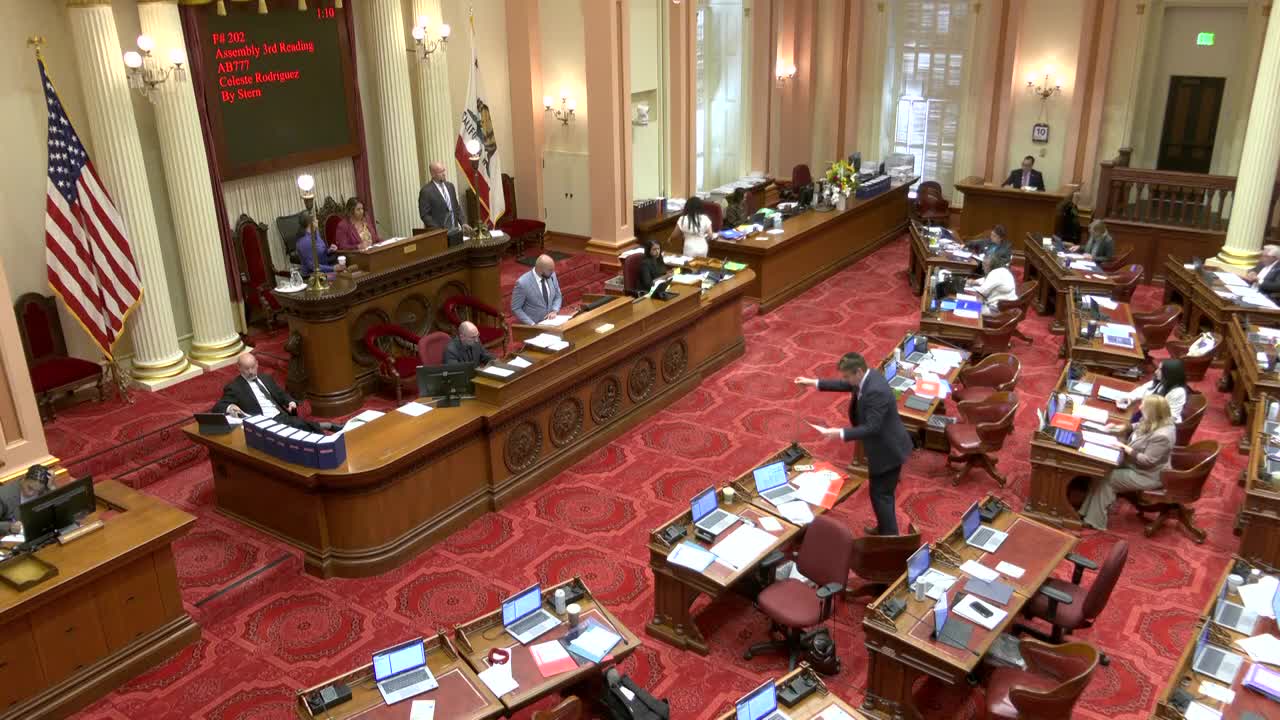 1MIN
Senate Floor
 5MIN
Assembly Floor
 28MIN
Assembly Standing Committee on Judiciary
 43MIN
Assembly Standing Committee on Health
 8MIN
Senate Floor
 55SEC
Senate Standing Committee on Appropriations
 15MIN
Senate Standing Committee on Judiciary
 35MIN