SB 47: February 2025 bar exam: audit.
- Session Year: 2025-2026
- House: Senate
- Latest Version Date: 2025-10-01
Current Status:
Passed
(2025-10-01: Chaptered by Secretary of State. Chapter 209, Statutes of 2025.)
Introduced
In Committee
Awaiting First Chamber Vote
Passed First Chamber
In Committee
Awaiting Second Chamber Vote
Passed Second Chamber
Enacted
The State Bar Act provides for the licensure and regulation of attorneys by the State Bar of California (State Bar), a public corporation governed by a board of trustees. The act sets forth the requirements for a license to practice law in California, including passing the general bar examination. The act requires the board of trustees to contract with the California State Auditor every 2 years to conduct a performance audit of the State Bars operations.
This bill would require the California State Auditor to conduct an audit of the February 2025 bar exam, as specified, and to submit the audit as soon as possible to the board of trustees, the Chief Justice of the Supreme Court, and to the Assembly and Senate Committees on Judiciary. The bill would require the State Bar to provide the California State Auditor with the funding necessary to cover the costs of the audit.
This bill would declare that it is to take effect immediately as an urgency statute.
The State Bar Act provides for the licensure and regulation of attorneys by the State Bar of California (State Bar), a public corporation governed by a board of trustees. The act sets forth the requirements for a license to practice law in California, including passing the general bar examination. The act requires the board of trustees to contract with the California State Auditor every 2 years to conduct a performance audit of the State Bars operations.
This bill would require the California State Auditor to conduct an audit of the February 2025 bar exam, as specified, and to submit the audit as soon as possible to the board of trustees, the Chief Justice of the Supreme Court, and to the Assembly and Senate Committees on Judiciary. The bill would require the State Bar to provide the California State Auditor with the funding necessary to cover the costs of the audit.
This bill would declare that it is to take effect immediately as an urgency statute.
The State Bar Act provides for the licensure and regulation of attorneys by the State Bar of California (State Bar), a public corporation governed by a board of trustees. The act sets forth the requirements for a license to practice law in California, including passing the general bar examination. The act requires the board of trustees to contract with the California State Auditor every 2 years to conduct a performance audit of the State Bars operations.
This bill would require the California State Auditor to conduct an audit of the February 2025 bar exam exam, as specified, and to submit the audit as soon as possible to the board of trustees, the Chief Justice of the Supreme Court, and to the Assembly and Senate Committees on Judiciary. The bill would require the State Bar to provide the California State Auditor with the funding necessary to cover the costs of the audit.
This bill would declare that it is to take effect immediately as an urgency statute.
The State Bar Act provides for the licensure and regulation of attorneys by the State Bar of California (State Bar), a public corporation governed by a board of trustees. The act sets forth the requirements for a license to practice law in California, including passing the general bar examination. The act requires the board of trustees to contract with the California State Auditor every 2 years to conduct a performance audit of the State Bars operations.
This bill would require the California State Auditor to conduct an audit of the February 2025 bar exam and to submit the audit as soon as possible to the board of trustees, the Chief Justice of the Supreme Court, and to the Assembly and Senate Committees on Judiciary. The bill would require the State Bar to provide the California State Auditor with the funding necessary to cover the costs of the audit.
The State Bar Act provides for the licensure and regulation of attorneys by the State Bar of California (State Bar), a public corporation governed by a board of trustees. The act sets forth the requirements for a license to practice law in California, including passing the general bar examination. The act requires the board of trustees to contract with the California State Auditor every 2 years to conduct a performance audit of the State Bars operations.
This bill would require the California State Auditor to conduct an audit of the February 2025 bar exam and to submit the audit as soon as possible to the board of trustees, the Chief Justice of the Supreme Court, and to the Assembly and Senate Committees on Judiciary. The bill would require the State Bar to provide the California State Auditor with the funding necessary to cover the costs of the audit.
Existing law specifies various matters which may be subject to judicial notice in a court of law, such as the laws of any state of the United States, official acts of the legislative, executive, and judicial departments of the United States and of any state of the United States, and facts and propositions of generalized knowledge that cannot reasonably be the subject of dispute.This bill would make a technical, nonsubstantive change to this provision.Existing law specifies various matters which may be subject to judicial notice in a court of law, such as the laws of any state of the United States, official acts of the legislative, executive, and judicial departments of the United States and of any state of the United States, and facts and propositions of generalized knowledge that cannot reasonably be the subject of dispute.
This bill would make a technical, nonsubstantive change to this provision.
(a)The board shall engage the services of an independent national or regional public accounting firm with at least five years of experience in governmental auditing for an audit of its financial statement for each fiscal year. The financial statement shall be promptly certified under oath by the chief financial officer of the State Bar, and a copy of the audit and financial statement shall be submitted annually, on or before May 31, to the board, to the Chief Justice of the Supreme Court, and to the Assembly and Senate Committees on Judiciary.
The audit also shall examine the receipts and expenditures of the State Bar to ensure that the funds collected on behalf of the Conference of Delegates of California Bar Associations as the independent successor entity to the former Conference of Delegates of the State Bar are conveyed to that entity, that the State Bar has been paid or reimbursed for the full cost of any administrative and support services provided to the successor entity, including the collection of fees or donations on its behalf, and that no mandatory fees are being used to fund the activities of the successor entity.
In selecting the accounting firm, the board shall consider the value of continuity, along with the risk that continued long-term engagements of an accounting firm may affect the independence of that firm.
(b)The board shall contract with the California State Auditors Office to conduct a performance audit of the State Bars operations from July 1, 2000, to December 31, 2000, inclusive. A copy of the performance audit shall be submitted by May 1, 2001, to the board, to the Chief Justice of the Supreme Court, and to the Assembly and Senate Committees on Judiciary.
Every two years thereafter, the board shall contract with the California State Auditors Office to conduct a performance audit of the State Bars operations for the respective fiscal year, commencing with January 1, 2002, to December 31, 2002, inclusive. A copy of the performance audit shall be submitted within 120 days of the close of the fiscal year for which the audit was performed to the board, to the Chief Justice of the Supreme Court, and to the Assembly and Senate Committees on Judiciary.
For the purposes of this subdivision, the California State Auditors Office may contract with a third party to conduct the performance audit. This subdivision is not intended to reduce the number of audits the California State Auditors Office may otherwise be able to conduct.
(c)(1)For the 2023 audit required pursuant to subdivision (b), the California State Auditors Office shall conduct a performance audit of the State Bar as set forth in this subdivision. The State Bar shall provide technical assistance, data, or information as requested by the California State Auditor. It is the intent of the Legislature that this audit may be reviewed in conjunction with the legislation that authorizes the State Bars licensing fee in 2023.
(2)The audit shall evaluate each program or division of the State Bar receiving support from the annual State Bar licensing fees and other fees required of active and inactive licensees.
(3)The audit shall, at minimum, include all of the following for each program or division described by paragraph (2):
(A)An assessment of how much fee revenue, staff, and resources are currently budgeted and subsequently expended to perform existing tasks and responsibilities.
(B)An assessment of whether the State Bar has appropriate program performance measures in place and how these measures are used for budgeting purposes.
(C)An assessment of the usage of any real property sold by the State Bar.
(D)A review of the State Bars cost allocation plan used to allocate administrative costs.
(E)A review of any proposals for additional funding or resources requested by the State Bar to determine whether these proposals are necessary to meet the State Bars public protection function, as well as the accuracy of identified associated funding needs, after reviewing how existing resources are used.
(F)A calculation of how much fee revenue would be needed from each State Bar active and inactive licensee to fully offset State Bar costs to perform existing tasks and responsibilities and to support additional proposed expenditures determined to be necessary to meet the State Bars public protection function. This calculation shall take into account any proposed business process reengineering, reallocations, or efficiencies identified by the California State Auditor.
(4)The audit shall include an evaluation of how the State Bar administers discipline cases that require an outside investigator or prosecutor and how that process can be improved, including the cost-effectiveness and timeliness of such investigations and prosecutions.
(5)The audit required by this subdivision shall be submitted by April 15, 2023, to the board of trustees, the Chief Justice of the Supreme Court, and to the Assembly and Senate Committees on Judiciary.
(6)The State Bar shall use existing resources to reimburse the California State Auditors Office for the costs of conducting the audit required by this subdivision.
(d)(1)The California State Auditor shall conduct an audit of the February 2025 bar exam to evaluate the administration of the February 2025 bar exam and how the problems with the exam occurred.
(2)The audit required by this subdivision shall do all of the following:
(A)Evaluate the bidding and contracting process that the State Bar engaged in that led to awarding the contract to Proctor U, Inc., doing business as Meazure Learning, as well as the final terms of the contract, and determine the following:
(i)Whether the process was conducted according to existing laws, regulations, and policies.
(ii)What evaluation criteria were used to determine whether Meazure Learning had experience with, and was capable of, conducting an examination similar to the State Bar examination.
(iii)Whether the State Bar appropriately evaluated and authorized any changes, including cost changes, to the executed contract.
(iv)Whether there were appropriate protections from, and evaluations of, any potential conflicts of interest that may have existed between relevant staff at the State Bar and Meazure Learning.
(B)Evaluate the bidding and contracting process that the State Bar engaged in that led to awarding the contract to Kaplan, Inc. for administration of the State Bar examination multiple choice questions, as well as the final terms of the contract for those services, and determine all of the following:
(i)Whether the processes were conducted according to existing laws, regulations, and policies.
(ii)What evaluation criteria was used to determine whether Kaplan, Inc. had experience with, and was capable of, creating relevant and appropriate questions similar to existing comparable entities like the National Conference of Bar Examiners.
(iii)Whether the terms of the contract allowed for oversight and monitoring of the question development process, and whether the State Bar appropriately utilized its oversight and monitoring to ensure that sufficient processes were engaged in to develop questions, ensure accuracy, and ensure fairness in the question development.
(iv)Why Kaplan, Inc. provided 100 multiple choice questions for the February 2025 bar exam, instead of 200.
(C)Evaluate the process that the State Bar engaged in leading up to the administration of the February 2025 State Bar examination to ensure that the examination was conducted in a way that allowed participants to engage fairly in the examination process, and determine all of the following:
(i)When and how the State Bar became aware of any potential problems with the administration of the examination, including limits or problems with examination locations, and how those potential problems were addressed.
(ii)How the process for remote examination employed for the February 2025 State Bar examination differed from the processes used for remote examination during the COVID-19 pandemic, and the reasons for those differences.
(iii)The process and reasoning for determining that a makeup examination date should be offered, and the timeline for making that determination.
(iv)The process for determining what specific equipment would be permitted for test-takers, such as white boards, and the reasoning and processes utilized to make any changes to those requirements leading up to the examination date.
(D)Evaluate the events that led the State Bar to use artificial intelligence to create multiple choice questions for use on the February 2025 State Bar examination, including all of the following:
(i)When the decision was made.
(ii)Who or what department made the decision.
(iii)The rationale for making the decision.
(iv)When executive leadership at the State Bar knew that artificial intelligence was used to create questions for the February 2025 State Bar examination.
(v)What evaluation criteria were used to ensure that the questions were correct and appropriate for use on the February 2025 State Bar examination.
(vi)What deficiencies in oversight by executive leadership at the Office of Admissions existed, if any, and how have any such deficiencies been remedied.
(E)(i)Itemize the State Bar costs arising from administration of the February 2025 State Bar examination, including, but not limited to, costs arising from existing contracts, legal representation, remedies provided to takers of the February 2025 State Bar examination, and any other associated costs. The costs itemized in this clause should include money already spent, money the State Bar is legally obligated to spend going forward, and other anticipated costs.
(ii)Identify how much money the State Bar claimed it would save by using the February 2025 State Bar examination format and compare that amount to the total of the costs itemized pursuant to clause (i).
(3)The audit required by this subdivision shall be submitted as soon as possible to the board of trustees, the Chief Justice of the Supreme Court, and to the Assembly and Senate Committees on Judiciary pursuant to Section 9795 of the Government Code.
(4)Notwithstanding Section 8544.5 of the Government Code or any other law, the costs of conducting the audit required by this subdivision shall not be paid from the State Audit Fund. The State Bar shall use existing resources to provide the California State Auditor with the funding necessary to cover the costs of the audit.
SEC. 2.This act is an urgency statute necessary for the immediate preservation of the public peace, health, or safety within the meaning of Article IV of the California Constitution and shall go into immediate effect. The facts constituting the necessity are:
This bill requires, among other things, the California State Auditor to conduct an audit of the February 2025 bar exam, and to submit the audit as soon as possible to the board of trustees, the Chief Justice of the Supreme Court, and to the Assembly and Senate Committees on Judiciary. To ensure that the California State Auditor may commence the audit as soon as possible, it is necessary for this act to take effect immediately.
(a)The board shall engage the services of an independent national or regional public accounting firm with at least five years of experience in governmental auditing for an audit of its financial statement for each fiscal year. The financial statement shall be promptly certified under oath by the chief financial officer of the State Bar, and a copy of the audit and financial statement shall be submitted annually, on or before May 31, to the board, to the Chief Justice of the Supreme Court, and to the Assembly and Senate Committees on Judiciary.
The audit also shall examine the receipts and expenditures of the State Bar to ensure that the funds collected on behalf of the Conference of Delegates of California Bar Associations as the independent successor entity to the former Conference of Delegates of the State Bar are conveyed to that entity, that the State Bar has been paid or reimbursed for the full cost of any administrative and support services provided to the successor entity, including the collection of fees or donations on its behalf, and that no mandatory fees are being used to fund the activities of the successor entity.
In selecting the accounting firm, the board shall consider the value of continuity, along with the risk that continued long-term engagements of an accounting firm may affect the independence of that firm.
(b)The board shall contract with the California State Auditors Office to conduct a performance audit of the State Bars operations from July 1, 2000, to December 31, 2000, inclusive. A copy of the performance audit shall be submitted by May 1, 2001, to the board, to the Chief Justice of the Supreme Court, and to the Assembly and Senate Committees on Judiciary.
Every two years thereafter, the board shall contract with the California State Auditors Office to conduct a performance audit of the State Bars operations for the respective fiscal year, commencing with January 1, 2002, to December 31, 2002, inclusive. A copy of the performance audit shall be submitted within 120 days of the close of the fiscal year for which the audit was performed to the board, to the Chief Justice of the Supreme Court, and to the Assembly and Senate Committees on Judiciary.
For the purposes of this subdivision, the California State Auditors Office may contract with a third party to conduct the performance audit. This subdivision is not intended to reduce the number of audits the California State Auditors Office may otherwise be able to conduct.
(c)(1)For the 2023 audit required pursuant to subdivision (b), the California State Auditors Office shall conduct a performance audit of the State Bar as set forth in this subdivision. The State Bar shall provide technical assistance, data, or information as requested by the California State Auditor. It is the intent of the Legislature that this audit may be reviewed in conjunction with the legislation that authorizes the State Bars licensing fee in 2023.
(2)The audit shall evaluate each program or division of the State Bar receiving support from the annual State Bar licensing fees and other fees required of active and inactive licensees.
(3)The audit shall, at minimum, include all of the following for each program or division described by paragraph (2):
(A)An assessment of how much fee revenue, staff, and resources are currently budgeted and subsequently expended to perform existing tasks and responsibilities.
(B)An assessment of whether the State Bar has appropriate program performance measures in place and how these measures are used for budgeting purposes.
(C)An assessment of the usage of any real property sold by the State Bar.
(D)A review of the State Bars cost allocation plan used to allocate administrative costs.
(E)A review of any proposals for additional funding or resources requested by the State Bar to determine whether these proposals are necessary to meet the State Bars public protection function, as well as the accuracy of identified associated funding needs, after reviewing how existing resources are used.
(F)A calculation of how much fee revenue would be needed from each State Bar active and inactive licensee to fully offset State Bar costs to perform existing tasks and responsibilities and to support additional proposed expenditures determined to be necessary to meet the State Bars public protection function. This calculation shall take into account any proposed business process reengineering, reallocations, or efficiencies identified by the California State Auditor.
(4)The audit shall include an evaluation of how the State Bar administers discipline cases that require an outside investigator or prosecutor and how that process can be improved, including the cost-effectiveness and timeliness of such investigations and prosecutions.
(5)The audit required by this subdivision shall be submitted by April 15, 2023, to the board of trustees, the Chief Justice of the Supreme Court, and to the Assembly and Senate Committees on Judiciary.
(6)The State Bar shall use existing resources to reimburse the California State Auditors Office for the costs of conducting the audit required by this subdivision.
(d)(1)The California State Auditor shall conduct an audit of the February 2025 bar exam to evaluate the administration of the February 2025 bar exam and how the problems with the exam occurred.
(2)The audit required by this subdivision shall do all of the following:
(A)Evaluate the bidding and contracting process that the State Bar engaged in that led to awarding the contract to Proctor U, Inc., doing business as Meazure Learning, as well as the final terms of the contract, and determine the following:
(i)Whether the process was conducted according to existing laws, regulations, and policies.
(ii)What evaluation criteria were used to determine whether Meazure Learning had experience with, and was capable of, conducting an examination similar to the State Bar examination.
(iii)Whether the State Bar appropriately evaluated and authorized any changes, including cost changes, to the executed contract.
(iv)Whether there were appropriate protections from, and evaluations of, any potential conflicts of interest that may have existed between relevant staff at the State Bar and Meazure Learning.
(B)Evaluate the bidding and contracting process that the State Bar engaged in that led to awarding the contract to Kaplan, Inc. for administration of the State Bar examination multiple choice questions, as well as the final terms of the contract for those services, and determine all of the following:
(i)Whether the processes were conducted according to existing laws, regulations, and policies.
(ii)What evaluation criteria was used to determine whether Kaplan, Inc. had experience with, and was capable of, creating relevant and appropriate questions similar to existing comparable entities like the National Conference of Bar Examiners.
(iii)Whether the terms of the contract allowed for oversight and monitoring of the question development process, and whether the State Bar appropriately utilized its oversight and monitoring to ensure that sufficient processes were engaged in to develop questions, ensure accuracy, and ensure fairness in the question development.
(iv)Why Kaplan, Inc. provided 100 multiple choice questions for the February 2025 bar exam, instead of 200.
(C)Evaluate the process that the State Bar engaged in leading up to the administration of the February 2025 State Bar examination to ensure that the examination was conducted in a way that allowed participants to engage fairly in the examination process, and determine all of the following:
(i)When and how the State Bar became aware of any potential problems with the administration of the examination, including limits or problems with examination locations, and how those potential problems were addressed.
(ii)How the process for remote examination employed for the February 2025 State Bar examination differed from the processes used for remote examination during the COVID-19 pandemic, and the reasons for those differences.
(iii)The process and reasoning for determining that a makeup examination date should be offered, and the timeline for making that determination.
(iv)The process for determining what specific equipment would be permitted for test-takers, such as white boards, and the reasoning and processes utilized to make any changes to those requirements leading up to the examination date.
(D)Evaluate the events that led the State Bar to use artificial intelligence to create multiple choice questions for use on the February 2025 State Bar examination, including all of the following:
(i)When the decision was made.
(ii)Who or what department made the decision.
(iii)The rationale for making the decision.
(iv)When executive leadership at the State Bar knew that artificial intelligence was used to create questions for the February 2025 State Bar examination.
(v)What evaluation criteria were used to ensure that the questions were correct and appropriate for use on the February 2025 State Bar examination.
(vi)What deficiencies in oversight by executive leadership at the Office of Admissions existed, if any, and how have any such deficiencies been remedied.
(E)(i)Itemize the State Bar costs arising from administration of the February 2025 State Bar examination, including, but not limited to, costs arising from existing contracts, legal representation, remedies provided to takers of the February 2025 State Bar examination, and any other associated costs. The costs itemized in this clause should include money already spent, money the State Bar is legally obligated to spend going forward, and other anticipated costs.
(ii)Identify how much money the State Bar claimed it would save by using the February 2025 State Bar examination format and compare that amount to the total of the costs itemized pursuant to clause (i).
(3)The audit required by this subdivision shall be submitted as soon as possible to the board of trustees, the Chief Justice of the Supreme Court, and to the Assembly and Senate Committees on Judiciary pursuant to Section 9795 of the Government Code.
(4)Notwithstanding Section 8544.5 of the Government Code or any other law, the costs of conducting the audit required by this subdivision shall not be paid from the State Audit Fund. The State Bar shall use existing resources to provide the California State Auditor with the funding necessary to cover the costs of the audit.
SEC. 2.This act is an urgency statute necessary for the immediate preservation of the public peace, health, or safety within the meaning of Article IV of the California Constitution and shall go into immediate effect. The facts constituting the necessity are:
This bill requires, among other things, the California State Auditor to conduct an audit of the February 2025 bar exam, and to submit the audit as soon as possible to the board of trustees, the Chief Justice of the Supreme Court, and to the Assembly and Senate Committees on Judiciary. To ensure that the California State Auditor may commence the audit as soon as possible, it is necessary for this act to take effect immediately.
(a)The board shall engage the services of an independent national or regional public accounting firm with at least five years of experience in governmental auditing for an audit of its financial statement for each fiscal year. The financial statement shall be promptly certified under oath by the chief financial officer of the State Bar, and a copy of the audit and financial statement shall be submitted annually, on or before May 31, to the board, to the Chief Justice of the Supreme Court, and to the Assembly and Senate Committees on Judiciary.
The audit also shall examine the receipts and expenditures of the State Bar to ensure that the funds collected on behalf of the Conference of Delegates of California Bar Associations as the independent successor entity to the former Conference of Delegates of the State Bar are conveyed to that entity, that the State Bar has been paid or reimbursed for the full cost of any administrative and support services provided to the successor entity, including the collection of fees or donations on its behalf, and that no mandatory fees are being used to fund the activities of the successor entity.
In selecting the accounting firm, the board shall consider the value of continuity, along with the risk that continued long-term engagements of an accounting firm may affect the independence of that firm.
(b)The board shall contract with the California State Auditors Office to conduct a performance audit of the State Bars operations from July 1, 2000, to December 31, 2000, inclusive. A copy of the performance audit shall be submitted by May 1, 2001, to the board, to the Chief Justice of the Supreme Court, and to the Assembly and Senate Committees on Judiciary.
Every two years thereafter, the board shall contract with the California State Auditors Office to conduct a performance audit of the State Bars operations for the respective fiscal year, commencing with January 1, 2002, to December 31, 2002, inclusive. A copy of the performance audit shall be submitted within 120 days of the close of the fiscal year for which the audit was performed to the board, to the Chief Justice of the Supreme Court, and to the Assembly and Senate Committees on Judiciary.
For the purposes of this subdivision, the California State Auditors Office may contract with a third party to conduct the performance audit. This subdivision is not intended to reduce the number of audits the California State Auditors Office may otherwise be able to conduct.
(c)(1)For the 2023 audit required pursuant to subdivision (b), the California State Auditors Office shall conduct a performance audit of the State Bar as set forth in this subdivision. The State Bar shall provide technical assistance, data, or information as requested by the California State Auditor. It is the intent of the Legislature that this audit may be reviewed in conjunction with the legislation that authorizes the State Bars licensing fee in 2023.
(2)The audit shall evaluate each program or division of the State Bar receiving support from the annual State Bar licensing fees and other fees required of active and inactive licensees.
(3)The audit shall, at minimum, include all of the following for each program or division described by paragraph (2):
(A)An assessment of how much fee revenue, staff, and resources are currently budgeted and subsequently expended to perform existing tasks and responsibilities.
(B)An assessment of whether the State Bar has appropriate program performance measures in place and how these measures are used for budgeting purposes.
(C)An assessment of the usage of any real property sold by the State Bar.
(D)A review of the State Bars cost allocation plan used to allocate administrative costs.
(E)A review of any proposals for additional funding or resources requested by the State Bar to determine whether these proposals are necessary to meet the State Bars public protection function, as well as the accuracy of identified associated funding needs, after reviewing how existing resources are used.
(F)A calculation of how much fee revenue would be needed from each State Bar active and inactive licensee to fully offset State Bar costs to perform existing tasks and responsibilities and to support additional proposed expenditures determined to be necessary to meet the State Bars public protection function. This calculation shall take into account any proposed business process reengineering, reallocations, or efficiencies identified by the California State Auditor.
(4)The audit shall include an evaluation of how the State Bar administers discipline cases that require an outside investigator or prosecutor and how that process can be improved, including the cost-effectiveness and timeliness of such investigations and prosecutions.
(5)The audit required by this subdivision shall be submitted by April 15, 2023, to the board of trustees, the Chief Justice of the Supreme Court, and to the Assembly and Senate Committees on Judiciary.
(6)The State Bar shall use existing resources to reimburse the California State Auditors Office for the costs of conducting the audit required by this subdivision.
(d)(1)The California State Auditor shall conduct an audit of the February 2025 bar exam to evaluate the administration of the February 2025 bar exam and how the problems with the exam occurred.
(2)The audit required by this subdivision shall do all of the following:
(A)Evaluate the bidding and contracting process that the State Bar engaged in that led to awarding the contract to Proctor U, Inc., doing business as Meazure Learning, as well as the final terms of the contract, and determine the following:
(i)Whether the process was conducted according to existing laws, regulations, and policies.
(ii)What evaluation criteria were used to determine whether Meazure Learning had experience with, and was capable of, conducting an examination similar to the State Bar examination.
(iii)Whether the State Bar appropriately evaluated and authorized any changes, including cost changes, to the executed contract.
(iv)Whether there were appropriate protections from, and evaluations of, any potential conflicts of interest that may have existed between relevant staff at the State Bar and Meazure Learning.
(B)Evaluate the bidding and contracting process that the State Bar engaged in that led to awarding the contract to Kaplan, Inc. for administration of the State Bar examination multiple choice questions, as well as the final terms of the contract for those services, and determine all of the following:
(i)Whether the processes were conducted according to existing laws, regulations, and policies.
(ii)What evaluation criteria was used to determine whether Kaplan, Inc. had experience with, and was capable of, creating relevant and appropriate questions similar to existing comparable entities like the National Conference of Bar Examiners.
(iii)Whether the terms of the contract allowed for oversight and monitoring of the question development process, and whether the State Bar appropriately utilized its oversight and monitoring to ensure that sufficient processes were engaged in to develop questions, ensure accuracy, and ensure fairness in the question development.
(iv)Why Kaplan, Inc. provided 100 multiple choice questions for the February 2025 bar exam, instead of 200.
(C)Evaluate the process that the State Bar engaged in leading up to the administration of the February 2025 State Bar examination to ensure that the examination was conducted in a way that allowed participants to engage fairly in the examination process, and determine all of the following:
(i)When and how the State Bar became aware of any potential problems with the administration of the examination, including limits or problems with examination locations, and how those potential problems were addressed.
(ii)How the process for remote examination employed for the February 2025 State Bar examination differed from the processes used for remote examination during the COVID-19 pandemic, and the reasons for those differences.
(iii)The process and reasoning for determining that a makeup examination date should be offered, and the timeline for making that determination.
(iv)The process for determining what specific equipment would be permitted for test-takers, such as white boards, and the reasoning and processes utilized to make any changes to those requirements leading up to the examination date.
(D)Evaluate the events that led the State Bar to use artificial intelligence to create multiple choice questions for use on the February 2025 State Bar examination, including all of the following:
(i)When the decision was made.
(ii)Who or what department made the decision.
(iii)The rationale for making the decision.
(iv)When executive leadership at the State Bar knew that artificial intelligence was used to create questions for the February 2025 State Bar examination.
(v)What evaluation criteria were used to ensure that the questions were correct and appropriate for use on the February 2025 State Bar examination.
(vi)What deficiencies in oversight by executive leadership at the Office of Admissions existed, if any, and how have any such deficiencies been remedied.
(E)(i)Itemize the State Bar costs arising from administration of the February 2025 State Bar examination, including, but not limited to, costs arising from existing contracts, legal representation, remedies provided to takers of the February 2025 State Bar examination, and any other associated costs. The costs itemized in this clause should include money already spent, money the State Bar is legally obligated to spend going forward, and other anticipated costs.
(ii)Identify how much money the State Bar claimed it would save by using the February 2025 State Bar examination format and compare that amount to the total of the costs itemized pursuant to clause (i).
(3)The audit required by this subdivision shall be submitted as soon as possible to the board of trustees, the Chief Justice of the Supreme Court, and to the Assembly and Senate Committees on Judiciary pursuant to Section 9795 of the Government Code.
(4)Notwithstanding Section 8544.5 of the Government Code or any other law, the costs of conducting the audit required by this subdivision shall not be paid from the State Audit Fund. The State Bar shall use existing resources to provide the California State Auditor with the funding necessary to cover the costs of the audit.
SEC. 2.This act is an urgency statute necessary for the immediate preservation of the public peace, health, or safety within the meaning of Article IV of the California Constitution and shall go into immediate effect. The facts constituting the necessity are:
This bill requires, among other things, the California State Auditor to conduct an audit of the February 2025 bar exam, and to submit the audit as soon as possible to the board of trustees, the Chief Justice of the Supreme Court, and to the Assembly and Senate Committees on Judiciary. To ensure that the California State Auditor may commence the audit as soon as possible, it is necessary for this act to take effect immediately.
(a)The board shall engage the services of an independent national or regional public accounting firm with at least five years of experience in governmental auditing for an audit of its financial statement for each fiscal year. The financial statement shall be promptly certified under oath by the chief financial officer of the State Bar, and a copy of the audit and financial statement shall be submitted annually, on or before May 31, to the board, to the Chief Justice of the Supreme Court, and to the Assembly and Senate Committees on Judiciary.
The audit also shall examine the receipts and expenditures of the State Bar to ensure that the funds collected on behalf of the Conference of Delegates of California Bar Associations as the independent successor entity to the former Conference of Delegates of the State Bar are conveyed to that entity, that the State Bar has been paid or reimbursed for the full cost of any administrative and support services provided to the successor entity, including the collection of fees or donations on its behalf, and that no mandatory fees are being used to fund the activities of the successor entity.
In selecting the accounting firm, the board shall consider the value of continuity, along with the risk that continued long-term engagements of an accounting firm may affect the independence of that firm.
(b)The board shall contract with the California State Auditors Office to conduct a performance audit of the State Bars operations from July 1, 2000, to December 31, 2000, inclusive. A copy of the performance audit shall be submitted by May 1, 2001, to the board, to the Chief Justice of the Supreme Court, and to the Assembly and Senate Committees on Judiciary.
Every two years thereafter, the board shall contract with the California State Auditors Office to conduct a performance audit of the State Bars operations for the respective fiscal year, commencing with January 1, 2002, to December 31, 2002, inclusive. A copy of the performance audit shall be submitted within 120 days of the close of the fiscal year for which the audit was performed to the board, to the Chief Justice of the Supreme Court, and to the Assembly and Senate Committees on Judiciary.
For the purposes of this subdivision, the California State Auditors Office may contract with a third party to conduct the performance audit. This subdivision is not intended to reduce the number of audits the California State Auditors Office may otherwise be able to conduct.
(c)(1)For the 2023 audit required pursuant to subdivision (b), the California State Auditors Office shall conduct a performance audit of the State Bar as set forth in this subdivision. The State Bar shall provide technical assistance, data, or information as requested by the California State Auditor. It is the intent of the Legislature that this audit may be reviewed in conjunction with the legislation that authorizes the State Bars licensing fee in 2023.
(2)The audit shall evaluate each program or division of the State Bar receiving support from the annual State Bar licensing fees and other fees required of active and inactive licensees.
(3)The audit shall, at minimum, include all of the following for each program or division described by paragraph (2):
(A)An assessment of how much fee revenue, staff, and resources are currently budgeted and subsequently expended to perform existing tasks and responsibilities.
(B)An assessment of whether the State Bar has appropriate program performance measures in place and how these measures are used for budgeting purposes.
(C)An assessment of the usage of any real property sold by the State Bar.
(D)A review of the State Bars cost allocation plan used to allocate administrative costs.
(E)A review of any proposals for additional funding or resources requested by the State Bar to determine whether these proposals are necessary to meet the State Bars public protection function, as well as the accuracy of identified associated funding needs, after reviewing how existing resources are used.
(F)A calculation of how much fee revenue would be needed from each State Bar active and inactive licensee to fully offset State Bar costs to perform existing tasks and responsibilities and to support additional proposed expenditures determined to be necessary to meet the State Bars public protection function. This calculation shall take into account any proposed business process reengineering, reallocations, or efficiencies identified by the California State Auditor.
(4)The audit shall include an evaluation of how the State Bar administers discipline cases that require an outside investigator or prosecutor and how that process can be improved, including the cost-effectiveness and timeliness of such investigations and prosecutions.
(5)The audit required by this subdivision shall be submitted by April 15, 2023, to the board of trustees, the Chief Justice of the Supreme Court, and to the Assembly and Senate Committees on Judiciary.
(6)The State Bar shall use existing resources to reimburse the California State Auditors Office for the costs of conducting the audit required by this subdivision.
(d)(1)The California State Auditor shall conduct an audit of the February 2025 bar exam to evaluate the administration of the February 2025 bar exam and how the problems with the exam occurred.
(2)The audit required by this subdivision shall do all of the following:
(A)Evaluate the bidding and contracting process that the State Bar engaged in that led to awarding the contract to Proctor U, Inc., doing business as Meazure Learning, as well as the final terms of the contract, and determine the following:
(i)Whether the process was conducted according to existing laws, regulations, and policies.
(ii)What evaluation criteria were used to determine whether Meazure Learning had experience with, and was capable of, conducting an examination similar to the State Bar examination.
(iii)Whether the State Bar appropriately evaluated and authorized any changes, including cost changes, to the executed contract.
(iv)Whether there were appropriate protections from, and evaluations of, any potential conflicts of interest that may have existed between relevant staff at the State Bar and Meazure Learning.
(B)Evaluate the bidding and contracting process that the State Bar engaged in that led to awarding the contract to Kaplan, Inc. for administration of the State Bar examination multiple choice questions, as well as the final terms of the contract for those services, and determine all of the following:
(i)Whether the processes were conducted according to existing laws, regulations, and policies.
(ii)What evaluation criteria was used to determine whether Kaplan, Inc. had experience with, and was capable of, creating relevant and appropriate questions similar to existing comparable entities like the National Conference of Bar Examiners.
(iii)Whether the terms of the contract allowed for oversight and monitoring of the question development process, and whether the State Bar appropriately utilized its oversight and monitoring to ensure that sufficient processes were engaged in to develop questions, ensure accuracy, and ensure fairness in the question development.
(C)Evaluate the process that the State Bar engaged in leading up to the administration of the February 2025 State Bar examination to ensure that the examination was conducted in a way that allowed participants to engage fairly in the examination process, and determine all of the following:
(i)When and how the State Bar became aware of any potential problems with the administration of the examination, including limits or problems with examination locations, and how those potential problems were addressed.
(ii)How the process for remote examination employed for the February 2025 State Bar examination differed from the processes used for remote examination during the COVID-19 pandemic, and the reasons for those differences.
(iii)The process and reasoning for determining that a makeup examination date should be offered, and the timeline for making that determination.
(iv)The process for determining what specific equipment would be permitted for test-takers, such as white boards, and the reasoning and processes utilized to make any changes to those requirements leading up to the examination date.
(2)(3)The audit required by this subdivision shall be submitted as soon as possible to the board of trustees, the Chief Justice of the Supreme Court, and to the Assembly and Senate Committees on Judiciary pursuant to Section 9795 of the Government Code.
(3)(4)Notwithstanding Section 8544.5 of the Government Code or any other law, the costs of conducting the audit required by this subdivision shall not be paid from the State Audit Fund. The State Bar shall use existing resources to provide the California State Auditor with the funding necessary to cover the costs of the audit.
(a)The board shall engage the services of an independent national or regional public accounting firm with at least five years of experience in governmental auditing for an audit of its financial statement for each fiscal year. The financial statement shall be promptly certified under oath by the chief financial officer of the State Bar, and a copy of the audit and financial statement shall be submitted annually, on or before May 31, to the board, to the Chief Justice of the Supreme Court, and to the Assembly and Senate Committees on Judiciary.
The audit also shall examine the receipts and expenditures of the State Bar to ensure that the funds collected on behalf of the Conference of Delegates of California Bar Associations as the independent successor entity to the former Conference of Delegates of the State Bar are conveyed to that entity, that the State Bar has been paid or reimbursed for the full cost of any administrative and support services provided to the successor entity, including the collection of fees or donations on its behalf, and that no mandatory fees are being used to fund the activities of the successor entity.
In selecting the accounting firm, the board shall consider the value of continuity, along with the risk that continued long-term engagements of an accounting firm may affect the independence of that firm.
(b)The board shall contract with the California State Auditors Office to conduct a performance audit of the State Bars operations from July 1, 2000, to December 31, 2000, inclusive. A copy of the performance audit shall be submitted by May 1, 2001, to the board, to the Chief Justice of the Supreme Court, and to the Assembly and Senate Committees on Judiciary.
Every two years thereafter, the board shall contract with the California State Auditors Office to conduct a performance audit of the State Bars operations for the respective fiscal year, commencing with January 1, 2002, to December 31, 2002, inclusive. A copy of the performance audit shall be submitted within 120 days of the close of the fiscal year for which the audit was performed to the board, to the Chief Justice of the Supreme Court, and to the Assembly and Senate Committees on Judiciary.
For the purposes of this subdivision, the California State Auditors Office may contract with a third party to conduct the performance audit. This subdivision is not intended to reduce the number of audits the California State Auditors Office may otherwise be able to conduct.
(c)(1)For the 2023 audit required pursuant to subdivision (b), the California State Auditors Office shall conduct a performance audit of the State Bar as set forth in this subdivision. The State Bar shall provide technical assistance, data, or information as requested by the California State Auditor. It is the intent of the Legislature that this audit may be reviewed in conjunction with the legislation that authorizes the State Bars licensing fee in 2023.
(2)The audit shall evaluate each program or division of the State Bar receiving support from the annual State Bar licensing fees and other fees required of active and inactive licensees.
(3)The audit shall, at minimum, include all of the following for each program or division described by paragraph (2):
(A)An assessment of how much fee revenue, staff, and resources are currently budgeted and subsequently expended to perform existing tasks and responsibilities.
(B)An assessment of whether the State Bar has appropriate program performance measures in place and how these measures are used for budgeting purposes.
(C)An assessment of the usage of any real property sold by the State Bar.
(D)A review of the State Bars cost allocation plan used to allocate administrative costs.
(E)A review of any proposals for additional funding or resources requested by the State Bar to determine whether these proposals are necessary to meet the State Bars public protection function, as well as the accuracy of identified associated funding needs, after reviewing how existing resources are used.
(F)A calculation of how much fee revenue would be needed from each State Bar active and inactive licensee to fully offset State Bar costs to perform existing tasks and responsibilities and to support additional proposed expenditures determined to be necessary to meet the State Bars public protection function. This calculation shall take into account any proposed business process reengineering, reallocations, or efficiencies identified by the California State Auditor.
(4)The audit shall include an evaluation of how the State Bar administers discipline cases that require an outside investigator or prosecutor and how that process can be improved, including the cost-effectiveness and timeliness of such investigations and prosecutions.
(5)The audit required by this subdivision shall be submitted by April 15, 2023, to the board of trustees, the Chief Justice of the Supreme Court, and to the Assembly and Senate Committees on Judiciary.
(6)The State Bar shall use existing resources to reimburse the California State Auditors Office for the costs of conducting the audit required by this subdivision.
(d)(1)The California State Auditor shall conduct an audit of the February 2025 bar exam to evaluate the administration of the February 2025 bar exam and how the problems with the exam occurred.
(2)The audit required by this subdivision shall be submitted as soon as possible to the board of trustees, the Chief Justice of the Supreme Court, and to the Assembly and Senate Committees on Judiciary pursuant to Section 9795 of the Government Code.
(3)Notwithstanding Section 8544.5 of the Government Code or any other law, the costs of conducting the audit required by this subdivision shall not be paid from the State Audit Fund. The State Bar shall use existing resources to provide the California State Auditor with the funding necessary to cover the costs of the audit.
SECTION 1.Section 452 of the Evidence Code is amended to read:452.Judicial notice may be taken of any of the following matters to the extent that they are not embraced within Section 451:(a)The decisional, constitutional, and statutory law of any state of the United States and the resolutions and private acts of the Congress of the United States and of the Legislature of this state.(b)Regulations and legislative enactments issued by or under the authority of the United States or any public entity in the United States.(c)Official acts of the legislative, executive, and judicial departments of the United States and of any state of the United States.(d)Records of (1) any court of this state or (2) any court of record of the United States or of any state of the United States.(e)Rules of court of (1) any court of this state or (2) any court of record of the United States or of any state of the United States.(f)The law of an organization of nations and of foreign nations and public entities in foreign nations.(g)Facts and propositions that are of such common knowledge within the territorial jurisdiction of the court that they cannot reasonably be the subject of dispute.(h)Facts and propositions that are not reasonably subject to dispute and are capable of immediate and accurate determination by resort to sources of reasonably indisputable accuracy.Judicial notice may be taken of any of the following matters to the extent that they are not embraced within Section 451:
(a)The decisional, constitutional, and statutory law of any state of the United States and the resolutions and private acts of the Congress of the United States and of the Legislature of this state.
(b)Regulations and legislative enactments issued by or under the authority of the United States or any public entity in the United States.
(c)Official acts of the legislative, executive, and judicial departments of the United States and of any state of the United States.
(d)Records of (1) any court of this state or (2) any court of record of the United States or of any state of the United States.
(e)Rules of court of (1) any court of this state or (2) any court of record of the United States or of any state of the United States.
(f)The law of an organization of nations and of foreign nations and public entities in foreign nations.
(g)Facts and propositions that are of such common knowledge within the territorial jurisdiction of the court that they cannot reasonably be the subject of dispute.
(h)Facts and propositions that are not reasonably subject to dispute and are capable of immediate and accurate determination by resort to sources of reasonably indisputable accuracy.
|
Date
|
Status
|
|---|---|
| Oct 1, 2025 | Chaptered by Secretary of State. Chapter 209, Statutes of 2025. |
| Oct 1, 2025 | Approved by the Governor. |
| Sep 22, 2025 | Enrolled and presented to the Governor at 11 a.m. |
| Sep 11, 2025 | Urgency clause adopted. |
| Sep 11, 2025 | Assembly amendments concurred in. (Ayes 40. Noes 0. Page 2878.) Ordered to engrossing and enrolling. |
| Sep 10, 2025 | In Senate. Concurrence in Assembly amendments pending. |
| Sep 10, 2025 | Read third time. Urgency clause adopted. Passed. (Ayes 79. Noes 0. Page 3167.) Ordered to the Senate. |
| Sep 2, 2025 | Read third time and amended. |
| Sep 2, 2025 | Ordered to third reading. |
| Jul 3, 2025 | Ordered to third reading. |
| Jul 3, 2025 | Action rescinded whereby bill was read a third time, passed, and ordered to the Senate. |
| Jul 1, 2025 | In Assembly. Held at Desk. |
| Jun 30, 2025 | Withdrawn from engrossing and enrolling. |
| Jun 30, 2025 | Ordered to the Assembly. |
| Jun 27, 2025 | In Senate. Ordered to engrossing and enrolling. |
| Jun 27, 2025 | Read third time. Passed. (Ayes 75. Noes 0. Page 2345.) Ordered to the Senate. |
| Jun 25, 2025 | Read second time. Ordered to consent calendar. |
| Jun 24, 2025 | From committee: Do pass. Ordered to consent calendar. (Ayes 12. Noes 0.) (June 24). |
| Jun 5, 2025 | Referred to Com. on JUD. |
| May 28, 2025 | In Assembly. Read first time. Held at Desk. |
| May 28, 2025 | Read third time. Passed. (Ayes 38. Noes 0. Page 1269.) Ordered to the Assembly. |
| May 8, 2025 | Read second time. Ordered to third reading. |
| May 7, 2025 | From committee: Do pass. (Ayes 12. Noes 0. Page 1026.) (May 6). |
| Apr 24, 2025 | From committee with author's amendments. Read second time and amended. Re-referred to Com. on JUD. |
| Apr 4, 2025 | Set for hearing May 6. |
| Apr 2, 2025 | Re-referred to Com. on JUD. |
| Mar 26, 2025 | From committee with author's amendments. Read second time and amended. Re-referred to Com. on RLS. |
| Jan 29, 2025 | Referred to Com. on RLS. |
| Jan 6, 2025 | Read first time. |
| Dec 13, 2024 | From printer. May be acted upon on or after January 12. |
| Dec 12, 2024 | Introduced. To Com. on RLS. for assignment. To print. |
|
Date
|
Description
|
Location
|
Votes
|
|
|---|---|---|---|---|
| Sep 11, 2025 | Unfinished Business SB47 Umberg et al. Urgency Clause Concurrence | Senate Floor |
Passed |
|
| Sep 10, 2025 | SB 47 Umberg Third Reading Urgency By Kalra | Assembly Floor |
Passed |
|
| Jun 27, 2025 | SB 47 Umberg Consent Calendar Second Day Regular Session | Assembly Floor |
Passed |
|
| Jun 24, 2025 | Do pass. To Consent Calendar. | Assembly Standing Committee on Judiciary |
Passed |
|
| May 28, 2025 | Senate 3rd Reading SB47 Umberg | Senate Floor |
Passed |
|
| May 6, 2025 | Do pass | Senate Standing Committee on Judiciary |
Passed |
This list shows positions taken on this bill by organizations on the date displayed, which is linked to the original source.
Positions by individuals are not included.
SENATE RULES COMMITTEE Office of Senate Floor Analyses (916) 651-1520 Fax: (916) 327-4478 | SB 47 |
UNFINISHED BUSINESS
Bill No: SB 47
Author: Umberg (D), et al.
Amended: 10/1/25
Vote: 27- Urgency
SENATE JUDICIARY COMMITTEE: 12-0, 5/6/25
AYES: Umberg, Niello, Allen, Arreguín, Ashby, Caballero, Durazo, Laird, Stern, Wahab, Weber Pierson, Wiener
NO VOTE RECORDED: Valladares
SENATE FLOOR: 38-0, 5/28/25
AYES: Allen, Alvarado-Gil, Archuleta, Arreguín, Ashby, Becker, Blakespear, Cabaldon, Caballero, Choi, Cortese, Dahle, Durazo, Gonzalez, Grayson, Grove, Hurtado, Jones, Laird, Limón, McGuire, McNerney, Menjivar, Niello, Ochoa Bogh, Padilla, Pérez, Richardson, Rubio, Seyarto, Smallwood-Cuevas, Stern, Strickland, Umberg, Valladares, Wahab, Weber Pierson, Wiener
NO VOTE RECORDED: Cervantes, Reyes
ASSEMBLY FLOOR: 79-0, 9/10/25 - See last page for vote
SUBJECT: February 2025 bar exam: audit
SOURCE: Author
DIGEST:
This bill requires the California State Auditor to conduct an audit of the February 2025 bar exam to evaluate its administration and how the problems with the exam occurred, as specified.
Assembly Amendments
require additional items to be audited, including the use of artificial intelligence (AI) in the creation of the bar exam, and adds an urgency clause.
ANALYSIS:
Existing law:
- Requires all attorneys who practice law in California to be licensed by the State Bar and establishes the State Bar, within the judicial branch of state government, for the purpose of regulating the legal profession. (California Constitution, art. VI, § 9; Business & Professions Code (Bus. & Prof. Code) §§ 6000 et seq.)
- Establishes the State Bar Act as the statutory requirements regulating the practice of law in this state. (Bus. & Prof. Code §§ 6000 et seq.) The State Bar is governed by the Board of Trustees of the State Bar (Board). (Bus. & Prof. Code §§ 6010 et seq.; § 6016.)
- Authorizes the Board to establish an examining committee (hereafter the Committee of Bar Examiners or CBE) having the power to:
- Examine all applicants for admission to practice law;
- Administer the requirements for admission to practice law; and
- Certify to the Supreme Court for admission those applicants who fulfill the requirements provided in Chapter 4 of the State Bar Act. (Bus. & Prof. Code § 6046.)
- Provides that the Committee of Bar Examiners is comprised of 19 members, 10 of whom are licensees of the State Bar or judges of courts of record in this state and nine of whom shall be public members who have never been licensees of the State Bar or admitted to practice before any court in the United States. (Ibid.)
- Provides various requirements a person must meet to be certified to the California Supreme Court for admission to practice law in this state, including passing the general bar examination given by the Committee of Bar Examiners. The Supreme Court admits persons to practice law in this state. (Bus. & Prof. Code § 6060(g).)
This bill:
- Requires the California State Auditor to conduct an audit of the February 2025 bar exam to evaluate the administration of the exam and how the problems with that exam occurred.
- Requires the audit to evaluate the bidding and contracting process that the State Bar engaged in that led to awarding the contract to Proctor U, Inc., doing business as Meazure Learning, as well as the final terms of the contract, and determine the following:
- Whether the process was conducted according to existing laws, regulations, and policies;
- What evaluation criteria were used to determine whether Meazure Learning had experience with, and was capable of, conducting an examination similar to the State Bar examination;
- Whether the State Bar appropriately evaluated and authorized any changes, including cost changes, to the executed contract; and
- Whether there were appropriate protections from, and evaluations of, any potential conflicts of interest that may have existed between relevant staff at the State Bar and Meazure Learning.
- Requires the audit to evaluate the bidding and contracting process that the State Bar engaged in that led to awarding the contract to Kaplan, Inc. for administration of the State Bar examination multiple choice questions, as well as the final terms of the contract for those services, and determine all of the following:
- Whether the processes were conducted according to existing laws, regulations, and policies;
- What evaluation criteria was used to determine whether Kaplan, Inc. had experience with, and was capable of, creating relevant and appropriate questions similar to existing comparable entities like the National Conference of Bar Examiners; and
- Whether the terms of the contract allowed for oversight and monitoring of the question development process, and whether the State Bar appropriately utilized its oversight and monitoring to ensure that sufficient processes were engaged in to develop questions, ensure accuracy, and ensure fairness in the question development.
- Requires the audit to evaluate the process that the State Bar engaged in leading up to the administration of the February 2025 State Bar examination to ensure that the examination was conducted in a way that allowed participants to engage fairly in the examination process, and determine all of the following:
- When and how the State Bar became aware of any potential problems with the administration of the examination, including limits or problems with examination locations, and how those potential problems were addressed;
- How the process for remote examination employed for the February 2025 State Bar examination differed from the processes used for remote examination during the COVID-19 pandemic, and the reasons for those differences;
- The process and reasoning for determining that a makeup examination date should be offered, and the timeline for making that determination; and
- The process for determining what specific equipment would be permitted for test-takers, such as white boards, and the reasoning and processes utilized to make any changes to those requirements leading up to the examination date.
- Requires the audit to be submitted as soon as possible to the Board, the Chief Justice of the Supreme Court, and to the Assembly and Senate Committees on Judiciary.
- Requires the State Bar to use existing resources to provide the California State Auditor with the funding necessary to cover the costs of the audit.
- Incudes an urgency clause
Comments
The bar exam is comprised of three components: five one-hour essay questions, one 90-minute performance test, and 200 multiple-choice questions. The State Bar used a new exam format and platform for the first time in decades for the February 2025 exam that allowed for both in-person and remote test taking.[1] The State Bar stated that the new exam platform and format “will enable the State Bar to utilize multiple-choice questions developed by Kaplan Exam Services, LLC (Kaplan) rather than purchase the MBE from the [NCBE] and to engage ProctorU, Inc. d/b/a/ Meazure Learning (Meazure Learning) to administer the examination remotely or at Meazure Learning’s test centers.”[2] Prior to 2025, the bar exam was always administered in-person at various locations throughout the state by the State Bar with the exception of during the COVID-19 pandemic. The State Bar’s rationale for moving to the new exam platform and format was predominantly a cost saving measure.
According to widespread reports outlined in news articles, a letter signed by California’s law school deans, and numerous phone calls and emails received by the Committee and author of this bill, the February administration of the State Bar Exam was an utter failure. Reports of difficulties included: inability to log in or access the test, unstable servers, issues with proctors, lost time, delayed prompts, factual errors in questions, and the inability to start or finish exam components. Of the 5,600 people registered for the exam, more than 964 withdrew before the day of the exam, after the bar offered unprecedented refunds in the face of technological problems that rose during pre-mock exams and issues with scheduling locations to take the exam. As noted by Dean Erwin Chemerinsky of the UC Berkeley School of Law this 2025 bar exam was “stunning incompetence from an entity that exists to measure competence.”[3] In conversations with the State Bar and Committee staff, it was indicated that virtually every examinee experienced some issue on the bar exam.
The California Supreme Court released a statement following the bar exam debacle:
The court is deeply concerned by the troubling reports of technical failures, delays, and other irregularities in last week’s administration of the February 2025 California Bar Examination. The court regrets this situation and apologizes for the disappointment, stress, and frustration experienced by some applicants. At present, the complete scope and causes of the problems are still being determined. Last week, the court asked the State Bar, in conjunction with the vendor responsible for administering the exam, to provide an expedited, detailed report regarding the problems encountered by applicants. This information is crucial in informing how the court will provide appropriate remedies for affected applicants who deserved and expected better. In the interim, the court directs the State Bar to plan on administering the July 2025 California Bar Examination in the traditional in-person format.[4]
The State Bar recently revealed that it employed a company to have non-lawyers use AI to create some of the questions for the multiple-choice portion of the exam. According to the State Bar, 100 of the 171 scored multiple-choice questions were made by Kaplan, 48 were taken from a first-year law students’ examination (FYLSX), and 23 questions that were scored on the exam were made by ACS Ventures, the State Bar’s psychometrician, and developed with artificial intelligence.[5] ACS Ventures is the same company that the State Bar uses to assess and approve the questions on the bar exam. This revelation in itself was alarming, but what was truly shocking was that the neither the Committee of Bar Examiners nor the Supreme Court had been informed of this fact.[6] This incident raises troubling questions about the State Bar; questions about the decision-making process of the State Bar and its leadership, and questions about whether the State Bar acted outside of its delegated authority from the Supreme Court. The Supreme Court directed the State Bar to provide an explanation regarding the use of AI on the exam in its petition to the Court requesting approval for the raw score of the February 2025 bar exam. The State Bar submitted a petition to the Supreme Court to approve the raw score for the February 2025 bar exam on April 29, 2025. On May 2, 2025, the Supreme Court issued an order in response to the petition setting the raw score at 534 as approved by the Committee of Bar Examiners, and requires the State Bar to return to the MBE for the July 2025 bar exam.
FISCAL EFFECT: Appropriation: No Fiscal Com.: No Local: No
SUPPORT: (Verified 9/8/25)
1 individual
OPPOSITION: (Verified 9/8/25)
1 individual
ARGUMENTS IN SUPPORT: The author writes:
The failure of the State Bar in administering the February 2025 Bar Exam is unacceptable and unprecedented. Taking the bar exam is one of the most stressful times in a law school graduate’s life. It entails an enormous investment financially, emotionally, and in time – often for both the test taker and their family. I am extremely sympathetic to the plight of examinees affected by this debacle and the real world consequences, including loss of job offers, delay in starting one’s career, the financial effect, and extreme stress this entire situation has caused. Admitting persons to practice law in this state is a core responsibility of the State Bar. This includes administration of the Bar Examination.
I am also deeply troubled by the recent revelations from the State Bar that AI was used to draft certain multiple-choice questions on the February bar exam. This information was not disclosed to anyone—including, most astonishingly, the California Supreme Court. The entire roll out of the February bar exam, from its creation to administration, has proven to be an unmitigated disaster. Each new revelation raises more concerning questions. Questions about the decision-making process of the State Bar; questions about the performance of current leadership; and questions about if the State Bar acted within its authority as granted by the California Supreme Court when designing the February bar exam.
ASSEMBLY FLOOR: 79-0, 9/10/25
AYES: Addis, Aguiar-Curry, Ahrens, Alanis, Alvarez, Arambula, Ávila Farías, Bains, Bauer-Kahan, Bennett, Berman, Boerner, Bonta, Bryan, Calderon, Caloza, Carrillo, Castillo, Chen, Connolly, Davies, DeMaio, Dixon, Elhawary, Ellis, Flora, Fong, Gabriel, Gallagher, Garcia, Gipson, Jeff Gonzalez, Mark González, Hadwick, Haney, Harabedian, Hart, Hoover, Irwin, Jackson, Johnson, Kalra, Krell, Lackey, Lee, Lowenthal, Macedo, McKinnor, Muratsuchi, Nguyen, Ortega, Pacheco, Papan, Patel, Patterson, Pellerin, Petrie-Norris, Quirk-Silva, Ramos, Ransom, Celeste Rodriguez, Michelle Rodriguez, Rogers, Blanca Rubio, Sanchez, Schiavo, Schultz, Sharp-Collins, Solache, Soria, Stefani, Ta, Valencia, Wallis, Ward, Wicks, Wilson, Zbur, Rivas
NO VOTE RECORDED: Tangipa
Prepared by: Amanda Mattson / JUD. / (916) 651-4113
7/21/26 10:43:34
**** END ****
Olivia Hebert, SF Gate, California's new bar exam launch was a 'disaster.' Now test takers are suing. (Feb. 28, 2025), available at https://www.sfgate.com/california/article/california-bar-exam-march-retakes-20192958.php. ↑
Renewed Request that the Supreme Court Approve Proposed Modifications to the California Bar Examination, (Cal. Supreme Court (Oct. 2024) S287231) at p. 4, available at https://www.calbar.ca.gov/portals/0/documents/admissions/examinations/Renewed-Request-to-Approve-Proposed-Modifications-to-the-CA-Bar-Examination.pdf. ↑
Malcolm Maclachlan, Daily Journal, California Bar exam failure sparks lawsuit, legislative inquiry, (Mar. 3, 2025), available at https://www.dailyjournal.com/articles/383949-california-bar-exam-failure-sparks-lawsuit-legislative-inquiry?utm_source=ActiveCampaign&utm_medium=email&utm_content=Legal%20battle%20over%20Point%20Reyes%20ranching%20deal%20escalates&utm_campaign=Legal%20News%203%2F3&vgo_ee=cUekTHCZPyLa0dLz%2FgoXbTrxWqEMTgXT%2BgyPjC3Mn6xwO1644QLwGw%3D%3D%3ATT7IZwFcfYgN%2B46NDnKPDsLFczdr1him. ↑
California Supreme Court Issues Statement on February Bar Exam, Cal. Sup. Court, (Mar. 4, 2025), available at https://newsroom.courts.ca.gov/news/california-supreme-court-issues-statement-february-bar-exam. ↑
Jenny Jarvie, Los Angeles Times, State Bar of California admits it used AI to develop exam questions, triggering new furor, (Apr. 23, 2025), available at https://www.latimes.com/california/story/2025-04-23/state-bar-of-california-used-ai-for-exam-questions. ↑
Ibid. ↑
SENATE RULES COMMITTEE Office of Senate Floor Analyses (916) 651-1520 Fax: (916) 327-4478 | SB 47 |
UNFINISHED BUSINESS
Bill No: SB 47
Author: Umberg (D), et al.
Amended: 9/2/25
Vote: 27 - Urgency
SENATE JUDICIARY COMMITTEE: 12-0, 5/6/25
AYES: Umberg, Niello, Allen, Arreguín, Ashby, Caballero, Durazo, Laird, Stern, Wahab, Weber Pierson, Wiener
NO VOTE RECORDED: Valladares
SENATE FLOOR: 38-0, 5/28/25
AYES: Allen, Alvarado-Gil, Archuleta, Arreguín, Ashby, Becker, Blakespear, Cabaldon, Caballero, Choi, Cortese, Dahle, Durazo, Gonzalez, Grayson, Grove, Hurtado, Jones, Laird, Limón, McGuire, McNerney, Menjivar, Niello, Ochoa Bogh, Padilla, Pérez, Richardson, Rubio, Seyarto, Smallwood-Cuevas, Stern, Strickland, Umberg, Valladares, Wahab, Weber Pierson, Wiener
NO VOTE RECORDED: Cervantes, Reyes
ASSEMBLY FLOOR: 70-0, 9/10/25 – Roll call vote not available
SUBJECT: February 2025 bar exam: audit
SOURCE: Author
DIGEST:
This bill requires the California State Auditor to conduct an audit of the February 2025 bar exam to evaluate its administration and how the problems with the exam occurred, as specified.
Assembly Amendments
require additional items to be audited, including the use of artificial intelligence (AI) in the creation of the bar exam, and adds an urgency clause.
ANALYSIS:
Existing law:
- Requires all attorneys who practice law in California to be licensed by the State Bar and establishes the State Bar, within the judicial branch of state government, for the purpose of regulating the legal profession. (California Constitution, art. VI, § 9; Business & Professions Code (Bus. & Prof. Code) §§ 6000 et seq.)
- Establishes the State Bar Act as the statutory requirements regulating the practice of law in this state. (Bus. & Prof. Code §§ 6000 et seq.) The State Bar is governed by the Board of Trustees of the State Bar (Board). (Bus. & Prof. Code §§ 6010 et seq.; § 6016.)
- Authorizes the Board to establish an examining committee (hereafter the Committee of Bar Examiners or CBE) having the power to:
- Examine all applicants for admission to practice law;
- Administer the requirements for admission to practice law; and
- Certify to the Supreme Court for admission those applicants who fulfill the requirements provided in Chapter 4 of the State Bar Act. (Bus. & Prof. Code § 6046.)
- Provides that the Committee of Bar Examiners is comprised of 19 members, 10 of whom are licensees of the State Bar or judges of courts of record in this state and nine of whom shall be public members who have never been licensees of the State Bar or admitted to practice before any court in the United States. (Ibid.)
- Provides various requirements a person must meet to be certified to the California Supreme Court for admission to practice law in this state, including passing the general bar examination given by the Committee of Bar Examiners. The Supreme Court admits persons to practice law in this state. (Bus. & Prof. Code § 6060(g).)
This bill:
- Requires the California State Auditor to conduct an audit of the February 2025 bar exam to evaluate the administration of the exam and how the problems with that exam occurred.
- Requires the audit to evaluate the bidding and contracting process that the State Bar engaged in that led to awarding the contract to Proctor U, Inc., doing business as Meazure Learning, as well as the final terms of the contract, and determine the following:
- Whether the process was conducted according to existing laws, regulations, and policies;
- What evaluation criteria were used to determine whether Meazure Learning had experience with, and was capable of, conducting an examination similar to the State Bar examination;
- Whether the State Bar appropriately evaluated and authorized any changes, including cost changes, to the executed contract; and
- Whether there were appropriate protections from, and evaluations of, any potential conflicts of interest that may have existed between relevant staff at the State Bar and Meazure Learning.
- Requires the audit to evaluate the bidding and contracting process that the State Bar engaged in that led to awarding the contract to Kaplan, Inc. for administration of the State Bar examination multiple choice questions, as well as the final terms of the contract for those services, and determine all of the following:
- Whether the processes were conducted according to existing laws, regulations, and policies;
- What evaluation criteria was used to determine whether Kaplan, Inc. had experience with, and was capable of, creating relevant and appropriate questions similar to existing comparable entities like the National Conference of Bar Examiners; and
- Whether the terms of the contract allowed for oversight and monitoring of the question development process, and whether the State Bar appropriately utilized its oversight and monitoring to ensure that sufficient processes were engaged in to develop questions, ensure accuracy, and ensure fairness in the question development.
- Requires the audit to evaluate the process that the State Bar engaged in leading up to the administration of the February 2025 State Bar examination to ensure that the examination was conducted in a way that allowed participants to engage fairly in the examination process, and determine all of the following:
- When and how the State Bar became aware of any potential problems with the administration of the examination, including limits or problems with examination locations, and how those potential problems were addressed;
- How the process for remote examination employed for the February 2025 State Bar examination differed from the processes used for remote examination during the COVID-19 pandemic, and the reasons for those differences;
- The process and reasoning for determining that a makeup examination date should be offered, and the timeline for making that determination; and
- The process for determining what specific equipment would be permitted for test-takers, such as white boards, and the reasoning and processes utilized to make any changes to those requirements leading up to the examination date.
- Requires the audit to be submitted as soon as possible to the Board, the Chief Justice of the Supreme Court, and to the Assembly and Senate Committees on Judiciary.
- Requires the State Bar to use existing resources to provide the California State Auditor with the funding necessary to cover the costs of the audit.
- Incudes an urgency clause
Comments
The bar exam is comprised of three components: five one-hour essay questions, one 90-minute performance test, and 200 multiple-choice questions. The State Bar used a new exam format and platform for the first time in decades for the February 2025 exam that allowed for both in-person and remote test taking.[1] The State Bar stated that the new exam platform and format “will enable the State Bar to utilize multiple-choice questions developed by Kaplan Exam Services, LLC (Kaplan) rather than purchase the MBE from the [NCBE] and to engage ProctorU, Inc. d/b/a/ Meazure Learning (Meazure Learning) to administer the examination remotely or at Meazure Learning’s test centers.”[2] Prior to 2025, the bar exam was always administered in-person at various locations throughout the state by the State Bar with the exception of during the COVID-19 pandemic. The State Bar’s rationale for moving to the new exam platform and format was predominantly a cost saving measure.
According to widespread reports outlined in news articles, a letter signed by California’s law school deans, and numerous phone calls and emails received by the Committee and author of this bill, the February administration of the State Bar Exam was an utter failure. Reports of difficulties included: inability to log in or access the test, unstable servers, issues with proctors, lost time, delayed prompts, factual errors in questions, and the inability to start or finish exam components. Of the 5,600 people registered for the exam, more than 964 withdrew before the day of the exam, after the bar offered unprecedented refunds in the face of technological problems that rose during pre-mock exams and issues with scheduling locations to take the exam. As noted by Dean Erwin Chemerinsky of the UC Berkeley School of Law this 2025 bar exam was “stunning incompetence from an entity that exists to measure competence.”[3] In conversations with the State Bar and Committee staff, it was indicated that virtually every examinee experienced some issue on the bar exam.
The California Supreme Court released a statement following the bar exam debacle:
The court is deeply concerned by the troubling reports of technical failures, delays, and other irregularities in last week’s administration of the February 2025 California Bar Examination. The court regrets this situation and apologizes for the disappointment, stress, and frustration experienced by some applicants. At present, the complete scope and causes of the problems are still being determined. Last week, the court asked the State Bar, in conjunction with the vendor responsible for administering the exam, to provide an expedited, detailed report regarding the problems encountered by applicants. This information is crucial in informing how the court will provide appropriate remedies for affected applicants who deserved and expected better. In the interim, the court directs the State Bar to plan on administering the July 2025 California Bar Examination in the traditional in-person format.[4]
The State Bar recently revealed that it employed a company to have non-lawyers use AI to create some of the questions for the multiple-choice portion of the exam. According to the State Bar, 100 of the 171 scored multiple-choice questions were made by Kaplan, 48 were taken from a first-year law students’ examination (FYLSX), and 23 questions that were scored on the exam were made by ACS Ventures, the State Bar’s psychometrician, and developed with artificial intelligence.[5] ACS Ventures is the same company that the State Bar uses to assess and approve the questions on the bar exam. This revelation in itself was alarming, but what was truly shocking was that the neither the Committee of Bar Examiners nor the Supreme Court had been informed of this fact.[6] This incident raises troubling questions about the State Bar; questions about the decision-making process of the State Bar and its leadership, and questions about whether the State Bar acted outside of its delegated authority from the Supreme Court. The Supreme Court directed the State Bar to provide an explanation regarding the use of AI on the exam in its petition to the Court requesting approval for the raw score of the February 2025 bar exam. The State Bar submitted a petition to the Supreme Court to approve the raw score for the February 2025 bar exam on April 29, 2025. On May 2, 2025, the Supreme Court issued an order in response to the petition setting the raw score at 534 as approved by the Committee of Bar Examiners, and requires the State Bar to return to the MBE for the July 2025 bar exam.
FISCAL EFFECT: Appropriation: No Fiscal Com.: No Local: No
SUPPORT: (Verified 9/8/25)
1 individual
OPPOSITION: (Verified 9/8/25)
1 individual
ARGUMENTS IN SUPPORT: The author writes:
The failure of the State Bar in administering the February 2025 Bar Exam is unacceptable and unprecedented. Taking the bar exam is one of the most stressful times in a law school graduate’s life. It entails an enormous investment financially, emotionally, and in time – often for both the test taker and their family. I am extremely sympathetic to the plight of examinees affected by this debacle and the real world consequences, including loss of job offers, delay in starting one’s career, the financial effect, and extreme stress this entire situation has caused. Admitting persons to practice law in this state is a core responsibility of the State Bar. This includes administration of the Bar Examination.
I am also deeply troubled by the recent revelations from the State Bar that AI was used to draft certain multiple-choice questions on the February bar exam. This information was not disclosed to anyone—including, most astonishingly, the California Supreme Court. The entire roll out of the February bar exam, from its creation to administration, has proven to be an unmitigated disaster. Each new revelation raises more concerning questions. Questions about the decision-making process of the State Bar; questions about the performance of current leadership; and questions about if the State Bar acted within its authority as granted by the California Supreme Court when designing the February bar exam.
ASSEMBLY FLOOR: 75-0, 6/27/25
AYES: Addis, Aguiar-Curry, Ahrens, Alanis, Alvarez, Arambula, Ávila Farías, Bains, Bennett, Berman, Boerner, Bonta, Bryan, Calderon, Caloza, Carrillo, Castillo, Chen, Connolly, Davies, DeMaio, Dixon, Elhawary, Ellis, Fong, Gabriel, Gallagher, Garcia, Gipson, Jeff Gonzalez, Mark González, Hadwick, Haney, Harabedian, Hart, Hoover, Irwin, Jackson, Kalra, Krell, Lackey, Lee, Lowenthal, Macedo, McKinnor, Muratsuchi, Nguyen, Ortega, Pacheco, Papan, Patel, Patterson, Petrie-Norris, Quirk-Silva, Ramos, Ransom, Celeste Rodriguez, Michelle Rodriguez, Rogers, Sanchez, Schiavo, Schultz, Sharp-Collins, Solache, Soria, Stefani, Ta, Tangipa, Valencia, Wallis, Ward, Wicks, Wilson, Zbur, Rivas
NO VOTE RECORDED: Bauer-Kahan, Flora, Pellerin, Blanca Rubio
Prepared by: Amanda Mattson / JUD. / (916) 651-4113
9/10/25 14:47:20
**** END ****
Olivia Hebert, SF Gate, California's new bar exam launch was a 'disaster.' Now test takers are suing. (Feb. 28, 2025), available at https://www.sfgate.com/california/article/california-bar-exam-march-retakes-20192958.php. ↑
Renewed Request that the Supreme Court Approve Proposed Modifications to the California Bar Examination, (Cal. Supreme Court (Oct. 2024) S287231) at p. 4, available at https://www.calbar.ca.gov/portals/0/documents/admissions/examinations/Renewed-Request-to-Approve-Proposed-Modifications-to-the-CA-Bar-Examination.pdf. ↑
Malcolm Maclachlan, Daily Journal, California Bar exam failure sparks lawsuit, legislative inquiry, (Mar. 3, 2025), available at https://www.dailyjournal.com/articles/383949-california-bar-exam-failure-sparks-lawsuit-legislative-inquiry?utm_source=ActiveCampaign&utm_medium=email&utm_content=Legal%20battle%20over%20Point%20Reyes%20ranching%20deal%20escalates&utm_campaign=Legal%20News%203%2F3&vgo_ee=cUekTHCZPyLa0dLz%2FgoXbTrxWqEMTgXT%2BgyPjC3Mn6xwO1644QLwGw%3D%3D%3ATT7IZwFcfYgN%2B46NDnKPDsLFczdr1him. ↑
California Supreme Court Issues Statement on February Bar Exam, Cal. Sup. Court, (Mar. 4, 2025), available at https://newsroom.courts.ca.gov/news/california-supreme-court-issues-statement-february-bar-exam. ↑
Jenny Jarvie, Los Angeles Times, State Bar of California admits it used AI to develop exam questions, triggering new furor, (Apr. 23, 2025), available at https://www.latimes.com/california/story/2025-04-23/state-bar-of-california-used-ai-for-exam-questions. ↑
Ibid. ↑
SENATE THIRD READING
STR Bill Id:SB 47
Author:(Umberg)
As Amended Ver:September 2, 2025
Majority vote
SUMMARY
Directs the California State Auditor to audit the February 2025 bar examination.
Major Provisions
- Requires the California State Auditor to conduct an audit of the February 2025 bar exam to evaluate the administration of the February 2025 bar exam and how the problems with the exam occurred.
- Requires the audit mandated in 1), above, to evaluate the bidding and contracting process that the State Bar engaged in that led to awarding the contract to Proctor U, Inc., doing business as Meazure Learning, as well as the final terms of the contract, and determine the following:
- Whether the process was conducted according to existing laws, regulations, and policies;
- What evaluation criteria were used to determine whether Meazure Learning had experience with, and was capable of, conducting an examination similar to the State Bar examination;
- Whether the State Bar appropriately evaluated and authorized any changes, including cost changes, to the executed contract; and
- Whether there were appropriate protections from, and evaluations of, any potential conflicts of interest that may have existed between relevant staff at the State Bar and Meazure Learning.
- Requires the audit mandated in 1), above, to evaluate the bidding and contracting process that the State Bar engaged in that led to awarding the contract to Kaplan, Inc. for administration of the State Bar examination multiple choice questions, as well as the final terms of the contract for those services, and determine all of the following:
- Whether the processes were conducted according to existing laws, regulations, and policies;
- What evaluation criteria was used to determine whether Kaplan, Inc. had experience with, and was capable of, creating relevant and appropriate questions similar to existing comparable entities like the National Conference of Bar Examiners; and
- Whether the terms of the contract allowed for oversight and monitoring of the question development process, and whether the State Bar appropriately utilized its oversight and monitoring to ensure that sufficient processes were engaged in to develop questions, ensure accuracy, and ensure fairness in the question development
- Requires the audit mandated in 1), above, to evaluate the process that the State Bar engaged in leading up to the administration of the February 2025 State Bar examination to ensure that the examination was conducted in a way that allowed participants to engage fairly in the examination process, and determine all of the following:
- When and how the State Bar became aware of any potential problems with the administration of the examination, including limits or problems with examination locations, and how those potential problems were addressed;
- How the process for remote examination employed for the February 2025 State Bar examination differed from the processes used for remote examination during the COVID-19 pandemic, and the reasons for those differences;
- The process and reasoning for determining that a makeup examination date should be offered, and the timeline for making that determination; and
- The process for determining what specific equipment would be permitted for test-takers, such as white boards, and the reasoning and processes utilized to make any changes to those requirements leading up to the examination date.
- Requires the audit mandated in 1), above, to be completed as quickly as possible and be submitted to the board of trustees, the Chief Justice of the Supreme Court, and to the Assembly and Senate Committees on Judiciary.
- Requires the audit mandated in 1), above, to evaluate the events that led to the State Bar to use artificial intelligence to create multiple choice questions for use on the February 2025 State Bar examination, including the following:
- When and who made the decision;
- The rationale for using artificial intelligence;
- When the State Bar's leadership knew that artificial intelligence was used to create exam questions; and
- What criteria was used to ensure the questions were correct and appropriate.
- Requires the audit mandated in 1), above, to evaluate the costs and savings associated with the February 2025 State Bar examination, as specified.
- Requires the State Bar to pay the costs of the audit.
- Adopts an urgency clause.
COMMENTS
In August of 2024, trying to reduce costs and improve examinee experiences, the State Bar of California announced major reforms to the biannual general bar examination. The new exam would be developed by Kaplan Exam Services, administered by a testing company called Meazure Learning, and designed to permit students to take the exam remotely or at local testing centers in lieu of the mass testing facilities historically utilized to administer the California bar exam.
The first administration of the new exam, in February 2025, was an unmitigated disaster. The exam was plagued with technical problems, communication errors between the State Bar and examinees, and a less-than-transparent response to the debacle by State Bar leadership. Recognizing that some of the issues that plagued the 2025 exam could be repeated if the State Bar continued administering the bar exam remotely, this bill requires the State Auditor to examine what occurred during the February exam and report to the Legislature how various contracts were awarded and what senior State Bar officials did in the lead up to the exam.
Immediately after the State Bar adopted the new exam, and announced a proposed November 2024 "trial" of the exam system, members of the legal community began raising alarms about the speed of the deployment of the new exam. In September 2024, the deans of California's most prominent law schools wrote to the State Bar, expressing their concerns. The deans argued, "Rushing implementation of something so important to individuals' lives and to the practice of law in the state of California is a mistake." (Julianne Hill, California law deans have 'grave concerns' about new bar exam plans, ABA Journal (Sept. 20, 2024) available at: https://www.abajournal.com/web/article/california-deans-declare-grave-concerns-about-new-bar-exam-plans.) After a second test run of the exam software in January, examinees' concerns about the new remote exam system began to spill into the public view via a popular Reddit page utilized by would-be examinees. (https://www.reddit.com/r/CABarExam/.) The concerns spanned a range of issues: from examinees being unable to connect to the test system, experiencing system time lags, and receiving various error messages, to the general non-responsiveness of the State Bar's contractor's technical support staff. (Ibid.) By mid-February, it appeared that the State Bar had recognized the impending risk of a disastrous exam administration and preemptively offered a full refund to all February 2025 examinees who rescheduled their exam for July 2025. (Joe Patrice, California Bar Exam Disaster Reaches Its 'Offer Everyone A Refund' Stage, Above the Law (Feb. 18, 2025) available at: https://abovethelaw.com/2025/02/california-bar-exam-disaster-reaches-its-offer-everyone-a-refund-stage/.)
Unfortunately, many of the worst-case scenarios envisioned by the examinees came to fruition during the administration of the February exam. Examinees described delays of up to one hour to commence the online exam; frequent disconnections from the exam system; significant system lags for those who did connect; and the exam system preemptively saving and submitting incomplete answers prior to examinees completing portions of the exam. (Jennie Jarvie, 'Utterly Botched': Glitchy rollout of new California bar exam prompts lawsuit and legislative review, Los Angeles Times (February 28, 2025) available at: https://www.latimes.com/california/story/2025-02-28/utterly-botched-chaotic-roll-out-of-new-california-bar-exam.) As a result of the obvious technological issues that doomed the exam, nearly 90 students were offered the ability to retake the test. (https://calbar.primegov.com/Portal/Meeting?meetingTemplateId=1054.) Additionally, hundreds of test takers are now regular participants during public comment at State Bar Board of Trustees meetings, where they seek to vent their frustration at the State Bar and seek equitable remedies for the February exam debacle.
The public outcry regarding the testing irregularities experienced during the February exam also spurred the State Bar and the Committee of Bar Examiners to announce a series of "scoring remedies" designed to adjust test taker scores to compensate for the technical issues. (https://www.calbar.ca.gov/About-Us/News/News-Releases/CBE-Recommends-Scoring-Adjustments-for-February-Bar-Exam.) As a result of the most recent remedy approved by the Committee of Bar Examiners, the State Bar informed this Committee that approximately 63.37 percent of general bar exam and 81.45% of attorney exam takers passed the February exam, meaning that the February 2025 exam now has one of the highest pass rates in recent history.
This bill directs the State Auditor to examine the formation of both the Kaplan and Meazure Learning contracts. The bill requires the State Auditor to determine if proper contracting processes were followed and if any conflicts existed between State Bar staff and these vendors. The bill also directs the State Auditor to examine the State Bar's actions once it became aware of the significant logistical and technological issues in the run-up to the February 2025 exam. Although not an urgency measure, the bill requests that the State Auditor produce their findings as quickly as possible. Finally, the bill requires the State Bar to pay for the audit.
According to the Author
The failure of the State Bar in administering the February 2025 Bar Exam is unacceptable and unprecedented. Taking the bar exam is one of the most stressful times in a law school graduate's life. It entails an enormous investment financially, emotionally, and in time – often for both the test taker and their family. I am extremely sympathetic to the plight of examinees affected by this debacle and the real world consequences, including loss of job offers, delay in starting one's career, the financial effect, and extreme stress this entire situation has caused. Admitting persons to practice law in this state is a core responsibility of the State Bar. This includes administration of the Bar Examination.
I am also deeply troubled by the recent revelations from the State Bar that AI was used to draft certain multiple-choice questions on the February bar exam. This information was not disclosed to anyone—including, most astonishingly, the California Supreme Court. The entire roll out of the February bar exam, from its creation to administration, has proven to be an unmitigated disaster. Each new revelation raises more concerning questions. Questions about the decision-making process of the State Bar; questions about the performance of current leadership; and questions about if the State Bar acted within its authority as granted by the California Supreme Court when designing the February bar exam.
I introduced SB 47 to require an audit of the February bar exam by the California State Auditor because it is imperative that an independent audit is conducted to provide oversight of this fiasco. While the California Supreme Court has plenary power over the State Bar in terms of admissions, the Legislature has regulatory oversight over the State Bar as well. There has been no need for the Legislature to exercise oversight over the Bar Exam in the past, but that is clearly not the case now. It is vital that we understand what went wrong and how it occurred in order to ensure that nothing like this ever happens again.
Arguments in Support
None on file
Arguments in Opposition
None on file
FISCAL COMMENTS
None
VOTES
SENATE FLOOR: 38-0-2
YES: Allen, Alvarado-Gil, Archuleta, Arreguín, Ashby, Becker, Blakespear, Cabaldon, Caballero, Choi, Cortese, Dahle, Durazo, Gonzalez, Grayson, Grove, Hurtado, Jones, Laird, Limón, McGuire, McNerney, Menjivar, Niello, Ochoa Bogh, Padilla, Pérez, Richardson, Rubio, Seyarto, Smallwood-Cuevas, Stern, Strickland, Umberg, Valladares, Wahab, Weber Pierson, Wiener
ABS, ABST OR NV: Cervantes, Reyes
ASM JUDICIARY: 12-0-0
YES: Kalra, Dixon, Garcia, Bryan, Connolly, Harabedian, Tangipa, Pacheco, Papan, Sanchez, Lee, Zbur
ASSEMBLY FLOOR: 75-0-4
YES: Addis, Aguiar-Curry, Ahrens, Alanis, Alvarez, Arambula, Ávila Farías, Bains, Bennett, Berman, Boerner, Bonta, Bryan, Calderon, Caloza, Carrillo, Castillo, Chen, Connolly, Davies, DeMaio, Dixon, Elhawary, Ellis, Fong, Gabriel, Gallagher, Garcia, Gipson, Jeff Gonzalez, Mark González, Hadwick, Haney, Harabedian, Hart, Hoover, Irwin, Jackson, Kalra, Krell, Lackey, Lee, Lowenthal, Macedo, McKinnor, Muratsuchi, Nguyen, Ortega, Pacheco, Papan, Patel, Patterson, Petrie-Norris, Quirk-Silva, Ramos, Ransom, Celeste Rodriguez, Michelle Rodriguez, Rogers, Sanchez, Schiavo, Schultz, Sharp-Collins, Solache, Soria, Stefani, Ta, Tangipa, Valencia, Wallis, Ward, Wicks, Wilson, Zbur, Rivas
ABS, ABST OR NV: Bauer-Kahan, Flora, Pellerin, Blanca Rubio
UPDATED
VERSION: September 2, 2025
CONSULTANT: Nicholas Liedtke / JUD. / (916) 319-2334 FN: 0001512
Date of Hearing: June 24, 2025
ASSEMBLY COMMITTEE ON JUDICIARY
Ash Kalra, Chair
SBPCA Bill Id:SB 47
Author:(Umberg) – As Amended Ver:April 24, 2025
Proposed consent
SENATE VOTE: 38-0
SUBJECT: February 2025 bar exam: audit
KEY ISSUE: should the state auditor be tasked with examining the origins of and circumstances of the problems that plagued the February 2025 administration of the State Bar of California’s biannual general bar examination?
SYNOPSIS
The February 2025 administration of the State Bar of California’s general bar examination devolved into an absolute calamity. The exam was plagued by technological, logistical, and customer service errors that were so significant that nearly 90 test takers were given the opportunity to retake the exam. Additionally, in the months since the full scope of the problems plaguing the February 2025 exam became known, the State Bar has had to adopt significant “scoring remedies” to provide some modicum of redress to affected test takers.
The root of the debacle apparently lies in the hasty development and deployment of a new California-specific bar exam that dropped all portions of the multiple choice exam developed by the National Conference of Bar Examiners. While the change to the exam was made to reduce cost, and move away from the large in-person testing setting that was highly unpopular with examinees, the speed with which the new exam was developed likely resulted in many of the problems that undermined the February 2025 exam administration. Nonetheless, in order to attempt to ensure that the calamity of the February 2025 exam never occurs again, this bill directs the State Auditor to examine the circumstances surrounding the February exam, including the development and awarding of vendor contracts and the actions of the State Bar upon learning of the looming disaster.
This non-controversial measure is author-sponsored. The bill, along with complementary provisions contained within SB 253 (Umberg, 2025), which is also pending consideration before this Committee, attempt to ensure that the root causes of the February 2025 exam debacle are fully understood before the State Bar will, generally, be permitted to proceed with another remotely administered bar examination.
SUMMARY: Directs the California State Auditor to audit the February 2025 bar examination. Specifically, this bill:
- Requires the California State Auditor to conduct an audit of the February 2025 bar exam to evaluate the administration of the February 2025 bar exam and how the problems with the exam occurred.
- Requires the audit mandated in 1) to evaluate the bidding and contracting process that the State Bar engaged in that led to awarding the contract to Proctor U, Inc., doing business as Meazure Learning, as well as the final terms of the contract, and determine the following:
- Whether the process was conducted according to existing laws, regulations, and policies;
- What evaluation criteria were used to determine whether Meazure Learning had experience with, and was capable of, conducting an examination similar to the State Bar examination;
- Whether the State Bar appropriately evaluated and authorized any changes, including cost changes, to the executed contract; and
- Whether there were appropriate protections from, and evaluations of, any potential conflicts of interest that may have existed between relevant staff at the State Bar and Meazure Learning.
- Requires the audit mandated in 1) to evaluate the bidding and contracting process that the State Bar engaged in that led to awarding the contract to Kaplan, Inc. for administration of the State Bar examination multiple choice questions, as well as the final terms of the contract for those services, and determine all of the following:
- Whether the processes were conducted according to existing laws, regulations, and policies;
- What evaluation criteria was used to determine whether Kaplan, Inc. had experience with, and was capable of, creating relevant and appropriate questions similar to existing comparable entities like the National Conference of Bar Examiners; and
- Whether the terms of the contract allowed for oversight and monitoring of the question development process, and whether the State Bar appropriately utilized its oversight and monitoring to ensure that sufficient processes were engaged in to develop questions, ensure accuracy, and ensure fairness in the question development
- Requires the audit mandated in 1) to evaluate the process that the State Bar engaged in leading up to the administration of the February 2025 State Bar examination to ensure that the examination was conducted in a way that allowed participants to engage fairly in the examination process, and determine all of the following:
- When and how the State Bar became aware of any potential problems with the administration of the examination, including limits or problems with examination locations, and how those potential problems were addressed;
- How the process for remote examination employed for the February 2025 State Bar examination differed from the processes used for remote examination during the COVID-19 pandemic, and the reasons for those differences;
- The process and reasoning for determining that a makeup examination date should be offered, and the timeline for making that determination; and
- The process for determining what specific equipment would be permitted for test-takers, such as white boards, and the reasoning and processes utilized to make any changes to those requirements leading up to the examination date.
- Requires the audit mandated in 1) to be completed as quickly as possible and be submitted to the board of trustees, the Chief Justice of the Supreme Court, and to the Assembly and Senate Committees on Judiciary.
- Requires the State Bar to pay the costs of the audit.
EXISTING LAW:
- Establishes the State Bar Act and provides for the licensure and regulations of attorneys practicing in California. (Business and Professions Code Section 6000 et seq.)
- Requires that in order to be certified to the Supreme Court for admission and a license to practice law, a person who has not been admitted to practice law in a sister state, United States jurisdiction, possession, territory, or dependency or in a foreign country must:
- Be at least 18 years of age;
- Have sufficiently demonstrated to the staff of the State Bar or members of the examining committee good moral character;
- Have completed at least two years of college course work prior to studying law;
- Have registered with the State Bar within 90 days of beginning the study of law;
- Have either obtained a juris doctorate or completed a four-year course of study and apprenticeship program;
- Have passed any examination in professional responsibility or legal ethics as the examining committee may prescribe;
- Have passed the law student examination, if necessary; and
- Have passed the general bar examination given by the examining committee. (Business and Professions Code Section 6060.)
- Requires that in order to be certified to the Supreme Court for admission, and a license to practice law, a person who has been admitted to practice law in a sister state, United States jurisdiction, possession, territory, or dependency the United States may acquire hereafter must:
- Be of the age of at least 18 years;
- Be of good moral character;
- Have passed the general bar examination given by the examining committee, unless that person has been an active licensee in good standing of the bar of the admitting sister state or United States jurisdiction, possession, or territory for at least four years immediately preceding the first day of the examination applied for, they may elect to take the Attorneys’ Examination rather than the general bar examination, as specified;
- Have passed an examination in professional responsibility or legal ethics as the examining committee may prescribe. (Business and Professions Code Section 6062 (a).)
- Requires the Board of Trustees of the State Bar of California, commencing January 1, 2022 and every two years thereafter, to contract with the California State Auditor’s Office to conduct a performance audit of the State Bar’s operations for the respective fiscal year. (Business and Professions Code Section 6145 (b).)
- Specifies the specific criteria the California State Auditor’s Office’s was to examine in the 2023 audit, with a focus on the whether any proposals for additional funding or resources requested by the State Bar are necessary to meet the State Bar’s public protection function. (Business and Professions Code Section 6145 (c)(2)(E).)
FISCAL EFFECT: As currently in print this bill is keyed non-fiscal.
COMMENTS: In August of 2024, trying to reduce costs and improve examinee experiences, the State Bar of California announced major reforms to the biannual general bar examination. The new exam would be developed by Kaplan Exam Services, administered by a testing company called Meazure Learning, and designed to permit students to take the exam remotely or at local testing centers in lieu of the mass testing facilities historically utilized to administer the California bar exam.
The first administration of the new exam, in February 2025, was an unmitigated disaster. The exam was plagued with technical problems, communication errors between the State Bar and examinees, and a less-than-transparent response to the debacle by State Bar leadership. Recognizing that some of the issues that plagued the 2025 exam could be repeated if the State Bar continued administering the bar exam remotely, this bill requires the State Auditor to examine what occurred during the February exam and report to the Legislature how various contracts were awarded and what senior State Bar officials did in the lead up to the exam. In support of this bill, the author states:
The failure of the State Bar in administering the February 2025 Bar Exam is unacceptable and unprecedented. Taking the bar exam is one of the most stressful times in a law school graduate’s life. It entails an enormous investment financially, emotionally, and in time – often for both the test taker and their family. I am extremely sympathetic to the plight of examinees affected by this debacle and the real world consequences, including loss of job offers, delay in starting one’s career, the financial effect, and extreme stress this entire situation has caused. Admitting persons to practice law in this state is a core responsibility of the State Bar. This includes administration of the Bar Examination.
I am also deeply troubled by the recent revelations from the State Bar that AI was used to draft certain multiple-choice questions on the February bar exam. This information was not disclosed to anyone—including, most astonishingly, the California Supreme Court. The entire roll out of the February bar exam, from its creation to administration, has proven to be an unmitigated disaster. Each new revelation raises more concerning questions. Questions about the decision-making process of the State Bar; questions about the performance of current leadership; and questions about if the State Bar acted within its authority as granted by the California Supreme Court when designing the February bar exam.
I introduced SB 47 to require an audit of the February bar exam by the California State Auditor because it is imperative that an independent audit is conducted to provide oversight of this fiasco. While the California Supreme Court has plenary power over the State Bar in terms of admissions, the Legislature has regulatory oversight over the State Bar as well. There has been no need for the Legislature to exercise oversight over the Bar Exam in the past, but that is clearly not the case now. It is vital that we understand what went wrong and how it occurred in order to ensure that nothing like this ever happens again.
Seeking to respond to examinee feedback, in 2024, the State Bar proposed making significant changes to the bar examination. During the COVID pandemic, the bar exam temporarily moved online, sparing examinees the somewhat traumatic experience of sitting for a critical licensing examination in a room filled with hundreds, if not thousands, of other anxious exam takers. As a result of the online experience, the State Bar received feedback from examinees that they preferred taking the exam in a remote setting. (Cal Bar Office of Communications, State Bar, Kaplan, Sign Five-Year California Bar Exam Development Contract, State Bar of California (Aug. 13, 2024) available at: https://www.calbar.ca.gov/About-Us/News/News-Releases/state-bar-kaplan-sign-five-year-california-bar-exam-development-contract.) At the same time that the State Bar was inclined to move away from the traditional exam model, the National Conference of Bar Examiners sought to force all exams back to in-person settings and announced the elimination of the multistate bar exam multiple choice questions as a stand-alone exam product. California would be impacted by that decision because it had always developed its own essay questions while relying on the multistate bar exam to generate multiple-choice questions. In the face of mandated in-person testing and the forthcoming inability to utilize California-specific essays in conjunction with the national multiple-choice exam, the State Bar opted to generate its own exam. (Ibid.)
Recognizing the need for assistance in developing and administering the exam, the State Bar contracted with Kaplan Exam Services, LLC to develop a new California-specific exam. In addition to choosing Kaplan, the State Bar contracted with ProctorU (d.b.a. Meazure Learning) to utilize remote exam technology to administer the exam. At the time Meazure Learning was retained, the relationship appeared beneficial for test takers in that the exam would primarily be conducted remotely. Meazure Learning could also offer examinees the ability to take the exam in person at a local test center. The new exam would save the State Bar significant costs by eliminating the need for large test centers.
In theory, this new exam should have provided examinees with the flexibility they desired in the post-pandemic exam environment. Indeed, the Chair of the State Bar’s Board of Trustees, Brandon Stallings, noted, “This historic agreement allows us to provide applicants with exam options that they prefer and also helps us close a significant deficit in the State Bar Admissions Fund…I want to thank the Board of Trustees for its leadership and State Bar staff and our partners at Kaplan for their significant efforts in ushering in this agreement, which represents a generational change for applicants and the State Bar.” (Ibid.) The State Bar, in conjunction with Kaplan and Meazure Learning, opted to deploy the new exam for the February 2025 general bar examination.
The February 2025 General Bar Exam was plagued with numerous technological and customer service problems. Immediately after the State Bar adopted the new exam, and announced a proposed November 2024 “trial” of the exam system, members of the legal community began raising alarms about the speed of the deployment of the new exam. In September 2024, the deans of California’s most prominent law schools wrote to the State Bar, expressing their concerns. The deans argued, “Rushing implementation of something so important to individuals’ lives and to the practice of law in the state of California is a mistake.” (Julianne Hill, California law deans have 'grave concerns' about new bar exam plans, ABA Journal (Sept. 20, 2024) available at: https://www.abajournal.com/web/article/california-deans-declare-grave-concerns-about-new-bar-exam-plans.) After a second test run of the exam software in January, examinees’ concerns about the new remote exam system began to spill into the public view via a popular Reddit page utilized by would-be examinees. (https://www.reddit.com/r/CABarExam/.) The concerns spanned a range of issues: from examinees being unable to connect to the test system, experiencing system time lags, and receiving various error messages, to the general non-responsiveness of the State Bar’s contractor’s technical support staff. (Ibid.) By mid-February, it appeared that the State Bar had recognized the impending risk of a disastrous exam administration and preemptively offered a full refund to all February 2025 examinees who rescheduled their exam for July 2025. (Joe Patrice, California Bar Exam Disaster Reaches Its ‘Offer Everyone A Refund’ Stage, Above the Law (Feb. 18, 2025) available at: https://abovethelaw.com/2025/02/california-bar-exam-disaster-reaches-its-offer-everyone-a-refund-stage/.)
Unfortunately, many of the worst-case scenarios envisioned by the examinees came to fruition during the administration of the February exam. Examinees described delays of up to one hour to commence the online exam; frequent disconnections from the exam system; significant system lags for those who did connect; and the exam system preemptively saving and submitting incomplete answers prior to examinees completing portions of the exam. (Jennie Jarvie, ‘Utterly Botched’: Glitchy rollout of new California bar exam prompts lawsuit and legislative review, Los Angeles Times (Feb. 28, 2025) available at: https://www.latimes.com/california/story/2025-02-28/utterly-botched-chaotic-roll-out-of-new-california-bar-exam.) As a result of the obvious technological issues that doomed the exam, nearly 90 students were offered the ability to retake the test. (https://calbar.primegov.com/Portal/Meeting?meetingTemplateId=1054.) Additionally, hundreds of test takers are now regular participants during public comment at State Bar Board of Trustees meetings, where they seek to vent their frustration at the State Bar and seek equitable remedies for the February exam debacle.
The public outcry regarding the testing irregularities experienced during the February exam also spurred the State Bar and the Committee of Bar Examiners to announce a series of “scoring remedies” designed to adjust test taker scores to compensate for the technical issues. (https://www.calbar.ca.gov/About-Us/News/News-Releases/CBE-Recommends-Scoring-Adjustments-for-February-Bar-Exam.) As a result of the most recent remedy approved by the Committee of Bar Examiners, the State Bar informed this Committee that approximately 63.37 percent of general bar exam and 81.45 percent of attorney exam takers passed the February exam, meaning that the February 2025 exam now has one of the highest pass rates in recent history.
The bill seeks a comprehensive understanding of what caused the failure of the February 2025 exam. Since 1999, with the passage of SB 144 (Schiff) Chap. 342, Stats. 1999, the Legislature has required the State Auditor to conduct a biennial audit of the State Bar. While the audit generally focuses on the financial health of the State Bar, the Legislature has previously tasked the Auditor with examining specific aspects of the State Bar’s operations. For example, in the wake of the Tom Girardi scandal, the Legislature asked the State Auditor to specifically examine the Bar’s plans for reforming the Office of the Chief Trial Counsel. (SB 211 (Umberg) Chap. 723, Stats. 2021.)
This bill represents another directed request from the Legislature to the State Auditor related to the State Bar. This bill tasks the State Auditor with examining the formation of both the Kaplan and Meazure Learning contracts. The bill requires the State Auditor to determine if proper contracting processes were followed and if any conflicts existed between State Bar staff and these vendors. The bill also directs the State Auditor to examine the State Bar’s actions once it became aware of the significant logistical and technological issues in the run-up to the February 2025 exam. Although not an urgency measure, the bill requests that the State Auditor produce their findings as quickly as possible. Finally, the bill requires the State Bar to pay for the audit.
New amendments to the primary state bar fee bill should prevent the bar from taking significant actions regarding the future of the bar exam before the audit results are released. Thanks to recent amendments adopted to SB 253 (Umberg, 2025), this year’s primary bar fee bill, the two measures are now operating in concert. While this bill does not prevent the State Bar from embarking on another attempt at a remote examination, SB 253 now requires significant advanced notice be provided when the State Bar seeks to make meaningful changes to the bar exam. These provisions in SB 253 will, generally, prevent the State Bar from moving to a remote exam prior to the State Auditor releasing the findings of the audit regarding the failure of the last remotely administered exam.
REGISTERED SUPPORT / OPPOSITION:
Support
None on file
Opposition
None on file
Analysis Prepared by: Nicholas Liedtke / JUD. / (916) 319-2334
SENATE RULES COMMITTEE Office of Senate Floor Analyses (916) 651-1520 Fax: (916) 327-4478 | SB 47 |
THIRD READING
Bill No: SB 47
Author: Umberg (D)
Amended: 4/24/25
Vote: 21
SENATE JUDICIARY COMMITTEE: 12-0, 5/6/25
AYES: Umberg, Niello, Allen, Arreguín, Ashby, Caballero, Durazo, Laird, Stern, Wahab, Weber Pierson, Wiener
NO VOTE RECORDED: Valladares
SUBJECT: February 2025 bar exam: audit
SOURCE: Author
DIGEST:
This bill requires the California State Auditor to conduct an audit of the February 2025 bar exam to evaluate its administration and how the problems with the exam occurred, as specified.
ANALYSIS:
Existing law:
- Requires all attorneys who practice law in California to be licensed by the State Bar and establishes the State Bar, within the judicial branch of state government, for the purpose of regulating the legal profession. (California Constitution, art. VI, § 9; Business & Professions Code (Bus. & Prof. Code) §§ 6000 et seq.)
- Establishes the State Bar Act as the statutory requirements regulating the practice of law in this state. (Bus. & Prof. Code §§ 6000 et seq.) The State Bar is governed by the Board of Trustees of the State Bar (Board). (Bus. & Prof. Code §§ 6010 et seq.; § 6016.)
- Authorizes the Board to establish an examining committee (hereafter the Committee of Bar Examiners or CBE) having the power to:
- Examine all applicants for admission to practice law;
- Administer the requirements for admission to practice law; and
- Certify to the Supreme Court for admission those applicants who fulfill the requirements provided in Chapter 4 of the State Bar Act. (Bus. & Prof. Code § 6046.)
- Provides that the Committee of Bar Examiners is comprised of 19 members, 10 of whom are licensees of the State Bar or judges of courts of record in this state and nine of whom shall be public members who have never been licensees of the State Bar or admitted to practice before any court in the United States. (Ibid.)
- Provides various requirements a person must meet to be certified to the California Supreme Court for admission to practice law in this state, including passing the general bar examination given by the Committee of Bar Examiners. The Supreme Court admits persons to practice law in this state. (Bus. & Prof. Code § 6060(g).)
This bill:
- Requires the California State Auditor to conduct an audit of the February 2025 bar exam to evaluate the administration of the exam and how the problems with that exam occurred.
- Requires the audit to evaluate the bidding and contracting process that the State Bar engaged in that led to awarding the contract to Proctor U, Inc., doing business as Meazure Learning, as well as the final terms of the contract, and determine the following:
- Whether the process was conducted according to existing laws, regulations, and policies;
- What evaluation criteria were used to determine whether Meazure Learning had experience with, and was capable of, conducting an examination similar to the State Bar examination;
- Whether the State Bar appropriately evaluated and authorized any changes, including cost changes, to the executed contract; and
- Whether there were appropriate protections from, and evaluations of, any potential conflicts of interest that may have existed between relevant staff at the State Bar and Meazure Learning.
- Requires the audit to evaluate the bidding and contracting process that the State Bar engaged in that led to awarding the contract to Kaplan, Inc. for administration of the State Bar examination multiple choice questions, as well as the final terms of the contract for those services, and determine all of the following:
- Whether the processes were conducted according to existing laws, regulations, and policies;
- What evaluation criteria was used to determine whether Kaplan, Inc. had experience with, and was capable of, creating relevant and appropriate questions similar to existing comparable entities like the National Conference of Bar Examiners; and
- Whether the terms of the contract allowed for oversight and monitoring of the question development process, and whether the State Bar appropriately utilized its oversight and monitoring to ensure that sufficient processes were engaged in to develop questions, ensure accuracy, and ensure fairness in the question development.
- Requires the audit to evaluate the process that the State Bar engaged in leading up to the administration of the February 2025 State Bar examination to ensure that the examination was conducted in a way that allowed participants to engage fairly in the examination process, and determine all of the following:
- When and how the State Bar became aware of any potential problems with the administration of the examination, including limits or problems with examination locations, and how those potential problems were addressed;
- How the process for remote examination employed for the February 2025 State Bar examination differed from the processes used for remote examination during the COVID-19 pandemic, and the reasons for those differences;
- The process and reasoning for determining that a makeup examination date should be offered, and the timeline for making that determination; and
- The process for determining what specific equipment would be permitted for test-takers, such as white boards, and the reasoning and processes utilized to make any changes to those requirements leading up to the examination date.
- Requires the audit to be submitted as soon as possible to the Board, the Chief Justice of the Supreme Court, and to the Assembly and Senate Committees on Judiciary.
- Requires the State Bar to use existing resources to provide the California State Auditor with the funding necessary to cover the costs of the audit.
Comment
The bar exam is comprised of three components: five one-hour essay questions, one 90-minute performance test, and 200 multiple-choice questions. The State Bar used a new exam format and platform for the first time in decades for the February 2025 exam that allowed for both in-person and remote test taking.[1] The State Bar stated that the new exam platform and format “will enable the State Bar to utilize multiple-choice questions developed by Kaplan Exam Services, LLC (Kaplan) rather than purchase the MBE from the [NCBE] and to engage ProctorU, Inc. d/b/a/ Meazure Learning (Meazure Learning) to administer the examination remotely or at Meazure Learning’s test centers.”[2] Prior to 2025, the bar exam was always administered in-person at various locations throughout the state by the State Bar with the exception of during the COVID-19 pandemic. The State Bar’s rationale for moving to the new exam platform and format was predominantly a cost saving measure.
According to widespread reports outlined in news articles, a letter signed by California’s law school deans, and numerous phone calls and emails received by the Committee and author of this bill, the February administration of the State Bar Exam was an utter failure. Reports of difficulties included: inability to log in or access the test, unstable servers, issues with proctors, lost time, delayed prompts, factual errors in questions, and the inability to start or finish exam components. Of the 5,600 people registered for the exam, more than 964 withdrew before the day of the exam, after the bar offered unprecedented refunds in the face of technological problems that rose during pre-mock exams and issues with scheduling locations to take the exam. As noted by Dean Erwin Chemerinsky of the UC Berkeley School of Law this 2025 bar exam was “stunning incompetence from an entity that exists to measure competence.”[3] In conversations with the State Bar and Committee staff, it was indicated that virtually every examinee experienced some issue on the bar exam.
The California Supreme Court released a statement following the bar exam debacle:
The court is deeply concerned by the troubling reports of technical failures, delays, and other irregularities in last week’s administration of the February 2025 California Bar Examination. The court regrets this situation and apologizes for the disappointment, stress, and frustration experienced by some applicants. At present, the complete scope and causes of the problems are still being determined. Last week, the court asked the State Bar, in conjunction with the vendor responsible for administering the exam, to provide an expedited, detailed report regarding the problems encountered by applicants. This information is crucial in informing how the court will provide appropriate remedies for affected applicants who deserved and expected better. In the interim, the court directs the State Bar to plan on administering the July 2025 California Bar Examination in the traditional in-person format.[4]
The State Bar recently revealed that it employed a company to have non-lawyers use AI to create some of the questions for the multiple-choice portion of the exam. According to the State Bar, 100 of the 171 scored multiple-choice questions were made by Kaplan, 48 were taken from a first-year law students’ examination (FYLSX), and 23 questions that were scored on the exam were made by ACS Ventures, the State Bar’s psychometrician, and developed with artificial intelligence.[5] ACS Ventures is the same company that the State Bar uses to assess and approve the questions on the bar exam. This revelation in itself was alarming, but what was truly shocking was that the neither the Committee of Bar Examiners nor the Supreme Court had been informed of this fact.[6] This incident raises troubling questions about the State Bar; questions about the decision-making process of the State Bar and its leadership, and questions about whether the State Bar acted outside of its delegated authority from the Supreme Court. The Supreme Court directed the State Bar to provide an explanation regarding the use of AI on the exam in its petition to the Court requesting approval for the raw score of the February 2025 bar exam. The State Bar submitted a petition to the Supreme Court to approve the raw score for the February 2025 bar exam on April 29, 2025. On May 2, 2025, the Supreme Court issued an order in response to the petition setting the raw score at 534 as approved by the Committee of Bar Examiners, and requires the State Bar to return to the MBE for the July 2025 bar exam.
FISCAL EFFECT: Appropriation: No Fiscal Com.: No Local: No
SUPPORT: (Verified 5/8/25)
1 individual
OPPOSITION: (Verified 5/8/25)
1 individual
ARGUMENTS IN SUPPORT: The author writes:
The failure of the State Bar in administering the February 2025 Bar Exam is unacceptable and unprecedented. Taking the bar exam is one of the most stressful times in a law school graduate’s life. It entails an enormous investment financially, emotionally, and in time – often for both the test taker and their family. I am extremely sympathetic to the plight of examinees affected by this debacle and the real world consequences, including loss of job offers, delay in starting one’s career, the financial effect, and extreme stress this entire situation has caused. Admitting persons to practice law in this state is a core responsibility of the State Bar. This includes administration of the Bar Examination.
I am also deeply troubled by the recent revelations from the State Bar that AI was used to draft certain multiple-choice questions on the February bar exam. This information was not disclosed to anyone—including, most astonishingly, the California Supreme Court. The entire roll out of the February bar exam, from its creation to administration, has proven to be an unmitigated disaster. Each new revelation raises more concerning questions. Questions about the decision-making process of the State Bar; questions about the performance of current leadership; and questions about if the State Bar acted within its authority as granted by the California Supreme Court when designing the February bar exam.
I introduced SB 47 to require an audit of the February bar exam by the California State Auditor because it is imperative that an independent audit is conducted to provide oversight of this fiasco. While the California Supreme Court has plenary power over the State Bar in terms of admissions, the Legislature has regulatory oversight over the State Bar as well. There has been no need for the Legislature to exercise oversight over the Bar Exam in the past, but that is clearly not the case now. It is vital that we understand what went wrong and how it occurred in order to ensure that nothing like this ever happens again.
Prepared by: Amanda Mattson / JUD. / (916) 651-4113
5/9/25 13:37:33
**** END ****
Olivia Hebert, SF Gate, California's new bar exam launch was a 'disaster.' Now test takers are suing. (Feb. 28, 2025), available at https://www.sfgate.com/california/article/california-bar-exam-march-retakes-20192958.php. ↑
Renewed Request that the Supreme Court Approve Proposed Modifications to the California Bar Examination, (Cal. Supreme Court (Oct. 2024) S287231) at p. 4, available at https://www.calbar.ca.gov/portals/0/documents/admissions/examinations/Renewed-Request-to-Approve-Proposed-Modifications-to-the-CA-Bar-Examination.pdf. ↑
Malcolm Maclachlan, Daily Journal, California Bar exam failure sparks lawsuit, legislative inquiry, (mar. 3, 2025), available at https://www.dailyjournal.com/articles/383949-california-bar-exam-failure-sparks-lawsuit-legislative-inquiry?utm_source=ActiveCampaign&utm_medium=email&utm_content=Legal%20battle%20over%20Point%20Reyes%20ranching%20deal%20escalates&utm_campaign=Legal%20News%203%2F3&vgo_ee=cUekTHCZPyLa0dLz%2FgoXbTrxWqEMTgXT%2BgyPjC3Mn6xwO1644QLwGw%3D%3D%3ATT7IZwFcfYgN%2B46NDnKPDsLFczdr1him. ↑
California Supreme Court Issues Statement on February Bar Exam, Cal. Sup. Court, (Mar. 4, 2025), available at https://newsroom.courts.ca.gov/news/california-supreme-court-issues-statement-february-bar-exam. ↑
Jenny Jarvie, Los Angeles Times, State Bar of California admits it used AI to develop exam questions, triggering new furor, (Apr. 23, 2025), available at https://www.latimes.com/california/story/2025-04-23/state-bar-of-california-used-ai-for-exam-questions. ↑
Ibid. ↑
Senator Thomas Umberg, Chair
2025-2026 Regular Session
Bill No: SB 47 (Author:Umberg)
Version: April 24, 2025
Hearing Date: May 6, 2025
Fiscal: No
Urgency: No
AMConsultant:
SUBJECT
February 2025 bar exam: audit
DIGEST
This bill requires the California State Auditor to conduct an audit of the February 2025 bar exam to evaluate its administration and how the problems with the exam occurred, as specified.
EXECUTIVE SUMMARY
The State Bar of California (State Bar) is a public corporation and the largest state bar in the country. The State Bar has two core functions—oversee admissions of applicants for licensure to practice in this state and discipline licensees for violating the law and rules of professional conduct. Every person seeking to be licensed to practice law in this state must pass the bar exam. The State Bar administers the bar exam twice a year—in February and July. The State Bar used a new exam format and platform for the first time in decades for the February 2025 exam that allowed for both in-person and remote test taking.[1] The administration of the new exam was an unmitigated disaster. Testimonies from examinees to the Board and to the Senate Judiciary Committee detailed technical glitches and platform freezes, delayed start times and loss of time during the exam, rude proctors, factual errors in questions, cheating, approved testing accommodations not being met, and various distractions during the exam, including screaming out of frustration by examinees and proctors arguing with each other. Additionally, concerns were raised about the multiple-choice questions on the exam. These concerns have only been exacerbated by the State Bar’s recent revelation that artificial intelligence (AI) was used to design some of the questions on the exam. This bill will require an audit of the February 2025 bar exam to provide understanding into what went so spectacularly wrong, so the Legislature can ensure that it never happens again. This bill is author sponsored. The Committee received no timely support or opposition.
PROPOSED CHANGES TO THE LAW
Existing law:
- Requires all attorneys who practice law in California to be licensed by the State Bar and establishes the State Bar, within the judicial branch of state government, for the purpose of regulating the legal profession. (Cal. const., art. VI, § 9; Bus. & Prof. Code §§ 6000 et seq.)
- The Legislature sets the annual fees. (Bus. & Prof. Code § 6140, 6141.)
- The State Bar is governed by the Board of Trustees of the State Bar (Board). (Bus. & Prof. Code §§ 6010 et seq.; § 6016.)
- Establishes the State Bar Act as the statutory requirements regulating the practice of law in this state. (Bus. & Prof. Code §§ 6000 et seq.)
- Establishes that protection of the public, which includes support for greater access to, and inclusion in, the legal system, is the highest priority for the State Bar in exercising their licensing, regulatory, and disciplinary functions. Whenever the protection of the public is inconsistent with other interests sought to be promoted, the protection of the public is to be paramount. (Bus. & Prof. Code § 6001.1.)
- Provides the Executive Director, General Counsel, and Chief Trial Counsel (CTC) of the State Bar are subject to Senate Confirmation. (Gov. Code §§ 6011; 6012; & 6079.5.)
- Authorizes the Board to establish an examining committee (hereafter the Committee of Bar Examiners or CBE) having the power to:
- examine all applicants for admission to practice law;
- administer the requirements for admission to practice law; and
- certify to the Supreme Court for admission those applicants who fulfill the requirements provided in Chapter 4 of the State Bar Act. (Bus. & Prof. Code § 6046.)
- Provides that the Committee of Bar Examiners is comprised of 19 members, 10 of whom are licensees of the State Bar or judges of courts of record in this state and nine of whom shall be public members who have never been licensees of the State Bar or admitted to practice before any court in the United States. (Ibid.)
- Three of the public members are appointed by the Senate Rules Committee, three of the public members are appointed by the Speaker of the Assembly, and three of the public members are appointed by the Governor. (Bus. & Prof. Code § 6046.5.)
- Provides that the public members have the same rights, powers, and privileges as any attorney member except that such a member cannot participate in the drafting of questions submitted to applicants on the California bar examination. (Ibid.)
- Provides various requirements a person must meet to be certified to the California Supreme Court for admission to practice law in this state, including passing the general bar examination given by the Committee of Bar Examiners. (Bus. & Prof. Code § 6060(g).) The Supreme Court admits persons to practice law in this state.
- Requires applicants for admission to practice to pay such reasonable fees, fixed by the Board, as may be necessary to defray the expense of administering the provisions of the State Bar Act relating to admission to practice. These fees are to be collected by the State Bar and paid into the treasury of the State Bar. (Bus. & Prof. Code § 6063.)
- Authorizes any person refused certification to the Supreme Court for admission to practice to have the action of the Board, or of any committee authorized by the Board to make a determination on its behalf, reviewed by the Supreme Court, in accordance with the procedure prescribed by the court. (Bus. & Prof. Code § 6066.)
This bill:
- Requires the California State Auditor to conduct an audit of the February 2025 bar exam to evaluate the administration of the exam and how the problems with that exam occurred.
- Requires the audit to evaluate the bidding and contracting process that the State Bar engaged in that led to awarding the contract to Proctor U, Inc., doing business as Meazure Learning, as well as the final terms of the contract, and determine the following:
- whether the process was conducted according to existing laws, regulations, and policies;
- what evaluation criteria were used to determine whether Meazure Learning had experience with, and was capable of, conducting an examination similar to the State Bar examination;
- whether the State Bar appropriately evaluated and authorized any changes, including cost changes, to the executed contract; and
- whether there were appropriate protections from, and evaluations of, any potential conflicts of interest that may have existed between relevant staff at the State Bar and Meazure Learning.
- Requires the audit to evaluate the bidding and contracting process that the State Bar engaged in that led to awarding the contract to Kaplan, Inc. for administration of the State Bar examination multiple choice questions, as well as the final terms of the contract for those services, and determine all of the following:
- whether the processes were conducted according to existing laws, regulations, and policies;
- what evaluation criteria was used to determine whether Kaplan, Inc. had experience with, and was capable of, creating relevant and appropriate questions similar to existing comparable entities like the National Conference of Bar Examiners; and
- whether the terms of the contract allowed for oversight and monitoring of the question development process, and whether the State Bar appropriately utilized its oversight and monitoring to ensure that sufficient processes were engaged in to develop questions, ensure accuracy, and ensure fairness in the question development.
- Requires the audit to evaluate the process that the State Bar engaged in leading up to the administration of the February 2025 State Bar examination to ensure that the examination was conducted in a way that allowed participants to engage fairly in the examination process, and determine all of the following:
- when and how the State Bar became aware of any potential problems with the administration of the examination, including limits or problems with examination locations, and how those potential problems were addressed;
- how the process for remote examination employed for the February 2025 State Bar examination differed from the processes used for remote examination during the COVID-19 pandemic, and the reasons for those differences;
- the process and reasoning for determining that a makeup examination date should be offered, and the timeline for making that determination; and
- the process for determining what specific equipment would be permitted for test-takers, such as white boards, and the reasoning and processes utilized to make any changes to those requirements leading up to the examination date.
- Requires the audit to be submitted as soon as possible to the Board, the Chief Justice of the Supreme Court, and to the Assembly and Senate Committees on Judiciary.
- Requires the State Bar to use existing resources to provide the California State Auditor with the funding necessary to cover the costs of the audit.
COMMENTS
- Stated need for the bill
The author writes:
The failure of the State Bar in administering the February 2025 Bar Exam is unacceptable and unprecedented. Taking the bar exam is one of the most stressful times in a law school graduate’s life. It entails an enormous investment financially, emotionally, and in time – often for both the test taker and their family. I am extremely sympathetic to the plight of examinees affected by this debacle and the real world consequences, including loss of job offers, delay in starting one’s career, the financial effect, and extreme stress this entire situation has caused. Admitting persons to practice law in this state is a core responsibility of the State Bar. This includes administration of the Bar Examination.
I am also deeply troubled by the recent revelations from the State Bar that AI was used to draft certain multiple-choice questions on the February bar exam. This information was not disclosed to anyone—including, most astonishingly, the California Supreme Court. The entire roll out of the February bar exam, from its creation to administration, has proven to be an unmitigated disaster. Each new revelation raises more concerning questions. Questions about the decision-making process of the State Bar; questions about the performance of current leadership; and questions about if the State Bar acted within its authority as granted by the California Supreme Court when designing the February bar exam.
I introduced SB 47 to require an audit of the February bar exam by the California State Auditor because it is imperative that an independent audit is conducted to provide oversight of this fiasco. While the California Supreme Court has plenary power over the State Bar in terms of admissions, the Legislature has regulatory oversight over the State Bar as well. There has been no need for the Legislature to exercise oversight over the Bar Exam in the past, but that is clearly not the case now. It is vital that we understand what went wrong and how it occurred in order to ensure that nothing like this ever happens again.
- State Bar of California functions as the administrative arm of the Supreme Court for the purpose of assisting in attorney admissions and discipline
As a constitutional matter, the judicial power of California is vested in the Supreme Court, Courts of Appeal, and superior courts. (Cal. Const., art. VI, Sec. 1.) (In re Attorney Discipline System (1998) 19 Cal.4th 582, 592; Obrien v. Jones (2000) 23 Cal.4th 40, 48.) In addressing this inherent authority to regulate the practice of law, the Supreme Court has explained: “’The important difference between regulation of the legal profession and regulation of other professions is this: Admission to the bar is a judicial function, and members of the bar are officers of the court, subject to discipline by the court. Hence, under the constitutional doctrine of separation of powers, the court has inherent and primary regulatory power.’” (In re Attorney Discipline System, supra, 19 Cal.4th at 593.) The State Bar functions as the administrative arm of the Supreme Court for the purpose of assisting in attorney admissions and discipline, with the court retaining its inherent judicial authority to disbar or suspend attorneys. (In re Attorney Discipline System, supra, 19 Cal.4th at 599-600; see Keller v. State Bar of California (1990) 496 U.S. 1, 11.)
Attorneys who wish to practice law in California generally must be admitted and licensed by the State Bar. (Cal. Const., art. VI, Sec. 9.) The State Bar of California is a public corporation. Although originally a creature of statute, the State Bar is now “a constitutional entity within the judicial article of the California Constitution.” (Obrien, supra, 23 Cal.4th at 48; see Cal. Const., art. VI, § 9; Bus. & Prof. Code, Sec. 6001.) The State Bar’s regulatory assistance is an integral part of the judicial function. (Obrien, supra, 23 Cal.4th at 48.) Emphasizing the sui generis nature of the State Bar as its administrative arm, the Supreme Court has made clear that “express legislative recognition of reserved judicial power over admission and discipline is critical to the constitutionality of the State Bar Act.” (In re Attorney Discipline System, supra, 19 Cal.4th at 600, citing Bus. & Prof. Code Sec. 6087.)
At the same time, the Legislature’s exercise, under the police power, of a reasonable degree of regulation and control over the profession and practice of law in California, is well established. (Obrien, supra, 23 Cal.4th at 48.) The Legislature exercises regulatory authority pursuant to the State Bar Act and has authority to set the amount of license fees necessary to fund the disciplinary system. The Legislature has enacted statutes making protection of the public the highest priority of the State Bar (Bus. & Prof. Code § 6001.1) and subjecting the CTC, the Executive Director, and the General Counsel of the State Bar to Senate confirmation (Bus. & Prof. Code §§ 6011; 6012; & 6079.5).
The State Bar of California is the largest state bar in the country. As of April 22, 2023, the total State Bar membership is 293,304, which includes 197,479 active licensees, 2,267 judge members, 17,851 licensees who are “Not Eligible to Practice Law,” and approximately 75,707 inactive members.[2] The State Bar’s programs are financed mostly by annual license fees paid by attorneys as well as other fees paid by applicants seeking to practice law. The State Bar is governed by a Board of Trustees (Board). Pursuant to SB 36 (Jackson, Ch. 422, Stats. 2017), the Board was required to transition to a 13 member Board comprised of Governor, Supreme Court, Assembly, and Senate appointees.
- Background on bar exam
- New bar exam format and platform used for February 2025 bar exam
The bar exam is comprised of three components: five one-hour essay questions, one 90-minute performance test, and 200 multiple-choice questions. The State Bar used a new exam format and platform for the first time in decades for the February 2025 exam that allowed for both in-person and remote test taking.[3] The State Bar stated that the new exam platform and format “will enable the State Bar to utilize multiple-choice questions developed by Kaplan Exam Services, LLC (Kaplan) rather than purchase the MBE from the [NCBE] and to engage ProctorU, Inc. d/b/a/ Meazure Learning (Meazure Learning) to administer the examination remotely or at Meazure Learning’s test centers.”[4] Prior to 2025, the bar exam was always administered in-person at various locations throughout the state by the State Bar with the exception of during the COVID-19 pandemic.
The State Bar’s rationale for moving to the new exam platform and format was predominantly a cost saving measure. The State Bar stated:
The agreement will help the State Bar transition to remote and test center-based exam administration, both of which test takers prefer. These test administration changes will also help the State Bar close a significant gap in its Admissions Fund, which is projected to reach insolvency in 2026, absent further efforts to reduce costs. The State Bar projects that the new arrangement will result in annual cost savings of up to $3.8 million in exam-related expenses—enough to significantly reduce if not fill the gap.[5]
The State Bar told to the Supreme Court that these changes to the bar exam “will allow the State Bar to efficiently administer the bar examination while ensuring examination security and integrity and eliminating unnecessary barriers to accessing the examination”[6]—tragically, none of these things came to fruition. The Supreme Court approved the State Bar’s request for modification to the bar exam on October 22, 2024 in an en banc order.[7]
- Contract with Kaplan for multiple-choice questions
The State Bar traditionally used multiple-choice questions designed by the NCBE, which are known as the multi-state bar exam (MBE). The NCBE requires that the MBE be given at in-person sites that are overseen by the jurisdiction administering the exam.[8] In order to administer a remote exam, the State Bar would have to stop using the MBE, which it had used for over 30 years, and find a different vendor to design the multiple-choice question portion of the bar exam.[9] In August 2024, the State Bar entered into an $8.25 million five-year contract with Kaplan to create multiple-choice questions, essay questions, and performance test questions for the bar exam.[10] As part of this agreement, Kaplan agreed to end offering bar preparation services specific to California. Specifically, the contract provided that the multiple-choice questions created by Kaplan would replace the MBE for the February and July 2025 exams.[11] In July 2024, the Board authorized, by vote, the Board Chair and Executive Director to negotiate the terms of the contract.[12] Included in the contract was a “cost-sharing provision whereby the State Bar and Kaplan will share potential copyright infringement litigation costs. The State Bar’s cost is capped at $6.75 million over the life of the contract, which amounts to the lower end of net projected cost savings over the five-year term. The parties also agreed to a mutual indemnification provision with a $1.65 million cap.”[13]
- Contract with Meazure Learning for administration of the bar exam
The modified bar exam was administered by Meazure Learning, for both remote and in-person examinees. The State Bar wrote in its petition to the California Supreme Court seeking approval to use Meazure Learning to administer the bar exam that:
- State Bar staff identified Meazure Learning as the most suitable vendor to administer an examination remotely and/or at vendor-run test centers based on its experience, technological capability, and relative affordability;
- the Board approved a contract amount of $4,108,500 for Meazure Learning, subject to negotiation of appropriate contractual terms and action by the CBE, to provide a test administration platform, remote and in- person proctoring, and vendor-run test centers for the 2025 bar examination administrations; and
- the CBE unanimously passed a resolution to approve Meazure Learning as the vendor to provide a secure examination on September 30, 2024.[14]
The Board of Trustees authorized $2.4 million for Meazure Learning to proctor the July 2025 exam in September of 2024. [15] However, by January of 2025 the cost of the contract with Meazure Learning for the July 2025 bar exam had risen to $4.4 million. This was $2 million more than expected by State Bar staff who told the board that it was not “bad faith” but “a very big mistake.”[16] Executive Director Leah Wilson noted that there “are many moving parts all happening at the same time around this bar exam,” and the State Bar is “transitioning to a new multiple choice vendor for the first time, I believe, in 30 or 30-plus years.”[17]
- The administration of the February 2025 bar exam – “stunning incompetence from an entity that exists to measure competence”
According to widespread reports outlined in news articles, a letter signed by California’s law school deans, and numerous phone calls and emails received by the Committee and author of this bill, the February administration of the State Bar Exam was an utter failure. Reports of difficulties included: inability to log in or access the test, unstable servers, issues with proctors, lost time, delayed prompts, factual errors in questions, and the inability to start or finish exam components. Of the 5,600 people registered for the exam, more than 964 withdrew before the day of the exam, after the bar offered unprecedented refunds in the face of technological problems that rose during pre-mock exams and issues with scheduling locations to take the exam. As noted by Dean Erwin Chemerinsky of the UC Berkeley School of Law this 2025 bar exam was “stunning incompetence from an entity that exists to measure competence.”[18] In conversations with the State Bar and Committee staff, it was indicated that virtually every examinee experienced some issue on the bar exam.
The California Supreme Court released a statement following the bar exam debacle:
The court is deeply concerned by the troubling reports of technical failures, delays, and other irregularities in last week’s administration of the February 2025 California Bar Examination. The court regrets this situation and apologizes for the disappointment, stress, and frustration experienced by some applicants. At present, the complete scope and causes of the problems are still being determined. Last week, the court asked the State Bar, in conjunction with the vendor responsible for administering the exam, to provide an expedited, detailed report regarding the problems encountered by applicants. This information is crucial in informing how the court will provide appropriate remedies for affected applicants who deserved and expected better. In the interim, the court directs the State Bar to plan on administering the July 2025 California Bar Examination in the traditional in-person format.[19]
After the first day of the February Bar Exam, the State Bar released a statement to all examinees, stating that “[i]n advance of the exam, the State Bar took measures to ensure that a makeup opportunity would be available, if needed, for applicants who experienced significant technical issues. As such, we had already planned to offer a makeup opportunity[…]”[20] However, the State Bar criteria for a makeup exam was so limited that only about 91 examinees were eligible for the makeup exam. Two class action lawsuits have been filed against Meazure Learning in the wake of this fiasco.[21]
The State Bar approved a proposal to allow test takers who withdraw from the February 2025 exam or fail the exam to take a bar exam within the next year for free.[22] The Board approved $3.1 million in the budget to support these fee waivers.[23] Additionally, the State Bar:
- offered reimbursement of nonreimburseable travel expenses for out-of-state, in-person test takers who moved to more local sites in the Central and Eastern time zones;
- extended similar reimbursement offers to those who have had their location changed after registering, or those who changed sites because of the late opening of new locations;
- offered stipends for applicants with testing accommodations (TA) who were moved at the last minute to the State Bar’s Los Angeles office or to other TA testing locations; and
- offered full refunds to applicants affected by the Los Angeles wildfires if they chose to withdraw, and on February 13, extended the offer of full refunds to any applicant who decided to withdraw before the exam.[24]
The Board has initiated an independent investigation of the 2025 bar exam. Even though the State Bar has initiated their own investigation, it is imperative the Legislature conduct their own independent investigation.
- Concerns regarding modified bar exam expressed prior to adoption by the Supreme Court
Concerns about the State Bar’s move to the modified bar exam were expressed from the outset. In April of 2024, Deans of California-accredited law schools sent a letter to the State Bar expressing serious concerns with the aggressive timeline for Kaplan to create multiple-choice questions for the February 2025 bar exam. They wrote that:
In just over six months, the State Bar has proposed that it can hire a vendor; confirm an exam blueprint; review existing questions; develop new questions; review questions for content, cognitive complexity, bias, diversity, inclusiveness, and appropriate level to meet the minimum competence standard; construct exam forms; complete an operational pretest; evaluate technical quality to remove questions that do not function properly; and determine a raw passing score. This proposal does not appear to be practical or realistic. In contrast, the National Conference of Bar Examiners (NCBE), an organization with more than 90 years of expertise in exam development and implementation, dedicated over three years to creating a new exam, including conducting field testing, publishing exam design and content specifications, administering a prototype exam, and performing a standard-setting exercise before the first administration of the exam. […][25]
The letter highlighted additional concerns, including: invalid assertions from the State Bar that no substantial modification of the training or preparation for passage of the examination is needed by examinees; questions regarding the validity, reliability, and fairness of the multiple-choice exam; and the a lack of understanding about what raw score would be required to pass the exam since it would not be decided until after the exam was administered.[26] The letter concluded:
While we understand that the State Bar may not want to wait nearly four years to launch its alternative to the MBE, cost consideration alone is not a compelling argument or justification for the State Bar to rush toward a hasty, risky, and poorly planned 10-month implementation of such a critical public protection process for professional licensure.[27]
The Deans of ABA-accredited law schools wrote a letter to the Supreme Court in September 2024 expressing concerns with the transition to Kaplan for the multiple-choice questions. They noted that they had reservations about the State Bar’s choice to use Kaplan as a vendor, and expressed grave concerns if the transition could be completed responsibly in the timeline provided.[28] The Deans wrote:
[…] [W]e write to express our concerns about the planned approach to the California Bar Exam experiment Phase 1 and urge the Court to pause implementation of the transition to Kaplan. At the very least, we request that the Court not use Kaplan for the February 2025 Bar administration (and ideally extend the timeline for implementation beyond July 2025) to afford Kaplan additional time to develop materials and address concerns.[29]
In November 2024, the State Bar provided a test exam to try out the new vendor and multiple-choice questions. Some examinees who took this test exam reported technological issues and concerns with the questions at this time.[30] The State Bar noted that “[f]eedback in open-ended comments indicated that there were problems and negative experiences in the November session that align with user experiences in February, however these issues were not reported by the majority of survey respondents.”[31]
- Nondisclosure agreements
Committee staff has been informed that volunteers who agreed to review bar exam questions were required to sign a nondisclosure agreement (NDA) that contains a provision prohibiting any public announcement or statements concerning the volunteer’s involvement with the State Bar’s review of multiple-choice questions without obtaining written prior consent of the State Bar. It has been communicated to Committee staff that individuals involved in this process would like to provide comment on the process, but fear the NDA prevents them from providing such public comment.
- Disconcerting revelation that AI was used to create some of the multiple choice questions on the February 2025 bar exam
The State Bar recently revealed that it employed a company to have non-lawyers use AI to create some of the questions for the multiple-choice portion of the exam. According to the State Bar, 100 of the 171 scored multiple-choice questions were made by Kaplan, 48 were taken from a first-year law students’ examination (FYLSX), and 23 questions that were scored on the exam were made by ACS Ventures, the State Bar’s psychometrician, and developed with artificial intelligence.[32] ACS Ventures is the same company that the State Bar uses to assess and approve the questions on the bar exam. The Executive Director of the State Bar stated that “[w]e have confidence in the validity of the [multiple-choice questions] to accurately and fairly assess the legal competence of test-takers.” The State Bar’s General Counsel Ellin Davtyan stated that “regardless of [the questions] origins” the exam questions were reviewed and found appropriate by “content validation panels and subject-matter experts.”[33]
This revelation in itself was alarming, but what was truly shocking was that the neither the Committee of Bar Examiners nor the Supreme Court had been informed of this fact.[34] This incident raises troubling questions about the State Bar; questions about the decision-making process of the State Bar and its leadership, and questions about whether the State Bar acted outside of its delegated authority from the Supreme Court. The Supreme Court directed the State Bar to provide an explanation regarding the use of AI on the exam in its petition to the Court requesting approval for the raw score of the February 2025 bar exam.
The State Bar submitted its petition to the Supreme Court on April 29, 2025, and admitted that its original petition to the Court seeking approval of modification to the bar exam “did not contemplate the use of multiple-choice questions drafted by other sources on the bar examination” except for Kaplan.[35] The State Bar provided the following explanation regarding the use of AI to create exam questions:
The State Bar expected that, after entering into a contract with Kaplan, the multiple-choice questions for future bar examinations, including the February 2025 bar examination, would consist of Kaplan-drafted questions, as well as FYLSX questions that were provided to Kaplan as source materials. However, in late October 2024, Office of Admissions’ staff determined that there were not enough multiple-choice questions for each of the subtopics of the seven subject areas tested. As such, staff requested that ACS Ventures, LLC (ACS)—the psychometric and test development consulting company with which the State Bar contracts to assist with examination analysis, grading, and related services—draft additional questions for the February 2025 bar examination.
Regardless of their origins, all multiple-choice questions went through both the content validation process and review by a subject-matter expert before the commencement of the February 2025 examination. Following the examination, the questions that appeared on the examination were subject to a psychometric analysis and reviewed by standard validation panels. […]
On or around October 30, 2024, State Bar Admissions’ staff requested that ACS draft additional questions for the February 2025 bar examination to ensure that there were a sufficient number of questions in all subtopics of the subject areas of items needed.[fn. omitted] ACS drafted prompts to yield multiple-choice questions that aligned with the topic areas identified by Admissions’ staff and ran the prompts through OpenAI ChatGPT. ACS performed an initial edit on each draft item to ensure the questions had a standardized structure, but did not review for content accuracy, bias, or to determine whether the question was appropriate for entry-level attorneys. ACS sent the questions to the State Bar and the questions were reviewed by the content validation panels described below. [parenthetical omitted]
Ultimately, there were 29 ACS-developed questions on the February 2025 bar examination, of which 23 were included as part of the scored items.[36]
In a footnote in the petition, the State Bar further elaborated that:
[…] [I]n late September 2024, Admissions staff requested that ACS draft two questions per subject area for inclusion in the November bar examination study, so that the November study would test a total of 49 questions. ACS drafted 14 questions for the November bar examination study using OpenAI ChatGPT, and the remaining 35 questions were drafted by Kaplan. Of the 14 ACS-drafted questions, 11 were carried over and used on the February 2025 bar examination because they were among the top performing questions from the November study. The decisions by Admissions staff to request that ACS develop questions for the November bar examination study and for use on the February 2025 bar examination were not clearly communicated to State Bar leadership. Structural changes within Admissions have been made to address this issue.[37]
This explanation fails to provide answers to several important questions, including why Kaplan did not or could not provide 200 multiple-choice questions as per the $8.25 million contract between the parties and how such a decision was made without State Bar leadership clearly being aware of the decision.
- The Supreme Court has ordered the State Bar to use the MBE for the July 2025 bar exam and approved a raw score for the February 2025 bar exam
The State Bar submitted a petition to the Supreme Court to approve the raw score for the February 2025 bar exam on April 29, 2025, and stated that:
the [Committee of Bar Examiners] adopted a resolution recommending, as remediation measures, psychometrically imputing scores for eligible test takers and setting a raw passing score of 534 for the February 2025 bar examination. This raw passing score factors in that 171 of the 200 multiple-choice questions would be scored.
The State Bar is not using Meazure Learning for the July 2025 exam and has returned to an in-person examination format after the Supreme Court ordered the State Bar to plan to return to an in-person administration for July 2025. The State Bar is returning to using Examsoft for the July 2025 exam, which it had used prior to the July 2025 exam. The Deans of the ABA-accredited law schools have called on the Supreme Court to require the State Bar to return to the MBE. The NCBE has said that it could accommodate a request from the State Bar to use the MBE for July 2025 through early June.[38]
In a footnote in the petition to the Court, the State Bar noted the cost of using the MBE for July 2025 would cost an estimated $720,000 in NCBE fees. The State Bar wrote:
If directed to utilize the MBE in July 2025, the State Bar would be required to purchase the MBE, which has a per applicant price of $72. The State Bar currently estimates approximately 10,000 applicants will sit for the July 2025 examination, and thus estimates the cost of utilizing the MBE as $720,000. The State Bar anticipates contracting with Examsoft to administer the multiple-choice and written portions of the July 2025 bar examination. If the State Bar is directed to utilize the MBE, which is not administered via Examsoft, the per-applicant Examsoft fee may be reduced by $10 per applicant.[39]
On May 2, 2025, the Supreme Court issued an order in response to the petition setting the raw score at 534 as approved by the Committee of Bar Examiners. The order also requires the State Bar to return to the MBE, stating:
Although the State Bar's petition indicates that the February 2025 examination contained a sufficient number of reliable multiple-choice questions, the Court remains concerned over the processes used to draft those questions, including the previously undisclosed use of artificial intelligence, and will await the results of the impending audits of the examination. At this time, the Court orders that the Multistate Bar Examination be used for the multiple-choice portion of the July 2025 California Bar Examination.
SUPPORT
None received
OPPOSITION
None received
RELATED LEGISLATION
Pending Legislation: SB 253 (Umberg, 2025) authorizes the State Bar to charge an active licensee fee in an unspecified amount for 2026. SB 253 is pending before this Committee and is set to be heard on the same day as this bill.
Prior Legislation:
AB 3279 (Committee on Judiciary, Ch. 227, Stats. 2024) among other things increased active licensee fees by $88.
SB 40 (Umberg, Ch. 697, Stats. 2023) authorized the State Bar to collect annual licensing fees in the same amount as 2022 and made other changes, including strengthen conflict of interest statutes and requiring Senate confirmation of the executive director and general counsel of the State Bar.
AB 2958 (Committee on Judiciary, Ch. 419, Stats. 2022) authorized the State Bar to collect annual licensing fees of $395 for active licensees and $97.40 for inactive licensees and enacted other reforms.
SB 211 (Umberg, 2021, Ch. 723, Stats. 2021) authorized the State Bar to collect annual licensing fees of $395 for active licensees and $97.40 for inactive licensees and enacted other reforms. The bill required the Auditor’s Office to conduct an independent audit to determine if the discipline process adequately protects the public from misconduct by licensed attorneys or those who wrongfully hold themselves out as licensed attorneys.
AB 3362 (Committee on Judiciary, Ch. 360, Stats. 2020) authorized the State Bar to collect annual licensing fees of $395 for active licensees and $97.40 for inactive licensees and enacted other reforms.
SB 176 (Jackson, Ch. 698, Stats. 2019) authorized the State Bar to collect annual licensing fees of $438 for 2020 and enacted other reforms.
AB 3249 (Committee on Judiciary, Ch. 659, Stats. 2018) authorized the State Bar to collect annual licensing fees of $390 for 2019 and enacted other reforms, including a strengthening of the attorney discipline system.
SB 36 (Jackson, 2017, Ch. 422, Stats. 2017) authorized the State Bar to collect active membership dues of up to $390 for the year 2018; reformed the State Bar Act by separating the sections from the State Bar and creating what is now the California Lawyers Association; changed the composition of the State Bar Board; and enacted various reforms to remove politics from the Board.
**************
Olivia Hebert, SF Gate, California's new bar exam launch was a 'disaster.' Now test takers are suing. (Feb. 28, 2025), available at https://www.sfgate.com/california/article/california-bar-exam-march-retakes-20192958.php. ↑
Attorney Status, State Bar of Cal. (current as of June 17, 2024), available at https://members.calbar.ca.gov/search/demographics.aspx. ↑
Olivia Hebert, SF Gate, California's new bar exam launch was a 'disaster.' Now test takers are suing. (Feb. 28, 2025), available at https://www.sfgate.com/california/article/california-bar-exam-march-retakes-20192958.php. ↑
Renewed Request that the Supreme Court Approve Proposed Modifications to the California Bar Examination, (Cal. Supreme Court (Oct. 2024) S287231) at p. 4, available at https://www.calbar.ca.gov/portals/0/documents/admissions/examinations/Renewed-Request-to-Approve-Proposed-Modifications-to-the-CA-Bar-Examination.pdf. ↑
State Bar, Kaplan, Sign Five-Year California Bar Exam Development Contract, Cal. State Bar, (Aug. 13, 2024), available at https://www.calbar.ca.gov/About-Us/News/News-Releases/state-bar-kaplan-sign-five-year-california-bar-exam-development-contract. ↑
Renewed Request that the Supreme Court Approve Proposed Modifications to the California Bar Examination, supra fn. 4 at p. 6. ↑
Order Approving Modifications to the California bar Examination (Cal. Sup. Court, Admin. Order 2024-10-21-01, (Oct. 22, 2024) (en banc)). ↑
Renewed Request that the Supreme Court Approve Proposed Modifications to the California Bar Examination, supra fn. 4 at p. 23. ↑
Maia Spoto, Bloomberg Law, California Bar Calls $2 Million Exam Price Jump a ‘Big Mistake’, (Jan. 7, 2025), available at https://news.bloomberglaw.com/litigation/california-bar-calls-2-million-exam-price-jump-a-big-mistake. ↑
State Bar, Kaplan, Sign Five-Year California Bar Exam Development Contract, Cal. State Bar, (Aug. 13, 2024), available at https://www.calbar.ca.gov/About-Us/News/News-Releases/state-bar-kaplan-sign-five-year-california-bar-exam-development-contract. ↑
Ibid. ↑
Ibid. ↑
Ibid. ↑
Renewed Request that the Supreme Court Approve Proposed Modifications to the California Bar Examination, supra fn. 4 at pp. 24 & 27. ↑
Maria Spoto, California Bar Calls $2 Million Exam Price Jump a ‘Big Mistake’, (Jan. 7, 2025), available at https://news.bloomberglaw.com/litigation/california-bar-calls-2-million-exam-price-jump-a-big-mistake. ↑
Ibid. ↑
Ibid. ↑
Malcolm Maclachlan, Daily Journal, California Bar exam failure sparks lawsuit, legistaive inquiry, (mar. 3, 2025), available at https://www.dailyjournal.com/articles/383949-california-bar-exam-failure-sparks-lawsuit-legislative-inquiry?utm_source=ActiveCampaign&utm_medium=email&utm_content=Legal%20battle%20over%20Point%20Reyes%20ranching%20deal%20escalates&utm_campaign=Legal%20News%203%2F3&vgo_ee=cUekTHCZPyLa0dLz%2FgoXbTrxWqEMTgXT%2BgyPjC3Mn6xwO1644QLwGw%3D%3D%3ATT7IZwFcfYgN%2B46NDnKPDsLFczdr1him. ↑
California Supreme Court Issues Statement on February Bar Exam, Cal. Sup. Court, (Mar. 4, 2025), available at https://newsroom.courts.ca.gov/news/california-supreme-court-issues-statement-february-bar-exam. ↑
Olivia Hebert, DF Gate, California's new bar exam launch was a 'disaster.' Now test takers are suing. (Feb. 28, 2025), available at https://www.sfgate.com/california/article/california-bar-exam-march-retakes-20192958.php. ↑
Ibid. ↑
Board Offers Free July Bar Exam to Applicants Who Withdraw or Fail February Bar Exam, Cal. State Bar,(Feb. 21, 2025), available at https://www.calbar.ca.gov/About-Us/News/News-Releases/board-offers-free-july-bar-exam-to-applicants-who-withdraw-or-fail-february-bar-exam. ↑
Ibid. ↑
Ibid. ↑
Letter to the State Bar from California Accredited Law Schools re: Stakeholder Forum on Bar Exam Question Development, (Apr. 12, 2024), available at https://www.calbar.ca.gov/portals/0/documents/admissions/examinations/Renewed-Request-to-Approve-Proposed-Modifications-to-the-CA-Bar-Examination.pdf. ↑
Id. ↑
Id. ↑
Letter to Cal. Supreme Court from ABA-Accredited Law Schools re: The California Bar Exam, (Sept. 17, 2024), available at https://s3.documentcloud.org/documents/25166138/letter-to-ca-sct-cc-state-bar-09-17-24.pdf. ↑
Id. ↑
Board of Trustees Orders Independent Investigation into February 2025 Bar Exam Issues, Cal. State Bar, (Mar. 6, 2025), available at https://www.calbar.ca.gov/About-Us/News/board-of-trustees-orders-independent-investigation-into-february-2025-bar-exam-issues. ↑
Ibid. ↑
Jenny Jarvie, Los Angeles Times, State Bar of California admits it used AI to develop exam questions, triggering new furor, (Apr. 23, 2025), available at https://www.latimes.com/california/story/2025-04-23/state-bar-of-california-used-ai-for-exam-questions. ↑
Cheryl Miller, The Recorder, State Bar Defends AI Use on Bar Exam, Asks Calif. Supreme Court to Lower Passing Score, (Apr. 20, 2025). ↑
Ibid. ↑
Request that the Supreme Court Approve Proposed Raw Passing Score and Scoring Adjustments for the February 2025 California Bar, (petition to Cal. Supr. Court (Apr. 29, 2025) at p. 7. ↑
Id. at pp. 9-12. ↑
Id. fn. 2 at p. 12. ↑
Cheryl Miller, The Recorder, State Bar Defends AI Use on Bar Exam, Asks Calif. Supreme Court to Lower Passing Score, (Apr. 20, 2025). ↑
Request that the Supreme Court Approve Proposed Raw Passing Score and Scoring Adjustments for the February 2025 California Bar, (petition to Cal. Supr. Court (Apr. 29, 2025) Fn. 22 a pp. 60-61. ↑
Discussed in Hearing
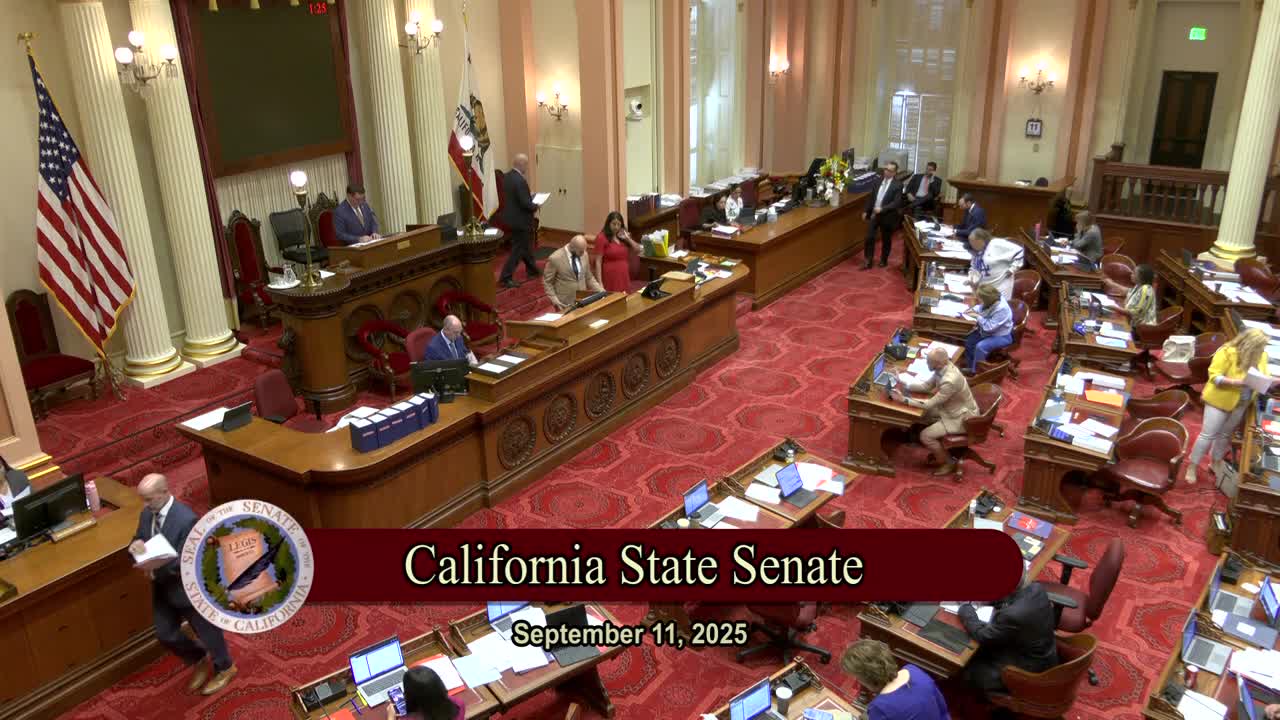 42SEC
Senate Floor
 2MIN
Assembly Floor
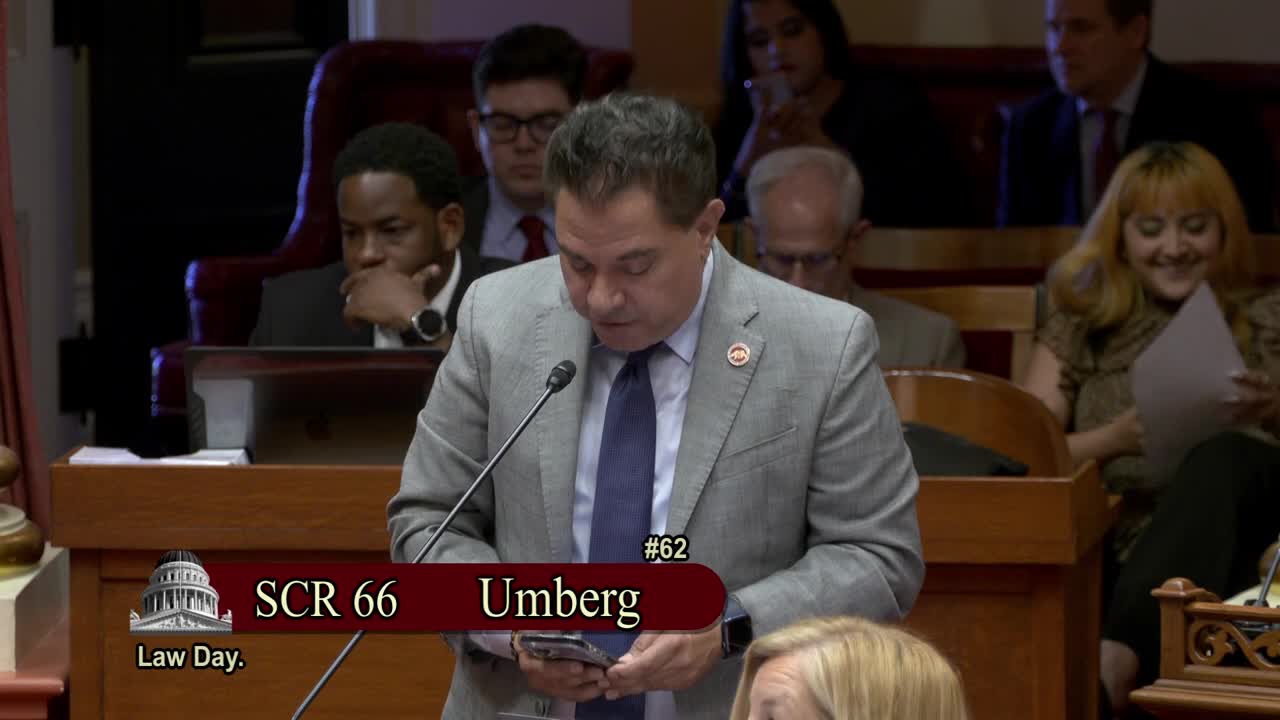 3MIN
Senate Floor
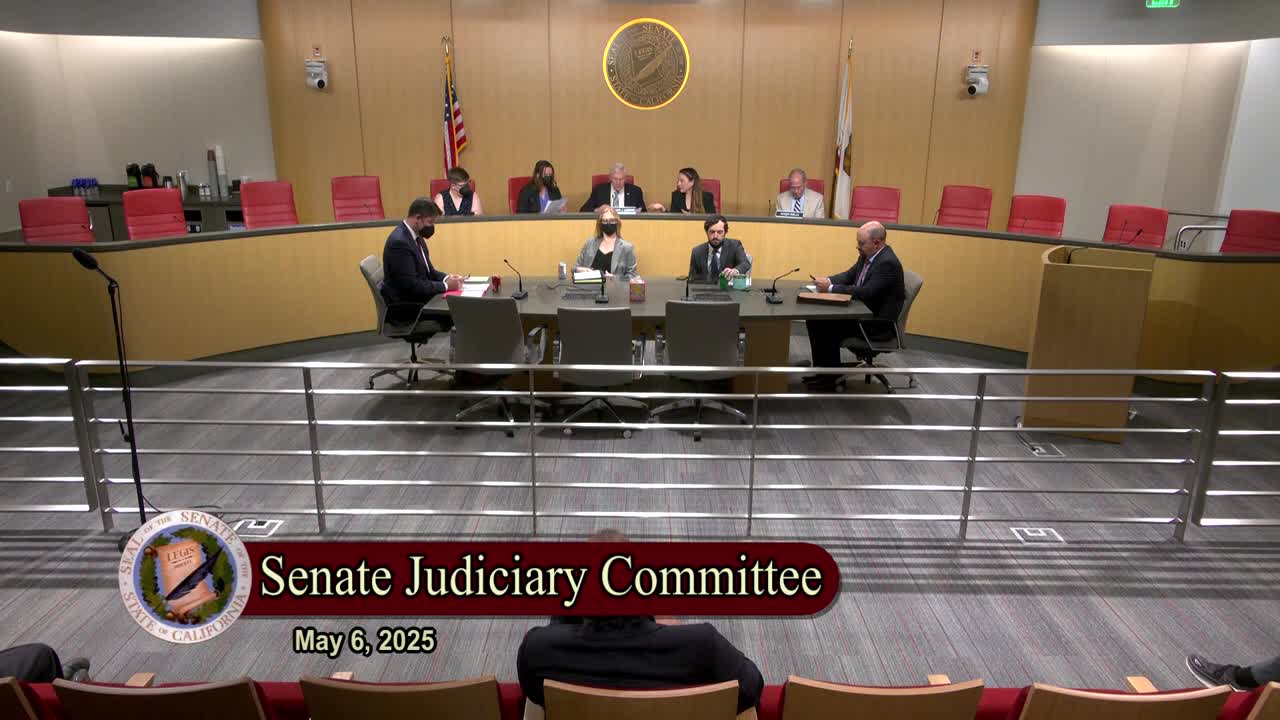 1H
Senate Standing Committee on Judiciary
Bill Author
Bill Co-Author(s):