SB 472: Pupil instruction: Holocaust and genocide education: notice, survey, and grant program.
- Session Year: 2025-2026
- House: Senate
- Latest Version Date: 2025-10-13
Current Status:
Passed
(2025-10-13: Chaptered by Secretary of State. Chapter 761, Statutes of 2025.)
Introduced
In Committee
Awaiting First Chamber Vote
Passed First Chamber
In Committee
Awaiting Second Chamber Vote
Passed Second Chamber
Enacted
What does this bill do?
The bill requires the State Department of Education to notify school districts, county offices, and charter schools serving grades 7–12 that Holocaust and genocide study are part of required history-social science instruction and allows the department to survey schools about how that instruction is taught. It also creates a Holocaust and Genocide Education Grant Program and fund, run by the State Superintendent, to give direct grants for classroom materials, events, teacher training (including substitutes), staff planning time, and transportation for Holocaust and genocide education.
The summary is provided by generative AI which can make mistakes. For original language, please view the details in the table below.
Existing law requires the State Department of Education to incorporate age-appropriate materials relating to, among other things, genocide and the Holocaust into publications that provide examples of curriculum resources for teacher use, consistent with the subject frameworks on history and social science. Under existing law, the Legislature encourages the incorporation of survivor, rescuer, liberator, and witness oral testimony into the teaching of genocide and the Holocaust. Existing law, upon appropriation by the Legislature, establishes the California Teachers Collaborative for Holocaust and Genocide Education to establish a statewide teacher professional development program on genocide, including the Holocaust, for school district, county office of education, and charter school teachers, and provides that the collaboratives mission is to ensure that genocide, including Holocaust, education is taught consistent with, among other things, content standards, curriculum frameworks, and instructional materials adopted by the State Board of Education, in ways that are interdisciplinary and age-appropriate to pupils of different grade levels.
This bill would require the Superintendent of Public Instruction to establish the Holocaust and Genocide Education Grant Program to provide direct allocations to school districts, county offices of education, and charter schools for the purposes of providing Holocaust and genocide education and professional development on Holocaust and genocide education, as provided. The bill would establish the Holocaust and Genocide Education Grant Program Fund in the State Treasury, and would require moneys in the fund to be available, upon appropriation by the Legislature, to the Superintendent for purposes of the grant program. The bill would require the department to issue a notice to school districts, county offices of education, and charter schools serving pupils in grades 7 to 12, inclusive, regarding genocide and Holocaust instruction, and would authorize the department to issue a survey to these local educational agencies on the status of Holocaust and genocide instruction at their schools, as provided.
Existing law requires the State Department of Education to incorporate age-appropriate materials relating to, among other things, genocide and the Holocaust into publications that provide examples of curriculum resources for teacher use, consistent with the subject frameworks on history and social science. Under existing law, the Legislature encourages the incorporation of survivor, rescuer, liberator, and witness oral testimony into the teaching of genocide and the Holocaust. Existing law, upon appropriation by the Legislature, establishes the California Teachers Collaborative for Holocaust and Genocide Education to establish a statewide teacher professional development program on genocide, including the Holocaust, for school district, county office of education, and charter school teachers, and provides that the collaboratives mission is to ensure that genocide, including Holocaust, education is taught consistent with, among other things, content standards, curriculum frameworks, and instructional materials adopted by the State Board of Education, in ways that are interdisciplinary and age-appropriate to pupils of different grade levels.
This bill would require the Superintendent of Public Instruction to establish the Holocaust and Genocide Education Grant Program to provide direct allocations to school districts, county offices of education, and charter schools for the purposes of providing Holocaust and genocide education and professional development on Holocaust and genocide education, as provided. The bill would establish the Holocaust and Genocide Education Grant Program Fund in the State Treasury, and would require moneys in the fund to be available, upon appropriation by the Legislature, to the Superintendent for purposes of the grant program. The bill would require those local educational agencies to, irrespective of participation in the grant program, submit an annual report to the department on Holocaust and genocide education, as provided. By imposing new duties on local educational agencies, the bill would impose a state-mandated local program. the department to issue a notice to school districts, county offices of education, and charter schools serving pupils in grades 7 to 12, inclusive, regarding genocide and Holocaust instruction, and would authorize the department to issue a survey to these local educational agencies on the status of Holocaust and genocide instruction at their schools, as provided.
The California Constitution requires the state to reimburse local agencies and school districts for certain costs mandated by the state. Statutory provisions establish procedures for making that reimbursement.This bill would provide that, if the Commission on State Mandates determines that the bill contains costs mandated by the state, reimbursement for those costs shall be made pursuant to the statutory provisions noted above.Existing law requires the State Department of Education to incorporate age-appropriate materials relating to, among other things, genocide and the Holocaust into publications that provide examples of curriculum resources for teacher use, consistent with the subject frameworks on history and social science. Under existing law, the Legislature encourages the incorporation of survivor, rescuer, liberator, and witness oral testimony into the teaching of genocide and the Holocaust. Existing law, upon appropriation by the Legislature, establishes the California Teachers Collaborative for Holocaust and Genocide Education to establish a statewide teacher professional development program on genocide, including the Holocaust, for school district, county office of education, and charter school teachers, and provides that the collaboratives mission is to ensure that genocide, including Holocaust, education is taught consistent with, among other things, content standards, curriculum frameworks, and instructional materials adopted by the State Board of Education, in ways that are interdisciplinary and age-appropriate to pupils of different grade levels.
This bill would require the Superintendent of Public Instruction to establish the Holocaust and Genocide Education Grant Program to provide direct allocations to school districts, county offices of education, and charter schools for the purposes of providing Holocaust and genocide education and professional learning development on Holocaust and genocide education, as provided. The bill would establish the Holocaust and Genocide Education Grant Program Fund in the State Treasury, and would require moneys in the fund to be available, upon appropriation by the Legislature, to the Superintendent for purposes of the grant program. The bill would require those local educational agencies to, irrespective of participation in the grant program, submit an annual report to the department on genocide and Holocaust education. and genocide education, as provided. By imposing new duties on local educational agencies, the bill would impose a state-mandated local program.
The California Constitution requires the state to reimburse local agencies and school districts for certain costs mandated by the state. Statutory provisions establish procedures for making that reimbursement.
This bill would provide that, if the Commission on State Mandates determines that the bill contains costs mandated by the state, reimbursement for those costs shall be made pursuant to the statutory provisions noted above.
Existing law requires the State Department of Education to incorporate age-appropriate materials relating to, among other things, genocide and the Holocaust into publications that provide examples of curriculum resources for teacher use, consistent with the subject frameworks on history and social science. Under existing law, the Legislature encourages the incorporation of survivor, rescuer, liberator, and witness oral testimony into the teaching of genocide and the Holocaust. Existing law, upon appropriation by the Legislature, establishes the California Teachers Collaborative for Holocaust and Genocide Education to establish a statewide teacher professional development program on genocide, including the Holocaust, for school district, county office of education, and charter school teachers, and provides that the collaboratives mission is to ensure that genocide, including Holocaust, education is taught consistent with, among other things, content standards, curriculum frameworks, and instructional materials adopted by the State Board of Education, in ways that are interdisciplinary and age-appropriate to pupils of different grade levels.
This bill would require the Superintendent of Public Instruction to establish the Holocaust and Genocide Education Grant Program to provide direct allocations to school districts, county offices of education, and charter schools for the purposes of providing Holocaust and genocide education and professional learning on Holocaust and genocide education, as provided. The bill would establish the Holocaust and Genocide Education Grant Program Fund in the State Treasury, and would require moneys in the fund to be available, upon appropriation by the Legislature, to the Superintendent for purposes of the grant program. The bill would require those local educational agencies to, irrespective of participation in the grant program, submit an annual report to the department on genocide and Holocaust education. By imposing new duties on local educational agencies, the bill would impose a state-mandated local program.
The California Constitution requires the state to reimburse local agencies and school districts for certain costs mandated by the state. Statutory provisions establish procedures for making that reimbursement.
This bill would provide that, if the Commission on State Mandates determines that the bill contains costs mandated by the state, reimbursement for those costs shall be made pursuant to the statutory provisions noted above.
(a)(1)The department shall issue a notice to all local educational agencies serving pupils in any of grades 7 to 12, inclusive, clarifying that social science instruction provided pursuant to subdivision (b) of Section 51220 is designed to provide a foundation for the understanding of human rights issues with particular attention to the study of the inhumanity of genocide, slavery, and the Holocaust. In furtherance of this instruction, the notice shall advise these local educational agencies of all of the following:
(A)Holocaust and genocide education are part of the adopted History-Social Science Content Standards and Framework adopted by the state board.
(B)The History-Social Science Framework adopted by the state board provides information about instruction on the Holocaust and genocide.
(2)The department shall include, within the notice described in paragraph (1), information about the existing resources available to support local educational agencies and teachers in the instruction of Holocaust and genocide education.
(3)The department is authorized to issue a survey to local educational agencies, no more than two years after these local educational agencies are issued the notice described in paragraph (1), on the status of Holocaust and genocide instruction at their schools.
(b)(1)The Superintendent shall establish the Holocaust and Genocide Education Grant Program to provide direct allocations to local educational agencies for the purposes of providing Holocaust and genocide education and professional development on Holocaust and genocide education.
(2)Grants provided under the grant program shall be used to provide resources and opportunities related to Holocaust and genocide education, which may include, but are not limited to, any of the following:
(A)Providing instructional materials on topics about the Holocaust and genocide.
(B)Hosting an event or an organization at a schoolsite maintained by the local educational agency for purposes related to Holocaust or genocide education.
(C)Financing teacher attendance at professional development opportunities focused on Holocaust and genocide education.
(D)Hiring substitute teachers to support teacher attendance at professional development opportunities focused on Holocaust and genocide education.
(E)Financing faculty and staff time to plan and facilitate local educational agency or school-based programs related to Holocaust and genocide education.
(F)Financing transportation to events and educational opportunities related to Holocaust and genocide education.
(3)The Superintendent shall adopt detailed regulations for the grant program, which shall include, but not be limited to, programmatic details, application criteria and deadlines, and reporting requirements on how allocations were spent.
(c)The Holocaust and Genocide Education Grant Program Fund is hereby established in the State Treasury. Moneys in the fund shall be available, upon appropriation by the Legislature, to the Superintendent for purposes of the grant program established pursuant to subdivision (b).
(d)For purposes of this section, the following definitions apply:
(1)Genocide means, as defined by the United Nations Convention on the Prevention and Punishment of the Crime of Genocide, any of the following acts committed with the intent to destroy, in whole or in part, a national, ethnic, racial, or religious group:
(A)Killing members of the group.
(B)Causing serious bodily or mental harm to members of the group.
(C)Deliberately inflicting on the group conditions of life calculated to bring about, in whole or in part, its physical destruction.
(D)Imposing measures intended to prevent births within the group.
(E)Forcibly transferring children of the group to another group.
(2)Holocaust, as described by the United States Holocaust Memorial Museum, was the systematic, bureaucratic, state-sponsored persecution and murder of 6,000,000 European Jews by the Nazi regime and its allies and collaborators; the Nazis also targeted other groups for persecution and murder, including Roma, people with disabilities, some Slavic peoples, especially Poles and Russians, Black people, communists, socialists, Jehovahs Witnesses, gay men, and people the Nazis called asocials and professional criminals.
(3)Local educational agency means a school district, county office of education, or charter school.
SEC. 2.If the Commission on State Mandates determines that this act contains costs mandated by the state, reimbursement to local agencies and school districts for those costs shall be made pursuant to Part 7 (commencing with Section 17500) of Division 4 of Title 2 of the Government Code. REVISIONS: HeadingLine 3.(a)(1)Each local educational agency shall, irrespective of participation in the grant program established pursuant to subdivision (b), submit an annual report to the department on Holocaust and genocide education provided by the local educational agency.
(2)A report provided pursuant to paragraph (1) shall include both of the following for the reporting year:
(A)Whether Holocaust and genocide education was taught.
(B)A brief description of how, and in which grades, instruction on Holocaust and genocide education was provided.
(b)(1)The Superintendent shall establish the Holocaust and Genocide Education Grant Program to provide direct allocations to local educational agencies for the purposes of providing Holocaust and genocide education and professional development on Holocaust and genocide education.
(2)Grants provided under the grant program shall be used to provide resources and opportunities related to Holocaust and genocide education, which may include, but are not limited to, any of the following:
(A)Providing instructional materials on topics about the Holocaust and genocide.
(B)Hosting an event or an organization at a schoolsite maintained by the local educational agency for purposes related to Holocaust or genocide education.
(C)Financing teacher attendance at professional development opportunities focused on Holocaust and genocide education.
(D)Hiring substitute teachers to support teacher attendance at professional development opportunities focused on Holocaust and genocide education.
(E)Financing faculty and staff time to plan and facilitate local educational agency or school-based programs related to Holocaust and genocide education.
(F)Financing transportation to events and educational opportunities related to Holocaust and genocide education.
(b)(3)The Superintendent shall adopt detailed regulations for the grant program, which shall include, but not be limited to, programmatic details, application criteria and deadlines, and reporting requirements on how allocations were spent.
(c)The Holocaust and Genocide Education Grant Program Fund is hereby established in the State Treasury. Moneys in the fund shall be available, upon appropriation by the Legislature, to the Superintendent for purposes of the grant program established pursuant to subdivision (a). (b).
(d)All local educational agencies shall, irrespective of participation in the grant program established pursuant to subdivision (a), submit an annual report to the department on Holocaust and genocide education provided by the local educational agency.(d)For purposes of this section, the following definitions apply:
(1)Genocide means, as defined by the United Nations Convention on the Prevention and Punishment of the Crime of Genocide, any of the following acts committed with the intent to destroy, in whole or in part, a national, ethnic, racial, or religious group:
(A)Killing members of the group.
(B)Causing serious bodily or mental harm to members of the group.
(C)Deliberately inflicting on the group conditions of life calculated to bring about, in whole or in part, its physical destruction.
(D)Imposing measures intended to prevent births within the group.
(E)Forcibly transferring children of the group to another group.
(2)Holocaust, as described by the United States Holocaust Memorial Museum, was the systematic, bureaucratic, state-sponsored persecution and murder of 6,000,000 European Jews by the Nazi regime and its allies and collaborators; the Nazis also targeted other groups for persecution and murder, including Roma, people with disabilities, some Slavic peoples, especially Poles and Russians, Black people, communists, socialists, Jehovahs Witnesses, gay men, and people the Nazis called asocials and professional criminals.
(e)(3)Local educational agency means a school district, county office of education, or charter school.
SEC. 2.If the Commission on State Mandates determines that this act contains costs mandated by the state, reimbursement to local agencies and school districts for those costs shall be made pursuant to Part 7 (commencing with Section 17500) of Division 4 of Title 2 of the Government Code.
(a)The Superintendent shall establish the Holocaust and Genocide Education Grant Program to provide direct allocations to local educational agencies for the purposes of providing Holocaust and genocide education and professional learning on Holocaust and genocide education.
(b)The Superintendent shall adopt detailed regulations for the grant program, which shall include, but not be limited to, programmatic details, application criteria and deadlines, and reporting requirements on how allocations were spent.
(c)The Holocaust and Genocide Grant Program Fund is hereby established in the State Treasury. Moneys in the fund shall be available, upon appropriation by the Legislature, to the Superintendent for purposes of the grant program established pursuant to subdivision (a).
(d)All local educational agencies shall, irrespective of participation in the grant program established pursuant to subdivision (a), submit an annual report to the department on Holocaust and genocide education provided by the local educational agency.
(e)Local educational agency means a school district, county office of education, or charter school.
SEC. 2.If the Commission on State Mandates determines that this act contains costs mandated by the state, reimbursement to local agencies and school districts for those costs shall be made pursuant to Part 7 (commencing with Section 17500) of Division 4 of Title 2 of the Government Code.
|
Date
|
Status
|
|---|---|
| Oct 13, 2025 | Chaptered by Secretary of State. Chapter 761, Statutes of 2025. |
| Oct 13, 2025 | Approved by the Governor. |
| Sep 22, 2025 | Enrolled and presented to the Governor at 11 a.m. |
| Sep 10, 2025 | In Senate. Ordered to engrossing and enrolling. |
| Sep 10, 2025 | Read third time. Passed. (Ayes 77. Noes 0. Page 3188.) Ordered to the Senate. |
| Sep 2, 2025 | Read second time. Ordered to third reading. |
| Aug 29, 2025 | From committee: Do pass. (Ayes 15. Noes 0.) (August 29). |
| Aug 20, 2025 | August 20 set for first hearing. Placed on APPR. suspense file. |
| Jul 3, 2025 | From committee: Do pass and re-refer to Com. on APPR. (Ayes 9. Noes 0.) (July 2). Re-referred to Com. on APPR. |
| Jul 3, 2025 | Coauthors revised. |
| Jun 16, 2025 | Referred to Com. on ED. |
| Jun 5, 2025 | In Assembly. Read first time. Held at Desk. |
| Jun 4, 2025 | Read third time. Passed. (Ayes 39. Noes 0. Page 1509.) Ordered to the Assembly. |
| May 23, 2025 | Read second time. Ordered to third reading. |
| May 23, 2025 | From committee: Do pass. (Ayes 6. Noes 0. Page 1201.) (May 23). |
| May 20, 2025 | Set for hearing May 23. |
| May 19, 2025 | May 19 hearing: Placed on APPR. suspense file. |
| May 9, 2025 | Set for hearing May 19. |
| May 7, 2025 | Read second time and amended. Re-referred to Com. on APPR. |
| May 6, 2025 | From committee: Do pass as amended and re-refer to Com. on APPR. (Ayes 7. Noes 0. Page 961.) (April 30). |
| Apr 21, 2025 | From committee with author's amendments. Read second time and amended. Re-referred to Com. on ED. |
| Apr 17, 2025 | Set for hearing April 30. |
| Apr 10, 2025 | April 23 hearing postponed by committee. |
| Apr 4, 2025 | Set for hearing April 23. |
| Feb 26, 2025 | Referred to Com. on ED. |
| Feb 20, 2025 | From printer. May be acted upon on or after March 22. |
| Feb 19, 2025 | Introduced. Read first time. To Com. on RLS. for assignment. To print. |
|
Date
|
Description
|
Location
|
Votes
|
|
|---|---|---|---|---|
| Sep 10, 2025 | SB 472 Stern Senate Third Reading By Lowenthal | Assembly Floor |
Passed |
|
| Aug 29, 2025 | Do pass. | Assembly Standing Committee on Appropriations |
Passed |
|
| Jul 2, 2025 | Do pass and be re-referred to the Committee on [Appropriations] | Assembly Standing Committee on Education |
Passed |
|
| Jun 4, 2025 | Senate 3rd Reading SB472 Stern et al. | Senate Floor |
Passed |
|
| May 23, 2025 | Do pass | Senate Standing Committee on Appropriations |
Passed |
|
| May 19, 2025 | Placed on suspense file | Senate Standing Committee on Appropriations |
Passed |
|
| Apr 30, 2025 | Do pass as amended, but first amend, and re-refer to the Committee on [Appropriations] | Senate Standing Committee on Education |
Passed |
This list shows positions taken on this bill by organizations on the date displayed, which is linked to the original source.
Positions by individuals are not included.
|
Organization
|
Position
|
Date
|
|---|---|---|
| AJC - Los Angeles | ** Support | |
| AJC - San Diego | ** Support | |
| AJC Northern California | ** Support | |
| Anti-Defamation League | ** Support | |
| Armenian National Committee of America - Western Region | ** Support | |
| Beyt Tikkun Synagogue | ** Against | |
| California Association Of School Business Officials | ** Against | |
| Cambodian Genocide Resource Center | ** Support | |
| Central Valley Holocaust Educators Network | ** Support | |
| Central Valley Holocaust Educators' Network | ** Support | |
| CODEPINK Central Coast | ** Against | |
| End Uyghur Genocide | ** Support | |
| Hadassah | ** Support | |
| Holocaust Museum LA | ** Support | |
| International Jewish Anti-Zionist Network | ** Against | |
| International Jewish Anti-Zionist Network (SF Bay Area) | ** Against | |
| Israeli-American Civic Action Network | ** Support | |
| JCC/Federation of San Luis Obispo | ** Support | |
| JCRC Bay Area | ** Support | |
| Jewish Community Federation and Endowment Fund | ** Support | |
| Jewish Community Relations Council, Santa Barbara | ** Support | |
| Jewish Democratic Club of Marin | ** Support | |
| Jewish Family and Children's Services of San Francisco, the Peninsula, Marin and Sonoma Counties | ** Support | |
| Jewish Family and Children’s Service of Long Beach and Orange County | ** Support | |
| Jewish Family Service of Los Angeles | ** Support | |
| Jewish Family Service of San Diego | ** Support | |
| Jewish Family Service of the Desert | ** Support | |
| Jewish Family Services of Silicon Valley | ** Support | |
| Jewish Federation Los Angeles | ** Support | |
| Jewish Federation of San Diego | ** Support | |
| Jewish Federation of The Greater San Gabriel and Pomona Valleys | ** Support | |
| Jewish Free Loan Association | ** Support | |
| Jewish Long Beach | ** Support | |
| Jewish Partisan Educational Foundation | ** Support | |
| Jewish Public Affairs Committee | ** Support | |
| Jewish Silicon Valley | ** Support | |
| Jewish Voice for Peace California | ** Against | |
| Office of the Riverside County Superintendent of Schools | ** Against | |
| Queers Undermining Israeli Terrorism | ** Against | |
| Raoul Wallenberg Jewish Democratic Club | ** Support | |
| Twige Project | ** Support |
SENATE THIRD READING
STR Bill Id:SB 472
Author:(Stern)
As Amended Ver:May 7, 2025
Majority vote
SUMMARY
Requires the Superintendent of Public Instruction (SPI) to establish the Holocaust and Genocide Education Grant Program to provide direct allocations to local education agencies (LEAs) for the purposes of providing Holocaust and genocide education and professional training; requires the California Department of Education (CDE) to issue a notice to LEAs serving students in grades 7 to 12, clarifying that social science instruction is designed to provide a foundation for the understanding of human rights issues with particular attention to the study of the inhumanity of genocide, slavery, and the Holocaust; and authorizes the CDE to issue a survey to LEAs, no more than two years after the notice, on the status of Holocaust and genocide instruction at their schools.
Major Provisions
- Requires the CDE to issue a notice to all LEAs serving students in any of grades 7 to 12 clarifying that social science instruction specified in the course of study for grades 7 to 12 is designed to provide a foundation for the understanding of human rights issues, with particular attention to the study of the inhumanity of genocide, slavery, and the Holocaust. Requires the notice to advise LEAs of all of the following:
- Holocaust and genocide education are part of the adopted History-Social Science Content Standards and Framework adopted by the State Board of Education (SBE); and
- The History-Social Science Framework adopted by the SBE provides information about instruction on the Holocaust and genocide.
- Requires the CDE to include in the notice information about the existing resources available to support LEAs and teachers in the instruction of Holocaust and genocide education.
- Authorizes the CDE to issue a survey to these LEAs, no more than two years after the notice is issued, on the status of Holocaust and genocide instruction at their schools.
- Requires the SPI to establish the Holocaust and Genocide Education Grant Program to provide direct allocations to LEAs for the purposes of providing Holocaust and genocide education and professional development on Holocaust and genocide education.
- Requires that grants provided under the program be used to provide resources and opportunities related to Holocaust and genocide education, which may include, but are not limited to, any of the following:
- Providing instructional materials on topics about the Holocaust and genocide;
- Hosting an event or an organization at a schoolsite for purposes related to Holocaust or genocide education;
- Financing teacher attendance at professional development opportunities focused on Holocaust and genocide education;
- Hiring substitute teachers to support teacher attendance at professional development opportunities focused on Holocaust and genocide education;
- Financing faculty and staff time to plan and facilitate LEA or school-based programs related to Holocaust and genocide education; and
- Financing transportation to events and educational opportunities related to Holocaust and genocide education.
- Requires the SPI to adopt detailed regulations for the grant program, including, but not limited to, programmatic details, application criteria and deadlines, and reporting requirements on how allocations were spent.
- Establishes the Holocaust and Genocide Education Grant Program Fund in the State Treasury, and states that moneys in the fund shall be available, upon appropriation by the Legislature, to the SPI for purposes of the grant program.
- Establishes the following definitions for purposes of the act:
- ″Genocide″ means, as defined by the United Nations Convention on the Prevention and Punishment of the Crime of Genocide, any of the following acts committed with the intent to destroy, in whole or in part, a national, ethnic, racial, or religious group:
- Killing members of the group;
- Causing serious bodily or mental harm to members of the group;
- Deliberately inflicting on the group conditions of life calculated to bring about, in whole or in part, its physical destruction;
- Imposing measures intended to prevent births within the group; or
- Forcibly transferring children of the group to another group.
- ″Holocaust,″ as described by the United States Holocaust Memorial Museum, was the systematic, bureaucratic, state-sponsored persecution and murder of 6,000,000 European Jews by the Nazi regime and its allies and collaborators; the Nazis also targeted other groups for persecution and murder, including Roma, people with disabilities, some Slavic peoples, especially Poles and Russians, Black people, communists, socialists, Jehovah′s Witnesses, gay men, and people the Nazis called ″asocials″ and ″professional criminals;″ and
- ″Local educational agency″ means a school district, county office of education, or charter school.
COMMENTS
Governor′s Council on Holocaust and Genocide Education report. In 2021, Governor Newsom established the Governor′s Council on Holocaust and Genocide Education. The Council was tasked with equipping California educators and students with tools to recognize and address antisemitism, racism, bigotry, and other forms of hate through education and empathy. To support this mission, the Council commissioned a statewide study to examine the current landscape of Holocaust and genocide education implementation across LEAs.
In 2025, the Council released a report based on this survey, which was completed by 559 respondents representing 29% of California LEAs. The study found that:
- While some districts have developed robust programs, the overall landscape remains fragmented, with success often dependent on individual educator initiative. LEA representatives emphasized the need for state-level support—ultimately pointing to the necessity of a systematic, state-supported approach to ensure the kind of equitable, high-quality Holocaust and genocide education statewide that the Council envisions.
- 26% (143 respondents) had a Holocaust and genocide education system in place. Of these, 72% (104 respondents) indicated that their programs are required, and 16% (23 respondents) said they are optional. City-designated and large LEAs were most likely to have established programs.
- Major barriers to providing this instruction included insufficient time for curriculum development, lack of appropriate resources, and lack of community resources. The majority of respondents (450) said their LEA did not provide professional development focused on Holocaust and genocide education. COEs emphasized the need for expanded instructional supports, professional learning opportunities, and community connections, especially in regions with fewer local resources.
The report made the following recommendations:
- Communicate California′s vision for Holocaust and genocide education;
- Revise the California History–Social Science content standards;
- Revise the History–Social Science Framework;
- Update, distribute, and provide guidance for the Model Curriculum for Human Rights and Genocide;
- Continue to create a vetted central clearinghouse for curriculum, instruction, assessment, and professional learning;
- Increase direct funding to districts and schools for Holocaust and genocide education;
- Expand existing statewide professional learning on Holocaust and genocide education
- Monitor and evaluate educational outcomes;
- Continue to conduct additional research to inform the Council′s future actions; and
- Expand, publicize, and strengthen the role of the Governor′s Council on Holocaust and Genocide Education.
Existing state instructional resources on genocide. According to the Senate Education Committee, content on genocide is included in a number of state curriculum documents, including:
- The Model Curriculum for Human Rights and Genocide, which was originally developed in 1987, is posted on the CDE website, and addresses the Armenian, Cambodian, and Rwandan Genocides;
- The History–Social Science Framework adopted in 2016 contains extensive content on the Armenian Genocide and the Holocaust, and mentions several other examples of genocide;
- The History-Social Science content standards, adopted in 1998, include standards relating to the Holocaust and Armenian Genocide in grades 10;
- Genocide is addressed in the Ethnic Studies Model Curriculum adopted in 2021; and
- The Cambodian American Studies Model Curriculum, currently under development, will contain content related to the Cambodian genocide.
According to the Author
″In light of growing incidents of hate and discrimination, it has become more critical than ever to ensure that students are equipped with a full understanding of historical atrocities like the Holocaust and other genocides. California′s recent efforts to address the gaps in Holocaust and genocide education reflect the urgency of this issue. By introducing Senate Bill 472, I am championing a forward-thinking approach to combat intolerance by mandating both funding for school districts and a system for positive educational outcomes. This bill stands as a crucial step toward fostering empathy, promoting awareness, and preventing the repetition of past injustices. It is a vital investment in the education of future generations, ensuring they are not only informed but also empowered to create a more just and compassionate society.″
Arguments in Support
The Jewish Public Affairs Committee writes, ″California first mandated Holocaust and Genocide Education (HGE) in 1985. Yet a landmark 2025 report by the Governor′s Council on Holocaust and Genocide Education found that only 26% of Local Education Agencies (LEAs) currently offer any form of genocide education. Over 80% of LEAs surveyed reported that they do not provide professional development for educators on these topics, citing barriers such as a lack of training, instructional resources, and dedicated time.
SB 472 will address these challenges by establishing a grant program within the California Department of Education to provide direct funding to LEAs for Holocaust and genocide instruction. Grant funds may be used to support instructional materials, professional development, curriculum planning, transportation to educational events, and other direct expenses. In addition, SB 472 will require all LEAs – regardless of whether they receive funding – to submit an annual report documenting their implementation of HGE, creating new accountability and insight into statewide compliance.
This bill is urgently needed. Since October 7th, there has been a historic surge in antisemitism on California campuses – with Jewish students reporting harassment, threats, classroom bias, and administrative inaction. According to the Anti-Defamation League, 2023 saw the highest number of antisemitic incidents in the U.S. since tracking began in 1979 – a 140% increase over the previous year. But antisemitism does not occur in a vacuum. The same climate of hate also targets AAPI, Black, Latino, LGBTQ+, Muslim, and immigrant students. HGE is not just a history lesson – it′s an antidote to contemporary hate, equipping students to recognize dangerous patterns and stand up to injustice in all its forms.″
Arguments in Opposition
The International Jewish Anti-Zionist Network (SF Bay Area) writes, ″SB 472 is part of a multi-year anti-Ethnic Studies, anti-Palestine legislative campaign that aligns with the Trump administration′s attacks on all social justice education. It is part of the strategy that includes AB 1468, which attempts to police Ethnic Studies curriculum from Sacramento and to gut local control over Ethnic Studies content.
This legislation is not about thoughtful, age-appropriate education about genocide. It is a Trojan horse for pro-Israeli organizations to control critical discussion of genocide, particularly the current genocide of Palestinians in Gaza. It will cede even more power and money to the California Teachers Collaborative for Holocaust and Genocide Education, which is dominated by pro-Israeli forces, not educators. The mandate for the collaborative centers the Nazi Holocaust, ignoring or minimizing many other significant genocides.
Supporters of SB 472 conflate education about the Nazi Holocaust with support for Israel, and discussion of Israel′s actions in Palestine with antisemitism. But opposition to Israel has nothing to do with antisemitism. Antisemitism is hatred of, discrimination against or stereotypes about Jews because of their religion, culture, and/or appearance. Israel is a state with policies and actions that California′s students have a right to examine through a variety of lenses, just as they would examine the policies and actions of the United States, China, or any other country.″
FISCAL COMMENTS
According to the Assembly Appropriations Committee:
- Proposition 98 General Fund cost pressures likely in the hundreds of thousands to low millions of dollars for the Legislature to provide an appropriation for the grant program.
- One-time General Fund costs of approximately $794,000 per year for two years for the CDE to hire additional staff to develop the survey, analyze and report survey data, and develop and administer the grant program.
VOTES
SENATE FLOOR: 39-0-1
YES: Allen, Alvarado-Gil, Archuleta, Arreguín, Ashby, Becker, Blakespear, Cabaldon, Caballero, Cervantes, Choi, Cortese, Dahle, Durazo, Gonzalez, Grayson, Grove, Hurtado, Jones, Laird, Limón, McGuire, McNerney, Menjivar, Niello, Ochoa Bogh, Padilla, Pérez, Richardson, Rubio, Seyarto, Smallwood-Cuevas, Stern, Strickland, Umberg, Valladares, Wahab, Weber Pierson, Wiener
ABS, ABST OR NV: Reyes
ASM EDUCATION: 9-0-0
YES: Muratsuchi, Hoover, Addis, Alvarez, Bonta, Castillo, Garcia, Lowenthal, Patel
ASM APPROPRIATIONS: 15-0-0
YES: Wicks, Sanchez, Arambula, Calderon, Caloza, Dixon, Elhawary, Fong, Mark González, Ahrens, Pacheco, Pellerin, Solache, Ta, Tangipa
UPDATED
VERSION: May 7, 2025
CONSULTANT: Tanya Lieberman / ED. / (916) 319-2087 FN: 0001341
Date of Hearing: August 20, 2025
ASSEMBLY COMMITTEE ON APPROPRIATIONS
Buffy Wicks, Chair
SBPCA Bill Id:SB 472
Author:(Stern) – As Amended Ver:May 7, 2025
Policy Committee: | Education | Vote: | 9 - 0 |
|
| ||
|
|
Urgency: No State Mandated Local Program: No Reimbursable: No
SUMMARY:
This bill requires the Superintendent of Public Instruction (SPI) establish the Holocaust and Genocide Education Grant Program to provide direct allocations to local educational agencies (LEAs), subject to an appropriation, to support Holocaust and genocide education and professional learning.
Additionally, the bill requires the California Department of Education (CDE) to issue a notice to all local educational agencies serving students in any of grades 7 through 12 regarding the inclusion of Holocaust and genocide education within the adopted History-Social Science Content Standards and Framework adopted by the State Board of Education (SBE). The bill also authorizes the CDE to issue a survey to LEAs on the status of Holocaust and genocide instruction at their schools.
FISCAL EFFECT:
- Proposition 98 General Fund cost pressures likely in the in the hundreds of thousands to low millions of dollars for the Legislature to provide an appropriation for the grant program.
- One-time General Fund costs of approximately $794,000 per year for two years for the CDE to hire additional staff to develop the survey, analyze and report survey data, and develop and administer the grant program.
COMMENTS:
- Purpose. According to the author:
In light of growing incidents of hate and discrimination, it has become more critical than ever to ensure that students are equipped with a full understanding of historical atrocities like the Holocaust and other genocides. California’s recent efforts to address the gaps in Holocaust and genocide education reflect the urgency of this issue. By introducing Senate Bill 472, I am championing a forward-thinking approach to combat intolerance by mandating both funding for school districts and a system for evaluating educational outcomes. This bill stands as a crucial step toward fostering empathy, promoting awareness, and preventing the repetition of past injustices. It is a vital investment in the education of future generations, ensuring they are not only informed but also empowered to create a more just and compassionate society.
- Background. In 2021, the Governor launched the Council on Holocaust and Genocide Education and charged it with assessing the status of Holocaust and genocide education in California schools, making recommendations and promoting best practices for how to improve Holocaust and genocide education, and sponsoring Holocaust and genocide remembrance. Senator Henry Stern, Attorney General Rob Bonta, State Superintendent of Public Instruction Tony Thurmond, and Dr. Anita Friedman, Executive Director, Jewish Family and Children’s Services/Northern California all co-chair the Council. The Council’s general membership is made up of four elected officials as well as nine academics, advocates, and community organizations representing groups impacted by the Holocaust and genocide throughout history. In January 2025, the Council released a report in partnership with WestEd examining the current landscape of Holocaust and genocide education implementation across LEAs. Per the report, “the findings show that while some districts have developed robust programs, the overall landscape remains fragmented, with success often dependent on individual educator initiative.” The report contained several recommendations. This bill codifies one of the recommendations by establishing a Holocaust and Genocide Education Grant Program to provide direct allocations to LEAs for the purposes of providing Holocaust and genocide education and professional learning. Allowable uses for the funds include: providing instructional materials on topics about the Holocaust and genocide, financing teacher attendance at professional development opportunities focused on Holocaust and genocide education, and hiring substitute teachers to support teacher attendance at professional development opportunities focused on Holocaust and genocide education.
Analysis Prepared by: Aaron Heredia / APPR. / (916) 319-2081
SENATE RULES COMMITTEE Office of Senate Floor Analyses (916) 651-1520 Fax: (916) 327-4478 | SB 472 |
THIRD READING
Bill No: SB 472
Author: Stern (D), et al.
Amended: 5/7/25
Vote: 21
SENATE EDUCATION COMMITTEE: 7-0, 4/30/25
AYES: Pérez, Ochoa Bogh, Cabaldon, Choi, Cortese, Gonzalez, Laird
SENATE APPROPRIATIONS COMMITTEE: 6-0, 5/23/25
AYES: Caballero, Seyarto, Cabaldon, Grayson, Richardson, Wahab
NO VOTE RECORDED: Dahle
SUBJECT: Pupil instruction: Holocaust and genocide education: notice, survey, and grant program
SOURCE: Jewish Public Affairs Committee of California
DIGEST:
This bill (1) requires the Superintendent of Public Instruction (SPI) to establish the Holocaust and Genocide Education Grant Program to provide direct allocations to local education agencies (LEAs) for the purposes of providing Holocaust and genocide education and professional training. This bill also (2) requires the State Department of Education (CDE) to issue a notice to LEAs serving pupils in grades 7 to 12, as specified, clarifying, that social science instruction is designed to provide a foundation for the understanding of human rights issues with particular attention to the study of the inhumanity of genocide, slavery, and the Holocaust. Finally, this bill (3) authorizes CDE to issue a survey to LEAs, no more than two years after the notice, on the status of Holocaust and genocide instruction at their schools.
ANALYSIS:
Existing law:
- Requires LEAs that enroll students in grades 7 to 12 to offer courses in social sciences, drawing upon the disciplines of geography, history, political science, psychology, and sociology, designed to fit the maturity of the pupils. Requires instruction to provide a foundation for the relations of persons to their human and natural environment, Eastern and Western cultures and civilizations; human rights issues, with particular attention to the study of the inhumanity of genocide, slavery, the Holocaust, and may include the Armenian Genocide; and, to the extent instruction is provided on the Spanish colonization of California or the Gold Rush Era, the treatment and perspectives of Native Americans during those periods; and contemporary issues. (Education Code (EC) § 51220)
- Permits, with respect to students in grades 7 to 12, instruction in the subject of history-social science to include grade-level appropriate instruction on violence awareness and prevention, which may include personal testimony demonstrated through oral or video histories that illustrate the economic and cultural effects of violence within a city, the state, and the country for pupils in grades 7 to 12. (EC § 51220.3)
- Requires instruction in social sciences to include the early history of California and a study of the role and contributions of people of all genders, Native Americans, African Americans, Latino Americans, Asian Americans, Pacific Islanders, European Americans, LGBTQ+ Americans, persons with disabilities, and members of other ethnic, cultural, religious, and socioeconomic status groups, to the economic, political, and social development of California and the United States of America, with particular emphasis on portraying the role of these groups in contemporary society. (EC § 51204.5)
- Requires CDE to incorporate publications that provide examples of curriculum resources for teacher use those materials developed by publishers of nonfiction, trade books, and primary sources, or other public or private organizations, that are age appropriate and consistent with the subject frameworks on history and social science that deal with civil rights, human rights violations, genocide, slavery, and the Holocaust. (EC § 51226.3(a)(1))
- Encourages, via the Legislature, CDE to incorporate into publications that provide examples of curriculum resources for teacher use those materials developed by publishers of nonfiction, trade books, and primary sources, or other public or private organizations, that are age appropriate and consistent with the subject frameworks on history and social science that deal with the Armenian, Cambodian, Darfur, and Rwandan genocides. (EC § 51226.3(a)(2))
- Encourages, via the Legislature, all state and local professional development activities to provide teachers with content background and resources to assist them in teaching about civil rights, human rights violations, genocide, slavery, the Armenian Genocide, and the Holocaust. (EC § 51226.3(c))
- Encourages, via the Legislature, the incorporation of survivor, rescuer, liberator, and witness oral testimony into the teaching of human rights, the Holocaust, and genocide, including, but not limited to, the Armenian, Cambodian, Darfur, and Rwandan genocides. (EC § 51226.3(b)(1))
- Establishes the California Collaborative for Holocaust and Genocide Education under the CDE’s direction, and requires the Collaborative to (1) develop and provide curriculum resources on genocide and Holocaust education, and (2) provide a statewide teacher professional development program on genocide and Holocaust education. (EC § 51221.1)
This bill:
- Requires the SPI to establish the Holocaust and Genocide Education Grant Program to provide direct allocations to school districts, county offices of education, and charter schools for the purposes of providing Holocaust and genocide education and professional development on Holocaust and genocide education. Grants provided under this grant program shall be used to provide resources and opportunities related to Holocaust and genocide education, which may include, but are not limited to, the following:
- Providing instructional materials on topics about the Holocaust and genocide.
- Hosting an event or organization at a schoolsite maintained by the LEA for the purposes of Holocaust and genocide education.
- Financing teacher attendance at professional development opportunities focused on Holocaust education.
- Hiring substitute teachers to support teacher attendance at professional development opportunities focused on Holocaust and genocide education.
- Financing faculty and staff time to plan and facilitate LEA or school based programs related to Holocaust and genocide education.
- Financing transportation to events and educational opportunities related to Holocaust and genocide education.
- Establishes the Holocaust and Genocide Education Grant Program Fund in the State Treasury, upon appropriation, to be available to the SPI for purposes of the grant program.
- Requires the SPI to adopt regulations for the grant program, including programmatic details, application criteria and deadlines, and reporting requirements on how allocations were spent.
- Requires the CDE to issue a notice to all LEAs serving pupils in grades 7 to 12 inclusive, clarifying that social sciences instruction is designed to provide a foundational understanding of human rights issues with particular attention to the study of the inhumanity of genocide, slavery, and the Holocaust. Requires the notice, in furtherance of this instruction, an advisory of the following:
- Holocaust and genocide education are part of the adopted History-Social Science Content Standards and Framework adopted by the state board.
- The History-Social Science Framework adopted by the state board provides information about instruction on the Holocaust and genocide.
- Requires CDE to provide, alongside the above notice, information about the existing resources available to support local educational agencies and teachers in the instruction of Holocaust and genocide education.
- Authorizes CDE to issue a survey to LEAs, no more than two years after the above notice, on the status of Holocaust and genocide instruction at their schools.
- Defines “Holocaust” and “Genocide” consistent with existing definitions in Education Code.
Comments
- Need for this bill. According to the author, “In light of growing incidents of hate and discrimination, it has become more critical than ever to ensure that students are equipped with a full understanding of historical atrocities like the Holocaust and other genocides. California’s recent efforts to address the gaps in Holocaust and genocide education reflect the urgency of this issue. By introducing Senate Bill 472, I am championing a forward-thinking approach to combat intolerance by mandating both funding for school districts and a system for evaluating educational outcomes. This bill stands as a crucial step toward fostering empathy, promoting awareness, and preventing the repetition of past injustices. It is a vital investment in the education of future generations, ensuring they are not only informed but also empowered to create a more just and compassionate society.”
- The Governor’s Council on Holocaust and Genocide Education. In 2021, Governor Gavin Newsom launched the Governor’s Council on Holocaust and Genocide Education. The Council was charged with assessing the status of Holocaust and genocide education in California schools; making recommendations and promoting best practices for how to improve Holocaust and genocide education; and sponsoring Holocaust and genocide remembrance. The Council is co-chaired by State Senator Henry Stern, Attorney General Rob Bonta, State Superintendent of Public Instruction Tony Thurmond, and Dr. Anita Friedman, Executive Director, Jewish Family and Children’s Services/Northern California. The Council’s general membership is made up of four elected officials as well as nine academics, advocates, and community organizations representing groups impacted by the Holocaust and genocide throughout history.
In January 2025, the Council released a report in partnership with WestEd entitled, “Holocaust and Genocide Education in California: A Study of Statewide Context and Local Implementation,” which examines the current landscape of Holocaust and genocide education implementation across LEAs. Per the report, “the findings show that while some districts have developed robust programs, the overall landscape remains fragmented, with success often dependent on individual educator initiative. LEA representatives emphasized the need for state-level support—ultimately pointing to the necessity of a systematic, state-supported approach to ensure the kind of equitable, high-quality Holocaust and genocide education statewide that the Council envisions.” To this end, the report offered the following recommendations:
- Communicate California’s Vision for Holocaust and Genocide Education
- Revise the California History–Social Science Content Standards
- Revise the History–Social Science Framework for California Public Schools
- Update, Distribute, and Provide Guidance for the Model Curriculum for Human Rights and Genocide
- Continue to Create a Vetted Central Clearinghouse for Curriculum, Instruction, Assessment, and Professional Learning
- Increase Direct Funding to Districts and Schools for Holocaust and Genocide Education
- Expand Existing Statewide Professional Learning on Holocaust and Genocide Education
- Monitor and Evaluate Educational Outcomes
- Continue to Conduct Additional Research to Inform the Council’s Future Actions
- Expand, Publicize, and Strengthen the Role of the Governor’s Council on Holocaust and Genocide Education
- The Holocaust and Genocide Education Grant. This bill seeks to advance and codify one of the report’s recommendations by establishing a Holocaust and Genocide Education Grant Program to provide direct allocations to LEAs for the purposes of providing Holocaust and genocide education and professional learning. The SPI would be tasked with developing and adopting detailed regulations for the grant program including but not limited to programmatic details, application criteria and deadlines, and reporting requirements on how allocations are spent. Allowable uses for the allocations include, but are not limited to, the following:
- Providing instructional materials on topics about the Holocaust and genocide.
- Hosting an event or an organization at a schoolsite maintained by the LEA for purposes related to Holocaust or genocide education.
- Financing teacher attendance at professional development opportunities focused on Holocaust and genocide education.
- Hiring substitute teachers to support teacher attendance at professional development opportunities focused on Holocaust and genocide education.
- Financing faculty and staff time to plan and LEA or school-based programs related to Holocaust and genocide education.
- Financing transportation to events and educational opportunities related to Holocaust and genocide education.
- California Teacher’s Collaborative for Holocaust and Genocide Education. California has made significant investments to support educators in their efforts to teach about the sensitive topics of the Holocaust and genocide. For instance, the California Teachers Collaborative for Holocaust and Genocide Education (Collaborative) established in 2021 as a statewide professional development program on genocide for school district, county office of education, and charter school teachers. The Collaborative was initially created by the Jewish Family and Children’s Services (JFCS) Holocaust Center in San Francisco with support from the CDE, Marin County Office of Education, and the State of California and was later codified in Education Code with the passage of SB 1277 (Stern, Chapter 890, Statutes of 2024). The Collaborative also works in close collaboration with the Governor’s Council on Holocaust and Genocide Education. The Collaborative received a state budget allocation of $1.9 million in its first year and, in subsequent years, has received additional allocations of $1.5 million (2023-24 State Budget) and $5 million (2024-25 State Budget). The Collaborative’s goals include:
- Creating new, standards-aligned lessons on the Holocaust and genocide for all 6-12th grade students in California;
- Empowering and unifying educators in teaching the lessons of history and about what happens when bias goes unchecked; and
- Combatting rising antisemitism and hate by creating more respectful and empathetic next generations.
In 2024, the Collaborative launched a website to serve as a central location to connect educators with digital resources including best practices and curricular materials, and information’s about workshops, trainings, and conferences.
- Holocaust and genocide education instruction in California schools. According to information provided by the author’s office, this bill was in part brought about by the concern that, “a recent state-wide report outlined stark findings in implementation of the law, with only 26% of responding LEAs currently meeting the Holocaust and genocide education requirements.” The report referenced is the Governor’s Council for Holocaust and Genocide Education’s report titled: “Holocaust and Genocide Education in California: A Study of Statewide Context and Local Implementation” (also referenced in Comment 2). The report included a voluntary survey that was sent out to all California LEAs and COEs. According to the report:
“The LEA survey, completed by 559 respondents representing 29 percent of California LEAs, revealed that only 26 percent (143 respondents) had a Holocaust and genocide education system in place. Of these, 72 percent (104 respondents) indicated that their programs are required, and 16 percent (23 respondents) said they are optional. City-designated and large LEAs were most likely to have established programs.”
The report also states the following: “For the purposes of this study, a Holocaust and genocide education system was defined as instruction or activities that are developed at the LEA level; any Holocaust and genocide education instruction or activity developed at the school level is not included in the study.”
Holocaust and genocide education are included in the 10th, 11th, and 12th grade History-Social Science Content Standards and Curriculum Framework. Staff notes that not all LEAs serve students in grade levels where Holocaust and genocide education are included in the Standards and Framework. For LEAs that serve high school students, instruction should be aligned with the state adopted standards and framework. While the report illustrated ways in which the respondents observed notable variations in the level of LEA-wide supports were available, it does not necessarily conclude that instruction itself, led by educators or even groups of educators at the school campus level was not occurring or was not meeting the adopted content standards.
FISCAL EFFECT: Appropriation: No Fiscal Com.: Yes Local: No
According to the Senate Appropriations Analysis:
- While the bill’s establishment of the Holocaust and Genocide Education Grant Program Fund would be contingent upon an appropriation, it could result in Proposition 98 General Fund cost pressures in the hundreds of thousands to low millions of dollars each year for the state to fund the program.
- The California Department of Education (CDE) estimates one-time General Fund costs of $336,000 to develop the survey. The CDE also indicates that the costs to provide the notice to LEAs would be minor and absorbable within existing resources.
SUPPORT: (Verified 5/23/25)
Jewish Public Affairs Committee of California (source)
AJC - Los Angeles
AJC - San Diego
AJC Northern California
Anti-Defamation League
Armenian National Committee of America - Western Region
Cambodian Genocide Resource Center
Central Valley Holocaust Educators’ Network
End Uyghur Genocide
Hadassah
Holocaust Museum LA
Israeli-American Civic Action Network
JCC/Federation of San Luis Obispo
JCRC Bay Area
Jewish Community Federation and Endowment Fund
Jewish Community Relations Council, Santa Barbara
Jewish Democratic Club of Marin
Jewish Family and Children’s Service of Long Beach and Orange County
Jewish Family and Children’s Services of San Francisco, the Peninsula, Marin and Sonoma Counties
Jewish Family Service of Los Angeles
Jewish Family Service of San Diego
Jewish Family Service of the Desert
Jewish Family Services of Silicon Valley
Jewish Federation Los Angeles
Jewish Federation of San Diego
Jewish Federation of the Greater San Gabriel and Pomona Valleys
Jewish Free Loan Association
Jewish Long Beach
Jewish Partisan Educational Foundation
Jewish Public Affairs Committee
Jewish Silicon Valley
Raoul Wallenberg Jewish Democratic Club
Twige Project
OPPOSITION: (Verified 5/23/25)
Beyt Tikkun Synagogue
CODEPINK Central Coast
International Jewish Anti-Zionist Network
Jewish Voice for Peace California
Queers Undermining Israeli Terrorism
Prepared by: Therresa Austin / ED. / (916) 651-4105
5/26/25 13:46:09
**** END ****
SENATE COMMITTEE ON
Senator Anna Caballero, Chair
2025 - 2026 Regular Session
SB 472 (Stern) - Pupil instruction: Holocaust and genocide education: notice, survey, and grant program
Version: | Policy Vote: |
Urgency: | Mandate: |
Hearing Date: | Consultant: |
Bill Summary:
This bill requires the Superintendent of Public Instruction (SPI) to establish the Holocaust and Genocide Education Grant Program to provide direct allocations to local education agencies (LEAs) for the purposes of providing Holocaust and genocide education and professional training.
Fiscal Impact:
- While the bill’s establishment of the Holocaust and Genocide Education Grant Program Fund would be contingent upon an appropriation, it could result in Proposition 98 General Fund cost pressures in the hundreds of thousands to low millions of dollars each year for the state to fund the program.
- The California Department of Education (CDE) estimates one-time General Fund costs of $336,000 to develop the survey. The CDE also indicates that the costs to provide the notice to LEAs would be minor and absorbable within existing resources.
Background:
Existing law provides that students in grades 7-12 studying social sciences must learn about human rights issues, including genocide, slavery, and the Holocaust. It requires the CDE to incorporate into publications that provide examples of curriculum resources for teacher use those materials developed by publishers of nonfiction, trade books, and primary sources, or other public or private organizations, that are age appropriate and consistent with the subject frameworks on history and social science that deal with civil rights, human rights violations, genocide, slavery, and the Holocaust.
Existing law provides that the Legislature encourages all state and local professional development activities to provide teachers with content background and resources to assist them in teaching about civil rights, human rights violations, genocide, slavery, the Armenian Genocide, and the Holocaust.
Proposed Law:
This bill requires the SPI to establish the Holocaust and Genocide Education Grant Program to provide direct allocations to school districts, county offices of education, and charter schools for the purposes of providing Holocaust and genocide education and professional development on Holocaust and genocide education. Grants provided under this grant program shall be used to provide resources and opportunities related to Holocaust and genocide education, which may include, but are not limited to, the following:
- Providing instructional materials on topics about the Holocaust and genocide.
- Hosting an event or organization at a schoolsite maintained by the LEA for the purposes of Holocaust and genocide education.
- Financing teacher attendance at professional development opportunities focused on Holocaust education.
- Hiring substitute teachers to support teacher attendance at professional development opportunities focused on Holocaust and genocide education.
- Financing faculty and staff time to plan and facilitate LEA or school based programs related to Holocaust and genocide education.
- Financing transportation to events and educational opportunities related to Holocaust and genocide education.
This bill establishes the Holocaust and Genocide Education Grant Program Fund in the State Treasury, upon appropriation, to be available to the SPI for purposes of the grant program.
This bill requires the SPI to adopt regulations for the grant program, including programmatic details, application criteria and deadlines, and reporting requirements on how allocations were spent.
This bill requires CDE to issue a notice to all LEAs serving pupils in grades 7 to 12 clarifying that social science instruction provided, as specified, is designed to provide a foundation for the understanding of human rights issues with a particular attention to the study of the inhumanity of genocide, slavery, and the Holocaust. The notice shall advise LEAs that the Holocaust and genocide education are part of the adopted History-Social Science Content Standards and Framework adopted by the State Board; and the History-Social Science Framework provides information about instruction on the Holocaust and genocide. This bill requires CDE to include, with the notice, information about the existing resources available to support LEAs and teachers in the instruction of Holocaust and genocide education. The bill provides that CDE is authorized to issue a survey to LEAs, no more than two years after the notice, on the status of Holocaust and genocide instruction at their schools.
Related Legislation:
SB 1277 (Stern, Chapter 890, Statutes of 2024) establishes the California Teachers Collaborative for Holocaust and Genocide Education, a statewide professional development program on genocide for teachers.
SB 108 (Committee on Budget and Fiscal Review, Chapter 35, Statutes of 2024) appropriated $5 million to the SPI for allocation to the Marin County Office of Education to contract with the California Teachers Collaborative for Holocaust and Genocide Education to continue work developing and providing curriculum resources related to genocide and Holocaust education.
SB 693 (Stern, 2021) would have established the Governor’s Council on Genocide and Holocaust Education and require the council to develop best practices to facilitate the instruction on genocide and the Holocaust, identify available resources that are aligned to the best practices, and identify programs and resources to train teachers to provide education on genocide and the Holocaust. This bill was held on the Suspense File in the Assembly Appropriations Committee.
Staff Comments:
In 2021, the Governor launched the Council on Holocaust and Genocide Education which was charged with assessing the status of Holocaust and genocide education in California schools; making recommendations and promoting best practices for how to improve Holocaust and genocide education; and sponsoring Holocaust and genocide remembrance. The Council is co-chaired by Senator Henry Stern, Attorney General Rob Bonta, State Superintendent of Public Instruction Tony Thurmond, and Dr. Anita Friedman, Executive Director, Jewish Family and Children’s Services/Northern California. The Council’s general membership is made up of four elected officials as well as nine academics, advocates, and community organizations representing groups impacted by the Holocaust and genocide throughout history. In January 2025, the Council released a report in partnership with WestEd which examines the current landscape of Holocaust and genocide education implementation across LEAs. Per the report, “the findings show that while some districts have developed robust programs, the overall landscape remains fragmented, with success often dependent on individual educator initiative. The report contained several recommendations. This bill is intended to codify one of the recommendations by establishing a Holocaust and Genocide Education Grant Program and provide direct allocations to LEAs for the purposes of providing Holocaust and genocide education and professional learning. Allowable uses for the funds include: providing instructional materials on topics about the Holocaust and genocide, financing teacher attendance at professional development opportunities focused on Holocaust and genocide education, and hiring substitute teachers to support teacher attendance at professional development opportunities focused on Holocaust and genocide education.
-- END --
SENATE COMMITTEE ON EDUCATION
Senator Sasha Renée Pérez, Chair
2025 - 2026 Regular
Bill No: Hearing Date: April 30, 2025
Author: | |||
Version: |
| ||
Urgency: | Fiscal: | ||
Consultant: | |||
Subject: Pupil instruction: Holocaust and genocide education: reporting and grant program.
SUMMARY
This bill would require the Superintendent of Public Instruction (SPI) to establish the Holocaust and Genocide Education Grant Program to provide direct allocations to local education agencies (LEAs) for the purposes of providing Holocaust and genocide education and professional training. The bill would also require the SPI to adopt regulations for the grant program, as specified. Finally, the bill would require all LEAs, regardless of participation in the grant program, to submit an annual report to the State Department of Education (CDE) on Holocaust and genocide education that the LEA provides, as specified.
BACKGROUND
Existing Law
- Requires LEAs that enroll students in grades 7 to 12 to offer courses in social sciences, drawing upon the disciplines of geography, history, political science, psychology, and sociology, designed to fit the maturity of the pupils. Requires instruction to provide a foundation for the relations of persons to their human and natural environment, Eastern and Western cultures and civilizations; human rights issues, with particular attention to the study of the inhumanity of genocide, slavery, the Holocaust, and may include the Armenian Genocide; and, to the extent instruction is provided on the Spanish colonization of California or the Gold Rush Era, the treatment and perspectives of Native Americans during those periods; and contemporary issues. (Education Code (EC) § 51220)
- With respect to students in grades 7 to 12, permits instruction in the subject of history-social science to include grade-level appropriate instruction on violence awareness and prevention, which may include personal testimony demonstrated through oral or video histories that illustrate the economic and cultural effects of violence within a city, the state, and the country for pupils in grades 7 to 12. (EC § 51220.3)
- Requires instruction in social sciences to include the early history of California and a study of the role and contributions of people of all genders, Native Americans, African Americans, Latino Americans, Asian Americans, Pacific Islanders, European Americans, LGBTQ+ Americans, persons with disabilities, and members of other ethnic, cultural, religious, and socioeconomic status groups, to the economic, political, and social development of California and the United States of America, with particular emphasis on portraying the role of these groups in contemporary society. (EC § 51204.5)
- Requires CDE to incorporate publications that provide examples of curriculum resources for teacher use those materials developed by publishers of nonfiction, trade books, and primary sources, or other public or private organizations, that are age appropriate and consistent with the subject frameworks on history and social science that deal with civil rights, human rights violations, genocide, slavery, and the Holocaust. (EC § 51226.3(a)(1))
- The Legislature encourages CDE to incorporate into publications that provide examples of curriculum resources for teacher use those materials developed by publishers of nonfiction, trade books, and primary sources, or other public or private organizations, that are age appropriate and consistent with the subject frameworks on history and social science that deal with the Armenian, Cambodian, Darfur, and Rwandan genocides. (EC § 51226.3(a)(2))
- The Legislature encourages all state and local professional development activities to provide teachers with content background and resources to assist them in teaching about civil rights, human rights violations, genocide, slavery, the Armenian Genocide, and the Holocaust. (EC § 51226.3(c))
- The Legislature encourages the incorporation of survivor, rescuer, liberator, and witness oral testimony into the teaching of human rights, the Holocaust, and genocide, including, but not limited to, the Armenian, Cambodian, Darfur, and Rwandan genocides. (EC § 51226.3(b)(1))
- Establishes the California Collaborative for Holocaust and Genocide Education under the CDE’s direction, and requires the Collaborative to (1) develop and provide curriculum resources on genocide and Holocaust education, and (2) provide a statewide teacher professional development program on genocide and Holocaust education. (EC § 51221.1)
ANALYSIS
This bill:
- Requires the SPI to establish the Holocaust and Genocide Education Grant Program to provide direct allocations to school districts, county offices of education, and charter schools for the purposes of providing Holocaust and genocide education and professional development on Holocaust and genocide education. Grants provided under this grant program shall be used to provide resources and opportunities related to Holocaust and genocide education, which may include, but are not limited to, the following:
- Providing instructional materials on topics about the Holocaust and genocide.
- Hosting an event or organization at a schoolsite maintained by the LEA for the purposes of Holocaust and genocide education.
- Financing teacher attendance at professional development opportunities focused on Holocaust education.
- Hiring substitute teachers to support teacher attendance at professional development opportunities focused on Holocaust and genocide education.
- Financing faculty and staff time to plan and facilitate LEA or school based programs related to Holocaust and genocide education.
- Financing transportation to events and educational opportunities related to Holocaust and genocide education.
- Establishes the Holocaust and Genocide Education Grant Program Fund in the State Treasury, upon appropriation, to be available to the SPI for purposes of the grant program.
- Requires the SPI to adopt regulations for the grant program, including programmatic details, application criteria and deadlines, and reporting requirements on how allocations were spent.
- Requires all LEAs, regardless of participation in the Holocaust and Genocide Education Grant Program, to submit an annual report to the CDE on the following:
- Whether Holocaust and genocide education is being taught; and
- A brief description of how, and in which grades, instruction on Holocaust and genocide education was provided.
- Defines “Holocaust” and “Genocide” consistent with existing definitions in education code.
STAFF COMMENTS
- Need for the bill. According to the author, “In light of growing incidents of hate and discrimination, it has become more critical than ever to ensure that students are equipped with a full understanding of historical atrocities like the Holocaust and other genocides. California’s recent efforts to address the gaps in Holocaust and genocide education reflect the urgency of this issue. By introducing Senate Bill 472, I am championing a forward-thinking approach to combat intolerance by mandating both funding for school districts and a system for evaluating educational outcomes. This bill stands as a crucial step toward fostering empathy, promoting awareness, and preventing the repetition of past injustices. It is a vital investment in the education of future generations, ensuring they are not only informed but also empowered to create a more just and compassionate society.”
- The Governor’s Council on Holocaust and Genocide Education. In 2021, Governor Gavin Newsom launched the Governor’s Council on Holocaust and Genocide Education. The Council was charged with assessing the status of Holocaust and genocide education in California schools; making recommendations and promoting best practices for how to improve Holocaust and genocide education; and sponsoring Holocaust and genocide remembrance. The Council is co-chaired by State Senator Henry Stern, Attorney General Rob Bonta, State Superintendent of Public Instruction Tony Thurmond, and Dr. Anita Friedman, Executive Director, Jewish Family and Children’s Services/Northern California. The Council’s general membership is made up of four elected officials as well as nine academics, advocates, and community organizations representing groups impacted by the Holocaust and genocide throughout history.
In January 2025, the Council released a report in partnership with WestEd entitled, “Holocaust and Genocide Education in California: A Study of Statewide Context and Local Implementation,” which examines the current landscape of
Holocaust and genocide education implementation across LEAs. Per the report, “the findings show that while some districts have developed robust programs, the overall landscape remains fragmented, with success often dependent on individual educator initiative. LEA representatives emphasized the need for state-level support—ultimately pointing to the necessity of a systematic, state-supported approach to ensure the kind of equitable, high-quality
Holocaust and genocide education statewide that the Council envisions.” To this end, the report offered the following recommendations:
- Communicate California’s Vision for Holocaust and Genocide Education
- Revise the California History–Social Science Content Standards
- Revise the History–Social Science Framework for California Public Schools
- Update, Distribute, and Provide Guidance for the Model Curriculum for Human Rights and Genocide
- Continue to Create a Vetted Central Clearinghouse for Curriculum, Instruction, Assessment, and Professional Learning
- Increase Direct Funding to Districts and Schools for Holocaust and Genocide Education
- Expand Existing Statewide Professional Learning on Holocaust and Genocide Education
- Monitor and Evaluate Educational Outcomes
- Continue to Conduct Additional Research to Inform the Council’s Future Actions
- Expand, Publicize, and Strengthen the Role of the Governor’s Council on Holocaust and Genocide Education
- The Holocaust and Genocide Education Grant. This bill seeks to advance and codify one of the report’s recommendations by establishing a Holocaust and Genocide Education Grant Program to provide direct allocations to LEAs for the purposes of providing Holocaust and genocide education and professional learning. The SPI would be tasked with developing and adopting detailed regulations for the grant program including but not limited to programmatic details, application criteria and deadlines, and reporting requirements on how allocations are spent. Allowable uses for the allocations include, but are not limited to, the following:
- Providing instructional materials on topics about the Holocaust and genocide.
- Hosting an event or an organization at a schoolsite maintained by the LEA for purposes related to Holocaust or genocide education.
- Financing teacher attendance at professional development opportunities focused on Holocaust and genocide education.
- Hiring substitute teachers to support teacher attendance at professional development opportunities focused on Holocaust and genocide education.
- Financing faculty and staff time to plan and LEA or school-based programs related to Holocaust and genocide education.
- Financing transportation to events and educational opportunities related to Holocaust and genocide education.
- California Teacher’s Collaborative for Holocaust and Genocide Education. California has made significant investments to support educators in their efforts to teach about the sensitive topics of the Holocaust and genocide. For instance, the California Teachers Collaborative for Holocaust and Genocide Education (Collaborative) established in 2021 as a statewide professional development program on genocide for school district, county office of education, and charter school teachers. The Collaborative was initially created by the Jewish Family and Children’s Services (JFCS) Holocaust Center in San Francisco with support from the CDE, Marin County Office of Education, and the State of California and was later codified in Education Code with the passage of SB 1277 (Stern, Chapter 890, Statutes of 2024). The Collaborative also works in close collaboration with the Governor’s Council on Holocaust and Genocide Education. The Collaborative received a state budget allocation of $1.9 million in its first year and, in subsequent years, has received additional allocations of $1.5 million (2023-24 State Budget) and $5 million (2024-25 State Budget). The Collaborative’s goals include:
- Creating new, standards-aligned lessons on the Holocaust and genocide for all 6-12th grade students in California;
- Empowering and unifying educators in teaching the lessons of history and about what happens when bias goes unchecked; and
- Combatting rising antisemitism and hate by creating more respectful and empathetic next generations.
In 2024, the Collaborative launched a website to serve as a central location to connect educators with digital resources including best practices and curricular materials, and information’s about workshops, trainings, and conferences.
- Annual Reporting. When a LEA voluntarily applies for and ultimately receives targeted grant funding from CDE, it is necessary and appropriate for those funds to be accompanied by certain reporting requirements to ensure those funds were spent responsibly and effectively. For funds awarded through the Holocaust and Genocide Education Grant proposed by this bill, the SPI is charged with developing those reporting requirements. However, this bill separately proposes to mandate that LEAs report on their Holocaust and genocide education annually, irrespective of their participation in the proposed grant program. The report would be comprised of the following:
- An indication of whether Holocaust and genocide education are taught within the LEA; and
- A description of how instruction on Holocaust and genocide education is provided and during which grade levels.
Committee staff has not been able to identify any other content area, subject, or topic where CDE currently requires annual stand-alone reporting on instruction in the manner proposed by this bill. This includes any instruction that is guided by California’s nine curriculum frameworks ranging from Arts Education and Career Technical Education to Mathematics and English Language Arts.
This bill would establish precedent and may imply that these topics, as critically important as they are, hold priority above not only the other topics covered in the History-Social Sciences Framework but also any other topic contained within the breadth of the respective state adopted Content Standards and Curriculum Frameworks.
At present, reporting about curriculum is done more holistically. As part of California’s accountability system and the priorities set in the Local Control Funding Formula (LCFF), LEAs must annually measure their progress in implementing state academic standards. LEAs must then report their results to their respective local governing board at a regularly scheduled meeting and report to stakeholders and the public through the California School Dashboard.
Holocaust and genocide education are included among the History-Social Sciences Content Standards for students in grade 10. Instructional materials that are developed by publishers in alignment with the state’s core academic content standards of the appropriate subject framework are adopted at the local level for grades 9 through 12. Each California public school is required to annually report and post publicly the list of materials adopted for instruction as part of its School Accountability Report Card (SARC). This includes the schools adopted materials for history and social science.
In 2024, the Legislature passed SB 1315 (Archuleta, Chapter 468, Statutes of 2024) which required the CDE to prepare a report on the number and types of reports that school districts, COEs, and charter schools are required to annually submit then provide recommendations for which reports can be consolidated, eliminated, or truncated. At the core of that measure was the concern voiced by LEAs that the amount of reports that they must submit to CDE annually has become burdensome in light of the staff time and resources it requires. While reporting is necessary to ensure LEAs are meeting the needs of students, it must be done in a productive and streamlined manner.
Mandating a stand-alone annual reporting requirement on Holocaust and genocide education may be onerous given the broader scope and volume of reporting requirements that LEAs must already complete. Further, while unintended, it may provide interested actors at various levels of government a critical tool to carry out threats on the availability of federal funding for schools or to exact immigration enforcement actions as have been witnessed in our higher education institutions—both in California and nationally.
For these reasons, the Committee recommends striking the explicit stand-alone reporting requirement contained in subdivision (a) of the bill.
- How prevalent is Holocaust and genocide education in California schools?
According to information provided by the author’s office, the bill was in part brought about by the concern that, “a recent state-wide report outlined stark findings in implementation of the law, with only 26% of responding LEAs currently meeting the Holocaust and genocide education requirements.” The report referenced is the Governor’s Council for Holocaust and Genocide Education’s report titled: “Holocaust and Genocide Education in California: A Study of Statewide Context and Local Implementation” (also referenced in Comment 2). The report included a voluntary survey that was sent out to all California LEAs and COEs. According to the report:
“The LEA survey, completed by 559 respondents representing 29 percent of California LEAs, revealed that only 26 percent (143 respondents) had a Holocaust and genocide education system in place. Of these, 72 percent (104 respondents) indicated that their programs are required, and 16 percent (23 respondents) said they are optional. City-designated and large LEAs were most likely to have established programs.”
The report also stated the following: “For the purposes of this study, a Holocaust and genocide education system was defined as instruction or activities that are developed at the LEA level; any Holocaust and genocide education instruction or activity developed at the school level is not included in the study.”
As mentioned previously, Holocaust and genocide education are included in the 10th grade History-Social Science Content Standards and Curriculum Framework. Staff notes that not all LEAs serve students in grade levels where Holocaust and genocide education are included in the Standards and Framework. For LEAs that serve high school students, and specifically students in 10th grade, instruction should be aligned with the state adopted standards and framework. While the report illustrated ways in which the respondents observed notable variations in the level of LEA-wide supports were available, it does not necessarily conclude that instruction itself, led by educators or even groups of educators at the school campus level was not occurring or was not meeting the adopted content standards.
- Related Legislation.
SB 1277 (Stern, Chapter 890, Statutes of 2024) established the California Teachers Collaborative for Holocaust and Genocide Education, to establish a statewide professional development program on genocide for school district, COE, and charter school teachers.
SB 108 (Committee on Budget and Fiscal Review, Chapter 35, Statutes of 2024) appropriated $5 million to the SPI for allocation to the Marin County Office of Education to contract with the California Teachers Collaborative for Holocaust and Genocide Education to continue work developing and providing curriculum resources related to genocide and Holocaust education; and providing professional development, including educator trainings, on genocide and Holocaust education.
SB 693 (Stern, 2021) would have (1) established the Governor’s Council on Genocide and Holocaust Education and required the council to develop best practices to facilitate the instruction on genocide and the Holocaust, identify available resources that are aligned to the best practices, and identify programs and resources to train teachers to provide education on genocide and the Holocaust; and 2) required the CDE to make available the best practices and approved lessons, resources, and materials to support the integration of instruction on genocide and the Holocaust, and to conduct a voluntary study to assess the impact of the instruction based on the best practices. This bill was held in the Senate Appropriations Committee, however, the Council went on to be launched by action of the Governor in October of 2021.
SB 141 (Committee on Budget and Fiscal Review, Chapter 194, Statutes of 2023) appropriated $1.5 million to the Superintendent of Public Instruction (SPI) for allocation to the California Teachers Collaborative for Holocaust and Genocide Education to continue work developing and providing curriculum resources related to genocide and Holocaust education; and providing professional development, including educator trainings, on genocide and Holocaust education.
AB 130 (Committee on Budget, Chapter 44, Statutes of 2021) appropriated $2 million to the SPI for allocation to the Marin County Office of Education to contract with nonprofit organizations with subject matter expertise in genocide and Holocaust education to develop and provide curriculum resources related to genocide and Holocaust education; and provide professional development, including educator trainings, on genocide and Holocaust education.
SB 1380 (Wyland, Chapter 441, Statutes of 2014) (1) required the Instructional Quality Commission (IQC) to consider including the Armenian Genocide in the recommended history-social science curriculum framework when the history-social science curriculum framework is revised as required by law; (2) specifies that the Legislature encourages the incorporation of survivor, rescuer, liberator, and witness oral testimony into the teaching of human rights, the Holocaust, and genocide, including the Armenian, Cambodian, Darfur, and Rwandan genocides; (3) defined oral testimony to mean firsthand accounts of significant historical events presented in a specified format; and (4) provided that the Legislature encourages certain actions relating to the instruction of genocide, including, among others, that content providers and teachers promote pupil analysis of genocides, including the ethnic, religious, and political causes.
SUPPORT
Jewish Public Affairs Committee of California (sponsor)
AJC - Los Angeles
AJC - San Diego
AJC Northern California
Anti Defamation League
Anti-Defamation League
Cambodian Genocide Resource Center
Central Valley Holocaust Educators' Network
End Uyghur Genocide
Hadassah
Holocaust Museum LA
Israeli-American Civic Action Network
JCC/Federation of San Luis Obispo
JCRC Bay Area
Jewish Community Federation and Endowment Fund
Jewish Community Relations Council, Santa Barbara
Jewish Democratic Club of Marin
Jewish Family and Children’s Service of Long Beach and Orange County
Jewish Family and Children’s Services of San Francisco, the Peninsula, Marin and Sonoma Counties
Jewish Family Service of Los Angeles
Jewish Family Service of San Diego
Jewish Family Service of the Desert
Jewish Family Services of Silicon Valley
Jewish Federation Los Angeles
Jewish Federation of San Diego
Jewish Federation of the Greater San Gabriel and Pomona Valleys
Jewish Free Loan Association
Jewish Long Beach
Jewish Partisan Educational Foundation
Jewish Public Affairs Committee
Jewish Silicon Valley
Raoul Wallenberg Jewish Democratic Club
Twige Project
OPPOSITION
Beyt Tikkun Synagogue
California Association of School Business Officials
CODEPINK Central Coast
International Jewish Anti-Zionist Network
Jewish Voice for Peace California
Office of the Riverside County Superintendent of Schools
Queers Undermining Israeli Terrorism
4 Individuals
-- END --
Discussed in Hearing
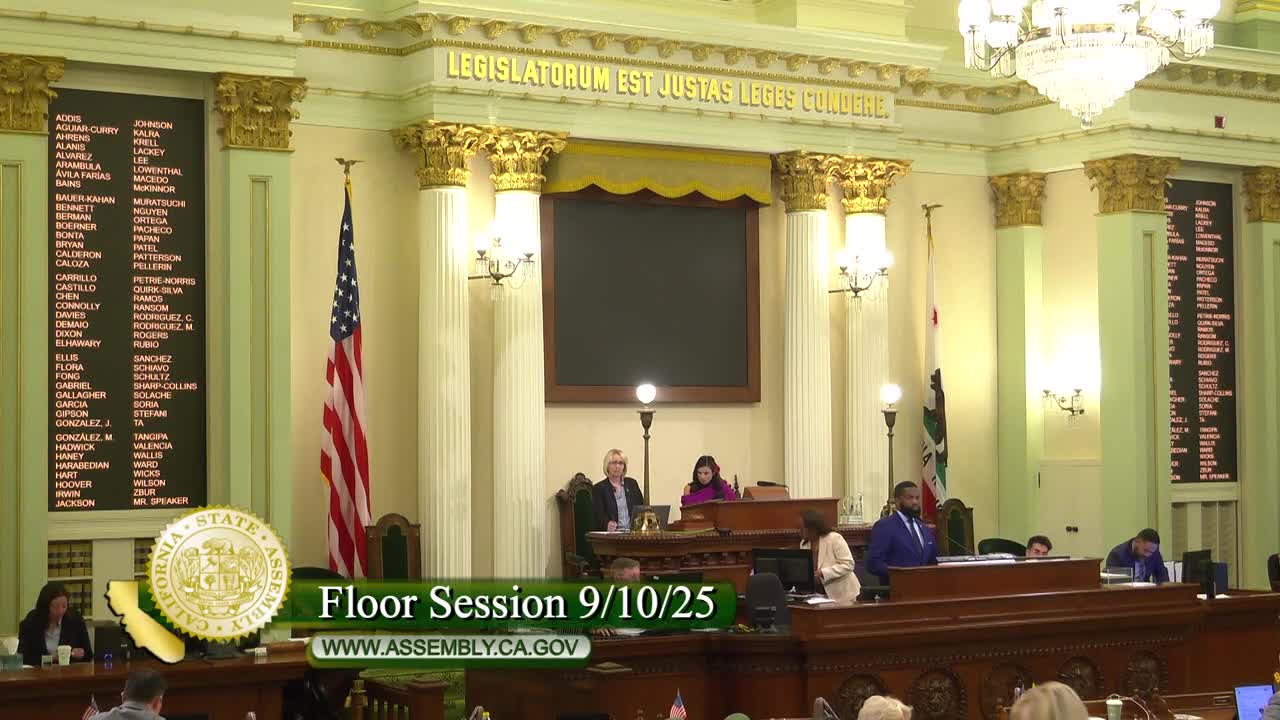 3MIN
Assembly Floor
 22MIN
Assembly Standing Committee on Education
 17MIN
Senate Floor
 32MIN
Senate Standing Committee on Education
Bill Author

Bill Co-Author(s):