SB 487: Workers’ compensation.
- Session Year: 2025-2026
- House: Senate
- Latest Version Date: 2025-10-13
Current Status:
Passed
(2025-10-13: Chaptered by Secretary of State. Chapter 763, Statutes of 2025.)
Introduced
In Committee
Awaiting First Chamber Vote
Passed First Chamber
In Committee
Awaiting Second Chamber Vote
Passed Second Chamber
Enacted
Existing law establishes a workers compensation system, administered by the Administrative Director of the Division of Workers Compensation, to compensate an employee for injuries sustained in the course of employment. Existing law requires an employer to provide all medical services reasonably required to cure or relieve the injured worker from the effects of the injury. Existing law establishes a Workers Compensation Appeals Board and sets forth various proceedings that are required to be brought forth before the board.
Existing law authorizes an employer who pays or becomes obligated to pay compensation, salary in lieu of compensation, or an amount to the Department of Industrial Relations to make a claim or bring an action against a third person who caused the injury or death of an employee that gave rise to the employers obligations. Existing law relieves the employer from an obligation to pay further compensation to or on behalf of the employee if the employer has paid litigation expenses, attorneys fees, and the employers lien. Existing law requires any release or settlement of a claim to include notice to both the employer and employee, as specified, and the written consent of both the employer and employee, in order for the release or settlement to be valid. Existing law authorizes the appeals board to credit the employer with an amount equal to the recovery by the employee that has not been applied to certain expenses, to be applied against the employers liability for compensation, as specified. Existing law authorizes an employer to enforce payment of a lien against a third party, or against the employee, if damages have been paid to the employee, in the manner provided for enforcement of money judgments.
This bill would state that when the injured employee is a peace officer, as defined, or a firefighter, the employer will be entitled to receive no more than 1/3 of the third-party defendants liability insurance policy limit, if the employee establishes that their total damages exceed the net recovery after satisfaction of the employers claim and that the total liability insurance limits available are insufficient to fully compensate the employer and employees proven damages. The bill would limit an employers right to reimbursement, subrogation, or lien to the maximum recovery threshold, as specified. The bill would prohibit an employer from asserting any recovery by one of these injured employees as a credit or offset against future workers compensation benefits and would require a settlement or release to limit an employers claim for reimbursement to the portion of the settlement not allocated to the employee pursuant to these provisions. The bill would limit these provisions to those peace officers and firefighters who are employed by certain local entities, such as a city or county, among others.
Existing law establishes a workers compensation system, administered by the Administrative Director of the Division of Workers Compensation, to compensate an employee for injuries sustained in the course of employment. Existing law requires an employer to provide all medical services reasonably required to cure or relieve the injured worker from the effects of the injury. Existing law establishes a Workers Compensation Appeals Board and sets forth various proceedings that are required to be brought forth before the board.
Existing law authorizes an employer who pays or becomes obligated to pay compensation, salary in lieu of compensation, or an amount to the Department of Industrial Relations to make a claim or bring an action against a third person who caused the injury or death of an employee that gave rise to the employers obligations. Existing law relieves the employer from an obligation to pay further compensation to or on behalf of the employee if the employer has paid litigation expenses, attorneys fees, and the employers lien. Existing law requires any release or settlement of a claim to include notice to both the employer and employee, as specified, and the written consent of both the employer and employee, in order for the release or settlement to be valid. Existing law authorizes the appeals board to credit the employer with an amount equal to the recovery by the employee that has not been applied to certain expenses, to be applied against the employers liability for compensation, as specified. Existing law authorizes an employer to enforce payment of a lien against a third party, or against the employee, if damages have been paid to the employee, in the manner provided for enforcement of money judgments.
This bill would state that when the injured employee is a peace officer, as defined, or a firefighter, they are entitled to receive no less than 2/3 firefighter, the employer will be entitled to receive no more than 1/3 of the third-party defendants liability insurance policy limit, if the employee establishes that their total damages exceed the net recovery after satisfaction of the employers claim and that the total liability insurance limits available are insufficient to fully compensate the employer and employees proven damages. The bill would limit an employers right to reimbursement, subrogation, or lien to the minimum maximum recovery threshold, as specified. The bill would prohibit an employer from asserting any recovery by one of these injured employees as a credit or offset against future workers compensation benefits and would require a settlement or release to limit an employers claim for reimbursement to the portion of the settlement not allocated to the employee pursuant to these provisions. The bill would limit these provisions to those peace officers and firefighters who are employed by certain local entities, such as a city or county, among others.
Existing law establishes a workers compensation system, administered by the Administrative Director of the Division of Workers Compensation, to compensate an employee for injuries sustained in the course of employment. Existing law requires an employer to provide all medical services reasonably required to cure or relieve the injured worker from the effects of the injury. Existing law establishes a Workers Compensation Appeals Board and sets forth various proceedings that are required to be brought forth before the board.
Existing law authorizes an employer who pays or becomes obligated to pay compensation, salary in lieu of compensation, or an amount to the Department of Industrial Relations to make a claim or bring an action against a third person who caused the injury or death of an employee that gave rise to the employers obligations. Existing law relieves the employer from an obligation to pay further compensation to or on behalf of the employee if the employer has paid litigation expenses, attorneys fees, and the employers lien. Existing law requires any release or settlement of a claim to include notice to both the employer and employee, as specified, and the written consent of both the employer and employee, in order for the release or settlement to be valid. Existing law authorizes the appeals board to credit the employer with an amount equal to the recovery by the employee that has not been applied to certain expenses, to be applied against the employers liability for compensation, as specified. Existing law authorizes an employer to enforce payment of a lien against a third party, or against the employee, if damages have been paid to the employee, in the manner provided for enforcement of money judgments.
This bill would state that when the injured employee is a peace officer, as defined, or a firefighter, they are entitled to receive no less than 2/3 of the third-party defendants liability insurance policy limit, if the employee establishes that their total damages exceed the net recovery after satisfaction of the employers claim and that the total liability insurance limits available are insufficient to fully compensate the employer and employees proven damages. The bill would limit an employers right to reimbursement, subrogation, or lien to the minimum recovery threshold, as specified. The bill would prohibit an employer from asserting any recovery by one of these injured employees as a credit or offset against future workers compensation benefits and would require a settlement or release to limit an employers claim for reimbursement to the portion of the settlement not allocated to the employee pursuant to these provisions.
Existing law establishes a workers compensation system, administered by the Administrative Director of the Division of Workers Compensation, to compensate an employee for injuries sustained in the course of employment. Existing law requires an employer to provide all medical services reasonably required to cure or relieve the injured worker from the effects of the injury. Existing law establishes a Workers Compensation Appeals Board and sets forth various proceedings that are required to be brought forth before the board.
Existing law authorizes an employer who pays or becomes obligated to pay compensation, salary in lieu of compensation, or an amount to the Department of Industrial Relations to make a claim or bring an action against a third person who caused the injury or death of an employee that gave rise to the employers obligations. Existing law relieves the employer from an obligation to pay further compensation to or on behalf of the employee if the employer has paid litigation expenses, attorneys fees, and the employers lien. Existing law requires any release or settlement of a claim to include notice to both the employer and employee, as specified, and the written consent of both the employer and employee, in order for the release or settlement to be valid. Existing law authorizes the appeals board to credit the employer with an amount equal to the recovery by the employee that has not been applied to certain expenses, to be applied against the employers liability for compensation, as specified. Existing law authorizes an employer to enforce payment of a lien against a third party, or against the employee, if damages have been paid to the employee, in the manner provided for enforcement of money judgments.
This bill would make these provisions inapplicable to employees that are peace officers, as defined, and firefighters.This bill would state that when the injured employee is a peace officer, as defined, or a firefighter, they are entitled to receive no less than 2/3 of the third-party defendants liability insurance policy limit, if the employee establishes that their total damages exceed the net recovery after satisfaction of the employers claim and that the total liability insurance limits available are insufficient to fully compensate the employer and employees proven damages. The bill would limit an employers right to reimbursement, subrogation, or lien to the minimum recovery threshold, as specified. The bill would prohibit an employer from asserting any recovery by one of these injured employees as a credit or offset against future workers compensation benefits and would require a settlement or release to limit an employers claim for reimbursement to the portion of the settlement not allocated to the employee pursuant to these provisions.
Existing law establishes a workers compensation system, administered by the Administrative Director of the Division of Workers Compensation, to compensate an employee for injuries sustained in the course of employment. Existing law requires an employer to provide all medical services reasonably required to cure or relieve the injured worker from the effects of the injury. Existing law establishes a Workers Compensation Appeals Board and sets forth various proceedings that are required to be brought forth before the board.
Existing law authorizes an employer who pays or becomes obligated to pay compensation, salary in lieu of compensation, or an amount to the Department of Industrial Relations to make a claim or bring an action against a third person who caused the injury or death of an employee that gave rise to the employers obligations. Existing law relieves the employer from an obligation to pay further compensation to or on behalf of the employee if the employer has paid litigation expenses, attorneys fees, and the employers lien. Existing law requires any release or settlement of a claim to include notice to both the employer and employee, as specified, and the written consent of both the employer and employee, in order for the release or settlement to be valid. Existing law authorizes the appeals board to credit the employer with an amount equal to the recovery by the employee that has not been applied to certain expenses, to be applied against the employers liability for compensation, as specified. Existing law authorizes an employer to enforce payment of a lien against a third party, or against the employee, if damages have been paid to the employee, in the manner provided for enforcement of money judgments.
This bill would make these provisions inapplicable to employees that are peace officers, as defined, and firefighters.
This bill would make technical, nonsubstantive changes to these provisions.Existing law establishes a workers compensation system, administered by the Administrative Director of the Division of Workers Compensation, to compensate an employee for injuries sustained in the course of employment.
This bill would make technical, nonsubstantive changes to these provisions.
(a)The claim of an employee, including, but not limited to, any peace officer or firefighter, for compensation does not affect their claim or right of action for all damages proximately resulting from the injury or death against any person other than the employer. Except as provided in subdivision (b), an employer who pays, or becomes obligated to pay compensation, or who pays, or becomes obligated to pay salary in lieu of compensation, or who pays or becomes obligated to pay an amount to the Department of Industrial Relations pursuant to Section 4706.5, may likewise make a claim or bring an action against the third person. In the latter event the employer may recover in the same suit, in addition to the total amount of compensation, damages for which they were liable including all salary, wage, pension, or other emolument paid to the employee or to their dependents. The respective rights against the third person of the heirs of an employee claiming under Section 377.60 of the Code of Civil Procedure, and an employer claiming pursuant to this section, shall be determined by the court.
(b)(1)This subdivision applies only to an employee who is a peace officer, as defined in Chapter 4.5 (commencing with Section 830) of Title 3 of Part 2 of the Penal Code, or a firefighter who is employed by any of the following:
(A)A city.
(B)A county.
(C)A city and county.
(D)A fire protection district.
(2)An employer of an employee described in paragraph (1) shall be entitled to receive no more than one-third of a third-party defendants applicable liability insurance policy limits, if both of the following are true:
(A)The employee establishes that their total damages exceed the net recovery available after satisfaction of the employers claim.
(B)The total liability insurance limits available are insufficient to fully compensate the employer and employees proven damages.
(3)The one-third maximum allocation under this subdivision is intended to reflect a fair and equitable share of the recovery in light of the injured employees total damages, attorneys fees, and costs of suit, and shall be deemed exclusive of any lien or offset by the employer.
(4)The employers right to reimbursement or subrogation shall be subordinate to the maximum allocation set forth in this subdivision. The maximum allocation to the employer described in this subdivision shall apply to all settlement agreements and judgments and shall take precedence over any employer lien or subrogation claim. Any remaining proceeds may then be allocated in accordance with existing lien and subrogation principles.
SEC. 2.Section 3858 of the Labor Code is amended to read:3858.(a)Except as provided in subdivision (b), after payment of litigation expenses and attorneys fees fixed by the court pursuant to Section 3856 and payment of the employers lien, the employer shall be relieved from the obligation to pay further compensation to or on behalf of the employee under this division up to the entire amount of the balance of the judgment, if satisfied, without any deduction. No satisfaction of such judgment in whole or in part, shall be valid without giving the employer notice and a reasonable opportunity to perfect and satisfy their lien.
(b)In any case governed by subdivision (b) of Section 3852, the employers lien or subrogation rights shall be limited to the portion of the recovery allocated to the employer and the employer shall have no right to assert any credit or offset against future workers compensation benefits owed to the employee, including, but not limited to, temporary disability, permanent disability, medical treatment, or vocational rehabilitation. The recovery allocated to the employer under subdivision (b) of Section 3852 shall not affect or diminish the employers obligation to provide any compensation under this division.
SEC. 3.Section 3859 of the Labor Code is amended to read:3859.(a)(1)Except as provided in paragraph (2), a release or settlement of any claim under this chapter as to either the employee or the employer is not valid without the written consent of both. Proof of service filed with the court is sufficient in any action or proceeding where such approval is required by law.
(2)The written consent of the employer is not required in a claim that is subject to subdivision (b) of Section 3852.
(b)(1)Notwithstanding anything to the contrary contained in this chapter, an employee may settle and release any claim they may have against a third party without the consent of the employer. Except as provided in paragraph (2), a settlement or release shall be subject to the employers right to proceed to recover compensation they have paid in accordance with Section 3852.
(2)In any case governed by subdivision (b) of Section 3852, a settlement or release shall limit the employers claim for reimbursement to the portion of the settlement allocated to the employer pursuant to subdivision (b) of Section 3852.
SEC. 4.Section 3860 of the Labor Code is amended to read:3860.(a)(1)Except as provided in paragraph (2), a release or settlement under this chapter, with or without suit, is not valid or binding as to any party thereto without notice to both the employer and the employee, with opportunity to the employer to recover the amount of compensation the employer has paid or become obligated to pay and any special damages to which the employer may be entitled under Section 3852, and opportunity to the employee to recover all damages the employee has suffered and with provision for determination of expenses and attorneys fees as herein provided.
(2)If the employee is a peace officer, as defined in Chapter 4.5 (commencing with Section 830) of Title 3 of Part 2 of the Penal Code, or a firefighter, a release or settlement, with or without suit, subject to subdivision (b) of Section 3852, is not valid or binding unless it provides that the employer shall not receive more than one-third of the third-party insurance limits.
(b)(1)Except as provided in paragraph (2) and Section 3859, the entire amount of the settlement, with or without suit, is subject to the employers full claim for reimbursement for compensation the employer has paid or become obligated to pay and any special damages to which the employer may be entitled under Section 3852, together with expenses and attorneys fees, if any, subject to the limitations in this section set forth.
(2)Pursuant to subdivision (b) of Section 3852, the employers claim for reimbursement shall be limited to the portion of the settlement allocated to the employer. The employer shall have no right to assert any credit or offset against future workers compensation benefits.
(c)If settlement is effected, with or without suit, solely through the efforts of the employees attorney, then prior to the reimbursement of the employer, as provided in subdivision (b) hereof, there shall be deducted from the amount of the settlement the reasonable expenses incurred in effecting settlement, including costs of suit, if any, together with reasonable attorneys fees to be paid to the employees attorney, for services rendered in securing and effecting settlement for the benefit of both the employer and the employee.
(d)If settlement is effected, with or without suit, solely through the efforts of the employers attorney, then, prior to the reimbursement of the employer as provided in subdivision (b) hereof, there shall be deducted from the amount of the settlement the reasonable expenses incurred in effecting settlement, including costs of suit, if any, together with reasonable attorneys fees to be paid to the employers attorney, for services rendered in securing and effecting settlement for the benefit of both the employer and the employee.
(e)If both the employer and the employee are represented by the same agreed attorney or by separate attorneys in effecting a settlement, with or without suit, prior to reimbursement of the employer, as provided in subdivision (b) hereof, there shall be deducted from the amount of the settlement the reasonable expenses incurred by both the employer and the employee or on behalf of either, including costs of suit, if any, together with reasonable attorneys fees to be paid to the respective attorneys for the employer and the employee, based upon the respective services rendered in securing and effecting settlement for the benefit of the party represented. If both parties are represented by the same attorney, by agreement, the attorneys fees shall be based on the services rendered for the benefit of both.
(f)The amount of expenses and attorneys fees referred to in this section shall, on settlement of suit, or on any settlement requiring court approval, be set by the court. In all other cases these amounts shall be set by the appeals board. If the employer and the employee are represented by separate attorneys they may propose to the court or the appeals board, for consideration and determination, the amount and division of those expenses and fees.
SEC. 5.Section 3861 of the Labor Code is amended to read:3861.(a)Except as provided in subdivision (b), the appeals board is empowered to and shall allow, as a credit to the employer to be applied against their liability for compensation, such amount of any recovery by the employee for their injury, either by settlement or after judgment, as has not theretofore been applied to the payment of expenses or attorneys fees, pursuant to the provisions of Sections 3856, 3858, and 3860, or has not been applied to reimburse the employer.
(b)In a claim subject to subdivision (b) of Section 3852, the employer shall not assert, claim, or enforce any credit or offset against any future workers compensation benefits, including, but not limited to, future indemnity, medical, and vocational rehabilitation benefits, based on the employees civil recovery from a third-party tortfeasor. The appeals board is not empowered and shall not allow such a credit to be applied to the employer.
SEC. 6.Section 3862 of the Labor Code is amended to read:3862.(a)Except as provided in subdivision (b), an employer entitled to and who has been allowed and has perfected a lien upon the judgment or award in favor of an employee against any third party for damages occasioned to the same employer by payment of compensation, expenses of medical treatment, and any other charges under this act, may enforce payment of the lien against the third party, or, in case the damages recovered by the employee have been paid to the employee, against the employee to the extent of the lien, in the manner provided for enforcement of money judgments generally.
(b)Pursuant to subdivision (b) of Section 3852, the employers claim for reimbursement shall be limited to the portion of the settlement allocated to the employer. The employer shall have no right to assert any credit or offset against future workers compensation benefits.
(a)The claim of an employee, including, but not limited to, any peace officer or firefighter, for compensation does not affect their claim or right of action for all damages proximately resulting from the injury or death against any person other than the employer. Except as provided in subdivision (b), an employer who pays, or becomes obligated to pay compensation, or who pays, or becomes obligated to pay salary in lieu of compensation, or who pays or becomes obligated to pay an amount to the Department of Industrial Relations pursuant to Section 4706.5, may likewise make a claim or bring an action against the third person. In the latter event the employer may recover in the same suit, in addition to the total amount of compensation, damages for which they were liable including all salary, wage, pension, or other emolument paid to the employee or to their dependents. The respective rights against the third person of the heirs of an employee claiming under Section 377.60 of the Code of Civil Procedure, and an employer claiming pursuant to this section, shall be determined by the court.
(b)If the employee (1)This subdivision applies only to an employee who is a peace officer, as defined in Chapter 4.5 (commencing with Section 830) of Title 3 of Part 2 of the Penal Code, or a firefighter, the injured employee shall be entitled to receive not less than two-thirds of the third-party defendants applicable liability insurance policy limits, provided that both of the following are true: firefighter who is employed by any of the following:
(A)A city.
(B)A county.
(C)A city and county.
(D)A fire protection district.
(2)An employer of an employee described in paragraph (1) shall be entitled to receive no more than one-third of a third-party defendants applicable liability insurance policy limits, if both of the following are true:
(1)(A)The employee establishes that their total damages exceed the net recovery available after satisfaction of the employers claim.
(2)(B)The total liability insurance limits available are insufficient to fully compensate the employer and employees proven damages.
(c)(3)The two-thirds minimum allocation under this section one-third maximum allocation under this subdivision is intended to reflect a fair and equitable share of the recovery in light of the injured employees total damages, attorneys fees, and costs of suit, and shall be deemed exclusive of any lien or offset by the employer.
(d)(4)The employers right to reimbursement or subrogation shall be subordinate to the minimum recovery threshold set forth in subdivision (b). The minimum allocation to the employee described in subdivision (b) maximum allocation set forth in this subdivision. The maximum allocation to the employer described in this subdivision shall apply to all settlement agreements and judgments and shall take precedence over any employer lien or subrogation claim. Any remaining proceeds may then be allocated in accordance with existing lien and subrogation principles.
SEC. 2.Section 3858 of the Labor Code is amended to read:3858.(a)Except as provided in subdivision (b), after payment of litigation expenses and attorneys fees fixed by the court pursuant to Section 3856 and payment of the employers lien, the employer shall be relieved from the obligation to pay further compensation to or on behalf of the employee under this division up to the entire amount of the balance of the judgment, if satisfied, without any deduction. No satisfaction of such judgment in whole or in part, shall be valid without giving the employer notice and a reasonable opportunity to perfect and satisfy their lien.
(b)In any case governed by subdivision (b) of Section 3852 where the employee is a peace officer, as defined in Chapter 4.5 (commencing with Section 830) of Title 3 of Part 2 of the Penal Code, or a firefighter, 3852, the employers lien or subrogation rights shall be limited to the portion of the recovery not allocated to the employee allocated to the employer and the employer shall have no right to assert any credit or offset against future workers compensation benefits owed to the employee, including, but not limited to, temporary disability, permanent disability, medical treatment, or vocational rehabilitation. The recovery allocated to the employee employer under subdivision (b) of Section 3852 shall not affect or diminish the employers obligation to provide any compensation under this division.
SEC. 3.Section 3859 of the Labor Code is amended to read:3859.(a)(1)Except as provided in paragraph (2), a release or settlement of any claim under this chapter as to either the employee or the employer is not valid without the written consent of both. Proof of service filed with the court is sufficient in any action or proceeding where such approval is required by law.
(2)The written consent of the employer is not needed if the employee is a peace officer, as defined in Chapter 4.5 (commencing with Section 830) of Title 3 of Part 2 of the Penal Code, or a firefighter. employer is not required in a claim that is subject to subdivision (b) of Section 3852.
(b)(1)Notwithstanding anything to the contrary contained in this chapter, an employee may settle and release any claim they may have against a third party without the consent of the employer. Except as provided in paragraph (2), a settlement or release shall be subject to the employers right to proceed to recover compensation they have paid in accordance with Section 3852.
(2)In any case governed by subdivision (b) of Section 3852 where the employee is a peace officer, as defined in Chapter 4.5 (commencing with Section 830) of Title 3 of Part 2 of the Penal Code, or a firefighter, 3852, a settlement or release shall limit the employers claim for reimbursement to the portion of the settlement not allocated to the employee allocated to the employer pursuant to subdivision (b) of Section 3852.
SEC. 4.Section 3860 of the Labor Code is amended to read:3860.(a)(1)Except as provided in paragraph (2), a release or settlement under this chapter, with or without suit, is not valid or binding as to any party thereto without notice to both the employer and the employee, with opportunity to the employer to recover the amount of compensation the employer has paid or become obligated to pay and any special damages to which the employer may be entitled under Section 3852, and opportunity to the employee to recover all damages the employee has suffered and with provision for determination of expenses and attorneys fees as herein provided.
(2)If the employee is a peace officer, as defined in Chapter 4.5 (commencing with Section 830) of Title 3 of Part 2 of the Penal Code, or a firefighter, a release or settlement, with or without suit, subject to subdivision (b) of Section 3852, is not valid or binding unless it provides that the employee shall receive not less than two-thirds employer shall not receive more than one-third of the third-party insurance limits.
(b)(1)Except as provided in paragraph (2) and Section 3859, the entire amount of the settlement, with or without suit, is subject to the employers full claim for reimbursement for compensation the employer has paid or become obligated to pay and any special damages to which the employer may be entitled under Section 3852, together with expenses and attorneys fees, if any, subject to the limitations in this section set forth.
(2)If the employee is a peace officer, as defined in Chapter 4.5 (commencing with Section 830) of Title 3 of Part 2 of the Penal Code, or a firefighter, the Pursuant to subdivision (b) of Section 3852, the employers claim for reimbursement shall be limited to the portion of the settlement not allocated to the employee pursuant to subdivision (b) of Section 3852. allocated to the employer. The employer shall have no right to assert any credit or offset against future workers compensation benefits.
(c)If settlement is effected, with or without suit, solely through the efforts of the employees attorney, then prior to the reimbursement of the employer, as provided in subdivision (b) hereof, there shall be deducted from the amount of the settlement the reasonable expenses incurred in effecting settlement, including costs of suit, if any, together with reasonable attorneys fees to be paid to the employees attorney, for services rendered in securing and effecting settlement for the benefit of both the employer and the employee.
(d)If settlement is effected, with or without suit, solely through the efforts of the employers attorney, then, prior to the reimbursement of the employer as provided in subdivision (b) hereof, there shall be deducted from the amount of the settlement the reasonable expenses incurred in effecting settlement, including costs of suit, if any, together with reasonable attorneys fees to be paid to the employers attorney, for services rendered in securing and effecting settlement for the benefit of both the employer and the employee.
(e)If both the employer and the employee are represented by the same agreed attorney or by separate attorneys in effecting a settlement, with or without suit, prior to reimbursement of the employer, as provided in subdivision (b) hereof, there shall be deducted from the amount of the settlement the reasonable expenses incurred by both the employer and the employee or on behalf of either, including costs of suit, if any, together with reasonable attorneys fees to be paid to the respective attorneys for the employer and the employee, based upon the respective services rendered in securing and effecting settlement for the benefit of the party represented. If both parties are represented by the same attorney, by agreement, the attorneys fees shall be based on the services rendered for the benefit of both.
(f)The amount of expenses and attorneys fees referred to in this section shall, on settlement of suit, or on any settlement requiring court approval, be set by the court. In all other cases these amounts shall be set by the appeals board. If the employer and the employee are represented by separate attorneys they may propose to the court or the appeals board, for consideration and determination, the amount and division of those expenses and fees.
SEC. 5.Section 3861 of the Labor Code is amended to read:3861.(a)Except as provided in subdivision (b), the appeals board is empowered to and shall allow, as a credit to the employer to be applied against their liability for compensation, such amount of any recovery by the employee for their injury, either by settlement or after judgment, as has not theretofore been applied to the payment of expenses or attorneys fees, pursuant to the provisions of Sections 3856, 3858, and 3860, or has not been applied to reimburse the employer.
(b)If the employee is a peace officer, as defined in Chapter 4.5 (commencing with Section 830) of Title 3 of Part 2 of the Penal Code, or a firefighter, In a claim subject to subdivision (b) of Section 3852, the employer shall not assert, claim, or enforce any credit or offset against any future workers compensation benefits, including, but not limited to, future indemnity, medical, and vocational rehabilitation benefits, based on the employees civil recovery from a third-party tortfeasor. The appeals board is not empowered and shall not allow such a credit to be applied to the employer.
SEC. 6.Section 3862 of the Labor Code is amended to read:3862.(a)Except as provided in subdivision (b), an employer entitled to and who has been allowed and has perfected a lien upon the judgment or award in favor of an employee against any third party for damages occasioned to the same employer by payment of compensation, expenses of medical treatment, and any other charges under this act, may enforce payment of the lien against the third party, or, in case the damages recovered by the employee have been paid to the employee, against the employee to the extent of the lien, in the manner provided for enforcement of money judgments generally.
(b)If the employee is a peace officer, as defined in Chapter 4.5 (commencing with Section 830) of Title 3 of Part 2 of the Penal Code, or a firefighter, the Pursuant to subdivision (b) of Section 3852, the employers claim for reimbursement shall be limited to the portion of the settlement not allocated to the employee pursuant to subdivision (b) of Section 3852. allocated to the employer. The employer shall have no right to assert any credit or offset against future workers compensation benefits.
(a)The claim of an employee, including, but not limited to, any peace officer or firefighter, for compensation does not affect their claim or right of action for all damages proximately resulting from the injury or death against any person other than the employer. Except as provided in subdivision (b), an employer who pays, or becomes obligated to pay compensation, or who pays, or becomes obligated to pay salary in lieu of compensation, or who pays or becomes obligated to pay an amount to the Department of Industrial Relations pursuant to Section 4706.5, may likewise make a claim or bring an action against the third person. In the latter event the employer may recover in the same suit, in addition to the total amount of compensation, damages for which they were liable including all salary, wage, pension, or other emolument paid to the employee or to their dependents. The respective rights against the third person of the heirs of an employee claiming under Section 377.60 of the Code of Civil Procedure, and an employer claiming pursuant to this section, shall be determined by the court.
(b)If the employee is a peace officer, as defined in Chapter 4.5 (commencing with Section 830) of Title 3 of Part 2 of the Penal Code, or a firefighter, the injured employee shall be entitled to receive not less than two-thirds of the third-party defendants applicable liability insurance policy limits, provided that both of the following are true:
(1)The employee establishes that their total damages exceed the net recovery available after satisfaction of the employers claim.
(2)The total liability insurance limits available are insufficient to fully compensate the employer and employees proven damages.
(c)The two-thirds minimum allocation under this section is intended to reflect a fair and equitable share of the recovery in light of the injured employees total damages, attorneys fees, and costs of suit, and shall be deemed exclusive of any lien or offset by the employer.
(d)The employers right to reimbursement or subrogation under this chapter shall be subordinate to the minimum recovery threshold set forth above. This minimum allocation to the employee in subdivision (b). The minimum allocation to the employee described in subdivision (b) shall apply to all settlement agreements and judgments and shall take precedence over any employer lien or subrogation claim. Any remaining proceeds may then be allocated in accordance with existing lien and subrogation principles.
SEC. 2.Section 3858 of the Labor Code is amended to read:3858.(a)Except as provided in subdivision (b), after payment of litigation expenses and attorneys fees fixed by the court pursuant to Section 3856 and payment of the employers lien, the employer shall be relieved from the obligation to pay further compensation to or on behalf of the employee under this division up to the entire amount of the balance of the judgment, if satisfied, without any deduction. No satisfaction of such judgment in whole or in part, shall be valid without giving the employer notice and a reasonable opportunity to perfect and satisfy their lien.
(b)In any case governed by subdivision (b) of Section 3852 where the employee is a peace officer, as defined in Chapter 4.5 (commencing with Section 830) of Title 3 of Part 2 of the Penal Code, or a firefighter, the employers lien or subrogation rights shall be limited to the portion of the recovery not allocated to the employee and the employer shall have no right to assert any credit or offset against future workers compensation benefits owed to the employee, including, but not limited to, temporary disability, permanent disability, medical treatment, or vocational rehabilitation. The recovery allocated to the employee under subdivision (b) of Section 3852 shall not affect or diminish the employers obligation to provide any compensation under this division.
SEC. 3.Section 3859 of the Labor Code is amended to read:3859.(a)(1)Except as provided in paragraph (2), a release or settlement of any claim under this chapter as to either the employee or the employer is not valid without the written consent of both. Proof of service filed with the court is sufficient in any action or proceeding where such approval is required by law.
(2)The written consent of the employer is not needed if the employee is a peace officer, as defined in Chapter 4.5 (commencing with Section 830) of Title 3 of Part 2 of the Penal Code, or a firefighter.
(b)(1)Notwithstanding anything to the contrary contained in this chapter, an employee may settle and release any claim they may have against a third party without the consent of the employer. Except as provided in paragraph (2), a settlement or release shall be subject to the employers right to proceed to recover compensation they have paid in accordance with Section 3852.
(2)In any case governed by subdivision (b) of Section 3852 where the employee is a peace officer, as defined in Chapter 4.5 (commencing with Section 830) of Title 3 of Part 2 of the Penal Code, or a firefighter, a settlement or release shall limit the employers claim for reimbursement to the portion of the settlement not allocated to the employee pursuant to subdivision (b) of Section 3852.
SEC. 4.Section 3860 of the Labor Code is amended to read:3860.(a)(1)Except as provided in paragraph (2), a release or settlement under this chapter, with or without suit, is not valid or binding as to any party thereto without notice to both the employer and the employee, with opportunity to the employer to recover the amount of compensation the employer has paid or become obligated to pay and any special damages to which the employer may be entitled under Section 3852, and opportunity to the employee to recover all damages the employee has suffered and with provision for determination of expenses and attorneys fees as herein provided.
(2)If the employee is a peace officer, as defined in Chapter 4.5 (commencing with Section 830) of Title 3 of Part 2 of the Penal Code, or a firefighter, a release or settlement, with or without suit, subject to subdivision (b) of Section 3852, is not valid or binding unless it provides that the employee shall receive not less than two-thirds of the third-party insurance limits.
(b)(1)Except as provided in paragraph (2) and Section 3859, the entire amount of the settlement, with or without suit, is subject to the employers full claim for reimbursement for compensation the employer has paid or become obligated to pay and any special damages to which the employer may be entitled under Section 3852, together with expenses and attorneys fees, if any, subject to the limitations in this section set forth.
(2)If the employee is a peace officer, as defined in Chapter 4.5 (commencing with Section 830) of Title 3 of Part 2 of the Penal Code, or a firefighter, the employers claim for reimbursement shall be limited to the portion of the settlement not allocated to the employee pursuant to subdivision (b) of Section 3852. The employer shall have no right to assert any credit or offset against future workers compensation benefits.
(c)If settlement is effected, with or without suit, solely through the efforts of the employees attorney, then prior to the reimbursement of the employer, as provided in subdivision (b) hereof, there shall be deducted from the amount of the settlement the reasonable expenses incurred in effecting settlement, including costs of suit, if any, together with reasonable attorneys fees to be paid to the employees attorney, for services rendered in securing and effecting settlement for the benefit of both the employer and the employee.
(d)If settlement is effected, with or without suit, solely through the efforts of the employers attorney, then, prior to the reimbursement of the employer as provided in subdivision (b) hereof, there shall be deducted from the amount of the settlement the reasonable expenses incurred in effecting settlement, including costs of suit, if any, together with reasonable attorneys fees to be paid to the employers attorney, for services rendered in securing and effecting settlement for the benefit of both the employer and the employee.
(e)If both the employer and the employee are represented by the same agreed attorney or by separate attorneys in effecting a settlement, with or without suit, prior to reimbursement of the employer, as provided in subdivision (b) hereof, there shall be deducted from the amount of the settlement the reasonable expenses incurred by both the employer and the employee or on behalf of either, including costs of suit, if any, together with reasonable attorneys fees to be paid to the respective attorneys for the employer and the employee, based upon the respective services rendered in securing and effecting settlement for the benefit of the party represented. If both parties are represented by the same attorney, by agreement, the attorneys fees shall be based on the services rendered for the benefit of both.
(f)The amount of expenses and attorneys fees referred to in this section shall, on settlement of suit, or on any settlement requiring court approval, be set by the court. In all other cases these amounts shall be set by the appeals board. If the employer and the employee are represented by separate attorneys they may propose to the court or the appeals board, for consideration and determination, the amount and division of those expenses and fees.
SEC. 5.Section 3861 of the Labor Code is amended to read:3861.(a)Except as provided in subdivision (b), the appeals board is empowered to and shall allow, as a credit to the employer to be applied against their liability for compensation, such amount of any recovery by the employee for their injury, either by settlement or after judgment, as has not theretofore been applied to the payment of expenses or attorneys fees, pursuant to the provisions of Sections 3856, 3858, and 3860, or has not been applied to reimburse the employer.
(b)If the employee is a peace officer, as defined in Chapter 4.5 (commencing with Section 830) of Title 3 of Part 2 of the Penal Code, or a firefighter, the employer shall not assert, claim, or enforce any credit or offset against any future workers compensation benefits, including, but not limited to, future indemnity, medical, and vocational rehabilitation benefits, based on the employees civil recovery from a third-party tortfeasor. The appeals board is not empowered and shall not allow such a credit to be applied to the employer.
SEC. 6.Section 3862 of the Labor Code is amended to read:3862.(a)Except as provided in subdivision (b), an employer entitled to and who has been allowed and has perfected a lien upon the judgment or award in favor of an employee against any third party for damages occasioned to the same employer by payment of compensation, expenses of medical treatment, and any other charges under this act, may enforce payment of the lien against the third party, or, in case the damages recovered by the employee have been paid to the employee, against the employee to the extent of the lien, in the manner provided for enforcement of money judgments generally.
(b)If the employee is a peace officer, as defined in Chapter 4.5 (commencing with Section 830) of Title 3 of Part 2 of the Penal Code, or a firefighter, the employers claim for reimbursement shall be limited to the portion of the settlement not allocated to the employee pursuant to subdivision (b) of Section 3852. The employer shall have no right to assert any credit or offset against future workers compensation benefits.
REVISIONS: HeadingLine 2.(a)The claim of an employee, including, but not limited to, any peace officer or firefighter, for compensation does not affect their claim or right of action for all damages proximately resulting from the injury or death against any person other than the employer. Except as provided in subdivision (b), an employer who pays, or becomes obligated to pay compensation, or who pays, or becomes obligated to pay salary in lieu of compensation, or who pays or becomes obligated to pay an amount to the Department of Industrial Relations pursuant to Section 4706.5, may likewise make a claim or bring an action against the third person. In the latter event the employer may recover in the same suit, in addition to the total amount of compensation, damages for which they were liable including all salary, wage, pension, or other emolument paid to the employee or to their dependents. The respective rights against the third person of the heirs of an employee claiming under Section 377.60 of the Code of Civil Procedure, and an employer claiming pursuant to this section, shall be determined by the court.
(b)If the employee is a peace officer, as defined in Chapter 4.5 (commencing with Section 830) of Title 3 of Part 2 of the Penal Code, or a firefighter, the employer shall not make a claim or bring an action against the third person. injured employee shall be entitled to receive not less than two-thirds of the third-party defendants applicable liability insurance policy limits, provided that both of the following are true:
(1)The employee establishes that their total damages exceed the net recovery available after satisfaction of the employers claim.
(2)The total liability insurance limits available are insufficient to fully compensate the employer and employees proven damages.
(c)The two-thirds minimum allocation under this section is intended to reflect a fair and equitable share of the recovery in light of the injured employees total damages, attorneys fees, and costs of suit, and shall be deemed exclusive of any lien or offset by the employer.
(d)The employers right to reimbursement or subrogation under this chapter shall be subordinate to the minimum recovery threshold set forth above. This minimum allocation to the employee shall apply to all settlement agreements and judgments and shall take precedence over any employer lien or subrogation claim. Any remaining proceeds may then be allocated in accordance with existing lien and subrogation principles.
SEC. 2.Section 3858 of the Labor Code is amended to read:3858.(a)Except as provided in subdivision (b), after payment of litigation expenses and attorneys attorneys fees fixed by the court pursuant to Section 3856 and payment of the employers lien, the employer shall be relieved from the obligation to pay further compensation to or on behalf of the employee under this division up to the entire amount of the balance of the judgment, if satisfied, without any deduction. No satisfaction of such judgment in whole or in part, shall be valid without giving the employer notice and a reasonable opportunity to perfect and satisfy their lien.
(b)If the employee is a peace officer, as defined in Chapter 4.5 (commencing with Section 830) of Title 3 of Part 2 of the Penal Code, or a firefighter, the employer shall not be relieved from the obligation to pay further compensation to or on behalf of the employee.(b)In any case governed by subdivision (b) of Section 3852 where the employee is a peace officer, as defined in Chapter 4.5 (commencing with Section 830) of Title 3 of Part 2 of the Penal Code, or a firefighter, the employers lien or subrogation rights shall be limited to the portion of the recovery not allocated to the employee and the employer shall have no right to assert any credit or offset against future workers compensation benefits owed to the employee, including, but not limited to, temporary disability, permanent disability, medical treatment, or vocational rehabilitation. The recovery allocated to the employee under subdivision (b) of Section 3852 shall not affect or diminish the employers obligation to provide any compensation under this division.
SEC. 3.Section 3859 of the Labor Code is amended to read:3859.(a)(1)Except as provided in paragraph (2), a release or settlement of any claim under this chapter as to either the employee or the employer is not valid without the written consent of both. Proof of service filed with the court is sufficient in any action or proceeding where such approval is required by law.
(2)The written consent of the employer is not needed if the employee is a peace officer, as defined in Chapter 4.5 (commencing with Section 830) of Title 3 of Part 2 of the Penal Code, or a firefighter.
(b)(1)Notwithstanding anything to the contrary contained in this chapter, an employee may settle and release any claim they may have against a third party without the consent of the employer. Except as provided in paragraph (2), a settlement or release shall be subject to the employers right to proceed to recover compensation they have paid in accordance with Section 3852.
(2)If the employee is a peace officer, as defined in Chapter 4.5 (commencing with Section 830) of Title 3 of Part 2 of the Penal Code, or a firefighter, the employer has no right to recover compensation they have paid.(2)In any case governed by subdivision (b) of Section 3852 where the employee is a peace officer, as defined in Chapter 4.5 (commencing with Section 830) of Title 3 of Part 2 of the Penal Code, or a firefighter, a settlement or release shall limit the employers claim for reimbursement to the portion of the settlement not allocated to the employee pursuant to subdivision (b) of Section 3852.
SEC. 4.Section 3860 of the Labor Code is amended to read:3860.(a)(1)Except as provided in paragraph (2), a release or settlement under this chapter, with or without suit, is not valid or binding as to any party thereto without notice to both the employer and the employee, with opportunity to the employer to recover the amount of compensation the employer has paid or become obligated to pay and any special damages to which the employer may be entitled under Section 3852, and opportunity to the employee to recover all damages the employee has suffered and with provision for determination of expenses and attorneys fees as herein provided.
(2)If the employee is a peace officer, as defined in Chapter 4.5 (commencing with Section 830) of Title 3 of Part 2 of the Penal Code, or a firefighter, and the employer has no right to recover compensation, a release or settlement is valid and binding without notice to the employer. a release or settlement, with or without suit, subject to subdivision (b) of Section 3852, is not valid or binding unless it provides that the employee shall receive not less than two-thirds of the third-party insurance limits.
(b)(1)Except as provided in paragraph (2) and Section 3859, the entire amount of the settlement, with or without suit, is subject to the employers full claim for reimbursement for compensation the employer has paid or become obligated to pay and any special damages to which the employer may be entitled under Section 3852, together with expenses and attorneys fees, if any, subject to the limitations in this section set forth.
(2)If the employee is a peace officer, as defined in Chapter 4.5 (commencing with Section 830) of Title 3 of Part 2 of the Penal Code, or a firefighter, the employer has no right to reimbursement for compensation they have paid. the employers claim for reimbursement shall be limited to the portion of the settlement not allocated to the employee pursuant to subdivision (b) of Section 3852. The employer shall have no right to assert any credit or offset against future workers compensation benefits.
(c)If settlement is effected, with or without suit, solely through the efforts of the employees attorney, then prior to the reimbursement of the employer, as provided in subdivision (b) hereof, there shall be deducted from the amount of the settlement the reasonable expenses incurred in effecting settlement, including costs of suit, if any, together with reasonable attorneys fees to be paid to the employees attorney, for services rendered in securing and effecting settlement for the benefit of both the employer and the employee.
(d)If settlement is effected, with or without suit, solely through the efforts of the employers attorney, then, prior to the reimbursement of the employer as provided in subdivision (b) hereof, there shall be deducted from the amount of the settlement the reasonable expenses incurred in effecting settlement, including costs of suit, if any, together with reasonable attorneys fees to be paid to the employers attorney, for services rendered in securing and effecting settlement for the benefit of both the employer and the employee.
(e)If both the employer and the employee are represented by the same agreed attorney or by separate attorneys in effecting a settlement, with or without suit, prior to reimbursement of the employer, as provided in subdivision (b) hereof, there shall be deducted from the amount of the settlement the reasonable expenses incurred by both the employer and the employee or on behalf of either, including costs of suit, if any, together with reasonable attorneys attorneys fees to be paid to the respective attorneys for the employer and the employee, based upon the respective services rendered in securing and effecting settlement for the benefit of the party represented. If both parties are represented by the same attorney, by agreement, the attorneys fees shall be based on the services rendered for the benefit of both.
(f)The amount of expenses and attorneys fees referred to in this section shall, on settlement of suit, or on any settlement requiring court approval, be set by the court. In all other cases these amounts shall be set by the appeals board. If the employer and the employee are represented by separate attorneys they may propose to the court or the appeals board, for consideration and determination, the amount and division of those expenses and fees.
SEC. 5.Section 3861 of the Labor Code is amended to read:3861.(a)Except as provided in subdivision (b), the appeals board is empowered to and shall allow, as a credit to the employer to be applied against their liability for compensation, such amount of any recovery by the employee for their injury, either by settlement or after judgment, as has not theretofore been applied to the payment of expenses or attorneys fees, pursuant to the provisions of Sections 3856, 3858, and 3860, or has not been applied to reimburse the employer.
(b)If the employee is a peace officer, as defined in Chapter 4.5 (commencing with Section 830) of Title 3 of Part 2 of the Penal Code, or a firefighter, the employer has no right to recover compensation they have paid or assert a credit to be applied against their liability for compensation. the employer shall not assert, claim, or enforce any credit or offset against any future workers compensation benefits, including, but not limited to, future indemnity, medical, and vocational rehabilitation benefits, based on the employees civil recovery from a third-party tortfeasor. The appeals board is not empowered and shall not allow such a credit to be applied to the employer.
SEC. 6.Section 3862 of the Labor Code is amended to read:3862.(a)Except as provided in subdivision (b), an employer entitled to and who has been allowed and has perfected a lien upon the judgment or award in favor of an employee against any third party for damages occasioned to the same employer by payment of compensation, expenses of medical treatment, and any other charges under this act, may enforce payment of the lien against the third party, or, in case the damages recovered by the employee have been paid to the employee, against the employee to the extent of the lien, in the manner provided for enforcement of money judgments generally.
(b)If the employee is a peace officer, as defined in Chapter 4.5 (commencing with Section 830) of Title 3 of Part 2 of the Penal Code, or a firefighter, the employer has no right to recover compensation they have paid or enforce a lien. the employers claim for reimbursement shall be limited to the portion of the settlement not allocated to the employee pursuant to subdivision (b) of Section 3852. The employer shall have no right to assert any credit or offset against future workers compensation benefits.
(a)The claim of an employee, including, but not limited to, any peace officer or firefighter, for compensation does not affect his or her their claim or right of action for all damages proximately resulting from the injury or death against any person other than the employer. Any Except as provided in subdivision (b), an employer who pays, or becomes obligated to pay compensation, or who pays, or becomes obligated to pay salary in lieu of compensation, or who pays or becomes obligated to pay an amount to the Department of Industrial Relations pursuant to Section 4706.5, may likewise make a claim or bring an action against the third person. In the latter event the employer may recover in the same suit, in addition to the total amount of compensation, damages for which he or she was they were liable including all salary, wage, pension, or other emolument paid to the employee or to his or her their dependents. The respective rights against the third person of the heirs of an employee claiming under Section 377.60 of the Code of Civil Procedure, and an employer claiming pursuant to this section, shall be determined by the court.
(b)If the employee is a peace officer, as defined in Chapter 4.5 (commencing with Section 830) of Title 3 of Part 2 of the Penal Code, or a firefighter, the employer shall not make a claim or bring an action against the third person.
SEC. 2.Section 3858 of the Labor Code is amended to read:3858.After (a)Except as provided in subdivision (b), after payment of litigation expenses and attorneys fees fixed by the court pursuant to Section 3856 and payment of the employers lien, the employer shall be relieved from the obligation to pay further compensation to or on behalf of the employee under this division up to the entire amount of the balance of the judgment, if satisfied, without any deduction. No satisfaction of such judgment in whole or in part, shall be valid without giving the employer notice and a reasonable opportunity to perfect and satisfy his their lien.
(b)If the employee is a peace officer, as defined in Chapter 4.5 (commencing with Section 830) of Title 3 of Part 2 of the Penal Code, or a firefighter, the employer shall not be relieved from the obligation to pay further compensation to or on behalf of the employee.
SEC. 3.Section 3859 of the Labor Code is amended to read:3859.(a)No (1)Except as provided in paragraph (2), a release or settlement of any claim under this chapter as to either the employee or the employer is not valid without the written consent of both. Proof of service filed with the court is sufficient in any action or proceeding where such approval is required by law.
(2)The written consent of the employer is not needed if the employee is a peace officer, as defined in Chapter 4.5 (commencing with Section 830) of Title 3 of Part 2 of the Penal Code, or a firefighter.
(b)(1)Notwithstanding anything to the contrary contained in this chapter, an employee may settle and release any claim he they may have against a third party without the consent of the employer. Such Except as provided in paragraph (2), a settlement or release shall be subject to the employers right to proceed to recover compensation he has they have paid in accordance with Section 3852.
(2)If the employee is a peace officer, as defined in Chapter 4.5 (commencing with Section 830) of Title 3 of Part 2 of the Penal Code, or a firefighter, the employer has no right to recover compensation they have paid.
SECTION 1.SEC. 4.Section 3860 of the Labor Code is amended to read:3860.(a)A (1)Except as provided in paragraph (2), a release or settlement under this chapter, with or without suit, is not valid or binding as to any party thereto without notice to both the employer and the employee, with opportunity to the employer to recover the amount of compensation the employer has paid or become obligated to pay and any special damages to which the employer may be entitled under Section 3852, and opportunity to the employee to recover all damages the employee has suffered and with provision for determination of expenses and attorneys fees as herein provided.
(2)If the employee is a peace officer, as defined in Chapter 4.5 (commencing with Section 830) of Title 3 of Part 2 of the Penal Code, or a firefighter, and the employer has no right to recover compensation, a release or settlement is valid and binding without notice to the employer.
(b)(1)Except as provided in paragraph (2) and Section 3859, the entire amount of the settlement, with or without suit, is subject to the employers full claim for reimbursement for compensation the employer has paid or become obligated to pay and any special damages to which the employer may be entitled under Section 3852, together with expenses and attorneys fees, if any, subject to the limitations in this section set forth.
(2)If the employee is a peace officer, as defined in Chapter 4.5 (commencing with Section 830) of Title 3 of Part 2 of the Penal Code, or a firefighter, the employer has no right to reimbursement for compensation they have paid.
(c)If settlement is effected, with or without suit, solely through the efforts of the employees attorney, then prior to the reimbursement of the employer, as provided in subdivision (b) hereof, there shall be deducted from the amount of the settlement the reasonable expenses incurred in effecting settlement, including costs of suit, if any, together with reasonable attorneys fees to be paid to the employees attorney, for services rendered in securing and effecting settlement for the benefit of both the employer and the employee.
(d)If settlement is effected, with or without suit, solely through the efforts of the employers attorney, then, prior to the reimbursement of the employer as provided in subdivision (b) hereof, there shall be deducted from the amount of the settlement the reasonable expenses incurred in effecting settlement, including costs of suit, if any, together with reasonable attorneys fees to be paid to the employers attorney, for services rendered in securing and effecting settlement for the benefit of both the employer and the employee.
(e)If both the employer and the employee are represented by the same agreed attorney or by separate attorneys in effecting a settlement, with or without suit, prior to reimbursement of the employer, as provided in subdivision (b) hereof, there shall be deducted from the amount of the settlement the reasonable expenses incurred by both the employer and the employee or on behalf of either, including costs of suit, if any, together with reasonable attorneys fees to be paid to the respective attorneys for the employer and the employee, based upon the respective services rendered in securing and effecting settlement for the benefit of the party represented. If both parties are represented by the same attorney, by agreement, the attorneys fees shall be based on the services rendered for the benefit of both.
(f)The amount of expenses and attorneys fees referred to in this section shall, on settlement of suit, or on any settlement requiring court approval, be set by the court. In all other cases these amounts shall be set by the appeals board. If the employer and the employee are represented by separate attorneys they may propose to the court or the appeals board, for consideration and determination, the amount and division of those expenses and fees.
SEC. 5.Section 3861 of the Labor Code is amended to read:3861.The (a)Except as provided in subdivision (b), the appeals board is empowered to and shall allow, as a credit to the employer to be applied against his their liability for compensation, such amount of any recovery by the employee for his their injury, either by settlement or after judgment, as has not theretofore been applied to the payment of expenses or attorneys fees, pursuant to the provisions of Sections 3856, 3858, and 3860 of this code, 3860, or has not been applied to reimburse the employer.
(b)If the employee is a peace officer, as defined in Chapter 4.5 (commencing with Section 830) of Title 3 of Part 2 of the Penal Code, or a firefighter, the employer has no right to recover compensation they have paid or assert a credit to be applied against their liability for compensation.
SEC. 6.Section 3862 of the Labor Code is amended to read:3862.Any (a)Except as provided in subdivision (b), an employer entitled to and who has been allowed and has perfected a lien upon the judgment or award in favor of an employee against any third party for damages occasioned to the same employer by payment of compensation, expenses of medical treatment, and any other charges under this act, may enforce payment of the lien against the third party, or, in case the damages recovered by the employee have been paid to the employee, against the employee to the extent of the lien, in the manner provided for enforcement of money judgments generally.
(b)If the employee is a peace officer, as defined in Chapter 4.5 (commencing with Section 830) of Title 3 of Part 2 of the Penal Code, or a firefighter, the employer has no right to recover compensation they have paid or enforce a lien.
(a)No A release or settlement under this chapter, with or without suit, is not valid or binding as to any party thereto without notice to both the employer and the employee, with opportunity to the employer to recover the amount of compensation he the employer has paid or become obligated to pay and any special damages to which he the employer may be entitled under Section 3852, and opportunity to the employee to recover all damages he the employee has suffered and with provision for determination of expenses and attorneys fees as herein provided.
(b)Except as provided in Section 3859, the entire amount of such the settlement, with or without suit, is subject to the employers full claim for reimbursement for compensation he the employer has paid or become obligated to pay and any special damages to which he the employer may be entitled under Section 3852, together with expenses and attorney attorneys fees, if any, subject to the limitations in this section set forth.
(c)Where If settlement is effected, with or without suit, solely through the efforts of the employees attorney, then prior to the reimbursement of the employer, as provided in subdivision (b) hereof, there shall be deducted from the amount of the settlement the reasonable expenses incurred in effecting such settlement, including costs of suit, if any, together with a reasonable attorneys fee fees to be paid to the employees attorney, for his services rendered in securing and effecting settlement for the benefit of both the employer and the employee.
(d)Where If settlement is effected, with or without suit, solely through the efforts of the employers attorney, then, prior to the reimbursement of the employer as provided in subdivision (b) hereof, there shall be deducted from the amount of the settlement the reasonable expenses incurred in effecting such settlement, including costs of suit, if any, together with a reasonable attorneys fee fees to be paid to the employers attorney, for his services rendered in securing and effecting settlement for the benefit of both the employer and the employee.
(e)Where If both the employer and the employee are represented by the same agreed attorney or by separate attorneys in effecting a settlement, with or without suit, prior to reimbursement of the employer, as provided in subdivision (b) hereof, there shall be deducted from the amount of the settlement the reasonable expenses incurred by both the employer and the employee or on behalf of either, including costs of suit, if any, together with reasonable attorneys fees to be paid to the respective attorneys for the employer and the employee, based upon the respective services rendered in securing and effecting settlement for the benefit of the party represented. In the event If both parties are represented by the same attorney, by agreement, the attorneys fee fees shall be based on the services rendered for the benefit of both.
(f)The amount of expenses and attorneys attorneys fees referred to in this section shall, on settlement of suit, or on any settlement requiring court approval, be set by the court. In all other cases these amounts shall be set by the appeals board. Where If the employer and the employee are represented by separate attorneys they may propose to the court or the appeals board, for consideration and determination, the amount and division of such those expenses and fees.
|
Date
|
Status
|
|---|---|
| Oct 13, 2025 | Chaptered by Secretary of State. Chapter 763, Statutes of 2025. |
| Oct 13, 2025 | Approved by the Governor. |
| Sep 23, 2025 | Enrolled and presented to the Governor at 2 p.m. |
| Sep 13, 2025 | Assembly amendments concurred in. (Ayes 37. Noes 0. Page 3023.) Ordered to engrossing and enrolling. |
| Sep 12, 2025 | In Senate. Concurrence in Assembly amendments pending. |
| Sep 12, 2025 | Read third time. Passed. (Ayes 72. Noes 0. Page 3392.) Ordered to the Senate. |
| Sep 3, 2025 | Read second time. Ordered to third reading. |
| Sep 2, 2025 | Read second time and amended. Ordered to second reading. |
| Aug 29, 2025 | From committee: Do pass as amended. (Ayes 11. Noes 0.) (August 29). |
| Aug 20, 2025 | August 20 set for first hearing. Placed on APPR. suspense file. |
| Jul 16, 2025 | From committee: Do pass and re-refer to Com. on APPR. (Ayes 16. Noes 0.) (July 16). Re-referred to Com. on APPR. |
| Jul 16, 2025 | Coauthors revised. |
| Jul 8, 2025 | From committee with author's amendments. Read second time and amended. Re-referred to Com. on INS. |
| Jun 5, 2025 | Referred to Com. on INS. |
| May 28, 2025 | In Assembly. Read first time. Held at Desk. |
| May 28, 2025 | Read third time. Passed. (Ayes 37. Noes 0. Page 1285.) Ordered to the Assembly. |
| May 23, 2025 | Read second time. Ordered to third reading. |
| May 23, 2025 | From committee: Do pass. (Ayes 6. Noes 0. Page 1202.) (May 23). |
| May 20, 2025 | Set for hearing May 23. |
| May 19, 2025 | May 19 hearing: Placed on APPR. suspense file. |
| May 9, 2025 | Set for hearing May 19. |
| May 8, 2025 | May 12 hearing postponed by committee. |
| May 2, 2025 | Set for hearing May 12. |
| Apr 30, 2025 | From committee: Do pass and re-refer to Com. on APPR. (Ayes 5. Noes 0. Page 966.) (April 30). Re-referred to Com. on APPR. |
| Apr 21, 2025 | From committee with author's amendments. Read second time and amended. Re-referred to Com. on L., P.E. & R. |
| Apr 11, 2025 | Set for hearing April 30. |
| Apr 2, 2025 | Re-referred to Com. on L., P.E. & R. |
| Mar 24, 2025 | From committee with author's amendments. Read second time and amended. Re-referred to Com. on RLS. |
| Feb 26, 2025 | Referred to Com. on RLS. |
| Feb 20, 2025 | From printer. May be acted upon on or after March 22. |
| Feb 19, 2025 | Introduced. Read first time. To Com. on RLS. for assignment. To print. |
|
Date
|
Description
|
Location
|
Votes
|
|
|---|---|---|---|---|
| Sep 13, 2025 | Unfinished Business SB487 Grayson et al. Concurrence | Senate Floor |
Passed |
|
| Sep 12, 2025 | SB 487 Grayson Senate Third Reading By Gipson | Assembly Floor |
Passed |
|
| Sep 12, 2025 | Unfinished Business SB487 Grayson et al. Concurrence | Senate Floor |
Passed |
|
| Aug 29, 2025 | Do pass as amended. | Assembly Standing Committee on Appropriations |
Passed |
|
| Jul 16, 2025 | Do pass and be re-referred to the Committee on [Appropriations] | Assembly Standing Committee on Insurance |
Passed |
|
| May 28, 2025 | Senate 3rd Reading SB487 Grayson | Senate Floor |
Passed |
|
| May 23, 2025 | Do pass | Senate Standing Committee on Appropriations |
Passed |
|
| May 19, 2025 | Placed on suspense file | Senate Standing Committee on Appropriations |
Passed |
|
| Apr 30, 2025 | Do pass, but first be re-referred to the Committee on [Appropriations] | Senate Standing Committee on Labor, Public Employment and Retirement |
Passed |
This list shows positions taken on this bill by organizations on the date displayed, which is linked to the original source.
Positions by individuals are not included.
|
Organization
|
Position
|
Date
|
|---|---|---|
| a coalition of public employers | ** Against | |
| A coalition representing various local governments | ** Against | |
| A coalition representing various peace officer associations (sponsors) | ** Support | |
| Arcadia Police Officers' Association | ** Support | |
| Association For Los Angeles Deputy Sheriffs | ** Support | |
| Association Of Orange County Deputy Sheriffs | ** Support | |
| Brea Police Association | ** Support | |
| Burbank Police Officers' Association | ** Support | |
| California Association Of Highway Patrolmen | ** Support | |
| California Association Of Joint Powers Authorities | ** Against | |
| California Association of School Police Chiefs | ** Support | |
| California Coalition of School Safety Professionals | ** Support | |
| California Coalition On Workers Compensation | ** Against | |
| California Fire Chiefs Association | ** Against | |
| California Fraternal Order of Police | ** Support | |
| California Joint Powers Insurance Authority | ** Against | |
| California Narcotic Officers' Association | ** Support | |
| California Professional Firefighters | ** Support | |
| California Reserve Peace Officers Association | ** Support | |
| California Special Districts Association | ** Against | |
| California State Association Of Counties | ** Against | |
| California Statewide Law Enforcement Association | ** Support | |
| City Of Bell | ** Against | |
| City Of Chula Vista | ** Against | |
| City of Corona | ** Against | |
| City of La Verne | ** Against | |
| City of Santa Barbara | ** Against | |
| CLAREMONT POLICE OFFICERS ASSOCIATION | ** Support | |
| Corona Police Officers' Association | ** Support | |
| County of Butte | ** Against | |
| County of Fresno | ** Against | |
| County of Humboldt | ** Against | |
| County Of Kings | ** Against | |
| County of Los Angeles Board of Supervisors | ** Against | |
| County Of Placer | ** Against | |
| Culver City Police Officers' Association | ** Support | |
| Fire Districts Association Of California | ** Against | |
| Fullerton Police Officers' Association | ** Support | |
| Golden State Risk Management Authority | ** Against | |
| League Of California Cities | ** Against | |
| Local Agency Workers’ Compensation Excess Jpa | ** Against | |
| Long Beach Police Officers Association | ** Support | |
| Long Beach Police Officers' Association | ** Support | |
| Los Angeles City Attorney | ** Against | |
| Los Angeles School Police Management Association | ** Support | |
| los angeles school police officers association | ** Support | |
| Murrieta Police Officers' Association | ** Support | |
| Newport Beach Police Association | ** Support | |
| Northern California Special Districts Insurance Authority | ** Against | |
| Other | ** Against | |
| Palos Verdes Police Officers' Association | ** Support | |
| Peace Officers Research Association Of California | ** Support | |
| Placer County Deputy Sheriffs' Association | ** Support | |
| Pomona Police Officers' Association | ** Support | |
| Public Risk Innovation Solutions and Management | ** Against | |
| Public Risk Innovation, Solutions, and Management | ** Against | |
| Riverside Police Officers' Association | ** Support | |
| Riverside Sheriffs' Association | ** Support | |
| Rural County Representatives of California | ** Against | |
| Sacramento County Deputy Sheriffs' Association | ** Support | |
| Schools Insurance Authority | ** Against | |
| Sheriff's Employee Benefits Association | ** Support | |
| Urban Counties of California | ** Against |
SENATE RULES COMMITTEE Office of Senate Floor Analyses (916) 651-1520 Fax: (916) 327-4478 | SB 487 |
UNFINISHED BUSINESS
Bill No: SB 487
Author: Grayson (D), et al.
Amended: 9/2/25
Vote: 21
SENATE LABOR, PUB. EMP. & RET. COMMITTEE: 5-0, 4/30/25
AYES: Smallwood-Cuevas, Strickland, Cortese, Durazo, Laird
SENATE APPROPRIATIONS COMMITTEE: 6-0, 5/23/25
AYES: Caballero, Seyarto, Cabaldon, Grayson, Richardson, Wahab
NO VOTE RECORDED: Dahle
SENATE FLOOR: 37-0, 5/28/25
AYES: Allen, Alvarado-Gil, Archuleta, Arreguín, Ashby, Becker, Blakespear, Cabaldon, Caballero, Choi, Cortese, Dahle, Durazo, Gonzalez, Grayson, Grove, Hurtado, Jones, Laird, McGuire, McNerney, Menjivar, Niello, Ochoa Bogh, Padilla, Pérez, Richardson, Rubio, Seyarto, Smallwood-Cuevas, Stern, Strickland, Umberg, Valladares, Wahab, Weber Pierson, Wiener
NO VOTE RECORDED: Cervantes, Limón, Reyes
ASSEMBLY FLOOR: 72-0, 9/12/25 - See last page for vote
SUBJECT: Workers’ compensation
SOURCE: California Fraternal Order of Police
DIGEST:
This bill specifies that when the injured employee is a peace officer, as defined, or a firefighter who is employed by a city, county, a city and county, or a fire protection district, the employer is entitled to receive no more than one-third of a third-party defendant’s applicable liability insurance policy limits, under specified circumstances.
Assembly Amendments
(1) limit the provisions to peace officers and firefighters who are employed by a city, a county, a city and county, and a fire protection district, and (2) specify the specified employers are entitled to receive no more than one-third of the third-party defendant’s liability insurance policy.
ANALYSIS:
Existing law:
- Establishes a comprehensive system of workers' compensation, administered by the Administrative Director of the Division of Workers’ Compensation that provides a range of benefits for an employee who suffers from an injury or illness that arises out of and in the course of employment, regardless of fault. This system requires all employers to insure payment of benefits by either securing the consent of the Department of Industrial Relations to self-insure or by obtaining insurance from a company authorized by the state. (Labor Code §§3200-6002)
- Requires an employer to provide all medical services reasonably required to cure or relieve the injured worker from the effects of the injury. (Labor Code §§4600-4615)
- Establishes a Workers’ Compensation Appeals Board and sets forth various proceedings that are required to be brought forth before the board (Labor Code §§3200-3219)
- Authorizes an employer who pays or becomes obligated to pay compensation, salary in lieu of compensation, or an amount to the Department of Industrial Relations to make a claim or bring an action against a third person who caused the injury or death of an employee that gave rise to the employer’s obligations. (Labor Code §3852)
- Relieves the employer from an obligation to pay further compensation to or on behalf of the employee if the employer has paid litigation expenses, attorney’s fees, and the employer’s lien. (Labor Code §3858)
- Requires any release or settlement of a claim to include notice to both the employer and employee, as specified, and the written consent of both the employer and employee, in order for the release or settlement to be valid. (Labor Code §§3859-3860)
- Authorizes the appeals board to credit the employer with an amount equal to the recovery by the employee that has not been applied to certain expenses, to be applied against the employer’s liability for compensation, as specified. (Labor Code §3861)
- Authorizes an employer to enforce payment of a lien against a third party, or against the employee, if damages have been paid to the employee, in the manner provided for enforcement of money judgments. (Labor Code §3862)
This bill:
- Specifies, that when the injured employee is a peace officer, as defined, or a firefighter who is employed by a city, county, a city and county, or a fire protection district, the employer is entitled to receive no more than one-third of a third-party defendant’s applicable liability insurance policy limits if:
- The employee establishes that their total damages exceed the net recovery available after satisfaction of the employer’s claim and,
- The total liability insurance limits available are insufficient to full compensate the employer and employee’s proven damages.
- Limits an employer’s right to reimbursement, subrogation, or lien to the minimum recovery threshold, as specified.
- Prohibits an employer from asserting any recovery by one of these injured employees as a credit or offset against future workers’ compensation benefits, as specified.
- Requires a settlement or release to limit an employer’s claim for reimbursement to the portion of the settlement not allocated to the employee, pursuant to these provisions.
Background
Workers’ Compensation. Workers’ compensation temporary disability (TD) indemnity benefits are payments injured employees get if they lose wages due to a work-related injury that prevents them from doing their usual job while recovering. Injured employees are entitled to TD benefits equal to two-thirds of their average weekly wages. Certain public safety classifications, such as peace officers and firefighters, receive workers’ compensation benefits that other employees do not receive, including “4850 leave,” which grants up to one year of full salary instead of the regular method for calculating temporary disability benefits. Once 4850 leave benefits are exhausted, if the employee is still temporarily disabled, they are eligible to receive workers’ compensation TD. In most cases, TD will not be paid beyond 104 weeks.
If an on-duty peace officer or firefighter is injured on the job due to a third party, for instance, a traffic accident, assault, or shooting, they may be entitled to 4850 leave for up to one year, and after that period of time, can file a workers’ compensation claim at two-thirds their salary.
Civil Claims Against Third Parties. In addition to a workers’ compensation claim, an injured peace officer or firefighter may pursue a civil claim against the third party at fault, such as a negligent driver, to recover additional losses. While workers’ compensation covers medical treatment and wage replacement, it does not cover additional losses, such as compensation for pain and suffering or loss of opportunities (promotions, overtime, etc.).
Under a third-party claim, an employer’s workers’ compensation insurance provider may seek reimbursement for the benefits it paid. This process is called subrogation, which means the employer’s workers compensation insurance company can seek reimbursement from the worker for the disability payments, or other benefits, received if the worker also receives financial recovery from a third party (the party at fault).
Public agencies may file subrogation claims on the civil settlements an injured peace officer or firefighter pursues. Currently, the law prioritizes public agencies to recover the costs from any third-party settlement or judgment awarded to an injured peace officer or firefighter. This means that the public agencies’ claims may significantly reduce the civil settlement recovery costs awarded to an injured officer or firefighter from the third party. This bill, SB 487, would limit the permissible recovery by such a public agency to one-third of the third-party defendant's liability insurance policy to ensure that peace officers and specified firefighters injured in the line of duty retain a larger portion of the damages recovered from the third party under the specified circumstances.
FISCAL EFFECT: Appropriation: No Fiscal Com.: Yes Local: No
According to the Assembly Appropriations Committee:
- No costs to the Division of Workers’ Compensation (DWC). DWC notes that this bill affects matters negotiated, settled, and adjudicated outside its jurisdiction through a civil action.
- Costs of an unknown amount, likely in the low millions of dollars annually, to the state as an employer of peace officers and firefighters, as the state would be limited to recovering only one-third of its workers’ compensation costs from a liable third-party (General Fund or special fund). State Compensation Insurance Fund data shows approximately 112 subrogation recoveries specific to peace officers or firefighters between March 2024 and March 2025, through which approximately $11.1 million was recovered - $2.1 million in cash and $9 million in credit. Under the ratio set by this bill, the state could have incurred costs of $7.4 million if the state was entitled to only $3.7 million, or one-third of recovery amounts, with actual costs ultimately dependent on the fact pattern of each case.
- Costs of an unknown, but definitely significant, amount to local public employers of safety officers for the same reason for costs to the state. However, such local costs are likely non-reimbursable by the state because requiring a local agency to provide increased employee pay or benefits does not generally constitute a higher level of service to the public under the constitutional definition of a mandate.
SUPPORT: (Verified 9/11/25)
California Fraternal Order of Police (Source)
Arcadia Police Officers' Association
Association for Los Angeles Deputy Sheriffs
Association of Orange County Deputy Sheriffs
Brea Police Association
Burbank Police Officers' Association
California Association of Highway Patrolmen
California Association of School Police Chiefs
California Coalition of School Safety Professionals
California Narcotic Officers' Association
California Professional Firefighters
California Reserve Peace Officers Association
California Statewide Law Enforcement Association
Claremont Police Officers Association
Corona Police Officers Association
Culver City Police Officers' Association
Fullerton Police Officers' Association
Long Beach Police Officers Association
Los Angeles School Police Management Association
Los Angeles School Police Officers Association
Murrieta Police Officers' Association
Newport Beach Police Association
Palos Verdes Police Officers Association
Peace Officers Research Association of California
Placer County Deputy Sheriffs' Association
Pomona Police Officers' Association
Riverside Police Officers Association
Riverside Sheriffs' Association
Sacramento County Deputy Sheriffs Association
Sheriff's Employee Benefits Association
OPPOSITION: (Verified 9/11/25)
California Association of Joint Powers Authorities
California Joint Powers Insurance Authority
California Special Districts Association
California State Association of Counties
City of Bell
City of Chula Vista
City of Corona
City of LA Verne
City of Santa Barbara
County of Butte
County of Fresno
County of Humboldt
County of Kings
County of Los Angeles Board of Supervisors
County of Placer
Golden State Risk Management Authority
League of California Cities
Local Agency Workers’ Compensation Excess JPA
Los Angeles City Attorney
Northern California Special Districts Insurance Authority
Public Risk Innovation, Solutions, and Management
Rural County Representatives of California
Schools Insurance Authority
Urban Counties of California
ARGUMENTS IN SUPPORT: According to the sponsor, the Fraternal Order of the Police:
“This important measure recognizes the sacrifices made by our public safety personnel and protects their right to retain a percentage of their award granted through civil judgments or settlements.
Currently, when peace officers or firefighters are injured by a negligent third party, whether in a traffic collision, assault, or shooting, they may pursue civil claims to recover damages not covered by workers’ compensation, including lost overtime, special pay, missed promotion opportunities, pension losses, and pain and suffering. Existing law allows public agencies to place liens on these civil settlements or judgments to recover the costs of workers’ compensation benefits they have already provided. In many cases, this practice leaves injured officers and firefighters with little to no compensation for the devastating personal and financial losses they have endured.
SB 487 addresses this inequity by allowing injured officers and firefighters to recover a percentage of their losses from civil judgement or settlements, while still allowing the public agency to recover for their losses as well. It ensures that these brave men and women, who have risked their lives to protect our communities, retain a portion of the financial settlements they have rightfully earned through civil proceedings.”
ARGUMENTS IN OPPOSITION: According to a coalition of opponents, including cities, counties, special districts, and the California Association of Joint Powers authority and California Coalition on Worker’ Compensation:
“The legislature has a strong history of closely examining proposed workers’ compensation policy changes through the joint labor-management Commission on Health and Safety and Workers’ Compensation (CHSWC). According to the CHSWC website, it was created in 1993 to examine health and safety and workers’ compensation systems and recommend administrative or legislative modifications to improve their operation. In recent years, the legislature has often turned to CHSWC for answers when, much like with SB 487, they are confronted with proposed workers’ compensation legislation that is based largely on anecdote instead of data. When an employee is injured by a third party during the course and scope of their employment, the employer, regardless of who is at fault, must provide full workers’ compensation benefits. This includes all forms of disability, both temporary and permanent, any associated expenses and vocational rehabilitation if applicable. In addition, the employer is bound to provide medical treatment for the duration of that employee’s life for the injured body parts or conditions. An example of an injury sustained at the fault of a third party is when a motor vehicle accident occurs outside of the employer’s premises and outside of the employer’s control. Regardless, the employer is still obligated to provide all statutory workers’ compensation benefits to the employee. As such, the employer’s only remedy for reimbursement of the costs incurred because of another party is via subrogation recovery. The public sector entities affected by SB 487 have limited resources available to provide services to the public. If the legislature is going to upend well-established public policy related to third party subrogation, it should do so only after being fully informed. Proponents of SB 487 have not provided any objective evidence suggesting law enforcement and firefighters are frequently facing bad outcomes in third party litigation related to workplace injuries.”
ASSEMBLY FLOOR: 72-0, 9/12/25
AYES: Addis, Aguiar-Curry, Ahrens, Alanis, Alvarez, Arambula, Ávila Farías, Bains, Bauer-Kahan, Bennett, Berman, Boerner, Bonta, Bryan, Calderon, Caloza, Carrillo, Castillo, Chen, Connolly, Davies, Dixon, Elhawary, Fong, Gabriel, Gallagher, Garcia, Gipson, Jeff Gonzalez, Mark González, Haney, Harabedian, Hoover, Irwin, Jackson, Johnson, Kalra, Krell, Lee, Lowenthal, McKinnor, Muratsuchi, Nguyen, Ortega, Pacheco, Papan, Patel, Patterson, Pellerin, Petrie-Norris, Quirk-Silva, Ramos, Ransom, Celeste Rodriguez, Michelle Rodriguez, Rogers, Blanca Rubio, Sanchez, Schiavo, Schultz, Sharp-Collins, Solache, Soria, Stefani, Ta, Valencia, Wallis, Ward, Wicks, Wilson, Zbur, Rivas
NO VOTE RECORDED: DeMaio, Ellis, Flora, Hadwick, Hart, Lackey, Macedo, Tangipa
Prepared by: Jazmin Marroquin / L., P.E. & E.R. / (916) 651-1556
10/14/26 16:26:37
**** END ****
SENATE RULES COMMITTEE Office of Senate Floor Analyses (916) 651-1520 Fax: (916) 327-4478 | SB 487 |
UNFINISHED BUSINESS
Bill No: SB 487
Author: Grayson (D), et al.
Amended: 9/2/25 in Assembly
Vote: 21
SENATE LABOR, PUB. EMP. & RET. COMMITTEE: 5-0, 4/30/25
AYES: Smallwood-Cuevas, Strickland, Cortese, Durazo, Laird
SENATE APPROPRIATIONS COMMITTEE: 6-0, 5/23/25
AYES: Caballero, Seyarto, Cabaldon, Grayson, Richardson, Wahab
NO VOTE RECORDED: Dahle
SENATE FLOOR: 37-0, 5/28/25
AYES: Allen, Alvarado-Gil, Archuleta, Arreguín, Ashby, Becker, Blakespear, Cabaldon, Caballero, Choi, Cortese, Dahle, Durazo, Gonzalez, Grayson, Grove, Hurtado, Jones, Laird, McGuire, McNerney, Menjivar, Niello, Ochoa Bogh, Padilla, Pérez, Richardson, Rubio, Seyarto, Smallwood-Cuevas, Stern, Strickland, Umberg, Valladares, Wahab, Weber Pierson, Wiener
NO VOTE RECORDED: Cervantes, Limón, Reyes
ASSEMBLY FLOOR: 53-0, 9/12/25 – Roll call not available
SUBJECT: Workers’ compensation
SOURCE: California Fraternal Order of Police
DIGEST:
This bill specifies that when the injured employee is a peace officer, as defined, or a firefighter who is employed by a city, county, a city and county, or a fire protection district, the employer is entitled to receive no more than one-third of a third-party defendant’s applicable liability insurance policy limits, under specified circumstances.
Assembly Amendments
(1) limit the provisions to peace officers and firefighters who are employed by a city, a county, a city and county, and a fire protection district, and (2) specify the specified employers are entitled to receive no more than one-third of the third-party defendant’s liability insurance policy.
ANALYSIS:
Existing law:
- Establishes a comprehensive system of workers' compensation, administered by the Administrative Director of the Division of Workers’ Compensation that provides a range of benefits for an employee who suffers from an injury or illness that arises out of and in the course of employment, regardless of fault. This system requires all employers to insure payment of benefits by either securing the consent of the Department of Industrial Relations to self-insure or by obtaining insurance from a company authorized by the state. (Labor Code §§3200-6002)
- Requires an employer to provide all medical services reasonably required to cure or relieve the injured worker from the effects of the injury. (Labor Code §§4600-4615)
- Establishes a Workers’ Compensation Appeals Board and sets forth various proceedings that are required to be brought forth before the board (Labor Code §§3200-3219)
- Authorizes an employer who pays or becomes obligated to pay compensation, salary in lieu of compensation, or an amount to the Department of Industrial Relations to make a claim or bring an action against a third person who caused the injury or death of an employee that gave rise to the employer’s obligations. (Labor Code §3852)
- Relieves the employer from an obligation to pay further compensation to or on behalf of the employee if the employer has paid litigation expenses, attorney’s fees, and the employer’s lien. (Labor Code §3858)
- Requires any release or settlement of a claim to include notice to both the employer and employee, as specified, and the written consent of both the employer and employee, in order for the release or settlement to be valid. (Labor Code §§3859-3860)
- Authorizes the appeals board to credit the employer with an amount equal to the recovery by the employee that has not been applied to certain expenses, to be applied against the employer’s liability for compensation, as specified. (Labor Code §3861)
- Authorizes an employer to enforce payment of a lien against a third party, or against the employee, if damages have been paid to the employee, in the manner provided for enforcement of money judgments. (Labor Code §3862)
This bill:
- Specifies, that when the injured employee is a peace officer, as defined, or a firefighter who is employed by a city, county, a city and county, or a fire protection district, the employer is entitled to receive no more than one-third of a third-party defendant’s applicable liability insurance policy limits if:
- The employee establishes that their total damages exceed the net recovery available after satisfaction of the employer’s claim and,
- The total liability insurance limits available are insufficient to full compensate the employer and employee’s proven damages.
- Limits an employer’s right to reimbursement, subrogation, or lien to the minimum recovery threshold, as specified.
- Prohibits an employer from asserting any recovery by one of these injured employees as a credit or offset against future workers’ compensation benefits, as specified.
- Requires a settlement or release to limit an employer’s claim for reimbursement to the portion of the settlement not allocated to the employee, pursuant to these provisions.
Background
Workers’ Compensation. Workers’ compensation temporary disability (TD) indemnity benefits are payments injured employees get if they lose wages due to a work-related injury that prevents them from doing their usual job while recovering. Injured employees are entitled to TD benefits equal to two-thirds of their average weekly wages. Certain public safety classifications, such as peace officers and firefighters, receive workers’ compensation benefits that other employees do not receive, including “4850 leave,” which grants up to one year of full salary instead of the regular method for calculating temporary disability benefits. Once 4850 leave benefits are exhausted, if the employee is still temporarily disabled, they are eligible to receive workers’ compensation TD. In most cases, TD will not be paid beyond 104 weeks.
If an on-duty peace officer or firefighter is injured on the job due to a third party, for instance, a traffic accident, assault, or shooting, they may be entitled to 4850 leave for up to one year, and after that period of time, can file a workers’ compensation claim at two-thirds their salary.
Civil Claims Against Third Parties. In addition to a workers’ compensation claim, an injured peace officer or firefighter may pursue a civil claim against the third party at fault, such as a negligent driver, to recover additional losses. While workers’ compensation covers medical treatment and wage replacement, it does not cover additional losses, such as compensation for pain and suffering or loss of opportunities (promotions, overtime, etc.).
Under a third-party claim, an employer’s workers’ compensation insurance provider may seek reimbursement for the benefits it paid. This process is called subrogation, which means the employer’s workers compensation insurance company can seek reimbursement from the worker for the disability payments, or other benefits, received if the worker also receives financial recovery from a third party (the party at fault).
Public agencies may file subrogation claims on the civil settlements an injured peace officer or firefighter pursues. Currently, the law prioritizes public agencies to recover the costs from any third-party settlement or judgment awarded to an injured peace officer or firefighter. This means that the public agencies’ claims may significantly reduce the civil settlement recovery costs awarded to an injured officer or firefighter from the third party. This bill, SB 487, would limit the permissible recovery by such a public agency to one-third of the third-party defendant's liability insurance policy to ensure that peace officers and specified firefighters injured in the line of duty retain a larger portion of the damages recovered from the third party under the specified circumstances.
FISCAL EFFECT: Appropriation: No Fiscal Com.: Yes Local: No
According to the Assembly Appropriations Committee:
- No costs to the Division of Workers’ Compensation (DWC). DWC notes that this bill affects matters negotiated, settled, and adjudicated outside its jurisdiction through a civil action.
- Costs of an unknown amount, likely in the low millions of dollars annually, to the state as an employer of peace officers and firefighters, as the state would be limited to recovering only one-third of its workers’ compensation costs from a liable third-party (General Fund or special fund). State Compensation Insurance Fund data shows approximately 112 subrogation recoveries specific to peace officers or firefighters between March 2024 and March 2025, through which approximately $11.1 million was recovered - $2.1 million in cash and $9 million in credit. Under the ratio set by this bill, the state could have incurred costs of $7.4 million if the state was entitled to only $3.7 million, or one-third of recovery amounts, with actual costs ultimately dependent on the fact pattern of each case.
- Costs of an unknown, but definitely significant, amount to local public employers of safety officers for the same reason for costs to the state. However, such local costs are likely non-reimbursable by the state because requiring a local agency to provide increased employee pay or benefits does not generally constitute a higher level of service to the public under the constitutional definition of a mandate.
SUPPORT: (Verified 9/11/25)
California Fraternal Order of Police (Source)
Arcadia Police Officers' Association
Association for Los Angeles Deputy Sheriffs
Association of Orange County Deputy Sheriffs
Brea Police Association
Burbank Police Officers' Association
California Association of Highway Patrolmen
California Association of School Police Chiefs
California Coalition of School Safety Professionals
California Narcotic Officers' Association
California Professional Firefighters
California Reserve Peace Officers Association
California Statewide Law Enforcement Association
Claremont Police Officers Association
Corona Police Officers Association
Culver City Police Officers' Association
Fullerton Police Officers' Association
Long Beach Police Officers Association
Los Angeles School Police Management Association
Los Angeles School Police Officers Association
Murrieta Police Officers' Association
Newport Beach Police Association
Palos Verdes Police Officers Association
Peace Officers Research Association of California
Placer County Deputy Sheriffs' Association
Pomona Police Officers' Association
Riverside Police Officers Association
Riverside Sheriffs' Association
Sacramento County Deputy Sheriffs Association
Sheriff's Employee Benefits Association
OPPOSITION: (Verified 9/11/25)
California Association of Joint Powers Authorities
California Joint Powers Insurance Authority
California Special Districts Association
California State Association of Counties
City of Bell
City of Chula Vista
City of Corona
City of LA Verne
City of Santa Barbara
County of Butte
County of Fresno
County of Humboldt
County of Kings
County of Los Angeles Board of Supervisors
County of Placer
Golden State Risk Management Authority
League of California Cities
Local Agency Workers’ Compensation Excess JPA
Los Angeles City Attorney
Northern California Special Districts Insurance Authority
Public Risk Innovation, Solutions, and Management
Rural County Representatives of California
Schools Insurance Authority
Urban Counties of California
ARGUMENTS IN SUPPORT:
According to the sponsor, the Fraternal Order of the Police:
“This important measure recognizes the sacrifices made by our public safety personnel and protects their right to retain a percentage of their award granted through civil judgments or settlements.
Currently, when peace officers or firefighters are injured by a negligent third party, whether in a traffic collision, assault, or shooting, they may pursue civil claims to recover damages not covered by workers’ compensation, including lost overtime, special pay, missed promotion opportunities, pension losses, and pain and suffering. Existing law allows public agencies to place liens on these civil settlements or judgments to recover the costs of workers’ compensation benefits they have already provided. In many cases, this practice leaves injured officers and firefighters with little to no compensation for the devastating personal and financial losses they have endured.
SB 487 addresses this inequity by allowing injured officers and firefighters to recover a percentage of their losses from civil judgement or settlements, while still allowing the public agency to recover for their losses as well. It ensures that these brave men and women, who have risked their lives to protect our communities, retain a portion of the financial settlements they have rightfully earned through civil proceedings.”
ARGUMENTS IN OPPOSITION:
According to a coalition of opponents, including cities, counties, special districts, and the California Association of Joint Powers authority and California Coalition on Worker’ Compensation:
“The legislature has a strong history of closely examining proposed workers’ compensation policy changes through the joint labor-management Commission on Health and Safety and Workers’ Compensation (CHSWC). According to the CHSWC website, it was created in 1993 to examine health and safety and workers’ compensation systems and recommend administrative or legislative modifications to improve their operation. In recent years, the legislature has often turned to CHSWC for answers when, much like with SB 487, they are confronted with proposed workers’ compensation legislation that is based largely on anecdote instead of data. When an employee is injured by a third party during the course and scope of their employment, the employer, regardless of who is at fault, must provide full workers’ compensation benefits. This includes all forms of disability, both temporary and permanent, any associated expenses and vocational rehabilitation if applicable. In addition, the employer is bound to provide medical treatment for the duration of that employee’s life for the injured body parts or conditions. An example of an injury sustained at the fault of a third party is when a motor vehicle accident occurs outside of the employer’s premises and outside of the employer’s control. Regardless, the employer is still obligated to provide all statutory workers’ compensation benefits to the employee. As such, the employer’s only remedy for reimbursement of the costs incurred because of another party is via subrogation recovery. The public sector entities affected by SB 487 have limited resources available to provide services to the public. If the legislature is going to upend well-established public policy related to third party subrogation, it should do so only after being fully informed. Proponents of SB 487 have not provided any objective evidence suggesting law enforcement and firefighters are frequently facing bad outcomes in third party litigation related to workplace injuries.”
Prepared by: Jazmin Marroquin / L., P.E. & R. / (916) 651-1556
9/12/25 16:52:20
**** END ****
SENATE THIRD READING
STR Bill Id:SB 487
Author:(Grayson)
As Amended Ver:September 2, 2025
Majority vote
SUMMARY
Provides injured public safety workers priority in recovering damages in third-party civil suits.
Major Provisions
- Specifies that, when the injured employee is a peace officer, as defined, or a firefighter who is employed by a city, county, city and county, or fire protection district, their employer is entitled to receive no more than one-third of the third-party defendant's liability insurance policy if both of the following are true:
- The employee establishes that their total damages exceed the net recovery available after satisfaction of the employer's claim.
- The total liability insurance limits available are insufficient to fully compensate the employer's and employee's proven damages.
- Limits an employer's right to reimbursement, subrogation, and lien to the specified maximum allocation pursuant to 1), above.
- Prohibits an employer from asserting any recovery by one of these injured employees as a credit or offset against future workers' compensation benefits.
- Requires a settlement or release to limit an employer's claim for reimbursement to the portion of the settlement allocated to the employer, pursuant to these provisions.
COMMENTS
In addition to a workers' compensation claim, an injured peace officer or firefighter may pursue a civil claim against the third party at fault, such as a negligent driver, to recover additional losses. While workers' compensation covers medical treatment and wage replacement, it does not cover additional losses, such as compensation for pain and suffering or loss of opportunities (promotions, overtime, etc.). However, an employer (either directly or through their workers' compensation insurer) may seek reimbursement for the benefits provided to the injured worker from the proceeds of a civil claim against the third party. This process, called subrogation, is not limited to workers' compensation claims. Insurers pursue subrogation in many settings to recover the costs of benefits paid for losses caused by a third party.
Public agencies may file subrogation claims on the civil settlements an injured peace officer or firefighter pursues. Currently, the law prioritizes public agencies to recover the costs from any third-party settlement or judgment awarded to an injured peace officer or firefighter. This means that the public agencies' claims may significantly reduce the civil settlement recovery costs awarded to an injured officer or firefighter from the third party. By limiting the permissible recovery by such a public agency to one-third of the third-party defendant's liability insurance policy, this bill, SB 487, seeks to ensure that peace officers and specified firefighters injured in the line of duty retain a larger portion of the damages recovered from the third party under the specified circumstances.
According to the Author
"Current law gives public agencies priority to recover workers' compensation costs from any third-party settlement or judgment awarded to injured officers and firefighters. Even though these individuals may be entitled to substantial damages for additional losses, the agencies' claims can significantly reduce or completely absorb those funds. As a result, injured officers and firefighters often receive insufficient compensation for their broader losses, including lost overtime, missed promotions, and pain and suffering. Additionally, any settlement received may result in a credit against future workers' comp benefits, reducing coverage for medical treatment, disability, salary, and other benefits.
To address this issue, SB 487 would guarantee that peace officers injured in the line of duty would be entitled to the compensation they obtain from a settlement after being injured by a third party. Specifically, this bill would prohibit public agencies from unfairly collecting on the settlement, leaving injured officers without the financial compensation they earned in the line of duty. Further, the bill ensures that an injured employee is entitled to at least two-thirds of the third-party defendant's liability insurance limits when the employee proves total damages exceed the net amount available after the employer's claim, and available insurance limits are insufficient to fully cover both the employer's and the employee's damages."
Arguments in Support
A coalition representing various peace officer associations, including the California Fraternal Order of Police, who sponsor the bill, argues:
Currently, when peace officers or firefighters are injured by a negligent third party—whether in a traffic collision, assault, or shooting—they may pursue civil claims to recover damages not covered by workers' compensation, including lost overtime, special pay, missed promotion opportunities, pension losses, and pain and suffering. Despite this, existing law allows public agencies to place liens on these civil settlements or judgments to recover the costs of workers' compensation benefits they have already provided. In many cases, this practice leaves injured officers and firefighters with little to no compensation for the devastating personal and financial losses they have endured.
SB 487 addresses this inequity by allowing injured officers and firefighters to recover a percentage of their losses from civil judgement or settlements, while still allowing the public agency to recover for their losses as well. It ensures that these brave men and women—who have risked their lives to protect our communities—retain a portion of the financial settlements they have rightfully earned through civil proceedings.
Arguments in Opposition
A coalition representing various local governments argues:
Public safety officers enjoy generous salary continuation benefits, presumptions for several types of injuries and illnesses, and Industrial Disability Retirement (IDR) benefits that aren't available to any other type of worker in the state. As a result, state and local governments have a higher cost of providing workers' compensation benefits to police officers and firefighters, and recovering costs from responsible third parties is vitally important to protect public resources and taxpayers. […]
The public sector entities affected by SB 487 have limited resources available to provide services to the public. If the legislature is going to upend well-established public policy related to third party subrogation, it should do so only after being fully informed. Proponents of SB 487 have not provided any objective evidence suggesting law enforcement and firefighters are frequently facing bad outcomes in third party litigation related to workplace injuries.
FISCAL COMMENTS
According to the Assembly Appropriations Committee, "No costs to the Division of Workers' Compensation (DWC). […] Costs of an unknown, but definitely significant, amount to local public employers of safety officers, as such employers would be limited to recovering only one-third of its workers' compensation costs from a liable third party. However, such local costs are likely non-reimbursable by the state because requiring a local agency to provide increased employee pay or benefits does not generally constitute a higher level of service to the public under the constitutional definition of a mandate."
VOTES
SENATE FLOOR: 37-0-3
YES: Allen, Alvarado-Gil, Archuleta, Arreguín, Ashby, Becker, Blakespear, Cabaldon, Caballero, Choi, Cortese, Dahle, Durazo, Gonzalez, Grayson, Grove, Hurtado, Jones, Laird, McGuire, McNerney, Menjivar, Niello, Ochoa Bogh, Padilla, Pérez, Richardson, Rubio, Seyarto, Smallwood-Cuevas, Stern, Strickland, Umberg, Valladares, Wahab, Weber Pierson, Wiener
ABS, ABST OR NV: Cervantes, Limón, Reyes
ASM INSURANCE: 16-0-1
YES: Calderon, Wallis, Addis, Alvarez, Ávila Farías, Berman, Chen, Ellis, Gipson, Harabedian, Krell, Nguyen, Ortega, Petrie-Norris, Michelle Rodriguez, Valencia
ABS, ABST OR NV: Hadwick
ASM APPROPRIATIONS: 11-0-4
YES: Wicks, Arambula, Calderon, Caloza, Elhawary, Fong, Mark González, Ahrens, Pacheco, Pellerin, Solache
ABS, ABST OR NV: Sanchez, Dixon, Ta, Tangipa
UPDATED
VERSION: September 2, 2025
CONSULTANT: Landon Klein / INS. / (916) 319-2086 FN: 0001362
Date of Hearing: August 20, 2025
ASSEMBLY COMMITTEE ON APPROPRIATIONS
Buffy Wicks, Chair
SBPCA Bill Id:SB 487
Author:(Grayson) – As Amended Ver:July 8, 2025
Policy Committee: | Insurance | Vote: | 16 - 0 |
|
| ||
|
|
Urgency: No State Mandated Local Program: No Reimbursable: No
SUMMARY:
This bill entitles an injured peace officer or firefighter to at least two-thirds of a third-party defendant’s liability insurance policy limit under certain workers’ compensation subrogation claims.
Specifically, this bill:
- Provides that an injured peace officer or firefighter is entitled to receive no less than two-thirds of a third-party defendant’s liability insurance policy limit if: (a) the employee establishes that their total damages exceed the net recovery after satisfaction of the employer’s workers’ compensation subrogation claim, and (b) the total policy limit is insufficient to fully compensate the employer and the employee’s proven damages. An employer’s right to reimbursement is subordinate to the employee’s minimum recovery threshold, and written consent of the employer is no longer needed to validate a settlement.
- Prohibits an employer from asserting an injured peace officer’s or firefighter’s recovery as a credit or offset against future workers’ compensation benefits.
FISCAL EFFECT:
- No costs to the Division of Workers’ Compensation (DWC). DWC notes that this bill affects matters negotiated, settled, and adjudicated outside its jurisdiction through a civil action.
- Costs of an unknown amount, likely in the low millions of dollars annually, to the state as an employer of peace officers and firefighters, as the state would be limited to recovering only one-third of its workers’ compensation costs from a liable third-party (General Fund or special fund). State Compensation Insurance Fund data shows approximately 112 subrogation recoveries specific to peace officers or firefighters between March 2024 and March 2025, through which approximately $11.1 million was recovered - $2.1 million in cash and $9 million in credit. Under the ratio set by this bill, the state could have incurred costs of $7.4 million if the state was entitled to only $3.7 million, or one-third of recovery amounts, with actual costs ultimately dependent on the fact pattern of each case.
- Costs of an unknown, but definitely significant, amount to local public employers of safety officers for the same reason for costs to the state. However, such local costs are likely non-reimbursable by the state because requiring a local agency to provide increased employee pay or benefits does not generally constitute a higher level of service to the public under the constitutional definition of a mandate.
COMMENTS:
- Purpose. According to the author:
Current law gives public agencies priority to recover workers’ compensation costs from any third-party settlement or judgment awarded to injured officers and firefighters. Even though these individuals may be entitled to substantial damages for additional losses, the agencies’ claims can significantly reduce or completely absorb those funds. As a result, injured officers and firefighters often receive insufficient compensation for their broader losses, including lost overtime, missed promotions, and pain and suffering…To address this issue, SB 487 would guarantee that peace officers injured in the line of duty would be entitled to the compensation they obtain from a settlement after being injured by a third party.
- Background. Subrogation. The workers’ compensation system covers medical treatment and wage replacement for an injured worker, but does not cover additional losses, such as compensation for pain and suffering or loss of overtime pay or a promotion. An employee injured on the job by a third-party, such as a negligent driver, may file a workers’ compensation claim with their employer and also pursue a civil claim against the third-party to recover such additional losses. However, through a process called subrogation, an employer (either directly or through the employer’s workers’ compensation insurer) may seek reimbursement for the workers’ compensation benefits provided to the injured worker from the proceeds of the civil claim against the third party. Thus, a public agency may file a subrogation claim on a civil settlement received by an injured peace officer or firefighter to recover the agency’s costs. This bill requires an injured peace officer or firefighter retain at least two-thirds of a third-party defendant’s liability insurance limit under certain conditions.
Credit. A “credit” in the context of the workers’ compensation system refers to an employer’s right to be fully or partially relieved from the obligation to provide workers’ compensation benefits after the injured employee has received compensation from a third party. Once the amount of future workers’ compensation benefits exceeds the amount of the “credit,” the employer must resume payments. This bill prohibits an employer from asserting an injured peace officer’s or firefighter’s recovery as a credit or offset against future workers’ compensation benefits.
- Support and Opposition. This bill is sponsored by the California Fraternal Order of Police, which argues this bill “ensures that these brave men and women – who have risked their lives to protect our communities – retain a portion of the financial settlements they have rightfully earned through civil proceedings.” This bill is also supported by various public safety officer associations.
This bill is opposed by a coalition of public employers, led by the California Coalition on Workers’ Compensation, which argues:
Public safety officers enjoy generous salary continuation benefits, presumptions for several types of injuries and illnesses, and Industrial Disability Retirement (IDR) benefits that aren’t available to any other type of worker in the state. As a result, state and local governments have a higher cost of providing workers’ compensation benefits to police officers and firefighters, and recovering costs from responsible third parties is vitally important to protect public resources and the taxpayers.
Analysis Prepared by: Irene Ho / APPR. / (916) 319-2081
Date of Hearing: July 16, 2025
ASSEMBLY COMMITTEE ON INSURANCE
Lisa Calderon, Chair
SBPCA Bill Id:SB 487
Author:(Grayson) – As Amended Ver:July 8, 2025
SENATE VOTE: 37-0
SUBJECT: Workers’ compensation
SUMMARY: Provides injured public safety workers priority in recovering damages in third party civil suits. Specifically, this bill:
- Specifies, that when the injured employee is a peace officer, as defined, or a firefighter, they are entitled to receive no less than two-thirds of the third-party defendant’s liability insurance policy if:
- The employee establishes that their total damages exceed the net recovery available after satisfaction of the employer’s claim and,
- The total liability insurance limits available are insufficient to full compensate the employer and employee’s proven damages.
- Limits an employer’s right to reimbursement, subrogation, or lien to the minimum recovery threshold.
- Prohibits an employer from asserting any recovery by one of these injured employees as a credit or offset against future workers’ compensation benefits.
- Requires a settlement or release to limit an employer’s claim for reimbursement to the portion of the settlement not allocated to the employee, pursuant to these provisions.
EXISTING LAW:
- Establishes a comprehensive system of workers' compensation that provides a range of benefits for an employee who suffers from an injury or illness that arises out of and in the course of employment. This system requires all employers to insure payment of benefits by either securing the consent of the Department of Industrial Relations to self-insure or by obtaining insurance from a company authorized by the state. (Labor Code §§3200-6002)
- Requires an employer to provide all medical services reasonably required to cure or relieve the injured worker from the effects of the injury. (Labor Code §§4600-4615)
- Establishes a Workers’ Compensation Appeals Board and sets forth various proceedings that are required to be brought forth before the board (Labor Code §§3200-3219)
- Authorizes an employer who pays or becomes obligated to pay compensation, salary in lieu of compensation, or an amount to the Department of Industrial Relations to make a claim or bring an action against a third person who caused the injury or death of an employee that gave rise to the employer’s obligations. (Labor Code §3852)
- Relieves the employer from an obligation to pay further compensation to or on behalf of the employee if the employer has paid litigation expenses, attorney’s fees, and the employer’s lien. (Labor Code §3858)
- Requires any release or settlement of a claim to include notice to both the employer and employee, as specified, and the written consent of both the employer and employee, in order for the release or settlement to be valid. (Labor Code §§3859-3860)
- Authorizes the appeals board to credit the employer with an amount equal to the recovery by the employee that has not been applied to certain expenses, to be applied against the employer’s liability for compensation, as specified. (Labor Code §3861)
- Authorizes an employer to enforce payment of a lien against a third party, or against the employee, if damages have been paid to the employee, in the manner provided for enforcement of money judgments. (Labor Code §3862)
FISCAL EFFECT: Unknown.
COMMENTS:
- Purpose: According to the author, “Current law gives public agencies priority to recover workers’ compensation costs from any third-party settlement or judgment awarded to injured officers and firefighters. Even though these individuals may be entitled to substantial damages for additional losses, the agencies’ claims can significantly reduce or completely absorb those funds. As a result, injured officers and firefighters often receive insufficient compensation for their broader losses, including lost overtime, missed promotions, and pain and suffering. Additionally, any settlement received may result in a credit against future workers’ comp benefits, reducing coverage for medical treatment, disability, salary, and other benefits.
To address this issue, SB 487 would guarantee that peace officers injured in the line of duty would be entitled to the compensation they obtain from a settlement after being injured by a third party. Specifically, this bill would prohibit public agencies from unfairly collecting on the settlement, leaving injured officers without the financial compensation they earned in the line of duty. Further, the bill ensures that an injured employee is entitled to at least two-thirds of the third-party defendant’s liability insurance limits when the employee proves total damages exceed the net amount available after the employer’s claim, and available insurance limits are insufficient to fully cover both the employer’s and the employee's damages.”
- Civil Claims: In addition to a workers’ compensation claim, an injured peace officer or firefighter may pursue a civil claim against the third party at fault, such as a negligent driver, to recover additional losses. While workers’ compensation covers medical treatment and wage replacement, it does not cover additional losses, such as compensation for pain and suffering or loss of opportunities (promotions, overtime, etc.). However, an employer (either directly or through their workers’ compensation insurer) may seek reimbursement for the benefits provided to the injured worker from the proceeds of a civil claim against the third party. This process, called subrogation, is not limited to workers’ compensation claims. Insurers pursue subrogation in many settings to recover the costs of benefits paid for losses caused by a third party.
Public agencies may file subrogation claims on the civil settlements an injured peace officer or firefighter pursues. Currently, the law prioritizes public agencies to recover the costs from any third-party settlement or judgment awarded to an injured peace officer or firefighter. This means that the public agencies’ claims may significantly reduce the civil settlement recovery costs awarded to an injured officer or firefighter from the third party. This bill, SB 487, seeks to require that peace officers and firefighters injured in the line of duty retain at least two-thirds of the third-party defendant’s liability insurance limits under specified circumstances.
- Opposition: Opponents argue that public safety officers enjoy generous salary continuation benefits, presumptions for several types of injuries and illnesses, and Industrial Disability Retirement (IDR) benefits that are not available to any other type of worker in the state. As a result, state and local governments have a higher cost of providing workers’ compensation benefits to police officers and firefighters, and recovering costs from responsible third parties is vitally important to protect public resources and the taxpayers. The employer’s only remedy for reimbursement of the costs incurred because of another party is via subrogation recovery.
Law Enforcement and firefighters already receive costly special benefits that protect them from economic harms associated with injuries. The legislature should more closely examine the need to also allow these employees to recover from responsible third parties before their employer who has financed generous special benefits. Benefits paid to first responders come directly out of public agency budgets. State and local governments generally are not covered by traditional insurance, rather are self-insured, so the costs associated with SB 487 will directly hit their budgets.
REGISTERED SUPPORT / OPPOSITION:
Support
Association for Los Angeles Deputy Sheriffs (ALADS)
Association of Orange County Deputy Sheriffs
California Fraternal Order of Police
California Professional Firefighters
California Statewide Law Enforcement Association
Long Beach Police Officers Association
Sacramento County Deputy Sheriffs Association
Sheriff's Employee Benefits Association (SEBA)
Oppose
California Association of Joint Powers Authorities
California Coalition on Workers Compensation
California Joint Powers Insurance Authority
California Special Districts Association
California State Association of Counties
City of Bell
City of Chula Vista
City of Santa Barbara
County of Butte
County of Fresno
County of Humboldt
County of Kings
County of Placer
Golden State Risk Management Authority
League of California Cities
Local Agency Workers’ Compensation Excess Jpa
Los Angeles City Attorney
Northern California Special Districts Insurance Authority
Public Risk Innovation, Solutions, and Management (PRISM)
Rural County Representatives of California
Schools Insurance Authority
Urban Counties of California (UCC)
Other
California Fire Chiefs Association
Fire Districts Association of California
Analysis Prepared by: Paul Riches / INS. / (916) 319-2086
SENATE RULES COMMITTEE Office of Senate Floor Analyses (916) 651-1520 Fax: (916) 327-4478 | SB 487 |
THIRD READING
Bill No: SB 487
Author: Grayson (D)
Amended: 4/21/25
Vote: 21
SENATE LABOR, PUB. EMP. & RET. COMMITTEE: 5-0, 4/30/25
AYES: Smallwood-Cuevas, Strickland, Cortese, Durazo, Laird
SENATE APPROPRIATIONS COMMITTEE: 6-0, 5/23/25
AYES: Caballero, Seyarto, Cabaldon, Grayson, Richardson, Wahab
NO VOTE RECORDED: Dahle
SUBJECT: Workers’ compensation
SOURCE: California Fraternal Order of Police
DIGEST:
This bill specifies, that when the injured employee is a peace officer, as defined, or a firefighter, they are entitled to receive no less than two-thirds of the third-party defendant’s liability insurance policy if 1) the employee establishes that their total damages exceed the net recovery available after satisfaction of the employer’s claim and, 2) the total liability insurance limits available are insufficient to fully compensate the employer and employee’s proven damages; and this bill limits an employer’s right to reimbursement, subrogation, or lien to the minimum recovery threshold, as specified.
ANALYSIS:
Existing law:
- Establishes a comprehensive system of workers' compensation, administered by the Administrative Director of the Division of Workers’ Compensation, that provides a range of benefits for an employee who suffers from an injury or illness that arises out of and in the course of employment, regardless of fault. This system requires all employers to insure payment of benefits by either securing the consent of the Department of Industrial Relations to self-insure or by obtaining insurance from a company authorized by the state. (Labor Code §§3200-6002)
- Requires an employer to provide all medical services reasonably required to cure or relieve the injured worker from the effects of the injury. (Labor Code §§4600-4615)
- Establishes a Workers’ Compensation Appeals Board and sets forth various proceedings that are required to be brought forth before the board (Labor Code §§3200-3219)
- Authorizes an employer who pays or becomes obligated to pay compensation, salary in lieu of compensation, or an amount to the Department of Industrial Relations to make a claim or bring an action against a third person who caused the injury or death of an employee that gave rise to the employer’s obligations. (Labor Code §3852)
- Relieves the employer from an obligation to pay further compensation to or on behalf of the employee if the employer has paid litigation expenses, attorney’s fees, and the employer’s lien. (Labor Code §3858)
- Requires any release or settlement of a claim to include notice to both the employer and employee, as specified, and the written consent of both the employer and employee, in order for the release or settlement to be valid. (Labor Code §§3859-3860)
- Authorizes the appeals board to credit the employer with an amount equal to the recovery by the employee that has not been applied to certain expenses, to be applied against the employer’s liability for compensation, as specified. (Labor Code §3861)
- Authorizes an employer to enforce payment of a lien against a third party, or against the employee, if damages have been paid to the employee, in the manner provided for enforcement of money judgments. (Labor Code §3862)
This bill:
- Specifies, that when the injured employee is a peace officer, as defined, or a firefighter, they are entitled to receive no less than two-thirds of the third-party defendant’s liability insurance policy if:
- The employee establishes that their total damages exceed the net recovery available after satisfaction of the employer’s claim and,
- The total liability insurance limits available are insufficient to full compensate the employer and employee’s proven damages.
- Limits an employer’s right to reimbursement, subrogation, or lien to the minimum recovery threshold, as specified.
- Prohibits an employer from asserting any recovery by one of these injured employees as a credit or offset against future workers’ compensation benefits, as specified.
- Requires a settlement or release to limit an employer’s claim for reimbursement to the portion of the settlement not allocated to the employee, pursuant to these provisions.
Background
Workers’ Compensation. Workers’ compensation temporary disability (TD) indemnity benefits are payments injured employees get if they lose wages due to a work-related injury that prevents them from doing their usual job while recovering. Injured employees are entitled to TD benefits equal to two-thirds of their average weekly wages. Certain public safety classifications, such as peace officers and firefighters, receive workers’ compensation benefits that other employees do not receive, including “4850 leave,” which grants up to one year of full salary instead of the regular method for calculating temporary disability benefits. Once 4850 leave benefits are exhausted, if the employee is still temporarily disabled, they are eligible to receive workers’ compensation TD. In most cases, TD will not be paid beyond 104 weeks.
If an on-duty peace officer or firefighter is injured on the job due to a third party, for instance, a traffic accident, assault, or shooting, they may be entitled to 4850 leave for up to one year, and after that period of time, can file a workers’ compensation claim at two-thirds their salary.
Civil Claims Against Third Parties. In addition to a workers’ compensation claim, an injured peace officer or firefighter may pursue a civil claim against the third party at fault, such as a negligent driver, to recover additional losses. While workers’ compensation covers medical treatment and wage replacement, it does not cover additional losses, such as compensation for pain and suffering or loss of opportunities (promotions, overtime, etc.).
Under a third-party claim, an employer’s workers’ compensation insurance provider may seek reimbursement for the benefits it paid. This process is called subrogation, which means the employer’s workers compensation insurance company can seek reimbursement from the worker for the disability payments, or other benefits, received if the worker also receives financial recovery from a third party (the party at fault).
Public agencies may file subrogation claims on the civil settlements an injured peace officer or firefighter pursues. Currently, the law prioritizes public agencies to recover the costs from any third-party settlement or judgment awarded to an injured peace officer or firefighter. This means that the public agencies’ claims may significantly reduce the civil settlement recovery costs awarded to an injured officer or firefighter from the third party. This bill, SB 487, seeks to require that peace officers and firefighters injured in the line of duty retain at least two-thirds of the third-party defendant’s liability insurance limits under specified circumstances.
FISCAL EFFECT: Appropriation: No Fiscal Com.: Yes Local: No
According to the Senate Appropriations Committee:
- The bill would not have a fiscal impact to the Department of Industrial Relations (DIR).
- Any administrative costs to the California Department of Human Resources (CalHR) have yet to be identified.
- This bill would result in increased compensation costs to the State as a direct employer, as it would only allow state departments to recover one-third of costs in specified instances. The magnitude of the increase is unknown, but likely in the millions of dollars annually (General Fund and special funds).
SUPPORT: (Verified 5/23/2025)
California Fraternal Order of Police (Source)
Association of Orange County Deputy Sheriffs
California Statewide Law Enforcement Association
Long Beach Police Officers Association
Peace Officers Research Association of California
Sacramento County Deputy Sheriffs Association
Sheriff's Employee Benefits Association
OPPOSITION: (Verified 5/23/2025)
None received
ARGUMENTS IN SUPPORT:
According to the sponsor, the Fraternal Order of the Police:
“This important measure recognizes the sacrifices made by our public safety personnel and protects their right to retain a percentage of their award granted through civil judgments or settlements. Currently, when peace officers or firefighters are injured by a negligent third party—whether in a traffic collision, assault, or shooting—they may pursue civil claims to recover damages not covered by workers’ compensation, including lost overtime, special pay, missed promotion opportunities, pension losses, and pain and suffering. Despite this, existing law allows public agencies to place liens on these civil settlements or judgments to recover the costs of workers’ compensation benefits they have already provided. In many cases, this practice leaves injured officers and firefighters with little to no compensation for the devastating personal and financial losses they have endured.
SB 487 addresses this inequity by allowing injured officers and firefighters to recover a percentage of their losses from civil judgement or settlements, while still allowing the public agency to recover for their losses as well. It ensures that these brave men and women—who have risked their lives to protect our communities—retain a portion of the financial settlements they have rightfully earned through civil proceedings. SB 487 is a commonsense and compassionate solution that acknowledges the hardships these individuals face and honors their service by protecting a percentage of their financial recovery.”
ARGUMENTS IN OPPOSITION:
Prepared by: Jazmin Marroquin / L., P.E. & R. / (916) 651-1556
5/25/25 18:09:07
SENATE COMMITTEE ON APPROPRIATIONS
Senator Anna Caballero, Chair
2025 - 2026 Regular Session
SB 487 (Grayson) - Workers’ compensation
Version: April 21, 2025 | Policy Vote: L., P.E. & R. 5 - 0 |
Urgency: No | Mandate: No |
Hearing Date: May 19, 2025 | Consultant: Robert Ingenito |
Bill Summary:
SB 487 would provide that when an injured employee is a peace officer, as defined, or a firefighter, they are entitled to receive no less than two-thirds of the third-party defendant’s liability insurance policy if specified criteria are met.
Fiscal Impact:
- The bill would not have a fiscal impact to the Department of Industrial Relations (DIR).
- Any administrative costs to the California Department of Human Resources (CalHR) have yet to be identified.
- This bill would result in increased compensation costs to the State as a direct employer, as it would only allow state departments to recover one-third of costs in specified instances. The magnitude of the increase is unknown, but likely in the millions of dollars annually (General Fund and special funds, see Staff Comments).
Background:
As summarized by the Senate Committee on Labor, Public Employment and Retirement, workers’ compensation temporary disability (TD) indemnity benefits are payments injured employees get if they lose wages due to a work-related injury that prevents them from doing their usual job while recovering. Injured employees are entitled to TD benefits equal to two-thirds of their average weekly wages. Certain public safety classifications, such as peace officers and firefighters, receive workers’ compensation benefits that other employees do not receive, including “4850 leave,” which grants up to one year of full salary instead of the regular method for calculating temporary disability benefits. Once 4850 leave benefits are exhausted, if the employee is still temporarily disabled, they are eligible to receive workers’ compensation TD. In most cases, TD will not be paid beyond 104 weeks.
If an on-duty peace officer or firefighter is injured on the job due to a third party, for instance, a traffic accident, assault, or shooting, they may be entitled to 4850 leave for up to one year, and after that period of time, can file a workers’ compensation claim at two-thirds their salary.
In addition to a workers’ compensation claim, an injured peace officer or firefighter may pursue a civil claim against the third party at fault, such as a negligent driver, to recover additional losses. While workers’ compensation covers medical treatment and wage replacement, it does not cover additional losses, such as compensation for pain and suffering or loss of opportunities (promotions, overtime, etc.).
Under a third-party claim, an employer’s workers’ compensation insurance provider may seek reimbursement for the benefits it paid. This process is called subrogation, which means the employer’s workers compensation insurance company can seek reimbursement from the worker for the disability payments, or other benefits, received if the worker also receives financial recovery from a third party (the party at fault).
Public agencies may file subrogation claims on the civil settlements an injured peace officer or firefighter pursues. Currently, current law prioritizes public agencies to recover the costs from any third-party settlement or judgment awarded to an injured peace officer or firefighter. This means that the public agencies’ claims may significantly reduce the civil settlement recovery costs awarded to an injured officer or firefighter from the third party. This bill, SB 487, seeks to require that peace officers and firefighters injured in the line of duty retain at least two-thirds of the third-party defendant’s liability insurance limits under specified circumstances.
Proposed Law:
This bill, among other things, would do the following:
- Specify, that when the injured employee is a peace officer, as defined, or a firefighter, they are entitled to receive no less than two-thirds of the third-party defendant’s liability insurance policy if (1) the employee establishes that their total damages exceed the net recovery available after satisfaction of the employer’s claim, and (2) the total liability insurance limits available are insufficient to full compensate the employer and employee’s proven damages.
- Limit an employer’s right to reimbursement, subrogation, or lien to the minimum recovery threshold, as specified.
- Prohibit an employer from asserting any recovery by one of these injured employees as a credit or offset against future workers’ compensation benefits, as specified.
- Require a settlement or release to limit an employer’s claim for reimbursement to the portion of the settlement not allocated to the employee, as specified.
Staff Comments:
CalHR has identified 33 state departments that use peace officer employment classifications. State Compensation Insurance Fund data indicate that, for the 12 months ending in March 2025, there were 112 recoveries. Roughly $9 million was recovered in credit, and $2.1 million in cash. Thus, under the bill, for this period, the recovery amount by the State would have been $7.5 million lower during that time period.
-- END --
SENATE COMMITTEE ON LABOR, PUBLIC EMPLOYMENT AND RETIREMENT
Senator Lola Smallwood-Cuevas, Chair
2025 - 2026 Regular
Bill No: SB 487 Hearing Date: April 30, 2025
Author: | Grayson | ||
Version: | April 21, 2025 | ||
Urgency: | No | Fiscal: | Yes |
Consultant: | Jazmin Marroquin | ||
SUBJECT: Workers’ compensation
KEY ISSUE
This bill specifies, that when the injured employee is a peace officer, as defined, or a firefighter, they are entitled to receive no less than two-thirds of the third-party defendant’s liability insurance policy if 1) the employee establishes that their total damages exceed the net recovery available after satisfaction of the employer’s claim and, 2) the total liability insurance limits available are insufficient to fully compensate the employer and employee’s proven damages; and this bill limits an employer’s right to reimbursement, subrogation, or lien to the minimum recovery threshold, as specified.
ANALYSIS
Existing law:
- Establishes a comprehensive system of workers' compensation, administered by the Administrative Director of the Division of Workers’ Compensation, that provides a range of benefits for an employee who suffers from an injury or illness that arises out of and in the course of employment, regardless of fault. This system requires all employers to insure payment of benefits by either securing the consent of the Department of Industrial Relations to self-insure or by obtaining insurance from a company authorized by the state. (Labor Code §§3200-6002)
- Requires an employer to provide all medical services reasonably required to cure or relieve the injured worker from the effects of the injury. (Labor Code §§4600-4615)
- Establishes a Workers’ Compensation Appeals Board and sets forth various proceedings that are required to be brought forth before the board (Labor Code §§3200-3219)
- Authorizes an employer who pays or becomes obligated to pay compensation, salary in lieu of compensation, or an amount to the Department of Industrial Relations to make a claim or bring an action against a third person who caused the injury or death of an employee that gave rise to the employer’s obligations. (Labor Code §3852)
- Relieves the employer from an obligation to pay further compensation to or on behalf of the employee if the employer has paid litigation expenses, attorney’s fees, and the employer’s lien. (Labor Code §3858)
- Requires any release or settlement of a claim to include notice to both the employer and employee, as specified, and the written consent of both the employer and employee, in order for the release or settlement to be valid. (Labor Code §§3859-3860)
- Authorizes the appeals board to credit the employer with an amount equal to the recovery by the employee that has not been applied to certain expenses, to be applied against the employer’s liability for compensation, as specified. (Labor Code §3861)
- Authorizes an employer to enforce payment of a lien against a third party, or against the employee, if damages have been paid to the employee, in the manner provided for enforcement of money judgments. (Labor Code §3862)
This bill:
- Specifies, that when the injured employee is a peace officer, as defined, or a firefighter, they are entitled to receive no less than two-thirds of the third-party defendant’s liability insurance policy if:
- The employee establishes that their total damages exceed the net recovery available after satisfaction of the employer’s claim and,
- The total liability insurance limits available are insufficient to full compensate the employer and employee’s proven damages.
- Limits an employer’s right to reimbursement, subrogation, or lien to the minimum recovery threshold, as specified.
- Prohibits an employer from asserting any recovery by one of these injured employees as a credit or offset against future workers’ compensation benefits, as specified.
- Requires a settlement or release to limit an employer’s claim for reimbursement to the portion of the settlement not allocated to the employee, pursuant to these provisions.
COMMENTS
1. Background:
Workers’ Compensation
Workers’ compensation temporary disability (TD) indemnity benefits are payments injured employees get if they lose wages due to a work-related injury that prevents them from doing their usual job while recovering. Injured employees are entitled to TD benefits equal to two-thirds of their average weekly wages. Certain public safety classifications, such as peace officers and firefighters, receive workers’ compensation benefits that other employees do not receive, including “4850 leave,” which grants up to one year of full salary instead of the regular method for calculating temporary disability benefits. Once 4850 leave benefits are exhausted, if the employee is still temporarily disabled, they are eligible to receive workers’ compensation TD. In most cases, TD will not be paid beyond 104 weeks.
If an on-duty peace officer or firefighter is injured on the job due to a third party, for instance, a traffic accident, assault, or shooting, they may be entitled to 4850 leave for up to one year, and after that period of time, can file a workers’ compensation claim at two-thirds their salary.
Civil claims against third parties
In addition to a workers’ compensation claim, an injured peace officer or firefighter may pursue a civil claim against the third party at fault, such as a negligent driver, to recover additional losses. While workers’ compensation covers medical treatment and wage replacement, it does not cover additional losses, such as compensation for pain and suffering or loss of opportunities (promotions, overtime, etc.).
Subrogation
Under a third-party claim, an employer’s workers’ compensation insurance provider may seek reimbursement for the benefits it paid. This process is called subrogation, which means the employer’s workers compensation insurance company can seek reimbursement from the worker for the disability payments, or other benefits, received if the worker also receives financial recovery from a third party (the party at fault).
Public agencies may file subrogation claims on the civil settlements an injured peace officer or firefighter pursues. Currently, the law prioritizes public agencies to recover the costs from any third-party settlement or judgment awarded to an injured peace officer or firefighter. This means that the public agencies’ claims may significantly reduce the civil settlement recovery costs awarded to an injured officer or firefighter from the third party. This bill, SB 487, seeks to require that peace officers and firefighters injured in the line of duty retain at least two-thirds of the third-party defendant’s liability insurance limits under specified circumstances.
2. Need for this bill?
According to the author:
“Under current law, public agencies have the priority to recover costs from any third-party settlement or judgement awarded to injured officers and firefighters. Even though these individuals may be entitled to substantial damages for additional losses, the agencies’ claims can significantly reduce or completely absorb those funds. As a result, injured officers and firefighters often receive insufficient compensation for their broader losses, including lost overtime, missed promotions, and pain and suffering. Additionally, any settlement received may result in a credit against future workers’ comp benefits, reducing coverage for medical treatment, disability, salary, and other benefits.
SB 487 would guarantee that peace officers and firefighters injured in the line of duty would be entitled to the compensation they obtain from a settlement after being injured by a third party. Specifically this bill would prohibit public agencies from unfairly collecting on the settlement, leaving injured officers without the financial compensation they earned in the line of duty. After amendments the bill ensures that an injured employee is entitled to at least two-thirds of the third-party defendant’s liability insurance limits when both:
1. The employee proves their total damages exceed the net amount available after the employer’s claim is satisfied.
2. The available insurance limits are insufficient to fully cover both the employer’s and the employee’s proven damages.
This two-thirds minimum reflects a fair share of the recovery considering the employee’s damages, attorney’s fees, and costs, and is not subject to any employer lien or offset.
The employer’s right to reimbursement, or subrogation, is subordinate to this minimum allocation, which applies to all settlements and judgments and takes priority over any employer claims. Any remaining proceeds are distributed according to standard lien and subrogation rules.”
3. Proponent Arguments
According to the sponsor, the Fraternal Order of the Police:
“This important measure recognizes the sacrifices made by our public safety personnel and protects their right to retain a percentage of their award granted through civil judgments or settlements.
Currently, when peace officers or firefighters are injured by a negligent third party—whether in a traffic collision, assault, or shooting—they may pursue civil claims to recover damages not covered by workers’ compensation, including lost overtime, special pay, missed promotion opportunities, pension losses, and pain and suffering. Despite this, existing law allows public agencies to place liens on these civil settlements or judgments to recover the costs of workers’ compensation benefits they have already provided. In many cases, this practice leaves injured officers and firefighters with little to no compensation for the devastating personal and financial losses they have endured.
SB 487 addresses this inequity by allowing injured officers and firefighters to recover a percentage of their losses from civil judgement or settlements, while still allowing the public agency to recover for their losses as well. It ensures that these brave men and women—who have risked their lives to protect our communities—retain a portion of the financial settlements they have rightfully earned through civil proceedings.
SB 487 is a commonsense and compassionate solution that acknowledges the hardships these individuals face and honors their service by protecting a percentage of their financial recovery.”
4. Opponent Arguments:
None received.
4. Letter of Concern:
The California Coalition on Workers’ Compensation submitted a letter of concern to the committee, outlining the following:
“We’re reflexively opposed to any action that diminishes an employer’s right to recover their costs from third parties that cause workplace injuries, but we want to have a more complete understanding of the perceived problem that the bill seeks to resolve and analyze the late amendments more completely. It can be complicated when a third party is responsible for a workplace injury. The worker has many of their actual damages paid directly by the employer or insurer. And, depending on the circumstances, there can be a limited ability for all parties to recover from the responsible third party. There is a web of statutes, judicial procedures and practices, and behaviors by the parties that currently exist for a reason, and we are wary of any effort to broadly change the rules to address a rare anecdote. We think there are both constitutional and policy considerations with respect to the April 21, 2025, amendments that need to be more fully evaluated before we can clearly position on the bill.”
SUPPORT
California Fraternal Order of Police (Sponsor)
Association of Orange County Deputy Sheriffs
Long Beach Police Officers Association
Sacramento County Deputy Sheriffs Association
Sheriff's Employee Benefits Association (SEBA)
OPPOSITION
None received.
-- END --
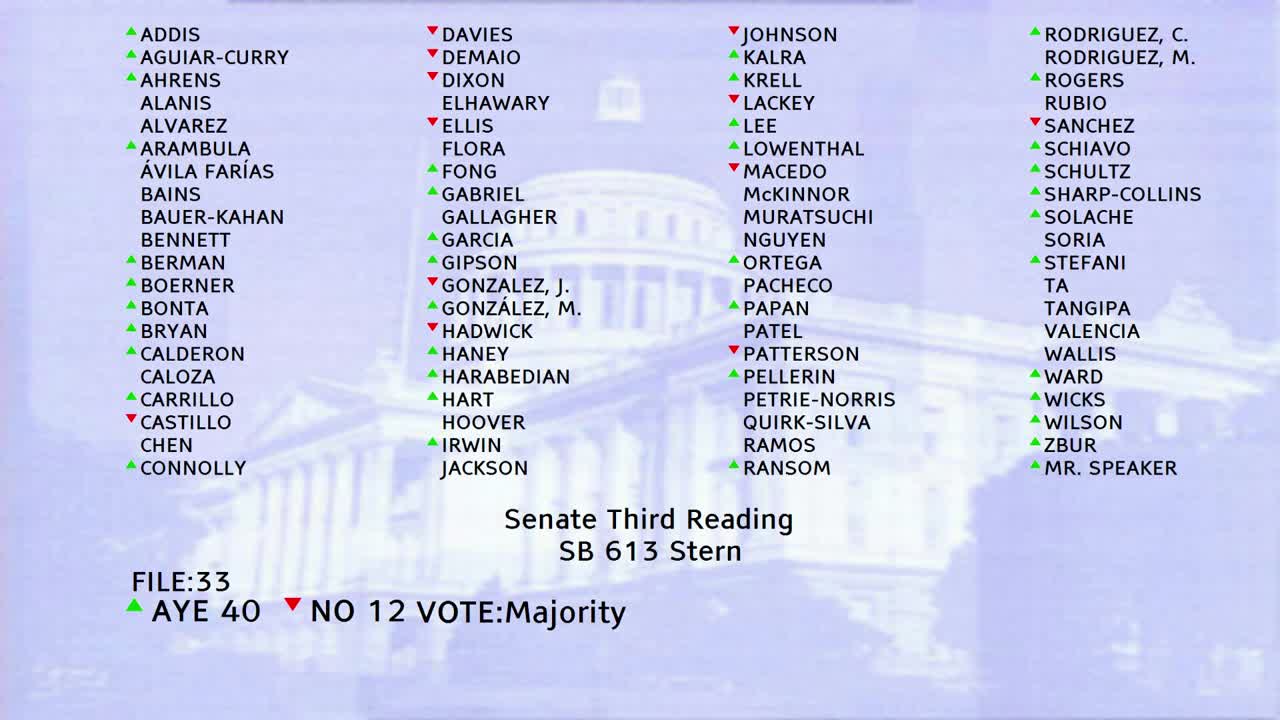
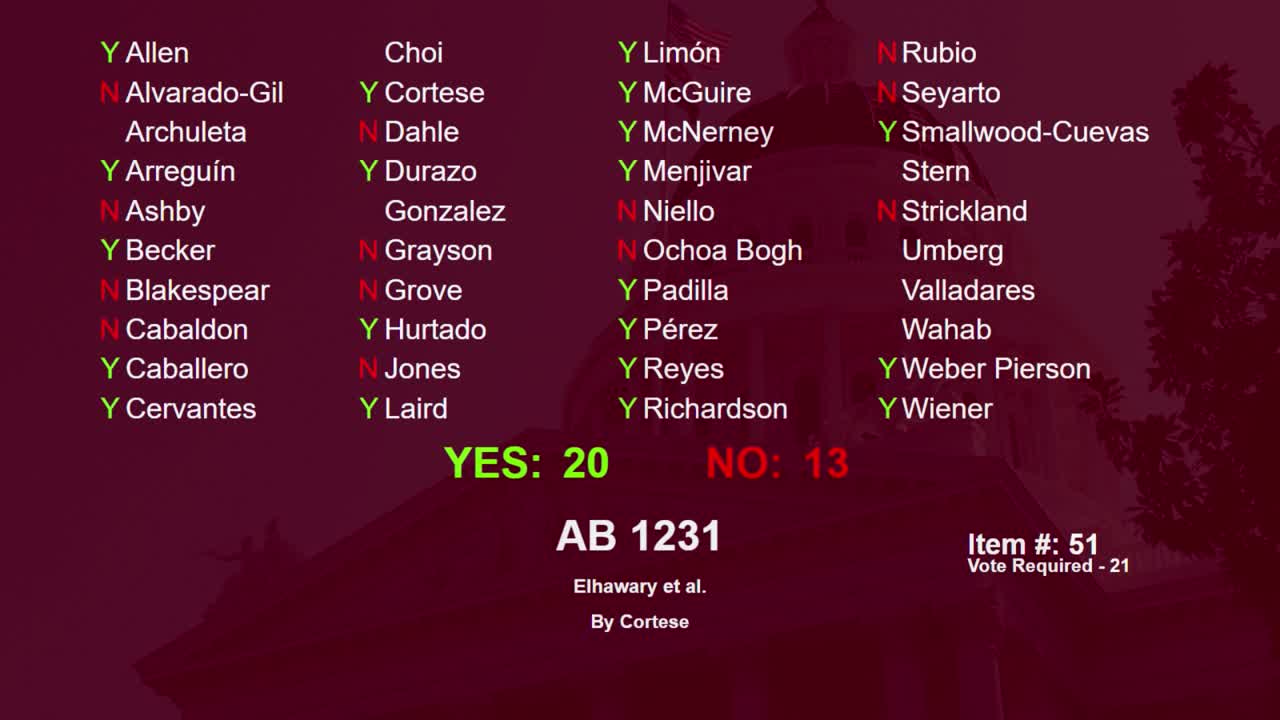

Bill Author

Bill Co-Author(s):