SB 501: Responsible Battery Recycling Act of 2022: covered batteries.
- Session Year: 2025-2026
- House: Senate
- Latest Version Date: 2026-09-20
Current Status:
Passed
(2026-09-20: Chaptered by Secretary of State. Chapter 414, Statutes of 2026.)
Introduced
In Committee
Awaiting First Chamber Vote
Passed First Chamber
In Committee
Awaiting Second Chamber Vote
Passed Second Chamber
Enacted
What does this bill do?
This bill expands which batteries must be covered by California's recycling program, replacing prior size exclusions with two classes—small format (rechargeable ≤11 lbs/≤300 Wh; single‑use ≤4.4 lbs) and medium format (up to 25 lbs or 2,000 Wh)—affecting producers, retailers, recyclers, collection sites, and program operators. It also requires stewardship plans to set separate collection site targets for each class, show financial controls, use independent audits under FASB rules, meet annual recycling minimums (60% rechargeable, 70% single‑use), allow inspections by the Department of Toxic Substances Control, and keep records for five years.
The summary is provided by generative AI which can make mistakes. For original language, please view the details in the table below.
Existing law, the Responsible Battery Recycling Act of 2022, establishes a stewardship program, administered by the Department of Resources Recycling and Recovery, with the Department of Toxic Substances Control, as provided, for the collection, transportation, and recycling, and the safe and proper management, of covered batteries in the state in an economically efficient and practical manner. The act defines a covered battery to mean a device consisting of one or more electrically connected electrochemical cells designed to receive, store, and deliver electric energy. Existing law defines a covered battery to include a loose battery that is designed to be easily removed from a product by the user of the product with no more than common household tools. Existing law excludes from the definition of a covered battery a primary battery weighing over 2 kilograms. Existing law defines a primary battery for this purpose to mean a nonrechargeable battery, including, but not limited to, alkaline, carbon-zinc, and lithium metal batteries. Existing law also excludes from the definition of a covered battery a rechargeable battery weighing over 5 kilograms and having a watthour rating of more than 300 watthours.
This bill would revise the description of a loose battery, for purposes of the definition of a covered battery, by providing that a key, application, or other locking device provided to the consumer by the producer of the product or battery that is warranted by the producer of the product or battery to serve solely to prevent theft of the battery or tampering by persons other than the consumer and not to inhibit the consumers ability to remove, replace, or recycle the battery would not prevent a battery from being considered designed to be easily removed from a product by the user of the product with no more than common household tools. The bill would remove the exclusions from the definition of a covered battery for a primary battery and a rechargeable battery, described above. The bill would categorize all covered batteries as either a small format battery or a medium format battery. The bill would define a small format battery to include a rechargeable battery weighing no more than 11 pounds with a rating of no more than 300 watthours and a nonrechargeable battery weighing no more than 4.4 pounds. The bill would define a medium format battery to include a rechargeable battery that weighs more than 11 pounds or that has a rating of more than 300 watthours, or both, but that does not weigh more than 25 pounds or have a rating more than 2,000 watthours, and a nonrechargeable battery weighing more than 4.4 pounds but fewer than 25 pounds.
The act requires a producer of covered batteries, individually or through a stewardship organization, to develop and implement a stewardship plan for the collection, transportation, and recycling, and the safe and proper management, of covered batteries in the state. The act requires the stewardship plan to describe how the producer or stewardship organization will provide a certain number of collection sites for covered batteries in each county, as provided.
This bill would instead require the stewardship plan to describe how the producer or stewardship organization will provide a certain number of collection sites for small format batteries and medium format batteries, as specified.
The act requires a stewardship plan to include, among other things, consultation with the California Environmental Protection Agencys Environmental Justice Task Force and coordination with certain entities, including, but not limited to, other program operators, as provided.
This bill would require a stewardship plan to include consultation with the departments Office of Environmental Justice, Tribal Relations, Education and Outreach instead of the Environmental Justice Task Force. The bill would require the stewardship to additionally include coordination with California Native American Tribes. The bill would require a stewardship plan to demonstrate that the stewardship organization has adequate financial responsibility and financial controls in place to ensure proper management of funds.
The act requires the program operator to retain an independent public accountant to annually audit the accounting books for the program operator.
This bill would require the annual audit to be prepared in accordance with the Financial Accounting Standards Boards accounting standards codification. The bill would require a program operator to annually demonstrate achievement of minimum recycling rates for rechargeable, nonrechargeable, and primary batteries.
This bill would authorize the Department of Toxic Substances Control and certain local officers and agencies to enter and inspect any collection site, establishment, or any other place or environment, where hazardous wastes are stored, handled, processed, disposed of, or being treated to recover resources, as a result of the requirements of the act, as specified. The bill would, to ensure compliance with the act, authorize the department to inspect and investigate producers, program operators, stewardship organizations, manufacturers, distributors, retailers, importers, recyclers, and collection sites.
The act requires records required by the act to be maintained and accessible to the department for 3 years. The act requires all reports and records provided to the department to be provided under penalty of perjury.
This bill would require records required by the act to be maintained and accessible to the department for 5 years. By expanding the document retention period and by expanding the scope of the act, the bill would expand the scope of the crime of perjury, thereby imposing a state-mandated local program.
The California Constitution requires the state to reimburse local agencies and school districts for certain costs mandated by the state. Statutory provisions establish procedures for making that reimbursement.
This bill would provide that no reimbursement is required by this act for a specified reason.
Existing law, the Responsible Battery Recycling Act of 2022 (battery recycling act), 2022, establishes a stewardship program, administered by the Department of Resources Recycling and Recovery, with the Department of Toxic Substances Control, as provided, for the collection, transportation, and recycling, and the safe and proper management, of covered batteries in the state in an economically efficient and practical manner. The battery recycling act defines a covered battery to mean a device consisting of one or more electrically connected electrochemical cells designed to receive, store, and deliver electric energy. Existing law defines a covered battery to include a loose battery that is designed to be easily removed from a product by the user of the product with no more than common household tools. Existing law excludes from the definition of a covered battery a primary battery weighing over 2 kilograms. Existing law defines a primary battery for this purpose to mean a nonrechargeable battery, including, but not limited to, alkaline, carbon-zinc, and lithium metal batteries. Existing law also excludes from the definition of a covered battery a rechargeable battery weighing over 5 kilograms and having a watthour rating of more than 300 watthours.
This bill would revise the description of a loose battery, for purposes of the definition of a covered battery, by providing that a key, application, or other locking device provided to the consumer by the producer of the product or battery that is warranted by the producer of the product or battery to serve solely to prevent theft of the battery or tampering by persons other than the consumer and not to inhibit the consumers ability to remove, replace, or recycle the battery would not prevent a battery from being considered designed to be easily removed from a product by the user of the product with no more than common household tools. The bill would remove the exclusions from the definition of a covered battery for a primary battery and a rechargeable battery, described above. The bill would categorize all covered batteries as either a small format battery or a medium format battery. The bill would define a small format battery to include a rechargeable battery weighing no more than 11 pounds with a rating of no more than 300 watthours and a nonrechargeable battery weighing no more than 4.4 pounds. The bill would define a medium format battery to include a rechargeable battery that weighs more than 11 pounds or that has a rating of more than 300 watthours, or both, but that does not weigh more than 25 pounds or have a rating more than 2,000 watthours, and a nonrechargeable battery weighing more than 4.4 pounds but fewer than 25 pounds.
The act requires a producer of covered batteries, individually or through a stewardship organization, to develop and implement a stewardship plan for the collection, transportation, and recycling, and the safe and proper management, of covered batteries in the state. The act requires the stewardship plan to describe how the producer or stewardship organization will provide a certain number of collection sites for covered batteries in each county, as provided.
This bill would instead require the stewardship plan to describe how the producer or stewardship organization will provide a certain number of collection sites for small format batteries and medium format batteries, as specified.
The act requires a stewardship plan to include, among other things, consultation with the California Environmental Protection Agencys Environmental Justice Task Force and coordination with certain entities, including, but not limited to, other program operators, as provided.
This bill would require a stewardship plan to include consultation with the departments Office of Environmental Justice, Tribal Relations, Education and Outreach instead of the Environmental Justice Task Force. The bill would require the stewardship to additionally include coordination with California Native American Tribes. The bill would require a stewardship plan to demonstrate that the stewardship organization has adequate financial responsibility and financial controls in place to ensure proper management of funds.
The act requires the program operator to retain an independent public accountant to annually audit the accounting books for the program operator.
This bill would require the annual audit to be prepared in accordance with the Financial Accounting Standards Boards accounting standards codification. The bill would require a program operator to annually demonstrate achievement of minimum recycling rates for rechargeable, nonrechargeable, and primary batteries.
This bill would authorize the Department of Toxic Substances Control and certain local officers and agencies to enter and inspect any collection site, establishment, or any other place or environment, where hazardous wastes are stored, handled, processed, disposed of, or being treated to recover resources, as a result of the requirements of the act, as specified. The bill would, to ensure compliance with the act, authorize the department to inspect and investigate producers, program operators, stewardship organizations, manufacturers, distributors, retailers, importers, recyclers, and collection sites.
The battery recycling act requires records required by the act to be maintained and accessible to the department for 3 years. The act requires all reports and records provided to the department to be provided under penalty of perjury.
ByThis bill would require records required by the act to be maintained and accessible to the department for 5 years. By expanding the document retention period and by expanding the scope of the act, the bill would expand the scope of the crime of perjury, thereby imposing a state-mandated local program.
The California Constitution requires the state to reimburse local agencies and school districts for certain costs mandated by the state. Statutory provisions establish procedures for making that reimbursement.
This bill would provide that no reimbursement is required by this act for a specified reason.
Existing law, the Responsible Battery Recycling Act of 2022 (battery recycling act), establishes a stewardship program, administered by the Department of Resources Recycling and Recovery, with the Department of Toxic Substances Control, as provided, for the collection, transportation, and recycling, and the safe and proper management, of covered batteries in the state in an economically efficient and practical manner. The battery recycling act defines a covered battery to mean a device consisting of one or more electrically connected electrochemical cells designed to receive, store, and deliver electric energy. Existing law defines a covered battery to include a loose battery that is designed to be easily removed from a product by the user of the product with no more than common household tools. Existing law excludes from the definition of a covered battery a primary battery weighing over 2 kilograms. Existing law defines a primary battery for this purpose to mean a nonrechargeable battery, including, but not limited to, alkaline, carbon-zinc, and lithium metal batteries. Existing law also excludes from the definition of a covered battery a rechargeable battery weighing over 5 kilograms and having a watthour rating of more than 300 watthours.
This bill would revise the description of a loose battery, for purposes of the definition of a covered battery, by providing that a key, application, or other locking device provided to the consumer by the producer of the product or battery that is warranted by the producer of the product or battery to serve solely to prevent theft of the battery or tampering by persons other than the consumer and not to inhibit the consumers ability to remove, replace, or recycle the battery would not prevent a battery from being considered designed to be easily removed from a product by the user of the product with no more than common household tools. The bill would remove the exclusions from the definition of a covered battery for a primary battery and a rechargeable battery, described above. The bill would categorize all covered batteries as either a small format battery or a medium format battery. The bill would define a small format battery to include a rechargeable battery weighing no more than 11 pounds with a rating of no more than 300 watthours and a nonrechargeable battery weighing no more than 4.4 pounds. The bill would define a medium format battery to include a rechargeable battery weighing that weighs more than 11 pounds but no more than 25 pounds, a rechargeable battery with or that has a rating of more than 300 watthours but no watthours, or both, but that does not weigh more than 25 pounds or have a rating more than 2,000 watthours, and a nonrechargeable battery weighing more than 4.4 pounds but fewer than 25 pounds.
The act requires a producer of covered batteries, individually or through a stewardship organization, to develop and implement a stewardship plan for the collection, transportation, and recycling, and the safe and proper management, of covered batteries in the state. The act requires the stewardship plan to describe how the producer or stewardship organization will provide a certain number of collection sites for covered batteries in each county, as provided.
This bill would instead require the stewardship plan to describe how the producer or stewardship organization will provide a certain number of collection sites for small format batteries and medium format batteries, as specified.
The battery recycling act requires all reports and records provided to the department to be provided under penalty of perjury.
By expanding the scope of the act, the bill would expand the scope of the crime of perjury, thereby imposing a state-mandated local program.
The California Constitution requires the state to reimburse local agencies and school districts for certain costs mandated by the state. Statutory provisions establish procedures for making that reimbursement.
This bill would provide that no reimbursement is required by this act for a specified reason.
Existing law, the Responsible Battery Recycling Act of 2022 (battery recycling act), establishes a stewardship program, administered by the Department of Resources Recycling and Recovery, with the Department of Toxic Substances Control, as provided, for the collection, transportation, and recycling, and the safe and proper management, of covered batteries in the state in an economically efficient and practical manner. The battery recycling act defines a covered battery to mean a device consisting of one or more electrically connected electrochemical cells designed to receive, store, and deliver electric energy. Existing law defines a covered battery to include a loose battery that is designed to be easily removed from a product by the user of the product with no more than common household tools. Existing law excludes from the definition of a covered battery a primary battery weighing over 2 kilograms. Existing law defines a primary battery for this purpose to mean a nonrechargeable battery, including, but not limited to, alkaline, carbon-zinc, and lithium metal batteries. Existing law also excludes from the definition of a covered battery covered battery a rechargeable battery weighing over 5 kilograms and having a watthour rating of more than 300 watthours.
This bill would revise the description of a loose battery, for purposes of the definition of a covered battery, by providing that a key, application, or other locking device provided to the consumer by the producer of the product or battery that is warranted by the producer of the product or battery to serve solely to prevent theft of the battery or tampering by persons other than the consumer and not to inhibit the consumers ability to remove, replace, or recycle the battery would not prevent a battery from being considered designed to be easily removed from a product by the user of the product with no more than common household tools. The bill would instead exclude from the definition of a covered battery a primary battery weighing over 25 pounds and any rechargeable battery weighing over 25 pounds, regardless of the watthour rating. remove the exclusions from the definition of a covered battery for a primary battery and a rechargeable battery, described above. The bill would categorize all covered batteries as either a small format battery or a medium format battery. The bill would define a small format battery to include a rechargeable battery weighing no more than 11 pounds with a rating of no more than 300 watthours and a nonrechargeable battery weighing no more than 4.4 pounds. The bill would define a medium format battery to include a rechargeable battery weighing more than 11 pounds but no more than 25 pounds, a rechargeable battery with a rating of more than 300 watthours but no more than 2,000 watthours, and a nonrechargeable battery weighing more than 4.4 pounds but fewer than 25 pounds.
The act requires a producer of covered batteries, individually or through a stewardship organization, to develop and implement a stewardship plan for the collection, transportation, and recycling, and the safe and proper management, of covered batteries in the state. The act requires the stewardship plan to describe how the producer or stewardship organization will provide a certain number of collection sites for covered batteries in each county, as provided.
This bill would instead require the stewardship plan to describe how the producer or stewardship organization will provide a certain number of collection sites for small format batteries and medium format batteries, as specified.
The battery recycling act requires all reports and records provided to the department to be provided under penalty of perjury.
By expanding the scope of the act, the bill would expand the scope of the crime of perjury, thereby imposing a state-mandated local program.
The California Constitution requires the state to reimburse local agencies and school districts for certain costs mandated by the state. Statutory provisions establish procedures for making that reimbursement.
This bill would provide that no reimbursement is required by this act for a specified reason.
Existing law, the Responsible Battery Recycling Act of 2022 (battery recycling act), establishes a stewardship program, administered by the Department of Resources Recycling and Recovery, with the Department of Toxic Substances Control, as provided, for the collection, transportation, and recycling, and the safe and proper management, of covered batteries in the state in an economically efficient and practical manner. The battery recycling act defines a covered battery to mean a device consisting of one or more electrically connected electrochemical cells designed to receive, store, and deliver electric energy. Existing law defines a covered battery to include a loose battery that is designed to be easily removed from a product by the user of the product with no more than common household tools. Existing law excludes from the definition of a covered battery a primary battery weighing over 2 kilograms. Existing law defines a primary battery for this purpose to mean a nonrechargeable battery, including, but not limited to, alkaline, carbon-zinc, and lithium metal batteries. Existing law also excludes from the definition of a covered battery a rechargeable battery weighing over 5 kilograms and having a watthour rating of more than 300 watthours.
This bill would revise the description of a loose battery, for purposes of the definition of a covered battery, by providing that a key, application, or other locking device provided to the consumer by the producer of the product or battery that is warranted by the producer of the product or battery to serve solely to prevent theft of the battery or tampering by persons other than the consumer and not to inhibit the consumers ability to remove, replace, or recycle the battery would not prevent a battery from being considered designed to be easily removed from a product by the user of the product with no more than common household tools. The bill would instead exclude from the definition of a covered battery a primary battery weighing over 25 pounds and any rechargeable battery weighing over 25 pounds, regardless of the watthour rating.
The battery recycling act requires all reports and records provided to the department to be provided under penalty of perjury.
By expanding the scope of the act, the bill would expand the scope of the crime of perjury, thereby imposing a state-mandated local program.
The California Constitution requires the state to reimburse local agencies and school districts for certain costs mandated by the state. Statutory provisions establish procedures for making that reimbursement.
This bill would provide that no reimbursement is required by this act for a specified reason.
(1)Under existing law, as part of the hazardous waste control laws, the Department of Toxic Substances Control (DTSC) generally regulates the management and handling of hazardous waste and hazardous materials. Existing law authorizes a public agency, as defined, to operate a household hazardous waste collection facility under permit from DTSC.Existing law, the Plastic Pollution Prevention and Packaging Producer Responsibility Act, establishes a producer responsibility program designed to ensure that producers of single-use packaging and food service ware covered by that program take responsibility for the costs associated with the end-of-life management of that material and ensure that the material is recyclable or compostable.This bill would create a producer responsibility program for products containing household hazardous waste and would require a producer responsibility organization (PRO) to ensure the safe and convenient collection and management of covered products at no cost to consumers or local governments. The bill would define covered product to mean a consumer product that is ignitable, toxic, corrosive, or reactive, or that meets other specified criteria, except as specified. The bill would require a producer of a covered product to register with the PRO, which would be required to develop and implement a producer responsibility plan for the collection, transportation, and the safe and proper management of covered products. The bill would require DTSC to adopt regulations to implement the program with an effective date no earlier than July 1, 2028.This bill would require the PRO, within 12 months of the effective date of the regulations, to submit a producer responsibility plan to DTSC. The bill would require the plan to include specified elements, including a funding mechanism to fully fund the PRO and the program. The bill would require, within 6 months of receipt of the plan, DTSC to approve, approve in part, or disapprove the plan, as specified. The bill would require DTSC to notify the PRO of its decision. If DTSC does not approve the plan in full, then the bill would require DTSC to specify the reasons for disapproval or identify the portions of the partially approved plan that do not comply with the program, as applicable. The bill would require the PRO to submit a revised plan if its plan is not fully approved. The bill would conditionally approve a plan if DTSC does not approve, approve in part, or disapprove a plan within one year of receipt of the plan.This bill would require the PRO to implement its plan within 90 days of approval. The bill would require the plan to be fully funded in a manner that equitably distributes the plans costs among participant producers, as specified. The bill would require the PRO to reimburse local jurisdictions for costs associated with collecting illegally dumped covered products and for providing a convenient collection system for covered products if the PROs plan relies on local jurisdictions to collect or manage covered products.This bill would require the PRO to prepare and submit to DTSC an annual report describing the activities carried out pursuant to the plan. The bill would require the PRO to retain specified documents, annually audit its accounting books, and make documents available to DTSC for review, as specified. The bill would require all reports and records provided to DTSC pursuant to the program to be provided under penalty of perjury. By expanding the scope of a crime, the bill would impose a state-mandated local program.This bill would require a participant producer, through the PRO, to pay DTSC, on an unspecified schedule, an annual administrative charge, as determined by DTSC. The bill would require the charge be set at an amount that is adequate to cover DTSCs full costs of administering and enforcing the program. The bill would provide for the imposition of administrative civil penalties on producers and other specified persons who violate the program. The bill would establish the Household Hazardous Waste Producer Responsibility Fund in the State Treasury and would require the administrative charges collected by DTSC to be deposited into that fund for expenditure by DTSC, upon appropriation by the Legislature, to cover DTSCs cost to implement the program. The bill would also establish the Household Hazardous Waste Products Penalty Account in the Household Hazardous Waste Producer Responsibility Fund and would require that the civil penalties collected by DTSC pursuant to the program be deposited into that account, for expenditure by DTSC, upon appropriation by the Legislature, for activities related to the collection, reuse, and recycling of covered products, grants for related purposes, and the administration and enforcement of the program.This bill would require the PRO to prepare an initial statewide needs assessment designed to determine the necessary steps and investments needed for covered products to achieve the requirements and purposes of the program, as specified. The bill would provide that certain actions of the PRO or a producer are not violations of the Cartwright Act or certain provisions regulating unfair business practices or unfair competition.(2)Existing law established the Department of Resources Recycling and Recovery (CalRecycle) to, among other things, promote waste management in the order of source reduction, then recycling and composting, and then environmentally safe transformation and environmentally safe land disposal, as provided. Pursuant to that authority, CalRecycle publishes various waste characterization studies.This bill would require CalRecycle, in support of the program, to include in updates to the applicable waste characterization study the amount of covered products that were properly and improperly disposed of, as specified.(3)Existing constitutional provisions require that a statute that limits the right of access to the meetings of public bodies or the writings of public officials and agencies be adopted with findings demonstrating the interest protected by the limitation and the need for protecting that interest.This bill would make legislative findings to that effect.(4)The California Constitution requires the state to reimburse local agencies and school districts for certain costs mandated by the state. Statutory provisions establish procedures for making that reimbursement.This bill would provide that no reimbursement is required by this act for a specified reason.(1)Under existing law, as part of the hazardous waste control laws, the Department of Toxic Substances Control (DTSC) generally regulates the management and handling of hazardous waste and hazardous materials. Existing law authorizes a public agency, as defined, to operate a household hazardous waste collection facility under permit from DTSC.
Existing law, the Plastic Pollution Prevention and Packaging Producer Responsibility Act, establishes a producer responsibility program designed to ensure that producers of single-use packaging and food service ware covered by that program take responsibility for the costs associated with the end-of-life management of that material and ensure that the material is recyclable or compostable.
This bill would create a producer responsibility program for products containing household hazardous waste and would require a producer responsibility organization (PRO) to ensure the safe and convenient collection and management of covered products at no cost to consumers or local governments. The bill would define covered product to mean a consumer product that is ignitable, toxic, corrosive, or reactive, or that meets other specified criteria. criteria, except as specified. The bill would require a producer of a covered product to register with the PRO, which would be required to develop and implement a producer responsibility plan for the collection, transportation, and the safe and proper management of covered products. The bill would require DTSC to adopt regulations to implement the program with an effective date no earlier than July 1, 2028.
TheThis bill would require the PRO, within 12 months of the effective date of the regulations, to submit a producer responsibility plan to DTSC. The bill would require the plan to include specified elements, including a funding mechanism to fully fund the PRO and the program. The bill would require, within 6 months of receipt of the plan, DTSC to approve, approve in part, or disapprove the plan, as specified. The bill would require DTSC to notify the PRO of its decision. If DTSC does not approve the plan in full, then the bill would require DTSC to specify the reasons for disapproval or identify the portions of the partially approved plan that do not comply with the program, as applicable. The bill would require the PRO to submit a revised plan if its plan is not fully approved. The bill would conditionally approve a plan if DTSC does not approve, approve in part, or disapprove a plan within one year of receipt of the plan.
TheThis bill would require the PRO to implement its plan within 90 days of approval. The bill would require the plan to be fully funded in a manner that equitably distributes the plans costs among participant producers, as specified. The bill would require the PRO to reimburse local jurisdictions for costs associated with collecting illegally dumped covered products and for providing a convenient collection system for covered products if the PROs plan relies on local jurisdictions to collect or manage covered products.
TheThis bill would require the PRO to prepare and submit to DTSC an annual report describing the activities carried out pursuant to the plan. The bill would require the PRO to retain specified documents, annually audit its accounting books, and make documents available to DTSC for review, as specified. The bill would require all reports and records provided to DTSC pursuant to the program to be provided under penalty of perjury. By expanding the scope of a crime, the bill would impose a state-mandated local program.
TheThis bill would require a participant producer, through the PRO, to pay DTSC, on an unspecified schedule, an annual administrative charge, as determined by DTSC. The bill would require the charge be set at an amount that is adequate to cover DTSCs full costs of administering and enforcing the program. The bill would provide for the imposition of administrative civil penalties on producers and other specified persons who violate the program. The bill would establish the Household Hazardous Waste Producer Responsibility Fund in the State Treasury and would require the administrative charges collected by DTSC to be deposited into that fund for expenditure by DTSC, upon appropriation by the Legislature, to cover DTSCs cost to implement the program. The bill would also establish the Household Hazardous Waste Products Penalty Account in the Household Hazardous Waste Producer Responsibility Fund and would require that the civil penalties collected by DTSC pursuant to the program be deposited into that account, for expenditure by DTSC, upon appropriation by the Legislature, for activities related to the collection, reuse, and recycling of covered products, grants for related purposes, and the administration and enforcement of the program.
This bill would require the PRO to prepare an initial statewide needs assessment designed to determine the necessary steps and investments needed for covered products to achieve the requirements and purposes of the program, as specified. The bill would provide that certain actions of the PRO or a producer are not violations of the Cartwright Act or certain provisions regulating unfair business practices or unfair competition.
(2)Existing law established the Department of Resources Recycling and Recovery (CalRecycle) to, among other things, promote waste management in the order of source reduction, then recycling and composting, and then environmentally safe transformation and environmentally safe land disposal, as provided. Pursuant to that authority, CalRecycle publishes various waste characterization studies.
This bill would require CalRecycle, in support of the program, to include in updates to the applicable waste characterization study the amount of covered products that were properly and improperly disposed of, as specified.
(3)Existing constitutional provisions require that a statute that limits the right of access to the meetings of public bodies or the writings of public officials and agencies be adopted with findings demonstrating the interest protected by the limitation and the need for protecting that interest.
This bill would make legislative findings to that effect.
(4)The California Constitution requires the state to reimburse local agencies and school districts for certain costs mandated by the state. Statutory provisions establish procedures for making that reimbursement.
This bill would provide that no reimbursement is required by this act for a specified reason.
(1)Under existing law, as part of the hazardous waste control laws, the Department of Toxic Substances Control (DTSC) generally regulates the management and handling of hazardous waste and hazardous materials. Existing law authorizes a public agency, as defined, to operate a household hazardous waste collection facility under permit from DTSC.
Existing law, the Plastic Pollution Prevention and Packaging Producer Responsibility Act, establishes a producer responsibility program designed to ensure that producers of single-use packaging and food service ware covered by that program take responsibility for the costs associated with the end-of-life management of that material and ensure that the material is recyclable or compostable.
This bill would create a producer responsibility program for products containing household hazardous waste and would require a producer responsibility organization (PRO) to ensure the safe and convenient collection and management of covered products at no cost to consumers or local governments. The bill would define covered product to mean a consumer product that is ignitable, toxic, corrosive, or reactive, or that meets other specified criteria. The bill would require a producer of a covered product to register with the PRO, which would be required to develop and implement a producer responsibility plan for the collection, transportation, and the safe and proper management of covered products. The bill would require DTSC to adopt regulations to implement the program with an effective date no earlier than July 1, 2028.
The bill would require the PRO, within 12 months of the effective date of the regulations, to submit a producer responsibility plan to DTSC. The bill would require the plan to include specified elements, including a funding mechanism to fully fund the PRO and the program. The bill would require, within 6 months of receipt of the plan, DTSC to approve, approve in part, or disapprove the plan, as specified. The bill would require DTSC to notify the PRO of its decision. If DTSC does not approve the plan in full, then the bill would require DTSC to specify the reasons for disapproval or identify the portions of the partially approved plan that do not comply with the program, as applicable. The bill would require the PRO to submit a revised plan if its plan is not fully approved. The bill would conditionally approve a plan if DTSC does not approve, approve in part, or disapprove a plan within one year of receipt of the plan.
The bill would require the PRO to implement its plan within 90 days of approval. The bill would require the plan to be fully funded in a manner that equitably distributes the plans costs among participant producers, as specified. The bill would require the PRO to reimburse local jurisdictions for costs associated with collecting illegally dumped covered products and for providing a convenient collection system for covered products if the PROs plan relies on local jurisdictions to collect or manage covered products.
The bill would require the PRO to prepare and submit to DTSC an annual report describing the activities carried out pursuant to the plan. The bill would require the PRO to retain specified documents, annually audit its accounting books, and make documents available to DTSC for review, as specified. The bill would require all reports and records provided to DTSC pursuant to the program to be provided under penalty of perjury. By expanding the scope of a crime, the bill would impose a state-mandated local program.
The bill would require a participant producer, through the PRO, to pay DTSC, on an unspecified schedule, an annual administrative charge, as determined by DTSC. The bill would require the charge be set at an amount that is adequate to cover DTSCs full costs of administering and enforcing the program. The bill would provide for the imposition of administrative civil penalties on producers and other specified persons who violate the program. The bill would establish the Household Hazardous Waste Producer Responsibility Fund in the State Treasury and would require the administrative charges collected by DTSC to be deposited into that fund for expenditure by DTSC, upon appropriation by the Legislature, to cover DTSCs cost to implement the program. The bill would also establish the Household Hazardous Waste Products Penalty Account in the Household Hazardous Waste Producer Responsibility Fund and would require that the civil penalties collected by DTSC pursuant to the program be deposited into that account, for expenditure by DTSC, upon appropriation by the Legislature, for activities related to the collection, reuse, and recycling of covered products, grants for related purposes, and the administration and enforcement of the program.
The bill would provide that certain actions of the PRO or a producer are not violations of the Cartwright Act or certain provisions regulating unfair business practices or unfair competition.
(2)Existing law established the Department of Resources Recycling and Recovery (CalRecycle) to, among other things, promote waste management in the order of source reduction, then recycling and composting, and then environmentally safe transformation and environmentally safe land disposal, as provided. Pursuant to that authority, CalRecycle publishes various waste characterization studies.
This bill would require CalRecycle, in support of the program, to include in updates to the applicable waste characterization study the amount of covered products that were properly and improperly disposed of, as specified.
(3)Existing constitutional provisions require that a statute that limits the right of access to the meetings of public bodies or the writings of public officials and agencies be adopted with findings demonstrating the interest protected by the limitation and the need for protecting that interest.
This bill would make legislative findings to that effect.
(4)The California Constitution requires the state to reimburse local agencies and school districts for certain costs mandated by the state. Statutory provisions establish procedures for making that reimbursement.
This bill would provide that no reimbursement is required by this act for a specified reason.
For purposes of this chapter, the following terms have the following meanings:
(a)Brand means a trademark, including both a registered trademark and an unregistered trademark, a logo, a name, a symbol, a word, an identifier, or a traceable mark that identifies a covered battery and signifies the owner or licensee of the brand.
(b)Collection site means a permanent or temporary location at which covered batteries are collected and prepared for transport in accordance with the requirements of this chapter.
(c)Consumer means an owner of a covered battery, including a person, business, corporation, limited partnership, nonprofit organization, or governmental entity, and includes the ultimate purchaser, owner, or lessee of a covered battery, who is not, as to that covered battery, the distributor, importer, producer, recycler, retailer, or stewardship organization.
(d)(1)Covered battery means a device consisting of one or more electrically connected electrochemical cells designed to receive, store, and deliver electric energy. A covered battery includes only a small format battery or a medium format battery that is any of the following:
(A)A loose battery that is either sold separately from a product or that is designed to be easily removed from a product by the user of the product with no more than common household tools. A key, application, or other locking device provided to the consumer by the producer of the product or battery that is warranted by the producer of the product or battery to serve solely to prevent theft of the battery or tampering by persons other than the consumer and not to inhibit the consumers ability to remove, replace, or recycle the battery shall not prevent a battery from being considered designed to be easily removed from a product by the user of the product with no more than common household tools.
(B)A battery that is packed with, but not installed in, the product that the battery is intended to power, when the product is offered for sale by the producer.
(2)Covered battery does not include any of the following:
(A)A lead-acid battery, as defined in subdivisions (a) and (b) of Section 42440.
(B)(i)A battery contained in a motor vehicle. For purposes of this subparagraph, motor vehicle has the same meaning as set forth in Section 415 of the Vehicle Code.
(ii)Notwithstanding any other law, the exclusion in clause (i) does not apply to a battery contained in any of the following:
(I)A motorized scooter.
(II)A motorized skateboard.
(III)A motorized hoverboard.
(IV)A device intended to propel or move upon a highway only one individual person or property.
(C)A fuel cell electrical generating facility. For purposes of this subparagraph, fuel cell electrical generating facility has the same meaning as eligible fuel cell electrical generating facility, as defined in Section 2827.10 of the Public Utilities Code.
(D)(i)A Class I device as defined in Section 360c of Title 21 of the United States Code, and either of the following applies:
(I)It is a device described in Section 414.202 of Title 42 of the Code of Federal Regulations.
(II)Either of the following applies:
(ia)The device is predominantly used in a health care setting by a provider.
(ib)The device is predominantly prescribed by a health care provider.
(ii)A Class II or Class III device as defined in Section 360c of Title 21 of the United States Code.
(E)A battery that has been recalled.
(e)Department means the Department of Resources Recycling and Recovery or a successor agency.
(f)Distributor means a company that has a contractual relationship with one or more producers to market and sell covered batteries to retailers.
(g)Electrochemical cell means a system consisting of an anode, a cathode, and an electrolyte, plus electrical or mechanical connections needed to allow the cell to deliver or receive electric energy.
(h)Importer means either of the following:
(1)A person qualifying as an importer of record for purposes of Section 1484(a)(2)(B) of Title 19 of the United States Code with regard to the import of a covered battery that is sold, distributed for sale, or offered for sale in or into the state that was manufactured or assembled by a company outside of the United States.
(2)A person importing into the state for sale, distributing for sale, or offering for sale in the state a covered battery that was manufactured or assembled by a company physically located outside of the state.
(i)Medium format battery means either of the following:
(1)A rechargeable battery that weighs more than 11 pounds or that has a rating of more than 300 watthours, or both, but that does not weigh more than 25 pounds or have a rating of more than 2,000 watthours.
(2)A nonrechargeable battery or primary battery, including, but not limited to, alkaline, carbon-zinc, and a lithium metal battery, weighing at least 4.4 pounds but no more than 25 pounds.
(j)Person has the same meaning as set forth in Section 40170.
(k)(1)Producer means a person who manufactures a covered battery and who owns or is the licensee of the brand or trademark under which that covered battery is sold, offered for sale, or distributed for sale in or into the state.
(2)If there is no person in the state who is the producer for purposes of paragraph (1), the producer of the covered battery is the owner of a brand or trademark or, if the owner is not in the state, the exclusive licensee of a brand or trademark under which the covered battery is sold, imported for sale, offered for sale, or distributed for sale in or into the state. For purposes of this subdivision, an exclusive licensee is a person holding the exclusive right to use a trademark or brand in the state in connection with the manufacture, sale, or distribution for sale in or into the state of the covered battery.
(3)If there is no person in the state who is the producer for purposes of paragraph (1) or (2), the producer of the covered battery is the person who sells, offers for sale, or is the importer or distributor of the covered battery in or into the state for sale in or into the state.
(4)For purposes of this chapter, the sale of a covered battery shall be deemed to occur in the state if the covered battery is delivered to the purchaser in the state.
(5)Producer does not include an admitted insurer possessing a certificate of authority from the Insurance Commissioner pursuant to Section 700 of the Insurance Code, nor does it apply to a placement of insurance that was made in full compliance with Section 1765.1 or 1765.2 of the Insurance Code.
(6)The department may adopt regulations authorizing a person who is in the state and who manufactures, distributes, imports, offers for sale, sells, or owns or exclusively licenses a brand of covered batteries to assume the role of producer for covered batteries it manufactures, distributes, imports, offers for sale, sells, or for which the person owns or exclusively licenses the brand of the covered batteries.
(l)Program operator means a producer, or a stewardship organization on behalf of a group of producers, that is responsible for implementing a stewardship program in accordance with the requirements of this chapter.
(m)(1)Rechargeable battery means a battery that contains one or more voltaic or galvanic cells, electrically connected to produce electric energy, and that is designed to be recharged.
(2)Rechargeable battery does not include either of the following:
(A)A battery that contains electrolytes as a free liquid.
(B)A battery that employs lead-acid technology, unless that battery is sealed and contains no free liquid electrolytes.
(n)Recycler means a person who changes the physical or chemical composition of covered batteries.
(o)Recycling has the same meaning as set forth in subdivision (a) of Section 25121.1 of the Health and Safety Code. Recycling does not include any of the following:
(1)Combustion.
(2)Incineration.
(3)Energy generation.
(4)Fuel production.
(5)Beneficial reuse in the construction and operation of a solid waste landfill, including use of alternative daily cover.
(6)Other forms of disposal, as defined in subdivision (b) of Section 40192.
(p)Recycling efficiency rate means the ratio of the weight of covered battery components recycled by a program operator from covered batteries to the weight of those covered batteries collected by the program operator.
(q)Retailer means a person who sells or offers for sale covered batteries in or into the state to a person through any means, including, but not limited to, sales outlets, catalogs, the telephone, the internet, or any electronic means.
(r)Small format battery means either of the following:
(1)A rechargeable battery weighing no more than 11 pounds that has a rating of no more than 300 watthours.
(2)A nonrechargeable battery, including, but not limited to, alkaline, carbon-zinc, and a lithium metal battery, weighing no more than 4.4 pounds.
(s)Stewardship organization means an organization exempt from taxation under Section 501(c)(3) of the federal Internal Revenue Code of 1986 (26 U.S.C. Sec. 501(c)(3)) that is established by a group of producers in accordance with this chapter and appointed by them to act as their agent to develop and implement a stewardship program.
(t)Stewardship plan or plan means a plan developed by a program operator pursuant to this chapter for the collection, transportation, and recycling, and the safe and proper management, of covered batteries.
(u)Stewardship program means a program established by a program operator pursuant to this chapter for the free at drop off, convenient, and safe collection, transportation, recycling, and otherwise proper management of covered batteries.
SEC. 2.Section 42420.3 of the Public Resources Code is amended to read:42420.3.(a)The department may adjust, through regulations adopted by the department, the minimum required collection sites, pursuant to subdivision (e) of Section 42422.1, to ensure that consumers have sufficient convenient access to collection sites, applicable to stewardship plans addressing collection of covered batteries if the department has substantial evidence that allowing for this adjustment will increase the collection of covered batteries.
(b)The department shall establish, through regulations adopted by the department pursuant to Section 42420.2, a limit on the number of covered batteries to be deposited at a single collection site, pursuant to subdivision (e) of Section 42422.1, as applicable, by a single consumer in a single day.
(c)Beginning January 1, 2032, and every five years thereafter, the department may after consultation with the program operators and through regulations adopted by the department adjust the minimum recycling efficiency rates established in Section 42422.1 based on the most economically and technically feasible processes and methodology available.
SEC. 3.Section 42420.4 of the Public Resources Code is amended to read:42420.4.(a)(1)A program operator shall include as a collection site under its stewardship program any entity that offers in writing to participate in the stewardship program, complies with all applicable state, federal, and municipal laws and regulations, complies with any program operator requirements that are consistent with that program operators approved stewardship plan, and is judged by the program operator to have sufficient staff and resources to reliably comply, even if the minimum thresholds described in subdivision (e) of Section 42422.1, as applicable, have been achieved.
(2)A program operator shall include as a collection site under its stewardship program any household hazardous waste collection facility, as defined in Section 25218.1 of the Health and Safety Code, that offers in writing to participate in the stewardship program, complies with all applicable state, federal, and municipal laws and regulations, and complies with any program operator requirements that are consistent with that program operators approved stewardship plan, even if the minimum thresholds described in subdivision (e) of Section 42422.1, as applicable, have been achieved.
(b)A program operator shall include the offering entity as a collection site in the stewardship program within 90 days of receiving the written offer to participate, confirming that the offering entity will comply with all applicable state and federal laws and regulations, and confirming that the offering entity has sufficient staff and resources to comply with any program operator requirements that are consistent with that program operators approved stewardship plan, even if the minimum thresholds described in subdivision (e) of Section 42422.1, as applicable, have been achieved. The program operator shall not be required to respond to offers pursuant to this paragraph until the program operators stewardship plan has been approved by the department.
(c)A program operator may suspend or terminate a collection site or service that does not comply with all applicable state, federal, or municipal laws and regulations or adhere to the rules and conditions imposed by the program operator.
(d)A collection site shall be operated to ensure that covered batteries, as applicable, are collected safely and handled in accordance with all applicable state, federal, and municipal laws and regulations and the rules and conditions of the stewardship plan.
(e)This section does not exempt the program operator from meeting the minimum thresholds described in subdivision (e) of Section 42422.1.
SEC. 4.Section 42421.3 is added to the Public Resources Code, to read:42421.3.A program operator shall annually demonstrate achievement of a minimum recycling efficiency rate of 60 percent for rechargeable batteries and 70 percent for nonrechargeable and primary batteries. The weight of recovered materials from covered batteries counted toward the satisfaction of the recycling efficiency rate requirement shall be used.
SEC. 5.Section 42422 of the Public Resources Code is amended to read:42422.(a)Within 12 months of the effective date of the regulations adopted by the department pursuant to Section 42420.2, a program operator shall develop and submit to the department a complete stewardship plan, in accordance with the requirements of this chapter, for the collection, transportation, and recycling, and the safe and proper management, of covered batteries in the state in an economically efficient and practical manner. No stewardship program serving more than one producer may limit its collection, transportation, and recycling of covered batteries to covered batteries of the producers participating in that stewardship program, except as provided in paragraph (5) of subdivision (d) of Section 42422.1.
(b)If a program operators stewardship plan covers only a single format of covered batteries, the program operator may elect to collect, transport, and recycle only that format of covered batteries. A program operators stewardship plan shall specify which of the following it covers:
(1)Only small format batteries.
(2)Only medium format batteries.
(3)Small and medium format batteries.
(c)A program operator shall safely and properly manage any battery that is not of a format covered by its stewardship plan and that was inadvertently collected.
(d)A stewardship program that serves more than one producer shall not limit its collection, transportation, or recycling of covered batteries to covered batteries of the producers participating in that stewardship program, except as provided in paragraph (5) of subdivision (e) of Section 42422.1.
SEC. 6.Section 42422.1 of the Public Resources Code is amended to read:42422.1.A stewardship plan for covered batteries shall include all of the following:
(a)The format or formats of covered batteries accepted under the stewardship plan.
(b)The names of producers, as defined in subdivision (k) of Section 42420.1, and the brands, formats, and types of covered batteries covered under the stewardship plan.
(c)A description of the process by which the program operator consulted with the advisory body created pursuant to Section 42422.4 to receive advice on the development and implementation of the stewardship plan.
(d)A description of methodologies for measuring, and meeting or exceeding, the established minimum recycling efficiency rate for primary and rechargeable batteries to meet the annual report requirement in Section 42421.3.
(e)A description of how the program operator will provide for a free at drop off and convenient collection system for covered batteries in each county of the state that meets all of the following requirements:
(1)For small format batteries, a minimum of 10 collection sites per county or one collection site per 15,000 people, whichever is greater, except as identified below:
(A)A county with a population of 18,000 and under, as reported annually by the Department of Finance, shall have a minimum of three collection locations.
(B)A county with a population of between 18,001 and 50,000, as reported annually by the Department of Finance, shall have a minimum of four collection locations.
(C)A county with a population between 50,001 and 100,000, as reported annually by the Department of Finance, shall have a minimum of eight collection locations.
(2)For medium format batteries, one of following, as applicable:
(A)For a county with a population of 50,000 or more, a minimum of five collection sites per county or one collection site per 30,000 people, whichever is greater.
(B)For a county with a population of 18,001 to 50,000, inclusive, a minimum of two collection sites.
(C)For a county with a population of 18,000 or fewer, a minimum of one collection site.
(3)The collection sites required by this subdivision shall not be required to collect covered batteries that are damaged, defective, or recalled.
(4)The collection sites in each county shall be spread throughout the county to facilitate widespread access and convenience. This paragraph does not authorize the department to require more than the minimum number of collection sites required pursuant to paragraph (1) or the regulations adopted by the department pursuant to Section 42420.2.
(5)A stewardship plan that elects, pursuant to subdivision (b) of Section 42422, to collect only a single format of covered batteries shall not be required to have collection sites for formats of covered batteries that are not covered by its stewardship plan.
(f)A description of how collection sites will be authorized and managed, including both of the following:
(1)An explanation of the process by which the program operator will, upon request, provide to a collection site, at no cost, packaging consistent with the requirements found in the United States Department of Transportations hazardous materials regulations and the necessary forms and instructions for the safe collection and transportation of damaged or defective covered batteries.
(2)An explanation of the process by which the program operator will provide for the collection and transport of covered batteries from the collection sites to a recycler and how shipments will be documented. A program operator shall maintain these records and make them available to the department upon request.
(g)A program operator shall allow a consumer to drop off at a collection site, at no charge at drop off, the format of covered batteries matching the classification of the site. A collection site shall be classified as a small format battery collection site or a medium format battery collection site. A collection site may be both a small format battery collection site and a medium format battery collection site if it meets the requirements for both.
(h)A description of how the program operator will provide collection sites, at no cost to the collection sites, appropriate containers for covered batteries subject to its program, training, signage, safety guidance, and educational materials, including, but not limited to, procedures for handling damaged and defective covered batteries and fire prevention, detection, and response guidance for covered batteries.
(i)All handling, collection, transport, and recycling of covered batteries undertaken as part of a stewardship program under this chapter shall comply with all applicable state and federal laws and regulations, but the department may not take enforcement action under this chapter against a program operator for failure to comply with those state and federal laws and regulations unless the program operator is first determined to have violated the applicable state or federal law or regulation by the governing body with jurisdiction to enforce the state or federal law or regulation.
(j)A retailer with five or more locations in the state shall make all locations serve as permanent collection sites for small format batteries, and shall comply with the rules and conditions of the program in which it participates, as part of a stewardship program. A retailer that is not a collection site pursuant to paragraph (2) of subdivision (e) is not required to collect medium format batteries.
(k)No program operator shall be required, as a condition of approval of its plan or program or otherwise, to accept damaged, defective, or recalled batteries at sites served by the program operator. Program operators shall provide to sites participating in their programs, information for persons seeking to recycle damaged or defective batteries informing those persons of the requirements for doing so and of the closest location at which damaged or defective batteries may be accepted. Program operators shall provide to sites participating in their programs information for persons seeking to recycle recalled batteries informing those persons of instructions to contact any entity recalling batteries to determine the appropriate handling of those batteries.
(l)(1)A description of the method to establish and administer a means for fully funding the stewardship program in a manner that equitably distributes the stewardship programs costs among the producers that are part of the stewardship organization. For producers that elect to meet the requirements of this chapter individually, without joining a stewardship organization, a description of the proposed method to establish and administer a means for fully funding the stewardship program.
(2)The stewardship plan shall include a stewardship program budget, for the next three calendar years, that includes a funding level and anticipated revenues and costs sufficient to cover the budgeted costs, including, but not limited to, administrative costs, operational costs, and capital costs, to operate the stewardship program in a prudent and responsible manner. Administrative costs shall include the departments and the Department of Toxic Substances Controls anticipated actual, reasonable, and direct regulatory costs to implement and enforce this chapter as the criteria for all the costs are defined in the regulations adopted pursuant to Section 42420.2. For purposes of this paragraph, stewardship program implementation begins once the department approves a program operators stewardship plan, except the departments and the Department of Toxic Substances Controls costs shall include actual, reasonable, and direct regulatory development costs and other startup regulatory costs incurred prior to stewardship plan submittal and approval.
(m)A description of the process by which covered batteries will be processed and recycled following collection at collection sites, including all of the following:
(1)A description of how covered batteries will be handled and recycled, including how covered batteries will not be disposed of by the program operator and a description of how the recycling of all covered batteries will be maximized.
(2)A description of how discarded covered battery residual materials will, to the extent economically and technically feasible, be recycled and a description of how contracts with service providers will require that this be done and how the contractor will accomplish this.
(3)A description of how the program operator will prioritize the use of recycling facilities located closer to the point of generation to minimize transportation emissions and increase accountability.
(n)Coordination with, and a description of the efforts and methods used to coordinate activities with, all of the following entities who are responsive to a request from the program operator:
(1)Other program operators.
(2)Existing battery collection and recycling programs, including electronic waste recyclers and dismantlers.
(3)Community-based organizations that contact the program operator and that are qualified to run or support collection events.
(4)California Native American tribes.
(o)Consultation with the departments Office of Environmental Justice, Tribal Relations, Education and Outreach regarding methods to supplement those of the program operator to collect covered batteries for recycling in areas and communities that face unique challenges associated with proper waste management, such as poverty, language barriers, and illegal disposal.
(p)A comprehensive statewide education and outreach program designed to educate consumers and promote participation in the collection and recycling program offered by the program operator. At a minimum, the comprehensive statewide education and outreach program shall include all of the following:
(1)A description of the education and communications strategy being implemented to effectively promote participation in the approved covered battery stewardship program and provide the information necessary for effective participation of consumers, retailers, and others.
(2)An internet website that publicizes the location of collection sites and provides information to consumers on the free at drop off and convenient network of collection sites offered by the stewardship program and any other information reasonably necessary to safely and conveniently access the collection and recycling services offered in the state.
(3)All signage and materials required for collection sites by the program operator, and the method by which collection sites can access replacement materials at no cost to the collection site.
(4)A description of efforts to support participation by all California communities, including a description of efforts to communicate with consumers in languages other than English, as described in subdivision (o).
(5)A description of goals and metrics used to determine the success of the statewide education and outreach program.
(6)The statewide education and outreach program shall promote the safe and proper management of covered batteries.
(7)The statewide education and outreach program shall not promote the disposal of covered batteries in a manner inconsistent with the services offered by the stewardship plan.
(8)The statewide education and outreach plan shall include information for consumers about how to avoid improper disposal of covered batteries.
(9)A description of how the program operators will annually assess and evaluate the efficacy of the comprehensive statewide education and outreach program and periodically adjust strategies to maximize participation in the stewardship program.
(10)(A)Any program operator serving more than one producer shall coordinate with other program operators on the education and outreach programs that they implement pursuant to this subdivision.
(B)The department may approve multiple program operators sharing, on an equitable basis, the costs of implementing elements of the program that benefit all approved plans serving more than one producer and the program operators sponsoring them, except those costs specified in paragraphs (2) and (9).
(q)Development and implementation of proper labeling of covered batteries to ensure proper collection and recycling, by identifying the chemistry of the covered battery and including an indication that the covered battery should not be disposed of as household waste.
(r)A contingency plan in the event the stewardship plan expires, is disapproved, or is revoked. The contingency plan shall describe how the stewardship plan objectives can be carried out in the absence of a plan, either by the program operator or through an entity such as an escrow company.
(s)A demonstration that the stewardship organization has adequate financial responsibility and financial controls in place to ensure proper management of funds.
SEC. 7.Section 42422.3 of the Public Resources Code is amended to read:42422.3.(a)A program operator shall review its stewardship plan at least every five years after the stewardship plan approval, and determine whether revisions to the plan are necessary.
(b)If a program operator determines that revisions to the plan are necessary, the program operator shall submit to the department a revised plan for review and approval employing the procedures set forth in Section 42422.5. The program operator shall submit the revised plan pursuant to this subdivision within 90 days of the review deadline outlined pursuant to subdivision (a).
(c)If a program operator determines that no revisions to the plan are necessary, the program operator shall send a letter to the department no later than 30 days after the review deadline outlined in subdivision (a), explaining that the program operator has reviewed the plan and determined that no revisions are needed. The department may disapprove the program operators determination within 30 days of receipt of that determination if the department concludes that the program operator cannot implement the objectives of this chapter without revising the stewardship plan. In the event the department disapproves the program operators determination, the program operator shall submit to the department a revised stewardship plan for review and approval in accordance with Section 42422.5. The program operator shall submit the revised plan pursuant to this subdivision within 90 days of receipt of the departments disapproval.
(d)Notwithstanding the requirement in subdivision (a) of Section 42422.5, a program operator may, but is not required to, submit its plan to the Department of Toxic Substances Control prior to submission to the department pursuant to this section.
SEC. 8.Section 42423 of the Public Resources Code is amended to read:42423.(a)No later than 90 days before a budget is submitted to the Department of Toxic Substances Control, the department and the Department of Toxic Substances Control shall notify each program operator of each agencys respective anticipated actual and reasonable regulatory costs directly related to implementing and enforcing this chapter in relation to the program operators activities as the criteria for those costs are defined in the regulations adopted pursuant to Section 42420.2. This may include the actual and reasonable costs associated with regulatory regulation development pursuant to Section 42420.2 and other startup activities prior to stewardship plan submittal and approval, relative to the role of the program operators program compared to other programs, and the Department of Toxic Substances Controls enforcement costs pursuant to subdivision (c) of Section 42425.1.
(b)Program operators shall, on a schedule determined by the department and the Department of Toxic Substances Control, as applicable to each agencys fees, pay the department and the Department of Toxic Substances Control, respectively, fees incurred to reimburse the department and the Department of Toxic Substances Control for incurred costs as described in subdivision (a). The fees shall not exceed the departments or the Department of Toxic Substances Controls actual and reasonable regulatory costs to implement and enforce this chapter as the criteria for those costs are defined in the regulations adopted pursuant to Section 42420.2. The fees shall be paid by each producer, either individually, if the producer is complying with the requirements of this chapter individually, or through a stewardship organization.
(c)(1) The department and the Department of Toxic Substances Control shall deposit all moneys received from a program operator pursuant to this section into the Covered Battery Recycling Fund, which is hereby established in the State Treasury.
(2)Upon appropriation by the Legislature, moneys in the Covered Battery Recycling Fund shall be expended by the department and the Department of Toxic Substances Control to implement and enforce this chapter, as well as to reimburse any outstanding loans made from other funds used to finance regulation development and startup costs of the departments and the Department of Toxic Substances Controls activities pursuant to this chapter.
(3)The moneys in the Covered Battery Recycling Fund shall not be expended for any other purpose.
SEC. 9.Section 42424 of the Public Resources Code is amended to read:42424.(a)A program operator shall keep board minutes, books, and records that clearly reflect the activities and transactions of the program operator.
(b)A program operator shall retain, at the program operators expense, an independent public accountant, certified in the United States, to annually audit the accounting books of the program operator. The annual audit shall be prepared in accordance with the Financial Accounting Standards Boards Accounting Standards Codification in effect at the time the audit is submitted to the department.
(c)The program operator shall include the audit in its annual report submitted pursuant to Section 42424.1, commencing within 18 months of plan approval by the department. The department shall review the audit for compliance with this chapter and consistency with the program operators stewardship plan. After evaluating the relevant information provided pursuant to the audit, the department may determine that a program operator has failed to demonstrate that it has adequate financial responsibility as required by subdivision (s) of Section 42422.1. The department shall notify the program operator of any compliance issues or inconsistencies.
(d)The department may conduct its own audit if it determines that an audit is necessary to enforce the requirements of this chapter and that the audit conducted pursuant to subdivision (b) is not adequate for this purpose. The program operator may obtain copies of the departments audit upon request.
(e)The department shall not publicly disclose any confidential trade secret information in an audit conducted pursuant to this section.
SEC. 10.Section 42424.1 of the Public Resources Code is amended to read:42424.1.A program operator shall annually submit to the department, in the form and manner, and by the date, determined by the department, an annual report, which the department shall make publicly available that includes all of the following information for the preceding calendar year:
(a)The program operators costs and revenues.
(b)An estimate of the quantity of covered batteries sold in or into the state by the producers covered by the program operators stewardship plan, as determined by the best available commercial information, potentially including the application of California population data to the national sales information and the discarded covered batteries collected for recycling through the stewardship program.
(c)A list of the stewardship programs collection sites, by name, location, and type.
(d)The total weight of primary and rechargeable batteries, respectively, that were collected.
(e)A list of each battery recycling facility used by the stewardship program, by name and location.
(f)An updated list of the names and corporate mailing addresses of producers, as defined in subdivision (k) of Section 42420.1 and brands of covered batteries covered under the stewardship plan.
(g)The total weight and number of covered batteries sold in or into the state attributed to a producer, who is a registered participant of the program operators plan, that are collected in the state and recycled by the program operator during the preceding calendar year, including a description of the methodology and information used to determine and calculate these values.
(h)The recycling efficiency rate of rechargeable and primary batteries that were recycled.
(i)A description of methods used to collect, transport, and recycle covered batteries by the program operator.
(j)A description of outreach efforts and education, including, but not limited to, education and outreach provided to consumers, collection sites, manufacturers, distributors, and retailers by the program operator for the purpose of promoting the collection and recycling of covered batteries.
(k)(1)A report on coordination activities with other program operators, including covered battery collection and recycling programs and electronic waste recyclers, with regard to the proper management or recycling of collected covered batteries, for purposes of providing the efficient delivery of services and avoiding unnecessary duplication of effort and expense.
(2)A description of efforts undertaken by a program operator to implement the required labeling of covered batteries pursuant to Section 42422.1.
(l)Findings from the evaluation of the comprehensive statewide education and outreach program required by paragraph (9) of subdivision (p) of Section 42422.1.
(m)A description of any consultation with the California Environmental Protection Agencys Environmental Justice Task Force and other relevant stakeholders for collecting covered batteries for recycling in areas and communities that face unique challenges.
(n)A demonstration of actions taken by the program operator to comply with the requirements established pursuant to Section 42422.1.
(o)(1)A report on activities the program operator has undertaken in relation to all of the following:
(A)Meeting the requirements established pursuant to Section 42422.1.
(B)Making progress on meeting the requirements established pursuant to Section 42422.1.
(C)Making progress on planned efforts to meet the requirements established pursuant to Section 42422.1.
(2)Factors to be considered for purposes of paragraph (1) may include, but are not limited to, availability of takeback options and no-cost local curbside collections services, proximity to recyclers and no-cost collection points and events, and the state of current recycling technology.
(p)A report on activities the program operator has undertaken to prioritize the use of recycling facilities located closer to the point of generation to minimize transportation emissions and increase accountability.
(q)If the program operator determines during a particular year that any of the activities undertaken to implement subdivision (p) were unsuccessful, the program operator shall identify the problems with the current activities, make modifications pursuant to the requirement in Section 42422.3, and report on other activities undertaken and progress made, in the following years annual report.
(r)An electronic copy in the form and manner determined by the department, and specified in the regulations adopted by the department pursuant to Section 42420.2 of any annual report, which shall include a brief explanation of how the program operator anticipates the activities may benefit the stewardship program. The program operator shall make these reports publicly available free of charge. If the report contains trade secret or confidential information protected under existing law, the program operator shall provide the department the report marked as trade secret or confidential, and a version of the report with that information redacted, and post the redacted report on its internet website.
(s)The progress toward attaining the goals included in the program operators stewardship plan.
(t)Any modifications or revisions to the stewardship plan, including those required pursuant to Section 42422.3, which are subject to review under Section 42422.5, intended to achieve the requirements established pursuant to Section 42422.1.
(u)Any other information deemed relevant by the program operator for the department to determine compliance with the approved stewardship plan.
SEC. 11.Section 42425.1 of the Public Resources Code is amended to read:42425.1.(a)The department may impose an administrative civil penalty on a producer, program operator, stewardship organization, manufacturer, distributor, retailer, importer, recycler, or collection site that is in violation of this chapter. The amount of the administrative civil penalty shall not exceed ten thousand dollars ($10,000) per day, but, if the violation is intentional, knowing, or reckless, the department may impose an administrative civil penalty of not more than fifty thousand dollars ($50,000) per day. The department shall establish, through regulations adopted by the department pursuant to Section 42420.2, a process that shall include an informal hearing process by which the penalties will be assessed.
(b)The department shall deposit all penalties collected pursuant to this section into the Covered Battery Recycling Penalty Account, which is hereby created in the Covered Battery Recycling Fund. These moneys shall be available for expenditure upon appropriation by the Legislature.
(c)(1)In order to carry out the purposes of this chapter, the Department of Toxic Substances Control, or any authorized representative of the Department of Toxic Substances Control, or the local officer or agency authorized to enforce Chapter 6.5 (commencing with Section 25100) of Division 20 of the Health and Safety Code and its implementing regulations, may, at any reasonable hour of the day, or as authorized pursuant to Title 13 (commencing with Section 1822.50) of Part 3 of the Code of Civil Procedure, enter and inspect any collection site, establishment, or any other place or environment where hazardous wastes are stored, handled, processed, disposed of, or being treated to recover resources, as a result of the requirements of this chapter.
(2)This chapter does not limit or restrict the Department of Toxic Substances Controls enforcement authority pursuant to Chapter 6.5 (commencing with Section 25100) of Division 20 of the Health and Safety Code and its implementing regulations.
(d)The Administrative Adjudication Bill of Rights, as set forth in Article 6 (commencing with Section 11425.10) of Chapter 4.5 of Part 1 of Division 3 of Title 2 of the Government Code, applies to hearings conducted under this chapter and mandates minimum due process.
SEC. 12.Section 42425.3 of the Public Resources Code is amended to read:42425.3.(a)To ensure compliance and to detect noncompliance with the chapter, the department may inspect and investigate producers, program operators, stewardship organizations, manufacturers, distributors, retailers, importers, recyclers, and collection sites.
(b)With regard to audits undertaken pursuant to subdivision (d) of Section 42424, the department may require the cooperation of producers, program operators, stewardship organizations, manufacturers, distributors, retailers, importers, recyclers, and collection sites.
(c)A producer, program operator, stewardship organization, manufacturer, distributor, retailer, importer, recycler, or collection site shall cooperate fully with investigations, inspections, and audits by the department, including, but not limited to, doing both of the following:
(1)Upon request, provide the department with full, reasonable and timely access, as determined by the department, to its facilities, operations, and personnel, and participate in interviews by the department, and answer written questions posed by the department, as necessary to determine compliance with this chapter.
(2)Upon request, provide the department and the Department of Toxic Substances Control with relevant records necessary to determine compliance with this chapter.
(d)The records required by this chapter shall be maintained and accessible for five years. All reports and records provided to the department pursuant to this chapter shall be provided under penalty of perjury.
(e)(1)The department may impose administrative civil penalties pursuant to Section 42425.1 on a producer, program operator, stewardship organization, manufacturer, distributor, retailer, importer, recycler, or collection site that fails to provide the department with the access required pursuant to this section.
(2)The department may post a notice on the departments internet website that is maintained pursuant to Section 42425 that a producer that fails to provide the department with access pursuant to this section, along with the producers brands and covered batteries, is no longer in compliance with this chapter.
SEC. 13.No reimbursement is required by this act pursuant to Section 6 of Article XIIIB of the California Constitution because the only costs that may be incurred by a local agency or school district will be incurred because this act creates a new crime or infraction, eliminates a crime or infraction, or changes the penalty for a crime or infraction, within the meaning of Section 17556 of the Government Code, or changes the definition of a crime within the meaning of Section 6 of Article XIIIB of the California Constitution.
For purposes of this chapter, the following terms have the following meanings:
(a)Brand means a trademark, including both a registered trademark and an unregistered trademark, a logo, a name, a symbol, a word, an identifier, or a traceable mark that identifies a covered battery and identifies signifies the owner or licensee of the brand.
(b)Collection site means a permanent or temporary location at which covered batteries are collected and prepared for transport in accordance with the requirements of this chapter.
(c)Consumer means an owner of a covered battery, including a person, business, corporation, limited partnership, nonprofit organization, or governmental entity, and includes the ultimate purchaser, owner, or lessee of a covered battery, who is not, as to that covered battery, the distributor, importer, producer, recycler, retailer, or stewardship organization.
(d)(1)Covered battery means a device consisting of one or more electrically connected electrochemical cells designed to receive, store, and deliver electric energy. A covered battery includes only a small format battery and or a medium format battery that is any of the following:
(A)A loose battery that is either sold separately from a product or that is designed to be easily removed from a product by the user of the product with no more than common household tools. A key, application, or other locking device provided to the consumer by the producer of the product or battery that is warranted by the producer of the product or battery to serve solely to prevent theft of the battery or tampering by persons other than the consumer and not to inhibit the consumers ability to remove, replace, or recycle the battery shall not prevent a battery from being considered designed to be easily removed from a product by the user of the product with no more than common household tools.
(B)A battery that is packed with, but not installed in, the product that the battery is intended to power, when the product is offered for sale by the producer.
(2)Covered battery does not include any of the following:
(A)A lead-acid battery, as defined in subdivisions (a) and (b) of Section 42440.
(B)(i)A battery contained in a motor vehicle. For purposes of this subparagraph, motor vehicle has the same meaning as set forth in Section 415 of the Vehicle Code.
(ii)Notwithstanding any other law, the exclusion in clause (i) does not apply to a battery contained in any of the following:
(I)A motorized scooter.
(II)A motorized skateboard.
(III)A motorized hoverboard.
(IV)A device intended to propel or move upon a highway only one individual person or property.
(C)A fuel cell electrical generating facility. For purposes of this subparagraph, fuel cell electrical generating facility has the same meaning as eligible fuel cell electrical generating facility, as defined in Section 2827.10 of the Public Utilities Code.
(D)(i)A Class I device as defined in Section 360c of Title 21 of the United States Code, and either of the following applies:
(I)It is a device described in Section 414.202 of Title 42 of the Code of Federal Regulations.
(II)Either of the following applies:
(ia)The device is predominantly used in a health care setting by a provider.
(ib)The device is predominantly prescribed by a health care provider.
(ii)A Class II or Class III device as defined in Section 360c of Title 21 of the United States Code.
(E)A battery that has been recalled.
(e)Department means the Department of Resources Recycling and Recovery or a successor agency.
(f)Distributor means a company that has a contractual relationship with one or more producers to market and sell covered batteries to retailers.
(g)Electrochemical cell means a system consisting of an anode, a cathode, and an electrolyte, plus electrical or mechanical connections needed to allow the cell to deliver or receive electric energy.
(h)Importer means either of the following:
(1)A person qualifying as an importer of record for purposes of Section 1484(a)(2)(B) of Title 19 of the United States Code with regard to the import of a covered battery that is sold, distributed for sale, or offered for sale in or into the state that was manufactured or assembled by a company outside of the United States.
(2)A person importing into the state for sale, distributing for sale, or offering for sale in the state a covered battery that was manufactured or assembled by a company physically located outside of the state.
(i)Medium format battery Medium format battery means either of the following:
(1)A rechargeable battery that weighs more than 11 pounds or that has a rating of more than 300 watthours, or both, but that does not weigh more than 25 pounds or have a rating of more than 2,000 watthours.
(2)A nonrechargeable battery or primary battery, including, but not limited to, alkaline, carbon-zinc, and a lithium metal battery, weighing at least 4.4 pounds but no more than 25 pounds.
(j)Person has the same meaning as set forth in Section 40170.
(k)(1)Producer means a person who manufactures a covered battery and who owns or is the licensee of the brand or trademark under which that covered battery is sold, offered for sale, or distributed for sale in or into the state.
(2)If there is no person in the state who is the producer for purposes of paragraph (1), the producer of the covered battery is the owner of a brand or trademark or, if the owner is not in the state, the exclusive licensee of a brand or trademark under which the covered battery is sold, imported for sale, offered for sale, or distributed for sale in or into the state. For purposes of this subdivision, an exclusive licensee is a person holding the exclusive right to use a trademark or brand in the state in connection with the manufacture, sale, or distribution for sale in or into the state of the covered battery.
(3)If there is no person in the state who is the producer for purposes of paragraph (1) or (2), the producer of the covered battery is the person who sells, offers for sale, or is the importer or distributor of the covered battery in or into the state for sale in or into the state.
(4)For purposes of this chapter, the sale of a covered battery shall be deemed to occur in the state if the covered battery is delivered to the purchaser in the state.
(5)Producer does not include an admitted insurer possessing a certificate of authority from the Insurance Commissioner pursuant to Section 700 of the Insurance Code, nor does it apply to a placement of insurance that was made in full compliance with Section 1765.1 or 1765.2 of the Insurance Code.
(6)The department may adopt regulations authorizing a person who is in the state and who manufactures, distributes, imports, offers for sale, sells, or owns or exclusively licenses a brand of covered batteries to assume the role of producer for covered batteries it manufactures, distributes, imports, offers for sale, sells, or for which the person owns or exclusively licenses the brand of the covered batteries.
(l)Program operator means a producer, or a stewardship organization on behalf of a group of producers, that is responsible for implementing a stewardship program in accordance with the requirements of this chapter.
(m)(1)Rechargeable battery means a battery that contains one or more voltaic or galvanic cells, electrically connected to produce electric energy, and that is designed to be recharged.
(2)Rechargeable battery does not include either of the following:
(A)A battery that contains electrolytes as a free liquid.
(B)A battery that employs lead-acid technology, unless that battery is sealed and contains no free liquid electrolytes.
(n)Recycler means a person who changes the physical or chemical composition of covered batteries.
(o)Recycling has the same meaning as set forth in subdivision (a) of Section 25121.1 of the Health and Safety Code. Recycling does not include any of the following:
(1)Combustion.
(2)Incineration.
(3)Energy generation.
(4)Fuel production.
(5)Beneficial reuse in the construction and operation of a solid waste landfill, including use of alternative daily cover.
(6)Other forms of disposal, as defined in subdivision (b) of Section 40192.
(p)Recycling efficiency rate means the ratio of the weight of covered battery components recycled by a program operator from covered batteries to the weight of those covered batteries collected by the program operator.
(q)Retailer means a person who sells or offers for sale covered batteries in or into the state to a person through any means, including, but not limited to, sales outlets, catalogs, the telephone, the internet, or any electronic means.
(r)Small format battery means both either of the following:
(1)A rechargeable battery weighing no more than 11 pounds that has a rating of no more than 300 watthours.
(2)A nonrechargeable battery, including, but not limited to, alkaline, carbon-zinc, and a lithium metal battery, weighing no more than 4.4 pounds.
(s)Stewardship organization means an organization exempt from taxation under Section 501(c)(3) of the federal Internal Revenue Code of 1986 (26 U.S.C. Sec. 501(c)(3)) that is established by a group of producers in accordance with this chapter and appointed by them to act as their agent to develop and implement a stewardship program.
(t)Stewardship plan or plan means a plan developed by a program operator pursuant to this chapter for the collection, transportation, and recycling, and the safe and proper management, of covered batteries.
(u)Stewardship program means a program established by a program operator pursuant to this chapter for the free at drop off, convenient, and safe collection, transportation, recycling, and otherwise proper management of covered batteries.
SEC. 2.Section 42420.3 of the Public Resources Code is amended to read:42420.3.(a)The department may adjust, through regulations adopted by the department, the minimum required collection sites, pursuant to subdivision (d) (e) of Section 42422.1, to ensure that consumers have sufficient convenient access to collection sites, applicable to stewardship plans addressing collection of covered batteries if the department has substantial evidence that allowing for this adjustment will increase the collection of covered batteries.
(b)The department shall establish, through regulations adopted by the department pursuant to Section 42420.2, a limit on the number of covered batteries to be deposited at a single collection site, pursuant to subdivision (d) (e) of Section 42422.1, as applicable, by a single consumer in a single day.
(c)Beginning January 1, 2032, and every five years thereafter, the department may after consultation with the program operators and through regulations adopted by the department adjust the minimum recycling efficiency rates established in Section 42422.1 based on the most economically and technically feasible processes and methodology available.
SEC. 2.SEC. 3.Section 42420.4 of the Public Resources Code is amended to read:42420.4.(a)(1)A program operator shall include as a collection site under its stewardship program any entity that offers in writing to participate in the stewardship program, complies with all applicable state, federal, and municipal laws and regulations, complies with any program operator requirements that are consistent with that program operators approved stewardship plan, and is judged by the program operator to have sufficient staff and resources to reliably comply, even if the minimum thresholds described in subdivision (d) (e) of Section 42422.1, as applicable, have been achieved.
(2)A program operator shall include as a collection site under its stewardship program any household hazardous waste collection facility, as defined in Section 25218.1 of the Health and Safety Code, that offers in writing to participate in the stewardship program, complies with all applicable state, federal, and municipal laws and regulations, and complies with any program operator requirements that are consistent with that program operators approved stewardship plan, even if the minimum thresholds described in subdivision (d) (e) of Section 42422.1, as applicable, have been achieved.
(b)A program operator shall include the offering entity as a collection site in the stewardship program within 90 days of receiving the written offer to participate, confirming that the offering entity will comply with all applicable state and federal laws and regulations, and confirming that the offering entity has sufficient staff and resources to comply with any program operator requirements that are consistent with that program operators approved stewardship plan, even if the minimum thresholds described in subdivision (d) (e) of Section 42422.1, as applicable, have been achieved. The program operator shall not be required to respond to offers pursuant to this paragraph until the program operators stewardship plan has been approved by the department.
(c)A program operator may suspend or terminate a collection site or service that does not comply with all applicable state, federal, or municipal laws and regulations or adhere to the rules and conditions imposed by the program operator pursuant to paragraph (4) of subdivision (d) of Section 42422.1. operator.
(d)A collection site shall be operated to ensure that covered batteries, as applicable, are collected safely and handled in accordance with all applicable state, federal, and municipal laws and regulations and the rules and conditions of the stewardship plan.
(e)This section does not exempt the program operator from meeting the minimum thresholds described in subdivision (d) (e) of Section 42422.1.
SEC. 4.Section 42421.3 is added to the Public Resources Code, to read:42421.3.A program operator shall annually demonstrate achievement of a minimum recycling efficiency rate of 60 percent for rechargeable batteries and 70 percent for nonrechargeable and primary batteries. The weight of recovered materials from covered batteries counted toward the satisfaction of the recycling efficiency rate requirement shall be used.
SEC. 3.SEC. 5.Section 42422 of the Public Resources Code is amended to read:42422.(a)Within 12 months of the effective date of the regulations adopted by the department pursuant to Section 42420.2, a program operator shall develop and submit to the department a complete stewardship plan, in accordance with the requirements of this chapter, for the collection, transportation, and recycling, and the safe and proper management, of covered batteries in the state in an economically efficient and practical manner. No stewardship program serving more than one producer may limit its collection, transportation, and recycling of covered batteries to covered batteries of the producers participating in that stewardship program, except as provided in paragraph (5) of subdivision (d) of Section 42422.1.
(b)If a program operators stewardship plan covers only a single format of covered batteries, the program operator may elect to collect, transport, and recycle only that format of covered batteries. A program operators stewardship plan shall specify which of the following it covers:
(1)Only small format batteries.
(2)Only medium format batteries.
(3)Small and medium format batteries.
(c)A program operator shall safely and properly manage any battery that is not of a format covered by its stewardship plan and that was inadvertently collected.
(d)A stewardship program that serves more than one producer shall not limit its collection, transportation, or recycling of covered batteries to covered batteries of the producers participating in that stewardship program, except as provided in paragraph (5) of subdivision (e) of Section 42422.1.
SEC. 4.SEC. 6.Section 42422.1 of the Public Resources Code is amended to read:42422.1.A stewardship plan for covered batteries shall include all of the following:
(a)The format or formats of covered batteries accepted under the stewardship plan.
(a)(b)The names of producers, as defined in subdivision (k) of Section 42420.1, and brands of the brands, formats, and types of covered batteries covered under the stewardship plan.
(b)(c)A description of the process by which the program operator consulted with the advisory body created pursuant to Section 42422.4 to receive advice on the development and implementation of the stewardship plan.
(c)(d)A description of methodologies for measuring, and meeting or exceeding, the established minimum recycling efficiency rate for primary and rechargeable batteries to meet the annual report requirement in subdivision (i) of Section 42424.1. Section 42421.3.
(d)(e)A description of how the program operator will provide for a free at drop off and convenient collection system for covered batteries in each county of the state that meets all of the following requirements:
(1)For small format batteries, a minimum of 10 collection sites per county or one collection site per 15,000 people, whichever is greater, except as identified below:
(A)A county with a population of 18,000 and under, as reported annually by the Department of Finance, shall have a minimum of three collection locations.
(B)A county with a population of between 18,001 and 50,000, as reported annually by the Department of Finance, shall have a minimum of four collection locations.
(C)A county with a population between 50,001 and 100,000, as reported annually by the Department of Finance, shall have a minimum of eight collection locations.
(2)For medium format batteries, one of following, as applicable:
(i)(A)For a county with a population of 50,000 or more, a minimum of five collection sites per county or one collection site per 30,000 people, whichever is greater.
(ii)(B)For a county with a population of 18,001 to 50,000, inclusive, a minimum of two collections collection sites.
(iii)(C)For a county with a population of 18,000 or fewer, a minimum of one collection site.
(3)The collection sites required by this subdivision shall not be required to collect covered batteries that are damaged, defective, or recalled.
(4)The collection sites in each county shall be spread throughout the county to facilitate widespread access and convenience. This paragraph does not authorize the department to require more than the minimum number of collection sites required pursuant to paragraph (1) or the regulations adopted by the department pursuant to Section 42420.2.
(5)If a stewardship plan for covered batteries does not include a brand of small format batteries that is sold in the state, then the stewardship plan is not required to have collection sites for small format batteries pursuant to paragraph (1). If a stewardship plan for covered batteries does not include a brand of medium format batteries that is sold in the state, then the stewardship plan is not required to have collection sites for medium format batteries pursuant to paragraph (2).(5)A stewardship plan that elects, pursuant to subdivision (b) of Section 42422, to collect only a single format of covered batteries shall not be required to have collection sites for formats of covered batteries that are not covered by its stewardship plan.
(e)(f)A description of how collection sites will be authorized and managed, including both of the following:
(1)An explanation of the process by which the program operator will, upon request, provide to a household hazardous waste collection facility as defined in Section 25218.1 of the Health and Safety Code, at no cost, and to all other collection sites, at cost, collection site, at no cost, packaging consistent with the requirements found in the United States Department of Transportations hazardous materials regulations and the necessary forms and instructions for the safe collection and transportation of damaged or defective covered batteries.
(2)An explanation of the process by which the program operator will provide for the collection and transport of covered batteries from the collection sites to a recycler and how shipments will be documented. A program operator shall maintain these records and make them available to the department upon request.
(f)(g)A program operator shall allow a consumer to drop off at a collection site, at no charge at drop off, covered batteries. the format of covered batteries matching the classification of the site. A collection site shall be classified as a small format battery collection site or a medium format battery collection site. A collection site may be both a small format battery collection site and a medium format battery collection site if it meets the requirements for both.
(g)(h)A description of how the program operator will provide collection sites sites, at no cost to the collection sites with sites, appropriate containers for covered batteries subject to its program, training, signage, safety guidance, and educational materials. materials, including, but not limited to, procedures for handling damaged and defective covered batteries and fire prevention, detection, and response guidance for covered batteries.
(h)(i)All handling, collection, transport, and recycling of covered batteries undertaken as part of a stewardship program under this chapter shall comply with all applicable state and federal laws and regulations, but the department may not take enforcement action under this chapter against a program operator for failure to comply with those state and federal laws and regulations unless the program operator is first determined to have violated the applicable state or federal law or regulation by the governing body with jurisdiction to enforce the state or federal law or regulation.
(i)(j)A retailer with five or more locations in the state shall make all locations serve as permanent collection sites for small format batteries, and shall comply with the rules and conditions of the program in which it participates, as part of a stewardship program. A retailer that is not a collection site pursuant to paragraph (2) of subdivision (d) (e) is not required to collect medium format batteries.
(j)(k)No program operator shall be required, as a condition of approval of its plan or program or otherwise, to accept damaged, defective, or recalled batteries at sites served by the program operator. Program operators shall provide to sites participating in their programs, information for persons seeking to recycle damaged or defective batteries informing those persons of the requirements for doing so and of the closest location at which damaged or defective batteries may be accepted. Program operators shall provide to sites participating in their programs information for persons seeking to recycle recalled batteries informing those persons of instructions to contact any entity recalling batteries to determine the appropriate handling of those batteries.
(k)(l)(1)A description of the method to establish and administer a means for fully funding the stewardship program in a manner that equitably distributes the stewardship programs costs among the producers that are part of the stewardship organization. For producers that elect to meet the requirements of this chapter individually, without joining a stewardship organization, a description of the proposed method to establish and administer a means for fully funding the stewardship program.
(2)The stewardship plan shall include a stewardship program budget, for the next three calendar years, that includes a funding level and anticipated revenues and costs sufficient to cover the budgeted costs, including, but not limited to, administrative costs, operational costs, and capital costs, to operate the stewardship program in a prudent and responsible manner. Administrative costs shall include the departments and the Department of Toxic Substances Controls anticipated actual, reasonable, and direct regulatory costs to implement and enforce this chapter as the criteria for all the costs are defined in the regulations adopted pursuant to Section 42420.2. For purposes of this paragraph, stewardship program implementation begins once the department approves a program operators stewardship plan, except the departments and the Department of Toxic Substances Controls costs shall include actual, reasonable, and direct regulatory development costs and other startup regulatory costs incurred prior to stewardship plan submittal and approval.
(l)(m)A description of the process by which covered batteries will be processed and recycled following collection at collection sites, including all of the following:
(1)A description of how covered batteries will be handled and recycled, including how covered batteries will not be disposed of by the program operator and a description of how the recycling of all covered batteries will be maximized.
(2)A description of how discarded covered battery residual materials will, to the extent economically and technically feasible, be recycled and a description of how contracts with service providers will require that this be done and how the contractor will accomplish this.
(3)A description of how the program operator will prioritize the use of recycling facilities located closer to the point of generation to minimize transportation emissions and increase accountability.
(m)(n)Coordination with, and a description of the efforts and methods used to coordinate activities with, all of the following entities who are responsive to a request from the program operator:
(1)Other program operators.
(2)Existing battery collection and recycling programs, including electronic waste recyclers and dismantlers.
(3)Community-based organizations that contact the program operator and that are qualified to run or support collection events.
(4)California Native American tribes.
(n)(o)Consultation with the California Environmental Protection Agencys Environmental Justice Task Force departments Office of Environmental Justice, Tribal Relations, Education and Outreach regarding methods to supplement those of the program operator to collect covered batteries for recycling in areas and communities that face unique challenges associated with proper waste management, such as poverty, language barriers, and illegal disposal.
(o)(p)A comprehensive statewide education and outreach program designed to educate consumers and promote participation in the collection and recycling program offered by the program operator. At a minimum, the comprehensive statewide education and outreach program shall include all of the following:
(1)A description of the education and communications strategy being implemented to effectively promote participation in the approved covered battery stewardship program and provide the information necessary for effective participation of consumers, retailers, and others.
(2)An internet website that publicizes the location of collection sites and provides information to consumers on the free at drop off and convenient network of collection sites offered by the stewardship program and any other information reasonably necessary to safely and conveniently access the collection and recycling services offered in the state.
(3)All signage and materials required for collection sites by the program operator, and the method by which collection sites can access replacement materials at no cost to the collection site.
(4)A description of efforts to support participation by all California communities, including a description of efforts to communicate with consumers in languages other than English, as described in subdivision (n). (o).
(5)A description of goals and metrics used to determine the success of the statewide education and outreach program.
(6)The statewide education and outreach program shall promote the safe and proper management of covered batteries.
(7)The statewide education and outreach program shall not promote the disposal of covered batteries in a manner inconsistent with the services offered by the stewardship plan.
(8)The statewide education and outreach plan shall include information for consumers about how to avoid improper disposal of covered batteries.
(9)A description of how the program operators will annually assess and evaluate the efficacy of the comprehensive statewide education and outreach program and periodically adjust strategies to maximize participation in the stewardship program.
(10)(A)Any program operator serving more than one producer shall coordinate with other program operators on the education and outreach programs that they implement pursuant to this subdivision.
(B)The department may approve multiple program operators sharing, on an equitable basis, the costs of implementing elements of the program that benefit all approved plans serving more than one producer and the program operators sponsoring them, except those costs specified in paragraphs (2) and (9).
(p)Developing strategies in coordination with other program operators to develop(q)Development and implement implementation of proper labeling of covered batteries to ensure proper collection and recycling, by identifying the chemistry of the covered battery and including an indication that the covered battery should not be disposed of as household waste.
(q)(r)A contingency plan in the event the stewardship plan expires, is disapproved, or is revoked. The contingency plan shall describe how the stewardship plan objectives can be carried out in the absence of a plan, either by the program operator or through an entity such as an escrow company.
(s)A demonstration that the stewardship organization has adequate financial responsibility and financial controls in place to ensure proper management of funds.
SEC. 7.Section 42422.3 of the Public Resources Code is amended to read:42422.3.(a)A program operator shall review its stewardship plan at least every five years after the stewardship plan approval, and determine whether revisions to the plan are necessary.
(b)If a program operator determines that revisions to the plan are necessary, the program operator shall submit to the department a revised plan for review and approval employing the procedures set forth in Section 42422.5. The stewardship organization program operator shall submit the revised plan pursuant to this subdivision within 90 days of the review deadline outlined pursuant to subdivision (a).
(c)If a program operator determines that no revisions to the plan are necessary, the program operator shall send a letter to the department no later than 30 days after the review deadline outlined in subdivision (a), explaining that the program operator has reviewed the plan and determined that no revisions are needed. The department may disapprove the program operators determination within 30 days of receipt of that determination if the department concludes that the program operator cannot implement the objectives of this chapter without revising the stewardship plan. In the event the department disapproves the program operators determination, the program operator shall submit to the department a revised stewardship plan for review and approval in accordance with Section 42422.5. The program operator shall submit the revised plan pursuant to this subdivision within 90 days of receipt of the departments disapproval.
(d)Notwithstanding the requirement in subdivision (a) of Section 42422.5, a program operator may, but is not required to, submit its plan to the Department of Toxic Substances Control prior to submission to the department pursuant to this section.
SEC. 8.Section 42423 of the Public Resources Code is amended to read:42423.(a)No later than 90 days before a budget is submitted to the Department of Toxic Substances Control, the department and the Department of Toxic Substances Control shall notify each program operator of each agencys respective anticipated actual and reasonable regulatory costs directly related to implementing and enforcing this chapter in relation to the program operators activities as the criteria for those costs are defined in the regulations adopted pursuant to Section 42420.2. This may include the actual and reasonable costs associated with regulatory regulation development pursuant to Section 42420.2 and other startup activities prior to stewardship plan submittal and approval, relative to the role of the program operators program compared to other programs. programs, and the Department of Toxic Substances Controls enforcement costs pursuant to subdivision (c) of Section 42425.1.
(b)Program operators shall, on a schedule determined by the department and the Department of Toxic Substances Control, as applicable to each agencys fees, pay the department and the Department of Toxic Substances Control, respectively, fees incurred to reimburse the department and the Department of Toxic Substances Control for incurred costs as described in subdivision (a). The fees shall not exceed the departments or the Department of Toxic Substances Controls actual and reasonable regulatory costs to implement and enforce this chapter as the criteria for those costs are defined in the regulations adopted pursuant to Section 42420.2. The fees shall be paid by each producer, either individually, if the producer is complying with the requirements of this chapter individually, or through a stewardship organization.
(c)(1) The department and the Department of Toxic Substances Control shall deposit all moneys received from a program operator pursuant to this section into the Covered Battery Recycling Fund, which is hereby established in the State Treasury.
(2)Upon appropriation by the Legislature, moneys in the Covered Battery Recycling Fund shall be expended by the department and the Department of Toxic Substances Control to implement and enforce this chapter, as well as to reimburse any outstanding loans made from other funds used to finance regulation development and startup costs of the departments and the Department of Toxic Substances Controls activities pursuant to this chapter.
(3)The moneys in the Covered Battery Recycling Fund shall not be expended for any other purpose.
SEC. 9.Section 42424 of the Public Resources Code is amended to read:42424.(a)A program operator shall keep board minutes, books, and records that clearly reflect the activities and transactions of the program operator.
(b)A program operator shall retain, at the program operators expense, an independent public accountant, certified in the United States, to annually audit the accounting books of the program operator. The annual audit shall be prepared in accordance with the Financial Accounting Standards Boards Accounting Standards Codification in effect at the time the audit is submitted to the department.
(c)The program operator shall include the audit in its annual report submitted pursuant to Section 42424.1, commencing within 18 months of plan approval by the department. The department shall review the audit for compliance with this chapter and consistency with the program operators stewardship plan. After evaluating the relevant information provided pursuant to the audit, the department may determine that a program operator has failed to demonstrate that it has adequate financial responsibility as required by subdivision (s) of Section 42422.1. The department shall notify the program operator of any compliance issues or inconsistencies.
(d)The department may conduct its own audit if it determines that an audit is necessary to enforce the requirements of this chapter and that the audit conducted pursuant to subdivision (b) is not adequate for this purpose. The program operator may obtain copies of the departments audit upon request.
(e)The department shall not publicly disclose any confidential proprietary or trade secret information in an audit conducted pursuant to this section.
SEC. 5.SEC. 10.Section 42424.1 of the Public Resources Code is amended to read:42424.1.A program operator shall annually submit to the department, in the form and manner, and by the date, determined by the department, an annual report, which the department shall make publicly available that includes all of the following information for the preceding calendar year:
(a)The program operators costs and revenues.
(b)An estimate of the quantity of covered batteries sold in or into the state by the producers covered by the program operators stewardship plan, as determined by the best available commercial information, potentially including the application of California population data to the national sales information and the discarded covered batteries collected for recycling through the stewardship program.
(c)A list of the stewardship programs collection sites, by name, location, and type.
(d)The total weight of primary and rechargeable batteries, respectively, that were collected.
(e)A list of each battery recycling facility used by the stewardship program, by name and location.
(f)An updated list of the names and corporate mailing addresses of producers, as defined in subdivision (k) of Section 42420.1 and brands of covered batteries covered under the stewardship plan.
(g)The total weight and number of covered batteries sold in or into the state attributed to a producer, who is a registered participant of the program operators plan, that are collected in the state and recycled by the program operator during the preceding calendar year, including a description of the methodology and information used to determine and calculate these values.
(h)The recycling efficiency rate of rechargeable and primary batteries that were recycled.
(i)Beginning January 1, 2027, a minimum recycling efficiency rate of 60 percent for rechargeable batteries and 70 percent for primary batteries shall be achieved. The weight of recovered materials from covered batteries counted towards the satisfaction of the recycling efficiency rate requirement shall be used.(j)(i)A description of methods used to collect, transport, and recycle covered batteries by the program operator.
(k)(j)A description of outreach efforts and education, including, but not limited to, education and outreach provided to consumers, collection sites, manufacturers, distributors, and retailers by the program operator for the purpose of promoting the collection and recycling of covered batteries.
(l)(k)(1)A report on coordination activities with other program operators, including covered battery collection and recycling programs and electronic waste recyclers, with regard to the proper management or recycling of collected covered batteries, for purposes of providing the efficient delivery of services and avoiding unnecessary duplication of effort and expense.
(2)A description of efforts undertaken by a program operator to implement the required labeling of covered batteries pursuant to Section 42422.1.
(m)(l)Findings from the evaluation of the comprehensive statewide education and outreach program required by paragraph (9) of subdivision (o) (p) of Section 42422.1.
(n)(m)A description of any consultation with the California Environmental Protection Agencys Environmental Justice Task Force and other relevant stakeholders for collecting covered batteries for recycling in areas and communities that face unique challenges.
(o)(n)A demonstration of actions taken by the program operator to comply with the requirements established pursuant to Section 42422.1.
(p)(o)(1)A report on activities the program operator has undertaken in relation to all of the following:
(A)Meeting the requirements established pursuant to Section 42422.1.
(B)Making progress on meeting the requirements established pursuant to Section 42422.1.
(C)Making progress on planned efforts to meet the requirements established pursuant to Section 42422.1.
(2)Factors to be considered for purposes of paragraph (1) may include, but are not limited to, availability of takeback options and no-cost local curbside collections services, proximity to recyclers and no-cost collection points and events, and the state of current recycling technology.
(q)(p)A report on activities the program operator has undertaken to prioritize the use of recycling facilities located closer to the point of generation to minimize transportation emissions and increase accountability.
(r)(q)If the program operator determines during a particular year that any of the activities undertaken to implement subdivision (q) (p) were unsuccessful, the program operator shall identify the problems with the current activities, make modifications pursuant to the requirement in Section 42422.3, and report on other activities undertaken and progress made, in the following years annual report.
(s)(r)An electronic copy in the form and manner determined by the department, and specified in the regulations adopted by the department pursuant to Section 42420.2 of any annual report, which shall include a brief explanation of how the program operator anticipates the activities may benefit the stewardship program. The program operator shall make these reports publicly available free of charge. If the report contains trade secret, proprietary, secret or confidential information protected under existing law, the program operator shall provide the department the report marked as trade secret, proprietary, secret or confidential, and a version of the report with that information redacted, and post the redacted report on its internet website.
(t)(s)The progress toward attaining the goals included in the program operators stewardship plan.
(u)(t)Any modifications or revisions to the stewardship plan, including those required pursuant to Section 42422.3, which are subject to review under Section 42422.5, intended to achieve the requirements established pursuant to Section 42422.1.
(v)(u)Any other information deemed relevant by the program operator for the department to determine compliance with the approved stewardship plan.
SEC. 11.Section 42425.1 of the Public Resources Code is amended to read:42425.1.(a)The department may impose an administrative civil penalty on a producer, program operator, stewardship organization, manufacturer, distributor, retailer, importer, recycler, or collection site that is in violation of this chapter. The amount of the administrative civil penalty shall not exceed ten thousand dollars ($10,000) per day, but, if the violation is intentional, knowing, or reckless, the department may impose an administrative civil penalty of not more than fifty thousand dollars ($50,000) per day. The department shall establish, through regulations adopted by the department pursuant to Section 42420.2, a process that shall include an informal hearing process by which the penalties will be assessed.
(b)The department shall deposit all penalties collected pursuant to this section into the Covered Battery Recycling Penalty Account, which is hereby created in the Covered Battery Recycling Fund. These moneys shall be available for expenditure upon appropriation by the Legislature.
(c)(1)In order to carry out the purposes of this chapter, the Department of Toxic Substances Control, or any authorized representative of the Department of Toxic Substances Control, or the local officer or agency authorized to enforce Chapter 6.5 (commencing with Section 25100) of Division 20 of the Health and Safety Code and its implementing regulations, may, at any reasonable hour of the day, or as authorized pursuant to Title 13 (commencing with Section 1822.50) of Part 3 of the Code of Civil Procedure, enter and inspect any collection site, establishment, or any other place or environment where hazardous wastes are stored, handled, processed, disposed of, or being treated to recover resources, as a result of the requirements of this chapter.
(c)(2)This chapter does not limit or restrict the Department of Toxic Substances Controls enforcement authority pursuant to Chapter 6.5 (commencing with Section 25100) of Division 20 of the Health and Safety Code and its implementing regulations.
(d)The Administrative Adjudication Bill of Rights, as set forth in Article 6 (commencing with Section 11425.10) of Chapter 4.5 of Part 1 of Division 3 of Title 2 of the Government Code, applies to hearings conducted under this chapter and mandates minimum due process.
SEC. 12.Section 42425.3 of the Public Resources Code is amended to read:42425.3.(a)To ensure compliance and to detect noncompliance with the chapter, the department may inspect and investigate producers, program operators, stewardship organizations, manufacturers, distributors, retailers, importers, recyclers, and collection sites.
(b)With regard to audits undertaken pursuant to subdivision (d) of Section 42424, the department may require the cooperation of producers, program operators, stewardship organizations, manufacturers, distributors, retailers, importers, recyclers, and collection sites.
(a)(c)A producer, program operator, stewardship organization, manufacturer, distributor, retailer, importer, recycler, or collection site shall do cooperate fully with investigations, inspections, and audits by the department, including, but not limited to, doing both of the following:
(1)Upon request, provide the department with full, reasonable and timely access, as determined by the department, to its facilities and operations, facilities, operations, and personnel, and participate in interviews by the department, and answer written questions posed by the department, as necessary to determine compliance with this chapter.
(2)Upon request, provide the department and the Department of Toxic Substances Control with relevant records necessary to determine compliance with this chapter.
(b)(d)The records required by this chapter shall be maintained and accessible for three five years. All reports and records provided to the department pursuant to this chapter shall be provided under penalty of perjury.
(c)(e)(1)The department may impose administrative civil penalties pursuant to Section 42425.1 on a producer, program operator, stewardship organization, manufacturer, distributor, retailer, importer, recycler, or collection site that fails to provide the department with the access required pursuant to this section.
(2)The department may post a notice on the departments internet website that is maintained pursuant to Section 42425 that a producer that fails to provide the department with access pursuant to this section, along with the producers brands and covered batteries, is no longer in compliance with this chapter.
SEC. 6.SEC. 13.No reimbursement is required by this act pursuant to Section 6 of Article XIIIB of the California Constitution because the only costs that may be incurred by a local agency or school district will be incurred because this act creates a new crime or infraction, eliminates a crime or infraction, or changes the penalty for a crime or infraction, within the meaning of Section 17556 of the Government Code, or changes the definition of a crime within the meaning of Section 6 of Article XIIIB of the California Constitution.
For purposes of this chapter, the following terms have the following meanings:
(a)Brand means a trademark, including both a registered trademark and an unregistered trademark, a logo, a name, a symbol, a word, an identifier, or a traceable mark that identifies a covered battery and identifies the owner or licensee of the brand.
(b)Collection site means a permanent or temporary location at which covered batteries are collected and prepared for transport in accordance with the requirements of this chapter.
(c)Consumer means an owner of a covered battery, including a person, business, corporation, limited partnership, nonprofit organization, or governmental entity, and includes the ultimate purchaser, owner, or lessee of a covered battery, who is not, as to that covered battery, the distributor, importer, producer, recycler, retailer, or stewardship organization.
(d)(1)Covered battery means a device consisting of one or more electrically connected electrochemical cells designed to receive, store, and deliver electric energy. A covered battery includes only a small format battery and a medium format battery that is any of the following:
(A)A loose battery that is either sold separately from a product or that is designed to be easily removed from a product by the user of the product with no more than common household tools. A key, application, or other locking device provided to the consumer by the producer of the product or battery that is warranted by the producer of the product or battery to serve solely to prevent theft of the battery or tampering by persons other than the consumer and not to inhibit the consumers ability to remove, replace, or recycle the battery shall not prevent a battery from being considered designed to be easily removed from a product by the user of the product with no more than common household tools.
(B)A battery that is packed with, but not installed in, the product that the battery is intended to power, when the product is offered for sale by the producer.
(2)Covered battery does not include any of the following:
(A)A lead-acid battery, as defined in subdivisions (a) and (b) of Section 42440.
(B)(i)A battery contained in a motor vehicle. For purposes of this subparagraph, motor vehicle has the same meaning as set forth in Section 415 of the Vehicle Code.
(ii)Notwithstanding any other law, the exclusion in clause (i) does not apply to a battery contained in any of the following:
(I)A motorized scooter.
(II)A motorized skateboard.
(III)A motorized hoverboard.
(IV)A device intended to propel or move upon a highway only one individual person or property.
(C)A fuel cell electrical generating facility. For purposes of this subparagraph, fuel cell electrical generating facility has the same meaning as eligible fuel cell electrical generating facility, as defined in Section 2827.10 of the Public Utilities Code.
(D)(i)A Class I device as defined in Section 360c of Title 21 of the United States Code, and either of the following applies:
(I)It is a device described in Section 414.202 of Title 42 of the Code of Federal Regulations.
(II)Either of the following applies:
(ia)The device is predominantly used in a health care setting by a provider.
(ib)The device is predominantly prescribed by a health care provider.
(ii)A Class II or Class III device as defined in Section 360c of Title 21 of the United States Code.
(E)A battery that has been recalled.
(e)Department means the Department of Resources Recycling and Recovery or a successor agency.
(f)Distributor means a company that has a contractual relationship with one or more producers to market and sell covered batteries to retailers.
(g)Electrochemical cell means a system consisting of an anode, a cathode, and an electrolyte, plus electrical or mechanical connections needed to allow the cell to deliver or receive electric energy.
(h)Importer means either of the following:
(1)A person qualifying as an importer of record for purposes of Section 1484(a)(2)(B) of Title 19 of the United States Code with regard to the import of a covered battery that is sold, distributed for sale, or offered for sale in or into the state that was manufactured or assembled by a company outside of the United States.
(2)A person importing into the state for sale, distributing for sale, or offering for sale in the state a covered battery that was manufactured or assembled by a company physically located outside of the state.
(i)Medium format battery means all either of the following:
(1)A rechargeable battery weighing that weighs more than 11 pounds but no more than 25 pounds.
(2)A rechargeable battery with pounds or that has a rating of more than 300 watthours but less watthours, or both, but that does not weigh more than 25 pounds or have a rating of more than 2,000 watthours.
(3)(2)A nonrechargeable battery, including, but not limited to, alkaline, carbon-zinc, and a lithium metal battery, weighing at least 4.4 pounds but no more than 25 pounds.
(j)Person has the same meaning as set forth in Section 40170.
(k)(1)Producer means a person who manufactures a covered battery and who owns or is the licensee of the brand or trademark under which that covered battery is sold, offered for sale, or distributed for sale in or into the state.
(2)If there is no person in the state who is the producer for purposes of paragraph (1), the producer of the covered battery is the owner of a brand or trademark or, if the owner is not in the state, the exclusive licensee of a brand or trademark under which the covered battery is sold, imported for sale, offered for sale, or distributed for sale in or into the state. For purposes of this subdivision, an exclusive licensee is a person holding the exclusive right to use a trademark or brand in the state in connection with the manufacture, sale, or distribution for sale in or into the state of the covered battery.
(3)If there is no person in the state who is the producer for purposes of paragraph (1) or (2), the producer of the covered battery is the person who sells, offers for sale, or is the importer or distributor of the covered battery in or into the state for sale in or into the state.
(4)For purposes of this chapter, the sale of a covered battery shall be deemed to occur in the state if the covered battery is delivered to the purchaser in the state.
(5)Producer does not include an admitted insurer possessing a certificate of authority from the Insurance Commissioner pursuant to Section 700 of the Insurance Code, nor does it apply to a placement of insurance that was made in full compliance with Section 1765.1 or 1765.2 of the Insurance Code.
(l)Program operator means a producer, or a stewardship organization on behalf of a group of producers, that is responsible for implementing a stewardship program in accordance with the requirements of this chapter.
(m)(1)Rechargeable battery means a battery that contains one or more voltaic or galvanic cells, electrically connected to produce electric energy, and that is designed to be recharged.
(2)Rechargeable battery does not include either of the following:
(A)A battery that contains electrolytes as a free liquid.
(B)A battery that employs lead-acid technology, unless that battery is sealed and contains no free liquid electrolytes.
(n)Recycler means a person who changes the physical or chemical composition of covered batteries.
(o)Recycling has the same meaning as set forth in subdivision (a) of Section 25121.1 of the Health and Safety Code. Recycling does not include any of the following:
(1)Combustion.
(2)Incineration.
(3)Energy generation.
(4)Fuel production.
(5)Beneficial reuse in the construction and operation of a solid waste landfill, including use of alternative daily cover.
(6)Other forms of disposal, as defined in subdivision (b) of Section 40192.
(p)Recycling efficiency rate means the ratio of the weight of covered battery components recycled by a program operator from covered batteries to the weight of those covered batteries collected by the program operator.
(q)Retailer means a person who sells or offers for sale covered batteries in or into the state to a person through any means, including, but not limited to, sales outlets, catalogs, the telephone, the internet, or any electronic means.
(r)Small format battery means both of the following:
(1)A rechargeable battery weighing no more than 11 pounds that has a rating of no more than 300 watthours.
(2)A nonrechargeable battery, including, but not limited to, alkaline, carbon-zinc, and a lithium metal battery, weighing no more than 4.4 pounds.
(s)Stewardship organization means an organization exempt from taxation under Section 501(c)(3) of the federal Internal Revenue Code of 1986 (26 U.S.C. Sec. 501(c)(3)) that is established by a group of producers in accordance with this chapter to develop and implement a stewardship program.
(t)Stewardship plan or plan means a plan developed by a program operator pursuant to this chapter for the collection, transportation, and recycling, and the safe and proper management, of covered batteries.
(u)Stewardship program means a program established by a program operator pursuant to this chapter for the free at drop off, convenient, and safe collection, transportation, recycling, and otherwise proper management of covered batteries.
SEC. 2.Section 42420.4 of the Public Resources Code is amended to read:42420.4.(a)(1)A program operator shall include as a collection site under its stewardship program any entity that offers in writing to participate in the stewardship program, complies with all applicable state, federal, and municipal laws and regulations, complies with any program operator requirements that are consistent with that program operators approved stewardship plan, and is judged by the program operator to have sufficient staff and resources to reliably comply, even if the minimum thresholds described in subdivision (d) of Section 42422.1, as applicable, have been achieved.
(2)A program operator shall include as a collection site under its stewardship program any household hazardous waste collection facility, as defined in Section 25218.1 of the Health and Safety Code, that offers in writing to participate in the stewardship program, complies with all applicable state, federal, and municipal laws and regulations, and complies with any program operator requirements that are consistent with that program operators approved stewardship plan, even if the minimum thresholds described in subdivision (d) of Section 42422.1, as applicable, have been achieved.
(b)A program operator shall include the offering entity as a collection site in the stewardship program within 90 days of receiving the written offer to participate, confirming that the offering entity will comply with all applicable state and federal laws and regulations, and confirming that the offering entity has sufficient staff and resources to comply with any program operator requirements that are consistent with that program operators approved stewardship plan, even if the minimum thresholds described in subdivision (d) of Section 42422.1, as applicable, have been achieved. The program operator shall not be required to respond to offers pursuant to this paragraph until the program operators stewardship plan has been approved by the department.
(c)A program operator may suspend or terminate a collection site or service that does not comply with all applicable state, federal, or municipal laws and regulations or adhere to the rules and conditions imposed by the program operator pursuant to paragraph (4) of subdivision (d) of Section 42422.1.
(d)A collection site shall be operated to ensure that covered batteries, as applicable, are collected safely and handled in accordance with all applicable state, federal, and municipal laws and regulations and the rules and conditions of the stewardship plan.
(e)This section does not exempt the program operator from meeting the minimum thresholds described in subdivision (d) of Section 42422.1.
SEC. 3.Section 42422 of the Public Resources Code is amended to read:42422.Within 12 months of the effective date of the regulations adopted by the department pursuant to Section 42420.2, a program operator shall develop and submit to the department a complete stewardship plan, in accordance with the requirements of this chapter, for the collection, transportation, and recycling, and the safe and proper management, of covered batteries in the state in an economically efficient and practical manner. No stewardship program serving more than one producer may limit its collection, transportation, and recycling of covered batteries to covered batteries of the producers participating in that stewardship program. program, except as provided in paragraph (5) of subdivision (d) of Section 42422.1.
SEC. 3.SEC. 4.Section 42422.1 of the Public Resources Code is amended to read:42422.1.A stewardship plan for covered batteries shall include all of the following:
(a)The names of producers, as defined in subdivision (k) of Section 42420.1, and brands of covered batteries covered under the stewardship plan.
(b)A description of the process by which the program operator consulted with the advisory body created pursuant to Section 42422.4 to receive advice on the development and implementation of the stewardship plan.
(c)A description of methodologies for measuring, and meeting or exceeding, the established minimum recycling efficiency rate for primary and rechargeable batteries to meet the annual report requirement in subdivision (i) of Section 42424.1.
(d)A description of how the program operator will provide for a free at drop off and convenient collection system for covered batteries in each county of the state that meets all of the following requirements:
(1)For small format batteries, a minimum of 10 collection sites per county or one collection site per 15,000 people, whichever is greater, except as identified below:
(A)A county with a population of 18,000 and under, as reported annually by the Department of Finance, shall have a minimum of three collection locations.
(B)A county with a population of between 18,001 and 50,000, as reported annually by the Department of Finance, shall have a minimum of four collection locations.
(C)A county with a population between 50,001 and 100,000, as reported annually by the Department of Finance, shall have a minimum of eight collection locations.
(2)For medium format batteries, a one of following, as applicable:
(i)For a county with a population of 50,000 or more, a minimum of five collection sites per county or one collection site per 30,000 people, whichever is greater.
(ii)For a county with a population of 18,001 to 50,000, inclusive, a minimum of two collections sites.
(iii)For a county with a population of 18,000 or fewer, a minimum of one collection site.
(3)The collection sites required by this subdivision shall not be required to collect covered batteries that are damaged, defective, or recalled.
(4)The collection sites in each county shall be spread throughout the county to facilitate widespread access and convenience. This paragraph does not authorize the department to require more than the minimum number of collection sites required pursuant to paragraph (1) or the regulations adopted by the department pursuant to Section 42420.2.
(5)If a stewardship plan for covered batteries does not include a brand of small format batteries that is sold in the state, then the stewardship plan is not required to have collection sites for small format batteries pursuant to paragraph (1). If a stewardship plan for covered batteries does not include a brand of medium format batteries that is sold in the state, then the stewardship plan is not required to have collection sites for medium format batteries pursuant to paragraph (2).
(e)A description of how collection sites will be authorized and managed, including both of the following:
(1)An explanation of the process by which the program operator will, upon request, provide to a household hazardous waste collection facility as defined in Section 25218.1 of the Health and Safety Code, at no cost, and to all other collection sites, at cost, packaging consistent with the requirements found in the United States Department of Transportations hazardous materials regulations and the necessary forms and instructions for the safe collection and transportation of damaged or defective covered batteries.
(2)An explanation of the process by which the program operator will provide for the collection and transport of covered batteries from the collection sites to a recycler and how shipments will be documented. A program operator shall maintain these records and make them available to the department upon request.
(f)A program operator shall allow a consumer to drop off at a collection site, at no charge at drop off, covered batteries.
(g)A description of how the program operator will provide collection sites at no cost to the collection sites with appropriate containers for covered batteries subject to its program, training, signage, safety guidance, and educational materials.
(h)All handling, collection, transport, and recycling of covered batteries undertaken as part of a stewardship program under this chapter shall comply with all applicable state and federal laws and regulations, but the department may not take enforcement action under this chapter against a program operator for failure to comply with those state and federal laws and regulations unless the program operator is first determined to have violated the applicable state or federal law or regulation by the governing body with jurisdiction to enforce the state or federal law or regulation.
(i)A retailer with five or more locations in the state shall make all locations serve as permanent collection sites for small format batteries, and shall comply with the rules and conditions of the program in which it participates, as part of a stewardship program. A retailer that is not a collection site pursuant to paragraph (2) of subdivision (d) is not required to collect medium format batteries.
(j)No program operator shall be required, as a condition of approval of its plan or program or otherwise, to accept damaged, defective, or recalled batteries at sites served by the program operator. Program operators shall provide to sites participating in their programs, information for persons seeking to recycle damaged or defective batteries informing those persons of the requirements for doing so and of the closest location at which damaged or defective batteries may be accepted. Program operators shall provide to sites participating in their programs information for persons seeking to recycle recalled batteries informing those persons of instructions to contact any entity recalling batteries to determine the appropriate handling of those batteries.
(k)(1)A description of the method to establish and administer a means for fully funding the stewardship program in a manner that equitably distributes the stewardship programs costs among the producers that are part of the stewardship organization. For producers that elect to meet the requirements of this chapter individually, without joining a stewardship organization, a description of the proposed method to establish and administer a means for fully funding the stewardship program.
(2)The stewardship plan shall include a stewardship program budget, for the next three calendar years, that includes a funding level and anticipated revenues and costs sufficient to cover the budgeted costs, including, but not limited to, administrative costs, operational costs, and capital costs, to operate the stewardship program in a prudent and responsible manner. Administrative costs shall include the departments and the Department of Toxic Substances Controls anticipated actual, reasonable, and direct regulatory costs to implement and enforce this chapter as the criteria for all the costs are defined in the regulations adopted pursuant to Section 42420.2. For purposes of this paragraph, stewardship program implementation begins once the department approves a program operators stewardship plan, except the departments and the Department of Toxic Substances Controls costs shall include actual, reasonable, and direct regulatory development costs and other startup regulatory costs incurred prior to stewardship plan submittal and approval.
(l)A description of the process by which covered batteries will be processed and recycled following collection at collection sites, including all of the following:
(1)A description of how covered batteries will be handled and recycled, including how covered batteries will not be disposed of by the program operator and a description of how the recycling of all covered batteries will be maximized.
(2)A description of how discarded covered battery residual materials will, to the extent economically and technically feasible, be recycled and a description of how contracts with service providers will require that this be done and how the contractor will accomplish this.
(3)A description of how the program operator will prioritize the use of recycling facilities located closer to the point of generation to minimize transportation emissions and increase accountability.
(m)Coordination with, and a description of the efforts and methods used to coordinate activities with, all of the following entities who are responsive to a request from the program operator:
(1)Other program operators.
(2)Existing battery collection and recycling programs, including electronic waste recyclers and dismantlers.
(3)Community-based organizations that contact the program operator and that are qualified to run or support collection events.
(n)Consultation with the California Environmental Protection Agencys Environmental Justice Task Force regarding methods to supplement those of the program operator to collect covered batteries for recycling in areas and communities that face unique challenges associated with proper waste management, such as poverty, language barriers, and illegal disposal.
(o)A comprehensive statewide education and outreach program designed to educate consumers and promote participation in the collection and recycling program offered by the program operator. At a minimum, the comprehensive statewide education and outreach program shall include all of the following:
(1)A description of the education and communications strategy being implemented to effectively promote participation in the approved covered battery stewardship program and provide the information necessary for effective participation of consumers, retailers, and others.
(2)An internet website that publicizes the location of collection sites and provides information to consumers on the free at drop off and convenient network of collection sites offered by the stewardship program and any other information reasonably necessary to safely and conveniently access the collection and recycling services offered in the state.
(3)All signage and materials required for collection sites by the program operator, and the method by which collection sites can access replacement materials at no cost to the collection site.
(4)A description of efforts to support participation by all California communities, including a description of efforts to communicate with consumers in languages other than English, as described in subdivision (n).
(5)A description of goals and metrics used to determine the success of the statewide education and outreach program.
(6)The statewide education and outreach program shall promote the safe and proper management of covered batteries.
(7)The statewide education and outreach program shall not promote the disposal of covered batteries in a manner inconsistent with the services offered by the stewardship plan.
(8)The statewide education and outreach plan shall include information for consumers about how to avoid improper disposal of covered batteries.
(9)A description of how the program operators will annually assess and evaluate the efficacy of the comprehensive statewide education and outreach program and periodically adjust strategies to maximize participation in the stewardship program.
(10)(A)Any program operator serving more than one producer shall coordinate with other program operators on the education and outreach programs that they implement pursuant to this subdivision.
(B)The department may approve multiple program operators sharing, on an equitable basis, the costs of implementing elements of the program that benefit all approved plans serving more than one producer and the program operators sponsoring them, except those costs specified in paragraphs (2) and (9).
(p)Developing strategies in coordination with other program operators to develop and implement proper labeling of covered batteries to ensure proper collection and recycling, by identifying the chemistry of the covered battery and including an indication that the covered battery should not be disposed of as household waste.
(q)A contingency plan in the event the stewardship plan expires, is disapproved, or is revoked. The contingency plan shall describe how the stewardship plan objectives can be carried out in the absence of a plan, either by the program operator or through an entity such as an escrow company.
SEC. 4.SEC. 5.Section 42424.1 of the Public Resources Code is amended to read:42424.1.A program operator shall annually submit to the department, in the form and manner, and by the date, determined by the department, an annual report, which the department shall make publicly available that includes all of the following information for the preceding calendar year:
(a)The program operators costs and revenues.
(b)An estimate of the quantity of covered batteries sold in or into the state by the producers covered by the program operators stewardship plan, as determined by the best available commercial information, potentially including the application of California population data to the national sales information and the discarded covered batteries collected for recycling through the stewardship program.
(c)A list of the stewardship programs collection sites, by name, location, and type.
(d)The total weight of primary and rechargeable batteries, respectively, that were collected.
(e)A list of each battery recycling facility used by the stewardship program, by name and location.
(f)An updated list of the names and corporate mailing addresses of producers, as defined in subdivision (k) of Section 42420.1 and brands of covered batteries covered under the stewardship plan.
(g)The total weight and number of covered batteries sold in or into the state attributed to a producer, who is a registered participant of the program operators plan, that are collected in the state and recycled by the program operator during the preceding calendar year, including a description of the methodology and information used to determine and calculate these values.
(h)The recycling efficiency rate of rechargeable and primary batteries that were recycled.
(i)Beginning January 1, 2027, a minimum recycling efficiency rate of 60 percent for rechargeable batteries and 70 percent for primary batteries shall be achieved. The weight of recovered materials from covered batteries counted towards the satisfaction of the recycling efficiency rate requirement shall be used.
(j)A description of methods used to collect, transport, and recycle covered batteries by the program operator.
(k)A description of outreach efforts and education, including, but not limited to, education and outreach provided to consumers, collection sites, manufacturers, distributors, and retailers by the program operator for the purpose of promoting the collection and recycling of covered batteries.
(l)(1)A report on coordination activities with other program operators, including covered battery collection and recycling programs and electronic waste recyclers, with regard to the proper management or recycling of collected covered batteries, for purposes of providing the efficient delivery of services and avoiding unnecessary duplication of effort and expense.
(2)A description of efforts undertaken by a program operator to implement the required labeling of covered batteries pursuant to Section 42422.1.
(m)Findings from the evaluation of the comprehensive statewide education and outreach program required by paragraph (9) of subdivision (o) of Section 42422.1.
(n)A description of any consultation with the California Environmental Protection Agencys Environmental Justice Task Force and other relevant stakeholders for collecting covered batteries for recycling in areas and communities that face unique challenges.
(o)A demonstration of actions taken by the program operator to comply with the requirements established pursuant to Section 42422.1.
(p)(1)A report on activities the program operator has undertaken in relation to all of the following:
(A)Meeting the requirements established pursuant to Section 42422.1.
(B)Making progress on meeting the requirements established pursuant to Section 42422.1.
(C)Making progress on planned efforts to meet the requirements established pursuant to Section 42422.1.
(2)Factors to be considered for purposes of paragraph (1) may include, but are not limited to, availability of takeback options and no-cost local curbside collections services, proximity to recyclers and no-cost collection points and events, and the state of current recycling technology.
(q)A report on activities the program operator has undertaken to prioritize the use of recycling facilities located closer to the point of generation to minimize transportation emissions and increase accountability.
(r)If the program operator determines during a particular year that any of the activities undertaken to implement subdivision (q) were unsuccessful, the program operator shall identify the problems with the current activities, make modifications pursuant to the requirement in Section 42422.3, and report on other activities undertaken and progress made, in the following years annual report.
(s)An electronic copy in the form and manner determined by the department, and specified in the regulations adopted by the department pursuant to Section 42420.2 of any annual report, which shall include a brief explanation of how the program operator anticipates the activities may benefit the stewardship program. The program operator shall make these reports publicly available free of charge. If the report contains trade secret, proprietary, or confidential information protected under existing law, the program operator shall provide the department the report marked as trade secret, proprietary, confidential, and aversion a version of the report with that information redacted, and post the redacted report on its internet website.
(t)The progress toward attaining the goals included in the program operators stewardship plan.
(u)Any modifications or revisions to the stewardship plan, including those required pursuant to Section 42422.3, which are subject to review under Section 42422.5, intended to achieve the requirements established pursuant to Section 42422.1.
(v)Any other information deemed relevant by the program operator for the department to determine compliance with the approved stewardship plan.
SEC. 5.SEC. 6.No reimbursement is required by this act pursuant to Section 6 of Article XIIIB of the California Constitution because the only costs that may be incurred by a local agency or school district will be incurred because this act creates a new crime or infraction, eliminates a crime or infraction, or changes the penalty for a crime or infraction, within the meaning of Section 17556 of the Government Code, or changes the definition of a crime within the meaning of Section 6 of Article XIIIB of the California Constitution.
For purposes of this chapter, the following terms have the following meanings:
(a)Brand means a trademark, including both a registered trademark and an unregistered trademark, a logo, a name, a symbol, a word, an identifier, or a traceable mark that identifies a covered battery and identifies the owner or licensee of the brand.
(b)Collection site means a permanent or temporary location at which covered batteries are collected and prepared for transport in accordance with the requirements of this chapter.
(c)Consumer means an owner of a covered battery, including a person, business, corporation, limited partnership, nonprofit organization, or governmental entity, and includes the ultimate purchaser, owner, or lessee of a covered battery, who is not, as to that covered battery, the distributor, importer, producer, recycler, retailer, or stewardship organization.
(d)(1)Covered battery means a device consisting of one or more electrically connected electrochemical cells designed to receive, store, and deliver electric energy. A covered battery includes a only a small format battery and a medium format battery that is any of the following:
(A)A loose battery that is either sold separately from a product or that is designed to be easily removed from a product by the user of the product with no more than common household tools. A key, application, or other locking device provided to the consumer by the producer of the product or battery that is warranted by the producer of the product or battery to serve solely to prevent theft of the battery or tampering by persons other than the consumer and not to inhibit the consumers ability to remove, replace, or recycle the battery shall not prevent a battery from being considered designed to be easily removed from a product by the user of the product with no more than common household tools.
(B)A battery that is packed with, but not installed in, the product that the battery is intended to power, when the product is offered for sale by the producer.
(2)Covered battery does not include any of the following:
(A)A primary battery weighing over 25 pounds. For purposes of this subparagraph, primary battery means a nonrechargeable battery, including, but not limited to, alkaline, carbon-zinc, and lithium metal batteries.(B)A rechargeable battery weighing over 25 pounds.(C)(A)A lead-acid battery, as defined in subdivisions (a) and (b) of Section 42440.
(D)(B)(i)A battery contained in a motor vehicle. For purposes of this subparagraph, motor vehicle has the same meaning as set forth in Section 415 of the Vehicle Code.
(ii)Notwithstanding any other law, the exclusion in clause (i) does not apply to a battery contained in any of the following:
(I)A motorized scooter.
(II)A motorized skateboard.
(III)A motorized hoverboard.
(IV)A device intended to propel or move upon a highway only one individual person or property.
(E)(C)A fuel cell electrical generating facility. For purposes of this subparagraph, fuel cell electrical generating facility has the same meaning as eligible fuel cell electrical generating facility, as defined in Section 2827.10 of the Public Utilities Code.
(F)(D)(i)A Class I device as defined in Section 360c of Title 21 of the United States Code, and either of the following applies:
(I)It is a device described in Section 414.202 of Title 42 of the Code of Federal Regulations.
(II)Either of the following applies:
(ia)The device is predominantly used in a health care setting by a provider.
(ib)The device is predominantly prescribed by a health care provider.
(ii)A Class II or Class III device as defined in Section 360c of Title 21 of the United States Code.
(G)(E)A battery that has been recalled.
(e)Department means the Department of Resources Recycling and Recovery or a successor agency.
(f)Distributor means a company that has a contractual relationship with one or more producers to market and sell covered batteries to retailers.
(g)Electrochemical cell means a system consisting of an anode, a cathode, and an electrolyte, plus electrical or mechanical connections needed to allow the cell to deliver or receive electric energy.
(h)Importer means either of the following:
(1)A person qualifying as an importer of record for purposes of Section 1484(a)(2)(B) of Title 19 of the United States Code with regard to the import of a covered battery that is sold, distributed for sale, or offered for sale in or into the state that was manufactured or assembled by a company outside of the United States.
(2)A person importing into the state for sale, distributing for sale, or offering for sale in the state a covered battery that was manufactured or assembled by a company physically located outside of the state.
(i)Medium format battery means all of the following:
(1)A rechargeable battery weighing more than 11 pounds but no more than 25 pounds.
(2)A rechargeable battery with a rating of more than 300 watthours but less than 2,000 watthours.
(3)A nonrechargeable battery, including, but not limited to, alkaline, carbon-zinc, and a lithium metal battery, weighing at least 4.4 pounds but no more than 25 pounds.
(i)(j)Person has the same meaning as set forth in Section 40170.
(j)(k)(1)Producer means a person who manufactures a covered battery and who owns or is the licensee of the brand or trademark under which that covered battery is sold, offered for sale, or distributed for sale in or into the state.
(2)If there is no person in the state who is the producer for purposes of paragraph (1), the producer of the covered battery is the owner of a brand or trademark or, if the owner is not in the state, the exclusive licensee of a brand or trademark under which the covered battery is sold, imported for sale, offered for sale, or distributed for sale in or into the state. For purposes of this subdivision, an exclusive licensee is a person holding the exclusive right to use a trademark or brand in the state in connection with the manufacture, sale, or distribution for sale in or into the state of the covered battery.
(3)If there is no person in the state who is the producer for purposes of paragraph (1) or (2), the producer of the covered battery is the person who sells, offers for sale, or is the importer or distributor of the covered battery in or into the state for sale in or into the state.
(4)For purposes of this chapter, the sale of a covered battery shall be deemed to occur in the state if the covered battery is delivered to the purchaser in the state.
(5)Producer does not include an admitted insurer possessing a certificate of authority from the Insurance Commissioner pursuant to Section 700 of the Insurance Code, nor does it apply to a placement of insurance that was made in full compliance with Section 1765.1 or 1765.2 of the Insurance Code.
(k)(l)Program operator means a producer, or a stewardship organization on behalf of a group of producers, that is responsible for implementing a stewardship program in accordance with the requirements of this chapter.
(l)(m)(1)Rechargeable battery means a battery that contains one or more voltaic or galvanic cells, electrically connected to produce electric energy, and that is designed to be recharged.
(2)Rechargeable battery does not include either of the following:
(A)A battery that contains electrolytes as a free liquid.
(B)A battery that employs lead-acid technology, unless that battery is sealed and contains no free liquid electrolytes.
(m)(n)Recycler means a person who changes the physical or chemical composition of covered batteries.
(n)(o)Recycling has the same meaning as set forth in subdivision (a) of Section 25121.1 of the Health and Safety Code. Recycling does not include any of the following:
(1)Combustion.
(2)Incineration.
(3)Energy generation.
(4)Fuel production.
(5)Beneficial reuse in the construction and operation of a solid waste landfill, including use of alternative daily cover.
(6)Other forms of disposal, as defined in subdivision (b) of Section 40192.
(o)(p)Recycling efficiency rate means the ratio of the weight of covered battery components recycled by a program operator from covered batteries to the weight of those covered batteries collected by the program operator.
(p)(q)Retailer means a person who sells or offers for sale covered batteries in or into the state to a person through any means, including, but not limited to, sales outlets, catalogs, the telephone, the internet, or any electronic means.
(r)Small format battery means both of the following:
(1)A rechargeable battery weighing no more than 11 pounds that has a rating of no more than 300 watthours.
(2)A nonrechargeable battery, including, but not limited to, alkaline, carbon-zinc, and a lithium metal battery, weighing no more than 4.4 pounds.
(q)(s)Stewardship organization means an organization exempt from taxation under Section 501(c)(3) of the federal Internal Revenue Code of 1986 (26 U.S.C. Sec. 501(c)(3)) that is established by a group of producers in accordance with this chapter to develop and implement a stewardship program.
(r)(t)Stewardship plan or plan means a plan developed by a program operator pursuant to this chapter for the collection, transportation, and recycling, and the safe and proper management, of covered batteries.
(s)(u)Stewardship program means a program established by a program operator pursuant to this chapter for the free at drop off, convenient, and safe collection, transportation, recycling, and otherwise proper management of covered batteries.
SEC. 2.Section 42420.4 of the Public Resources Code is amended to read:42420.4.(a)(1)A program operator shall include as a collection site under its stewardship program any entity that offers in writing to participate in the stewardship program, complies with all applicable state, federal, and municipal laws and regulations, complies with any program operator requirements that are consistent with that program operators approved stewardship plan, and is judged by the program operator to have sufficient staff and resources to reliably comply, even if the minimum thresholds described in subdivision (d) of Section 42422.1, as applicable, have been achieved.
(2)A program operator shall include as a collection site under its stewardship program any household hazardous waste collection facility, as defined in Section 25218.1 of the Health and Safety Code, that offers in writing to participate in the stewardship program, complies with all applicable state, federal, and municipal laws and regulations, and complies with any program operator requirements that are consistent with that program operators approved stewardship plan, even if the minimum thresholds described in subdivision (d) of Section 42422.1, as applicable, have been achieved.
(b)A program operator shall include the offering entity as a collection site in the stewardship program within 90 days of receiving the written offer to participate, confirming that the offering entity will comply with all applicable state and federal laws and regulations, and confirming that the offering entity has sufficient staff and resources to comply with any program operator requirements that are consistent with that program operators approved stewardship plan, even if the minimum thresholds described in subdivision (d) of Section 42422.1, as applicable, have been achieved. The program operator shall not be required to respond to offers pursuant to this paragraph until the program operators stewardship plan has been approved by the department.
(c)A program operator may suspend or terminate a collection site or service that does not comply with all applicable state, federal, or municipal laws and regulations or adhere to the rules and conditions imposed by the program operator pursuant to paragraph (3) (4) of subdivision (d) of Section 42422.1.
(d)A collection site shall be operated to ensure that covered batteries, as applicable, are collected safely and handled in accordance with all applicable state, federal, and municipal laws and regulations and the rules and conditions of the stewardship plan.
(e)This section does not exempt the program operator from meeting the minimum thresholds described in subdivision (d) of Section 42422.1.
SEC. 3.Section 42422.1 of the Public Resources Code is amended to read:42422.1.A stewardship plan for covered batteries shall include all of the following:
(a)The names of producers, as defined in subdivision (j) (k) of Section 42420.1, and brands of covered batteries covered under the stewardship plan.
(b)A description of the process by which the program operator consulted with the advisory body created pursuant to Section 42422.4 to receive advice on the development and implementation of the stewardship plan.
(c)A description of methodologies for measuring, and meeting or exceeding, the established minimum recycling efficiency rate for primary and rechargeable batteries to meet the annual report requirement in subdivision (i) of Section 42424.1.
(d)A description of how the program operator will provide for a free at drop off and convenient collection system for covered batteries in each county of the state that meets all of the following requirements:
(1)A For small format batteries, a minimum of 10 collection sites per county or one collection site per 15,000 people, whichever is greater, except as identified below:
(A)A county with a population of 18,000 and under, as reported annually by the Department of Finance, shall have a minimum of three collection locations.
(B)A county with a population of between 18,001 and 50,000, as reported annually by the Department of Finance, shall have a minimum of four collection locations.
(C)A county with a population between 50,001 and 100,000, as reported annually by the Department of Finance, shall have a minimum of eight collection locations.
(2)For medium format batteries, a minimum of five collection sites per county or one collection site per 30,000 people, whichever is greater.
(2)(3)The collection sites required by this subdivision shall not be required to collect covered batteries that are damaged, defective, or recalled.
(3)(4)The collection sites in each county shall be spread throughout the county to facilitate widespread access and convenience. This paragraph does not authorize the department to require more than the minimum number of collection sites required pursuant to paragraph (1) or the regulations adopted by the department pursuant to Section 42420.2.
(e)A description of how collection sites will be authorized and managed, including both of the following:
(1)An explanation of the process by which the program operator will, upon request, provide to a household hazardous waste collection facility as defined in Section 25218.1 of the Health and Safety Code, at no cost, and to all other collection sites, at cost, packaging consistent with the requirements found in the United States Department of Transportations hazardous materials regulations and the necessary forms and instructions for the safe collection and transportation of damaged or defective covered batteries.
(2)An explanation of the process by which the program operator will provide for the collection and transport of covered batteries from the collection sites to a recycler and how shipments will be documented. A program operator shall maintain these records and make them available to the department upon request.
(f)A program operator shall allow a consumer to drop off at a collection site, at no charge at drop off, covered batteries.
(g)A description of how the program operator will provide collection sites at no cost to the collection sites with appropriate containers for covered batteries subject to its program, training, signage, safety guidance, and educational materials.
(h)All handling, collection, transport, and recycling of covered batteries undertaken as part of a stewardship program under this chapter shall comply with all applicable state and federal laws and regulations, but the department may not take enforcement action under this chapter against a program operator for failure to comply with those state and federal laws and regulations unless the program operator is first determined to have violated the applicable state or federal law or regulation by the governing body with jurisdiction to enforce the state or federal law or regulation.
(i)A retailer with five or more locations in the state shall make all locations serve as permanent collection sites for covered small format batteries, and shall comply with the rules and conditions of the program in which it participates, as part of a stewardship program.
(j)No program operator shall be required, as a condition of approval of its plan or program or otherwise, to accept damaged, defective, or recalled batteries at sites served by the program operator. Program operators shall provide to sites participating in their programs, information for persons seeking to recycle damaged or defective batteries informing those persons of the requirements for doing so and of the closest location at which damaged or defective batteries may be accepted. Program operators shall provide to sites participating in their programs information for persons seeking to recycle recalled batteries informing those persons of instructions to contact any entity recalling batteries to determine the appropriate handling of those batteries.
(k)(1)A description of the method to establish and administer a means for fully funding the stewardship program in a manner that equitably distributes the stewardship programs costs among the producers that are part of the stewardship organization. For producers that elect to meet the requirements of this chapter individually, without joining a stewardship organization, a description of the proposed method to establish and administer a means for fully funding the stewardship program.
(2)The stewardship plan shall include a stewardship program budget, for the next three calendar years, that includes a funding level and anticipated revenues and costs sufficient to cover the budgeted costs, including, but not limited to, administrative costs, operational costs, and capital costs, to operate the stewardship program in a prudent and responsible manner. Administrative costs shall include the departments and the Department of Toxic Substances Controls anticipated actual, reasonable, and direct regulatory costs to implement and enforce this chapter as the criteria for all the costs are defined in the regulations adopted pursuant to Section 42420.2. For purposes of this paragraph, stewardship program implementation begins once the department approves a program operators stewardship plan, except the departments and the Department of Toxic Substances Controls costs shall include actual, reasonable, and direct regulatory development costs and other startup regulatory costs incurred prior to stewardship plan submittal and approval.
(l)A description of the process by which covered batteries will be processed and recycled following collection at collection sites, including all of the following:
(1)A description of how covered batteries will be handled and recycled, including how covered batteries will not be disposed of by the program operator and a description of how the recycling of all covered batteries will be maximized.
(2)A description of how discarded covered battery residual materials will, to the extent economically and technically feasible, be recycled and a description of how contracts with service providers will require that this be done and how the contractor will accomplish this.
(3)A description of how the program operator will prioritize the use of recycling facilities located closer to the point of generation to minimize transportation emissions and increase accountability.
(m)Coordination with, and a description of the efforts and methods used to coordinate activities with, all of the following entities who are responsive to a request from the program operator:
(1)Other program operators.
(2)Existing battery collection and recycling programs, including electronic waste recyclers and dismantlers.
(3)Community-based organizations that contact the program operator and that are qualified to run or support collection events.
(n)Consultation with the California Environmental Protection Agencys Environmental Justice Task Force regarding methods to supplement those of the program operator to collect covered batteries for recycling in areas and communities that face unique challenges associated with proper waste management, such as poverty, language barriers, and illegal disposal.
(o)A comprehensive statewide education and outreach program designed to educate consumers and promote participation in the collection and recycling program offered by the program operator. At a minimum, the comprehensive statewide education and outreach program shall include all of the following:
(1)A description of the education and communications strategy being implemented to effectively promote participation in the approved covered battery stewardship program and provide the information necessary for effective participation of consumers, retailers, and others.
(2)An internet website that publicizes the location of collection sites and provides information to consumers on the free at drop off and convenient network of collection sites offered by the stewardship program and any other information reasonably necessary to safely and conveniently access the collection and recycling services offered in the state.
(3)All signage and materials required for collection sites by the program operator, and the method by which collection sites can access replacement materials at no cost to the collection site.
(4)A description of efforts to support participation by all California communities, including a description of efforts to communicate with consumers in languages other than English, as described in subdivision (n).
(5)A description of goals and metrics used to determine the success of the statewide education and outreach program.
(6)The statewide education and outreach program shall promote the safe and proper management of covered batteries.
(7)The statewide education and outreach program shall not promote the disposal of covered batteries in a manner inconsistent with the services offered by the stewardship plan.
(8)The statewide education and outreach plan shall include information for consumers about how to avoid improper disposal of covered batteries.
(9)A description of how the program operators will annually assess and evaluate the efficacy of the comprehensive statewide education and outreach program and periodically adjust strategies to maximize participation in the stewardship program.
(10)(A)Any program operator serving more than one producer shall coordinate with other program operators on the education and outreach programs that they implement pursuant to this subdivision.
(B)The department may approve multiple program operators sharing, on an equitable basis, the costs of implementing elements of the program that benefit all approved plans serving more than one producer and the program operators sponsoring them, except those costs specified in paragraphs (2) and (9).
(p)Developing strategies in coordination with other program operators to develop and implement proper labeling of covered batteries to ensure proper collection and recycling, by identifying the chemistry of the covered battery and including an indication that the covered battery should not be disposed of as household waste.
(q)A contingency plan in the event the stewardship plan expires, is disapproved, or is revoked. The contingency plan shall describe how the stewardship plan objectives can be carried out in the absence of a plan, either by the program operator or through an entity such as an escrow company.
SEC. 4.Section 42424.1 of the Public Resources Code is amended to read:42424.1.A program operator shall annually submit to the department, in the form and manner, and by the date, determined by the department, an annual report, which the department shall make publicly available that includes all of the following information for the preceding calendar year:
(a)The program operators costs and revenues.
(b)An estimate of the quantity of covered batteries sold in or into the state by the producers covered by the program operators stewardship plan, as determined by the best available commercial information, potentially including the application of California population data to the national sales information and the discarded covered batteries collected for recycling through the stewardship program.
(c)A list of the stewardship programs collection sites, by name, location, and type.
(d)The total weight of primary and rechargeable batteries, respectively, that were collected.
(e)A list of each battery recycling facility used by the stewardship program, by name and location.
(f)An updated list of the names and corporate mailing addresses of producers, as defined in subdivision (j) (k) of Section 42420.1 and brands of covered batteries covered under the stewardship plan.
(g)The total weight and number of covered batteries sold in or into the state attributed to a producer, who is a registered participant of the program operators plan, that are collected in the state and recycled by the program operator during the preceding calendar year, including a description of the methodology and information used to determine and calculate these values.
(h)The recycling efficiency rate of rechargeable and primary batteries that were recycled.
(i)Beginning January 1, 2027, a minimum recycling efficiency rate of 60 percent for rechargeable batteries and 70 percent for primary batteries shall be achieved. The weight of recovered materials from covered batteries counted towards the satisfaction of the recycling efficiency rate requirement shall be used.
(j)A description of methods used to collect, transport, and recycle covered batteries by the program operator.
(k)A description of outreach efforts and education, including, but not limited to, education and outreach provided to consumers, collection sites, manufacturers, distributors, and retailers by the program operator for the purpose of promoting the collection and recycling of covered batteries.
(l)(1)A report on coordination activities with other program operators, including covered battery collection and recycling programs and electronic waste recyclers, with regard to the proper management or recycling of collected covered batteries, for purposes of providing the efficient delivery of services and avoiding unnecessary duplication of effort and expense.
(2)A description of efforts undertaken by a program operator to implement the required labeling of covered batteries pursuant to Section 42422.1.
(m)Findings from the evaluation of the comprehensive statewide education and outreach program required by paragraph (9) of subdivision (o) of Section 42422.1.
(n)A description of any consultation with the California Environmental Protection Agencys Environmental Justice Task Force and other relevant stakeholders for collecting covered batteries for recycling in areas and communities that face unique challenges.
(o)A demonstration of actions taken by the program operator to comply with the requirements established pursuant to Section 42422.1.
(p)(1)A report on activities the program operator has undertaken in relation to all of the following:
(A)Meeting the requirements established pursuant to Section 42422.1.
(B)Making progress on meeting the requirements established pursuant to Section 42422.1.
(C)Making progress on planned efforts to meet the requirements established pursuant to Section 42422.1.
(2)Factors to be considered for purposes of paragraph (1) may include, but are not limited to, availability of takeback options and no-cost local curbside collections services, proximity to recyclers and no-cost collection points and events, and the state of current recycling technology.
(q)A report on activities the program operator has undertaken to prioritize the use of recycling facilities located closer to the point of generation to minimize transportation emissions and increase accountability.
(r)If the program operator determines during a particular year that any of the activities undertaken to implement subdivision (q) were unsuccessful, the program operator shall identify the problems with the current activities, make modifications pursuant to the requirement in Section 42422.3, and report on other activities undertaken and progress made, in the following years annual report.
(s)An electronic copy in the form and manner determined by the department, and specified in the regulations adopted by the department pursuant to Section 42420.2 of any annual report, which shall include a brief explanation of how the program operator anticipates the activities may benefit the stewardship program. The program operator shall make these reports publicly available free of charge. If the report contains trade secret, proprietary, or confidential information protected under existing law, the program operator shall provide the department the report marked as trade secret, proprietary, confidential, and aversion of the report with that information redacted, and post the redacted report on its internet website.
(t)The progress toward attaining the goals included in the program operators stewardship plan.
(u)Any modifications or revisions to the stewardship plan, including those required pursuant to Section 42422.3, which are subject to review under Section 42422.5, intended to achieve the requirements established pursuant to Section 42422.1.
(v)Any other information deemed relevant by the program operator for the department to determine compliance with the approved stewardship plan.
SEC. 2.SEC. 5.No reimbursement is required by this act pursuant to Section 6 of Article XIIIB of the California Constitution because the only costs that may be incurred by a local agency or school district will be incurred because this act creates a new crime or infraction, eliminates a crime or infraction, or changes the penalty for a crime or infraction, within the meaning of Section 17556 of the Government Code, or changes the definition of a crime within the meaning of Section 6 of Article XIIIB of the California Constitution.
For purposes of this chapter, the following terms have the following meanings:
(a)Brand means a trademark, including both a registered trademark and an unregistered trademark, a logo, a name, a symbol, a word, an identifier, or a traceable mark that identifies a covered battery and identifies the owner or licensee of the brand.
(b)Collection site means a permanent or temporary location at which covered batteries are collected and prepared for transport in accordance with the requirements of this chapter.
(c)Consumer means an owner of a covered battery, including a person, business, corporation, limited partnership, nonprofit organization, or governmental entity, and includes the ultimate purchaser, owner, or lessee of a covered battery, who is not, as to that covered battery, the distributor, importer, producer, recycler, retailer, or stewardship organization.
(d)(1)Covered battery means a device consisting of one or more electrically connected electrochemical cells designed to receive, store, and deliver electric energy. A covered battery includes a battery that is any of the following:
(A)A loose battery that is either sold separately from a product or that is designed to be easily removed from a product by the user of the product, product with no more than common household tools. A key, application, or other locking device provided to the consumer by the producer of the product or battery that is warranted by the producer of the product or battery to serve solely to prevent theft of the battery or tampering by persons other than the consumer and not to inhibit the consumers ability to remove, replace, or recycle the battery shall not prevent a battery from being considered designed to be easily removed from a product by the user of the product with no more than common household tools.
(B)A battery that is packed with, but not installed in, the product that the battery is intended to power, when the product is offered for sale by the producer.
(2)Covered battery does not include any of the following:
(A)A primary battery weighing over two kilograms. 25 pounds. For purposes of this subparagraph, primary battery means a nonrechargeable battery, including, but not limited to, alkaline, carbon-zinc, and lithium metal batteries.
(B)A rechargeable battery weighing over five kilograms and having a Watt-hour rating of more than 300 Watt-hours. 25 pounds.
(C)A lead-acid battery, as defined in subdivisions (a) and (b) of Section 42440.
(D)(i)A battery contained in a motor vehicle. For purposes of this subparagraph, motor vehicle has the same meaning as set forth in Section 415 of the Vehicle Code.
(ii)Notwithstanding any other law, the exclusion in clause (i) does not apply to a battery contained in any of the following:
(I)A motorized scooter.
(II)A motorized skateboard.
(III)A motorized hoverboard.
(IV)A device intended to propel or move upon a highway only one individual person or property.
(E)A fuel cell electrical generating facility. For purposes of this subparagraph, fuel cell electrical generating facility has the same meaning as eligible fuel cell electrical generating facility, as defined in Section 2827.10 of the Public Utilities Code.
(F)(i)A Class I device as defined in Section 360c of Title 21 of the United States Code, and either of the following applies:
(I)It is a device described in Section 414.202 of Title 42 of the Code of Federal Regulations.
(II)Either of the following applies:
(ia)The device is predominantly used in a health care setting by a provider.
(ib)The device is predominantly prescribed by a health care provider.
(ii)A Class II or Class III device as defined in Section 360c of Title 21 of the United States Code.
(G)A battery that has been recalled.
(e)Department means the Department of Resources Recycling and Recovery or a successor agency.
(f)Distributor means a company that has a contractual relationship with one or more producers to market and sell covered batteries to retailers.
(g)Electrochemical cell means a system consisting of an anode, a cathode, and an electrolyte, plus electrical or mechanical connections needed to allow the cell to deliver or receive electric energy.
(h)Importer means either of the following:
(1)A person qualifying as an importer of record for purposes of Section 1484(a)(2)(B) of Title 19 of the United States Code with regard to the import of a covered battery that is sold, distributed for sale, or offered for sale in or into the state that was manufactured or assembled by a company outside of the United States.
(2)A person importing into the state for sale, distributing for sale, or offering for sale in the state a covered battery that was manufactured or assembled by a company physically located outside of the state.
(i)Person has the same meaning as set forth in Section 40170.
(j)(1)Producer means a person who manufactures a covered battery and who owns or is the licensee of the brand or trademark under which that covered battery is sold, offered for sale, or distributed for sale in or into the state.
(2)If there is no person in the state who is the producer for purposes of paragraph (1), the producer of the covered battery is the owner of a brand or trademark or, if the owner is not in the state, the exclusive licensee of a brand or trademark under which the covered battery is sold, imported for sale, offered for sale, or distributed for sale in or into the state. For purposes of this subdivision, an exclusive licensee is a person holding the exclusive right to use a trademark or brand in the state in connection with the manufacture, sale, or distribution for sale in or into the state of the covered battery.
(3)If there is no person in the state who is the producer for purposes of paragraph (1) or (2), the producer of the covered battery is the person who sells, offers for sale, or is the importer or distributor of the covered battery in or into the state for sale in or into the state.
(4)For purposes of this chapter, the sale of a covered battery shall be deemed to occur in the state if the covered battery is delivered to the purchaser in the state.
(5)Producer does not include an admitted insurer possessing a certificate of authority from the Insurance Commissioner pursuant to Section 700 of the Insurance Code, nor does it apply to a placement of insurance that was made in full compliance with Section 1765.1 or 1765.2 of the Insurance Code.
(k)Program operator means a producer, or a stewardship organization on behalf of a group of producers, that is responsible for implementing a stewardship program in accordance with the requirements of this chapter.
(l)(1)Rechargeable battery means a battery that contains one or more voltaic or galvanic cells, electrically connected to produce electric energy, and that is designed to be recharged.
(2)Rechargeable battery does not include either of the following:
(A)A battery that contains electrolytes as a free liquid.
(B)A battery that employs lead-acid technology, unless that battery is sealed and contains no free liquid electrolytes.
(m)Recycler means a person who changes the physical or chemical composition of covered batteries.
(n)Recycling has the same meaning as set forth in subdivision (a) of Section 25121.1 of the Health and Safety Code. Recycling does not include any of the following:
(1)Combustion.
(2)Incineration.
(3)Energy generation.
(4)Fuel production.
(5)Beneficial reuse in the construction and operation of a solid waste landfill, including use of alternative daily cover.
(6)Other forms of disposal, as defined in subdivision (b) of Section 40192.
(o)Recycling efficiency rate means the ratio of the weight of covered battery components recycled by a program operator from covered batteries to the weight of those covered batteries collected by the program operator.
(p)Retailer means a person who sells or offers for sale covered batteries in or into the state to a person through any means, including, but not limited to, sales outlets, catalogs, the telephone, the internet, or any electronic means.
(q)Stewardship organization means an organization exempt from taxation under Section 501(c)(3) of the federal Internal Revenue Code of 1986 (26 U.S.C. Sec. 501(c)(3)) that is established by a group of producers in accordance with this chapter to develop and implement a stewardship program.
(r)Stewardship plan or plan means a plan developed by a program operator pursuant to this chapter for the collection, transportation, and recycling, and the safe and proper management, of covered batteries.
(s)Stewardship program means a program established by a program operator pursuant to this chapter for the free at drop off, convenient, and safe collection, transportation, recycling, and otherwise proper management of covered batteries.
SEC. 2.No reimbursement is required by this act pursuant to Section 6 of Article XIIIB of the California Constitution because the only costs that may be incurred by a local agency or school district will be incurred because this act creates a new crime or infraction, eliminates a crime or infraction, or changes the penalty for a crime or infraction, within the meaning of Section 17556 of the Government Code, or changes the definition of a crime within the meaning of Section 6 of Article XIIIB of the California Constitution.
All matter omitted in this version of the bill appears in the bill as amended in the Senate, April 7, 2025. (JR11)The Legislature finds and declares all of the following:
(a)Thousands of household products that are sold in the state contain substances designated as hazardous under state or federal law.
(b)Leftover household products, known as household hazardous waste, are regulated through a requirement that municipal solid waste management entities include provisions in solid waste implementation plans for the management and diversion of unregulated hazardous waste.
(c)Californias hazardous waste laws and regulations establish specific requirements for the management of hazardous waste, including a prohibition on disposal in landfills.
(d)The Department of Resources Recycling and Recovery has supported the construction of household hazardous waste facilities and management by offering household hazardous waste grants to local governments, and those grants are currently limited to $1,500,000 annually when a single facility, such as the one in progress in the County of Sonoma, will cost between $13,000,000 and $16,000,000.
(e)California already has extended producer responsibility programs for some household hazardous waste products, including mercury thermostats, pharmaceuticals, sharps and needles, and paint products.
(f)The Statewide Commission on Recycling Markets and Curbside Recycling convened from July 2020 to June 2022, and its first recommendation was to create a household hazardous waste extended producer responsibility program.
(g)According to the Department of Toxic Substances Controls Hazardous Waste Management Report, released November 2023, The previous waste reduction efforts were discontinued because they did not produce reductions large enough to be seen as effective.
(h)The cost of managing household hazardous waste for local government ratepayers is extremely high and yet proper disposal is still inconvenient for the public. Extended producer responsibility is used for a wide variety of household hazardous waste products in Canada and other countries for products like antifreeze, pesticides, flammables, radioactive smoke alarms, lighting, and others.
(i)To reduce improper disposal of household hazardous waste, reduce the financial burden on local jurisdictions and taxpayers, reduce the cost of the overall system of managing household hazardous waste, improve the convenience of proper disposal to the public, and lessen the environmental and public health risks posed by improperly disposed household hazardous waste, the state shall implement a program to require the manufacturers of household hazardous waste products to create a producer responsibility organization to improve collection and to cover the costs of managing household hazardous waste.
SEC. 2.Article 10.8.5 (commencing with Section 25218.50) is added to Chapter 6.5 of Division 20 of the Health and Safety Code, to read:10.8.5.Household Hazardous Waste Producer Responsibility Act25218.50.(a)This article shall be known, and may be cited, as the Household Hazardous Waste Producer Responsibility Act.
(b)The purpose of this article is to provide for the safe and proper management of household hazardous waste, which poses a threat to public health and safety, is costly for Californias local governments, and may cause significant damage to the environment when managed improperly.
25218.51.For purposes of this article, the following definitions apply:
(a)(1)Approved plan means a producer responsibility plan that has been approved by the department pursuant to Section 25218.55 and that has not been revoked by the department pursuant to Section 25218.68.
(2)A conditionally approved plan is an approved plan, except as used in Section 25218.55.
(3)A partially approved plan is not an approved plan.
(b)Brand means a name, symbol, word, or mark that identifies a covered product rather than its components, and attributes the covered product to the owner or licensee of the brand as the producer.
(c)Consumer means a purchaser, owner, or lessee of a covered product, including a person, business, corporation, limited partnership, nonprofit organization, or governmental entity.
(d)Consumer product means a commodity that is intended for use for personal, family, or household purposes, or that is present in the same form, concentration, and quantity as a product prepackaged for distribution to a consumer for personal, family, or household purposes, and is handled at, and found in, a retail establishment and intended for direct sale to the end user.
(e)Contact information means a name, physical address, mailing address, email address, and telephone number.
(f)(1)Covered product means a consumer product that is one or more of the following:
(A)A pesticide, as defined in Section 12753 of the Food and Agricultural Code.
(B)An aerosol.
(C)An oxidizer.
(D)An adhesive, glue, cleaner, degreaser, or solvent, which adhesive or glue, which is ignitable, toxic, corrosive, or reactive.
(E)A designated product, as defined in Section 108952, which is ignitable, toxic, or reactive.
(E)A(F)An automotive product that is a lubricant, oil, antifreeze, cleaner, wax, or degreaser, which is an automotive product used for purposes of maintaining the function of a motor vehicle, as defined in Section 670 of the Vehicle Code.
(F)(G)A compressed gas, including, but not limited to, propane, helium, and oxygen.
(G)(H)A lithium battery.
(H)(I)A product containing asbestos, mercury, or polychlorinated biphenyls.
(I)(J)An electronic delivery system of a nicotine or non-nicotine aerosolized or vaporized solution to a person, including electronic cigarettes and vape pens.
(J)(K)A product that is ignitable, toxic, corrosive, or reactive, that is added by the department via the assessment described in subdivision (d) of Section 25218.52, and that is not exempted.
(2)Covered product does not include any of the following:
(A)A product subject to another statewide stewardship or advanced disposal fee-based program for collection or management pursuant to state law.
(B)A health and beauty product.(B)Cosmetics, drugs, or food.
(C)Personal care items, including, but not limited to, hand soap, shampoo, or toothpaste.
(C)(D)A product otherwise listed in paragraph (1) for which the producer demonstrates to the department that the product meets both of the following criteria:
(i)The product is not ignitable, toxic, corrosive, or reactive.
(ii)The product may safely be collected through a residential recycling collection service, residential organic waste collection, or residential solid waste collection.
(D)(E)A parasiticide used to treat, or administered to, companion animals and that is regulated by the United States Environmental Protection Agency under the Federal Insecticide, Fungicide, and Rodenticide Act (7 U.S.C. Sec. 136 et seq.).
(F)A product subject to alternative management standards pursuant to Article 11.2 (commencing with Section 25230).
(g)Department means the Department of Toxic Substances Control.
(h)Importer means either of the following:
(1)A person qualifying as an importer of record for purposes of Section 1484(a)(2)(B) of Title 19 of the United States Code with regard to the import of a covered product that is sold, distributed for sale, or offered for sale in or into the state that was manufactured or assembled by a company outside of the United States.
(2)A person importing into the state for sale, distributing for sale, or offering for sale in the state a covered product that was manufactured or assembled by a company physically located outside of the state.
(i)Participant producer means a producer that is registered with the producer responsibility organization.
(j)(1)Producer means a person who manufactures a covered product and who sells, offers for sale, or distributes a covered product into the state under the persons own name or brand.
(2)If there is no person in the state who is the producer for purposes of paragraph (1), the producer of the covered product is the owner or exclusive licensee of a brand under which the covered product is sold or distributed into the state. For purposes of this subdivision, an exclusive licensee is a person holding the exclusive right to use a brand in the state in connection with the manufacture, sale, or distribution for sale in or into the state of the covered product.
(3)If there is no person in the state who is the producer for purposes of paragraph (1) or (2), the producer of the covered product is the person that imports the covered product into the state for sale, distribution, or installation.
(4)If there is no person in the state who is the producer for purposes of paragraph (1), (2), or (3), the producer of the covered product is the distributor, retailer, dealer, or wholesaler who sells the product in or into the state.
(5)For purposes of this article, the sale of a covered product shall be deemed to occur in the state if the covered product is delivered to the consumer in the state.
(k)Producer responsibility organization means an organization that is exempt from taxation under Section 501(c)(3) of the federal Internal Revenue Code of 1986, is formed for the purpose of implementing a plan to meet the requirements of this article, and is approved by the department . department.
(l)Producer responsibility plan means the plan developed by a producer responsibility organization for the collection, transportation, and the safe and proper management of covered products pursuant to this article and submitted to the department for approval pursuant to Section 25218.55.
(m)Sell or sales has the same meaning as set forth in Section 6006 of the Revenue and Taxation Code.
25218.52.(a)(1)Except as provided in Section 25218.55, the department shall adopt, amend, or repeal regulations to implement this article, in accordance with the Administrative Procedure Act (Chapter 3.5 (commencing with Section 11340) of Part 1 of Division 3 of Title 2 of the Government Code). The department shall not adopt regulations pursuant to this section with an effective date earlier than July 1, 2028.
(2)As part of the regulations described in this section, the department shall establish a baseline amount of covered products improperly disposed of and shall measure progress towards meeting the performance-based standards in Section 25218.56.
(b)On or before January 1, 2027, the department shall establish and post on its internet website a list of covered product categories.
(c)On or before January 1, 2028, the department shall approve one, and only one, producer responsibility organization that meets the requirements of this article.
(d)On or before January 1, 2032, and every five years after, the department may conduct an assessment to identify household hazardous waste that is not included in the producer responsibility plan and adjust the covered product categories, if needed, to achieve the purpose of this article. The department may select an independent third-party contractor to complete the assessment. The department shall make its determination and rationale available for public review.
25218.53.(a)No later than 90 days after the departments approval of the producer responsibility organization, pursuant to Section 25218.52, a producer shall register with the producer responsibility organization in accordance with the procedures and requirements established by the producer responsibility organization.
(b)No later than 30 days after the effective date of the regulations described in Section 25218.52, a producer, or the producer responsibility organization on behalf of the producer, shall notify the department electronically that the producer has registered with the producer responsibility organization.
(c)Upon approval of a producer responsibility plan pursuant to Section 25218.55, a producer shall not sell, offer for sale, import, or distribute a covered product in the state unless all of the following conditions are met:
(1)The producer is registered with the producer responsibility organization.
(2)The covered product is accounted for in the producer responsibility plan.
(3)The department has approved the producer responsibility plan.
(d)If an entity does not meet the definition of a producer and is not subject to this article but, at any point, meets the definition of a producer, that entity shall be deemed a producer at that point in time, and shall register with the producer responsibility organization and otherwise comply with the requirements of this article before beginning to sell, offer for sale, import, or distribute a covered product in the state.
(e)(1)No later than 180 days after the effective date of the regulations described in Section 25218.52, a producer shall provide to the department, in a form and manner established by the department, both of the following:
(A)The producers contact information.
(B)A list of covered products and brands of covered products that the producer sells, distributes for sale, imports for sale, or offers for sale in or into the state.
(2)A producer shall provide to the department updates to the information described in paragraph (1) on or before January 15 of each year, within 30 days of changes to the contact information or list, and upon the departments request.
25218.54.(a)The producer responsibility organization shall have a governing board consisting of participant producers that represent the diversity of covered products.
(b)The producer responsibility organization shall notify the department within 30 calendar days of any of the following:
(1)The end of a three-month period during which the producer responsibility organization unsuccessfully attempted to obtain a fee, records, or information from a participant producer.
(2)The date that a producer no longer participates in the producer responsibility organizations approved plan.
(3)Any instance of noncompliance by a participant producer.
(c)The producer responsibility organization may conduct a needs assessment to determine appropriate strategies and investments needed to meet the requirements of this article.(c)The producer responsibility organization shall coordinate with a PRO, as that term is defined in Section 42041 of the Public Resources Code, to ensure that empty packaging and containers for covered products are properly collected and managed either pursuant to this chapter or pursuant to Chapter 3 (commencing with Section 42040) of Part 3 of Division 30 of the Public Resources Code.
(d)(1)The producer responsibility organization shall prepare an initial statewide needs assessment designed to determine the necessary steps and investments needed for covered products to achieve the requirements and purposes of this article. The initial needs assessment for covered products shall be completed before the approval of any producer responsibility plan. The producer responsibility organization may select an independent third-party contractor to complete the statewide needs assessment.
(2)The producer responsibility organization may prepare more than one needs assessment, with each assessment specific to one or more covered product categories subject to this article, or may prepare one comprehensive needs assessment that includes all covered products subject to this article.
(3)The producer responsibility organization shall consult local jurisdictions and other key stakeholders when preparing the needs assessment.
(4)The initial statewide needs assessment shall include all of the following:
(A)An evaluation of the existing scope and amount of covered products, by covered product category and volume, that are improperly disposed of, properly disposed of through household hazardous waste facilities, and diverted, as applicable, through reuse or recycling, based on data from any existing waste characterization studies conducted by the Department of Resources Recycling and Recovery and including any other data the producer responsibility organization chooses to include.
(B)An evaluation of the categories of covered product that contribute to the highest disposal costs.
(C)The current reuse, recycling, collection, sorting, and hauling systems in the state and the expanded access and additional reuse, recycling, collection, sorting, and hauling options needed to meet the purposes of this article.
(D)The current processes by which containers and packaging for covered products are handled under Chapter 3 (commencing with Section 42040) of Part 3 of Division 30 of the Public Resources Code.
(E)Existing state statutory provisions and funding sources related to market development and financial incentives to help achieve the states goals related to reuse, recycling, collection, sorting, hauling, and disposal in state using best management practices.
(F)Actions and investments necessary, including, but not limited to, incentive mechanisms, to achieve the purposes of this article.
(G)Actions and investments needed to avoid contamination related to reuse and recycling.
(H)Whether allowing more than one producer responsibility organization would be beneficial in meeting the requirements of the article.
(I)An evaluation of the factors that will be important to successfully implement the malus fees and credits described in Section 25218.58.
(J)An evaluation and establishment of appropriate interim targets for the reduction of improper disposal to achieve the purposes of this article.
25218.55.(a)Within 12 months of the effective date of the regulations described in Section 25218.52, the producer responsibility organization shall develop and submit a proposed producer responsibility plan to the department, in a form and manner determined by the department.
(b)Within six months of receipt of a proposed producer responsibility plan, the department shall approve, approve in part, or disapprove the producer responsibility plan.
(c)If the department approves a proposed producer responsibility plan, a revised plan, or a conditionally approved plan, then the department shall notify the producer responsibility organization of the approval. The producer responsibility organization shall implement the approved or conditionally approved plan within 90 days of receipt of the notice of approval, or as otherwise agreed to by the department.
(d)If the department disapproves a proposed producer responsibility plan or a revised plan, then the department shall notify the producer responsibility organization of the disapproval and specify the reasons for disapproval. Within 30 days of receipt of the notice of disapproval, the producer responsibility organization shall submit a revised plan.
(e)(1)If the department approves a proposed producer responsibility plan or a revised plan in part, then the department shall notify the producer responsibility organization of the partial approval and identify the portions of the producer responsibility plan that do not comply with this article.
(2)Within 30 days of receipt of the notice of partial approval, the producer responsibility organization shall submit a revised plan to the department.
(3)The producer responsibility organization shall implement the approved parts of the producer responsibility plan within 90 days of receipt of the notice of partial approval, or as otherwise agreed to by the department.
(f)Within 30 days of receipt of a revised plan, the department shall approve, approve in part, or disapprove the revised plan.
(g)If the department has not approved, approved in part, or disapproved a producer responsibility plan within one year of receipt of the producer responsibility plan, then the producer responsibility plan shall be deemed conditionally approved and the department shall notify the producer responsibility organization of the conditional approval within 30 days.
(h)The department may impose additional requirements for any portion of a proposed producer responsibility plan, a revised plan, or a conditionally approved plan that does not comply with this article and that has not been approved.
(i)When reviewing a proposed producer responsibility plan, a revised plan, or a conditionally approved plan, the department may solicit information from producers, other agencies or departments, or stakeholders, as the department deems appropriate.
(j)The department may review an approved plan or a conditionally approved plan at any time. If the department finds that an approved plan or a conditionally approved plan does not comply with this article, then it may recommend modifications.
(k)Any substantial changes to an approved plan shall be submitted to the department for approval.
(l)(1)An approved plan and a conditionally approved plan shall be a public record, except that financial, production, or sales data reported by the producer responsibility organization to the department is not a public record for purposes of the California Public Records Act (Division 10 (commencing with Section 7920.000) of Title 1 of the Government Code) and shall not be open to public inspection. The department may release financial or sales data in summary form only so the information cannot be attributable to a specific entity.
(2)The producer responsibility organization may submit to the department a redacted version of the approved plan or conditionally approved plan that removes any proprietary or confidential information.
(3)Within 90 days of approval, conditional approval, or revision of a producer responsibility plan, the department shall post on its internet website the producer responsibility plan and a list of all the participant producers covered by the producer responsibility plan.
25218.56.A producer responsibility plan shall meet all of the following criteria:
(a)Be designed to ensure the safe and convenient collection and management of covered products at no cost to consumers or local governments.
(b)Describe the methods of collection to ensure convenience to customers, including permanent collection sites, temporary collection sites, curbside collection, and collection events.
(c)Include as a permanent collection site a local household hazardous waste collection facility, as defined in subdivision (h) of Section 25218.1, that offers in writing to participate in the program.
(d)Describe opportunities for collection and management of covered products for residents of the state on weekdays outside of the hours of 8:00 a.m. to 5:00 p.m., and on weekends.
(e)Include strategies to ensure that elderly consumers, disabled consumers, and any other consumers with limited mobility, have access to the safe and proper collection and management of covered products, including opportunities to have covered products collected.
(f)Describe how the producer responsibility organization will leverage and use existing collection programs and infrastructure.
(g)(1)Ensure a decrease in the aggregate percentage of covered products improperly disposed of by 40 percent by 2036, as measured against the baseline determined pursuant to Section 25218.52.
(2)The department may set an interim diversion target for the years 2026 to 2035, inclusive.
(3)The department may set a diversion target for 2037, and for each year thereafter, that is in excess of the diversion target specified in paragraph (1).
(h)(1)Ensure at least 70 percent of California consumers are aware of the program implemented by the producer responsibility organization by 2036.
(2)The department may set an interim consumer awareness target for the years 2026 to 2035, inclusive.
(3)The department may set a consumer awareness target for 2037, and for each year thereafter, that is in excess of the consumer awareness target specified in paragraph (1).
(i)Describe how the producer responsibility organization will incentivize minimizing disposal of covered products, when feasible, including through reuse, recycling, and reducing the amount of covered products being disposed of.
(j)Include the contact information of each participant producer.
(k)Include a financial section that demonstrates how the producer responsibility organization will comply with Section 25218.58, including, but not limited to, a five-year budget that demonstrates how the producer responsibility organization will comply with subdivision (b) of Section 25218.58.
(l)Include a section describing the producer responsibility organizations contingency plan in the event the producer responsibility plan expires or is revoked. The contingency plan shall guarantee that all the contracts, financial data, and any other necessary authority and assets to operate the program shall vest in a trustee approved by the department. The trustee shall operate the most recently approved plan, subject to the direction of the department, until such time as a new producer responsibility plan is approved. Upon the expiration or revocation of a producer responsibility plan, the balance of the producer responsibility organizations operating reserves collected shall be transferred to the control of the trustee within five calendar days. All documents, digital records, contracts, and files related to the operation of the producer responsibility plan shall be transferred to the control of the trustee within five calendar days.
(m)Include a section describing a comprehensive statewide education and outreach program designed to educate consumers and promote participation in the program offered by the producer responsibility organization. This shall include a description of efforts to support participation by all California communities, including a description of efforts to communicate with consumers in languages other than English. The comprehensive statewide education and outreach program shall do all of the following:
(1)Promote the safe and proper management of a covered product and shall not promote the disposal of a covered product in a manner inconsistent with the services offered by the producer responsibility plan.
(2)Include information for consumers on how to properly manage a covered product at the time of disposal and how to avoid improper disposal of a covered product.
(3)Include information for consumers about how to reduce the amount of covered products being disposed of and how to participate in reuse opportunities for covered products.
(4)Include information related to environmentally preferable purchasing and how to identify less hazardous alternatives.
25218.57.(a)The producer responsibility organization shall review its approved plan at least every five years and determine whether revisions are necessary.
(b)If the producer responsibility organization determines that revisions to its approved plan are necessary, the producer responsibility organization shall submit to the department a revised plan for review and approval using the procedures set forth in Section 25218.55. The producer responsibility organization shall submit the revised plan to the department at least 12 months before the review deadline outlined in subdivision (a). The revised plan shall include a cover letter that summarizes the revisions to the producer responsibility plan.
(c)If the producer responsibility organization determines that no revisions to the approved plan are necessary, the producer responsibility organization shall send a letter to the department 12 months before the review deadline outlined in subdivision (a) explaining that the producer responsibility organization has reviewed the approved plan and determined that no revisions are needed. The department may disapprove the producer responsibility organizations determination within 30 days of receipt of the letter if the department concludes that the producer responsibility organization cannot implement the objectives of this article without revising the approved plan. If the department disapproves the producer responsibility organizations determination, the department may indicate to the producer responsibility organization which sections of the approved plan need revision and the producer responsibility organization shall submit to the department a revised plan for review and approval, following the procedures set forth in Section 25218.55. The producer responsibility organization shall submit the revised plan pursuant to this subdivision within 60 days of receipt of the departments disapproval.
(d)The department may consult with or submit the revised plan to another state agency or department if the department determines it is necessary for making its determination. The duration of time the department takes for this consultation is not included in the time allotted to the department for review pursuant to this section.
25218.58.The producer responsibility organization shall do all of the following:
(a)(1)Establish a method for fully funding the producer responsibility organization and implementing an approved producer responsibility plan in a manner that equitably distributes the producer responsibility plans costs among participant producers in a manner that reflects sales volumes, consideration of the cost of managing their specific covered products according to the approved producer responsibility plan, and malus fees or credits pursuant to paragraph (2).
(2)The distribution of the producer responsibility plans costs shall incorporate malus fees or credits for participant producers, with adjustments based on any of the following, as applicable:
(A)(i)Actions taken by the participant producer to invest in sustainable packaging or product reuse and refill systems that ensure the covered product does not become waste, either through the waste stream or illegal dumping.
(ii)Clause (i) does not apply to a packaging product subject to another statewide stewardship or advanced disposal fee-based program for collection or management pursuant to state law.
(B)Actions taken by the participant producer, including clear and accurate labeling and instructions, that improve consumer behavior related to sorting and proper disposal of the covered product.
(C)Actions taken by the participant producer to reduce the relative toxicity, ignitability, corrosiveness, or reactivity of the covered product.
(b)(1)Operate on a budget that establishes a funding level sufficient to operate the producer responsibility organization in a prudent and responsible manner. The budget shall demonstrate how the producer responsibility organizations estimated revenues will cover all of its budgeted costs for each cost category. Budgeted cost categories shall include, but are not limited to, administrative costs, capital costs, and a reserve.
(2)Administrative costs shall include the actual and reasonable regulatory costs incurred by the department, which includes full personnel costs, to implement and enforce this article, consistent with the regulations described in Section 25218.52. For purposes of this paragraph, producer responsibility organization implementation begins upon approval of the producer responsibility organizations producer responsibility plan, except that costs shall include actual regulatory development costs and other startup costs incurred before a producer responsibility plans submittal and approval.
(3)The reserve shall include funds to operate the producer responsibility organization if there are unexpected events, losses of income, or large unbudgeted expenses. The reserve shall also protect the infrastructure that the producer responsibility organization relies on in its producer responsibility plan during any lapse in producer participation during the life of the program. The reserve cost category shall include a reserve level amount description justifying the reserve level amount indicated. The producer responsibility organization shall maintain reserve funds sufficient to operate the producer responsibility plan for not less than six months. When a new producer responsibility organization is approved by the department, the producer responsibility organization shall establish its reserve and maintain the required reserve fund balance by the end of the second year of producer responsibility plan operation. If the producer responsibility organizations producer responsibility plan expires or is revoked, the reserve balance shall be transferred to a successor producer responsibility organization or a trustee pursuant to the portion of the producer responsibility plan described in subdivision (f) of Section 25218.56.
(c)On a schedule determined by the department, pay the department fees to cover the departments regulatory costs, as described in Section 25218.60.
(d)Establish a process by which the financial activities of the producer responsibility organization that are related to implementation of the producer responsibility plan will be subject to an independent audit consistent with generally accepted accounting principles and pursuant to Section 25218.63.
(e)Provide written certification by an authorized representative of the producer responsibility organization that, at the time of submission to the department, all aspects of the producer responsibility plan are in compliance with all applicable state and federal laws and regulations.
(f)Have adequate financial responsibility and financial controls in place, including fraud prevention measures, to ensure proper management of funds.
25218.59.Each participant producer shall, through the producer responsibility organization, pay all administrative and operational costs associated with establishing and implementing the producer responsibility organizations approved plan, including the cost of the collection, transportation, and safe and proper management of covered products, including covered products that have been illegally dumped.
25218.60.(a)Within four months of the effective date of the regulations described in Section 25218.52, the department shall notify the producer responsibility organization of the estimated regulatory costs for the department and the criteria for the costs specified in the regulations. Those costs shall include the costs associated with developing the regulations and other department activities that occur before a producer responsibility plans submittal and approval, including, but not limited to, full personnel costs related to implementing and enforcing this article. The costs shall not exceed the departments reasonable regulatory costs to implement and enforce this article.
(b)The department shall deposit all moneys received from the producer responsibility organization pursuant to this section into the Household Hazardous Waste Producer Responsibility Fund, which is hereby established in the State Treasury.
(c)Upon appropriation by the Legislature, moneys in the Household Hazardous Waste Producer Responsibility Fund shall be expended by the department to implement and enforce this article and to reimburse any outstanding loans made from other funds used to finance the development of the regulations and the startup costs of the departments activities pursuant to this article.
(d)The moneys in the Household Hazardous Waste Producer Responsibility Fund shall only be expended for those purposes described in subdivision (c).
25218.61.(a)If the producer responsibility plan relies on a local jurisdiction to collect or manage a covered product, or to otherwise comply with this article, then the producer responsibility organization shall reimburse the local jurisdiction for costs associated with the collection and management of the covered product, including, but not limited to, the cost of providing supplies for the collection of, transportation, and disposal of covered materials, including the jurisdictions labor and administrative costs based on the proportion of covered to noncovered products collected at the facility.
(b)Reimbursement costs pursuant to subdivision (a) shall be limited to the actual costs of, supplies, transportation, and management of a covered product, including the costs to reimburse local jurisdictions to collect and manage covered products that have been illegally dumped.
25218.62.(a)The producer responsibility organization shall keep board minutes, books, and records that clearly reflect the activities and transactions of the producer responsibility organization for a period of not less than five years.
(b)A producer and the producer responsibility organization shall do both of the following:
(1)Upon request, provide the department with reasonable and timely access, as determined by the department, to its facilities and operations, as necessary to determine compliance with this article.
(2)Within 14 days of a request from the department, provide the department with relevant records, as determined by the department, necessary to determine compliance with this article.
(c)The department may audit the producer responsibility organization annually.
(d)All reports and records provided to the department pursuant to this article shall be provided under penalty of perjury.
(e)The failure of the producer responsibility organization, a participant producer, or their respective agent who holds records to produce documents or data that is requested by the department, required to be collected or generated to carry out operation of the producer responsibility plan in the form and manner determined by the department as part of a department audit, or review of a third-party audit, shall constitute a violation of this article.
(f)The department may impose administrative civil penalties pursuant to Section 25218.68 on a producer or producer responsibility organization that fails to provide the department with the access required pursuant to this section.
25218.63.(a)The producer responsibility organization shall retain an independent certified public accountant, certified in the United States, to annually audit the accounting books of the producer responsibility organization. The department shall review the independent certified public accountants audit for compliance with this article and consistency with the producer responsibility organizations approved producer responsibility plan and the annual report required by Section 25218.64. After the department conducts its own review, the department shall notify the producer responsibility organization of any conduct or practice that does not comply with this article or of any inconsistencies identified in the review. The producer responsibility organization may obtain copies of the departments review, including proprietary information contained in the departments review, upon request. The producer or producer responsibility organization may request the department withhold from disclosure confidential proprietary information to the extent allowed under Section 1040 of the Evidence Code and the California Public Records Act (Division 10 (commencing with Section 7920.000) of Title 1 of the Government Code).
(b)The items submitted to the department for its review of the independent audit shall include all of the following:
(1)Financial statements audited in accordance with generally accepted accounting principles.
(2)An audit of the producer responsibility organizations compliance with this article.
(3)An audit of the producer responsibility organizationss adherence to, execution of, and consistency with its approved plan.
(c)The producer responsibility organization shall include the independent audit in its annual report submitted to the department pursuant to Section 25218.64 commencing within 18 months of the producer responsibility plans approval by the department
25218.64.On or before January 1 of each year, the producer responsibility organization shall submit to the department, and make publicly available, an annual report, in a format prescribed by the department, that includes, at minimum, all of the following information for the preceding calendar year, unless otherwise specified:
(a)The producer responsibility organizations costs, according to the cost categories established in the producer responsibility plan, and revenues.
(b)A summary of any anticipated changes to allocations in cost categories for the next calendar year.
(c)Any changes to the distribution of costs to the participant producers.
(d)Updated contact information for participant producers.
(e)An estimate of the quantity of covered products sold in or into the state by participant producers, as determined by the best available commercial data.
(f)A summary of efforts made as part of the comprehensive statewide education and outreach program, as required by subdivision (f) of Section 25218.56, including the producer responsibility organizations evaluation of the effectiveness of the program.
(g)Recommendations for any future proposed substantial changes to the producer responsibility plan.
(h)Any other information required by the regulations described in Section 25218.52.
25218.65.(a)No later than 120 days after the date the department receives an annual report pursuant to Section 25218.64, the department shall notify the producer responsibility organization if the annual report is compliant or noncompliant.
(b)If the department determines that the annual report is noncompliant due to failure to meet the requirements of this article, the department may require the resubmittal of the annual report and take enforcement action.
(c)The department may consult with or submit the annual report to a state agency or department if it determines it is necessary to determine the annual reports compliance or noncompliance.
25218.66.A retailer, dealer, importer, or distributor shall not sell, distribute, offer for sale, or import a covered product in or into the state unless the producer of the covered product is listed as a compliant producer pursuant to Section 25218.67 or has received a certification letter described in subdivision (e) of Section 25218.67.
25218.67.(a)Within 12 months of the effective date of the regulations described in Section 25218.52, and on or before July 1 of each year thereafter, the department shall publish on the departments internet website a list of the names of producers that are compliant with this article. The department shall list, as appropriate, the reported brands of covered products for each producer.
(b)A retailer, importer, or distributor shall monitor the departments internet website to determine if a producer, brand, or covered product is in compliance with this article.
(c)Notwithstanding any other provision of this article, upon identification of a producer that is not registered with the producer responsibility organization with an approved producer responsibility plan, the department shall issue a notice of noncompliance to the producer.
(d)If the department determines a producer is not in compliance with this article, the department shall remove the producer and its brands of covered products from the compliance list on its internet website.
(e)The department shall provide a certification letter to a producer that is not listed on the departments internet website as a compliant producer, but that has demonstrated compliance with this article to the department. The certification letter shall state that the producer is in compliance with this article. The department may update the compliance list on its website.
25218.68.(a)The department may impose a civil penalty on any producer or stewardship organization that is in violation of this article of up to the following amounts:
(1)Ten thousand dollars ($10,000) per day.
(2)Fifty thousand dollars ($50,000) per day if the violation is intentional or knowing.
(b)In assessing or reviewing the amount of a civil penalty imposed pursuant to subdivision (a) for a violation of this article, the department or the court shall consider all of the following:
(1)The nature and extent of the violation.
(2)The number and severity of the violation or violations.
(3)The economic effect of the penalty on the violator.
(4)Whether the violator took good faith measures to comply with this article and the period of time over which these noncompliant actions were taken.
(5)The willfulness of the violators misconduct.
(6)The deterrent effect that the imposition of the penalty would have on both the violator and the regulated community.
(7)Any other factor that justice may require.
(c)Upon a written finding that a producer responsibility organization, producer, importer, or any other party regulated pursuant to this article has not met a material requirement of this article, in addition to any other penalties authorized pursuant to this article, the department may take one or all of the following actions to ensure compliance with the requirements of this article, after affording the producer responsibility organization, producer, importer, or any other party regulated pursuant to this article, an opportunity to respond to or rebut the finding:
(1)Revoke the producer responsibility organizations approved producer responsibility plan or require the producer responsibility organization to resubmit the producer responsibility plan, in whole or in part.
(2)Require additional reporting relating to compliance with the material requirements of this article that were not met.
(3)Approve a producer responsibility plan submitted by another producer responsibility organization.
(d)The department shall deposit all penalties collected pursuant to this section into the Household Hazardous Waste Products Penalty Account, which is hereby created in the Household Hazardous Waste Producer Responsibility Fund. Upon appropriation by the Legislature, moneys in the Household Hazardous Waste Products Penalty Account shall be available for expenditure by the department for activities related to the collection, reuse, and recycling of covered products, grants for related purposes, and the administration and enforcement of this article.
(e)The Administrative Adjudication Bill of Rights (Article 6 (commencing with Section 11425.10) of Chapter 4.5 of Part 1 of Division 3 of Title 2 of the Government Code) applies to hearings conducted pursuant to this article and mandates minimum due process requirements.
25218.69.(a)After the time for judicial review under Section 11523 of the Government Code has expired, the department may apply to the small claims court or superior court, depending on the jurisdictional amount and any other remedy sought, in the county where the penalties, restitution, or other remedy was imposed by the department, for a judgment to collect any unpaid civil penalties or restitution or to enforce any other remedy provided by this article. The application, which shall include a certified copy of the final agency order or decision, shall constitute a sufficient showing to warrant the issuance of the judgment. The court clerk shall enter the judgment immediately in conformity with the application. The judgment so entered shall have the same force and effect as, and shall be subject to all laws relating to, a judgment in a civil action and may be enforced in the same manner as any other judgment of the court. The court shall make enforcement of the judgment a priority.
(b)If a person has engaged in or is about to engage in an act, practice, or omission that constitutes, or will constitute, a violation of this article, the Attorney General may, at the request of the director of the department or upon the Attorney Generals own determination, bring an action in superior court for an order enjoining the act, practice, or omission. The order may require remedial measures and direct compliance with this article. Upon a showing that the person has engaged in or is about to engage in that act, practice, or omission, the superior court may issue a permanent or temporary injunction, restraining order, or other order, as appropriate.
25218.70.In support of this article, the Department of Resources Recycling and Recovery shall include both of the following in updates to the applicable waste characterization study:
(a)The amount of covered products, by covered product category, that was improperly disposed of and observed in the waste characterization study.
(b)In an appendix, the amount of covered products, by covered product category, properly collected and managed by a household hazardous waste collection facility.
25218.71.(a)Except as provided in subdivision (b), an action that is taken by a producer or producer responsibility organization is not a violation of the Cartwright Act (Chapter 2 (commencing with Section 16700) of Part 2 of Division 7 of the Business and Professions Code), the Unfair Practices Act (Chapter 4 (commencing with Section 17000) of Part 2 of Division 7 of the Business and Professions Code), or the Unfair Competition Law (Chapter 5 (commencing with Section 17200) of Part 2 of Division 7 of the Business and Professions Code) to the extent the producer or producer responsibility organization is exercising authority pursuant to this article.
(b)Subdivision (a) applies to all of the following actions taken by a producer responsibility organization:
(1)The creation, implementation, or management of a producer responsibility plan approved or conditionally approved by the department pursuant to this article and the determination of the types or quantities of covered products recycled or otherwise managed pursuant to the producer responsibility plan.
(2)The determination of the cost and structure of an approved producer responsibility plan.
(3)The establishment, administration, collection, or disbursement of a charge associated with funding the implementation of this article.
(c)Subdivision (a) does not apply to an agreement that does any of the following:
(1)Fixes a price of or for covered products.
(2)Fixes the output or production of covered products.
(3)Restricts the geographic area in which, or customers to whom, covered products will be sold.
SEC. 3.The Legislature finds and declares that Section 2 of this act, which adds Sections 25218.55 and 25218.63 to the Health and Safety Code, imposes a limitation on the publics right of access to the meetings of public bodies or the writings of public officials and agencies within the meaning of Section 3 of Article I of the California Constitution. Pursuant to that constitutional provision, the Legislature makes the following findings to demonstrate the interest protected by this limitation and the need for protecting that interest:
In order to ensure the effective solid waste management of, and viable markets for, products that contain household hazardous waste, it is necessary to protect the proprietary information of producers, retailers, wholesalers, and solid waste enterprises by keeping confidential the financial, production, and sales data reported by those entities under Section 2 of this act.
SEC. 4.No reimbursement is required by this act pursuant to Section 6 of Article XIIIB of the California Constitution because the only costs that may be incurred by a local agency or school district will be incurred because this act creates a new crime or infraction, eliminates a crime or infraction, or changes the penalty for a crime or infraction, within the meaning of Section 17556 of the Government Code, or changes the definition of a crime within the meaning of Section 6 of Article XIIIB of the California Constitution.
The Legislature finds and declares all of the following:
(a)Thousands of household products that are sold in the state contain substances designated as hazardous under state or federal law.
(b)Leftover household products, known as household hazardous waste, are regulated through a requirement that municipal solid waste management entities include provisions in solid waste implementation plans for the management and diversion of unregulated hazardous waste.
(c)Californias hazardous waste laws and regulations establish specific requirements for the management of hazardous waste, including a prohibition on disposal in landfills.
(d)The Department of Resources Recycling and Recovery has supported the construction of household hazardous waste facilities and management by offering household hazardous waste grants to local governments, and those grants are currently limited to $5,000,000 per year $1,500,000 annually when a single facility, such as the one in progress in the County of Sonoma, will cost between $13,000,000 and $16,000,000.
(e)California already has extended producer responsibility programs for some household hazardous waste products, including mercury thermostats, pharmaceuticals, sharps and needles, and paint products.
(f)The Statewide Commission on Recycling Markets and Curbside Recycling convened from July 2020 to June 2022, and its first recommendation was to create a household hazardous waste extended producer responsibility program.
(g)According to the Department of Toxic Substances Controls Hazardous Waste Management Report, released November 2023, The previous waste reduction efforts were discontinued because they did not produce reductions large enough to be seen as effective.
(h)The cost of managing household hazardous waste for local government ratepayers is extremely high and yet proper disposal is still inconvenient for the public. Extended producer responsibility is used for a wide variety of household hazardous waste products in Canada and other countries for products like antifreeze, pesticides, flammables, radioactive smoke alarms, lighting, and others.
(i)To reduce improper disposal of household hazardous waste, reduce the financial burden on local jurisdictions and taxpayers, reduce the cost of the overall system of managing household hazardous waste, improve the convenience of proper disposal to the public, and lessen the environmental and public health risks posed by improperly disposed household hazardous waste, the state shall implement a program to require the manufacturers of household hazardous waste products to create a producer responsibility organization to improve collection and to cover the costs of managing household hazardous waste.
SEC. 2.Article 10.8.5 (commencing with Section 25218.50) is added to Chapter 6.5 of Division 20 of the Health and Safety Code, to read:10.8.5.Household Hazardous Waste Producer Responsibility Act25218.50.(a)This article shall be known, and may be cited, as the Household Hazardous Waste Producer Responsibility Act.
(b)The purpose of this article is to provide for the safe and proper management of household hazardous waste, which poses a threat to public health and safety, is costly for Californias local governments, and may cause significant damage to the environment when managed improperly.
25218.51.For purposes of this article, the following definitions apply:
(a)(1)Approved plan means a producer responsibility plan that has been approved by the department pursuant to Section 25218.55 and that has not been revoked by the department pursuant to Section 25218.68.
(2)A conditionally approved plan is an approved plan, except as used in Section 25218.55.
(3)A partially approved plan is not an approved plan.
(b)Brand means a name, symbol, word, or mark that identifies a covered product rather than its components, and attributes the covered product to the owner or licensee of the brand as the producer.
(c)Consumer means a purchaser, owner, or lessee of a covered product, including a person, business, corporation, limited partnership, nonprofit organization, or governmental entity.
(d)Consumer product means a commodity that is intended for use for personal, family, or household purposes, or that is present in the same form, concentration, and quantity as a product prepackaged for distribution to a consumer for personal, family, or household purposes, and is handled at, and found in, a retail establishment and intended for direct sale to the end user.
(e)Contact information means a name, physical address, mailing address, email address, and telephone number.
(f)(1)Covered product means a consumer product that is one or more of the following:
(A)A pesticide, as defined in Section 12753 of the Food and Agricultural Code.
(B)An aerosol.
(C)An oxidizer.
(D)An adhesive, glue, cleaner, degreaser, or solvent, which is ignitable, toxic, corrosive, or reactive.
(E)A lubricant, oil, antifreeze, cleaner, wax, or degreaser, which is an automotive product used for purposes of maintaining the function of a motor vehicle, as defined in Section 670 of the Vehicle Code.
(F)A compressed gas, including, but not limited to, propane, helium, and oxygen.
(G)A lithium battery.
(H)A product containing asbestos, mercury, or polychlorinated biphenyls.
(I)An electronic delivery system of a nicotine or non-nicotine aerosolized or vaporized solution to a person, including electronic cigarettes and vape pens.
(J)A product that is ignitable, toxic, corrosive, or reactive and reactive, that is added by the department via the needs assessment, assessment described in subdivision (d) of Section 25218.52, and that is not exempted.
(2)Covered product does not include any of the following:
(A)A product subject to another statewide stewardship or advanced disposal fee-based program for collection or management pursuant to state law.
(B)A health and beauty product.
(C)A product otherwise listed in paragraph (1) for which the producer demonstrates to the department that the product meets both of the following criteria:
(i)The product is not ignitable, toxic, corrosive, or reactive.
(ii)The product may safely be collected through a residential recycling collection service, residential organic waste collection, or residential solid waste collection.
(D)A parasiticide used to treat, or administered to, companion animals and that is regulated by the United States Environmental Protection Agency under the Federal Insecticide, Fungicide, and Rodenticide Act (7 U.S.C. Sec. 136 et seq.).
(g)Department means the Department of Toxic Substances Control.
(h)Importer means either of the following:
(1)A person qualifying as an importer of record for purposes of Section 1484(a)(2)(B) of Title 19 of the United States Code with regard to the import of a covered product that is sold, distributed for sale, or offered for sale in or into the state that was manufactured or assembled by a company outside of the United States.
(2)A person importing into the state for sale, distributing for sale, or offering for sale in the state a covered product that was manufactured or assembled by a company physically located outside of the state.
(i)Participant producer means a producer that is registered with the producer responsibility organization.
(j)(1)Producer means a person who manufactures a covered product and who sells, offers for sale, or distributes a covered product into the state under the persons own name or brand.
(2)If there is no person in the state who is the producer for purposes of paragraph (1), the producer of the covered product is the owner or exclusive licensee of a brand under which the covered product is sold or distributed into the state. For purposes of this subdivision, an exclusive licensee is a person holding the exclusive right to use a brand in the state in connection with the manufacture, sale, or distribution for sale in or into the state of the covered product.
(3)If there is no person in the state who is the producer for purposes of paragraph (1) or (2), the producer of the covered product is the person that imports the covered product into the state for sale, distribution, or installation.
(4)If there is no person in the state who is the producer for purposes of paragraph (1), (2), or (3), the producer of the covered product is the distributor, retailer, dealer, or wholesaler who sells the product in or into the state.
(5)For purposes of this article, the sale of a covered product shall be deemed to occur in the state if the covered product is delivered to the consumer in the state.
(k)Producer responsibility organization means an organization that is exempt from taxation under Section 501(c)(3) of the federal Internal Revenue Code of 1986, is formed for the purpose of implementing a plan to meet the requirements of this article, and is approved by the department .
(l)Producer responsibility plan means the plan developed by a producer responsibility organization for the collection, transportation, and the safe and proper management of covered products pursuant to this article and submitted to the department for approval pursuant to Section 25218.55.
(m)Sell or sales has the same meaning as set forth in Section 6006 of the Revenue and Taxation Code.
25218.52.(a)(1)Except as provided in Section 25218.55, the department shall adopt, amend, or repeal regulations to implement this article, in accordance with the Administrative Procedure Act (Chapter 3.5 (commencing with Section 11340) of Part 1 of Division 3 of Title 2 of the Government Code). The department shall not adopt regulations pursuant to this section with an effective date earlier than July 1, 2028.
(2)As part of the regulations described in this section, the department shall establish a baseline amount of covered products improperly disposed of and shall measure progress towards meeting the performance-based standards in Section 25218.56.
(b)On or before January 1, 2027, the department shall establish and post on its internet website a list of covered product categories.
(c)On or before January 1, 2028, the department shall approve one, and only one, producer responsibility organization that meets the requirements of this article.
(d)On or before January 1, 2032, and every five years after, the department may conduct an assessment to identify household hazardous waste that is not included in the producer responsibility plan and adjust the covered product categories, if needed, to achieve the purpose of this article. The department may select an independent third-party contractor to complete the assessment. The department shall make its determination and rationale available for public review.
25218.53.(a)No later than 90 days after the departments approval of the producer responsibility organization, pursuant to Section 25218.52, a producer shall register with the producer responsibility organization in accordance with the procedures and requirements established by the producer responsibility organization.
(b)No later than 30 days after the effective date of the regulations described in Section 25218.52, a producer, or the producer responsibility organization on behalf of the producer, shall notify the department electronically that the producer has registered with the producer responsibility organization.
(c)Upon approval of a producer responsibility plan pursuant to Section 25218.55, a producer shall not sell, offer for sale, import, or distribute a covered product in the state unless all of the following conditions are met:
(1)The producer is registered with the producer responsibility organization.
(2)The covered product is accounted for in the producer responsibility plan.
(3)The department has approved the producer responsibility plan.
(d)If an entity does not meet the definition of a producer and is not subject to this article but, at any point, meets the definition of a producer, that entity shall be deemed a producer at that point in time, and shall register with the producer responsibility organization and otherwise comply with the requirements of this article before beginning to sell, offer for sale, import, or distribute a covered product in the state.
(e)(1)No later than 180 days after the effective date of the regulations described in Section 25218.52, a producer shall provide to the department, in a form and manner established by the department, both of the following:
(A)The producers contact information.
(B)A list of covered products and brands of covered products that the producer sells, distributes for sale, imports for sale, or offers for sale in or into the state.
(2)A producer shall provide to the department updates to the information described in paragraph (1) on or before January 15 of each year, within 30 days of changes to the contact information or list, and upon the departments request.
25218.54.(a)The producer responsibility organization shall have a governing board consisting of participant producers that represent the diversity of covered products.
(b)The producer responsibility organization shall notify the department within 30 calendar days of any of the following:
(1)The end of a three-month period during which the producer responsibility organization unsuccessfully attempted to obtain a fee, records, or information from a participant producer.
(2)The date that a producer no longer participates in the producer responsibility organizations approved plan.
(3)Any instance of noncompliance by a participant producer.
(c)The producer responsibility organization may conduct a needs assessment to determine appropriate strategies and investments needed to meet the requirements of this article.
25218.55.(a)Within 12 months of the effective date of the regulations described in Section 25218.52, the producer responsibility organization shall develop and submit a proposed producer responsibility plan to the department, in a form and manner determined by the department.
(b)Within six months of receipt of a proposed producer responsibility plan, the department shall approve, approve in part, or disapprove the producer responsibility plan.
(c)If the department approves a proposed producer responsibility plan, a revised plan, or a conditionally approved plan, then the department shall notify the producer responsibility organization of the approval. The producer responsibility organization shall implement the approved or conditionally approved plan within 90 days of receipt of the notice of approval, or as otherwise agreed to by the department.
(d)If the department disapproves a proposed producer responsibility plan or a revised plan, then the department shall notify the producer responsibility organization of the disapproval and specify the reasons for disapproval. Within 30 days of receipt of the notice of disapproval, the producer responsibility organization shall submit a revised plan.
(e)(1)If the department approves a proposed producer responsibility plan or a revised plan in part, then the department shall notify the producer responsibility organization of the partial approval and identify the portions of the producer responsibility plan that do not comply with this article.
(2)Within 30 days of receipt of the notice of partial approval, the producer responsibility organization shall submit a revised plan to the department.
(3)The producer responsibility organization shall implement the approved parts of the producer responsibility plan within 90 days of receipt of the notice of partial approval, or as otherwise agreed to by the department.
(f)Within 30 days of receipt of a revised plan, the department shall approve, approve in part, or disapprove the revised plan.
(g)If the department has not approved, approved in part, or disapproved a producer responsibility plan within one year of receipt of the producer responsibility plan, then the producer responsibility plan shall be deemed conditionally approved and the department shall notify the producer responsibility organization of the conditional approval within 30 days.
(h)The department may impose additional requirements for any portion of a proposed producer responsibility plan, a revised plan, or a conditionally approved plan that does not comply with this article and that has not been approved.
(i)When reviewing a proposed producer responsibility plan, a revised plan, or a conditionally approved plan, the department may solicit information from producers, other agencies or departments, or stakeholders, as the department deems appropriate.
(j)The department may review an approved plan or a conditionally approved plan at any time. If the department finds that an approved plan or a conditionally approved plan does not comply with this article, then it may recommend modifications.
(k)Any substantial changes to an approved plan shall be submitted to the department for approval.
(l)(1)An approved plan and a conditionally approved plan shall be a public record, except that financial, production, or sales data reported by the producer responsibility organization to the department is not a public record for purposes of the California Public Records Act (Division 10 (commencing with Section 7920.000) of Title 1 of the Government Code) and shall not be open to public inspection. The department may release financial or sales data in summary form only so the information cannot be attributable to a specific entity.
(2)The producer responsibility organization may submit to the department a redacted version of the approved plan or conditionally approved plan that removes any proprietary or confidential information.
(3)Within 90 days of approval, conditional approval, or revision of a producer responsibility plan, the department shall post on its internet website the producer responsibility plan and a list of all the participant producers covered by the producer responsibility plan.
25218.56.A producer responsibility plan shall meet all of the following criteria:
(a)Be designed to ensure the safe and convenient collection and management of covered products at no cost to consumers or local governments.
(b)Describe the methods of collection to ensure convenience to customers, including permanent collection sites, temporary collection sites, curbside collection, and collection events.
(c)Include as a permanent collection site a local household hazardous waste collection facility, as defined in subdivision (h) of Section 25218.1, that offers in writing to participate in the program.
(d)Describe opportunities for collection and management of covered products for residents of the state on weekdays outside of the hours of 8:00 a.m. to 5:00 p.m., and on weekends.
(e)Include strategies to ensure that elderly consumers, disabled consumers, and any other consumers with limited mobility, have access to the safe and proper collection and management of covered products, including opportunities to have covered products collected.
(f)Describe how the producer responsibility organization will leverage and use existing collection programs and infrastructure.
(g)Ensure a decrease in the aggregate percentage of covered products improperly disposed of by 40 percent by 2036, as measured against the baseline determined pursuant to Section 25218.52.
(h)Ensure at least 70 percent of California consumers are aware of the program implemented by the producer responsibility organization by 2036.
(i)Describe how the producer responsibility organization will incentivize minimizing disposal of covered products, when feasible, including through reuse, recycling, and reducing the amount of covered products being disposed of.
(j)Include the contact information of each participant producer.
(k)Include a financial section that demonstrates how the producer responsibility organization will comply with Section 25218.58, including, but not limited to, a five-year budget that demonstrates how the producer responsibility organization will comply with subdivision (b) of Section 25218.58.
(l)Include a section describing the producer responsibility organizations contingency plan in the event the producer responsibility plan expires or is revoked. The contingency plan shall guarantee that all the contracts, financial data, and any other necessary authority and assets to operate the program shall vest in a trustee approved by the department. The trustee shall operate the most recently approved plan, subject to the direction of the department, until such time as a new producer responsibility plan is approved. Upon the expiration or revocation of a producer responsibility plan, the balance of the producer responsibility organizations operating reserves collected shall be transferred to the control of the trustee within five calendar days. All documents, digital records, contracts, and files related to the operation of the producer responsibility plan shall be transferred to the control of the trustee within five calendar days.
(m)Include a section describing a comprehensive statewide education and outreach program designed to educate consumers and promote participation in the program offered by the producer responsibility organization. This shall include a description of efforts to support participation by all California communities, including a description of efforts to communicate with consumers in languages other than English. The comprehensive statewide education and outreach program shall do all of the following:
(1)Promote the safe and proper management of a covered product and shall not promote the disposal of a covered product in a manner inconsistent with the services offered by the producer responsibility plan.
(2)Include information for consumers on how to properly manage a covered product at the time of disposal and how to avoid improper disposal of a covered product.
(3)Include information for consumers about how to reduce the amount of covered products being disposed of and how to participate in reuse opportunities for covered products.
(4)Include information related to environmentally preferable purchasing and how to identify less hazardous alternatives.
25218.57.(a)The producer responsibility organization shall review its approved plan at least every five years and determine whether revisions are necessary.
(b)If the producer responsibility organization determines that revisions to its approved plan are necessary, the producer responsibility organization shall submit to the department a revised plan for review and approval using the procedures set forth in Section 25218.55. The producer responsibility organization shall submit the revised plan to the department at least 12 months before the review deadline outlined in subdivision (a). The revised plan shall include a cover letter that summarizes the revisions to the producer responsibility plan.
(c)If the producer responsibility organization determines that no revisions to the approved plan are necessary, the producer responsibility organization shall send a letter to the department 12 months before the review deadline outlined in subdivision (a) explaining that the producer responsibility organization has reviewed the approved plan and determined that no revisions are needed. The department may disapprove the producer responsibility organizations determination within 30 days of receipt of the letter if the department concludes that the producer responsibility organization cannot implement the objectives of this article without revising the approved plan. If the department disapproves the producer responsibility organizations determination, the department may indicate to the producer responsibility organization which sections of the approved plan need revision and the producer responsibility organization shall submit to the department a revised plan for review and approval, following the procedures set forth in Section 25218.55. The producer responsibility organization shall submit the revised plan pursuant to this subdivision within 60 days of receipt of the departments disapproval.
(d)The department may consult with or submit the revised plan to another state agency or department if the department determines it is necessary for making its determination. The duration of time the department takes for this consultation is not included in the time allotted to the department for review pursuant to this section.
25218.58.The producer responsibility organization shall do all of the following:
(a)(1)Establish a method for fully funding the producer responsibility organization and implementing an approved producer responsibility plan in a manner that equitably distributes the producer responsibility plans costs among participant producers in a manner that reflects sales volumes, consideration of the cost of managing their specific covered products according to the approved producer responsibility plan, and malus fees or credits pursuant to paragraph (2).
(2)The distribution of the producer responsibility plans costs shall incorporate malus fees or credits for participant producers, with adjustments based on any of the following, as applicable:
(A)Actions taken by the participant producer to invest in sustainable packaging or product reuse and refill systems that ensure the covered product does not become waste, either through the waste stream or illegal dumping.
(B)Actions taken by the participant producer, including clear and accurate labeling and instructions, that improve consumer behavior related to sorting and proper disposal of the covered product.
(C)Actions taken by the participant producer to reduce the relative toxicity, ignitability, corrosiveness, or reactivity of the covered product.
(b)(1)Operate on a budget that establishes a funding level sufficient to operate the producer responsibility organization in a prudent and responsible manner. The budget shall demonstrate how the producer responsibility organizations estimated revenues will cover all of its budgeted costs for each cost category. Budgeted cost categories shall include, but are not limited to, administrative costs, capital costs, and a reserve.
(2)Administrative costs shall include the actual and reasonable regulatory costs incurred by the department, which includes full personnel costs, to implement and enforce this article, consistent with the regulations described in Section 25218.52. For purposes of this paragraph, producer responsibility organization implementation begins upon approval of the producer responsibility organizations producer responsibility plan, except that costs shall include actual regulatory development costs and other startup costs incurred before a producer responsibility plans submittal and approval.
(3)The reserve shall include funds to operate the producer responsibility organization if there are unexpected events, losses of income, or large unbudgeted expenses. The reserve shall also protect the infrastructure that the producer responsibility organization relies on in its producer responsibility plan during any lapse in producer participation during the life of the program. The reserve cost category shall include a reserve level amount description justifying the reserve level amount indicated. The producer responsibility organization shall maintain reserve funds sufficient to operate the producer responsibility plan for not less than six months. When a new producer responsibility organization is approved by the department, the producer responsibility organization shall establish its reserve and maintain the required reserve fund balance by the end of the second year of producer responsibility plan operation. If the producer responsibility organizations producer responsibility plan expires or is revoked, the reserve balance shall be transferred to a successor producer responsibility organization or a trustee pursuant to the portion of the producer responsibility plan described in subdivision (f) of Section 25218.56.
(c)On a schedule determined by the department, pay the department fees to cover the departments regulatory costs, as described in Section 25218.60.
(d)Establish a process by which the financial activities of the producer responsibility organization that are related to implementation of the producer responsibility plan will be subject to an independent audit consistent with generally accepted accounting principles and pursuant to Section 25218.63.
(e)Provide written certification by an authorized representative of the producer responsibility organization that, at the time of submission to the department, all aspects of the producer responsibility plan are in compliance with all applicable state and federal laws and regulations.
(f)Have adequate financial responsibility and financial controls in place, including fraud prevention measures, to ensure proper management of funds.
25218.59.Each participant producer shall, through the producer responsibility organization, pay all administrative and operational costs associated with establishing and implementing the producer responsibility organizations approved plan, including the cost of the collection, transportation, and safe and proper management of covered products, including covered products that have been illegally dumped.
25218.60.(a)Within four months of the effective date of the regulations described in Section 25218.52, the department shall notify the producer responsibility organization of the estimated regulatory costs for the department and the criteria for the costs specified in the regulations. Those costs shall include the costs associated with developing the regulations and other department activities that occur before a producer responsibility plans submittal and approval, including, but not limited to, full personnel costs related to implementing and enforcing this article. The costs shall not exceed the departments reasonable regulatory costs to implement and enforce this article.
(b)The department shall deposit all moneys received from the producer responsibility organization pursuant to this section into the Household Hazardous Waste Producer Responsibility Fund, which is hereby established in the State Treasury.
(c)Upon appropriation by the Legislature, moneys in the Household Hazardous Waste Producer Responsibility Fund shall be expended by the department to implement and enforce this article and to reimburse any outstanding loans made from other funds used to finance the development of the regulations and the startup costs of the departments activities pursuant to this article.
(d)The moneys in the Household Hazardous Waste Producer Responsibility Fund shall only be expended for those purposes described in subdivision (c).
25218.61.(a)If the producer responsibility plan relies on a local jurisdiction to collect or manage a covered product, or to otherwise comply with this article, then the producer responsibility organization shall reimburse the local jurisdiction for costs associated with the collection and management of the covered product, including, but not limited to, the cost of providing supplies for the collection of, transportation, and disposal of covered materials, including the jurisdictions labor and administrative costs based on the proportion of covered to noncovered products collected at the facility.
(b)Reimbursement costs pursuant to subdivision (a) shall be limited to the actual costs of, supplies, transportation, and management of a covered product, including the costs to reimburse local jurisdictions to collect and manage covered products that have been illegally dumped.
25218.62.(a)The producer responsibility organization shall keep board minutes, books, and records that clearly reflect the activities and transactions of the producer responsibility organization for a period of not less than five years.
(b)A producer and the producer responsibility organization shall do both of the following:
(1)Upon request, provide the department with reasonable and timely access, as determined by the department, to its facilities and operations, as necessary to determine compliance with this article.
(2)Within 14 days of a request from the department, provide the department with relevant records, as determined by the department, necessary to determine compliance with this article.
(c)The department may audit the producer responsibility organization annually.
(d)All reports and records provided to the department pursuant to this article shall be provided under penalty of perjury.
(e)The failure of the producer responsibility organization, a participant producer, or their respective agent who holds records to produce documents or data that is requested by the department, required to be collected or generated to carry out operation of the producer responsibility plan in the form and manner determined by the department as part of a department audit, or review of a third-party audit, shall constitute a violation of this article.
(f)The department may impose administrative civil penalties pursuant to Section 25218.68 on a producer or producer responsibility organization that fails to provide the department with the access required pursuant to this section.
25218.63.(a)The producer responsibility organization shall retain an independent certified public accountant, certified in the United States, to annually audit the accounting books of the producer responsibility organization. The department shall review the independent certified public accountants audit for compliance with this article and consistency with the producer responsibility organizations approved producer responsibility plan and the annual report required by Section 25218.64. After the department conducts its own review, the department shall notify the producer responsibility organization of any conduct or practice that does not comply with this article or of any inconsistencies identified in the review. The producer responsibility organization may obtain copies of the departments review, including proprietary information contained in the departments review, upon request. The producer or producer responsibility organization may request the department withhold from disclosure confidential proprietary information to the extent allowed under Section 1040 of the Evidence Code and the California Public Records Act (Division 10 (commencing with Section 7920.000) of Title 1 of the Government Code).
(b)The items submitted to the department for its review of the independent audit shall include all of the following:
(1)Financial statements audited in accordance with generally accepted accounting principles.
(2)An audit of the producer responsibility organizations compliance with this article.
(3)An audit of the producer responsibility organizationss adherence to, execution of, and consistency with its approved plan.
(c)The producer responsibility organization shall include the independent audit in its annual report submitted to the department pursuant to Section 25218.64 commencing within 18 months of the producer responsibility plans approval by the department
25218.64.On or before January 1 of each year, the producer responsibility organization shall submit to the department, and make publicly available, an annual report, in a format prescribed by the department, that includes, at minimum, all of the following information for the preceding calendar year, unless otherwise specified:
(a)The producer responsibility organizations costs, according to the cost categories established in the producer responsibility plan, and revenues.
(b)A summary of any anticipated changes to allocations in cost categories for the next calendar year.
(c)Any changes to the distribution of costs to the participant producers.
(d)Updated contact information for participant producers.
(e)An estimate of the quantity of covered products sold in or into the state by participant producers, as determined by the best available commercial data.
(f)A summary of efforts made as part of the comprehensive statewide education and outreach program, as required by subdivision (f) of Section 25218.56, including the producer responsibility organizations evaluation of the effectiveness of the program.
(g)Recommendations for any future proposed substantial changes to the producer responsibility plan.
(h)Any other information required by the regulations described in Section 25218.52.
25218.65.(a)No later than 120 days after the date the department receives an annual report pursuant to Section 25218.64, the department shall notify the producer responsibility organization if the annual report is compliant or noncompliant.
(b)If the department determines that the annual report is noncompliant due to failure to meet the requirements of this article, the department may require the resubmittal of the annual report and take enforcement action.
(c)The department may consult with or submit the annual report to a state agency or department if it determines it is necessary to determine the annual reports compliance or noncompliance.
25218.66.A retailer, dealer, importer, or distributor shall not sell, distribute, offer for sale, or import a covered product in or into the state unless the producer of the covered product is listed as a compliant producer pursuant to Section 25218.67 or has received a certification letter described in subdivision (e) of Section 25218.67.
25218.67.(a)Within 12 months of the effective date of the regulations described in Section 25218.52, and on or before July 1 of each year thereafter, the department shall publish on the departments internet website a list of the names of producers that are compliant with this article. The department shall list, as appropriate, the reported brands of covered products for each producer.
(b)A retailer, importer, or distributor shall monitor the departments internet website to determine if a producer, brand, or covered product is in compliance with this article.
(c)Notwithstanding any other provision of this article, upon identification of a producer that is not registered with the producer responsibility organization with an approved producer responsibility plan, the department shall issue a notice of noncompliance to the producer.
(d)If the department determines a producer is not in compliance with this article, the department shall remove the producer and its brands of covered products from the compliance list on its internet website.
(e)The department shall provide a certification letter to a producer that is not listed on the departments internet website as a compliant producer, but that has demonstrated compliance with this article to the department. The certification letter shall state that the producer is in compliance with this article. The department may update the compliance list on its website.
25218.68.(a)The department may impose a civil penalty on any producer or stewardship organization that is in violation of this article of up to the following amounts:
(1)Ten thousand dollars ($10,000) per day.
(2)Fifty thousand dollars ($50,000) per day if the violation is intentional or knowing.
(b)In assessing or reviewing the amount of a civil penalty imposed pursuant to subdivision (a) for a violation of this article, the department or the court shall consider all of the following:
(1)The nature and extent of the violation.
(2)The number and severity of the violation or violations.
(3)The economic effect of the penalty on the violator.
(4)Whether the violator took good faith measures to comply with this article and the period of time over which these noncompliant actions were taken.
(5)The willfulness of the violators misconduct.
(6)The deterrent effect that the imposition of the penalty would have on both the violator and the regulated community.
(7)Any other factor that justice may require.
(c)Upon a written finding that a producer responsibility organization, producer, importer, or any other party regulated pursuant to this article has not met a material requirement of this article, in addition to any other penalties authorized pursuant to this article, the department may take one or all of the following actions to ensure compliance with the requirements of this article, after affording the producer responsibility organization, producer, importer, or any other party regulated pursuant to this article, an opportunity to respond to or rebut the finding:
(1)Revoke the producer responsibility organizations approved producer responsibility plan or require the producer responsibility organization to resubmit the producer responsibility plan, in whole or in part.
(2)Require additional reporting relating to compliance with the material requirements of this article that were not met.
(3)Approve a producer responsibility plan submitted by another producer responsibility organization.
(d)The department shall deposit all penalties collected pursuant to this section into the Household Hazardous Waste Products Penalty Account, which is hereby created in the Household Hazardous Waste Producer Responsibility Fund. Upon appropriation by the Legislature, moneys in the Household Hazardous Waste Products Penalty Account shall be available for expenditure by the department for activities related to the collection, reuse, and recycling of covered products, grants for related purposes, and the administration and enforcement of this article.
(e)The Administrative Adjudication Bill of Rights (Article 6 (commencing with Section 11425.10) of Chapter 4.5 of Part 1 of Division 3 of Title 2 of the Government Code) applies to hearings conducted pursuant to this article and mandates minimum due process requirements.
25218.69.(a)After the time for judicial review under Section 11523 of the Government Code has expired, the department may apply to the small claims court or superior court, depending on the jurisdictional amount and any other remedy sought, in the county where the penalties, restitution, or other remedy was imposed by the department, for a judgment to collect any unpaid civil penalties or restitution or to enforce any other remedy provided by this article. The application, which shall include a certified copy of the final agency order or decision, shall constitute a sufficient showing to warrant the issuance of the judgment. The court clerk shall enter the judgment immediately in conformity with the application. The judgment so entered shall have the same force and effect as, and shall be subject to all laws relating to, a judgment in a civil action and may be enforced in the same manner as any other judgment of the court. The court shall make enforcement of the judgment a priority.
(b)If a person has engaged in or is about to engage in an act, practice, or omission that constitutes, or will constitute, a violation of this article, the Attorney General may, at the request of the director of the department or upon the Attorney Generals own determination, bring an action in superior court for an order enjoining the act, practice, or omission. The order may require remedial measures and direct compliance with this article. Upon a showing that the person has engaged in or is about to engage in that act, practice, or omission, the superior court may issue a permanent or temporary injunction, restraining order, or other order, as appropriate.
25218.70.In support of this article, the Department of Resources Recycling and Recovery shall include both of the following in updates to the applicable waste characterization study:
(a)The amount of covered products, by covered product category, that was improperly disposed of and observed in the waste characterization study.
(b)In an appendix, the amount of covered products, by covered product category, properly collected and managed by a household hazardous waste collection facility.
25218.71.(a)Except as provided in subdivision (b), an action that is taken by a producer or producer responsibility organization is not a violation of the Cartwright Act (Chapter 2 (commencing with Section 16700) of Part 2 of Division 7 of the Business and Professions Code), the Unfair Practices Act (Chapter 4 (commencing with Section 17000) of Part 2 of Division 7 of the Business and Professions Code), or the Unfair Competition Law (Chapter 5 (commencing with Section 17200) of Part 2 of Division 7 of the Business and Professions Code) to the extent the producer or producer responsibility organization is exercising authority pursuant to this article.
(b)Subdivision (a) applies to all of the following actions taken by a producer responsibility organization:
(1)The creation, implementation, or management of a producer responsibility plan approved or conditionally approved by the department pursuant to this article and the determination of the types or quantities of covered products recycled or otherwise managed pursuant to the producer responsibility plan.
(2)The determination of the cost and structure of an approved producer responsibility plan.
(3)The establishment, administration, collection, or disbursement of a charge associated with funding the implementation of this article.
(c)Subdivision (a) does not apply to an agreement that does any of the following:
(1)Fixes a price of or for covered products.
(2)Fixes the output or production of covered products.
(3)Restricts the geographic area in which, or customers to whom, covered products will be sold.
SEC. 3.The Legislature finds and declares that Section 2 of this act, which adds Sections 25218.55 and 25218.63 to the Health and Safety Code, imposes a limitation on the publics right of access to the meetings of public bodies or the writings of public officials and agencies within the meaning of Section 3 of Article I of the California Constitution. Pursuant to that constitutional provision, the Legislature makes the following findings to demonstrate the interest protected by this limitation and the need for protecting that interest:
In order to ensure the effective solid waste management of, and viable markets for, products that contain household hazardous waste, it is necessary to protect the proprietary information of producers, retailers, wholesalers, and solid waste enterprises by keeping confidential the financial, production, and sales data reported by those entities under Section 2 of this act.
SEC. 4.No reimbursement is required by this act pursuant to Section 6 of Article XIIIB of the California Constitution because the only costs that may be incurred by a local agency or school district will be incurred because this act creates a new crime or infraction, eliminates a crime or infraction, or changes the penalty for a crime or infraction, within the meaning of Section 17556 of the Government Code, or changes the definition of a crime within the meaning of Section 6 of Article XIIIB of the California Constitution.
The Legislature finds and declares all of the following:
(a)Thousands of household products that are sold in the state contain substances designated as hazardous under state or federal law.
(b)Leftover household products, known as household hazardous waste, are regulated through a requirement that municipal solid waste management entities include provisions in solid waste implementation plans for the management and diversion of unregulated hazardous waste.
(c)Californias hazardous waste laws and regulations establish specific requirements for the management of hazardous waste, including a prohibition on disposal in landfills.
(d)The Department of Resources Recycling and Recovery has supported the construction of household hazardous waste facilities and management by offering household hazardous waste grants to local governments, and those grants are currently limited to $5,000,000 per year when a single facility, such as the one in progress in the County of Sonoma, will cost between $13,000,000 and $16,000,000.
(e)California already has extended producer responsibility programs for some household hazardous waste products, including mercury thermostats, pharmaceuticals, sharps and needles, and paint products.
(f)The Statewide Commission on Recycling Markets and Curbside Recycling convened from July 2020 to June 2022, and its first recommendation was to create a household hazardous waste extended producer responsibility program.
(g)According to the Department of Toxic Substances Controls Hazardous Waste Management Report, released November 2023, The previous waste reduction efforts were discontinued because they did not produce reductions large enough to be seen as effective.
(h)The cost of managing household hazardous waste for local government ratepayers is extremely high and yet proper disposal is still inconvenient for the public. Extended producer responsibility is used for a wide variety of household hazardous waste products in Canada and other countries for products like antifreeze, pesticides, flammables, radioactive smoke alarms, lighting, and others.
(i)To reduce improper disposal of household hazardous waste, reduce the financial burden on local jurisdictions and taxpayers, reduce the cost of the overall system of managing household hazardous waste, improve the convenience of proper disposal to the public, and lessen the environmental and public health risks posed by improperly disposed household hazardous waste, the state shall implement a program to require the manufacturers of household hazardous waste products to create a producer responsibility organization to improve collection and to cover the costs of managing household hazardous waste.
SEC. 2.Article 10.8.5 (commencing with Section 25218.50) is added to Chapter 6.5 of Division 20 of the Health and Safety Code, to read:10.8.5.Household Hazardous Waste Producer Responsibility Act25218.50.(a)This article shall be known, and may be cited, as the Household Hazardous Waste Producer Responsibility Act.
(b)The purpose of this article is to provide for the safe and proper management of household hazardous waste, which poses a threat to public health and safety, is costly for Californias local governments, and may cause significant damage to the environment when managed improperly.
25218.51.For purposes of this article, the following definitions apply:
(a)(1)Approved plan means a producer responsibility plan that has been approved by the department pursuant to Section 25218.55 and that has not been revoked by the department pursuant to Section 25218.68.
(2)A conditionally approved plan is an approved plan, except as used in Section 25218.55.
(3)A partially approved plan is not an approved plan.
(b)Brand means a name, symbol, word, or mark that identifies a covered product rather than its components, and attributes the covered product to the owner or licensee of the brand as the producer.
(c)Consumer means a purchaser, owner, or lessee of a covered product, including a person, business, corporation, limited partnership, nonprofit organization, or governmental entity.
(d)Consumer product means a commodity that is intended for use for personal, family, or household purposes, or that is present in the same form, concentration, and quantity as a product prepackaged for distribution to a consumer for personal, family, or household purposes, and is handled at, and found in, a retail establishment and intended for direct sale to the end user.
(e)Contact information means a name, physical address, mailing address, email address, and telephone number.
(f)(1)Covered product means a consumer product that is one or more of the following:
(A)A pesticide, as defined in Section 12753 of the Food and Agricultural Code.
(B)An aerosol.
(C)An oxidizer.
(D)An adhesive, glue, cleaner, degreaser, or solvent, which is ignitable, toxic, corrosive, or reactive.
(E)A lubricant, oil, antifreeze, cleaner, wax, or degreaser, which is an automotive product used for purposes of maintaining the function of a motor vehicle, as defined in Section 670 of the Vehicle Code.
(F)A compressed gas, including, but not limited to, propane, helium, and oxygen.
(G)A lithium battery.
(H)A product containing asbestos, mercury, or polychlorinated biphenyls.
(I)An electronic delivery system of a nicotine or non-nicotine aerosolized or vaporized solution to a person, including electronic cigarettes and vape pens.
(J)A product that is ignitable, toxic, corrosive, or reactive and is added by the department via the needs assessment, and is not exempted.
(2)Covered product does not include any of the following:
(A)A product subject to another statewide stewardship or advanced disposal fee-based program for collection or management pursuant to state law.
(B)A health and beauty product.
(C)A product otherwise listed in paragraph (1) for which the producer demonstrates to the department that the product meets both of the following criteria:
(i)The product is not ignitable, toxic, corrosive, or reactive.
(ii)The product may safely be collected through a residential recycling collection service, residential organic waste collection, or residential solid waste collection.
(g)Department means the Department of Toxic Substances Control.
(h)Importer means either of the following:
(1)A person qualifying as an importer of record for purposes of Section 1484(a)(2)(B) of Title 19 of the United States Code with regard to the import of a covered product that is sold, distributed for sale, or offered for sale in or into the state that was manufactured or assembled by a company outside of the United States.
(2)A person importing into the state for sale, distributing for sale, or offering for sale in the state a covered product that was manufactured or assembled by a company physically located outside of the state.
(i)Participant producer means a producer that is registered with the producer responsibility organization.
(j)(1)Producer means a person who manufactures a covered product and who sells, offers for sale, or distributes a covered product into the state under the persons own name or brand.
(2)If there is no person in the state who is the producer for purposes of paragraph (1), the producer of the covered product is the owner or exclusive licensee of a brand under which the covered product is sold or distributed into the state. For purposes of this subdivision, an exclusive licensee is a person holding the exclusive right to use a brand in the state in connection with the manufacture, sale, or distribution for sale in or into the state of the covered product.
(3)If there is no person in the state who is the producer for purposes of paragraph (1) or (2), the producer of the covered product is the person that imports the covered product into the state for sale, distribution, or installation.
(4)If there is no person in the state who is the producer for purposes of paragraph (1), (2), or (3), the producer of the covered product is the distributor, retailer, dealer, or wholesaler who sells the product in or into the state.
(5)For purposes of this article, the sale of a covered product shall be deemed to occur in the state if the covered product is delivered to the consumer in the state.
(k)Producer responsibility organization means an organization that is exempt from taxation under Section 501(c)(3) of the federal Internal Revenue Code of 1986, is formed for the purpose of implementing a plan to meet the requirements of this article, and is approved by the department .
(l)Producer responsibility plan means the plan developed by a producer responsibility organization for the collection, transportation, and the safe and proper management of covered products pursuant to this article and submitted to the department for approval pursuant to Section 25218.55.
(m)Sell or sales has the same meaning as set forth in Section 6006 of the Revenue and Taxation Code.
25218.52.(a)(1)Except as provided in Section 25218.55, the department shall adopt, amend, or repeal regulations to implement this article, in accordance with the Administrative Procedure Act (Chapter 3.5 (commencing with Section 11340) of Part 1 of Division 3 of Title 2 of the Government Code). The department shall not adopt regulations pursuant to this section with an effective date earlier than July 1, 2028.
(2)As part of the regulations described in this section, the department shall establish a baseline amount of covered products improperly disposed of and shall measure progress towards meeting the performance-based standards in Section 25218.56.
(b)On or before January 1, 2027, the department shall establish and post on its internet website a list of covered product categories.
(c)On or before January 1, 2028, the department shall approve one, and only one, producer responsibility organization that meets the requirements of this article.
(d)On or before January 1, 2032, and every five years after, the department may conduct an assessment to identify household hazardous waste that is not included in the producer responsibility plan and adjust the covered product categories, if needed, to achieve the purpose of this article. The department may select an independent third-party contractor to complete the assessment. The department shall make its determination and rationale available for public review.
25218.53.(a)No later than 90 days after the departments approval of the producer responsibility organization, pursuant to Section 25218.52, a producer shall register with the producer responsibility organization in accordance with the procedures and requirements established by the producer responsibility organization.
(b)No later than 30 days after the effective date of the regulations described in Section 25218.52, a producer, or the producer responsibility organization on behalf of the producer, shall notify the department electronically that the producer has registered with the producer responsibility organization.
(c)Upon approval of a producer responsibility plan pursuant to Section 25218.55, a producer shall not sell, offer for sale, import, or distribute a covered product in the state unless all of the following conditions are met:
(1)The producer is registered with the producer responsibility organization.
(2)The covered product is accounted for in the producer responsibility plan.
(3)The department has approved the producer responsibility plan.
(d)If an entity does not meet the definition of a producer and is not subject to this article but, at any point, meets the definition of a producer, that entity shall be deemed a producer at that point in time, and shall register with the producer responsibility organization and otherwise comply with the requirements of this article before beginning to sell, offer for sale, import, or distribute a covered product in the state.
(e)(1)No later than 180 days after the effective date of the regulations described in Section 25218.52, a producer shall provide to the department, in a form and manner established by the department, both of the following:
(A)The producers contact information.
(B)A list of covered products and brands of covered products that the producer sells, distributes for sale, imports for sale, or offers for sale in or into the state.
(2)A producer shall provide to the department updates to the information described in paragraph (1) on or before January 15 of each year, within 30 days of changes to the contact information or list, and upon the departments request.
25218.54.(a)The producer responsibility organization shall have a governing board consisting of participant producers that represent the diversity of covered products.
(b)The producer responsibility organization shall notify the department within 30 calendar days of any of the following:
(1)The end of a three-month period during which the producer responsibility organization unsuccessfully attempted to obtain a fee, records, or information from a participant producer.
(2)The date that a producer no longer participates in the producer responsibility organizations approved plan.
(3)Any instance of noncompliance by a participant producer.
(c)The producer responsibility organization may conduct a needs assessment to determine appropriate strategies and investments needed to meet the requirements of this article.
25218.55.(a)Within 12 months of the effective date of the regulations described in Section 25218.52, the producer responsibility organization shall develop and submit a proposed producer responsibility plan to the department, in a form and manner determined by the department.
(b)Within six months of receipt of a proposed producer responsibility plan, the department shall approve, approve in part, or disapprove the producer responsibility plan.
(c)If the department approves a proposed producer responsibility plan, a revised plan, or a conditionally approved plan, then the department shall notify the producer responsibility organization of the approval. The producer responsibility organization shall implement the approved or conditionally approved plan within 90 days of receipt of the notice of approval, or as otherwise agreed to by the department.
(d)If the department disapproves a proposed producer responsibility plan or a revised plan, then the department shall notify the producer responsibility organization of the disapproval and specify the reasons for disapproval. Within 30 days of receipt of the notice of disapproval, the producer responsibility organization shall submit a revised plan.
(e)(1)If the department approves a proposed producer responsibility plan or a revised plan in part, then the department shall notify the producer responsibility organization of the partial approval and identify the portions of the producer responsibility plan that do not comply with this article.
(2)Within 30 days of receipt of the notice of partial approval, the producer responsibility organization shall submit a revised plan to the department.
(3)The producer responsibility organization shall implement the approved parts of the producer responsibility plan within 90 days of receipt of the notice of partial approval, or as otherwise agreed to by the department.
(f)Within 30 days of receipt of a revised plan, the department shall approve, approve in part, or disapprove the revised plan.
(g)If the department has not approved, approved in part, or disapproved a producer responsibility plan within one year of receipt of the producer responsibility plan, then the producer responsibility plan shall be deemed conditionally approved and the department shall notify the producer responsibility organization of the conditional approval within 30 days.
(h)The department may impose additional requirements for any portion of a proposed producer responsibility plan, a revised plan, or a conditionally approved plan that does not comply with this article and that has not been approved.
(i)When reviewing a proposed producer responsibility plan, a revised plan, or a conditionally approved plan, the department may solicit information from producers, other agencies or departments, or stakeholders, as the department deems appropriate.
(j)The department may review an approved plan or a conditionally approved plan at any time. If the department finds that an approved plan or a conditionally approved plan does not comply with this article, then it may recommend modifications.
(k)Any substantial changes to an approved plan shall be submitted to the department for approval.
(l)(1)An approved plan and a conditionally approved plan shall be a public record, except that financial, production, or sales data reported by the producer responsibility organization to the department is not a public record for purposes of the California Public Records Act (Division 10 (commencing with Section 7920.000) of Title 1 of the Government Code) and shall not be open to public inspection. The department may release financial or sales data in summary form only so the information cannot be attributable to a specific entity.
(2)The producer responsibility organization may submit to the department a redacted version of the approved plan or conditionally approved plan that removes any proprietary or confidential information.
(3)Within 90 days of approval, conditional approval, or revision of a producer responsibility plan, the department shall post on its internet website the producer responsibility plan and a list of all the participant producers covered by the producer responsibility plan.
25218.56.A producer responsibility plan shall meet all of the following criteria:
(a)Be designed to ensure the safe and convenient collection and management of covered products at no cost to consumers or local governments.
(b)Describe the methods of collection to ensure convenience to customers, including permanent collection sites, temporary collection sites, curbside collection, and collection events.
(c)Include as a permanent collection site a local household hazardous waste collection facility, as defined in subdivision (h) of Section 25218.1, that offers in writing to participate in the program.
(d)Describe opportunities for collection and management of covered products for residents of the state on weekdays outside of the hours of 8:00 a.m. to 5:00 p.m., and on weekends.
(e)Include strategies to ensure that elderly consumers, disabled consumers, and any other consumers with limited mobility, have access to the safe and proper collection and management of covered products, including opportunities to have covered products collected.
(f)Describe how the producer responsibility organization will leverage and use existing collection programs and infrastructure.
(g)Ensure a decrease in the aggregate percentage of covered products improperly disposed of by 40 percent by 2036, as measured against the baseline determined pursuant to Section 25218.52.
(h)Ensure at least 70 percent of California consumers are aware of the program implemented by the producer responsibility organization by 2036.
(i)Describe how the producer responsibility organization will incentivize minimizing disposal of covered products, when feasible, including through reuse, recycling, and reducing the amount of covered products being disposed of.
(j)Include the contact information of each participant producer.
(k)Include a financial section that demonstrates how the producer responsibility organization will comply with Section 25218.58, including, but not limited to, a five-year budget that demonstrates how the producer responsibility organization will comply with subdivision (b) of Section 25218.58.
(l)Include a section describing the producer responsibility organizations contingency plan in the event the producer responsibility plan expires or is revoked. The contingency plan shall guarantee that all the contracts, financial data, and any other necessary authority and assets to operate the program shall vest in a trustee approved by the department. The trustee shall operate the most recently approved plan, subject to the direction of the department, until such time as a new producer responsibility plan is approved. Upon the expiration or revocation of a producer responsibility plan, the balance of the producer responsibility organizations operating reserves collected shall be transferred to the control of the trustee within five calendar days. All documents, digital records, contracts, and files related to the operation of the producer responsibility plan shall be transferred to the control of the trustee within five calendar days.
(m)Include a section describing a comprehensive statewide education and outreach program designed to educate consumers and promote participation in the program offered by the producer responsibility organization. This shall include a description of efforts to support participation by all California communities, including a description of efforts to communicate with consumers in languages other than English. The comprehensive statewide education and outreach program shall do all of the following:
(1)Promote the safe and proper management of a covered product and shall not promote the disposal of a covered product in a manner inconsistent with the services offered by the producer responsibility plan.
(2)Include information for consumers on how to properly manage a covered product at the time of disposal and how to avoid improper disposal of a covered product.
(3)Include information for consumers about how to reduce the amount of covered products being disposed of and how to participate in reuse opportunities for covered products.
(4)Include information related to environmentally preferable purchasing and how to identify less hazardous alternatives.
25218.57.(a)The producer responsibility organization shall review its approved plan at least every five years and determine whether revisions are necessary.
(b)If the producer responsibility organization determines that revisions to its approved plan are necessary, the producer responsibility organization shall submit to the department a revised plan for review and approval using the procedures set forth in Section 25218.55. The producer responsibility organization shall submit the revised plan to the department at least 12 months before the review deadline outlined in subdivision (a). The revised plan shall include a cover letter that summarizes the revisions to the producer responsibility plan.
(c)If the producer responsibility organization determines that no revisions to the approved plan are necessary, the producer responsibility organization shall send a letter to the department 12 months before the review deadline outlined in subdivision (a) explaining that the producer responsibility organization has reviewed the approved plan and determined that no revisions are needed. The department may disapprove the producer responsibility organizations determination within 30 days of receipt of the letter if the department concludes that the producer responsibility organization cannot implement the objectives of this article without revising the approved plan. If the department disapproves the producer responsibility organizations determination, the department may indicate to the producer responsibility organization which sections of the approved plan need revision and the producer responsibility organization shall submit to the department a revised plan for review and approval, following the procedures set forth in Section 25218.55. The producer responsibility organization shall submit the revised plan pursuant to this subdivision within 60 days of receipt of the departments disapproval.
(d)The department may consult with or submit the revised plan to another state agency or department if the department determines it is necessary for making its determination. The duration of time the department takes for this consultation is not included in the time allotted to the department for review pursuant to this section.
25218.58.The producer responsibility organization shall do all of the following:
(a)(1)Establish a method for fully funding the producer responsibility organization and implementing an approved producer responsibility plan in a manner that equitably distributes the producer responsibility plans costs among participant producers in a manner that reflects sales volumes, consideration of the cost of managing their specific covered products according to the approved producer responsibility plan, and malus fees or credits pursuant to paragraph (2).
(2)The distribution of the producer responsibility plans costs shall incorporate malus fees or credits for participant producers, with adjustments based on any of the following, as applicable:
(A)Actions taken by the participant producer to invest in sustainable packaging or product reuse and refill systems that ensure the covered product does not become waste, either through the waste stream or illegal dumping.
(B)Actions taken by the participant producer, including clear and accurate labeling and instructions, that improve consumer behavior related to sorting and proper disposal of the covered product.
(C)Actions taken by the participant producer to reduce the relative toxicity, ignitability, corrosiveness, or reactivity of the covered product.
(b)(1)Operate on a budget that establishes a funding level sufficient to operate the producer responsibility organization in a prudent and responsible manner. The budget shall demonstrate how the producer responsibility organizations estimated revenues will cover all of its budgeted costs for each cost category. Budgeted cost categories shall include, but are not limited to, administrative costs, capital costs, and a reserve.
(2)Administrative costs shall include the actual and reasonable regulatory costs incurred by the department, which includes full personnel costs, to implement and enforce this article, consistent with the regulations described in Section 25218.52. For purposes of this paragraph, producer responsibility organization implementation begins upon approval of the producer responsibility organizations producer responsibility plan, except that costs shall include actual regulatory development costs and other startup costs incurred before a producer responsibility plans submittal and approval.
(3)The reserve shall include funds to operate the producer responsibility organization if there are unexpected events, losses of income, or large unbudgeted expenses. The reserve shall also protect the infrastructure that the producer responsibility organization relies on in its producer responsibility plan during any lapse in producer participation during the life of the program. The reserve cost category shall include a reserve level amount description justifying the reserve level amount indicated. The producer responsibility organization shall maintain reserve funds sufficient to operate the producer responsibility plan for not less than six months. When a new producer responsibility organization is approved by the department, the producer responsibility organization shall establish its reserve and maintain the required reserve fund balance by the end of the second year of producer responsibility plan operation. If the producer responsibility organizations producer responsibility plan expires or is revoked, the reserve balance shall be transferred to a successor producer responsibility organization or a trustee pursuant to the portion of the producer responsibility plan described in subdivision (f) of Section 25218.56.
(c)On a schedule determined by the department, pay the department fees to cover the departments regulatory costs, as described in Section 25218.60.
(d)Establish a process by which the financial activities of the producer responsibility organization that are related to implementation of the producer responsibility plan will be subject to an independent audit consistent with generally accepted accounting principles and pursuant to Section 25218.63.
(e)Provide written certification by an authorized representative of the producer responsibility organization that, at the time of submission to the department, all aspects of the producer responsibility plan are in compliance with all applicable state and federal laws and regulations.
(f)Have adequate financial responsibility and financial controls in place, including fraud prevention measures, to ensure proper management of funds.
25218.59.Each participant producer shall, through the producer responsibility organization, pay all administrative and operational costs associated with establishing and implementing the producer responsibility organizations approved plan, including the cost of the collection, transportation, and safe and proper management of covered products, including covered products that have been illegally dumped.
25218.60.(a)Within four months of the effective date of the regulations described in Section 25218.52, the department shall notify the producer responsibility organization of the estimated regulatory costs for the department and the criteria for the costs specified in the regulations. Those costs shall include the costs associated with developing the regulations and other department activities that occur before a producer responsibility plans submittal and approval, including, but not limited to, full personnel costs related to implementing and enforcing this article. The costs shall not exceed the departments reasonable regulatory costs to implement and enforce this article.
(b)The department shall deposit all moneys received from the producer responsibility organization pursuant to this section into the Household Hazardous Waste Producer Responsibility Fund, which is hereby established in the State Treasury.
(c)Upon appropriation by the Legislature, moneys in the Household Hazardous Waste Producer Responsibility Fund shall be expended by the department to implement and enforce this article and to reimburse any outstanding loans made from other funds used to finance the development of the regulations and the startup costs of the departments activities pursuant to this article.
(d)The moneys in the Household Hazardous Waste Producer Responsibility Fund shall only be expended for those purposes described in subdivision (c).
25218.61.(a)If the producer responsibility plan relies on a local jurisdiction to collect or manage a covered product, or to otherwise comply with this article, then the producer responsibility organization shall reimburse the local jurisdiction for costs associated with the collection and management of the covered product, including, but not limited to, the cost of providing supplies for the collection of, transportation, and disposal of covered materials, including the jurisdictions labor and administrative costs based on the proportion of covered to noncovered products collected at the facility.
(b)Reimbursement costs pursuant to subdivision (a) shall be limited to the actual costs of, supplies, transportation, and management of a covered product, including the costs to reimburse local jurisdictions to collect and manage covered products that have been illegally dumped.
25218.62.(a)The producer responsibility organization shall keep board minutes, books, and records that clearly reflect the activities and transactions of the producer responsibility organization for a period of not less than five years.
(b)A producer and the producer responsibility organization shall do both of the following:
(1)Upon request, provide the department with reasonable and timely access, as determined by the department, to its facilities and operations, as necessary to determine compliance with this article.
(2)Within 14 days of a request from the department, provide the department with relevant records, as determined by the department, necessary to determine compliance with this article.
(c)The department may audit the producer responsibility organization annually.
(d)All reports and records provided to the department pursuant to this article shall be provided under penalty of perjury.
(e)The failure of the producer responsibility organization, a participant producer, or their respective agent who holds records to produce documents or data that is requested by the department, required to be collected or generated to carry out operation of the producer responsibility plan in the form and manner determined by the department as part of a department audit, or review of a third-party audit, shall constitute a violation of this article.
(f)The department may impose administrative civil penalties pursuant to Section 25218.68 on a producer or producer responsibility organization that fails to provide the department with the access required pursuant to this section.
25218.63.(a)The producer responsibility organization shall retain an independent certified public accountant, certified in the United States, to annually audit the accounting books of the producer responsibility organization. The department shall review the independent certified public accountants audit for compliance with this article and consistency with the producer responsibility organizations approved producer responsibility plan and the annual report required by Section 25218.64. After the department conducts its own review, the department shall notify the producer responsibility organization of any conduct or practice that does not comply with this article or of any inconsistencies identified in the review. The producer responsibility organization may obtain copies of the departments review, including proprietary information contained in the departments review, upon request. The producer or producer responsibility organization may request the department withhold from disclosure confidential proprietary information to the extent allowed under Section 1040 of the Evidence Code and the California Public Records Act (Division 10 (commencing with Section 7920.000) of Title 1 of the Government Code).
(b)The items submitted to the department for its review of the independent audit shall include all of the following:
(1)Financial statements audited in accordance with generally accepted accounting principles.
(2)An audit of the producer responsibility organizations compliance with this article.
(3)An audit of the producer responsibility organizationss adherence to, execution of, and consistency with its approved plan.
(c)The producer responsibility organization shall include the independent audit in its annual report submitted to the department pursuant to Section 25218.64 commencing within 18 months of the producer responsibility plans approval by the department
25218.64.On or before January 1 of each year, the producer responsibility organization shall submit to the department, and make publicly available, an annual report, in a format prescribed by the department, that includes, at minimum, all of the following information for the preceding calendar year, unless otherwise specified:
(a)The producer responsibility organizations costs, according to the cost categories established in the producer responsibility plan, and revenues.
(b)A summary of any anticipated changes to allocations in cost categories for the next calendar year.
(c)Any changes to the distribution of costs to the participant producers.
(d)Updated contact information for participant producers.
(e)An estimate of the quantity of covered products sold in or into the state by participant producers, as determined by the best available commercial data.
(f)A summary of efforts made as part of the comprehensive statewide education and outreach program, as required by subdivision (f) of Section 25218.56, including the producer responsibility organizations evaluation of the effectiveness of the program.
(g)Recommendations for any future proposed substantial changes to the producer responsibility plan.
(h)Any other information required by the regulations described in Section 25218.52.
25218.65.(a)No later than 120 days after the date the department receives an annual report pursuant to Section 25218.64, the department shall notify the producer responsibility organization if the annual report is compliant or noncompliant.
(b)If the department determines that the annual report is noncompliant due to failure to meet the requirements of this article, the department may require the resubmittal of the annual report and take enforcement action.
(c)The department may consult with or submit the annual report to a state agency or department if it determines it is necessary to determine the annual reports compliance or noncompliance.
25218.66.A retailer, dealer, importer, or distributor shall not sell, distribute, offer for sale, or import a covered product in or into the state unless the producer of the covered product is listed as a compliant producer pursuant to Section 25218.67 or has received a certification letter described in subdivision (e) of Section 25218.67.
25218.67.(a)Within 12 months of the effective date of the regulations described in Section 25218.52, and on or before July 1 of each year thereafter, the department shall publish on the departments internet website a list of the names of producers that are compliant with this article. The department shall list, as appropriate, the reported brands of covered products for each producer.
(b)A retailer, importer, or distributor shall monitor the departments internet website to determine if a producer, brand, or covered product is in compliance with this article.
(c)Notwithstanding any other provision of this article, upon identification of a producer that is not registered with the producer responsibility organization with an approved producer responsibility plan, the department shall issue a notice of noncompliance to the producer.
(d)If the department determines a producer is not in compliance with this article, the department shall remove the producer and its brands of covered products from the compliance list on its internet website.
(e)The department shall provide a certification letter to a producer that is not listed on the departments internet website as a compliant producer, but that has demonstrated compliance with this article to the department. The certification letter shall state that the producer is in compliance with this article. The department may update the compliance list on its website.
25218.68.(a)The department may impose a civil penalty on any producer or stewardship organization that is in violation of this article of up to the following amounts:
(1)Ten thousand dollars ($10,000) per day.
(2)Fifty thousand dollars ($50,000) per day if the violation is intentional or knowing.
(b)In assessing or reviewing the amount of a civil penalty imposed pursuant to subdivision (a) for a violation of this article, the department or the court shall consider all of the following:
(1)The nature and extent of the violation.
(2)The number and severity of the violation or violations.
(3)The economic effect of the penalty on the violator.
(4)Whether the violator took good faith measures to comply with this article and the period of time over which these noncompliant actions were taken.
(5)The willfulness of the violators misconduct.
(6)The deterrent effect that the imposition of the penalty would have on both the violator and the regulated community.
(7)Any other factor that justice may require.
(c)Upon a written finding that a producer responsibility organization, producer, importer, or any other party regulated pursuant to this article has not met a material requirement of this article, in addition to any other penalties authorized pursuant to this article, the department may take one or all of the following actions to ensure compliance with the requirements of this article, after affording the producer responsibility organization, producer, importer, or any other party regulated pursuant to this article, an opportunity to respond to or rebut the finding:
(1)Revoke the producer responsibility organizations approved producer responsibility plan or require the producer responsibility organization to resubmit the producer responsibility plan, in whole or in part.
(2)Require additional reporting relating to compliance with the material requirements of this article that were not met.
(3)Approve a producer responsibility plan submitted by another producer responsibility organization.
(d)The department shall deposit all penalties collected pursuant to this section into the Household Hazardous Waste Products Penalty Account, which is hereby created in the Household Hazardous Waste Producer Responsibility Fund. Upon appropriation by the Legislature, moneys in the Household Hazardous Waste Products Penalty Account shall be available for expenditure by the department for activities related to the collection, reuse, and recycling of covered products, grants for related purposes, and the administration and enforcement of this article.
(e)The Administrative Adjudication Bill of Rights (Article 6 (commencing with Section 11425.10) of Chapter 4.5 of Part 1 of Division 3 of Title 2 of the Government Code) applies to hearings conducted pursuant to this article and mandates minimum due process requirements.
25218.69.(a)After the time for judicial review under Section 11523 of the Government Code has expired, the department may apply to the small claims court or superior court, depending on the jurisdictional amount and any other remedy sought, in the county where the penalties, restitution, or other remedy was imposed by the department, for a judgment to collect any unpaid civil penalties or restitution or to enforce any other remedy provided by this article. The application, which shall include a certified copy of the final agency order or decision, shall constitute a sufficient showing to warrant the issuance of the judgment. The court clerk shall enter the judgment immediately in conformity with the application. The judgment so entered shall have the same force and effect as, and shall be subject to all laws relating to, a judgment in a civil action and may be enforced in the same manner as any other judgment of the court. The court shall make enforcement of the judgment a priority.
(b)If a person has engaged in or is about to engage in an act, practice, or omission that constitutes, or will constitute, a violation of this article, the Attorney General may, at the request of the director of the department or upon the Attorney Generals own determination, bring an action in superior court for an order enjoining the act, practice, or omission. The order may require remedial measures and direct compliance with this article. Upon a showing that the person has engaged in or is about to engage in that act, practice, or omission, the superior court may issue a permanent or temporary injunction, restraining order, or other order, as appropriate.
25218.70.In support of this article, the Department of Resources Recycling and Recovery shall include both of the following in updates to the applicable waste characterization study:
(a)The amount of covered products, by covered product category, that was improperly disposed of and observed in the waste characterization study.
(b)In an appendix, the amount of covered products, by covered product category, properly collected and managed by a household hazardous waste collection facility.
25218.71.(a)Except as provided in subdivision (b), an action that is taken by a producer or producer responsibility organization is not a violation of the Cartwright Act (Chapter 2 (commencing with Section 16700) of Part 2 of Division 7 of the Business and Professions Code), the Unfair Practices Act (Chapter 4 (commencing with Section 17000) of Part 2 of Division 7 of the Business and Professions Code), or the Unfair Competition Law (Chapter 5 (commencing with Section 17200) of Part 2 of Division 7 of the Business and Professions Code) to the extent the producer or producer responsibility organization is exercising authority pursuant to this article.
(b)Subdivision (a) applies to all of the following actions taken by a producer responsibility organization:
(1)The creation, implementation, or management of a producer responsibility plan approved or conditionally approved by the department pursuant to this article and the determination of the types or quantities of covered products recycled or otherwise managed pursuant to the producer responsibility plan.
(2)The determination of the cost and structure of an approved producer responsibility plan.
(3)The establishment, administration, collection, or disbursement of a charge associated with funding the implementation of this article.
(c)Subdivision (a) does not apply to an agreement that does any of the following:
(1)Fixes a price of or for covered products.
(2)Fixes the output or production of covered products.
(3)Restricts the geographic area in which, or customers to whom, covered products will be sold.
SEC. 3.The Legislature finds and declares that Section 2 of this act, which adds Sections 25218.55 and 25218.63 to the Health and Safety Code, imposes a limitation on the publics right of access to the meetings of public bodies or the writings of public officials and agencies within the meaning of Section 3 of Article I of the California Constitution. Pursuant to that constitutional provision, the Legislature makes the following findings to demonstrate the interest protected by this limitation and the need for protecting that interest:
In order to ensure the effective solid waste management of, and viable markets for, products that contain household hazardous waste, it is necessary to protect the proprietary information of producers, retailers, wholesalers, and solid waste enterprises by keeping confidential the financial, production, and sales data reported by those entities under Section 2 of this act.
SEC. 4.No reimbursement is required by this act pursuant to Section 6 of Article XIIIB of the California Constitution because the only costs that may be incurred by a local agency or school district will be incurred because this act creates a new crime or infraction, eliminates a crime or infraction, or changes the penalty for a crime or infraction, within the meaning of Section 17556 of the Government Code, or changes the definition of a crime within the meaning of Section 6 of Article XIIIB of the California Constitution.
|
Date
|
Status
|
|---|---|
| Sep 20, 2026 | Chaptered by Secretary of State. Chapter 414, Statutes of 2026. |
| Sep 20, 2026 | Approved by the Governor. |
| Aug 30, 2026 | Enrolled and presented to the Governor at 6 p.m. |
| Aug 25, 2026 | Assembly amendments concurred in. (Ayes 30. Noes 10.) Ordered to engrossing and enrolling. |
| Aug 25, 2026 | Assembly amendments concurred in. (Ayes 30. Noes 10. Page 5742.) Ordered to engrossing and enrolling. |
| Aug 24, 2026 | In Senate. Concurrence in Assembly amendments pending. |
| Aug 24, 2026 | Read third time. Passed. (Ayes 62. Noes 14. Page 6386.) Ordered to the Senate. |
| Aug 24, 2026 | Read third time. Passed. Ordered to the Senate. |
| Aug 17, 2026 | Read third time and amended. |
| Aug 17, 2026 | Ordered to third reading. |
| Aug 13, 2026 | Read second time. Ordered to third reading. |
| Aug 13, 2026 | Assembly Rule 63 suspended. |
| Aug 13, 2026 | From committee: Do pass. (Ayes 12. Noes 3.) (August 13). |
| Aug 5, 2026 | August 5 set for first hearing. Placed on suspense file. |
| Jun 30, 2026 | From committee: Do pass and re-refer to Com. on APPR. (Ayes 10. Noes 2.) (June 29). Re-referred to Com. on APPR. |
| Jun 17, 2026 | From committee: Do pass and re-refer to Com. on NAT. RES. (Ayes 5. Noes 1.) (June 16). Re-referred to Com. on NAT. RES. |
| Jun 1, 2026 | From committee with author's amendments. Read second time and amended. Re-referred to Com. on E.S & T.M. |
| May 4, 2026 | Referred to Coms. on E.S & T.M. and NAT. RES. |
| Jan 27, 2026 | In Assembly. Read first time. Held at Desk. |
| Jan 27, 2026 | Read third time. Passed. (Ayes 30. Noes 10. Page 3297.) Ordered to the Assembly. |
| Jan 22, 2026 | Read second time. Ordered to third reading. |
| Jan 22, 2026 | From committee: Do pass. (Ayes 5. Noes 2. Page 3269.) (January 22). |
| Jan 21, 2026 | Set for hearing January 22. |
| Jan 20, 2026 | January 20 hearing: Placed on APPR. suspense file. |
| Jan 14, 2026 | Set for hearing January 20. |
| Jan 14, 2026 | Read second time and amended. Re-referred to Com. on APPR. |
| Jan 13, 2026 | From committee: Do pass as amended and re-refer to Com. on APPR. (Ayes 5. Noes 2. Page 3212.) (January 13). |
| Jan 7, 2026 | Set for hearing January 13. |
| Jan 5, 2026 | Withdrawn from committee. |
| Jan 5, 2026 | Re-referred to Com. on RLS. |
| Jan 5, 2026 | Re-referred to Com. on E.Q. |
| Jan 5, 2026 | From committee with author's amendments. Read second time and amended. Re-referred to Com. on APPR. |
| May 23, 2025 | May 23 hearing: Held in committee and under submission. |
| May 16, 2025 | Set for hearing May 23. |
| May 5, 2025 | May 5 hearing: Placed on APPR. suspense file. |
| Apr 25, 2025 | Set for hearing May 5. |
| Apr 23, 2025 | From committee: Do pass and re-refer to Com. on APPR. (Ayes 11. Noes 0. Page 835.) (April 22). Re-referred to Com. on APPR. |
| Apr 8, 2025 | Set for hearing April 22. |
| Apr 7, 2025 | Read second time and amended. Re-referred to Com. on JUD. |
| Apr 3, 2025 | From committee: Do pass as amended and re-refer to Com. on JUD. (Ayes 6. Noes 0. Page 634.) (April 2). |
| Mar 24, 2025 | From committee with author's amendments. Read second time and amended. Re-referred to Com. on E.Q. |
| Mar 11, 2025 | Set for hearing April 2. |
| Feb 26, 2025 | Referred to Coms. on E.Q. and JUD. |
| Feb 20, 2025 | From printer. May be acted upon on or after March 22. |
| Feb 19, 2025 | Introduced. Read first time. To Com. on RLS. for assignment. To print. |
|
Date
|
Description
|
Location
|
Votes
|
|
|---|---|---|---|---|
| Aug 25, 2026 | Unfinished Business SB501 Allen Concurrence | Senate Floor |
Passed |
|
| Aug 24, 2026 | SB 501 Allen Senate Third Reading By Irwin | Assembly Floor |
Passed |
|
| Aug 13, 2026 | Do pass. | Assembly Standing Committee on Appropriations |
Passed |
|
| Jun 29, 2026 | Do pass and be re-referred to the Committee on [Appropriations] | Assembly Standing Committee on Natural Resources |
Passed |
|
| Jun 16, 2026 | Do pass and be re-referred to the Committee on [Natural Resources] | Assembly Standing Committee on Environmental Safety and Toxic Materials |
Passed |
|
| Jan 27, 2026 | Senate 3rd Reading SB501 Allen | Senate Floor |
Passed |
|
| Jan 22, 2026 | Do pass | Senate Standing Committee on Appropriations |
Passed |
|
| Jan 20, 2026 | Placed on suspense file | Senate Standing Committee on Appropriations |
Passed |
|
| Jan 13, 2026 | Do pass as amended, but first amend, and re-refer to the Committee on [Appropriations] | Senate Standing Committee on Environmental Quality |
Passed |
|
| May 5, 2025 | Placed on suspense file | Senate Standing Committee on Appropriations |
Passed |
|
| Apr 22, 2025 | Do pass, but first be re-referred to the Committee on [Appropriations] | Senate Standing Committee on Judiciary |
Passed |
|
| Apr 2, 2025 | Do pass as amended, but first amend, and re-refer to the Committee on [Judiciary] | Senate Standing Committee on Environmental Quality |
Passed |
This list shows positions taken on this bill by organizations on the date displayed, which is linked to the original source.
Positions by individuals are not included.
|
Organization
|
Position
|
Date
|
|---|---|---|
| 5 Gyres Institute | ** Support | |
| 7th Generation Advisors | ** Support | |
| Alameda County Board of Supervisors | ** Support | |
| American Chemistry Council | ** Against | |
| American Sustainable Business Council | ** Support | |
| Atlas Disposal | ** Support | |
| Atrium 916 | ** Support | |
| Ban Sup (single Use Plastic) | ** Support | |
| Building Owners and Managers Association of California | ** Against | |
| Cal Chamber | ** Against | |
| California Business Properties Association | ** Against | |
| California Chamber Of Commerce | ** Against | |
| California Manufacturers & Technology Association | ** Against | |
| California Pool & Spa Association | ** Against | |
| California Product Stewardship Council | ** Support | |
| California Professional Firefighters | ** Support | |
| California Resource Recovery Association | ** Support | |
| California Retailers Associaiton | ** Against | |
| California State Association Of Counties | ** Support | |
| California Teamsters Public Affairs Council | ** Support | |
| Californians Against Waste | ** Support | |
| CALPIRG, California Public Interest Research Group | ** Support | |
| Can Manufacturers Institute | ** Against | |
| Center For Environmental Health | ** Support | |
| Chemical Industry Council Of California | ** Against | |
| Circular Polymers | ** Support | |
| City and County of San Francisco | ** Support | |
| City of Buena Park | ** Support | |
| City Of Cupertino | ** Support | |
| City of Glendale | ** Support | |
| City of Long Beach | ** Support | |
| City of Roseville | ** Support | |
| City of San Jose | ** Support | |
| City of Santa Maria | ** Support | |
| Clean Water Action | ** Support | |
| cleanearth4kids.org | ** Support | |
| Climate Reality Project Riverside County Chapter | ** Support | |
| Climate Reality Project San Diego | ** Support | |
| Climate Reality project San Fernando Valley | ** Support | |
| Climate Reality Project San Francisco Bay Area Chapter | ** Support | |
| Climate Reality Project, Los Angeles Chapter | ** Support | |
| Coastal Environmental Rights Foundation | ** Support | |
| Consumer Brands Association | ** Against | |
| County Of Alameda | ** Support | |
| County of Humboldt | ** Support | |
| County of Los Angeles Board of Supervisors | ** Support | |
| County of Mendocino | ** Support | |
| County of Santa Barbara | ** Support | |
| Croplife America | ** Against | |
| Cupertino; City of | ** Support | |
| Del Norte Solid Waste Management Authority | ** Support | |
| DH Casters | ** Support | |
| Facts Families Advocating for Chemical and Toxics Safety | ** Support | |
| Facts: Families Advocating for Chemical & Toxics Safety | ** Support | |
| Friends Committee On Legislation Of California | ** Support | |
| Friends of Harbors, Beaches and Parks | ** Support | |
| Gross Garbage Group | ** Support | |
| Heal The Bay | ** Support | |
| Household and Commercial Products Association | ** Against | |
| Industrial Environmental Association | ** Against | |
| League Of California Cities | ** Support | |
| Long Beach; City of | ** Support | |
| Los Angeles County | ** Support | |
| Marin Sanitary Service | ** Support | |
| Marin Sanitary Services | ** Support | |
| Mendocino County Department of Transportation | ** Support | |
| Merced County Regional Waste Management Authority | ** Support | |
| Motorcycle Industry Council | ** Against | |
| Naiop California | ** Against | |
| Naiop of California, the Commercial Real Estate Development Association | ** Against | |
| Napa Recycling & Waste Services | ** Support | |
| Napa Recycling and Waste Services | ** Support | |
| National Aerosol Association | ** Against | |
| National Stewardship Action Council | ** Support | |
| Netzero360 Sustainable Waste Solutions | ** Support | |
| Northern California Recycling Association | ** Support | |
| Plastic Pollution Coalition | ** Support | |
| Product Stewardship Institute | ** Support | |
| Recology | ** Support | |
| Recreational Off-Highway Vehicle Association | ** Against | |
| Recyclesmart | ** Support | |
| RECYCLING PARTNERSHIP; THE | ** Support | |
| Redwood Materials, Inc. | ** Against | |
| ReGen Monterey | ** Support | |
| Republic Services Inc. | ** Support | |
| Resource Recovery Coalition Of California | ** Support | |
| Responsible Industry for A Sound Environment - Rise | ** Against | |
| Rethink Waste | ** Support | |
| Rural County Representatives of California | ** Support | |
| Sacramento Splash | ** Support | |
| Sacramento; County Of | ** Support | |
| Sagebrook Advisors | ** Support | |
| San Francisco Baykeeper | ** Support | |
| San Joaquin County Board of Supervisors | ** Support | |
| SAN JOSE; CITY OF | ** Support | |
| Sea Hugger | ** Support | |
| Sierra Club California | ** Support | |
| Sierra Club of California | ** Support | |
| South Bayside Waste Management Authority Dba Rethinkwaste | ** Support | |
| South Bayside Waste Management Authority (sbwma ) Dba Rethinkwaste | ** Support | |
| Specialty Equipment Market Association | ** Against | |
| Specialty Vehicle Institute of America | ** Against | |
| StopWaste | ** Support | |
| Swana California Chapters Legislative Task Force | ** Support | |
| Tehama County Solid Waste Management Agency | ** Support | |
| The Last Plastic Straw | ** Support | |
| UPSTREAM | ** Support | |
| Waste Connections, Inc. | ** Support | |
| Western Placer Waste Management Authority | ** Support | |
| Western Placer Waste Management Authority (WPWMA) | ** Support | |
| Western Plant Health Association | ** Against | |
| Western Propane Gas Association | ** Against | |
| Western Wood Preservers Institute | ** Against | |
| zero waste marin | ** Support | |
| Zero Waste Sonoma | ** Support |
SENATE RULES COMMITTEE Office of Senate Floor Analyses (916) 651-4171 | SB 501 |
UNFINISHED BUSINESS
Bill No: SB 501
Author: Allen (D)
Amended: 8/17/26
Vote: 21
SENATE ENVIRONMENTAL QUALITY COMMITTEE: 6-0, 4/2/25
AYES: Blakespear, Gonzalez, Hurtado, Menjivar, Padilla, Pérez
NO VOTE RECORDED: Valladares, Dahle
SENATE JUDICIARY COMMITTEE: 11-0, 4/22/25
AYES: Umberg, Allen, Arreguín, Ashby, Caballero, Durazo, Laird, Stern, Wahab, Weber Pierson, Wiener
NO VOTE RECORDED: Niello, Valladares
SENATE ENVIRONMENTAL QUALITY COMMITTEE: 5-2, 1/13/26
AYES: Blakespear, Gonzalez, Menjivar, Pérez, Reyes
NOES: Valladares, Dahle
NO VOTE RECORDED: Hurtado
SENATE APPROPRIATIONS COMMITTEE: 5-2, 1/22/26
AYES: Caballero, Cabaldon, Grayson, Richardson, Wahab
NOES: Seyarto, Dahle
SENATE FLOOR: 30-10, 1/27/26
AYES: Allen, Archuleta, Arreguín, Ashby, Becker, Blakespear, Cabaldon, Caballero, Cervantes, Cortese, Durazo, Gonzalez, Grayson, Hurtado, Laird, Limón, McGuire, McNerney, Menjivar, Padilla, Pérez, Reyes, Richardson, Rubio, Smallwood-Cuevas, Stern, Umberg, Wahab, Weber Pierson, Wiener
NOES: Alvarado-Gil, Choi, Dahle, Grove, Jones, Niello, Ochoa Bogh, Seyarto, Strickland, Valladares
ASSEMBLY FLOOR: Passed, 8/24/26
SUBJECT: Responsible Battery Recycling Act of 2022: covered batteries
SOURCE: Author
DIGEST:
This bill expands the Responsible Battery Recycling Act of 2022 (Act) to include medium format batteries.
Assembly Amendments
expand CalRecycle’s role and provide greater direction to program operators.
ANALYSIS:
Existing law:
- Establishes the Hazardous Waste Control Law (HWCL) and requires the Department of Toxic Substances Control (DTSC) to oversee the management of hazardous waste. (Health & Safety Code (HSC) §§25100 et seq.)
- Establishes the Integrated Waste Management Act and requires the Department of Resources Recycling and Recovery (CalRecycle) to oversee the management of solid waste. (Public Resources Code (PRC) §§40050 et seq.)
- Establishes the Rechargeable Battery Recycling Act, which requires every retailer to have a system in place, on or before July 1, 2006, for the acceptance and collection of used rechargeable batteries for reuse, recycling, or proper disposal. (PRC §§42451-42456)
- Establishes the Electronic Waste Recycling Act (EWRA) to create a program for consumers to return, recycle, and ensure the safe and environmentally-sound disposal of “covered devices” that are hazardous wastes when discarded. The EWRA specifically includes embedded battery products (PRC §§42460 et seq.)
- Establishes the Responsible Battery Recycling Act of 2022, which requires producers of small household batteries to establish a stewardship program for the collection and recycling of covered batteries. (PRC 4240 et seq).
This Bill
- Categorizes all covered batteries under the Act as either a small format battery or a medium format battery.
- Requires a program operator under the Act to annually demonstrate achievement of a minimum recycling efficiency rate of 60 percent for rechargeable batteries and 70 percent for non-rechargeable batteries.
- Authorizes the Department of Toxic Substances Control (DTSC) to enter and inspect any collection site where hazardous wastes are stored, handled, processed, disposed of, or being treated to recover resources.
- Requires that the stewardship plan under the Act consult with the department’s Office of Environmental Justice, Tribal Relations, Education and Outreach instead of the Environmental Justice Task Force, and coordinate with California Native American Tribes.
- Requires a stewardship plan to demonstrate that the stewardship organization has adequate financial responsibility and financial controls in place to ensure proper management of funds.
Background
Managing battery waste. The state’s Hazardous Waste Control Law prohibits the disposal of batteries in the trash or household recycling collection bins. Many types of batteries, regardless of size, exhibit hazardous characteristics and are considered hazardous waste when they are discarded. These include single use alkaline and lithium batteries and rechargeable lithium metal, nickel cadmium, and nickel metal hydride batteries of various sizes (AAA, AA, C, D, button cell, 9-Volt) and small sealed lead-acid batteries.
There are two key state laws that dictate how batteries should be managed at the end of their lives: AB 2440 (Irwin, Chapter 351, Statutes of 2022), which covers small loose batteries (e.g. not bicycle or larger batteries for some household appliances), and SB 1215(Newman, Chapter 370, Statutes of 2022), which covers batteries embedded in products.
- AB 2440. AB 2440 created the Responsible Battery Recycling Act, an EPR program for producers of small format batteries. In broad strokes, the EPR program operates by requiring a PRO to develop a stewardship plan for the collection, transportation, recycling, and safe and proper management of covered products in the state. The stewardship plan must be approved by CalRecycle and DTSC; CalRecycle is currently developing the regulations for this program in consultation with DTSC. The program is funded through reimbursement provided by producers and stewardship organization or organizations. That fund is used to cover the costs that CalRecycle and DTSC take on to implement and enforce the program.
- SB 1215. Many batteries are sold within products, such as lithium-ion batteries, which are widely used in portable electronics like laptops, smart phones, digital cameras, game consoles, and cordless power tools. These products are considered "covered battery-embedded products" under SB 1215, if the battery is not designed to be removed from the product by the consumer.
SB 1215 added covered battery-embedded products to the electronic waste recycle act (EWRA) and requires CalRecycle to establish a fee, paid by consumers on new or refurbished covered battery-embedded products, that covers the reasonable regulatory costs to properly manage and recycle the covered battery-embedded products and to administer the EWRA.
Implementation of the Responsible Battery Recycling Act of 2022: Since enactment of the Act, the Department of Resources, Recycling, and Recovery (CalRecycle) has had several workshops including:
- October 18, 2023 – Informational session on the Act
- April 3, 2024 – Informal Regulatory Concept Workshop
- July 11, 2024 – Informal Regulatory Concept Workshop
- May 29, 2025 – Informal Rulemaking Workshop
Fire risk from batteries: California’s Statewide Commission on Recycling Markets and Curbside Recycling (Commission) weighed in on fire risks posed by HHW: “There is an urgent need to reduce the fire risks posed by HHW considering the extended duration and increasing severity of California’s fire season. In October 2019, a trash truck caught fire in the foothills of the San Bernardino Mountains. When the driver unloaded the truck to try to extinguish the flames, winds spread the fire quickly to the surrounding hillsides, soon encompassing 500 acres. Within minutes the fire had spread to a mobile home community, leading to the deaths of two people and the destruction of dozens of homes, burning over 1,000 acres. Though the source of the fires is under investigation, this Commission believes that action is required to reduce known sources of fires including lithium-ion batteries.
“Additionally, the South Bayside Waste Management Authority had a 4-alarm fire at their Recycling Processing Center (80,000 tons per year) in San Carlos, California which they believe was directly caused by an (almost) expired lithium-ion battery. This incident resulted in over $8.5M in damages. This facility was closed for four months, 50+ employees were furloughed, and the building was not fully operational for a year. They were extremely fortunate to report that no facility workers or any of the 100 firefighters were injured in this incident. They may not be so fortunate in future incidents.”
Comments
Purpose of Bill. According to the author, “SB 501 expands California’s extended producer responsibility program for batteries to include medium-format batteries, such as those found in ebikes, outdoor lawn equipment, and portable power systems. Batteries continue to be one of the most problematic sources of household hazardous waste due to their ability to cause fires or explosions when improperly managed, and the high costs of proper disposal to local governments. However, the number of batteries entering end-of-life each year is rapidly increasing. EPR programs can help address problems with safe collection and shift the cost burden of managing these products from local cities and counties, and ultimately ratepayers, to the producers designing the products. SB 501 builds on California’s extensive experience with EPR programs while taking advantage of the efficiencies of expanding existing programs.”
Closing a medium-sized loophole. The existing laws to manage batteries are for small batteries (AB 2440) and for batteries embedded in products (SB 1215). This leaves a significant loophole in California’s current programs: medium-format batteries, such as those found on ebikes, appliances or outdoor power equipment, which are still likely to be removed and/or replaced by the consumer are not covered under either program. Creating a pathway for responsible end of life management for these mid-sized batteries is especially important as sales of ebikes and other battery-powered appliances are on the rise. SB 501 is a sensible approach to ensure that medium sized batteries have a safe end of life option that is managed by the producers of those batteries, instead of leaving those batteries to be managed by local governments or mistakenly ending up in landfills.
Related/Prior Legislation
AB 2240 (Irwin, Chapter 351, Statutes of 2022) enacted the Responsible Battery Recycling Act of 2022, which requires producers of covered [household] batteries to establish a stewardship program for the collection and recycling of covered batteries.
SB 1215 (Newman, Chapter 370, Statutes of 2022) adds covered battery-embedded products to the EWRA and requires CalRecycle to establish a fee, paid by consumers on new or refurbished covered battery-embedded products, that covers the reasonable regulatory costs to properly manage and recycle the covered battery-embedded products and to administer the EWRA.
FISCAL EFFECT: Appropriation: No Fiscal Com.: Yes Local: Yes
According to the Assembly Appropriations Committee, enactment of this bill could result in costs of $285,000 in Fiscal Year 2027-2028 and ongoing annual costs thereafter of $512,000 for CalRecycle, as well as cost pressures for DTSC to the extent the bill results in increased enforcement workload demands for DTSC.
SUPPORT: (Verified 8/24/26)
7th Generation Advisors
Alameda County Board of Supervisors
Atrium 916
Ban Sup (single Use Plastic)
California Product Stewardship Council
California Professional Firefighters
California Resource Recovery Association
California State Association of Counties
California Teamsters Public Affairs Council
Californians Against Waste
Center for Environmental Health
City and County of San Francisco
City of Cupertino
City of Glendale
City of Roseville
City of San Jose
City of Santa Maria
Cleanearth4kids.org
Climate Reality Project Riverside County Chapter
Climate Reality Project San Diego
Climate Reality Project San Francisco Bay Area Chapter
Climate Reality Project, Los Angeles Chapter
Climate Reality Project, Orange County
Climate Reality Project, San Fernando Valley
County of Humboldt
County of Los Angeles Board of Supervisors
County of Mendocino
County of Santa Barbara
Del Norte Solid Waste Management Authority
Facts Families Advocating for Chemical and Toxics Safety
Facts: Families Advocating for Chemical & Toxics Safety
Friends Committee on Legislation of California
League of California Cities
Long Beach; City of
Mendocino County Department of Transportation
Merced County Regional Waste Management Authority
Napa Recycling & Waste Services
Napa Recycling and Waste Services
National Stewardship Action Council
Northern California Recycling Association
Plastic Pollution Coalition
Product Stewardship Institute
Recology
Republic Services INC.
Resource Recovery Coalition of California
Rethink Waste
Rural County Representatives of California
San Jose; City of
Sea Hugger
Sierra Club California
Sierra Club of California
South Bayside Waste Management Authority (sbwma ) Dba Rethinkwaste
The Last Plastic Straw
Upstream
Western Placer Waste Management Authority
Zero Waste Marin
Zero Waste Sonoma
OPPOSITION: (Verified 8/24/26)
American Chemistry Council
Building Owners and Managers Association of California
Cal Chamber
California Business Properties Association
California Chamber of Commerce
California Manufacturers & Technology Association
California Pool & Spa Association
California Retailers Associaiton
Can Manufacturers Institute
Chemical Industry Council of California
Croplife America
Household and Commercial Products Association
Naiop California
Naiop of California, the Commercial Real Estate Development Association
National Aerosol Association
Redwood Materials, INC.
Responsible Industry for a Sound Environment - Rise
Specialty Equipment Market Association
Western Plant Health Association
Western Wood Preservers Institute
Prepared by: Brynn Cook / E.Q. / (916) 651-4108
8/24/26 16:46:26
**** END ****
SENATE THIRD READING
STR Bill Id:SB 501
Author:(Allen)
As Amended Ver:August 17, 2026
Majority vote
SUMMARY
Expands the Responsible Battery Recycling Act of 2022 (Act) to include medium format batteries.
Major Provisions
- Categorize all covered batteries under the Act as either a small format battery or a medium format battery.
- Require a program operator under the Act to annually demonstrate achievement of a minimum recycling efficiency rate of 60 percent for rechargeable batteries and 70 percent for non-rechargeable batteries.
- Authorize the Department of Toxic Substances Control (DTSC) to enter and inspect any collection site where hazardous wastes are stored, handled, processed, disposed of, or being treated to recover resources.
COMMENTS
Universal waste: Universal wastes are hazardous wastes that are widely produced by households and many different types of businesses. Universal wastes include televisions, computers, other electronic devices, batteries, fluorescent lamps, mercury thermostats, and other mercury containing equipment, among others.
The hazardous waste regulations (California Code of Regulations (CCR), Title 22, Division 4.5, Chapter 11, Section 66261.9) identify seven categories of hazardous wastes that can be managed as universal wastes. Any unwanted item that falls within one of these waste streams can be handled, transported, and recycled following the simple requirements set forth in the universal waste regulations (CCR, Title 22, Division 4.5, Chapter 23) versus the more stringent requirements for hazardous waste.
California’s Universal Waste Rule allows individuals and businesses to transport, handle, and recycle certain common hazardous wastes, termed universal wastes, in a manner that differs from the requirements for most hazardous wastes. The more relaxed requirements for managing universal wastes were adopted to ensure that they are managed safely and are not disposed of in the trash. Universal waste requirements are also less complex and easier to comply with than the requirements in the state's Hazardous Waste Control Law (HWCL), thereby increasing compliance.
Regulation of batteries: The HWCL, prohibits the disposal of batteries in the trash or household recycling collection bins intended to receive other non-hazardous waste and/or recyclable materials. Many types of batteries, regardless of size, exhibit hazardous characteristics and are considered hazardous waste when they are discarded. These include single use alkaline and lithium batteries and rechargeable lithium metal, nickel cadmium, and nickel metal hydride batteries of various sizes (AAA, AA, C, D, button cell, 9-Volt, and small sealed lead-acid batteries).
These batteries, sold individually, are "covered batteries" under the Act, which was established by AB 2440 (Irwin), Chapter 351, Statutes of 2022.
If batteries end up in the trash or a recycling bin, owners/operators of solid waste transfer stations, municipal landfills, and recycling centers who discover batteries in the waste or recyclable materials are required to remove and manage the batteries separately. The facility that removes the batteries from the municipal solid waste stream or recyclable materials becomes the generator of the hazardous waste batteries and must comply with hazardous waste management regulations. Facilities that do not properly manage hazardous waste may be subject to regulatory enforcement and may be liable for monetary penalties.
Depending on the type of battery and applicable management requirements, batteries must be sent to a facility permitted to accept hazardous waste batteries, universal wastes, or spent lead acid batteries. Only facilities that have a DTSC permit or other type of authorization to treat, store, or dispose of hazardous wastes may accept hazardous waste batteries. Persons that do not have a DTSC permit may accept and store universal waste batteries and spent lead acid batteries if they operate according to the regulations specifically tailored for those types of batteries.
Responsible Battery Recycling Act of 2022: The Act requires producers of covered batteries to establish a stewardship organization (also known as producer responsibility organization or PRO) that will set up and run a stewardship program that will provide for the free and convenient collection of covered batteries from consumers.
Implementation of the Responsible Battery Recycling Act of 2022: Since enactment of the Act, the Department of Resources, Recycling, and Recovery (CalRecycle) has had several workshops including:
1) October 18, 2023 – Informational session on the Act
2) April 3, 2024 – Informal Regulatory Concept Workshop
3) July 11, 2024 – Informal Regulatory Concept Workshop
4) May 29, 2025 – Informal Rulemaking Workshop
As of the writing of this analysis, CalRecycle has not initiated a formal rulemaking to implement the Act.
This bill: SB 501 expands the Act to include medium format batteries. Since regulations for the Act have not been officially started, the addition of the medium format batteries is well-timed to fit within CalRecycle's future regulation.
According to the Author
"SB 501 expands California’s extended producer responsibility program for batteries to include medium-format batteries, such as those found in e-bikes, outdoor lawn equipment, and portable power systems. Batteries continue to be one of the most problematic sources of household hazardous waste due to their ability to cause fires or explosions when improperly managed, and the high costs of proper disposal to local governments. However, the amount of batteries entering end-of-life each year is rapidly increasing. Enhanced Producer Responsibility (EPR) programs can help address problems with safe collection and shift the cost burden of managing these products from local cities and counties, and ultimately ratepayers, to the producers designing the products. SB 501 builds on California’s extensive experience with EPR programs while taking advantage of the efficiencies of expanding existing programs."
Arguments in Support
According to the co-sponsors of the bill (the California Product Stewardship Council, Californians Against Waste, and Rethink Waste):
"The three signatories are the original co-sponsors and played an instrumental role in passing AB 2440 (Irwin), which created the Responsible Battery Recycling Act of 2022 and requires producers of covered batteries to establish a stewardship program for the collection and recycling of covered batteries.
We support the proposed language to expand the Responsible Battery Recycling Act of 2022 in a thoughtful manner. The addition of medium format batteries will improve the program to be more exhaustive of larger batteries on the market not currently included in the program that still pose a serious danger to the waste stream. We encourage safeguards and precautions for the collection infrastructure to ensure they are not burdened by size or volume from expanded collection. We also believe holding producers accountable for green design and reuse provisions will be key to driving circularity."
Arguments in Opposition
According to the Motorcycle Industry Council (MIC), the Specialty Vehicle Institute of America (SVIA), and the Recreational Off-Highway Vehicle Association (ROHVA),
"SB 501 was recently amended to expand the state’s battery stewardship program to cover "medium format batteries," as defined in the bill. Under current law, the stewardship program applies only to batteries that are easily removable and excludes batteries used in "motor vehicles" as defined in Section 415 of the Vehicle Code, which applies only to vehicles operated on a highway.
As currently drafted, SB 501 could apply to certain electric youth OHVs whose batteries fall within the "medium format" size range. Some of these OHV batteries are designed to be swappable, which could lead to their classification as "easily removable" and therefore subject to the stewardship program. This creates uncertainty regarding whether and how the program would apply to OHVs.
To avoid any ambiguity, we request a specific exclusion for OHVs in the legislation, similar to the explicit exclusion of all-terrain vehicles in the comparable Illinois law."
FISCAL COMMENTS
According to the Assembly Appropriations Committee, enactment of this bill could result in costs of $285,000 in Fiscal Year 2027-2028 and ongoing annual costs thereafter of $512,000 for CalRecycle, as well as cost pressures for DTSC to the extent the bill results in increased enforcement workload demands for DTSC.
VOTES
SENATE FLOOR: 30-10-0
YES: Allen, Archuleta, Arreguín, Ashby, Becker, Blakespear, Cabaldon, Caballero, Cervantes, Cortese, Durazo, Gonzalez, Grayson, Hurtado, Laird, Limón, McGuire, McNerney, Menjivar, Padilla, Pérez, Reyes, Richardson, Rubio, Smallwood-Cuevas, Stern, Umberg, Wahab, Weber Pierson, Wiener
NO: Alvarado-Gil, Choi, Dahle, Grove, Jones, Niello, Ochoa Bogh, Seyarto, Strickland, Valladares
ASM ENVIRONMENTAL SAFETY AND TOXIC MATERIALS: 5-1-1
YES: Connolly, Bauer-Kahan, Lee, McKinnor, Papan
NO: Ellis
ABS, ABST OR NV: Castillo
ASM NATURAL RESOURCES: 10-2-2
YES: Bryan, Connolly, Garcia, Haney, Hoover, Kalra, Pellerin, Schultz, Wicks, Zbur
NO: Ellis, Macedo
ABS, ABST OR NV: Alanis, Muratsuchi
ASM APPROPRIATIONS: 12-3-0
YES: Wicks, Hoover, Arambula, Calderon, Caloza, Fong, Mark González, Krell, Pacheco, Pellerin, Sharp-Collins, Solache
NO: Dixon, Ta, Tangipa
UPDATED
VERSION: August 17, 2026
CONSULTANT: Josh Tooker / E.S. & T.M. / (916) 319-3965 FN: 0003740
SENATE THIRD READING
STR Bill Id:SB 501
Author:(Allen)
As Amended Ver:June 1, 2026
Majority vote
SUMMARY
Expands the Responsible Battery Recycling Act of 2022 (Act) to include medium format batteries.
Major Provisions
COMMENTS
Universal waste: Universal wastes are hazardous wastes that are widely produced by households and many different types of businesses. Universal wastes include televisions, computers, other electronic devices, batteries, fluorescent lamps, mercury thermostats, and other mercury containing equipment, among others.
The hazardous waste regulations (California Code of Regulations (CCR), Title 22, Division 4.5, Chapter 11, Section 66261.9) identify seven categories of hazardous wastes that can be managed as universal wastes. Any unwanted item that falls within one of these waste streams can be handled, transported, and recycled following the simple requirements set forth in the universal waste regulations (CCR, Title 22, Division 4.5, Chapter 23) versus the more stringent requirements for hazardous waste.
California’s Universal Waste Rule allows individuals and businesses to transport, handle, and recycle certain common hazardous wastes, termed universal wastes, in a manner that differs from the requirements for most hazardous wastes. The more relaxed requirements for managing universal wastes were adopted to ensure that they are managed safely and are not disposed of in the trash. Universal waste requirements are also less complex and easier to comply with than the requirements in the state's Hazardous Waste Control Law (HWCL), thereby increasing compliance.
Regulation of batteries: The HWCL, prohibits the disposal of batteries in the trash or household recycling collection bins intended to receive other non-hazardous waste and/or recyclable materials. Many types of batteries, regardless of size, exhibit hazardous characteristics and are considered hazardous waste when they are discarded. These include single use alkaline and lithium batteries and rechargeable lithium metal, nickel cadmium, and nickel metal hydride batteries of various sizes (AAA, AA, C, D, button cell, 9-Volt, and small sealed lead-acid batteries).
These batteries, sold individually, are "covered batteries" under the Act, which was established by AB 2440 (Irwin), Chapter 351, Statutes of 2022.
If batteries end up in the trash or a recycling bin, owners/operators of solid waste transfer stations, municipal landfills, and recycling centers who discover batteries in the waste or recyclable materials are required to remove and manage the batteries separately. The facility that removes the batteries from the municipal solid waste stream or recyclable materials becomes the generator of the hazardous waste batteries and must comply with hazardous waste management regulations. Facilities that do not properly manage hazardous waste may be subject to regulatory enforcement and may be liable for monetary penalties.
Depending on the type of battery and applicable management requirements, batteries must be sent to a facility permitted to accept hazardous waste batteries, universal wastes, or spent lead acid batteries. Only facilities that have a Department of Toxic Substances Control (DTSC) permit or other type of authorization to treat, store, or dispose of hazardous wastes may accept hazardous waste batteries. Persons that do not have a DTSC permit may accept and store universal waste batteries and spent lead acid batteries if they operate according to the regulations specifically tailored for those types of batteries.
Responsible Battery Recycling Act of 2022: The Act requires producers of covered batteries to establish a stewardship organization (also known as producer responsibility organization or PRO) that will set up and run a stewardship program that will provide for the free and convenient collection of covered batteries from consumers.
Implementation of the Responsible Battery Recycling Act of 2022: Since enactment of the Act, the Department of Resources, Recycling, and Recovery (CalRecycle) has had several workshops including:
1) October 18, 2023 – Informational session on the Act
2) April 3, 2024 – Informal Regulatory Concept Workshop
3) July 11, 2024 – Informal Regulatory Concept Workshop
4) May 29, 2025 – Informal Rulemaking Workshop
As of the writing of this analysis, CalRecycle has not initiated a formal rulemaking to implement the Act.
This bill: SB 501 expands the Act to include medium format batteries. Since regulations for the Act have not been officially started, the addition of the medium format batteries is well-timed to fit within CalRecycle's future regulation.
According to the Author
"SB 501 expands California’s extended producer responsibility program for batteries to include medium-format batteries, such as those found in e-bikes, outdoor lawn equipment, and portable power systems. Batteries continue to be one of the most problematic sources of household hazardous waste due to their ability to cause fires or explosions when improperly managed, and the high costs of proper disposal to local governments. However, the amount of batteries entering end-of-life each year is rapidly increasing. Enhanced Producer Responsibility (EPR) programs can help address problems with safe collection and shift the cost burden of managing these products from local cities and counties, and ultimately ratepayers, to the producers designing the products. SB 501 builds on California’s extensive experience with EPR programs while taking advantage of the efficiencies of expanding existing programs."
Arguments in Support
According to the co-sponsors of the bill (the California Product Stewardship Council, Californians Against Waste, and Rethink Waste):
"The three signatories are the original co-sponsors and played an instrumental role in passing AB 2440 (Irwin), which created the Responsible Battery Recycling Act of 2022 and requires producers of covered batteries to establish a stewardship program for the collection and recycling of covered batteries.
We support the proposed language to expand the Responsible Battery Recycling Act of 2022 in a thoughtful manner. The addition of medium format batteries will improve the program to be more exhaustive of larger batteries on the market not currently included in the program that still pose a serious danger to the waste stream. We encourage safeguards and precautions for the collection infrastructure to ensure they are not burdened by size or volume from expanded collection. We also believe holding producers accountable for green design and reuse provisions will be key to driving circularity."
Arguments in Opposition
"On behalf of Redwood Materials, we write with urgent concerns regarding SB 501, the Household Hazardous Waste Producer Responsibility Act. While we support the bill’s goal of promoting safe and responsible lithium-ion battery recycling, we believe it is impractical to include lithium-ion batteries within a broad, one-size-fits-all hazardous waste recycling program. This approach fails to fully utilize the expertise of advanced battery recyclers and California’s well-established e-waste and metal recycling infrastructure.
As drafted, the bill risks stifling effective and innovative market-driven solutions by monopolizing battery collection to a single third-party, 501(c)(3) entity that does not actually recycle the materials they receive. We oppose this bill and believe that lithium-ion batteries should be excluded from this legislation’s proposed requirements. The state should instead look to propose a different legislative program for such batteries, one that integrates market-based solutions, education and strengthens both California’s recyclers and America’s domestic battery recycling industry."
FISCAL COMMENTS
According to the Assembly Appropriations Committee, enactment of this bill could result in costs of $285,000 in Fiscal Year 2027-2028 and ongoing annual costs thereafter of $512,000 for CalRecycle, as well as cost pressures for DTSC to the extent the bill results in increased enforcement workload demands for DTSC.
VOTES
SENATE FLOOR: 30-10-0
YES: Allen, Archuleta, Arreguín, Ashby, Becker, Blakespear, Cabaldon, Caballero, Cervantes, Cortese, Durazo, Gonzalez, Grayson, Hurtado, Laird, Limón, McGuire, McNerney, Menjivar, Padilla, Pérez, Reyes, Richardson, Rubio, Smallwood-Cuevas, Stern, Umberg, Wahab, Weber Pierson, Wiener
NO: Alvarado-Gil, Choi, Dahle, Grove, Jones, Niello, Ochoa Bogh, Seyarto, Strickland, Valladares
ASM ENVIRONMENTAL SAFETY AND TOXIC MATERIALS: 5-1-1
YES: Connolly, Bauer-Kahan, Lee, McKinnor, Papan
NO: Ellis
ABS, ABST OR NV: Castillo
ASM NATURAL RESOURCES: 10-2-2
YES: Bryan, Connolly, Garcia, Haney, Hoover, Kalra, Pellerin, Schultz, Wicks, Zbur
NO: Ellis, Macedo
ABS, ABST OR NV: Alanis, Muratsuchi
ASM APPROPRIATIONS: 12-3-0
YES: Wicks, Hoover, Arambula, Calderon, Caloza, Fong, Mark González, Krell, Pacheco, Pellerin, Sharp-Collins, Solache
NO: Dixon, Ta, Tangipa
UPDATED
VERSION: June 1, 2026
CONSULTANT: Josh Tooker / E.S. & T.M. / (916) 319-3965 FN: 0003460
Date of Hearing: August 5, 2026
ASSEMBLY COMMITTEE ON APPROPRIATIONS
Buffy Wicks, Chair
SBPCA Bill Id:SB 501
Author:(Allen) – As Amended Ver:June 1, 2026
Policy Committee: | Environmental Safety and Toxic Materials | Vote: | 5 - 1 |
Natural Resources | 10 - 2 | ||
|
|
Urgency: No State Mandated Local Program: Yes Reimbursable: No
SUMMARY:
This bill adds “medium format batteries” to the Responsible Battery Recycling Act of 2022 (Act).
Specifically, this bill, among other things:
- Revises the definition of “covered battery” in the Act – established by AB 2440 (Irwin), Chapter 351, Statutes of 2022 – to include small format and medium format batteries and further defines those and related terms.
- Repeals exemptions from the Act for primary batteries weighing over two kilograms and rechargeable batteries weighing over five kilograms and having a rating of more than 300 watthours.
- Revises the Act’s collection requirements to specify that 10 collection sites per county or one collection site per 15,000 people, whichever is greater, applies only to small format batteries.
- Establishes the following collection requirements for medium format batteries:
- For a county with a population of 50,000 or more, a minimum of five collection sites per county or one collection site per 30,000 people, whichever is greater.
- For a county with a population of 18,001 to 50,000, a minimum of two collection sites.
- For a county with a population of 18,000 or fewer, a minimum of one collection site.
- Specifies that if a stewardship plan for covered batteries does not include a brand of small format batteries sold in the state, the stewardship plan is not required to have collection sites for small format batteries – and includes the same provision for medium format batteries.
- Clarifies that the Act’s retailer take-back requirement applies only to small format batteries.
FISCAL EFFECT:
1) The Department of Resources Recovery and Recycling (CalRecycle) estimates implementation costs of $285,000 in fiscal year (FY) 2027-28 for two positions and annual costs of $512,000 in FY 2028-29 and ongoing for three positions (Covered Battery Recycling Fund (CBRF)) to conduct research on medium format batteries; support the inclusion of medium format batteries in the current extended producer responsibility (EPR) program; coordinate with the Department of Toxic Substances Control (DTSC) and other relevant state agencies on compliance-related issues; undertake additional enforcement actions resulting from a larger universe of regulated entities; and support the overall enforcement, planning, and implementation of the updated EPR program.
The FY 2023-24 budget provided CalRecycle with 18 permanent positions with total ongoing costs of about $3 million to implement the Act. According to CalRecycle, it has established all 18 positions and filled 16. The positions are supported by a loan from the Electronic Waste Recovery and Recycling Account, which will be reimbursed by the CBRF once the EPR program is up and running. CalRecycle is undertaking informal rulemaking for the Act and recently hosted a public workshop to solicit feedback from stakeholders on CalRecycle’s informal draft regulatory text. CalRecycle plans to initiate formal rulemaking for the Act this fall.
CalRecycle has not yet finalized regulations to implement the Act and has received ongoing funding to implement the Act. Nonetheless, CalRecycle argues it will need additional resources if it is to regulate disposal of medium format batteries, which CalRecycle contends differ from other battery types in their application, removal, collection, and management.
2) Potential cost pressure of an unknown amount (Hazardous Waste Control Account) to DTSC to the extent the bill results in increased enforcement workload for DTSC. While CalRecycle is the lead agency for the Act, DTSC has primary authority to regulate hazardous waste and plays a key role in ensuring the safe handling and management of end-of-life covered batteries in compliance with hazardous waste control laws and regulations. Therefore, it is reasonable to expect this bill might increase DTSC’s workload.
The FY 2026-27 budget includes one permanent position and $216,000 ongoing (initially a loan from the Toxic Substances Control Account) for DTSC’s administration of the Act, including overseeing stewardship program plan submissions to DTSC and ensuring compliance with hazardous waste control laws.
The Act – which this bill amends – requires producers and stewardship organizations to reimburse CalRecycle and DTSC for their actual and reasonable regulatory costs to implement and enforce the Act. However, DTSC argues there is ambiguity in statute about whether the department can recover its costs related to enforcing violations at collection sites utilizing its enforcement authorities under the Hazardous Waste Control Law. DTSC interprets the cost recovery language in AB 2440 as applying only to its workload related to stewardship plan review. The author may wish to work with the department to address this ambiguity.
COMMENTS:
1) Purpose. According to the author:
SB 501 expands California’s extended producer responsibility program for batteries to include medium-format batteries, such as those found in ebikes, outdoor lawn equipment, and portable power systems. Batteries continue to be one of the most problematic sources of household hazardous waste due to their ability to cause fires or explosions when improperly managed, and the high costs of proper disposal to local governments. However, the amount of batteries entering end-of-life each year is rapidly increasing. EPR programs can help address problems with safe collection and shift the cost burden of managing these products from local cities and counties, and ultimately ratepayers, to the producers designing the products.
2) Background. There are two key state laws that dictate how batteries should be managed at the end of their lives – AB 2440 (the Act), which covers small loose batteries, and SB 1215 (Newman, Chapter 370), Statutes of 2022, which covers batteries embedded in products.
AB 2440 created the Act and called for the creation of an EPR program for producers of small format batteries. Broadly, the EPR program operates by requiring a “producer responsibility organization” to develop a stewardship plan for the collection, transportation, recycling, and safe and proper management of covered products in the state. The stewardship plan must be approved by CalRecycle and DTSC. As noted earlier, CalRecycle is developing the regulations for this program in consultation with DTSC.
Many batteries are sold within products, such as lithium-ion batteries, which are widely used in portable electronics like laptops, smart phones, digital cameras, game consoles, and cordless power tools. These products are considered "covered battery-embedded products" under SB 1215, if the battery is not designed to be removed from the product by the consumer. SB 1215 added covered battery-embedded products to the Electronic Waste Recycling Act (EWRA) and requires CalRecycle to establish a fee, paid by consumers on new or refurbished covered battery-embedded products, that covers the reasonable regulatory costs to properly manage and recycle the covered battery-embedded products and to administer the EWRA.
According to the author and bill supporters, medium format batteries, like those used in e-bikes, scooters, and hoverboards, are much larger than conventional batteries but are not covered under the stewardship and recycling programs established by AB 2440 or SB 1215 even though they pose a significant fire risk if disposed of improperly. Local governments and the solid waste industry have no control over which products will be introduced into the marketplace, and the coalition in support of this bill argues the bill ensures that manufacturers of these larger batteries bear financial responsibility for the management and disposal of the products they introduce into the stream of commerce. The coalition writes, “Now is the perfect time to add medium format batteries to the regulations implementing AB 2440 before they are finalized, further saving money by increasing efficiencies.”
Writing in an oppose-unless-amended position, the Motorcycle Industry Council, the Specialty Vehicle Institute of America, and the Recreational Off-Highway Vehicle Association argue the bill could apply to certain electric youth off-highway vehicles (OHVs), whose batteries fall within the “medium format” size range. Some of these OHV batteries are swappable, which could lead to their classification as “easily removable” and therefore subject to the stewardship program. The opposition argues this creates uncertainty regarding whether and how the program would apply to OHVs. The coalition writes, “to avoid any ambiguity, we request a specific exclusion for OHVs in the legislation, similar to the explicit exclusion of all-terrain vehicles in the comparable Illinois law.”
Analysis Prepared by: Nikita Koraddi / APPR. / (916) 319-2081
Date of Hearing: June 29, 2026
ASSEMBLY COMMITTEE ON NATURAL RESOURCES
Isaac G. Bryan, Chair
SBPCA Bill Id:SB 501
Author:(Allen) – As Amended Ver:June 1, 2026
SENATE VOTE: 30-10
SUBJECT: Responsible Battery Recycling Act of 2022: covered batteries
SUMMARY: Adds medium format batteries to the Responsible Battery Recycling Act of 2022 (Act).
EXISTING LAW:
- Establishes the Hazardous Waste Control Law (HWCL) and requires the Department of Toxic Substances Control (DTSC) to oversee the management of hazardous waste. (Health & Safety Code (HSC) 25100 et seq.)
- Establishes the Integrated Waste Management Act and requires the Department of Resources Recycling and Recovery (CalRecycle) to oversee the management of solid waste. (Public Resources Code (PRC) 40050 et seq.)
- Establishes the Rechargeable Battery Recycling Act, which requires every retailer to have a system in place, on or before July 1, 2006, for the acceptance and collection of used rechargeable batteries for reuse, recycling, or proper disposal. (PRC 42451-42456)
- Establishes the Electronic Waste Recycling Act (EWRA) to create a program for consumers to return, recycle, and ensure the safe and environmentally-sound disposal of “covered devices” that are hazardous wastes when discarded. Specifies that the EWRA includes embedded battery products, as defined. (PRC 42460 et seq.)
- Establishes the Act, which requires producers of small household batteries to establish a stewardship program for the collection and recycling of covered batteries. (PRC 4240 et seq.)
THIS BILL:
- Revises the definition of “covered battery” to include small format and medium format batteries.
- Defines “small format battery” as a rechargeable battery weighing no more than 11 pounds that has a rating of no more than 300 watthours and a nonchargeable battery weighing no more than 4.4 pounds, as specified.
- Defines “medium format battery” as a rechargeable battery that weighs more than 11 pounds or that has a rating of more than 300 watthours, or both, but that does not exceed 25 pounds, or a nonrechargeable battery weighing 4.4 to 25 pounds, as specified.
- Specifies that a device provided to a consumer by a producer of a product or battery to serve solely to prevent theft or tampering of the battery and not to inhibit the consumer’s ability to remove, replace, or recycle the battery does not prevent a battery from being considered designed to be easily removed from a product with no more than common household tools.
- Repeals exemptions from the Act for primary batteries weighing over two kilograms and rechargeable batteries weighing over five kilograms and having a rating or more than 300 watthours.
- Revises the collection requirements to specify that 10 collection sites per county or one collection site per 15,000 people, whichever is greater, applies to small format batteries.
- Establishes collection requirements for medium format batteries:
- For counties with a population of 50,000 or more, a minimum of 5 collection sites per county or one collection site per 30,000 people, whichever is greater;
- For counties with a population of 18,001 to 50,000, a minimum of 2 collection sites; and,
- For counties with a population of 18,000 or fewer, a minimum of 1 collection site.
- Specifies that if a stewardship plan for covered batteries does not include a brand of small format batteries that is sold in the state, it is not required to have collection sites for small format batteries.
- Specifies that if a stewardship plan for covered batteries does not include a brand of medium format batteries that is sold in the state, it is not required to have collection sites for medium format batteries.
- Clarifies that the Act’s retailer take-back requirement only applies to small format batteries.
FISCAL EFFECT: According to the Senate Appropriations Committee:
- CalRecycle estimates implementation costs of $285,000 in fiscal year (FY) 2027-2028 for 2 positions, with increased ongoing annual costs beginning in FY 2028-2029 of $512,000 for 3 positions (Covered Battery Recycling Fund) in order to conduct research on medium format batteries; support the inclusion of medium format batteries into the current producer responsibility program; coordinate with DTSC and other relevant state agencies on compliance related issues; prosecute additional enforcement actions resulting from larger regulated community; and support the overall enforcement, planning, and strategy of the updated EPR program. CalRecycle expects that the January 14, 2026 amendments to this bill could increase these costs.
- Unknown but potentially significant cost pressure (Hazardous Waste Control Account) to DTSC. According to DTSC, this bill would significantly expand the number of regulated entities, resulting in increases to DTSC’s enforcement activity. DTSC states that the Responsible Battery Recycling Act's current enforcement and reimbursement provision would not fund or reimburse the department for the oversight costs of this bill beyond plan review.
COMMENTS:
- Universal waste. Universal wastes are hazardous wastes that are widely generated by households and businesses. Universal wastes include televisions, computers, batteries, fluorescent lamps, and mercury thermostats, among others.
Hazardous waste regulations (California Code of Regulations (CCR), Title 22, Division 4.5, Chapter 11 Section 66261.9) identify seven categories of hazardous wastes that can be managed as universal waste. California's Universal Waste Rule allows individuals and businesses to transport, handle, and recycle universal wastes in a manner that differs from the requirements for most hazardous wastes. The more relaxed requirements for managing universal wastes were adopted to ensure that they are managed safely and are not disposed of with solid waste. The universal waste requirements are also less complex and easier to comply with, thereby increasing compliance.
- Batteries and battery-embedded products. State law prohibits the disposal of batteries in the trash or household recycling collection bins that are intended for non-hazardous solid waste and/or recyclable materials. Many types of batteries, regardless of size, exhibit hazardous characteristics and are considered hazardous waste when they are discarded. These include single use alkaline and lithium-ion batteries and rechargeable lithium metal, nickel cadmium, and nickel metal hydride batteries of various sizes.
Many products are sold with embedded batteries, often lithium-ion batteries, including portable electronics like laptops, smart phones, digital cameras, game consoles, children’s toys, and cordless power tools.
When batteries end up in the trash or a recycling bin, operators of solid waste facilities, including transfer stations, municipal landfills, materials recovery facilities, and recycling facilities, who discover batteries in the waste or recyclable materials are required to remove and manage the batteries separately. The facility that removes the batteries from the municipal solid waste stream or recyclable materials becomes the generator of the hazardous waste batteries and must comply with hazardous waste management regulations. Facilities that do not properly manage hazardous waste may be subject to regulatory enforcement and may be liable for monetary penalties. However, it is impossible for operators to locate every battery that enters the waste stream. Sorting through solid waste and recyclables to remove batteries poses a risk to the facility and the safety of facility workers.
Depending on the type of battery and applicable management requirements, batteries are required to be sent to a facility permitted to accept hazardous waste batteries, universal waste, or spent lead acid batteries. Only facilities that are appropriately regulated can accept hazardous waste batteries. Even though it is illegal to dispose of batteries in the solid waste stream, they frequently end up in solid waste facilities.
- Battery management. There are two key state laws that dictate how batteries should be managed at the end of their lives:
- AB 2440 (Irwin), Chapter 351, Statutes of 2022, established the Responsible Battery Recycling Act, a producer responsibility program for producers of small format batteries. This program operates by requiring a producer responsibility organization to develop a stewardship plan for the collection, transportation, recycling, and safe and proper management of covered products in the state. The stewardship plan must be approved by CalRecycle and DTSC. The program is funded through reimbursement provided by producers and stewardship organization or organizations. That fund is used to cover the costs that CalRecycle and DTSC take on to implement and enforce the program.
- SB 1215 (Newman), Chapter 370, Statutes of 2022, added covered battery-embedded products (batteries sold within a product) to the state’s EWRA, which requires CalRecycle to establish a fee, paid by consumers on new or refurbished covered battery-embedded products, that covers the reasonable regulatory costs to properly manage and recycle the covered battery-embedded products and to administer the EWRA.
While AB 2440 and SB 1215 established end-of-life management frameworks for most types of small and embedded batteries, medium-format batteries, such as those that power lawn equipment, ebikes, escooters, marine motors, and portable generators.
- Battery fires. Some batteries, particularly lithium-ion, are extremely flammable and can combust or explode if they are damaged. When these batteries enter the waste stream, they are likely to be damaged during normal solid waste handling activities. When that happens, the batteries can ignite, causing fires in solid waste vehicles and facilities and posing a risk to the health and safety of solid waste workers and the public. While determining the exact cause of solid waste facility fires is extremely difficult, it appears that fires have become more frequent as embedded lithium-ion batteries have become more common. In May of this year, a fire erupted in a garbage truck in the City of Roseville when a battery was crushed during waste collection. One materials recovery facility located in Richmond experienced six fires over just two years in 2020 and 2021. Another facility in San Carlos experienced 10 or more fires almost every year since 2017; a stark contrast to 2013, when the facility experienced two fires. The suspected causes of these fires included a drone containing a lithium-ion battery, a lawnmower battery, a Prius battery, a lithium-ion battery pack, and a cell phone. When a battery ignites in a solid waste facility, it is surrounded by flammable materials, allowing the fire to grow quickly. Even with advanced fire suppression equipment, fires shut down operations, impact workers, and affect the air quality of nearby residents. The increasing frequency of fires has also impacted solid waste operators’ ability to find insurance. Insurance premiums and deductibles rise dramatically after a fire, if the facility can find insurance at all. At the San Carlos facility, insurance premiums increased from $180,000 per year to $1.5 million, and the facility’s deductible rose exponentially, from $5,000 to $1.5 million. The costs associated with the fires caused by batteries are passed on to ratepayers.
- Author’s statement:
SB 501 expands California’s extended producer responsibility program for batteries to include medium-format batteries, such as those found in ebikes, outdoor lawn equipment, and portable power systems. Batteries continue to be one of the most problematic sources of household hazardous waste due to their ability to cause fires or explosions when improperly managed, and the high costs of proper disposal to local governments. However, the amount of batteries entering end-of-life each year is rapidly increasing. EPR programs can help address problems with safe collection and shift the cost burden of managing these products from local cities and counties, and ultimately ratepayers, to the producers designing the products. SB 501 builds on California’s extensive experience with EPR programs while taking advantage of the efficiencies of expanding existing programs.
- Double referral. This bill passed the Environmental Safety and Toxic Materials Committee 5-1 on June 16th.
REGISTERED SUPPORT / OPPOSITION:
Support
Alameda County
California Product Stewardship Council
Californians Against Waste
City of Cupertino
City of Glendale
City of Long Beach
Los Angeles County
Recyclesmart
Rethink Waste
Stopwaste
Opposition
None on file
Analysis Prepared by: Elizabeth MacMillan / NAT. RES. /
Date of Hearing: June 16, 2026
ASSEMBLY COMMITTEE ON ENVIRONMENTAL SAFETY AND TOXIC MATERIALS
Damon Connolly, Chair
SBPCA Bill Id:SB 501
Author:(Allen) – As Amended Ver:January 14, 2026
SENATE VOTE: 30-10
SUBJECT: Responsible Battery Recycling Act of 2022: covered batteries
SUMMARY: Expands the Responsible Battery Recycling Act of 2022 (Act) to include medium format batteries, as defined. Specifically, this bill:
1) Defines "covered battery" as a device consisting of one or more electrically connected electrochemical cells designed to receive, store, and deliver electric energy. Specifies that a covered battery includes only a small format battery and a medium format battery that is any of the following:
a) A loose battery that is either sold separately from a product or that is designed to be easily removed from a product by the user of the product with no more than common household tools. Provides that a key, application, or other locking device provided to the consumer by the producer of the product that serves to prevent theft or tampering of the battery shall not prevent the battery from being considered designed to be easily removed from a product; or,
b) A battery that is packed with, but not installed in, the product that the battery is intended to power, when the product is offered for sale by the producer.
2) Defines "medium format battery" as either of the following:
a) A rechargeable battery that weighs more than 11 pounds or that has a rating of more than 300 watthours, or both, but that does not weigh more than 25 pounds or have a rating of more than 2,000 watthours; or,
b) A nonrechargeable battery, including, but not limited to, alkaline, carbon-zinc, and a lithium metal battery, weighing at least 4.4 pounds but no more than 25 pounds.
3) Defines "small format battery" as both of the following:
a) A rechargeable battery weighing no more than 11 pounds that as a rating of no more than 300 hours; or,
b) A nonrechargeable battery, including, but not limited to, alkaline, carbon-zinc, and a lithium metal battery, weighing no more than 4.4 pounds.
4) Authorizes a stewardship plan for covered batteries to not have collection sites for small format batteries if the stewardship organization does not include a brand of small format batteries.
5) Authorizes a stewardship plan for covered batteries to not have collections sites for medium format batteries if the stewardship organization does not include a brand of medium format batteries.
6) Requires, as part of a stewardship plan for covered batteries, a description of how the program operator will provide for a free drop-off and convenient collection system for covered batteries in each county that meets the following requirements:
a) For small format batteries, a minimum of 10 collection sites per county or one collection site per 15,000 people, whichever is greater, except as specified;
b) For medium format batteries, a minimum of five collection sites per county or one collection site per 30,000 people, whichever is greater;
c) Collection sites are not required to collect covered batteries that are damaged, defective, or recalled; and,
d) Collection sites shall be spread throughout the county to facilitate widespread access and convenience.
7) Requires a retailer with five or more locations in the state to make all locations serve as permanent collection sites for small format batteries.
EXISTING LAW:
1) Enacts the Electronic Waste Recycling Act of 2003 (EWRA), which established a program for consumers to return, recycle, and ensure the safe and environmentally sound disposal of video display devices, such as televisions and computer monitors, that are hazardous wastes when discarded. (Public Resources Code (PRC) § 42460 et seq.)
2) Creates the Hazardous Waste Control Law (HWCL) and provides the Department of Toxic Substances Control (DTSC) with responsibility for overseeing the management of hazardous waste in California. (Health and Safety Code § 25100 et seq).
Under the Responsible Battery Recycling Act of 2022. (PRC § 42420-42428)
3) Defines "covered battery" as a device consisting of one or more electrically connected electrochemical cells designed to receive, store, and deliver electric energy. A covered battery includes a battery that is any of the following:
a) A loose battery that is either sold separately from a product or that is designed to be easily removed from a product by the user of the product, with no more than common household tools, or,
b) A battery that is packed with, but not installed in, the product that the battery is intended to power, when the product is offered for sale by the producer.
4) Provides that "covered battery" does not include any of the following:
a) A primary battery weighing over two kilograms. A "primary battery" is a nonrechargeable battery, including, but not limited to, alkaline, carbon-zinc, and lithium metal batteries;
b) A rechargeable battery weighing over five kilograms and having a watt-hour rating of more than 300 watt-hours;
c) A lead-acid battery;
d) A battery contained in a motor vehicle as specified.
e) A fuel cell electrical generating facility;
f) A Class I device as defined in federal law (Title 21 of the United States Code (U.S.C.) § 360c) and either of the following applies:
i) It is a device described in federal regulations (Title 42 of the Code of Federal Regulations (CFR) § 414.202), or
ii) Either of the following applies:
aa) The device is predominantly used in a health care setting by a provider, or
bb) The device is predominantly prescribed by a health care provider;
g) A Class II or Class III device as defined in federal law (Title 21 U.S.C. § 360c); and,
h) A battery that has been recalled.
5) Requires the Department of Resources, Recycling, and Recovery, (CalRecycle), in consultation with the DTSC, to adopt regulations to implement the Act with an effective date no earlier than April 1, 2025.
6) Requires a retailer with five or more locations in the state to make all locations serve as permanent collection sites for covered batteries.
FISCAL EFFECT: Unknown.
COMMENTS:
Need for the bill: According to the author, "SB 501 expands California’s extended producer responsibility program for batteries to include medium-format batteries, such as those found in ebikes, outdoor lawn equipment, and portable power systems. Batteries continue to be one of the most problematic sources of household hazardous waste due to their ability to cause fires or explosions when improperly managed, and the high costs of proper disposal to local governments. However, the amount of batteries entering end-of-life each year is rapidly increasing. EPR programs can help address problems with safe collection and shift the cost burden of managing these products from local cities and counties, and ultimately ratepayers, to the producers designing the products. SB 501 builds on California’s extensive experience with EPR programs while taking advantage of the efficiencies of expanding existing programs."
Universal waste: Universal wastes are hazardous wastes that are widely produced by households and many different types of businesses. Universal wastes include televisions, computers, other electronic devices, batteries, fluorescent lamps, mercury thermostats, and other mercury containing equipment, among others.
The hazardous waste regulations (California Code of Regulations (CCR), Title 22, Division 4.5, Chapter 11 Section 66261.9) identify seven categories of hazardous wastes that can be managed as universal wastes. Any unwanted item that falls within one of these waste streams can be handled, transported, and recycled following the simple requirements set forth in the universal waste regulations (CCR, Title 22, Division 4.5, Chapter 23) versus the more stringent requirements for hazardous waste.
California’s Universal Waste Rule allows individuals and businesses to transport, handle, and recycle certain common hazardous wastes, termed universal wastes, in a manner that differs from the requirements for most hazardous wastes. The more relaxed requirements for managing universal wastes were adopted to ensure that they are managed safely and are not disposed of in the trash. Universal waste requirements are also less complex and easier to comply with than the HWCL, thereby increasing compliance.
Regulation of batteries: State law, the HWCL, prohibits the disposal of batteries in the trash or household recycling collection bins intended to receive other non-hazardous waste and/or recyclable materials. Many types of batteries, regardless of size, exhibit hazardous characteristics and are considered hazardous waste when they are discarded. These include single use alkaline and lithium batteries and rechargeable lithium metal, nickel cadmium, and nickel metal hydride batteries of various sizes (AAA, AA, C, D, button cell, 9-Volt, and small sealed lead-acid batteries).
These batteries, sold individually, are "covered batteries" under Responsible Battery Recycling Act of 2022 (AB 2440 Irwin, Chapter 351, Statutes of 2022).
If batteries end up in the trash or a recycling bin, owners/operators of solid waste transfer stations, municipal landfills, and recycling centers who discover batteries in the waste or recyclable materials are required to remove and manage the batteries separately. The facility that removes the batteries from the municipal solid waste stream or recyclable materials becomes the generator of the hazardous waste batteries and must comply with hazardous waste management regulations. Facilities that do not properly manage hazardous waste may be subject to regulatory enforcement and may be liable for monetary penalties.
Depending on the type of battery and applicable management requirements, batteries must be sent to a facility permitted to accept hazardous waste batteries, universal wastes, or spent lead acid batteries. Only facilities that have a DTSC permit or other type of authorization to treat, store, or dispose of hazardous wastes may accept hazardous waste batteries. Persons that do not have a DTSC permit may accept and store universal waste batteries and spent lead acid batteries if they operate according to the regulations specifically tailored for those types of batteries.
Responsible Battery Recycling Act of 2022: AB 2440 (Iwin, Chapter 351, Statutes of 2021) enacted the Responsible Battery Recycling Act of 2022. It requires producers of covered batteries to establish a stewardship organization (also known as producer responsibility organization or PRO) that will set up and run a stewardship program that will provide for the free and convenient collection of covered batteries from consumers.
Implementation of the Responsible Battery Recycling Act of 2022: Since the enactment of the Act, CalRecycle has had several workshops including:
1) October 18, 2023 – Informational session on the Act
2) April 3, 2024 – Informal Regulatory Concept Workshop
3) July 11, 2024 – Informal Regulatory Concept Workshop
4) May 29, 2025 – Informal Rulemaking Workshop
As of the writing of this analysis, CalRecycle has not initiated a formal rulemaking to implement the Act.
This bill: SB 501 expands the Responsible Battery Recycling Act of 2022 to include medium format batteries. Since the regulations for the Act have not been officially started, the addition of the medium format batteries is will timed to fit within CalRecycle's future regulation.
Ongoing conversations: There is ongoing dialogue with the author of the bill and stakeholders that could result in further refinement and clarification within the bill. Additionally, the author may wish to consider adding language requiring the collection locations of small and medium format batteries to have sufficient training on fire prevention and suppression.
Arguments in support: According to the co-sponsors of the bill: the California Product Stewardship Council, Californians Against Waste, and Rethink Waste:
"The three signatories are the original co-sponsors and played an instrumental role in passing AB 2440 (Irwin), which created the Responsible Battery Recycling Act of 2022 and requires producers of covered batteries to establish a stewardship program for the collection and recycling of covered batteries.
We support the proposed language to expand the Responsible Battery Recycling Act of 2022 in a thoughtful manner. The addition of medium format batteries will improve the program to be more exhaustive of larger batteries on the market not currently included in the program that still pose a serious danger to the waste stream. We encourage safeguards and precautions for the collection infrastructure to ensure they are not burdened by size or volume from expanded collection. We also believe holding producers accountable for green design and reuse provisions will be key to driving circularity."
Arguments in opposition: According to Redwood Materials,
"On behalf of Redwood Materials, we write with urgent concerns regarding SB 501, the Household Hazardous Waste Producer Responsibility Act. While we support the bill’s goal of promoting safe and responsible lithium-ion battery recycling, we believe it is impractical to include lithium-ion batteries within a broad, one-size-fits-all hazardous waste recycling program. This approach fails to fully utilize the expertise of advanced battery recyclers and California’s well-established e-waste and metal recycling infrastructure.
As drafted, the bill risks stifling effective and innovative market-driven solutions by monopolizing battery collection to a single third-party, 501(c)(3) entity that does not actually recycle the materials they receive. We oppose this bill and believe that lithium-ion batteries should be excluded from this legislation’s proposed requirements. The state should instead look to propose a different legislative program for such batteries, one that integrates market-based solutions, education and strengthens both California’s recyclers and America’s domestic battery recycling industry."
Double-referral: Should this bill pass the Assembly Environmental Safety and Toxic Materials Committee, it will be re-referred to the Assembly Natural Resources Committee.
Related legislation:
1) AB 2440 (Irwin, Chapter 351, Statutes of 2022). Creates the Responsible Battery Recycling Act of 2022, which requires producers of covered batteries, as defined, to establish a stewardship program for the collection and recycling of covered batteries.
2) SB 1215 (Newman, Chapter 370, Statutes of 2022). Expands the EWRA to include battery embedded products.
3) SB 289 (Newman, 2021). Would have enacted the Battery and Battery-Embedded Product Recycling and Fire Risk Reduction Act of 2021, which would have required the producers of batteries and battery-embedded products to establish a stewardship program for those products, with full implementation on or before June 30, 2025. This bill was held on the suspense file in the Senate Appropriations Committee.
4) AB 1509 (Mullin, 2019). Would have established the Lithium-Ion Battery Recycling Program within CalRecycle, which would have required manufacturers of lithium-ion batteries to provide convenient collection, transportation, and disposal of lithium-ion batteries. This bill was not heard in the Senate Environmental Quality Committee and subsequently died on file.
5) AB 2832 (Dahle, Chapter 822, Statutes of 2018). Requires the Secretary for the California Environmental Protection Agency to convene a research group to review and advise the Legislature on policies pertaining to the recovery and recycling of lithium-ion vehicle batteries sold with motor vehicles in the state.
6) SB 212 (Jackson, Chapter 1004, Statutes of 2018). Requires entities that sell drugs or sharps in the state to individually, or with other entities, develop and implement a statewide home-generated drug stewardship plan, or a home-generated sharps waste stewardship plan, or both, for the collection and proper disposal of home-generated drug and sharps waste. Requires CalRecycle to oversee and enforce each stewardship plan.
7) AB 1125 (Pavley, Chapter 572, Statutes of 2005). Enacts the Rechargeable Battery Recycling Act of 2006, which requires retailers of rechargeable batteries, by July 1, 2006, to establish a system for accepting rechargeable batteries for reuse, recycling, or proper disposal.
8) AB 2901 (Pavley, Chapter 891, Statutes of 2004). Enacts the Cell Phone Recycling Act of 2004 which requires all retailers of cellular telephone to have in place a system for the collection, reuse and recycling of cell phones. Requires DTSC to provide information on cell phone recycling.
9) SB 20 (Sher, Chapter 526, Statutes of 2003). Enacts the Electronic Waste Recycling Act of 2003 to provide for the convenient recycling of covered electronic devices in California.
REGISTERED SUPPORT / OPPOSITION:
Support
5 Gyres Institute |
7th Generation Advisors |
Alameda; County of |
American Sustainable Business Council |
Atlas Disposal |
Atrium 916 Creative Innovation Center for Sustainability |
Ban Sup (single Use Plastic) |
California Product Stewardship Council |
California Professional Firefighters |
California Resource Recovery Association |
California State Association of Counties (CSAC) |
California Teamsters Public Affairs Council |
Californians Against Waste |
Calpirg, California Public Interest Research Group |
Center for Environmental Health |
Circular Polymers |
City and County of San Francisco |
City of Buena Park |
City of Cupertino |
City of Roseville |
City of San Jose |
City of Santa Maria |
Clean Water Action |
Cleanearth4kids.org |
Climate Reality Project Riverside County Chapter |
Climate Reality Project San Diego |
Climate Reality Project San Francisco Bay Area Chapter |
Climate Reality Project, Los Angeles Chapter |
Climate Reality Project, Orange County |
Climate Reality Project, San Fernando Valley |
Coastal Environmental Rights Foundation |
County of Alameda |
County of Humboldt |
County of Los Angeles Board of Supervisors |
County of Mendocino |
County of Santa Barbara |
County of Santa Barbara Resource Recovery & Waste Management Division |
Cupertino; City of |
Del Norte Solid Waste Management Authority |
Dh Casters |
Facts: Families Advocating for Chemical & Toxics Safety |
Friends Committee on Legislation of California |
Friends of Harbors, Beaches and Parks |
Gross Garbage Group |
Heal the Bay |
League of California Cities |
Long Beach; City of |
Los Angeles County |
Marin Sanitary Services |
Mendocino County Department of Transportation |
Merced County Regional Waste Management Authority |
Napa Recycling & Waste Services |
National Stewardship Action Council |
Netzero360 Sustainable Waste Solutions |
Northern California Recycling Association |
Plastic Pollution Coalition |
Product Stewardship Institute |
Recology |
Recyclesmart |
Recycling Partnership; the |
Regen Monterey |
Republic Services |
Resource Recovery Coalition of California |
Rethink Waste |
Rural County Representatives of California (RCRC) |
Sacramento Splash |
Sacramento; County of |
Sagebrook Advisors |
San Francisco Baykeeper |
San Joaquin County Board of Supervisors |
San Jose; City of |
Sea Hugger |
Sierra Club California |
South Bayside Waste Management Authority (sbwma ) Dba Rethinkwaste |
Stopwaste |
Swana California Chapters Legislative Task Force |
Tehama County Solid Waste Management Agency |
The Last Plastic Straw |
Upstream |
Waste Connections, INC. |
Western Placer Waste Management Authority (WPWMA) |
Zero Waste Marin Zero Waste Marin Joint Powers Authority Zero Waste Sonoma |
Opposition
Motorcycle Industry Council Redwood Materials, Inc. |
Analysis Prepared by: Josh Tooker / E.S. & T.M. / (916) 319-3965
Date of Hearing:
ASSEMBLY COMMITTEE ON ENVIRONMENTAL SAFETY AND TOXIC MATERIALS
Damon Connolly, Chair
SBPCA Bill Id:SB 501
Author:(Allen) – As Amended Ver:January 14, 2026
SENATE VOTE: 30-10
SUBJECT: Responsible Battery Recycling Act of 2022: covered batteries
SUMMARY: Expands the Responsible Battery Recycling Act of 2022 (Act) to include medium format batteries, as defined. Specifically, this bill:
1) Defines "covered battery" as a device consisting of one or more electrically connected electrochemical cells designed to receive, store, and deliver electric energy. Specifies that a covered battery includes only a small format battery and a medium format battery that is any of the following:
a) A loose battery that is either sold separately from a product or that is designed to be easily removed from a product by the user of the product with no more than common household tools. Provides that a key, application, or other locking device provided to the consumer by the producer of the product that serves to prevent theft or tampering of the battery shall not prevent the battery from being considered designed to be easily removed from a product; or,
b) A battery that is packed with, but not installed in, the product that the battery is intended to power, when the product is offered for sale by the producer.
2) Defines "medium format battery" as either of the following:
a) A rechargeable battery that weighs more than 11 pounds or that has a rating of more than 300 watthours, or both, but that does not weigh more than 25 pounds or have a rating of more than 2,000 watthours; or,
b) A nonrechargeable battery, including, but not limited to, alkaline, carbon-zinc, and a lithium metal battery, weighing at least 4.4 pounds but no more than 25 pounds.
3) Defines "small format battery" as both of the following:
a) A rechargeable battery weighing no more than 11 pounds that as a rating of no more than 300 hours; or,
b) A nonrechargeable battery, including, but not limited to, alkaline, carbon-zinc, and a lithium metal battery, weighing no more than 4.4 pounds.
4) Authorizes a stewardship plan for covered batteries to not have collection sites for small format batteries if the stewardship organization does not include a brand of small format batteries.
5) Authorizes a stewardship plan for covered batteries to not have collections sites for medium format batteries if the stewardship organization does not include a brand of medium format batteries.
6) Requires, as part of a stewardship plan for covered batteries, a description of how the program operator will provide for a free drop-off and convenient collection system for covered batteries in each county that meets the following requirements:
a) For small format batteries, a minimum of 10 collection sites per county or one collection site per 15,000 people, whichever is greater, except as specified;
b) For medium format batteries, a minimum of five collection sites per county or one collection site per 30,000 people, whichever is greater;
c) Collection sites are not required to collect covered batteries that are damaged, defective, or recalled; and,
d) Collection sites shall be spread throughout the county to facilitate widespread access and convenience.
7) Requires a retailer with five or more locations in the state to make all locations serve as permanent collection sites for small format batteries.
EXISTING LAW:
1) Enacts the Electronic Waste Recycling Act of 2003 (EWRA), which established a program for consumers to return, recycle, and ensure the safe and environmentally sound disposal of video display devices, such as televisions and computer monitors, that are hazardous wastes when discarded. (Public Resources Code (PRC) § 42460 et seq.)
2) Creates the Hazardous Waste Control Law (HWCL) and provides the Department of Toxic Substances Control (DTSC) with responsibility for overseeing the management of hazardous waste in California. (Health and Safety Code § 25100 et seq).
Under the Responsible Battery Recycling Act of 2022. (PRC § 42420-42428)
3) Defines "covered battery" as a device consisting of one or more electrically connected electrochemical cells designed to receive, store, and deliver electric energy. A covered battery includes a battery that is any of the following:
a) A loose battery that is either sold separately from a product or that is designed to be easily removed from a product by the user of the product, with no more than common household tools, or,
b) A battery that is packed with, but not installed in, the product that the battery is intended to power, when the product is offered for sale by the producer.
4) Provides that "covered battery" does not include any of the following:
a) A primary battery weighing over two kilograms. A "primary battery" is a nonrechargeable battery, including, but not limited to, alkaline, carbon-zinc, and lithium metal batteries;
b) A rechargeable battery weighing over five kilograms and having a watt-hour rating of more than 300 watt-hours;
c) A lead-acid battery;
d) A battery contained in a motor vehicle as specified.
e) A fuel cell electrical generating facility;
f) A Class I device as defined in federal law (Title 21 of the United States Code (U.S.C.) § 360c) and either of the following applies:
i) It is a device described in federal regulations (Title 42 of the Code of Federal Regulations (CFR) § 414.202), or
ii) Either of the following applies:
aa) The device is predominantly used in a health care setting by a provider, or
bb) The device is predominantly prescribed by a health care provider;
g) A Class II or Class III device as defined in federal law (Title 21 U.S.C. § 360c); and,
h) A battery that has been recalled.
5) Requires the Department of Resources, Recycling, and Recovery, (CalRecycle), in consultation with the DTSC, to adopt regulations to implement the Act with an effective date no earlier than April 1, 2025.
6) Requires a retailer with five or more locations in the state to make all locations serve as permanent collection sites for covered batteries.
FISCAL EFFECT: Unknown.
COMMENTS:
Need for the bill: According to the author, "SB 501 expands California’s extended producer responsibility program for batteries to include medium-format batteries, such as those found in ebikes, outdoor lawn equipment, and portable power systems. Batteries continue to be one of the most problematic sources of household hazardous waste due to their ability to cause fires or explosions when improperly managed, and the high costs of proper disposal to local governments. However, the amount of batteries entering end-of-life each year is rapidly increasing. EPR programs can help address problems with safe collection and shift the cost burden of managing these products from local cities and counties, and ultimately ratepayers, to the producers designing the products. SB 501 builds on California’s extensive experience with EPR programs while taking advantage of the efficiencies of expanding existing programs."
Universal waste: Universal wastes are hazardous wastes that are widely produced by households and many different types of businesses. Universal wastes include televisions, computers, other electronic devices, batteries, fluorescent lamps, mercury thermostats, and other mercury containing equipment, among others.
The hazardous waste regulations (California Code of Regulations (CCR), Title 22, Division 4.5, Chapter 11 Section 66261.9) identify seven categories of hazardous wastes that can be managed as universal wastes. Any unwanted item that falls within one of these waste streams can be handled, transported, and recycled following the simple requirements set forth in the universal waste regulations (CCR, Title 22, Division 4.5, Chapter 23) versus the more stringent requirements for hazardous waste.
California’s Universal Waste Rule allows individuals and businesses to transport, handle, and recycle certain common hazardous wastes, termed universal wastes, in a manner that differs from the requirements for most hazardous wastes. The more relaxed requirements for managing universal wastes were adopted to ensure that they are managed safely and are not disposed of in the trash. Universal waste requirements are also less complex and easier to comply with than the HWCL, thereby increasing compliance.
Regulation of batteries: State law, the HWCL, prohibits the disposal of batteries in the trash or household recycling collection bins intended to receive other non-hazardous waste and/or recyclable materials. Many types of batteries, regardless of size, exhibit hazardous characteristics and are considered hazardous waste when they are discarded. These include single use alkaline and lithium batteries and rechargeable lithium metal, nickel cadmium, and nickel metal hydride batteries of various sizes (AAA, AA, C, D, button cell, 9-Volt, and small sealed lead-acid batteries).
These batteries, sold individually, are "covered batteries" under Responsible Battery Recycling Act of 2022 (AB 2440 Irwin, Chapter 351, Statutes of 2022).
If batteries end up in the trash or a recycling bin, owners/operators of solid waste transfer stations, municipal landfills, and recycling centers who discover batteries in the waste or recyclable materials are required to remove and manage the batteries separately. The facility that removes the batteries from the municipal solid waste stream or recyclable materials becomes the generator of the hazardous waste batteries and must comply with hazardous waste management regulations. Facilities that do not properly manage hazardous waste may be subject to regulatory enforcement and may be liable for monetary penalties.
Depending on the type of battery and applicable management requirements, batteries must be sent to a facility permitted to accept hazardous waste batteries, universal wastes, or spent lead acid batteries. Only facilities that have a DTSC permit or other type of authorization to treat, store, or dispose of hazardous wastes may accept hazardous waste batteries. Persons that do not have a DTSC permit may accept and store universal waste batteries and spent lead acid batteries if they operate according to the regulations specifically tailored for those types of batteries.
Responsible Battery Recycling Act of 2022: AB 2440 (Iwin, Chapter 351, Statutes of 2021) enacted the Responsible Battery Recycling Act of 2022. It requires producers of covered batteries to establish a stewardship organization (also known as producer responsibility organization or PRO) that will set up and run a stewardship program that will provide for the free and convenient collection of covered batteries from consumers.
Implementation of the Responsible Battery Recycling Act of 2022: Since the enactment of the Act, CalRecycle has had several workshops including:
1) October 18, 2023 – Informational session on the Act
2) April 3, 2024 – Informal Regulatory Concept Workshop
3) July 11, 2024 – Informal Regulatory Concept Workshop
4) May 29, 2025 – Informal Rulemaking Workshop
As of the writing of this analysis, CalRecycle has not initiated a formal rulemaking to implement the Act.
This bill: SB 501 expands the Responsible Battery Recycling Act of 2022 to include medium format batteries. Since the regulations for the Act have not been officially started, the addition of the medium format batteries is will timed to fit within CalRecycle's future regulation.
Ongoing conversations: There is ongoing dialogue with the author of the bill and stakeholders that could result in further refinement and clarification within the bill. Additionally, the author may wish to consider adding language requiring the collection locations of small and medium format batteries to have sufficient training on fire prevention and suppression.
Arguments in support: According to the co-sponsors of the bill: the California Product Stewardship Council, Californians Against Waste, and Rethink Waste:
"The three signatories are the original co-sponsors and played an instrumental role in passing AB 2440 (Irwin), which created the Responsible Battery Recycling Act of 2022 and requires producers of covered batteries to establish a stewardship program for the collection and recycling of covered batteries.
We support the proposed language to expand the Responsible Battery Recycling Act of 2022 in a thoughtful manner. The addition of medium format batteries will improve the program to be more exhaustive of larger batteries on the market not currently included in the program that still pose a serious danger to the waste stream. We encourage safeguards and precautions for the collection infrastructure to ensure they are not burdened by size or volume from expanded collection. We also believe holding producers accountable for green design and reuse provisions will be key to driving circularity."
Arguments in opposition: According to Redwood Materials,
"On behalf of Redwood Materials, we write with urgent concerns regarding SB 501, the Household Hazardous Waste Producer Responsibility Act. While we support the bill’s goal of promoting safe and responsible lithium-ion battery recycling, we believe it is impractical to include lithium-ion batteries within a broad, one-size-fits-all hazardous waste recycling program. This approach fails to fully utilize the expertise of advanced battery recyclers and California’s well-established e-waste and metal recycling infrastructure.
As drafted, the bill risks stifling effective and innovative market-driven solutions by monopolizing battery collection to a single third-party, 501(c)(3) entity that does not actually recycle the materials they receive. We oppose this bill and believe that lithium-ion batteries should be excluded from this legislation’s proposed requirements. The state should instead look to propose a different legislative program for such batteries, one that integrates market-based solutions, education and strengthens both California’s recyclers and America’s domestic battery recycling industry."
Double-referral: Should this bill pass the Assembly Environmental Safety and Toxic Materials Committee, it will be re-referred to the Assembly Natural Resources Committee.
Related legislation:
1) AB 2440 (Irwin, Chapter 351, Statutes of 2022). Creates the Responsible Battery Recycling Act of 2022, which requires producers of covered batteries, as defined, to establish a stewardship program for the collection and recycling of covered batteries.
2) SB 1215 (Newman, Chapter 370, Statutes of 2022). Expands the EWRA to include battery embedded products.
3) SB 289 (Newman, 2021). Would have enacted the Battery and Battery-Embedded Product Recycling and Fire Risk Reduction Act of 2021, which would have required the producers of batteries and battery-embedded products to establish a stewardship program for those products, with full implementation on or before June 30, 2025. This bill was held on the suspense file in the Senate Appropriations Committee.
4) AB 1509 (Mullin, 2019). Would have established the Lithium-Ion Battery Recycling Program within CalRecycle, which would have required manufacturers of lithium-ion batteries to provide convenient collection, transportation, and disposal of lithium-ion batteries. This bill was not heard in the Senate Environmental Quality Committee and subsequently died on file.
5) AB 2832 (Dahle, Chapter 822, Statutes of 2018). Requires the Secretary for the California Environmental Protection Agency to convene a research group to review and advise the Legislature on policies pertaining to the recovery and recycling of lithium-ion vehicle batteries sold with motor vehicles in the state.
6) SB 212 (Jackson, Chapter 1004, Statutes of 2018). Requires entities that sell drugs or sharps in the state to individually, or with other entities, develop and implement a statewide home-generated drug stewardship plan, or a home-generated sharps waste stewardship plan, or both, for the collection and proper disposal of home-generated drug and sharps waste. Requires CalRecycle to oversee and enforce each stewardship plan.
7) AB 1125 (Pavley, Chapter 572, Statutes of 2005). Enacts the Rechargeable Battery Recycling Act of 2006, which requires retailers of rechargeable batteries, by July 1, 2006, to establish a system for accepting rechargeable batteries for reuse, recycling, or proper disposal.
8) AB 2901 (Pavley, Chapter 891, Statutes of 2004). Enacts the Cell Phone Recycling Act of 2004 which requires all retailers of cellular telephone to have in place a system for the collection, reuse and recycling of cell phones. Requires DTSC to provide information on cell phone recycling.
9) SB 20 (Sher, Chapter 526, Statutes of 2003). Enacts the Electronic Waste Recycling Act of 2003 to provide for the convenient recycling of covered electronic devices in California.
REGISTERED SUPPORT / OPPOSITION:
Support
5 Gyres Institute |
7th Generation Advisors |
Alameda; County of |
American Sustainable Business Council |
Atlas Disposal |
Atrium 916 Creative Innovation Center for Sustainability |
Ban Sup (single Use Plastic) |
California Product Stewardship Council |
California Professional Firefighters |
California Resource Recovery Association |
California State Association of Counties (CSAC) |
California Teamsters Public Affairs Council |
Californians Against Waste |
Calpirg, California Public Interest Research Group |
Center for Environmental Health |
Circular Polymers |
City and County of San Francisco |
City of Buena Park |
City of Cupertino |
City of Roseville |
City of San Jose |
City of Santa Maria |
Clean Water Action |
Cleanearth4kids.org |
Climate Reality Project Riverside County Chapter |
Climate Reality Project San Diego |
Climate Reality Project San Francisco Bay Area Chapter |
Climate Reality Project, Los Angeles Chapter |
Climate Reality Project, Orange County |
Climate Reality Project, San Fernando Valley |
Coastal Environmental Rights Foundation |
County of Alameda |
County of Humboldt |
County of Los Angeles Board of Supervisors |
County of Mendocino |
County of Santa Barbara |
County of Santa Barbara Resource Recovery & Waste Management Division |
Cupertino; City of |
Del Norte Solid Waste Management Authority |
Dh Casters |
Facts: Families Advocating for Chemical & Toxics Safety |
Friends Committee on Legislation of California |
Friends of Harbors, Beaches and Parks |
Gross Garbage Group |
Heal the Bay |
League of California Cities |
Long Beach; City of |
Los Angeles County |
Marin Sanitary Services |
Mendocino County Department of Transportation |
Merced County Regional Waste Management Authority |
Napa Recycling & Waste Services |
National Stewardship Action Council |
Netzero360 Sustainable Waste Solutions |
Northern California Recycling Association |
Plastic Pollution Coalition |
Product Stewardship Institute |
Recology |
Recyclesmart |
Recycling Partnership; the |
Regen Monterey |
Republic Services |
Resource Recovery Coalition of California |
Rethink Waste |
Rural County Representatives of California (RCRC) |
Sacramento Splash |
Sacramento; County of |
Sagebrook Advisors |
San Francisco Baykeeper |
San Joaquin County Board of Supervisors |
San Jose; City of |
Sea Hugger |
Sierra Club California |
South Bayside Waste Management Authority (sbwma ) Dba Rethinkwaste |
Stopwaste |
Swana California Chapters Legislative Task Force |
Tehama County Solid Waste Management Agency |
The Last Plastic Straw |
Upstream |
Waste Connections, INC. |
Western Placer Waste Management Authority (WPWMA) |
Zero Waste Marin Zero Waste Marin Joint Powers Authority Zero Waste Sonoma |
Opposition
American Chemistry Council |
Building Owners and Managers Association of California |
Cal Chamber |
California Business Properties Association |
California Chamber of Commerce |
California Manufacturers & Technology Association |
California Pool & Spa Association |
California Retailers Association |
Can Manufacturers Institute |
Chemical Industry Council of California |
Consumer Brands Association |
Croplife America |
Household and Commercial Products Association |
Industrial Environmental Association |
Motorcycle Industry Council |
Naiop of California, the Commercial Real Estate Development Association |
National Aerosol Association |
Redwood Materials, INC. Responsible Industry for a Sound Environment - Rise |
Specialty Equipment Market Association (SEMA) |
Western Plant Health Association |
Western Propane Gas Association |
Western Wood Preservers Institute |
Analysis Prepared by: Josh Tooker / E.S. & T.M. / (916) 319-3965
SENATE RULES COMMITTEE Office of Senate Floor Analyses (916) 651-4171 | SB 501 |
THIRD READING
Bill No: SB 501
Author: Allen (D)
Amended: 1/14/26
Vote: 21
SENATE ENVIRONMENTAL QUALITY COMMITTEE: 6-0, 4/2/25
AYES: Blakespear, Gonzalez, Hurtado, Menjivar, Padilla, Pérez
NO VOTE RECORDED: Valladares, Dahle
SENATE JUDICIARY COMMITTEE: 11-0, 4/22/25
AYES: Umberg, Allen, Arreguín, Ashby, Caballero, Durazo, Laird, Stern, Wahab, Weber Pierson, Wiener
NO VOTE RECORDED: Niello, Valladares
SENATE ENVIRONMENTAL QUALITY COMMITTEE: 5-2, 1/13/26
AYES: Blakespear, Gonzalez, Menjivar, Pérez, Reyes
NOES: Valladares, Dahle
NO VOTE RECORDED: Hurtado
SENATE APPROPRIATIONS COMMITTEE: 5-2, 1/22/26
AYES: Caballero, Cabaldon, Grayson, Richardson, Wahab
NOES: Seyarto, Dahle
SUBJECT: Responsible Battery Recycling Act of 2022: covered batteries
SOURCE: Author
DIGEST:
This bill adds medium-format batteries, as defined, to the existing extended producer responsibility (EPR) program for batteries, the Responsible Battery Recycling Act of 2022.
ANALYSIS:
Existing law:
- Establishes the Hazardous Waste Control Law (HWCL) and requires the Department of Toxic Substance Control to oversee the management of hazardous waste. (HSC §§25100 et seq.)
- Establishes the Integrated Waste Management Act and requires the Department of Resources Recycling and Recovery (CalRecycle) to oversee the management of solid waste. (Public Resources Code (PRC) §§40050 et seq.)
- Establishes the Rechargeable Battery Recycling Act, which requires every retailer to have a system in place, on or before July 1, 2006, for the acceptance and collection of used rechargeable batteries for reuse, recycling, or proper disposal. (PRC §§42451-42456)
- Establishes the Electronic Waste Recycling Act (EWRA) to create a program for consumers to return, recycle, and ensure the safe and environmentally-sound disposal of “covered devices” that are hazardous wastes when discarded. The EWRA specifically includes embedded battery products (PRC §§42460 et seq.)
- Establishes the Responsible Battery Recycling Act of 2022, which requires producers of small household batteries to establish a stewardship program for the collection and recycling of covered batteries. (PRC § 4240 et seq).
This bill:
- Adds to the definition of ‘loose’ battery that is covered in the Responsible Battery Recycling Act of 2022 to specify that it includes batteries that can be easily removed using common household tools.
- Expands the scope of the Responsible Battery Recycling Act to include batteries up to 25lbs, striking existing language that excludes batteries weighing over two kilograms and rechargeable batteries over five kilograms and having more than 300 Watt-hours.
Background
- California’s waste goals and EPR. Under the IWMA, CalRecycle is tasked with reducing the amount of waste that gets landfilled in California. The IWMA establishes a goal that 75% of solid waste generated in the state be diverted from landfills through source reduction, recycling, and composting by 2020. However, in 2021, the state’s recycling rate was just 41%, falling far short of the state’s goal.[1] To advance California’s recycling goals, the Legislature has directed CalRecycle to establish several EPR programs. EPR is a strategy that places shared responsibility for end-of-life product management on producers and all entities involved in the product chain, instead of on the general public and local governments. EPR programs rely on industry, often via a producer responsibility organization (PRO), to develop and implement approaches to create a circular economy with oversight and enforcement provided by the government. EPR programs have traditionally been used to improve the recapture and recycling rate for challenging-to-recycle materials that can pose a risk to the waste stream, like pharmaceuticals and sharps, paints, and batteries.
- Managing battery waste. The state’s Hazardous Waste Control Law prohibits the disposal of batteries in the trash or household recycling collection bins. Many types of batteries, regardless of size, exhibit hazardous characteristics and are considered hazardous waste when they are discarded. These include single use alkaline and lithium batteries and rechargeable lithium metal, nickel cadmium, and nickel metal hydride batteries of various sizes (AAA, AA, C, D, button cell, 9-Volt) and small sealed lead-acid batteries.
There are two key state laws that dictate how batteries should be managed at the end of their lives: AB 2440 (Irwin, Chapter 351, Statutes of 2022), which covers small loose batteries (e.g. not bicycle or larger batteries for some household appliances), and SB 1215 (Newman, Chapter 370, Statutes of 2022), which covers batteries embedded in products.
- AB 2440. AB 2440 created the Responsible Battery Recycling Act, an EPR program for producers of small format batteries. In broad strokes, the EPR program operates by requiring a PRO to develop a stewardship plan for the collection, transportation, recycling, and safe and proper management of covered products in the state. The stewardship plan must be approved by CalRecycle and DTSC; CalRecycle is currently developing the regulations for this program in consultation with DTSC. The program is funded through reimbursement provided by producers and stewardship organization or organizations. That fund is used to cover the costs that CalRecycle and DTSC take on to implement and enforce the program.
- SB 1215. Many batteries are sold within products, such as lithium-ion batteries, which are widely used in portable electronics like laptops, smart phones, digital cameras, game consoles, and cordless power tools. These products are considered "covered battery-embedded products" under SB 1215, if the battery is not designed to be removed from the product by the consumer.
SB 1215 added covered battery-embedded products to the electronic waste recycle act (EWRA) and requires CalRecycle to establish a fee, paid by consumers on new or refurbished covered battery-embedded products, that covers the reasonable regulatory costs to properly manage and recycle the covered battery-embedded products and to administer the EWRA.
- Fire risk from batteries: California’s Statewide Commission on Recycling Markets and Curbside Recycling (Commission) weighed in on fire risks posed by HHW: “There is an urgent need to reduce the fire risks posed by HHW considering the extended duration and increasing severity of California’s fire season. In October 2019, a trash truck caught fire in the foothills of the San Bernardino Mountains. When the driver unloaded the truck to try to extinguish the flames, winds spread the fire quickly to the surrounding hillsides, soon encompassing 500 acres. Within minutes the fire had spread to a mobile home community, leading to the deaths of two people and the destruction of dozens of homes, burning over 1,000 acres. Though the source of the fires is under investigation, this Commission believes that action is required to reduce known sources of fires including lithium-ion batteries.
“Additionally, the South Bayside Waste Management Authority had a 4-alarm fire at their Recycling Processing Center (80,000 tons per year) in San Carlos, California which they believe was directly caused by an (almost) expired lithium-ion battery. This incident resulted in over $8.5M in damages. This facility was closed for four months, 50+ employees were furloughed, and the building was not fully operational for a year. They were extremely fortunate to report that no facility workers or any of the 100 firefighters were injured in this incident. They may not be so fortunate in future incidents.”
Comments
- Purpose of Bill. According to the author, “SB 501 expands California’s extended producer responsibility program for batteries to include medium-format batteries, such as those found in ebikes, outdoor lawn equipment, and portable power systems. Batteries continue to be one of the most problematic sources of household hazardous waste due to their ability to cause fires or explosions when improperly managed, and the high costs of proper disposal to local governments. However, the number of batteries entering end-of-life each year is rapidly increasing. EPR programs can help address problems with safe collection and shift the cost burden of managing these products from local cities and counties, and ultimately ratepayers, to the producers designing the products. SB 501 builds on California’s extensive experience with EPR programs while taking advantage of the efficiencies of expanding existing programs.”
- Closing a medium-sized loophole. The existing laws to manage batteries are for small batteries (AB 2440) and for batteries embedded in products (SB 1215). This leaves a significant loophole in California’s current programs: medium-format batteries, such as those found on ebikes, appliances or outdoor power equipment, which are still likely to be removed and/or replaced by the consumer are not covered under either program. Creating a pathway for responsible end of life management for these mid-sized batteries is especially important as sales of ebikes and other battery-powered appliances are on the rise. SB 501 is a sensible approach to ensure that medium sized batteries have a safe end of life option that is managed by the producers of those batteries, instead of leaving those batteries to be managed by local governments or mistakenly ending up in landfills.
- Should medium batteries be treated the same as small batteries? Adding medium sized batteries to the existing EPR program for small batteries will ensure better management for medium batteries: however, there are innate differences in these types of batteries and their markets. This includes differences in how and where medium vs. small batteries are sold and used, and how many medium vs. small batteries are in use. This may necessitate policies specific for medium-sized batteries.
Related/Prior Legislation
AB 2240 (Irwin, Chapter 351, Statutes of 2022) enacted the Responsible Battery Recycling Act of 2022, which requires producers of covered [household] batteries to establish a stewardship program for the collection and recycling of covered batteries.
SB 1215 (Newman, Chapter 370, Statutes of 2022) added covered battery-embedded products to the EWRA and requires CalRecycle to establish a fee, paid by consumers on new or refurbished covered battery-embedded products, that covers the reasonable regulatory costs to properly manage and recycle the covered battery-embedded products and to administer the EWRA.
SB 615 (Allen, 2025) requires producers of electric vehicle (EV) batteries to ensure the safe end of life management of those batteries. The bill is scheduled to be heard today in the Senate Environmental Quality Committee.
SB 1143 Allen (Chapter 989, Statutes of 2024) made changes to the state’s paint product stewardship program to expand the number of products covered in the program by January 1, 2028, at the latest and to require manufacturers of paint products to review their stewardship plan and submit any amendments to CalRecycle for review on a five-year basis.
FISCAL EFFECT: Appropriation: No Fiscal Com.: Yes Local: Yes
SUPPORT: (Verified 1/22/26)
7th Generation Advisors
Atrium 916
Ban Sup (single Use Plastic)
California Product Stewardship Council
California Professional Firefighters
California Resource Recovery Association
California State Association of Counties
California Teamsters Public Affairs Council
Californians Against Waste
Center for Environmental Health
City and County of San Francisco
City of Cupertino
City of Roseville
City of San Jose
City of Santa Maria
Cleanearth4kids.org
Climate Reality Project Riverside County Chapter
Climate Reality Project San Diego
Climate Reality Project San Francisco Bay Area Chapter
Climate Reality Project, Los Angeles Chapter
Climate Reality Project, Orange County
Climate Reality Project, San Fernando Valley
County of Humboldt
County of Los Angeles Board of Supervisors
County of Mendocino
County of Santa Barbara
Del Norte Solid Waste Management Authority
Facts Families Advocating for Chemical and Toxics Safety
Facts: Families Advocating for Chemical & Toxics Safety
Friends Committee on Legislation of California
League of California Cities
Mendocino County Department of Transportation
Merced County Regional Waste Management Authority
Napa Recycling & Waste Services
Napa Recycling and Waste Services
National Stewardship Action Council
Northern California Recycling Association
Plastic Pollution Coalition
Product Stewardship Institute
Recology
Republic Services INC.
Resource Recovery Coalition of California
Rethink Waste
Rural County Representatives of California
Sea Hugger
Sierra Club California
Sierra Club of California
South Bayside Waste Management Authority Dba Rethinkwaste
The Last Plastic Straw
Upstream
Western Placer Waste Management Authority
Zero Waste Marin
Zero Waste Sonoma
OPPOSITION: (Verified 1/22/26)
Prepared by: Brynn Cook / E.Q. / (916) 651-4108
1/23/26 15:39:12
**** END ****
SENATE COMMITTEE ON
Senator Anna Caballero, Chair
2025 - 2026 Regular Session
SB 501 (Allen) - Responsible Battery Recycling Act of 2022: covered batteries
Version: | Policy Vote: |
Urgency: | Mandate: |
Hearing Date: | Consultant: |
Bill Summary:
This bill would add medium-format batteries, as defined, to the existing extended producer responsibility (EPR) program for batteries, the Responsible Battery Recycling Act of 2022.
Fiscal Impact:
- The Department of Resources Recovery and Recycling (CalRecycle) estimates implementation costs of $285,000 in FY 2027-2028 for 2 positions, with increased ongoing annual costs beginning in FY 2028-2029 of $512,000 for 3 positions (Covered Battery Recycling Fund) in order to conduct research on medium format batteries; support the inclusion of medium format batteries into the current EPR program; coordinate with DTSC and other relevant state agencies on compliance related issues; prosecute additional enforcement actions resulting from larger regulated community; and support the overall enforcement, planning, and strategy of the updated EPR program. CalRecycle expects that the January 14, 2026 amendments to this bill could increase these costs.
- Unknown but potentially significant cost pressure (Hazardous Waste Control Account [HWCA]) to the Department of Toxic Substances Control (DTSC). According to DTSC, this bill would significantly expand the number of regulated entities, resulting in increases to DTSC’s enforcement activity. DTSC states that the Responsible Battery Recycling Act's current enforcement and reimbursement provision would not fund or reimburse the department for the oversight costs of this bill beyond plan review.
Background:
The state’s Hazardous Waste Control Law prohibits the disposal of batteries in the trash or household recycling collection bins. Many types of batteries, regardless of size, exhibit hazardous characteristics and are considered hazardous waste when they are discarded. These include single use alkaline and lithium batteries and rechargeable lithium metal, nickel cadmium, and nickel metal hydride batteries of various sizes (AAA, AA, C, D, button cell, 9-Volt) and small sealed lead-acid batteries.
There are two key state laws that dictate how batteries should be managed at the end of their lives: AB 2440 (Irwin, Chapter 351, Statutes of 2022), which covers small loose batteries (e.g. not bicycle or larger batteries for some household appliances), and SB 1215(Newman, Chapter 370, Statutes of 2022), which covers batteries embedded in products.
- AB 2440. AB 2440 created the Responsible Battery Recycling Act, an EPR program for producers of small format batteries. In broad strokes, the EPR program operates by requiring a PRO to develop a stewardship plan for the collection, transportation, recycling, and safe and proper management of covered products in the state. The stewardship plan must be approved by CalRecycle and DTSC; CalRecycle is currently developing the regulations for this program in consultation with DTSC. The program is funded through reimbursement provided by producers and stewardship organization or organizations. That fund is used to cover the costs that CalRecycle and DTSC take on to implement and enforce the program.
- SB 1215. Many batteries are sold within products, such as lithium-ion batteries, which are widely used in portable electronics like laptops, smart phones, digital cameras, game consoles, and cordless power tools. These products are considered "covered battery-embedded products" under SB 1215, if the battery is not designed to be removed from the product by the consumer.
SB 1215 added covered battery-embedded products to the electronic waste recycle act (EWRA) and requires CalRecycle to establish a fee, paid by consumers on new or refurbished covered battery-embedded products, that covers the reasonable regulatory costs to properly manage and recycle the covered battery-embedded products and to administer the EWRA.
The existing laws to manage batteries are for small batteries (AB 2440) and for batteries embedded in products (SB 1215). This leaves a significant loophole in California’s current programs: medium-format batteries, such as those found on ebikes, appliances or outdoor power equipment, which are still likely to be removed and/or replaced by the consumer are not covered under either program. Creating a pathway for responsible end of life management for these mid-sized batteries is especially important as sales of ebikes and other battery-powered appliances are on the rise.
Proposed Law:
This bill would:
- Add to the definition of ‘loose’ battery that is covered in the Responsible Battery Recycling Act of 2022 to specify that it includes batteries that can be easily removed using common household tools.
- Expand the scope of the Responsible Battery Recycling Act to include batteries up to 25lbs, striking existing language that excludes batteries weighing over two kilograms and rechargeable batteries over five kilograms and having more than 300 Watt-hours.
- Specify that medium format batteries need only have 5 collection sites per county or one collection site per 30,000 people.
Related Legislation:
AB 2240 (Irwin, Chapter 351, Statutes of 2022) enacted the Responsible Battery Recycling Act of 2022, which requires producers of covered household batteries to establish a stewardship program for the collection and recycling of covered batteries.
SB 1215 (Newman, Chapter 370, Statutes of 2022) adds covered battery-embedded products to the EWRA and requires CalRecycle to establish a fee, paid by consumers on new or refurbished covered battery-embedded products, that covers the reasonable regulatory costs to properly manage and recycle the covered battery-embedded products and to administer the EWRA
SB 615 (Allen, 2025) requires producers of electric vehicle (EV) batteries to ensure the safe end of life management of those batteries. SB 615 is scheduled to be heard today in the Senate Environmental Quality Committee.
SB 1143 Allen (Chapter 989, Statutes of 2024) makes changes to the state’s paint product stewardship program to expand the number of products covered in the program by January 1, 2028, at the latest and to require manufacturers of paint products to review their stewardship plan and submit any amendments to CalRecycle for review on a five-year basis.
-- END --
SENATE COMMITTEE ON ENVIRONMENTAL QUALITY
Senator Blakespear, Chair
2025 - 2026 Regular
Bill No: SB 501
Author: | Allen | ||
Version: | 1/5/2026 | Hearing Date: | 1/13/2026 |
Urgency: | No | Fiscal: | Yes |
Consultant: | Brynn Cook | ||
SUBJECT: Responsible Battery Recycling Act of 2022: covered batteries
DIGEST: This bill adds medium-format batteries, as defined, to the existing extended producer responsibility (EPR) program for batteries, the Responsible Battery Recycling Act of 2022.
ANALYSIS:
Existing law:
- Establishes the Hazardous Waste Control Law (HWCL) and requires DTSC to oversee the management of hazardous waste. (Health & Safety Code (HSC) §§25100 et seq.)
- Establishes the Integrated Waste Management Act and requires the Department of Resources Recycling and Recovery (CalRecycle) to oversee the management of solid waste. (Public Resources Code (PRC) §§40050 et seq.)
- Establishes the Rechargeable Battery Recycling Act, which requires every retailer to have a system in place, on or before July 1, 2006, for the acceptance and collection of used rechargeable batteries for reuse, recycling, or proper disposal. (PRC §§42451-42456)
- Establishes the Electronic Waste Recycling Act (EWRA) to create a program for consumers to return, recycle, and ensure the safe and environmentally-sound disposal of “covered devices” that are hazardous wastes when discarded. The EWRA specifically includes embedded battery products (PRC §§42460 et seq.)
- Establishes the Responsible Battery Recycling Act of 2022, which requires producers of small household batteries to establish a stewardship program for the collection and recycling of covered batteries. (PRC 4240 et seq).
This bill:
- Adds to the definition of ‘loose’ battery that is covered in the Responsible Battery Recycling Act of 2022 to specify that it includes batteries that can be easily removed using common household tools.
- Expands the scope of the Responsible Battery Recycling Act to include batteries up to 25lbs, striking existing language that excludes batteries weighing over two kilograms and rechargeable batteries over five kilograms and having more than 300 Watt-hours.
Background
- California’s waste goals and EPR. Under the IWMA, CalRecycle is tasked with reducing the amount of waste that gets landfilled in California. The IWMA establishes a goal that 75% of solid waste generated in the state be diverted from landfills through source reduction, recycling, and composting by 2020. However, in 2021, the state’s recycling rate was just 41%, falling far short of the state’s goal.[1] To advance California’s recycling goals, the Legislature has directed CalRecycle to establish several EPR programs. EPR is a strategy that places shared responsibility for end-of-life product management on producers and all entities involved in the product chain, instead of on the general public and local governments. EPR programs rely on industry, often via a producer responsibility organization (PRO), to develop and implement approaches to create a circular economy with oversight and enforcement provided by the government. EPR programs have traditionally been used to improve the recapture and recycling rate for challenging-to-recycle materials that can pose a risk to the waste stream, like pharmaceuticals and sharps, paints, and batteries.
- Managing battery waste. The state’s Hazardous Waste Control Law prohibits the disposal of batteries in the trash or household recycling collection bins. Many types of batteries, regardless of size, exhibit hazardous characteristics and are considered hazardous waste when they are discarded. These include single use alkaline and lithium batteries and rechargeable lithium metal, nickel cadmium, and nickel metal hydride batteries of various sizes (AAA, AA, C, D, button cell, 9-Volt) and small sealed lead-acid batteries.
There are two key state laws that dictate how batteries should be managed at the end of their lives: AB 2440 (Irwin, Chapter 351, Statutes of 2022), which covers small loose batteries (e.g. not bicycle or larger batteries for some household appliances), and SB 1215(Newman, Chapter 370, Statutes of 2022), which covers batteries embedded in products.
- AB 2440. AB 2440 created the Responsible Battery Recycling Act, an EPR program for producers of small format batteries. In broad strokes, the EPR program operates by requiring a PRO to develop a stewardship plan for the collection, transportation, recycling, and safe and proper management of covered products in the state. The stewardship plan must be approved by CalRecycle and DTSC; CalRecycle is currently developing the regulations for this program in consultation with DTSC. The program is funded through reimbursement provided by producers and stewardship organization or organizations. That fund is used to cover the costs that CalRecycle and DTSC take on to implement and enforce the program.
- SB 1215. Many batteries are sold within products, such as lithium-ion batteries, which are widely used in portable electronics like laptops, smart phones, digital cameras, game consoles, and cordless power tools. These products are considered "covered battery-embedded products" under SB 1215, if the battery is not designed to be removed from the product by the consumer.
SB 1215 added covered battery-embedded products to the electronic waste recycle act (EWRA) and requires CalRecycle to establish a fee, paid by consumers on new or refurbished covered battery-embedded products, that covers the reasonable regulatory costs to properly manage and recycle the covered battery-embedded products and to administer the EWRA.
- Fire risk from batteries: California’s Statewide Commission on Recycling Markets and Curbside Recycling (Commission) weighed in on fire risks posed by HHW: “There is an urgent need to reduce the fire risks posed by HHW considering the extended duration and increasing severity of California’s fire season. In October 2019, a trash truck caught fire in the foothills of the San Bernardino Mountains. When the driver unloaded the truck to try to extinguish the flames, winds spread the fire quickly to the surrounding hillsides, soon encompassing 500 acres. Within minutes the fire had spread to a mobile home community, leading to the deaths of two people and the destruction of dozens of homes, burning over 1,000 acres. Though the source of the fires is under investigation, this Commission believes that action is required to reduce known sources of fires including lithium-ion batteries.
“Additionally, the South Bayside Waste Management Authority had a 4-alarm fire at their Recycling Processing Center (80,000 tons per year) in San Carlos, California which they believe was directly caused by an (almost) expired lithium-ion battery. This incident resulted in over $8.5M in damages. This facility was closed for four months, 50+ employees were furloughed, and the building was not fully operational for a year. They were extremely fortunate to report that no facility workers or any of the 100 firefighters were injured in this incident. They may not be so fortunate in future incidents.”
Comments
- Purpose of Bill. According to the author, “SB 501 expands California’s extended producer responsibility program for batteries to include medium-format batteries, such as those found in ebikes, outdoor lawn equipment, and portable power systems. Batteries continue to be one of the most problematic sources of household hazardous waste due to their ability to cause fires or explosions when improperly managed, and the high costs of proper disposal to local governments. However, the number of batteries entering end-of-life each year is rapidly increasing. EPR programs can help address problems with safe collection and shift the cost burden of managing these products from local cities and counties, and ultimately ratepayers, to the producers designing the products. SB 501 builds on California’s extensive experience with EPR programs while taking advantage of the efficiencies of expanding existing programs.”
- Closing a medium-sized loophole. The existing laws to manage batteries are for small batteries (AB 2440) and for batteries embedded in products (SB 1215). This leaves a significant loophole in California’s current programs: medium-format batteries, such as those found on ebikes, appliances or outdoor power equipment, which are still likely to be removed and/or replaced by the consumer are not covered under either program. Creating a pathway for responsible end of life management for these mid-sized batteries is especially important as sales of ebikes and other battery-powered appliances are on the rise. SB 501 is a sensible approach to ensure that medium sized batteries have a safe end of life option that is managed by the producers of those batteries, instead of leaving those batteries to be managed by local governments or mistakenly ending up in landfills.
- Should medium batteries be treated the same as small batteries? Adding medium sized batteries to the existing EPR program for small batteries will ensure better management for medium batteries: however, there are innate differences in these types of batteries and their markets. This includes differences in how and where medium vs. small batteries are sold and used, and how many medium vs. small batteries are in use. This may necessitate policies specific for medium-sized batteries. For example, existing EPR program for small batteries specifies that a stewardship plan must have a set number of collection sites based on population. Since there are relatively fewer medium sized batteries compared to small batteries, it could be an onerous requirement for producers to establish collection for medium-sized batteries at the same rate as for small batteries. Currently, the law establishes a sliding scale requiring 3 collection sites for counties with less than 18,000 residents up to 10 collection sites per county or one collection site per 15,000 people for counties of 100,000 residents or more.
The author and committee may wish to specify that medium format batteries need only have 5 collection sites per county or one collection site per 30,000 people.
- Committee amendments. Staff recommends the committee adopt the bolded amendments contained in comment 3, as well as technical amendments to clarify the definition of ‘medium sized battery’.
Related/Prior Legislation
AB 2240 (Irwin, Chapter 351, Statutes of 2022) enacted the Responsible Battery Recycling Act of 2022, which requires producers of covered [household] batteries to establish a stewardship program for the collection and recycling of covered batteries.
SB 1215 (Newman, Chapter 370, Statutes of 2022) adds covered battery-embedded products to the EWRA and requires CalRecycle to establish a fee, paid by consumers on new or refurbished covered battery-embedded products, that covers the reasonable regulatory costs to properly manage and recycle the covered battery-embedded products and to administer the EWRA
SB 615 (Allen, 2025) requires producers of electric vehicle (EV) batteries to ensure the safe end of life management of those batteries. SB 615 is scheduled to be heard today in the Senate Environmental Quality Committee.
SB 1143 Allen (Chapter 989, Statutes of 2024) makes changes to the state’s paint product stewardship program to expand the number of products covered in the program by January 1, 2028, at the latest and to require manufacturers of paint products to review their stewardship plan and submit any amendments to CalRecycle for review on a five-year basis.
SOURCE:
Author
SUPPORT:
California Product Stewardship Council
Californians Against Waste
Friends Committee on Legislation of California
National Stewardship Action Council
Resource Recovery Coalition of California
Rethink Waste
Rural County Representatives of California (RCRC)
OPPOSITION:
Redwood Materials, INC.
-- END --
SENATE COMMITTEE ON
Senator Anna Caballero, Chair
2025 - 2026 Regular Session
SB 501 (Allen) - Household Hazardous Waste Producer Responsibility Act
Version: | Policy Vote: |
Urgency: | Mandate: |
Hearing Date: | Consultant: |
Bill Summary:
This bill would establish an extended producer responsibility (EPR) or stewardship program for the collection, transportation, recycling, and the safe and proper management of products containing household hazardous waste (HHW) in California.
Fiscal Impact:
- The Department of Toxic Substances Control (DTSC) estimates ongoing costs of up to $5.1 million annually (Household Hazardous Waste Producer Responsibility Fund or other special fund) and 24 positions to develop and administer the HHW EPR program. Staff notes that these costs would be offset by fees paid by covered producer participants, as specified.
- To the extent successful civil actions are brought at the request of DTSC under the authority granted in this bill, potential increases in state revenues of an unknown amount due to the collection of civil penalties.
Background:
Many common household items contain hazardous materials that, when not disposed of properly, can cause harm to public health and the environment. Universal waste can be handled, transported, and recycled following relatively simple requirements set forth in the universal waste regulations (such as batteries), while HHW is more hazardous and must be handled and disposed of by specified local agencies (such as paint, motor oil, antifreeze, etc.). According to the California’s Statewide Commission on Recycling Markets and Curbside Recycling the state’s current system for managing HHW has proven inadequate and operates at a significant public expense. This bill seeks to address the issue of HHW by enacting an EPR program that will provide for the proper management and disposal of HHW in the state that is overseen by DTSC.
Extended producer responsibility (EPR). EPR refers to a waste management strategy that makes the manufacturer of a product responsible for the products’ entire life–cycle costs including its end–of–life costs associated with recycling or disposal. These costs have traditionally been borne by local governments (and ultimately tax payers) through municipal waste disposal programs. This traditional structure results in an “externality” or a situation where the costs of recycling or disposal are not paid by the buyer or seller of the product, but rather by a third party (such as tax payers). EPR shifts the costs of managing a product at its end of life from waste disposal programs to the manufacturer of the product. By requiring manufacturers to cover end–of–life costs, these costs are incorporated or “internalized” into the total cost of the product when it is sold. Therefore, the price that consumers pay reflects the entire cost of the product—its production and disposal. This means that the people making and using the product cover all of its costs, rather than local governments and taxpayers covering a share of disposal costs. Moreover, manufacturers have a financial incentive to design products that are inexpensive to recycle. In California, EPR is already used for carpet, mattresses, and paint.
Mixed results for California EPR programs. To date, the Legislature has enacted four EPR programs of which CalRecycle has enforcement authority – paint, carpet, mattresses, and pharmaceutical and sharps waste – showing varying degrees of success. While CalRecycle does not appear to have oversight issues with the paint stewardship program, CalRecycle was subject to an audit for its oversight of the mattress recycling program. The carpet recycling program has encountered the most challenges of the EPR programs with the enforcement history of the carpet stewardship organization being extensive and complicated. Only enacted in 2018, the pharmaceutical and sharps waste program is still in development.
Proposed Law:
This bill would establish an EPR for the collection, transportation, recycling, and the safe and proper management of products containing HHW. Specifically, it would:
- Establish the Household Hazardous Waste Producer Responsibility Act (Act), which would create an EPR program for a covered product, as defined..
- State that the purpose of the Act is to provide for the safe and proper management of HHW, which poses a threat to public health and safety, is costly for California’s local governments, and may cause significant damage to the environment when managed improperly.
- Require the PRO to prepare an initial statewide needs assessment designed to determine the necessary steps and investments needed for covered products to achieve the requirements and purposes of the Act, as provided.
- Require DTSC to approve the PRO on or before January 1, 2028, and provide that DTSC is not to adopt regulations with an effective date earlier than July 1, 2028.
- Require DTSC to review the plan and approve, disprove, or conditionally approve the plan.
- Require a producer to notify DTSC electronically it has registered with the PRO no later than 30 days after the effective date of the regulations above become effective.
- Prohibit a producer, upon approval of the plan by DTSC, from selling, distributing, or importing covered products into the state unless the producer has:
- registered with the PRO;
- the covered product is accounted for in the plan; and
- DTSC has approved the PRO’s plan.
- Require the PRO to reimburse local jurisdictions for costs associated with providing a convenient collection system for covered products if the PRO’s plan relies on local jurisdictions to collect or manage covered products.
- Require the PRO to prepare and submit to DTSC an annual report describing the activities carried out pursuant to the plan. The PRO must annually audit its accounting books, and make documents available to DTSC for review.
- Require all reports and records provided to DTSC pursuant to the program to be provided under the penalty of perjury.
- Require a participant producer, through the PRO, to pay DTSC an annual fee to cover DTSC's full costs of administering and enforcing the program.
- Authorize DTSC to impose an administrative civil penalty on a producer, PRO, or importer manufacturer, distributor, or retailer that does not meet the requirements of the Act. The administrative civil penalty cannot exceed $10,000 per day, but if the violation is intentional or knowing the penalty cannot exceed $50,000 per day.
- Specify that the Administrative Adjudication Bill of Rights (Article 6 (commencing with Section 11425.10) of Chapter 4.5 of Part 1 of Division 3 of Title 2 of the Government Code) applies to hearings conducted under the Act and mandates minimum due process.
- Authorize DTSC to apply to the small claims court or superior court, depending on the jurisdictional amount and any other remedy sought, in the county where the penalties, restitution, or other remedy was imposed by DTSC, for a judgment to collect any unpaid civil penalties or restitution or to enforce any other remedy provided by the Act after the time for judicial review.
- Authorize the Attorney General (AG), at the request of the Director of DTSC, to bring an action in the superior court for an order enjoining the act, practice, or omission if, in the judgment of the director, a person has engaged in or is about to engage in an act, practice, or omission that constitutes, or will constitute, a violation of the Act. The order may require remedial measures and direct compliance with the Act.
Related Legislation:
SB 561 (Blakespear, 2025) would establish an EPR program for marine flares.
SB 615 (Allen, 2025) would require producers of electric vehicle (EV) batteries to ensure the safe end of life management of those batteries.
SB 1143 Allen (Chapter 989, Statutes of 2024) makes changes to the state’s paint product stewardship program to expand the number of products covered in the program by January 1, 2028 at the latest and to require manufacturers of paint products to review their stewardship plan and submit any amendments to CalRecycle for review on a five-year basis.
SB 1143 (Allen, 2024) would have required producers of covered products (products that are considered household hazardous waste when disposed) to form a producer responsibility organization (PRO) for the purposes of providing a convenient collection and management system for covered products at no cost to residents or local governments. This bill was gut-and-amended into an expansion of the Paint EPR program.
AB 2240 (Irwin, Chapter 351, Statutes of 2022) enacted the Responsible Battery Recycling Act of 2022, which requires producers of covered [household] batteries to establish a stewardship program for the collection and recycling of covered batteries.
SB 212 (Jackson, Chapter 1004, Statutes of 2018) establishes an EPR program for pharmaceutical and sharps waste.
Staff Comments:
Staff notes that this bill does not identify an initial funding source. DTSC anticipates that it would require a loan to the Household Hazardous Waste Producer Responsibility Fund in order to initiate the program. DTSC’s two primary fund sources, the Hazardous Waste Control Account and Toxic Substances Control Account, have not historically had significant fund balances, and a loan from either of these funds might require fee increases to the respective fee payers.
This bill would grant DTSC the authority to enforce the Act and impose administrative and civil penalties pursuant to provisions in Article 8 (commencing with Section 25180) of the Health and Safety Code relating to hazardous waste enforcement. These provisions grant DTSC the authority to seek permanent or temporary injunctions, restraining orders, or other orders. (Health & Saf. Code § 25181.) Any civil action brought at the request of DTSC is to be brought by a city attorney, the county counsel, the district attorney, or the Attorney General in the name of the people of the State of California. (Health & Saf. Code § 25182.) These provisions provide various procedures related to hearings. (see e.g. Health & Saf. Code § 25187.)
-- END --
Senator Thomas Umberg, Chair
2025-2026 Regular Session
Bill No: SB 501 (Author:Allen)
Version: April 7, 2025
Hearing Date: April 22, 2025
Fiscal: Yes
Urgency: No
AMConsultant:
SUBJECT
Household Hazardous Waste Producer Responsibility Act
DIGEST
This bill establishes an extended producer responsibility (EPR) or stewardship program for the collection, transportation, recycling, and the safe and proper management of products containing household hazardous waste (HHW) in California.
EXECUTIVE SUMMARY
Many common household items contain hazardous materials that, when not disposed of properly, can cause harm to public health and the environment. Universal waste can be handled, transported, and recycled following relatively simple requirements set forth in the universal waste regulations (such as batteries), while HHW is more hazardous and must be handled and disposed of by specified local agencies (such as paint, motor oil, antifreeze, etc.). According to the California’s Statewide Commission on Recycling Markets and Curbside Recycling the state’s current system for managing HHW has proven inadequate and operates at a significant public expense. [1] This bill seeks to address the issue of HHW by enacting an EPR program that will provide for the proper management and disposal of HHW in the state that is overseen by the Department of Toxic Substances and Control (DTSC). This bill is substantially similar to SB 1143 (Allen, Ch. 989, Stats. 2024) as that bill was heard by this Committee. SB 1143 was eventually amended to delete the contents of the bill and instead address a completely different topic. SB 1143 passed this Committee on a vote of 10 to 0. This bill is sponsored by the National Stewardship Action Council, the Resource Recovery Coalition of California, and the Rural County Representatives of California. The bill is supported by numerous environmental organizations, government entities, and others. The bill is opposed by a coalition of organizations representing businesses and various industries. The bill passed the Senate Environmental Quality Committee on a vote of 6 to 0.
PROPOSED CHANGES TO THE LAW
Existing law:
- Regulates the disposal, management, and recycling of solid waste under the California Integrated Waste Management Act (IWMA) of 1989, and establishes EPR programs for various products, including, carpet, mattresses, batteries, pharmaceutical and sharps waste, and single-use plastic and packaging. (Pub. Res. Code § 40000 et seq.)
- Regulates the management and handling of hazardous waste and hazardous materials by DTSC.
- Defines “household hazardous waste (HHW)" as hazardous waste generated incidental to owning or maintaining a place of residence, but does not include waste generated in the course of operating a business at a residence. (Health & Saf. Code § 25218.1(e))
- Requires counties and cities to ensure HHW is collected and requires the state to provide an expedited and streamlined regulatory structure directing locals how to properly dispose of the HHW. (Health & Saf. Code § 25218 et seq.)
- Establishes numerous EPR programs and stewardship programs in the state. (Pub. Res. Code §§ 48700 et seq.; § 42420, §§ 42460 et seq., §§ 48631-48691, & §§ 42040 et seq.; Health & Saf. Code §§ 25214.8.10 - 25214.8.19)
This bill:
- Establishes the Household Hazardous Waste Producer Responsibility Act (Act), which creates an EPR program for a covered product.
- States that the purpose of the Act is to provide for the safe and proper management of HHW, which poses a threat to public health and safety, is costly for California’s local governments, and may cause significant damage to the environment when managed improperly.
- Defines “covered product” as a consumer product that is one or more of the following specified products.
- A pesticide, as defined in Section 12753 of the Food and Agricultural Code.
- An aerosol.
- An oxidizer.
- An adhesive, glue, cleaner, degreaser, or solvent, which is ignitable, toxic, corrosive, or reactive.
- A designated product, as defined in Section 108952 of the Health and Safety Code, which is ignitable, toxic, or reactive.
- An automotive product that is a lubricant, oil, antifreeze, cleaner, wax, or degreaser, which is used for purposes of maintaining the function of a motor vehicle, as defined in Section 670 of the Vehicle Code.
- A compressed gas, including, but not limited to, propane, helium, and oxygen.
- A lithium battery.
- A product containing asbestos, mercury, or polychlorinated biphenyls.
- An electronic delivery system of a nicotine or non-nicotine aerosolized or vaporized solution to a person, including electronic cigarettes and vape pens.
- A product that is ignitable, toxic, corrosive, or reactive, that is added by the department via the assessment described in subdivision (d) of Section 25218.52 of the Health and Safety Code, and that is not exempted.
- Requires the PRO to prepare an initial statewide needs assessment designed to determine the necessary steps and investments needed for covered products to achieve the requirements and purposes of the Act, as provided.
- Requires the Department of Toxic Substance Control (DTSC) to approve a producer responsibility organization (PRO) on or before January 1, 2028, and provides that DTSC is not to adopt regulations with an effective date earlier than July 1, 2028.
- DTSC must review the plan and approve, disprove, or conditionally approve the plan.
- Requires a producer to notify DTSC electronically it has registered with the PRO no later than 30 days after the effective date of the regulations above become effective.
- Requires the PRO to retain specified documents, annually audit its accounting books, and make documents available to DTSC for review, as specified. Requires all reports and records provided to DTSC pursuant to the act to be provided under the penalty of perjury.
- Prohibits a producer, upon approval of the plan by DTSC, from selling, distributing, or importing covered products into the state unless the producer has:
- registered with the PRO;
- the covered product is accounted for in the plan; and
- DTSC has approved the PRO’s plan.
- Authorizes DTSC to impose an administrative civil penalty on a producer, PRO, or importer manufacturer, distributor, or retailer that does not meet the requirements of the Act. The administrative civil penalty cannot exceed $10,000 per day, but if the violation is intentional or knowing the penalty cannot exceed $50,000 per day.
- Specifies that the Administrative Adjudication Bill of Rights (Article 6 (commencing with Section 11425.10) of Chapter 4.5 of Part 1 of Division 3 of Title 2 of the Government Code) applies to hearings conducted under the Act and mandates minimum due process.
- Authorizes DTSC to apply to the small claims court or superior court, depending on the jurisdictional amount and any other remedy sought, in the county where the penalties, restitution, or other remedy was imposed by DTSC, for a judgment to collect any unpaid civil penalties or restitution or to enforce any other remedy provided by the Act after the time for judicial review.
- Authorizes the Attorney General (AG), at the request of the Director of DTSC, to bring an action in the superior court for an order enjoining the act, practice, or omission if, in the judgment of the director, a person has engaged in or is about to engage in an act, practice, or omission that constitutes, or will constitute, a violation of the Act. The order may require remedial measures and direct compliance with the Act.
COMMENTS
- Stated need for the bill
The author writes:
SB 501 requires producers of problematic hazardous consumer products to fund and ensure convenient access to a system for the safe collection, transportation, and disposal of the household hazardous waste (HHW) created by their products. The bill will shift the cost burden of managing this HHW disposal from local jurisdictions and ratepayers to the producers through an extended producer responsibility (EPR) system. Thousands of everyday household products are classified as HHW since they pose severe threats to residents, animals, and the environment if improperly managed at the end of life. This includes cleaning products, pesticides, and pool chemicals. Consumers struggle to understand which products are considered hazardous and how to properly dispose of those that are, especially as the list of products that can be collected at a local HHW facility varies from jurisdiction to jurisdiction and is often a function of what that jurisdiction can afford. Many communities lack convenient access to facilities permitted to accept these dangerous products altogether.
Places like Canada and Vermont are implementing EPR programs for HHW to increase access to safe collection and shift the cost burden of managing these products from local cities and counties, and ultimately ratepayers, to the producers designing the products. SB 501 builds on California’s extensive experience with EPR programs and allows producers a degree of flexibility in meeting these goals while also saving ratepayers money and encouraging safer, sustainable household products.
- This bill establishes the Household Hazardous Waste Producer Responsibility Act
This bill intends to address the difficulty and potential environmental and health and safety hazards of disposing of household hazardous waste. This bill is substantially similar to SB 1143 (Allen, Ch. 989, Stats. 2024) as heard by this Committee. SB 1143 was eventually amended to delete the contents of the bill an instead address a completely different topic. SB 1143, passed this Committee on a vote of 10 to 0.
- Extended producer responsibility (EPR) programs
EPR “is an environmental policy approach that holds producers responsible for product management through the product’s lifecycle. EPR supports recycling and materials management goals that contribute to a circular economy and can also encourage product design changes that minimize environmental impacts.”[2] California currently has several statewide EPR programs overseen by CalRecycle, including for paint, carpet, mattresses, textiles, pharmaceutical and sharps waste, and plastic packaging, and single-use plastic items.[3] The author of the bill notes that Canada and Vermont are implementing EPR programs for HHW.
- Environmental and health and safety hazards of disposing of household hazardous waste
The Senate Environmental Quality Committee’s analysis of this bill explores the problem of HHW and universal waste and its effects on the environment. The analysis notes:
- Many common household items contain hazardous materials that pose a threat to the health of humans, animals, and the environment if these products are incorrectly disposed of and, therefore, cannot simply be thrown out in the garbage;
- DTSC’s 2023 Hazardous Waste Management Report shows approximately 65,020 tons of HHW was collected in California during the 2020-21 reporting period, with electronic devices making up roughly 29,320 tons (88%) of the universal waste portion of HHW collection and about 45 percent of the total HHW collected;
- Common HHW listed on DTSC’s website includes: antifreeze, batteries, drain cleaners, electronics, glue and adhesives, household cleaners, oven cleaners, paints, pesticides, pool cleaners, solvents, used oil, waste containing asbestos, and wastes containing mercury; however, there is no statutory or regulatory definition of HHW and little data is available to evaluate the waste streams collected at HHW facilities.[4]
The California’s Statewide Commission on Recycling Markets and Curbside Recycling stated in its 2022 policy recommendations to the Legislature that:
[…] the largest fraction of HHW remains in the materials disposed of. When improperly placed in recycling or organic materials recovery streams, HHWs pose chemical and explosive hazards within those streams, significantly increasing the costs of those operations. The costs to manage HHW, including costs for load checking, and the construction and operation of permanent HHW facilities across the state, though a significant continuing expense, is proving inadequate to the task of removing the increasing density and diversity of hazards in materials discarded. Continuing municipal support for the diversity of HHW programs required also takes limited local funds away from other programs such as composting. Municipalities continue HHW programs in part to reduce potential long-term liabilities but have limited resources to fund a program that is sufficiently effective. If a community under-performs in its efforts to remove hazardous materials from materials landfilled, that community becomes more vulnerable to potential future expenses associated with superfund cleanups for such a landfill. Companies selling such products have not shared these municipal expenses or liabilities. In other words, our current system for managing HHW is both a significant public expense, and also an expensive failure. If we had to grade the HHW system effectiveness, it would be an F-, not because the efforts of those providing HHW services are deficient, but because the current HHW system has proven inadequate to these challenges. [5]
The Senate Environmental Quality Committee analysis concluded that:
The improper disposal of HHW presents a clear safety danger to frontline workers and significant risks to public health and the environment. Current HHW recovery programs recover less than 25% of material discarded. This is likely due to the current patchwork system of managing HHW. Customers are often confused about which products are hazardous and how to properly dispose of them. SB 501 replaces the current system of managing HHW with a well-crafted EPR program with appropriate oversight from DTSC. This EPR program will also shift costs of end of life management from local governments and ultimately Californians to producers of the products that become hazardous waste.[6]
- The Dormant Commerce Clause
Section 8 of Article I of the United States Constitution grants the United States Congress the power to regulate interstate commerce.[7] The converse proposition—that states may not usurp Congress’s express power to regulate interstate commerce—is known as the Dormant Commerce Clause—“the [Commerce] Clause also contains a further, negative command, one effectively forbidding the enforcement of certain state economic regulations even when Congress has failed to legislate on the subject.”[8] The United States Supreme Court recently affirmed that the dormant Commerce Clause generally does not prohibit a state from regulating commerce within its borders, even if the prohibition affects out-of-state sellers, unless the prohibition acts to discriminate against out-of-state interests for the benefit of in-state commerce.[9] The Court has held that “[s]tate laws that ‘regulat[e] even-handedly [across all in-state and out-of-state businesses] to effectuate a legitimate local public interest…will be upheld unless the burden imposed upon such commerce is clearly excessive in relation to the putative local benefits.’ ”[10] This bill’s provisions apply equally to producers who manufacture a covered product and who owns or is the licensee of the brand or trademark under which that covered product is sold, offered for sale, or distributed for sale in or into the state. As such, the bill does not favor in-state businesses over out-of-state businesses.
A statute may also violate the dormant Commerce Clause, even if it "regulates even handedly to effectuate a legitimate local public interest, and its effects on interstate commerce are only incidental" and the burden imposed on commerce “is clearly excessive in relation to the putative local benefits" or substantially burdens interstate commerce.[11] (Pike v. Bruce Church, Inc. (1970) 397 U.S. 137, 142.) As this bill’s provisions are intended to address the serious environmental and health concerns posed by household hazardous waste, this bill would likely not be found to substantially burden interstate commerce in violation of the Dormant Commerce Clause.
- Access to records
Access to information concerning the conduct of the people’s business is a fundamental and necessary right of every person in this state. (Gov. Cod § 7921.000.) In 2004, the right of public access was enshrined in the California Constitution with the passage of Proposition 59 (Nov. 3, 2004, statewide general election),[12] which amended the California Constitution to specifically protect the right of the public to access and obtain government records: “The people have the right of access to information concerning the conduct of the people’s business, and therefore . . . the writings of public officials and agencies shall be open to public scrutiny.” (Cal. Const., art. I, sec. 3 (b)(1).) In 2014, voters approved Proposition 42 (Jun. 3, 2014, statewide direct primary election)[13] to further increase public access to government records by requiring local agencies to comply with the CPRA and the Ralph M. Brown Act[14], and with any subsequent statutory enactment amending either act, as provided. (Cal. Const., art. I, sec. 3 (b)(7).)
Under the CPRA, public records are open to inspection by the public at all times during the office hours of the agency, unless they are exempt from disclosure. (Gov. Cod § 7922.525.) A public record is defined as any writing containing information relating to the conduct of the public’s business that is prepared, owned, used, or retained by any public agency regardless of physical form or characteristics. (Gov. Code § 7920.530.) There are several general categories of documents or information that are permissively exempt from disclosure under the CPRA essentially due to the character of the information. The exempt information can be withheld by the public agency with custody of the information, but it also may be disclosed if it is shown that the public’s interest in disclosure outweighs the public’s interest in non-disclosure of the information. (CBS, Inc. v. Block (1986) 42 Cal.3d 646, at 652.). Additionally, some records are prohibited from disclosure or are specifically stated to not be public records. (see Gov. Code § 7924.110(a).)
This bill expressly provides that an approved plan or a conditionally approved plan is a public record under the CPRA; however, it exempts from disclosure financial, production, or sales data reported to DTSC by the program operator. The bill authorizes DTSC to release financial or sales data in summary form only, so it cannot be attributable to a specific entity. Under the bill, producers and stewardship organizations are required to make their annual reports publicly available free of charge; however, the bill specifies that a producer or PRO may withhold from disclosure any confidential proprietary information (i.e. trade secrets or confidential information) as specified under existing provisions of the Evidence Code or the CPRA. As these provisions imposes a limitation on the public’s right of access to a public record, the bill provides the following justification for the limitation: “In order to ensure the effective solid waste management of, and viable markets for, products that contain household hazardous waste, it is necessary to protect the proprietary information of producers, retailers, wholesalers, and solid waste enterprises by keeping confidential the financial, production, and sales data reported by those entities.”
- Antitrust immunity
As with most of the EPR schemes provided for in California law, this bill includes express exemptions from various laws regulating anticompetitive behavior and unfair competition and practices. The bill provides that certain activities engaged in by producers and stewardship organizations, including the creation, implementation, management, cost assessments, and structuring of a stewardship plan and the establishment, administration, collection, or disbursement of a charge associated with funding the implementation of this bill are categorically exempt from being considered violations of the Cartwright Act (California’s primary antitrust law), the Unfair Practices Act, or the Unfair Competition Law.
Concerns have been raised about the monopolistic possibilities inherent in stewardship programs, and strong government oversight is critical to ensure this regulatory scheme is operated in an evenhanded manner and results in the ambitious goals it sets out to accomplish. These laws are extremely important to ensuring consumers are protected and free and fair competition is fostered. Mitigating these concerns to an extent, the bill specifically provides that the exemptions do not apply to an agreement that does the following:
- fixes a price of or for covered products, except for an agreement related to costs or charges associated with participation in a stewardship plan approved or conditionally approved by the department and otherwise in accordance with the Act;
- fixes the output or production of covered products; or
- restricts the geographic area in which, or customers to whom, covered products will be sold.
This language is also similar to that found in other EPR programs.
- Enforcement provisions
The bill authorizes DTSC to impose an administrative civil penalty on a producer, PRO, or importer manufacturer, distributor, or retailer that fails meet the requirements of the Act. The administrative civil penalty cannot exceed $10,000 per day; however, if the violation is intentional or knowing the penalty cannot exceed $50,000 per day. When assessing or reviewing the amount of a civil penalty to be imposed, a court is required to consider all of the following:
- the nature and extent of the violation;
- the number and severity of the violation or violations;
- the economic effect of the penalty on the violator;
- whether the violator took good faith measures to comply with this article and the period of time over which these noncompliant actions were taken;
- the willfulness of the violator’s misconduct;
- the deterrent effect that the imposition of the penalty would have on both the violator and the regulated community; and
- any other factor that justice may require.
The bill specifies that DTSC may apply to the small claims court or the superior court, depending on the remedy sought, for a judgment to collect any unpaid civil penalties, restitution, or to enforce any other remedy authorized by the Act. The bill provides that the AG may, at the request of the Director of DTSC or upon the AG’s own determination, bring an action in the superior court for an order enjoining an act, practice, or omission that constitutes, or will constitute, a violation of the Act. The court order may require remedial measures and direct compliance with the Act. Additionally, upon a showing by the director that the person has engaged in (or is about to engage in) that act, practice, or omission, the superior court may issue a permanent or temporary injunction, restraining order, or other order, as appropriate.
- Statements in support
The National Stewardship Action Council, the Resource Recovery Coalition of California, and the Rural County Representatives of California, the sponsors of the bill, write in support stating:
SB 501 will require manufacturers of pesticides, aerosols, oxidizers, adhesives, lubricants, compressed gas, lithium batteries, and vapes to provide a free and convenient collection and management system for those products.
Household hazardous waste requires special handling and disposal because of the risks they pose to workers and the environment if improperly thrown in the trash, poured down storm drains, or released into the environment. Local governments are responsible for the operation of local household hazardous waste collection programs, which offer residents free drop-off opportunities for HHW. These programs are expensive and put serious financial pressure on both the programs and local governments that operate them. The cost for local governments to manage some types of household hazardous waste can often approach or exceed the initial purchase price that consumers pay at the point of sale.
Local governments and the solid waste industry have no control over which products will be introduced into the marketplace. SB 501 ensures that manufacturers bear financial responsibility for the management and disposal of the products they introduce into the stream of commerce. By compelling manufacturers to bear responsibility for these costs, and making proper disposal opportunities more convenient for residents, SB 501 will drive manufacturers to improve product design to make those products safer and easier to manage at the end of their useful lives.[…]
In January 2025, the Los Angeles Board of Supervisors unanimously voted to approve a motion that directed the staff to explore the feasibility of an EPR program for HHW and electronic waste as they are spending $14 million a year on HHW management. Several local governments are considering drafting local HHW EPR ordinances, as well as several other states to reduce fires and increase safety throughout the waste management system. Failure to pass state legislation will likely result in a county-by-county approach which is not cost-effective nor best for California.
- Statements in opposition
A coalition of various business organizations and associations, including the California Chamber of Commerce, the California Retailers Association, the California Manufacturers & Technology Association, and the Household & Commercial Products Association, write in an opposed unless amended position, stating:
SB 501 takes an overly broad approach by combining a wide array of dissimilar product categories under a single EPR program.[…] Treating all these products as a monolith risk creates inefficiencies and unnecessary complexity. The "one-size-fits-all" approach may inadvertently complicate the very systems it seeks to streamline, adding layers of bureaucracy without directly addressing the core problem: resources for local HHW programs.[…]
[A]pplying EPR to Household Hazardous Waste (HHW) collection presents significant challenges that make it an impractical and inefficient solution. Notably, only one state — Vermont — has enacted EPR for HHW, and the state has hardly begun implementing the program. Vermont’s law is imperfect and has already proven challenging. In fact, the Vermont Legislature is now advancing a measure to pause the program and turn to a fee-based approach.[…]
To address HHW disposal more effectively, HCPA has put forward an alternative proposal centered on providing local governments with additional funding. Our approach calls on DTSC to identify the top HHW products by volume and cost pressure on disposal. Once these priority products are established, a fee would be levied on those items prior to their sale in California. The revenue generated would be directed to local governments to bolster their HHW collection programs as well as public education around source reduction and proper disposal.
This solution demonstrates our commitment to addressing the issue while maintaining a streamlined, targeted approach.[…]
Finally, California is currently implementing SB 54 (Stats. 2022), the most comprehensive and rigorous EPR program in the country, designed to manage packaging waste and source reduction. Regulations for this program have recently been delayed due to its complexity. Several of the companies impacted by the proposed program under SB 501 are also responsible participants in the EPR program under SB 54. To be successful, this program demands the resources and time of companies across diverse industries as well as the California Environmental Protection Agency staff and leadership. The program includes aggressive source reduction mandates, packaging recyclability rates, and requires producers to pay $500 million per year for 10 years into a mitigation fund to support various environmental projects and programs established under the new law.
Considering the immense scale of implementation of the landmark EPR law, we strongly urge the legislature to allow existing programs to get underway before layering new EPR programs, regardless of the responsible agency.[…]
SUPPORT
National Stewardship Action Council (sponsor)
Rural County Representatives of California (sponsor)
Resource Recovery Coalition of California (sponsor)
5 Gyres Institute
7th Generation Advisors
Atrium 916 Creative Innovation Center for Sustainability
Ban Sup (single Use Plastic)
California Product Stewardship Council
California Professional Firefighters
California Resource Recovery Association
California State Association of Counties (CSAC)
Californians Against Waste
California Public Interest Research Group
Center for Environmental Health
City of Roseville
City of San Jose
City of Santa Maria
Cleanearth4kids.org
Climate Reality Project Los Angeles Chapter
Climate Reality Project Orange County
Climate Reality Project Riverside County Chapter
Climate Reality Project San Diego
Climate Reality Project San Fernando Valley
Climate Reality Project San Francisco Bay Area Chapter
Coastal Environmental Rights Foundation
County of Los Angeles Board of Supervisors
County of Mendocino
County of Sacramento
Del Norte Solid Waste Management Authority
Facts: Families Advocating for Chemical & Toxics Safety
Friends Committee on Legislation of California
Heal the Bay
League of California Cities
Marin Sanitary Service
Merced County Regional Waste Management Authority
Napa Recycling and Waste Services
Northern California Recycling Association
Plastic Pollution Coalition
Product Stewardship Institute
Recology
Republic Services
Rethink Waste
Sacramento Splash
San Francisco Baykeeper
Sea Hugger
Sierra Club California
Stopwaste
Swana California Chapters Legislative Task Force
Tehama County Solid Waste Management Agency
The Last Plastic Straw
Upstream
Western Placer Waste Management Authority
Zero Waste Marin Joint Powers Authority
OPPOSITION
American Chemistry Council
Building Owners and Managers Association of California
California Chamber of Commerce
California Business Properties Association
California Manufacturers and Technology Association
California Pool and Spa Association
California Retailers Association
Can Manufacturers Institute
Chemical Industry Council of California
Consumer Brands Association
CropLife America
Household and Commercial Products Association
Industrial Environmental Association
NAIOP California
National Aerosol Association
Redwood Materials, Inc.
Responsible Industry for a Sound Environment
Western Plant Health Association
RELATED LEGISLATION
Pending Legislation: SB 561 (Blakespear, 2025) establishes an EPR program for the collection, transportation, recycling, and the safe and proper management of marine flares in California. SB 561 is pending in this Committee on the same day as this bill.
Prior Legislation: See Comment 2, above.
PRIOR VOTES:
Senate Environmental Quality Committee (6 Ayes, 0 Noes)
**************
Policy Recommendations Report 4, Cal. Statewide Comm. on Recycling Markets and Curbside Recycling, (Jun. 30, 2022) at p. 43, https://www2.calrecycle.ca.gov/Docs/Web/121911. ↑
Extended Producer Responsibility (EPR), CalRecycle, https://calrecycle.ca.gov/epr/. ↑
Ibid. ↑
Sen. Environmental Quality Comm. analysis of SB 501 (2025-26 reg. sess.) as amended Mar. 24, 2025 at pp. 5-7. ↑
Policy Recommendations Report 4, Cal. Statewide Comm. on Recycling Markets and Curbside Recycling, (Jun. 30, 2022) at p. 43, https://www2.calrecycle.ca.gov/Docs/Web/121911. ↑
Sen. Environmental Quality Comm. analysis of SB 501 (2025-26 reg. sess.) as amended Mar. 24, 2025 at pp. 10-11. ↑
U.S. Const., art. I, § 8, cl. 3. ↑
National Pork Producers Council v. Ross (2023) 143 S.Ct. 1142, 1152 (internal quotation marks and alterations omitted). ↑
Id. at pp. 1152-1153. ↑
South Dakota v. Wayfair, Inc. (2018) 138 S.Ct. 2080, 2091. ↑
Pike v. Bruce Church, Inc. (1970) 397 U.S. 137, 142; National Pork Producers Council supra at fn. 6 at pp. 1162-1163. ↑
Prop. 59 was placed on the ballot by a unanimous vote of both houses of the Legislature. (SCA 1 (Burton, Ch. 1, Stats. 2004)) ↑
Prop. 42 was placed on the ballot by a unanimous vote of both houses of the Legislature. (SCA 3 (Leno, Ch. 123, Stats. 2013)) ↑
The Ralph M. Brown Act is the open meetings laws that applies to local agencies. (Gov. Code §§ 59450 et. seq.) ↑
SENATE COMMITTEE ON ENVIRONMENTAL QUALITY
Senator Blakespear, Chair
2025 - 2026 Regular
Bill No: SB 501
Author: | Allen | ||
Version: | 3/24/2025 | Hearing Date: | 4/2/2025 |
Urgency: | No | Fiscal: | Yes |
Consultant: | Brynn Cook | ||
SUBJECT: Household Hazardous Waste Producer Responsibility Act
DIGEST: This bill establishes an extended producer responsibility program (EPR) for some household hazardous waste (HHW) products for the purposes of providing a convenient collection and management system for products in the program at no cost to residents or local governments that achieves a 40% diversion rate for covered HHW products by Jan 1, 2036.
ANALYSIS:
Existing law:
- The California Integrated Waste Management Act (IWMA) of 1989, administered by the Department of Resources Recycling and Recovery (CalRecycle), generally regulates the disposal, management, and recycling of solid waste. The act establishes extended producer responsibility (EPR) programs for various products, including, carpet, mattresses, batteries, pharmaceutical and sharps waste, and single-use plastic and packaging. (Public Resources Code (PRC) § 40000 et. seq.)
- As part of the hazardous waste control laws, the Department of Toxic Substances Control (DTSC) generally regulates the management and handling of hazardous waste and hazardous materials. (Health & Safety Code (HSC) §§25100 et seq.)
- Establishes procedures for managing hazardous waste as universal waste. (California Code of Regulations (CCR) Title 22, Division 4.5, Chapter 23)
- Defines a "household hazardous waste (HHW)" as hazardous waste generated incidental to owning or maintaining a place of residence, but does not include waste generated in the course of operating a business at a residence. (HSC § 25218.1(e))
- Requires counties and cities to ensure HHW is collected and requires the state to provide an expedited and streamlined regulatory structure directing the local governments on how to dispose of the HHW. (HSC § 25218)
- Requires DTSC to develop a hazardous waste management report by March 1, 2023, that includes an analysis of available data related to hazardous waste. Requires DTSC to prepare a state hazardous waste management plan by March 1, 2025, and update the plan every three years. Requires the plan to be based on the report and serve as a road map for local governments to manage and as a guide for DTSC’s implementation of its hazardous waste management program. (HSC § 25135)
- Establishes numerous EPR programs and stewardship programs including:
- The Architectural Paint Recovery Program, a program for the collection and recycling of architectural paint. (PRC § 48700 et seq.)
- The Responsible Battery Recycling Act (Act) of 2022, which requires producers of covered batteries to establish a stewardship program to collect and recycle covered batteries (PRC § 42420.)
- The Electronic Waste Recycling Act of 2003, which requires consumers to pay a fee for specified electronic devices and establishes processes for consumers to return, recycle, and ensure the safe disposal of those devices. (PRC § 42460 et seq.)
- Establishes the used oil recycling program which requires oil producers to pay a fee to establish Used Oil Collection Centers (UOCC) where used oil generators (households and small businesses) can readily take their used oil.(PRC § 48631-48691)
- The Thermostats Mercury Thermostat Collection Act of 2021 (HSC § 25214.8.10 - 25214.8.19) which establishes a program to safely recapture mercury thermostats
- The Plastic Pollution Prevention and Packaging Producer Responsibility Act, which imposes minimum content requirements for single-use packaging and food ware and source reduction requirements for plastic single-use packaging and food ware. (PRC § 42040 et seq.)
This bill:
- Creates an EPR program for products containing household hazardous waste and requires a producer responsibility organization (PRO) to provide a free and convenient collection and management system for covered products.
- Defines “covered product” to mean:
- A pesticide, as defined in Section 12753 of the Food and Agricultural Code;
- An aerosol;
- An oxidizer;
- An adhesive, glue, cleaner, degreaser, or solvent, which is ignitable, toxic, corrosive, or reactive;
- A lubricant, oil, antifreeze, cleaner, wax, or degreaser, which is an automotive product used for purposes of maintaining the function of a motor vehicle, as defined in Section 670 of the Vehicle Code;
- A compressed gas, including, but not limited to, propane, helium, and oxygen;
- A lithium battery;
- A product containing asbestos, mercury, or polychlorinated biphenyls;
- An electronic delivery system of a nicotine or non-nicotine aerosolized or vaporized solution to a person, including electronic cigarettes and vape pens; and
- A product that is ignitable, toxic, corrosive, or reactive and is added by the department via the needs assessment, and is not exempted.
- Specifies a “covered product” does not include anything subject to another statewide EPR program, health and beauty products, or products the producer demonstrates to DTSC are not ignitable, toxic, corrosive, or reactive and can be safely collected through a residential recycling, organic waste, or solid waste collection.
- Requires a producer of a covered product to register with a PRO, which would be required to develop and implement a producer responsibility plan for the collection, transportation, and safe and proper management of covered HHW.
- Requires DTSC to adopt regulations to implement the program no earlier than July 1, 2028.
- Requires a PRO, within 12 months of the effective date of the regulations, to submit a product responsibility plan to DTSC. Requires the plan to include specified elements and includes specific targets to:
- Reduce improperly disposed of by 40% by 2036, as measured against the baseline amount going to landfills currently determined pursuant to Section 25218.52 by law.
- Ensure at least 70% of California consumers are aware of the program by 2036.
- Requires, within 6 months of receipt of the plan, DTSC to approve, approve in part, or disapprove the plan and requires DTSC to notify the PRO. If DTSC does not approve the plan in full, it must specify the reasons for disapproval or identify the portions of the partially approved plan that do not comply with the program. If DTSC does not take any action on a submitted plan within one year of the plan being submitted, it must conditionally approve a plan. A PRO must implement its plan within 90 days of approval.
- Requires the plan to be fully funded to equitably distribute the plan’s costs among participant producers and reflects sales volumes and the costs to manage the covered products that a producer produces. This specifically includes a form of “eco-modulated fee” wherein the fee is adjusted based on:
- Actions taken to invest in sustainable packaging or product reuse and refill systems;
- Actions, like labeling, that improve consumer behavior related to sorting and proper disposal of the covered product; and
- Actions to reduce the relative toxicity, ignitability, corrosiveness, or reactivity of the covered product.
- Requires the PRO to reimburse local jurisdictions for costs associated with providing a convenient collection system for covered products if the PRO’s plan relies on local jurisdictions to collect or manage covered products.
- Requires the PRO to prepare and submit to DTSC an annual report describing the activities carried out pursuant to the plan. The PRO must annually audit its accounting books, and make documents available to DTSC for review.
- Requires all reports and records provided to DTSC pursuant to the program to be provided under the penalty of perjury.
- Requires a participant producer, through the PRO, to pay DTSC an annual fee to cover DTSC's full costs of administering and enforcing the program.
- Authorizes DTSC to levy an administrative civil penalty on producers and others who violate the program of $10,000 per day or $50,000 per day if the violation is intentional or knowing.
- Establishes the Household Hazardous Waste Producer Responsibility Fund (Fund) in the State where administrative charges will be deposited and used to cover DTSC's cost to implement the program.
- Establishes the Household Hazardous Products Penalty Account in the Fund for the civil penalties collected by DTSC to be deposited into.
Background
- California’s waste goals and EPR. Under the IWMA, CalRecycle is tasked with reducing the amount of waste that gets landfilled in California. The IWMA establishes a goal that 75% of solid waste generated in the state be diverted from landfills through source reduction, recycling, and composting by 2020. However, in 2021, the state’s recycling rate was just 41%, falling far short of the state’s goal[1]. To advance California’s recycling goals, the Legislature has directed CalRecycle to establish several EPR programs. EPR is a strategy that places shared responsibility for end-of-life product management on producers and all entities involved in the product chain, instead of on the general public and local governments. EPR programs rely on industry, often via a product responsibility organization (PRO), to develop and implement approaches to create a circular economy with oversight and enforcement provided by the government. EPR programs have traditionally been used to improve the recapture and recycling rate for challenging-to-recycle materials that can pose a risk to the waste stream, like pharmaceuticals and sharps, paints, and batteries. The state also oversees EPR programs for high-volume products including mattresses, carpets, pharmaceuticals and sharps, packaging, and textiles. There are several key elements to any EPR program that should be carefully evaluated to develop a working EPR program. These elements are part of CalRecycle’s “EPR checklist” and include considerations of (1) the scope of the program: what and who is captured in the covered product and PRO universe; (2) requirements for the stewardship organization, which can include reaching specific targets for waste reduction or recycling goals; (3) funding for the program; and (4) oversight of the program.
- Universal waste and HHW. Many common household items contain hazardous materials that pose a threat to the health of humans, animals, and the environment if they are incorrectly disposed of. These common items may be categorized either as universal waste or as HHW. Universal waste – such as batteries – can be handled, transported, and recycled following the simple requirements set forth in the universal waste regulations, while HHW – such as paint – is more hazardous and must be handled by specified local agencies. Neither universal waste nor HHW can simply be tossed out in the garbage bin.
DTSC lists a number of common HHW on its website including antifreeze, batteries, drain cleaners, electronic waste (e.g., TVs, computer monitors, cell phones), glue and adhesives, household cleaners, oven cleaners, paints, pesticides, pool cleaners, solvents, used oil, waste containing asbestos, and wastes containing mercury (e.g., thermometers, fluorescent lights). However, there is no statutory or regulatory definition of HHW and little data is available to evaluate the different types of waste collected at HHW facilities. Information obtained from DTSC’s 2023 Hazardous Waste Management Report shows approximately 65,020 tons of HHW was collected in California in the 2020-2021 reporting period. Electronic devices made up about 29,320 tons (88%) of the universal waste portion of HHW collection and about 45% of the total HHW collected in the 2020-2021 reporting period.
- HHW infrastructure shortages. According to DTSC, in the past 40 years, the number of California facilities that have permits to treat, store, or dispose of hazardous waste has dropped by more than 80% — while the number of places that generate this waste grew by more than 70% since 2010[2]. The state has offered limited grants to expand and improve local infrastructure, but funding has fallen short of what is needed. For example, while the expected construction cost of a new recycling? HHW collection? facility in Sonoma is between $13-16 million, CalRecycle’s facilities grant program only had $1 million total available in the fiscal year 2024-25.[3] As a result of too much HHW and too few in-state facilities, large volumes of hazardous waste are shipped out of state.[4]
- Risks associated with HHW. Household hazardous waste can be dangerous if improperly disposed of, putting people who work with waste at risk and potentially impacting communities and the environment.
- Fire risk from batteries: California’s Statewide Commission on Recycling Markets and Curbside Recycling (Commission) weighed in on fire risks posed by HHW: “There is an urgent need to reduce the fire risks posed by HHW considering the extended duration and increasing severity of California’s fire season. In October 2019, a trash truck caught fire in the foothills of the San Bernardino Mountains. When the driver unloaded the truck to try to extinguish the flames, winds spread the fire quickly to the surrounding hillsides, soon encompassing 500 acres. Within minutes the fire had spread to a mobile home community, leading to the deaths of two people and the destruction of dozens of homes, burning over 1,000 acres. Though the source of the fires is under investigation, this Commission believes that action is required to reduce known sources of fires including lithium-ion batteries. “Additionally, the South Bayside Waste Management Authority had a 4-alarm fire at their Recycling Processing Center (80,000 tons per year) in San Carlos, California which they believe was directly caused by an (almost) expired lithium-ion battery. This incident resulted in over $8.5M in damages. This vital facility was closed for four months, 50+ employees were furloughed, and the building was not fully operational for a year. They were extremely fortunate to report that no facility workers or any of the 100 firefighters were injured in this incident. They may not be so fortunate in future incidents.”
- Health and environmental risk from cleaning products. Cleaning products sometimes contain chemical ingredients listed as asthmagens, carcinogens, reproductive toxins, or toxic air contaminants. In California, the Work-Related Asthma Prevention Program (WRAPP) in the California Department of Public Health (CDPH) has found that the rate of work-related asthma among janitors and cleaners is nearly double the rate in the overall workforce. Nationally, in states that keep track of Work-Related Asthma (WRA, )12% of all confirmed cases of WRA are associated with cleaning products. Cleaning products may also pose hazards from ingestion and dermal contact, in addition to inhalation.[5] Improperly disposed of these chemicals can leach into the environment, harming ecosystems, and groundwater causing health issues[6].
- State recommendation to establish EPR framework for HHW. The Legislature and Governor created the Commission to provide advice to CalRecycle and the Legislature regarding the state’s ambitious recycling and organic materials recovery goals from the perspective of professionals working in many aspects of this complicated industry. In its July 2022 Report, the Commission recommended establishing EPR framework to institute and maintain a convenient and fully-funded recovery system for all HHW products. Below is an excerpt from that report: “HHW is both a small proportion of discarded materials and the source of the most significant concerns related to discard management... When improperly placed in recycling or organic materials recovery streams, HHWs pose chemical and explosive hazards within those streams, significantly increasing the costs of those operations. The costs to manage HHW, including costs for load checking, and the construction and operation of permanent HHW facilities across the state, though a significant continuing expense, are proving inadequate for the task of removing the increasing density and diversity of hazards in materials discarded. Continuing municipal support for the diversity of HHW programs required also takes limited local funds away from other programs such as composting. Municipalities continue HHW programs in part to reduce potential long-term liabilities but have limited resources to fund a program that is sufficiently effective. If a community under-performs in its efforts to remove hazardous materials from materials landfilled, that community becomes more vulnerable to potential future expenses associated with superfund cleanups for such a landfill. Companies selling such products have not shared these municipal expenses or liabilities. “In other words, our current system for managing HHW is both a significant public expense, and also an expensive failure. If we had to grade the HHW system effectiveness, it would be an F-, not because the efforts of those providing HHW services are deficient, but because the current HHW system has proven inadequate to these challenges.”
- HHW collection in Vermont. Vermont established the first in the nation HHW EPR program in 2023 (H.67, 2023). Similar to the approach taken in SB 501, Vermont’s law requires manufacturers of covered household hazardous waste products to assist with covering the costs of managing these wastes at their end-of-life by providing free statewide collection for covered products. The new law began with product manufacturer stewardship organization registration in January 2025 and collection plan submissions are due in July 2025. Similar to Vermont’s law, SB 501 specifically excludes health and beauty products.
Comments
- Purpose of Bill. According to the author, “SB 501 requires producers of problematic hazardous consumer products to fund and ensure convenient access to a system for the safe collection, transportation, and disposal of the household hazardous waste (HHW) created by their products. The bill will shift the cost burden of managing this HHW disposal from local jurisdictions and ratepayers to the producers through an extended producer responsibility (EPR) system. Thousands of everyday household products are classified as HHW since they pose severe threats to residents, animals, and the environment if improperly managed at the end of life. This includes cleaning products, pesticides, and pool chemicals. Consumers struggle to understand which products are considered hazardous and how to properly dispose of those that are, especially as the list of products that can be collected at a local HHW facility varies from jurisdiction to jurisdiction and is often a function of what that jurisdiction can afford. Many communities lack convenient access to facilities permitted to accept these dangerous products altogether.
“Places like Canada and Vermont are implementing EPR programs for HHW to increase access to safe collection and shift the cost burden of managing these products from local cities and counties, and ultimately ratepayers, to the producers designing the products. SB 501 builds on California’s extensive experience with EPR programs and allows producers a degree of flexibility in meeting these goals while also saving ratepayers money and encouraging safer, sustainable household products.”
- What products are included? This bill includes cleaners, auto products like antifreeze, batteries, and pesticides among other items. The bill also authorizes DTSC to add products over time. The bill is explicit that it does not cover products that are already in existing EPR or collection programs. This includes battery-embedded products, most loose batteries (the HHW batteries in SB 501 are likely to be large like scooter or e-bike batteries) used oil, and packaging that is covered under the Plastic Pollution Prevention and Packaging Producer Responsibility Act (SB 54).
Because SB 54 covers the packaging that household hazardous waste may be in, like spray bottles for cleaning products, or box that an e-bike battery comes in, there may be some confusion on whether products are subject to the SB 54 packaging EPR, or this new HHW EPR.
The author and committee may wish to specify that HHW packaging is subject to SB 54 if it is not HHW, and that the contents in the packaging are subject to the EPR in SB 501, and further task the two PROs operating these programs to coordinate in delineating stewardship of these products. If products are not covered in an PRO but are part of the program, then the HHW will be responsible for determining whether the product is subject to SB 54 or SB 501.
One product that doesn’t fit cleanly into an EPR or collection program but is subject to alternative management standards is treated wood waste. Under existing law, the person managing the treated wood waste has to ensure the waste is clearly labeled unless it is generated by a household. While treated wood waste is not included in the scope of the bill currently, DTSC may choose to add the waste to the program later. The author and committee may wish to specify that the bill does not include treated wood waste subject to alternative management standards.
The author and committee may also wish to add technical and clarifying amendments to align the definition of cleaner to refer to “general cleaning product” already in statute, and to provide a definition for health and beauty products.
- What is the path to 40% diversion? This bill sets clear ‘rates and dates’ targets the PRO must achieve, including a requirement that 70% of Californians know about the HHW EPR program, and that 40% of HHW is diverted from landfills by 2036 compared to baseline levels established by DTSC. Because the program will be operating for a decade before it reaches this 40% diversion mandate, it may be useful for DTSC to develop interim targets to track and drive progress towards a goal that is a decade away. Furthermore, as more data from waste characterization studies comes out over time, it may be found that the 40% diversion rate may need to be ratcheted up past 2036. The author may wish to authorize DTSC to set interim targets for this 2036 goal and adjust the goal past 2036.
To help chart a course towards reaching the goals of the program, SB 501 currently authorizes the PRO to develop a needs assessment. Needs assessments survey the existing infrastructure and processes that support the recovery and recycling of covered products in the PRO, and identify what new infrastructure and processes are needed to advance the program goals. Since needs assesments provide critical information to steer planning to reach program goals, the author and committee may wish to amend the bill to, require, rather than simply allow, the PRO to do a needs assessment, and include specifics on what the needs assessment should include.
- Ecomodulated fee for SB 501, not SB 54 goals. In splitting out how much producers pay into the PRO, producers with higher sales volumes pay more. That ‘by volume’ metric is modified by malus fees (higher fees on toxic products) or credits (plus up points for clear and accurate labeling and sustainable packaging or product reuse and refill systems). While encouraging refill options is important to reducing product waste, the packaging that HHW products come in is already subject to SB 54, which sets targets for source-reducing packaging or making it more sustainable. The author and committee may consider amending the bill to remove the ecomodulated credits for sustainable packaging or reuse and refill systems for products that are already covered under SB 54.
- HHW: a good fit for EPR. The improper disposal of HHW presents a clear safety danger to frontline workers and significant risks to public health and the environment. Current HHW recovery programs recover less than 25% of material discarded. This is likely due to the current patchwork system of managing HHW. Customers are often confused about which products are hazardous and how to properly dispose of them. SB 501 replaces the current system of managing HHW with a well-crafted EPR program with appropriate oversight from DTSC. This EPR program will also shift costs of end of life management from local governments and ultimately Californians to producers of the products that become hazardous waste.
- Committee amendments. Staff recommends the committee adopt the bolded amendments contained in comments 2, 3 and 4 above.
DOUBLE REFERRAL:
If this measure is approved by the Senate Environmental Quality Committee, the do pass motion must include the action to re-refer the bill to the Senate Judiciary Committee.
Related/Prior Legislation
SB 561 (Blakespear, 2025) establishes an EPR program for marine flares. This bill is scheduled to be heard today in the Senate Environmental Quality Committee.
SB 1143 Allen (Chapter 989, Statutes of 2024) makes changes to the state’s paint product stewardship program to expand the number of products covered in the program by January 1, 2028 at the latest and to require manufacturers of paint products to review their stewardship plan and submit any amendments to CalRecycle for review on a five-year basis.
SB 1143 (Allen, 2024) would have required producers of covered products (products that are considered household hazardous waste when disposed) to form a producer responsibility organization (PRO) for the purposes of providing a convenient collection and management system for covered products at no cost to residents or local governments. This bill was gut-and-amended into an expansion of the Paint EPR program.
SB 615 (Allen, 2025) requires producers of electric vehicle (EV) batteries to ensure the safe end of life management of those batteries. SB 615 is scheduled to be heard today in the Senate Environmental Quality Committee.
AB 2240 (Irwin, Chapter 351, Statutes of 2022) enacted the Responsible Battery Recycling Act of 2022, which requires producers of covered [household] batteries to establish a stewardship program for the collection and recycling of covered batteries.
SB 212 (Jackson, Chapter 1004, Statutes of 2018) established an EPR program for pharmaceutical and sharps waste.
SOURCE:
Author
SUPPORT:
7th Generation Advisors
Atrium 916
Ban Sup (single Use Plastic)
California Professional Firefighters
California Resource Recovery Association
California State Association of Counties (CSAC)
Californians Against Waste
Center for Environmental Health
City of Roseville
City of San Jose
City of Santa Maria
Cleanearth4kids.org
Climate Reality Project Riverside County Chapter
Climate Reality Project San Diego
Climate Reality Project San Francisco Bay Area Chapter
Climate Reality Project, Los Angeles Chapter
Climate Reality Project, Orange County
Climate Reality Project, San Fernando Valley
Del Norte Solid Waste Management Authority
Facts Families Advocating for Chemical and Toxics Safety
Facts: Families Advocating for Chemical & Toxics Safety
Friends Committee on Legislation of California
League of California Cities
Mendocino County Department of Transportation
Merced County Regional Waste Management Authority
Napa Recycling & Waste Services
Napa Recycling and Waste Services
National Stewardship Action Council
Northern California Recycling Association
Plastic Pollution Coalition
Recology
Republic Services INC.
Resource Recovery Coalition of California
Rethink Waste
Rural County Representatives of California (RCRC)
Sea Hugger
Sierra Club California
Sierra Club of California
South Bayside Waste Management Authority (sbwma ) Dba Rethinkwaste
The Last Plastic Straw
Upstream
Western Placer Waste Management Authority (WPWMA)
Zero Waste Marin
Zero Waste Sonoma
OPPOSITION:
American Chemistry Council
Building Owners and Managers Association of California
Cal Chamber
California Business Properties Association
California Chamber of Commerce
California Manufacturers & Technology Association
California Pool & Spa Association
California Retailers Associaiton
Can Manufacturers Institute
Chemical Industry Council of California
Croplife America
Household and Commercial Products Association
Naiop California
Naiop of California, the Commercial Real Estate Development Association
National Aerosol Association
Redwood Materials, INC.
Responsible Industry for A Sound Environment - Rise
Western Plant Health Association
Western Wood Preservers Institute
-- END --
https://dtsc.ca.gov/wp-content/uploads/sites/31/2024/07/HWM-Report_full-report-and-tables_ADA.pdf ↑
https://calrecycle.ca.gov/homehazwaste/grants/cycle43/#Funding ↑
Since 2010, nearly half of California’s hazardous waste has been shipped out of state: https://calmatters.org/environment/2023/01/california-toxic-waste-dumped-arizona-utah/ ↑
https://www.texastribune.org/2025/02/24/texas-harris-county-cancer-risk-epa-superfund-site-san-jacinto/ ↑
Discussed in Hearing
 1MIN
Senate Floor
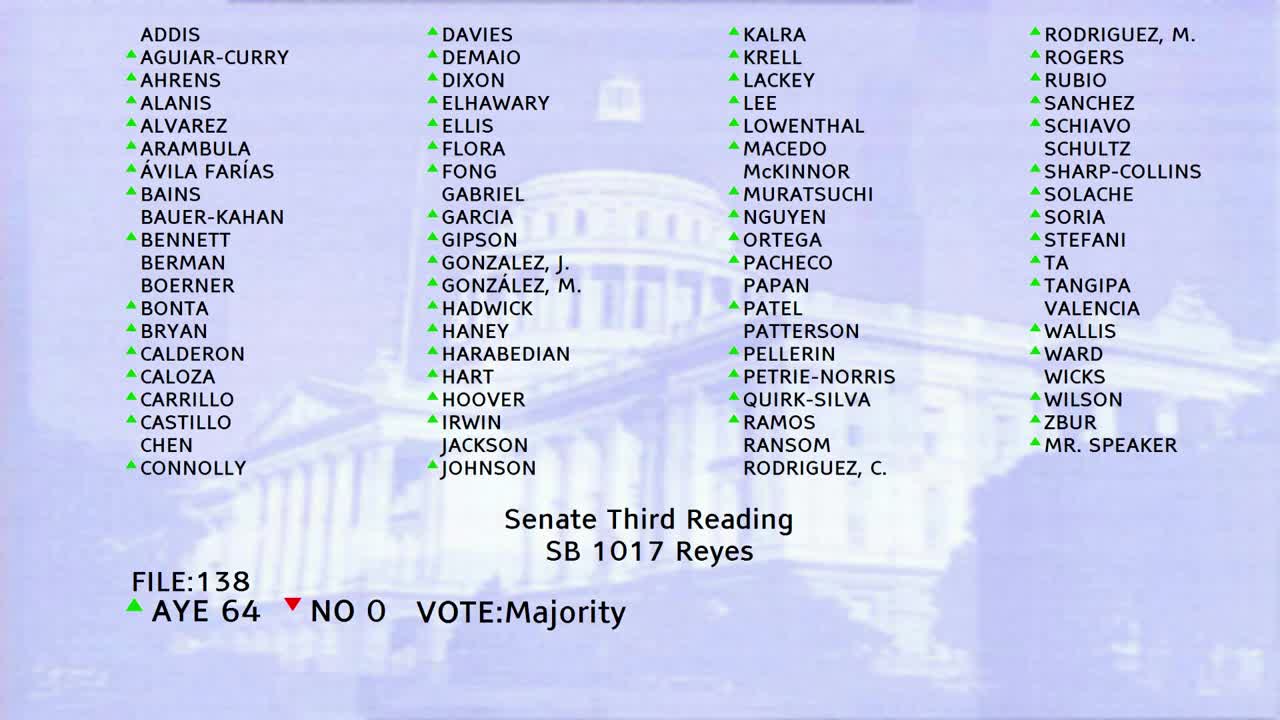 1MIN
Assembly Floor
 14MIN
Assembly Standing Committee on Natural Resources
 14MIN
Assembly Standing Committee on Environmental Safety and Toxic Materials
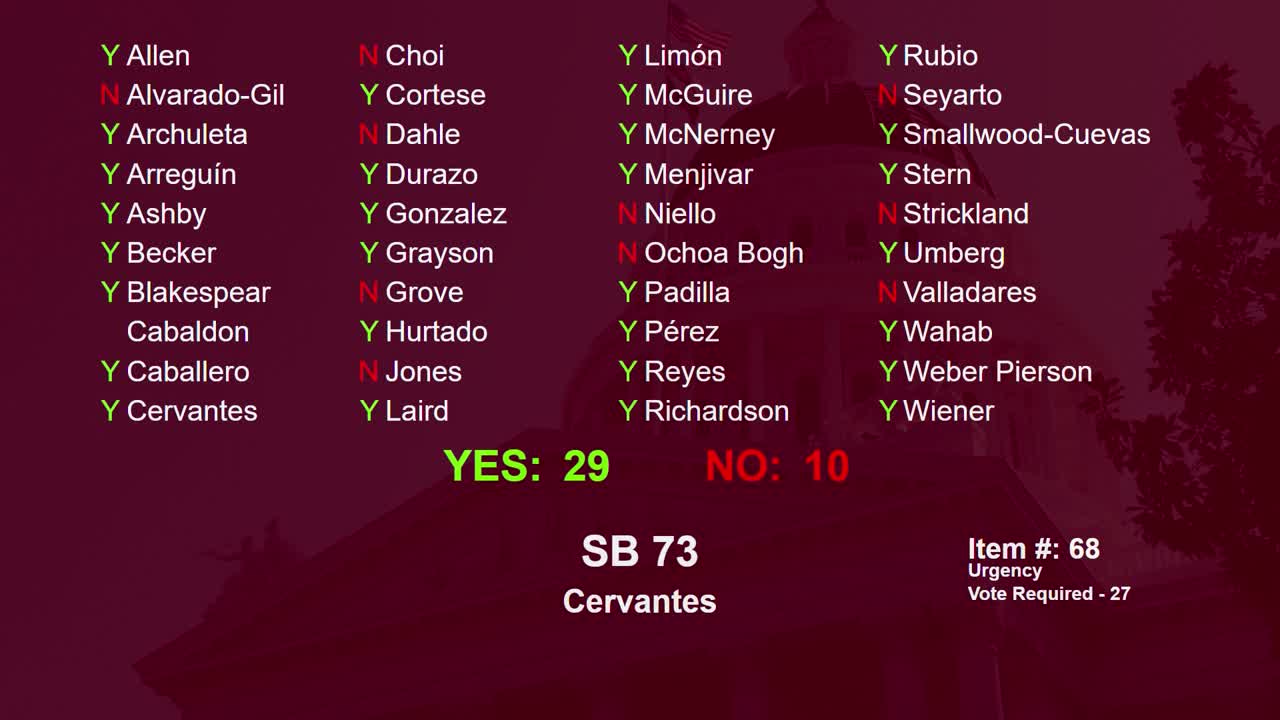 3MIN
Senate Floor
 9MIN
Senate Standing Committee on Environmental Quality
 11SEC
Senate Standing Committee on Appropriations
 13MIN
Senate Standing Committee on Judiciary
Bill Author

Bill Co-Author(s):