SB 515: Local government: collection of demographic data.
- Session Year: 2025-2026
- House: Senate
- Latest Version Date: 2025-10-13
Current Status:
Passed
(2025-10-13: Chaptered by Secretary of State. Chapter 768, Statutes of 2025.)
Introduced
In Committee
Awaiting First Chamber Vote
Passed First Chamber
In Committee
Awaiting Second Chamber Vote
Passed Second Chamber
Enacted
Existing law requires the State Controllers Office, to the extent the office has completed the functionality necessary, and the Department of Human Resources, when collecting demographic data as to the ancestry or ethnic origin of Californians hired into state employment, to use additional collection categories and tabulations for specified Black or African American groups.
This bill would, commencing January 1, 2027, require a city, county, or city and county, including a charter city, when collecting demographic data as to the ancestry or ethnic origin of persons hired for employment by a city, county, or city and county, to include the additional collection categories and tabulations for specified Black or African American groups, as described above. The bill would make related findings and declarations. By imposing new duties on cities, counties, or a city and county, the bill would impose a state-mandated local program.
The bill would include findings that changes proposed by this bill address a matter of statewide concern rather than a municipal affair and, therefore, apply to all cities, including charter cities.
The California Constitution requires the state to reimburse local agencies and school districts for certain costs mandated by the state. Statutory provisions establish procedures for making that reimbursement.
This bill would provide that, if the Commission on State Mandates determines that the bill contains costs mandated by the state, reimbursement for those costs shall be made pursuant to the statutory provisions noted above.
Existing law requires the State Controllers Office, to the extent the office has completed the functionality necessary, and the Department of Human Resources, when collecting demographic data as to the ancestry or ethnic origin of Californians hired into state employment, to use additional collection categories and tabulations for specified Black or African American groups.
This bill would, commencing January 1, 2027, require a city, county, or city and county, when collecting demographic data as to the ancestry or ethnic origin of persons, persons hired for employment by a city, county, or city and county, to include the additional collection categories and tabulations for specified Black or African American groups, as described above. The bill would make related findings and declarations. By imposing new duties on cities, counties, or a city and county, the bill would impose a state-mandated local program.
The bill would include findings that changes proposed by this bill address a matter of statewide concern rather than a municipal affair and, therefore, apply to all cities, including charter cities.
The California Constitution requires the state to reimburse local agencies and school districts for certain costs mandated by the state. Statutory provisions establish procedures for making that reimbursement.
This bill would provide that, if the Commission on State Mandates determines that the bill contains costs mandated by the state, reimbursement for those costs shall be made pursuant to the statutory provisions noted above.
Existing law requires the State Controllers Office, to the extent the office has completed the functionality necessary, and the Department of Human Resources, when collecting demographic data as to the ancestry or ethnic origin of Californians hired into state employment, to use additional collection categories and tabulations for specified Black or African American groups.
This bill would, commencing January 1, 2027, require a city, county, or city and county, when collecting demographic data as to the ancestry or ethnic origin of persons, to include the additional collection categories and tabulations for specified Black or African American groups, as described above. The bill would make related findings and declarations. By imposing new duties on cities, counties, or a city and county, the bill would impose a state-mandated local program.
The bill would include findings that changes proposed by this bill address a matter of statewide concern rather than a municipal affair and, therefore, apply to all cities, including charter cities.
The California Constitution requires the state to reimburse local agencies and school districts for certain costs mandated by the state. Statutory provisions establish procedures for making that reimbursement.
This bill would provide that, if the Commission on State Mandates determines that the bill contains costs mandated by the state, reimbursement for those costs shall be made pursuant to the statutory provisions noted above.
(a)The Legislature finds and declares both of the following:
(1)The purpose of this section is to enhance the accuracy, comprehensiveness, and consistency of demographic data concerning employees who are descendants of persons enslaved and emancipated in the United States, also known as American Freedmen, enabling more effective policy planning and resource allocation at and between local and state levels.
(2)This section emphasizes the importance of safeguarding individual privacy and ensuring the secure handling of collected data in accordance with relevant privacy laws and regulations.
(b)On or after January 1, 2027, a city, including a charter city, county, or city and county, when collecting demographic data as to the ancestry or ethnic origin of persons hired for employment by a city, county, or city and county, shall include additional collection categories and tabulations for Black or African American groups as described in Section 8310.6.
SEC. 2.The Legislature finds and declares that enhancing accuracy, comprehensiveness, and consistency of demographic data concerning employees who are descendants of persons enslaved and emancipated in the United States is a matter of statewide concern and is not a municipal affair as that term is used in Section 5 of Article XI of the California Constitution. Therefore, Section 1 of this act adding Section 53060.8 to the Government Code applies to all cities, including charter cities.
SEC. 3.If the Commission on State Mandates determines that this act contains costs mandated by the state, reimbursement to local agencies and school districts for those costs shall be made pursuant to Part 7 (commencing with Section 17500) of Division 4 of Title 2 of the Government Code.
(a)The Legislature finds and declares both of the following:
(1)The purpose of this section is to enhance the accuracy, comprehensiveness, and consistency of demographic data concerning residents employees who are descendants of persons enslaved and emancipated in the United States, also known as American Freedmen, enabling more effective policy planning and resource allocation at and between local and state levels.
(2)This section emphasizes the importance of safeguarding individual privacy and ensuring the secure handling of collected data in accordance with relevant privacy laws and regulations.
(b)On or after January 1, 2027, a city, including a charter city, county, or city and county, when collecting demographic data as to the ancestry or ethnic origin of persons hired for employment by a city, county, or city and county, shall include additional collection categories and tabulations for Black or African American groups as described in Section 8310.6.
SEC. 2.The Legislature finds and declares that Section 1 of this act adding Section 53060.8 to the Government Code addresses a matter of statewide concern rather than a municipal affair as that term is used in Section 5 of Article XI of the California Constitution. Therefore, Section 1 of this act applies to all cities, including charter cities.SEC. 2.The Legislature finds and declares that enhancing accuracy, comprehensiveness, and consistency of demographic data concerning employees who are descendants of persons enslaved and emancipated in the United States is a matter of statewide concern and is not a municipal affair as that term is used in Section 5 of Article XI of the California Constitution. Therefore, Section 1 of this act adding Section 53060.8 to the Government Code applies to all cities, including charter cities.
SEC. 3.If the Commission on State Mandates determines that this act contains costs mandated by the state, reimbursement to local agencies and school districts for those costs shall be made pursuant to Part 7 (commencing with Section 17500) of Division 4 of Title 2 of the Government Code.
(a)The Legislature finds and declares both of the following:
(1)The purpose of this section is to enhance the accuracy, comprehensiveness, and consistency of demographic data concerning residents who are descendants of persons enslaved and emancipated in the United States, also known as American Freedmen, enabling more effective policy planning and resource allocation at and between local and state levels.
(2)This section emphasizes the importance of safeguarding individual privacy and ensuring the secure handling of collected data in accordance with relevant privacy laws and regulations.
(3)The term American Freedman represents the legal and political status inherited by the posterity of the 4,000,000 freed men and women who were emancipated nationally in 1865 by the Thirteenth Amendment to the United States Constitution. It also includes the progeny of those historically identified as Blacks, African Americans, or others of African descent who gained freedom from slavery prior to 1865 by either the Emancipation Proclamation, being contrabands under the Confiscation Acts, freedom suits, gradual abolition, or emancipation in northern states, purchasing their own freedom, manumission by owners, or enlisting and fighting for the patriots during the American Revolution.(b)On or after January 1, 2027, a city, county, or city and county, when collecting demographic data as to the ancestry or ethnic origin of persons, persons hired for employment by a city, county, or city and county, shall include additional collection categories and tabulations for Black or African American groups as described in Section 8310.6.
SEC. 2.The Legislature finds and declares that Section 1 of this act adding Section 53060.8 to the Government Code addresses a matter of statewide concern rather than a municipal affair as that term is used in Section 5 of Article XI of the California Constitution. Therefore, Section 1 of this act applies to all cities, including charter cities.
SEC. 3.If the Commission on State Mandates determines that this act contains costs mandated by the state, reimbursement to local agencies and school districts for those costs shall be made pursuant to Part 7 (commencing with Section 17500) of Division 4 of Title 2 of the Government Code.
(a)The Legislature finds and declares both of the following:
(1)The purpose of this section is to enhance the accuracy, comprehensiveness, and consistency of demographic data concerning residents who are descendants of persons enslaved and emancipated in the United States, also known as American Freedmen, enabling more effective policy planning and resource allocation at and between local and state levels.
(2)This section emphasizes the importance of safeguarding individual privacy and ensuring the secure handling of collected data in accordance with relevant privacy laws and regulations.
(3)The term American Freedman represents the legal and political status inherited by the posterity of the 4,000,000 freed men and women who were emancipated nationally in 1865 by the Thirteenth Amendment to the United States Constitution. It also includes the progeny of those historically identified as Blacks, African Americans, or others of African descent who gained freedom from slavery prior to 1865 by either the Emancipation Proclamation, being contrabands under the Confiscation Acts, freedom suits, gradual abolition, or emancipation in northern states, purchasing their own freedom, manumission by owners, or enlisting and fighting for the patriots during the American Revolution.
(b)On or after January 1, 2027, a city, county, or city and county, when collecting demographic data as to the ancestry or ethnic origin of persons, shall include additional collection categories and tabulations for Black or African American groups as described in Section 8310.6.
SEC. 2.The Legislature finds and declares that Section 1 of this act adding Section 53060.8 to the Government Code addresses a matter of statewide concern rather than a municipal affair as that term is used in Section 5 of Article XI of the California Constitution. Therefore, Section 1 of this act applies to all cities, including charter cities.
SEC. 3.If the Commission on State Mandates determines that this act contains costs mandated by the state, reimbursement to local agencies and school districts for those costs shall be made pursuant to Part 7 (commencing with Section 17500) of Division 4 of Title 2 of the Government Code.
|
Date
|
Status
|
|---|---|
| Oct 13, 2025 | Chaptered by Secretary of State. Chapter 768, Statutes of 2025. |
| Oct 13, 2025 | Approved by the Governor. |
| Sep 22, 2025 | Enrolled and presented to the Governor at 2 p.m. |
| Sep 12, 2025 | In Senate. Ordered to engrossing and enrolling. |
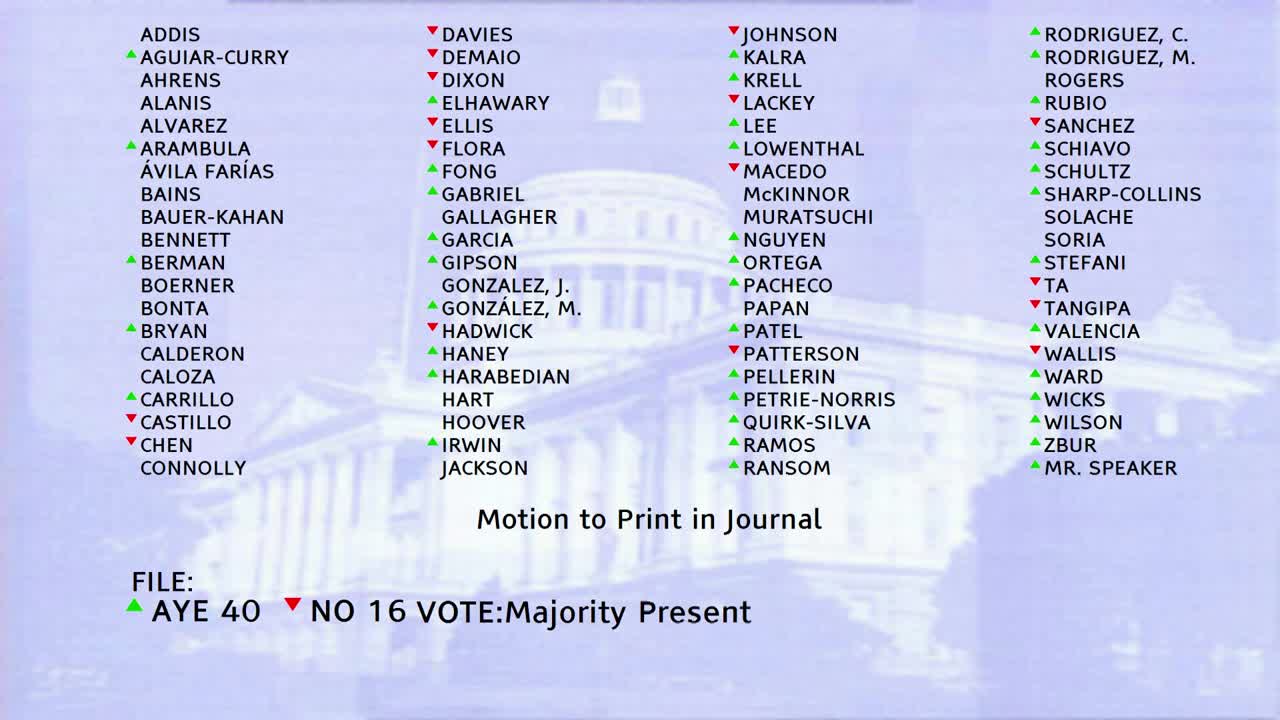
| Sep 11, 2025 | Read third time. Passed. (Ayes 61. Noes 15. Page 3315.) Ordered to the Senate. |
| Sep 2, 2025 | Read second time. Ordered to third reading. |
| Aug 29, 2025 | From committee: Do pass. (Ayes 11. Noes 3.) (August 29). |
| Jul 16, 2025 | July 16 set for first hearing. Placed on APPR. suspense file. |
| Jul 3, 2025 | From committee: Do pass and re-refer to Com. on APPR. (Ayes 8. Noes 0.) (July 2). Re-referred to Com. on APPR. |
| Jun 5, 2025 | Referred to Com. on L. GOV. |
| May 29, 2025 | In Assembly. Read first time. Held at Desk. |
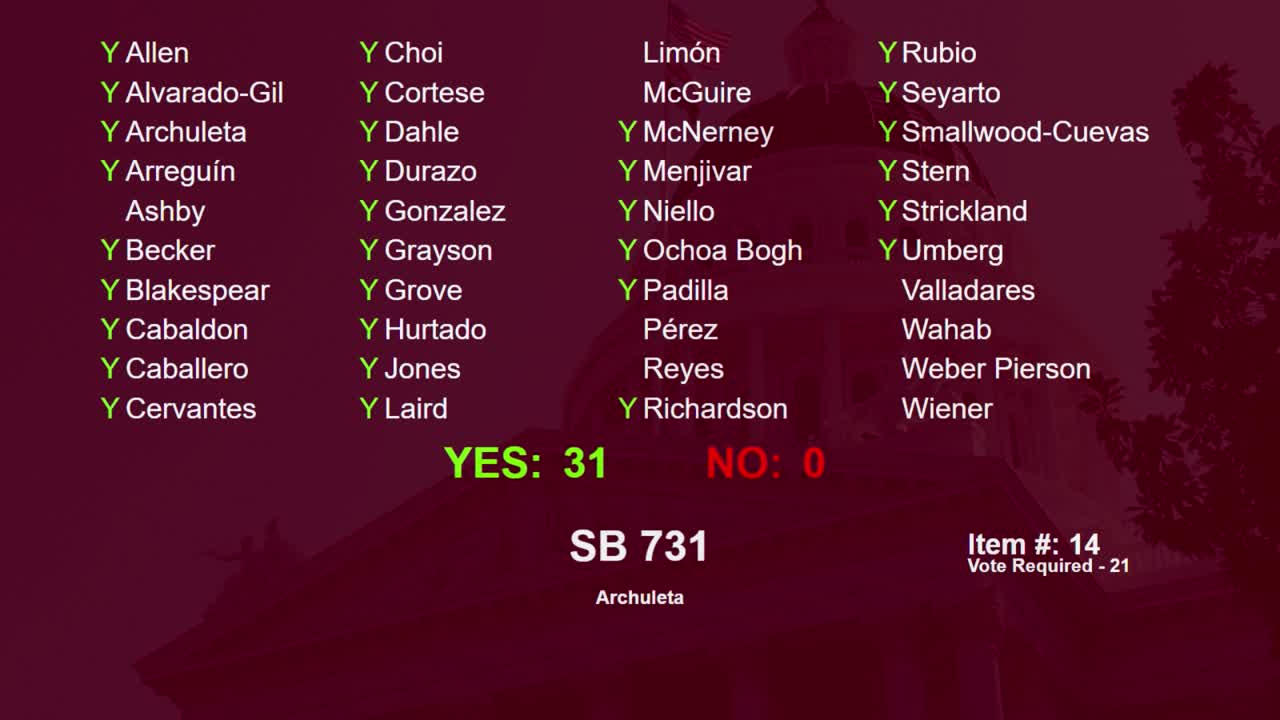
| May 29, 2025 | Read third time. Passed. (Ayes 28. Noes 10. Page 1335.) Ordered to the Assembly. |
| May 23, 2025 | Read second time. Ordered to third reading. |
| May 23, 2025 | From committee: Do pass. (Ayes 5. Noes 1. Page 1203.) (May 23). |
| May 16, 2025 | Set for hearing May 23. |
| Apr 21, 2025 | April 21 hearing: Placed on APPR. suspense file. |
| Apr 8, 2025 | Set for hearing April 21. |
| Apr 7, 2025 | Read second time and amended. Re-referred to Com. on APPR. |
| Apr 3, 2025 | From committee: Do pass as amended and re-refer to Com. on APPR. (Ayes 5. Noes 2. Page 637.) (April 2). |
| Mar 26, 2025 | From committee with author's amendments. Read second time and amended. Re-referred to Com. on L. GOV. |
| Mar 24, 2025 | Set for hearing April 2. |
| Feb 26, 2025 | Referred to Com. on L. GOV. |
| Feb 20, 2025 | From printer. May be acted upon on or after March 22. |
| Feb 19, 2025 | Introduced. Read first time. To Com. on RLS. for assignment. To print. |
|
Date
|
Description
|
Location
|
Votes
|
|
|---|---|---|---|---|
| Sep 11, 2025 | SB 515 Richardson Senate Third Reading By Ransom | Assembly Floor |
Passed |
|
| Aug 29, 2025 | Do pass. | Assembly Standing Committee on Appropriations |
Passed |
|
| Jul 2, 2025 | Do pass and be re-referred to the Committee on [Appropriations] | Assembly Standing Committee on Local Government |
Passed |
|
| May 29, 2025 | Senate 3rd Reading SB515 Richardson | Senate Floor |
Passed |
|
| May 23, 2025 | Do pass | Senate Standing Committee on Appropriations |
Passed |
|
| Apr 21, 2025 | Placed on suspense file | Senate Standing Committee on Appropriations |
Passed |
|
| Apr 2, 2025 | Do pass as amended, but first amend, and re-refer to the Committee on [Appropriations] | Senate Standing Committee on Local Government |
Passed |
This list shows positions taken on this bill by organizations on the date displayed, which is linked to the original source.
Positions by individuals are not included.
|
Organization
|
Position
|
Date
|
|---|---|---|
| American Redress Coalition of California, Bay Area | ** Support | |
| American Redress Coalition of California, Sacramento | ** Support | |
| California Black Lineage Society | ** Support | |
| Carlsbad Citizens for Community Oversight | ** Against | |
| Coalition for A Just and Equitable California | ** Support | |
| Emend the Mass Media Group | ** Support | |
| The Coalition for a Just and Equitable California | ** Support |
SENATE THIRD READING
STR Bill Id:SB 515
Author:(Richardson)
As Amended Ver:April 7, 2025
Majority vote
SUMMARY
Requires cities and counties, when collecting demographic data on the ancestry and ethnic origins of newly hired employees, to include additional categories for African Americans relating to their status as descents of enslaved persons.
Major Provisions
- Requires, on or after January 1, 2027, a city, including a charter city, county, or city and county, when collecting demographic data as to the ancestry or ethnic origin of persons hired for employment by a city, county, or city and county, to include additional collection categories and tabulations for Black or African American groups, including, but not limited to, all of the following:
- African Americans who are descendants of persons who were enslaved in the United States;
- Blacks who are not descendants of persons who were enslaved in the United States, including, but not limited to, African Blacks, Caribbean Blacks, and other Blacks; and,
- Unknown or choose not to identify.
- Finds and declares that enhancing accuracy, comprehensiveness, and consistency of demographic data concerning employees who are descendants of persons enslaved and emancipated in the United States is a matter of statewide concern and is not a municipal affair as that term is used in Section 5 of Article XI of the California Constitution. Therefore, Section 1 of this bill adding Section 53060.8 to the Government Code applies to all cities, including charter cities.
- Provides that if the Commission on State Mandates determines that this bill contains costs mandated by the state, reimbursement to local agencies and school districts for those costs shall be made pursuant to Part 7 (commencing with Section 17500) of Division 4 of Title 2 of the Government Code.
- Makes related findings and declarations.
COMMENTS
- Task Force to Study and Develop Reparation Proposals. In 2020, the Legislature enacted AB 3121 (Weber, 2020) which created the Task Force to Study and Develop Reparation Proposals for African Americans, with a Special Consideration for African Americans Who are Descendants of Persons Enslaved in the United States (Task Force). The Task Force was given the following duties:
- Identify, compile, and synthesize the relevant corpus of evidentiary documentation of the institution of slavery that existed within the United States and the colonies that became the United States from 1619 to 1865, inclusive;
- Recommend appropriate ways to educate the California public of the Task Force's findings;
- Recommend appropriate remedies in consideration of the Task Force's findings; and,
- Submit a written report of its findings and recommendations to the Legislature.
- The California Reparations Report. The Task Force released its final report in June 2023. The report recommends remedies, including compensation, for African Americans as repayment for the State's human rights violations against African Americans and their descendants. The report describes:
"In developing the recommendations regarding methodologies for calculating reparations, the Task Force considered, among numerous other factors, harms to African Americans (especially descendants of persons enslaved in the United States) attributable to the State of California and its local jurisdictions, and the availability of data. In many instances of atrocities, California has not collected data that would allow for precise calculations, and for those areas, the Task Force recommends, as AB 3121 directs, how the Legislature should calculate reparations in drafting and implementing a future state-level reparations scheme.
"The Task Force voted to recommend that only those individuals who are able to demonstrate that they are the descendant of either an enslaved African American in the United States, or a free African American living in the United States prior to 1900, be eligible for monetary reparations. The Task Force also determined that the State of California, potentially through the recommended new California American Freedman's Affairs Agency, should take responsibility for assisting any requester in establishing whether they qualify, by funding or otherwise handling the tracing and confirmation of this lineage through whatever means necessary. While the data available to the Task Force and its experts did not separate out descendant status from other racial or ethnic data, the Task Force generally recommends that the Legislature begin to collect data regarding descendant status and, when calculating reparations as recommended by the Task Force, take this data into account in formulating the most accurate amount of needed reparations as possible."
- SB 189 of 2022. To partially address the Task Force recommendation that data regarding descendent status be collected, the Legislature passed SB 189 (Committee on Budget and Fiscal Review), Chapter 48, Statutes of 2022. SB 189 required the State Controller's Office and the Department of Human Resources, when collecting demographic data as to the ancestry or ethnic origin of persons hired into state employment, to include additional collection categories for Black or African Americans regarding their status as descendants of persons who were enslaved in the United States. Those categories, defined in SB 189, include: African Americans who are descendants of persons who were enslaved in the United States, African Blacks, American Freedman, Caribbean Blacks, and other Blacks.
- Bill Summary. This bill requires cities and counties, starting January 1, 2027, to include additional collection categories and tabulations for Black or African American groups when collecting demographic data as to the ancestry or ethnic origin of persons hired into city or county employment, using the same categories as the State Controller's Office and the Department of Human Resources.
According to the Author
According to the author, "Senate Bill 515 advances California's commitment to equity and inclusion by improving how local governments collect demographic data on Black or African American communities. Too often, these groups are lumped into a single category, which masks the unique experiences and challenges of subgroups such as African Americans, Afro-Caribbean's, and African immigrants.
"This bill ensures that local agencies align with the data standards already used by state departments, promoting consistency, accuracy, and fairness. By capturing more complete demographic information, SB 515 empowers local governments to develop better-informed policies and programs that serve all communities more effectively."
Arguments in Support
The Coalition for a Just and Equitable California, sponsor of this bill, states, "The inclusion of additional demographic categories across all California cities and counties, particularly a category of data collection for descendants of persons enslaved and emancipated from U.S. Chattel Slavery, will provide a clearer understanding of the specific needs and challenges faced by this community of over two million California residents. As the saying goes, you can't serve a community if you don't see a community. The policy proposed in SB 515 will bring much-needed attention and finally enable much-needed support for a population of residents who have, until now, been completely invisible to state policymakers. By requiring cities and counties to collect this data beginning in 2027, SB 515 builds on existing changes to how our state collects data on this important community, particularly changes created by the passage of section 14 of SB 189 (2022), and ensures that local decision-makers have access to the same accurate and detailed information that state decision-makers have now, leading to targeted support and meaningful change.
"Furthermore, the bill rightly emphasizes the protection of individual privacy and the secure handling of sensitive demographic data in accordance with existing laws and regulations. This provision will help to build public trust and encourage participation in data collection efforts, ultimately improving the reliability and utility of the information gathered.
"SB 515 acknowledges the unique history and identity of the descendants of the Americans who built this country, while advancing the broader goal of social and economic justice. By recognizing the distinct experiences of this community, this bill takes a vital step toward addressing longstanding disparities and ensuring that public resources are allocated fairly and effectively."
Arguments in Opposition
The Carlsbad Citizens for Community Oversight states, "I am writing to express our opposition to SB 515 Local government: collection of demographic data which would require the collection of lineage data from employees.
"Carlsbad Citizens for Community Oversight urges you to vote NO on SB 515."
FISCAL COMMENTS
One-time costs of an unknown, but potentially significant amount to 58 counties and 478 cities, likely exceeding $150,000 in the aggregate, to comply with the requirements of this bill. Specifically, cities and counties will likely incur one-time costs to update forms and data management systems to include the more detailed categories required by this bill. Some smaller municipalities may incur minimal costs, but large municipalities that employ tens of thousands of people may incur significant costs to comply with this measure. Ongoing local costs are likely to be relatively minor. Local costs are likely reimbursable by the state (General Fund), subject to a determination by the Commission on State Mandates.
VOTES
SENATE FLOOR: 28-10-2
YES: Allen, Archuleta, Arreguín, Ashby, Becker, Blakespear, Cabaldon, Caballero, Cervantes, Cortese, Durazo, Gonzalez, Grayson, Hurtado, Laird, McGuire, McNerney, Menjivar, Padilla, Pérez, Richardson, Rubio, Smallwood-Cuevas, Stern, Umberg, Wahab, Weber Pierson, Wiener
NO: Alvarado-Gil, Choi, Dahle, Grove, Jones, Niello, Ochoa Bogh, Seyarto, Strickland, Valladares
ABS, ABST OR NV: Limón, Reyes
ASM LOCAL GOVERNMENT: 8-0-2
YES: Carrillo, Pacheco, Ramos, Ransom, Blanca Rubio, Stefani, Ward, Wilson
ABS, ABST OR NV: Ta, Hoover
ASM APPROPRIATIONS: 11-3-1
YES: Wicks, Arambula, Calderon, Caloza, Elhawary, Fong, Mark González, Ahrens, Pacheco, Pellerin, Solache
NO: Sanchez, Dixon, Tangipa
ABS, ABST OR NV: Ta
UPDATED
VERSION: April 7, 2025
CONSULTANT: Julia Mouat / L. GOV. / (916) 319-3958 FN: 0001298
Date of Hearing: July 16, 2025
ASSEMBLY COMMITTEE ON APPROPRIATIONS
Buffy Wicks, Chair
SBPCA Bill Id:SB 515
Author:(Richardson) – As Amended Ver:April 7, 2025
Policy Committee: | Local Government | Vote: | 8 - 0 |
|
| ||
|
|
Urgency: No State Mandated Local Program: Yes Reimbursable: Yes
SUMMARY:
This bill, beginning January 1, 2027, requires a city, county, or city and county, when collecting demographic data on the ancestry and ethnic origins of its employees, to include additional categories and tabulations for Black or African American groups, as specified.
FISCAL EFFECT:
One-time costs of an unknown, but potentially significant amount to 58 counties and 478 cities, likely exceeding $150,000 in the aggregate, to comply with the requirements of this bill. Specifically, cities and counties will likely incur one-time costs to update forms and data management systems to include the more detailed categories required by this bill. Some smaller municipalities may incur minimal costs, but large municipalities that employ tens of thousands of people may incur significant costs to comply with this measure. Ongoing local costs are likely to be relatively minor. Local costs are likely reimbursable by the state (General Fund), subject to a determination by the Commission on State Mandates.
COMMENTS:
- Purpose. According to the author:
[This bill] advances California’s commitment to equity and inclusion by improving how local governments collect demographic data on Black or African American communities. Too often, these groups are lumped into a single category, which masks the unique experiences and challenges of subgroups such as African Americans, Afro-Caribbean’s, and African immigrants.
This bill ensures that local agencies align with the data standards already used by state departments, promoting consistency, accuracy, and fairness. By capturing more complete demographic information, [this bill] empowers local governments to develop better-informed policies and programs that serve all communities more effectively.
- Background. Existing law requires the State Controller’s Office (SCO) and the Department of Human Resources (DHR), when collecting demographic data as to the ancestry or ethnic origin of persons hired by the state, to include additional collection categories and tabulations for Black or African American groups, including, but not limited to all of the following:
- African Americans who are descendants of persons who were enslaved in the United States.
- Blacks who are not descendants of persons who were enslaved in the United States including, but not limited to, African Blacks, Caribbean Blacks, and other Blacks.
- Unknown or choose not to identify.
Existing law requires the data collected by the SCO and DHR to include the data collected pursuant to these collection categories and tabulations to be included in the Annual Census of Employees in State Civil Service published on or after January 1, 2025. This data, with the exception of any personally identifiable information, must be made available to the public in accordance with state and federal law.
This bill, beginning January 1, 2027, requires a city, county, or city and county that collects demographic information from its employees to include the same collection and tabulation categories listed above for Black or African American groups.
Related Legislation.
AB 2089 (Holden), of the 2023-24 Legislative Session, was nearly identical to this bill. AB 2089 held on this committee’s suspense file.
Analysis Prepared by: Jennifer Swenson / APPR. / (916) 319-2081
SENATE RULES COMMITTEE Office of Senate Floor Analyses (916) 651-1520 Fax: (916) 327-4478 | SB 515 |
THIRD READING
Bill No: SB 515
Author: Richardson (D)
Amended: 4/7/25
Vote: 21
SENATE LOCAL GOVERNMENT COMMITTEE: 5-2, 4/2/25
AYES: Durazo, Arreguín, Cabaldon, Laird, Wiener
NOES: Choi, Seyarto
SENATE APPROPRIATIONS COMMITTEE: 5-1, 5/23/25
AYES: Caballero, Cabaldon, Grayson, Richardson, Wahab
NOES: Seyarto
NO VOTE RECORDED: Dahle
SUBJECT: Local government: collection of demographic data
SOURCE: Coalition for A Just and Equitable California
DIGEST:
This bill requires city and county governments, when collecting demographic data on the ancestry and ethnic origins of newly hired employees, to include additional categories for African Americans relating to their status as descents of enslaved persons.
ANALYSIS:
Existing law requires the State Controller’s Office, to the extent the office has completed the functionality necessary, and the Department of Human Resources, when collecting demographic data as to the ancestry or ethnic origin of Californians hired into state employment, to use additional collection categories and tabulations for specified Black or African American groups
This bill requires cities and counties, starting January 1, 2027, to include additional collection categories and tabulations for Black or African American groups when collecting demographic data as to the ancestry or ethnic origin of persons hired into city or county employment, using the same categories as the State Controller’s Office and the Department of Human Resources.
Background
Task Force to Study and Develop Reparation Proposals. In 2020, the Legislature enacted AB 3121 (Weber, Chapter 319, Statutes of 2020) which created the Task Force to Study and Develop Reparation Proposals for African Americans, with a Special Consideration for African Americans Who are Descendants of Persons Enslaved in the United States (Task Force) to explore options for providing reparations to African Americans, and particularly the descendants of enslaved persons, in recognition of California’s role in the institution of slavery and the post-abolition perpetuation of racist institutions. The Legislature directed the Task Force to gather and synthesize the documentary evidence of slavery and develop ways to educate Californians about its findings. The Legislature also directed the Task Force to submit a written report of its findings and recommendations to the Legislature a year after its first meeting. The Task Force released an interim report on June 1, 2022, which detailed the Task Force’s preliminary findings regarding the ongoing harms caused by federal, state, and local government from slavery long after slavery’s formal abolishment. The report notes that, because “the effects of slavery infected every aspect of American society over the last 500 years…it is nearly impossible to identify every ‘badge and incident of slavery,’ to include every piece of evident, or describe every harm done to African Americans.”
The Task Force released its final report in June 2023. The report recommends remedies, including compensation, for African Americans as repayment for the State’s human rights violations against African Americans and their descendants. The report found that labor practices during the 1940s to 1970s put the African American community behind in achieving good-paying jobs, thereby thwarting their economic prospects. To close that gap, the Task Force recommended the following:
“In developing the recommendations regarding methodologies for calculating reparations, the Task Force considered, among numerous other factors, harms to African Americans (especially descendants of persons enslaved in the United States) attributable to the State of California and its local jurisdictions, and the availability of data. In many instances of atrocities, California has not collected data that would allow for precise calculations, and for those areas, the Task Force recommends, as AB 3121 directs, how the Legislature should calculate reparations in drafting and implementing a future state-level reparations scheme.”
Comments
- Purpose of the bill. According to the author, “SB 515 will enhance the accuracy, consistency, and usefulness of demographic data in California by requiring cities and counties, beginning January 1, 2027, to include additional ancestry-based data categories when collecting information on newly hired employees' racial and ethnic backgrounds.
“This is an important step because under current reporting practices, individuals who identify as Black or African American are grouped together without recognition of the historical, social, and economic distinctions that exist within this diverse population. In particular, American Freedmen whose lineage is directly tied to the institution of slavery in the United States often face unique disparities in areas like employment, housing, health care, and education. Yet, the data we rely on to shape policy fails to capture these nuances.
“By requiring the inclusion of more detailed categories aligned with the standards in Government Code Section 8310.6, local governments will be better equipped to understand, serve, and support this specific community. The data collected will inform smarter public policy, targeted programs, and more equitable resource distribution.
“SB 515 also includes language affirming that individual privacy must be protected and that all data collection shall comply with existing privacy laws and regulations. Additionally, it affirms the Legislature’s intent that this is a matter of statewide concern, applying uniformly to all cities and counties, including charter cities.
“In sum, SB 515 brings necessary attention to a long-overlooked data gap and provides a path toward better-informed, equity-centered governance.”
- Diversity. As noted by the Task Force report, Black Americans were systematically excluded from jobs for decades, well into 1970s. SB 515 requires cities and counties to collect more granular data on newly hired workers. However, this doesn’t provide any information on past practice, so at least in the near term, it won’t shed much light on how wide the disparity in hiring is for descendants of slaves and other Black Americans. Additionally, while SB 515 may provide data on hiring practices, that alone is insufficient to change those practices or the culture of local governments generally.
At the same time, this bill is also relevant to the Task Force efforts to collect more data. Currently, the state collects more detailed demographic data on Black Americans, including descendants of slaves. Whatever forms the reparations end up taking, having such information may help the state and local governments to better plan and target the policies that seek to implement just and meaningful reparations. However, additional steps are needed to fully address the Task Force objectives and recommendations.
- Costs. Local governments face a variety of fiscal constraints. For some local governments, this may require significant work which could require them to shift money from other priorities. Other local agencies may have more staff and resources to make changes without significant added costs. Some counties have expressed concern that their databases might not be able to capture all of the demographic data needed from this bill. Also, they fear the questions could make their employees uncomfortable and therefore not likely to respond. Do the benefits from collecting this information outweigh the costs local governments will incur to collect this information?
Related/Prior Legislation
AB 2089 (Holden, 2024) contained provisions almost identical to SB 515. However, AB 2089 did not say when cities or counties should collect the data. AB 2089 was held in the Assembly Appropriations Committee.
FISCAL EFFECT: Appropriation: No Fiscal Com.: Yes Local: Yes
According to Senate Appropriations Committee there are unknown, potentially significant local costs in the aggregate for 58 counties and 478 cities to comply with the requirements of this bill. Specifically, cities and counties would likely incur one-time costs to update forms and data management systems to provide for the identification and collection of additional ancestry and ethnic origin demographic data for persons hired for employment. Staff notes that ongoing local costs are likely to be relatively minor. Local costs are likely to be state-reimbursable, subject to a determination by the Commission on State Mandates. (General Fund)
SUPPORT: (Verified 5/23/2025)
Coalition for A Just and Equitable California (Sponsor)
American Redress Coalition of California, Sacramento
American Redress Coalition of California Bay Area
California Black Lineage Society
Emend the Mass Media Group
OPPOSITION: (Verified 5/23/2025)
None received
Prepared by: Itzel Vargas / L. GOV. / (916) 651-4119
5/25/25 18:12:22
**** END ****
SENATE COMMITTEE ON
Senator Anna Caballero, Chair
2025 - 2026 Regular Session
SB 515 (Richardson) - Local government: collection of demographic data
Version: | Policy Vote: |
Urgency: | Mandate: |
Hearing Date: | Consultant: |
Bill Summary:
SB 515 would require cities and counties to include additional collection categories and tabulations for specified Black or African American groups when collecting demographic data regarding the ancestry or ethnic origin of employees hired by those agencies.
Fiscal Impact:
- Unknown, potentially significant local costs in the aggregate for 58 counties and 478 cities to comply with the requirements of this bill. Specifically, cities and counties would likely incur one-time costs to update forms and data management systems to provide for the identification and collection of additional ancestry and ethnic origin demographic data for persons hired for employment. Staff notes that ongoing local costs are likely to be relatively minor. Local costs are likely to be state-reimbursable, subject to a determination by the Commission on State Mandates. (General Fund)
Background:
Existing law requires a state agency, board, or commission that directly or by contract collects demographic data as to the ancestry or ethnic origin of Californians to use separate collection categories and tabulations for the following:
- Each major Asian group, including, but not limited to, Chinese, Japanese, Filipino, Korean, Vietnamese, Asian Indian, Laotian, and Cambodian.
- Each major Pacific Islander group, including, but not limited to, Hawaiian, Guamanian, and Samoan.
Existing law (Government Code Section 8310.6) requires the State Controller’s Office (SCO), to the extent it has completed the functionality necessary, and the Department of Human Resources (DHR), when collecting demographic data as to the ancestry or ethnic origin of persons hired into state employment, to include the following additional collection categories and tabulations for Black or African American groups, including, but not limited to, all of the following:
- African Americans who are descendants of persons who were enslaved in the United States.
- Blacks who are not descendants of persons who were enslaved in the United States, including, but not limited to, African Blacks, Caribbean Blacks, and other Blacks.
- Descendant status unknown or choose not to identify.
Existing law requires the data collected by the SCO and DHR to include the data collected pursuant to these collection categories and tabulations to be included in the Annual Census of Employees in State Civil Service published on or after January 1, 2025. This data, with the exception of any personally identifiable information, must be made available to the public in accordance with state and federal law.
Proposed Law:
SB 515 would, beginning on January 1, 2027, require cities and counties to include additional collection categories and tabulations for Black or African American groups, as specified in Government Code Section 8310.6, when collecting demographic data regarding the ancestry or ethnic origin of persons hired for employment by those jurisdictions.
Related Legislation:
AB 2089 (Holden), which was held on the Assembly Appropriations Committee’s Suspense File last year, was nearly identical to this bill.
SB 189 (Budget and Fiscal Review Committee), Chap. 48/2022, a General Government budget trailer bill, included a provision requiring the SCO and DHR to use additional collection categories and tabulations for specified Black and African American groups when collecting demographic data regarding the ancestry or ethnic origin of Californians hired into state employment.
Staff Comments:
According to the legislative findings and declarations, the purpose of this bill is to enhance the accuracy, comprehensiveness, and consistency of demographic data concerning residents who are descendants of persons enslaved and emancipated in the Unites States, also known as American Freedmen, enabling more effective policy planning and resource allocation at and between local and state levels.
By imposing new data collection requirements on cities and counties, this bill would impose a state-mandated local program. Each of California’s 58 counties and 478 cities would likely incur one-time costs to update employment application forms and data management systems to provide for the collection and tabulation of additional demographic and ethnic origin categories for persons hired for employment. Ongoing local costs to collect and tabulate these data points are not likely to be significant. The ultimate impacts to the State General Fund would depend upon the specific duties that the Commission on State Mandates identifies as a state mandate or higher level of service imposed on local agencies, and the costs incurred by those agencies to comply with the bill’s requirements, should a local agency file a successful claim for state-reimbursement with the Commission.
-- END --
SENATE COMMITTEE ON LOCAL GOVERNMENT
Senator María Elena Durazo, Chair
2025 - 2026 Regular
Bill No: | SB 515 | Hearing Date: | 4/2/25 |
Author: | Richardson | Fiscal: | Yes |
Version: | 3/26/25 | Consultant: | Vargas |
Local government: collection of demographic data
Requires city and county governments, when collecting demographic data on the ancestry and ethnic origins of newly hired employees, to include additional categories for African Americans relating to their status as descents of enslaved persons.
Background
Task Force to Study and Develop Reparation Proposals. In 2020, the Legislature enacted AB 3121 (Weber, 2020) which created the Task Force to Study and Develop Reparation Proposals for African Americans, with a Special Consideration for African Americans Who are Descendants of Persons Enslaved in the United States (Task Force) to explore options for providing reparations to African Americans, and particularly the descendants of enslaved persons, in recognition of California’s role in the institution of slavery and the post-abolition perpetuation of racist institutions. The Legislature directed the Task Force to gather and synthesize the documentary evidence of slavery and develop ways to educate Californians about its findings. The Legislature also directed the Task Force to submit a written report of its findings and recommendations to the Legislature a year after its first meeting. The Task Force released an interim report on June 1, 2022, which detailed the Task Force’s preliminary findings regarding the ongoing harms caused by federal, state, and local government from slavery long after slavery’s formal abolishment. The report notes that, because “the effects of slavery infected every aspect of American society over the last 500 years…it is nearly impossible to identify every ‘badge and incident of slavery,’ to include every piece of evident, or describe every harm done to African Americans.”
The Task Force released its final report in June 2023. The report recommends remedies, including compensation, for African Americans as repayment for the State’s human rights violations against African Americans and their descendants. The report found that labor practices during the 1940s to 1970s put the African American community behind in achieving good-paying jobs, thereby thwarting their economic prospects. To close that gap, the Task Force recommended the following:
“In developing the recommendations regarding methodologies for calculating reparations, the Task Force considered, among numerous other factors, harms to African Americans (especially descendants of persons enslaved in the United States) attributable to the State of California and its local jurisdictions, and the availability of data. In many instances of atrocities, California has not collected data that would allow for precise calculations, and for those areas, the Task Force recommends, as AB 3121 directs, how the Legislature should calculate reparations in drafting and implementing a future state-level reparations scheme.”
To partially address that recommendation, in 2022, SB 189 (Committee on Budget and Fiscal Review) required the State Controller’s Office and the Department of Human Resources, when collecting demographic data as to the ancestry or ethnic origin of persons hired into state employment, to include additional collection categories for Black or African Americans regarding their status as descendants of persons who were enslaved in the United States. Those categories include: African Americans who are descendants of persons who were enslaved in the United States, African Blacks, American Freedman, Caribbean Blacks, and other Blacks.
The Coalition for a Just and Equitable California (CJEC) wants cities and counties to collect data based on ancestry or ethnic origin for Black or African Americans.
Proposed Law
Senate Bill 515 requires cities and counties, starting January 1, 2027, to include additional collection categories and tabulations for Black or African American groups when collecting demographic data as to the ancestry or ethnic origin of persons hired into city or county employment, using the same categories as the State Controller’s Office and the Department of Human Resources.
SB 515 includes findings and declarations to support its purposes.
Comments
1. Purpose of the bill. According to the author, “SB 515 will enhance the accuracy, consistency, and usefulness of demographic data in California by requiring cities and counties, beginning January 1, 2027, to include additional ancestry-based data categories when collecting information on newly hired employees' racial and ethnic backgrounds.
“This is an important step because under current reporting practices, individuals who identify as Black or African American are grouped together without recognition of the historical, social, and economic distinctions that exist within this diverse population. In particular, American Freedmen whose lineage is directly tied to the institution of slavery in the United States often face unique disparities in areas like employment, housing, health care, and education. Yet, the data we rely on to shape policy fails to capture these nuances.
“By requiring the inclusion of more detailed categories aligned with the standards in Government Code Section 8310.6, local governments will be better equipped to understand, serve, and support this specific community. The data collected will inform smarter public policy, targeted programs, and more equitable resource distribution.
“SB 515 also includes language affirming that individual privacy must be protected and that all data collection shall comply with existing privacy laws and regulations. Additionally, it affirms the Legislature’s intent that this is a matter of statewide concern, applying uniformly to all cities and counties, including charter cities.
“In sum, SB 515 brings necessary attention to a long-overlooked data gap and provides a path toward better-informed, equity-centered governance.”
2. Diversity. As noted by the Task Force report, Black Americans were systematically excluded from jobs for decades, well into 1970s. SB 515 requires cities and counties to collect more granular data on newly hired workers. However, this doesn’t provide any information on past practice, so at least in the near term, it won’t shed much light on how wide the disparity in hiring is for descendants of slaves and other Black Americans. Additionally, while SB 515 may provide data on hiring practices, that alone is insufficient to change those practices or the culture of local governments generally.
At the same time, this bill is also relevant to the Task Force efforts to collect more data. Currently, the state collects more detailed demographic data on Black Americans, including descendants of slaves. Whatever forms the reparations end up taking, having such information may help the state and local governments to better plan and target the policies that seek to implement just and meaningful reparations. However, additional steps are needed to fully address the Task Force objectives and recommendations.
3. Costs. Local governments face a variety of fiscal constraints. For some local governments, this may require significant work which could require them to shift money from other priorities. Other local agencies may have more staff and resources to make changes without significant added costs. Some counties have expressed concern that their databases might not be able to capture all of the demographic data needed from this bill. Also, they fear the questions could make their employees uncomfortable and therefore not likely to respond. Do the benefits from collecting this information outweigh the costs local governments will incur to collect this information?
4. Related legislation. AB 2089 (Holden, 2024) contained provisions almost identical to SB 515. However, AB 2089 did not say when cities or counties should collect the data. AB 2089 was held in the Assembly Appropriations Committee.
5. Mandate. The California Constitution requires the state to reimburse local governments for the costs of new or expanded state mandated local programs. Because SB 515 imposes new duties on local governments, Legislative Counsel says it imposes a new state mandate. The measure states that if the Commission on State Mandates determines that the bill imposes a reimbursable mandate, then reimbursement must be made pursuant to existing statutory provisions.
6. Charter city. The California Constitution allows cities that adopt charters to control their own “municipal affairs.” In all other matters, charter cities must follow the general, statewide laws. Because the Constitution doesn’t define municipal affairs, the courts determine whether a topic is a municipal affair or whether it’s an issue of statewide concern. SB 515 says that its statutory provisions apply to charter cities but does not include supporting findings. The Committee may wish to amend the bill to identify how this bill addresses a matter of statewide concern.
Support and Opposition
(3/28/2025)
Support: Coalition for A Just and Equitable California (CJEC) (Sponsor)
American Redress Coalition of California - Sacramento
American Redress Coalition of California Bay Area
California Black Lineage Society
Emend the Mass Media Group
Opposition: None Submitted
-- END --
Discussed in Hearing
 2MIN
Assembly Floor
 5MIN
Assembly Standing Committee on Local Government
 2MIN
Senate Floor
 8MIN
Senate Standing Committee on Local Government
Bill Author

Bill Co-Author(s):