SB 557: Child abuse: family resource centers.
- Session Year: 2025-2026
- House: Senate
- Latest Version Date: 2026-08-24
Current Status:
Passed
(2026-08-24: Chaptered by Secretary of State. Chapter 125, Statutes of 2026.)
Introduced
In Committee
Awaiting First Chamber Vote
Passed First Chamber
In Committee
Awaiting Second Chamber Vote
Passed Second Chamber
Enacted
What does this bill do?
This bill revises the legal definition of “family resource center,” affecting programs and agencies involved in child abuse prevention and family-support services. It defines these centers as family-friendly community hubs that offer free or low-cost, multigenerational support that is culturally sensitive, responsive to local needs, builds peer support (including kinship families), promotes social connections to reduce isolation and stress, and uses cross-agency collaboration and evidence-informed, impact-driven approaches to prevent child abuse and strengthen families.
The summary is provided by generative AI which can make mistakes. For original language, please view the details in the table below.
Existing law establishes the Office of Child Abuse Prevention in the State Department of Social Services and requires the office to apply for federal funding for the administration of its functions. Existing law requires the office to use those funds to undertake specified activities, including, among other things, supporting coordination and sharing of best practices implemented by family resource centers with other agencies, when the best practices reflect strategies and outcomes that were achieved and supported by evidence-informed programs and data.
Existing law authorizes a county to establish a child abuse multidisciplinary personnel team within that county to allow provider agencies to share confidential information in order for provider agencies to investigate reports of suspected child abuse or neglect, as specified, or for the purpose of child welfare agencies making a detention determination. Existing law specifies that the multidisciplinary personnel team may include a representative of a local child abuse prevention council or family-strengthening organization, including, but not limited to, a family resource center.
Existing law defines family resource center, for purposes of these provisions, to mean an entity providing family-centered and family-strengthening services that are embedded in communities, culturally sensitive, and include cross-system collaboration to assist in transforming families and communities through reciprocity and asset development based on impact-driven and evidence-informed approaches with the goal of preventing child abuse and neglect and strengthening children and families.
This bill would instead define family resource center to mean a family-friendly entity serving as a hub for multigenerational, family-centered, and family-strengthening support services that are provided at no cost or low cost to participants, embedded in communities, culturally sensitive, reflective of, and responsive to, community needs and interests, build communities of peer support for families, and include cross-system collaboration to assist in transforming families and communities through reciprocity, development of social connections that reduce isolation and stress, and asset development based on impact-driven and evidence-informed approaches with the goal of preventing child abuse and neglect and strengthening children and families.
Existing law, the Sustainable Groundwater Management Act, requires all groundwater basins designated as high- or medium-priority basins by the Department of Water Resources to be managed under a groundwater sustainability plan or coordinated groundwater sustainability plans, except as specified. The act requires the boundaries of a basin to be those identified in a specified report of the department, unless other basin boundaries are established, as prescribed. This bill would make a nonsubstantive change in the provision relating to basin boundaries.Existing law, the Sustainable Groundwater Management Act, requires all groundwater basins designated as high- or medium-priority basins by the Department of Water Resources to be managed under a groundwater sustainability plan or coordinated groundwater sustainability plans, except as specified. The act requires the boundaries of a basin to be those identified in a specified report of the department, unless other basin boundaries are established, as prescribed.
This bill would make a nonsubstantive change in the provision relating to basin boundaries.
As used in this chapter:
(a)Child means an individual under 18 years of age.
(b)Child services means services for or on behalf of children, and includes the following:
(1)Protective services.
(2)Caretaker services.
(3)Daycare services, including dropoff care.
(4)Homemaker services or family aides.
(5)Counseling services.
(c)Adult services means services for or on behalf of a parent of a child, which shall include, but not be limited to, the following:
(1)Access to voluntary placement, long or short term.
(2)Counseling services before and after a crisis.
(3)Homemaker services or family aides.
(d)Multidisciplinary personnel means a team of three or more people who are trained in the prevention, identification, management, or treatment of child abuse or neglect cases and who are qualified to provide a broad range of services related to child abuse or neglect. The team may include, but need not be limited to, any of the following:
(1)Psychiatrists, psychologists, marriage and family therapists, clinical social workers, professional clinical counselors, or other trained counseling personnel.
(2)Police officers or other law enforcement agents.
(3)Medical personnel with sufficient training to provide health services.
(4)Social workers with experience or training in child abuse prevention, identification, management, or treatment.
(5)A public or private school teacher, administrative officer, supervisor of child welfare and attendance, or certificated pupil personnel employee.
(6)A CalWORKs case manager whose primary responsibility is to provide cross program case planning and coordination of CalWORKs and child welfare services for those mutual cases or families that may be eligible for CalWORKs services and that, with the informed written consent of the family, receive cross program case planning and coordination.
(7)A representative of a local child abuse prevention council or family-strengthening organization, including, but not limited to, a family resource center.
(8)Adult protective services personnel.
(e)Child abuse as used in this chapter means a situation in which a child suffers from any one or more of the following:
(1)Serious physical injury inflicted upon the child by other than accidental means.
(2)Harm by reason of intentional neglect or malnutrition or sexual abuse.
(3)Going without necessary and basic physical care.
(4)Willful mental injury, negligent treatment, or maltreatment of a child by a person who is responsible for the childs welfare under circumstances that indicate that the childs health or welfare is harmed or threatened thereby, as determined in accordance with regulations prescribed by the Director of Social Services.
(5)Any condition that results in a violation of the rights or physical, mental, or moral welfare of a child or jeopardizes the childs present or future health, opportunity for normal development, or capacity for independence.
(f)Parent means a person who exercises care, custody, and control of the child as established by law.
(g)(1)Family resource center means a family-friendly entity serving as a hub for multigenerational, family-centered, and family-strengthening support services that meet all of the following conditions:
(A)Provided at no cost or low cost to participants.
(B)Embedded in communities.
(C)Culturally sensitive.
(D)Reflective of, and responsive to, community needs and interests.
(E)Build communities of peer support for families, including kinship families.
(F)Include cross-system collaboration to assist in transforming families and communities through reciprocity, development of social connections that reduce isolation and stress, and asset development based on impact-driven and evidence-informed approaches with the goal of preventing child abuse and neglect and strengthening children and families.
(2)A family resource center may be located in, or administered by, different entities, including, but not limited to, a local educational agency, a community resource center, or a neighborhood resource center.
As used in this chapter:
(a)Child means an individual under 18 years of age.
(b)Child services means services for or on behalf of children, and includes the following:
(1)Protective services.
(2)Caretaker services.
(3)Daycare services, including dropoff care.
(4)Homemaker services or family aides.
(5)Counseling services.
(c)Adult services means services for or on behalf of a parent of a child, which shall include, but not be limited to, the following:
(1)Access to voluntary placement, long or short term.
(2)Counseling services before and after a crisis.
(3)Homemaker services or family aides.
(d)Multidisciplinary personnel means a team of three or more people who are trained in the prevention, identification, management, or treatment of child abuse or neglect cases and who are qualified to provide a broad range of services related to child abuse or neglect. The team may include, but need not be limited to, any of the following:
(1)Psychiatrists, psychologists, marriage and family therapists, clinical social workers, professional clinical counselors, or other trained counseling personnel.
(2)Police officers or other law enforcement agents.
(3)Medical personnel with sufficient training to provide health services.
(4)Social workers with experience or training in child abuse prevention, identification, management, or treatment.
(5)A public or private school teacher, administrative officer, supervisor of child welfare and attendance, or certificated pupil personnel employee.
(6)A CalWORKs case manager whose primary responsibility is to provide cross program case planning and coordination of CalWORKs and child welfare services for those mutual cases or families that may be eligible for CalWORKs services and that, with the informed written consent of the family, receive cross program case planning and coordination.
(7)A representative of a local child abuse prevention council or family-strengthening organization, including, but not limited to, a family resource center.
(8)Adult protective services personnel.
(e)Child abuse as used in this chapter means a situation in which a child suffers from any one or more of the following:
(1)Serious physical injury inflicted upon the child by other than accidental means.
(2)Harm by reason of intentional neglect or malnutrition or sexual abuse.
(3)Going without necessary and basic physical care.
(4)Willful mental injury, negligent treatment, or maltreatment of a child by a person who is responsible for the childs welfare under circumstances that indicate that the childs health or welfare is harmed or threatened thereby, as determined in accordance with regulations prescribed by the Director of Social Services.
(5)Any condition that results in a violation of the rights or physical, mental, or moral welfare of a child or jeopardizes the childs present or future health, opportunity for normal development, or capacity for independence.
(f)Parent means a person who exercises care, custody, and control of the child as established by law.
(g)(1)Family resource center means a family-friendly entity serving as a hub for multigenerational, family-centered, and family-strengthening support services that meet all of the following conditions:
(A)Provided at no cost or low cost to participants.
(B)Embedded in communities.
(C)Culturally sensitive.
(D)Reflective of, and responsive to, community needs and interests.
(E)Build communities of peer support for families, including kinship families.
(g)Family resource center means an entity providing family-centered and family-strengthening services that are embedded in communities, culturally sensitive, and include(F)Include cross-system collaboration to assist in transforming families and communities through reciprocity reciprocity, development of social connections that reduce isolation and stress, and asset development based on impact-driven and evidence-informed approaches with the goal of preventing child abuse and neglect and strengthening children and families. A family resource center may be located in, or administered by, different entities, including, but not limited to, a local educational agency, a community resource center, or a neighborhood resource center.
(2)A family resource center may be located in, or administered by, different entities, including, but not limited to, a local educational agency, a community resource center, or a neighborhood resource center.
SECTION 1.Section 10722 of the Water Code is amended to read:10722.Unless other basin boundaries are established pursuant to this chapter, the boundaries of a basin shall be as identified in Bulletin 118.Unless other basin boundaries are established pursuant to this chapter, a basins boundaries the boundaries of a basin shall be as identified in Bulletin 118.
|
Date
|
Status
|
|---|---|
| Aug 24, 2026 | Chaptered by Secretary of State. Chapter 125, Statutes of 2026. |
| Aug 24, 2026 | Approved by the Governor. |
| Aug 11, 2026 | Enrolled and presented to the Governor at 3 p.m. |
| Aug 6, 2026 | In Senate. Ordered to engrossing and enrolling. |
| Aug 6, 2026 | Read third time. Passed. (Ayes 71. Noes 0. Page 6085.) Ordered to the Senate. |
| Aug 6, 2026 | Read third time. Passed. Ordered to the Senate. |
| Jul 2, 2026 | Read second time. Ordered to consent calendar. |
| Jul 1, 2026 | From committee: Do pass. Ordered to consent calendar. (Ayes 11. Noes 0.) (July 1). |
| Jun 17, 2026 | From committee: Do pass and re-refer to Com. on APPR. with recommendation: To consent calendar. (Ayes 7. Noes 0.) (June 16). Re-referred to Com. on APPR. |
| May 4, 2026 | Referred to Com. on HUM. S. |
| Jan 29, 2026 | In Assembly. Read first time. Held at Desk. |
| Jan 29, 2026 | Read third time. Passed. (Ayes 39. Noes 0. Page 3323.) Ordered to the Assembly. |
| Jan 26, 2026 | Ordered to special consent calendar. |
| Jan 22, 2026 | Read second time. Ordered to third reading. |
| Jan 22, 2026 | From committee: Do pass. (Ayes 7. Noes 0. Page 3269.) (January 22). |
| Jan 21, 2026 | Set for hearing January 22. |
| Jan 20, 2026 | January 20 hearing: Placed on APPR. suspense file. |
| Jan 14, 2026 | Set for hearing January 20. |
| Jan 13, 2026 | From committee: Do pass and re-refer to Com. on APPR. (Ayes 5. Noes 0. Page 3204.) (January 12). Re-referred to Com. on APPR. |
| Jan 7, 2026 | Set for hearing January 12. |
| Jan 5, 2026 | Re-referred to Com. on HUMAN S. |
| Jan 5, 2026 | From committee with author's amendments. Read second time and amended. Re-referred to Com. on RLS. |
| Mar 5, 2025 | Referred to Com. on RLS. |
| Feb 21, 2025 | From printer. May be acted upon on or after March 23. |
| Feb 20, 2025 | Introduced. Read first time. To Com. on RLS. for assignment. To print. |
|
Date
|
Description
|
Location
|
Votes
|
|
|---|---|---|---|---|
| Aug 6, 2026 | SB 557 Hurtado Consent Calendar Second Day Regular Session | Assembly Floor |
Passed |
|
| Jul 1, 2026 | Do pass. To Consent Calendar. | Assembly Standing Committee on Appropriations |
Passed |
|
| Jun 16, 2026 | Do pass and be re-referred to the Committee on [Appropriations] with recommendation: To Consent Calendar | Assembly Standing Committee on Human Services |
Passed |
|
| Jan 29, 2026 | Special Consent SB557 Hurtado | Senate Floor |
Passed |
|
| Jan 22, 2026 | Do pass | Senate Standing Committee on Appropriations |
Passed |
|
| Jan 20, 2026 | Placed on suspense file | Senate Standing Committee on Appropriations |
Passed |
|
| Jan 12, 2026 | Do pass, but first be re-referred to the Committee on [Appropriations] | Senate Standing Committee on Human Services |
Passed |
This list shows positions taken on this bill by organizations on the date displayed, which is linked to the original source.
Positions by individuals are not included.
|
Organization
|
Position
|
Date
|
|---|---|---|
| Parenting Network INC. | ** Support | |
| African American Family & Cultural Center | ** Support | |
| All for Kids | ** Support | |
| ASPIRANET | ** Support | |
| California Alliance Of Child And Family Services | ** Support | |
| California Family Resource Association | ** Support | |
| Carpinteria Children's Project | ** Support | |
| Center for Family Strengthening | ** Support | |
| Centro La Familia Advocacy Services | ** Support | |
| Child Abuse Prevention Center | ** Support | |
| Child Abuse Prevention Coordinating Council of Humboldt County | ** Support | |
| Child Abuse Prevention Council of Contra Costa County | ** Support | |
| Child Care Resource Center | ** Support | |
| Community Bridges | ** Support | |
| Comprehensive Youth Services of Fresno, INC | ** Support | |
| County Of Los Angeles | ** Support | |
| Dixon Family Services | ** Support | |
| East Bay Agency for Children | ** Support | |
| East County First 5 Center | ** Support | |
| Exceptional Parents Unlimited | ** Support | |
| Exhilaration Station Family Resource Center | ** Support | |
| Family Resource Center Network of Solano County | ** Support | |
| Family Resource Centers Network of California | ** Support | |
| Family Voices of California | ** Support | |
| First 5 Contra Costa | ** Support | |
| First 5 Sacramento | ** Support | |
| Folsom Cordova Community Partnership | ** Support | |
| Fresno Council On Child Abuse Prevention | ** Support | |
| Glide Foundation | ** Support | |
| Helpline Youth Counseling, INC. | ** Support | |
| Lincoln Families | ** Support | |
| Lotus Bloom Family Resource Center | ** Support | |
| Mariposa Family Resource Center | ** Support | |
| Merced County Office of Education Family Resource Center | ** Support | |
| On The Move | ** Support | |
| Prevent Child Abuse California | ** Support | |
| River Oak Center for Children | ** Support | |
| Safe & Sound | ** Support | |
| Safe Kids California | ** Support | |
| Safe Passages | ** Support | |
| SANE-SART | ** Support | |
| SHIELDS for Families | ** Support | |
| Sierra Community House | ** Support | |
| Solano Family & Children's Services | ** Support | |
| Sutter County Children & Families Commission | ** Support | |
| Sycamores | ** Support | |
| United Parents | ** Support | |
| United Way of Stanislaus County | ** Support | |
| West Fresno Health Care Coalition | ** Support |
Date of Hearing: July 1, 2026
ASSEMBLY COMMITTEE ON APPROPRIATIONS
Buffy Wicks, Chair
SBPCA Bill Id:SB 557
Author:(Hurtado) – As Amended Ver:January 5, 2026
Policy Committee: | Human Services | Vote: | 7 - 0 |
|
| ||
|
|
Urgency: No State Mandated Local Program: No Reimbursable: No
SUMMARY:
This bill revises the definition of a “family resource center” related to preventing child abuse and neglect to better align with the new federal definition.
Specifically, this bill:
Revises the definition of “family resource center” to mean a family-friendly entity serving as a hub for multigenerational, family-centered, and family-strengthening support services that:
- Are provided at no cost or low cost to participants, embedded in communities, culturally sensitive, and reflective of, and responsive to, community needs and interests.
- Build communities of peer support for families, including kinship families.
- Include cross-system collaboration to assist in transforming families and communities through reciprocity, development of social connections that reduce isolation and stress, and asset development based on impact-driven and evidence-informed approaches with the goal of preventing child abuse and neglect and strengthening children and families.
FISCAL EFFECT:
California Department of Social Services (CDSS) indicates one-time absorbable General Fund costs, likely in the low- to mid-tens of thousands of dollars, to inform counties and update materials.
COMMENTS:
- Purpose. According to the author:
Across California, families often turn for help not after a crisis, but at the moment they feel overwhelmed, isolated, or unsure where to go. Family Resource Centers are often the first place those families find support. They are trusted, community-based hubs where parents can access guidance, peer connection, and practical services that strengthen families before problems escalate into harm. By modernizing the statutory definition of Family Resource Centers, the bill recognizes the culturally responsive, low- or no-cost, and family-centered work these centers already do every day to prevent child abuse and neglect. This bill does not create new programs or mandates. It simply ensures that California’s statutes align with proven, prevention-focused practices that help families stay strong, connected, and safe.
- Background. State law establishes an Office of Child Abuse Prevention within CDSS. The office must, among other duties, support coordination and sharing of best practices implemented by family resource centers with other agencies, when the best practices reflect strategies and outcomes that were achieved and supported by evidence-informed programs and data. Existing law also authorizes a county to establish a child abuse multidisciplinary personnel team to allow provider agencies to share confidential information so that provider agencies may investigate reports of suspected child abuse or neglect, or for the purpose of child welfare agencies making a detention determination. The team may include a representative of a local child abuse prevention council or family-strengthening organization, including, but not limited to, a family resource center.
State law defines a “family resource center” to mean an entity providing family-centered and family-strengthening services that are embedded in communities, culturally sensitive, and include cross-system collaboration to assist in transforming families and communities through reciprocity and asset development based on impact-driven and evidence-informed approaches with the goal of preventing child abuse and neglect and strengthening children and families.
In 2025, a federal definition of “family resource center” was enacted. That definition contains elements not in the California definition. The federal definition states:
A “family resource center” is a community or school-based hub of support services for families that: utilizes an approach that is multi-generational, strengths-based, and family-centered; reflects, and is responsive to, community needs and interests; provides support at no or low cost for participants; and builds communities of peer support for families, including kinship families, to develop social connections that reduce isolation and stress.
This bill expands the state definition of a family resource center to include elements of the federal definition. According to the bill’s cosponsors, the Child Abuse Prevention Center and the California Family Resource Association, this update will better position the state’s more than 500 family resource centers for future federal funding.
Analysis Prepared by: Jennifer Swenson / APPR. / (916) 319-2081
Date of Hearing: June 16, 2026
ASSEMBLY COMMITTEE ON HUMAN SERVICES
Alex Lee, Chair
SBPCA Bill Id:SB 557
Author:(Hurtado) – As Amended Ver:January 5, 2026
SENATE VOTE: 39-0
SUBJECT: Child abuse: family resource centers
SUMMARY: Revises the definition of a family resource center. Specifically, this bill:
- Defines a “family resource center” to mean a family-friendly entity serving as a hub for multigenerational, family-centered, and family-strengthening support services that meet all of the following conditions: provided at no cost or low cost to participants; embedded in communities; culturally sensitive; reflective of, and responsive to, community needs and interests; and, to build communities of peer support for families, including kinship families.
- Specifies a family resource center may be located in or administered by, different entities, including, but not limited to, a local educational agency, a community resource center, or a neighborhood resource center.
EXISTING LAW:
State law:
- Defines a “family resource center” to mean an entity providing family-centered and family-strengthening services that are embedded in communities, culturally sensitive, and include cross-system collaboration to assist in transforming families and communities through reciprocity and asset development based on impact-driven and evidence-informed approaches with the goal of preventing child abuse and neglect and strengthening children and families. A family resource center may be located in, or administered by, different entities, including, but not limited to, a local educational agency, a community resource center, or a neighborhood resource center. (Welfare and Institutions Code [WIC] § 18951)
- Makes legislative findings and declarations that child abuse is a growing concern in the state, and that current methods of coping with child abuse problems are resulting in family breakups that are both expensive and nonproductive to the state. Provides it is the intent of the Legislature to provide for the establishment of a State Office of Child Abuse Prevention (OCAP) to plan, improve, develop, and carry out programs and activities relating to the prevention, identification and treatment of child abuse and neglect. (WIC § 18950)
- Creates OCAP within the California Department of Social Services (CDSS). (WIC § 18952)
- Requires OCAP to apply for federal funding for the administration of its functions and to use these funds to do all of the following:
- Provide technical assistance, either directly or through grant or contract, to public and private agencies and organizations to assist them in planning, improving, developing, and carrying out programs and activities relating to the prevention, identification, and treatment of child abuse and neglect;
- Compile training materials for personnel who are engaged or intend to engage in the prevention, identification, and treatment of child abuse and neglect;
- Assist and provide funds for the coordination of child abuse prevention programs;
- Develop and establish other innovation programs in child abuse prevention where the office finds a need for the programs;
- Conduct research and collect data relevant to the determination of the effectiveness of child abuse prevention programs; and,
- Support coordination and sharing of best practices implemented by family resource centers with other agencies, when the best practices reflect strategies and outcomes that were achieved and supported by evidence-informed programs and data. (WIC § 18958)
Federal law:
- Established the Child Abuse Prevention and Treatment Act (CAPTA) in 1974 to distribute grants to states and nonprofit organizations to improve public child protective service systems, and Community-Based Child Abuse Prevention (CBCAP) grants to support local family support networks. (42 United States Code [U.S.C.] § 5101 et seq.)
- Established the Family First Prevention Services Act (FFPSA) in 2018 to allow states to use uncapped Title IV-E foster care funds for evidence-based prevention services to prevent entry into foster care. (42 U.S.C. § 1305)
- Defines a “family resource center” as a community or school-based hub providing support services to families, characterized by a multi-generational, strengths-based approach. These centers are required to be responsive to local needs, offer services at low or no cost, and build peer support to reduce family stress. (42 U.S.C. § 629(a))
FISCAL EFFECT: According to the Senate Committee on Appropriations on January 22, 2026:
The California Department of Social Services (CDSS) anticipates one-time General Fund costs, potentially ranging from $50,000-$75,000, for state operations to inform counties and update materials.
COMMENTS:
Background: Office of Child Abuse Prevention. OCAP was established in 1978 within CDSS and serves as the state’s central hub for funding and policy aimed at preventing child maltreatment. OCAP manages federal and state grants like CAPTA and FFPSA to support local, community-led programs that assist families proactively before child welfare involvement is needed. OCAP monitors programs across California's 58 counties and distributes educational tools to help professionals and families who are in need. Their strategy spans from public awareness campaigns for everyone to targeted intervention programs for families experiencing high stress, with the goal of keeping children safe and out of the foster care system.
For example, the California Evidence-Based Clearinghouse for Child Welfare (CEBC) is an online, searchable database funded by OCAP to help child welfare professionals identify and select evidence-based programs for families. It functions as a scientific registry that reviews, rates, and compiles hundreds of parenting, mental health, and substance use disorder practices based on their research evidence and relevance to child safety. CEBC standardizes how programs are evaluated to ensure that public dollars are spent on effective interventions rather than unproven methods. This has become a tool for counties as they select qualifying evidence-based practices under FFPSA.
The federal Title IV-E Prevention Services Clearinghouse (federal clearinghouse) is a federal database that independently reviews and rates child welfare programs to determine if they meet the strict, evidence-based standards required for states to receive reimbursement for the cost of delivering these programs to the community. The federal clearinghouse and CEBC both serve as research registries that shape how OCAP administers FFPSA through local entities like family resource centers. Under FFPSA, the federal clearinghouse has the authority to determine which mental health, substance use, in-home parenting, and kinship navigator programs are eligible for federal reimbursement based on scientific rankings. Because OCAP is responsible for implementing these federal prevention guidelines statewide, it funds and uses the CEBC to provide a searchable registry that local communities can use to choose the right programs for their community. While the federal clearinghouse establishes allowable interventions, OCAP uses the CEBC to guide family resource centers in selecting and successfully executing the specific programs that qualify for FFPSA funding.
Through the Expansion of Family Resource Centers Grant Program, OCAP administers federal CAPTA and CBCAP funds to increase the availability of localized family services. The program awards multi-year grants to nonprofit organizations and county agencies to open new family resource center locations or expand existing operations in areas identified as under-resourced or rural. Funded centers operate as access hubs providing community-based services, which typically include parenting education classes, mental health counseling, case management, and referrals to concrete supports like housing and food assistance. This funding provides voluntary, early-intervention resources to families outside of the formal child welfare reporting system.
Family Resource Centers in California originated as grassroots, community-led programs in the late 1980s before being formally integrated into the state framework via the 1993 Early Start Program to assist families of children with developmental delays. The network expanded over the decades to address broader child maltreatment prevention, which led to family resource centers being codified into statute in 2019 by SB 436 (Hurtado), Chapter 476, Statutes of 2019.
OCAP provides funding that establishes, scales, and sustains FRCs within local communities. Operating at the state administrative level, OCAP channels federal and state prevention grants directly to these neighborhood-based hubs, which then act as the physical delivery system for proactive family support services. OCAP ensures that local centers effectively distribute aid, offer structured parenting education, and build community resilience to prevent child maltreatment before a crisis occurs.
Currently, more than 500 FRCs operate across all 58 California counties and use settings such as standalone nonprofit storefronts, school district hubs, and integrated municipal or public health clinics. Rather than traditional clinical medical licensing, family resource centers rely on the Standards of Quality for Family Strengthening & Support managed by the National Family Support Network to evaluate operational effectiveness and program equity. While universal institutional accreditation is not a state mandate, networks like the California Family Resource Association (CFRA) formally certify organizations in these national standards, which are frequently required by state agencies to qualify for prevention grant funding.
Author’s Statement: According to the Author, “Across California, families often turn for help not after a crisis, but at the moment they feel overwhelmed, isolated, or unsure where to go. Family Resource Centers are often the first place those families find support. They are trusted, community-based hubs where parents can access guidance, peer connection, and practical services that strengthen families before problems escalate into harm.
“[This bill] updates state law to reflect this reality. By modernizing the statutory definition of Family Resource Centers, the bill recognizes the culturally responsive, low- or no-cost, and family-centered work these centers already do every day to prevent child abuse and neglect. This bill does not create new programs or mandates. It simply ensures that California’s statutes align with proven, prevention-focused practices that help families stay strong, connected, and safe.”
Equity Implications: The provisions of this bill update and revise the definition of a Family Resource Center to more closely align with the federal definition that was updated in 2025. The sponsors contend that current law contains an outdated and incomplete definition of family resource centers that does not reflect their modern role as prevention-focused, community-based hubs for families, nor does it align with the new federal definition of family resource centers as adopted under the Biden Administration. As a result, the sponsors contend there is inconsistency across state agencies, counties, and funding programs regarding the purpose, scope, and legitimacy of family resource centers within the child abuse prevention system. The sponsors assert this lack of clarity can weaken coordination, limit alignment with evidence-informed prevention strategies, and undermine early intervention efforts that reduce family stress before abuse or neglect occurs.
Arguments in Support: According to co-sponsors the Child Abuse Prevention Center and CFRA, “In January 2025, then President Biden signed into law HR 9076, the “Supporting America’s Families and Children Act,” which, following California’s lead, defined FRCs in federal statute for the first time in history. HR 9076 encourages states to partner with FRCs for assisting families, opening the door for future federal funding. With [this bill], California will be able to make the most of these possibilities by updating and strengthening the state definition of FRCs.”
Arguments in Opposition: None on file.
RELATED AND PRIOR LEGISLATION:
SB 436 (Hurtado) Chapter 476, Statutes of 2019, see comments above.
REGISTERED SUPPORT / OPPOSITION:
Support
California Family Resource Association (Co-Sponsor)
Child Abuse Prevention Center and its Affiliates Safe Kids California, Prevent Child Abuse California and the California Family Resource Association (Co-Sponsor)
African American Family & Cultural Center
All for Kids
Aspiranet
California Alliance of Child and Family Services
Carpinteria Children's Project
Center for Family Strengthening
Centro LA Familia Advocacy Services
Child Abuse Prevention Coordinating Council of Humboldt County
Child Abuse Prevention Council of Contra Costa County
Child Care Resource Center
Community Bridges
Comprehensive Youth Services of Fresno, INC
County of Los Angeles
Dixon Family Services
East Bay Agency for Children
East County First 5 Center
Exceptional Parents Unlimited
Exhilaration Station Family Resource Center
Family Resource Center Network of Solano County
Family Resource Centers Network of California
Family Voices of California
First 5 Contra Costa
First 5 Sacramento
Folsom Cordova Community Partnership
Fresno Council on Child Abuse Prevention
GLIDE Foundation
Helpline Youth Counseling, INC.
Lincoln Families
Lotus Bloom Family Resource Center
Mariposa Family Resource Center
Merced County Office of Education Family Resource Center
On the Move
Parenting Network INC.
River Oak Center for Children
Safe & Sound
Safe Passages
SANE-SART
SHIELDS for Families
Sierra Community House
Solano Family & Children's Services
Sutter County Children & Families Commission
Sycamores
United Parents
United Way of Stanislaus County
West Fresno Health Care Coalition
Opposition
None on file.
Analysis Prepared by: Jessica Langtry / HUM. S. / (916) 319-2089
SENATE RULES COMMITTEE Office of Senate Floor Analyses (916) 651-4171 | SB 557 |
THIRD READING
Bill No: SB 557
Author: Hurtado (D)
Amended: 1/5/26
Vote: 21
SENATE HUMAN SERVICES COMMITTEE: 5-0, 1/12/26
AYES: Arreguín, Ochoa Bogh, Becker, Menjivar, Pérez
SENATE APPROPRIATIONS COMMITTEE: 7-0, 1/22/26
AYES: Caballero, Seyarto, Cabaldon, Dahle, Grayson, Richardson, Wahab
SUBJECT: Child abuse: family resource centers
SOURCE: California Family Resource Association and Child Abuse Prevention Center
DIGEST:
This bill expands and refines the definition of “family resource center,” aligning it more closely with the federal definition.
ANALYSIS:
Existing Law:
- Makes legislative findings and declarations that child abuse is a growing concern in the state, and that current methods of coping with child abuse problems are resulting in family breakups that are both expensive and nonproductive to the state. Provides it is the intent of the Legislature to provide for the establishment of a State Office of Child Abuse Prevention to plan, improve, develop, and carry out programs and activities relating to the prevention, identification and treatment of child abuse and neglect. (Welfare and Institutions Code (WIC) § 18950)
- Defines “family resource center” as an entity providing family-centered and family-strengthening services that are embedded in communities, culturally sensitive, and include cross-system collaboration to assist in transforming families and communities through reciprocity and asset development based on impact-driven and evidence-informed approaches with the goal of preventing child abuse and neglect and strengthening children and families. A family resource center may be located in, or administered by, multiple entities, including, but not limited to, a local education agency, a community resource center, or a neighborhood resource center. (WIC § 18951)
- Creates within the California Department of Social Services (CDSS) an Office of Child Abuse Prevention. (WIC § 18952)
- Provides that the Office of Child Abuse Prevention shall apply for federal funding for the administration of its functions and shall use these funds to do all of the following:
- Provide technical assistance, either directly or through grant or contract pursuant to Section 16304 of the Government Code, to public and private agencies and organizations to assist them in planning, improving, developing, and carrying out programs and activities relating to the prevention, identification, and treatment of child abuse and neglect.
- Compile training materials for personnel who are engaged or intend to engage in the prevention, identification, and treatment of child abuse and neglect.
- Assist and provide funds for the coordination of child abuse prevention programs.
- Develop and establish other innovation programs in child abuse prevention where the office finds a need for the programs.
- Conduct research and collect data relevant to the determination of the effectiveness of child abuse prevention programs.
- Support coordination and sharing of best practices implemented by family resource centers with other agencies, when the best practices reflect strategies and outcomes that were achieved and supported by evidence-informed programs and data. (WIC § 18958)
- Defines “family resource center” as a community or school-based hub of support services for families that
- Utilizes an approach that is multi-generational, strengths-based, and family-centered;
- Reflects, and is responsive to, community needs and interests;
- Provides support at no or low cost for participants; and
- Builds communities of peer support for families, including kinship families, to develop social connections that reduce isolation and stress. (42 United States Code (USC) § 629a)
This bill expands and refines the definition of “family resource center” to specify that family resource centers are family-friendly, are a hub for multigenerational support services, and that the services a family resource center provide shall be provided at low or no cost, be reflective of and response to community needs and interests, build communities of peer support for families, and develop social connections that reduce isolation and stress.
Comments
According to the author. “Across California, families often turn for help not after a crisis, but at the moment they feel overwhelmed, isolated, or unsure where to go. Family Resource Centers are often the first place those families find support. They are trusted, community-based hubs where parents can access guidance, peer connection, and practical services that strengthen families before problems escalate into harm.
“SB 557 updates state law to reflect this reality. By modernizing the statutory definition of Family Resource Centers, the bill recognizes the culturally responsive, low- or no-cost, and family-centered work these centers already do every day to prevent child abuse and neglect. This bill does not create new programs or mandates. It simply ensures that California’s statutes align with proven, prevention-focused practices that help families stay strong, connected, and safe.”
Office of Child Abuse Prevention. Established in 1978 and located within CDSS, the Office of Child Abuse Prevention administers federal grants, contracts, and state programs which are designed to promote best practices, as well as innovative approaches, to child abuse prevention, intervention, and treatment. The Office of Child Abuse Prevention’s mission is to shape police and practice to promote the safety and well-being of California’s children and families.
The Office of Child Abuse Prevention administers federal grants, contracts, and state programs designed to promote best practices and innovative approaches to child abuse prevention, intervention and treatment. The Office serves as a statewide source of information, developing and disseminating educational material regarding prevention/early intervention programs, activities, and research. The federal grants administered by the Office of Child Abuse Prevention are the Child Abuse Prevention and Treatment Act; Community Based Child Abuse Prevention; and Promoting Safe and Stable Families.
Family Resource Centers. There are over 3,000 Family Resource Centers across the United States funded by a combination of federal, state, local, and grant funds. They are “community-based resource hubs where families can access formal and informal supports to promote child safety and child and family well-being”[1] and are designed to help to stabilize families before Child Protective Services involvement is warranted. Family Resource Centers partner and collaborate with different community partners including school districts, county agencies, health and mental health providers, local businesses, law enforcement partners, food banks, and other local nonprofits. Family Resource Centers and their services may, and often do, look very different from another as these centers are specifically tailored to the unique needs of their individual communities and evolve as the community around them changes. The current statutory definition no longer aligns with current best practices or how Family Resource Centers operate in practice. According to the sponsors, the definition changes in this bill better reflect the modern, prevention-focused role of Family Resource Centers.
A federal definition of “Family Resource Centers” was enacted in 2025. That definition contains elements not in the current California definition. The federal definition states: “A ‘family resource center’ is a community or school-based hub of support services for families that: utilizes an approach that is multi-generational, strengths-based, and family-centered; reflects, and is responsive to, community needs and interests; provides support at no or low cost for participants; and builds communities of peer support for families, including kinship families, to develop social connections that reduce isolation and stress.”
Current California law does not reflect several elements in the federal definition. This bill seeks to bridge that gap by including the following federal elements to the California definition:
- Specify that family resource centers are a hub for services;
- Provide that these services utilize an approach that is multigenerational;
- Services are provided at no cost or low cost to participants;
- Services are reflective of and response to community needs and interests;
- Services build communities of peer support for families; and
- Develop social connections that reduce isolation and stress.
In addition to aligning with federal law, these changes also reflect the way modern Family Resource Centers operate.
Related/Prior Legislation:
SB 436 (Hurtado, Chapter 476, Statutes of 2019) made a number of changes to the Office of Child Abuse Prevention, including: defining “family resource center”; adding a representative of a local child abuse prevention council or family strengthening organization as a potential member of an multidisciplinary personnel team; and requiring the Office of Child Abuse Prevention to use their federal funding to support coordination and sharing of best practices implemented by family resource centers with other agencies.
FISCAL EFFECT: Appropriation: No Fiscal Com.: Yes Local: No
According to the Senate Appropriations Committee Analysis:
The California Department of Social Services (CDSS) anticipates one-time General Fund costs, potentially ranging from $50,000-$75,000, for state operations to inform counties and update materials.
SUPPORT: (Verified 1/22/26)
California Family Resource Association (Sponsor)
Child Abuse Prevention Center (Sponsor)
OPPOSITION: (Verified 1/22/26)
None received
Prepared by: Heather Hopkins / HUMAN S. / (916) 651-1524
1/23/26 15:39:13
**** END ****
https://www.casey.org/media/24.07-QFF-SCom-Family-Resource-Centers.pdf ↑
SENATE COMMITTEE ON
Senator Anna Caballero, Chair
2025 - 2026 Regular Session
SB 557 (Hurtado) - Child abuse: family resource centers
Version: | Policy Vote: |
Urgency: | Mandate: |
Hearing Date: | Consultant: |
Bill Summary:
SB 557 would revise the definition of “family resource centers” related to preventing child abuse and neglect.
Fiscal Impact:
The California Department of Social Services (CDSS) anticipates one-time General Fund costs, potentially ranging from $50,000-$75,000, for state operations to inform counties and update materials.
Background:
State law establishes an Office of Child Abuse Prevention within the CDSS. The office must, among other duties, support coordination and sharing of best practices implemented by family resource centers with other agencies, when the best practices reflect strategies and outcomes that were achieved and supported by evidence-informed programs and data. Current law also authorizes a county to establish a child abuse multidisciplinary personnel team to allow provider agencies to share confidential information in order for provider agencies to investigate reports of suspected child abuse or neglect, or for the purpose of child welfare agencies making a detention determination. The team may include a representative of a local child abuse prevention council or family-strengthening organization, including, but not limited to, a family resource center.
State law defines a “family resource center” to mean “an entity providing family-centered and family-strengthening services that are embedded in communities, culturally sensitive, and include cross-system collaboration to assist in transforming families and communities through reciprocity and asset development based on impact-driven and evidence-informed approaches with the goal of preventing child abuse and neglect and strengthening children and families.”
Federal law defines “family resource center” as a community or school-based hub of support services for families that:
- Utilizes an approach that is multi-generational, strengths-based, and family-centered;
- Reflects, and is responsive to, community needs and interests;
- Provides support at no or low cost for participants; and
- Builds communities of peer support for families, including kinship families, to develop social connections that reduce isolation and stress.
Proposed Law:
SB 557 would revise the definition of “family resource center” in state law to mean a family-friendly entity serving as a hub for multigenerational, family-centered, and family-strengthening support services that meet all of the following conditions:
- Provided at no cost or low cost to participants.
- Embedded in communities.
- Culturally sensitive.
- Reflective of, and responsive to, community needs and interests.
- Build communities of peer support for families, including kinship families.
- Include cross-system collaboration to assist in transforming families and communities through reciprocity, development of social connections that reduce isolation and stress, and asset development based on impact-driven and evidence-informed approaches with the goal of preventing child abuse and neglect and strengthening children and families.
-- END --
SENATE COMMITTEE ON HUMAN SERVICES
Senator Arreguín, Chair
2025 - 2026 Regular
Bill No: | SB 557 | ||
Author: | Hurtado | ||
Version: | January 5, 2026 | Hearing Date: | January 12, 2026 |
Urgency: | No | Fiscal: | Yes |
Consultant: | Heather Hopkins | ||
Subject: Child abuse: family resource centers
SUMMARY
This bill expands and refines the definition of “family resource center,” aligning it more closely with the federal definition.
ABSTRACT
Existing Law:
- Makes legislative findings and declarations that child abuse is a growing concern in the state, and that current methods of coping with child abuse problems are resulting in family breakups that are both expensive and nonproductive to the state. Provides it is the intent of the Legislature to provide for the establishment of a State Office of Child Abuse Prevention to plan, improve, develop, and carry out programs and activities relating to the prevention, identification and treatment of child abuse and neglect. (Welfare and Institutions Code (WIC) 18950)
- Defines “family resource center” as an entity providing family-centered and family-strengthening services that are embedded in communities, culturally sensitive, and include cross-system collaboration to assist in transforming families and communities through reciprocity and asset development based on impact-driven and evidence-informed approaches with the goal of preventing child abuse and neglect and strengthening children and families. A family resource center may be located in, or administered by, multiple entities, including, but not limited to, a local education agency, a community resource center, or a neighborhood resource center. (WIC 18951)
- Creates within the California Department of Social Services (CDSS) an Office of Child Abuse Prevention. (WIC 18952)
- Provides that the Office of Child Abuse Prevention shall apply for federal funding for the administration of its functions and shall use these funds to do all of the following:
- Provide technical assistance, either directly or through grant or contract pursuant to Section 16304 of the Government Code, to public and private agencies and organizations to assist them in planning, improving, developing, and carrying out programs and activities relating to the prevention, identification, and treatment of child abuse and neglect.
- Compile training materials for personnel who are engaged or intend to engage in the prevention, identification, and treatment of child abuse and neglect.
- Assist and provide funds for the coordination of child abuse prevention programs.
- Develop and establish other innovation programs in child abuse prevention where the office finds a need for the programs.
- Conduct research and collect data relevant to the determination of the effectiveness of child abuse prevention programs.
- Support coordination and sharing of best practices implemented by family resource centers with other agencies, when the best practices reflect strategies and outcomes that were achieved and supported by evidence-informed programs and data. (WIC 18958)
- Defines “family resource center” as a community or school-based hub of support services for families that
- Utilizes an approach that is multi-generational, strengths-based, and family-centered;
- Reflects, and is responsive to, community needs and interests;
- Provides support at no or low cost for participants; and
- Builds communities of peer support for families, including kinship families, to develop social connections that reduce isolation and stress. (42 U.S. Code (USC) 629a)
This Bill:
- Expands and refines the definition of “family resource center” to specify that family resource centers are family-friendly, are a hub for multigenerational support services, and that the services a family resource center provide shall be provided at low or no cost, be reflective of and response to community needs and interests, build communities of peer support for families, and develop social connections that reduce isolation and stress.
FISCAL IMPACT
This bill has not yet been analyzed by a fiscal committee.
BACKGROUND AND DISCUSSION
Purpose of the Bill:
According to the author, “Across California, families often turn for help not after a crisis, but at the moment they feel overwhelmed, isolated, or unsure where to go. Family Resource Centers are often the first place those families find support. They are trusted, community-based hubs where parents can access guidance, peer connection, and practical services that strengthen families before problems escalate into harm.
“SB 557 updates state law to reflect this reality. By modernizing the statutory definition of Family Resource Centers, the bill recognizes the culturally responsive, low- or no-cost, and family-centered work these centers already do every day to prevent child abuse and neglect. This bill does not create new programs or mandates. It simply ensures that California’s statutes align with proven, prevention-focused practices that help families stay strong, connected, and safe.”
Office of Child Abuse Prevention
Established in 1978 and located within CDSS, the Office of Child Abuse Prevention administers federal grants, contracts, and state programs which are designed to promote best practices, as well as innovative approaches, to child abuse prevention, intervention, and treatment. The Office of Child Abuse Prevention’s mission is to shape police and practice to promote the safety and well-being of California’s children and families.
The Office of Child Abuse Prevention administers federal grants, contracts, and state programs designed to promote best practices and innovative approaches to child abuse prevention, intervention and treatment. The Office serves as a statewide source of information, developing and disseminating educational material regarding prevention/early intervention programs, activities, and research. The federal grants administered by the Office of Child Abuse Prevention are the Child Abuse Prevention and Treatment Act; Community Based Child Abuse Prevention; and Promoting Safe and Stable Families.
Family Resource Centers
There are over 3,000 Family Resource Centers across the United States funded by a combination of federal, state, local, and grant funds. They are “community-based resource hubs where families can access formal and informal supports to promote child safety and child and family well-being”[1] and are designed to help to stabilize families before Child Protective Services involvement is warranted. Family Resource Centers partner and collaborate with different community partners including school districts, county agencies, health and mental health providers, local businesses, law enforcement partners, food banks, and other local nonprofits. Family Resource Centers and their services may, and often do, look very different from another as these centers are specifically tailored to the unique needs of their individual communities and evolve as the community around them changes. The current statutory definition no longer aligns with current best practices or how Family Resource Centers operate in practice. According to the sponsors, the definition changes in this bill better reflect the modern, prevention-focused role of Family Resource Centers.
A federal definition of “Family Resource Centers” was enacted in 2025. That definition contains elements not in the current California definition. The federal definition states:
A “family resource center” is a community or school-based hub of support services for families that: utilizes an approach that is multi-generational, strengths-based, and family-centered; reflects, and is responsive to, community needs and interests; provides support at no or low cost for participants; and builds communities of peer support for families, including kinship families, to develop social connections that reduce isolation and stress.
Current California law does not reflect several elements in the federal definition. This bill seeks to bridge that gap by including the following federal elements to the California definition:
- Specify that family resource centers are a hub for services;
- Provide that these services utilize an approach that is multigenerational;
- Services are provided at no cost or low cost to participants;
- Services are reflective of and response to community needs and interests;
- Services build communities of peer support for families; and
- Develop social connections that reduce isolation and stress.
In addition to aligning with federal law, these changes also reflect the way modern Family Resource Centers operate.
Related/Prior Legislation:
SB 436 (Hurtado, Chapter 476, Statutes of 2019) made a number of changes to the Office of Child Abuse Prevention, including: defining “family resource center”; adding a representative of a local child abuse prevention council or family strengthening organization as a potential member of an multidisciplinary personnel team; and requiring the Office of Child Abuse Prevention to use their federal funding to support coordination and sharing of best practices implemented by family resource centers with other agencies.
COMMENTS
California first defined what a Family Resource Center is in 2019. The federal government codified their own definition in 2025. This bill changes the California definition to more closely reflect that of the federal government, including how much services should cost and be delivered. The author and sponsors believe that more closely aligning the California definition of Family Resource Centers with the federal definition will help to ensure long term stable funding.
| |
|
POSITIONS
Support:
California Family Resource Association (Sponsor)
Child Abuse Prevention Center (Sponsor)
Oppose:
None Received
-- END --
https://www.casey.org/media/24.07-QFF-SCom-Family-Resource-Centers.pdf ↑
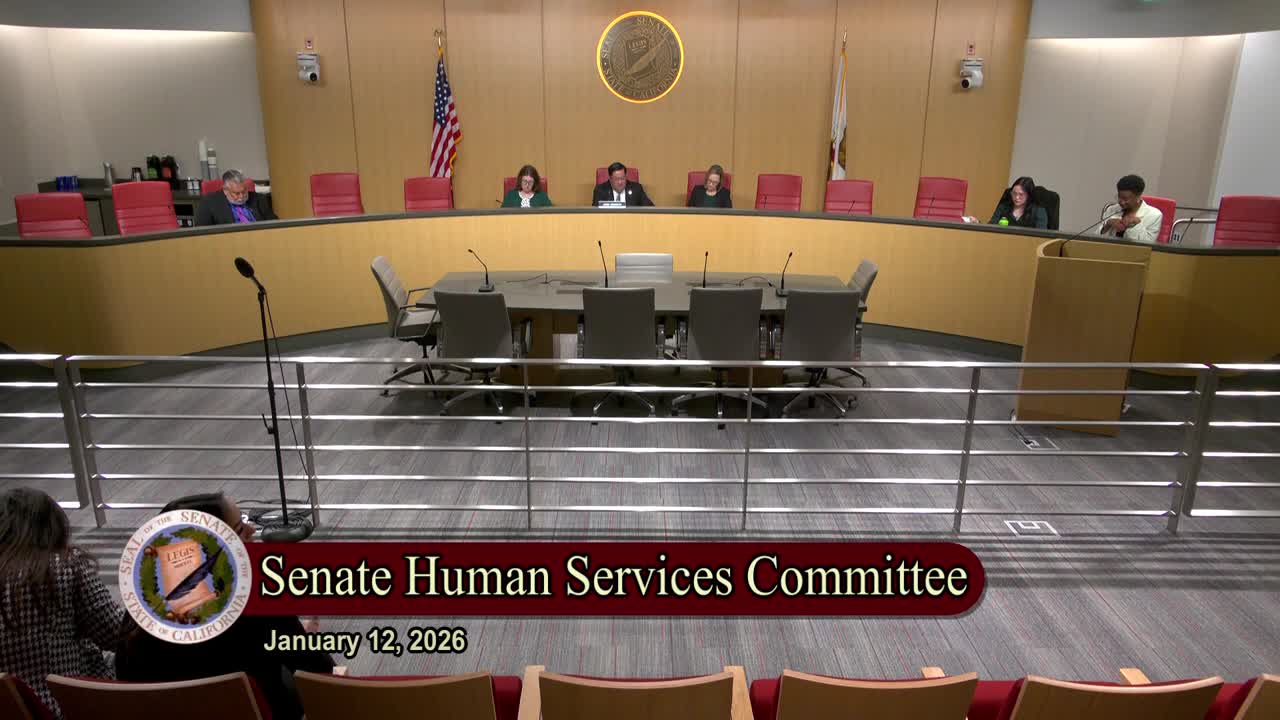
Discussed in Hearing
 6MIN
Senate Standing Committee on Human Services
Bill Author
Bill Co-Author(s):