SB 59: Change of name or gender and sex identifier.
- Session Year: 2025-2026
- House: Senate
- Latest Version Date: 2025-10-13
Current Status:
Passed
(2025-10-13: Chaptered by Secretary of State. Chapter 738, Statutes of 2025.)
Introduced
In Committee
Awaiting First Chamber Vote
Passed First Chamber
In Committee
Awaiting Second Chamber Vote
Passed Second Chamber
Enacted
What does this bill do?
The bill requires courts to keep confidential the records of people who file to legally change their name or gender marker and to limit access to the petitioner, anyone who signed the petition, people served in the case, attorneys or authorized agents, and, for minors, parents or guardians. It also bans others from publicly posting those confidential records, lets harmed petitioners sue private parties for disclosure with at least $5,000 in damages and possible punitive damages for willful or reckless conduct plus attorneys’ fees, and directs courts to adopt needed forms and rules.
The summary is provided by generative AI which can make mistakes. For original language, please view the details in the table below.
Existing law authorizes a person to file a petition with the superior court seeking a judgment recognizing their change of gender to female, male, or nonbinary, including a person who is under 18 years of age. Existing law authorizes a person to file a single petition to simultaneously change the petitioners name and recognize the change to the petitioners gender and sex identifier, as specified. Existing law requires that either of those petitions, if filed by a person under 18 years of age, and any papers associated with the proceeding, be kept confidential by the court. Existing law requires the court to limit access to these records to specified individuals, including, among others, the minor, the minors parents, and their attorney.
This bill would expand the above-described confidentiality protections to other petitioners regardless of age. The bill would also expand these protections to court records associated with a proceeding under separate provisions of existing law for a change of name to conform a petitioners name to their gender identity. The bill would require the court to limit access to the court records in these proceedings to certain individuals, as specified.
The bill would apply these confidentiality provisions in the case of (1) a petition filed on or after July 1, 2026; (2) a petition filed before July 1, 2026, if the petitioner files a request to keep the records confidential, as specified; or (3) records that were previously made confidential by statute or otherwise. The bill would prohibit a person or private entity, other than the petitioner, from publicly posting one of the above-described confidential records on the internet or otherwise.
The bill would make a violation of these confidentiality requirements an injury and, commencing 6 months after the effective date of this bill, would authorize a person or entity to institute proceedings for injunctive relief, declaratory relief, or a writ of mandate to enforce them. The bill would require a court to award reasonable attorneys fees and costs to a plaintiff who prevails on a cause of action against a private party pursuant to this authority.
The bill would also authorize a petitioner who has been harmed by a disclosure or continuing disclosure of records, as specified, to, commencing 6 months after the effective date of this bill, bring a civil action against a person or private entity that caused the harm. The bill would require a person or private entity found liable to pay actual damages or statutory damages, punitive damages, and reasonable attorneys fees and costs, as specified.
The bill would, on or before July 1, 2026, require the Judicial Council, as necessary, to develop forms and rules to implement the bills provisions.
Under the bill, nothing in these provisions would preclude a court from granting a motion to seal all court records of a persons change of name or gender and sex identifier, or both, pursuant to a specified California Rule of Court.
The bill would state that whether a transgender persons gender identity conforms with their assigned sex at birth is intimate personal information entitled to protection under the right to privacy, and that a transgender person has a privacy interest in concealing their transgender identity.
The bill would make legislative findings and declarations in support of its provisions.
The bill would declare that its provisions are severable.
Existing constitutional provisions require that a statute that limits the right of access to the meetings of public bodies or the writings of public officials and agencies be adopted with findings demonstrating the interest protected by the limitation and the need for protecting that interest.
This bill would make legislative findings to that effect.
This bill would declare that it is to take effect immediately as an urgency statute.
Existing law authorizes a person to file a petition with the superior court seeking a judgment recognizing their change of gender to female, male, or nonbinary, including a person who is under 18 years of age. Existing law authorizes a person to file a single petition to simultaneously change the petitioners name and recognize the change to the petitioners gender and sex identifier, as specified. Existing law requires a petition for a change of gender and sex identifier or a single petition for change to the petitioners name and to recognize the change of the petitioners gender and sex identifier that either of those petitions, if filed by a person under 18 years of age, and any papers associated with the proceeding, to be kept confidential by the court. Existing law requires the court to limit access to these records to specified individuals, including, among others, the minor, the minors parents, and their attorneys. attorney.
This bill would expand that confidentiality to apply to all filed petitions, regardless of the age of the petitioner, and any papers associated with a proceeding for a change of gender and sex identifier, for a single petition for change to the petitioners name and to recognize the change to the petitioners gender and sex identifier, or for a change of name to conform the petitioners name to the petitioners gender identity, as specified. No later than December 31, 2026, this bill would require the Judicial Council and all superior courts to apply these confidentiality protections retroactively, as specified. The bill would require the Judicial Council to ensure that all courts have implemented a method to ensure the court maintains the confidentiality of these petitions and associated papers. The bill would authorize, if a person or entity discovers that a court record is not being kept confidential by the court, a person or entity to apply ex parte and without a fee to the court for an order to make those records confidential. The bill would require the court to make the application and all associated records confidential. The bill would prohibit those records from being posted publicly, on the internet or otherwise, by anyone other than the petitioner.This bill would expand the above-described confidentiality protections to other petitioners regardless of age. The bill would also expand these protections to court records associated with a proceeding under separate provisions of existing law for a change of name to conform a petitioners name to their gender identity. The bill would require the court to limit access to the court records in these proceedings to certain individuals, as specified.
The bill would apply these confidentiality provisions in the case of (1) a petition filed on or after July 1, 2026; (2) a petition filed before July 1, 2026, if the petitioner files a request to keep the records confidential, as specified; or (3) records that were previously made confidential by statute or otherwise. The bill would prohibit a person or private entity, other than the petitioner, from publicly posting one of the above-described confidential records on the internet or otherwise.
ThisThe bill would make a violation of these confidentiality requirements an injury and, commencing 6 months after the effective date of this act, bill, would authorize a person or entity to institute proceedings for injunctive relief, declaratory relief, or a writ of mandate to enforce them. The bill would require a court to award reasonable attorneys fees and costs to a plaintiff who prevails on a cause of action against a private party pursuant to this authority.
ThisThe bill would also authorize a petitioner who has been harmed by a disclosure or continuing disclosure of records, as specified, to, commencing 6 months after the effective date of this act, bill, bring a civil action against the private person or a person or private entity that caused the harm. The bill would require a private person or person or private entity found liable to pay actual damages or statutory damages, punitive damages, and reasonable attorneys fees and costs, as specified.
This bill would require the court, without a public hearing, to seal these types of petitions, as specified, and all court records and papers associated with that proceeding, upon the request of the petitioner and a finding that a petitioner has met the criteria set forth in a specific California Rule of Court.The bill would, on or before July 1, 2026, require the Judicial Council, as necessary, to develop forms and rules to implement the bills provisions.
Under the bill, nothing in these provisions would preclude a court from granting a motion to seal all court records of a persons change of name or gender and sex identifier, or both, pursuant to a specified California Rule of Court.
The bill would state that whether a transgender persons gender identity conforms with their assigned sex at birth is intimate personal information entitled to protection under the right to privacy, and that a transgender person has a privacy interest in concealing their transgender identity.
ThisThe bill would make legislative findings and declarations in support of its provisions.
ThisThe bill would declare that its provisions are severable.
Existing constitutional provisions require that a statute that limits the right of access to the meetings of public bodies or the writings of public officials and agencies be adopted with findings demonstrating the interest protected by the limitation and the need for protecting that interest.
This bill would make legislative findings to that effect.
This bill would declare that it is to take effect immediately as an urgency statute.
Existing law authorizes a person to file a petition with the superior court seeking a judgment recognizing their change of gender to female, male, or nonbinary, including a person who is under 18 years of age. Existing law authorizes a person to file a single petition to simultaneously change the petitioners name and recognize the change to the petitioners gender and sex identifier, as specified. Existing law requires a petition for a change of gender and sex identifier or a single petition for change to the petitioners name and to recognize the change of the petitioners gender and sex identifier filed by a person under 18 years of age, and any papers associated with the proceeding, to be kept confidential by the court. Existing law requires the court to limit access to these records to specified individuals, including, among others, the minor, the minors parents, and their attorneys.
This bill would expand that confidentiality to apply to all filed petitions, regardless of the age of the petitioner, and any papers associated with a proceeding for a change of gender and sex identifier, for a single petition for change to the petitioners name and to recognize the change to the petitioners gender and sex identifier, or for a change of name to conform the petitioners name to the petitioners gender identity, as specified. This bill would make these confidentiality requirements retroactive, as specified, and No later than December 31, 2026, this bill would require the Judicial Council and all superior courts to apply these confidentiality protections retroactively, as specified. The bill would require the Judicial Council to ensure that all courts have implemented a method to ensure the court maintains the confidentiality of these petitions and associated papers that were filed prior to the effective date of this act. papers. The bill would authorize, if a person or entity discovers that a court record is not being kept confidential by the court, a person or entity to apply ex parte and without a fee to the court for an order to make those records confidential. The bill would require the court to make the application and all associated records confidential. The bill would prohibit those records from being posted publicly, on the internet or otherwise, by anyone other than the petitioner.
This bill would make a violation of these confidentiality requirements an injury and, commencing 6 months after the effective date of this act, would authorize a person or entity to institute proceedings for injunctive relief, declaratory relief, or a writ of mandate to enforce them. The bill would require a court to award reasonable attorneys fees and costs to a plaintiff who prevails on a cause of action against a private party pursuant to this authority.
This bill would also authorize a petitioner who has been harmed by a disclosure or continuing disclosure of records, as specified, to, commencing 6 months after the effective date of this act, bring a civil action against the private person or entity that caused the harm. The bill would require a private person or entity found liable to pay actual damages or statutory damages, punitive damages, and reasonable attorneys fees and costs, as specified.
This bill would require the court, without a public hearing, to seal these types of petitions, as specified, and all court records and papers associated with that proceeding, upon the request of the petitioner and a finding that a petitioner has met the criteria set forth in a specific California Rule of Court.
This bill would make legislative findings and declarations in support of its provisions.
This bill would declare that its provisions are severable.
Existing constitutional provisions require that a statute that limits the right of access to the meetings of public bodies or the writings of public officials and agencies be adopted with findings demonstrating the interest protected by the limitation and the need for protecting that interest.
This bill would make legislative findings to that effect.
This bill would declare that it is to take effect immediately as an urgency statute.
Existing law authorizes a person to file a petition with the superior court seeking a judgment recognizing their change of gender to female, male, or nonbinary, including a person who is under 18 years of age. Existing law authorizes a person to file a single petition to simultaneously change the petitioners name and recognize the change to the petitioners gender and sex identifier, as specified. Existing law requires a petition for a change of gender and sex identifier or a single petition for change to the petitioners name and to recognize the change of the petitioners gender and sex identifier filed by a person under 18 years of age, and any papers associated with the proceeding, to be kept confidential by the court. Existing law requires the court to limit access to these records to specified individuals, including, among others, the minor, the minors parents, and their attorneys.
This bill would expand that confidentiality to apply to all filed petitions, regardless of the age of the petitioner, and any papers associated with a proceeding for a change of gender and sex identifier, for a single petition for change to the petitioners name and to recognize the change to the petitioners gender and sex identifier, or for a change of name to conform the petitioners name to the petitioners gender identity, as specified. This bill would make these confidentiality requirements retroactive retroactive, as specified, and require the Judicial Council to ensure that all courts have implemented a method to ensure the court maintains the confidentiality of these petitions and associated papers that were filed prior to the effective date of this act. The bill would authorize, if a person or entity discovers that a court record is not being kept confidential by the court, a person or entity to apply ex parte and without a fee to the court for an order to make those records confidential. The bill would require the court to make the application and all associated records confidential. The bill would prohibit those records from being posted publicly, on the internet or otherwise, by anyone other than the petitioner.
This bill would make a violation of these confidentiality requirements an injury and, commencing 6 months after the effective date of this act, would authorize a person or entity to institute proceedings for injunctive relief, declaratory relief, or a writ of mandate to enforce them. The bill would require a court to award reasonable attorneys fees and costs to a plaintiff who prevails on a cause of action against a private party pursuant to this authority.
This bill would also authorize a petitioner who has been harmed by a disclosure or continuing disclosure of records, as specified, to, commencing 6 months after the effective date of this act, bring a civil action against the private person or entity that caused the harm. The bill would require a private person or entity found liable to pay actual damages or liquidated statutory damages, punitive damages, and reasonable attorneys fees and costs, as specified.
This bill would require the court, without a public hearing, to seal these types of petitions, as specified, and all court records and papers associated with that proceeding, upon the request of the petitioner and a finding that a petitioner has met the criteria set forth in a specific California Rule of Court.
This bill would make legislative findings and declarations in support of its provisions.
This bill would declare that its provisions are severable.
Existing constitutional provisions require that a statute that limits the right of access to the meetings of public bodies or the writings of public officials and agencies be adopted with findings demonstrating the interest protected by the limitation and the need for protecting that interest.
This bill would make legislative findings to that effect.
This bill would declare that it is to take effect immediately as an urgency statute.
Existing law authorizes a person to file a petition with the superior court seeking a judgment recognizing their change of gender to female, male, or nonbinary, including a person who is under 18 years of age. Existing law authorizes a person to file a single petition to simultaneously change the petitioners name and recognize the change to the petitioners gender and sex identifier, as specified. Existing law requires a petition for a change of gender and sex identifier or a single petition for change to the petitioners name and to recognize the change of the petitioners gender and sex identifier filed by a person under 18 years of age, and any papers associated with the proceeding, to be kept confidential by the court. Existing law requires the court to limit access to these records to specified individuals, including, among others, the minor, the minors parents, and their attorneys.
This bill would expand that confidentiality to apply to all filed petitions, regardless of the age of the petitioner, and any papers associated with a proceeding for a change of gender and sex identifier, for a single petition for change to the petitioners name and to recognize the change to the petitioners gender and sex identifier, or for a change of name to conform the petitioners name to the petitioners gender identity, as specified. This bill would make these confidentiality requirements retroactive and require the Judicial Council to ensure that all courts have implemented a method to ensure the court maintains the confidentiality of these petitions and associated papers that were filed prior to the effective date of this act. The bill would authorize, if a person or entity discovers that a court record is not being kept confidential by the court, a person or entity to apply ex parte and without a fee to the court for an order to make those records confidential. The bill would prohibit those records from being posted publicly, on the internet or otherwise, by anyone other than the petitioner.
This bill would make a violation of these confidentiality requirements an injury and, commencing 6 months after the effective date of this act, would authorize a person or entity to institute proceedings for injunctive relief, declaratory relief, or a writ of mandate to enforce them. The bill would require a court to award reasonable attorneys fees and costs to a plaintiff who prevails on a cause of action against a private party pursuant to this authority.
This bill would also authorize a petitioner who has been harmed by a disclosure or continuing disclosure of confidential information in violation of these confidentiality requirements, as specified, records, as specified, to, commencing 6 months after the effective date of this act, bring a civil action against the private person or entity that caused the harm. The bill would require a private person or entity found liable to pay actual damages or liquidated damages, punitive damages, and reasonable attorneys fees and costs, as specified.
This bill would require the court, without a public hearing, to seal these types of petitions, as specified, and all court records and papers associated with that proceeding, upon the request of the petitioner and a finding that a petitioner has met the criteria set forth in a specific California Rule of Court.
This bill would make legislative findings and declarations in support of its provisions.
This bill would declare that its provisions are severable.
Existing constitutional provisions require that a statute that limits the right of access to the meetings of public bodies or the writings of public officials and agencies be adopted with findings demonstrating the interest protected by the limitation and the need for protecting that interest.
This bill would make legislative findings to that effect.
This bill would declare that it is to take effect immediately as an urgency statute.
Existing law authorizes a person to file a petition with the superior court seeking a judgment recognizing their change of gender to female, male, or nonbinary, including a person who is under 18 years of age. Existing law authorizes a person to file a single petition to simultaneously change the petitioners name and recognize the change to the petitioners gender and sex identifier, as specified. Existing law requires a petition for a change of gender and sex identifier or a single petition for change to the petitioners name and to recognize the change of the petitioners gender and sex identifier filed by a person under 18 years of age, and any papers associated with the proceeding, to be kept confidential by the court. Existing law requires the court to limit access to these records to specified individuals, including, among others, the minor, the minors parents, and their attorneys.
This bill would expand that confidentiality to apply to all filed petitions, regardless of the age of the petitioner, and any papers associated with a proceeding for a change of gender and sex identifier, for a single petition for change to the petitioners name and to recognize the change to the petitioners gender and sex identifier, or for a change of name to conform the petitioners name to the petitioners gender identity, as specified. This bill would make these confidentiality requirements retroactive and require the Judicial Council to ensure that all courts have implemented a method to ensure the court maintains the confidentiality of these petitions and associated papers that were filed prior to the effective date of this act. The bill would require the court to immediately take steps to make a record confidential if a person or entity or the court authorize, if a person or entity discovers that a court record is not being kept confidential. confidential by the court, a person or entity to apply ex parte and without a fee to the court for an order to make those records confidential. The bill would prohibit those records from being posted publicly, on the internet or otherwise, by anyone other than the petitioner.
This bill would make a violation of these confidentiality requirements an injury and, commencing 6 months after the effective date of this act, would authorize a person or entity to institute proceedings for injunctive relief, declaratory relief, or a writ of mandate to enforce them. The bill would require a court to award reasonable attorneys fees and costs to a plaintiff who prevails on a cause of action against a private party pursuant to this authority.
This bill would also authorize a petitioner who has been harmed by a disclosure or continuing disclosure of confidential information in violation of these confidentiality requirements, as specified, to, commencing 6 months after the effective date of this act, bring a civil action against the private person or entity that caused the harm. The bill would require a private person or entity found liable to pay actual damages or liquidated damages, punitive damages, and reasonable attorneys fees and costs, as specified.
This bill would require the court, without a public hearing, to seal these types of petitions, as specified, and all court records and papers associated with that proceeding, upon the request of the petitioner and a finding that a petitioner has met the criteria set forth in a specific California Rule of Court.
This bill would make legislative findings and declarations in support of its provisions.
Existing constitutional provisions require that a statute that limits the right of access to the meetings of public bodies or the writings of public officials and agencies be adopted with findings demonstrating the interest protected by the limitation and the need for protecting that interest.
This bill would make legislative findings to that effect.
This bill would declare that it is to take effect immediately as an urgency statute.
Existing law authorizes a person to file a petition with the superior court seeking a judgment recognizing their change of gender to female, male, or nonbinary, including a person who is under 18 years of age. Existing law authorizes a person to file a single petition to simultaneously change the petitioners name and recognize the change to the petitioners gender and sex identifier, as specified. Existing law requires a petition for a change of gender and sex identifier or a petition for a change of gender, sex identifier, and name single petition for change to the petitioners name and to recognize the change of the petitioners gender and sex identifier filed by a person under 18 years of age, and any papers associated with the proceeding, to be kept confidential by the court. Existing law requires the court to limit access to these records to specified individuals, including, among others, the minor, the minors parents, and their attorneys.
This bill would expand that confidentiality provision to apply to all filed petitions for a change of gender and sex identifier or filed petitions for a change of gender, sex identifier, and name, and any papers associated with the proceeding, regardless of the age of the person who filed the petition. The bill would require the court to limit access to court records in those proceedings, as specified. petitions, regardless of the age of the petitioner, and any papers associated with a proceeding for a change of gender and sex identifier, for a single petition for change to the petitioners name and to recognize the change to the petitioners gender and sex identifier, or for a change of name to conform the petitioners name to the petitioners gender identity, as specified. This bill would make this provision these confidentiality requirements retroactive and require the Judicial Council to ensure that all courts have implemented a method to ensure the court maintains the confidentiality of those these petitions and associated papers that were filed prior to the effective date of this act. The bill would require the court to immediately take steps to make a record confidential if an interested party a person or entity or the court discovers that a court record in the proceeding is not being kept confidential. The bill would prohibit those records from being posted publicly, on the internet or otherwise, by anyone other than the petitioner.
This bill would make a violation of these confidentiality requirements an injury and, commencing 6 months after the effective date of this act, would authorize a person or entity to institute proceedings for injunctive relief, declaratory relief, or a writ of mandate to enforce them. The bill would require a court to award reasonable attorneys fees and costs to a plaintiff who prevails on a cause of action against a private party pursuant to this authority.
This bill would also authorize a petitioner who has been harmed by a disclosure or continuing disclosure of confidential information in violation of these confidentiality requirements, as specified, to, commencing 6 months after the effective date of this act, bring a civil action against the private person or entity that caused the harm. The bill would require a private person or entity found liable to pay actual damages or liquidated damages, punitive damages, and reasonable attorneys fees and costs, as specified.
This bill would require the court, without a public hearing, to seal these types of petitions, as specified, and all court records and papers associated with that proceeding, upon the request of the petitioner and a finding that a petitioner has met the criteria set forth in a specific California Rule of Court.
This bill would make legislative findings and declarations in support of its provisions.
Existing constitutional provisions require that a statute that limits the right of access to the meetings of public bodies or the writings of public officials and agencies be adopted with findings demonstrating the interest protected by the limitation and the need for protecting that interest.
This bill would make legislative findings to that effect.
This bill would declare that it is to take effect immediately as an urgency statute.
Existing law authorizes a person to file a petition with the superior court seeking a judgment recognizing their change of gender to female, male, or nonbinary, including a person who is under 18 years of age. Existing law authorizes a person to file a single petition to simultaneously change the petitioners name and recognize the change to the petitioners gender and sex identifier, as specified. Existing law requires a petition for a change of gender and sex identifier or a petition for a change of gender, sex identifier, and name filed by a person under 18 years of age, and any papers associated with the proceeding, to be kept confidential by the court. Existing law requires the court to limit access to these records to specified individuals, including, among others, the minor, the minors parents, and their attorneys.
This bill would expand that confidentiality provision to apply to all filed petitions for a change of gender and sex identifier or filed petitions for a change of gender, sex identifier, and name, and any papers associated with the proceeding, regardless of the age of the person who filed the petition. The bill would require the court to limit access to court records in those proceedings, as specified. This bill would make this provision retroactive and require the Judicial Council to ensure that all courts have implemented a method to ensure the court maintains the confidentiality of those petitions and associated papers that were filed prior to the effective date of this act. The bill would require the court to immediately take steps to make a record confidential if an interested party or the court discovers that a court record in the proceeding is not being kept confidential. The bill would prohibit those records from being posted publicly, on the internet or otherwise, by anyone other than the petitioner.
Existing constitutional provisions require that a statute that limits the right of access to the meetings of public bodies or the writings of public officials and agencies be adopted with findings demonstrating the interest protected by the limitation and the need for protecting that interest.
This bill would make legislative findings to that effect.
This bill would declare that it is to take effect immediately as an urgency statute.
The Legislature finds and declares all of the following:
(a)Transgender and nonbinary people are experiencing a growing epidemic of discrimination, harassment, and violence in California and across the country.
(b)According to the Department of Justice, hate crimes motivated by anti-transgender bias increased by 10.2 percent between 2022 and 2023.
(c)According to the UCLA School of Laws Williams Institute, in 2021, transgender people were over four times more likely to experience violent victimization, including rape, assault, and aggravated or simple assault, than their cisgender peers.
(d)According to the 2022 U.S. Trans Survey, 30 percent of transgender respondents reported that they were verbally harassed and 39 percent were harassed online in the last 12 months because of their gender identity or expression.
(e)Having personally identifying information exposed without their knowledge or consent puts transgender and nonbinary people at greater risk for harassment, discrimination, and violence.
(f)Transgender people in California, New York, Washington, and elsewhere have reported harassment and cyberbullying after their personal information was released online.
(g)In 2023, California passed Assembly Bill 223 (Chapter 221 of the Statutes of 2023) (Ward), commonly known as the Transgender Youth Privacy Act, which requires courts to keep all court records related to name and gender marker changes for minors confidential.
(h)With harassment and violence against transgender and nonbinary people on the rise and a federal administration that is openly hostile to the transgender community, it is imperative for California to expand these protections to safeguard the privacy and safety of all transgender and nonbinary Californians.
(i)On October 29, 2024, the Court of Appeal for the Fifth Appellate District of California issued a unanimous decision in In re M.T. (2024) 106 Cal.App.5th 322 (M.T.), a case of first impression.
(j)In its decision, the court found that petitioner M.T. had demonstrated that she met the criteria under subdivision (d) of California Rule of Court 2.550 for an order justifying the sealing of records.
(k)The criteria for such sealing of records under subdivision (d) of California Rule of Court 2.550 require an express finding by the court of facts that establish (1) There exists an overriding interest that overcomes the right of public access to the record; (2) The overriding interest supports sealing the record; (3) A substantial probability exists that the overriding interest will be prejudiced if the record is not sealed; (4) The proposed sealing is narrowly tailored; and (5) No less restrictive means exist to achieve the overriding interest.
(l)The court further found that petitioner M.T. cited studies showing transgender people are subject to violence, harassment, and discrimination and that she had provided evidence of harassment specifically directed against her, she had been outed in a social media post that revealed her transgender identity along with other identifying information, she had found her case record to be publicly available online, and she had been the target of transphobic text messages sent to her.
(m)The court also concluded in M.T. that whether a transgender persons gender identity conforms with their assigned sex at birth is intimate personal information entitled to protection under the right to privacy. A transgender person thus has a privacy interest in concealing their transgender identity (In re M.T., 106 Cal.App.5th at 341).
(n)It is the intent of the Legislature in enacting this act to include provisions that would codify the decision of the Court of Appeal for the Fifth Appellate District in M.T. and would clarify the decisions application in state law.
(o)By codifying the Court of Appeal for the Fifth Appellate Districts unanimous ruling in M.T., this act ensures that important privacy protections regarding the sealing of records are available to all transgender individuals at risk of violence, harassment, and discrimination.
SEC. 2.Section 103437 of the Health and Safety Code is repealed.SEC. 3.Section 103437 is added to the Health and Safety Code, to read:103437.(a)As used in this section, change of name or gender and sex identifier, or both means a proceeding for a change of gender and sex identifier pursuant to Section 103430, for a combined change of the petitioners name and recognition of the change to the petitioners gender and sex identifier pursuant to Section 103435, or for a change of name to conform the petitioners name to the petitioners gender identity pursuant to Title 8 (commencing with Section 1275) of Part 3 of the Code of Civil Procedure.
(b)Subject to subdivision (c), all of the following apply:
(1)The court records, including the index, register of actions, and any other case information available through court systems used to provide the public with electronic access to court records, associated with a proceeding for a change of name or gender and sex identifier, or both, shall be kept confidential by the court.
(2)Until the court orders a change of name or gender and sex identifier, or both, the court shall limit access to the court records in the proceeding, including the index, register of actions, and any other case information available through court systems used to provide the public with electronic access to court records. Prior to those orders, the court shall not provide access to anyone other than the petitioner, any other person who signed the petition, an individual who is subject to service of an order to show cause related to the petition, any attorney representing those individuals, and any agents acting pursuant to written authorization from those individuals or their attorneys. For a petition brought on behalf of a minor, the court shall limit access prior to an order changing the minors name or gender and sex identifier, or both, to the minor subject of the petition, the minors parents, guardians, and guardians ad litem, an individual subject to service of an order to show cause related to the petition, any attorney representing those individuals, and any agents acting pursuant to written authorization from those individuals or their attorneys.
(3)Upon the court ordering a change of name or gender and sex identifier, or both, the court shall limit access to the court records in the proceeding, including the index, register of actions, and any other case information available through court systems used to provide the public with electronic access to court records, to the petitioner, a minor who received a change of name or gender and sex identifier, or both, an adult who signed the petition, any attorney representing those individuals, and any agents acting pursuant to written authorization from those individuals or their attorneys.
(c)The requirements set forth in subdivision (b) apply if any of the following conditions are met:
(1)The petition for change of name or gender and sex identifier, or both, is filed on or after July 1, 2026.
(2)The court orders the records in the proceeding to be kept confidential. The court shall enter that order if the petitioner in a proceeding for a change of name or gender and sex identifier, or both, in which the petition was filed before July 1, 2026, files a request to keep the records in the proceeding confidential. The petitioner may make this request ex parte and without paying a filing fee. The court shall make the request and all associated records confidential.
(3)The records in the proceeding were previously made confidential by statute or otherwise.
(d)If the petitioner discovers that court records in their proceeding for a change of name or gender and sex identifier, or both, are not being kept confidential by the court pursuant to subdivision (b) or (c), the petitioner may apply ex parte for that order, without paying a filing fee, and the court shall enter an order making the records confidential. The court shall make the application and all associated records confidential.
(e)Other than the petitioner, a person or private entity shall not publicly post a confidential record pursuant to this section on the internet or otherwise.
(f)Any violation of this section constitutes an injury.
(g)Commencing six months after the effective date of the act that added this subdivision, a person or entity may institute proceedings for injunctive relief, declaratory relief, or a writ of mandate in a court of competent jurisdiction to enforce this section. A court shall award reasonable attorneys fees and costs to a plaintiff who prevails on a cause of action against a private party pursuant to this subdivision.
(h)(1)In addition to any other sanctions, penalties, or remedies provided by law, commencing six months after the effective date of the act that added this subdivision, a petitioner who has been harmed by a disclosure or continuing disclosure of records by a person or private entity with actual knowledge that those records were made confidential or sealed by the court may bring a civil action in a court of competent jurisdiction against a person or private entity that caused the harm. A civil action pursuant to this subdivision may be brought by a petitioner or, if the petitioner is a minor, on behalf of a petitioner by the petitioners parent, guardian, or guardian ad litem.
(2)If a person or private entity is found liable in a cause of action brought pursuant to paragraph (1), the person or private entity shall be liable to the petitioner for all of the following:
(A)Actual damages but not less than statutory damages in the amount of five thousand dollars ($5,000).
(B)Punitive damages upon proof of willful or reckless disregard of the law.
(C)Reasonable attorneys fees and costs.
(i)On or before July 1, 2026, the Judicial Council shall, as necessary, develop forms and rules to implement this section.
(j)Whether a transgender persons gender identity conforms with their assigned sex at birth is intimate personal information entitled to protection under the right to privacy. A transgender person has a privacy interest in concealing their transgender identity.
(k)Nothing in this section shall preclude a court from granting a motion to seal all court records, including the index, register of actions, and any other case information available through court systems used to provide the public with electronic access to court records, of a persons change of name or gender and sex identifier, or both, pursuant to California Rule of Court 2.550, or a successor rule.
SEC. 4.The provisions of this act are severable. If any provision of this act or its application is held invalid, that invalidity shall not affect other provisions or applications that can be given effect without the invalid provision or application.
SEC. 5.The Legislature finds and declares that Section 3 of this act, which adds Section 103437 to the Health and Safety Code, imposes a limitation on the publics right of access to the meetings of public bodies or the writings of public officials and agencies within the meaning of Section 3 of Article I of the California Constitution. Pursuant to that constitutional provision, the Legislature makes the following findings to demonstrate the interest protected by this limitation and the need for protecting that interest:
It is in the best interest for the public to keep these records confidential to ensure the privacy and safety of transgender and nonbinary individuals who have experienced, and continue to experience, a growing epidemic of harassment and violence in California and across the country. According to the UCLA School of Laws Williams Institute, in 2021, transgender people were over four times more likely to experience violent victimization, including rape, assault, and aggravated or simple assault, than their cisgender peers. In 2022, the U.S. Trans Survey found that nearly one-third (30 percent) of transgender respondents reported that they were verbally harassed in the last 12 months because of their gender identity or expression and, according to the Hate Crime in California 2023 report by the Department of Justice, between 2022 and 2023, hate crime events motivated by anti-transgender bias increased by 10.2 percent. Being outed and having their personal information exposed puts transgender and nonbinary individuals at greater risk for harassment, discrimination, and violence. It also significantly increases their risk of mental health harms and suicide. According to a joint study conducted by researchers at Columbia University, Harvard University, the Williams Institute, and the Fenway Institute at Fenway Health, transgender adults are seven times more likely to contemplate suicide, four times more likely to attempt it, and eight times more likely to engage in nonsuicidal self-injury than cisgender adults. Allowing a transgender individual to choose when and how they decide to share their personal information is vital in protecting their mental and physical health.
SEC. 6.This act is an urgency statute necessary for the immediate preservation of the public peace, health, or safety within the meaning of Article IV of the California Constitution and shall go into immediate effect. The facts constituting the necessity are:
To address the increase in discrimination, violence, harassment, and hate crimes motivated by anti-transgender bias, in order to prevent their personal information from being exposed by being nonconsensually outed, it is necessary that this act take effect immediately.
The Legislature finds and declares all of the following:
(a)Transgender and nonbinary people are experiencing a growing epidemic of discrimination, harassment, and violence in California and across the country.
(b)According to the Department of Justice, hate crimes motivated by antitransgender anti-transgender bias increased by 10.2 percent between 2022 and 2023.
(c)According to the UCLA School of Laws Williams Institute, in 2021, transgender people were over four times more likely to experience violent victimization, including rape, assault, and aggravated or simple assault, than their cisgender peers.
(d)According to the 2022 U.S. Trans Survey, 30 percent of transgender respondents reported that they were verbally harassed, harassed and 39 percent were harassed online, online in the last 12 months because of their gender identity or expression.
(e)Having personally identifying information exposed without their knowledge or consent puts transgender and nonbinary people at greater risk for harassment, discrimination, and violence.
(f)Transgender people in the States of California, New York, and Washington Washington, and elsewhere have reported harassment and cyberbullying after their personal information was released online.
(g)In 2023, California passed Assembly Bill 223 (Chapter 221 of the Statutes of 2023) (Ward), commonly known as the Transgender Youth Privacy Act, which requires courts to keep all court records related to name and gender marker changes for minors confidential.
(h)With harassment and violence against transgender and nonbinary people on the rise, rise and a federal administration that is openly hostile to the transgender community, it is imperative for California to expand these protections to safeguard the privacy and safety of all transgender and nonbinary Californians.
(i)On October 29, 2024, the Court of Appeal for the Fifth Appellate District of California issued a unanimous decision for in In re M.T. (2024) 106 Cal.App.5th 322 (M.T.), a case of first impression.
(j)In its decision, the court found that petitioner M.T. had demonstrated that she met the criteria under subdivision (d) of California Rule of Court 2.550 for an order justifying the sealing of records.
(k)The criteria for such sealing of records under subdivision (d) of California Rule of Court 2.550 requires require an express finding by the court of facts that establish (1) There exists an overriding interest that overcomes the right of public access to the record; (2) The overriding interest supports sealing the record; (3) A substantial probability exists that the overriding interest will be prejudiced if the record is not sealed; (4) The proposed sealing is narrowly tailored; and (5) No less restrictive means exist to achieve the overriding interest.
(l)The court further found that petitioner M.T. cited studies showing transgender people are subject to violence, harassment, and discrimination, discrimination and that she had provided evidence of harassment specifically directed against her, that she had been outed in a social media post that revealed her transgender identity along with other identifying information, that she had found her case record to be publicly available online, and that she had been the target of transphobic text messages sent to her.
(m)The court also concluded in M.T. that whether a transgender persons gender identity conforms with their assigned sex at birth is intimate personal information entitled to protection under the right to privacy. A transgender person thus has a privacy interest in concealing their transgender identity (In re M.T., 106 Cal.App.5th at 341).
(n)It is the intent of the Legislature in enacting this act to include provisions that would codify the decision of the Court of Appeal for the Fifth Appellate District in M.T. and would clarify the decisions application in state law.
(o)By codifying the Court of Appeal for the Fifth Appellate Districts unanimous ruling in M.T., this act ensures that important privacy protections regarding the sealing of records are available to all transgender individuals subject to at risk of violence, harassment, and discrimination.
SEC. 2.Section 103437 of the Health and Safety Code is amended to read:103437.(a)The petition and any papers, including the register of actions, associated with a proceeding for a change of gender and sex identifier pursuant to Section 103430, for a single petition for change to the petitioners name and to recognize the change to the petitioners gender and sex identifier pursuant to Section 103435, or for a change of name to conform the petitioners name to the petitioners gender identity pursuant to Section 1277.5 of the Code of Civil Procedure shall be kept confidential by the court.(1)Until a judgment is issued, the court shall limit access to the court records in the proceeding, including the register of actions, to the petitioner, an adult who signed the petition, the petitioners parents, guardians, or guardians ad litem, if the petitioner was a minor at the time the petition was filed, an individual who is subject to service of an order to show cause related to the petition, and an attorney representing those individuals.(2)Upon granting the judgment, the court shall limit access to the court records in the proceeding, including the register of actions, to the petitioner, an adult who signed the petition, and an attorney representing those individuals.(b)Upon the request of the petitioner and a finding that a petitioner has met the criteria set forth in subdivision (d) of California Rule of Court 2.550, or a successor rule or provision addressing the same subject matter, the court shall, without a public hearing, seal an entire petition, as described in subdivision (a), and all court records and papers associated with the proceedings.(c)(1)No later than December 31, 2026, the Judicial Council and all superior courts shall apply the confidentiality protections of this section to all petitions and papers, including the register of actions, associated with the proceedings described in subdivision (a) that were filed up to five years before the effective date of the act that added this subdivision.(2)The Judicial Council shall ensure that all courts have implemented a method to ensure the court maintains the confidentiality of all petitions and papers, including the register of actions, associated with the proceedings described in this section.(3)If a person or entity discovers that a court record in the proceeding, including the register of actions, is not being kept confidential by the court, a person or entity may apply ex parte and without a fee to the court for an order to make those records confidential. The court shall make the application and all associated records confidential.(4)A confidential record pursuant to this section shall not be posted publicly, on the internet or otherwise, by a person other than the petitioner.(d)A violation of this section constitutes an injury.(e)Commencing six months after the operative date of this act, a person or entity may institute proceedings for injunctive relief, declaratory relief, or a writ of mandate in a court of competent jurisdiction to enforce this section. A court shall award reasonable attorneys fees and costs to a plaintiff who prevails on a cause of action against a private party pursuant to this subdivision.(f)(1)In addition to any other sanctions, penalties, or remedies provided by law, commencing six months after the operative date of this act, a petitioner who has been harmed by a disclosure or continuing disclosure of records by a private person or entity with actual knowledge that those records were made confidential or sealed by the court may bring a civil action in a court of competent jurisdiction against a private person or entity that caused the harm. A civil action pursuant to this subdivision may be brought by a petitioner or on behalf of a petitioner by the petitioners parent, guardian, or guardian ad litem, if the petitioner is a minor.(2)If a private person or entity is found liable in a cause of action brought pursuant to paragraph (1), the private person or entity shall be liable to the petitioner for all of the following:(A)Actual damages but not less than statutory damages in the amount of five thousand dollars ($5,000).(B)Punitive damages upon proof of willful or reckless disregard of the law.(C)Reasonable attorneys fees and costs.SEC. 2.Section 103437 of the Health and Safety Code is repealed.103437.If a person who seeks a change of gender and sex identifier pursuant to Section 103430 or a single petition for change to the petitioners name and to recognize the change of the petitioners gender and sex identifier pursuant to Section 103435 is under 18 years of age, the petition and any papers associated with the proceeding shall be kept confidential by the court. The court shall limit access to the court records in the proceeding, including the register of actions, to the minor, any adult who signed the petition, the minors parents or guardians or guardians ad litem, any individual who is subject to an order to show cause related to the petition, and any attorneys representing these individuals.SEC. 3.Section 103437 is added to the Health and Safety Code, to read:103437.(a)As used in this section, change of name or gender and sex identifier, or both means a proceeding for a change of gender and sex identifier pursuant to Section 103430, for a combined change of the petitioners name and recognition of the change to the petitioners gender and sex identifier pursuant to Section 103435, or for a change of name to conform the petitioners name to the petitioners gender identity pursuant to Title 8 (commencing with Section 1275) of Part 3 of the Code of Civil Procedure.
(b)Subject to subdivision (c), all of the following apply:
(1)The court records, including the index, register of actions, and any other case information available through court systems used to provide the public with electronic access to court records, associated with a proceeding for a change of name or gender and sex identifier, or both, shall be kept confidential by the court.
(2)Until the court orders a change of name or gender and sex identifier, or both, the court shall limit access to the court records in the proceeding, including the index, register of actions, and any other case information available through court systems used to provide the public with electronic access to court records. Prior to those orders, the court shall not provide access to anyone other than the petitioner, any other person who signed the petition, an individual who is subject to service of an order to show cause related to the petition, any attorney representing those individuals, and any agents acting pursuant to written authorization from those individuals or their attorneys. For a petition brought on behalf of a minor, the court shall limit access prior to an order changing the minors name or gender and sex identifier, or both, to the minor subject of the petition, the minors parents, guardians, and guardians ad litem, an individual subject to service of an order to show cause related to the petition, any attorney representing those individuals, and any agents acting pursuant to written authorization from those individuals or their attorneys.
(3)Upon the court ordering a change of name or gender and sex identifier, or both, the court shall limit access to the court records in the proceeding, including the index, register of actions, and any other case information available through court systems used to provide the public with electronic access to court records, to the petitioner, a minor who received a change of name or gender and sex identifier, or both, an adult who signed the petition, any attorney representing those individuals, and any agents acting pursuant to written authorization from those individuals or their attorneys.
(c)The requirements set forth in subdivision (b) apply if any of the following conditions are met:
(1)The petition for change of name or gender and sex identifier, or both, is filed on or after July 1, 2026.
(2)The court orders the records in the proceeding to be kept confidential. The court shall enter that order if the petitioner in a proceeding for a change of name or gender and sex identifier, or both, in which the petition was filed before July 1, 2026, files a request to keep the records in the proceeding confidential. The petitioner may make this request ex parte and without paying a filing fee. The court shall make the request and all associated records confidential.
(3)The records in the proceeding were previously made confidential by statute or otherwise.
(d)If the petitioner discovers that court records in their proceeding for a change of name or gender and sex identifier, or both, are not being kept confidential by the court pursuant to subdivision (b) or (c), the petitioner may apply ex parte for that order, without paying a filing fee, and the court shall enter an order making the records confidential. The court shall make the application and all associated records confidential.
(e)Other than the petitioner, a person or private entity shall not publicly post a confidential record pursuant to this section on the internet or otherwise.
(f)Any violation of this section constitutes an injury.
(g)Commencing six months after the effective date of the act that added this subdivision, a person or entity may institute proceedings for injunctive relief, declaratory relief, or a writ of mandate in a court of competent jurisdiction to enforce this section. A court shall award reasonable attorneys fees and costs to a plaintiff who prevails on a cause of action against a private party pursuant to this subdivision.
(h)(1)In addition to any other sanctions, penalties, or remedies provided by law, commencing six months after the effective date of the act that added this subdivision, a petitioner who has been harmed by a disclosure or continuing disclosure of records by a person or private entity with actual knowledge that those records were made confidential or sealed by the court may bring a civil action in a court of competent jurisdiction against a person or private entity that caused the harm. A civil action pursuant to this subdivision may be brought by a petitioner or, if the petitioner is a minor, on behalf of a petitioner by the petitioners parent, guardian, or guardian ad litem.
(2)If a person or private entity is found liable in a cause of action brought pursuant to paragraph (1), the person or private entity shall be liable to the petitioner for all of the following:
(A)Actual damages but not less than statutory damages in the amount of five thousand dollars ($5,000).
(B)Punitive damages upon proof of willful or reckless disregard of the law.
(C)Reasonable attorneys fees and costs.
(i)On or before July 1, 2026, the Judicial Council shall, as necessary, develop forms and rules to implement this section.
(j)Whether a transgender persons gender identity conforms with their assigned sex at birth is intimate personal information entitled to protection under the right to privacy. A transgender person has a privacy interest in concealing their transgender identity.
(k)Nothing in this section shall preclude a court from granting a motion to seal all court records, including the index, register of actions, and any other case information available through court systems used to provide the public with electronic access to court records, of a persons change of name or gender and sex identifier, or both, pursuant to California Rule of Court 2.550, or a successor rule.
SEC. 3.SEC. 4.The provisions of this act are severable. If any provision of this act or its application is held invalid, that invalidity shall not affect other provisions or applications that can be given effect without the invalid provision or application.
SEC. 4.SEC. 5.The Legislature finds and declares that Section 2 3 of this act, which amends Section 103437 of adds Section 103437 to the Health and Safety Code, imposes a limitation on the publics right of access to the meetings of public bodies or the writings of public officials and agencies within the meaning of Section 3 of Article I of the California Constitution. Pursuant to that constitutional provision, the Legislature makes the following findings to demonstrate the interest protected by this limitation and the need for protecting that interest:
It is in the best interest for the public to keep these records confidential to ensure the privacy and safety of transgender and nonbinary individuals who have experienced, and continue to experience, a growing epidemic of harassment and violence in California and across the country. According to the UCLA School of Laws Williams Institute, in 2021 2021, transgender people were over four times more likely to experience violent victimization, including rape, assault, and aggravated or simple assault, than their cisgender peers. In 2022, the U.S. Trans Survey found that nearly one-third (30 percent) of transgender respondents reported that they were verbally harassed in the last 12 months because of their gender identity or expression and, according to the Hate Crime in California 2023 report by the Department of Justice, between 2022 and 2023, hate crime events motivated by antitransgender anti-transgender bias increased by 10.2 percent. Being outed and having their personal information exposed puts transgender and nonbinary individuals at greater risk for harassment, discrimination, and violence. It also significantly increases their risk of mental health harms and suicide. According to a joint study conducted by researchers at Columbia University, Harvard University, the Williams Institute, and the Fenway Institute at Fenway Health, transgender adults are seven times more likely to contemplate suicide, four times more likely to attempt it, and eight times more likely to engage in nonsuicidal self-injury than cisgender adults. Allowing a transgender individuals individual to choose when and how they decide to share their personal information is vital in protecting their mental and physical health.
SEC. 5.SEC. 6.This act is an urgency statute necessary for the immediate preservation of the public peace, health, or safety within the meaning of Article IV of the California Constitution and shall go into immediate effect. The facts constituting the necessity are:
To address the increase in discrimination, violence, harassment, and hate crimes motivated by antitransgender anti-transgender bias, in order to prevent their personal information from being exposed by being nonconsensually outed, it is necessary that this act take effect immediately.
The Legislature finds and declares all of the following:
(a)Transgender and nonbinary people are experiencing a growing epidemic of discrimination, harassment, and violence in California and across the country.
(b)According to the Department of Justice, hate crimes motivated by antitransgender bias increased by 10.2 percent between 2022 and 2023.
(c)According to the UCLA School of Laws Williams Institute, in 2021, transgender people were over four times more likely to experience violent victimization, including rape, assault, and aggravated or simple assault, than their cisgender peers.
(d)According to the 2022 U.S. Trans Survey, 30 percent of transgender respondents reported that they were verbally harassed, and 39 percent were harassed online, in the last 12 months because of their gender identity or expression.
(e)Having personally identifying information exposed without their knowledge or consent puts transgender and nonbinary people at greater risk for harassment, discrimination, and violence.
(f)Transgender people in the States of California, New York, and Washington and elsewhere have reported harassment and cyberbullying after their personal information was released online.
(g)In 2023, California passed Assembly Bill 223 (Chapter 221 of the Statutes of 2023) (Ward), the Transgender Youth Privacy Act, which requires courts to keep all court records related to name and gender marker changes for minors confidential.
(h)With harassment and violence against transgender and nonbinary people on the rise, and a federal administration that is openly hostile to the transgender community, it is imperative for California to expand these protections to safeguard the privacy and safety of all transgender and nonbinary Californians.
(i)On October 29, 2024, the Court of Appeal for the Fifth Appellate District of California issued a unanimous decision for In re M.T. (2024) 106 Cal.App.5th 322 (M.T.), a case of first impression.
(j)In its decision, the court found that petitioner M.T. had demonstrated that she met the criteria under subdivision (d) of California Rule of Court 2.550 for an order justifying the sealing of records.
(k)The criteria for such sealing of records under subdivision (d) of California Rule of Court 2.550 requires an express finding by the court of facts that establish (1) There exists an overriding interest that overcomes the right of public access to the record; (2) The overriding interest supports sealing the record; (3) A substantial probability exists that the overriding interest will be prejudiced if the record is not sealed; (4) The proposed sealing is narrowly tailored; and (5) No less restrictive means exist to achieve the overriding interest.
(l)The court further found that petitioner M.T. cited studies showing transgender people are subject to violence, harassment, and discrimination, that she had provided evidence of harassment specifically directed against her, that she had been outed in a social media post that revealed her transgender identity along with other identifying information, that she had found her case record to be publicly available online, and that she had been the target of transphobic text messages sent to her.
(m)The court also concluded in M.T. that whether a transgender persons gender identity conforms with their assigned sex at birth is intimate personal information entitled to protection under the right to privacy. A transgender person thus has a privacy interest in concealing their transgender identity (In re M.T., 106 Cal.App.5th at 341).
(n)It is the intent of the Legislature in enacting this act to include provisions that would codify the decision of the Court of Appeal for the Fifth Appellate District in M.T. and would clarify the decisions application in state law.
(o)By codifying the Court of Appeal for the Fifth Appellate Districts unanimous ruling in M.T., this act ensures that important privacy protections regarding the sealing of records are available to all transgender individuals subject to violence, harassment, and discrimination.
SEC. 2.Section 103437 of the Health and Safety Code is amended to read:103437.(a)The petition and any papers papers, including the register of actions, associated with a proceeding for a change of gender and sex identifier pursuant to Section 103430, for a single petition for change to the petitioners name and to recognize the change to the petitioners gender and sex identifier pursuant to Section 103435, or for a change of name to conform the petitioners name to the petitioners gender identity pursuant to Section 1277.5 of the Code of Civil Procedure shall be kept confidential by the court.
(1)Until a judgment is issued, the court shall limit access to the court records in the proceeding, including the register of actions, to the petitioner, an adult who signed the petition, the petitioners parents, guardians, or guardians ad litem, if the petitioner was a minor at the time the petition was filed, an individual who is subject to service of an order to show cause related to the petition, and an attorney representing those individuals.
(2)Upon granting the judgment, the court shall limit access to the court records in the proceeding, including the register of actions, to the petitioner, an adult who signed the petition, and an attorney representing those individuals.
(b)Upon the request of the petitioner and a finding that a petitioner has met the criteria set forth in subdivision (d) of California Rule of Court 2.550, or a successor rule or provision addressing the same subject matter, the court shall, without a public hearing, seal an entire petition, as described in subdivision (a), and all court records and papers associated with the proceedings.
(c)This section is retroactive and applies (1)No later than December 31, 2026, the Judicial Council and all superior courts shall apply the confidentiality protections of this section to all petitions and papers papers, including the register of actions, associated with the proceedings described in subdivision (a) that were filed up to five years before the effective date of the act that added this subdivision. The
(2)The Judicial Council shall ensure that all courts have implemented a method to ensure the court maintains the confidentiality of all petitions and papers papers, including the register of actions, associated with the proceedings described in subdivision (a). this section.
(1)(3)If a person or entity discovers that a court record in the proceeding, including the register of actions, is not being kept confidential by the court, a person or entity may apply ex parte and without a fee to the court for an order to make those records confidential. The court shall make the application and all associated record records confidential.
(2)(4)A confidential record pursuant to this section shall not be posted publicly, on the internet or otherwise, by a person other than the petitioner.
(d)A violation of this section constitutes an injury.
(e)Commencing six months after the operative date of this act, a person or entity may institute proceedings for injunctive relief, declaratory relief, or a writ of mandate in a court of competent jurisdiction to enforce this section. A court shall award reasonable attorneys fees and costs to a plaintiff who prevails on a cause of action against a private party pursuant to this subdivision.
(f)(1)In addition to any other sanctions, penalties, or remedies provided by law, commencing six months after the operative date of this act, a petitioner who has been harmed by a disclosure or continuing disclosure of records by a private person or entity with actual knowledge that those records were made confidential or sealed by the court may bring a civil action in a court of competent jurisdiction against a private person or entity that caused the harm. A civil action pursuant to this subdivision may be brought by a petitioner or on behalf of a petitioner by the petitioners parent, guardian, or guardian ad litem, if the petitioner is a minor.
(2)If a private person or entity is found liable in a cause of action brought pursuant to paragraph (1), the private person or entity shall be liable to the petitioner for all of the following:
(A)Actual damages but not less than statutory damages in the amount of five thousand dollars ($5,000).
(B)Punitive damages upon proof of willful or reckless disregard of the law.
(C)Reasonable attorneys fees and costs.
SEC. 3.The provisions of this act are severable. If any provision of this act or its application is held invalid, that invalidity shall not affect other provisions or applications that can be given effect without the invalid provision or application.
SEC. 4.The Legislature finds and declares that Section 2 of this act, which amends Section 103437 of the Health and Safety Code, imposes a limitation on the publics right of access to the meetings of public bodies or the writings of public officials and agencies within the meaning of Section 3 of Article I of the California Constitution. Pursuant to that constitutional provision, the Legislature makes the following findings to demonstrate the interest protected by this limitation and the need for protecting that interest:
It is in the best interest for the public to keep these records confidential to ensure the privacy and safety of transgender and nonbinary individuals who have experienced, and continue to experience, a growing epidemic of harassment and violence in California and across the country. According to the UCLA School of Laws Williams Institute, in 2021 transgender people were over four times more likely to experience violent victimization, including rape, assault, and aggravated or simple assault, than their cisgender peers. In 2022, the U.S. Trans Survey found that nearly one-third (30 percent) of transgender respondents reported that they were verbally harassed in the last 12 months because of their gender identity or expression and, according to the Hate Crime in California 2023 report by the Department of Justice, between 2022 and 2023, hate crime events motivated by antitransgender bias increased by 10.2 percent. Being outed and having their personal information exposed puts transgender and nonbinary individuals at greater risk for harassment, discrimination, and violence. It also significantly increases their risk of mental health harms and suicide. According to a joint study conducted by researchers at Columbia University, Harvard University, the Williams Institute, and the Fenway Institute at Fenway Health, transgender adults are seven times more likely to contemplate suicide, four times more likely to attempt it, and eight times more likely to engage in nonsuicidal self-injury than cisgender adults. Allowing transgender individuals to choose when and how they decide to share their personal information is vital in protecting their mental and physical health.
SEC. 5.This act is an urgency statute necessary for the immediate preservation of the public peace, health, or safety within the meaning of Article IV of the California Constitution and shall go into immediate effect. The facts constituting the necessity are:
To address the increase in discrimination, violence, harassment, and hate crimes motivated by antitransgender bias, in order to prevent their personal information being exposed by being nonconsensually outed, it is necessary that this act take effect immediately.
The Legislature finds and declares all of the following:
(a)Transgender and nonbinary people are experiencing a growing epidemic of discrimination, harassment, and violence in California and across the country.
(b)According to the Department of Justice, hate crimes motivated by antitransgender bias increased by 10.2 percent between 2022 and 2023.
(c)According to the UCLA School of Laws Williams Institute, in 2021, transgender people were over four times more likely to experience violent victimization, including rape, assault, and aggravated or simple assault, than their cisgender peers.
(d)According to the 2022 U.S. Trans Survey, 30 percent of transgender respondents reported that they were verbally harassed, and 39 percent were harassed online, in the last 12 months because of their gender identity or expression.
(e)Having personally identifying information exposed without their knowledge or consent puts transgender and nonbinary people at greater risk for harassment, discrimination, and violence.
(f)Transgender people in the States of California, New York, and Washington and elsewhere have reported harassment and cyberbullying after their personal information was released online.
(g)In 2023, California passed Assembly Bill 223 (Chapter 221 of the Statutes of 2023) (Ward), the Transgender Youth Privacy Act, which requires courts to keep all court records related to name and gender marker changes for minors confidential.
(h)With harassment and violence against transgender and nonbinary people on the rise, and a federal administration that is openly hostile to the transgender community, it is imperative for California to expand these protections to safeguard the privacy and safety of all transgender and nonbinary Californians.
(i)On October 29, 2024, the Court of Appeal for the Fifth Appellate District of California issued a unanimous decision for In re M.T. (2024) 106 Cal.App.5th 322 (M.T.), a case of first impression.
(j)In its decision, the court found that petitioner M.T. had demonstrated that she met the criteria under subdivision (d) of California Rule of Court 2.550 for an order justifying the sealing of records.
(k)The criteria for such sealing of records under subdivision (d) of California Rule of Court 2.550 requires an express finding by the court of facts that establish (1) There exists an overriding interest that overcomes the right of public access to the record; (2) The overriding interest supports sealing the record; (3) A substantial probability exists that the overriding interest will be prejudiced if the record is not sealed; (4) The proposed sealing is narrowly tailored; and (5) No less restrictive means exist to achieve the overriding interest (subdivision (d) of California Rule of Court 2.550). interest.
(l)The court further found that petitioner M.T. cited studies showing transgender people are subject to violence, harassment, and discrimination, that she had provided evidence of harassment specifically directed against her, that she had been outed in a social media post that revealed her transgender identity along with other identifying information, that she had found her case record to be publicly available online, and that she had been the target of transphobic text messages sent to her.
(m)The court also concluded in M.T. that whether a transgender persons gender identity conforms with their assigned sex at birth is intimate personal information entitled to protection under the right to privacy. A transgender person thus has a privacy interest in concealing their transgender identity (In re M.T., 106 Cal.App.5th at 341).
(n)It is the intent of the Legislature in enacting this act to include provisions that would codify the decision of the Court of Appeal for the Fifth Appellate District in M.T. and would clarify the decisions application in state law.
(o)By codifying the Court of Appeal for the Fifth Appellate Districts unanimous ruling in M.T., this act ensures that important privacy protections regarding the sealing of records are available to all transgender individuals subject to violence, harassment, and discrimination.
SEC. 2.Section 103437 of the Health and Safety Code is amended to read:103437.(a)The petition and any papers associated with a proceeding for a change of gender and sex identifier pursuant to Section 103430, for a single petition for change to the petitioners name and to recognize the change to the petitioners gender and sex identifier pursuant to Section 103435, or for a change of name to conform the petitioners name to the petitioners gender identity pursuant to Section 1277.5 of the Code of Civil Procedure shall be kept confidential by the court.
(1)Until a judgment is issued, the court shall limit access to the court records in the proceeding, including the register of actions, to the petitioner, an adult who signed the petition, the petitioners parents, guardians, or guardians ad litem, if the petitioner was a minor at the time the petition was filed, an individual who is subject to service of an order to show cause related to the petition, and an attorney representing those individuals.
(2)Upon granting the judgment, the court shall limit access to the court records in the proceeding, including the register of actions, to the petitioner, an adult who signed the petition, and an attorney representing those individuals.
(b)Upon the request of the petitioner and a finding that a petitioner has met the criteria set forth in subdivision (d) of California Rule of Court 2.550, or a successor rule or provision addressing the same subject matter, the court shall, without a public hearing, seal an entire petition, as described in subdivision (a), and all court records and papers associated with the proceedings.
(c)This section is retroactive and applies to all petitions and papers associated with the proceedings described in subdivision (a), regardless of the date of filing, including those that were filed prior to (a) that were filed up to five years before the effective date of the act that added this subdivision. The Judicial Council shall ensure that all courts have implemented a method to ensure the court maintains the confidentiality of all petitions and papers associated with the proceedings described in subdivision (a), regardless of the date of filing, including those that were filed prior to the effective date of the act that added this subdivision. (a).
(1)If a person or entity discovers that a court record in the proceeding, including the register of actions, is not being kept confidential by the court, a person or entity may apply ex parte and without a fee to the court for an order to make those records confidential. The court shall make the application and all associated record confidential.
(2)A confidential record pursuant to this section shall not be posted publicly, on the internet or otherwise, by a person other than the petitioner.
(d)A violation of this section constitutes an injury.
(e)Commencing six months after the operative date of this act, a person or entity may institute proceedings for injunctive relief, declaratory relief, or a writ of mandate in a court of competent jurisdiction to enforce this section. A court shall award reasonable attorneys fees and costs to a plaintiff who prevails on a cause of action against a private party pursuant to this subdivision.
(f)(1)In addition to any other sanctions, penalties, or remedies provided by law, commencing six months after the operative date of this act, a petitioner who has been harmed by a disclosure or continuing disclosure of records by a private person or entity with actual knowledge that those records were made confidential or sealed by the court may bring a civil action in a court of competent jurisdiction against a private person or entity that caused the harm. A civil action pursuant to this subdivision may be brought by a petitioner or on behalf of a petitioner by the petitioners parent, guardian, or guardian ad litem, if the petitioner is a minor.
(2)If a private person or entity is found liable in a cause of action brought pursuant to paragraph (1), the private person or entity shall be liable to the petitioner for all of the following:
(A)Actual damages, damages but not less than liquidated statutory damages in the amount of five thousand dollars ($5,000).
(B)Punitive damages upon proof of willful or reckless disregard of the law.
(C)Reasonable attorneys fees and costs.
SEC. 3.The provisions of this act are severable. If any provision of this act or its application is held invalid, that invalidity shall not affect other provisions or applications that can be given effect without the invalid provision or application.
SEC. 4.The Legislature finds and declares that Section 2 of this act, which amends Section 103437 of the Health and Safety Code, imposes a limitation on the publics right of access to the meetings of public bodies or the writings of public officials and agencies within the meaning of Section 3 of Article I of the California Constitution. Pursuant to that constitutional provision, the Legislature makes the following findings to demonstrate the interest protected by this limitation and the need for protecting that interest:
It is in the best interest for the public to keep these records confidential to ensure the privacy and safety of transgender and nonbinary individuals who have experienced, and continue to experience, a growing epidemic of harassment and violence in California and across the country. According to the UCLA School of Laws Williams Institute, in 2021 transgender people were over four times more likely to experience violent victimization, including rape, assault, and aggravated or simple assault, than their cisgender peers. In 2022, the U.S. Trans Survey found that nearly one-third (30 percent) of transgender respondents reported that they were verbally harassed in the last 12 months because of their gender identity or expression and, according to the Hate Crime in California 2023 report by the Department of Justice, between 2022 and 2023, hate crime events motivated by antitransgender bias increased by 10.2 percent. Being outed and having their personal information exposed puts transgender and nonbinary individuals at greater risk for harassment, discrimination, and violence. It also significantly increases their risk of mental health harms and suicide. According to a joint study conducted by researchers at Columbia University, Harvard University, the Williams Institute, and the Fenway Institute at Fenway Health, transgender adults are seven times more likely to contemplate suicide, four times more likely to attempt it, and eight times more likely to engage in nonsuicidal self-injury than cisgender adults. Allowing transgender individuals to choose when and how they decide to share their personal information is vital in protecting their mental and physical health.
SEC. 5.This act is an urgency statute necessary for the immediate preservation of the public peace, health, or safety within the meaning of Article IV of the California Constitution and shall go into immediate effect. The facts constituting the necessity are:
To address the increase in discrimination, violence, harassment, and hate crimes motivated by antitransgender bias, in order to prevent their personal information being exposed by being nonconsensually outed, it is necessary that this act take effect immediately.
The Legislature finds and declares all of the following:
(a)Transgender and nonbinary people are experiencing a growing epidemic of discrimination, harassment, and violence in California and across the country.
(b)According to the Department of Justice, hate crimes motivated by antitransgender bias increased by 10.2 percent between 2022 and 2023.
(c)According to the UCLA School of Laws Williams Institute, in 2021, transgender people were over four times more likely to experience violent victimization, including rape, assault, and aggravated or simple assault, than their cisgender peers.
(d)According to the 2022 U.S. Trans Survey, 30 percent of transgender respondents reported that they were verbally harassed, and 39 percent were harassed online, in the last 12 months because of their gender identity or expression.
(e)Having personally identifying information exposed without their knowledge or consent puts transgender and nonbinary people at greater risk for harassment, discrimination, and violence.
(f)Transgender people in the States of California, New York, and Washington and elsewhere have reported harassment and cyberbullying after their personal information was released online.
(g)In 2023, California passed Assembly Bill 223 (Chapter 221 of the Statutes of 2023) (Ward), the Transgender Youth Privacy Act, which requires courts to keep all court records related to name and gender marker changes for minors confidential.
(h)With harassment and violence against transgender and nonbinary people on the rise, and a federal administration that is openly hostile to the transgender community, it is imperative for California to expand these protections to safeguard the privacy and safety of all transgender and nonbinary Californians.
(i)On October 29, 2024, the Court of Appeal for the Fifth Appellate District of California issued a unanimous decision for In re M.T. (2024) 106 Cal.App.5th 322 (M.T.), a case of first impression.
(j)In its decision, the court found that petitioner M.T. had demonstrated that she met the criteria under subdivision (d) of California Rule of Court 2.550 for an order justifying the sealing of records.
(k)The criteria for such sealing of records requires an express finding by the court of facts that establish (1) There exists an overriding interest that overcomes the right of public access to the record; (2) The overriding interest supports sealing the record; (3) A substantial probability exists that the overriding interest will be prejudiced if the record is not sealed; (4) The proposed sealing is narrowly tailored; and (5) No less restrictive means exist to achieve the overriding interest (subdivision (d) of California Rule of Court 2.550).
(l)The court further found that petitioner M.T. cited studies showing transgender people are subject to violence, harassment, and discrimination, that she had provided evidence of harassment specifically directed against her, that she had been outed in a social media post that revealed her transgender identity along with other identifying information, that she had found her case record to be publicly available online, and that she had been the target of transphobic text messages sent to her.
(m)The court also concluded that whether a transgender persons gender identity conforms with their assigned sex at birth is intimate personal information entitled to protection under the right to privacy. A transgender person thus has a privacy interest in concealing their transgender identity (In re M.T., 106 Cal.App.5th at 341).
(n)It is the intent of the Legislature in enacting this act to include provisions that would codify the decision of the Court of Appeal for the Fifth Appellate District in M.T. and would clarify the decisions application in state law.
(o)By codifying the Court of Appeal for the Fifth Appellate Districts unanimous ruling in M.T., this act ensures that important privacy protections regarding the sealing of records are available to all transgender individuals subject to violence, harassment, and discrimination.
SEC. 2.Section 103437 of the Health and Safety Code is amended to read:103437.(a)The petition and any papers associated with a proceeding for a change of gender and sex identifier pursuant to Section 103430, for a single petition for change to the petitioners name and to recognize the change to the petitioners gender and sex identifier pursuant to Section 103435, or for a change of name to conform the petitioners name to the petitioners gender identity pursuant to Section 1277.5 of the Code of Civil Procedure shall be kept confidential by the court.
(1)Until a judgment is issued, the court shall limit access to the court records in the proceeding, including the register of actions, to the petitioner, an adult who signed the petition, the petitioners parents, guardians, or guardians ad litem, if the petitioner was a minor at the time the petition was filed, an individual who is subject to service of an order to show cause related to the petition, and an attorney representing those individuals.
(2)Upon granting the judgment, the court shall limit access to the court records in the proceeding, including the register of actions, to the petitioner, an adult who signed the petition, and an attorney representing those individuals.
(b)Upon the request of the petitioner and a finding that a petitioner has met the criteria set forth in subdivision (d) of California Rule of Court 2.550, or a successor rule or provision addressing the same subject matter, the court shall, without a public hearing, seal an entire petition, as described in subdivision (a), and all court records and papers associated with the proceedings.
(c)This section is retroactive and applies to all petitions and papers associated with the proceedings described in subdivision (a), regardless of the date of filing, including those that were filed prior to the effective date of the act that added this subdivision. The Judicial Council shall ensure that all courts have implemented a method to ensure the court maintains the confidentiality of all petitions and papers associated with the proceedings described in subdivision (a), regardless of the date of filing, including those that were filed prior to the effective date of the act that added this subdivision.
(1)If a person or entity discovers that a court record in the proceeding, including the register of actions, is not being kept confidential by the court, a person or entity may apply ex parte and without a fee to the court for an order to make those records confidential.
(2)A confidential record pursuant to this section shall not be posted publicly, on the internet or otherwise, by a person other than the petitioner.
(d)A violation of this section constitutes an injury. Commencing
(e)Commencing six months after the operative date of this act, a person or entity may institute proceedings for injunctive relief, declaratory relief, or a writ of mandate in a court of competent jurisdiction to enforce this section. A court shall award reasonable attorneys fees and costs to a plaintiff who prevails on a cause of action against a private party pursuant to this subdivision.
(e)(f)(1)In addition to any other sanctions, penalties, or remedies provided by law, commencing six months after the operative date of this act, a petitioner who has been harmed by a disclosure or continuing disclosure of confidential information in violation of this section, including, but not limited to, unauthorized access or sharing of confidential or sealed records, records by a private person or entity with actual knowledge that those records were made confidential or sealed by the court may bring a civil action in a court of competent jurisdiction against a private person or entity that caused the harm. A civil action pursuant to this subdivision may be brought by a petitioner or on behalf of a petitioner by the petitioners parent, guardian, or guardian ad litem, if the petitioner is a minor.
(2)If a private person or entity is found liable in a cause of action brought pursuant to paragraph (1), the private person or entity shall be liable to the petitioner for all of the following:
(A)Actual damages, but not less than liquidated damages in the amount of five thousand dollars ($5,000).
(B)Punitive damages upon proof of willful or reckless disregard of the law.
(C)Reasonable attorneys fees and costs.
SEC. 3.The provisions of this act are severable. If any provision of this act or its application is held invalid, that invalidity shall not affect other provisions or applications that can be given effect without the invalid provision or application.
SEC. 3.SEC. 4.The Legislature finds and declares that Section 2 of this act, which amends Section 103437 of the Health and Safety Code, imposes a limitation on the publics right of access to the meetings of public bodies or the writings of public officials and agencies within the meaning of Section 3 of Article I of the California Constitution. Pursuant to that constitutional provision, the Legislature makes the following findings to demonstrate the interest protected by this limitation and the need for protecting that interest:
It is in the best interest for the public to keep these records confidential to ensure the privacy and safety of transgender and nonbinary individuals who have experienced, and continue to experience, a growing epidemic of harassment and violence in California and across the country. According to the UCLA School of Laws Williams Institute, in 2021 transgender people were over four times more likely to experience violent victimization, including rape, assault, and aggravated or simple assault, than their cisgender peers. In 2022, the U.S. Transgender Trans Survey found that nearly one-third (30 percent) of transgender respondents reported that they were verbally harassed in the last 12 months because of their gender identity or expression and, according to the Hate Crime in California 2023 report by the Department of Justice, between 2022 and 2023, hate crime events motivated by antitransgender bias increased by 10.2 percent. Being outed and having their personal information exposed puts transgender and nonbinary individuals at greater risk for harassment, discrimination, and violence. It also significantly increases their risk of mental health harms and suicide. According to a joint study conducted by researchers at Columbia University, Harvard University, the Williams Institute, and the Fenway Institute at Fenway Health, transgender adults are seven times more likely to contemplate suicide, four times more likely to attempt it, and eight times more likely to engage in nonsuicidal self-injury than cisgender adults. Allowing transgender individuals to choose when and how they decide to share their personal information is vital in protecting their mental and physical health.
SEC. 4.SEC. 5.This act is an urgency statute necessary for the immediate preservation of the public peace, health, or safety within the meaning of Article IV of the California Constitution and shall go into immediate effect. The facts constituting the necessity are:
To address the increase in discrimination, violence, harassment, and hate crimes motivated by antitransgender bias, in order to prevent their personal information being exposed by being nonconsensually outed, it is necessary that this act take effect immediately.
The Legislature finds and declares all of the following:
(a)Transgender and nonbinary people are experiencing a growing epidemic of discrimination, harassment, and violence in California and across the country.
(b)According to the Department of Justice, hate crimes motivated by antitransgender bias increased by 10.2 percent between 2022 and 2023.
(c)According to the UCLA School of Laws Williams Institute, in 2021, transgender people were over four times more likely to experience violent victimization, including rape, assault, and aggravated or simple assault, than their cisgender peers.
(d)According to the 2022 U.S. Trans Survey, 30 percent of transgender respondents reported that they were verbally harassed, and 39 percent were harassed online, in the last 12 months because of their gender identity or expression.
(e)Having personally identifying information exposed without their knowledge or consent puts transgender and nonbinary people at greater risk for harassment, discrimination, and violence.
(f)Transgender people in the States of California, New York, and Washington and elsewhere have reported harassment and cyberbullying after their personal information was released online.
(g)In 2023, California passed Assembly Bill 223 (Chapter 221 of the Statutes of 2023) (Ward), the Transgender Youth Privacy Act, which requires courts to keep all court records related to name and gender marker changes for minors confidential.
(h)With harassment and violence against transgender and nonbinary people on the rise, and a federal administration that is openly hostile to the transgender community, it is imperative for California to expand these protections to safeguard the privacy and safety of all transgender and nonbinary Californians.
(i)On October 29, 2024, the Court of Appeal for the Fifth Appellate District of California issued a unanimous decision for In re M.T. (2024) 106 Cal.App.5th 322 (M.T.), a case of first impression.
(j)In its decision, the court found that petitioner M.T. had demonstrated that she met the criteria under subdivision (d) of California Rule of Court 2.550 for an order justifying the sealing of records.
(k)The criteria for such sealing of records requires an express finding by the court of facts that establish (1) There exists an overriding interest that overcomes the right of public access to the record; (2) The overriding interest supports sealing the record; (3) A substantial probability exists that the overriding interest will be prejudiced if the record is not sealed; (4) The proposed sealing is narrowly tailored; and (5) No less restrictive means exist to achieve the overriding interest (subdivision (d) of California Rule of Court 2.550).
(l)The court further found that petitioner M.T. cited studies showing transgender people are subject to violence, harassment, and discrimination, that she had provided evidence of harassment specifically directed against her, that she had been outed in a social media post that revealed her transgender identity along with other identifying information, that she had found her case record to be publicly available online, and that she had been the target of transphobic text messages sent to her.
(m)The court also concluded that whether a transgender persons gender identity conforms with their assigned sex at birth is intimate personal information entitled to protection under the right to privacy. A transgender person thus has a privacy interest in concealing their transgender identity (In re M.T., 106 Cal.App.5th at 341).
(n)It is the intent of the Legislature in enacting this act to include provisions that would codify the decision of the Court of Appeal for the Fifth Appellate District in M.T. and would clarify the decisions application in state law.
(o)By codifying the Court of Appeal for the Fifth Appellate Districts unanimous ruling in M.T., this act ensures that important privacy protections regarding the sealing of records are available to all transgender individuals subject to violence, harassment, and discrimination.
SEC. 2.Section 103437 of the Health and Safety Code is amended to read:103437.(a)The petition and any papers associated with a proceeding for a change of gender and sex identifier pursuant to Section 103430, for a single petition for change to the petitioners name and to recognize the change to the petitioners gender and sex identifier pursuant to Section 103435, or for a change of name to conform the petitioners name to the petitioners gender identity pursuant to Section 1277.5 of the Code of Civil Procedure shall be kept confidential by the court.
(1)Until a judgment is issued, the court shall limit access to the court records in the proceeding, including the register of actions, to the petitioner, an adult who signed the petition, the petitioners parents, guardians, or guardians ad litem, if the petitioner was a minor at the time the petition was filed, an individual who is subject to service of an order to show cause related to the petition, and an attorney representing those individuals.
(2)Upon granting the judgment, the court shall limit access to the court records in the proceeding, including the register of actions, to the petitioner, an adult who signed the petition, and an attorney representing those individuals.
(b)Upon the request of the petitioner and a finding that a petitioner has met the criteria set forth in subdivision (d) of California Rule of Court 2.550, or a successor rule or provision addressing the same subject matter, the court shall, without a public hearing, seal an entire petition, as described in subdivision (a), and all court records and papers associated with the proceedings.
(c)This section is retroactive and applies to all petitions and papers associated with the proceedings described in subdivision (a), regardless of the date of filing, including those that were filed prior to the effective date of the act that added this subdivision. The Judicial Council shall ensure that all courts have implemented a method to ensure the court maintains the confidentiality of all petitions and papers associated with the proceedings described in subdivision (a), regardless of the date of filing, including those that were filed prior to the effective date of the act that added this subdivision.
(1)If a person or entity or the court discovers that a court record in the proceeding, including the register of actions, is not being kept confidential by the court, the court shall immediately take steps to make the record confidential as soon as it is brought to the courts attention and without a fee or requirement for a court order directing the correction. a person or entity may apply ex parte and without a fee to the court for an order to make those records confidential.
(2)A confidential record pursuant to this section shall not be posted publicly, on the internet or otherwise, by a person other than the petitioner.
(d)A violation of this section constitutes an injury. Commencing six months after the operative date of this act, a person or entity may institute proceedings for injunctive relief, declaratory relief, or a writ of mandate in a court of competent jurisdiction to enforce this section. A court shall award reasonable attorneys fees and costs to a plaintiff who prevails on a cause of action against a private party pursuant to this subdivision.
(e)(1)In addition to any other sanctions, penalties, or remedies provided by law, commencing six months after the operative date of this act, a petitioner who has been harmed by a disclosure or continuing disclosure of confidential information in violation of this section, including, but not limited to, unauthorized access or sharing of confidential or sealed records, may bring a civil action in a court of competent jurisdiction against a private person or entity that caused the harm. A civil action pursuant to this subdivision may be brought by a petitioner or on behalf of a petitioner by the petitioners parent, guardian, or guardian ad litem, if the petitioner is a minor.
(2)If a private person or entity is found liable in a cause of action brought pursuant to paragraph (1), the private person or entity shall be liable to the petitioner for all of the following:
(A)Actual damages, but not less than liquidated damages in the amount of five thousand dollars ($5,000).
(B)Punitive damages upon proof of willful or reckless disregard of the law.
(C)Reasonable attorneys fees and costs.
SEC. 3.The Legislature finds and declares that Section 2 of this act, which amends Section 103437 of the Health and Safety Code, imposes a limitation on the publics right of access to the meetings of public bodies or the writings of public officials and agencies within the meaning of Section 3 of Article I of the California Constitution. Pursuant to that constitutional provision, the Legislature makes the following findings to demonstrate the interest protected by this limitation and the need for protecting that interest:
It is in the best interest for the public to keep these records confidential to ensure the privacy and safety of transgender and nonbinary individuals who have experienced, and continue to experience, a growing epidemic of harassment and violence in California and across the country. According to the UCLA School of Laws Williams Institute, in 2021 transgender people were over four times more likely to experience violent victimization, including rape, assault, and aggravated or simple assault, than their cisgender peers. In 2022, the U.S. Transgender Survey found that nearly one-third (30 percent) of transgender respondents reported that they were verbally harassed in the last 12 months because of their gender identity or expression and, according to the Hate Crime in California 2023 report by the Department of Justice, between 2022 and 2023, hate crime events motivated by antitransgender bias increased by 10.2 percent. Being outed and having their personal information exposed puts transgender and nonbinary individuals at greater risk for harassment, discrimination, and violence. It also significantly increases their risk of mental health harms and suicide. According to a joint study conducted by researchers at Columbia University, Harvard University, the Williams Institute, and the Fenway Institute at Fenway Health, transgender adults are seven times more likely to contemplate suicide, four times more likely to attempt it, and eight times more likely to engage in nonsuicidal self-injury than cisgender adults. Allowing transgender individuals to choose when and how they decide to share their personal information is vital in protecting their mental and physical health.
SEC. 4.This act is an urgency statute necessary for the immediate preservation of the public peace, health, or safety within the meaning of Article IV of the California Constitution and shall go into immediate effect. The facts constituting the necessity are:
To address the increase in discrimination, violence, harassment, and hate crimes motivated by antitransgender bias, in order to prevent their personal information being exposed by being nonconsensually outed, it is necessary that this act take effect immediately.
The Legislature finds and declares all of the following:
(a)Transgender and nonbinary people are experiencing a growing epidemic of discrimination, harassment, and violence in California and across the country.
(b)According to the Department of Justice, hate crimes motivated by antitransgender bias increased by 10.2 percent between 2022 and 2023.
(c)According to the UCLA School of Laws Williams Institute, in 2021, transgender people were over four times more likely to experience violent victimization, including rape, assault, and aggravated or simple assault, than their cisgender peers.
(d)According to the 2022 U.S. Trans Survey, 30 percent of transgender respondents reported that they were verbally harassed, and 39 percent were harassed online, in the last 12 months because of their gender identity or expression.
(e)Having personally identifying information exposed without their knowledge or consent puts transgender and nonbinary people at greater risk for harassment, discrimination, and violence.
(f)Transgender people in the States of California, New York, and Washington and elsewhere have reported harassment and cyberbullying after their personal information was released online.
(g)In 2023, California passed Assembly Bill 223 (Chapter 221 of the Statutes of 2023) (Ward), the Transgender Youth Privacy Act, which requires courts to keep all court records related to name and gender marker changes for minors confidential.
(h)With harassment and violence against transgender and nonbinary people on the rise, and a federal administration that is openly hostile to the transgender community, it is imperative for California to expand these protections to safeguard the privacy and safety of all transgender and nonbinary Californians.
(i)On October 29, 2024, the Court of Appeal for the Fifth Appellate District of California issued a unanimous decision for In re M.T. (2024) 106 Cal.App.5th 322 (M.T.), a case of first impression.
(j)In its decision, the court found that petitioner M.T. had demonstrated that she met the criteria under subdivision (d) of California Rule of Court 2.550 for an order justifying the sealing of records.
(k)The criteria for such sealing of records requires an express finding by the court of facts that establish (1) There exists an overriding interest that overcomes the right of public access to the record; (2) The overriding interest supports sealing the record; (3) A substantial probability exists that the overriding interest will be prejudiced if the record is not sealed; (4) The proposed sealing is narrowly tailored; and (5) No less restrictive means exist to achieve the overriding interest (subdivision (d) of California Rule of Court 2.550).
(l)The court further found that petitioner M.T. cited studies showing transgender people are subject to violence, harassment, and discrimination, that she had provided evidence of harassment specifically directed against her, that she had been outed in a social media post that revealed her transgender identity along with other identifying information, that she had found her case record to be publicly available online, and that she had been the target of transphobic text messages sent to her.
(m)The court also concluded that whether a transgender persons gender identity conforms with their assigned sex at birth is intimate personal information entitled to protection under the right to privacy. A transgender person thus has a privacy interest in concealing their transgender identity (In re M.T., 106 Cal.App.5th at 341).
(n)It is the intent of the Legislature in enacting this act to include provisions that would codify the decision of the Court of Appeal for the Fifth Appellate District in M.T. and would clarify the decisions application in state law.
(o)By codifying the Court of Appeal for the Fifth Appellate Districts unanimous ruling in M.T., this act ensures that important privacy protections regarding the sealing of records are available to all transgender individuals subject to violence, harassment, and discrimination.
SECTION 1.SEC. 2.Section 103437 of the Health and Safety Code is amended to read:103437.(a)The petition and any papers associated with a proceeding for a change of gender and sex identifier pursuant to Section 103430, for a single petition for change to the petitioners name and to recognize the change to the petitioners gender and sex identifier pursuant to Section 103435, or for a change of name to conform the petitioners name to the petitioners gender identity pursuant to Section 1277.5 of the Code of Civil Procedure shall be kept confidential by the court.
(1)Until a judgment is issued, the court shall limit access to the court records in the proceeding, including the register of actions, to the petitioner, an adult who signed the petition, the petitioners parents, guardians, or guardians ad litem, if the petitioner was a minor at the time the petition was filed, an individual who is subject to service of an order to show cause related to the petition, and an attorney representing those individuals.
(2)Upon granting the judgment, the court shall limit access to the court records in the proceeding, including the register of actions, to the petitioner, an adult who signed the petition, and an attorney representing those individuals.
(b)Upon the request of the petitioner and a finding that a petitioner has met the criteria set forth in subdivision (d) of California Rule of Court 2.550, or a successor rule or provision addressing the same subject matter, the court shall, without a public hearing, seal an entire petition, as described in subdivision (a), and all court records and papers associated with the proceedings.
(b)(c)This section is retroactive and applies to all petitions and papers associated with a proceeding the proceedings described in subdivision (a), regardless of the date of filing, including those that were filed prior to the effective date of the act that added this subdivision. The Judicial Council shall ensure that all courts have implemented a method to ensure the court maintains the confidentiality of all petitions and papers associated with the proceedings described in subdivision (a), regardless of the date of filing, including those that were filed prior to the effective date of the act that added this subdivision.
(1)If an interested party a person or entity or the court discovers that a court record in the proceeding, including the register of actions, is not being kept confidential by the court, the court shall immediately take steps to make such a the record confidential as soon as it is brought to the courts attention and without a fee or requirement for a court order directing the correction.
(2)A confidential record pursuant to this section shall not be posted publicly, on the internet or otherwise, by a person other than the petitioner.
(d)A violation of this section constitutes an injury. Commencing six months after the operative date of this act, a person or entity may institute proceedings for injunctive relief, declaratory relief, or a writ of mandate in a court of competent jurisdiction to enforce this section. A court shall award reasonable attorneys fees and costs to a plaintiff who prevails on a cause of action against a private party pursuant to this subdivision.
(e)(1)In addition to any other sanctions, penalties, or remedies provided by law, commencing six months after the operative date of this act, a petitioner who has been harmed by a disclosure or continuing disclosure of confidential information in violation of this section, including, but not limited to, unauthorized access or sharing of confidential or sealed records, may bring a civil action in a court of competent jurisdiction against a private person or entity that caused the harm. A civil action pursuant to this subdivision may be brought by a petitioner or on behalf of a petitioner by the petitioners parent, guardian, or guardian ad litem, if the petitioner is a minor.
(2)If a private person or entity is found liable in a cause of action brought pursuant to paragraph (1), the private person or entity shall be liable to the petitioner for all of the following:
(A)Actual damages, but not less than liquidated damages in the amount of five thousand dollars ($5,000).
(B)Punitive damages upon proof of willful or reckless disregard of the law.
(C)Reasonable attorneys fees and costs.
SEC. 2.SEC. 3.The Legislature finds and declares that Section 1 2 of this act, which amends Section 103437 of the Health and Safety Code, imposes a limitation on the publics right of access to the meetings of public bodies or the writings of public officials and agencies within the meaning of Section 3 of Article I of the California Constitution. Pursuant to that constitutional provision, the Legislature makes the following findings to demonstrate the interest protected by this limitation and the need for protecting that interest:
It is in the best interest for the public to keep these records confidential to ensure the privacy and safety of transgender and nonbinary individuals who have experienced, and continue to experience, a growing epidemic of harassment and violence in California and across the country. According to the UCLA School of Laws Williams Institute, in 2021 transgender people were over four times more likely to experience violent victimization, including rape, assault, and aggravated or simple assault, than their cisgender peers. In 2022, the U.S. Transgender Survey found that nearly one-third (30 percent) of transgender respondents reported that they were verbally harassed in the last 12 months because of their gender identity or expression and, according to the Hate Crime in California 2023 report by the Department of Justice, between 2022 and 2023, hate crime events motivated by antitransgender bias increased by 10.2 percent. Being outed and having their personal information exposed puts transgender and nonbinary individuals at greater risk for harassment, discrimination, and violence. It also significantly increases their risk of mental health harms and suicide. According to a joint study conducted by researchers at Columbia University, Harvard University, the Williams Institute, and the Fenway Institute at Fenway Health, transgender adults are seven times more likely to contemplate suicide, four times more likely to attempt it, and eight times more likely to engage in nonsuicidal self-injury than cisgender adults. Allowing transgender individuals to choose when and how they decide to share their personal information is vital in protecting their mental and physical health.
SEC. 3.SEC. 4.This act is an urgency statute necessary for the immediate preservation of the public peace, health, or safety within the meaning of Article IV of the California Constitution and shall go into immediate effect. The facts constituting the necessity are:
To address the increase in discrimination, violence, harassment, and hate crimes motivated by antitransgender bias, in order to prevent their personal information being exposed by being nonconsensually outed, it is necessary that this act take effect immediately.
(a)The petition and any papers associated with the proceeding a proceeding for a change of gender and sex identifier pursuant to Section 103430, for a single petition for change to the petitioners name and to recognize the change to the petitioners gender and sex identifier pursuant to Section 103435, or for a change of name to conform the petitioners name to the petitioners gender identity pursuant to Section 1277.5 of the Code of Civil Procedure shall be kept confidential by the court. The court shall limit access to the court records in the proceeding, including the register of actions, to the minor, any adult who signed the petition, the minors parents or guardians or guardians ad litem, any individual who is subject to an order to show cause related to the petition, and any attorneys representing these individuals.
(1)Until a judgment is issued, the court shall limit access to the court records in the proceeding, including the register of actions, to the petitioner, an adult who signed the petition, the petitioners parents, guardians, or guardians ad litem, if the petitioner was a minor at the time the petition was filed, an individual who is subject to service of an order to show cause related to the petition, and an attorney representing those individuals.
(2)Upon granting the judgment, the court shall limit access to the court records in the proceeding, including the register of actions, to the petitioner, an adult who signed the petition, and an attorney representing those individuals.
(b)This section is retroactive and applies to all petitions and papers associated with a proceeding described in subdivision (a), regardless of the date of filing, including those that were filed prior to the effective date of the act that added this subdivision. The Judicial Council shall ensure that all courts have implemented a method to ensure the court maintains the confidentiality of all petitions and papers associated with the proceedings described in subdivision (a), regardless of the date of filing, including those that were filed prior to the effective date of the act that added this subdivision.
(1)If an interested party or the court discovers that a court record in the proceeding, including the register of actions, is not being kept confidential by the court, the court shall immediately take steps to make such a record confidential as soon as it is brought to the courts attention and without a fee or requirement for a court order directing the correction.
(2)A confidential record pursuant to this section shall not be posted publicly, on the internet or otherwise, by a person other than the petitioner.
SEC. 2.The Legislature finds and declares that Section 1 of this act, which amends Section 103437 of the Health and Safety Code, imposes a limitation on the publics right of access to the meetings of public bodies or the writings of public officials and agencies within the meaning of Section 3 of Article I of the California Constitution. Pursuant to that constitutional provision, the Legislature makes the following findings to demonstrate the interest protected by this limitation and the need for protecting that interest:
It is in the best interest for the public to keep these records confidential to ensure the privacy and safety of transgender and nonbinary individuals who have experienced, and continue to experience, a growing epidemic of harassment and violence in California and across the country. According to the UCLA School of Laws Williams Institute, in 2021 transgender people were over four times more likely to experience violent victimization, including rape, assault, and aggravated or simple assault, than their cisgender peers. In 2022, the U.S. Transgender Survey found that nearly one-third (30 percent) of transgender respondents reported that they were verbally harassed in the last 12 months because of their gender identity or expression and, according to the Hate Crime in California 2023 report by the Department of Justice, between 2022 and 2023, hate crime events motivated by antitransgender bias increased by 10.2 percent. Being outed and having their personal information exposed puts transgender and nonbinary individuals at greater risk for harassment, discrimination, and violence. It also significantly increases their risk of mental health harms and suicide. According to a joint study conducted by researchers at Columbia University, Harvard University, the Williams Institute, and the Fenway Institute at Fenway Health, transgender adults are seven times more likely to contemplate suicide, four times more likely to attempt it, and eight times more likely to engage in nonsuicidal self-injury than cisgender adults. Allowing transgender individuals to choose when and how they decide to share their personal information is vital in protecting their mental and physical health.
SEC. 3.This act is an urgency statute necessary for the immediate preservation of the public peace, health, or safety within the meaning of Article IV of the California Constitution and shall go into immediate effect. The facts constituting the necessity are:
To address the increase in discrimination, violence, harassment, and hate crimes motivated by antitransgender bias, in order to prevent their personal information being exposed by being nonconsensually outed, it is necessary that this act take effect immediately.
|
Date
|
Status
|
|---|---|
| Oct 13, 2025 | Chaptered by Secretary of State. Chapter 738, Statutes of 2025. |
| Oct 13, 2025 | Approved by the Governor. |
| Sep 23, 2025 | Enrolled and presented to the Governor at 2 p.m. |
| Sep 13, 2025 | Assembly amendments concurred in. (Ayes 29. Noes 8. Page 3036.) Ordered to engrossing and enrolling. |
| Sep 13, 2025 | In Senate. Concurrence in Assembly amendments pending. |
| Sep 12, 2025 | Read third time. Urgency clause adopted. Passed. (Ayes 60. Noes 16. Page 3410.) Ordered to the Senate. |
| Sep 3, 2025 | Read second time. Ordered to third reading. |
| Sep 2, 2025 | Read second time and amended. Ordered to second reading. |
| Aug 29, 2025 | From committee: Do pass as amended. (Ayes 11. Noes 4.) (August 29). |
| Aug 20, 2025 | August 20 set for first hearing. Placed on APPR. suspense file. |
| Jun 18, 2025 | Read second time and amended. Re-referred to Com. on APPR. |
| Jun 17, 2025 | From committee: Do pass as amended and re-refer to Com. on APPR. (Ayes 9. Noes 1.) (June 17). |
| Jun 9, 2025 | Referred to Com. on JUD. |
| Jun 3, 2025 | In Assembly. Read first time. Held at Desk. |
| Jun 2, 2025 | Read third time. Urgency clause adopted. Passed. (Ayes 28. Noes 10. Page 1372.) Ordered to the Assembly. |
| May 27, 2025 | Read second time. Ordered to third reading. |
| May 23, 2025 | Read second time and amended. Ordered to second reading. |
| May 23, 2025 | From committee: Do pass as amended. (Ayes 5. Noes 1. Page 1190.) (May 23). |
| May 16, 2025 | Set for hearing May 23. |
| May 5, 2025 | May 5 hearing: Placed on APPR. suspense file. |
| Apr 29, 2025 | Set for hearing May 5. |
| Apr 24, 2025 | Read second time and amended. Re-referred to Com. on APPR. |
| Apr 23, 2025 | From committee: Do pass as amended and re-refer to Com. on APPR. (Ayes 11. Noes 2. Page 833.) (April 22). |
| Apr 10, 2025 | From committee with author's amendments. Read second time and amended. Re-referred to Com. on JUD. |
| Apr 8, 2025 | Set for hearing April 22. |
| Mar 20, 2025 | From committee with author's amendments. Read second time and amended. Re-referred to Com. on JUD. |
| Jan 29, 2025 | Referred to Com. on JUD. |
| Jan 9, 2025 | From printer. May be acted upon on or after February 8. |
| Jan 8, 2025 | Introduced. Read first time. To Com. on RLS. for assignment. To print. |
|
Date
|
Description
|
Location
|
Votes
|
|
|---|---|---|---|---|
| Sep 13, 2025 | Unfinished Business SB59 Wiener et al. Urgency Clause Concurrence | Senate Floor |
Passed |
|
| Sep 12, 2025 | SB 59 Wiener Third Reading Urgency By Mark González | Assembly Floor |
Passed |
|
| Sep 12, 2025 | Unfinished Business SB59 Wiener et al. Urgency Clause Concurrence | Senate Floor |
Passed |
|
| Aug 29, 2025 | Do pass as amended. | Assembly Standing Committee on Appropriations |
Passed |
|
| Jun 17, 2025 | Do pass as amended and be re-referred to the Committee on [Appropriations] | Assembly Standing Committee on Judiciary |
Passed |
|
| Jun 2, 2025 | Senate 3rd Reading SB59 Wiener et al. Urgency Clause | Senate Floor |
Passed |
|
| May 23, 2025 | Do pass as amended | Senate Standing Committee on Appropriations |
Passed |
|
| May 5, 2025 | Placed on suspense file | Senate Standing Committee on Appropriations |
Passed |
|
| Apr 22, 2025 | Do pass as amended, but first amend, and re-refer to the Committee on [Appropriations] | Senate Standing Committee on Judiciary |
Passed |
This list shows positions taken on this bill by organizations on the date displayed, which is linked to the original source.
Positions by individuals are not included.
|
Organization
|
Position
|
Date
|
|---|---|---|
| Aclu California Action | ** Support | |
| Alianza Translántixn? | ** Support | |
| Alianza Translatinx | ** Support | |
| Alice B. Toklas LGBTQ Democratic Club | ** Support | |
| Alliance for Transyouth Liberation | ** Support | |
| Asian Americans Advancing Justice-southern California | ** Support | |
| Bet Tzedek Legal Services | ** Support | |
| California Academy of Child and Adolescent Psychiatry | ** Support | |
| California Catholic Conference | ** Against | |
| California Coalition For Youth | ** Support | |
| California Faculty Association | ** Support | |
| California Latinas for Reproductive Justice | ** Support | |
| California Legislative LGBTQ Caucus | ** Support | |
| California LGBTQ Health and Human Services Network | ** Support | |
| California Pan-Ethnic Health Network | ** Support | |
| Californians for Good Governance | ** Against | |
| Calpride | ** Support | |
| CalPride Sierras | ** Support | |
| CFT- a Union of Educators & Classified Professionals, Aft, Afl-cio | ** Support | |
| County of Santa Clara | ** Support | |
| Courage California | ** Support | |
| Culture Impact | ** Against | |
| Disability Rights California | ** Support | |
| East Bay Community Law Center | ** Support | |
| El/La Para TransLatinas | ** Support | |
| Equality California | ** Support | |
| Essential Access Health | ** Support | |
| GUSD Parents for Pubic Schools | ** Support | |
| GUSD Parents for Public Schools | ** Support | |
| Judicial Council of California | ** Against | |
| LGBTQ+ Inclusivity, Visibility, and Empowerment | ** Support | |
| Los Angeles LGBT Center | ** Support | |
| Oakland Privacy | ** Support | |
| Oasis Legal Services | ** Support | |
| Our Duty | ** Against | |
| Parivar Bay Area | ** Support | |
| Peace And Freedom Party, California | ** Support | |
| PFLAG Fresno | ** Support | |
| PFLAG Los Angeles | ** Support | |
| PFLAG Oakland-East Bay | ** Support | |
| Public Counsel | ** Support | |
| Rainbow Families Action Bay Area | ** Support | |
| Real Impact. | ** Against | |
| Redwood City | ** Support | |
| Sacramento LGBT Community Center | ** Support | |
| San Francisco Aids Foundation | ** Support | |
| San Francisco Women's Political Committee | ** Support | |
| San Francisco Women’s Political Committee | ** Support | |
| San Mateo County Board of Supervisors | ** Support | |
| Santa Clara County Office Of Education | ** Support | |
| Secure Justice | ** Support | |
| The LGBT Asylum Project | ** Support | |
| the san diego lgbt community center | ** Support | |
| The Translatin@ Coalition | ** Support | |
| Trans Family Services | ** Support | |
| Transfamily Support Services | ** Support | |
| Transgender Health and Wellness Center | ** Support | |
| Transgender Law Center | ** Support | |
| Viet Rainbow of Orange County | ** Support | |
| Voices for Progress | ** Support | |
| Women Are Real | ** Against |
SENATE RULES COMMITTEE Office of Senate Floor Analyses (916) 651-1520 Fax: (916) 327-4478 | SB 59 |
UNFINISHED BUSINESS
Bill No: SB 59
Author: Wiener (D), et al.
Amended: 9/2/25
Vote: 27- Urgency
SENATE JUDICIARY COMMITTEE: 11-2, 4/22/25
AYES: Umberg, Allen, Arreguín, Ashby, Caballero, Durazo, Laird, Stern, Wahab, Weber Pierson, Wiener
NOES: Niello, Valladares
SENATE APPROPRIATIONS COMMITTEE: 5-1, 5/23/25
AYES: Caballero, Cabaldon, Grayson, Richardson, Wahab
NOES: Seyarto
NO VOTE RECORDED: Dahle
SENATE FLOOR: 28-10, 6/2/25
AYES: Allen, Archuleta, Arreguín, Ashby, Becker, Blakespear, Cabaldon, Caballero, Cervantes, Cortese, Durazo, Gonzalez, Grayson, Laird, Limón, McGuire, McNerney, Menjivar, Padilla, Pérez, Richardson, Rubio, Smallwood-Cuevas, Stern, Umberg, Wahab, Weber Pierson, Wiener
NOES: Alvarado-Gil, Choi, Dahle, Grove, Jones, Niello, Ochoa Bogh, Seyarto, Strickland, Valladares
NO VOTE RECORDED: Hurtado, Reyes
ASSEMBLY FLOOR: 60-16, 9/12/25 - See last page for vote
SUBJECT: Change of name or gender and sex identifier
SOURCE: Equality California
Secure Justice
DIGEST:
This bill extends the confidentiality provisions that already apply to specified petitions by minors, including for a change of gender and sex identifier, to adults, as specified. This bill prohibits such records from being posted publicly. This bill authorizes an action to enforce any violations.
Assembly Amendments
remove the retroactivity provisions, delay the operative date of provisions, and make other technical and clarifying changes.
ANALYSIS:
Existing law:
- Provides that a person may file a petition with a superior court seeking a judgment recognizing the change of gender to female, male, or nonbinary. If requested, the judgment shall include an order that a new birth certificate be prepared reflecting the change of gender and any name change accomplished by an order of a court of this state, another state, the District of Columbia, or any territory of the United States. (Health & Safety (Saf.) Code § 103425.)
- Provides the process for a petitioner seeking a court order to recognize a change in the petitioner’s gender and sex identifier as female, male, or nonbinary and to direct the issuance of new administrative documents to reflect those changes. Such petitions must be accompanied by an affidavit from the petitioner and a certified copy of the court order changing the petitioner’s name, if applicable. The petitioner’s affidavit shall be accepted as conclusive proof of gender change if it contains substantially the following language: “I, (petitioner’s full name), hereby attest under penalty of perjury that the request for a change in gender to (female, male, or nonbinary) is to conform my legal gender to my gender identity and is not for any fraudulent purpose.” (Health & Saf. Code § 103430.)
- Requires the court to grant the above petition without a hearing if no written objection is timely filed. The relevant court order can include an order for a new birth certificate reflecting the petitioner’s change in gender and name, where applicable. The law provides additional processes for a petitioner under 18 years of age. (Health & Saf. Code § 103430.)
- Authorizes a single petition to be filed to change the petitioner’s name and recognize the change to the petitioner’s gender, and, if requested, to order the issuance of a new birth certificate. (Health & Saf. Code §§ 103435, 103445, 103725.)
- Provides that if the petitioner in the above proceedings is under 18 years of age, the petition and any papers associated with the proceeding shall be kept confidential by the court. The court shall limit access to the court records in the proceeding, including the register of actions, to the minor, any adult who signed the petition, the minor’s parents or guardians or guardians ad litem, any individual who is subject to an order to show cause related to the petition, and any attorneys representing these individuals. (Health & Saf. Code § 103437.)
- Provides that whenever a person born in this state has their name changed by order of a court of this state, another state, the District of Columbia, or any territory of the United States, an application including an affidavit of this fact may be filed with the office of the State Registrar upon a form provided for that purpose. (Health & Saf. Code § 103400.)
- Provides the court procedures for effectuating the above changes. (Code Civil Procedure (Civ. Proc.) § 1275 et seq.)
This bill:
- Extends the confidentiality provisions of Section 103437 to all petitioners, regardless of age.
- Requires the court, upon granting judgment, to limit access to the court records in the proceeding, including the register of actions, to the petitioner, an adult who signed the petition, and an attorney representing those individuals.
- Requires the court, upon the request of the petitioner and a finding that a petitioner has met specified criteria, to, without a public hearing, seal an entire petition and all court records and papers associated with the proceedings.
- Provides that if a person or entity discovers that a court record in the proceeding, including the register of actions, is not being kept confidential by the court, a person or entity may apply ex parte and without a fee to the court for an order to make those records confidential. The court is required to make the application and all associated records confidential.
- Prohibits a confidential record from being posted publicly, on the internet or otherwise, by a person other than the petitioner.
- Requires, on or before July 1, 2026, the Judicial Council to, as necessary, develop forms and rules to implement these provisions.
- Provides that a violation hereof constitutes an injury. Commencing six months after the operative date of this act, a person or entity may institute proceedings for injunctive relief, declaratory relief, or a writ of mandate in a court of competent jurisdiction to enforce this section. A court shall award reasonable attorney’s fees and costs to a plaintiff who prevails on a cause of action against a private party pursuant to this provision.
- Provides, that in addition to any other sanctions, penalties, or remedies provided by law, commencing six months after the operative date of this law, a petitioner who has been harmed by a disclosure or continuing disclosure of records by a private person or entity with actual knowledge that those records were made confidential or sealed by the court may bring a civil action in a court of competent jurisdiction against a private person or entity that caused the harm. Such an action may be brought by a petitioner or on behalf of a petitioner by the petitioner’s parent, guardian, or guardian ad litem, if the petitioner is a minor.
- Provides that if a private person or entity is found liable in such actions, the private person or entity shall be liable to the petitioner for all of the following:
- Actual damages, but not less than liquidated damages in the amount of $5,000.
- Punitive damages upon proof of willful or reckless disregard of the law.
- Reasonable attorney’s fees and costs.
- Includes urgency and severability clauses.
Background
In 2017, SB 179 (Atkins, Chapter 853, Statutes of 2017) restructured the processes for individuals to change their names and genders to conform with their gender identity and to have these changes reflected on their birth certificates. In addition, a streamlined process was established for changing one’s name and gender and having an updated birth certificate issued as part of a single petition. Specific guidelines and required procedures were laid out for petitioners. Special procedural rules apply when the petitioner is a minor. In response to concerns about the privacy and wellbeing of these minor petitioners, AB 223 (Ward, Chapter 221, Statutes of 2023) required specified petitions and associated papers to be kept confidential by the courts when a minor petitions. The court is required to limit access to the records to only the minor and specified representatives of the minor, including the minor’s parents or guardians and any legal representatives.
This bill takes the next step to protect the privacy of petitioners, by extending these provisions to adult petitioners, as provided. This bill also prohibits posting such records publicly and authorizes a cause of action for violations of this bill’s terms.
This bill is sponsored by Equality California and Secure Justice. It is supported by a variety of groups, including Oakland Privacy and the County of Santa Clara. It is opposed by several groups, including the California Catholic Conference.
Comment
According to the author:
The Trump Administration and Republican Congressional leadership have made clear that targeting and erasing trans people is among their highest policy priorities, and California must have our trans community members’ backs. Making this personal identifying information public after someone transitions — including a person’s dead name, as well as the basic fact that they’re trans or non-binary — pointlessly exposes trans and non-binary Californians to harassment and potential violence. Unfortunately, right-wing groups and individuals have used publicly available personal information to harass trans people in California and across the nation. The incoming Trump administration will only embolden abusive right-wing extremists, and it is up to states like California to defend LGBTQ and other targeted communities amid a rising swell of hate.
FISCAL EFFECT: Appropriation: No Fiscal Com.: Yes Local: No
According to the Senate Appropriations Committee:
Unknown, potentially significant costs to the state funded trial court system (Trial Court Trust Fund, General Fund) to adjudicate additional civil filings.
According to the Assembly Appropriations Committee:
- Ongoing cost pressures (Trial Court Trust Fund, General Fund) of an unknown but potentially significant amount to the courts to adjudicate civil cases to enforce violations of the bill’s confidentiality requirements and petitions to enforce court compliance with sealing and confidentiality requirements. Actual costs will depend on the number of matters filed and the amount of court time needed to resolve each case. It generally costs approximately $1,000 to operate a courtroom for one hour. Judicial Council estimates a moderate but possibly absorbable impact to the courts to adjudicate petitions for sealing of older records.
- Additionally, Judicial Council anticipates significant court workload to identify petitions filed in the last five years that must be found and sealed under the bill. Judicial Council estimates costs of $2.2 million to $2.6 million one-time for trial court clerks to determine which name change petitions are affected by the bill and update the physical records and the courts’ systems to reflect the sealing. Judicial Council notes that one year may not be enough time to find and change all applicable petitions.
- Although courts are not funded on the basis of workload, increased pressure on the Trial Court Trust Fund may create a demand for increased funding for courts from the General Fund. The fiscal year 2025-26 state budget provides $82 million ongoing General Fund to the Trial Court Trust Fund for court operations.
SUPPORT: (Verified 9/11/25)
Equality California (source)
Secure Justice (source)
ACLU California Action
Alianza Translatinx
Alliance for Transyouth Liberation
Asian Americans Advancing Justice-southern California
Bet Tzedek Legal Services
California Academy of Child and Adolescent Psychiatry
California Coalition for Youth
California Faculty Association
California Latinas for Reproductive Justice
California Legislative LGBTQ Caucus
California Pan-Ethnic Health Network
CalPride
CalPride Sierras
CFT- a Union of Educators & Classified Professionals, AFT, AFL-CIO
County of Santa Clara
Courage California
El/La Para TransLatinas
Essential Access Health
GUSD Parents for Pubic Schools
LGBTQ+ Inclusivity, Visibility, and Empowerment
Oakland Privacy
Oasis Legal Services
Parivar Bay Area
Peace and Freedom Party, California
PFLAG Fresno
PFLAG Los Angeles
PFLAG Oakland-East Bay
Public Counsel
Rainbow Families Action Bay Area
Redwood City
Sacramento LGBT Community Center
San Francisco Aids Foundation
San Francisco Women's Political Committee
Santa Clara County Office of Education
The LGBT Asylum Project
The San Diego LGBT Community Center
Trans Family Services
Transfamily Support Services
Transgender Law Center
OPPOSITION: (Verified 9/11/25)
California Catholic Conference
Californians for Good Governance
Our Duty
Real Impact.
Women are Real
ARGUMENTS IN SUPPORT: Equality California, a sponsor of this bill, writes:
SB 59 will protect the privacy and safety of transgender and nonbinary Californians by extending, and making retroactive, the protections of AB 223 to persons over the age of 18. These critical changes will allow all transgender and nonbinary people in California, regardless of age, to retain control over when and where they share their personally identifying information. The bill will also prohibit these records from being posted publicly by anyone other than the petitioner.
ARGUMENTS IN OPPOSITION: The California Catholic Conference writes:
[W]e have serious concerns about erasing the history of a person’s existence in the world prior to their name change. The official record of one’s legal existence, including their name and biological sex, carries significance for their health, their family and heredity as well as for public health, public safety, and accurate records of vital statistics.
Removing the public record of a person’s prior identity creates potential for fraud and abuse of this new system. In particular, sealing the record of a person’s birth name and birth sex could prevent law enforcement or background checks from recognizing the same individual under other aliases.
ASSEMBLY FLOOR, 60-16, 9/12/25
AYES: Addis, Aguiar-Curry, Ahrens, Alvarez, Arambula, Ávila Farías, Bains, Bauer-Kahan, Bennett, Berman, Boerner, Bonta, Bryan, Calderon, Caloza, Carrillo, Connolly, Elhawary, Fong, Gabriel, Garcia, Gipson, Mark González, Haney, Harabedian, Hart, Irwin, Jackson, Kalra, Krell, Lee, Lowenthal, McKinnor, Muratsuchi, Nguyen, Ortega, Pacheco, Papan, Patel, Pellerin, Petrie-Norris, Quirk-Silva, Ransom, Celeste Rodriguez, Michelle Rodriguez, Rogers, Blanca Rubio, Schiavo, Schultz, Sharp-Collins, Solache, Soria, Stefani, Valencia, Wallis, Ward, Wicks, Wilson, Zbur, Rivas
NOES: Castillo, Davies, DeMaio, Dixon, Ellis, Gallagher, Jeff Gonzalez, Hadwick, Hoover, Johnson, Lackey, Macedo, Patterson, Sanchez, Ta, Tangipa
No Vote Recorded: Alanis, Chen, Flora, Ramos
Prepared by: Christian Kurpiewski / JUD. / (916) 651-4113
7/21/26 13:31:18
**** END ****
SENATE RULES COMMITTEE Office of Senate Floor Analyses (916) 651-1520 Fax: (916) 327-4478 | SB 59 |
UNFINISHED BUSINESS
Bill No: SB 59
Author: Wiener (D), et al.
Amended: 9/2/25
Vote: 27 - Urgency
SENATE JUDICIARY COMMITTEE: 11-2, 4/22/25
AYES: Umberg, Allen, Arreguín, Ashby, Caballero, Durazo, Laird, Stern, Wahab, Weber Pierson, Wiener
NOES: Niello, Valladares
SENATE APPROPRIATIONS COMMITTEE: 5-1, 5/23/25
AYES: Caballero, Cabaldon, Grayson, Richardson, Wahab
NOES: Seyarto
NO VOTE RECORDED: Dahle
SENATE FLOOR: 28-10, 6/2/25
AYES: Allen, Archuleta, Arreguín, Ashby, Becker, Blakespear, Cabaldon, Caballero, Cervantes, Cortese, Durazo, Gonzalez, Grayson, Laird, Limón, McGuire, McNerney, Menjivar, Padilla, Pérez, Richardson, Rubio, Smallwood-Cuevas, Stern, Umberg, Wahab, Weber Pierson, Wiener
NOES: Alvarado-Gil, Choi, Dahle, Grove, Jones, Niello, Ochoa Bogh, Seyarto, Strickland, Valladares
NO VOTE RECORDED: Hurtado, Reyes
ASSEMBLY FLOOR: 56-15 , 9/12/25 – Roll call vote not available.
SUBJECT: Change of name or gender and sex identifier
SOURCE: Equality California
Secure Justice
DIGEST:
This bill extends the confidentiality provisions that already apply to specified petitions by minors, including for a change of gender and sex identifier, to adults, as specified. This bill prohibits such records from being posted publicly. This bill authorizes an action to enforce any violations.
Assembly Amendments
remove the retroactivity provisions, delay the operative date of provisions, and make other technical and clarifying changes.
ANALYSIS:
Existing law:
- Provides that a person may file a petition with a superior court seeking a judgment recognizing the change of gender to female, male, or nonbinary. If requested, the judgment shall include an order that a new birth certificate be prepared reflecting the change of gender and any name change accomplished by an order of a court of this state, another state, the District of Columbia, or any territory of the United States. (Health & Safety (Saf.) Code § 103425.)
- Provides the process for a petitioner seeking a court order to recognize a change in the petitioner’s gender and sex identifier as female, male, or nonbinary and to direct the issuance of new administrative documents to reflect those changes. Such petitions must be accompanied by an affidavit from the petitioner and a certified copy of the court order changing the petitioner’s name, if applicable. The petitioner’s affidavit shall be accepted as conclusive proof of gender change if it contains substantially the following language: “I, (petitioner’s full name), hereby attest under penalty of perjury that the request for a change in gender to (female, male, or nonbinary) is to conform my legal gender to my gender identity and is not for any fraudulent purpose.” (Health & Saf. Code § 103430.)
- Requires the court to grant the above petition without a hearing if no written objection is timely filed. The relevant court order can include an order for a new birth certificate reflecting the petitioner’s change in gender and name, where applicable. The law provides additional processes for a petitioner under 18 years of age. (Health & Saf. Code § 103430.)
- Authorizes a single petition to be filed to change the petitioner’s name and recognize the change to the petitioner’s gender, and, if requested, to order the issuance of a new birth certificate. (Health & Saf. Code §§ 103435, 103445, 103725.)
- Provides that if the petitioner in the above proceedings is under 18 years of age, the petition and any papers associated with the proceeding shall be kept confidential by the court. The court shall limit access to the court records in the proceeding, including the register of actions, to the minor, any adult who signed the petition, the minor’s parents or guardians or guardians ad litem, any individual who is subject to an order to show cause related to the petition, and any attorneys representing these individuals. (Health & Saf. Code § 103437.)
- Provides that whenever a person born in this state has their name changed by order of a court of this state, another state, the District of Columbia, or any territory of the United States, an application including an affidavit of this fact may be filed with the office of the State Registrar upon a form provided for that purpose. (Health & Saf. Code § 103400.)
- Provides the court procedures for effectuating the above changes. (Code Civil Procedure (Civ. Proc.) § 1275 et seq.)
This bill:
- Extends the confidentiality provisions of Section 103437 to all petitioners, regardless of age.
- Requires the court, upon granting judgment, to limit access to the court records in the proceeding, including the register of actions, to the petitioner, an adult who signed the petition, and an attorney representing those individuals.
- Requires the court, upon the request of the petitioner and a finding that a petitioner has met specified criteria, to, without a public hearing, seal an entire petition and all court records and papers associated with the proceedings.
- Provides that if a person or entity discovers that a court record in the proceeding, including the register of actions, is not being kept confidential by the court, a person or entity may apply ex parte and without a fee to the court for an order to make those records confidential. The court is required to make the application and all associated records confidential.
- Prohibits a confidential record from being posted publicly, on the internet or otherwise, by a person other than the petitioner.
- Requires, on or before July 1, 2026, the Judicial Council to, as necessary, develop forms and rules to implement these provisions.
- Provides that a violation hereof constitutes an injury. Commencing six months after the operative date of this act, a person or entity may institute proceedings for injunctive relief, declaratory relief, or a writ of mandate in a court of competent jurisdiction to enforce this section. A court shall award reasonable attorney’s fees and costs to a plaintiff who prevails on a cause of action against a private party pursuant to this provision.
- Provides, that in addition to any other sanctions, penalties, or remedies provided by law, commencing six months after the operative date of this law, a petitioner who has been harmed by a disclosure or continuing disclosure of records by a private person or entity with actual knowledge that those records were made confidential or sealed by the court may bring a civil action in a court of competent jurisdiction against a private person or entity that caused the harm. Such an action may be brought by a petitioner or on behalf of a petitioner by the petitioner’s parent, guardian, or guardian ad litem, if the petitioner is a minor.
- Provides that if a private person or entity is found liable in such actions, the private person or entity shall be liable to the petitioner for all of the following:
- Actual damages, but not less than liquidated damages in the amount of $5,000.
- Punitive damages upon proof of willful or reckless disregard of the law.
- Reasonable attorney’s fees and costs.
- Includes urgency and severability clauses.
Background
In 2017, SB 179 (Atkins, Chapter 853, Statutes of 2017) restructured the processes for individuals to change their names and genders to conform with their gender identity and to have these changes reflected on their birth certificates. In addition, a streamlined process was established for changing one’s name and gender and having an updated birth certificate issued as part of a single petition. Specific guidelines and required procedures were laid out for petitioners. Special procedural rules apply when the petitioner is a minor. In response to concerns about the privacy and wellbeing of these minor petitioners, AB 223 (Ward, Chapter 221, Statutes of 2023) required specified petitions and associated papers to be kept confidential by the courts when a minor petitions. The court is required to limit access to the records to only the minor and specified representatives of the minor, including the minor’s parents or guardians and any legal representatives.
This bill takes the next step to protect the privacy of petitioners, by extending these provisions to adult petitioners, as provided. This bill also prohibits posting such records publicly and authorizes a cause of action for violations of this bill’s terms.
This bill is sponsored by Equality California and Secure Justice. It is supported by a variety of groups, including Oakland Privacy and the County of Santa Clara. It is opposed by several groups, including the California Catholic Conference.
Comment
According to the author:
The Trump Administration and Republican Congressional leadership have made clear that targeting and erasing trans people is among their highest policy priorities, and California must have our trans community members’ backs. Making this personal identifying information public after someone transitions — including a person’s dead name, as well as the basic fact that they’re trans or non-binary — pointlessly exposes trans and non-binary Californians to harassment and potential violence. Unfortunately, right-wing groups and individuals have used publicly available personal information to harass trans people in California and across the nation. The incoming Trump administration will only embolden abusive right-wing extremists, and it is up to states like California to defend LGBTQ and other targeted communities amid a rising swell of hate.
FISCAL EFFECT: Appropriation: No Fiscal Com.: Yes Local: No
According to the Senate Appropriations Committee:
Unknown, potentially significant costs to the state funded trial court system (Trial Court Trust Fund, General Fund) to adjudicate additional civil filings.
According to the Assembly Appropriations Committee:
- Ongoing cost pressures (Trial Court Trust Fund, General Fund) of an unknown but potentially significant amount to the courts to adjudicate civil cases to enforce violations of the bill’s confidentiality requirements and petitions to enforce court compliance with sealing and confidentiality requirements. Actual costs will depend on the number of matters filed and the amount of court time needed to resolve each case. It generally costs approximately $1,000 to operate a courtroom for one hour. Judicial Council estimates a moderate but possibly absorbable impact to the courts to adjudicate petitions for sealing of older records.
- Additionally, Judicial Council anticipates significant court workload to identify petitions filed in the last five years that must be found and sealed under the bill. Judicial Council estimates costs of $2.2 million to $2.6 million one-time for trial court clerks to determine which name change petitions are affected by the bill and update the physical records and the courts’ systems to reflect the sealing. Judicial Council notes that one year may not be enough time to find and change all applicable petitions.
- Although courts are not funded on the basis of workload, increased pressure on the Trial Court Trust Fund may create a demand for increased funding for courts from the General Fund. The fiscal year 2025-26 state budget provides $82 million ongoing General Fund to the Trial Court Trust Fund for court operations.
SUPPORT: (Verified 9/11/25)
Equality California (source)
Secure Justice (source)
ACLU California Action
Alianza Translatinx
Alliance for Transyouth Liberation
Asian Americans Advancing Justice-southern California
Bet Tzedek Legal Services
California Academy of Child and Adolescent Psychiatry
California Coalition for Youth
California Faculty Association
California Latinas for Reproductive Justice
California Legislative LGBTQ Caucus
California Pan-Ethnic Health Network
CalPride
CalPride Sierras
CFT- a Union of Educators & Classified Professionals, AFT, AFL-CIO
County of Santa Clara
Courage California
El/La Para TransLatinas
Essential Access Health
GUSD Parents for Pubic Schools
LGBTQ+ Inclusivity, Visibility, and Empowerment
Oakland Privacy
Oasis Legal Services
Parivar Bay Area
Peace and Freedom Party, California
PFLAG Fresno
PFLAG Los Angeles
PFLAG Oakland-East Bay
Public Counsel
Rainbow Families Action Bay Area
Redwood City
Sacramento LGBT Community Center
San Francisco Aids Foundation
San Francisco Women's Political Committee
Santa Clara County Office of Education
The LGBT Asylum Project
The San Diego LGBT Community Center
Trans Family Services
Transfamily Support Services
Transgender Law Center
OPPOSITION: (Verified 9/11/25)
California Catholic Conference
Californians for Good Governance
Our Duty
Real Impact.
Women are Real
ARGUMENTS IN SUPPORT: Equality California, a sponsor of this bill, writes:
SB 59 will protect the privacy and safety of transgender and nonbinary Californians by extending, and making retroactive, the protections of AB 223 to persons over the age of 18. These critical changes will allow all transgender and nonbinary people in California, regardless of age, to retain control over when and where they share their personally identifying information. The bill will also prohibit these records from being posted publicly by anyone other than the petitioner.
ARGUMENTS IN OPPOSITION: The California Catholic Conference writes:
[W]e have serious concerns about erasing the history of a person’s existence in the world prior to their name change. The official record of one’s legal existence, including their name and biological sex, carries significance for their health, their family and heredity as well as for public health, public safety, and accurate records of vital statistics.
Removing the public record of a person’s prior identity creates potential for fraud and abuse of this new system. In particular, sealing the record of a person’s birth name and birth sex could prevent law enforcement or background checks from recognizing the same individual under other aliases.
Prepared by: Christian Kurpiewski / JUD. / (916) 651-4113
9/12/25 20:33:58
**** END ****
SENATE THIRD READING
STR Bill Id:SB 59
Author:(Wiener)
As Amended Ver:September 02, 2025
2/3 vote. Urgency
SUMMARY
Extends the existing confidentiality provisions regarding court documents related to a minor′s change of name, gender, and sex identifier to all Californians.
Major Provisions
- Defines ″change of name or gender and sex identifier, or both″ as a court proceeding for a combined change of the petitioner′s name and recognition of the change to the petitioner′s gender and sex identifier, or for a change of name to conform to the petitioner′s gender identity.
- Requires that court records, including the index, register of actions, and any other case information available through court systems used to provide the public with electronic access to court records associated with a proceeding for a change of name or gender and sex identifier, or both, be kept confidential.
- Requires, until the court orders a change of name or gender and sex identifier, or both, the court to limit access to the court records in the proceeding.
- Requires, prior to the issuance of an order for a change of name or gender and sex identifier, or both, the court to limit access to the records to the petitioner, an individual who is subject to service of an order to show cause, and any agents of those individuals, including their attorneys, as specified.
- Requires, upon the issuance of an order for a change of name or gender and sex identifier, or both, the court to limit access to the records of the proceeding to the petitioner, an adult who signed the petition for a minor, and their agents and attorneys, as specified.
- Provides that the provisions of 2) through 5) apply if any of the following conditions are met:
- The petition is filed on or after July 1, 2026;
- The court orders the records in the proceeding to be kept confidential, as specified;
- The records in the proceeding were previously made confidential by statute or otherwise.
- Provides that if the petitioner discovers that court records related to a change of name or gender and sex identifier, or both, are not being kept confidential, the petitioner may apply for an order, without paying a filing fee, to have the records kept confidential and the court must grant the order.
- Prohibits any person, other than the petitioner, from making the records of a change of name or gender and sex identifier, or both, public.
- Authorizes a petitioner to seek injunctive or declaratory relief to enforce the confidentiality provisions of the bill.
- Authorizes a petitioner who is harmed by the disclosure of records of a change of name or gender and sex identifier, or both, to being a civil action and that a person found liable for releasing the records is subject to the following:
- Actual damages but not less than statutory damages of $5,000;
- Punitive damages upon proof of willful or reckless disregard of the law; and
- Reasonable attorney′s fees and costs.
- Requires the Judicial Council to adopt any rules and forms necessary to implement the bill by July 1, 2026.
- Adopts a severability clause and an urgency clause.
- Makes numerous findings and declarations.
COMMENTS
In recent years, California courts and the Legislature have worked together to revise and streamline the procedures for Californians wishing to change their legal name, official gender, and sex identifier. Additional procedures and safeguards were added for minors wishing to change their name and identifiers to ensure that transgender youth could not be involuntarily outed and bullied. Given the ongoing and ceaseless efforts to demonize the transgender community, this bill expands these privacy protections for transgender youth seeking a name change in the courts to all Californians who seek to change their name, official gender, and sex identifier.
Although the 2024 election pushed attacks against the basic rights of transgender individuals to unforeseen levels (Americans have grown more supportive of restrictions for trans people in recent years, Pew Research Center (Feb. 26, 2025) available at: https://www.pewresearch.org/short-reads/2025/02/26/americans-have-grown-more-supportive-of-restrictions-for-trans-people-in-recent-years/), those seeking to utilize transgender individuals to create a electorally-motivated moral panic have been attacking transgender individuals for years. According to a 2021 report by the UCLA School of Law′s Williams Institute, transgender people were over four times more likely to experience violent victimization, including rape, assault, and aggravated or simple assault than their cisgender peers. (Flores et. al, Gender Identity Disparities in Criminal Victimization, The Williams Institute (Mar. 2021) available at: https://williamsinstitute.law.ucla.edu/publications/ncvs-trans-victimization/.) Additionally, as the moral panic surrounding transgender rights grew, in 2023, more than 500 pieces of legislation were introduced across the county seeking to dehumanize and limit the rights of transgender individuals. (Mallory & Redfield, The Impact of 2023 Legislation on Transgender Youth, The Williams Institute (Oct. 2023) available at: https://williamsinstitute.law.ucla.edu/publications/2023-trans-legislative-summary/.)
Unfortunately, those seeking to erase transgender persons are now targeting transgender youth and those who seek to protect this vulnerable population. Twenty-seven states now prohibit transgender youth from participating in recreational opportunities that match their gender identity. (https://www.lgbtmap.org/equality-maps/youth/sports_participation_bans.) Furthermore, anti-transgender activists are now utilizing the courts to try to strip transgender individuals of their rights and freedoms, and punish those who refuse to comply with this campaign of hate. (See, Gaines v. National Collegiate Athletic Association, 1:24-cv-01109, (N.D. Ga.).) Underlying many of these questionable lawsuits is a need to gain access to the personal records of transgender individuals. Recognizing this incoming threat, prudently, California moved to proactively adopt privacy protections for transgender minors, however, transgender adults currently lack several key legal protections.
This bill requires the original petition and associated papers to be kept confidential except for the parties to the matter, guardians for minors, attorneys for the parties and any party required to show cause to contest the change. Secondly, upon final judgment, the court is to seal the records. The bill also authorizes any petitioner who discovers that their records are still accessible to petition the courts to have the records removed from public access. The bill authorizes a private right of action against any private party (not the courts) for any harms caused by a disclosure or continuing disclosure of records by the private party. The bill authorizes statutory damages and attorney′s fees in such a suit. Finally, the bill adopts an urgency clause and makes numerous findings about the troubling rise of anti-transgender hate across California and the nation.
According to the Author
The Trump Administration and Republicans in Congress have made clear that targeting and erasing trans people is among their highest policy priorities, and California must have our trans community members′ backs. Making this personal identifying information public after someone transitions — including a person′s dead name, as well as the basic fact that they′re trans or non-binary — pointlessly exposes trans and non-binary Californians to harassment and potential violence. Unfortunately, right-wing groups and individuals have used publicly available personal information to harass trans people in California and across the nation. The Trump Administration will only embolden abusive right-wing extremists, and it is up to states like California to defend LGBTQ+ and other targeted communities amid a rising swell of hate.
Arguments in Support
This bill is co-sponsored by Equality California and Secure Justice, and receives support from a broad coalition of civil rights organizations. In support of this bill, Equality California writes:
Transgender and nonbinary individuals face heightened risks of discrimination and harassment when records related to their name and gender marker changes are publicly accessible. In California, such petitions and paperwork are typically public and searchable online. Many individuals only discover their information is publicly available after being ″outed″ by a third party, such as a coworker.
In 2023, the Legislature passed the Transgender Youth Privacy Act [AB 223 (Ward)] to protect transgender and nonbinary minors by ensuring that courts keep their petitions and related records confidential. However, AB 223 applied only to minors. Adults must still navigate a burdensome, expensive, and time-consuming process to seal these records – and the law is not retroactive, leaving minors who obtained changes before its enactment unprotected unless they pursue sealing petitions. SB 59 builds on this progress by extending these vital protections to adults and applying them retroactively for a five-year period. These critical changes will allow all transgender and nonbinary people in California, regardless of age, to retain control over when and where they share their personally identifying information. The bill will also prohibit these records from being posted publicly by anyone other than the petitioner.
Finally, in 2024, the California Fifth District Court of Appeal affirmed in In re M.T. that transgender and nonbinary individuals have a constitutional right to seal all court records related to their name and gender marker change under California′s Constitutional right to privacy. While the court established a strong precedent, it left sealing decisions to judicial discretion under existing criteria. SB 59 will codify this right in statute, ensuring consistency and clarity across the state.
At this dangerous moment when LGBTQ+ civil rights are under threat, we must do everything in our power to protect transgender and nonbinary people from those who would use public records to discriminate or do harm.
Arguments in Opposition
A coalition of anti-transgender advocates oppose this measure. As a vocal leader in the anti-transgender movement, Our Duty writes:
This bill will penalize anyone, including a parent who opposes the ″sex marker″ change of his or her own child, any individual who exposes the truth about another′s sex and the press from revealing the actual sex of the person, violates freedom of the press, freedom of speech and the establishment clause. Fining a person for describing a person by their immutable sex is also viewpoint discrimination. One must lie, or be fined up to $5,000, and could be assessed punitive damages, and be liable for attorney′s fees and costs for stating undeniable facts – that a person is male or female – a fact that can never be changed. This bill is beyond Orwellian.
[The Legislature] must examine all of the unintended consequences of this bill, including the effect that sealing a person′s birth name and sex will have on law enforcement and on combating sex trafficking. The law could have the unintended consequences of allowing juveniles to expunge their records making identifying vulnerable children and locating their aggrieved parents and guardians impossible.
Should this bill pass, California will place females in vulnerable situations with no capacity for safeguarding. This bill will be an impediment to females who do not want the male gaze on their bodies in changing rooms and bathroom/shower facilities. They will lose the evidence for their Title IX claims if they cannot show evidence of the sex of the perpetrator.
This bill is about subterfuge and deception and forcing silence about the most basic human trait – sex. California continues to pass laws to erase sex as distinguishing factor that has existed since time immemorial.
FISCAL COMMENTS
According to the Assembly Appropriations Committee, ongoing cost pressures (Trial Court Trust Fund, General Fund) of an unknown but potentially significant amount to the courts to adjudicate civil cases to enforce violations of the bill′s confidentiality requirements and petitions to enforce court compliance with sealing and confidentiality requirements. Actual costs will depend on the number of matters filed and the amount of court time needed to resolve each case. It generally costs approximately $1,000 to operate a courtroom for one hour. Judicial Council estimates a moderate but possibly absorbable impact to the courts to adjudicate petitions for sealing of older records.
Although courts are not funded on the basis of workload, increased pressure on the Trial Court Trust Fund may create a demand for increased funding for courts from the General Fund. The fiscal year 2025-26 state budget provides $82 million ongoing General Fund to the Trial Court Trust Fund for court operations.
VOTES
SENATE FLOOR: 28-10-2
YES: Allen, Archuleta, Arreguín, Ashby, Becker, Blakespear, Cabaldon, Caballero, Cervantes, Cortese, Durazo, Gonzalez, Grayson, Laird, Limón, McGuire, McNerney, Menjivar, Padilla, Pérez, Richardson, Rubio, Smallwood-Cuevas, Stern, Umberg, Wahab, Weber Pierson, Wiener
NO: Alvarado-Gil, Choi, Dahle, Grove, Jones, Niello, Ochoa Bogh, Seyarto, Strickland, Valladares
ABS, ABST OR NV: Hurtado, Reyes
ASM JUDICIARY: 9-1-2
YES: Kalra, Bauer-Kahan, Bryan, Connolly, Harabedian, Pacheco, Papan, Stefani, Zbur
NO: Sanchez
ABS, ABST OR NV: Dixon, Macedo
ASM APPROPRIATIONS: 11-4-0
YES: Wicks, Arambula, Calderon, Caloza, Elhawary, Fong, Mark González, Ahrens, Pacheco, Pellerin, Solache
NO: Sanchez, Dixon, Ta, Tangipa
UPDATED
VERSION: September 02, 2025
CONSULTANT: Nicholas Liedtke / JUD. / (916) 319-2334 FN: 0001370
Date of Hearing: August 20, 2025
ASSEMBLY COMMITTEE ON APPROPRIATIONS
Buffy Wicks, Chair
SBPCA Bill Id:SB 59
Author:(Wiener) – As Amended Ver:June 18, 2025
Policy Committee: | Judiciary | Vote: | 9 - 1 |
|
| ||
|
|
Urgency: Yes State Mandated Local Program: No Reimbursable: No
SUMMARY:
This bill extends to adult petitioners confidentiality measures that currently apply to the court records of minors who petition for a change of name, official gender, and sex identifier.
Specifically, among other provisions, this bill:
- Requires the court to keep confidential the petition and any papers associated with a proceeding for a change of gender and sex identifier, for a single petition for change to the petitioner’s name and to recognize the change to the petitioner’s gender and sex identifier, or for a change of name to conform the petitioner’s name to the petitioner’s gender identity (collectively, “applicable proceedings”).
- Requires the court to limit access to court records in applicable proceedings, as specified.
- Requires, upon the request of the petitioner and if petitioner meets certain criteria, the court to seal an entire petition associated with applicable proceedings and all court records and papers associated with the proceedings, without a public hearing.
- Requires, by December 31, 2026, the Judicial Council and the superior courts to apply the confidentiality protections of this bill to all petitions and papers associated with applicable proceedings that were filed up to five years before the effective date of the bill.
- Permits a person or entity who discovers the court is not keeping confidential a court record in an applicable proceeding to seek a court order to make the records confidential. Requires the court to make such an application and all associated records confidential.
- Prohibits any person who is not the petitioner from publicly posting any records required to be kept confidential by this bill.
- Authorizes, beginning six months after the operative date of the bill, a person or entity to file a petition seeking injunctive relief, declaratory relief, or a writ of mandate to enforce the bill’s requirements.
- Authorizes, beginning six months after the operative date of the bill, a petitioner who is harmed by a disclosure of records made confidential or sealed by the court to bring a civil action against the person or entity that caused the harm.
FISCAL EFFECT:
Ongoing cost pressures (Trial Court Trust Fund, General Fund) of an unknown but potentially significant amount to the courts to adjudicate civil cases to enforce violations of the bill’s confidentiality requirements and petitions to enforce court compliance with sealing and confidentiality requirements. Actual costs will depend on the number of matters filed and the amount of court time needed to resolve each case. It generally costs approximately $1,000 to operate a courtroom for one hour. Judicial Council estimates a moderate but possibly absorbable impact to the courts to adjudicate petitions for sealing of older records.
Additionally, Judicial Council anticipates significant court workload to identify petitions filed in the last five years that must be found and sealed under the bill. Judicial Council estimates costs of $2.2 million to $2.6 million one-time for trial court clerks to determine which name change petitions are affected by the bill and update the physical records and the courts’ systems to reflect the sealing. Judicial Council notes that one year may not be enough time to find and change all applicable petitions.
Although courts are not funded on the basis of workload, increased pressure on the Trial Court Trust Fund may create a demand for increased funding for courts from the General Fund. The fiscal year 2025-26 state budget provides $82 million ongoing General Fund to the Trial Court Trust Fund for court operations.
COMMENTS:
- Background. Generally, unless they are deemed confidential by law or sealed by the court, court records are available to the public upon request. Existing law provides a number of confidentiality provisions to protect the court records of a transgender minor who petitions the court to change their name, official gender, and sex identifier. The Legislature enacted these protections in recent years to protect transgender youth from being outed or otherwise having their private and sensitive information disclosed to the public.
- Purpose. This bill applies existing confidentiality protections for the above-described court records of transgender minors to similar court records of adults. According to the author, this is critical for the safety and well-being of transgender Californians because of increased harassment from the federal government and anti-trans activists:
The Trump Administration and Republicans in Congress have made clear that targeting and erasing trans people is among their highest policy priorities, and California must have our trans community members’ backs. Making this personal identifying information public after someone transitions — including a person’s dead name, as well as the basic fact that they’re trans or non-binary — pointlessly exposes trans and non-binary Californians to harassment and potential violence. Unfortunately, right-wing groups and individuals have used publicly available personal information to harass trans people in California and across the nation. The Trump Administration will only embolden abusive right-wing extremists, and it is up to states like California to defend LGBTQ+ and other targeted communities amid a rising swell of hate.
The bill is co-sponsored by Equality California and Secure Justice.
- Related Legislation. AB 1084 (Zbur) streamlines the process for legally changing a person’s name, including a change of name to conform to a person’s gender identity. AB 1084 is pending in the Senate Appropriations Committee.
Analysis Prepared by: Annika Carlson / APPR. / (916) 319-2081
Date of Hearing: June 17, 2025
ASSEMBLY COMMITTEE ON JUDICIARY
Ash Kalra, Chair
SBPCA Bill Id:SB 59
Author:(Wiener) – As Amended Ver:May 23, 2025
As Proposed to be Amended
SENATE VOTE: 28-10
SUBJECT: Change of gender and sex identifier
KEY ISSUE: should the existing confidentiality provisions regarding court documents related to changes of name, gender, and sex identifier for minors be extended to ADULTs; and should this confidentiality protection be retroactive to all court proceedings in the past five years?
SYNOPSIS
In recent years the Legislature, and specifically this Committee, have sought to clarify and streamline the process for persons seeking to legally change their name, gender, and sex identifier for the purposes of official records. In 2023, in response to growing threats against transgender youth, the Legislature went one step further and permitted the legal records of minors who change to their name, gender, and sex identifier to be kept confidential. (AB 223 (Ward) Chap. 221, Stats. 2023.) Unfortunately, in the intervening years, a politically-motivated moral panic is spreading across the nation regarding the basic human rights of transgender persons. Anti-transgender advocacy groups and the new federal administration are now seeking to punish transgender persons and their allies.
Maintaining California’s place as a national leader in protecting the rights and freedoms of transgender individuals, this bill would extend the privacy protections of AB 223 to all legal proceedings regarding changes of name, gender, and sex identifier. Not only would the bill require all current proceedings to remain, largely, confidential, but this bill would require the courts to retroactively protect all records of these proceedings from the past five years. The bill also authorizes a private right of action to be brought against any private party that unlawfully disseminates court records protected by this bill.
This measure is co-sponsored by Equality California and Secure Justice; and it is strongly supported by a broad coalition of civil rights organizations. The proponents of this bill highlight the growing threat to the transgender community and highlight the need to protect transgender persons from forced outings, harassment, abuse, and potential violence. This bill is opposed, unless amended, by the Judicial Council of California who contends that the retroactive record protection provisions of this measure are impossible to comply with. Proposed amendments seek to address these concerns by providing the courts with more than one year to comply with the provisions. However, this amendment may not fully alleviate the Council’s concerns. It should be noted that the Council does not appear to object to any other aspect of the bill. The bill, in its entirety, is vehemently opposed by a coalition of anti-transgender advocates who are openly advocating for access to these records so that they can be used as tools in litigation against those who support the transgender community.
SUMMARY: Extends the existing confidentiality provisions regarding court documents related to a minor’s change of name, gender, and sex identifier to all Californians. Specifically, this bill:
- Requires that the petition and any papers associated with a proceeding for a change of gender and sex identifier, for a single petition for change to the petitioner’s name and to recognize the change to the petitioner’s gender and sex identifier, or for a change of name to conform the petitioner’s name to the petitioner’s gender identity be kept confidential by the court.
- Requires a court in a proceeding specified in 1), until a judgment is issued, to limit access to the court records in the proceeding, including the register of actions, to the petitioner, an adult who signed the petition, the petitioner’s parents, guardians, or guardians ad litem, if the petitioner was a minor at the time the petition was filed, an individual who is subject to service of an order to show cause related to the petition, and an attorney representing those individuals.
- Requires the court, upon granting a final judgment in a proceeding specified in 1), to limit access to the court records in the proceeding, including the register of actions, to the petitioner, an adult who signed the petition, and an attorney representing those individuals.
- Requires, upon the request of the petitioner and a finding that a petitioner has met the criteria set forth in the California Rules of Court or provision addressing the same subject matter, the court to, without a public hearing, seal an entire petition, as described in 1) as well as all court records and papers associated with the proceedings.
- Requires, no later than December 31, 2026, the Judicial Council and all superior courts to apply the confidentiality protections of this bill to all petitions and papers, including the register of actions, associated with the proceedings described in 1) that were filed up to five years before the effective date of this bill.
- Provides that if a person or entity discovers that a court record in a proceeding described in 1), including the register of actions, is not being kept confidential by the court, a person or entity may apply ex parte and without a fee to the court for an order to make those records confidential, and that upon the application the court must make the application and all associated records confidential.
- Prohibits the public posting of any records required to be kept confidential pursuant to this bill unless done so by the petitioner.
- Authorizes, commencing six months after the operative date of this act, a person or entity to institute proceedings for injunctive relief, declaratory relief, or a writ of mandate in a court of competent jurisdiction to enforce this bill.
- Provides that a plaintiff that prevails in an action brought pursuant to 8) is entitled to reasonable attorney’s costs and fees.
- Deems a violation of this bill an injury.
- Provides that, in addition to any other remedy specified in law, commencing six months after the operative date of this bill a petitioner who has been harmed by a disclosure or continuing disclosure of records by a private person or entity with actual knowledge that those records were made confidential or sealed by the court may bring a civil action in a court of competent jurisdiction against a private person or entity that caused the harm.
- Authorizes the petitioner, or the petitioner’s parent, guardian, or guardian ad litem, if the petitioner is a minor, to bring an action pursuant to 11).
- Authorizes the following penalties against a private party is found liable for a violation of 11):
- Actual damages but not less than statutory damages in the amount of five thousand dollars ($5,000);
- Punitive damages upon proof of willful or reckless disregard of the law; and
- Reasonable attorneys fees or costs.
- Adopts a severability clause.
- Adopts an urgency clause.
- Makes numerous findings and declarations.
EXISTING LAW:
- Authorizes a person to file a petition with a superior court seeking a judgment recognizing the change of gender to female, male, or nonbinary, and that if requested that judgment also include an order that a new birth certificate be prepared reflecting the change of gender and any name change accomplished by an order of a court of this state, another state, the District of Columbia, or any territory of the United States. (Health and Safety Code Section 103425.)
- Requires all applications for changes of names to be made in the superior court of the county where the person whose name is to be changed resides by either of the following methods:
- By petition signed by the person or, if the person is under 18 years of age, by one of the person’s parents, by any guardian of the person; or
- If both parents are deceased and there is no guardian of the person, then by some near relative or friend of the person, as specified. (Code of Civil Procedure Section 1276 (a).)
- Requires, upon the application described in 5), the court to make an order reciting the filing of the petition, the name of the person by whom it is filed, and the name proposed, and order all persons interested in the matter to appear before the court at a time and place specified, which is not to be less than 6 weeks nor more than 12 weeks from the time of making the order, unless the court orders a different time, to show cause why the application for change of name should not be granted. (Code of Civil Procedure Section 1277 (a)(1).)
- Requires the court to direct all persons interested in the matter described in 5) to make known any objection that they may have to the granting of the petition for change of name by filing a written objection, which includes the reasons for the objection, with the court at least two court days before the matter is scheduled to be heard and by appearing in court at the hearing to show cause why the petition for change of name should not be granted. (Ibid.)
- Provides that a petition for a court order to recognize a change in the petitioner’s gender and sex identifier as female, male, or nonbinary and to direct the issuance of new administrative documents to reflect those changes must be accompanied by an affidavit from the petitioner and a certified copy of the court order changing the petitioner’s name, if applicable. The petitioner’s affidavit must be accepted as conclusive proof of gender change if it contains substantially the following language: “I, (petitioner’s full name), hereby attest under penalty of perjury that the request for a change in gender to (female, male, or nonbinary) is to conform my legal gender to my gender identity and is not for any fraudulent purpose.” (Health and Safety Code Section 103430 (a).)
- Requires if the person whose gender is to be changed in accordance with 5) is under 18 years of age, the petition must be signed by either of the following:
- By at least one of the minor’s parents, any guardian of the minor, or a specified person; or
- If both parents are deceased and there is no guardian of the minor, by either a near relative or friend of the minor. (Health and Safety Code Section 103430 (b)(1).)
- Requires, if the person whose gender is to be changed in accordance with 5), requests in their petition the issuance of a new marriage license and certificate or confidential marriage license and certificate to be signed by the spouse who shares the marriage license and certificate or confidential marriage license and certificate that would be changed by granting the petition if the spouse is living and capable of signing the petition or, if not signed by a living and capable spouse, notice to be given to the nonsigning spouse. (Health and Safety Code Section 103430 (b)(2).)
- Provides that if a petition to recognize a change of gender of a minor does not include the signature of all living parents, then upon receipt of the petition, the court must make an order directing the parent or parents who did not sign the petition to show cause as to why the petition for a court order to recognize a change in the minor’s gender and sex identifier to female, male, or nonbinary should not be granted by filing a written objection, which includes any reasons for the objection, within six weeks of the making of the order, and state that if no objection showing good cause to oppose the gender recognition is timely filed, the court must, without hearing, enter the order that the gender and sex identifier recognition is granted. (Health and Safety Code Section 103430 (e)(1).)
- Provides that if a petition to recognize a change of gender of a minor is filed, and all parents are deceased or cannot be located, then upon receipt of the petition, the court must make an order directing the living grandparents to show cause why the petition for a court order to recognize a change in the minor’s gender and sex identifier to female, male, or nonbinary should not be granted by filing a written objection, which includes any reasons for the objection, within six weeks of the making of the order, and state that if no objection showing good cause to oppose the gender recognition is timely filed, the court must, without hearing, enter the order that the gender and sex identifier recognition is granted. (Health and Safety Code Section 103430 (e)(2).)
- Requires that if the petition and the order to show cause is made in accordance with 8) or 9) it must be served on the required person or persons who did not sign the petition, as specified, within four weeks from the date on which the order is made by the court, and that if service cannot reasonably be accomplished, the court may order that service be accomplished in a manner that the court determines is reasonably calculated to give actual notice to the person who did not sign the petition. (Health and Safety Code Section 103430 (f).)
- Provides that, in lieu of separate proceedings, a single petition may be filed with the superior court to change the petitioner’s name and recognize the change to the petitioner’s gender and sex identifier and, if requested, to order the issuance of a new birth certificate, marriage license and certificate, confidential marriage license and certificate, or birth certificate of the petitioner’s child. (Health and Safety Code Section 103435 (a).)
- Specifies the procedure for alerting various state agencies of a petitioner’s successfully approved new name, gender and sex identifier. (Health and Safety Code Section 103435 (b).)
FISCAL EFFECT: As currently in print this bill is keyed fiscal.
COMMENTS: In recent years, California courts and the Legislature have worked together to revise and streamline the procedures for Californians wishing to change their legal name, official gender, and sex identifier. Additional procedures and safeguards were added for minors wishing to change their name and identifiers to ensure that transgender youth could not be involuntarily outed and bullied. Given the ongoing and ceaseless efforts to demonize the transgender community, this bill expands these privacy protections for transgender youth seeking a name change in the courts to all Californians who seek to change their name, official gender, and sex identifier. In support of this bill the author states:
The Trump Administration and Republicans in Congress have made clear that targeting and erasing trans people is among their highest policy priorities, and California must have our trans community members’ backs. Making this personal identifying information public after someone transitions — including a person’s dead name, as well as the basic fact that they’re trans or non-binary — pointlessly exposes trans and non-binary Californians to harassment and potential violence. Unfortunately, right-wing groups and individuals have used publicly available personal information to harass trans people in California and across the nation. The Trump Administration will only embolden abusive right-wing extremists, and it is up to states like California to defend LGBTQ+ and other targeted communities amid a rising swell of hate.
The increased use of transgender individuals as political pawns is putting Californians lives at risk. Although the 2024 election pushed attacks against the basic rights of transgender individuals to unforeseen levels (Americans have grown more supportive of restrictions for trans people in recent years, Pew Research Center (Feb. 26, 2025) available at: https://www.pewresearch.org/short-reads/2025/02/26/americans-have-grown-more-supportive-of-restrictions-for-trans-people-in-recent-years/), those seeking to utilize transgender individuals to create a electorally-motivated moral panic have been attacking transgender individuals for years. According to a 2021 report by the UCLA School of Law's Williams Institute, transgender people were over four times more likely to experience violent victimization, including rape, assault, and aggravated or simple assault than their cisgender peers. (Flores et. al, Gender Identity Disparities in Criminal Victimization, The Williams Institute (Mar. 2021) available at: https://williamsinstitute.law.ucla.edu/publications/ncvs-trans-victimization/.) Additionally, as the moral panic surrounding transgender rights grew, in 2023, more than 500 pieces of legislation were introduced across the county seeking to dehumanize and limit the rights of transgender individuals. (Mallory & Redfield, The Impact of 2023 Legislation on Transgender Youth, The Williams Institute (Oct. 2023) available at: https://williamsinstitute.law.ucla.edu/publications/2023-trans-legislative-summary/.)
Unfortunately, those seeking to erase transgender persons are now targeting transgender youth and those who seek to protect this vulnerable population. Unfortunately, 27 states now prohibit transgender youth from participating in recreational opportunities that match their gender identity. (https://www.lgbtmap.org/equality-maps/youth/sports_participation_bans.) Furthermore, anti-transgender activists are now utilizing the courts to try to strip transgender individuals of their rights and freedoms, and punish those who refuse to comply with this campaign of hate. (See, Gaines v. National Collegiate Athletic Association, 1:24-cv-01109, (N.D. Ga.).) Underlying many of these questionable lawsuits is a need to gain access to the personal records of transgender individuals. Recognizing this incoming threat, prudently, California moved to proactively adopt privacy protections for transgender minors, however, transgender adults currently lack several key legal protections.
Existing name change and gender change procedures for transgender individuals. In 2013, the Legislature enacted AB 1121 (Atkins), Chap. 651, Stats. 2013, which reduced burdens for transgender individuals seeking a name change. AB 1121 required courts to grant petitions for a change of name sought to conform an individual’s name to the individual’s gender identity without a hearing if no timely objection were made. The legislation also exempted such requests from the publication requirement. AB 1121 also created an administrative process by which California-born individuals can submit an affidavit of a physician attesting that they have undergone clinically appropriate treatment for the purpose of a gender transition directly to the State Registrar (along with a fee) and thereby change the person’s gender on the person’s birth certificate. This eliminated the need for the court to review a gender change petition, simplifying the process for transgender individuals to update the gender marker on their birth certificates and therefore allowing persons to more easily update their birth certificate to match their gender remotely.
In 2017, SB 179 (Atkins), Chap. 853, Stats. 2017, streamlined these processes even further and updated the required documentation to reflect an evolved understanding of gender identity. The bill created a standalone statute governing legal name changes sought to conform a person’s legal gender with their gender identity. The new provision requires the court to make an order reciting the filing of the person’s petition. It provided that if no objection were received to the proposed name change, the court must grant the name change. There is no requirement for publication. A hearing is not set unless a timely objection shows good reason against the change of name. In addition, realizing the reality that gender identity is not contingent on whether an individual has received any medical treatment for purposes of a gender transition, SB 179 removed the requirement that individuals submit medical documentation in order to change the individual’s gender on a birth certificate or to obtain a court-ordered gender change. A person instead must provide an affidavit in which the person attests, under penalty of perjury, that the request for a change in gender is to conform the person’s legal gender to the person’s gender identity. For a court-ordered gender change, the court is required to accept the individual’s affidavit as conclusive proof of gender change.
SB 179 also required the State Registrar to issue a new birth certificate, reflecting a change of gender, without a court order for any person born in this state who submits directly to the State Registrar an application to change the gender on the birth certificate and an affidavit attesting under penalty of perjury that (1) the request for a change of gender is to conform the person's legal gender to the person's gender identity, and (2) is not made for any fraudulent purpose. In 2021, AB 218 (Ward) Chap. 577, Stats. 2021, aligned the process for updating transgender marriage certificates and the birth certificates of their children with the process for updating the person’s own birth certificate.
Seeking to get ahead of the growing threat to transgender youth, in 2023, the Legislature enacted AB 223 (Ward) Chap. 221, Stats. 2023, which required any petition for change of gender, sex identifier, and name filed by a person under 18 years of age, and any papers associated with the proceeding, to be kept confidential by the court.
This bill extends existing protections for transgender youth to all Californians. This bill extends the AB 223 protections for minors to all Californians seeking a petition for a change of gender, sex identifier, or name. The bill first requires the original petition and associated papers to be kept confidential except for the parties to the matter, guardians for minors, attorneys for the parties and any party required to show cause to contest the change. Secondly, upon final judgment, the court is to seal the records. The bill also requires the courts to retroactively protect all records regarding a name or gender change for the prior five years. Recognizing the logistical challenges this requirement may pose to the courts, proposed amendments provide the courts with one year to complete this work. The bill also authorizes any petitioner who discovers that their records are still accessible to notify the courts and have the records removed from public access. The bill authorizes a private right of action against any private party (not the courts) for any harms caused by a disclosure or continuing disclosure of records by the private party. The bill authorizes statutory damages and attorney’s fees in such a suit. Finally, the bill adopts an urgency clause and makes numerous findings about the troubling rise of anti-transgender hate across California and the nation.
Given the critical threats to California’s transgender community, proposed amendments attempt to ensure that the Judicial Council can successfully implement this bill. This bill is opposed, unless amended, by the Judicial Council who contend that the retroactive record sealing provisions present an insurmountable burden on the courts. In requesting the removal of the retroactive record sealing provisions the Council states, “This would place an impossible workload burden on the courts for which no amount of money can conceivably solve.” As this Committee is well aware, the Judicial Council is highly sensitive to legislation regarding court records, however, for all of this Committee’s prior skepticism regarding the Judicial Council’s statements about the difficulty of implementing recordkeeping requirements, the implementation timelines in the bill in print would be nearly impossible for the court to meet. Given that this measure is an urgency bill, the courts would be required to immediately seal hundreds if not thousands of documents. Although many superior court’s existing paywalls that make accessing court records financially infeasible for most Californians may act as a de facto means of protecting these records from public disclosure, recognizing the difficulties the bill in print poses to the courts, the author is prudently proposing to amend this measure to provide the courts at least a year to find and seal old records. Accordingly, subdivision (c) of Health and Safety Code Section 103437 will now read:
(c) This section is retroactive and applies No later than December 31, 2026, the Judicial Council and all superior courts shall apply the confidentiality protections of this section to all petitions and papers, including the register of actions, associated with the proceedings described in subdivision (a) that were filed up to five years before the effective date of the act that added this subdivision.
Additionally, the author is proposing amendments to ensure internal consistency of the records to be kept confidential under this bill, most notably ensuring that the “register of actions” is kept confidential in all name change proceedings. Accordingly, references to the confidentiality of the register will be added to subdivisions (a) and (d) of this bill to ensure consistency with other portions of the measure.
Unfortunately, it does not appear that the above-described amendments will fully address the Judicial Council’s concerns. This is particularly worrisome given that several other members of the opposition coalition, including those who are at the forefront of generating the moral panic around transgender persons, have stated in their opposition letters that they intend to use these records in lawsuits against institutions who provide support to, or refuse to discriminate against, transgender persons. Given the growing threats to transgender persons and their allies, it is imperative that these records are protected. Accordingly, the Committee strongly urges the Judicial Council and author to work together, and with the sponsors of this measure, to further refine this bill and come to an agreement on a process that protects the privacy of records in name change proceedings, whether by adding language to extend the implementation period, or to provide financial assistance to the courts in the budget.
Record sealing and the First Amendment. In addition to the above described opposition from the Judicial Council, Californians for Good Governance argues this bill violates the First Amendment of the U.S. Constitution by restricting public access to the courts. Indeed, California law generally requires all civil and criminal proceedings to be open to the public as California courts have held, “the First Amendment provides a right of access to ordinary civil trials and proceedings.” (NBC Subsidiary, Inc. v. Superior Court (1999) 20 Cal. 4th 1178, 1212.) However, like almost every other right, these rights may be limited in the face of a compelling government interest. While the United States Supreme Court has held that the public possesses a First Amendment right to access court records and proceedings, the Court has noted that public access can be denied in the presence of, “an overriding interest based on findings that closure is essential to preserve higher values and is narrowly tailored to serve those values.” (Press-Enterprise Co. v. Superior Court (1986) 478 U.S. 1, 9.) Furthermore, the Supreme Court has also held that absent a near complete closure of court proceedings, the public’s right to access judicial proceedings is judged via a common law standard whereby the, “decision whether to permit access is best left to the sound discretion of the trial court, a discretion to be exercised in light of the relevant facts and circumstances of the particular case.” (Nixon v. Time Warner Communications, Inc., (1978) 435 U.S. 589, 598-99.) Given that nothing in this bill directly closes the court proceeding itself, the common law standard would almost certainly apply. In certain instances of applying the common law, the Ninth Circuit has gone so far as to apply a mere “good cause” standard for sealing records. (Center for Auto Safety v. Chrysler Group, LLC, (2016) 809 F.3d 1092.) Additionally, the Legislature is also free to refine the standards utilized by a court absent direct constitutional direction to the contrary.
Looking at the “relevant facts and circumstances,” and in light of the growing threat of physical and emotional harm to transgender persons, this bill appears to easily satisfy the legal standards necessary for sealing court records. Furthermore, it should be noted that the same constitutional standards apply to the original statute as amended by AB 223. To date, no adverse court decisions have questioned the constitutionality of that bill.
ARGUMENTS IN SUPPORT: This bill is co-sponsored by Equality California and Secure Justice, and receives support from a broad coalition of civil rights organizations. In support of this bill, Equality California writes:
Transgender and nonbinary individuals face heightened risks of discrimination and harassment when records related to their name and gender marker changes are publicly accessible. In California, such petitions and paperwork are typically public and searchable online. Many individuals only discover their information is publicly available after being “outed” by a third party, such as a coworker.
In 2023, the Legislature passed the Transgender Youth Privacy Act [AB 223 (Ward)] to protect transgender and nonbinary minors by ensuring that courts keep their petitions and related records confidential. However, AB 223 applied only to minors. Adults must still navigate a burdensome, expensive, and time-consuming process to seal these records – and the law is not retroactive, leaving minors who obtained changes before its enactment unprotected unless they pursue sealing petitions. SB 59 builds on this progress by extending these vital protections to adults and applying them retroactively for a five-year period. These critical changes will allow all transgender and nonbinary people in California, regardless of age, to retain control over when and where they share their personally identifying information. The bill will also prohibit these records from being posted publicly by anyone other than the petitioner.
Finally, in 2024, the California Fifth District Court of Appeal affirmed in In re M.T. that transgender and nonbinary individuals have a constitutional right to seal all court records related to their name and gender marker change under California’s Constitutional right to privacy. While the court established a strong precedent, it left sealing decisions to judicial discretion under existing criteria. SB 59 will codify this right in statute, ensuring consistency and clarity across the state.
At this dangerous moment when LGBTQ+ civil rights are under threat, we must do everything in our power to protect transgender and nonbinary people from those who would use public records to discriminate or do harm.
ARGUMENTS IN OPPOSITION: In addition to the aforementioned technical opposition raised by the Judicial Council and Californians for Good Governance, a coalition of anti-transgender advocates oppose this measure. As a vocal leader in the anti-transgender movement, Our Duty writes:
This bill will penalize anyone, including a parent who opposes the “sex marker” change of his or her own child, any individual who exposes the truth about another’s sex and the press from revealing the actual sex of the person, violates freedom of the press, freedom of speech and the establishment clause. Fining a person for describing a person by their immutable sex is also viewpoint discrimination. One must lie, or be fined up to $5,000, and could be assessed punitive damages, and be liable for attorney’s fees and costs for stating undeniable facts – that a person is male or female – a fact that can never be changed. This bill is beyond Orwellian.
This committee must examine all of the unintended consequences of this bill, including the effect that sealing a person’s birth name and sex will have on law enforcement and on combating sex trafficking. The law could have the unintended consequences of allowing juveniles to expunge their records making identifying vulnerable children and locating their aggrieved parents and guardians impossible.
Should this bill pass, California will place females in vulnerable situations with no capacity for safeguarding. This bill will be an impediment to females who do not want the male gaze on their bodies in changing rooms and bathroom/shower facilities. They will lose the evidence for their Title IX claims if they cannot show evidence of the sex of the perpetrator.
This bill is about subterfuge and deception and forcing silence about the most basic human trait – sex. California continues to pass laws to erase sex as distinguishing factor that has existed since time immemorial.
REGISTERED SUPPORT / OPPOSITION:
Support
Equality California (co-sponsor)
Secure Justice (co-sponsor)
ACLU California Action
Alianza Translatinx
Alice B. Toklas LGBTQ Democratic Club
Alliance for Transyouth Liberation
Asian Americans Advancing Justice-Southern California
Bet Tzedek Legal Services
California Academy of Child and Adolescent Psychiatry
California Coalition for Youth
California Faculty Association
California Latinas for Reproductive Justice
California Legislative LGBTQ Caucus
California LGBTQ Health and Human Services Network
California Pan - Ethnic Health Network
Calpride
Calpride Sierras
CFT- a Union of Educators & Classified Professionals, AFT, AFL-CIO
City of Redwood City
County of Santa Clara
Courage California
Disability Rights California
East Bay Community Law Center
El/la Para Translatinas
Essential Access Health
LGBTQ+ Inclusivity, Visibility, and Empowerment
Los Angeles LGBT Center
Oakland Privacy
Oasis Legal Services
Parivar Bay Area
Peace and Freedom Party, California
PFLAG Fresno
PFLAG Los Angeles
PFLAG Oakland-East Bay
PFLAG San Jose/Peninsula
Public Counsel
Rainbow Families Action Bay Area
Sacramento LGBT Community Center
San Francisco Aids Foundation
San Francisco Women's Political Committee
San Mateo County Board of Supervisors
Santa Clara County Office of Education
The LGBT Asylum Project
The San Diego LGBT Community Center
The Translatin@ Coalition
Trans Family Services
Transfamily Support Services
Transgender Health and Wellness Center
Transgender Law Center
Viet Rainbow of Orange County
Voices for Progress
Opposition
California Catholic Conference
Californians for Good Governance
Culture Impact
Judicial Council of California (unless amended)
Our Duty
Real Impact.
Women are Real
Analysis Prepared by: Nicholas Liedtke / JUD. / (916) 319-2334
SENATE RULES COMMITTEE Office of Senate Floor Analyses (916) 651-1520 Fax: (916) 327-4478 | SB 59 |
THIRD READING
Bill No: SB 59
Author: Wiener (D), et al.
Amended: 5/23/25
Vote: 27 - Urgency
SENATE JUDICIARY COMMITTEE: 11-2, 4/22/25
AYES: Umberg, Allen, Arreguín, Ashby, Caballero, Durazo, Laird, Stern, Wahab, Weber Pierson, Wiener
NOES: Niello, Valladares
SENATE APPROPRIATIONS COMMITTEE: 5-1, 5/23/25
AYES: Caballero, Cabaldon, Grayson, Richardson, Wahab
NOES: Seyarto
NO VOTE RECORDED: Dahle
SUBJECT: Change of gender and sex identifier
SOURCE: Equality California
Secure Justice
DIGEST:
This bill extends the confidentiality provisions that already apply to specified petitions by minors, including for a change of gender and sex identifier, to adults and makes those confidentiality provisions retroactive, as specified. This bill prohibits such records from being posted publicly. This bill authorizes an action to enforce any violations.
ANALYSIS:
Existing law:
- Provides that a person may file a petition with a superior court seeking a judgment recognizing the change of gender to female, male, or nonbinary. If requested, the judgment shall include an order that a new birth certificate be prepared reflecting the change of gender and any name change accomplished by an order of a court of this state, another state, the District of Columbia, or any territory of the United States. (Health & Safety (Saf.) Code § 103425.)
- Provides the process for a petitioner seeking a court order to recognize a change in the petitioner’s gender and sex identifier as female, male, or nonbinary and to direct the issuance of new administrative documents to reflect those changes. Such petitions must be accompanied by an affidavit from the petitioner and a certified copy of the court order changing the petitioner’s name, if applicable. The petitioner’s affidavit shall be accepted as conclusive proof of gender change if it contains substantially the following language: “I, (petitioner’s full name), hereby attest under penalty of perjury that the request for a change in gender to (female, male, or nonbinary) is to conform my legal gender to my gender identity and is not for any fraudulent purpose.” (Health & Saf. Code § 103430.)
- Requires the court to grant the above petition without a hearing if no written objection is timely filed. The relevant court order can include an order for a new birth certificate reflecting the petitioner’s change in gender and name, where applicable. The law provides additional processes for a petitioner under 18 years of age. (Health & Saf. Code § 103430.)
- Authorizes a single petition to be filed to change the petitioner’s name and recognize the change to the petitioner’s gender, and, if requested, to order the issuance of a new birth certificate. (Health & Saf. Code §§ 103435, 103445, 103725.)
- Provides that if the petitioner in the above proceedings is under 18 years of age, the petition and any papers associated with the proceeding shall be kept confidential by the court. The court shall limit access to the court records in the proceeding, including the register of actions, to the minor, any adult who signed the petition, the minor’s parents or guardians or guardians ad litem, any individual who is subject to an order to show cause related to the petition, and any attorneys representing these individuals. (Health & Saf. Code § 103437.)
- Provides that whenever a person born in this state has their name changed by order of a court of this state, another state, the District of Columbia, or any territory of the United States, an application including an affidavit of this fact may be filed with the office of the State Registrar upon a form provided for that purpose. (Health & Saf. Code § 103400.)
- Provides the court procedures for effectuating the above changes. (Code Civil Procedure (Civ. Proc.) § 1275 et seq.)
This bill:
- Extends the confidentiality provisions of Section 103437 to all petitioners, regardless of age.
- Requires the court, upon granting judgment, to limit access to the court records in the proceeding, including the register of actions, to the petitioner, an adult who signed the petition, and an attorney representing those individuals.
- Requires the court, upon the request of the petitioner and a finding that a petitioner has met specified criteria, to, without a public hearing, seal an entire petition and all court records and papers associated with the proceedings.
- Declares that these provisions are retroactive and apply to all petitions and papers associated with the specified proceedings that were filed up to five years before the effective date of this law. The Judicial Council shall ensure that all courts have implemented a method to ensure the court maintains this confidentiality.
- Provides that if a person or entity discovers that a court record in the proceeding, including the register of actions, is not being kept confidential by the court, a person or entity may apply ex parte and without a fee to the court for an order to make those records confidential. The court is required to make the application and all associated records confidential.
- Prohibits a confidential record from being posted publicly, on the internet or otherwise, by a person other than the petitioner.
- Provides that a violation hereof constitutes an injury. Commencing six months after the operative date of this act, a person or entity may institute proceedings for injunctive relief, declaratory relief, or a writ of mandate in a court of competent jurisdiction to enforce this section. A court shall award reasonable attorney’s fees and costs to a plaintiff who prevails on a cause of action against a private party pursuant to this provision.
- Provides, that in addition to any other sanctions, penalties, or remedies provided by law, commencing six months after the operative date of this law, a petitioner who has been harmed by a disclosure or continuing disclosure of records by a private person or entity with actual knowledge that those records were made confidential or sealed by the court may bring a civil action in a court of competent jurisdiction against a private person or entity that caused the harm. Such an action may be brought by a petitioner or on behalf of a petitioner by the petitioner’s parent, guardian, or guardian ad litem, if the petitioner is a minor.
- Provides that if a private person or entity is found liable in such actions, the private person or entity shall be liable to the petitioner for all of the following:
- Actual damages, but not less than liquidated damages in the amount of $5,000.
- Punitive damages upon proof of willful or reckless disregard of the law.
- Reasonable attorney’s fees and costs.
- Includes urgency and severability clauses.
Background
In 2017, SB 179 (Atkins, Ch. 853, Stats. 2017) restructured the processes for individuals to change their names and genders to conform with their gender identity and to have these changes reflected on their birth certificates. In addition, a streamlined process was established for changing one’s name and gender and having an updated birth certificate issued as part of a single petition. Specific guidelines and required procedures were laid out for petitioners. Special procedural rules apply when the petitioner is a minor. In response to concerns about the privacy and wellbeing of these minor petitioners, AB 223 (Ward, Ch. 221, Stats. 2023) required specified petitions and associated papers to be kept confidential by the courts when a minor petitions. The court is required to limit access to the records to only the minor and specified representatives of the minor, including the minor’s parents or guardians and any legal representatives.
This bill takes the next step to protect the privacy of petitioners, by extending these provisions to adult petitioners and retroactively requiring petitions to be made confidential, as provided. This bill also prohibits posting such records publicly and authorizes a cause of action for violations of this bill’s terms.
This bill is sponsored by Equality California and Secure Justice. It is supported by a variety of groups, including Oakland Privacy and the County of Santa Clara. It is opposed by several groups, including the California Catholic Conference.
Comment
According to the author:
The Trump Administration and Republican Congressional leadership have made clear that targeting and erasing trans people is among their highest policy priorities, and California must have our trans community members’ backs. Making this personal identifying information public after someone transitions — including a person’s dead name, as well as the basic fact that they’re trans or non-binary — pointlessly exposes trans and non-binary Californians to harassment and potential violence. Unfortunately, right-wing groups and individuals have used publicly available personal information to harass trans people in California and across the nation. The incoming Trump administration will only embolden abusive right-wing extremists, and it is up to states like California to defend LGBTQ and other targeted communities amid a rising swell of hate.
FISCAL EFFECT: Appropriation: No Fiscal Com.: Yes Local: No
According to the Senate Appropriations Committee:
Unknown, potentially significant costs to the state funded trial court system (Trial Court Trust Fund, General Fund) to adjudicate additional civil filings.
SUPPORT: (Verified 5/22/25)
Equality California (sponsor)
Secure Justice (sponsor)
ACLU California Action
Alianza Translatinx
Alliance for Transyouth Liberation
Asian Americans Advancing Justice-southern California
Bet Tzedek Legal Services
California Academy of Child and Adolescent Psychiatry
California Coalition for Youth
California Faculty Association
California Latinas for Reproductive Justice
California Legislative LGBTQ Caucus
California Pan-Ethnic Health Network
CalPride
CalPride Sierras
CFT- a Union of Educators & Classified Professionals, AFT, AFL-CIO
County of Santa Clara
Courage California
El/La Para TransLatinas
Essential Access Health
LGBTQ+ Inclusivity, Visibility, and Empowerment
Oakland Privacy
Oasis Legal Services
Parivar Bay Area
Peace and Freedom Party, California
PFLAG Fresno
PFLAG Los Angeles
PFLAG Oakland-East Bay
Public Counsel
Rainbow Families Action Bay Area
Redwood City
Sacramento LGBT Community Center
San Francisco Aids Foundation
San Francisco Women's Political Committee
Santa Clara County Office of Education
The LGBT Asylum Project
The San Diego LGBT Community Center
Trans Family Services
Transgender Law Center
OPPOSITION: (Verified 5/22/25)
California Catholic Conference
Californians for Good Governance
Judicial Council of California
Our Duty
Real Impact.
Women are Real
ARGUMENTS IN SUPPORT: Equality California, a sponsor of this bill, writes:
SB 59 will protect the privacy and safety of transgender and nonbinary Californians by extending, and making retroactive, the protections of AB 223 to persons over the age of 18. These critical changes will allow all transgender and nonbinary people in California, regardless of age, to retain control over when and where they share their personally identifying information. The bill will also prohibit these records from being posted publicly by anyone other than the petitioner.
ARGUMENTS IN OPPOSITION: The California Catholic Conference writes:
[W]e have serious concerns about erasing the history of a person’s existence in the world prior to their name change. The official record of one’s legal existence, including their name and biological sex, carries significance for their health, their family and heredity as well as for public health, public safety, and accurate records of vital statistics.
Removing the public record of a person’s prior identity creates potential for fraud and abuse of this new system. In particular, sealing the record of a person’s birth name and birth sex could prevent law enforcement or background checks from recognizing the same individual under other aliases.
Prepared by: Christian Kurpiewski / JUD. / (916) 651-4113
5/27/25 12:33:26
**** END ****
SENATE COMMITTEE ON
Senator Anna Caballero, Chair
2025 - 2026 Regular Session
SB 59 (Wiener) - Change of gender and sex identifier
Version: | Policy Vote: |
Urgency: | Mandate: |
Hearing Date: | Consultant: |
Bill Summary:
SB 59 enacts confidentiality provisions to petitions for a change of gender and sex identifier.
*********** ANALYSIS ADDENDUM – SUSPENSE FILE ***********
The following information is revised to reflect amendments
adopted by the committee on May 23, 2025
Fiscal Impact:
Unknown, potentially significant costs to the state funded trial court system (Trial Court Trust Fund, General Fund) to adjudicate additional civil filings.
Author Amendments:
Clarify that ex parte motions filed are also confidential and limit retroactivity to five years.
Committee Amendments:
Clarify that a person can recover statutory damages, not liquidated damages.
-- END --
SENATE COMMITTEE ON
Senator Anna Caballero, Chair
2025 - 2026 Regular Session
SB 59 (Wiener) - Change of gender and sex identifier
Version: | Policy Vote: |
Urgency: | Mandate: |
Hearing Date: | Consultant: |
Bill Summary:
SB 59 enacts confidentiality provisions to petitions for a change of gender and sex identifier.
Fiscal Impact:
Unknown, potentially significant costs to the state funded trial court system (Trial Court Trust Fund, General Fund) to adjudicate additional civil filings. Expanding civil penalties could lead to lengthier and more complex court proceedings with attendant workload and resource costs to the court. The fiscal impact of this bill to the courts will depend on many unknown factors, including the number of cases filed and the factors unique to each case. An eight-hour court day costs approximately $10,500 in staff in workload. If court days exceed 10, costs to the trial courts could reach hundreds of thousands of dollars. In 2023–24, over 4.8 million cases were filed statewide in the superior courts. Filings increased over the past year, driven mostly by misdemeanors and infractions, and civil limited cases. The increase in filings from the previous year is greater than 5% for civil limited and unlimited, appellate division appeals, juvenile delinquency, misdemeanors and infractions, and probate. While the courts are not funded on a workload basis, an increase in workload could result in delayed court services and would put pressure on the General Fund to fund additional staff and resources and to increase the amount appropriated to backfill for trial court operations. The Governor’s 2025-26 budget proposes a $40 million ongoing increase in discretionary funding from the General Fund to help pay for increased trial court operation costs beginning in 2025-26.
Background:
In 2017, SB 179 (Atkins, Ch. 853, Stats. 2017) restructured the processes for individuals to change their names and genders to conform with their gender identity and to have these changes reflected on their birth certificates. In addition, a streamlined process was established for changing one’s name and gender and having an updated birth certificate issued as part of a single petition. Specific guidelines and required procedures were laid out for petitioners. Special procedural rules apply when the petitioner is a minor. In response to concerns about the privacy and wellbeing of these minor petitioners, AB 223 (Ward, Ch. 221, Stats. 2023) required specified petitions and associated papers to be kept confidential by the courts when a minor petitions. The court is required to limit access to the records to only the minor and specified representatives of the minor, including the minor’s parents or guardians and any legal representatives. Adult petitioners are not afforded these same privacy protections.
Proposed Law:
- Requires the court, upon granting judgment, to limit access to the court records in the proceeding, including the register of actions, to the petitioner, an adult who signed the petition, and an attorney representing those individuals.
- Requires the court, upon the request of the petitioner and a finding that a petitioner has met specified criteria, to, without a public hearing, seal an entire petition and all court records and papers associated with the proceedings.
- Declares that these provisions are retroactive and apply to all petitions and papers associated with the specified proceedings, regardless of the date of filing, including those that were filed prior to the effective date of this law. The Judicial Council shall ensure that all courts have implemented a method to ensure the court maintains this confidentiality.
- Provides that if a person or entity discovers that a court record in the proceeding, including the register of actions, is not being kept confidential by the court, a person or entity may apply ex parte and without a fee to the court for an order to make those records confidential.
- Prohibits a confidential record from being posted publicly, on the internet or otherwise, by a person other than the petitioner.
- Provides that a violation constitutes an injury. Commencing six months after the operative date, a person or entity may institute proceedings for injunctive relief, declaratory relief, or a writ of mandate in a court of competent jurisdiction to enforce these provisions. A court shall award reasonable attorney’s fees and costs to a plaintiff who prevails on a cause of action against a private party.
- Provides, that in addition to any other sanctions, penalties, or remedies provided by law, commencing six months after the operative date of this law, a petitioner who has been harmed by a disclosure or continuing disclosure of confidential information in violation of this section, including, but not limited to, unauthorized access or sharing of confidential or sealed records, may bring a civil action in a court of competent jurisdiction against a private person or entity that caused the harm. Such an action may be brought by a petitioner or on behalf of a petitioner by the petitioner’s parent, guardian, or guardian ad litem, if the petitioner is a minor.
- Provides that if a private person or entity is found liable in such actions, the private person or entity shall be liable to the petitioner for all of the following:
- Actual damages, but not less than liquidated damages in the amount of $5,000.
- Punitive damages upon proof of willful or reckless disregard of the law.
- Reasonable attorney’s fees and costs.
Related Legislation:
- SB 179 (Atkins, Ch. 853, Stats. 2017) restructured the processes for individuals to change their names and genders to conform with their gender identity and to have these changes reflected on their birth certificates. In addition, a streamlined process was established for changing one’s name and gender and having an updated birth certificate issued as part of a single petition.
- AB 223 (Ward, Ch. 221, Stats. 2023) required specified petitions and associated papers to be kept confidential by the courts when a minor petitions. The court is required to limit access to the records to only the minor and specified representatives of the minor, including the minor’s parents or guardians and any legal representatives.
-- END --
Senator Thomas Umberg, Chair
2025-2026 Regular Session
Bill No: SB 59 (Author:Wiener)
Version: April 10, 2025
Hearing Date: April 22, 2025
Fiscal: Yes
Urgency: Yes
Consultant: CK
SUBJECT
Change of gender and sex identifier
DIGEST
This bill extends the confidentiality provisions that already apply to specified petitions by minors, including for a change of gender and sex identifier, to adults and makes those confidentiality provisions retroactive. The bill prohibits such records to be posted publicly. This bill authorizes an action to enforce any violations.
EXECUTIVE SUMMARY
In 2017, SB 179 (Atkins, Ch. 853, Stats. 2017) restructured the processes for individuals to change their names and genders to conform with their gender identity and to have these changes reflected on their birth certificates. In addition, a streamlined process was established for changing one’s name and gender and having an updated birth certificate issued as part of a single petition. Specific guidelines and required procedures were laid out for petitioners. Special procedural rules apply when the petitioner is a minor. In response to concerns about the privacy and wellbeing of these minor petitioners, AB 223 (Ward, Ch. 221, Stats. 2023) required specified petitions and associated papers to be kept confidential by the courts when a minor petitions. The court is required to limit access to the records to only the minor and specified representatives of the minor, including the minor’s parents or guardians and any legal representatives.
This bill takes the next step to protect the privacy of petitioners, by extending these provisions to adult petitioners and retroactively requiring all petitions to be made confidential. The bill also prohibits posting such records publicly and authorizes a cause of action for violations of the bill’s terms.
This bill is sponsored by Equality California and Secure Justice. It is supported by a variety of groups, including Oakland Privacy and the County of Santa Clara. It is opposed by several groups, including the California Catholic Conference.
PROPOSED CHANGES TO THE LAW
Existing law:
- Provides that a person may file a petition with a superior court seeking a judgment recognizing the change of gender to female, male, or nonbinary. If requested, the judgment shall include an order that a new birth certificate be prepared reflecting the change of gender and any name change accomplished by an order of a court of this state, another state, the District of Columbia, or any territory of the United States. (Health & Saf. Code § 103425.)
- Provides the process for a petitioner seeking a court order to recognize a change in the petitioner’s gender and sex identifier as female, male, or nonbinary and to direct the issuance of new administrative documents to reflect those changes. Such petitions must be accompanied by an affidavit from the petitioner and a certified copy of the court order changing the petitioner’s name, if applicable. The petitioner’s affidavit shall be accepted as conclusive proof of gender change if it contains substantially the following language: “I, (petitioner’s full name), hereby attest under penalty of perjury that the request for a change in gender to (female, male, or nonbinary) is to conform my legal gender to my gender identity and is not for any fraudulent purpose.” (Health & Saf. Code § 103430.)
- Requires the court to grant the above petition without a hearing if no written objection is timely filed. The relevant court order can include an order for a new birth certificate reflecting the petitioner’s change in gender and name, where applicable. The law provides additional processes for a petitioner under 18 years of age. (Health & Saf. Code § 103430.)
- Authorizes a single petition to be filed to change the petitioner’s name and recognize the change to the petitioner’s gender, and, if requested, to order the issuance of a new birth certificate. (Health & Saf. Code §§ 103435, 103445, 103725.)
- Provides that if the petitioner in the above proceedings is under 18 years of age, the petition and any papers associated with the proceeding shall be kept confidential by the court. The court shall limit access to the court records in the proceeding, including the register of actions, to the minor, any adult who signed the petition, the minor’s parents or guardians or guardians ad litem, any individual who is subject to an order to show cause related to the petition, and any attorneys representing these individuals. (Health & Saf. Code § 103437.)
- Provides that whenever a person born in this state has their name changed by order of a court of this state, another state, the District of Columbia, or any territory of the United States, an application including an affidavit of this fact may be filed with the office of the State Registrar upon a form provided for that purpose. (Health & Saf. Code § 103400.)
- Provides the court procedures for effectuating the above changes. (Code Civ. Proc. § 1275 et seq.)
This bill:
- Extends the confidentiality provisions of Section 103437 to all petitioners, regardless of age.
- Requires the court, upon granting judgment, to limit access to the court records in the proceeding, including the register of actions, to the petitioner, an adult who signed the petition, and an attorney representing those individuals.
- Requires the court, upon the request of the petitioner and a finding that a petitioner has met specified criteria, to, without a public hearing, seal an entire petition and all court records and papers associated with the proceedings.
- Declares that these provisions are retroactive and apply to all petitions and papers associated with the specified proceedings, regardless of the date of filing, including those that were filed prior to the effective date of this law. The Judicial Council shall ensure that all courts have implemented a method to ensure the court maintains this confidentiality.
- Provides that if a person or entity discovers that a court record in the proceeding, including the register of actions, is not being kept confidential by the court, a person or entity may apply ex parte and without a fee to the court for an order to make those records confidential.
- Prohibits a confidential record from being posted publicly, on the internet or otherwise, by a person other than the petitioner.
- Provides that a violation hereof constitutes an injury. Commencing six months after the operative date of this act, a person or entity may institute proceedings for injunctive relief, declaratory relief, or a writ of mandate in a court of competent jurisdiction to enforce this section. A court shall award reasonable attorney’s fees and costs to a plaintiff who prevails on a cause of action against a private party pursuant to this subdivision.
- Provides, that in addition to any other sanctions, penalties, or remedies provided by law, commencing six months after the operative date of this law, a petitioner who has been harmed by a disclosure or continuing disclosure of confidential information in violation of this section, including, but not limited to, unauthorized access or sharing of confidential or sealed records, may bring a civil action in a court of competent jurisdiction against a private person or entity that caused the harm. Such an action may be brought by a petitioner or on behalf of a petitioner by the petitioner’s parent, guardian, or guardian ad litem, if the petitioner is a minor.
- Provides that if a private person or entity is found liable in such actions, the private person or entity shall be liable to the petitioner for all of the following:
- Actual damages, but not less than liquidated damages in the amount of $5,000.
- Punitive damages upon proof of willful or reckless disregard of the law.
- Reasonable attorney’s fees and costs.
- Includes an urgency clause.
COMMENTS
- Civil rights and government documents
Over the past decade, the struggles of the transgender and gender nonconforming communities have become part of the American zeitgeist, particularly as various media have explored the institutional challenges facing these communities. In order to live safe, full, and authentic lives, it is essential that transgender and gender nonconforming people have access to identity documents that accurately reflect their true name, gender identity, and gender expression. The ability to change one’s documentation or status can have a significant impact on all other aspects of a person’s life including employment, marriage, and inheritance rights. A National Transgender Discrimination Survey found that 90 percent of transgender people experienced mistreatment or discrimination at work or took actions to avoid such discrimination.[1] Nearly 47 percent of those surveyed lost their jobs, were denied a promotion, or were denied a job as a direct result of being transgender. Especially given the assault on the rights of the transgender community in other state and at the federal level, legal protections under California law are critical to protecting the privacy and safety of these communities.
Difficulty is created by the fact that each state (and, for foreign-born United States residents and citizens, each country) and the federal government have their own rules and restrictions on changing names and gender marker information. In a major step backward, President Trump issued an executive order shortly after taking office regarding federal recognition of only two sexes, leading the State Department to eliminate the X gender as an option and suspending its previous policy of allowing transgender, intersex and nonbinary people to update the sex field of their passports.[2]
Even within California, the various agencies that issue identity documents have different requirements for changing name and gender markers, as well as a separate process for doing so.
- California’s efforts to address these issues
In recent years, the Legislature has addressed these hurdles faced by the transgender community. To address the barriers faced by transgender individuals going through the court process for name changes, AB 1121 (Atkins, Ch. 651, Stats. 2013) was introduced and enacted into law. It required courts to grant petitions for a change of name sought to conform an individual’s name to the individual’s gender identity without a hearing if no timely objection is made. The legislation also exempted such requests from the publication requirement.
AB 1121 also created an administrative process by which California-born individuals can submit an affidavit of a physician attesting that the person has undergone clinically appropriate treatment for the purpose of a gender transition, along with a fee, directly to the State Registrar and thereby change the person’s gender on the person’s birth certificate. This eliminated the need for the court to review a gender change petition, simplifying the process for transgender individuals to update the gender marker on their birth certificates and allowing persons born in California, but now residing out of state, to update their birth certificate to match their gender remotely. This administrative process to change one’s gender on a birth certificate is far more cost-effective and accessible for transgender individuals.
In 2017, SB 179 (Atkins, Ch. 853, Stats. 2017) streamlined these processes even further and updated the required documentation to reflect an evolved understanding of gender identity. The bill created a standalone statute governing legal name changes sought to conform one’s legal gender to the person’s gender identity. The new section requires the court to make an order reciting the filing of the person’s petition. It provided that if no objection is received to the proposed name change within six weeks of the order, the court must grant the name change. There is no requirement for publication. A hearing is not to be set unless a timely objection shows good reason against the change of name.
In addition, realizing that an individual’s gender identity is not contingent on whether the individual has received any associated medical treatment, SB 179 removed the requirement that individuals submit medical documentation in order to change their gender on a birth certificate or to obtain a court-ordered gender change.
A person instead must provide an affidavit in which the person attests under penalty of perjury that the request for a change in gender is to conform the person’s legal gender to the person’s gender identity. For a court-ordered gender change, the court is required to accept the individual’s affidavit as conclusive proof of gender change.
- Expansion of existing processes for additional documents
A series of bills have further honed the processes. AB 218 (Ward, Ch. 577, Stats. 2021) took the next step in providing more inclusive processes for the transgender and gender nonconforming communities. That bill extended the existing framework for petitioners changing their names and/or genders on their own birth certificates to further update their marriage licenses and certificates and the birth certificates of their children. It also extended eligibility for certain processes to persons not born or residing within the state and recognized orders in foreign jurisdictions for purposes of sufficient documentation.
Section 103425 of the Health and Safety Code provides that a person may file a petition with the superior court in any county seeking a judgment recognizing the change of gender to female, male, or nonbinary. A petitioner can request that a new birth certificate be ordered in the judgment, reflecting the change in gender and a change in name, as specified. AB 218 allowed for the judgment to additionally include an order for a new marriage certificate reflecting the change of gender and a similar change of name. Furthermore, an order for a new birth certificate for the petitioner’s child could also be included in such a judgment. These avenues to updated documentation were subject to specific procedures. (Health & Saf. Code § 103430; Code Civ. Proc. § 1275 et seq.) The new marriage certificate can reflect the gender of the petitioner, as specified in the judgment of the court, and reflect any change of name, as specified in the court order.
AB 218 applied a detailed set of rules for petitions requesting new documentation specifying who must sign such petitions and who must be served with notice and an order to show cause. Subsequent to that law being passed, in conjunction with AB 1578 (Committee on Judiciary, Ch. 401, Stats. 2021), the Judicial Council highlighted a number of internal inconsistencies that created problems with rulemaking around the proper forms to effectuate the intent of these laws. The Judicial Council requested the changes made by this bill.
Under previously existing law, if the person whose gender is to be changed is under 18 years of age, the petition is required to be signed by at least one of the minor’s parents or a guardian or attorney of the minor, or if both parents are deceased and there is no guardian of the minor, by a near relative or friend of the minor. If the petition does not include a signature from one of those persons, the court is required to make an order directing the person or persons whose required signatures are not on the petition to show cause why the petition should not be granted by filing a written objection.
AB 421 (Ward, Ch. 40, Stats. 2022) required the court, if the petition is not signed by all living parents, to make that order and to direct the parent or parents who did not sign the petition to show cause why the petition should not be granted by filing a written objection. AB 421 also required the court, where all parents are deceased or cannot be located, to make an order directing the living grandparents to show cause why the petition for a court order to recognize a change in the minor’s gender and sex identifier should not be granted, as specified.
Concerns regarding the privacy of minor petitioners seeking a change in gender or sex identifier motivated AB 223 (Ward, Ch. 221, Stats. 2023), which amended these processes for minors by establishing Section 103437. That section requires petitions and associated papers submitted by minors to be kept confidential by the courts. This applies where the minor is seeking a change of gender and sex identifier pursuant to Section 103430 or seeking a change to the petitioner’s name and to also recognize the change of the petitioner’s gender and sex identifier pursuant to Section 103435. The court is required to limit access to the court records in the proceeding, including the register of actions, to the following people:
- the minor;
- any adult who signed the petition;
- the minor’s parents or guardians or guardians ad litem;
- any individual who is subject to an order to show cause related to the petition; and
- any attorneys representing these individuals.
The justification for AB 223, protecting the privacy and safety of transgender and non-binary minors, applies to adults as well. They are vulnerable to discrimination and harassment if records pertaining to their name and gender marker change are made public. Therefore, this bill extends the protections of Section 103437 to all petitioners, regardless of age. Upon granting the judgment, the court shall limit access to the court records in the proceeding to the petitioner, an adult who signed the petition, and an attorney representing those individuals.
Furthermore, upon the request of the petitioner and a finding that a petitioner has met the criteria set forth in subdivision (d) of California Rule of Court 2.550, or a successor rule or provision addressing the same subject matter, the court shall, without a public hearing, seal an entire petition, and all court records and papers associated with the proceedings. That rule authorizes the court to order that a record be filed under seal only if it expressly finds facts that establish:
- There exists an overriding interest that overcomes the right of public access to the record;
- The overriding interest supports sealing the record;
- A substantial probability exists that the overriding interest will be prejudiced if the record is not sealed;
- The proposed sealing is narrowly tailored; and
- No less restrictive means exist to achieve the overriding interest.
A recent California Court of Appeal assessed the interests at stake and the propriety of sealing such records:
We conclude whether a transgender person's gender identity conforms with their assigned sex at birth is intimate personal information entitled to protection under the right to privacy. A transgender person thus has a privacy interest in concealing their transgender identity.
Recognition of this interest does not relieve appellant of her burden to show her records must be sealed under rule 2.550(d) because California law does not require confidentiality in transgender adults' name change or gender marker correction records.[3]
To ensure that the protections of Section 103437 are afforded to those who have already successfully utilized the petitioning process, the bill makes these changes retroactive to all such petitions. The bill requires Judicial Council to ensure that all courts have implemented a method to ensure the court maintains the confidentiality of all petitions and papers associated with these proceedings, regardless of the date of filing, including those that were filed prior to the effective date of this law. If a person or entity discovers that a court record in the proceeding, including the register of actions, is not being kept confidential by the court, a person or entity may apply ex parte and without a fee to the court for an order to make those records confidential.
Judicial Council has raised workability concerns with the automatic retroactive effect of the bill. They assert that the relevant records systems in many courts are not capable of such an undertaking and instead urge a prospective approach or at the very least requiring individuals to petition to have old records made confidential.
The bill also makes clear that publicly posting such confidential records is prohibited for anyone other than the petitioner.
- Enforcement
The bill also introduces an enforcement mechanism, authorizing a civil action, after a six-month grace period, to enforce violations, which are deemed to constitute an injury. Any person or entity can institute an action for injunctive relief, declaratory relief, or a writ of mandate. A court shall award reasonable attorney’s fees and costs to a prevailing plaintiff against a private party.
As the bill also places limitations on sharing these records, including third parties not associated with the case, a petitioner who has been harmed by a disclosure or continuing disclosure of confidential information in violation hereof, including, but not limited to, unauthorized access or sharing of confidential or sealed records, may bring a civil action against a private person or entity that caused the harm. Defendants found in violation are liable for actual damages or $5,000 in statutory damages, whichever is greater, along with reasonable attorney’s fees and costs. Upon a showing of willful or reckless disregard of the law, punitive damages may also be awarded.
The fact that the bill can be read to apply liability to third parties that may have obtained and posted these records lawfully before they are deemed confidential by the court and without knowledge the records have been made confidential or sealed raises due process and First Amendment concerns.
Writing in opposition, Californians for Good Governance argue the bill will ultimately fail when challenged on these grounds:
First Amendment: Free Speech and Press
The First Amendment protects the right to disseminate information, with restrictions subject to strict scrutiny, requiring a compelling interest and narrowly tailored means. SB 59’s prohibition on non-petitioners posting confidential records publicly, including online, and its penalties—minimum $5,000 damages, punitive damages, and attorney’s fees—threaten protected speech. The law could chill journalists, researchers, or advocates from discussing court data, even in non-harmful contexts like policy analysis. Its retroactive application to previously public records risks punishing lawful past speech, contravening the United States Supreme Court’s holding in Smith v. Daily Mail Publishing Co. As less restrictive alternatives, such as redacting sensitive information, exist, the law is unlikely to be upheld in court.
…
Fourteenth Amendment: Due Process (Vagueness)
The Due Process Clause requires laws to provide clear notice of prohibited conduct to prevent arbitrary enforcement.5 SB 59’s terms, such as “confidential information” and “posting publicly, on the internet or otherwise,” are ambiguous, leaving uncertainty about what actions incur liability—e.g., referencing a petition’s existence versus sharing specific documents. This vagueness, combined with severe penalties, could deter lawful speech and invite arbitrary application. Courts may strike down such provisions for failing to provide fair notice.
To mitigate these issues, the author has agreed to amendments that require a third party to have actual knowledge that the records are confidential or sealed before imposing such liability. To ensure the overall statute is not vulnerable to challenge, amendments will also add a severability clause.
- Stakeholder positions
According to the author:
The Trump Administration and Republican Congressional leadership have made clear that targeting and erasing trans people is among their highest policy priorities, and California must have our trans community members’ backs. Making this personal identifying information public after someone transitions — including a person’s dead name, as well as the basic fact that they’re trans or non-binary — pointlessly exposes trans and non-binary Californians to harassment and potential violence. Unfortunately, right-wing groups and individuals have used publicly available personal information to harass trans people in California and across the nation. The incoming Trump administration will only embolden abusive right-wing extremists, and it is up to states like California to defend LGBTQ and other targeted communities amid a rising swell of hate.
Equality California, a sponsor of the bill, writes:
SB 59 will protect the privacy and safety of transgender and nonbinary Californians by extending, and making retroactive, the protections of AB 223 to persons over the age of 18. These critical changes will allow all transgender and nonbinary people in California, regardless of age, to retain control over when and where they share their personally identifying information. The bill will also prohibit these records from being posted publicly by anyone other than the petitioner.
The Sacramento LGBT Community Center writes in support:
Given the rise in anti-transgender hate and violence, coupled with the openly hostile stance of the Trump administration, safeguarding the privacy and safety of transgender and nonbinary individuals is crucial in California. Forced outings can elevate the risk of discrimination and physical harm for transgender people. Although California is generally regarded as a sanctuary state for transgender individuals, there was a 10.2% increase in anti-transgender bias-motivated hate crimes between 2022 and 2023.
With the Trump administration's continued promotion of anti-trans rhetoric and executive orders, it is highly likely that these troubling trends will persist unless robust protections, such as these, are implemented.
This bill expands upon existing legislation that safeguards minors who have legally changed their name, extending the same protections to adults aged 18 and over. In 2023, California passed AB 233, the Transgender Youth Privacy Act, which mandates that courts keep petitions for gender or sex identifier changes, as well as name changes, filed by minors confidential to ensure their privacy. Adults aged 18 and over are equally entitled to the same right to privacy.
SB 59 comes at a critical time in history to help ensure the safety of our transgender and nonbinary citizens. For these reasons, among others, our organization strongly supports SB 59
The California Catholic Conference writes in opposition:
[W]e have serious concerns about erasing the history of a person’s existence in the world prior to their name change. The official record of one’s legal existence, including their name and biological sex, carries significance for their health, their family and heredity as well as for public health, public safety, and accurate records of vital statistics.
Removing the public record of a person’s prior identity creates potential for fraud and abuse of this new system. In particular, sealing the record of a person’s birth name and birth sex could prevent law enforcement or background checks from recognizing the same individual under other aliases.
Writing in support, Secure Justice, a sponsor of the bill, makes clear why the bill is needed:
According to UCLA School of Law's The Williams Institute, in 2021, transgender people were over 4 times more likely to experience violent victimization, including rape, assault, and aggravated or simple assault, than their cisgender peers Additionally, according to the 2022 U.S.
Transgender Survey, thirty percent of transgender respondents reported that they were verbally harassed in the past year because of their gender identity.
Transgender and non-binary people are particularly vulnerable to discrimination and harassment if records pertaining to their name and gender marker change are made public. In California, the petition and paperwork are generally a matter of public information discoverable with a simple internet search. In many cases, it can take a significant amount of time before an individual realizes their petition is public information. This sometimes only becomes known when a third party, such as a coworker, discovers this information and “outs” them to their peers.
SUPPORT
Equality California (sponsor)
Secure Justice (sponsor)
ACLU California Action
Alianza Translatinx
Asian Americans Advancing Justice-southern California
California Academy of Child and Adolescent Psychiatry
California Coalition for Youth
California Latinas for Reproductive Justice
CalPride
CalPride Sierras
CFT- a Union of Educators & Classified Professionals, AFT, AFL-CIO
County of Santa Clara
Courage California
Essential Access Health
LGBTQ+ Inclusivity, Visibility, and Empowerment
Oakland Privacy
Oasis Legal Services
Parivar Bay Area
Peace and Freedom Party, California
PFLAG Fresno
PFLAG Los Angeles
PFLAG Oakland-East Bay
Public Counsel
Rainbow Families Action Bay Area
Sacramento LGBT Community Center
San Francisco Aids Foundation
San Francisco Women's Political Committee
Santa Clara County Office of Education
The LGBT Asylum Project
The San Diego LGBT Community Center
Transgender Law Center
OPPOSITION
California Catholic Conference
Californians for Good Governance
Our Duty
Real Impact.
Women are Real
RELATED LEGISLATION
Pending Legislation: None known.
Prior Legislation:
AB 223 (Ward, Ch. 221, Stats. 2023) See Comment 3.
AB 760 (Wilson, Ch. 222, Stats. 2023) required the California State University, and requested the University of California, to implement a process whereby current students, staff, and faculty may request the updating of any records for that person to include the person’s affirmed name, gender, or both name and gender identification.
AB 421 (Ward, Ch. 40, Stats. 2022) See Comment 3.
AB 1578 (Assembly Committee on Judiciary, Ch. 401, Stats. 2021) See Comment 3.
AB 218 (Ward, Ch. 577, Stats. 2021) See Comment 3.
SB 179 (Atkins, Ch. 853, Stats. 2017) See Comment 2.
AB 1121 (Atkins, Ch. 651, Stats. 2013) See Comment 2.
**************
Jaime M. Grant et al., Injustice at Every Turn: A Report of the National Transgender Discrimination Survey (2011) National Center for Transgender Equality and National Gay and Lesbian Task Force, https://transequality.org/sites/default/files/docs/resources/NTDS_Report.pdf. All internet citations are current as of April 16, 2025. ↑
Jaclyn Diaz, Trump's passport policy leaves trans, intersex Americans in the lurch (February 21, 2025) NPR, https://www.npr.org/2025/02/21/nx-s1-5300880/trump-passport-policy-trans-gender-intersex-nonbinary. ↑
In re M.T., 106 Cal. App. 5th 322, 341. ↑
Discussed in Hearing
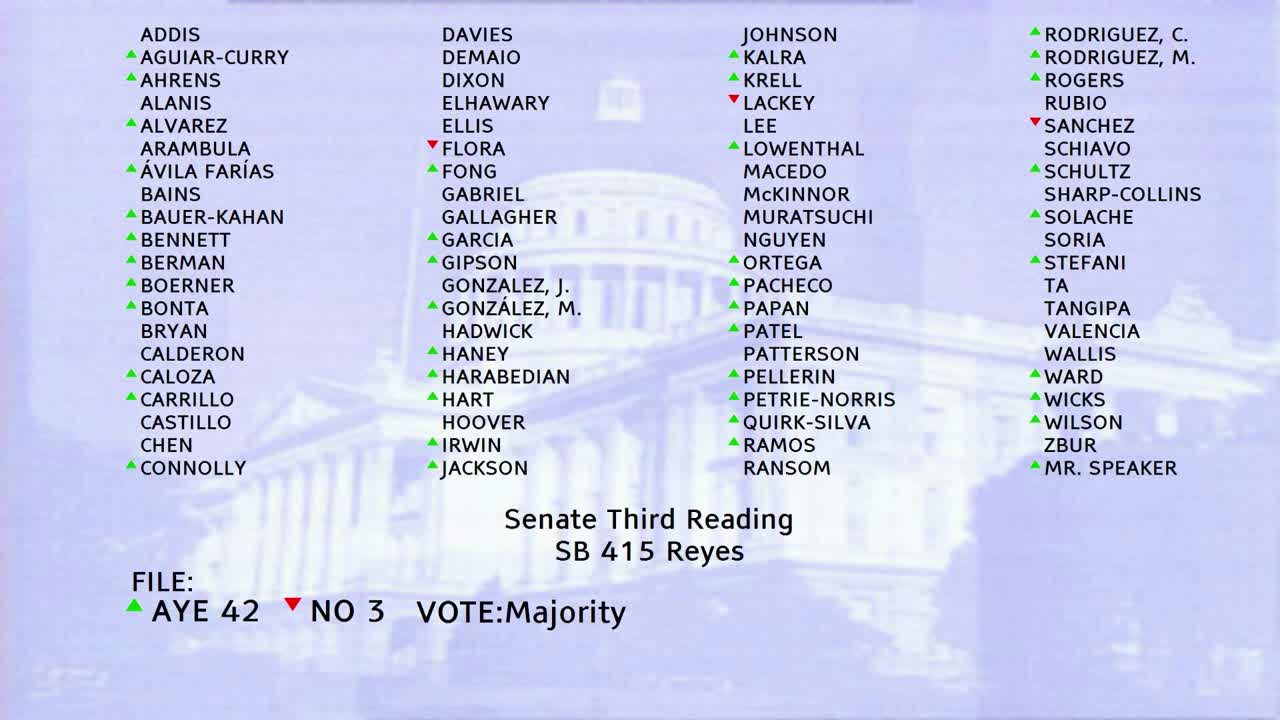 1MIN
Assembly Floor
 2MIN
Senate Floor
 25MIN
Assembly Standing Committee on Judiciary
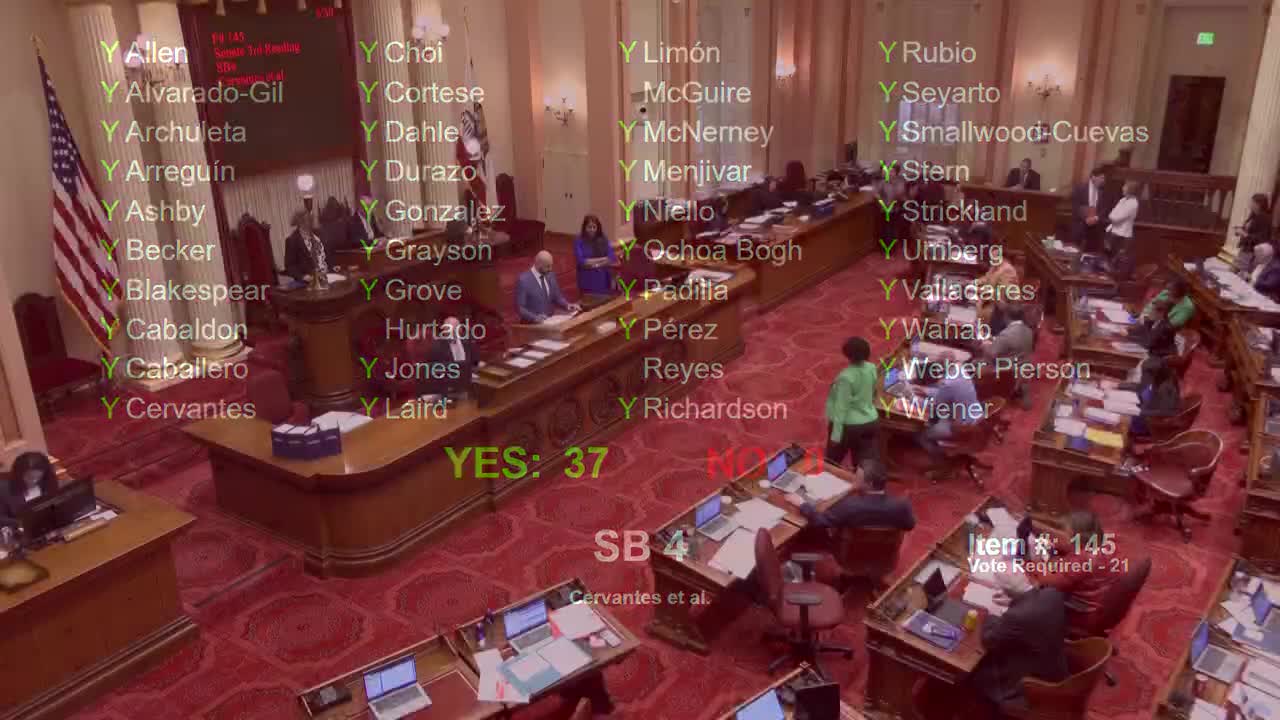 3MIN
Senate Floor
 36SEC
Senate Standing Committee on Appropriations
 14MIN
Senate Standing Committee on Judiciary
Bill Author