SB 616: Community Hardening Commission: wildfire mitigation program.
- Session Year: 2025-2026
- House: Senate
- Latest Version Date: 2025-09-18
Current Status:
Failed
(2026-03-02: Stricken from file.)
Introduced
In Committee
Awaiting First Chamber Vote
Passed First Chamber
In Committee
Awaiting Second Chamber Vote
Passed Second Chamber
Enacted
(1)Existing law requires the Office of Emergency Services to enter into a joint powers agreement, as specified, with the Department of Forestry and Fire Protection to develop and administer a comprehensive wildfire mitigation program, known as the California wildfire mitigation financial assistance program, that, among other things, encourages cost-effective structure hardening and retrofitting that creates fire-resistant homes, businesses, and public buildings.
This bill would require the joint powers authority to consider revising the wildfire mitigation program in accordance with prescribed community hardening standards and guidelines developed pursuant to the bills provisions, as specified below.
(2)Existing law establishes the Department of Insurance, headed by the Insurance Commissioner, which regulates insurers and insurance practices. Existing law generally regulates classes of insurance, including fire insurance.
This bill would establish the Community Hardening Commission as an independent unit within the Department of Insurance, to be composed of specified members, including, among others, the Insurance Commissioner and the State Fire Marshal or their designee. The bill would require the Insurance Commissioner to be the chair of the commission. The bill would also require the commission to be advised by an advisory council consisting of specified members, including, among others, a local representative on behalf of a city or county, or association representing cities and counties, and a representative of the California Fire Chiefs Association. By imposing additional duties on local representatives of a city or county, this bill would impose a state-mandated local program.
This bill would also require the Insurance Commissioner, beginning January 1, 2026, and at least quarterly thereafter, to convene the commission to perform specified duties, including developing new wildfire community hardening standards to reduce fire risk and improve access to fire insurance. The bill would require the commission to make certain recommendations to the Insurance Commissioner, the Office of Emergency Services, and the Department of Forestry and Fire Protection in accordance with specified standards. The bill would require the commission to consult with specified stakeholders, including those from public safety districts and the insurance industry, in performing the duties described above.
The bill would require the commission, on or before July 1, 2027, to complete the new standards described above and submit a report to the Legislature on additional actions needed to support cities, counties, and members of those communities in home hardening and wildfire mitigation. The bill would also require the commission to periodically review and update those standards, as specified. The bill would further authorize the commission to take various other related actions, including entering into confidential data sharing agreements and coordinating with the relevant legislative committees to secure documentation or specified information.
This bill would also require the Department of Insurance, on or before July 1, 2027, in consultation with the Department of Forestry and Fire Protection, the Office of Emergency Services, and the commission, to develop guidelines for state and local agencies to aggregate and make available data related to wildfire risk for purposes of a data sharing platform.
(3)Existing constitutional provisions require that a statute that limits the right of access to the meetings of public bodies or the writings of public officials and agencies be adopted with findings demonstrating the interest protected by the limitation and the need for protecting that interest.
This bill would make legislative findings to that effect.
(4)The California Constitution requires the state to reimburse local agencies and school districts for certain costs mandated by the state. Statutory provisions establish procedures for making that reimbursement.
This bill would provide that, if the Commission on State Mandates determines that the bill contains costs mandated by the state, reimbursement for those costs shall be made pursuant to the statutory provisions noted above.
(1)Existing law requires the Office of Emergency Services to enter into a joint powers agreement, as specified, with the Department of Forestry and Fire Protection to develop and administer a comprehensive wildfire mitigation program, known as the California wildfire mitigation financial assistance program, that, among other things, encourages cost-effective structure hardening and retrofitting that creates fire-resistant homes, businesses, and public buildings.
This bill would require the joint powers authority to revise consider revising the wildfire mitigation program in accordance with prescribed community hardening standards and guidelines developed pursuant to the bills provisions, as specified below.
(2)Existing law establishes the Department of Insurance, headed by the Insurance Commissioner, which regulates insurers and insurance practices. Existing law generally regulates classes of insurance, including fire insurance.
This bill would establish the Community Hardening Commission as an independent unit within the Department of Insurance, to be composed of specified members, including, among others, the Insurance Commissioner and the State Fire Marshal or their designee. The bill would require the Insurance Commissioner to be the chair of the commission. The bill would also require the commission to be advised by an advisory council consisting of specified members, including, among others, a local representative on behalf of a city or county, or association representing cities and counties, and a representative of the California Fire Chiefs Association. By imposing additional duties on local representatives of a city or county, this bill would impose a state-mandated local program.
This bill would also require the Insurance Commissioner, beginning January 1, 2026, and at least quarterly thereafter, to convene the commission to perform specified duties, including developing new wildfire community hardening standards to reduce fire risk and improve access to fire insurance. The bill would require the commission to make certain recommendations to the Insurance Commissioner, the Office of Emergency Services, and the Department of Forestry and Fire Protection in accordance with specified standards. The bill would require the commission to consult with specified stakeholders, including those from public safety districts and the insurance industry, in performing the duties described above.
The bill would require the commission, on or before July 1, 2027, to complete the new standards described above and submit a report to the Legislature on additional actions needed to support cities, counties, and members of those communities in home hardening and wildfire mitigation. The bill would also require the commission to periodically review and update those standards, as specified. The bill would further authorize the commission to take various other related actions, including entering into confidential data sharing agreements and coordinating with the relevant legislative committees to secure documentation or specified information.
This bill would also require the Department of Insurance, on or before July 1, 2027, in consultation with the Department of Forestry and Fire Protection, the Office of Emergency Services, and the commission, to develop guidelines for state and local agencies to aggregate and make available data related to wildfire risk for purposes of a data sharing platform.
(3)Existing constitutional provisions require that a statute that limits the right of access to the meetings of public bodies or the writings of public officials and agencies be adopted with findings demonstrating the interest protected by the limitation and the need for protecting that interest.
This bill would make legislative findings to that effect.
(4)The California Constitution requires the state to reimburse local agencies and school districts for certain costs mandated by the state. Statutory provisions establish procedures for making that reimbursement.
This bill would provide that, if the Commission on State Mandates determines that the bill contains costs mandated by the state, reimbursement for those costs shall be made pursuant to the statutory provisions noted above.
(1)Existing law requires the Office of Emergency Services to enter into a joint powers agreement, as specified, with the Department of Forestry and Fire Protection to develop and administer a comprehensive wildfire mitigation program, known as the California wildfire mitigation financial assistance program, that, among other things, encourages cost-effective structure hardening and retrofitting that creates fire-resistant homes, businesses, and public buildings.
This bill would require the joint powers authority to revise the wildfire mitigation program in accordance with prescribed community hardening standards and guidelines developed pursuant to the bills provisions, as specified below.
(2)Existing law establishes the Department of Insurance, headed by the Insurance Commissioner, which regulates insurers and insurance practices. Existing law generally regulates classes of insurance, including fire insurance.
This bill would establish the Community Hardening Commission as an independent unit within the Department of Insurance, to be composed of specified members, including, among others, the Insurance Commissioner and the State Fire Marshal or Secretary of the Natural Resources Agency, or their designee. The bill would require the Insurance Commissioner to be the chair of the commission. The bill would also require the commission to be advised by an advisory council consisting of specified members, including, among others, a local representative on behalf of a city or county, or association representing cities and counties, and a local representative on behalf of fire chiefs, as specified. representative of the California Fire Chiefs Association. By imposing additional duties on local representatives of a city or county, this bill would impose a state-mandated local program.
This bill would also require the Insurance Commissioner, beginning January 1, 2026, and at least quarterly thereafter, to convene the commission to perform specified duties, including developing new wildfire community hardening standards to reduce fire risk and improve access to fire insurance. The bill would require the commission to make certain recommendations to the Insurance Commissioner, the Office of Emergency Services, and the Department of Forestry and Fire Protection in accordance with specified standards. The bill would require the commission to consult with specified stakeholders, including those from public safety districts and the insurance industry, in performing the duties described above.
The bill would require the commission, on or before July 1, 2027, to complete the new standards described above and submit a report to the Legislature on additional actions needed to support cities, counties, and members of those communities in home hardening and wildfire mitigation. The bill would also require the commission to periodically review and update those standards, as specified. The bill would further authorize the commission to take various other related actions, including entering into confidential data sharing agreements and issuing subpoenas. coordinating with the relevant legislative committees to secure documentation or specified information.
This bill would also require the Department of Insurance, on or before July 1, 2027, in consultation with the commission, to develop guidelines for state and local agencies to aggregate and make available data related to wildfire risk for purposes of a data sharing platform.
(3)Existing constitutional provisions require that a statute that limits the right of access to the meetings of public bodies or the writings of public officials and agencies be adopted with findings demonstrating the interest protected by the limitation and the need for protecting that interest.
This bill would make legislative findings to that effect.
(4)The California Constitution requires the state to reimburse local agencies and school districts for certain costs mandated by the state. Statutory provisions establish procedures for making that reimbursement.
This bill would provide that, if the Commission on State Mandates determines that the bill contains costs mandated by the state, reimbursement for those costs shall be made pursuant to the statutory provisions noted above.
(1)Existing law requires the Office of Emergency Services to enter into a joint powers agreement, as specified, with the Department of Forestry and Fire Protection to develop and administer a comprehensive wildfire mitigation program, known as the California wildfire mitigation financial assistance program, that, among other things, encourages cost-effective structure hardening and retrofitting that creates fire-resistant homes, businesses, and public buildings.
This bill would require the joint powers authority to revise the wildfire mitigation program in accordance with prescribed community hardening standards and guidelines developed pursuant to the bills provisions, as specified below.
(2)Existing law establishes the Department of Insurance, headed by the Insurance Commissioner, which regulates insurers and insurance practices. Existing law generally regulates classes of insurance, including fire insurance.
This bill would establish the Community Hardening Commission as an independent unit within the Department of Insurance, to be composed of specified members, including, among others, the Insurance Commissioner and the State Fire Marshal or Secretary of the Natural Resources Agency, or their designee. The bill would require the Insurance Commissioner to be the chair of the commission. The bill would also require the commission to be advised by an advisory council consisting of specified members, including, among others, a local representative on behalf of a city or county, or association representing cities and counties, and a local representative on behalf of fire chiefs, as specified. By imposing additional duties on local representatives of a city or county, this bill would impose a state-mandated local program.
This bill would also require the Insurance Commissioner, beginning January 1, 2026, and at least quarterly thereafter, to convene the commission to perform specified duties, including developing new wildfire community hardening standards to reduce fire risk and improve access to fire insurance. The bill would require the commission to make certain recommendations to the Insurance Commissioner, the Office of Emergency Services, and the Department of Forestry and Fire Protection in accordance with specified standards. The bill would require the commission to consult with specified stakeholders, including those from public safety districts and the insurance industry, in performing the duties described above.
The bill would require the commission, on or before July 1, 2027, to complete the new standards described above and submit a report to the Legislature on additional actions needed to support cities, counties, and members of those communities in home hardening and wildfire mitigation. The bill would also require the commission to periodically review and update those standards, as specified. The bill would further authorize the commission to take various other related actions, including entering into confidential data sharing agreements and issuing subpoenas.
This bill would also require the Department of Insurance, on or before July 1, 2027, in consultation with the commission, to develop guidelines for state and local agencies to aggregate and make available data related to wildfire risk for purposes of a data sharing platform.
(3)Existing constitutional provisions require that a statute that limits the right of access to the meetings of public bodies or the writings of public officials and agencies be adopted with findings demonstrating the interest protected by the limitation and the need for protecting that interest.
This bill would make legislative findings to that effect.
(4)The California Constitution requires the state to reimburse local agencies and school districts for certain costs mandated by the state. Statutory provisions establish procedures for making that reimbursement.
This bill would provide that, if the Commission on State Mandates determines that the bill contains costs mandated by the state, reimbursement for those costs shall be made pursuant to the statutory provisions noted above.
(a)The joint powers authority shall consider revising the wildfire mitigation program in accordance with the community hardening standards and home hardening guidelines developed pursuant to subdivision (a) of Section 8899.82.
(b)Additional moneys to fund the wildfire mitigation program, in accordance with subdivision (a) of Section 8899.82, shall be subject to appropriation by the Legislature in the annual Budget Act or another statute.
SEC. 2.Chapter 16.5 (commencing with Section 8899.80) is added to Division 1 of Title 2 of the Government Code, to read:16.5.Community Hardening Commission8899.80.(a)There is created in the state government the Community Hardening Commission as an independent unit within the Department of Insurance.
(b)The commission exists as a separate unit within the Department of Insurance, and has the functions of prescribing policy, holding meetings and setting dates of the meetings, and holding hearings insofar as those powers are given by statute to the commission.
(c)The decisions and actions of the commission, with respect to exercising its authority and carrying out its duties under this chapter or any other applicable law, are not subject to review by the Insurance Commissioner, but are final within the limits provided by this chapter.
8899.81.(a)The commission shall consist of the following seven members:
(1)The Insurance Commissioner or their designee.
(2)The State Fire Marshal or their designee.
(3)The Director of Housing and Community Development or their designee.
(4)The Director of Emergency Services or their designee.
(5)The Director of the Office of Energy Infrastructure Safety or their designee.
(6)A member of the public appointed by the Speaker of the Assembly.
(7)A member of the public appointed by the Senate President pro Tempore.
(b)The Insurance Commissioner shall be the chair of the commission.
(c)The commission shall be advised by an advisory council, consisting of the following members:
(1)Three representatives from scientific research institutions with expertise in wildfire science, as appointed by the Insurance Commissioner.
(2)A representative on behalf of the insurance industry, as appointed by the Insurance Commissioner.
(3)A representative on behalf of the Insurance Institute for Business and Home Safety, as appointed by the Insurance Commissioner.
(4)A representative on behalf of consumers and policyholders, as appointed by the Insurance Commissioner.
(5)A local representative on behalf of a city or county, or association representing cities or counties, as appointed by the Insurance Commissioner.
(6)A representative on behalf of the business community, as appointed by the Insurance Commissioner.
(7)A representative of the California Building Industry Association, as appointed by the Insurance Commissioner.
(8)A representative of the California Fire Chiefs Association, as appointed by the Insurance Commissioner.
(9)A public member appointed by the Governor.
8899.82.(a)Beginning January 1, 2026, and at least quarterly thereafter, the Insurance Commissioner shall convene the commission to perform all of the following duties:
(1)Develop new wildfire community hardening standards to reduce fire risk and improve access to fire insurance that address all of the following:
(A)Guidelines and best practices for home hardening. The commission shall consult existing home hardening regulations adopted by the Insurance Commissioner, the Department of Forestry and Fire Protection (CAL FIRE), and the California wildfire mitigation financial assistance program described in Article 16.5 (commencing with Section 8654.2) of Chapter 7.
(B)Guidelines and best practices for community wildfire mitigation for cities, counties, and members of those communities, including, but not limited to, all of the following:
(i)Risk mitigation specific to water service reliability consistent with Section 53750.5, and risk mitigation specific to the delivery of electrical service.
(ii)Enhanced ingress and egress routes, mandating primary and secondary access roads, along with mandated public safety vehicle access.
(iii)Mandated funding mechanisms for defensible space maintenance, fire breaks, and vegetation management.
(iv)Risk mitigation specific to farm and agricultural land management.
(C)Means of reducing barriers for cities, counties, and members of those communities in home hardening and wildfire mitigation.
(2)Review existing home hardening regulations adopted by the Insurance Commissioner, CAL FIRE, and the California wildfire mitigation financial assistance program described in Article 16.5 (commencing with Section 8654.2) of Chapter 7, and provide recommendations to the Office of Emergency Services, CAL FIRE, and the Insurance Commissioner for changes to their regulations and programs to reduce fire risk and improve access to fire insurance, including outlining the most cost-effective strategies that will lower the risk for loss in a community in a useful manner insurers are able to reflect in underwriting.
(3)Make recommendations to expedite proven and cost-effective community hardening practices that reduce fire risk and improve insurability, including recommendations for reducing barriers for cities, counties, and members of those communities to invest in effective home hardening and wildfire mitigation strategies.
(4)Make recommendations to increase the pace and scale of forest health and landscape management projects with priority for mitigation near vulnerable communities.
(5)Oversee and facilitate state and local agency participation in a wildfire data sharing platform.
(b)The commission shall consult with stakeholders from public safety districts, including fire and police protection districts, water and electric utilities, the insurance industry, the building trades industry, planning associations, utilities, and cities and counties in performing the duties described in subdivision (a).
(c)The commission shall make recommendations to do both of the following:
(1)Promote alignment of programs, inspections, and regulations across state departments and agencies, including, but not limited to, the Insurance Commissioner, the Office of Emergency Services, and CAL FIRE in accordance with the standards developed in paragraph (1) of subdivision (a).
(2)(A)Revise the home inspection program developed by CAL FIRE to more directly align with the home hardening regulations adopted by the Insurance Commissioner, CAL FIRE, and the California wildfire mitigation financial assistance program described in Article 16.5 (commencing with Section 8654.2) of Chapter 7.
(B)CAL FIRE shall consider revising their program to align with these recommendations.
(d)The recommendations specified in subdivision (c) shall include both of the following:
(1)Proposed local and state funding mechanisms.
(2)Certification processes that property owners can use or access to demonstrate to an insurer that a home hardening action has been achieved to meet relevant home hardening regulations.
(e)(1)On or before July 1, 2027, the commission shall complete the new standards outlined in paragraph (1) of subdivision (a) and shall submit a report to the Legislature on additional actions needed to support cities, counties, and members of those communities in home hardening and wildfire mitigation described in paragraph (3) of subdivision (a). The commission shall periodically review and update the standards described in subdivision (a), incorporating the best available science, and findings informed by the wildfire risk data sharing platform specified in paragraph (4) of subdivision (a).
(2)A report to be submitted pursuant to this subdivision shall be submitted in compliance with Section 9795.
(3)Pursuant to Section 10231.5, this subdivision becomes inoperative on January 1, 2032.
(f)The commission shall identify specific wildfire catastrophe events, and for those events, the commission shall complete an after-action investigation and report. To prepare the report, the commission shall assemble relevant and standardized postdisaster data, analyze the effectiveness of the wildfire community hardening measures in place in impacted communities, and issue recommendations to update future wildfire community hardening standards developed by the commission.
(1)The chair of the commission may enter into data sharing agreements, including confidential data sharing agreements with commission and advisory group members, as well as relevant catastrophe modelers, actuaries, research organizations, federal agencies, and state and local agencies as necessary, to assemble, evaluate, and standardize the information needed for analysis.
(2)The after-action report shall include recommendations on improved and standardized collection of future predisaster and postdisaster data to inform comprehensive recommendations for reducing the severity of future events.
(3)The after-action report shall include a review of the lessons learned regarding the performance of mitigation strategies, including, but not limited to, the standards developed in paragraph (1) of subdivision (a), mitigation actions in existing regulations by the Insurance Commissioner, and risk mitigation at landscape scales, such as forest and watershed management.
(4)The commission may coordinate with the relevant legislative committees to secure documentation or specific information to assemble relevant postdisaster data where it applies to future home and community standards aligned with paragraph (1) of subdivision (a).
(g)For any standard, recommendation, or requirement in this section that is intended to be a regulation and would be a building standard as defined by Section 18909 of the Health and Safety Code, the commission shall propose the recommendation to CAL FIRE for consideration in CAL FIRES recommendations to the California Building Standards Commission pursuant to the provisions of Chapter 4 (commencing with Section 18935) of Part 2.5 of Division 13 of the Health and Safety Code.
8899.83.(a)On or before July 1, 2027, the Department of Insurance, in consultation with the Department of Forestry and Fire Protection, the Office of Emergency Services, and the commission established pursuant to Section 8899.80, shall develop guidelines for state and local agencies to aggregate and make available data related to parcel-, neighborhood-, and community-level wildfire risk for the purpose of enabling a wildfire data sharing platform. The purpose of this wildfire data sharing platform is to accurately measure, monitor, and enable targeted mitigation of wildfire risk in wildland-urban interface communities.
(b)In developing guidelines for participation in a wildfire data sharing platform, the department shall consider all of the following:
(1)Data collection standards and data specifications.
(2)Data synthesis and aggregation standards that allow progression of mitigation efforts to be tracked over time and available for reporting at appropriate levels.
(3)Data access standards for state and local agencies and homeowners.
(4)Verification measures to ensure data integrity.
(5)Consumer protection and appropriate equity and privacy measures.
(6)Geographic and topographic diversity.
(c)(1)On or before July 1, 2027, and on or before January 1 thereafter through January 1, 2032, the commission shall report to the Legislature its assessment of any statutory changes or budgetary resources needed to facilitate the optimal participation of state and local agencies in a wildfire data sharing platform.
(2)A report submitted pursuant to this subdivision shall be submitted in compliance with Section 9795.
(d)The commission shall appoint from within its membership a governing board to provide oversight of state and local agency participation in a wildfire data sharing platform.
(e)This chapter does not prohibit a state or local agency from participating in a public-private partnership to establish a wildfire data sharing platform before the completion of guidelines developed by the department.
(f)The department may enter into data sharing agreements with participating insurers, modelers, actuaries, and state and local agencies as necessary to enable a wildfire data sharing platform, subject to the oversight of the commission.
(g)This chapter shall not be construed to require participation of a person or entity in a wildfire data sharing platform. A person or policyholder subject to the data collection efforts initiated under the wildfire data sharing platform may opt out in writing by notifying the department.
SEC. 3.The Legislature finds and declares that Section 2 of this act, which adds Section 8899.82 to the Government Code, imposes a limitation on the publics right of access to the meetings of public bodies or the writings of public officials and agencies within the meaning of Section 3 of Article I of the California Constitution. Pursuant to that constitutional provision, the Legislature makes the following findings to demonstrate the interest protected by this limitation and the need for protecting that interest:
In order to protect the privacy of California residents while also gathering useful data related to wildfire mitigation, it is necessary to allow the Community Hardening Commission to enter into confidential data sharing agreements for purposes of reviewing information to help protect the public from wildfires.
SEC. 4.If the Commission on State Mandates determines that this act contains costs mandated by the state, reimbursement to local agencies and school districts for those costs shall be made pursuant to Part 7 (commencing with Section 17500) of Division 4 of Title 2 of the Government Code.
(a)The joint powers authority shall revise consider revising the wildfire mitigation program in accordance with the community hardening standards and home hardening guidelines developed pursuant to subdivision (a) of Section 8899.82.
(b)Additional moneys to fund the wildfire mitigation program, in accordance with subdivision (a) of Section 8899.82, shall be subject to appropriation by the Legislature in the annual Budget Act or another statute.
SEC. 2.Chapter 16.5 (commencing with Section 8899.80) is added to Division 1 of Title 2 of the Government Code, to read:16.5.Community Hardening Commission8899.80.(a)There is created in the state government the Community Hardening Commission as an independent unit within the Department of Insurance.
(b)The commission exists as a separate unit within the Department of Insurance, and has the functions of prescribing policy, holding meetings and setting dates of the meetings, and holding hearings insofar as those powers are given by statute to the commission.
(c)The decisions and actions of the commission, with respect to exercising its authority and carrying out its duties under this chapter or any other applicable law, are not subject to review by the Insurance Commissioner, but are final within the limits provided by this chapter.
8899.81.(a)The commission shall consist of the following seven members:
(1)The Insurance Commissioner or their designee.
(2)The State Fire Marshal or their designee.
(3)The Director of Housing and Community Development or their designee.
(4)The Director of the Office of Emergency Services or their designee.
(5)The Director of the Office of Energy Infrastructure Safety or their designee.
(6)A member of the legislative body public appointed by the Speaker of the Assembly.
(7)A member of the legislative body public appointed by the Senate President pro Tempore.
(b)The Insurance Commissioner shall be the chair of the commission.
(c)The commission shall be advised by an advisory council, consisting of the following members:
(1)Three representatives from scientific research institutions with expertise in wildfire science, as appointed by the Insurance Commissioner.
(2)A representative on behalf of the insurance industry, as appointed by the Insurance Commissioner.
(3)A representative on behalf of the Insurance Institute for Business and Home Safety, as appointed by the Insurance Commissioner.
(4)A representative on behalf of consumers and policyholders, as appointed by the Insurance Commissioner.
(5)A local representative on behalf of a city or county, or association representing cities or counties, as appointed by the Insurance Commissioner.
(6)A representative on behalf of the business community, as appointed by the Insurance Commissioner.
(7)A representative of the California Building Industry Association, as appointed by the Insurance Commissioner.
(8)A representative of the California Fire Chiefs Association, as appointed by the Insurance Commissioner.
(9)A public member appointed by the Governor.
8899.82.(a)Beginning January 1, 2026, and at least quarterly thereafter, the Insurance Commissioner shall convene the commission to perform all of the following duties:
(1)Develop new wildfire community hardening standards to reduce fire risk and improve access to fire insurance that address all of the following:
(A)Guidelines and best practices for home hardening. The commission shall consult existing home hardening regulations adopted by the Insurance Commissioner, the Department of Forestry and Fire Protection (CAL FIRE), and the California wildfire mitigation financial assistance program described in Article 16.5 (commencing with Section 8654.2) of Chapter 7.
(B)Guidelines and best practices for community wildfire mitigation for cities, counties, and members of those communities, including, but not limited to, all of the following:
(i)Infrastructure improvements for water and electrical supply to support fire suppression efforts and disaster recovery. Risk mitigation specific to water service reliability consistent with Section 53750.5, and risk mitigation specific to the delivery of electrical service.
(ii)Enhanced ingress and egress routes, mandating primary and secondary access roads, along with mandated public safety vehicle access.
(iii)Mandated funding mechanisms for defensible space maintenance, fire breaks, and vegetation management.
(iv)Risk mitigation specific to farm and agricultural land management.
(C)Means of reducing barriers for cities, counties, and members of those communities in home hardening and wildfire mitigation.
(2)Review existing home hardening regulations adopted by the Insurance Commissioner, CAL FIRE, and the California wildfire mitigation financial assistance program described in Article 16.5 (commencing with Section 8654.2) of Chapter 7, and provide recommendations to the Office of Emergency Services, CAL FIRE, and the Insurance Commissioner for changes to their regulations and programs to reduce fire risk and improve access to fire insurance, including outlining the most cost-effective strategies that will lower the risk for loss in a community in a useful manner insurers are able to reflect in underwriting.
(3)Make recommendations to expedite proven and cost-effective community hardening practices that reduce fire risk and improve insurability, including recommendations for reducing barriers for cities, counties, and members of those communities to invest in effective home hardening and wildfire mitigation strategies.
(4)Make recommendations to increase the pace and scale of forest health and landscape management projects with priority for mitigation near vulnerable communities.
(5)Oversee and facilitate state and local agency participation in a wildfire data sharing platform.
(b)The commission shall consult with stakeholders from public safety districts, including fire and police protection districts, water and electric utilities, the insurance industry, the building trades industry, planning associations, utilities, and cities and counties in performing the duties described in subdivision (a).
(c)The commission shall make recommendations to do both of the following:
(1)Promote alignment of programs, inspections, and regulations across state departments and agencies, including, but not limited to, the Insurance Commissioner, the Office of Emergency Services, and CAL FIRE in accordance with the standards developed in paragraph (1) of subdivision (a).
(2)(A)Revise the home inspection program developed by CAL FIRE to more directly align with the home hardening regulations adopted by the Insurance Commissioner, CAL FIRE, and the California wildfire mitigation financial assistance program described in Article 16.5 (commencing with Section 8654.2) of Chapter 7.
(B)CAL FIRE shall revise consider revising their program to align with these recommendations.
(d)The recommendations specified in subdivision (c) shall include both of the following:
(1)Proposed local and state funding mechanisms.
(2)Certification processes that property owners can use or access to demonstrate to an insurer that a home hardening action has been achieved to meet relevant home hardening regulations.
(e)(1)On or before July 1, 2027, the commission shall complete the new standards outlined in paragraph (1) of subdivision (a) and shall submit a report to the Legislature on additional actions needed to support cities, counties, and members of those communities in home hardening and wildfire mitigation described in paragraph (3) of subdivision (a). The commission shall periodically review and update the standards described in subdivision (a), incorporating the best available science, and findings informed by the wildfire risk data sharing platform specified in paragraph (4) of subdivision (a).
(2)A report to be submitted pursuant to this subdivision shall be submitted in compliance with Section 9795.
(3)Pursuant to Section 10231.5, this subdivision becomes inoperative on January 1, 2032.
(f)The commission shall identify specific wildfire catastrophe events, and for those events, the commission shall complete an after-action investigation and report. To prepare the report, the commission shall assemble relevant and standardized postdisaster data, analyze the effectiveness of the wildfire community hardening measures in place in impacted communities, and issue recommendations to update future wildfire community hardening standards developed by the commission.
(1)The chair of the commission may enter into data sharing agreements, including confidential data sharing agreements with commission and advisory group members, as well as relevant catastrophe modelers, actuaries, research organizations, federal agencies, and state and local agencies as necessary, to assemble, evaluate, and standardize the information needed for analysis.
(2)The after-action report shall include recommendations on improved and standardized collection of future predisaster and postdisaster data to inform comprehensive recommendations for reducing the severity of future events.
(3)The after-action report shall include a review of the lessons learned regarding the performance of mitigation strategies, including, but not limited to, the standards developed in paragraph (1) of subdivision (a), mitigation actions in existing regulations by the Insurance Commissioner, and risk mitigation at landscape scales, such as forest and watershed management.
(4)The commission may coordinate with the relevant legislative committees to secure documentation or specific information to assemble relevant postdisaster data where it applies to future home and community standards aligned with paragraph (1) of subdivision (a).
(g)For any standard, recommendation, or requirement in this section that is intended to be a regulation and would be a building standard as defined by Section 18909 of the Health and Safety Code, the commission shall propose that standard, recommendation, or requirement the recommendation to CAL FIRE for consideration in CAL FIRES recommendations to the California Building Standards Commission pursuant to the provisions of Chapter 4 (commencing with Section 18935) of Part 2.5 of Division 13 of the Health and Safety Code in order for the regulation to be effective. Code.
8899.83.(a)On or before July 1, 2027, the Department of Insurance, in consultation with the Department of Forestry and Fire Protection, the Office of Emergency Services, and the commission established pursuant to Section 8899.80, shall develop guidelines for state and local agencies to aggregate and make available data related to parcel-, neighborhood-, and community-level wildfire risk for the purpose of enabling a wildfire data sharing platform. The purpose of this wildfire data sharing platform is to accurately measure, monitor, and enable targeted mitigation of wildfire risk in wildland-urban interface communities.
(b)In developing guidelines for participation in a wildfire data sharing platform, the department shall consider all of the following:
(1)Data collection standards and data specifications.
(2)Data synthesis and aggregation standards that allow progression of mitigation efforts to be tracked over time and available for reporting at appropriate levels.
(3)Data access standards for state and local agencies and homeowners.
(4)Verification measures to ensure data integrity.
(5)Consumer protection and appropriate equity and privacy measures.
(6)Geographic and topographic diversity.
(c)(1)On or before July 1, 2027, and on or before January 1 thereafter through January 1, 2032, the commission shall report to the Legislature its assessment of any statutory changes or budgetary resources needed to facilitate the optimal participation of state and local agencies in a wildfire data sharing platform.
(2)A report submitted pursuant to this subdivision shall be submitted in compliance with Section 9795.
(d)The commission shall appoint from within its membership a governing board to provide oversight of state and local agency participation in a wildfire data sharing platform.
(e)This chapter does not prohibit a state or local agency from participating in a public-private partnership to establish a wildfire data sharing platform before the completion of guidelines developed by the department.
(f)The department may enter into data sharing agreements with participating insurers, modelers, actuaries, and state and local agencies as necessary to enable a wildfire data sharing platform, subject to the oversight of the commission.
(g)This chapter shall not be construed to require participation of a person or entity in a wildfire data sharing platform. A person or policyholder subject to the data collection efforts initiated under the wildfire data sharing platform may opt out in writing by notifying the department.
SEC. 3.The Legislature finds and declares that Section 2 of this act, which adds Section 8899.82 to the Government Code, imposes a limitation on the publics right of access to the meetings of public bodies or the writings of public officials and agencies within the meaning of Section 3 of Article I of the California Constitution. Pursuant to that constitutional provision, the Legislature makes the following findings to demonstrate the interest protected by this limitation and the need for protecting that interest:
In order to protect the privacy of California residents while also gathering useful data related to wildfire mitigation, it is necessary to allow the Community Hardening Commission to enter into confidential data sharing agreements for purposes of reviewing information to help protect the public from wildfires.
SEC. 4.If the Commission on State Mandates determines that this act contains costs mandated by the state, reimbursement to local agencies and school districts for those costs shall be made pursuant to Part 7 (commencing with Section 17500) of Division 4 of Title 2 of the Government Code.
(a)The joint powers authority shall revise the wildfire mitigation program in accordance with the community hardening standards and home hardening guidelines developed pursuant to subdivision (a) of Section 8899.82.
(b)Additional moneys to fund the wildfire mitigation program, in accordance with subdivision (a) of Section 8899.82, shall be subject to appropriation by the Legislature in the annual Budget Act or another statute.
SEC. 2.Chapter 16.5 (commencing with Section 8899.80) is added to Division 1 of Title 2 of the Government Code, to read:16.5.Community Hardening Commission8899.80.(a)There is created in the state government the Community Hardening Commission as an independent unit within the Department of Insurance.
(b)The commission exists as a separate unit within the Department of Insurance, and has the functions of prescribing policy, holding meetings and setting dates of the meetings, and holding hearings insofar as those powers are given by statute to the commission.
(c)The decisions and actions of the commission, with respect to exercising its authority and carrying out its duties under this chapter or any other applicable law, are not subject to review by the Insurance Commissioner, but are final within the limits provided by this chapter.
8899.81.(a)The commission shall consist of the following seven members:
(1)The Insurance Commissioner or their designee.
(2)The State Fire Marshal or Secretary of the Natural Resources Agency, or their designee.
(3)The Director of Housing and Community Development or their designee.
(4)The Director of the Office of Emergency Services or their designee.
(5)The Director of the Office of Energy Infrastructure Safety or their designee.
(6)A member of the legislative body appointed by the Speaker of the Assembly.
(7)A member of the legislative body appointed by the Senate President pro Tempore.
(b)The Insurance Commissioner shall be the chair of the commission.
(c)The commission shall be advised by an advisory council, consisting of the following members:
(1)Three representatives from scientific research institutions with expertise in wildfire science, as appointed by the Insurance Commissioner.
(2)A representative on behalf of the insurance industry, as appointed by the Insurance Commissioner.
(3)A representative on behalf of the Insurance Institute for Business and Home Safety, as appointed by the Insurance Commissioner.
(4)A representative on behalf of consumers and policyholders, as appointed by the Insurance Commissioner.
(5)A local representative on behalf of a city or county, or association representing cities or counties, as appointed by the Insurance Commissioner.
(6)A representative on behalf of the business community, as appointed by the Insurance Commissioner.
(7)A local representative on behalf of fire chiefs representing cities or counties, as appointed by the Insurance Commissioner.(7)A representative of the California Building Industry Association, as appointed by the Insurance Commissioner.
(8)A representative of the California Fire Chiefs Association, as appointed by the Insurance Commissioner.
(8)(9)A public member appointed by the Governor.
8899.82.(a)Beginning January 1, 2026, and at least quarterly thereafter, the Insurance Commissioner shall convene the commission to perform all of the following duties:
(1)Develop new wildfire community hardening standards to reduce fire risk and improve access to fire insurance that address all of the following:
(A)Guidelines and best practices for home hardening. The commission shall consult existing home hardening regulations adopted by the Insurance Commissioner, the Department of Forestry and Fire Protection (CAL FIRE), and the California wildfire mitigation financial assistance program described in Article 16.5 (commencing with Section 8654.2) of Chapter 7.
(B)Community Guidelines and best practices for community wildfire mitigation for cities, counties, and members of those communities, including, but not limited to, all of the following:
(i)Infrastructure improvements for water and electrical supply to support fire suppression efforts and disaster recovery.
(ii)Enhanced ingress and egress routes, mandating primary and secondary access roads, along with mandated public safety vehicle access.
(iii)Mandated funding mechanisms for defensible space maintenance, fire breaks, and vegetation management.
(iv)Risk mitigation specific to farm and agricultural land management.
(C)Means of reducing barriers for cities, counties, and members of those communities in home hardening and wildfire mitigation.
(2)Review existing home hardening regulations adopted by the Insurance Commissioner, CAL FIRE, and the California wildfire mitigation financial assistance program described in Article 16.5 (commencing with Section 8654.2) of Chapter 7, and provide recommendations to the Office of Emergency Services, CAL FIRE, and the Insurance Commissioner for changes to their regulations and programs to reduce fire risk and improve access to fire insurance, including outlining the most cost-effective strategies that will lower the risk for loss in a community in a useful manner insurers are able to reflect in underwriting.
(3)Make recommendations to expedite proven and cost-effective community hardening practices that reduce fire risk and improve insurability, including recommendations for reducing barriers for cities, counties, and members of those communities to invest in effective home hardening and wildfire mitigation strategies.
(4)Make recommendations to increase the pace and scale of forest health and landscape management projects with priority for mitigation near vulnerable communities.
(5)Oversee and facilitate state and local agency participation in a wildfire data sharing platform.
(b)The commission shall consult with stakeholders from public safety districts, including fire and police protection districts, the insurance industry, the building trades industry, planning associations, utilities, and cities and counties in performing the duties described in subdivision (a).
(c)The commission shall make recommendations to do both of the following:
(1)Promote alignment of programs, inspections, and regulations across state departments and agencies, including, but not limited to, the Insurance Commissioner, the Office of Emergency Services, and CAL FIRE in accordance with the standards developed in paragraph (1) of subdivision (a).
(2)(A)Revise the home inspection program developed by CAL FIRE to more directly align with the home hardening regulations adopted by the Insurance Commissioner, CAL FIRE, and the California wildfire mitigation financial assistance program described in Article 16.5 (commencing with Section 8654.2) of Chapter 7.
(B)CAL FIRE shall revise their program to align with these recommendations.
(d)The recommendations specified in subdivision (c) shall include both of the following:
(1)Proposed local and state funding mechanisms.
(2)Certification processes that property owners can use or access to demonstrate to an insurer that a home hardening action has been achieved to meet relevant home hardening regulations.
(e)(1)On or before July 1, 2027, the commission shall complete the new standards outlined in paragraph (1) of subdivision (a) and shall submit a report to the Legislature on additional actions needed to support cities, counties, and members of those communities in home hardening and wildfire mitigation described in paragraph (3) of subdivision (a). The commission shall periodically review and update the standards described in subdivision (a), incorporating the best available science, and findings informed by the wildfire risk data sharing platform specified in paragraph (4) of subdivision (a).
(2)A report to be submitted pursuant to this subdivision shall be submitted in compliance with Section 9795.
(3)Pursuant to Section 10231.5, this subdivision becomes inoperative on January 1, 2032.
(f)The commission shall identify specific wildfire catastrophe events, and for those events, the commission shall complete an after-action investigation and report. To prepare the report, the commission shall assemble relevant and standardized postdisaster data, analyze the effectiveness of the wildfire community hardening measures in place in impacted communities, and issue recommendations to update future wildfire community hardening standards developed by the commission.
(1)The chair of the commission may enter into data sharing agreements, including confidential data sharing agreements with commission and advisory group members, as well as relevant catastrophe modelers, actuaries, research organizations, federal agencies, and state and local agencies as necessary, to assemble, evaluate, and standardize the information needed for analysis.
(2)The after-action report shall include recommendations on improved and standardized collection of future predisaster and postdisaster data to inform comprehensive recommendations for reducing the severity of future events.
(3)The after-action report shall include a review of the lessons learned regarding the performance of mitigation strategies, including, but not limited to, the standards developed in paragraph (1) of subdivision (a), mitigation actions in existing regulations by the Insurance Commissioner, and risk mitigation at landscape scales, such as forest and watershed management.
(4)The commission may issue subpoenas for the production of coordinate with the relevant legislative committees to secure documentation or specific information to assemble relevant postdisaster data where it applies to future home and community standards aligned with paragraph (1) of subdivision (a).
(g)For any standard, recommendation, or requirement in this section that is intended to be a regulation and would be a building standard as defined by Section 18909 of the Health and Safety Code, the commission shall propose that standard, recommendation, or requirement to the California Building Standards Commission pursuant to the provisions of Chapter 4 (commencing with Section 18935) of Part 2.5 of Division 13 of the Health and Safety Code in order for the regulation to be effective.
8899.83.(a)On or before July 1, 2027, the Department of Insurance, in consultation with the commission established pursuant to Section 8899.80, shall develop guidelines for state and local agencies to aggregate and make available data related to parcel-, neighborhood-, and community-level wildfire risk for the purpose of enabling a wildfire data sharing platform. The purpose of this wildfire data sharing platform is to accurately measure, monitor, and enable targeted mitigation of wildfire risk in wildland-urban interface communities.
(b)In developing guidelines for participation in a wildfire data sharing platform, the department shall consider all of the following:
(1)Data collection standards and data specifications.
(2)Data synthesis and aggregation standards that allow progression of mitigation efforts to be tracked over time and available for reporting at appropriate levels.
(3)Data access standards for state and local agencies and homeowners.
(4)Verification measures to ensure data integrity.
(5)Consumer protection and appropriate equity and privacy measures.
(6)Geographic and topographic diversity.
(c)(1)On or before July 1, 2027, and on or before January 1 thereafter through January 1, 2032, the commission shall report to the Legislature its assessment of any statutory changes or budgetary resources needed to facilitate the optimal participation of state and local agencies in a wildfire data sharing platform.
(2)A report submitted pursuant to this subdivision shall be submitted in compliance with Section 9795.
(d)The commission shall appoint from within its membership a governing board to provide oversight of state and local agency participation in a wildfire data sharing platform.
(e)This chapter does not prohibit a state or local agency from participating in a public-private partnership to establish a wildfire data sharing platform before the completion of guidelines developed by the department.
(f)The department may enter into data sharing agreements with participating insurers, modelers, actuaries, and state and local agencies as necessary to enable a wildfire data sharing platform, subject to the oversight of the commission.
(g)This chapter shall not be construed to require participation of a person or entity in a wildfire data sharing platform. A person or policyholder subject to the data collection efforts initiated under the wildfire data sharing platform may opt out in writing by notifying the department.
SEC. 3.The Legislature finds and declares that Section 2 of this act, which adds Section 8899.82 to the Government Code, imposes a limitation on the publics right of access to the meetings of public bodies or the writings of public officials and agencies within the meaning of Section 3 of Article I of the California Constitution. Pursuant to that constitutional provision, the Legislature makes the following findings to demonstrate the interest protected by this limitation and the need for protecting that interest:
In order to protect the privacy of California residents while also gathering useful data related to wildfire mitigation, it is necessary to allow the Community Hardening Commission to enter into confidential data sharing agreements for purposes of reviewing information to help protect the public from wildfires.
SEC. 4.If the Commission on State Mandates determines that this act contains costs mandated by the state, reimbursement to local agencies and school districts for those costs shall be made pursuant to Part 7 (commencing with Section 17500) of Division 4 of Title 2 of the Government Code.
(a)The joint powers authority shall revise the wildfire mitigation program in accordance with the community hardening standards and home hardening guidelines developed pursuant to subdivision (a) of Section 8899.82.
(b)Additional moneys to fund the wildfire mitigation program, in accordance with subdivision (a) of Section 8899.82, shall be subject to appropriation by the Legislature in the annual Budget Act or another statute.
SEC. 2.Chapter 16.5 (commencing with Section 8899.80) is added to Division 1 of Title 2 of the Government Code, to read:16.5.Community Hardening Commission8899.80.(a)There is created in the state government the Community Hardening Commission as an independent unit within the Department of Insurance.
(b)The commission exists as a separate unit within the Department of Insurance, and has the functions of prescribing policy, holding meetings and setting dates of the meetings, and holding hearings insofar as those powers are given by statute to the commission.
(c)The decisions and actions of the commission, with respect to exercising its authority and carrying out its duties under this chapter or any other applicable law, are not subject to review by the Insurance Commissioner, but are final within the limits provided by this chapter.
8899.81.(a)The commission shall consist of the following seven members:
(1)The Insurance Commissioner or their designee.
(2)The State Fire Marshal or Secretary of the Natural Resources Agency, or their designee.
(3)The Director of Housing and Community Development or their designee.
(4)The Director of Emergency Services or their designee.
(5)The Director of the Office of Energy Infrastructure Safety or their designee.
(6)A member of the legislative body appointed by the Speaker of the Assembly.
(7)A member of the legislative body appointed by the Senate President pro Tempore.
(b)The Insurance Commissioner shall be the chair of the commission.
(c)The commission shall be advised by an advisory council, consisting of the following members:
(1)Three representatives from scientific research institutions with expertise in wildfire science, as appointed by the Insurance Commissioner.
(2)A representative on behalf of the insurance industry, as appointed by the Insurance Commissioner.
(3)A representative on behalf of the Insurance Institute for Business and Home Safety, as appointed by the Insurance Commissioner.
(4)A representative on behalf of consumers and policyholders, as appointed by the Insurance Commissioner.
(5)A local representative on behalf of a city or county, or association representing cities or counties, as appointed by the Insurance Commissioner.
(6)A representative on behalf of the business community, as appointed by the Insurance Commissioner.
(7)A local representative on behalf of fire chiefs representing cities or counties, as appointed by the Insurance Commissioner.
(8)A public member appointed by the Governor.
8899.82.(a)Beginning January 1, 2026, and at least quarterly thereafter, the Insurance Commissioner shall convene the commission to perform all of the following duties:
(1)Develop new wildfire community hardening standards to reduce fire risk and improve access to fire insurance that address all of the following:
(A)Guidelines and best practices for home hardening. The commission shall consult existing home hardening regulations adopted by the Insurance Commissioner, the Department of Forestry and Fire Protection (CAL FIRE), and the California wildfire mitigation financial assistance program described in Article 16.5 (commencing with Section 8654.2) of Chapter 7.
(B)Community wildfire mitigation for cities, counties, and members of those communities, including, but not limited to, all of the following:
(i)Infrastructure improvements for water and electrical supply to support fire suppression efforts and disaster recovery.
(ii)Enhanced ingress and egress routes, mandating primary and secondary access roads, along with mandated public safety vehicle access.
(iii)Mandated funding mechanisms for defensible space maintenance, fire breaks, and vegetation management.
(C)Means of reducing barriers for cities, counties, and members of those communities in home hardening and wildfire mitigation.
(2)Review existing home hardening regulations adopted by the Insurance Commissioner, CAL FIRE, and the California wildfire mitigation financial assistance program described in Article 16.5 (commencing with Section 8654.2) of Chapter 7, and provide recommendations to the Office of Emergency Services, CAL FIRE, and the Insurance Commissioner for changes to their regulations and programs to reduce fire risk and improve access to fire insurance, including outlining the most cost-effective strategies that will lower the risk for loss in a community in a useful manner insurers are able to reflect in underwriting.
(3)Make recommendations to expedite proven and cost-effective community hardening practices that reduce fire risk and improve insurability, including recommendations for reducing barriers for cities, counties, and members of those communities to invest in effective home hardening and wildfire mitigation strategies.
(4)Make recommendations to increase the pace and scale of forest health and landscape management projects with priority for mitigation near vulnerable communities.
(5)Oversee and facilitate state and local agency participation in a wildfire data sharing platform.
(b)The commission shall consult with stakeholders from public safety districts, including fire and police protection districts, the insurance industry, the building trades industry, planning associations, utilities, and cities and counties in performing the duties described in subdivision (a).
(c)The commission shall make recommendations to do both of the following:
(1)Promote alignment of programs, inspections, and regulations across state departments and agencies, including, but not limited to, the Insurance Commissioner, the Office of Emergency Services, and CAL FIRE in accordance with the standards developed in paragraph (1) of subdivision (a).
(2)(A)Revise the home inspection program developed by CAL FIRE to more directly align with the home hardening regulations adopted by the Insurance Commissioner, CAL FIRE, and the California wildfire mitigation financial assistance program described in Article 16.5 (commencing with Section 8654.2) of Chapter 7.
(B)CAL FIRE shall revise their program to align with these recommendations.
(d)The recommendations specified in subdivision (c) shall include both of the following:
(1)Proposed local and state funding mechanisms.
(2)Certification processes that property owners can use or access to demonstrate to an insurer that a home hardening action has been achieved to meet relevant home hardening regulations.
(e)(1)On or before July 1, 2027, the commission shall complete the new standards outlined in paragraph (1) of subdivision (a) and shall submit a report to the Legislature on additional actions needed to support cities, counties, and members of those communities in home hardening and wildfire mitigation described in paragraph (3) of subdivision (a). The commission shall periodically review and update the standards described in subdivision (a), incorporating the best available science, and findings informed by the wildfire risk data sharing platform specified in paragraph (4) of subdivision (a).
(2)A report to be submitted pursuant to this subdivision shall be submitted in compliance with Section 9795.
(3)Pursuant to Section 10231.5, this subdivision becomes inoperative on January 1, 2032.
(f)The commission shall identify specific catastrophe events, and for those events, the commission shall complete an after-action investigation and report. To prepare the report, the commission shall assemble relevant and standardized postdisaster data, analyze the effectiveness of the community hardening measures in place in impacted communities, and issue recommendations to update future wildfire community hardening standards developed by the commission.
(1)The chair of the commission may enter into data sharing agreements, including confidential data sharing agreements with commission and advisory group members, as well as relevant catastrophe modelers, actuaries, research organizations, federal agencies, and state and local agencies as necessary, to assemble, evaluate, and standardize the information needed for analysis.
(2)The after-action report shall include recommendations on improved and standardized collection of future predisaster and postdisaster data to inform comprehensive recommendations for reducing the severity of future events.
(3)The after-action report shall include a review of the lessons learned regarding the performance of mitigation strategies, including, but not limited to, the standards developed in paragraph (1) of subdivision (a), mitigation actions in existing regulations by the Insurance Commissioner, and risk mitigation at landscape scales, such as forest and watershed management.
(4)The commission may issue subpoenas for the production of documentation or specific information to assemble relevant postdisaster data where it applies to future home and community standards aligned with paragraph (1) of subdivision (a).
8899.83.(a)On or before July 1, 2027, the Department of Insurance, in consultation with the commission established pursuant to Section 8899.80, shall develop guidelines for state and local agencies to aggregate and make available data related to parcel-, neighborhood-, and community-level wildfire risk for the purpose of enabling a wildfire data sharing platform. The purpose of this wildfire data sharing platform is to accurately measure, monitor, and enable targeted mitigation of wildfire risk in wildland-urban interface communities.
(b)In developing guidelines for participation in a wildfire data sharing platform, the department shall consider all of the following:
(1)Data collection standards and data specifications.
(2)Data synthesis and aggregation standards that allow progression of mitigation efforts to be tracked over time and available for reporting at appropriate levels.
(3)Data access standards for state and local agencies and homeowners.
(4)Verification measures to ensure data integrity.
(5)Consumer protection and appropriate equity and privacy measures.
(6)Geographic and topographic diversity.
(c)(1)On or before July 1, 2027, and on or before January 1 thereafter through January 1, 2032, the commission shall report to the Legislature its assessment of any statutory changes or budgetary resources needed to facilitate the optimal participation of state and local agencies in a wildfire data sharing platform.
(2)A report submitted pursuant to this subdivision shall be submitted in compliance with Section 9795.
(d)The commission shall appoint from within its membership a governing board to provide oversight of state and local agency participation in a wildfire data sharing platform.
(e)This chapter does not prohibit a state or local agency from participating in a public-private partnership to establish a wildfire data sharing platform before the completion of guidelines developed by the department.
(f)The department may enter into data sharing agreements with participating insurers, modelers, actuaries, and state and local agencies as necessary to enable a wildfire data sharing platform, subject to the oversight of the commission.
(g)This chapter shall not be construed to require participation of a person or entity in a wildfire data sharing platform. A person or policyholder subject to the data collection efforts initiated under the wildfire data sharing platform may opt out in writing by notifying the department.
SEC. 3.The Legislature finds and declares that Section 2 of this act, which adds Section 8899.82 to the Government Code, imposes a limitation on the publics right of access to the meetings of public bodies or the writings of public officials and agencies within the meaning of Section 3 of Article I of the California Constitution. Pursuant to that constitutional provision, the Legislature makes the following findings to demonstrate the interest protected by this limitation and the need for protecting that interest:
In order to protect the privacy of California residents while also gathering useful data related to wildfire mitigation, it is necessary to allow the Community Hardening Commission to enter into confidential data sharing agreements for purposes of reviewing information to help protect the public from wildfires.
SEC. 4.If the Commission on State Mandates determines that this act contains costs mandated by the state, reimbursement to local agencies and school districts for those costs shall be made pursuant to Part 7 (commencing with Section 17500) of Division 4 of Title 2 of the Government Code.
|
Date
|
Status
|
|---|---|
| Mar 2, 2026 | Veto sustained. |
| Mar 2, 2026 | Stricken from file. |
| Oct 13, 2025 | In Senate. Consideration of Governor's veto pending. |
| Oct 13, 2025 | Vetoed by the Governor. |
| Sep 23, 2025 | Enrolled and presented to the Governor at 2 p.m. |
| Sep 13, 2025 | In Senate. Concurrence in Assembly amendments pending. |
| Sep 13, 2025 | Assembly amendments concurred in. (Ayes 34. Noes 0. Page 3062.) Ordered to engrossing and enrolling. |
| Sep 13, 2025 | Joint Rule 61(a)(14) and 51(a)(4) suspended. (Ayes 59. Noes 20. Page 3413.) |
| Sep 13, 2025 | Read third time. Passed. (Ayes 66. Noes 4. Page 3482.) Ordered to the Senate. |
| Sep 5, 2025 | Read third time and amended. |
| Sep 5, 2025 | Ordered to third reading. |
| Sep 5, 2025 | Assembly Rule 69(b)(1) suspended. |
| Sep 2, 2025 | Read second time. Ordered to third reading. |
| Aug 29, 2025 | From committee: Do pass. (Ayes 12. Noes 0.) (August 29). |
| Aug 20, 2025 | August 20 set for first hearing. Placed on APPR. suspense file. |
| Jul 16, 2025 | From committee: Do pass and re-refer to Com. on APPR. (Ayes 13. Noes 2.) (July 16). Re-referred to Com. on APPR. |
| Jul 15, 2025 | From committee: Do pass and re-refer to Com. on INS. (Ayes 5. Noes 1.) (July 14). Re-referred to Com. on INS. |
| Jul 10, 2025 | From committee with author's amendments. Read second time and amended. Re-referred to Com. on E.M. |
| Jul 3, 2025 | Assembly Rule 56 suspended. |
| Jun 9, 2025 | Referred to Coms. on E.M and INS. |
| Jun 4, 2025 | In Assembly. Read first time. Held at Desk. |
| Jun 3, 2025 | Read third time. Passed. (Ayes 39. Noes 0. Page 1455.) Ordered to the Assembly. |
| May 23, 2025 | Read second time. Ordered to third reading. |
| May 23, 2025 | From committee: Do pass. (Ayes 6. Noes 0. Page 1207.) (May 23). |
| May 16, 2025 | Set for hearing May 23. |
| May 5, 2025 | May 5 hearing: Placed on APPR. suspense file. |
| Apr 25, 2025 | Set for hearing May 5. |
| Apr 23, 2025 | From committee: Do pass and re-refer to Com. on APPR. with recommendation: To consent calendar. (Ayes 13. Noes 0. Page 836.) (April 22). Re-referred to Com. on APPR. |
| Apr 9, 2025 | Set for hearing April 22. |
| Apr 9, 2025 | From committee: Do pass and re-refer to Com. on JUD. (Ayes 7. Noes 0. Page 738.) (April 9). Re-referred to Com. on JUD. |
| Mar 26, 2025 | Set for hearing April 9. |
| Mar 5, 2025 | Referred to Coms. on INS. and JUD. |
| Feb 21, 2025 | From printer. May be acted upon on or after March 23. |
| Feb 20, 2025 | Introduced. Read first time. To Com. on RLS. for assignment. To print. |
|
Date
|
Description
|
Location
|
Votes
|
|
|---|---|---|---|---|
| Sep 13, 2025 | SB 616 Rubio Senate Third Reading By Aguiar-Curry | Assembly Floor |
Passed |
|
| Sep 13, 2025 | Unfinished Business SB616 Rubio et al. Concurrence | Senate Floor |
Passed |
|
| Sep 12, 2025 | Unfinished Business SB616 Rubio et al. Concurrence | Senate Floor |
Passed |
|
| Aug 29, 2025 | Do pass. | Assembly Standing Committee on Appropriations |
Passed |
|
| Jul 16, 2025 | Do pass and be re-referred to the Committee on [Appropriations] | Assembly Standing Committee on Insurance |
Passed |
|
| Jul 14, 2025 | Do pass and be re-referred to the Committee on [Insurance] | Assembly Standing Committee on Emergency Management |
Passed |
|
| Jun 3, 2025 | Senate 3rd Reading SB616 Rubio et al. | Senate Floor |
Passed |
|
| May 23, 2025 | Do pass | Senate Standing Committee on Appropriations |
Passed |
|
| May 5, 2025 | Placed on suspense file | Senate Standing Committee on Appropriations |
Passed |
|
| Apr 22, 2025 | Do pass, but first be re-referred to the Committee on [Appropriations] with the recommendation: To Consent Calendar | Senate Standing Committee on Judiciary |
Passed |
|
| Apr 9, 2025 | Do pass, but first be re-referred to the Committee on [Judiciary] | Senate Standing Committee on Insurance |
Passed |
This list shows positions taken on this bill by organizations on the date displayed, which is linked to the original source.
Positions by individuals are not included.
|
Organization
|
Position
|
Date
|
|---|---|---|
| Association Of California Water Agencies | ** Against | |
| Cal Fire Local 2881 | ** Support | |
| California Association Of Realtors | ** Support | |
| California Building Industry Association | ** Support | |
| California Fire Chiefs Association | ** Support | |
| California Professional Firefighters | ** Support | |
| California Special Districts Association | ** Against | |
| California State Association Of Counties | ** Support | |
| City of Arcadia | ** Support | |
| Concerns | ** Against | |
| Consumer Federation Of California | ** Against | |
| Consumer Watchdog | ** Support | |
| County of Fresno | ** Support | |
| County Of Madera | ** Support | |
| County of Mendocino | ** Support | |
| East Bay Wildfire Coalition of Governments | ** Support | |
| Fire Districts Association Of California | ** Support | |
| firefighter groups | ** Support | |
| Fresno County Board of Supervisors | ** Support | |
| Independent Insurance Agents & Brokers of California, Inc. | ** Support | |
| League Of California Cities | ** Support | |
| Little Hoover Commission | ** Support | |
| many local government entities | ** Support | |
| OAKLAND; CITY OF | ** Support | |
| Ricardo Lara | ** Support | |
| Rural County Representatives of California | ** Support | |
| San Gabriel Valley Council Of Governments | ** Support | |
| Santa Barbara; City of | ** Support | |
| some consumer groups | ** Support | |
| Tri-Valley Cities of Dublin, Livermore, Pleasanton, San Ramon and the Town of Danville | ** Support | |
| U.S. Green Building Council California | ** Support | |
| United Policyholders | ** Support |
SENATE RULES COMMITTEE Office of Senate Floor Analyses (916) 651-1520 Fax: (916) 327-4478 | SB 616 |
VETO
Bill No: SB 616
Author: Rubio (D), Cortese (D) and Stern (D), et al.
Enrolled: 9/18/25
Vote: 27
SENATE INSURANCE COMMITTEE: 7-0, 4/9/25
AYES: Rubio, Niello, Becker, Caballero, Jones, Padilla, Wahab
SENATE JUDICIARY COMMITTEE: 13-0, 4/22/25
AYES: Umberg, Niello, Allen, Arreguín, Ashby, Caballero, Durazo, Laird, Stern, Valladares, Wahab, Weber Pierson, Wiener
SENATE APPROPRIATIONS COMMITTEE: 6-0, 5/23/25
AYES: Caballero, Seyarto, Cabaldon, Grayson, Richardson, Wahab
NO VOTE RECORDED: Dahle
SENATE FLOOR: 39-0, 6/3/25
AYES: Allen, Alvarado-Gil, Archuleta, Arreguín, Ashby, Becker, Blakespear, Cabaldon, Caballero, Cervantes, Choi, Cortese, Dahle, Durazo, Gonzalez, Grayson, Grove, Hurtado, Jones, Laird, Limón, McGuire, McNerney, Menjivar, Niello, Ochoa Bogh, Padilla, Pérez, Richardson, Rubio, Seyarto, Smallwood-Cuevas, Stern, Strickland, Umberg, Valladares, Wahab, Weber Pierson, Wiener
NO VOTE RECORDED: Reyes
SENATE FLOOR: 34-0, 9/13/25
AYES: Allen, Archuleta, Arreguín, Ashby, Becker, Blakespear, Cabaldon, Caballero, Cervantes, Cortese, Durazo, Gonzalez, Grayson, Grove, Hurtado, Jones, Limón, McGuire, McNerney, Menjivar, Niello, Ochoa Bogh, Padilla, Pérez, Reyes, Richardson, Rubio, Seyarto, Smallwood-Cuevas, Stern, Strickland, Umberg, Wahab, Wiener
NO VOTE RECORDED: Alvarado-Gil, Choi, Dahle, Laird, Valladares, Weber Pierson
ASSEMBLY FLOOR: 66-4, 9/13/25 - See last page for vote
SUBJECT: Community Hardening Commission: wildfire mitigation program
SOURCE: Insurance Commissioner Ricardo Lara/California Department of Insurance
DIGEST:
This bill creates an independent Community Hardening Commission (Commission) within the California Department of Insurance (CDI) to develop fire mitigation/community hardening standards, and generate guidelines to enable the creation of a wildfire data sharing platform.
ANALYSIS:
Existing law authorizes formation of a joint powers agreement between the Department of Forestry and Fire Protection and the Office of Emergency Services to administer the California Wildfire Mitigation Financial Assistance Program, known as the California Wildfire Mitigation Program that focuses on offering financial assistance to vulnerable populations in wildfire-prone areas, as well as cost-effective structure hardening and retrofitting to create fire-resistant homes, defensible space, and vegetation management activities.
This bill:
- Creates the Community Hardening Commission as an independent unit within the Department of Insurance, and states that the Commission will consist of seven members:
- The Insurance Commissioner, who will serve as chair, or their designee.
- The State Fire Marshal, or their designee.
- The Director of Housing and Community Development or their designee.
- The Director of Emergency Services or their designee.
- The Director of the Office of Energy Infrastructure Safety or their designee.
- A member of the public appointed by the Speaker of the Assembly.
- A member of the public appointed by the Senate President pro Tempore.
- Creates an advisory council for the Commission consisting of:
- Three representatives from scientific research institutions with expertise in wildfire science, as appointed by the Insurance Commissioner.
- A representative on behalf of the insurance industry, as appointed by the Insurance Commissioner.
- A representative on behalf of the Insurance Institute for Business and Home Safety, as appointed by the Insurance Commissioner.
- A representative on behalf of consumers and policyholders, as appointed by the Insurance Commissioner.
- A local representative on behalf of a city or county, or association representing cities or counties, as appointed by the Insurance Commissioner.
- A representative on behalf of the business community, as appointed by the Insurance Commissioner.
- A representative of the California Building Industry Association, as appointed by the Insurance Commissioner.
- A representative of the California Fire Chiefs Association, as appointed by the Insurance Commissioner.
- A public member appointed by the Governor.
- Instructs the Insurance Commissioner to convene the Commission commencing January 1, 2026, and quarterly thereafter, and tasks the Commission with:
- Developing, by July 1, 2027, new wildfire community hardening standards as specified, to reduce fire risk and improve access to fire insurance. These standards will be reported to the Legislature, and updated and reviewed periodically.
- Reviewing existing home hardening regulations and making recommendations for revisions to those regulations to reduce risk and improve access to insurance.
- Making recommendations to expedite proven and cost-effective community hardening practices that reduce fire risk and improve insurability, and encourage investment in such practices.
- Making recommendations to encourage vegetation and landscape management.
- Overseeing participation in a wildfire data sharing platform.
- States that the Commission will make recommendations to promote alignment across state agencies and departments with these new community hardening standards, and create certification processes that property owners can use or access to demonstrate to an insurer that a home hardening action has been achieved to meet relevant home hardening regulations.
- Requires the Commission to identify specific catastrophe events, and complete an after-action investigation and report, as specified, which includes relevant post-disaster data, an analysis of the effectiveness of the community hardening measures in impacted communities, and recommendations to update future hardening standards.
- States that on or before July 1, 2027, the Department of Insurance, in consultation with CAL FIRE, CAL OES, and the Commission, shall develop guidelines, as specified, for state and local agencies to aggregate and make available data related to parcel-, neighborhood-, and community-level wildfire risk for the purpose of supporting a wildfire data sharing platform. This wildfire data sharing platform will seek to measure, monitor, and enable targeted mitigation of wildfire risk in wildland-urban interface communities.
- Specifies that the Commission shall appoint a governing board from within its membership to provide oversight of state and local agency participation in a wildfire data sharing platform.
- Requires that the Commission, on or before July 1, 2027, and by every January 1 thereafter through January 1, 2032, shall report to the Legislature its assessment of any statutory changes or budgetary resources needed to facilitate participation of state and local agencies in a wildfire data sharing platform.
- Finds that in order to protect the privacy of California residents while also gathering useful data related to wildfire mitigation, the Community Hardening Commission must be allowed to enter into confidential data sharing agreements for purposes of reviewing information to help protect the public from wildfires.
- Provides that if the Commission on State Mandates determines that this bill contains costs mandated by the state, reimbursement for those costs shall be made pursuant to statute.
Background
Sources Available for Wildfire Risk Mitigation. There are multiple sources of varying information available to residents of the state regarding preventative actions and standards for wildfire risk mitigation. Below are some examples of these sources:
- California Department of Insurance’s “Safer from Wildfire” Regulations – An interagency partnership between the Insurance Commissioner and the emergency response and readiness agencies in the Governor's administration.
- United Policyholders’ “Wildfire Risk Reduction and Asset Protection” (WRAP) Initiative.
- Insurance Institute for Business and Home Safety’s “Wildfire Prepared Home” Program
- State Fire Marshal’s Low-Cost Retrofit List
- California’s Building Code, Chapter 7A Wildland-Urban Interface (WUI) Regulations
- California’s Fire Code, Chapter 49: Requirements for Wildland-Urban Interface Areas Regulations
- State Board of Forestry and Fire Protection: General Guidelines for Creating Defensible Space
Related/Prior Legislation
SB 429 (Cortese, Chapter 541, Statutes of 2025) Upon appropriation, funds the development, demonstration, and deployment of a public wildfire catastrophe model.
FISCAL EFFECT: Appropriation: No Fiscal Com.: Yes Local: Yes
According to the Assembly Appropriations Committee:
“Costs of approximately $226,000 in fiscal year (FY) 2025-26, $426,000 in FY 2026-27, and $367,000 annually thereafter to CDI to establish the Community Hardening Commission (CHC), develop new wildfire community hardening standards, complete an after-action investigation and report after identified wildfire catastrophe events, and develop guidelines for state and local agencies to enable the wildfire data sharing platform (Insurance Fund). CDI notes that the Budget Act of 2025 provided $12.5 million to CDI to support community hardening oversight and wildfire risk mitigation efforts, including measuring risk for communities and individual residential property owners, pursuant to pending legislation, which includes this bill, among others.
Annual costs of approximately $226,000 to HCD for one additional position to accommodate CHC-related staff workload (General Fund (GF)). Additionally, Housing and Community Development (HCD) anticipates additional costs for consultant fees to support research and other informational needs.
Costs of an unknown amount to Office of Energy Infrastructure Safety (OEIS) to serve on the CHC. The Department of Forestry and Fire Protection (CAL FIRE) does not anticipate costs from this bill.
Annual costs of approximately $929,000 to OES for four additional staff positions to serve on the CHC and change CWMP regulations and program operations pursuant to the CHC’s revised community hardening standards, including providing technical assistance and outreach to local communities (GF).
Annual cost pressures of an unknown amount, likely in the tens of millions of dollars, between OES and CAL FIRE to provide additional community hardening grants under the revised CWMP (GF, special fund, or Proposition 4). Since 2020, approximately $35 million has been allocated across budget years to support CWMP administrative costs and grants.
Annual cost pressures of an unknown amount, potentially in the millions of dollars, to CDI to develop or procure the wildfire data sharing platform and facilitate optimal participation, after developing the data guidelines for state and local agencies (Insurance Fund or GF). To the extent such guidelines require a state or local agency to participate in data sharing, the impacted agencies would also incur costs related to data collection and synthesis (GF, special fund, or Proposition 4). If the Commission on State Mandates determines this bill’s requirements to be a reimbursable state mandate, the state would need to reimburse these costs to local agencies.”
SUPPORT: (Verified 10/16/25)
Ricardo Lara, Insurance Commissioner/California Department of Insurance (Source)
Cal Fire Local 2881
California Association of Realtors
California Building Industry Association
California Fire Chiefs Association
California Professional Firefighters
California State Association of Counties
City of Arcadia
Consumer Watchdog
County of Fresno
County of Madera
County of Mendocino
East Bay Wildfire Coalition of Governments
Fire Districts Association of California
Fresno County Board of Supervisors
Independent Insurance Agents & Brokers of California, INC.
League of California Cities
Little Hoover Commission
Oakland; City of
Rural County Representatives of California
San Gabriel Valley Council of Governments
Santa Barbara; City of
Tri-valley Cities of Dublin, Livermore, Pleasanton, San Ramon, and Town of Danville
United Policyholders
U.S. Green Building Council California
OPPOSITION: (Verified 10/16/25)
Consumer Federation of California
ARGUMENTS IN SUPPORT:
According to Insurance Commissioner Ricardo Lara, sponsor of this bill:
“This bill would create an independent Commission within my Department of Insurance with the goal of communicating the benefits of community-wide mitigation clearly – with one voice – to every corner of our state by aligning our statewide efforts for community wildfire risk reduction and mitigation efforts. We know that community-wide hardening is key to saving lives and protecting homes. Yet year after year, we see communities devastated by fast-moving wildfires that leave behind destruction, heartbreak, and rising insurance premiums. The people I meet across the state want to do their part in mitigating these factors, but they’re navigating a confusing and inconsistent maze of standards, regulations, and rules.
Senate Bill 616 creates the California Community Fire Hardening Commission within my Department to bring clarity, consistency, and collaboration to wildfire mitigation efforts. Beginning in 2026, the Commission would review existing hardening regulations and policies, and recommend cost-effective measures that improve insurability and reduce risk. It will also oversee the creation of guidelines towards a comprehensive wildfire data sharing platform, ensuring that all agencies across California could have the information they need to make informed decisions. And after a disaster, this Commission will conduct post-catastrophe reports, providing valuable insights into what worked, what didn’t, and make recommendations to improve fire mitigation strategies moving forward.”
ARGUMENTS IN OPPOSITION:
The Consumer Federation of California, in opposition to a previous version of this bill, states:
“CFC certainly welcomes more emphasis on community hardening and also on improving data collection and data sharing with communities and community partners, all of which is contained in the bill. However, we are concerned that a good amount of what is contained in the bill could be done right now by the Insurance Commissioner and the California Department of Insurance. CDI has broad authority under the Insurance Code. Additionally, the structure of the Community Hardening Commission created by the bill is awkward in a number of ways. For example, having the commission serve as a ‘separate unit’ within CDI and then having the bill state that the ‘decisions and actions of the commission, with respect to exercising its authority and carrying out its duties under this chapter or any other applicable law, are not subject to review by the Insurance Commissioner’ is puzzling.
We are also concerned that the seven members of the Commission rely too heavily on Executive and Legislative branch members, and not enough on the broader community. When it comes to the commission's advisory council, 9 of the 10 members of the advisory council are appointed by the Insurance Commissioner, while one is appointed by the Governor, which seems incongruous. The advisory council is also exceedingly light on voices from the very communities that it is supposed to be working with, and only has one member representing consumers and policyholders. These provisions should be modified. Ultimately the overall success of the commission in the bill will rely in part on the ability of this and future Insurance Commissioners to more directly link community hardening with insurance availability and affordability.”
GOVERNOR'S VETO MESSAGE:
This bill would establish an independent Community Hardening Commission within the Department of Insurance (CDI) to review current and develop new wildfire community hardening standards every quarter starting January 1, 2026, and make recommendations to expedite certain community hardening practices.
At a time when Californians are grappling with rising insurance costs due to natural disasters exacerbated by climate change, the state has launched multiple efforts to expedite proven and cost-effective home hardening practices, aiming to improve insurability for millions of homeowners. CAL FIRE currently administers California's Wildfire Mitigation Program, established in 2019 to strengthen community-wide resilience against wildfires. The California Governor's Office of Emergency Services (Cal OES) and CAL FIRE, working side-by-side with counties and cities, have launched a statewide wildfire home-hardening playbook that at-risk communities can lift straight off the shelf. In 2022, CDI introduced its "Safer from Wildfires" framework, a first-of-its-kind regulation that requires insurance companies to offer discounts to homeowners and businesses that take specific wildfire mitigation steps. These are just a few examples demonstrating the state's commitment to tackling this important issue.
This year, the Legislature sent me multiple bills with the intention of building upon this ongoing work. Unfortunately, rather than providing a coordinated approach, these measures are in conflict with one another, tasking different state entities with similar objectives. The lack of harmony between these efforts will not only result in conflicting outcomes but also in confusion for consumers, insurance companies, local governments, and emergency responders.
I encourage the Legislature to revisit this important issue next year and work collaboratively to navigate the different approaches to setting hardening standards, including determining the responsible state entity. In the meantime, California will continue to aggressively implement the multiple initiatives underway to mitigate wildfire risk, encourage cost-effective structure hardening and retrofitting, facilitate vegetation management, and address the availability and cost of insurance.
For these reasons, I cannot sign this bill.
ASSEMBLY FLOOR: 66-4, 9/13/25
AYES: Addis, Aguiar-Curry, Ahrens, Alanis, Alvarez, Arambula, Ávila Farías, Bains, Bauer-Kahan, Bennett, Berman, Boerner, Bonta, Bryan, Calderon, Caloza, Carrillo, Connolly, Davies, Dixon, Elhawary, Fong, Gabriel, Garcia, Gipson, Mark González, Haney, Harabedian, Hart, Irwin, Jackson, Johnson, Kalra, Krell, Lee, Lowenthal, McKinnor, Muratsuchi, Nguyen, Ortega, Pacheco, Papan, Patel, Patterson, Pellerin, Petrie-Norris, Quirk-Silva, Ramos, Ransom, Celeste Rodriguez, Michelle Rodriguez, Rogers, Blanca Rubio, Schiavo, Schultz, Sharp-Collins, Solache, Soria, Stefani, Valencia, Wallis, Ward, Wicks, Wilson, Zbur, Rivas
NOES: DeMaio, Ellis, Jeff Gonzalez, Tangipa
NO VOTE RECORDED: Castillo, Chen, Flora, Gallagher, Hadwick, Hoover, Lackey, Macedo, Sanchez, Ta
Prepared by: Brandon Seto / INS. / (916) 651-4110
10/17/25 9:39:13
**** END ****
SENATE RULES COMMITTEE Office of Senate Floor Analyses (916) 651-1520 Fax: (916) 327-4478 | SB 616 |
UNFINISHED BUSINESS
Bill No: SB 616
Author: Rubio (D), Cortese (D) and Stern (D), et al.
Amended: 9/5/25
Vote: 21
SENATE INSURANCE COMMITTEE: 7-0, 4/9/25
AYES: Rubio, Niello, Becker, Caballero, Jones, Padilla, Wahab
SENATE JUDICIARY COMMITTEE: 13-0, 4/22/25
AYES: Umberg, Niello, Allen, Arreguín, Ashby, Caballero, Durazo, Laird, Stern, Valladares, Wahab, Weber Pierson, Wiener
SENATE APPROPRIATIONS COMMITTEE: 6-0, 5/23/25
AYES: Caballero, Seyarto, Cabaldon, Grayson, Richardson, Wahab
NO VOTE RECORDED: Dahle
SENATE FLOOR: 39-0, 6/3/25
AYES: Allen, Alvarado-Gil, Archuleta, Arreguín, Ashby, Becker, Blakespear, Cabaldon, Caballero, Cervantes, Choi, Cortese, Dahle, Durazo, Gonzalez, Grayson, Grove, Hurtado, Jones, Laird, Limón, McGuire, McNerney, Menjivar, Niello, Ochoa Bogh, Padilla, Pérez, Richardson, Rubio, Seyarto, Smallwood-Cuevas, Stern, Strickland, Umberg, Valladares, Wahab, Weber Pierson, Wiener
NO VOTE RECORDED: Reyes
ASSEMBLY FLOOR: 56-4, 9/13/25 – Roll call vote not available.
SUBJECT: Community Hardening Commission: wildfire mitigation program
SOURCE: Insurance Commissioner Ricardo Lara/California Department of Insurance
DIGEST:
This bill creates an independent Community Hardening Commission (Commission) within the California Department of Insurance (CDI) to develop fire mitigation/community hardening standards, and generate guidelines to enable the creation of a wildfire data sharing platform.
Assembly Amendments
of 9/5/25
- State that the joint powers agreement between the Department of Forestry and Fire Protection (CAL FIRE) and the Office of Emergency Services (CAL OES) that administers the California Wildfire Mitigation Program (CWMP) shall consider revising this program in accordance with the standards and guidelines developed by the Commission.
- Revise the membership of the Commission and its advisory council.
- Include risk mitigation specific to farm and agricultural land management, water service reliability, and the delivery of electrical service in the development of new wildfire community hardening standards.
- Add water and electric utilities to the stakeholders the Commission will consult.
- Clarify that that CAL FIRE shall consider revising their home inspection program to align with the Commission’s recommendations.
- Stipulate that any standard, recommendation, or requirement developed by the Commission as a building standard will be proposed to CAL FIRE for consideration in its recommendations to the California Building Standards Commission.
ANALYSIS:
Existing law authorizes formation of a joint powers agreement between the Department of Forestry and Fire Protection and the Office of Emergency Services to administer the California Wildfire Mitigation Financial Assistance Program, known as the California Wildfire Mitigation Program that focuses on offering financial assistance to vulnerable populations in wildfire-prone areas, as well as cost-effective structure hardening and retrofitting to create fire-resistant homes, defensible space, and vegetation management activities.
This bill:
- Creates the Community Hardening Commission as an independent unit within the Department of Insurance, and states that the Commission will consist of seven members:
- The Insurance Commissioner, who will serve as chair, or their designee.
- The State Fire Marshal, or their designee.
- The Director of Housing and Community Development or their designee.
- The Director of Emergency Services or their designee.
- The Director of the Office of Energy Infrastructure Safety or their designee.
- A member of the public appointed by the Speaker of the Assembly.
- A member of the public appointed by the Senate President pro Tempore.
- Creates an advisory council for the Commission consisting of:
- Three representatives from scientific research institutions with expertise in wildfire science, as appointed by the Insurance Commissioner.
- A representative on behalf of the insurance industry, as appointed by the Insurance Commissioner.
- A representative on behalf of the Insurance Institute for Business and Home Safety, as appointed by the Insurance Commissioner.
- A representative on behalf of consumers and policyholders, as appointed by the Insurance Commissioner.
- A local representative on behalf of a city or county, or association representing cities or counties, as appointed by the Insurance Commissioner.
- A representative on behalf of the business community, as appointed by the Insurance Commissioner.
- A representative of the California Building Industry Association, as appointed by the Insurance Commissioner.
- A representative of the California Fire Chiefs Association, as appointed by the Insurance Commissioner.
- A public member appointed by the Governor.
- Instructs the Insurance Commissioner to convene the Commission commencing January 1, 2026, and quarterly thereafter, and tasks the Commission with:
- Developing, by July 1, 2027, new wildfire community hardening standards as specified, to reduce fire risk and improve access to fire insurance. These standards will be reported to the Legislature, and updated and reviewed periodically.
- Reviewing existing home hardening regulations and making recommendations for revisions to those regulations to reduce risk and improve access to insurance.
- Making recommendations to expedite proven and cost-effective community hardening practices that reduce fire risk and improve insurability, and encourage investment in such practices.
- Making recommendations to encourage vegetation and landscape management.
- Overseeing participation in a wildfire data sharing platform.
- States that the Commission will make recommendations to promote alignment across state agencies and departments with these new community hardening standards, and create certification processes that property owners can use or access to demonstrate to an insurer that a home hardening action has been achieved to meet relevant home hardening regulations.
- Requires the Commission to identify specific catastrophe events, and complete an after-action investigation and report, as specified, which includes relevant post-disaster data, an analysis of the effectiveness of the community hardening measures in impacted communities, and recommendations to update future hardening standards.
- States that on or before July 1, 2027, the Department of Insurance, in consultation with CAL FIRE, CAL OES, and the Commission, shall develop guidelines, as specified, for state and local agencies to aggregate and make available data related to parcel-, neighborhood-, and community-level wildfire risk for the purpose of supporting a wildfire data sharing platform. This wildfire data sharing platform will seek to measure, monitor, and enable targeted mitigation of wildfire risk in wildland-urban interface communities.
- Specifies that the Commission shall appoint a governing board from within its membership to provide oversight of state and local agency participation in a wildfire data sharing platform.
- Requires that the Commission, on or before July 1, 2027, and by every January 1 thereafter through January 1, 2032, shall report to the Legislature its assessment of any statutory changes or budgetary resources needed to facilitate participation of state and local agencies in a wildfire data sharing platform.
- Finds that in order to protect the privacy of California residents while also gathering useful data related to wildfire mitigation, the Community Hardening Commission must be allowed to enter into confidential data sharing agreements for purposes of reviewing information to help protect the public from wildfires.
- Provides that if the Commission on State Mandates determines that this bill contains costs mandated by the state, reimbursement for those costs shall be made pursuant to statute.
Background
Sources Available for Wildfire Risk Mitigation. There are multiple sources of varying information available to residents of the state regarding preventative actions and standards for wildfire risk mitigation. Below are some examples of these sources:
- California Department of Insurance’s “Safer from Wildfire” Regulations – An interagency partnership between the Insurance Commissioner and the emergency response and readiness agencies in the Governor's administration.
- United Policyholders’ “Wildfire Risk Reduction and Asset Protection” (WRAP) Initiative.
- Insurance Institute for Business and Home Safety’s “Wildfire Prepared Home” Program
- State Fire Marshal’s Low-Cost Retrofit List
- California’s Building Code, Chapter 7A Wildland-Urban Interface (WUI) Regulations
- California’s Fire Code, Chapter 49: Requirements for Wildland-Urban Interface Areas Regulations
- State Board of Forestry and Fire Protection: General Guidelines for Creating Defensible Space
Related/Prior Legislation
SB 429 (Cortese) of the current legislative session would, upon appropriation, fund the development, demonstration, and deployment of a public wildfire catastrophe model.
FISCAL EFFECT: Appropriation: No Fiscal Com.: Yes Local: Yes
According to the Assembly Appropriations Committee:
“Costs of approximately $226,000 in fiscal year (FY) 2025-26, $426,000 in FY 2026-27, and $367,000 annually thereafter to CDI to establish the Community Hardening Commission (CHC), develop new wildfire community hardening standards, complete an after-action investigation and report after identified wildfire catastrophe events, and develop guidelines for state and local agencies to enable the wildfire data sharing platform (Insurance Fund). CDI notes that the Budget Act of 2025 provided $12.5 million to CDI to support community hardening oversight and wildfire risk mitigation efforts, including measuring risk for communities and individual residential property owners, pursuant to pending legislation, which includes this bill, among others.
Annual costs of approximately $226,000 to HCD for one additional position to accommodate CHC-related staff workload (General Fund (GF)). Additionally, Housing and Community Development (HCD) anticipates additional costs for consultant fees to support research and other informational needs.
Costs of an unknown amount to Office of Energy Infrastructure Safety (OEIS) to serve on the CHC. The Department of Forestry and Fire Protection (CAL FIRE) does not anticipate costs from this bill.
Annual costs of approximately $929,000 to OES for four additional staff positions to serve on the CHC and change CWMP regulations and program operations pursuant to the CHC’s revised community hardening standards, including providing technical assistance and outreach to local communities (GF).
Annual cost pressures of an unknown amount, likely in the tens of millions of dollars, between OES and CAL FIRE to provide additional community hardening grants under the revised CWMP (GF, special fund, or Proposition 4). Since 2020, approximately $35 million has been allocated across budget years to support CWMP administrative costs and grants.
Annual cost pressures of an unknown amount, potentially in the millions of dollars, to CDI to develop or procure the wildfire data sharing platform and facilitate optimal participation, after developing the data guidelines for state and local agencies (Insurance Fund or GF). To the extent such guidelines require a state or local agency to participate in data sharing, the impacted agencies would also incur costs related to data collection and synthesis (GF, special fund, or Proposition 4). If the Commission on State Mandates determines this bill’s requirements to be a reimbursable state mandate, the state would need to reimburse these costs to local agencies.”
SUPPORT: (Verified 9/11/25)
Ricardo Lara, Insurance Commissioner/California Department of Insurance (Source)
Cal Fire Local 2881
California Association of Realtors
California Building Industry Association
California Fire Chiefs Association
California Professional Firefighters
California State Association of Counties
City of Arcadia
Consumer Watchdog
County of Fresno
County of Madera
County of Mendocino
East Bay Wildfire Coalition of Governments
Fire Districts Association of California
Fresno County Board of Supervisors
Independent Insurance Agents & Brokers of California, INC.
League of California Cities
Little Hoover Commission
Oakland; City of
Rural County Representatives of California
San Gabriel Valley Council of Governments
Santa Barbara; City of
Tri-valley Cities of Dublin, Livermore, Pleasanton, San Ramon, and Town of Danville
United Policyholders
U.S. Green Building Council California
OPPOSITION: (Verified 9/11/25)
Consumer Federation of California
ARGUMENTS IN SUPPORT:
According to Insurance Commissioner Ricardo Lara, sponsor of this bill:
“This bill would create an independent Commission within my Department of Insurance with the goal of communicating the benefits of community-wide mitigation clearly – with one voice – to every corner of our state by aligning our statewide efforts for community wildfire risk reduction and mitigation efforts. We know that community-wide hardening is key to saving lives and protecting homes. Yet year after year, we see communities devastated by fast-moving wildfires that leave behind destruction, heartbreak, and rising insurance premiums. The people I meet across the state want to do their part in mitigating these factors, but they’re navigating a confusing and inconsistent maze of standards, regulations, and rules.
Senate Bill 616 creates the California Community Fire Hardening Commission within my Department to bring clarity, consistency, and collaboration to wildfire mitigation efforts. Beginning in 2026, the Commission would review existing hardening regulations and policies, and recommend cost-effective measures that improve insurability and reduce risk. It will also oversee the creation of guidelines towards a comprehensive wildfire data sharing platform, ensuring that all agencies across California could have the information they need to make informed decisions. And after a disaster, this Commission will conduct post-catastrophe reports, providing valuable insights into what worked, what didn’t, and make recommendations to improve fire mitigation strategies moving forward.”
ARGUMENTS IN OPPOSITION:
The Consumer Federation of California, in opposition to a previous version of this bill, states:
“CFC certainly welcomes more emphasis on community hardening and also on improving data collection and data sharing with communities and community partners, all of which is contained in the bill. However, we are concerned that a good amount of what is contained in the bill could be done right now by the Insurance Commissioner and the California Department of Insurance. CDI has broad authority under the Insurance Code. Additionally, the structure of the Community Hardening Commission created by the bill is awkward in a number of ways. For example, having the commission serve as a ‘separate unit’ within CDI and then having the bill state that the ‘decisions and actions of the commission, with respect to exercising its authority and carrying out its duties under this chapter or any other applicable law, are not subject to review by the Insurance Commissioner’ is puzzling.
We are also concerned that the seven members of the Commission rely too heavily on Executive and Legislative branch members, and not enough on the broader community. When it comes to the commission's advisory council, 9 of the 10 members of the advisory council are appointed by the Insurance Commissioner, while one is appointed by the Governor, which seems incongruous. The advisory council is also exceedingly light on voices from the very communities that it is supposed to be working with, and only has one member representing consumers and policyholders. These provisions should be modified. Ultimately the overall success of the commission in the bill will rely in part on the ability of this and future Insurance Commissioners to more directly link community hardening with insurance availability and affordability.”
Prepared by: Brandon Seto / INS. / (916) 651-4110
9/13/25 2:37:55
**** END ****
SENATE THIRD READING
STR Bill Id:SB 616
Author:(Rubio, et al.)
As Amended Ver:September 5, 2025
Majority vote
SUMMARY
This bill establishes the Community Hardening Commission (CHC), chaired by the Insurance Commissioner (IC), to develop and recommend new wildfire community hardening standards to reduce fire risk and improve access to fire insurance.
Major Provisions
- Creates the Community Hardening Commission (CHC) as an independent unit within the Department of Insurance (CDI) which shall be chaired by the Insurance Commissioner and consist of the following seven members:
(a) The Insurance Commissioner (IC) or their designee.
(b) The State Fire Marshal, or their designee.
(c) The Director of Housing and Community Development or their designee.
(d) The Director of Emergency Services (Cal OES) or their designee.
(e) The Director of the Office of Energy Infrastructure Safety or their designee.
(f) A member of the public appointed by the Speaker of the Assembly.
(g) A member of the public appointed by the Senate President pro Tempore.
2) Provides the CHC shall be advised by an advisory council, with eleven members, as specified.
3) Requires the IC, beginning on January 1, 2026, and quarterly thereafter, to convene the CHC for all of the following:
(a) Develop new wildfire community hardening standards to reduce fire risk and improve access to fire insurance, as specified.
(b) Review existing home hardening regulations adopted by the IC, CAL FIRE, and the California wildfire mitigation financial assistance program, and provide recommendations to Cal OES, CAL FIRE, and the IC for changes to their regulations and programs to reduce fire risk and improve access to fire insurance, including outlining the most cost-effective strategies that will lower the risk for loss in a community in a useful manner insurers are able to reflect in underwriting.
(c) Make recommendations to expedite proven and cost-effective community hardening practices that reduce fire risk and improve insurability, including recommendations for reducing barriers for cities, counties, and members of those communities to invest in effective home hardening and wildfire mitigation strategies.
(d) Make recommendations to increase the pace and scale of forest health and landscape management projects with priority for mitigation near vulnerable communities.
(e) Oversee and facilitate state and local agency participation in a wildfire data sharing platform.
4) Requires the CHC to consult with stakeholders and make recommendations that include proposed local and state funding mechanisms and certification processes, as specified.
5) By July 1, 2027 and until January 1, 2032, requires the CHC complete these new wildfire community hardening standards and submit a report to the Legislature on additional actions needed to support cities, counties, and members of those communities in home hardening and wildfire mitigation. Requires the CHC to periodically review and update these standards.
6) By July 1, 2027, requires CDI to develop guidelines for state and local agencies to aggregate and make available data related to parcel-, neighborhood-, and community-level wildfire risk for the purpose of enabling a wildfire data sharing platform.
7) By July 1, 2027 and by January 1 annually thereafter until January 1, 2032, requires the commission to report to the Legislature its assessment of any statutory changes or budgetary resources needed to facilitate the optimal participation of state and local agencies in a wildfire data sharing platform.
8) Requires the CWMP to consider revising its wildfire mitigation program in accordance with the community hardening standards and home hardening guidelines developed by the commission.
COMMENTS
Recent amendments made the following changes to this bill:
- Provides the joint powers authority shall consider revising (as opposed to shall) the wildfire mitigation program in accordance with prescribed community hardening standards and guidelines developed pursuant to the bill's provisions.
- Changes appointments to the CHC by the Speaker and the Speaker from a "member of the legislative body" to a "member of the public."
- Modifies the CHC's duties with respect to risk mitigation specific to water service reliability and delivery of electrical service.
- Expands the stakeholders the CHC shall consult with to include water and electric utilities.
This bill establishes the CHC to improve home and community hardening efforts undertaken by government and other stakeholders. Although the CHC would be an independent unit within CDI and the CHC′s decisions would not be subject to the IC′s review, the IC would chair the CHC and appoint 10 of 11 advisory committee members. Among other responsibilities, this bill requires the CHC to complete an after-action investigation and report after identified wildfire catastrophe events and develop new wildfire community hardening standards, and requires OES and CAL FIRE to revise the CWMP in accordance with those standards. This bill requires CDI to consult with the CHC to develop guidelines for state and local agencies to report data related to parcel-, neighborhood-, and community-level wildfire risk to enable a wildfire data sharing platform, but does not specifically require CDI to develop and administer the platform.
CDI Safer from Wildfires Framework: In 2022, CDI announced the ″Safer from Wildfires″ framework, which directs insurers to provide discounts to consumers and businesses if they take specified mitigation measures. In crafting this regulation, CDI worked with emergency preparedness agencies in the Governor′s Administration, including CAL FIRE, Cal OES, the Governor′s Office of Planning and Research, and the California Public Utilities Commission.
The framework provides a list of home and community wildfire mitigation measures that consumers and businesses can take to provide protection for the structure, the immediate surroundings, and the community. Under the regulation, the more ″Safer from Wildfires″ steps a consumer takes, the more they may be able to save on their insurance. >
According to the Author
Senate Bill 616 is an important step toward the hardening of communities and homes, and helping insurance become more accessible and affordable in California. Climate change is making wildfires more frequent and destructive. As homeowners and communities work to harden their properties to make them more resilient to wildfires, there is a need for greater coordination across local, state and federal government in ways that include the perspectives of leaders across the fire science, construction, planning, insurance and emergency response disciplines
Arguments in Support
California Insurance Commissioner Ricardo Lara writes, ″As the proud sponsor of this measure, I write in strong SUPPORT of Senate Bill 616. This bill would create an independent Commission within my Department of Insurance with the goal of communicating the benefits of community-wide mitigation clearly – with one voice – to every corner of our state by aligning our statewide efforts for community wildfire risk reduction and mitigation efforts.″
Arguments in Opposition
The Association of California Water Agencies and California Special Districts Association, are opposed unless amended to remove water infrastructure improvements from the list of wildfire community hardening standards the CHC must develop. This bill is also opposed by the Consumer Federation of California, unless amended to include more community members on the CHC′s advisory committee and make other changes to the CHC′s structure.
FISCAL COMMENTS
According to the Assembly Committee on Appropriations:
- Costs of approximately $226,000 in fiscal year (FY) 2025-26, $426,000 in FY 2026-27, and $367,000 annually thereafter to CDI to establish the CHC, develop new wildfire community hardening standards, complete an after-action investigation and report after identified wildfire catastrophe events, and develop guidelines for state and local agencies to enable the wildfire data sharing platform (Insurance Fund). CDI notes that the Budget Act of 2025 provided $12.5 million to CDI to support community hardening oversight and wildfire risk mitigation efforts, including measuring risk for communities and individual residential property owners, pursuant to pending legislation, which includes this bill, among others.
- Annual costs of approximately $226,000 to HCD for one additional position to accommodate CHC-related staff workload (General Fund (GF)). Additionally, HCD anticipates additional costs for consultant fees to support research and other informational needs. Costs of an unknown amount to OEIS to serve on the CHC. The Department of Forestry and Fire Protection (CAL FIRE) does not anticipate costs from this bill.
- Annual costs of approximately $929,000 to OES for four additional staff positions to serve on the CHC and change CWMP regulations and program operations pursuant to the CHC′s revised community hardening standards, including providing technical assistance and outreach to local communities (GF).
- Annual cost pressures of an unknown amount, likely in the tens of millions of dollars, between OES and CAL FIRE to provide additional community hardening grants under the revised CWMP (GF, special fund, or Proposition 4). Since 2020, approximately $35 million has been allocated across budget years to support CWMP administrative costs and grants.
- Annual cost pressures of an unknown amount, potentially in the millions of dollars, to CDI to develop or procure the wildfire data sharing platform and facilitate optimal participation, after developing the data guidelines for state and local agencies (Insurance Fund or GF). To the extent such guidelines require a state or local agency to participate in data sharing, the impacted agencies would also incur costs related to data collection and synthesis (GF, special fund, or Proposition 4). If the Commission on State Mandates determines this bill′s requirements to be a reimbursable state mandate, the state would need to reimburse these costs to local agencies.
VOTES
SENATE FLOOR: 39-0-1
YES: Allen, Alvarado-Gil, Archuleta, Arreguín, Ashby, Becker, Blakespear, Cabaldon, Caballero, Cervantes, Choi, Cortese, Dahle, Durazo, Gonzalez, Grayson, Grove, Hurtado, Jones, Laird, Limón, McGuire, McNerney, Menjivar, Niello, Ochoa Bogh, Padilla, Pérez, Richardson, Rubio, Seyarto, Smallwood-Cuevas, Stern, Strickland, Umberg, Valladares, Wahab, Weber Pierson, Wiener
ABS, ABST OR NV: Reyes
ASM EMERGENCY MANAGEMENT: 5-1-1
YES: Ransom, Arambula, Bains, Bennett, Calderon
NO: DeMaio
ABS, ABST OR NV: Hadwick
ASM INSURANCE: 13-2-2
YES: Calderon, Addis, Alvarez, Ávila Farías, Berman, Gipson, Harabedian, Krell, Nguyen, Ortega, Petrie-Norris, Michelle Rodriguez, Valencia
NO: Chen, Ellis
ABS, ABST OR NV: Wallis, Hadwick
ASM APPROPRIATIONS: 12-0-3
YES: Wicks, Arambula, Calderon, Caloza, Elhawary, Fong, Mark González, Ahrens, Pacheco, Pellerin, Solache, Tangipa
ABS, ABST OR NV: Sanchez, Dixon, Ta
UPDATED
VERSION: September 5, 2025
CONSULTANT: Mike Dayton / E.M. / (916) 319-3802 FN: 0001773
SENATE THIRD READING
STR Bill Id:SB 616
Author:(Rubio, et al.)
As Amended Ver:July 10, 2025
Majority vote
SUMMARY
This bill establishes the Community Hardening Commission (CHC), chaired by the Insurance Commissioner (IC), to develop new wildfire community hardening standards to reduce fire risk and improve access to fire insurance.
Major Provisions
- Creates the Community Hardening Commission (CHC) as an independent unit within the Department of Insurance (CDI) which shall be chaired by the Insurance Commissioner and consist of the following seven members:
(a) The Insurance Commissioner (IC) or their designee.
(b) The State Fire Marshal, or their designee.
(c) The Director of Housing and Community Development or their designee.
(d) The Director of the Office of Emergency Services (Cal OES) or their designee.
(e) The Director of the Office of Energy Infrastructure Safety or their designee.
(f) A member of the legislative body appointed by the Speaker of the Assembly.
(g) A member of the legislative body appointed by the Senate President pro Tempore.
2) Provides the CHC shall be advised by an advisory council, with eleven members, as specified.
3) Requires the IC, beginning on January 1, 2026, and quarterly thereafter, to convene the CHC for all of the following:
(a) Develop new wildfire community hardening standards to reduce fire risk and improve access to fire insurance, as specified.
(b) Review existing home hardening regulations adopted by the IC, CAL FIRE, and the California wildfire mitigation financial assistance program, and provide recommendations to Cal OES, CAL FIRE, and the IC for changes to their regulations and programs to reduce fire risk and improve access to fire insurance, including outlining the most cost-effective strategies that will lower the risk for loss in a community in a useful manner insurers are able to reflect in underwriting.
(c) Make recommendations to expedite proven and cost-effective community hardening practices that reduce fire risk and improve insurability, including recommendations for reducing barriers for cities, counties, and members of those communities to invest in effective home hardening and wildfire mitigation strategies.
(d) Make recommendations to increase the pace and scale of forest health and landscape management projects with priority for mitigation near vulnerable communities.
(e) Oversee and facilitate state and local agency participation in a wildfire data sharing platform.
4) Requires the CHC to consult with stakeholders and make recommendations that include proposed local and state funding mechanisms and certification processes, as specified.
5) By July 1, 2027 and until January 1, 2032, requires the CHC complete these new wildfire community hardening standards and submit a report to the Legislature on additional actions needed to support cities, counties, and members of those communities in home hardening and wildfire mitigation. Requires the CHC to periodically review and update these standards.
6) By July 1, 2027, requires CDI to develop guidelines for state and local agencies to aggregate and make available data related to parcel-, neighborhood-, and community-level wildfire risk for the purpose of enabling a wildfire data sharing platform.
7) By July 1, 2027 and by January 1 annually thereafter until January 1, 2032, requires the commission to report to the Legislature its assessment of any statutory changes or budgetary resources needed to facilitate the optimal participation of state and local agencies in a wildfire data sharing platform.
8) Requires the CWMP to revise its wildfire mitigation program in accordance with the community hardening standards and home hardening guidelines developed by the commission.
COMMENTS
This bill establishes the CHC to improve home and community hardening efforts undertaken by government and other stakeholders. Although the CHC would be an independent unit within CDI and the CHC′s decisions would not be subject to the IC′s review, the IC would chair the CHC and appoint 10 of 11 advisory committee members. Among other responsibilities, this bill requires the CHC to complete an after-action investigation and report after identified wildfire catastrophe events and develop new wildfire community hardening standards, and requires OES and CAL FIRE to revise the CWMP in accordance with those standards. This bill requires CDI to consult with the CHC to develop guidelines for state and local agencies to report data related to parcel-, neighborhood-, and community-level wildfire risk to enable a wildfire data sharing platform, but does not specifically require CDI to develop and administer the platform.
CDI Safer from Wildfires Framework: In 2022, CDI announced the ″Safer from Wildfires″ framework, which directs insurers to provide discounts to consumers and businesses if they take specified mitigation measures. In crafting this regulation, CDI worked with emergency preparedness agencies in the Governor′s Administration, including CAL FIRE, Cal OES, the Governor′s Office of Planning and Research, and the California Public Utilities Commission.
The framework provides a list of home and community wildfire mitigation measures that consumers and businesses can take to provide protection for the structure, the immediate surroundings, and the community. Under the regulation, the more ″Safer from Wildfires″ steps a consumer takes, the more they may be able to save on their insurance.
According to the Author
Senate Bill 616 is an important step toward the hardening of communities and homes, and helping insurance become more accessible and affordable in California. Climate change is making wildfires more frequent and destructive. As homeowners and communities work to harden their properties to make them more resilient to wildfires, there is a need for greater coordination across local, state and federal government in ways that include the perspectives of leaders across the fire science, construction, planning, insurance and emergency response disciplines.
Arguments in Support
California Insurance Commissioner Ricardo Lara writes, ″As the proud sponsor of this measure, I write in strong SUPPORT of Senate Bill 616. This bill would create an independent Commission within my Department of Insurance with the goal of communicating the benefits of community-wide mitigation clearly – with one voice – to every corner of our state by aligning our statewide efforts for community wildfire risk reduction and mitigation efforts.″
CAL FIRE Local 2881 writes, ″It is universally known and accepted by firefighters, insurance companies, and lawmakers that California′s most prudent path forward to mitigating fire damage and bringing insurance companies back to our state is through community hardening. A commission that streamlines the process and puts data and strategy under a single commission is overdue.″
Arguments in Opposition
The Association of California Water Agencies and California Special Districts Association, are opposed unless amended to remove water infrastructure improvements from the list of wildfire community hardening standards the CHC must develop. This bill is also opposed by the Consumer Federation of California, unless amended to include more community members on the CHC′s advisory committee and make other changes to the CHC′s structure.
FISCAL COMMENTS
According to the Assembly Committee on Appropriations:
- Costs of approximately $226,000 in fiscal year (FY) 2025-26, $426,000 in FY 2026-27, and $367,000 annually thereafter to CDI to establish the CHC, develop new wildfire community hardening standards, complete an after-action investigation and report after identified wildfire catastrophe events, and develop guidelines for state and local agencies to enable the wildfire data sharing platform (Insurance Fund). CDI notes that the Budget Act of 2025 provided $12.5 million to CDI to support community hardening oversight and wildfire risk mitigation efforts, including measuring risk for communities and individual residential property owners, pursuant to pending legislation, which includes this bill, among others.
- Annual costs of approximately $226,000 to HCD for one additional position to accommodate CHC-related staff workload (General Fund (GF)). Additionally, HCD anticipates additional costs for consultant fees to support research and other informational needs. Costs of an unknown amount to OEIS to serve on the CHC. The Department of Forestry and Fire Protection (CAL FIRE) does not anticipate costs from this bill.
- Annual costs of approximately $929,000 to OES for four additional staff positions to serve on the CHC and change CWMP regulations and program operations pursuant to the CHC′s revised community hardening standards, including providing technical assistance and outreach to local communities (GF).
- Annual cost pressures of an unknown amount, likely in the tens of millions of dollars, between OES and CAL FIRE to provide additional community hardening grants under the revised CWMP (GF, special fund, or Proposition 4). Since 2020, approximately $35 million has been allocated across budget years to support CWMP administrative costs and grants.
- Annual cost pressures of an unknown amount, potentially in the millions of dollars, to CDI to develop or procure the wildfire data sharing platform and facilitate optimal participation, after developing the data guidelines for state and local agencies (Insurance Fund or GF). To the extent such guidelines require a state or local agency to participate in data sharing, the impacted agencies would also incur costs related to data collection and synthesis (GF, special fund, or Proposition 4). If the Commission on State Mandates determines this bill′s requirements to be a reimbursable state mandate, the state would need to reimburse these costs to local agencies.
VOTES
SENATE FLOOR: 39-0-1
YES: Allen, Alvarado-Gil, Archuleta, Arreguín, Ashby, Becker, Blakespear, Cabaldon, Caballero, Cervantes, Choi, Cortese, Dahle, Durazo, Gonzalez, Grayson, Grove, Hurtado, Jones, Laird, Limón, McGuire, McNerney, Menjivar, Niello, Ochoa Bogh, Padilla, Pérez, Richardson, Rubio, Seyarto, Smallwood-Cuevas, Stern, Strickland, Umberg, Valladares, Wahab, Weber Pierson, Wiener
ABS, ABST OR NV: Reyes
ASM EMERGENCY MANAGEMENT: 5-1-1
YES: Ransom, Arambula, Bains, Bennett, Calderon
NO: DeMaio
ABS, ABST OR NV: Hadwick
ASM INSURANCE: 13-2-2
YES: Calderon, Addis, Alvarez, Ávila Farías, Berman, Gipson, Harabedian, Krell, Nguyen, Ortega, Petrie-Norris, Michelle Rodriguez, Valencia
NO: Chen, Ellis
ABS, ABST OR NV: Wallis, Hadwick
ASM APPROPRIATIONS: 12-0-3
YES: Wicks, Arambula, Calderon, Caloza, Elhawary, Fong, Mark González, Ahrens, Pacheco, Pellerin, Solache, Tangipa
ABS, ABST OR NV: Sanchez, Dixon, Ta
UPDATED
VERSION: July 10, 2025
CONSULTANT: Mike Dayton / E.M. / (916) 319-3802 FN: 0001319
Date of Hearing: August 20, 2025
ASSEMBLY COMMITTEE ON APPROPRIATIONS
Buffy Wicks, Chair
SBPCA Bill Id:SB 616
Author:(Rubio) – As Amended Ver:July 10, 2025
Policy Committee: | Emergency Management | Vote: | 5 - 1 |
Insurance | 13 - 2 | ||
|
|
Urgency: No State Mandated Local Program: Yes Reimbursable: Yes
SUMMARY:
This bill establishes the Community Hardening Commission (CHC), chaired by the Insurance Commissioner (IC), to develop new wildfire community hardening standards to reduce fire risk and improve access to fire insurance.
Specifically, this bill:
- Creates the CHC as an independent unit within the Department of Insurance (CDI). The CHC must consist of seven specified members, including the State Fire Marshal (SFM), Housing and Community Development (HCD) director, Office of Emergency Services (OES) director, Office of Energy Infrastructure Safety (OEIS) director, and IC, who serves as chair. The CHC must be advised by an 11-member advisory council representing specified fields, with 10 members appointed by the IC.
- Requires the IC to convene the CHC quarterly and consult with certain stakeholders to develop new wildfire community hardening standards. The CHC must complete the new standards by July 1, 2027, and submit a report to the Legislature regarding additional actions needed to support local agencies and communities in home hardening efforts. The CHC must also review existing home hardening regulations and make recommendations regarding related program alignment, funding mechanisms, and certification processes.
- Requires the joint powers authority (JPA) established to administer the California Wildfire Mitigation Program (CWMP) to revise the CWMP in accordance with the CHC’s new wildfire community hardening standards, with additional moneys to fund the program subject to appropriation by the Legislature.
- Requires the CHC to complete an after-action investigation and report after identified wildfire catastrophe events. The CHC chair may enter into data sharing agreements with specified entities to complete the analysis.
- Requires CDI, in consultation with the CHC, to develop guidelines by July 1, 2027, for state and local agencies to aggregate and make available data related to parcel-, neighborhood-, and community-level wildfire risk to enable a wildfire data sharing platform. The CHC must submit an annual report to the Legislature regarding statutory changes or budgetary resources needed to facilitate optimal participation of state and local agencies in the platform. CDI may enter into data sharing agreements with specified entities to enable the platform, subject to CHC oversight.
FISCAL EFFECT:
- Costs of approximately $226,000 in fiscal year (FY) 2025-26, $426,000 in FY 2026-27, and $367,000 annually thereafter to CDI to establish the CHC, develop new wildfire community hardening standards, complete an after-action investigation and report after identified wildfire catastrophe events, and develop guidelines for state and local agencies to enable the wildfire data sharing platform (Insurance Fund). CDI notes that the Budget Act of 2025 provided $12.5 million to CDI to support community hardening oversight and wildfire risk mitigation efforts, including measuring risk for communities and individual residential property owners, pursuant to pending legislation, which includes this bill, among others.
- Annual costs of approximately $226,000 to HCD for one additional position to accommodate CHC-related staff workload (General Fund (GF)). Additionally, HCD anticipates additional costs for consultant fees to support research and other informational needs.
Costs of an unknown amount to OEIS to serve on the CHC. The Department of Forestry and Fire Protection (CAL FIRE) does not anticipate costs from this bill.
- Annual costs of approximately $929,000 to OES for four additional staff positions to serve on the CHC and change CWMP regulations and program operations pursuant to the CHC’s revised community hardening standards, including providing technical assistance and outreach to local communities (GF).
- Annual cost pressures of an unknown amount, likely in the tens of millions of dollars, between OES and CAL FIRE to provide additional community hardening grants under the revised CWMP (GF, special fund, or Proposition 4). Since 2020, approximately $35 million has been allocated across budget years to support CWMP administrative costs and grants.
- Annual cost pressures of an unknown amount, potentially in the millions of dollars, to CDI to develop or procure the wildfire data sharing platform and facilitate optimal participation, after developing the data guidelines for state and local agencies (Insurance Fund or GF). To the extent such guidelines require a state or local agency to participate in data sharing, the impacted agencies would also incur costs related to data collection and synthesis (GF, special fund, or Proposition 4). If the Commission on State Mandates determines this bill’s requirements to be a reimbursable state mandate, the state would need to reimburse these costs to local agencies.
COMMENTS:
- Purpose. According to the author:
As homeowners and communities work to harden their properties to make them more resilient to wildfires, there is a need for greater coordination across local, state and federal government in ways that include the perspectives of leaders of fire science, construction, planning, insurance and emergency response disciplines…The [CHC] will be tasked with bringing together state and local governmental entities, as well as experts and stakeholders, to create consistent, data-driven standards to guide statewide fire mitigation policies and programs across state and local agencies. Effective fire mitigation is critically important to help improve availability and affordability of property insurance.
- Background. Home Hardening. Home hardening includes vegetation management compliance and building materials used to resist the intrusion of flames or embers projected by a wildland fire. Such measures may be applied to new construction or when retrofitting an older home. California Building Standards Code Chapter 7A, developed with the SFM, provides for ignition resistant construction standards, such as fire-resistant siding, tempered glass, and ignition-resistant roofs, in the wildland urban interface. Additionally, the Insurance Institute for Business and Home Safety, a non-profit research and communications organization supported by property insurers, reinsurers, and affiliated companies, established the “Wildfire Prepared Home” mitigation program allowing homeowners to earn a designation by completing certain actions to reduce their wildfire risk.
Safer from Wildfires. The Safer from Wildfires framework (Framework) was created in February 2022 in partnership between CDI, OES, CAL FIRE, and other agencies. The Framework provides a list of home and community wildfire mitigation measures that a consumer may take to protect a structure, immediate surroundings, and community, such as adopting a Class-A fire-rated roof, a five-foot ember resistant zone, ember- and fire-resistant vents, or upgraded windows. Under subsequent regulations proposed by IC Ricardo Lara, which took effect on October 14, 2022, a consumer who adopts more Framework mitigation steps may save more money on insurance costs.
CWMP. AB 38 (Wood), Chapter 391, Statutes of 2019, created the CWMP, a JPA between OES and CAL FIRE to develop and administer a comprehensive wildfire mitigation program to encourage cost-effective structure hardening and retrofitting in high-risk, socially vulnerable communities and provide financial assistance for low- and moderate-income households.
On April 23, 2025, the Legislative Analyst’s Office (LAO) noted in a presentation to the Assembly Budget Subcommittee on Climate Crisis, Resources, Energy and Transportation that “CWMP has been slow to launch. Despite receiving funding starting in 2020-21, recent reports indicate that roughly 20 homes have completed retrofits. The average cost per home has been roughly $50,000.” The LAO added:
The state lacks clear cost-effectiveness data both on how pursuing defensible space and home hardening efforts compares to other risk-reduction activities, as well as on the relative performance of different programs designed to improve defensible space compliance and home hardening adoption. [AB 38], as subsequently modified, requires CalFire and [OES] to submit a report evaluating the cost-effectiveness of the [CWMP] compared to other programs by July 2028, which may help provide insights.
This bill establishes the CHC to improve home and community hardening efforts undertaken by government and other stakeholders. Although the CHC would be an independent unit within CDI and the CHC’s decisions would not be subject to the IC’s review, the IC would chair the CHC and appoint 10 of 11 advisory committee members. Among other responsibilities, this bill requires the CHC to complete an after-action investigation and report after identified wildfire catastrophe events and develop new wildfire community hardening standards, and requires OES and CAL FIRE to revise the CWMP in accordance with those standards. This bill requires CDI to consult with the CHC to develop guidelines for state and local agencies to report data related to parcel-, neighborhood-, and community-level wildfire risk to enable a wildfire data sharing platform, but does not specifically require CDI to develop and administer the platform.
- Support and Opposition. This bill is sponsored by IC Ricardo Lara, who envisions a CHC “with the goal of communicating the benefits of community-wide mitigation clearly, with one voice, to every corner of our state by aligning our statewide efforts for community wildfire risk reduction and mitigation efforts.” This bill is also supported by firefighter groups, many local government entities, and some consumer groups.
This bill is opposed by the Association of California Water Agencies and California Special Districts Association, unless amended to remove water infrastructure improvements from the list of wildfire community hardening standards the CHC must develop, as “water agencies might not be able to meet the established standards for a variety of reasons, including to maintain water quality for drinking water, financial constraints, and operational realities.” This bill is also opposed by the Consumer Federation of California, unless amended to include more community members on the CHC’s advisory committee and make other changes to the CHC’s structure.
- Related Legislation. SB 429 (Cortese) creates the Wildfire Safety and Risk Mitigation Program within CDI to provide grants for the development and deployment of a public wildfire catastrophe model. SB 429 is pending hearing by this committee.
AB 1 (Connolly) requires CDI to consider whether to update the Safer from Wildfires regulations to include certain building hardening measures. AB 1 is pending hearing by the Senate Appropriations Committee.
AB 888 (Calderon) establishes the California Safe Homes grant program within CDI to reduce wildfire losses, improve insurability and resilience of vulnerable communities, and support home hardening measures. AB 888 is pending hearing by the Senate Appropriations Committee.
AB 1143 (Bennett) requires the SFM’s Wildfire Mitigation Advisory Committee to develop a home hardening certification program. AB 1143 is pending hearing by the Senate Appropriations Committee.
AB 1531 (Committee on Emergency Management) adds CDI to the CWMP Board and requires CDI to appoint two additional board members. AB 1531 is pending hearing by the Senate Appropriations Committee.
Analysis Prepared by: Irene Ho / APPR. / (916) 319-2081
Date of Hearing: July 16, 2025
ASSEMBLY COMMITTEE ON INSURANCE
Lisa Calderon, Chair
SBPCA Bill Id:SB 616
Author:(Rubio, Cortese & Stern) – As Amended Ver:July 10, 2025
SENATE VOTE: 39-0
SUBJECT: Community Hardening Commission: wildfire mitigation program
SUMMARY: Creates an independent Community Hardening Commission within the California Department of Insurance (CDI) with the goals of developing a unified and centralized fire mitigation standard for all levels of government across the state, as well as generating guidelines to enable the creation of a wildfire data sharing platform. Specifically, this bill:
- Creates the Community Hardening Commission (Commission) as an independent unit within the CDI.
- Provides the Commission exists as a separate unit within the CDI, and has the functions of prescribing policy, holding meetings and setting dates of the meetings, and holding hearings insofar as those powers are given by statute to the Commission.
- Provides the decisions and actions of the Commission, with respect to exercising its authority and carrying out its duties under this chapter or any other applicable law, are not subject to review by the Insurance Commissioner, but are final within the limits provided by this chapter.
- Provides the Commission shall be chaired by the Insurance Commissioner and consist of the following seven members:
- The Insurance Commissioner, or their designee.
- The State Fire Marshal, or their designee.
- The Director of Housing and Community Development, or their designee.
- The Director of the Office of Emergency Services, or their designee.
- The Director of the Office of Energy Infrastructure Safety, or their designee.
- A member of the legislative body appointed by the Speaker of the Assembly.
- A member of the legislative body appointed by the Senate President pro Tempore.
- Provides the Commission shall be advised by an advisory council, with the following members:
- Three representatives from scientific research institutions with expertise in wildfire science, as appointed by the Insurance Commissioner.
- A representative on behalf of the insurance industry, as appointed by the Insurance Commissioner.
- A representative on behalf of the Insurance Institute for Business and Home Safety (IBHS), as appointed by the Insurance Commissioner.
- A representative on behalf of consumers and policyholders, as appointed by the Insurance Commissioner.
- A local representative on behalf of a city or county, or association representing cities or counties, as appointed by the Insurance Commissioner.
- A representative on behalf of the business community, as appointed by the Insurance Commissioner.
- A representative of the California Building Industry Association, as appointed by the Insurance Commissioner.
- A representative of the California Fire Chiefs Association, as appointed by the Insurance Commissioner.
- A public member appointed by the Governor.
- Requires the Insurance Commissioner, beginning on January 1, 2026, and quarterly thereafter, to convene the Commission for all of the following:
- Develop new wildfire community hardening standards to reduce fire risk and improve access to fire insurance that address:
- guidelines and best practices for home hardening, as specified;
- guidelines and best practices for community wildfire mitigation for cities, counties and members of those communities to include infrastructure improvements for water and electrical supply to support fire suppression, enhanced ingress and egress routes, mandated funding mechanisms for defensible space, and risk mitigation specific to farm and agricultural land management, as specified; and,
- means of reducing barriers for cities, counties, and members of those communities in home hardening and wildfire mitigation.
- Review existing home hardening regulations adopted by the Insurance Commissioner, CAL FIRE, and the California wildfire mitigation financial assistance program, and provide recommendations to the OES, CAL FIRE, and the Insurance Commissioner for changes to their regulations and programs to reduce fire risk and improve access to fire insurance, including outlining the most cost-effective strategies that will lower the risk for loss in a community in a useful manner insurers are able to reflect in underwriting.
- Make recommendations to expedite proven and cost-effective community hardening practices that reduce fire risk and improve insurability, including recommendations for reducing barriers for cities, counties, and members of those communities to invest in effective home hardening and wildfire mitigation strategies.
- Make recommendations to increase the pace and scale of forest health and landscape management projects with priority for mitigation near vulnerable communities.
- Oversee and facilitate state and local agency participation in a wildfire data sharing platform.
- Requires the Commission to consult with stakeholders and make recommendations that include proposed local and state funding mechanisms and certification processes to:
- Promote alignment of programs, inspections, and regulations across state departments and agencies, including, but not limited to, the Insurance Commissioner, OES, and CAL FIRE; and
- Revise the home inspection program developed by CAL FIRE to more directly align with the home hardening regulations adopted by the Insurance Commissioner, CAL FIRE, and the California wildfire mitigation financial assistance program.
- Requires these recommendations to include proposed state and local funding mechanisms and a certification process that property owners can use or access to demonstrate to an insurer that a home hardening action has been achieved to meet relevant home hardening actions.
- By July 1, 2027 and until January 1, 2032, requires the Commission complete these new wildfire community hardening standards and submit a report to the Legislature on additional actions needed to support cities, counties, and members of those communities in home hardening and wildfire mitigation. Requires the Commission to periodically review and update these standards.
- Requires the Commission to identify specific wildfire catastrophe events and complete after-action investigations and reports, as specified.
- Provides for any standard, recommendation, or requirement in this section that is intended to be a regulation and would be a building standard as defined by Section 18909 of the Health and Safety Code, the commission shall propose that standard, recommendation, or requirement to the California Building Standards Commission pursuant to the provisions of Chapter 4 (commencing with Section 18935) of Part 2.5 of Division 13 of the Health and Safety Code in order for the regulation to be effective.
- By July 1, 2027, requires CDI to develop guidelines for state and local agencies to aggregate and make available data related to parcel-, neighborhood-, and community-level wildfire risk for the purpose of enabling a wildfire data sharing platform.
- By July 1, 2027 and by January 1 annually thereafter until January 1, 2032, requires the Commission to report to the Legislature its assessment of any statutory changes or budgetary resources needed to facilitate the optimal participation of state and local agencies in a wildfire data sharing platform.
- Requires the California Wildfire Mitigation Program (CWMP) to revise its wildfire mitigation program in accordance with the community hardening standards and home hardening guidelines developed by the Commission.
EXISTING LAW:
- Provides for the regulation of insurers, agents and brokers, and other insurance-like organizations by the Insurance Commissioner, and imposes a broad range of financial solvency, licensing, and market behavior requirements, as set forth in the Insurance Code.
- Establishes the “Safer from Wildfires” Framework. (Section 2644.9 of Title 10 of the California Code of Regulations)
- Requires the State Fire Marshal to biennially prepare and publish listings of construction materials and equipment and methods of construction and of installation of equipment, together with the name of any person, firm, corporation, association, or similar organization designated as the manufacturer, representative, or supplier, which are in conformity with building standards relating to fire and panic safety adopted and published in the State Building Standards Code. (Health and Safety Code, Section 13144.1)
- Requires the Office of State Fire Marshal (OSFM) to develop and make available on its internet website a Wildland-Urban Interface Fire Safety Building Standards Compliance training intended for use in the training of local building officials, builders and the fire service. (Health and Safety Code Section 13159.5)
- Requires this training to be updated as changes are made to Chapter 7A, as specified, and include any pertinent mandates for emergency power backup, including, but not limited to, battery backup requirements for automatic garage door openers. (Health and Safety Code Section 13159.5)
- Requires the OSFM to develop and update a Wildland-Urban Interface Products listing of products and construction assemblies that comply with Chapter 7A for the following:
- Exterior wall siding and sheathing;
- Exterior windows, skylights, and doors;
- Vents, including eave and cornice vents;
- Decking;
- Treated lumber and ignition-resistant materials;
- Roofing materials; and,
- Emergency battery power backup for automatic garage door openers.
- Authorizes the OSFM, in researching and developing the products listing and the educational and training provisions to expend funds from the Building Standards Administration Special Revolving Fund, upon appropriation by the Legislature. (Health and Safety Code Section 13159.5)
- Under the California Emergency Services Act, establishes the California Office of Emergency Services (Cal OES) within the office of the Governor for the purpose of mitigating the effects of natural, manmade, or war-caused emergencies. (Government Code 8550)
- Requires the Office of Emergency Services to enter into a joint powers agreement with the Department of Forestry and Fire Protection, until July 1, 2029, to develop and administer a comprehensive wildfire mitigation program to, among other things, encourage cost-effective structure hardening and retrofitting to create fire-resistant homes, businesses, and public buildings. (Government Code 8654.4)
- Requires the joint powers authority to develop eligibility criteria for property owners, community organizations, and local governments that may receive financial assistance under the wildfire mitigation program. (Government Code 8654.4)
FISCAL EFFECT: Unknown.
COMMENTS:
- Purpose of the bill: According to the author, “Senate Bill 616 is an important step toward the hardening of communities and homes, and helping insurance become more accessible and affordable in California. Climate change is making wildfires more frequent and destructive. As homeowners and communities work to harden their properties to make them more resilient to wildfires, there is a need for greater coordination across local, state and federal government in ways that include the perspectives of leaders across the fire science, construction, planning, insurance and emergency response disciplines. SB 616 will create an independent community hardening commission within the Department of Insurance. The Commission will be tasked with bringing together state and local governmental entities, as well as experts and stakeholders, to create consistent, data-driven standards to guide statewide fire mitigation policies and programs across state and local agencies. Effective fire mitigation is critically important to help improve availability and affordability of property insurance. Equally important, in the event of future wildfire catastrophes, the Commission will be tasked with conducting post-catastrophe reports. These reports will include an assessment of available data and information about the effectiveness of hardening measures in place, a review of lessons learned on performance of mitigation standards, and recommendations on improvements that can reduce severity of future events.”
- CDI Safer from Wildfires Framework: In 2022, CDI announced the “Safer from Wildfires” framework, which directs insurers to provide discounts to consumers and businesses if they take specified mitigation measures. In crafting this regulation, CDI worked with emergency preparedness agencies in the Governor’s Administration, including CAL FIRE, Cal OES, the Governor’s Office of Planning and Research, and the California Public Utilities Commission.
The framework provides a list of home and community wildfire mitigation measures that consumers and businesses can take to provide protection for the structure, the immediate surroundings, and the community. Under the regulation, the more “Safer from Wildfires” steps a consumer takes, the more they may be able to save on their insurance.
The regulation required insurance companies to submit new rate filings incorporating the wildfire safety standards created by CDI, and also requires insurance companies to provide consumers with their property’s “wildfire risk score” and a right to appeal that score. Steps a consumer can take to help mitigate their property under this framework include:
- Class-A fire rated roof: Most roofs qualify, including asphalt shingles, concrete, brick, or masonry tiles, and metal shingles or sheets.
- 5-foot ember resistant zone, including fencing: Removing greenery and replacing wood chips with stone or decomposed granite 5 feet around the home prevents fire from getting a foot in the door.
- Ember- and fire-resistant vents: Installing 1/16 to 1/8 inch noncombustible, corrosion-resistant metal mesh screens over exterior vents can keep wind-blown embers out of the house.
- Non-combustible 6 inches at the bottom of exterior walls: Having a minimum of 6 vertical inches measured from the ground up and from any attached horizontal surface like a deck can stop embers from accumulating and igniting the walls. Noncombustible materials include brick, stone, fiber-cement siding or concrete.
- Enclosed eaves: Installing soffits under your eaves can prevent heat and embers from getting trapped and igniting. When enclosing eaves, non-combustible or ignition resistant materials are recommended.
- Upgraded windows: Multi-paned windows are more resistant to breaking during a wildfire, which helps keep flames from entering. Multi-paned glass or added shutters all qualify.
- Cleared vegetation, weeds and debris from under decks: Noncombustible materials like concrete, gravel, or bare soil are permitted.
- Removal of combustible sheds and other outbuildings to at least a distance of 30 feet: These include sheds, gazebos, accessory dwelling units (ADUs), and open covered structures with a solid roof, dog houses and playhouses.
- Defensible space compliance: Following state and local laws requiring defensible space including trimming trees and removal of brush and debris from yard.
- Being safer together: Safer from Wildfires recognizes two community-wide programs, Firewise USA and Fire Risk Reduction Communities as small as 8 dwelling units or as big as 2,500 can create an action plan and start being safer together.
Wildfire Mitigation Partnership Summary Document (ca.gov) is an important document to review, as it relates to this measure and goes into great detail about the process CDI went through to create the Safer from Wildfire framework.
- IBHS: IBHS is an independent, 501(c)(3) nonprofit scientific research and communications organization supported by property insurers, reinsurers, and affiliated companies. The goal of IBHS is to build more resilient communities. In 2022, IBHS established the “Wildfire Prepared Home,”a wildfire mitigation program allowing homeowners to earn a designation by completing a set of science-based actions addressing three vulnerable areas of a home, the roof, specific building features and defensible space, to meaningfully reduce their home’s wildfire risk. The Wildfire Prepared program features two designation levels. The base level offers a set of fundamental wildfire mitigation measures to protect homes from wind-driven embers, the leading cause of home ignitions, and to reduce the risk of fire spreading to the structure. The plus level builds upon base-level requirements and adds enhanced protection against direct flame contact and radiant heat. Once a designation is achieved, homeowners must take an active role in maintaining the three-year designation by submitting an annual review that verifies ongoing landscaping maintenance, so the property continues to comply with program requirements and is better protected from wildfire.
- Building materials listing: The State Fire Marshal's Building Materials Listing Program (BML) was initially established to mandate approval and listing of fire alarm systems and devices before their sale or marketing in the state. Over time, it expanded to include various materials, such as roof coverings, wall assemblies, hardware, and more. Product approval involves rigorous testing, and companies must utilize SFM accredited laboratories for testing to list products in California. The SFM listing service provides essential information to building authorities, architects, engineers, contractors, and the fire service. This list is updated every two years.
- California Wildfire Mitigation Program: In 2019, AB 38 (Wood), required Cal OES and Cal FIRE to establish a Joint Powers Authority (JPA) to administer the California Wildfire Mitigation Program (CWMP). The purpose of the CWMP is to harden homes and establish defensible space in high risk, socially vulnerable communities; and provide financial assistance for low- and moderate-income households. These efforts encourage cost-effective wildfire resilience and hazard mitigation measures to create fire-resistant homes, businesses, public buildings, and public spaces.
- Chapter 7A of the California Building Standards Code: Chapter 7A is California’s Wildland-Urban Interface (WUI) building code. As such, this chapter of the building code establishes the minimum standards applicable to building materials, systems and/or assemblies used in the exterior design and construction of new buildings located within a WUI Fire Area for the protection of life and property. Chapter 7A was initially adopted in 2008 and has undergone multiple revisions as part of the iterative code development process, integrating the most recent insights and scientific advancements from technical experts in the field.
- Arguments in support: California Insurance Commissioner Ricardo Lara writes, “As the proud sponsor of this measure, I write in strong SUPPORT of Senate Bill 616, jointly authored by Senator Rubio, Senator Cortese, and Senator Stern, scheduled for hearing in your committee on April 22, 2025. This bill would create an independent Commission within my Department of Insurance with the goal of communicating the benefits of community-wide mitigation clearly – with one voice – to every corner of our state by aligning our statewide efforts for community wildfire risk reduction and mitigation efforts. We know that community-wide hardening is key to saving lives and protecting homes. Yet year after year, we see communities devastated by fast-moving wildfires that leave behind destruction, heartbreak, and rising insurance premiums. The people I meet across the state want to do their part in mitigating these factors, but they’re navigating a confusing and inconsistent maze of standards, regulations, and rules.”
- Arguments in opposition: The Association of California Water Agencies (ACWA) and the California Special Districts Association (CSDA) write, “ACWA and CSDA have concerns with the inclusion of standards for improvements for water infrastructure within the scope of the bill. We appreciate our conversations with the author’s office and their willingness to try to address our concerns and look forward to future conversations. SB 616 should be more narrowly focused on fire prevention activities; Section 8899.82 (a)(1)(B)(i) relating to improvements to water infrastructure should be removed from the bill. Water agencies’ primary objective is providing the public with safe and reliable drinking water. These water systems were not designed to combat wildfires, especially the climate-driven wildfires that
California experiences today.”
- Related legislation: AB 1 (Connolly) of this Session. This bill would require the department, on or before January 1, 2030, and every 5 years thereafter, to consider whether or not to update its regulations to include additional building hardening measures for property-level mitigation efforts and communitywide wildfire mitigation programs. As part of this consideration, the bill would require the department to consult with specified agencies to identify additional building hardening measures to consider, as well as to develop and implement a public participation process during the evaluation. (Pending before the Senate Committee on Appropriations)
AB 888 (Calderon) of this Session. Establishes the California Safe Homes grant program to be developed by CDI to reduce local and statewide wildfire losses by encouraging mitigation. (Pending before the Senate Committee on Appropriations)
AB 1143 (Bennett) of this Session. Requires the Office of State Fire Marshal to develop a home hardening certification program that identifies the best appropriate combination of products and construction assemblies and convene and facilitate a workgroup for such purposes, as specified. (Pending before the Senate Committee on Appropriations)
AB 1531 (Committee on Emergency Management) of this Session. This bill adds CDI to the CWMP Board. (Pending before the Senate Committee on Appropriations)
SB 326 (Becker) of this Session. Requires the Deputy Director of Community Wildfire Preparedness and Mitigation within the Office of the State Fire Marshal (OSFM) to prepare a Wildfire Risk Mitigation Planning Framework, a Wildfire Risk Baseline and Forecast, and a Wildfire Mitigation Scenarios Report, each to be released and updated on a specified schedule. (Pending before the Assembly Committee on Appropriations)
SB 429 (Cortese) of this Session. Establishes a grant program upon appropriation by the Legislature, to be administered by CDI, for the development and deployment of a public wildfire catastrophe model, as specified. (Set to be heard in Assembly Emergency Management Committee on July 14, 2025)
SB 514 (Cabaldon) Extends the operative date of Cal FIRE’s program for individuals to support and augment the department in its defensible and home hardening assessment and public education efforts. (Pending before the Assembly Committee on Appropriations)
- Prior legislation: SB 824 (Lara, Chapter 616, Statutes of 2018): Requires, among other things, that commencing April 1, 2020, insurers with premiums of $10,000,000 or more report to the Insurance Commissioner specified residential property experience data for policies written in California for the two previous years, and increases the reporting threshold amount every five years thereafter. Also requires that such information is posted to the CDI website in the form of a report on wildfire risk, and updated every two years with new data submitted by insurers.
AB 3164 (Friedman, 2020, Vetoed by the Governor): Would have required the California Department of Forestry and Fire Protection (CAL FIRE) to develop a wildland-urban interface wildfire risk model.
SB 1199 (McGuire) from 2020. Would have established the Commission on Home Hardening. (Died in the Assembly.)
AB 642 (Friedman, Chapter 375, Statutes of 2021): Created a Risk Modeling Advisory Workgroup to advise CAL FIRE, in consultation with the State Fire Marshal, and the Insurance Commissioner on wildfire risk modeling.
AB 1933 (Calderon) 2024 Legislative year. This measure would have required CDI to report to the Assembly Committee on Insurance and the Senate Committee on Insurance regarding wildfire risk models, on or before, January 1, 2026, and annually, thereafter. (Died in Senate Insurance Committee.)
- Double referral: This bill passed out of the Assembly Emergency Management Committee on July 14, 2025.
REGISTERED SUPPORT / OPPOSITION:
Support
>
Opposition
>
Analysis Prepared by: Kathleen O'Malley / INS. / (916) 319-2086
Date of Hearing: July 16, 2025
ASSEMBLY COMMITTEE ON INSURANCE
Lisa Calderon, Chair
SBPCA Bill Id:SB 616
Author:(Rubio, Cortese & Stern) – As Amended Ver:July 10, 2025
SENATE VOTE: 39-0
SUBJECT: Community Hardening Commission: wildfire mitigation program
SUMMARY: Creates an independent Community Hardening Commission within the California Department of Insurance (CDI) with the goals of developing a unified and centralized fire mitigation standard for all levels of government across the state, as well as generating guidelines to enable the creation of a wildfire data sharing platform. Specifically, this bill:
- Creates the Community Hardening Commission (Commission) as an independent unit within the CDI.
- Provides the Commission exists as a separate unit within the CDI, and has the functions of prescribing policy, holding meetings and setting dates of the meetings, and holding hearings insofar as those powers are given by statute to the Commission.
- Provides the decisions and actions of the Commission, with respect to exercising its authority and carrying out its duties under this chapter or any other applicable law, are not subject to review by the Insurance Commissioner, but are final within the limits provided by this chapter.
- Provides the Commission shall be chaired by the Insurance Commissioner and consist of the following seven members:
- The Insurance Commissioner, or their designee.
- The State Fire Marshal, or their designee.
- The Director of Housing and Community Development, or their designee.
- The Director of the Office of Emergency Services, or their designee.
- The Director of the Office of Energy Infrastructure Safety, or their designee.
- A member of the legislative body appointed by the Speaker of the Assembly.
- A member of the legislative body appointed by the Senate President pro Tempore.
- Provides the Commission shall be advised by an advisory council, with the following members:
- Three representatives from scientific research institutions with expertise in wildfire science, as appointed by the Insurance Commissioner.
- A representative on behalf of the insurance industry, as appointed by the Insurance Commissioner.
- A representative on behalf of the Insurance Institute for Business and Home Safety (IBHS), as appointed by the Insurance Commissioner.
- A representative on behalf of consumers and policyholders, as appointed by the Insurance Commissioner.
- A local representative on behalf of a city or county, or association representing cities or counties, as appointed by the Insurance Commissioner.
- A representative on behalf of the business community, as appointed by the Insurance Commissioner.
- A representative of the California Building Industry Association, as appointed by the Insurance Commissioner.
- A representative of the California Fire Chiefs Association, as appointed by the Insurance Commissioner.
- A public member appointed by the Governor.
- Requires the Insurance Commissioner, beginning on January 1, 2026, and quarterly thereafter, to convene the Commission for all of the following:
- Develop new wildfire community hardening standards to reduce fire risk and improve access to fire insurance that address:
- guidelines and best practices for home hardening, as specified;
- guidelines and best practices for community wildfire mitigation for cities, counties and members of those communities to include infrastructure improvements for water and electrical supply to support fire suppression, enhanced ingress and egress routes, mandated funding mechanisms for defensible space, and risk mitigation specific to farm and agricultural land management, as specified; and,
- means of reducing barriers for cities, counties, and members of those communities in home hardening and wildfire mitigation.
- Review existing home hardening regulations adopted by the Insurance Commissioner, CAL FIRE, and the California wildfire mitigation financial assistance program, and provide recommendations to the OES, CAL FIRE, and the Insurance Commissioner for changes to their regulations and programs to reduce fire risk and improve access to fire insurance, including outlining the most cost-effective strategies that will lower the risk for loss in a community in a useful manner insurers are able to reflect in underwriting.
- Make recommendations to expedite proven and cost-effective community hardening practices that reduce fire risk and improve insurability, including recommendations for reducing barriers for cities, counties, and members of those communities to invest in effective home hardening and wildfire mitigation strategies.
- Make recommendations to increase the pace and scale of forest health and landscape management projects with priority for mitigation near vulnerable communities.
- Oversee and facilitate state and local agency participation in a wildfire data sharing platform.
- Requires the Commission to consult with stakeholders and make recommendations that include proposed local and state funding mechanisms and certification processes to:
- Promote alignment of programs, inspections, and regulations across state departments and agencies, including, but not limited to, the Insurance Commissioner, OES, and CAL FIRE; and
- Revise the home inspection program developed by CAL FIRE to more directly align with the home hardening regulations adopted by the Insurance Commissioner, CAL FIRE, and the California wildfire mitigation financial assistance program.
- Requires these recommendations to include proposed state and local funding mechanisms and a certification process that property owners can use or access to demonstrate to an insurer that a home hardening action has been achieved to meet relevant home hardening actions.
- By July 1, 2027 and until January 1, 2032, requires the Commission complete these new wildfire community hardening standards and submit a report to the Legislature on additional actions needed to support cities, counties, and members of those communities in home hardening and wildfire mitigation. Requires the Commission to periodically review and update these standards.
- Requires the Commission to identify specific wildfire catastrophe events and complete after-action investigations and reports, as specified.
- Provides for any standard, recommendation, or requirement in this section that is intended to be a regulation and would be a building standard as defined by Section 18909 of the Health and Safety Code, the commission shall propose that standard, recommendation, or requirement to the California Building Standards Commission pursuant to the provisions of Chapter 4 (commencing with Section 18935) of Part 2.5 of Division 13 of the Health and Safety Code in order for the regulation to be effective.
- By July 1, 2027, requires CDI to develop guidelines for state and local agencies to aggregate and make available data related to parcel-, neighborhood-, and community-level wildfire risk for the purpose of enabling a wildfire data sharing platform.
- By July 1, 2027 and by January 1 annually thereafter until January 1, 2032, requires the Commission to report to the Legislature its assessment of any statutory changes or budgetary resources needed to facilitate the optimal participation of state and local agencies in a wildfire data sharing platform.
- Requires the California Wildfire Mitigation Program (CWMP) to revise its wildfire mitigation program in accordance with the community hardening standards and home hardening guidelines developed by the Commission.
EXISTING LAW:
- Provides for the regulation of insurers, agents and brokers, and other insurance-like organizations by the Insurance Commissioner, and imposes a broad range of financial solvency, licensing, and market behavior requirements, as set forth in the Insurance Code.
- Establishes the “Safer from Wildfires” Framework. (Section 2644.9 of Title 10 of the California Code of Regulations)
- Requires the State Fire Marshal to biennially prepare and publish listings of construction materials and equipment and methods of construction and of installation of equipment, together with the name of any person, firm, corporation, association, or similar organization designated as the manufacturer, representative, or supplier, which are in conformity with building standards relating to fire and panic safety adopted and published in the State Building Standards Code. (Health and Safety Code, Section 13144.1)
- Requires the Office of State Fire Marshal (OSFM) to develop and make available on its internet website a Wildland-Urban Interface Fire Safety Building Standards Compliance training intended for use in the training of local building officials, builders and the fire service. (Health and Safety Code Section 13159.5)
- Requires this training to be updated as changes are made to Chapter 7A, as specified, and include any pertinent mandates for emergency power backup, including, but not limited to, battery backup requirements for automatic garage door openers. (Health and Safety Code Section 13159.5)
- Requires the OSFM to develop and update a Wildland-Urban Interface Products listing of products and construction assemblies that comply with Chapter 7A for the following:
- Exterior wall siding and sheathing;
- Exterior windows, skylights, and doors;
- Vents, including eave and cornice vents;
- Decking;
- Treated lumber and ignition-resistant materials;
- Roofing materials; and,
- Emergency battery power backup for automatic garage door openers.
- Authorizes the OSFM, in researching and developing the products listing and the educational and training provisions to expend funds from the Building Standards Administration Special Revolving Fund, upon appropriation by the Legislature. (Health and Safety Code Section 13159.5)
- Under the California Emergency Services Act, establishes the California Office of Emergency Services (Cal OES) within the office of the Governor for the purpose of mitigating the effects of natural, manmade, or war-caused emergencies. (Government Code 8550)
- Requires the Office of Emergency Services to enter into a joint powers agreement with the Department of Forestry and Fire Protection, until July 1, 2025, to develop and administer a comprehensive wildfire mitigation program to, among other things, encourage cost-effective structure hardening and retrofitting to create fire-resistant homes, businesses, and public buildings. (Government Code 8654.4)
- Requires the joint powers authority to develop eligibility criteria for property owners, community organizations, and local governments that may receive financial assistance under the wildfire mitigation program. (Government Code 8654.4)
FISCAL EFFECT: Unknown.
COMMENTS:
- Purpose of the bill: According to the author, “Senate Bill 616 is an important step toward the hardening of communities and homes, and helping insurance become more accessible and affordable in California. Climate change is making wildfires more frequent and destructive. As homeowners and communities work to harden their properties to make them more resilient to wildfires, there is a need for greater coordination across local, state and federal government in ways that include the perspectives of leaders across the fire science, construction, planning, insurance and emergency response disciplines. SB 616 will create an independent community hardening commission within the Department of Insurance. The Commission will be tasked with bringing together state and local governmental entities, as well as experts and stakeholders, to create consistent, data-driven standards to guide statewide fire mitigation policies and programs across state and local agencies. Effective fire mitigation is critically important to help improve availability and affordability of property insurance. Equally important, in the event of future wildfire catastrophes, the Commission will be tasked with conducting post-catastrophe reports. These reports will include an assessment of available data and information about the effectiveness of hardening measures in place, a review of lessons learned on performance of mitigation standards, and recommendations on improvements that can reduce severity of future events.”
- CDI Safer from Wildfires Framework: In 2022, CDI announced the “Safer from Wildfires” framework, which directs insurers to provide discounts to consumers and businesses if they take specified mitigation measures. In crafting this regulation, CDI worked with emergency preparedness agencies in the Governor’s Administration, including CAL FIRE, Cal OES, the Governor’s Office of Planning and Research, and the California Public Utilities Commission.
The framework provides a list of home and community wildfire mitigation measures that consumers and businesses can take to provide protection for the structure, the immediate surroundings, and the community. Under the regulation, the more “Safer from Wildfires” steps a consumer takes, the more they may be able to save on their insurance.
The regulation required insurance companies to submit new rate filings incorporating the wildfire safety standards created by CDI, and also requires insurance companies to provide consumers with their property’s “wildfire risk score” and a right to appeal that score. Steps a consumer can take to help mitigate their property under this framework include:
- Class-A fire rated roof: Most roofs qualify, including asphalt shingles, concrete, brick, or masonry tiles, and metal shingles or sheets.
- 5-foot ember resistant zone, including fencing: Removing greenery and replacing wood chips with stone or decomposed granite 5 feet around the home prevents fire from getting a foot in the door.
- Ember- and fire-resistant vents: Installing 1/16 to 1/8 inch noncombustible, corrosion-resistant metal mesh screens over exterior vents can keep wind-blown embers out of the house.
- Non-combustible 6 inches at the bottom of exterior walls: Having a minimum of 6 vertical inches measured from the ground up and from any attached horizontal surface like a deck can stop embers from accumulating and igniting the walls. Noncombustible materials include brick, stone, fiber-cement siding or concrete.
- Enclosed eaves: Installing soffits under your eaves can prevent heat and embers from getting trapped and igniting. When enclosing eaves, non-combustible or ignition resistant materials are recommended.
- Upgraded windows: Multi-paned windows are more resistant to breaking during a wildfire, which helps keep flames from entering. Multi-paned glass or added shutters all qualify.
- Cleared vegetation, weeds and debris from under decks: Noncombustible materials like concrete, gravel, or bare soil are permitted.
- Removal of combustible sheds and other outbuildings to at least a distance of 30 feet: These include sheds, gazebos, accessory dwelling units (ADUs), and open covered structures with a solid roof, dog houses and playhouses.
- Defensible space compliance: Following state and local laws requiring defensible space including trimming trees and removal of brush and debris from yard.
- Being safer together: Safer from Wildfires recognizes two community-wide programs, Firewise USA and Fire Risk Reduction Communities as small as 8 dwelling units or as big as 2,500 can create an action plan and start being safer together.
Wildfire Mitigation Partnership Summary Document (ca.gov) is an important document to review, as it relates to this measure and goes into great detail about the process CDI went through to create the Safer from Wildfire framework.
- IBHS: IBHS is an independent, 501(c)(3) nonprofit scientific research and communications organization supported by property insurers, reinsurers, and affiliated companies. The goal of IBHS is to build more resilient communities. In 2022, IBHS established the “Wildfire Prepared Home,”a wildfire mitigation program allowing homeowners to earn a designation by completing a set of science-based actions addressing three vulnerable areas of a home, the roof, specific building features and defensible space, to meaningfully reduce their home’s wildfire risk. The Wildfire Prepared program features two designation levels. The base level offers a set of fundamental wildfire mitigation measures to protect homes from wind-driven embers, the leading cause of home ignitions, and to reduce the risk of fire spreading to the structure. The plus level builds upon base-level requirements and adds enhanced protection against direct flame contact and radiant heat. Once a designation is achieved, homeowners must take an active role in maintaining the three-year designation by submitting an annual review that verifies ongoing landscaping maintenance, so the property continues to comply with program requirements and is better protected from wildfire.
- Building materials listing: The State Fire Marshal's Building Materials Listing Program (BML) was initially established to mandate approval and listing of fire alarm systems and devices before their sale or marketing in the state. Over time, it expanded to include various materials, such as roof coverings, wall assemblies, hardware, and more. Product approval involves rigorous testing, and companies must utilize SFM accredited laboratories for testing to list products in California. The SFM listing service provides essential information to building authorities, architects, engineers, contractors, and the fire service. This list is updated every two years.
- California Wildfire Mitigation Program: In 2019, AB 38 (Wood), required Cal OES and Cal FIRE to establish a Joint Powers Authority (JPA) to administer the California Wildfire Mitigation Program (CWMP). The purpose of the CWMP is to harden homes and establish defensible space in high risk, socially vulnerable communities; and provide financial assistance for low- and moderate-income households. These efforts encourage cost-effective wildfire resilience and hazard mitigation measures to create fire-resistant homes, businesses, public buildings, and public spaces.
- Chapter 7A of the California Building Standards Code: Chapter 7A is California’s Wildland-Urban Interface (WUI) building code. As such, this chapter of the building code establishes the minimum standards applicable to building materials, systems and/or assemblies used in the exterior design and construction of new buildings located within a WUI Fire Area for the protection of life and property. Chapter 7A was initially adopted in 2008 and has undergone multiple revisions as part of the iterative code development process, integrating the most recent insights and scientific advancements from technical experts in the field.
- Arguments in support: California Insurance Commissioner Ricardo Lara writes, “As the proud sponsor of this measure, I write in strong SUPPORT of Senate Bill 616, jointly authored by Senator Rubio, Senator Cortese, and Senator Stern, scheduled for hearing in your committee on April 22, 2025. This bill would create an independent Commission within my Department of Insurance with the goal of communicating the benefits of community-wide mitigation clearly – with one voice – to every corner of our state by aligning our statewide efforts for community wildfire risk reduction and mitigation efforts. We know that community-wide hardening is key to saving lives and protecting homes. Yet year after year, we see communities devastated by fast-moving wildfires that leave behind destruction, heartbreak, and rising insurance premiums. The people I meet across the state want to do their part in mitigating these factors, but they’re navigating a confusing and inconsistent maze of standards, regulations, and rules.”
- Arguments in opposition: The Association of California Water Agencies (ACWA) and the California Special Districts Association (CSDA) write, “ACWA and CSDA have concerns with the inclusion of standards for improvements for water infrastructure within the scope of the bill. We appreciate our conversations with the author’s office and their willingness to try to address our concerns and look forward to future conversations. SB 616 should be more narrowly focused on fire prevention activities; Section 8899.82 (a)(1)(B)(i) relating to improvements to water infrastructure should be removed from the bill. Water agencies’ primary objective is providing the public with safe and reliable drinking water. These water systems were not designed to combat wildfires, especially the climate-driven wildfires that
California experiences today.”
- Related legislation: AB 1 (Connolly) of this Session. This bill would require the department, on or before January 1, 2030, and every 5 years thereafter, to consider whether or not to update its regulations to include additional building hardening measures for property-level mitigation efforts and communitywide wildfire mitigation programs. As part of this consideration, the bill would require the department to consult with specified agencies to identify additional building hardening measures to consider, as well as to develop and implement a public participation process during the evaluation. (Pending before the Senate Committee on Appropriations)
AB 888 (Calderon) of this Session. Establishes the California Safe Homes grant program to be developed by CDI to reduce local and statewide wildfire losses by encouraging mitigation. (Pending before the Senate Committee on Appropriations)
AB 1143 (Bennett) of this Session. Requires the Office of State Fire Marshal to develop a home hardening certification program that identifies the best appropriate combination of products and construction assemblies and convene and facilitate a workgroup for such purposes, as specified. (Pending before the Senate Committee on Appropriations)
AB 1531 (Committee on Emergency Management) of this Session. This bill adds CDI to the CWMP Board. (Pending before the Senate Committee on Appropriations)
SB 326 (Becker) of this Session. Requires the Deputy Director of Community Wildfire Preparedness and Mitigation within the Office of the State Fire Marshal (OSFM) to prepare a Wildfire Risk Mitigation Planning Framework, a Wildfire Risk Baseline and Forecast, and a Wildfire Mitigation Scenarios Report, each to be released and updated on a specified schedule. (Pending before the Assembly Committee on Appropriations)
SB 429 (Cortese) of this Session. Establishes a grant program upon appropriation by the Legislature, to be administered by CDI, for the development and deployment of a public wildfire catastrophe model, as specified. (Set to be heard in Assembly Emergency Management Committee on July 14, 2025)
SB 514 (Cabaldon) Extends the operative date of Cal FIRE’s program for individuals to support and augment the department in its defensible and home hardening assessment and public education efforts. (Pending before the Assembly Committee on Appropriations)
- Prior legislation: SB 824 (Lara, Chapter 616, Statutes of 2018): Requires, among other things, that commencing April 1, 2020, insurers with premiums of $10,000,000 or more report to the Insurance Commissioner specified residential property experience data for policies written in California for the two previous years, and increases the reporting threshold amount every five years thereafter. Also requires that such information is posted to the CDI website in the form of a report on wildfire risk, and updated every two years with new data submitted by insurers.
AB 3164 (Friedman, 2020, Vetoed by the Governor): Would have required the California Department of Forestry and Fire Protection (CAL FIRE) to develop a wildland-urban interface wildfire risk model.
SB 1199 (McGuire) from 2020. Would have established the Commission on Home Hardening. (Died in the Assembly.)
AB 642 (Friedman, Chapter 375, Statutes of 2021): Created a Risk Modeling Advisory Workgroup to advise CAL FIRE, in consultation with the State Fire Marshal, and the Insurance Commissioner on wildfire risk modeling.
AB 1933 (Calderon) 2024 Legislative year. This measure would have required CDI to report to the Assembly Committee on Insurance and the Senate Committee on Insurance regarding wildfire risk models, on or before, January 1, 2026, and annually, thereafter. (Died in Senate Insurance Committee.)
- Double referral: This bill passed out of the Assembly Emergency Management Committee on July 14, 2025.
REGISTERED SUPPORT / OPPOSITION:
Support
Consumer Watchdog
County of Fresno
Insurance Commissioner Ricardo Lara / California Department of Insurance
League of California Cities
Tri-valley Cities of Dublin, Livermore, Pleasanton, San Ramon, and Town of Danville
Usgbc California
Support If Amended
California Fire Chiefs Association
Fire Districts Association of California
Oppose Unless Amended
Association of California Water Agencies (ACWA)
California Special Districts Association
Analysis Prepared by: Kathleen O'Malley / INS. / (916) 319-2086
Date of Hearing: July 14, 2025
ASSEMBLY COMMITTEE ON EMERGENCY MANAGEMENT
Rhodesia Ransom, Chair
SBPCA Bill Id:SB 616
Author:(Rubio) – As Amended Ver:July 10, 2025
SENATE VOTE: 39-0
SUBJECT: Community Hardening Commission: wildfire mitigation program
SUMMARY: Creates an independent Community Hardening Commission within the Department of Insurance, with the goals of developing a unified and centralized fire mitigation standard for all levels of government across the state, as well as generating guidelines to enable the creation of a wildfire data sharing platform. Specifically, this bill:
- Creates the Community Hardening Commission (Commission) as an independent unit within the Department of Insurance (CDI)
- Provides the Commission exists as a separate unit within the Department of Insurance, and has the functions of prescribing policy, holding meetings and setting dates of the meetings, and holding hearings insofar as those powers are given by statute to the commission.
- Provides the decisions and actions of the Commission, with respect to exercising its authority and carrying out its duties under this chapter or any other applicable law, are not subject to review by the Insurance Commissioner, but are final within the limits provided by this chapter.
- Provides the commission shall be chaired by the Insurance Commissioner and consist of the following seven members:
- The Insurance Commissioner or their designee.
- The State Fire Marshal, or their designee.
- The Director of Housing and Community Development or their designee.
- The Director of the Office of Emergency Services or their designee.
- The Director of the Office of Energy Infrastructure Safety or their designee.
- A member of the legislative body appointed by the Speaker of the Assembly.
- A member of the legislative body appointed by the Senate President pro Tempore.
- Provides the Commission shall be advised by an advisory council, with the following members:
- Three representatives from scientific research institutions with expertise in wildfire science, as appointed by the Insurance Commissioner.
- A representative on behalf of the insurance industry, as appointed by the Insurance Commissioner.
- A representative on behalf of the Insurance Institute for Business and Home Safety, as appointed by the Insurance Commissioner.
- A representative on behalf of consumers and policyholders, as appointed by the Insurance Commissioner.
- A local representative on behalf of a city or county, or association representing cities or counties, as appointed by the Insurance Commissioner.
- A representative on behalf of the business community, as appointed by the Insurance Commissioner.
- A representative of the California Building Industry Association, as appointed by the Insurance Commissioner.
- A representative of the California Fire Chiefs Association, as appointed by the Insurance Commissioner.
- A public member appointed by the Governor.
- Requires the Insurance Commissioner, beginning on January 1, 2026, and quarterly thereafter, to convene the Commission for all of the following:
- Develop new wildfire community hardening standards to reduce fire risk and improve access to fire insurance that address:
- guidelines and best practices for home hardening, as specified;
- guidelines and best practices for community wildfire mitigation for cities, counties and members of those communities to include infrastructure improvements for water and electrical supply to support fire suppression, enhanced ingress and egress routes, mandated funding mechanisms for defensible space, and risk mitigation specific to farm and agricultural land management, as specified; and
- means of reducing barriers for cities, counties, and members of those communities in home hardening and wildfire mitigation.
- Review existing home hardening regulations adopted by the Insurance Commissioner, CAL FIRE, and the California wildfire mitigation financial assistance program, and provide recommendations to the OES, CAL FIRE, and the Insurance Commissioner for changes to their regulations and programs to reduce fire risk and improve access to fire insurance, including outlining the most cost-effective strategies that will lower the risk for loss in a community in a useful manner insurers are able to reflect in underwriting.
- Make recommendations to expedite proven and cost-effective community hardening practices that reduce fire risk and improve insurability, including recommendations for reducing barriers for cities, counties, and members of those communities to invest in effective home hardening and wildfire mitigation strategies.
- Make recommendations to increase the pace and scale of forest health and landscape management projects with priority for mitigation near vulnerable communities.
- Oversee and facilitate state and local agency participation in a wildfire data sharing platform.
- Requires the Commission to consult with stakeholders and make recommendations that include proposed local and state funding mechanisms and certification processes to:
- promote alignment of programs, inspections, and regulations across state departments and agencies, including, but not limited to, the Insurance Commissioner, OES, and CAL FIRE; and
- revise the home inspection program developed by CAL FIRE to more directly align with the home hardening regulations adopted by the Insurance Commissioner, CAL FIRE, and the California wildfire mitigation financial assistance program.
- Requires these recommendations to include proposed state and local funding mechanisms and a certification processes that property owners can use or access to demonstrate to an insurer that a home hardening action has been achieved to meet relevant home hardening actions.
- By July 1, 2027 and until January 1, 2032, requires the commission complete these new wildfire community hardening standards and submit a report to the Legislature on additional actions needed to support cities, counties, and members of those communities in home hardening and wildfire mitigation. Requires the commission to periodically review and update these standards.
- Requires the Commission to identify specific wildfire catastrophe events and complete after-action investigations and reports, as specified.
- Provides for any standard, recommendation, or requirement in this section that is intended to be a regulation and would be a building standard as defined by Section 18909 of the Health and Safety Code, the commission shall propose that standard, recommendation, or requirement to the California Building Standards Commission pursuant to the provisions of Chapter 4 (commencing with Section 18935) of Part 2.5 of Division 13 of the Health and Safety Code in order for the regulation to be effective.
- By July 1, 2027, requires CDI to develop guidelines for state and local agencies to aggregate and make available data related to parcel-, neighborhood-, and community-level wildfire risk for the purpose of enabling a wildfire data sharing platform.
- By July 1, 2027 and by January 1 annually thereafter until January 1, 2032, requires the commission to report to the Legislature its assessment of any statutory changes or budgetary resources needed to facilitate the optimal participation of state and local agencies in a wildfire data sharing platform.
- Requires the CWMP to revise its wildfire mitigation program in accordance with the community hardening standards and home hardening guidelines developed by the commission.
EXISTING LAW:
- Requires the Office of State Fire Marshal (OSFM) to develop and make available on its internet website a Wildland-Urban Interface Fire Safety Building Standards Compliance training intended for use in the training of local building officials, builders and the fire service. (Health and Safety Code Section 13159.5)
- Requires this training to be updated as changes are made to Chapter 7A, as specified, and include any pertinent mandates for emergency power backup, including, but not limited to, battery backup requirements for automatic garage door openers. (Health and Safety Code Section 13159.5)
- Requires the OFSM to develop and update a Wildland-Urban Interface Products listing of products and construction assemblies that comply with Chapter 7A for the following:
- Exterior wall siding and sheathing;
- Exterior windows, skylights, and doors;
- Vents, including eave and cornice vents;
- Decking;
- Treated lumber and ignition-resistant materials;
- Roofing materials; and
- Emergency battery power backup for automatic garage door openers.
- Authorizes the OSFM, in researching and developing the products listing and the educational and training provisions to expend funds from the Building Standards Administration Special Revolving Fund, upon appropriation by the Legislature. (Health and Safety Code Section 13159.5)
- Establishes the “Safer from Wildfires” Framework. (Section 2644.9 of Title 10 of the California Code of Regulations)
- Requires the State Fire Marshal to biennially prepare and publish listings of construction materials and equipment and methods of construction and of installation of equipment, together with the name of any person, firm, corporation, association, or similar organization designated as the manufacturer, representative, or supplier, which are in conformity with building standards relating to fire and panic safety adopted and published in the State Building Standards Code. (Health and Safety Code, Section 13144.1)
- Under the California Emergency Services Act, establishes the California Office of Emergency Services (Cal OES) within the office of the Governor for the purpose of mitigating the effects of natural, manmade, or war-caused emergencies. (Government Code 8550)
- Requires the Office of Emergency Services to enter into a joint powers agreement with the Department of Forestry and Fire Protection, until July 1, 2025, to develop and administer a comprehensive wildfire mitigation program to, among other things, encourage cost-effective structure hardening and retrofitting to create fire-resistant homes, businesses, and public buildings. (Government Code 8654.4)
- Requires the joint powers authority to develop eligibility criteria for property owners, community organizations, and local governments that may receive financial assistance under the wildfire mitigation program. (Government Code 8654.4)
FISCAL EFFECT: According to the Senate Committee on Appropriations, “Unknown potentially significant costs to establish the Commission and develop new wildfire community hardening standards (General Fund and Insurance Fund). Unknown potentially minor ongoing state-reimbursable mandated costs for support staff to and local participation on the Commission (General Fund).”
COMMENTS:
Purpose of the bill: According to the author, “Senate Bill 616 is an important step toward the hardening of communities and homes, and helping insurance become more accessible and affordable in California. Climate change is making wildfires more frequent and destructive. As homeowners and communities work to harden their properties to make them more resilient to wildfires, there is a need for greater coordination across local, state and federal government in ways that include the perspectives of leaders across the fire science, construction, planning, insurance and emergency response disciplines. SB 616 will create an independent community hardening commission within the Department of Insurance. The Commission will be tasked with bringing together state and local governmental entities, as well as experts and stakeholders, to create consistent, data-driven standards to guide statewide fire mitigation policies and programs across state and local agencies. Effective fire mitigation is critically important to help improve availability and affordability of property insurance. Equally important, in the event of future wildfire catastrophes, the Commission will be tasked with conducting post-catastrophe reports. These reports will include an assessment of available data and information about the effectiveness of hardening measures in place, a review of lessons learned on performance of mitigation standards, and recommendations on improvements that can reduce severity of future events.”
Equity impact: According to the author’s staff, “By seeking to achieve a more uniform, standardized approach to policies dealing with home and community hardening, this bill will have an equalizing benefit for all residents and homeowners. Through its work and deliberations, the Hardening Commission can ensure all communities are treated fairly.”
California Wildfire Mitigation Program: In 2019, the Legislature passed and the Governor signed into law AB 38 to create the California Wildfire Mitigation Program (CWMP). The law authorized a joint exercise of powers agreement between Cal OES and Cal FIRE to strengthen community-wide resilience against wildfires. This included developing a state home hardening initiative to retrofit, harden, and create defensible space for homes at high risk of wildfires, focusing on high socially-vulnerable communities, and providing financial assistance for low- and moderate-income households. The effort is meant to encourage cost-effective wildfire resilience measures to create fire-resistant homes, businesses, public buildings, and public spaces. This includes a community hardening approach to achieve wildfire resilience, low-cost retrofits with ignition-resistant materials to bring homes up to the standard of the California Building Code Chapter 7A, community and homeowner wildfire education on defensible space and home retrofitting, and providing financial assistance to support home hardening work for qualifying homeowners.
In coordination with state and local partners, Cal OES and Cal FIRE also established a state wildfire home hardening framework that can be modeled throughout vulnerable California communities. The framework provides the opportunity for California communities to leverage state and federal resources and develop local wildfire home hardening programs that address community resiliency needs. To help expedite local wildfire home hardening program development and inform the build-out of the state’s framework, Cal OES and Cal FIRE will provide state funding, resources, and support for demonstration communities to implement community wildfire home hardening projects in areas with high social vulnerability and wildfire risk.
California Department of Insurance’s Safer from Wildfires: In 2022, CDI announced the “Safer from Wildfires” framework, which directs insurers to provide discounts to consumers and businesses if they take specified mitigation measures. In crafting this regulation, CDI worked with emergency preparedness agencies in the Governor’s Administration, including CAL FIRE, Cal OES, the Governor’s Office of Planning and Research, and the California Public Utilities Commission.
The framework provides a list of home and community wildfire mitigation measures that consumers and businesses can take to provide protection for the structure, the immediate surroundings, and the community. Under the regulation, the more “Safer from Wildfires” steps a consumer takes, the more they may be able to save on their insurance. Steps a consumer can take to help mitigate their property under this framework include: class-A fire rated roofs; 5-foot ember resistant zone; ember and fire-resistant vents; non-combustible 6 inches at the bottom of exterior walls; enclosed eaves; upgraded windows; cleared vegetation; removal of combustible sheds and other outbuildings; and defensible space compliance.
Chapter 7A of the California Building Standards Code: Chapter 7A is California’s Wildland-Urban Interface (WUI) building code. As such, this chapter of the building code establishes the minimum standards applicable to building materials, systems and/or assemblies used in the exterior design and construction of new buildings located within a WUI Fire Area for the protection of life and property. Chapter 7A was initially adopted in 2008 and has undergone multiple revisions as part of the iterative code development process, integrating the most recent insights and scientific advancements from technical experts in the field.
State Fire Marshal's Building Materials Listing Program: The OSFM's BML Program was initially established to mandate approval and listing of fire alarm systems and devices before their sale or marketing in the state. Over time, it expanded to include various materials, such as roof coverings, wall assemblies, hardware, and more. Product approval involves rigorous testing, and companies must utilize SFM accredited laboratories for testing to list products in California. The SFM listing service provides essential information to building authorities, architects, engineers, contractors, and the fire service. In addition, the SFM publishes a complementary handbook to the BML that specifically details products that have been assessed and validated by the SFM to meet the requirements of Chapter 7A.
Arguments in support: California Insurance Commissioner Ricardo Lara writes, “As the proud sponsor of this measure, I write in strong SUPPORT of Senate Bill 616, jointly authored by Senator Rubio, Senator Cortese, and Senator Stern, scheduled for hearing in your committee on April 22, 2025. This bill would create an independent Commission within my Department of Insurance with the goal of communicating the benefits of community-wide mitigation clearly – with one voice – to every corner of our state by aligning our statewide efforts for community wildfire risk reduction and mitigation efforts. We know that community-wide hardening is key to saving lives and protecting homes. Yet year after year, we see communities devastated by fast-moving wildfires that leave behind destruction, heartbreak, and rising insurance premiums. The people I meet across the state want to do their part in mitigating these factors, but they’re navigating a confusing and inconsistent maze of standards, regulations, and rules.”
CAL FIRE Local 2881 writes, “It is universally known and accepted by firefighters, insurance companies, and lawmakers that California’s most prudent path forward to mitigating fire damage and bringing insurance companies back to our state is through community hardening. A commission that streamlines the process and puts data and strategy under a single commission is overdue. SB 616 requires the joint powers authority to revise the wildfire mitigation program in accordance with prescribed community hardening standards and guidelines developed by the Community Hardening Commission which is established in SB 616. The Community Hardening Commission will have autonomy as an independent unit within the Department of Insurance.”
The League of California Cities writes, “The League of California Cities (Cal Cities) is pleased to support SB 616 (Rubio), which would create a Community Hardening Commission that operates independently within the Department of Insurance. The commission would have the goals of developing new fire mitigation standards to reduce fire risk, improving access to fire insurance, and guiding state agencies on reducing fire risk and increasing communities fire resilience.”
Arguments in support unless amended: While expressing their appreciation for the “intent of the bill to promote statewide wildfire resilience and improve coordination across agencies,” the California Fire Chiefs Association and Fire Districts Association of California outlined the following concerns:
- Transfer of Oversight Authority: The bill removes key responsibilities from the Office of Emergency Services (OES) and places them within the Department of Insurance, a regulatory body without operational wildfire mitigation experience. Local fire authorities, along with CAL FIRE and OES, have the direct expertise necessary to manage and implement mitigation programs effectively.
- State-Mandated Local Programs: SB 616 would impose a state-mandated program based on the decisions of the Commission, with unclear enforcement mechanisms or flexibility for local Authorities Having Jurisdiction (AHJs). Without proper integration of fire professionals or the ability to tailor mitigation strategies to local risk profiles, these mandates could create operational challenges and unfunded obligations for local agencies.
- Limited Role for Fire Service Input: While the bill provides for an advisory council that includes a local fire chief representative, this is not a substitute for operational leadership or decision-making authority. Mitigation strategies should be driven by those with direct wildfire response and prevention experience—not solely insurance or policy experts.
To remedy these concerns, the California Fire Chiefs Association and Fire Districts Association of California offered the following amendments:
- Restore authority for wildfire mitigation program oversight to CAL FIRE and OES, with coordination support from the Department of Insurance.
- Clarify that all program implementation and enforcement shall remain under the jurisdiction of local fire authorities, with the ability to tailor standards to specific community needs.
- Ensure local governments and AHJs are consulted before new mandates are imposed, including the ability to assess costs and seek state support prior to implementation.
- Strengthen the role of fire service professionals within the Commission’s structure to ensure practical, field-based perspectives are reflected in all guidance.
As amended on July 10, 2025, this bill ensures the State Fire Marshal shall be a member of the Home Hardening Commission and a representative of the California Fire Chiefs Association shall be a member of the advisory council. Additionally, committee staff is aware of ongoing deliberations and discussions with stakeholders and the author on these recommendations and other policy questions.
Support with suggested amendment: Similarly, the California State Association of Counties (CDAC) has requested a representative on the Commission and the advisory council. CSAC writes, “SB 616 would create an independent Community Hardening Commission within the Department of Insurance, with the goals of developing a unified and centralized fire mitigation standard for all levels of government across the state, as well as generating guidelines to enable the creation of a wildfire data sharing platform. We endorse this approach and respectfully recommend that the Commission and the advisory body include at least one county representative from a distressed area, to be selected by the county statewide association.”
The Committee staff is aware of ongoing deliberations and discussions with stakeholders and the author on this request and other policy questions.
Concerns: The California Building Industry Association (CBIA), while expressing support for the overall goal of the measure, expressed concerns regarding how the recommendation would modify building standards and align or conflict with the current process for modifying building standards under Health and Safety Code and through the California Building Standards Commission. The CBIA writes, “The area of concern that we are asking to address is how to handle the valuable recommendations that will be generated by the input and feedback from key stakeholders who serve on this newly formed commission. Under current law, any standard changes, recommendations, or requirements that are intended to be a regulation that would modify a building standard, as defined by Section 18909 of the Health and Safety Code, that result in the adoption, amendment, or repeal of building standards are to be submitted to the California Building Standards Commission (CBSC) for review and adoption. SB 616 creates a competing building code adoption process in the law that will have both the CDI and the CBSC creating code standards that are likely to conflict with each other. The current statutory review process removes the potential for conflict.” To address this concern, the CBIA offered the following amendments:
(g)(1) For any standard, recommendation, or requirement in this section that is intended to be a regulation and would be a building standard as defined by Section 18909 of the Health and Safety Code, the commission shall propose the adoption, amendment, or repeal of building standards to the California Building Standards Commission pursuant to the provisions of Chapter 4 (commencing with Section 18935) of Part 2.5 of the Health and Safety Code in order for the regulation to be effective.
(2) Except as provided in paragraph (1), any standard, recommendation, or requirement contained in this section that is intended to be a regulation, the commission shall propose the adoption, amendment, or repeal of a regulation to CAL FIRE, the Department of Insurance, or the Office of Emergency Services according to their jurisdiction as it existed on January 1, 2025, in order for the regulation to be effective.
As amended on July 10, 2025, this bill includes a similar provision:
(g) For any standard, recommendation, or requirement in this section that is intended to be a regulation and would be a building standard as defined by Section 18909 of the Health and Safety Code, the commission shall propose that standard, recommendation, or requirement to the California Building Standards Commission pursuant to the provisions of Chapter 4 (commencing with Section 18935) of Part 2.5 of Division 13 of the Health and Safety Code in order for the regulation to be effective.
The CBIA also requested amendments to add a representative of the CBIA to the advisory council and that specifies that the business community member of the advisory council be representative of apartment managers, and commercial building owners.
As amended on July 10, 2025, this bill includes a representative of the CBIA on the advisory council.
Arguments in opposition unless amended: The Association of California Water Agencies (ACWA) and the California Special Districts Association (CSDA) write, “ACWA and CSDA have concerns with the inclusion of standards for improvements for water infrastructure within the scope of the bill. We appreciate our conversations with the author’s office and their willingness to try to address our concerns and look forward to future conversations. SB 616 should be more narrowly focused on fire prevention activities; Section 8899.82 (a)(1)(B)(i) relating to improvements to water infrastructure should be removed from the bill. Water agencies’ primary objective is providing the public with safe and reliable drinking water. These
water systems were not designed to combat wildfires, especially the climate-driven wildfires that
California experiences today.”
The Committee staff is aware of ongoing deliberations and discussions with stakeholders and the author on this request and other policy questions.
Related legislation: AB 1 (Connelly) of this Session. This bill would require the department, on or before January 1, 2030, and every 5 years thereafter, to consider whether or not to update its regulations to include additional building hardening measures for property-level mitigation efforts and communitywide wildfire mitigation programs. As part of this consideration, the bill would require the department to consult with specified agencies to identify additional building hardening measures to consider, as well as to develop and implement a public participation process during the evaluation. (Pending before the Senate Committee on Appropriations)
AB 888 (Calderon) of this Session. Establishes the California Safe Homes grant program to be developed by CDI to reduce local and statewide wildfire losses by encouraging mitigation. (Pending before the Senate Committee on Appropriations)
AB 1143 (Bennett) of this Session. Requires the Office of State Fire Marshal to develop a home hardening certification program that identifies the best appropriate combination of products and construction assemblies and convene and facilitate a workgroup for such purposes, as specified. (Pending before the Senate Committee on Appropriations)
AB 1531 (Committee on Emergency Management) of this Session. This bill adds CDI to the California Wildfire Mitigation Program (CWMP) Board. (Pending before the Senate Committee on Appropriations)
SB 326 (Becker) of this Session. Requires the Deputy Director of Community Wildfire Preparedness and Mitigation within the Office of the State Fire Marshal (OSFM) to prepare a Wildfire Risk Mitigation Planning Framework, a Wildfire Risk Baseline and Forecast, and a Wildfire Mitigation Scenarios Report, each to be released and updated on a specified schedule. (Pending before the Assembly Committee on Appropriations)
SB 429 (Cortese) of this Session. Establishes a grant program upon appropriation by the Legislature, to be administered by CDI, for the development and deployment of a public wildfire catastrophe model, as specified. (Set to be heard by this committee on July 14, 2025)
SB 514 (Cabaldon) Extends the operative date of Cal FIRE’s program for individuals to support and augment the department in its defensible and home hardening assessment and public education efforts. (Pending before the Assembly Committee on Appropriations)
Prior legislation: SB 824 (Lara, Chapter 616, Statutes of 2018): Requires, among other things, that commencing April 1, 2020, insurers with premiums of $10,000,000 or more report to the Insurance Commissioner specified residential property experience data for policies written in California for the two previous years, and increases the reporting threshold amount every five years thereafter. Also requires that such information is posted to the CDI website in the form of a report on wildfire risk, and updated every two years with new data submitted by insurers.
AB 3164 (Friedman, 2020, Vetoed by the Governor): Would have required the California Department of Forestry and Fire Protection (CAL FIRE) to develop a wildland-urban interface wildfire risk model.
SB 1199 (McGuire) from 2020. Would have established the Commission on Home Hardening. (Died in the Assembly.)
AB 642 (Friedman, Chapter 375, Statutes of 2021): Created a Risk Modeling Advisory Workgroup to advise CAL FIRE, in consultation with the State Fire Marshal, and the Insurance Commissioner on wildfire risk modeling.
AB 1933 (Calderon) 2024 Legislative year. This measure would have required CDI to report to the Assembly Committee on Insurance and the Senate Committee on Insurance regarding wildfire risk models, on or before, January 1, 2026, and annually, thereafter. (Died in Senate Insurance Committee.)
Double referral: This bill is double referred. Should it pass this Committee it will be referred to the Assembly Committee on Insurance.
REGISTERED SUPPORT / OPPOSITION:
Support
Cal Fire Local 2881
California Association of Realtors
California Professional Firefighters
City of Arcadia
City of Oakland
City of Santa Barbara
Consumer Watchdog
County of Fresno
County of Madera
County of Mendocino
Independent Insurance Agents & Brokers of California, INC.
Insurance Commissioner Ricardo Lara / California Department of Insurance (sponsor)
League of California Cities
Little Hoover Commission
Rural County Representatives of California
San Gabriel Valley Council of Governments
United Policyholders
U.S. Green Building Council California
Support if Amended
California Fire Chiefs Association
California State Association of Counties
Fire Districts Association of California
Oppose unless amended
Association of California Water Agencies
California Special Districts Association
Concerns
California Building Industry Association
Consumer Federation of America
Opposition
None on file.
Analysis Prepared by: Mike Dayton / E.M. / (916) 319-3802
SENATE RULES COMMITTEE Office of Senate Floor Analyses (916) 651-1520 Fax: (916) 327-4478 | SB 616 |
THIRD READING
Bill No: SB 616
Author: Rubio (D), Cortese (D) and Stern (D), et al.
Introduced: 2/20/25
Vote: 21
SENATE INSURANCE COMMITTEE: 7-0, 4/9/25
AYES: Rubio, Niello, Becker, Caballero, Jones, Padilla, Wahab
SENATE JUDICIARY COMMITTEE: 13-0, 4/22/25
AYES: Umberg, Niello, Allen, Arreguín, Ashby, Caballero, Durazo, Laird, Stern, Valladares, Wahab, Weber Pierson, Wiener
SENATE APPROPRIATIONS COMMITTEE: 6-0, 5/23/25
AYES: Caballero, Seyarto, Cabaldon, Grayson, Richardson, Wahab
NO VOTE RECORDED: Dahle
SUBJECT: Community Hardening Commission: wildfire mitigation program
SOURCE: Insurance Commissioner Ricardo Lara/California Department of Insurance
DIGEST:
This bill creates an independent Community Hardening Commission within the Department of Insurance, with the goals of developing a unified and centralized fire mitigation standard for all levels of government across the state, as well as generating guidelines to enable the creation of a wildfire data sharing platform.
ANALYSIS:
Existing law:
1) Authorizes formation of a joint powers agreement between the Department of Forestry and Fire Protection (Cal FIRE) and the Office of Emergency Services (Cal OES) to administer the California Wildfire Mitigation Financial Assistance Program, known as the California Wildfire Mitigation Program (CWMP) that focuses on offering financial assistance to vulnerable populations in wildfire-prone areas, as well as cost-effective structure hardening and retrofitting to create fire-resistant homes, defensible space, and vegetation management activities.
This bill:
- Creates the Community Hardening Commission (Commission) as an independent unit within the Department of Insurance.
- States that the Commission will consist of seven members:
- The Insurance Commissioner, who will serve as chair, or their designee
- The State Fire Marshal or Secretary of the Natural Resources Agency, or their designee
- The Director of Housing and Community Development or their designee
- The Director of Emergency Services or their designee
- The Director of the Office of Energy Infrastructure Safety or their designee
- A member of the legislative body appointed by the Speaker of the Assembly
- A member of the legislative body appointed by the Senate President pro Tempore
- Creates an advisory council for the Commission consisting of:
- Three representatives from scientific research institutions with expertise in wildfire science, as appointed by the Insurance Commissioner.
- A representative on behalf of the insurance industry, as appointed by the Insurance Commissioner.
- A representative on behalf of the Insurance Institute for Business and Home Safety, as appointed by the Insurance Commissioner.
- A representative on behalf of consumers and policyholders, as appointed by the Insurance Commissioner.
- A local representative on behalf of a city or county, or association representing cities or counties, as appointed by the Insurance Commissioner.
- A representative on behalf of the business community, as appointed by the Insurance Commissioner.
- A local representative on behalf of fire chiefs representing cities or counties, as appointed by the Insurance Commissioner.
- A public member appointed by the Governor.
- Instructs the Insurance Commissioner to convene the Commission commencing January 1, 2026, and quarterly thereafter, and tasks the Commission with:
- Developing, by July 1, 2027, new wildfire community hardening standards to reduce fire risk and improve access to fire insurance. These standards will be reported to the Legislature, and updated and reviewed periodically.
- These standards will include guidelines and best practices for home hardening that consult existing home hardening regulations.
- These standards must also address community wildfire mitigation for cities, counties, and members of those communities. These efforts can include infrastructure improvements, enhanced entry and exit routes, and funding mechanisms for preventative measures.
- Reviewing existing home hardening regulations and making recommendations for revisions to those regulations to reduce risk and improve access to fire insurance.
- Making recommendations to expedite proven and cost-effective community hardening practices that reduce fire risk and improve insurability, and encourage investment in such practices.
- Making recommendations to encourage vegetation and landscape management.
- Overseeing participation in a wildfire data sharing platform.
- Developing, by July 1, 2027, new wildfire community hardening standards to reduce fire risk and improve access to fire insurance. These standards will be reported to the Legislature, and updated and reviewed periodically.
- States that the Commission will make recommendations to promote alignment across state agencies and departments with these new community hardening standards, and create certification processes that property owners can use or access to demonstrate to an insurer that a home hardening action has been achieved to meet relevant home hardening regulations.
- Requires the Commission to identify specific catastrophe events, and complete an after-action investigation and report, as specified, which includes relevant post-disaster data, an analysis of the effectiveness of the community hardening measures in impacted communities, and recommendations to update future hardening standards.
- Authorizes the Chair of the Commission to enter into data sharing agreements, including confidential data sharing agreements with the Commission and advisory group members, as well as relevant catastrophe modelers, actuaries, research organizations, federal agencies, and state and local agencies as necessary, to assemble, evaluate, and standardize the information needed for this analysis
- Authorizes the Commission to issue subpoenas for the production of documentation or specific information to assemble relevant post-disaster data where it applies to future home and community standards
- States that on or before July 1, 2027, the Department of Insurance, in consultation with the Commission, shall develop guidelines, as specified, for state and local agencies to aggregate and make available data related to parcel-, neighborhood-, and community-level wildfire risk for the purpose of supporting a wildfire data sharing platform. This wildfire data sharing platform will seek to measure, monitor, and enable targeted mitigation of wildfire risk in wildland-urban interface communities.
- Specifies that the Commission shall appoint a governing board from within its membership to provide oversight of state and local agency participation in a wildfire data sharing platform.
- Requires that the Commission, on or before July 1, 2027, and by every January 1 thereafter through January 1, 2032, shall report to the Legislature its assessment of any statutory changes or budgetary resources needed to facilitate participation of state and local agencies in a wildfire data sharing platform.
- Finds that in order to protect the privacy of California residents while also gathering useful data related to wildfire mitigation, the Community Hardening Commission must be allowed to enter into confidential data sharing agreements for purposes of reviewing information to help protect the public from wildfires.
- Provides that if the Commission on State Mandates determines that this bill contains costs mandated by the state, reimbursement for those costs shall be made pursuant to statute.
Background
Sources Available for Wildfire Risk Mitigation. There are multiple sources of varying information available to residents of the state regarding preventative actions and standards for wildfire risk mitigation. Below are some examples of these sources:
- California Department of Insurance’s “Safer from Wildfire” Regulations – An interagency partnership between the Insurance Commissioner and the emergency response and readiness agencies in the Governor's administration.
- United Policyholders’ “Wildfire Risk Reduction and Asset Protection” (WRAP) Initiative.
- Insurance Institute for Business and Home Safety’s “Wildfire Prepared Home” Program
- State Fire Marshal’s Low-Cost Retrofit List
- California’s Building Code, Chapter 7A Wildland-Urban Interface (WUI) Regulations
- California’s Fire Code, Chapter 49: Requirements for Wildland-Urban Interface Areas Regulations
- State Board of Forestry and Fire Protection: General Guidelines for Creating Defensible Space
Related/Prior Legislation
SB 429 (Cortese) of the current legislative session would, upon appropriation, fund the development, demonstration, and deployment of a public wildfire catastrophe model.
FISCAL EFFECT: Appropriation: No Fiscal Com.: Yes Local: Yes
According to the Senate Appropriations Committee:
“Unknown potentially significant costs to establish the commission and develop new wildfire community hardening standards (General Fund and Insurance Fund).
Unknown potentially minor ongoing state-reimbursable mandated costs for support staff to and local participation on the commission (General Fund).”
SUPPORT: (Verified 5/23/25)
Ricardo Lara, Insurance Commissioner/California Department of Insurance (Source)
Cal Fire Local 2881
California Association of Realtors
California Professional Firefighters
California State Association of Counties (CSAC)
Consumer Watchdog
County of Madera
County of Mendocino
Fresno County Board of Supervisors
Independent Insurance Agents & Brokers of California, INC.
League of California Cities
Little Hoover Commission
Oakland; City of
Rural County Representatives of California (RCRC)
San Gabriel Valley Council of Governments
United Policyholders
OPPOSITION: (Verified 5/23/25)
None received
ARGUMENTS IN SUPPORT:
According to Insurance Commissioner Ricardo Lara, sponsor of this bill:
“This bill would create an independent Commission within my Department of Insurance with the goal of communicating the benefits of community-wide mitigation clearly – with one voice – to every corner of our state by aligning our statewide efforts for community wildfire risk reduction and mitigation efforts. We know that community-wide hardening is key to saving lives and protecting homes. Yet year after year, we see communities devastated by fast-moving wildfires that leave behind destruction, heartbreak, and rising insurance premiums. The people I meet across the state want to do their part in mitigating these factors, but they’re navigating a confusing and inconsistent maze of standards, regulations, and rules.
Senate Bill 616 creates the California Community Fire Hardening Commission within my Department to bring clarity, consistency, and collaboration to wildfire mitigation efforts. Beginning in 2026, the Commission would review existing hardening regulations and policies, and recommend cost-effective measures that improve insurability and reduce risk. It will also oversee the creation of guidelines towards a comprehensive wildfire data sharing platform, ensuring that all agencies across California could have the information they need to make informed decisions. And after a disaster, this Commission will conduct post-catastrophe reports, providing valuable insights into what worked, what didn’t, and make recommendations to improve fire mitigation strategies moving forward.”
Prepared by: Brandon Seto / INS. / (916) 651-4110
5/26/25 15:23:10
**** END ****
SENATE COMMITTEE ON APPROPRIATIONS
Senator Anna Caballero, Chair
2025 - 2026 Regular Session
SB 616 (Rubio) - Community Hardening Commission: wildfire mitigation program
Version: February 20, 2025 | Policy Vote: INS. 7 - 0, JUD. 13 - 0 |
Urgency: No | Mandate: Yes |
Hearing Date: May 5, 2025 | Consultant: Janelle Miyashiro |
Bill Summary:
SB 616 establishes the Community Hardening Commission as an independent unit within the California Department of Insurance (CDI) to, among other things, develop new wildfire community hardening standards, review existing home hardening regulations, and make recommendations on cost-effective community hardening practices, as specified.
Fiscal Impact:
- Unknown potentially significant costs to establish the commission and develop new wildfire community hardening standards (General Fund and Insurance Fund).
- Unknown potentially minor ongoing state-reimbursable mandated costs for support staff to and local participation on the commission (General Fund).
Background:
There are multiple sources of varying information available to residents of the state regarding preventative actions and standards for wildfire risk mitigation. Below are some examples of these sources.
- California Department of Insurance’s “Safer from Wildfire” Regulations – An interagency partnership between the Insurance Commissioner and the emergency response and readiness agencies in the Governor's administration.
- United Policyholders’ “Wildfire Risk Reduction and Asset Protection” (WRAP) Initiative
- Insurance Institute for Business and Home Safety’s “Wildfire Prepared Home” Program
- State Fire Marshal’s Low-Cost Retrofit List
- California’s Building Code, Chapter 7A Wildland-Urban Interface (WUI) Regulations
- California’s Fire Code, Chapter 49: Requirements for Wildland-Urban Interface Areas Regulations
- State Board of Forestry and Fire Protection: General Guidelines for Creating Defensible Space
Additionally, as part of the state’s effort to strengthen community-wide resilience against wildfires, the Office of Emergency Services (OES) and the Department of Forestry and Fire Protection (CAL FIRE) partnered under the California Wildfire Mitigation Program (CWMP) Joint Powers Authority to encourage wildfire community hardening. The CWMP leveraged Federal Emergency Management Agency (FEMA) Hazard Mitigation Assistance (HMA) grants to develop a framework for a comprehensive approach for home hardening and establish pilot home hardening programs in Lake, San Diego, Shasta, El Dorado, and Tuolumne counties.
The 2025-26 Governor’s Budget also proposes several investments to support wildfire resilience and forest health projects, including: $59.1 million for the Wildfire Prevention Grants Program to support local projects in and near fire-threatened communities; $9.1 million for the CWMP; and $39.3 million for various home hardenings, reforestation, wood utilization, and defensible space projects and programs.
Proposed Law:
- Establishes the Community Hardening Commission as an independent unit within CDI and authorizes the commission to prescribe policy and hold meetings and hearings.
- Specifies the commission consist of seven members, with the Insurance Commissioner as the chair of the commission.
- Requires the commission be advised by an eight-member advisory council, as specified.
- Provides that the decisions and actions of the commission, with respect to exercising its authority and carrying out its duties, are not subject to review by the Insurance Commissioner.
- Beginning January 1, 2026 and at least quarterly thereafter, requires the Insurance Commissioner to convene the commission to:
- Develop new wildfire community hardening standards to reduce fire risk and improve access to fire insurance, as specified.
- Review existing home hardening regulations adopted by the Insurance Commissioner, CAL FIRE, and the California wildfire mitigation financial assistance program, and provide recommendations to the OES, CAL FIRE, and the Insurance Commissioner for changes to their regulations and programs to reduce fire risk and improve access to fire insurance, including outlining the most cost-effective strategies that will lower the risk for loss in a community in a useful manner insurers are able to reflect in underwriting.
- Make recommendations to expedite proven and cost-effective community hardening practices that reduce fire risk and improve insurability, including recommendations for reducing barriers for cities, counties, and members of those communities to invest in effective home hardening and wildfire mitigation strategies.
- Make recommendations to increase the pace and scale of forest health and landscape management projects with priority for mitigation near vulnerable communities.
- Oversee and facilitate state and local agency participation in a wildfire data sharing platform.
- Requires the commission consult with stakeholders and make recommendations that include proposed local and state funding mechanisms and certification processes to:
- Promote alignment of programs, inspections, and regulations across state departments and agencies, including, but not limited to, the Insurance Commissioner, OES, and CAL FIRE.
- Revise the home inspection program developed by CAL FIRE to more directly align with the home hardening regulations adopted by the Insurance Commissioner, CAL FIRE, and the California wildfire mitigation financial assistance program.
- By July 1, 2027 and until January 1, 2032, requires the commission complete these new wildfire community hardening standards and submit a report to the Legislature on additional actions needed to support cities, counties, and members of those communities in home hardening and wildfire mitigation. Requires the commission to periodically review and update these standards.
- By July 1, 2027, requires CDI to develop guidelines for state and local agencies to aggregate and make available data related to parcel-, neighborhood-, and community-level wildfire risk for the purpose of enabling a wildfire data sharing platform.
- By July 1, 2027 and by January 1 annually thereafter until January 1, 2032, requires the commission to report to the Legislature its assessment of any statutory changes or budgetary resources needed to facilitate the optimal participation of state and local agencies in a wildfire data sharing platform.
- Requires the CWMP to revise its wildfire mitigation program in accordance with the community hardening standards and home hardening guidelines developed by the commission.
- Provides that additional moneys to fund the CWMP be subject to appropriation by the Legislature in the annual Budget Act.
Related Legislation:
SB 326 (Becker, 2025) requires the Deputy Director of Community Wildfire Preparedness and Mitigation within the Office of the State Fire Marshal (OSFM) to prepare a Wildfire Risk Mitigation Planning Framework, a Wildfire Risk Baseline and Forecast, and a Wildfire Mitigation Scenarios Report, each to be released and updated on a specified schedule. SB 326 is pending in this committee.
SB 429 (Cortese, 2025) establishes a grant program upon appropriation by the Legislature, to be administered by CDI, for the development and deployment of a public wildfire catastrophe model, as specified.
Staff Comments:
This bill appears to build on the efforts of the CWMP in building criteria and frameworks for home hardening and wildfire risk mitigation. The CWMP is administered jointly by OES and CAL FIRE and offers financial assistance to vulnerable populations in wildfire‑prone areas throughout the state for cost-effective structure hardening and retrofitting to create fire-resistant homes, as well as defensible space and vegetation management activities. While the proposed commission appears to focus more on developing standards rather than providing direct financial assistance to support home hardening, it may need similar resources as the CWMP. For comparison, the 2025-26 Governor’s Budget proposes $9.1 million for the CWMP. Actual costs to establish and operate the commission will depend on, among other things, if workload can be absorbed within the state’s existing wildfire mitigation efforts.
-- END --
Senator Thomas Umberg, Chair
2025-2026 Regular Session
Bill No: SB 616 (Author:Rubio)
Version: February 20, 2025
Hearing Date: April 22, 2025
Fiscal: Yes
Urgency: No
Consultant: AM
SUBJECT
Community Hardening Commission: wildfire mitigation program
DIGEST
This bill establishes the Community Hardening Commission as an independent unit within the California Department of Insurance (CDI) to, among other things, develop new wildfire community hardening, as specified.
EXECUTIVE SUMMARY
In January 2025, a number of deadly wildfires in Los Angeles, including the Palisades and Eaton fires, collectively burned over 39,000 acres,[1] caused at least 30 deaths,[2] destroyed over 16,000 structures, and resulted in property damage estimates ranging from $28 to $53.8 billion.[3] This bill, a part of the Senate’s Golden State Commitment legislative package to strengthen wildfire recovery, establishes the Community Hardening Commission as an independent unit within the CDI. The Commission is to develop: new wildfire community hardening standards to reduce fire risk and improve access to fire insurance; review existing home hardening regulations and provide specified recommendations; make recommendations to expedite proven and cost-effective community hardening practices. The bill is sponsored by Ricardo Lara, Insurance Commissioner and supported by several local governments, and various associations or organizations representing realtors, insurance agents and brokers, policyholders, and consumers. No timely opposition was received by the Committee. The bill passed the Senate Insurance Committee on a vote of 7 to 0.
PROPOSED CHANGES TO THE LAW
Existing law:
- Provides for the regulation of insurance by the CDI, which is under the control of the Insurance Commissioner. (Ins. Code § 12921.)
- Authorizes the Insurance Commissioner to issue subpoenas and subpoenas duces tecum for witnesses to attend, testify, and produce documents before the Insurance Commissioner, on any subject touching the insurance business, or in aid of the their duties. (Ins. Code § 12924.)
- Requires an admitted insurer with written California premiums totaling $10,000,000 or more to submit a report to the Insurance Commissioner on its residential property experience data for the previous two years for policies written in California, including information on fire- or wildfire-incurred losses. (Ins. Code § 929.)
- Specifies that the above information submitted to the Insurance Commissioner is confidential and exempt from the California Public Records Act (CPRA); that information is not to be subject to subpoena or subpoena duces tecum; and that testimony by the Insurance Commissioner, the Insurance Commissioner’s staff, an employee of CDI, or a person to whom the reporting was disclosed, regarding the contents of any report submitted is inadmissible as evidence in a civil proceeding. (Ins. Code § 929.1.)
- Requires the Commissioner to post a report on wildfire risk compiled from the data on the CDI’s website. (Ins. Code § 929.2.)
This bill:
- Establishes the Community Hardening Commission (Commission) as an independent unit within the CDI, and provides the Insurance Commissioner is the Chair of the Commission.
- Provides that the Commission will consist of seven members as follows:
- the Insurance Commissioner, who will serve as chair, or their designee;
- the State Fire Marshal or Secretary of the Natural Resources Agency, or their designee;
- the Director of Housing and Community Development or their designee;
- the Director of Emergency Services or their designee;
- the Director of the Office of Energy Infrastructure Safety or their designee;
- a member of the legislative body appointed by the Speaker of the Assembly; and
- a member of the legislative body appointed by the Senate President pro Tempore.
- Requires the Commission to be advised by an advisory council, consisting of the following members:
- three representatives from scientific research institutions with expertise in wildfire science, as appointed by the Insurance Commissioner;
- a representative on behalf of the insurance industry, as appointed by the Insurance Commissioner;
- a representative on behalf of the Insurance Institute for Business and Home Safety, as appointed by the Insurance Commissioner;
- a representative on behalf of consumers and policyholders, as appointed by the Insurance Commissioner;
- a local representative on behalf of a city or county, or association representing cities or counties, as appointed by the Insurance Commissioner;
- a representative on behalf of the business community, as appointed by the Insurance Commissioner;
- a local representative on behalf of fire chiefs representing cities or counties, as appointed by the Insurance Commissioner; and
- a public member appointed by the Governor.
- Requires the Insurance Commissioner, on and after January 1, 2026, and at least quarterly thereafter, to convene the Commission to perform all of the following duties described below.
- Develop new wildfire community hardening standards to reduce fire risk and improve access to fire insurance that address all of the things in i) through iii), below.
- Guidelines and best practices for home hardening.
- Community wildfire mitigation for cities, counties, and members of those communities, including, but not limited to, all of the following:
- infrastructure improvements for water and electrical supply to support fire suppression efforts and disaster recovery;
- enhanced ingress and egress routes, mandating primary and secondary access roads, along with mandated public safety vehicle access; and
- mandated funding mechanisms for defensible space maintenance, fire breaks, and vegetation management; and
- Means of reducing barriers for cities, counties, and members of those communities in home hardening and wildfire mitigation.
- Review existing home hardening regulations adopted by the Insurance Commissioner, CAL FIRE, and the California wildfire mitigation financial assistance program and provide recommendations for changes to those regulations and programs to reduce fire risk and improve access to fire insurance.
- Make recommendations to expedite proven and cost-effective community hardening practices that reduce fire risk and improve insurability, including recommendations for reducing barriers for cities, counties, and members of those communities to invest in effective home hardening and wildfire mitigation strategies.
- Make recommendations to increase the pace and scale of forest health and landscape management projects with priority for mitigation near vulnerable communities.
- Oversee and facilitate state and local agency participation in a wildfire data sharing platform.
- Develop new wildfire community hardening standards to reduce fire risk and improve access to fire insurance that address all of the things in i) through iii), below.
- Requires the Commission to consult with stakeholders from public safety districts, including fire and police protection districts, the insurance industry, the building trades industry, planning associations, utilities, and cities and counties in performing the duties described in 4), above.
- Requires the Commission to make recommendations to do both of the following:
- promote alignment of programs, inspections, and regulations across state departments and agencies; and
- revise the home inspection program developed by CAL FIRE to more directly align with the home hardening regulations adopted by the Insurance Commissioner, CAL FIRE, and the California wildfire mitigation financial assistance program.
- Requires the Commission to complete the new standards in 4)a), above, on or before July 1, 2027, and submit a report to the Legislature on additional actions needed to support cities, counties, and members of those communities in home hardening and wildfire mitigation, as provided.
- Requires the Commission to identify specific catastrophe events, and for those events, complete an after-action investigation and report, as provided.
- Authorizes the Chair of the Commission to enter into data sharing agreements, including confidential data sharing agreements with the Commission and advisory group members, as well as relevant catastrophe modelers, actuaries, research organizations, federal agencies, and state and local agencies as necessary, to assemble, evaluate, and standardize the information needed for analysis.
- Authorizes the Commission to issue subpoenas for the production of documentation or specific information to assemble relevant postdisaster data where it applies to future home and community standards.
- Requires the CDI, on or before July 1, 2027 and in consultation with the Commission, to develop guidelines for state and local agencies to aggregate and make available data related to parcel-, neighborhood-, and community-level wildfire risk for the purpose of enabling a wildfire data sharing platform, as specified.
- The purpose of this wildfire data-sharing platform is to accurately measure, monitor, and enable targeted mitigation of wildfire risk in wildland-urban interface communities.
- Authorizes the Commission to enter into data sharing agreements with participating insurers, modelers, actuaries, and state and local agencies as necessary to enable a wildfire data-sharing platform.
COMMENTS
- Stated need for the bill
The author writes:
Senate Bill 616 is an important step toward the hardening of communities and homes, and helping insurance become more accessible and affordable in California. Climate change is making wildfires more frequent and destructive. As homeowners and communities work to harden their properties to make them more resilient to wildfires, there is a need for greater coordination across local, state and federal government in ways that include the perspectives of leaders across the fire science, construction, planning, insurance and emergency response disciplines.
SB 616 will create an independent community hardening commission within the Department of Insurance. The Commission will be tasked with bringing together state and local governmental entities, as well as experts and stakeholders, to create consistent, data-driven standards to guide statewide fire mitigation policies and programs across state and local agencies. Effective fire mitigation is critically important to help improve availability and affordability of property insurance.
Equally important, in the event of future wildfire catastrophes, the Commission will be tasked with conducting post-catastrophe reports. These reports will include an assessment of available data and information about the effectiveness of hardening measures in place, a review of lessons learned on performance of mitigation standards, and recommendations on improvements that can reduce severity of future events.
Ricardo Lara, Insurance Commissioner, the sponsor of the bill writes:
This bill would create an independent Commission within my Department of Insurance with the goal of communicating the benefits of community-wide mitigation clearly – with one voice – to every corner of our state by aligning our statewide efforts for community wildfire risk reduction and mitigation efforts.
We know that community-wide hardening is key to saving lives and protecting homes. Yet year after year, we see communities devastated by fast-moving wildfires that leave behind destruction, heartbreak, and rising insurance premiums. The people I meet across the state want to do their part in mitigating these factors, but they’re navigating a confusing and inconsistent maze of standards, regulations, and rules.
Senate Bill 616 creates the California Community Fire Hardening Commission within my Department to bring clarity, consistency, and collaboration to wildfire mitigation efforts. Beginning in 2026, the Commission would review existing hardening regulations and policies, and recommend cost-effective measures that improve insurability and reduce risk. It will also oversee the creation of guidelines towards a comprehensive wildfire data sharing platform, ensuring that all agencies across California could have the information they need to make informed decisions. And after a disaster, this Commission will conduct post-catastrophe reports, providing valuable insights into what worked, what didn’t, and make recommendations to improve fire mitigation strategies moving forward.[…]
- Community Hardening Commission
This bill is brought in response to the Los Angeles wildfires and is a part of the Senate’s Golden State Commitment legislative package to strengthen wildfire recovery. The author of the bill states it encourages the collaboration between the different organizations working on home and community hardening standards and guidelines in order to standardize applicable regulations, and therefore eliminate potential duplication of efforts, while maximizing limited resources available.
The provisions of the bill in this Committee’s jurisdiction are the authorization for the Commission to issue subpoenas for the production of documentation or specific information to assemble relevant postdisaster data where it applies to future home and community standards, and the authorization for the Chair of the Commission to enter into data sharing agreements, including confidential data sharing agreements.
Under the CPRA, public records are open to inspection by the public at all times during the office hours of the agency, unless they are exempt from disclosure. (Gov. Cod § 7922.525.) A “public record” is defined as any writing containing information relating to the conduct of the public’s business that is prepared, owned, used, or retained by any public agency regardless of physical form or characteristics. (Gov. Code § 7920.530.) There are several general categories of documents or information that are permissively exempt from disclosure under the CPRA essentially due to the character of the information. The exempt information can be withheld by the public agency with custody of the information, but it also may be disclosed if it is shown that the public’s interest in disclosure outweighs the public’s interest in non-disclosure of the information. (CBS, Inc. v. Block (1986) 42 Cal.3d 646, at 652.). Additionally, some records are prohibited from disclosure or are specifically stated to not be public records. (see Gov. Code § 7924.110(a).)
California generally recognizes that public access to information concerning the conduct of the people’s business is a fundamental and necessary right.[4] At the same time, the state recognizes that this right must be balanced against the right to privacy.[5] The general right of access to public records may, therefore, be limited when records include sensitive information. In light of the need to protect the privacy of California residents while also gathering useful data related to wildfire mitigation, the bill’s finding on the need for limiting access to public records seems warranted.
- Statements in support
Consumer Watchdog, a supporter of the bill, writes in support stating:
[…] A major concern in the wake of the recent Los Angeles fires is how to build back better and make our neighborhoods safe in the long term. Neighborhoods across the state seeking to protect against potential future wildfires face the same dilemma: What guidance to follow? Unfortunately, there is no single place Californians can go to get consistent direction on rebuilding, retrofitting, or community defensible space best practices for wildfires.
SB 616 will close this gap, creating a Community Hardening Commission that homeowners, builders, community organizations, business owners, emergency planners, and city, county and state officials can rely on.
We know mitigation works. Research showing the efficacy of mitigation in protecting homes and communities from wildfire damage is available from every conceivable source, from environmental organizations to the insurance industry, insurance regulators to fire professionals, the building industry to academic researchers.[…]
The science already exists and is widely accepted but has never been gathered in one place to produce community standards for all Californians. The Community Hardening Commission will be that resource so communities can build future resilience or focus on local recovery instead of scrambling to draw together disparate resources when disaster strikes.[…]
SUPPORT
Ricardo Lara, Insurance Commissioner
California Association of Realtors
California Professional Firefighters
Consumer Watchdog
County of Madera
County of Mendocino
Fresno County Board of Supervisors
Independent Insurance Agents & Brokers of California, INC.
League of California Cities
Rural County Representatives of California (RCRC)
United Policyholders
OPPOSITION
None received
RELATED LEGISLATION
Pending Legislation: None known.
Prior Legislation:
AB 844 (Gipson, Ch. 347, Stats. 2023) required CDI to implement specific data collections on the availability and affordability of insurance for heavy-duty trucks and truck fleets and made that information confidential, not subject to subpoena, or admissible in testimony in a civil proceeding, as provided.
SB 1199 (McGuire, 2020) would have established the Commission on Home Hardening within the Business, Consumer Services, and Housing Agency to, among other things, develop a 3-tiered system of fire prevention levels for structures in a Wildland Urban Interface environment, as specified. SB 1199 was held in the Assembly Governmental Organization Committee.
AB 824 (Lara, Ch. 616, Stats. 2018) among other things, required an admitted insurer, as specified, to submit a report with specified fire risk information on its residential property policies to the CDI, and made that information confidential, not subject to subpoena, or admissible in testimony in a civil proceeding, as provided.
PRIOR VOTES:
Senate Insurance Committee (Ayes 7, Noes 0)
**************
Governor’s Exec. Order No. N-4-25 (Jan. 12, 2025). ↑
Jesus Jiménez, L.A. Fires Death Toll Rises to 30 After Remains Are Found, L.A. Times, (Apr. 3, 2025), available at https://www.nytimes.com/2025/04/03/us/la-fires-death-toll.html. ↑
Palisades and Eaton wildfires caused up to $53.8 billion in property damage, study finds, The Orange County Register, (Feb. 27, 2025), available at https://www.ocregister.com/2025/02/27/palisades-and-eaton-wildfires-caused-up-to-53-8-billion-in-property-damage-study-finds/. ↑
Cal. Const., art. I, § 3; Gov. Code, § 7921.000. ↑
Cal. Const., art. I, § 1. ↑
SENATE COMMITTEE ON INSURANCE
Senator Susan Rubio, Chair
2025 - 2026 Regular
Bill No: SB 616 Hearing Date: April 9, 2025
Author: | Rubio | ||
Version: | February 20, 2025 Introduced | ||
Urgency: | No | Fiscal: | Yes |
Consultant: | Brandon Seto | ||
SUBJECT: Community Hardening Commission: wildfire mitigation program
DIGEST:
Creates an independent Community Hardening Commission within the Department of Insurance, with the goals of developing a unified and centralized fire mitigation standard for all levels of government across the state, as well as generating guidelines to enable the creation of a wildfire data sharing platform.
ANALYSIS:
Existing law:
- Authorizes formation of a joint powers agreement between the Department of Forestry and Fire Protection (Cal FIRE) and the Office of Emergency Services (Cal OES) to administer the California Wildfire Mitigation Financial Assistance Program, known as the California Wildfire Mitigation Program (CWMP) that focuses on offering financial assistance to vulnerable populations in wildfire-prone areas, as well as cost-effective structure hardening and retrofitting to create fire-resistant homes, defensible space, and vegetation management activities.
This bill:
- Creates the Community Hardening Commission (Commission) as an independent unit within the Department of Insurance.
- States that the Commission will consist of seven members:
- The Insurance Commissioner, who will serve as chair, or their designee
- The State Fire Marshal or Secretary of the Natural Resources Agency, or their designee
- The Director of Housing and Community Development or their designee
- The Director of Emergency Services or their designee
- The Director of the Office of Energy Infrastructure Safety or their designee
- A member of the legislative body appointed by the Speaker of the Assembly
- A member of the legislative body appointed by the Senate President pro Tempore
- Creates an advisory council for the Commission consisting of:
- Three representatives from scientific research institutions with expertise in wildfire science, as appointed by the Insurance Commissioner
- A representative on behalf of the insurance industry, as appointed by the Insurance Commissioner
- A representative on behalf of the Insurance Institute for Business and Home Safety, as appointed by the Insurance Commissioner
- A representative on behalf of consumers and policyholders, as appointed by the Insurance Commissioner
- A local representative on behalf of a city or county, or association representing cities or counties, as appointed by the Insurance Commissioner
- A representative on behalf of the business community, as appointed by the Insurance Commissioner
- A local representative on behalf of fire chiefs representing cities or counties, as appointed by the Insurance Commissioner
- A public member appointed by the Governor
- Instructs the Insurance Commissioner to convene the Commission commencing January 1, 2026, and quarterly thereafter, and tasks the Commission with:
- Developing, by July 1, 2027, new wildfire community hardening standards to reduce fire risk and improve access to fire insurance. These standards will be reported to the Legislature, and updated and reviewed periodically
- These standards will include guidelines and best practices for home hardening that consult existing home hardening regulations.
- These standards must also address community wildfire mitigation for cities, counties, and members of those communities. These efforts can include infrastructure improvements, enhanced entry and exit routes, and funding mechanisms for preventative measures.
- Reviewing existing home hardening regulations and making recommendations for revisions to those regulations to reduce risk and improve access to fire insurance
- Making recommendations to expedite proven and cost-effective community hardening practices that reduce fire risk and improve insurability, and encourage investment in such practices
- Making recommendations to encourage vegetation and landscape management
- Overseeing participation in a wildfire data sharing platform
- States that the Commission will make recommendations to promote alignment across state agencies and departments with these new community hardening standards, and create certification processes that property owners can use or access to demonstrate to an insurer that a home hardening action has been achieved to meet relevant home hardening regulations.
- Requires the Commission to identify specific catastrophe events, and complete an after-action investigation and report, as specified, which includes relevant post-disaster data, an analysis of the effectiveness of the community hardening measures in impacted communities, and recommendations to update future hardening standards.
- States that on or before July 1, 2027, the Department of Insurance, in consultation with the Commission, shall develop guidelines, as specified, for state and local agencies to aggregate and make available data related to parcel-, neighborhood-, and community-level wildfire risk for the purpose of supporting a wildfire data sharing platform. This wildfire data sharing platform will seek to measure, monitor, and enable targeted mitigation of wildfire risk in wildland-urban interface communities.
- Specifies that the Commission shall appoint a governing board from within its membership to provide oversight of state and local agency participation in a wildfire data sharing platform.
- Requires that the Commission, on or before July 1, 2027, and by every January 1 thereafter through January 1, 2032, shall report to the Legislature its assessment of any statutory changes or budgetary resources needed to facilitate participation of state and local agencies in a wildfire data sharing platform.
- Finds that in order to protect the privacy of California residents while also gathering useful data related to wildfire mitigation, the Community Hardening Commission must be allowed to enter into confidential data sharing agreements for purposes of reviewing information to help protect the public from wildfires.
- Provides that if the Commission on State Mandates determines that the bill contains costs mandated by the state, reimbursement for those costs shall be made pursuant to statute.
Background
According to the Author:
Senate Bill 616 is an important step toward the hardening of communities and homes, and helping insurance become more accessible and affordable in California. Climate change is making wildfires more frequent and destructive. As homeowners and communities work to harden their properties to make them more resilient to wildfires, there is a need for greater coordination across local, state and federal government in ways that include the perspectives of leaders across the fire science, construction, planning, insurance, and emergency response disciplines.
SB 616 will create an independent community hardening commission within the Department of Insurance. The Commission will be tasked with bringing together state and local governmental entities, as well as experts and stakeholders, to create consistent, data-driven standards to guide statewide fire mitigation policies and programs across state and local agencies. Effective fire mitigation is critically important to help improve availability and affordability of property insurance.
Equally important, in the event of future wildfire catastrophes, the Commission will be tasked with conducting post-catastrophe reports. These reports will include an assessment of available data and information about the effectiveness of hardening measures in place, a review of lessons learned on performance of mitigation standards, and recommendations on improvements that can reduce the severity of future events.
Sources Available for Wildfire Risk Mitigation
There are multiple sources of varying information available to residents of the state regarding preventative actions and standards for wildfire risk mitigation. Below are some examples of these sources.
- California Department of Insurance’s “Safer from Wildfire” Regulations – An interagency partnership between the Insurance Commissioner and the emergency response and readiness agencies in the Governor's administration.
- United Policyholders’ “Wildfire Risk Reduction and Asset Protection” (WRAP) Initiative.
- Insurance Institute for Business and Home Safety’s “Wildfire Prepared Home” Program
- State Fire Marshal’s Low-Cost Retrofit List
- California’s Building Code, Chapter 7A Wildland-Urban Interface (WUI) Regulations
- California’s Fire Code, Chapter 49: Requirements for Wildland-Urban Interface Areas Regulations
- State Board of Forestry and Fire Protection: General Guidelines for Creating Defensible Space
Related/Prior Legislation
SB 429 (Cortese) would, upon appropriation, fund the development, demonstration, and deployment of a public wildfire catastrophe model. This bill is pending in Senate Insurance Committee.
Double Referral
Should this bill pass out of this committee, it will be heard in Senate Judiciary Committee, which will analyze the issues in this bill under its purview.
ARGUMENTS IN SUPPORT:
Supporters state:
SB 616 will provide much-needed coordination and resources to help communities mitigate wildfire risks, improve resilience, and ensure that homeowners and businesses have access to fair and affordable insurance coverage. California homeowners are in the grip of an insurance crisis that is directly tied to wildfire risk and insurance companies’ perceptions about that risk. Homeowners are grappling with rising premiums and shrinking coverage options.
SB 616 takes an essential step in addressing these trends by establishing a Commission that will facilitate coordinated and community-wide wildfire risk reduction, help reduce future wildfire losses, enhance public safety, and create a pathway for restoring a competitive home insurance market in California. California’s most prudent path forward to mitigating fire damage and bringing insurance companies back to our state is through community hardening. A commission that streamlines the process and puts data and strategy under a single entity is overdue.
ARGUMENTS IN OPPOSITION:
None received.
SUPPORT:
Cal Fire Local 2881
California Association of Realtors
California Professional Firefighters
Consumer Watchdog
County of Mendocino
Fresno County Board of Supervisors
Independent Insurance Agents & Brokers of California, Inc.
Little Hoover Commission
Rural County Representatives of California (RCRC)
United Policyholders
OPPOSITION:
None.
-- END --
Discussed in Hearing
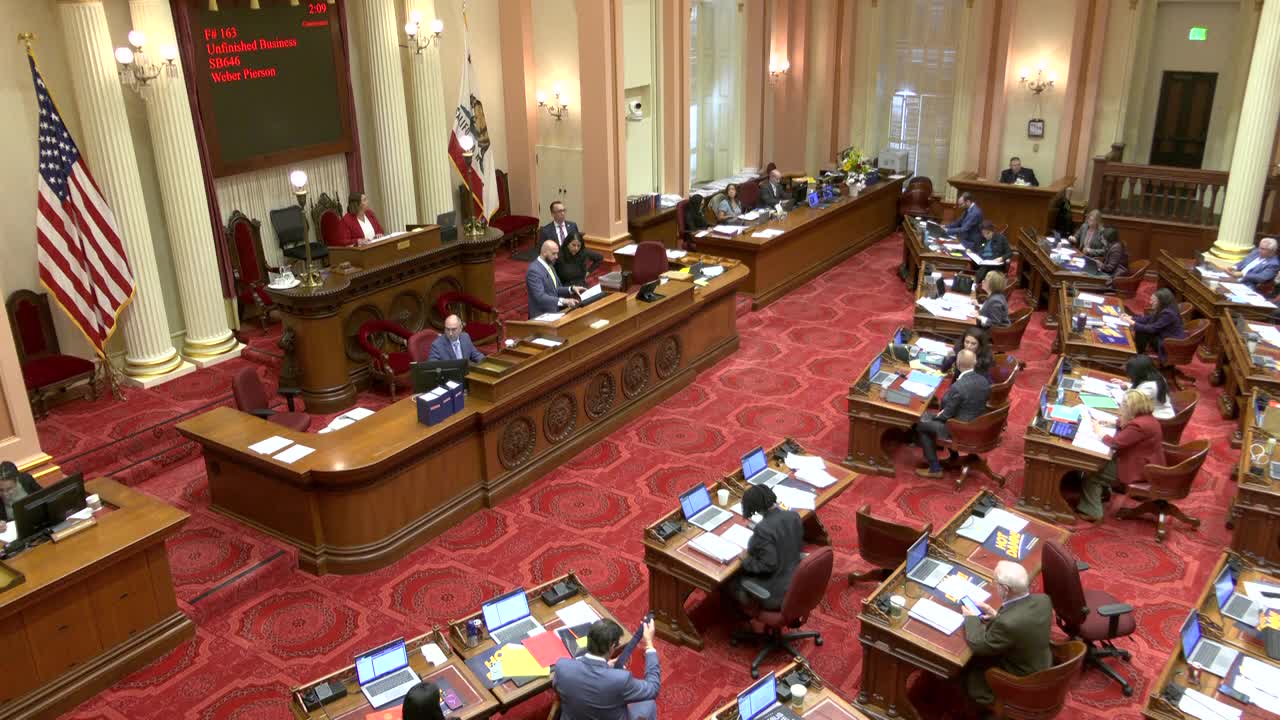 56SEC
Senate Floor
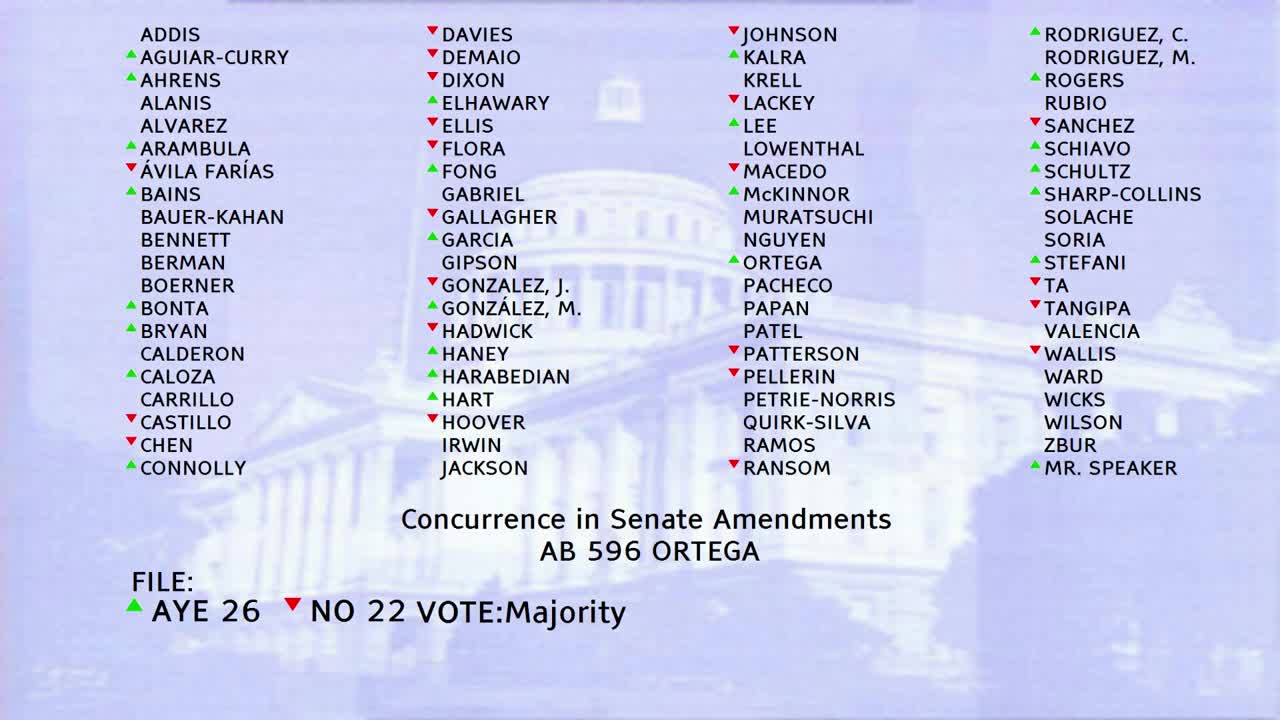 3MIN
Assembly Floor
 12MIN
Assembly Standing Committee on Insurance
 13MIN
Assembly Standing Committee on Emergency Management
 4MIN
Senate Floor
 27SEC
Senate Standing Committee on Appropriations
 18MIN