SB 623: Automobile accidents: civil actions: transportation network companies.
- Session Year: 2025-2026
- House: Senate
- Latest Version Date: 2026-06-25
Current Status:
Passed
(2026-06-25: Chaptered by Secretary of State. Chapter 17, Statutes of 2026.)
Introduced
In Committee
Awaiting First Chamber Vote
Passed First Chamber
In Committee
Awaiting Second Chamber Vote
Passed Second Chamber
Enacted
What does this bill do?
The bill caps recovery for past medical bills from "lien‑based" providers (those paid from a legal claim) in lawsuits against ride‑hailing companies or app drivers at the 70th percentile of FAIR Health billed charges, and bars collection of any billed amount above that cap. It caps recoveries when medical liens are sold to the amount paid, requires disclosure of lien sales and payments, and bans lawyers from steering clients to providers they or immediate family own or from taking kickbacks. It tightens driver background checks for ride‑hailing companies and lets apps match women riders and drivers by preference.
The summary is provided by generative AI which can make mistakes. For original language, please view the details in the table below.
(1)Existing law provides that in an action for the breach of an obligation not arising from contract, the measure of damages, except as provided, is the amount that will compensate for all the detriment proximately caused thereby, whether it could have been anticipated or not.
This bill, with respect to a civil case, claim, action, or arbitration against a network company, its subsidiary, or an app-based driver, as defined, arising from an automobile accident, would, except as specified, prohibit the maximum recovery of a plaintiff for damages for any medical expense for services rendered by a lien-based provider, as defined, from exceeding the 70th percentile of FAIR Health, Inc.s billed charges, or the 70th percentile of a comparable commercially recognized billed charges database for the same or similar service in the applicable geographic area at the time the service was rendered. The bill would prohibit certain evidence from being introduced that exceeds the recoverable amount.
This bill would provide that if a medical lien, as defined, receivable, or right to payment has been sold or otherwise transferred, the maximum recoverable medical expense damages shall not exceed the total consideration paid or payable in connection with the transaction to acquire the lien, receivable, or right to payment, as provided. The bill would require any agreement relating to the sale or transfer of a medical lien, receivable, or right to payment, and the consideration paid or payable therefor, to be discoverable, and would prohibit an undisclosed lien sale or transfer from being asserted against a defendant, insurer, settlement, judgment, or settlement proceeds. The bill would also require certain medical lien financial relationships and attorney referral information to be discoverable.
This bill would make it unlawful for an attorney representing a plaintiff under a contingency fee agreement in a civil claim, action, or arbitration, as described above, to refer a client to a health care provider in which the attorney or a member of the attorneys immediate family has a direct ownership interest. The bill would also make it unlawful for an attorney to fee split or receive other specified compensation in connection with the furnishing of lien-based provider medical treatment for a plaintiff and would make it unlawful for an attorney or law firm to provide specified compensation for referrals of clients to lien-based providers for lien-based treatment. The bill would also make other actions related to the reduction of a medical lien unlawful, as specified.
This bill would provide that these provisions are severable.
(2)The Passenger Charter-party Carriers Act defines a transportation network company as an organization, whether a corporation, partnership, sole proprietor, or other form, operating in California that provides prearranged transportation services for compensation using an online-enabled platform to connect passengers with drivers using a personal vehicle. Existing law requires a transportation network company to conduct, or have a third party conduct, a local and national criminal background check for each participating driver, as specified, and prohibits a transportation network company from contracting with, employing, or retaining a driver if the driver, among other things, is currently registered on the United States Department of Justice National Sex Offender Public website, has been convicted of any of certain terrorism-related or human trafficking felonies or a violent felony or, within the previous 7 years, has been convicted of any misdemeanor assault or battery, any domestic violence offense, driving under the influence of alcohol or drugs, or any of a specified list of felonies. A violation of the act is a misdemeanor punishable by a fine, imprisonment, or both a fine and imprisonment.
This bill would additionally prohibit a transportation network company from contracting with, employing, or retaining a driver if the driver has been convicted of specified offenses or, within the previous 7 years, has been convicted of other specified offenses, including driving under the influence of an alcoholic beverage or drug. The bill would require the background check to be performed prior to the activation of a drivers account and once annually thereafter, as provided. By expanding the scope of a crime, the bill would impose a state-mandated local program.
(3)Existing law, the Unruh Civil Rights Act, provides that all persons within the jurisdiction of this state are entitled to full and equal accommodations in all business establishments of every kind whatsoever, regardless of their sex, race, color, religion, ancestry, national origin, disability, medical condition, genetic information, marital status, sexual orientation, citizenship, primary language, or immigration status.
This bill would provide that notwithstanding that act, a transportation network company or charter-party carrier of passengers, as defined, may allow a woman passenger on its online-enabled application or platform or a participating woman driver to indicate a preference to be matched with a woman driver or woman passenger, respectively, and facilitate passenger-driver matches based on such preferences. The bill would make these provisions apply retroactively, as provided.
(4)The California Constitution requires the state to reimburse local agencies and school districts for certain costs mandated by the state. Statutory provisions establish procedures for making that reimbursement.
This bill would provide that no reimbursement is required by this act for a specified reason.
Under existing law, there are programs providing assistance for, among other things, emergency housing, multifamily housing, farmworker housing, home ownership for very low and low-income households, and downpayment assistance for first-time home buyers. Existing law also authorizes the issuance of bonds in specified amounts pursuant to the State General Obligation Bond Law and requires that proceeds from the sale of these bonds be used to finance various existing housing programs, capital outlay related to infill development, brownfield cleanup that promotes infill development, and housing-related parks. Existing law, the Veterans and Affordable Housing Bond Act of 2018, authorizes the issuance of bonds in the amount of $4,000,000,000 to finance, among other things, various existing housing programs, infill infrastructure financing, and affordable housing matching grant programs, as provided, pursuant to the State General Obligation Bond Law.This bill would enact the Veterans Bond Act of 2026, which, if adopted, would authorize $1,250,000,000 pursuant to the State General Obligation Bond Law. The bill would require that the proceeds from the sale of these bonds be used to create a fund to provide farm and home aid for veterans, as provided.This bill would provide for submission of the bond act to the voters at the November 3, 2026, statewide general election in accordance with specified law.This bill would declare that it is to take effect immediately as an urgency statute.Under existing law, there are programs providing assistance for, among other things, emergency housing, multifamily housing, farmworker housing, home ownership for very low and low-income households, and downpayment assistance for first-time home buyers. Existing law also authorizes the issuance of bonds in specified amounts pursuant to the State General Obligation Bond Law and requires that proceeds from the sale of these bonds be used to finance various existing housing programs, capital outlay related to infill development, brownfield cleanup that promotes infill development, and housing-related parks. Existing law, the Veterans and Affordable Housing Bond Act of 2018, authorizes the issuance of bonds in the amount of $4,000,000,000 to finance, among other things, various existing housing programs, infill infrastructure financing, and affordable housing matching grant programs, as provided, pursuant to the State General Obligation Bond Law.
This bill would enact the Veterans Bond Act of 2026, which, if adopted adopted, would authorize $1,250,000,000 pursuant to the State General Obligation Bond Law. The bill would require that the proceeds from the sale of these bonds would be used to create a fund to provide farm and home aid for veterans, as provided.
This bill would provide for submission of the bond act to the voters at the November 3, 2026, statewide general election in accordance with specified law.
This bill would declare that it is to take effect immediately as an urgency statute.
Under existing law, there are programs providing assistance for, among other things, emergency housing, multifamily housing, farmworker housing, home ownership for very low and low-income households, and downpayment assistance for first-time home buyers. Existing law also authorizes the issuance of bonds in specified amounts pursuant to the State General Obligation Bond Law and requires that proceeds from the sale of these bonds be used to finance various existing housing programs, capital outlay related to infill development, brownfield cleanup that promotes infill development, and housing-related parks. Existing law, the Veterans and Affordable Housing Bond Act of 2018, authorizes the issuance of bonds in the amount of $4,000,000,000 to finance, among other things, various existing housing programs, infill infrastructure financing, and affordable housing matching grant programs, as provided, pursuant to the State General Obligation Bond Law.
This bill would enact the Veterans Bond Act of 2026, which, if adopted would authorize $1,250,000,000 pursuant to the State General Obligation Bond Law. The proceeds from the sale of these bonds would be used to create a fund to provide farm and home aid for veterans, as provided.
This bill would provide for submission of the bond act to the voters at the November 3, 2026, statewide general election in accordance with specified law.
The California Constitution declares that all property is taxable and establishes or authorizes various exemptions from tax for real property, including a homeowners exemption in the amount of $7,000 of the full value of a dwelling that may be applied unless the dwelling receives another real property exemption. The California Constitution and existing property tax law establish a veterans exemption in the amount of $4,000, as specified, for a veteran who meets certain military service requirements, and generally exempts from property taxation the same value of property of a deceased veterans unmarried spouse and parents. The California Constitution and existing property tax law establish a disabled veterans exemption in the amount of $100,000 or $150,000 for the principal place of residence of a veteran or a veterans spouse, as specified.Existing property tax law establishing the homeowners exemption specifies that the exemption may not be applied to a property on which the owner receives the veterans exemption.This bill would provide that if Senate Constitutional Amendment ____ is approved by the voters at the statewide general election scheduled for November 3, 2026, then commencing January 1, 2025, notwithstanding that prohibition, the homeowners exemption also applies to property on which an owner receives the veterans exemption or the disabled veterans exemption. By imposing additional duties on local tax officials, the bill would impose a state-mandated local program.The California Constitution requires the state to reimburse local agencies and school districts for certain costs mandated by the state. Statutory provisions establish procedures for making that reimbursement.This bill would provide that no reimbursement is required by this act for a specified reason.Existing law requires the state to reimburse local agencies annually for certain property tax revenues lost as a result of any exemption or classification of property for purposes of ad valorem property taxation.This bill would provide that, notwithstanding those provisions, no appropriation is made and the state shall not reimburse local agencies for property tax revenues lost by them pursuant to the bill.This bill would take effect immediately as a tax levy.Existing law contains provisions related to elections and voting, including a requirement that a constitutional amendment submitted to the people by the Legislature appear on the ballot of the first statewide election occurring at least 131 days after the adoption of the proposal by the Legislature and that the Secretary of State mail state voter information guides to voters.This bill would require the Secretary of State, notwithstanding specified provisions of existing law relating to elections and voting, to submit Senate Constitutional Amendment ____ of the 202526 Regular Session to the voters for their approval at the statewide general election scheduled for November 3, 2026.The California Constitution declares that all property is taxable and establishes or authorizes various exemptions from tax for real property, including a homeowners exemption in the amount of $7,000 of the full value of a dwelling that may be applied unless the dwelling receives another real property exemption. The California Constitution and existing property tax law establish a veterans exemption in the amount of $4,000, as specified, for a veteran who meets certain military service requirements, and generally exempts from property taxation the same value of property of a deceased veterans unmarried spouse and parents. The California Constitution and existing property tax law establish a disabled veterans exemption in the amount of $100,000 or $150,000 for the principal place of residence of a veteran or a veterans spouse, as specified.
Existing property tax law establishing the homeowners exemption specifies that the exemption may not be applied to a property on which the owner receives the veterans exemption.
This bill would provide that if Senate Constitutional Amendment ____ is approved by the voters at the statewide general election scheduled for November 3, 2026, then commencing January 1, 2025, notwithstanding that prohibition, the homeowners exemption also applies to property on which an owner receives the veterans exemption or the disabled veterans exemption. By imposing additional duties on local tax officials, the bill would impose a state-mandated local program.
The California Constitution requires the state to reimburse local agencies and school districts for certain costs mandated by the state. Statutory provisions establish procedures for making that reimbursement.
This bill would provide that no reimbursement is required by this act for a specified reason.
Existing law requires the state to reimburse local agencies annually for certain property tax revenues lost as a result of any exemption or classification of property for purposes of ad valorem property taxation.
This bill would provide that, notwithstanding those provisions, no appropriation is made and the state shall not reimburse local agencies for property tax revenues lost by them pursuant to the bill.
This bill would take effect immediately as a tax levy.
Existing law contains provisions related to elections and voting, including a requirement that a constitutional amendment submitted to the people by the Legislature appear on the ballot of the first statewide election occurring at least 131 days after the adoption of the proposal by the Legislature and that the Secretary of State mail state voter information guides to voters.
This bill would require the Secretary of State, notwithstanding specified provisions of existing law relating to elections and voting, to submit Senate Constitutional Amendment ____ of the 202526 Regular Session to the voters for their approval at the statewide general election scheduled for November 3, 2026.
(a)(1)This section applies to any civil case, claim, action, or arbitration against a network company, its subsidiary, or an app-based driver, as those terms are defined in Section 7463 of the Business and Professions Code, arising out of an automobile accident occurring on or after January 1, 2027, in which a claimant obtained medical treatment by a lien-based provider.
(2)This section shall not apply to medical services rendered, liens created, receivables assigned, or contractual rights or obligations arising before January 1, 2027.
(3)This section shall apply notwithstanding any other provision of law.
(4)Nothing in this section applies to or alters existing law except as to recovery for damages for past medical expenses from lien-based providers, and as otherwise provided by this section.
(5)Nothing in this section abrogates the collateral source rule.
(b)(1)(A)The maximum recovery of a plaintiff for damages for any medical expense for services rendered by a lien-based provider shall not exceed the 70th percentile of FAIR Health, Inc.s billed charges, or the 70th percentile of a comparable commercially recognized billed charges database for the same or similar service in the applicable geographic area at the time the service was rendered. No plaintiff may recover past medical expense damages in excess of that amount.
(B)Nothing in this section shall be construed to establish entitlement to any particular amount for any medical service, or to preclude a defendant from challenging the amount recoverable for any medical expense.
(C)Upon motion of the plaintiff, the court may authorize recovery above the maximum recovery provided in subparagraph (A) only upon a finding, by clear and convincing evidence, and supported by expert testimony, that the service involved exceptionally rare or highly specialized treatment for which no reasonably comparable provider or service was available. Any request for recovery above the maximum recovery provided in subparagraph (A) shall be determined by the court before trial. If the court denies the motion, the party opposing the motion shall recover its reasonable attorneys fees and costs incurred in connection with opposing the motion. Absent such a court order, the limitation provided in subparagraph (A) applies.
(D)The amount billed, charged, or claimed by a lien-based provider for past medical expenses in excess of the maximum amount recoverable under this section is void and unenforceable, and no person or entity may recover, collect, enforce, assert, seek payment of, or seek reimbursement, indemnity, contribution, or subrogation for that excess amount.
(2)No party may introduce, reference, disclose, or present to the trier of fact any billed charge, lien amount, invoice, statement, or claimed value for past medical expenses exceeding the recoverable amount pursuant to this section. Nor shall any party introduce evidence or argument or reference to this section, including, but not limited to, reference to the maximum amount. Such evidence shall be inadmissible for any purpose.
(3)Nothing in this section precludes the admission of medical bills below the maximum amount.
(4)A plaintiff shall not recover as damages for medical expenses an amount greater than the amount actually billed by the lien-based provider for that service.
(5)(A)Damages for medical expenses under this section are recoverable only if supported by itemized medical bills identifying the services provided at the procedure-code level using generally accepted health care billing and coding standards, including applicable Current Procedural Terminology (CPT), Healthcare Common Procedure Coding System (HCPCS), International Classification of Diseases (ICD), or successor coding systems.
(B)A party challenging compliance with this paragraph shall provide written notice to the plaintiffs attorney identifying the alleged deficiency with reasonable specificity, and the provider or party offering the bill shall have 30 days to cure, supplement, or clarify the billing records.
(c)(1)Where a medical lien, receivable, or right to payment has been sold, assigned, financed, factored, or otherwise transferred, the maximum recoverable medical expense damages, the maximum amount recoverable by the assignee, and the maximum amount for which the plaintiff may be liable shall not exceed the total consideration paid or payable in connection with the transaction to acquire the lien, receivable, or right to payment, and in no event shall exceed the maximum amount recoverable under paragraph (1) of subdivision (b).
(2)Any agreement relating to the sale, assignment, financing, factoring, or transfer of a medical lien, receivable, or right to payment, and the consideration paid or payable therefor, including any contingent, deferred, recourse-based, or future payments, shall be discoverable and shall be disclosed to the plaintiff, the plaintiffs attorney, the defendant, the defendants attorney, and any applicable insurer within 30 days after the transaction and, in all events, before any settlement or distribution of settlement proceeds. No undisclosed lien sale, assignment, financing, factoring arrangement, or transfer may be asserted against a defendant, insurer, settlement, judgment, or settlement proceeds.
(3)Subject to subparagraph (B) of paragraph (5) of subdivision (b), nothing in this section shall preclude any party from challenging the reasonableness of any charge, the medical necessity of any treatment, or the accuracy of any billing, coding, or causation.
(4)Any agreement, arrangement, or transaction by which a lien-based provider transfers the economic risk of noncollection of a medical lien to a third party in exchange for immediate or deferred compensation, regardless of whether the transaction is denominated as a sale, assignment, loan, factoring arrangement, management agreement, servicing agreement, or otherwise, shall be treated as a lien assignment subject to this section.
(d)(1)Medical liens relating to the lien-based provider treatment at issue, including any assignment, financing, factoring, referral, ownership, investment, lending, or compensation between a lien-based provider and an attorney, law firm, or affiliated entity relating to the treatment, lien, or recovery shall be discoverable.
(2)Upon request, a lien-based provider shall provide a declaration under penalty of perjury stating whether the plaintiff was referred by the attorney, law firm, or any person acting on their behalf and the approximate number of patients referred by that attorney or law firm to the provider during the preceding 24 months. The declaration shall be discoverable.
(e)(1)It is unlawful for an attorney representing a plaintiff under a contingency fee agreement to refer a client to a health care provider in which the attorney or a member of the attorneys immediate family has a direct ownership interest.
(2)It is unlawful for an attorney representing a plaintiff to fee split, receive kickbacks, rebates, or referral compensation in connection with the furnishing of lien-based provider medical treatment for that plaintiff.
(3)It is unlawful for an attorney or law firm to provide bonuses, incentives, or compensation for referrals of clients to lien-based providers for lien-based treatment.
(4)An attorney shall not charge any additional contingency fee, administrative fee, management fee, or similar fee based upon the reduction, compromise, or resolution of a medical lien. Nothing here shall prevent an attorney from retaining a third party to negotiate any lien reductions at a cost with client consent.
(5)A lien-based provider shall not enter into any agreement or understanding to reduce a medical lien before medical services are rendered. A violation of this paragraph may subject the provider to professional discipline.
(6)A violation of this subdivision may subject the attorney to professional discipline by the State Bar.
(f)The following definitions apply for purposes of this section:
(1)Automobile accident means any accident, collision, incident, or occurrence arising out of, resulting from, or involving the ownership, operation, maintenance, use, loading, unloading, parking, or storage of a motor vehicle.
(2)Lien-based provider means any health care provider or other person or entity that renders, furnishes, bills for, finances, or seeks payment for health care-related goods or services provided pursuant to an agreement under which payment is contingent upon, secured by, or expected from, the proceeds of the patients legal claim. The term includes any facility, hospital, ambulatory surgery center, imaging center, supplier, affiliated entity, or other person or entity participating in the course of treatment or episode of care, regardless of whether that person or entity executed a separate agreement. The term does not include providers furnishing the care pursuant to health insurance, government health coverage, or the Hospital Lien Act, as provided in Sections 3045.1 to 3045.6, inclusive.
(3)(A)Medical lien means any lien, assignment, receivable, right to payment, letter of protection, financing arrangement, factoring arrangement, purchase agreement, or other claim or encumbrance arising from or relating to medical goods or services furnished to a plaintiff or claimant for which payment is contingent upon, secured by, expected from, or recoverable from the proceeds of a legal claim.
(B)Medical lien does not include any lien, reimbursement claim, or subrogation right asserted by a private health insurer, Employee Retirement Income Security Act (ERISA) plan, workers compensation carrier, Medicare, Medi-Cal, TRICARE, or any other federal or state health benefit program.
(g)The Legislature declares that the provisions of this section are severable. If any provision of this section, or its application to any person or circumstance, is held invalid or unenforceable, the remaining provisions shall remain in full force and effect to the maximum extent permitted by law. It is the intent of the Legislature that each provision of this section would have been adopted independently of any other provision.
SEC. 2.Section 5445.2 of the Public Utilities Code is amended to read:5445.2.(a)(1)A transportation network company shall conduct, or have a third party conduct, a local and national criminal background check for each participating driver that shall include both of the following:
(A)The use of a multistate and multijurisdiction criminal records locator or other similar commercial nationwide database with validation.
(B)A search of the United States Department of Justice National Sex Offender Public website.
(2)A transportation network company shall not contract with, employ, or retain a driver if the driver meets either of the following criteria:
(A)Is currently registered on the United States Department of Justice National Sex Offender Public website.
(B)Has been convicted of any of the following offenses:
(i)A felony identified in subdivision (c) of Section 667.5 of the Penal Code.
(ii)A violation of Section 236.1, 11413, 11418, 11418.5, or 11419 of the Penal Code.
(iii)A violation of Section 243.4, 245, 273a, 273.5, 288, 288.5, 288.7, 289, 368, 646.9, or 647.6 of, Sections 311.1 to 311.11, inclusive, of, Sections 451 to 455, inclusive, of, subdivision (a) of Section 192 of, subdivision (d) of Section 243 of, or paragraph (1) of subdivision (e) of Section 243 of, the Penal Code.
(3)A transportation network company shall not contract with, employ, or retain a driver if the driver has been convicted of any of the following offenses within the previous seven years:
(A)Misdemeanor assault or battery.
(B)A domestic violence offense.
(C)Driving under the influence of alcohol or drugs.
(D)A felony violation of Section 18540 of the Elections Code, or of Section 67, 68, 85, 86, 92, 93, 137, 138, 165, 518, or 530 of, subdivision (a) of Section 484 of, or subdivision (a) of Section 487 of, the Penal Code.
(E)Any of the following:
(i)Driving under the influence of an alcoholic beverage or a drug.
(ii)Weapons charges.
(iii)Violation of a protective order.
(4)Paragraphs (2) and (3) apply with respect to a conviction of any offense committed in another jurisdiction that includes all of the elements of any of the offenses described or defined in those paragraphs.
(5)This section shall not be interpreted to prevent a transportation network company from imposing additional standards.
(6)The background check shall be performed, prior to activation of a transportation network company drivers account, and once annually thereafter for each participating driver who is authorized to use the transportation network companys online-enabled application or platform.
(b)A transportation network company that violates, or fails to comply with, this section is subject to a penalty of not less than one thousand dollars ($1,000) nor more than five thousand dollars ($5,000) for each offense.
(c)(1)Notwithstanding Section 1786.12 of the Civil Code, an investigative consumer reporting agency may furnish an investigative consumer report to a transportation network company about a person seeking to become a participating driver, regardless of whether the participating driver is to be an employee or an independent contractor of the transportation network company.
(2)Paragraph (7) of subdivision (a) of Section 1786.18 of the Civil Code does not apply to an investigative consumer report furnished to a transportation network company pursuant to paragraph (1).
SEC. 3.Section 5451 is added to the Public Utilities Code, to read:5451.(a)Notwithstanding any other law, including, but not limited to, Section 51 of the Civil Code, a transportation network company, or charter-party carrier of passengers, as defined in Section 5360, may allow a woman passenger on its online-enabled application or platform or a participating woman driver to indicate a preference to be matched with a woman driver or woman passenger, respectively, and facilitate passenger-driver matches based on such preferences.
(b)This section shall apply retroactively, without regard to whether or not a transportation network company or charter-party carriers facilitation of passenger-driver matches occurred before, or occurred on or after, the date on which this section is enacted, including in civil litigation proceedings initiated prior to the date on which this section is enacted.
SEC. 4.No reimbursement is required by this act pursuant to Section 6 of Article XIIIB of the California Constitution because the only costs that may be incurred by a local agency or school district will be incurred because this act creates a new crime or infraction, eliminates a crime or infraction, or changes the penalty for a crime or infraction, within the meaning of Section 17556 of the Government Code, or changes the definition of a crime within the meaning of Section 6 of Article XIIIB of the California Constitution.
(a)(1)This section applies to any civil case, claim, action, or arbitration against a network company, its subsidiary, or an app-based driver, as those terms are defined in Section 7463 of the Business and Professions Code, arising out of an automobile accident occurring on or after January 1, 2027, in which a claimant obtained medical treatment by a lien-based provider.
(2)This section shall not apply to medical services rendered, liens created, receivables assigned, or contractual rights or obligations arising before January 1, 2027.
(3)This section shall apply notwithstanding any other provision of law.
(4)Nothing in this section applies to or alters existing law except as to recovery for damages for past medical expenses from lien-based providers, and as otherwise provided by this section.
(5)Nothing in this section abrogates the collateral source rule.
(b)(1)(A)The maximum recovery of a plaintiff for damages for any medical expense for services rendered by a lien-based provider shall not exceed the 70th percentile of FAIR Health, Inc.s billed charges, or the 70th percentile of a comparable commercially recognized billed charges database for the same or similar service in the applicable geographic area at the time the service was rendered. No plaintiff may recover past medical expense damages in excess of that amount.
(B)Nothing in this section shall be construed to establish entitlement to any particular amount for any medical service, or to preclude a defendant from challenging the amount recoverable for any medical expense.
(C)Upon motion of the plaintiff, the court may authorize recovery above the maximum recovery provided in subparagraph (A) only upon a finding, by clear and convincing evidence, and supported by expert testimony, that the service involved exceptionally rare or highly specialized treatment for which no reasonably comparable provider or service was available. Any request for recovery above the maximum recovery provided in subparagraph (A) shall be determined by the court before trial. If the court denies the motion, the party opposing the motion shall recover its reasonable attorneys fees and costs incurred in connection with opposing the motion. Absent such a court order, the limitation provided in subparagraph (A) applies.
(D)The amount billed, charged, or claimed by a lien-based provider for past medical expenses in excess of the maximum amount recoverable under this section is void and unenforceable, and no person or entity may recover, collect, enforce, assert, seek payment of, or seek reimbursement, indemnity, contribution, or subrogation for that excess amount.
(2)No party may introduce, reference, disclose, or present to the trier of fact any billed charge, lien amount, invoice, statement, or claimed value for past medical expenses exceeding the recoverable amount pursuant to this section. Nor shall any party introduce evidence or argument or reference to this section, including, but not limited to, reference to the maximum amount. Such evidence shall be inadmissible for any purpose.
(3)Nothing in this section precludes the admission of medical bills below the maximum amount.
(4)A plaintiff shall not recover as damages for medical expenses an amount greater than the amount actually billed by the lien-based provider for that service.
(5)(A)Damages for medical expenses under this section are recoverable only if supported by itemized medical bills identifying the services provided at the procedure-code level using generally accepted health care billing and coding standards, including applicable Current Procedural Terminology (CPT), Healthcare Common Procedure Coding System (HCPCS), International Classification of Diseases (ICD), or successor coding systems.
(B)A party challenging compliance with this paragraph shall provide written notice to the plaintiffs attorney identifying the alleged deficiency with reasonable specificity, and the provider or party offering the bill shall have 30 days to cure, supplement, or clarify the billing records.
(c)(1)Where a medical lien, receivable, or right to payment has been sold, assigned, financed, factored, or otherwise transferred, the maximum recoverable medical expense damages, the maximum amount recoverable by the assignee, and the maximum amount for which the plaintiff may be liable shall not exceed the total consideration paid or payable in connection with the transaction to acquire the lien, receivable, or right to payment, and in no event shall exceed the maximum amount recoverable under paragraph (1) of subdivision (b).
(2)Any agreement relating to the sale, assignment, financing, factoring, or transfer of a medical lien, receivable, or right to payment, and the consideration paid or payable therefor, including any contingent, deferred, recourse-based, or future payments, shall be discoverable and shall be disclosed to the plaintiff, the plaintiffs attorney, the defendant, the defendants attorney, and any applicable insurer within 30 days after the transaction and, in all events, before any settlement or distribution of settlement proceeds. No undisclosed lien sale, assignment, financing, factoring arrangement, or transfer may be asserted against a defendant, insurer, settlement, judgment, or settlement proceeds.
(3)Subject to subparagraph (B) of paragraph (5) of subdivision (b), nothing in this section shall preclude any party from challenging the reasonableness of any charge, the medical necessity of any treatment, or the accuracy of any billing, coding, or causation.
(4)Any agreement, arrangement, or transaction by which a lien-based provider transfers the economic risk of noncollection of a medical lien to a third party in exchange for immediate or deferred compensation, regardless of whether the transaction is denominated as a sale, assignment, loan, factoring arrangement, management agreement, servicing agreement, or otherwise, shall be treated as a lien assignment subject to this section.
(d)(1)Medical liens relating to the lien-based provider treatment at issue, including any assignment, financing, factoring, referral, ownership, investment, lending, or compensation between a lien-based provider and an attorney, law firm, or affiliated entity relating to the treatment, lien, or recovery shall be discoverable.
(2)Upon request, a lien-based provider shall provide a declaration under penalty of perjury stating whether the plaintiff was referred by the attorney, law firm, or any person acting on their behalf and the approximate number of patients referred by that attorney or law firm to the provider during the preceding 24 months. The declaration shall be discoverable.
(e)(1)It is unlawful for an attorney representing a plaintiff under a contingency fee agreement to refer a client to a health care provider in which the attorney or a member of the attorneys immediate family has a direct ownership interest.
(2)It is unlawful for an attorney representing a plaintiff to fee split, receive kickbacks, rebates, or referral compensation in connection with the furnishing of lien-based provider medical treatment for that plaintiff.
(3)It is unlawful for an attorney or law firm to provide bonuses, incentives, or compensation for referrals of clients to lien-based providers for lien-based treatment.
(4)An attorney shall not charge any additional contingency fee, administrative fee, management fee, or similar fee based upon the reduction, compromise, or resolution of a medical lien. Nothing here shall prevent an attorney from retaining a third party to negotiate any lien reductions at a cost with client consent.
(5)A lien-based provider shall not enter into any agreement or understanding to reduce a medical lien before medical services are rendered. A violation of this paragraph may subject the provider to professional discipline.
(6)A violation of this subdivision may subject the attorney to professional discipline by the State Bar.
(f)The following definitions apply for purposes of this section:
(1)Automobile accident means any accident, collision, incident, or occurrence arising out of, resulting from, or involving the ownership, operation, maintenance, use, loading, unloading, parking, or storage of a motor vehicle.
(2)Lien-based provider means any health care provider or other person or entity that renders, furnishes, bills for, finances, or seeks payment for health care-related goods or services provided pursuant to an agreement under which payment is contingent upon, secured by, or expected from, the proceeds of the patients legal claim. The term includes any facility, hospital, ambulatory surgery center, imaging center, supplier, affiliated entity, or other person or entity participating in the course of treatment or episode of care, regardless of whether that person or entity executed a separate agreement. The term does not include providers furnishing the care pursuant to health insurance, government health coverage, or the Hospital Lien Act, as provided in Sections 3045.1 to 3045.6, inclusive.
(3)(A)Medical lien means any lien, assignment, receivable, right to payment, letter of protection, financing arrangement, factoring arrangement, purchase agreement, or other claim or encumbrance arising from or relating to medical goods or services furnished to a plaintiff or claimant for which payment is contingent upon, secured by, expected from, or recoverable from the proceeds of a legal claim.
(B)Medical lien does not include any lien, reimbursement claim, or subrogation right asserted by a private health insurer, Employee Retirement Income Security Act (ERISA) plan, workers compensation carrier, Medicare, Medi-Cal, TRICARE, or any other federal or state health benefit program.
(g)The Legislature declares that the provisions of this section are severable. If any provision of this section, or its application to any person or circumstance, is held invalid or unenforceable, the remaining provisions shall remain in full force and effect to the maximum extent permitted by law. It is the intent of the Legislature that each provision of this section would have been adopted independently of any other provision.
SEC. 2.Section 5445.2 of the Public Utilities Code is amended to read:5445.2.(a)(1)A transportation network company shall conduct, or have a third party conduct, a local and national criminal background check for each participating driver that shall include both of the following:
(A)The use of a multistate and multijurisdiction criminal records locator or other similar commercial nationwide database with validation.
(B)A search of the United States Department of Justice National Sex Offender Public website.
(2)A transportation network company shall not contract with, employ, or retain a driver if the driver meets either of the following criteria:
(A)Is currently registered on the United States Department of Justice National Sex Offender Public website.
(B)Has been convicted of any of the following offenses:
(i)A violent felony, as defined in felony identified in subdivision (c) of Section 667.5 of the Penal Code.
(ii)A violation of Section 236.1, 11413, 11418, 11418.5, or 11419 of the Penal Code.
(iii)A violation of Section 243.4, 245, 273a, 273.5, 288, 288.5, 288.7, 289, 368, 646.9, or 647.6 of, Sections 311.1 to 311.11, inclusive, of, Sections 451 to 455, inclusive, of, subdivision (a) of Section 192 of, subdivision (d) of Section 243 of, or paragraph (1) of subdivision (e) of Section 243 of, the Penal Code.
(3)A transportation network company shall not contract with, employ, or retain a driver if the driver has been convicted of any of the following offenses within the previous seven years:
(A)Misdemeanor assault or battery.
(B)A domestic violence offense.
(C)Driving under the influence of alcohol or drugs.
(D)A felony violation of Section 18540 of the Elections Code, or of Section 67, 68, 85, 86, 92, 93, 137, 138, 165, 518, or 530 of, subdivision (a) of Section 484 of, or subdivision (a) of Section 487 of, the Penal Code.
(E)Any of the following:
(i)Driving under the influence of an alcoholic beverage or a drug.
(ii)Weapons charges.
(iii)Violation of a protective order.
(4)Paragraphs (2) and (3) apply with respect to a conviction of any offense committed in another jurisdiction that includes all of the elements of any of the offenses described or defined in those paragraphs.
(5)This section shall not be interpreted to prevent a transportation network company from imposing additional standards.
(6)The background check shall be performed, prior to activation of a transportation network company drivers account, and once annually thereafter for each participating driver who is authorized to use the transportation network companys online-enabled application or platform.
(b)A transportation network company that violates, or fails to comply with, this section is subject to a penalty of not less than one thousand dollars ($1,000) nor more than five thousand dollars ($5,000) for each offense.
(c)(1)Notwithstanding Section 1786.12 of the Civil Code, an investigative consumer reporting agency may furnish an investigative consumer report to a transportation network company about a person seeking to become a participating driver, regardless of whether the participating driver is to be an employee or an independent contractor of the transportation network company.
(2)Paragraph (7) of subdivision (a) of Section 1786.18 of the Civil Code does not apply to an investigative consumer report furnished to a transportation network company pursuant to paragraph (1).
SEC. 3.Section 5451 is added to the Public Utilities Code, to read:5451.(a)Notwithstanding any other law, including, but not limited to, Section 51 of the Civil Code, a transportation network company, or charter-party carrier of passengers, as defined in Section 5360, may allow a woman passenger on its online-enabled application or platform or a participating woman driver to indicate a preference to be matched with a woman driver or woman passenger, respectively, and facilitate passenger-driver matches based on such preferences.
(b)This section shall apply retroactively, without regard to whether or not a transportation network company or charter-party carriers facilitation of passenger-driver matches occurred before, or occurred on or after, the date on which this section is enacted, including in civil litigation proceedings initiated prior to the date on which this section is enacted.
SEC. 4.No reimbursement is required by this act pursuant to Section 6 of Article XIIIB of the California Constitution because the only costs that may be incurred by a local agency or school district will be incurred because this act creates a new crime or infraction, eliminates a crime or infraction, or changes the penalty for a crime or infraction, within the meaning of Section 17556 of the Government Code, or changes the definition of a crime within the meaning of Section 6 of Article XIIIB of the California Constitution.
SECTION 1.Article 5ab (commencing with Section 998.750) is added to Chapter 6 of Division 4 of the Military and Veterans Code, to read:5ab.Veterans Bond Act of 2026998.750.This article shall be known, and may be cited, as the Veterans Bond Act of 2026.998.751.(a)The State General Obligation Bond Law (Chapter 4 (commencing with Section 16720) of Part 3 of Division 4 of Title 2 of the Government Code), except as otherwise provided herein, is adopted for the purpose of the issuance, sale, and repayment of, and otherwise providing respect to, the bonds authorized to be issued by this article, and the provisions of that law are included in this article, as though set out in full in this article. All references in this article to herein refer both to this article and that law.(b)For purposes of the State General Obligation Bond Law, the Department of Veterans Affairs is designated as the board.998.752.As used herein, the following terms shall apply:(a)Board means the Department of Veterans Affairs.(b)Bond means veterans bond, a state general obligation bond, issued pursuant to this article adopting the provisions of the State General Obligation Bond Law.(c)Bond act means this article authorizing the issuance of state general obligation bonds and adopting the State General Obligation Bond Law by reference.(d)Committee means the Veterans Finance Committee of 1943 established by Section 991.(e)Fund means the Veterans Farm and Home Building Fund of 1943 established by Section 988.(f)Payment Fund means the Veterans Bonds Payment Fund established by Section 988.6.998.753.For the purpose of creating a fund to provide farm and home aid for veterans in accordance with the Veterans Farm and Home Purchase Act of 1974 (Article 3.1 (commencing with Section 987.50)), and of all acts amendatory thereof and supplemental thereto, the committee may create a debt or debts, liability or liabilities, of the State of California, in the aggregate amount of not more than one billion two hundred fifty million dollars ($1,250,000,000), exclusive of refunding bonds, in the manner provided herein.998.754.(a)All bonds authorized by this article, when duly sold and delivered as provided herein, constitute valid and legally binding general obligations of the State of California, and the full faith and credit of the State of California is hereby pledged for the punctual payment of both principal and interest thereof.(b)There shall be collected annually, in the same manner and at the same time as other state revenue is collected, a sum of moneys, in addition to the ordinary revenues of the state, sufficient to pay the principal of, and interest on, these bonds as provided herein, and all officers required by law to perform any duty in regard to the collection of state revenues shall collect this additional sum.(c)(1)(A)On the dates on which funds are to be remitted pursuant to Section 16676 of the Government Code for the payment of debt service on the bonds in each fiscal year, there shall be transferred to the Payment Fund to pay the debt service all of the moneys in the fund, not in excess of the amount of debt service then due and payable.(B)If the moneys transferred on the remittance dates is less than the debt service then due and payable, the balance remaining unpaid shall be transferred to the General Fund out of the fund as soon as it shall become available, together with interest thereon from the remittance date until paid, at the same rate of interest as borne by the bonds, compounded semiannually.(2)Notwithstanding any other law to the contrary, this subdivision shall apply to all veterans farm and home purchase bond acts pursuant to this chapter.(3)This subdivision does not grant any lien on the fund or the moneys therein to the holders of any bonds issued under this article.(4)For the purposes of this subdivision, debt service means the principal (whether due at maturity, by redemption, or acceleration), premium, if any, or interest payable on any date with respect to any series of bonds.(5)This subdivision does not apply, however, in the case of any debt service that is payable from the proceeds of any refunding bonds.998.755.There is hereby appropriated from the General Fund, for purposes of this article, a sum of moneys that will equal both of the following:(a)That sum annually necessary to pay the principal of, and the interest on, the bonds issued and sold as provided herein, as that principal and interest become due and payable.(b)That sum necessary to carry out Section 998.760, appropriated without regard to fiscal years.998.756.For the purposes of this article, the Director of Finance may, by executive order, authorize the withdrawal from the General Fund of a sum of moneys not to exceed the amount of the unsold bonds which have been authorized by the committee to be sold pursuant to this article. Any sum withdrawn shall be deposited in the fund. All moneys made available under this section to the board shall be returned by the board to the General Fund, plus the interest that the amounts would have earned in the Pooled Money Investment Account, from the sale of bonds for the purpose of carrying out this article.998.757.The board may request the Pooled Money Investment Board to make a loan from the Pooled Money Investment Account, in accordance with Section 16312 of the Government Code, for the purposes of carrying out this article. The amount of the request shall not exceed the amount of unsold bonds which the committee has, by resolution, authorized to be sold for the purpose of carrying out this article. The board shall execute whatever documents are required by the Pooled Money Investment Board to obtain and repay the loan. Any amount loaned shall be deposited in the fund to be allocated by the board in accordance with this article.998.758.Upon request of the board, supported by a statement of its plans and projects approved by the Governor, the committee shall determine whether to issue any bonds authorized pursuant to this article in order to carry out the boards plans and projects and, if so, the amount of bonds to be issued and sold. Successive issues of bonds may be authorized and sold to carry out these plans and projects, progressively, and it is not necessary that all the bonds be issued or sold at any one time.998.759.(a)As long as a bond authorized pursuant to this article is outstanding, the Secretary of Veterans Affairs shall, at the close of each fiscal year, require a survey of the financial condition of the Division of Farm and Home Purchases, together with a projection of the divisions operations, to be made by an independent public accountant of recognized standing. The results of each survey and projection shall be reported in writing by the public accountant to the Secretary of Veterans Affairs, the California Veterans Board, the appropriate policy committees dealing with veterans affairs in the Senate and the Assembly, and the committee.(b)The Division of Farm and Home Purchases shall reimburse the public accountant for these services out of any moneys that the division may have available on deposit with the Treasurer.998.760.(a)The committee may authorize the Treasurer to sell all or any part of the bonds authorized by this article at the time or times established by the Treasurer.(b)If the committee deems it necessary for an effective sale of the bonds, the committee may authorize the Treasurer to sell any issue of bonds at less than their par value, notwithstanding Section 16754 of the Government Code. However, the discount on the bonds shall not exceed 3 percent of the par value thereof.998.761.Out of the first moneys realized from the sale of bonds as provided herein, there shall be redeposited in the General Obligation Bond Expense Revolving Fund, established by Section 16724.5 of the Government Code, the amount of all expenditures made for the purposes specified in that section, and the moneys may be used for the same purpose and repaid in the same manner whenever additional bond sales are made.998.762.A bond issued and sold pursuant to this article may be refunded in accordance with Article 6 (commencing with Section 16780) of Chapter 4 of Part 3 of Division 4 of Title 2 of the Government Code. The approval of the voters for the issuance of bonds pursuant to this article includes approval for the issuance of bonds issued to refund bonds originally issued or any previously issued refunding bonds.998.763.Notwithstanding any provision of the bond act, if the Treasurer sells bonds pursuant to this article for which bond counsel has issued an opinion to the effect that the interest on the bonds is excludable from gross income for purposes of federal income tax, subject to any conditions that may be designated, the Treasurer may establish separate accounts for the investment of bond proceeds and for the earnings on those proceeds and may use those proceeds or earnings to pay any rebate, penalty, or other payment required by federal law or take any other action with respect to the investment and use of bond proceeds required or permitted pursuant to federal law necessary to maintain the tax-exempt status of the bonds or to obtain any other advantage pursuant to federal law on behalf of the funds of this state.998.764.The Legislature hereby finds and declares that, inasmuch as the proceeds from the sale of bonds authorized by this article are not proceeds of taxes as that term is used in Article XIIIB of the California Constitution, the disbursement of these proceeds is not subject to the limitations imposed by Article XIIIB.SEC. 2.(a)Section 1 of this act shall take effect upon the approval by the voters of the Veterans Bond Act of 2026.(b)The Secretary of State shall submit the Veterans Bond Act of 2026, as set forth in Section 1 of this act, to the voters at the November 3, 2026, statewide general election.SEC. 3.This act is an urgency statute necessary for the immediate preservation of the public peace, health, or safety within the meaning of Article IV of the California Constitution and shall go into immediate effect. The facts constituting the necessity are:In order that the Veterans Bond Act of 2026 may be included on the November 3, 2026, statewide general election ballot in furtherance of an orderly program of providing farm and home purchase benefits to California veterans, it is necessary that this act take effect immediately.This article may be cited shall be known, and may be cited, as the Veterans Bond Act of 2026.
998.751.(a)The State General Obligation Bond Law (Chapter 4 (commencing with Section 16720) of Part 3 of Division 4 of Title 2 of the Government Code), except as otherwise provided herein, is adopted for the purpose of the issuance, sale, and repayment of, and otherwise providing respect to, the bonds authorized to be issued by this article, and the provisions of that law are included in this article, as though set out in full in this article. All references in this article to herein refer both to this article and that law.
(b)For purposes of the State General Obligation Bond Law, the Department of Veterans Affairs is designated as the board.
998.752.As used herein, the following terms have the following meanings: shall apply:
(a)Board means the Department of Veterans Affairs.
(b)Bond means veterans bond, a state general obligation bond, issued pursuant to this article adopting the provisions of the State General Obligation Bond Law.
(c)Bond act means this article authorizing the issuance of state general obligation bonds and adopting the State General Obligation Bond Law by reference.
(d)Committee means the Veterans Finance Committee of 1943 established by Section 991.
(e)Fund means the Veterans Farm and Home Building Fund of 1943 established by Section 988.
(f)Payment Fund means the Veterans Bonds Payment Fund established by Section 988.6.
998.753.For the purpose of creating a fund to provide farm and home aid for veterans in accordance with the Veterans Farm and Home Purchase Act of 1974 (Article 3.1 (commencing with Section 987.50)), and of all acts amendatory thereof and supplemental thereto, the committee may create a debt or debts, liability or liabilities, of the State of California, in the aggregate amount of not more than one billion two hundred fifty million dollars ($1,250,000,000), exclusive of refunding bonds, in the manner provided herein.
998.754.(a)All bonds authorized by this article, when duly sold and delivered as provided herein, constitute valid and legally binding general obligations of the State of California, and the full faith and credit of the State of California is hereby pledged for the punctual payment of both principal and interest thereof.
(b)There shall be collected annually, in the same manner and at the same time as other state revenue is collected, a sum of moneys, in addition to the ordinary revenues of the state, sufficient to pay the principal of, and interest on, these bonds as provided herein, and all officers required by law to perform any duty in regard to the collection of state revenues shall collect this additional sum.
(c)(1)(A)On the dates on which funds are to be remitted pursuant to Section 16676 of the Government Code for the payment of debt service on the bonds in each fiscal year, there shall be transferred to the Payment Fund to pay the debt service all of the moneys in the fund, not in excess of the amount of debt service then due and payable. If
(B)If the moneys transferred on the remittance dates is less than the debt service then due and payable, the balance remaining unpaid shall be transferred to the General Fund out of the fund as soon as it shall become available, together with interest thereon from the remittance date until paid, at the same rate of interest as borne by the bonds, compounded semiannually. Notwithstanding
(2)Notwithstanding any other provision of law to the contrary, this subdivision shall apply to all veterans farm and home purchase bond acts pursuant to this chapter. This
(3)This subdivision does not grant any lien on the fund or the moneys therein to the holders of any bonds issued under this article. For
(4)For the purposes of this subdivision, debt service means the principal (whether due at maturity, by redemption, or acceleration), premium, if any, or interest payable on any date with respect to any series of bonds. This
(5)This subdivision shall does not apply, however, in the case of any debt service that is payable from the proceeds of any refunding bonds.
998.755.There is hereby appropriated from the General Fund, for purposes of this article, a sum of moneys that will equal both of the following:
(a)That sum annually necessary to pay the principal of, and the interest on, the bonds issued and sold as provided herein, as that principal and interest become due and payable.
(b)That sum necessary to carry out Section 998.760, appropriated without regard to fiscal years.
998.756.For the purposes of this article, the Director of Finance may, by executive order, authorize the withdrawal from the General Fund of a sum of moneys not to exceed the amount of the unsold bonds which have been authorized by the committee to be sold pursuant to this article. Any sums sum withdrawn shall be deposited in the fund. All moneys made available under this section to the board shall be returned by the board to the General Fund, plus the interest that the amounts would have earned in the Pooled Money Investment Account, from the sale of bonds for the purpose of carrying out this article.
998.757.The board may request the Pooled Money Investment Board to make a loan from the Pooled Money Investment Account, in accordance with Section 16312 of the Government Code, for the purposes of carrying out this article. The amount of the request shall not exceed the amount of unsold bonds which the committee has, by resolution, authorized to be sold for the purpose of carrying out this article. The board shall execute whatever documents are required by the Pooled Money Investment Board to obtain and repay the loan. Any amounts amount loaned shall be deposited in the fund to be allocated by the board in accordance with this article.
998.758.Upon request of the board, supported by a statement of its plans and projects approved by the Governor, the committee shall determine whether to issue any bonds authorized pursuant to this article in order to carry out the boards plans and projects, projects and, if so, the amount of bonds to be issued and sold. Successive issues of bonds may be authorized and sold to carry out these plans and projects, progressively, and it is not necessary that all the bonds be issued or sold at any one time.
998.759.(a)As long as any bonds a bond authorized pursuant to this article are is outstanding, the Secretary of Veterans Affairs shall, at the close of each fiscal year, require a survey of the financial condition of the Division of Farm and Home Purchases, together with a projection of the divisions operations, to be made by an independent public accountant of recognized standing. The results of each survey and projection shall be reported in writing by the public accountant to the Secretary of Veterans Affairs, the California Veterans Board, the appropriate policy committees dealing with veterans affairs in the Senate and the Assembly, and the committee.
(b)The Division of Farm and Home Purchases shall reimburse the public accountant for these services out of any moneys that the division may have available on deposit with the Treasurer.
998.760.(a)The committee may authorize the Treasurer to sell all or any part of the bonds authorized by this article at the time or times established by the Treasurer.
(b)Whenever If the committee deems it necessary for an effective sale of the bonds, the committee may authorize the Treasurer to sell any issue of bonds at less than their par value, notwithstanding Section 16754 of the Government Code. However, the discount on the bonds shall not exceed 3 percent of the par value thereof.
998.761.Out of the first moneys realized from the sale of bonds as provided herein, there shall be redeposited in the General Obligation Bond Expense Revolving Fund, established by Section 16724.5 of the Government Code, the amount of all expenditures made for the purposes specified in that section, and the moneys may be used for the same purpose and repaid in the same manner whenever additional bond sales are made.
998.762.Any bonds A bond issued and sold pursuant to this article may be refunded in accordance with Article 6 (commencing with Section 16780) of Chapter 4 of Part 3 of Division 4 of Title 2 of the Government Code. The approval of the voters for the issuance of bonds pursuant to this article includes approval for the issuance of bonds issued to refund bonds originally issued or any previously issued refunding bonds.
998.763.Notwithstanding any provision of the bond act, if the Treasurer sells bonds pursuant to this article for which bond counsel has issued an opinion to the effect that the interest on the bonds is excludable from gross income for purposes of federal income tax, subject to any conditions that may be designated, the Treasurer may establish separate accounts for the investment of bond proceeds and for the earnings on those proceeds, proceeds and may use those proceeds or earnings to pay any rebate, penalty, or other payment required by federal law or take any other action with respect to the investment and use of bond proceeds required or permitted pursuant to federal law necessary to maintain the tax-exempt status of the bonds or to obtain any other advantage pursuant to federal law on behalf of the funds of this state.
998.764.The Legislature hereby finds and declares that, inasmuch as the proceeds from the sale of bonds authorized by this article are not proceeds of taxes as that term is used in Article XIIIB of the California Constitution, the disbursement of these proceeds is not subject to the limitations imposed by Article XIIIB.
SEC. 2.(a)Section 1 of this act shall take effect upon the approval by the voters of the Veterans Bond Act of 2026.
(b)The Secretary of State shall submit the Veterans Bond Act of 2026, as set forth in Section 1 of this act, to the voters at the November 3, 2026, statewide general election.
SEC. 3.This act is an urgency statute necessary for the immediate preservation of the public peace, health, or safety within the meaning of Article IV of the California Constitution and shall go into immediate effect. The facts constituting the necessity are:
In order that the Veterans Bond Act of 2026 may be included on the November 3, 2026, statewide general election ballot in furtherance of an orderly program of providing farm and home purchase benefits to California veterans, it is necessary that this act take effect immediately.
This article may be cited as the Veterans Bond Act of 2026.
998.751.(a)The State General Obligation Bond Law (Chapter 4 (commencing with Section 16720) of Part 3 of Division 4 of Title 2 of the Government Code), except as otherwise provided herein, is adopted for the purpose of the issuance, sale, and repayment of, and otherwise providing respect to, the bonds authorized to be issued by this article, and the provisions of that law are included in this article, as though set out in full in this article. All references in this article to herein refer both to this article and that law.
(b)For purposes of the State General Obligation Bond Law, the Department of Veterans Affairs is designated the board.
998.752.As used herein, the following terms have the following meanings:
(a)Board means the Department of Veterans Affairs.
(b)Bond means veterans bond, a state general obligation bond, issued pursuant to this article adopting the provisions of the State General Obligation Bond Law.
(c)Bond act means this article authorizing the issuance of state general obligation bonds and adopting the State General Obligation Bond Law by reference.
(d)Committee means the Veterans Finance Committee of 1943 established by Section 991.
(e)Fund means the Veterans Farm and Home Building Fund of 1943 established by Section 988.
(f)Payment Fund means the Veterans Bonds Payment Fund established by Section 988.6.
998.753.For the purpose of creating a fund to provide farm and home aid for veterans in accordance with the Veterans Farm and Home Purchase Act of 1974 (Article 3.1 (commencing with Section 987.50)), and of all acts amendatory thereof and supplemental thereto, the committee may create a debt or debts, liability or liabilities, of the State of California, in the aggregate amount of not more than one billion two hundred fifty million dollars ($1,250,000,000), exclusive of refunding bonds, in the manner provided herein.
998.754.(a)All bonds authorized by this article, when duly sold and delivered as provided herein, constitute valid and legally binding general obligations of the State of California, and the full faith and credit of the State of California is hereby pledged for the punctual payment of both principal and interest thereof.
(b)There shall be collected annually, in the same manner and at the same time as other state revenue is collected, a sum of moneys, in addition to the ordinary revenues of the state, sufficient to pay the principal of, and interest on, these bonds as provided herein, and all officers required by law to perform any duty in regard to the collection of state revenues shall collect this additional sum.
(c)On the dates on which funds are to be remitted pursuant to Section 16676 of the Government Code for the payment of debt service on the bonds in each fiscal year, there shall be transferred to the Payment Fund to pay the debt service all of the moneys in the fund, not in excess of the amount of debt service then due and payable. If the moneys transferred on the remittance dates is less than the debt service then due and payable, the balance remaining unpaid shall be transferred to the General Fund out of the fund as soon as it shall become available, together with interest thereon from the remittance date until paid, at the same rate of interest as borne by the bonds, compounded semiannually. Notwithstanding any other provision of law to the contrary, this subdivision shall apply to all veterans farm and home purchase bond acts pursuant to this chapter. This subdivision does not grant any lien on the fund or the moneys therein to the holders of any bonds issued under this article. For the purposes of this subdivision, debt service means the principal (whether due at maturity, by redemption, or acceleration), premium, if any, or interest payable on any date with respect to any series of bonds. This subdivision shall not apply, however, in the case of any debt service that is payable from the proceeds of any refunding bonds.
998.755.There is hereby appropriated from the General Fund, for purposes of this article, a sum of moneys that will equal both of the following:
(a)That sum annually necessary to pay the principal of, and the interest on, the bonds issued and sold as provided herein, as that principal and interest become due and payable.
(b)That sum necessary to carry out Section 998.760, appropriated without regard to fiscal years.
998.756.For the purposes of this article, the Director of Finance may, by executive order, authorize the withdrawal from the General Fund of a sum of moneys not to exceed the amount of the unsold bonds which have been authorized by the committee to be sold pursuant to this article. Any sums withdrawn shall be deposited in the fund. All moneys made available under this section to the board shall be returned by the board to the General Fund, plus the interest that the amounts would have earned in the Pooled Money Investment Account, from the sale of bonds for the purpose of carrying out this article.
998.757.The board may request the Pooled Money Investment Board to make a loan from the Pooled Money Investment Account, in accordance with Section 16312 of the Government Code, for the purposes of carrying out this article. The amount of the request shall not exceed the amount of unsold bonds which the committee has, by resolution, authorized to be sold for the purpose of carrying out this article. The board shall execute whatever documents are required by the Pooled Money Investment Board to obtain and repay the loan. Any amounts loaned shall be deposited in the fund to be allocated by the board in accordance with this article.
998.758.Upon request of the board, supported by a statement of its plans and projects approved by the Governor, the committee shall determine whether to issue any bonds authorized pursuant to this article in order to carry out the boards plans and projects, and, if so, the amount of bonds to be issued and sold. Successive issues of bonds may be authorized and sold to carry out these plans and projects, progressively, and it is not necessary that all the bonds be issued or sold at any one time.
998.759.(a)As long as any bonds authorized pursuant to this article are outstanding, the Secretary of Veterans Affairs shall, at the close of each fiscal year, require a survey of the financial condition of the Division of Farm and Home Purchases, together with a projection of the divisions operations, to be made by an independent public accountant of recognized standing. The results of each survey and projection shall be reported in writing by the public accountant to the Secretary of Veterans Affairs, the California Veterans Board, the appropriate policy committees dealing with veterans affairs in the Senate and the Assembly, and the committee.
(b)The Division of Farm and Home Purchases shall reimburse the public accountant for these services out of any moneys that the division may have available on deposit with the Treasurer.
998.760.(a)The committee may authorize the Treasurer to sell all or any part of the bonds authorized by this article at the time or times established by the Treasurer.
(b)Whenever the committee deems it necessary for an effective sale of the bonds, the committee may authorize the Treasurer to sell any issue of bonds at less than their par value, notwithstanding Section 16754 of the Government Code. However, the discount on the bonds shall not exceed 3 percent of the par value thereof.
998.761.Out of the first moneys realized from the sale of bonds as provided herein, there shall be redeposited in the General Obligation Bond Expense Revolving Fund, established by Section 16724.5 of the Government Code, the amount of all expenditures made for the purposes specified in that section, and the moneys may be used for the same purpose and repaid in the same manner whenever additional bond sales are made.
998.762.Any bonds issued and sold pursuant to this article may be refunded in accordance with Article 6 (commencing with Section 16780) of Chapter 4 of Part 3 of Division 4 of Title 2 of the Government Code. The approval of the voters for the issuance of bonds pursuant to this article includes approval for the issuance of bonds issued to refund bonds originally issued or any previously issued refunding bonds.
998.763.Notwithstanding any provision of the bond act, if the Treasurer sells bonds pursuant to this article for which bond counsel has issued an opinion to the effect that the interest on the bonds is excludable from gross income for purposes of federal income tax, subject to any conditions that may be designated, the Treasurer may establish separate accounts for the investment of bond proceeds and for the earnings on those proceeds, and may use those proceeds or earnings to pay any rebate, penalty, or other payment required by federal law or take any other action with respect to the investment and use of bond proceeds required or permitted pursuant to federal law necessary to maintain the tax-exempt status of the bonds or to obtain any other advantage pursuant to federal law on behalf of the funds of this state.
998.764.The Legislature hereby finds and declares that, inasmuch as the proceeds from the sale of bonds authorized by this article are not proceeds of taxes as that term is used in Article XIIIB of the California Constitution, the disbursement of these proceeds is not subject to the limitations imposed by Article XIIIB.
SEC. 2.(a)Section 1 of this act shall take effect upon the approval by the voters of the Veterans Bond Act of 2026.
(b)The Secretary of State shall submit the Veterans Bond Act of 2026, as set forth in Section 1 of this act, to the voters at the November 3, 2026, statewide general election.
SECTION 1.Section 218 of the Revenue and Taxation Code is amended to read:218.(a)The homeowners property tax exemption is in the amount of the assessed value of the dwelling specified in this section, as authorized by subdivision (k) of Section 3 of Article XIII of the California Constitution. That exemption shall be in the amount of seven thousand dollars ($7,000) of the full value of the dwelling.(b)(1)(A) Except as provided in subparagraph (B), the exemption does not extend to property that is rented, vacant, under construction on the lien date, or that is a vacation or secondary home of the owner or owners, nor does it apply to property on which an owner receives the veterans exemption.(B)Notwithstanding subparagraph (A), if Senate Constitutional Amendment ____ of the 202526 Regular Session is approved by the voters at the statewide general election scheduled for November 3, 2026, then commencing January 1, 2027, the exemption applies to property on which an owner receives the veterans exemption described in Section 205 or the disabled veterans exemption under Section 205.5.(2)Notwithstanding paragraph (1), if a person receiving the exemption is not occupying the dwelling on the lien date because the dwelling was damaged in a misfortune or calamity, the person shall be deemed to occupy that same dwelling as their principal place of residence on the lien date, provided the persons absence from the dwelling is temporary and the person intends to return to the dwelling when possible to do so. Except as provided in paragraph (3), when a dwelling has been totally destroyed, and thus no dwelling exists on the lien date, the exemption provided by this section shall not be applicable until the structure has been replaced and is occupied as a dwelling.(3)A dwelling that was totally destroyed in a disaster for which the Governor proclaimed a state of emergency, that qualified for the exemption provided by this section prior to the commencement date of the disaster and that has not changed ownership since the commencement date of the disaster, shall be deemed occupied by the person receiving the exemption on the lien date provided the person intends to reconstruct a dwelling on the property and occupy the dwelling as their principal place of residence when it is possible to do so.(4)Notwithstanding paragraph (1), if a person receiving the exemption is not occupying the dwelling because they are confined to a hospital or other care facility, the person shall be deemed to occupy that dwelling as their principal place of residence, provided that all of the following conditions are met:(A)The person would occupy the dwelling if they were not confined to the hospital or other care facility.(B)The person intends to return to the dwelling when possible to do so.(C)The dwelling is not rented or leased to a person that is not described in Section 267(c)(4) of Title 26 of the United States Code.(c)For purposes of this section, all of the following apply:(1)Owner includes a person purchasing the dwelling under a contract of sale or who holds shares or membership in a cooperative housing corporation, which holding is a requisite to the exclusive right of occupancy of a dwelling.(2)(A)Dwelling means a building, structure, or other shelter constituting a place of abode, whether real property or personal property, and any land on which it may be situated. A two-dwelling unit shall be considered as two separate single-family dwellings.(B)Dwelling includes the following:(i)A single-family dwelling occupied by an owner thereof as their principal place of residence on the lien date.(ii)A multiple-dwelling unit occupied by an owner thereof on the lien date as their principal place of residence.(iii)A condominium occupied by an owner thereof as their principal place of residence on the lien date.(iv)Premises occupied by the owner of shares or a membership interest in a cooperative housing corporation, as defined in subdivision (i) of Section 61, as their principal place of residence on the lien date. Each exemption allowed pursuant to this subdivision shall be deducted from the total assessed valuation of the cooperative housing corporation. The exemption shall be taken into account in apportioning property taxes among owners of shares or membership interests in the cooperative housing corporations so as to benefit those owners who qualify for the exemption.(d)The exemption provided for in subdivision (k) of Section 3 of Article XIII of the California Constitution shall first be applied to the building, structure, or other shelter and the excess, if any, shall be applied to any land on which it may be located.SEC. 2.No reimbursement is required by this act pursuant to Section 6 of Article XIII B of the California Constitution because the duties imposed on a local agency or school district by this act are necessary to implement, or were expressly included in, a ballot measure approved by the voters in a statewide or local election, within the meaning of Section 17556 of the Government Code.SEC. 3.Notwithstanding Section 2229 of the Revenue and Taxation Code, no appropriation is made by this act and the state shall not reimburse any local agency for any property tax revenues lost by it pursuant to this act.SEC. 4.Notwithstanding the requirements of Sections 9040, 9043, 9044, 9061, 9082, and 9094 of the Elections Code, or any other law, the Secretary of State shall submit Senate Constitutional Amendment ____ of the 202526 Regular Session to the voters for their approval at the statewide general election scheduled for November 3, 2026.SEC. 5.This act provides for a tax levy within the meaning of Article IV of the California Constitution and shall go into immediate effect.(a)The homeowners property tax exemption is in the amount of the assessed value of the dwelling specified in this section, as authorized by subdivision (k) of Section 3 of Article XIII of the California Constitution. That exemption shall be in the amount of seven thousand dollars ($7,000) of the full value of the dwelling.
(b)(1)The (A) Except as provided in subparagraph (B), the exemption does not extend to property that is rented, vacant, under construction on the lien date, or that is a vacation or secondary home of the owner or owners, nor does it apply to property on which an owner receives the veterans exemption.
(B)Notwithstanding subparagraph (A), if Senate Constitutional Amendment ____ of the 202526 Regular Session is approved by the voters at the statewide general election scheduled for November 3, 2026, then commencing January 1, 2027, the exemption applies to property on which an owner receives the veterans exemption described in Section 205 or the disabled veterans exemption under Section 205.5.
(2)Notwithstanding paragraph (1), if a person receiving the exemption is not occupying the dwelling on the lien date because the dwelling was damaged in a misfortune or calamity, the person shall be deemed to occupy that same dwelling as their principal place of residence on the lien date, provided the persons absence from the dwelling is temporary and the person intends to return to the dwelling when possible to do so. Except as provided in paragraph (3), when a dwelling has been totally destroyed, and thus no dwelling exists on the lien date, the exemption provided by this section shall not be applicable until the structure has been replaced and is occupied as a dwelling.
(3)A dwelling that was totally destroyed in a disaster for which the Governor proclaimed a state of emergency, that qualified for the exemption provided by this section prior to the commencement date of the disaster and that has not changed ownership since the commencement date of the disaster, shall be deemed occupied by the person receiving the exemption on the lien date provided the person intends to reconstruct a dwelling on the property and occupy the dwelling as their principal place of residence when it is possible to do so.
(4)Notwithstanding paragraph (1), if a person receiving the exemption is not occupying the dwelling because they are confined to a hospital or other care facility, the person shall be deemed to occupy that dwelling as their principal place of residence, provided that all of the following conditions are met:
(A)The person would occupy the dwelling if they were not confined to the hospital or other care facility.
(B)The person intends to return to the dwelling when possible to do so.
(C)The dwelling is not rented or leased to a person that is not described in Section 267(c)(4) of Title 26 of the United States Code.
(c)For purposes of this section, all of the following apply:
(1)Owner includes a person purchasing the dwelling under a contract of sale or who holds shares or membership in a cooperative housing corporation, which holding is a requisite to the exclusive right of occupancy of a dwelling.
(2)(A)Dwelling means a building, structure, or other shelter constituting a place of abode, whether real property or personal property, and any land on which it may be situated. A two-dwelling unit shall be considered as two separate single-family dwellings.
(B)Dwelling includes the following:
(i)A single-family dwelling occupied by an owner thereof as their principal place of residence on the lien date.
(ii)A multiple-dwelling unit occupied by an owner thereof on the lien date as their principal place of residence.
(iii)A condominium occupied by an owner thereof as their principal place of residence on the lien date.
(iv)Premises occupied by the owner of shares or a membership interest in a cooperative housing corporation, as defined in subdivision (i) of Section 61, as their principal place of residence on the lien date. Each exemption allowed pursuant to this subdivision shall be deducted from the total assessed valuation of the cooperative housing corporation. The exemption shall be taken into account in apportioning property taxes among owners of shares or membership interests in the cooperative housing corporations so as to benefit those owners who qualify for the exemption.
(d)The exemption provided for in subdivision (k) of Section 3 of Article XIII of the California Constitution shall first be applied to the building, structure, or other shelter and the excess, if any, shall be applied to any land on which it may be located.
SEC. 2.No reimbursement is required by this act pursuant to Section 6 of Article XIII B of the California Constitution because the duties imposed on a local agency or school district by this act are necessary to implement, or were expressly included in, a ballot measure approved by the voters in a statewide or local election, within the meaning of Section 17556 of the Government Code.
SEC. 3.Notwithstanding Section 2229 of the Revenue and Taxation Code, no appropriation is made by this act and the state shall not reimburse any local agency for any property tax revenues lost by it pursuant to this act.
SEC. 4.Notwithstanding the requirements of Sections 9040, 9043, 9044, 9061, 9082, and 9094 of the Elections Code, or any other law, the Secretary of State shall submit Senate Constitutional Amendment ____ of the 202526 Regular Session to the voters for their approval at the statewide general election scheduled for November 3, 2026.
SEC. 5.This act provides for a tax levy within the meaning of Article IV of the California Constitution and shall go into immediate effect.
|
Date
|
Status
|
|---|---|
| Jun 25, 2026 | Chaptered by Secretary of State. Chapter 17, Statutes of 2026. |
| Jun 25, 2026 | Approved by the Governor. |
| Jun 25, 2026 | Enrolled and presented to the Governor at 12:30 p.m. |
| Jun 25, 2026 | Assembly amendments concurred in. (Ayes 36. Noes 0. Page 5002.) Ordered to engrossing and enrolling. |
| Jun 25, 2026 | Assembly amendments concurred in. (Ayes 36. Noes 0.) Ordered to engrossing and enrolling. |
| Jun 25, 2026 | In Senate. Concurrence in Assembly amendments pending. |
| Jun 25, 2026 | Read third time. Passed. (Ayes 75. Noes 0. Page 5854.) Ordered to the Senate. |
| Jun 25, 2026 | Read third time. Passed. Ordered to the Senate. |
| Jun 24, 2026 | Read second time. Ordered to third reading. |
| Jun 23, 2026 | From committee: Do pass. (Ayes 12. Noes 0.) (June 23). |
| Jun 22, 2026 | Re-referred to Com. on JUD. pursuant to Assembly Rule 96. |
| Jun 22, 2026 | Joint Rule 62(a) suspended. |
| Jun 22, 2026 | From committee with author's amendments. Read second time and amended. Re-referred to Com. on H. & C.D. |
| Jun 18, 2026 | Read second time and amended. Re-referred to Com. on H. & C.D. |
| Jun 17, 2026 | From committee: Do pass as amended and re-refer to Com. on H. & C.D. (Ayes 8. Noes 0.) (June 16). |
| Jun 3, 2026 | From committee with author's amendments. Read second time and amended. Re-referred to Com. on M. & V.A. |
| May 7, 2026 | Re-referred to Coms. on M. & V.A. and REV. & TAX. pursuant to Assembly Rule 96. |
| May 4, 2026 | Referred to Coms. on REV. & TAX. and M. & V.A. |
| Jan 29, 2026 | In Assembly. Read first time. Held at Desk. |
| Jan 29, 2026 | Read third time. Passed. (Ayes 39. Noes 0. Page 3324.) Ordered to the Assembly. |
| Jan 26, 2026 | Ordered to special consent calendar. |
| Jan 22, 2026 | Read second time. Ordered to third reading. |
| Jan 22, 2026 | From committee: Do pass. (Ayes 7. Noes 0. Page 3269.) (January 22). |
| Jan 21, 2026 | Set for hearing January 22. |
| Jan 20, 2026 | January 20 hearing: Placed on APPR. suspense file. |
| Jan 15, 2026 | Set for hearing January 20. |
| Jan 14, 2026 | From committee: Do pass and re-refer to Com. on M. & V.A. (Ayes 5. Noes 0. Page 3225.) (January 14). Re-referred to Com. on M. & V.A. |
| Jan 14, 2026 | From committee: Do pass and re-refer to Com. on APPR. (Ayes 3. Noes 0. Page 3225.) (January 14). Re-referred to Com. on APPR. |
| Jan 9, 2026 | Set for hearing January 14 in M. & V.A. pending receipt. |
| Dec 23, 2025 | Set for hearing January 14. |
| Mar 5, 2025 | Referred to Coms. on REV. & TAX. and M. & V.A. |
| Feb 21, 2025 | From printer. May be acted upon on or after March 23. |
| Feb 20, 2025 | Introduced. Read first time. To Com. on RLS. for assignment. To print. |
|
Date
|
Description
|
Location
|
Votes
|
|
|---|---|---|---|---|
| Jun 25, 2026 | SB 623 Umberg Senate Third Reading By Papan | Assembly Floor |
Passed |
|
| Jun 25, 2026 | Unfinished Business SB623 Umberg et al. Concurrence | Senate Floor |
Passed |
|
| Jun 23, 2026 | Do pass. | Assembly Standing Committee on Judiciary |
Passed |
|
| Jun 16, 2026 | Do pass as amended and be re-referred to the Committee on [Housing and Community Development] | Assembly Standing Committee on Military and Veterans Affairs |
Passed |
|
| Jan 29, 2026 | Special Consent SB623 Archuleta et al. | Senate Floor |
Passed |
|
| Jan 22, 2026 | Do pass | Senate Standing Committee on Appropriations |
Passed |
|
| Jan 20, 2026 | Placed on suspense file | Senate Standing Committee on Appropriations |
Passed |
|
| Jan 14, 2026 | Do pass, but first be re-referred to the Committee on [Military and Veterans Affairs] | Senate Standing Committee on Revenue and Taxation |
Passed |
|
| Jan 14, 2026 | Do pass, but first be re-referred to the Committee on [Appropriations] | Senate Standing Committee on Military and Veterans Affairs |
Passed |
This list shows positions taken on this bill by organizations on the date displayed, which is linked to the original source.
Positions by individuals are not included.
|
Organization
|
Position
|
Date
|
|---|---|---|
| American Legion, Department Of California | ** Support | |
| Amvets, Department Of California | ** Support | |
| California Association Of Realtors | ** Support | |
| California Senior Legislature | ** Support | |
| California State Board of Equalization | ** Support | |
| California State Commanders Veterans Council | ** Support | |
| California State Treasurer Fiona Ma | ** Support | |
| Consumer Attorneys Of California | ** Support | |
| County Of San Diego | ** Support | |
| Howard Jarvis Taxpayers Association | ** Support | |
| Military Officers Association of America-California Council of Chapters | ** Support | |
| ORANGE; COUNTY OF | ** Support | |
| San Diego Military Advisory Council | ** Support | |
| Uber | ** Support | |
| Uber Industries, Inc. | ** Support | |
| VetFund Foundation | ** Support | |
| VFW | ** Support | |
| Vietnam Veterans Of America, California State Council | ** Support |
SENATE RULES COMMITTEE Office of Senate Floor Analyses (916) 651-4171 | SB 623 |
UNFINISHED BUSINESS
Bill No: SB 623
Author: Umberg (D) and Papan (D)
Chaptered: 6/25/26
Vote: 21
SENATE MILITARY & VETERANS COMMITTEE: 3-0, 1/14/26
AYES: Archuleta, McNerney, Umberg
NO VOTE RECORDED: Grove, Menjivar
SENATE REVENUE AND TAXATION COMMITTEE: 5-0, 1/14/26
AYES: McNerney, Valladares, Ashby, Grayson, Umberg
SENATE APPROPRIATIONS COMMITTEE: 7-0, 1/22/26
AYES: Caballero, Seyarto, Cabaldon, Dahle, Grayson, Richardson, Wahab
SENATE FLOOR: 39-0, 1/29/26
AYES: Allen, Alvarado-Gil, Archuleta, Arreguín, Ashby, Becker, Blakespear, Cabaldon, Caballero, Cervantes, Choi, Cortese, Dahle, Durazo, Gonzalez, Grayson, Grove, Hurtado, Jones, Laird, Limón, McGuire, McNerney, Menjivar, Niello, Ochoa Bogh, Padilla, Pérez, Richardson, Rubio, Seyarto, Smallwood-Cuevas, Stern, Strickland, Umberg, Valladares, Wahab, Weber Pierson, Wiener
NO VOTE RECORDED: Reyes
ASSEMBLY FLOOR: 75-0, 6/25/26 - See last page for vote
SUBJECT: Automobile accidents: civil actions: transportation network companies
SOURCE: Consumer Attorneys of California
Uber Industries, Inc.
DIGEST:
This bill implements the terms of a successful negotiation between stakeholders of qualified ballot initiatives;[1] the Consumer Attorneys of California and Uber Technologies, Inc. negotiated the deal.[2] If this bill is approved by the Legislature, the proponents of the two ballot initiatives have agreed to pull their initiatives as is permitted by Elections Code Section 9604. The deadline to qualify or withdraw from the ballot is 131 days from the election. In this case, the deadline to withdraw the initiatives is June 25, 2026 for the November 3, 2026 election. Pursuant to statute, the Secretary of State must receive the notice of removal by 5:00 PM.
Assembly Amendments
of 6/22/26 codify the deal reached by Consumer Attorneys of California and Uber Technologies, Inc.
ANALYSIS:
Existing law:[3]
- For the breach of an obligation not arising from contract, the measure of damages, except where otherwise expressly provided by law, is the amount which will compensate for all the detriment proximately caused thereby, whether it could have been anticipated or not. (Civil (Civ.) Code § 3333.)
- Specifies that, except as provided in 3), in any action to recover damages arising out of the operation or use of a motor vehicle, a person is not entitled to recover non-economic losses to compensate for pain, suffering, inconvenience, physical impairment, disfigurement, and other nonpecuniary damages if any of the following applies:
- The injured person was at the time of the accident operating the vehicle while under the influence of controlled substance or alcohol, and was convicted for the violation;
- The injured person was the owner of a vehicle involved in the accident and the vehicle was not insured as required by the financial responsibility laws of this state; or
- The injured person was the operator of a vehicle involved in the accident and the operator can not establish his or her financial responsibility as required by the financial responsibility laws of this state. (Civ. Code § 3333.4 (a).)
- Provides that the provisions of 2) related to a failure to maintain a financial responsibility for operating a vehicle do not apply if the injuries were the result of another driver operating a vehicle under the influence of controlled substance or alcohol. (Civ. Code § 3333.4 (c).)
- Provides that any person who suffers injury that is proximately caused by the driver of a commercial motor vehicle is entitled to recover treble damages from the driver’s employer where it is shown both that the driver of a commercial motor vehicle was under the influence of alcohol or a controlled substance at the time that the injury was caused and that the driver’s employer willfully failed at the time of the injury to comply with any of the requirements of federal law related to testing employees for substance use. (Civ. Code § 3333.7 (a).)
- Requires a transportation network company to conduct, or have a third party conduct, a local and national criminal background check for each participating driver that includes both of the following:
- The use of a multistate and multijurisdiction criminal records locator or other similar commercial nationwide database with validation; and
- A search of the United States Department of Justice National Sex Offender Public website. (Public (Pub.) Utilities (Util.) Code § 5445.2 (a)(1).)
- Prohibits a transportation network company from contracting with, employing, or retaining a driver if the driver meets either of the following criteria:
- Is currently registered on the United States Department of Justice National Sex Offender Public website; or
- Has been convicted of a violent felony, human trafficking, or specified activities related to terrorism. (Pub. Util. Code § 5445.2 (a)(2).)
- Prohibits a transportation network company from contracting with, employing, or retaining a driver if the driver has been convicted of any of the following within the past seven years:
- Misdemeanor assault or battery;
- Domestic violence;
- Driving under the influence of drugs or alcohol; or
- Specified crimes of moral turpitude. (Pub. Util. Code § 5445.2 (a)(3).)
- Defines the following:
- “App-based driver” means an individual who is a delivery network company courier, transportation network company driver, or charter-party carrier or passenger driver or permit holder and meets the criteria for operating as an independent contractor pursuant to Proposition 22 of 2020; and
- “Network company” means a business entity that is a delivery network company that maintains an online-enabled application or platform used to facilitate delivery services within the State of California on an on-demand basis, as specified, or a transportation network company that provides prearranged transportation services for compensation using an online-enabled application or platform to connect passengers with drivers using a personal vehicle. (Bus. & Prof. Code § 7463.)
This bill:[4]
- Provides that the provisions of this bill apply to any civil case, claim, action, or arbitration against a network company, its subsidiary, or an app-based driver, as defined, arising out of an automobile accident occurring on or after January 1, 2027, in which a claimant obtained medical treatment by a lien-based provider.
- Exempts from the provisions of this bill any medical services rendered, liens created, receivables assigned, or contractual rights or obligations arising before January 1, 2027. Specifies that nothing in the new section abrogates the collateral source rule.
- Provides that the maximum recovery of a plaintiff for damages for any expense for services rendered by a lien-based provider not to exceed 70th percentile of FAIR Health, Inc.’s billed charges, or the 70th percentile of a comparable commercially recognized billed charges database for the same or similar service in the applicable geographic area at the time the service was rendered, and prohibits a plaintiff from recovering past medical expense damages in excess of that amount.
- Clarifies that nothing in this bill is to be construed to establish entitlement to any particular amount for any medical service, or to preclude a defendant from challenging the amount recoverable for any medical expense.
- Permits a court to authorize recovery above the maximum recovery provided in 3) upon motion of the plaintiff only upon a finding, by clear and convincing evidence, and supported by expert testimony, that the service involved exceptionally rare or highly specialized treatment for which no reasonably comparable provider or service was available. Requires any request for recovery above the maximum recovery provided to be determined by the court before trial.
- Entitles the party opposing the motion made in 5) to recover its reasonably attorney’s fees and costs incurred in connection with opposing the motion if the court denies the motion.
- Makes the amount billed, charged, or claimed by a lien-based provider for past medical expenses in excess of the maximum amount recoverable under this bill void and unenforceable, and prohibits any person or entity from recovering, collecting, enforcing, asserting, seeking payment of, or seeking reimbursement, indemnity, contribution, or subrogation for that excess amount.
- Prohibits any party from introducing, referencing, disclosing, or presenting to the trier of fact any billed charge, lien amount, invoice, statement, or claimed value for past medical expenses exceeding the recoverable amount pursuant to this bill, and prohibits any party from introducing evidence or argument or reference to this bill, including, but not limited to, reference to the maximum amount, as specified.
- Prohibits a plaintiff from recovering as damages for medical expenses an amount greater than the amount actually billed by the lien-based provider for that service.
- Requires damages for medical expenses under this section to be supported by itemized medical bills identifying the services provided at the procedure-code level using generally accepted health care billing and coding standards, including applicable Current Procedural Terminology (CPT), Healthcare Common Procedure Coding System (HCPCS), International Classification of Diseases (ICD), or successor coding systems in order to be recoverable.
- Requires a party challenging compliance with the provisions of 10) to provide written notice to the plaintiff’s attorney identifying the alleged deficiency with reasonable specificity, and grants the provider or party offering the bill 30 days to cure, supplement, or clarify with billing records.
- Limits the maximum recoverable medical expense damages, the maximum amount recoverable by the assignee, and the maximum amount for which the plaintiff may be liable, where a medical lien, receivable, or right to payment has been sold, assigned, financed, factored, or otherwise transferred, to not exceed the total consideration paid or payable in connection with the transaction to acquire the lien, receivable, or right to payment, which in no event can exceed the maximum amount recoverable in 3).
- Makes any agreement relating to the sale, assignment, financing, factoring, or transfer of a medical lien, receivable, or right to payment, and the consideration paid or payable therefor, including any contingent, deferred, recourse-based, or future payments, discoverable and requires it to be disclosed to the plaintiff, the plaintiff’s attorney, the defendant, the defendant’s attorney, and any applicable insurer within 30 days after the transaction and, in all events, before any settlement or distribution of the settlement proceeds.
- Prohibits any undisclosed lien sale, assignment, financing, factoring arrangement, or transfer from being asserted against a defendant, insurer, settlement, judgment, or settlement proceeds.
- Provides that nothing in this bill precludes any party from challenging the reasonableness of any charge, the medical necessity of any treatment, or the accuracy of any billing, coding, or causation, except as specified.
- Deems any agreement, arrangement, or transaction by which a lien-based provider transfers the economic risk of noncollection of a medical lien to a third party in exchange for immediate or deferred compensation, regardless of whether the transaction is denominated as a sale, assignment, loan, factoring arrangement, management agreement, servicing agreement, or otherwise, as a lien assignment subject to this bill.
- Authorizes the civil discovery of any medical liens relating to the lien-based provider treatment at issue, including any assignment, financing, factoring, referral, ownership, investment, lending, or compensation between a lien-based provider and an attorney, law firm, or affiliated entity relating to the treatment, lien or recovery.
- Requires a lien-based provider, upon request, to provide a declaration under penalty of perjury stating whether the plaintiff was referred by the attorney, law firm, or any person acting on their behalf and the approximate number of patients referred by that attorney or law firm to the provider during the preceding 24 months. Makes the declaration discoverable.
- Makes it unlawful for an attorney representing a plaintiff under a contingency fee agreement to refer a client to a health care provider in which the attorney or a member of the attorney’s immediate family has a direct ownership interest.
- Makes it unlawful for an attorney representing a plaintiff to fee split, receive kickbacks, rebates, or referral compensation in connection with the furnishing of lien-based provider medical treatment for that plaintiff.
- Makes it unlawful for an attorney or law firm to provide bonuses, incentives, or compensation for referrals of clients to lien-based providers for lien-based treatment.
- Prohibits an attorney from charging any additional contingency fee, administrative fee, management fee, or similar fee based upon the reduction, compromise, or resolution of a medical lien, however, nothing in this bill prevents an attorney from retaining a third party to negotiate any lien reductions at a cost with client consent.
- Prohibits a lien-based provider from entering into any agreement or understanding to reduce a medical lien before medical services are rendered, and that a violation of this prohibition may subject the provider to professional discipline.
- Provides that an attorney who violations 19) – 22) may be subject to professional discipline by the State Bar.
- Defines various terms for purposes of this bill, including:
- “Lien-based provider” means any health care provider or other person or entity that renders, furnishes, bills for, finances, or seeks payment for health care-related goods or services provided pursuant to an agreement under which payment is contingent upon, secured by, or expected from, the proceeds of the patient’s legal claim. The term includes any facility, hospital, ambulatory surgery center, imaging center, supplier, affiliated entity, or other person or entity participating in the course of treatment or episode of care, regardless of whether that person or entity executed a separate agreement. The term does not include providers furnishing care pursuant to health insurance, government health coverage, or the Hospital Lien Act, as provided pursuant to existing law.
- “Medical lien” means any lien, assignment, receivable, right to payment, letter of protection, financing arrangement, factoring arrangement, purchase agreement, or other claim or encumbrance arising from or relating to medical goods or services furnished to a plaintiff or claimant for which payment is contingent upon, secured by, expected from, or recoverable from the proceeds of a legal claim. “Medical lien” does not include any lien, reimbursement claim, or subrogation rights asserted by a private health insurer, Employee Retirement Income Security Act (ERISA) plan, workers’ compensation carrier, Medicare, Medi-Cal, TRICARE, or any other federal or state health benefit program.
- Prohibits a transportation network company from contracting with, employing, or retaining a driver if the driver has been convicted of specified sex- or assault-based criminal offenses.
- Prohibits a transportation network company from contracting with, employing, or retaining a driver if, in the previous seven years, the driver has been convicted of driving under the influence of an alcoholic beverage or drug, a weapons charge, or violating a protective order.
- Requires a background check to be performed, prior to activation of a transportation network company driver’s account, and once annually thereafter for each participating driver who is authorized to use the transportation network company’s online-enabled application or platform, as specified.
- Authorizes a transportation network company or charter-party carrier of passengers, notwithstanding any other law including the Unruh Civil Rights Act, to allow a woman passenger on its online-enabled application or platform or a participating woman driver to indicate a preference to be matched with a woman driver or woman passenger, respectively, and facilitate passenger-driver matches based on such preferences.
- Deems the provisions of 29) retroactive, without regard to whether or not a transportation company or charter-party carrier’s facilitation of passenger-driver matches occurred before, or occurred on or after, the date on which this bill is enacted, including in civil litigation proceedings initiated prior to the date on which this bill is enacted.
- Provides that nothing in this bill abrogates the collateral sources rule.
- Adopts a severability clause.
Comments
According to the authors. SB 623 strikes a careful balance by enacting several targeted reforms to the rideshare/Transportation Network Company (TNC) industry, the medical lien industry, and attorneys’ relationship to the medical lien industry. SB 623 creates a system that's safe, fair, and accountable by protecting patients from unnecessary treatment or getting overcharged, ensuring access to medical care and legal representation, and strengthens TNC safety measures.
In order to address concerns in the medical lien industry and their relationship to attorneys, while ensuring that vicims get access to care, SB 623 makes several reforms:
- For accidents occurring on or after January 1, 2027, if a plaintiff receives treatment from a lien-based medical provider, the plaintiff generally can not recover more than the 70th percentile as shown in the FAIR Health database for that particular service in that geographic area. Charges above this amount cannot be collected from the plaintiff and are void.
- However, the court can approve a higher amount if the plaintiff can show, by clear and convincing evidence that the treatment was exceptionally rare or highly specialized and no reasonably comparable provider or service was available.
- Requires standardized itemization of all lien-based medical bills.
- If a lien-based care provider sells their lien to a third-party, the maximum amount that the third-party can recover is the consideration paid by that third-party to the lien-based provider for the assignment.
- Makes it unlawful for an attorney representing a person under a contingency fee agreement to refer the client to a healthcare provider in which the attorney (or family member) has a direct ownership interest.
- Makes it unlawful for an attorney to receive a kickback or a fee-split for referring a client to a lien-based provider, or provide bonuses or incentives for referring a client to a lien-based provider.
- Prohibits attorneys from charging an additional contingency fee, administrative fee, management fee, or similar fee based on reducing or resolving a client's medical lien.
Additionaly, SB 623 makes several reforms to the TNC/rideshare industry in order to protect passengers and create greater acountability:
- Requires an initial background check before activating a rideshare driver and annual backgroundchecks thereafter.
- Adds additional crimes, like violating a restraining order and child abuse, to the list of crimes that disqualifies a potential TNC driver.
- Expressly allows women drivers to request women passangers only and women passengers to request women drivers only.
SB 623 is sponsored by the Consumer Attorneys of California and Uber Technologies, Inc.. The Committee is unaware of opposition to this bill. However, since the deal was recently amended into SB 623, there may be opposition to this bill that the Committee is not yet aware of. This bill is scheduled to be heard in the Assembly Judiciary Committee on June 23, 2026, at 1:30 PM. The Senate Judiciary Committee is scheduled to hold an informational hearing titled, S.B. No. 623 Umberg & Papan. Automobile accidents: civil actions: transportation network companies, after our regularly scheduled bill hearing on June 23, 2026.
FISCAL EFFECT: Appropriation: No Fiscal Com.: Yes Local: Yes
SUPPORT: (Verified 6/24/26)
Consumer Attorneys of California (co-source)
Uber Industries, Inc. (co-source)
OPPOSITION: (Verified 6/24/26)
None received
ARGUMENTS IN SUPPORT: Joint sponsors of the bill, the Consumer Attorneys of California and Uber Technologies, Inc., write the following in support of SB 623:
“Both sides agree: Californians deserve a system that is safe, fair, and accountable. This agreement protects patients from unnecessary treatment or getting overcharged, ensures access to medical care and legal representation, and strengthens safety measures. We look forward to working with the California Legislature to pass this legislation.”
With regard to medical lien reform in SB 623, the sponsors write:
“Currently, lien-based treatment can result in medical bills significantly higher than typical charges, often driven by third-party financiers who purchase discounted bills to recover full amounts through litigation. SB 623 protects injured individuals by capping recoverable lien amounts at what the financier actually paid and anchoring recovery to the FAIR Health benchmark—a nationally trusted, objective database of amounts charged for medical care. This reform helps limit financial abuses and returns value to the individuals who actually suffered harm.”
With regard to patient protections and transparency, the sponsors write:
“SB 623 ensures that no claimant, defendant, or insurer can be held liable for charges exceeding the FAIR Health benchmark, protecting patients from personal liability for inflated debts. Furthermore, the bill mandates standardized, itemized billing using Current Procedural Terminology (CPT) and Healthcare Common Procedure Coding System (HCPCS) codes, bringing the medical lien process in line with the rest of the healthcare industry. By requiring the disclosure of all lien transfers and sales within 30 days, SB 623 brings necessary sunlight to previously hidden financial arrangements.”
With regard to ethics and safety enhancements, the sponsors write:
“This legislation closes structural gaps by prohibiting unethical practices, including attorney ownership in lien-based providers and referral kickbacks. Additionally, SB 623 advances public safety by providing clear legal protection for women’s rider and driver preferences and expanding driver background checks with annual re-screening.”
ASSEMBLY FLOOR: 75-0 6/25/26
AYES: Addis, Aguiar-Curry, Ahrens, Alanis, Alvarez, Arambula, Ávila Farías, Bains, Bauer-Kahan, Bennett, Berman, Boerner, Bonta, Bryan, Calderon, Caloza, Carrillo, Castillo, Chen, Connolly, Davies, DeMaio, Dixon, Elhawary, Ellis, Flora, Fong, Gabriel, Garcia, Gipson, Jeff Gonzalez, Mark González, Hadwick, Haney, Harabedian, Hart, Hoover, Irwin, Jackson, Kalra, Krell, Lackey, Lee, Lowenthal, Macedo, McKinnor, Muratsuchi, Nguyen, Ortega, Pacheco, Papan, Patel, Patterson, Pellerin, Petrie-Norris, Ramos, Ransom, Michelle Rodriguez, Rogers, Blanca Rubio, Sanchez, Schiavo, Schultz, Sharp-Collins, Solache, Stefani, Ta, Tangipa, Valencia, Wallis, Ward, Wicks, Wilson, Zbur, Rivas
NO VOTE RECORDED: Johnson, Quirk-Silva, Celeste Rodriguez, Soria
Prepared by: Margie Estrada / JUD. / (916) 651-4113
7/7/26 14:42:02
See: Uber, California lawyers say ballot initiative showdown averted (June 18, 2026) Los Angeles Times, by Rebecca Ellis, available at: https://www.latimes.com/california/story/2026-06-18/uber-california-trial-attorneys-ballot-initiatives-deal ↑
The initiative sponsored by Uber is titled Protecting Automobile Accident Victims from Attorney Self-Dealing Act, (Initiative 25-0022A1.). The initiative sponsored by the Consumer Attorneys of California is titled Sexual Assault Against Rideshare Passengers and Drivers Prevention and Accountability Act, (Initiative 25-029A1) ↑
The “Existing Law” and “This bill” sections of this analysis are pulled from the Assembly Judiciary Committee analysis for this bill. ↑
The “Existing Law” and “This bill” sections of this analysis are pulled from the Assembly Judiciary Committee analysis for this bill. ↑
SENATE RULES COMMITTEE Office of Senate Floor Analyses (916) 651-4171 | SB 623 |
UNFINISHED BUSINESS
Bill No: SB 623
Author: Umberg (D) and Papan (D)
Amended: 6/22/26
Vote: 21
SENATE MILITARY & VETERANS COMMITTEE: 3-0, 1/14/26
AYES: Archuleta, McNerney, Umberg
NO VOTE RECORDED: Grove, Menjivar
SENATE REVENUE AND TAXATION COMMITTEE: 5-0, 1/14/26
AYES: McNerney, Valladares, Ashby, Grayson, Umberg
SENATE APPROPRIATIONS COMMITTEE: 7-0, 1/22/26
AYES: Caballero, Seyarto, Cabaldon, Dahle, Grayson, Richardson, Wahab
SENATE FLOOR: 39-0, 1/29/26
AYES: Allen, Alvarado-Gil, Archuleta, Arreguín, Ashby, Becker, Blakespear, Cabaldon, Caballero, Cervantes, Choi, Cortese, Dahle, Durazo, Gonzalez, Grayson, Grove, Hurtado, Jones, Laird, Limón, McGuire, McNerney, Menjivar, Niello, Ochoa Bogh, Padilla, Pérez, Richardson, Rubio, Seyarto, Smallwood-Cuevas, Stern, Strickland, Umberg, Valladares, Wahab, Weber Pierson, Wiener
NO VOTE RECORDED: Reyes
SUBJECT: Automobile accidents: civil actions: transportation network companies
SOURCE: Consumer Attorneys of California
Uber Industries, Inc.
DIGEST:
This bill implements the terms of a successful negotiation between stakeholders of qualified ballot initiatives;[1] the Consumer Attorneys of California and Uber Technologies, Inc. negotiated the deal.[2] If this bill is approved by the Legislature, the proponents of the two ballot initiatives have agreed to pull their initiatives as is permitted by Elections Code Section 9604. The deadline to qualify or withdraw from the ballot is 131 days from the election. In this case, the deadline to withdraw the initiatives is June 25, 2026 for the November 3, 2026 election. Pursuant to statute, the Secretary of State must receive the notice of removal by 5:00 PM.
Assembly Amendments
of 6/22/26 codify the deal reached by Consumer Attorneys of California and Uber Technologies, Inc.
ANALYSIS:
Existing law:[3]
- For the breach of an obligation not arising from contract, the measure of damages, except where otherwise expressly provided by law, is the amount which will compensate for all the detriment proximately caused thereby, whether it could have been anticipated or not. (Civil (Civ.) Code § 3333.)
- Specifies that, except as provided in 3), in any action to recover damages arising out of the operation or use of a motor vehicle, a person is not entitled to recover non-economic losses to compensate for pain, suffering, inconvenience, physical impairment, disfigurement, and other nonpecuniary damages if any of the following applies:
- The injured person was at the time of the accident operating the vehicle while under the influence of controlled substance or alcohol, and was convicted for the violation;
- The injured person was the owner of a vehicle involved in the accident and the vehicle was not insured as required by the financial responsibility laws of this state; or
- The injured person was the operator of a vehicle involved in the accident and the operator can not establish his or her financial responsibility as required by the financial responsibility laws of this state. (Civ. Code § 3333.4 (a).)
- Provides that the provisions of 2) related to a failure to maintain a financial responsibility for operating a vehicle do not apply if the injuries were the result of another driver operating a vehicle under the influence of controlled substance or alcohol. (Civ. Code § 3333.4 (c).)
- Provides that any person who suffers injury that is proximately caused by the driver of a commercial motor vehicle is entitled to recover treble damages from the driver’s employer where it is shown both that the driver of a commercial motor vehicle was under the influence of alcohol or a controlled substance at the time that the injury was caused and that the driver’s employer willfully failed at the time of the injury to comply with any of the requirements of federal law related to testing employees for substance use. (Civ. Code § 3333.7 (a).)
- Requires a transportation network company to conduct, or have a third party conduct, a local and national criminal background check for each participating driver that includes both of the following:
- The use of a multistate and multijurisdiction criminal records locator or other similar commercial nationwide database with validation; and
- A search of the United States Department of Justice National Sex Offender Public website. (Public (Pub.) Utilities (Util.) Code § 5445.2 (a)(1).)
- Prohibits a transportation network company from contracting with, employing, or retaining a driver if the driver meets either of the following criteria:
- Is currently registered on the United States Department of Justice National Sex Offender Public website; or
- Has been convicted of a violent felony, human trafficking, or specified activities related to terrorism. (Pub. Util. Code § 5445.2 (a)(2).)
- Prohibits a transportation network company from contracting with, employing, or retaining a driver if the driver has been convicted of any of the following within the past seven years:
- Misdemeanor assault or battery;
- Domestic violence;
- Driving under the influence of drugs or alcohol; or
- Specified crimes of moral turpitude. (Pub. Util. Code § 5445.2 (a)(3).)
- Defines the following:
- “App-based driver” means an individual who is a delivery network company courier, transportation network company driver, or charter-party carrier or passenger driver or permit holder and meets the criteria for operating as an independent contractor pursuant to Proposition 22 of 2020; and
- “Network company” means a business entity that is a delivery network company that maintains an online-enabled application or platform used to facilitate delivery services within the State of California on an on-demand basis, as specified, or a transportation network company that provides prearranged transportation services for compensation using an online-enabled application or platform to connect passengers with drivers using a personal vehicle. (Bus. & Prof. Code § 7463.)
This bill:[4]
- Provides that the provisions of this bill apply to any civil case, claim, action, or arbitration against a network company, its subsidiary, or an app-based driver, as defined, arising out of an automobile accident occurring on or after January 1, 2027, in which a claimant obtained medical treatment by a lien-based provider.
- Exempts from the provisions of this bill any medical services rendered, liens created, receivables assigned, or contractual rights or obligations arising before January 1, 2027. Specifies that nothing in the new section abrogates the collateral source rule.
- Provides that the maximum recovery of a plaintiff for damages for any expense for services rendered by a lien-based provider not to exceed 70th percentile of FAIR Health, Inc.’s billed charges, or the 70th percentile of a comparable commercially recognized billed charges database for the same or similar service in the applicable geographic area at the time the service was rendered, and prohibits a plaintiff from recovering past medical expense damages in excess of that amount.
- Clarifies that nothing in this bill is to be construed to establish entitlement to any particular amount for any medical service, or to preclude a defendant from challenging the amount recoverable for any medical expense.
- Permits a court to authorize recovery above the maximum recovery provided in 3) upon motion of the plaintiff only upon a finding, by clear and convincing evidence, and supported by expert testimony, that the service involved exceptionally rare or highly specialized treatment for which no reasonably comparable provider or service was available. Requires any request for recovery above the maximum recovery provided to be determined by the court before trial.
- Entitles the party opposing the motion made in 5) to recover its reasonably attorney’s fees and costs incurred in connection with opposing the motion if the court denies the motion.
- Makes the amount billed, charged, or claimed by a lien-based provider for past medical expenses in excess of the maximum amount recoverable under this bill void and unenforceable, and prohibits any person or entity from recovering, collecting, enforcing, asserting, seeking payment of, or seeking reimbursement, indemnity, contribution, or subrogation for that excess amount.
- Prohibits any party from introducing, referencing, disclosing, or presenting to the trier of fact any billed charge, lien amount, invoice, statement, or claimed value for past medical expenses exceeding the recoverable amount pursuant to this bill, and prohibits any party from introducing evidence or argument or reference to this bill, including, but not limited to, reference to the maximum amount, as specified.
- Prohibits a plaintiff from recovering as damages for medical expenses an amount greater than the amount actually billed by the lien-based provider for that service.
- Requires damages for medical expenses under this section to be supported by itemized medical bills identifying the services provided at the procedure-code level using generally accepted health care billing and coding standards, including applicable Current Procedural Terminology (CPT), Healthcare Common Procedure Coding System (HCPCS), International Classification of Diseases (ICD), or successor coding systems in order to be recoverable.
- Requires a party challenging compliance with the provisions of 10) to provide written notice to the plaintiff’s attorney identifying the alleged deficiency with reasonable specificity, and grants the provider or party offering the bill 30 days to cure, supplement, or clarify with billing records.
- Limits the maximum recoverable medical expense damages, the maximum amount recoverable by the assignee, and the maximum amount for which the plaintiff may be liable, where a medical lien, receivable, or right to payment has been sold, assigned, financed, factored, or otherwise transferred, to not exceed the total consideration paid or payable in connection with the transaction to acquire the lien, receivable, or right to payment, which in no event can exceed the maximum amount recoverable in 3).
- Makes any agreement relating to the sale, assignment, financing, factoring, or transfer of a medical lien, receivable, or right to payment, and the consideration paid or payable therefor, including any contingent, deferred, recourse-based, or future payments, discoverable and requires it to be disclosed to the plaintiff, the plaintiff’s attorney, the defendant, the defendant’s attorney, and any applicable insurer within 30 days after the transaction and, in all events, before any settlement or distribution of the settlement proceeds.
- Prohibits any undisclosed lien sale, assignment, financing, factoring arrangement, or transfer from being asserted against a defendant, insurer, settlement, judgment, or settlement proceeds.
- Provides that nothing in this bill precludes any party from challenging the reasonableness of any charge, the medical necessity of any treatment, or the accuracy of any billing, coding, or causation, except as specified.
- Deems any agreement, arrangement, or transaction by which a lien-based provider transfers the economic risk of noncollection of a medical lien to a third party in exchange for immediate or deferred compensation, regardless of whether the transaction is denominated as a sale, assignment, loan, factoring arrangement, management agreement, servicing agreement, or otherwise, as a lien assignment subject to this bill.
- Authorizes the civil discovery of any medical liens relating to the lien-based provider treatment at issue, including any assignment, financing, factoring, referral, ownership, investment, lending, or compensation between a lien-based provider and an attorney, law firm, or affiliated entity relating to the treatment, lien or recovery.
- Requires a lien-based provider, upon request, to provide a declaration under penalty of perjury stating whether the plaintiff was referred by the attorney, law firm, or any person acting on their behalf and the approximate number of patients referred by that attorney or law firm to the provider during the preceding 24 months. Makes the declaration discoverable.
- Makes it unlawful for an attorney representing a plaintiff under a contingency fee agreement to refer a client to a health care provider in which the attorney or a member of the attorney’s immediate family has a direct ownership interest.
- Makes it unlawful for an attorney representing a plaintiff to fee split, receive kickbacks, rebates, or referral compensation in connection with the furnishing of lien-based provider medical treatment for that plaintiff.
- Makes it unlawful for an attorney or law firm to provide bonuses, incentives, or compensation for referrals of clients to lien-based providers for lien-based treatment.
- Prohibits an attorney from charging any additional contingency fee, administrative fee, management fee, or similar fee based upon the reduction, compromise, or resolution of a medical lien, however, nothing in this bill prevents an attorney from retaining a third party to negotiate any lien reductions at a cost with client consent.
- Prohibits a lien-based provider from entering into any agreement or understanding to reduce a medical lien before medical services are rendered, and that a violation of this prohibition may subject the provider to professional discipline.
- Provides that an attorney who violations 19) – 22) may be subject to professional discipline by the State Bar.
- Defines various terms for purposes of this bill, including:
- “Lien-based provider” means any health care provider or other person or entity that renders, furnishes, bills for, finances, or seeks payment for health care-related goods or services provided pursuant to an agreement under which payment is contingent upon, secured by, or expected from, the proceeds of the patient’s legal claim. The term includes any facility, hospital, ambulatory surgery center, imaging center, supplier, affiliated entity, or other person or entity participating in the course of treatment or episode of care, regardless of whether that person or entity executed a separate agreement. The term does not include providers furnishing care pursuant to health insurance, government health coverage, or the Hospital Lien Act, as provided pursuant to existing law.
- “Medical lien” means any lien, assignment, receivable, right to payment, letter of protection, financing arrangement, factoring arrangement, purchase agreement, or other claim or encumbrance arising from or relating to medical goods or services furnished to a plaintiff or claimant for which payment is contingent upon, secured by, expected from, or recoverable from the proceeds of a legal claim. “Medical lien” does not include any lien, reimbursement claim, or subrogation rights asserted by a private health insurer, Employee Retirement Income Security Act (ERISA) plan, workers’ compensation carrier, Medicare, Medi-Cal, TRICARE, or any other federal or state health benefit program.
- Prohibits a transportation network company from contracting with, employing, or retaining a driver if the driver has been convicted of specified sex- or assault-based criminal offenses.
- Prohibits a transportation network company from contracting with, employing, or retaining a driver if, in the previous seven years, the driver has been convicted of driving under the influence of an alcoholic beverage or drug, a weapons charge, or violating a protective order.
- Requires a background check to be performed, prior to activation of a transportation network company driver’s account, and once annually thereafter for each participating driver who is authorized to use the transportation network company’s online-enabled application or platform, as specified.
- Authorizes a transportation network company or charter-party carrier of passengers, notwithstanding any other law including the Unruh Civil Rights Act, to allow a woman passenger on its online-enabled application or platform or a participating woman driver to indicate a preference to be matched with a woman driver or woman passenger, respectively, and facilitate passenger-driver matches based on such preferences.
- Deems the provisions of 29) retroactive, without regard to whether or not a transportation company or charter-party carrier’s facilitation of passenger-driver matches occurred before, or occurred on or after, the date on which this bill is enacted, including in civil litigation proceedings initiated prior to the date on which this bill is enacted.
- Provides that nothing in this bill abrogates the collateral sources rule.
- Adopts a severability clause.
Comments
According to the authors. SB 623 strikes a careful balance by enacting several targeted reforms to the rideshare/Transportation Network Company (TNC) industry, the medical lien industry, and attorneys’ relationship to the medical lien industry. SB 623 creates a system that's safe, fair, and accountable by protecting patients from unnecessary treatment or getting overcharged, ensuring access to medical care and legal representation, and strengthens TNC safety measures.
In order to address concerns in the medical lien industry and their relationship to attorneys, while ensuring that vicims get access to care, SB 623 makes several reforms:
- For accidents occurring on or after January 1, 2027, if a plaintiff receives treatment from a lien-based medical provider, the plaintiff generally can not recover more than the 70th percentile as shown in the FAIR Health database for that particular service in that geographic area. Charges above this amount cannot be collected from the plaintiff and are void.
- However, the court can approve a higher amount if the plaintiff can show, by clear and convincing evidence that the treatment was exceptionally rare or highly specialized and no reasonably comparable provider or service was available.
- Requires standardized itemization of all lien-based medical bills.
- If a lien-based care provider sells their lien to a third-party, the maximum amount that the third-party can recover is the consideration paid by that third-party to the lien-based provider for the assignment.
- Makes it unlawful for an attorney representing a person under a contingency fee agreement to refer the client to a healthcare provider in which the attorney (or family member) has a direct ownership interest.
- Makes it unlawful for an attorney to receive a kickback or a fee-split for referring a client to a lien-based provider, or provide bonuses or incentives for referring a client to a lien-based provider.
- Prohibits attorneys from charging an additional contingency fee, administrative fee, management fee, or similar fee based on reducing or resolving a client's medical lien.
Additionaly, SB 623 makes several reforms to the TNC/rideshare industry in order to protect passengers and create greater acountability:
- Requires an initial background check before activating a rideshare driver and annual backgroundchecks thereafter.
- Adds additional crimes, like violating a restraining order and child abuse, to the list of crimes that disqualifies a potential TNC driver.
- Expressly allows women drivers to request women passangers only and women passengers to request women drivers only.
SB 623 is sponsored by the Consumer Attorneys of California and Uber Technologies, Inc.. The Committee is unaware of opposition to this bill. However, since the deal was recently amended into SB 623, there may be opposition to this bill that the Committee is not yet aware of. This bill is scheduled to be heard in the Assembly Judiciary Committee on June 23, 2026, at 1:30 PM. The Senate Judiciary Committee is scheduled to hold an informational hearing titled, S.B. No. 623 Umberg & Papan. Automobile accidents: civil actions: transportation network companies, after our regularly scheduled bill hearing on June 23, 2026.
FISCAL EFFECT: Appropriation: No Fiscal Com.: Yes Local: Yes
SUPPORT: (Verified 6/24/26)
Consumer Attorneys of California (co-source)
Uber Industries, Inc. (co-source)
OPPOSITION: (Verified 6/24/26)
None received
ARGUMENTS IN SUPPORT: Joint sponsors of the bill, the Consumer Attorneys of California and Uber Technologies, Inc., write the following in support of SB 623:
“Both sides agree: Californians deserve a system that is safe, fair, and accountable. This agreement protects patients from unnecessary treatment or getting overcharged, ensures access to medical care and legal representation, and strengthens safety measures. We look forward to working with the California Legislature to pass this legislation.”
With regard to medical lien reform in SB 623, the sponsors write:
“Currently, lien-based treatment can result in medical bills significantly higher than typical charges, often driven by third-party financiers who purchase discounted bills to recover full amounts through litigation. SB 623 protects injured individuals by capping recoverable lien amounts at what the financier actually paid and anchoring recovery to the FAIR Health benchmark—a nationally trusted, objective database of amounts charged for medical care. This reform helps limit financial abuses and returns value to the individuals who actually suffered harm.”
With regard to patient protections and transparency, the sponsors write:
“SB 623 ensures that no claimant, defendant, or insurer can be held liable for charges exceeding the FAIR Health benchmark, protecting patients from personal liability for inflated debts. Furthermore, the bill mandates standardized, itemized billing using Current Procedural Terminology (CPT) and Healthcare Common Procedure Coding System (HCPCS) codes, bringing the medical lien process in line with the rest of the healthcare industry. By requiring the disclosure of all lien transfers and sales within 30 days, SB 623 brings necessary sunlight to previously hidden financial arrangements.”
With regard to ethics and safety enhancements, the sponsors write:
“This legislation closes structural gaps by prohibiting unethical practices, including attorney ownership in lien-based providers and referral kickbacks. Additionally, SB 623 advances public safety by providing clear legal protection for women’s rider and driver preferences and expanding driver background checks with annual re-screening.”
Prepared by: Margie Estrada / JUD. / (916) 651-4113
6/25/26 9:18:44
**** END ****
See: Uber, California lawyers say ballot initiative showdown averted (June 18, 2026) Los Angeles Times, by Rebecca Ellis, available at: https://www.latimes.com/california/story/2026-06-18/uber-california-trial-attorneys-ballot-initiatives-deal ↑
The initiative sponsored by Uber is titled Protecting Automobile Accident Victims from Attorney Self-Dealing Act, (Initiative 25-0022A1.). The initiative sponsored by the Consumer Attorneys of California is titled Sexual Assault Against Rideshare Passengers and Drivers Prevention and Accountability Act, (Initiative 25-029A1) ↑
The “Existing Law” and “This bill” sections of this analysis are pulled from the Assembly Judiciary Committee analysis for this bill. ↑
The “Existing Law” and “This bill” sections of this analysis are pulled from the Assembly Judiciary Committee analysis for this bill. ↑
SENATE THIRD READING
STR Bill Id:SB 623
Author:(Umberg and Papan)
As Amended Ver:June 22, 2026
Majority vote
SUMMARY
Caps the maximum recovery of a plaintiff for damages for any expense for services rendered by a lien-based provider not to exceed 70th percentile of FAIR Health, Inc.'s billed charges, or the 70th percentile of a comparable commercially recognized billed charges database for the same or similar service, as specified, and makes several other changes to the existing law to improve safety for ride share users.
Major Provisions
- Provides that the maximum recovery of a plaintiff for damages for any expense for services rendered by a lien-based provider not to exceed 70th percentile of FAIR Health, Inc.'s billed charges, or the 70th percentile of a comparable commercially recognized billed charges database for the same or similar service in the applicable geographic area at the time the service was rendered, and prohibits a plaintiff from recovering past medical expense damages in excess of that amount.
- Permits a court to authorize recovery above the maximum recovery provided in 1) upon motion of the plaintiff only upon a finding, by clear and convincing evidence, and supported by expert testimony, that the service involved exceptionally rare or highly specialized treatment for which no reasonably comparable provider or service was available. Requires any request for recovery above the maximum recovery provided to be determined by the court before trial.
- Entitles the party opposing the motion made in 2) to recover its reasonably attorney's fees and costs incurred in connection with opposing the motion if the court denies the motion.
- Makes the amount billed, charged, or claimed by a lien-based provider for past medical expenses in excess of the maximum amount recoverable under the bill void and unenforceable, and prohibits any person or entity from recovering, collecting, enforcing, asserting, seeking payment of, or seeking reimbursement, indemnity, contribution, or subrogation for that excess amount.
- Prohibits a plaintiff from recovering as damages for medical expenses an amount greater than the amount actually billed by the lien-based provider for that service.
- Requires damages for medical expenses under this section to be supported by itemized medical bills identifying the services provided at the procedure-code level using generally accepted health care billing and coding standards, including applicable Current Procedural Terminology (CPT), Healthcare Common Procedure Coding System (HCPCS), International Classification of Diseases (ICD), or successor coding systems in order to be recoverable.
- Requires a party challenging compliance with the provisions of 6) to provide written notice to the plaintiff's attorney identifying the alleged deficiency with reasonable specificity, and grants the provider or party offering the bill 30 days to cure, supplement, or clarify with billing records.
- Limits the maximum recoverable medical expense damages, the maximum amount recoverable by the assignee, and the maximum amount for which the plaintiff may be liable, where a medical lien, receivable, or right to payment has been sold, assigned, financed, factored, or otherwise transferred, to not exceed the total consideration paid or payable in connection with the transaction to acquire the lien, receivable, or right to payment, which in no event can exceed the maximum amount recoverable in 1).
- Makes any agreement relating to the sale, assignment, financing, factoring, or transfer of a medical lien, receivable, or right to payment, and the consideration paid or payable therefor, including any contingent, deferred, recourse-based, or future payments, discoverable and requires it to be disclosed to the plaintiff, the plaintiff's attorney, the defendant, the defendant's attorney, and any applicable insurer within 30 days after the transaction and, in all events, before any settlement or distribution of the settlement proceeds.
- Prohibits any undisclosed lien sale, assignment, financing, factoring arrangement, or transfer from being asserted against a defendant, insurer, settlement, judgment, or settlement proceeds.
- Deems any agreement, arrangement, or transaction by which a lien-based provider transfers the economic risk of noncollection of a medical lien to a third party in exchange for immediate or deferred compensation, regardless of whether the transaction is denominated as a sale, assignment, loan, factoring arrangement, management agreement, servicing agreement, or otherwise, as a lien assignment subject to this bill.
- Requires a lien-based provider, upon request, to provide a declaration under penalty of perjury stating whether the plaintiff was referred by the attorney, law firm, or any person acting on their behalf and the approximate number of patients referred by that attorney or law firm to the provider during the preceding 24 months. Makes the declaration discoverable.
- Makes it unlawful for an attorney representing a plaintiff to fee split, receive kickbacks, rebates, or referral compensation in connection with the furnishing of lien-based provider medical treatment for that plaintiff.
- Prohibits a transportation network company from contracting with, employing, or retaining a driver if the driver has been convicted of specified sex- or assault-based criminal offenses.
- Prohibits a transportation network company from contracting with, employing, or retaining a driver if, in the previous seven years, the driver has been convicted of driving under the influence of an alcoholic beverage or drug, a weapons charge, or violating a protective order.
- Requires a background check to be performed, prior to activation of a transportation network company driver's account, and once annually thereafter for each participating driver who is authorized to use the transportation network company's online-enabled application or platform, as specified.
- Authorizes a transportation network company or charter-party carrier of passengers, notwithstanding any other law including the Unruh Civil Rights Act, to allow a woman passenger on its online-enabled application or platform or a participating woman driver to indicate a preference to be matched with a woman driver or woman passenger, respectively, and facilitate passenger-driver matches based on such preferences.
- Adopts a severability clause.
COMMENTS
This bill imposes limits on medical liens as it relates to injuries in a civil action and imposes restrictions on attorneys steering clients to specific medical providers. The first aspect of the compromise proposed by this bill seeks to reign in the most excessive and abusive practices within the medical lien industry. The bill would cap damages for any expense for services rendered by a medical lien-based provider at a level not to exceed 70th percentile of FAIR Health, Inc.'s billed charges, or the 70th percentile of a comparable commercially recognized billed charges database for the same or similar service in the applicable geographic area at the time the service was rendered. The FAIR Health, Inc's database reflects the largest consolidated database of costs for specified medical procedures in the state, thus serving as a strong guide for the actual rate medical providers charge. The bill would permit a plaintiff to exceed this recovery amount if the plaintiff could successfully petition and prove to the court, at the onset of the case, by clear and convincing evidence and supported by expert testimony, that the service involved exceptionally rare or highly specialized treatment for which no reasonably comparable provider or service was available. The bill requires a plaintiff to submit itemized medical bills identifying the services provided at the procedure-code level using generally accepted health care billing and coding standards in order to seek recovery of the medical costs, but provides a cure period should the adequacy of the records be challenged.
Seeking to cut down on the alleged "kick-back" schemes between medical providers and attorneys, the bill prohibits an attorney from referring a client to a medical practice or provider in which they have a financial stake and prohibits fee splitting or other financial arrangement to award an attorney for a medical referral. The bill requires the medical professional to attest, upon request, that a specific plaintiff is not referred to the medical practice by referral and makes the attestation subject to discovery. The bill also provides that all medical liens relating to the lien-based provider treatment at issue, including any assignment, financing, factoring, referral, ownership, investment, lending, or compensation between a lien-based provider and an attorney, law firm, or affiliated entity relating to the treatment, lien or recovery is subject to civil discovery.
Additionally, in order to halt the growing influence of Wall Street investors in the practice of law and medicine in California, the medical-lien portions of the bill impose restrictions on the sale and assignment of such liens. This should stop liens from being sold to investors who then pressure the plaintiff for disadvantageous settlements to bolster the investor's bottom line. Recognizing that professional service providers on the front line of a case owe the greatest duty to the plaintiff, the bill also imposes professional sanctions and authorizes disciplinary action to be taken against medical professionals or attorneys who violate the bill's provisions.
Finally, and most importantly to the state's General Fund, the bill provides that a medical lien does not include any lien, reimbursement claim, or subrogation rights asserted by a private health insurer, Employee Retirement Income Security Act (ERISA) plan, workers' compensation carrier, Medicare, Medi-Cal, TRICARE, or any other federal or state health benefit program. These provisions thereby exempt Medi-Cal and other government-backed insurance liens from the provisions and caps of the bill.
This bill bolsters background check requirements and limitations on transportation network company drivers. The second aspect of the compromise reflected in this bill aims to address the rampant rate of sexual assault and other sexual misconduct committed by ride share drivers, as detailed above. Existing law imposes restrictions on who transportation network carriers can contract with under two tiers of limitations. First, existing law prohibits rideshare companies from ever contracting with, employing, or retaining a driver who is currently registered on the United States Department of Justice (USDOJ's) National Sex Offender Public website, or who has been convicted of various criminal offenses, including murder, rape, false imprisonment, and terrorism or hate crimes. (Public Utilities Code Section 5445.2 (a)(2).) Second, companies are prohibited from contracting with, employing, or retaining a driver that has been convicted of various other crimes within the previous seven years, such as misdemeanor assault or battery, bribery, and grand theft. Rideshare companies that engage with drivers with any of these convictions are liable for penalties of up to $5,000 per offense.
This bill further expands the categories of past convictions that would restrict a rideshare company's ability to contract with drivers. Under the permanent bar, this bill prohibits rideshare companies from engaging with drivers with numerous types of severe convictions, including sexual battery, child endangerment, child molestation, elder abuse, and harassment. The bill also further restricts rideshare companies from engaging with a driver who, in the previous seven years, has been convicted of driving under the influence of an alcoholic beverage or drug, a weapons charge, or a violation of a protective order.
Existing law also requires rideshare companies to complete a local and national criminal background check for each potential driver including 1) the use of multistate and multijurisdiction criminal records locator and 2) a search of the USDOJ National Sex Offender Public website. (Id. at (a)(1). In order to further bolster protections for passengers and drivers, this bill would also require these companies to perform background checks before activating a driver's account and once annually thereafter.
Finally, the bill explicitly allows rideshare companies to allow female passengers to select a preference for female drivers and vice versa, creating an exemption to state antidiscrimination statutes, including the Unruh Civil Rights Act. The bill makes this provision retroactive, potentially aiding the companies who now face litigation claiming the program violates state law.
According to the Author
SB 623 strikes a careful balance by enacting several targeted reforms to the rideshare/Transportation Network Company (TNC) industry, the medical lien industry, and attorneys' relationship to the medical lien industry. SB 623 creates a system that's safe, fair, and accountable by protecting patients from unnecessary treatment or getting overcharged, ensuring access to medical care and legal representation, and strengthens TNC safety measures.
In order to address concerns in the medical lien industry and their relationship to attorneys, while ensuring that victims get access to care, SB 623 makes several reforms:
Additionally, SB 623 makes several reforms to the TNC/rideshare industry in order to protect passengers and create greater accountability.
Arguments in Support
A joint fact sheet submitted by the Consumer Attorneys of California and Uber states:
SB 623 protects patients from overcharges by capping inflated medical lien bills in cases involving network companies. This will eliminate abuses while maintaining necessary access to care.
Medical liens in auto accident cases are often higher than the ordinary cost of care because they are out of network and can be subject to abuse. Those inflated bills can leave patients with unnecessary debt. SB 623 anchors lien recovery to a standardized, trusted benchmark, creating greater transparency and predictability while ensuring continued access to care and justice.
Private equity and hedge fund investors profit off injured plaintiffs — this bill stops it. Medical liens have become a financial product. Private equity firms and hedge funds can purchase steeply discounted medical bills from providers, and then attempt to recover the full billed amount through litigation — pocketing the difference. These profits flow to Wall Street investors who had no role in the underlying care or the legal representation. This bill caps recoverable lien amounts at what the financier actually paid, returning value to the injured individuals who actually suffered the harm.
SB 623 adopts a clear statutory authorization for women's rider and driver preferences as a key safety feature with legal protection. Women passengers should be able to request a woman driver. Women drivers should be able to accept rides from women passengers. This preference feature has been challenged in California as discriminatory. SB 623 ensures women can choose a woman driver without violating civil rights laws. SB 623 also expands background checks and requires annual re-screening for every active driver.
Arguments in Opposition
None on file
FISCAL COMMENTS
Unknown
VOTES
SENATE FLOOR: 39-0-1
YES: Allen, Alvarado-Gil, Archuleta, Arreguín, Ashby, Becker, Blakespear, Cabaldon, Caballero, Cervantes, Choi, Cortese, Dahle, Durazo, Gonzalez, Grayson, Grove, Hurtado, Jones, Laird, Limón, McGuire, McNerney, Menjivar, Niello, Ochoa Bogh, Padilla, Pérez, Richardson, Rubio, Seyarto, Smallwood-Cuevas, Stern, Strickland, Umberg, Valladares, Wahab, Weber Pierson, Wiener
ABS, ABST OR NV: Reyes
ASM MILITARY AND VETERANS AFFAIRS: 8-0-0
YES: Schiavo, Jeff Gonzalez, Ramos, Carrillo, Davies, Irwin, Boerner, Valencia
ASM JUDICIARY: 12-0-0
YES: Kalra, Macedo, Bauer-Kahan, Bryan, Connolly, Dixon, Harabedian, Pacheco, Papan, Sanchez, Stefani, Zbur
UPDATED
VERSION: June 22, 2026
CONSULTANT: Nicholas Liedtke and Manuela Boucher / JUD. / (916) 319-2334 FN: 0003190
Date of Hearing: June 23, 2026
ASSEMBLY COMMITTEE ON JUDICIARY
Ash Kalra, Chair
SBPCA Bill Id:SB 623
Author:(Umberg and Papan) – As Amended Ver:June 22, 2026
SENATE VOTE: NOT RELEVANT
SUBJECT: Automobile accidents: civil actions: transportation network companies
SYNOPSIS
In October 2025, Uber surprised many California political observers by introducing a ballot measure designed to cap attorney’s fees in automobile accident cases by guaranteeing the plaintiff 75% of the total amount recovered. While this proposal seemed reasonable and worthwhile for accident victims, in reality, it would have wholly gutted many Californians’ ability to obtain legal counsel, as most accident victims cannot outright pay thousands of dollars an hour in legal bills and must hire attorneys on a contingency fee basis (essentially the attorney may only recover fees from an ultimate settlement or jury award). Countering the Uber proposal, the Consumer Attorneys of California, on behalf of many members of the plaintiff’s bar, introduced a ballot measure aimed at holding Uber to account for the reports of widespread sexual misconduct of the company’s drivers and sought to treat the ride share platform as a common carrier imposing a large swath of new regulations on the company. By all accounts, and the final disclosures are not available at the time of the writing of this analysis, both sides have already spent tens (if not hundreds) of millions of dollars on an advertising campaign slamming the other side and promoting their own ballot measures.
Given the somewhat draconian nature of each side’s ballot measure, had they passed, the business model for both Uber and plaintiff’s attorneys would have been dramatically changed. Thankfully, cooler heads appear to have prevailed, and this measure represents a compromise between Uber and the Consumer Attorneys of California to stop the ballot fight. This measure has two critical components. First, the bill seeks to prevent attorneys and medical lien holders from artificially inflating the cost of medical care for persons injured in car accidents by limiting a plaintiff’s recover expenses for services rendered by a lien-based provider not to exceed 70th percentile of FAIR Health, Inc.’s billed charges, or the 70th percentile of a comparable commercially recognized billed charges database for the same or similar service. The bill also clarifies the ability for medical liens to be sold or transferred, places new restrictions on attorneys referring clients to medical providers, and imposes sanctions on misbehaving attorneys and medical providers. The second critical set of provisions of this bill strengthen the background checks that ride share companies must conduct before permitting drivers to utilize their platforms to better identify drivers with a history of sexual predation and reckless driving. Finally, the bill also ensures that ride share companies’ new efforts to permit riders to request only drivers of the same gender do not run afoul of state civil rights statutes and inadvertently create a new avenue for litigation.
This compromise measure is supported by both Uber and the Consumer Attorneys of California who note that the bill protects rider share users and ensures that litigation costs are not unreasonably increased by unscrupulous actors, many with ties to Wall Street hedge funds. As of the time of publication of this analysis the bill has no known opposition. This measure must be approved by the Legislature by June 25, 2026 in order for the ballot measures to be removed in a timely manner.
SUMMARY: Caps the maximum recovery of a plaintiff for damages for any expense for services rendered by a lien-based provider not to exceed 70th percentile of FAIR Health, Inc.’s billed charges, or the 70th percentile of a comparable commercially recognized billed charges database for the same or similar service, as specified, and makes several other changes to the existing law to improve safety for ride share users. Specifically, this bill:
- Provides that the provisions of the bill apply to any civil case, claim, action, or arbitration against a network company, its subsidiary, or an app-based driver, as defined, arising out of an automobile accident occurring on or after January 1, 2027, in which a claimant obtained medical treatment by a lien-based provider.
- Exempts from the provisions of the bill any medical services rendered, liens created, receivables assigned, or contractual rights or obligations arising before January 1, 2027. Specifies that nothing in the new section abrogates the collateral source rule.
- Provides that the maximum recovery of a plaintiff for damages for any expense for services rendered by a lien-based provider not to exceed 70th percentile of FAIR Health, Inc.’s billed charges, or the 70th percentile of a comparable commercially recognized billed charges database for the same or similar service in the applicable geographic area at the time the service was rendered, and prohibits a plaintiff from recovering past medical expense damages in excess of that amount.
- Clarifies that nothing in the bill is to be construed to establish entitlement to any particular amount for any medical service, or to preclude a defendant from challenging the amount recoverable for any medical expense.
- Permits a court to authorize recovery above the maximum recovery provided in 3) upon motion of the plaintiff only upon a finding, by clear and convincing evidence, and supported by expert testimony, that the service involved exceptionally rare or highly specialized treatment for which no reasonably comparable provider or service was available. Requires any request for recovery above the maximum recovery provided to be determined by the court before trial.
- Entitles the party opposing the motion made in 5) to recover its reasonably attorney’s fees and costs incurred in connection with opposing the motion if the court denies the motion.
- Makes the amount billed, charged, or claimed by a lien-based provider for past medical expenses in excess of the maximum amount recoverable under the bill void and unenforceable, and prohibits any person or entity from recovering, collecting, enforcing, asserting, seeking payment of, or seeking reimbursement, indemnity, contribution, or subrogation for that excess amount.
- Prohibits any party from introducing, referencing, disclosing, or presenting to the trier of fact any billed charge, lien amount, invoice, statement, or claimed value for past medical expenses exceeding the recoverable amount pursuant to this bill, and prohibits any party from introducing evidence or argument or reference to this bill, including, but not limited to, reference to the maximum amount, as specified.
- Prohibits a plaintiff from recovering as damages for medical expenses an amount greater than the amount actually billed by the lien-based provider for that service.
- Requires damages for medical expenses under this section to be supported by itemized medical bills identifying the services provided at the procedure-code level using generally accepted health care billing and coding standards, including applicable Current Procedural Terminology (CPT), Healthcare Common Procedure Coding System (HCPCS), International Classification of Diseases (ICD), or successor coding systems in order to be recoverable.
- Requires a party challenging compliance with the provisions of 10) to provide written notice to the plaintiff’s attorney identifying the alleged deficiency with reasonable specificity, and grants the provider or party offering the bill 30 days to cure, supplement, or clarify with billing records.
- Limits the maximum recoverable medical expense damages, the maximum amount recoverable by the assignee, and the maximum amount for which the plaintiff may be liable, where a medical lien, receivable, or right to payment has been sold, assigned, financed, factored, or otherwise transferred, to not exceed the total consideration paid or payable in connection with the transaction to acquire the lien, receivable, or right to payment, which in no event can exceed the maximum amount recoverable in 3).
- Makes any agreement relating to the sale, assignment, financing, factoring, or transfer of a medical lien, receivable, or right to payment, and the consideration paid or payable therefor, including any contingent, deferred, recourse-based, or future payments, discoverable and requires it to be disclosed to the plaintiff, the plaintiff’s attorney, the defendant, the defendant’s attorney, and any applicable insurer within 30 days after the transaction and, in all events, before any settlement or distribution of the settlement proceeds.
- Prohibits any undisclosed lien sale, assignment, financing, factoring arrangement, or transfer from being asserted against a defendant, insurer, settlement, judgment, or settlement proceeds.
- Provides that nothing in the bill precludes any party from challenging the reasonableness of any charge, the medical necessity of any treatment, or the accuracy of any billing, coding, or causation, except as specified.
- Deems any agreement, arrangement, or transaction by which a lien-based provider transfers the economic risk of noncollection of a medical lien to a third party in exchange for immediate or deferred compensation, regardless of whether the transaction is denominated as a sale, assignment, loan, factoring arrangement, management agreement, servicing agreement, or otherwise, as a lien assignment subject to this bill.
- Authorizes the civil discovery of any medical liens relating to the lien-based provider treatment at issue, including any assignment, financing, factoring, referral, ownership, investment, lending, or compensation between a lien-based provider and an attorney, law firm, or affiliated entity relating to the treatment, lien or recovery.
- Requires a lien-based provider, upon request, to provide a declaration under penalty of perjury stating whether the plaintiff was referred by the attorney, law firm, or any person acting on their behalf and the approximate number of patients referred by that attorney or law firm to the provider during the preceding 24 months. Makes the declaration discoverable.
- Makes it unlawful for an attorney representing a plaintiff under a contingency fee agreement to refer a client to a health care provider in which the attorney or a member of the attorney’s immediate family has a direct ownership interest.
- Makes it unlawful for an attorney representing a plaintiff to fee split, receive kickbacks, rebates, or referral compensation in connection with the furnishing of lien-based provider medical treatment for that plaintiff.
- Makes it unlawful for an attorney or law firm to provide bonuses, incentives, or compensation for referrals of clients to lien-based providers for lien-based treatment.
- Prohibits an attorney from charging any additional contingency fee, administrative fee, management fee, or similar fee based upon the reduction, compromise, or resolution of a medical lien, however, nothing in this bill prevents an attorney from retaining a third party to negotiate any lien reductions at a cost with client consent.
- Prohibits a lien-based provider from entering into any agreement or understanding to reduce a medical lien before medical services are rendered, and that a violation of this prohibition may subject the provider to professional discipline.
- Provides that an attorney who violations 19) – 22) may be subject to professional discipline by the State Bar.
- Defines various terms for purposes of the bill, including:
- “Lien-based provider” means any health care provider or other person or entity that renders, furnishes, bills for, finances, or seeks payment for health care-related goods or services provided pursuant to an agreement under which payment is contingent upon, secured by, or expected from, the proceeds of the patient’s legal claim. The term includes any facility, hospital, ambulatory surgery center, imaging center, supplier, affiliated entity, or other person or entity participating in the course of treatment or episode of care, regardless of whether that person or entity executed a separate agreement. The term does not include providers furnishing care pursuant to health insurance, government health coverage, or the Hospital Lien Act, as provided pursuant to existing law.
- “Medical lien” means any lien, assignment, receivable, right to payment, letter of protection, financing arrangement, factoring arrangement, purchase agreement, or other claim or encumbrance arising from or relating to medical goods or services furnished to a plaintiff or claimant for which payment is contingent upon, secured by, expected from, or recoverable from the proceeds of a legal claim. “Medical lien” does not include any lien, reimbursement claim, or subrogation rights asserted by a private health insurer, Employee Retirement Income Security Act (ERISA) plan, workers’ compensation carrier, Medicare, Medi-Cal, TRICARE, or any other federal or state health benefit program.
- Prohibits a transportation network company from contracting with, employing, or retaining a driver if the driver has been convicted of specified sex- or assault-based criminal offenses.
- Prohibits a transportation network company from contracting with, employing, or retaining a driver if, in the previous seven years, the driver has been convicted of driving under the influence of an alcoholic beverage or drug, a weapons charge, or violating a protective order.
- Requires a background check to be performed, prior to activation of a transportation network company driver’s account, and once annually thereafter for each participating driver who is authorized to use the transportation network company’s online-enabled application or platform, as specified.
- Authorizes a transportation network company or charter-party carrier of passengers, notwithstanding any other law including the Unruh Civil Rights Act, to allow a woman passenger on its online-enabled application or platform or a participating woman driver to indicate a preference to be matched with a woman driver or woman passenger, respectively, and facilitate passenger-driver matches based on such preferences.
- Deems the provisions of 29) retroactive, without regard to whether or not a transportation company or charter-party carrier’s facilitation of passenger-driver matches occurred before, or occurred on or after, the date on which this bill is enacted, including in civil litigation proceedings initiated prior to the date on which this bill is enacted.
- Provides that nothing in the bill abrogates the collateral sources rule.
- Adopts a severability clause.
EXISTING LAW:
- For the breach of an obligation not arising from contract, the measure of damages, except where otherwise expressly provided by law, is the amount which will compensate for all the detriment proximately caused thereby, whether it could have been anticipated or not. (Civil Code Section 3333.)
- Specifies that, except as provided in 3), in any action to recover damages arising out of the operation or use of a motor vehicle, a person is not entitled to recover non-economic losses to compensate for pain, suffering, inconvenience, physical impairment, disfigurement, and other nonpecuniary damages if any of the following applies:
- The injured person was at the time of the accident operating the vehicle while under the influence of controlled substance or alcohol, and was convicted for the violation;
- The injured person was the owner of a vehicle involved in the accident and the vehicle was not insured as required by the financial responsibility laws of this state; or
- The injured person was the operator of a vehicle involved in the accident and the operator can not establish his or her financial responsibility as required by the financial responsibility laws of this state. (Civil Code Section 3333.4 (a).)
- Provides that the provisions of 2) related to a failure to maintain a financial responsibility for operating a vehicle do not apply if the injuries were the result of another driver operating a vehicle under the influence of controlled substance or alcohol. (Civil Code Section 3333.4 (c).)
- Provides that any person who suffers injury that is proximately caused by the driver of a commercial motor vehicle is entitled to recover treble damages from the driver’s employer where it is shown both that the driver of a commercial motor vehicle was under the influence of alcohol or a controlled substance at the time that the injury was caused and that the driver’s employer willfully failed at the time of the injury to comply with any of the requirements of federal law related to testing employees for substance use. (Civil Code Section 3333.7 (a).)
- Provides that no lien asserted by a licensee of the Department of Managed Care or the Department of Insurance, and no lien of a medical group or an independent practice association, to the extent that it asserts or enforces a lien, for the recovery of money paid or payable to or on behalf of an enrollee or insured for health care services provided under a health care service plan contract or a disability insurance policy, when the right of the licensee, medical group, or independent practice association to assert that lien is granted in a plan contract subject to the Knox-Keene Health Care Service Plan Act of 1975 or a disability insurance policy subject to the Insurance Code, may exceed the sum of the reasonable costs actually paid by the licensee, medical group, or independent practice association to perfect the lien and one of the following:
- For health care services not provided on a capitated basis, the amount actually paid by the licensee, medical group, or independent practice association pursuant to that contract or policy to any treating medical provider; or
- For health care services provided on a capitated basis, the amount equal to 80 percent of the usual and customary charge for the same services by medical providers that provide health care services on a noncapitated basis in the geographic region in which the services were rendered. (Civil Code Section 3040 (a).)
- Enacts the California Consumer Legal Funding Act to govern the development and repayment of consumer legal funding agreements, which among other provisions, prohibits attorneys from steering clients to legal funders in which they have a financial interest and require the consumer legal funder to declare all charges that may be imposed on the person signing the agreement. (Business and Professions Code Section 6250 et seq.)
- Requires, if either the Medi-Cal beneficiary or the Director of the Department of Health Care Services brings an action or claim against a third party or carrier, the beneficiary or the director to within 30 calendar days of filing the action give to the other party written notice by personal service, registered mail, or other means of communication deemed appropriate by the Department of the action or claim, and of the name of the court or state or local agency in which the action or claim is brought. (Welfare and Institutions Code Section 14124.73 (a).)
- Requires the notice specified in 7) to include, at a minimum, the following information:
- The date of the Medi-Cal beneficiary’s injury;
- The beneficiary’s Medi-Cal identification number;
- The name and contact information of the liable third party or carrier against whom the action or claim has been filed; and
- The name and contact information of the carrier for the party identified in c) against which a claim has been or will be filed for the beneficiary’s injury, the carrier’s unique claim identifier for the claim, and the name and contact information of the party responsible for adjudicating the claim on the carrier’s behalf, to the extent these are known by the party providing notice under 7) at the time the notice is provided. (Welfare and Institutions Code Section 14124.73 (c).)
- Requires a transportation network company to conduct, or have a third party conduct, a local and national criminal background check for each participating driver that includes both of the following:
- The use of a multistate and multijurisdiction criminal records locator or other similar commercial nationwide database with validation; and
- A search of the United States Department of Justice National Sex Offender Public website. (Public Utilities Code Section 5445.2 (a)(1).)
- Prohibits a transportation network company from contracting with, employing, or retaining a driver if the driver meets either of the following criteria:
- Is currently registered on the United States Department of Justice National Sex Offender Public website; or
- Has been convicted of a violent felony, human trafficking, or specified activities related to terrorism. (Public Utilities Code Section 5445.2 (a)(2).)
- Prohibits a transportation network company from contracting with, employing, or retaining a driver if the driver has been convicted of any of the following within the past seven years:
- Misdemeanor assault or battery;
- Domestic violence;
- Driving under the influence of drugs or alcohol; or
- Specified crimes of moral turpitude. (Public Utilities Code Section 5445.2 (a)(3).)
- Defines the following:
- “App-based driver” means an individual who is a delivery network company courier, transportation network company driver, or charter-party carrier or passenger driver or permit holder and meets the criteria for operating as an independent contractor pursuant to Proposition 22 of 2020; and
- “Network company” means a business entity that is a delivery network company that maintains an online-enabled application or platform used to facilitate delivery services within the State of California on an on-demand basis, as specified, or a transportation network company that provides prearranged transportation services for compensation using an online-enabled application or platform to connect passengers with drivers using a personal vehicle. (Business and Professions Code Section 7463.)
FISCAL EFFECT: As currently in print this bill is keyed fiscal.
COMMENTS: For the better part of the last year, the rideshare company Uber and plaintiff’s attorneys practicing in California have been locked in a pitched battle over alleged malfeasance by both parties. Uber claims that plaintiff attorneys are sending clients to over-priced medical service providers, that may have financial ties to the attorney, in an attempt to drive up the ultimate recovery in settlement agreements. Uber claims the practice is particularly pernicious when plaintiffs receive medical services and the medical service providers impose a lien on the on the plaintiff’s ultimate recovery. On the other side, plaintiff’s attorneys contend that ride share platforms like Uber continue to fail to adequately vet drivers’ safety records and criminal history. Plaintiff’s attorneys note that Uber has a troubling and documented history of enabling sexual assaults to occur in its drivers’ vehicles.
This bill represents a compromise between the two sides, represented by Uber and the Consumer Attorneys of California, thus negating a costly and unpleasant debate over measures on the November 2026 General Election ballot. This bill would cap recovery for medical services secured by a “medical lien,” as defined, at the 70th percentile of FAIR Health, Inc.’s (or other comparable commercially recognized billed charges database) for the specific service rendered. The bill also adopts provisions prohibiting attorneys from sending clients to medical providers from which the attorney may receive financial compensation or have a financial relationship.
The bill also strengthens the existing background check procedures for rideshare drivers and expands the list of offenses for which a conviction would render a person ineligible to drive for a ride share company, most notably drivers who have been convicted of specified sex- or assault-based criminal offenses. The bill also clarifies that newly developed programs permitting female drivers and passengers to request to only ride with members of the same gender do not violate state civil rights laws, including but not limited to, the Unruh Civil Rights Act.
In support of this compromise proposal the author states:
SB 623 strikes a careful balance by enacting several targeted reforms to the rideshare/Transportation Network Company (TNC) industry, the medical lien industry, and attorneys’ relationship to the medical lien industry. SB 623 creates a system that's safe, fair, and accountable by protecting patients from unnecessary treatment or getting overcharged, ensuring access to medical care and legal representation, and strengthens TNC safety measures.
In order to address concerns in the medical lien industry and their relationship to attorneys, while ensuring that victims get access to care, SB 623 makes several reforms:
Additionally, SB 623 makes several reforms to the TNC/rideshare industry in order to protect passengers and create greater accountability:
Uber and Consumer Attorneys battle to the ballot. As just about any Californian with a television or text-message capable phone already knows, both Uber and the Consumer Attorneys sponsored initiatives that have qualified for the November 2026 ballot. Together, the campaigns had already expended tens of millions of dollars promoting their initiatives and gathering the necessary signatures to land on the November ballot and were gearing up to spend even more in the months leading up to the election. As of June 18, both measures had qualified. (Tyler Katzenberger, Uber, trial attorney liability measures qualify for California ballot, Politico (June 18, 2026) available at: https://www.politico.com/news/2026/06/18/uber-trial-attorney-liability-measures-qualify-for-california-ballot-00966760.)
Uber. The Uber-sponsored initiative, titled the “Protecting Automobile Accident Victims from Attorney Self-Dealing Act,” sought to guarantee victims of all car accidents, not only those involving rideshare vehicles, retain at least 75% of the total amount recovered in claims arising out of those accidents (in other words, cap attorneys’ fees in such cases to 25% of the total amount collected), eliminate “financial incentives for attorneys to inflate [victims’] medical expenses through padded billing and unnecessary and excessive medical care, [prohibit] self-dealing financial arrangements between attorneys and health care providers that involve automobile accident victims, and [protect] from retaliation whistleblowers who expose these types of schemes.” (John Moffat, Kurt R. Oneto, Initiative 25-0022A1 p. 3-4, available at: https://oag.ca.gov/system/files/initiatives/pdfs/25-0022A1%20%28Self%20Dealing%20Attorneys%29.pdf.) The initiative is divided into four principal parts: fee caps; restrictions on the types of evidence that may be introduced to establish victims’ medical expenses; restrictions on arrangements between medical providers and attorneys; and whistleblower protections.
Section one of the initiative would prohibit an attorney from contracting to collect a contingency fee that left the victim of an automobile accident with less than 75% of the total amount recovered. Notably, requiring all but 25% of any recovery to be awarded to an accident victim may seem like a boon to the victim, however it would require all other costs stemming from litigation to be covered by the remaining 25%. This could include not just attorneys’ fees, but court costs and filing fees, expert witness fees, and administrative costs, to name just a few. Therefore, while a successful litigant may ultimately see more of the overall award, it may prove much more difficult for someone injured in an accident to find an attorney willing to take on their case as it becomes less feasible for firms to cover the costs of litigation.
Section two of the initiative, is titled “Limitation on Attorneys’ Ability to Inflate Medical Expenses for Automobile Accident Victims.” As summarized by the Title and Summary issued by the Attorney General, Section 2 would “for certain medical expenses, increase victims’ burden of proof and limit the amounts they may recover.” (California Department of Justice Office of the Attorney General, Title and Summary of Initiative 25-022A1 (December 9, 2025) available at: https://oag.ca.gov/system/files/initiatives/pdfs/Title%20and%20Summary%20%2825-0022A1%29.pdf.) Specifically, the language establishes a presumption that unpaid medical expenses, past and future, are equal to 125% of the fee-for-service Medicare reimbursement rate or, if there is no applicable Medicare rate, 170% of the Medi-Cal reimbursement rate, regardless of the victim’s actual costs. The proposed language also requires victims to prove by clear and convincing evidence that the medical care they received was reasonably necessary.
Section three of the initiative prohibits certain financial arrangements between attorneys and health care providers, and makes any violation a misdemeanor. Section four of the initiative prohibits retaliation against an employee that provides information relating to a violation of this prohibition. Finally, section five explicitly exempts any incident of sexual assault or harassment from the provisions of the initiative.
Consumer Attorneys. The initiative backed by the Consumer Attorneys, is titled “Sexual Assault Against Rideshare Passengers and Drivers Prevention and Accountability Act.” Much shorter than the Uber-backed initiative, the measure states as its purpose:
- Protect the safety of ride share customers by requiring rideshare companies to conduct rigorous background checks on drivers, including fingerprinting, preventing rideshare companies from allowing sexual predators to use their platform to drive customers, and conducting investigations when they receive reports of sexual assault or sexual misconduct;
- Require rideshare companies to publicly report on a monthly basis the total number of reported incidents of sexual assault or sexual misconduct involving app-based drivers or riders using its online-enabled application or platform to promote state and local policy goals and public safety;
- Empower customers by requiring rideshare companies to disclose to customers any internal assessment regarding a driver’s history of sexual assault or sexual misconduct, before the customer accepts a ride;
- Hold rideshare companies accountable for sexual assault or sexual misconduct suffered by rideshare customers and drivers; and
- Treat rideshare companies like other common carriers that provide transportation to the public, including buses, trains, and taxis. (James C. Harrison, Initiative 25-029A1 p. 2 – 3 available at: https://oag.ca.gov/system/files/initiatives/pdfs/25-0029A1%20%28Rideshare%20Safety%20%29.pdf.)
The initiative would require a rideshare company to imposes three overarching requirements: it requires these companies to complete more extensive background checks for their drivers and impose stringent limitations on engaging drivers with convictions of certain criminal offenses; it imposes reporting requirements on companies who have reason to believe or receive a report from law enforcement that an app-based driver has sexually assaulted someone or engaged in sexual misconduct while providing passenger services; and establishes rideshare companies as common carriers, imposing the same legal duties as those currently imposed on public transportation entities.
A rideshare company that either engages with a driver with a criminal conviction of rape, sexual battery, any violent felony, misdemeanor assault or battery, or domestic violence, or who is listed on the U.S. Department of Justice National Sex Offender Website, or that fails to conduct a criminal background check as specified is liable under the initiative for a fine imposed by the Public Utilities Commission (PUC) of $10,000 per day that each app-based driver has unauthorized access to the company’s platform. A rideshare company that fails to report a driver that they learn has an allegation of sexual assault or sexual misconduct that occurred while the driver was providing passenger services is likewise liable for a $10,000 per day fine imposed by the PUC. In addition to classifying rideshare companies as common carriers, the initiative would make these companies liable for any and all damages caused to a passenger by a driver’s act of rape or sexual assault that occurred while the passenger was using their services, or resulting from the driver learning the passenger’s whereabouts because of their use of their services. Finally, the initiative requires rideshare companies to compile a monthly report laying out the number of reports of sexual assault or misconduct involving drivers or passengers on their platform, and post the report on their website and submit it to the PUC. (Id. at pp. 3 – 5.)
Ride share companies’ struggle with rates of sexual assault on their apps. In August 2025, the New York Times released devastating reporting detailing that between 2017 and 2022, a total of 400,181 Uber trips resulted in reports of sexual assault and sexual misconduct. Previously, the company had disclosed 12,522 accounts of serious sexual assaults for that same time period and had not disclosed the total number of sexual assault and misconduct reports received. The New York Times report also discussed how the company itself had identified patterns to the sexual assaults: “Women most often are the victims, whether they are passengers or drivers. The attacks typically occur late at night and on the weekend, with pickups originating near a bar. In the vast majority of cases, the offenders are men – drivers or passengers – with records of sexual misconduct complaints and low ratings, the internal documents show. Intoxicated passengers are especially vulnerable.” Uber has taken various steps to try to curb rates of sexual assault on its platform, but numerous factors including an overarching desire to avoid classifying drivers as employees hindered robust results. In 2024, the company was on track to implement a pilot to allow women drivers and passengers to select other women on the app, but executives ultimately paused the program in the wake of Trump’s second election reportedly saying “ ‘this is not the right environment to launch, and we want to take a beat to assess our timing’.” (Emily Steel, Uber’s Festering Sexual Assault Problem, The New York Times (August 6, 2025) available at: https://www.nytimes.com/2025/08/06/business/uber-sexual-assault.html.) The program has since been rolled out, and Lyft has implemented a similar tool.
Medical liens have become the scourge of civil defendants across California, but given the nature of automobile accidents, ride share companies have been especially impacted. Traditionally, when a person seeks medical care they and their insurance provider are responsible to the doctor or other care provider for the cost of services rendered. These payments are sometimes pre-negotiated between the insurance company and the provider in an attempt to keep costs down. However, whatever is not paid for by the insurance carrier ultimately falls to the person receiving care.
One exception to the general rule arises in circumstances when a person needs medical care for an injury for which another party may be liable. For instance, if a person is injured in a vehicle accident or workplace injury, another party’s insurance provider may be liable for the cost of the medical services provided to the injured party. Recognizing that injured parties must be able to seek immediate treatment for the injuries long before legal liability can be established, California law recognizes several avenues for the person to obtain treatment without having to pay significant sums out-of-pocket. In the simplest case, one’s own insurance pays for the care and then seeks recovery from the responsible party’s insurer. However, in other instances a health care provider may agree to cover the cost of treatment then impose a “medical lien” on the injured party’s ultimate legal recovery. The existing practice of imposing a medical lien is governed by Civil Code Section 3040 and provides that, the lien should not exceed the “reasonable costs actually paid by the licensee, medical group, or independent practice association to perfect the lien.” In essence, the lien cannot exceed the actual amount of the cost of providing the medical services. The law places some limits on the amount of the medical services billed, noting that the lien should not exceed an amount “equal to 80 percent of the usual and customary charge for the same services by medical providers that provide health care services on a noncapitated basis.” Additional rules apply when the injured party is a Medi-Cal beneficiary and the Department of Health Care Services is covering the costs and seeking reimbursement. (Welfare and Institutions Code Section 14124.73.) The medical lien system works to help protect accident victims from paying out of pocket and waiting for an ultimate resolution to their legal claims.
Given that their entire business model is predicated on providing transportation services to the California public, it is unsurprising that as a matter of sheer volume, ride share companies like Uber face a disproportionate share of vehicle-accident-related liability compared to most other businesses operating in this state. As a result of their on-the-ground experience, Uber contends that several prominent personal injury attorneys, particularly in Los Angeles, are working with medical providers to seek tests and procedures not needed by the plaintiff, over-inflate medical bills for those procedures (which are then converted into medical liens), and offer financial “kick-backs” to plaintiff attorneys who refer the work to the medical providers. (Rebecca Ellis, Uber — a target of car crash lawsuits — pushes for law to limit California lawyer fees, Los Angeles Times (Jan. 17, 2026) available at: https://www.latimes.com/california/story/2026-01-17/uber-personal-injury-lawsuits-california-law.) Even more troublesome, Uber, and other corporate defendants across the legal spectrum, bemoan the growing influence of Wall Street hedge funds in buying these liens and forcing law firms to settle them quickly to boost Wall Street profits to the detriment of actually injured plaintiffs. In fact, Uber filed a federal racketeering lawsuit against several Los Angeles-area law firms over these alleged practices.
In response to these concerns Uber filed the above-described ballot measure requiring 75% of all damages recovered by a plaintiff to go to the plaintiff. This would have effectively cut-off repayment to the medical lien holder from the settlement and limited the contingency fees an attorney could recover. This is, unsurprisingly, why the Consumer Attorneys of California vigorously opposed the measure. Notably, and potentially accidentally, the ballot measure would have also applied to Medi-Cal lien recovery by the Department of Health Care Services. This may have resulted in tens, if not hundreds, of millions of dollars lost to Medi-Cal at a time when federal cuts to health care are already imperiling the financial stability of the program.
This bill imposes limits on medical liens as it relates to injuries in a civil action and imposes restrictions on attorneys steering clients to specific medical providers. The first aspect of the compromise proposed by this bill seeks to reign in the most excessive and abusive practices within the medical lien industry. The bill would cap damages for any expense for services rendered by a medical lien-based provider at a level not to exceed 70th percentile of FAIR Health, Inc.’s billed charges, or the 70th percentile of a comparable commercially recognized billed charges database for the same or similar service in the applicable geographic area at the time the service was rendered. The FAIR Health, Inc’s database reflects the largest consolidated database of costs for specified medical procedures in the state, thus serving as a strong guide for the actual rate medical providers charge. The bill would permit a plaintiff to exceed this recovery amount if the plaintiff could successfully petition and prove to the court, at the onset of the case, by clear and convincing evidence and supported by expert testimony, that the service involved exceptionally rare or highly specialized treatment for which no reasonably comparable provider or service was available. The bill requires a plaintiff to submit itemized medical bills identifying the services provided at the procedure-code level using generally accepted health care billing and coding standards in order to seek recovery of the medical costs, but provides a cure period should the adequacy of the records be challenged.
Seeking to cut down on the alleged “kick-back” schemes between medical providers and attorneys, the bill prohibits an attorney from referring a client to a medical practice or provider in which they have a financial stake and prohibits fee splitting or other financial arrangement to award an attorney for a medical referral. The bill requires the medical professional to attest, upon request, that a specific plaintiff is not referred to the medical practice by referral and makes the attestation subject to discovery. The bill also provides that all medical liens relating to the lien-based provider treatment at issue, including any assignment, financing, factoring, referral, ownership, investment, lending, or compensation between a lien-based provider and an attorney, law firm, or affiliated entity relating to the treatment, lien or recovery is subject to civil discovery.
Additionally, in order to halt the growing influence of Wall Street investors in the practice of law and medicine in California, the medical-lien portions of the bill impose restrictions on the sale and assignment of such liens. This should stop liens from being sold to investors who then pressure the plaintiff for disadvantageous settlements to bolster the investor’s bottom line. Recognizing that professional service providers on the front line of a case owe the greatest duty to the plaintiff, the bill also imposes professional sanctions and authorizes disciplinary action to be taken against medical professionals or attorneys who violate the bill’s provisions.
Finally, and most importantly to the state’s General Fund, the bill provides that a medical lien does not include any lien, reimbursement claim, or subrogation rights asserted by a private health insurer, Employee Retirement Income Security Act (ERISA) plan, workers’ compensation carrier, Medicare, Medi-Cal, TRICARE, or any other federal or state health benefit program. These provisions thereby exempt Medi-Cal and other government-backed insurance liens from the provisions and caps of the bill.
This bill bolsters background check requirements and limitations on TNC drivers. The second aspect of the compromise reflected in this bill aim to address the rampant rate of sexual assault and other sexual misconduct committed by ride share drivers, as detailed above. Existing law imposes restrictions on who transportation network carriers can contract with under two tiers of limitations. First, existing law prohibits rideshare companies from ever contracting with, employing, or retaining a driver who is currently registered on the USDOJ’s National Sex Offender Public website, or who has been convicted of various criminal offenses, including murder, rape, false imprisonment, and terrorism or hate crimes. (Public Utilities Code Section 5445.2 (a)(2).) Second, companies are prohibited from contracting with, employing, or retaining a driver that has been convicted of various other crimes within the previous seven years, such as misdemeanor assault or battery, bribery, and grand theft. Rideshare companies that engage with drivers with any of these convictions are liable for penalties of up to $5,000 per offense.
This bill further expands the categories of past convictions that would restrict a rideshare company’s ability to contract with drivers. Under the permanent bar, this bill prohibits rideshare companies from engaging with drivers with numerous types of severe convictions, including sexual battery, child endangerment, child molestation, elder abuse, and harassment. The bill also further restricts rideshare companies from engaging with a driver who, in the previous seven years, has been convicted of driving under the influence of an alcoholic beverage or drug, a weapons charge, or a violation of a protective order.
Existing law also requires rideshare companies to complete a local and national criminal background check for each potential driver including 1) the use of multistate and multijurisdiction criminal records locator and 2) a search of the USDOJ National Sex Offender Public website. (Id. at (a)(1). In order to further bolster protections for passengers and drivers, this bill would also require these companies to perform background checks before activating a driver’s account and once annually thereafter.
Finally, the bill explicitly allows rideshare companies to allow female passengers to select a preference for female drivers and vice versa, creating an exemption to state antidiscrimination statutes, including the Unruh Civil Rights Act. The bill makes this provision retroactive, potentially aiding the companies who now face litigation claiming the program violates state law.
The clock is ticking… As noted by both Uber and the Consumer Attorneys of California in their fact sheet provided to this Committee the bill must be passed and signed by the Governor in time for both sides to withdraw the three above-discussed ballot measures. The notice of such removal must be received by the Secretary of State by the close of business on Thursday June 25, 2026. The language of the draft of this measure went into print at 5pm on June 21, 2026 thus triggering the start of the 72-hour in print rule. The Committee has no proposed amendments to this measure.
ARGUMENTS IN SUPPORT: A joint fact sheet submitted by the Consumer Attorneys of California and Uber states:
SB 623 protects patients from overcharges by capping inflated medical lien bills in cases involving network companies. This will eliminate abuses while maintaining necessary access to care.
Medical liens in auto accident cases are often higher than the ordinary cost of care because they are out of network and can be subject to abuse. Those inflated bills can leave patients with unnecessary debt. SB 623 anchors lien recovery to a standardized, trusted benchmark, creating greater transparency and predictability while ensuring continued access to care and justice.
Private equity and hedge fund investors profit off injured plaintiffs — this bill stops it. Medical liens have become a financial product. Private equity firms and hedge funds can purchase steeply discounted medical bills from providers, and then attempt to recover the full billed amount through litigation — pocketing the difference. These profits flow to Wall Street investors who had no role in the underlying care or the legal representation. This bill caps recoverable lien amounts at what the financier actually paid, returning value to the injured individuals who actually suffered the harm.
SB 623 adopts a clear statutory authorization for women’s rider and driver preferences as a key safety feature with legal protection. Women passengers should be able to request a woman driver. Women drivers should be able to accept rides from women passengers. This preference feature has been challenged in California as discriminatory. SB 623 ensures women can choose a woman driver without violating civil rights laws. SB 623 also expands background checks and requires annual re-screening for every active driver.
REGISTERED SUPPORT / OPPOSITION:
Support
Consumer Attorneys of California
Uber Technologies, Inc.
Opposition
None on file
Analysis Prepared by: Manuela Boucher-de la Cadena & Nicholas Liedtke / JUD. / (916) 319-2334
Date of Hearing: June 16, 2026
ASSEMBLY COMMITTEE ON MILITARY AND VETERANS AFFAIRS
Pilar Schiavo, Chair
SBPCA Bill Id:SB 623
Author:(Archuleta) – As Amended Ver:June 3, 2026
SENATE VOTE: Not relevant.
SUBJECT: Veterans’ Bond Act of 2026.
SUMMARY: Enacts the Veterans Bond Act of 2026 and authorizes the issuance of $1.25 billion in general obligation (GO) bonds for a veteran’s home ownership program, subject to approval by the voters in the November 3, 2026 election.
EXISTING LAW:
- Authorizes the Veterans and Affordable Housing Bond Act of 2018, which provided $4 billion in funding, including $1 billion for the Department of Veterans Affairs (CalVet) program and $3 billion for various affordable housing programs. (Proposition 1 of 2018)
- Provides for farm and home purchase benefits for qualifying veterans under the Veterans’ Farm and Home Purchase Act of 1943 and the Veterans’ Farm and Home Purchase Act of 1974, which are collectively referred to as the CalVet Home Loan Program, and places responsibility for program administration with CalVet. (Military & Veterans Code § 987.50, et seq)
FISCAL EFFECT: This bill, as amended, has not been analyzed by a fiscal committee.
COMMENTS:
- PURPOSE OF THIS BILL. According to the author, this bill “places the Veterans Bond Act of 2026 before the voters so California can continue helping veterans and their families achieve the dream of homeownership. For more than 100 years, the CalVet Home Loan Program has helped generations of veterans put down roots, build stability, and provide for their families after serving our country. This program that has stood the test of time because it works and because it is self-supporting, with veterans repaying the bonds through their mortgage payments. But without new bond authority, that legacy is at risk. The program could lose its ability to issue new home loans, cutting off a proven benefit that veterans have earned and that California has proudly supported for generations. California has always recognized the sacrifice of its veterans. This bill gives voters the opportunity to honor that commitment once again and ensure this vital program remains available for the next generation of veterans, service members, and military families.”
- BACKGROUND. CalVet Home Loan Program. This program is funded primarily by veterans' bonds, a type of tax-exempt GO bond. However, the program is fully self-supporting and does not impose any cost to the General Fund (GF). Further, the bonds backing the program are more like revenue bonds in that they are repaid by CalVet loan holders through the payment of principal and interest on their farm and home loans.
Since 1921, California voters have approved 24 bonds for the program, and the program provided more than $8.5 billion in loans to nearly 500,000 veterans since its inception more than 100 years ago. The program currently services approximately 4,800 loans with an aggregate outstanding portfolio balance of nearly $1.2 billion. CalVet offers at or below market interest rate loans, with low- or no-down payment requirements. There are no lender fees other than a one-percent origination fee. Loans are reviewed by underwriters who approve loans that make sense for applicants. CalVet loans carry unparalleled fire, flood, earthquake, and hazard insurance, for low deductibles. CalVet loans are serviced by CalVet, not by bank loan officers and they are never sold.
The use of CalVet loans had declined sharply during the Great Recession, largely attributable to the decline in overall home sales. In addition, pressure from the Federal Reserve to keep private-sector interest rates low made CalVet loans less competitive. Due to CalVet's restructured debt, interest rates are now at or below market rates for 30 year fixed rate loans and their use is increasing. Specifically, loan volume has increased from approximately $200 million in fiscal year (FY) 2023-24 to more than $245 million in FY 2024-25, a 22.5% year-over-year increase. Approximately 67% of purchase loans are funded with GO bond proceeds. However, existing bond authority is running out. The most recent bond authority, 2018's Proposition 1, authorized $1 billion in bonding authority. At the current rate of lending, CalVet projects they will exhaust the remaining bond authority by the Fall of 2027.
Any veteran looking to purchase an owner-occupied home in California can take advantage of this benefit, provided they don’t already have a CalVet home loan. There’s no limit on how many times veterans can apply for and obtain a CalVet home loan. Here are the specific eligibility criteria:- Veterans who have served on active duty for at least 90 days (excluding training-related duty), whether in wartime or peacetime, qualify;
- Service must have been rendered under honorable conditions; and,
- There are no restrictions on previous residency; veterans can join from outside California. This also includes members of the National Guard or reservists who have been ordered to active duty.
- SUPPORT. The American Legion-Department of California, AMVETS-Department of California, California State Commanders Veterans Council, Military Officers Association of America-California Council of Chapters, and the Vietnam Veterans of America-California State Council all write in strong support of this bill. Supporters state that the CalVet Home and Farm Loan Program is one of California's oldest and most successful veterans' benefits. The program has provided nearly 500,000 low-interest home and farm loans to California veterans over more than a century, deploying more than $8.5 billion in lending authority across 27 separate voter-approved bond measures. California voters have approved every one of those measures. This bill continues a promise the state has kept, and the voters have honored, for more than one hundred years. Additionally, the support argues that there is no cost to the General Fund, the bonds are self-liquidating. The veterans who participate in the program repay their loans, and those repayments, not state taxpayers, service the debt through the Veterans' Farm and Home Building Fund. The program has operated at effectively zero net cost to the General Fund for its entire history, which makes it one of the most fiscally responsible bond programs the state administers.
- DOUBLE REFERRAL. This bill is double referred, upon passage in this committee, this bill will be referred to the Assembly Committee on Housing and Community Development.
- AMENDMENTS. The author wishes to add an urgency to this bill in order that the Veterans’ Bond Act of 2026 may be included on the November 3, 2026, statewide general election ballot in furtherance of an orderly program of providing farm and home purchase benefits to California veterans, it is necessary that this act take effect immediately.
- RELATED LEGISLATION.
- AB 736 (Wicks) authorizes the Affordable Housing Bond Act of 2026 to place a $10 billion housing bond on the June 2, 2026, primary election ballot to fund production of affordable housing and supportive housing. AB 736 is pending on the Senate Floor.
- SB 417 (Cabaldon) is substantially similar to AB 736 and is pending on the Assembly Floor.
- PREVIOUS LEGISLATION. SB 3 (Beall), Chapter 365, Statutes of 2017, enacted the Veterans and Affordable Housing Bond Act of 2018 and authorizes the issuance of $4 billion in GO bonds for affordable housing programs and a veteran’s home ownership program, which was approved by the voters in the November 6, 2018, election as Proposition 1.
REGISTERED SUPPORT / OPPOSITION:
Support
American Legion, Department of California
Amvets, Department of California
California Association of Realtors
California Senior Legislature
California State Commanders Veterans Council
Military Officers Association of America, California Council of Chapters
Orange; County of
San Diego Military Advisory Council
VetFund Foundation
VFW
Vietnam Veterans of America, California State Council
Opposition
None on file.
Analysis Prepared by: Patty Patten / M. & V.A. / (916) 319-3550
Date of Hearing: June 16, 2026
ASSEMBLY COMMITTEE ON MILITARY AND VETERANS AFFAIRS
Pilar Schiavo, Chair
SBPCA Bill Id:SB 623
Author:(Archuleta) – As Amended Ver:June 3, 2026
SENATE VOTE: Not relevant.
SUBJECT: Veterans’ Bond Act of 2026.
SUMMARY: Enacts the Veterans Bond Act of 2026 and authorizes the issuance of $1.25 billion in general obligation (GO) bonds for a veteran’s home ownership program, subject to approval by the voters in the November 3, 2026 election.
EXISTING LAW:
- Authorizes the Veterans and Affordable Housing Bond Act of 2018, which provided $4 billion in funding, including $1 billion for the Department of Veterans Affairs (CalVet) program and $3 billion for various affordable housing programs. (Proposition 1 of 2018)
- Provides for farm and home purchase benefits for qualifying veterans under the Veterans’ Farm and Home Purchase Act of 1943 and the Veterans’ Farm and Home Purchase Act of 1974, which are collectively referred to as the CalVet Home Loan Program, and places responsibility for program administration with CalVet. (Military & Veterans Code § 987.50, et seq)
FISCAL EFFECT: This bill, as amended, has not been analyzed by a fiscal committee.
COMMENTS:
- PURPOSE OF THIS BILL. According to the author, this bill “places the Veterans Bond Act of 2026 before the voters so California can continue helping veterans and their families achieve the dream of homeownership. For more than 100 years, the CalVet Home Loan Program has helped generations of veterans put down roots, build stability, and provide for their families after serving our country. This program that has stood the test of time because it works and because it is self-supporting, with veterans repaying the bonds through their mortgage payments. But without new bond authority, that legacy is at risk. The program could lose its ability to issue new home loans, cutting off a proven benefit that veterans have earned and that California has proudly supported for generations. California has always recognized the sacrifice of its veterans. This bill gives voters the opportunity to honor that commitment once again and ensure this vital program remains available for the next generation of veterans, service members, and military families.”
- BACKGROUND. CalVet Home Loan Program. This program is funded primarily by veterans' bonds, a type of tax-exempt GO bond. However, the program is fully self-supporting and does not impose any cost to the General Fund (GF). Further, the bonds backing the program are more like revenue bonds in that they are repaid by CalVet loan holders through the payment of principal and interest on their farm and home loans.
Since 1921, California voters have approved 24 bonds for the program, and the program provided more than $8.5 billion in loans to nearly 500,000 veterans since its inception more than 100 years ago. The program currently services approximately 4,800 loans with an aggregate outstanding portfolio balance of nearly $1.2 billion. CalVet offers at or below market interest rate loans, with low- or no-down payment requirements. There are no lender fees other than a one-percent origination fee. Loans are reviewed by underwriters who approve loans that make sense for applicants. CalVet loans carry unparalleled fire, flood, earthquake, and hazard insurance, for low deductibles. CalVet loans are serviced by CalVet, not by bank loan officers and they are never sold.
The use of CalVet loans had declined sharply during the Great Recession, largely attributable to the decline in overall home sales. In addition, pressure from the Federal Reserve to keep private-sector interest rates low made CalVet loans less competitive. Due to CalVet's restructured debt, interest rates are now at or below market rates for 30 year fixed rate loans and their use is increasing. Specifically, loan volume has increased from approximately $200 million in fiscal year (FY) 2023-24 to more than $245 million in FY 2024-25, a 22.5% year-over-year increase. Approximately 67% of purchase loans are funded with GO bond proceeds. However, existing bond authority is running out. The most recent bond authority, 2018's Proposition 1, authorized $1 billion in bonding authority. At the current rate of lending, CalVet projects they will exhaust the remaining bond authority by the Fall of 2027.
Any veteran looking to purchase an owner-occupied home in California can take advantage of this benefit, provided they don’t already have a CalVet home loan. There’s no limit on how many times veterans can apply for and obtain a CalVet home loan. Here are the specific eligibility criteria:- Veterans who have served on active duty for at least 90 days (excluding training-related duty), whether in wartime or peacetime, qualify;
- Service must have been rendered under honorable conditions; and,
- There are no restrictions on previous residency; veterans can join from outside California. This also includes members of the National Guard or reservists who have been ordered to active duty.
- SUPPORT. The American Legion-Department of California, AMVETS-Department of California, California State Commanders Veterans Council, Military Officers Association of America-California Council of Chapters, and the Vietnam Veterans of America-California State Council all write in strong support of this bill. Supporters state that the CalVet Home and Farm Loan Program is one of California's oldest and most successful veterans' benefits. The program has provided nearly 500,000 low-interest home and farm loans to California veterans over more than a century, deploying more than $8.5 billion in lending authority across 27 separate voter-approved bond measures. California voters have approved every one of those measures. This bill continues a promise the state has kept, and the voters have honored, for more than one hundred years. Additionally, the support argues that there is no cost to the General Fund, the bonds are self-liquidating. The veterans who participate in the program repay their loans, and those repayments, not state taxpayers, service the debt through the Veterans' Farm and Home Building Fund. The program has operated at effectively zero net cost to the General Fund for its entire history, which makes it one of the most fiscally responsible bond programs the state administers.
- DOUBLE REFERRAL. This bill is double referred, upon passage in this committee, this bill will be referred to the Assembly Committee on Housing and Community Development.
- AMENDMENTS. The author wishes to add an urgency to this bill in order that the Veterans’ Bond Act of 2026 may be included on the November 3, 2026, statewide general election ballot in furtherance of an orderly program of providing farm and home purchase benefits to California veterans, it is necessary that this act take effect immediately.
- RELATED LEGISLATION.
- AB 736 (Wicks) authorizes the Affordable Housing Bond Act of 2026 to place a $10 billion housing bond on the June 2, 2026, primary election ballot to fund production of affordable housing and supportive housing. AB 736 is pending on the Senate Floor.
- SB 417 (Cabaldon) is substantially similar to AB 736 and is pending on the Assembly Floor.
- PREVIOUS LEGISLATION. SB 3 (Beall), Chapter 365, Statutes of 2017, enacted the Veterans and Affordable Housing Bond Act of 2018 and authorizes the issuance of $4 billion in GO bonds for affordable housing programs and a veteran’s home ownership program, which was approved by the voters in the November 6, 2018, election as Proposition 1.
REGISTERED SUPPORT / OPPOSITION:
Support
California State Treasurer Fiona Ma
American Legion, Department of California
Amvets, Department of California
California Association of Realtors
California Senior Legislature
California State Commanders Veterans Council
Military Officers Association of America, California Council of Chapters
Orange; County of
San Diego Military Advisory Council
VetFund Foundation
VFW
Vietnam Veterans of America, California State Council
Opposition
None on file.
Analysis Prepared by: Patty Patten / M. & V.A. / (916) 319-3550
SENATE RULES COMMITTEE Office of Senate Floor Analyses (916) 651-4171 | SB 623 |
THIRD READING
Bill No: SB 623
Author: Archuleta (D), et al.
Introduced: 2/20/25
Vote: 21
SENATE MILITARY & VETERANS COMMITTEE: 3-0, 1/14/26
AYES: Archuleta, McNerney, Umberg
NO VOTE RECORDED: Grove, Menjivar
SENATE REVENUE AND TAXATION COMMITTEE: 5-0, 1/14/26
AYES: McNerney, Valladares, Ashby, Grayson, Umberg
SENATE APPROPRIATIONS COMMITTEE: 7-0, 1/22/26
AYES: Caballero, Seyarto, Cabaldon, Dahle, Grayson, Richardson, Wahab
SUBJECT: Property taxation: homeowners’, veterans’, and disabled veterans’ exemptions
SOURCE: Author
DIGEST:
This bill amends the homeowners’ exemption from property tax to allow a property that receives the homeowners’ exemption to also receive the disabled veterans’ or veterans’ exemptions; takes effect only if voters approve an unspecified constitutional amendment at the November, 2026, statewide general election.
ANALYSIS:
Existing law:
- Provides that all property is taxable unless explicitly exempted by the Constitution or federal law (California Constitution, Article XIII, Section One).
- Sets forth several property tax exemptions (California Constitution, Article XIII, Section Three).
- Exempts $7,000 in taxable value when the home is the principal place of residence of the owner on January 1st of the year the exemption is claimed, unless the taxpayer claims another exemption.
- Allows the Legislature to increase the exemption; however, they must increase subventions to local agencies backfilling any revenue loss, and provide an increase in benefits to qualified renters.
- Requires the state to backfill local property tax revenue losses resulting from the exemption (California Constitution, Article XIII, Section 25).
- Contains an exemption for veterans, which the Constitution defines as someone who is serving in, or has served in and has been discharged under honorable conditions from service in, the United States Army, Navy, Air Force, Marine Corps, Coast Guard, or Revenue Marine (Revenue Cutter) Service; and served in any of the following:
- in time of war,
- in time of peace in a campaign or expedition for which a medal has been issued to the veteran by Congress, or
- in time of peace and because of a service-connected disability was released from active duty.
- Sets the exemption amount at $1,000 (adjusted to $4,000 in statute) for a person qualifying under the above criteria, or their unmarried surviving spouse or parent of a deceased veteran meeting the service requirements.
- Allows the veteran’s exemption for veterans who own property, real or personal, worth less in aggregate than $5,000 if the claimant is single, or $10,000 if married.
- Allows the Legislature to partially or wholly exempt from property tax the value of a disabled veteran’s principal place of residence if the veteran has lost two or more limbs, is totally blind, or is totally disabled as a result of a service-connected injury, so long as the taxpayer served in the United States Army, Navy, Air Force, Marine Corps, and been discharged under conditions other than dishonorable (California Constitution, Article XIII, Section Four).
- Provides that the disabled veterans’ exemption applies instead of other real property exemptions, like the homeowners’ exemption.
- Makes the exemption available to disabled veteran taxpayers or their unmarried surviving spouses, so long as the surviving spouse receives a U.S. Department of Veterans Affairs (USDVA) determination that the spouse’s death was service connected.
- Does not fully exclude the value of a disabled veteran or surviving spouse’s property, instead enacting a partial exemption of $100,000 for disabled veteran taxpayers with annual household income of more than $40,000, or $150,000 for income lower than that amount, with each threshold adjusted for inflation by the Department of Industrial Relations using the California Consumer Price Index for all items. The current inflation adjusted value for 2023 is $161,083 for disabled veterans with income of more than $72,335, and $241,627 for those with less than that amount.
This bill:
- Amends the homeowners’ exemption from property tax to remove the prohibition against a property that receives the homeowners’ exemption from also receiving the disabled veterans’ or veterans’ exemptions.
- Provides that if voters approve an unspecified Senate Constitutional Amendment at the November 2026 statewide general election, the homeowners’ exemption applies to property where the owner currently receives the veterans’ or disabled veterans’ exemption, effective January 1, 2027.
- Makes conforming changes.
Related/prior legislation:
SB 623 (Archuleta) of the current legislative session makes changes to statute to implement SCA 4’s constitutional change to allow eligible taxpayers to also claim both the homeowners’ as well as either the disabled veterans’ or veterans’ exemption. SCA 4 is currently pending in the Senate Committee on Elections & Constitutional Amendments.
SB 623 is largely identical to SB 871 (Archuleta) of 2023. The Senate approved that measure, but it did not advance from the Assembly Revenue & Taxation Committee.
If approved by voters, SCA 4 would allow disabled veterans to also claim the homeowners’ exemption, equal to $7,000 in value or $70 in tax at the 1% rate. Last year, the Senate approved SB 296 (Archuleta), which suspends the current disabled veterans’ basic and low-income exemptions and instead provides a full property tax exemption for the principal residence of a disabled veteran or the surviving unmarried spouse of a qualified veteran. SB 296 provided that its full exemption was in lieu of the veterans’ or homeowners’ exemption, so if both it and SCA 4 are enacted, a disabled veteran could not claim an exemption that exceeds the full value of their property. However, the Assembly Revenue & Taxation Committee held SB 296 on its suspense file.
FISCAL EFFECT: Appropriation: No Fiscal Com.: Yes Local: Yes
According to the Senate Appropriations Committee:
- The Board of Equalization (BOE) estimates that this bill would result in annual property tax revenue losses of $4.7 million. Reductions in local property tax revenues, in turn, increase General Fund Proposition 98 spending by up to roughly 50% (the exact amount depends on the specific amount of the annual Proposition 98 guarantee, which in turns depends upon a variety of economic, demographic and budgetary factors). BOE would incur minor General Fund administrative costs.
SUPPORT: (Verified 1/23/26)
California Association of Realtors
California Senior Legislature
California State Board of Equalization
County of Orange
County of San Diego
Howard Jarvis Taxpayers Association
OPPOSITION: (Verified 1/23/26)
None received
ARGUMENTS IN SUPPORT: According to the author, “Veterans have made significant sacrifices in service to our country. They have put their lives on the line, spent time away from their families, and faced numerous physical and mental challenges in their pursuit of safety and security for our Country. And yet despite all of this, many veterans continue to face difficulties as they transition back to civilian life. One of the biggest challenges veterans face is the financial burden of owning a home. For many veterans, owning a home can be a difficult dream to achieve and maintain. Many veterans struggle to make ends meet despite their service, especially if they are on a fixed income or facing other financial challenges. In California, the current veterans’ exemption provides veterans and their families with a $4,000 reduction in the taxable value of their property to help ease the financial burden of owning a home. This lifeline can be especially important for veterans who are facing other challenges such as medical bills or disabilities as a result of their service. Unfortunately, the amount of the current veteran exemption has remained the same since its creation, along with limitations on the maximum eligible value of a property owned by a veteran. Furthermore, because the homeowners’ exemption is nearly twice the amount of the veteran exemption at $7,000, most California veteran homeowners choose the homeowners’ exemption, leaving the veterans’ exemption underutilized. SCA 4 and SB 623 seek to allow a veteran property owner who qualifies for the veterans’ exemption or the disabled veterans’ exemption to also receive the homeowners’ exemption. These measures will provide much needed tax relief for veterans and their families. In California, we have a proud tradition of supporting our veterans. We recognize the sacrifices that they have made and we are committed to providing them with the support they need to succeed and stay here in California after their service. SCA 4 and SB 623 exemplifies that commitment and is a way for California to show that we value our veterans and their contributions to our great state.”
Prepared by: Colin Grinnell / REV. & TAX. / (916) 651-4117
1/23/26 15:39:15
**** END ****
SENATE COMMITTEE ON
Senator Anna Caballero, Chair
2025 - 2026 Regular Session
SB 623 (Archuleta) - Property taxation: homeowners’, veterans’, and disabled veterans’ exemptions
Version: | Policy Vote: REV. & TAX. 5 - 0, M.&V.A. 3 - 0 |
Urgency: | Mandate: |
Hearing Date: | Consultant: |
Bill Summary:
SB 623 would amend the homeowners’ property tax exemption to allow a property that receives the Homeowners’ Exemption to also receive the Disabled Veterans’ or Veterans’ exemption.
Fiscal Impact:
The Board of Equalization (BOE) estimates that this bill would result in annual property tax revenue losses of $4.7 million. Reductions in local property tax revenues, in turn, increase General Fund Proposition 98 spending by up to roughly 50 percent (the exact amount depends on the specific amount of the annual Proposition 98 guarantee, which in turns depends upon a variety of economic, demographic and budgetary factors). BOE would incur minor General Fund administrative costs.
Background:
Under the California Constitution, all property is taxable unless explicitly exempted. Current exemptions include the Homeowners’ Exemption, the Veterans’ Exemption, and the Disabled Veterans’ Exemption.
Homeowners’ Exemption: The Constitution (1) grants a $7,000 property tax exemption on the assessed value when the home is the principal place of residence, and (2) requires the State to reimburse local governments for the resulting reduction in property tax revenues. The Constitution allows the Legislature to increase this exemption; however, it must (1) increase subventions to local agencies backfilling any revenue loss and (2) provide an increase in benefits to qualified renters.
Standard Veterans’ Exemption: This is a $4,000 exemption on the assessed value of real or personal property owned by veterans that were honorably discharged. A surviving spouse or parents may claim the exemption. The exemption, however, is unavailable to veterans who own property valued at $5,000 or more. Because of the property value limitation, few veteran homeowners are eligible to claim the standard exemption. This exemption is also rarely utilized because any veteran who owns a home can instead claim the homeowners' exemption of $7,000, which provides greater tax savings.
Disabled Veterans’ Exemption. This is an exemption from the assessed value of a disabled veteran’s principal residence. In order to qualify for the exemption, a veteran must have severe service-related injuries. Qualified veterans include those with service-related (1) loss of vision in both eyes, (2) loss of the use of two or more limbs, or (3) 100 percent disability rating by the Veterans Administration. Unmarried surviving spouses are eligible for this exemption. The exemption applies instead of other real property exemptions, like the homeowners’ exemption. State law implementing the exemption doesn’t fully exclude the value of a disabled veteran’s property, instead enacting a partial exemption of $100,000 for disabled veteran taxpayers with annual household income of more than $40,000, or $150,000 for income lower than that amount, with each threshold adjusted for inflation, as specified. The current inflation adjusted value for 2025 is $175,298 for disabled veterans with income of more than $78,718, and $262,950 for those with income below that amount.
Proposed Law:
This bill would amend the homeowners’ exemption from property tax to remove the prohibition against a property that receives the homeowners’ exemption from also receiving the disabled veterans’ or veterans’ exemptions. The measure would take effect only if voters approve an unspecified Senate Constitutional Amendment.
Related Legislation:
- SB 871 (Archuleta, 2023) was largely identical to this bill, and was held under submission on the Suspense File of the Assembly Revenue & Taxation Committee.
- SCA 4 (Archuleta) would amend the California Constitution to allow additional property tax benefits for taxpayers eligible for the disabled veterans’ or veterans’ exemptions from property tax. The measure is currently pending in the Senate Committee on Elections and Constitutional Amendments.
Staff Comments:
BOE data indicate that in 2024-25, 85,920 disabled veterans' exemptions claims were granted: 79,851 at the basic level and 6,069 at the low-income level. The basic exemption amount for that year was $169,769. The low-income exemption amount was $254,656 for claimants with a household income below $76,235.
BOE staff estimates that, based on a survey of several counties, this bill would not impact 21 percent of homes receiving the basic exemption (16,769 homes), nor 24 percent of homes receiving the low-income exemption (1,457 homes), for a total of 18,226 homes. The reason for this is that these homes are already fully exempt because they have an assessed value of less than $169,769 and $254,656, respectively. Consequently, this bill would either fully exempt from property tax or greatly increase the current exemption amount for an additional 67,695 homes. At the $7,000 homeowners’ exemption amount, BOE estimates the total exemption value to be $474 million, resulting in a $4.7 million annual revenue loss at the one percent property tax rate.
-- END --
SENATE COMMITTEE ON MILITARY AND VETERANS AFFAIRS
Senator Bob Archuleta, Chair
2025 - 2026 Regular
Bill No: SB 623 Hearing Date: 1/14/26
Author: | Archuleta | ||
Version: | 2/20/25 | ||
Urgency: | No | Fiscal: | Yes |
Consultant: | Diego Nelson | ||
Subject: Property taxation: homeowners’, veterans’, and disabled veterans’ exemptions
DESCRIPTION
Summary:
This bill amends the homeowners’ property tax exemption to permit a qualifying residence to also receive either the disabled veterans’ exemption or the veterans’ exemption, contingent upon voter approval of SCA 4 (Archuleta).
Existing law:
- Provides that all property is taxable unless explicitly exempted by the Constitution or federal law (California Constitution, Article XIII, Section One)
- Sets forth several property tax exemptions (California Constitution, Article XIII, Section Three).
- Exempts $7,000 in taxable value when the home is the principal place of residence of the owner on January 1st of the year the exemption is claimed, unless the taxpayer claims another exemption.
- Allows the Legislature to increase the exemption; however, they must increase subventions to local agencies backfilling any revenue loss, and provide an increase in benefits to qualified renters.
- Requires the state to backfill local property tax revenue losses resulting from the exemption (California Constitution, Article XIII, Section 25).
- Contains an exemption for veterans, which the Constitution defines as someone who is serving or has served in and has been discharged under honorable conditions from service, in the United States Army, Navy, Air Force, Marine Corps, Coast Guard, or Revenue Marine (Revenue Cutter) Service; and served in any of the following:
- in time of war,
- in time of peace in a campaign or expedition for which a medal has been issued to the veteran by Congress, or
- in time of peace and because of a service-connected disability was released from active duty.
- Sets the exemption amount at $1,000 (adjusted to $4,000 in statute) for a person qualifying under the above criteria, or their unmarried surviving spouse or either parent of a deceased veteran meeting the service requirements.
- Allows the veteran’s exemption for veterans who own property, real or personal, worth less in aggregate than $5,000 if the claimant is single, or $10,000 if married.
- Allows the Legislature to partially or wholly exempt from property tax the value of a disabled veteran’s principal place of residence if the veteran has lost two or more limbs, is totally blind, or is totally disabled as a result of a service-connected injury, so long as the taxpayer served in the United States Army, Navy, Air Force, Marine Corps, and been discharged under conditions other than dishonorable (California Constitution, Article XIII, Section Four).
- Provides that the exemption applies instead of other real property exemptions, like the homeowners’ exemption.
- Makes the exemption available to disabled veteran taxpayers or their unmarried surviving spouses, so long as the surviving spouse receives a U.S. Department of Veterans Affairs (USDVA) determination that the spouse’s death was service connected
- Does not fully exclude the value of a disabled veteran or surviving spouse’s property, instead enacting a partial exemption of $100,000 for disabled veteran taxpayers with annual household income of more than $40,000, or $150,000 for income lower than that amount, with each threshold adjusted for inflation by the Department of Industrial Relations using the California Consumer Price Index for all items. The current inflation adjusted value for 2026 is $180,671 for disabled veterans with income of more than $81,131, and $271,009 for those with less than that amount.
This bill:
- Amends the homeowners’ exemption from property tax to remove the prohibition against a property that receives the homeowners’ exemption from also receiving the disabled veterans’ or veterans’ exemptions.
- Provides that if voters approve Senate Constitutional Amendment 4 (Archuleta) at the November, 3, 2026, statewide general election, the homeowners’ exemption applies to property where the owner currently receives the veterans’ or disabled veterans’ exemption.
- Makes conforming changes.
BACKGROUND
The California Constitution provides that all property is taxable unless expressly exempted by the Constitution or federal law. Article XIII establishes several constitutional property tax exemptions, including the homeowners’, veterans’, and disabled veterans’ exemptions.
Homeowners’ Exemption
The Constitution authorizes a $7,000 reduction in assessed value for property that serves as the owner’s principal residence on the January 1 lien date, provided no other exemption is claimed. The residence must be the owner’s true, fixed, and permanent home; rental properties, vacant properties, homes under construction, and second or vacation homes do not qualify. Once granted, the exemption remains in effect until the owner ceases to qualify or the property changes ownership. Any legislative increase to the exemption amount requires state reimbursement to local governments, as mandated by Article XIII, Section 25.
Veterans’ Exemption
The Constitution also provides a limited veterans’ property tax exemption for qualifying veterans who served honorably during a war or qualifying military campaign, or who were discharged due to a service-connected disability. The exemption reduces assessed value by $4,000 and may be claimed by eligible veterans, unmarried surviving spouses, or parents of deceased veterans.
This exemption is subject to a means-tested property-value limitation adopted as part of the original constitutional framework in the 1918–1920 period. Under current law, a veteran is disqualified if they own taxable property—other than the principal residence—exceeding $5,000 if single or $10,000 if married. These thresholds have never been adjusted for inflation and reflect a World War I–era definition of wealth; in today’s dollars, they would approximate $100,000 and $200,000, respectively. As a result, the exemption has become largely obsolete, and most eligible veterans instead claim the homeowners’ exemption.
Disabled Veterans’ Exemption
Article XIII separately authorizes the Legislature to partially or fully exempt the principal residence of a disabled veteran who is totally disabled, totally blind, or has lost two or more limbs due to a service-connected injury, and who was discharged under conditions other than dishonorable. The exemption also applies to unmarried surviving spouses and is claimed in lieu of the homeowners’ exemption. State law provides a partial exemption of $100,000 or $150,000, depending on household income, with exemption amounts annually adjusted for inflation. For the 2026 lien date, California’s disabled veterans’ property tax exemption, as adjusted for inflation, equals approximately $180,671 in assessed value for qualifying disabled veterans or their unmarried surviving spouses, and approximately $271,009 for low-income households with income below the indexed 2026 threshold of about $81,131.
COMMENT
The disabled veterans’ exemption reflects a later policy shift away from means-testing and toward recognition of service-connected disability. Unlike the basic veterans’ exemption, it is not subject to asset limits and provides a substantially larger, inflation-adjusted partial exemption tied to household income. By contrast, the basic veterans’ exemption is subject to strict property-value limits and is rarely claimed; the State Board of Equalization reports that its most recent data indicate zero applications for the exemption. Existing constitutional language requires the disabled veterans’ exemption to be claimed in lieu of the homeowners’ exemption, preventing otherwise eligible households from receiving both benefits. The author has previously sought to expand access to these property tax benefits in 2023 through SB 871, which died in the Assembly Rev & Tax Committee. This bill, in conjunction with SCA 4, would further advance that effort by allowing the exemptions to be applied
concurrently.
POSITIONS
Sponsor: Author.
Support: California Senior Legislature
County of Orange
County of San Diego
Oppose: None
-- END --
SENATE COMMITTEE ON REVENUE AND TAXATION
Senator Jerry McNerney, Chair
2025 - 2026 Regular
Bill No: | SB 623 | Hearing Date: | 1/14/26 |
Author: | Archuleta | Tax Levy: | Yes |
Version: | 2/20/25 | Fiscal: | Yes |
Consultant: | Grinnell | ||
Property taxation: homeowners’, veterans’, and disabled veterans’ exemptions
Amends the homeowners’ property tax exemption to allow a property that receives the homeowners’ exemption to also receive the disabled veterans’ or veterans’ exemption.
Background
The California Constitution provides that all property is taxable unless explicitly exempted by the Constitution or federal law. However, Section Three of Article XIII sets forth several property tax exemptions, including:
The Homeowners’ Exemption. The Constitution authorizes a taxpayer to claim a $7,000 exemption to the taxable value of a property when the home is the principal place of residence of the owner on January 1st of the year the exemption is claimed. The homeowners’ exemption may not be claimed if the taxpayer claims another exemption. State law also precludes taxpayers from claiming the homeowners’ exemption for property that is rented, vacant, under construction on the lien date, or that is a vacation or secondary home. The property must be the taxpayer’s true, fixed, and permanent home, and principal establishment to which they intend to return if absent. Once granted, the exemption continues until the taxpayer notifies the assessor or ownership changes. The Constitution allows the Legislature to increase the exemption; however, they must increase subventions to local agencies backfilling any revenue loss and provide an increase in benefits to qualified renters. Unlike other exemptions, Section 25 of Article XIII requires the state to backfill local property tax revenue losses resulting from the exemption.
Veterans’ Exemption. The Constitution contains an exemption for veterans, which the Constitution defines as someone who is serving in, or has served and been discharged under honorable conditions from service in, the United States Army, Navy, Air Force, Marine Corps, Coast Guard, or Revenue Marine (Revenue Cutter) Service; and served in any of the following:
- in time of war,
- in time of peace in a campaign or expedition for which a medal has been issued to the veteran by Congress, or
- in time of peace and because of a service-connected disability was released from active duty.
There are 26 wars and 4 campaigns that qualify for the Veterans’ Exemptions in statute. The majority of the wars and campaigns listed occurred over 100 years ago, dating back to the Revolutionary War. The exemption reduces taxable value by $1,000 (adjusted to $4,000 in statute) for a person qualifying under the above criteria, or their unmarried surviving spouse or parent in the case of a deceased veteran meeting the service requirements.
The Constitution only allows the exemption for veterans who own property, real or personal, worth less in aggregate than $5,000 if the claimant is single, or $10,000 if married. According to the State Board of Equalization (BOE), at its peak, from 1956 through 1962, over one million persons received the veterans’ exemption. However, the constitutional restrictions for the exemption have rendered it obsolete, so much so that no one currently claims it according to the BOE. This exemption has also fallen into disuse because at only $4,000, any veteran who owns a home can instead claim the homeowners’ exemption of $7,000, which provides greater tax savings.
Disabled Veterans’ Exemption. Additionally, Section Four of Article XIII allows the Legislature to partially or wholly exempt from property tax the value of a disabled veteran’s principal place of residence if the veteran has lost two or more limbs, is totally blind, or is totally disabled as a result of a service-connected injury. The taxpayer must have served in the United States Army, Navy, Air Force, Space Force, Coast Guard, or Marine Corps and been discharged under conditions other than dishonorable. This disabled veterans’ exemption is available to disabled veteran taxpayers or their unmarried surviving spouses, so long as the surviving spouse receives a U.S. Department of Veterans Affairs determination that the spouse’s death was service connected. The exemption applies instead of other real property exemptions, like the homeowners’ exemption.
The disabled veterans’ exemption authorizes a partial exemption of $100,000 for disabled veteran taxpayers with an annual household income of more than $40,000, or a partial exemption of $150,000 for income lower than $40,000. Each of these threshold amounts are adjusted for inflation by the Department of Industrial Relations using the California Consumer Price Index for all items. The current inflation-adjusted exemption for 2025 is $175,298 for disabled veterans with income above $78,718 and $262,950 for those with income below $78,718.
Seeking to provide additional property tax relief for disabled veterans, the author wants to remove the restriction on taxpayers claiming the homeowners’ exemption from also claiming the disabled veterans’ and veterans’ exemptions.
Proposed Law
Senate Bill 623 amends the homeowners’ exemption from property tax to remove the prohibition against a property that receives the homeowners’ exemption from also receiving the disabled veterans’ or veterans’ exemptions. The measure only takes effect if voters approve an unspecified Senate Constitutional Amendment. The measure also makes conforming changes.
State Revenue Impact
According to BOE, “Granting disabled veterans the homeowners’ exemption would result in an estimated annual revenue loss of $4.7 million (1% property tax rate × $474 million exemption value) to local governments.”
Comments
1. Purpose of the bill. According to the author, “Veterans have made significant sacrifices in service to our country. They have put their lives on the line, spent time away from their families, and faced numerous physical and mental challenges in their pursuit of safety and security for our Country. And yet despite all of this, many veterans continue to face difficulties as they transition back to civilian life. One of the biggest challenges veterans face is the financial burden of owning a home. For many veterans, owning a home can be a difficult dream to achieve and maintain. Many veterans struggle to make ends meet despite their service, especially if they are on a fixed income or facing other financial challenges. In California, the current veterans’ exemption provides veterans and their families with a $4,000 reduction in the taxable value of their property to help ease the financial burden of owning a home. This lifeline can be especially important for veterans who are facing other challenges such as medical bills or disabilities as a result of their service. Unfortunately, the amount of the current veteran exemption has remained the same since its creation, along with limitations on the maximum eligible value of a property owned by a veteran. Furthermore, because the homeowners’ exemption is nearly twice the amount of the veteran exemption at $7,000, most California veteran homeowners choose the homeowners’ exemption, leaving the veterans’ exemption underutilized. SCA 4 and SB 623 seek to allow a veteran property owner who qualifies for the veterans’ exemption or the disabled veterans’ exemption to also receive the homeowners’ exemption. These measures will provide much needed tax relief for veterans and their families. In California, we have a proud tradition of supporting our veterans. We recognize the sacrifices that they have made and we are committed to providing them with the support they need to succeed and stay here in California after their service. SCA 4 and SB 623 exemplifies that commitment and is a way for California to show that we value our veterans and their contributions to our great state.”
2. Who’s eligible? Should the Legislature enact and voters approve SCA 4, SB 623 would directly benefit disabled veterans by allowing them to potentially stack up to three exemptions (disabled veterans’, veterans’, and homeowners’) instead of one.
3. Togetherness. SB 623 amends the homeowners’ exemption in state law to implement the SCA 4 (Archuleta) constitutional change to allow disabled veterans to stack the homeowners’, veterans’, and disabled veterans’ exemptions. However, it does not increase the amount of the veterans’ exemption, which SCA 4 would also allow; the Legislature would have to enact a subsequent statute to do so. The Committee will also consider SCA 4 at its January 14, 2024, hearing.
4. Technical. SB 623 currently states that its provisions only take effect if voters approve an unspecified constitutional amendment. The Committee may wish to consider amending SB 623 to specify SCA 4.
5. Related legislation. SB 623 is largely identical to SB 871 (Archuleta, 2023). The Senate approved that measure, but it did not advance from the Assembly Revenue & Taxation Committee.
6. Mandate. The California Constitution requires the state to reimburse local governments for the costs of new or expanded state-mandated local programs. Because SB 623 expands eligibility for the homeowners’ exemption, Legislative Counsel states that it imposes a new state mandate. The measure states that should the Commission on State Mandates determine that the bill imposes a reimbursable mandate, reimbursement must be made pursuant to existing statutory provisions. Additionally, the bill provides that the state shall not reimburse local agencies for any property tax revenue losses resulting from its expanded welfare exemption.
7. Double-referred. The Senate Rules Committee ordered a double referral of SB 623. First, to the Committee on Revenue & Taxation, and second to the Committee on Military & Veterans Affairs.
Support and Opposition
(1/8/26)
Support: California Senior Legislature
California State Board of Equalization
County of Orange
County of San Diego
Howard Jarvis Taxpayers Association
Opposition: None received.
-- END --
Discussed in Hearing
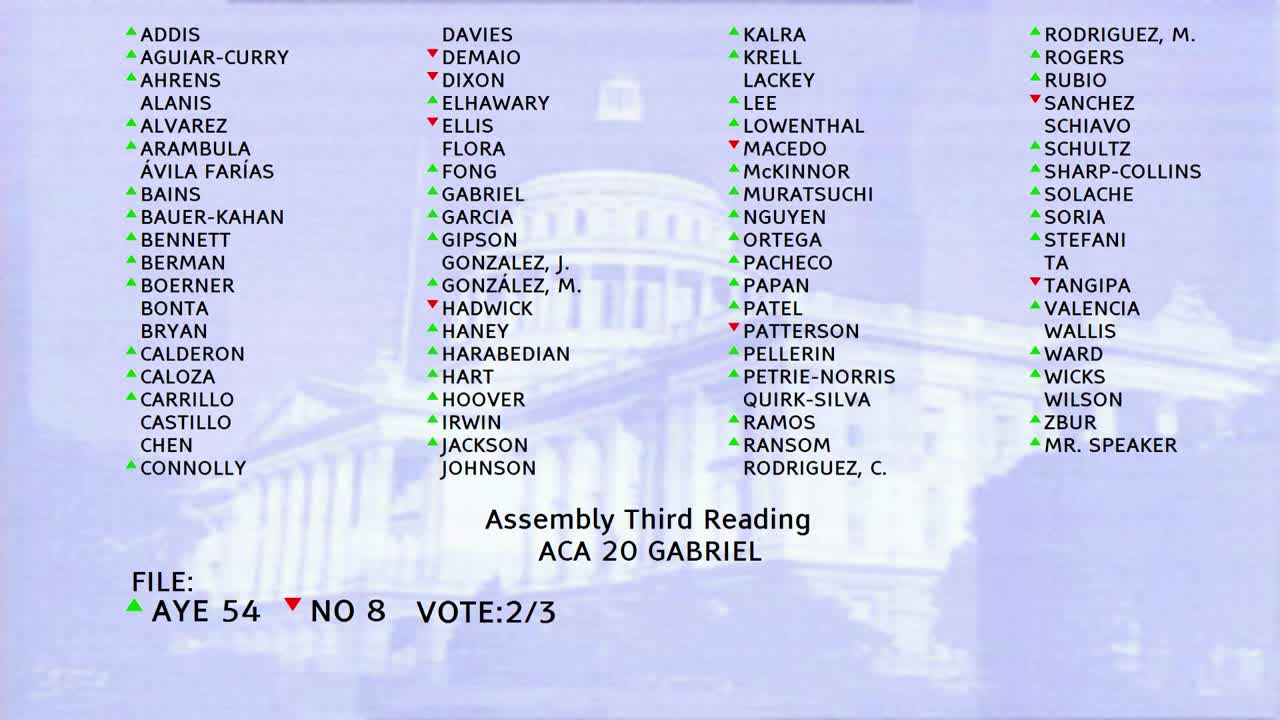 8MIN
Assembly Floor
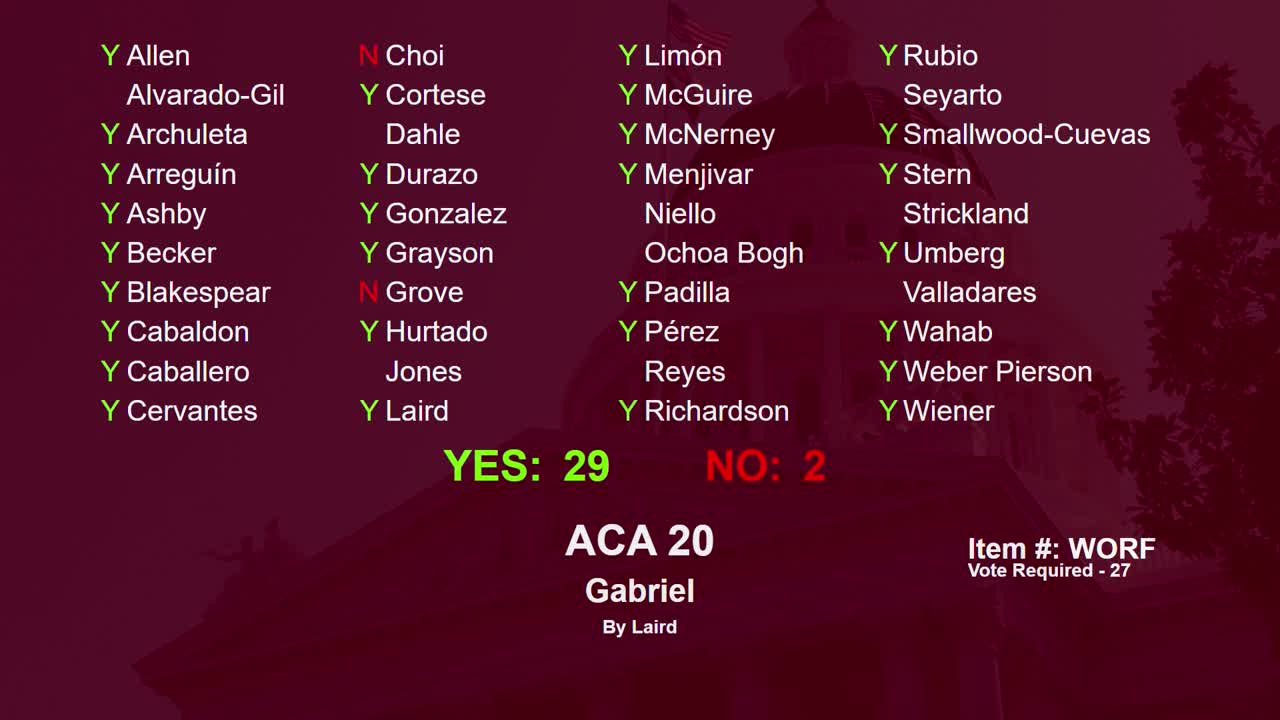 7MIN
Senate Floor
 16MIN
Assembly Standing Committee on Judiciary
 12MIN
Senate Standing Committee on Judiciary
 21MIN
Assembly Standing Committee on Military and Veterans Affairs
 2MIN
Senate Standing Committee on Revenue and Taxation
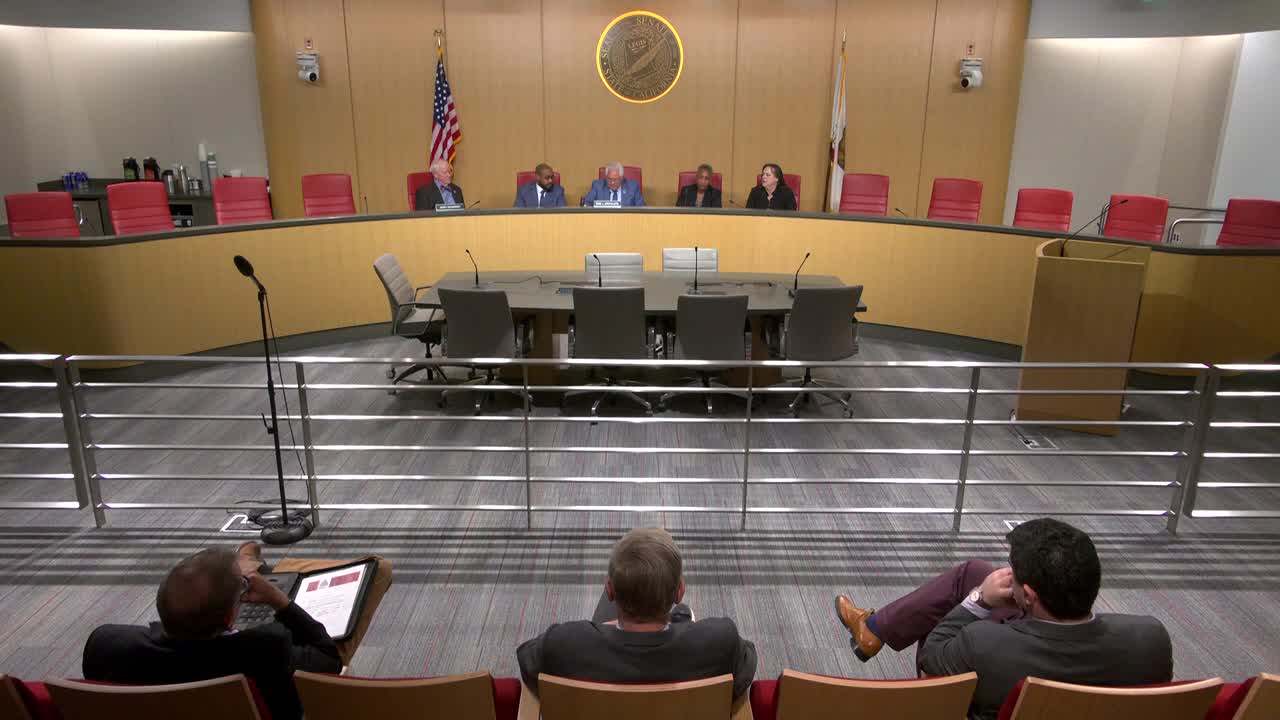 6MIN
Senate Standing Committee on Military and Veterans Affairs


Bill Co-Author(s):