SB 626: Perinatal health screenings and treatment.
- Session Year: 2025-2026
- House: Senate
- Latest Version Date: 2026-09-30
Current Status:
Passed
(2026-09-30: Chaptered by Secretary of State. Chapter 973, Statutes of 2026.)
Introduced
In Committee
Awaiting First Chamber Vote
Passed First Chamber
In Committee
Awaiting Second Chamber Vote
Passed Second Chamber
Enacted
What does this bill do?
The bill requires health insurers and health care service plans to run maternal mental health programs that include at least one screening during pregnancy and one or more screenings after birth, follow ACOG clinical guidelines, and provide case management or care coordination for people who screen positive. It also requires licensed prenatal, perinatal, or postpartum providers to offer or perform screening (or refer to another authorized clinician), ensure a clinical evaluation when a screen is positive, and offer or provide treatment consistent with the provider’s scope of practice.
The summary is provided by generative AI which can make mistakes. For original language, please view the details in the table below.
Existing law requires a licensed health care practitioner who provides prenatal, postpartum, or interpregnancy care for a patient to offer to screen or appropriately screen a mother for maternal mental health conditions. For purposes of that requirement, existing law defines maternal mental health condition to mean a mental health condition that occurs during pregnancy, the postpartum period, or interpregnancy, as specified.
This bill would limit the definition of maternal mental health condition to a mental health condition that occurs during the pregnancy or the postpartum period, as specified. The bill would authorize a licensed health care practitioner to satisfy the above-described requirement for maternal mental health screening by referring the patient or client to another licensed health care practitioner who is authorized to screen, evaluate, diagnose, and treat the patient or client for a maternal mental health condition. The bill would require a licensed health care practitioner who provides prenatal, postpartum, or perinatal care for a patient or client who screens positive for a maternal mental health condition to ensure that the patient or client receives appropriate clinical evaluation, and, if the practitioner diagnoses a patient or client with a maternal mental health condition, offer or provide treatment to the patient or client, consistent with the providers scope of practice.
Existing law, the Knox-Keene Health Care Service Plan Act of 1975, provides for the licensure and regulation of health care service plans by the Department of Managed Health Care and makes a willful violation of the act a crime. Existing law provides for the regulation of health insurers by the Department of Insurance. Existing law requires a health care service plan or health insurer to develop a maternal mental health program designed to promote quality and cost-effective outcomes. Existing law requires the program to, among other things, conduct specified maternal mental health screenings during pregnancy and the postpartum period. Existing law requires the program guidelines and criteria to be provided to relevant medical providers, including all contracting obstetric providers. Existing law encourages health care service plans and health insurers to, among other things, improve screening, treatment, and referral to maternal mental health services. For purposes of these provisions, existing law defines maternal mental health to mean a mental health condition that occurs during pregnancy or during the postpartum period, as specified.
This bill would modify the term to maternal mental health condition and define it as a mental health condition that occurs during the pregnancy or the postpartum period, as defined by the most recent clinical guidelines adopted by the American College of Obstetricians, as specified. The bill would instead require the above-described maternal mental health program to include maternal mental health screening to be conducted during pregnancy and one or more mental health screenings to be conducted during the postpartum period in accordance with applicable clinical guidelines and the standards of care appropriate to the providers scope of practice, as specified. The bill would require program guidelines and criteria to be provided to relevant licensed health care practitioners, as defined, including all contracting obstetric providers. The bill would require a health care service plan or health insurer to provide case management or care coordination for an enrollee or insured who screens positive for a maternal mental health condition in accordance with the plans or insurers existing case management and care coordination programs. The bill would encourage health care service plans and health insurers to improve treatment, including through the use of outpatient prescription drugs approved for maternal mental health by the United States Food and Drug Administration. Because a willful violation of these provisions by a health care service plan would be a crime, the bill would impose a state-mandated local program.
The California Constitution requires the state to reimburse local agencies and school districts for certain costs mandated by the state. Statutory provisions establish procedures for making that reimbursement.
This bill would provide that no reimbursement is required by this act for a specified reason.
Existing law requires a licensed health care practitioner who provides prenatal, postpartum, or interpregnancy care for a patient to offer to screen or appropriately screen a mother for maternal mental health conditions. For purposes of that requirement, existing law defines maternal mental health condition to mean a mental health condition that occurs during pregnancy, the postpartum period, or interpregnancy, as specified.
This bill would limit the definition of maternal mental health condition to a mental health condition that occurs during the pregnancy or the postpartum period, as specified. The bill would authorize a licensed health care practitioner to satisfy the above-described requirement for maternal mental health screening by referring the patient or client to another licensed health care practitioner who is authorized to screen, evaluate, diagnose, and treat the patient or client for a maternal mental health condition. The bill would require a licensed health care practitioner who provides prenatal, postpartum, or perinatal care for a patient or client who screens positive for a maternal mental health condition to ensure that the patient or client receives appropriate clinical evaluation, and, if the practitioner diagnoses a patient or client with a maternal mental health condition, offer or provide treatment to the patient or client, consistent with the providers scope of practice.
Existing law, the Knox-Keene Health Care Service Plan Act of 1975, provides for the licensure and regulation of health care service plans by the Department of Managed Health Care and makes a willful violation of the act a crime. Existing law provides for the regulation of health insurers by the Department of Insurance. Existing law requires a health care service plan or health insurer to develop a maternal mental health program designed to promote quality and cost-effective outcomes. Existing law requires the program to, among other things, conduct specified maternal mental health screenings during pregnancy and the postpartum period. Existing law requires the program guidelines and criteria to be provided to relevant medical providers, including all contracting obstetric providers. Existing law encourages health care service plans and health insurers to, among other things, improve screening, treatment, and referral to maternal mental health services. For purposes of these provisions, existing law defines maternal mental health to mean a mental health condition that occurs during pregnancy or during the postpartum period, as specified.
This bill would modify the term to maternal mental health condition and define it as a mental health condition that occurs during the pregnancy or the postpartum period, as defined by the most recent clinical guidelines adopted by the American College of Obstetricians, as specified. The bill would instead require the above-described maternal mental health program to include maternal mental health screening to be conducted during pregnancy and one or more mental health screenings to be conducted during the postpartum period in accordance with applicable clinical guidelines and the standards of care appropriate to the providers scope of practice, as specified. The bill would require program guidelines and criteria to be provided to relevant licensed health care practitioners, as defined, including all contracting obstetric providers. The bill would require a health care service plan or health insurer to provide case management or care coordination for an enrollee or insured who screens positive for a maternal mental health condition in accordance with the plans or insurers existing case management and care coordination programs. The bill would encourage health care service plans and health insurers to improve treatment, including through the use of outpatient prescription drugs approved for maternal mental health by the United States Food and Drug Administration. Because a willful violation of these provisions by a health care service plan would be a crime, the bill would impose a state-mandated local program.
The California Constitution requires the state to reimburse local agencies and school districts for certain costs mandated by the state. Statutory provisions establish procedures for making that reimbursement.
This bill would provide that no reimbursement is required by this act for a specified reason.
Existing law requires a licensed health care practitioner who provides prenatal, postpartum, or interpregnancy care for a patient to offer to screen or appropriately screen a mother for maternal mental health conditions. For purposes of that requirement, existing law defines maternal mental health condition to mean a mental health condition that occurs during pregnancy, the postpartum period, or interpregnancy, as specified.
This bill would modify the term limit the definition of maternal mental health condition to perinatal mental health condition and additionally include in its definition a mental health condition that occurs during the perinatal period. pregnancy or the postpartum period, as specified. The bill would authorize a licensed health care practitioner to satisfy the above-described requirement for maternal mental health screening by referring the patient or client to another licensed health care practitioner who is authorized to screen, evaluate, diagnose, and treat the patient or client for a perinatal maternal mental health condition. The bill would require a licensed health care practitioner who provides prenatal, postpartum, or perinatal care for a patient or client to diagnose and treat the patient or client for a perinatal who screens positive for a maternal mental health condition in accordance to ensure that the patient or client receives appropriate clinical evaluation, and, if the practitioner diagnoses a patient or client with a maternal mental health condition, offer or provide treatment to the patient or client, consistent with the standards appropriate to the providers license, training, and scope of practice, as specified. providers scope of practice.
Existing law, the Knox-Keene Health Care Service Plan Act of 1975, provides for the licensure and regulation of health care service plans by the Department of Managed Health Care and makes a willful violation of the act a crime. Existing law provides for the regulation of health insurers by the Department of Insurance. Existing law requires a health care service plan or health insurer to develop a maternal mental health program designed to promote quality and cost-effective outcomes. Existing law requires the program to, among other things, conduct specified maternal mental health screenings during pregnancy and the postpartum period. Existing law requires the program guidelines and criteria to be provided to relevant medical providers, including all contracting obstetric providers. Existing law encourages health care service plans and health insurers to, among other things, improve screening, treatment, and referral to maternal mental health services. For purposes of these provisions, existing law defines maternal mental health to mean a mental health condition that occurs during pregnancy or during the postpartum period, as specified.
This bill would modify the term to maternal mental health to perinatal mental health and additionally include in its definition health condition and define it as a mental health condition that occurs during the perinatal period, pregnancy or the postpartum period, as defined by the most recent clinical guidelines adopted by the American College of Obstetricians, as specified. The bill would instead require the above-described maternal mental health program to include perinatal maternal mental health screening to be conducted during pregnancy and during the postpartum and perinatal periods one or more mental health screenings to be conducted during the postpartum period in accordance with applicable clinical guidelines and the standards of care appropriate to the providers scope of practice, as specified. The bill would require program guidelines and criteria to be provided to relevant licensed health care practitioners, as defined, including all contracting obstetric providers. The bill would require a health care service plan or health insurer to provide case management and or care coordination for an enrollee or insured during the perinatal period. The bill would require a plan or an insurer to annually report the utilization and outcomes of case management services to the appropriate department and to post that reported information to its internet website. who screens positive for a maternal mental health condition in accordance with the plans or insurers existing case management and care coordination programs. The bill would encourage health care service plans and health insurers to improve treatment, including through the use of outpatient prescription drugs approved for maternal mental health by the United States Food and Drug Administration. Because a willful violation of these provisions by a health care service plan would be a crime, the bill would impose a state-mandated local program.
The California Constitution requires the state to reimburse local agencies and school districts for certain costs mandated by the state. Statutory provisions establish procedures for making that reimbursement.
This bill would provide that no reimbursement is required by this act for a specified reason.
Existing law requires a licensed health care practitioner who provides prenatal, postpartum, or interpregnancy care for a patient to offer to screen or appropriately screen a mother for maternal mental health conditions. For purposes of that requirement, existing law defines maternal mental health condition to mean a mental health condition that occurs during pregnancy, the postpartum period, or interpregnancy, as specified.
This bill would modify the term maternal mental health condition to perinatal mental health condition and additionally include in its definition a mental health condition that occurs during the perinatal period. The bill would authorize a licensed health care practitioner to satisfy the above-described requirement by referring the patient or client to another licensed health care practitioner who is authorized to screen, diagnose, and treat the patient or client for a perinatal mental health condition. The bill would require a licensed health care practitioner who provides perinatal care for a patient to screen, diagnose, or client to diagnose and treat the patient or client for a perinatal mental health condition in accordance with applicable clinical guidelines or standards the standards appropriate to the providers license, training, and scope of practice, as specified.
Existing law, the Knox-Keene Health Care Service Plan Act of 1975, provides for the licensure and regulation of health care service plans by the Department of Managed Health Care and makes a willful violation of the act a crime. Existing law provides for the regulation of health insurers by the Department of Insurance. Existing law requires a health care service plan or health insurer to develop a maternal mental health program designed to promote quality and cost-effective outcomes. Existing law requires the program to, among other things, conduct specified maternal mental health screenings during pregnancy and the postpartum period. Existing law requires the program guidelines and criteria to be provided to relevant medical providers, including all contracting obstetric providers. For purposes of these provisions, existing law defines maternal mental health to mean a mental health condition that occurs during pregnancy or during the postpartum period, as specified.
This bill would modify the term maternal mental health to perinatal mental health and additionally include in its definition a mental health condition that occurs during the perinatal period, as specified. The bill would instead require the above-described program to include perinatal mental health screening to be conducted during pregnancy and during the postpartum and perinatal periods in accordance with applicable clinical guidelines or standards and the standards of care appropriate to the providers license, training, and scope of practice, as specified. The bill would require program guidelines and criteria to be provided to relevant licensed health care practitioners, as defined, including all contracting obstetric providers. The bill would require a health care service plan or health insurer to provide case management and care coordination for an enrollee or insured during the perinatal period. The bill would require a plan or an insurer to annually report the utilization and outcomes of case management services to the appropriate department and to post that reported information to its internet website. Because a willful violation of these provisions by a health care service plan would be a crime, the bill would impose a state-mandated local program.
The California Constitution requires the state to reimburse local agencies and school districts for certain costs mandated by the state. Statutory provisions establish procedures for making that reimbursement.
This bill would provide that no reimbursement is required by this act for a specified reason.
Existing law requires a licensed health care practitioner who provides prenatal, postpartum, or interpregnancy care for a patient to offer to screen or appropriately screen a mother for maternal mental health conditions. For purposes of that requirement, existing law defines maternal mental health condition to mean a mental health condition that occurs during pregnancy, the postpartum period, or interpregnancy, as specified.
This bill would modify the term maternal mental health condition to perinatal mental health condition and additionally include in its definition a mental health condition that occurs during the perinatal period. The bill would require a licensed health care practitioner who provides perinatal care for a patient to screen, diagnose, and treat the patient for a perinatal mental health condition according to the clinical guidelines from the American College of Obstetricians and Gynecologists. in accordance with applicable clinical guidelines or standards appropriate to the providers license, training, and scope of practice, as specified.
Existing law, the Knox-Keene Health Care Service Plan Act of 1975, provides for the licensure and regulation of health care service plans by the Department of Managed Health Care and makes a willful violation of the act a crime. Existing law provides for the regulation of health insurers by the Department of Insurance. Existing law requires a health care service plan or health insurer to develop a maternal mental health program designed to promote quality and cost-effective outcomes. Existing law requires the program to, among other things, conduct specified maternal mental health screenings during pregnancy and the postpartum period. For purposes of these provisions, existing law defines maternal mental health to mean a mental health condition that occurs during pregnancy or during the postpartum period, as specified.
This bill would modify the term maternal mental health to perinatal mental health and additionally include in its definition a mental health condition that occurs during the perinatal period, as specified. The bill would instead require the above-described program to include perinatal mental health screening to be conducted during pregnancy and during the postpartum and perinatal periods according to clinical guidelines from the American College of Obstetricians and Gynecologists. in accordance with applicable clinical guidelines or standards appropriate to the providers license, training, and scope of practice, as specified. The bill would require a health care service plan or health insurer to provide case management and care coordination for an enrollee or insured during the perinatal period. The bill would require a plan or insurers an insurer to annually report the utilization and outcomes of case management services to the appropriate department and to post that reported information to its internet website. The bill would require a health care service plan contract or health insurance policy issued, amended, or renewed on or after January 1, 2026, to provide coverage for at least one medication and one digital therapeutic for perinatal mental health, as specified. Because a willful violation of these provisions by a health care service plan would be a crime, the bill would impose a state-mandated local program.
The California Constitution requires the state to reimburse local agencies and school districts for certain costs mandated by the state. Statutory provisions establish procedures for making that reimbursement.
This bill would provide that no reimbursement is required by this act for a specified reason.
Existing law requires a licensed health care practitioner who provides prenatal, postpartum, or interpregnancy care for a patient to offer to screen or appropriately screen a mother for maternal mental health conditions. For purposes of that requirement, existing law defines maternal mental health condition to mean a mental health condition that occurs during pregnancy, the postpartum period, or interpregnancy, as specified.
This bill would modify the term maternal mental health condition to perinatal mental health condition and additionally include in its definition a mental health condition that occurs during the perinatal period. The bill would require a licensed health care practitioner who provides perinatal care for a patient to screen, diagnose, and treat the patient for a maternal perinatal mental health condition according to the clinical guidelines from the American College of Obstetricians and Gynecologists.
Existing law, the Knox-Keene Health Care Service Plan Act of 1975, provides for the licensure and regulation of health care service plans by the Department of Managed Health Care and makes a willful violation of the act a crime. Existing law provides for the regulation of health insurers by the Department of Insurance. Existing law requires a health care service plan or health insurer to develop a maternal mental health program designed to promote quality and cost-effective outcomes, as specified. outcomes. Existing law requires the program to, among other things, conduct specified maternal mental health screenings during pregnancy and the postpartum period. For purposes of these provisions, existing law defines maternal mental health to mean a mental health condition that occurs during pregnancy or during the postpartum period, as specified.
This bill would modify the term maternal mental health to perinatal mental health and additionally include in its definition a mental health condition that occurs during the perinatal period, as specified. The bill would instead require the above-described program to include perinatal mental health screening to be conducted during pregnancy and during the postpartum and perinatal periods according to clinical guidelines from the American College of Obstetricians and Gynecologists. The bill would require a health care service plan or health insurer to provide case management and care coordination for an enrollee or insured during the perinatal period. The bill would require a plan or insurers to annually report the utilization and outcomes of case management services to the appropriate department and to post that reported information to its internet website. The bill would require a health care service plan contract or health insurance policy issued, amended, or renewed on or after January 1, 2026, to provide coverage for at least one medication and one digital therapeutic for maternal perinatal mental health, as specified. Because a willful violation of these provisions by a health care service plan would be a crime, the bill would impose a state-mandated local program.
The California Constitution requires the state to reimburse local agencies and school districts for certain costs mandated by the state. Statutory provisions establish procedures for making that reimbursement.
This bill would provide that no reimbursement is required by this act for a specified reason.
Existing law requires a licensed health care practitioner who provides prenatal, postpartum, or interpregnancy care for a patient to offer to screen or appropriately screen a mother for maternal mental health conditions.
This bill would require a licensed health care practitioner who provides perinatal care for a patient to screen, diagnose, and treat the patient for a maternal mental health condition according to the clinical guidelines from the American College of Obstetricians and Gynecologists.
Existing law, the Knox-Keene Health Care Service Plan Act of 1975, provides for the licensure and regulation of health care service plans by the Department of Managed Health Care and makes a willful violation of the act a crime. Existing law provides for the regulation of health insurers by the Department of Insurance. Existing law requires a health care service plan or health insurer to develop a maternal mental health program designed to promote quality and cost-effective outcomes, as specified.
This bill would require a health care service plan or health insurer to provide case management and care coordination for an enrollee or insured during the perinatal period. The bill would require a plan or insurers to annually report the utilization and outcomes of case management services to the appropriate department and to post that reported information to its internet website. The bill would require a health care service plan contract or health insurance policy issued, amended, or renewed on or after January 1, 2026, to provide coverage for at least one medication and one digital therapeutic for maternal mental health, as specified. Because a willful violation of these provisions by a health care service plan would be a crime, the bill would impose a state-mandated local program.
The California Constitution requires the state to reimburse local agencies and school districts for certain costs mandated by the state. Statutory provisions establish procedures for making that reimbursement.
This bill would provide that no reimbursement is required by this act for a specified reason.
(a)A health care service plan shall do all of the following:
(1)(A)Develop a maternal mental health program designed to promote quality and cost-effective outcomes. The program shall include one or more maternal mental health screenings to be conducted during pregnancy and one or more mental health screenings to be conducted during the postpartum period in accordance with applicable clinical guidelines and the standards of care appropriate to the providers scope of practice. The program shall be developed consistent with sound clinical principles and processes, and shall include quality measures to encourage screening, diagnosis, treatment, and referral. The program guidelines and criteria shall be provided to relevant licensed health care practitioners, including all contracting obstetric providers. As part of a maternal mental health program, the health care service plan is encouraged to improve screening, treatment, including through the use of outpatient prescription drugs approved for maternal mental health by the United States Food and Drug Administration, and referral to maternal mental health services, include coverage for doulas, incentivize training opportunities for contracting obstetric providers, and educate enrollees about the program.
(B)(i)The guidelines described in subparagraph (A) shall be guidelines adopted by the American College of Obstetricians and Gynecologists, unless those guidelines do not align with the providers scope of practice.
(ii)If the guidelines described in clause (i) do not align with the providers scope of practice, the guidelines may include, but are not limited to, guidelines adopted by other recognized professional bodies.
(C)This paragraph does not expand or alter a licensed providers existing scope of practice.
(2)(A)Provide case management or care coordination for an enrollee who screens positive for a maternal mental health condition in accordance with the plans existing case management and care coordination programs.
(B)Case management and care coordination services may include, as appropriate, identification of available treatment providers and community supports, appointment scheduling, behavioral health navigation, medication access assistance when prescribed, regular patient engagement or followup, and communication with the referring obstetric and behavioral health providers.
(C)Case management and care coordination may be provided by the health care service plan, or by a delegated provider if case management or care coordination, as defined in subparagraph (B), is already provided for pursuant to the contract between the plan and delegated provider as of December 31, 2026, or in accordance with Section 1375.7.
(D)This paragraph does not limit a plans flexibility in care delivery models, if an enrollee receives timely and appropriate followup care consistent with the standard of care and the plans quality improvement requirements.
(E)This paragraph does not create a new benefit.
(3)Incorporate maternal mental health screening, referral, care coordination, and followup activities into its existing quality improvement and population health management programs, and maintain documentation demonstrating compliance that is available to regulators upon request.
(b)For the purposes of this section:
(1)Case management means a health care process in which a health care professional, acting within their scope of practice, assists a patient by developing and implementing a coordinated plan of care that integrates the medical and psychosocial support services the patient needs to achieve optimal outcomes.
(2)Contracting obstetric provider means an individual who is certified or licensed pursuant to Division 2 (commencing with Section 500) of the Business and Professions Code, or an initiative act referred to in that division, and who is contracted with the enrollees health care service plan to provide services under the enrollees plan contract.
(3)Health care practitioner means a physician and surgeon, naturopathic doctor, nurse practitioner, physician assistant, nurse midwife, or a midwife licensed pursuant to Division 2 (commencing with Section 500) of the Business and Professions Code or an initiative act referred to in that division and who is acting within their scope of practice.
(4)Health care service plan includes Medi-Cal managed care plans that contract with the State Department of Health Care Services pursuant to Chapter 7 (commencing with Section 14000) and Chapter 8 (commencing with Section 14200) of Part 3 of Division 9 of the Welfare and Institutions Code. The State Department of Health Care Services shall seek any federal approvals it deems necessary to implement this section. This section applies to Medi-Cal managed care plan contracts only to the extent that the State Department of Health Care Services obtains any necessary federal approvals, and federal financial participation under the Medi-Cal program is available and not otherwise jeopardized.
(5)Maternal mental health condition means a mental health condition, including postpartum or perinatal depression, that occurs during the pregnancy or the postpartum period, as defined by the most recent clinical guidelines adopted by the American College of Obstetricians and Gynecologists on the screening and diagnosis of mental health conditions during pregnancy and postpartum, regardless of the pregnancy outcome and inclusive of gender-diverse birthing people.
(c)This section does not apply to specialized health care service plans, except specialized behavioral health-only plans offering professional mental health services.
(d)Notwithstanding subdivision (a), a Medi-Cal managed care plan shall continue to comply with any quality measures required or adopted by the State Department of Health Care Services. Quality measures included in a Medi-Cal managed care plans maternal mental health program shall not be inconsistent with quality measures required or adopted by the State Department of Health Care Services.
(e)This section shall not be construed to limit access to additional treatment options for maternal mental health.
SEC. 2.Section 123640 of the Health and Safety Code is amended to read:123640.(a)A licensed health care practitioner who provides prenatal, postpartum, or perinatal care for a patient or client shall ensure that the patient or client is offered screening or is appropriately screened for maternal mental health conditions consistent with Section 1367.625 of the Health and Safety Code, Section 10123.867 of the Insurance Code, and applicable standards of care.
(b)If a patient or client screens positive for a maternal mental health condition, the licensed health care practitioner shall, consistent with the practitioners scope of practice, ensure that the patient or client is offered or receives a clinical evaluation. If the practitioner diagnoses the patient or client with a maternal mental health condition, the practitioner shall offer or provide treatment to the patient or client.
(c)A licensed health care practitioner may satisfy the requirements of subdivisions (a) and (b) by referring the patient or client to another licensed health care practitioner who is authorized to screen, evaluate, diagnose, and treat the patient or client for a maternal mental health condition.
(d)This section shall not apply to a licensed health care practitioner when providing emergency services or care, as defined in Section 1317.1.
(e)This section does not preclude any licensed or certified provider acting within their scope of practice from screening for maternal mental health conditions.
(f)For purposes of this section, the following definitions apply:
(1)Health care practitioner means a physician and surgeon, naturopathic doctor, nurse practitioner, physician assistant, nurse midwife, or a midwife licensed pursuant to Division 2 (commencing with Section 500) of the Business and Professions Code or an initiative act referred to in that division and who is acting within their scope of practice.
(2)Maternal mental health condition means a mental health condition, including postpartum or perinatal depression, that occurs during the pregnancy or the postpartum period, as defined by the most recent clinical guidelines adopted by the American College of Obstetricians and Gynecologists on the screening and diagnosis of mental health conditions during pregnancy and postpartum, regardless of the pregnancy outcome and inclusive of gender-diverse birthing people.
SEC. 3.Section 10123.867 of the Insurance Code is amended to read:10123.867.(a)A health insurer shall do all of the following:
(1)(A)Develop a maternal mental health program designed to promote quality and cost-effective outcomes. The program shall include one or more maternal mental health screenings to be conducted during pregnancy and one or more mental health screenings to be conducted during the postpartum period in accordance with applicable clinical guidelines and the standards of care appropriate to the providers scope of practice. The program shall be developed consistent with sound clinical principles and processes, and shall include quality measures to encourage screening, diagnosis, treatment, and referral. The program guidelines and criteria shall be provided to relevant licensed health care practitioners, including all contracting obstetric providers. As part of the maternal mental health program, a health insurer is encouraged to improve screening, treatment, including through the use of outpatient prescription drugs approved for maternal mental health by the United States Food and Drug Administration, and referral to maternal mental health services, include coverage for doulas, incentivize training opportunities for contracting obstetric providers, and educate insureds about the program.
(B)(i)The guidelines described in subparagraph (A) shall be guidelines adopted by the American College of Obstetricians and Gynecologists, unless those guidelines do not align with the providers scope of practice.
(ii)If the guidelines described in clause (i) do not align with the providers scope of practice, the guidelines may include, but are not limited to, guidelines adopted by other recognized professional bodies.
(C)This paragraph does not expand or alter a licensed providers existing scope of practice.
(2)(A)Provide case management or care coordination for an insured who screens positive for a maternal mental health condition in accordance with the insurers existing case management and care coordination programs.
(B)Case management and care coordination services may include, as appropriate, identification of available treatment providers and community supports, appointment scheduling, behavioral health navigation, medication access assistance when prescribed, regular patient engagement or followup, and communication with the referring obstetric and behavioral health providers.
(C)Case management and care coordination may be provided by the health insurer, or by a delegated provider if case management or care coordination, as defined in subparagraph (B), is already provided for pursuant to the contract between the insurer and delegated provider as of December 31, 2026, or in accordance with Section 10133.65.
(D)This paragraph does not limit an insurers flexibility in care delivery models, if an insured receives timely and appropriate followup care consistent with the standard of care and the insurers quality improvement requirements.
(E)This paragraph does not create a new benefit.
(3)Incorporate maternal mental health screening, referral, care coordination, and followup activities into its existing quality improvement and population health management programs, and maintain documentation demonstrating compliance that is available to regulators upon request.
(b)For the purposes of this section:
(1)Case management means a health care process in which a health care professional, acting within their scope of practice, assists a patient by developing and implementing a coordinated plan of care that integrates the medical and psychosocial support services the patient needs to achieve optimal outcomes.
(2)Contracting obstetric provider means an individual who is certified or licensed pursuant to Division 2 (commencing with Section 500) of the Business and Professions Code, or an initiative act referred to in that division, and who is contracted with the insureds health insurer to provide services under the insureds health insurance policy.
(3)Health care practitioner means a physician and surgeon, naturopathic doctor, nurse practitioner, physician assistant, nurse midwife, or a midwife licensed pursuant to Division 2 (commencing with Section 500) of the Business and Professions Code or an initiative act referred to in that division and who is acting within their scope of practice.
(4)Maternal mental health condition means a mental health condition, including postpartum or perinatal depression, that occurs during the pregnancy or the postpartum period, as defined by the most recent clinical guidelines adopted by the American College of Obstetricians and Gynecologists on the screening and diagnosis of mental health conditions during pregnancy and postpartum, regardless of the pregnancy outcome and inclusive of gender-diverse birthing people.
(c)This section does not apply to Medicare supplement policies or to specialized health insurers, except behavioral health-only insurers that provide coverage for professional mental health services.
(d)This section shall not be construed to limit access to additional treatment options for maternal mental health.
SEC. 4.No reimbursement is required by this act pursuant to Section 6 of Article XIIIB of the California Constitution because the only costs that may be incurred by a local agency or school district will be incurred because this act creates a new crime or infraction, eliminates a crime or infraction, or changes the penalty for a crime or infraction, within the meaning of Section 17556 of the Government Code, or changes the definition of a crime within the meaning of Section 6 of Article XIIIB of the California Constitution.
(a)A health care service plan shall do all of the following:
(1)(A)Develop a maternal mental health program designed to promote quality and cost-effective outcomes. The program shall include one or more maternal mental health screenings to be conducted during pregnancy and one or more mental health screenings to be conducted during the postpartum period in accordance with applicable clinical guidelines and the standards of care appropriate to the providers scope of practice. The program shall be developed consistent with sound clinical principles and processes, and shall include quality measures to encourage screening, diagnosis, treatment, and referral. The program guidelines and criteria shall be provided to relevant licensed health care practitioners, including all contracting obstetric providers. As part of a maternal mental health program, the health care service plan is encouraged to improve screening, treatment, including through the use of outpatient prescription drugs approved for maternal mental health by the United States Food and Drug Administration, and referral to maternal mental health services, include coverage for doulas, incentivize training opportunities for contracting obstetric providers, and educate enrollees about the program.
(B)(i)The guidelines described in subparagraph (A) shall be guidelines adopted by the American College of Obstetricians and Gynecologists, unless those guidelines do not align with the providers scope of practice.
(ii)If the guidelines described in clause (i) do not align with the providers scope of practice, the guidelines may include, but are not limited to, guidelines adopted by other recognized professional bodies.
(C)This paragraph does not expand or alter a licensed providers existing scope of practice.
(2)(A)Provide case management or care coordination for an enrollee who screens positive for a maternal mental health condition in accordance with the plans existing case management and care coordination programs.
(B)Case management and care coordination services may include, as appropriate, identification of available treatment providers and community supports, appointment scheduling, behavioral health navigation, medication access assistance when prescribed, regular patient engagement or followup, and communication with the referring obstetric and behavioral health providers.
(C)Case management and care coordination may be provided by the health care service plan, or by a delegated provider if case management or care coordination, as defined in subparagraph (B), is already provided for pursuant to the contract between the plan and delegated provider as of December 31, 2026, or in accordance with Section 1375.7.
(D)This paragraph does not limit a plans flexibility in care delivery models, if an enrollee receives timely and appropriate followup care consistent with the standard of care and the plans quality improvement requirements.
(E)This paragraph does not create a new benefit.
(3)Incorporate maternal mental health screening, referral, care coordination, and followup activities into its existing quality improvement and population health management programs, and maintain documentation demonstrating compliance that is available to regulators upon request.
(b)For the purposes of this section:
(1)Case management means a health care process in which a health care professional, acting within their scope of practice, assists a patient by developing and implementing a coordinated plan of care that integrates the medical and psychosocial support services the patient needs to achieve optimal outcomes.
(2)Contracting obstetric provider means an individual who is certified or licensed pursuant to Division 2 (commencing with Section 500) of the Business and Professions Code, or an initiative act referred to in that division, and who is contracted with the enrollees health care service plan to provide services under the enrollees plan contract.
(3)Health care practitioner means a physician and surgeon, naturopathic doctor, nurse practitioner, physician assistant, nurse midwife, or a midwife licensed pursuant to Division 2 (commencing with Section 500) of the Business and Professions Code or an initiative act referred to in that division and who is acting within their scope of practice.
(4)Health care service plan includes Medi-Cal managed care plans that contract with the State Department of Health Care Services pursuant to Chapter 7 (commencing with Section 14000) and Chapter 8 (commencing with Section 14200) of Part 3 of Division 9 of the Welfare and Institutions Code. The State Department of Health Care Services shall seek any federal approvals it deems necessary to implement this section. This section applies to Medi-Cal managed care plan contracts only to the extent that the State Department of Health Care Services obtains any necessary federal approvals, and federal financial participation under the Medi-Cal program is available and not otherwise jeopardized.
(5)Maternal mental health condition means a mental health condition, including postpartum or perinatal depression, that occurs during the pregnancy or the postpartum period, as defined by the most recent clinical guidelines adopted by the American College of Obstetricians and Gynecologists on the screening and diagnosis of mental health conditions during pregnancy and postpartum, regardless of the pregnancy outcome and inclusive of gender-diverse birthing people.
(c)This section does not apply to specialized health care service plans, except specialized behavioral health-only plans offering professional mental health services.
(d)Notwithstanding subdivision (a), a Medi-Cal managed care plan shall continue to comply with any quality measures required or adopted by the State Department of Health Care Services. Quality measures included in a Medi-Cal managed care plans maternal mental health program shall not be inconsistent with quality measures required or adopted by the State Department of Health Care Services.
(e)This section shall not be construed to limit access to additional treatment options for maternal mental health.
SEC. 2.Section 123640 of the Health and Safety Code is amended to read:123640.(a)A licensed health care practitioner who provides prenatal, postpartum, or perinatal care for a patient or client shall ensure that the patient or client is offered screening or is appropriately screened for maternal mental health conditions consistent with Section 1367.625 of the Health and Safety Code, Section 10123.867 of the Insurance Code, and applicable standards of care.
(b)If a patient or client screens positive for a maternal mental health condition, the licensed health care practitioner shall, consistent with the practitioners scope of practice, ensure that the patient or client is offered or receives a clinical evaluation. If the practitioner diagnoses the patient or client with a maternal mental health condition, the practitioner shall offer or provide treatment to the patient or client.
(c)A licensed health care practitioner may satisfy the requirements of subdivisions (a) and (b) by referring the patient or client to another licensed health care practitioner who is authorized to screen, evaluate, diagnose, and treat the patient or client for a maternal mental health condition.
(d)This section shall not apply to a licensed health care practitioner when providing emergency services or care, as defined in Section 1317.1.
(e)This section does not preclude any licensed or certified provider acting within their scope of practice from screening for maternal mental health conditions.
(f)For purposes of this section, the following definitions apply:
(1)Health care practitioner means a physician and surgeon, naturopathic doctor, nurse practitioner, physician assistant, nurse midwife, or a midwife licensed pursuant to Division 2 (commencing with Section 500) of the Business and Professions Code or an initiative act referred to in that division and who is acting within their scope of practice.
(2)Maternal mental health condition means a mental health condition, including postpartum or perinatal depression, that occurs during the pregnancy or the postpartum period, as defined by the most recent clinical guidelines adopted by the American College of Obstetricians and Gynecologists on the screening and diagnosis of mental health conditions during pregnancy and postpartum, regardless of the pregnancy outcome and inclusive of gender-diverse birthing people.
SEC. 3.Section 10123.867 of the Insurance Code is amended to read:10123.867.(a)A health insurer shall do all of the following:
(1)(A)Develop a maternal mental health program designed to promote quality and cost-effective outcomes. The program shall include one or more maternal mental health screenings to be conducted during pregnancy and one or more mental health screenings to be conducted during the postpartum period in accordance with applicable clinical guidelines and the standards of care appropriate to the providers scope of practice. The program shall be developed consistent with sound clinical principles and processes, and shall include quality measures to encourage screening, diagnosis, treatment, and referral. The program guidelines and criteria shall be provided to relevant licensed health care practitioners, including all contracting obstetric providers. As part of the maternal mental health program, a health insurer is encouraged to improve screening, treatment, including through the use of outpatient prescription drugs approved for maternal mental health by the United States Food and Drug Administration, and referral to maternal mental health services, include coverage for doulas, incentivize training opportunities for contracting obstetric providers, and educate insureds about the program.
(B)(i)The guidelines described in subparagraph (A) shall be guidelines adopted by the American College of Obstetricians and Gynecologists, unless those guidelines do not align with the providers scope of practice.
(ii)If the guidelines described in clause (i) do not align with the providers scope of practice, the guidelines may include, but are not limited to, guidelines adopted by other recognized professional bodies.
(C)This paragraph does not expand or alter a licensed providers existing scope of practice.
(2)(A)Provide case management or care coordination for an insured who screens positive for a maternal mental health condition in accordance with the insurers existing case management and care coordination programs.
(B)Case management and care coordination services may include, as appropriate, identification of available treatment providers and community supports, appointment scheduling, behavioral health navigation, medication access assistance when prescribed, regular patient engagement or followup, and communication with the referring obstetric and behavioral health providers.
(C)Case management and care coordination may be provided by the health insurer, or by a delegated provider if case management or care coordination, as defined in subparagraph (B), is already provided for pursuant to the contract between the insurer and delegated provider as of December 31, 2026, or in accordance with Section 10133.65.
(D)This paragraph does not limit an insurers flexibility in care delivery models, if an insured receives timely and appropriate followup care consistent with the standard of care and the insurers quality improvement requirements.
(E)This paragraph does not create a new benefit.
(3)Incorporate maternal mental health screening, referral, care coordination, and followup activities into its existing quality improvement and population health management programs, and maintain documentation demonstrating compliance that is available to regulators upon request.
(b)For the purposes of this section:
(1)Case management means a health care process in which a health care professional, acting within their scope of practice, assists a patient by developing and implementing a coordinated plan of care that integrates the medical and psychosocial support services the patient needs to achieve optimal outcomes.
(2)Contracting obstetric provider means an individual who is certified or licensed pursuant to Division 2 (commencing with Section 500) of the Business and Professions Code, or an initiative act referred to in that division, and who is contracted with the insureds health insurer to provide services under the insureds health insurance policy.
(3)Health care practitioner means a physician and surgeon, naturopathic doctor, nurse practitioner, physician assistant, nurse midwife, or a midwife licensed pursuant to Division 2 (commencing with Section 500) of the Business and Professions Code or an initiative act referred to in that division and who is acting within their scope of practice.
(4)Maternal mental health condition means a mental health condition, including postpartum or perinatal depression, that occurs during the pregnancy or the postpartum period, as defined by the most recent clinical guidelines adopted by the American College of Obstetricians and Gynecologists on the screening and diagnosis of mental health conditions during pregnancy and postpartum, regardless of the pregnancy outcome and inclusive of gender-diverse birthing people.
(c)This section does not apply to Medicare supplement policies or to specialized health insurers, except behavioral health-only insurers that provide coverage for professional mental health services.
(d)This section shall not be construed to limit access to additional treatment options for maternal mental health.
SEC. 4.No reimbursement is required by this act pursuant to Section 6 of Article XIIIB of the California Constitution because the only costs that may be incurred by a local agency or school district will be incurred because this act creates a new crime or infraction, eliminates a crime or infraction, or changes the penalty for a crime or infraction, within the meaning of Section 17556 of the Government Code, or changes the definition of a crime within the meaning of Section 6 of Article XIIIB of the California Constitution.
(a)A health care service plan shall do all of the following:
(1)(A)Develop a perinatal maternal mental health program designed to promote quality and cost-effective outcomes. The program shall include one or more perinatal maternal mental health screenings to be conducted during pregnancy and during the postpartum and perinatal periods one or more mental health screenings to be conducted during the postpartum period in accordance with applicable clinical guidelines and the standards of care appropriate to the providers scope of practice. The program shall be developed consistent with sound clinical principles and processes, and shall include quality measures to encourage screening, diagnosis, treatment, and referral. The program guidelines and criteria shall be provided to relevant licensed health care practitioners, including all contracting obstetric providers. As part of a perinatal maternal mental health program, the health care service plan is encouraged to improve screening, treatment, including through the use of medication and digital therapeutics outpatient prescription drugs approved for perinatal maternal mental health by the United States Food and Drug Administration, and referral to perinatal maternal mental health services, include coverage for doulas, incentivize training opportunities for contracting obstetric providers, and educate enrollees about the program.
(B)(i)The guidelines described in subparagraph (A) shall be guidelines adopted by the American College of Obstetricians and Gynecologists, unless those guidelines do not align with the providers scope of practice.
(ii)If the guidelines described in clause (i) do not align with the providers scope of practice, the guidelines may include, but are not limited to, guidelines adopted by other recognized professional bodies.
(C)This paragraph does not expand or alter a licensed providers existing scope of practice.
(2)(A)Provide case management and or care coordination for an enrollee during the perinatal period. who screens positive for a maternal mental health condition in accordance with the plans existing case management and care coordination programs.
(3)Annually report to the department on the utilization and outcomes of case management services.(4)Publicly post the information reported pursuant to paragraph (3) on the plans internet website.(B)Case management and care coordination services may include, as appropriate, identification of available treatment providers and community supports, appointment scheduling, behavioral health navigation, medication access assistance when prescribed, regular patient engagement or followup, and communication with the referring obstetric and behavioral health providers.
(C)Case management and care coordination may be provided by the health care service plan, or by a delegated provider if case management or care coordination, as defined in subparagraph (B), is already provided for pursuant to the contract between the plan and delegated provider as of December 31, 2026, or in accordance with Section 1375.7.
(D)This paragraph does not limit a plans flexibility in care delivery models, if an enrollee receives timely and appropriate followup care consistent with the standard of care and the plans quality improvement requirements.
(E)This paragraph does not create a new benefit.
(3)Incorporate maternal mental health screening, referral, care coordination, and followup activities into its existing quality improvement and population health management programs, and maintain documentation demonstrating compliance that is available to regulators upon request.
(b)For the purposes of this section:
(1)Case management means a health care process in which a health care professional, acting within their scope of practice, assists a patient by developing and implementing a coordinated plan of care that integrates the medical and psychosocial support services the patient needs to achieve optimal outcomes.
(1)(2)Contracting obstetric provider means an individual who is certified or licensed pursuant to Division 2 (commencing with Section 500) of the Business and Professions Code, or an initiative act referred to in that division, and who is contracted with the enrollees health care service plan to provide services under the enrollees plan contract.
(2)(3)Health care practitioner means a physician and surgeon, naturopathic doctor, nurse practitioner, physician assistant, nurse midwife, or a midwife licensed pursuant to Division 2 (commencing with Section 500) of the Business and Professions Code or an initiative act referred to in that division and who is acting within their scope of practice.
(3)(4)Health care service plan includes Medi-Cal managed care plans that contract with the State Department of Health Care Services pursuant to Chapter 7 (commencing with Section 14000) and Chapter 8 (commencing with Section 14200) of Part 3 of Division 9 of the Welfare and Institutions Code. The State Department of Health Care Services shall seek any federal approvals it deems necessary to implement this section. This section applies to Medi-Cal managed care plan contracts only to the extent that the State Department of Health Care Services obtains any necessary federal approvals, and federal financial participation under the Medi-Cal program is available and not otherwise jeopardized.
(4)Perinatal(5)Maternal mental health health condition means a mental health condition condition, including postpartum or perinatal depression, that occurs during pregnancy, the pregnancy or the postpartum period, or the perinatal period and includes, but is not limited to, postpartum or perinatal depression. as defined by the most recent clinical guidelines adopted by the American College of Obstetricians and Gynecologists on the screening and diagnosis of mental health conditions during pregnancy and postpartum, regardless of the pregnancy outcome and inclusive of gender-diverse birthing people.
(c)This section does not apply to specialized health care service plans, except specialized behavioral health-only plans offering professional mental health services.
(d)Notwithstanding subdivision (a), a Medi-Cal managed care plan shall continue to comply with any quality measures required or adopted by the State Department of Health Care Services. Quality measures included in a Medi-Cal managed care plans perinatal maternal mental health program shall not be inconsistent with quality measures required or adopted by the State Department of Health Care Services.
(e)This section shall not be construed to limit access to additional treatment options for perinatal maternal mental health.
SEC. 2.Section 123640 of the Health and Safety Code is amended to read:123640.(a)A licensed health care practitioner who provides prenatal, postpartum, perinatal, or interpregnancy or perinatal care for a patient or client shall ensure that the patient or client is offered screening or is appropriately screened for perinatal maternal mental health conditions consistent with Section 1367.625. 1367.625 of the Health and Safety Code, Section 10123.867 of the Insurance Code, and applicable standards of care.
(b)If a patient or client screens positive for a maternal mental health condition, the licensed health care practitioner shall, consistent with the practitioners scope of practice, ensure that the patient or client is offered or receives a clinical evaluation. If the practitioner diagnoses the patient or client with a maternal mental health condition, the practitioner shall offer or provide treatment to the patient or client.
(b)(c)A licensed health care practitioner may satisfy the requirements of subdivision (a) subdivisions (a) and (b) by referring the patient or client to another licensed health care practitioner who is authorized to screen, evaluate, diagnose, and treat the patient or client for a perinatal maternal mental health condition.
(c)A licensed health care practitioner who provides perinatal care for a patient shall diagnose and treat the patient or client for a perinatal mental health condition in accordance with the standards appropriate to the providers license, training, and scope of practice.(d)This section shall not apply to a licensed health care practitioner when providing emergency services or care, as defined in Section 1317.1.
(e)This section does not preclude any licensed or certified provider acting within their scope of practice from screening for perinatal maternal mental health conditions.
(f)For purposes of this section, the following definitions apply:
(1)Health care practitioner means a physician and surgeon, naturopathic doctor, nurse practitioner, physician assistant, nurse midwife, or a midwife licensed pursuant to Division 2 (commencing with Section 500) of the Business and Professions Code or an initiative act referred to in that division and who is acting within their scope of practice.
(2)Perinatal Maternal mental health condition means a mental health condition condition, including postpartum or perinatal depression, that occurs during pregnancy, the the pregnancy or the postpartum period, the perinatal period, or interpregnancy and includes, but is not limited to, postpartum or perinatal depression. as defined by the most recent clinical guidelines adopted by the American College of Obstetricians and Gynecologists on the screening and diagnosis of mental health conditions during pregnancy and postpartum, regardless of the pregnancy outcome and inclusive of gender-diverse birthing people.
SEC. 3.Section 10123.867 of the Insurance Code is amended to read:10123.867.(a)A health insurer shall do all of the following:
(1)(A)Develop a perinatal maternal mental health program designed to promote quality and cost-effective outcomes. The program shall include one or more perinatal maternal mental health screenings to be conducted during pregnancy and during the postpartum and perinatal periods one or more mental health screenings to be conducted during the postpartum period in accordance with applicable clinical guidelines and the standards of care appropriate to the providers scope of practice. The program shall be developed consistent with sound clinical principles and processes, and shall include quality measures to encourage screening, diagnosis, treatment, and referral. The program guidelines and criteria shall be provided to relevant licensed health care practitioners, including all contracting obstetric providers. As part of the perinatal maternal mental health program, a health insurer is encouraged to improve screening, treatment, including through the use of medication and digital therapeutics outpatient prescription drugs approved for perinatal maternal mental health by the United States Food and Drug Administration, and referral to perinatal maternal mental health services, include coverage for doulas, incentivize training opportunities for contracting obstetric providers, and educate insureds about the program.
(B)(i)The guidelines described in subparagraph (A) shall be guidelines adopted by the American College of Obstetricians and Gynecologists, unless those guidelines do not align with the providers scope of practice.
(ii)If the guidelines described in clause (i) do not align with the providers scope of practice, the guidelines may include, but are not limited to, guidelines adopted by other recognized professional bodies.
(C)This paragraph does not expand or alter a licensed providers existing scope of practice.
(2)(A)Provide case management and or care coordination for an insured during the perinatal period. who screens positive for a maternal mental health condition in accordance with the insurers existing case management and care coordination programs.
(3)Annually report to the department on the utilization and outcomes of case management services.(4)Publicly post the information reported pursuant to paragraph (3) on the insurers internet website.(B)Case management and care coordination services may include, as appropriate, identification of available treatment providers and community supports, appointment scheduling, behavioral health navigation, medication access assistance when prescribed, regular patient engagement or followup, and communication with the referring obstetric and behavioral health providers.
(C)Case management and care coordination may be provided by the health insurer, or by a delegated provider if case management or care coordination, as defined in subparagraph (B), is already provided for pursuant to the contract between the insurer and delegated provider as of December 31, 2026, or in accordance with Section 10133.65.
(D)This paragraph does not limit an insurers flexibility in care delivery models, if an insured receives timely and appropriate followup care consistent with the standard of care and the insurers quality improvement requirements.
(E)This paragraph does not create a new benefit.
(3)Incorporate maternal mental health screening, referral, care coordination, and followup activities into its existing quality improvement and population health management programs, and maintain documentation demonstrating compliance that is available to regulators upon request.
(b)For the purposes of this section:
(1)Case management means a health care process in which a health care professional, acting within their scope of practice, assists a patient by developing and implementing a coordinated plan of care that integrates the medical and psychosocial support services the patient needs to achieve optimal outcomes.
(1)(2)Contracting obstetric provider means an individual who is certified or licensed pursuant to Division 2 (commencing with Section 500) of the Business and Professions Code, or an initiative act referred to in that division, and who is contracted with the insureds health insurer to provide services under the insureds health insurance policy.
(2)(3)Health care practitioner means a physician and surgeon, naturopathic doctor, nurse practitioner, physician assistant, nurse midwife, or a midwife licensed pursuant to Division 2 (commencing with Section 500) of the Business and Professions Code or an initiative act referred to in that division and who is acting within their scope of practice.
(3)Perinatal(4)Maternal mental health health condition means a mental health condition condition, including postpartum or perinatal depression, that occurs during pregnancy, the pregnancy or the postpartum period, or the perinatal period and includes, but is not limited to, postpartum or perinatal depression. as defined by the most recent clinical guidelines adopted by the American College of Obstetricians and Gynecologists on the screening and diagnosis of mental health conditions during pregnancy and postpartum, regardless of the pregnancy outcome and inclusive of gender-diverse birthing people.
(c)This section does not apply to Medicare supplement policies or to specialized health insurers, except behavioral health-only insurers that provide coverage for professional mental health services.
(d)This section shall not be construed to limit access to additional treatment options for perinatal maternal mental health.
SEC. 4.No reimbursement is required by this act pursuant to Section 6 of Article XIIIB of the California Constitution because the only costs that may be incurred by a local agency or school district will be incurred because this act creates a new crime or infraction, eliminates a crime or infraction, or changes the penalty for a crime or infraction, within the meaning of Section 17556 of the Government Code, or changes the definition of a crime within the meaning of Section 6 of Article XIIIB of the California Constitution.
(a)A health care service plan shall do all of the following:
(1)(A)Develop a perinatal mental health program designed to promote quality and cost-effective outcomes. The program shall include one or more perinatal mental health screening screenings to be conducted during pregnancy and during the postpartum and perinatal periods in accordance with applicable clinical guidelines or standards and the standards of care appropriate to the providers license, training, and scope of practice. The program shall be developed consistent with sound clinical principles and processes, and shall include quality measures to encourage screening, diagnosis, treatment, and referral. The program guidelines and criteria shall be provided to relevant medical providers, licensed health care practitioners, including all contracting obstetric providers. As part of a perinatal mental health program, the health care service plan is encouraged to improve screening, treatment, including through the use of medication and digital therapeutics approved for perinatal mental health by the United States Food and Drug Administration, and referral to perinatal mental health services, include coverage for doulas, incentivize training opportunities for contracting obstetric providers, and educate enrollees about the program.
(B)(i)The guidelines and standards described in subparagraph (A) shall be guidelines adopted by the American College of Obstetricians and Gynecologists, unless those guidelines do not align with the providers scope of practice.
(ii)If the guidelines described in clause (i) do not align with the providers scope of practice, the guidelines or standards may include, but are not limited to, guidelines or standards adopted by other recognized professional bodies.
(C)This paragraph does not expand or alter a licensed providers existing scope of practice.
(2)Provide case management and care coordination for an enrollee during the perinatal period.
(3)Annually report to the department on the utilization and outcomes of case management services.
(4)Publicly post the information reported pursuant to paragraph (3) on the plans internet website.
(b)For the purposes of this section:
(1)Contracting obstetric provider means an individual who is certified or licensed pursuant to Division 2 (commencing with Section 500) of the Business and Professions Code, or an initiative act referred to in that division, and who is contracted with the enrollees health care service plan to provide services under the enrollees plan contract.
(2)Health care practitioner means a physician and surgeon, naturopathic doctor, nurse practitioner, physician assistant, nurse midwife, or a midwife licensed pursuant to Division 2 (commencing with Section 500) of the Business and Professions Code or an initiative act referred to in that division and who is acting within their scope of practice.
(2)(3)Health care service plan includes Medi-Cal managed care plans that contract with the State Department of Health Care Services pursuant to Chapter 7 (commencing with Section 14000) and Chapter 8 (commencing with Section 14200) of Part 3 of Division 9 of the Welfare and Institutions Code. The State Department of Health Care Services shall seek any federal approvals it deems necessary to implement this section. This section applies to Medi-Cal managed care plan contracts only to the extent that the State Department of Health Care Services obtains any necessary federal approvals, and federal financial participation under the Medi-Cal program is available and not otherwise jeopardized.
(3)(4)Perinatal mental health means a mental health condition that occurs during pregnancy, the postpartum period, or the perinatal period and includes, but is not limited to, postpartum or perinatal depression.
(c)This section does not apply to specialized health care service plans, except specialized behavioral health-only plans offering professional mental health services.
(d)Notwithstanding subdivision (a), a Medi-Cal managed care plan shall continue to comply with any quality measures required or adopted by the State Department of Health Care Services. Quality measures included in a Medi-Cal managed care plans perinatal mental health program shall not be inconsistent with quality measures required or adopted by the State Department of Health Care Services.
(e)This section shall not be construed to limit access to additional treatment options for perinatal mental health.
SEC. 2.Section 123640 of the Health and Safety Code is amended to read:123640.(a)A licensed health care practitioner who provides prenatal, postpartum, perinatal, or interpregnancy care for a patient or client shall ensure that the mother patient or client is offered screening or is appropriately screened for perinatal mental health conditions. conditions consistent with Section 1367.625.
(b)A licensed health care practitioner may satisfy the requirements of subdivision (a) by referring the patient or client to another licensed health care practitioner who is authorized to screen, diagnose, and treat the patient or client for a perinatal mental health condition.
(b)(1)(c)A licensed health care practitioner who provides perinatal care for a patient shall screen, diagnose, diagnose and treat the patient or client for a perinatal mental health condition in accordance with applicable clinical guidelines or the standards appropriate to the providers license, training, and scope of practice.
(2)(A)The guidelines and standards described in paragraph (1) shall be guidelines adopted by the American College of Obstetricians and Gynecologists, unless those guidelines do not align with the providers scope of practice.(B)If the guidelines described in subparagraph (A) do not align with the providers scope of practice, the guidelines or standards may include, but are not limited to, guidelines or standards adopted by other recognized professional bodies.(3)This subdivision does not expand or alter a licensed providers existing scope of practice. (c)(d)This section shall not apply to a licensed health care practitioner when providing emergency services or care, as defined in Section 1317.1.
(d)(e)This section does not preclude any licensed or certified provider acting within their scope of practice from screening for perinatal mental health conditions.
(e)(f)For purposes of this section, the following definitions apply:
(1)Health care practitioner means a physician and surgeon, naturopathic doctor, nurse practitioner, physician assistant, nurse midwife, or a midwife licensed pursuant to Division 2 (commencing with Section 500) of the Business and Professions Code or an initiative act referred to in that division and who is acting within their scope of practice.
(2)Perinatal mental health condition means a mental health condition that occurs during pregnancy, the postpartum period, the perinatal period, or interpregnancy and includes, but is not limited to, postpartum or perinatal depression.
(f)This section does not do any of the following:(1)Require a health care practitioner to act outside the standard of care as defined by their relevant licensing board.(2)Require adherence to specific clinical guidelines if those guidelines are inconsistent with the practitioners standard of care or scope of practice.(3)Limit the authority of a licensing board to determine whether a practitioner has met the standard of care in disciplinary proceedings.(4)Prevent a licensed midwife from referring a patient to a physician in accordance with Section 2507 of the Business and Professions Code when a condition exceeds their scope of practice.SEC. 3.Section 10123.867 of the Insurance Code is amended to read:10123.867.(a)A health insurer shall do all of the following:
(1)(A)Develop a perinatal mental health program designed to promote quality and cost-effective outcomes. The program shall include one or more perinatal mental health screening screenings to be conducted during pregnancy and during the postpartum and perinatal periods in accordance with applicable clinical guidelines or standards and the standards of care appropriate to the providers license, training, and scope of practice. The program shall be developed consistent with sound clinical principles and processes, and shall include quality measures to encourage screening, diagnosis, treatment, and referral. The program guidelines and criteria shall be provided to relevant medical providers, licensed health care practitioners, including all contracting obstetric providers. As part of the perinatal mental health program, a health insurer is encouraged to improve screening, treatment, including through the use of medication and digital therapeutics approved for perinatal mental health by the United States Food and Drug Administration, and referral to perinatal mental health services, include coverage for doulas, incentivize training opportunities for contracting obstetric providers, and educate insureds about the program.
(B)(i)The guidelines and standards described in subparagraph (A) shall be guidelines adopted by the American College of Obstetricians and Gynecologists, unless those guidelines do not align with the providers scope of practice.
(ii)If the guidelines described in clause (i) do not align with the providers scope of practice, the guidelines or standards may include, but are not limited to, guidelines or standards adopted by other recognized professional bodies.
(C)This paragraph does not expand or alter a licensed providers existing scope of practice.
(2)Provide case management and care coordination for an insured during the perinatal period.
(3)Annually report to the department on the utilization and outcomes of case management services.
(4)Publicly post the information reported pursuant to paragraph (3) on the insurers internet website.
(b)For the purposes of this section:
(1)Contracting obstetric provider means an individual who is certified or licensed pursuant to Division 2 (commencing with Section 500) of the Business and Professions Code, or an initiative act referred to in that division, and who is contracted with the insureds health insurer to provide services under the insureds health insurance policy.
(2)Health care practitioner means a physician and surgeon, naturopathic doctor, nurse practitioner, physician assistant, nurse midwife, or a midwife licensed pursuant to Division 2 (commencing with Section 500) of the Business and Professions Code or an initiative act referred to in that division and who is acting within their scope of practice.
(2)(3)Perinatal mental health means a mental health condition that occurs during pregnancy, the postpartum period, or the perinatal period and includes, but is not limited to, postpartum or perinatal depression.
(c)This section does not apply to specialized health insurers, except behavioral health-only insurers that provide coverage for professional mental health services.
(d)This section shall not be construed to limit access to additional treatment options for perinatal mental health.
SEC. 4.No reimbursement is required by this act pursuant to Section 6 of Article XIIIB of the California Constitution because the only costs that may be incurred by a local agency or school district will be incurred because this act creates a new crime or infraction, eliminates a crime or infraction, or changes the penalty for a crime or infraction, within the meaning of Section 17556 of the Government Code, or changes the definition of a crime within the meaning of Section 6 of Article XIIIB of the California Constitution.
(a)A health care service plan shall do all of the following:
(1)(A)Develop a perinatal mental health program designed to promote quality and cost-effective outcomes. The program shall include perinatal mental health screening to be conducted during pregnancy and during the postpartum and perinatal periods according to clinical guidelines from the American College of Obstetricians and Gynecologists. in accordance with applicable clinical guidelines or standards appropriate to the providers license, training, and scope of practice. The program shall be developed consistent with sound clinical principles and processes, and shall include quality measures to encourage screening, diagnosis, treatment, and referral. The program guidelines and criteria shall be provided to relevant medical providers, including all contracting obstetric providers. As part of a perinatal mental health program, the health care service plan is encouraged to improve screening, treatment, including through the use of medication and digital therapeutics approved for perinatal mental health by the United States Food and Drug Administration, and referral to perinatal mental health services, include coverage for doulas, incentivize training opportunities for contracting obstetric providers, and educate enrollees about the program.
(B)(i)The guidelines and standards described in subparagraph (A) shall be guidelines adopted by the American College of Obstetricians and Gynecologists, unless those guidelines do not align with the providers scope of practice.
(ii)If the guidelines described in clause (i) do not align with the providers scope of practice, the guidelines or standards may include, but are not limited to, guidelines or standards adopted by other recognized professional bodies.
(C)This paragraph does not expand or alter a licensed providers existing scope of practice.
(2)Provide case management and care coordination for an enrollee during the perinatal period.
(3)Annually report to the department on the utilization and outcomes of case management services.
(4)Publicly post the information reported pursuant to paragraph (3) on the plans internet website.
(b)A health care service plan contract issued, amended, or renewed on or after January 1, 2026, shall provide coverage for at least one medication approved by the United States Food and Drug Administration (FDA) for perinatal mental health and for at least one FDA-approved digital therapeutic for perinatal mental health.(c)(b)For the purposes of this section:
(1)Contracting obstetric provider means an individual who is certified or licensed pursuant to Division 2 (commencing with Section 500) of the Business and Professions Code, or an initiative act referred to in that division, and who is contracted with the enrollees health care service plan to provide services under the enrollees plan contract.
(2)Health care service plan includes Medi-Cal managed care plans that contract with the State Department of Health Care Services pursuant to Chapter 7 (commencing with Section 14000) and Chapter 8 (commencing with Section 14200) of Part 3 of Division 9 of the Welfare and Institutions Code. The State Department of Health Care Services shall seek any federal approvals it deems necessary to implement this section. This section applies to Medi-Cal managed care plan contracts only to the extent that the State Department of Health Care Services obtains any necessary federal approvals, and federal financial participation under the Medi-Cal program is available and not otherwise jeopardized.
(3)Perinatal mental health means a mental health condition that occurs during pregnancy, the postpartum period, or the perinatal period and includes, but is not limited to, postpartum or perinatal depression.
(d)(c)This section does not apply to specialized health care service plans, except specialized behavioral health-only plans offering professional mental health services.
(e)(d)Notwithstanding subdivision (a), a Medi-Cal managed care plan shall continue to comply with any quality measures required or adopted by the State Department of Health Care Services. Quality measures included in a Medi-Cal managed care plans perinatal mental health program shall not be inconsistent with quality measures required or adopted by the State Department of Health Care Services.
(f)(e)This section shall not be construed to limit access to additional treatment options for perinatal mental health.
SEC. 2.Section 123640 of the Health and Safety Code is amended to read:123640.(a)A licensed health care practitioner who provides prenatal, postpartum, perinatal, or interpregnancy care for a patient shall ensure that the mother is offered screening or is appropriately screened for perinatal mental health conditions.
(b)(1)A licensed health care practitioner who provides perinatal care for a patient shall screen, diagnose, and treat the patient for a perinatal mental health condition according to the clinical guidelines from the American College of Obstetricians and Gynecologists. in accordance with applicable clinical guidelines or standards appropriate to the providers license, training, and scope of practice.
(2)(A)The guidelines and standards described in paragraph (1) shall be guidelines adopted by the American College of Obstetricians and Gynecologists, unless those guidelines do not align with the providers scope of practice.
(B)If the guidelines described in subparagraph (A) do not align with the providers scope of practice, the guidelines or standards may include, but are not limited to, guidelines or standards adopted by other recognized professional bodies.
(3)This subdivision does not expand or alter a licensed providers existing scope of practice.
(c)This section shall not apply to a licensed health care practitioner when providing emergency services or care, as defined in Section 1317.1.
(d)This section does not preclude any licensed or certified provider acting within their scope of practice from screening for perinatal mental health conditions.
(e)For purposes of this section, the following definitions apply:
(1)Health care practitioner means a physician and surgeon, naturopathic doctor, nurse practitioner, physician assistant, nurse midwife, or a midwife licensed pursuant to Division 2 (commencing with Section 500) of the Business and Professions Code or an initiative act referred to in that division and who is acting within their scope of practice.
(2)Perinatal mental health condition means a mental health condition that occurs during pregnancy, the postpartum period, the perinatal period, or interpregnancy and includes, but is not limited to, postpartum or perinatal depression.
(f)This section does not do any of the following:
(1)Require a health care practitioner to act outside the standard of care as defined by their relevant licensing board.
(2)Require adherence to specific clinical guidelines if those guidelines are inconsistent with the practitioners standard of care or scope of practice.
(3)Limit the authority of a licensing board to determine whether a practitioner has met the standard of care in disciplinary proceedings.
(4)Prevent a licensed midwife from referring a patient to a physician in accordance with Section 2507 of the Business and Professions Code when a condition exceeds their scope of practice.
SEC. 3.Section 10123.867 of the Insurance Code is amended to read:10123.867.(a)A health insurer shall do all of the following:
(1)(A)Develop a perinatal mental health program designed to promote quality and cost-effective outcomes. The program shall include perinatal mental health screening to be conducted during pregnancy and during the postpartum and perinatal periods according to clinical guidelines from the American College of Obstetricians and Gynecologists. in accordance with applicable clinical guidelines or standards appropriate to the providers license, training, and scope of practice. The program shall be developed consistent with sound clinical principles and processes, and shall include quality measures to encourage screening, diagnosis, treatment, and referral. The program guidelines and criteria shall be provided to relevant medical providers, including all contracting obstetric providers. As part of the perinatal mental health program, a health insurer is encouraged to improve screening, treatment, including through the use of medication and digital therapeutics approved for perinatal mental health by the United States Food and Drug Administration, and referral to perinatal mental health services, include coverage for doulas, incentivize training opportunities for contracting obstetric providers, and educate insureds about the program.
(B)(i)The guidelines and standards described in subparagraph (A) shall be guidelines adopted by the American College of Obstetricians and Gynecologists, unless those guidelines do not align with the providers scope of practice.
(ii)If the guidelines described in clause (i) do not align with the providers scope of practice, the guidelines or standards may include, but are not limited to, guidelines or standards adopted by other recognized professional bodies.
(C)This paragraph does not expand or alter a licensed providers existing scope of practice.
(2)Provide case management and care coordination for an insured during the perinatal period.
(3)Annually report to the department on the utilization and outcomes of case management services.
(4)Publicly post the information reported pursuant to paragraph (3) on the insurers internet website.
(b)A health insurance policy issued, amended, or renewed on or after January 1, 2026, shall provide coverage for at least one medication approved by the United States Food and Drug Administration (FDA) for perinatal mental health and for at least one FDA-approved digital therapeutic for perinatal mental health.(c)(b)For the purposes of this section:
(1)Contracting obstetric provider means an individual who is certified or licensed pursuant to Division 2 (commencing with Section 500) of the Business and Professions Code, or an initiative act referred to in that division, and who is contracted with the insureds health insurer to provide services under the insureds health insurance policy.
(2)Perinatal mental health means a mental health condition that occurs during pregnancy, the postpartum period, or the perinatal period and includes, but is not limited to, postpartum or perinatal depression.
(d)(c)This section does not apply to specialized health insurers, except behavioral health-only insurers that provide coverage for professional mental health services.
(e)(d)This section shall not be construed to limit access to additional treatment options for perinatal mental health.
SEC. 4.No reimbursement is required by this act pursuant to Section 6 of Article XIIIB of the California Constitution because the only costs that may be incurred by a local agency or school district will be incurred because this act creates a new crime or infraction, eliminates a crime or infraction, or changes the penalty for a crime or infraction, within the meaning of Section 17556 of the Government Code, or changes the definition of a crime within the meaning of Section 6 of Article XIIIB of the California Constitution.
(a)A health care service plan shall do all of the following:
(1)Develop a maternal perinatal mental health program designed to promote quality and cost-effective outcomes. The program shall consist of at least one maternal mental health screening to be conducted during pregnancy, at least one additional screening to be conducted during the first six weeks of the postpartum period, and additional postpartum screenings, if determined to be medically necessary and clinically appropriate in the judgment of the treating provider. The program shall include perinatal mental health screening to be conducted during pregnancy and during the postpartum and perinatal periods according to clinical guidelines from the American College of Obstetricians and Gynecologists. The program shall be developed consistent with sound clinical principles and processes, and shall include quality measures to encourage screening, diagnosis, treatment, and referral. The program guidelines and criteria shall be provided to relevant medical providers, including all contracting obstetric providers. As part of a maternal perinatal mental health program program, the health care service plan is encouraged to improve screening, treatment, and referral to maternal perinatal mental health services, include coverage for doulas, incentivize training opportunities for contracting obstetric providers, and educate enrollees about the program.
(2)Provide case management and care coordination for an enrollee during the perinatal period.
(3)Annually report to the department on the utilization and outcomes of case management services.
(4)Publicly post the information reported pursuant to paragraph (3) on the plans internet website.
(b)A health care service plan contract issued, amended, or renewed on or after January 1, 2026, shall provide coverage for at least one medication approved by the United States Food and Drug Administration (FDA) for maternal perinatal mental health and for at least one FDA-approved digital therapeutic for maternal perinatal mental health.
(c)For the purposes of this section:
(1)Contracting obstetric provider means an individual who is certified or licensed pursuant to Division 2 (commencing with Section 500) of the Business and Professions Code, or an initiative act referred to in that division, and who is contracted with the enrollees health care service plan to provide services under the enrollees plan contract.
(2)Health care service plan includes Medi-Cal managed care plans that contract with the State Department of Health Care Services pursuant to Chapter 7 (commencing with Section 14000) and Chapter 8 (commencing with Section 14200) of Part 3 of Division 9 of the Welfare and Institutions Code. The State Department of Health Care Services shall seek any federal approvals it deems necessary to implement this section. This section applies to Medi-Cal managed care plan contracts only to the extent that the State Department of Health Care Services obtains any necessary federal approvals, and federal financial participation under the Medi-Cal program is available and not otherwise jeopardized.
(3)Maternal Perinatal mental health means a mental health condition that occurs during pregnancy or during the postpartum period pregnancy, the postpartum period, or the perinatal period and includes, but is not limited to, postpartum or perinatal depression.
(d)This section does not apply to specialized health care service plans, except specialized behavioral health-only plans offering professional mental health services.
(e)Notwithstanding subdivision (a), a Medi-Cal managed care plan shall continue to comply with any quality measures required or adopted by the State Department of Health Care Services. Quality measures included in a Medi-Cal managed care plans maternal perinatal mental health program shall not be inconsistent with quality measures required or adopted by the State Department of Health Care Services.
(f)This section shall not be construed to limit access to additional treatment options for perinatal mental health.
SEC. 2.Section 123640 of the Health and Safety Code is amended to read:123640.(a)A licensed health care practitioner who provides prenatal, postpartum, perinatal, or interpregnancy care for a patient shall ensure that the mother is offered screening or is appropriately screened for maternal perinatal mental health conditions.
(b)A licensed health care practitioner who provides perinatal care for a patient shall screen, diagnose, and treat the patient for a maternal perinatal mental health condition according to the clinical guidelines from the American College of Obstetricians and Gynecologists.
(c)This section shall not apply to a licensed health care practitioner when providing emergency services or care, as defined in Section 1317.1.
(d)This section does not preclude any licensed or certified provider acting within their scope of practice from screening for maternal perinatal mental health conditions.
(e)For purposes of this section, the following definitions apply:
(1)Health care practitioner means a physician and surgeon, naturopathic doctor, nurse practitioner, physician assistant, nurse midwife, or a midwife licensed pursuant to Division 2 (commencing with Section 500) of the Business and Professions Code or an initiative act referred to in that division and who is acting within their scope of practice.
(2)Maternal Perinatal mental health condition means a mental health condition that occurs during pregnancy, the postpartum period, the perinatal period, or interpregnancy and includes, but is not limited to, postpartum or perinatal depression.
SEC. 3.Section 10123.867 of the Insurance Code is amended to read:10123.867.(a)A health insurer shall do all of the following:
(1)Develop a maternal perinatal mental health program designed to promote quality and cost-effective outcomes. The program shall consist of at least one maternal mental health screening to be conducted during pregnancy, at least one additional screening to be conducted during the first six weeks of the postpartum period, and additional postpartum screenings, if determined to be medically necessary and clinically appropriate in the judgment of the treating provider. The program shall include perinatal mental health screening to be conducted during pregnancy and during the postpartum and perinatal periods according to clinical guidelines from the American College of Obstetricians and Gynecologists. The program shall be developed consistent with sound clinical principles and processes, and shall include quality measures to encourage screening, diagnosis, treatment, and referral. The program guidelines and criteria shall be provided to relevant medical providers, including all contracting obstetric providers. As part of the maternal perinatal mental health program, a health insurer is encouraged to improve screening, treatment, and referral to maternal perinatal mental health services, include coverage for doulas, incentivize training opportunities for contracting obstetric providers, and educate insureds about the program.
(2)Provide case management and care coordination for an insured during the perinatal period.
(3)Annually report to the department on the utilization and outcomes of case management services.
(4)Publicly post the information reported pursuant to paragraph (3) on the insurers internet website.
(b)A health insurance policy issued, amended, or renewed on or after January 1, 2026, shall provide coverage for at least one medication approved by the United States Food and Drug Administration (FDA) for maternal perinatal mental health and for at least one FDA-approved digital therapeutic for maternal perinatal mental health.
(c)For the purposes of this section:
(1)Contracting obstetric provider means an individual who is certified or licensed pursuant to Division 2 (commencing with Section 500) of the Business and Professions Code, or an initiative act referred to in that division, and who is contracted with the insureds health insurer to provide services under the insureds health insurance policy.
(2)Maternal Perinatal mental health means a mental health condition that occurs during pregnancy or during the postpartum period pregnancy, the postpartum period, or the perinatal period and includes, but is not limited to, postpartum or perinatal depression.
(d)This section does not apply to specialized health insurers, except behavioral health-only insurers that provide coverage for professional mental health services.
(e)This section shall not be construed to limit access to additional treatment options for perinatal mental health.
SEC. 4.No reimbursement is required by this act pursuant to Section 6 of Article XIIIB of the California Constitution because the only costs that may be incurred by a local agency or school district will be incurred because this act creates a new crime or infraction, eliminates a crime or infraction, or changes the penalty for a crime or infraction, within the meaning of Section 17556 of the Government Code, or changes the definition of a crime within the meaning of Section 6 of Article XIIIB of the California Constitution.
(a)A health care service plan shall develop do all of the following:
(1)Develop a maternal mental health program designed to promote quality and cost-effective outcomes. The program shall consist of at least one maternal mental health screening to be conducted during pregnancy, at least one additional screening to be conducted during the first six weeks of the postpartum period, and additional postpartum screenings, if determined to be medically necessary and clinically appropriate in the judgment of the treating provider. The program shall be developed consistent with sound clinical principles and processes, and shall include quality measures to encourage screening, diagnosis, treatment, and referral. The program guidelines and criteria shall be provided to relevant medical providers, including all contracting obstetric providers. As part of a maternal mental health program the health care service plan is encouraged to improve screening, treatment, and referral to maternal mental health services, include coverage for doulas, incentivize training opportunities for contracting obstetric providers, and educate enrollees about the program.
(2)Provide case management and care coordination for an enrollee during the perinatal period.
(3)Annually report to the department on the utilization and outcomes of case management services.
(4)Publicly post the information reported pursuant to paragraph (3) on the plans internet website.
(b)A health care service plan contract issued, amended, or renewed on or after January 1, 2026, shall provide coverage for at least one medication approved by the United States Food and Drug Administration (FDA) for maternal mental health and for at least one FDA-approved digital therapeutic for maternal mental health.
(b)(c)For the purposes of this section:
(1)Contracting obstetric provider means an individual who is certified or licensed pursuant to Division 2 (commencing with Section 500) of the Business and Professions Code, or an initiative act referred to in that division, and who is contracted with the enrollees health care service plan to provide services under the enrollees plan contract.
(2)Health care service plan includes Medi-Cal managed care plans that contract with the State Department of Health Care Services pursuant to Chapter 7 (commencing with Section 14000) and Chapter 8 (commencing with Section 14200) of Part 3 of Division 9 of the Welfare and Institutions Code. The State Department of Health Care Services shall seek any federal approvals it deems necessary to implement this section. This section applies to Medi-Cal managed care plan contracts only to the extent that the State Department of Health Care Services obtains any necessary federal approvals, and federal financial participation under the Medi-Cal program is available and not otherwise jeopardized.
(2)(3)Maternal mental health means a mental health condition that occurs during pregnancy or during the postpartum period and includes, but is not limited to, postpartum depression.
(c)(d)This section does not apply to specialized health care service plans, except specialized behavioral health-only plans offering professional mental health services.
(d)For purposes of this section, health care service plan includes Medi-Cal managed care plans that contract with the State Department of Health Care Services pursuant to Chapter 7 (commencing with Section 14000) and Chapter 8 (commencing with Section 14200) of Part 3 of Division 9 of the Welfare and Institutions Code. The State Department of Health Care Services shall seek any federal approvals it deems necessary to implement this section. This section applies to Medi-Cal managed care plan contracts only to the extent that the State Department of Health Care Services obtains any necessary federal approvals, and federal financial participation under the Medi-Cal program is available and not otherwise jeopardized.(e)Notwithstanding subdivision (a), a Medi-Cal managed care plan shall continue to comply with any quality measures required or adopted by the State Department of Health Care Services. Quality measures included in a Medi-Cal managed care plans maternal mental health program shall not be inconsistent with quality measures required or adopted by the State Department of Health Care Services.
SEC. 2.Section 123640 of the Health and Safety Code is amended to read:123640.(a)A licensed health care practitioner who provides prenatal, postpartum, or interpregnancy care for a patient shall ensure that the mother is offered screening or is appropriately screened for maternal mental health conditions.
(b)A licensed health care practitioner who provides perinatal care for a patient shall screen, diagnose, and treat the patient for a maternal mental health condition according to the clinical guidelines from the American College of Obstetricians and Gynecologists.
(b)(c)This section shall not apply to a licensed health care practitioner when providing emergency services or care, as defined in Section 1317.1.
(c)(d)This section does not preclude any licensed or certified provider acting within their scope of practice from screening for maternal mental health conditions.
(d)(e)For purposes of this section, the following definitions apply:
(1)Health care practitioner means a physician and surgeon, naturopathic doctor, nurse practitioner, physician assistant, nurse midwife, or a midwife licensed pursuant to Division 2 (commencing with Section 500) of the Business and Professions Code or an initiative act referred to in that division and who is acting within their scope of practice.
(2)Maternal mental health condition means a mental health condition that occurs during pregnancy, the postpartum period, or interpregnancy and includes, but is not limited to, postpartum depression.
SEC. 3.Section 10123.867 of the Insurance Code is amended to read:10123.867.(a)A health insurer shall develop do all of the following:
(1)Develop a maternal mental health program designed to promote quality and cost-effective outcomes. The program shall consist of at least one maternal mental health screening to be conducted during pregnancy, at least one additional screening to be conducted during the first six weeks of the postpartum period, and additional postpartum screenings, if determined to be medically necessary and clinically appropriate in the judgment of the treating provider. The program shall be developed consistent with sound clinical principles and processes, and shall include quality measures to encourage screening, diagnosis, treatment, and referral. The program guidelines and criteria shall be provided to relevant medical providers, including all contracting obstetric providers. As part of the maternal mental health program, a health insurer is encouraged to improve screening, treatment, and referral to maternal mental health services, include coverage for doulas, incentivize training opportunities for contracting obstetric providers, and educate insureds about the program.
(2)Provide case management and care coordination for an insured during the perinatal period.
(3)Annually report to the department on the utilization and outcomes of case management services.
(4)Publicly post the information reported pursuant to paragraph (3) on the insurers internet website.
(b)A health insurance policy issued, amended, or renewed on or after January 1, 2026, shall provide coverage for at least one medication approved by the United States Food and Drug Administration (FDA) for maternal mental health and for at least one FDA-approved digital therapeutic for maternal mental health.
(b)(c)For the purposes of this section:
(1)Contracting obstetric provider means an individual who is certified or licensed pursuant to Division 2 (commencing with Section 500) of the Business and Professions Code, or an initiative act referred to in that division, and who is contracted with the insureds health insurer to provide services under the insureds health insurance policy.
(2)Maternal mental health means a mental health condition that occurs during pregnancy or during the postpartum period and includes, but is not limited to, postpartum depression.
(c)(d)This section does not apply to specialized health insurers, except behavioral health-only insurers that provide coverage for professional mental health services.
SEC. 4.No reimbursement is required by this act pursuant to Section 6 of Article XIIIB of the California Constitution because the only costs that may be incurred by a local agency or school district will be incurred because this act creates a new crime or infraction, eliminates a crime or infraction, or changes the penalty for a crime or infraction, within the meaning of Section 17556 of the Government Code, or changes the definition of a crime within the meaning of Section 6 of Article XIIIB of the California Constitution.
|
Date
|
Status
|
|---|---|
| Sep 30, 2026 | Chaptered by Secretary of State. Chapter 973, Statutes of 2026. |
| Sep 30, 2026 | Approved by the Governor. |
| Sep 4, 2026 | Enrolled and presented to the Governor at 2 p.m. |
| Aug 28, 2026 | Assembly amendments concurred in. (Ayes 39. Noes 0.) Ordered to engrossing and enrolling. |
| Aug 27, 2026 | Ordered to special consent calendar. |
| Aug 25, 2026 | In Senate. Concurrence in Assembly amendments pending. |
| Aug 25, 2026 | Read third time. Passed. (Ayes 77. Noes 0. Page 6514.) Ordered to the Senate. |
| Aug 25, 2026 | Read third time. Passed. Ordered to the Senate. |
| Aug 20, 2026 | Ordered to third reading. |
| Aug 20, 2026 | Read third time and amended. |
| Aug 3, 2026 | Ordered to third reading. |
| Aug 3, 2026 | Action rescinded whereby bill was read third time, passed, and ordered to the Senate. |
| Aug 3, 2026 | Action rescinded whereby bill was read third time, passed, and ordered to Senate. |
| Jan 12, 2026 | In Assembly. Held at Desk. |
| Jan 12, 2026 | Ordered to the Assembly. |
| Jan 12, 2026 | From inactive file on motion of Senator Smallwood-Cuevas. |
| Sep 3, 2025 | Ordered to inactive file on request of Senator Smallwood-Cuevas. |
| Aug 28, 2025 | In Senate. Concurrence in Assembly amendments pending. |
| Aug 28, 2025 | Read third time. Passed. (Ayes 74. Noes 0. Page 2776.) Ordered to the Senate. |
| Aug 21, 2025 | Read second time. Ordered to consent calendar. |
| Aug 20, 2025 | From committee: Do pass. Ordered to consent calendar. (Ayes 15. Noes 0.) (August 20). |
| Jul 17, 2025 | Read second time and amended. Re-referred to Com. on APPR. |
| Jul 16, 2025 | From committee: Do pass as amended and re-refer to Com. on APPR. with recommendation: To consent calendar. (Ayes 16. Noes 0.) (July 15). |
| Jul 1, 2025 | July 8 hearing postponed by committee. |
| Jun 9, 2025 | Referred to Com. on HEALTH. |
| Jun 3, 2025 | In Assembly. Read first time. Held at Desk. |
| Jun 2, 2025 | Read third time. Passed. (Ayes 38. Noes 0. Page 1395.) Ordered to the Assembly. |
| May 23, 2025 | From committee: Do pass. (Ayes 6. Noes 0. Page 1207.) (May 23). |
| May 23, 2025 | Read second time. Ordered to third reading. |
| May 20, 2025 | Set for hearing May 23. |
| May 19, 2025 | May 19 hearing: Placed on APPR. suspense file. |
| May 9, 2025 | Set for hearing May 19. |
| May 5, 2025 | Read second time and amended. Re-referred to Com. on APPR. |
| May 1, 2025 | From committee: Do pass as amended and re-refer to Com. on APPR. (Ayes 11. Noes 0. Page 966.) (April 30). |
| Apr 4, 2025 | Set for hearing April 30. |
| Mar 24, 2025 | From committee with author's amendments. Read second time and amended. Re-referred to Com. on HEALTH. |
| Mar 5, 2025 | Referred to Com. on HEALTH. |
| Feb 21, 2025 | From printer. May be acted upon on or after March 23. |
| Feb 20, 2025 | Introduced. Read first time. To Com. on RLS. for assignment. To print. |
|
Date
|
Description
|
Location
|
Votes
|
|
|---|---|---|---|---|
| Aug 28, 2026 | Special Consent SB626 Smallwood-Cuevas | Senate Floor |
Passed |
|
| Aug 25, 2026 | SB 626 Smallwood-Cuevas Senate Third Reading By Patel | Assembly Floor |
Passed |
|
| Aug 28, 2025 | SB 626 Smallwood-Cuevas Consent Calendar Second Day Regular Session | Assembly Floor |
Passed |
|
| Aug 20, 2025 | Do pass. To Consent Calendar. | Assembly Standing Committee on Appropriations |
Passed |
|
| Jul 15, 2025 | Do pass as amended, and be re-referred to the Committee on [Appropriations] with recommendation: To Consent Calendar | Assembly Standing Committee on Health |
Passed |
|
| Jun 2, 2025 | Senate 3rd Reading SB626 Smallwood-Cuevas | Senate Floor |
Passed |
|
| May 23, 2025 | Do pass | Senate Standing Committee on Appropriations |
Passed |
|
| May 19, 2025 | Placed on suspense file | Senate Standing Committee on Appropriations |
Passed |
|
| Apr 30, 2025 | Do pass as amended, but first amend, and re-refer to the Committee on [Appropriations] | Senate Standing Committee on Health |
Passed |
This list shows positions taken on this bill by organizations on the date displayed, which is linked to the original source.
Positions by individuals are not included.
|
Organization
|
Position
|
Date
|
|---|---|---|
| American Academy Of Pediatrics, California | ** Support | |
| American Association Of University Women - California | ** Support | |
| AMERICAN COLLEGE OF OBSTETRICIANS & GYNECOLOGISTS | ** Support | |
| Asian Americans Advancing Justice Southern California | ** Support | |
| Asian Resources, Inc. | ** Support | |
| Association Of California Life & Health Insurance Companies | ** Against | |
| Be Mom Aware | ** Support | |
| Black Women For Wellness Action Project | ** Support | |
| Breastfeed LA | ** Support | |
| California Access Coalition | ** Support | |
| California Association for Nurse Practitioners | ** Support | |
| California Association Of Health Plans | ** Against | |
| California Behavioral Health Association | ** Support | |
| California Black Women's Health Project | ** Support | |
| California Black Women’s Health Project | ** Support | |
| California Catholic Conference | ** Support | |
| California Chapter of Postpartum Support International | ** Support | |
| California Coalition for Perinatal Mental Health & Justice | ** Support | |
| California Latinas for Reproductive Justice | ** Support | |
| California Life Sciences Association | ** Support | |
| California Medical Association | ** Support | |
| California Nurse Midwives Association | ** Support | |
| California Perinatal Hub, Inc. | ** Support | |
| California Perinatal Wellness Alliance | ** Support | |
| California Wic Association | ** Support | |
| California's Perinatal Hub. Inc. | ** Support | |
| Citizens for Choice | ** Support | |
| Claris Health | ** Support | |
| County of Fresno | ** Support | |
| Curio Digital Therapeutics | ** Support | |
| Diversity Uplifts | ** Support | |
| Diversity Uplifts, Inc. | ** Support | |
| Ethical Family Building | ** Support | |
| Everychild Foundation | ** Support | |
| First 5 Alameda County | ** Support | |
| First 5 California | ** Support | |
| First 5 La | ** Support | |
| Food Empowerment Project | ** Support | |
| Friends Committee On Legislation Of California | ** Support | |
| Hispanas Organized for Political Equality | ** Support | |
| Insure the Uninsured Project | ** Support | |
| Jewish Family and Children’s Services of San Francisco, the Peninsula, Marin and Sonoma Counties | ** Support | |
| Jewish Family Service LA | ** Support | |
| LA Best Babies Network | ** Support | |
| Love, Dad | ** Support | |
| March of Dimes | ** Support | |
| maternal mental health now | ** Support | |
| Medical Board of California | ** Support | |
| National Council Of Jewish Women Los Angeles | ** Support | |
| Nourishing Justly | ** Support | |
| One individual | ** Support | |
| Physicians for Social Responsibility-California | ** Support | |
| Policy Center for Maternal Mental Health | ** Support | |
| Postpartum Health Alliance | ** Support | |
| Postpartum Support International, California Chapter | ** Support | |
| PSI-California | ** Support | |
| Return To Zero: H.O.P.E. | ** Support | |
| Return to Zero: HOPE | ** Support | |
| Sacramento Maternal Mental Health Collaborative | ** Support | |
| Sage Therapeutics | ** Support | |
| South Asian Network | ** Support | |
| Southeast Asia Resource Action Center | ** Support | |
| The Childrens Partnership | ** Support | |
| The Children’s Partnership | ** Support | |
| The Crow | ** Support | |
| The MotherBoard Los Angeles | ** Support | |
| western center on law & poverty | ** Support | |
| Women’s Voices for the Earth | ** Support |
SENATE RULES COMMITTEE Office of Senate Floor Analyses (916) 651-4171 | SB 626 |
UNFINISHED BUSINESS
Bill No: SB 626
Author: Smallwood-Cuevas (D) and Cervantes (D), et al.
Amended: 8/20/26
Vote: 21
SENATE HEALTH COMMITTEE: 11-0, 4/30/25
AYES: Menjivar, Valladares, Durazo, Gonzalez, Grove, Limón, Padilla, Richardson, Rubio, Weber Pierson, Wiener
SENATE APPROPRIATIONS COMMITTEE: 6-0, 5/23/25
AYES: Caballero, Seyarto, Cabaldon, Grayson, Richardson, Wahab
NO VOTE RECORDED: Dahle
SENATE FLOOR: 38-0, 6/2/25
AYES: Allen, Alvarado-Gil, Archuleta, Arreguín, Ashby, Becker, Blakespear, Cabaldon, Caballero, Cervantes, Choi, Cortese, Dahle, Durazo, Gonzalez, Grayson, Grove, Jones, Laird, Limón, McGuire, McNerney, Menjivar, Niello, Ochoa Bogh, Padilla, Pérez, Richardson, Rubio, Seyarto, Smallwood-Cuevas, Stern, Strickland, Umberg, Valladares, Wahab, Weber Pierson, Wiener
NO VOTE RECORDED: Hurtado, Reyes
ASSEMBLY FLOOR: 77-0, 8/25/26 - See last page for vote
SUBJECT: Perinatal health screenings and treatment
SOURCE: California Coalition for Perinatal Mental Health & Justice
Policy Center for Maternal Mental Health
Sage Therapeutics
PSI-California
Black Women for Wellness Action Project
DIGEST:
This bill revises an existing requirement on plans and insurers relating to maternal mental health (MMH) screenings to require case management, care coordination, guidelines, and the standards of care appropriate to the provider’s scope of practice, as specified. Encourages health plans and insurers to provide coverage for outpatient prescription drugs approved by the U.S. Food and Drug Administration (FDA) for MMH. Requires licensed health care practitioners who provide perinatal care for a patient to ensure the patient is screened for MMH consistent with the plan or insurer MMH program, and applicable standards of care.
Assembly Amendments
return terminology back to “maternal”(instead of perinatal) mental health, replace medication and digital therapeutics with “outpatient prescription drugs,” define case management and care coordination, revise the definition of MMH condition, require, if a patient or client screens positive for a MMH condition, licensed health care practitioners to ensure the patient is offered or receives a clinical evaluation, and if the practitioner diagnoses the patient, the practitioner to make or provide treatment to the patient or client. Makes clarifying changes to this bill such as replacing the term “standards” with “the standards of care” and replace “medical providers” with the term “licensed health care practitioners.”
ANALYSIS:
Existing law:
- Establishes the Department of Managed Health Care (DMHC) to regulate health plans under the Knox-Keene Health Care Services Plan Act of 1975; the California Department of Insurance (CDI) to regulate health and other insurers; and the Medi-Cal program, administered by the Department of Health Care Services (DHCS), under which low-income individuals are eligible for medical coverage. (Health and Safety Code (HSC) §1340, et seq., Insurance Code (INS) §106, et seq. and Welfare and Institutions Code (WIC) §14000, et seq.)
- Requires a health plan, including a Medi-Cal managed care plan, or insurer to develop a MMH program designed to promote quality and cost-effective outcomes. Requires the program to consist of at least one MMH screening to be conducted during pregnancy, at least one additional screening to be conducted during the first six weeks of the postpartum period, and additional postpartum screenings, if determined to be medically necessary and clinically appropriate in the judgment of the treating provider. (HSC §1367.625 and INS §10123.867)
- Requires the MMH program to be developed consistent with sound clinical principles and processes, and include quality measures to encourage screening, diagnosis, treatment, and referral. Requires the MMH program guidelines and criteria to be provided to relevant medical providers, including all contracting obstetric providers. As part of a MMH program the health plan or insurer is encouraged to improve screening, treatment, and referral to MMH services, include coverage for doulas, incentivize training opportunities for contracting obstetric providers, and, educate enrollees about the program. (HSC §1367.625 and INS §10123.867)
- Defines contracting obstetric provider to mean an individual who is certified or licensed pursuant law, as specified, or an initiative act, as specified, and who is contracted with the health plan or insurer to provide services under the contract or policy. (HSC §1367.625 and INS §10123.867)
- Defines MMH as a mental health condition that occurs during pregnancy or during the postpartum period and includes, but is not limited to, postpartum depression. (HSC §1367.625 and INS §10123.867)
- Requires a licensed health care practitioner who provides prenatal, postpartum, or interpregnancy care for a patient to ensure that the mother is offered screening or is appropriately screened for MMH conditions, except when providing emergency services. Defines “health care practitioner” as a physician, naturopathic doctor, nurse practitioner, physician assistant, nurse midwife, or a licensed midwife. (HSC §123640)
This bill:
- Revises the requirements on plans and insurers to have an MMH program, to include one or more MMH screenings conducted during pregnancy and one or more during the postpartum period in accordance with applicable clinical guidelines and the standards of care appropriate to the provider’s scope of practice.
- Encourages health plans and insurers as part of their MMH programs to provide coverage for outpatient prescription drugs approved by the FDA for MMH.
- Requires guidelines to be guidelines adopted by the American College of Obstetricians and Gynecologist (ACOG), unless those guidelines do not align with the provider’s scope of practices. If there is not alignment, permits the guidelines to include, but not be limited to, guidelines adopted by other recognized professional bodies. Indicates this does not expand or alter a licensed provider’s existing scope of practice.
- Requires health plans and insurers to provide case management or care coordination for an enrollee or insured who screens positive for MMH in accordance with the plans or insurers existing case management and care coordination programs.
- Indicates case management and care coordination may include identification of available treatment providers and community supports, appointment scheduling, behavioral health navigation, medication access assistance when prescribed, regular patient engagement or follow up, and communication with the referring obstetric and behavioral health providers.
- Indicates case management and care coordination may be provided by the plan or insurer, or by a delegated provider if case management or care coordination, is already provided pursuant to contract, or in the Health Care Provider Bill of Rights law.
- Requires a plan or insurer to incorporate MMH screening, referral, care coordination and follow up activities into its existing quality improvement and population health management programs and maintain documentation demonstrating compliance that is available to regulators upon request.
- Defines case management as a health care process in which a health care professional, acting withing their scope of practice, assists a patient by developing and implementing a coordinated plan of care that integrates the medical and psychosocial support services the patient needs to achieve optimal outcomes.
- Requires a licensed health care practitioner who provides perinatal care for a patient to ensure the patient is screened for MMH consistent with the plan or insurer MMH program, and applicable standards of care.
- Requires if a patient screens positive, the licensed health care practitioner to ensure that the patient is offered or receives a clinical evaluation, and if the practitioner diagnoses the MMH, to offer or provide the treatment consistent with the practitioner’s scope of practice. This may be satisfied by referring the patient or client to another licensed health care practitioner who is authorized to screen, evaluate, diagnose, and treat the patient or client for MMH.
- Defines MMH condition to include postpartum and perinatal depression, as defined by the most recent clinical guidelines adopted by ACOG on the screening and diagnosis of MMH during pregnancy and postpartum, regardless of the pregnancy outcome and inclusive of gender-diverse birthing people.
Comments
According to the author of this bill:
MMH conditions, including depression and anxiety, are the most common complications of pregnancy and a leading cause of maternal mortality. In California, one in three birthing people are affected, yet 85% go untreated. These conditions cost the state $2.4 billion annually and increase the risk of chronic mental health issues, suicide, Sudden Infant Death Syndrome, preterm birth, impaired parent-child bonding, adverse childhood experiences, and developmental delays in children. Black, Indigenous, and people of color communities are disproportionately impacted. This bill addresses this urgent need by ensuring equitable, comprehensive mental health care for all birthing people. The bill aligns with state and federal efforts to reduce maternal mortality, including initiatives from the Administration, DHCS, California Department of Public Health, and the California Surgeon General’s office. It strengthens existing law by specifying screening timelines per ACOG guidelines, addressing coverage of FDA-approved treatments for perinatal mental health, and requiring insurers and health plans to report screening rates for accountability. This bill will increase access to timely mental health care, reduce societal costs, and improve long-term outcomes, particularly in marginalized communities.
Support if amended. The Students for Patient Advocacy Nationwide request an amendment to define “perinatal period” as the time beginning with pregnancy and extending through 12 months following childbirth.
FISCAL EFFECT: Appropriation: No Fiscal Com.: Yes Local: Yes
According to the Assembly Appropriations Committee, CDI estimates costs of $6,000 in fiscal year (FY) 2025-26, $32,000 in FY 2026-27, and $15,000 in FY 2027-28 and ongoing for state administration (Insurance Fund).
DMHC anticipates minor and absorbable costs.
CalPERS does not anticipate costs associated with this bill.
Costs to DHCS, if any, are likely negligible.
SUPPORT: (Verified 8/25/26)
Black Women for Wellness Action Project (co-source)
California Coalition for Perinatal Mental Health & Justice (source)
Policy Center for Maternal Mental Health (co-source)
California Chapter of Postpartum Support International (co-source)
Sage Therapeutics (co-source)
American Academy of Pediatrics, California
American College of Obstetricians & Gynecologists
Asian Americans Advancing Justice Southern California
Asian Resources, Inc.
Be Mom Aware
Black Women for Wellness Action Project
Breastfeed LA
California Access Coalition
California Association for Nurse Practitioners
California Behavioral Health Association
California Black Women’s Health Project
California Catholic Conference
California Latinas for Reproductive Justice
California Nurse Midwives Association
California Perinatal Hub, Inc.
California WIC Association
Citizens for Choice
Claris Health
County of Fresno
Curio Digital Therapeutics
Diversity Uplifts
Ethical Family Building
Everychild Foundation
First 5 California
First 5 LA
Food Empowerment Project
Friends Committee on Legislation of California
Hispanas Organized for Political Equality
Insure the Uninsured Project
Jewish Family and Children’s Services of San Francisco, the Peninsula, Marin and Sonoma Counties
Jewish Family Service LA
LA Best Babies Network
Love, Dad
Maternal Mental Health NOW
March of Dimes
Medical Board of California
National Council of Jewish Women Los Angeles
Nourishing Justly
Postpartum Health Alliance
Return to Zero: HOPE
Sacramento Maternal Mental Health Collaborative
South Asian Network
Southeast Asia Resource Action Center
The Children’s Partnership
The Crow
The MotherBoard Los Angeles
Western Center on Law & Poverty
Women’s Voices for the Earth
One individual
OPPOSITION: (Verified 8/25/26)
Association of California Life & Health Insurance Companies
California Association of Health Plans
ARGUMENTS IN SUPPORT: Cosponsors of this bill (California Coalition for Perinatal Mental Health & Justice, Policy Center for Maternal Mental Health, Postpartum Support International-California, and Black Women for Wellness Action Project) write, “This bill offers California a scalable, affordable, and equity-driven solution to address our MMH crisis. It builds on existing law to improve unintended outcomes without expanding scope of practice or adding significant cost, providing clarity on screening requirements aligning with clinical bodies, and providing coverage for targeted treatments. In a moment of fiscal constraint, this bill is a smart, strategic investment, one that will save the state and private payers cost over time, save lives, close treatment and care coordination gaps and prevent long-term suffering for families across the state.” The California Coalition for Perinatal Mental Health & Justice writes that this bill will make significant strides in improving access to mental health care for birthing families, particularly those from marginalized communities, and, by expanding coverage and ensuring accountability, this bill will help reduce health disparities, save lives, and ultimately lead to healthier, more supported families across the state. ACOG writes, “This bill takes an important step by updating terminology, better reflecting the full spectrum of mental health needs from pregnancy through the postpartum period. ACOG says most notably, the bill requires that screenings, diagnoses, and treatments be guided by clinical standards set by ACOG, ensuring that care is grounded in the most current, evidence-based practices, and, by relying on clinical guidelines rather than codifying specific practices in statute, this bill allows the standard of care to evolve with advances in science and medicine. ACOG believes this flexibility is critical to improving outcomes and expanding access to effective mental health services for pregnant and postpartum individuals. Finally, ACOG indicates the bill also includes essential provisions for case management, care coordination, and coverage of treatment tools which together create a more comprehensive and responsive system of support for patients during the perinatal period.
ARGUMENTS IN OPPOSITION: The California Association of Health Plans and the Association of California Life and Health Insurance Companies write in opposition to health insurance mandate bills including this one. The opposition writes these bills will increase costs, reduce choice and competition and further incent some employers and individuals to avoid state regulation by seeking other coverage options. Benefit mandates impose a one-size-fits all approach to medical care and benefit design without consideration for consumer choiceThe opposition also indicates that adding new mandates at a time when the Office of Health Care Affordability (OHCA) is working to curb healthcare costs could disrupt those efforts and make it difficult for health care entities to meet the OCHA spending target. The opposition urges the Legislature to consider the cumulative impacts of these mandates on premiums and access to coverage, and they believe that benefit mandates stifle the use of innovative, evidence-based medicine.
ASSEMBLY FLOOR: 77-0, 8/25/26
AYES: Addis, Aguiar-Curry, Ahrens, Alanis, Alvarez, Arambula, Ávila Farías, Bains, Bauer-Kahan, Bennett, Berman, Boerner, Bonta, Bryan, Calderon, Caloza, Carrillo, Castillo, Chen, Connolly, Davies, DeMaio, Dixon, Ellis, Flora, Fong, Gabriel, Garcia, Gipson, Jeff Gonzalez, Mark González, Hadwick, Haney, Harabedian, Hart, Hoover, Irwin, Jackson, Johnson, Kalra, Krell, Lackey, Lee, Lowenthal, Macedo, Muratsuchi, Nguyen, Ortega, Pacheco, Papan, Patel, Patterson, Pellerin, Petrie-Norris, Quirk-Silva, Ramos, Ransom, Celeste Rodriguez, Michelle Rodriguez, Rogers, Blanca Rubio, Sanchez, Schiavo, Schultz, Sharp-Collins, Solache, Soria, Stefani, Ta, Tangipa, Valencia, Wallis, Ward, Wicks, Wilson, Zbur, Rivas
NO VOTE RECORDED: Elhawary, McKinnor
Prepared by: Teri Boughton / HEALTH / (916) 651-4111
9/16/26 15:02:21
SENATE RULES COMMITTEE Office of Senate Floor Analyses (916) 651-4171 | SB 626 |
UNFINISHED BUSINESS
Bill No: SB 626
Author: Smallwood-Cuevas (D) and Cervantes (D), et al.
Amended: 8/20/26
Vote: 21
SENATE HEALTH COMMITTEE: 11-0, 4/30/25
AYES: Menjivar, Valladares, Durazo, Gonzalez, Grove, Limón, Padilla, Richardson, Rubio, Weber Pierson, Wiener
SENATE APPROPRIATIONS COMMITTEE: 6-0, 5/23/25
AYES: Caballero, Seyarto, Cabaldon, Grayson, Richardson, Wahab
NO VOTE RECORDED: Dahle
SENATE FLOOR: 38-0, 6/2/25
AYES: Allen, Alvarado-Gil, Archuleta, Arreguín, Ashby, Becker, Blakespear, Cabaldon, Caballero, Cervantes, Choi, Cortese, Dahle, Durazo, Gonzalez, Grayson, Grove, Jones, Laird, Limón, McGuire, McNerney, Menjivar, Niello, Ochoa Bogh, Padilla, Pérez, Richardson, Rubio, Seyarto, Smallwood-Cuevas, Stern, Strickland, Umberg, Valladares, Wahab, Weber Pierson, Wiener
NO VOTE RECORDED: Hurtado, Reyes
ASSEMBLY FLOOR: Passed, 8/25/26
SUBJECT: Perinatal health screenings and treatment
SOURCE: California Coalition for Perinatal Mental Health & Justice
Policy Center for Maternal Mental Health
Sage Therapeutics
PSI-California
Black Women for Wellness Action Project
DIGEST:
This bill revises an existing requirement on plans and insurers relating to maternal mental health (MMH) screenings to require case management, care coordination, guidelines, and the standards of care appropriate to the provider’s scope of practice, as specified. Encourages health plans and insurers to provide coverage for outpatient prescription drugs approved by the U.S. Food and Drug Administration (FDA) for MMH. Requires licensed health care practitioners who provide perinatal care for a patient to ensure the patient is screened for MMH consistent with the plan or insurer MMH program, and applicable standards of care.
Assembly Amendments
return terminology back to “maternal”(instead of perinatal) mental health, replace medication and digital therapeutics with “outpatient prescription drugs,” define case management and care coordination, revise the definition of MMH condition, require, if a patient or client screens positive for a MMH condition, licensed health care practitioners to ensure the patient is offered or receives a clinical evaluation, and if the practitioner diagnoses the patient, the practitioner to make or provide treatment to the patient or client. Makes clarifying changes to this bill such as replacing the term “standards” with “the standards of care” and replace “medical providers” with the term “licensed health care practitioners.”
ANALYSIS:
Existing law:
- Establishes the Department of Managed Health Care (DMHC) to regulate health plans under the Knox-Keene Health Care Services Plan Act of 1975; the California Department of Insurance (CDI) to regulate health and other insurers; and the Medi-Cal program, administered by the Department of Health Care Services (DHCS), under which low-income individuals are eligible for medical coverage. (Health and Safety Code (HSC) §1340, et seq., Insurance Code (INS) §106, et seq. and Welfare and Institutions Code (WIC) §14000, et seq.)
- Requires a health plan, including a Medi-Cal managed care plan, or insurer to develop a MMH program designed to promote quality and cost-effective outcomes. Requires the program to consist of at least one MMH screening to be conducted during pregnancy, at least one additional screening to be conducted during the first six weeks of the postpartum period, and additional postpartum screenings, if determined to be medically necessary and clinically appropriate in the judgment of the treating provider. (HSC §1367.625 and INS §10123.867)
- Requires the MMH program to be developed consistent with sound clinical principles and processes, and include quality measures to encourage screening, diagnosis, treatment, and referral. Requires the MMH program guidelines and criteria to be provided to relevant medical providers, including all contracting obstetric providers. As part of a MMH program the health plan or insurer is encouraged to improve screening, treatment, and referral to MMH services, include coverage for doulas, incentivize training opportunities for contracting obstetric providers, and, educate enrollees about the program. (HSC §1367.625 and INS §10123.867)
- Defines contracting obstetric provider to mean an individual who is certified or licensed pursuant law, as specified, or an initiative act, as specified, and who is contracted with the health plan or insurer to provide services under the contract or policy. (HSC §1367.625 and INS §10123.867)
- Defines MMH as a mental health condition that occurs during pregnancy or during the postpartum period and includes, but is not limited to, postpartum depression. (HSC §1367.625 and INS §10123.867)
- Requires a licensed health care practitioner who provides prenatal, postpartum, or interpregnancy care for a patient to ensure that the mother is offered screening or is appropriately screened for MMH conditions, except when providing emergency services. Defines “health care practitioner” as a physician, naturopathic doctor, nurse practitioner, physician assistant, nurse midwife, or a licensed midwife. (HSC §123640)
This bill:
- Revises the requirements on plans and insurers to have an MMH program, to include one or more MMH screenings conducted during pregnancy and one or more during the postpartum period in accordance with applicable clinical guidelines and the standards of care appropriate to the provider’s scope of practice.
- Encourages health plans and insurers as part of their MMH programs to provide coverage for outpatient prescription drugs approved by the FDA for MMH.
- Requires guidelines to be guidelines adopted by the American College of Obstetricians and Gynecologist (ACOG), unless those guidelines do not align with the provider’s scope of practices. If there is not alignment, permits the guidelines to include, but not be limited to, guidelines adopted by other recognized professional bodies. Indicates this does not expand or alter a licensed provider’s existing scope of practice.
- Requires health plans and insurers to provide case management or care coordination for an enrollee or insured who screens positive for MMH in accordance with the plans or insurers existing case management and care coordination programs.
- Indicates case management and care coordination may include identification of available treatment providers and community supports, appointment scheduling, behavioral health navigation, medication access assistance when prescribed, regular patient engagement or follow up, and communication with the referring obstetric and behavioral health providers.
- Indicates case management and care coordination may be provided by the plan or insurer, or by a delegated provider if case management or care coordination, is already provided pursuant to contract, or in the Health Care Provider Bill of Rights law.
- Requires a plan or insurer to incorporate MMH screening, referral, care coordination and follow up activities into its existing quality improvement and population health management programs and maintain documentation demonstrating compliance that is available to regulators upon request.
- Defines case management as a health care process in which a health care professional, acting withing their scope of practice, assists a patient by developing and implementing a coordinated plan of care that integrates the medical and psychosocial support services the patient needs to achieve optimal outcomes.
- Requires a licensed health care practitioner who provides perinatal care for a patient to ensure the patient is screened for MMH consistent with the plan or insurer MMH program, and applicable standards of care.
- Requires if a patient screens positive, the licensed health care practitioner to ensure that the patient is offered or receives a clinical evaluation, and if the practitioner diagnoses the MMH, to offer or provide the treatment consistent with the practitioner’s scope of practice. This may be satisfied by referring the patient or client to another licensed health care practitioner who is authorized to screen, evaluate, diagnose, and treat the patient or client for MMH.
- Defines MMH condition to include postpartum and perinatal depression, as defined by the most recent clinical guidelines adopted by ACOG on the screening and diagnosis of MMH during pregnancy and postpartum, regardless of the pregnancy outcome and inclusive of gender-diverse birthing people.
Comments
According to the author of this bill:
MMH conditions, including depression and anxiety, are the most common complications of pregnancy and a leading cause of maternal mortality. In California, one in three birthing people are affected, yet 85% go untreated. These conditions cost the state $2.4 billion annually and increase the risk of chronic mental health issues, suicide, Sudden Infant Death Syndrome, preterm birth, impaired parent-child bonding, adverse childhood experiences, and developmental delays in children. Black, Indigenous, and people of color communities are disproportionately impacted. This bill addresses this urgent need by ensuring equitable, comprehensive mental health care for all birthing people. The bill aligns with state and federal efforts to reduce maternal mortality, including initiatives from the Administration, DHCS, California Department of Public Health, and the California Surgeon General’s office. It strengthens existing law by specifying screening timelines per ACOG guidelines, addressing coverage of FDA-approved treatments for perinatal mental health, and requiring insurers and health plans to report screening rates for accountability. This bill will increase access to timely mental health care, reduce societal costs, and improve long-term outcomes, particularly in marginalized communities.
Support if amended. The Students for Patient Advocacy Nationwide request an amendment to define “perinatal period” as the time beginning with pregnancy and extending through 12 months following childbirth.
FISCAL EFFECT: Appropriation: No Fiscal Com.: Yes Local: Yes
According to the Assembly Appropriations Committee, CDI estimates costs of $6,000 in fiscal year (FY) 2025-26, $32,000 in FY 2026-27, and $15,000 in FY 2027-28 and ongoing for state administration (Insurance Fund).
DMHC anticipates minor and absorbable costs.
CalPERS does not anticipate costs associated with this bill.
Costs to DHCS, if any, are likely negligible.
SUPPORT: (Verified 8/25/26)
Black Women for Wellness Action Project (co-source)
California Coalition for Perinatal Mental Health & Justice (source)
Policy Center for Maternal Mental Health (co-source)
California Chapter of Postpartum Support International (co-source)
Sage Therapeutics (co-source)
American Academy of Pediatrics, California
American College of Obstetricians & Gynecologists
Asian Americans Advancing Justice Southern California
Asian Resources, Inc.
Be Mom Aware
Black Women for Wellness Action Project
Breastfeed LA
California Access Coalition
California Association for Nurse Practitioners
California Behavioral Health Association
California Black Women’s Health Project
California Catholic Conference
California Latinas for Reproductive Justice
California Nurse Midwives Association
California Perinatal Hub, Inc.
California WIC Association
Citizens for Choice
Claris Health
County of Fresno
Curio Digital Therapeutics
Diversity Uplifts
Ethical Family Building
Everychild Foundation
First 5 California
First 5 LA
Food Empowerment Project
Friends Committee on Legislation of California
Hispanas Organized for Political Equality
Insure the Uninsured Project
Jewish Family and Children’s Services of San Francisco, the Peninsula, Marin and Sonoma Counties
Jewish Family Service LA
LA Best Babies Network
Love, Dad
Maternal Mental Health NOW
March of Dimes
Medical Board of California
National Council of Jewish Women Los Angeles
Nourishing Justly
Postpartum Health Alliance
Return to Zero: HOPE
Sacramento Maternal Mental Health Collaborative
South Asian Network
Southeast Asia Resource Action Center
The Children’s Partnership
The Crow
The MotherBoard Los Angeles
Western Center on Law & Poverty
Women’s Voices for the Earth
One individual
OPPOSITION: (Verified 8/25/26)
Association of California Life & Health Insurance Companies
California Association of Health Plans
ARGUMENTS IN SUPPORT: Cosponsors of this bill (California Coalition for Perinatal Mental Health & Justice, Policy Center for Maternal Mental Health, Postpartum Support International-California, and Black Women for Wellness Action Project) write, “This bill offers California a scalable, affordable, and equity-driven solution to address our MMH crisis. It builds on existing law to improve unintended outcomes without expanding scope of practice or adding significant cost, providing clarity on screening requirements aligning with clinical bodies, and providing coverage for targeted treatments. In a moment of fiscal constraint, this bill is a smart, strategic investment, one that will save the state and private payers cost over time, save lives, close treatment and care coordination gaps and prevent long-term suffering for families across the state.” The California Coalition for Perinatal Mental Health & Justice writes that this bill will make significant strides in improving access to mental health care for birthing families, particularly those from marginalized communities, and, by expanding coverage and ensuring accountability, this bill will help reduce health disparities, save lives, and ultimately lead to healthier, more supported families across the state. ACOG writes, “This bill takes an important step by updating terminology, better reflecting the full spectrum of mental health needs from pregnancy through the postpartum period. ACOG says most notably, the bill requires that screenings, diagnoses, and treatments be guided by clinical standards set by ACOG, ensuring that care is grounded in the most current, evidence-based practices, and, by relying on clinical guidelines rather than codifying specific practices in statute, this bill allows the standard of care to evolve with advances in science and medicine. ACOG believes this flexibility is critical to improving outcomes and expanding access to effective mental health services for pregnant and postpartum individuals. Finally, ACOG indicates the bill also includes essential provisions for case management, care coordination, and coverage of treatment tools which together create a more comprehensive and responsive system of support for patients during the perinatal period.
ARGUMENTS IN OPPOSITION: The California Association of Health Plans and the Association of California Life and Health Insurance Companies write in opposition to health insurance mandate bills including this one. The opposition writes these bills will increase costs, reduce choice and competition and further incent some employers and individuals to avoid state regulation by seeking other coverage options. Benefit mandates impose a one-size-fits all approach to medical care and benefit design without consideration for consumer choiceThe opposition also indicates that adding new mandates at a time when the Office of Health Care Affordability (OHCA) is working to curb healthcare costs could disrupt those efforts and make it difficult for health care entities to meet the OCHA spending target. The opposition urges the Legislature to consider the cumulative impacts of these mandates on premiums and access to coverage, and they believe that benefit mandates stifle the use of innovative, evidence-based medicine.
Prepared by: Teri Boughton / HEALTH / (916) 651-4111
8/25/26 16:39:14
**** END ****
SENATE THIRD READING
STR Bill Id:SB 626
Author:(Smallwood-Cuevas and Cervantes)
As Amended Ver:August 20, 2026
Majority vote
SUMMARY
Revises an existing requirement on health plans and insurers relating to maternal mental health (MMH) screenings to require case management and care coordination and guidelines and standards appropriate to the provider’s license, training, and scope of practice, as specified. Encourages health plans and insurers to provide coverage for at least one medication approved by the United States Food and Drug Administration (FDA) for perinatal mental health (PMH) and for at least one FDA-approved digital therapeutic for perinatal mental health.
Major Provisions
COMMENTS
Prevalence of PMH illnesses. According to the National Institute of Health, perinatal mental illness is a significant complication of pregnancy and the postpartum period. These disorders include depression, anxiety disorders, and postpartum psychosis, which usually manifests as bipolar disorder. Postpartum blues are a common but lesser manifestation of postpartum affective disturbance. Perinatal psychiatric disorders impair a person’s function and are associated with suboptimal development of offspring. Risk factors include past history of depression, anxiety, or bipolar disorder, as well psychosocial factors, such as ongoing conflict with the partner, poor social support, and ongoing stressful life events. Early symptoms of depression, anxiety, and mania can be detected through screening in pregnancy and the postpartum period. Early detection and effective management of perinatal psychiatric disorders are critical for the welfare of parents’ and their offspring.
A 2025 study published in Frontiers in Global Women's Health, "Addressing inequalities in the identification and management of perinatal mental health difficulties: The perspectives of minoritised women, healthcare practitioners and the voluntary sector," notes that PMH difficulties affect approximately one in five birthing women. If not identified and managed appropriately, these PMH difficulties can carry impacts across generations, affecting mental health and relationship outcomes. There are known inequalities in identification and management across the healthcare pathway. Rates are likely higher in low- and middle-income countries and, within high-income countries, vulnerability is greatest amongst minoritised groups, including women from ethnic minority backgrounds. Rates of PMH difficulties in trans- and non-binary birthing people are unknown, although initial evidence suggested there may be increased vulnerability.
Lack of clarity and consistency in referral pathways (such as different pathways, practices, tools, and services on offer across different geographical areas) was also described as a barrier. Health care providers surveyed for the study noted that while they are well placed to build relationships and create safe environments that enable women to disclose their mental health difficulties, lack of clarity about referral pathways and available services acts as a block to those women accessing treatment or specialist support.
Consequences of untreated PMH conditions. According to a 2025 Fact Sheet from the Maternal Mental Health Leadership Alliance, individuals with untreated PMH conditions during pregnancy are more likely to have poor prenatal care; use substances such as alcohol, tobacco, or drugs, and experience physical, emotional, or sexual abuse. Infants born to those with untreated PMH conditions are at higher risk for preterm birth, small for gestational size, and low birth weight. Untreated PMH conditions in the parent can also increase the risk for impaired parent-child interactions, behavioral, cognitive, and emotional delays in the child, as well as adverse childhood experiences. Parents who are depressed or anxious are more likely to make more trips to the emergency department or doctor's office, find it challenging to manage their child's chronic health conditions, and not adhere to guidance for safe infant sleep and car seat usage.
The American College of Obstetricians and Gynecologists (ACOG) recommendations. ACOG specifically recommends screening for depression, anxiety, and bipolar disorder during the perinatal period. For depression and anxiety, screening is recommended at the initial prenatal visit, later in pregnancy, and at postpartum visits. For bipolar disorder, screening is recommended at both prenatal and postpartum visits. ACOG provides guidelines on the use of psychiatric medications during pregnancy and lactation, balancing the risks of medication exposure against the potential harm of untreated mental illness for the birthing person and fetus. Upon diagnosis of perinatal depression, anxiety, obsessive compulsive disorder or post-traumatic stress disorder, ACOG recommends that the patient be referred for psychotherapy (regardless of severity). Pharmacotherapy paired with psychotherapy is recommended for patients with moderate or severe symptoms, or for patients who used these medications before pregnancy. For pregnant patients who would benefit from pharmacotherapy, selective serotonin reuptake inhibitors are recommended as the first-line of treatment, which should be paired with psychotherapy.
California Health Benefits Review Program analysis. As introduced, this bill required health plans and insurers to provide coverage for at least one medication approved by the FDA for perinatal mental health and for at least one FDA-approved digital therapeutic for perinatal mental health. The CHBRP reports key findings included:
- Assumptions. CHBRP has defined perinatal period as the period including pregnancy plus 12 months after the end of pregnancy. CHBRP has assumed a broad interpretation of digital therapeutics being “approved by the FDA” to include devices classified as either FDA-cleared or FDA-approved.
- PMH conditions can include depression, postpartum psychosis, anxiety disorders, bipolar disorder posttraumatic stress disorder (PTSD), and obsessive-compulsive disorder (OCD).
- PMH treatment. Currently, there is one medication with FDA approval and one digital therapeutic with FDA approval for PMH conditions. Both are indicated specifically for postpartum depression.
- In 2023, the FDA approved zuranolone (Zurzuvae), an oral medication used to treat postpartum depression. A two-week course of Zuranolone cost is $15,902.
- MamaLift Plus, an FDA-cleared device that is a digital therapeutic, is an 8-week app-based program for patients aged 22 and older with mild-to-moderate postpartum depression. A prescription is required to access the platform, which includes self-paced “therapy sessions,” exercises, meditations, and the option of requesting a “therapist consultant” when needed. FDA-cleared means a new medical device has been shown to be a substantial equivalent to devices that are already legally marketed for the same use. The eight-week course of treatment is $650.
The May 5, 2025 amendments to this bill deleted the medication coverage requirements, and the bill now encourages coverage of the treatments discussed above.
According to the Author
Perinatal mental health conditions, including depression and anxiety, are the most common complications of pregnancy and a leading cause of maternal mortality. In California, one in three birthing people are affected, yet 85% go untreated. These conditions cost the state $2.4 billion annually and increase the risk of chronic mental health issues, suicide, Sudden Infant Death Syndrome, preterm birth, impaired parent-child bonding, adverse childhood experiences, and developmental delays in children. Black, Indigenous, and people of color communities are disproportionately impacted. The author states that this bill addresses this urgent need by ensuring equitable, comprehensive mental health care for all birthing people. This bill aligns with state and federal efforts to reduce maternal mortality, including initiatives from the Administration, DHCS, California Department of Public Health, and the California Surgeon General's office. The author notes that this bill strengthens existing law by specifying screening timelines per ACOG guidelines, addressing coverage of FDA-approved treatments for perinatal mental health, and requiring insurers and health plans to report screening rates for accountability. The author concludes that this bill will increase access to timely mental health care, reduce societal costs, and improve long-term outcomes, particularly in marginalized communities.
Arguments in Support
Black Women for Wellness, Maternal Mental Health NOW, Policy Center for Maternal Mental Health, and Postpartum Support International, California Chapter are the sponsors of this bill and state that this bill will make significant strides in improving access to mental health care for birthing families, particularly those from marginalized communities. The sponsors conclude that by expanding coverage and ensuring accountability, this bill will help reduce health disparities, save lives, and ultimately lead to healthier, more supported families across the state.
The American College of Obstetricians and Gynecologists (ACOG) supports this bill and notes that it takes an important step by updating terminology from “maternal mental health” to "perinatal mental health," better reflecting the full spectrum of mental health needs from pregnancy through the postpartum period. Most notably, this bill requires that screenings, diagnoses, and treatments be guided by clinical standards, including those established by ACOG, ensuring that care is grounded in the most current, evidence-based practices. ACOG notes that by relying on clinical guidelines rather than codifying specific practices in statute, this bill allows the standard of care to evolve with advances in science and medicine. ACOG concludes that this flexibility is critical to improving outcomes and expanding access to effective mental health services for pregnant and postpartum individuals.
Arguments in Opposition
The California Association of Health Plans and the Association of California Life and Health Insurance Companies note, in opposition to 16 health insurance mandate bills, including this bill, that large employers, unions, small businesses, and hard-working families value their ability to shop for the right health plan – at the right price – that best fits their needs. Benefit mandates impose a one-size-fits-all approach to medical care and benefit design without consideration for consumer choice.
FISCAL COMMENTS
According to the Assembly Appropriations Committee, California Department of Insurance estimates costs of $6,000 in fiscal year (FY) 2025-26, $32,000 in FY 2026-27, and $15,000 in FY 2027-28 and ongoing for state administration (Insurance Fund). The Department of Managed Health Care anticipates minor and absorbable costs. CalPERS does not anticipate costs associated with this bill. Costs to the Department of Health Care Services, if any, are likely negligible.
VOTES
SENATE FLOOR: 38-0-2
YES: Allen, Alvarado-Gil, Archuleta, Arreguín, Ashby, Becker, Blakespear, Cabaldon, Caballero, Cervantes, Choi, Cortese, Dahle, Durazo, Gonzalez, Grayson, Grove, Jones, Laird, Limón, McGuire, McNerney, Menjivar, Niello, Ochoa Bogh, Padilla, Pérez, Richardson, Rubio, Seyarto, Smallwood-Cuevas, Stern, Strickland, Umberg, Valladares, Wahab, Weber Pierson, Wiener
ABS, ABST OR NV: Hurtado, Reyes
ASM HEALTH: 16-0-0
YES: Bonta, Chen, Addis, Aguiar-Curry, Caloza, Carrillo, Flora, Mark González, Krell, Patel, Patterson, Celeste Rodriguez, Sanchez, Schiavo, Sharp-Collins, Stefani
ASM APPROPRIATIONS: 15-0-0
YES: Wicks, Arambula, Calderon, Caloza, Dixon, Elhawary, Fong, Mark González, Hart, Pacheco, Pellerin, Jeff Gonzalez, Solache, Ta, Tangipa
ASSEMBLY FLOOR: 74-0-5
YES: Addis, Aguiar-Curry, Ahrens, Alanis, Arambula, Ávila Farías, Bains, Bauer-Kahan, Bennett, Boerner, Bonta, Bryan, Calderon, Caloza, Carrillo, Castillo, Chen, Connolly, Davies, DeMaio, Dixon, Ellis, Flora, Fong, Gabriel, Garcia, Gipson, Jeff Gonzalez, Mark González, Hadwick, Haney, Harabedian, Hart, Hoover, Irwin, Jackson, Kalra, Krell, Lackey, Lee, Lowenthal, Macedo, McKinnor, Muratsuchi, Nguyen, Ortega, Pacheco, Papan, Patel, Patterson, Pellerin, Petrie-Norris, Quirk-Silva, Ramos, Ransom, Celeste Rodriguez, Michelle Rodriguez, Rogers, Blanca Rubio, Sanchez, Schiavo, Schultz, Sharp-Collins, Solache, Soria, Stefani, Ta, Tangipa, Wallis, Ward, Wicks, Wilson, Zbur, Rivas
ABS, ABST OR NV: Alvarez, Berman, Elhawary, Gallagher, Valencia
UPDATED
VERSION: August 20, 2026
CONSULTANT: Lara Flynn / HEALTH / (916) 319-2097 FN: 0003321
SENATE THIRD READING
STR Bill Id:SB 626
Author:(Smallwood-Cuevas and Cervantes)
As Amended Ver:July 17, 2025
Majority vote
SUMMARY
Limits the definition of ″maternal mental health (MMH) condition″ to a mental health condition that occurs during the pregnancy or postpartum period. Requires a licensed health care practitioner who provides prenatal, postpartum, or perinatal care for a patient or clint who screens positive for a MMH condition to ensure that the patient or client receives appropriate clinical evaluations and if diagnosed, reis offered or provided treatment consistent with the provider′s scope of practice. Requires health plans and insurers to provide case management or care coordination for an enrollee or insured who screens positive for a MMH condition in accordance with the plan or insurer′s existing case management and care coordination programs. Encourages health plans and insurers to improve treatment, including thorough the use of outpatient prescription drugs approved for MMH by the United States Food and Drug Administration (FDA).
Major Provisions
COMMENTS
Prevalence of Perinatal Mental Health (PMH) illnesses. According to the National Institute of Health, perinatal mental illness is a significant complication of pregnancy and the postpartum period. These disorders include depression, anxiety disorders, and postpartum psychosis, which usually manifests as bipolar disorder. Postpartum blues are a common but lesser manifestation of postpartum affective disturbance. Perinatal psychiatric disorders impair a person′s function and are associated with suboptimal development of offspring. Risk factors include past history of depression, anxiety, or bipolar disorder, as well psychosocial factors, such as ongoing conflict with the partner, poor social support, and ongoing stressful life events. Early symptoms of depression, anxiety, and mania can be detected through screening in pregnancy and the postpartum period. Early detection and effective management of perinatal psychiatric disorders are critical for the welfare of parents′ and their offspring.
A 2025 study published in Frontiers in Global Women′s Health, ″Addressing inequalities in the identification and management of perinatal mental health difficulties: The perspectives of minoritised women, healthcare practitioners and the voluntary sector,″ notes that PMH difficulties affect approximately one in five birthing women. If not identified and managed appropriately, these PMH difficulties can carry impacts across generations, affecting mental health and relationship outcomes. There are known inequalities in identification and management across the healthcare pathway. Rates are likely higher in low- and middle-income countries and, within high-income countries, vulnerability is greatest amongst minoritised groups, including women from ethnic minority backgrounds. Rates of PMH difficulties in trans- and non-binary birthing people are unknown, although initial evidence suggested there may be increased vulnerability.
Lack of clarity and consistency in referral pathways (such as different pathways, practices, tools, and services on offer across different geographical areas) was also described as a barrier. Health care providers surveyed for the study noted that while they are well placed to build relationships and create safe environments that enable women to disclose their mental health difficulties, lack of clarity about referral pathways and available services acts as a block to those women accessing treatment or specialist support.
Consequences of untreated PMH conditions. According to a 2025 Fact Sheet from the Maternal Mental Health Leadership Alliance, individuals with untreated PMH conditions during pregnancy are more likely to have poor prenatal care; use substances such as alcohol, tobacco, or drugs, and experience physical, emotional, or sexual abuse. Infants born to those with untreated PMH conditions are at higher risk for preterm birth, small for gestational size, and low birth weight. Untreated PMH conditions in the parent can also increase the risk for impaired parent-child interactions, behavioral, cognitive, and emotional delays in the child, as well as adverse childhood experiences. Parents who are depressed or anxious are more likely to make more trips to the emergency department or doctor′s office, find it challenging to manage their child′s chronic health conditions, and not adhere to guidance for safe infant sleep and car seat usage.
According to the Author
PMH conditions, including depression and anxiety, are the most common complications of pregnancy and a leading cause of maternal mortality. In California, one in three birthing people are affected, yet 85% go untreated. These conditions cost the state $2.4 billion annually and increase the risk of chronic mental health issues, suicide, Sudden Infant Death Syndrome, preterm birth, impaired parent-child bonding, adverse childhood experiences, and developmental delays in children. Black, Indigenous, and people of color communities are disproportionately impacted. The author states that this bill addresses this urgent need by ensuring equitable, comprehensive mental health care for all birthing people. The author concludes that this bill will increase access to timely mental health care, reduce societal costs, and improve long-term outcomes, particularly in marginalized communities.
Arguments in Support
Black Women for Wellness, Maternal Mental Health NOW, Policy Center for Maternal Mental Health, and Postpartum Support International, California Chapter are the sponsors of this bill and state that this bill will make significant strides in improving access to mental health care for birthing families, particularly those from marginalized communities. The sponsors conclude that by expanding coverage and ensuring accountability, this bill will help reduce health disparities, save lives, and ultimately lead to healthier, more supported families across the state.
Arguments in Opposition
The California Association of Health Plans and the Association of California Life and Health Insurance Companies note, in opposition to 16 health insurance mandate bills, including this bill, that large employers, unions, small businesses, and hard-working families value their ability to shop for the right health plan – at the right price – that best fits their needs. Benefit mandates impose a one-size-fits-all approach to medical care and benefit design without consideration for consumer choice.
FISCAL COMMENTS
According to the Assembly Appropriations Committee, California Department of Insurance estimates costs of $6,000 in fiscal year (FY) 2025-26, $32,000 in FY 2026-27, and $15,000 in FY 2027-28 and ongoing for state administration (Insurance Fund). The Department of Managed Health Care anticipates minor and absorbable costs. CalPERS does not anticipate costs associated with this bill. Costs to the Department of Health Care Services, if any, are likely negligible.
VOTES
SENATE FLOOR: 38-0-2
YES: Allen, Alvarado-Gil, Archuleta, Arreguín, Ashby, Becker, Blakespear, Cabaldon, Caballero, Cervantes, Choi, Cortese, Dahle, Durazo, Gonzalez, Grayson, Grove, Jones, Laird, Limón, McGuire, McNerney, Menjivar, Niello, Ochoa Bogh, Padilla, Pérez, Richardson, Rubio, Seyarto, Smallwood-Cuevas, Stern, Strickland, Umberg, Valladares, Wahab, Weber Pierson, Wiener
ABS, ABST OR NV: Hurtado, Reyes
ASM HEALTH: 16-0-0
YES: Bonta, Chen, Addis, Aguiar-Curry, Caloza, Carrillo, Flora, Mark González, Krell, Patel, Patterson, Celeste Rodriguez, Sanchez, Schiavo, Sharp-Collins, Stefani
ASM APPROPRIATIONS: 15-0-0
YES: Wicks, Arambula, Calderon, Caloza, Dixon, Elhawary, Fong, Mark González, Hart, Pacheco, Pellerin, Jeff Gonzalez, Solache, Ta, Tangipa
ASSEMBLY FLOOR: 74-0-5
YES: Addis, Aguiar-Curry, Ahrens, Alanis, Arambula, Ávila Farías, Bains, Bauer-Kahan, Bennett, Boerner, Bonta, Bryan, Calderon, Caloza, Carrillo, Castillo, Chen, Connolly, Davies, DeMaio, Dixon, Ellis, Flora, Fong, Gabriel, Garcia, Gipson, Jeff Gonzalez, Mark González, Hadwick, Haney, Harabedian, Hart, Hoover, Irwin, Jackson, Kalra, Krell, Lackey, Lee, Lowenthal, Macedo, McKinnor, Muratsuchi, Nguyen, Ortega, Pacheco, Papan, Patel, Patterson, Pellerin, Petrie-Norris, Quirk-Silva, Ramos, Ransom, Celeste Rodriguez, Michelle Rodriguez, Rogers, Blanca Rubio, Sanchez, Schiavo, Schultz, Sharp-Collins, Solache, Soria, Stefani, Ta, Tangipa, Wallis, Ward, Wicks, Wilson, Zbur, Rivas
ABS, ABST OR NV: Alvarez, Berman, Elhawary, Gallagher, Valencia
UPDATED
VERSION: July 17, 2025
CONSULTANT: Lara Flynn / HEALTH / (916) 319-2097 FN: 0003320
SENATE THIRD READING
STR Bill Id:SB 626
Author:(Smallwood-Cuevas and Cervantes)
As Amended Ver:July 17, 2025
Majority vote
SUMMARY
Revises an existing requirement on health plans and insurers relating to maternal mental health (MMH) screenings to require case management and care coordination and guidelines and standards appropriate to the provider's license, training, and scope of practice, as specified. Encourages health plans and insurers to provide coverage for at least one medication approved by the United States Food and Drug Administration (FDA) for perinatal mental health (PMH) and for at least one FDA-approved digital therapeutic for perinatal mental health.
Major Provisions
COMMENTS
Prevalence of PMH illnesses. According to the National Institute of Health, perinatal mental illness is a significant complication of pregnancy and the postpartum period. These disorders include depression, anxiety disorders, and postpartum psychosis, which usually manifests as bipolar disorder. Postpartum blues are a common but lesser manifestation of postpartum affective disturbance. Perinatal psychiatric disorders impair a person's function and are associated with suboptimal development of offspring. Risk factors include past history of depression, anxiety, or bipolar disorder, as well psychosocial factors, such as ongoing conflict with the partner, poor social support, and ongoing stressful life events. Early symptoms of depression, anxiety, and mania can be detected through screening in pregnancy and the postpartum period. Early detection and effective management of perinatal psychiatric disorders are critical for the welfare of parents' and their offspring.
A 2025 study published in Frontiers in Global Women's Health, "Addressing inequalities in the identification and management of perinatal mental health difficulties: The perspectives of minoritised women, healthcare practitioners and the voluntary sector," notes that PMH difficulties affect approximately one in five birthing women. If not identified and managed appropriately, these PMH difficulties can carry impacts across generations, affecting mental health and relationship outcomes. There are known inequalities in identification and management across the healthcare pathway. Rates are likely higher in low- and middle-income countries and, within high-income countries, vulnerability is greatest amongst minoritised groups, including women from ethnic minority backgrounds. Rates of PMH difficulties in trans- and non-binary birthing people are unknown, although initial evidence suggested there may be increased vulnerability.
Lack of clarity and consistency in referral pathways (such as different pathways, practices, tools, and services on offer across different geographical areas) was also described as a barrier. Health care providers surveyed for the study noted that while they are well placed to build relationships and create safe environments that enable women to disclose their mental health difficulties, lack of clarity about referral pathways and available services acts as a block to those women accessing treatment or specialist support.
Consequences of untreated PMH conditions. According to a 2025 Fact Sheet from the Maternal Mental Health Leadership Alliance, individuals with untreated PMH conditions during pregnancy are more likely to have poor prenatal care; use substances such as alcohol, tobacco, or drugs, and experience physical, emotional, or sexual abuse. Infants born to those with untreated PMH conditions are at higher risk for preterm birth, small for gestational size, and low birth weight. Untreated PMH conditions in the parent can also increase the risk for impaired parent-child interactions, behavioral, cognitive, and emotional delays in the child, as well as adverse childhood experiences. Parents who are depressed or anxious are more likely to make more trips to the emergency department or doctor's office, find it challenging to manage their child's chronic health conditions, and not adhere to guidance for safe infant sleep and car seat usage.
American College of Obstetricians and Gynecologists (ACOG) recommendations. ACOG specifically recommends screening for depression, anxiety, and bipolar disorder during the perinatal period. For depression and anxiety, screening is recommended at the initial prenatal visit, later in pregnancy, and at postpartum visits. For bipolar disorder, screening is recommended at both prenatal and postpartum visits. ACOG provides guidelines on the use of psychiatric medications during pregnancy and lactation, balancing the risks of medication exposure against the potential harm of untreated mental illness for the birthing person and fetus. Upon diagnosis of perinatal depression, anxiety, obsessive compulsive disorder or post-traumatic stress disorder, ACOG recommends that the patient be referred for psychotherapy (regardless of severity). Pharmacotherapy paired with psychotherapy is recommended for patients with moderate or severe symptoms, or for patients who used these medications before pregnancy. For pregnant patients who would benefit from pharmacotherapy, selective serotonin reuptake inhibitors are recommended as the first-line of treatment, which should be paired with psychotherapy.
California Health Benefits Review Program (CHBRP) analysis. As introduced, this bill required health plans and insurers to provide coverage for at least one medication approved by the FDA for perinatal mental health and for at least one FDA-approved digital therapeutic for perinatal mental health. The CHBRP reports key findings included:
- Assumptions. CHBRP has defined perinatal period as the period including pregnancy plus 12 months after the end of pregnancy. CHBRP has assumed a broad interpretation of digital therapeutics being "approved by the FDA" to include devices classified as either FDA-cleared or FDA-approved.
- PMH conditions can include depression, postpartum psychosis, anxiety disorders, bipolar disorder posttraumatic stress disorder (PTSD), and obsessive-compulsive disorder (OCD).
- PMH treatment. Currently, there is one medication with FDA approval and one digital therapeutic with FDA approval for PMH conditions. Both are indicated specifically for postpartum depression.
- In 2023, the FDA approved zuranolone (Zurzuvae), an oral medication used to treat postpartum depression. A two-week course of Zuranolone costs $15,902.
- MamaLift Plus, an FDA-cleared device that is a digital therapeutic, is an 8-week app-based program for patients aged 22 and older with mild-to-moderate postpartum depression. A prescription is required to access the platform, which includes self-paced "therapy sessions," exercises, meditations, and the option of requesting a "therapist consultant" when needed. FDA-cleared means a new medical device has been shown to be a substantial equivalent to devices that are already legally marketed for the same use. The eight-week course of treatment is $650.
The May 5, 2025 amendments to this bill deleted the medication coverage requirements, and the bill now encourages coverage of the treatments discussed above.
According to the Author
Perinatal mental health conditions, including depression and anxiety, are the most common complications of pregnancy and a leading cause of maternal mortality. In California, one in three birthing people are affected, yet 85% go untreated. These conditions cost the state $2.4 billion annually and increase the risk of chronic mental health issues, suicide, Sudden Infant Death Syndrome, preterm birth, impaired parent-child bonding, adverse childhood experiences, and developmental delays in children. Black, Indigenous, and people of color communities are disproportionately impacted. The author states that this bill addresses this urgent need by ensuring equitable, comprehensive mental health care for all birthing people. This bill aligns with state and federal efforts to reduce maternal mortality, including initiatives from the Administration, DHCS, California Department of Public Health, and the California Surgeon General's office. The author notes that this bill strengthens existing law by specifying screening timelines per ACOG guidelines, addressing coverage of FDA-approved treatments for perinatal mental health, and requiring insurers and health plans to report screening rates for accountability. The author concludes that this bill will increase access to timely mental health care, reduce societal costs, and improve long-term outcomes, particularly in marginalized communities.
Arguments in Support
Black Women for Wellness, Maternal Mental Health NOW, Policy Center for Maternal Mental Health, and Postpartum Support International, California Chapter are the sponsors of this bill and state that this bill will make significant strides in improving access to mental health care for birthing families, particularly those from marginalized communities. The sponsors conclude that by expanding coverage and ensuring accountability, this bill will help reduce health disparities, save lives, and ultimately lead to healthier, more supported families across the state.
The American College of Obstetricians and Gynecologists (ACOG) support this bill and notes that it takes an important step by updating terminology from "maternal mental health” to "perinatal mental health," better reflecting the full spectrum of mental health needs from pregnancy through the postpartum period. Most notably, this bill requires that screenings, diagnoses, and treatments be guided by clinical standards, including those established by ACOG, ensuring that care is grounded in the most current, evidence-based practices. ACOG notes that by relying on clinical guidelines rather than codifying specific practices in statute, this bill allows the standard of care to evolve with advances in science and medicine. ACOG concludes that this flexibility is critical to improving outcomes and expanding access to effective mental health services for pregnant and postpartum individuals.
Arguments in Opposition
The California Association of Health Plans and the Association of California Life and Health Insurance Companies note, in opposition to 16 health insurance mandate bills, including this bill, that large employers, unions, small businesses, and hard-working families value their ability to shop for the right health plan – at the right price – that best fits their needs. Benefit mandates impose a one-size-fits-all approach to medical care and benefit design without consideration for consumer choice.
FISCAL COMMENTS
According to the Assembly Appropriations Committee, California Department of Insurance estimates costs of $6,000 in fiscal year (FY) 2025-26, $32,000 in FY 2026-27, and $15,000 in FY 2027-28 and ongoing for state administration (Insurance Fund). The Department of Managed Health Care anticipates minor and absorbable costs. CalPERS does not anticipate costs associated with this bill. Costs to the Department of Health Care Services, if any, are likely negligible.
VOTES
SENATE FLOOR: 38-0-2
YES: Allen, Alvarado-Gil, Archuleta, Arreguín, Ashby, Becker, Blakespear, Cabaldon, Caballero, Cervantes, Choi, Cortese, Dahle, Durazo, Gonzalez, Grayson, Grove, Jones, Laird, Limón, McGuire, McNerney, Menjivar, Niello, Ochoa Bogh, Padilla, Pérez, Richardson, Rubio, Seyarto, Smallwood-Cuevas, Stern, Strickland, Umberg, Valladares, Wahab, Weber Pierson, Wiener
ABS, ABST OR NV: Hurtado, Reyes
ASM HEALTH: 16-0-0
YES: Bonta, Chen, Addis, Aguiar-Curry, Caloza, Carrillo, Flora, Mark González, Krell, Patel, Patterson, Celeste Rodriguez, Sanchez, Schiavo, Sharp-Collins, Stefani
ASM APPROPRIATIONS: 15-0-0
YES: Wicks, Arambula, Calderon, Caloza, Dixon, Elhawary, Fong, Mark González, Hart, Pacheco, Pellerin, Jeff Gonzalez, Solache, Ta, Tangipa
ASSEMBLY FLOOR: 74-0-5
YES: Addis, Aguiar-Curry, Ahrens, Alanis, Arambula, Ávila Farías, Bains, Bauer-Kahan, Bennett, Boerner, Bonta, Bryan, Calderon, Caloza, Carrillo, Castillo, Chen, Connolly, Davies, DeMaio, Dixon, Ellis, Flora, Fong, Gabriel, Garcia, Gipson, Jeff Gonzalez, Mark González, Hadwick, Haney, Harabedian, Hart, Hoover, Irwin, Jackson, Kalra, Krell, Lackey, Lee, Lowenthal, Macedo, McKinnor, Muratsuchi, Nguyen, Ortega, Pacheco, Papan, Patel, Patterson, Pellerin, Petrie-Norris, Quirk-Silva, Ramos, Ransom, Celeste Rodriguez, Michelle Rodriguez, Rogers, Blanca Rubio, Sanchez, Schiavo, Schultz, Sharp-Collins, Solache, Soria, Stefani, Ta, Tangipa, Wallis, Ward, Wicks, Wilson, Zbur, Rivas
ABS, ABST OR NV: Alvarez, Berman, Elhawary, Gallagher, Valencia
UPDATED
VERSION: July 17, 2025
CONSULTANT: Lara Flynn / HEALTH / (916) 319-2097 FN: 0003321
SENATE RULES COMMITTEE Office of Senate Floor Analyses (916) 651-1520 Fax: (916) 327-4478 | SB 626 |
UNFINISHED BUSINESS
Bill No: SB 626
Author: Smallwood-Cuevas (D) and Cervantes (D), et al.
Amended: 7/17/25 in Assembly
Vote: 21
SENATE HEALTH COMMITTEE: 11-0, 4/30/25
AYES: Menjivar, Valladares, Durazo, Gonzalez, Grove, Limón, Padilla, Richardson, Rubio, Weber Pierson, Wiener
SENATE APPROPRIATIONS COMMITTEE: 6-0, 5/23/25
AYES: Caballero, Seyarto, Cabaldon, Grayson, Richardson, Wahab
NO VOTE RECORDED: Dahle
SENATE FLOOR: 38-0, 6/2/25
AYES: Allen, Alvarado-Gil, Archuleta, Arreguín, Ashby, Becker, Blakespear, Cabaldon, Caballero, Cervantes, Choi, Cortese, Dahle, Durazo, Gonzalez, Grayson, Grove, Jones, Laird, Limón, McGuire, McNerney, Menjivar, Niello, Ochoa Bogh, Padilla, Pérez, Richardson, Rubio, Seyarto, Smallwood-Cuevas, Stern, Strickland, Umberg, Valladares, Wahab, Weber Pierson, Wiener
NO VOTE RECORDED: Hurtado, Reyes
ASSEMBLY FLOOR: 74-0, 8/28/25 (Consent) - See last page for vote
SUBJECT: Perinatal health screenings and treatment
SOURCE: California Coalition for Perinatal Mental Health & Justice
Policy Center for Maternal Mental Health
Sage Therapeutics
PSI-California
Black Women for Wellness Action Project
DIGEST:
This bill revises an existing requirement on plans and insurers relating to maternal mental health (MMH) screenings to require case management, care coordination, guidelines, and, the standards of care appropriate to the provider’s scope of practice, as specified. Encourages health plans and insurers to provide coverage for at least one medication approved by the U.S. Food and Drug Administration (FDA) for perinatal mental health and for at least one FDA-approved digital therapeutic for perinatal mental health.
Assembly Amendments
of 7/17/25 make clarifying changes to this bill such as replacing the term “standards” with “the standards of care” and replace “medical providers” with the term “licensed health care practitioners.” Additionally, the amendments permit a licensed health care practitioner to satisfy the requirement to offer screening, by referring the patient or client to another licensed health care practitioners who is authorized to screen, diagnose, and treat the patient or client for a perinatal mental health condition.
ANALYSIS:
Existing law:
- Establishes the Department of Managed Health Care (DMHC) to regulate health plans under the Knox-Keene Health Care Services Plan Act of 1975; the California Department of Insurance (CDI) to regulate health and other insurers; and the Medi-Cal program, administered by the Department of Health Care Services (DHCS), under which low-income individuals are eligible for medical coverage. (Health and Safety Code (HSC) §1340, et seq., Insurance Code (INS) §106, et seq. and Welfare and Institutions Code (WIC) §14000, et seq.)
- Requires a health plan, including a Medi-Cal managed care plan, or insurer to develop a MMH program designed to promote quality and cost-effective outcomes. Requires the program to consist of at least one MMH screening to be conducted during pregnancy, at least one additional screening to be conducted during the first six weeks of the postpartum period, and additional postpartum screenings, if determined to be medically necessary and clinically appropriate in the judgment of the treating provider. (HSC §1367.625 and INS §10123.867)
- Requires the MMH program to be developed consistent with sound clinical principles and processes, and include quality measures to encourage screening, diagnosis, treatment, and referral. Requires the MMH program guidelines and criteria to be provided to relevant medical providers, including all contracting obstetric providers. As part of a MMH program the health plan or insurer is encouraged to improve screening, treatment, and referral to MMH services, include coverage for doulas, incentivize training opportunities for contracting obstetric providers, and, educate enrollees about the program. (HSC §1367.625 and INS §10123.867)
- Defines contracting obstetric provider to mean an individual who is certified or licensed pursuant law, as specified, or an initiative act, as specified, and who is contracted with the health plan or insurer to provide services under the contract or policy. (HSC §1367.625 and INS §10123.867)
- Defines MMH as a mental health condition that occurs during pregnancy or during the postpartum period and includes, but is not limited to, postpartum depression. (HSC §1367.625 and INS §10123.867)
- Requires a licensed health care practitioner who provides prenatal, postpartum, or interpregnancy care for a patient to ensure that the mother is offered screening or is appropriately screened for MMH conditions, except when providing emergency services. Defines “health care practitioner” as a physician, naturopathic doctor, nurse practitioner, physician assistant, nurse midwife, or a licensed midwife. (HSC §123640)
This bill:
- Changes the name of the MMH program to “perinatal mental health program” that requires one or more perinatal mental health (PMH) screening during the pregnancy and during the postpartum period and perinatal periods in accordance with applicable clinical guidelines and standards of care appropriate to the provider’s scope of practices.
- Encourages health plans and insurers as part of their PMH programs to provide coverage for medication approved by the FDA for PMH and FDA-approved digital therapeutics approved for perinatal mental health and referral to perinatal mental health services, as specified.
- Requires guidelines to be guidelines adopted by the American College of Obstetricians and Gynecologist (ACOG), unless those guidelines do not align with the provider’s scope of practices. If there is not alignment, permits the guidelines to include, but not be limited to, guidelines adopted by other recognized professional bodies. Indicates this does not expand or alter a licensed provider’s existing scope of practice.
- Requires health plans and insurers to provide case management and care coordination during the perinatal period, annually report to DMHC and CDI on the utilization and outcomes of case management services; and, publicly post the information reported to DMHC and CDI on the plan’s or insurer’s website.
- Requires this bill not be construed to limit access to additional treatment options for PMH.
- Permits a licensed health care practitioner to satisfy the requirement to offer screening, by referring the patient or client to another authorized licensed health care practitioner, as specified.
- Requires a licensed health care practitioner who provides perinatal care for a patient to diagnose and treat the patient or client for a PMH condition in accordance with the standards appropriate to the provider’s licensed, training, and scope of practice.
Comments
According to the author of this bill:
PMH conditions, including depression and anxiety, are the most common complications of pregnancy and a leading cause of maternal mortality. In California, one in three birthing people are affected, yet 85% go untreated. These conditions cost the state $2.4 billion annually and increase the risk of chronic mental health issues, suicide, Sudden Infant Death Syndrome, preterm birth, impaired parent-child bonding, adverse childhood experiences, and developmental delays in children. Black, Indigenous, and people of color communities are disproportionately impacted. This bill addresses this urgent need by ensuring equitable, comprehensive mental health care for all birthing people. The bill aligns with state and federal efforts to reduce maternal mortality, including initiatives from the Administration, DHCS, California Department of Public Health, and the California Surgeon General’s office. It strengthens existing law by specifying screening timelines per ACOG guidelines, addressing coverage of FDA-approved treatments for perinatal mental health, and requiring insurers and health plans to report screening rates for accountability. This bill will increase access to timely mental health care, reduce societal costs, and improve long-term outcomes, particularly in marginalized communities.
FISCAL EFFECT: Appropriation: No Fiscal Com.: Yes Local: Yes
According to the Assembly Appropriations Committee, CDI estimates costs of $6,000 in fiscal year (FY) 2025-26, $32,000 in FY 2026-27, and $15,000 in FY 2027-28 and ongoing for state administration (Insurance Fund).
DMHC anticipates minor and absorbable costs.
CalPERS does not anticipate costs associated with this bill.
Costs to DHCS, if any, are likely negligible.
SUPPORT: (Verified 8/28/25)
California Coalition for Perinatal Mental Health & Justice (source)
Policy Center for Maternal Mental Health (co-source)
Sage Therapeutics (co-source)
PSI-California (co-source)
Black Women for Wellness Action Project (co-source)
American Academy of Pediatrics, California
American College of Obstetricians & Gynecologists
Asian Americans Advancing Justice Southern California
Asian Resources, Inc.
Be Mom Aware
Black Women for Wellness Action Project
California Access Coalition
California Association for Nurse Practitioners
California Behavioral Health Association
California Black Women’s Health Project
California Chapter of Postpartum Support International
California Catholic Conference
California Perinatal Hub, Inc.
California WIC Association
Claris Health
County of Fresno
Curio Digital Therapeutics
Diversity Uplifts
Ethical Family Building
Everychild Foundation
First 5 California
First 5 LA
Hispanas Organized for Political Equality
Jewish Family Service LA
LA Best Babies Network
Maternal Mental Health NOW
March of Dimes
Medical Board of California
National Council of Jewish Women Los Angeles
Postpartum Health Alliance
Return to Zero: HOPE
Sacramento Maternal Mental Health Collaborative
South Asian Network
Southeast Asia Resource Action Center
The Children’s Partnership
The Crow
Western Center on Law & Poverty
One individual
OPPOSITION: (Verified 8/28/25)
Association of California Life & Health Insurance Companies
California Association of Health Plans
ARGUMENTS IN SUPPORT: Cosponsors of this bill (California Coalition for Perinatal Mental Health & Justice, Policy Center for Maternal Mental Health, Postpartum Support International-California, and Black Women for Wellness Action Project) write, “This bill offers California a scalable, affordable, and equity-driven solution to address our MMH crisis. It builds on existing law to improve unintended outcomes without expanding scope of practice or adding significant cost, providing clarity on screening requirements aligning with clinical bodies, and providing coverage for targeted treatments. In a moment of fiscal constraint, this bill is a smart, strategic investment, one that will save the state and private payers cost over time, save lives, close treatment and care coordination gaps and prevent long-term suffering for families across the state.” The California Coalition for Perinatal Mental Health & Justice writes that this bill will make significant strides in improving access to mental health care for birthing families, particularly those from marginalized communities, and, by expanding coverage and ensuring accountability, this bill will help reduce health disparities, save lives, and ultimately lead to healthier, more supported families across the state. ACOG writes, “This bill takes an important step by updating terminology from “MMH” to “PMH,” better reflecting the full spectrum of mental health needs from pregnancy through the postpartum period. ACOG says most notably, the bill requires that screenings, diagnoses, and treatments be guided by clinical standards set by ACOG, ensuring that care is grounded in the most current, evidence-based practices, and, by relying on clinical guidelines rather than codifying specific practices in statute, this bill allows the standard of care to evolve with advances in science and medicine. ACOG believes this flexibility is critical to improving outcomes and expanding access to effective mental health services for pregnant and postpartum individuals. Finally, ACOG indicates the bill also includes essential provisions for case management, care coordination, and coverage of treatment tools, including digital therapeutics, which together create a more comprehensive and responsive system of support for patients during the perinatal period.
ARGUMENTS IN OPPOSITION: The California Association of Health Plans and the Association of California Life and Health Insurance Companies write in opposition to 17 health insurance mandate bills including this one. The opposition writes these bills will increase costs, reduce choice and competition and further incent some employers and individuals to avoid state regulation by seeking other coverage options. Benefit mandates impose a one-size-fits all approach to medical care and benefit design without consideration for consumer choice. The opposition strongly urges the Legislature to pause any new mandate bills at this time given the uncertainty regarding what benefits may or may not be covered in the EHB benchmark plan. The opposition also indicates that adding new mandates at a time when the Office of Health Care Affordability (OHCA) is working to curb healthcare costs could disrupt those efforts and make it difficult for health care entities to meet the OCHA spending target. The opposition urges the Legislature to consider the cumulative impacts of these mandates on premiums and access to coverage, and they believe that benefit mandates stifle the use of innovative, evidence-based medicine.
ASSEMBLY FLOOR: 74-0, 8/28/25
AYES: Addis, Aguiar-Curry, Ahrens, Alanis, Arambula, Ávila Farías, Bains, Bauer-Kahan, Bennett, Boerner, Bonta, Bryan, Calderon, Caloza, Carrillo, Castillo, Chen, Connolly, Davies, DeMaio, Dixon, Ellis, Flora, Fong, Gabriel, Garcia, Gipson, Jeff Gonzalez, Mark González, Hadwick, Haney, Harabedian, Hart, Hoover, Irwin, Jackson, Kalra, Krell, Lackey, Lee, Lowenthal, Macedo, McKinnor, Muratsuchi, Nguyen, Ortega, Pacheco, Papan, Patel, Patterson, Pellerin, Petrie-Norris, Quirk-Silva, Ramos, Ransom, Celeste Rodriguez, Michelle Rodriguez, Rogers, Blanca Rubio, Sanchez, Schiavo, Schultz, Sharp-Collins, Solache, Soria, Stefani, Ta, Tangipa, Wallis, Ward, Wicks, Wilson, Zbur, Rivas
NO VOTE RECORDED: Alvarez, Berman, Elhawary, Gallagher, Valencia
Prepared by: Teri Boughton / HEALTH / (916) 651-4111
8/28/25 16:50:12
Date of Hearing: August 20, 2025
ASSEMBLY COMMITTEE ON APPROPRIATIONS
Buffy Wicks, Chair
SBPCA Bill Id:SB 626
Author:(Smallwood-Cuevas) – As Amended Ver:July 17, 2025
Policy Committee: | Health | Vote: | 16 - 0 |
|
| ||
|
|
Urgency: No State Mandated Local Program: Yes Reimbursable: No
SUMMARY:
This bill revises an existing requirement on a health plan and health insurer (collectively, “health insurer”) to provide a maternal mental health screening program.
Specifically, this bill:
- Replaces “maternal” with “perinatal” in certain statutes related to mental health screening and care.
- Makes the following changes in statutes requiring a health insurer, including a Medi-Cal managed care plan, implement a program to promote mental health screenings:
- Requires the health insurer include screenings in accordance with clinical guidelines from the American College of Obstetricians and Gynecologists or standards of care appropriate to the provider’s scope of practice.
- Specifies medication and digital therapeutics approved by FDA for perinatal mental health and referral to perinatal mental health services be included among the means by which a health insurer is encouraged to improve screening and treatment.
- Requires a health insurer provide case management and care coordination for an enrollee during the perinatal period.
- Requires a health insurer annually report to the Department of Managed Health Care (DMHC) or the Department of Insurance (CDI), as applicable, on the utilization and outcomes of case management services, and publish this information on the plan’s or insurer’s internet website.
- Clarifies that the bill does not expand or alter a licensed provider’s scope of practice.
- Authorizes a licensed health care practitioner to satisfy the requirement to screen or offer to screen a patient or client for a perinatal mental health condition by referring the patient or client to another licensed health care practitioner, as specified.
- Defines “health care practitioner” to mean a licensed physician, naturopathic doctor, nurse practitioner, physician assistant, nurse midwife, or midwife who is acting within their scope of practice, as specified.
- Defines “perinatal mental health condition” to mean a mental health condition that occurs during pregnancy, the postpartum period, or the perinatal period, and includes postpartum or perinatal depression.
- Exempts specialized health care service plans and insurance policies, except specialized behavioral health-only plans offering professional mental health services.
- Clarifies that the bill does not limit access to additional treatment options for perinatal mental health.
FISCAL EFFECT:
CDI estimates costs of $6,000 in fiscal year (FY) 2025-26, $32,000 in FY 2026-27, and $15,000 in FY 2027-28 and ongoing for state administration (Insurance Fund).
DMHC anticipates minor and absorbable costs.
CalPERS does not anticipate costs associated with this bill.
Costs to the Department of Health Care Services, if any, are likely negligible.
COMMENTS:
- Purpose. This bill is sponsored by Maternal Mental Health Now, Physicians for Social Responsibility-California, Policy Center for Maternal Mental Health, and Black Women for Wellness. According to the author:
Perinatal mental health conditions, including depression and anxiety, are the most common complications of pregnancy and a leading cause of maternal mortality. In California, one in three birthing people are affected, yet 85% go untreated. These conditions cost the state $2.4 billion annually and increase the risk of chronic mental health issues, suicide, Sudden Infant Death Syndrome, preterm birth, impaired parent-child bonding, adverse childhood experiences, and developmental delays in children. Black, Indigenous, and people of color communities are disproportionately impacted. This bill addresses this urgent need by ensuring equitable, comprehensive mental health care for all birthing people. The bill aligns with state and federal efforts to reduce maternal mortality, including initiatives from the Administration, DHCS, California Department of Public Health, and the California Surgeon General’s office. It strengthens existing law by specifying screening timelines per ACOG guidelines, addressing coverage of FDA-approved treatments for perinatal mental health, and requiring insurers and health plans to report screening rates for accountability. This bill will increase access to timely mental health care, reduce societal costs, and improve long-term outcomes, particularly in marginalized communities.
- California Health Benefits Review Program (CHBRP) Analysis.
CHBRP analyzed the introduced version of this bill, which required health plans and insurers to provide coverage for at least one medication approved by the FDA for perinatal mental health and for at least one FDA-approved digital therapeutic for perinatal mental health. CHBRP noted there is one medication and one digital therapeutic with FDA approval for perinatal mental health conditions; both are indicated specifically for postpartum depression. Zuranolone (Zurzuvae), an oral medication, was approved by the FDA to treat postpartum depression in 2023. CHBRP found there is some evidence that zuranolone is effective for postpartum depression. CHBRP reports a two-week course of zuranolone costs $15,902.
The FDA-cleared digital therapeutic is MamaLift Plus, an eight-week, app-based program for patients 22 years and older with mild to moderate postpartum depression. A prescription is required to access MamaLift Plus, which includes self-paced “therapy sessions,” exercises, meditations, and the option to request a therapist consultant when needed. FDA clearance means a new medical device has been shown to be a substantial equivalent to devices that are already legally marketed for the same use. The eight-week course of treatment is $650. CHBRP found insufficient research to determine the effect of MamaLift Plus.
CHBRP also found there is insufficient research to determine whether screening for perinatal depression improves health outcomes. CHBRP further states there is conflicting evidence that care coordination and case management are effective in improving health outcomes.
Amendments to this bill deleted the requirements to cover the FDA-approved perinatal mental health treatments discussed above, and instead encourages health insurers to cover the treatments. CHBRP assumes that absent a mandate, this bill will not result in significant changes in coverage of perinatal mental health treatments.
Analysis Prepared by: Allegra Kim / APPR. / (916) 319-2081
Date of Hearing: July 15, 2025
ASSEMBLY COMMITTEE ON HEALTH
Mia Bonta, Chair
SBPCA Bill Id:SB 626
Author:(Smallwood-Cuevas) – As Amended Ver:May 5, 2025
SENATE VOTE: 38-0
SUBJECT: Perinatal health screenings and treatment.
SUMMARY: Revises an existing requirement on health plans and insurers relating to maternal mental health (MMH) screenings to require case management and care coordination and guidelines and standards appropriate to the provider’s license, training, and scope of practice, as specified. Encourages health plans and insurers to provide coverage for at least one medication approved by the United States Food and Drug Administration (FDA) for perinatal mental health (PMH) and for at least one FDA-approved digital therapeutic for perinatal mental health. Specifically, this bill:
- Revises the name of the MMH program to “perinatal mental health program” that requires PMH screening during the pregnancy and during the postpartum period and perinatal periods in accordance with applicable clinical guidelines or standards appropriate to the provider’s license, training, and scope of practices.
- Requires guidelines and standards pursuant to 1) above to be guidelines adopted by the American College of Obstetricians and Gynecologist (ACOG), unless those guidelines do not align with the provider’s scope of practices. If not, permits the guidelines or standards to include, but not be limited to, guidelines or standards adopted by other recognized professional bodies. Indicates this does not expand or alter a licensed provider’s existing scope of practice.
- Requires health plans and insurers to provide case management and care coordination during the perinatal period, annually report to the Department of Managed Health Care (DMHC) and the California Department of Insurance (CDI) on the utilization and outcomes of case management services; and, publicly post the information reported to DMHC and CDI on the plan’s or insurer’s website.
- Encourages health plans and insurers as part of their PMH programs to provide coverage for medication approved by the FDA for PMH and FDA-approved digital therapeutics for perinatal mental health.
- Prohibits this bill from being construed to limit access to additional treatment options for PMH.
- Requires a licensed health care practitioner who provides perinatal care for a patient to screen, diagnose, and treat the patient for a PMH condition in accordance with applicable clinical guidelines or standards appropriate to the provider’s license, training, and scope of practice.
- Requires guidelines and standards pursuant to 6) above to be guidelines adopted by ACOG, unless those guidelines do not align with the provider’s scope of practices. If not, permits the guidelines or standards to include, but not be limited to, guidelines or standards adopted by other recognized professional bodies. States that this bill does not expand or alter a licensed provider’s existing scope of practice.
- Specifies that 7) above does not do any of the following:
- Require a health care practitioner to act outside the standard of care as defined by their relevant licensing board;
b) Require adherence to specific clinical guidelines if those guidelines are inconsistent with the practitioner’s standard of care or scope of practice;
c) Limit the authority of a licensing board to determine whether a practitioner has met the standard of care in disciplinary proceedings; or,
d) Prevent a licensed midwife from referring a patient to a physician in accordance with existing law when a condition exceeds their scope of practice.
- Defines “perinatal mental health” to mean a mental health condition that occurs during pregnancy, the postpartum period, or the perinatal period and includes, but is not limited to, postpartum or perinatal depression.
EXISTING LAW:
- Establishes DMHC to regulate health plans under the Knox-Keene Health Care Services Plan Act of 1975 and CDI to regulate health and other insurers; and the Medi-Cal program, administered by the Department of Health Care Services (DHCS), under which low-income individuals are eligible for medical coverage. [Health and Safety Code (HSC) § 1340 et seq., Insurance Code (INS) § 106 et seq., and Welfare and Institutions Code (WIC) § 14000 et seq.]
- Requires a health plan, including a Medi-Cal managed care plan, or insurer to develop a MMH program designed to promote quality and cost-effective outcomes. Requires the program to consist of at least one MMH screening to be conducted during pregnancy, at least one additional screening to be conducted during the first six weeks of the postpartum period, and additional postpartum screenings, if determined to be medically necessary and clinically appropriate in the judgment of the treating provider. [HSC § 1367.625 and INS § 10123.867]
- Requires the MMH program to be developed consistent with sound clinical principles and processes, and include quality measures to encourage screening, diagnosis, treatment, and referral. Requires the MMH program guidelines and criteria to be provided to relevant medical providers, including all contracting obstetric providers. As part of a MMH program the health plan or insurer is encouraged to improve screening, treatment, and referral to MMH services, include coverage for doulas, incentivize training opportunities for contracting obstetric providers, and, educate enrollees about the program. [HSC § 1367.625 and INS § 10123.867]
- Defines contracting obstetric provider to mean an individual who is certified or licensed pursuant law, as specified, or an initiative act, as specified, and who is contracted with the health plan or insurer to provide services under the contract or policy. [HSC § 1367.625 and INS § 10123.867]
- Defines MMH as a mental health condition that occurs during pregnancy or during the postpartum period and includes, but is not limited to, postpartum depression. [HSC § 1367.625 and INS § 10123.867]
- Requires a licensed health care practitioner who provides prenatal, postpartum, or interpregnancy care for a patient to ensure that the mother is offered screening or is appropriately screened for MMH conditions, except when providing emergency services. Defines “health care practitioner” as a physician, naturopathic doctor, nurse practitioner, physician assistant, nurse midwife, or a licensed midwife. [HSC § 123640]
- Authorizes a licensed midwife to attend cases of normal pregnancy and childbirth, as defined, and to provide prenatal, intrapartum, and postpartum care, including family-planning care, for the mother, and immediate care for the newborn. [Business and Professions Code 2507]
FISCAL EFFECT: According to the Senate Appropriations Committee, DMHC indicates minor and absorbable costs for state administration. Unknown potential costs for CDI for state administration (Insurance Fund).
COMMENTS:
- PURPOSE OF THIS BILL. According to the author, perinatal mental health conditions, including depression and anxiety, are the most common complications of pregnancy and a leading cause of maternal mortality. In California, one in three birthing people are affected, yet 85% go untreated. These conditions cost the state $2.4 billion annually and increase the risk of chronic mental health issues, suicide, Sudden Infant Death Syndrome, preterm birth, impaired parent-child bonding, adverse childhood experiences, and developmental delays in children. Black, Indigenous, and people of color communities are disproportionately impacted. The author states that this bill addresses this urgent need by ensuring equitable, comprehensive mental health care for all birthing people. This bill aligns with state and federal efforts to reduce maternal mortality, including initiatives from the Administration, DHCS, California Department of Public Health, and the California Surgeon General’s office. The author notes that this bill strengthens existing law by specifying screening timelines per ACOG guidelines, addressing coverage of FDA-approved treatments for perinatal mental health, and requiring insurers and health plans to report screening rates for accountability. The author concludes that this bill will increase access to timely mental health care, reduce societal costs, and improve long-term outcomes, particularly in marginalized communities.
- BACKGROUND.
- Prevalence of PMH illnesses. According to the National Institute of Health, perinatal mental illness is a significant complication of pregnancy and the postpartum period. These disorders include depression, anxiety disorders, and postpartum psychosis, which usually manifests as bipolar disorder. Postpartum blues are a common but lesser manifestation of postpartum affective disturbance. Perinatal psychiatric disorders impair a person’s function and are associated with suboptimal development of offspring. Risk factors include past history of depression, anxiety, or bipolar disorder, as well psychosocial factors, such as ongoing conflict with the partner, poor social support, and ongoing stressful life events. Early symptoms of depression, anxiety, and mania can be detected through screening in pregnancy and the postpartum period. Early detection and effective management of perinatal psychiatric disorders are critical for the welfare of parents’ and their offspring.
A 2025 study published in Frontiers in Global Women’s Health, “Addressing inequalities in the identification and management of perinatal mental health difficulties: The perspectives of minoritised women, healthcare practitioners and the voluntary sector,” notes that PMH difficulties affect approximately one in five birthing women. If not identified and managed appropriately, these PMH difficulties can carry impacts across generations, affecting mental health and relationship outcomes. There are known inequalities in identification and management across the healthcare pathway. Rates are likely higher in low- and middle-income countries and, within high-income countries, vulnerability is greatest amongst minoritised groups, including women from ethnic minority backgrounds. Rates of PMH difficulties in trans- and non-binary birthing people are unknown, although initial evidence suggested there may be increased vulnerability.
Lack of clarity and consistency in referral pathways (such as different pathways, practices, tools, and services on offer across different geographical areas) was also described as a barrier. Health care providers surveyed for the study noted that while they are well placed to build relationships and create safe environments that enable women to disclose their mental health difficulties, lack of clarity about referral pathways and available services acts as a block to those women accessing treatment or specialist support.
- Consequences of untreated PMH conditions. According to a 2025 Fact Sheet from the Maternal Mental Health Leadership Alliance, individuals with untreated PMH conditions during pregnancy are more likely to have poor prenatal care; use substances such as alcohol, tobacco, or drugs, and experience physical, emotional, or sexual abuse. Infants born to those with untreated PMH conditions are at higher risk for preterm birth, small for gestational size, and low birth weight. Untreated PMH conditions in the parent can also increase the risk for impaired parent-child interactions, behavioral, cognitive, and emotional delays in the child, as well as adverse childhood experiences. Parents who are depressed or anxious are more likely to make more trips to the emergency department or doctor’s office, find it challenging to manage their child’s chronic health conditions, and not adhere to guidance for safe infant sleep and car seat usage.
- ACOG recommendations. ACOG specifically recommends screening for depression, anxiety, and bipolar disorder during the perinatal period. For depression and anxiety, screening is recommended at the initial prenatal visit, later in pregnancy, and at postpartum visits. For bipolar disorder, screening is recommended at both prenatal and postpartum visits. ACOG provides guidelines on the use of psychiatric medications during pregnancy and lactation, balancing the risks of medication exposure against the potential harm of untreated mental illness for the birthing person and fetus. Upon diagnosis of perinatal depression, anxiety, obsessive compulsive disorder or post-traumatic stress disorder, ACOG recommends that the patient be referred for psychotherapy (regardless of severity). Pharmacotherapy paired with psychotherapy is recommended for patients with moderate or severe symptoms, or for patients who used these medications before pregnancy. For pregnant patients who would benefit from pharmacotherapy, selective serotonin reuptake inhibitors (SSRIs) are recommended as the first-line of treatment, which should be paired with psychotherapy.
- California Health Benefits Review Program analysis. As introduced, this bill required health plans and insurers to provide coverage for at least one medication approved by the U.S. Food and Drug Administration (FDA) for perinatal mental health and for at least one FDA-approved digital therapeutic for perinatal mental health. The CHBRP reports key findings included:
- Assumptions. CHBRP has defined perinatal period as the period including pregnancy plus 12 months after the end of pregnancy. CHBRP has assumed a broad interpretation of digital therapeutics being “approved by the FDA” to include devices classified as either FDA-cleared or FDA-approved.
- PMH conditions can include depression, postpartum psychosis, anxiety disorders, bipolar disorder posttraumatic stress disorder (PTSD), and obsessive-compulsive disorder (OCD).
- PMH treatment. Currently, there is one medication with FDA approval and one digital therapeutic with FDA approval for PMH conditions. Both are indicated specifically for postpartum depression.
- In 2023, the FDA approved zuranolone (Zurzuvae), an oral medication used to treat postpartum depression. A two-week course of Zuranolone cost is $15,902.
- MamaLift Plus, an FDA-cleared device that is a digital therapeutic, is an 8-week app-based program for patients aged 22 and older with mild-to-moderate postpartum depression. A prescription is required to access the platform, which includes self-paced “therapy sessions,” exercises, meditations, and the option of requesting a “therapist consultant” when needed. FDA-cleared means a new medical device has been shown to be a substantial equivalent to devices that are already legally marketed for the same use. The eight-week course of treatment is $650.
The May 5, 2025 amendments to this bill deleted the medication coverage requirements, and the bill now encourages coverage of the treatments discussed above.
- SUPPORT. Black Women for Wellness, Maternal Mental Health NOW, Policy Center for Maternal Mental Health, and Postpartum Support International, California Chapter are the sponsors of this bill and state that this bill will make significant strides in improving access to mental health care for birthing families, particularly those from marginalized communities. The sponsors conclude that by expanding coverage and ensuring accountability, this bill will help reduce health disparities, save lives, and ultimately lead to healthier, more supported families across the state.
The American College of Obstetricians and Gynecologists (ACOG) supports this bill and notes that it takes an important step by updating terminology from “maternal mental health” to “perinatal mental health,” better reflecting the full spectrum of mental health needs from pregnancy through the postpartum period. Most notably, this bill requires that screenings, diagnoses, and treatments be guided by clinical standards, including those established by ACOG, ensuring that care is grounded in the most current, evidence-based practices.
ACOG notes that by relying on clinical guidelines rather than codifying specific practices in statute, this bill allows the standard of care to evolve with advances in science and medicine. ACOG concludes that this flexibility is critical to improving outcomes and expanding access to effective mental health services for pregnant and postpartum individuals.
- SUPPORT IF AMENDED. The Medical Board of California (MBC) has a support if amended position on this bill and states that all Board licensees are required to follow the standard of care, consistent with their scope of practice. Relevant clinical guidelines may help inform the standard of care, but they do not necessarily determine the standard of care for a particular patient/client. Relatedly, the ACOG clinical practice guidelines for the treatment and management of mental health conditions during pregnancy and the postpartum period include an important disclaimer that includes, in relevant part, the following:
“This information is designed as an educational resource to aid clinicians in providing obstetric and gynecologic care, and use of this information is voluntary. This information should not be considered as inclusive of all proper treatments or methods of care or as a statement of the standard of care. This information does not represent ACOG clinical guidance. It is not intended to substitute for the independent professional judgment of the treating clinician. Variations in practice may be warranted when, in the reasonable judgment of the treating clinician, such course of action is indicated by the condition of the patient, limitations of available resources, or advances in knowledge or technology. The American College of Obstetricians and Gynecologists reviews its publications, toolkits and other resources regularly; however, this information may not reflect the most recent evidence.”
MBC notes that when the Board pursues discipline against a licensee, the standard of care related to the circumstances in question is determined by one or more qualified experts with relevant education, training, and experience. MBC argues that the proposed amendments to Health and Safety Code section 123640 could unintentionally lower the quality-of-care provided to patients/clients if the health care provider relies upon guidelines that are inconsistent with the standard of care. Furthermore, if such a provider acts in accordance with this section as currently drafted, the Board may be unable to take disciplinary action against them (e.g., for negligence or incompetence). The MBC requests that this bill be amended to simply and clearly state that health care providers should treat their patients/clients according to the applicable standard of care that is consistent with the provider’s scope of practice, or that they shall refer the patient/client to a licensed provider authorized to screen, diagnose, and treat them for a perinatal mental health condition.
- PREVIOUS LEGISLATION.
- AB 1936 (Cervantes), Chapter 815, Statutes of 2024, requires a health plan or insurer's existing MMH program to include at least one MMH screening during pregnancy, and at least one additional screening during the first six weeks of the postpartum period, and additional postpartum screenings, if determined to be medically necessary and clinically appropriate in the treating provider’s judgement.
- AB 904 (Calderon and Cervantes), Chapter 349, Statutes of 2023, requires health plans and insurers to develop a maternal and infant health equity program to address racial disparities through the use of doulas.
- SB 1207 (Portantino), Chapter 618, Statutes of 2022, requires health plan and insurer MMH programs to include quality measures to encourage screening, diagnosis, treatment and referral, requires program guidelines and criteria to be provided to providers; and requires education of enrollees and insureds about the plan’s or insurer’s program.
- AB 1477 (Cervantes), Chapter 535, Statues of 2021, requires a health care practitioner who provides interpregnancy care to ensure that a mother is offered screening or is appropriately screened for MMH conditions. Expands the definition of “MMH condition” to include a condition that occurs during interpregnancy care.
- AB 2193 (Maienschein), Chapter 755, Statutes of 2018, requires health plans and insurers to develop, consistent with sound clinical principles and processes, a MMH program, as specified. Requires a health care practitioner who provides prenatal or postpartum care for a patient, to offer to screen or appropriately screen a mother for MMH conditions.
- AMENDMENTS. As currently drafted, this bill requires PMH screening during the pregnancy and during the postpartum period and perinatal periods to be done in accordance with “applicable clinical guidelines” or “standards appropriate to the provider’s license, training, and scope of practice.” However, medically required standards of care for treatment are not necessarily always compatible with “clinical guidelines,” and the Medical Board of California has requested amendments to clearly state that health care providers should treat their patients/clients according to the applicable standard of care. The Committee may wish to amend this bill to more clearly differentiate between clinical guidelines for use in screenings, and standard of care requirements for treatment.
REGISTERED SUPPORT / OPPOSITION:
Support
Black Women for Wellness Action Project (co-sponsor)
Maternal Mental Health Now (co-sponsor)
Policy Center for Maternal Mental Health (co-sponsor)
Postpartum Support International, California Chapter (co-sponsor)
American Academy of Pediatrics, California
American Association of University Women - California
American College of Obstetricians & Gynecologists - District IX
Asian Americans Advancing Justice-southern California
Be Mom Aware
California Access Coalition
California Association for Nurse Practitioners
California Behavioral Health Association
California Catholic Conference
California Chapter of Postpartum Support International
California Life Sciences Association
California Medical Association (CMA)
California Nurse Midwives Association (CNMA)
California Perinatal Wellness Alliance (CPWA)
California WIC Association
California's Perinatal Hub. Inc.
Claris Health
County of Fresno
Curio Digital Therapeutics
Diversity Uplifts, INC.
Ethical Family Building
Everychild Foundation
First 5 Alameda County
First 5 California
First 5 LA
Fresno County Board of Supervisors
Hispanas Organized for Political Equality (HOPE)
LA Best Babies Network
March of Dimes
National Council of Jewish Women Los Angeles
Postpartum Health Alliance
Return to Zero: H.O.P.E.
Sacramento Maternal Mental Health Collaborative (SMMHC)
The Children's Partnership
The Crow
Western Center on Law & Poverty
One individual
Opposition
None on file
Analysis Prepared by: Lara Flynn / HEALTH / (916) 319-2097
SENATE RULES COMMITTEE Office of Senate Floor Analyses (916) 651-1520 Fax: (916) 327-4478 | SB 626 |
THIRD READING
Bill No: SB 626
Author: Smallwood-Cuevas (D) and Cervantes (D), et al.
Amended: 5/5/25
Vote: 21
SENATE HEALTH COMMITTEE: 11-0, 4/30/25
AYES: Menjivar, Valladares, Durazo, Gonzalez, Grove, Limón, Padilla, Richardson, Rubio, Weber Pierson, Wiener
SENATE APPROPRIATIONS COMMITTEE: 6-0, 5/23/25
AYES: Caballero, Seyarto, Cabaldon, Grayson, Richardson, Wahab
NO VOTE RECORDED: Dahle
SUBJECT: Perinatal health screenings and treatment
SOURCE: California Coalition for Perinatal Mental Health & Justice
DIGEST:
This bill revises an existing requirement on plans and insurers relating to maternal mental health (MMH) screenings to require case management and care coordination and guidelines and standards appropriate to the provider’s license, training, and scope of practice, as specified. Encourages health plans and insurers to provide coverage for at least one medication approved by the U.S. Food and Drug Administration (FDA) for perinatal mental health and for at least one FDA-approved digital therapeutic for perinatal mental health.
ANALYSIS:
Existing law:
- Establishes the Department of Managed Health Care (DMHC) to regulate health plans under the Knox-Keene Health Care Services Plan Act of 1975; the California Department of Insurance (CDI) to regulate health and other insurers; and the Medi-Cal program, administered by the Department of Health Care Services (DHCS), under which low-income individuals are eligible for medical coverage. (Health and Safety Code (HSC) §1340, et seq., Insurance Code (INS) §106, et seq. and Welfare and Institutions Code (WIC) §14000, et seq.)
- Requires a health plan, including a Medi-Cal managed care plan, or insurer to develop a MMH program designed to promote quality and cost-effective outcomes. Requires the program to consist of at least one MMH screening to be conducted during pregnancy, at least one additional screening to be conducted during the first six weeks of the postpartum period, and additional postpartum screenings, if determined to be medically necessary and clinically appropriate in the judgment of the treating provider. (HSC §1367.625 and INS §10123.867)
- Requires the MMH program to be developed consistent with sound clinical principles and processes, and include quality measures to encourage screening, diagnosis, treatment, and referral. Requires the MMH program guidelines and criteria to be provided to relevant medical providers, including all contracting obstetric providers. As part of a MMH program the health plan or insurer is encouraged to improve screening, treatment, and referral to MMH services, include coverage for doulas, incentivize training opportunities for contracting obstetric providers, and, educate enrollees about the program. (HSC §1367.625 and INS §10123.867)
- Defines contracting obstetric provider to mean an individual who is certified or licensed pursuant law, as specified, or an initiative act, as specified, and who is contracted with the health plan or insurer to provide services under the contract or policy. (HSC §1367.625 and INS §10123.867)
- Defines MMH as a mental health condition that occurs during pregnancy or during the postpartum period and includes, but is not limited to, postpartum depression. (HSC §1367.625 and INS §10123.867)
- Requires a licensed health care practitioner who provides prenatal, postpartum, or interpregnancy care for a patient to ensure that the mother is offered screening or is appropriately screened for MMH conditions, except when providing emergency services. Defines “health care practitioner” as a physician, naturopathic doctor, nurse practitioner, physician assistant, nurse midwife, or a licensed midwife. (HSC §123640)
This bill:
- Revises the name of the MMH program to “perinatal mental health program” that requires perinatal mental health (PMH) screening during the pregnancy and during the postpartum period and perinatal periods in accordance with applicable clinical guidelines or standards appropriate to the provider’s license, training, and scope of practices.
- Requires guidelines and standards to be guidelines adopted by the American College of Obstetricians and Gynecologist (ACOG), unless those guidelines do not align with the provider’s scope of practices. If not, permits the guidelines or standards to include, but not be limited to, guidelines or standards adopted by other recognized professional bodies. Indicates this does not expand or alter a licensed provider’s existing scope of practice.
- Requires health plans and insurers to provide case management and care coordination during the perinatal period, annually report to DMHC and CDI on the utilization and outcomes of case management services; and, publicly post the information reported to DMHC and CDI on the plan’s or insurer’s website.
- Encourages health plans and insurers as part of their PMH programs to provide coverage for medication approved by the FDA for PMH and FDA-approved digital therapeutics for perinatal mental health.
- Requires this bill not be construed to limit access to additional treatment options for PMH.
- Requires a licensed health care practitioner who provides perinatal care for a patient to screen, diagnose, and treat the patient for a PMH condition in accordance with applicable clinical guidelines or standards appropriate to the provider’s license, training, and scope of practice.
- Requires guidelines and standards to be guidelines adopted by ACOG, unless those guidelines do not align with the provider’s scope of practices. If not, permits the guidelines or standards to include, but not be limited to, guidelines or standards adopted by other recognized professional bodies. Indicates this does not expand or alter a licensed provider’s existing scope of practice.
- Indicates 7) above does not do any of the following:
- Require a health care practitioner to act outside the standard of care as defined by their relevant licensing board;
- Require adherence to specific clinical guidelines if those guidelines are inconsistent with the practitioner’s standard of care or scope of practice;
- Limit the authority of a licensing board to determine whether a practitioner has met the standard of care in disciplinary proceedings; or,
- Prevent a licensed midwife from referring a patient to a physician in accordance with existing law when a condition exceeds their scope of practice.
Comments
According to the author of this bill:
PMH conditions, including depression and anxiety, are the most common complications of pregnancy and a leading cause of maternal mortality. In California, one in three birthing people are affected, yet 85% go untreated. These conditions cost the state $2.4 billion annually and increase the risk of chronic mental health issues, suicide, Sudden Infant Death Syndrome, preterm birth, impaired parent-child bonding, adverse childhood experiences, and developmental delays in children. Black, Indigenous, and people of color communities are disproportionately impacted. This bill addresses this urgent need by ensuring equitable, comprehensive mental health care for all birthing people. The bill aligns with state and federal efforts to reduce maternal mortality, including initiatives from the Administration, DHCS, California Department of Public Health, and the California Surgeon General’s office. It strengthens existing law by specifying screening timelines per ACOG guidelines, addressing coverage of FDA-approved treatments for perinatal mental health, and requiring insurers and health plans to report screening rates for accountability. This bill will increase access to timely mental health care, reduce societal costs, and improve long-term outcomes, particularly in marginalized communities.
Background
California Health Benefits Review Program (CHBRP) report. Key findings include:
- Assumptions. CHBRP has defined perinatal period as the period including pregnancy plus 12 months after the end of pregnancy. CHBRP has assumed a broad interpretation of digital therapeutics being “approved by the FDA” to include devices classified as either FDA-cleared or FDA-approved.
- PMH conditions can include depression, postpartum psychosis, anxiety disorders, bipolar disorder posttraumatic stress disorder (PTSD), and obsessive-compulsive disorder (OCD).
- PMH treatment. Currently, there is one medication with FDA approval and one digital therapeutic with FDA approval for PMH conditions. Both are indicated specifically for postpartum depression.
- In 2023, the FDA approved zuranolone (Zurzuvae), an oral medication used to treat postpartum depression. A two-week course of Zuranolone cost is $15,902.
- MamaLift Plus, an FDA-cleared device that is a digital therapeutic, is an 8-week app-based program for patients aged 22 and older with mild-to-moderate postpartum depression. A prescription is required to access the platform, which includes self-paced “therapy sessions,” exercises, meditations, and the option of requesting a “therapist consultant” when needed. FDA-cleared means a new medical device has been shown to be a substantial equivalent to devices that are already legally marketed for the same use. The eight-week course of treatment is $650.
- ACOG recommendations. ACOG specifically recommends screening for depression, anxiety, and bipolar disorder during the perinatal period. For depression and anxiety, screening is recommended at the initial prenatal visit, later in pregnancy, and at postpartum visits. For bipolar disorder, screening is recommended at both prenatal and postpartum visits. ACOG provides guidelines on the use of psychiatric medications during pregnancy and lactation, balancing the risks of medication exposure against the potential harm of untreated mental illness for the birthing person and fetus. Upon diagnosis of perinatal depression, anxiety, OCD, or PTSD, ACOG recommends that the patient be referred for psychotherapy (regardless of severity). Pharmacotherapy paired with psychotherapy is recommended for patients with moderate or severe symptoms, or for patients who used these medications before pregnancy. For pregnant patients who would benefit from pharmacotherapy, selective serotonin reuptake inhibitors (SSRIs) are recommended as the first-line of treatment, which should be paired with psychotherapy.
- Medical effectiveness. Overall, the findings on treatments for PMH vary.
- Zuranolone. There is some evidence that zuranolone is effective for improving depression for patients with severe postpartum depression in which onset begins within the third trimester of pregnancy or the first four weeks postpartum, based on two well-designed randomized controlled trials. Because there are only two industry-funded studies with relatively small sample sizes and limited follow-up, it is unclear how generalizable the effects would be for the entire postpartum population that would be covered by this bill. There is not enough research that has been conducted to determine whether zuranolone is more effective than the SSRIs that are currently prescribed for improving health outcomes in women with perinatal depression because there are no studies that compare the two medications. Not enough research indicates that there are no studies of the treatment or the available studies are not of high quality, meaning that there is not enough evidence available to know whether or not a treatment is effective. It does not indicate that a treatment is not effective.
- MamaLift Plus. Not enough research has been conducted to determine if the digital therapeutic MamaLift Plus is effective at improving depression for people with mild-to-moderate postpartum because there are no studies that meet CHBRP’s quality standards. Not enough research indicates that there are no studies of the treatment or the available studies are not of high quality, meaning that there is not enough evidence available to know whether or not a treatment is effective. It does not indicate that a treatment is not effective. Although there is limited evidence on the effectiveness of MamaLift Plus, research indicates that live video demonstrates equivalence to in-person care for mental health conditions. Teletherapy is a key feature of MamaLift Plus; as such, CHBRP assumed that the effectiveness of teletherapy could impact utilization of MamaLift Plus if this bill were enacted.
- Screening. Not enough research has been conducted to determine whether screening for perinatal depression improves health outcomes. CHBRP did not identify any trials comparing the effects of usual care versus screening plus usual care on health outcomes.
- Care coordination and case management. There is conflicting evidence that care coordination and case management improve health outcomes, including improvements in depressive scores and breastfeeding initiation and continuation, based on five studies. One study showed that engagement in a collaborative care program increased initiation and continuation of breastfeeding at six weeks follow-up. However, evidence is limited by a lack of studies that examine case management and care coordination in a clinical setting with control groups. Because case management and care coordination are not defined in this bill, it is difficult to generalize these outcomes to the legislation.
FISCAL EFFECT: Appropriation: No Fiscal Com.: Yes Local: Yes
According to the Senate Appropriations Committee,
- DMHC indicates minor and absorbable costs for state administration.
- Unknown potential costs for the CDI for state administration (Insurance Fund).
SUPPORT: (Verified 5/23/25)
California Coalition for Perinatal Mental Health & Justice (source)
Policy Center for Maternal Mental Health (co-source)
Sage Therapeutics (co-source)
PSI-California (co-source)
Black Women for Wellness Action Project (co-source)
American Academy of Pediatrics, California
American College of Obstetricians & Gynecologists
Asian Americans Advancing Justice Southern California
Be Mom Aware
Black Women for Wellness Action Project
California Access Coalition
California Behavioral Health Association
California Chapter of Postpartum Support International
California Perinatal Hub, Inc.
California WIC Association
Claris Health
County of Fresno
Curio Digital Therapeutics
Diversity Uplifts
Ethical Family Building
Everychild Foundation
First 5 California
LA Best Babies Network
Maternal Mental Health NOW
National Council of Jewish Women Los Angeles
Postpartum Health Alliance
Return to Zero: HOPE
Sacramento Maternal Mental Health Collaborative
The Children’s Partnership
The Crow
One individual
OPPOSITION: (Verified 5/23/25)
Association of California Life & Health Insurance Companies
California Association of Health Plans
ARGUMENTS IN SUPPORT: Cosponsors of this bill (California Coalition for Perinatal Mental Health & Justice, Policy Center for Maternal Mental Health, Postpartum Support International-California, and Black Women for Wellness Action Project) write, “This bill offers California a scalable, affordable, and equity-driven solution to address our MMH crisis. It builds on existing law to improve unintended outcomes without expanding scope of practice or adding significant cost, providing clarity on screening requirements aligning with clinical bodies, and providing coverage for targeted treatments. In a moment of fiscal constraint, this bill is a smart, strategic investment, one that will save the state and private payers cost over time, save lives, close treatment and care coordination gaps and prevent long-term suffering for families across the state.” The California Coalition for Perinatal Mental Health & Justice writes that this bill will make significant strides in improving access to mental health care for birthing families, particularly those from marginalized communities, and, by expanding coverage and ensuring accountability, this bill will help reduce health disparities, save lives, and ultimately lead to healthier, more supported families across the state. ACOG writes, “This bill takes an important step by updating terminology from “MMH” to “PMH,” better reflecting the full spectrum of mental health needs from pregnancy through the postpartum period. ACOG says most notably, the bill requires that screenings, diagnoses, and treatments be guided by clinical standards set by ACOG, ensuring that care is grounded in the most current, evidence-based practices, and, by relying on clinical guidelines rather than codifying specific practices in statute, this bill allows the standard of care to evolve with advances in science and medicine. ACOG believes this flexibility is critical to improving outcomes and expanding access to effective mental health services for pregnant and postpartum individuals. Finally, ACOG indicates the bill also includes essential provisions for case management, care coordination, and coverage of treatment tools, including digital therapeutics, which together create a more comprehensive and responsive system of support for patients during the perinatal period.
ARGUMENTS IN OPPOSITION: The California Association of Health Plans and the Association of California Life and Health Insurance Companies write in opposition to 17 health insurance mandate bills including this one. The opposition writes these bills will increase costs, reduce choice and competition and further incent some employers and individuals to avoid state regulation by seeking other coverage options. Benefit mandates impose a one-size-fits all approach to medical care and benefit design without consideration for consumer choice. The opposition strongly urges the Legislature to pause any new mandate bills at this time given the uncertainty regarding what benefits may or may not be covered in the EHB benchmark plan. The opposition also indicates that adding new mandates at a time when the Office of Health Care Affordability (OHCA) is working to curb healthcare costs could disrupt those efforts and make it difficult for health care entities to meet the OCHA spending target. The opposition urges the Legislature to consider the cumulative impacts of these mandates on premiums and access to coverage, and they believe that benefit mandates stifle the use of innovative, evidence-based medicine.
Prepared by: Teri Boughton / HEALTH / (916) 651-4111
5/26/25 15:36:48
**** END ****
SENATE COMMITTEE ON
Senator Anna Caballero, Chair
2025 - 2026 Regular Session
SB 626 (Smallwood-Cuevas) - Perinatal health screenings and treatment
Version: | Policy Vote: |
Urgency: | Mandate: |
Hearing Date: | Consultant: |
Bill Summary:
SB 626 would make changes to existing maternal mental health programs, as specified.
Fiscal Impact:
- The Department of Managed Health Care (DMHC) indicates minor and absorbable costs for state administration.
- Unknown potential costs for the California Department of Insurance (CDI) for state administration (Insurance Fund).
Background:
Current law requires health plans and insurers to develop a maternal mental health program designed to promote quality and cost-effective outcomes. The program must consist of at least one maternal mental health screening to be conducted during pregnancy, at least one additional screening to be conducted during the first six weeks of the postpartum period, and additional postpartum screenings, if determined to be medically necessary and clinically appropriate in the judgment of the treating provider. The program must be developed consistent with sound clinical principles and processes, and must include quality measures to encourage screening, diagnosis, treatment, and referral. The program guidelines and criteria must be provided to relevant medical providers, including all contracting obstetric providers. As part of a maternal mental health program the health plan and insurer is encouraged to improve screening, treatment, and referral to maternal mental health services, include coverage for doulas, incentivize training opportunities for contracting obstetric providers, and educate enrollees/insureds about the program. Current law defines for these purposes, “maternal mental health” to mean a mental health condition that occurs during pregnancy or during the postpartum period and includes, but is not limited to, postpartum depression.
Current law requires a licensed health care practitioner who provides prenatal, postpartum, or interpregnancy care for a patient to ensure that the mother is offered screening or is appropriately screened for maternal mental health conditions. For these purposes, “maternal mental health condition” is defined as a mental health condition that occurs during pregnancy, the postpartum period, or interpregnancy and includes, but is not limited to, postpartum depression.
Proposed Law:
Specific provisions of the bill would:
- Revise the existing requirement on health plans and insurers to develop a maternal mental health program, to instead require health plans and insurers to develop a perinatal mental health program designed to promote quality and cost-effective outcomes; and define “perinatal mental health” to mean a mental health condition that occurs during pregnancy, the postpartum period, or the perinatal period and includes, but is not limited to, postpartum or perinatal depression.
- Require the health plan’s/insurer’s program to include perinatal mental health screening to be conducted during pregnancy and during the postpartum and perinatal periods in accordance with applicable clinical guidelines or standards, as specified, appropriate to the provider’s license, training, and scope of practice.
- Provide that as part of a perinatal mental health program, the health plan/insurer is encouraged to improve screening, treatment, including through the use of medication and digital therapeutics approved for perinatal mental health by the United States Food and Drug Administration, and referral to perinatal mental health services, include coverage for doulas, incentivize training opportunities for contracting obstetric providers, and educate enrollees about the program.
- Require that a licensed health care practitioner who provides perinatal care for a patient must screen, diagnose, and treat the patient for a perinatal mental health condition in accordance with applicable clinical guidelines or standards, as specified, appropriate to the provider’s license, training, and scope of practice; and define “perinatal mental health condition” to mean a mental health condition that occurs during pregnancy, the postpartum period, the perinatal period, or interpregnancy and includes, but is not limited to, postpartum or perinatal depression.
Staff Comments:
The California Health Benefits Review Program (CHBRP) analysis of SB 626, released on April 22, 2025, is based on the introduced version of the bill. The bill has subsequently been substantially amended and therefore that analysis is not relevant to the current version of the bill.
-- END --
SENATE COMMITTEE ON HEALTH
Senator Caroline Menjivar, Chair
BILL NO: SB 626
AUTHOR: | Smallwood-Cuevas | ||
VERSION: | March 24, 2025 | ||
HEARING DATE: | April 30, 2025 | ||
CONSULTANT: | Teri Boughton | ||
SUBJECT: Perinatal health screenings and treatment
SUMMARY:
Requires health plans and insurers to provide coverage for at least one medication approved by the U.S. Food and Drug Administration (FDA) for perinatal mental health and for at least one FDA-approved digital therapeutic for perinatal mental health. Revises an existing requirement on plans and insurers relating to maternal mental health screenings.
Existing law:
- Establishes the Department of Managed Health Care (DMHC) to regulate health plans under the Knox-Keene Health Care Services Plan Act of 1975; the California Department of Insurance (CDI) to regulate health and other insurers; and the Medi-Cal program, administered by the Department of Health Care Services (DHCS), under which low-income individuals are eligible for medical coverage. [HSC §1340, et seq., INS §106, et seq. and WIC §14000, et seq.]
- Requires a health plan, including a Medi-Cal managed care plan, or insurer to develop a MMH program designed to promote quality and cost-effective outcomes. Requires the program to consist of at least one MMH screening to be conducted during pregnancy, at least one additional screening to be conducted during the first six weeks of the postpartum period, and additional postpartum screenings, if determined to be medically necessary and clinically appropriate in the judgment of the treating provider. [HSC §1367.625 and INS §10123.867]
- Requires the MMH program to be developed consistent with sound clinical principles and processes, and include quality measures to encourage screening, diagnosis, treatment, and referral. Requires the MMH program guidelines and criteria to be provided to relevant medical providers, including all contracting obstetric providers. As part of a MMH program the health plan or insurer is encouraged to improve screening, treatment, and referral to MMH services, include coverage for doulas, incentivize training opportunities for contracting obstetric providers, and, educate enrollees about the program. [HSC §1367.625 and INS §10123.867]
- Defines contracting obstetric provider to mean an individual who is certified or licensed pursuant law, as specified, or an initiative act, as specified, and who is contracted with the health plan or insurer to provide services under the contract or policy. [HSC §1367.625 and INS §10123.867]
- Defines MMH as a mental health condition that occurs during pregnancy or during the postpartum period and includes, but is not limited to, postpartum depression. [HSC §1367.625 and INS §10123.867]
- Requires a licensed health care practitioner who provides prenatal, postpartum, or interpregnancy care for a patient to ensure that the mother is offered screening or is appropriately screened for MMH conditions, except when providing emergency services. Defines “health care practitioner” as a physician, naturopathic doctor, nurse practitioner, physician assistant, nurse midwife, or a licensed midwife. [HSC §123640]
This bill:
- Revises the name of the MMH program to “perinatal mental health program” that requires perinatal mental health screening during the pregnancy and during the postpartum period and perinatal periods according to clinical guidelines from the American College of Obstetricians and Gynecologist (ACOG), replacing the existing requirement of at least one screening during pregnancy, one during the first six weeks postpartum, and one additional, if necessary.
- Requires health plans and insurers to provide case management and care coordination during the perinatal period, annually report to DMHC and CDI on the utilization and outcomes of case management services; and, publicly post the information reported to DMHC and CDI on the plan’s or insurer’s website.
- Requires a health plan contract or health insurance policy issued, amended, or renewed on or after January 1, 2026, to provide coverage for at least one medication approved by the FDA for perinatal mental health and at least one FDA-approved digital therapeutic for perinatal mental health.
- Requires this bill not be construed to limit access to additional treatment options for perinatal mental health.
- Requires a licensed health care practitioner who provides perinatal care for a patient to screen, diagnose, and treat the patient for a perinatal mental health condition according to clinical guidelines from ACOG.
FISCAL EFFECT:
This bill has not been analyzed by a fiscal committee.
COMMENTS:
- Author’s statement. According to the author, perinatal mental health conditions, including depression and anxiety, are the most common complications of pregnancy and a leading cause of maternal mortality. In California, one in three birthing people are affected, yet 85% go untreated. These conditions cost the state $2.4 billion annually and increase the risk of chronic mental health issues, suicide, Sudden Infant Death Syndrome, preterm birth, impaired parent-child bonding, adverse childhood experiences, and developmental delays in children. Black, Indigenous, and people of color communities are disproportionately impacted. This bill addresses this urgent need by ensuring equitable, comprehensive mental health care for all birthing people. The bill aligns with state and federal efforts to reduce maternal mortality, including initiatives from the Administration, DHCS, California Department of Public Health, and the California Surgeon General’s office. It strengthens existing law by specifying screening timelines per ACOG guidelines, addressing coverage of FDA-approved treatments for perinatal mental health, and requiring insurers and health plans to report screening rates for accountability. This bill will increase access to timely mental health care, reduce societal costs, and improve long-term outcomes, particularly in marginalized communities.
- California Health Benefits Review Program (CHBRP) report. AB 1996 (Thomson, Chapter 795, Statutes of 2002) requests the University of California to assess legislation proposing a mandated benefit or service and prepare a written analysis with relevant data on the medical, economic, and public health impacts of proposed health plan and health insurance benefit mandate legislation. CHBRP was created in response to AB 1996, and reviewed this bill. Key findings include:
- Assumptions. CHBRP has defined perinatal period as the period including pregnancy plus 12 months after the end of pregnancy. CHBRP has assumed a broad interpretation of digital therapeutics being “approved by the FDA” to include devices classified as either FDA-cleared or FDA-approved.
- Perinatal mental health conditions can include depression, postpartum psychosis, anxiety disorders, bipolar disorder posttraumatic stress disorder (PTSD), and obsessive-compulsive disorder (OCD).
- Perinatal mental health treatment. Currently, there is one medication with FDA approval and one digital therapeutic with FDA approval for perinatal mental health conditions. Both are indicated specifically for postpartum depression.
- In 2023, the FDA approved zuranolone (Zurzuvae), an oral medication used to treat postpartum depression. A two-week course of Zuranolone cost is $15,902.
- MamaLift Plus, an FDA-cleared device that is a digital therapeutic, is an 8-week app-based program for patients aged 22 and older with mild-to-moderate postpartum depression. A prescription is required to access the platform, which includes self-paced “therapy sessions,” exercises, meditations, and the option of requesting a “therapist consultant” when needed. FDA-cleared means a new medical device has been shown to be a substantial equivalent to devices that are already legally marketed for the same use. The eight-week course of treatment is $650.
- ACOG recommendations. ACOG specifically recommends screening for depression, anxiety, and bipolar disorder during the perinatal period. For depression and anxiety, screening is recommended at the initial prenatal visit, later in pregnancy, and at postpartum visits. For bipolar disorder, screening is recommended at both prenatal and postpartum visits. ACOG provides guidelines on the use of psychiatric medications during pregnancy and lactation, balancing the risks of medication exposure against the potential harm of untreated mental illness for the birthing person and fetus. Upon diagnosis of perinatal depression, anxiety, OCD, or PTSD, ACOG recommends that the patient be referred for psychotherapy (regardless of severity). Pharmacotherapy paired with psychotherapy is recommended for patients with moderate or severe symptoms, or for patients who used these medications before pregnancy. For pregnant patients who would benefit from pharmacotherapy, selective serotonin reuptake inhibitors (SSRIs) are recommended as the first-line of treatment, which should be paired with psychotherapy.
- Coverage impacts and enrollees covered. 100% of enrollees in state regulated coverage have coverage for care coordination and case management. In terms of coverage for zuranolone only 3% of enrollees in state regulated coverage, and with regards to MamaLift Plus, 2% of enrollees, are in plans and policies that cover these products. CHBRP assumes 54,000 California enrollees in state regulated insurance may have postpartum depression.
- Medical effectiveness. Overall, the findings on treatments for perinatal mental health vary.
- Zuranolone. There is some evidence that zuranolone is effective for improving depression for patients with severe postpartum depression in which onset begins within the third trimester of pregnancy or the first four weeks postpartum, based on two well-designed randomized controlled trials. Because there are only two industry-funded studies with relatively small sample sizes and limited follow-up, it is unclear how generalizable the effects would be for the entire postpartum population that would be covered by this bill. There is not enough research that has been conducted to determine whether zuranolone is more effective than the SSRIs that are currently prescribed for improving health outcomes in women with perinatal depression because there are no studies that compare the two medications. Not enough research indicates that there are no studies of the treatment or the available studies are not of high quality, meaning that there is not enough evidence available to know whether or not a treatment is effective. It does not indicate that a treatment is not effective.
- MamaLift Plus. Not enough research has been conducted to determine if the digital therapeutic MamaLift Plus is effective at improving depression for people with mild-to-moderate postpartum because there are no studies that meet CHBRP’s quality standards. Not enough research indicates that there are no studies of the treatment or the available studies are not of high quality, meaning that there is not enough evidence available to know whether or not a treatment is effective. It does not indicate that a treatment is not effective. Although there is limited evidence on the effectiveness of MamaLift Plus, research indicates that live video demonstrates equivalence to in-person care for mental health conditions. Teletherapy is a
key feature of MamaLift Plus; as such, CHBRP assumed that the effectiveness of teletherapy could impact utilization of MamaLift Plus if this bill were enacted.
- Screening. Not enough research has been conducted to determine whether screening for perinatal depression improves health outcomes. CHBRP did not identify any trials comparing the effects of usual care versus screening plus usual care on health outcomes.
- Care coordination and case management. There is conflicting evidence that care coordination and case management improve health outcomes, including improvements in depressive scores and breastfeeding initiation and continuation, based on five studies. One study showed that engagement in a collaborative care program increased initiation and continuation of breastfeeding at six weeks follow-up. However, evidence is limited by a lack of studies that examine case management and care coordination in a clinical setting with control groups. Because case management and care coordination are not defined in this bill, it is difficult to generalize these outcomes to the legislation.
- Utilization. If this bill is enacted, 345 enrollees would gain coverage of zuranolone and 5,402 enrollees would gain coverage of MamaLift Plus. An additional 37,581 perinatal mental health screening would occur because of this bill.
- Medi-Cal. This bill would apply to Medi-Cal managed care plans including County Organized Health Systems. However, CHBRP points out that pharmacy is carved out of Medi-Cal managed care plan contracts. For Medi-Cal beneficiaries enrolled in DMHC-regulated plans, there would be a 0.005% increase in premiums, which translates to a $0.014 increase in premiums per member per month (reflecting the changes in coverage of MamaLift Plus, which is assumed to be covered as a medical benefit)
- Impact on expenditures. This bill would increase total expenditures by $9,842,000 (.01%).
- Commercial. The changes in premiums as a result of this bill would be 0.01% or less for the different types of plans by market segment and range from $0.013 for small-group CDI-regulated policies to $0.047 for large-group DMHC-regulated plans.
- CalPERS. For enrollees associated with CalPERS in DMHC-regulated plans, there would be a 0.004% increase in premiums, which translates to a $0.033 increase in premiums per member per month.
- Public health. No short-term public health impact at the state level. At the person-level, enrollees with severe postpartum depression for which psychotherapy and/or SSRIs or serotonin-norepinephrine reuptake inhibitors (SNRIs) are not sufficient may find a reduction in depression symptoms with zuranolone.
- Long-term impacts. Over time, the utilization of both zuranolone and MamaLift Plus may increase as awareness, provider familiarity, and patient adoption grow. The long-term cost implications of this bill may be influenced by market dynamics, technological advancements, and evolving coverage policies. While initial costs may be high due to the novel nature of zuranolone and the relatively new market for prescription digital therapeutics like MamaLift Plus, competition and innovation could drive costs downward. As more pharmaceutical and digital health companies enter the market, the introduction of alternative treatments and expanded research may contribute to pricing pressures that reduce costs. Additionally, as the prescription, digital therapeutics sector continues to grow, industry standards and guidance from regulatory and payer bodies may lead to more structured reimbursement frameworks, increasing affordability and accessibility. These factors could moderate the long-term cost impact of this bill while supporting broader adoption of both pharmacologic and digital interventions for postpartum depression.
- Essential health benefits (EHBs). This bill would not exceed EHBs under the Affordable Care Act in California because this bill expands existing benefit coverage rather than creating a new coverage requirement.
- Prior legislation. AB 1936 (Cervantes, Chapter 815, Statutes of 2024) requires a health plan or insurer's existing MMH program to include at least one MMH screening during pregnancy, and at least one additional screening during the first six weeks of the postpartum period, and additional postpartum screenings, if determined to be medically necessary and clinically appropriate in the treating provider's judgement.
AB 904 (Calderon and Cervantes, Chapter 349, Statutes of 2023) requires health plans and insurers to develop a maternal and infant health equity program to address racial disparities through the use of doulas.
SB 1207 (Portantino, Chapter 618, Statutes of 2022) requires health plan and insurer MMH programs to include quality measures to encourage screening, diagnosis, treatment and referral, requires program guidelines and criteria to be provided to providers; and requires education of enrollees and insureds about the plan’s or insurer’s program.
AB 1477 (Cervantes, Chapter 535, Statues of 2021) requires a health care practitioner who provides interpregnancy care to ensure that a mother is offered screening or is appropriately screened for MMH conditions. Expands the definition of “MMH condition” to include a condition that occurs during interpregnancy care.
AB 2193 (Maienschein, Chapter 755, Statutes of 2018) requires health plans and insurers to develop, consistent with sound clinical principles and processes, a MMH program, as specified. Requires a health care practitioner who provides prenatal or postpartum care for a patient, to offer to screen or appropriately screen a mother for MMH conditions.
- Support. Cosponsors of this bill (California Coalition for Perinatal Mental Health & Justice, Policy Center for Maternal Mental Health, Postpartum Support International-California, and Black Women for Wellness Action Project) write that it offers California a scalable, affordable, and equity-driven solution to address our MMH crisis. It builds on existing law to improve unintended outcomes without expanding scope of practice or adding significant cost, providing clarity on screening requirements aligning with clinical bodies, and providing coverage for targeted treatments. In a moment of fiscal constraint, this bill is a smart, strategic investment, one that will save the state and private payers cost over time, save lives, close treatment and care coordination gaps and prevent long-term suffering for families across the state. The California Coalition for Perinatal Mental Health & Justice writes this bill mandates that health care practitioners screen, diagnose, and treat perinatal mental health conditions, in alignment with the ACOG guidelines. This legislation also requires health plans to cover case management, care coordination, and essential mental health services during the perinatal period, as well as at least one FDA-approved medication and digital therapeutic for MMH. Importantly, it mandates that health care plans annually report on the utilization and outcomes of mental health services, promoting transparency and accountability. This bill will make significant strides in improving access to mental health care for birthing families, particularly those from marginalized communities. By expanding coverage and ensuring accountability, this bill will help reduce health disparities, save lives, and ultimately lead to healthier, more supported families across the state. ACOG writes this bill takes an important step by updating terminology from “maternal mental health” to “perinatal mental health,” better reflecting the full spectrum of mental health needs from pregnancy through the postpartum period. Most notably, the bill requires that screenings, diagnoses, and treatments be guided by clinical standards set by ACOG, ensuring that care is grounded in the most current, evidence-based practices. By relying on clinical guidelines rather than codifying specific practices in statute, this bill allows the standard of care to evolve with advances in science and medicine. This flexibility is critical to improving outcomes and expanding access to effective mental health services for pregnant and postpartum individuals. The bill also includes essential provisions for case management, care coordination, and coverage of treatment tools, including digital therapeutics, which together create a more comprehensive and responsive system of support for patients during the perinatal period.
- Opposition. The California Association of Health Plans and the Association of California Life and Health Insurance Companies write in opposition to 17 health insurance mandate bills including this one. The opposition writes these bills will increase costs, reduce choice and competition and further incent some employers and individuals to avoid state regulation by seeking other coverage options. Benefit mandates impose a one-size-fits all approach to medical care and benefit design without consideration for consumer choice. The opposition strongly urges the Legislature to pause any new mandate bills at this time given the uncertainty regarding what benefits may or may not be covered in the EHB benchmark plan. The opposition also indicates that adding new mandates at a time when the Office of Health Care Affordability (OHCA) is working to curb healthcare costs could disrupt those efforts and make it difficult for health care entities to meet the OCHA spending target. The opposition urges the Legislature to consider the cumulative impacts of these mandates on premiums and access to coverage, and they believe that benefit mandates stifle the use of innovative, evidence-based medicine.
- Policy comments.
- It may be premature to mandate health insurance coverage for medication and digital therapeutics for perinatal mental health since there is only one product in each category currently approved or cleared by the FDA, and there is not enough research available for CHBRP to make a determination on the evidence basis for either of these at this time.
- It is not clear what digital therapeutics are. According to the Digital Therapeutics Alliance, digital therapeutics deliver medical interventions directly to patients using evidence-based, clinically evaluated software to treat, manage, and prevent a broad spectrum of diseases and disorders.
- It may be necessary to define case management and care coordination, as CHBRP notes, they are not defined in this bill, which made it difficult to generalize outcomes, and may make it difficult for implementation.
- Should the committee wish to mandate pharmacy coverage of medication to treat perinatal mental health in Medi-Cal, this bill may need to be amended to reflect the pharmacy carve out in Medi-Cal managed care contracts.
- Amendments requested by the author. The author requests the committee adopt the following amendments:
- To replace references to ACOG guidelines with “applicable clinical guidelines or standards appropriate to the provider’s license, training, and scope of practice.”
- Add to HSC and INS Codes, “The guideline and standards shall be guidelines adopted by ACOG unless those guidelines do not align with the provider’s scope of practice. If the guidelines do not align with the provider’s scope of practice, the guidelines or standards may include, but are not limited to, guidelines or standards adopted by other recognized professional bodies. This does not expand or alter a licensed provider’s existing scope of practice.”
- Add to 123640 (d): This section does not do any of the following:
- Require a health care practitioner to act outside the standard of care as defined by their relevant licensing board.
- Require adherence to specific clinical guidelines if those guidelines are inconsistent with the practitioner’s standard of care or scope of practice.
- Limit the authority of a licensing board to determine whether a practitioner has met the standard of care in disciplinary proceedings.
- Prevent a licensed midwife from referring a patient to a physician in accordance with Section 2507 of the Business and Professions Code when a condition exceeds their scope of practice.
SUPPORT AND OPPOSITION:
Support: California Coalition for Perinatal Mental Health & Justice (sponsor)
Policy Center for Maternal Mental Health (cosponsor)
Sage Therapeutics (cosponsor)
PSI-California (cosponsor)
Black Women for Wellness Action Project (cosponsor)
American Academy of Pediatrics, California
American College of Obstetricians & Gynecologists
Be Mom Aware
Black Women for Wellness Action Project
California Coalition for Perinatal Mental Health & Justice
California Access Coalition
California Behavioral Health Association
California Chapter of Postpartum Support International
California Perinatal Hub, Inc.
California WIC Association
Claris Health
Diversity Uplifts
Ethical Family Building
First 5 California
LA Best Babies Network
Maternal Mental Health NOW
National Council of Jewish Women Los Angeles
Postpartum Health Alliance
Return to Zero: HOPE
Sacramento Maternal Mental Health Collaborative
The Children’s Partnership
The Crow
One individual
Oppose: Association of California Life & Health Insurance Companies
California Association of Health Plans
-- END --
Discussed in Hearing
 1MIN
Assembly Floor
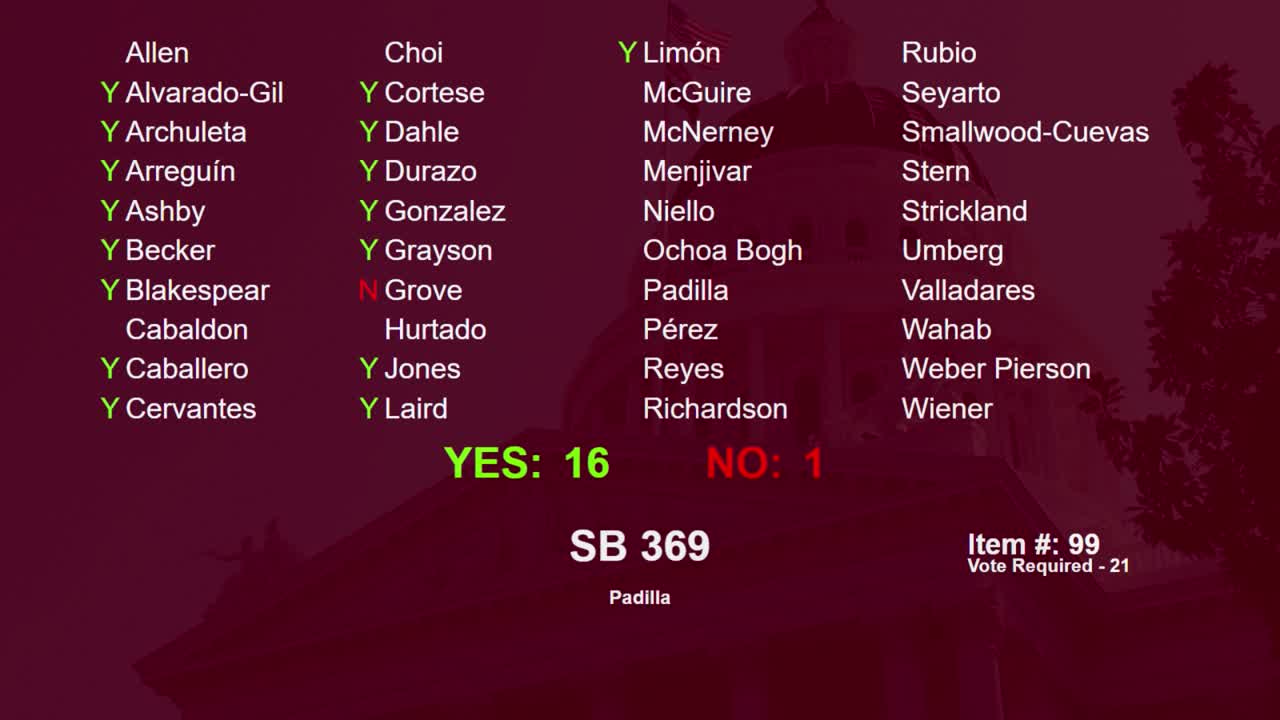 7MIN
Senate Floor
 4SEC
Senate Standing Committee on Appropriations
 19MIN
Senate Standing Committee on Health


Bill Co-Author(s):