SB 627: Law enforcement: masks.
- Session Year: 2025-2026
- House: Senate
- Latest Version Date: 2025-09-20
Current Status:
Passed
(2025-09-20: Chaptered by Secretary of State. Chapter 125, Statutes of 2025.)
Introduced
In Committee
Awaiting First Chamber Vote
Passed First Chamber
In Committee
Awaiting Second Chamber Vote
Passed Second Chamber
Enacted
Existing law makes it a misdemeanor to wear a mask, false whiskers, or any personal disguise, as specified, with the purpose of evading or escaping discovery, recognition, or identification while committing a public offense, or for concealment, flight, evasion, or escape from arrest or conviction for any public offense.
This bill would make it a crime for a law enforcement officer to wear a facial covering in the performance of their duties, except as specified. The bill would define law enforcement officer as anyone designated by California law as a peace officer who is employed by a city, county, or other local agency, and any officer or agent of a federal law enforcement agency or law enforcement agency of another state, or any person acting on behalf of a federal law enforcement agency or agency of another state. The bill would make a violation of these provisions punishable as an infraction or a misdemeanor, as specified. By creating a new crime, this bill would impose a state-mandated local program.
The bill would require any law enforcement agency operating in California to, by July 1, 2026, maintain and publicly post a written policy limiting the use of facial coverings, as specified. The bill would exempt personnel of any agency from the crime of wearing a facial covering if an agency maintains a policy pursuant to this section no later than July 1, 2026. The bill would deem a policy consistent with these provisions for the purposes of that exception unless a member of the public, an oversight body, or a local governing authority challenges it. The bill would also impose a specified civil penalty against certain officers for tortious conduct, including, but not limited to, false imprisonment or false arrest of an individual while wearing a facial covering. The bill would, if the agency does not address deficiencies within 90 days, authorize the complaining party to proceed to a court of competent jurisdiction for a judicial determination of the exemption, as specified. The bill would define a law enforcement agency for these purposes as any entity of a city, county, or other local agency, that employs anyone designated by California law as a peace officer, any federal law enforcement agency, or any law enforcement agency of another state.
By imposing additional duties on local law enforcement agencies, this bill would create a state-mandated local program.
This bill would declare its provisions to be severable.
This bill would make related findings and declarations.
The California Constitution requires the state to reimburse local agencies and school districts for certain costs mandated by the state. Statutory provisions establish procedures for making that reimbursement.
This bill would provide that with regard to certain mandates no reimbursement is required by this act for a specified reason.
With regard to any other mandates, this bill would provide that, if the Commission on State Mandates determines that the bill contains costs so mandated by the state, reimbursement for those costs shall be made pursuant to the statutory provisions noted above.
Existing law makes it a misdemeanor to wear a mask, false whiskers, or any personal disguise, as specified, with the purpose of evading or escaping discovery, recognition, or identification while committing a public offense, or for concealment, flight, evasion, or escape from arrest or conviction for any public offense.
This bill would make it a crime for a law enforcement officer to wear a facial covering in the performance of their duties, except as specified. The bill would define law enforcement officer as anyone designated by California law as a peace officer who is employed by a city, county, or other local agency, and any officer or agent of a federal law enforcement agency, agency or law enforcement agency of another state, or any person acting on behalf of a federal law enforcement agency. agency or agency of another state. The bill would make a violation of these provisions punishable as an infraction or a misdemeanor, as specified. By creating a new crime, this bill would impose a state-mandated local program.
The bill would require state and local law enforcement agencies, as defined, on or before July 1, 2026, to adopt a policy to regulate the use of facial coverings pursuant to these provisions.The bill would require any law enforcement agency operating in California to to, by July 1, 2026, maintain and publicly post a written policy limiting the use of facial coverings, as specified. The bill would exempt personnel of any agency from the crime of wearing a facial covering if an agency maintains a policy pursuant to this section. section no later than July 1, 2026. The bill would deem a policy consistent with these provisions for the purposes of that exception unless a member of the public, an oversight body, or a local governing authority challenges it. The bill would also impose a specified civil penalty against certain officers for tortious conduct, including, but not limited to, false imprisonment or false arrest of an individual while wearing a facial covering. The bill would, if the agency does not address deficiencies within 90 days, authorize the complaining party to proceed to a court of competent jurisdiction for a judicial determination of the exemption, as specified. The bill would define a law enforcement agency for these purposes as any entity of a city, county, or other local agency, that employs anyone designated by California law as a peace officer, any federal law enforcement agency, or any law enforcement agency of another state.
By imposing additional duties on local law enforcement agencies, this bill would create a state-mandated local program.
This bill would declare its provisions to be severable.
This bill would make related findings and declarations.
The California Constitution requires the state to reimburse local agencies and school districts for certain costs mandated by the state. Statutory provisions establish procedures for making that reimbursement.
This bill would provide that with regard to certain mandates no reimbursement is required by this act for a specified reason.
With regard to any other mandates, this bill would provide that, if the Commission on State Mandates determines that the bill contains costs so mandated by the state, reimbursement for those costs shall be made pursuant to the statutory provisions noted above.
This bill would declare that it is to take effect immediately as an urgency statute.Existing law makes it a misdemeanor to wear a mask, false whiskers, or any personal disguise, as specified, with the purpose of evading or escaping discovery, recognition, or identification while committing a public offense, or for concealment, flight, evasion, or escape from arrest or conviction for any public offense.
This bill would make it a crime for a law enforcement officer to wear a facial covering in the performance of their duties, except as specified. The bill would define law enforcement officer as anyone designated by California law as a peace officer and any officer or agent of a federal law enforcement agency, or any person acting on behalf of a federal law enforcement agency. The bill would make a violation of these provisions punishable as an infraction or a misdemeanor, as specified. By creating a new crime, this bill would impose a state-mandated local program.
The bill would also require state, local, and federal law enforcement agencies, before undertaking operations that are reasonably likely to involve agency personnel wearing facial coverings, to provide advance notice to the local law enforcement agency with jurisdiction over the location where the operation takes place, as specified.The bill would require state and local law enforcement agencies, as defined, on or before July 1, 2026, to adopt a policy to regulate the use of facial coverings pursuant to these provisions.
The bill would require any law enforcement agency operating in California to maintain and publicly post a written policy limiting the use of facial coverings, as specified. The bill would exempt personnel of any agency from the crime of wearing a facial covering if an agency maintains a policy pursuant to this section. The bill would deem a policy consistent with these provisions for the purposes of that exception unless a member of the public, an oversight body, or a local governing authority challenges it. The bill would also impose a specified civil penalty against certain officers for tortious conduct, including, but not limited to, false imprisonment or false arrest of an individual while wearing a facial covering. The bill would, if the agency does not address deficiencies within 90 days, authorize the complaining party to proceed to a court of competent jurisdiction for a judicial determination of the exemption, as specified.
By imposing additional duties on local law enforcement agencies, this bill would create a state-mandated local program.
This bill would declare its provisions to be severable.
This bill would make related findings and declarations.
The California Constitution requires the state to reimburse local agencies and school districts for certain costs mandated by the state. Statutory provisions establish procedures for making that reimbursement.
This bill would provide that with regard to certain mandates no reimbursement is required by this act for a specified reason.
With regard to any other mandates, this bill would provide that, if the Commission on State Mandates determines that the bill contains costs so mandated by the state, reimbursement for those costs shall be made pursuant to the statutory provisions noted above.
This bill would declare that it is to take effect immediately as an urgency statute.
Existing law makes it a misdemeanor to wear a mask, false whiskers, or any personal disguise, as specified, with the purpose of evading or escaping discovery, recognition, or identification while committing a public offense, or for concealment, flight, evasion, or escape from arrest or conviction for any public offense.
This bill would make it a crime for a law enforcement officer to wear any mask or personal disguise while interacting with the public in the performance of their duties, except as specified. The bill would exempt an officer engaged in an undercover assignment from these provisions. a facial covering in the performance of their duties, except as specified. The bill would define law enforcement officer as any officer of a local, state, or federal law enforcement agency, or any person acting on behalf of a local, state, or anyone designated by California law as a peace officer and any officer or agent of a federal law enforcement agency, or any person acting on behalf of a federal law enforcement agency. The bill would make a violation of these provisions punishable as an infraction or a misdemeanor, as specified. By creating a new crime, this bill would impose a state-mandated local program.
The bill would also require state, local, and federal law enforcement agencies to provide advance notice to any other law enforcement agencies in a jurisdiction in which they will be operating if the planned operation will likely include agency personnel masking, disguising, or otherwise concealing their identities from the public for any reason, as specified. agencies, before undertaking operations that are reasonably likely to involve agency personnel wearing facial coverings, to provide advance notice to the local law enforcement agency with jurisdiction over the location where the operation takes place, as specified.
The bill would require state and local law enforcement agencies, as defined, on or before July 1, 2026, to adopt a policy to prohibit the use of face masks and disguises by officers, except as specified. regulate the use of facial coverings pursuant to these provisions.
By imposing additional duties on local law enforcement agencies, this bill would create a state-mandated local program.
This bill would declare its provisions to be severable.
The California Constitution requires the state to reimburse local agencies and school districts for certain costs mandated by the state. Statutory provisions establish procedures for making that reimbursement.
This bill would provide that with regard to certain mandates no reimbursement is required by this act for a specified reason.
With regard to any other mandates, this bill would provide that, if the Commission on State Mandates determines that the bill contains costs so mandated by the state, reimbursement for those costs shall be made pursuant to the statutory provisions noted above.
This bill would declare that it is to take effect immediately as an urgency statute.
Existing law makes it a misdemeanor to wear a mask, false whiskers, or any personal disguise, as specified, with the purpose of evading or escaping discovery, recognition, or identification while committing a public offense, or for concealment, flight, evasion, or escape from arrest or conviction for any public offense.
This bill would make it a crime for a law enforcement officer to wear any mask or personal disguise while interacting with the public in the performance of their duties, except as specified. The bill would exempt an officer engaged in an undercover assignment from these provisions. The bill would define law enforcement officer as any officer of a local, state, or federal law enforcement agency, or any person acting on behalf of a local, state, or federal law enforcement agency. By creating a new crime, this bill would impose a state-mandated local program.
The bill would also require state, local, and federal law enforcement agencies to provide advance notice to any other law enforcement agencies in a jurisdiction in which they will be operating if the planned operation will likely include agency personnel masking, disguising, or otherwise concealing their identities from the public for any reason, as specified.
The bill would require state and local law enforcement agencies, on or before July 1, 2026, to adopt a policy to prohibit the use of face masks and disguises by officers, except as specified.
By imposing additional duties on local law enforcement agencies, this bill would create a state-mandated local program.
This bill would declare its provisions to be severable.
The California Constitution requires the state to reimburse local agencies and school districts for certain costs mandated by the state. Statutory provisions establish procedures for making that reimbursement.This bill would provide that no reimbursement is required by this act for a specified reason.The California Constitution requires the state to reimburse local agencies and school districts for certain costs mandated by the state. Statutory provisions establish procedures for making that reimbursement.
This bill would provide that with regard to certain mandates no reimbursement is required by this act for a specified reason.
With regard to any other mandates, this bill would provide that, if the Commission on State Mandates determines that the bill contains costs so mandated by the state, reimbursement for those costs shall be made pursuant to the statutory provisions noted above.
Existing law makes it a misdemeanor to wear a mask, false whiskers, or any personal disguise, as specified, with the purpose of evading or escaping discovery, recognition, or identification while committing a public offense, or for concealment, flight, evasion, or escape from arrest or conviction for any public offense.
This bill would make it a misdemeanor crime for a law enforcement officer to wear any mask or personal disguise while interacting with the public in the performance of their duties, except as specified. The bill would exempt an officer engaged in an undercover assignment from these provisions. The bill would define law enforcement officer as any officer of a local, state, or federal law enforcement agency, or any person acting on behalf of a local, state, or federal law enforcement agency. By creating a new crime, this bill would impose a state-mandated local program. The bill would additionally state the intent of the Legislature to enact legislation to ensure that Special Weapons and Tactics team officers can utilize gear necessary to protect their faces from physical harm while they perform their duties, and to enact legislation to require local, state, and federal law enforcement officers to include their name or badge number on their uniforms.
This bill would declare its provisions to be severable.
The California Constitution requires the state to reimburse local agencies and school districts for certain costs mandated by the state. Statutory provisions establish procedures for making that reimbursement.
This bill would provide that no reimbursement is required by this act for a specified reason.
Existing law makes it a misdemeanor to wear a mask, false whiskers, or any personal disguise, as specified, with the purpose of evading or escaping discovery, recognition, or identification while committing a public offense, or for concealment, flight, evasion, or escape from arrest or conviction for any public offense.
This bill would make it a misdemeanor for a law enforcement officer to wear any mask or personal disguise while interacting with the public in the performance of their duties, except as specified. The bill would define law enforcement officer as any officer of a local, state, or federal law enforcement agency, or any person acting on behalf of a local, state, or federal law enforcement agency. By creating a new crime, this bill would impose a state-mandated local program. The bill would additionally state the intent of the Legislature to enact legislation to ensure that Special Weapons and Tactics team officers can utilize gear necessary to protect their faces from physical harm while they perform their duties, and to enact legislation to require local, state, and federal law enforcement officers to include their name or badge number on their uniforms.
This bill would declare its provisions to be severable.
The California Constitution requires the state to reimburse local agencies and school districts for certain costs mandated by the state. Statutory provisions establish procedures for making that reimbursement.
This bill would provide that no reimbursement is required by this act for a specified reason.
Existing law, the Permit Streamlining Act, which is part of the Planning and Zoning Law, requires each public agency to provide a development project applicant with a list that specifies the information that will be required from any applicant for a development project. Specifically, existing law establishes time limits for completing reviews regarding whether an application for a postentitlement phase permit is complete and compliant, and whether to approve or deny an application, as specified. Existing law requires a local agency, if a postentitlement phase permit is determined to be incomplete, denied, or noncompliant, to provide a process for the applicant to appeal that decision in writing to the governing body of the agency or, if there is no governing body, to the director of the agency, as provided by that agency.This bill would delete the provision for the applicant to appeal a decision to the director of the local agency, as described above, and, instead, would require a local agency to provide a process for the applicant to appeal that decision in writing to the governing body of the agency only.Existing law, the Permit Streamlining Act, which is part of the Planning and Zoning Law, requires each public agency to provide a development project applicant with a list that specifies the information that will be required from any applicant for a development project. Specifically, existing law establishes time limits for completing reviews regarding whether an application for a postentitlement phase permit is complete and compliant, and whether to approve or deny an application, as specified. Existing law requires a local agency, if a postentitlement phase permit is determined to be incomplete, denied, or noncompliant, to provide a process for the applicant to appeal that decision in writing to the governing body of the agency or, if there is no governing body, to the director of the agency, as provided by that agency.
This bill would delete the provision for the applicant to appeal a decision to the director of the local agency, as described above, and, instead, would require a local agency to provide a process for the applicant to appeal that decision in writing to the governing body of the agency only.
The Legislature finds and declares all of the following:
(a)That the routine use of facial coverings by law enforcement officers has significant implications for public perception, officer-community interactions, and accountability.
(b)Whether intended or not, members of the public may experience fear or intimidation when approached by officers whose faces are obscured. This perception can heighten defensive behaviors and unnecessarily escalate situations.
(c)Facial coverings limit the visibility of facial expressions, which are essential components of nonverbal communication. In high-stress or emotionally charged interactions, the inability to read an officers expression may lead to misinterpretation of tone or intent, increasing the risk of conflict escalation.
(d)The visibility of an officers face is vital for promoting transparency, facilitating communication, and building trust between law enforcement agencies and the communities they serve.
(e)When officers are not readily identifiable, it increases the risk of impersonation by unauthorized individuals, which further undermines public trust, endangers public safety, and hinders legitimate law enforcement operations.
(f)The use of facial coverings by law enforcement should not obscure officer identity or hinder accountability, nor should those coverings be used in a manner that enables or conceals discriminatory or unlawful conduct.
SEC. 2.Chapter 17.45 (commencing with Section 7289) is added to Division 7 of Title 1 of the Government Code, to read:17.45.Law Enforcement Policies7289.(a)By July 1, 2026, a law enforcement agency operating in California shall maintain and publicly post a written policy regarding the use of facial coverings.
(b)The policy shall include, but not be limited to, each of the following:
(1)A purpose statement affirming the agencys commitment to all of the following:
(A)Transparency, accountability, and public trust.
(B)Restricting the use of facial coverings to specific, clearly defined, and limited circumstances.
(C)The principle that generalized and undifferentiated fear and apprehension about officer safety shall not be sufficient to justify the use of facial coverings.
(2)A requirement that all sworn personnel not use a facial covering when performing their duties.
(3)A list of narrowly tailored exemptions for the following:
(A)Active undercover operations or assignments authorized by supervising personnel or court order.
(B)Tactical operations where protective gear is required for physical safety.
(C)Applicable law governing occupational health and safety.
(D)Protection of identity during prosecution.
(E)Applicable law governing reasonable accommodations.
(4)Opaque facial coverings shall only be used when no other reasonable alternative exists and the necessity is documented.
(5)Pursuant to the policy, a supervisor shall not knowingly allow a peace officer under their supervision to violate state law or agency policy limiting the use of a facial covering.
(c)A policy adopted pursuant to this section shall be deemed consistent with Section 185.5 of the Penal Code unless a verified written challenge to its legality is submitted to the head of the agency by a member of the public, an oversight body, or a local governing authority, at which time the agency shall be afforded 90 days to correct any deficiencies in the policy. If, after 90 days, the agency has failed to adequately address the complaint, the complaining party may proceed to a court of competent jurisdiction for a judicial determination of the agencys exemption pursuant to subdivision (f) of Section 185.5 of the Penal Code. The agencys policy and its employees exemptions shall remain in effect unless a court rules the agencys policy is not in compliance with subdivision (f) of Section 185.5 of the Penal Code and all potential appeals to higher courts have been exhausted by the agency.
(d)For the purposes of this section, the following terms have the following meanings:
(1)Facial covering has the same meaning as in subdivision (b) of Section 185.5 of the Penal Code.
(2)Law enforcement agency means any of the following:
(A)Any entity of a city, county, or other local agency, that employs a peace officer described in Chapter 4.5 (commencing with Section 830) of Title 3 of Part 2 of the Penal Code.
(B)Any law enforcement agency of another state.
(C)Any federal law enforcement agency.
SEC. 3.Section 185.5 is added to the Penal Code, to read:185.5.(a)A law enforcement officer shall not wear a facial covering that conceals or obscures their facial identity in the performance of their duties, except as expressly authorized in this section.
(b)(1)For purposes of this section, facial covering means any opaque mask, garment, helmet, headgear, or other item that conceals or obscures the facial identity of an individual, including, but not limited to, a balaclava, tactical mask, gator, ski mask, and any similar type of facial covering or face-shielding item.
(2)A facial covering does not include any of the following:
(A)A translucent face shield or clear mask that does not conceal the wearers facial identity and is used in compliance with the employing agencys policy and procedures in Section 7289 of the Government Code.
(B)A N95 medical mask or surgical mask to protect against transmission of disease or infection or any other mask, helmet, or device, including, but not limited to, air-purifying respirators, full or half masks, or self-contained breathing apparatus necessary to protect against exposure to any toxin, gas, smoke, inclement weather, or any other hazardous or harmful environmental condition.
(C)A mask, helmet, or device, including, but not limited to, a self-contained breathing apparatus, necessary for underwater use.
(D)A motorcycle helmet when worn by an officer utilizing a motorcycle or other vehicle that requires a helmet for safe operations while in the performance of their duties.
(E)Eyewear necessary to protect from the use of retinal weapons, including, but not limited to, lasers.
(c)This section does not apply to either of the following:
(1)An officer subject to one or more of the exemptions set forth in paragraph (3) of subdivision (b) of Section 7289 of the Government Code.
(2)An officer assigned to Special Weapons and Tactics (SWAT) team units while actively performing their SWAT responsibilities.
(d)A willful and knowing violation of this section is punishable as an infraction or a misdemeanor.
(e)For the purposes of this section, law enforcement officer means a peace officer, as defined in Section 830, employed by a city, county, or other local agency as well as any officer or agent of a federal law enforcement agency or any law enforcement agency of another state or any person acting on behalf of a federal law enforcement agency or law enforcement agency of another state.
(f)The criminal penalties in this section shall not apply to any law enforcement officer if they were acting in their capacity as an employee of the agency and the agency maintains and publicly posts, no later than July 1, 2026, a written policy pursuant to Section 7289 of the Government Code.
(g)Notwithstanding any other law, any person who is found to have committed an assault, battery, false imprisonment, false arrest, abuse of process, or malicious prosecution, while wearing a facial covering in a knowing and willful violation of this section shall not be entitled to assert any privilege or immunity for their tortious conduct against a claim of civil liability, and shall be liable to that individual for the greater of actual damages or statutory damages of not less than ten thousand dollars ($10,000), whichever is greater.
SEC. 4.The provisions of this act are severable. If any provision of this act or its application is held invalid, that invalidity shall not affect other provisions or applications that can be given effect without the invalid provision or application.
SEC. 5.No reimbursement is required by this act pursuant to Section 6 of Article XIIIB of the California Constitution for certain costs that may be incurred by a local agency or school district because, in that regard, this act creates a new crime or infraction, eliminates a crime or infraction, or changes the penalty for a crime or infraction, within the meaning of Section 17556 of the Government Code, or changes the definition of a crime within the meaning of Section 6 of Article XIIIB of the California Constitution.
However, if the Commission on State Mandates determines that this act contains other costs mandated by the state, reimbursement to local agencies and school districts for those costs shall be made pursuant to Part 7 (commencing with Section 17500) of Division 4 of Title 2 of the Government Code.
The Legislature finds and declares all of the following:
(a)That the routine use of facial coverings by law enforcement officers has significant implications for public perception, officer-community interactions, and accountability.
(b)Whether intentional intended or not, members of the public may experience fear or intimidation when approached by officers whose faces are obscured. This perception can heighten defensive behaviors and unnecessarily escalate situations.
(c)Facial coverings limit the visibility of facial expressions, which are essential components of nonverbal communication. In high-stress or emotionally charged interactions, the inability to read an officers expression may lead to misinterpretation of tone or intent, increasing the risk of conflict escalation.
(d)The visibility of an officers face is vital for promoting transparency, facilitating communication, and building trust between law enforcement agencies and the communities they serve.
(e)When officers are not readily identifiable, it increases the risk of impersonation by unauthorized individuals, which further undermines public trust, endangers public safety, and hinders legitimate law enforcement operations.
(f)The use of facial coverings by law enforcement should not obscure officer identity or hinder accountability, nor should those coverings be used in a manner that enables or conceals discriminatory or unlawful conduct.
SEC. 2.Chapter 17.45 (commencing with Section 7289) is added to Division 7 of Title 1 of the Government Code, to read:17.45.Law Enforcement Policies7289.(a)By July 1, 2026, a law enforcement agency operating in California shall maintain and publicly post a written policy regarding the use of facial coverings.
(b)The policy shall include, but not be limited to, each of the following:
(1)A purpose statement affirming the agencys commitment to transparency, all of the following:
(A)Transparency, accountability, and public trust, and restricting trust.
(B)Restricting the use of facial coverings to specific, clearly defined, and limited circumstances, and circumstances.
(C)The principle that generalized and undifferentiated fear and apprehension about officer safety shall not be sufficient to justify the use of facial coverings.
(2)A description of the limited and specific circumstances during which facial coverings may be worn, consistent with Section 185.5 of the Penal Code, which includes, but is not limited to, all of the following:(2)A requirement that all sworn personnel not use a facial covering when performing their duties.
(3)A list of narrowly tailored exemptions for the following:
(A)Undercover Active undercover operations or assignments authorized by supervising personnel or court order.
(B)Tactical operations where protective gear is required for physical safety.
(C)Health and safety compliance, including pandemic response or environmental hazards.(C)Applicable law governing occupational health and safety.
(D)Protection of identity during prosecution.
(E)Applicable law governing reasonable accommodations.
(D)(4)Opaque facial coverings shall only be used when no other reasonable alternative exists and the operational necessity is documented.
(3)(5)Pursuant to the policy, a supervisor shall not knowingly allow a peace officer under their supervision to violate state law or agency policy limiting the use of a facial covering as described in paragraph (2). covering.
(c)A policy adopted pursuant to this section shall be deemed consistent with Section 185.5 of the Penal Code unless a verified written challenge to its legality is submitted to the head of the agency by a member of the public, an oversight body, or a local governing authority, at which time the agency shall be afforded 90 days to correct any deficiencies in the policy. If, after 90 days, the agency has failed to adequately address the complaint, the complaining party may proceed to a court of competent jurisdiction for a judicial determination of the agencys exemption pursuant to subdivision (f) of Section 185.5 of the Penal Code. The agencys policy and its employees exemptions shall remain in effect unless a court rules the agencys policy is not in compliance with subdivision (f) of Section 185.5 of the Penal Code and all potential appeals to higher courts have been exhausted by the agency.
(d)A willful violation of policy established pursuant to this section shall result in disciplinary actions or administrative penalties, including, but not limited to, written reprimands, suspension, or demotion.(e)For the purposes of this section, law enforcement agency means any agency, department, or other entity of the state or any political subdivision thereof that employs a peace officer as described in Chapter 4.5 (commencing with Section 830) of Title 3 of Part 2 of the Penal Code, and any federal agency that enforces local, state, or federal laws.(d)For the purposes of this section, the following terms have the following meanings:
(1)Facial covering has the same meaning as in subdivision (b) of Section 185.5 of the Penal Code.
(2)Law enforcement agency means any of the following:
(A)Any entity of a city, county, or other local agency, that employs a peace officer described in Chapter 4.5 (commencing with Section 830) of Title 3 of Part 2 of the Penal Code.
(B)Any law enforcement agency of another state.
(C)Any federal law enforcement agency.
SEC. 3.Section 185.5 is added to the Penal Code, to read:185.5.(a)A law enforcement officer shall not wear a facial covering that conceals or obscures their facial identity in the performance of their duties, except as expressly authorized in this section.
(b)(1)For purposes of this section, facial covering means any opaque mask, garment, helmet, headgear, or other item that conceals or obscures the facial identity of an individual, including, but not limited to, a balaclava, tactical mask, gator, ski mask, and any similar type of facial covering or face-shielding item.
(2)A facial covering does not include either any of the following:
(A)A translucent face shield or clear mask that does not conceal the wearers facial identity and is used in compliance with the employing agencys policy and procedures in Section 7289 of the Government Code.
(B)A N95 medical mask or surgical mask to protect against transmission of disease or infection or any other mask mask, helmet, or device, including, but not limited to, air-purifying respirators, full or half masks, or self-contained breathing apparatus necessary to protect against exposure to any toxin, gas, smoke, inclement weather, or any other hazardous or harmful environmental condition.
(C)A mask, helmet, or device, including, but not limited to, a self-contained breathing apparatus, necessary for underwater use.
(D)A motorcycle helmet when worn by an officer utilizing a motorcycle or other vehicle that requires a helmet for safe operations while in the performance of their duties.
(E)Eyewear necessary to protect from the use of retinal weapons, including, but not limited to, lasers.
(c)This section does not apply to either of the following:
(1)Officers performing their duties as an undercover operative during an active undercover operation or as needed to protect their identity following the conclusion of an undercover operation.(2)Officers wearing protective gear used by(1)An officer subject to one or more of the exemptions set forth in paragraph (3) of subdivision (b) of Section 7289 of the Government Code.
(2)An officer assigned to Special Weapons and Tactics (SWAT) team officers that are necessary to protect their faces from harm units while actively performing their SWAT responsibilities.
(d)A first willful and knowing violation of this section shall be an infraction. A second or subsequent violation shall be an infraction or a misdemeanor. is punishable as an infraction or a misdemeanor.
(e)For the purposes of this section, the following terms have the following meanings:(1)Law enforcement officer means a peace officer as defined in Section 830 as well as any officer or agent of a federal law enforcement agency or any person acting on behalf of a federal law enforcement agency.(2)Undercover operation is a planned act authorized by supervising agents, agencies, or a court warrant that uses an undercover operative to intentionally interact with a suspected criminal violator or others, or to obtain evidence of criminal activity.(3)Undercover operative means a sworn peace officer using an assumed name or cover identity to interact with non-law-enforcement individuals or entities to collect evidence of criminal activity.(e)For the purposes of this section, law enforcement officer means a peace officer, as defined in Section 830, employed by a city, county, or other local agency as well as any officer or agent of a federal law enforcement agency or any law enforcement agency of another state or any person acting on behalf of a federal law enforcement agency or law enforcement agency of another state.
(f)The criminal penalties in this section shall not apply to any law enforcement officer if they were acting in their capacity as an employee of the agency and the agency maintains and publicly posts posts, no later than July 1, 2026, a written policy pursuant to Section 7289 of the Government Code.
(g)Notwithstanding any other law, any person who commits is found to have committed an assault, battery, false imprisonment, false arrest, abuse of process, or malicious prosecution, while wearing a facial covering in a knowing and willful violation of this section shall not be entitled to assert any privilege or immunity for their tortious conduct against a claim of civil liability, and shall be liable to that individual for the greater of actual damages or statutory damages of not less than ten thousand dollars ($10,000), whichever is greater.
SEC. 4.The provisions of this act are severable. If any provision of this act or its application is held invalid, that invalidity shall not affect other provisions or applications that can be given effect without the invalid provision or application.
SEC. 5.No reimbursement is required by this act pursuant to Section 6 of Article XIIIB of the California Constitution for certain costs that may be incurred by a local agency or school district because, in that regard, this act creates a new crime or infraction, eliminates a crime or infraction, or changes the penalty for a crime or infraction, within the meaning of Section 17556 of the Government Code, or changes the definition of a crime within the meaning of Section 6 of Article XIIIB of the California Constitution.
However, if the Commission on State Mandates determines that this act contains other costs mandated by the state, reimbursement to local agencies and school districts for those costs shall be made pursuant to Part 7 (commencing with Section 17500) of Division 4 of Title 2 of the Government Code.
SEC. 6.This act is an urgency statute necessary for the immediate preservation of the public peace, health, or safety within the meaning of Article IV of the California Constitution and shall go into immediate effect. The facts constituting the necessity are:To keep our immigrant communities safe, especially when under attack, and to boost public safety and trust in law enforcement, it is necessary that this act take effect immediately.The Legislature finds and declares all of the following:
(a)That the routine use of facial coverings by law enforcement officers has significant implications for public perception, officer-community interactions, and accountability.
(b)Whether intentional or not, members of the public may experience fear or intimidation when approached by officers whose faces are obscured. This perception can heighten defensive behaviors and unnecessarily escalate situations.
(c)Facial coverings limit the visibility of facial expressions, which are essential components of nonverbal communication. In high-stress or emotionally charged interactions, the inability to read an officers expression may lead to misinterpretation of tone or intent, increasing the risk of conflict escalation.
(d)The visibility of an officers face is vital for promoting transparency, facilitating communication, and building trust between law enforcement agencies and the communities they serve.
(e)When officers are not readily identifiable, it increases the risk of impersonation by unauthorized individuals, which further undermines public trust, endangers public safety, and hinders legitimate law enforcement operations.
(f)The use of facial coverings by law enforcement should not obscure officer identity or hinder accountability, nor should those coverings be used in a manner that enables or conceals discriminatory or unlawful conduct.
SEC. 2.Chapter 17.45 (commencing with Section 7289) is added to Division 7 of Title 1 of the Government Code, to read:17.45.Law Enforcement Policies7289.(a)By July 1, 2026, a law enforcement agency operating in California shall maintain and publicly post a written policy regarding the use of facial coverings.
(b)The policy shall include, but not be limited to, each of the following:
(1)A purpose statement affirming the agencys commitment to transparency, accountability, and public trust, and restricting the use of facial coverings to specific, clearly defined, and limited circumstances, and that generalized and undifferentiated fear and apprehension about officer safety shall not be sufficient to justify the use of facial coverings.
(2)A description of the limited and specific circumstances during which facial coverings may be worn, consistent with Section 185.5 of the Penal Code, which includes, but is not limited to, all of the following:
(A)Undercover assignments authorized by supervising personnel or court order.
(B)Tactical operations where protective gear is required for physical safety.
(C)Health and safety compliance, including pandemic response or environmental hazards.
(D)Opaque facial coverings shall only be used when no other reasonable alternative exists and the operational necessity is documented.
(3)Pursuant to the policy, a supervisor shall not knowingly allow a peace officer under their supervision to violate state law or agency policy limiting the use of a facial covering as described in paragraph (2).
(c)A policy adopted pursuant to this section shall be deemed consistent with Section 185.5 of the Penal Code unless a verified written challenge to its legality is submitted to the head of the agency by a member of the public, an oversight body, or a local governing authority, at which time the agency shall be afforded 90 days to correct any deficiencies in the policy. If, after 90 days, the agency has failed to adequately address the complaint, the complaining party may proceed to a court of competent jurisdiction for a judicial determination of the agencys exemption pursuant to subdivision (f) of Section 185.5 of the Penal Code.
(d)A willful violation of policy established pursuant to this section shall result in disciplinary actions or administrative penalties, including, but not limited to, written reprimands, suspension, or demotion.
(e)For the purposes of this section, law enforcement agency means any agency, department, or other entity of the state or any political subdivision thereof that employs a peace officer as described in Chapter 4.5 (commencing with Section 830) of Title 3 of Part 2 of the Penal Code, and any federal agency that enforces local, state, or federal laws.
SECTION 1.SEC. 3.Section 185.5 is added to the Penal Code, to read:185.5.(a)A law enforcement officer shall not wear a facial covering that conceals or obscures their facial identity in the performance of their duties. duties, except as expressly authorized in this section.
(b)(1)For purposes of this section section, facial covering means any opaque mask, garment, helmet, headgear, or other item that conceals or obscures the facial identity of an individual, including, but not limited to, a balaclava, tactical mask, gator, ski mask, and any similar type of facial covering or face-shielding item.
(2)A facial covering does not include either of the following:
(A)A translucent face shield or clear mask that does not conceal the wearers facial identity. identity and is used in compliance with the employing agencys policy and procedures in Section 7289 of the Government Code.
(B)A N95 medical mask or surgical mask to protect against transmission of disease or infection or any other mask or device, including, but not limited to, air-purifying respirators, full or half masks, or self-contained breathing apparatus necessary to protect against exposure to any toxin, gas, smoke, or any other hazardous environmental condition.
(c)This section does not apply to an officer performing their duties as an undercover operative during an active undercover operation. to the following:
(1)Officers performing their duties as an undercover operative during an active undercover operation or as needed to protect their identity following the conclusion of an undercover operation.
(d)This section does not apply to(2)Officers wearing protective gear used by Special Weapons and Tactics (SWAT) team officers that are necessary to protect their faces from harm while performing their SWAT responsibilities.
(e)(d)A first violation of this section shall be an infraction. A second or subsequent violation shall be an infraction or a misdemeanor.
(f)(e)For the purposes of this section, the following terms have the following meanings:
(1)Law enforcement officer means a peace officer as defined in Section 830 as well as any officer or agent of a federal law enforcement agency or any person acting on behalf of a federal law enforcement agency.
(2)Undercover operation is a planned act authorized by supervising agents, agencies, or a court warrant that uses an undercover operative to intentionally interact with a suspected criminal violator or others, or to obtain evidence of criminal activity.
(3)Undercover operative means a sworn peace officer using an assumed name or cover identity to interact with non-law-enforcement individuals or entities to collect evidence of criminal activity.
(f)The criminal penalties in this section shall not apply to any law enforcement officer if they were acting in their capacity as an employee of the agency and the agency maintains and publicly posts a written policy pursuant to Section 7289 of the Government Code.
(g)Notwithstanding any other law, any person who commits an assault, battery, false imprisonment, false arrest, abuse of process, or malicious prosecution, while wearing a facial covering in violation of this section shall not be entitled to assert any privilege or immunity for their tortious conduct against a claim of civil liability, and shall be liable to that individual for the greater of actual damages or statutory damages of not less than ten thousand dollars ($10,000), whichever is greater.
SEC. 2.Section 13653.1 is added to the Penal Code, to read:13653.1.(a)On or before July 1, 2026, a law enforcement agency shall adopt policies to regulate the use of facial coverings pursuant to Section 185.5.(b)For the purposes of this section, law enforcement agency means any agency, department, or other entity of the state or any political subdivision thereof that employs any peace officer described in Chapter 4.5 (commencing with Section 830) of Title 3 of Part 2.SEC. 3.Section 13653.2 is added to the Penal Code, to read:13653.2.(a)State, local, and federal law enforcement agencies, before undertaking operations that are reasonably likely to involve agency personnel wearing facial coverings, as defined in subdivision (b) of Section 185.5, in the performance of their duties shall provide advance notice to the local law enforcement agency with jurisdiction over the location where the operation takes place. This notice shall be given sufficiently in advance to prevent danger to law enforcement officers based on mistaken identities, but no less than 12 hours before the operation, and shall include when and where they will be operating, their planned actions, and the approximate time and duration of the action.(b)This section does not apply to either of the following:(1)A law enforcement officer or officers performing their duties as an undercover operative during an active undercover operation.(2)Exigent circumstances involving an immediate danger to persons or property or the escape of a perpetrator.(c)For the purposes of this section, the following terms have the following meanings:(1)Undercover operation is a planned act authorized by supervising agents, agencies, or a court warrant that uses an undercover operative to intentionally interact with a suspected criminal violator or others, or to obtain evidence of criminal activity.(2)Undercover operative means a sworn peace officer using an assumed name or cover identity to interact with non-law-enforcement individuals or entities to collect evidence of criminal activity.SEC. 4.SEC. 4.The provisions of this act are severable. If any provision of this act or its application is held invalid, that invalidity shall not affect other provisions or applications that can be given effect without the invalid provision or application.
SEC. 5.SEC. 5.No reimbursement is required by this act pursuant to Section 6 of Article XIIIB of the California Constitution for certain costs that may be incurred by a local agency or school district because, in that regard, this act creates a new crime or infraction, eliminates a crime or infraction, or changes the penalty for a crime or infraction, within the meaning of Section 17556 of the Government Code, or changes the definition of a crime within the meaning of Section 6 of Article XIIIB of the California Constitution.
However, if the Commission on State Mandates determines that this act contains other costs mandated by the state, reimbursement to local agencies and school districts for those costs shall be made pursuant to Part 7 (commencing with Section 17500) of Division 4 of Title 2 of the Government Code.
SEC. 6.SEC. 6.This act is an urgency statute necessary for the immediate preservation of the public peace, health, or safety within the meaning of Article IV of the California Constitution and shall go into immediate effect. The facts constituting the necessity are:
To keep our immigrant communities safe, especially when under attack, and to boost public safety and trust in law enforcement, it is necessary that this act take effect immediately.
(a)A law enforcement officer shall not wear any mask or personal disguise while interacting with the public in the performance of their duties, except for medical grade masks that are surgical or N95 respirators designed to prevent the transmission of airborne diseases, masks designed to protect against exposure to smoke during a state of emergency related to wildfires, or protective gear used by Special Weapons and Tactics (SWAT) team officers necessary to protect their faces from harm while they perform their SWAT responsibilities. a facial covering in the performance of their duties.
(b)This section does not apply to an officer while they are engaged in an undercover assignment.(c)(1)A violation of this section by any person acting on behalf of a local, state or federal agency, that is not a sworn peace officer or agent, shall be a misdemeanor.(b)(1)For purposes of this section facial covering means any opaque mask, garment, helmet, or other item that conceals or obscures the facial identity of an individual, including, but not limited to, a balaclava, tactical mask, gator, ski mask, and any similar type of facial covering or face-shielding item.
(2)A facial covering does not include either of the following:
(A)A translucent face shield or clear mask that does not conceal the wearers facial identity.
(B)A N95 medical mask or surgical mask to protect against transmission of disease or infection or any other mask or device, including, but not limited to, air-purifying respirators, full or half masks, or self-contained breathing apparatus necessary to protect against exposure to any toxin, gas, smoke, or any other hazardous environmental condition.
(c)This section does not apply to an officer performing their duties as an undercover operative during an active undercover operation.
(d)This section does not apply to protective gear used by Special Weapons and Tactics (SWAT) team officers that are necessary to protect their faces from harm while performing their SWAT responsibilities.
(2)(e)A first violation of this section by a sworn peace officer of a local, state, or federal law enforcement agency, or an agent of a state, local, or federal agency, shall be an infraction. A second or subsequent violation shall be an infraction or a misdemeanor.
(d)(1)(f)For the purposes of this section, law the following terms have the following meanings:
(1)Law enforcement officer means a peace officer as defined in Section 830 as well as any officer or agent of a local, state, or federal law enforcement agency, agency or any person acting on behalf of a local, state, or federal law enforcement agency.
(2)For the purposes of this section, mask or personal disguise does not include a face shield if it does not conceal the wearers face.(2)Undercover operation is a planned act authorized by supervising agents, agencies, or a court warrant that uses an undercover operative to intentionally interact with a suspected criminal violator or others, or to obtain evidence of criminal activity.
(3)Undercover operative means a sworn peace officer using an assumed name or cover identity to interact with non-law-enforcement individuals or entities to collect evidence of criminal activity.
SEC. 2.Section 13653.1 is added to the Penal Code, to read:13653.1.(a)On or before July 1, 2026, all state and local law enforcement agencies in the state a law enforcement agency shall adopt policies to prohibit the use of face masks and disguises by officers, with exceptions for undercover and Special Weapons and Tactics assignments, and appropriate face shields. regulate the use of facial coverings pursuant to Section 185.5.
(b)For the purposes of this section, law enforcement agency means any agency, department, or other entity of the state or any political subdivision thereof that employs any peace officer described in Chapter 4.5 (commencing with Section 830) of Title 3 of Part 2.
SEC. 3.Section 13653.2 is added to the Penal Code, to read:13653.2.(a)State, local, and federal law enforcement agencies shall provide advance notice to any other law enforcement agencies in a jurisdiction in which they will be operating if the planned operation will likely include agency personnel masking, disguising, or otherwise concealing their identities from the public for any reason. agencies, before undertaking operations that are reasonably likely to involve agency personnel wearing facial coverings, as defined in subdivision (b) of Section 185.5, in the performance of their duties shall provide advance notice to the local law enforcement agency with jurisdiction over the location where the operation takes place. This notice shall be given sufficiently in advance to prevent danger to law enforcement officers based on mistaken identities identities, but no less than 12 hours before the operation, and shall include when and where they will be operating, their planned actions, and the approximate time and duration of the action.
(b)This section does not apply to either of the following:
(1)A law enforcement officer or officers performing their duties as an undercover operative during an active undercover operation.
(2)Exigent circumstances involving an immediate danger to persons or property or the escape of a perpetrator.
(c)For the purposes of this section, the following terms have the following meanings:
(1)Undercover operation is a planned act authorized by supervising agents, agencies, or a court warrant that uses an undercover operative to intentionally interact with a suspected criminal violator or others, or to obtain evidence of criminal activity.
(2)Undercover operative means a sworn peace officer using an assumed name or cover identity to interact with non-law-enforcement individuals or entities to collect evidence of criminal activity.
SEC. 4.The provisions of this act are severable. If any provision of this act or its application is held invalid, that invalidity shall not affect other provisions or applications that can be given effect without the invalid provision or application.
SEC. 5.No reimbursement is required by this act pursuant to Section 6 of Article XIIIB of the California Constitution for certain costs that may be incurred by a local agency or school district because, in that regard, this act creates a new crime or infraction, eliminates a crime or infraction, or changes the penalty for a crime or infraction, within the meaning of Section 17556 of the Government Code, or changes the definition of a crime within the meaning of Section 6 of Article XIIIB of the California Constitution.
However, if the Commission on State Mandates determines that this act contains other costs mandated by the state, reimbursement to local agencies and school districts for those costs shall be made pursuant to Part 7 (commencing with Section 17500) of Division 4 of Title 2 of the Government Code.
SEC. 6.This act is an urgency statute necessary for the immediate preservation of the public peace, health, or safety within the meaning of Article IV of the California Constitution and shall go into immediate effect. The facts constituting the necessity are:
To keep our immigrant communities safe, especially when under attack, and to boost public safety and trust in law enforcement, it is necessary that this act take effect immediately.
(a)A law enforcement officer shall not wear any mask or personal disguise while interacting with the public in the performance of their duties, except for medical grade masks that are surgical or N95 respirators designed to prevent the transmission of airborne diseases, masks designed to protect against exposure to smoke during a state of emergency related to wildfires, or protective gear used by Special Weapons and Tactics (SWAT) team officers necessary to protect their faces from harm while they perform their SWAT responsibilities.
(b)This section does not apply to an officer while they are engaged in an undercover assignment.
(c)(1)A violation of this section by any person acting on behalf of a local, state or federal agency, that is not a sworn peace officer or agent, shall be a misdemeanor.
(2)A violation of this section by a sworn peace officer of a local, state, or federal law enforcement agency, or an agent of a state, local, or federal agency, shall be an infraction. A second or subsequent violation shall be an infraction or a misdemeanor.
(d)(1)For the purposes of this section, law enforcement officer means any officer of a local, state, or federal law enforcement agency, or any person acting on behalf of a local, state, or federal law enforcement agency.
(2)For the purposes of this section, mask or personal disguise does not include a face shield if it does not conceal the wearers face.
(e)The provisions of this section are severable. If any provision of this section or its application is held invalid, that invalidity shall not affect other provisions or applications that can be given effect without the invalid provision or application.SEC. 2.No reimbursement is required by this act pursuant to Section 6 of Article XIIIB of the California Constitution because the only costs that may be incurred by a local agency or school district will be incurred because this act creates a new crime or infraction, eliminates a crime or infraction, or changes the penalty for a crime or infraction, within the meaning of Section 17556 of the Government Code, or changes the definition of a crime within the meaning of Section 6 of Article XIIIB of the California Constitution.SEC. 2.Section 13653.1 is added to the Penal Code, to read:13653.1.On or before July 1, 2026, all state and local law enforcement agencies in the state shall adopt policies to prohibit the use of face masks and disguises by officers, with exceptions for undercover and Special Weapons and Tactics assignments, and appropriate face shields.
SEC. 3.Section 13653.2 is added to the Penal Code, to read:13653.2.State, local, and federal law enforcement agencies shall provide advance notice to any other law enforcement agencies in a jurisdiction in which they will be operating if the planned operation will likely include agency personnel masking, disguising, or otherwise concealing their identities from the public for any reason. This notice shall be given sufficiently in advance to prevent danger to law enforcement officers based on mistaken identities and shall include when and where they will be operating, their planned actions, and the approximate time and duration of the action.
SEC. 4.The provisions of this act are severable. If any provision of this act or its application is held invalid, that invalidity shall not affect other provisions or applications that can be given effect without the invalid provision or application.
SEC. 5.No reimbursement is required by this act pursuant to Section 6 of Article XIIIB of the California Constitution for certain costs that may be incurred by a local agency or school district because, in that regard, this act creates a new crime or infraction, eliminates a crime or infraction, or changes the penalty for a crime or infraction, within the meaning of Section 17556 of the Government Code, or changes the definition of a crime within the meaning of Section 6 of Article XIIIB of the California Constitution.
However, if the Commission on State Mandates determines that this act contains other costs mandated by the state, reimbursement to local agencies and school districts for those costs shall be made pursuant to Part 7 (commencing with Section 17500) of Division 4 of Title 2 of the Government Code.
(a)A law enforcement officer shall not wear any mask or personal disguise while interacting with the public in the performance of their duties, except for medical grade masks that are surgical or N95 respirators designed to prevent the transmission of airborne diseases and diseases, masks designed to protect against exposure to smoke during a state of emergency related to wildfires. wildfires, or protective gear used by Special Weapons and Tactics (SWAT) team officers necessary to protect their faces from harm while they perform their SWAT responsibilities.
(b)A violation of this section shall be punishable as a misdemeanor.(c)(1)It is the intent of the Legislature to enact legislation to ensure that Special Weapons and Tactics (SWAT) team officers can utilize gear necessary to protect their faces from physical harm while they perform their SWAT responsibilities.(2)It is the intent of the Legislature to enact legislation to require law enforcement officers to include their name or badge number on their uniforms.(b)This section does not apply to an officer while they are engaged in an undercover assignment.
(c)(1)A violation of this section by any person acting on behalf of a local, state or federal agency, that is not a sworn peace officer or agent, shall be a misdemeanor.
(2)A violation of this section by a sworn peace officer of a local, state, or federal law enforcement agency, or an agent of a state, local, or federal agency, shall be an infraction. A second or subsequent violation shall be an infraction or a misdemeanor.
(d)(1)For the purposes of this section, law enforcement officer means any officer of a local, state, or federal law enforcement agency, or any person acting on behalf of a local, state, or federal law enforcement agency.
(2)For the purposes of this section, mask or personal disguise does not include a face shield if it does not conceal the wearers face.
(e)The provisions of this section are severable. If any provision of this section or its application is held invalid, that invalidity shall not affect other provisions or applications that can be given effect without the invalid provision or application.
SEC. 2.No reimbursement is required by this act pursuant to Section 6 of Article XIIIB of the California Constitution because the only costs that may be incurred by a local agency or school district will be incurred because this act creates a new crime or infraction, eliminates a crime or infraction, or changes the penalty for a crime or infraction, within the meaning of Section 17556 of the Government Code, or changes the definition of a crime within the meaning of Section 6 of Article XIIIB of the California Constitution.
(a)A law enforcement officer shall not wear any mask or personal disguise while interacting with the public in the performance of their duties, except for medical grade masks that are surgical or N95 respirators designed to prevent the transmission of airborne diseases and masks designed to protect against exposure to smoke during a state of emergency related to wildfires.
(b)A violation of this section shall be punishable as a misdemeanor.
(c)(1)It is the intent of the Legislature to enact legislation to ensure that Special Weapons and Tactics (SWAT) team officers can utilize gear necessary to protect their faces from physical harm while they perform their SWAT responsibilities.
(2)It is the intent of the Legislature to enact legislation to require law enforcement officers to include their name or badge number on their uniforms.
(d)For the purposes of this section, law enforcement officer means any officer of a local, state, or federal law enforcement agency, or any person acting on behalf of a local, state, or federal law enforcement agency.
(e)The provisions of this section are severable. If any provision of this section or its application is held invalid, that invalidity shall not affect other provisions or applications that can be given effect without the invalid provision or application.
SEC. 2.No reimbursement is required by this act pursuant to Section 6 of Article XIIIB of the California Constitution because the only costs that may be incurred by a local agency or school district will be incurred because this act creates a new crime or infraction, eliminates a crime or infraction, or changes the penalty for a crime or infraction, within the meaning of Section 17556 of the Government Code, or changes the definition of a crime within the meaning of Section 6 of Article XIIIB of the California Constitution.
SECTION 1.Section 65913.3 of the Government Code is amended to read:65913.3.(a)(1)A local agency shall compile one or more lists that shall specify in detail the information that will be required from any applicant for a postentitlement phase permit. The local agency may revise the lists of information required from an applicant. Any revised list shall not apply to any permit pending review.(2)A local agency shall post an example of a complete, approved application and an example of a complete set of postentitlement phase permits for at least five types of housing development projects in the jurisdiction, including, but not limited to, accessory dwelling unit, duplex, multifamily, mixed use, and townhome.(3)A local agency shall make the items required by paragraphs (1) and (2) available on the agencys internet website no later than January 1, 2024.(b)(1)(A)A local agency shall determine whether an application for a postentitlement phase permit is complete and provide written notice of this determination to the applicant not later than 15 business days after the local agency received the application.(B)If the local agency determines an application is incomplete, the local agency shall provide the applicant with a list of incomplete items and a description of how the application can be made complete. The list shall be limited to incomplete items that are included on the lists required by paragraph (1) of subdivision (a). The list and description shall be provided with the written notice required by subparagraph (A).(2)(A)After receiving a notice that the application was incomplete, an applicant may cure and address the items that are deemed to be incomplete by the local agency.(B)In the review of an application submitted pursuant to subparagraph (A), the local agency shall not require the application to include an item that was not included in the list required by subparagraph (B) of paragraph (1).(C)If an applicant submits an application pursuant to subparagraph (A), the local agency shall determine whether the additional application has remedied all incomplete items listed in the determination issued pursuant to subparagraph (B) of paragraph (1). This additional application is subject to the timelines and requirements specified in subparagraph (A) of paragraph (1).(3)If a local agency does not make a timely determination as required by paragraph (1) or (2) and the application or resubmitted application states that it is for a postentitlement phase permit, the application or resubmitted application shall be deemed to be complete for the purposes of this chapter.(c)(1)(A)For housing development projects with 25 units or fewer, a local agency shall complete the review and do either of the following:(i)If the local agency determines that the complete application is not compliant with the permit standards, return in writing a full set of comments to the applicant with a comprehensive request for revisions.(ii)If the local agency determines that the complete application is compliant with the permit standards, return the approved permit application on each postentitlement phase permit requested.(B)The local agency shall immediately transmit that determination to the applicant by electronic mail and, if applicable, by posting the response on its internet website in the manner prescribed in subdivision (b) of Section 65913.3.5 not later than 30 business days after the local agency determines that an application for a postentitlement phase permit is complete pursuant to subdivision (b).(2)(A)For housing development projects with 26 units or more, a local agency shall complete the review and do either of the following:(i)If the local agency determines that the complete application is not compliant with the permit standards, return in writing a full set of comments to the applicant with a comprehensive request for revisions.(ii)If the local agency determines that the complete application is compliant with the permit standards, return the approved permit application on each postentitlement phase permit requested.(B)The local agency shall immediately transmit that determination to the applicant by electronic mail and, if applicable, by posting the response on its internet website in the manner prescribed in subdivision (b) of Section 65913.3.5 not later than 60 business days after the local agency determines that an application for a postentitlement phase permit is complete pursuant to subdivision (b).(3)Once a local agency determines that a postentitlement permit is compliant with applicable permit standards pursuant to paragraph (1) or (2) the local agency shall not subject the postentitlement phase permit to any appeals or additional hearing requirements.(4)(A)The time limits in this subdivision shall not apply if the local agency makes written findings within the time limits specified in paragraph (1) or (2) based on substantial evidence in the record that the proposed postentitlement phase permit might have a specific, adverse impact on public health or safety and that additional time is necessary to process the application.(B)For the purposes of this paragraph, specific, adverse impact means a significant, quantifiable, direct, and unavoidable impact, based on objective, identified, and written public health or safety standards, policies, or conditions as they existed on the date the application was deemed complete.(5)If the local agency requires review of the application by an outside entity, the time limits in this subdivision shall be tolled until the outside entity completes the review and returns the application to the local agency, at which point the local agency shall complete the review within the time remaining under the time limit, provided that the local agency notifies the applicant within three business days by electronic mail and, if applicable, by posting the notification on its internet website in the manner prescribed in subdivision (b) of Section 65913.3.5 of the tolling and resumption of the time limit.(d)(1)If a local agency finds that a complete application is noncompliant, the local agency shall provide the applicant with a list of items that are noncompliant and a description of how the application can be remedied by the applicant within the time limits specified in subdivision (c).(2)The local agency shall provide the list and description authorized by paragraph (1) when it transmits its determination to the applicant as required by subdivision (c).(3)If a local agency denies a postentitlement phase permit application based on a determination that the application is noncompliant, the applicant may attempt to remedy the application.(4)If an applicant submits an application pursuant to paragraph (3), the additional application is subject to the timelines of a new application as specified in subdivision (c).(e)(1)If a postentitlement phase permit is determined to be incomplete under subdivision (b) or denied or determined to be noncompliant under subdivision (c) or (d), the local agency shall provide a process for the applicant to appeal that decision in writing to the governing body of the agency. A city or county shall provide that the right of appeal is to the governing body or, at their option, the planning commission, or both.(2)(A)With respect to a postentitlement phase permit concerning housing development projects with 25 units or fewer, a local agency on the appeal shall provide a final written determination by not later than 60 business days after receipt of the applicants written appeal. The fact that an appeal is permitted to both the planning commission and to the governing body does not extend the 60-business-day period.(B)With respect to a postentitlement phase permit concerning housing development projects with 26 units or more, a local agency on the appeal shall provide a final written determination by not later than 90 business days after receipt of the applicants written appeal. The fact that an appeal is permitted to both the planning commission and to the governing body does not extend the 90-business-day period.(f)If a local agency fails to meet the time limits in this section, it shall be in violation of Section 65589.5.(g)This section does not place limitations on the amount of feedback that a local agency may provide or revisions that a local agency may request of an applicant.(h)For residential or residential mixed-use developments that are subject to the requirements set forth in Section 65913.4, the provisions of paragraph (2) of subdivision (h) of Section 65913.4 shall apply. Permits for these developments that are subject to paragraph (2) of subdivision (h) of Section 65913.4 shall not be in conflict with the requirements of this section. The local agency shall comply with both sets of standards.(i)This section does not preclude an applicant and a local agency from mutually agreeing to an extension of any time limit provided by this section. However, a local agency shall not require an agreement as a condition of accepting the application for, or processing of, a postentitlement phase permit, unless the agreement is obtained for the purpose of permitting concurrent processing of related approvals or an environmental review on the same housing development project.(j)For purposes of this section, the following definitions apply:(1)Housing development project has the same meaning as in paragraph (3) of subdivision (b) of Section 65905.5.(2)Local agency means any county, city, or city and county.(3)(A)Postentitlement phase permit includes both of the following:(i)All nondiscretionary permits and reviews that are required or issued by the local agency after the entitlement process has been completed to begin construction of a development that is intended to be at least two-thirds residential, excluding discretionary and ministerial planning permits, entitlements, and other permits and reviews that are covered under Chapter 4.5 (commencing with Section 65920). A postentitlement phase permit includes, but is not limited to, all of the following:(I)Building permits, and all interdepartmental review required for the issuance of a building permit.(II)Permits for minor or standard off-site improvements.(III)Permits for demolition.(IV)Permits for minor or standard excavation and grading.(ii)All building permits and other permits issued under the California Building Standards Code (Title 24 of the California Code of Regulations) or any applicable local building code for the construction, demolition, or alteration of buildings, whether discretionary or nondiscretionary.(B)A local agency may identify by ordinance a threshold for determining whether a permit constitutes a minor or standard permit for the purposes of this paragraph, which shall be supported by written findings adopted by the jurisdiction.(C)A postentitlement phase permit does not include a permit required and issued by the California Coastal Commission, a special district, a utility that is not owned and operated by a local agency, or any other entity that is not a city, county, or city and county.(a)(1)A local agency shall compile one or more lists that shall specify in detail the information that will be required from any applicant for a postentitlement phase permit. The local agency may revise the lists of information required from an applicant. Any revised list shall not apply to any permit pending review.
(2)A local agency shall post an example of a complete, approved application and an example of a complete set of postentitlement phase permits for at least five types of housing development projects in the jurisdiction, including, but not limited to, accessory dwelling unit, duplex, multifamily, mixed use, and townhome.
(3)A local agency shall make the items required by paragraphs (1) and (2) available on the agencys internet website no later than January 1, 2024.
(b)(1)(A)A local agency shall determine whether an application for a postentitlement phase permit is complete and provide written notice of this determination to the applicant not later than 15 business days after the local agency received the application.
(B)If the local agency determines an application is incomplete, the local agency shall provide the applicant with a list of incomplete items and a description of how the application can be made complete. The list shall be limited to incomplete items that are included on the lists required by paragraph (1) of subdivision (a). The list and description shall be provided with the written notice required by subparagraph (A).
(2)(A)After receiving a notice that the application was incomplete, an applicant may cure and address the items that are deemed to be incomplete by the local agency.
(B)In the review of an application submitted pursuant to subparagraph (A), the local agency shall not require the application to include an item that was not included in the list required by subparagraph (B) of paragraph (1).
(C)If an applicant submits an application pursuant to subparagraph (A), the local agency shall determine whether the additional application has remedied all incomplete items listed in the determination issued pursuant to subparagraph (B) of paragraph (1). This additional application is subject to the timelines and requirements specified in subparagraph (A) of paragraph (1).
(3)If a local agency does not make a timely determination as required by paragraph (1) or (2) and the application or resubmitted application states that it is for a postentitlement phase permit, the application or resubmitted application shall be deemed to be complete for the purposes of this chapter.
(c)(1)(A)For housing development projects with 25 units or fewer, a local agency shall complete the review and do either of the following:
(i)If the local agency determines that the complete application is not compliant with the permit standards, return in writing a full set of comments to the applicant with a comprehensive request for revisions.
(ii)If the local agency determines that the complete application is compliant with the permit standards, return the approved permit application on each postentitlement phase permit requested.
(B)The local agency shall immediately transmit that determination to the applicant by electronic mail and, if applicable, by posting the response on its internet website in the manner prescribed in subdivision (b) of Section 65913.3.5 not later than 30 business days after the local agency determines that an application for a postentitlement phase permit is complete pursuant to subdivision (b).
(2)(A)For housing development projects with 26 units or more, a local agency shall complete the review and do either of the following:
(i)If the local agency determines that the complete application is not compliant with the permit standards, return in writing a full set of comments to the applicant with a comprehensive request for revisions.
(ii)If the local agency determines that the complete application is compliant with the permit standards, return the approved permit application on each postentitlement phase permit requested.
(B)The local agency shall immediately transmit that determination to the applicant by electronic mail and, if applicable, by posting the response on its internet website in the manner prescribed in subdivision (b) of Section 65913.3.5 not later than 60 business days after the local agency determines that an application for a postentitlement phase permit is complete pursuant to subdivision (b).
(3)Once a local agency determines that a postentitlement permit is compliant with applicable permit standards pursuant to paragraph (1) or (2) the local agency shall not subject the postentitlement phase permit to any appeals or additional hearing requirements.
(4)(A)The time limits in this subdivision shall not apply if the local agency makes written findings within the time limits specified in paragraph (1) or (2) based on substantial evidence in the record that the proposed postentitlement phase permit might have a specific, adverse impact on public health or safety and that additional time is necessary to process the application.
(B)For the purposes of this paragraph, specific, adverse impact means a significant, quantifiable, direct, and unavoidable impact, based on objective, identified, and written public health or safety standards, policies, or conditions as they existed on the date the application was deemed complete.
(5)If the local agency requires review of the application by an outside entity, the time limits in this subdivision shall be tolled until the outside entity completes the review and returns the application to the local agency, at which point the local agency shall complete the review within the time remaining under the time limit, provided that the local agency notifies the applicant within three business days by electronic mail and, if applicable, by posting the notification on its internet website in the manner prescribed in subdivision (b) of Section 65913.3.5 of the tolling and resumption of the time limit.
(d)(1)If a local agency finds that a complete application is noncompliant, the local agency shall provide the applicant with a list of items that are noncompliant and a description of how the application can be remedied by the applicant within the time limits specified in subdivision (c).
(2)The local agency shall provide the list and description authorized by paragraph (1) when it transmits its determination to the applicant as required by subdivision (c).
(3)If a local agency denies a postentitlement phase permit application based on a determination that the application is noncompliant, the applicant may attempt to remedy the application.
(4)If an applicant submits an application pursuant to paragraph (3), the additional application is subject to the timelines of a new application as specified in subdivision (c).
(e)(1)If a postentitlement phase permit is determined to be incomplete under subdivision (b) or denied or determined to be noncompliant under subdivision (c) or (d), the local agency shall provide a process for the applicant to appeal that decision in writing to the governing body of the agency or, if there is no governing body, to the director of the agency, as provided by that agency. A city or county shall provide that the right of appeal is to the governing body or, at their option, the planning commission, or both.
(2)(A)With respect to a postentitlement phase permit concerning housing development projects with 25 units or fewer, a local agency on the appeal shall provide a final written determination by not later than 60 business days after receipt of the applicants written appeal. The fact that an appeal is permitted to both the planning commission and to the governing body does not extend the 60-business-day period.
(B)With respect to a postentitlement phase permit concerning housing development projects with 26 units or more, a local agency on the appeal shall provide a final written determination by not later than 90 business days after receipt of the applicants written appeal. The fact that an appeal is permitted to both the planning commission and to the governing body does not extend the 90-business-day period.
(f)If a local agency fails to meet the time limits in this section, it shall be in violation of Section 65589.5.
(g)This section does not place limitations on the amount of feedback that a local agency may provide or revisions that a local agency may request of an applicant.
(h)For residential or residential mixed-use developments that are subject to the requirements set forth in Section 65913.4, the provisions of paragraph (2) of subdivision (h) of Section 65913.4 shall apply. Permits for these developments that are subject to paragraph (2) of subdivision (h) of Section 65913.4 shall not be in conflict with the requirements of this section. The local agency shall comply with both sets of standards.
(i)This section does not preclude an applicant and a local agency from mutually agreeing to an extension of any time limit provided by this section. However, a local agency shall not require an agreement as a condition of accepting the application for, or processing of, a postentitlement phase permit, unless the agreement is obtained for the purpose of permitting concurrent processing of related approvals or an environmental review on the same housing development project.
(j)For purposes of this section, the following definitions apply:
(1)Housing development project has the same meaning as in paragraph (3) of subdivision (b) of Section 65905.5.
(2)Local agency means any county, city, or city and county.
(3)(A)Postentitlement phase permit includes both of the following:
(i)All nondiscretionary permits and reviews that are required or issued by the local agency after the entitlement process has been completed to begin construction of a development that is intended to be at least two-thirds residential, excluding discretionary and ministerial planning permits, entitlements, and other permits and reviews that are covered under Chapter 4.5 (commencing with Section 65920). A postentitlement phase permit includes, but is not limited to, all of the following:
(I)Building permits, and all interdepartmental review required for the issuance of a building permit.
(II)Permits for minor or standard off-site improvements.
(III)Permits for demolition.
(IV)Permits for minor or standard excavation and grading.
(ii)All building permits and other permits issued under the California Building Standards Code (Title 24 of the California Code of Regulations) or any applicable local building code for the construction, demolition, or alteration of buildings, whether discretionary or nondiscretionary.
(B)A local agency may identify by ordinance a threshold for determining whether a permit constitutes a minor or standard permit for the purposes of this paragraph, which shall be supported by written findings adopted by the jurisdiction.
(C)A postentitlement phase permit does not include a permit required and issued by the California Coastal Commission, a special district, a utility that is not owned and operated by a local agency, or any other entity that is not a city, county, or city and county.
|
Date
|
Status
|
|---|---|
| Sep 20, 2025 | Chaptered by Secretary of State. Chapter 125, Statutes of 2025. |
| Sep 20, 2025 | Approved by the Governor. |
| Sep 17, 2025 | Enrolled and presented to the Governor at 2 p.m. |
| Sep 11, 2025 | Reconsideration granted. (Ayes 30. Noes 10. Page 2935.) |
| Sep 11, 2025 | Motion to reconsider made by Senator Wiener. |
| Sep 11, 2025 | From committee: That the Assembly amendments be concurred in. (Ayes 5. Noes 1. Page 2939.) |
| Sep 11, 2025 | Assembly amendments concurred in. (Ayes 28. Noes 11. Page 2936.) Ordered to engrossing and enrolling. |
| Sep 11, 2025 | Assembly amendments concurred in. (Ayes 27. Noes 10. Page 2908.) Ordered to engrossing and enrolling. |
| Sep 10, 2025 | Re-referred to Com. on RLS. pursuant to Senate Rule 29.10(d). |
| Sep 10, 2025 | From committee: Be re-referred to Com. on PUB. S. pursuant to Senate Rule 29.10(d). (Ayes 3. Noes 0. Page 2759.) Re-referred to Com. on PUB. S. |
| Sep 9, 2025 | In Senate. Concurrence in Assembly amendments pending. |
| Sep 9, 2025 | Read third time. Passed. (Ayes 45. Noes 23. Page 3120.) Ordered to the Senate. |
| Sep 5, 2025 | Read third time and amended. |
| Sep 5, 2025 | Ordered to third reading. |
| Sep 5, 2025 | Assembly Rule 69(b)(1) suspended. |
| Aug 25, 2025 | Read second time. Ordered to third reading. |
| Aug 21, 2025 | Read second time and amended. Ordered to second reading. |
| Aug 20, 2025 | From committee: Do pass as amended. (Ayes 10. Noes 3.) (August 20). |
| Jul 17, 2025 | Read second time and amended. Re-referred to Com. on APPR. |
| Jul 16, 2025 | From committee: Do pass as amended and re-refer to Com. on APPR. (Ayes 5. Noes 2.) (July 15). |
| Jul 9, 2025 | From committee with author's amendments. Read second time and amended. Re-referred to Com. on PUB. S. |
| Jun 24, 2025 | From committee with author's amendments. Read second time and amended. Re-referred to Com. on PUB. S. |
| Jun 19, 2025 | Re-referred to Com. on PUB. S. pursuant to Assembly Rule 96. |
| Jun 16, 2025 | From committee with author's amendments. Read second time and amended. Re-referred to Com. on L. GOV. |
| Jun 11, 2025 | June 18 set for first hearing canceled at the request of author. |
| May 29, 2025 | Referred to Coms. on L. GOV. and H. & C.D. |
| May 8, 2025 | In Assembly. Read first time. Held at Desk. |
| May 8, 2025 | Read third time. Passed. (Ayes 36. Noes 0. Page 1050.) Ordered to the Assembly. |
| May 1, 2025 | Read second time. Ordered to consent calendar. |
| Apr 30, 2025 | From committee: Do pass. Ordered to consent calendar. (Ayes 11. Noes 0. Page 936.) (April 29). |
| Apr 24, 2025 | Set for hearing April 29. |
| Apr 3, 2025 | From committee: Do pass and re-refer to Com. on HOUSING with recommendation: To consent calendar. (Ayes 7. Noes 0. Page 637.) (April 2). Re-referred to Com. on HOUSING. |
| Mar 24, 2025 | Set for hearing April 2. |
| Mar 5, 2025 | Referred to Coms. on L. GOV. and HOUSING. |
| Feb 21, 2025 | From printer. May be acted upon on or after March 23. |
| Feb 20, 2025 | Introduced. Read first time. To Com. on RLS. for assignment. To print. |
|
Date
|
Description
|
Location
|
Votes
|
|
|---|---|---|---|---|
| Sep 11, 2025 | Unfinished Business SB627 Wiener et al. Concurrence | Senate Floor |
Passed |
|
| Sep 11, 2025 | Unfinished Business SB627 Wiener et al. Concurrence Reconsider | Senate Floor |
Passed |
|
| Sep 11, 2025 | Unfinished Business SB627 Wiener et al. Concurrence | Senate Floor |
Passed |
|
| Sep 11, 2025 | That the Assembly amendments be concurred in | Senate Standing Committee on Public Safety |
Passed |
|
| Sep 9, 2025 | SB 627 Wiener Senate Third Reading By Carrillo | Assembly Floor |
Passed |
|
| Aug 20, 2025 | Do pass as amended. | Assembly Standing Committee on Appropriations |
Passed |
|
| Jul 15, 2025 | Do pass as amended and be re-referred to the Committee on [Appropriations] | Assembly Standing Committee on Public Safety |
Passed |
|
| May 8, 2025 | Consent Calendar 2nd SB627 McGuire | Senate Floor |
Passed |
|
| Apr 29, 2025 | Do pass and be ordered to the Consent Calendar | Senate Standing Committee on Housing |
Passed |
|
| Apr 2, 2025 | Do pass, but first be re-referred to the Committee on [Housing] with the recommendation: To Consent Calendar | Senate Standing Committee on Local Government |
Passed |
This list shows positions taken on this bill by organizations on the date displayed, which is linked to the original source.
Positions by individuals are not included.
|
Organization
|
Position
|
Date
|
|---|---|---|
| Aclu California Action | ** Support | |
| All Voting Members of The North Westwood Neighborhood Council | ** Support | |
| Alliance for Boys and Men of Color | ** Support | |
| American Association Of University Women California | ** Support | |
| Arcadia Police Officers' Association | ** Against | |
| Asian Americans Advancing Justice Southern California | ** Support | |
| Association For Los Angeles Deputy Sheriffs | ** Against | |
| Association Of Orange County Deputy Sheriffs | ** Against | |
| Bend the Arc: Jewish Action California | ** Support | |
| Brea Police Association | ** Against | |
| Burbank Police Officers' Association | ** Against | |
| California Academy of Child and Adolescent Psychiatry | ** Support | |
| California Alliance for Youth and Community Justice | ** Support | |
| California Alliance Of Child And Family Services | ** Support | |
| California Association Of Highway Patrolmen | ** Against | |
| California Association of School Police Chiefs | ** Against | |
| California Attorneys For Criminal Justice | ** Support | |
| California Business Properties Association | ** Support | |
| California Civil Liberties Advocacy | ** Support | |
| California Coalition of School Safety Professionals | ** Against | |
| California Community Foundation | ** Support | |
| California Democratic Party | ** Support | |
| California Faculty Association | ** Support | |
| California Fraternal Order of Police | ** Against | |
| California Narcotic Officers' Association | ** Against | |
| California Peace Officers Association | ** Against | |
| California Police Chiefs Association | ** Against | |
| California Public Defenders Association | ** Support | |
| California Reserve Peace Officers Association | ** Against | |
| California Rural Legal Assistance Foundation, Inc. | ** Support | |
| California School Employees Association | ** Support | |
| California State Sheriffs' Association | ** Against | |
| California Statewide Law Enforcement Association | ** Against | |
| Californians for Safety and Justice | ** Support | |
| Carlsbad Citizens for Community Oversight | ** Against | |
| Carlsbad Citizens for Community Oversight (C2O) | ** Against | |
| City of Alameda | ** Support | |
| City of Berkeley | ** Support | |
| City of Culver City | ** Support | |
| City Of Los Angeles | ** Support | |
| City of Monterey Park | ** Support | |
| City Of Oakland | ** Support | |
| city of paramount | ** Support | |
| City of Pasadena | ** Support | |
| City of Torrance | ** Against | |
| City of West Hollywood | ** Support | |
| CLAREMONT POLICE OFFICERS ASSOCIATION | ** Against | |
| Coalition for Humane Immigrant Rights | ** Support | |
| Comite Civico Del Valle Inc | ** Support | |
| Corona Police Officers Association | ** Against | |
| County of Los Angeles Board of Supervisors | ** Support | |
| Courage California | ** Support | |
| Culver City Democratic Club | ** Support | |
| Culver City Police Officers' Association | ** Against | |
| Democratic Party of the San Fernando Valley | ** Support | |
| Drug Policy Alliance | ** Support | |
| Electronic Frontier Foundation | ** Support | |
| Ella Baker Center For Human Rights | ** Support | |
| Felony Murder Elimination Project | ** Support | |
| Friends Committee On Legislation Of California | ** Support | |
| Fullerton Police Officers' Association | ** Against | |
| ikar | ** Support | |
| Indivisible Ca Statestrong | ** Support | |
| Indivisible West Side Los Angeles | ** Support | |
| Initiate Justice | ** Support | |
| Initiate Justice Action | ** Support | |
| Inland Coalition for Immigrant Justice | ** Support | |
| jewish community relations council of sacramento | ** Support | |
| Jewish Family and Children's Services of San Francisco, the Peninsula, Marin and Sonoma Counties | ** Support | |
| Justice2jobs Coalition | ** Support | |
| LA Defensa | ** Support | |
| Latino Community Foundation | ** Support | |
| Latino Legislative Caucus | ** Support | |
| Long Beach Police Officers Association | ** Against | |
| Los Angeles County Democratic Party | ** Support | |
| Los Angeles School Police Management Association | ** Against | |
| los angeles school police officers association | ** Against | |
| Mexican American Legal Defense and Education Fund | ** Support | |
| Murrieta Police Officers' Association | ** Against | |
| National Police Accountability Project | ** Support | |
| National Union Of Healthcare Workers | ** Support | |
| Newport Beach Police Association | ** Against | |
| North Westwood Neighborhood Council | ** Support | |
| Palos Verdes Police Officers' Association | ** Against | |
| Partnership for Los Angeles Schools | ** Support | |
| Peace Officers Research Association Of California | ** Against | |
| PLACER COUNTY DEPUTY SHERIFFS ASSOCIATION | ** Against | |
| Pomona Police Officers' Association | ** Against | |
| Prosecutors Alliance California | ** Support | |
| Riverside Police Officers' Association | ** Against | |
| Riverside Sheriffs' Association | ** Against | |
| Rubicon Programs | ** Support | |
| Sacramento County Deputy Sheriffs' Association | ** Against | |
| San Bernardino County Sheriff'S Department | ** Against | |
| San Diego County Sheriff's Office | ** Against | |
| San Francisco Office of the Assessor-Recorder | ** Support | |
| san francisco public defender's office | ** Support | |
| Santa Barbara Women's Political Committee | ** Support | |
| Santa Monica Democratic Club | ** Support | |
| SEIU California | ** Support | |
| Sheriff's Employee Benefits Association | ** Against | |
| Sister Warriors Freedom Coalition | ** Support | |
| Sisters of St. Joseph of Orange | ** Support | |
| Smart Justice California | ** Support | |
| Solano County Democratic Central Committee | ** Support | |
| The W. Haywood Burns Institute | ** Support | |
| UFCW - Western States Council | ** Support | |
| United Domestic Workers/AFSCME, Local 3930 | ** Support | |
| Vision y Compromiso | ** Support | |
| western center on law & poverty | ** Support |
SENATE RULES COMMITTEE Office of Senate Floor Analyses (916) 651-1520 Fax: (916) 327-4478 | SB 627 |
UNFINISHED BUSINESS
Bill No: SB 627
Author: Wiener (D), Arreguín (D), Pérez (D) and Wahab (D), et al.
Amended: 9/5/25
Vote: 21
PRIOR SENATE VOTES NOT RELEVANT
SENATE PUBLIC SAFETY COMMITTEE: 5-1, 9/11/25
AYES: Arreguín, Caballero, Gonzalez, Pérez, Wiener
NOES: Seyarto
ASSEMBLY FLOOR: 45-23, 9/9/25 - See last page for vote
SUBJECT: Law enforcement: masks
SOURCE: Inland Coalition for Immigrant Justice
Mexican American Legal Defense and Education Fund
Prosecutors Alliance California
DIGEST:
This bill makes it a crime for a law enforcement officer, as defined, to wear a facial covering in the performance of the duties, except as specified, and requires any law enforcement agency operating in California to maintain and publicly post a written policy limiting the use of facial coverings, as specified.
Assembly Amendments
remove provisions unrelated to this bill and inserted provisions related to law enforcement facial coverings.
ANALYSIS:
Existing federal law:
- Provides that the U.S. Constitution, and the laws of the United States, are the supreme law of the land. (U.S. Const., art. VI, cl. 2.)
- Provides that the federal government has the exclusive authority to regulate immigration and naturalization. (U.S. Const., Art. 1, Sec. 8.)
- Provides that the powers not delegated to the United States by the Constitution, nor prohibited by it to the states, are reserved to the states respectively, or to the people, and prohibits the federal government from “conscripting” the states to enforce federal regulatory programs. (U.S. Const. Amend 10.)
- Prohibits a federal, state, or local government entity or official from prohibiting, or in any way restricting, any government entity or official from sending to, or receiving from, the Immigration and Naturalization Service information regarding the citizenship or immigration status, lawful or unlawful, of any individual. (8 U.S.C. §§ 1373, 1644.)
- Requires designated immigration officers, at the time of arrest, and as soon as it is practical and safe to do so, to identify themselves as an immigration officer who is authorized to execute an arrest and state that the person is under arrest and the reason for the arrest. (8 C.F.R. § 287.8 (c)(2)(iii).)
Existing state law:
- Establishes the California Values Act, which prohibits specified state and local LEAs from using agency or department money or personnel to investigate, interrogate, detain, detect, or arrest persons for immigration enforcement purposes, subject to specified exemptions. (Government (Gov.) Code, §§ 7282.5, 7284.6.)
- Defines “immigration enforcement” for purposes of the California Values Act, to mean any and all efforts to investigate, enforce, or assist in the investigation or enforcement of any federal civil immigration law, and also includes any and all efforts to investigate, enforce, or assist in the investigation or enforcement of any federal criminal immigration law that penalizes a person’s presence in, entry, or reentry to, or employment in, the U.S. (Gov. Code, § 7284.4, subd. (f).)
- Requires uniformed police officers to wear a badge, nameplate, or other device which bears clearly on its face the identification number or name of the officer. (Penal (Pen.) Code, § 830.10.)
- Makes willfully wearing, exhibiting, or using the authorized uniform, insignia, emblem, device, label, certificate card, or writing, of a peace officer, a member of the fire department, deputy fire marshal or search and rescue personnel, with the intent of fraudulently impersonating them or of fraudulently inducing the belief that the defendant is one of them, or who willfully and credibly impersonates that person on an internet website or by other electronic means for the purpose of defrauding another, a misdemeanor punishable by imprisonment in county jail for up to six months, by a fine of $1,000, or both. (Pen. Code, §§ 538d, subd. (a); 538e, subd. (a); 538h, subd. (a); Pen. Code, § 19.)
- Makes wearing any mask, false whiskers, or any personal disguise for the purpose of evading or escaping discovery, recognition, or identification in the commission of a public offense, or for concealment, flight, or escape, when charged with, or arrested for, a public offense a misdemeanor, punishable by imprisonment in county jail for up to six months, by a fine of $1,000, or both. (Pen. Code, §§ 19, 185.)
This bill:
- Provides that by July 1, 2026, a law enforcement agency, as defined, operating in California shall maintain and publicly post a written policy regarding the use of facial coverings, which shall include, but not be limited to, each of the following:
- A purpose statement affirming the agency’s commitment to all of the following:
- Transparency, accountability, and public trust.
- Restricting the use of facial coverings to specific, clearly defined, and limited circumstances.
- The principle that generalized and undifferentiated fear and apprehension about officer safety shall not be sufficient to justify the use of facial coverings.
- A requirement that all sworn personnel not use a facial covering when performing their duties.
- A list of narrowly tailored exemptions for the following:
- Active undercover operations or assignments authorized by supervising personnel or court order.
- Tactical operations where protective gear is required for physical safety.
- Applicable law governing occupational health and safety.
- Protection of identity during prosecution.
- Applicable law governing reasonable accommodations.
- Opaque facial coverings shall only be used when no other reasonable alternative exists and the necessity is documented.
- Pursuant to the policy, a supervisor shall not knowingly allow a peace officer under their supervision to violate state law or agency policy limiting the use of a facial covering.
- A purpose statement affirming the agency’s commitment to all of the following:
- Provides that an agency policy regarding facial coverings shall be deemed consistent with the other provisions of this bill unless a verified written challenge to its legality is submitted to the head of the agency by a member of the public, an oversight body, or a local governing authority, at which time the agency shall be afforded 90 days to correct any deficiencies in the policy.
- Provides that if, after 90 days, the agency has failed to adequately address the complaint, the complaining party may proceed to a court of competent jurisdiction for a judicial determination of the agency’s exemption to the facial covering prohibition below.
- Provides that the agency’s policy and its employees’ exemptions shall remain in effect unless a court rules the agency’s policy is not in compliance with this bill’s policy requirement and all appeals to higher courts have been exhausted by the agency.
- Defines the following terms for the purposes of the policy requirement:
- “Facial covering” has the same meaning as specified on page 5 below.
- “Law enforcement agency” means any of the following:
- Any entity of a city, county, or other local agency, that employs a peace officer, as defined in existing law.
- Any law enforcement agency of another state.
- Any federal law enforcement agency.
- Prohibits any law enforcement officer from wearing a facial covering that conceals or obscures their facial identity in the performance of their duties.
- Defines “face covering” as any opaque mask garment, helmet, headgear or other item that conceals or obscures the facial identity of an individual, including, but not limited to, a balaclava, tactical mask, gator, ski mask, and any similar type of facial covering or face-shielding item.
- Specifies that a “face covering” does not include any of the following:
- A translucent face shield or clear mask that does not conceal the wearer’s facial identity and is used in compliance with the employing agency’s policy adopted pursuant to this bill.
- An N95 medical mask or surgical mask to protect against transmission of disease or infection, or any other mask, helmet, or device necessary to protect against exposure to any toxin, gas, smoke, inclement weather or any other hazardous or harmful environmental condition, as specified.
- A mask, helmet, or device, including, but not limited to, a self-contained breathing apparatus, necessary for underwater use.
A motorcycle helmet when worn by an officer utilizing a motorcycle or other vehicle that requires a helmet for safe operations while in the performance of their duties.
- Eyewear necessary to protect from the use of retinal weapons, including, but not limited to, lasers.
- Specifies that this prohibition does not apply to the following:
- An officer subject to one or more of the exemptions to the masking policy listed on page 4, above.
- An officer assigned to Special Weapons and Tactics (SWAT) team units while actively performing their SWAT responsibilities.
- Defines “law enforcement officer,” for the purposes of this prohibition, as a peace officer, as defined under existing law, employed by a city, county or other local agency as well as any officer or agent of a federal law enforcement agency or any law enforcement agency of another state or any person acting on behalf of a federal law enforcement agency or law enforcement agency of another state.
- Provides that the criminal penalty for a violation of the prohibition against the use of face coverings by law enforcement shall not apply to any law enforcement officer if they were acting in their capacity as an employee of the agency and the agency maintains and publicly posts, no later than July 1, 2026 a written policy pursuant to this bill.
- Provides that notwithstanding any other law, any person who is found to have committed an assault, battery, false imprisonment, false arrest, abuse of process, or malicious prosecution, while wearing a facial covering in a knowing and willful violation of this section shall not be entitled to assert any privilege or immunity for their tortious conduct against a claim of civil liability, and shall be liable to that individual for the greater of actual damages or statutory damages of not less than ten thousand dollars ($10,000), whichever is greater.
- Includes a severability clause.
- Contains several legislative findings and declarations.
Comments
According to the Author, “SB 627 prohibits law enforcement at all levels from covering their faces while conducting operations in the state of California unless they are wearing clear, medical or surgical coverings, or coverings necessary to protect against exposure hazardous environmental conditions. The recent federal operations in California have created an environment of profound terror, with officers — or people who claim to be officers — wearing what are essentially ski masks, not identifying themselves, grabbing people, putting them in unmarked cars, and disappearing them. If we want the public to trust law enforcement, we cannot allow them to behave like secret police in an authoritarian state. We would not trust a masked stranger to teach our kids, treat our wounds, or enter our homes. Law enforcement officers do critically important work to keep our communities safe, and when real officers are indistinguishable from imposters, everyone is at risk – including the officers themselves. Prohibiting law enforcement officers from wearing masks or personal disguises to hide their face boosts trust in law enforcement, which makes it easier for law enforcement to do their jobs and makes California safer for all of us.”
For a more in-depth discussion of this bill’s specific provisions, please see the policy committee analysis prepared by the Senate Committee on Public Safety.
FISCAL EFFECT: Appropriation: No Fiscal Com.: Yes Local: Yes
According to the Assembly Appropriations Committee:
- One-time costs to each state and local law enforcement agency to adopt the required policy regarding facial coverings (local funds, General Fund, special funds). There are approximately 600 law enforcement agencies in California. These costs are unlikely to be significant for each agency, but in the aggregate statewide may be in the low hundreds of thousands of dollars one-time.
- To the extent there are prosecutions for misdemeanor violations of the prohibition on unauthorized facial coverings by law enforcement officers, there will be related cost pressures to the courts (Trial Court Trust Fund) to adjudicate the criminal charges and costs to the counties (local funds) to incarcerate people who are convicted. These actual cost pressures and costs will depend on the number of prosecutions and convictions. Since a law enforcement agency may avoid criminal liability for its officers by adopting a policy regarding use of facial coverings, as required by the bill, there may not be many criminal charges filed.
- Cost pressures (Trial Court Trust Fund, General Fund) to the courts to adjudicate civil actions for which defendants may not assert privileges or immunities as a result of this bill. Actual costs will depend on the number of actions and the amount of court time required by each action. It generally costs approximately $1,000 to operate a courtroom for one hour. Although courts are not funded on the basis of workload, increased pressure on the Trial Court Trust Fund may create a demand for increased funding for courts from the General Fund. The fiscal year 2025-26 state budget provides $82 million ongoing General Fund to the Trial Court Trust Fund for court operations.
SUPPORT: (Verified 9/11/25)
Inland Coalition for Immigrant Justice (co-source)
Mexican American Legal Defense and Education Fund (co-source)
Prosecutors Alliance California (co-source)
ACLU California Action
All Voting Members of the North Westwood Neighborhood Council
Alliance for Boys and Men of Color
Asian Americans Advancing Justice Southern California
American Association of University Women – California
Bend the Arc: Jewish Action California
California Academy of Child and Adolescent Psychiatry
California Alliance for Youth and Community Justice
California Alliance of Child and Family Services
California Attorneys for Criminal Justice
California Civil Liberties Advocacy
California Community Foundation
California Democratic Party
California Faculty Association
California Public Defenders Association
California Rural Legal Assistance Foundation, INC.
California School Employees Association
Californians for Safety and Justice
City of Alameda
City of Berkeley
City of Culver City
City of Los Angeles
City of Monterey Park
City of Oakland
City of Paramount
City of Pasadena
City of West Hollywood
Coalition for Humane Immigrant Rights
Comite Civico Del Valle, INC
County of Los Angeles Board of Supervisors
Courage California
Culver City Democratic Club
Democratic Party of the San Fernando Valley
Drug Policy Alliance
Electronic Frontier Foundation
Ella Baker Center for Human Right
Felony Murder Elimination Project
Friends Committee on Legislation of California
Ikar
Indivisible CA Statestrong
Indivisible Westside Los Angeles
Initiate Justice
Initiate Justice Action
Jewish Community Relations Council of Sacramento
Jewish Family and Children's Services of San Francisco, the Peninsula, Marin
and Sonoma Counties
Justice2jobs Coalition
LA Defensa
Latino Community Foundation
Los Angeles County Democratic Party
Latino Legislative Caucus
National Police Accountability Project
National Union of Healthcare Workers
North Westwood Neighborhood Council
Partnership for Los Angeles Schools
Rubicon Programs
San Francisco Office of the Assessor-recorder
San Francisco Public Defender's Office
Santa Barbara Women's Political Committee
Santa Monica Democratic Club
SEIU California
Sister Warriors Freedom Coalition
Sisters of St. Joseph of Orange
Smart Justice California
Solano County Democratic Central Committee
The W. Haywood Burns Institute
UFCW - Western States Council
United Domestic Workers/AFSCME Local 3930
Vision Y Compromiso
Western Center on Law & Poverty
OPPOSITION: (Verified 9/11/25)
Arcadia Police Officers' Association
Association for Los Angeles Deputy Sheriffs
Association of Orange County Deputy Sheriffs
Brea Police Association
Burbank Police Officers' Association
California Association of Highway Patrolmen
California Association of School Police Chiefs
California Coalition of School Safety Professionals
California Fraternal Order of Police
California Narcotic Officers' Association
California Peace Officers Association
California Police Chiefs Association
California Reserve Peace Officers Association
California State Sheriffs' Association
California Statewide Law Enforcement Association
Carlsbad Citizens for Community Oversight (C2O)
City of Torrance
Claremont Police Officers Association
Corona Police Officers Association
Culver City Police Officers' Association
Fullerton Police Officers' Association
Long Beach Police Officers Association
Los Angeles School Police Management Association
Los Angeles School Police Officers Association
Murrieta Police Officers' Association
Newport Beach Police Association
Palos Verdes Police Officers Association
Peace Officers Research Association of California
Placer County Deputy Sheriffs' Association
Pomona Police Officers' Association
Riverside Police Officers Association
Riverside Sheriffs' Association
Sacramento County Deputy Sheriffs Association
San Bernardino County Sheriff's Department
San Diego County Sheriff's Office
Sheriff's Employee Benefits Association
ASSEMBLY: 45-23, 9/9/25
Ayes: Addis, Aguiar-Curry, Ahrens, Alvarez, Bennett, Berman, Boerner, Bonta, Bryan, Caloza, Carrillo, Connolly, Elhawary, Fong, Gabriel, Garcia, Gipson, Mark González, Haney, Harabedian, Hart, Jackson, Kalra, Lee, Lowenthal, McKinnor, Muratsuchi, Ortega, Papan, Patel, Pellerin, Quirk-Silva, Celeste Rodriguez, Rogers, Schiavo, Schultz, Sharp-Collins, Solache, Stefani, Valencia, Ward, Wicks, Wilson, Zbur, Rivas
Noes: Alanis, Ávila Farías, Castillo, Chen, Davies, DeMaio, Dixon, Ellis, Flora, Gallagher, Jeff Gonzalez, Hadwick, Hoover, Johnson, Lackey, Macedo, Pacheco, Patterson, Michelle Rodriguez, Sanchez, Ta, Tangipa, Wallis
No Vote Recorded: Arambula, Bains, Bauer-Kahan, Calderon, Irwin, Krell, Nguyen, Petrie-Norris, Ramos, Ransom, Blanca Rubio, Soria
Prepared by: Alex Barnett / PUB. S. /
9/11/25 18:29:31
**** END ****
SENATE COMMITTEE ON PUBLIC SAFETY
Senator Jesse Arreguín, Chair
2025 - 2026 Regular
Bill No: SB 627 Hearing Date: September 11, 2025
Author: | Wiener | ||
Version: | September 5, 2025 Amended | ||
Urgency: | No | Fiscal: | Yes |
Consultant: | AB | ||
Subject: Law enforcement: masks
HISTORY
Source: Prosecutors Alliance California; Mexican American Legal Defense and Education Fund (MALDEF); Inland Coalition for Immigrant Justice
Prior Legislation: SB 480 (Archuleta), Ch. 336, Stats. of 2020
SB 54 (De Leon), Ch. 495, Stats. of 2017
Support: ACLU California Action; All Voting Members of the North Westwood Neighborhood Council; Alliance for Boys and Men of Color; Asian Americans Advancing Justice Southern California; American Association of University Women – California; Bend the Arc: Jewish Action California; California Academy of Child and Adolescent Psychiatry; California Alliance for Youth and Community Justice; California Alliance of Child and Family Services; California Attorneys for Criminal Justice; California Civil Liberties Advocacy; California Community Foundation; California Democratic Party; California Faculty Association; California Public Defenders Association; California Rural Legal Assistance Foundation, INC.; California School Employees Association; Californians for Safety and Justice; City of Alameda; City of Berkeley; City of Culver City; City of Los Angeles; City of Monterey Park; City of Oakland; City of Paramount; City of Pasadena; City of West Hollywood; Coalition for Humane Immigrants Rights; Comite Civico Del Valle, INC; County of Los Angeles Board of Supervisors; Courage California; Culver City Democratic Club; Democratic Party of the San Fernando Valley; Drug Policy Alliance; Electronic Frontier Foundation; Ella Baker Center for Human Right; Felony Murder Elimination Project; Friends Committee on Legislation of California; Ikar; Indivisible CA Statestrong; Indivisible Westside Los Angeles; Initiate Justice; Initiate Justice Action; Jewish Community Relations Council of Sacramento; Jewish Family and Children's Services of San Francisco, the Peninsula, Marin and Sonoma Counties; Justice2jobs Coalition; LA Defensa; Latino Community Foundation; Los Angeles County Democratic Party; National Police Accountability Project; National Union of Healthcare Workers (NUHW); North Westwood Neighborhood Council; Partnership for Los Angeles Schools; Rubicon Programs; San Francisco Office of the Assessor-recorder; San Francisco Public Defender's Office; Santa Barbara Women's Political Committee; Santa Monica Democratic Club; SEIU California; Sister Warriors Freedom Coalition; Sisters of St. Joseph of Orange; Smart Justice California; Solano County Democratic Central Committee; The W. Haywood Burns Institute; UFCW - Western States Council; United Domestic Workers/AFSCME Local 3930; Vision Y Compromiso (UNREG); Western Center on Law & Poverty
Opposition: Arcadia Police Officers' Association; Association for Los Angeles Deputy Sheriffs (ALADS); Association of Orange County Deputy Sheriffs; Brea Police Association; Burbank Police Officers' Association; California Association of Highway Patrolmen; California Association of School Police Chiefs; California Coalition of School Safety Professionals; California Fraternal Order of Police; California Narcotic Officers' Association; California Peace Officers Association; California Police Chiefs Association; California Reserve Peace Officers Association; California State Sheriffs' Association; California Statewide Law Enforcement Association; Carlsbad Citizens for Community Oversight (C2O); City of Torrance; Claremont Police Officers Association; Corona Police Officers Association; Culver City Police Officers' Association; Fullerton Police Officers' Association; Long Beach Police Officers Association; Los Angeles School Police Management Association; Los Angeles School Police Officers Association; Murrieta Police Officers' Association; Newport Beach Police Association; Palos Verdes Police Officers Association; Peace Officers Research Association of California (PORAC); Placer County Deputy Sheriffs' Association; Pomona Police Officers' Association;; Riverside Police Officers Association; Riverside Sheriffs' Association; Sacramento County Deputy Sheriffs Association; San Bernardino County Sheriff's Department; San Diego County Sheriff's Office; Sheriff's Employee Benefits Association
Assembly Floor Vote: 45-23
PURPOSE
The purpose of this bill is to make it a crime for a law enforcement officer, as defined, to wear a facial covering in the performance of their duties, except as specified, and require any law enforcement agency operating in California to maintain and publicly post a written policy limiting the use of facial coverings, as specified.
Existing federal law provides that the U.S. Constitution, and the laws of the United States, are the supreme law of the land. (U.S. Const., art. VI, cl. 2.)
Existing federal law provides that the federal government has the exclusive authority to regulate immigration and naturalization. (U.S. Const., Art. 1, Sec. 8.)
Existing federal law provides that the powers not delegated to the United States by the Constitution, nor prohibited by it to the states, are reserved to the states respectively, or to the people, and prohibits the federal government from “conscripting” the states to enforce federal regulatory programs. (U.S. Const. Amend 10.)
Existing federal law prohibits a federal, state, or local government entity or official from prohibiting, or in any way restricting, any government entity or official from sending to, or receiving from, the Immigration and Naturalization Service information regarding the citizenship or immigration status, lawful or unlawful, of any individual. (8 U.S.C. §§ 1373, 1644.)
Existing federal law requires designated immigration officers, at the time of arrest, and as soon as it is practical and safe to do so, to identify themselves as an immigration officer who is authorized to execute an arrest and state that the person is under arrest and the reason for the arrest. (8 C.F.R. § 287.8 (c)(2)(iii).)
Existing California law establishes the California Values Act, which prohibits specified state and local LEAs from using agency or department money or personnel to investigate, interrogate, detain, detect, or arrest persons for immigration enforcement purposes, subject to specified exemptions. (Gov. Code, §§ 7282.5, 7284.6.)
Existing law defines “immigration enforcement” for purposes of the California Values Act, to mean any and all efforts to investigate, enforce, or assist in the investigation or enforcement of any federal civil immigration law, and also includes any and all efforts to investigate, enforce, or assist in the investigation or enforcement of any federal criminal immigration law that penalizes a person’s presence in, entry, or reentry to, or employment in, the U.S. (Gov. Code, § 7284.4, subd. (f).)
Existing law requires uniformed police officers to wear a badge, nameplate, or other device which bears clearly on its face the identification number or name of the officer. (Pen. Code, § 830.10.)
Existing law makes willfully wearing, exhibiting, or using the authorized uniform, insignia, emblem, device, label, certificate card, or writing, of a peace officer, a member of the fire department, deputy fire marshal or search and rescue personnel, with the intent of fraudulently impersonating them or of fraudulently inducing the belief that the defendant is one of them, or who willfully and credibly impersonates that person on an internet website or by other electronic means for the purpose of defrauding another, a misdemeanor punishable by imprisonment in county jail for up to six months, by a fine of $1,000, or both. (Pen. Code, §§ 538d, subd. (a); 538e, subd. (a); 538h, subd. (a); Pen. Code, § 19.)
Existing law makes wearing any mask, false whiskers, or any personal disguise for the purpose of evading or escaping discovery, recognition, or identification in the commission of a public offense, or for concealment, flight, or escape, when charged with, or arrested for, a public offense a misdemeanor, punishable by imprisonment in county jail for up to six months, by a fine of $1,000, or both. (Pen. Code, §§ 19, 185.)
This bill provides that by July 1, 2026, a law enforcement agency, as defined, operating in California shall maintain and publicly post a written policy regarding the use of facial coverings, which shall include, but not be limited to, each of the following:
- A purpose statement affirming the agency’s commitment to all of the following:
- Transparency, accountability, and public trust.
- Restricting the use of facial coverings to specific, clearly defined, and limited circumstances.
- The principle that generalized and undifferentiated fear and apprehension about officer safety shall not be sufficient to justify the use of facial coverings.
- A requirement that all sworn personnel not use a facial covering when performing their duties.
- A list of narrowly tailored exemptions for the following:
- Active undercover operations or assignments authorized by supervising personnel or court order.
- Tactical operations where protective gear is required for physical safety.
- Applicable law governing occupational health and safety.
- Protection of identity during prosecution.
- Applicable law governing reasonable accommodations.
- Opaque facial coverings shall only be used when no other reasonable alternative exists and the necessity is documented.
- Pursuant to the policy, a supervisor shall not knowingly allow a peace officer under their supervision to violate state law or agency policy limiting the use of a facial covering.
This bill provides that an agency policy regarding facial coverings shall be deemed consistent with the other provisions of this bill unless a verified written challenge to its legality is submitted to the head of the agency by a member of the public, an oversight body, or a local governing authority, at which time the agency shall be afforded 90 days to correct any deficiencies in the policy.
This bill provides that if, after 90 days, the agency has failed to adequately address the complaint, the complaining party may proceed to a court of competent jurisdiction for a judicial determination of the agency’s exemption to the facial covering prohibition below.
This bill provides that the agency’s policy and its employees’ exemptions shall remain in effect unless a court rules the agency’s policy is not in compliance with this bill’s policy requirement and all appeals to higher courts have been exhausted by the agency.
This bill defines the following terms for the purposes of the policy requirement:
- “Facial covering” has the same meaning as specified on page 5, below.
- “Law enforcement agency” means any of the following:
- Any entity of a city, county, or other local agency, that employs a peace officer, as defined in existing law.
- Any law enforcement agency of another state.
- Any federal law enforcement agency.
This bill prohibits any law enforcement officer from wearing a facial covering that conceals or obscures their facial identity in the performance of their duties.
This bill defines “face covering” as any opaque mask garment, helmet, headgear or other item that conceals or obscures the facial identity of an individual, including, but not limited to, a balaclava, tactical mask, gator, ski mask, and any similar type of facial covering or face-shielding item.
This bill specifies that a “face covering” does not include any of the following:
- A translucent face shield or clear mask that does not conceal the wearer’s facial identity and is used in compliance with the employing agency’s policy adopted pursuant to this bill.
- An N95 medical mask or surgical mask to protect against transmission of disease or infection, or any other mask, helmet, or device necessary to protect against exposure to any toxin, gas, smoke, inclement weather or any other hazardous or harmful environmental condition, as specified.
- A mask, helmet, or device, including, but not limited to, a self-contained breathing apparatus, necessary for underwater use.
- A motorcycle helmet when worn by an officer utilizing a motorcycle or other vehicle that requires a helmet for safe operations while in the performance of their duties.
- Eyewear necessary to protect from the use of retinal weapons, including, but not limited to, lasers.
This bill specifies that this prohibition does not apply to the following:
- An officer subject to one or more of the exemptions to the masking policy listed on page 4, above.
- An officer assigned to Special Weapons and Tactics (SWAT) team units while actively performing their SWAT responsibilities.
This bill provides that a willful and knowing violation of this prohibition is punishable as an infraction or a misdemeanor.
This bill defines “law enforcement officer,” for the purposes of this prohibition, as a peace officer, as defined under existing law, employed by a city, county or other local agency as well as any officer or agent of a federal law enforcement agency or any law enforcement agency of another state or any person acting on behalf of a federal law enforcement agency or law enforcement agency of another state.
This bill provides that the criminal penalty for a violation of the prohibition against the use of face coverings by law enforcement shall not apply to any law enforcement officer if they were acting in their capacity as an employee of the agency and the agency maintains and publicly posts, no later than July 1, 2026 a written policy pursuant to this bill.
This bill provides that notwithstanding any other law, any person who is found to have committed an assault, battery, false imprisonment, false arrest, abuse of process, or malicious prosecution, while wearing a facial covering in a knowing and willful violation of this section shall not be entitled to assert any privilege or immunity for their tortious conduct against a claim of civil liability, and shall be liable to that individual for the greater of actual damages or statutory damages of not less than ten thousand dollars ($10,000), whichever is greater.
This bill includes a severability clause.
This bill contains several legislative findings and declarations.
COMMENTS
- Need for This Bill
According to the Author:
SB 627 prohibits law enforcement at all levels from covering their faces while conducting operations in the state of California unless they are wearing clear, medical or surgical coverings, or coverings necessary to protect against exposure hazardous environmental conditions. The recent federal operations in California have created an environment of profound terror, with officers — or people who claim to be officers — wearing what are essentially ski masks, not identifying themselves, grabbing people, putting them in unmarked cars, and disappearing them. If we want the public to trust law enforcement, we cannot allow them to behave like secret police in an authoritarian state. We would not trust a masked stranger to teach our kids, treat our wounds, or enter our homes. Law enforcement officers do critically important work to keep our communities safe, and when real officers are indistinguishable from imposters, everyone is at risk – including the officers themselves. Prohibiting law enforcement officers from wearing masks or personal disguises to hide their face boosts trust in law enforcement, which makes it easier for law enforcement to do their jobs and makes California safer for all of us.
- Background on Recent Immigration Enforcement Operations
During his second campaign for president in 2023-2024, Donald Trump vowed that if re-elected, he would carry out the largest deportation program in American history. Reporting by the New York Times called Trump’s second term plans “an extreme expansion of his first-term crackdown on immigration […] including preparing to round up undocumented people already in the United States on a vast scale and detain them in sprawling camps while they wait to be expelled.”[1] Throughout the campaign, Trump regularly asserted that he would deport between 15 and 20 million people, far beyond the estimated number of undocumented immigrants, and constituting an action that would cost taxpayers roughly $1 trillion over 10 years.[2]
On the day of his second inauguration, President Trump issued more than a dozen executive actions aimed at realizing his ambitious mass detention and deportation agenda. Among them was a proclamation titled “Guaranteeing the States Protection Against Invasion,” in which he cited the flow of migrants across the southern border of the United States as a justification for invoking constitutional authority to protect each of the states against invasion, and thereby expanded the authority and discretion of the Department of Defense and the Department of Homeland Security to carry out immigration-related functions.[3] He also signed Executive Order 14159 with the familiar sounding title “Protecting the American People Against Invasion,” which provides that “[i]t is the policy of the United States to faithfully execute the immigration laws against all inadmissible and removable aliens, particularly those aliens who threaten the safety or security of the American people. Further, it is the policy of the United States to achieve the total and efficient enforcement of those laws, including through lawful incentives and detention capabilities.”[4] Notable provisions of this EO 14159 include: 1) directing the Department of Homeland Security (DHS) to set enforcement priorities, emphasizing criminal histories; 2) establishing Homeland Security Task Forces in each state; 3) requiring all noncitizens to register with DHS, with civil and criminal penalties for failure to register; 4) directing DHS to collect all civil fines and penalties from undocumented individuals, such as for unlawful entry or attempted unlawful entry; 5) expanding the use of expedited removal; 6) building more detention facilities; 7) encouraging federal/state cooperation, as specified; 8) encouraging voluntary departure, as specified; 9) limiting access to humanitarian parole and Temporary Protected Status; 10) directing the U.S. AG and DHS to ensure that “sanctuary” jurisdictions do not receive access to federal funds; 11) reviewing federal grants to non-profits assisting undocumented persons and denying public benefits to undocumented persons; and 12) hiring more U.S. Immigration and Customs Enforcement (ICE) and Customs and Border Patrol (CBP) officers.[5]
On January 25, 2025, ICE field offices were told that each office must detain at least 75 noncitizens every day, or more than 1,800 per day nationwide.[6] To hold more detainees, the Trump Administration opened Guantanamo Bay and sent detained individuals there in February, and has also started sending detained individuals to a mega-prison in El Salvador, in many cases before their due process rights can be vindicated.[7] In addition to the disappearing of individuals it alleges to be undocumented criminals, the Trump Administration has pursued a number of other immigration efforts, many of them building off Trump’s first term policies: the reinstatement of a travel ban on Muslim-majority countries, a legal challenge against birthright citizenship, the admission of white South African refugees, and the issuance of a Trump Gold Card, which can be purchased for $5 million and gives the purchaser permanent residency status and a path to citizenship. The Administration has also dedicated significant resources toward expanding detention capacity, recently opening a large facility in the Florida Everglades, grimly dubbed “Alligator Alcatraz,” and signaling that it would hold detainees at Fort Bliss, a United States Army base which held interned Japanese Americans during World War 2.[8]
On July 4, 2025, President Trump signed the One Big Beautiful (OBB) Act, a gargantuan domestic policy bill that, among other provisions, allocates more than $170 billion for immigration enforcement through 2029. The OBB Act increases the annual budget of Immigration and Customs Enforcement (ICE) from $8.7 billion to approximately $27.7 billion, with $75 billion appropriated to the agency over the next four years. With this unprecedented budget increase, ICE is slated to have a higher annual budget than the militaries of Italy, Brazil, Israel, and nearly 20 other countries in the top 40 of military spenders.[9] This funding will go almost exclusively toward immigration enforcement, detention and deportation operations.[10]
A week after the OBB was signed, on July 11, a judge of the United States District Court for the Central District of California blocked the Trump Administration’s “roving” immigration arrests amid immigration crackdowns in the Los Angeles, ruling that federal agents were coordinating arrests without “reasonable suspicion” and were relying on improper factors like race, accent and line of work.[11] However, on September 8, the United States Supreme Court, in a 6-3 ruling along ideological lines, overturned the lower court judge’s order, allowing the Trump Administration to continue using those factors to stop and detain people for questioning in immigration enforcement actions. The Court did not issue an opinion explaining its ruling.[12]
Masked Federal Agents and Impersonation Issues
The increasing immigration raids under the Trump Administration have been associated with numerous incidents of individuals, including both citizens and non-citizens, being arrested by masked, non-uniformed, plain-clothed federal agents. Often, these agents will wear no visible identification except for the word “police” or the acronym of a federal agency affixed to a tactical vest. According to one former ICE official, this practice of masking and wearing little in the way of identifying markings is harmful and dangerous to the communities being policed: “‘If somebody comes up to you with a mask and a T-shirt and no badge, why would you think that they are exercising a legitimate authority, as opposed to being a violent criminal trying to do you harm?’ Shuchart said. ‘How do you know that you need to not resist to avoid arrest, as opposed to resist arrest to possibly survive the encounter?’”[13] A person subject to such an arrest by an unidentified federal agent may reasonably seek to defend themselves, which may increase the likelihood of violent encounters or potential legal consequences for resisting arrest. For example, on June 21, when several masked agents approached an undocumented man in Orange County, the man panicked and ran, resulting in him being tackled and punched by the federal agents pursuing him.[14]
Masking practices also create confusion for local law enforcement who may have difficulty discerning between lawful immigration enforcement actions and criminal conduct by non-law enforcement persons. This is particularly true where local law enforcement is not aware of when and where immigration enforcement actions are taking place. As noted by the Los Angeles Times:
Increasingly aggressive immigration raids carried out by masked federal agents, sometimes using unmarked vehicles, are creating problems for local law enforcement agencies. Police have little or no insight into where the federal enforcement actions are taking place but often have to deal with the aftermath, including protests and questions from residents about what exactly happened. In some cases, local cops have been mistaken for federal agents, eroding years of work to have immigrant communities trust the police.[15]
The prevalence of masked or otherwise unidentifiable federal agents also enables non-law enforcement personnel to impersonate ICE officers for the purposes of harassing, intimidating, or otherwise committing violence against members of the immigrant community. Earlier this year, the Los Angeles Unified School District (LAUSD) reported three incidents of individuals impersonating ICE agents.[16] Recently in Burbank, two masked men impersonating federal agents, stopped a woman and asked her for her papers.[17] In June, Huntington Park police arrested a man suspected of posing as a federal immigration officer.[18] In February of this year at least three states reported arresting individuals for allegedly impersonating ICE agents. [19] In a particularly shocking example - a South Carolina man was charged with kidnapping and impersonating a police officer after allegedly detaining a group of Latino men.[20] In another, a man allegedly impersonating an ICE officer sexually assaulted a women and threatened to deport her if he did not have sex with him.[21]
Proponents of officer masking claim that the shielding of the officers’ identities is necessary to protect their safety and prevent their identities and personal information from being documented and shared online, a practice known as “doxxing.” Despite criticism of the practice, the head of ICE, Todd Lyons, said in July that he would continue to allow his officers to be masked during their arrest raids, stating that although he’s “not a proponent of the masks […] if that’s a tool that the men and women of ICE use to keep themselves and their families safe, I will allow it.”[22]
- Effect of This Bill
Existing California law sets forth minimal requirements regarding the identification of peace officers to the public. Penal Code Section 830.10 states that any uniformed peace officer shall wear a badge, nameplate, or other device which bears clearly on its face the identification number or name of the officer. The requirement does not, however, apply to plainclothes or undercover peace officers whose duties require a greater degree of anonymity, and does not apply to law enforcement agencies outside the state of California, including federal agencies. Many California law enforcement agencies have departmental policies that require uniformed, on-duty officers to provide their name, badge, and/or identification number verbally.[23]
This bill contains two major components – a requirement that specified law enforcement agencies operating in California maintain and publicly post a written policy regarding the use of facial coverings by July 1, 2026, and a general prohibition against the wearing of a facial covering by a law enforcement officer in the performance of their duties that conceals or obscures their facial identity. As to the written policy, this bill requires that such a policy include a purpose statement affirming the agency’s commitment to various principles and masking-related restrictions as well as a general requirement that all sworn personnel refrain from using facial coverings when performing their duties. Pursuant to the bill, the policy must exempt from this requirement undercover operations, specified tactical operations, the protection of an undercover officer’s identity during prosecution, and applicable law governing occupational health and safety and reasonable work accommodations. The policy must also state that opaque facial coverings shall only be used when no other reasonable alternative exists, and must prohibit supervisors from knowingly allowing their supervisees to violate state law or agency policy regarding face coverings. For the purposes of the bill’s written policy requirement, “law enforcement agency” is defined as a city, county or other local agency that employs peace officers, any law enforcement agency of another state, or any federal law enforcement agency. Notably, state law enforcement agencies, such as CHP, are not included in this definition.
The other major component of this bill is a general prohibition against the wearing of a facial covering by a law enforcement officer in the performance of their duties that conceals or obscures the officer’s identity. The bill defines “facial covering” as opaque mask or other item that conceals or obscures the facial identity of an individual, but exempts from this definition various masks and face-based accessories, such as translucent face shields that do not conceal the wearer’s identity, medical or surgical masks used to protect against disease or environmental hazard, as specified, underwater breathing apparatuses, motorcycle helmets, and specified protective eyewear. The prohibition does not apply to officers that qualify for an exemption under the agency’s written policy or Special Weapons and Tactics (SWAT) officers. For the purposes of this prohibition, the bill defines “law enforcement officer” as a peace officer employed by a city, county or other local agency as well as any officer or agent of a federal law enforcement agency or any law enforcement agency of another state. Again, state law enforcement officers are omitted from this definition.
A violation of the bill’s prohibition against face coverings is punishable as an infraction or a misdemeanor, but these criminal penalties do not apply to a law enforcement officer acting in their capacity as an employee of an agency that maintains and publicly posts a written policy pursuant to this bill. However, the bill provides that any person found to have committed specified misconduct while wearing a facial covering in violation of the bill’s prohibition against facial coverings cannot assert any privilege or immunity for that misconduct against a claim of civil liability, and shall be civilly liable to that individual for specified damages. Given the applicability of the bill to only local and federal law enforcement (and possibly only the former, see comment 4 below), these criminal and civil penalties will not apply to law enforcement officers employed by a state agency, and such officers will still be able to assert immunity protection for misconduct in the civil context.
Another provision of the bill effectively requires a written policy regarding the use of facial coverings to be consistent with the bill’s prohibition against facial coverings, and allows a member of the public, an oversight body, or local governing authority to challenge the legality of a written policy by submitting a verified written challenge to the head of the agency. The agency has 90 days to correct any deficiency in the policy, but if, after those 90 days, the complaint is not adequately addressed, the complainant may seek a judicial determination as to the policy’s legality. If the policy is found deficient, a court may rule that the agency is no longer entitled to an exemption from criminal liability under the bill.
- Constitutional Considerations
Both of these bill’s major provisions – the facial covering prohibition and the written policy requirement – explicitly apply to federal law enforcement agencies, federal law enforcement officers and agents, and any person working on behalf of a federal law enforcement agency. These provisions also apply to law enforcement agencies of other states “operating in California” and agents or officers of those out-of-state agencies. As discussed below, these provisions are constitutionally questionable: the regulation of federal agencies and officers potentially runs afoul the Supremacy Clause United States Constitution, and the regulation of out-of-state law enforcement agencies raises concerns surrounding the “dormant commerce clause.”
State laws that conflict with federal laws or attempt to regulate the federal government may be invalided for several reasons. The Supremacy Clause of the United States Constitution provides that federal law “shall be the supreme Law of the Land; and the Judges in every State shall be bound thereby, any Thing in the Constitution or Laws of any State to the Contrary notwithstanding.”[24] The doctrine of intergovernmental immunity is derived from the Supremacy Clause of the Constitution, and demands that “the activities of the Federal Government are free from regulation by any state.”[25] This makes a state regulation invalid if it “regulates the United States directly or discriminates against the Federal Government or those with whom it deals.”[26] However, it is well settled that generally applicable state laws can apply to federal agents.[27] A threshold question will likely be whether this bill’s provisions are indeed “generally applicable,” though the key question in this analysis is whether the state law seeks to improperly “control” the employee’s federal duties, or whether the law only “might affect incidentally the mode of carrying out the employment – as for instance, a statute or ordinance regulating the mode of turning at the corners of streets.”[28] Erwin Chemerinsky, a renowned constitutional law scholar and current Dean of the UC Berkeley School of Law, argues in a recent op-ed that wearing masks is not necessary for ICE to perform its functions:
Law enforcement, including ICE, has long operated without their agents wearing masks. Acting ICE Director Todd Lyons said that he will allow the practice of wearing masks to continue because of concerns about his officers’ safety, claiming that officers will be targeted if their identity is known. But no evidence whatsoever has been provided to support this fear. ICE agents have never before worn masks when apprehending people, and that never has posed a problem. Nor have other officers of local, state and federal law enforcement faced dangers from the public because they don’t wear masks in the streets. Safety of officers is a pretext to justify a practice that exists to intimidate […] It serves no law enforcement purpose.[29]
A related doctrine is conflict preemption, whereby state laws that conflict with federal law are preempted, which “includes cases where compliance with both federal and state regulations is a physical impossibility, and those instances where the challenged state law stands as an obstacle to the accomplishment and execution of the full purposes and objectives of Congress.”[30] For example, in United States v. California (2019) 921 F.3d 865, the Ninth Circuit Court of Appeals upheld the provisions of the California Values Act relating to law enforcement cooperation with ICE. The court of appeals had “no doubt that SB 54 makes the jobs of federal immigration authorities more difficult.”[31] But the court concluded that “this frustration does not constitute obstacle preemption,” because federal law “does not require any particular action on the part of California or its political subdivisions.” The court reasoned that “even if SB 54 obstructs federal immigration enforcement, the United States’ position that such obstruction is unlawful runs directly afoul of the Tenth Amendment and the anticommandeering rule,” and that “California has the right, pursuant to the anticommandeering rule, to refrain from assisting with federal efforts.”[32] The court concluded that SB 54 does not violate the United States’ intergovernmental immunity for similar reasons.
The provisions of this bill seeking to regulate federal agencies and their agents will undoubtedly be subject legal challenge under the doctrines of intergovernmental immunity and conflict preemption, and are distinguishable from the provisions of SB 54 which withstood similar legal scrutiny. Unlike the Values Act, which limited state and local cooperation with federal immigration authorities in certain circumstances, this bill directly prohibits federal law enforcement officers or any person acting on their behalf from wearing masks or disguises while interacting with the public. This intergovernmental immunity argument against the bill’s provisions is likely stronger than conflict preemption argument, under which a court would look to the text, structure and legislative history of federal statutes; as mentioned above, ICE’s mask-wearing practice appears to be merely agency policy.[33]
The provisions of this bill attempting to regulate the law enforcement agencies of another state also raise constitutional questions, mainly with respect to the “dormant commerce clause.” The dormant commerce clause doctrine is an interpretation of the Commerce Clause that limits a state’s authority from burdening interstate commerce.[34] Generally, the dormant commerce clause prevents states from erecting barriers on interstate trade. A state law may violate the doctrine if the statute has the practical effect of extraterritorial control of interstate commerce.[35] That is, when a state law “directly affects” commercial transactions that occur entirely outside of the state’s borders, it plainly contravenes the dormant commerce clause.[36] To determine whether a law has extraterritorial effect, a court examines the direct consequences of the statute, and how the statute may interact with other States’ regulations.[37] This bill requires any law enforcement agency of another state that “operates in California” to maintain a facial covering policy requiring officers to refrain from using a facial covering when performing their duties. The bill also directly prohibits officers of these agencies from wearing a specified facial covering in the performance of their duties, a violation of which results in criminal and civil liability. Although it is highly likely that the bill’s written policy provision would directly commercial transactions entirely outside California’s borders, it is unclear whether the latter provision – the general mask prohibition – runs afoul the dormant commerce clause. This is because it is unclear what authority an out-of-state law enforcement officer would have to enforce laws within California. That is, once these officers cross state lines, they would functionally become civilians within the eyes of the law and would be subject to the laws of California akin to anyone else within the state’s borders.
- Related Legislation
Senate Bill 805 (Perez), a companion measure to this bill, requires federal, state and local law enforcement officers in California to visibly display identification to the public when performing their duties, and makes a violation of this requirement a misdemeanor unless the employing agency has a written policy regarding the visible identification of sworn officers. As both this bill and SB 805 require the adopt of separate written policies by California law enforcement agencies, it may be more efficient to ultimately merge these into one policy requirement that incorporates facial coverings and the visible identification of officers.
Two related measures have also been introduced in Congress: the No Secret Police Act of 2025 (H.R. 4176), which requires law enforcement officers and agents of the Department of Homeland Security engaged in border security or immigration enforcement to display or wear certain insignia and provide identification, and the VISIBLE Act (S. 2212), introduced by California Senator Alex Padilla, and which requires all immigration enforcement officers to display visible identification during public-facing immigration enforcement actions and prohibits non-essential face coverings, as specified.[38]
- Argument in Support
According to the Mexican American Legal Defense and Educational Fund (MALDEF), one of the bill’s co-sponsors:
MALDEF has long advocated for equal treatment of immigrants in the public and private sectors and worked to preserve their due process and civil rights. More specifically, MALDEF has championed and defended policies like Special Order 40 and the TRUST Act that keep a wall of separation between local police and federal immigration authorities to ensure that the immigrant community can contact police, when they are victims of or witnesses to crimes, without fear that they risk deportation for themselves or their loved ones. This security is shattered when federal immigration agents pretend to be local police officers.
In recent months, federal law enforcement officials, mostly from Immigration and Customs Enforcement, have conducted raids announcing themselves as “police” and wearing jackets stating “police,” in effect impersonating local law enforcement. Such raids have occurred in Los Angeles, San Francisco, Concord, Downey, Montebello, and many other places, since the new federal administration began ramping up its immigration enforcement efforts. This is concerning enough, but federal law enforcement agents—in California and across the country—have also engaged in routine immigration arrests while covering their faces and, at times, badges, names, and other identifying information. In some cases, federal agents wearing masks and plainclothes have snatched people off the street—without presenting identification or a warrant—bundled them into unmarked vehicles, and whisked them away to detention centers across state lines without contacting their families or loved ones.
Harrowing videos of incidents reveal a tactic that runs counter to a free and open democracy and, indeed, represents a staple of police states. While there are instances in which it would be reasonable for law enforcement to hide their identities, this cannot become the norm in routine arrests.
- Argument in Opposition
According to the California State Sheriffs’ Association:
CSSA is concerned with this bill because it ignores many typical actions and situations that occur regularly in the course and scope of a peace officer’s duties, including protecting an officer’s identity, not from identification, but from a doxxing or threats perspective. SB 627 makes very limited and specific exceptions to the general prohibition on wearing a mask but ignores other types of masks or face coverings that may be standard issue (e.g., gas masks) or used in a pinch (e.g., a bandana or other cloth). Further, the bill fails to account for situations involving hazardous materials or noxious gases where an officer might need to cover their mouth and/or nose. SB 627’s smoke exemption is limited to exposure during wildfires and does not cover structure fires or other situations that do not qualify as wildfires, and only wildfires that result in a declaration of a state of emergency. On this particular point, expecting a peace officer to make a determination about whether they can don a mask while responding to a fire or adjacent emergency because of the nature of the fire and whether the situation has or will rise to the level of a local or state emergency declaration is absurd. SB 627 seems clearly aimed at federal officers and practices but state law almost assuredly cannot regulate the tactics or practices of federal law enforcement officers and state and local law enforcement are being unnecessarily drawn into this dispute. If this bill were to pass and be signed, it would almost certainly be challenged in court, its application to federal entities would almost certainly be rejected, and state and local law enforcement would be left to deal with the new and unwieldy requirements.
-- END –
“Sweeping Raids, Giant Camps and Mass Deportations: Inside Trump’s 2025 Immigration Plans.” New York Times. 11 November 2023. Sweeping Raids and Mass Deportations: Inside Trump’s 2025 Immigration Plans - The New York Times ↑
“A Donald Trump mass deportation of immigrants would cost hundreds of billions, report says.” Sacramento Bee. 2 October 2024. Trump mass deportation would cost hundreds of billions, study | Sacramento Bee ↑
Proclamation 10888. 20 January 2025. 90 Fed. Register 8333-8336; U.S. Const. Art. IV, Section 4. ↑
Executive Order 14159. 20 January 2025. 90 Fed. Register 8443. Protecting The American People Against Invasion – The White House ↑
Ibid. ↑
Washington Post, Trump Officials Issue Quotas to ICE Officers to Ramp up Arrests, January 26, 2025, https://www.washingtonpost.com/immigration/2025/01/26/ice-arrests-raids-trump-quota ↑
M. Lee, AP News, Immigration Officials Defend Authority to Hold Migrants at Guantanamo Bay, March 10, 2025, https://apnews.com/article/us-immigration-detention-guantanamo-bay-d4fe8f0d051e0cd7e3f04ce02c8e7564 ; M. Aleman, AP News, Venezuelan Migrants Deported by the US Ended up in a Salvadoran Prison. This is Their Legal Status, March 25, 2025, https://apnews.com/article/el-salvador-trump-tren-de-aragua-venezuela-dde4259e5dcd502101b7b8fbd3c03659 ↑
“Japanese American groups blast use of Fort Bliss, former internment camp site, as ICE detention center.” NBC News. 20 August 2025. Japanese American groups blast use of Fort Bliss, former internment camp site, as ICE detention center ↑
“ICE Budget Now Bigger Than Most of the World's Militaries.” Newsweek. 2 July 2025. US immigration budget now bigger than most of the world's militaries - Newsweek ↑
“Explainer: One Big Beautiful Bill Act: Immigration Provisions.” Immigration Forum. 7 July 2025. One Big Beautiful Bill Act: Immigration Provisions - National Immigration Forum ↑
Perdomo et. al. v. Noem et. al., Case No. 2:25-cv-05605 (C.D. Cal., 2025), LA25CV5605MEMF-O.pdf ↑
Noem et. al. v. Perdomo et. al., 606 U.S. ___ (2025), 25A169 Noem v. Vasquez Perdomo (09/08/2025) ↑
Jarvie, Jenny. “ICE agents wearing masks add new levels of intimidation, confusion during L.A. raids.” LA Times. https://www.latimes.com/california/story/2025-07-07/masking-of-federal-agents-very-dangerous-and-perfectly-legal ↑
, “DHS Says OC Gardener Detained by Ice Swung Weed Whacker at Agent.” FOX 11 Los Angeles. June 23, 2025. https://www.foxla.com/news/narciso-barranco-oc-gardener-arrested-ice ↑
“‘Who are these people?’ Masked immigration agents challenge local police, sow fear in L.A.” LA Times. 24 June 2025. https://www.latimes.com/california/story/2025-06-24/masked-immigration-agents-local-law-enforcement-tension ↑
“Ice Impersonators Target Lausd Community, Sparking Fear and Protests.” NBC Los Angeles, NBC Southern California. Feb. 7, 2025. https://www.nbclosangeles.com/news/local/ice-impersonators-target-lausd-community/3626973/ ↑
Jarvie, see fn. 11 for link. ↑
“US sees spate of arrests of civilians impersonating ICE officers.” The Guardian. 28 June 2025. https://www.theguardian.com/us-news/2025/jun/28/civilians-impersonating-ice-officers ↑
“Multiple ICE impersonation arrests made during nationwide immigration crackdown.” CNN. 5 February 2025. https://www.cnn.com/2025/02/04/us/ice-impersonators-on-the-rise-arrests-made-as-authorities-issue-national-warning ↑
Ibid. ↑
Ibid. ↑
“Ice chief says he will continue to allow agents to wear masks during arrest raids.” 20 July 2025. The Guardian. https://www.theguardian.com/us-news/2025/jul/20/ice-agents-masks ↑
For example, see Sacramento Police Department General Orders. Order 210.04 – General and Professional Conduct, p. 2. GO 210.04 - General and Professional Conduct.pdf ↑
U.S. Const., Art. VI, Cl 2. ↑
United States v. California (9th Cir. 2019) 921 F.3d 865, 879. ↑
N.D. v. United States (1990) 495 U.S. 423, 435 ↑
See United States ex rel. Drury v. Lewis, 200 U.S. 1, 7-8 (1906); Johnson v. Maryland, 254 U.S. 51, 56 (1920). ↑
Johnson, supra, at 56-57; State v. United States Dept. of Homeland Security, 123 F.4th 186 (5th Cir. 2024). The ‘general applicability’ question will undoubtedly examine the omission of state-level sworn law enforcement from the bill’s requirements. ↑
Chemerinksy, Erwin. “California law targets ICE agents’ use of masks. Is the practice constitutional?” Sacramento Bee. 23 July 2025. ↑
U.S. v. California, supra, F.3d at pp. 878-879; Arizona v. United States, 567 U.S. 387, 399 (2012). ↑
Id. at 886. ↑
Id. at 888-891. ↑
See Crosby v. Nat’l Foreign Trade Council, 530 U.S. 363, 380 (2000); See also 8 C.F.R. § 287.8 (c)(2)(iii), which requires designated immigration officers involved in immigration enforcement to identify themselves as an immigration officer authorized to executive an arrest “at the time of the arrest,” and as soon as it is practical arrest to do so.” ↑
U.S. Const., art. I, Section 8. ↑
Healy v. Beer Institute (1989) 491 U.S. 324, 336. ↑
Sam Francis Found v. Christies, Inc. (9th Cir. 2015) 784 F.3d 1320. ↑
Rocky Mountain Farmers Union v. Corey (9th Cir. 2013) 730 F.3d 1070, 1101. ↑
Text - H.R.4176 - 119th Congress (2025-2026): No Secret Police Act of 2025 | Congress.gov | Library of Congress; Text - S.2212 - 119th Congress (2025-2026): VISIBLE Act | Congress.gov | Library of Congress ↑
SENATE THIRD READING
STR Bill Id:SB 627
Author:(Wiener, et al.)
As Amended Ver:August 21, 2025
2/3 vote. Urgency
SUMMARY
Prohibits certain law enforcement officers from wearing a facial covering in the performance of their duties, among other things.
Major Provisions
- Prohibits a peace officer, as defined, and any officer or agent of a federal law enforcement agency, or any person acting on behalf of a federal law enforcement agency, from wearing a facial covering in the performance of their duties.
- Makes a first violation of this prohibition an infraction, and a second or subsequent violation a misdemeanor.
- Defines "facial covering" for the purposes of this bill, to mean any opaque mask, garment, helmet, or other item that conceals or obscures the facial identity of an individual, including but not limited to a balaclava, tactical mask, gator, ski mask, and any similar type of facial covering or face-shielding item.
- Excludes the following from the definition of "facial covering":
- A translucent face shield or clear mask that does not conceal the wearer's facial identity.
- A N95 medical mask or surgical mask to protect against transmission of disease or infection, or any other mask or device, including but not limited to air purifying respirators, full or half-masks, or self-contained breathing apparatus necessary to protect against exposure to any toxin, gas, smoke, or any other hazardous environmental condition.
- Provides that the above facial covering prohibition does not apply to an officer performing their duties as an undercover operative during an active undercover operation, and defines the following terms, for purposes of the exemption for undercover officers:
- "Undercover operation" is a planned act, authorized by supervising agents, agencies, or court warrant that uses an undercover operative to intentionally interact with a suspected criminal violator, or others, or to obtain evidence of criminal activity.
- "Undercover operative" means a sworn peace officer using an assumed name or cover identity to interact with non-law enforcement individuals or entities to collect evidence of criminal activity.
- Provides that the above prohibition does not apply to protective gear used by Special Weapons and Tactics (SWAT) team officers that are necessary to protect their faces from harm while performing their SWAT responsibilities.
- Requires a state or local law enforcement agency, as defined, on or before July 1, 2026, to adopt policies regulating the use of facial coverings pursuant to the above requirements.
- Requires state, local, and federal law enforcement agencies, before undertaking operations that are reasonably likely to involve agency personnel wearing facial coverings, as defined, in the performance of their duties, to provide advance notice to the local law enforcement agency with jurisdiction over the location where the operation takes place.
- Requires this advance notice to be given sufficiently in advance to prevent danger to law enforcement officers based on mistaken identities, but no less than 12 hours before the operation, and shall include when and where they will be operating, their planned actions, and the approximate time and duration of the action.
- Provides that this advance notice requirement does not apply to:
- A law enforcement officer or officers performing their duty as an undercover operative during an active undercover operation, and defines the following terms:
- "Undercover operative" means a sworn peace officer using an assumed name or cover identity to interact with non-law enforcement individuals or entities to collect evidence of criminal activity.
- "Undercover operation" is a planned act, authorized by supervising agents, agencies, or court warrant that uses a undercover operative to intentionally interact with a suspected criminal violator, or others, or to obtain evidence of criminal activity.
- Under exigent circumstances involving an immediate danger to persons or property, or the escape of a perpetrator.
- A law enforcement officer or officers performing their duty as an undercover operative during an active undercover operation, and defines the following terms:
- Includes a severability clause.
- Makes this bill an urgency statute.
COMMENTS
According to the Author
"SB 627 prohibits law enforcement at all levels from covering their faces while conducting operations in the state of California unless they are wearing a medical grade mask, masks designed to protect against exposure to smoke during a wildfire, or protective gear used by SWAT officers while performing SWAT responsibilities. The recent federal operations in California have created an environment of profound terror, with officers — or people who claim to be officers — wearing what are essentially ski masks, not identifying themselves, grabbing people, putting them in unmarked cars, and disappearing them. If we want the public to trust law enforcement, we cannot allow them to behave like secret police in an authoritarian state. We would not trust a masked stranger to teach our kids, treat our wounds, or enter our homes. Law enforcement officers do critically important work to keep our communities safe, and when real officers are indistinguishable from imposters, everyone is at risk – including the officers themselves. Prohibiting law enforcement officers from wearing masks or personal disguises to hide their face boosts trust in law enforcement, which makes it easier for law enforcement to do their jobs and makes California safer for all of us."
Arguments in Support
According to Prosecutors Alliance Action, "[SB 627] will ensure federal, state, and local law enforcement officers are accountable to the communities they serve and cannot conceal their identities behind masks while policing our streets. This critical bill will strengthen transparency and trust in law enforcement, protect against bad actors seeking to impersonate the police, and promote public safety.
"In a democratic society, those who wield the power to detain, arrest, and use force must do so openly, not from behind a mask. Yet, across California and the country, we're witnessing, with horror, as members of our communities are being taken by masked and anonymous federal agents – no name, no face, no badge, no accountability.
"This creates dangerous conditions for the public and for law enforcement. Without visible identification, there's no way for the public to verify whether someone is a legitimate officer or an imposter – a vulnerability that has already been exploited by violent actors dressed up in camo, tactical gear, and masks. And when officers engage in misconduct while concealing their identities, there's no meaningful path to accountability and justice.
"Similarly, for law enforcement officers to do their jobs effectively, their safety often depends upon members of the public recognizing and trusting them, especially in high-stress, high-risk situations. This is why genuine law enforcement officers typically wear uniforms, with name and badge visible, and ride in marked vehicles.
"When masked individuals grab people off the street and load them into unmarked vehicles, witnesses have no way of knowing whether they're watching a lawful arrest or a violent crime in progress. In that chaos, someone will eventually get hurt – including officers themselves.
"SB 627 is a common-sense safeguard to protect both the public and law enforcement, and it strengthens the foundation of trust that is essential to keeping communities safe."
Arguments in Opposition
According to the California Association of Highway Patrolmen, "SB 627… would make it a crime for a law enforcement officer to wear any mask or personal disguise while interacting with the public in the performance of their duties.
"The issue surrounding law enforcement wearing masks has been brought into the national spotlight with the recent anti-ICE protests throughout California and other states. As California's State Police, CHP officers are on the ground during huge protests and riots to maintain the safety of all involved. While law enforcement's main duty is to protect civilians, they must also protect themselves.
"Threats of violence towards law enforcement is on the rise and death threats towards an officer and their family are a common occurrence. With the influx of retaliation and violence towards law enforcement, confidentiality is absolutely critical to the safety of officers and their families.
"SB 627 puts officers and their families' lives and well-being at risk by prohibiting them from protecting their identity when needed.
"In addition, officers are on the scenes of riots and other violent demonstrations. They are often times spit at and wear a mask to protect themselves from illness or disease. With the passage of this bill, simply protecting themselves is now a crime.
"The decision to utilize a mask or face covering are made on location, based on the specific situation which often change within minutes. So, to require law enforcement agencies to provide advance notice when an officer is likely to use a mask or face covering is futile."
FISCAL COMMENTS
According to the Assembly Appropriations Committee:
- One-time costs to each state and local law enforcement agency to adopt the required policy regarding facial coverings (local funds, General Fund, special funds). There are approximately 600 law enforcement agencies in California. These costs are unlikely to be significant for each agency, but in the aggregate statewide may be in the low hundreds of thousands of dollars one-time.
- To the extent there are prosecutions for misdemeanor violations of the prohibition on unauthorized facial coverings by law enforcement officers, there will be related cost pressures to the courts (Trial Court Trust Fund) to adjudicate the criminal charges and costs to the counties (local funds) to incarcerate people who are convicted. These actual cost pressures and costs will depend on the number of prosecutions and convictions. Since a law enforcement agency may avoid criminal liability for its officers by adopting a policy regarding use of facial coverings, as required by the bill, there may not be many criminal charges filed.
- Cost pressures (Trial Court Trust Fund, General Fund) to the courts to adjudicate civil actions for which defendants may not assert privileges or immunities as a result of this bill. Actual costs will depend on the number of actions and the amount of court time required by each action. It generally costs approximately $1,000 to operate a courtroom for one hour. Although courts are not funded on the basis of workload, increased pressure on the Trial Court Trust Fund may create a demand for increased funding for courts from the General Fund. The fiscal year 2025-26 state budget provides $82 million ongoing General Fund to the Trial Court Trust Fund for court operations.
VOTES
SENATE FLOOR: 36-0-4
YES: Allen, Alvarado-Gil, Archuleta, Arreguín, Ashby, Becker, Blakespear, Cabaldon, Caballero, Cervantes, Choi, Cortese, Dahle, Durazo, Gonzalez, Grayson, Grove, Jones, Laird, Limón, McGuire, McNerney, Menjivar, Niello, Ochoa Bogh, Padilla, Pérez, Richardson, Seyarto, Smallwood-Cuevas, Stern, Strickland, Umberg, Wahab, Weber Pierson, Wiener
ABS, ABST OR NV: Hurtado, Reyes, Rubio, Valladares
ASM PUBLIC SAFETY: 5-2-2
YES: Schultz, Mark González, Haney, Harabedian, Sharp-Collins
NO: Alanis, Lackey
ABS, ABST OR NV: Nguyen, Ramos
ASM APPROPRIATIONS: 10-3-2
YES: Wicks, Arambula, Calderon, Caloza, Elhawary, Fong, Mark González, Hart, Pellerin, Solache
NO: Dixon, Ta, Tangipa
ABS, ABST OR NV: Pacheco, Jeff Gonzalez
UPDATED
VERSION: August 21, 2025
CONSULTANT: Ilan Zur / PUB. S. / (916) 319-3744 FN: 0001227
Date of Hearing: August 20, 2025
ASSEMBLY COMMITTEE ON APPROPRIATIONS
Buffy Wicks, Chair
SBPCA Bill Id:SB 627
Author:(Wiener) – As Amended Ver:July 17, 2025
As Proposed to be Amended | |||
Policy Committee: | Public Safety | Vote: | 5 - 2 |
|
| ||
| |||
Urgency: Yes State Mandated Local Program: Yes Reimbursable: Yes
SUMMARY:
This bill regulates use of facial coverings by law enforcement personnel operating in California.
Specifically, among other provisions, this bill:
- Requires a law enforcement agency operating in California (including a federal agency that enforces local, state, or federal laws) to maintain and publicly post a policy regarding use of facial coverings that must include, at a minimum, among other elements:
- A purpose statement affirming the agency’s commitment to transparency, accountability, and public trust, and restricting the use of facial coverings to specific, clearly defined, and limited circumstances.
- A description of the limited and specific circumstances during which facial coverings may be worn.
- A prohibition on a supervisor knowingly allowing a peace officer under their supervision to violate state law or agency policy limiting the use of a facial covering.
- Specifies a willful violation of a policy described in item 1, above, shall result in disciplinary actions or administrative penalties.
- Prohibits a law enforcement officer (including an officer or agent of a federal law enforcement agency or any person acting on behalf of a federal law enforcement agency) from wearing a facial covering that conceals or obscures their facial identity in the performance of their duties, except as authorized. Exempts officers in undercover operations, officers who need to protect their identities following the conclusion of undercover operations, and officers wearing protective gear while performing specified Special Weapons and Tactics (SWAT) responsibilities.
- Makes a first violation of the prohibition described in item 3, above, an infraction, and a second or subsequent violation an infraction or a misdemeanor.
- Specifies the criminal penalties described in item 4, above, do not apply to any law enforcement officer if they were acting in their capacity as an employee of the agency and the agency maintains and publicly posts a policy as required by item 1, above.
- States that any person who commits an assault, battery, false imprisonment, false arrest, abuse of process, or malicious prosecution while wearing a facial covering in violation of the prohibition described in item 5, above, shall not be entitled to assert any privilege or immunity for their tortious conduct against a claim of civil liability, and makes such a person liable for actual damages or statutory damages of not less than $10,000, whichever is greater.
FISCAL EFFECT:
- One-time costs to each state and local law enforcement agency to adopt the required policy regarding facial coverings (local funds, General Fund, special funds). There are approximately 600 law enforcement agencies in California. These costs are unlikely to be significant for each agency, but in the aggregate statewide may be in the low hundreds of thousands of dollars one-time.
- To the extent there are prosecutions for misdemeanor violations of the prohibition on unauthorized facial coverings by law enforcement officers, there will be related cost pressures to the courts (Trial Court Trust Fund) to adjudicate the criminal charges and costs to the counties (local funds) to incarcerate people who are convicted. These actual cost pressures and costs will depend on the number of prosecutions and convictions. Since a law enforcement agency may avoid criminal liability for its officers by adopting a policy regarding use of facial coverings, as required by the bill, there may not be many criminal charges filed.
- Cost pressures (Trial Court Trust Fund, General Fund) to the courts to adjudicate civil actions for which defendants may not assert privileges or immunities as a result of this bill. Actual costs will depend on the number of actions and the amount of court time required by each action. It generally costs approximately $1,000 to operate a courtroom for one hour. Although courts are not funded on the basis of workload, increased pressure on the Trial Court Trust Fund may create a demand for increased funding for courts from the General Fund. The fiscal year 2025-26 state budget provides $82 million ongoing General Fund to the Trial Court Trust Fund for court operations.
COMMENTS:
- Background. California law does not regulate use of masks and facial covering by law enforcement personnel. The Penal Code requires a peace officer to wear a badge, nameplate, or other device that clearly bears the identification number or name of the officer. Peace officers include police officers, county sheriffs, certain superior court marshals, California Highway Patrol officers, and other specified officers. Federal law enforcement officers and criminal investigators are not California peace officers, although they may exercise the arrest powers of a peace officer in specified circumstances. As discussed in more detail in the analysis of this bill by the Assembly Committee on Public Safety, this bill’s direct regulation of federal officers has significant constitutional implications.
- Purpose. The author intends this bill to address recent operations by federal Immigrations and Customs Enforcement (ICE) personnel, during which masked, unidentified ICE personnel have forcibly detained Californians. According to the author:
The recent federal operations in California have created an environment of profound terror, with officers — or people who claim to be officers — wearing what are essentially ski masks, not identifying themselves, grabbing people, putting them in unmarked cars, and disappearing them. If we want the public to trust law enforcement, we cannot allow them to behave like secret police in an authoritarian state.
- Related Legislation. SB 805 (Perez) requires specified law enforcement personnel to visibly display identification when performing their duties, expands existing misdemeanors for impersonating an official to include impersonation by any means, and requires a person authorized to apprehend a bail fugitive to keep a defendant’s immigration status information confidential. SB 805 is pending in this committee.
Analysis Prepared by: Annika Carlson / APPR. / (916) 319-2081
Date of Hearing: July 15, 2025
Counsel: Ilan Zur
ASSEMBLY COMMITTEE ON PUBLIC SAFETY
Nick Schultz, Chair
SBPCA Bill Id:SB 627
Author:(Wiener) – As Amended Ver:July 9, 2025
UPDATED
As Proposed to be Amended in Committee
SUMMARY:
Prohibits an officer of a local, state, or federal law enforcement agency (LEA) from wearing any mask or personal disguise while interacting with the public in the performance of their duties, among other things.[1] Specifically, this bill:
- Prohibits a law enforcement officer, as defined, from wearing any mask or personal disguise while interacting with the public in the performance of their duties, except for:
- Medical grade masks that are surgical or N95 respirators designed to prevent the transmission of airborne diseases, masks designed to protect against exposure to smoke during a state of emergency related to wildfires; or
- Protective gear used by Special Weapons and Tactics (“SWAT”) team officers necessary to protect their faces from harm while they perform their SWAT responsibilities.
- Specifies that for the purpose of the above requirement, a “mask or personal disguise” does not include a face shield that does not conceal the wearer’s face.
- Provides that the above mask prohibition does not apply to an officer while they are engaged in an undercover assignment.
- Punishes a violation of this mask prohibition as a misdemeanor, if committed by a person acting on behalf of a local, state or federal agency who is not a sworn peace officer or agent.
- Punishes a violation of this mask prohibition as an infraction, if committed by a sworn peace officer of a local, state, or federal LEA, or an agent of a state, local, or federal agency, whereby a second or subsequent violation by such a person is punishable as an infraction or a misdemeanor.
- Defines “law enforcement officer,” for the purposes of the above requirement, to mean any officer of a local, state, or federal LEA, or any person acting on behalf of a local, state, or federal LEA.
- Requires, on or before July 1, 2026, all state and local LEAs in the state to adopt policies to prohibit the use of face masks and disguises by officers, with exceptions for undercover and SWAT assignments, and appropriate face shields.
- Requires state, local, and federal LEAs to provide advance notice to any other LEAs in a jurisdiction in which they will be operating if the planned operation will likely include agency personnel masking, disguising, or otherwise concealing their identities from the public for any reason.
- Requires this notice to be given sufficiently in advance to prevent danger to law enforcement officers based on mistaken identities and shall include when and where they will be operating, their planned actions, and the approximate time and duration of the action.
- Includes a severability clause.
EXISTING FEDERAL LAW:
- Prohibits the federal government from “conscripting” the states to enforce federal regulatory programs. (U.S. Const., 10th Amend.)
- Prohibits a federal, state, or local government entity or official from prohibiting, or in any way restricting, any government entity or official from sending to, or receiving from, the Immigration and Naturalization Service information regarding the citizenship or immigration status, lawful or unlawful, of any individual. (8 U.S.C. §§ 1373, 1644.)
- Requires designated immigration officers, at the time of arrest, and as soon as it is practical and safe to do so, to identify themselves as an immigration officer who is authorized to execute an arrest and state that the person is under arrest and the reason for the arrest. 8 C.F.R. § 287.8 (c)(2)(iii).)
EXISTING STATE LAW:
- Establishes the California Values Act, which prohibits specified state and local LEAs from using agency or department money or personnel to investigate, interrogate, detain, detect, or arrest persons for immigration enforcement purposes, subject to specified exemptions. (Gov. Code, §§ 7282.5, 7284.6.)
- Defines “immigration enforcement,” for purposes of the California Values Act, to mean any and all efforts to investigate, enforce, or assist in the investigation or enforcement of any federal civil immigration law, and also includes any and all efforts to investigate, enforce, or assist in the investigation or enforcement of any federal criminal immigration law that penalizes a person’s presence in, entry, or reentry to, or employment in, the U.S. (Gov. Code, § 7284.4, subd. (f).)
- Requires uniformed peace officers to wear a badge, nameplate, or other device which bears clearly on its face the identification number or name of the officer. (Pen. Code, § 830.10.)
- Makes willfully wearing, exhibiting, or using the authorized uniform, insignia, emblem, device, label, certificate card, or writing, of a peace officer, a member of the fire department, deputy fire marshal or search and rescue personnel, with the intent of fraudulently impersonating them or of fraudulently inducing the belief that the defendant is one of them, or who willfully and credibly impersonates that person on an internet website or by other electronic means for the purpose of defrauding another, a misdemeanor punishable by imprisonment in county jail for up to six months, by a fine of $1,000, or both. (Pen. Code, §§ 538d, subd. (a); 538e, subd. (a); 538h, subd. (a); Pen. Code, § 19.)
- Makes wearing any mask, false whiskers, or any personal disguise for the purpose of evading or escaping discovery, recognition, or identification in the commission of a public offense, or for concealment, flight, or escape, when charged with, or arrested for, a public offense a misdemeanor, punishable by imprisonment in county jail for up to six months, by a fine of $1,000, or both. (Pen. Code, §§ 19, 185.)
FISCAL EFFECT:
Unknown
COMMENTS:
- Author's Statement: According to the author, “SB 627 prohibits law enforcement at all levels from covering their faces while conducting operations in the state of California unless they are wearing a medical grade mask, masks designed to protect against exposure to smoke during a wildfire, or protective gear used by SWAT officers while performing SWAT responsibilities. The recent federal operations in California have created an environment of profound terror, with officers — or people who claim to be officers — wearing what are essentially ski masks, not identifying themselves, grabbing people, putting them in unmarked cars, and disappearing them. If we want the public to trust law enforcement, we cannot allow them to behave like secret police in an authoritarian state. We would not trust a masked stranger to teach our kids, treat our wounds, or enter our homes. Law enforcement officers do critically important work to keep our communities safe, and when real officers are indistinguishable from imposters, everyone is at risk – including the officers themselves. Prohibiting law enforcement officers from wearing masks or personal disguises to hide their face boosts trust in law enforcement, which makes it easier for law enforcement to do their jobs and makes California safer for all of us.”
- Committee Amendments: As proposed to be amended SB 627 (Wiener) provides the following:
- Prohibits a peace officer, as defined, and any officer or agent of a federal law enforcement agency, or any person acting on behalf of a federal law enforcement agency, from wearing a facial covering in the performance of their duties.
- Makes a first violation of this prohibition an infraction, and a second or subsequent violation a misdemeanor.
- Defines “facial covering” for the purposes of this bill, to mean any opaque mask, garment, helmet, or other item that conceals or obscures the facial identity of an individual, including but not limited to a balaclava, tactical mask, gator, ski mask, and any similar type of facial covering or face-shielding item.
- Excludes the following from the definition of “facial covering”:
- A translucent face shield or clear mask that does not conceal the wearer’s facial identity.
- A N95 medical mask or surgical mask to protect against transmission of disease or infection, or any other mask or device, including but not limited to air purifying respirators, full or half-masks, or self-contained breathing apparatus necessary to protect against exposure to any toxin, gas, smoke, or any other hazardous environmental condition.
- Provides that the above facial covering prohibition does not apply to an officer performing their duties as an undercover operative during an active undercover operation, and defines the following terms, for purposes of the exemption for undercover officers:
- “Undercover operation” is a planned act, authorized by supervising agents, agencies, or court warrant that uses an undercover operative to intentionally interact with a suspected criminal violator, or others, or to obtain evidence of criminal activity.
- “Undercover operative” means a sworn peace officer using an assumed name or cover identity to interact with non-law enforcement individuals or entities to collect evidence of criminal activity.
- Provides that the above prohibition does not apply to protective gear used by Special Weapons and Tactics (SWAT) team officers that are necessary to protect their faces from harm while performing their SWAT responsibilities.
- Requires a state or local law enforcement agency, as defined, on or before July 1, 2026, to adopt policies regulating the use of facial coverings pursuant to the above requirements.
- Requires state, local, and federal law enforcement agencies, before undertaking operations that are reasonably likely to involve agency personnel wearing facial coverings, as defined, in the performance of their duties, to provide advance notice to the local law enforcement agency with jurisdiction over the location where the operation takes place.
- Requires this advance notice to be given sufficiently in advance to prevent danger to law enforcement officers based on mistaken identities, but no less than 12 hours before the operation, and shall include when and where they will be operating, their planned actions, and the approximate time and duration of the action.
- Provides that this advance notice requirement does not apply to:
- A law enforcement officer or officers performing their duty as an undercover operative during an active undercover operation, and defines the following terms:
- “Undercover operative” means a sworn peace officer using an assumed name or cover identity to interact with non-law enforcement individuals or entities to collect evidence of criminal activity.
- “Undercover operation” is a planned act, authorized by supervising agents, agencies, or court warrant that uses a undercover operative to intentionally interact with a suspected criminal violator, or others, or to obtain evidence of criminal activity
- Under exigent circumstances involving an immediate danger to persons or property, or the escape of a perpetrator.
- A law enforcement officer or officers performing their duty as an undercover operative during an active undercover operation, and defines the following terms:
- Includes an urgency clause.
- Background:
- Increased Federal Immigration Enforcement Efforts
President Trump has vowed to carry out the largest deportation program in U.S. history during his second term. The White House has set a goal of 1 million annual deportations.[2]
On January 20, 2025, the President issued an order titled “Protecting the American People Against Invasion.” The order states that “[i]t is the policy of the United States to faithfully execute the immigration laws against all inadmissible and removable aliens, particularly those aliens who threaten the safety or security of the American people. Further, it is the policy of the United States to achieve the total and efficient enforcement of those laws, including through lawful incentives and detention capabilities.”[3] Notable provisions of this order include: 1) directing the Department of Homeland Security (DHS) to set enforcement priorities, emphasizing criminal histories; 2) establishing Homeland Security Task Forces in each state; 3) requiring all noncitizens to register with DHS, with civil and criminal penalties for failure to register; 4) directing DHS to collect all civil fines and penalties from undocumented individuals, such as for unlawful entry or attempted unlawful entry; 5) expanding the use of expedited removal; 6) building more detention facilities; 7) encouraging federal/state cooperation, as specified; 8) encouraging voluntary departure, as specified; 9) limiting access to humanitarian parole and Temporary Protected Status; 10) directing the U.S. AG and DHS to ensure that “sanctuary” jurisdictions do not receive access to federal funds; 11) reviewing federal grants to non-profits assisting undocumented persons and denying public benefits to undocumented persons; and 12) hiring more U.S. Immigration and Customs Enforcement (ICE) and Customs and Border Patrol (CBP) officers.[4]
Immigration arrests have significantly increased since President Trump’s second term began.[5] Just last month, protests grew in Los Angeles (L.A.) in response to widespread immigration enforcement activity throughout the area. From June 6 to June 22 federal immigration enforcement teams arrested 1,618 immigrants for deportation in Los Angeles and surrounding Southern California regions.[6] In response to the protests, President Trump deployed National Guard troops and Marines to L.A. over the objection of state officials.[7] Immigration raids have continued throughout L.A. in the weeks since the protests, prompting residents to stay home out of fear of being detained.[8] Most of the persons arrested by ICE from June 1 to June 10 had never been charged with a crime.[9]
The recent passage of federal legislation allocating $170 billion for border and immigration enforcement foreshadows the possibility of even more extensive immigration raids in the coming years.[10]
- Masked ICE agents and Impersonation of Federal Immigration Agents:
The increasing immigration raids under the Trump Administration has been associated with numerous incidents of non-citizens being arrested by masked, non-uniformed plain clothed immigration officers, many of which took place in Los Angeles in the last month.[11] Proponents of these tactics claim that shielding the identity of such agents is necessary to protect the safety of those agents, and to prevent their identities from being documented and shared online (often referred to as “doxing”).[12] Others contend this is an intimidation tactic contributing to mass fear and panic in immigrant communities.[13] Regardless, this practice creates confusion for person’s subjected to such masked arrests, who have no way of knowing whether the person seeking to detain them is operating under a legitimate authority, or is in fact a person seeking to harm them.[14] A person subject to such an arrest by an unidentified federal agent may reasonably seek to defend themselves, which may increase the likelihood of violent encounters or potential legal consequences for resisting arrest. For example, on June 21, when several masked agents approached an undocumented man who was working in Orange County, the man panicked and ran, resulting in him being tackled and punched by the federal agents.[15]
This has also led to numerous incidents whereby federal immigration enforcement actions were mistaken for kidnappings.[16] The Los Angeles Times summarizes a recent incident:
When a group of armed, masked men was spotted dragging a woman into an SUV in the Fashion District last week, a witness called 911 to report a kidnapping. But when Los Angeles Police Department officers arrived, instead of making arrests, they formed a line to protect the alleged abductors from an angry crowd of onlookers demanding the woman’s release. The reported kidnappers, it turned out, were special agents from Immigration and Customs Enforcement.[17]
This also creates confusion for local law enforcement who may have difficulty discerning between lawful immigration enforcement actions and criminal conduct by non-law enforcement persons. This is particularly true where local law enforcement is not aware of when and where immigration enforcement actions are taking place. As noted by the Los Angeles Times:
Increasingly aggressive immigration raids carried out by masked federal agents, sometimes using unmarked vehicles, are creating problems for local law enforcement agencies.
Police have little or no insight into where the federal enforcement actions are taking place but often have to deal with the aftermath, including protests and questions from residents about what exactly happened. In some cases, local cops have been mistaken for federal agents, eroding years of work to have immigrant communities trust the police.[18]
Moreover, prevalence of masked or otherwise unidentified immigration agents enables individuals to impersonate ICE officers for the purposes of harassing, intimidating, or otherwise committing violence against members of the immigrant community. Earlier this year, the Los Angeles Unified School District (LAUSD) reported three incidents of individuals impersonating ICE agents.[19] Recently in Burbank, two masked men impersonating federal agents, stopped a woman and asked her for her papers.[20] Several weeks ago, Huntington Park police arrested a man suspected of posing as a federal immigration officer.[21] In February of this year at least three states reported arresting individuals for allegedly impersonating ICE agents. [22] In one example - a South Carolina man was charged with kidnapping and impersonating a police officer after allegedly detaining a group of Latino men.[23] In another, a man allegedly impersonating an ICE officer sexually assaulted a women and threatened to deport her if he did not have sex with him.[24]
In response, multiple pieces of federal legislation have been introduced that would impose specified mask prohibitions and identification requirements on federal immigration officers.[25] It is against this backdrop that this bill seeks to strengthen California’s laws pertaining to when law enforcement officers may wear masks or otherwise conceal their identities.
- Effect of this Bill: SB 627 contains two primary provisions.
- Prohibiting Law Enforcement Officers from Wearing Masks or Personal Disguises
California law does not prohibit peace officers from wearing masks. Instead, peace officers are subject to certain identification requirements. Penal Code section 830.1 states that “[a]ny uniformed peace officer shall wear a badge, nameplate, or other device which bears clearly on its face the identification number or name of the officer.” (Pen. Code, § 830.10.) This requirement applies to “peace officers,” a designation that encompasses police officers, county sheriffs, harbor police, members of CHP whose primary duty is the enforcement of laws relating to the use and operation of vehicles, members of the UC or CSU police departments, specified members of CDCR, specified superior court marshals, specified port officers, and specified District Attorney investigators with, among state agency personnel. (Pen. Code, § 830 et. seq.) This does not apply to other law enforcement employees that do not have peace officer status. Federal law enforcement officers and criminal investigators are not California peace officers, although they may exercise the arrest powers of a peace officer in specified circumstances. (Pen. Code, § 830.8.)
Additionally, California LEAs are statutorily required to issue badges to their officers, although the statutes are silent as to, if, and when, such badges must be worn. (See Gov. Code, § 26690 [requiring Board of Supervisors to furnish sheriffs and deputy sheriffs with badges inscribed with “Sheriff” or “Deputy Sheriff”; Veh. Code, § 2257 [requiring the Commissioner of the California Highway Patrol to issue badges with the California state seal, the words “California Highway Patrol”, and the particular officers designation.].) CDCR regulations require CDCR peace officer personnel to wear uniforms and insignia, unless specifically exempted, and require such uniformed personnel to wear the official department badge as a standard item of uniform attire and to wear a clearly displayed nameplate as a standard item of uniform attire. (Cal. Code Regs., tit. 15, § 3393.) Similarly, in the context of masks, LEAs employing peace officers are simply authorized to provide such peace officers “an appropriate portable manual mask and airway assembly for use when applying cardiopulmonary resuscitation” for purposes of preventing the spread of communicable diseases. (Pen. Code, § 13518.1.) In terms of uniform prohibitions, peace officers are prohibited from wearing uniforms substantially similar to that of the U.S. Armed Forces or a uniform made form camouflage material. (Pen. Code, § 13655.)
In sum, as long as a uniformed peace officer visibly wears an identification number or name of the officer, that officer generally may wear a face mask, baklava, or other type of opaque face cover when interacting with the public. Such an officer would, however, still be subject to the more general prohibition against a person wearing a disguise or otherwise hiding their identity during certain criminal conduct. Specifically, existing law makes it a misdemeanor to wear any mask, false whiskers, or any personal disguise for the purpose of evading or escaping discovery, recognition, or identification in the commission of a public offense or of concealment, flight, or escape, when charged with, or arrested for, any public offense. (Pen. Code, § 185.) As such, to the extent a peace officer or other law enforcement employee wears a mask for the purposes of hiding their face while they participate in unlawful activity, that person could be charged with a misdemeanor.
In addition to the above, there are also numerous penalties for impersonation of specified law enforcement officers, among other persons. For example, existing law makes willfully wearing, exhibiting, or using the authorized uniform, insignia, emblem, device, label, certificate card, or writing, of a peace officer, a member of the fire department, deputy fire marshal or search and rescue personnel, with the intent of fraudulently impersonating them or of fraudulently inducing the belief that the defendant is one of them, or who willfully and credibly impersonates that person on an internet website or by other electronic means for the purpose of defrauding another, a misdemeanor punishable by imprisonment in county jail for up to six months, by a fine of $1,000, or both. (Pen. Code, §§ 538d, subd. (a); 538e, subd. (a); 538h, subd. (a); Pen. Code, § 19.)
While California statutes are relatively silent on the degree to which law enforcement officers may hide their faces, in the context of the California Public Records Act (CPRA) courts emphasized the strong public interest in identifying peace officers. As stated by the California Supreme Court:
We find no well-established social norm that recognizes a need to protect the identity of all peace officers. Peace officers operate in the public realm on a daily basis, and identify themselves to the members of the public with whom they deal. Indeed, uniformed peace officers are required to wear a badge or nameplate with the officer's name or identification number. (Commission on Peace Officer Standards & Training v. Superior Court, 42 Cal.4th 278, 301 (2007))
This interest, however, must give way when an officer’s particular duties, such as an undercover officer, demand anonymity to perform their duties effectively or protect their own safety. (Commission on Peace Officer Standards & Training v. Superior Court, 42 Cal.4th 278, 301 (2007))
Setting aside this bill’s application to federal law enforcement officers (discussed in the immediately subsequent subheading), this bill would establish a general prohibition against law enforcement officers wearing masks while interacting with the public. Particularly it would prohibit a law enforcement officer from wearing any mask or personal disguise while interacting with the public in the performance of their duties, except for medical grade masks that are surgical or N95 respirators designed to prevent the transmission of airborne diseases, masks designed to protect against exposure to smoke during a state of emergency related to wildfires; or protective gear used by SWAT team officers necessary to protect their faces from harm while they perform their SWAT responsibilities. A “mask or personal disguise” does not include face shield that does not conceal the wearer’s face. Additionally, this prohibition does not apply to an officer while they are engaged in an undercover assignment.
This bill makes a violation of this mask prohibition as a misdemeanor, if committed by a person acting on behalf of a local, state or federal agency who is not a sworn peace officer or agent. A first violation of this prohibition by a sworn peace officer of a local, state, or federal LEA, or an agent of a state, local, or federal agency is punishable as a misdemeanor, and a second or subsequent violation by such a person is punishable as an infraction or a misdemeanor. Additionally, it would require state and local LEAs, by July 1, 2026, to adopt policies to prohibit the use of face masks and disguises by officers, with exceptions for undercover and SWAT assignments, and appropriate face shields.
Notably, this bill broadly defines “law enforcement officer,” for the purposes of the above requirement, to mean any officer of a local, state, or federal law enforcement agency, or any person acting on behalf of a local, state, or federal law enforcement agency.
The author may wish to clarify several aspects of this proposed mask prohibition. First, it may be helpful to expand upon what it means to “interact[] with the public in the performance of their duties.” Is this intended to apply to a direct physical interaction between an officer and a particular person (e.g. an arrest or “stop”[26])? Or would this apply more broadly to prohibit an officer from wearing a mask in any public setting even with no other persons present?
Second, the author may wish to broaden the exception for “masks designed to protect against exposure to smoke during a state of emergency related to wildfires” and for personal protective gear. An officer may be justified in wearing a mask to protect against smoke during a structure fire or a small wildfire even if no state of emergency is declared. Similarly, while the bill exempts SWAT personal protective gear from the mask prohibition, there may be situations whereby non-SWAT officers also utilize personal protective gear for their safety.
Third, it is unclear what it means to be “engaged in an undercover assignment” for purposes of the exemption for undercover officers. The duties of an undercover officer may vary drastically. While some officers spend years infiltrating dangerous criminal organizations whereby maintaining a personal disguise is necessary for their safety, others may simply contribute to occasional sting operations at restaurants as part of efforts to crack down on underage drinking. Is this undercover exemption intended to narrowly apply to undercover officers actively wearing a disguise in a public setting? Or is this intended to apply more broadly to all officers associated with undercover operations at all times?
Fourth, the author may wish to clarify what it means for a person to “act[] on behalf of a local, state, or federal law enforcement agency.” This appears intended to encompass private actors (e.g. “bounty hunters”) that have rumored to have been deputized by federal immigration officers. However, the meaning and scope of this phrase is unclear.
Fifth, as drafted, it is not clear whether the policies required to be adopted by proposed Section 13653.1 (requiring state and local LEAs to adopt policies prohibiting masks) are subject to the same mask prohibition and associated exemptions outlined in proposed Section 185.5. That appears to be the intent, however, proposed Section 13653.1 does not cross reference the proposed mask prohibition in proposed Section 185.5, uses slightly different terminology, and does not reference the same exemptions. For example, proposed Section 13653.1 refers to exemptions for undercover officers, and SWAT officers, and “appropriate face shields” but does not reference masks to protect against airborne diseases or smoke, which are exempt from the general mask prohibition in proposed Section 185.5. Adding a cross reference to proposed section 185.5 may promote consistency between these two provisions.
- Requiring LEAs to Provide Advanced Notice to Other LEAs About Masked Operations
This bill also requires state, local, and federal LEAs to provide advance notice to any other LEAs in a jurisdiction in which they will be operating if the planned operation will likely include agency personnel masking, disguising, or otherwise concealing their identities from the public for any reason. This notice must be given sufficiently in advance to prevent danger to law enforcement officers based on mistaken identities and shall include when and where they will be operating, their planned actions, and the approximate time and duration of the action
Given the jurisdictional overlap between local, state, and federal law enforcement agencies this will impose extensive notice obligations on a given law enforcement agency that is engaged in an operation involving masked officers. This is particularly true given that this requirement applies to any operation involving masks or concealed identities, and does not exempt undercover officers, or officers wearing masks to prevent against diseases or smoke. For context, there are hundreds of LEAs in California, not including federal agencies.[27] These include local police departments, county sheriff offices, special district LEAs, various state LEAs such as the Department of Justice (DOJ), California Highway Patrol (CHP), CDCR, and the California Office of Emergency Services, among others, as well as education-related LEAs such as University of California, California State University, Community College, and School District police departments.[28] Requiring advance notice to be provided to “any other law enforcement agencies in a jurisdiction in which they will be operating” may require a given LEA to notify many different other LEAs before engaging in any masked operation. For example, before a local police department engages in an undercover operation this bill would require them to send advanced notice to every federal, state, or county LEA “in [the] jurisdiction in which [the police officers] will be operating.”
The author may wish to exempt from this requirement the same persons and types of masks that this bill exempts from the general mask prohibition. Currently, this bill requires an LEA to provide advance notice to all applicable LEAs before permitting an officer to wear a mask or disguise even if it is to prevent disease, or as part of an undercover operation. Additionally, the author may wish to add another exemption that permits LEAs to engage in masked operations without providing such advanced notice in those situations where exigency and rapid response is required. Currently, this bill would require a local LEA, before directing a SWAT team wearing protective face gear to respond to a life-threatening hostage situation, to provide sufficiently advanced notice to all other LEAs in the applicable jurisdiction, which may create an obstacle to rapid emergency law enforcement responses.
Other questions raised by this provision include: How much time is “sufficiently in advance”? Through what process should this notice be provided? What degree of detail regarding “planned actions” must be shared?
- Constitutional Concerns: Intergovernmental Immunity and Federal Preemption: Two of SB 627’s provisions explicitly apply to federal LEAs. The prohibition against an officer wearing a mask or personal while interacting with the public applies to “any officer of a local, state, or federal law enforcement agency, or any person acting on behalf of a local, state, or federal law enforcement agency.” (emphasis added).Similarly, the requirement that LEAs provide advance notice to other agencies when their operation will likely require personnel to utilize masks or otherwise conceal their identities applies to “state, local, and federal law enforcement agencies” (emphasis added).
These provisions make this bill vulnerable to a legal challenge.
State laws that conflict with federal laws or attempt to regulate the federal government may be invalided for several reasons. The Supremacy Clause of the United States Constitution provides that federal law “shall be the supreme Law of the Land; and the Judges in every State shall be bound thereby, any Thing in the Constitution or Laws of any State to the Contrary notwithstanding.” (USCS Const. Art. VI, Cl 2.) The doctrine of intergovernmental immunity is derived from the Supremacy Clause of the Constitution. Intergovernmental immunity demands that “the activities of the Federal Government are free from regulation by any state.” (United States v. California (9th Cir. 2019) 921 F.3d 865, 879 (citations omitted.) This makes a state regulation invalid if it “regulates the United States directly or discriminates against the Federal Government or those with whom it deals.” (N.D. v. United States (1990) 495 U.S. 423, 435) (emphasis added). A related doctrine is conflict preemption, whereby state laws that conflict with federal law are preempted. (U.S. v. California, supra, F.3d at pp. 878-879.) “This includes cases where compliance with both federal and state regulations is a physical impossibility, and those instances where the challenged state law stands as an obstacle to the accomplishment and execution of the full purposes and objectives of Congress.” (Arizona v. United States, 567 U.S. 387, 399 (2012).)
For example, in United States v. California (2019) 921 F.3d 865, the Ninth Circuit Court of Appeals upheld the provisions of the California Values Act relating to law enforcement cooperation with ICE. The court of appeals had “no doubt that SB 54 makes the jobs of federal immigration authorities more difficult.” (Id. at 886.) But the court concluded that “this frustration does not constitute obstacle preemption,” because federal law “does not require any particular action on the part of California or its political subdivisions.” (Id. at 889.) “Even if SB 54 obstructs federal immigration enforcement,” the court stated, “the United States’ position that such obstruction is unlawful runs directly afoul of the Tenth Amendment and the anticommandeering rule.” (Id. at 888.) “California has the right, pursuant to the anticommandeering rule, to refrain from assisting with federal efforts.” (Id. at 891.) The court concluded that SB 54 does not violate the United States’ intergovernmental immunity for similar reasons. (Ibid.)
The likelihood of this bill surviving legal scrutiny under the intergovernmental immunity doctrine and federal preemption is more dubious. Unlike the Values Act, which limited state and local cooperation with federal immigration authorities in certain circumstances, this bill directly: 1) prohibits federal law enforcement officers or any person acting on their behalf from wearing masks or disguises while interacting with the public; and 2) requires federal LEAs to provide advance notice to state or local law enforcement before engaging in an operation involving masked officers in their jurisdiction. Explicitly imposing these prohibitions on federal law enforcement officers, and making a violation of the mask prohibition an infraction or misdemeanor, can reasonably be expected to be considered a direct regulation of the federal government in violation of the Supremacy Clause.
In addition, this bill also creates new prohibitions and obligations on federal law enforcement officers that are not currently required under federal law. Federal regulations require designated immigration officers involved in immigration enforcement to identify themselves as an immigration officer authorized to executive an arrest “at the time of the arrest,” and as soon as it is practical arrest to do so.” 8 C.F.R. § 287.8 (c)(2)(iii).) An immigration officer is not generally prohibited from wearing a mask. Here, prohibiting federal law enforcement officers from wearing masks, whereby violations may be punished as an infraction misdemeanor, may be considered to conflict with the narrower federal regulatory requirement that immigration officers simply identify themselves at the time of arrest. Moreover, given that this bill’s mask prohibition and notice requirement apply to all federal law enforcement officers, not only federal immigration officers, these provisions may conflict with other federal statutes that similarly do not prohibit the use of masks, or otherwise require advanced notification before masked operations.
Additionally, the extensive notice obligations this bill places on federal agencies seeking to engage in operations involving masked agents in California, may amount to obstacle preemption. Requiring a federal agency to provide advanced notice to California state and local LEAs before conducting undercover operations or other masked operations is reasonably likely to “stand[] as an obstacle” to federal law. (Arizona v. United States, 567 U.S. 387, 399 (2012).) Whether prohibiting a federal officer from wearing a mask constitutes an obstacle to federal immigration enforcement, for purposes of obstacle preemption, is less clear.
Further, unlike SB 805 (Pérez), which is also being heard in this committee today, this bill seeks to impose its provisions on all federal law enforcement agencies and officers more generally, rather than only those federal actions taking place in California. While SB 805 (Pérez) similarly applies its law enforcement identification requirements to federal officers, it is slightly narrower in that it limits its application to federal personnel “operating in California.” Ordinarily, it need not be said that the Legislature’s authority does not extend beyond the borders of this state, however, this is worth noting given this bill’s proposed application to the federal government.
However, this bill does contain a severability clause. This may preserve the application of the rest of this bill’s provisions in the event that the provisions of this bill applying to federal law enforcement officers are found unconstitutional.
- Argument in Support: According to Prosecutors Alliance Action, “[SB 627] will ensure federal, state, and local law enforcement officers are accountable to the communities they serve and cannot conceal their identities behind masks while policing our streets. This critical bill will strengthen transparency and trust in law enforcement, protect against bad actors seeking to impersonate the police, and promote public safety.
“In a democratic society, those who wield the power to detain, arrest, and use force must do so openly, not from behind a mask. Yet, across California and the country, we’re witnessing, with horror, as members of our communities are being taken by masked and anonymous federal agents – no name, no face, no badge, no accountability.
“This creates dangerous conditions for the public and for law enforcement. Without visible identification, there’s no way for the public to verify whether someone is a legitimate officer or an imposter – a vulnerability that has already been exploited by violent actors dressed up in camo, tactical gear, and masks. And when officers engage in misconduct while concealing their identities, there’s no meaningful path to accountability and justice.
“Similarly, for law enforcement officers to do their jobs effectively, their safety often depends upon members of the public recognizing and trusting them, especially in high-stress, high-risk situations. This is why genuine law enforcement officers typically wear uniforms, with name and badge visible, and ride in marked vehicles.
“When masked individuals grab people off the street and load them into unmarked vehicles, witnesses have no way of knowing whether they’re watching a lawful arrest or a violent crime in progress. In that chaos, someone will eventually get hurt – including officers themselves.
“SB 627 is a common-sense safeguard to protect both the public and law enforcement, and it strengthens the foundation of trust that is essential to keeping communities safe.”
- Argument in Opposition: According to the Peace Officers Research Association of California (PORAC), “While we understand the bill’s stated goal of promoting transparency, SB 627 is ultimately misguided, unnecessary, and counterproductive. It could interfere with critical undercover operations, create redundant requirements for officer identification, impose vague and overbroad language, and attempt to address concerns with federal actions through state legislation. By forcing officers to choose between protecting themselves or risking a misdemeanor, this bill jeopardizes both officer safety and public safety.
“Let’s be clear: California’s peace officers are not ICE. We do not enforce federal immigration policy— state law already prevents that. Using local officers as a stand-in for frustrations with federal operations is both unfair and unproductive. Our key concerns include:
- Redundant and Unnecessary Provisions: Despite recent amendments, SB 627 remains unnecessary. California Penal Code § 830.10 already requires all uniformed officers to wear a badge, nameplate, or clearly visible ID number. Officers are not hiding their identities, nor is there evidence of a widespread problem. This bill continues to legislate accountability measures that are already well established in California law and practice.
- Officer and Public Safety: While SB 627 includes exceptions for medical-grade masks, wildfire smoke protection, and SWAT gear, it lacks flexibility for other real-world scenarios where protective equipment may be warranted. This could discourage officers from using necessary gear in fast-moving or unpredictable situations, putting both officers and the public at risk. Additionally, requiring visible facial identity in all other public interactions increases the risk of doxing and personal targeting by anti-police activists—threatening the safety of officers and their families.
- Disruption of Undercover Operations: The bill includes an exemption for undercover operations, but its failure to clearly define terms such as ‘personal disguise’ and provide detailed guidance on the scope of the exemption could still create confusion and risk discouraging routine tactics used to combat local crime. Officers infiltrating drug cartels, human trafficking rings, or gang networks depend on anonymity to avoid detection and ensure their safety. Without absolute clarity, departments may scale back these operations, allowing criminals to operate unchecked and endangering communities.
- Lack of Authority Over Federal Officers: California has no jurisdiction over federal law enforcement agencies. SB 627 misdirects local frustration with federal immigration enforcement and creates expectations that cannot be fulfilled at the state level.
- Vague and Overbroad Language: The bill’s failure to define “interacting with the public” leaves departments guessing. Routine duties, tactical operations, or even undercover work could inadvertently be swept in—creating unnecessary legal exposure for officers simply doing their jobs.
“California already has some of the strongest accountability measures in the country. SB 627 is political theater at the expense of the very officers who, just these past few weeks, have been out protecting Californians’ right to peacefully protest. Where is the evidence that California officers are routinely or intentionally concealing their identities in violation of the law? This legislation attempts to solve a problem that doesn’t exist—and in doing so, puts public safety at risk for the sake of optics.”
- Related Legislation:
- SB 805 (Pérez) requires federal, state, and local law enforcement personnel operating in California to visibly display identification to the public when performing their duties, and makes a violation of this requirement a misdemeanor, among other changes. SB 805 is being heard in this committee today.
- Prior Legislation:
- SB 480 (Archuleta), Chapter 336, Statutes of 2020, prohibits law enforcement agencies from authorizing employees to wear a uniform that is made from camouflage material or a uniform that is substantially similar to a uniform of the U.S. Armed Forces or state active militia.
- SB 54 (De Leon), Chapter 495, Statutes of 2017, limited the involvement of state and local law enforcement agencies in federal immigration enforcement.
REGISTERED SUPPORT / OPPOSITION:
Support
ACLU California Action
Alliance for Boys and Men of Color
Asian Americans Advancing Justice Southern California
Bend the Arc: Jewish Action California
California Alliance for Youth and Community Justice
California Attorneys for Criminal Justice
California Business Properties Association
California Civil Liberties Advocacy
California Faculty Association
California Public Defenders Association
California Rural Legal Assistance Foundation, INC.
California School Employees Association
Californians for Safety and Justice (CSJ)
City of Monterey Park
City of Paramount
Comite Civico Del Valle, INC
Courage California
Culver City Democratic Club
Drug Policy Alliance
Electronic Frontier Foundation
Ella Baker Center for Human Right
Felony Murder Elimination Project
Friends Committee on Legislation of California
Ikar
Indivisible CA Statestrong
Indivisible Westside Los Angeles
Initiate Justice
Initiate Justice Action
Justice2jobs Coalition
LA Defensa
Latino Community Foundtion
Los Angeles County Democratic Party
Mexican-american Legal Defense and Ed Fund [maldef]
National Union of Healthcare Workers (NUHW)
Partnership for Los Angeles Schools
Prosecutors Alliance of California, a Project of Tides Advocacy
San Francisco Public Defender's Office
Santa Monica Democratic Club
Seiu California
Sister Warriors Freedom Coalition
Smart Justice California, a Project of Tides Advocacy
The W. Haywood Burns Institute
Vision Y Compromiso (UNREG)
West Hollywood/hernan Molina, Governmental Affairs Liaison
Western Center on Law & Poverty
Opposition
Association for Los Angeles Deputy Sheriffs (ALADS)
Association of Orange County Deputy Sheriffs
California Association of Highway Patrolmen
California Fraternal Order of Police
California Peace Officers Association
California Police Chiefs Association
California State Sheriffs' Association
California Statewide Law Enforcement Association
Carlsbad Citizens for Community Oversight (C2O)
City of Torrance
Long Beach Police Officers Association
Peace Officers Research Association of California (PORAC)
Sacramento County Deputy Sheriffs Association
San Bernardino County Sheriff's Department
San Diego County Sheriff's Office
Sheriff's Employee Benefits Association (SEBA)
Analysis Prepared by: Ilan Zur / PUB. S. / (916) 319-3744
Please see pages 3-5 of this analysis for a summary of the bill that reflects committee amendments. ↑
Politico, Trump got $170 billion for immigration. Now he has to enact it (July 5, 2025), available at: https://www.politico.com/news/2025/07/05/trump-got-170-billion-for-immigration-now-he-has-to-enact-it-00439785 ↑
The White House, Protecting the American People Against Invasion (Jan. 20, 2025), available at: https://www.whitehouse.gov/presidential-actions/2025/01/protecting-the-american-people-against-invasion/ ↑
Ibid. ↑
Albert Sun, Immigration Arrests Are Up Sharply in Every State. Here Are the Numbers, New York Times (June 27, 2025), available at: https://www.nytimes.com/interactive/2025/06/27/us/ice-arrests-trump.html ↑
Andrea Castillo, More than 1600 immigrants detained in Southern California this month, DHS says, Los Angeles Times (June 25, 2025), available at: https://www.latimes.com/politics/story/2025-06-25/more-than-1-600-immigrants-detained-in-southern-california-this-month-dhs-says ↑
Bill Hutchinson, LA protests timeline: How ICE raids sparked demonstrations and Trump to send in the military, ABC News (June 11, 2025), available at: https://abcnews.go.com/US/timeline-ice-raids-sparked-la-protests-prompted-trump/story?id=122688437.) ↑
Vives, et. al., L.A. neighborhoods clear out as immigration raids send people underground, Los Angeles Times (June 15, 2025), available at: https://www.latimes.com/california/story/2025-06-15/some-l-a-neighborhoods-clear-out-as-immigration-raids-push-people-underground ↑
Rachel Uranga, Most nabbed in L.A. raids were men with no criminal conviction, picked up off the street, Los Angeles Times (June 24, 2025), available at: https://www.latimes.com/california/story/2025-06-15/some-l-a-neighborhoods-clear-out-as-immigration-raids-push-people-underground ↑
Myah Ward, Trump got $170 billion for immigration. Now he has to enact it, Politico (July 5, 2025), available at: https://www.nytimes.com/interactive/2025/06/27/us/ice-arrests-trump.html ↑
Jenny Jarvie, ICE agents wearing masks add new levels of intimidation, confusion during L.A. raids (July 7, 2025), available at: https://www.latimes.com/california/story/2025-07-07/masking-of-federal-agents-very-dangerous-and-perfectly-legal ↑
Ibid. ↑
Ibid. ↑
Ibid. ↑
Team, FOX 11 Digital, Narciso Barranco: DHS Says OC Gardener Detained by Ice Swung Weed Whacker at Agent, FOX 11 Los Angeles, FOX 11 Los Angeles (June 23, 2025), available at: www.foxla.com/news/narciso-barranco-oc-gardener-arrested-ice. ↑
Libor Jany, Kidnappers or ICE agents? LAPD grapples with surge in calls from concerned citizens, Los Angeles Times (July 3, 2025), available at: https://www.latimes.com/california/story/2025-07-03/los-angeles-police-immigration-kidnappings ↑
Ibid. ↑
Solis and Winton, ‘Who are these people?’ Masked immigration agents challenge local police, sow fear in L.A., Los Angeles Times (June 24, 2025), available at: https://www.latimes.com/california/story/2025-06-24/masked-immigration-agents-local-law-enforcement-tension [as of July 10, 2025]. ↑
Medina, Mekahlo, and Angelique Brenes, Ice Impersonators Target Lausd Community, Sparking Fear and Protests, NBC Los Angeles, NBC Southern California (Feb. 7, 2025), available at: www.nbclosangeles.com/news/local/ice-impersonators-target-lausd-community/3626973/. ↑
Jenny Jarvie, ICE agents wearing masks add new levels of intimidation, confusion during L.A. raids (July 7, 2025), available at: https://www.latimes.com/california/story/2025-07-07/masking-of-federal-agents-very-dangerous-and-perfectly-legal ↑
Jose Olivares, US sees spate of arrests of civilians impersonating ICE officers, The Guardian (June 28, 2025), available at: https://www.theguardian.com/us-news/2025/jun/28/civilians-impersonating-ice-officers ↑
Moshtaghian, et. al., Multiple ICE impersonation arrests made during nationwide immigration crackdown, CNN (Feb. 5, 2025), available at: https://www.cnn.com/2025/02/04/us/ice-impersonators-on-the-rise-arrests-made-as-authorities-issue-national-warning ↑
Ibid. ↑
Ibid. ↑
H.R.4004 (Velazquez), 119th Congress (2025-2026), available at: https://www.congress.gov/bill/119th-congress/house-bill/4004 [accessed July 10, 2025]; H.R.4176 (Goldman), 119th Congress (2025-2026), available at: https://www.congress.gov/bill/119th-congress/house-bill/4176 [accessed July 10, 2025]; See also https://www.booker.senate.gov/imo/media/doc/visible-act-070725.pdf ↑
See Gov. Code, § 12525.5, subd. (g)(2) (defining “stop” for purposes of the Racial and Identity Profiling Act to mean “any detention by a peace officer of a person, or any peace officer interaction with a person in which the peace officer conducts a search, including a consensual search, of the person’s body or property in the person’s possession or control.” ↑
Commission on Peace Officer Standards and Training, California Law Enforcement Agencies, available at: https://post.ca.gov/le-agencies [as of July 10, 2025]. ↑
Ibid. ↑
Date of Hearing: July 15, 2025
Counsel: Ilan Zur
ASSEMBLY COMMITTEE ON PUBLIC SAFETY
Nick Schultz, Chair
SBPCA Bill Id:SB 627
Author:(Wiener) – As Amended Ver:July 9, 2025
SUMMARY:
Prohibits an officer of a local, state, or federal law enforcement agency (LEA) from wearing any mask or personal disguise while interacting with the public in the performance of their duties, among other things. Specifically, this bill:
- Prohibits a law enforcement officer, as defined, from wearing any mask or personal disguise while interacting with the public in the performance of their duties, except for:
- Medical grade masks that are surgical or N95 respirators designed to prevent the transmission of airborne diseases, masks designed to protect against exposure to smoke during a state of emergency related to wildfires; or
- Protective gear used by Special Weapons and Tactics (“SWAT”) team officers necessary to protect their faces from harm while they perform their SWAT responsibilities.
- Specifies that for the purpose of the above requirement, a “mask or personal disguise” does not include a face shield that does not conceal the wearer’s face.
- Provides that the above mask prohibition does not apply to an officer while they are engaged in an undercover assignment.
- Punishes a violation of this mask prohibition as a misdemeanor, if committed by a person acting on behalf of a local, state or federal agency who is not a sworn peace officer or agent.
- Punishes a violation of this mask prohibition as an infraction, if committed by a sworn peace officer of a local, state, or federal LEA, or an agent of a state, local, or federal agency, whereby a second or subsequent violation by such a person is punishable as an infraction or a misdemeanor.
- Defines “law enforcement officer,” for the purposes of the above requirement, to mean any officer of a local, state, or federal LEA, or any person acting on behalf of a local, state, or federal LEA.
- Requires, on or before July 1, 2026, all state and local LEAs in the state to adopt policies to prohibit the use of face masks and disguises by officers, with exceptions for undercover and SWAT assignments, and appropriate face shields.
- Requires state, local, and federal LEAs to provide advance notice to any other LEAs in a jurisdiction in which they will be operating if the planned operation will likely include agency personnel masking, disguising, or otherwise concealing their identities from the public for any reason.
- Requires this notice to be given sufficiently in advance to prevent danger to law enforcement officers based on mistaken identities and shall include when and where they will be operating, their planned actions, and the approximate time and duration of the action.
- Includes a severability clause.
EXISTING FEDERAL LAW:
- Prohibits the federal government from “conscripting” the states to enforce federal regulatory programs. (U.S. Const., 10th Amend.)
- Prohibits a federal, state, or local government entity or official from prohibiting, or in any way restricting, any government entity or official from sending to, or receiving from, the Immigration and Naturalization Service information regarding the citizenship or immigration status, lawful or unlawful, of any individual. (8 U.S.C. §§ 1373, 1644.)
- Requires designated immigration officers, at the time of arrest, and as soon as it is practical and safe to do so, to identify themselves as an immigration officer who is authorized to execute an arrest and state that the person is under arrest and the reason for the arrest. 8 C.F.R. § 287.8 (c)(2)(iii).)
EXISTING STATE LAW:
- Establishes the California Values Act, which prohibits specified state and local LEAs from using agency or department money or personnel to investigate, interrogate, detain, detect, or arrest persons for immigration enforcement purposes, subject to specified exemptions. (Gov. Code, §§ 7282.5, 7284.6.)
- Defines “immigration enforcement,” for purposes of the California Values Act, to mean any and all efforts to investigate, enforce, or assist in the investigation or enforcement of any federal civil immigration law, and also includes any and all efforts to investigate, enforce, or assist in the investigation or enforcement of any federal criminal immigration law that penalizes a person’s presence in, entry, or reentry to, or employment in, the U.S. (Gov. Code, § 7284.4, subd. (f).)
- Requires uniformed peace officers to wear a badge, nameplate, or other device which bears clearly on its face the identification number or name of the officer. (Pen. Code, § 830.10.)
- Makes willfully wearing, exhibiting, or using the authorized uniform, insignia, emblem, device, label, certificate card, or writing, of a peace officer, a member of the fire department, deputy fire marshal or search and rescue personnel, with the intent of fraudulently impersonating them or of fraudulently inducing the belief that the defendant is one of them, or who willfully and credibly impersonates that person on an internet website or by other electronic means for the purpose of defrauding another, a misdemeanor punishable by imprisonment in county jail for up to six months, by a fine of $1,000, or both. (Pen. Code, §§ 538d, subd. (a); 538e, subd. (a); 538h, subd. (a); Pen. Code, § 19.)
- Makes wearing any mask, false whiskers, or any personal disguise for the purpose of evading or escaping discovery, recognition, or identification in the commission of a public offense, or for concealment, flight, or escape, when charged with, or arrested for, a public offense a misdemeanor, punishable by imprisonment in county jail for up to six months, by a fine of $1,000, or both. (Pen. Code, §§ 19, 185.)
FISCAL EFFECT:
Unknown
COMMENTS:
- Author's Statement: According to the author, “SB 627 prohibits law enforcement at all levels from covering their faces while conducting operations in the state of California unless they are wearing a medical grade mask, masks designed to protect against exposure to smoke during a wildfire, or protective gear used by SWAT officers while performing SWAT responsibilities. The recent federal operations in California have created an environment of profound terror, with officers — or people who claim to be officers — wearing what are essentially ski masks, not identifying themselves, grabbing people, putting them in unmarked cars, and disappearing them. If we want the public to trust law enforcement, we cannot allow them to behave like secret police in an authoritarian state. We would not trust a masked stranger to teach our kids, treat our wounds, or enter our homes. Law enforcement officers do critically important work to keep our communities safe, and when real officers are indistinguishable from imposters, everyone is at risk – including the officers themselves. Prohibiting law enforcement officers from wearing masks or personal disguises to hide their face boosts trust in law enforcement, which makes it easier for law enforcement to do their jobs and makes California safer for all of us.”
- Background:
- Increased Federal Immigration Enforcement Efforts
President Trump has vowed to carry out the largest deportation program in U.S. history during his second term. The White House has set a goal of 1 million annual deportations.[1]
On January 20, 2025, the President issued an order titled “Protecting the American People Against Invasion.” The order states that “[i]t is the policy of the United States to faithfully execute the immigration laws against all inadmissible and removable aliens, particularly those aliens who threaten the safety or security of the American people. Further, it is the policy of the United States to achieve the total and efficient enforcement of those laws, including through lawful incentives and detention capabilities.”[2] Notable provisions of this order include: 1) directing the Department of Homeland Security (DHS) to set enforcement priorities, emphasizing criminal histories; 2) establishing Homeland Security Task Forces in each state; 3) requiring all noncitizens to register with DHS, with civil and criminal penalties for failure to register; 4) directing DHS to collect all civil fines and penalties from undocumented individuals, such as for unlawful entry or attempted unlawful entry; 5) expanding the use of expedited removal; 6) building more detention facilities; 7) encouraging federal/state cooperation, as specified; 8) encouraging voluntary departure, as specified; 9) limiting access to humanitarian parole and Temporary Protected Status; 10) directing the U.S. AG and DHS to ensure that “sanctuary” jurisdictions do not receive access to federal funds; 11) reviewing federal grants to non-profits assisting undocumented persons and denying public benefits to undocumented persons; and 12) hiring more U.S. Immigration and Customs Enforcement (ICE) and Customs and Border Patrol (CBP) officers.[3]
Immigration arrests have significantly increased since President Trump’s second term began.[4] Just last month, protests grew in Los Angeles (L.A.) in response to widespread immigration enforcement activity throughout the area. From June 6 to June 22 federal immigration enforcement teams arrested 1,618 immigrants for deportation in Los Angeles and surrounding Southern California regions.[5] In response to the protests, President Trump deployed National Guard troops and Marines to L.A. over the objection of state officials.[6] Immigration raids have continued throughout L.A. in the weeks since the protests, prompting residents to stay home out of fear of being detained.[7] Most of the persons arrested by ICE from June 1 to June 10 had never been charged with a crime.[8]
The recent passage of federal legislation allocating $170 billion for border and immigration enforcement foreshadows the possibility of even more extensive immigration raids in the coming years.[9]
- Masked ICE agents and Impersonation of Federal Immigration Agents:
The increasing immigration raids under the Trump Administration has been associated with numerous incidents of non-citizens being arrested by masked, non-uniformed plain clothed immigration officers, many of which took place in Los Angeles in the last month.[10] Proponents of these tactics claim that shielding the identity of such agents is necessary to protect the safety of those agents, and to prevent their identities from being documented and shared online (often referred to as “doxing”).[11] Others contend this is an intimidation tactic contributing to mass fear and panic in immigrant communities.[12] Regardless, this practice creates confusion for person’s subjected to such masked arrests, who have no way of knowing whether the person seeking to detain them is operating under a legitimate authority, or is in fact a person seeking to harm them.[13] A person subject to such an arrest by an unidentified federal agent may reasonably seek to defend themselves, which may increase the likelihood of violent encounters or potential legal consequences for resisting arrest. For example, on June 21, when several masked agents approached an undocumented man who was working in Orange County, the man panicked and ran, resulting in him being tackled and punched by the federal agents.[14]
This has also led to numerous incidents whereby federal immigration enforcement actions were mistaken for kidnappings.[15] The Los Angeles Times summarizes a recent incident:
When a group of armed, masked men was spotted dragging a woman into an SUV in the Fashion District last week, a witness called 911 to report a kidnapping. But when Los Angeles Police Department officers arrived, instead of making arrests, they formed a line to protect the alleged abductors from an angry crowd of onlookers demanding the woman’s release. The reported kidnappers, it turned out, were special agents from Immigration and Customs Enforcement.[16]
This also creates confusion for local law enforcement who may have difficulty discerning between lawful immigration enforcement actions and criminal conduct by non-law enforcement persons. This is particularly true where local law enforcement is not aware of when and where immigration enforcement actions are taking place. As noted by the Los Angeles Times:
Increasingly aggressive immigration raids carried out by masked federal agents, sometimes using unmarked vehicles, are creating problems for local law enforcement agencies.
Police have little or no insight into where the federal enforcement actions are taking place but often have to deal with the aftermath, including protests and questions from residents about what exactly happened. In some cases, local cops have been mistaken for federal agents, eroding years of work to have immigrant communities trust the police.[17]
Moreover, prevalence of masked or otherwise unidentified immigration agents enables individuals to impersonate ICE officers for the purposes of harassing, intimidating, or otherwise committing violence against members of the immigrant community. Earlier this year, the Los Angeles Unified School District (LAUSD) reported three incidents of individuals impersonating ICE agents.[18] Recently in Burbank, two masked men impersonating federal agents, stopped a woman and asked her for her papers.[19] Several weeks ago, Huntington Park police arrested a man suspected of posing as a federal immigration officer.[20] In February of this year at least three states reported arresting individuals for allegedly impersonating ICE agents. [21] In one example - a South Carolina man was charged with kidnapping and impersonating a police officer after allegedly detaining a group of Latino men.[22] In another, a man allegedly impersonating an ICE officer sexually assaulted a women and threatened to deport her if he did not have sex with him.[23]
In response, multiple pieces of federal legislation have been introduced that would impose specified mask prohibitions and identification requirements on federal immigration officers.[24] It is against this backdrop that this bill seeks to strengthen California’s laws pertaining to when law enforcement officers may wear masks or otherwise conceal their identities.
- Effect of this Bill: SB 627 contains two primary provisions.
- Prohibiting Law Enforcement Officers from Wearing Masks or Personal Disguises
California law does not prohibit peace officers from wearing masks. Instead, peace officers are subject to certain identification requirements. Penal Code section 830.1 states that “[a]ny uniformed peace officer shall wear a badge, nameplate, or other device which bears clearly on its face the identification number or name of the officer.” (Pen. Code, § 830.10.) This requirement applies to “peace officers,” a designation that encompasses police officers, county sheriffs, harbor police, members of CHP whose primary duty is the enforcement of laws relating to the use and operation of vehicles, members of the UC or CSU police departments, specified members of CDCR, specified superior court marshals, specified port officers, and specified District Attorney investigators with, among state agency personnel. (Pen. Code, § 830 et. seq.) This does not apply to other law enforcement employees that do not have peace officer status. Federal law enforcement officers and criminal investigators are not California peace officers, although they may exercise the arrest powers of a peace officer in specified circumstances. (Pen. Code, § 830.8.)
Additionally, California LEAs are statutorily required to issue badges to their officers, although the statutes are silent as to, if, and when, such badges must be worn. (See Gov. Code, § 26690 [requiring Board of Supervisors to furnish sheriffs and deputy sheriffs with badges inscribed with “Sheriff” or “Deputy Sheriff”; Veh. Code, § 2257 [requiring the Commissioner of the California Highway Patrol to issue badges with the California state seal, the words “California Highway Patrol”, and the particular officers designation.].) CDCR regulations require CDCR peace officer personnel to wear uniforms and insignia, unless specifically exempted, and require such uniformed personnel to wear the official department badge as a standard item of uniform attire and to wear a clearly displayed nameplate as a standard item of uniform attire. (Cal. Code Regs., tit. 15, § 3393.) Similarly, in the context of masks, LEAs employing peace officers are simply authorized to provide such peace officers “an appropriate portable manual mask and airway assembly for use when applying cardiopulmonary resuscitation” for purposes of preventing the spread of communicable diseases. (Pen. Code, § 13518.1.) In terms of uniform prohibitions, peace officers are prohibited from wearing uniforms substantially similar to that of the U.S. Armed Forces or a uniform made form camouflage material. (Pen. Code, § 13655.)
In sum, as long as a uniformed peace officer visibly wears an identification number or name of the officer, that officer generally may wear a face mask, baklava, or other type of opaque face cover when interacting with the public. Such an officer would, however, still be subject to the more general prohibition against a person wearing a disguise or otherwise hiding their identity during certain criminal conduct. Specifically, existing law makes it a misdemeanor to wear any mask, false whiskers, or any personal disguise for the purpose of evading or escaping discovery, recognition, or identification in the commission of a public offense or of concealment, flight, or escape, when charged with, or arrested for, any public offense. (Pen. Code, § 185.) As such, to the extent a peace officer or other law enforcement employee wears a mask for the purposes of hiding their face while they participate in unlawful activity, that person could be charged with a misdemeanor.
In addition to the above, there are also numerous penalties for impersonation of specified law enforcement officers, among other persons. For example, existing law makes willfully wearing, exhibiting, or using the authorized uniform, insignia, emblem, device, label, certificate card, or writing, of a peace officer, a member of the fire department, deputy fire marshal or search and rescue personnel, with the intent of fraudulently impersonating them or of fraudulently inducing the belief that the defendant is one of them, or who willfully and credibly impersonates that person on an internet website or by other electronic means for the purpose of defrauding another, a misdemeanor punishable by imprisonment in county jail for up to six months, by a fine of $1,000, or both. (Pen. Code, §§ 538d, subd. (a); 538e, subd. (a); 538h, subd. (a); Pen. Code, § 19.)
While California statutes are relatively silent on the degree to which law enforcement officers may hide their faces, in the context of the California Public Records Act (CPRA) courts emphasized the strong public interest in identifying peace officers. As stated by the California Supreme Court:
We find no well-established social norm that recognizes a need to protect the identity of all peace officers. Peace officers operate in the public realm on a daily basis, and identify themselves to the members of the public with whom they deal. Indeed, uniformed peace officers are required to wear a badge or nameplate with the officer's name or identification number. (Commission on Peace Officer Standards & Training v. Superior Court, 42 Cal.4th 278, 301 (2007))
This interest, however, must give way when an officer’s particular duties, such as an undercover officer, demand anonymity to perform their duties effectively or protect their own safety. (Commission on Peace Officer Standards & Training v. Superior Court, 42 Cal.4th 278, 301 (2007))
Setting aside this bill’s application to federal law enforcement officers (discussed in the immediately subsequent subheading), this bill would establish a general prohibition against law enforcement officers wearing masks while interacting with the public. Particularly it would prohibit a law enforcement officer from wearing any mask or personal disguise while interacting with the public in the performance of their duties, except for medical grade masks that are surgical or N95 respirators designed to prevent the transmission of airborne diseases, masks designed to protect against exposure to smoke during a state of emergency related to wildfires; or protective gear used by SWAT team officers necessary to protect their faces from harm while they perform their SWAT responsibilities. A “mask or personal disguise” does not include face shield that does not conceal the wearer’s face. Additionally, this prohibition does not apply to an officer while they are engaged in an undercover assignment.
This bill makes a violation of this mask prohibition as a misdemeanor, if committed by a person acting on behalf of a local, state or federal agency who is not a sworn peace officer or agent. A first violation of this prohibition by a sworn peace officer of a local, state, or federal LEA, or an agent of a state, local, or federal agency is punishable as a misdemeanor, and a second or subsequent violation by such a person is punishable as an infraction or a misdemeanor. Additionally, it would require state and local LEAs, by July 1, 2026, to adopt policies to prohibit the use of face masks and disguises by officers, with exceptions for undercover and SWAT assignments, and appropriate face shields.
Notably, this bill broadly defines “law enforcement officer,” for the purposes of the above requirement, to mean any officer of a local, state, or federal law enforcement agency, or any person acting on behalf of a local, state, or federal law enforcement agency.
The author may wish to clarify several aspects of this proposed mask prohibition. First, it may be helpful to expand upon what it means to “interact[] with the public in the performance of their duties.” Is this intended to apply to a direct physical interaction between an officer and a particular person (e.g. an arrest or “stop”[25])? Or would this apply more broadly to prohibit an officer from wearing a mask in any public setting even with no other persons present?
Second, the author may wish to broaden the exception for “masks designed to protect against exposure to smoke during a state of emergency related to wildfires” and for personal protective gear. An officer may be justified in wearing a mask to protect against smoke during a structure fire or a small wildfire even if no state of emergency is declared. Similarly, while the bill exempts SWAT personal protective gear from the mask prohibition, there may be situations whereby non-SWAT officers also utilize personal protective gear for their safety.
Third, it is unclear what it means to be “engaged in an undercover assignment” for purposes of the exemption for undercover officers. The duties of an undercover officer may vary drastically. While some officers spend years infiltrating dangerous criminal organizations whereby maintaining a personal disguise is necessary for their safety, others may simply contribute to occasional sting operations at restaurants as part of efforts to crack down on underage drinking. Is this undercover exemption intended to narrowly apply to undercover officers actively wearing a disguise in a public setting? Or is this intended to apply more broadly to all officers associated with undercover operations at all times?
Fourth, the author may wish to clarify what it means for a person to “act[] on behalf of a local, state, or federal law enforcement agency.” This appears intended to encompass private actors (e.g. “bounty hunters”) that have rumored to have been deputized by federal immigration officers. However, the meaning and scope of this phrase is unclear.
Fifth, as drafted, it is not clear whether the policies required to be adopted by proposed Section 13653.1 (requiring state and local LEAs to adopt policies prohibiting masks) are subject to the same mask prohibition and associated exemptions outlined in proposed Section 185.5. That appears to be the intent, however, proposed Section 13653.1 does not cross reference the proposed mask prohibition in proposed Section 185.5, uses slightly different terminology, and does not reference the same exemptions. For example, proposed Section 13653.1 refers to exemptions for undercover officers, and SWAT officers, and “appropriate face shields” but does not reference masks to protect against airborne diseases or smoke, which are exempt from the general mask prohibition in proposed Section 185.5. Adding a cross reference to proposed section 185.5 may promote consistency between these two provisions.
- Requiring LEAs to Provide Advanced Notice to Other LEAs About Masked Operations
This bill also requires state, local, and federal LEAs to provide advance notice to any other LEAs in a jurisdiction in which they will be operating if the planned operation will likely include agency personnel masking, disguising, or otherwise concealing their identities from the public for any reason. This notice must be given sufficiently in advance to prevent danger to law enforcement officers based on mistaken identities and shall include when and where they will be operating, their planned actions, and the approximate time and duration of the action
Given the jurisdictional overlap between local, state, and federal law enforcement agencies this will impose extensive notice obligations on a given law enforcement agency that is engaged in an operation involving masked officers. This is particularly true given that this requirement applies to any operation involving masks or concealed identities, and does not exempt undercover officers, or officers wearing masks to prevent against diseases or smoke. For context, there are hundreds of LEAs in California, not including federal agencies.[26] These include local police departments, county sheriff offices, special district LEAs, various state LEAs such as the Department of Justice (DOJ), California Highway Patrol (CHP), CDCR, and the California Office of Emergency Services, among others, as well as education-related LEAs such as University of California, California State University, Community College, and School District police departments.[27] Requiring advance notice to be provided to “any other law enforcement agencies in a jurisdiction in which they will be operating” may require a given LEA to notify many different other LEAs before engaging in any masked operation. For example, before a local police department engages in an undercover operation this bill would require them to send advanced notice to every federal, state, or county LEA “in [the] jurisdiction in which [the police officers] will be operating.”
The author may wish to exempt from this requirement the same persons and types of masks that this bill exempts from the general mask prohibition. Currently, this bill requires an LEA to provide advance notice to all applicable LEAs before permitting an officer to wear a mask or disguise even if it is to prevent disease, or as part of an undercover operation. Additionally, the author may wish to add another exemption that permits LEAs to engage in masked operations without providing such advanced notice in those situations where exigency and rapid response is required. Currently, this bill would require a local LEA, before directing a SWAT team wearing protective face gear to respond to a life-threatening hostage situation, to provide sufficiently advanced notice to all other LEAs in the applicable jurisdiction, which may create an obstacle to rapid emergency law enforcement responses.
Other questions raised by this provision include: How much time is “sufficiently in advance”? Through what process should this notice be provided? What degree of detail regarding “planned actions” must be shared?
- Constitutional Concerns: Intergovernmental Immunity and Federal Preemption: Two of SB 627’s provisions explicitly apply to federal LEAs. The prohibition against an officer wearing a mask or personal while interacting with the public applies to “any officer of a local, state, or federal law enforcement agency, or any person acting on behalf of a local, state, or federal law enforcement agency.” (emphasis added).Similarly, the requirement that LEAs provide advance notice to other agencies when their operation will likely require personnel to utilize masks or otherwise conceal their identities applies to “state, local, and federal law enforcement agencies” (emphasis added).
These provisions make this bill vulnerable to a legal challenge.
State laws that conflict with federal laws or attempt to regulate the federal government may be invalided for several reasons. The Supremacy Clause of the United States Constitution provides that federal law “shall be the supreme Law of the Land; and the Judges in every State shall be bound thereby, any Thing in the Constitution or Laws of any State to the Contrary notwithstanding.” (USCS Const. Art. VI, Cl 2.) The doctrine of intergovernmental immunity is derived from the Supremacy Clause of the Constitution. Intergovernmental immunity demands that “the activities of the Federal Government are free from regulation by any state.” (United States v. California (9th Cir. 2019) 921 F.3d 865, 879 (citations omitted.) This makes a state regulation invalid if it “regulates the United States directly or discriminates against the Federal Government or those with whom it deals.” (N.D. v. United States (1990) 495 U.S. 423, 435) (emphasis added). A related doctrine is conflict preemption, whereby state laws that conflict with federal law are preempted. (U.S. v. California, supra, F.3d at pp. 878-879.) “This includes cases where compliance with both federal and state regulations is a physical impossibility, and those instances where the challenged state law stands as an obstacle to the accomplishment and execution of the full purposes and objectives of Congress.” (Arizona v. United States, 567 U.S. 387, 399 (2012).)
For example, in United States v. California (2019) 921 F.3d 865, the Ninth Circuit Court of Appeals upheld the provisions of the California Values Act relating to law enforcement cooperation with ICE. The court of appeals had “no doubt that SB 54 makes the jobs of federal immigration authorities more difficult.” (Id. at 886.) But the court concluded that “this frustration does not constitute obstacle preemption,” because federal law “does not require any particular action on the part of California or its political subdivisions.” (Id. at 889.) “Even if SB 54 obstructs federal immigration enforcement,” the court stated, “the United States’ position that such obstruction is unlawful runs directly afoul of the Tenth Amendment and the anticommandeering rule.” (Id. at 888.) “California has the right, pursuant to the anticommandeering rule, to refrain from assisting with federal efforts.” (Id. at 891.) The court concluded that SB 54 does not violate the United States’ intergovernmental immunity for similar reasons. (Ibid.)
The likelihood of this bill surviving legal scrutiny under the intergovernmental immunity doctrine and federal preemption is more dubious. Unlike the Values Act, which limited state and local cooperation with federal immigration authorities in certain circumstances, this bill directly: 1) prohibits federal law enforcement officers or any person acting on their behalf from wearing masks or disguises while interacting with the public; and 2) requires federal LEAs to provide advance notice to state or local law enforcement before engaging in an operation involving masked officers in their jurisdiction. Explicitly imposing these prohibitions on federal law enforcement officers, and making a violation of the mask prohibition an infraction or misdemeanor, can reasonably be expected to be considered a direct regulation of the federal government in violation of the Supremacy Clause.
In addition, this bill also creates new prohibitions and obligations on federal law enforcement officers that are not currently required under federal law. Federal regulations require designated immigration officers involved in immigration enforcement to identify themselves as an immigration officer authorized to executive an arrest “at the time of the arrest,” and as soon as it is practical arrest to do so.” 8 C.F.R. § 287.8 (c)(2)(iii).) An immigration officer is not generally prohibited from wearing a mask. Here, prohibiting federal law enforcement officers from wearing masks, whereby violations may be punished as an infraction misdemeanor, may be considered to conflict with the narrower federal regulatory requirement that immigration officers simply identify themselves at the time of arrest. Moreover, given that this bill’s mask prohibition and notice requirement apply to all federal law enforcement officers, not only federal immigration officers, these provisions may conflict with other federal statutes that similarly do not prohibit the use of masks, or otherwise require advanced notification before masked operations.
Additionally, the extensive notice obligations this bill places on federal agencies seeking to engage in operations involving masked agents in California, may amount to obstacle preemption. Requiring a federal agency to provide advanced notice to California state and local LEAs before conducting undercover operations or other masked operations is reasonably likely to “stand[] as an obstacle” to federal law. (Arizona v. United States, 567 U.S. 387, 399 (2012).) Whether prohibiting a federal officer from wearing a mask constitutes an obstacle to federal immigration enforcement, for purposes of obstacle preemption, is less clear.
Further, unlike SB 805 (Pérez), which is also being heard in this committee today, this bill seeks to impose its provisions on all federal law enforcement agencies and officers more generally, rather than only those federal actions taking place in California. While SB 805 (Pérez) similarly applies its law enforcement identification requirements to federal officers, it is slightly narrower in that it limits its application to federal personnel “operating in California.” Ordinarily, it need not be said that the Legislature’s authority does not extend beyond the borders of this state, however, this is worth noting given this bill’s proposed application to the federal government.
However, this bill does contain a severability clause. This may preserve the application of the rest of this bill’s provisions in the event that the provisions of this bill applying to federal law enforcement officers are found unconstitutional.
- Argument in Support: According to Prosecutors Alliance Action, “[SB 627] will ensure federal, state, and local law enforcement officers are accountable to the communities they serve and cannot conceal their identities behind masks while policing our streets. This critical bill will strengthen transparency and trust in law enforcement, protect against bad actors seeking to impersonate the police, and promote public safety.
“In a democratic society, those who wield the power to detain, arrest, and use force must do so openly, not from behind a mask. Yet, across California and the country, we’re witnessing, with horror, as members of our communities are being taken by masked and anonymous federal agents – no name, no face, no badge, no accountability.
“This creates dangerous conditions for the public and for law enforcement. Without visible identification, there’s no way for the public to verify whether someone is a legitimate officer or an imposter – a vulnerability that has already been exploited by violent actors dressed up in camo, tactical gear, and masks. And when officers engage in misconduct while concealing their identities, there’s no meaningful path to accountability and justice.
“Similarly, for law enforcement officers to do their jobs effectively, their safety often depends upon members of the public recognizing and trusting them, especially in high-stress, high-risk situations. This is why genuine law enforcement officers typically wear uniforms, with name and badge visible, and ride in marked vehicles.
“When masked individuals grab people off the street and load them into unmarked vehicles, witnesses have no way of knowing whether they’re watching a lawful arrest or a violent crime in progress. In that chaos, someone will eventually get hurt – including officers themselves.
“SB 627 is a common-sense safeguard to protect both the public and law enforcement, and it strengthens the foundation of trust that is essential to keeping communities safe.”
- Argument in Opposition: According to the Peace Officers Research Association of California (PORAC), “While we understand the bill’s stated goal of promoting transparency, SB 627 is ultimately misguided, unnecessary, and counterproductive. It could interfere with critical undercover operations, create redundant requirements for officer identification, impose vague and overbroad language, and attempt to address concerns with federal actions through state legislation. By forcing officers to choose between protecting themselves or risking a misdemeanor, this bill jeopardizes both officer safety and public safety.
“Let’s be clear: California’s peace officers are not ICE. We do not enforce federal immigration policy— state law already prevents that. Using local officers as a stand-in for frustrations with federal operations is both unfair and unproductive. Our key concerns include:
- Redundant and Unnecessary Provisions: Despite recent amendments, SB 627 remains unnecessary. California Penal Code § 830.10 already requires all uniformed officers to wear a badge, nameplate, or clearly visible ID number. Officers are not hiding their identities, nor is there evidence of a widespread problem. This bill continues to legislate accountability measures that are already well established in California law and practice.
- Officer and Public Safety: While SB 627 includes exceptions for medical-grade masks, wildfire smoke protection, and SWAT gear, it lacks flexibility for other real-world scenarios where protective equipment may be warranted. This could discourage officers from using necessary gear in fast-moving or unpredictable situations, putting both officers and the public at risk. Additionally, requiring visible facial identity in all other public interactions increases the risk of doxing and personal targeting by anti-police activists—threatening the safety of officers and their families.
- Disruption of Undercover Operations: The bill includes an exemption for undercover operations, but its failure to clearly define terms such as ‘personal disguise’ and provide detailed guidance on the scope of the exemption could still create confusion and risk discouraging routine tactics used to combat local crime. Officers infiltrating drug cartels, human trafficking rings, or gang networks depend on anonymity to avoid detection and ensure their safety. Without absolute clarity, departments may scale back these operations, allowing criminals to operate unchecked and endangering communities.
- Lack of Authority Over Federal Officers: California has no jurisdiction over federal law enforcement agencies. SB 627 misdirects local frustration with federal immigration enforcement and creates expectations that cannot be fulfilled at the state level.
- Vague and Overbroad Language: The bill’s failure to define “interacting with the public” leaves departments guessing. Routine duties, tactical operations, or even undercover work could inadvertently be swept in—creating unnecessary legal exposure for officers simply doing their jobs.
“California already has some of the strongest accountability measures in the country. SB 627 is political theater at the expense of the very officers who, just these past few weeks, have been out protecting Californians’ right to peacefully protest. Where is the evidence that California officers are routinely or intentionally concealing their identities in violation of the law? This legislation attempts to solve a problem that doesn’t exist—and in doing so, puts public safety at risk for the sake of optics.”
- Related Legislation:
- SB 805 (Pérez) requires federal, state, and local law enforcement personnel operating in California to visibly display identification to the public when performing their duties, and makes a violation of this requirement a misdemeanor, among other changes. SB 805 is being heard in this committee today.
- Prior Legislation:
- SB 480 (Archuleta), Chapter 336, Statutes of 2020, prohibits law enforcement agencies from authorizing employees to wear a uniform that is made from camouflage material or a uniform that is substantially similar to a uniform of the U.S. Armed Forces or state active militia.
- SB 54 (De Leon), Chapter 495, Statutes of 2017, limited the involvement of state and local law enforcement agencies in federal immigration enforcement.
REGISTERED SUPPORT / OPPOSITION:
Support
ACLU California Action
Alliance for Boys and Men of Color
Asian Americans Advancing Justice Southern California
Bend the Arc: Jewish Action California
California Alliance for Youth and Community Justice
California Attorneys for Criminal Justice
California Business Properties Association
California Civil Liberties Advocacy
California Faculty Association
California Public Defenders Association
California Rural Legal Assistance Foundation, INC.
California School Employees Association
Californians for Safety and Justice (CSJ)
City of Monterey Park
City of Paramount
Comite Civico Del Valle, INC
Courage California
Culver City Democratic Club
Drug Policy Alliance
Electronic Frontier Foundation
Ella Baker Center for Human Right
Felony Murder Elimination Project
Friends Committee on Legislation of California
Ikar
Indivisible CA Statestrong
Indivisible Westside Los Angeles
Initiate Justice
Initiate Justice Action
Justice2jobs Coalition
LA Defensa
Latino Community Foundtion
Los Angeles County Democratic Party
Mexican-american Legal Defense and Ed Fund [maldef]
National Union of Healthcare Workers (NUHW)
Partnership for Los Angeles Schools
Prosecutors Alliance of California, a Project of Tides Advocacy
San Francisco Public Defender's Office
Santa Monica Democratic Club
Seiu California
Sister Warriors Freedom Coalition
Smart Justice California, a Project of Tides Advocacy
The W. Haywood Burns Institute
Vision Y Compromiso (UNREG)
West Hollywood/hernan Molina, Governmental Affairs Liaison
Western Center on Law & Poverty
Three Private Individuals
Opposition
Association for Los Angeles Deputy Sheriffs (ALADS)
Association of Orange County Deputy Sheriffs
California Association of Highway Patrolmen
California Fraternal Order of Police
California Peace Officers Association
California Police Chiefs Association
California State Sheriffs' Association
California Statewide Law Enforcement Association
Carlsbad Citizens for Community Oversight (C2O)
City of Torrance
Long Beach Police Officers Association
Peace Officers Research Association of California (PORAC)
Sacramento County Deputy Sheriffs Association
San Bernardino County Sheriff's Department
San Diego County Sheriff's Office
Sheriff's Employee Benefits Association (SEBA)
Five Private Individuals
Analysis Prepared by: Ilan Zur / PUB. S. / (916) 319-3744
Politico, Trump got $170 billion for immigration. Now he has to enact it (July 5, 2025), available at: https://www.politico.com/news/2025/07/05/trump-got-170-billion-for-immigration-now-he-has-to-enact-it-00439785 ↑
The White House, Protecting the American People Against Invasion (Jan. 20, 2025), available at: https://www.whitehouse.gov/presidential-actions/2025/01/protecting-the-american-people-against-invasion/ ↑
Ibid. ↑
Albert Sun, Immigration Arrests Are Up Sharply in Every State. Here Are the Numbers, New York Times (June 27, 2025), available at: https://www.nytimes.com/interactive/2025/06/27/us/ice-arrests-trump.html ↑
Andrea Castillo, More than 1600 immigrants detained in Southern California this month, DHS says, Los Angeles Times (June 25, 2025), available at: https://www.latimes.com/politics/story/2025-06-25/more-than-1-600-immigrants-detained-in-southern-california-this-month-dhs-says ↑
Bill Hutchinson, LA protests timeline: How ICE raids sparked demonstrations and Trump to send in the military, ABC News (June 11, 2025), available at: https://abcnews.go.com/US/timeline-ice-raids-sparked-la-protests-prompted-trump/story?id=122688437.) ↑
Vives, et. al., L.A. neighborhoods clear out as immigration raids send people underground, Los Angeles Times (June 15, 2025), available at: https://www.latimes.com/california/story/2025-06-15/some-l-a-neighborhoods-clear-out-as-immigration-raids-push-people-underground ↑
Rachel Uranga, Most nabbed in L.A. raids were men with no criminal conviction, picked up off the street, Los Angeles Times (June 24, 2025), available at: https://www.latimes.com/california/story/2025-06-15/some-l-a-neighborhoods-clear-out-as-immigration-raids-push-people-underground ↑
Myah Ward, Trump got $170 billion for immigration. Now he has to enact it, Politico (July 5, 2025), available at: https://www.nytimes.com/interactive/2025/06/27/us/ice-arrests-trump.html ↑
Jenny Jarvie, ICE agents wearing masks add new levels of intimidation, confusion during L.A. raids (July 7, 2025), available at: https://www.latimes.com/california/story/2025-07-07/masking-of-federal-agents-very-dangerous-and-perfectly-legal ↑
Ibid. ↑
Ibid. ↑
Ibid. ↑
Team, FOX 11 Digital, Narciso Barranco: DHS Says OC Gardener Detained by Ice Swung Weed Whacker at Agent, FOX 11 Los Angeles, FOX 11 Los Angeles (June 23, 2025), available at: www.foxla.com/news/narciso-barranco-oc-gardener-arrested-ice. ↑
Libor Jany, Kidnappers or ICE agents? LAPD grapples with surge in calls from concerned citizens, Los Angeles Times (July 3, 2025), available at: https://www.latimes.com/california/story/2025-07-03/los-angeles-police-immigration-kidnappings ↑
Ibid. ↑
Solis and Winton, ‘Who are these people?’ Masked immigration agents challenge local police, sow fear in L.A., Los Angeles Times (June 24, 2025), available at: https://www.latimes.com/california/story/2025-06-24/masked-immigration-agents-local-law-enforcement-tension [as of July 10, 2025]. ↑
Medina, Mekahlo, and Angelique Brenes, Ice Impersonators Target Lausd Community, Sparking Fear and Protests, NBC Los Angeles, NBC Southern California (Feb. 7, 2025), available at: www.nbclosangeles.com/news/local/ice-impersonators-target-lausd-community/3626973/. ↑
Jenny Jarvie, ICE agents wearing masks add new levels of intimidation, confusion during L.A. raids (July 7, 2025), available at: https://www.latimes.com/california/story/2025-07-07/masking-of-federal-agents-very-dangerous-and-perfectly-legal ↑
Jose Olivares, US sees spate of arrests of civilians impersonating ICE officers, The Guardian (June 28, 2025), available at: https://www.theguardian.com/us-news/2025/jun/28/civilians-impersonating-ice-officers ↑
Moshtaghian, et. al., Multiple ICE impersonation arrests made during nationwide immigration crackdown, CNN (Feb. 5, 2025), available at: https://www.cnn.com/2025/02/04/us/ice-impersonators-on-the-rise-arrests-made-as-authorities-issue-national-warning ↑
Ibid. ↑
Ibid. ↑
H.R.4004 (Velazquez), 119th Congress (2025-2026), available at: https://www.congress.gov/bill/119th-congress/house-bill/4004 [accessed July 10, 2025]; H.R.4176 (Goldman), 119th Congress (2025-2026), available at: https://www.congress.gov/bill/119th-congress/house-bill/4176 [accessed July 10, 2025]; See also https://www.booker.senate.gov/imo/media/doc/visible-act-070725.pdf ↑
See Gov. Code, § 12525.5, subd. (g)(2) (defining “stop” for purposes of the Racial and Identity Profiling Act to mean “any detention by a peace officer of a person, or any peace officer interaction with a person in which the peace officer conducts a search, including a consensual search, of the person’s body or property in the person’s possession or control.” ↑
Commission on Peace Officer Standards and Training, California Law Enforcement Agencies, available at: https://post.ca.gov/le-agencies [as of July 10, 2025]. ↑
Ibid. ↑
SENATE RULES COMMITTEE Office of Senate Floor Analyses (916) 651-1520 Fax: (916) 327-4478 | SB 627 |
CONSENT
Bill No: SB 627
Author: McGuire (D)
Introduced: 2/20/25
Vote: 21
SENATE LOCAL GOVERNMENT COMMITTEE: 7-0, 4/2/25
AYES: Durazo, Choi, Arreguín, Cabaldon, Laird, Seyarto, Wiener
SENATE HOUSING COMMITTEE: 11-0, 4/29/25
AYES: Wahab, Seyarto, Arreguín, Cabaldon, Caballero, Cortese, Durazo, Gonzalez, Grayson, Ochoa Bogh, Padilla
SUBJECT: Planning and zoning: housing: postentitlement phase permits
SOURCE: Author
DIGEST:
This bill repeals the requirement that a local agency must allow for an appeal of a finding of incompletion or denial of a post-entitlement permit to the director of a local agency if there is no governing body.
ANALYSIS:
Existing law:
- Requires cities and counties to process “post-entitlement” permits in an expedited manner, within specified timeframes and following specified procedures, including to:
- Determine whether an application is complete, and notify the applicant, within 15 days after receiving the application.
- Complete review of the completed application within 30 days for projects with 25 units or less, and 60 days for projects 26 units or more, unless the city or county finds the permit might have a specific, adverse impact on public health or safety, within the applicable time limit.
- Requires cities and counties to establish an appeals process for post-entitlement permits that a local agency finds to be incomplete or denies. The appeals process must allow an applicant to appeal that decision in writing to the governing body of the agency or, if there is no governing body, to the director of the agency, as provided by that agency.
This bill repeals the requirement that a local agency must allow for an appeal of a finding of incompletion or denial of a post-entitlement permit to the director of a local agency if there is no governing body.
Background
Cities and counties are the only local governments that issue post-entitlement permits, and they all have governing bodies: the city council or county board of supervisors. The author wants to reduce confusion around appeals for post-entitlement permits.
Comments
Purpose of the bill. According to the author, “State law requires local governments to act promptly and fairly on ‘post-entitlement phase permits,’ which are permits that are issued after a housing development project has received land use approval by the local government, and are required to begin construction. These can include building permits, demolition permits, and other minor permits. Existing law requires the local agency to provide an appeal to the governing body for a permit that the local agency finds to be incomplete or denies. But existing law contains a drafting error that says that the appeal must be to the director of the agency if there is no governing body. However, all local agencies have a governing body. SB 627 deletes this reference to clarify procedures for processing these important permits.”
FISCAL EFFECT: Appropriation: No Fiscal Com.: No Local: No
SUPPORT: (Verified 5/1/25)
California Business Properties Association
OPPOSITION: (Verified 5/1/25)
None received
Prepared by: Anton Favorini-Csorba / L. GOV. / (916) 651-4119
5/5/25 16:40:56
**** END ****
SENATE COMMITTEE ON HOUSING
Senator Aisha Wahab, Chair
2025 - 2026 Regular
Bill No: SB 627 Hearing Date: 4/29/25
Author: | McGuire | ||
Version: | 2/20/2025 Introduced | ||
Urgency: | No | Fiscal: | No |
Consultant: | Alison Hughes | ||
SUBJECT: Planning and zoning: housing: postentitlement phase permits
DIGEST: This bill clarifies that if a postentitlement permit is incomplete, denied, or determined to be noncompliant, the local agency shall provide a process for the applicant to appeal the decision to the governing body of the agency.
ANALYSIS:
Existing law:
- Requires major land use decisions by cities and counties, such as development permitting and subdivisions of land, to be consistent with their adopted general plans.
- Establishes the Permit Streamlining Act (PSA), which, among other things, establishes time limits within which state and local government agencies must either approve or disapprove permits to entitle a development.
- Defines “postentitlement phase permit” as follows:
- Includes all nondiscretionary permits required by the local agency after the entitlement process to begin construction of a development that intends to be at least two-thirds residential, excluding specified planning permits, entitlements, and other permits. These permits include, but are not limited to, all of the following:
- Building permits, and all inter-departmental review required for the issuance of a building permit;
- Permits for minor or standard off-site improvements;
- Permits for demolition; and
- Permits for minor or standard excavation and grading.
- Excludes discretionary or ministerial planning permits, among others.
- Excludes a permit required and issued by the California Coastal Commission, a special district, or a utility that is not owned and operated by a local agency, or any other entity that is not a city or county.
- Includes all nondiscretionary permits required by the local agency after the entitlement process to begin construction of a development that intends to be at least two-thirds residential, excluding specified planning permits, entitlements, and other permits. These permits include, but are not limited to, all of the following:
- Requires a local agency, defined to include a city or county, to compile one or more lists of information that will be required from any applicant for a postentitlement phase permit, as specified.
- Specifies a process for approving postentitlement permits, as specified.
This bill clarifies that if a postentitlement permit is incomplete, denied, or determined to be noncompliant, the local agency shall provide a process for the applicant to appeal the decision to the governing body of the agency.
Background
Zoning and land use approvals, generally. Cities and counties enact zoning ordinances to implement their general plans. Zoning determines the type of housing that can be built. In addition, before building new housing, housing developers must obtain one or more permits from local planning departments and must also obtain approval from local planning commissions, city councils, or county board of supervisors. A zoning ordinance may be subject to the California Environmental Quality Act (CEQA) if it will have a significant impact upon the environment. The adoption of accessory dwelling unit (ADU) ordinances, however, are explicitly exempt from CEQA. There are also several statutory exemptions that provide limited environmental review for projects that are consistent with a previously adopted general plan, community plan, specific plan, or zoning ordinance. Some housing projects can be permitted by city or county planning staff ministerially or without further approval from elected officials. Projects reviewed ministerially, or by-right, require only an administrative review designed to ensure they are consistent with existing general plan and zoning rules, as well as meet standards for building quality, health, and safety. Most large housing projects are not allowed ministerial review. Instead, these projects are vetted through both public hearings and administrative review. Most housing projects that require discretionary review and approval are subject to review under the CEQA, while projects permitted ministerially generally are not.
The scale of the proposed development, as well as the existing environmental setting, determine the degree of local review that occurs. For larger developments, the local entitlement process commonly requires multiple discretionary decisions regarding the subdivision of land, environmental review per CEQA, design review, and project review by the local agency’s legislative body (city council or county board of supervisors) or planning commission.
Comments
- Author statement. “State law requires local governments to act promptly and fairly on ‘post-entitlement phase permits,’ which are permits that are issued after a housing development project has received land use approval by the local government, and are required to begin construction. These can include building permits, demolition permits, and other minor permits. Existing law requires the local agency to provide an appeal to the governing body for a permit that the local agency finds to be incomplete or denies. But existing law contains a drafting error that says that the appeal must be to the director of the agency if there is no governing body. However, all local agencies have a governing body. SB 627 deletes this reference to clarify procedures for processing these important permits.”
- The Permit Streamlining Act (PSA). The PSA requires public agencies to act fairly and promptly on applications for development proposals, including housing developments. Public agencies must develop lists of the information that applicants must provide in order for a development application, including an application for housing, to be complete and explain the criteria they will use to review permit applications. Public agencies have 30 days to determine whether applications for development projects are complete and request additional information; failure to act results in an application being “deemed complete.” If an application is incomplete, the PSA requires local agencies to exhaustively list all information needed to make a development application complete and prohibits local agencies from asking for additional information that was not initially required.
Once a complete application for a development is submitted, the PSA requires local officials to act within a specific time-period after completing any environmental review documents required under CEQA, ranging between 60 and 180 days. If the local government fails to approve or disapprove the application in the applicable time-period, the application is deemed approved.
- Nondiscretionary Postentitlement Permits. The PSA establishes timelines for agencies to determine whether a permit for an entitlement is complete and timelines for approving or denying a development proposal that is deemed complete. Once a development proposal is approved by the local agency, the developer is still required to submit a range of nondiscretionary permits to the local agency for approval in order to actually complete the work to construct the building. These permits can include building permits and other permits for: demolition, grading, excavation, electrical, plumbing, or mechanical work; encroachment in the public right-of-way; roofing; water and sewer connections or septic systems; fire sprinklers; and home occupations.
The PSA applies to the discretionary approval phase of a development review process; this is the phase where the local agency, in its discretion, decides whether it approves of the concept outlined in the development proposal. Because the local agency is exercising discretion, these approval decisions are subject to CEQA. Once the development proposal is approved by the local agency, the next phase of review involves the ministerial review of objective permits associated with the development proposal that ensure the proposal is compliant with state and local building codes and other measures that protect public health, safety and the environment. The timelines established in the PSA do not apply to these nondiscretionary permits.
- Timelines for postentitlement permits. AB 2234 (Rivas, Chapter 651, Statutes of 2022) requires cities and counties to process non-discretionary permits in an expedited manner. First, the city or county must determine whether an application is complete, and notify the applicant within 15 days after receiving the application. If the local agency determines an application is incomplete, the local agency must provide the applicant with a list of incomplete items and a description of how the application can be made complete. After receiving a notice the application was incomplete, an applicant may cure and address the items that are deemed to be incomplete by the local agency. Upon receipt of a corrected application, the local agency must notify the applicant within 15 business days whether the additional application has remedied all incomplete items. If a local agency does not meet the timelines required for determining whether an application is complete, and the application or resubmitted application states it is for a postentitlement phase permit, AB 2234 deems complete the application or resubmitted application.
Cities and counties must then complete review of the application within 30 days for projects with 25 units or less, and 60 days for projects 26 units or more, unless the city or county makes a finding the permit might have a specific, adverse impact on public health or safety, within the applicable time limit. Cities and counties must also establish an appeals process. If an applicant appeals, the local agency must make a final determination within specified timelines.
- Clarification needed. AB 2234 provides that if a permit is incomplete, denied, or determined to be noncompliant, the local agency shall provide a process for the applicant to appeal the decision to the governing body of the agency or, if there is no governing body, to the director of the agency. However, all local agencies have governing bodies. To eliminate any ambiguity or delay due to confusing language, this bill clarifies that the appeal shall be made to the governing body of the agency.
- Double referral. This bill was heard in the Local Government Committee on April 2nd, which passed it on a 7-0 vote.
Related Legislation:
AB 1114 (Haney, Chapter 753, Statutes of 2023 – expands the postentitlement permits subject to expedited review process and timelines to include all building permits and other permits issued under the California Building Standards Code, or any applicable local building code for the construction, demolition, or alteration of buildings, whether discretionary or nondiscretionary.
AB 2234 (Rivas, Chapter 651, Statutes of 2022) – establishes time limits and procedures for approval of, and requires online permitting of, post-entitlement permits.
FISCAL EFFECT: Appropriation: Fiscal Com.: Local:
POSITIONS: (Communicated to the committee before noon on Wednesday,
April 23rd.)
SUPPORT:
California Business Properties Association
OPPOSITION:
None received
-- END --
SENATE COMMITTEE ON LOCAL GOVERNMENT
Senator María Elena Durazo, Chair
2025 - 2026 Regular
Bill No: | SB 627 | Hearing Date: | 4/2/25 |
Author: | McGuire | Fiscal: | No |
Version: | 2/20/25 | Consultant: | Favorini-Csorba |
Planning and zoning: housing: postentitlement phase permits
Repeals the requirement that a local agency must allow for an appeal of a finding of incompletion or denial of a post-entitlement permit to the director of a local agency if there is no governing body.
Background
Planning and Zoning Law. The California Constitution allows cities and counties to “make and enforce within its limits, all local, police, sanitary and other ordinances and regulations not in conflict with general laws.” It is from this fundamental ‘police power’ that cities and counties derive their authority to regulate behavior to preserve the health, safety, and welfare of the public, including land use authority. Cities and counties enforce this land use authority through zoning regulations, as well as through an “entitlement process” for obtaining both discretionary and ministerial approvals.
The scale of the proposed development, as well as the environmental setting, determine the degree of local review that occurs. For example, the local entitlement process for larger developments often requires multiple discretionary decisions regarding the subdivision of land, environmental review per the California Environmental Quality Act (CEQA), design review, and project review by the local agency’s legislative body (city council or county board) or by a planning commission that the legislative body has delegated this authority to.
Permit Streamlining Act (PSA). The PSA requires public agencies to act fairly and promptly on applications for development proposals, including housing developments. Under the PSA, public agencies have 30 days to determine whether applications for development projects are complete and request additional information; failure to act results in an application being “deemed complete.” The PSA also specifies timelines by which a public agency must review a completed application, as well as other procedures for the requests that public agencies can make for information at various points in the entitlement process. If a public agency does not approve or deny a project within the mandated timeline, the project is “deemed approved.”
The PSA applies to the discretionary approval phase of a development review process. This is the phase where the local agency, in its discretion, decides whether to approve the concept outlined in the development proposal. Since the local agency is exercising discretion, the approval decision is subject to CEQA.
Post-entitlement permits. A development proposal a local agency approves and entitles must still obtain approval for a range of non-discretionary permits to ensure the proposal complies with state and local building codes and other measures that protect public health, safety and the environment. These postentitlement permits can cover demolition, paving, site remediation, and other activities necessary for the construction of the proposed project and are only issued after the project has undergone discretionary review and been approved. This stage of the review process is often ministerial, as these particular postentitlement permits are typically objective in nature.
AB 2234 (Rivas, 2022) requires cities and counties to process “post-entitlement” permits in an expedited manner. First, the city or county must determine whether an application is complete, and notify the applicant, within 15 days after receiving the application. If the local agency determines an application is incomplete, the local agency must provide the applicant with a list of incomplete items and a description of how the application can be made complete, but the local agency cannot request new information that was not on the original list of needed information.
After receiving a notice the application was incomplete, an applicant may cure and address the items the local agency deemed to be incomplete. Upon receipt of a corrected application, the local agency must notify the applicant within 15 business days whether the additional application has remedied all incomplete items. If a local agency does not meet the timelines required for determining whether an application is complete, and the application or resubmitted application states it is for a postentitlement phase permit, AB 2234 deems complete the application or resubmitted application.
Cities and counties must then complete review of the completed application within 30 days for projects with 25 units or less, and 60 days for projects 26 units or more, unless the city or county finds the permit might have a specific, adverse impact on public health or safety, within the applicable time limit. If a city or county finds a complete application is noncompliant, it must provide the applicant with a list of items that are noncompliant and a description of how the application can be remedied by the applicant within the applicable time limit, as provided, and must allow the applicant to correct the application.
Cities and counties must establish an appeals process for post-entitlement permits that a local agency finds to be incomplete or denies. The appeals process must allow an applicant to appeal that decision in writing to the governing body of the agency or, if there is no governing body, to the director of the agency, as provided by that agency.
Cities and counties are the only local governments that issue post-entitlement permits, and they all have governing bodies: the city council or county board of supervisors. The author wants to reduce confusion around appeals for post-entitlement permits.
Proposed Law
Senate Bill 627 repeals the requirement that a local agency must allow for an appeal of a finding of incompletion or denial of a post-entitlement permit to the director of a local agency if there is no governing body.
Comments
1. Purpose of the bill. According to the author, “State law requires local governments to act promptly and fairly on ‘post-entitlement phase permits,’ which are permits that are issued after a housing development project has received land use approval by the local government, and are required to begin construction. These can include building permits, demolition permits, and other minor permits. Existing law requires the local agency to provide an appeal to the governing body for a permit that the local agency finds to be incomplete or denies. But existing law contains a drafting error that says that the appeal must be to the director of the agency if there is no governing body. However, all local agencies have a governing body. SB 627 deletes this reference to clarify procedures for processing these important permits.”
2. Coming and going. The Senate Rules Committee has ordered a double referral of SB 627: first to the Committee on Local Government to hear issues related to local government processing of applications, and second to the Committee on Housing.
Support and Opposition
(3/28/2025)
Support: None Submitted
Opposition: None Submitted
-- END --
Discussed in Hearing
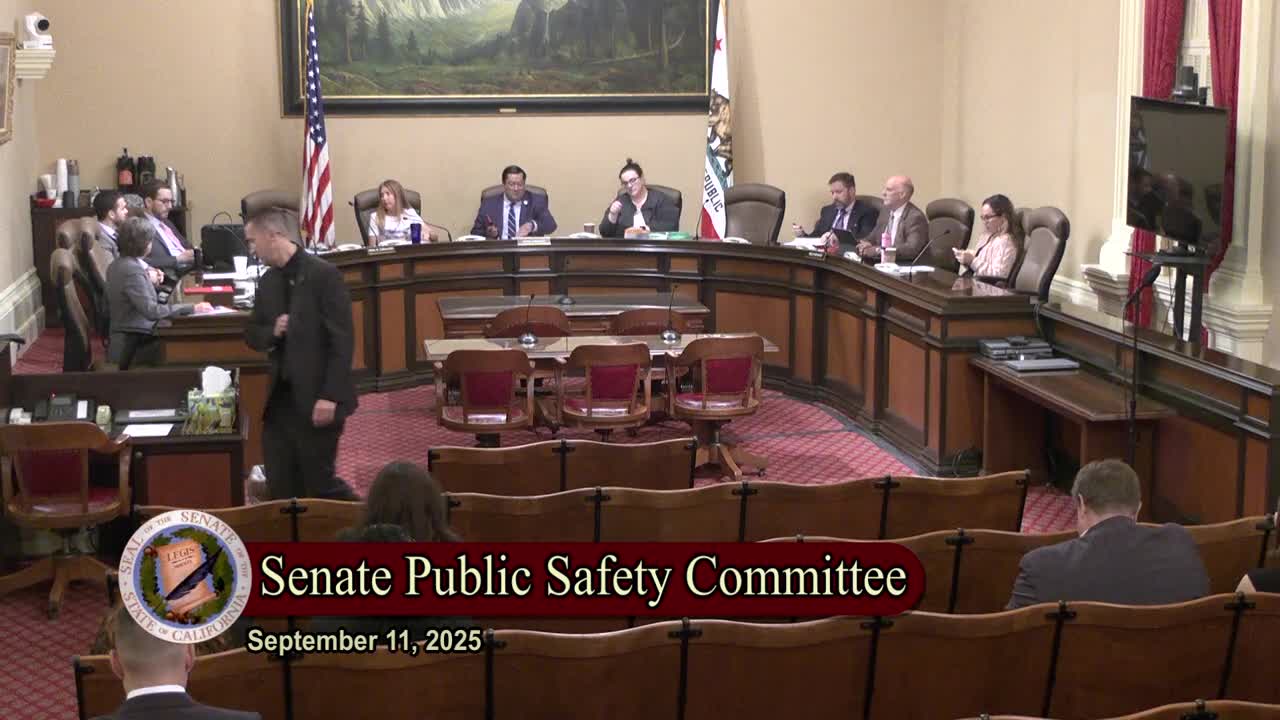 1H
Senate Standing Committee on Public Safety
 1H
Senate Floor
 8MIN
Senate Floor
 1H
Assembly Floor
 8MIN
Assembly Standing Committee on Appropriations
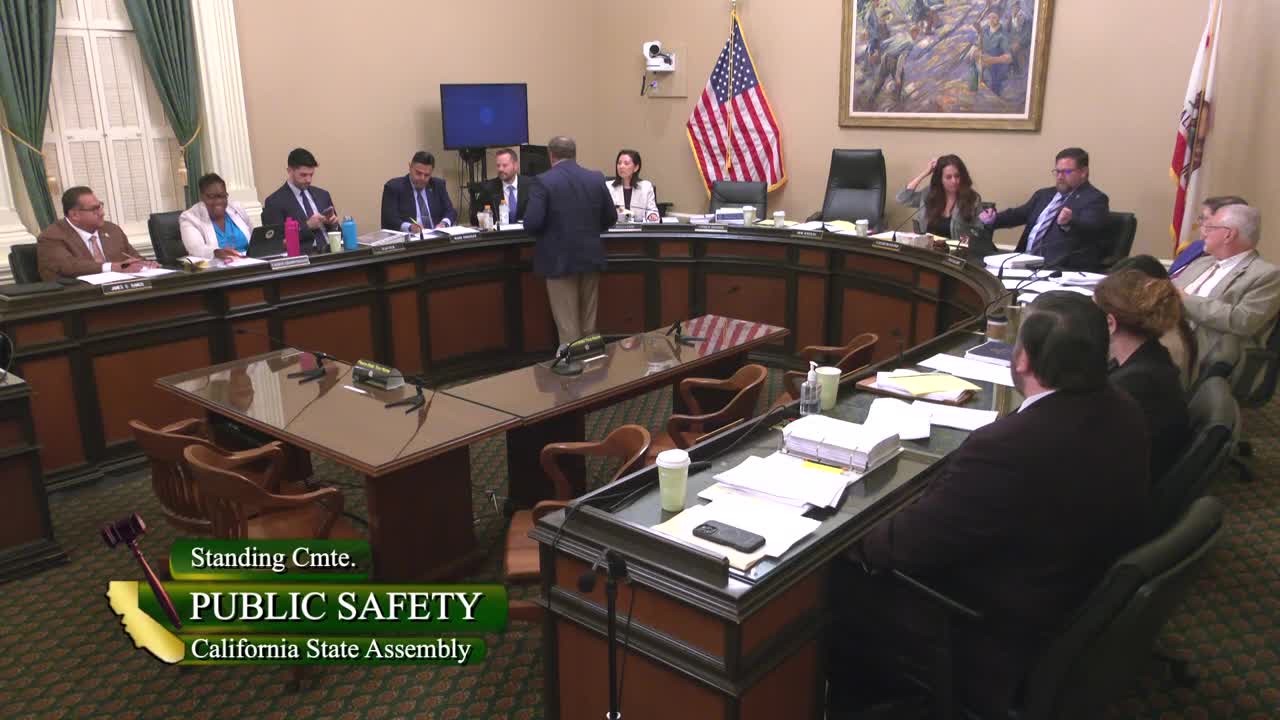 1H
Assembly Standing Committee on Public Safety


Bill Co-Author(s):