SB 633: Plastic beverage containers: recycling.
- Session Year: 2025-2026
- House: Senate
- Latest Version Date: 2026-09-18
Current Status:
Passed
(2026-09-18: Chaptered by Secretary of State. Chapter 315, Statutes of 2026.)
Introduced
In Committee
Awaiting First Chamber Vote
Passed First Chamber
In Committee
Awaiting Second Chamber Vote
Passed Second Chamber
Enacted
What does this bill do?
This bill raises the annual administrative penalty for beverage manufacturers who fall short of required postconsumer recycled plastic in plastic beverage containers from $0.20 to $0.30 per pound of virgin plastic used instead of the required recycled content. It also requires beverage makers to provide third‑party validation (an independent verifier) of their reported recycled content, requires reclaimers and recycled‑plastic producers to report annual pounds by resin type, and directs the state to publish a public list of manufacturers and brand names showing whether they complied.
The summary is provided by generative AI which can make mistakes. For original language, please view the details in the table below.
The California Beverage Container Recycling and Litter Reduction Act requires plastic beverage containers sold by a beverage manufacturer, as specified, to contain a specified average percentage of postconsumer recycled plastic per year. The act requires the manufacturer of a beverage sold in a plastic beverage container subject to the California Redemption Value to report to the Department of Resources Recycling and Recovery certain information about the amounts of virgin plastic and postconsumer recycled plastic used for plastic beverage containers subject to the California Redemption Value for sale in the state in the previous calendar year. Existing law requires the department to post this reported information on its internet website, as provided. Existing law provides that a violation of the act or a regulation adopted pursuant to the act is a crime.
The act subjects a beverage manufacturer that does not meet the minimum postconsumer recycled plastic content requirements to an annual administrative penalty, as provided. Under the act, the penalty is set at $0.20 for each pound of virgin plastic used in lieu of the required amount of postconsumer recycled plastic, as provided.
This bill would instead set the administrative penalty at $0.30 for each pound of virgin plastic used in lieu of the required amount of postconsumer recycled plastic.
This bill, beginning on or before March 1, 2028, would require a manufacturer of a beverage sold in a plastic beverage container subject to the California Redemption Value to also provide to the department proof that the postconsumer recycled content used by the beverage manufacturer for plastic beverage containers is able to be validated and is validated by a third party, as specified. The bill would require a validation regarding the postconsumer recycled content of plastic provided by a manufacturer of postconsumer recycled plastic to be accurate. By creating new crimes, the bill would impose a state-mandated local program. The bill would require the department to publish on its internet website a list of beverage manufacturers and their associated brand names, indicate whether they have complied with applicable postconsumer recycled plastic requirements, and provide other information the department deems appropriate.
The California Constitution requires the state to reimburse local agencies and school districts for certain costs mandated by the state. Statutory provisions establish procedures for making that reimbursement.
This bill would provide that no reimbursement is required by this act for a specified reason.
The California Beverage Container Recycling and Litter Reduction Act requires plastic beverage containers sold by a beverage manufacturer, as specified, to contain a specified average percentage of postconsumer recycled plastic per year. The act requires the manufacturer of a beverage sold in a plastic beverage container subject to the California Redemption Value to report to the Department of Resources Recycling and Recovery certain information about the amounts of virgin plastic and postconsumer recycled plastic used for plastic beverage containers subject to the California Redemption Value for sale in the state in the previous calendar year. Existing law requires the department to post this reported information on its internet website, as provided. Existing law provides that a violation of the act or a regulation adopted pursuant to the act is a crime.
The act subjects a beverage manufacturer that does not meet the minimum postconsumer recycled plastic content requirements to an annual administrative penalty, as provided. Under the act, the penalty is set at $0.20 for each pound of virgin plastic used in lieu of the required amount of postconsumer recycled plastic, as provided.
This bill would instead set the administrative penalty at $0.30 for each pound of virgin plastic used in lieu of the required amount of postconsumer recycled plastic.
This bill, beginning on or before March 1, 2027, 2028, would require a manufacturer of a beverage sold in a plastic beverage container subject to the California Redemption Value to also report provide to the department by country of origin the amount in pounds of imported postconsumer recycled plastic used for plastic beverage containers subject to the California Redemption Value for sale in the state in the previous calendar year and to provide proof that the postconsumer recycled content used by the beverage manufacturer for plastic beverage containers has been is able to be validated and is validated by a third party, as specified. The bill would require a validation regarding the postconsumer recycled content of plastic provided by a manufacturer of postconsumer recycled plastic to be accurate. By expanding the scope of a crime, creating new crimes, the bill would impose a state-mandated local program. The bill would require the department to post on its internet website the reported amounts of imported postconsumer recycled plastic used for plastic beverage containers in an aggregated form and would exempt the unaggregated amounts reported to the department from disclosure under the California Public Records Act. publish on its internet website a list of beverage manufacturers and their associated brand names, indicate whether they have complied with applicable postconsumer recycled plastic requirements, and provide other information the department deems appropriate.
Existing constitutional provisions require that a statute that limits the right of access to the meetings of public bodies or the writings of public officials and agencies be adopted with findings demonstrating the interest protected by the limitation and the need for protecting that interest.This bill would make legislative findings to that effect.The California Constitution requires the state to reimburse local agencies and school districts for certain costs mandated by the state. Statutory provisions establish procedures for making that reimbursement.
This bill would provide that no reimbursement is required by this act for a specified reason.
The California Beverage Container Recycling and Litter Reduction Act requires plastic beverage containers sold by a beverage manufacturer, as specified, to contain a specified average percentage of postconsumer recycled plastic per year. The act requires the manufacturer of a beverage sold in a plastic beverage container subject to the California Redemption Value to report to the Department of Resources Recycling and Recovery certain information about the amounts of virgin plastic and postconsumer recycled plastic used for plastic beverage containers subject to the California Redemption Value for sale in the state in the previous calendar year. Existing law requires the department to post this reported information on its internet website, as provided. Existing law provides that a violation of the act or a regulation adopted pursuant to the act is a crime.
This bill bill, beginning on or before March 1, 2027, would require a manufacturer of a beverage sold in a plastic beverage container subject to the California Redemption Value to also report to the department by country of origin the amount in pounds of imported postconsumer recycled plastic used for plastic beverage containers subject to the California Redemption Value for sale in the state in the previous calendar year and to provide proof that the postconsumer recycled content used by the manufacturer for plastic beverage containers has been validated by a third party, as specified. By expanding the scope of a crime, the bill would impose a state-mandated local program. The bill would require the department to post on its internet website the reported amounts of imported postconsumer recycled plastic used for plastic beverage containers in an aggregated form and would exempt the unaggregated amounts reported to the department from disclosure under the California Public Records Act.
Existing constitutional provisions require that a statute that limits the right of access to the meetings of public bodies or the writings of public officials and agencies be adopted with findings demonstrating the interest protected by the limitation and the need for protecting that interest.
This bill would make legislative findings to that effect.
The California Constitution requires the state to reimburse local agencies and school districts for certain costs mandated by the state. Statutory provisions establish procedures for making that reimbursement.
This bill would provide that no reimbursement is required by this act for a specified reason.
The California Beverage Container Recycling and Litter Reduction Act requires plastic beverage containers sold by a beverage manufacturer, as specified, to contain a specified average percentage of postconsumer recycled plastic per year. The act requires the manufacturer of a beverage sold in a plastic beverage container subject to the California Redemption Value to report to the Department of Resources Recycling and Recovery certain information about the amounts of virgin plastic and postconsumer recycled plastic used for plastic beverage containers subject to the California Redemption Value for sale in the state in the previous calendar year. Existing law provides that a violation of the act or a regulation adopted pursuant to the act is a crime.
This bill would require a manufacturer of a beverage sold in a plastic beverage container subject to the California Redemption Value to also report to the department by country of origin the amount in pounds of imported postconsumer recycled plastic used for plastic beverage containers subject to the California Redemption Value for sale in the state in the previous calendar year and to provide proof that the postconsumer recycled content used by the manufacturer for plastic beverage containers has been validated by a third party, as specified. By expanding the scope of a crime, the bill would impose a state-mandated local program.
The California Constitution requires the state to reimburse local agencies and school districts for certain costs mandated by the state. Statutory provisions establish procedures for making that reimbursement.
This bill would provide that no reimbursement is required by this act for a specified reason.
The California Beverage Container Recycling and Litter Reduction Act requires plastic beverage containers sold by a beverage manufacturer, as specified, to contain a specified average percentage of postconsumer recycled plastic per year. The act requires the manufacturer of a beverage sold in a plastic beverage container subject to the California Redemption Value to report to the Department of Resources Recycling and Recovery certain information about the amounts of virgin plastic and postconsumer recycled plastic used for plastic beverage containers subject to the California Redemption Value for sale in the state in the previous calendar year. Existing law provides that a violation of the act or a regulation adopted pursuant to the act is a crime.
This bill would require a manufacturer of a beverage sold in a plastic beverage container subject to the California Redemption Value to also report to the department by country of origin the amount in pounds of imported postconsumer recycled plastic used for plastic beverage containers subject to the California Redemption Value for sale in the state in the previous calendar year. year and to provide proof that the postconsumer recycled content used by the manufacturer for plastic beverage containers has been validated by a third party, as specified. By expanding the scope of a crime, the bill would impose a state-mandated local program.
The California Constitution requires the state to reimburse local agencies and school districts for certain costs mandated by the state. Statutory provisions establish procedures for making that reimbursement.
This bill would provide that no reimbursement is required by this act for a specified reason.
The California Beverage Container Recycling and Litter Reduction Act requires plastic beverage containers sold by a beverage manufacturer, as specified, to contain a specified average percentage of postconsumer recycled plastic per year. The act requires the manufacturer of a beverage sold in a plastic beverage container subject to the California Redemption Value to report to the Department of Resources Recycling and Recovery certain information about the amounts of virgin plastic and postconsumer recycled plastic used for plastic beverage containers subject to the California Redemption Value for sale in the state in the previous calendar year. Existing law provides that a violation of the act or a regulation adopted pursuant to the act is a crime.
This bill would require a manufacturer of a beverage sold in a plastic beverage container subject to the California Redemption Value to also report to the department by country of origin the amount in pounds of imported postconsumer recycled plastic used for plastic beverage containers subject to the California Redemption Value for sale in the state in the previous calendar year. By expanding the scope of a crime, the bill would impose a state-mandated local program.
The California Constitution requires the state to reimburse local agencies and school districts for certain costs mandated by the state. Statutory provisions establish procedures for making that reimbursement.
This bill would provide that no reimbursement is required by this act for a specified reason.
(a)(1)Between January 1, 2022, and December 31, 2024, inclusive, the total number of plastic beverage containers filled with a beverage sold by a beverage manufacturer subject to the California Redemption Value, pursuant to Chapter 5 (commencing with Section 14560), for sale in the state shall, on average, contain no less than 15 percent postconsumer recycled plastic per year.
(2)Between January 1, 2025, and December 31, 2029, inclusive, the total number of plastic beverage containers filled with a beverage sold by a beverage manufacturer subject to the California Redemption Value, pursuant to Chapter 5 (commencing with Section 14560), for sale in the state shall, on average, contain no less than 25 percent postconsumer recycled plastic per year.
(3)On and after January 1, 2030, the total number of plastic beverage containers filled with a beverage sold by a beverage manufacturer subject to the California Redemption Value, pursuant to Chapter 5 (commencing with Section 14560), for sale in the state shall, on average, contain no less than 50 percent postconsumer recycled plastic per year.
(4)A beverage container that is a box, bladder, or pouch, or similar container, that contains wine or distilled spirits, shall have an additional two years to comply with each of the deadlines in paragraphs (1), (2), and (3).
(5)(A)Beginning January 1, 2025, the director may, on an annual basis, review and determine to adjust the minimum postconsumer recycled content percentage required pursuant to paragraphs (2) and (3). The directors review may be initiated by the director or at the petition of the beverage manufacturing industry not more than annually. The department shall adopt regulations to establish the petition process and requirements. The director shall not adjust the minimum postconsumer recycled content requirements above the minimum postconsumer recycled plastic content percentages required pursuant to paragraphs (2) and (3). In making a determination pursuant to this paragraph, the director shall consider, at a minimum, all of the following factors:
(i)Changes in market conditions, including supply and demand for postconsumer recycled plastics, collection rates, and bale availability both domestically and globally.
(ii)Recycling rates.
(iii)The availability of recycled plastic suitable to meet the minimum recycled content requirements pursuant to paragraphs (2) and (3), including the availability of high-quality recycled plastic, and food-grade recycled plastic from the states and other beverage container recycling programs.
(iv)The capacity of recycling or processing infrastructure.
(v)The progress made by beverage manufacturers in achieving the goals of this subdivision.
(B)Notwithstanding subparagraph (A), the director shall not review or adjust a minimum postconsumer recycled content standard while the department is reducing payments pursuant to subdivision (c) of Section 14581.
(C)The department may enter into a contract for the services required to implement this section and related regulations developed by the department.
(D)For purposes of this paragraph, beverage manufacturing industry means an association that represents companies that manufacture beverages.
(b)(1)Beginning January 1, 2023, a beverage manufacturer that does not meet the minimum recycled plastic content requirements pursuant to subdivision (a) shall be subject to an annual administrative penalty pursuant to this subdivision. Beginning March 1, 2024, the administrative penalty shall be collected annually, if a reduction has not been approved pursuant to subdivision (e), and calculated in accordance with subdivision (c).
(2)A beverage manufacturer that is assessed penalties pursuant to this subdivision may pay those penalties to the department in quarterly installments or arrange an alternative payment schedule subject to the approval of the department, not to exceed a 12-month payment plan unless an extension is needed due to unforeseen circumstances, such as a public health emergency, state of emergency, or natural disaster.
(c)Beginning March 1, 2024, and annually thereafter, the department shall invoice any assessed administrative penalties for the previous calendar year based on the postconsumer recycled plastic content requirement of the previous calendar year. The department shall calculate the amount of the penalty based upon the amount in pounds in the aggregate of virgin and postconsumer recycled plastic material used by the beverage manufacturer to produce beverage containers sold or offered for sale in the state, in accordance with the following:
(1)The annual administrative penalty amount assessed to a beverage manufacturer shall equal the product of both of the following:
(A)The total pounds of plastic used multiplied by the relevant minimum postconsumer recycled plastic percentage, less the pounds of postconsumer recycled plastic used.
(B)Thirty cents ($0.30).
(2)For purposes of paragraph (1), both of the following shall apply:
(A)The total pounds of plastic used shall equal the sum of the amount of virgin plastic and postconsumer recycled plastic used by the beverage manufacturer, as reported pursuant to subdivision (a) of Section 14549.3.
(B)If the product calculated pursuant to paragraph (1) is equal to or less than zero, an administrative penalty shall not be assessed.
(d)(1)The department may conduct audits and investigations and take an enforcement action against a beverage manufacturer for the purpose of ensuring compliance with this section and the information reported pursuant to Section 14549.3. The department may take an enforcement action against a beverage manufacturer that fails to pay or underpays the assessed or audited administrative penalty only after notice and hearing in accordance with Chapter 5 (commencing with Section 11500) of Part 1 of Division 3 of Title 2 of the Government Code.
(2)The department shall keep confidential all business trade secrets and proprietary information about manufacturing processes and equipment that the department gathers or becomes aware of through the course of conducting audits or investigations pursuant to paragraph (1). Business trade secrets and proprietary information obtained pursuant to this subdivision shall not be subject to the California Public Records Act (Division 10 (commencing with Section 7920.000) of Title 1 of the Government Code).
(3)A beverage manufacturer may obtain a copy of the departments audit of that beverage manufacturer conducted pursuant to paragraph (1).
(e)(1)The department shall consider granting a reduction of the administrative penalties assessed pursuant to subdivision (b) for the purpose of meeting the minimum recycled content requirements required pursuant to paragraphs (1), (2), and (3) of subdivision (a).
(2)In determining whether to grant the reduction pursuant to paragraph (1), the department shall consider, at a minimum, all of the following factors:
(A)Anomalous market conditions.
(B)Disruption in, or lack of supply of, recycled plastics.
(C)Other factors that have prevented a beverage manufacturer from meeting the requirements.
(3)In order to receive a reduction of the administrative penalty, a beverage manufacturer shall submit to the department a corrective action plan detailing the reasons why the beverage manufacturer will fail to meet or has failed to meet the minimum postconsumer recycled content standard and the steps the beverage manufacturer will take to comply with the minimum postconsumer recycled content standard within the next reporting year. The department may approve the corrective action plan, and may reduce the administrative penalties once it approves the corrective action plan and the beverage manufacturer implements the plan. Administrative penalties shall accrue from the point of noncompliance with the minimum postconsumer recycled content standard if the department disapproves the corrective action plan or if the beverage manufacturer fails to implement the plan.
(f)The Recycling Enhancement Penalty Account is hereby created in the State Treasury. Notwithstanding subdivision (d) of Section 14580 and paragraph (3) of subdivision (a) of Section 14591.1, administrative penalties collected pursuant to this section shall be deposited into the Recycling Enhancement Penalty Account. Moneys in the Recycling Enhancement Penalty Account shall be expended upon appropriation by the Legislature in the annual Budget Act for the sole purpose of supporting the recycling, infrastructure, collection, and processing of plastic beverage containers in the state.
(g)(1)If the Legislature makes an appropriation in the annual Budget Act before June 15, 2027, for this purpose, the department may contract with a research university to study the polyethylene terephthalate and high-density polyethylene markets for all of the following:
(A)Analyzing market conditions and opportunities in the states recycling industry for meeting the minimum recycled plastic content requirements for plastic beverage containers required pursuant to subdivision (a).
(B)Determining the data needs and tracking opportunities to increase the transparency and support of a more effective, fact-based public understanding of the recycling industry.
(C)Recommending further policy modifications and measures to achieve the states recycling targets with the least cost and optimal efficiency.
(2)If the Legislature makes the appropriation specified in paragraph (1) and the department undertakes the study, the study shall be completed no later than May 1, 2028.
(3)The department may allocate moneys from the fund, upon appropriation by the Legislature as specified in paragraph (1), for the study by June 30, 2027, if all of the following apply:
(A)The department finds that there are sufficient moneys in the fund.
(B)The fund is not operating at a deficit.
(C)The director is not exercising authority to implement proportional reductions subject to the requirements of subdivision (c) of Section 14581.
(h)A city, county, or other local government jurisdiction shall not adopt an ordinance regulating the minimum recycled plastic content requirements for plastic beverage containers.
(i)This section does not apply to either of the following:
(1)A refillable plastic beverage container.
(2)A beverage manufacturer that sells or transfers 16,000,000 or fewer plastic beverage containers to a distributor, dealer, or consumer located in the State of California during the calendar year for which the beverage manufacturer is reporting pursuant to Section 14549.3.
(j)The Legislature encourages beverage manufacturers to use plastic beverage containers that contain 100 percent recycled plastic content.
SEC. 2.Section 14549.3 of the Public Resources Code is amended to read:14549.3.(a)On or before March 1 of each year, a manufacturer of a beverage sold in a plastic beverage container subject to the California Redemption Value, pursuant to Chapter 5 (commencing with Section 14560), shall report to the department the amount in pounds and by resin type of virgin plastic and postconsumer recycled plastic used by the manufacturer for plastic beverage containers subject to the California Redemption Value for sale in the state in the previous calendar year. The manufacturer shall submit this information to the department under penalty of perjury pursuant to standardized forms in the form and manner prescribed by the department.
(b)On or before March 1, 2024, and annually thereafter, a plastic material reclaimer shall report to the department the amount in pounds and by resin type of empty plastic beverage containers subject to the California Redemption Value, pursuant to Chapter 5 (commencing with Section 14560), that the plastic material reclaimer has collected and sold in the previous calendar year. The report shall specify the amount in pounds and by resin type of empty plastic containers sold in the state for beverage processing. The plastic material reclaimer shall submit this information to the department under penalty of perjury pursuant to standardized forms in the form and manner prescribed by the department.
(c)On or before March 1, 2024, and annually thereafter, a manufacturer of postconsumer recycled plastic shall report to the department the amount in pounds of food-grade flake, pellet, sheet, fines, or other forms that were sold in the previous calendar year and their capacity to produce food-grade material. The report shall specify the amount in pounds of material that meets beverage manufacturer specifications for bottle-grade material. The report shall include the amount in pounds of food-grade material sold in the state for beverage processing. The manufacturer shall submit this information to the department under penalty of perjury pursuant to standardized forms in the form and manner prescribed by the department.
(d)The department shall post the information reported pursuant to subdivision (a) within 45 days on the departments internet website.
(e)This section does not apply to a refillable plastic beverage container.
(f)This section shall remain in effect only until January 1, 2028, and as of that date is repealed.
SEC. 3.Section 14549.3 is added to the Public Resources Code, to read:14549.3.(a)(1)On or before March 1 of each year, a manufacturer of a beverage sold in a plastic beverage container subject to the California Redemption Value, pursuant to Chapter 5 (commencing with Section 14560), shall report to the department both of the following:
(A)The amount in pounds and by resin type of virgin plastic and postconsumer recycled plastic used by the beverage manufacturer for plastic beverage containers subject to the California Redemption Value for sale in the state in the previous calendar year.
(B)(i)Proof that the postconsumer recycled content used by the beverage manufacturer for plastic beverage containers is able to be validated and is validated by a third party, such as the Association of Plastic Recyclers, through its APR Postconsumer Resin Certification Program, or a similar third party approved by the department.
(ii)No later than November 1 of the calendar before a report is due on or before March 1, a manufacturer of a beverage sold in a plastic beverage container may request that the department review and approve a similar third party as described in clause (i) to be used instead of or in addition to an already approved validation program.
(2)If a manufacturer of postconsumer recycled plastic provides a validation regarding the postconsumer recycled content of plastic to a manufacturer of a plastic beverage container or a manufacturer of a beverage sold in a plastic beverage container, the manufacturer of postconsumer recycled plastic shall ensure the validation is accurate. A beverage manufacturer that submits an inaccurate validation to the department that originated from a manufacturer of postconsumer recycled plastic is not liable for a violation of this division if the beverage manufacturer is unaware of the inaccuracy.
(3)The beverage manufacturer shall submit the information required by paragraph (1) to the department under penalty of perjury pursuant to standardized forms in the form and manner prescribed by the department.
(b)On or before March 1 of each year, a plastic material reclaimer shall report to the department the amount in pounds and by resin type of empty plastic beverage containers subject to the California Redemption Value, pursuant to Chapter 5 (commencing with Section 14560), that the plastic material reclaimer has collected and sold in the previous calendar year. The report shall specify the amount in pounds and by resin type of empty plastic containers sold in the state for beverage processing. The plastic material reclaimer shall submit this information to the department under penalty of perjury pursuant to standardized forms in the form and manner prescribed by the department.
(c)On or before March 1 of each year, a manufacturer of postconsumer recycled plastic shall report to the department the amount in pounds of food-grade flake, pellet, sheet, fines, or other forms that were sold in the previous calendar year and their capacity to produce food-grade material. The report shall specify the amount in pounds of material that meets beverage manufacturer specifications for bottle-grade material. The report shall include the amount in pounds of food-grade material sold in the state for beverage processing. The manufacturer shall submit this information to the department under penalty of perjury pursuant to standardized forms in the form and manner prescribed by the department.
(d)The department shall post the information reported pursuant to subdivision (a) within 45 days on the departments internet website.
(e)On or before July 1 of each year, the department shall publish on its internet website a list of beverage manufacturers and their associated brand names, indicate whether they have complied with applicable postconsumer recycled plastic requirements, and provide other information related to compliance that the department deems appropriate.
(f)This section does not apply to a refillable plastic beverage container.
(g)This section shall become operative on January 1, 2028.
SEC. 4.No reimbursement is required by this act pursuant to Section 6 of Article XIIIB of the California Constitution because the only costs that may be incurred by a local agency or school district will be incurred because this act creates a new crime or infraction, eliminates a crime or infraction, or changes the penalty for a crime or infraction, within the meaning of Section 17556 of the Government Code, or changes the definition of a crime within the meaning of Section 6 of Article XIIIB of the California Constitution.
(a)(1)Between January 1, 2022, and December 31, 2024, inclusive, the total number of plastic beverage containers filled with a beverage sold by a beverage manufacturer subject to the California Redemption Value, pursuant to Chapter 5 (commencing with Section 14560), for sale in the state shall, on average, contain no less than 15 percent postconsumer recycled plastic per year.
(2)Between January 1, 2025, and December 31, 2029, inclusive, the total number of plastic beverage containers filled with a beverage sold by a beverage manufacturer subject to the California Redemption Value, pursuant to Chapter 5 (commencing with Section 14560), for sale in the state shall, on average, contain no less than 25 percent postconsumer recycled plastic per year.
(3)On and after January 1, 2030, the total number of plastic beverage containers filled with a beverage sold by a beverage manufacturer subject to the California Redemption Value, pursuant to Chapter 5 (commencing with Section 14560), for sale in the state shall, on average, contain no less than 50 percent postconsumer recycled plastic per year.
(4)A beverage container that is a box, bladder, or pouch, or similar container, that contains wine or distilled spirits, shall have an additional two years to comply with each of the deadlines in paragraphs (1) and (2). (1), (2), and (3).
(5)(A)Beginning January 1, 2025, the director may, on an annual basis, review and determine to adjust the minimum postconsumer recycled content percentage required pursuant to paragraphs (1) and (2). (2) and (3). The directors review may be initiated by the director or at the petition of the beverage manufacturing industry not more than annually. The department shall adopt regulations to establish the petition process and requirements. The director shall not adjust the minimum postconsumer recycled content requirements above the minimum postconsumer recycled plastic content percentages required pursuant to paragraphs (1) and (2). (2) and (3). In making a determination pursuant to this paragraph, the director shall consider, at a minimum, all of the following factors:
(i)Changes in market conditions, including supply and demand for postconsumer recycled plastics, collection rates, and bale availability both domestically and globally.
(ii)Recycling rates.
(iii)The availability of recycled plastic suitable to meet the minimum recycled content requirements pursuant to paragraphs (1) and (2), (2) and (3), including the availability of high-quality recycled plastic, and food-grade recycled plastic from the states and other beverage container recycling programs.
(iv)The capacity of recycling or processing infrastructure.
(v)The progress made by beverage manufacturers in achieving the goals of this subdivision.
(B)Notwithstanding subparagraph (A), the director shall not review or adjust a minimum postconsumer recycled content standard while the department is reducing payments pursuant to subdivision (c) of Section 14581.
(C)The department may enter into a contract for the services required to implement this section and related regulations developed by the department.
(D)For purposes of this paragraph, beverage manufacturing industry means an association that represents companies that manufacture beverages.
(b)(1)Beginning January 1, 2023, a beverage manufacturer that does not meet the minimum recycled plastic content requirements pursuant to subdivision (a) shall be subject to an annual administrative penalty pursuant to this subdivision. Beginning March 1, 2024, the administrative penalty shall be collected annually, if a reduction has not been approved pursuant to subdivision (e), and calculated in accordance with subdivision (c).
(2)A beverage manufacturer that is assessed penalties pursuant to this subdivision may pay those penalties to the department in quarterly installments or arrange an alternative payment schedule subject to the approval of the department, not to exceed a 12-month payment plan unless an extension is needed due to unforeseen circumstances, such as a public health emergency, state of emergency, or natural disaster.
(c)Beginning March 1, 2024, and annually thereafter, the department shall invoice any assessed administrative penalties for the previous calendar year based on the postconsumer recycled plastic content requirement of the previous calendar year. The department shall calculate the amount of the penalty based upon the amount in pounds in the aggregate of virgin and postconsumer recycled plastic material used by the beverage manufacturer to produce beverage containers sold or offered for sale in the state, in accordance with the following:
(1)The annual administrative penalty amount assessed to a beverage manufacturer shall equal the product of both of the following:
(A)The total pounds of plastic used multiplied by the relevant minimum postconsumer recycled plastic percentage, less the pounds of postconsumer recycled plastic used.
(B)Thirty cents ($0.30).
(2)For purposes of paragraph (1), both of the following shall apply:
(A)The total pounds of plastic used shall equal the sum of the amount of virgin plastic and postconsumer recycled plastic used by the beverage manufacturer, as reported pursuant to subdivision (a) of Section 14549.3.
(B)If the product calculated pursuant to paragraph (1) is equal to or less than zero, an administrative penalty shall not be assessed.
(d)(1)The department may conduct audits and investigations and take an enforcement action against a beverage manufacturer for the purpose of ensuring compliance with this section and the information reported pursuant to Section 14549.3. The department may take an enforcement action against a beverage manufacturer that fails to pay or underpays the assessed or audited administrative penalty only after notice and hearing in accordance with Chapter 5 (commencing with Section 11500) of Part 1 of Division 3 of Title 2 of the Government Code.
(2)The department shall keep confidential all business trade secrets and proprietary information about manufacturing processes and equipment that the department gathers or becomes aware of through the course of conducting audits or investigations pursuant to paragraph (1). Business trade secrets and proprietary information obtained pursuant to this subdivision shall not be subject to the California Public Records Act (Division 10 (commencing with Section 7920.000) of Title 1 of the Government Code).
(3)A beverage manufacturer may obtain a copy of the departments audit of that beverage manufacturer conducted pursuant to paragraph (1).
(e)(1)The department shall consider granting a reduction of the administrative penalties assessed pursuant to subdivision (b) for the purpose of meeting the minimum recycled content requirements required pursuant to paragraphs (1) and (2) (1), (2), and (3) of subdivision (a).
(2)In determining whether to grant the reduction pursuant to paragraph (1), the department shall consider, at a minimum, all of the following factors:
(A)Anomalous market conditions.
(B)Disruption in, or lack of supply of, recycled plastics.
(C)Other factors that have prevented a beverage manufacturer from meeting the requirements.
(3)In order to receive a reduction of the administrative penalty, a beverage manufacturer shall submit to the department a corrective action plan detailing the reasons why the beverage manufacturer will fail to meet or has failed to meet the minimum postconsumer recycled content standard and the steps the beverage manufacturer will take to comply with the minimum postconsumer recycled content standard within the next reporting year. The department may approve the corrective action plan, and may reduce the administrative penalties once it approves the corrective action plan and the beverage manufacturer implements the plan. Administrative penalties shall accrue from the point of noncompliance with the minimum postconsumer recycled content standard if the department disapproves the corrective action plan or if the beverage manufacturer fails to implement the plan.
(f)The Recycling Enhancement Penalty Account is hereby created in the State Treasury. Notwithstanding subdivision (d) of Section 14580 and paragraph (3) of subdivision (a) of Section 14591.1, administrative penalties collected pursuant to this section shall be deposited into the Recycling Enhancement Penalty Account. Moneys in the Recycling Enhancement Penalty Account shall be expended upon appropriation by the Legislature in the annual Budget Act for the sole purpose of supporting the recycling, infrastructure, collection, and processing of plastic beverage containers in the state.
(g)(1)If the Legislature makes an appropriation in the annual Budget Act before June 15, 2027, for this purpose, the department may contract with a research university to study the polyethylene terephthalate and high-density polyethylene markets for all of the following:
(A)Analyzing market conditions and opportunities in the states recycling industry for meeting the minimum recycled plastic content requirements for plastic beverage containers required pursuant to subdivision (a).
(B)Determining the data needs and tracking opportunities to increase the transparency and support of a more effective, fact-based public understanding of the recycling industry.
(C)Recommending further policy modifications and measures to achieve the states recycling targets with the least cost and optimal efficiency.
(2)If the Legislature makes the appropriation specified in paragraph (1) and the department undertakes the study, the study shall be completed no later than May 1, 2028.
(3)The department may allocate moneys from the fund, upon appropriation by the Legislature as specified in paragraph (1), for the study by June 30, 2027, if all of the following apply:
(A)The department finds that there are sufficient moneys in the fund.
(B)The fund is not operating at a deficit.
(C)The director is not exercising authority to implement proportional reductions subject to the requirements of subdivision (c) of Section 14581.
(h)A city, county, or other local government jurisdiction shall not adopt an ordinance regulating the minimum recycled plastic content requirements for plastic beverage containers.
(i)This section does not apply to either of the following:
(1)A refillable plastic beverage container.
(2)A beverage manufacturer that sells or transfers 16,000,000 or fewer plastic beverage containers to a distributor, dealer, or consumer located in the State of California during the calendar year for which the beverage manufacturer is reporting pursuant to Section 14549.3.
(j)The Legislature encourages beverage manufacturers to use plastic beverage containers that contain 100 percent recycled plastic content.
SEC. 2.Section 14549.3 of the Public Resources Code is amended to read:14549.3.(a)On or before March 1 of each year, a manufacturer of a beverage sold in a plastic beverage container subject to the California Redemption Value, pursuant to Chapter 5 (commencing with Section 14560), shall report to the department the amount in pounds and by resin type of virgin plastic and postconsumer recycled plastic used by the manufacturer for plastic beverage containers subject to the California Redemption Value for sale in the state in the previous calendar year. The manufacturer shall submit this information to the department under penalty of perjury pursuant to standardized forms in the form and manner prescribed by the department.
(b)On or before March 1, 2024, and annually thereafter, a plastic material reclaimer shall report to the department the amount in pounds and by resin type of empty plastic beverage containers subject to the California Redemption Value, pursuant to Chapter 5 (commencing with Section 14560), that the plastic material reclaimer has collected and sold in the previous calendar year. The report shall specify the amount in pounds and by resin type of empty plastic containers sold in the state for beverage processing. The plastic material reclaimer shall submit this information to the department under penalty of perjury pursuant to standardized forms in the form and manner prescribed by the department.
(c)On or before March 1, 2024, and annually thereafter, a manufacturer of postconsumer recycled plastic shall report to the department the amount in pounds of food-grade flake, pellet, sheet, fines, or other forms that were sold in the previous calendar year and their capacity to produce food-grade material. The report shall specify the amount in pounds of material that meets beverage manufacturer specifications for bottle-grade material. The report shall include the amount in pounds of food-grade material sold in the state for beverage processing. The manufacturer shall submit this information to the department under penalty of perjury pursuant to standardized forms in the form and manner prescribed by the department.
(d)The department shall post the information reported pursuant to subdivision (a) within 45 days on the departments internet website.
(e)This section does not apply to a refillable plastic beverage container.
(f)This section shall remain in effect only until January 1, 2028, and as of that date is repealed.
SEC. 3.Section 14549.3 is added to the Public Resources Code, to read:14549.3.(a)(1)On or before March 1 of each year, a manufacturer of a beverage sold in a plastic beverage container subject to the California Redemption Value, pursuant to Chapter 5 (commencing with Section 14560), shall report to the department both of the following:
(A)The amount in pounds and by resin type of virgin plastic and postconsumer recycled plastic used by the beverage manufacturer for plastic beverage containers subject to the California Redemption Value for sale in the state in the previous calendar year.
(B)(i)Proof that the postconsumer recycled content used by the beverage manufacturer for plastic beverage containers is able to be validated and is validated by a third party, such as the Association of Plastic Recyclers, through its APR Postconsumer Resin Certification Program, or a similar third party approved by the department.
(ii)No later than November 1 of the calendar before a report is due on or before March 1, a manufacturer of a beverage sold in a plastic beverage container may request that the department review and approve a similar third party as described in clause (i) to be used instead of or in addition to an already approved validation program.
(2)If a manufacturer of postconsumer recycled plastic provides a validation regarding the postconsumer recycled content of plastic to a manufacturer of a plastic beverage container or a manufacturer of a beverage sold in a plastic beverage container, the manufacturer of postconsumer recycled plastic shall ensure the validation is accurate. A beverage manufacturer that submits an inaccurate validation to the department that originated from a manufacturer of postconsumer recycled plastic is not liable for a violation of this division if the beverage manufacturer is unaware of the inaccuracy.
(3)The beverage manufacturer shall submit the information required by paragraph (1) to the department under penalty of perjury pursuant to standardized forms in the form and manner prescribed by the department.
(b)On or before March 1 of each year, a plastic material reclaimer shall report to the department the amount in pounds and by resin type of empty plastic beverage containers subject to the California Redemption Value, pursuant to Chapter 5 (commencing with Section 14560), that the plastic material reclaimer has collected and sold in the previous calendar year. The report shall specify the amount in pounds and by resin type of empty plastic containers sold in the state for beverage processing. The plastic material reclaimer shall submit this information to the department under penalty of perjury pursuant to standardized forms in the form and manner prescribed by the department.
(c)On or before March 1 of each year, a manufacturer of postconsumer recycled plastic shall report to the department the amount in pounds of food-grade flake, pellet, sheet, fines, or other forms that were sold in the previous calendar year and their capacity to produce food-grade material. The report shall specify the amount in pounds of material that meets beverage manufacturer specifications for bottle-grade material. The report shall include the amount in pounds of food-grade material sold in the state for beverage processing. The manufacturer shall submit this information to the department under penalty of perjury pursuant to standardized forms in the form and manner prescribed by the department.
(d)The department shall post the information reported pursuant to subdivision (a) within 45 days on the departments internet website.
(e)On or before July 1 of each year, the department shall publish on its internet website a list of beverage manufacturers and their associated brand names, indicate whether they have complied with applicable postconsumer recycled plastic requirements, and provide other information related to compliance that the department deems appropriate.
(f)This section does not apply to a refillable plastic beverage container.
(g)This section shall become operative on January 1, 2028.
SEC. 4.No reimbursement is required by this act pursuant to Section 6 of Article XIIIB of the California Constitution because the only costs that may be incurred by a local agency or school district will be incurred because this act creates a new crime or infraction, eliminates a crime or infraction, or changes the penalty for a crime or infraction, within the meaning of Section 17556 of the Government Code, or changes the definition of a crime within the meaning of Section 6 of Article XIIIB of the California Constitution.
(a)(1)Between January 1, 2022, and December 31, 2024, inclusive, the total number of plastic beverage containers filled with a beverage sold by a beverage manufacturer subject to the California Redemption Value, pursuant to Chapter 5 (commencing with Section 14560), for sale in the state shall, on average, contain no less than 15 percent postconsumer recycled plastic per year.
(2)Between January 1, 2025, and December 31, 2029, inclusive, the total number of plastic beverage containers filled with a beverage sold by a beverage manufacturer subject to the California Redemption Value, pursuant to Chapter 5 (commencing with Section 14560), for sale in the state shall, on average, contain no less than 25 percent postconsumer recycled plastic per year.
(3)On and after January 1, 2030, the total number of plastic beverage containers filled with a beverage sold by a beverage manufacturer subject to the California Redemption Value, pursuant to Chapter 5 (commencing with Section 14560), for sale in the state shall, on average, contain no less than 50 percent postconsumer recycled plastic per year.
(4)A beverage container that is a box, bladder, or pouch, or similar container, that contains wine or distilled spirits, shall have an additional two years to comply with each of the deadlines in paragraphs (1), (2), and (3). (1) and (2).
(5)A beverage container that contains 46 ounces or more of 100 percent fruit juice or more than 16 ounces of vegetable juice shall not be considered a beverage container for purposes of this subdivision until January 1, 2026.(6)(5)(A)Beginning January 1, 2025, the director may, on an annual basis, review and determine to adjust the minimum postconsumer recycled content percentage required pursuant to paragraphs (2) and (3). (1) and (2). The directors review may be initiated by the director or at the petition of the beverage manufacturing industry not more than annually. The department shall adopt regulations to establish the petition process and requirements. The director shall not adjust the minimum postconsumer recycled content requirements above the minimum postconsumer recycled plastic content percentages required pursuant to paragraphs (2) and (3). (1) and (2). In making a determination pursuant to this paragraph, the director shall consider, at a minimum, all of the following factors:
(i)Changes in market conditions, including supply and demand for postconsumer recycled plastics, collection rates, and bale availability both domestically and globally.
(ii)Recycling rates.
(iii)The availability of recycled plastic suitable to meet the minimum recycled content requirements pursuant to paragraphs (2) and (3), (1) and (2), including the availability of high-quality recycled plastic, and food-grade recycled plastic from the states and other beverage container recycling programs.
(iv)The capacity of recycling or processing infrastructure.
(v)The progress made by beverage manufacturers in achieving the goals of this subdivision.
(B)Notwithstanding subparagraph (A), the director shall not review or adjust a minimum postconsumer recycled content standard while the department is reducing payments pursuant to subdivision (c) of Section 14581.
(C)The department may enter into a contract for the services required to implement this section and related regulations developed by the department.
(D)For purposes of this paragraph, beverage manufacturing industry means an association that represents companies that manufacture beverages.
(b)(1)Beginning January 1, 2023, a beverage manufacturer that does not meet the minimum recycled plastic content requirements pursuant to subdivision (a) shall be subject to an annual administrative penalty pursuant to this subdivision. Beginning March 1, 2024, the administrative penalty shall be collected annually, if a reduction has not been approved pursuant to subdivision (e), and calculated in accordance with subdivision (c).
(2)A beverage manufacturer that is assessed penalties pursuant to this subdivision may pay those penalties to the department in quarterly installments or arrange an alternative payment schedule subject to the approval of the department, not to exceed a 12-month payment plan unless an extension is needed due to unforeseen circumstances, such as a public health emergency, state of emergency, or natural disaster.
(c)Beginning March 1, 2024, and annually thereafter, the department shall invoice any assessed administrative penalties for the previous calendar year based on the postconsumer recycled plastic content requirement of the previous calendar year. The department shall calculate the amount of the penalty based upon the amount in pounds in the aggregate of virgin and postconsumer recycled plastic material used by the beverage manufacturer to produce beverage containers sold or offered for sale in the state, in accordance with the following:
(1)The annual administrative penalty amount assessed to a beverage manufacturer shall equal the product of both of the following:
(A)The total pounds of plastic used multiplied by the relevant minimum postconsumer recycled plastic percentage, less the pounds of postconsumer recycled plastic used.
(B)Twenty cents ($0.20).(B)Thirty cents ($0.30).
(2)For purposes of paragraph (1), both of the following shall apply:
(A)The total pounds of plastic used shall equal the sum of the amount of virgin plastic and postconsumer recycled plastic used by the beverage manufacturer, as reported pursuant to subdivision (a) of Section 14549.3.
(B)If the product calculated pursuant to paragraph (1) is equal to or less than zero, an administrative penalty shall not be assessed.
(d)(1)The department may conduct audits and investigations and take an enforcement action against a beverage manufacturer for the purpose of ensuring compliance with this section and the information reported pursuant to Section 14549.3. The department may take an enforcement action against a beverage manufacturer that fails to pay or underpays the assessed or audited administrative penalty only after notice and hearing in accordance with Chapter 5 (commencing with Section 11500) of Part 1 of Division 3 of Title 2 of the Government Code.
(2)The department shall keep confidential all business trade secrets and proprietary information about manufacturing processes and equipment that the department gathers or becomes aware of through the course of conducting audits or investigations pursuant to paragraph (1). Business trade secrets and proprietary information obtained pursuant to this subdivision shall not be subject to the California Public Records Act (Division 10 (commencing with Section 7920.000) of Title 1 of the Government Code).
(3)A beverage manufacturer may obtain a copy of the departments audit of that beverage manufacturer conducted pursuant to paragraph (1).
(e)(1)The department shall consider granting a reduction of the administrative penalties assessed pursuant to subdivision (b) for the purpose of meeting the minimum recycled content requirements required pursuant to paragraphs (1) to (3), inclusive, and (2) of subdivision (a).
(2)In determining whether to grant the reduction pursuant to paragraph (1), the department shall consider, at a minimum, all of the following factors:
(A)Anomalous market conditions.
(B)Disruption in, or lack of supply of, recycled plastics.
(C)Other factors that have prevented a beverage manufacturer from meeting the requirements.
(3)In order to receive a reduction of the administrative penalty, a beverage manufacturer shall submit to the department a corrective action plan detailing the reasons why the beverage manufacturer will fail to meet or has failed to meet the minimum postconsumer recycled content standard and the steps the beverage manufacturer will take to comply with the minimum postconsumer recycled content standard within the next reporting year. The department may approve the corrective action plan, and may reduce the administrative penalties once it approves the corrective action plan and the beverage manufacturer implements the plan. Administrative penalties shall accrue from the point of noncompliance with the minimum postconsumer recycled content standard if the department disapproves the corrective action plan or if the beverage manufacturer fails to implement the plan.
(f)The Recycling Enhancement Penalty Account is hereby created in the State Treasury. Notwithstanding subdivision (d) of Section 14580 and paragraph (3) of subdivision (a) of Section 14591.1, administrative penalties collected pursuant to this section shall be deposited into the Recycling Enhancement Penalty Account. Moneys in the Recycling Enhancement Penalty Account shall be expended upon appropriation by the Legislature in the annual Budget Act for the sole purpose of supporting the recycling, infrastructure, collection, and processing of plastic beverage containers in the state.
(g)(1)If the Legislature makes an appropriation in the annual Budget Act before June 15, 2027, for this purpose, the department may contract with a research university to study the polyethylene terephthalate and high-density polyethylene markets for all of the following:
(A)Analyzing market conditions and opportunities in the states recycling industry for meeting the minimum recycled plastic content requirements for plastic beverage containers required pursuant to subdivision (a).
(B)Determining the data needs and tracking opportunities to increase the transparency and support of a more effective, fact-based public understanding of the recycling industry.
(C)Recommending further policy modifications and measures to achieve the states recycling targets with the least cost and optimal efficiency.
(2)If the Legislature makes the appropriation specified in paragraph (1) and the department undertakes the study, the study shall be completed no later than May 1, 2028.
(3)The department may allocate moneys from the fund, upon appropriation by the Legislature as specified in paragraph (1), for the study by June 30, 2027, if all of the following apply:
(A)The department finds that there are sufficient moneys in the fund.
(B)The fund is not operating at a deficit.
(C)The director is not exercising authority to implement proportional reductions subject to the requirements of subdivision (c) of Section 14581.
(h)A city, county, or other local government jurisdiction shall not adopt an ordinance regulating the minimum recycled plastic content requirements for plastic beverage containers.
(i)This section does not apply to either of the following:
(1)A refillable plastic beverage container.
(2)A beverage manufacturer that sells or transfers 16,000,000 or fewer plastic beverage containers to a distributor, dealer, or consumer located in the State of California during the calendar year for which the beverage manufacturer is reporting pursuant to Section 14549.3.
(j)The Legislature encourages beverage manufacturers to use plastic beverage containers that contain 100 percent recycled plastic content.
SECTION 1.SEC. 2.Section 14549.3 of the Public Resources Code is amended to read:14549.3.(a)On or before March 1 of each year, a manufacturer of a beverage sold in a plastic beverage container subject to the California Redemption Value, pursuant to Chapter 5 (commencing with Section 14560), shall report to the department the amount in pounds and by resin type of virgin plastic and postconsumer recycled plastic used by the manufacturer for plastic beverage containers subject to the California Redemption Value for sale in the state in the previous calendar year. The manufacturer shall submit this information to the department under penalty of perjury pursuant to standardized forms in the form and manner prescribed by the department.
(b)On or before March 1, 2024, and annually thereafter, a plastic material reclaimer shall report to the department the amount in pounds and by resin type of empty plastic beverage containers subject to the California Redemption Value, pursuant to Chapter 5 (commencing with Section 14560), that the plastic material reclaimer has collected and sold in the previous calendar year. The report shall specify the amount in pounds and by resin type of empty plastic containers sold in the state for beverage processing. The plastic material reclaimer shall submit this information to the department under penalty of perjury pursuant to standardized forms in the form and manner prescribed by the department.
(c)On or before March 1, 2024, and annually thereafter, a manufacturer of postconsumer recycled plastic shall report to the department the amount in pounds of food-grade flake, pellet, sheet, fines, or other forms that were sold in the previous calendar year and their capacity to produce food-grade material. The report shall specify the amount in pounds of material that meets beverage manufacturer specifications for bottle-grade material. The report shall include the amount in pounds of food-grade material sold in the state for beverage processing. The manufacturer shall submit this information to the department under penalty of perjury pursuant to standardized forms in the form and manner prescribed by the department.
(d)The department shall post the information reported pursuant to subdivision (a) within 45 days on the departments internet website.
(e)This section does not apply to a refillable plastic beverage container.
(f)This section shall remain in effect only until January 1, 2027, 2028, and as of that date is repealed.
SEC. 2.SEC. 3.Section 14549.3 is added to the Public Resources Code, to read:14549.3.(a)(1)On or before March 1 of each year, a manufacturer of a beverage sold in a plastic beverage container subject to the California Redemption Value, pursuant to Chapter 5 (commencing with Section 14560), shall report to the department all both of the following:
(A)The amount in pounds and by resin type of virgin plastic and postconsumer recycled plastic used by the beverage manufacturer for plastic beverage containers subject to the California Redemption Value for sale in the state in the previous calendar year.
(B)By country of origin, the amount in pounds of imported postconsumer recycled plastic used by the manufacturer for plastic beverage containers subject to the California Redemption Value for sale in the state in the previous calendar year.(C)(B)(i)Proof that the postconsumer recycled content used by the beverage manufacturer for plastic beverage containers has been is able to be validated and is validated by a third party that adheres to the APR standard or an equivalent standard approved by the department, and that meets the departments criteria for validating postconsumer recycled content for purposes of clause (i) of subparagraph (B) of paragraph (2) of subdivision (a) of Section 42057. party, such as the Association of Plastic Recyclers, through its APR Postconsumer Resin Certification Program, or a similar third party approved by the department.
(ii)The department may review a third party that provides validation for purposes of this subparagraph to determine whether the third party adheres to the APR standard or an equivalent standard approved by the department.(iii)For purposes of this subparagraph, APR standard means the standard specified by the Association of Plastic Recyclers in a publication titled Certification Scheme for Post-Consumer Plastic Recycling Process - Content Traceability, which has a publication date of November 18, 2024, and is also identified as document number APR-PCR-101.(ii)No later than November 1 of the calendar before a report is due on or before March 1, a manufacturer of a beverage sold in a plastic beverage container may request that the department review and approve a similar third party as described in clause (i) to be used instead of or in addition to an already approved validation program.
(2)If a manufacturer of postconsumer recycled plastic provides a validation regarding the postconsumer recycled content of plastic to a manufacturer of a plastic beverage container or a manufacturer of a beverage sold in a plastic beverage container, the manufacturer of postconsumer recycled plastic shall ensure the validation is accurate. A beverage manufacturer that submits an inaccurate validation to the department that originated from a manufacturer of postconsumer recycled plastic is not liable for a violation of this division if the beverage manufacturer is unaware of the inaccuracy.
(2)(3)The beverage manufacturer shall submit the information required by paragraph (1) to the department under penalty of perjury pursuant to standardized forms in the form and manner prescribed by the department.
(b)On or before March 1 of each year, a plastic material reclaimer shall report to the department the amount in pounds and by resin type of empty plastic beverage containers subject to the California Redemption Value, pursuant to Chapter 5 (commencing with Section 14560), that the plastic material reclaimer has collected and sold in the previous calendar year. The report shall specify the amount in pounds and by resin type of empty plastic containers sold in the state for beverage processing. The plastic material reclaimer shall submit this information to the department under penalty of perjury pursuant to standardized forms in the form and manner prescribed by the department.
(c)On or before March 1 of each year, a manufacturer of postconsumer recycled plastic shall report to the department the amount in pounds of food-grade flake, pellet, sheet, fines, or other forms that were sold in the previous calendar year and their capacity to produce food-grade material. The report shall specify the amount in pounds of material that meets beverage manufacturer specifications for bottle-grade material. The report shall include the amount in pounds of food-grade material sold in the state for beverage processing. The manufacturer shall submit this information to the department under penalty of perjury pursuant to standardized forms in the form and manner prescribed by the department.
(d)The department shall post the information reported pursuant to subdivision (a) within 45 days on the departments internet website.
(1)Information submitted to the department pursuant to subparagraph (B) of paragraph (1) of subdivision (a) shall be posted on the departments internet website in an aggregated form.(2)Unaggregated information submitted to the department pursuant to subparagraph (B) of paragraph (1) of subdivision (a) shall be exempt from public disclosure under the California Public Records Act (Division 10 (commencing with Section 7920.000) of Title 1 of the Government Code).(e)On or before July 1 of each year, the department shall publish on its internet website a list of beverage manufacturers and their associated brand names, indicate whether they have complied with applicable postconsumer recycled plastic requirements, and provide other information related to compliance that the department deems appropriate.
(f)This section does not apply to a refillable plastic beverage container.
(e)(g)This section shall become operative on January 1, 2027. 2028.
SEC. 3.The Legislature finds and declares that Section 1 of this act, which amends Section 14549.3 of the Public Resources Code, imposes a limitation on the publics right of access to the meetings of public bodies or the writings of public officials and agencies within the meaning of Section 3 of Article I of the California Constitution. Pursuant to that constitutional provision, the Legislature makes the following findings to demonstrate the interest protected by this limitation and the need for protecting that interest:In order to ensure that proprietary information is protected and to protect against unfair competitive disadvantages to beverage manufacturers, it is necessary to protect from public disclosure unaggregated proprietary information related to the amounts of imported postconsumer recycled plastic used by manufacturers for plastic beverage containers.SEC. 4.No reimbursement is required by this act pursuant to Section 6 of Article XIIIB of the California Constitution because the only costs that may be incurred by a local agency or school district will be incurred because this act creates a new crime or infraction, eliminates a crime or infraction, or changes the penalty for a crime or infraction, within the meaning of Section 17556 of the Government Code, or changes the definition of a crime within the meaning of Section 6 of Article XIIIB of the California Constitution.
(a)On or before March 1 of each year, a manufacturer of a beverage sold in a plastic beverage container subject to the California Redemption Value, pursuant to Chapter 5 (commencing with Section 14560), shall report to the department the amount in pounds and by resin type of virgin plastic and postconsumer recycled plastic used by the manufacturer for plastic beverage containers subject to the California Redemption Value for sale in the state in the previous calendar year. The manufacturer shall submit this information to the department under penalty of perjury pursuant to standardized forms in the form and manner prescribed by the department.
(b)On or before March 1, 2024, and annually thereafter, a plastic material reclaimer shall report to the department the amount in pounds and by resin type of empty plastic beverage containers subject to the California Redemption Value, pursuant to Chapter 5 (commencing with Section 14560), that the plastic material reclaimer has collected and sold in the previous calendar year. The report shall specify the amount in pounds and by resin type of empty plastic containers sold in the state for beverage processing. The plastic material reclaimer shall submit this information to the department under penalty of perjury pursuant to standardized forms in the form and manner prescribed by the department.
(c)On or before March 1, 2024, and annually thereafter, a manufacturer of postconsumer recycled plastic shall report to the department the amount in pounds of food-grade flake, pellet, sheet, fines, or other forms that were sold in the previous calendar year and their capacity to produce food-grade material. The report shall specify the amount in pounds of material that meets beverage manufacturer specifications for bottle-grade material. The report shall include the amount in pounds of food-grade material sold in the state for beverage processing. The manufacturer shall submit this information to the department under penalty of perjury pursuant to standardized forms in the form and manner prescribed by the department.
(d)The department shall post the information reported pursuant to subdivision (a) within 45 days on the departments internet website.
(e)This section does not apply to a refillable plastic beverage container.
(f)This section shall remain in effect only until January 1, 2027, and as of that date is repealed.
SEC. 2.Section 14549.3 is added to the Public Resources Code, to read:14549.3.(a)(1)On or before March 1 of each year, a manufacturer of a beverage sold in a plastic beverage container subject to the California Redemption Value, pursuant to Chapter 5 (commencing with Section 14560), shall report to the department all of the following:
(A)The amount in pounds and by resin type of virgin plastic and postconsumer recycled plastic used by the manufacturer for plastic beverage containers subject to the California Redemption Value for sale in the state in the previous calendar year.
(B)By country of origin, the amount in pounds of imported postconsumer recycled plastic used by the manufacturer for plastic beverage containers subject to the California Redemption Value for sale in the state in the previous calendar year.
(C)(i)Proof that the postconsumer recycled content used by the manufacturer for plastic beverage containers has been validated by a third party that adheres to the APR standard or an equivalent standard approved by the department, and that meets the departments criteria for validating postconsumer recycled content for purposes of clause (i) of subparagraph (B) of paragraph (2) of subdivision (a) of Section 42057.
(ii)The department may review a third party that provides validation for purposes of this subparagraph to determine whether the third party adheres to the APR standard or an equivalent standard approved by the department.
(iii)For purposes of this subparagraph, APR standard means the standard specified by the Association of Plastic Recyclers in a publication titled Certification Scheme for Post-Consumer Plastic Recycling Process - Content Traceability, which has a publication date of November 18, 2024, and is also identified as document number APR-PCR-101.
(2)The manufacturer shall submit the information required by paragraph (1) to the department under penalty of perjury pursuant to standardized forms in the form and manner prescribed by the department.
(b)On or before March 1 of each year, a plastic material reclaimer shall report to the department the amount in pounds and by resin type of empty plastic beverage containers subject to the California Redemption Value, pursuant to Chapter 5 (commencing with Section 14560), that the plastic material reclaimer has collected and sold in the previous calendar year. The report shall specify the amount in pounds and by resin type of empty plastic containers sold in the state for beverage processing. The plastic material reclaimer shall submit this information to the department under penalty of perjury pursuant to standardized forms in the form and manner prescribed by the department.
(c)On or before March 1 of each year, a manufacturer of postconsumer recycled plastic shall report to the department the amount in pounds of food-grade flake, pellet, sheet, fines, or other forms that were sold in the previous calendar year and their capacity to produce food-grade material. The report shall specify the amount in pounds of material that meets beverage manufacturer specifications for bottle-grade material. The report shall include the amount in pounds of food-grade material sold in the state for beverage processing. The manufacturer shall submit this information to the department under penalty of perjury pursuant to standardized forms in the form and manner prescribed by the department.
(d)The department shall post the information reported pursuant to subdivision (a) within 45 days on the departments internet website.
(1)Information submitted to the department pursuant to subparagraph (B) of paragraph (1) of subdivision (a) shall be posted on the departments internet website in an aggregated form.
(2)Unaggregated information submitted to the department pursuant to subparagraph (B) of paragraph (1) of subdivision (a) shall be exempt from public disclosure under the California Public Records Act (Division 10 (commencing with Section 7920.000) of Title 1 of the Government Code).
(e)This section shall become operative on January 1, 2027.
SEC. 3.The Legislature finds and declares that Section 1 of this act, which amends Section 14549.3 of the Public Resources Code, imposes a limitation on the publics right of access to the meetings of public bodies or the writings of public officials and agencies within the meaning of Section 3 of Article I of the California Constitution. Pursuant to that constitutional provision, the Legislature makes the following findings to demonstrate the interest protected by this limitation and the need for protecting that interest:
In order to ensure that proprietary information is protected and to protect against unfair competitive disadvantages to beverage manufacturers, it is necessary to protect from public disclosure unaggregated proprietary information related to the amounts of imported postconsumer recycled plastic used by manufacturers for plastic beverage containers.
SEC. 2.SEC. 4.No reimbursement is required by this act pursuant to Section 6 of Article XIIIB of the California Constitution because the only costs that may be incurred by a local agency or school district will be incurred because this act creates a new crime or infraction, eliminates a crime or infraction, or changes the penalty for a crime or infraction, within the meaning of Section 17556 of the Government Code, or changes the definition of a crime within the meaning of Section 6 of Article XIIIB of the California Constitution.
(a)(1)On or before March 1 of each year, a manufacturer of a beverage sold in a plastic beverage container subject to the California Redemption Value, pursuant to Chapter 5 (commencing with Section 14560), shall report to the department all of the following:
(A)The amount in pounds and by resin type of virgin plastic and postconsumer recycled plastic used by the manufacturer for plastic beverage containers subject to the California Redemption Value for sale in the state in the previous calendar year.
(B)By country of origin, the amount in pounds of imported postconsumer recycled plastic used by the manufacturer for plastic beverage containers subject to the California Redemption Value for sale in the state in the previous calendar year.
(C)(i)Proof that the postconsumer recycled content used by the manufacturer for plastic beverage containers has been validated by a third party who that adheres to at least one applicable ISO standard and that meets the departments criteria for validating postconsumer recycled content for purposes of clause (i) of subparagraph (B) of paragraph (2) of subdivision (a) of Section 42057.
(ii)The department may review a third party that provides validation for purposes of this subparagraph to determine whether the third party adheres to at least one applicable ISO standard.
(iii)For purposes of this subparagraph, applicable ISO standard means International Organization for Standardization (ISO) standard 22095:2020(E) 5.3.2 segregated model, 22095:2020(E) 5.4.1 controlled blending model, or 22095:2020(E) 5.4.2.2.1 rolling average percentage method.
(2)The manufacturer shall submit the information required by paragraph (1) to the department under penalty of perjury pursuant to standardized forms in the form and manner prescribed by the department.
(b)On or before March 1, 2024, and annually thereafter, a plastic material reclaimer shall report to the department the amount in pounds and by resin type of empty plastic beverage containers subject to the California Redemption Value, pursuant to Chapter 5 (commencing with Section 14560), that the plastic material reclaimer has collected and sold in the previous calendar year. The report shall specify the amount in pounds and by resin type of empty plastic containers sold in the state for beverage processing. The plastic material reclaimer shall submit this information to the department under penalty of perjury pursuant to standardized forms in the form and manner prescribed by the department.
(c)On or before March 1, 2024, and annually thereafter, a manufacturer of postconsumer recycled plastic shall report to the department the amount in pounds of food-grade flake, pellet, sheet, fines, or other forms that were sold in the previous calendar year and their capacity to produce food-grade material. The report shall specify the amount in pounds of material that meets beverage manufacturer specifications for bottle-grade material. The report shall include the amount in pounds of food-grade material sold in the state for beverage processing. The manufacturer shall submit this information to the department under penalty of perjury pursuant to standardized forms in the form and manner prescribed by the department.
(d)The department shall post the information reported pursuant to subdivision (a) within 45 days on the departments internet website.
(e)This section does not apply to a refillable plastic beverage container.
SEC. 2.No reimbursement is required by this act pursuant to Section 6 of Article XIIIB of the California Constitution because the only costs that may be incurred by a local agency or school district will be incurred because this act creates a new crime or infraction, eliminates a crime or infraction, or changes the penalty for a crime or infraction, within the meaning of Section 17556 of the Government Code, or changes the definition of a crime within the meaning of Section 6 of Article XIIIB of the California Constitution.
(a)(1)On or before March 1 of each year, a manufacturer of a beverage sold in a plastic beverage container subject to the California Redemption Value, pursuant to Chapter 5 (commencing with Section 14560), shall report to the department both all of the following:
(A)The amount in pounds and by resin type of virgin plastic and postconsumer recycled plastic used by the manufacturer for plastic beverage containers subject to the California Redemption Value for sale in the state in the previous calendar year.
(B)By country of origin, the amount in pounds of imported postconsumer recycled plastic used by the manufacturer for plastic beverage containers subject to the California Redemption Value for sale in the state in the previous calendar year.
(C)Proof that the postconsumer recycled content used by the manufacturer for plastic beverage containers has been validated by a third party who meets the departments criteria for validating postconsumer recycled content for purposes of clause (i) of subparagraph (B) of paragraph (2) of subdivision (a) of Section 42057.
(2)The manufacturer shall submit the information required by paragraph (1) to the department under penalty of perjury pursuant to standardized forms in the form and manner prescribed by the department.
(b)On or before March 1, 2024, and annually thereafter, a plastic material reclaimer shall report to the department the amount in pounds and by resin type of empty plastic beverage containers subject to the California Redemption Value, pursuant to Chapter 5 (commencing with Section 14560), that the plastic material reclaimer has collected and sold in the previous calendar year. The report shall specify the amount in pounds and by resin type of empty plastic containers sold in the state for beverage processing. The plastic material reclaimer shall submit this information to the department under penalty of perjury pursuant to standardized forms in the form and manner prescribed by the department.
(c)On or before March 1, 2024, and annually thereafter, a manufacturer of postconsumer recycled plastic shall report to the department the amount in pounds of food-grade flake, pellet, sheet, fines, or other forms that were sold in the previous calendar year and their capacity to produce food-grade material. The report shall specify the amount in pounds of material that meets beverage manufacturer specifications for bottle-grade material. The report shall include the amount in pounds of food-grade material sold in the state for beverage processing. The manufacturer shall submit this information to the department under penalty of perjury pursuant to standardized forms in the form and manner prescribed by the department.
(d)The department shall post the information reported pursuant to subdivision (a) within 45 days on the departments internet website.
(e)This section does not apply to a refillable plastic beverage container.
SEC. 2.No reimbursement is required by this act pursuant to Section 6 of Article XIIIB of the California Constitution because the only costs that may be incurred by a local agency or school district will be incurred because this act creates a new crime or infraction, eliminates a crime or infraction, or changes the penalty for a crime or infraction, within the meaning of Section 17556 of the Government Code, or changes the definition of a crime within the meaning of Section 6 of Article XIIIB of the California Constitution.
(a)(1)On or before March 1 of each year, a manufacturer of a beverage sold in a plastic beverage container subject to the California Redemption Value, pursuant to Chapter 5 (commencing with Section 14560), shall report to the department the both of the following:
The(A)The amount in pounds and by resin type of virgin plastic and postconsumer recycled plastic used by the manufacturer for plastic beverage containers subject to the California Redemption Value for sale in the state in the previous calendar year.
(B)By country of origin, the amount in pounds of imported postconsumer recycled plastic used by the manufacturer for plastic beverage containers subject to the California Redemption Value for sale in the state in the previous calendar year.
The(2)The manufacturer shall submit this information the information required by paragraph (1) to the department under penalty of perjury pursuant to standardized forms in the form and manner prescribed by the department.
(b)On or before March 1, 2024, and annually thereafter, a plastic material reclaimer shall report to the department the amount in pounds and by resin type of empty plastic beverage containers subject to the California Redemption Value, pursuant to Chapter 5 (commencing with Section 14560), that the plastic material reclaimer has collected and sold in the previous calendar year. The report shall specify the amount in pounds and by resin type of empty plastic containers sold in the state for beverage processing. The plastic material reclaimer shall submit this information to the department under penalty of perjury pursuant to standardized forms in the form and manner prescribed by the department.
(c)On or before March 1, 2024, and annually thereafter, a manufacturer of postconsumer recycled plastic shall report to the department the amount in pounds of food-grade flake, pellet, sheet, fines, or other forms that were sold in the previous calendar year and their capacity to produce food-grade material. The report shall specify the amount in pounds of material that meets beverage manufacturer specifications for bottle-grade material. The report shall include the amount in pounds of food-grade material sold in the state for beverage processing. The manufacturer shall submit this information to the department under penalty of perjury pursuant to standardized forms in the form and manner prescribed by the department.
(d)The department shall post the information reported pursuant to subdivision (a) within 45 days on the departments internet website.
(e)This section does not apply to a refillable plastic beverage container.
SEC. 2.No reimbursement is required by this act pursuant to Section 6 of Article XIIIB of the California Constitution because the only costs that may be incurred by a local agency or school district will be incurred because this act creates a new crime or infraction, eliminates a crime or infraction, or changes the penalty for a crime or infraction, within the meaning of Section 17556 of the Government Code, or changes the definition of a crime within the meaning of Section 6 of Article XIIIB of the California Constitution.
|
Date
|
Status
|
|---|---|
| Sep 18, 2026 | Chaptered by Secretary of State. Chapter 315, Statutes of 2026. |
| Sep 18, 2026 | Approved by the Governor. |
| Aug 31, 2026 | Enrolled and presented to the Governor at 6 p.m. |
| Aug 26, 2026 | Assembly amendments concurred in. (Ayes 28. Noes 10.) Ordered to engrossing and enrolling. |
| Aug 26, 2026 | Assembly amendments concurred in. (Ayes 28. Noes 10. Page 5916.) Ordered to engrossing and enrolling. |
| Aug 25, 2026 | In Senate. Concurrence in Assembly amendments pending. |
| Aug 25, 2026 | Read third time. Passed. (Ayes 59. Noes 16. Page 6468.) Ordered to the Senate. |
| Aug 25, 2026 | Read third time. Passed. Ordered to the Senate. |
| Aug 20, 2026 | Read third time and amended. |
| Aug 20, 2026 | Ordered to third reading. |
| Aug 17, 2026 | Read second time. Ordered to third reading. |
| Aug 13, 2026 | Read second time and amended. Ordered to second reading. |
| Aug 13, 2026 | From committee: Do pass as amended. (Ayes 11. Noes 4.) (August 13). |
| Aug 13, 2026 | Assembly Rule 63 suspended. |
| Aug 29, 2025 | August 29 hearing postponed by committee. |
| Aug 20, 2025 | August 20 set for first hearing. Placed on APPR. suspense file. |
| Jul 17, 2025 | Read second time and amended. Re-referred to Com. on APPR. |
| Jul 16, 2025 | From committee: Do pass as amended and re-refer to Com. on APPR. (Ayes 9. Noes 4.) (July 14). |
| Jul 1, 2025 | July 7 set for first hearing canceled at the request of author. |
| Jun 16, 2025 | Referred to Com. on NAT. RES. |
| Jun 5, 2025 | In Assembly. Read first time. Held at Desk. |
| Jun 4, 2025 | Read third time. Passed. (Ayes 27. Noes 10. Page 1506.) Ordered to the Assembly. |
| May 27, 2025 | Read second time. Ordered to third reading. |
| May 23, 2025 | From committee: Do pass as amended. (Ayes 5. Noes 1. Page 1207.) (May 23). |
| May 23, 2025 | Read second time and amended. Ordered to second reading. |
| May 16, 2025 | Set for hearing May 23. |
| Apr 21, 2025 | April 21 hearing: Placed on APPR. suspense file. |
| Apr 8, 2025 | Set for hearing April 21. |
| Apr 7, 2025 | Read second time and amended. Re-referred to Com. on APPR. |
| Apr 3, 2025 | From committee: Do pass as amended and re-refer to Com. on APPR. (Ayes 6. Noes 1. Page 635.) (April 2). |
| Mar 11, 2025 | Set for hearing April 2. |
| Mar 5, 2025 | Referred to Com. on E.Q. |
| Feb 21, 2025 | From printer. May be acted upon on or after March 23. |
| Feb 20, 2025 | Introduced. Read first time. To Com. on RLS. for assignment. To print. |
|
Date
|
Description
|
Location
|
Votes
|
|
|---|---|---|---|---|
| Aug 26, 2026 | Unfinished Business SB633 Blakespear Concurrence | Senate Floor |
Passed |
|
| Aug 25, 2026 | SB 633 Blakespear Senate Third Reading By Pellerin | Assembly Floor |
Passed |
|
| Aug 13, 2026 | Do pass as amended. | Assembly Standing Committee on Appropriations |
Passed |
|
| Jul 14, 2025 | Do pass as amended and be re-referred to the Committee on [Appropriations] | Assembly Standing Committee on Natural Resources |
Passed |
|
| Jun 4, 2025 | Senate 3rd Reading SB633 Blakespear | Senate Floor |
Passed |
|
| May 23, 2025 | Do pass as amended | Senate Standing Committee on Appropriations |
Passed |
|
| Apr 21, 2025 | Placed on suspense file | Senate Standing Committee on Appropriations |
Passed |
|
| Apr 2, 2025 | Do pass as amended, but first amend, and re-refer to the Committee on [Appropriations] | Senate Standing Committee on Environmental Quality |
Passed |
This list shows positions taken on this bill by organizations on the date displayed, which is linked to the original source.
Positions by individuals are not included.
|
Organization
|
Position
|
Date
|
|---|---|---|
| Am Testing & Services, INC. | ** Support | |
| American Beverage Association | ** Against | |
| American Chemistry Council | ** Against | |
| Association of Plastic Recyclers | ** Support | |
| California Chamber Of Commerce | ** Against | |
| California Grocers Association | ** Against | |
| Californians Against Waste | ** Support | |
| Consumer Brands Association | ** Against | |
| International Bottled Water Association | ** Against | |
| Los Angeles County | ** Support | |
| National Stewardship Action Council | ** Support | |
| Natural Resources Defense Council | ** Support | |
| Recycling Partnership | ** Support | |
| Recycling Partnership The | ** Support | |
| RECYCLING PARTNERSHIP; THE | ** Support | |
| Republic Services - Western Region | ** Support |
SENATE RULES COMMITTEE Office of Senate Floor Analyses (916) 651-4171 | SB 633 |
UNFINISHED BUSINESS
Bill No: SB 633
Author: Blakespear (D)
Amended: 8/20/26
Vote: 21
SENATE ENVIRONMENTAL QUALITY COMMITTEE: 6-1, 4/2/25
AYES: Blakespear, Gonzalez, Hurtado, Menjivar, Padilla, Pérez
NOES: Dahle
NO VOTE RECORDED: Valladares
SENATE APPROPRIATIONS COMMITTEE: 5-1, 5/23/25
AYES: Caballero, Cabaldon, Grayson, Richardson, Wahab
NOES: Seyarto
NO VOTE RECORDED: Dahle
SENATE FLOOR: 27-10, 6/4/25
AYES: Allen, Archuleta, Arreguín, Ashby, Becker, Blakespear, Cabaldon, Caballero, Cervantes, Cortese, Durazo, Gonzalez, Hurtado, Laird, Limón, McGuire, McNerney, Menjivar, Padilla, Pérez, Rubio, Smallwood-Cuevas, Stern, Umberg, Wahab, Weber Pierson, Wiener
NOES: Alvarado-Gil, Choi, Dahle, Grove, Jones, Niello, Ochoa Bogh, Seyarto, Strickland, Valladares
NO VOTE RECORDED: Grayson, Reyes, Richardson
ASSEMBLY FLOOR: 59-16, 8/25/26 - See last page for vote
SUBJECT: Plastic beverage containers: recycling
SOURCE: Author
DIGEST:
This bill requires a beverage manufacturer to include, as part of their annual reporting to the Department of Resources Recycling and Recovery (CalRecycle) for the Beverage Container Recycling and Litter Reduction Act (Bottle Bill), to report the amount in pounds of imported postconsumer recycled content plastic used by the manufacturer for plastic beverage containers for sale in the state in the previous calendar year, along with a third party certification and an increase in the fine for failing to comply with existing postconsumer recycled content requirements.
Assembly Amendments
remove the requirement for tracking the country of origin for postconsumer recycled content and its enforcement mechanism, and instead require that beverage manufacturers submit third party certification that they are meeting postconsumer recycled content requirements established in law, and increase the penalty for failure to comply with those requirements.
ANALYSIS:
Existing law:
- Establishes the Bottle Bill, which:
- Requires beverage containers, as defined, sold in-state to have a California redemption value (CRV) of 5 cents for containers that hold fewer than 24 ounces and 10 cents for containers that hold 24 ounces or more;
- Requires beverage distributors to pay a redemption payment to CalRecycle for every beverage container sold in the state; and
- Provides that these funds are continuously appropriated to CalRecycle for, among other things, the payment of refund values and processing payments. (Public Resources Code (PRC) § 14500 et seq.)
- Requires plastic beverage containers subject to the Bottle Bill to contain the following percentages of postconsumer recycled plastic annually:
- From January 1, 2022 until December 31, 2024, no less than 15%;
- From January 1, 2025 until December 31, 2029, no less than 25%; and,
- On and after January 1, 2030, no less than 50%. (PRC § 14547)
- Requires glass beverage containers to contain a minimum of 35% postfilled (recycled) glass, as specified. (PRC § 14549)
- Requires, on or before March 1 of each year, manufacturers of beverages sold in plastic beverage containers to report the amount in pounds and by resin type of virgin plastic and postconsumer recycled plastic used by the manufacturer for plastic beverage containers for the previous calendar year. (PRC § 14549.3)
- Requires, on or before March 1, 2024, a manufacturer of postconsumer recycled plastic to report to amount in pounds of food-grade flake, pellet, sheet, fines, or other forms that were sold in the previous calendar year. (PRC § 14549.3)
- Authorizes beverage manufacturers that share rights to the same brands or distribute the same products to submit a consolidated report with aggregated information on postconsumer recycled content that covers one or more beverage manufacturers. This report is submitted under penalty of perjury to CalRecycle, and beverage manufacturers included in the consolidated report are jointly and severally responsible for compliance. (PRC § 14549.9)
- Authorizes CalRecycle to develop emergency regulations to implement this consolidated reporting.
This bill:
- Increases the penalty for beverage manufacturers that do not meet the minimum postconsumer recycled plastic content requirements established through the Bottle Bill from $0.20 to $.20 per pound of virgin plastic used in lieu of the required amount of postconsumer recycled plastic.
- Requires, by March 1, 2028, and on or before March 1 annually thereafter, a beverage manufacturer of a beverage sold in a plastic beverage container subject to the California Redemption Value (CRV) to, as part of an existing reporting requirement, report the following additional information to CalRecycle:
a) The amount in pounds of imported PCR plastic used by the manufacturer for plastic beverage containers for sale in the state in the previous calendar year. Requires CalRecycle to publish a list of beverage manufacturers and their associated brand names, indicating whether they have complied with the PCR requirements.
b) Proof that the PCR used by the manufacturer for plastic beverage containers has been validated by a third-party, as specified.
Background
More plastic, more problems. In 2021, global plastics production was estimated at 390.7 million metric tons: only nine percent of all plastic ever made has been recycled, according to a United Nations Environment Programme report. Plastics production and pollution have the potential to negatively impact human health, the environment, and ecosystems. Plastic manufacturing emits air pollutants that are linked to health risks including increased cancer risk.[1], [2] Nearly all plastic (99%) is made from fossil fuels, and the plastic industry is the fastest-growing source of industrial greenhouse gases in the world: the plastic industry’s greenhouse gas emissions are expected to surpass those of coal-fired power in the United States by 2030.[3]
Plastic is also harmful when it enters the environment as litter. Each year, roughly 11 million tons of plastic enter the ocean. Plastic litter can entangle animals, or cause plasticosis (where the rough edges of plastic cause internal injuries and scarring that reduces the ability of animals to break down nutrients[4]) when ingested.[5], [6], [7] Plastics also have concerning impacts on the environment and human health when they degrade into microplastics. Microplastics’ small size allows them to bioaccumulate up the food chain. Plastics in water, for instance, can be consumed by fish and shellfish and become part of their tissue. The fish and shellfish can in turn be eaten by humans or other animals. With each step up the food web, the concentration of microplastics accumulates. Microplastics can also act as vectors for pollutants such as pesticides and heavy metals, effectively “piggybacking” these harmful pollutants wherever the microplastics go, including into the living tissues of plants, animals, and humans. Current studies have found microplastics in human lungs, brains, and placentas.
Postconsumer recycled content for plastic reduction. Recycling plastic can reduce the harms associated with producing new plastic and reduce the overall amount of plastic in the environment. Plastic recycling saves between 30 and 80% of the carbon emissions associated with virgin plastic.[8],[9] The UK Plastics Pact 2020/21 annual report found that it takes 75% less energy to make a plastic bottle from recycled plastic. Recycling plastic material also has the potential to reduce plastic pollution; using recycled plastic instead of creating new plastic means that there is less plastic overall to end up as litter. In addition, viewing plastic as a valuable source of material that can be converted into new products may support a circular economy where plastic is not viewed as waste and discarded.
Bottle Bill. The Bottle Bill was established in 1986 to be a self-funded program that encourages consumers to recycle beverage containers and to prevent littering. The program accomplishes this goal by requiring consumers to pay a deposit for each eligible container purchased. Then the program guarantees consumers repayment of that deposit, the CRV, for each eligible container returned to a certified recycler. The statute includes two main goals for the program: (1) reducing litter; and, (2) achieving a recycling rate of 80% for eligible containers. Containers recycled through the Bottle Bill’s certified recycling centers also provide a consistent, clean, uncontaminated stream of recycled materials with minimal processing.
Postconsumer recycled content in the Bottle Bill. The bottles that are captured in the Bottle Bill program are mostly made of polyethylene terephthalate (PET) plastic. PET is highly recyclable plastic, and many markets that include postconsumer recycled content material in their products use recycled PET (rPET) that is sourced from the Bottle Bill program. In 2017, 47% of all available rPET in the United States was used for fiber products (e.g., carpet, clothes, and shoes), according to the Association of Plastic Recyclers and NAPCOR’s “Report on Postconsumer PET Container Recycling Activity in 2017.” Food and beverage products were the second-largest users of rPET, at 21%.
To promote more closed-loop recycling, where bottles are recycled into bottles, the Legislature passed AB 793 (Ting, Chapter 115, Statutes of 2020). This law requires plastic beverage containers subject to the Bottle Bill to contain increasing amounts of postconsumer recycled (PCR) plastic. Specifically, bottles must contain 15% PCR plastic by 2022, 25% by 2025, and 50% by 2030. AB 793 grants the director of CalRecycle the ability to review and determine to adjust the minimum PCR content percentage, which may be informed by information submitted by producers.
The law also includes annual reporting requirements for plastic reclaimers, manufacturers of postconsumer recycled plastic, and beverage manufacturers. These reporting requirements are critical to ensure that CalRecycle is able to verify and enforce the recycled content requirements. Plastic material reclaimers must report on the amount and resin type of empty plastic beverage containers in the Bottle Bill that they collect and sell. Manufacturers of PCR plastic report to the department the amount of food-grade flake, pellet or other PCR material they sell, and their capacity to produce food-grade material. Manufacturers of beverages sold in plastic beverage containers are required to report the amount of new and PCR plastic they use in a year. CalRecycle has authority to audit and investigate a beverage manufacturer to make sure they are in compliance with the PCR requirements established by AB 793.
Tracking postconsumer recycled content. The United States imports and exports significant volumes of rPET. In 2024, they increased by 20% from the previous year. While PET scrap exports also rose during this time, the U.S. is by far a net importer of PET scrap. Most of the PET scrap imported into the country is from Southeast Asia. The rPET entering the US is typically in flake form, recovered and processed outside the country, but it is in high demand by US end-users – particularly for the low prices offered by overseas sellers.
Recycled plastic can be indistinguishable from newly synthesized plastic after it is processed. At the same time, the cost of making rPET is and has historically been higher than the cost of making new plastic; in 2017, the estimated average cost to produce virgin PET was $0.52-0.56 per pound, while the cost to process and produce rPET was estimated at $0.60-0.65 per pound[10]. Because of the economic incentive to produce new plastic over rPET, the legal mandates for rPET production, and the fact the two products can be indistinguishable, there are concerns that virgin plastic will be sold as PCR plastic.
Comments
Purpose of Bill. According to the author, “The state of California set a high bar for recycled content in plastic bottles with AB 793 (Ting, 2020), requiring 15% by 2022, 25% by 2025, and 50% by 2030. Although many popular drinks now proudly advertise the percent of recycled plastic in their bottles, there is currently no robust verification process for these claims. Recycled plastic is indistinguishable from newly synthesized plastic after it is processed by reclaimers and made into pellets or flakes. This fact threatens to undermine the ability of bottle manufacturers to make these bold statements and meet the state’s targets, especially in light of reporting that identified new plastic hidden in “100% recycled” material sold to them. A third-party certification of plastics recyclers (reclaimers) would ensure that they maintain records and a well-documented method for tracking material through their system, from the purchase of reclaimed material (e.g., bales of polyethylene terephthalate (PET) bottles from waste haulers) to the sale of processed material to bottle manufacturers (e.g., recycled PET pellets). This would provide clarity about the recycled plastic sold in California, including the amount and quality of plastic from out of state, which is currently difficult to determine. Requiring these third-party reports would provide hard data on whether bottle manufacturers are meeting the state’s recycled content targets and help build public confidence in plastic recycling programs.”
What is in a third party certification? Under AB 793, beverage manufacturers are required to submit reports to CalRecycle on the PCR content of their bottles. This bill would expand that requirement on manufacturers to include third-party certification. Third party certifications are one way to add more certainty that recycled content claims are accurate. However, third party certifiers can use different methodologies to track recycled content through the supply chain. Some of these methodologies include credit-based systems, where recycled content credits can be moved from one product to another. In the case of beverage containers, this isn’t likely to be a significant issue, since the beverage manufacturers are also required to report the amount of postconsumer recycled content purchased and used by beverage manufacturers. In addition, this bill adds further transparency by requiring specific additional reporting on the amount of recycled content imported into the State.
Related/Prior Legislation
AB 973 (Hoover, 2025) replaces the Rigid Plastic Container program and establishes a new program that requires set PCR rates. The bill would, starting January 1, 2029, require a manufacturer to include, as part of its annual registration, proof of third-party certification of the PCR content under penalty of perjury of each of its covered products.
SB 551 (Portantino, Chapter 983, Statutes of 2024) allows beverage manufacturers to demonstrate compliance with the state’s recycled content requirements for beverage containers by submitting a consolidated report to CalRecycle, as specified.
AB 793 (Ting, Chapter 115, Statutes of 2020) establishes a tiered program requiring the total number of plastic beverage containers sold by a beverage manufacturer to contain certain average amounts of postconsumer recycled plastic content starting January 1, 2022, and reaching at least 50% recycled content by January 1, 2030.
FISCAL EFFECT: Appropriation: No Fiscal Com.: Yes Local: Yes
According to the assembly appropriations committee, CalRecycle will incur ongoing costs of an unknown amount, possibly in the hundreds of thousands of dollars annually, to implement the requirements of this bill (Beverage Container Recycling Fund (BCRF)). The bill requires, in part, proof of third-party validation of PCR, and requires CalRecycle to determine whether the third-party adheres to an APR standard or an equivalent standard approved by the department. It is not clear to this committee the extent to which CalRecycle must then verify the accuracy of the information included in the beverage manufacturer’s report.
For its part, CalRecycle estimates ongoing annual costs of approximately $1.3 million (BCRF) to hire eight staff and one-time contracting costs of $40,000 to implement this bill. The contract costs are to expand the department’s online reporting form and database to add county-of-origin and third-party verification. CalRecycle reports staff will, among other things, collect and verify the new information included as part of its reporting requirements, review and validate third-parties (by conducting scientific analyses and evaluating the APR methodology used, for example), support and educate beverage manufacturers, conduct a greater number of compliance reviews, potentially issue more notices of violation, and perform numerous audit and enforcement-related tasks.
SUPPORT: (Verified 8/25/26)
Am Testing & Services, INC.
Californians Against Waste
Los Angeles County
National Stewardship Action Council
Natural Resources Defense Council
Recycling Partnership; the
Republic Services - Western Region
OPPOSITION: (Verified 8/25/26)
None received
ASSEMBLY FLOOR: 59-16, 8/25/26
AYES: Addis, Aguiar-Curry, Ahrens, Alvarez, Arambula, Bains, Bauer-Kahan, Bennett, Berman, Boerner, Bonta, Bryan, Calderon, Caloza, Carrillo, Connolly, Davies, Elhawary, Fong, Gabriel, Garcia, Gipson, Mark González, Haney, Harabedian, Hart, Irwin, Jackson, Kalra, Krell, Lee, Lowenthal, Muratsuchi, Nguyen, Ortega, Pacheco, Papan, Patel, Pellerin, Petrie-Norris, Quirk-Silva, Ramos, Ransom, Celeste Rodriguez, Michelle Rodriguez, Rogers, Blanca Rubio, Schiavo, Schultz, Sharp-Collins, Solache, Soria, Stefani, Valencia, Ward, Wicks, Wilson, Zbur, Rivas
NOES: Alanis, Ávila Farías, Castillo, DeMaio, Dixon, Ellis, Flora, Jeff Gonzalez, Hadwick, Johnson, Lackey, Macedo, Patterson, Sanchez, Ta, Tangipa
NO VOTE RECORDED: Chen, Hoover, McKinnor, Wallis
Prepared by: Brynn Cook / E.Q. / (916) 651-4108
9/16/26 15:08:42 **** END ****
HERRERA, V., & COFFEE, D. (2024). What Defines a Plastic-Burdened Community?. ↑
(Lu et al., 2020, p. 1; Ren et al., 2024, p. 5). ↑
Vallette, J. (2021). The New Coal: Plastics and Climate Change. ↑
Marine Debris Impacts | U.S. Department of the Interior (doi.gov) ↑
Wilcox, C., E. V. Sebille, and B. D. Hardesty. 2015. Plastic in seabirds is pervasive and increasing. Proceedings of the National Academy of Sciences 201502108; DOI: 10.1073/pnas.1502108112. ↑
Alshawafi, A., Analla, M., Alwashali, E., et al., 2017.. Assessment of marine debris on the coastal wetland of Martil in the North-East of Morocco. Marine Pollution Bulletin. 117(1–2), 302–10. ↑
Thrift, E., Nouvellet, P., Mathews, F., 2023. Plastic entanglement poses a potential hazard to European hedgehogs erinaceus europaeus in Great Britain. Animals. 13(15), 2448 ↑
#tide ocean material | Life Cycle Analysis| #tide eco-facts ↑
www.closedlooppartners.com/wp-content/uploads/2017/11/CLP-RPET-Report_Public-FINAL2.pdf ↑
SENATE RULES COMMITTEE Office of Senate Floor Analyses (916) 651-4171 | SB 633 |
UNFINISHED BUSINESS
Bill No: SB 633
Author: Blakespear (D)
Amended: 8/20/26
Vote: 21
SENATE ENVIRONMENTAL QUALITY COMMITTEE: 6-1, 4/2/25
AYES: Blakespear, Gonzalez, Hurtado, Menjivar, Padilla, Pérez
NOES: Dahle
NO VOTE RECORDED: Valladares
SENATE APPROPRIATIONS COMMITTEE: 5-1, 5/23/25
AYES: Caballero, Cabaldon, Grayson, Richardson, Wahab
NOES: Seyarto
NO VOTE RECORDED: Dahle
SENATE FLOOR: 27-10, 6/4/25
AYES: Allen, Archuleta, Arreguín, Ashby, Becker, Blakespear, Cabaldon, Caballero, Cervantes, Cortese, Durazo, Gonzalez, Hurtado, Laird, Limón, McGuire, McNerney, Menjivar, Padilla, Pérez, Rubio, Smallwood-Cuevas, Stern, Umberg, Wahab, Weber Pierson, Wiener
NOES: Alvarado-Gil, Choi, Dahle, Grove, Jones, Niello, Ochoa Bogh, Seyarto, Strickland, Valladares
NO VOTE RECORDED: Grayson, Reyes, Richardson
ASSEMBLY FLOOR: Passed, 8/25/26
SUBJECT: Plastic beverage containers: recycling
SOURCE: Author
DIGEST:
This bill requires a beverage manufacturer to include, as part of their annual reporting to the Department of Resources Recycling and Recovery (CalRecycle) for the Beverage Container Recycling and Litter Reduction Act (Bottle Bill), to report the amount in pounds of imported postconsumer recycled content plastic used by the manufacturer for plastic beverage containers for sale in the state in the previous calendar year, along with a third party certification and an increase in the fine for failing to comply with existing postconsumer recycled content requirements.
Assembly Amendments
remove the requirement for tracking the country of origin for postconsumer recycled content and its enforcement mechanism, and instead require that beverage manufacturers submit third party certification that they are meeting postconsumer recycled content requirements established in law, and increase the penalty for failure to comply with those requirements.
ANALYSIS:
Existing law:
- Establishes the Bottle Bill, which:
- Requires beverage containers, as defined, sold in-state to have a California redemption value (CRV) of 5 cents for containers that hold fewer than 24 ounces and 10 cents for containers that hold 24 ounces or more;
- Requires beverage distributors to pay a redemption payment to CalRecycle for every beverage container sold in the state; and
- Provides that these funds are continuously appropriated to CalRecycle for, among other things, the payment of refund values and processing payments. (Public Resources Code (PRC) § 14500 et seq.)
- Requires plastic beverage containers subject to the Bottle Bill to contain the following percentages of postconsumer recycled plastic annually:
- From January 1, 2022 until December 31, 2024, no less than 15%;
- From January 1, 2025 until December 31, 2029, no less than 25%; and,
- On and after January 1, 2030, no less than 50%. (PRC § 14547)
- Requires glass beverage containers to contain a minimum of 35% postfilled (recycled) glass, as specified. (PRC § 14549)
- Requires, on or before March 1 of each year, manufacturers of beverages sold in plastic beverage containers to report the amount in pounds and by resin type of virgin plastic and postconsumer recycled plastic used by the manufacturer for plastic beverage containers for the previous calendar year. (PRC § 14549.3)
- Requires, on or before March 1, 2024, a manufacturer of postconsumer recycled plastic to report to amount in pounds of food-grade flake, pellet, sheet, fines, or other forms that were sold in the previous calendar year. (PRC § 14549.3)
- Authorizes beverage manufacturers that share rights to the same brands or distribute the same products to submit a consolidated report with aggregated information on postconsumer recycled content that covers one or more beverage manufacturers. This report is submitted under penalty of perjury to CalRecycle, and beverage manufacturers included in the consolidated report are jointly and severally responsible for compliance. (PRC § 14549.9)
- Authorizes CalRecycle to develop emergency regulations to implement this consolidated reporting.
This bill:
- Increases the penalty for beverage manufacturers that do not meet the minimum postconsumer recycled plastic content requirements established through the Bottle Bill from $0.20 to $.20 per pound of virgin plastic used in lieu of the required amount of postconsumer recycled plastic.
- Requires, by March 1, 2028, and on or before March 1 annually thereafter, a beverage manufacturer of a beverage sold in a plastic beverage container subject to the California Redemption Value (CRV) to, as part of an existing reporting requirement, report the following additional information to CalRecycle:
a) The amount in pounds of imported PCR plastic used by the manufacturer for plastic beverage containers for sale in the state in the previous calendar year. Requires CalRecycle to publish a list of beverage manufacturers and their associated brand names, indicating whether they have complied with the PCR requirements.
b) Proof that the PCR used by the manufacturer for plastic beverage containers has been validated by a third-party, as specified.
Background
More plastic, more problems. In 2021, global plastics production was estimated at 390.7 million metric tons: only nine percent of all plastic ever made has been recycled, according to a United Nations Environment Programme report. Plastics production and pollution have the potential to negatively impact human health, the environment, and ecosystems. Plastic manufacturing emits air pollutants that are linked to health risks including increased cancer risk.[1], [2] Nearly all plastic (99%) is made from fossil fuels, and the plastic industry is the fastest-growing source of industrial greenhouse gases in the world: the plastic industry’s greenhouse gas emissions are expected to surpass those of coal-fired power in the United States by 2030.[3]
Plastic is also harmful when it enters the environment as litter. Each year, roughly 11 million tons of plastic enter the ocean. Plastic litter can entangle animals, or cause plasticosis (where the rough edges of plastic cause internal injuries and scarring that reduces the ability of animals to break down nutrients[4]) when ingested.[5], [6], [7] Plastics also have concerning impacts on the environment and human health when they degrade into microplastics. Microplastics’ small size allows them to bioaccumulate up the food chain. Plastics in water, for instance, can be consumed by fish and shellfish and become part of their tissue. The fish and shellfish can in turn be eaten by humans or other animals. With each step up the food web, the concentration of microplastics accumulates. Microplastics can also act as vectors for pollutants such as pesticides and heavy metals, effectively “piggybacking” these harmful pollutants wherever the microplastics go, including into the living tissues of plants, animals, and humans. Current studies have found microplastics in human lungs, brains, and placentas.
Postconsumer recycled content for plastic reduction. Recycling plastic can reduce the harms associated with producing new plastic and reduce the overall amount of plastic in the environment. Plastic recycling saves between 30 and 80% of the carbon emissions associated with virgin plastic.[8],[9] The UK Plastics Pact 2020/21 annual report found that it takes 75% less energy to make a plastic bottle from recycled plastic. Recycling plastic material also has the potential to reduce plastic pollution; using recycled plastic instead of creating new plastic means that there is less plastic overall to end up as litter. In addition, viewing plastic as a valuable source of material that can be converted into new products may support a circular economy where plastic is not viewed as waste and discarded.
Bottle Bill. The Bottle Bill was established in 1986 to be a self-funded program that encourages consumers to recycle beverage containers and to prevent littering. The program accomplishes this goal by requiring consumers to pay a deposit for each eligible container purchased. Then the program guarantees consumers repayment of that deposit, the CRV, for each eligible container returned to a certified recycler. The statute includes two main goals for the program: (1) reducing litter; and, (2) achieving a recycling rate of 80% for eligible containers. Containers recycled through the Bottle Bill’s certified recycling centers also provide a consistent, clean, uncontaminated stream of recycled materials with minimal processing.
Postconsumer recycled content in the Bottle Bill. The bottles that are captured in the Bottle Bill program are mostly made of polyethylene terephthalate (PET) plastic. PET is highly recyclable plastic, and many markets that include postconsumer recycled content material in their products use recycled PET (rPET) that is sourced from the Bottle Bill program. In 2017, 47% of all available rPET in the United States was used for fiber products (e.g., carpet, clothes, and shoes), according to the Association of Plastic Recyclers and NAPCOR’s “Report on Postconsumer PET Container Recycling Activity in 2017.” Food and beverage products were the second-largest users of rPET, at 21%.
To promote more closed-loop recycling, where bottles are recycled into bottles, the Legislature passed AB 793 (Ting, Chapter 115, Statutes of 2020). This law requires plastic beverage containers subject to the Bottle Bill to contain increasing amounts of postconsumer recycled (PCR) plastic. Specifically, bottles must contain 15% PCR plastic by 2022, 25% by 2025, and 50% by 2030. AB 793 grants the director of CalRecycle the ability to review and determine to adjust the minimum PCR content percentage, which may be informed by information submitted by producers.
The law also includes annual reporting requirements for plastic reclaimers, manufacturers of postconsumer recycled plastic, and beverage manufacturers. These reporting requirements are critical to ensure that CalRecycle is able to verify and enforce the recycled content requirements. Plastic material reclaimers must report on the amount and resin type of empty plastic beverage containers in the Bottle Bill that they collect and sell. Manufacturers of PCR plastic report to the department the amount of food-grade flake, pellet or other PCR material they sell, and their capacity to produce food-grade material. Manufacturers of beverages sold in plastic beverage containers are required to report the amount of new and PCR plastic they use in a year. CalRecycle has authority to audit and investigate a beverage manufacturer to make sure they are in compliance with the PCR requirements established by AB 793.
Tracking postconsumer recycled content. The United States imports and exports significant volumes of rPET. In 2024, they increased by 20% from the previous year. While PET scrap exports also rose during this time, the U.S. is by far a net importer of PET scrap. Most of the PET scrap imported into the country is from Southeast Asia. The rPET entering the US is typically in flake form, recovered and processed outside the country, but it is in high demand by US end-users – particularly for the low prices offered by overseas sellers.
Recycled plastic can be indistinguishable from newly synthesized plastic after it is processed. At the same time, the cost of making rPET is and has historically been higher than the cost of making new plastic; in 2017, the estimated average cost to produce virgin PET was $0.52-0.56 per pound, while the cost to process and produce rPET was estimated at $0.60-0.65 per pound[10]. Because of the economic incentive to produce new plastic over rPET, the legal mandates for rPET production, and the fact the two products can be indistinguishable, there are concerns that virgin plastic will be sold as PCR plastic.
Comments
Purpose of Bill. According to the author, “The state of California set a high bar for recycled content in plastic bottles with AB 793 (Ting, 2020), requiring 15% by 2022, 25% by 2025, and 50% by 2030. Although many popular drinks now proudly advertise the percent of recycled plastic in their bottles, there is currently no robust verification process for these claims. Recycled plastic is indistinguishable from newly synthesized plastic after it is processed by reclaimers and made into pellets or flakes. This fact threatens to undermine the ability of bottle manufacturers to make these bold statements and meet the state’s targets, especially in light of reporting that identified new plastic hidden in “100% recycled” material sold to them. A third-party certification of plastics recyclers (reclaimers) would ensure that they maintain records and a well-documented method for tracking material through their system, from the purchase of reclaimed material (e.g., bales of polyethylene terephthalate (PET) bottles from waste haulers) to the sale of processed material to bottle manufacturers (e.g., recycled PET pellets). This would provide clarity about the recycled plastic sold in California, including the amount and quality of plastic from out of state, which is currently difficult to determine. Requiring these third-party reports would provide hard data on whether bottle manufacturers are meeting the state’s recycled content targets and help build public confidence in plastic recycling programs.”
What is in a third party certification? Under AB 793, beverage manufacturers are required to submit reports to CalRecycle on the PCR content of their bottles. This bill would expand that requirement on manufacturers to include third-party certification. Third party certifications are one way to add more certainty that recycled content claims are accurate. However, third party certifiers can use different methodologies to track recycled content through the supply chain. Some of these methodologies include credit-based systems, where recycled content credits can be moved from one product to another. In the case of beverage containers, this isn’t likely to be a significant issue, since the beverage manufacturers are also required to report the amount of postconsumer recycled content purchased and used by beverage manufacturers. In addition, this bill adds further transparency by requiring specific additional reporting on the amount of recycled content imported into the State.
Related/Prior Legislation
AB 973 (Hoover, 2025) replaces the Rigid Plastic Container program and establishes a new program that requires set PCR rates. The bill would, starting January 1, 2029, require a manufacturer to include, as part of its annual registration, proof of third-party certification of the PCR content under penalty of perjury of each of its covered products.
SB 551 (Portantino, Chapter 983, Statutes of 2024) allows beverage manufacturers to demonstrate compliance with the state’s recycled content requirements for beverage containers by submitting a consolidated report to CalRecycle, as specified.
AB 793 (Ting, Chapter 115, Statutes of 2020) establishes a tiered program requiring the total number of plastic beverage containers sold by a beverage manufacturer to contain certain average amounts of postconsumer recycled plastic content starting January 1, 2022, and reaching at least 50% recycled content by January 1, 2030.
FISCAL EFFECT: Appropriation: No Fiscal Com.: Yes Local: Yes
According to the assembly appropriations committee, CalRecycle will incur ongoing costs of an unknown amount, possibly in the hundreds of thousands of dollars annually, to implement the requirements of this bill (Beverage Container Recycling Fund (BCRF)). The bill requires, in part, proof of third-party validation of PCR, and requires CalRecycle to determine whether the third-party adheres to an APR standard or an equivalent standard approved by the department. It is not clear to this committee the extent to which CalRecycle must then verify the accuracy of the information included in the beverage manufacturer’s report.
For its part, CalRecycle estimates ongoing annual costs of approximately $1.3 million (BCRF) to hire eight staff and one-time contracting costs of $40,000 to implement this bill. The contract costs are to expand the department’s online reporting form and database to add county-of-origin and third-party verification. CalRecycle reports staff will, among other things, collect and verify the new information included as part of its reporting requirements, review and validate third-parties (by conducting scientific analyses and evaluating the APR methodology used, for example), support and educate beverage manufacturers, conduct a greater number of compliance reviews, potentially issue more notices of violation, and perform numerous audit and enforcement-related tasks.
SUPPORT: (Verified 8/25/2026)
Am Testing & Services, INC.
Californians Against Waste
Los Angeles County
National Stewardship Action Council
Natural Resources Defense Council
Recycling Partnership; the
Republic Services - Western Region
OPPOSITION: (Verified 8/25/2026)
None received
Prepared by: Brynn Cook / E.Q. / (916) 651-4108
8/25/26 13:18:53 **** END ****
HERRERA, V., & COFFEE, D. (2024). What Defines a Plastic-Burdened Community?. ↑
(Lu et al., 2020, p. 1; Ren et al., 2024, p. 5). ↑
Vallette, J. (2021). The New Coal: Plastics and Climate Change. ↑
Marine Debris Impacts | U.S. Department of the Interior (doi.gov) ↑
Wilcox, C., E. V. Sebille, and B. D. Hardesty. 2015. Plastic in seabirds is pervasive and increasing. Proceedings of the National Academy of Sciences 201502108; DOI: 10.1073/pnas.1502108112. ↑
Alshawafi, A., Analla, M., Alwashali, E., et al., 2017.. Assessment of marine debris on the coastal wetland of Martil in the North-East of Morocco. Marine Pollution Bulletin. 117(1–2), 302–10. ↑
Thrift, E., Nouvellet, P., Mathews, F., 2023. Plastic entanglement poses a potential hazard to European hedgehogs erinaceus europaeus in Great Britain. Animals. 13(15), 2448 ↑
#tide ocean material | Life Cycle Analysis| #tide eco-facts ↑
www.closedlooppartners.com/wp-content/uploads/2017/11/CLP-RPET-Report_Public-FINAL2.pdf ↑
SENATE THIRD READING
STR Bill Id:SB 633
Author:(Blakespear)
As Amended Ver:August 20, 2026
Majority vote
SUMMARY
Requires a beverage manufacturer to include, as part of their annual reporting to the Department of Resources Recycling and Recovery (CalRecycle) for the Beverage Container Recycling and Litter Reduction Act (Bottle Bill), proof of third-party validation of postconsumer recycled content (PCR) and information on the country-of-origin of that material.
Major Provisions
- Makes technical and clarifying changes to the Public Resources Code (PRC) requirements for beverage containers and revises the penalty for failure to meet the PRC requirements.
- Requires, by March 1, 2028, and on or before March 1 annually thereafter, a beverage manufacturer of a beverage sold in a plastic beverage container subject to the California Redemption Value (CRV) to, as part of an existing reporting requirement, report the following additional information to CalRecycle:
- The amount in pounds of imported PCR plastic used by the manufacturer for plastic beverage containers for sale in the state in the previous calendar year. Requires CalRecycle to publish a list of beverage manufacturers and their associated brand names, indicating whether they have complied with the PCR requirements.
- Proof that the PCR used by the manufacturer for plastic beverage containers has been validated by a third-party, as specified.
COMMENTS
Plastic. Plastics pose a threat to the environment from origin to end-of-life. Plastic production is responsible for 3.5% of all greenhouse gas emissions—more than the entire aviation sector. In 2021, global plastics production was estimated at 390.7 million metric tons, a 4% increase from the previous year. The United Nations Environment Programme reports that only 9% of all plastic ever made has been recycled, 12% has been incinerated, and the remaining 79% has accumulated in landfills or the environment.
Once plastics enter the environment, they remain there for hundreds to thousands of years. Plastics do not break down into their constituent parts, but instead break down into smaller and smaller particles, or microplastics. Because they are so small, microplastics are carried in the air and in water, and are easily ingested or inhaled by living things and accumulate up the food chain. Microplastics have been found in the most pristine natural environments on earth, including in the deep ocean, Antarctic sea ice, and in the sand of remote deserts. Microplastics are found in household dust and drinking water (bottled and tap), and humans are inhaling and consuming them. A March 2024, study published in Science of the Total Environment identified microplastics in all human tissues sampled, with the polyvinyl chloride (PVC) being the dominant polymer. In February of this year, a study published in Nature Medicine found microplastics in human brains in higher concentrations than other body systems. This plastic accumulation increased 50% over the past eight years. Shockingly little information exists about the potential health impacts of microplastics exposure. Laboratory studies have found that microplastics increase the risk of cancer and disrupt hormone pathways in lab rats.
Recycled content. The United States has not developed significant markets for recycled content materials, including plastic. Historically, China has been the largest importer of recyclable materials. In an effort to improve the quality of the materials it accepts and to combat the country′s significant environmental challenges, China established Operation National Sword in 2017, which included inspections of imported recyclable materials and a filing with the World Trade Organization indicating its intent to ban the import of 24 types of scrap, including polyethylene terephthalate (PET), high density polyethylene (HDPE), PVC, and polystyrene (PS) beginning January 1, 2018. In November 2017, China announced that imports of recyclable materials that are not banned will be required to include no more than 0.5% contamination.
Following China′s actions, other Southeast Asian countries have enacted policies limiting or banning the importation of recyclable plastic materials. Last year, Malaysia and Vietnam implemented import restrictions. India and Thailand have also banned scrap plastic imports.
These limitations are important to reducing plastic pollution worldwide, as these countries have received low-quality mixed plastic waste that is challenging to recycle and has little to no scrap value. The plastic is sorted to remove the materials that can be easily recycled, and the rest is left to be burned or otherwise disposed. In countries with inadequate waste management systems, this can include being left on beaches or otherwise dumped into the environment, contributing to the ocean plastic pollution crisis.
In order to foster markets for recycled materials and reduce the need for virgin materials, the state has established recycled content requirements for various products.
Bottle Bill. The Bottle Bill was established in 1986 to be a self-funded program to prevent littering and encourages consumers to recycle beverage containers. The program accomplishes this goal by requiring consumers to pay a deposit for each eligible container at the time of purchase and guarantees consumers repayment of that deposit, the California Redemption Value (CRV), for each eligible container returned to a certified recycler. The statute includes two main goals for the program: (1) reducing litter; and, (2) achieving a recycling rate of 80% for eligible containers. Containers recycled through the Bottle Bill′s certified recycling centers also provide a consistent, clean, uncontaminated stream of recycled materials.
The bottles that are collected through the Bottle Bill program are mostly made of PET plastic. PET is highly recyclable plastic, and many markets that include postconsumer recycle content material in their products use recycled PET (rPET) that is sourced from the Bottle Bill program. In 2017, 47% of all available rPET in the United States was used for fiber products (e.g., carpet, clothes, and shoes), according to the Association of Plastic Recyclers and NAPCOR′s ″Report on Postconsumer PET Container Recycling Activity in 2017.″ Food and beverage products were the second-largest users of rPET, at 21%.
To promote more closed-loop recycling (where bottles are recycled into bottles that can be returned to the recycling system multiple times) and to avoid downcycling (where bottles are recycled once into a non-recyclable product), the Legislature passed AB 793 (Ting), Chapter 115, Statutes of 2020. AB 793 requires plastic beverage containers subject to the Bottle Bill to contain increasing amounts of PCR plastic. Specifically, bottles must contain 15% PCR plastic by 2022, 25% by 2025, and 50% by 2030. AB 793 grants the director of CalRecycle the ability to review and adjust the minimum PCR content percentage, which may be informed by information submitted by producers.
AB 793 also includes annual reporting requirements for plastic reclaimers, manufacturers of PCR plastic, and beverage manufacturers. These reporting requirements are critical to ensure that CalRecycle is able to verify and enforce the recycled content requirements. Plastic material reclaimers must report on the amount and resin type of empty plastic beverage containers in the Bottle Bill that they collect and sell. Manufacturers of PCR plastic report to CalRecycle the amount of food-grade flake, pellet or other PCR material they sell, and their capacity to produce food-grade material. Manufacturers of beverages sold in plastic beverage containers are required to report the amount of new and PCR plastic they use in a year. CalRecycle has authority to audit and investigate a beverage manufacturer to make sure they are in compliance with the PCR requirements established by AB 793.
Rigid Plastic Packing Container (RPPC). The state′s RPPC Law was established in 1991 to reduce the amount of plastic waste disposed in California′s landfills and to develop markets for recycled content materials. RPPCs include containers that are made from rigid plastic, such as tubs, buckets, bottles, trays, and other rigid plastic containers. The law has seven compliance options: 1) The container must contain at least 25% postconsumer recycled content; 2) The container must be routinely reused at least five times; 3) The container must be recycled at a 45% recycling rate; 4) The product manufacturer or another company under the same corporate ownership uses postconsumer material generated in California equivalent to or exceeding 25% postconsumer material; 5) The RPPC is source reduced by container weight, product concentration, or a combination of the two; 6) The container is routinely returned and refilled by the product manufacturer at least five times; or, 7) The container contains floral preservatives and is reused by the floral industry for at least two years.
SB 54. SB 54 (Allen), Chapter 75, Statutes of 2022, established the Plastic Pollution Prevention and Packaging Producer Responsibility Act, which created sweeping new minimum recycling requirements for single-use plastic packaging and food service ware (covered material), source reduction requirements for plastic covered material, and prohibits the sale or distribution of EPS food service ware unless it meets accelerated recycling rates. SB 54 requires producers to comply with the bill′s requirements through an expanded producer responsibility program. Under SB 54, covered material must meet specified recycling and source reduction requirements by 2027, which ramp up until all covered material must achieve and maintain a 65% recycling rate and a 25% source reduction requirement by 2032. This bill additionally requires producers, through the PRO, to pay $500 million per year for ten years (from 2027 to 2037) to be deposited into the California Plastic Pollution Mitigation Fund, which is established to fund various environmental and public health programs.
Tracking recycled content. The United States imports and exports significant volumes of PCR plastic, including rPET. In 2024, imports increased by 20% from the previous year. Overall, the United States imports far more rPET than it exports, primarily from Southeast Asia. The rPET entering the country is typically in flake form, recovered and processed outside the country, and it is in high demand by US end-users - particularly for the low prices offered by overseas sellers.
Recycled plastic can be indistinguishable from newly synthesized plastic. At the same time, the cost of making rPET is higher than the cost of making virgin plastic; in 2017, the estimated average cost to produce virgin PET was $0.52-0.56 per pound, while the cost to process and produce rPET was estimated at $0.60-0.65 per pound. Because of the economic incentive to use new plastic over rPET, the legal mandates for rPET production, the amount of rPET that is imported from abroad, and the fact the two products can be indistinguishable, there are legitimate concerns that virgin plastic could be sold as PCR plastic. Additionally, different ways of calculating recycled content can be used that impact how the amount of PCR in a container is reported. It is important to ensure that PCR claims accurately reflect the amount of PCR plastic in the finished product.
According to the Author
The state of California set a high bar for recycled content in plastic bottles with AB 793 (Ting, 2020), requiring 15% by 2022, 25% by 2025, and 50% by 2030. Although many popular drinks now proudly advertise the percent of recycled plastic in their bottles, there is currently no robust verification process for these claims. Recycled plastic is indistinguishable from newly synthesized plastic after it is processed by reclaimers and made into pellets or flakes…A third-party certification of plastics recyclers (reclaimers) would ensure that they maintain records and a well-documented method for tracking material through their system…this would provide clarity about the recycled plastic sold in California, including the amount and quality of plastic from out of state, which is currently difficult to determine.
Arguments in Support
The Association of Plastic Recyclers writes in support, ″SB 633 levels the playing field for all
manufacturers and ensures that California is truly meeting the state′s ambitious goals
for recycling and circularity.″
Arguments in Opposition
A coalition of opponents write, ″[SB 633] places manufacturers at risk of legal repercussions for information they do not have firsthand knowledge of while creating redundant bureaucracy. The complexity of tracking and verifying international sources of recycled plastic will result in significant administrative costs, which will ultimately be passed on to consumers.″
FISCAL COMMENTS
CalRecycle estimates ongoing costs of approximately $1 million (Beverage Container Recycling Fund) for staff and a contract to implement this bill.
VOTES
SENATE FLOOR: 27-10-3
YES: Allen, Archuleta, Arreguín, Ashby, Becker, Blakespear, Cabaldon, Caballero, Cervantes, Cortese, Durazo, Gonzalez, Hurtado, Laird, Limón, McGuire, McNerney, Menjivar, Padilla, Pérez, Rubio, Smallwood-Cuevas, Stern, Umberg, Wahab, Weber Pierson, Wiener
NO: Alvarado-Gil, Choi, Dahle, Grove, Jones, Niello, Ochoa Bogh, Seyarto, Strickland, Valladares
ABS, ABST OR NV: Grayson, Reyes, Richardson
ASM NATURAL RESOURCES: 9-4-1
YES: Bryan, Connolly, Garcia, Haney, Kalra, Muratsuchi, Pellerin, Schultz, Zbur
NO: Alanis, Ellis, Flora, Hoover
ABS, ABST OR NV: Wicks
ASM APPROPRIATIONS: 11-4-0
YES: Wicks, Arambula, Calderon, Caloza, Fong, Mark González, Krell, Pacheco, Pellerin, Sharp-Collins, Solache
NO: Hoover, Dixon, Ta, Tangipa
UPDATED
VERSION: August 20, 2026
CONSULTANT: Elizabeth MacMillan / NAT. RES. / (916) 319-2092 FN: 0003896
SENATE THIRD READING
STR Bill Id:SB 633
Author:(Blakespear)
As Amended Ver:August 13, 2026
Majority vote
SUMMARY
Requires a beverage manufacturer to include, as part of their annual reporting to the Department of Resources Recycling and Recovery (CalRecycle) for the Beverage Container Recycling and Litter Reduction Act (Bottle Bill), proof of third-party validation of postconsumer recycled content (PCR) and information on the country-of-origin of that material.
Major Provisions
- Makes technical and clarifying changes to the Public Resources Code (PRC) requirements for beverage containers and revises the penalty for failure to meet the PRC requirements.
- Requires, by March 1, 2028, and on or before March 1 annually thereafter, a beverage manufacturer of a beverage sold in a plastic beverage container subject to the California Redemption Value (CRV) to, as part of an existing reporting requirement, report the following additional information to CalRecycle:
- The amount in pounds of imported PCR plastic used by the manufacturer for plastic beverage containers for sale in the state in the previous calendar year. Requires CalRecycle to publish a list of beverage manufacturers and their associated brand names, indicating whether they have complied with the PCR requirements.
- Proof that the PCR used by the manufacturer for plastic beverage containers has been validated by a third-party, as specified.
COMMENTS
Plastic. Plastics pose a threat to the environment from origin to end-of-life. Plastic production is responsible for 3.5% of all greenhouse gas emissions—more than the entire aviation sector. In 2021, global plastics production was estimated at 390.7 million metric tons, a 4% increase from the previous year. The United Nations Environment Programme reports that only 9% of all plastic ever made has been recycled, 12% has been incinerated, and the remaining 79% has accumulated in landfills or the environment.
Once plastics enter the environment, they remain there for hundreds to thousands of years. Plastics do not break down into their constituent parts, but instead break down into smaller and smaller particles, or microplastics. Because they are so small, microplastics are carried in the air and in water, and are easily ingested or inhaled by living things and accumulate up the food chain. Microplastics have been found in the most pristine natural environments on earth, including in the deep ocean, Antarctic sea ice, and in the sand of remote deserts. Microplastics are found in household dust and drinking water (bottled and tap), and humans are inhaling and consuming them. A March 2024, study published in Science of the Total Environment identified microplastics in all human tissues sampled, with the polyvinyl chloride (PVC) being the dominant polymer. In February of this year, a study published in Nature Medicine found microplastics in human brains in higher concentrations than other body systems. This plastic accumulation increased 50% over the past eight years. Shockingly little information exists about the potential health impacts of microplastics exposure. Laboratory studies have found that microplastics increase the risk of cancer and disrupt hormone pathways in lab rats.
Recycled content. The United States has not developed significant markets for recycled content materials, including plastic. Historically, China has been the largest importer of recyclable materials. In an effort to improve the quality of the materials it accepts and to combat the country′s significant environmental challenges, China established Operation National Sword in 2017, which included inspections of imported recyclable materials and a filing with the World Trade Organization indicating its intent to ban the import of 24 types of scrap, including polyethylene terephthalate (PET), high density polyethylene (HDPE), PVC, and polystyrene (PS) beginning January 1, 2018. In November 2017, China announced that imports of recyclable materials that are not banned will be required to include no more than 0.5% contamination.
Following China′s actions, other Southeast Asian countries have enacted policies limiting or banning the importation of recyclable plastic materials. Last year, Malaysia and Vietnam implemented import restrictions. India and Thailand have also banned scrap plastic imports.
These limitations are important to reducing plastic pollution worldwide, as these countries have received low-quality mixed plastic waste that is challenging to recycle and has little to no scrap value. The plastic is sorted to remove the materials that can be easily recycled, and the rest is left to be burned or otherwise disposed. In countries with inadequate waste management systems, this can include being left on beaches or otherwise dumped into the environment, contributing to the ocean plastic pollution crisis.
In order to foster markets for recycled materials and reduce the need for virgin materials, the state has established recycled content requirements for various products.
Bottle Bill. The Bottle Bill was established in 1986 to be a self-funded program to prevent littering and encourages consumers to recycle beverage containers. The program accomplishes this goal by requiring consumers to pay a deposit for each eligible container at the time of purchase and guarantees consumers repayment of that deposit, the California Redemption Value (CRV), for each eligible container returned to a certified recycler. The statute includes two main goals for the program: (1) reducing litter; and, (2) achieving a recycling rate of 80% for eligible containers. Containers recycled through the Bottle Bill′s certified recycling centers also provide a consistent, clean, uncontaminated stream of recycled materials.
The bottles that are collected through the Bottle Bill program are mostly made of PET plastic. PET is highly recyclable plastic, and many markets that include postconsumer recycle content material in their products use recycled PET (rPET) that is sourced from the Bottle Bill program. In 2017, 47% of all available rPET in the United States was used for fiber products (e.g., carpet, clothes, and shoes), according to the Association of Plastic Recyclers and NAPCOR′s ″Report on Postconsumer PET Container Recycling Activity in 2017.″ Food and beverage products were the second-largest users of rPET, at 21%.
To promote more closed-loop recycling (where bottles are recycled into bottles that can be returned to the recycling system multiple times) and to avoid downcycling (where bottles are recycled once into a non-recyclable product), the Legislature passed AB 793 (Ting), Chapter 115, Statutes of 2020. AB 793 requires plastic beverage containers subject to the Bottle Bill to contain increasing amounts of PCR plastic. Specifically, bottles must contain 15% PCR plastic by 2022, 25% by 2025, and 50% by 2030. AB 793 grants the director of CalRecycle the ability to review and adjust the minimum PCR content percentage, which may be informed by information submitted by producers.
AB 793 also includes annual reporting requirements for plastic reclaimers, manufacturers of PCR plastic, and beverage manufacturers. These reporting requirements are critical to ensure that CalRecycle is able to verify and enforce the recycled content requirements. Plastic material reclaimers must report on the amount and resin type of empty plastic beverage containers in the Bottle Bill that they collect and sell. Manufacturers of PCR plastic report to CalRecycle the amount of food-grade flake, pellet or other PCR material they sell, and their capacity to produce food-grade material. Manufacturers of beverages sold in plastic beverage containers are required to report the amount of new and PCR plastic they use in a year. CalRecycle has authority to audit and investigate a beverage manufacturer to make sure they are in compliance with the PCR requirements established by AB 793.
Rigid Plastic Packing Container (RPPC). The state′s RPPC Law was established in 1991 to reduce the amount of plastic waste disposed in California′s landfills and to develop markets for recycled content materials. RPPCs include containers that are made from rigid plastic, such as tubs, buckets, bottles, trays, and other rigid plastic containers. The law has seven compliance options: 1) The container must contain at least 25% postconsumer recycled content; 2) The container must be routinely reused at least five times; 3) The container must be recycled at a 45% recycling rate; 4) The product manufacturer or another company under the same corporate ownership uses postconsumer material generated in California equivalent to or exceeding 25% postconsumer material; 5) The RPPC is source reduced by container weight, product concentration, or a combination of the two; 6) The container is routinely returned and refilled by the product manufacturer at least five times; or, 7) The container contains floral preservatives and is reused by the floral industry for at least two years.
SB 54. SB 54 (Allen), Chapter 75, Statutes of 2022, established the Plastic Pollution Prevention and Packaging Producer Responsibility Act, which created sweeping new minimum recycling requirements for single-use plastic packaging and food service ware (covered material), source reduction requirements for plastic covered material, and prohibits the sale or distribution of EPS food service ware unless it meets accelerated recycling rates. SB 54 requires producers to comply with the bill′s requirements through an expanded producer responsibility program. Under SB 54, covered material must meet specified recycling and source reduction requirements by 2027, which ramp up until all covered material must achieve and maintain a 65% recycling rate and a 25% source reduction requirement by 2032. This bill additionally requires producers, through the PRO, to pay $500 million per year for ten years (from 2027 to 2037) to be deposited into the California Plastic Pollution Mitigation Fund, which is established to fund various environmental and public health programs.
Tracking recycled content. The United States imports and exports significant volumes of PCR plastic, including rPET. In 2024, imports increased by 20% from the previous year. Overall, the United States imports far more rPET than it exports, primarily from Southeast Asia. The rPET entering the country is typically in flake form, recovered and processed outside the country, and it is in high demand by US end-users - particularly for the low prices offered by overseas sellers.
Recycled plastic can be indistinguishable from newly synthesized plastic. At the same time, the cost of making rPET is higher than the cost of making virgin plastic; in 2017, the estimated average cost to produce virgin PET was $0.52-0.56 per pound, while the cost to process and produce rPET was estimated at $0.60-0.65 per pound. Because of the economic incentive to use new plastic over rPET, the legal mandates for rPET production, the amount of rPET that is imported from abroad, and the fact the two products can be indistinguishable, there are legitimate concerns that virgin plastic could be sold as PCR plastic. Additionally, different ways of calculating recycled content can be used that impact how the amount of PCR in a container is reported. It is important to ensure that PCR claims accurately reflect the amount of PCR plastic in the finished product.
According to the Author
The state of California set a high bar for recycled content in plastic bottles with AB 793 (Ting, 2020), requiring 15% by 2022, 25% by 2025, and 50% by 2030. Although many popular drinks now proudly advertise the percent of recycled plastic in their bottles, there is currently no robust verification process for these claims. Recycled plastic is indistinguishable from newly synthesized plastic after it is processed by reclaimers and made into pellets or flakes…A third-party certification of plastics recyclers (reclaimers) would ensure that they maintain records and a well-documented method for tracking material through their system…this would provide clarity about the recycled plastic sold in California, including the amount and quality of plastic from out of state, which is currently difficult to determine.
Arguments in Support
The Association of Plastic Recyclers writes in support, ″SB 633 levels the playing field for all
manufacturers and ensures that California is truly meeting the state′s ambitious goals
for recycling and circularity.″
Arguments in Opposition
A coalition of opponents write, ″[SB 633] places manufacturers at risk of legal repercussions for information they do not have firsthand knowledge of while creating redundant bureaucracy. The complexity of tracking and verifying international sources of recycled plastic will result in significant administrative costs, which will ultimately be passed on to consumers.″
FISCAL COMMENTS
CalRecycle estimates ongoing costs of approximately $1 million (Beverage Container Recycling Fund) for staff and a contract to implement this bill.
VOTES
SENATE FLOOR: 27-10-3
YES: Allen, Archuleta, Arreguín, Ashby, Becker, Blakespear, Cabaldon, Caballero, Cervantes, Cortese, Durazo, Gonzalez, Hurtado, Laird, Limón, McGuire, McNerney, Menjivar, Padilla, Pérez, Rubio, Smallwood-Cuevas, Stern, Umberg, Wahab, Weber Pierson, Wiener
NO: Alvarado-Gil, Choi, Dahle, Grove, Jones, Niello, Ochoa Bogh, Seyarto, Strickland, Valladares
ABS, ABST OR NV: Grayson, Reyes, Richardson
ASM NATURAL RESOURCES: 9-4-1
YES: Bryan, Connolly, Garcia, Haney, Kalra, Muratsuchi, Pellerin, Schultz, Zbur
NO: Alanis, Ellis, Flora, Hoover
ABS, ABST OR NV: Wicks
ASM APPROPRIATIONS: 11-4-0
YES: Wicks, Arambula, Calderon, Caloza, Fong, Mark González, Krell, Pacheco, Pellerin, Sharp-Collins, Solache
NO: Hoover, Dixon, Ta, Tangipa
UPDATED
VERSION: August 13, 2026
CONSULTANT: Elizabeth MacMillan / NAT. RES. / (916)319-2092 FN: 0003665
Date of Hearing: August 20, 2025
ASSEMBLY COMMITTEE ON APPROPRIATIONS
Buffy Wicks, Chair
SBPCA Bill Id:SB 633
Author:(Blakespear) – As Amended Ver:July 17, 2025
Policy Committee: | Natural Resources | Vote: | 9 - 4 |
|
| ||
|
|
Urgency: No State Mandated Local Program: Yes Reimbursable: No
SUMMARY:
This bill requires a beverage manufacturer to include, as part of their annual reporting to the Department of Resources Recycling and Recovery (CalRecycle) for the Beverage Container Recycling and Litter Reduction Act (Bottle Bill), proof of third-party validation of postconsumer recycled content (PCR) and information on the country-of-origin of that material.
Specifically, this bill, among other things:
Requires, by March 1, 2027, and on or before March 1 annually thereafter, a beverage manufacturer of a beverage sold in a plastic beverage container subject to the California Redemption Value (CRV) to, as part of an existing reporting requirement, report the following additional information to CalRecycle:
1) By country-of-origin, the amount in pounds of imported PCR plastic used by the manufacturer for plastic beverage containers for sale in the state in the previous calendar year. Requires this information to be posted on CalRecycle’s website in an aggregated form, and provides that un-aggregated information submitted to the department shall be exempt from public disclosure under the California Public Records Act.
2) Proof that the PCR used by the manufacturer for plastic beverage containers has been validated by a third-party that adheres to an “APR standard,” as defined, or an equivalent standard approved by CalRecycle, and that meets the department’s criteria for validating PCR, as specified. Authorizes CalRecycle to review a third-party that provides validation for this purpose to determine whether the third-party adheres to the APR standard or an equivalent standard approved by the department.
FISCAL EFFECT:
CalRecycle will incur ongoing costs of an unknown amount, possibly in the hundreds of thousands of dollars annually, to implement the requirements of this bill (Beverage Container Recycling Fund (BCRF)). The bill requires, in part, proof of third-party validation of PCR, and requires CalRecycle to determine whether the third-party adheres to an APR standard or an equivalent standard approved by the department. It is not clear to this committee the extent to which CalRecycle must then verify the accuracy of the information included in the beverage manufacturer’s report.
For its part, CalRecycle estimates ongoing annual costs of approximately $1.3 million (BCRF) to hire eight staff and one-time contracting costs of $40,000 to implement this bill. The contract costs are to expand the department’s online reporting form and database to add county-of-origin and third-party verification. CalRecycle reports staff will, among other things, collect and verify the new information included as part of its reporting requirements, review and validate third-parties (by conducting scientific analyses and evaluating the APR methodology used, for example), support and educate beverage manufacturers, conduct a greater number of compliance reviews, potentially issue more notices of violation, and perform numerous audit and enforcement-related tasks.
COMMENTS:
1) Purpose. According to the author:
The state of California set a high bar for recycled content in plastic bottles with AB 793 (Ting, 2020), requiring 15% by 2022, 25% by 2025, and 50% by 2030. Although many popular drinks now proudly advertise the percent of recycled plastic in their bottles, there is currently no robust verification process for these claims. Recycled plastic is indistinguishable from newly synthesized plastic after it is processed by reclaimers and made into pellets or flakes…A third-party certification of plastics recyclers (reclaimers) would ensure that they maintain records and a well-documented method for tracking material through their system…this would provide clarity about the recycled plastic sold in California, including the amount and quality of plastic from out of state, which is currently difficult to determine.
2) Background. CalRecycle manages the Bottle Bill program, in which consumers pay a CRV fee when they purchase beverages and receive CRV refunds when they redeem containers at a recycling center or retailer. To promote more closed-loop recycling (where bottles are recycled into bottles that can be returned to the recycling system multiple times) and to avoid down-cycling (where bottles are recycled once into a non-recyclable product), the state passed AB 793 (Ting), Chapter 115, Statutes of 2020. AB 793 requires plastic beverage containers subject to the CRV to contain increasing amounts of PCR plastic. Specifically, bottles must contain 15% PCR plastic by 2022, 25% by 2025, and 50% by 2030.
AB 793 also includes annual reporting requirements for plastic reclaimers, manufacturers of PCR plastic, and beverage manufacturers to ensure CalRecycle is able to verify and enforce the recycled content requirements. CalRecycle has authority to audit and investigate a beverage manufacturer to make sure they are in compliance with the PCR requirements established by AB 793.
This bill in sponsored by the Association of Plastic Recyclers (APR), which argues that sales of imported plastics into the U.S. have surged in the past two years, undermining investments in California and U.S. recycling infrastructure, and raising environmental and social concerns, including the labor conditions and pollution impacts associated with recycled plastics from overseas markets. APR argues that AB 793 and similar laws were to support California and U.S.-based recyclers by using recycled plastics from local community programs to make new products. APR contends that when manufacturers instead buy imported recycled plastics, “this erodes the market demand for US-produced recycled content and the stability of California's recycling programs. California cannot reach its plastic pollution reduction goals without a robust recycling program.” Rather than restricting manufacturers from purchasing recycled plastics from overseas, which would illegally interfere with global trade laws, APR argues this bill is focused on data collection to better understand how the state may be negatively impacted from imported recycled plastics, to track these trends over time, and to help evaluate whether current policies are meeting their intended goals to reduce plastic pollution and support a stronger recycling system.
APR further argues that recycled plastic looks the same as newly made plastic at the manufacturing stage, so it is impossible to test for the presence of recycled plastic in beverage containers. APR writes: “To ensure that all companies are held to the same standard and equally comply with existing law that requires the use of PCR, SB 633 requires third-party certification of the PCR used in beverage containers.” APR is one of several companies that offers certification.
Writing in opposition, the American Beverage Association and a coalition of other organizations argue the country-of-origin requirement in the bill “is misplaced, as most beverage manufacturers procure bottles from various suppliers, who source rPET from numerous suppliers. Often the beverage manufacturers do not have this information.” The coalition argues this bill “fails to demonstrate how this additional reporting will lead to tangible improvements in recycling efficiency, consumer behavior or environmental outcomes,” and argues more effective solutions include “improving domestic recycling infrastructure, providing incentive payments to in-state producers or manufacturers who use in-state material, and expanding access for consumers to recycle these containers.”
Analysis Prepared by: Nikita Koraddi / APPR. / (916) 319-2081
Date of Hearing: July 14, 2025
ASSEMBLY COMMITTEE ON NATURAL RESOURCES
Isaac G. Bryan, Chair
SBPCA Bill Id:SB 633
Author:(Blakespear) – As Amended Ver:May 23, 2025
SENATE VOTE: 27-10
SUBJECT: Beverage containers: recycling
SUMMARY: Requires beverage manufacturers to include, as part of their reporting requirements to the Department of Resources Recycling and Recovery (CalRecycle) for the Beverage Container Recycling and Litter Reduction Act (Bottle Bill), proof of third-party validation of postconsumer recycled content (PCR), and information on the country of origin of that material.
EXISTING LAW:
- Pursuant to the Bottle Bill:
- From January 1, 2022 to December 31, 2024, requires plastic beverage containers, as defined, to contain a minimum of 15% PCR plastic, on average;
- From January 1, 2025 to December 31, 2029, requires plastic beverage containers, as defined, to contain a minimum of 25% PCR plastic, on average; and,
- On and after January 1, 2030, requires plastic beverage containers, as defined, to contain a minimum of 50% PCR plastic, on average. (Public Resources Code (PRC) 14547)
- From January 1, 2022 to December 31, 2024, requires plastic beverage containers, as defined, to contain a minimum of 15% PCR plastic, on average;
- Requires beverage manufacturers to annually report the amount in pounds of virgin plastic and PCR plastic used by the manufacturer for plastic beverage containers subject to the CRV for sale in the state in the previous calendar year. (PRC 14549.3)
- Pursuant to the Rigid Plastic Packaging Container (RPPC) Law (PRC) 42300 et seq.):
- Requires RPPCs sold or offered for sale in the state to meet, on average, the following:
- Be made from at least 25% postconsumer material;
- Have a recycling rate of 45%, as specified;
- Be a reusable or refillable package;
- Be a source-reduced container; or,
- Is a container for floral preservative that is subsequently reused by the floral industry.
- Requires RPPCs sold or offered for sale in the state to meet, on average, the following:
- Pursuant to SB 54 (Allen), Chapter 75, Statutes of 2022, establishes the Plastic Pollution Prevention and Packaging Producer Responsibility Act (Act) (PRC 42040 et seq.), which:
- Requires, by January 1, 2024, producers of covered material to form and join a producer responsibility organization (PRO), subject to specified requirements and CalRecycle approval, to carry out the requirements of the Act. Prohibits a producer of covered material from selling, offering for sale, importing, or distributing covered materials in the state unless the producer is approved to participate in the PRO.
- Requires that all covered material offered for sale, distributed, or imported into the state on and after January 1, 2032, is recyclable in the state or eligible to be labeled "compostable," as specified.
- Requires that all plastic covered material offered for sale, distributed, or imported into the state to meet the following recycling rates:
- Not less than 30% of covered material on and after January 1, 2028;
- Not less than 40% of covered material on and after January 1, 2030; and,
- Not less than 65% of covered material on and after January 1, 2032.
- Prohibits producers of expanded polystyrene (EPS) food service ware from selling, offering for sale, distributing, or importing into the state EPS food service ware unless the producer demonstrates to CalRecycle that all EPS meets the following recycling rates:
- Not less than 25% on and after January 1, 2025;
- Not less than 30% on and after January 1, 2028;
- Not less than 50% on and after January 1, 2030; and,
- Not less than 65% on and after January 1, 2032 and annually thereafter.
- By January 1, 2032, requires the PRO to develop and implement a plan to achieve 25% reduction by weight and 25% reduction by plastic component for covered material sold, offered for sale, or distributed in the state, as prescribed, including interim targets of 10% by January 1, 2027, and 20% by January 1, 2030.
- Requires, by January 1, 2024, producers of covered material to form and join a producer responsibility organization (PRO), subject to specified requirements and CalRecycle approval, to carry out the requirements of the Act. Prohibits a producer of covered material from selling, offering for sale, importing, or distributing covered materials in the state unless the producer is approved to participate in the PRO.
THIS BILL:
- Requires beverage manufacturers to report the following to CalRecycle:
- The amount in pounds and by resin type of virgin plastic and PCR plastic used by the manufacturer for plastic beverage containers for sale in the state in the previous calendar year.
- By country of origin, the amount in pounds of imported PCR plastic used by the manufacturer for plastic beverage containers for sale in the state in the previous calendar year.
- Proof that the PCR used by the manufacturer for plastic beverage containers has been validated by a third party that adheres to at least one applicable International Organization for Standardization (ISO) standard and that meets CalRecycle’s criteria for validating PCR, as specified. Defines “applicable ISO standard” as ISO 22095:2020(E) 5.3.2 segregated model, 22095:2020(E) 5.4.1 controlled blending model, or 22095:2020(E) 5.4.2.2.1 rolling average percentage method.
- Requires manufacturers to submit the information to CalRecycle under penalty of perjury pursuant to standardized forms in a form and manner prescribed by CalRecycle.
FISCAL EFFECT: According to the Senate Appropriations Committee, this bill has unknown, but likely significant, ongoing costs (Beverage Container Recycling Fund) for CalRecycle to collect and verify information related to new reporting requirements, provide legal advice and enforcement, and conduct/review audits.
COMMENTS:
- Plastic. Plastics pose a threat to the environment from origin to end-of-life. Plastic production is responsible for three and a half percent of all greenhouse gas emissions—more than the entire aviation sector. In 2021, global plastics production was estimated at 390.7 million metric tons, a 4% increase from the previous year. The United Nations Environment Programme reports that only 9% of all plastic ever made has been recycled, 12% has been incinerated, and the remaining 79% has accumulated in landfills or the environment.
Once plastics enter the environment, they remain there for hundreds to thousands of years. Plastics do not break down into their constituent parts, but instead break down into smaller and smaller particles, or microplastics. Because they are so small, microplastics are carried in the air and in water, and are easily ingested or inhaled by living things and accumulate up the food chain. Microplastics have been found in the most pristine natural environments on earth, including in the deep ocean, Antarctic sea ice, and in the sand of remote deserts. Micoplastics are found in household dust and drinking water (bottled and tap), and humans are inhaling and consuming them. A March 2024, study published in Science of the Total Environment identified microplastics in all human tissues sampled, with the polyvinyl chloride (PVC) being the dominant polymer. In February of this year, a study published in Nature Medicine found microplastics in human brains in higher concentrations than other body systems. This plastic accumulation increased 50% over the past eight years. Shockingly little information exists about the potential health impacts of microplastics exposure. Laboratory studies have found that microplastics increase the risk of cancer and disrupt hormone pathways in lab rats.
Plastic pollution and the impacts of microplastics on human health fall disproportionately on marginalized communities. Nearly all plastic is produced from fossil fuels and generates greenhouse gas emissions and toxic chemicals that impact air and water quality. About 14% of oil is used in petrochemical manufacturing, a precursor to producing plastic. By 2050, plastic production is predicted to account for 50% of oil and fracked gas demand growth. According to Feeding the Plastics Industrial Complex: Taking Public Subsidies, Breaking Pollution Limits, a report released on March 14, 2024, by the Environmental Integrity Project, “more than 66% of people within three miles of factories that manufacture the main ingredients in plastic products are people of color living in communities that are over-exposed to air pollution while schools and other public services are chronically underfunded.” The report notes that these facilities receive billions in subsidies while repeatedly violating environmental laws and regulations. For example, Indorama, the world’s largest producer of polyethylene terephthalate (PET) resins used in beverage containers and other single-use packaging, operates a facility in Louisiana that cracks natural gas or oil into ethylene. The facility received both a $1.5 million grant from the state and an exemption from local taxes – a subsidy estimated to be worth at least $73 million over 10 years. In return, Indorama violated its permitted air pollution control limits. In one example, over five months in 2019, the facility released more than 90 times the permitted level of volatile organic compounds. Instead of coming into compliance after multiple violations, the state revised the facility’s pollution control permit to allow higher levels of emissions.
Recycling plastic into new products is one way to reduce plastic pollution, as it keeps the recycled plastic out of the environment and reduces our dependence on virgin resin. However, recycling is currently only feasible for some of the more common, and least toxic, forms of plastic. The most effective way to tackle the plastic pollution crisis is to use less of it, particularly the types that are not readily recyclable.
- Recycled content. The United States has not developed significant markets for recycled content materials, including plastic. Historically, China has been the largest importer of recyclable materials. In an effort to improve the quality of the materials it accepts and to combat the country's significant environmental challenges, China established Operation National Sword in 2017, which included inspections of imported recyclable materials and a filing with the World Trade Organization indicating its intent to ban the import of 24 types of scrap, including PET, high density polyethylene (HDPE), PVC, and polystyrene (PS) beginning January 1, 2018. In November 2017, China announced that imports of recyclable materials that are not banned will be required to include no more than 0.5 percent contamination.
Following China's actions, other Southeast Asian countries have enacted policies limiting or banning the importation of recyclable plastic materials. Last year, Malaysia and Vietnam implemented import restrictions. India and Thailand have also banned scrap plastic imports.
These limitations are important to reducing plastic pollution worldwide, as these countries have received low-quality mixed plastic waste that is challenging to recycle and has little to no scrap value. The plastic is sorted to remove the materials that can be easily recycled, and the rest is left to be burned or otherwise disposed. In countries with inadequate waste management systems, this can include being left on beaches or otherwise dumped into the environment, contributing to the ocean plastic pollution crisis.
In order to foster markets for recycled materials and reduce the need for virgin materials, the state has established recycled content requirements for various products.
- Bottle Bill. The Bottle Bill was established in 1986 to be a self-funded program to prevent littering and encourages consumers to recycle beverage containers. The program accomplishes this goal by requiring consumers to pay a deposit for each eligible container at the time of purchase and guarantees consumers repayment of that deposit, the California Redemption Value (CRV), for each eligible container returned to a certified recycler. The statute includes two main goals for the program: (1) reducing litter; and, (2) achieving a recycling rate of 80% for eligible containers. Containers recycled through the Bottle Bill's certified recycling centers also provide a consistent, clean, uncontaminated stream of recycled materials.
The bottles that are collected through the Bottle Bill program are mostly made of PET plastic. PET is highly recyclable plastic, and many markets that include postconsumer recycle content material in their products use recycled PET (rPET) that is sourced from the Bottle Bill program. In 2017, 47% of all available rPET in the United States was used for fiber products (e.g., carpet, clothes, and shoes), according to the Association of Plastic Recyclers and NAPCOR's "Report on Postconsumer PET Container Recycling Activity in 2017." Food and beverage products were the second-largest users of rPET, at 21%.
To promote more closed-loop recycling (where bottles are recycled into bottles that can be returned to the recycling system multiple times) and to avoid downcycling (where bottles are recycled once into a non-recyclable product), the Legislature passed AB 793 (Ting), Chapter 115, Statutes of 2020. AB 793 requires plastic beverage containers subject to the Bottle Bill to contain increasing amounts of PCR plastic. Specifically, bottles must contain 15% PCR plastic by 2022, 25% by 2025, and 50% by 2030. AB 793 grants the director of CalRecycle the ability to review and adjust the minimum PCR content percentage, which may be informed by information submitted by producers.
AB 793 also includes annual reporting requirements for plastic reclaimers, manufacturers of PCR plastic, and beverage manufacturers. These reporting requirements are critical to ensure that CalRecycle is able to verify and enforce the recycled content requirements. Plastic material reclaimers must report on the amount and resin type of empty plastic beverage containers in the Bottle Bill that they collect and sell. Manufacturers of PCR plastic report to CalRecycle the amount of food-grade flake, pellet or other PCR material they sell, and their capacity to produce food-grade material. Manufacturers of beverages sold in plastic beverage containers are required to report the amount of new and PCR plastic they use in a year. CalRecycle has authority to audit and investigate a beverage manufacturer to make sure they are in compliance with the PCR requirements established by AB 793.
- RPPC. The state’s RPPC Law was established in 1991 to reduce the amount of plastic waste disposed in California’s landfills and to develop markets for recycled content materials. RPPCs include containers that are made from rigid plastic, such as tubs, buckets, bottles, trays, and other rigid plastic containers. The law has seven compliance options: 1) The container must contain at least 25% postconsumer recycled content; 2) The container must be routinely reused at least five times; 3) The container must be recycled at a 45% recycling rate; 4) The product manufacturer or another company under the same corporate ownership uses postconsumer material generated in California equivalent to or exceeding 25% postconsumer material; 5) The RPPC is source reduced by container weight, product concentration, or a combination of the two; 6) The container is routinely returned and refilled by the product manufacturer at least five times; or, 7) The container contains floral preservatives and is reused by the floral industry for at least two years.
- SB 54. SB 54 (Allen), Chapter 75, Statutes of 2022, established the Plastic Pollution Prevention and Packaging Producer Responsibility Act, which created sweeping new minimum recycling requirements for single-use plastic packaging and food service ware (covered material), source reduction requirements for plastic covered material, and prohibits the sale or distribution of EPS food service ware unless it meets accelerated recycling rates. SB 54 requires producers to comply with the bill’s requirements through an expanded producer responsibility program. Under SB 54, covered material must meet specified recycling and source reduction requirements by 2027, which ramp up until all covered material must achieve and maintain a 65% recycling rate and a 25% source reduction requirement by 2032. This bill additionally requires producers, through the PRO, to pay $500 million per year for ten years (from 2027 to 2037) to be deposited into the California Plastic Pollution Mitigation Fund, which is established to fund various environmental and public health programs.
- Tracking recycled content. The United States imports and exports significant volumes of PCR plastic, including rPET. In 2024, imports increased by 20% from the previous year. Overall, the United States imports far more rPET than it exports, primarily from Southeast Asia. The rPET entering the country is typically in flake form, recovered and processed outside the country, and it is in high demand by US end-users - particularly for the low prices offered by overseas sellers.
Recycled plastic can be indistinguishable from newly synthesized plastic. At the same time, the cost of making rPET is higher than the cost of making virgin plastic; in 2017, the estimated average cost to produce virgin PET was $0.52-0.56 per pound, while the cost to process and produce rPET was estimated at $0.60-0.65 per pound. Because of the economic incentive to use new plastic over rPET, the legal mandates for rPET production, the amount of rPET that is imported from abroad, and the fact the two products can be indistinguishable, there are legitimate concerns that virgin plastic could be sold as PCR plastic. Additionally, different ways of calculating recycled content can be used that impact how the amount of PCR in a container is reported. It is important to ensure that PCR claims accurately reflect the amount of PCR plastic in the finished product.
- Author’s statement:
The state of California set a high bar for recycled content in plastic bottles with AB 793 (Ting, 2020), requiring 15% by 2022, 25% by 2025, and 50% by 2030. Although many popular drinks now proudly advertise the percent of recycled plastic in their bottles, there is currently no robust verification process for these claims. Recycled plastic is indistinguishable from newly synthesized plastic after it is processed by reclaimers and made into pellets or flakes. This fact threatens to undermine the ability for bottle manufacturers to make these bold statements and meet the state’s targets, especially in light of reporting that identified new plastic hidden in “100% recycled” material sold to them.
A third-party certification of plastics recyclers (reclaimers) would ensure that they maintain records and a well-documented method for tracking material through their system, from the purchase of reclaimed material (e.g., bales of polyethylene terephthalate (PET) bottles from waste haulers) to the sale of processed material to bottle manufacturers (e.g., recycled PET pellets). This would provide clarity about the recycled plastic sold in California, including the amount and quality of plastic from out of state, which is currently difficult to determine. Requiring these third-party reports would provide hard data on whether bottle manufacturers are meeting the state’s recycled content targets and help build public confidence in plastic recycling programs.
- This bill: SB 633 is intended to ensure that PCR requirements are implemented in a manner that reduces the need for virgin plastic for bottles, bolster markets for rPET, and advance closed loop recycling systems. This bill requires the collection of data on rPET imports to better understand how the state, and its plastic recyclers, are impacted by rPET import trends. Additionally, this bill requires manufacturers to report on the country of origin for rPET and to certify that the rPET they use is made from actual recycled content.
- Amendments. The author of this bill is continuing to work with stakeholders to address how information about country-of-origin is managed and how PRC material is certified and to what standards. The committee may wish to amend the bill to adopt the negotiated amendments.
- Previous and related legislation:
AB 973 (Hoover) replaces the RPPC program with a new program that requires set PCR rates. The bill would, starting January 1, 2029, require a manufacturer to include, as part of its annual registration, proof of third-party certification of the PCR content under penalty of perjury of each of its covered products. This bill was held in Assembly Appropriations Committee.
SB 551 (Portantino), Chapter 983, Statutes of 2024, allows beverage manufacturers to demonstrate compliance with the state’s recycled content requirements for beverage containers by submitting a consolidated report to CalRecycle, as specified.
AB 793 (Ting), Chapter 115, Statutes of 2020, establishes a tiered program requiring the total number of plastic beverage containers sold by a beverage manufacturer to contain certain average amounts of postconsumer recycled plastic content starting January 1, 2022, and reaching at least 50% recycled content by January 1, 2030.
REGISTERED SUPPORT / OPPOSITION:
Support
National Stewardship Action Council
Natural Resources Defense Council
Republic Services
Opposition
American Beverage Association
American Chemistry Council
California Chamber of Commerce
California Grocers Association
Consumer Brands Association
International Bottled Water Association
Analysis Prepared by: Elizabeth MacMillan / NAT. RES. /
SENATE RULES COMMITTEE Office of Senate Floor Analyses (916) 651-1520 Fax: (916) 327-4478 | SB 633 |
THIRD READING
Bill No: SB 633
Author: Blakespear (D)
Amended: 5/23/25
Vote: 21
SENATE ENVIRONMENTAL QUALITY COMMITTEE: 6-1, 4/2/25
AYES: Blakespear, Gonzalez, Hurtado, Menjivar, Padilla, Pérez
NOES: Dahle
NO VOTE RECORDED: Valladares
SENATE APPROPRIATIONS COMMITTEE: 5-1, 5/23/25
AYES: Caballero, Cabaldon, Grayson, Richardson, Wahab
NOES: Seyarto
NO VOTE RECORDED: Dahle
SUBJECT: Beverage containers: recycling
SOURCE: Author
DIGEST:
This bill requires beverage manufacturers to include, as part of their reporting requirements to the Department of Resources Recycling and Recovery for the Beverage Container Recycling and Litter Reduction Act (Bottle Bill), proof of third-party validation of postconsumer recycled content and a definition of postconsumer recycled content, and information on the country of origin of that material.
ANALYSIS:
Existing law:
- Establishes the Bottle Bill, which:
- Requires beverage containers, as defined, sold in-state to have a California redemption value (CRV) of 5 cents for containers that hold fewer than 24 ounces and 10 cents for containers that hold 24 ounces or more;
- Requires beverage distributors to pay a redemption payment to CalRecycle for every beverage container sold in the state; and
- Provides that these funds are continuously appropriated to CalRecycle for, among other things, the payment of refund values and processing payments. (Public Resources Code (PRC) § 14500 et seq.)
- Requires plastic beverage containers subject to the Bottle Bill to contain the following percentages of postconsumer recycled plastic annually:
- From January 1, 2022 until December 31, 2024, no less than 15%;
- From January 1, 2025 until December 31, 2029, no less than 25%; and,
- On and after January 1, 2030, no less than 50%. (PRC § 14547)
- Requires glass beverage containers to contain a minimum of 35% postfilled (recycled) glass, as specified. (PRC § 14549)
- Requires, on or before March 1 of each year, manufacturers of beverages sold in plastic beverage containers to report the amount in pounds and by resin type of virgin plastic and postconsumer recycled plastic used by the manufacturer for plastic beverage containers for the previous calendar year. (PRC § 14549.3)
- Requires, on or before March 1, 2024, a manufacturer of postconsumer recycled plastic to report to amount in pounds of food-grade flake, pellet, sheet, fines, or other forms that were sold in the previous calendar year. (PRC § 14549.3)
- Authorizes beverage manufacturers that share rights to the same brands or distribute the same products to submit a consolidated report with aggregated information on postconsumer recycled content that covers one or more beverage manufacturers. This report is submitted under penalty of perjury to CalRecycle, and beverage manufacturers included in the consolidated report are jointly and severally responsible for compliance. (PRC § 14549.9)
- Authorizes CalRecycle to develop emergency regulations to implement this consolidated reporting.
This bill:
- Requires that beverage manufacturers include, as part of their reporting requirements to CalRecycle for the Bottle Bill:
- Information on the country of origin of imported postconsumer recycled content used for beverage containers.
- Proof that the postconsumer recycled content used by the manufacturer for plastic beverage containers has been validated by a third party who adheres to at least one specified applicable International Organization for Standardization (ISO) standard and that meets the department’s criteria for validating postconsumer recycled content.
- Specifies that CalRecycle may review a third party pursuant to this section, and;
- Specifies that “applicable ISO standard” means ISO standard 22095:2020(E) 5.3.2 segregated model, 22095:2020(E) 5.4.1 controlled blending model, or 22095:2020(E) 5.4.2.2.1 rolling average percentage method.
Background
- More plastic, more problems. In 2021, global plastics production was estimated at 390.7 million metric tons: only nine percent of all plastic ever made has been recycled, according to a United Nations Environment Programme report. Plastics production and pollution have the potential to negatively impact human health, the environment, and ecosystems. Plastic manufacturing emits air pollutants that are linked to health risks including increased cancer risk.[1], [2] Nearly all plastic (99%) is made from fossil fuels, and the plastic industry is the fastest-growing source of industrial greenhouse gases in the world: the plastic industry’s greenhouse gas emissions are expected to surpass those of coal-fired power in the United States by 2030.[3]
Plastic is also harmful when it enters the environment as litter. Each year, roughly 11 million tons of plastic enter the ocean. Plastic litter can entangle animals, or cause plasticosis (where the rough edges of plastic cause internal injuries and scarring that reduces the ability of animals to break down nutrients[4]) when ingested.[5], [6], [7] Plastics also have concerning impacts on the environment and human health when they degrade into microplastics. Microplastics’ small size allows them to bioaccumulate up the food chain. Plastics in water, for instance, can be consumed by fish and shellfish and become part of their tissue. The fish and shellfish can in turn be eaten by humans or other animals. With each step up the food web, the concentration of microplastics accumulates. Microplastics can also act as vectors for pollutants such as pesticides and heavy metals, effectively “piggybacking” these harmful pollutants wherever the microplastics go, including into the living tissues of plants, animals, and humans. Current studies have found microplastics in human lungs, brains, and placentas.
- Postconsumer recycled content for plastic reduction. Recycling plastic can reduce the harms associated with producing new plastic and reduce the overall amount of plastic in the environment. Plastic recycling saves between 30 and 80% of the carbon emissions associated with virgin plastic.[8],[9] The UK Plastics Pact 2020/21 annual report found that it takes 75% less energy to make a plastic bottle from recycled plastic. Recycling plastic material also has the potential to reduce plastic pollution; using recycled plastic instead of creating new plastic means that there is less plastic overall to end up as litter. In addition, viewing plastic as a valuable source of material that can be converted into new products may support a circular economy where plastic is not viewed as waste and discarded.
- Bottle Bill. The Bottle Bill was established in 1986 to be a self-funded program that encourages consumers to recycle beverage containers and to prevent littering. The program accomplishes this goal by requiring consumers to pay a deposit for each eligible container purchased. Then the program guarantees consumers repayment of that deposit, the CRV, for each eligible container returned to a certified recycler. The statute includes two main goals for the program: (1) reducing litter; and, (2) achieving a recycling rate of 80% for eligible containers. Containers recycled through the Bottle Bill’s certified recycling centers also provide a consistent, clean, uncontaminated stream of recycled materials with minimal processing.
- Postconsumer recycled content in the Bottle Bill. The bottles that are captured in the Bottle Bill program are mostly made of polyethylene terephthalate (PET) plastic. PET is highly recyclable plastic, and many markets that include postconsumer recycle content material in their products use recycled PET (rPET) that is sourced from the Bottle Bill program. In 2017, 47% of all available rPET in the United States was used for fiber products (e.g., carpet, clothes, and shoes), according to the Association of Plastic Recyclers and NAPCOR’s “Report on Postconsumer PET Container Recycling Activity in 2017.” Food and beverage products were the second-largest users of rPET, at 21%.
To promote more closed-loop recycling, where bottles are recycled into bottles, the Legislature passed AB 793 (Ting, Chapter 115, Statutes of 2020). This law requires plastic beverage containers subject to the Bottle Bill to contain increasing amounts of postconsumer recycled (PCR) plastic. Specifically, bottles must contain 15% PCR plastic by 2022, 25% by 2025, and 50% by 2030. AB 793 grants the director of CalRecycle the ability to review and determine to adjust the minimum PCR content percentage, which may be informed by information submitted by producers.
The law also includes annual reporting requirements for plastic reclaimers, manufacturers of postconsumer recycled plastic, and beverage manufacturers. These reporting requirements are critical to ensure that CalRecycle is able to verify and enforce the recycled content requirements. Plastic material reclaimers must report on the amount and resin type of empty plastic beverage containers in the Bottle Bill that they collect and sell. Manufacturers of PCR plastic report to the department the amount of food-grade flake, pellet or other PCR material they sell, and their capacity to produce food-grade material. Manufacturers of beverages sold in plastic beverage containers are required to report the amount of new and PCR plastic they use in a year. CalRecycle has authority to audit and investigate a beverage manufacturer to make sure they are in compliance with the PCR requirements established by AB 793.
- Tracking postconsumer recycled content. The United States imports and exports significant volumes of rPET. In 2024, they increased by 20% from the previous year. While PET scrap exports also rose during this time, the U.S. is by far a net importer of PET scrap. Most of the PET scrap imported into the country is from Southeast Asia. The rPET entering the US is typically in flake form, recovered and processed outside the country, but it is in high demand by US end-users – particularly for the low prices offered by overseas sellers.
Recycled plastic can be indistinguishable from newly synthesized plastic after it is processed. At the same time, the cost of making rPET is and has historically been higher than the cost of making new plastic; in 2017, the estimated average cost to produce virgin PET was $0.52-0.56 per pound, while the cost to process and produce rPET was estimated at $0.60-0.65 per pound[10]. Because of the economic incentive to produce new plastic over rPET, the legal mandates for rPET production, and the fact the two products can be indistinguishable, there are concerns that virgin plastic will be sold as PCR plastic.
Comments
- Purpose of Bill. According to the author, “The state of California set a high bar for recycled content in plastic bottles with AB 793 (Ting, 2020), requiring 15% by 2022, 25% by 2025, and 50% by 2030. Although many popular drinks now proudly advertise the percent of recycled plastic in their bottles, there is currently no robust verification process for these claims. Recycled plastic is indistinguishable from newly synthesized plastic after it is processed by reclaimers and made into pellets or flakes. This fact threatens to undermine the ability of bottle manufacturers to make these bold statements and meet the state’s targets, especially in light of reporting that identified new plastic hidden in “100% recycled” material sold to them. A third-party certification of plastics recyclers (reclaimers) would ensure that they maintain records and a well-documented method for tracking material through their system, from the purchase of reclaimed material (e.g., bales of polyethylene terephthalate (PET) bottles from waste haulers) to the sale of processed material to bottle manufacturers (e.g., recycled PET pellets). This would provide clarity about the recycled plastic sold in California, including the amount and quality of plastic from out of state, which is currently difficult to determine. Requiring these third-party reports would provide hard data on whether bottle manufacturers are meeting the state’s recycled content targets and help build public confidence in plastic recycling programs.”
- Adding certainty through certification and ISO’s. Increasing PCR in bottles should drive down the production of new plastic for bottles and advance closed loop recycling. SB 633 adds transparency to the postconsumer recycled content systems is by requiring that a third-party certify that the PCR material is what it says it is (and is not just virgin plastic). Third-party certifiers track the process of material going from reclaimed materials (e.g., bales of PET bottles from waste haulers) to the sale of PCR material (e.g., recycled PET pellets), adding in details beyond the country of origin of recycled content. This third-party certification only adds certainty if the third-party certifiers are impartial and are meeting set operational standards and provide sufficient evidence that PCR is in fact recycled material.
Related to concerns that virgin plastic is being disingenuously sold as PCR content, there are also concerns that PCR content in bottles could be accounted for using offsets, instead of reflecting the actual amount of physical postconsumer recycled content that is in the finished product. SB 633 addresses this by specifying certain ISO standards that only capture accounting for the actual physical amount of postconsumer recycled content in a given product.
- Who pays for third-party certifications? Under AB 793, beverage manufacturers are required to submit reports to CalRecycle on the PCR content of their bottles. This bill would expand that requirement on manufacturers to include third-party certification.
According to an existing third-party certifier and sponsor of this bill, the Association of Plastic Recyclers, reclaimers—the entities that produce the rPET pellet and flake—are the ones who pay for third-party certification today. Beverage manufacturers may choose to only purchase rPET from reclaimers that provide third-party certification, so reclaimers may indeed be the ones ultimately needing to provide third-party certification. Nevertheless, under this law, beverage manufacturers are the ones who are explicitly responsible for providing the third-party certification to CalRecycle as part of their reporting requirements. Given these two imperatives, it is not clear who ultimately will shoulder the cost of providing the third-party certification.
Related/Prior Legislation
AB 973 (Hoover, 2025) replaces the Rigid Plastic Container program and establishes a new program that requires set PCR rates. The bill would, starting January 1, 2029, require a manufacturer to include, as part of its annual registration, proof of third-party certification of the PCR content under penalty of perjury of each of its covered products.
SB 551 (Portantino, Chapter 983, Statutes of 2024) allows beverage manufacturers to demonstrate compliance with the state’s recycled content requirements for beverage containers by submitting a consolidated report to CalRecycle, as specified.
AB 793 (Ting, Chapter 115, Statutes of 2020) establishes a tiered program requiring the total number of plastic beverage containers sold by a beverage manufacturer to contain certain average amounts of postconsumer recycled plastic content starting January 1, 2022, and reaching at least 50% recycled content by January 1, 2030.
FISCAL EFFECT: Appropriation: No Fiscal Com.: Yes Local: Yes
- Unknown but likely significant ongoing costs (Beverage Container Recycling Fund [BCRF]) for CalRecycle to collect and verify information related to new reporting requirements, provide legal advice and enforcement, and conduct / review audits.
SUPPORT: (Verified 05/22/25)
Californians Against Waste
National Stewardship Action Council
Recycling Partnership; the
Republic Services - Western Region
OPPOSITION: (Verified 05/22/25)
American Beverage Association
California Grocers Association
Consumer Brands Association
International Bottled Water Association
Prepared by: Brynn Cook / E.Q. / (916) 651-4108
5/27/25 13:24:06
**** END ****
HERRERA, V., & COFFEE, D. (2024). What Defines a Plastic-Burdened Community?. ↑
(Lu et al., 2020, p. 1; Ren et al., 2024, p. 5). ↑
Vallette, J. (2021). The New Coal: Plastics and Climate Change. ↑
Marine Debris Impacts | U.S. Department of the Interior (doi.gov) ↑
Wilcox, C., E. V. Sebille, and B. D. Hardesty. 2015. Plastic in seabirds is pervasive and increasing. Proceedings of the National Academy of Sciences 201502108; DOI: 10.1073/pnas.1502108112. ↑
Alshawafi, A., Analla, M., Alwashali, E., et al., 2017.. Assessment of marine debris on the coastal wetland of Martil in the North-East of Morocco. Marine Pollution Bulletin. 117(1–2), 302–10. ↑
Thrift, E., Nouvellet, P., Mathews, F., 2023. Plastic entanglement poses a potential hazard to European hedgehogs erinaceus europaeus in Great Britain. Animals. 13(15), 2448 ↑
#tide ocean material | Life Cycle Analysis| #tide eco-facts ↑
www.closedlooppartners.com/wp-content/uploads/2017/11/CLP-RPET-Report_Public-FINAL2.pdf ↑
SENATE COMMITTEE ON
Senator Anna Caballero, Chair
2025 - 2026 Regular Session
SB 633 (Blakespear) - Beverage containers: recycling
Version: | Policy Vote: |
Urgency: | Mandate: |
Hearing Date: | Consultant: |
Bill Summary:
This bill would require beverage manufacturers to include, as part of their reporting requirements to the Department of Resources Recycling and Recovery (CalRecycle) for the Beverage Container Recycling Program (BCRF), information on the country of origin of that material and to provide proof that the postconsumer recycled content used by the manufacturer for plastic beverage containers has been validated by a third party, as specified.
*********** ANALYSIS ADDENDUM – SUSPENSE FILE ***********
The following information is revised to reflect amendments
adopted by the committee on May 23, 2025
Fiscal Impact:
- Unknown but likely significant ongoing costs (Beverage Container Recycling Fund [BCRF]) for CalRecycle to collect and verify information related to new reporting requirements, provide legal advice and enforcement, and conduct / review audits.
Author Amendments:
Author amendments would integrate required reporting into existing CalRecycle forms.
-- END --
SENATE COMMITTEE ON
Senator Anna Caballero, Chair
2025 - 2026 Regular Session
SB 633 (Blakespear) - Beverage containers: recycling
Version: | Policy Vote: |
Urgency: | Mandate: |
Hearing Date: | Consultant: |
Bill Summary:
This bill would require beverage manufacturers to include, as part of their reporting requirements to the Department of Resources Recycling and Recovery (CalRecycle) for the Beverage Container Recycling Program (BCRF), information on the country of origin of that material and to provide proof that the postconsumer recycled content used by the manufacturer for plastic beverage containers has been validated by a third party, as specified.
Fiscal Impact:
- CalRecycle estimates ongoing costs of about $1.4 million each year for the first two years and $724,000 annually thereafter (Beverage Container Recycling Fund [BCRF]) for 4 positions to collect and verify information related to new reporting requirements, provide legal advice and enforcement, and conduct / review audits.
Background:
The bottles that are captured in the Bottle Bill program are mostly made of polyethylene terephthalate (PET) plastic. PET is highly recyclable plastic, and many markets that include postconsumer recycle content material in their products use recycled PET (rPET) that is sourced from the Bottle Bill program. In 2017, 47% of all available rPET in the United States was used for fiber products (e.g., carpet, clothes, and shoes), according to the Association of Plastic Recyclers and NAPCOR’s “Report on Postconsumer PET Container Recycling Activity in 2017.” Food and beverage products were the second-largest users of rPET, at 21%.
To promote more closed-loop recycling, where bottles are recycled into bottles, the Legislature passed AB 793 (Ting, Chapter 115, Statutes of 2020). This law requires plastic beverage containers subject to the Bottle Bill to contain increasing amounts of postconsumer recycled (PCR) plastic. Specifically, bottles must contain 15% PCR plastic by 2022, 25% by 2025, and 50% by 2030. AB 793 grants the director of CalRecycle the ability to review and determine to adjust the minimum PCR content percentage, which may be informed by information submitted by producers.
The law also includes annual reporting requirements for plastic reclaimers, manufacturers of postconsumer recycled plastic, and beverage manufacturers. These reporting requirements are critical to ensure that CalRecycle is able to verify and enforce the recycled content requirements. Plastic material reclaimers must report on the amount and resin type of empty plastic beverage containers in the Bottle Bill that they collect and sell. Manufacturers of PCR plastic report to the department the amount of food-grade flake, pellet or other PCR material they sell, and their capacity to produce food-grade material. Manufacturers of beverages sold in plastic beverage containers are required to report the amount of new and PCR plastic they use in a year. CalRecycle has authority to audit and investigate a beverage manufacturer to make sure they are in compliance with the PCR requirements established by AB 793.
Tracking postconsumer recycled content. The United States imports and exports significant volumes of rPET. In 2024, they increased by 20% from the previous year. While PET scrap exports also rose during this time, the U.S. is by far a net importer of PET scrap. Most of the PET scrap imported into the country is from Southeast Asia. The rPET entering the US is typically in flake form, recovered and processed outside the country, but it is in high demand by US end-users – particularly for the low prices offered by overseas sellers.
Recycled plastic can be indistinguishable from newly synthesized plastic after it is processed. At the same time, the cost of making rPET is and has historically been higher than the cost of making new plastic; in 2017, the estimated average cost to produce virgin PET was $0.52-0.56 per pound, while the cost to process and produce rPET was estimated at $0.60-0.65 per pound . Because of the economic incentive to produce new plastic over rPET, the legal mandates for rPET production, and the fact the two products can be indistinguishable, there are concerns that virgin plastic will be sold as PCR plastic.
Proposed Law:
This bill would require beverage manufacturers to include, as part of their reporting requirements to CalRecycle for the BCRF, information on the country of origin of that material and to provide proof that the postconsumer recycled content used by the manufacturer for plastic beverage containers has been validated by a third party, as specified.
Related Legislation:
AB 973 (Hoover, 2025) replaces the Rigid Plastic Container program and establishes a new program that requires set PCR rates. The bill would, starting January 1, 2029, require a manufacturer to include, as part of its annual registration, proof of third-party certification of the PCR content under penalty of perjury of each of its covered products.
SB 551 (Portantino, Chapter 983, Statutes of 2024) allows beverage manufacturers to demonstrate compliance with the state’s recycled content requirements for beverage containers by submitting a consolidated report to CalRecycle, as specified.
AB 793 (Ting, Chapter 115, Statutes of 2020) establishes a tiered program requiring the total number of plastic beverage containers sold by a beverage manufacturer to contain certain average amounts of postconsumer recycled plastic content starting January 1, 2022, and reaching at least 50% recycled content by January 1, 2030.
-- END --
SENATE COMMITTEE ON ENVIRONMENTAL QUALITY
Senator Blakespear, Chair
2025 - 2026 Regular
Bill No: SB 633
Author: | Blakespear | ||
Version: | 2/20/2025 | Hearing Date: | 4/2/2025 |
Urgency: | No | Fiscal: | Yes |
Consultant: | Brynn Cook | ||
SUBJECT: Beverage containers: recycling
DIGEST: This bill requires beverage manufacturers to include, as part of their reporting requirements to the Department of Resources Recycling and Recovery (CalRecycle) for the Bottle Bill, information on the country of origin of that material.
ANALYSIS:
Existing law:
- Establishes the Beverage Container Recycling and Litter Reduction Act (Bottle Bill), which:
- Requires beverage containers, as defined, sold in-state to have a California redemption value (CRV) of 5 cents for containers that hold fewer than 24 ounces and 10 cents for containers that hold 24 ounces or more;
- Requires beverage distributors to pay a redemption payment to CalRecycle for every beverage container sold in the state; and
- Provides that these funds are continuously appropriated to CalRecycle for, among other things, the payment of refund values and processing payments. (Public Resources Code (PRC) § 14500 et seq.)
- Defines “beverage” to include: beer and other malt beverages; wine and distilled spirit coolers; carbonated water; noncarbonated water; carbonated soft drinks; noncarbonated soft drinks and sports drinks; noncarbonated fruit juice drinks; coffee and tea drinks; carbonated fruit drinks; vegetable juice; wine and sparkling wine; and distilled spirits. (PRC § 14505)
- Defines “beverage container” as the individual, separate bottle, can, jar, carton, or other receptacle in which a beverage is sold, and which is constructed of metal, glass, plastic or any other material, or any combination of these materials, and specifies that “beverage container” does not include cups or other similar open or loosely sealed receptacles. (PRC § 14505)
- Requires plastic beverage containers subject to the Bottle Bill to contain the following percentages of postconsumer recycled plastic annually:
- From January 1, 2022 until December 31, 2024, no less than 15%;
- From January 1, 2025 until December 31, 2029, no less than 25%; and,
- On and after January 1, 2030, no less than 50%. (PRC § 14547)
- Requires glass beverage containers to contain a minimum of 35% postfilled (recycled) glass, as specified. (PRC § 14549)
- On or before March 1 of each year, requires manufacturers of beverages sold in plastic beverage containers to report the amount in pounds and by resin type of virgin plastic and postconsumer recycled plastic used by the manufacturer for plastic beverage containers for the previous calendar year. (PRC § 14549.3)
- On or before March 1, 2024, requires a manufacturer of postconsumer recycled plastic to report to amount in pounds of food-grade flake, pellet, sheet, fines, or other forms that were sold in the previous calendar year. (PRC § 14549.3)
- Authorizes beverage manufacturers that share rights to the same brands or distribute the same products to submit a consolidated report with aggregated information on postconsumer recycled content that covers one or more beverage manufacturers. This report is submitted under penalty of perjury to CalRecycle, and beverage manufacturers included in the consolidated report are jointly and severally responsible for compliance. (PRC § 14549.9)
- Authorizes CalRecycle to develop emergency regulations to implement this consolidated reporting.
This bill
- Requires that beverage manufacturers include, as part of their reporting requirements to CalRecycle for the Bottle Bill, information on the country of origin of imported postconsumer recycled content used for beverage containers.
Background
- More plastic, more problems. In 2021, global plastics production was estimated at 390.7 million metric tons: only nine percent of all plastic ever made has been recycled, according to a United Nations Environment Programme report. Plastics production and pollution have the potential to negatively impact human health, the environment, and ecosystems. Plastic manufacturing emits air pollutants that are linked to health risks including increased cancer risk.[1], [2] Nearly all plastic (99%) is made from fossil fuels, and the plastic industry is the fastest-growing source of industrial greenhouse gases in the world: the plastic industry’s greenhouse gas emissions are expected to surpass those of coal-fired power in the United States by 2030.[3]
Plastic is also harmful when it enters the environment as litter. Each year, roughly 11 million tons of plastic enter the ocean. Plastic litter can entangle animals, or cause plasticosis (where the rough edges of plastic cause internal injuries and scarring that reduces the ability of animals to break down nutrients[4]) when ingested.[5], [6], [7] Plastics also have concerning impacts on the environment and human health when they degrade into microplastics. Microplastics’ small size allows them to bioaccumulate up the food chain. Plastics in water, for instance, can be consumed by fish and shellfish and become part of their tissue. The fish and shellfish can in turn be eaten by humans or other animals. With each step up the food web, the concentration of microplastics accumulates. Microplastics can also act as vectors for pollutants such as pesticides and heavy metals, effectively “piggybacking” these harmful pollutants wherever the microplastics go, including into the living tissues of plants, animals, and humans. Current studies have found microplastics in human lungs, brains, and placentas.
- Postconsumer recycled content for plastic reduction. Recycling plastic can reduce the harms associated with producing new plastic and reduce the overall amount of plastic in the environment. Plastic recycling saves between 30 and 80% of the carbon emissions associated with virgin plastic.[8],[9] The UK Plastics Pact 2020/21 annual report found that it takes 75% less energy to make a plastic bottle from recycled plastic. Recycling plastic material also has the potential to reduce plastic pollution; using recycled plastic instead of creating new plastic means that there is less plastic overall to end up as litter. In addition, viewing plastic as a valuable source of material that can be converted into new products may support a circular economy where plastic is not viewed as waste and discarded.
- Bottle Bill. The Bottle Bill was established in 1986 to be a self-funded program that encourages consumers to recycle beverage containers and to prevent littering. The program accomplishes this goal by requiring consumers to pay a deposit for each eligible container purchased. Then the program guarantees consumers repayment of that deposit, the CRV, for each eligible container returned to a certified recycler. The statute includes two main goals for the program: (1) reducing litter; and, (2) achieving a recycling rate of 80% for eligible containers. Containers recycled through the Bottle Bill’s certified recycling centers also provide a consistent, clean, uncontaminated stream of recycled materials with minimal processing.
- Postconsumer recycled content in the Bottle Bill. The bottles that are captured in the Bottle Bill program are mostly made of polyethylene terephthalate (PET) plastic. PET is highly recyclable plastic, and many markets that include postconsumer recycle content material in their products use recycled PET (rPET) that is sourced from the Bottle Bill program. In 2017, 47% of all available rPET in the United States was used for fiber products (e.g., carpet, clothes, and shoes), according to the Association of Plastic Recyclers and NAPCOR’s “Report on Postconsumer PET Container Recycling Activity in 2017.” Food and beverage products were the second-largest users of rPET, at 21%.
To promote more closed-loop recycling, where bottles are recycled into bottles, the Legislature passed AB 793 (Ting, Chapter 115, Statutes of 2020). This law requires plastic beverage containers subject to the Bottle Bill to contain increasing amounts of postconsumer recycled (PCR) plastic. Specifically, bottles must contain 15% PCR plastic by 2022, 25% by 2025, and 50% by 2030. AB 793 grants the director of CalRecycle the ability to review and determine to adjust the minimum PCR content percentage, which may be informed by information submitted by producers.
The law also includes annual reporting requirements for plastic reclaimers, manufacturers of postconsumer recycled plastic, and beverage manufacturers. These reporting requirements are critical to ensure that CalRecycle is able to verify and enforce the recycled content requirements. Plastic material reclaimers must report on the amount and resin type of empty plastic beverage containers in the Bottle Bill that they collect and sell. Manufacturers of PCR plastic report to the department the amount of food-grade flake, pellet or other PCR material they sell, and their capacity to produce food-grade material. Manufacturers of beverages sold in plastic beverage containers are required to report the amount of new and PCR plastic they use in a year. CalRecycle has authority to audit and investigate a beverage manufacturer to make sure they are in compliance with the PCR requirements established by AB 793. - Tracking postconsumer recycled content. The United States imports and exports significant volumes of rPET. In 2024, they increased by 20% from the previous year. While PET scrap exports also rose during this time, the U.S. is by far a net importer of PET scrap. Most of the PET scrap imported into the country is from Southeast Asia. The rPET entering the US is typically in flake form, recovered and processed outside the country, but it is in high demand by US end-users – particularly for the low prices offered by overseas sellers.
Recycled plastic can be indistinguishable from newly synthesized plastic after it is processed. At the same time, the cost of making rPET is and has historically been higher than the cost of making new plastic; in 2017, the estimated average cost to produce virgin PET was $0.52-0.56 per pound, while the cost to process and produce rPET was estimated at $0.60-0.65 per pound[10]. Because of the economic incentive to produce new plastic over rPET, the legal mandates for rPET production, and the fact the two products can be indistinguishable, there are concerns that virgin plastic will be sold as PCR plastic.
Comments
- Purpose of Bill. According to the author, “The state of California set a high bar for recycled content in plastic bottles with AB 793 (Ting, 2020), requiring 15% by 2022, 25% by 2025, and 50% by 2030. Although many popular drinks now proudly advertise the percent of recycled plastic in their bottles, there is currently no robust verification process for these claims. Recycled plastic is indistinguishable from newly synthesized plastic after it is processed by reclaimers and made into pellets or flakes. This fact threatens to undermine the ability of bottle manufacturers to make these bold statements and meet the state’s targets, especially in light of reporting that identified new plastic hidden in “100% recycled” material sold to them. A third-party certification of plastics recyclers (reclaimers) would ensure that they maintain records and a well-documented method for tracking material through their system, from the purchase of reclaimed material (e.g., bales of polyethylene terephthalate (PET) bottles from waste haulers) to the sale of processed material to bottle manufacturers (e.g., recycled PET pellets). This would provide clarity about the recycled plastic sold in California, including the amount and quality of plastic from out of state, which is currently difficult to determine. Requiring these third-party reports would provide hard data on whether bottle manufacturers are meeting the state’s recycled content targets and help build public confidence in plastic recycling programs.”
Adding certainty through certification. Increasing PCR in bottles should drive down the production of new plastic for bottles and advance closed loop recycling. SB 633 currently requires that manufacturers provide information on the country of origin of imported postconsumer recycled content used for beverage containers to shed light on the process by which bottles are recycled and recycled material is put back into bottles. Another, more systemic approach to add transparency to the postconsumer recycled content systems is by requiring that a third-partyc certify that the PCR material is is what it says it is (and is not just virgin plastic). Third-party certifiers track the process of material going from reclaimed materials (e.g., bales of PET bottles from waste haulers) to the sale of PCR material (e.g., recycled PET pellets), adding in details beyond the country of origin of recycled ccontent. This third-party certification only adds certainty if the third-party certifiers are impartial and are meeting set operational standards and provide sufficient evidence that PCR is in fact recycled material.
The author and committee may wish to amend the bill to task beverage manufacturers with including proof of third-party validation of postconsumer recycled content, and task CalRecycle with determining the requirements to be a third party certifier.
- Who pays for third-party certifications? Under AB 793, beverage manufacturers are required to submit reports to CalRecycle on the PCR content of their bottles. This bill would expand that requirement on manufacturers to include third-party certification.
According to an existing third-party certifier and sponsor of this bill, the Association of Plastic Recyclers, reclaimers—the entities that produce the rPET pellet and flake—are the ones who pay for third-party certification today. Beverage manufacturers may choose to only purchase rPET from reclaimers that provide third-party certification, so reclaimers may indeed be the ones ultimately needing to provide third-party certification. Nevertheless, under this law, beverage manufacturers are the ones who are explicitly responsible for providing the third-party certification to CalRecycle as part of their reporting requirements. Given these two imperatives, it is not clear who ultimately will shoulder the cost of providing the third-party certification. - Committee amendments. Staff recommends the committee adopt the bolded amendments contained in comment 2 above.
Related/Prior Legislation
AB 973 (Hoover, 2025) replaces the Rigid Plastic Container program and establishes a new program that requires set PCR rates. The bill would, starting January 1, 2029, require a manufacturer to include, as part of its annual registration, proof of third-party certification of the PCR content under penalty of perjury of each of its covered products.
SB 551 (Portantino, Chapter 983, Statutes of 2024) allows beverage manufacturers to demonstrate compliance with the state’s recycled content requirements for beverage containers by submitting a consolidated report to CalRecycle, as specified.
AB 793 (Ting, Chapter 115, Statutes of 2020) establishes a tiered program requiring the total number of plastic beverage containers sold by a beverage manufacturer to contain certain average amounts of postconsumer recycled plastic content starting January 1, 2022, and reaching at least 50% recycled content by January 1, 2030.
SOURCE:
Association of Plastic Recyclers
SUPPORT:
Californians Against Waste
National Stewardship Action Council
Recycling Partnership; the
Republic Services - Western Region
OPPOSITION:
None received
-- END --
HERRERA, V., & COFFEE, D. (2024). What Defines a Plastic-Burdened Community?. ↑
(Lu et al., 2020, p. 1; Ren et al., 2024, p. 5). ↑
Vallette, J. (2021). The New Coal: Plastics and Climate Change. ↑
Marine Debris Impacts | U.S. Department of the Interior (doi.gov) ↑
Wilcox, C., E. V. Sebille, and B. D. Hardesty. 2015. Plastic in seabirds is pervasive and increasing. Proceedings of the National Academy of Sciences 201502108; DOI: 10.1073/pnas.1502108112. ↑
Alshawafi, A., Analla, M., Alwashali, E., et al., 2017.. Assessment of marine debris on the coastal wetland of Martil in the North-East of Morocco. Marine Pollution Bulletin. 117(1–2), 302–10. ↑
Thrift, E., Nouvellet, P., Mathews, F., 2023. Plastic entanglement poses a potential hazard to European hedgehogs erinaceus europaeus in Great Britain. Animals. 13(15), 2448 ↑
#tide ocean material | Life Cycle Analysis| #tide eco-facts ↑
www.closedlooppartners.com/wp-content/uploads/2017/11/CLP-RPET-Report_Public-FINAL2.pdf ↑
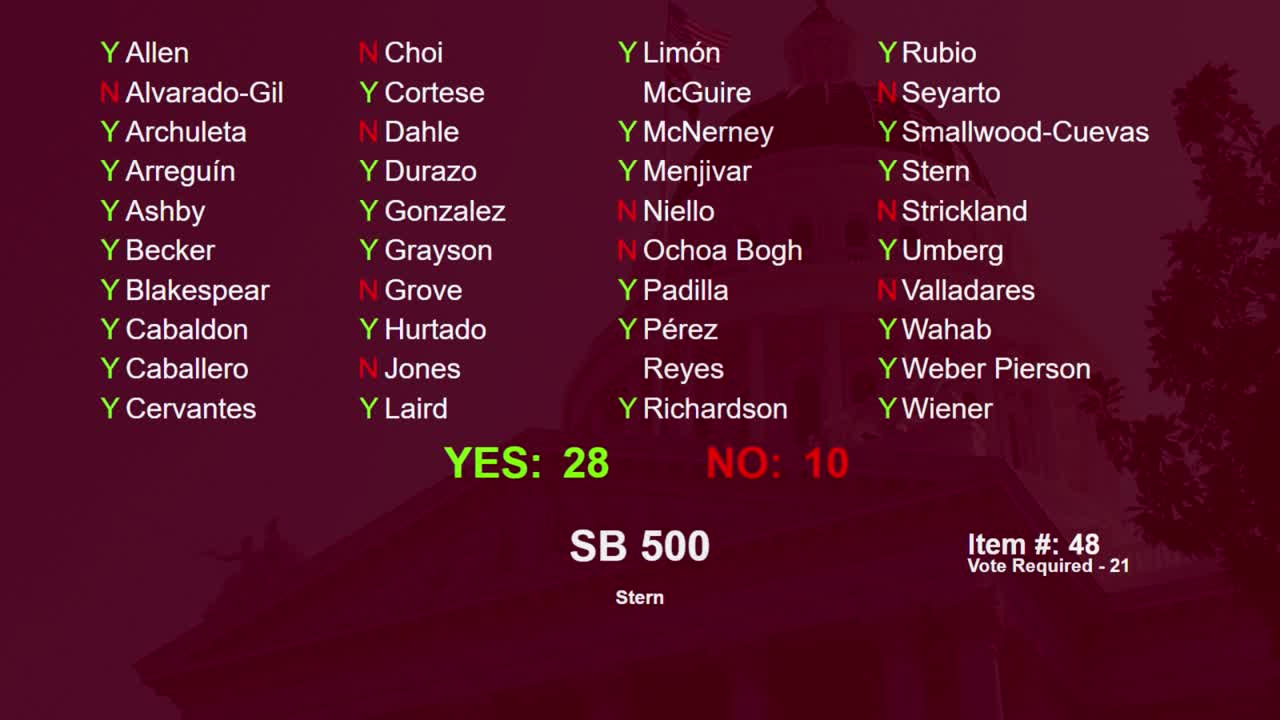
Bill Author

Bill Co-Author(s):