SB 709: Self-service storage facilities: rental agreement disclosures.
- Session Year: 2025-2026
- House: Senate
- Latest Version Date: 2025-10-06
Current Status:
Passed
(2025-10-06: Chaptered by Secretary of State. Chapter 353, Statutes of 2025.)
Introduced
In Committee
Awaiting First Chamber Vote
Passed First Chamber
In Committee
Awaiting Second Chamber Vote
Passed Second Chamber
Enacted
Existing law, the California Self-Service Storage Facility Act, establishes procedures governing the operation of self-service storage facilities, including specifying remedies for facility owners when occupants are delinquent in paying rent or other charges.
This bill would, for rental agreements initially entered into on or after January 1, 2026, require a rental agreement to disclose, in a prescribed manner, certain items, including whether the rental fee is discounted or promotional, whether the rental fee is subject to change, and the maximum rental fee that the owner could charge during the first 12 months following the date of the rental agreement.
Existing law, the California Self-Service Storage Facility Act, establishes procedures governing the operation of self-service storage facilities, including specifying remedies for facility owners when occupants are delinquent in paying rent or other charges.
This bill would would, for rental agreements initially entered into on or after January 1, 2026, require a rental agreement to disclose, in a prescribed manner, certain items, including whether the rental fee is discounted or promotional, whether the rental fee is subject to change, and the maximum rental fee that the owner could charge during the first 12 months following the date of the rental agreement.
Existing law, the California Self-Service Storage Facility Act, establishes procedures governing the operation of self-service storage facilities, including specifying remedies for facility owners when occupants are delinquent in paying rent or other charges.
This bill would prohibit the owner of a self-storage facility from increasing the gross rental rate for a storage unit by more than the lower of 5% plus the percentage change in the cost of living, or 10%, over the course of any 12-month period, as specified, and would define various terms for that purpose. The bill would require the gross per-month rental rate and any owner-offered discounts, incentives, concessions, or credits to be separately listed and identified in the lease or rental agreement or any amendments to an existing lease or rental agreement. require a rental agreement to disclose, in a prescribed manner, certain items, including whether the rental fee is discounted or promotional, whether the rental fee is subject to change, and the maximum rental fee that the owner could charge during the first 12 months following the date of the rental agreement.
Existing law, the California Self-Service Storage Facility Act, establishes procedures governing the operation of self-service storage facilities, including specifying remedies for facility owners when occupants are delinquent in paying rent or other charges.
This bill would require each rental agreement pursuant to the act to limit rental increases to no more frequently than once every 3 months and to an amount not to exceed ____% per calendar year.This bill would prohibit the owner of a self-storage facility from increasing the gross rental rate for a storage unit by more than the lower of 5% plus the percentage change in the cost of living, or 10%, over the course of any 12-month period, as specified, and would define various terms for that purpose. The bill would require the gross per-month rental rate and any owner-offered discounts, incentives, concessions, or credits to be separately listed and identified in the lease or rental agreement or any amendments to an existing lease or rental agreement.
Existing law, the California Self-Service Storage Facility Act, establishes procedures governing the operation of self-service storage facilities, including specifying remedies for facility owners when occupants are delinquent in paying rent or other charges.
This bill would require each rental agreement pursuant to the act to limit rental increases to no more frequently than once every 3 months and to an amount not to exceed ____% per calendar year.
(a)A rental agreement shall disclose, in the manner described in subdivision (b), all of the following:
(1)The initial length and renewal term of the rental agreement.
(2)Whether the occupant has received a promotional or discounted rental fee.
(3)If the occupant has received a promotional or discounted rental fee, the duration of the promotional or discounted rental fee.
(4)Whether the rental fee is subject to change and, if so, the maximum rental fee that the owner could charge during the first 12 months following the date of the rental agreement.
(5)All required steps for the occupant to terminate the rental agreement and avoid future rental fees or other charges, including removing all personal property from the occupants storage space.
(6)Contact information for the owner.
(b)(1)The disclosures required by paragraphs (1) through (5), inclusive, of subdivision (a) shall be made on the first page of the rental agreement.
(2)The disclosures required by subdivision (a) shall be made in larger type than the surrounding text and in a manner that clearly calls attention to the language and meet either of the following criteria:
(A)The disclosures are in contrasting type, font, or color to the surrounding text.
(B)The disclosures are set off from the surrounding text by symbols or by other marks.
(c)This section shall apply only to a rental agreement initially entered into on or after January 1, 2026.
(a)A rental agreement shall disclose, in the manner described in subdivision (b), all of the following:
(1)The initial length and renewal term of the rental agreement.
(2)Whether the occupant has received a promotional or discounted rental fee.
(3)If the occupant has received a promotional or discounted rental fee, the duration of the promotional or discounted rental fee.
(4)Whether the rental fee is subject to change and, if so, the maximum rental fee that the owner could charge during the first 12 months following the date of the rental agreement.
(5)All required steps for the occupant to terminate the rental agreement and avoid future rental fees or other charges, including removing all personal property from the occupants storage space.
(6)Contact information for the owner.
(b)(1)The disclosures required by paragraphs (1) through (5), inclusive, of subdivision (a) shall be made on the first page of the rental agreement.
(2)The disclosures required by subdivision (a) shall be made in larger type than the surrounding text and in a manner that clearly calls attention to the language and meet either of the following criteria:
(A)The disclosures are in contrasting type, font, or color to the surrounding text.
(B)The disclosures are set off from the surrounding text by symbols or other marks.
(c)This section shall apply only to a rental agreement initially entered into on or after January 1, 2026.
(a)A rental agreement shall disclose, in the manner described in subdivision (b), all of the following:
(1)The initial length and renewal term of the rental agreement.
(2)Whether the occupant has received a promotional or discounted rental fee.
(3)If the occupant has received a promotional or discounted rental fee, the duration of the promotional or discounted rental fee.
(4)Whether the rental fee is subject to change and, if so, the maximum rental fee that the owner could charge during the first 12 months following the date of the rental agreement.
(5)All required steps for the occupant to terminate the rental agreement and avoid future rental fees or other charges, including removing all personal property from the occupants storage space.(6)Contact information for the owner.(b)(1)The disclosures required by paragraphs (1) through (5), inclusive, of subdivision (a) shall be made on the first page of the rental agreement in agreement.
(2)The disclosures required by subdivision (a) shall be made in a manner that clearly calls attention to the language and meets all meet either of the following criteria:
(1)The disclosures are in larger type than the surrounding text.(2)(A)The disclosures are in contrasting type, font, or color to the surrounding text of the same size. text.
(3)(B)The disclosures are set off from the surrounding text of the same size by symbols or other marks.
(c)This section shall apply only to a rental agreement initially entered into on or after January 1, 2026.
(a)A rental agreement shall disclose, in the manner described in subdivision (b), all of the following:
(1)The initial length and renewal term of the rental agreement.
(2)Whether the occupant has received a promotional or discounted rental fee.
(3)If the occupant has received a promotional or discounted rental fee, the duration of the promotional or discounted rental fee.
(4)Whether the rental fee is subject to change and, if so, the maximum rental fee that the owner could charge during the first 12 months following the date of the rental agreement.
(5)All required steps for the occupant to terminate the rental agreement and avoid future rental fees or other charges, including removing all personal property from the occupants storage space.
(6)Contact information for the owner.
(b)The disclosures required by subdivision (a) shall be made on the first page of the rental agreement in a manner that clearly calls attention to the language and meets all of the following criteria:
(1)The disclosures are in larger type than the surrounding text.
(2)The disclosures are in contrasting type, font, or color to the surrounding text of the same size.
(3)The disclosures are set off from the surrounding text of the same size by symbols or other marks.
(a)The owner of a self-storage facility shall not, over the course of any 12-month period, increase the gross rental rate for a storage unit more than 5 percent plus the percentage change in the cost of living, or 10 percent, whichever is lower, of the lowest gross rental rate charged for that storage unit at any time during the 12 months prior to the effective date of the increase. In determining the lowest gross rental amount pursuant to this section, any rent discounts, incentives, concessions, or credits offered by the owner of such unit of residential real property and accepted by the tenant shall be excluded. The gross per-month rental rate and any owner-offered discounts, incentives, concessions, or credits shall be separately listed and identified in the lease or rental agreement or any amendments to an existing rental agreement.
(b)For purposes of this section, the following definitions apply:
(1)Consumer Price Index for All Urban Consumers for All Items means the following:
(A)The Consumer Price Index for all Items (CPI-U) for the metropolitan area in which the property is located, as published by the United States Bureau of Labor Statistics, which are as follows:
(i)The CPI-U for the Los Angeles-Long Beach-Anaheim metropolitan area covering the Counties of Los Angeles and Orange.
(ii)The CPI-U for the Riverside-San Bernardino-Ontario metropolitan area covering the Counties of Riverside and San Bernardino.
(iii)The CPI-U for the San Diego-Carlsbad metropolitan area covering the County of San Diego.
(iv)The CPI-U for the San Francisco-Oakland-Hayward metropolitan area covering the Counties of Alameda, Contra Costa, Marin, San Francisco, and San Mateo.
(v)Any successor metropolitan area index to any of the indexes listed in clauses (i) to (iv), inclusive.
(B)If the United States Bureau of Labor Statistics does not publish a CPI-U for the metropolitan area in which the property is located, the California Consumer Price Index for All Urban Consumers for All Items as published by the Department of Industrial Relations.
(2)(A)Percentage change in the cost of living means the percentage change in the applicable CPI-U, as described in paragraph (1), computed pursuant to subparagraph (B).
(B)(i)For rent increases that take effect before August 1 of any calendar year, the following apply:
(I) The percentage change shall be the percentage change in the amount published for April of the immediately preceding calendar year and April of the year before that.
(II)If there is not an amount published in April for the applicable geographic area, the percentage change shall be the percentage change in the amount published for March of the immediately preceding calendar year and March of the year before that.
(ii)For rent increases that take effect on or after August 1 of any calendar year, the following shall apply:
(I)The percentage change shall be the percentage change in the amount published for April of that calendar year and April of the immediately preceding calendar year.
(II)If there is not an amount published in April for the applicable geographic area, the percentage change shall be the percentage change in the amount published for March of that calendar year and March of the immediately preceding calendar year.
(iii)The percentage change shall be rounded to the nearest one-tenth of 1 percent.
SECTION 1.Section 21715.2 is added to the Business and Professions Code, to read:21715.2.Each rental agreement pursuant to this chapter shall limit rental increases to both:(a)No more frequently than once every three months.(b)An amount not to exceed ____ percent per calendar year.Each rental agreement pursuant to this chapter shall limit rental increases to both:
(a)No more frequently than once every three months.
(b)An amount not to exceed ____ percent per calendar year.
|
Date
|
Status
|
|---|---|
| Oct 6, 2025 | Chaptered by Secretary of State. Chapter 353, Statutes of 2025. |
| Oct 6, 2025 | Approved by the Governor. |
| Sep 22, 2025 | Enrolled and presented to the Governor at 2 p.m. |
| Sep 11, 2025 | Assembly amendments concurred in. (Ayes 31. Noes 6. Page 2894.) Ordered to engrossing and enrolling. |
| Sep 10, 2025 | In Senate. Concurrence in Assembly amendments pending. |
| Sep 10, 2025 | Read third time. Passed. (Ayes 57. Noes 17. Page 3165.) Ordered to the Senate. |
| Sep 4, 2025 | Read third time and amended. |
| Sep 4, 2025 | Ordered to third reading. |
| Jun 25, 2025 | Read second time. Ordered to third reading. |
| Jun 24, 2025 | From committee: Do pass. (Ayes 9. Noes 3.) (June 24). |
| Jun 16, 2025 | From committee with author's amendments. Read second time and amended. Re-referred to Com. on JUD. |
| Jun 9, 2025 | Referred to Com. on JUD. |
| Jun 4, 2025 | In Assembly. Read first time. Held at Desk. |
| Jun 3, 2025 | Read third time. Passed. (Ayes 30. Noes 6. Page 1466.) Ordered to the Assembly. |
| Jun 2, 2025 | Read second time. Ordered to third reading. |
| May 29, 2025 | Read third time and amended. |
| May 29, 2025 | Ordered to second reading. |
| May 8, 2025 | Read second time and amended. Ordered to third reading. |
| May 7, 2025 | From committee: Do pass as amended. (Ayes 11. Noes 0. Page 1027.) (May 6). |
| Apr 11, 2025 | Set for hearing May 6. |
| Mar 24, 2025 | From committee with author's amendments. Read second time and amended. Re-referred to Com. on JUD. |
| Mar 12, 2025 | Referred to Com. on JUD. |
| Feb 24, 2025 | Read first time. |
| Feb 24, 2025 | From printer. May be acted upon on or after March 24. |
| Feb 21, 2025 | Introduced. To Com. on RLS. for assignment. To print. |
|
Date
|
Description
|
Location
|
Votes
|
|
|---|---|---|---|---|
| Sep 11, 2025 | Unfinished Business SB709 Menjivar et al. Concurrence | Senate Floor |
Passed |
|
| Sep 10, 2025 | SB 709 Menjivar Senate Third Reading By Schultz | Assembly Floor |
Passed |
|
| Jun 24, 2025 | Do pass. | Assembly Standing Committee on Judiciary |
Passed |
|
| Jun 3, 2025 | Senate 3rd Reading SB709 Menjivar et al. | Senate Floor |
Passed |
|
| May 6, 2025 | Do pass as amended | Senate Standing Committee on Judiciary |
Passed |
This list shows positions taken on this bill by organizations on the date displayed, which is linked to the original source.
Positions by individuals are not included.
|
Organization
|
Position
|
Date
|
|---|---|---|
| A coalition of organizations representing business, building, and property owner associations | ** Against | |
| Building Owners and Managers Association of California | ** Against | |
| California Building Industry Association | ** Against | |
| California Business Properties Association | ** Against | |
| California Business Roundtable | ** Against | |
| California Democratic Renters Council | ** Support | |
| California Low-Income Consumer Coalition | ** Support | |
| California Rental Housing Association | ** Against | |
| California Self Storage Association | ** Against | |
| CAMEO Network | ** Support | |
| Consumer Federation Of California | ** Support | |
| Family Business Association of California | ** Against | |
| Institute of Real Estate Management | ** Against | |
| NAIOP of California | ** Against | |
| Orange County Business Council | ** Against | |
| Organizations representing the self-storage industry | ** Against | |
| Public Counsel | ** Support | |
| San Diego Regional Chamber Of Commerce | ** Against | |
| Self Storage Association | ** Against | |
| Self-Storage Association | ** Against | |
| Southern California Leadership Council | ** Against | |
| western center on law & poverty | ** Support |
SENATE RULES COMMITTEE Office of Senate Floor Analyses (916) 651-1520 Fax: (916) 327-4478 | SB 709 |
UNFINISHED BUSINESS
Bill No: SB 709
Author: Menjivar (D), et al.
Amended: 10/6/25
Vote: 21
SENATE JUDICIARY COMMITTEE: 11-0, 5/6/25
AYES: Umberg, Allen, Arreguín, Ashby, Caballero, Durazo, Laird, Stern, Wahab, Weber Pierson, Wiener
NO VOTE RECORDED: Niello, Valladares
SENATE FLOOR: 30-6, 6/3/25
AYES: Allen, Archuleta, Arreguín, Ashby, Becker, Blakespear, Cabaldon, Caballero, Cervantes, Cortese, Durazo, Gonzalez, Grayson, Hurtado, Laird, Limón, McGuire, McNerney, Menjivar, Ochoa Bogh, Padilla, Pérez, Richardson, Rubio, Smallwood-Cuevas, Stern, Umberg, Wahab, Weber Pierson, Wiener
NOES: Alvarado-Gil, Choi, Grove, Jones, Seyarto, Strickland
NO VOTE RECORDED: Dahle, Niello, Reyes, Valladares
ASSEMBLY FLOOR: 57-17, 9/10/25 - See last page for vote
SUBJECT: Self-service storage facilities: rental agreement disclosures
SOURCE: Consumer Federation of California
DIGEST:
This bill requires a self-storage facility to disclose in a rental agreement with a renter of a self-storage unit certain details regarding the rental agreement, promotional prices or discounts received by the renter, how the renter can terminate the rental agreement, the contact information for the owner of the self-storage facility, and if the rental fee is subject to change, and if so, the maximum rental fee that the owner could charge during the first 12 months following the date of the rental agreement, as specified.
Assembly Amendments
of 9/4/25 specify that the disclosures required by this bill’s provisions must be made in larger type than the surrounding text of the first page of the rental agreement.
ANALYSIS:
Existing law:
- Establishes the California Self storage Facilities Act to regulate the rental agreements between a self-storage facility and a renter of a storage unit, specify how a self-storage facility may sell a renter’s personal property for non-payment of rent and other charges, and specify limits on allowable late payment fees and other rules regarding self-storage facilities. (Business (Bus.) & Professions (Prof.) Code §§ 21700 et seq.)
- Specifies that an owner of a self-storage facility or their heirs or successors hold a lien on a renter’s personal property located in a storage unit, for the purposes of recovering any owed rent payments, labor costs, late payment fees, expenses for holding and disposing of the property, or other charges incurred pursuant to the rental agreement. (Bus. & Prof. Code § 21702.)
- Provides that each contract for the rental or lease of individual storage space requires a statement that the occupant’s property will be subject to a claim of lien and may even be sold to satisfy the lien if the rent or other charges due remain unpaid for 14 consecutive days. (Bus. & Prof. Code § 21712 (a).)
- Requires every contract for the rental or lease of individual storage space in a self-service storage facility to be in writing and to contain a statement that the occupant’s property will be subject to a claim of lien and may even be sold to satisfy the lien if the rent or other charges due remain unpaid for 14 consecutive days. (Bus. & Prof. Code § 21712 (a).)
- Provides that a self-storage facility may terminate a renter’s right to use the storage unit if rent or other charges remain unpaid after 14 consecutive days, the facility sends the renter a specified notice of the delinquent payments and the timeline by which the facility may deny the renter access to the unit and sell the contents, and the owed charges are not paid within 14 days of the mailing of the notice. (Bus. & Prof. Code §§ 21703-21705.)
- Provides that, at the end of the 14-day period after the initial notice is mailed to the renter, the lien attaches, and the facility may deny the renter access to the unit, and the owner of the facility may enter the unit and remove any property to a place for safekeeping, if the rent remains unpaid. (Bus. & Prof. Code § 21705.)
- Specifies that, once the owner of the facility has taken those actions, they must mail the renter a blank declaration of opposition to the lien sale and a notice of lien sale that states, among other things, that the property in the unit may be sold after a specified date not less than 14 days from the mailing of the lien sale notice. (Bus. & Prof. Code § 21705(b).)
- Specifies that, if a declaration of opposition to the lien sale is not received by the owner of the facility, or is withdrawn, before the specified date in the notice of lien sale, the owner may sell the renter’s property. (Bus. & Prof. Code § 21706.)
- Specifies that, if a declaration of opposition to the lien sale is received, the owner of the facility may only enforce the lien through civil court or a small claims court. (Bus. & Prof. Code § 21710.)
- Specifies that, for the process of selling property after expiration of the time in the notice of lien pursuant to Business and Professions Code Section 21705, an advertisement of sale must be published before the sale in either of the following ways: by once per week for two consecutive weeks in a newspaper of general circulation published in the public notice district where the sale is to be held, or in the county where the self-service storage facility is located; once in a newspaper of general circulation published in the public notice district where the sale is to be held or in the county where the self-service storage facility is located and once on any publicly accessible internet website that customarily conducts or advertises online auctions or sales, on which the advertisement must remain for at least 7 days. If there is no newspaper of general circulation published in the public notice district where the sale is to be held or the county where the self-storage facility is located, requires the advertisement be posted at least 10 days before the sale in at least six conspicuous places in the neighborhood of the proposed sale. (Bus. & Prof Code § 21707.)
- Specifies that, minus the amount of the lien and costs of the sale, the owner must retain the excess proceeds of the sale on the occupant’s behalf, to be claimed by the occupant or other person within one year of the sale, after which the remaining proceeds must be paid to the treasury of the county in which the sale was held. (Id.)
- Provides that the required notices, as specified, may be sent to the occupant at their provided electronic mail address only if: the rental agreement states that lien notices may be sent to the occupant and the alternate address by electronic mail; the occupant provides a written signature on the rental agreement consenting to receive lien notices by electronic mail. (Bus. & Prof. Code § 21712(c).)
- Prohibits, upon the proclamation of a state of emergency declared by the President of the United States or the Governor or a declaration of a local emergency, a person, contractor, business, or other entity to sell or offer to sell any consumer food items or goods, including storage services, for a price that is more than 10% greater than the price charged immediately prior to the proclamation or declaration of emergency. Specifies that this prohibition begins at the time of the proclamation, and extends for 30 days following it. (Penal (Pen.) Code § 396(b).)
This bill:
- Requires a rental agreement for a self-storage unit to disclose, as prescribed in (2), the following:
- The initial length and renewal term of the rental agreement;
- Whether the occupant has received a promotional or discounted rental fee;
- If the occupant has received a promotional or discounted rental fee, the duration of the promotional or discounted rental fee;
- Whether the rental fee is subject to change, and if so, the maximum rental fee that the self-storage owner could charge during the first 12 months following the date of the rental agreement;
- All required steps that the renter must take to terminate the rental agreement and avoid future rental fees or other charges, including removing all personal property from the renter’s self-storage unit; and
- The contact information of the self-storage facility owner.
- Requires that the disclosures described (a) through (e) of (1), above, be made on the first page of the rental agreement, and that all disclosures required in (1), above, be made in larger type than the surrounding text and in a manner that clearly calls attention to the language and meets either of the following:
- are in contrasting type, font, or color to the surrounding text of the same size; or
- are set off from the surrounding text of the same size by symbols or other marks.
- Specifies that its provisions apply only to a rental agreement initially entered into on or after January 1, 2026.
FISCAL EFFECT: Appropriation: No Fiscal Com.: No Local: No
SUPPORT: (Verified 9/10/25)
Consumer Federation of California (source)
California Democratic Renters Council
California Low-income Consumer Coalition
Public Counsel
Western Center on Law & Poverty
OPPOSITION: (Verified 9/10/25)
Building Owners and Managers Association of California
California Rental Housing Association
Family Business Association of California
Institute of Real Estate Management
Naiop of California
Orange County Business Council
San Diego Regional Chamber of Commerce
Southern California Leadership Council
ARGUMENTS IN SUPPORT:
According to the Consumer Federation of California, which is the sponsor of SB 709:
California is home to more than 3,500 self-storage facilities, with about 60 percent of users relying on storage spaces during the moving process as they settle into their new living situations. A 2024 report revealed that one in five people rely on self-storage for various reasons. In the survey, consumers reported several reasons for relying on storage units, including business storage, home renovations, the need for more space, moving, downsizing, and others. Many other consumers rely on these services in states of emergency such as natural disasters to ensure that their belongings are secure. However, the self-storage industry has become increasingly dominated by large corporations and equity firms who prioritize profit margins over their clients.
At an industry conference in Las Vegas, leaders boasted about and discussed ways to trick consumers by luring them in with low rates, then increasing rental rates by 30-40% once they knew the client would not leave. This practice has become so common within the industry that it is known as ECRI, or Existing Customer Rate Increase. This practice deeply harms consumers, as illustrated by one case where a consumer who had signed a contract for a $45 rental storage unit saw her rate increase after just two months, and then again, until her monthly rental rate reached $220 and was forced out because she could no longer afford it.
Bait and switch practices are common within the self-storage industry, with many companies providing consumers with a $1 introductory rental rate and then spiking up the price once the consumer has signed the rental agreement. If a renter falls behind and cannot pay for their storage unit within 14 days, they risk losing all their belongings to auction. These auctions are intended to help storage facilities recover monetary losses; however, before proceeding, they must provide the renter with a ‘notice of public auction.’ After receiving the notice, a consumer has 30 days to pay off their outstanding balance; however, the rate at which self-storage facilities increase their monthly rental rates may not give renters enough time to cover their dues. In addition to this, it has been reported that some operators are restructuring, or have already done so, their 30 or 31 billing cycle to a 28 day payment period, enabling them to charge consumers for 13 months instead of the standard 12 month.
The lack of transparency and the practice of regularly increasing rates for consumers is exploitative, leaving many renters to feel trapped and in financial hardship. SB 709 aims to limit the rental rate increase for storage units to the lower of 5% plus the percentage change in the cost of living, or 10%, within any 12-month period. Lastly, the bill ensures that consumers are made aware of the monthly rental rate, discounts, incentives, concessions, or credits within their rental agreement. Through this legislation, we can ensure that consumers are not subject to unfair pricing practices and are protected from unexpected cost increases.
ARGUMENTS IN OPPOSITION:
According to the California Rental Housing Association, which opposes SB 709:
On behalf of the organizations listed above, we write to inform you of our strong opposition to SB 709, which imposes commercial rent control under the guise of regulating self-storage rental agreements. While this bill may appear narrow in scope, it sets a dangerous precedent by allowing the state to interfere with private, market-driven lease agreements.
SB 709 mirrors past attempts at government-imposed rent control which would impose price caps on lease agreements, creating uncertainty for property owners, and imposing a hardship for companies to cover operating costs.
Self-storage operators, like all commercial property owners, face rising costs including property taxes, insurance, security, and maintenance. That revenue is essential for maintaining facilities, paying employees, covering insurance, and complying with local regulations. By arbitrarily capping rental increases, SB 709 forces property owners to absorb financial burdens with no relief, distorting the balance of commercial lease agreements.
This bill is unnecessary government overreach and a direct step toward broader commercial rent control policies. Rather than interfering in private contracts, California should focus on fostering investment and economic
growth.
ASSEMBLY FLOOR: 57-17, 9/10/25
AYES: Addis, Aguiar-Curry, Ahrens, Alvarez, Arambula, Ávila Farías, Bauer-Kahan, Bennett, Berman, Boerner, Bonta, Bryan, Calderon, Caloza, Carrillo, Connolly, Elhawary, Fong, Gabriel, Garcia, Gipson, Haney, Harabedian, Hart, Irwin, Jackson, Kalra, Krell, Lee, Lowenthal, McKinnor, Muratsuchi, Nguyen, Ortega, Pacheco, Papan, Patel, Pellerin, Petrie-Norris, Quirk-Silva, Ramos, Ransom, Celeste Rodriguez, Michelle Rodriguez, Rogers, Blanca Rubio, Schiavo, Schultz, Sharp-Collins, Solache, Stefani, Valencia, Ward, Wicks, Wilson, Zbur, Rivas
NOES: Alanis, Castillo, Chen, Davies, DeMaio, Dixon, Ellis, Gallagher, Hadwick, Hoover, Johnson, Lackey, Macedo, Patterson, Sanchez, Ta, Wallis
NO VOTE RECORDED: Bains, Flora, Jeff Gonzalez, Mark González, Soria, Tangipa
Prepared by: Ian Dougherty / JUD. / (916) 651-4113
7/20/26 10:34:52
**** END ****
SENATE RULES COMMITTEE Office of Senate Floor Analyses (916) 651-1520 Fax: (916) 327-4478 | SB 709 |
UNFINISHED BUSINESS
Bill No: SB 709
Author: Menjivar (D), et al.
Amended: 9/4/25 in Assembly
Vote: 21
SENATE JUDICIARY COMMITTEE: 11-0, 5/6/25
AYES: Umberg, Allen, Arreguín, Ashby, Caballero, Durazo, Laird, Stern, Wahab, Weber Pierson, Wiener
NO VOTE RECORDED: Niello, Valladares
SENATE FLOOR: 30-6, 6/3/25
AYES: Allen, Archuleta, Arreguín, Ashby, Becker, Blakespear, Cabaldon, Caballero, Cervantes, Cortese, Durazo, Gonzalez, Grayson, Hurtado, Laird, Limón, McGuire, McNerney, Menjivar, Ochoa Bogh, Padilla, Pérez, Richardson, Rubio, Smallwood-Cuevas, Stern, Umberg, Wahab, Weber Pierson, Wiener
NOES: Alvarado-Gil, Choi, Grove, Jones, Seyarto, Strickland
NO VOTE RECORDED: Dahle, Niello, Reyes, Valladares
ASSEMBLY FLOOR: 43-15, 9/10/25 – Roll call not available.
SUBJECT: Self-service storage facilities: rental agreement disclosures
SOURCE: Consumer Federation of California
DIGEST:
This bill requires a self-storage facility to disclose in a rental agreement with a renter of a self-storage unit certain details regarding the rental agreement, promotional prices or discounts received by the renter, how the renter can terminate the rental agreement, the contact information for the owner of the self-storage facility, and if the rental fee is subject to change, and if so, the maximum rental fee that the owner could charge during the first 12 months following the date of the rental agreement, as specified.
Assembly Amendments
of 9/4/25 specify that the disclosures required by this bill’s provisions must be made in larger type than the surrounding text of the first page of the rental agreement.
ANALYSIS:
Existing law:
- Establishes the California Self storage Facilities Act to regulate the rental agreements between a self-storage facility and a renter of a storage unit, specify how a self-storage facility may sell a renter’s personal property for non-payment of rent and other charges, and specify limits on allowable late payment fees and other rules regarding self-storage facilities. (Business (Bus.) & Professions (Prof.) Code §§ 21700 et seq.)
- Specifies that an owner of a self-storage facility or their heirs or successors hold a lien on a renter’s personal property located in a storage unit, for the purposes of recovering any owed rent payments, labor costs, late payment fees, expenses for holding and disposing of the property, or other charges incurred pursuant to the rental agreement. (Bus. & Prof. Code § 21702.)
- Provides that each contract for the rental or lease of individual storage space requires a statement that the occupant’s property will be subject to a claim of lien and may even be sold to satisfy the lien if the rent or other charges due remain unpaid for 14 consecutive days. (Bus. & Prof. Code § 21712 (a).)
- Requires every contract for the rental or lease of individual storage space in a self-service storage facility to be in writing and to contain a statement that the occupant’s property will be subject to a claim of lien and may even be sold to satisfy the lien if the rent or other charges due remain unpaid for 14 consecutive days. (Bus. & Prof. Code § 21712 (a).)
- Provides that a self-storage facility may terminate a renter’s right to use the storage unit if rent or other charges remain unpaid after 14 consecutive days, the facility sends the renter a specified notice of the delinquent payments and the timeline by which the facility may deny the renter access to the unit and sell the contents, and the owed charges are not paid within 14 days of the mailing of the notice. (Bus. & Prof. Code §§ 21703-21705.)
- Provides that, at the end of the 14-day period after the initial notice is mailed to the renter, the lien attaches, and the facility may deny the renter access to the unit, and the owner of the facility may enter the unit and remove any property to a place for safekeeping, if the rent remains unpaid. (Bus. & Prof. Code § 21705.)
- Specifies that, once the owner of the facility has taken those actions, they must mail the renter a blank declaration of opposition to the lien sale and a notice of lien sale that states, among other things, that the property in the unit may be sold after a specified date not less than 14 days from the mailing of the lien sale notice. (Bus. & Prof. Code § 21705(b).)
- Specifies that, if a declaration of opposition to the lien sale is not received by the owner of the facility, or is withdrawn, before the specified date in the notice of lien sale, the owner may sell the renter’s property. (Bus. & Prof. Code § 21706.)
- Specifies that, if a declaration of opposition to the lien sale is received, the owner of the facility may only enforce the lien through civil court or a small claims court. (Bus. & Prof. Code § 21710.)
- Specifies that, for the process of selling property after expiration of the time in the notice of lien pursuant to Business and Professions Code Section 21705, an advertisement of sale must be published before the sale in either of the following ways: by once per week for two consecutive weeks in a newspaper of general circulation published in the public notice district where the sale is to be held, or in the county where the self-service storage facility is located; once in a newspaper of general circulation published in the public notice district where the sale is to be held or in the county where the self-service storage facility is located and once on any publicly accessible internet website that customarily conducts or advertises online auctions or sales, on which the advertisement must remain for at least 7 days. If there is no newspaper of general circulation published in the public notice district where the sale is to be held or the county where the self-storage facility is located, requires the advertisement be posted at least 10 days before the sale in at least six conspicuous places in the neighborhood of the proposed sale. (Bus. & Prof Code § 21707.)
- Specifies that, minus the amount of the lien and costs of the sale, the owner must retain the excess proceeds of the sale on the occupant’s behalf, to be claimed by the occupant or other person within one year of the sale, after which the remaining proceeds must be paid to the treasury of the county in which the sale was held. (Id.)
- Provides that the required notices, as specified, may be sent to the occupant at their provided electronic mail address only if: the rental agreement states that lien notices may be sent to the occupant and the alternate address by electronic mail; the occupant provides a written signature on the rental agreement consenting to receive lien notices by electronic mail. (Bus. & Prof. Code § 21712(c).)
- Prohibits, upon the proclamation of a state of emergency declared by the President of the United States or the Governor or a declaration of a local emergency, a person, contractor, business, or other entity to sell or offer to sell any consumer food items or goods, including storage services, for a price that is more than 10% greater than the price charged immediately prior to the proclamation or declaration of emergency. Specifies that this prohibition begins at the time of the proclamation, and extends for 30 days following it. (Penal (Pen.) Code § 396(b).)
This bill:
- Requires a rental agreement for a self-storage unit to disclose, as prescribed in (2), the following:
- The initial length and renewal term of the rental agreement;
- Whether the occupant has received a promotional or discounted rental fee;
- If the occupant has received a promotional or discounted rental fee, the duration of the promotional or discounted rental fee;
- Whether the rental fee is subject to change, and if so, the maximum rental fee that the self-storage owner could charge during the first 12 months following the date of the rental agreement;
- All required steps that the renter must take to terminate the rental agreement and avoid future rental fees or other charges, including removing all personal property from the renter’s self-storage unit; and
- The contact information of the self-storage facility owner.
- Requires that the disclosures described (a) through (e) of (1), above, be made on the first page of the rental agreement, and that all disclosures required in (1), above, be made in larger type than the surrounding text and in a manner that clearly calls attention to the language and meets either of the following:
- are in contrasting type, font, or color to the surrounding text of the same size; or
- are set off from the surrounding text of the same size by symbols or other marks.
- Specifies that its provisions apply only to a rental agreement initially entered into on or after January 1, 2026.
FISCAL EFFECT: Appropriation: No Fiscal Com.: No Local: No
SUPPORT: (Verified 9/10/25)
Consumer Federation of California (source)
California Democratic Renters Council
California Low-income Consumer Coalition
Public Counsel
Western Center on Law & Poverty
OPPOSITION: (Verified 9/10/25)
Building Owners and Managers Association of California
California Rental Housing Association
Family Business Association of California
Institute of Real Estate Management
Naiop of California
Orange County Business Council
San Diego Regional Chamber of Commerce
Southern California Leadership Council
ARGUMENTS IN SUPPORT:
According to the Consumer Federation of California, which is the sponsor of SB 709:
California is home to more than 3,500 self-storage facilities, with about 60 percent of users relying on storage spaces during the moving process as they settle into their new living situations. A 2024 report revealed that one in five people rely on self-storage for various reasons. In the survey, consumers reported several reasons for relying on storage units, including business storage, home renovations, the need for more space, moving, downsizing, and others. Many other consumers rely on these services in states of emergency such as natural disasters to ensure that their belongings are secure. However, the self-storage industry has become increasingly dominated by large corporations and equity firms who prioritize profit margins over their clients.
At an industry conference in Las Vegas, leaders boasted about and discussed ways to trick consumers by luring them in with low rates, then increasing rental rates by 30-40% once they knew the client would not leave. This practice has become so common within the industry that it is known as ECRI, or Existing Customer Rate Increase. This practice deeply harms consumers, as illustrated by one case where a consumer who had signed a contract for a $45 rental storage unit saw her rate increase after just two months, and then again, until her monthly rental rate reached $220 and was forced out because she could no longer afford it.
Bait and switch practices are common within the self-storage industry, with many companies providing consumers with a $1 introductory rental rate and then spiking up the price once the consumer has signed the rental agreement. If a renter falls behind and cannot pay for their storage unit within 14 days, they risk losing all their belongings to auction. These auctions are intended to help storage facilities recover monetary losses; however, before proceeding, they must provide the renter with a ‘notice of public auction.’ After receiving the notice, a consumer has 30 days to pay off their outstanding balance; however, the rate at which self-storage facilities increase their monthly rental rates may not give renters enough time to cover their dues. In addition to this, it has been reported that some operators are restructuring, or have already done so, their 30 or 31 billing cycle to a 28 day payment period, enabling them to charge consumers for 13 months instead of the standard 12 month.
The lack of transparency and the practice of regularly increasing rates for consumers is exploitative, leaving many renters to feel trapped and in financial hardship. SB 709 aims to limit the rental rate increase for storage units to the lower of 5% plus the percentage change in the cost of living, or 10%, within any 12-month period. Lastly, the bill ensures that consumers are made aware of the monthly rental rate, discounts, incentives, concessions, or credits within their rental agreement. Through this legislation, we can ensure that consumers are not subject to unfair pricing practices and are protected from unexpected cost increases.
ARGUMENTS IN OPPOSITION:
According to the California Rental Housing Association, which opposes SB 709:
On behalf of the organizations listed above, we write to inform you of our strong opposition to SB 709, which imposes commercial rent control under the guise of regulating self-storage rental agreements. While this bill may appear narrow in scope, it sets a dangerous precedent by allowing the state to interfere with private, market-driven lease agreements.
SB 709 mirrors past attempts at government-imposed rent control which would impose price caps on lease agreements, creating uncertainty for property owners, and imposing a hardship for companies to cover operating costs.
Self-storage operators, like all commercial property owners, face rising costs including property taxes, insurance, security, and maintenance. That revenue is essential for maintaining facilities, paying employees, covering insurance, and complying with local regulations. By arbitrarily capping rental increases, SB 709 forces property owners to absorb financial burdens with no relief, distorting the balance of commercial lease agreements.
This bill is unnecessary government overreach and a direct step toward broader commercial rent control policies. Rather than interfering in private contracts, California should focus on fostering investment and economic
growth.
Prepared by: Ian Dougherty / JUD. / (916) 651-4113
9/10/25 16:10:43
**** END ****
SENATE THIRD READING
STR Bill Id:SB 709
Author:(Menjivar)
As Amended Ver:September 4, 2025
Majority vote
SUMMARY
Requires a storage service rental agreement to contain specified disclosures and prescribes the manner in which the disclosures shall be made.
Major Provisions
- Requires a rental agreement to disclose all of the following information:
- The initial length and renewal term of the rental agreement.
- Whether the storage facility occupant has received a promotional or discounted rental fee and, if so, the duration of the promotional or discounted rental fee.
- Whether the rental fee is subject to change and, if so, the maximum rental fee that the owner could charge during the first 12 months following the date of the rental agreement.
- The required steps that the occupant must take to terminate the rental agreement and avoid future rental fees or other charges, including removing all personal property from the occupant's storage space.
- Contact information for the owner.
- Requires the information specified in 1), above, to appear the first page of the rental agreement, in larger type than the surrounding text, and meet either of following criteria:
- The disclosures are in contrasting type, font, or color to the surrounding text.
- The disclosures are set off from the surrounding text by symbols or other marks.
- Specifies that the above requirements only apply to rental agreements initially entered into on or after January 1, 2026.
COMMENTS
The California Self-Storage Facility Act (Business and Professions Code Sections 21700-21716) regulates the relationship between the owners of self-storage facilities and customers (or "occupants" as they are called in the statute) who store their property in self-storage units within those facilities. Most of the provisions in the Act concern the procedures by which the owner acquires a lien on, and disposes of, an occupant's stored personal property if the occupant fails to timely pay the rent or any late fees. Specifically, after the customer has been given a prescribed notice, the owner has a right to place a lien on the occupant's personal property as security for unpaid storage rent and fees. In order for the lien to become legally enforceable, the owner must follow statutorily prescribed steps, including providing notice of any lien sale and the customer's opportunity to oppose the lien sale. In addition, the Act sets forth procedures for the disposition of excess sale proceeds once the amount of the lien has been satisfied, and for the disposition of any property abandoned in the storage facility. Finally, in addition to setting forth the procedures above, the Act requires the rental agreement to inform the consumer of their rights and obligations relative to these procedures.
This bill requires a self-storage facility rental agreement to disclose additional information, including whether the rental fee is discounted or promotional, whether the rental fee is subject to change, and, if so, the maximum rental fee that the owner could charge during the first 12 months following the date of the rental agreement. The bill also requires the rental agreement to inform the customer how they may terminate the rental agreement and avoid future rental fees or other changes, and requires the agreement to provide the contact information of the storage facility owner. Finally, the bill requires these disclosures to appear on the first page of the rental agreement, in larger type than the surrounding text and in a manner calculated to draw attention to the disclosures.
Concerns and an amendment proposed by the self-storage industry. As introduced, the bill, rather than requiring disclosures, imposed a cap on rental increases. Specifically, earlier versions of the bill would have prohibited the owner of a self-storage facility from increasing the gross rental rate for a storage unit by more than the lower of 5% plus the percentage change in the cost of living, or 10%, over the course of any 12-month period. (In short, it would have mirrored the Tenant Protection Act for residential tenancies.) The prior bill would have excluded the use of promotional or discounted rates to determine the allowable increase, so long as the promotional or discounted rates are clearly and separately listed in the rental agreement. However, the author agreed to eliminate the hard caps on rent increases and instead only require the self-storage facilities to make the disclosures now required by the bill. As a result, the organizations representing the self-storage industry then changed their position from a hard "oppose" position to an "oppose unless amended" position.
While many business organizations continue to oppose the bill in its entirety, as duplicative and of little benefit the consumer, the organizations representing the self-storage industry now accept most of the required disclosures. However, the self-storage industry continues to oppose the provision that requires the rental agreement to disclose "the maximum rental fee that the owner could charge during the first 12 months following the date of the rental agreement." The self-storage industry opponents would remove their opposition if the bill only required them to disclose the maximum that they could charge during the first six months. The industry prefers the six month estimate for two reasons. First, the industry claims that the typical self-storage customer rents for six months or less. Second, the industry contends that its members cannot always anticipate how much they will increase the rates 12 months out, because demand can fluctuate over the course of a year, and not always in predictable ways.
According to the Author
One out of five people depend on self-storage facilities, usually due to an unfortunate circumstance that forces them to attempt to store their "life" into a 5x5 unit. For life events like repairing property damage after a natural disaster, moving, or renovations, self-storage offers a temporary place to keep belongings safe and secure. The self-storage industry has implemented aggressive pricing strategies, making storage units less affordable for individuals. Many of these companies lure in unsuspecting customers with deceptively low rates before raising the fees by 30% to 40% and then another 10% to 15% on a regular basis thereafter. This practice of regular rate increases has become a common concern among customers, who may feel trapped by the lack of transparency and the difficulty of finding affordable alternatives. Self-storage units are widely unregulated, and these massive rental increases will continue to burden the most vulnerable. To address this issue, SB 709 would provide that disclosures be made on the self-storage rental agreement so that consumers are aware of the promotional pricing, the duration of the pricing, and the max rate that could be charged during the first 12 months. These provisions should apply only to contracts initially entered into on or after January 1, 2026.
Arguments in Support
The Consumer Federation of California, the bill's sponsor, writes in support:
Bait and switch practices are common within the self-storage industry, with many companies providing consumers with a $1 introductory rental rate and then spiking up the price once the consumer has signed the rental agreement. If a renter falls behind and cannot pay for their storage unit within 14 days, they risk losing all their belongings to auction. These auctions are intended to help storage facilities recover monetary losses; however, before proceeding, they must provide the renter with a 'notice of public auction.' After receiving the notice, a consumer has 30 days to pay off their outstanding balance; however, the rate at which self-storage facilities increase their monthly rental rates may not give renters enough time to cover their dues.
In addition to this, it has been reported that some operators are restructuring, or have already done so, their 30 or 31 billing cycle to a 28 day payment period, enabling them to charge consumers for 13 months instead of the standard 12 month.
SB 709 would require self-service storage facilities to provide greater transparency to consumers during the rental process. Under this bill, rental agreements must include specific disclosures, such as whether the rental fee is discounted or promotional, whether the fee is subject to change, and the maximum rental fee that may be charged within the first 12 months of the agreement, which is important as the average amount of time consumers rent self-storage units is approximately 14 months. Through this legislation, we are taking the first step to ensuring that consumers are more aware and better protected from sudden massive price increases.
Arguments in Opposition
A coalition of organizations representing business, building, and property owner associations writes in opposition:
We continue to oppose SB 709 because it imposes rigid contract formatting and disclosure requirements that are unnecessary, duplicative of existing consumer protection laws, and likely to increase compliance costs for operators across the state.
SB 709 imposes rigid, one-size-fits-all formatting and disclosure mandates-like requiring key terms in larger type on the first page-that create compliance burdens for an industry that already provides transparent rental terms. These prescriptive requirements increase liability risk for good-faith operators and create confusion by departing from standard contract practices. The 12-month pricing disclosure requirement is excessive and will result in higher introductory rates and stricter eligibility—limiting access for those who need storage most, especially low-income families facing economic hardship or communities recovering from natural disasters.
Self-storage plays an important role for families in transition, small businesses, and disaster response efforts. This bill adds unnecessary complexity and regulatory costs without offering meaningful consumer benefit.
FISCAL COMMENTS
None
VOTES
SENATE FLOOR: 30-6-4
YES: Allen, Archuleta, Arreguín, Ashby, Becker, Blakespear, Cabaldon, Caballero, Cervantes, Cortese, Durazo, Gonzalez, Grayson, Hurtado, Laird, Limón, McGuire, McNerney, Menjivar, Ochoa Bogh, Padilla, Pérez, Richardson, Rubio, Smallwood-Cuevas, Stern, Umberg, Wahab, Weber Pierson, Wiener
NO: Alvarado-Gil, Choi, Grove, Jones, Seyarto, Strickland
ABS, ABST OR NV: Dahle, Niello, Reyes, Valladares
ASM JUDICIARY: 9-3-0
YES: Kalra, Garcia, Bryan, Connolly, Harabedian, Pacheco, Papan, Lee, Zbur
NO: Dixon, Tangipa, Sanchez
UPDATED
VERSION: September 4, 2025
CONSULTANT: Tom Clark / JUD. / (916) 319-2334 FN: 0001739
SENATE THIRD READING
STR Bill Id:SB 709
Author:(Menjivar)
As Amended Ver:June 16, 2025
Majority vote
SUMMARY
Requires a storage service rental agreement to contain specified disclosures and prescribes the manner in which the disclosures shall be made.
Major Provisions
- Requires a rental agreement to disclose all of the following information:
- The initial length and renewal term of the rental agreement.
- Whether the storage facility occupant has received a promotional or discounted rental fee and, if so, the duration of the promotional or discounted rental fee.
- Whether the rental fee is subject to change and, if so, the maximum rental fee that the owner could charge during the first 12 months following the date of the rental agreement.
- The required steps that the occupant must take to terminate the rental agreement and avoid future rental fees or other charges, including removing all personal property from the occupant's storage space.
- Contact information for the owner.
- Requires the information specified in 1), above, to appear the first page of the rental agreement, in larger type than the surrounding text, and meet either of following criteria:
- The disclosures are in contrasting type, font, or color to the surrounding text.
- The disclosures are set off from the surrounding text by symbols or other marks.
- Specifies that the above requirements only apply to rental agreements initially entered into on or after January 1, 2026.
COMMENTS
The California Self-Storage Facility Act (Business and Professions Code Sections 21700-21716) regulates the relationship between the owners of self-storage facilities and customers (or "occupants" as they are called in the statute) who store their property in self-storage units within those facilities. Most of the provisions in the Act concern the procedures by which the owner acquires a lien on, and disposes of, an occupant's stored personal property if the occupant fails to timely pay the rent or any late fees. Specifically, after the customer has been given a prescribed notice, the owner has a right to place a lien on the occupant's personal property as security for unpaid storage rent and fees. In order for the lien to become legally enforceable, the owner must follow statutorily prescribed steps, including providing notice of any lien sale and the customer's opportunity to oppose the lien sale. In addition, the Act sets forth procedures for the disposition of excess sale proceeds once the amount of the lien has been satisfied, and for the disposition of any property abandoned in the storage facility. Finally, in addition to setting forth the procedures above, the Act requires the rental agreement to inform the consumer of their rights and obligations relative to these procedures.
This bill requires a self-storage facility rental agreement to disclose additional information, including whether the rental fee is discounted or promotional, whether the rental fee is subject to change, and, if so, the maximum rental fee that the owner could charge during the first 12 months following the date of the rental agreement. The bill also requires the rental agreement to inform the customer how they may terminate the rental agreement and avoid future rental fees or other changes, and requires the agreement to provide the contact information of the storage facility owner. Finally, the bill requires these disclosures to appear on the first page of the rental agreement, in larger type than the surrounding text and in a manner calculated to draw attention to the disclosures.
Concerns and an amendment proposed by the self-storage industry. As introduced, the bill, rather than requiring disclosures, imposed a cap on rental increases. Specifically, earlier versions of the bill would have prohibited the owner of a self-storage facility from increasing the gross rental rate for a storage unit by more than the lower of 5% plus the percentage change in the cost of living, or 10%, over the course of any 12-month period. (In short, it would have mirrored the Tenant Protection Act for residential tenancies.) The prior bill would have excluded the use of promotional or discounted rates to determine the allowable increase, so long as the promotional or discounted rates are clearly and separately listed in the rental agreement. However, the author agreed to eliminate the hard caps on rent increases and instead only require the self-storage facilities to make the disclosures now required by the bill. As a result, the organizations representing the self-storage industry then changed their position from a hard "oppose" position to an "oppose unless amended" position.
While many business organizations continue to oppose the bill in its entirety, as duplicative and of little benefit the consumer, the organizations representing the self-storage industry now accept most of the required disclosures. However, the self-storage industry continues to oppose the provision that requires the rental agreement to disclose "the maximum rental fee that the owner could charge during the first 12 months following the date of the rental agreement." The self-storage industry opponents would remove their opposition if the bill only required them to disclose the maximum that they could charge during the first six months. The industry prefers the six month estimate for two reasons. First, the industry claims that the typical self-storage customer rents for six months or less. Second, the industry contends that its members cannot always anticipate how much they will increase the rates 12 months out, because demand can fluctuate over the course of a year, and not always in predictable ways.
According to the Author
One out of five people depend on self-storage facilities, usually due to an unfortunate circumstance that forces them to attempt to store their "life" into a 5x5 unit. For life events like repairing property damage after a natural disaster, moving, or renovations, self-storage offers a temporary place to keep belongings safe and secure. The self-storage industry has implemented aggressive pricing strategies, making storage units less affordable for individuals. Many of these companies lure in unsuspecting customers with deceptively low rates before raising the fees by 30% to 40% and then another 10% to 15% on a regular basis thereafter. This practice of regular rate increases has become a common concern among customers, who may feel trapped by the lack of transparency and the difficulty of finding affordable alternatives. Self-storage units are widely unregulated, and these massive rental increases will continue to burden the most vulnerable. To address this issue, SB 709 would provide that disclosures be made on the self-storage rental agreement so that consumers are aware of the promotional pricing, the duration of the pricing, and the max rate that could be charged during the first 12 months. These provisions should apply only to contracts initially entered into on or after January 1, 2026.
Arguments in Support
The Consumer Federation of California, the bill's sponsor, writes in support:
Bait and switch practices are common within the self-storage industry, with many companies providing consumers with a $1 introductory rental rate and then spiking up the price once the consumer has signed the rental agreement. If a renter falls behind and cannot pay for their storage unit within 14 days, they risk losing all their belongings to auction. These auctions are intended to help storage facilities recover monetary losses; however, before proceeding, they must provide the renter with a 'notice of public auction.' After receiving the notice, a consumer has 30 days to pay off their outstanding balance; however, the rate at which self-storage facilities increase their monthly rental rates may not give renters enough time to cover their dues.
In addition to this, it has been reported that some operators are restructuring, or have already done so, their 30 or 31 billing cycle to a 28 day payment period, enabling them to charge consumers for 13 months instead of the standard 12 month.
SB 709 would require self-service storage facilities to provide greater transparency to consumers during the rental process. Under this bill, rental agreements must include specific disclosures, such as whether the rental fee is discounted or promotional, whether the fee is subject to change, and the maximum rental fee that may be charged within the first 12 months of the agreement, which is important as the average amount of time consumers rent self-storage units is approximately 14 months. Through this legislation, we are taking the first step to ensuring that consumers are more aware and better protected from sudden massive price increases.
Arguments in Opposition
A coalition of organizations representing business, building, and property owner associations writes in opposition:
We continue to oppose SB 709 because it imposes rigid contract formatting and disclosure requirements that are unnecessary, duplicative of existing consumer protection laws, and likely to increase compliance costs for operators across the state.
SB 709 imposes rigid, one-size-fits-all formatting and disclosure mandates-like requiring key terms in larger type on the first page-that create compliance burdens for an industry that already provides transparent rental terms. These prescriptive requirements increase liability risk for good-faith operators and create confusion by departing from standard contract practices. The 12-month pricing disclosure requirement is excessive and will result in higher introductory rates and stricter eligibility—limiting access for those who need storage most, especially low-income families facing economic hardship or communities recovering from natural disasters.
Self-storage plays an important role for families in transition, small businesses, and disaster response efforts. This bill adds unnecessary complexity and regulatory costs without offering meaningful consumer benefit.
The California Self-Storage Association and the Self-Storage Association opposes this bill unless amended to change the requirement that the facility disclose the maximum rent it could charge during the first 12 months following the date of the rental agreement. They argue that, at a minimum, this should be changed to six months following the date of the rental agreement. In support of this proposed amendment they write:
Our remaining concern is with the requirement to disclose the maximum rental fee that the owner could charge during the first 12 months . . . self-storage is primarily geared toward consumers with short-term rental needs. The typical self-storage customer rents for six months or less. Given the short nature of the typical self-storage customer, storage owners do not set initial pricing based on the expectation that the customer will remain for 12 months. Yet, SB 709 requires storage owners to provide price certainty for that time, which is twice as long as the typical customer uses self-storage.
Unfortunately, SB 709 requires the storage owner to provide irrelevant information that is likely to confuse the customer. Furthermore, we are concerned that this mismatch between the requirements of SB 709 and the typical customer's use of self-storage will force storage owners to scale back promotional pricing, which is strongly advantageous to the typical self-storage customer, and overstate the maximum rental fee for the first 12 months to avoid exceeding that fee. All these possible outcomes are harmful to self-storage customers.
FISCAL COMMENTS
None
VOTES
SENATE FLOOR: 30-6-4
YES: Allen, Archuleta, Arreguín, Ashby, Becker, Blakespear, Cabaldon, Caballero, Cervantes, Cortese, Durazo, Gonzalez, Grayson, Hurtado, Laird, Limón, McGuire, McNerney, Menjivar, Ochoa Bogh, Padilla, Pérez, Richardson, Rubio, Smallwood-Cuevas, Stern, Umberg, Wahab, Weber Pierson, Wiener
NO: Alvarado-Gil, Choi, Grove, Jones, Seyarto, Strickland
ABS, ABST OR NV: Dahle, Niello, Reyes, Valladares
ASM JUDICIARY: 9-3-0
YES: Kalra, Garcia, Bryan, Connolly, Harabedian, Pacheco, Papan, Lee, Zbur
NO: Dixon, Tangipa, Sanchez
UPDATED
VERSION: June 16, 2025
CONSULTANT: Tom Clark / JUD. / (916) 319-2334 FN: 0000991
Date of Hearing: June 24, 2025
ASSEMBLY COMMITTEE ON JUDICIARY
Ash Kalra, Chair
SBPCA Bill Id:SB 709
Author:(Menjivar) – As Amended Ver:June 16, 2025
SENATE VOTE: 30-6
SUBJECT: Self-service storage facilities: rental agreement disclosures
KEY ISSUE: Should a self-service storage facility disclose certain pricing policies to the customer, including the maximum rental fee the owner may charge during the first twelve months following the date of the rental agreement?
SYNOPSIS
Existing law, the California Self-Service Storage Facility Act, establishes procedures governing the operation of self-service storage facilities, including the respective rights and responsibilities of storage facilities and customers who rent a unit in a facility. The bulk of the Act addresses what happens to the stored personal property if the customer fails to timely pay the rent or any late fees. The Act also requires storage facility rental agreements to generally disclose to the customer their rights and obligations under the Act, including procedures for challenging the imposition of an owner’s lien on the customer’s personal property if the rent is not paid on time.
This bill, for rental agreements first entered into on or after January 1, 2026, would require the rental agreement to disclose additional information, including whether the rental fee is discounted or promotional, whether the rental fee is subject to change, and the maximum rental fee that the owner could charge during the first 12 months following the date of the rental agreement. According to the author and supporters, these disclosures are necessary because of alleged “bait and switch” tactics used by some owners in the self-storage industry, whereby they entice customers with a low introductory rate and then increase the rates significantly.
The bill is sponsored by the Consumer Federation of California and opposed by a coalition of organizations representing business groups and property associations. Associations representing the self-storage industry oppose the bill unless it is amended, as explained in the analysis.
SUMMARY: Requires a storage service rental agreement to contain specified disclosures and prescribes the manner in which the disclosures shall be made. Specifically, this bill:
- Requires a rental agreement to disclose all of the following information:
- The initial length and renewal term of the rental agreement.
- Whether the storage facility occupant has received a promotional or discounted rental fee and, if so, the duration of the promotional or discounted rental fee.
- Whether the rental fee is subject to change and, if so, the maximum rental fee that the owner could charge during the first 12 months following the date of the rental agreement.
- The required steps that the occupant must take to terminate the rental agreement and avoid future rental fees or other charges, including removing all personal property from the occupant’s storage space.
- Contact information for the owner.
- Requires the information specified in 1) above to appear the first page of the rental agreement, in larger type than the surrounding text, and meet either of following criteria:
- The disclosures are in contrasting type, font, or color to the surrounding text.
- The disclosures are set off from the surrounding text by symbols or other marks.
- Specifies that the above requirements only apply to rental agreements initially entered into on or after January 1, 2026.
EXISTING LAW:
- Establishes the California Self Storage Facilities Act to regulate the relationship between the owner of a self-storage unit and a renter of that unit, especially as to the manner by which the owner may acquire a lien on the stored property if the renter of the unit fails to timely pay rent. Sets forth procedures required to enforce the lien and dispose of the property or proceeds that exceed the amount of the lien. (Business and Professions Code Sections 21700 et seq. Subsequent citations refer to this code.)
- Requires every contract for the rental or lease of individual storage space in a self-service storage facility to be in writing and to contain a statement that the occupant’s property will be subject to a claim of lien and may even be sold to satisfy the lien if the rent or other charges due remain unpaid for 14 consecutive days. (Section 21712 (a).)
- Requires the owner of a self-storage facility to provide notice to a former renter of a storage unit concerning any property remaining at the storage facility and the manner by which the property shall be disposed. (Sections 21712.3-21712.8.)
- Permits the owner of a self-service storage facility to assess a reasonable fee if the occupant does not pay the entire amount due in a timely manner, subject to certain limitations. (Section 21713.5)
- Specifies that nothing in the California Self-Storage Facilities Act shall be construed to impair or affect the right of the parties to create additional rights, duties, and obligations in and by virtue of the rental agreement. (Section 21713.)
FISCAL EFFECT: As currently in print this bill is keyed non-fiscal.
COMMENTS: According to the author:
One out of five people depend on self-storage facilities, usually due to an unfortunate circumstance that forces them to attempt to store their “life” into a 5x5 unit. For life events like repairing property damage after a natural disaster, moving, or renovations, self-storage offers a temporary place to keep belongings safe and secure. The self-storage industry has implemented aggressive pricing strategies, making storage units less affordable for individuals. Many of these companies lure in unsuspecting customers with deceptively low rates before raising the fees by 30% to 40% and then another 10% to 15% on a regular basis thereafter. This practice of regular rate increases has become a common concern among customers, who may feel trapped by the lack of transparency and the difficulty of finding affordable alternatives. Self-storage units are widely unregulated, and these massive rental increases will continue to burden the most vulnerable. To address this issue, SB 709 would provide that disclosures be made on the self-storage rental agreement so that consumers are aware of the promotional pricing, the duration of the pricing, and the max rate that could be charged during the first 12 months. These provisions should apply only to contracts initially entered into on or after January 1, 2026.
Existing law. The California Self-Storage Facility Act (Business and Professions Code Sections 21700-21716) regulates the relationship between the owners of self-storage facilities and customers (or “occupants” as they are called in the statute) who store their property in self-storage units within those facilities. Most of the provisions in the Act concern the procedures by which the owner acquires a lien on, and disposes of, an occupant’s stored personal property if the occupant fails to timely pay the rent or any late fees. Specifically, after the customer has been given a prescribed notice, the owner has a right to place a lien on the occupant’s personal property as security for unpaid storage rent and fees. In order for the lien to become legally enforceable, the owner must follow statutorily prescribed steps, including providing notice of any lien sale and the customer’s opportunity to oppose the lien sale. In addition, the Act sets forth procedures for the disposition of excess sale proceeds once the amount of the lien has been satisfied, and for the disposition of any property abandoned in the storage facility. Finally, in addition to setting forth the procedures above, the Act requires the rental agreement to inform the consumer of their rights and obligations relative to these procedures.
This bill would require a self-storage facility rental agreement to disclose additional information, including whether the rental fee is discounted or promotional, whether the rental fee is subject to change, and, if so, the maximum rental fee that the owner could charge during the first 12 months following the date of the rental agreement. The bill would also require the rental agreement to inform the customer how they may terminate the rental agreement and avoid future rental fees or other changes, and would require the agreement to provide the contact information of the storage facility owner. Finally, the bill would require these disclosures to appear on the first page of the rental agreement, in larger type than the surrounding text and in a manner calculated to draw attention to the disclosures.
Growing use of storage facilities. Although the supporters and opponents of this bill offer competing survey results about the proportion of Californians who rely upon storage, and the duration of the average agreement, both sides seem to agree that demand for storage facilities is increasing. In 2020, California had approximately 3,728 self-storage facilities. Each facility, on average, has 546 units, amounting to more than two million units across the state. At one level, these numbers may simply indicate that we accumulate “too much stuff” and find great sorrow in parting with it. However, as the supporters of this bill point out, many factors beyond acquisitiveness may explain the growing need for storage. As one of the sponsors of this bill suggests, the state’s much-discussed housing shortage and affordability crisis has created a growing number of “low-income people who have insecure housing and must rely on storage units as they change their living situation or even when they can no longer afford housing.” Some news reports show that some people store household belongings in storage facilities while living out of their automobiles. (See e.g. Brian Ramian, “I once lived in my car and can’t fathom criminalizing homelessness,” Los Angeles Times May 2, 2024.)
Competing views of industry pricing practices. Whatever accounts for the growing use of self-storage facilities – and no doubt the causes are many and complex – it is safe to assume that increased demand will eventually lead to increased prices. Supporters and opponents of the bill disagree considerably as to existing industry pricing practices. According to the author and sponsor, the disclosures required by this bill are necessary to counteract industry “bait and switch” tactics, with “many companies providing consumers with a $1 introductory rental rate and then spiking up the price once the consumer has signed the rental agreement.” In support of this, the author cites a report from an industry convention, during which, one panelist “pointed out that as long as the customer can stay for at least 9 months, the initial offer was worth it because it was enough to get the consumers foot in the door.” In short, the author and supporters claim that the industry offers low introductory rates for the first month, and then continues to raise the price, forcing the customer to accept the ever higher monthly rent or move their belongings to another storage facility. The bill seeks to address this issue by requiring the rental agreement to disclose whether the customer has received a promotional or discounted rental fee and, if so, the duration of the promotional or discounted fee. To further protect against fee spiking, this bill would require the rental agreement to disclose whether the rental fee is subject to change and, if so, the maximum rental fee that the owner could charge during the first 12 months following the start of the rental agreement.
However, what the author and supporters see as an unethical “bait and switch” tactics, the industry sees as “consumer flexibility and affordability.” To be sure, the opponents write, “many owners offer discounted pricing at the outset, which is particularly beneficial to the majority of customers who rent for six months or less.” Presumably, most customers realize that when they are offered a $1 promotional rate – to use an example cited by the author and sponsor – the rates for the remaining months will be considerably higher. To the extent that a customer does not realize this, the bill would require the rental agreement to disclose in conspicuous print how long the promotional price will last and the extent to which the rental fee will increase. As discussed below, the opponents representing the self-storage industry do not object to any requirement that they make clear in the rental agreement that the promotional rate is of limited duration. They claim that most companies already make this clear to the customer, as they should, and that most customers realize that the promotional rate is of limited duration.
Concerns and an amendment proposed by the self-storage industry. As introduced, the bill, rather than requiring disclosures, imposed a cap on rental increases. Specifically, earlier versions of the bill would have prohibited the owner of a self-storage facility from increasing the gross rental rate for a storage unit by more than the lower of 5% plus the percentage change in the cost of living, or 10%, over the course of any 12-month period. (In short, it would have mirrored the Tenant Protection Act for residential tenancies.) The prior bill would have excluded the use of promotional or discounted rates to determine the allowable increase, so long as the promotional or discounted rates are clearly and separately listed in the rental agreement. However, the author agreed to eliminate the hard caps on rent increases and instead only require the self-storage facilities to make the disclosures now required by the bill. As a result, the organizations representing the self-storage industry then changed their position from a hard “oppose” position to an “oppose unless amended” position.
While many business organizations continue to oppose the bill in its entirety, as duplicative and of little benefit the consumer, the organizations representing the self-storage industry now accept most of the required disclosures. However, the self-storage industry continues to oppose the provision that requires the rental agreement to disclose “the maximum rental fee that the owner could charge during the first 12 months following the date of the rental agreement.” The self-storage industry opponents would remove their opposition if the bill only required them to disclose the maximum that they could charge during the first six months. The industry prefers the six month estimate for two reasons. First, the industry claims that the typical self-storage customer rents for six months or less. Second, the industry contends that its members cannot always anticipate how much they will increase the rates 12 months out, because demand can fluctuate over the course of a year, and not always in predictable ways. Under existing law, if the facility wishes to increase the rate they must provide the customer with 30 days advance notice, giving the customer time to find another storage facility if the new rate is not satisfactory.
The opponents contend that the inability to predict market rents 12 months out will simply cause companies to inflate the maximum rate so as not to violate the agreement (thus providing the consumer with irrelevant or inaccurate information). If the company provides a lower maximum, they risk locking themselves into a below-market rate (which may, in turn, cause them to “scale back promotional pricing, which is strongly advantageous to the typical self-storage customer.”)
It is difficult to assess whether requiring the company to disclose the maximum amount that they could charge in the first twelve months will result in the predicted consequences, especially as to the claim that doing so would cause the companies to scale back promotional pricing. Nonetheless, the opponents raise a valid point as to the value of this particular disclosure to the customer. If the companies cannot predict the market 12 months out, they may indeed inflate the maximum rate so as not to violate the terms of the rental agreement. More important, however this may affect the company, it is not entirely clear how providing an inflated (and likely inaccurate) estimate will benefit the customer.
In conclusion, this bill imposes a fairly modest disclosure requirement. It would clearly convey to consumers that promotional offers are of limited duration and that, even in the absences of a promotional offer, rental rates may change. Yet the opponents raise a valid question – which the author may wish to consider – as to how forcing the facility to disclose an inflated estimate of the maximum rent over the first 12 months will benefit the customer. Chances are this particular disclosure requirement will neither greatly benefit the customer nor be any great detriment to the storage facility.
ARGUMENTS IN SUPPORT: The Consumer Federation of California, the bill’s sponsor, writes in support:
Bait and switch practices are common within the self-storage industry, with many companies providing consumers with a $1 introductory rental rate and then spiking up the price once the consumer has signed the rental agreement. If a renter falls behind and cannot pay for their storage unit within 14 days, they risk losing all their belongings to auction. These auctions are intended to help storage facilities recover monetary losses; however, before proceeding, they must provide the renter with a 'notice of public auction.' After receiving the notice, a consumer has 30 days to pay off their outstanding balance; however, the rate at which self-storage facilities increase their monthly rental rates may not give renters enough time to cover their dues.
In addition to this, it has been reported that some operators are restructuring, or have already done so, their 30 or 31 billing cycle to a 28 day payment period, enabling them to charge consumers for 13 months instead of the standard 12 month.
SB 709 would require self-service storage facilities to provide greater transparency to consumers during the rental process. Under this bill, rental agreements must include specific disclosures, such as whether the rental fee is discounted or promotional, whether the fee is subject to change, and the maximum rental fee that may be charged within the first 12 months of the agreement, which is important as the average amount of time consumers rent self-storage units is approximately 14 months. Through this legislation, we are taking the first step to ensuring that consumers are more aware and better protected from sudden massive price increases.
arguments in opposition: A coalition of organizations representing business, building, and property owner associations writes in opposition:
We continue to oppose SB 709 because it imposes rigid contract formatting and disclosure requirements that are unnecessary, duplicative of existing consumer protection laws, and likely to increase compliance costs for operators across the state.
SB 709 imposes rigid, one-size-fits-all formatting and disclosure mandates-like requiring key terms in larger type on the first page-that create compliance burdens for an industry that already provides transparent rental terms. These prescriptive requirements increase liability risk for good-faith operators and create confusion by departing from standard contract practices.
The 12-month pricing disclosure requirement is excessive and will result in higher introductory rates and stricter eligibility—limiting access for those who need storage most, especially low-income families facing economic hardship or communities recovering from natural disasters.
Self-storage plays an important role for families in transition, small businesses, and disaster response efforts. This bill adds unnecessary complexity and regulatory costs without offering meaningful consumer benefit.
ARGUMENTS IN OPPOSITION, UNLESS AMENDED: The California Self-Storage Association and the Self-Storage Association opposes this bill unless amended to change the requirement that the facility disclose the maximum rent it could charge during the first 12 months following the date of the rental agreement. They argue that, at a minimum, this should be changed to six months following the date of the rental agreement. In support of this proposed amendment they write:
Our remaining concern is with the requirement to disclose the maximum rental fee that the owner could charge during the first 12 months . . . self-storage is primarily geared toward consumers with short-term rental needs. The typical self-storage customer rents for six months or less. Given the short nature of the typical self-storage customer, storage owners do not set initial pricing based on the expectation that the customer will remain for twelve months. Yet, SB 709 requires storage owners to provide price certainty for that time, which is twice as long as the typical customer uses self-storage.
Unfortunately, SB 709 requires the storage owner to provide irrelevant information that is likely to confuse the customer. Furthermore, we are concerned that this mismatch between the requirements of SB 709 and the typical customer’s use of self-storage will force storage owners to scale back promotional pricing, which is strongly advantageous to the typical self-storage customer, and overstate the maximum rental fee for the first twelve months to avoid exceeding that fee. All these possible outcomes are harmful to self-storage customers.
REGISTERED SUPPORT / OPPOSITION
Support
Consumer Federation of California (sponsor)
California Low-Income Consumer Coalition
Cameo Network
Western Center on Law & Poverty
Opposition
BOMA California
California Building Industry Association
California Business Properties Association
California Business Roundtable
California Rental Housing Association
Family Business Association of California
Institute of Real Estate Management
NAIOP California
Orange County Business Council
San Diego Regional Chamber of Commerce
Southern California Leadership Council
Opposition (Unless Amended)
California Self-Storage Association
Self-Storage Association
Analysis Prepared by: Tom Clark / JUD. / (916) 319-2334
SENATE RULES COMMITTEE Office of Senate Floor Analyses (916) 651-1520 Fax: (916) 327-4478 | SB 709 |
THIRD READING
Bill No: SB 709
Author: Menjivar (D), et al.
Amended: 5/29/25
Vote: 21
SENATE JUDICIARY COMMITTEE: 11-0, 5/6/25
AYES: Umberg, Allen, Arreguín, Ashby, Caballero, Durazo, Laird, Stern, Wahab, Weber Pierson, Wiener
NO VOTE RECORDED: Niello, Valladares
SUBJECT: Self-service storage facilities: rental agreement disclosures
SOURCE: Consumer Federation of California
DIGEST:
This bill requires a self-storage facility to disclose in a rental agreement with a renter of a self-storage unit certain details regarding the rental agreement, promotional prices or discounts received by the renter, how the renter can terminate the rental agreement, the contact information for the owner of the self-storage facility, and if the rental fee is subject to change, and if so, the maximum rental fee that the owner could charge during the first 12 months following the date of the rental agreement.
Senate Floor Amendments of 5/28/25 specify that these disclosures, except for the contact information of the owner, must be made on the first page of the rental agreement, and specify that all of the disclosures must either be in contrasting type, font, or color to the surrounding text, or be set off from the surrounding text by symbols or other marks. The amendments also specify that this bill’s provisions only apply to rental agreements initially entered into on or after January 1, 2026.
ANALYSIS:
Existing law:
- Establishes the California Self storage Facilities Act to regulate the rental agreements between a self-storage facility and a renter of a storage unit, specify how a self-storage facility may sell a renter’s personal property for non-payment of rent and other charges, and specify limits on allowable late payment fees and other rules regarding self-storage facilities. (Business (Bus.) & Professions (Prof.) Code §§ 21700 et seq.)
- Specifies that an owner of a self-storage facility or their heirs or successors hold a lien on a renter’s personal property located in a storage unit, for the purposes of recovering any owed rent payments, labor costs, late payment fees, expenses for holding and disposing of the property, or other charges incurred pursuant to the rental agreement. (Bus. & Prof. Code § 21702.)
- Provides that each contract for the rental or lease of individual storage space requires a statement that the occupant’s property will be subject to a claim of lien and may even be sold to satisfy the lien if the rent or other charges due remain unpaid for 14 consecutive days. (Bus. & Prof. Code § 21712 (a).)
- Requires every contract for the rental or lease of individual storage space in a self-service storage facility to be in writing and to contain a statement that the occupant’s property will be subject to a claim of lien and may even be sold to satisfy the lien if the rent or other charges due remain unpaid for 14 consecutive days. (Bus. & Prof. Code § 21712 (a).)
- Provides that a self-storage facility may terminate a renter’s right to use the storage unit if rent or other charges remain unpaid after 14 consecutive days, the facility sends the renter a specified notice of the delinquent payments and the timeline by which the facility may deny the renter access to the unit and sell the contents, and the owed charges are not paid within 14 days of the mailing of the notice. (Bus. & Prof. Code §§ 21703-21705.)
- Provides that, at the end of the 14-day period after the initial notice is mailed to the renter, the lien attaches, and the facility may deny the renter access to the unit, and the owner of the facility may enter the unit and remove any property to a place for safekeeping, if the rent remains unpaid. (Bus. & Prof. Code § 21705.)
- Specifies that, once the owner of the facility has taken those actions, they must mail the renter a blank declaration of opposition to the lien sale and a notice of lien sale that states, among other things, that the property in the unit may be sold after a specified date not less than 14 days from the mailing of the lien sale notice. (Bus. & Prof. Code § 21705(b).)
- Specifies that, if a declaration of opposition to the lien sale is not received by the owner of the facility, or is withdrawn, before the specified date in the notice of lien sale, the owner may sell the renter’s property. (Bus. & Prof. Code § 21706.)
- If a declaration of opposition to the lien sale is received, the owner of the facility may only enforce the lien through civil court or a small claims court. (Bus. & Prof. Code § 21710.)
- Specifies that, for the process of selling property after expiration of the time in the notice of lien pursuant to Business and Professions Code Section 21705, an advertisement of sale must be published before the sale in either of the following ways: by once per week for two consecutive weeks in a newspaper of general circulation published in the public notice district where the sale is to be held, or in the county where the self-service storage facility is located; once in a newspaper of general circulation published in the public notice district where the sale is to be held or in the county where the self-service storage facility is located and once on any publicly accessible internet website that customarily conducts or advertises online auctions or sales, on which the advertisement must remain for at least 7 days. If there is no newspaper of general circulation published in the public notice district where the sale is to be held or the county where the self-storage facility is located, requires the advertisement be posted at least 10 days before the sale in at least six conspicuous places in the neighborhood of the proposed sale. (Bus. & Prof Code § 21707.)
- Specifies that, minus the amount of the lien and costs of the sale, the owner must retain the excess proceeds of the sale on the occupant’s behalf, to be claimed by the occupant or other person within one year of the sale, after which the remaining proceeds must be paid to the treasury of the county in which the sale was held. (Id.)
- Provides that the required notices, as specified, may be sent to the occupant at their provided electronic mail address only if: the rental agreement states that lien notices may be sent to the occupant and the alternate address by electronic mail; the occupant provides a written signature on the rental agreement consenting to receive lien notices by electronic mail. (Bus. & Prof. Code § 21712(c).)
- Prohibits, upon the proclamation of a state of emergency declared by the President of the United States or the Governor or a declaration of a local emergency, a person, contractor, business, or other entity to sell or offer to sell any consumer food items or goods, including storage services, for a price that is more than 10% greater than the price charged immediately prior to the proclamation or declaration of emergency. Specifies that this prohibition begins at the time of the proclamation, and extends for 30 days following it. (Pen. Code § 396(b).)
This bill:
- Requires a rental agreement for a self-storage unit to disclose, as prescribed in (2), the following:
- The initial length and renewal term of the rental agreement;
- Whether the occupant has received a promotional or discounted rental fee;
- If the occupant has received a promotional or discounted rental fee, the duration of the promotional or discounted rental fee;
- Whether the rental fee is subject to change, and if so, the maximum rental fee that the self-storage owner could charge during the first 12 months following the date of the rental agreement;
- All required steps that the renter must take to terminate the rental agreement and avoid future rental fees or other charges, including removing all personal property from the renter’s self-storage unit; and
- The contact information of the self-storage facility owner.
- Requires that the disclosures described (a) through (e) of (1), above, be made on the first page of the rental agreement, and that all disclosures required in (1), above, be made in a manner that clearly calls attention to the language and meets either of the following:
- are in contrasting type, font, or color to the surrounding text of the same size; or
- are set off from the surrounding text of the same size by symbols or other marks.
- Specifies that its provisions apply only to a rental agreement initially entered into on or after January 1, 2026.
FISCAL EFFECT: Appropriation: No Fiscal Com.: No Local: No
SUPPORT: (Verified 5/8/25)
Consumer Federation of California (source)
Western Center on Law & Poverty
OPPOSITION: (Verified 5/8/25)
Building Owners and Managers Association of California
California Business Properties Association
California Business Roundtable
California Rental Housing Association
California Self Storage Association
Family Business Association of California
Institute of Real Estate Management
Naiop of California
Orange County Business Council
San Diego Regional Chamber of Commerce
Self Storage Association
Southern California Leadership Council
ARGUMENTS IN SUPPORT:
According to the Consumer Federation of California, which is the sponsor of SB 709:
California is home to more than 3,500 self-storage facilities, with about 60 percent of users relying on storage spaces during the moving process as they settle into their new living situations. A 2024 report revealed that one in five people rely on self-storage for various reasons. In the survey, consumers reported several reasons for relying on storage units, including business storage, home renovations, the need for more space, moving, downsizing, and others. Many other consumers rely on these services in states of emergency such as natural disasters to ensure that their belongings are secure. However, the self-storage industry has become increasingly dominated by large corporations and equity firms who prioritize profit margins over their clients.
At an industry conference in Las Vegas, leaders boasted about and discussed ways to trick consumers by luring them in with low rates, then increasing rental rates by 30-40% once they knew the client would not leave. This practice has become so common within the industry that it is known as ECRI, or Existing Customer Rate Increase. This practice deeply harms consumers, as illustrated by one case where a consumer who had signed a contract for a $45 rental storage unit saw her rate increase after just two months, and then again, until her monthly rental rate reached $220 and was forced out because she could no longer afford it.
Bait and switch practices are common within the self-storage industry, with many companies providing consumers with a $1 introductory rental rate and then spiking up the price once the consumer has signed the rental agreement. If a renter falls behind and cannot pay for their storage unit within 14 days, they risk losing all their belongings to auction. These auctions are intended to help storage facilities recover monetary losses; however, before proceeding, they must provide the renter with a ‘notice of public auction.’ After receiving the notice, a consumer has 30 days to pay off their outstanding balance; however, the rate at which self-storage facilities increase their monthly rental rates may not give renters enough time to cover their dues. In addition to this, it has been reported that some operators are restructuring, or have already done so, their 30 or 31 billing cycle to a 28 day payment period, enabling them to charge consumers for 13 months instead of the standard 12 month.
The lack of transparency and the practice of regularly increasing rates for consumers is exploitative, leaving many renters to feel trapped and in financial hardship. SB 709 aims to limit the rental rate increase for storage units to the lower of 5% plus the percentage change in the cost of living, or 10%, within any 12-month period. Lastly, the bill ensures that consumers are made aware of the monthly rental rate, discounts, incentives, concessions, or credits within their rental agreement. Through this legislation, we can ensure that consumers are not subject to unfair pricing practices and are protected from unexpected cost increases.
ARGUMENTS IN OPPOSITION:
According to California Self-storage Association, which is opposed to SB 709:
Due to the varied and often short-term needs of consumers, self-storage owners use month-to-month contracts. These contracts provide maximum flexibility to consumers and allow them to move in and out at their convenience. Although some consumers move out to get a reduced price elsewhere, industry data show that most consumers are satisfied with their storage experience and move out when their need for storage ends. […]
As with any marketplace, pricing differs from business-to-business. Some owners offer discounted pricing at the outset, which is particularly attractive to the roughly 30% of storage consumers whose need for storage is four months or less. Other owners use standard starting rates while ensuring consistent pricing. This type of pricing may be of most interest to consumers with longer-term storage needs. Many owners offer a combination of these and other price options to meet their customers’ needs.
Finally, regardless of the pricing options offered by our member companies, we advise these companies to ensure price transparency for their customers and prospective customers. For example, owners should be clear with customers when they are receiving a promotional rate and state whether the owner has the right to increase rates following written notice to the consumer. Owners achieve this price transparency through disclosures in their advertising, online checkout systems, rental agreements that consumers must review and sign before renting a space, and elsewhere.
We strongly believe that self-storage businesses are meeting the needs of consumers and doing so in a fair and transparent manner. We are very concerned that SB 709, as amended, would jeopardize the flexibility that consumers have come to rely on when searching for a self-storage business that best fits their needs and budget. Our concerns with SB 709, as amended, include the following:
- Although we understand the importance of self-storage for some consumers, self-storage never serves as a person’s residence and should not face the same price controls as rental housing. Self-storage is more similar to other important consumer goods and services where the market sets the price. The self-storage market is competitive, and businesses that do not meet their customers’ needs at an acceptable price will lose customers.
- Like many businesses, self-storage businesses are facing increasing costs of doing business in California. These increased costs include insurance, labor, parcel/property taxes, security, maintenance, and other services necessary to meet consumer needs. Storage owners, particularly the smaller owners that have comparatively fewer means to absorb increased costs, should have the ability to set their prices for new and existing customers to meet their expenses. SB 709 could shift the burden for covering additional costs heavily toward new customers, which would make storage less accessible to these consumers.
- As mentioned earlier, self-storage agreements are month-to-month contracts that provide maximum flexibility for customers to move in and out based on their needs. Customers have the option to move their property to a different business if they are unhappy with the business where their property is currently stored. However, understanding that certain customers may find it challenging to move on 30 days’ notice, storage owners regularly work with customers to tailor solutions specific to their needs.
- Over the last five years, California has seen the construction of hundreds of additional storage facilities. As noted above, these businesses meet the vital needs of many families and businesses. If SB 709, as amended, imposes price controls, fewer new self-storage facilities will be built, which will decrease consumer choice and prevent consumers from accessing storage when they are most in need.
Prepared by: Ian Dougherty / JUD. / (916) 651-4113
6/2/25 23:06:13
**** END ****
SENATE RULES COMMITTEE Office of Senate Floor Analyses (916) 651-1520 Fax: (916) 327-4478 | SB 709 |
THIRD READING
Bill No: SB 709
Author: Menjivar (D), et al.
Amended: 5/8/25
Vote: 21
SENATE JUDICIARY COMMITTEE: 11-0, 5/6/25
AYES: Umberg, Allen, Arreguín, Ashby, Caballero, Durazo, Laird, Stern, Wahab, Weber Pierson, Wiener
NO VOTE RECORDED: Niello, Valladares
SUBJECT: Self-service storage facilities: rental agreement disclosures
SOURCE: Consumer Federation of California
DIGEST:
This bill requires a self-storage facility to disclose in a rental agreement with a renter of a self-storage unit certain details regarding the rental agreement, promotional prices or discounts received by the renter, how the renter can terminate the rental agreement, the contact information for the owner of the self-storage facility, and if the rental fee is subject to change, and if so, the maximum rental fee that the owner could charge during the first 12 months following the date of the rental agreement.
ANALYSIS:
Existing law:
- Establishes the California Self storage Facilities Act to regulate the rental agreements between a self-storage facility and a renter of a storage unit, specify how a self-storage facility may sell a renter’s personal property for non-payment of rent and other charges, and specify limits on allowable late payment fees and other rules regarding self-storage facilities. (Business (Bus.) & Professions (Prof.) Code §§ 21700 et seq.)
- Specifies that an owner of a self-storage facility or their heirs or successors hold a lien on a renter’s personal property located in a storage unit, for the purposes of recovering any owed rent payments, labor costs, late payment fees, expenses for holding and disposing of the property, or other charges incurred pursuant to the rental agreement. (Bus. & Prof. Code § 21702.)
- Provides that each contract for the rental or lease of individual storage space requires a statement that the occupant’s property will be subject to a claim of lien and may even be sold to satisfy the lien if the rent or other charges due remain unpaid for 14 consecutive days. (Bus. & Prof. Code § 21712 (a).)
- Requires every contract for the rental or lease of individual storage space in a self-service storage facility to be in writing and to contain a statement that the occupant’s property will be subject to a claim of lien and may even be sold to satisfy the lien if the rent or other charges due remain unpaid for 14 consecutive days. (Bus. & Prof. Code § 21712 (a).)
- Provides that a self-storage facility may terminate a renter’s right to use the storage unit if rent or other charges remain unpaid after 14 consecutive days, the facility sends the renter a specified notice of the delinquent payments and the timeline by which the facility may deny the renter access to the unit and sell the contents, and the owed charges are not paid within 14 days of the mailing of the notice. (Bus. & Prof. Code §§ 21703-21705.)
- Provides that, at the end of the 14-day period after the initial notice is mailed to the renter, the lien attaches, and the facility may deny the renter access to the unit, and the owner of the facility may enter the unit and remove any property to a place for safekeeping, if the rent remains unpaid. (Bus. & Prof. Code § 21705.)
- Specifies that, once the owner of the facility has taken those actions, they must mail the renter a blank declaration of opposition to the lien sale and a notice of lien sale that states, among other things, that the property in the unit may be sold after a specified date not less than 14 days from the mailing of the lien sale notice. (Bus. & Prof. Code § 21705(b).)
- Specifies that, if a declaration of opposition to the lien sale is not received by the owner of the facility, or is withdrawn, before the specified date in the notice of lien sale, the owner may sell the renter’s property. (Bus. & Prof. Code § 21706.)
- Specifies that, if a declaration of opposition to the lien sale is received, the owner of the facility may only enforce the lien through civil court or a small claims court. (Bus. & Prof. Code § 21710.)
- Specifies that, for the process of selling property after expiration of the time in the notice of lien pursuant to Business and Professions Code Section 21705, an advertisement of sale must be published before the sale in either of the following ways: by once per week for two consecutive weeks in a newspaper of general circulation published in the public notice district where the sale is to be held, or in the county where the self-service storage facility is located; once in a newspaper of general circulation published in the public notice district where the sale is to be held or in the county where the self-service storage facility is located and once on any publicly accessible internet website that customarily conducts or advertises online auctions or sales, on which the advertisement must remain for at least 7 days. If there is no newspaper of general circulation published in the public notice district where the sale is to be held or the county where the self-storage facility is located, requires the advertisement be posted at least 10 days before the sale in at least six conspicuous places in the neighborhood of the proposed sale. (Bus. & Prof Code § 21707.)
- Specifies that, minus the amount of the lien and costs of the sale, the owner must retain the excess proceeds of the sale on the occupant’s behalf, to be claimed by the occupant or other person within one year of the sale, after which the remaining proceeds must be paid to the treasury of the county in which the sale was held. (Id.)
- Provides that the required notices, as specified, may be sent to the occupant at their provided electronic mail address only if: the rental agreement states that lien notices may be sent to the occupant and the alternate address by electronic mail; the occupant provides a written signature on the rental agreement consenting to receive lien notices by electronic mail. (Bus. & Prof. Code § 21712(c).)
- Prohibits, upon the proclamation of a state of emergency declared by the President of the United States or the Governor or a declaration of a local emergency, a person, contractor, business, or other entity to sell or offer to sell any consumer food items or goods, including storage services, for a price that is more than 10% greater than the price charged immediately prior to the proclamation or declaration of emergency. Specifies that this prohibition begins at the time of the proclamation, and extends for 30 days following it. (Pen. Code § 396(b).)
This bill:
- Requires a rental agreement for a self-storage unit to disclose, as prescribed in 2), the following:
- The initial length and renewal term of the rental agreement;
- Whether the occupant has received a promotional or discounted rental fee;
- If the occupant has received a promotional or discounted rental fee, the duration of the promotional or discounted rental fee;
- Whether the rental fee is subject to change, and if so, the maximum rental fee that the self-storage owner could charge during the first 12 months following the date of the rental agreement;
- All required steps that the renter must take to terminate the rental agreement and avoid future rental fees or other charges, including removing all personal property from the renter’s self-storage unit; and
- The contact information of the self-storage facility owner.
- Requires that the disclosures described in 1), above, be made on the first page of the rental agreement in a manner that clearly calls attention to the language and meets all of the following requirements:
- Are in a larger type than the surrounding text;
- Are in contrasting type, font, or color to the surrounding text of the same size; and
- Are set off from the surrounding text of the same size by symbols or other marks.
FISCAL EFFECT: Appropriation: No Fiscal Com.: No Local: No
SUPPORT: (Verified 5/8/25)
Consumer Federation of California (Source)
Western Center on Law & Poverty
OPPOSITION: (Verified 5/8/25)
Building Owners and Managers Association of California
California Business Properties Association
California Business Roundtable
California Rental Housing Association
California Self Storage Association
Family Business Association of California
Institute of Real Estate Management
Naiop of California
Orange County Business Council
San Diego Regional Chamber of Commerce
Self Storage Association
Southern California Leadership Council
ARGUMENTS IN SUPPORT:
According to the Consumer Federation of California, which is the sponsor of SB 709:
California is home to more than 3,500 self-storage facilities, with about 60 percent of users relying on storage spaces during the moving process as they settle into their new living situations. A 2024 report revealed that one in five people rely on self-storage for various reasons. In the survey, consumers reported several reasons for relying on storage units, including business storage, home renovations, the need for more space, moving, downsizing, and others. Many other consumers rely on these services in states of emergency such as natural disasters to ensure that their belongings are secure. However, the self-storage industry has become increasingly dominated by large corporations and equity firms who prioritize profit margins over their clients.
At an industry conference in Las Vegas, leaders boasted about and discussed ways to trick consumers by luring them in with low rates, then increasing rental rates by 30-40% once they knew the client would not leave. This practice has become so common within the industry that it is known as ECRI, or Existing Customer Rate Increase. This practice deeply harms consumers, as illustrated by one case where a consumer who had signed a contract for a $45 rental storage unit saw her rate increase after just two months, and then again, until her monthly rental rate reached $220 and was forced out because she could no longer afford it.
Bait and switch practices are common within the self-storage industry, with many companies providing consumers with a $1 introductory rental rate and then spiking up the price once the consumer has signed the rental agreement. If a renter falls behind and cannot pay for their storage unit within 14 days, they risk losing all their belongings to auction. These auctions are intended to help storage facilities recover monetary losses; however, before proceeding, they must provide the renter with a 'notice of public auction.' After receiving the notice, a consumer has 30 days to pay off their outstanding balance; however, the rate at which self-storage facilities increase their monthly rental rates may not give renters enough time to cover their dues. In addition to this, it has been reported that some operators are restructuring, or have already done so, their 30 or 31 billing cycle to a 28 day payment period, enabling them to charge consumers for 13 months instead of the standard 12 month.
SB 709 would require self-service storage facilities to provide greater transparency to consumers during the rental process. Under this bill, rental agreements must include specific disclosures, such as whether the rental fee is discounted or promotional, whether the fee is subject to change, and the maximum rental fee that may be charged within the first 12 months of the agreement, which is important as the average amount of time consumers rent self-storage units is approximately 14 months. Through this legislation, we are taking the first step to ensuring that consumers are more aware and better protected from sudden massive price increases.
ARGUMENTS IN OPPOSITION:
According to California Self-storage Association, which is opposed to SB 709:
Due to the varied and often short-term needs of consumers, self-storage owners use month-to-month contracts. These contracts provide maximum flexibility to consumers and allow them to move in and out at their convenience. Although some consumers move out to get a reduced price elsewhere, industry data show that most consumers are satisfied with their storage experience and move out when their need for storage ends. […]
As with any marketplace, pricing differs from business-to-business. Some owners offer discounted pricing at the outset, which is particularly attractive to the roughly 30% of storage consumers whose need for storage is four months or less. Other owners use standard starting rates while ensuring consistent pricing. This type of pricing may be of most interest to consumers with longer-term storage needs. Many owners offer a combination of these and other price options to meet their customers’ needs.
Finally, regardless of the pricing options offered by our member companies, we advise these companies to ensure price transparency for their customers and prospective customers. For example, owners should be clear with customers when they are receiving a promotional rate and state whether the owner has the right to increase rates following written notice to the consumer. Owners achieve this price transparency through disclosures in their advertising, online checkout systems, rental agreements that consumers must review and sign before renting a space, and elsewhere.
We strongly believe that self-storage businesses are meeting the needs of consumers and doing so in a fair and transparent manner. We are very concerned that SB 709, as amended, would jeopardize the flexibility that consumers have come to rely on when searching for a self-storage business that best fits their needs and budget. Our concerns with SB 709, as amended, include the following:
- Although we understand the importance of self-storage for some consumers, self-storage never serves as a person’s residence and should not face the same price controls as rental housing. Self-storage is more similar to other important consumer goods and services where the market sets the price. The self-storage market is competitive, and businesses that do not meet their customers’ needs at an acceptable price will lose customers.
- Like many businesses, self-storage businesses are facing increasing costs of doing business in California. These increased costs include insurance, labor, parcel/property taxes, security, maintenance, and other services necessary to meet consumer needs. Storage owners, particularly the smaller owners that have comparatively fewer means to absorb increased costs, should have the ability to set their prices for new and existing customers to meet their expenses. SB 709 could shift the burden for covering additional costs heavily toward new customers, which would make storage less accessible to these consumers.
- As mentioned earlier, self-storage agreements are month-to-month contracts that provide maximum flexibility for customers to move in and out based on their needs. Customers have the option to move their property to a different business if they are unhappy with the business where their property is currently stored. However, understanding that certain customers may find it challenging to move on 30 days’ notice, storage owners regularly work with customers to tailor solutions specific to their needs.
- Over the last five years, California has seen the construction of hundreds of additional storage facilities. As noted above, these businesses meet the vital needs of many families and businesses. If SB 709, as amended, imposes price controls, fewer new self-storage facilities will be built, which will decrease consumer choice and prevent consumers from accessing storage when they are most in need.
Prepared by: Ian Dougherty / JUD. / (916) 651-4113
5/12/25 10:36:25
**** END ****
SENATE RULES COMMITTEE Office of Senate Floor Analyses (916) 651-1520 Fax: (916) 327-4478 | SB 709 |
THIRD READING
Bill No: SB 709
Author: Menjivar (D), et al.
Amended: 5/8/25
Vote: 21
SENATE JUDICIARY COMMITTEE: 11-0, 5/6/25
AYES: Umberg, Allen, Arreguín, Ashby, Caballero, Durazo, Laird, Stern, Wahab, Weber Pierson, Wiener
NO VOTE RECORDED: Niello, Valladares
SUBJECT: Self-service storage facilities: rental agreement disclosures
SOURCE: Consumer Federation of California
DIGEST:
This bill requires a self-storage facility to disclose in a rental agreement with a renter of a self-storage unit certain details regarding the rental agreement, promotional prices or discounts received by the renter, how the renter can terminate the rental agreement, the contact information for the owner of the self-storage facility, and if the rental fee is subject to change, and if so, the maximum rental fee that the owner could charge during the first 12 months following the date of the rental agreement.
ANALYSIS:
Existing law:
- Establishes the California Self storage Facilities Act to regulate the rental agreements between a self-storage facility and a renter of a storage unit, specify how a self-storage facility may sell a renter’s personal property for non-payment of rent and other charges, and specify limits on allowable late payment fees and other rules regarding self-storage facilities. (Business (Bus.) & Professions (Prof.) Code §§ 21700 et seq.)
- Specifies that an owner of a self-storage facility or their heirs or successors hold a lien on a renter’s personal property located in a storage unit, for the purposes of recovering any owed rent payments, labor costs, late payment fees, expenses for holding and disposing of the property, or other charges incurred pursuant to the rental agreement. (Bus. & Prof. Code § 21702.)
- Provides that each contract for the rental or lease of individual storage space requires a statement that the occupant’s property will be subject to a claim of lien and may even be sold to satisfy the lien if the rent or other charges due remain unpaid for 14 consecutive days. (Bus. & Prof. Code § 21712 (a).)
- Requires every contract for the rental or lease of individual storage space in a self-service storage facility to be in writing and to contain a statement that the occupant’s property will be subject to a claim of lien and may even be sold to satisfy the lien if the rent or other charges due remain unpaid for 14 consecutive days. (Bus. & Prof. Code § 21712 (a).)
- Provides that a self-storage facility may terminate a renter’s right to use the storage unit if rent or other charges remain unpaid after 14 consecutive days, the facility sends the renter a specified notice of the delinquent payments and the timeline by which the facility may deny the renter access to the unit and sell the contents, and the owed charges are not paid within 14 days of the mailing of the notice. (Bus. & Prof. Code §§ 21703-21705.)
- Provides that, at the end of the 14-day period after the initial notice is mailed to the renter, the lien attaches, and the facility may deny the renter access to the unit, and the owner of the facility may enter the unit and remove any property to a place for safekeeping, if the rent remains unpaid. (Bus. & Prof. Code § 21705.)
- Specifies that, once the owner of the facility has taken those actions, they must mail the renter a blank declaration of opposition to the lien sale and a notice of lien sale that states, among other things, that the property in the unit may be sold after a specified date not less than 14 days from the mailing of the lien sale notice. (Bus. & Prof. Code § 21705(b).)
- Specifies that, if a declaration of opposition to the lien sale is not received by the owner of the facility, or is withdrawn, before the specified date in the notice of lien sale, the owner may sell the renter’s property. (Bus. & Prof. Code § 21706.)
- Specifies that, if a declaration of opposition to the lien sale is received, the owner of the facility may only enforce the lien through civil court or a small claims court. (Bus. & Prof. Code § 21710.)
- Specifies that, for the process of selling property after expiration of the time in the notice of lien pursuant to Business and Professions Code Section 21705, an advertisement of sale must be published before the sale in either of the following ways: by once per week for two consecutive weeks in a newspaper of general circulation published in the public notice district where the sale is to be held, or in the county where the self-service storage facility is located; once in a newspaper of general circulation published in the public notice district where the sale is to be held or in the county where the self-service storage facility is located and once on any publicly accessible internet website that customarily conducts or advertises online auctions or sales, on which the advertisement must remain for at least 7 days. If there is no newspaper of general circulation published in the public notice district where the sale is to be held or the county where the self-storage facility is located, requires the advertisement be posted at least 10 days before the sale in at least six conspicuous places in the neighborhood of the proposed sale. (Bus. & Prof Code § 21707.)
- Specifies that, minus the amount of the lien and costs of the sale, the owner must retain the excess proceeds of the sale on the occupant’s behalf, to be claimed by the occupant or other person within one year of the sale, after which the remaining proceeds must be paid to the treasury of the county in which the sale was held. (Id.)
- Provides that the required notices, as specified, may be sent to the occupant at their provided electronic mail address only if: the rental agreement states that lien notices may be sent to the occupant and the alternate address by electronic mail; the occupant provides a written signature on the rental agreement consenting to receive lien notices by electronic mail. (Bus. & Prof. Code § 21712(c).)
- Prohibits, upon the proclamation of a state of emergency declared by the President of the United States or the Governor or a declaration of a local emergency, a person, contractor, business, or other entity to sell or offer to sell any consumer food items or goods, including storage services, for a price that is more than 10% greater than the price charged immediately prior to the proclamation or declaration of emergency. Specifies that this prohibition begins at the time of the proclamation, and extends for 30 days following it. (Pen. Code § 396(b).)
This bill:
- Requires a rental agreement for a self-storage unit to disclose, as prescribed in 2), the following:
- The initial length and renewal term of the rental agreement;
- Whether the occupant has received a promotional or discounted rental fee;
- If the occupant has received a promotional or discounted rental fee, the duration of the promotional or discounted rental fee;
- Whether the rental fee is subject to change, and if so, the maximum rental fee that the self-storage owner could charge during the first 12 months following the date of the rental agreement;
- All required steps that the renter must take to terminate the rental agreement and avoid future rental fees or other charges, including removing all personal property from the renter’s self-storage unit; and
- The contact information of the self-storage facility owner.
- Requires that the disclosures described in 1), above, be made on the first page of the rental agreement in a manner that clearly calls attention to the language and meets all of the following requirements:
- Are in a larger type than the surrounding text;
- Are in contrasting type, font, or color to the surrounding text of the same size; and
- Are set off from the surrounding text of the same size by symbols or other marks.
FISCAL EFFECT: Appropriation: No Fiscal Com.: No Local: No
SUPPORT: (Verified 5/8/25)
Consumer Federation of California (Source)
Western Center on Law & Poverty
OPPOSITION: (Verified 5/8/25)
Building Owners and Managers Association of California
California Business Properties Association
California Business Roundtable
California Rental Housing Association
California Self Storage Association
Family Business Association of California
Institute of Real Estate Management
Naiop of California
Orange County Business Council
San Diego Regional Chamber of Commerce
Self Storage Association
Southern California Leadership Council
ARGUMENTS IN SUPPORT:
According to the Consumer Federation of California, which is the sponsor of SB 709:
California is home to more than 3,500 self-storage facilities, with about 60 percent of users relying on storage spaces during the moving process as they settle into their new living situations. A 2024 report revealed that one in five people rely on self-storage for various reasons. In the survey, consumers reported several reasons for relying on storage units, including business storage, home renovations, the need for more space, moving, downsizing, and others. Many other consumers rely on these services in states of emergency such as natural disasters to ensure that their belongings are secure. However, the self-storage industry has become increasingly dominated by large corporations and equity firms who prioritize profit margins over their clients.
At an industry conference in Las Vegas, leaders boasted about and discussed ways to trick consumers by luring them in with low rates, then increasing rental rates by 30-40% once they knew the client would not leave. This practice has become so common within the industry that it is known as ECRI, or Existing Customer Rate Increase. This practice deeply harms consumers, as illustrated by one case where a consumer who had signed a contract for a $45 rental storage unit saw her rate increase after just two months, and then again, until her monthly rental rate reached $220 and was forced out because she could no longer afford it.
Bait and switch practices are common within the self-storage industry, with many companies providing consumers with a $1 introductory rental rate and then spiking up the price once the consumer has signed the rental agreement. If a renter falls behind and cannot pay for their storage unit within 14 days, they risk losing all their belongings to auction. These auctions are intended to help storage facilities recover monetary losses; however, before proceeding, they must provide the renter with a ‘notice of public auction.’ After receiving the notice, a consumer has 30 days to pay off their outstanding balance; however, the rate at which self-storage facilities increase their monthly rental rates may not give renters enough time to cover their dues. In addition to this, it has been reported that some operators are restructuring, or have already done so, their 30 or 31 billing cycle to a 28 day payment period, enabling them to charge consumers for 13 months instead of the standard 12 month.
The lack of transparency and the practice of regularly increasing rates for consumers is exploitative, leaving many renters to feel trapped and in financial hardship. SB 709 aims to limit the rental rate increase for storage units to the lower of 5% plus the percentage change in the cost of living, or 10%, within any 12-month period. Lastly, the bill ensures that consumers are made aware of the monthly rental rate, discounts, incentives, concessions, or credits within their rental agreement. Through this legislation, we can ensure that consumers are not subject to unfair pricing practices and are protected from unexpected cost increases.
ARGUMENTS IN OPPOSITION:
According to California Self-storage Association, which is opposed to SB 709:
Due to the varied and often short-term needs of consumers, self-storage owners use month-to-month contracts. These contracts provide maximum flexibility to consumers and allow them to move in and out at their convenience. Although some consumers move out to get a reduced price elsewhere, industry data show that most consumers are satisfied with their storage experience and move out when their need for storage ends. […]
As with any marketplace, pricing differs from business-to-business. Some owners offer discounted pricing at the outset, which is particularly attractive to the roughly 30% of storage consumers whose need for storage is four months or less. Other owners use standard starting rates while ensuring consistent pricing. This type of pricing may be of most interest to consumers with longer-term storage needs. Many owners offer a combination of these and other price options to meet their customers’ needs.
Finally, regardless of the pricing options offered by our member companies, we advise these companies to ensure price transparency for their customers and prospective customers. For example, owners should be clear with customers when they are receiving a promotional rate and state whether the owner has the right to increase rates following written notice to the consumer. Owners achieve this price transparency through disclosures in their advertising, online checkout systems, rental agreements that consumers must review and sign before renting a space, and elsewhere.
We strongly believe that self-storage businesses are meeting the needs of consumers and doing so in a fair and transparent manner. We are very concerned that SB 709, as amended, would jeopardize the flexibility that consumers have come to rely on when searching for a self-storage business that best fits their needs and budget. Our concerns with SB 709, as amended, include the following:
- Although we understand the importance of self-storage for some consumers, self-storage never serves as a person’s residence and should not face the same price controls as rental housing. Self-storage is more similar to other important consumer goods and services where the market sets the price. The self-storage market is competitive, and businesses that do not meet their customers’ needs at an acceptable price will lose customers.
- Like many businesses, self-storage businesses are facing increasing costs of doing business in California. These increased costs include insurance, labor, parcel/property taxes, security, maintenance, and other services necessary to meet consumer needs. Storage owners, particularly the smaller owners that have comparatively fewer means to absorb increased costs, should have the ability to set their prices for new and existing customers to meet their expenses. SB 709 could shift the burden for covering additional costs heavily toward new customers, which would make storage less accessible to these consumers.
- As mentioned earlier, self-storage agreements are month-to-month contracts that provide maximum flexibility for customers to move in and out based on their needs. Customers have the option to move their property to a different business if they are unhappy with the business where their property is currently stored. However, understanding that certain customers may find it challenging to move on 30 days’ notice, storage owners regularly work with customers to tailor solutions specific to their needs.
- Over the last five years, California has seen the construction of hundreds of additional storage facilities. As noted above, these businesses meet the vital needs of many families and businesses. If SB 709, as amended, imposes price controls, fewer new self-storage facilities will be built, which will decrease consumer choice and prevent consumers from accessing storage when they are most in need.
Prepared by: Ian Dougherty / JUD. / (916) 651-4113
5/9/25 13:49:44
**** END ****
Senator Thomas Umberg, Chair
2025-2026 Regular Session
Bill No: SB 709 (Author:Menjivar)
Version: March 24, 2025
Hearing Date: May 6, 2025
Fiscal: No
Urgency: No
Consultant: ID
SUBJECT
Self-service storage facilities: rental rates
DIGEST
This bill would prohibit an owner of a self-storage facility from increasing the monthly rental rate on a self-storage unit by more than five percent plus the percentage change in the cost of living, or ten percent, whichever is lower, as specified.
EXECUTIVE SUMMARY
Self-storage facilities provide individual self-storage units that can be rented to store items large and small, with renters having access to the unit and the ability to store whatever can fit in the unit they rent. The growth of self-storage facilities has been tremendous in recent years, and about 3,500 self-storage facilities currently operate across the state. Current law regulates the written rental agreements between a self-storage facility and a renter of a storage unit, the allowable late payment fees for when a renter of a unit fails to make rental payments, and how a self-storage facility may ultimately dispose of a renter’s property for unpaid rent and other charges. Current law allows a self-storage facility to sell or dispose of a renter’s property pursuant to a lien on the property when the renter does not pay their rental payments. However, no law currently limits how much a self-storage facility may increase rents once a renter rents a unit and moves in their possessions. Reports have found that some self-storage facilities greatly increase renter’s monthly rents after obtaining their business with low rates and promotional deals. Such increases can strain consumers, who may be moving or have insecure housing, and cannot easily relocate their possessions when the rents increase. SB 709 would prohibit such large rent increases by capping increases at five percent plus the percentage change in the cost of living, or ten percent, whichever is lower. SB 709 also would require a self-storage facility to specify the gross rental rate and any promotional rates or discounts in the rental agreement. SB 709 is sponsored by the Consumer Federation of California, and is opposed by the California Self-storage Association and a variety of other business associations.
PROPOSED CHANGES TO THE LAW
Existing law:
- Establishes the California Self storage Facilities Act to regulate the rental agreements between a self-storage facility and a renter of a storage unit, specify how a self-storage facility may sell a renter’s personal property for non-payment of rent and other charges, and specify limits on allowable late payment fees and other rules regarding self-storage facilities. (Bus. & Prof. Code §§ 21700 et seq.)
- Specifies that an owner of a self-storage facility or their heirs or successors hold a lien on a renter’s personal property located in a storage unit, for the purposes of recovering any owed rent payments, labor costs, late payment fees, expenses for holding and disposing of the property, or other charges incurred pursuant to the rental agreement. (Bus. & Prof. Code § 21702.)
- Provides that each contract for the rental or lease of individual storage space requires a statement that the occupant’s property will be subject to a claim of lien and may even be sold to satisfy the lien if the rent or other charges due remain unpaid for 14 consecutive days. (Bus. & Prof. Code § 21712 (a).)
- Requires every contract for the rental or lease of individual storage space in a self-service storage facility to be in writing and to contain a statement that the occupant’s property will be subject to a claim of lien and may even be sold to satisfy the lien if the rent or other charges due remain unpaid for 14 consecutive days. (Bus. & Prof. Code § 21712 (a).)
- Provides that a self-storage facility may terminate a renter’s right to use the storage unit if rent or other charges remain unpaid after 14 consecutive days, the facility sends the renter a specified notice of the delinquent payments and the timeline by which the facility may deny the renter access to the unit and sell the contents, and the owed charges are not paid within 14 days of the mailing of the notice. (Bus. & Prof. Code §§ 21703-21705.)
- Provides that, at the end of the 14-day period after the initial notice is mailed to the renter, the lien attaches, and the facility may deny the renter access to the unit, and the owner of the facility may enter the unit and remove any property to a place for safekeeping, if the rent remains unpaid. (Bus. & Prof. Code § 21705.)
- Specifies that, once the owner of the facility has taken those actions, they must mail the renter a blank declaration of opposition to the lien sale and a notice of lien sale that states, among other things, that the property in the unit may be sold after a specified date not less than 14 days from the mailing of the lien sale notice. (Bus. & Prof. Code § 21705(b).)
- Specifies that, if a declaration of opposition to the lien sale is not received by the owner of the facility, or is withdrawn, before the specified date in the notice of lien sale, the owner may sell the renter’s property. (Bus. & Prof. Code § 21706.)
- If a declaration of opposition to the lien sale is received, the owner of the facility may only enforce the lien through civil court or a small claims court. (Bus. & Prof. Code § 21710.)
- Specifies that, for the process of selling property after expiration of the time in the notice of lien pursuant to Business and Professions Code Section 21705, an advertisement of sale must be published before the sale in either of the following ways: by once per week for two consecutive weeks in a newspaper of general circulation published in the public notice district where the sale is to be held, or in the county where the self-service storage facility is located; once in a newspaper of general circulation published in the public notice district where the sale is to be held or in the county where the self-service storage facility is located and once on any publicly accessible internet website that customarily conducts or advertises online auctions or sales, on which the advertisement must remain for at least 7 days. If there is no newspaper of general circulation published in the public notice district where the sale is to be held or the county where the self-storage facility is located, requires the advertisement be posted at least 10 days before the sale in at least six conspicuous places in the neighborhood of the proposed sale. (Bus. & Prof Code
§ 21707.)
- Specifies that, minus the amount of the lien and costs of the sale, the owner must retain the excess proceeds of the sale on the occupant’s behalf, to be claimed by the occupant or other person within one year of the sale, after which the remaining proceeds must be paid to the treasury of the county in which the sale was held. (Id.)
- Provides that the required notices, as specified, may be sent to the occupant at their provided electronic mail address only if: the rental agreement states that lien notices may be sent to the occupant and the alternate address by electronic mail; the occupant provides a written signature on the rental agreement consenting to receive lien notices by electronic mail. (Bus. & Prof. Code § 21712(c).)
- Requires the landlord, when personal property has been left behind after termination of a tenancy, to provide written notice to the former tenant of their right to reclaim the abandoned property for at least 15 days after the notice is personally delivered, or 18 days after deposit if mailed. (Civ. Code § 1983.)
- Requires the above notice to inform the tenant whether the landlord intends to hold a public sale for the property, or intends to keep or dispose of the property because it is believed to be worth less than $700 if it is not claimed within the time specified. (Civ. Code § 1984.)
- Requires the landlord to release the personal property to the former tenant or, at the landlord’s option, to any person reasonably believed by the landlord to be its owner, if such tenant or other person pays the reasonable cost of storage and takes possession of the property not later than the date specified in the required notice of remaining property. Specifies that the landlord must release the personal property to the tenant or owner after the specified date in the notice if the tenant or owner pays the reasonable costs of storage and any reasonable costs for the sale incurred up to the point of claim, if the property is claimed before it is sold or otherwise disposed of. Prohibits a landlord from charging costs of storage for personal property when the property remains on the premises and is claimed within two days of when the tenant vacated the premises. (Civ. Code § 1987.)
- Authorizes a landlord to retain for their personal use, sell, destroy, or otherwise dispose of personal property left on the premises by the former tenant if the property remains unclaimed after the landlord provided notice, and the landlord reasonably believes that the property has a resale value of less than $700. (Civ. Code § 1988.)
- Requires the landlord to hold a public sale with competitive bidding for unclaimed personal property left by a former tenant if the value of the property is believed to be worth $700 or more, and the property is not claimed by the tenant within the 15-day notice period. (Civ. Code § 1988.)
- Requires notice of the sale be published in a newspaper of general circulation in the county where the sale is held, with the last publication occurring at least five days before the sale, and must describe the property to be sold. (Id.)
- The proceeds from the sale, minus the costs of the storage, advertising, and sale of the property, must be paid by the landlord to the treasury of the county in which the sale took place within 30 days of the sale, unless claimed by the tenant before it is paid to the treasury. The tenant is then able to claim the proceeds from the treasury within a year. (Id.)
- Establishes that the personal property described in the notice must either be left on the vacant premises or stored by the landlord in a place of safekeeping, and provides that the landlord must exercise reasonable care, but is not liable for any loss not caused by their deliberate or negligent act. (Civ. Code § 1986.)
- Requires, for month-to-month residential tenancies, 30 days’ advance notice of any change in the terms of the lease or any raise in rent, except as specified. Requires, for tenancies of terms less than a month, that notice be provided at least as long as term to expire. (Civ. Code § 827(b)(2).)
- Prohibits, upon the proclamation of a state of emergency declared by the President of the United States or the Governor or a declaration of a local emergency, a person, contractor, business, or other entity to sell or offer to sell any consumer food items or goods, including storage services, for a price that is more than 10% greater than the price charged immediately prior to the proclamation or declaration of emergency. Specifies that this prohibition begins at the time of the proclamation, and extends for 30 days following it. (Pen. Code § 396(b).)
This bill:
- Prohibits the owner of a self-storage facility from increasing the gross rental rate for a storage unit, over any 12-month period, more than five percent plus the percentage change in the cost of living, or 10%, whichever is lower, of the lowest gross rental rate charged for that unit at any time in the previous 12 months.
- Specifies that, for determining the gross rental rate for these provisions, any rent discounts, incentives, concessions, or credits offered by the owner of such unit of residential real property and accepted by the tenant must be excluded.
- Requires the self-storage facility to separately list and identify in the rental agreement the gross per-month rental rate and any owner-offered discounts, incentives, concessions, or credits.
- For the purposes of its provisions, defines the following terms:
- “Consumer Price Index for all Urban Consumers for All Items” as the consumer price index for all items (CPI-U) for the metropolitan area in which the property is located, as published by the United States Bureau of Labor Statistics, as follows:
- CPI-U for the Los Angeles-Long Beach-Anaheim metropolitan area covering Los Angeles and Orange Counties;
- CPI-U for the Riverside-San Bernardino-Ontario metropolitan area covering Riverside and San Bernardino Counties;
- CPI-U for the San Diego-Carlsbad metropolitan area covering San Diego County;
- CPI-U for the San Francisco-Oakland-Hayward metropolitan area covering Alameda, Contra Costa, Marin, San Francisco, and San Mateo Counties;
- Any successor metropolitan area index; and
- Specifies that, if the United States Bureau of Labor Statistics did not publish a CPI-U for the metropolitan area in which the property is located, the California CPI-U published by the Department of Industrial Relations must be used.
- “Percentage change in the cost of living” to mean the percentage change in the applicable CPI-U, based on the two most-recently posted CPI-Us, as specified.
- “Consumer Price Index for all Urban Consumers for All Items” as the consumer price index for all items (CPI-U) for the metropolitan area in which the property is located, as published by the United States Bureau of Labor Statistics, as follows:
COMMENTS
- Author’s statement
According to the author:
One out of five people depend on self-storage facilities, usually due to an unfortunate circumstance that forces them to attempt to store their “life” into a 5x5 unit. For life events like repairing property damage after a natural disaster, moving, or renovations, self-storage offers a temporary place to keep belongings safe and secure. The self-storage industry has implemented aggressive pricing strategies, making storage units less affordable for individuals. Many of these companies lure in unsuspecting customers with deceptively low rates before raising the fees by 30% to 40% and then another 10% to 15% on a regular basis thereafter. This practice of regular rate increases has become a common concern among customers, who may feel trapped by the lack of transparency and the difficulty of finding affordable alternatives. Self-storage units are widely unregulated, and these massive rental increases will continue to burden the most vulnerable. To address this issue, SB 709 aims to limit the rental rate increase for storage units to the lower of 5% plus the percentage change in the cost of living, or 10%, within any 12-month period.
- The self-storage industry
Self-storage facilities provide individual self-storage units that can be rented to store items large and small, with renters having access to the unit and the ability to store whatever can fit in the unit they rent. Units vary in size, from only a few feet in width and depth to 10 by 20 feet in width and depth or larger. The growth of self-storage facilities has been tremendous in recent years, with some reports estimating that the United States added 3,000 new self-storage facilities every year from 2000 to 2005, and that self-storage facilities went from 6,600 in 1985 to now more than 50,000 across the nation.[1] The self-storage industry is currently estimated to be a $44.3 billion industry.[2] In California, there are about 3,500 self-storage facilities with a combined storage space of 213.3 million square feet.[3] Abandonment of units is also not uncommon, as estimates suggest that 155,000 storage units are auctioned off each year.[4] Self-storage units have become so ubiquitous in American life that they have spawned an entire television show, called “Storage Wars,” in which treasure hunters bid on storage units at auctions of storage units that have been abandoned.
- The regulation of self-storage facilities
Self-storage units are specifically regulated by the California Self-Storage Facility Act (the Act) (Bus. & Prof. Code §§ 21700-21716). The Act regulates the written rental agreements between a self-storage facility and a renter of a storage unit, the allowable late payment fees for when a renter of a unit fails to make rental payments, and how a self-storage facility may ultimately dispose of a renter’s property for unpaid rent and other charges. The Act specifies that an owner of a self-storage facility or their heirs or successors hold a lien on a renter’s personal property located in a storage unit, for the purposes of recovering any owed rent payments, labor, late payment fees, expenses for holding and disposing of the property, or other charges incurred pursuant to the rental agreement. (Bus. & Prof. Code § 21702.)
The Act specifies a process through which a self-storage facility may act upon that lien to deny the renter access to the unit and sell off a renter’s property when a renter has not paid the owed rent or fees. It provides that a self-storage facility may terminate a renter’s right to use the storage unit if: rent or other charges remain unpaid after 14 consecutive days; the facility sends the renter a specified notice of the delinquent payments and the timeline by which the facility may deny the renter access to the unit and sell the contents; and the owed charges are not paid within 14 days of the mailing of the notice. (Bus. & Prof. Code §§ 21703-21705.) At the end of the 14-day period after the initial notice is mailed to the renter, the lien attaches, and the facility may deny the renter access to the unit, and the owner of the facility may enter the unit and remove any property to a place for safekeeping. (Bus. & Prof. Code § 21705.) Once the owner of the facility has taken those actions, they must mail the renter a blank declaration of opposition to the lien sale and a notice of lien sale that states, among other things, that the property in the unit may be sold after a specified date, not less than 14 days from the mailing of the lien sale notice. (Bus. & Prof. Code § 21705(b).) If a declaration of opposition to the lien sale is not received by the owner of the facility, or is withdrawn, before the specified date, the owner may sell the renter’s property. (Bus. & Prof. Code § 21706.) If a declaration of opposition to the lien sale is received, the owner of the facility may only enforce the lien through civil court or a small claims court. (Bus. & Prof. Code § 21710.)
To sell the property, the facility must advertise the sale, either once a week for two consecutive weeks in a newspaper of general circulation or once in a newspaper of general circulation and on a publicly accessible internet website for one week. (Bus. & Prof. Code § 21707.) If there is no newspaper of general circulation published in the public notice district where the sale is to be held or the county where the self-storage facility is located, the advertisement must be posted at least 10 days before the sale in at least six conspicuous places in the neighborhood of the proposed sale. (Id.) The sale may be conducted in-person or through a publicly accessible internet website that customarily conducts online auctions or sales, as long as the sale is conducted in a commercially reasonable manner. (Bus. & Prof. Code § 21707(b).) The owner of the self-storage facility must retain any proceeds from the sale on the renter’s behalf, less the costs of the sale and the amount of the lien, for a year, to be claimed by the renter or a person with a claim against the sold property, after which point the owner of the facility must provide the proceeds to the treasury of the county in which the sale was held. (Id.)
In addition to this lien process, the Act specifies allowable late payment fees and what must be included in the rental agreement between a self-storage facility and the renter of the unit. The Act requires that a contract for the rental of a self-storage unit be in writing, and contain a statement that the renter’s property will be subject to a lien and may be sold pursuant to that lien if the rent or other charges remain unpaid after 14 consecutive days. (Bus. & Prof. Code § 21712.) The rental agreement must also request the renter to provide the name and mailing or email address for another person for the purposes of receiving the statutorily-required lien notices, and the Act specifies that the lien shall not attach if this information is not requested in the lease. (Id.) If a self-storage facility wishes to amend the rental agreement, such as by increasing the rent, it must provide the renter 30 days’ notice, but if the renter continues using the unit once the change goes into effect, they are considered to have accepted the new terms. (Bus. & Prof. Code § 21715.5.)
In addition, the Act limits late payment fees to the amount specified in the rental agreement, that is not greater than specified amounts based on the monthly rent (for example, not more than $10 when monthly rent is $60 or less), and can only be assessed once for each rental payment not paid for at least 10 days after the due date. (Bus. & Prof. Code § 21713.5.) While the Act does not place any limits on how much or how often a self-storage facility may increase rent on a renter of a unit, self-storage facilities are subject to the state’s price-gouging laws when a state of emergency has been declared. (Pen. Code § 396(b).) Those laws limit rent increases to 10% during such an emergency.
- SB 709 would limit how much self-storage facilities may increase rents
A report from 2024 found that the most common reason an individual rents self-storage is because of a lack of storage space at home, though the second-most common reason, at 25%, is because the individual is moving.[5] When someone is moving or otherwise experiencing housing instability, having a self-storage unit may be essential. Consumers may also need self-storage because of a disaster or because of a sudden change of circumstances, such as losing a job and having to move in with family. In one example highlighted in a recent article regarding self-storage facilities, an individual named Whitney had to move back in with her mother after losing her job.[6] Because her mother’s apartment was not big enough for all of her possessions and furniture, she rented a self-storage unit, and rented a truck so that she could, with the help of her mother and a friend, move all of her stuff into the self-storage unit. When she first rented the unit, she was paying $45. However, two months later, that rate had been increased to $75, and ultimately a year later, her rate was $220 a month. Eventually, Whitney moved her items out of the storage unit, but not after paying substantially more for her unit than she had expected to pay, with an already stretched-thin budget.
Whitney’s story is emblematic of the issue SB 709 is trying to address, yet hers is not the only story. In another example, a woman in Los Angeles rented a self-storage unit to store her father’s belongings during the COVID-19 pandemic after her father passed away, only to have the rates on the self-storage unit increase by more than eight percent within the first three months.[7] In another example in the Bay Area, a consumer rented a self-storage unit to hold her possessions after she quit her job and moved out of state, only to find that the rent for the unit had increased 56% within a few months.[8] Since she was out of state, she had to coordinate with friends from afar to move all of her possessions out of the unit.[9] Some reporting also finds that many unhoused individuals rely on self-storage units to house their possessions while they otherwise live out of their cars, or have to keep their cars clean for work, such as ride sharing.
Once a consumer moves their possessions into a self-storage unit, they often can be at the whims of the self-storage facility. While consumers may have plenty of options for self-storage in their area, changing units mid-way through a consumer’s need for storage is anything but convenient. It may require the individual to rent a moving truck, and to physically move their items, find friends or family willing to help, or hire movers, particularly for larger items like furniture. Thus, once a consumer’s items are in the self-storage facility, it may take a considerable amount of effort to move them out if something goes wrong or the facility increases the monthly rates higher than the consumer can afford to pay. If the renter refuses or fails to pay the monthly rent, the storage facility can sell the renter’s items in the self-storage unit to satisfy what they owe the facility.
Reporting suggests that large rent hikes is often an industry strategy, with the policy even having a name: existing customer rate increase, or ECRI.[10] In such a strategy, a self-storage facility may promote low prices, perhaps through the use of discounts, to attract customers, and then consistently increase the rent once the consumer has moved their possessions into the unit. These subsequent rate increases can be as high as 40%. These strategies bank on consumers not realizing when they sign up for a self-storage unit just how much they may end up having to pay for the unit, and on the fact that customers are likely to accept the increases rather than move all of their stuff out.
SB 709 attempts to tackle this issue by limiting any rental rate increase for a self-storage unit to no more than five percent, plus the percentage change in the cost of living, up to ten percent, for any 12-month period. This limitation would mirror the rent cap that currently exists in the state’s landlord-tenant laws. Notably, this cap on increases would exclude any rent discounts, incentives, concessions, or credits provided by the self-storage facility, meaning that an increase due to an expiring promotional discount would not be limited by the bill’s rent cap. SB 709 also would require that the gross monthly rental rate, and any discounts or incentives be separately listed and identified in the rental agreement.
The author asserts that SB 709 is necessary to curb the deceptive and exploitative practices of self-storage facilities of aggressively increasing rents, and to provide added transparency for consumers. SB 709 is opposed by the self-storage industry, which argues that such regulation is unnecessary because the self-storage industry is very competitive and consumers always have 30 days to move their items out of their storage unit if they do not like the terms of the agreement or the service. Industry also argues that imposing price controls would place the burden of covering self-storage facilities’ increasing costs on new customers. Lastly, they argue that SB 709 would result in fewer self-storage facilities being built in California, thereby decreasing consumer choice.
- Amendments
The author has agreed to amendments that will remove SB 709’s rent cap requirement, and instead require that self-storage facilities provide renters with specified disclosures about the rental rate and the maximum rent increases the self-storage facility could charge over a 12-month period. A full mock-up of the amendments are attached at the end of this analysis.
- Arguments in support
According to the Consumer Federation of California, which is the sponsor of SB 709:
California is home to more than 3,500 self-storage facilities, with about 60 percent of users relying on storage spaces during the moving process as they settle into their new living situations. A 2024 report revealed that one in five people rely on self-storage for various reasons. In the survey, consumers reported several reasons for relying on storage units, including business storage, home renovations, the need for more space, moving, downsizing, and others. Many other consumers rely on these services in states of emergency such as natural disasters to ensure that their belongings are secure. However, the self-storage industry has become increasingly dominated by large corporations and equity firms who prioritize profit margins over their clients.
At an industry conference in Las Vegas, leaders boasted about and discussed ways to trick consumers by luring them in with low rates, then increasing rental rates by 30-40% once they knew the client would not leave. This practice has become so common within the industry that it is known as ECRI, or Existing Customer Rate Increase. This practice deeply harms consumers, as illustrated by one case where a consumer who had signed a contract for a $45 rental storage unit saw her rate increase after just two months, and then again, until her monthly rental rate reached $220 and was forced out because she could no longer afford it.
Bait and switch practices are common within the self-storage industry, with many companies providing consumers with a $1 introductory rental rate and then spiking up the price once the consumer has signed the rental agreement. If a renter falls behind and cannot pay for their storage unit within 14 days, they risk losing all their belongings to auction. These auctions are intended to help storage facilities recover monetary losses; however, before proceeding, they must provide the renter with a ‘notice of public auction.’ After receiving the notice, a consumer has 30 days to pay off their outstanding balance; however, the rate at which self-storage facilities increase their monthly rental rates may not give renters enough time to cover their dues. In addition to this, it has been reported that some operators are restructuring, or have already done so, their 30 or 31 billing cycle to a 28 day payment period, enabling them to charge consumers for 13 months instead of the standard 12 month.
The lack of transparency and the practice of regularly increasing rates for consumers is exploitative, leaving many renters to feel trapped and in financial hardship. SB 709 aims to limit the rental rate increase for storage units to the lower of 5% plus the percentage change in the cost of living, or 10%, within any 12-month period. Lastly, the bill ensures that consumers are made aware of the monthly rental rate, discounts, incentives, concessions, or credits within their rental agreement. Through this legislation, we can ensure that consumers are not subject to unfair pricing practices and are protected from unexpected cost increases.
- Arguments in opposition
According to California Self-storage Association, which is opposed to SB 709:
Due to the varied and often short-term needs of consumers, self-storage owners use month-to-month contracts. These contracts provide maximum flexibility to consumers and allow them to move in and out at their convenience. Although some consumers move out to get a reduced price elsewhere, industry data show that most consumers are satisfied with their storage experience and move out when their need for storage ends. […]
As with any marketplace, pricing differs from business-to-business. Some owners offer discounted pricing at the outset, which is particularly attractive to the roughly 30% of storage consumers whose need for storage is four months or less. Other owners use standard starting rates while ensuring consistent pricing. This type of pricing may be of most interest to consumers with longer-term storage needs. Many owners offer a combination of these and other price options to meet their customers’ needs.
Finally, regardless of the pricing options offered by our member companies, we advise these companies to ensure price transparency for their customers and prospective customers. For example, owners should be clear with customers when they are receiving a promotional rate and state whether the owner has the right to increase rates following written notice to the consumer. Owners achieve this price transparency through disclosures in their advertising, online checkout systems, rental agreements that consumers must review and sign before renting a space, and elsewhere.
We strongly believe that self-storage businesses are meeting the needs of consumers and doing so in a fair and transparent manner. We are very concerned that SB 709, as amended, would jeopardize the flexibility that consumers have come to rely on when searching for a self-storage business that best fits their needs and budget. Our concerns with SB 709, as amended, include the following:
- Although we understand the importance of self-storage for some consumers, self-storage never serves as a person’s residence and should not face the same price controls as rental housing. Self-storage is more similar to other important consumer goods and services where the market sets the price. The self-storage market is competitive, and businesses that do not meet their customers’ needs at an acceptable price will lose customers.
- Like many businesses, self-storage businesses are facing increasing costs of doing business in California. These increased costs include insurance, labor, parcel/property taxes, security, maintenance, and other services necessary to meet consumer needs. Storage owners, particularly the smaller owners that have comparatively fewer means to absorb increased costs, should have the ability to set their prices for new and existing customers to meet their expenses. SB 709 could shift the burden for covering additional costs heavily toward new customers, which would make storage less accessible to these consumers.
- As mentioned earlier, self-storage agreements are month-to-month contracts that provide maximum flexibility for customers to move in and out based on their needs. Customers have the option to move their property to a different business if they are unhappy with the business where their property is currently stored. However, understanding that certain customers may find it challenging to move on 30 days’ notice, storage owners regularly work with customers to tailor solutions specific to their needs.
- Over the last five years, California has seen the construction of hundreds of additional storage facilities. As noted above, these businesses meet the vital needs of many families and businesses. If SB 709, as amended, imposes price controls, fewer new self-storage facilities will be built, which will decrease consumer choice and prevent consumers from accessing storage when they are most in need.
SUPPORT
Consumer Federation of California (sponsor)
OPPOSITION
Building Owners and Managers Association of California
California Business Properties Association
California Business Roundtable
California Rental Housing Association
California Self Storage Association
Family Business Association of California
Institute of Real Estate Management (IREM)
Naiop of California
Orange County Business Council
San Diego Regional Chamber of Commerce
Self Storage Association
Southern California Leadership Council
RELATED LEGISLATION
Pending Legislation:
AB 498 (Marc Rodriguez, 2025) allows a self-storage facility to satisfy the requirement that it notify a renter of a self-storage unit of the lien sale to cover unpaid rent by electronic mail, if it can provide that the renter downloaded, printed, viewed, opened, or otherwise acknowledged receipt, as specified. AB 498 is currently pending before the Senate Rules Committee.
Prior Legislation:
AB 542 (Juan Carrillo, Ch. 531, Stats. 2023) amended the Act to require publication of a notice of a sale of a unit’s property pursuant to a lien on the property, as specified.
AB 655 (Emmerson, Ch. 439, Stats. 2010) amended the provisions of the Act to specify that the lien attaches to the property in the self-storage unit if the renter has not paid the full amount due within 14 days of the termination date specified in the lien notice, and specified the required notice of lien sale and process by which a renter may claim their property prior to the lien sale.
AB 2263 (Correa, Ch. 156, Stats. 1999) authorized an owner of a self-storage facility to assess renters of units specified late payment fees for delinquent rental payments, and provided that liens imposed on self-storage units include any late payment fees.
**************
Amended Mock-up for 2025-2026 SB-709 (Menjivar (S))
(Amendments may be subject to technical changes by Legislative Counsel)
Mock-up based on Version Number 98 - Amended Senate 3/24/25
The people of the State of California do enact as follows:
SECTION 1. Section 21715.2 is added to the Business and Professions Code, to read:
21715.2. (a) The owner of a self-storage facility shall not, over the course of any 12-month period, increase the gross rental rate for a storage unit more than 5 percent plus the percentage change in the cost of living, or 10 percent, whichever is lower, of the lowest gross rental rate charged for that storage unit at any time during the 12 months prior to the effective date of the increase. In determining the lowest gross rental amount pursuant to this section, any rent discounts, incentives, concessions, or credits offered by the owner of such unit of residential real property and accepted by the tenant shall be excluded. The gross per-month rental rate and any owner-offered discounts, incentives, concessions, or credits shall be separately listed and identified in the lease or rental agreement or any amendments to an existing rental agreement.
(b) For purposes of this section, the following definitions apply:
(1) “Consumer Price Index for All Urban Consumers for All Items” means the following:
(A) The Consumer Price Index for all Items (CPI-U) for the metropolitan area in which the property is located, as published by the United States Bureau of Labor Statistics, which are as follows:
(i) The CPI-U for the Los Angeles-Long Beach-Anaheim metropolitan area covering the Counties of Los Angeles and Orange.
(ii) The CPI-U for the Riverside-San Bernardino-Ontario metropolitan area covering the Counties of Riverside and San Bernardino.
(iii) The CPI-U for the San Diego-Carlsbad metropolitan area covering the County of San Diego.
(iv) The CPI-U for the San Francisco-Oakland-Hayward metropolitan area covering the Counties of Alameda, Contra Costa, Marin, San Francisco, and San Mateo.
(v) Any successor metropolitan area index to any of the indexes listed in clauses (i) to (iv), inclusive.
(B) If the United States Bureau of Labor Statistics does not publish a CPI-U for the metropolitan area in which the property is located, the California Consumer Price Index for All Urban Consumers for All Items as published by the Department of Industrial Relations.
(2) (A) “Percentage change in the cost of living” means the percentage change in the applicable CPI-U, as described in paragraph (1), computed pursuant to subparagraph (B).
(B) (i) For rent increases that take effect before August 1 of any calendar year, the following apply:
(I) The percentage change shall be the percentage change in the amount published for April of the immediately preceding calendar year and April of the year before that.
(II) If there is not an amount published in April for the applicable geographic area, the percentage change shall be the percentage change in the amount published for March of the immediately preceding calendar year and March of the year before that.
(ii) For rent increases that take effect on or after August 1 of any calendar year, the following shall apply:
(I) The percentage change shall be the percentage change in the amount published for April of that calendar year and April of the immediately preceding calendar year.
(II) If there is not an amount published in April for the applicable geographic area, the percentage change shall be the percentage change in the amount published for March of that calendar year and March of the immediately preceding calendar year.
(iii) The percentage change shall be rounded to the nearest one-tenth of 1 percent.
(a) (1) A rental agreement shall disclose, in the manner described in paragraph (2), all of the following:
(A) The initial length and renewal term of the rental agreement.
(B) Whether the occupant has received a promotional or discounted rental fee.
(C) If the occupant has received a promotional or discounted rental fee, the duration of the promotional or discounted rental fee.
(D) Whether the rental fee is subject to change and, if so, the maximum rental fee that the owner could charge during the first twelve months following the date of the rental agreement.
(G) All required steps for the occupant to terminate the rental agreement and avoid future rental fees or other charges, including removing all personal property from the occupant’s storage space.
(H) Contact information for the owner.
(2) The disclosures required by paragraph (1) shall be made on the first page of the rental agreement in a manner that clearly calls attention to the language and meets all of the following criteria:
(A) The disclosures are in larger type than the surrounding text.
(B) The disclosures are in contrasting type, font, or color to the surrounding text of the same size.
(C) The disclosures are set off from the surrounding text of the same size by symbols or other marks.
Jon Mooallem, “The self-storage self” The New York Times (Sept. 2, 2009), available at https://www.nytimes.com/2009/09/06/magazine/06self-storage-t.html; Clay S. Jenkinson, “Too much stuff: Americans and their storage units,” Governing (Dec. 18, 2022), available at https://www.governing.com/context/too-much-stuff-americans-and-their-storage-units. ↑
Al Harris, “U.S. Self-storage industry statistics,” Sparefoot (Apr. 16, 2024), available at https://www.sparefoot.com/self-storage/news/1432-self-storage-industry-statistics/. ↑
Selfstorage.com, “California self-storage facts” (accessed May 22, 2024), available at https://www.selfstorage.com/self-storage/california/#self-storage. ↑
Jenkinson, supra note 1. ↑
Francis Chantree, “A fifth of Americans rent self-storage, with millennials overtaking Gen Xers in generational storage wars,” StorageCafe (Jan. 28, 2024), https://www.storagecafe.com/blog/self-storage-demand-and-trends/. ↑
Daryl Austin, “The sneaky rate-increase policies sweeping the self-storage industry,” Slate (Jan. 8, 2025) https://slate.com/business/2025/01/self-storage-price-increases-28-day-billing-unit-sales-facility-managment.html. ↑
David Lazarus, “Who regulates storage companies during the pandemic? No one, that’s who,” Los Angeles Times (Feb. 5, 2021), https://www.latimes.com/business/story/2021-02-05/column-coronavirus-self-storage-rate-hikes. ↑
Carolyn Said, “Self-storage prices are soaring to unexpected highs – even for the Bay Area,” San Francisco Chronicle (Sept. 17, 2023), https://www.sfchronicle.com/bayarea/article/bay-area-self-storage-not-affordable-18360179.php. ↑
Id. ↑
Austin, supra note 6. ↑
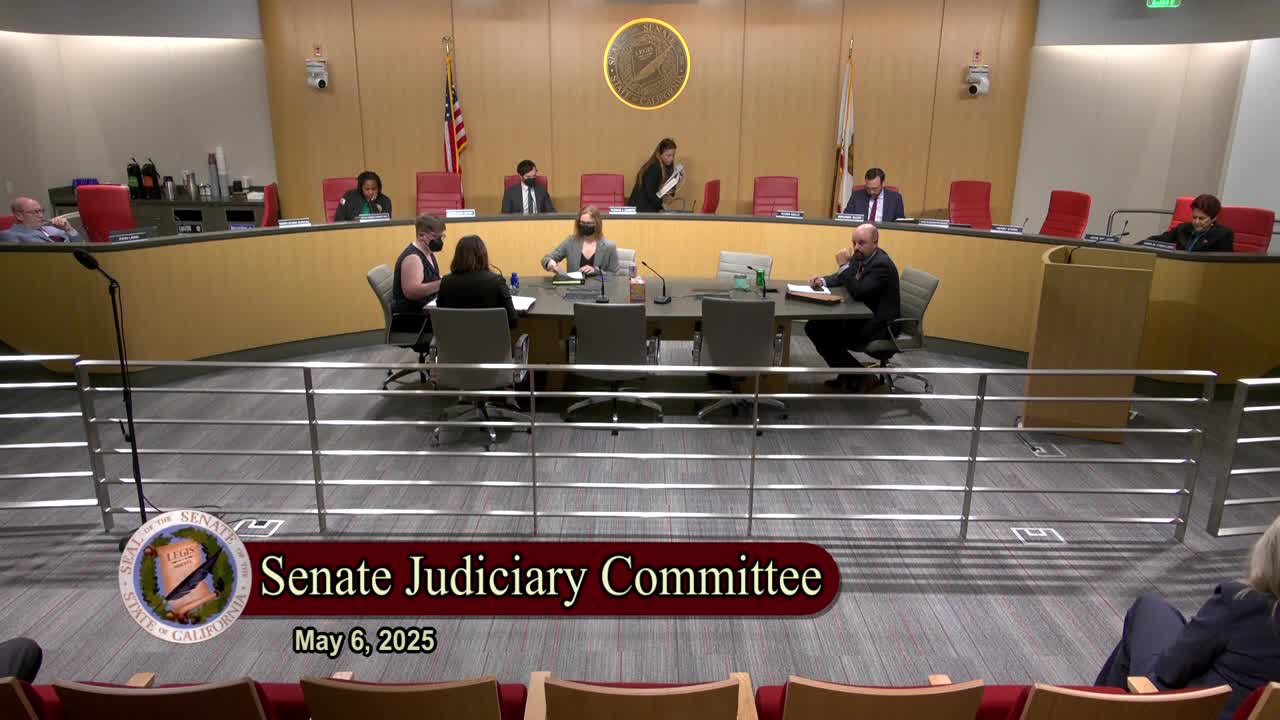
Bill Author