SB 75: Employment: Preapprenticeship Pathways to Employment Pilot Program.
- Session Year: 2025-2026
- House: Senate
- Latest Version Date: 2025-09-18
Current Status:
Failed
(2026-03-02: Stricken from file.)
Introduced
In Committee
Awaiting First Chamber Vote
Passed First Chamber
In Committee
Awaiting Second Chamber Vote
Passed Second Chamber
Enacted
Existing law provides for various employment programs to assist formerly incarcerated individuals in finding and retaining employment, including the Pre-Release Construction Trades Certificate Program administered by the Department of Corrections and Rehabilitation and the Prison to Employment Program administered by the California Workforce Development Board.
Existing law establishes the California Workforce Development Board as the body responsible for assisting the Governor in the development, oversight, and continuous improvement of Californias workforce investment system and the alignment of the education and workforce investment systems to the needs of the 21st century economy and workforce.
This bill would, by January 1, 2028, require the Department of Corrections and Rehabilitation, in partnership with the Department of Industrial Relations, to establish the Preapprenticeship Pathways to Employment Pilot Program. The bill would, until January 1, 2032, provide incarcerated individuals access to preapprenticeship training in the skilled construction and building trades. The bill would require the program to provide, among other things, instruction based on the Multi-Craft Core Curriculum and content coordinated with joint apprenticeship training committees. The bill would require the Department of Corrections and Rehabilitation to implement the program at one mens facility and one womens facility. The bill would require the Department of Corrections and Rehabilitation, beginning January 1, 2029, to annually report certain data regarding participation in the program to the Legislature.
Existing law provides for various employment programs to assist formerly incarcerated individuals in finding and retaining employment, including the Pre-Release Construction Trades Certificate Program administered by the Department of Corrections and Rehabilitation and the Prison to Employment Program administered by the California Workforce Development Board.
Existing law establishes the California Workforce Development Board as the body responsible for assisting the Governor in the development, oversight, and continuous improvement of Californias workforce investment system and the alignment of the education and workforce investment systems to the needs of the 21st century economy and workforce.
This bill would, subject to an appropriation and until January 1, 2030, require the board to establish a Reentry Pilot Project in the Counties of Alameda, Los Angeles, and San Diego to provide workforce training and transitional support to formerly incarcerated individuals committed to careers in the skilled trades. The bill would require the board to designate a qualified nonprofit organization in each pilot county for specified duties, including the management and monitoring of funds. The bill would require a qualified nonprofit organization to provide certain stipends to eligible participants, including a transportation stipend to ensure accessibility to training and employment sites. The bill would require apprenticeship training that is affiliated with a union to be defrayed by underwriting 25% of the total cost per participant. The bill would require the board to evaluate the program based on specified outcomes and submit a report to the Legislature, no later than 6 months following the conclusion of the pilot project, assessing the pilot projects effectiveness and feasibility for statewide expansion.This bill would, by January 1, 2028, require the Department of Corrections and Rehabilitation, in partnership with the Department of Industrial Relations, to establish the Preapprenticeship Pathways to Employment Pilot Program. The bill would, until January 1, 2032, provide incarcerated individuals access to preapprenticeship training in the skilled construction and building trades. The bill would require the program to provide, among other things, instruction based on the Multi-Craft Core Curriculum and content coordinated with joint apprenticeship training committees. The bill would require the Department of Corrections and Rehabilitation to implement the program at one mens facility and one womens facility. The bill would require the Department of Corrections and Rehabilitation, beginning January 1, 2029, to annually report certain data regarding participation in the program to the Legislature.
Existing law provides for various employment programs to assist formerly incarcerated individuals in finding and retaining employment, including the Pre-Release Construction Trades Certificate Program administered by the Department of Corrections and Rehabilitation and the Prison to Employment Program administered by the California Workforce Development Board.
Existing law establishes the California Workforce Development Board as the body responsible for assisting the Governor in the development, oversight, and continuous improvement of Californias workforce investment system and the alignment of the education and workforce investment systems to the needs of the 21st century economy and workforce.
This bill would, subject to an appropriation and until January 1, 2030, require the board to establish a Reentry Pilot Project in the Counties of Alameda, Los Angeles, and San Diego to provide workforce training and transitional support to formerly incarcerated individuals committed to careers in the skilled trades. The bill would require the board to designate a qualified nonprofit organization in each pilot county for specified duties, including the management and monitoring of funds. The bill would require a qualified nonprofit organization to provide certain stipends to eligible participants, including a transportation stipend to ensure accessibility to training and employment sites. The bill would require apprenticeship training that is affiliated with a union to be defrayed by underwriting 25% of the total cost per participant. The bill would require the board to evaluate the program based on specified outcomes and submit a report to the Legislature, no later than 6 months following the conclusion of the pilot project, assessing the pilot projects effectiveness and feasibility for statewide expansion.
Existing law establishes the Pre-Release Construction Trades Certificate Program within the Department of Corrections and Rehabilitation to increase employment opportunities in the construction trades for incarcerated persons upon release. Existing law requires the department to establish a joint advisory committee, composed of representatives from specified organizations and state agencies, for the purpose of implementation of the program and specifies the duties of the committee with respect to the program.This bill would state the intent of the Legislature to enact legislation relating to postrelease apprenticeship programs.Existing law establishes the Pre-Release Construction Trades Certificate Program within the Department of Corrections and Rehabilitation to increase employment opportunities in the construction trades for incarcerated persons upon release. Existing law requires the department to establish a joint advisory committee, composed of representatives from specified organizations and state agencies, for the purpose of implementation of the program and specifies the duties of the committee with respect to the program.
This bill would state the intent of the Legislature to enact legislation relating to postrelease apprenticeship programs.
(a)No later than January 1, 2028, the Department of Corrections and Rehabilitation, in partnership with the Department of Industrial Relations and recognized building and construction trades councils, shall establish the Preapprenticeship Pathways to Employment Pilot Program.
(b)The purpose of the program is to provide incarcerated individuals with access to high-quality preapprenticeship training aligned with state-registered apprenticeships in the skilled construction and building trades.
(c)The Department of Corrections and Rehabilitation shall ensure equitable access to the program across each facility under its jurisdiction, including facilities housing women and gender-responsive institutions. The Department of Corrections and Rehabilitation shall implement the program in at least one mens and one womens facility.
(d)The program shall include all of the following:
(1)Instruction based on the Multi-Craft Core Curriculum (MC3), recognized by the State Building and Construction Trades Council of California. The instruction shall prepare participants for entry into a wide range of union-affiliated skilled trades, including, but not limited to, each of the following:
(A)Carpentry.
(B)Ironwork.
(C)Sheet metal.
(D)Laborers.
(E)Operating engineers.
(2)Availability to incarcerated individuals who are within 24 months of release and express interest in careers in the trades.
(3)Career readiness and case management services that are designed to facilitate direct transition into union apprenticeships following release. These services may be provided by existing workforce and community-based programs and shall include, but are not limited to, each of the following:
(A)Employment and training services, including job readiness workshops, occupational skills training, preapprenticeship placement, and paid transitional work opportunities.
(B)Behavioral health and substance use services, including mental health counseling, cognitive behavioral therapy, substance use disorder treatment, and peer recovery support.
(C)Housing support services, including emergency shelter, transitional housing, housing navigation, and rapid rehousing assistance.
(D)Transportation assistance, including public transit passes, rideshare vouchers, and drivers license reinstatement support.
(E)Family and childcare support, including parenting classes, childcare subsidies, and family reunification services.
(F)Legal services, including expungement and record sealing clinics, support with fines and fees, and reentry-related legal navigation.
(G)Digital and financial literacy services, including digital skills training, budgeting support, credit repair, and access to communication tools.
(H)Basic needs support, including access to work clothing, hygiene items, food assistance, and mobile phone access.
(4)Classroom and hands-on instruction in construction safety, trade mathematics, blueprint reading, industry orientation, and other foundational skills aligned with state-registered apprenticeship standards. Content shall be taught by certified instructors and coordinated with local joint apprenticeship training committees.
(e)Facilities who implement the program shall not grant preferential treatment based on race, sex, color, ethnicity, or national origin, in accordance with Section 31 of Article I of the California Constitution. Access shall be based on facility needs, proximity to release, and participant interest in skilled trades careers.
(f)Participants who complete the program shall receive an MC3 certification from a certified training provider.
6276.(a)The Department of Corrections and Rehabilitation shall submit a report to the Legislature, beginning January 1, 2029, and each year thereafter, that includes the following information:
(1)The number of individuals who have enrolled in the Preapprenticeship Pathways to Employment Program.
(2)The number of individuals who have completed the Preapprenticeship Pathways to Employment Program.
(3)The number of individuals placed in registered apprenticeships or related employment.
(4)The number of individuals from each participating facility and program site who fit the criteria in paragraphs (1) to (3), inclusive.
(5)Identified barriers to access and participation.
(b)The report submitted pursuant to this section shall be submitted in compliance with Section 9795 of the Government Code.
6277.This chapter shall remain in effect only until January 1, 2032, and as of that date is repealed.
SECTION 1.The Legislature finds and declares all of the following:(a)The successful reentry of formerly incarcerated individuals is critical to reducing recidivism and fostering economic self-sufficiency.(b)The Counties of Alameda, Los Angeles, and San Diego receive a large percentage of formerly incarcerated individuals released from the Department of Corrections and Rehabilitation and have highly developed public agencies and nonprofits focused on reentry services.(c)A structured, statewide model for reentry workforce training is necessary to optimize resources and create a replicable system for future expansion.(d)The California Workforce Development Board has demonstrated success in administering workforce training programs and is well positioned to oversee a Reentry Pilot Project focused on training formerly incarcerated individuals for careers in the skilled trades.SEC. 2.Article 4.5 (commencing with Section 14050) is added to Chapter 3 of Division 7 of the Unemployment Insurance Code, to read:4.5.Reentry Pilot Project14050.(a)For purposes of this section, board means the California Workforce Development Board.(b)The board shall establish a Reentry Pilot Project in the Counties of Alameda, Los Angeles, and San Diego to provide workforce training and transitional support to formerly incarcerated individuals committed to careers in the skilled trades.(c)Under the pilot project, the board shall designate a qualified nonprofit organization in each pilot county to manage and monitor funds and be accountable to the board for proper expenditure and reporting.(d)A qualified nonprofit organization shall provide the following stipends to eligible participants:(1)A transportation stipend to ensure accessibility to training and employment sites.(2)An equipment stipend to cover necessary tools and protective gear.(3)A living cost and technology stipend to support housing stability and access to digital resources.(e)Under the pilot project, apprenticeship training that is affiliated with a union shall be defrayed by underwriting 25 percent of the total cost per participant.(f)The board shall evaluate the program based on the following outcomes:(1)Participant employment rates and retention in skilled trade careers.(2)Reduction in recidivism rates among program participants.(3)Long-term fiscal impact, including cost savings from reduced incarceration rates compared to program expenditures.(g)(1)No later than six months following the conclusion of the pilot project, the board shall submit a comprehensive report to the Legislature assessing the pilot projects effectiveness based on outcomes evaluated under subdivision (f) and feasibility for statewide expansion.(2)A report to be submitted pursuant to paragraph (1) shall be submitted in compliance with Section 9795 of the Government Code.(h)(1)This article shall become operative only upon an appropriation of funds by the Legislature for the purposes of this article.(2)This article shall remain in effect until January 1, 2030, and as of that date is repealed.The Legislature finds and declares all of the following:
(a)The successful reentry of formerly incarcerated individuals is critical to reducing recidivism and fostering economic self-sufficiency.
(b)The Counties of Alameda, Los Angeles, and San Diego receive a large percentage of formerly incarcerated individuals released from the Department of Corrections and Rehabilitation and have highly developed public agencies and nonprofits focused on reentry services.
(c)A structured, statewide model for reentry workforce training is necessary to optimize resources and create a replicable system for future expansion.
(d)The California Workforce Development Board has demonstrated success in administering workforce training programs and is well positioned to oversee a Reentry Pilot Project focused on training formerly incarcerated individuals for careers in the skilled trades.
SEC. 2.Article 4.5 (commencing with Section 14050) is added to Chapter 3 of Division 7 of the Unemployment Insurance Code, to read:4.5.Reentry Pilot Project14050.(a)For purposes of this section, board means the California Workforce Development Board.
(b)The board shall establish a Reentry Pilot Project in the Counties of Alameda, Los Angeles, and San Diego to provide workforce training and transitional support to formerly incarcerated individuals committed to careers in the skilled trades.
(c)Under the pilot project, the board shall designate a qualified nonprofit organization in each pilot county to manage and monitor funds and be accountable to the board for proper expenditure and reporting.
(d)A qualified nonprofit organization shall provide the following stipends to eligible participants:
(1)A transportation stipend to ensure accessibility to training and employment sites.
(2)An equipment stipend to cover necessary tools and protective gear.
(3)A living cost and technology stipend to support housing stability and access to digital resources.
(e)Under the pilot project, apprenticeship training that is affiliated with a union shall be defrayed by underwriting 25 percent of the total cost per participant.
(f)The board shall evaluate the program based on the following outcomes:
(1)Participant employment rates and retention in skilled trade careers.
(2)Reduction in recidivism rates among program participants.
(3)Long-term fiscal impact, including cost savings from reduced incarceration rates compared to program expenditures.
(g)(1)No later than six months following the conclusion of the pilot project, the board shall submit a comprehensive report to the Legislature assessing the pilot projects effectiveness based on outcomes evaluated under subdivision (f) and feasibility for statewide expansion.
(2)A report to be submitted pursuant to paragraph (1) shall be submitted in compliance with Section 9795 of the Government Code.
(h)(1)This article shall become operative only upon an appropriation of funds by the Legislature for the purposes of this article.
(2)This article shall remain in effect until January 1, 2030, and as of that date is repealed.
SECTION 1.It is the intent of the Legislature to enact legislation relating to postrelease apprenticeship programs.It is the intent of the Legislature to enact legislation relating to postrelease apprenticeship programs.
|
Date
|
Status
|
|---|---|
| Mar 2, 2026 | Veto sustained. |
| Mar 2, 2026 | Stricken from file. |
| Oct 13, 2025 | In Senate. Consideration of Governor's veto pending. |
| Oct 13, 2025 | Vetoed by the Governor. |
| Sep 23, 2025 | Enrolled and presented to the Governor at 2 p.m. |
| Sep 13, 2025 | Assembly amendments concurred in. (Ayes 37. Noes 0. Page 3022.) Ordered to engrossing and enrolling. |
| Sep 12, 2025 | In Senate. Concurrence in Assembly amendments pending. |
| Sep 12, 2025 | Read third time. Passed. (Ayes 79. Noes 1. Page 3409.) Ordered to the Senate. |
| Sep 2, 2025 | Read second time. Ordered to third reading. |
| Aug 29, 2025 | From committee: Do pass. (Ayes 15. Noes 0.) (August 29). |
| Aug 20, 2025 | August 20 set for first hearing. Placed on APPR. suspense file. |
| Jul 16, 2025 | From committee: Do pass and re-refer to Com. on APPR. with recommendation: To consent calendar. (Ayes 9. Noes 0.) (July 15). Re-referred to Com. on APPR. |
| Jul 10, 2025 | From committee: Do pass and re-refer to Com. on PUB. S. with recommendation: To consent calendar. (Ayes 7. Noes 0.) (July 9). Re-referred to Com. on PUB. S. |
| Jun 17, 2025 | From committee with author's amendments. Read second time and amended. Re-referred to Com. on L. & E. |
| Jun 9, 2025 | Referred to Coms. on L. & E. and PUB. S. |
| Jun 3, 2025 | In Assembly. Read first time. Held at Desk. |
| Jun 2, 2025 | Read third time. Passed. (Ayes 38. Noes 0. Page 1388.) Ordered to the Assembly. |
| May 23, 2025 | Read second time. Ordered to third reading. |
| May 23, 2025 | From committee: Do pass. (Ayes 6. Noes 0. Page 1190.) (May 23). |
| May 16, 2025 | Set for hearing May 23. |
| May 12, 2025 | May 12 hearing: Placed on APPR. suspense file. |
| May 2, 2025 | Set for hearing May 12. |
| Apr 30, 2025 | From committee: Do pass and re-refer to Com. on APPR. (Ayes 6. Noes 0. Page 944.) (April 29). Re-referred to Com. on APPR. |
| Apr 23, 2025 | From committee: Do pass and re-refer to Com. on PUB. S. (Ayes 5. Noes 0. Page 869.) (April 23). Re-referred to Com. on PUB. S. |
| Apr 11, 2025 | Set for hearing April 29 in PUB. S. pending receipt. |
| Apr 4, 2025 | Set for hearing April 23. |
| Apr 2, 2025 | Re-referred to Coms. on L., P.E. & R. and PUB. S. |
| Mar 26, 2025 | From committee with author's amendments. Read second time and amended. Re-referred to Com. on RLS. |
| Jan 29, 2025 | Referred to Com. on RLS. |
| Jan 16, 2025 | From printer. May be acted upon on or after February 15. |
| Jan 15, 2025 | Introduced. Read first time. To Com. on RLS. for assignment. To print. |
|
Date
|
Description
|
Location
|
Votes
|
|
|---|---|---|---|---|
| Sep 13, 2025 | Unfinished Business SB75 Smallwood-Cuevas Concurrence | Senate Floor |
Passed |
|
| Sep 12, 2025 | SB 75 Smallwood-Cuevas Senate Third Reading By Quirk-Silva | Assembly Floor |
Passed |
|
| Sep 12, 2025 | Unfinished Business SB75 Smallwood-Cuevas Concurrence | Senate Floor |
Passed |
|
| Aug 29, 2025 | Do pass. | Assembly Standing Committee on Appropriations |
Passed |
|
| Jul 15, 2025 | Do pass and be re-referred to the Committee on [Appropriations] with recommendation: To Consent Calendar | Assembly Standing Committee on Public Safety |
Passed |
|
| Jul 9, 2025 | Do pass and be re-referred to the Committee on [Public Safety] with recommendation: To Consent Calendar | Assembly Standing Committee on Labor and Employment |
Passed |
|
| Jun 2, 2025 | Senate 3rd Reading SB75 Smallwood-Cuevas | Senate Floor |
Passed |
|
| May 23, 2025 | Do pass | Senate Standing Committee on Appropriations |
Passed |
|
| May 12, 2025 | Placed on suspense file | Senate Standing Committee on Appropriations |
Passed |
|
| Apr 29, 2025 | Do pass, but first be re-referred to the Committee on [Appropriations] | Senate Standing Committee on Public Safety |
Passed |
|
| Apr 23, 2025 | Do pass, but first be re-referred to the Committee on [Public Safety] | Senate Standing Committee on Labor, Public Employment and Retirement |
Passed |
This list shows positions taken on this bill by organizations on the date displayed, which is linked to the original source.
Positions by individuals are not included.
|
Organization
|
Position
|
Date
|
|---|---|---|
| A New Way of Life Re-Entry Project | ** Support | |
| Aclu California Action | ** Support | |
| California Legislative Women Caucus | ** Support | |
| California Public Defenders Association | ** Support | |
| Ella Baker Center For Human Rights | ** Support | |
| Roberts Enterprise Development Fund | ** Support | |
| Society For Human Resource Management | ** Support | |
| various social justice groups | ** Support |
SENATE RULES COMMITTEE Office of Senate Floor Analyses (916) 651-1520 Fax: (916) 327-4478 | SB 75 |
VETO
Bill No: SB 75
Author: Smallwood-Cuevas (D)
Enrolled: 9/18/25
Vote: 27
SENATE LABOR, PUB. EMP. & RET. COMMITTEE: 5-0, 4/23/25
AYES: Smallwood-Cuevas, Strickland, Cortese, Durazo, Laird
SENATE PUBLIC SAFETY COMMITTEE: 6-0, 4/29/25
AYES: Arreguín, Seyarto, Caballero, Gonzalez, Pérez, Wiener
SENATE APPROPRIATIONS COMMITTEE: 6-0, 5/23/25
AYES: Caballero, Seyarto, Cabaldon, Grayson, Richardson, Wahab
NO VOTE RECORDED: Dahle
SENATE FLOOR: 38-0, 6/2/25
AYES: Allen, Alvarado-Gil, Archuleta, Arreguín, Ashby, Becker, Blakespear, Cabaldon, Caballero, Cervantes, Choi, Cortese, Dahle, Durazo, Gonzalez, Grayson, Grove, Jones, Laird, Limón, McGuire, McNerney, Menjivar, Niello, Ochoa Bogh, Padilla, Pérez, Richardson, Rubio, Seyarto, Smallwood-Cuevas, Stern, Strickland, Umberg, Valladares, Wahab, Weber Pierson, Wiener
NO VOTE RECORDED: Hurtado, Reyes
SENATE FLOOR: 37-0, 9/13/25
AYES: Allen, Alvarado-Gil, Archuleta, Arreguín, Ashby, Becker, Blakespear, Cabaldon, Caballero, Cervantes, Cortese, Dahle, Durazo, Grayson, Grove, Hurtado, Jones, Laird, Limón, McGuire, McNerney, Menjivar, Niello, Ochoa Bogh, Padilla, Pérez, Reyes, Richardson, Rubio, Seyarto, Smallwood-Cuevas, Stern, Strickland, Umberg, Wahab, Weber Pierson, Wiener
NO VOTE RECORDED: Choi, Gonzalez, Valladares
ASSEMBLY FLOOR: 79-1, 9/12/25 - See last page for vote
SUBJECT: Employment: Preapprenticeship Pathways to Employment Pilot Program
SOURCE: Author
DIGEST:
This bill requires the Department of Corrections and Rehabilitation (CDCR), in partnership with the Department of Industrial Relations (DIR) and recognized building and construction trades councils to establish the Pre-apprenticeship Pathways to Employment Pilot Program to provide incarcerated individuals with access to pre-apprenticeship training aligned with state-registered apprenticeships in the building and construction trades, no later than January 1, 2028.
ANALYSIS:
Existing law:
- Establishes the Prison to Employment program, administered by the California Workforce Development Board (CWDB), to coordinate reentry and workforce services in each of the state’s 14 workforce regions so that the formerly incarcerated and other justice-involved individuals in these regions can find and retain employment. (Unemp. Ins. Code, §§ 14040-14042.)
- Requires the Secretary CDCR to appoint a Superintendent of Correctional Education, who oversees and administers all prison education programs. Requires the Superintendent to set both short- and long-term goals for literacy and testing and career technical education programs, and to establish priorities for prison academic and career technical education programs. (Pen. Code § 2053.4.)
- Requires a career technical education program consider to all of the following factors, consistent with the goals and priorities of CDCR:
- Whether the program aligns with the workforce needs of high-demand sectors of the state and regional economies;
- Whether there is an active job market for the skills being developed where the incarcerated person will likely be released;
- Whether the program increases the number of incarcerated individuals who obtain a marketable and industry or apprenticeship board-recognized certification, credential, or degree;
- Whether there are formal or informal networks in the field that support finding employment upon release from prison; and,
- Whether the program will lead to employment in occupations with a livable wage. (Pen. Code § 2053.5.)
- Establishes the Pre-Release Construction Trades Certificate Program administered by CDCR to increase employment opportunities in the construction trades for incarcerated individuals upon release. (Pen. Code, § 2716.5.)
- Establishes the Prison Industry Authority (Cal PIA) within CDCR. (Pen. Code, § 2800.)
This bill:
- Requires, CDCR in partnership with the DIR and recognized building and construction trades councils, to establish the Pre-apprenticeship Pathways to Employment Pilot Program (program) no later than January 1, 2028.
- Requires CDCR to ensure equitable access to the program across each facility under its jurisdiction, including facilities housing women and gender-responsive institutions. Requires CDCR to implement the program in at least one men’s and one women’s facility.
- Requires the program to include all of the following:
- Instruction based on the Multi-Craft Core Curriculum (MC3), recognized by the State Building and Construction Trades Council of California. The instruction shall prepare participants for entry into a wide range of union-affiliated skilled trades, including, but not limited to, each of the following: carpentry; ironwork; sheet metal; laborers, and operating engineers.
- Availability to incarcerated individuals who are within 24 months of release and express interest in careers in the trades.
- Career readiness and case management services that are designed to facilitate direct transition into union apprenticeships following release. These services may be provided by existing workforce and community-based programs and shall include, but are not limited to, each of the following:
- Employment and training services, including job readiness workshops, occupational skills training, pre-apprenticeship placement, and paid transitional work opportunities.
- Behavioral health and substance use services, including mental health counseling, cognitive behavioral therapy, substance use disorder treatment, and peer recovery support.
- Housing support services, including emergency shelter, transitional housing, housing navigation, and rapid rehousing assistance.
- Transportation assistance, including public transit passes, rideshare vouchers, and driver’s license reinstatement support.
- Family and childcare support, including parenting classes, childcare subsidies, and family reunification services.
- Legal services, including expungement and record sealing clinics, support with fines and fees, and reentry-related legal navigation.
- Digital and financial literacy services, including digital skills training, budgeting support, credit repair, and access to communication tools.
- Basic needs support, including access to work clothing, hygiene items, food assistance, and mobile phone access.
- Classroom and hands-on instruction in construction safety, trade mathematics, blueprint reading, industry orientation, and other foundational skills aligned with state-registered apprenticeship standards. Content shall be taught by certified instructors and coordinated with local joint apprenticeship training committees.
- Facilities who implement the program shall not grant preferential treatment based on race, sex, color, ethnicity, or national origin. Requires access be based on facility needs, proximity to release, and participant interest in skilled trades careers.
- Requires participants who complete the program receive an MC3 certification from a certified training provider.
- Requires CDCR to submit a report to the Legislature, beginning January 1, 2029, and each year thereafter, that includes the following information:
- The number of individuals who have enrolled in the program.
- The number of individuals who have completed the program.
- The number of individuals placed in registered apprenticeships or related employment.
- The number of individuals from each participating facility and program site in categories above.
- Identified barriers to access and participation.
- Provides the provisions of this bill remain in effect until January 1, 2032, and as of that date are repealed.
Background
Pre-Apprenticeships and MC3 Curriculum. An apprenticeship is a program that trains a person to become skilled in a particular trade by combining hands-on experience with a classroom component. Apprenticeships are considered full-time employment. Pre-apprenticeship programs, also known as apprenticeship readiness programs, are designed to prepare participants to enter registered apprenticeship programs.
The MC3 curriculum is a standardized, comprehensive curriculum intended to prepare participants for careers in the construction industry. The curriculum requires 120 hours of classroom training and includes areas of focus such as Tools and Materials, Construction Health and Safety, Blueprint Reading, Basic Math for Construction, among others.
In a carceral setting, pre-apprenticeship programs enable incarcerated individuals to complete an initial stage of training and education, preparing them for an apprenticeship upon release.
Prior Efforts Related to Pre-Release and Post-Release Job Training. Many studies have examined the relationship between employment and recidivism. Although the formerly incarcerated face many barriers to obtaining employment, high quality employment is correlated with lower rates of recidivism. (Connell, C., et al. Effectiveness of interventions to improve employment for people released from prison: systematic review and meta-analysis, Health Justice 11, 17 (2023) available at <https://www.healthandjusticejournal.biomedcentral.com/articles/10.1186/s40352-023-00217-w#:~:text=Employment%20is%20associated%20with%20a,Sampson%20%26%20Laub%2C%201993 ). Given this correlation, the State has invested in various types of in-prison job training in order to improve job prospects for the incarcerated population upon release.
Through Cal PIA’s Career Technical Education program, incarcerated individuals receive work and training opportunities, including in construction and carpentry, as well as certifications for completion of that training. (https://www.calpia.ca.gov/workforce-development/career-technical-education-cte/) In 2024, CDCR relaunched the MC3 pre-apprenticeship program at five prisons. (CDCR, 104 graduate construction training program (Jan. 14, 2025) available at <https://www.cdcr.ca.gov/insidecdcr/2025/01/14/104-graduate-construction-training-program/ .) The MC3 program was established in 2012 in partnership with the California State Building Trades Council.
In 2018, the Legislature established the Pre-Release Construction Trades Certification Program, administered by CDCR, to increase employment opportunities in the construction trades for incarcerated individuals after release. The program is overseen by a joint advisory committee, composed of representatives from building and construction trades employee organizations, the State Building and Construction Trades Council of California, joint apprenticeship training programs, Cal PIA, the Division of Apprenticeship Standards, the Labor and Workforce Development Agency, and any other representatives the department determines appropriate.
The State has also invested in re-entry work training programs. As part of California’s efforts to increase rehabilitative opportunities and reduce recidivism, the CWDB, CDCR, Cal PIA, and California Workforce Association created the Corrections-Workforce Partnership in 2017. This partnership linked education, job training, and work experience in prison to post-release jobs by fostering a system of coordinated service delivery to a population that faces a variety of barriers.
In 2018, the Legislature appropriated $37 million for the Prison to Employment Initiative (P2E), administered by the CWDB. The mission of P2E is to create a pathway toward employment and away from recidivism for formerly incarcerated and justice-involved individuals. (CWDB, Interim Report for Evaluation of Workforce Development Programs submitted pursuant to Supplemental Report of the 2018-19 Budget Act, Item 7120-101-000 (Oct. 2021), p. 1 available at <https://cwdb.ca.gov/wp-content/uploads/sites/43/2021/10/P2E-Interim-Report_ACCESSIBLE.pdf#:~:text=P2E%20funds%20the%20integration%20of%20workforce%20and%20reentry,recidivism%20for%20the%20formerly%20incarcerated%20and%20justice-involved%20population .) P2E funds the integration of workforce and re-entry services through grants to workforce service providers across the state, including both direct and supportive services. (Id. at p. 2.)
CDWB’s interim report evaluating the P2E program outlines the types of direct services participants receive such as interview coaching and tuition for MC3 training in the construction trades. (Id. at p. 2.) Additionally, supportive services help participants meet their basic needs, such as with stipends to cover participants’ transportation, clothing, and food costs. (Ibid.) As of June 2021, P2E funds have been used to serve over 3,190 formerly-incarcerated and justice-involved individuals statewide. (Id. at p. 4.) In January 2023, CWDB announced $19 million in awards to new projects (P2E 2.0). (CWDB, Prison to Employment (P2E 2.0) Award Announcements available at <https://cwdb.ca.gov/wp-content/uploads/sites/43/2023/01/P2E-2.0-Award-Announcement-Jan-2023_ACCESSIBLE.pdf .) The grant term for P2E 2.0 runs from January 2023 through December 2025.
This bill expands on current and past initiatives to increase employment opportunities for formerly incarcerated individuals and reduce recidivism by requiring CDCR to partner with DIR and building and construction trades councils to establish a pre-apprenticeship pilot program. This bill specifies program requirements, including use of the MC3 curriculum. This bill requires that incarcerated individuals who complete the program receive an MC3 certification from a certified training provider, and includes a data reporting requirement. The pilot program sunsets in 2032.
FISCAL EFFECT: Appropriation: No Fiscal Com.: Yes Local: No
According to the Assembly Appropriations Committee:
- Annual costs in the low millions of dollars to CDCR to establish and operate the Program, including hiring certified instructors and coordinating with local joint apprenticeship training committees to provide classroom and hands-on instruction across various subject matters (General Fund (GF)). CDCR estimates implementation costs to exceed $1.5 million per institution, with additional per-institution costs in the millions of dollars to provide career readiness and case management services absent interest from community groups to provide such services.
- Additionally, CDCR notes that several provisions of this bill are unclear, which may further increase costs. For example, the requirement to ensure equitable access to the Program across each CDCR facility may require CDCR to implement the Program at all facilities, not just one men’s and one women’s facility, and references to post-release case management services and data reporting may require CDCR to contact and track individuals no longer within CDCR’s jurisdiction.
- Costs of approximately $209,000 in the first year and $197,000 annually thereafter to DIR’s Division of Apprenticeship Standards to partner with CDCR to implement the Program (GF).
SUPPORT: (Verified 10/14/25)
ACLU California Action
A New Way of Life Re-Entry Project
California Legislative Women’s Caucus
California Public Defenders Association
Ella Baker Center for Human Rights
Roberts Enterprise Development Fund
OPPOSITION: (Verified 10/14/25)
None received
GOVERNOR'S VETO MESSAGE:
This bill would require the California Department of Corrections and Rehabilitation (CDCR), in partnership with the Department of Industrial Relations, to launch a pre-apprenticeship pilot program for five different trades in at least two institutions by 2028 through 2032, with annual reporting starting in 2029.
Providing the incarcerated population with skills to use upon release is critical to the successful reintegration of these individuals back into their communities. In this spirit, California has made significant, targeted investments over the past several years to support multiple educational and work-based programs within the state prison system. This includes the Adult Basic Education program, partnerships with institutions of higher education, the availability of Career Technical Education courses, and apprenticeship work opportunities.
While I am proud of this ongoing work, I appreciate the author’s commitment to expand rehabilitative programming and career pathways - and I acknowledge there is more work to be done. However, this bill would establish a structure that cannot be implemented, conflicts with existing work, and creates cost pressures exceeding several million dollars annually to establish and operate a new pre-apprenticeship pilot program.
I encourage the Legislature to revisit this issue as part of next year’s budget process, so that targeted investments in CDCR’s rehabilitative programming can be considered in the context of ongoing work to assist the incarcerated population with reentry into the community.
For these reasons, I cannot sign this bill.
ASSEMBLY FLOOR: 79-1, 9/12/25
AYES: Addis, Aguiar-Curry, Ahrens, Alanis, Alvarez, Arambula, Ávila Farías, Bains, Bauer-Kahan, Bennett, Berman, Boerner, Bonta, Bryan, Calderon, Caloza, Carrillo, Castillo, Chen, Connolly, Davies, Dixon, Elhawary, Ellis, Flora, Fong, Gabriel, Gallagher, Garcia, Gipson, Jeff Gonzalez, Mark González, Hadwick, Haney, Harabedian, Hart, Hoover, Irwin, Jackson, Johnson, Kalra, Krell, Lackey, Lee, Lowenthal, Macedo, McKinnor, Muratsuchi, Nguyen, Ortega, Pacheco, Papan, Patel, Patterson, Pellerin, Petrie-Norris, Quirk-Silva, Ramos, Ransom, Celeste Rodriguez, Michelle Rodriguez, Rogers, Blanca Rubio, Sanchez, Schiavo, Schultz, Sharp-Collins, Solache, Soria, Stefani, Ta, Tangipa, Valencia, Wallis, Ward, Wicks, Wilson, Zbur, Rivas
NOES: DeMaio
Prepared by: Stephanie Jordan / PUB. S. /
10/15/25 12:22:02
**** END ****
SENATE RULES COMMITTEE Office of Senate Floor Analyses (916) 651-1520 Fax: (916) 327-4478 | SB 75 |
UNFINISHED BUSINESS
Bill No: SB 75
Author: Smallwood-Cuevas (D)
Amended: 6/17/25 in Assembly
Vote: 21
SENATE LABOR, PUB. EMP. & RET. COMMITTEE: 5-0, 4/23/25
AYES: Smallwood-Cuevas, Strickland, Cortese, Durazo, Laird
SENATE PUBLIC SAFETY COMMITTEE: 6-0, 4/29/25
AYES: Arreguín, Seyarto, Caballero, Gonzalez, Pérez, Wiener
SENATE APPROPRIATIONS COMMITTEE: 6-0, 5/23/25
AYES: Caballero, Seyarto, Cabaldon, Grayson, Richardson, Wahab
NO VOTE RECORDED: Dahle
SENATE FLOOR: 38-0, 6/2/25
AYES: Allen, Alvarado-Gil, Archuleta, Arreguín, Ashby, Becker, Blakespear, Cabaldon, Caballero, Cervantes, Choi, Cortese, Dahle, Durazo, Gonzalez, Grayson, Grove, Jones, Laird, Limón, McGuire, McNerney, Menjivar, Niello, Ochoa Bogh, Padilla, Pérez, Richardson, Rubio, Seyarto, Smallwood-Cuevas, Stern, Strickland, Umberg, Valladares, Wahab, Weber Pierson, Wiener
NO VOTE RECORDED: Hurtado, Reyes
ASSEMBLY FLOOR: 70-1, 9/12/25 – Roll call not available
SUBJECT: Employment: Preapprenticeship Pathways to Employment Pilot Program
SOURCE: Author
DIGEST:
This bill requires the Department of Corrections and Rehabilitation (CDCR), in partnership with the Department of Industrial Relations (DIR) and recognized building and construction trades councils to establish the Pre-apprenticeship Pathways to Employment Pilot Program to provide incarcerated individuals with access to pre-apprenticeship training aligned with state-registered apprenticeships in the building and construction trades, no later than January 1, 2028.
Assembly Amendments substantially amended the bill to eliminate the reentry pilot program and instead, require CDCR to partner with DIR and building and construction trades councils to provide access to pre-apprenticeship training program.
ANALYSIS:
Existing law:
- Establishes the Prison to Employment program, administered by the California Workforce Development Board (CWDB), to coordinate reentry and workforce services in each of the state’s 14 workforce regions so that the formerly incarcerated and other justice-involved individuals in these regions can find and retain employment. (Unemp. Ins. Code, §§ 14040-14042.)
- Requires the Secretary CDCR to appoint a Superintendent of Correctional Education, who oversees and administers all prison education programs. Requires the Superintendent to set both short- and long-term goals for literacy and testing and career technical education programs, and to establish priorities for prison academic and career technical education programs. (Pen. Code § 2053.4.)
- Requires a career technical education program consider to all of the following factors, consistent with the goals and priorities of CDCR:
- Whether the program aligns with the workforce needs of high-demand sectors of the state and regional economies;
- Whether there is an active job market for the skills being developed where the incarcerated person will likely be released;
- Whether the program increases the number of incarcerated individuals who obtain a marketable and industry or apprenticeship board-recognized certification, credential, or degree;
- Whether there are formal or informal networks in the field that support finding employment upon release from prison; and,
- Whether the program will lead to employment in occupations with a livable wage. (Pen. Code § 2053.5.)
- Establishes the Pre-Release Construction Trades Certificate Program administered by CDCR to increase employment opportunities in the construction trades for incarcerated individuals upon release. (Pen. Code, § 2716.5.)
- Establishes the Prison Industry Authority (Cal PIA) within CDCR. (Pen. Code, § 2800.)
This bill:
- Requires, CDCR in partnership with the DIR and recognized building and construction trades councils, to establish the Pre-apprenticeship Pathways to Employment Pilot Program (program) no later than January 1, 2028.
- Requires CDCR to ensure equitable access to the program across each facility under its jurisdiction, including facilities housing women and gender-responsive institutions. Requires CDCR to implement the program in at least one men’s and one women’s facility.
- Requires the program to include all of the following:
- Instruction based on the Multi-Craft Core Curriculum (MC3), recognized by the State Building and Construction Trades Council of California. The instruction shall prepare participants for entry into a wide range of union-affiliated skilled trades, including, but not limited to, each of the following: carpentry; ironwork; sheet metal; laborers, and operating engineers.
- Availability to incarcerated individuals who are within 24 months of release and express interest in careers in the trades.
- Career readiness and case management services that are designed to facilitate direct transition into union apprenticeships following release. These services may be provided by existing workforce and community-based programs and shall include, but are not limited to, each of the following:
- Employment and training services, including job readiness workshops, occupational skills training, pre-apprenticeship placement, and paid transitional work opportunities.
- Behavioral health and substance use services, including mental health counseling, cognitive behavioral therapy, substance use disorder treatment, and peer recovery support.
- Housing support services, including emergency shelter, transitional housing, housing navigation, and rapid rehousing assistance.
- Transportation assistance, including public transit passes, rideshare vouchers, and driver's license reinstatement support.
- Family and childcare support, including parenting classes, childcare subsidies, and family reunification services.
- Legal services, including expungement and record sealing clinics, support with fines and fees, and reentry-related legal navigation.
- Digital and financial literacy services, including digital skills training, budgeting support, credit repair, and access to communication tools.
- Basic needs support, including access to work clothing, hygiene items, food assistance, and mobile phone access.
- Classroom and hands-on instruction in construction safety, trade mathematics, blueprint reading, industry orientation, and other foundational skills aligned with state-registered apprenticeship standards. Content shall be taught by certified instructors and coordinated with local joint apprenticeship training committees.
- Facilities who implement the program shall not grant preferential treatment based on race, sex, color, ethnicity, or national origin. Requires access be based on facility needs, proximity to release, and participant interest in skilled trades careers.
- Requires participants who complete the program receive an MC3 certification from a certified training provider.
- Requires CDCR to submit a report to the Legislature, beginning January 1, 2029, and each year thereafter, that includes the following information:
- The number of individuals who have enrolled in the program.
- The number of individuals who have completed the program.
- The number of individuals placed in registered apprenticeships or related employment.
- The number of individuals from each participating facility and program site in categories above.
- Identified barriers to access and participation.
- Provides the provisions of this bill remain in effect until January 1, 2032, and as of that date are repealed.
Background
Pre-Apprenticeships and MC3 Curriculum. An apprenticeship is a program that trains a person to become skilled in a particular trade by combining hands-on experience with a classroom component. Apprenticeships are considered full-time employment. Pre-apprenticeship programs, also known as apprenticeship readiness programs, are designed to prepare participants to enter registered apprenticeship programs.
The MC3 curriculum is a standardized, comprehensive curriculum intended to prepare participants for careers in the construction industry. The curriculum requires 120 hours of classroom training and includes areas of focus such as Tools and Materials, Construction Health and Safety, Blueprint Reading, Basic Math for Construction, among others.
In a carceral setting, pre-apprenticeship programs enable incarcerated individuals to complete an initial stage of training and education, preparing them for an apprenticeship upon release.
Prior Efforts Related to Pre-Release and Post-Release Job Training. Many studies have examined the relationship between employment and recidivism. Although the formerly incarcerated face many barriers to obtaining employment, high quality employment is correlated with lower rates of recidivism. (Connell, C., et al. Effectiveness of interventions to improve employment for people released from prison: systematic review and meta-analysis, Health Justice 11, 17 (2023) available at <https://www.healthandjusticejournal.biomedcentral.com/articles/10.1186/s40352-023-00217-w#:~:text=Employment%20is%20associated%20with%20a,Sampson%20%26%20Laub%2C%201993 ). Given this correlation, the State has invested in various types of in-prison job training in order to improve job prospects for the incarcerated population upon release.
Through Cal PIA’s Career Technical Education program, incarcerated individuals receive work and training opportunities, including in construction and carpentry, as well as certifications for completion of that training. (https://www.calpia.ca.gov/workforce-development/career-technical-education-cte/) In 2024, CDCR relaunched the MC3 pre-apprenticeship program at five prisons. (CDCR, 104 graduate construction training program (Jan. 14, 2025) available at <https://www.cdcr.ca.gov/insidecdcr/2025/01/14/104-graduate-construction-training-program/ .) The MC3 program was established in 2012 in partnership with the California State Building Trades Council.
In 2018, the Legislature established the Pre-Release Construction Trades Certification Program, administered by CDCR, to increase employment opportunities in the construction trades for incarcerated individuals after release. The program is overseen by a joint advisory committee, composed of representatives from building and construction trades employee organizations, the State Building and Construction Trades Council of California, joint apprenticeship training programs, Cal PIA, the Division of Apprenticeship Standards, the Labor and Workforce Development Agency, and any other representatives the department determines appropriate.
The State has also invested in re-entry work training programs. As part of California’s efforts to increase rehabilitative opportunities and reduce recidivism, the CWDB, CDCR, Cal PIA, and California Workforce Association created the Corrections-Workforce Partnership in 2017. This partnership linked education, job training, and work experience in prison to post-release jobs by fostering a system of coordinated service delivery to a population that faces a variety of barriers.
In 2018, the Legislature appropriated $37 million for the Prison to Employment Initiative (P2E), administered by the CWDB. The mission of P2E is to create a pathway toward employment and away from recidivism for formerly incarcerated and justice-involved individuals. (CWDB, Interim Report for Evaluation of Workforce Development Programs submitted pursuant to Supplemental Report of the 2018-19 Budget Act, Item 7120-101-000 (Oct. 2021), p. 1 available at <https://cwdb.ca.gov/wp-content/uploads/sites/43/2021/10/P2E-Interim-Report_ACCESSIBLE.pdf#:~:text=P2E%20funds%20the%20integration%20of%20workforce%20and%20reentry,recidivism%20for%20the%20formerly%20incarcerated%20and%20justice-involved%20population .) P2E funds the integration of workforce and re-entry services through grants to workforce service providers across the state, including both direct and supportive services. (Id. at p. 2.)
CDWB’s interim report evaluating the P2E program outlines the types of direct services participants receive such as interview coaching and tuition for MC3 training in the construction trades. (Id. at p. 2.) Additionally, supportive services help participants meet their basic needs, such as with stipends to cover participants’ transportation, clothing, and food costs. (Ibid.) As of June 2021, P2E funds have been used to serve over 3,190 formerly-incarcerated and justice-involved individuals statewide. (Id. at p. 4.) In January 2023, CWDB announced $19 million in awards to new projects (P2E 2.0). (CWDB, Prison to Employment (P2E 2.0) Award Announcements available at <https://cwdb.ca.gov/wp-content/uploads/sites/43/2023/01/P2E-2.0-Award-Announcement-Jan-2023_ACCESSIBLE.pdf .) The grant term for P2E 2.0 runs from January 2023 through December 2025.
This bill expands on current and past initiatives to increase employment opportunities for formerly incarcerated individuals and reduce recidivism by requiring CDCR to partner with DIR and building and construction trades councils to establish a pre-apprenticeship pilot program. The bill specifies program requirements, including use of the MC3 curriculum. This bill requires that incarcerated individuals who complete the program receive an MC3 certification from a certified training provider, and includes a data reporting requirement. The pilot program sunsets in 2032.
FISCAL EFFECT: Appropriation: No Fiscal Com.: Yes Local: No
According to the Assembly Appropriations Committee:
- Annual costs in the low millions of dollars to CDCR to establish and operate the Program, including hiring certified instructors and coordinating with local joint apprenticeship training committees to provide classroom and hands-on instruction across various subject matters (General Fund (GF)). CDCR estimates implementation costs to exceed $1.5 million per institution, with additional per-institution costs in the millions of dollars to provide career readiness and case management services absent interest from community groups to provide such services.
- Additionally, CDCR notes that several provisions of this bill are unclear, which may further increase costs. For example, the requirement to ensure equitable access to the Program across each CDCR facility may require CDCR to implement the Program at all facilities, not just one men’s and one women’s facility, and references to post-release case management services and data reporting may require CDCR to contact and track individuals no longer within CDCR’s jurisdiction.
- Costs of approximately $209,000 in the first year and $197,000 annually thereafter to DIR’s Division of Apprenticeship Standards to partner with CDCR to implement the Program (GF).
SUPPORT: (Verified 9/12/25)
ACLU California Action
A New Way of Life Re-Entry Project
California Legislative Women’s Caucus
California Public Defenders Association
Ella Baker Center for Human Rights
Roberts Enterprise Development Fund
OPPOSITION: (Verified 9/12/25)
None received
Prepared by: Stephanie Jordan / PUB. S. /
9/12/25 20:31:22
**** END ****
SENATE THIRD READING
STR Bill Id:SB 75
Author:(Smallwood-Cuevas)
As Amended Ver:June 17, 2025
Majority vote
SUMMARY
Requires, no later than January 1, 2028, the Department of Corrections and Rehabilitation (CDCR), in partnership with the Department of Industrial Relations (DIR) and recognized building and construction trades councils, to establish the Preapprenticeship Pathways to Employment Pilot Program (program) to provide incarcerated individuals nearing release with access to high-quality preapprenticeship training aligned with state-registered apprenticeships in the building and construction trades.
Major Provisions
- Requires, no later than January 1, 2028, the CDCR, in partnership with the DIR and recognized building and construction trades councils, to establish the program.
- States that the purpose of the program is to provide incarcerated individuals with access to high-quality preapprenticeship training aligned with state-registered apprenticeships in the skilled construction and building trades.
- Requires the CDCR to ensure equitable access to the program across each facility under its jurisdiction, including facilities housing women and gender-responsive institutions. The CDCR shall implement the program in at least one men's and one women's facility.
- Requires the program to include all of the following:
- Instruction based on the Multi-Craft Core Curriculum (MC3), recognized by the State Building and Construction Trades Council of California. The instruction shall prepare participants for entry into a wide range of union-affiliated skilled trades, including, but not limited to, each of the following:
- Carpentry.
- Ironwork.
- Sheet metal.
- Laborers.
- Operating engineers.
- Availability to incarcerated individuals who are within 24 months of release and express interest in careers in the trades.
- Career readiness and case management services that are designed to facilitate direct transition into union apprenticeships following release. These services may be provided by existing workforce and community-based programs and shall include, but are not limited to, each of the following:
- Employment and training services, including job readiness workshops, occupational skills training, preapprenticeship placement, and paid transitional work opportunities.
- Behavioral health and substance use services, including mental health counseling, cognitive behavioral therapy, substance use disorder treatment, and peer recovery support.
- Housing support services, including emergency shelter, transitional housing, housing navigation, and rapid rehousing assistance.
- Transportation assistance, including public transit passes, rideshare vouchers, and driver's license reinstatement support.
- Family and childcare support, including parenting classes, childcare subsidies, and family reunification services.
- Legal services, including expungement and record sealing clinics, support with fines and fees, and reentry-related legal navigation.
- Digital and financial literacy services, including digital skills training, budgeting support, credit repair, and access to communication tools.
- Basic needs support, including access to work clothing, hygiene items, food assistance, and mobile phone access.
- Classroom and hands-on instruction in construction safety, trade mathematics, blueprint reading, industry orientation, and other foundational skills aligned with state-registered apprenticeship standards. Content shall be taught by certified instructors and coordinated with local joint apprenticeship training committees.
- Facilities who implement the program shall not grant preferential treatment based on race, sex, color, ethnicity, or national origin, in accordance with Section 31 of Article I of the California Constitution. Access shall be based on facility needs, proximity to release, and participant interest in skilled trades careers.
- Participants who complete the program shall receive an MC3 certification from a certified training provider.
- Instruction based on the Multi-Craft Core Curriculum (MC3), recognized by the State Building and Construction Trades Council of California. The instruction shall prepare participants for entry into a wide range of union-affiliated skilled trades, including, but not limited to, each of the following:
- Requires CDCR to submit a report to the Legislature, beginning January 1, 2029, and each year thereafter, that includes the following information:
- The number of individuals who have enrolled in the program.
- The number of individuals who have completed the program.
- The number of individuals placed in registered apprenticeships or related employment.
- The number of individuals from each participating facility and program site in categories a)-c) above.
- Identified barriers to access and participation.
- Provides that this chapter shall remain in effect only until January 1, 2032, and as of that date is repealed.
COMMENTS
As a population, the formerly incarcerated face a number of barriers upon release, including finding employment. According to the Prison Policy Initiative, formerly incarcerated persons are unemployed at a rate of more than 27%—"higher than the total U.S. unemployment rate during any historical period, including the Great Depression.[1]" This is despite research demonstrating that formerly incarcerated people overwhelming want to work. According to the Brookings Institution, when this population does find work, the majority that are recently released receive an income that puts them well below the poverty line.[2]
Unemployment among the formerly incarcerated is the highest within the first two years of release, making prerelease and post-release employment services critical. In addition, studies have shown that this population needs supportive services in addition to "direct services[3]" for successful labor market outcomes. One key state-based initiative that provides both direct and supportive services to formerly justice-involved individuals—California's Prison to Employment Initiative, funded by the Legislature in 2018, and administered by the California Workforce Development Board (CWDB), has achieved promising results. In its 2021 Interim Report evaluating the initiative, the CWDB reported that nearly 400 program participants "have earned an industry-recognized credential, granting them access to a range of careers that require such certifications as a prerequisite for employment.[4]" Policy research confirms that vocational training is critical to reemployment. In fact, vocational training provided while incarcerated increases post-release employment by 28%.[5]
According to the Author
According to the author, "There is an urgent need to create meaningful preapprenticeship and reentry pathways for incarcerated individuals who are ready to rebuild their lives, because too many people, especially women and people of color, are released without the skills, credentials, and support they need to succeed. SB 75 ensures that incarcerated individuals can access high-quality MC3-certified training and wraparound services so they can transition directly into union-affiliated skilled trades careers, achieve economic stability, and avoid the cycles of poverty and recidivism that harm families and communities."
Arguments in Support
The California Public Defenders Association is in support and states, "Numerous studies have found that employment and housing are crucial to successful reintegration into the community for formerly incarcerated individuals. Careers in the skill trades, especially coupled with union membership, provide a good living wage to support a family.
As public defenders, we know that for our formerly incarcerated clients appropriate training and support are essential to reducing recidivism and fostering economic self-sufficiency.
At a time when so many communities are facing a skilled labor shortage as they struggle either to rebuild after natural disasters or build new affordable housing, SB 75 would potentially provide a smart cost-effective solution to many problems."
Arguments in Opposition
None on file.
FISCAL COMMENTS
According to the Assembly Appropriations Committee,
- Annual costs in the low millions of dollars to CDCR to establish and operate the Program, including hiring certified instructors and coordinating with local joint apprenticeship training committees to provide classroom and hands-on instruction across various subject matters (General Fund (GF)). CDCR estimates implementation costs to exceed $1.5 million per institution, with additional per-institution costs in the millions of dollars to provide career readiness and case management services absent interest from community groups to provide such services.
Additionally, CDCR notes that several provisions of this bill are unclear, which may further increase costs. For example, the requirement to ensure equitable access to the Program across each CDCR facility may require CDCR to implement the Program at all facilities, not just one men's and one women's facility, and references to post-release case management services and data reporting may require CDCR to contact and track individuals no longer within CDCR's jurisdiction.
Costs of approximately $209,000 in the first year and $197,000 annually thereafter to DIR's Division of Apprenticeship Standards to partner with CDCR to implement the Program (GF).
VOTES
SENATE FLOOR: 38-0-2
YES: Allen, Alvarado-Gil, Archuleta, Arreguín, Ashby, Becker, Blakespear, Cabaldon, Caballero, Cervantes, Choi, Cortese, Dahle, Durazo, Gonzalez, Grayson, Grove, Jones, Laird, Limón, McGuire, McNerney, Menjivar, Niello, Ochoa Bogh, Padilla, Pérez, Richardson, Rubio, Seyarto, Smallwood-Cuevas, Stern, Strickland, Umberg, Valladares, Wahab, Weber Pierson, Wiener
ABS, ABST OR NV: Hurtado, Reyes
ASM LABOR AND EMPLOYMENT: 7-0-0
YES: Ortega, Flora, Chen, Elhawary, Kalra, Lee, Ward
ASM PUBLIC SAFETY: 9-0-0
YES: Schultz, Alanis, Mark González, Haney, Harabedian, Lackey, Nguyen, Ramos, Sharp‑Collins
ASM APPROPRIATIONS: 15-0-0
YES: Wicks, Sanchez, Arambula, Calderon, Caloza, Dixon, Elhawary, Fong, Mark González, Ahrens, Pacheco, Pellerin, Solache, Ta, Tangipa
UPDATED
VERSION: June 17, 2025
CONSULTANT: Megan Lane / L. & E. / (916) 319-2091 FN: 0001407
Couloute, Lucius and Kopf, Daniel. "Out of Prison and Out of Work: Unemployment among formerly incarcerated people." The Prison Policy Initiative, July 2018. ↑
Ibid. ↑
"Direct services" provide participants with career and skills training assistance. ↑
The California Workforce Development Board, "Prison to Employment Initiative: Interim Report for Evaluation of Workforce Development Programs submitted pursuant to Supplemental Report of the 2018-19 Budget Act." p. 7. 2021. ↑
Davis, Lois M., Steele, Jennifer L., and Bozick, Robert, et al., "How Effective is Correctional Education and Where Do We Go From Here? The Results of a Comprehensive Evaluation." The RAND Corporation, 2014. ↑
Date of Hearing: August 20, 2025
ASSEMBLY COMMITTEE ON APPROPRIATIONS
Buffy Wicks, Chair
SBPCA Bill Id:SB 75
Author:(Smallwood-Cuevas) – As Amended Ver:June 17, 2025
Policy Committee: | Labor and Employment | Vote: | 7 - 0 |
Public Safety | 9 - 0 | ||
|
|
Urgency: No State Mandated Local Program: No Reimbursable: No
SUMMARY:
This bill establishes the Preapprenticeship Pathways to Employment Pilot Program (Program).
Specifically, this bill:
- Requires, by January 1, 2028, and until January 1, 2032, the Department of Corrections and Rehabilitation (CDCR) partner with the Department of Industrial Relations (DIR) and recognized building and construction trades councils to establish the Program at one men’s facility and one women’s facility.
- Requires the Program provide incarcerated individuals access to preapprenticeship training in a wide range of skilled trades and career readiness and case management services, which may be provided by existing workforce and community-based programs, to facilitate direct transition into union apprenticeships following release.
- Requires, beginning January 1, 2029, CDCR to annually report program participation data to the Legislature.
FISCAL EFFECT:
- Annual costs in the low millions of dollars to CDCR to establish and operate the Program, including hiring certified instructors and coordinating with local joint apprenticeship training committees to provide classroom and hands-on instruction across various subject matters (General Fund (GF)). CDCR estimates implementation costs to exceed $1.5 million per institution, with additional per-institution costs in the millions of dollars to provide career readiness and case management services absent interest from community groups to provide such services.
Additionally, CDCR notes that several provisions of this bill are unclear, which may further increase costs. For example, the requirement to ensure equitable access to the Program across each CDCR facility may require CDCR to implement the Program at all facilities, not just one men’s and one women’s facility, and references to post-release case management services and data reporting may require CDCR to contact and track individuals no longer within CDCR’s jurisdiction.
- Costs of approximately $209,000 in the first year and $197,000 annually thereafter to DIR’s Division of Apprenticeship Standards to partner with CDCR to implement the Program (GF).
COMMENTS:
- Purpose. According to the author:
There is an urgent need to create meaningful preapprenticeship and reentry pathways for incarcerated individuals who are ready to rebuild their lives, because too many people, especially women and people of color, are released without the skills, credentials, and support they need to succeed. SB 75 ensures that incarcerated individuals can access high-quality [Multi-Craft Core Curriculum]-certified training and wraparound services so they can transition directly into union-affiliated skilled trades careers, achieve economic stability, and avoid the cycles of poverty and recidivism that harm families and communities.
This bill is supported by the California Legislative Women’s Caucus, Society for Human Resource Management, and various social justice groups.
- Post-Release Unemployment. According to the Prison Policy Initiative, formerly incarcerated individuals are unemployed at a rate of over 27%. Such unemployment is highest within the first two years of release, making pre-release and post-release employment services critical. This bill requires CDCR implement the Program, providing incarcerated individuals access to preapprenticeship training in the skilled trades, as well as career readiness and case management services, to facilitate an individual’s direct transition into a union apprenticeship upon release.
- Prior Legislation. SB 825 (Beall), of the 2017-18 Legislative Session, would have required CDCR develop guidelines for incarcerated individuals’ participation in preapprenticeship training programs and authorized CDCR to use the design-build contracting process or construction manager at-risk contracts for certain construction contracts. SB 825’s hearing in the Assembly Public Safety Committee was canceled at the request of the author.
Analysis Prepared by: Irene Ho / APPR. / (916) 319-2081
Date of Hearing: July 15, 2025
Counsel: Samarpreet Kaur
ASSEMBLY COMMITTEE ON PUBLIC SAFETY
Nick Schultz, Chair
SBPCA Bill Id:SB 75
Author:(Smallwood-Cuevas) – As Amended Ver:June 17, 2025
SUMMARY: Requires the Department of Corrections and Rehabilitation (CDCR), in partnership with the Department of Industrial Relations (DIR), to establish the Preapprenticeship Pathways to Employment Pilot Program (program) by January 1, 2028. Specifically, this bill:
- Requires, no later than January 1, 2028, CDCR, in partnership with the DIR and recognized building and construction trades councils, to establish the program.
- States that the purpose of this program is to provide incarcerated individuals with access to high-quality preapprenticeship training aligned with state-registered apprenticeships in the skilled construction and building trades.
- Requires CDCR to ensure equitable access to the program across each facility under its jurisdiction, including facilities housing women and gender-responsive institutions.
- Requires CDCR to implement the program in at least one men’s and one women’s facility.
- States that the program shall include all of the following:
- Instruction based on the Multi-Craft Core Curriculum (MC3), recognized by the State Building and Construction Trades Council of California. The instruction shall prepare participants for entry into a wide range of union-affiliated skilled trades, including, but not limited to, each of the following:
- Carpentry.
- Ironwork.
- Sheet metal.
- Laborers.
- Operating engineers.
- Carpentry.
- Availability to incarcerated individuals who are within 24 months of release and express interest in careers in the trades.
- Career readiness and case management services that are designed to facilitate direct transition into union apprenticeships following release. These services may be provided by existing workforce and community-based programs and shall include, but are not limited to, each of the following:
- Employment and training services, including job readiness workshops, occupational skills training, preapprenticeship placement, and paid transitional work opportunities.
- Behavioral health and substance use services, including mental health counseling, cognitive behavioral therapy, substance use disorder treatment, and peer recovery support.
- Housing support services, including emergency shelter, transitional housing, housing navigation, and rapid rehousing assistance.
- Transportation assistance, including public transit passes, rideshare vouchers, and driver’s license reinstatement support.
- Family and childcare support, including parenting classes, childcare subsidies, and family reunification services.
- Legal services, including expungement and record sealing clinics, support with fines and fees, and reentry-related legal navigation.
- Digital and financial literacy services, including digital skills training, budgeting support, credit repair, and access to communication tools.
- Basic needs support, including access to work clothing, hygiene items, food assistance, and mobile phone access.
- Employment and training services, including job readiness workshops, occupational skills training, preapprenticeship placement, and paid transitional work opportunities.
- Classroom and hands-on instruction in construction safety, trade mathematics, blueprint reading, industry orientation, and other foundational skills aligned with state-registered apprenticeship standards. Content shall be taught by certified instructors and coordinated with local joint apprenticeship training committees.
- States that the facilities who implement the program shall not grant preferential treatment based on race, sex, color, ethnicity, or national origin, in accordance with Section 31 of Article I of the California Constitution. Access shall be based on facility needs, proximity to release, and participant interest in skilled trades careers.
- States that participants who complete the program shall receive an MC3 certification from a certified training provider.
- Requires CDCR to submit a report to the Legislature, beginning January 1, 2029, and each year thereafter, that includes the following information:
- The number of individuals who have enrolled in the Preapprenticeship Pathways to Employment Program;
- The number of individuals who have completed the Preapprenticeship Pathways to Employment Program;
- The number of individuals placed in registered apprenticeships or related employment;
- The number of individuals from each participating facility and program site who fit the criteria in paragraphs (1) to (3), inclusive; and,
- Identified barriers to access and participation.
- The number of individuals who have enrolled in the Preapprenticeship Pathways to Employment Program;
- Requires that the report submitted pursuant to this section to be submitted in compliance with Section 9795 of the Government Code.
- Provides that the program remain in effect only until January 1, 2032, and as of that date is repealed.
EXISTING LAW:
- Establishes the California Workforce Development Board (CWDB) to assist the Governor in the development, oversight, and continuous improvement of California’s workforce investment system and the alignment of the education and workforce investment systems to the needs of the 21st century economy and workforce. ( Unemp. § 14010 et seq.)
- Establishes the Breaking Barriers to Employment Initiative to provide individuals with barriers to employment the services they need to enter, participate in, and complete broader workforce preparation, training, and education programs aligned with regional labor market needs. Those who complete these programs should have the skills and competencies necessary to successfully enter the labor market, retain employment, and earn wages that lead to self-sufficiency, and eventually, economic mobility and security. ( Unemp. Ins. Code, §14031.)
- States Populations eligible to receive grants under Breaking Barriers Initiative include persons who are incarcerated and soon to be released or formerly incarcerated. (Unemp. Ins. Code, §14034, subd. (h).)
FISCAL EFFECT: Unknown.
COMMENTS:
- Author's Statement: According to the author, “There is an urgent need to create meaningful preapprenticeship and reentry pathways for incarcerated individuals who are ready to rebuild their lives, because too many people, especially women and people of color, are released without the skills, credentials, and support they need to succeed. SB 75 ensures that incarcerated individuals can access high-quality MC3-certified training and wraparound services so they can transition directly into union-affiliated skilled trades careers, achieve economic stability, and avoid the cycles of poverty and recidivism that harm families and communities.”
- Preapprenticeship Training and the Multicraft Core Curriculum (MC3): The National Research council’s publication exploring the causes and consequences of the growth of incarceration in the United States explains the importance of employment after incarceration:
“Policy research on released prisoners emphasizes the importance of employment, housing, and health services. Employment programs provide a variety of services, from job readiness training to subsidized work. Although evaluation research provides uneven evidence that labor market programs can boost employment and reduce recidivism, such programs often are intrinsically valuable when they provide income support and structure the time of program clients. …Evaluation research also indicates that recidivism can be significantly reduced when social opportunity programs, such as those providing employment, are combined with programs that address criminogenic behaviors.” (National Research Council, (2014) The Growth of Incarceration in the United States: Exploring Causes and Consequences, at p. 352.)
This bill requires CDCR to develop guidelines for the participation of inmates in preapprenticeship training programs for the building and trade industries. Preapprenticeship programs are stepping-stone training courses that allow participants to obtain employment in a trade industry. In most cases, individuals undergo preapprenticeship training before completing an apprenticeship in order to prepare them for the working environment in their selected industry.
An apprenticeship is a program that trains a worker to become skilled in a particular trade. Apprenticeships combine hands-on work with classroom learning to train the apprentice. Apprenticeships are considered full-time employment and apprentices earn a living wage. Preapprenticeship programs will allow incarcerated individuals to effectively complete the first stage of apprenticeship study during their incarceration, which will prepare them for an apprenticeship upon release. This would give incarcerated individuals a head start in becoming employed upon release from incarceration.
In 2007, the Building Trades National Standing Committee on Apprenticeship and Training identified courses in all building trades’ apprenticeship programs that are offered in common without regard to a particular craft, and created the MC3 curriculum. The MC3 course syllabi and educational objectives were systematically developed from these common core courses, and curriculum materials were identified and integrated into a multi-craft core curriculum. The total core includes 120 hours of class room training.[1]
The MC3 course includes classes in Construction Industry Orientation, Tools and Materials, Construction Health and Safety, Blueprint Reading, Basic Math for Construction, Heritage of the American Worker, Diversity in the Construction Industry, Green Construction, and Financial Responsibility. The purpose of the MC3 curriculum is to empower participants to make informed decisions about which craft they would pursue. The MC3 training programs are sponsored by state and local building trades councils in cooperation with local community groups, government agencies and schools.[2] The MC3 Curriculum is only offered in cooperation with state and local Building Trades Councils, and is not otherwise available to private entities.
This bill aims to reduce recidivism and increase rehabilitation and public safety by requiring CDCR to develop guidelines for the participation of inmates in preapprenticeship training programs and ensure that programs in the building and construction trades follow the MC3 curriculum. This bill would also require CDCR to coordinate with local state-approved preapprenticeship programs and local building trade councils so inmates who complete a preapprenticeship program to receive an MC3 certification from a certified training provider.
- Argument in Support: According to the Ella Baker Center for Human Rights, “EBC supports SB 75 it affirms the humanity and potential of people who have been pushed to the margins. It promotes a vision of reentry that is grounded in equity, care, and opportunity. This bill is not just about workforce development; it’s about affirming the humanity of people who have been cast aside, and building infrastructure that supports healing, stability, and long-term success.
…
“The … Pre Apprenticeship Pilot Program inside one men’s and one women’s prison. It would offer high-quality training based on the Multi-Craft Core Curriculum to people within 24 months of release who are interested in careers in the trades. The program would also include support like mental health care, substance use treatment, job readiness, and help reconnecting with family and community.
“These initiatives are not just about developing workforce skills. They are about creating the conditions for transformation, healing, and success. They recognize that people returning home need more than good intentions. They need real resources, structured support, and access to opportunity.
“Too often, individuals leaving prison face overwhelming obstacles such as limited transportation, digital exclusion, housing insecurity, and systemic discrimination in the labor market. These challenges are especially severe for Black and Brown community members who are disproportionately incarcerated and excluded from economic opportunity.
SB 75 addresses these issues directly and offers a model that can grow and be used across the state. With evaluation measures focused on employment outcomes, reduced recidivism, and long-term cost savings, this bill lays the foundation for a more just and effective reentry system.
“By passing SB 75 (Smallwood Cuevas), California can take a meaningful step toward a more just and inclusive reentry system. We urge the Legislature to advance this critical measure and appreciate your continued leadership in supporting the rights, dignity, and opportunity of justice-impacted individuals.”
- Prior Legislation:
- SB 825 (Beall) of 2017-2018 Legislative Session, would have required CDCR to develop guidelines for inmate participation in preapprenticeship training programs, as specified. The bill would have also required the department to coordinate with local state-approved apprenticeship programs and local building trade councils so that inmates who complete an inmate preapprenticeship program have a pathway to employment upon release. SB 825 was referred to, but never heard, in this committee.
- SB 866 (Committee on Budget and Fiscal Review) Chapter 53, Statutes of 2018, required the CWDB to administer a prison-to-employment program and award grants for purposes that include the development of regional partnerships and regional plans to provide and coordinate the necessary workforce, education, supportive, and related services that formerly incarcerated and other justice-involved individuals need to secure and retain employment and reduce the chances of recidivism.
- AB 2129 (Jones-Sawyer) of the 2013-2014 Legislative Session, would have required CDCR to establish a voluntary prerelease reentry program for inmates in prison, to commence no later than 6 months prior to the inmate’s release from prison. The program would include, among other things, education programs, transition programs including employment services and skills, and cognitive behavior therapy, including substance abuse treatment and anger management. The bill was held on the Assembly Appropriations suspense file.
- AB 2060 (V. Manuel Perez), Chapter 383, Statutes of 2014, established until January 1, 2021, the Supervised Population Workforce Training Grant Program to be administered, as provided, by the California Workforce Investment Board and funded, upon appropriation by the Legislature.
- SB 825 (Beall) of 2017-2018 Legislative Session, would have required CDCR to develop guidelines for inmate participation in preapprenticeship training programs, as specified. The bill would have also required the department to coordinate with local state-approved apprenticeship programs and local building trade councils so that inmates who complete an inmate preapprenticeship program have a pathway to employment upon release. SB 825 was referred to, but never heard, in this committee.
REGISTERED SUPPORT / OPPOSITION:
Support
A New Way of Life Re-entry Project
ACLU California Action
California Legislative Women's Caucus
California Public Defenders Association
Ella Baker Center for Human Rights
Redf
Opposition
None submitted.
Analysis Prepared by: Samarpreet Kaur / PUB. S. / (916) 319-3744
Date of Hearing: July 9, 2025
ASSEMBLY COMMITTEE ON LABOR AND EMPLOYMENT
Liz Ortega, Chair
SBPCA Bill Id:SB 75
Author:(Smallwood-Cuevas) – As Amended Ver:March 26, 2025
SENATE VOTE: 38-0
SUBJECT: Employment: Preapprenticeship Pathways to Employment Pilot Program
SUMMARY: Requires, no later than January 1, 2028, the Department of Corrections and Rehabilitation (CDCR), in partnership with the Department of Industrial Relations (DIR) and recognized building and construction trades councils, to establish the Preapprenticeship Pathways to Employment Pilot Program (program) to provide incarcerated individuals nearing release with access to high-quality preapprenticeship training aligned with state-registered apprenticeships in the building and construction trades. Specifically, this bill:
- Requires, no later than January 1, 2028, the CDCR, in partnership with the DIR and recognized building and construction trades councils, to establish the program.
- States that the purpose of the program is to provide incarcerated individuals with access to high-quality preapprenticeship training aligned with state-registered apprenticeships in the skilled construction and building trades.
- Requires the CDCR to ensure equitable access to the program across each facility under its jurisdiction, including facilities housing women and gender-responsive institutions. The CDCR shall implement the program in at least one men’s and one women’s facility.
- Requires the program to include all of the following:
- Instruction based on the Multi-Craft Core Curriculum (MC3), recognized by the State Building and Construction Trades Council of California. The instruction shall prepare participants for entry into a wide range of union-affiliated skilled trades, including, but not limited to, each of the following:
- Carpentry.
- Ironwork.
- Sheet metal.
- Laborers.
- Operating engineers.
- Availability to incarcerated individuals who are within 24 months of release and express interest in careers in the trades.
- Career readiness and case management services that are designed to facilitate direct transition into union apprenticeships following release. These services may be provided by existing workforce and community-based programs and shall include, but are not limited to, each of the following:
- Employment and training services, including job readiness workshops, occupational skills training, preapprenticeship placement, and paid transitional work opportunities.
- Behavioral health and substance use services, including mental health counseling, cognitive behavioral therapy, substance use disorder treatment, and peer recovery support.
- Housing support services, including emergency shelter, transitional housing, housing navigation, and rapid rehousing assistance.
- Transportation assistance, including public transit passes, rideshare vouchers, and driver’s license reinstatement support.
- Family and childcare support, including parenting classes, childcare subsidies, and family reunification services.
- Legal services, including expungement and record sealing clinics, support with fines and fees, and reentry-related legal navigation.
- Digital and financial literacy services, including digital skills training, budgeting support, credit repair, and access to communication tools.
- Basic needs support, including access to work clothing, hygiene items, food assistance, and mobile phone access.
- Classroom and hands-on instruction in construction safety, trade mathematics, blueprint reading, industry orientation, and other foundational skills aligned with state-registered apprenticeship standards. Content shall be taught by certified instructors and coordinated with local joint apprenticeship training committees.
- Facilities who implement the program shall not grant preferential treatment based on race, sex, color, ethnicity, or national origin, in accordance with Section 31 of Article I of the California Constitution. Access shall be based on facility needs, proximity to release, and participant interest in skilled trades careers.
- Participants who complete the program shall receive an MC3 certification from a certified training provider.
- Instruction based on the Multi-Craft Core Curriculum (MC3), recognized by the State Building and Construction Trades Council of California. The instruction shall prepare participants for entry into a wide range of union-affiliated skilled trades, including, but not limited to, each of the following:
- Requires CDCR to submit a report to the Legislature, beginning January 1, 2029, and each year thereafter, that includes the following information:
- The number of individuals who have enrolled in the program.
- The number of individuals who have completed the program.
- The number of individuals placed in registered apprenticeships or related employment.
- The number of individuals from each participating facility and program site in categories a)-c) above.
- Identified barriers to access and participation.
- Provides that this chapter shall remain in effect only until January 1, 2032, and as of that date is repealed.
EXISTING LAW:
- Establishes the California Workforce Development Board (CWDB) to assist the Governor in the development, oversight, and continuous improvement of California’s workforce investment system and the alignment of the education and workforce investment systems to the needs of the 21st century economy and workforce. Unemployment Insurance Code § 14010 et seq.
- Establishes the Breaking Barriers to Employment Initiative to provide individuals with barriers to employment the services they need to enter, participate in, and complete broader workforce preparation, training, and education programs aligned with regional labor market needs. Those who complete these programs should have the skills and competencies necessary to successfully enter the labor market, retain employment, and earn wages that lead to self-sufficiency, and eventually, economic mobility and security. Unemployment Insurance Code §14031.
- Populations eligible to receive grants under the program include persons who are incarcerated and soon to be released or formerly incarcerated. Unemployment Insurance Code §14034 (h).
FISCAL EFFECT: No fiscal analysis available for this version of the bill.
COMMENTS: Note: This bill is double referred to the Assembly Public Safety Committee upon passage out of this Committee.
As a population, the formerly incarcerated face a number of barriers upon release, including finding employment. According to the Prison Policy Initiative, formerly incarcerated persons are unemployed at a rate of more than 27 percent—“higher than the total U.S. unemployment rate during any historical period, including the Great Depression.[1]” This is despite research demonstrating that formerly incarcerated people overwhelming want to work. According to the Brookings Institution, when this population does find work, the majority that are recently released receive an income that puts them well below the poverty line.[2]
Unemployment among the formerly incarcerated is the highest within the first two years of release, making prerelease and post-release employment services critical. In addition, studies have shown that this population needs supportive services in addition to “direct services[3]” for successful labor market outcomes. One key state-based initiative that provides both direct and supportive services to formerly justice-involved individuals—California’s Prison to Employment Initiative, funded by the Legislature in 2018, and administered by the CWDB, has achieved promising results. In its 2021 Interim Report evaluating the initiative, the CWDB reported that nearly 400 program participants “have earned an industry-recognized credential, granting them access to a range of careers that require such certifications as a prerequisite for employment.[4]” Policy research confirms that vocational training is critical to reemployment. In fact, vocational training provided while incarcerated increases post-release employment by 28 percent.[5]
According to the author, “There is an urgent need to create meaningful preapprenticeship and reentry pathways for incarcerated individuals who are ready to rebuild their lives, because too many people, especially women and people of color, are released without the skills, credentials, and support they need to succeed. SB 75 ensures that incarcerated individuals can access high-quality MC3-certified training and wraparound services so they can transition directly into union-affiliated skilled trades careers, achieve economic stability, and avoid the cycles of poverty and recidivism that harm families and communities.”
Furthermore, the author believes the bill “promotes equity solutions and maximizes benefits for underserved and marginalized communities by ensuring incarcerated individuals, including women and people in gender-responsive facilities, have equitable access to high-quality preapprenticeship training and comprehensive reentry support services. The bill creates direct pathways into union-affiliated skilled trades, helping to address systemic barriers to economic opportunity for communities disproportionately impacted by incarceration, such as Black and Latino populations. By providing MC3-certified training, wraparound services, and connections to registered apprenticeships, SB 75 supports the goals of HR 39 to reduce disparities and advance economic recovery for vulnerable communities.”
Arguments in Support
The Legislative Women’s Caucus is in support and states, “Formerly incarcerated women face persistent challenges upon reentering society, often leading to high recidivism rates. Research has shown that stable employment reduces the likelihood of reoffending and provides a sense of identity and purpose, helping individuals successfully reintegrate into their communities. Many individuals leaving the California Department of Corrections and Rehabilitation struggle to secure stable employment. California Coalition for Women Prisoners' From Crisis to Care report states that formerly incarcerated Black women experience the highest unemployment rates at 43.6%, while formerly incarcerated White men's unemployment rate is 18.4%. SB 75 tackles these disparities by providing targeted resources, transitional stipends, and access to skill-building opportunities that lead to stable, well-paying careers.”
Arguments in Opposition
None on file.
Related and Prior Legislation
SB 825 (Beall) of 2018 would require CDCR to develop guidelines for inmate participation in preapprenticeship training programs, as specified. The bill would also require the department to coordinate with local state-approved apprenticeship programs and local building trade councils so that inmates who complete an inmate preapprenticeship program have a pathway to employment upon release. The bill died in the Assembly Public Safety Committee.
SB 866 (Committee on Budget and Fiscal Review) Chapter 53, Statutes of 2018 required, among other things, the CWDB to administer a prison-to-employment program and award grants for purposes that include the development of regional partnerships and regional plans to provide and coordinate the necessary workforce, education, supportive, and related services, as defined, that formerly incarcerated and other justice-involved individuals, as defined, need to secure and retain employment and reduce the chances of recidivism. The bill required the board to develop, consistent with specified provisions of existing law, guidelines for the program, including, but not limited to, required regional plan content, required and optional regional plan partners, required activities of the regional partnerships, and guidelines for the allocation of grants, including planning guidance, timelines, and selection criteria for the distribution and evaluation of grant awards.
AB 2129 (Jones-Sawyer) of 2014 would require the CDCR to establish a voluntary prerelease reentry program for inmates in prison, to commence no later than 6 months prior to the inmate’s release from prison. The program would include, among other things, education programs, transition programs including employment services and skills, and cognitive behavior therapy, including substance abuse treatment and anger management. The bill died in the Assembly Appropriations Committee.
AB 2060 (V. Manuel Perez), Chapter 383, Statutes of 2014, established until January 1, 2021, the Supervised Population Workforce Training Grant Program to be administered, as provided, by the California Workforce Investment Board and funded, upon appropriation by the Legislature. The bill provided grant program eligibility criteria for counties and provided that eligible uses for grant funds include, but are not limited to, vocational training, stipends for trainees, and apprenticeship opportunities for the supervised population, which would include individuals on probation, mandatory supervision, and postrelease community supervision.
REGISTERED SUPPORT / OPPOSITION:
Support
A New Way of Life Re-entry Project
ACLU California Action
California Legislative Women's Caucus
Ella Baker Center for Human Rights
Opposition
None on file.
Analysis Prepared by: Megan Lane / L. & E. /
Couloute, Lucius and Kopf, Daniel. “Out of Prison and Out of Work: Unemployment among formerly incarcerated people.” The Prison Policy Initiative, July 2018. ↑
Ibid. ↑
“Direct services” provide participants with career and skills training assistance. ↑
The California Workforce Development Board, “Prison to Employment Initiative: Interim Report for Evaluation of Workforce Development Programs submitted pursuant to Supplemental Report of the 2018-19 Budget Act.” p. 7. 2021. ↑
Davis, Lois M., Steele, Jennifer L., and Bozick, Robert, et al., “How Effective is Correctional Education and Where Do We Go From Here? The Results of a Comprehensive Evaluation.” The RAND Corporation, 2014. ↑
SENATE RULES COMMITTEE Office of Senate Floor Analyses (916) 651-1520 Fax: (916) 327-4478 | SB 75 |
THIRD READING
Bill No: SB 75
Author: Smallwood-Cuevas (D)
Amended: 3/26/25
Vote: 21
SENATE LABOR, PUB. EMP. & RET. COMMITTEE: 5-0, 4/23/25
AYES: Smallwood-Cuevas, Strickland, Cortese, Durazo, Laird
SENATE PUBLIC SAFETY COMMITTEE: 6-0, 4/29/25
AYES: Arreguín, Seyarto, Caballero, Gonzalez, Pérez, Wiener
SENATE APPROPRIATIONS COMMITTEE: 6-0, 5/23/25
AYES: Caballero, Seyarto, Cabaldon, Grayson, Richardson, Wahab
NO VOTE RECORDED: Dahle
SUBJECT: Employment: Reentry Pilot Project
SOURCE: Author
DIGEST:
This bill requires, upon appropriation and until January 1, 2030, the California Workforce Development Board (CWDB) to establish a Reentry Pilot Project in the Counties of Alameda, Los Angeles, and San Diego to provide workforce training and transitional support to formerly incarcerated individuals committed to careers in the skilled trades. This bill requires CWDB to designate a qualified nonprofit organization in each pilot county to manage and monitor funds, provide stipends to eligible participants, and submit a report on the evaluation of the program, as specified.
ANALYSIS:
Existing law:
- Establishes the CWDB, under the purview of the Labor and Workforce Development Agency, as the body responsible for assisting the Governor in the development, oversight, and continuous improvement of California’s workforce system, including its alignment to the needs of the economy and the workforce. (Unemployment Insurance Code (UIC) §14010 et seq.)
- Establishes the Prison to Employment program, administered by CWDB, to coordinate reentry and workforce services in each of the state’s 14 workforce regions so that the formerly incarcerated and other justice-involved individuals in these regions can find and retain employment. (UIC §14040-14042)
- Establishes the Pre-Release Construction Trades Certificate Program, administered by California Department of Corrections and Rehabilitation (CDCR), to increase employment opportunities in the construction trades for inmates upon release. (Penal (PEN) Code §2716.5)
This bill:
- Requires, upon appropriation and until January 1, 2030, the CWDB to establish a Reentry Pilot Project in the Counties of Alameda, Los Angeles, and San Diego to provide workforce training and transitional support to formerly incarcerated individuals committed to careers in the skilled trades.
- Requires the CWDB to designate a qualified nonprofit organization in each pilot county to manage and monitor funds and be accountable to the board for proper expenditure and reporting.
- Requires the qualified nonprofit organization to provide the following stipends to eligible participants:
- A transportation stipend to ensure accessibility to training and employment sites.
- An equipment stipend to cover necessary tools and protective gear.
- A living cost and technology stipend to support housing stability and access to digital resources.
- Specifies that, under the pilot project, apprenticeship training that is affiliated with a union shall be defrayed by underwriting 25 percent of the total cost per participant.
- Requires CWDB to evaluate the program based on the following outcomes:
- Participant employment rates and retention in skilled trade careers.
- Reduction in recidivism rates among program participants.
- Long-term fiscal impacts, including cost savings from reduced incarceration rates compared to program expenditures.
- Requires CWDB to submit a comprehensive report to the Legislature, no later than six months after the conclusion of the pilot project, assessing the pilot project’s effectiveness, based on the above described outcomes, and feasibility for statewide expansion.
- This report shall be submitted in compliance with Section 9595 of the Government Code.
- Makes a series of legislative findings regarding successful reentry of formerly incarcerated individuals and that the CWDB has demonstrated success in administering workforce training programs, and is therefore well positioned to oversee this pilot project.
Background
Prison to Employment Initiative. As part of California's efforts to improve its criminal justice system and reduce recidivism through increased rehabilitation, the CWDB, CDCR, California Prison Industry Authority (CalPIA), and California Workforce Association (CWA) created and finalized the Corrections-Workforce Partnership in late 2017. This historic partnership links education, job training, and work experience in prison to post-release jobs by fostering a system of coordinated service delivery to a population that faces a variety of barriers.
In 2018, the California Legislature appropriated $37 million for the Prison to Employment Initiative (P2E), which is administered by the CWDB. The mission of P2E is to create a pipeline for formerly incarcerated and justice-involved individuals towards employment and away from recidivism.[1] P2E funds the integration of workforce and reentry services through grants to workforce service providers across California, including both “direct services” and “supportive services,” paving a pathway towards employment and away from recidivism for the formerly incarcerated and justice-involved population.
CDWB’s interim report evaluating the P2E program outlines the types of direct services participants receive such as “interview coaching and tuition for Multi-Craft Core Curriculum training in the construction trades.” Additionally, supportive services help participants meet their basic needs, such as with “stipends to cover participants’ transportation, clothing, and food costs.”
According to CWDB, as of April 2022, P2E funds have been used to serve over 5,730 formerly-incarcerated and justice-involved individuals statewide. In the summer of 2022, CWDB announced the availability of another round of funding (P2E 2.0).[2]
Pre-Release Construction Trades Certificate Program. In 2018, the Legislature also established the Pre-Release Construction Trades Certification Program, administered by CDCR, to increase employment opportunities in the construction trades for inmates upon release. The program is overseen by a joint advisory committee, composed of representatives from building and construction trades employee organizations, the State Building and Construction Trades Council of California, joint apprenticeship training programs, the Prison Industry Authority, the Division of Apprenticeship Standards, the Labor and Workforce Development Agency, and any other representatives the department determines appropriate.
Related/Prior Legislation
SB 866 (Committee on Budget and Fiscal Review, Chapter 53, Statutes of 2018) established the Pre-Release Construction Trades Certificate Program within CDCR to increase employment opportunities in the construction trades for inmates upon release, and required CWDB to administer a prison-to-employment program and award grants for purposes that include the development of regional partnerships and regional plans to provide and coordinate the necessary workforce, education, supportive, and related services, as defined, that formerly incarcerated and other justice-involved individuals, as defined, need to secure and retain employment and reduce the chances of recidivism.
AB 2129 (Jones-Sawyer) of 2014 would have required CDCR to establish a voluntary pre-release reentry program for inmates in prison, to commence no later than 6 months prior to the inmate’s release from prison. The program would have included, among other things, education programs, transition programs including employment services and skills, and cognitive behavior therapy, including substance abuse treatment and anger management. The bill was held in the Assembly Appropriations Committee.
FISCAL EFFECT: Appropriation: No Fiscal Com.: Yes Local: No
According to the Senate Appropriations Committee:
- CWDB would incur an annual General Fund cost pressure of $1 million through 2029-30 to implement the provisions of the bill.
SUPPORT: (Verified 5/23/25)
A New Way of Life Re-entry Project
ACLU California Action
California Legislative Women's Caucus
California Public Defenders Association
Ella Baker Center for Human Rights
Redf
OPPOSITION: (Verified 5/23/25)
None received
ARGUMENTS IN SUPPORT:
According to the Ella Baker Center for Human Rights:
“Too often, people returning home from prison and jail are left with few options and insurmountable barriers. Despite their determination to rebuild their lives, they are met with housing insecurity, lack of transportation, digital exclusion, and closed doors when seeking meaningful employment. This is especially true for Black and Brown people who are disproportionately incarcerated and denied second chances by a system designed to exclude them. SB 75 addresses these injustices directly. By investing in union-affiliated apprenticeship programs and partnering with trusted community-based organizations in the counties of Alameda, Los Angeles, and San Diego, this bill recognizes that reentry success requires more than good intentions, it requires real, material support. Transportation stipends, funding for tools and protective equipment, living and technology stipends–these aren’t luxuries. They are necessities that make it possible for someone to show up, stay engaged, and build a future for themselves and their families.”
Prepared by: Jazmin Marroquin / L., P.E. & R. / (916) 651-1556
5/25/25 13:17:06
**** END ****
California Workforce Development Board, “Interim Report for Evaluation of Workforce Development Programs submitted pursuant to Supplemental Report of the 2018-19 Budget Act, Item 7120-101-000.” https://cwdb.ca.gov/wp-content/uploads/sites/43/2021/10/P2E-Interim-Report_ACCESSIBLE.pdf#:~:text=P2E%20funds%20the%20integration%20of%20workforce%20and%20reentry,recidivism%20for%20the%20formerly%20incarcerated%20and%20justice-involved%20population. ↑
California Workforce Development Board, “Prison to Employment (P2E 2.0) Award Announcements” https://cwdb.ca.gov/wp-content/uploads/sites/43/2023/01/P2E-2.0-Award-Announcement-Jan-2023_ACCESSIBLE.pdf ↑
SENATE COMMITTEE ON APPROPRIATIONS
Senator Anna Caballero, Chair
2025 - 2026 Regular Session
SB 75 (Smallwood-Cuevas) - Employment: Reentry Pilot Project
Version: March 26, 2025 | Policy Vote: L., P.E. & R. 5 - 0, PUB. S. 6 - 0 |
Urgency: No | Mandate: No |
Hearing Date: May 12, 2025 | Consultant: Robert Ingenito |
Bill Summary:
SB 75 would require, upon appropriation and until January 1, 2030, the California Workforce Development Board (CWDB) to establish a Reentry Pilot Project, as specified.
Fiscal Impact:
CWDB would incur an annual General Fund cost pressure of $1 million through 2029-30 to implement the provisions of the bill.
Background:
As part of the State’s goal to reduce recidivism through increased rehabilitation, CWDB, the California Department of Corrections and Rehabilitation (CDCR), California Prison Industry Authority (CalPIA), and California Workforce Association (CWA) created the Corrections-Workforce Partnership in late 2017. This partnership links education, job training, and work experience in prison to post-release employment.
In 2018, the Legislature appropriated $37 million for the Prison to Employment Initiative (P2E), administered by CWDB. The mission of P2E is to create a pipeline for formerly incarcerated and justice-involved individuals towards employment and away from recidivism. P2E funds the integration of workforce and reentry services through grants to workforce service providers across California, including both “direct services” and “supportive services,” paving a pathway towards employment and away from recidivism for the formerly incarcerated and justice-involved population. CWDB data indicate that P2E funds have been used to serve over 5,730 formerly-incarcerated and justice-involved individuals statewide. In the summer of 2022, CWDB announced the availability of another round of funding (P2E 2.0).
In 2018, the Legislature also established the Pre-Release Construction Trades Certification Program, administered by CDCR, to increase employment opportunities in the construction trades for inmates upon release. The program is overseen by a joint advisory committee, composed of representatives from building and construction trades employee organizations, the State Building and Construction Trades Council of California, joint apprenticeship training programs, the Prison Industry Authority, the Division of Apprenticeship Standards, the Labor and Workforce Development Agency, and any other representatives the department determines appropriate.
Proposed Law:
This bill, among other things, would do the following:
- Require, upon appropriation and until January 1, 2030, CWDB to establish a Reentry Pilot Project in the Counties of Alameda, Los Angeles, and San Diego to provide workforce training and transitional support to formerly incarcerated individuals committed to careers in the skilled trades.
- Require CWDB to designate a qualified nonprofit organization in each pilot county to manage and monitor funds and be accountable to the board for proper expenditure and reporting.
- Require the qualified nonprofit organization to provide the following stipends to eligible participants: (1) a transportation stipend to ensure accessibility to training and employment sites, (2) an equipment stipend to cover necessary tools and protective gear, and (3) a living cost and technology stipend to support housing stability and access to digital resources.
- Require CWDB to evaluate the program based on specified outcomes.
- Require CWDB to submit a comprehensive report to the Legislature, no later than six months after the conclusion of the pilot project, assessing (1) the pilot project's effectiveness, as specified, and (2) feasibility for statewide expansion.
Related Legislation:
- SB 866 (Committee on Budget and Fiscal Review, Chapter 53, Statutes of 2018) established the Pre-Release Construction Trades Certificate Program within CDCR to increase employment opportunities in the construction trades for inmates upon release, and required CWDB to administer a prison-to-employment program and award grants for purposes that include the development of regional partnerships and regional plans to provide and coordinate the necessary workforce, education, supportive, and related services, as defined, that formerly incarcerated and other justice-involved individuals, as defined, need to secure and retain employment and reduce the chances of recidivism.
- AB 2129 (Jones-Sawyer, 2014) would have required CDCR to establish a voluntary pre-release reentry program for inmates in prison, to commence no later than 6 months prior to the inmate’s release from prison. The program would have included, among other things, education programs, transition programs including employment services and skills, and cognitive behavior therapy, including substance abuse treatment and anger management. The bill was held under submission on the Suspense File of the Assembly Appropriations Committee.
-- END --
SENATE COMMITTEE ON PUBLIC SAFETY
Senator Jesse Arreguín, Chair
2025 - 2026 Regular
Bill No: SB 75 Hearing Date: April 29, 2025
Author: | Smallwood-Cuevas | ||
Version: | March 26, 2025 | ||
Urgency: | No | Fiscal: | Yes |
Consultant: | SJ | ||
Subject: Employment: Reentry Pilot Project
HISTORY
Source: Author
Prior Legislation: SB 866 (Com. on Budget & Fiscal Review), Ch. 53, Stats. of 2018
SB 825 (Beall), died in Assembly Public Safety Committee, 2018
AB 2129 (Jones-Sawyer), held in Assembly Appropriations, 2014
AB 2060 (V. Manuel Perez), Ch. 383, Stats. of 2014
Support: ACLU California Action; A New Way of Life Re-Entry Project; California Legislative Women’s Caucus; California Public Defenders Association; Ella Baker Center for Human Rights
Opposition: None known
PURPOSE
The purpose of this bill is to establish a three-county pilot program, the Reentry Pilot Project, to provide workforce training and transitional support to formerly incarcerated individuals committed to careers in the skilled trades.
Existing law establishes the California Workforce Development Board (CWDB), under the Labor and Workforce Development Agency, as the body responsible for assisting the Governor in the development, oversight, and continuous improvement of California’s workforce system, including its alignment to the needs of the economy and the workforce. (Unemp. Ins. Code, § 14010 et seq.)
Existing law establishes the Prison to Employment program, administered by CWDB, to coordinate reentry and workforce services in each of the state’s 14 workforce regions so that the formerly incarcerated and other justice-involved individuals in these regions can find and retain employment. (Unemp. Ins. Code, §§ 14040-14042.)
Existing law requires the Secretary of the California Department of Corrections and Rehabilitation (CDCR) to appoint a Superintendent of Correctional Education, who oversees and administers all prison education programs. Requires the Superintendent to set both short- and long-term goals for literacy and testing and career technical education programs, and to establish priorities for prison academic and career technical education programs. (Pen. Code § 2053.4.)
Existing law requires a career technical education program consider to all of the following factors, consistent with the goals and priorities of CDCR:
- Whether the program aligns with the workforce needs of high-demand sectors of the state and regional economies;
- Whether there is an active job market for the skills being developed where the incarcerated person will likely be released;
- Whether the program increases the number of incarcerated individuals who obtain a marketable and industry or apprenticeship board-recognized certification, credential, or degree;
- Whether there are formal or informal networks in the field that support finding employment upon release from prison; and,
- Whether the program will lead to employment in occupations with a livable wage. (Pen. Code § 2053.5.)
Existing law establishes the Pre-Release Construction Trades Certificate Program administered by CDCR to increase employment opportunities in the construction trades for incarcerated individuals upon release. (Pen. Code, § 2716.5.)
Existing law establishes the Prison Industry Authority (Cal PIA) within CDCR. (Pen. Code, § 2800.)
This bill requires the CWDB to establish the Reentry Pilot Project in the Counties of Alameda, Los Angeles, and San Diego to provide workforce training and transitional support to formerly incarcerated individuals committed to careers in the skilled trades.
This bill requires CWDB to designate a qualified nonprofit organization in each pilot county to manage and monitor funds and be accountable to the board for proper expenditure and reporting.
This bill requires a qualified nonprofit organization to provide the following stipends to eligible participants:
- A transportation stipend to ensure accessibility to training and employment sites.
- An equipment stipend to cover necessary tools and protective gear.
- A living cost and technology stipend to support housing stability and access to digital resources.
This bill requires that apprenticeship training that is affiliated with a union be defrayed by underwriting 25 percent of the total cost per participant.
This bill requires CWDB to evaluate the program based on the following outcomes:
- Participant employment rates and retention in skilled trade careers.
- Reduction in recidivism rates among program participants.
- Long-term fiscal impact, including cost savings from reduced incarceration rates compared to program expenditures.
This bill requires CWDB to submit a comprehensive report to the Legislature assessing the pilot project’s effectiveness based on evaluated outcomes and feasibility for statewide expansion no later than six months following the conclusion of the pilot project.
This bill provides that its provisions become operative only upon an appropriation of funds by the Legislature.
This bill provides that its provisions sunset on January 1, 2030, and as of that date the provisions of this bill are repealed.
COMMENTS
- Need For This Bill
According to the author:
Far too many Californians return home from incarceration only to face closed doors, limited options, and cycles of poverty that put them at risk of returning to prison. Our current system fails to provide the support people need to successfully reintegrate, leaving communities less safe and lives stuck in limbo. We must do better. There is an urgent need to invest in meaningful reentry pathways that start before release and continue through the critical transition back into society. SB 75 establishes a pilot reentry apprenticeship program that provides stipends to those who commit to the trades. By offering a structured path that includes employment preparation, we can reduce recidivism and support long-term success. This is not only a matter of public safety—it’s a matter of justice and equity.
- Job Training Programs
Many studies have examined the relationship between employment and recidivism. Although the formerly incarcerated face many barriers to obtaining employment, good quality employment is correlated with lower rates of recidivism. (Connell, C., et al. Effectiveness of interventions to improve employment for people released from prison: systematic review and meta-analysis, Health Justice 11, 17 (2023) available at <https://www.healthandjusticejournal.biomedcentral.com/articles/10.1186/s40352-023-00217-w#:~:text=Employment%20is%20associated%20with%20a,Sampson%20%26%20Laub%2C%201993>). Given this correlation, the State has invested in various types of in-prison job training in order to improve job prospects for the incarcerated population upon release.
In 2018, the Legislature established the Pre-Release Construction Trades Certification Program, administered by CDCR, to increase employment opportunities in the construction trades for incarcerated individuals after release. The program is overseen by a joint advisory committee, composed of representatives from building and construction trades employee organizations, the State Building and Construction Trades Council of California, joint apprenticeship training programs, Cal PIA, the Division of Apprenticeship Standards, the Labor and Workforce Development Agency, and any other representatives the department determines appropriate. The joint advisory committee’s responsibilities include:
- Developing guidelines for the participation of incarcerated individuals in preapprenticeship training programs.
- Developing and implementing a pre-release construction trades certification that validates that an incarcerated person completed instruction, skills, and competencies required by and recognized by the participating building and construction trades.
- Ensuring compliance with any applicable requirements and regulations of the Division of Apprenticeship Standards.
- Evaluating pre-release on-the-job training opportunities to compare and match competencies with those of registered apprentices in the building and construction trades.
- Exploring the feasibility of the electronic tracking of each participating incarcerated individual’s relevant activities to efficiently capture competencies related to the certification.
- Exploring the pre-release awarding of formal credit for apprenticeship hours recognized by joint apprenticeship training programs and the Division of Apprenticeship Standards.
- Facilitating the admission of graduates of preapprenticeship programs for incarcerated individuals, after release, into state-approved apprenticeship programs and for apprenticeship programs to evaluate such individuals for admission with advanced standing based on prior coursework and work experience.
The State has also invested in reentry work training programs. As part of California’s efforts to increase rehabilitative opportunities and reduce recidivism, the CWDB, CDCR, Cal PIA, and California Workforce Association (CWA) created the Corrections-Workforce Partnership in 2017. This partnership links education, job training, and work experience in prison to post-release jobs by fostering a system of coordinated service delivery to a population that faces a variety of barriers.
In 2018, the Legislature appropriated $37 million for the Prison to Employment Initiative (P2E), which is administered by the CWDB. The mission of P2E is to create a pathway toward employment and away from recidivism for formerly incarcerated and justice-involved individuals. (CWDB, Interim Report for Evaluation of Workforce Development Programs submitted pursuant to Supplemental Report of the 2018-19 Budget Act, Item 7120-101-000 (Oct. 2021), p. 1 available at <https://cwdb.ca.gov/wp-content/uploads/sites/43/2021/10/P2E-Interim-Report_ACCESSIBLE.pdf#:~:text=P2E%20funds%20the%20integration%20of%20workforce%20and%20reentry,recidivism%20for%20the%20formerly%20incarcerated%20and%20justice-involved%20population>.) P2E funds the integration of workforce and reentry services through grants to workforce service providers across California, including both “direct services” and “supportive services,” paving a pathway towards employment and away from recidivism for the formerly incarcerated and justice-involved population. (Id. at p. 2.)
CDWB’s interim report evaluating the P2E program outlines the types of direct services participants receive such as interview coaching and tuition for Multi-Craft Core Curriculum training in the construction trades. (Id. at p. 2.) Additionally, supportive services help participants meet their basic needs, such as with stipends to cover participants’ transportation, clothing, and food costs. (Ibid.) As of June 2021, P2E funds have been used to serve over 3,190 formerly-incarcerated and justice-involved individuals statewide. (Id. at p. 4.) In January 2023, CWDB announced $19 million in awards to new projects (P2E 2.0). (CWDB, Prison to Employment (P2E 2.0) Award Announcements available at <https://cwdb.ca.gov/wp-content/uploads/sites/43/2023/01/P2E-2.0-Award-Announcement-Jan-2023_ACCESSIBLE.pdf>.) The grant term for P2E 2.0 runs from January 2023 through December 2025.
This bill expands on past legislative efforts to increase employment opportunities for formerly incarcerated individuals by creating a three-county pilot program, the Reentry Pilot Project. Alameda, Los Angeles, and San Diego Counties are included in the program which is designed to provide workforce training and transitional support to formerly incarcerated individuals committed to careers in the skilled trades. Under the provisions of this bill, the CWDB would designate a qualified nonprofit organization in each pilot county to manage and monitor funds, and the designated nonprofit organization would provide stipends for transportation, equipment, living costs, and technology access to eligible participants. The bill additionally requires CWDB to evaluate program outcomes, including participant employment rates and retention in skilled trade careers, reduction in recidivism rates, and long-term fiscal impacts, including cost savings from reduced incarceration rates compared to program expenditures. The pilot program sunsets on January 1, 2030.
- Argument in Support
According to the California Public Defenders Association:
Senate Bill 75 … would require the California Workforce Development Board to establish a Reentry Pilot Project in Alameda, Los Angeles and San Diego counties to provide workforce training and transitional support to formerly incarcerated individuals committed to careers in the skilled trades.
Numerous studies have found that employment and housing are crucial to successful reintegration into the community for formerly incarcerated individuals. Careers in the skill trades, especially coupled with union membership, provide a good living wage to support a family.
As public defenders, we know that for our formerly incarcerated clients appropriate training and support are essential to reducing recidivism and fostering economic self-sufficiency.
At a time when so many communities are facing a skilled labor shortage as they struggle either to rebuild after natural disasters or build new affordable housing, SB 75 would potentially provide a smart cost-effective solution to many problems.
-- END --
SENATE COMMITTEE ON LABOR, PUBLIC EMPLOYMENT AND RETIREMENT
Senator Lola Smallwood-Cuevas, Chair
2025 - 2026 Regular
Bill No: SB 75 Hearing Date: April 23, 2025
Author: | Smallwood-Cuevas | ||
Version: | March 26, 2025 | ||
Urgency: | No | Fiscal: | Yes |
Consultant: | Jazmin Marroquin | ||
SUBJECT: Employment: Reentry Pilot Project
KEY ISSUE
This bill requires, upon appropriation and until January 1, 2030, the California Workforce Development Board (CWDB) to establish a Reentry Pilot Project in the Counties of Alameda, Los Angeles, and San Diego to provide workforce training and transitional support to formerly incarcerated individuals committed to careers in the skilled trades. This bill requires CWDB to designate a qualified nonprofit organization in each pilot county to manage and monitor funds, provide stipends to eligible participants, and submit a report on the evaluation of the program, as specified.
ANALYSIS
Existing law:
- Establishes the California Workforce Development Board (CWDB), under the purview of the Labor and Workforce Development Agency, as the body responsible for assisting the Governor in the development, oversight, and continuous improvement of California’s workforce system, including its alignment to the needs of the economy and the workforce. (Unemployment Insurance Code §14010 et seq.)
- Establishes the Prison to Employment program, administered by CWDB, to coordinate reentry and workforce services in each of the state’s 14 workforce regions so that the formerly incarcerated and other justice-involved individuals in these regions can find and retain employment. (Unemployment Insurance Code §14040-14042)
- Establishes the Pre-Release Construction Trades Certificate Program, administered by California Department of Corrections and Rehabilitation (CDCR), to increase employment opportunities in the construction trades for inmates upon release. (Penal Code §2716.5)
This bill:
- Requires, upon appropriation and until January 1, 2030, the California Workforce Development Board (CWDB) to establish a Reentry Pilot Project in the Counties of Alameda, Los Angeles, and San Diego to provide workforce training and transitional support to formerly incarcerated individuals committed to careers in the skilled trades.
- Requires the CWDB to designate a qualified nonprofit organization in each pilot county to manage and monitor funds and be accountable to the board for proper expenditure and reporting.
- Requires the qualified nonprofit organization to provide the following stipends to eligible participants:
- A transportation stipend to ensure accessibility to training and employment sites.
- An equipment stipend to cover necessary tools and protective gear.
- A living cost and technology stipend to support housing stability and access to digital resources.
- Specifies that, under the pilot project, apprenticeship training that is affiliated with a union shall be defrayed by underwriting 25 percent of the total cost per participant.
- Requires CWDB to evaluate the program based on the following outcomes:
- Participant employment rates and retention in skilled trade careers.
- Reduction in recidivism rates among program participants.
- Long-term fiscal impacts, including cost savings from reduced incarceration rates compared to program expenditures.
- Requires CWDB to submit a comprehensive report to the Legislature, no later than six months after the conclusion of the pilot project, assessing the pilot project’s effectiveness, based on the above described outcomes, and feasibility for statewide expansion.
- This report shall be submitted in compliance with Section 9595 of the Government Code.
- Makes a series of legislative findings regarding successful reentry of formerly incarcerated individuals and that the CWDB has demonstrated success in administering workforce training programs, and is therefore well positioned to oversee this pilot project.
COMMENTS
1. Background:
Prison to Employment Initiative
As part of California's efforts to improve its criminal justice system and reduce recidivism through increased rehabilitation, the CWDB, CDCR, California Prison Industry Authority (CalPIA), and California Workforce Association (CWA) created and finalized the Corrections-Workforce Partnership in late 2017. This historic partnership links education, job training, and work experience in prison to post-release jobs by fostering a system of coordinated service delivery to a population that faces a variety of barriers.
In 2018, the California Legislature appropriated $37 million for the Prison to Employment
Initiative (P2E), which is administered by the CWDB. The mission of P2E is to create a pipeline for formerly incarcerated and justice-involved individuals towards employment and away from recidivism.[1] P2E funds the integration of workforce and reentry services through grants to workforce service providers across California, including both “direct services”
and “supportive services,” paving a pathway towards employment and away from recidivism for the formerly incarcerated and justice-involved population.
CDWB’s interim report evaluating the P2E program outlines the types of direct services participants receive such as “interview coaching and tuition for Multi-Craft Core Curriculum
training in the construction trades.” Additionally, supportive services help participants meet their basic needs, such as with “stipends to cover participants’ transportation, clothing, and food costs.”
According to CWDB, as of April 2022, P2E funds have been used to serve over 5,730 formerly-incarcerated and justice-involved individuals statewide. In the summer of 2022, CWDB announced the availability of another round of funding (P2E 2.0).[2]
Pre-Release Construction Trades Certificate Program
In 2018, the Legislature also established the Pre-Release Construction Trades Certification Program, administered by CDCR, to increase employment opportunities in the construction trades for inmates upon release. The program is overseen by a joint advisory committee, composed of representatives from building and construction trades employee organizations, the State Building and Construction Trades Council of California, joint apprenticeship training programs, the Prison Industry Authority, the Division of Apprenticeship Standards, the Labor and Workforce Development Agency, and any other representatives the department determines appropriate.
2. Need for this bill?
According to the author:
“While CDCR has made strides in pre-release training (e.g., the Pre-Release Construction Trades Certificate Program), there is currently no formal system that supports continuity into apprenticeship or employment post-release. The absence of structured, postrelease coordination leads to diminished outcomes, with many individuals losing access to the momentum they built while incarcerated. Barriers such as lack of transportation, mentorship, and connection to apprenticeship pipelines severely hinder successful reentry. Women—particularly Black and Latina women—are disproportionately impacted, facing additional structural discrimination in housing and employment.
[SB 75] aims to establish a pilot reentry apprenticeship program in California. This program is designed to support formerly incarcerated individuals by providing stipends, job training, and pathways into high-quality, union-supported careers. The initiative seeks to facilitate successful reintegration into society and reduce recidivism rates.”
3. Proponent Arguments:
According to the California Women’s Caucus:
“The Legislative Women’s Caucus has voted to designate SB 75 (Smallwood-Cuevas) as a top priority bill for the Caucus. This bill builds a sustainable pathway to stable careers through partnerships with established nonprofits and trade unions.
Formerly incarcerated women face persistent challenges upon reentering society, often leading to high recidivism rates. Research has shown that stable employment reduces the likelihood of reoffending and provides a sense of identity and purpose, helping individuals successfully reintegrate into their communities. Many individuals leaving the California Department of Corrections and Rehabilitation struggle to secure stable employment. California Coalition for Women Prisoners' From Crisis to Care report states that formerly incarcerated Black women experience the highest unemployment rates at 43.6%, while formerly incarcerated White men's unemployment rate is 18.4%. SB 75 tackles these disparities by providing targeted resources, transitional stipends, and access to skill-building opportunities that lead to stable, well-paying careers.
By creating a scalable reentry model, SB 75 connects formerly incarcerated women with high-road employment opportunities, fostering long-term economic stability and reducing recidivism.”
4. Opponent Arguments:
None received.
5. Prior/Related Legislation:
SB 866 (Committee on Budget and Fiscal Review, Chapter 53, Statutes of 2018) established the Pre-Release Construction Trades Certificate Program within CDCR to increase employment opportunities in the construction trades for inmates upon release, and required CWDB to administer a prison-to-employment program and award grants for purposes that include the development of regional partnerships and regional plans to provide and coordinate the necessary workforce, education, supportive, and related services, as defined, that formerly incarcerated and other justice-involved individuals, as defined, need to secure and retain employment and reduce the chances of recidivism.
AB 2129 (Jones-Sawyer, 2014) would have required CDCR to establish a voluntary pre-release reentry program for inmates in prison, to commence no later than 6 months prior to the inmate’s release from prison. The program would have included, among other things, education programs, transition programs including employment services and skills, and cognitive behavior therapy, including substance abuse treatment and anger management. Held in the Assembly Appropriations Committee.
SUPPORT
California Legislative Women’s Caucus
OPPOSITION
None received.
-- END --
California Workforce Development Board, “Interim Report for Evaluation of Workforce Development Programs submitted pursuant to Supplemental Report of the 2018-19 Budget Act, Item 7120-101-000.” https://cwdb.ca.gov/wp-content/uploads/sites/43/2021/10/P2E-Interim-Report_ACCESSIBLE.pdf#:~:text=P2E%20funds%20the%20integration%20of%20workforce%20and%20reentry,recidivism%20for%20the%20formerly%20incarcerated%20and%20justice-involved%20population. ↑
California Workforce Development Board, “Prison to Employment (P2E 2.0) Award Announcements” https://cwdb.ca.gov/wp-content/uploads/sites/43/2023/01/P2E-2.0-Award-Announcement-Jan-2023_ACCESSIBLE.pdf ↑
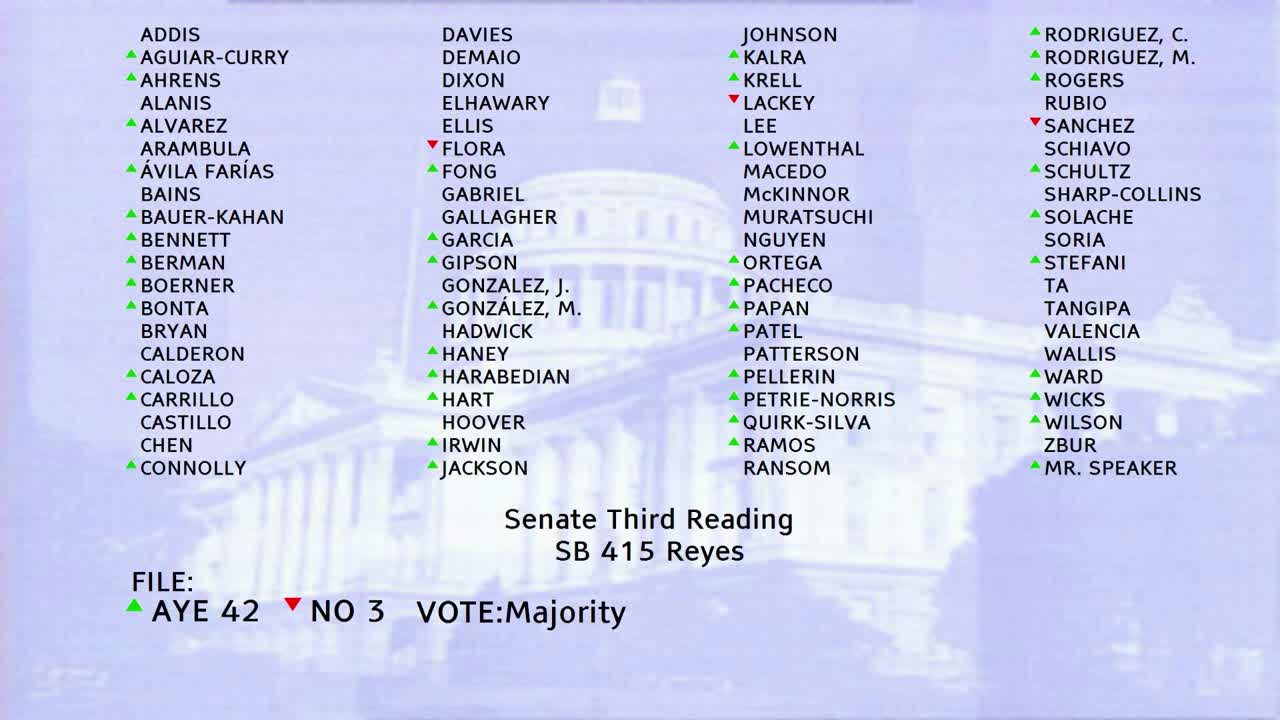
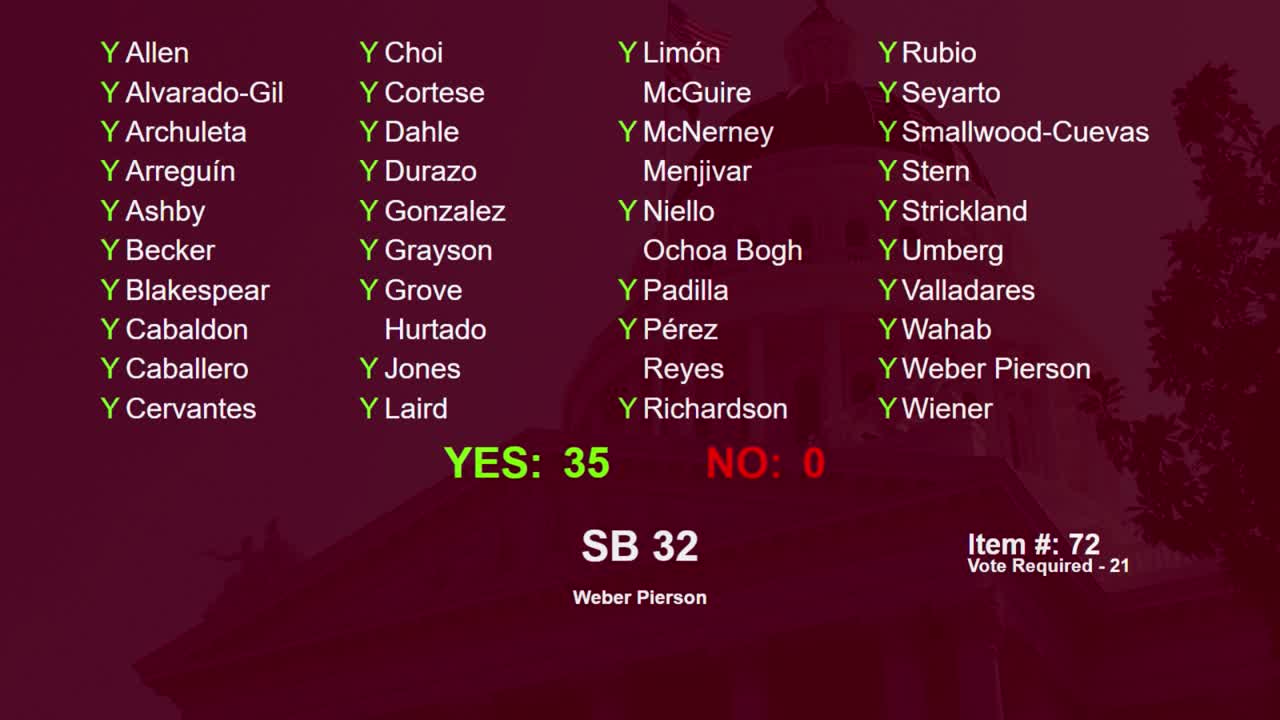
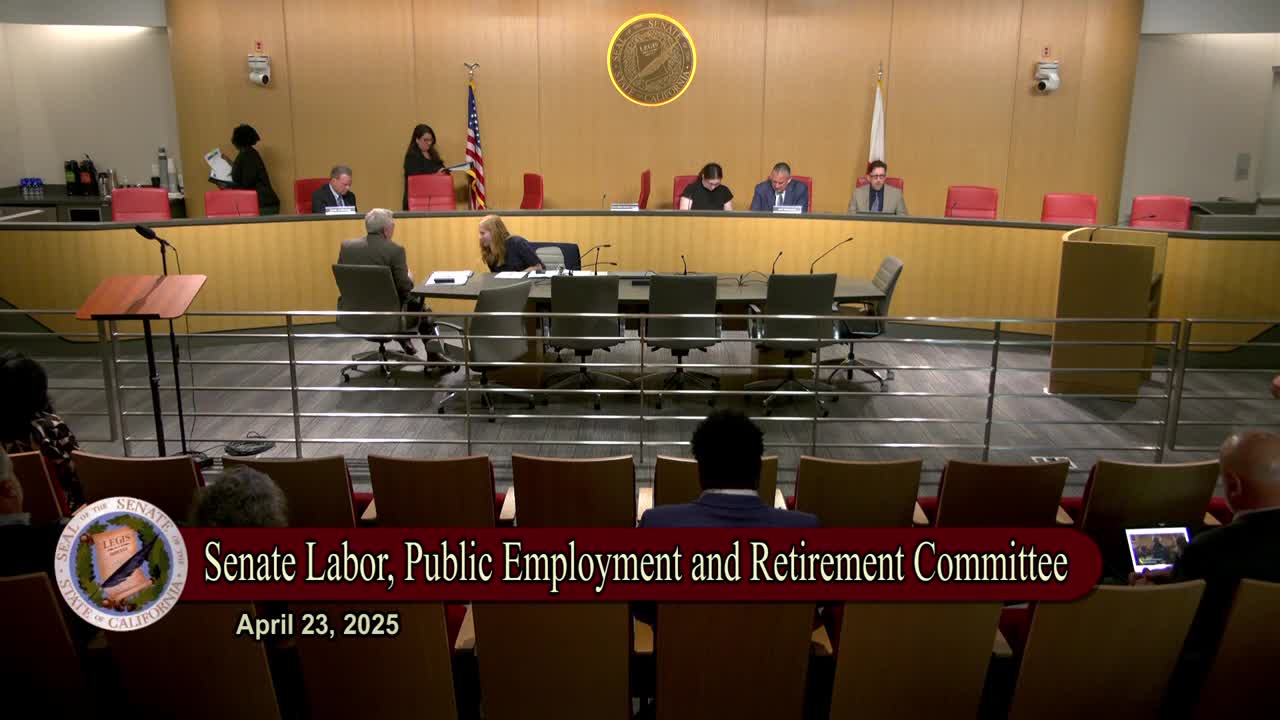
Bill Author

Bill Co-Author(s):