SB 771: Personal rights: liability: social media platforms.
- Session Year: 2025-2026
- House: Senate
- Latest Version Date: 2025-09-16
Current Status:
Failed
(2026-03-02: Stricken from file.)
Introduced
In Committee
Awaiting First Chamber Vote
Passed First Chamber
In Committee
Awaiting Second Chamber Vote
Passed Second Chamber
Enacted
Existing law generally regulates social media platforms, including by requiring a social media company to post terms of service for each social media platform owned or operated by the company in a manner reasonably designed to inform all users of the social media platform of the existence and contents of the terms of service, as prescribed.
Existing law generally prohibits a person from using violence or intimidation to interfere with another persons enjoyment of certain rights or because of certain attributes of that person, including the persons political affiliation, race, or sexual orientation, and punishes violations of that law with certain civil penalties or as misdemeanors, as prescribed.
This bill would make a social media platform, as defined, that violates the above-referenced provisions of law relating to personal rights through its algorithms that relay content to users or aids, abets, acts in concert, or conspires in violation of those laws, or is a joint tortfeasor in an action alleging a violation of those laws, liable for specified civil penalties. The bill would declare its provisions to be severable and would declare attempted waiver of its provisions to be void and unenforceable.
This bill would become operative on January 1, 2027.
Existing law generally regulates social media platforms, including by requiring a social media company to post terms of service for each social media platform owned or operated by the company in a manner reasonably designed to inform all users of the social media platform of the existence and contents of the terms of service, as prescribed.
Existing law generally prohibits a person from using violence or intimidation to interfere with another persons enjoyment of certain rights or because of certain attributes of that person, including the persons political affiliation, race, or sexual orientation, and punishes violations of that law with certain civil penalties or as misdemeanors, as prescribed.
This bill would make a social media platform, as defined, that violates the above-referenced provisions of law relating to personal rights, including rights through its algorithms that relay content to users, users or aids, abets, acts in concert, or conspires in violation of those laws, or is a joint tortfeasor in an action alleging a violation of those laws, liable for specified civil penalties. The bill would declare its provisions to be severable and would declare attempted waiver of its provisions to be void and unenforceable.
Existing law generally regulates social media platforms, including by requiring a social media company to post terms of service for each social media platform owned or operated by the company in a manner reasonably designed to inform all users of the social media platform of the existence and contents of the terms of service, as prescribed.
Existing law generally prohibits a person from using violence or intimidation to interfere with another persons enjoyment of certain rights or because of certain attributes of that person, including the persons political affiliation, race, or sexual orientation, and punishes violations of that law with certain civil penalties or as misdemeanors, as prescribed.
This bill would make a social media platform, as defined, that violates the above-referenced provisions of law relating to personal rights, including through its algorithms that relay content to users, or aids, abets, acts in concert, or conspires in violation of those laws, or is a joint tortfeasor in an action alleging a violation of those laws, liable for specified civil penalties. The bill would also make findings and declarations related to its provisions. declare its provisions to be severable and would declare attempted waiver of its provisions to be void and unenforceable.
Existing law generally regulates social media platforms, including by requiring a social media company to post terms of service for each social media platform owned or operated by the company in a manner reasonably designed to inform all users of the social media platform of the existence and contents of the terms of service, as prescribed.
Existing law generally prohibits a person from using violence or intimidation to interfere with another persons enjoyment of certain rights or because of certain attributes of that person, including the persons political affiliation, race, or sexual orientation, and punishes violations of that law with certain civil penalties or as misdemeanors, as prescribed.
This bill would make a social media platform, as defined, that violates the above-referenced provisions of law relating to personal rights, including through its algorithms that relay content to users, or aids, abets, acts in concert, or conspires in violation of those laws, or is a joint tortfeasor in an action alleging a violation of those laws, liable for specified civil penalties. The bill would also make findings and declarations related to its provisions.
Existing law authorizes the governing board of a school district, a county board of education, or the governing body of a charter school to adopt a policy to limit or prohibit the use by its pupils of social media, as defined, while the pupils are at a schoolsite or while the pupils are under the supervision and control of an employee or employees of that school district, county office of education, or charter school, as provided.This bill would require, instead of authorize, the adoption of a policy to limit or prohibit the use by its pupils of social media, as provided. By imposing additional duties on local educational agencies, the bill would impose a state-mandated local program.The California Constitution requires the state to reimburse local agencies and school districts for certain costs mandated by the state. Statutory provisions establish procedures for making that reimbursement.This bill would provide that, if the Commission on State Mandates determines that the bill contains costs mandated by the state, reimbursement for those costs shall be made pursuant to the statutory provisions noted above.Existing law authorizes the governing board of a school district, a county board of education, or the governing body of a charter school to adopt a policy to limit or prohibit the use by its pupils of social media, as defined, while the pupils are at a schoolsite or while the pupils are under the supervision and control of an employee or employees of that school district, county office of education, or charter school, as provided.
This bill would require, instead of authorize, the adoption of a policy to limit or prohibit the use by its pupils of social media, as provided. By imposing additional duties on local educational agencies, the bill would impose a state-mandated local program.
The California Constitution requires the state to reimburse local agencies and school districts for certain costs mandated by the state. Statutory provisions establish procedures for making that reimbursement.
This bill would provide that, if the Commission on State Mandates determines that the bill contains costs mandated by the state, reimbursement for those costs shall be made pursuant to the statutory provisions noted above.
(a)California law prohibits all persons and entities, including corporations, from engaging in, aiding, abetting, or conspiring to commit acts of violence, intimidation, or coercion based on race, religion, gender, sexual orientation, immigration status, or other protected characteristics. These protections are reflected in well-established civil rights statutes, including Sections 51.7, 51.9, and 52.1 of the Civil Code.
(b)California has a compelling interest in protecting its residents from targeted threats, violence, and coercive harassment, particularly when directed at historically marginalized groups. That interest is especially acute in light of rising incidents of hate-motivated harm, as documented across the state, as follows:
(1)The Los Angeles County Commission on Human Relations reported in December 2024 that hate crimes involving anti-immigrant slurs increased by 31 percent, which marks the highest number since tracking began in 2007.
(2)The Human Rights Campaign and the Center for Countering Digital Hate have documented a 400-percent rise in anti-LGBTQ+ disinformation and harmful rhetoric on major social media platforms.
(3)According to Department of Justice data, anti-Jewish bias events rose by 52.9 percent and anti-Islamic bias events rose by 62 percent in 2023.
(4)A 2023 study by the nonprofit Global Witness demonstrated that paid advertisements promoting violence against women, including language calling for beatings and killings, were successfully placed and distributed on major social media platforms.
(c)In light of these trends, the Legislature affirms the urgent need to ensure that Californias civil rights protections apply with equal force in the digital sphere. The purpose of this act is not to regulate speech or viewpoint but to clarify that social media platforms, like all other businesses, may not knowingly use their systems to promote, facilitate, or contribute to conduct that violates state civil rights laws.
SEC. 2.Title 23 (commencing with Section 3273.72) is added to Part 4 of Division 3 of the Civil Code, to read:23.Social Media Platforms Endangering Californians3273.72.As used in this title, social media platform means a social media platform, as defined in Section 22675 of the Business and Professions Code, that generates more than one hundred million dollars ($100,000,000) per year in gross revenues.
3273.73.(a)A social media platform that violates Section 51.7, 51.9, 52, or 52.1 through its algorithms that relay content to users or aids, abets, acts in concert, or conspires in a violation of any of those sections, or is a joint tortfeasor in a violation of any of those sections, shall, in addition to any other remedy, be liable to a prevailing plaintiff for a civil penalty for each violation sufficient to deter future violations but not to exceed the following:
(1)For an intentional, knowing, or willful violation, a civil penalty of up to one million dollars ($1,000,000).
(2)For a reckless violation, a civil penalty of up to five hundred thousand dollars ($500,000).
(3)If the evidence demonstrates that the platform knew, or should have known, that the plaintiff was a minor, the court may award up to twice the penalties described in this subdivision.
(b)(1)For purposes of this section, deploying an algorithm that relays content to users may be considered to be an act of the platform independent from the message of the content relayed.
(2)A platform shall be deemed to have actual knowledge of the operations of its own algorithms, including how and under what circumstances its algorithms deliver content to some users but not to others.
3273.74.This title shall become operative on January 1, 2027.
SEC. 3.(a)The provisions of this act are severable. If any provision of this act or its application is held invalid, that invalidity shall not affect other provisions or applications that can be given effect without the invalid provision or application.
(b)Any waiver of this act shall be void and unenforceable as contrary to public policy.
(a)California law prohibits all persons and entities, including corporations, from engaging in, aiding, abetting, or conspiring to commit acts of violence, intimidation, or coercion based on race, religion, gender, sexual orientation, immigration status, or other protected characteristics. These protections are reflected in well-established civil rights statutes, including Sections 51.7, 51.9, and 52.1 of the Civil Code.
(b)California has a compelling interest in protecting its residents from targeted threats, violence, and coercive harassment, particularly when directed at historically marginalized groups. That interest is especially acute in light of rising incidents of hate-motivated harm, as documented across the state, as follows:
(1)The Los Angeles County Commission on Human Relations reported in December 2024 that hate crimes involving anti-immigrant slurs increased by 31 percent, which marks the highest number since tracking began in 2007.
(2)The Human Rights Campaign and the Center for Countering Digital Hate have documented a 400-percent rise in anti-LGBTQ+ disinformation and harmful rhetoric on major social media platforms.
(3)The Anti-Defamation Leagues 2024 Audit of Antisemitic Incidents reported a dramatic and sustained surge in antisemitic acts, which reached the highest number recorded in the 46 years since the organization began tracking such incidents.(3)According to Department of Justice data, anti-Jewish bias events rose by 52.9 percent and anti-Islamic bias events rose by 62 percent in 2023.
(4)A 2023 study by the nonprofit Global Witness demonstrated that paid advertisements promoting violence against women, including language calling for beatings and killings, were successfully placed and distributed on major social media platforms.
(c)In light of these trends, the Legislature affirms the urgent need to ensure that Californias civil rights protections apply with equal force in the digital sphere. The purpose of this act is not to regulate speech or viewpoint but to clarify that social media platforms, like all other businesses, may not knowingly use their systems to promote, facilitate, or contribute to conduct that violates state civil rights laws.
SEC. 2.Title 23 (commencing with Section 3273.72) is added to Part 4 of Division 3 of the Civil Code, to read:23.Social Media Platforms Endangering Californians3273.72.As used in this title, social media platform means a social media platform, as defined in Section 22675 of the Business and Professions Code, that generates more than one hundred million dollars ($100,000,000) per year in gross revenues.
3273.73.(a)A social media platform that violates Section 51.7, 51.9, 52, or 52.1 through its algorithms that relay content to users or aids, abets, acts in concert, or conspires in a violation of any of those sections, or is a joint tortfeasor in a violation of any of those sections, shall, in addition to any other remedy, be liable to a prevailing plaintiff for a civil penalty for each violation sufficient to deter future violations but not to exceed the following:
(1)For an intentional, knowing, or willful violation, a civil penalty of up to one million dollars ($1,000,000).
(2)For a reckless violation, a civil penalty of up to five hundred thousand dollars ($500,000).
(3)If the evidence demonstrates that the platform knew, or should have known, that the plaintiff was a minor, the court may award up to twice the penalties described in this subdivision.
(b)(1)For purposes of this section, deploying an algorithm that relays content to users may be considered to be an act of the platform independent from the message of the content relayed.
(2)A platform shall be deemed to have actual knowledge of the operations of its own algorithms, including how and under what circumstances its algorithms deliver content to some users but not to others.
3273.74.This title shall become operative on January 1, 2027.
SEC. 3.(a)The provisions of this act are severable. If any provision of this act or its application is held invalid, that invalidity shall not affect other provisions or applications that can be given effect without the invalid provision or application.
(b)Any waiver of this act shall be void and unenforceable as contrary to public policy.
(a)California law prohibits all persons and entities, including corporations, from engaging in, aiding, abetting, or conspiring to commit acts of violence, intimidation, or coercion based on race, religion, gender, sexual orientation, immigration status, or other protected characteristics. These protections are reflected in well-established civil rights statutes, including Sections 51.7, 51.9, and 52.1 of the Civil Code.
(b)California has a compelling interest in protecting its residents from targeted threats, violence, and coercive harassment, particularly when directed at historically marginalized groups. That interest is especially acute in light of rising incidents of hate-motivated harm, as documented across the state, as follows:
(1)The Los Angeles County Commission on Human Relations reported in December 2024 that hate crimes involving anti-immigrant slurs increased by 31 percent, which marks the highest number since tracking began in 2007.
(2)The Human Rights Campaign and the Center for Countering Digital Hate have documented a 400-percent rise in anti-LGBTQ+ disinformation and harmful rhetoric on major social media platforms.
(3)The Anti-Defamation Leagues 2024 Audit of Antisemitic Incidents reported a dramatic and sustained surge in antisemitic acts, which reached the highest number recorded in the 46 years since the organization began tracking such incidents.
(4)A 2023 study by the nonprofit Global Witness demonstrated that paid advertisements promoting violence against women, including language calling for beatings and killings, were successfully placed and distributed on major social media platforms.
(c)In light of these trends, the Legislature affirms the urgent need to ensure that Californias civil rights protections apply with equal force in the digital sphere. The purpose of this act is not to regulate speech or viewpoint but to clarify that social media platforms, like all other businesses, may not knowingly use their systems to promote, facilitate, or contribute to conduct that violates state civil rights laws.
SECTION 1.SEC. 2.Title 23 (commencing with Section 3273.72) is added to Part 4 of Division 3 of the Civil Code, to read:23.Social Media Platforms Endangering Californians3273.72.As used in this title, social media platform means a social media platform, as defined in Section 22675 of the Business and Professions Code, that generates more than one hundred million dollars ($100,000,000) per year in gross revenues.
3273.73.(a)A social media platform that violates Section 51.7, 51.9, 52, or 52.1, including 52.1 through its algorithms that relay content to users, users or aids, abets, acts in concert, or conspires in a violation of any of those sections, or is a joint tortfeasor in a violation of any of those sections, shall, in addition to any other remedy, be liable to a prevailing plaintiff for a civil penalty for each violation sufficient to deter future violations, violations but not to exceed the following:
(1)For an intentional, knowing, or willful violation, a civil penalty of up to one million dollars ($1,000,000).
(2)For a reckless violation, a civil penalty of up to five hundred thousand dollars ($500,000).
(3)If the evidence demonstrates that the platform knew, or should have known, that the plaintiff was a minor, the court may award up to twice the penalties described in this subdivision.
(b)(1)For purposes of this section, deploying an algorithm that relays content to users may be considered to be an act of the platform independent from the message of the content relayed.
(2)A platform shall be deemed to have actual knowledge of the operations of its own algorithms, including how and under what circumstances its algorithms deliver content to some users but not to others.
SEC. 2.SEC. 3.(a)The provisions of this act are severable. If any provision of this act or its application is held invalid, that invalidity shall not affect other provisions or applications that can be given effect without the invalid provision or application.
(b)Any waiver of this act shall be void and unenforceable as contrary to public policy.
As used in this title, social media platform means a social media platform, as defined in Section 22675 of the Business and Professions Code, that generates more than one hundred million dollars ($100,000,000) per year in gross revenues.
3273.74.3273.73.(a)A social media platform that violates Section 31 or 422.6 of the Penal Code or Section 51.7, 51.9, 52, or 52.1 of the Civil Code, 52.1, including through its algorithms that relay content to users, or aids, abets, acts in concert, or conspires in a violation of any of those sections, or is a joint tortfeasor in an action alleging a violation of any of those sections, shall, in addition to any other remedy, in an action brought pursuant to this section be liable to a prevailing plaintiff for a civil penalty for each violation sufficient to deter future violations, but not to exceed the following:
(1)For an intentional, knowing, or willful violation, a civil penalty of up to one million dollars ($1,000,000).
(2)For a reckless violation, a civil penalty of up to five hundred thousand dollars ($500,000).
(3)If the evidence demonstrates that the platform knew, or should have known, that the plaintiff was a minor, the court may award up to twice the penalties described in this subdivision.
(b)(1)For purposes of this section, deploying an artificial intelligence or algorithm that relays content to users may be considered to be an act of the platform independent from the message of the content relayed.
(2)A platform shall be deemed to have actual knowledge of the operations of its own artificial intelligence and algorithms, including how and under what circumstances its artificial intelligence and algorithms deliver content to some users but not to others.
SEC. 2.(a)The provisions of this act are severable. If any provision of this act or its application is held invalid, that invalidity shall not affect other provisions or applications that can be given effect without the invalid provision or application.
(b)Any waiver of this act shall be void and unenforceable as contrary to public policy.
REVISIONS: HeadingLine 2.The Legislature finds and declares all of the following:
(a)In California, corporations, like natural people, do not have a right to participate, through aiding, abetting, or conspiring, in hate crimes directed at vulnerable California populations, which is made unlawful by Section 422.6 of the Penal Code, to intimidate or terrorize Californians because of their sex, race, color, religion, ancestry, national origin, disability, medical condition, genetic information, marital status, sexual orientation, citizenship, primary language, or immigration status, which is made unlawful by Sections 51.7 and 51.9 of the Civil Code, or to interfere with the ability of those Californians to exercise their constitutional rights, which is made unlawful by Sections 52 and 52.1 of the Civil Code.
(b)(1)Social media platforms failure to moderate content is a matter of life and death for minorities historically subject to discrimination.
(2)According to a December 2024 report by the County of Los Angeles Commission on Human Relations, [h]ate crimes in which anti-immigrant slurs were used climbed 31% [...] the largest number ever recorded since we began tracking this phenomenon in 2007.
(3)According to American University, when it comes to being bullied on social media, [a]mong the most victimized are people in the LGBTQ (lesbian, gay, bisexual, transgender, queer/questioning) community, especially teens and young adults. Anti-LGBTQ+ misinformation and inflammatory accusations of grooming have recently surged by over 400 percent across social media platforms, according to a recent report released by the Human Rights Campaign and the Center for Countering Digital Hate.
(4)Antisemitic incidents are spiking dramatically and are at all-time highs, according to the Anti-Defamation League (ADL). More than 10,000 antisemitic incidents occurred between October 7, 2023, and September 2024, which is up from 3,325 incidents during the prior year. That marks the most incidents recorded in a 12-month period by the organization since it began tracking threats in 1979.
(c)(1)Likewise, social media platforms have a documented record of accepting money from advertisements that plainly and violently threaten women and that clearly violate their own terms of service. In one 2023 study, a nonprofit placed advertisements that referred to women as prostitutes, psychopaths, or vermin, and called for them to be beaten and killed. Researchers recently said they detected a four-fold increase in the level of misogynistic content suggested by TikTok over a five-day period of monitoring as the algorithm served more extreme videos often focused on anger and blame directed at women.
(2)Relatedly, as illustrated in such cases as Sindell v. Abbott Laboratories (1980) 26 Cal.3d 588, 604, California has adopted Prosser and Keaton Keeton on The Law of Torts (4th ed. 1971) Section 46, p. 292, which states that those who, in pursuance of a common plan or design to commit a tortious act, actively take part in it, or further it by cooperation or request, or who lend aid or encouragement to the wrongdoer, or ratify and adopt his acts done for their benefit, are equally liable with him. This principle of liability is reflected in Section 876 of the Restatement Second of Torts.
(d)Moreover, as illustrated by such cases as Summers v. Tice (1948) 33 Cal.2d 80, it has long been the law in California that if a party cannot identify which of two or more defendants caused an injury, the burden of proof may shift to the defendants to show that they were not responsible for the harm. (Sindell v. Abbott Laboratories (1980) 26 Cal.3d 588, 598).
(e)For all of these reasons, the Legislature declares it necessary in order to preserve the peace, welfare, and lives of its residents to clarify the applicability of current laws against hate crime, terrorism, and intimidation to social media platforms.
3273.73.As used in this title, social media platform means a social media platform, as defined in Section 22675 of the Business and Professions Code, that generates more than one hundred million dollars ($100,000,000) per year in gross revenues.
3273.74.(a)A social media platform that violates Section 31 or 422.6 of the Penal Code or Section 51.7, 51.9, 52, or 52.1 of the Civil Code, including through its algorithms that relay content to users, or aids, abets, acts in concert, or conspires in a violation of any of those sections, or is a joint tortfeasor in an action alleging a violation of any of those sections, shall, in addition to any other remedy, in an action brought pursuant to this section be liable for a civil penalty for each violation sufficient to deter future violations, but not to exceed the following:
(1)For an intentional violation, an amount equal to three months of the gross revenue of the social media platform preceding the judgment.(2)(1)For a knowing an intentional, knowing, or willful violation, an amount equal to two months of the gross revenue of the platform preceding the judgment. a civil penalty of up to one million dollars ($1,000,000).
(3)(2)For a reckless violation, an amount equal to one month of the gross revenue of the platform preceding the judgment. a civil penalty of up to five hundred thousand dollars ($500,000).
(4)(3)If the evidence demonstrates that the platform knew, or should have known, that the plaintiff was a minor, the court may award up to twice the penalties described in this subdivision.
(b)(1)For purposes of this section, deploying an artificial intelligence or algorithm that relays content to users may be considered to be an act of the platform independent from the message of the content relayed.
(2)A platform shall be deemed to have actual knowledge of the operations of its own artificial intelligence and algorithms, including how and under what circumstances its artificial intelligence and algorithms deliver content to some users but not to others.
SEC. 2.(a)The provisions of this act are severable. If any provision of this act or its application is held invalid, that invalidity shall not affect other provisions or applications that can be given effect without the invalid provision or application.
(b)Any waiver of this act shall be void and unenforceable as contrary to public policy.
The Legislature finds and declares all of the following:
(a)In California, corporations, like natural people, do not have a right to participate, through aiding, abetting, or conspiring, in hate crimes directed at vulnerable California populations, which is made unlawful by Section 422.6 of the Penal Code, to intimidate or terrorize Californians because of their sex, race, color, religion, ancestry, national origin, disability, medical condition, genetic information, marital status, sexual orientation, citizenship, primary language, or immigration status, which is made unlawful by Sections 51.7 and 51.9 of the Civil Code, or to interfere with the ability of those Californians to exercise their constitutional rights, which is made unlawful by Sections 52 and 52.1 of the Civil Code.
(b)(1)Social media platforms failure to moderate content is a matter of life and death for minorities historically subject to discrimination.
(2)According to a December 2024 report by the County of Los Angeles Commission on Human Relations, [h]ate crimes in which anti-immigrant slurs were used climbed 31% [...] the largest number ever recorded since we began tracking this phenomenon in 2007.
(3)According to American University, when it comes to being bullied on social media, [a]mong the most victimized are people in the LGBTQ (lesbian, gay, bisexual, transgender, queer/questioning) community, especially teens and young adults. Anti-LGBTQ+ misinformation and inflammatory accusations of grooming have recently surged by over 400 percent across social media platforms, according to a recent report released by the Human Rights Campaign and the Center for Countering Digital Hate.
(4)Antisemitic incidents are spiking dramatically and are at all-time highs, according to the Anti-Defamation League (ADL). More than 10,000 antisemitic incidents occurred between October 7, 2023, and September 2024, which is up from 3,325 incidents during the prior year. That marks the most incidents recorded in a 12-month period by the organization since it began tracking threats in 1979.
(c)(1)Likewise, social media platforms have a documented record of accepting money from advertisements that plainly and violently threaten women and that clearly violate their own terms of service. In one 2023 study, a nonprofit placed advertisements that referred to women as prostitutes, psychopaths, or vermin, and called for them to be beaten and killed. Researchers recently said they detected a four-fold increase in the level of misogynistic content suggested by TikTok over a five-day period of monitoring as the algorithm served more extreme videos often focused on anger and blame directed at women.
(2)Relatedly, as illustrated in such cases as Sindell v. Abbott Laboratories (1980) 26 Cal.3d 588, 604, California has adopted Prosser and Keaton on The Law of Torts (4th ed. 1971) Section 46, p. 292, which states that those who, in pursuance of a common plan or design to commit a tortious act, actively take part in it, or further it by cooperation or request, or who lend aid or encouragement to the wrongdoer, or ratify and adopt his acts done for their benefit, are equally liable with him. This principle of liability is reflected in Section 876 of the Restatement Second of Torts.
(d)Moreover, as illustrated by such cases as Summers v. Tice (1948) 33 Cal.2d 80, it has long been the law in California that if a party cannot identify which of two or more defendants caused an injury, the burden of proof may shift to the defendants to show that they were not responsible for the harm. (Sindell v. Abbott Laboratories (1980) 26 Cal.3d 588, 598).
(e)For all of these reasons, the Legislature declares it necessary in order to preserve the peace, welfare, and lives of its residents to clarify the applicability of current laws against hate crime, terrorism, and intimidation to social media platforms.
3273.73.As used in this title, social media platform means a social media platform, as defined in Section 22675 of the Business and Professions Code, that generates more than one hundred million dollars ($100,000,000) per year in gross revenues.
3273.74.(a)A social media platform that violates Section 31 or 422.6 of the Penal Code or Section 51.7, 51.9, 52, or 52.1 of the Civil Code, including through its algorithms that relay content to users, or aids, abets, acts in concert, or conspires in a violation of any of those sections, or is a joint tortfeasor in an action alleging a violation of any of those sections, shall, in addition to any other remedy, in an action brought pursuant to this section be liable for a civil penalty for each violation sufficient to deter future violations, but not to exceed the following:
(1)For an intentional violation, an amount equal to three months of the gross revenue of the social media platform preceding the judgment.
(2)For a knowing or willful violation, an amount equal to two months of the gross revenue of the platform preceding the judgment.
(3)For a reckless violation, an amount equal to one month of the gross revenue of the platform preceding the judgment.
(4)If the evidence demonstrates that the platform knew, or should have known, that the plaintiff was a minor, the court may award up to twice the penalties described in this subdivision.
(b)(1)For purposes of this section, deploying an artificial intelligence or algorithm that relays content to users may be considered to be an act of the platform independent from the message of the content relayed.
(2)A platform shall be deemed to have actual knowledge of the operations of its own artificial intelligence and algorithms, including how and under what circumstances its artificial intelligence and algorithms deliver content to some users but not to others.
SEC. 2.(a)The provisions of this act are severable. If any provision of this act or its application is held invalid, that invalidity shall not affect other provisions or applications that can be given effect without the invalid provision or application.
(b)Any waiver of this act shall be void and unenforceable as contrary to public policy.
SECTION 1.Section 48901.8 of the Education Code is amended to read:48901.8.(a)(1)The governing board of a school district, a county board of education, or the governing body of a charter school shall adopt a policy to limit or prohibit the use by its pupils of social media while the pupils are at a schoolsite or while the pupils are under the supervision and control of an employee or employees of that school district, county office of education, or charter school.(2)This section does not authorize monitoring, collecting, or otherwise accessing any information related to a pupils online activities.(b)For purposes of this section, social media means a social media platform as that term is defined in Section 22675 of the Business and Professions Code.SEC. 2.If the Commission on State Mandates determines that this act contains costs mandated by the state, reimbursement to local agencies and school districts for those costs shall be made pursuant to Part 7 (commencing with Section 17500) of Division 4 of Title 2 of the Government Code.(a)(1)The governing board of a school district, a county board of education, or the governing body of a charter school may shall adopt a policy to limit or prohibit the use by its pupils of social media while the pupils are at a schoolsite or while the pupils are under the supervision and control of an employee or employees of that school district, county office of education, or charter school.
(2)This section does not authorize monitoring, collecting, or otherwise accessing any information related to a pupils online activities.
(b)For purposes of this section, social media means a social media platform as that term is defined in Section 22675 of the Business and Professions Code.
SEC. 2.If the Commission on State Mandates determines that this act contains costs mandated by the state, reimbursement to local agencies and school districts for those costs shall be made pursuant to Part 7 (commencing with Section 17500) of Division 4 of Title 2 of the Government Code.
|
Date
|
Status
|
|---|---|
| Mar 2, 2026 | Veto sustained. |
| Mar 2, 2026 | Stricken from file. |
| Oct 13, 2025 | In Senate. Consideration of Governor's veto pending. |
| Oct 13, 2025 | Vetoed by the Governor. |
| Sep 22, 2025 | Enrolled and presented to the Governor at 11 a.m. |
| Sep 11, 2025 | In Senate. Concurrence in Assembly amendments pending. |
| Sep 11, 2025 | Assembly amendments concurred in. (Ayes 30. Noes 8. Page 2919.) Ordered to engrossing and enrolling. |
| Sep 10, 2025 | Read third time. Passed. (Ayes 51. Noes 2. Page 3238.) Ordered to the Senate. |
| Sep 3, 2025 | Read second time. Ordered to third reading. |
| Sep 2, 2025 | Read second time and amended. Ordered to second reading. |
| Aug 29, 2025 | From committee: Do pass as amended. (Ayes 11. Noes 1.) (August 29). |
| Aug 20, 2025 | August 20 set for first hearing. Placed on APPR. suspense file. |
| Jul 10, 2025 | Read second time and amended. Re-referred to Com. on APPR. |
| Jul 9, 2025 | From committee: Do pass as amended and re-refer to Com. on APPR. (Ayes 11. Noes 0.) (July 8). |
| Jun 25, 2025 | From committee: Do pass and re-refer to Com. on JUD. (Ayes 11. Noes 1.) (June 24). Re-referred to Com. on JUD. |
| Jun 25, 2025 | Coauthors revised. |
| Jun 19, 2025 | From committee with author's amendments. Read second time and amended. Re-referred to Com. on P. & C.P. |
| Jun 16, 2025 | Referred to Coms. on P. & C.P. and JUD. |
| Jun 5, 2025 | In Assembly. Read first time. Held at Desk. |
| Jun 4, 2025 | Read third time. Passed. (Ayes 29. Noes 4. Page 1519.) Ordered to the Assembly. |
| May 27, 2025 | Read second time. Ordered to third reading. |
| May 23, 2025 | Read second time and amended. Ordered to second reading. |
| May 23, 2025 | From committee: Do pass as amended. (Ayes 4. Noes 0. Page 1212.) (May 23). |
| May 16, 2025 | Set for hearing May 23. |
| May 12, 2025 | May 12 hearing: Placed on APPR. suspense file. |
| May 2, 2025 | Set for hearing May 12. |
| Apr 30, 2025 | From committee: Do pass and re-refer to Com. on APPR. (Ayes 10. Noes 0. Page 943.) (April 29). Re-referred to Com. on APPR. |
| Apr 22, 2025 | Set for hearing April 29. |
| Apr 2, 2025 | Re-referred to Com. on JUD. |
| Mar 25, 2025 | Withdrawn from committee. |
| Mar 25, 2025 | Re-referred to Com. on RLS. |
| Mar 24, 2025 | From committee with author's amendments. Read second time and amended. Re-referred to Com. on ED. |
| Mar 12, 2025 | Referred to Com. on ED. |
| Feb 24, 2025 | Read first time. |
| Feb 24, 2025 | From printer. May be acted upon on or after March 24. |
| Feb 21, 2025 | Introduced. To Com. on RLS. for assignment. To print. |
|
Date
|
Description
|
Location
|
Votes
|
|
|---|---|---|---|---|
| Sep 11, 2025 | Unfinished Business SB771 Stern et al. Concurrence | Senate Floor |
Passed |
|
| Sep 10, 2025 | SB 771 Stern Senate Third Reading By Bauer-Kahan | Assembly Floor |
Passed |
|
| Aug 29, 2025 | Do pass as amended. | Assembly Standing Committee on Appropriations |
Passed |
|
| Jul 8, 2025 | Do pass as amended and be re-referred to the Committee on [Appropriations] | Assembly Standing Committee on Judiciary |
Passed |
|
| Jun 24, 2025 | Do pass and be re-referred to the Committee on [Judiciary] | Assembly Standing Committee on Privacy and Consumer Protection |
Passed |
|
| Jun 4, 2025 | Senate 3rd Reading SB771 Stern | Senate Floor |
Passed |
|
| May 23, 2025 | Do pass as amended | Senate Standing Committee on Appropriations |
Passed |
|
| May 12, 2025 | Placed on suspense file | Senate Standing Committee on Appropriations |
Passed |
|
| Apr 29, 2025 | Do pass, but first be re-referred to the Committee on [Appropriations] | Senate Standing Committee on Judiciary |
Passed |
This list shows positions taken on this bill by organizations on the date displayed, which is linked to the original source.
Positions by individuals are not included.
|
Organization
|
Position
|
Date
|
|---|---|---|
| 18 Million Rising | ** Against | |
| 7amleh – The Arab Center for Advancement of Social Media | ** Against | |
| Aauw Of California | ** Support | |
| Alameda County Green Party | ** Against | |
| American Association Of University Women - California | ** Support | |
| American Association of University Women, San Jose Branch | ** Support | |
| American-Arab Anti-Discrimination Committee | ** Against | |
| Anti Police-Terror Project | ** Against | |
| Arab American Caucus CA Dems | ** Against | |
| Arab American Civic Council | ** Against | |
| Arab American Cultural Center of Silicon Valley | ** Against | |
| Arab Resource & Organizing Center Action | ** Against | |
| Asian Pacific Environmental Network | ** Against | |
| Berkeley Families for Collective Liberation | ** Against | |
| CA Muslims & Friends Phone Bank | ** Against | |
| California Chamber Of Commerce | ** Against | |
| California Initiative for Technology & Democracy | ** Support | |
| California Latino School Boards Association | ** Against | |
| Center for Countering Digital Hate | ** Support | |
| Children’s Advocacy Institute at the University of San Diego School of Law | ** Support | |
| Children’s Advocacy Institute, University of San Diego School of Law | ** Support | |
| Code Pink Central Coast | ** Against | |
| Code Pink San Fernando Valley | ** Against | |
| Code Pink Sela | ** Against | |
| Computer And Communications Industry Association | ** Against | |
| Consumer Federation Of California | ** Support | |
| Council on American-Islamic Relations, California | ** Against | |
| Courage California | ** Support | |
| Democratic Socialists of America San Francisco Chapter | ** Against | |
| Democratic Socialists of America, East Bay Chapter | ** Against | |
| Democrats for Palestinian Rights Bay Area | ** Against | |
| Earth Loves Gaza | ** Against | |
| Easterseals Northern California | ** Support | |
| Fight For The Future | ** Against | |
| Ground Game LA | ** Against | |
| Hadassah | ** Support | |
| Hassadah | ** Support | |
| Hindus for Human Rights | ** Against | |
| human agenda | ** Against | |
| IfNotNow California | ** Against | |
| IMEU Policy Project | ** Against | |
| JCC/Federation of San Luis Obispo | ** Support | |
| JCRC Bay Area | ** Support | |
| JCRC of Greater Santa Barbara | ** Support | |
| Jewish Community Federation and Endowment Fund | ** Support | |
| Jewish Community Relations Council, Santa Barbara | ** Support | |
| Jewish Democratic Club of Marin | ** Support | |
| Jewish Family & Children’s Services of San Francisco, the Peninsula, Marin & Sonoma Counties | ** Support | |
| Jewish Family & Community Services East Bay | ** Support | |
| Jewish Family and Children's Services of San Francisco | ** Support | |
| Jewish Family Service LA | ** Support | |
| Jewish Family Service of San Diego | ** Support | |
| Jewish Family Services of Silicon Valley | ** Support | |
| Jewish Federation of Orange County | ** Support | |
| Jewish Federation of San Diego | ** Support | |
| Jewish Federation of The Greater San Gabriel and Pomona Valleys | ** Support | |
| Jewish Free Loan Association | ** Support | |
| Jewish Long Beach | ** Support | |
| JFCS Long Beach and Orange County | ** Support | |
| JPAC | ** Support | |
| Justice Teams Network | ** Against | |
| JVP Bay Area | ** Against | |
| JVP LA | ** Against | |
| JVP Sacramento | ** Against | |
| JVP San Diego | ** Against | |
| JVP South Bay | ** Against | |
| LA Raza Community Resource Center | ** Against | |
| Labor for Palestine National Network | ** Against | |
| Loma LGBTQA+ Alumni and Allies | ** Support | |
| LOMA LGBTQIA+ Alumni and Allies Coalition | ** Support | |
| Majdal Arab Community Center of San Diego | ** Against | |
| MPower Action | ** Against | |
| Muslim Civic Coalition | ** Against | |
| Muslim Public Affairs Council | ** Against | |
| National Iranian American Council Action | ** Against | |
| National Organization of Legal Services Workers, UAW Local 2320 | ** Against | |
| Orange County Justice Initiative | ** Against | |
| Pacific Coast Psychology | ** Against | |
| Peace and Freedom Party | ** Against | |
| Queers Undermining Israeli Terrorism | ** Against | |
| Rainbow Spaces | ** Support | |
| Ramallah Club of San Jose | ** Against | |
| San Diego Democrats for Equality | ** Support | |
| San Diego Democrats for Equality, Executive Board | ** Support | |
| San José Against War | ** Against | |
| San Jose Peace and Justice Center | ** Against | |
| Showing up for Racial Justice San Francisco | ** Against | |
| Showing Up For Racial Justice, Bay Area | ** Against | |
| Simon Wiesenthal Center and Museums of Tolerance | ** Support | |
| Speak Write Out Collective | ** Against | |
| Stop the Cycle | ** Support | |
| Story Sunbirds | ** Against | |
| Tech Workers Coalition | ** Against | |
| Technet | ** Against | |
| The Truth Project | ** Against | |
| UCLA Undergraduate Student Council, Office of the External Vice President | ** Against | |
| US Palestinian Community Network | ** Against | |
| Voices for Justice in Palestine | ** Against |
SENATE RULES COMMITTEE Office of Senate Floor Analyses (916) 651-1520 Fax: (916) 327-4478 | SB 771 |
VETO
Bill No: SB 771
Author: Stern (D), et al.
Enrolled: 9/16/25
Vote: 27
SENATE JUDICIARY COMMITTEE: 10-0, 4/29/25
AYES: Umberg, Allen, Arreguín, Ashby, Caballero, Durazo, Laird, Stern, Weber Pierson, Wiener
NO VOTE RECORDED: Niello, Valladares, Wahab
SENATE APPROPRIATIONS COMMITTEE: 4-0, 5/23/25
AYES: Caballero, Cabaldon, Grayson, Richardson
NO VOTE RECORDED: Seyarto, Dahle, Wahab
SENATE FLOOR: 30-8, 9/11/25
AYES: Allen, Archuleta, Arreguín, Ashby, Becker, Blakespear, Cabaldon, Caballero, Cervantes, Cortese, Durazo, Gonzalez, Grayson, Hurtado, Laird, Limón, McGuire, McNerney, Menjivar, Padilla, Pérez, Reyes, Richardson, Rubio, Smallwood-Cuevas, Stern, Umberg, Wahab, Weber Pierson, Wiener
NOES: Alvarado-Gil, Choi, Dahle, Grove, Jones, Ochoa Bogh, Seyarto, Strickland
NO VOTE RECORDED: Niello, Valladares
ASSEMBLY FLOOR: 51-2, 9/10/25 - See last page for vote
SUBJECT: Personal rights: liability: social media platforms
Children’s Advocacy Institute, University of San Diego School of Law
Consumer Federation of California
Jewish Family and Children’s Services of San Francisco
Loma LGBTQA+ Alumni and Allies
Rainbow Spaces
San Diego Democrats for Equality, Executive Board
Stop the Cycle
DIGEST:
This bill creates, effective January 1, 2027, a civil action against a social media platform, as defined, with over $100 million in gross annual revenues that aids and abets the commission of, conspires with a person to violate, or is a joint tortfeasor for a violation of, specified civil rights and hate crime laws.
ANALYSIS:
Existing federal law:
- Provides that a provider or user of an interactive computer service shall not be treated as the publisher or speaker of any information provided by another information content provider. (47 United States Code (U.S.C.) § 230(c)(1).)
- Provides that a provider or user of an interactive computer service shall not be held liable on account of:
- any action voluntarily taken in good faith to restrict access to, or availability of, material that the provider or user considers to be obscene, lewd, lascivious, filthy, excessively violent, harassing, or otherwise objectionable, whether or not such material is constitutionally protected; or
- any action taken to enable or make available to information content providers or others the technical means to restrict access to such material. (47 U.S.C. § 230(c)(2).)
Existing state law:
- Defines “social media platform” as a public or semipublic internet-based service or application that has users in California and that meets both of the following criteria:
- A substantial function of the service or application is to connect users in order to allow users to interact socially with each other within the service or application; a service or application that provides email or direct messaging services, without more, does not meet this criterion.
- The service or application allows users to do all of the following: (1) construct a public or semipublic profile for purposes of signing into and using the service or application; (2) populate a list of other users with whom an individual shares a connection within the system; (3) create or post content viewable by other users, including, but not limited to, on message boards, in chat rooms, or through a landing page or main feed that presents the user with content generated by other users. (Business (Bus.) & Professions (Prof.) Code, § 22675(f).)
- Defines the following additional relevant terms:
- “Content” means statements or comments made by users and media that are created, posted, shared, or otherwise interacted with by users on an internet-based service or application; “content” does not include media put on a service or application exclusively for the purpose of cloud storage, transmitting files, or file collaboration.
- “Public or semipublic internet-based service or application” excludes a service or application used to facilitate communication within a business or enterprise among employees or affiliates of the business or enterprise, provided that access to the service or application is restricted to employees or affiliates of the business or enterprise using the service or application. (Bus. & Prof. Code, § 22675(c), (d).)
- Establishes the Ralph Civil Rights Act of 1976 (Ralph Act), the Tom Bane Civil Rights Act (Tom Bane Act), and prohibitions against sexual harassment in the workplace, which generally protect persons from violence or threats of violence on the basis of specified characteristics or their political affiliation;, interference with the exercise of constitutional rights or rights protected by law; and sexual harassment. (Civ. Code, §§ 51, 51.7, 51.9, 52.)
This bill:
- Makes uncodified statements relating to the prevalence of threats, coercive harassment, and intimidation on social media platforms, and the need for legislative action to protect Californians from these harms.
- Establishes Title 23 within Part 4 of Division 3 of the Civil Code (Title 23).
- Defines, for purposes of Title 23, a “social media platform” as a social media platform as defined in Section 22675 of the Business and Professions Code that generates more than $100,000,000 per year in gross revenues.
- Provides that a social media platform that violates the Ralph Act, the Tom Bane Act, or Section 51.9 or 52 of the Civil Code, including through its algorithms that relay content to users, or aids, abets, acts in concert, or conspires in a violation of any of those sections, or is a joint tortfeasor in an action alleging a violation of any of those sections, shall, in addition to any other remedy, in an action brought pursuant to this provision, be liable for a civil penalty for each violation sufficient to deter future violations, but not to exceed the following:
- For an intentional, knowing, or willful violation, a civil penalty of up to $1 million.
- For a reckless violation, a civil penalty of up to $500,000.
- If the evidence demonstrates that the platform knew, or should have known, that the plaintiff was a minor, the court may award up to twice the penalties described in 4)(a)-(b).
- Provides that, for purposes of 4), deploying an algorithm that relays content to users may be considered an act of the platform independent from the message of the content relayed.
- Provides that a platform shall be deemed to have actual knowledge of the operations of its own algorithms, including how and under what circumstances its artificial intelligence and algorithms deliver content to some users but not to others.
- Includes a severability clause.
- Provides that any waiver of 1)-7) shall be void and unenforceable as contrary to public policy.
- Provides that 1)-8) will take effect on January 1, 2027.
Author’s comment
Violence, threats, and intimidation targeting certain historically vulnerable populations – Jews, LGBTQ+ community members, women, immigrants, and people of color especially – are at historic highs and rising at record-shattering rates. A recent Harvard study found a causal relationship between widespread violence against historically target groups and the practices of social media platforms.
Notwithstanding the escalating danger, social media platforms have announced dramatic retreats in screening and moderation practices to protect targeted populations. This change could not have come at a more dangerous time for groups that are historically targeted. L.A. County’s most recent hate crime report reflected double or triple digit increases in hate crimes resulting in “the largest number[s] ever recorded” against the LGBTQ+ community, Jews, Asians, Blacks, Latinos, and immigrants. This is a national trend that is accelerating.
California must respond to protect its most vulnerable residents. The least California can do is ensure that our existing laws against hate crimes, intimidation, and harassment, including conduct aimed at preventing our neighbors from exercising their constitutional rights, unambiguously apply to platform practices and offer penalties sufficient to prompt compliance with our laws without the necessity of a lawsuit.
FISCAL EFFECT: Appropriation: No Fiscal Com.: Yes Local: No
According to the Assembly Appropriations Committee, the bill presented the following fiscal effect:
- Cost pressures (Trial Court Trust Fund, General Fund) of an unknown but potentially significant amount to the courts to adjudicate cases filed against large social media platforms. The significant new civil penalties authorized by the bill may prompt additional lawsuits that would not otherwise have been filed. Actual costs will depend on the number of cases filed and the amount of court time needed to resolve each case. It generally costs approximately $1,000 to operate a courtroom for one hour. Although courts are not funded on the basis of workload, increased pressure on the Trial Court Trust Fund may create a demand for increased funding for courts from the General Fund. The fiscal year 2025-26 state budget provides $82 million ongoing General Fund to the Trial Court Trust Fund for court operations.
- Possible costs (General Fund) to the Department of Justice (DOJ) to defend legal challenges to the bill. If DOJ hires legal staff to handle this workload, the department will incur significant costs, likely in the low hundreds of thousands of dollars annually at a minimum.
SUPPORT: (Verified 10/13/25)
AAUW of California (co-source)
Children’s Advocacy Institute, University of San Diego School of Law (co-source)
Consumer Federation of California (co-source)
Jewish Family and Children’s Services of San Francisco (co-source)
Loma LGBTQA+ Alumni and Allies (co-source)
Rainbow Spaces (co-source)
San Diego Democrats for Equality, Executive Board (co-source)
Stop the Cycle (co-source)
California Initiative for Technology & Democracy
Courage California
Center for Countering Digital Hate
Hassadah
JCC/Federation of San Luis Obispo
JCRC Bay Area
JCRC of Greater Santa Barbara
Jewish Community Federation and Endowment Fund
Jewish Democratic Club of Marin
Jewish Family Service LA
Jewish Family Service of San Diego
Jewish Family Services of Silicon Valley
Jewish Family & Community Services East Bay
Jewish Family & Children’s Services of San Francisco, the Peninsula, Marin & Sonoma Counties
Jewish Federation of San Diego
Jewish Federation of the Greater San Gabriel and Pomona Valleys
Jewish Free Loan Association
Jewish Long Beach
JFCS Long Beach and Orange County
JPAC
OPPOSITION: (Verified 10/13/25)
7amleh – The Arab Center for Advancement of Social Media
18 Million Rising
Alameda County Green Party
American-Arab Anti-Discrimination Committee
Anti Police-Terror Project
Arab American Caucus CA Dems
Arab American Civic Council
Arab American Cultural Center of Silicon Valley
Arab Resource & Organizing Center Action
Asian Pacific Environmental Network
Berkeley Families for Collective Liberation
CA Muslims & Friends Phone Bank
California Chamber of Commerce
California Latino School Boards Association
Code Pink Central Coast
Code Pink San Fernando Valley
Code Pink Sela
Computer and Communications Industry Association
Council on American-Islamic Relations, California
Democratic Socialists of America, East Bay Chapter
Democratic Socialists of America, San Francisco Chapter
Democrats for Palestinian Rights – Bay Area
Earth Loves Gaza
Fight for the Future
Ground Game LA
Hindus for Human Rights
Human Agenda
IfNotNow California
IMEU Policy Project
JVP Bay Area
JVP LA
JVP Sacramento
JVP San Diego
JVP South Bay
Justice Teams Network
La Raza Community Resource Center
Labor for Palestine National Network
Majdal Arab Community Center of San Diego
MPower Action
Muslim Civic Coalition
Muslim Public Affairs Council
National Iranian American Council Action
National Organization of Legal Services Workers, UAW Local 2320
Orange County Justice Initiative
Pacific Coast Psychology
Peace and Freedom Party
Queers Undermining Israeli Terrorism
Ramallah Club of San Jose
San José Against War
San José Peace and Justice Center
Showing Up for Racial Justice Bay Area
Showing Up for Racial Justice San Francisco
Speak Write Out Collective
Story Sunbirds
Tech Workers Coalition
TechNet
The Truth Project
UCLA Undergraduate Student Council, Office of the External Vice President
US Palestinian Community Network
Voices for Justice in Palestine
Approximately 2,900 individuals
ARGUMENTS IN SUPPORT: According to the Center for Countering Digital Hate:
Violence, threats, and intimidation targeting certain historically vulnerable populations – Jews, LGBTQ+ community members, women, immigrants, and people of color, especially – are at new highs and rising at record-shattering rates. For example, in L.A. County’s most recent hate crime report, the County documented both double or triple-digit increases in hate crimes resulting in “the largest number[s] ever recorded” against the LGBTQ+ community, Jews, Asians, Blacks, Latinos, and immigrants.
Notwithstanding the escalating danger, the market-dominant social media platform, Meta, has announced a dramatic retreat in screening and moderation practices to protect targeted populations. CCDH’s in-depth analysis of Meta’s policy changes shows that the company could stop as much as 97% of its content enforcement in key policy areas, including hate speech, bullying and harassment, and violence or incitement of violence…
California law already prohibits every person and every corporation from engaging in hate crimes, harassment, and intimidation aimed at frightening people out of exercising their legal rights. It is urgent to update and clarify the application of these pre-Internet laws to ensure they meet the challenges of the modern era.
SB 771 will do just that while offering financial consequences minimally proportional to the vast wealth of the corporations and the need to ensure they are motivated to comply.
ARGUMENTS IN OPPOSITION: According to the California Chamber of Commerce, the Computer and Communications Industry Association, and TechNet:
It is well established that the companies covered by this legislation have constitutional rights related to content moderation, including the right to curate, prioritize, and remove content in accordance with their terms of service. By exposing these companies to civil liability for content they do not remove, SB 771 creates a chilling effect on their editorial discretion. The significant, prescribed civil penalties - potentially amounting into the billions for each violation - would lead platforms to over-remove lawful content to mitigate legal exposure. Therefore, if this law passes, it will almost certainly be struck down in court (see NetChoice v Paxton) because it imposes liability on social media platforms for whether certain types of third-party content are shown to users, as well as the expressive choices social media platforms make in designing the user experience. This violates the First Amendment rights of users and social media platforms.
Moreover, the proposed liability framework likely conflicts with Section 230 of the Communications Decency Act, which provides strong federal protections for platforms against civil liability for third-party content and for good-faith content moderation. Courts (see Twitter,inc v. Taamneh, 598 U.S.__ (2023)) have consistently upheld Section 230 as preempting state-level attempts to impose liability for content hosting or moderation decisions.
GOVERNOR'S VETO MESSAGE:
“I am returning Senate Bill 771 without my signature.
This bill seeks to hold social media platforms liable for algorithms that relay content violating specified California civil rights laws to their users.
I support the author’s goal of ensuring that our nation-leading civil rights laws apply equally both online and offline. I likewise share the author’s concern about the growth of discriminatory threats, violence, and coercive harassment online. I am concerned, however, that this bill is premature. Our first step should be to determine if, and to what extent, existing civil rights laws are sufficient to address violations perpetrated through algorithms. To the extent our laws prove inadequate, they should be bolstered at that time.
For this reason, I cannot sign this bill.”
ASSEMBLY FLOOR: 51-2, 9/10/25
AYES: Addis, Aguiar-Curry, Ahrens, Alvarez, Arambula, Ávila Farías, Bains, Bauer-Kahan, Bennett, Berman, Boerner, Bonta, Bryan, Calderon, Carrillo, Connolly, Fong, Gabriel, Garcia, Gipson, Mark González, Haney, Harabedian, Hart, Irwin, Jackson, Kalra, Krell, Lowenthal, McKinnor, Muratsuchi, Nguyen, Ortega, Pacheco, Papan, Patel, Pellerin, Ransom, Celeste Rodriguez, Rogers, Blanca Rubio, Schiavo, Schultz, Sharp-Collins, Solache, Stefani, Ward, Wicks, Wilson, Zbur, Rivas
NOES: DeMaio, Ellis
NO VOTE RECORDED: Alanis, Caloza, Castillo, Chen, Davies, Dixon, Elhawary, Flora, Gallagher, Jeff Gonzalez, Hadwick, Hoover, Johnson, Lackey, Lee, Macedo, Patterson, Petrie-Norris, Quirk-Silva, Ramos, Michelle Rodriguez, Sanchez, Soria, Ta, Tangipa, Valencia, Wallis
Prepared by: Allison Whitt Meredith / JUD. / (916) 651-4113
10/14/25 10:44:36
**** END ****
SENATE RULES COMMITTEE Office of Senate Floor Analyses (916) 651-1520 Fax: (916) 327-4478 | SB 771 |
UNFINISHED BUSINESS
Bill No: SB 771
Author: Stern (D), et al.
Amended: 9/2/25
Vote: 21
SENATE JUDICIARY COMMITTEE: 10-0, 4/29/25
AYES: Umberg, Allen, Arreguín, Ashby, Caballero, Durazo, Laird, Stern, Weber Pierson, Wiener
NO VOTE RECORDED: Niello, Valladares, Wahab
SENATE APPROPRIATIONS COMMITTEE: 4-0, 5/23/25
AYES: Caballero, Cabaldon, Grayson, Richardson
NO VOTE RECORDED: Seyarto, Dahle, Wahab
SENATE FLOOR: 29-4, 6/4/25
AYES: Allen, Archuleta, Arreguín, Ashby, Becker, Blakespear, Cabaldon, Caballero, Cervantes, Cortese, Durazo, Gonzalez, Grayson, Hurtado, Laird, Limón, McGuire, McNerney, Menjivar, Padilla, Pérez, Richardson, Rubio, Smallwood-Cuevas, Stern, Umberg, Wahab, Weber Pierson, Wiener
NOES: Alvarado-Gil, Choi, Jones, Strickland
NO VOTE RECORDED: Dahle, Grove, Niello, Ochoa Bogh, Reyes, Seyarto, Valladares
ASSEMBLY FLOOR: 51-2, 9/10/25 - See last page for vote
SUBJECT: Personal rights: liability: social media platforms
SOURCE: AAUW of California
Children’s Advocacy Institute, University of San Diego School of Law
Consumer Federation of California
Jewish Family and Children’s Services of San Francisco
Loma LGBTQA+ Alumni and Allies
Rainbow Spaces
San Diego Democrats for Equality, Executive Board
Stop the Cycle
DIGEST:
This bill creates, effective January 1, 2027, a civil action against a social media platform, as defined, with over $100 million in gross annual revenues that aids and abets the commission of, conspires with a person to violate, or is a joint tortfeasor for a violation of, specified civil rights and hate crime laws.
Assembly Amendments
modify the bill’s findings and declarations; remove violations of the Penal Code from the scope of the bill’s civil penalty regime; and add a delayed implementation date of January 1, 2027.
ANALYSIS:
Existing federal law:
- Provides that a provider or user of an interactive computer service shall not be treated as the publisher or speaker of any information provided by another information content provider. (47 U.S.C. § 230(c)(1).)
- Provides that a provider or user of an interactive computer service shall not be held liable on account of:
- any action voluntarily taken in good faith to restrict access to, or availability of, material that the provider or user considers to be obscene, lewd, lascivious, filthy, excessively violent, harassing, or otherwise objectionable, whether or not such material is constitutionally protected; or
- any action taken to enable or make available to information content providers or others the technical means to restrict access to such material. (47 U.S.C. § 230(c)(2).)
Existing state law:
- Defines “social media platform” as a public or semipublic internet-based service or application that has users in California and that meets both of the following criteria:
- A substantial function of the service or application is to connect users in order to allow users to interact socially with each other within the service or application; a service or application that provides email or direct messaging services, without more, does not meet this criterion.
- The service or application allows users to do all of the following: (1) construct a public or semipublic profile for purposes of signing into and using the service or application; (2) populate a list of other users with whom an individual shares a connection within the system; (3) create or post content viewable by other users, including, but not limited to, on message boards, in chat rooms, or through a landing page or main feed that presents the user with content generated by other users. (Bus. & Prof. Code, § 22675(f).)
- Defines the following additional relevant terms:
- “Content” means statements or comments made by users and media that are created, posted, shared, or otherwise interacted with by users on an internet-based service or application; “content” does not include media put on a service or application exclusively for the purpose of cloud storage, transmitting files, or file collaboration.
- “Public or semipublic internet-based service or application” excludes a service or application used to facilitate communication within a business or enterprise among employees or affiliates of the business or enterprise, provided that access to the service or application is restricted to employees or affiliates of the business or enterprise using the service or application. (Bus. & Prof. Code, § 22675(c), (d).)
- Establishes the Ralph Civil Rights Act of 1976 (Ralph Act), the Tom Bane Civil Rights Act (Tom Bane Act), and prohibitions against sexual harassment in the workplace, which generally protect persons from violence or threats of violence on the basis of specified characteristics or their political affiliation;, interference with the exercise of constitutional rights or rights protected by law; and sexual harassment . (Civ. Code, §§ 51, 51.7, 51.9, 52.)
This bill:
- Makes uncodified statements relating to the prevalence of threats, coercive harassment, and intimidation on social media platforms, and the need for legislative action to protect Californians from these harms.
- Establishes Title 23 within Part 4 of Division 3 of the Civil Code (Title 23).
- Defines, for purposes of Title 23, a “social media platform” as a social media platform as defined in Section 22675 of the Business and Professions Code that generates more than $100,000,000 per year in gross revenues.
- Provides that a social media platform that violates the Ralph Act, the Tom Bane Act, or Section 51.9 or 52 of the Civil Code, including through its algorithms that relay content to users, or aids, abets, acts in concert, or conspires in a violation of any of those sections, or is a joint tortfeasor in an action alleging a violation of any of those sections, shall, in addition to any other remedy, in an action brought pursuant to this provision, be liable for a civil penalty for each violation sufficient to deter future violations, but not to exceed the following:
- For an intentional, knowing, or willful violation, a civil penalty of up to $1 million.
- For a reckless violation, a civil penalty of up to $500,000.
- If the evidence demonstrates that the platform knew, or should have known, that the plaintiff was a minor, the court may award up to twice the penalties described in 4)(a)-(b).
- Provides that, for purposes of 4), deploying an algorithm that relays content to users may be considered an act of the platform independent from the message of the content relayed.
- Provides that a platform shall be deemed to have actual knowledge of the operations of its own algorithms, including how and under what circumstances its artificial intelligence and algorithms deliver content to some users but not to others.
- Includes a severability clause.
- Provides that any waiver of 1)-7) shall be void and unenforceable as contrary to public policy.
- Provides that 1)-8) will take effect on January 1, 2027.
Comments
Violence, threats, and intimidation targeting certain historically vulnerable populations – Jews, LGBTQ+ community members, women, immigrants, and people of color especially – are at historic highs and rising at record-shattering rates. A recent Harvard study found a causal relationship between widespread violence against historically target groups and the practices of social media platforms.
Notwithstanding the escalating danger, social media platforms have announced dramatic retreats in screening and moderation practices to protect targeted populations. This change could not have come at a more dangerous time for groups that are historically targeted. L.A. County’s most recent hate crime report reflected double or triple digit increases in hate crimes resulting in “the largest number[s] ever recorded” against the LGBTQ+ community, Jews, Asians, Blacks, Latinos, and immigrants. This is a national trend that is accelerating.
California must respond to protect its most vulnerable residents. The least California can do is ensure that our existing laws against hate crimes, intimidation, and harassment, including conduct aimed at preventing our neighbors from exercising their constitutional rights, unambiguously apply to platform practices and offer penalties sufficient to prompt compliance with our laws without the necessity of a lawsuit.
FISCAL EFFECT: Appropriation: No Fiscal Com.: Yes Local: No
According to the Assembly Appropriations Committee, the fiscal effect is as follows:
- Cost pressures (Trial Court Trust Fund, General Fund) of an unknown but potentially significant amount to the courts to adjudicate cases filed against large social media platforms. The significant new civil penalties authorized by the bill may prompt additional lawsuits that would not otherwise have been filed. Actual costs will depend on the number of cases filed and the amount of court time needed to resolve each case. It generally costs approximately $1,000 to operate a courtroom for one hour. Although courts are not funded on the basis of workload, increased pressure on the Trial Court Trust Fund may create a demand for increased funding for courts from the General Fund. The fiscal year 2025-26 state budget provides $82 million ongoing General Fund to the Trial Court Trust Fund for court operations.
- Possible costs (General Fund) to the Department of Justice (DOJ) to defend legal challenges to the bill. If DOJ hires legal staff to handle this workload, the department will incur significant costs, likely in the low hundreds of thousands of dollars annually at a minimum.
SUPPORT: (Verified 9/10/25)
AAUW of California (co-source)
Children’s Advocacy Institute, University of San Diego School of Law (co-source)
Consumer Federation of California (co-source)
Jewish Family and Children’s Services of San Francisco (co-source)
Loma LGBTQA+ Alumni and Allies (co-source)
Rainbow Spaces (co-source)
San Diego Democrats for Equality, Executive Board (co-source)
Stop the Cycle (co-source)
California Initiative for Technology & Democracy
Courage California
Center for Countering Digital Hate
Hassadah
JCC/Federation of San Luis Obispo
JCRC Bay Area
JCRC of Greater Santa Barbara
Jewish Community Federation and Endowment Fund
Jewish Democratic Club of Marin
Jewish Family Service LA
Jewish Family Service of San Diego
Jewish Family Services of Silicon Valley
Jewish Family & Community Services East Bay
Jewish Family & Children’s Services of San Francisco, the Peninsula, Marin & Sonoma Counties
Jewish Federation of San Diego
Jewish Federation of the Greater San Gabriel and Pomona Valleys
Jewish Free Loan Association
Jewish Long Beach
JFCS Long Beach and Orange County
JPAC
OPPOSITION: (Verified 9/10/25)
7amleh – The Arab Center for Advancement of Social Media
18 Million Rising
Alameda County Green Party
American-Arab Anti-Discrimination Committee
Anti Police-Terror Project
Arab American Caucus CA Dems
Arab American Civic Council
Arab American Cultural Center of Silicon Valley
Arab Resource & Organizing Center Action
Asian Pacific Environmental Network
Berkeley Families for Collective Liberation
CA Muslims & Friends Phone Bank
California Chamber of Commerce
California Latino School Boards Association
Code Pink Central Coast
Code Pink San Fernando Valley
Code Pink Sela
Computer and Communications Industry Association
Council on American-Islamic Relations, California
Democratic Socialists of America, East Bay Chapter
Democratic Socialists of America, San Francisco Chapter
Democrats for Palestinian Rights – Bay Area
Earth Loves Gaza
Fight for the Future
Ground Game LA
Hindus for Human Rights
Human Agenda
IfNotNow California
IMEU Policy Project
JVP Bay Area
JVP LA
JVP Sacramento
JVP San Diego
JVP South Bay
Justice Teams Network
La Raza Community Resource Center
Labor for Palestine National Network
Majdal Arab Community Center of San Diego
MPower Action
Muslim Civic Coalition
Muslim Public Affairs Council
National Iranian American Council Action
National Organization of Legal Services Workers, UAW Local 2320
Orange County Justice Initiative
Pacific Coast Psychology
Peace and Freedom Party
Queers Undermining Israeli Terrorism
Ramallah Club of San Jose
San José Against War
San José Peace and Justice Center
Showing Up for Racial Justice Bay Area
Showing Up for Racial Justice San Francisco
Speak Write Out Collective
Story Sunbirds
Tech Workers Coalition
TechNet
The Truth Project
UCLA Undergraduate Student Council, Office of the External Vice President
US Palestinian Community Network
Voices for Justice in Palestine
Approximately 2,700 individuals
ARGUMENTS IN SUPPORT: According to the Center for Countering Digital Hate:
Violence, threats, and intimidation targeting certain historically vulnerable populations – Jews, LGBTQ+ community members, women, immigrants, and people of color, especially – are at new highs and rising at record-shattering rates. For example, in L.A. County’s most recent hate crime report, the County documented both double or triple-digit increases in hate crimes resulting in “the largest number[s] ever recorded” against the LGBTQ+ community, Jews, Asians, Blacks, Latinos, and immigrants.
Notwithstanding the escalating danger, the market-dominant social media platform, Meta, has announced a dramatic retreat in screening and moderation practices to protect targeted populations. CCDH’s in-depth analysis of Meta’s policy changes shows that the company could stop as much as 97% of its content enforcement in key policy areas, including hate speech, bullying and harassment, and violence or incitement of violence…
California law already prohibits every person and every corporation from engaging in hate crimes, harassment, and intimidation aimed at frightening people out of exercising their legal rights. It is urgent to update and clarify the application of these pre-Internet laws to ensure they meet the challenges of the modern era.
SB 771 will do just that while offering financial consequences minimally proportional to the vast wealth of the corporations and the need to ensure they are motivated to comply.
ARGUMENTS IN OPPOSITION: According to the California Chamber of Commerce, the Computer and Communications Industry Association, and TechNet:
It is well established that the companies covered by this legislation have constitutional rights related to content moderation, including the right to curate, prioritize, and remove content in accordance with their terms of service. By exposing these companies to civil liability for content they do not remove, SB 771 creates a chilling effect on their editorial discretion. The significant, prescribed civil penalties - potentially amounting into the billions for each violation - would lead platforms to over-remove lawful content to mitigate legal exposure. Therefore, if this law passes, it will almost certainly be struck down in court (see NetChoice v Paxton) because it imposes liability on social media platforms for whether certain types of third-party content are shown to users, as well as the expressive choices social media platforms make in designing the user experience. This violates the First Amendment rights of users and social media platforms.
Moreover, the proposed liability framework likely conflicts with Section 230 of the Communications Decency Act, which provides strong federal protections for platforms against civil liability for third-party content and for good-faith content moderation. Courts (see Twitter,inc v. Taamneh, 598 U.S.__ (2023)) have consistently upheld Section 230 as preempting state-level attempts to impose liability for content hosting or moderation decisions.
ASSEMBLY FLOOR: 51-2, 9/10/25
AYES: Addis, Aguiar-Curry, Ahrens, Alvarez, Arambula, Ávila Farías, Bains, Bauer-Kahan, Bennett, Berman, Boerner, Bonta, Bryan, Calderon, Carrillo, Connolly, Fong, Gabriel, Garcia, Gipson, Mark González, Haney, Harabedian, Hart, Irwin, Jackson, Kalra, Krell, Lowenthal, McKinnor, Muratsuchi, Nguyen, Ortega, Pacheco, Papan, Patel, Pellerin, Ransom, Celeste Rodriguez, Rogers, Blanca Rubio, Schiavo, Schultz, Sharp-Collins, Solache, Stefani, Ward, Wicks, Wilson, Zbur, Rivas
NOES: DeMaio, Ellis
NO VOTE RECORDED: Alanis, Caloza, Castillo, Chen, Davies, Dixon, Elhawary, Flora, Gallagher, Jeff Gonzalez, Hadwick, Hoover, Johnson, Lackey, Lee, Macedo, Patterson, Petrie-Norris, Quirk-Silva, Ramos, Michelle Rodriguez, Sanchez, Soria, Ta, Tangipa, Valencia, Wallis
Prepared by: Allison Whitt Meredith / JUD. / (916) 651-4113
9/11/25 9:44:05
SENATE THIRD READING
STR Bill Id:SB 771
Author:(Stern)
As Amended Ver: September 2, 2025
Majority vote
SUMMARY
Effective January 1, 2027, authorizes civil penalties against large social media platforms that knowingly or recklessly contribute to violations of existing state civil rights laws through their algorithmic content delivery systems.
Major Provisions
- Provides that a social media platform that earns more than $100,000,000 in annual revenue and that violates specified civil rights laws, including through recommendation algorithms, or that aid, abet, act in concert, or conspire in a violation of any of those laws, or is a joint tortfeasor in an action alleging a violation of any of those laws, is, in addition to any other remedy, subject to a civil penalty of up to $1,000,000 for intentional, knowing, or willful violations, or $500,000 for reckless violations. Such amounts maybe doubled if the platform knew or should have known the plaintiff was a minor.
- Provides that deploying an algorithm that relays content to users may be considered an act of the platform independent from the message of the content relayed.
- Deems a platform to have actual knowledge of the operations of its own algorithms, including how and under what circumstances its algorithms deliver content to some users but not to others.
- Includes a severability clause and deems waivers of the bill′s provisions void and unenforceable as contrary to public policy.
- Becomes operative January 1, 2027.
COMMENTS
In 2022, after Elon Musk took over X, the platform formerly known as Twitter, he rolled back its content moderation policies. Rates of hate speech on the platform – including posts containing homophobic, transphobic, and racist slurs – spiked by about 50% shortly thereafter.[1] In 2025, Meta CEO Mark Zuckerberg followed suit. Citing the reelection of Donald J. Trump, he announced Facebook, Instagram, and Threads would ″remove restrictions on topics like immigration and gender that are out of touch with mainstream discourse.″ [2] Meta platform users soon thereafter reported a similar spike in harmful content.
To help ensure social media companies are held accountable for the ways their policies may contribute to violence against such communities, this bill provides that a social media platform that earns more than $100,000,000 in annual revenue and that violates specified civil rights laws – including the Ralph Civil Rights Act of 1976 (Ralph Act)[3] and the Tom Bane Civil Rights Act (Bane Act)[4] – is, in addition to any other remedy, subject to a civil penalty of up to $1,000,000 for intentional, knowing, or willful violations, or $500,000 for reckless violations. Such amounts maybe doubled if the platform knew or should have known the plaintiff was a minor.
The Ralph Act provides that all persons within the jurisdiction of California have the right to be free from any violence, or intimidation by threat of violence, committed against their persons or property because of political affiliation, or on account of any protected characteristic, or position in a labor dispute, or because another person perceives them to have one or more of those characteristics.[5] Rights protected under this act may be enforced by a private action for damages.[6]
The Bane Act prohibits ″threat[s], intimidation or coercion″ designed to prevent a person′s exercise or enjoyment of their constitutional or statutory rights. ″A plaintiff must show (1) intentional interference or attempted interference with a state or federal constitutional or legal right, and (2) the interference or attempted interference was by threats, intimidation or coercion.″[7] Speech alone is not sufficient to show a violation, ″except upon a showing that the speech itself threatens violence against a specific person or group of persons and the person or group of persons against whom the threat is directed reasonably fears that, because of the speech, violence will be committed against them or their property and that the person threatening violence had the apparent ability to carry out the threat.″[8] The section provides for civil damages and equitable relief, as well as criminal sanctions for violations.
Contrary to the assertions of some opponents, the bill does not create a novel basis for liability. Instead, it augments liability for violations of specified existing civil rights laws, including the Ralph Act and Bane Act. The bill provides that a predicate violation can occur directly, by conspiracy, or by aiding and abetting. Conspiracy requires an actual agreement to commit a crime. Aiding and abetting requires participation in the crime. ″Aid″ requires some conduct by which one becomes concerned in the commission of a crime, whether it be to aid (i.e., assist or supplement), promote, encourage, or instigate. ″Abet,″ on the other hand, requires that this conduct be accompanied by the requisite criminal state of mind – that is, knowledge of the perpetrator′s unlawful purpose and the intent that it be facilitated.[9]
To assist in proving such claims, the bill specifies that deploying an algorithm that relays content to users may be considered an act of the platform independent from the message of the content relayed. The bill also deems a platform to have actual knowledge of the operations of its own algorithms, including how and under what circumstances its algorithms deliver content to some users but not to others.
Opponents of the bill also raise concerns relating to freedom of speech and federal preemption under Section 230 of the federal Communications Decency Act of 1996. With respect to the former, the Senate Judiciary Committee writes:
there should be no real concern that this bill will penalize a platform for protected speech. The statutes referred to in the bill are longstanding civil rights laws. Each is narrowly tailored so as not to penalize purely protected speech, requiring an additional element—such as an actual threat of violence or force, hostile sexual advances, or coercion —before liability or a penalty can attach. If a platform truly aids and abets the violation of one of these statutes, the First Amendment should not be a defense.
With respect to the latter, the Assembly Judiciary Committee writes:
SB 771 is clearly structured to present a strong challenge case. If successful, it could realign Section 230 immunity with its original intent—shielding platforms for third-party content, but not for platform-engineered systems that cause foreseeable and preventable harm.
According to the Author
Violence, threats, and intimidation targeting certain historically vulnerable populations – Jews, LGBTQ+ community members, women, immigrants, and people of color especially – are at historic highs and rising at record-shattering rates. A recent Harvard study found a causal relationship between widespread violence against historically targeted groups and the practices of social media platforms.
Notwithstanding the escalating danger, social media platforms have announced dramatic retreats in screening and moderation practices to protect targeted populations. This change could not have come at a more dangerous time for groups that are historically targeted. L.A. County′s most recent hate crime report reflected double or triple digit increases in hate crimes resulting in ″the largest number[s] ever recorded″ against the LGBTQ+ community, Jews, Asians, Blacks, Latinos, and immigrants. This is a national trend that is accelerating.
California must respond to protect its most vulnerable residents. The least California can do is ensure that our existing laws against hate crimes, intimidation, and harassment, including conduct aimed at preventing our neighbors from exercising their constitutional rights, unambiguously apply to platform practices and offer penalties sufficient to prompt compliance with our laws without the necessity of a lawsuit.
Arguments in Support
The bill′s cosponsors write: ″One of the world′s largest corporations controlled by the world′s second wealthiest person ($232 billion) has, with perfect self-awareness, imperiled the lives and rights of the most vulnerable of all Californians. How California, to borrow the Governor′s phrase, ′meets′ this ′moment′ will properly determine how we are judged by history. SB 771 is a good step toward ensuring the judgment is a positive one.″
Arguments in Opposition
In opposition to the bill, California Chamber of Commerce, the Computer and Communications Industry Association, and TechNet argue:
Although SB 771 does not explicitly mandate content removal, it effectively incentivizes broad suppression of speech through the threat of legal action. In practice, the elevated liability risk could compel platforms to take down content based solely on unsubstantiated allegations of violence. This dynamic sets the stage for a heckler′s veto, in which bad actors or politically motivated users can flag content they disagree with, knowing the platform may err on the side of removal to avoid potential lawsuits.
This bill′s implicit concern is harmful content. It is impossible for companies to identify and remove every potentially harmful piece of content because there′s no clear consensus on what exactly constitutes harmful content, apart from clearly illicit content. Determining what is harmful is highly subjective and varies from person to person, making it impossible to make such judgments on behalf of millions of users. Faced with this impossible task and the liability imposed by this bill, some platforms may decide to aggressively over restrict content that could be considered harmful.
Furthermore, platforms would need to evaluate whether to eliminate their fundamental features and functions, which are the reasons users go to their platforms, due to the legal risk involved. For instance, direct messaging features could potentially be misused for contacting and bullying other teens; such features would likely be removed.
FISCAL COMMENTS
According to the Assembly Appropriations Committee:
- Cost pressures (Trial Court Trust Fund, General Fund) of an unknown but potentially significant amount to the courts to adjudicate cases filed against large social media platforms. The significant new civil penalties authorized by the bill may prompt additional lawsuits that would not otherwise have been filed. Actual costs will depend on the number of cases filed and the amount of court time needed to resolve each case. It generally costs approximately $1,000 to operate a courtroom for one hour. Although courts are not funded on the basis of workload, increased pressure on the Trial Court Trust Fund may create a demand for increased funding for courts from the General Fund. The fiscal year 2025-26 state budget provides $82 million ongoing General Fund to the Trial Court Trust Fund for court operations.
- Possible costs (General Fund) to the Department of Justice (DOJ) to defend legal challenges to the bill. If DOJ hires legal staff to handle this workload, the department will incur significant costs, likely in the low hundreds of thousands of dollars annually at a minimum.
VOTES
SENATE FLOOR: 29-4-7
YES: Allen, Archuleta, Arreguín, Ashby, Becker, Blakespear, Cabaldon, Caballero, Cervantes, Cortese, Durazo, Gonzalez, Grayson, Hurtado, Laird, Limón, McGuire, McNerney, Menjivar, Padilla, Pérez, Richardson, Rubio, Smallwood-Cuevas, Stern, Umberg, Wahab, Weber Pierson, Wiener
NO: Alvarado-Gil, Choi, Jones, Strickland
ABS, ABST OR NV: Dahle, Grove, Niello, Ochoa Bogh, Reyes, Seyarto, Valladares
ASM PRIVACY AND CONSUMER PROTECTION: 11-1-3
YES: Dixon, Bennett, Bryan, Irwin, Lowenthal, McKinnor, Ortega, Pellerin, Ward, Wicks, Wilson
NO: DeMaio
ABS, ABST OR NV: Hoover, Patterson, Petrie-Norris
ASM JUDICIARY: 11-0-1
YES: Kalra, Dixon, Hart, Bryan, Connolly, Harabedian, Pacheco, Papan, Sanchez, Stefani, Zbur
ABS, ABST OR NV: Macedo
ASM APPROPRIATIONS: 11-1-3
YES: Wicks, Arambula, Calderon, Caloza, Elhawary, Fong, Mark González, Ahrens, Pacheco, Pellerin, Solache
NO: Tangipa
ABS, ABST OR NV: Sanchez, Dixon, Ta
UPDATED
VERSION: September 2, 2025
CONSULTANT: Josh Tosney / P. & C.P. / (916) 319-2200 FN: 0001497
UC Berkeley News, Study finds persistent spike in hate speech on X (Feb. 13, 2025), https://news.berkeley.edu/2025/02/13/study-finds-persistent-spike-in-hate-speech-on-x/. ↑
Barbara Ortutay, ″Meta rolls back hate speech rules as Zuckerberg cites 'recent elections' as a catalyst″ Chicago Sun-Times (Jan. 9, 2025) https://chicago.suntimes.com/nation-world/2025/01/09/meta-rolls-back-hate-speech-rules-zuckerberg-election-trump-x-twitter-musk-immigration-gender. ↑
The Ralph Civil Rights Act of 1976 (Civ. Code, § 51.7; Ralph Act) Tom Bane Civil Rights Act (Civ. Code, § 52.1; Bane Act) ↑
Civ. Code, § 52.1 ↑
Civ. Code, § 51.7. ↑
See § 52, subd. (b). ↑
Allen v. City of Sacramento (2015) 234 Cal.App.4th 41, 67. ↑
Civ. Code § 52.1(k). ↑
People v. Campbell (Cal. App. 6th Dist. 1994), 25 Cal. App. 4th 402. ↑
Date of Hearing: August 20, 2025
ASSEMBLY COMMITTEE ON APPROPRIATIONS
Buffy Wicks, Chair
SBPCA Bill Id:SB 771
Author:(Stern) – As Amended Ver:July 10, 2025
Policy Committee: | Privacy and Consumer Protection | Vote: | 11 - 1 |
Judiciary | 11 - 0 | ||
|
|
Urgency: No State Mandated Local Program: No Reimbursable: No
SUMMARY:
This bill authorizes significant additional civil penalties for intentional and reckless violations of existing civil rights laws by large social media platforms.
Specifically, among other provisions, this bill:
- Makes a large social media platform that violates specified civil rights laws through recommendation algorithms, or that aids, abets, acts in concert, or conspires in a violation of those laws, or is a joint tortfeasor in an action alleging a violation of those laws liable for the following civil penalties:
- Up to $1 million for an intentional, knowing, or willful violation.
- Up to $500,000 for a reckless violation.
- Permits a court to award up to twice the amount of the penalties described in item 1 if the platform knew or should have known the plaintiff was a minor.
- States that deploying an algorithm that relays content to users may be considered an act of the platform independent from the message of the content relayed.
- Deems a platform to have actual knowledge of the operations of its own algorithms, including how and under what circumstances its algorithms deliver content to some users but not to others.
FISCAL EFFECT:
- Cost pressures (Trial Court Trust Fund, General Fund) of an unknown but potentially significant amount to the courts to adjudicate cases filed against large social media platforms. The significant new civil penalties authorized by the bill may prompt additional lawsuits that would not otherwise have been filed. Actual costs will depend on the number of cases filed and the amount of court time needed to resolve each case. It generally costs approximately $1,000 to operate a courtroom for one hour. Although courts are not funded on the basis of workload, increased pressure on the Trial Court Trust Fund may create a demand for increased funding for courts from the General Fund. The fiscal year 2025-26 state budget provides $82 million ongoing General Fund to the Trial Court Trust Fund for court operations.
- Possible costs (General Fund) to the Department of Justice (DOJ) to defend legal challenges to the bill. If DOJ hires legal staff to handle this workload, the department will incur significant costs, likely in the low hundreds of thousands of dollars annually at a minimum.
COMMENTS:
- Background. This bill builds on three existing California civil rights laws: (a) the Ralph Civil Rights Act, which gives every person a right to be free from violence or threats of violence because of their actual or perceived protected characteristics; (b) Civil Code section 51.9, which allows a person to bring a civil lawsuit if they experience sexual harassment in certain business and professional contexts; and (c) the Bane Civil Rights Act, which prohibits interference with a person’s constitutional or statutory rights through threats, intimidation, or coercion. These laws allow individuals to file civil lawsuits to enforce violations of their provisions, and specify remedies a court may order a defendant who commits a violation to provide to an individual who prevails in such a lawsuit.
This bill does not change these underlying civil rights laws, but provides additional civil penalties a court may order a large social media platform to pay if the platform violates the law through its algorithmic delivery of content to users or if the platform otherwise contributes to a violation of the law, as specified above.
- Purpose. The author intends this bill to “clarify that social media platforms, like all other businesses, may not knowingly use their systems to promote, facilitate, or contribute to conduct that violates state civil rights laws.” According to the author:
Violence, threats, and intimidation targeting certain historically vulnerable populations – Jews, LGBTQ+ community members, women, immigrants, and people of color especially – are at historic highs and rising at record-shattering rates. A recent Harvard study found a causal relationship between widespread violence against historically target groups and the practices of social media platforms.
As discussed in detail in the analysis of this bill by the Assembly Committee on Judiciary, this bill will also likely prompt litigation over the limits of Section 230 of the federal Communication Decency Act. Courts have interpreted Section 230 as preempting state attempts to hold platforms liable for harms resulting from content hosted on social media sites. This bill, instead, attempts to hold platforms liable for the platform’s own algorithmic and other contributions to violations of existing civil rights laws – not for the content itself. According to the policy committee:
SB 771 is clearly structured to present a strong challenge case. If successful, it could realign Section 230 immunity with its original intent—shielding platforms for third-party content, but not for platform-engineered systems that cause foreseeable and preventable harm.
The bill is co-sponsored by the Children’s Advocacy Institute at the University of San Diego School of Law, the Consumer Federation of California, Jewish Family and Children’s Services of San Francisco, Rainbow Spaces, San Diego Democrats for Equality Executive Board, and Loma LGBTQA+ Alumni and Allies.
- Related Legislation. AB 2 (Lowenthal) makes a large social media platform liable for statutory damages of up to $1 million or three times the amount of actual damages if the platform fails to exercise ordinary care or skill by causing injury to a child. AB 2 is pending in the Senate Committee on Judiciary.
Analysis Prepared by: Annika Carlson / APPR. / (916) 319-2081
Date of Hearing: June 24, 2025
Fiscal: Yes
ASSEMBLY COMMITTEE ON PRIVACY AND CONSUMER PROTECTION
Rebecca Bauer-Kahan, Chair
SBPCA Bill Id:SB 771
Author:(Stern) – As Amended Ver:June 19, 2025
SENATE VOTE: 29-4
SUBJECT: Personal rights: liability: social media platforms
SYNOPSIS
In 2022, after Elon Musk took over X, the platform formerly known as Twitter, he rolled back its content moderation policies. Rates of hate speech on the platform – including posts containing homophobic, transphobic, and racist slurs – spiked by about 50% shortly thereafter.[1] In 2025, Meta CEO Mark Zuckerberg followed suit. Citing the reelection of Donald J. Trump, he announced Facebook, Instagram, and Threads would “remove restrictions on topics like immigration and gender that are out of touch with mainstream discourse.” [2] Meta platform users soon thereafter reported a similar spike in harmful conduct.
This bill is co-sponsored by the Children’s Advocacy Institute at the University of San Diego School of Law, the Consumer Federation of California, Jewish Family and Children’s Services of San Francisco, Rainbow Spaces, San Diego Democrats for Equality Executive Board, and Loma LGBTQA+ Alumni and Allies. They argue that changes to social media content moderation policies could not come at a worse time, as violence, threats, and intimidation specifically aimed at historically vulnerable populations appear to have reached record highs.
To help ensure social media companies are held accountable for the ways their policies may contribute to violence against such communities, this bill creates a civil cause of action against large social media platforms that violate certain existing civil rights laws or act as algorithmic accomplices to such violations. In addition to the remedies available for the violation of the underlying law, the bill would allow prevailing plaintiffs to seek a civil penalty of up to $1,000,000 for intentional, knowing, or willful violations, or $500,000 for reckless violations – amounts that may be doubled if the platform knew, or should have known, that the plaintiff was a minor.
The bill is opposed by the California Chamber of Commerce, the Computer and Communications Industry Association, and TechNet, who raise concerns relating to freedom of speech and federal preemption. If passed by this Committee, the bill will next be heard by the Judiciary Committee.
THIS BILL:
- Provides that a social media platform that earns more than $100,000,000 in annual revenue and that violates specified civil rights laws (described below), including through recommendation algorithms, or that aid, abet, act in concert, or conspire in a violation of any of those laws, or is a joint tortfeasor in an action alleging a violation of any of those laws, is, in addition to any other remedy, subject to a civil penalty of up to $1,000,000 for intentional, knowing, or willful violations, or $500,000 for reckless violations. Such amounts maybe doubled if the platform knew or should have known the plaintiff was a minor.
- Provides that deploying an algorithm that relays content to users may be considered an act of the platform independent from the message of the content relayed.
- Deems a platform to have actual knowledge of the operations of its own algorithms, including how and under what circumstances its algorithms deliver content to some users but not to others.
- Includes a severability clause and deems waivers of the bill’s provisions void and unenforceable as contrary to public policy.
EXISTING LAW:
- Defines “social media platform” as a public or semipublic internet-based service or application that has users in California and that meets both of the following criteria:
- A substantial function of the service or application is to connect users in order to allow users to interact socially with each other within the service or application; a service or application that provides email or direct messaging services, without more, does not meet this criterion.
- The service or application allows users to do all of the following: (1) construct a public or semipublic profile for purposes of signing into and using the service or application; (2) populate a list of other users with whom an individual shares a connection within the system; (3) create or post content viewable by other users, including, but not limited to, on message boards, in chat rooms, or through a landing page or main feed that presents the user with content generated by other users. (Bus. & Prof. Code § 22675(f).)
- Establishes the Ralph Civil Rights Act of 1976, which provides that all persons within the jurisdiction of this state have the right to be free from any violence, or intimidation by threat of violence, committed against their persons or property because of political affiliation, or on account of any protected characteristic, or position in a labor dispute, or because another person perceives them to have one or more of those characteristics. (Civ. Code § 51.7.)
- Provides that a person is liable in a cause of action for sexual harassment when the plaintiff proves all of the following elements:
- There is a business, service, or professional relationship between the plaintiff and defendant or the defendant holds themselves out as being able to help the plaintiff establish a business, service, or professional relationship with the defendant or a third party; such relationships may exist between a plaintiff and persons including a physician, psychotherapist, dentist, attorney, real estate agent, banker, building contractor, executor, trustee, landlord or property manager, teacher, elected official, lobbyist, or director.
- The defendant has made sexual advances, solicitations, sexual requests, demands for sexual compliance by the plaintiff, or engaged in other verbal, visual, or physical contact of a sexual nature or of a hostile nature based on gender, that were unwelcome and pervasive or severe.
- The plaintiff has suffered, or will suffer, economic loss or disadvantage or personal injury, including, but not limited to, emotional distress or the violation of a statutory or constitutional right, as a result of the defendant’s conduct. (Civ. Code § 51.9.)
- Provides that a person who denies a right as provided in 2) or 3), or aids, incites, or conspires in that denial, is liable for each and every offense for the actual damages suffered by any person denied that right and, in addition, the following:
- An amount to be determined by a jury, or a court sitting without a jury, for exemplary damages.
- A civil penalty of $25,000 to be awarded to any person denied the right provided under 3) in any action brought by the person denied the right, or by the Attorney General, a district attorney, or a city attorney.
- Attorney’s fees as may be determined by the court. (Civ. Code § 52.)
- Establishes the Tom Bane Civil Rights Act, which provides that if a person or persons, whether or not acting under color of law, interferes by threat, intimidation, or coercion, or attempts to interfere by threat, intimidation, or coercion, with the exercise or enjoyment by any individual or individuals of rights secured by the Constitution or laws of the United States, or of the rights secured by the Constitution or laws of this state, the Attorney General, or any district attorney or city attorney, or the person whose exercise or enjoyment of rights was interfered with, or attempted to be interfered with, may institute a civil action for damages, including a $25,000 civil penalty, injunctive relief, and other appropriate equitable relief to protect the peaceable exercise enjoyment of the rights secured, and the court may award the petitioner or plaintiff reasonable attorney’s fees.
- Clarifies that speech alone is not sufficient to support an action, except upon a showing that the speech itself threatens violence against a specific person or group of persons; and that the person or group of persons against whom the threat is directed reasonably fears that, because of the speech, violence will be committed against them or their property and that the person threatening violence had the apparent ability to carry out the threat.
- Provides that no order issued in any proceeding the Bane Act may restrict the content of any person’s speech; an order restricting the time, place, or manner of any person’s speech shall do so only to the extent reasonably necessary to protect the peaceable exercise or enjoyment of constitutional or statutory rights consistent with the constitutional rights of the person sought to be enjoined. (Civ. Code § 52.1.)
COMMENTS:
1) Author’s statement. According to the author:
Violence, threats, and intimidation targeting certain historically vulnerable populations – Jews, LGBTQ+ community members, women, immigrants, and people of color especially – are at historic highs and rising at record-shattering rates. A recent Harvard study found a causal relationship between widespread violence against historically targeted groups and the practices of social media platforms.
Notwithstanding the escalating danger, social media platforms have announced dramatic retreats in screening and moderation practices to protect targeted populations. This change could not have come at a more dangerous time for groups that are historically targeted. L.A. County’s most recent hate crime report reflected double or triple digit increases in hate crimes resulting in “the largest number[s] ever recorded” against the LGBTQ+ community, Jews, Asians, Blacks, Latinos, and immigrants. This is a national trend that is accelerating.
California must respond to protect its most vulnerable residents. The least California can do is ensure that our existing laws against hate crimes, intimidation, and harassment, including conduct aimed at preventing our neighbors from exercising their constitutional rights, unambiguously apply to platform practices and offer penalties sufficient to prompt compliance with our laws without the necessity of a lawsuit.
2) Background. Recommendation algorithms are a form of artificial intelligence that platforms like Facebook, Instagram, TikTok, and Twitter use to filter, rank, and recommend content. Using data about a user’s past behavior – such as likes, comments, shares, watch time, and interaction frequency – these algorithms can predict the type of content that the user is most likely to find engaging.
While recommendation algorithms can create a more enjoyable, tailored experience for users, they can also lead to “social media bubbles”. These bubbles exist because the algorithms that drive content feeds optimize for user engagement, as described by Dr. Luke Thorburn:
When faced with a slate of recommendations, a user will engage with some types of content more than others. This is called selective exposure. For example, they may engage with ingroup content more than outgroup content (due to homophily or confirmation bias), with mainstream content more than indie content (due to cultural pressures), or with radical content more than moderate content (due to sensationalism or outrage). The recommender, because it is at least partially optimizing for engagement, starts to show more of the types of content that are engaged with. This changes what the users see, which causes their beliefs and preferences to change, becoming more aligned with what they see. Finally, this preference change causes the user to be even more selective, perhaps by explicitly following more homogeneous sources, or more consistently ignoring other types of content. Then the loop begins again.[3]
Source: https://www.techpolicy.press/from-filter-bubbles-echo-chambers-and-rabbit-holes-to-feedback-loops/
Additionally, recommendation algorithms that seek to maximize engagement tend to prioritize sensationalized content that captures the user’s attention for longer; as a result, extreme and polarizing content tends to be disproportionately promoted and amplified. As Meta CEO Mark Zuckerberg has observed, content that is closer to violating content moderation policies is more likely to increase engagement – a phenomenon he termed “the natural engagement pattern.”[4]
Source: https://perma.cc/ZK5C-ZTSX.
According to Zuckerberg: “Our research suggests that no matter where we draw the lines for what is allowed, as a piece of content gets close to that line, people will engage with it more on average – even when they tell us afterwards they don’t like the content.”[5]
Following the reelection of President Donald J. Trump, Zuckerberg announced that these lines would be redrawn on Facebook, Instagram, and Threads to allow for a more lax approach to content moderation, including “on topics like immigration, gender identity and gender that are the subject of frequent political discourse and debate.”[6] A leaked internal document set forth examples of the type of hateful content that would be newly allowed, including:
- “Immigrants are grubby, filthy pieces of shit”
- “Mexican immigrants are trash!”
- “Jews are flat out greedier than Christians”
- “Gay people are sinners”
- “Trans people are mentally ill”[7]
Predictably, reports of harmful content on Meta platforms have since spiked. According to a recent survey of around 7,000 users, 92% of respondents “felt less protected from being exposed to or targeted by” harmful content, including hateful or violent material, and 77% felt “less safe” expressing themselves on Meta’s platforms. One in six respondents reported being the victim of gender-based or sexual violence on Meta platforms, while 2/3 said they had witnessed harmful content.[8]
Failure to moderate hate speech on social media has had lethal consequences, as demonstrated in several developing countries where social media platforms failed to adequately invest in content moderation. This was most starkly exemplified by the ethnic cleansing against Rohingya Muslims in Myanmar beginning in 2017. According to Amnesty International:
In the months and years leading up to and during the 2017 atrocities, Facebook in Myanmar became an echo chamber of virulent anti-Rohingya content. Actors linked to the Myanmar military and radical Buddhist nationalist groups systematically flooded the Facebook platform with incitement targeting the Rohingya, sowing disinformation regarding an impending Muslim takeover of the country and seeking to portray the Rohingya as sub-human invaders. The mass dissemination of messages that advocated hatred inciting violence and discrimination against the Rohingya, as well as other dehumanizing and discriminatory anti-Rohingya content, poured fuel on the fire of long-standing discrimination and substantially increased the risk of an outbreak of mass violence.
[ . . .]
Amnesty International’s analysis shows how Meta’s content-shaping algorithms and reckless business practices facilitated and enabled discrimination and violence against the Rohingya. Meta’s algorithms directly contributed to harm by amplifying harmful anti-Rohingya content, including advocacy of hatred against the Rohingya. They also indirectly contributed to real-world violence against the Rohingya, including violations of the right to life, the right to be free from torture, and the right to adequate housing, by enabling, facilitating, and incentivizing the actions of the Myanmar military. Furthermore, Meta utterly failed to engage in appropriate human rights due diligence in respect of its operations in Myanmar ahead of the 2017 atrocities. This analysis leaves little room for doubt: Meta substantially contributed to adverse human rights impacts suffered by the Rohingya and has a responsibility to provide survivors with an effective remedy.[9]
Similar events have occurred in several countries. As Princeton researchers Arvind Narayanan and Sayash Kapoor write:
Hate speech on Facebook fueled a civil war in Tigray, Ethiopia, in which over a half a million people have been killed. In India, inflammatory content and calls to violence on WhatsApp form the backdrop of constant communal violence. In Sri Lanka, hate speech on Facebook played a role in anti-Muslim violence. In Afghanistan, less than 1 percent of hate speech was taken down, according to Facebook’s own metrics. Content moderation failures in various postconflict countries, including Bosnia and Herzegovina, Indonesia, and Kenya, have also been documented.[10]
Meanwhile, hate crimes against some groups appear to have been increasing domestically. According to the Los Angeles County Commission on Human Relations report on hate crimes, following three years of double-digit increases, reported hate crimes in Los Angeles County drastically increased 45% from 930 to 1,350 in 2023 – the highest total of hate crimes in the history of the report.[11] For 2023, while Attorney General Rob Bonta’s office reports an overall decrease from 2022, hate crimes against LGBTQ+, Jewish, and Muslim communities increased.[12]
3) What this bill would do. This bill provides that a social media platform that earns more than $100,000,000 in annual revenue and that violates specified civil rights laws – including the Ralph Civil Rights Act of 1976 (Ralph Act)[13] and the Tom Bane Civil Rights Act (Bane Act)[14] – is, in addition to any other remedy, subject to a civil penalty of up to $1,000,000 for intentional, knowing, or willful violations, or $500,000 for reckless violations. Such amounts maybe doubled if the platform knew or should have known the plaintiff was a minor.
The Ralph Act provides that all persons within the jurisdiction of California have the right to be free from any violence, or intimidation by threat of violence, committed against their persons or property because of political affiliation, or on account of any protected characteristic, or position in a labor dispute, or because another person perceives them to have one or more of those characteristics.[15] The rights protected by section 51.7 may be enforced by a private action for damages.[16]
The Bane Act prohibits “threat[s], intimidation or coercion” designed to prevent a person's exercise or enjoyment of their constitutional or statutory rights. “A plaintiff must show (1) intentional interference or attempted interference with a state or federal constitutional or legal right, and (2) the interference or attempted interference was by threats, intimidation or coercion.”[17] Speech alone is not sufficient to show a violation, “except upon a showing that the speech itself threatens violence against a specific person or group of persons and the person or group of persons against whom the threat is directed reasonably fears that, because of the speech, violence will be committed against them or their property and that the person threatening violence had the apparent ability to carry out the threat.”[18] The section provides for civil damages and equitable relief, as well as criminal sanctions for violations.
The bill provides that a predicate violation can occur directly, by conspiracy, or by aiding and abetting. Conspiracy requires an actual agreement to commit a crime. Aiding and abetting requires participation in the crime. “Aid” requires some conduct by which one becomes concerned in the commission of a crime, whether it be to aid (i.e., assist or supplement), promote, encourage, or instigate. “Abet,” on the other hand, requires that this conduct be accompanied by the requisite criminal state of mind – that is, knowledge of the perpetrator’s unlawful purpose and the intent that it be facilitated.[19]
To assist in proving such claims, the bill specifies that deploying an algorithm that relays content to users may be considered an act of the platform independent from the message of the content relayed. The bill also deems a platform to have actual knowledge of the operations of its own algorithms, including how and under what circumstances its algorithms deliver content to some users but not to others.
4) Opposition concerns. Opponents of the bill raise concerns relating to freedom of speech and federal preemption.
First Amendment. The United States and California Constitutions prohibit abridging, among other fundamental rights, freedom of speech.[20] “The Free Speech Clause of the First Amendment . . . can serve as a defense in state tort suits.”[21] “[T]he basic principles of freedom of speech and the press, like the First Amendment’s command, do not vary when a new and different medium for communication appears.”[22] Additionally, “the creation and dissemination of information are speech . . . .”[23] Dissemination of speech is different from “expressive conduct,” which is conduct that has its own expressive purpose and may be entitled to First Amendment protection.[24] The United States Supreme Court in Moody v. NetChoice, LLC[25] recently held that algorithmic curation of content can constitute expressive activity protected under the First Amendment.
Laws that are not content specific are generally subject to “intermediate scrutiny,” which requires that the law “be ‘narrowly tailored to serve a significant government interest.’”[26] In other words, the law “‘need not be the least restrictive or least intrusive means of’ serving the government’s interests,” but “‘may not regulate expression in such a manner that a substantial portion of the burden on speech does not serve to advance its goals.’”[27] This bill does not regulate expression; it augments liability for large platforms that violate an existing civil rights statutes.
Furthermore, as concluded by the Senate Judiciary Committee:
. . . there should be no real concern that this bill will penalize a platform for protected speech. The statutes referred to in the bill . . . are longstanding civil rights laws. Each is narrowly tailored so as not to penalize purely protected speech, requiring an additional element—such as an actual threat of violence or force, hostile sexual advances, or coercion —before liability or a penalty can attach. If a platform truly aids and abets the violation of one of these statutes, the First Amendment should not be a defense.
Federal preemption. Section 230(c)(1) of the federal Communications Decency Act of 1996 shields online platforms from liability for third-party content: “No provider or user of an interactive computer service shall be treated as the publisher or speaker of any information provided by another information content provider.”[28] This provision has been hailed as the law that created the modern internet, fostering free expression online and allowing an array of innovative services and spaces to flourish, from search engines to social media.[29] It has also come with a destructive side, absolving platforms of responsibility for virtually all third-party harms arising from the use of their services – “a protection not available to print material or television broadcasts.”[30]
Section 230 was intended to promote investment in online companies and encourage “‘Good Samaritan’ blocking and screening of offensive material” [31] without fear of liability for defamation.[32] Courts soon adopted an expansive interpretation – a key early decision construed “publisher” immunity as encompassing “traditional editorial functions” such as deciding whether to publish, remove, or even alter content.[33] Consequently, the plaintiff, a victim of online defamation by an anonymous user, had no recourse against the platform despite its failure to remove the content in a timely manner, which would have resulted in liability in the offline world. Following this logic, courts have extended Section 230 well beyond the defamation context, routinely concluding that online intermediaries are not liable for harms related to third-party illicit content.[34] Such harms, Professor Danielle Keats Citron argues, are disproportionately visited upon women, children, and historically marginalized groups, depriving them of the opportunity to participate fully in online life at the expense of their civil rights and liberties.[35] “The common thread weaving through these cases is that the courts have sapped §230’s Good Samaritan concept of its meaning.”[36]
This sweeping grant of immunity has been the subject of widespread criticism and calls for reform.[37] Senators Lindsey Graham and Dick Durbin are planning to introduce a bill that would sunset Section 230.[38] Justice Clarence Thomas has called for the Supreme Court to review the scope of Section 230.[39] Ninth Circuit Judge Ryan Nelson recently stated that courts have “stretch[ed] the statute’s plain meaning beyond recognition,” leading to “perverse effects.”[40] The Ninth Circuit “should revisit our precedent,” he urged, particularly in light of “artificial intelligence raising the specter of lawless and limitless protections.”[41]
Arguing Section 230 preempts the bill, opponents cite to Twitter, Inc. v. Taamneh,[42] a case that did not address section 230. Plaintiffs in that case were families of an individual killed in a terrorist attack who contended that Google, Twitter, and Facebook were liable for aiding and abetting international terrorism by failing to take meaningful action to remove the terrorists’ recruitment and fundraising posts. Although the Ninth Circuit had concluded that Section 230 largely preempted plaintiffs’ claims – other than the claim in a consolidated case that Google shared advertising revenue with ISIS[43] – the United States Supreme Court concluded that the allegations failed to show that the platforms consciously, voluntarily, and culpably participated in or supported terrorism.[44] The case is thus relevant to this bill, albeit not for the reason opponents assert.
Proponents, on the other hand, point to the Third Circuit’s decision in Anderson v. TikTok Inc.,[45] which held that TikTok’s recommendation algorithm—which promoted a “Blackout Challenge” to a 10-year-old girl who then died from self-asphyxiation—was the platform’s own expressive conduct that falls outside of section 230. The court drew on the Supreme Court holding in Moody that an algorithm that editorially curates third-party speech is protected by the First Amendment.[46] As to the interplay between section 230 and the First Amendment, the Third Circuit quoted Justice Clarence Thomas’s observation that “[i]n the platforms’ world, they are fully responsible for their websites when it results in constitutional protections, but the moment that responsibility could lead to liability, they can disclaim any obligations and enjoy greater protections from suit than nearly any other industry.”[47] Proponents argue the Ninth Circuit may adopt the reasoning of this case. While early returns are not promising – the Northern District of California rejected such an argument[48] – the issue has not yet been addressed at the appellate level.
Proponents acknowledge the formidable obstacles this bill faces, contending that, in a time of increasing hate, any possibility of protecting vulnerable Californians is worth a shot.
ARGUMENTS IN SUPPORT: The bill’s cosponsors write: “One of the world’s largest corporations controlled by the world’s second wealthiest person ($232 billion) has, with perfect self-awareness, imperiled the lives and rights of the most vulnerable of all Californians. How California, to borrow the Governor’s phrase, ‘meets’ this “moment” will properly determine how we are judged by history. SB 771 is a good step toward ensuring the judgment is a positive one.”
The Center for Countering Digital Hate writes:
Violence, threats, and intimidation targeting certain historically vulnerable populations – Jews, LGBTQ+ community members, women, immigrants, and people of color, especially – are at new highs and rising at record-shattering rates. For example, in L.A. County’s most recent hate crime report, the County documented both double or triple-digit increases in hate crimes resulting in “the largest number[s] ever recorded” against the LGBTQ+ community, Jews, Asians, Blacks, Latinos, and immigrants.
Notwithstanding the escalating danger, the market-dominant social media platform, Meta, has announced a dramatic retreat in screening and moderation practices to protect targeted populations. CCDH’s in-depth analysis of Meta’s policy changes shows that the company could stop as much as 97% of its content enforcement in key policy areas, including hate speech, bullying and harassment, and violence or incitement of violence…
California law already prohibits every person and every corporation from engaging in hate crimes, harassment, and intimidation aimed at frightening people out of exercising their legal rights. It is urgent to update and clarify the application of these pre-Internet laws to ensure they meet the challenges of the modern era.
SB 771 will do just that while offering financial consequences minimally proportional to the vast wealth of the corporations and the need to ensure they are motivated to comply.
The American Association of University Women -- California writes:
Regardless of a social media platform company’s motivation in reducing or removing practices that cull out targeted, threatening content, the fact remains that this decision, and those of other companies that choose to facilitate illegal, threatening content delivery to intended targets by simply turning a blind eye, makes them culpable in aiding and abetting illegal behavior.
These companies have not “failed” to provide safeguards, they have intentionally turned away from providing safeguards they previously provided for targeted vulnerable communities and should be held accountable for that decision, particularly in light of the real-world impacts of the proliferation of online hate and their complicity in unlawful intimidation. (Emphasis in original.)
ARGUMENTS IN OPPOSITION: In opposition to the bill, California Chamber of Commerce, the Computer and Communications Industry Association, and TechNet argue:
Although SB 771 does not explicitly mandate content removal, it effectively incentivizes broad suppression of speech through the threat of legal action. In practice, the elevated liability risk could compel platforms to take down content based solely on unsubstantiated allegations of violence. This dynamic sets the stage for a heckler’s veto, in which bad actors or politically motivated users can flag content they disagree with, knowing the platform may err on the side of removal to avoid potential lawsuits.
This bill’s implicit concern is harmful content. It is impossible for companies to identify and remove every potentially harmful piece of content because there’s no clear consensus on what exactly constitutes harmful content, apart from clearly illicit content. Determining what is harmful is highly subjective and varies from person to person, making it impossible to make such judgments on behalf of millions of users. Faced with this impossible task and the liability imposed by this bill, some platforms may decide to aggressively over restrict content that could be considered harmful.
Furthermore, platforms would need to evaluate whether to eliminate their fundamental features and functions, which are the reasons users go to their platforms, due to the legal risk involved. For instance, direct messaging features could potentially be misused for contacting and bullying other teens; such features would likely be removed.
REGISTERED SUPPORT / OPPOSITION:
Support
Childrens Advocacy Institute (Co-Sponsor)
Consumer Federation of California (Co-Sponsor)
Jewish Family and Children's Services of San Francisco, the Peninsula, Marin and Sonoma Counties (Co-Sponsor)
LOMA LGBTQIA+ Alumni and Allies Coalition (Co-Sponsor)
Rainbow Spaces (Co-Sponsor)
San Diego Democrats for Equality (Co-Sponsor)
American Association of University Women - California
American Association of University Women, San Jose Branch
Center for Countering Digital Hate
Easterseals Northern California
Hadassah
Jcc/federation of San Luis Obispo
Jcrc Bay Area
Jewish Community Federation and Endowment Fund
Jewish Community Relations Council, Santa Barbara
Jewish Democratic Club of Marin
Jewish Family & Community Services East Bay
Jewish Family and Children's Service of Long Beach and Orange County
Jewish Family Service LA
Jewish Family Service of San Diego
Jewish Family Services of Silicon Valley
Jewish Federation of Orange County
Jewish Federation of San Diego
Jewish Federation of the Greater San Gabriel and Pomona Valleys
Jewish Free Loan Association
Jewish Long Beach
Jewish Public Affairs Committee
Simon Wiesenthal Center and Museums of Tolerance
Oppose
California Chamber of Commerce
Computer & Communications Industry Association
Technet
Analysis Prepared by: Josh Tosney / P. & C.P. / (916) 319-2200
UC Berkeley News, Study finds persistent spike in hate speech on X (Feb. 13, 2025), https://news.berkeley.edu/2025/02/13/study-finds-persistent-spike-in-hate-speech-on-x/. ↑
Barbara Ortutay, “Meta rolls back hate speech rules as Zuckerberg cites 'recent elections' as a catalyst” Chicago Sun-Times (Jan. 9, 2025) https://chicago.suntimes.com/nation-world/2025/01/09/meta-rolls-back-hate-speech-rules-zuckerberg-election-trump-x-twitter-musk-immigration-gender. ↑
Jonathan Stray, Luke Thorburn and Priyanjana Bengani, “From ‘Filter Bubbles’, ‘Echo Chambers’, and ‘Rabbit Holes’ to ‘Feedback Loops,’” TechPolicy.press (April 17, 2023), www.techpolicy.press/from-filter-bubbles-echo-chambers-and-rabbit-holes-to-feedback-loops/. ↑
Mark Zuckerberg, “A Blueprint for Content Governance and Enforcement” (May 5, 2021), https://perma.cc/ZK5C-ZTSX. ↑
Id. ↑
See Meta, More Speech and Fewer Mistakes (Jan. 7, 2025), https://about.fb.com/news/2025/01/meta-more-speech-fewer-mistakes/. ↑
Biddle, “Leaked Meta Rules: Users Are Free to Post “Mexican Immigrants Are Trash!” or “Trans People Are Immoral” The Intercept (Jan. 9, 2025), https://theintercept.com/2025/01/09/facebook-instagram-meta-hate-speech-content-moderation/. ↑
Agence France-Presse, “Harmful content' in Meta apps rises – poll” MSN.com (Jun. 18, 2021), https://www.msn.com/en-ph/news/world/harmful-content-in-meta-apps-rises-poll/ar-AA1GTqGu?ocid=BingNewsSerp. ↑
Myanmar: The social atrocity: Meta and the right to remedy for the Rohingya (2022), pp. 6, 9, https://www.amnesty.org/en/documents/ASA16/5933/2022/en/. ↑
Arvind Narayanan and Sayash Kapoor, AI Snake Oil: What Artificial Intelligence Can Do, Can’t Do, and How to Tell the Difference (1st ed. 2024), pp. 189-190. ↑
LA County Releases Annual Report on Hate Crimes: Highest Total of Hate Crimes Ever Reported (2024), https://lacounty.gov/2024/12/11/highest-total-of-hate-crimes-ever-reported/. ↑
California Department of Justice, Attorney General Bonta Releases 2023 Hate Crime Report, Highlights Continued Efforts to Combat Hate (2024), https://oag.ca.gov/news/press-releases/attorney-general-bonta-releases-2023-hate-crime-report-highlights-continued. ↑
The Ralph Civil Rights Act of 1976 (Civ. Code, § 51.7; Ralph Act) Tom Bane Civil Rights Act (Civ. Code, § 52.1; Bane Act) ↑
Civ. Code, § 52.1 ↑
Civ. Code, § 51.7. ↑
See § 52, subd. (b). ↑
Allen v. City of Sacramento (2015) 234 Cal.App.4th 41, 67. ↑
Civ. Code § 52.1(k). ↑
People v. Campbell (Cal. App. 6th Dist. 1994), 25 Cal. App. 4th 402. ↑
U.S. Const., 1st and 14th Amends; Cal. Const. art. I, § 2. ↑
Snyder v. Phelps (2011) 562 U.S. 443, 451. ↑
Joseph Burstyn v. Wilson (1952) 343 U.S. 495, 503. ↑
Sorrell v. IMS Health Inc. (2011) 564 U.S. 552, 570. ↑
Ibid. ↑
(2024) 603 U.S. 707. ↑
Packingham v. North Carolina (2017) 582 U.S. 98, 98. ↑
McCullen v. Coakley (2014) 573 U.S. 464, 486, emphasis added. ↑
42 U.S.C. § 230(c)(1). Section 230 also (1) provides a safe harbor for good faith content moderation, (2) preempts contrary state laws, and (3) enumerates exemptions for enforcement of federal criminal statutes, intellectual property laws, communications privacy laws, and sex trafficking. ↑
See e.g., Kosseff, The Twenty-Six Words that Created the Internet (2019). ↑
Quinta Jurecic, “The politics of Section 230 reform: Learning from FOSTA’s mistakes” Brookings (Mar. 1, 2022), https://www.brookings.edu/articles/the-politics-of-section-230-reform-learning-from-fostas-mistakes. ↑
§ 230(c). ↑
Fair Hous. Council v. Roommates.com, LLC (9th Cir. 2008) 521 F.3d 1157, 1163. ↑
Zeran v. Am. Online, Inc (4th Cir. 1997) 129 F.3d 327. ↑
Michael Rustad & Thomas Koenig, “The Case for a CDA Section 230 Notice-and-Takedown Duty” (2023) 23 Nev.L.J. 533, 561-574. ↑
See Danielle Keats Citron, “How to Fix Section 230” (2023) 103 B.U.L. Rev. 713. ↑
Id. at p. 727. ↑
See id. See also e.g., John Lucas, “AG Moody Joins with Other Attorneys General to Urge Congress to Stop Protecting Illegal Activity on the Net,” Capitolist (May 23, 2019), https://thecapitolist.com/ag-moody-joins-with-other-attorneys-general-to-urge-congress-to-stop-protecting-illegal-activity-on-the-net. ↑
Lauren Feiner, “Lawmakers are tyring to repeal section 230 again” The Verge (Mar. 21, 2025), https://www.msn.com/en-us/politics/government/lawmakers-are-trying-to-repeal-section-230-again/ar-AA1BptAI?ocid=BingNewsVerp. ↑
Doe ex rel. Roe v. Snap, Inc. (2024) 144 S. Ct. 2493 (Thomas, J., dissenting from denial of certiorari). ↑
Calise v. Meta Platforms, Inc. (9th Cir. 2024) 103 F.4th 732, 747 (Nelson, J. concurring) (Calise). ↑
Ibid. ↑
(2023) 598 U.S. 471 ↑
Gonzalez v. Google LLC (9th Cir. 2021) 2 F.4th 871, 898 (stating “We conclude that § 230 does not immunize Google from the claims premised on revenue-sharing”). Like Taamneh, this case was eventually resolved on the grounds that the plaintiffs did not allege facts sufficient to show a violation of anti-terrorism laws. (Gonzalez v. Google LLC (2023) 598 U.S. 617, 622.) ↑
Id. at p. 505. ↑
(3d Cir. 2024) 116 F.4th 180. ↑
Id., discussing Moody v. NetChoice, LLC (2024) 603 U.S. 707. When social media companies shut down President Trump’s accounts following the January 6, 2021, insurrection, Texas and Florida passed laws purporting to restrict social media companies from “censoring” user content by overriding their content moderation choices. NetChoice and Computer and Communications Industry Association challenged these laws, asserting, among other things, that they violated the First Amendment. In July 2024, the Supreme Court remanded these cases with instructions to lower courts to provide more analysis of this issue. In doing so, the majority, in an opinion written by Justice Elena Kagan, generally affirmed that the First Amendment protects the editorial decisions of social media platforms carried out by algorithmic recommendation systems. (Id. at p. 740.) ↑
Doe ex rel. Roe v. Snap, Inc. (2024) 144 S. Ct. 2493 (Thomas, J., dissenting from denial of certiorari). ↑
Doe (K.B.) v. Backpage.com, LLC (N.D.Cal. 2025) 768 F. Supp. 3d 1057. ↑
SENATE RULES COMMITTEE Office of Senate Floor Analyses (916) 651-1520 Fax: (916) 327-4478 | SB 771 |
THIRD READING
Bill No: SB 771
Author: Stern (D)
Amended: 5/23/25
Vote: 21
SENATE JUDICIARY COMMITTEE: 10-0, 4/29/25
AYES: Umberg, Allen, Arreguín, Ashby, Caballero, Durazo, Laird, Stern, Weber Pierson, Wiener
NO VOTE RECORDED: Niello, Valladares, Wahab
SENATE APPROPRIATIONS COMMITTEE: 4-0, 5/23/25
AYES: Caballero, Cabaldon, Grayson, Richardson
NO VOTE RECORDED: Seyarto, Dahle, Wahab
SUBJECT: Personal rights: liability: social media platforms
SOURCE: Children’s Advocacy Institute, University of San Diego School of Law
Consumer Federation of California
Jewish Family and Children’s Services of San Francisco
Loma LGBTQA+ Alumni and Allies
Rainbow Spaces
San Diego Democrats for Equality, Executive Board
Stop the Cycle
DIGEST:
This bill creates a civil action against a social media platform, as defined, with over $100 million in gross annual revenues that aids and abets the commission of, conspires with a person to violate, or is a joint tortfeasor for a violation of, specified civil rights and hate crime laws.
ANALYSIS:
Existing federal law:
- Provides that a provider or user of an interactive computer service shall not be treated as the publisher or speaker of any information provided by another information content provider. (47 U.S.C. § 230(c)(1).)
- Provides that a provider or user of an interactive computer service shall not be held liable on account of:
- Any action voluntarily taken in good faith to restrict access to, or availability of, material that the provider or user considers to be obscene, lewd, lascivious, filthy, excessively violent, harassing, or otherwise objectionable, whether or not such material is constitutionally protected; or
- Any action taken to enable or make available to information content providers or others the technical means to restrict access to such material. (47 U.S.C. § 230(c)(2).)
Existing state law:
- Defines “social media platform” as a public or semipublic internet-based service or application that has users in California and that meets both of the following criteria:
- A substantial function of the service or application is to connect users in order to allow users to interact socially with each other within the service or application; a service or application that provides email or direct messaging services, without more, does not meet this criterion.
- The service or application allows users to do all of the following: (1) construct a public or semipublic profile for purposes of signing into and using the service or application; (2) populate a list of other users with whom an individual shares a connection within the system; (3) create or post content viewable by other users, including, but not limited to, on message boards, in chat rooms, or through a landing page or main feed that presents the user with content generated by other users. (Business and Professions Code (BPC), § 22675(f).)
- Defines the following additional relevant terms:
- “Content” means statements or comments made by users and media that are created, posted, shared, or otherwise interacted with by users on an internet-based service or application; “content” does not include media put on a service or application exclusively for the purpose of cloud storage, transmitting files, or file collaboration.
- “Public or semipublic internet-based service or application” excludes a service or application used to facilitate communication within a business or enterprise among employees or affiliates of the business or enterprise, provided that access to the service or application is restricted to employees or affiliates of the business or enterprise using the service or application. (BPC § 22675(c), (d).)
- Establishes the Ralph Civil Rights Act of 1976 (Ralph Act), the Tom Bane Civil Rights Act (Tom Bane Act), and prohibitions against sexual harassment in the workplace, which generally protect persons from violence or threats of violence on the basis of specified characteristics or their political affiliation;, interference with the exercise of constitutional rights or rights protected by law; and sexual harassment . (Civil Code, §§ 51, 51.7, 51.9, 52.)
- Defines a “hate crime” as a criminal act committed, in whole or in part, because of one or more of the following actual or perceived characteristics of the victim: disability; gender; nationality; race or ethnicity; religion; sexual orientation; or association with a person or group with one or more of these actual or perceived characteristics. A hate crime includes, but is not limited to, a violation of 8). (Penal Code (PEN), § 422.55.)
- Provides that a person, whether or not acting under color of law, shall not:
- By force or threat of force, willfully injure, intimidate, interfere with, oppress, or threaten any other person in the free exercise or enjoyment of a right or privilege secured by the Constitution or laws of this state or by the Constitution or laws of the United States in whole or in part because of one or more of the actual or perceived characteristics of the victim listed in 8).
- Knowingly deface, damage, or destroy the real or personal property of any other person for the purpose of intimidating or interfering with the free exercise or enjoyment of a right or privilege secured by the Constitution or laws of this state or by the Constitution or laws of the United States, in whole or in part because of one or more of the actual or perceived characteristics of the victim listed in 4). (PEN § 422.6(a), (b).)
- Provides that a person shall not be convicted of violating 8)(a) based upon speech alone, except upon a showing that the speech itself threatened violence against a specific person or group of persons and that the defendant had the apparent ability to carry out the threat. (PEN § 422.6(c).)
This bill:
- Makes legislative findings and declarations relating to the prevalence of hate speech, bullying, threats, and intimidation on social media platforms, and the need for legislative action to protect Californians from these harms.
- Establishes Title 23 within Part 4 of Division 3 of the Civil Code (Title 23).
- Defines, for purposes of Title 23, a “social media platform” as a social media platform as defined in Section 22675 of the Business and Professions Code that generates more than $100,000,000 per year in gross revenues.
- Provides that a social media platform that violates Section 31 or 422.6 of the Penal Code, the Ralph Act, the Tom Bane Act, or Section 51.9 or 52 of the Civil Code, including through its algorithms that relay content to users, or aids, abets, acts in concert, or conspires in a violation of any of those sections, or is a joint tortfeasor in an action alleging a violation of any of those sections, shall, in addition to any other remedy, in an action brought pursuant to this provision, be liable for a civil penalty for each violation sufficient to deter future violations, but not to exceed the following:
- For an intentional, knowing, or willful violation, a civil penalty of up to $1 million.
- For a reckless violation, a civil penalty of up to $500,000.
- If the evidence demonstrates that the platform knew, or should have known, that the plaintiff was a minor, the court may award up to twice the penalties described in 4)(a)-(b).
- Provides that, for purposes of 4), deploying an artificial intelligence or algorithm that relays content to users may be considered an act of the platform independent from the message of the content relayed.
- Provides that a platform shall be deemed to have actual knowledge of the operations of its own artificial intelligence and algorithms, including how and under what circumstances its artificial intelligence and algorithms deliver content to some users but not to others..
- Includes a severability clause.
- Provides that any waiver of 1)-7) shall be void and unenforceable as contrary to public policy.
Comments
Violence, threats, and intimidation targeting certain historically vulnerable populations – Jews, LGBTQ+ community members, women, immigrants, and people of color especially – are at historic highs and rising at record-shattering rates. A recent Harvard study found a causal relationship between widespread violence against historically target groups and the practices of social media platforms.
Notwithstanding the escalating danger, social media platforms have announced dramatic retreats in screening and moderation practices to protect targeted populations. This change could not have come at a more dangerous time for groups that are historically targeted. L.A. County’s most recent hate crime report reflected double or triple digit increases in hate crimes resulting in “the largest number[s] ever recorded” against the LGBTQ+ community, Jews, Asians, Blacks, Latinos, and immigrants. This is a national trend that is accelerating.
California must respond to protect its most vulnerable residents. The least California can do is ensure that our existing laws against hate crimes, intimidation, and harassment, including conduct aimed at preventing our neighbors from exercising their constitutional rights, unambiguously apply to platform practices and offer penalties sufficient to prompt compliance with our laws without the necessity of a lawsuit.
FISCAL EFFECT: Appropriation: No Fiscal Com.: Yes Local: No
According to the Senate Appropriations Committee, the bill’s fiscal impact is unknown, potentially significant cost to the state funded trial court system (Trial Court Trust Fund, General Fund) to adjudicate civil actions.
SUPPORT: (Verified 5/23/25)
Children’s Advocacy Institute, University of San Diego School of Law (co-source)
Consumer Federation of California (co-source)
Jewish Family and Children’s Services of San Francisco (co-source)
Loma LGBTQA+ Alumni and Allies (co-source)
Rainbow Spaces (co-source)
San Diego Democrats for Equality, Executive Board (co-source)
Stop the Cycle (co-source)
Association of University Women of California
California Initiative for Technology & Democracy
Center for Countering Digital Hate
Courage California
Hassadah
JCC/Federation of San Luis Obispo
JCRC Bay Area
JCRC of Greater Santa Barbara
Jewish Community Federation and Endowment Fund
Jewish Democratic Club of Marin
Jewish Family & Children’s Services of San Francisco, the Peninsula, Marin & Sonoma Counties
Jewish Family & Community Services East Bay
Jewish Family Service LA
Jewish Family Service of San Diego
Jewish Family Services of Silicon Valley
Jewish Federation of San Diego
Jewish Federation of the Greater San Gabriel and Pomona Valleys
Jewish Free Loan Association
Jewish Long Beach
JFCS Long Beach and Orange County
JPAC
OPPOSITION: (Verified 5/23/25)
California Chamber of Commerce
Computer and Communications Industry Association
TechNet
ARGUMENTS IN SUPPORT: According to the Center for Countering Digital Hate:
Violence, threats, and intimidation targeting certain historically vulnerable populations – Jews, LGBTQ+ community members, women, immigrants, and people of color, especially – are at new highs and rising at record-shattering rates. For example, in L.A. County’s most recent hate crime report, the County documented both double or triple-digit increases in hate crimes resulting in “the largest number[s] ever recorded” against the LGBTQ+ community, Jews, Asians, Blacks, Latinos, and immigrants.
Notwithstanding the escalating danger, the market-dominant social media platform, Meta, has announced a dramatic retreat in screening and moderation practices to protect targeted populations. CCDH’s in-depth analysis of Meta’s policy changes shows that the company could stop as much as 97% of its content enforcement in key policy areas, including hate speech, bullying and harassment, and violence or incitement of violence…
California law already prohibits every person and every corporation from engaging in hate crimes, harassment, and intimidation aimed at frightening people out of exercising their legal rights. It is urgent to update and clarify the application of these pre-Internet laws to ensure they meet the challenges of the modern era.
SB 771 will do just that while offering financial consequences minimally proportional to the vast wealth of the corporations and the need to ensure they are motivated to comply.
ARGUMENTS IN OPPOSITION: According to the California Chamber of Commerce, the Computer and Communications Industry Association, and TechNet:
It is well established that the companies covered by this legislation have constitutional rights related to content moderation, including the right to curate, prioritize, and remove content in accordance with their terms of service. By exposing these companies to civil liability for content they do not remove, SB 771 creates a chilling effect on their editorial discretion. The significant, prescribed civil penalties - potentially amounting into the billions for each violation - would lead platforms to over-remove lawful content to mitigate legal exposure. Therefore, if this law passes, it will almost certainly be struck down in court (see NetChoice v Paxton) because it imposes liability on social media platforms for whether certain types of third-party content are shown to users, as well as the expressive choices social media platforms make in designing the user experience. This violates the First Amendment rights of users and social media platforms.
Moreover, the proposed liability framework likely conflicts with Section 230 of the Communications Decency Act, which provides strong federal protections for platforms against civil liability for third-party content and for good-faith content moderation. Courts (see Twitter,inc v. Taamneh, 598 U.S.__ (2023)) have consistently upheld Section 230 as preempting state-level attempts to impose liability for content hosting or moderation decisions.
Prepared by: Allison Whitt Meredith / JUD. / (916) 651-4113
5/27/25 14:33:31
**** END ****
SENATE COMMITTEE ON APPROPRIATIONS
Senator Anna Caballero, Chair
2025 - 2026 Regular Session
SB 771 (Stern) - Personal rights: liability: social media platforms
Version: March 24, 2025 | Policy Vote: JUD. 10 - 0 |
Urgency: No | Mandate: No |
Hearing Date: May 23, 2025 | Consultant: Liah Burnley |
Bill Summary:
SB 771 creates a cause of action against a social media platform for a violation of specified civil rights and hate crime laws.
*********** ANALYSIS ADDENDUM – SUSPENSE FILE ***********
The following information is revised to reflect amendments
adopted by the committee on May 23, 2025
Fiscal Impact:
Unknown, potentially significant cost to the state funded trial court system (Trial Court Trust Fund, General Fund) to adjudicate civil actions.
Committee Amendments:
- Specify that an intentional, knowing, or willful violation is subject to a civil penalty of up to $1,000,000.
- Specify that a reckless violation is subject to a civil penalty of up to $500,000.
-- END --
SENATE COMMITTEE ON APPROPRIATIONS
Senator Anna Caballero, Chair
2025 - 2026 Regular Session
SB 771 (Stern) - Personal rights: liability: social media platforms
Version: March 24, 2025 | Policy Vote: JUD. 10 - 0 |
Urgency: No | Mandate: No |
Hearing Date: May 12, 2025 | Consultant: Liah Burnley |
Bill Summary:
SB 771 creates a cause of action against a social media platform for a violation of specified civil rights and hate crime laws.
Fiscal Impact:
Unknown, potentially significant cost to the state funded trial court system (Trial Court Trust Fund, General Fund) to adjudicate civil actions. By authorizing a new civil penalty with considerable statutory damages, this bill may lead to additional case filings that otherwise would not have been commenced. Expanding civil penalties could lead to lengthier and more complex court proceedings with attendant workload and resource costs to the court. The fiscal impact of this bill to the courts will depend on many unknown factors, including the number of cases filed and the factors unique to each case. An eight-hour court day costs approximately $10,500 in staff in workload. If court days exceed 10, costs to the trial courts could reach hundreds of thousands of dollars. In 2023–24, over 4.8 million cases were filed statewide in the superior courts. Filings increased over the past year, driven mostly by misdemeanors and infractions, and civil limited cases. The increase in filings from the previous year is greater than 5% for civil limited and unlimited, appellate division appeals, juvenile delinquency, misdemeanors and infractions, and probate. While the courts are not funded on a workload basis, an increase in workload could result in delayed court services and would put pressure on the General Fund to fund additional staff and resources and to increase the amount appropriated to backfill for trial court operations. The Governor’s 2025-26 budget proposes a $40 million ongoing increase in discretionary funding from the General Fund to help pay for increased trial court operation costs beginning in 2025-26.
Background:
Existing law regulates social media platforms by requiring a social media company to post terms of service for each social media platform owned or operated by the company in a manner reasonably designed to inform all users of the social media platform of the existence and contents of the terms of service. Existing law also prohibits a person from using violence or intimidation to interfere with another person’s enjoyment of certain rights or because of certain attributes of that person, including the person’s political affiliation, race, or sexual orientation, and punishes violations of that law with certain civil penalties or as misdemeanors.
Proposed Law:
- Applies to “social media platforms,” as defined, that generate more than $100,000,000 per year in gross revenues.
- Provides that a social media platform that violates specified laws that prohibit a person from using violence or intimidation to interfere with another person’s enjoyment of certain rights or because of certain attributes of that person, such as the person’s political affiliation, race, or sexual orientation, including through its algorithms that relay content to users, or aids, abets, acts in concert, or conspires in a violation of any of those sections, or is a joint tortfeasor, shall, in addition to any other remedy, be liable for a civil penalty for each violation sufficient to deter future violations, but not to exceed the following:
- For an intentional violation, an amount equal to three months of the gross revenue of the social media platform preceding the judgment;
- For a knowing or willful violation, an amount equal to two months of the gross revenue of the platform preceding the judgment;
- For a reckless violation, an amount equal to one month of the gross revenue of the platform preceding the judgment;
- If the evidence demonstrates that the platform knew, or should have known, that the plaintiff was a minor, the court may award up to twice the penalties.
- For an intentional violation, an amount equal to three months of the gross revenue of the social media platform preceding the judgment;
- Provides that deploying an artificial intelligence or algorithm that relays content to users may be considered to be an act of the platform independent from the message of the content relayed.
- States that a platform shall be deemed to have actual knowledge of the operations of its own artificial intelligence and algorithms, including how and under what circumstances its artificial intelligence and algorithms deliver content to some users but not to others.
Related Legislation:
This bill is one of a many of bills related to AI this Legislative Session:
- SB 53 (Weiner) establishes a consortium develop a framework for the creation of a public cloud computing cluster to advance the development of AI that is safe, ethical, equitable, and sustainable. SB 53 is pending on this Committee’s suspense file.
- SB 366 (Smallwood Cuevas) creates a study evaluating the impact of AI on worker well-being. SB 366 is pending in the Senate Committee on Labor.
- SB 503 (Weber Pierson) requires developers of patient care decision support tools and health facilities to make reasonable efforts to identify uses of patient care decision support tools in health programs. SB 503 is pending in Senate Judiciary Committee.
- SB 524 (Arreguin) requires law enforcement agencies to note when they use AI on official reports. SB 524 is pending on this Committee’s Suspense File.
- SB 579 (Padilla) establishes a mental health and AI working group. SB 579 is pending on this Committee’s Suspense File.
- SB 813 (McNerney) establishes a process by which the Attorney General designates, a private entity as a multistakeholder regulatory organization if the entity ensures acceptable mitigation of risk from certified AI models. SB 813 is pending in the Senate Judiciary Committee.
- SB 833 (McNerney) requires a state agency in charge of critical infrastructure that deploys AI to establish a human oversight mechanism. SB 833 is pending in this Committee.
- AB 222 (Bauer-Kahan) requires reporting about energy use related to AI. AB 222 is pending in the Assembly Committee on Privacy and Consumer Protection.
- AB 316 (Krell) prohibits a defendant that used AI from asserting a defense that the AI autonomously caused the harm to the plaintiff. AB 316 is pending in the Assembly Committee on Privacy and Consumer Protection.
- AB 410 (Wilson) requires bots using AI to disclose that they are bots. AB 410 is pending on the Assembly Appropriations Committee Suspense File.
- AB 412 (Bauer Kahan) requires a of a generative AI model to document any copyrighted materials used to train the model. AB 412 is pending in the Senate Judiciary Committee.
- SB 420 (Padilla) regulates high-risk automated decision systems. SB 420 is pending in this Committee.
- SB 468 (Becker) imposes a duty on business that deploy a high-risk AI systems that processes personal information to protect personal information. SB 468 is pending in this Committee.
- AB 489 (Bonta) makes provisions of law that prohibit the use of specified terms, letters, or phrases to falsely indicate or imply possession of a license or certificate to practice a health care profession enforceable against an entity who uses AI. AB 489 is pending in the Assembly Appropriations Committee.
- AB 853 (Wicks) requires a large online platform to retain any available provenance data in content posted on the large online platform. AB 853 is pending in the Senate Judiciary Committee.
- AB 979 (Irwin) develops a California AI Cybersecurity Collaboration Playbook to facilitate information sharing across the AI community. AB 979 is pending in the Assembly Committee on Privacy and Consumer Protection.
- AB 1018 (Bauer-Kahan) regulates automated decision systems. AB 1018 is pending in the Assembly Judiciary Committee.
- AB 1064 (Bauer-Kahan) adopts criteria for determining the level of estimated risk of an AI system on children. AB 1064 is pending in the Assembly Judiciary Committee.
- AB 1159 (Addis) prohibits using student personal information to train AI. AB 1159 is pending in the Assembly Committee on Privacy and Consumer Protection.
- AB 1405 (Bauer-Kahan) establishes a mechanism allowing natural persons to report misconduct by AI auditors. AB 1405 is pending on the Assembly Appropriations Committee Suspense File.
-- END --
Senator Thomas Umberg, Chair
2025-2026 Regular Session
Bill No: SB 771 (Author:Stern)
Version: March 24, 2025
Hearing Date: April 29, 2025
Fiscal: Yes
Urgency: No
Consultant: AWM
SUBJECT
Pupils: use of social media
DIGEST
This bill creates a civil action against a social media platform, as defined, with over $100 million in gross annual revenues that aids and abets the commission of, conspires with a person to violate, or is a joint tortfeasor for a violation of, specified civil rights and hate crime laws.
EXECUTIVE SUMMARY
In 2005, five percent of adults in the United States used social media. In just six years, that number jumped to half of all Americans. Today, over 70 percent of adults use at least one social media platform. Facebook alone is used by 69 percent of adults, and 70 percent of those adults say they use the platform on a daily basis. Minors are also using social media at startling rates: a recent advisory from former U.S. Surgeon General Vivek Murthy found that up to 95 percent of minors aged 13 to 17 use social media platforms, with one-third of them reporting that they use social medial “almost constantly.”
The Legislature has grappled with the risks and harms stemming from social media for years now; this Committee has heard numerous bills aimed at protecting children and users from the harmful content and effects of social media. One constant barrier to Legislative action is the federal law known as “Section 230,” which has been interpreted by the courts to provide social media platforms with broad immunity from any injuries arising from user-generated content.
Two recent cases have called into question the scope of Section 230 when applied to a social media platform’s presentation of content. The United States Supreme Court, in Moody v. NetChoice LLC, held that social media platforms can create expressive products when they create a personalized feed for a user; these expressive products can amount to the platforms’ own speech. And the United States Court of Appeal for the Third Circuit recently allowed a wrongful death suit against TikTok on the basis that TikTok’s presentation of content to the user—separate and apart from the content itself—could have risen to the level of tortious conduct.
This bill does not alter the law on when, or how, a social media platform—or any other party—could be held criminally or civilly liable for a crime or tort committed by a user. Instead, this bill creates a civil cause of action against a social media platform that has, under existing law, aided and abetted, conspired in, or is otherwise jointly civilly or criminally liable for specified civil rights laws. In addition to the remedies available for the violation of the underlying law, this bill would allow the court to assess a civil penalty of one to three times the platform’s gross monthly revenue, depending on the mental state of the platform; those amounts can be doubled if the platform knew, or should have known, that the plaintiff was a minor. This cause of action is intended to impose meaningful consequences on social media platforms that continue to push hate speech and other harassing conduct, but which are too profitable to be affected by a normal-sized civil damages award.
This bill is sponsored by the Children’s Advocacy Institute at the University of San Diego School of Law, the Consumer Federation of California, Jewish Family and Children’s Services of San Francisco, Loma LGBTQA+ Alumni and Allies, Rainbow Spaces, the Executive Board of San Diego Democrats for Equality, and is supported by the Association of University Women of California and the Center for Countering Digital Hate. This bill is opposed by the California Chamber of Commerce, the Computer and Communications Industry Association, and TechNet.
PROPOSED CHANGES TO THE LAW
Existing constitutional law:
- Provides that the U.S. Constitution, and the Laws of the United States, are the supreme law of the land. (U.S. Const., art. VI, cl. 2.)
- Provides that Congress shall make no law abridging the freedom of speech. (U.S. Const., 1st amend. (the First Amendment) & 14th amends.; see Gitlow v. People of State of New York (1925) 268 U.S. 652, 666 (First Amendment guarantees apply to the states through the due process clause of the Fourteenth Amendment).)
- Provides that every person may freely speak, write, and publish their sentiments on all subjects, and that a law may not restrain or abridge liberty of speech. (Cal. Const., art. I, § 2.)
Existing federal law:
- Establishes the Children’s Online Privacy Protection Act (COPPA) to provide protections and regulations regarding the collection of personal information from children under the age of 13. (15 U.S.C. §§ 6501 et seq.)
- Provides that a provider or user of an interactive computer service shall not be treated as the publisher or speaker of any information provided by another information content provider. (47 U.S.C. § 230(c)(1).)
- Provides that a provider or user of an interactive computer service shall not be held liable on account of:
- any action voluntarily taken in good faith to restrict access to, or availability of, material that the provider or user considers to be obscene, lewd, lascivious, filthy, excessively violent, harassing, or otherwise objectionable, whether or not such material is constitutionally protected; or
- any action taken to enable or make available to information content providers or others the technical means to restrict access to such material. (47 U.S.C. § 230(c)(2).)
Existing state law:
- Defines “social media platform” as a public or semipublic internet-based service or application that has users in California and that meets both of the following criteria:
- A substantial function of the service or application is to connect users in order to allow users to interact socially with each other within the service or application; a service or application that provides email or direct messaging services, without more, does not meet this criterion.
- The service or application allows users to do all of the following: (1) construct a public or semipublic profile for purposes of signing into and using the service or application; (2) populate a list of other users with whom an individual shares a connection within the system; (3) create or post content viewable by other users, including, but not limited to, on message boards, in chat rooms, or through a landing page or main feed that presents the user with content generated by other users. (Bus. & Prof. Code, § 22675(f).)
- Defines the following additional relevant terms:
- “Content” means statements or comments made by users and media that are created, posted, shared, or otherwise interacted with by users on an internet-based service or application; “content” does not include media put on a service or application exclusively for the purpose of cloud storage, transmitting files, or file collaboration.
- “Public or semipublic internet-based service or application” excludes a service or application used to facilitate communication within a business or enterprise among employees or affiliates of the business or enterprise, provided that access to the service or application is restricted to employees or affiliates of the business or enterprise using the service or application. (Bus. & Prof. Code, § 22675(c), (d).)
- Establishes the Ralph Civil Rights Act of 1976 (Ralph Act), which provides that all persons within the jurisdiction of this state have the right to be free from any violence, or intimidation by threat of violence, committed against their persons or property because of political affiliation, or on account of any characteristic listed in the Unruh Civil Rights Act (set forth below), or position in a labor dispute, or because another person perceives them to have one or more of those characteristics. (Civ. Code, § 51.7.)
- The perceived characteristics imported from the Unruh Civil Rights Act are: sex, race, color, religion, ancestry, national origin, disability, medical condition, genetic information, marital status, citizenship, primary language, and immigration status, as defined. (Civ. Code, § 51(a), (e).)
- The bases of discrimination set forth in the Ralph Civil Rights Act are illustrative rather than restrictive. (Civ. Code, § 51.7(b)(1).
- Provides that a person is liable in a cause of action for sexual harassment when the plaintiff proves all of the following elements:
- There is a business, service, or professional relationship between the plaintiff and defendant or the defendant holds themselves out as being able to help the plaintiff establish a business, service, or professional relationship with the defendant or a third party; such relationships may exist between a plaintiff and persons including a physician, psychotherapist, dentist, attorney, real estate agent, banker, building contractor, executor, trustee, landlord or property manager, teacher, elected official, lobbyist, or director.
- The defendant has made sexual advances, solicitations, sexual requests, demands for sexual compliance by the plaintiff, or engaged in other verbal, visual, or physical contact of a sexual nature or of a hostile nature based on gender, that were unwelcome and pervasive or severe.
- The plaintiff has suffered, or will suffer, economic loss or disadvantage or personal injury, including, but not limited to, emotional distress or the violation of a statutory or constitutional right, as a result of the defendant’s conduct. (Civ. Code, § 51.9.)
- Provides that a person who denies a right as provided in 3) or 4), or aids, incites, or conspires in that denial, is liable for each and every offense for the actual damages suffered by any person denied that right and, in addition, the following:
- An amount to be determined by a jury, or a court sitting without a jury, for exemplary damages.
- A civil penalty of $25,000 to be awarded to any person denied the right provided under 3) in any action brought by the person denied the right, or by the Attorney General, a district attorney, or a city attorney.
- Attorney’s fees as may be determined by the court. (Civ. Code, § 52.)
- Establishes the Tom Bane Civil Rights Act (Tom Bane Act), which provides that if a person or persons, whether or not acting under color of law, interferes by threat, intimidation, or coercion, or attempts to interfere by threat, intimidation, or coercion, with the exercise or enjoyment by any individual or individuals of rights secured by the Constitution or laws of the United States, or of the rights secured by the Constitution or laws of this state, the Attorney General, or any district attorney or city attorney, or the person whose exercise or enjoyment of rights was interfered with, or attempted to be interfered with, may institute a civil action for damages, including a $25,000 civil penalty, injunctive relief, and other appropriate equitable relief to protect the peaceable exercise enjoyment of the rights secured, and the court may award the petitioner or plaintiff reasonable attorney’s fees.
- Speech alone is not sufficient to support an action, except upon a showing that the speech itself threatens violence against a specific person or group of persons; and that the person or group of persons against whom the threat is directed reasonably fears that, because of the speech, violence will be committed against them or their property and that the person threatening violence had the apparent ability to carry out the threat.
- No order issued in any proceeding under 6) shall restrict the content of any person’s speech; an order restricting the time, place, or manner of any person’s speech shall do so only to the extent reasonably necessary to protect the peaceable exercise or enjoyment of constitutional or statutory rights consistent with the constitutional rights of the person sought to be enjoined. (Civ. Code, § 52.1.)
- Defines a “hate crime” as a criminal act committed, in whole or in part, because of one or more of the following actual or perceived characteristics of the victim: disability; gender; nationality; race or ethnicity; religion; sexual orientation; or association with a person or group with one or more of these actual or perceived characteristics. A hate crime includes, but is not limited to, a violation of 8). (Pen. Code, § 422.55.)
- Provides that a person, whether or not acting under color of law, shall not:
- By force or threat of force, willfully injure, intimidate, interfere with, oppress, or threaten any other person in the free exercise or enjoyment of a right or privilege secured by the Constitution or laws of this state or by the Constitution or laws of the United States in whole or in part because of one or more of the actual or perceived characteristics of the victim listed in 8).
- Knowingly deface, damage, or destroy the real or personal property of any other person for the purpose of intimidating or interfering with the free exercise or enjoyment of a right or privilege secured by the Constitution or laws of this state or by the Constitution or laws of the United States, in whole or in part because of one or more of the actual or perceived characteristics of the victim listed in 8). (Pen. Code, § 422.6(a), (b).)
- Provides that a person convicted of violating 8) shall be punished either by imprisonment in a county jail not to exceed one year, or by a fine not to exceed $5,000, or both, or pursuant to Penal Code section 1170(h); and that, in addition, the court shall order the defendant to perform a minimum of community service, not to exceed 400 hours, to be performed over a period not to exceed 350 days. (Pen. Code, § 422.6(c).)
- Provides that a person shall not be convicted of violating 8)(a) based upon speech alone, except upon a showing that the speech itself threatened violence against a specific person or group of persons and that the defendant had the apparent ability to carry out the threat. (Pen. Code, § 422.6(c).)
This bill:
- States that the Legislature finds and declares the following:
- In California, corporations, like natural people, do not have a right to participate, through aiding, abetting, or conspiring, in hate crimes directed at vulnerable California populations, which is made unlawful by Section 422.6 of the Penal Code, to intimidate or terrorize Californians because of their sex, race, color, religion, ancestry, national origin, disability, medical condition, genetic information, marital status, sexual orientation, citizenship, primary language, or immigration status, which is made unlawful by Sections 51.7 and 51.9 of the Civil Code, or to interfere with the ability of those Californians to exercise their constitutional rights, which is made unlawful by Sections 52 and 52.1 of the Civil Code.
- Social media platforms’ failure to moderate content is a matter of life and death for minorities historically subject to discrimination.
- According to a December 2024 report by the County of Los Angeles Commission on Human Relations, “[h]ate crimes in which anti-immigrant slurs were used climbed 31%...the largest number ever recorded since we began tracking this phenomenon in 2007.”
- According to American University, when it comes to being bullied on social media, “[a]mong the most victimized are people in the LGBTQ (lesbian, gay, bisexual, transgender, queer/questioning) community, especially teens and young adults.” Anti-LGBTQ+ misinformation and inflammatory accusations of “grooming” have recently surged by over 400 percent across social media platforms, according to a recent report released by the Human Rights Campaign and the Center for Countering Digital Hate.
- Anti-Semitic incidents are spiking dramatically and are at all-time highs, according to the Anti-Defamation League (ADL). More than 10,000 anti-Semitic incidents occurred between October 7, 2023, and September 2024, which is up from 3,325 incidents during the prior year. That marks the most incidents recorded in a 12-month period by the organization since it began tracking threats in 1979.
- Social media platforms have a documented record of accepting money from advertisements that plainly and violently threaten women and that clearly violate their own terms of service. In one 2023 study, a nonprofit placed advertisements that “referred to women as prostitutes, psychopaths, or vermin, and called for them to be beaten and killed.” Researchers recently said they detected a four-fold increase in the level of misogynistic content suggested by TikTok over a five-day period of monitoring as the algorithm served more extreme videos often focused on anger and blame directed at women.
- As illustrated in cases such as Sindell v. Abbott Laboratories (1980) 26 Cal.3d 588, 604, California has adopted Prosser and Keaton on The Law of Torts (4th ed. 1971), Section 46, p. 292, which states that “those who, in pursuance of a common plan or design to commit a tortious act, actively take part in it, or further it by cooperation or request, or who lend aid or encouragement to the wrongdoer, or ratify and adopt his acts done for their benefit, are equally liable with him.” This principle of liability is reflected in Section 876 of the Restatement of Torts.
- As illustrated in such cases as Summers v. Tice (1948) 33 Cal.2d 80, it has long been the law in California that “if a party cannot identify which of the two or more defendants caused an injury, the burden of proof may shift to the defendants to show that they were not responsible for the harm.” (Sindell v. Abbott Laboratories (1980) 26 Cal.3d 588, 598.)
- For all of these reasons, the Legislature declares it necessary in order to preserve the peace, welfare, and lives of its residents to clarify the applicability of current laws against hate crime, terrorism, and intimidation to social media platforms.
- Establishes Title 23 within Part 4 of Division 3 of the Civil Code (Title 23).
- Defines, for purposes of Title 23, a “social media platform” as a social media platform as defined in Section 22675 of the Business and Professions Code that generates more than $100,000,000 per year in gross revenues.
- Provides that a social media platform that violates Section 31 or 422.6 of the Penal Code, the Ralph Act, the Tom Bane Act, or Section 51.9 or 52 of the Civil Code, including through its algorithms that relay content to users, or aids, abets, acts in concert, or conspires in a violation of any of those sections, or is a joint tortfeasor in an action alleging a violation of any of those sections, shall, in addition to any other remedy, in an action brought pursuant to this provision, be liable for a civil penalty for each violation sufficient to deter future violations, but not to exceed the following:
- For an intentional violation, an amount equal to three months of the gross revenue of the social media platform preceding the judgment.
- For a knowing or willful violation, an amount equal to two months of the gross revenue of the platform preceding the judgment.
- For a reckless violation, an amount equal to one month of the gross revenue of the platform preceding the judgment.
- If the evidence demonstrates that the platform knew, or should have known, that the plaintiff was a minor, the court may award up to twice the penalties described in 4)(a)-(c).
- Provides that, for purposes of 4), deploying an artificial intelligence or algorithm that relays content to users may be considered an act of the platform independent from the message of the content relayed.
- Provides that a platform shall be deemed to have actual knowledge of the operations of its own artificial intelligence and algorithms, including how and under what circumstances its artificial intelligence and algorithms deliver content to some users but not to others..
- Includes a severability clause.
- Provides that any waiver of 1)-7) shall be void and unenforceable as contrary to public policy.
COMMENTS
- Author’s comment
According to the author:
Violence, threats, and intimidation targeting certain historically vulnerable populations – Jews, LGBTQ+ community members, women, immigrants, and people of color especially – are at historic highs and rising at record-shattering rates. A recent Harvard study found a causal relationship between widespread violence against historically target groups and the practices of social media platforms.
Notwithstanding the escalating danger, social media platforms have announced dramatic retreats in screening and moderation practices to protect targeted populations. This change could not have come at a more dangerous time for groups that are historically targeted. L.A. County’s most recent hate crime report reflected double or triple digit increases in hate crimes resulting in “the largest number[s] ever recorded” against the LGBTQ+ community, Jews, Asians, Blacks, Latinos, and immigrants. This is a national trend that is accelerating.
California must respond to protect its most vulnerable residents. The least California can do is ensure that our existing laws against hate crimes, intimidation, and harassment, including conduct aimed at preventing our neighbors from exercising their constitutional rights, unambiguously apply to platform practices and offer penalties sufficient to prompt compliance with our laws without the necessity of a lawsuit.
2. Social media: the bad, the bad, and the ugly
According to the 2023 U.S. Surgeon General’s advisory on social media:
Social media use by youth is nearly universal. Up to 95% of youth ages 13–17 report using a social media platform, with more than a third saying they use social media “almost constantly.” Although age 13 is commonly the required minimum age used by social media platforms in the U.S., nearly 40% of children ages 8–12 use social media…
More research is needed to fully understand the impact of social media; however, the current body of evidence indicates that while social media may have benefits for some children and adolescents, there are ample indicators that social media can also have a profound risk of harm to the mental health and well-being of children and adolescents.[1]
The “current body of evidence” includes:
- Evidence of correlation: a vast body of research, summarized in large literature reviews, establishes a correlation between social media use and poor mental health outcomes for youth.[2]
- Known harm to teens’ body image and suicidal thoughts: leaked research from Meta, Instagram’s parent company, revealed that Instagram made “body image issues worse for one in three teen girls.”[3] The same report found that, of users who reported having suicidal thoughts, 13% of UK and 6% of US teenagers suggested that they were the result of Instagram use.[4]
- Bullying and harassment: roughly two-thirds of adolescents are “often” or “sometimes” exposed to hate-based content, and nearly 75% of adolescents state that social media sites do a fair to poor job of addressing online harassment and bullying.[5]
- Disordered eating: In 2022, the Center for Countering Digital Hate found that TikTok recommended eating disorder and self-harm content to new teen accounts within minutes.[6]
The author argues that platforms have become less, not more, concerned about the effects of content on their users as time goes on.
For example, Meta CEO Mark Zuckerberg announced this year that Facebook, Instagram, and Threads would reduce their content-moderation efforts, including “a number of restrictions on topics like immigration, gender identity and gender that are the subject of frequent political discourse and debate.”[7] Meta’s stated “Hateful Conduct” policy online still purports to “remove dehumanizing speech, allegations of serious immorality or criminality, and slurs,” along with “harmful stereotypes, which [they] define as dehumanizing comparisons that have historically been used to attack, intimidate, or exclude specific groups” and “serious insults, expressions of contempt or disgust, cursing, and calls for exclusion or segregation when targeting people based on protected characteristics.”[8] A leaked Meta document, however, told a different story: the memo to Meta workers gave specific examples of the type of content that would be newly allowed, including:
- “Immigrants are grubby, filthy pieces of shit”
- “Mexican immigrants are trash!”
- “Jews are flat out [sic] greedier than Christians”[9]
Additionally, although Meta’s new policy broadly prohibits attacks on groups of people based on “mental characteristics,” including “allegations of stupidity, intellectual capacity, and mental illness,” Meta specifically carved out “allegations of mental illness or abnormality when based on gender or sexual orientation.”[10] So while Meta’s policy would flag “men are crazy,” posts such as “gay people are sinners,” “trans people are immoral” and “trans people are mentally ill” are all specifically allowed.[11] Meta’s stated rationale is that the “political and religious discourse about transgenderism and homosexuality” justifies allowing hate speech against LGBTQ individuals;[12] but given that there is “religious and political discourse” about other kinds of speech that Meta prohibits, it is difficult to take this justification seriously.
On April 23, 2025, the Oversight Board—an independent board created by Meta in 2020 to review challenges to content-moderation decisions after a user has exhausted the appeals process on Facebook, Instagram, or Threads[13]—announced 11 decisions in user appeals relating to content moderation decisions.[14] In its summary of its rulings, the Oversight Board noted “concerns that Meta’s January 7, 2025, policy and enforcement changes were announced hastily, in a departure from regular procedure, with no public information shared as to what, if any, prior human rights due diligence the company performed.”[15] The Oversight Board further called on Meta to “live up to its public commitment to uphold the UN Guiding Principles on Business and Human Rights,” and recommended that Meta assess the human impact of its January 7 policy updates, improve how it enforces its bullying and harassment policies, and clarify the references to hateful ideologies not permitted on its platforms.[16]
3. The ongoing Section 230 debate: when does a platform’s presentation of user content become the platform’s own expressive conduct?
For users of social media, the First Amendment to the United States Constitution is their first line of defense: the state cannot proscribe protected speech simply because it is on the internet.[17] Platforms, however, are generally free to limit or prohibit speech by their users as they see fit: as private companies, they are not bound by the First Amendment.[18] Platforms also have broad immunity for content posted by their users, under the federal law known as Section 230.
Section 230 states, “No provider or user of an interactive computer service shall be treated as the publisher or speaker of any information provided by another information content provider.”[19] That section also provides a safe harbor for “any action voluntarily taken in good faith to restrict access to, or the availability of, material that the provider or user considers to be obscene, lewd, lascivious, filthy, excessively violent, harassing, or otherwise objectionable, whether or not such material is constitutionally protected.”[20] Finally, it provides that “[n]o cause of action may be brought and no liability may be imposed under any State or local law that is inconsistent with this section.”[21]
Section 230 was passed in 1996, when the internet was in its relative infancy.[22] Congress enacted Section 230 in response to a lone unpublished New York trial court order, which ruled that, because an internet provider engaged in some forms of content moderation, the provider could be held liable for all the content on its bulletin boards.[23] There is little legislative history elucidating Congress’s intention for Section 230, but the courts applied Section 230 to give platforms broad immunity for harms caused by any user-posted content, [24] even when the platform was aware that their user was using their platform to harass or stalk a third party.[25]
The internet today bears little resemblance to the internet of 1996. Goecities pages and message boards read on a desktop computer over dial-up have given way to social media platforms and apps that stream video content to users on their phones. And instead of passively hosting third-party content, many social media platforms now select, algorithmically, what content to present to their users. This presentational element—the selection of a series of videos or posts, out of billions of options, to display to users—was unheard-of when Section 230 was enacted.
The United States Supreme Court, in Moody v. NetChoice LLC, held that social media platforms appear to “create expressive products” when they create a personalized feed for a user.[26] The way that platforms “make choices about what third-party speech to display and how to display it,” and determine what to “include and exclude, organize and prioritize…produce their own distinctive compilations of expression.”[27] The Court held that these platforms’ compilation and presentation of content can be protected by the First Amendment.[28] In doing so, the Court reignited a debate over whether Section 230 protects a platform from liability from harm caused by the overall effect of its presentation of content to users.
The Third Circuit said no. In Anderson v. TikTok, Inc., the Third Circuit held that a mother could proceed with her suit alleging that TikTok, by feeding her daughter a “Blackout Challenge” video “that encourage[d] viewers to record themselves engaging in acts of self-asphyxiation,” was liable for her daughter’s death; ten-year-old Nylah died attempting to replicate the challenge.[29] The court held that TikTok’s “For You Page” (FYP), through which TikTok creates a “tailored compilation of videos for a user…based on a variety of factors, including the user’s age and other demographics, online interactions and other metadata” was “TikTok’s own expressive activity” and therefore not covered by Section 230.[30]
The Fourth Circuit, on the other hand, affirmed the dismissal of a complaint that argued that Dylan Roof, “who shot and killed nine people at Mother Emanuel AME Church in South Carolina” after being fed white supremacist content by Facebook and Google.[31] The majority opinion does not mention Moody; Judge Rushing, concurring in part and dissenting in part, would have permitted claims arising from Facebook’s recommendations to move forward.[32] In Judge Rushing’s analysis, “[t]he statement ‘ “You Should Join” this hate group’ is Facebook’s own speech” and is not entitled to Section 230 immunity.[33]
The Ninth Circuit has yet to interpret Moody in this context.[34]
4. This bill creates a cause of action against very large social media companies that aid and abet, or are otherwise jointly responsible for, a violation of specified hate crime and civil rights laws
Consistent with the Third Circuit’s interpretation of Section 230 discussed above, it appears that there is some room for a social media platform, through its own conduct, to aid and abet, or otherwise be jointly guilty or liable for, crimes committed by it users. Take the example of a TikTok FYP—if, unprompted by the user, their FYP began serving up explicitly and exclusively violent white supremacist content encouraging the viewers to commit hate crimes, there could theoretically be a point at which TikTok’s creation of the FYP could amount to aiding and abetting a hate crime committed by that user, or at least result in civil liability under one of the state’s civil rights laws.
This bill does not alter the law on when, or how, a social media platform—or any other party—could be held criminally or civilly liable for a crime or tort committed by a user. To the extent Moody created a space in Section 230 for a social media platform to be liable for its own arrangement and recommendation of speech, it is a narrow one, and this bill does not change that balance.
Instead, this bill creates a civil cause of action against a social media platform that has, under existing law, aided and abetted, conspired in, or is otherwise jointly civilly or criminally liable for specific civil rights laws: the Ralph Civil Rights Act;[35] the Tom Bane Act;[36] Civil Code section 51.9, which prohibits sexual harassment in business, service, and professional relationships; and California’s hate crimes law.[37] Under this cause of action, a platform that is jointly civilly or criminally liable for one of the listed offenses would additionally be liable for a civil penalty in the following amounts:
- For an intentional violation, an amount equal to three months of the gross revenue of the social media platform preceding the judgment.
- For a knowing or willful violation, an amount equal to two months of the gross revenue of the platform preceding the judgment.
- For a reckless violation, an amount equal to one month of the gross revenue of the platform preceding the judgment.
Additionally, if the platform knew, or should have known, that the victim was a minor, the court may increase the penalties to up to double the amount permitted for the relevant mental state. The bill also states that deploying an artificial intelligence or algorithm that relays content to users may be considered an act of the platform independent from the message of the content conveyed; the meaning of that “may” will be subject to the limits of Section 230.
This cause of action is intended to provide a meaningful incentive for social media platforms to pay more attention to hate speech and other harassing content on their platforms, and to be more diligent about not serving such content up to users. The sponsors argue that the largest social media platforms are simply too profitable to be deterred by a regular civil damages award or criminal penalty, and that the revenue-based penalties set forth in this bill are the best way to impose meaningful consequences.
5. Constitutional questions
There are two main issues here: whether the bill infringes on a social media platform’s First Amendment rights, and whether the bill is prohibited by Section 230.
With respect to the first issue, there should be no real concern that this bill will penalize a platform for protected speech. The statutes referred to in the bill—the Ralph Civil Rights Act, the Tom Bane Act, and California’s hate speech law—are longstanding civil rights laws.[38] Each is narrowly tailored so as not to penalize purely protected speech, requiring an additional element—such as an actual threat of violence or force,[39] hostile sexual advances,[40] or coercion[41]—before liability or a penalty can attach. If a platform truly aids and abets the violation of one of these statutes, the First Amendment should not be a defense.
This, of course, begs the question: can a platform truly aid and abet a violation of California’s civil rights laws by presenting third-party content to users? Opponents argue that this bill is a clear violation of Section 230, because it makes the platform liable for harms caused by its users’ speech, not speech of its own. The sponsors of the bill, however, argue that platforms that deliver highly personalized content and recommendations are engaging in their own expressive content which can aid and abet actionable hate speech. As discussed above, Moody suggests there is a point at which mere “content moderation” morphs into more—an act of expression by the platform itself, and at least one federal appellate court has relied on Moody to permit a suit against TikTok for displaying a third-party video to move forward. This bill appears aligned with the approach suggested in Moody, though it is an open question how the Ninth Circuit or Supreme Court would ultimately decide the issue.
6. Arguments in support
According to the Center for Countering Digital Hate:
Violence, threats, and intimidation targeting certain historically vulnerable populations – Jews, LGBTQ+ community members, women, immigrants, and people of color, especially – are at new highs and rising at record-shattering rates. For example, in L.A. County’s most recent hate crime report, the County documented both double or triple-digit increases in hate crimes resulting in “the largest number[s] ever recorded” against the LGBTQ+ community, Jews, Asians, Blacks, Latinos, and immigrants.
Notwithstanding the escalating danger, the market-dominant social media platform, Meta, has announced a dramatic retreat in screening and moderation practices to protect targeted populations. CCDH’s in-depth analysis of Meta’s policy changes shows that the company could stop as much as 97% of its content enforcement in key policy areas, including hate speech, bullying and harassment, and violence or incitement of violence…
California law already prohibits every person and every corporation from engaging in hate crimes, harassment, and intimidation aimed at frightening people out of exercising their legal rights. It is urgent to update and clarify the application of these pre-Internet laws to ensure they meet the challenges of the modern era.
SB 771 will do just that while offering financial consequences minimally proportional to the vast wealth of the corporations and the need to ensure they are motivated to comply
7. Arguments in opposition?
According to the California Chamber of Commerce, the Computer and Communications Industry Association, and TechNet:
It is well established that the companies covered by this legislation have constitutional rights related to content moderation, including the right to curate, prioritize, and remove content in accordance with their terms of service. By exposing these companies to civil liability for content they do not remove, SB 771 creates a chilling effect on their editorial discretion. The significant, prescribed civil penalties - potentially amounting into the billions for each violation - would lead platforms to over-remove lawful content to mitigate legal exposure. Therefore, if this law passes, it will almost certainly be struck down in court (see NetChoice v Paxton) because it imposes liability on social media platforms for whether certain types of third-party content are shown to users, as well as the expressive choices social media platforms make in designing the user experience. This violates the First Amendment rights of users and social media platforms.
Moreover, the proposed liability framework likely conflicts with Section 230 of the Communications Decency Act, which provides strong federal protections for platforms against civil liability for third-party content and for good-faith content moderation. Courts (see Twitter,inc v. Taamneh, 598 U.S.__ (2023)) have consistently upheld Section 230 as preempting state-level attempts to impose liability for content hosting or moderation decisions.
SUPPORT
Children’s Advocacy Institute, University of San Diego School of Law (co-sponsor)
Consumer Federation of California (co-sponsor)
Jewish Family and Children’s Services of San Francisco (co-sponsor)
Loma LGBTQA+ Alumni and Allies (co-sponsor)
Rainbow Spaces (co-sponsor)
San Diego Democrats for Equality, Executive Board (co-sponsor)
Association of University Women of California
Center for Countering Digital Hate
OPPOSITION
California Chamber of Commerce
Computer and Communications Industry Association
TechNet
RELATED LEGISLATION
Pending legislation:
SB 659 (Reyes, 2025) increases the penalties available under the Parent’s Accountability and Child Protection Act in an action brought by a public prosecutor or parent or legal guardian or a minor. SB 659 is pending before the Senate Appropriations Committee.
AB 56 (Bauer-Kahan, 2024) requires social media platforms to display a warning label to its users at specified intervals. AB 56 is pending before the Assembly Judiciary Committee.
AB 2 (Lowenthal, 2024) makes a social media platform liable for specified damages if the platform fails to exercise ordinary care or skill by causing injury to a child. AB 2 is pending on the Assembly Floor.
Prior legislation:
SB 976 (Skinner, Ch. 321, Stats. 2024) enacted the Protecting Our Kids from Social Media Addiction Act, which restricted when and how social media platforms could provide access and content to minors, as specified.
SB 1504 (Stern, Ch. 900, Stats. 2024) amended the Cyberbullying Protection Act by requiring social media platforms to respond to reports of cyberbullying and disclose final determinations and increased the available penalties for a violation.
SB 287 (Skinner, 2023) would have subjected social media platforms to civil liability for damages caused by their designs, algorithms, or features, as provided. It would have provided a safe harbor where certain auditing practices are carried out. SB 287 died in the Senate Appropriations Committee.
AB 587 (Gabriel, Ch. 269, Stats. 2022) required social media companies, as defined, to post their terms of service and report certain information to the Attorney General on a quarterly basis.
AB 2273 (Wicks, Ch. 320, Stats. 2022) established the California Age-Appropriate Design Code Act, placing a series of obligations and restriction on businesses that provide online services, products, or features likely to be accessed by a child.
AB 2408 (Cunningham, 2022) would have prohibited a social media platform from using a design, feature, or affordance that the platform knew, or which by the exercise of reasonable care it should have known, causes child users to become addicted to the platform. AB 2408 died in the Senate Appropriations Committee.
**************
United States Surgeon General, The U.S. Surgeon General’s Advisory: Social Media and Youth Mental Health (2023) p. 4, available at https://www.hhs.gov/surgeongeneral/reports-and-publications/youth-mental-health/social-media/index.html. All links in this analysis are current as of April 24, 2025. ↑
Costello et. al, Algorithms, Addiction, and Adolescent Mental Health: An Interdisciplinary Study to Inform State-level Policy Action to Protect Youth from the Dangers of Social Media (2023) 49 Am. J. L. and Med. 135, fn. 60 (listing studies). ↑
Wells et al. Facebook Knows Instagram Is Toxic for Teen Girls, Company Documents Show (Sept. 14, 2021) Wall Street Journal, available at https://www.wsj.com/articles/facebook-knows-instagram-is-toxic-for-teen-girls-company-documents-show-11631620739?mod=hp_lead_pos7&mod=article_inline. ↑
Ibid. ↑
Alhajji et al., Cyberbullying, Mental Health, and Violence in Adolescents and Associations With Sex and Race: Data From the 2015 Youth Risk Behavior Survey (2019) Global pediatric health, https://journals.sagepub.com/doi/10.1177/2333794X19868887; Vogels, Teens and Cyberbullying (2022) Pew Research Center: Internet, Science & Tech, https://www.pewresearch.org/internet/2022/12/15/teens-and-cyberbullying-2022/. ↑
CCDH, Report: Deadly by Design, (2022) p. 7, available at CCDH-Deadly-by-Design_120922.pdf (counterhate.com). ↑
See Meta, More Speech and Fewer Mistakes (Jan. 7, 2025), https://about.fb.com/news/2025/01/meta-more-speech-fewer-mistakes/. ↑
Meta, Hateful Conduct (Jan. 7, 2025), https://transparency.meta.com/policies/community-standards/hateful-conduct/. ↑
Biddle, Leaked Meta Rules: Users Are Free to Post “Mexican Immigrants Are Trash!” or “Trans People Are Immoral (Jan. 9, 2025) The Intercept, https://theintercept.com/2025/01/09/facebook-instagram-meta-hate-speech-content-moderation/. ↑
Meta, Hateful Conduct, supra. ↑
Biddle, supra. ↑
Meta, Hateful Conduct, supra. ↑
Oversight Board, How We Do Our Work, https://www.oversightboard.com/our-work/. ↑
Oversight Board, Wide-Ranging Decisions Protect Speech and Address Harms (Apr. 23, 2025), https://www.oversightboard.com/news/wide-ranging-decisions-protect-speech-and-address-harms/. ↑
Ibid. ↑
Ibid. ↑
Packingham v. North Carolina (2017) 582 U.S. 98, 107-108. ↑
E.g., Manhattan Community Access Corp. v. Hallek (2019) 587 U.S. 802, 808. ↑
47 U.S.C. § 230(c)(1). ↑
Id., § 230(c)(2)(A) ↑
Id., § 230(e)(3). ↑
See, e.g., Reno v. American Civil Liberties Union (1997) 521 U.S. 844, 849-850 (explaining that the internet “is an international network of interconnected computers” and that “about 40 million people used the internet at the time of the trial [in 1996], a number that is expected to mushroom to 200 million by 1999”). ↑
(N.Y.S.C., May 24, 1995) 1995 WL 323710, *3. ↑
E.g., Zeran v. America Online, Inc. (9th Cir. 1997) 129 F.3d 327, 331; ↑
E.g., Jones v. DirtyWorld Entertainment Recordings LLC (6th Cir. 2014) 755 F.3d 398, 415-416; Carafano v. Metrosplash.com. Inc. (9th Cir. 2003) 339 F.3d 1119, 1125. ↑
Moody v. NetChoiceLLC (2024) 603 U.S. 707, 716. ↑
Ibid. ↑
Id. at pp. 726-727. ↑
Anderson v. TikTok, Inc. (3d Cir. 2024) 116 F.4th 180, 181. ↑
Id. at pp. 181, 184. ↑
M.P. by and through Pinckney v. Meta Platforms, Inc. (4th Cir. 2025) 127 F.4th 516, 521-522. ↑
Id. at p. 529 (conc. and dis. opn. of Rushing, J.). ↑
Id. at p. 531. ↑
The Ninth Circuit relied on Moody’s explanation of the legal bar to succeed on a facial First Amendment challenge in the context of a California law compelling speech from social media platforms (see X Corp. v. Bonta (9th Cir. 2024) 116 F.4th 888, 898-899), and the district court for the Northern District of California has relied on Moody to enjoin portions of California laws that require platforms to restrict or regulate their users’ engagement with the platforms (see NetChoice, LLC v. Bonta (N.D. Cal., Mar. 13, 2025) —F.Supp.3d—, 2025 WL 807961, *1-2 (enjoining portions of the California Age Appropriate Design Act); NetChoice v. Bonta (9th Cir., Dec. 31, 2024) —F.Supp.3d—, 2024 WL 5264045, *1, 8 (enjoining portions of the Protecting Our Kids from Social Media Addiction Act). ↑
See Civ. Code, § 51.7. ↑
Id., § 52.1. ↑
See Pen. Code, § 422.66. ↑
See Civ. Code, §§ 51.7, 51.9, 52, 52.1; Pen. Code, § 422.6. ↑
Civ. Code, § 51.7; Pen. Code, § 422.6. ↑
Civ. Code, § 51.9. ↑
Id., § 52.1. ↑
Discussed in Hearing
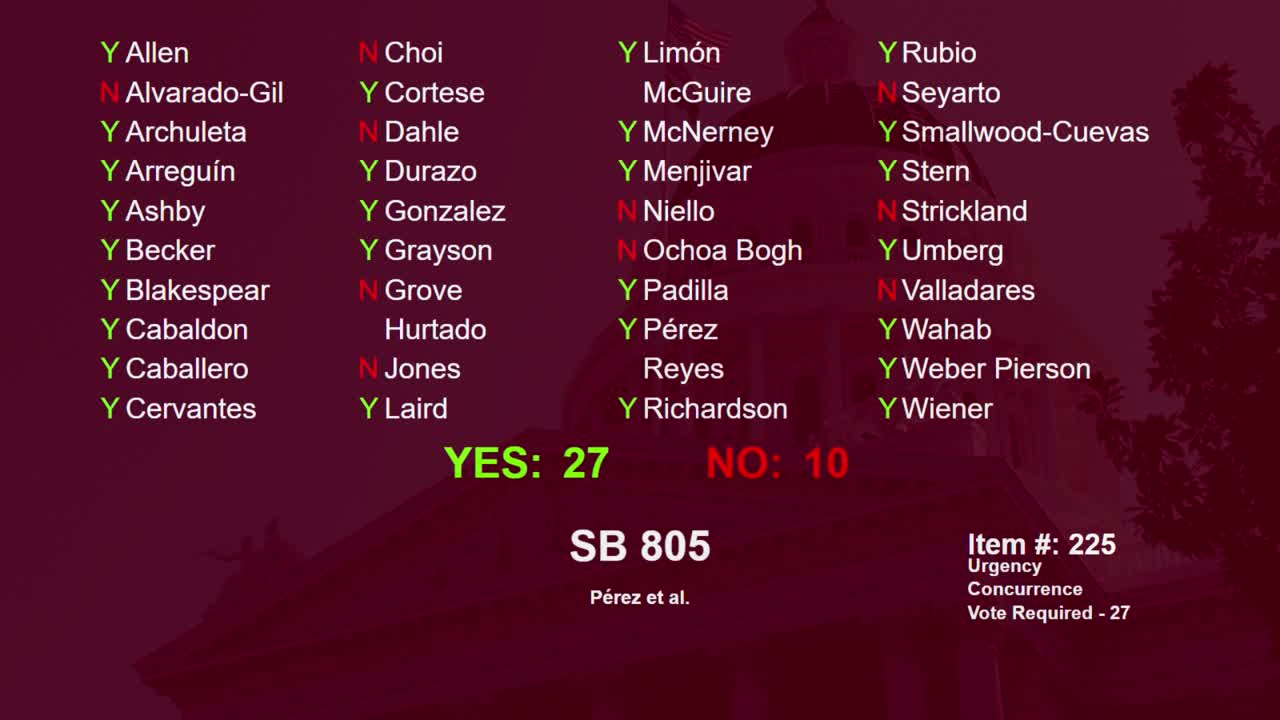 2MIN
Senate Floor
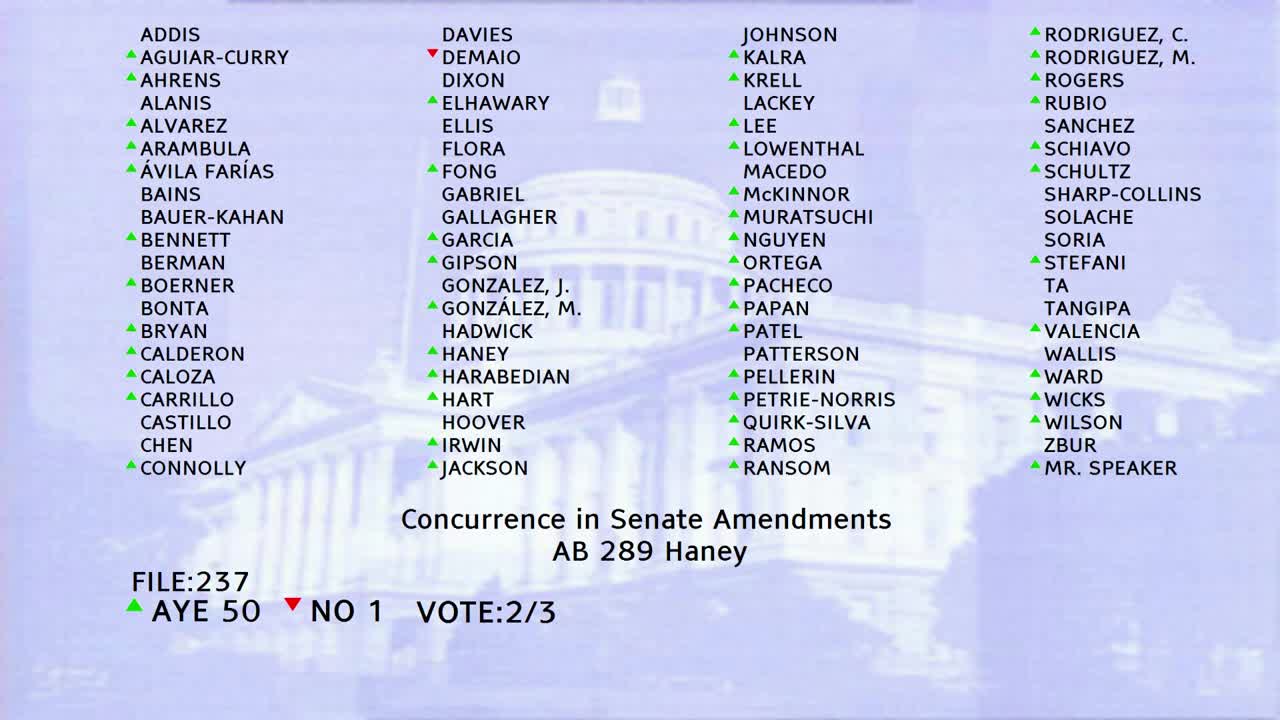 2MIN
Assembly Floor
 18MIN
Assembly Standing Committee on Judiciary
 47MIN
Assembly Standing Committee on Privacy and Consumer Protection
 3MIN
Senate Floor
 11MIN
Senate Standing Committee on Judiciary
Bill Author