SB 799: Joint powers authorities: South Bay Regional Housing Trust.
- Session Year: 2025-2026
- House: Senate
- Latest Version Date: 2026-09-30
Current Status:
Passed
(2026-09-30: Chaptered by Secretary of State. Chapter 980, Statutes of 2026.)
Introduced
In Committee
Awaiting First Chamber Vote
Passed First Chamber
In Committee
Awaiting Second Chamber Vote
Passed Second Chamber
Enacted
Existing law authorizes the establishment of the South Bay Regional Housing Trust, a joint powers authority, by the County of Los Angeles and any or all of the cities within the jurisdiction of the South Bay Cities Council of Governments, with the stated purpose of funding housing to assist the homeless population and persons and families of extremely low, very low, and low income within the South Bay Cities region. Existing law authorizes the South Bay Regional Housing Trust to, among other things, fund planning and construction of housing of all types and tenures for the homeless population and persons and families of extremely low, very low, and low income.
This bill would expand the authority of the trust to also include funding the preservation of housing for these purposes. The bill would also expand the authority of the trust to include funding planning, construction, and preservation of housing for persons and families of moderate income, as defined, using any private resources and specified public resources.
Existing law requires that the South Bay Regional Housing Trust be governed by a board of directors consisting of an appropriate number of directors, to be determined by the governing board of the South Bay Cities Council of Governments. Existing law requires the board of directors to include mayors, council members, or County of Los Angeles supervisors, as described. Existing law requires that the board of directors to elect a chairperson and a vice chairperson from among its members at the first meeting held in each calendar year. Existing law requires the governing board of the South Bay Cities Council of Governments to appoint the board of directors and, in the case of a vacancy on the board of directors, qualified individuals to fill the vacancy, as specified.
This bill would instead require the joint powers agreement to establish the number of directors of the trust and the process for appointing directors and filling vacancies. The bill would additionally authorize the board of directors to include persons appointed and designated as alternate members of the board of directors, as specified. The bill would require all directors and alternates to be subject to the board of directors adopted conflict of interest code. The bill would prohibit each alternate that is currently not an elected official from participating as a voting member in more than 75% of all meetings in a calendar year. The bill would instead require the board of directors to elect a chairperson and a vice chairperson from among its members at the first meeting held in either the calendar or fiscal year.
This bill would make legislative findings and declarations as to the necessity of a special statute for South Bay Cities region of the County of Los Angeles.
Existing law authorizes the establishment of the South Bay Regional Housing Trust, a joint powers authority, by the County of Los Angeles and any or all of the cities within the jurisdiction of the South Bay Cities Council of Governments, with the stated purpose of funding housing to assist the homeless population and persons and families of extremely low, very low, and low income within the South Bay Cities region. Existing law authorizes the South Bay Regional Housing Trust to, among other things, fund the planning and construction of housing of all types and tenures for the homeless population and persons and families of extremely low, very low, and low income.
This bill would expand the authority of the trust to also include funding the preservation of housing for these purposes. The bill would also expand the authority of the trust to include funding the planning and construction planning, construction, and preservation of housing for persons and families of moderate income, income, as defined, using any private resources available to it. and specified public resources.
Existing law requires that the South Bay Regional Housing Trust be governed by a board of directors consisting of an appropriate number of directors, to be determined by the governing board of the South Bay Cities Council of Governments. Existing law requires the board of directors to include mayors, council members, or County of Los Angeles supervisors, as described. Existing law requires that the board of directors to elect a chairperson and a vice chairperson from among its members at the first meeting held in each calendar year. Existing law requires the governing board of the South Bay Cities Council of Governments to appoint the board of directors and, in the case of a vacancy on the board of directors, qualified individuals to fill the vacancy, as specified.
This bill would instead require the joint powers agreement to establish the number of directors of the trust and the process for appointing directors and filling vacancies. The bill would additionally authorize the board of directors to include persons appointed and designated as alternate members of the board of directors, as specified. The bill would require all directors and alternates to be subject to the board of directors adopted conflict of interest code. The bill would prohibit each alternate that is currently not an elected official from participating as a voting member in more than 75% of all meetings in a calendar year. The bill would instead require the board of directors to elect a chairperson and a vice chairperson from among its members at the first meeting held in either the calendar or fiscal year.
This bill would make legislative findings and declarations as to the necessity of a special statute for South Bay Cities region of the County of Los Angeles.
Existing law authorizes the establishment of the South Bay Regional Housing Trust, a joint powers authority, by the County of Los Angeles and any or all of the cities within the jurisdiction of the South Bay Cities Council of Governments, with the stated purpose of funding housing to assist the homeless population and persons and families of extremely low, very low, and low income within the South Bay Cities region. Existing law authorizes the South Bay Regional Housing Trust to, among other things, fund the planning and construction of housing of all types and tenures for the homeless population and persons and families of extremely low, very low, and low income.
This bill would expand the authority of the trust to also include funding the preservation of housing for these purposes. The bill would also expand the authority of the trust to include funding the planning and construction of housing for persons and families of moderate income, using any private resources available to it.
Existing law requires that the South Bay Regional Housing Trust be governed by a board of directors consisting of an appropriate number of directors, to be determined by the governing board of the South Bay Cities Council of Governments. Existing law requires the board of directors to include mayors, council members, or County of Los Angeles supervisors, as described. Existing law requires that the board of directors to elect a chairperson and a vice chairperson from among its members at the first meeting held in each calendar year. Existing law requires the governing board of the South Bay Cities Council of Governments to appoint the board of directors and, in the case of a vacancy on the board of directors, qualified individuals to fill the vacancy, as specified.
This bill would instead require the joint powers agreement to establish the number of directors of the trust and the process for appointing directors and filling vacancies. The bill would additionally authorize the board of directors to include persons appointed and designated as alternate members of the board of directors, as specified. The bill would require all directors and alternates to be subject to the board of directors adopted conflict of interest code. The bill would prohibit each alternate that is currently not an elected official from participating as a voting member in more than 75% of all meetings in a calendar year. The bill would instead require the board of directors to elect a chairperson and a vice chairperson from among its members at the first meeting held in either the calendar or fiscal year.
This bill would make legislative findings and declarations as to the necessity of a special statute for South Bay Cities region of the County of Los Angeles.
Existing law authorizes the establishment of the South Bay Regional Housing Trust, a joint powers authority, by the County of Los Angeles and any or all of the cities within the jurisdiction of the South Bay Cities Council of Governments, with the stated purpose of funding housing to assist the homeless population and persons and families of extremely low, very low, and low income within the South Bay Cities region. Existing law authorizes the South Bay Regional Housing Trust to, among other things, fund the planning and construction of housing of all types and tenures for the homeless population and persons and families of extremely low, very low, and low income.
Existing law requires that the South Bay Regional Housing Trust be governed by a board of directors consisting of an appropriate number of directors, to be determined by the governing board of the South Bay Cities Council of Governments. Existing law requires the board of directors to include mayors, council members, or County of Los Angeles supervisors, as described. Existing law requires that the board of directors to elect a chairperson and a vice chairperson from among its members at the first meeting held in each calendar year. Existing law requires the governing board of the South Bay Cities Council of Governments to appoint the board of directors and, in the case of a vacancy on the board of directors, qualified individuals to fill the vacancy, as specified.
This bill would instead require the joint powers agreement to establish the number of directors of the trust and the process for appointing directors and filling vacancies. The bill would additionally authorize the board of directors to include persons appointed and designated as alternate members of the board of directors, as specified. The bill would require all directors and alternates to be subject to the board of directors adopted conflict of interest code. The bill would prohibit each alternate that is currently not an elected official from participating as a voting member in more than 75% of all meetings in a calendar year. The bill would instead require the board of directors to elect a chairperson and a vice chairperson from among its members at the first meeting held in each either the calendar or fiscal year.
This bill would make legislative findings and declarations as to the necessity of a special statute for South Bay Cities region of the County of Los Angeles.
Existing law authorizes the establishment of the South Bay Regional Housing Trust, a joint powers authority, by the County of Los Angeles and any or all of the cities within the jurisdiction of the South Bay Cities Council of Governments, with the stated purpose of funding housing to assist the homeless population and persons and families of extremely low, very low, and low income within the South Bay Cities region. Existing law authorizes the South Bay Regional Housing Trust to, among other things, fund the planning and construction of housing of all types and tenures for the homeless population and persons and families of extremely low, very low, and low income.
Existing law requires that the South Bay Regional Housing Trust be governed by a board of directors consisting of an appropriate number of directors, to be determined by the governing board of the South Bay Cities Council of Governments. Existing law requires the board of directors to include mayors, council members, or County of Los Angeles supervisors, as described. Existing law requires that the board of directors to elect a chairperson and a vice chairperson from among its members at the first meeting held in each calendar year. Existing law requires the governing board of the South Bay Cities Council of Governments to appoint the board of directors and, in the case of a vacancy on the board of directors, qualified individuals to fill the vacancy, as specified.
This bill would instead require the joint powers agreement to establish the number of directors of the trust and the process for appointing directors and filling vacancies. The bill would additionally authorize the board of directors to include persons appointed and designated as alternate members of the board of directors, as specified. The bill would require all directors and alternates to be subject to the board of directors adopted conflict of interest code. The bill would instead require the board of directors to elect a chairperson and a vice chairperson from among its members at the first meeting held in each calendar or fiscal year.
This bill would make legislative findings and declarations as to the necessity of a special statute for South Bay Cities region of the County of Los Angeles.
(1)Existing law, the False Claims Act, provides that any person who commits specified acts, including, but not limited to, knowingly presenting a false or fraudulent claim for payment or approval or knowingly making or using a false record or statement material to a false or fraudulent claim, is liable to the state or to the political subdivision for 3 times the amount of damages that the state or political subdivision sustained because of the act and for the costs of a civil action brought to recover any penalties or damages, and is subject to a civil penalty. That act does not apply to claims, records, or statements made under the Revenue and Taxation Code. This bill would instead apply the False Claims Act to claims, records, obligations, or statements made under the Revenue and Taxation Code if the damages pleaded in the action exceed $200,000, or the taxable income, gross receipts, or total sales of the individual or entity against whom the action is brought, as specified, exceeds $500,000 per taxable year. The bill would allow the Attorney General or prosecuting authority to obtain otherwise confidential records relating to taxes, fees, surcharges, or other obligations under the Revenue and Taxation Code needed to investigate or prosecute the suspected violations, but would otherwise require that information to be kept confidential and subject to the limitation, a violation of which is a crime, on taxpayer informations collection and use. By expanding the scope of a crime, the bill would impose a state-mandated local program. (2)Existing law requires the Attorney General or the prosecuting authority of a political subdivision to diligently investigate violations of the False Claims Act involving state funds or political subdivision funds, respectively, and authorizes the Attorney General, the prosecuting authority, or a qui tam plaintiff to bring a civil action against a person who commits those acts. Existing law requires a complaint filed by a private person to be filed in superior court in camera, authorizes the complaint to remain under seal for up to 60 days, and prohibits service on the defendant until the complaint is unsealed. This bill would instead require the complaint to remain under seal for at least 60 days, and would prohibit service on the defendant until the court orders it. The bill would deem a demand for payment or request for payment based on an alleged violation of the False Claims Act by an attorney representing a private person prior to filing a complaint to be a violation of the requirement that the complaint be filed in superior court in camera.(3)Existing law provides that an employee, contractor, or agent shall be entitled to all relief necessary to make that employee, contractor, or agent whole, if that employee, contractor, or agent is discharged, demoted, suspended, threatened, harassed, or in any other manner discriminated against because of lawful acts done by the employee, contractor, agent, or associated others in an effort to stop one or more violations of the False Claims Act. This bill would define lawful act for these purposes to include obtaining or transmitting documents, data, correspondence, electronic mail, or any other information, necessary to investigate, potentially file, or file a cause of action under the False Claims Act, even though that act may violate a contract, employment term, or duty owed to the employer or contractor. The bill would also specify that those provisions apply to current and former employees. (4)Existing constitutional provisions require that a statute that limits the right of access to the meetings of public bodies or the writings of public officials and agencies be adopted with findings demonstrating the interest protected by the limitation and the need for protecting that interest.This bill would make legislative findings to that effect.(5)The California Constitution requires the state to reimburse local agencies and school districts for certain costs mandated by the state. Statutory provisions establish procedures for making that reimbursement.This bill would provide that no reimbursement is required by this act for a specified reason.(1)Existing law, the False Claims Act, provides that any person who commits specified acts, including, but not limited to, knowingly presenting a false or fraudulent claim for payment or approval or knowingly making or using a false record or statement material to a false or fraudulent claim, is liable to the state or to the political subdivision for 3 times the amount of damages that the state or political subdivision sustained because of the act and for the costs of a civil action brought to recover any penalties or damages, and is subject to a civil penalty. That act does not apply to claims, records, or statements made under the Revenue and Taxation Code.
This bill would instead apply the False Claims Act to claims, records, obligations, or statements made under the Revenue and Taxation Code if the damages pleaded in the action exceed $200,000, or the taxable income, gross receipts, or total sales of the individual or entity against whom the action is brought, as specified, exceeds $500,000 per taxable year. The bill would allow the Attorney General or prosecuting authority to obtain otherwise confidential records relating to taxes, fees, surcharges, or other obligations under the Revenue and Taxation Code needed to investigate or prosecute the suspected violations, but would otherwise require that information to be kept confidential and subject to the limitation, a violation of which is a crime, on taxpayer informations collection and use. By expanding the scope of a crime, the bill would impose a state-mandated local program.
(2)Existing law requires the Attorney General or the prosecuting authority of a political subdivision to diligently investigate violations of the False Claims Act involving state funds or political subdivision funds, respectively, and authorizes the Attorney General, the prosecuting authority, or a qui tam plaintiff to bring a civil action against a person who commits those acts. Existing law requires a complaint filed by a private person to be filed in superior court in camera, authorizes the complaint to remain under seal for up to 60 days, and prohibits service on the defendant until the complaint is unsealed.
This bill would instead require the complaint to remain under seal for at least 60 days, and would prohibit service on the defendant until the court orders it. The bill would deem a demand for payment or request for payment based on an alleged violation of the False Claims Act by an attorney representing a private person prior to filing a complaint to be a violation of the requirement that the complaint be filed in superior court in camera.
(3)Existing law provides that an employee, contractor, or agent shall be entitled to all relief necessary to make that employee, contractor, or agent whole, if that employee, contractor, or agent is discharged, demoted, suspended, threatened, harassed, or in any other manner discriminated against because of lawful acts done by the employee, contractor, agent, or associated others in an effort to stop one or more violations of the False Claims Act.
This bill would define lawful act for these purposes to include obtaining or transmitting documents, data, correspondence, electronic mail, or any other information, necessary to investigate, potentially file, or file a cause of action under the False Claims Act, even though that act may violate a contract, employment term, or duty owed to the employer or contractor. The bill would also specify that those provisions apply to current and former employees.
(4)Existing constitutional provisions require that a statute that limits the right of access to the meetings of public bodies or the writings of public officials and agencies be adopted with findings demonstrating the interest protected by the limitation and the need for protecting that interest.
This bill would make legislative findings to that effect.
(5)The California Constitution requires the state to reimburse local agencies and school districts for certain costs mandated by the state. Statutory provisions establish procedures for making that reimbursement.
This bill would provide that no reimbursement is required by this act for a specified reason.
(1)Existing law, the False Claims Act, provides that any person who commits specified acts, including, but not limited to, knowingly presenting a false or fraudulent claim for payment or approval or knowingly making or using a false record or statement material to a false or fraudulent claim, is liable to the state or to the political subdivision for 3 times the amount of damages that the state or political subdivision sustained because of the act and for the costs of a civil action brought to recover any penalties or damages, and is subject to a civil penalty. That act does not apply to claims, records, or statements made under the Revenue and Taxation Code.
This bill would instead apply the False Claims Act to claims, records, obligations, or statements made under the Revenue and Taxation Code if the damages pleaded in the action exceed $200,000, or the taxable income, gross receipts, or total sales of the individual or entity against whom the action is brought, as specified, exceeds $500,000 per taxable year. The bill would allow the Attorney General or prosecuting authority to obtain otherwise confidential records relating to taxes, fees, surcharges, or other obligations under the Revenue and Taxation Code needed to investigate or prosecute the suspected violations, but would otherwise require that information to be kept confidential and subject to the limitation, a violation of which is a crime, on taxpayer informations collection and use. By expanding the scope of a crime, the bill would impose a state-mandated local program.
(2)Existing law requires the Attorney General or the prosecuting authority of a political subdivision to diligently investigate violations of the False Claims Act involving state funds or political subdivision funds, respectively, and authorizes the Attorney General, the prosecuting authority, or a qui tam plaintiff to bring a civil action against a person who commits those acts. Existing law requires a complaint filed by a private person to be filed in superior court in camera, authorizes the complaint to remain under seal for up to 60 days, and prohibits service on the defendant until the complaint is unsealed.
This bill would instead require the complaint to remain under seal for at least 60 days, and would prohibit service on the defendant until the court orders it. The bill would deem a demand for payment or request for payment based on an alleged violation of the False Claims Act by an attorney representing a private person prior to filing a complaint to be a violation of the requirement that the complaint be filed in superior court in camera.
(3)Existing law provides that an employee, contractor, or agent shall be entitled to all relief necessary to make that employee, contractor, or agent whole, if that employee, contractor, or agent is discharged, demoted, suspended, threatened, harassed, or in any other manner discriminated against because of lawful acts done by the employee, contractor, agent, or associated others in an effort to stop one or more violations of the False Claims Act.
This bill would define lawful act for these purposes to include obtaining or transmitting documents, data, correspondence, electronic mail, or any other information, necessary to investigate, potentially file, or file a cause of action under the False Claims Act, even though that act may violate a contract, employment term, or duty owed to the employer or contractor. The bill would also specify that those provisions apply to current and former employees.
(4)Existing constitutional provisions require that a statute that limits the right of access to the meetings of public bodies or the writings of public officials and agencies be adopted with findings demonstrating the interest protected by the limitation and the need for protecting that interest.
This bill would make legislative findings to that effect.
(5)The California Constitution requires the state to reimburse local agencies and school districts for certain costs mandated by the state. Statutory provisions establish procedures for making that reimbursement.
This bill would provide that no reimbursement is required by this act for a specified reason.
Existing law provides for the reimbursement of local agencies and school districts for costs mandated by the state, as provided, and requires the Commission on State Mandates to hear and decide upon a claim by a local agency or school district that the local agency or school district is entitled to be reimbursed for those costs. Existing law declares that these provisions provides the sole and exclusive procedure by which a local agency or school district may claim reimbursement for costs mandated by the state.This bill would make a nonsubstantive change to the provision that makes the declaration described above.Existing law provides for the reimbursement of local agencies and school districts for costs mandated by the state, as provided, and requires the Commission on State Mandates to hear and decide upon a claim by a local agency or school district that the local agency or school district is entitled to be reimbursed for those costs. Existing law declares that these provisions provides the sole and exclusive procedure by which a local agency or school district may claim reimbursement for costs mandated by the state.
This bill would make a nonsubstantive change to the provision that makes the declaration described above.
(a)(1)Notwithstanding any other law, the County of Los Angeles and any or all of the cities within the jurisdiction of the South Bay Cities Council of Governments may enter into a joint powers agreement pursuant to this chapter to create and operate a joint powers agency to fund housing to assist the homeless population and persons and families of extremely low, very low, low, and moderate income, as defined in Section 50093 of the Health and Safety Code, within the South Bay Cities region.
(2)The joint powers agency created pursuant to this section shall be known as the South Bay Regional Housing Trust and shall operate in accordance with this section.
(b)(1)The South Bay Regional Housing Trust shall be governed by a board of directors consisting of an appropriate number of directors to be established by its joint powers agreement.
(2)(A)The board of directors shall be appointed in accordance with a process established by its joint powers agreement and shall include mayors, council members, or County of Los Angeles supervisors that represent either of the following:
(i)A city that is a party to the joint powers agreement.
(ii)A County of Los Angeles Board of Supervisors district that is located wholly or partially within the territory of the South Bay Cities Council of Governments, if the county is a party to the joint powers agreement.
(B)Two members of the board of directors shall be experts in homelessness or housing policy.
(C)(i)The board of directors may include persons appointed and designated as alternate members of the board of directors.
(ii)The persons appointed and designated as the alternate members of the board of directors may include any of the following:
(I)An elected or appointed member of the governing body of the party to the joint powers agreement.
(II)An appointed member of an advisory body of the party to the joint powers agreement.
(III)A staff member of the party to the joint powers agreement.
(IV)A member of the public who is an expert in homelessness or housing policy.
(D)All directors and alternates shall be subject to the board of directors adopted conflict of interest code.
(E)Each alternate that is currently not an elected official shall not participate as a voting member in more than 75 percent of all meetings in a calendar year.
(3)The board of directors shall elect a chairperson and a vice chairperson from among its members at the first meeting held in either the calendar or fiscal year.
(4)(A)Members of the board of directors shall serve without compensation.
(B)Members of the board of directors may be reimbursed for actual expenses subject to the approval of the governing board of the South Bay Regional Housing Trust. Actual expenses shall be approved before they are incurred.
(5)The joint powers agreement shall establish the process for appointing a qualified individual to fill a vacancy within 60 days of the vacancy, if a vacancy occurs on the board of directors.
(c)Notwithstanding any other law, the South Bay Regional Housing Trust may do any of the following:
(1)(A)Fund planning, construction, and preservation of housing of all types and tenures for the homeless population and persons and families of extremely low, very low, and low income, as defined in Section 50093 of the Health and Safety Code, including, but not limited to, permanent supportive housing.
(B)Fund planning, construction, and preservation of housing of all types and tenures for persons and families of moderate income, as defined in Section 50093 of the Health and Safety Code, using any private resources, and either of the following public resources:
(i)Federal resources.
(ii)State resources that are restricted to use for affordable housing for persons and families at or above eighty percent of area median household income.
(2)Receive public and private financing and funds.
(3)Authorize and issue bonds, certificates of participation, or any other debt instrument repayable from funds and financing received pursuant to paragraph (2) and pledged by the South Bay Regional Housing Trust.
(d)The South Bay Regional Housing Trust shall incorporate into its joint powers agreement annual financial reporting and auditing requirements that shall maximize transparency and public information as to the receipt and use of funds by the agency. The annual financial report shall show how the funds have furthered the purposes of the South Bay Regional Housing Trust.
(e)The South Bay Regional Housing Trust shall comply with the regulatory guidelines of each specific state funding source received.
SEC. 2.The Legislature finds and declares that a special statute is necessary and that a general statute cannot be made applicable within the meaning of Section 16 of Article IV of the California Constitution because of the following unique circumstances in the South Bay Cities region of the County of Los Angeles:
(a)California has an affordable housing crisis, which is especially acute in the South Bay Cities region of the County of Los Angeles due to the high cost of housing in that area, even in formerly affordable communities.
(b)The establishment of the South Bay Regional Housing Trust to receive available public and private funds could help finance affordable housing projects for homeless, low-income, and moderate-income populations.
(a)(1)Notwithstanding any other law, the County of Los Angeles and any or all of the cities within the jurisdiction of the South Bay Cities Council of Governments may enter into a joint powers agreement pursuant to this chapter to create and operate a joint powers agency to fund housing to assist the homeless population and persons and families of extremely low, very low, low, and moderate income, as defined in Section 50093 of the Health and Safety Code, within the South Bay Cities region.
(2)The joint powers agency created pursuant to this section shall be known as the South Bay Regional Housing Trust and shall operate in accordance with this section.
(b)(1)The South Bay Regional Housing Trust shall be governed by a board of directors consisting of an appropriate number of directors to be established by its joint powers agreement.
(2)(A)The board of directors shall be appointed in accordance with a process established by its joint powers agreement and shall include mayors, council members, or County of Los Angeles supervisors that represent either of the following:
(i)A city that is a party to the joint powers agreement.
(ii)A County of Los Angeles Board of Supervisors district that is located wholly or partially within the territory of the South Bay Cities Council of Governments, if the county is a party to the joint powers agreement.
(B)Two members of the board of directors shall be experts in homelessness or housing policy.
(C)(i)The board of directors may include persons appointed and designated as alternate members of the board of directors.
(ii)The persons appointed and designated as the alternate members of the board of directors may include any of the following:
(I)An elected or appointed member of the governing body of the party to the joint powers agreement.
(II)An appointed member of an advisory body of the party to the joint powers agreement.
(III)A staff member of the party to the joint powers agreement.
(IV)A member of the public who is an expert in homelessness or housing policy.
(D)All directors and alternates shall be subject to the board of directors adopted conflict of interest code.
(E)Each alternate that is currently not an elected official shall not participate as a voting member in more than 75 percent of all meetings in a calendar year.
(3)The board of directors shall elect a chairperson and a vice chairperson from among its members at the first meeting held in either the calendar or fiscal year.
(4)(A)Members of the board of directors shall serve without compensation.
(B)Members of the board of directors may be reimbursed for actual expenses subject to the approval of the governing board of the South Bay Regional Housing Trust. Actual expenses shall be approved before they are incurred.
(5)The joint powers agreement shall establish the process for appointing a qualified individual to fill a vacancy within 60 days of the vacancy, if a vacancy occurs on the board of directors.
(c)Notwithstanding any other law, the South Bay Regional Housing Trust may do any of the following:
(1)(A)Fund the planning, construction, and preservation of housing of all types and tenures for the homeless population and persons and families of extremely low, very low, and low income, as defined in Section 50093 of the Health and Safety Code, including, but not limited to, permanent supportive housing.
(B)Fund the planning and construction planning, construction, and preservation of housing of all types and tenures for persons and families of moderate income income, as defined in Section 50093 of the Health and Safety Code, using any private resources available to the South Bay Regional Housing Trust. resources, and either of the following public resources:
(i)Federal resources.
(ii)State resources that are restricted to use for affordable housing for persons and families at or above eighty percent of area median household income.
(2)Receive public and private financing and funds.
(3)Authorize and issue bonds, certificates of participation, or any other debt instrument repayable from funds and financing received pursuant to paragraph (2) and pledged by the South Bay Regional Housing Trust.
(d)The South Bay Regional Housing Trust shall incorporate into its joint powers agreement annual financial reporting and auditing requirements that shall maximize transparency and public information as to the receipt and use of funds by the agency. The annual financial report shall show how the funds have furthered the purposes of the South Bay Regional Housing Trust.
(e)The South Bay Regional Housing Trust shall comply with the regulatory guidelines of each specific state funding source received.
SEC. 2.The Legislature finds and declares that a special statute is necessary and that a general statute cannot be made applicable within the meaning of Section 16 of Article IV of the California Constitution because of the following unique circumstances in the South Bay Cities region of the County of Los Angeles:
(a)California has an affordable housing crisis, which is especially acute in the South Bay Cities region of the County of Los Angeles due to the high cost of housing in that area, even in formerly affordable communities.
(b)The establishment of the South Bay Regional Housing Trust to receive available public and private funds could help finance affordable housing projects for homeless, low-income, and moderate-income populations.
(a)(1)Notwithstanding any other law, the County of Los Angeles and any or all of the cities within the jurisdiction of the South Bay Cities Council of Governments may enter into a joint powers agreement pursuant to this chapter to create and operate a joint powers agency to fund housing to assist the homeless population and persons and families of extremely low, very low, and low low, and moderate income, as defined in Section 50093 of the Health and Safety Code, within the South Bay Cities region.
(2)The joint powers agency created pursuant to this section shall be known as the South Bay Regional Housing Trust and shall operate in accordance with this section.
(b)(1)The South Bay Regional Housing Trust shall be governed by a board of directors consisting of an appropriate number of directors to be established by its joint powers agreement.
(2)(A)The board of directors shall be appointed in accordance with a process established by its joint powers agreement and shall include mayors, council members, or County of Los Angeles supervisors that represent either of the following:
(i)A city that is a party to the joint powers agreement.
(ii)A County of Los Angeles Board of Supervisors district that is located wholly or partially within the territory of the South Bay Cities Council of Governments, if the county is a party to the joint powers agreement.
(B)Two members of the board of directors shall be experts in homelessness or housing policy.
(C)(i)The board of directors may include persons appointed and designated as alternate members of the board of directors.
(ii)The persons appointed and designated as the alternate members of the board of directors may include any of the following:
(I)An elected or appointed member of the governing body of the party to the joint powers agreement.
(II)An appointed member of an advisory body of the party to the joint powers agreement.
(III)A staff member of the party to the joint powers agreement.
(IV)A member of the public who is an expert in homelessness or housing policy.
(D)All directors and alternates shall be subject to the board of directors adopted conflict of interest code.
(E)Each alternate that is currently not an elected official shall not participate as a voting member in more than 75 percent of all meetings in a calendar year.
(3)The board of directors shall elect a chairperson and a vice chairperson from among its members at the first meeting held in either the calendar or fiscal year.
(4)(A)Members of the board of directors shall serve without compensation.
(B)Members of the board of directors may be reimbursed for actual expenses subject to the approval of the governing board of the South Bay Regional Housing Trust. Actual expenses shall be approved before they are incurred.
(5)The joint powers agreement shall establish the process for appointing a qualified individual to fill a vacancy within 60 days of the vacancy, if a vacancy occurs on the board of directors.
(c)Notwithstanding any other law, the South Bay Regional Housing Trust may do any of the following:
(1)(A)Fund the planning and construction planning, construction, and preservation of housing of all types and tenures for the homeless population and persons and families of extremely low, very low, and low income, as defined in Section 50093 of the Health and Safety Code, including, but not limited to, permanent supportive housing.
(B)Fund the planning and construction of housing of all types and tenures for persons and families of moderate income using any private resources available to the South Bay Regional Housing Trust.
(2)Receive public and private financing and funds.
(3)Authorize and issue bonds, certificates of participation, or any other debt instrument repayable from funds and financing received pursuant to paragraph (2) and pledged by the South Bay Regional Housing Trust.
(d)The South Bay Regional Housing Trust shall incorporate into its joint powers agreement annual financial reporting and auditing requirements that shall maximize transparency and public information as to the receipt and use of funds by the agency. The annual financial report shall show how the funds have furthered the purposes of the South Bay Regional Housing Trust.
(e)The South Bay Regional Housing Trust shall comply with the regulatory guidelines of each specific state funding source received.
SEC. 2.The Legislature finds and declares that a special statute is necessary and that a general statute cannot be made applicable within the meaning of Section 16 of Article IV of the California Constitution because of the following unique circumstances in the South Bay Cities region of the County of Los Angeles:
(a)California has an affordable housing crisis, which is especially acute in the South Bay Cities region of the County of Los Angeles due to the high cost of housing in that area, even in formerly affordable communities.
(b)The establishment of the South Bay Regional Housing Trust to receive available public and private funds could help finance affordable housing projects for homeless and low-income homeless, low-income, and moderate-income populations.
(a)(1)Notwithstanding any other law, the County of Los Angeles and any or all of the cities within the jurisdiction of the South Bay Cities Council of Governments may enter into a joint powers agreement pursuant to this chapter to create and operate a joint powers agency to fund housing to assist the homeless population and persons and families of extremely low, very low, and low income, as defined in Section 50093 of the Health and Safety Code, within the South Bay Cities region.
(2)The joint powers agency created pursuant to this section shall be known as the South Bay Regional Housing Trust and shall operate in accordance with this section.
(b)(1)The South Bay Regional Housing Trust shall be governed by a board of directors consisting of an appropriate number of directors to be established by its joint powers agreement.
(2)(A)The board of directors shall be appointed in accordance with a process established by its joint powers agreement and shall include mayors, council members, or County of Los Angeles supervisors that represent either of the following:
(i)A city that is a party to the joint powers agreement.
(ii)A County of Los Angeles Board of Supervisors district that is located wholly or partially within the territory of the South Bay Cities Council of Governments, if the county is a party to the joint powers agreement.
(B)Two members of the board of directors shall be experts in homeless homelessness or housing policy.
(C)(i)The board of directors may include persons appointed and designated as alternate members of the board of directors.
(ii)The persons appointed and designated as the alternate members of the board of directors may include any of the following:
(I)An elected or appointed member of the governing body of the party to the joint powers agreement.
(II)An appointed member of an advisory body of the party to the joint powers agreement.
(III)A staff member of the party to the joint powers agreement.
(IV)A member of the public who is an expert in homeless homelessness or housing policy.
(D)All directors and alternates shall be subject to the board of directors adopted conflict of interest code.
(E)Each alternate that is currently not an elected official shall not participate as a voting member in more than 75 percent of all meetings in a calendar year.
(3)The board of directors shall elect a chairperson and a vice chairperson from among its members at the first meeting held in each either the calendar or fiscal year.
(4)(A)Members of the board of directors shall serve without compensation.
(B)Members of the board of directors may be reimbursed for actual expenses subject to the approval of the governing board of the South Bay Regional Housing Trust. Actual expenses shall be approved before they are incurred.
(5)The joint powers agreement shall establish the process for appointing a qualified individual to fill a vacancy within 60 days of the vacancy, if a vacancy occurs on the board of directors.
(c)Notwithstanding any other law, the South Bay Regional Housing Trust may do any of the following:
(1)Fund the planning and construction of housing of all types and tenures for the homeless population and persons and families of extremely low, very low, and low income, as defined in Section 50093 of the Health and Safety Code, including, but not limited to, permanent supportive housing.
(2)Receive public and private financing and funds.
(3)Authorize and issue bonds, certificates of participation, or any other debt instrument repayable from funds and financing received pursuant to paragraph (2) and pledged by the South Bay Regional Housing Trust.
(d)The South Bay Regional Housing Trust shall incorporate into its joint powers agreement annual financial reporting and auditing requirements that shall maximize transparency and public information as to the receipt and use of funds by the agency. The annual financial report shall show how the funds have furthered the purposes of the South Bay Regional Housing Trust.
(e)The South Bay Regional Housing Trust shall comply with the regulatory guidelines of each specific state funding source received.
SEC. 2.The Legislature finds and declares that a special statute is necessary and that a general statute cannot be made applicable within the meaning of Section 16 of Article IV of the California Constitution because of the following unique circumstances in the South Bay Cities region of the County of Los Angeles:
(a)California has an affordable housing crisis, which is especially acute in the South Bay Cities region of the County of Los Angeles due to the high cost of housing in that area, even in formerly affordable communities.
(b)The establishment of the South Bay Regional Housing Trust to receive available public and private funds could help finance affordable housing projects for homeless and low-income populations.
(a)(1)Notwithstanding any other law, the County of Los Angeles and any or all of the cities within the jurisdiction of the South Bay Cities Council of Governments may enter into a joint powers agreement pursuant to this chapter to create and operate a joint powers agency to fund housing to assist the homeless population and persons and families of extremely low, very low, and low income, as defined in Section 50093 of the Health and Safety Code, within the South Bay Cities region.
(2)The joint powers agency created pursuant to this section shall be known as the South Bay Regional Housing Trust and shall operate in accordance with this section.
(b)(1)The South Bay Regional Housing Trust shall be governed by a board of directors consisting of an appropriate number of directors to be determined established by the governing board of the South Bay Cities Council of Governments. its joint powers agreement.
(2)(A)The board of directors shall be appointed by the governing board of the South Bay Cities Council of Governments in accordance with a process established by its joint powers agreement and shall include mayors, council members, or County of Los Angeles supervisors that represent either of the following:
(i)A city that is a party to the joint powers agreement.
(ii)A County of Los Angeles Board of Supervisors district that is located wholly or partially within the territory of the South Bay Cities Council of Governments, if the county is a party to the joint powers agreement.
(B)Two members of the board of directors shall be experts in homeless or housing policy.
(C)(i)The board of directors may include persons appointed and designated as alternate members of the board of directors.
(ii)The persons appointed and designated as the alternate members of the board of directors may include any of the following:
(I)An elected or appointed member of the governing body of the party to the joint powers agreement.
(II)An appointed member of an advisory body of the party to the joint powers agreement.
(III)A staff member of the party to the joint powers agreement.
(IV)A member of the public who is an expert in homeless or housing policy.
(D)All directors and alternates shall be subject to the board of directors adopted conflict of interest code.
(3)The board of directors shall elect a chairperson and a vice chairperson from among its members at the first meeting held in each calendar or fiscal year.
(4)(A)Members of the board of directors shall serve without compensation.
(B)Members of the board of directors may be reimbursed for actual expenses subject to the approval of the governing board of the South Bay Regional Housing Trust. Actual expenses shall be approved before they are incurred.
(5) If a vacancy occurs on the board of directors, the governing board of the South Bay Cities Council of Governments shall appoint a qualified individual to fill the vacancy within 60 days of the vacancy.(5)The joint powers agreement shall establish the process for appointing a qualified individual to fill a vacancy within 60 days of the vacancy, if a vacancy occurs on the board of directors.
(c)Notwithstanding any other law, the South Bay Regional Housing Trust may do any of the following:
(1)Fund the planning and construction of housing of all types and tenures for the homeless population and persons and families of extremely low, very low, and low income, as defined in Section 50093 of the Health and Safety Code, including, but not limited to, permanent supportive housing.
(2)Receive public and private financing and funds.
(3)Authorize and issue bonds, certificates of participation, or any other debt instrument repayable from funds and financing received pursuant to paragraph (2) and pledged by the South Bay Regional Housing Trust.
(d)The South Bay Regional Housing Trust shall incorporate into its joint powers agreement annual financial reporting and auditing requirements that shall maximize transparency and public information as to the receipt and use of funds by the agency. The annual financial report shall show how the funds have furthered the purposes of the South Bay Regional Housing Trust.
(e)The South Bay Regional Housing Trust shall comply with the regulatory guidelines of each specific state funding source received.
SEC. 2.The Legislature finds and declares that a special statute is necessary and that a general statute cannot be made applicable within the meaning of Section 16 of Article IV of the California Constitution because of the following unique circumstances in the South Bay Cities region of the County of Los Angeles:
(a)California has an affordable housing crisis, which is especially acute in the South Bay Cities region of the County of Los Angeles due to the high cost of housing in that area, even in formerly affordable communities.
(b)The establishment of the South Bay Regional Housing Trust to receive available public and private funds could help finance affordable housing projects for homeless and low-income populations.
All matter omitted in this version of the bill appears in the bill as amended in the Senate, April 10, 2025. (JR11)(a)Any person who commits any of the following enumerated acts in this subdivision shall have violated this article and shall be liable to the state or to the political subdivision for three times the amount of damages that the state or political subdivision sustains because of the act of that person. A person who commits any of the following enumerated acts shall also be liable to the state or to the political subdivision for the costs of a civil action brought to recover any of those penalties or damages, and shall be liable to the state or political subdivision for a civil penalty of not less than five thousand five hundred dollars ($5,500) and not more than eleven thousand dollars ($11,000) for each violation, as adjusted by the Federal Civil Penalties Inflation Adjustment Act of 1990, Public Law 101410 Section 5, 104 Stat. 891, note following 28 U.S.C. Section 2461.
(1)Knowingly presents or causes to be presented a false or fraudulent claim for payment or approval.
(2)Knowingly makes, uses, or causes to be made or used a false record or statement material to a false or fraudulent claim.
(3)Conspires to commit a violation of this subdivision.
(4)Has possession, custody, or control of public property or money used or to be used by the state or by any political subdivision and knowingly delivers or causes to be delivered less than all of that property.
(5)Is authorized to make or deliver a document certifying receipt of property used or to be used by the state or by any political subdivision and knowingly makes or delivers a receipt that falsely represents the property used or to be used.
(6)Knowingly buys, or receives as a pledge of an obligation or debt, public property from any person who lawfully may not sell or pledge the property.
(7)Knowingly makes, uses, or causes to be made or used a false record or statement material to an obligation to pay or transmit money or property to the state or to any political subdivision, or knowingly conceals or knowingly and improperly avoids, or decreases an obligation to pay or transmit money or property to the state or to any political subdivision.
(8)Is a beneficiary of an inadvertent submission of a false claim, subsequently discovers the falsity of the claim, and fails to disclose the false claim to the state or the political subdivision within a reasonable time after discovery of the false claim.
(b)Notwithstanding subdivision (a), the court may assess not less than two times and not more than three times the amount of damages which the state or the political subdivision sustains because of the act of the person described in that subdivision, and no civil penalty, if the court finds all of the following:
(1)The person committing the violation furnished officials of the state or of the political subdivision responsible for investigating false claims violations with all information known to that person about the violation within 30 days after the date on which the person first obtained the information.
(2)The person fully cooperated with any investigation by the state or a political subdivision of the violation.
(3)At the time the person furnished the state or the political subdivision with information about the violation, no criminal prosecution, civil action, or administrative action had commenced with respect to the violation, and the person did not have actual knowledge of the existence of an investigation into the violation.
(c)Liability under this section shall be joint and several for any act committed by two or more persons.
(d)This section does not apply to any controversy involving an amount of less than five hundred dollars ($500) in value. For purposes of this subdivision, controversy means any one or more false claims submitted by the same person in violation of this article.
(e)This section does not apply to claims, records, or statements made pursuant to Division 3.6 (commencing with Section 810) of Title 1 or to workers compensation claims filed pursuant to Division 4 (commencing with Section 3200) of the Labor Code.
(f)(1)This section shall apply to claims, records, obligations, or statements made under the Revenue and Taxation Code only if both of the following apply:
(A)The damages pleaded in the action exceed two hundred thousand dollars ($200,000).
(B)One of the following equals or exceeds five hundred thousand dollars ($500,000) for any taxable year subject to any action brought pursuant to this article:
(i)The taxable income of any person other than a corporation against whom the action is brought, under Part 10 (commencing with Section 17001) of Division 2 of the Revenue and Taxation Code.
(ii)The gross receipts, as defined in Section 25120 of the Revenue and Taxation Code, less returns and allowances of any corporation or other person other than an individual against whom the action is brought, under Part 11 (commencing with Section 23001) of Division 2 of the Revenue and Taxation Code.
(C)(iii)The sales of any person against whom the action is brought, under Part 1 (commencing with Section 6001) or Part 1.5 (commencing with Section 7200) of Division 2 of the Revenue and Taxation Code.
(2)For purposes of this subdivision only, person shall have the meaning ascribed to it in Section 17007 of the Revenue and Taxation Code.
(3)The Attorney General or prosecuting authority shall consult with the taxing authorities to whom the claim, record, or statement was submitted or to whom the obligation was owed prior to filing or intervening in any action under this article that is based on the filing of false claims, records, or statements made under the Revenue and Taxation Code.
(4)Notwithstanding any other law, the Attorney General or prosecuting authority, but not the qui tam plaintiff, is hereby authorized to obtain otherwise confidential records relating to taxes, fees, surcharges, or other obligations under the Revenue and Taxation Code needed to investigate or prosecute suspected violations of this subdivision from state and local taxing and other governmental authorities in possession of such information and records, and such authorities are hereby authorized to make those disclosures. The taxing and other governmental authorities shall not provide federal tax information without authorization from the Internal Revenue Service.
(5)Any information received pursuant to paragraphs (3) and (4) shall be kept confidential, except as necessary to investigate and prosecute suspected violations of this subdivision.
(g)This section does not apply to claims, records, or statements for the assets of a person that have been transferred to the Commissioner of Insurance, pursuant to Section 1011 of the Insurance Code.
SEC. 2.Section 12652 of the Government Code is amended to read:12652.(a)(1)The Attorney General shall diligently investigate violations under Section 12651 involving state funds. If the Attorney General finds that a person has violated or is violating Section 12651, the Attorney General may bring a civil action under this section against that person.
(2)If the Attorney General brings a civil action under this subdivision on a claim involving political subdivision funds as well as state funds, the Attorney General shall, on the same date that the complaint is filed in this action, serve by mail with return receipt requested a copy of the complaint on the appropriate prosecuting authority.
(3)The prosecuting authority shall have the right to intervene in an action brought by the Attorney General under this subdivision within 60 days after receipt of the complaint pursuant to paragraph (2). The court may permit intervention thereafter upon a showing that all of the requirements of Section 387 of the Code of Civil Procedure have been met.
(b)(1)The prosecuting authority of a political subdivision shall diligently investigate violations under Section 12651 involving political subdivision funds. If the prosecuting authority finds that a person has violated or is violating Section 12651, the prosecuting authority may bring a civil action under this section against that person.
(2)If the prosecuting authority brings a civil action under this section on a claim involving state funds as well as political subdivision funds, the prosecuting authority shall, on the same date that the complaint is filed in this action, serve a copy of the complaint on the Attorney General.
(3)Within 60 days after receiving the complaint pursuant to paragraph (2), the Attorney General shall do either of the following:
(A)Notify the court that it intends to proceed with the action, in which case the Attorney General shall assume primary responsibility for conducting the action and the prosecuting authority shall have the right to continue as a party.
(B)Notify the court that it declines to proceed with the action, in which case the prosecuting authority shall have the right to conduct the action.
(c)(1)A person may bring a civil action for a violation of this article for the person and either for the State of California in the name of the state, if any state funds are involved, or for a political subdivision in the name of the political subdivision, if political subdivision funds are exclusively involved. The person bringing the action shall be referred to as the qui tam plaintiff. Once filed, the action may be dismissed only with the written consent of the court and the Attorney General or prosecuting authority of a political subdivision, or both, as appropriate under the allegations of the civil action, taking into account the best interests of the parties involved and the public purposes behind this act. No claim for any violation of Section 12651 may be waived or released by any private person, except if the action is part of a court approved court-approved settlement of a false claim civil action brought under this section. Nothing in this paragraph shall be construed to limit the ability of the state or political subdivision to decline to pursue any claim brought under this section.
(2)A complaint filed by a private person under this subdivision shall be filed in superior court in camera and shall remain under seal for at least 60 days, and shall not be served on the defendant until the court so orders. A demand for payment or request for payment based on an alleged violation of Section 12651 that is made prior to filing a complaint under this subdivision by an attorney representing a private person shall be deemed a violation of the requirement that the complaint be filed in superior court in camera.
(3)On the same day as the complaint is filed pursuant to paragraph (2), the qui tam plaintiff shall serve by mail with return receipt requested the Attorney General with a copy of the complaint and a written disclosure of substantially all material evidence and information the person possesses.
(4)Within 60 days after receiving a complaint and written disclosure of material evidence and information alleging violations that involve state funds but not political subdivision funds, the Attorney General may elect to intervene and proceed with the action.
(5)The Attorney General may, for good cause shown, move the court for extensions of the time during which the complaint remains under seal pursuant to paragraph (2). The motion may be supported by affidavits or other submissions in camera.
(6)Before the expiration of the 60-day period or any extensions obtained under paragraph (5), the Attorney General shall do either of the following:
(A)Notify the court that it intends to proceed with the action, in which case the action shall be conducted by the Attorney General and the seal shall be lifted.
(B)Notify the court that it declines to proceed with the action, in which case the seal shall be lifted and the qui tam plaintiff shall have the right to conduct the action.
(7)(A)Within 15 days after receiving a complaint alleging violations that exclusively involve political subdivision funds, the Attorney General shall forward copies of the complaint and written disclosure of material evidence and information to the appropriate prosecuting authority for disposition, and shall notify the qui tam plaintiff of the transfer.
(B)Within 45 days after the Attorney General forwards the complaint and written disclosure pursuant to subparagraph (A), the prosecuting authority may elect to intervene and proceed with the action.
(C)The prosecuting authority may, for good cause shown, move for extensions of the time during which the complaint remains under seal. The motion may be supported by affidavits or other submissions in camera.
(D)Before the expiration of the 45-day period or any extensions obtained under subparagraph (C), the prosecuting authority shall do either of the following:
(i)Notify the court that it intends to proceed with the action, in which case the action shall be conducted by the prosecuting authority and the seal shall be lifted.
(ii)Notify the court that it declines to proceed with the action, in which case the seal shall be lifted and the qui tam plaintiff shall have the right to conduct the action.
(8)(A)Within 15 days after receiving a complaint alleging violations that involve both state and political subdivision funds, the Attorney General shall forward copies of the complaint and written disclosure to the appropriate prosecuting authority, and shall coordinate its review and investigation with those of the prosecuting authority.
(B)Within 60 days after receiving a complaint and written disclosure of material evidence and information alleging violations that involve both state and political subdivision funds, the Attorney General or the prosecuting authority, or both, may elect to intervene and proceed with the action.
(C)The Attorney General or the prosecuting authority, or both, may, for good cause shown, move the court for extensions of the time during which the complaint remains under seal under paragraph (2). The motion may be supported by affidavits or other submissions in camera.
(D)Before the expiration of the 60-day period or any extensions obtained under subparagraph (C), the Attorney General shall do one of the following:
(i)Notify the court that it intends to proceed with the action, in which case the action shall be conducted by the Attorney General and the seal shall be lifted.
(ii)Notify the court that it declines to proceed with the action but that the prosecuting authority of the political subdivision involved intends to proceed with the action, in which case the seal shall be lifted and the action shall be conducted by the prosecuting authority.
(iii)Notify the court that both it and the prosecuting authority decline to proceed with the action, in which case the seal shall be lifted and the qui tam plaintiff shall have the right to conduct the action.
(E)If the Attorney General proceeds with the action pursuant to clause (i) of subparagraph (D), the prosecuting authority of the political subdivision shall be permitted to intervene in the action within 60 days after the Attorney General notifies the court of its intentions. The court may authorize intervention thereafter upon a showing that all the requirements of Section 387 of the Code of Civil Procedure have been met.
(9)The defendant shall not be required to respond to any complaint filed under this section until 30 days after the complaint is unsealed and served upon the defendant pursuant to Section 583.210 of the Code of Civil Procedure.
(10)When a person brings an action under this subdivision, no other person may bring a related action based on the facts underlying the pending action.
(d)(1)No court shall have jurisdiction over an action brought under subdivision (c) against a Member of the State Senate or Assembly, a member of the state judiciary, an elected official in the executive branch of the state, or a member of the governing body of any political subdivision if the action is based on evidence or information known to the state or political subdivision when the action was brought.
(2)A person may not bring an action under subdivision (c) that is based upon allegations or transactions that are the subject of a civil suit or an administrative civil money penalty proceeding in which the state or political subdivision is already a party.
(3)(A)The court shall dismiss an action or claim under this section, unless opposed by the Attorney General or prosecuting authority of a political subdivision, if substantially the same allegations or transactions as alleged in the action or claim were publicly disclosed in any of the following:
(i)A criminal, civil, or administrative hearing in which the state or prosecuting authority of a political subdivision or their agents are a party.
(ii)A report, hearing, audit, or investigation of the Legislature, the state, or governing body of a political subdivision.
(iii)The news media.
(B)Subparagraph (A) shall not apply if the action is brought by the Attorney General or prosecuting authority of a political subdivision, or the person bringing the action is an original source of the information.
(C)For purposes of subparagraph (B), original source means an individual who either:
(i)Prior to a public disclosure under subparagraph (A), has voluntarily disclosed to the state or political subdivision the information on which allegations or transactions in a claim are based.
(ii)Has knowledge that is independent of, and materially adds to, the publicly disclosed allegations or transactions, and has voluntarily provided the information to the state or political subdivision before filing an action under this section.
(4)In all actions brought under subdivision (c), except for those in which the complaint alleges one or more violations under Section 12651 involving claims related to Californias Medicaid Program, as defined by the Medi-Cal Act (Chapter 7 (commencing with Section 14000) of Part 3 of Division 9 of the Welfare and Institutions Code) a court shall not have jurisdiction over an action based upon information discovered by a present or former employee of the state or a political subdivision during the course of that employees employment unless that employee first, in good faith, exhausted existing internal procedures for reporting and seeking recovery of the falsely claimed sums through official channels and unless the state or political subdivision failed to act on the information provided within a reasonable period of time.
(e)(1)If the state or political subdivision proceeds with the action, it shall have the primary responsibility for prosecuting the action. The qui tam plaintiff shall have the right to continue as a full party to the action.
(2)(A)The state or political subdivision may seek to dismiss the action for good cause notwithstanding the objections of the qui tam plaintiff if the qui tam plaintiff has been notified by the state or political subdivision of the filing of the motion and the court has provided the qui tam plaintiff with an opportunity to oppose the motion and present evidence at a hearing.
(B)The state or political subdivision may settle the action with the defendant notwithstanding the objections of the qui tam plaintiff if the court determines, after a hearing providing the qui tam plaintiff an opportunity to present evidence, that the proposed settlement is fair, adequate, and reasonable under all of the circumstances.
(f)(1)If the state or political subdivision elects not to proceed, the qui tam plaintiff shall have the same right to conduct the action as the Attorney General or prosecuting authority would have had if it had chosen to proceed under subdivision (c). If the state or political subdivision so requests, and at its expense, the state or political subdivision shall be served with copies of all pleadings filed in the action and supplied with copies of all deposition transcripts.
(2)(A)Upon timely application, the court shall permit the state or political subdivision to intervene in an action with which it had initially declined to proceed if the interest of the state or political subdivision in recovery of the property or funds involved is not being adequately represented by the qui tam plaintiff.
(B)If the state or political subdivision is allowed to intervene under subparagraph (A), the qui tam plaintiff shall retain principal responsibility for the action and the recovery of the parties shall be determined as if the state or political subdivision had elected not to proceed.
(g)(1)(A)If the Attorney General initiates an action pursuant to subdivision (a) or assumes control of an action initiated by a prosecuting authority pursuant to subparagraph (A) of paragraph (3) of subdivision (b), the office of the Attorney General shall receive a fixed 33 percent of the proceeds of the action or settlement of the claim, which shall be used to support its ongoing investigation and prosecution of false claims.
(B)If a prosecuting authority initiates and conducts an action pursuant to subdivision (b), the office of the prosecuting authority shall receive a fixed 33 percent of the proceeds of the action or settlement of the claim, which shall be used to support its ongoing investigation and prosecution of false claims.
(C)If a prosecuting authority intervenes in an action initiated by the Attorney General pursuant to paragraph (3) of subdivision (a) or remains a party to an action assumed by the Attorney General pursuant to subparagraph (A) of paragraph (3) of subdivision (b), the court may award the office of the prosecuting authority a portion of the Attorney Generals fixed 33 percent of the recovery under subparagraph (A), taking into account the prosecuting authoritys role in investigating and conducting the action.
(2)If the state or political subdivision proceeds with an action brought by a qui tam plaintiff under subdivision (c), the qui tam plaintiff shall, subject to paragraphs (4) and (5), receive at least 15 percent but not more than 33 percent of the proceeds of the action or settlement of the claim, depending upon the extent to which the qui tam plaintiff substantially contributed to the prosecution of the action. When it conducts the action, the Attorney Generals office or the office of the prosecuting authority of the political subdivision shall receive a fixed 33 percent of the proceeds of the action or settlement of the claim, which shall be used to support its ongoing investigation and prosecution of false claims made against the state or political subdivision. When both the Attorney General and a prosecuting authority are involved in a qui tam action pursuant to subparagraph (C) of paragraph (6) of subdivision (c), the court at its discretion may award the prosecuting authority a portion of the Attorney Generals fixed 33 percent of the recovery, taking into account the prosecuting authoritys contribution to investigating and conducting the action.
(3)If the state or political subdivision does not proceed with an action under subdivision (c), the qui tam plaintiff shall, subject to paragraphs (4) and (5), receive an amount that the court decides is reasonable for collecting the civil penalty and damages on behalf of the government. The amount shall be not less than 25 percent and not more than 50 percent of the proceeds of the action or settlement and shall be paid out of these proceeds.
(4)If the action is one provided for under paragraph (4) of subdivision (d), the present or former employee of the state or political subdivision is not entitled to any minimum guaranteed recovery from the proceeds. The court, however, may award the qui tam plaintiff those sums from the proceeds as it considers appropriate, but in no case more than 33 percent of the proceeds if the state or political subdivision goes forth with the action or 50 percent if the state or political subdivision declines to go forth, taking into account the significance of the information, the role of the qui tam plaintiff in advancing the case to litigation, and the scope of, and response to, the employees attempts to report and gain recovery of the falsely claimed funds through official channels.
(5)Whether or not the state or political subdivision proceeds with the action, if the court finds that the action was brought by a person who planned and initiated the violation of Section 12651 upon which the action was brought, then the court may, to the extent the court considers appropriate, reduce the share of the proceeds of the action that the person would otherwise receive under this subdivision, taking into account the role of that person in advancing the case to litigation and any relevant circumstances pertaining to the violation. The court, however, shall not award the qui tam plaintiff more than 33 percent of the proceeds if the state or political subdivision goes forth with the action or 50 percent if the state or political subdivision declines to go forth, taking into account the significance of the information, the role of the qui tam plaintiff in advancing the case to litigation, the scope of the persons involvement in the fraudulent activity, the persons attempts to avoid or resist the activity, and all other circumstances surrounding the activity.
(6)The portion of the recovery not distributed pursuant to paragraphs (1) to (5), inclusive, shall revert to the state if the underlying false claims involved state funds exclusively and to the political subdivision if the underlying false claims involved political subdivision funds exclusively. If the violation involved both state and political subdivision funds, the court shall make an apportionment between the state and political subdivision based on their relative share of the funds falsely claimed.
(7)For purposes of this section, proceeds include civil penalties as well as double or treble damages as provided in Section 12651.
(8)If the state, political subdivision, or the qui tam plaintiff prevails in or settles any action under subdivision (c), the qui tam plaintiff shall receive an amount for reasonable expenses that the court finds to have been necessarily incurred, plus reasonable costs and attorneys fees. All expenses, costs, and fees shall be awarded against the defendant and under no circumstances shall they be the responsibility of the state or political subdivision.
(9)(A)If the state or political subdivision does not proceed with the action and the qui tam plaintiff conducts the action, the court may award to the defendant its reasonable attorneys fees and expenses against the party that proceeded with the action if the defendant prevails in the action and the court finds that the claim was clearly frivolous, clearly vexatious, or brought primarily for purposes of harassment.
(B)If the state or political subdivision proceeds with the action, the court may award the defendant its reasonable attorneys fees and expenses against the state or political subdivision that proceeded with the action if the defendant prevails in the action and the court finds that the claim was clearly frivolous, clearly vexatious, or brought primarily for purposes of harassment.
(h)The court may stay an act of discovery of the person initiating the action for a period of not more than 60 days if the Attorney General or local prosecuting authority show that the act of discovery would interfere with an investigation or a prosecution of a criminal or civil matter arising out of the same facts, regardless of whether the Attorney General or local prosecuting authority proceeds with the action. This showing shall be conducted in camera. The court may extend the 60-day period upon a further showing in camera that the Attorney General or local prosecuting authority has pursued the criminal or civil investigation or proceedings with reasonable diligence and any proposed discovery in the civil action will interfere with the ongoing criminal or civil investigation or proceedings.
(i)Upon a showing by the Attorney General or local prosecuting authority that unrestricted participation during the course of the litigation by the person initiating the action would interfere with or unduly delay the Attorney Generals or local prosecuting authoritys prosecution of the case, or would be repetitious, irrelevant, or for purposes of harassment, the court may, in its discretion, impose limitations on the persons participation, including the following:
(1)Limiting the number of witnesses the person may call.
(2)Limiting the length of the testimony of the witnesses.
(3)Limiting the persons cross-examination of witnesses.
(4)Otherwise limiting the participation by the person in the litigation.
(j)The False Claims Act Fund is hereby created in the State Treasury. Proceeds from the action or settlement of the claim by the Attorney General pursuant to this article shall be deposited into this fund. Moneys in this fund, upon appropriation by the Legislature, shall be used by the Attorney General to support the ongoing investigation and prosecution of false claims in furtherance of this article.
SEC. 3.Section 12653 of the Government Code is amended to read:12653.(a)(1)Any current or former employee, contractor, or agent shall be entitled to all relief necessary to make that employee, contractor, or agent whole, if that employee, contractor, or agent is discharged, demoted, suspended, threatened, harassed, or in any other manner discriminated against in the terms and conditions of their employment or otherwise harmed or penalized by an employer or contractor because of lawful acts done by the employee, contractor, agent, or associated others in furtherance of an action under this section or other efforts to stop one or more violations of this article.
(2)For purposes of this section, a lawful act shall include, but not be limited to, obtaining or transmitting to the state, a political subdivision, a qui tam plaintiff, or private counsel employed to investigate, potentially file, or file a cause of action under this article, documents, data, correspondence, electronic mail, or any other information, even though that act may violate a contract, employment term, or duty owed to the employer or contractor.
(3)Nothing in this subdivision shall be interpreted to prevent any law enforcement authority from bringing a civil or criminal action against any person for violating any provision of law.
(b)Relief under this section shall include reinstatement with the same seniority status that the employee, contractor, or agent would have had but for the discrimination, two times the amount of back pay, interest on the back pay, and compensation for any special damages sustained as a result of the discrimination, and, where appropriate, punitive damages. The defendant shall also be required to pay litigation costs and reasonable attorneys fees. An action under this section may be brought in the appropriate superior court of the state.
(c)A civil action under this section shall not be brought more than three years after the date when the retaliation occurred.
SEC. 4.The Legislature finds and declares that Section 1 of this act, which amends Section 12651 of the Government Code, imposes a limitation on the publics right of access to the meetings of public bodies or the writings of public officials and agencies within the meaning of Section 3 of Article I of the California Constitution. Pursuant to that constitutional provision, the Legislature makes the following findings to demonstrate the interest protected by this limitation and the need for protecting that interest:
In order to protect the existing confidentiality of tax records, it is necessary to limit the publics access to these documents.
SEC. 5.No reimbursement is required by this act pursuant to Section 6 of Article XIIIB of the California Constitution because the only costs that may be incurred by a local agency or school district will be incurred because this act creates a new crime or infraction, eliminates a crime or infraction, or changes the penalty for a crime or infraction, within the meaning of Section 17556 of the Government Code, or changes the definition of a crime within the meaning of Section 6 of Article XIIIB of the California Constitution.
(a)Any person who commits any of the following enumerated acts in this subdivision shall have violated this article and shall be liable to the state or to the political subdivision for three times the amount of damages that the state or political subdivision sustains because of the act of that person. A person who commits any of the following enumerated acts shall also be liable to the state or to the political subdivision for the costs of a civil action brought to recover any of those penalties or damages, and shall be liable to the state or political subdivision for a civil penalty of not less than five thousand five hundred dollars ($5,500) and not more than eleven thousand dollars ($11,000) for each violation, as adjusted by the Federal Civil Penalties Inflation Adjustment Act of 1990, Public Law 101410 Section 5, 104 Stat. 891, note following 28 U.S.C. Section 2461.
(1)Knowingly presents or causes to be presented a false or fraudulent claim for payment or approval.
(2)Knowingly makes, uses, or causes to be made or used a false record or statement material to a false or fraudulent claim.
(3)Conspires to commit a violation of this subdivision.
(4)Has possession, custody, or control of public property or money used or to be used by the state or by any political subdivision and knowingly delivers or causes to be delivered less than all of that property.
(5)Is authorized to make or deliver a document certifying receipt of property used or to be used by the state or by any political subdivision and knowingly makes or delivers a receipt that falsely represents the property used or to be used.
(6)Knowingly buys, or receives as a pledge of an obligation or debt, public property from any person who lawfully may not sell or pledge the property.
(7)Knowingly makes, uses, or causes to be made or used a false record or statement material to an obligation to pay or transmit money or property to the state or to any political subdivision, or knowingly conceals or knowingly and improperly avoids, or decreases an obligation to pay or transmit money or property to the state or to any political subdivision.
(8)Is a beneficiary of an inadvertent submission of a false claim, subsequently discovers the falsity of the claim, and fails to disclose the false claim to the state or the political subdivision within a reasonable time after discovery of the false claim.
(b)Notwithstanding subdivision (a), the court may assess not less than two times and not more than three times the amount of damages which the state or the political subdivision sustains because of the act of the person described in that subdivision, and no civil penalty, if the court finds all of the following:
(1)The person committing the violation furnished officials of the state or of the political subdivision responsible for investigating false claims violations with all information known to that person about the violation within 30 days after the date on which the person first obtained the information.
(2)The person fully cooperated with any investigation by the state or a political subdivision of the violation.
(3)At the time the person furnished the state or the political subdivision with information about the violation, no criminal prosecution, civil action, or administrative action had commenced with respect to the violation, and the person did not have actual knowledge of the existence of an investigation into the violation.
(c)Liability under this section shall be joint and several for any act committed by two or more persons.
(d)This section does not apply to any controversy involving an amount of less than five hundred dollars ($500) in value. For purposes of this subdivision, controversy means any one or more false claims submitted by the same person in violation of this article.
(e)This section does not apply to claims, records, or statements made pursuant to Division 3.6 (commencing with Section 810) of Title 1 or to workers compensation claims filed pursuant to Division 4 (commencing with Section 3200) of the Labor Code.
(f)(1)This section does not shall apply to claims, records, obligations, or statements made under the Revenue and Taxation Code. Code only if both of the following apply:
(A)The damages pleaded in the action exceed two hundred thousand dollars ($200,000).
(B)One of the following equals or exceeds five hundred thousand dollars ($500,000) for any taxable year subject to any action brought pursuant to this article:
(i)The taxable income of any person other than a corporation against whom the action is brought, under Part 10 (commencing with Section 17001) of Division 2 of the Revenue and Taxation Code.
(ii)The gross receipts, as defined in Section 25120 of the Revenue and Taxation Code, less returns and allowances of any corporation or other person other than an individual against whom the action is brought, under Part 11 (commencing with Section 23001) of Division 2 of the Revenue and Taxation Code.
(C)The sales of any person against whom the action is brought, under Part 1 (commencing with Section 6001) or Part 1.5 (commencing with Section 7200) of Division 2 of the Revenue and Taxation Code.
(2)For purposes of this subdivision only, person shall have the meaning ascribed to it in Section 17007 of the Revenue and Taxation Code.
(3)The Attorney General or prosecuting authority shall consult with the taxing authorities to whom the claim, record, or statement was submitted or to whom the obligation was owed prior to filing or intervening in any action under this article that is based on the filing of false claims, records, or statements made under the Revenue and Taxation Code.
(4)Notwithstanding any other law, the Attorney General or prosecuting authority, but not the qui tam plaintiff, is hereby authorized to obtain otherwise confidential records relating to taxes, fees, surcharges, or other obligations under the Revenue and Taxation Code needed to investigate or prosecute suspected violations of this subdivision from state and local taxing and other governmental authorities in possession of such information and records, and such authorities are hereby authorized to make those disclosures. The taxing and other governmental authorities shall not provide federal tax information without authorization from the Internal Revenue Service.
(5)Any information received pursuant to paragraphs (3) and (4) shall be kept confidential, except as necessary to investigate and prosecute suspected violations of this subdivision.
(g)This section does not apply to claims, records, or statements for the assets of a person that have been transferred to the Commissioner of Insurance, pursuant to Section 1011 of the Insurance Code.
SEC. 2.Section 12652 of the Government Code is amended to read:12652.(a)(1)The Attorney General shall diligently investigate violations under Section 12651 involving state funds. If the Attorney General finds that a person has violated or is violating Section 12651, the Attorney General may bring a civil action under this section against that person.
(2)If the Attorney General brings a civil action under this subdivision on a claim involving political subdivision funds as well as state funds, the Attorney General shall, on the same date that the complaint is filed in this action, serve by mail with return receipt requested a copy of the complaint on the appropriate prosecuting authority.
(3)The prosecuting authority shall have the right to intervene in an action brought by the Attorney General under this subdivision within 60 days after receipt of the complaint pursuant to paragraph (2). The court may permit intervention thereafter upon a showing that all of the requirements of Section 387 of the Code of Civil Procedure have been met.
(b)(1)The prosecuting authority of a political subdivision shall diligently investigate violations under Section 12651 involving political subdivision funds. If the prosecuting authority finds that a person has violated or is violating Section 12651, the prosecuting authority may bring a civil action under this section against that person.
(2)If the prosecuting authority brings a civil action under this section on a claim involving state funds as well as political subdivision funds, the prosecuting authority shall, on the same date that the complaint is filed in this action, serve a copy of the complaint on the Attorney General.
(3)Within 60 days after receiving the complaint pursuant to paragraph (2), the Attorney General shall do either of the following:
(A)Notify the court that it intends to proceed with the action, in which case the Attorney General shall assume primary responsibility for conducting the action and the prosecuting authority shall have the right to continue as a party.
(B)Notify the court that it declines to proceed with the action, in which case the prosecuting authority shall have the right to conduct the action.
(c)(1)A person may bring a civil action for a violation of this article for the person and either for the State of California in the name of the state, if any state funds are involved, or for a political subdivision in the name of the political subdivision, if political subdivision funds are exclusively involved. The person bringing the action shall be referred to as the qui tam plaintiff. Once filed, the action may be dismissed only with the written consent of the court and the Attorney General or prosecuting authority of a political subdivision, or both, as appropriate under the allegations of the civil action, taking into account the best interests of the parties involved and the public purposes behind this act. No claim for any violation of Section 12651 may be waived or released by any private person, except if the action is part of a court approved settlement of a false claim civil action brought under this section. Nothing in this paragraph shall be construed to limit the ability of the state or political subdivision to decline to pursue any claim brought under this section.
(2)A complaint filed by a private person under this subdivision shall be filed in superior court in camera and may shall remain under seal for up to at least 60 days. No service days, and shall not be made served on the defendant until after the court so orders. A demand for payment or request for payment based on an alleged violation of Section 12651 that is made prior to filing a complaint is unsealed. under this subdivision by an attorney representing a private person shall be deemed a violation of the requirement that the complaint be filed in superior court in camera.
(3)On the same day as the complaint is filed pursuant to paragraph (2), the qui tam plaintiff shall serve by mail with return receipt requested the Attorney General with a copy of the complaint and a written disclosure of substantially all material evidence and information the person possesses.
(4)Within 60 days after receiving a complaint and written disclosure of material evidence and information alleging violations that involve state funds but not political subdivision funds, the Attorney General may elect to intervene and proceed with the action.
(5)The Attorney General may, for good cause shown, move the court for extensions of the time during which the complaint remains under seal pursuant to paragraph (2). The motion may be supported by affidavits or other submissions in camera.
(6)Before the expiration of the 60-day period or any extensions obtained under paragraph (5), the Attorney General shall do either of the following:
(A)Notify the court that it intends to proceed with the action, in which case the action shall be conducted by the Attorney General and the seal shall be lifted.
(B)Notify the court that it declines to proceed with the action, in which case the seal shall be lifted and the qui tam plaintiff shall have the right to conduct the action.
(7)(A)Within 15 days after receiving a complaint alleging violations that exclusively involve political subdivision funds, the Attorney General shall forward copies of the complaint and written disclosure of material evidence and information to the appropriate prosecuting authority for disposition, and shall notify the qui tam plaintiff of the transfer.
(B)Within 45 days after the Attorney General forwards the complaint and written disclosure pursuant to subparagraph (A), the prosecuting authority may elect to intervene and proceed with the action.
(C)The prosecuting authority may, for good cause shown, move for extensions of the time during which the complaint remains under seal. The motion may be supported by affidavits or other submissions in camera.
(D)Before the expiration of the 45-day period or any extensions obtained under subparagraph (C), the prosecuting authority shall do either of the following:
(i)Notify the court that it intends to proceed with the action, in which case the action shall be conducted by the prosecuting authority and the seal shall be lifted.
(ii)Notify the court that it declines to proceed with the action, in which case the seal shall be lifted and the qui tam plaintiff shall have the right to conduct the action.
(8)(A)Within 15 days after receiving a complaint alleging violations that involve both state and political subdivision funds, the Attorney General shall forward copies of the complaint and written disclosure to the appropriate prosecuting authority, and shall coordinate its review and investigation with those of the prosecuting authority.
(B)Within 60 days after receiving a complaint and written disclosure of material evidence and information alleging violations that involve both state and political subdivision funds, the Attorney General or the prosecuting authority, or both, may elect to intervene and proceed with the action.
(C)The Attorney General or the prosecuting authority, or both, may, for good cause shown, move the court for extensions of the time during which the complaint remains under seal under paragraph (2). The motion may be supported by affidavits or other submissions in camera.
(D)Before the expiration of the 60-day period or any extensions obtained under subparagraph (C), the Attorney General shall do one of the following:
(i)Notify the court that it intends to proceed with the action, in which case the action shall be conducted by the Attorney General and the seal shall be lifted.
(ii)Notify the court that it declines to proceed with the action but that the prosecuting authority of the political subdivision involved intends to proceed with the action, in which case the seal shall be lifted and the action shall be conducted by the prosecuting authority.
(iii)Notify the court that both it and the prosecuting authority decline to proceed with the action, in which case the seal shall be lifted and the qui tam plaintiff shall have the right to conduct the action.
(E)If the Attorney General proceeds with the action pursuant to clause (i) of subparagraph (D), the prosecuting authority of the political subdivision shall be permitted to intervene in the action within 60 days after the Attorney General notifies the court of its intentions. The court may authorize intervention thereafter upon a showing that all the requirements of Section 387 of the Code of Civil Procedure have been met.
(9)The defendant shall not be required to respond to any complaint filed under this section until 30 days after the complaint is unsealed and served upon the defendant pursuant to Section 583.210 of the Code of Civil Procedure.
(10)When a person brings an action under this subdivision, no other person may bring a related action based on the facts underlying the pending action.
(d)(1)No court shall have jurisdiction over an action brought under subdivision (c) against a Member of the State Senate or Assembly, a member of the state judiciary, an elected official in the executive branch of the state, or a member of the governing body of any political subdivision if the action is based on evidence or information known to the state or political subdivision when the action was brought.
(2)A person may not bring an action under subdivision (c) that is based upon allegations or transactions that are the subject of a civil suit or an administrative civil money penalty proceeding in which the state or political subdivision is already a party.
(3)(A)The court shall dismiss an action or claim under this section, unless opposed by the Attorney General or prosecuting authority of a political subdivision, if substantially the same allegations or transactions as alleged in the action or claim were publicly disclosed in any of the following:
(i)A criminal, civil, or administrative hearing in which the state or prosecuting authority of a political subdivision or their agents are a party.
(ii)A report, hearing, audit, or investigation of the Legislature, the state, or governing body of a political subdivision.
(iii)The news media.
(B)Subparagraph (A) shall not apply if the action is brought by the Attorney General or prosecuting authority of a political subdivision, or the person bringing the action is an original source of the information.
(C)For purposes of subparagraph (B), original source means an individual who either:
(i)Prior to a public disclosure under subparagraph (A), has voluntarily disclosed to the state or political subdivision the information on which allegations or transactions in a claim are based.
(ii)Has knowledge that is independent of, and materially adds to, the publicly disclosed allegations or transactions, and has voluntarily provided the information to the state or political subdivision before filing an action under this section.
(4)In all actions brought under subdivision (c), except for those in which the complaint alleges one or more violations under Section 12651 involving claims related to Californias Medicaid Program, as defined by the Medi-Cal Act (Chapter 7 (commencing with Section 14000) of Part 3 of Division 9 of the Welfare and Institutions Code) a court shall not have jurisdiction over an action based upon information discovered by a present or former employee of the state or a political subdivision during the course of that employees employment unless that employee first, in good faith, exhausted existing internal procedures for reporting and seeking recovery of the falsely claimed sums through official channels and unless the state or political subdivision failed to act on the information provided within a reasonable period of time.
(e)(1)If the state or political subdivision proceeds with the action, it shall have the primary responsibility for prosecuting the action. The qui tam plaintiff shall have the right to continue as a full party to the action.
(2)(A)The state or political subdivision may seek to dismiss the action for good cause notwithstanding the objections of the qui tam plaintiff if the qui tam plaintiff has been notified by the state or political subdivision of the filing of the motion and the court has provided the qui tam plaintiff with an opportunity to oppose the motion and present evidence at a hearing.
(B)The state or political subdivision may settle the action with the defendant notwithstanding the objections of the qui tam plaintiff if the court determines, after a hearing providing the qui tam plaintiff an opportunity to present evidence, that the proposed settlement is fair, adequate, and reasonable under all of the circumstances.
(f)(1)If the state or political subdivision elects not to proceed, the qui tam plaintiff shall have the same right to conduct the action as the Attorney General or prosecuting authority would have had if it had chosen to proceed under subdivision (c). If the state or political subdivision so requests, and at its expense, the state or political subdivision shall be served with copies of all pleadings filed in the action and supplied with copies of all deposition transcripts.
(2)(A)Upon timely application, the court shall permit the state or political subdivision to intervene in an action with which it had initially declined to proceed if the interest of the state or political subdivision in recovery of the property or funds involved is not being adequately represented by the qui tam plaintiff.
(B)If the state or political subdivision is allowed to intervene under subparagraph (A), the qui tam plaintiff shall retain principal responsibility for the action and the recovery of the parties shall be determined as if the state or political subdivision had elected not to proceed.
(g)(1)(A)If the Attorney General initiates an action pursuant to subdivision (a) or assumes control of an action initiated by a prosecuting authority pursuant to subparagraph (A) of paragraph (3) of subdivision (b), the office of the Attorney General shall receive a fixed 33 percent of the proceeds of the action or settlement of the claim, which shall be used to support its ongoing investigation and prosecution of false claims.
(B)If a prosecuting authority initiates and conducts an action pursuant to subdivision (b), the office of the prosecuting authority shall receive a fixed 33 percent of the proceeds of the action or settlement of the claim, which shall be used to support its ongoing investigation and prosecution of false claims.
(C)If a prosecuting authority intervenes in an action initiated by the Attorney General pursuant to paragraph (3) of subdivision (a) or remains a party to an action assumed by the Attorney General pursuant to subparagraph (A) of paragraph (3) of subdivision (b), the court may award the office of the prosecuting authority a portion of the Attorney Generals fixed 33 percent of the recovery under subparagraph (A), taking into account the prosecuting authoritys role in investigating and conducting the action.
(2)If the state or political subdivision proceeds with an action brought by a qui tam plaintiff under subdivision (c), the qui tam plaintiff shall, subject to paragraphs (4) and (5), receive at least 15 percent but not more than 33 percent of the proceeds of the action or settlement of the claim, depending upon the extent to which the qui tam plaintiff substantially contributed to the prosecution of the action. When it conducts the action, the Attorney Generals office or the office of the prosecuting authority of the political subdivision shall receive a fixed 33 percent of the proceeds of the action or settlement of the claim, which shall be used to support its ongoing investigation and prosecution of false claims made against the state or political subdivision. When both the Attorney General and a prosecuting authority are involved in a qui tam action pursuant to subparagraph (C) of paragraph (6) of subdivision (c), the court at its discretion may award the prosecuting authority a portion of the Attorney Generals fixed 33 percent of the recovery, taking into account the prosecuting authoritys contribution to investigating and conducting the action.
(3)If the state or political subdivision does not proceed with an action under subdivision (c), the qui tam plaintiff shall, subject to paragraphs (4) and (5), receive an amount that the court decides is reasonable for collecting the civil penalty and damages on behalf of the government. The amount shall be not less than 25 percent and not more than 50 percent of the proceeds of the action or settlement and shall be paid out of these proceeds.
(4)If the action is one provided for under paragraph (4) of subdivision (d), the present or former employee of the state or political subdivision is not entitled to any minimum guaranteed recovery from the proceeds. The court, however, may award the qui tam plaintiff those sums from the proceeds as it considers appropriate, but in no case more than 33 percent of the proceeds if the state or political subdivision goes forth with the action or 50 percent if the state or political subdivision declines to go forth, taking into account the significance of the information, the role of the qui tam plaintiff in advancing the case to litigation, and the scope of, and response to, the employees attempts to report and gain recovery of the falsely claimed funds through official channels.
(5)Whether or not the state or political subdivision proceeds with the action, if the court finds that the action was brought by a person who planned and initiated the violation of Section 12651 upon which the action was brought, then the court may, to the extent the court considers appropriate, reduce the share of the proceeds of the action that the person would otherwise receive under this subdivision, taking into account the role of that person in advancing the case to litigation and any relevant circumstances pertaining to the violation. The court, however, shall not award the qui tam plaintiff more than 33 percent of the proceeds if the state or political subdivision goes forth with the action or 50 percent if the state or political subdivision declines to go forth, taking into account the significance of the information, the role of the qui tam plaintiff in advancing the case to litigation, the scope of the persons involvement in the fraudulent activity, the persons attempts to avoid or resist the activity, and all other circumstances surrounding the activity.
(6)The portion of the recovery not distributed pursuant to paragraphs (1) to (5), inclusive, shall revert to the state if the underlying false claims involved state funds exclusively and to the political subdivision if the underlying false claims involved political subdivision funds exclusively. If the violation involved both state and political subdivision funds, the court shall make an apportionment between the state and political subdivision based on their relative share of the funds falsely claimed.
(7)For purposes of this section, proceeds include civil penalties as well as double or treble damages as provided in Section 12651.
(8)If the state, political subdivision, or the qui tam plaintiff prevails in or settles any action under subdivision (c), the qui tam plaintiff shall receive an amount for reasonable expenses that the court finds to have been necessarily incurred, plus reasonable costs and attorneys fees. All expenses, costs, and fees shall be awarded against the defendant and under no circumstances shall they be the responsibility of the state or political subdivision.
(9)(A)If the state or political subdivision does not proceed with the action and the qui tam plaintiff conducts the action, the court may award to the defendant its reasonable attorneys fees and expenses against the party that proceeded with the action if the defendant prevails in the action and the court finds that the claim was clearly frivolous, clearly vexatious, or brought primarily for purposes of harassment.
(B)If the state or political subdivision proceeds with the action, the court may award the defendant its reasonable attorneys fees and expenses against the state or political subdivision that proceeded with the action if the defendant prevails in the action and the court finds that the claim was clearly frivolous, clearly vexatious, or brought primarily for purposes of harassment.
(h)The court may stay an act of discovery of the person initiating the action for a period of not more than 60 days if the Attorney General or local prosecuting authority show that the act of discovery would interfere with an investigation or a prosecution of a criminal or civil matter arising out of the same facts, regardless of whether the Attorney General or local prosecuting authority proceeds with the action. This showing shall be conducted in camera. The court may extend the 60-day period upon a further showing in camera that the Attorney General or local prosecuting authority has pursued the criminal or civil investigation or proceedings with reasonable diligence and any proposed discovery in the civil action will interfere with the ongoing criminal or civil investigation or proceedings.
(i)Upon a showing by the Attorney General or local prosecuting authority that unrestricted participation during the course of the litigation by the person initiating the action would interfere with or unduly delay the Attorney Generals or local prosecuting authoritys prosecution of the case, or would be repetitious, irrelevant, or for purposes of harassment, the court may, in its discretion, impose limitations on the persons participation, including the following:
(1)Limiting the number of witnesses the person may call.
(2)Limiting the length of the testimony of the witnesses.
(3)Limiting the persons cross-examination of witnesses.
(4)Otherwise limiting the participation by the person in the litigation.
(j)The False Claims Act Fund is hereby created in the State Treasury. Proceeds from the action or settlement of the claim by the Attorney General pursuant to this article shall be deposited into this fund. Moneys in this fund, upon appropriation by the Legislature, shall be used by the Attorney General to support the ongoing investigation and prosecution of false claims in furtherance of this article.
SEC. 3.Section 12653 of the Government Code is amended to read:12653.(a)(1)Any current or former employee, contractor, or agent shall be entitled to all relief necessary to make that employee, contractor, or agent whole, if that employee, contractor, or agent is discharged, demoted, suspended, threatened, harassed, or in any other manner discriminated against in the terms and conditions of that employees, contractors, their employment or agents employment otherwise harmed or penalized by an employer or contractor because of lawful acts done by the employee, contractor, agent, or associated others in furtherance of an action under this section or other efforts to stop one or more violations of this article.
(2)For purposes of this section, a lawful act shall include, but not be limited to, obtaining or transmitting to the state, a political subdivision, a qui tam plaintiff, or private counsel employed to investigate, potentially file, or file a cause of action under this article, documents, data, correspondence, electronic mail, or any other information, even though that act may violate a contract, employment term, or duty owed to the employer or contractor.
(3)Nothing in this subdivision shall be interpreted to prevent any law enforcement authority from bringing a civil or criminal action against any person for violating any provision of law.
(b)Relief under this section shall include reinstatement with the same seniority status that the employee, contractor, or agent would have had but for the discrimination, two times the amount of back pay, interest on the back pay, and compensation for any special damages sustained as a result of the discrimination, and, where appropriate, punitive damages. The defendant shall also be required to pay litigation costs and reasonable attorneys fees. An action under this section may be brought in the appropriate superior court of the state.
(c)A civil action under this section shall not be brought more than three years after the date when the retaliation occurred.
SEC. 4.The Legislature finds and declares that Section 1 of this act, which amends Section 12651 of the Government Code, imposes a limitation on the publics right of access to the meetings of public bodies or the writings of public officials and agencies within the meaning of Section 3 of Article I of the California Constitution. Pursuant to that constitutional provision, the Legislature makes the following findings to demonstrate the interest protected by this limitation and the need for protecting that interest:
In order to protect the existing confidentiality of tax records, it is necessary to limit the publics access to these documents.
SEC. 5.No reimbursement is required by this act pursuant to Section 6 of Article XIIIB of the California Constitution because the only costs that may be incurred by a local agency or school district will be incurred because this act creates a new crime or infraction, eliminates a crime or infraction, or changes the penalty for a crime or infraction, within the meaning of Section 17556 of the Government Code, or changes the definition of a crime within the meaning of Section 6 of Article XIIIB of the California Constitution.
SECTION 1.Section 17552 of the Government Code is amended to read:17552.This chapter provides the sole and exclusive procedure by which a local agency or school district may claim reimbursement for costs mandated by the state as required by Section 6 of Article XIIIB of the California Constitution.This chapter shall provide provides the sole and exclusive procedure by which a local agency or school district may claim reimbursement for costs mandated by the state as required by Section 6 of Article XIIIB of the California Constitution.
|
Date
|
Status
|
|---|---|
| Sep 30, 2026 | Chaptered by Secretary of State. Chapter 980, Statutes of 2026. |
| Sep 30, 2026 | Approved by the Governor. |
| Aug 24, 2026 | Enrolled and presented to the Governor at 3 p.m. |
| Aug 19, 2026 | Assembly amendments concurred in. (Ayes 38. Noes 0.) Ordered to engrossing and enrolling. |
| Aug 19, 2026 | Assembly amendments concurred in. (Ayes 38. Noes 0. Page 5541.) Ordered to engrossing and enrolling. |
| Aug 18, 2026 | In Senate. Concurrence in Assembly amendments pending. |
| Aug 17, 2026 | Read third time. Passed. (Ayes 74. Noes 0. Page 6207.) Ordered to the Senate. |
| Aug 17, 2026 | Read third time. Passed. Ordered to the Senate. |
| Aug 10, 2026 | Ordered to third reading. |
| Aug 10, 2026 | Read third time and amended. |
| Aug 6, 2026 | Ordered to third reading. |
| Aug 6, 2026 | Action rescinded whereby bill was read third time, passed, and ordered to the Senate. |
| Aug 3, 2026 | In Assembly. Held at Desk. |
| Aug 3, 2026 | Ordered to the Assembly. |
| Jul 2, 2026 | In Senate. Concurrence in Assembly amendments pending. |
| Jul 2, 2026 | Read third time. Passed. (Ayes 70. Noes 0. Page 5985.) Ordered to the Senate. |
| Jul 2, 2026 | Read third time. Passed. Ordered to the Senate. |
| Jun 29, 2026 | Read second time. Ordered to consent calendar. |
| Jun 25, 2026 | From committee: Do pass. Ordered to consent calendar. (Ayes 11. Noes 0.) (June 24). |
| Jun 18, 2026 | From committee: Do pass and re-refer to Com. on H. & C.D. with recommendation: To consent calendar. (Ayes 10. Noes 0.) (June 17). Re-referred to Com. on H. & C.D. |
| Jun 8, 2026 | From committee with author's amendments. Read second time and amended. Re-referred to Com. on L. GOV. |
| May 4, 2026 | Referred to Coms. on L. GOV. and H. & C.D. |
| Jan 26, 2026 | In Assembly. Read first time. Held at Desk. |
| Jan 26, 2026 | Read third time. Passed. (Ayes 39. Noes 0. Page 3278.) Ordered to the Assembly. |
| Jan 15, 2026 | Read second time and amended. Ordered to third reading. |
| Jan 14, 2026 | From committee: Do pass as amended. (Ayes 7. Noes 0. Page 3225.) (January 14). |
| Jan 7, 2026 | Set for hearing January 14. |
| Jan 5, 2026 | From committee with author's amendments. Read second time and amended. Re-referred to Com. on REV. & TAX. |
| Jan 5, 2026 | Re-referred to Com. on L. GOV. |
| Jan 5, 2026 | Re-referred to Com. on RLS. |
| Jan 5, 2026 | Withdrawn from committee. |
| Apr 23, 2025 | April 23 set for first hearing. Failed passage in committee. (Ayes 2. Noes 1. Page 873.) Reconsideration granted. |
| Apr 17, 2025 | Set for hearing April 23. |
| Apr 10, 2025 | Read second time and amended. Re-referred to Com. on REV. & TAX. |
| Apr 9, 2025 | From committee: Do pass as amended and re-refer to Com. on REV. & TAX. (Ayes 10. Noes 2. Page 707.) (April 8). |
| Apr 2, 2025 | Re-referred to Coms. on JUD. and REV. & TAX. |
| Apr 1, 2025 | Set for hearing April 8 in JUD. pending receipt. |
| Mar 24, 2025 | From committee with author's amendments. Read second time and amended. Re-referred to Com. on RLS. |
| Mar 12, 2025 | Referred to Com. on RLS. |
| Feb 24, 2025 | Read first time. |
| Feb 24, 2025 | From printer. May be acted upon on or after March 24. |
| Feb 21, 2025 | Introduced. To Com. on RLS. for assignment. To print. |
|
Date
|
Description
|
Location
|
Votes
|
|
|---|---|---|---|---|
| Aug 19, 2026 | Unfinished Business SB799 Allen Concurrence | Senate Floor |
Passed |
|
| Aug 17, 2026 | SB 799 Allen Senate Third Reading By Muratsuchi | Assembly Floor |
Passed |
|
| Jul 2, 2026 | SB 799 Allen Consent Calendar Second Day Regular Session | Assembly Floor |
Passed |
|
| Jun 24, 2026 | Do pass. To Consent Calendar. | Assembly Standing Committee on Housing and Community Development |
Passed |
|
| Jun 17, 2026 | Do pass and be re-referred to the Committee on [Housing and Community Development] with recommendation: To Consent Calendar | Assembly Standing Committee on Local Government |
Passed |
|
| Jan 26, 2026 | Senate 3rd Reading SB799 Allen | Senate Floor |
Passed |
|
| Jan 14, 2026 | Do pass as amended | Senate Standing Committee on Local Government |
Passed |
|
| Apr 23, 2025 | [First] hearing set for [04-23-2025]: Failed passage in Committee. Reconsideration granted | Senate Standing Committee on Revenue and Taxation |
Passed |
|
| Apr 23, 2025 | Do pass as amended, but first amend, and re-refer to the Committee on [Appropriations] | Senate Standing Committee on Revenue and Taxation |
Failed |
|
| Apr 8, 2025 | Do pass as amended, but first amend, and re-refer to the Committee on [Revenue and Taxation] | Senate Standing Committee on Judiciary |
Passed |
This list shows positions taken on this bill by organizations on the date displayed, which is linked to the original source.
Positions by individuals are not included.
|
Organization
|
Position
|
Date
|
|---|---|---|
| Acclamation Insurance Management Services | ** Against | |
| Allied Managed Care | ** Against | |
| American Petroleum and Convenience Store Association | ** Against | |
| Brea Chamber of Commerce | ** Against | |
| California Alliance Of Taxpayer Advocates | ** Against | |
| California Association Of Health Facilities | ** Against | |
| California Association Of Sheet Metal Air Conditioning Contractors National Association | ** Against | |
| California Attractions And Parks Association | ** Against | |
| California Bankers Association | ** Against | |
| California Building Industry Association | ** Against | |
| California Business Properties Association | ** Against | |
| California Business Roundtable | ** Against | |
| California Chamber Of Commerce | ** Against | |
| California Craft Brewers Association | ** Against | |
| California Department of Justice | ** Support | |
| California District Attorneys Association | ** Support | |
| California Federation of Labor Unions, Afl-cio | ** Support | |
| California Financial Services Association | ** Against | |
| California Grocers Association | ** Against | |
| California Hospital Association | ** Against | |
| California Retailers Association | ** Against | |
| California Society Of Certified Public Accountants | ** Against | |
| California State Association Of Counties | ** Support | |
| California Taxpayers Association | ** Against | |
| California Trucking Association | ** Against | |
| Carlsbad Chamber of Commerce | ** Against | |
| Cellular Telecommunications Internet Association | ** Against | |
| City of Hawthorne | ** Support | |
| City of Hermosa Beach | ** Support | |
| City Of Lomita | ** Support | |
| City of Rancho Palos Verdes | ** Support | |
| City of Redondo Beach | ** Support | |
| City of Rolling Hills Estates | ** Support | |
| City of Torrance | ** Support | |
| Civil Justice Association Of California | ** Against | |
| Coalition of Small and Disabled Veteran Businesses | ** Against | |
| Construction Employers Association | ** Against | |
| Consumer Attorneys Of California | ** Support | |
| Council of Business & Industries | ** Against | |
| Council of Industries | ** Against | |
| Council on State Taxation | ** Against | |
| Family Business Association of California | ** Against | |
| Flasher Barricade Association | ** Against | |
| Govern for California | ** Against | |
| Greater Conejo Valley Chamber of Commerce | ** Against | |
| Greater High Desert Chamber of Commerce | ** Against | |
| Howard Jarvis Taxpayers Association | ** Against | |
| League Of California Cities | ** Support | |
| Los Angeles County Affordable Housing Solutions Agency | ** Support | |
| National Association of Theatre Owners of California | ** Against | |
| National Electrical Contractors Association, California Chapters | ** Against | |
| National Federation Of Independent Business | ** Against | |
| Rob Bonta, Attorney General | ** Support | |
| Santa Barbara South Coast Chamber of Commerce | ** Against | |
| SBCCOG | ** Support | |
| Silicon Valley Leadership Group | ** Against | |
| Simi Valley Chamber of Commerce | ** Against | |
| South Bay Cities Council of Governments | ** Support | |
| South Bay Cities Council of Governments (Sponsor) | ** Support | |
| Southern California Contractors Association | ** Against | |
| Taxpayers Against Fraud | ** Support | |
| Technet | ** Against | |
| United Contractors | ** Against | |
| United Hospital Association | ** Against | |
| VALLEY INDUSTRY AND COMMERCE ASSOCIATION | ** Against |
SENATE RULES COMMITTEE Office of Senate Floor Analyses (916) 651-4171 | SB 799 |
UNFINISHED BUSINESS
Bill No: SB 799
Author: Allen (D)
Amended: 8/10/26
Vote: 21
SENATE JUDICIARY COMMITTEE: 10-2, 4/8/25
AYES: Umberg, Allen, Arreguín, Ashby, Caballero, Durazo, Laird, Stern, Wahab, Wiener
NOES: Niello, Valladares
NO VOTE RECORDED: Weber Pierson
SENATE REVENUE AND TAXATION COMMITTEE: 2-1, 4/23/25
AYES: McNerney, Ashby
NOES: Valladares
NO VOTE RECORDED: Grayson, Umberg
SENATE LOCAL GOVERNMENT COMMITTEE: 7-0, 1/14/26
AYES: Durazo, Choi, Arreguín, Cabaldon, Laird, Seyarto, Wiener
SENATE FLOOR: 39-0, 1/26/26
AYES: Allen, Alvarado-Gil, Archuleta, Arreguín, Ashby, Becker, Blakespear, Cabaldon, Caballero, Cervantes, Choi, Cortese, Dahle, Durazo, Grayson, Grove, Hurtado, Jones, Laird, Limón, McGuire, McNerney, Menjivar, Niello, Ochoa Bogh, Padilla, Pérez, Reyes, Richardson, Rubio, Seyarto, Smallwood-Cuevas, Stern, Strickland, Umberg, Valladares, Wahab, Weber Pierson, Wiener
NO VOTE RECORDED: Gonzalez
ASSEMBLY FLOOR: 74-0, 8/17/26 - See last page for vote
SUBJECT: Joint powers authorities: South Bay Regional Housing Trust
SOURCE: Author
DIGEST:
This bill allows the South Bay Regional Housing Trust (SBRHT) board of directors to appoint alternates and makes other changes.
Assembly Amendments
- Expands the authority of SBRHT to include funding for preservation of housing of all types and tenures for the homeless population, persons, and families of extremely low, very low, and low income.
- Expands the SBRHT’s authority to use private resources for the planning, construction, and preservation of housing for persons and families of moderate income;
- Allows SBRHT to use any private resources and either of the public resources for moderate income housing:
- Federal resources;
- State resources that are restricted to use for affordable housing for persons and families at or above 80% area median household income.
ANALYSIS:
Existing law:
- Allows the County of Los Angeles and cities within the jurisdiction of the South Bay Cities Council of Governments (SBCCOG), to enter into the agreement to create and operate the Trust, which must be governed by a board of directors the size of which the SBCCOG board determines. SBCCOG appoints the board members, which must include mayors, city council members, or county supervisors from cities or the county that join the Joint Powers Authority (JPA), and two homeless or housing policy experts. Members from the county board of supervisors can serve if their district is located wholly or partially with the SBCCOG territory. At its first meeting of each year, the board must select a chair and vice chair.
- Authorizes the South Bay Regional Housing Trust (SBRHT), to:
- Fund the planning, acquisition, and construction of housing for individuals experiencing homeless and persons and families of extremely low, very low, and low income, including, but not limited to, permanent supportive housing;
- Receive public and private financing or funds; and
- Authorize and issue bonds, certificates of participation, or other debt instrument repayable from public and private financing and funds it receives.
- Requires that board members serve without compensation, but allows for reimbursement of actual expenses if approved prior to incurring the expense.
- Provides that, if there is a vacancy, the SBCCOG board must appoint a qualified individual to fill the vacancy within 60 days.
- Requires SBRHT to incorporate into its joint powers agreement annual financial reporting and auditing requirements that maximize transparency and public information as to the receipt of SBRHT’s use of funds. The report must show how the funds have furthered the SBRHT’s purposes.
- Requires SBRHT to comply with the regulatory guidelines of each state funding source received.
This bill:
- Authorizes SBRHT, to:
- Fund the planning, acquisition, construction, and preservation of housing for individuals experiencing homeless and persons and families of extremely low, very low, and low income, including, but not limited to, permanent supportive housing;
- Fund the planning and construction of housing of all types and tenures for persons and families of moderate income using any private resources available to the SBRHT.
- Authorizes the SBRHT board of directors to appoint and designate alternate members to the board of directors. An alternate member may be:
- An elected or appointed member of the governing body of the JPA;
- An appointed member of an advisory body of the party to the JPA;
- A staff member of the party to the JPA; or
- A member of the public who is a homeless or housing policy expert.
- Requires all directors and alternates are subject to the board’s adopted conflict of interest code.
- Limits the number of meetings per year at which alternates that are not elected officials can vote.
- Provides flexibility regarding when SBRHT elects the chairperson and vice chairperson by adding the option to elect them at the first meeting of either the calendar year or fiscal year.
Background
Housing trusts. In recent years, the Legislature has created three new JPAs for the purpose of funding the development of housing for homeless and low income individuals and families. The Legislature created the Orange County Housing Finance Trust (OCHFT) in 2018 as a JPA among the County of Orange and 23 of the 34 cities in the county (AB 448, Daly, Chapter 336, Statutes of 2018). According to the OCHFT, its members share the goal of creating 2,700 permanent supportive housing and affordable housing units by June 30, 2025. As of January 2022, OCHFT has completed or began construction of 1,676 units, with another 961 awaiting sufficient funding. OCHFT funded these units by leveraging matching grant funds from the state’s LHTF program to issue deferred payment loans to developers. The Legislature created the San Gabriel Valley Regional Housing Trust (SGVRHT) in 2019 as a JPA among some of the cities throughout the San Gabriel Valley (SB 751, Rubio, Chapter 670, Statutes of 2019). In February 2020, members formed SGVRHT, which currently has 21 member cities. According to the SGVRHT, the Trust received $1 million in matching grant funds from the state's LHTF Program for the construction of 71 affordable housing units across two projects in the Cities of Claremont and Pomona scheduled for completion in 2022. Additionally, SGVRHT funded a non-congregate emergency shelter pilot program. The Budget Act of 2021 (SB 129, Skinner, Chapter 69, Statutes of 2021) allocated $20 million to SGVRHT. In 2021, the Legislature created the Western Riverside County Housing Finance Trust (WRCHFT) (AB 687, Seyarto, Chapter 120, Statutes of 2021). So far, the potential WRCHFT member agencies have not signed on to an agreement to create the agency.
South Bay Cities. The South Bay in Southern California contains more than one million people, with 16 incorporated cities, including portions of the City of Los Angeles. According to the most recent count the Los Angeles Homeless Services Authority conducted in 2020, 4,560 individuals in the South Bay are experiencing homelessness, and more than 75% remain unsheltered. According to the South Bay Cities Council of Governments (SBCCOG), the state’s affordable housing crisis is especially acute in the region due to particularly high housing costs in formerly affordable communities. Seeking to fund the development of affordable housing to assist low-income households and individuals experiencing homelessness in the South Bay, the author wants to create the South Bay Regional Housing Trust as a JPA.
Comments
Purpose of the bill. According to the author, “California is in the midst of a relentless housing crisis. As rising rents and home prices continue to outpace wage growth and housing availability across the state, struggling families employed in economic epicenters like the South Bay region of Los Angeles County have had fewer and farther permanent housing options that have placed them beyond the span of the transit-rich infrastructure designed to serve them. If the South Bay cities are to meaningfully address the deep need for affordable housing, particularly for extremely low, very low, and low-income households and those experiencing homelessness, they must have the tools they need to pursue all of the collaborative and innovative solutions local leaders have to offer. SB1444 establishes the South Bay Regional Housing Trust through a joint powers authority between the County of Los Angeles and participating cities within the South Bay Cities Councils of Governments. Through this housing trust, South Bay cities will be able to pool funding and resources to support the planning and construction of housing, receive public and private financing and funds, and authorize and issue bonds. By convening the leaders and stakeholders of the South Bay cities, this joint powers authority will help ensure our region has a broader spectrum of funding and planning options to combat the local impacts of the housing crisis head on.”
Another one? The beauty of the Joint Exercise of Powers Act is its flexibility: local agencies can come together to form an agreement of its own design to carry out any power common to each of its members. Agreements specify a JPA’s mission, structure, governing board, each member’s financial obligations, and provisions for members to enter and exit the JPA, among other items. As such, local agencies do not need legislative authority for a JPA unless it requires powers not common to all its members, or when statutory certainty and specificity is preferable to the agreement’s details. SB 1444 (Allen, Chapter 672, Statutes of 2022) follows in the footsteps of three housing finance trust JPAs the Legislature has already created. Similar to these other JPAs, the authority within SB 1444 that its members lack is the ability to issue bonds repayable from public and private financing and funds received by the trust, which adds to the current authorities its members have to issue debt, such as general obligation bonds, or the specific Marks-Roos bond issuance authority only possessed by JPAs. Up to this point, existing housing trust JPAs have mostly relied upon state budget allocations and state LHTF matching grants to finance projects, which are available to any local housing trust, not just these JPAs. They have yet not exercised the authority to issue bonds from public and private financing, meaning the member agencies could have created the JPA locally without legislation. Regardless, SBCCOG believes its member cities would collectively be more competitive when they apply for other housing funds with a legislatively-approved JPA. What role should the Legislature play when local agencies seek to create these housing trust JPAs?
FISCAL EFFECT: Appropriation: No Fiscal Com.: No Local: No
SUPPORT: (Verified 8/17/26)
City of Hawthorne
City of Hermosa Beach
City of Lomita
City of Rancho Palos Verdes
City of Redondo Beach
City of Rolling Hills Estates
Los Angeles County Affordable Housing Solutions Agency
South Bay Cities Council of Governments
OPPOSITION: (Verified 8/17/26)
None received
ASSEMBLY FLOOR: 74-0, 8/17/26
AYES: Addis, Aguiar-Curry, Ahrens, Alanis, Alvarez, Arambula, Ávila Farías, Bains, Bauer-Kahan, Bennett, Berman, Boerner, Calderon, Caloza, Carrillo, Castillo, Chen, Connolly, Davies, DeMaio, Dixon, Elhawary, Ellis, Flora, Fong, Gabriel, Garcia, Gipson, Jeff Gonzalez, Mark González, Hadwick, Haney, Harabedian, Hoover, Irwin, Jackson, Johnson, Kalra, Krell, Lackey, Lee, Lowenthal, Macedo, McKinnor, Muratsuchi, Nguyen, Ortega, Pacheco, Papan, Patel, Patterson, Pellerin, Petrie-Norris, Quirk-Silva, Ramos, Ransom, Celeste Rodriguez, Michelle Rodriguez, Rogers, Blanca Rubio, Schiavo, Schultz, Sharp-Collins, Solache, Soria, Stefani, Ta, Tangipa, Valencia, Wallis, Ward, Wilson, Zbur, Rivas
NO VOTE RECORDED: Bonta, Bryan, Hart, Sanchez, Wicks
Prepared by: Itzel Vargas / L. GOV. / (916) 651-4119
8/17/26 17:27:16
SENATE THIRD READING
STR Bill Id:SB 799
Author:(Allen)
As Amended Ver:August 10, 2026
Majority vote
SUMMARY
Allows the South Bay Regional Housing Trust (SBRHT) to fund housing to assist persons and families of moderate income, allows the board of directors to appoint alternates, and makes additional changes.
Major Provisions
- Allows SBRHT to fund planning, construction, and preservation of housing of all types and tenures for persons and families of moderate income, as defined in specified existing law, using any private resources, and either of the following public resources:
- Federal resources.
- State resources that are restricted to use for affordable housing for persons and families at or above 80% of area median household income.
- Allows SBRHT to fund the preservation of housing of all types and tenures for the homeless population and persons and families of extremely low, very low, and low income including, but not limited to, permanent supportive housing.
- Authorizes the SBRHT board of directors to appoint and designate alternate members to the board of directors. An alternate member may include any of the following:
- An elected or appointed member of the governing body of the party to the joint powers agreement (JPA).
- An appointed member of an advisory body of the party to the JPA.
- A staff member of the party to the JPA.
- A member of the public who is an expert in homelessness or housing policy.
- Requires all directors and alternates to be subject to the board's adopted conflict of interest code.
- Provides that each alternate that is currently not an elected official shall not participate as a voting member in more than 75% of all meetings in a calendar year.
- Provides flexibility regarding when the SBRHT board of directors elects the chairperson and vice chairperson by adding the option to elect them at the first meeting of the calendar year or fiscal year.
- Requires the JPA to establish the process for appointing a qualified individual to fill a vacancy, instead of requiring the South Bay Cities Council of Governments (SBCCOG) to make such appointments.
COMMENTS
SB 1444 (Allen), Chapter 672, Statutes of 2022, authorized the County of Los Angeles and any or all of the cities within the jurisdiction of the SBCCOG to enter into a JPA to create and operate a joint powers agency to fund housing to assist the homeless population and persons and families of extremely low, very low, and low income within the South Bay Cities region. Among other provisions, SB 1444:
- Provided the following regarding the SBRHT board of directors:
- Requires the SBCCOG to appoint the board of directors and determine the appropriate number of directors.
- Required the board of directors to include mayors, councilmembers, or County of Los Angeles supervisors that represent either a city that is a party to the JPA or a County of Los Angeles Board of Supervisors district that is located wholly or partially within the territory of the SBCCOG, if the county is a party to the JPA.
- Required two members of the board of directors to be experts in homeless or housing policy.
- Required the board of directors to elect a chairperson and vice chairperson from among its members at the first meeting held in each calendar year.
- Required members of the board of directors to serve without compensation.
- Authorized the SBRHT to reimburse directors for pre-approved actual expenses.
- Required the governing Board of the SBCCOG to appoint a qualified individual to fill a vacancy on the board of directors within 60 days of the vacancy.
- Allowed the SBRHT to do any of the following:
- Fund the planning and construction of housing of all types and tenures for the homeless populations and persons and families of extremely low, very low, and low income including, but not limited to, permanent supportive housing.
- Receive public and private financing and funds.
- Authorize and issue bonds, certificates of participation, or any other debt instrument repayable from funds and financing received and pledged by the SBRHT.
According to the Author
California has an affordable housing crisis, which is especially acute in the South Bay Cities region of the County of Los Angeles due to the high cost of housing in that area, even in formerly affordable communities. SB 1444 (Allen),[Chapter 672, Statutes of] 2022 authorized the establishment of the South Bay Regional Housing Trust (SBRHT), a joint powers authority, to fund the planning and construction of affordable housing, receive public and private financing and funds, and authorize and issue bonds.
As SBRHT is currently in the process of being established, certain needed revisions to the original authorizing statute were identified that would help the trust operate more effectively. SB 799 makes these changes to support SBRHT in its mission to address housing and homelessness in our district.
Arguments in Support
SBCCOG, sponsor of this bill, states, "The SBCCOG and its member cities explored methods to increase affordable housing development in the South Bay over the last couple of years, one of which was the concept of a regional housing trust. Over the last year, the SBCCOG studied SBRHT formation in greater detail through a REAP 2.0 grant from HCD & SCAG. In November 2025, the SBCCOG Board of Directors formally recommended that its member cities form and join the SBRHT. To date, 11 cities have voted to join the SBRHT which held its inaugural Board meeting on April 30th and made its first funding award at its May 21st meeting.
"As the formation of the SBRHT was being explored, certain administrative revisions to it formation legislation have been identified that would allow the SBRHT Board to operate more effectively and be more responsive to its own governance needs and to the communities it serves. One of the modifications in SB 799 would allow for member cities to consider appointment of non-elected officials to serve as their alternate member to the SBRHT Board of Directors. Affordable housing financing is a complicated subject that will require a significant time commitment as well as some level of experience or expertise to make informed decisions. The appointment of the alternate – elected or non-elected – would remain the city's decision and that individual will still be accountable to that city, but this proposed revision allows the city the discretion which is especially important with council term limits and in smaller cities where councilmembers have other full-time jobs. The SBRHT would benefit from having the consistency, experience and expertise on its Board that this modification would allow.
"SB 799 also expands the scope of housing activities the SBRHT may fund in two meaningful ways. First, the bill now expressly adds the SBRHT to fund the preservation of existing housing—not just planning and new construction—for extremely low, very low, and low income households. Preserving existing affordable units is often more cost-effective than building new ones, and this change gives the SBRHT a critical additional tool to protect at-risk housing stock in the South Bay, particularly naturally occurring affordable housing.
"Second, the bill adds authority for the SBRHT to fund the planning and construction of housing for persons and families of moderate income using private resources. This amendment creates a distinct, private-funds-only pathway to serve moderate-income households—a population that is increasingly cost-burdened in the South Bay but often falls above the threshold for traditional affordable housing programs. Together, these provisions significantly strengthen the SBRHT's ability to address the full spectrum of housing need in the region."
Arguments in Opposition
None on file.
FISCAL COMMENTS
None.
VOTES
SENATE FLOOR: 39-0-1
YES: Allen, Alvarado-Gil, Archuleta, Arreguín, Ashby, Becker, Blakespear, Cabaldon, Caballero, Cervantes, Choi, Cortese, Dahle, Durazo, Grayson, Grove, Hurtado, Jones, Laird, Limón, McGuire, McNerney, Menjivar, Niello, Ochoa Bogh, Padilla, Pérez, Reyes, Richardson, Rubio, Seyarto, Smallwood-Cuevas, Stern, Strickland, Umberg, Valladares, Wahab, Weber Pierson, Wiener
ABS, ABST OR NV: Gonzalez
ASM LOCAL GOVERNMENT: 10-0-0
YES: Carrillo, Ta, Alanis, Pacheco, Fong, Ransom, Blanca Rubio, Stefani, Ward, Wilson
ASM HOUSING AND COMMUNITY DEVELOPMENT: 11-0-1
YES: Haney, Ávila Farías, Caloza, Garcia, Kalra, Lee, Ward, Ta, Tangipa, Wicks, Wilson
ABS, ABST OR NV: Patterson
ASSEMBLY FLOOR: 70-0-9
YES: Addis, Aguiar-Curry, Ahrens, Alanis, Alvarez, Arambula, Ávila Farías, Bauer-Kahan, Bennett, Berman, Boerner, Bonta, Caloza, Carrillo, Castillo, Connolly, Davies, DeMaio, Dixon, Flora, Fong, Gabriel, Garcia, Gipson, Jeff Gonzalez, Mark González, Hadwick, Haney, Harabedian, Hart, Hoover, Irwin, Jackson, Johnson, Kalra, Krell, Lackey, Lee, Lowenthal, Macedo, McKinnor, Muratsuchi, Nguyen, Ortega, Pacheco, Patel, Patterson, Pellerin, Petrie- Norris, Quirk-Silva, Ramos, Celeste Rodriguez, Michelle Rodriguez, Rogers, Blanca Rubio, Schiavo, Schultz, Sharp-Collins, Solache, Soria, Stefani, Ta, Tangipa, Valencia, Wallis, Ward, Wicks, Wilson, Zbur, Rivas
ABS, ABST OR NV: Bains, Bryan, Calderon, Chen, Elhawary, Ellis, Papan, Ransom, Sanchez
UPDATED
VERSION: August 10, 2026
CONSULTANT: Angela Mapp / L. GOV. / (916) 319-3958 FN: 0003400
SENATE THIRD READING
STR Bill Id:SB 799
Author:(Allen)
As Amended Ver:June 8, 2026
Majority vote
SUMMARY
Allows the South Bay Regional Housing Trust (SBRHT) to fund housing to assist persons and families of moderate income, allows the board of directors to appoint alternates, and makes additional changes.
Major Provisions
- Allows SBRHT to fund the planning and construction of housing of all types and tenures for persons and families of moderate income, as defined in specified existing law, using any private resources available to the SBRHT.
- Allows SBRHT to fund the preservation of housing of all types and tenures for the homeless population and persons and families of extremely low, very low, and low income including, but not limited to, permanent supportive housing.
- Authorizes the SBRHT board of directors to appoint and designate alternate members to the board of directors. An alternate member may include any of the following:
- An elected or appointed member of the governing body of the party to the joint powers agreement (JPA).
- An appointed member of an advisory body of the party to the JPA.
- A staff member of the party to the JPA.
- A member of the public who is an expert in homelessness or housing policy.
- Requires all directors and alternates to be subject to the board’s adopted conflict of interest code.
- Provides that each alternate that is currently not an elected official shall not participate as a voting member in more than 75% of all meetings in a calendar year.
- Provides flexibility regarding when the SBRHT board of directors elects the chairperson and vice chairperson by adding the option to elect them at the first meeting of the calendar year or fiscal year.
- Requires the JPA to establish the process for appointing a qualified individual to fill a vacancy, instead of requiring the South Bay Cities Council of Governments (SBCCOG) to make such appointments.
COMMENTS
SB 1444 (Allen), Chapter 672, Statutes of 2022, authorized the County of Los Angeles and any or all of the cities within the jurisdiction of the SBCCOG to enter into a JPA to create and operate a joint powers agency to fund housing to assist the homeless population and persons and families of extremely low, very low, and low income within the South Bay Cities region. Among other provisions, SB 1444:
- Provided the following regarding the SBRHT board of directors:
- Requires the SBCCOG to appoint the board of directors and determine the appropriate number of directors.
- Required the board of directors to include mayors, councilmembers, or County of Los Angeles supervisors that represent either a city that is a party to the JPA or a County of Los Angeles Board of Supervisors district that is located wholly or partially within the territory of the SBCCOG, if the county is a party to the JPA.
- Required two members of the board of directors to be experts in homeless or housing policy.
- Required the board of directors to elect a chairperson and vice chairperson from among its members at the first meeting held in each calendar year.
- Required members of the board of directors to serve without compensation.
- Authorized the SBRHT to reimburse directors for pre-approved actual expenses.
- Required the governing Board of the SBCCOG to appoint a qualified individual to fill a vacancy on the board of directors within 60 days of the vacancy.
- Allowed the SBRHT to do any of the following:
- Fund the planning and construction of housing of all types and tenures for the homeless populations and persons and families of extremely low, very low, and low income including, but not limited to, permanent supportive housing.
- Receive public and private financing and funds.
- Authorize and issue bonds, certificates of participation, or any other debt instrument repayable from funds and financing received and pledged by the South Bay RHT.
According to the Author
′″California has an affordable housing crisis, which is especially acute in the South Bay Cities region of the County of Los Angeles due to the high cost of housing in that area, even in formerly affordable communities. SB 1444 (Allen, 2022) authorized the establishment of the South Bay Regional Housing Trust (SBRHT), a joint powers authority, to fund the planning and construction of affordable housing, receive public and private financing and funds, and authorize and issue bonds.
′″As SBRHT is currently in the process of being established, certain needed revisions to the original authorizing statute were identified that would help the trust operate more effectively. SB 799 makes these changes to support SBRHT in its mission to address housing and homelessness in our district.′″
Arguments in Support
SBCCOG, sponsor of this bill, states, ″The SBCCOG and its member cities explored methods to increase affordable housing development in the South Bay over the last couple of years, one of which was the concept of a regional housing trust. Over the last year, the SBCCOG studied SBRHT formation in greater detail through a REAP 2.0 grant from HCD & SCAG. In November 2025, the SBCCOG Board of Directors formally recommended that its member cities form and join the SBRHT. To date, 11 cities have voted to join the SBRHT which held its inaugural Board meeting on April 30th and made its first funding award at its May 21st meeting.
″As the formation of the SBRHT was being explored, certain administrative revisions to its formation legislation have been identified that would allow the SBRHT Board to operate more effectively and be more responsive to its own governance needs and to the communities it serves. One of the modifications in SB 799 would allow for member cities to consider appointment of non-elected officials to serve as their alternate member to the SBRHT Board of Directors. Affordable housing financing is a complicated subject that will require a significant time commitment as well as some level of experience or expertise to make informed decisions. The appointment of the alternate – elected or non-elected – would remain the city’s decision and that individual will still be accountable to that city, but this proposed revision allows the city the discretion which is especially important with council term limits and in smaller cities where councilmembers have other full-time jobs. The SBRHT would benefit from having the consistency, experience and expertise on its Board that this modification would allow.
″SB 799 also expands the scope of housing activities the SBRHT may fund in two meaningful ways. First, the bill now expressly adds the SBRHT to fund the preservation of existing housing—not just planning and new construction—for extremely low, very low, and low income households. Preserving existing affordable units is often more cost-effective than building new ones, and this change gives the SBRHT a critical additional tool to protect at-risk housing stock in the South Bay, particularly naturally occurring affordable housing.
″Second, the bill adds authority for the SBRHT to fund the planning and construction of housing for persons and families of moderate income using private resources. This amendment creates a distinct, private-funds-only pathway to serve moderate-income households—a population that is increasingly cost-burdened in the South Bay but often falls above the threshold for traditional affordable housing programs. Together, these provisions significantly strengthen the SBRHT's ability to address the full spectrum of housing need in the region.″
Arguments in Opposition
None on file.
FISCAL COMMENTS
None.
VOTES
SENATE FLOOR: 39-0-1
YES: Allen, Alvarado-Gil, Archuleta, Arreguín, Ashby, Becker, Blakespear, Cabaldon, Caballero, Cervantes, Choi, Cortese, Dahle, Durazo, Grayson, Grove, Hurtado, Jones, Laird, Limón, McGuire, McNerney, Menjivar, Niello, Ochoa Bogh, Padilla, Pérez, Reyes, Richardson, Rubio, Seyarto, Smallwood-Cuevas, Stern, Strickland, Umberg, Valladares, Wahab, Weber Pierson, Wiener
ABS, ABST OR NV: Gonzalez
ASM LOCAL GOVERNMENT: 10-0-0
YES: Carrillo, Ta, Alanis, Pacheco, Fong, Ransom, Blanca Rubio, Stefani, Ward, Wilson
ASM HOUSING AND COMMUNITY DEVELOPMENT: 11-0-1
YES: Haney, Ávila Farías, Caloza, Garcia, Kalra, Lee, Ward, Ta, Tangipa, Wicks, Wilson
ABS, ABST OR NV: Patterson
ASSEMBLY FLOOR: 70-0-9
YES: Addis, Aguiar-Curry, Ahrens, Alanis, Alvarez, Arambula, Ávila Farías, Bauer-Kahan, Bennett, Berman, Boerner, Bonta, Caloza, Carrillo, Castillo, Connolly, Davies, DeMaio, Dixon, Flora, Fong, Gabriel, Garcia, Gipson, Jeff Gonzalez, Mark González, Hadwick, Haney, Harabedian, Hart, Hoover, Irwin, Jackson, Johnson, Kalra, Krell, Lackey, Lee, Lowenthal, Macedo, McKinnor, Muratsuchi, Nguyen, Ortega, Pacheco, Patel, Patterson, Pellerin, Petrie-Norris, Quirk-Silva, Ramos, Celeste Rodriguez, Michelle Rodriguez, Rogers, Blanca Rubio, Schiavo, Schultz, Sharp-Collins, Solache, Soria, Stefani, Ta, Tangipa, Valencia, Wallis, Ward, Wicks, Wilson, Zbur, Rivas
ABS, ABST OR NV: Bains, Bryan, Calderon, Chen, Elhawary, Ellis, Papan, Ransom, Sanchez
UPDATED
VERSION: June 8, 2026
CONSULTANT: Angela Mapp / L. GOV. / (916) 319-3958 FN: 0003371
SENATE RULES COMMITTEE Office of Senate Floor Analyses (916) 651-4171 | SB 799 |
UNFINISHED BUSINESS
Bill No: SB 799
Author: Allen (D)
Amended: 6/8/26
Vote: 21
SENATE JUDICIARY COMMITTEE: 10-2, 4/8/25
AYES: Umberg, Allen, Arreguín, Ashby, Caballero, Durazo, Laird, Stern, Wahab, Wiener
NOES: Niello, Valladares
NO VOTE RECORDED: Weber Pierson
SENATE REVENUE AND TAXATION COMMITTEE: 2-1, 4/23/25
AYES: McNerney, Ashby
NOES: Valladares
NO VOTE RECORDED: Grayson, Umberg
SENATE LOCAL GOVERNMENT COMMITTEE: 7-0, 1/14/26
AYES: Durazo, Choi, Arreguín, Cabaldon, Laird, Seyarto, Wiener
SENATE FLOOR: 39-0, 1/26/26
AYES: Allen, Alvarado-Gil, Archuleta, Arreguín, Ashby, Becker, Blakespear, Cabaldon, Caballero, Cervantes, Choi, Cortese, Dahle, Durazo, Grayson, Grove, Hurtado, Jones, Laird, Limón, McGuire, McNerney, Menjivar, Niello, Ochoa Bogh, Padilla, Pérez, Reyes, Richardson, Rubio, Seyarto, Smallwood-Cuevas, Stern, Strickland, Umberg, Valladares, Wahab, Weber Pierson, Wiener
NO VOTE RECORDED: Gonzalez
ASSEMBLY FLOOR: 70-0, 7/2/26 (Consent) - See last page for vote
SUBJECT: Joint powers authorities: South Bay Regional Housing Trust
SOURCE: Author
DIGEST:
This bill allows the South Bay Regional Housing Trust board of directors to appoint alternates and makes other changes.
Assembly Amendments
Expand authority of the Trust to include funding for preservation of housing. Also expands the Trust’s authority to use private resources for the planning and construction of housing for persons and families of moderate income.
ANALYSIS:
Existing law:
- Allows the County of Los Angeles and cities within the jurisdiction of the South Bay Cities Council of Governments (SBCCOG), to enter into the agreement to create and operate the South Bay Regional Housing Trust (the Trust), which must be governed by a board of directors the size of which the SBCCOG board determines. SBCCOG appoints the board members, which must include mayors, city council members, or county supervisors from cities or the county that join the Joint Powers Authority (JPA), and two homeless or housing policy experts. Members from the county board of supervisors can serve if their district is located wholly or partially with the SBCCOG territory. At its first meeting of each year, the board must select a chair and vice chair.
- Authorizes the South Bay Regional Housing Trust (SBRHT), to:
- Fund the planning, acquisition, and construction of housing for individuals experiencing homeless and persons and families of extremely low, very low, and low income, including, but not limited to, permanent supportive housing;
- Receive public and private financing or funds; and
- Authorize and issue bonds, certificates of participation, or other debt instrument repayable from public and private financing and funds it receives.
- Requires that board members serve without compensation, but allows for reimbursement of actual expenses if approved prior to incurring the expense.
- Provides that, if there is a vacancy, the SBCCOG board must appoint a qualified individual to fill the vacancy within 60 days.
- Requires the Trust to incorporate into its joint powers agreement annual financial reporting and auditing requirements that maximize transparency and public information as to the receipt of the Trust’s use of funds. The report must show how the funds have furthered the Trust’s purposes.
- Requires the Trust to comply with the regulatory guidelines of each state funding source received.
This bill:
- Authorizes the South Bay Regional Housing Trust (SBRHT), to:
- Fund the planning, acquisition, construction, and preservation of housing for individuals experiencing homeless and persons and families of extremely low, very low, and low income, including, but not limited to, permanent supportive housing;
- Fund the planning and construction of housing of all types and tenures for persons and families of moderate income using any private resources available to the SBRHT.
- Authorizes the South Bay Regional Housing Trust board of directors to appoint and designate alternate members to the board of directors. An alternate member may be:
- An elected or appointed member of the governing body of the JPA;
- An appointed member of an advisory body of the party to the JPA;
- A staff member of the party to the JPA; or
- A member of the public who is a homeless or housing policy expert.
- Requires all directors and alternates are subject to the board’s adopted conflict of interest code.
- Limits the number of meetings per year at which alternates that are not elected officials can vote.
- Provides flexibility regarding when the Trust elects the chairperson and vice chairperson by adding the option to elect them at the first meeting of either the calendar year or fiscal year.
Background
Housing trusts. In recent years, the Legislature has created three new JPAs for the purpose of funding the development of housing for homeless and low income individuals and families. The Legislature created the Orange County Housing Finance Trust (OCHFT) in 2018 as a JPA among the County of Orange and 23 of the 34 cities in the county (AB 448, Daly, Chapter 336, Statutes of 2018). According to the OCHFT, its members share the goal of creating 2,700 permanent supportive housing and affordable housing units by June 30, 2025. As of January 2022, OCHFT has completed or began construction of 1,676 units, with another 961 awaiting sufficient funding. OCHFT funded these units by leveraging matching grant funds from the state’s LHTF program to issue deferred payment loans to developers. The Legislature created the San Gabriel Valley Regional Housing Trust (SGVRHT) in 2019 as a JPA among some of the cities throughout the San Gabriel Valley (SB 751, Rubio, Chapter 670, Statutes of 2019). In February 2020, members formed SGVRHT, which currently has 21 member cities. According to the SGVRHT, the Trust received $1 million in matching grant funds from the state's LHTF Program for the construction of 71 affordable housing units across two projects in the Cities of Claremont and Pomona scheduled for completion in 2022. Additionally, SGVRHT funded a non-congregate emergency shelter pilot program. The Budget Act of 2021 (SB 129, Skinner, Chapter 69, Statutes of 2021) allocated $20 million to SGVRHT. In 2021, the Legislature created the Western Riverside County Housing Finance Trust (WRCHFT) (AB 687, Seyarto, Chapter 120, Statutes of 2021). So far, the potential WRCHFT member agencies have not signed on to an agreement to create the agency.
South Bay Cities. The South Bay in Southern California contains more than one million people, with 16 incorporated cities, including portions of the City of Los Angeles. According to the most recent count the Los Angeles Homeless Services Authority conducted in 2020, 4,560 individuals in the South Bay are experiencing homelessness, and more than 75% remain unsheltered. According to the South Bay Cities Council of Governments (SBCCOG), the state’s affordable housing crisis is especially acute in the region due to particularly high housing costs in formerly affordable communities. Seeking to fund the development of affordable housing to assist low-income households and individuals experiencing homelessness in the South Bay, the author wants to create the South Bay Regional Housing Trust as a JPA.
Comments
- Purpose of the bill. According to the author, “California is in the midst of a relentless housing crisis. As rising rents and home prices continue to outpace wage growth and housing availability across the state, struggling families employed in economic epicenters like the South Bay region of Los Angeles County have had fewer and farther permanent housing options that have placed them beyond the span of the transit-rich infrastructure designed to serve them. If the South Bay cities are to meaningfully address the deep need for affordable housing, particularly for extremely low, very low, and low-income households and those experiencing homelessness, they must have the tools they need to pursue all of the collaborative and innovative solutions local leaders have to offer. SB1444 establishes the South Bay Regional Housing Trust through a joint powers authority between the County of Los Angeles and participating cities within the South Bay Cities Councils of Governments. Through this housing trust, South Bay cities will be able to pool funding and resources to support the planning and construction of housing, receive public and private financing and funds, and authorize and issue bonds. By convening the leaders and stakeholders of the South Bay cities, this joint powers authority will help ensure our region has a broader spectrum of funding and planning options to combat the local impacts of the housing crisis head on.”
- Another one? The beauty of the Joint Exercise of Powers Act is its flexibility: local agencies can come together to form an agreement of its own design to carry out any power common to each of its members. Agreements specify a JPA’s mission, structure, governing board, each member’s financial obligations, and provisions for members to enter and exit the JPA, among other items. As such, local agencies do not need legislative authority for a JPA unless it requires powers not common to all its members, or when statutory certainty and specificity is preferable to the agreement’s details. SB 1444 follows in the footsteps of three housing finance trust JPAs the Legislature has already created. Similar to these other JPAs, the authority within SB 1444 that its members lack is the ability to issue bonds repayable from public and private financing and funds received by the trust, which adds to the current authorities its members have to issue debt, such as general obligation bonds, or the specific Marks-Roos bond issuance authority only possessed by JPAs. Up to this point, existing housing trust JPAs have mostly relied upon state budget allocations and state LHTF matching grants to finance projects, which are available to any local housing trust, not just these JPAs. They have yet not exercised the authority to issue bonds from public and private financing, meaning the member agencies could have created the JPA locally without legislation. Regardless, SBCCOG believes its member cities would collectively be more competitive when they apply for other housing funds with a legislatively-approved JPA. What role should the Legislature play when local agencies seek to create these housing trust JPAs?
FISCAL EFFECT: Appropriation: No Fiscal Com.: No Local: No
SUPPORT: (Verified 7/25/26)
City of Hawthorne
City of Lomita
City of Rancho Palos Verdes
City of Redondo Beach
City of Rolling Hills Estates
Los Angeles County Affordable Housing Solutions Agency
South Bay Cities Council of Governments
OPPOSITION: (Verified 7/25/26)
None received
ASSEMBLY FLOOR: 70-0, 7/2/26
AYES: Addis, Aguiar-Curry, Ahrens, Alanis, Alvarez, Arambula, Ávila Farías, Bauer-Kahan, Bennett, Berman, Boerner, Bonta, Caloza, Carrillo, Castillo, Connolly, Davies, DeMaio, Dixon, Flora, Fong, Gabriel, Garcia, Gipson, Jeff Gonzalez, Mark González, Hadwick, Haney, Harabedian, Hart, Hoover, Irwin, Jackson, Johnson, Kalra, Krell, Lackey, Lee, Lowenthal, Macedo, McKinnor, Muratsuchi, Nguyen, Ortega, Pacheco, Patel, Patterson, Pellerin, Petrie-Norris, Quirk-Silva, Ramos, Celeste Rodriguez, Michelle Rodriguez, Rogers, Blanca Rubio, Schiavo, Schultz, Sharp-Collins, Solache, Soria, Stefani, Ta, Tangipa, Valencia, Wallis, Ward, Wicks, Wilson, Zbur, Rivas
NO VOTE RECORDED: Bains, Bryan, Calderon, Chen, Elhawary, Ellis, Papan, Ransom, Sanchez
Prepared by: Itzel Vargas / L. GOV. / (916) 651-4119
7/30/26 14:49:30
**** END ****
Date of Hearing: June 24, 2026
ASSEMBLY COMMITTEE ON HOUSING AND COMMUNITY DEVELOPMENT
Matt Haney, Chair
SBPCA Bill Id:SB 799
Author:(Allen) – As Amended Ver:June 8, 2026
SENATE VOTE: 39-0
SUBJECT: Joint powers authorities: South Bay Regional Housing Trust
SUMMARY: Allows the South Bay Regional Housing Trust (SBRHT) to fund housing to assist persons and families of moderate income, allows the board of directors to appoint alternates, and makes additional changes. Specifically, this bill:
- Allows SBRHT to fund the planning and construction of housing of all types and tenures for persons and families of moderate income, as defined in specified existing law, using any private resources available to the SBRHT.
- Allows SBRHT to fund the preservation of housing of all types and tenures for the homeless population and persons and families of extremely low, very low, and low income including, but not limited to, permanent supportive housing.
- Authorizes the SBRHT board of directors to appoint and designate alternate members to the board of directors. An alternate member may include any of the following:
- An elected or appointed member of the governing body of the party to the joint powers agreement (JPA);
- An appointed member of an advisory body of the party to the JPA;
- A staff member of the party to the JPA; and
- A member of the public who is an expert in homelessness or housing policy.
- Requires all directors and alternates to be subject to the board’s adopted conflict of interest code.
- Provides that each alternate that is currently not an elected official shall not participate as a voting member in more than 75% of all meetings in a calendar year.
- Provides flexibility regarding when the SBRHT board of directors elects the chairperson and vice chairperson by adding the option to elect them at the first meeting of the calendar year or fiscal year.
- Requires the JPA to establish the process for appointing a qualified individual to fill a vacancy, instead of requiring the South Bay Cities Council of Governments (SBCCOG) to make such appointments.
- Makes clarifying and technical changes.
- Finds and declares that a special statute is necessary and that a general statute cannot be made applicable within the meaning of Section 16 of Article IV of the California Constitution because of the following unique circumstances in the South Bay Cities region of the County of Los Angeles:
- California has an affordable housing crisis, which is especially acute in the South Bay Cities region of the County of Los Angeles due to the high cost of housing in that area, even in formerly affordable communities; and
- The establishment of the SBRHT to receive available public and private funds could help finance affordable housing projects for homeless, low-income, and moderate-income populations.
EXISTING LAW: Authorizes the County of Los Angeles and any or all of the cities within the jurisdiction of the South Bay Cities Council of Governments (SBCCOG) to enter into a JPA to create and operate a joint powers agency to fund housing to assist the homeless population and persons and families of extremely low, very low, and low income within the South Bay Cities region. (Government Code Section 6539.9)
FISCAL EFFECT: None.
COMMENTS:
Author’s Statement: “According to the author, “California has an affordable housing crisis, which is especially acute in the South Bay Cities region of the County of Los Angeles due to the high cost of housing in that area, even in formerly affordable communities. SB 1444 (Allen, 2022) authorized the establishment of the South Bay Regional Housing Trust (SBRHT), a joint powers authority, to fund the planning and construction of affordable housing, receive public and private financing and funds, and authorize and issue bonds. As SBRHT is currently in the process of being established, certain needed revisions to the original authorizing statute were identified that would help the trust operate more effectively. SB 799 makes these changes to support SBRHT in its mission to address housing and homelessness in our district.”
Joint Powers Authority (JPA): The Joint Exercise of Powers Act allows two or more public agencies to use their powers in common if they sign a joint powers agreement. Sometimes an agreement creates a new, separate public entity called a joint powers agency or joint powers authority. Entities that can exercise joint powers include federal agencies, state departments, counties, cities, special districts, school districts, federally recognized Indian tribes, and even other joint powers authorities.
Public agencies can also use the JPA law and the related Marks-Roos Local Bond Pooling Act to form bond pools to finance public works, working capital, insurance needs, and other public benefit projects. JPAs can issue one large Marks-Roos Act bond and then loan the capital to local agencies, thus creating a “bond pool.” Bond pooling saves money on interest rates and finance charges. It also lets smaller local agencies enter the bond market. Because JPAs are entities separate from their members and so are not bound by the same limitations on debt issuance, voters need not approve bonds JPAs issue.
Housing Trusts: The Legislature recently created three new JPAs for the purpose of funding the development of housing for homeless and low-income individuals and families.
AB 448 (Daly) Chapter 336, Statutes of 2018, authorized the creation of the Orange County Housing Finance Trust (OCHFT) as a JPA among the County of Orange and cities located in the county. To date, 23 of the 34 cities in the county are members of the JPA. According to the OCHFT, its members share the goal of creating 2,700 permanent supportive housing and affordable housing units by June 30, 2025. As of January 2022, OCHFT completed or began construction of 1,676 units, with another 961 awaiting sufficient funding. OCHFT funded these units by leveraging matching grant funds from the state’s Local Housing Trust Fund (LHTF) program to issue deferred payment loans to developers.
SB 751 (Rubio) Chapter 670, Statutes of 2019, authorized the creation of the San Gabriel Valley Regional Housing Trust (SGVRHT) as a JPA among some of the cities throughout the San Gabriel Valley. According to the SGVRHT, the Trust received $1 million in matching grant funds from the LHTF Program for the construction of 71 affordable housing units across two projects in the cities of Claremont and Pomona scheduled for completion in 2022. Additionally, SGVRHT funded a non-congregate emergency shelter pilot program.
AB 687 (Seyarto) Chapter 120, Statutes of 2021, authorized the creation of the Western Riverside County Housing Finance Trust (WRCHFT). So far, the potential WRCHFT member agencies have not signed on to an agreement to create the agency.
SB 20 (Rubio), Chapter 147, Statutes of 2023, allowed local agencies to create regional housing trusts by forming JPAs for the purposes of funding the planning and construction of housing for the homeless and low-income persons.
SBRHT: SB 1444 (Allen), Chapter 672, Statutes of 2022, authorized the County of Los Angeles and any or all of the cities within the jurisdiction of the SBCCOG to enter into a JPA to create and operate a joint powers agency to fund housing to assist the homeless population and persons and families of extremely low, very low, and low income within the South Bay Cities region. Among other provisions, SB 1444:
- Provided the following regarding the SBRHT board of directors:
- Required the SBCCOG to appoint the board of directors and determine the appropriate number of directors.
- Required the board of directors to include mayors, councilmembers, or County of Los Angeles supervisors that represent either a city that is a party to the JPA or a County of Los Angeles Board of Supervisors district that is located wholly or partially within the territory of the SBCCOG, if the county is a party to the JPA.
- Required two members of the board of directors to be experts in homeless or housing policy.
- Required the board of directors to elect a chairperson and vice chairperson from among its members at the first meeting held in each calendar year.
- Required members of the board of directors to serve without compensation.
- Authorized the SBRHT to reimburse directors for pre-approved actual expenses.
- Required the governing Board of the SBCCOG to appoint a qualified individual to fill a vacancy on the board of directors within 60 days of the vacancy.
- Allowed the SBRHT to do any of the following:
- Fund the planning and construction of housing of all types and tenures for the homeless populations and persons and families of extremely low, very low, and low income including, but not limited to, permanent supportive housing.
- Receive public and private financing and funds.
- Authorize and issue bonds, certificates of participation, or any other debt instrument repayable from funds and financing received and pledged by the South Bay RHT.
- Required the SBRHT to incorporate into its JPA annual financial reporting and auditing requirements that maximize transparency and public information related to the receipt and use of funds by the agency. States that the annual financial report shall show how the funds have furthered the purposes of the SBRHT.
- Provided the following regarding the SBRHT board of directors:
This Bill: This bill would make changes to the board composition of the SBRHT. In addition, this bill would give SBRHT authority to fund moderate income housing with private resources. Generally, state and federal affordable housing subsidy is restricted to households that are at or below 80% of AMI. This bill would give SBRHT authority to fund moderate income housing, which can be used for households earning up to 150% of AMI.
Arguments in Support: The South Bay Cities Council of Governments writes in support, “One of the modifications in SB 799 would allow for member cities to consider appointment of non-elected officials to serve as their alternate member to the SBRHT Board of Directors. Affordable housing financing is a complicated subject that will require a significant time commitment as well as some level of experience or expertise to make informed decisions. The appointment of the alternate would remain the city’s decision and still be accountable to that city, but this proposed revision allows the city the discretion which is especially important with council term limits and in smaller cities where councilmembers have other full-time jobs. The SBRHT would similarly benefit from having this type of experience, expertise and continuity on its Board.”
Arguments in Opposition: None on file.
Related Legislation:
SB 20 (Rubio), Chapter 147, Statutes of 2023, allowed local agencies to create trusts by forming JPAs for the purposes of funding the planning and construction of housing for the homeless and low-income persons.
SB 1444 (Allen), Chapter 672, Statutes of 2022, authorized the County of Los Angeles and specified cities within the county to form the SBRHT.
SB 1177 (Portantino), Chapter 173, Statutes of 2022, authorized the creation of the Burbank-Glendale-Pasadena Regional Housing Trust.
AB 687 (Seyarto) Chapter 120, Statutes of 2021, authorized the creation of the Western Riverside County Housing Finance Trust.
SB 751 (Rubio) Chapter 670, Statutes of 2019, authorized cities within the San Gabriel Valley Council of Governments to enter into a JPA to fund housing.
AB 448 (Daly) Chapter 336, Statutes of 2018, authorized the creation of the Orange County Housing Finance Trust as a JPA in the County of Orange.
Double-referred: This bill is double referred. It was heard in the Assembly Committee on Local Government and passed on a vote of 10-0 on June 17, 2026.
REGISTERED SUPPORT / OPPOSITION:
Support
South Bay Cities Council of Governments (Sponsor)
City of Lomita
City of Rancho Palos Verdes
City of Redondo Beach
City of Rolling Hills Estates
City of Torrance
Opposition
None on file.
Analysis Prepared by: Lisa Engel / H. & C.D. / (916) 319-2085
Date of Hearing: June 17, 2026
ASSEMBLY COMMITTEE ON LOCAL GOVERNMENT
Juan Carrillo, Chair
SBPCA Bill Id:SB 799
Author:(Allen) – As Amended Ver:June 8, 2026
SENATE VOTE: 39-0
SUBJECT: Joint powers authorities: South Bay Regional Housing Trust.
SUMMARY: Allows the South Bay Regional Housing Trust (SBRHT) to fund housing to assist persons and families of moderate income, allows the board of directors to appoint alternates, and makes additional changes. Specifically, this bill:
- Allows SBRHT to fund the planning and construction of housing of all types and tenures for persons and families of moderate income, as defined in specified existing law, using any private resources available to the SBRHT.
- Allows SBRHT to fund the preservation of housing of all types and tenures for the homeless population and persons and families of extremely low, very low, and low income including, but not limited to, permanent supportive housing.
- Authorizes the SBRHT board of directors to appoint and designate alternate members to the board of directors. An alternate member may include any of the following:
- An elected or appointed member of the governing body of the party to the joint powers agreement (JPA).
- An appointed member of an advisory body of the party to the JPA.
- A staff member of the party to the JPA.
- A member of the public who is an expert in homelessness or housing policy.
- Requires all directors and alternates to be subject to the board’s adopted conflict of interest code.
- Provides that each alternate that is currently not an elected official shall not participate as a voting member in more than 75% of all meetings in a calendar year.
- Provides flexibility regarding when the SBRHT board of directors elects the chairperson and vice chairperson by adding the option to elect them at the first meeting of the calendar year or fiscal year.
- Requires the JPA to establish the process for appointing a qualified individual to fill a vacancy, instead of requiring the South Bay Cities Council of Governments (SBCCOG) to make such appointments.
- Makes clarifying and technical changes.
- Finds and declares that a special statute is necessary and that a general statute cannot be made applicable within the meaning of Section 16 of Article IV of the California Constitution because of the following unique circumstances in the South Bay Cities region of the County of Los Angeles:
- California has an affordable housing crisis, which is especially acute in the South Bay Cities region of the County of Los Angeles due to the high cost of housing in that area, even in formerly affordable communities.
- The establishment of the South Bay Regional Housing Trust to receive available public and private funds could help finance affordable housing projects for homeless, low-income, and moderate-income populations.
FISCAL EFFECT: None.
COMMENTS:
- Author’s Statement. According to the author, “California has an affordable housing crisis, which is especially acute in the South Bay Cities region of the County of Los Angeles due to the high cost of housing in that area, even in formerly affordable communities. SB 1444 (Allen, 2022) authorized the establishment of the South Bay Regional Housing Trust (SBRHT), a joint powers authority, to fund the planning and construction of affordable housing, receive public and private financing and funds, and authorize and issue bonds.
“As SBRHT is currently in the process of being established, certain needed revisions to the original authorizing statute were identified that would help the trust operate more effectively. SB 799 makes these changes to support SBRHT in its mission to address housing and homelessness in our district.”
- Background. The Joint Exercise of Powers Act allows two or more public agencies to use their powers in common if they sign a joint powers agreement. Sometimes an agreement creates a new, separate public entity called a joint powers agency or joint powers authority. Entities that can exercise joint powers include federal agencies, state departments, counties, cities, special districts, school districts, federally recognized Indian tribes, and even other joint powers authorities.
Public agencies can also use the JPA law and the related Marks-Roos Local Bond Pooling Act to form bond pools to finance public works, working capital, insurance needs, and other public benefit projects. JPAs can issue one large Marks-Roos Act bond and then loan the capital to local agencies, thus creating a “bond pool.” Bond pooling saves money on interest rates and finance charges. It also lets smaller local agencies enter the bond market. Because JPAs are entities separate from its members and so are not bound by the same limitations on debt issuance, voters need not approve bonds JPAs issue.
- Housing Trusts. The Legislature recently created three new JPAs for the purpose of funding the development of housing for homeless and low-income individuals and families.
AB 448 (Daly) Chapter 336, Statutes of 2018, authorized the creation of the Orange County Housing Finance Trust (OCHFT) as a JPA among the County of Orange and cities located in the county. To date, 23 of the 34 cities in the county are members of the JPA. According to the OCHFT, its members share the goal of creating 2,700 permanent supportive housing and affordable housing units by June 30, 2025. As of January 2022, OCHFT completed or began construction of 1,676 units, with another 961 awaiting sufficient funding. OCHFT funded these units by leveraging matching grant funds from the state’s Local Housing Trust Fund (LHTF) program to issue deferred payment loans to developers.
SB 751 (Rubio) Chapter 670, Statutes of 2019, authorized the creation of the San Gabriel Valley Regional Housing Trust (SGVRHT) as a JPA among some of the cities throughout the San Gabriel Valley. According to the SGVRHT, the Trust received $1 million in matching grant funds from the LHTF Program for the construction of 71 affordable housing units across two projects in the cities of Claremont and Pomona scheduled for completion in 2022. Additionally, SGVRHT funded a non-congregate emergency shelter pilot program.
AB 687 (Seyarto) Chapter 120, Statutes of 2021, authorized the creation of the Western Riverside County Housing Finance Trust (WRCHFT). So far, the potential WRCHFT member agencies have not signed on to an agreement to create the agency.
SB 20 (Rubio), Chapter 147, Statutes of 2023, allowed local agencies to create regional housing trusts by forming JPAs for the purposes of funding the planning and construction of housing for the homeless and low-income persons.
- SBRHT. SB 1444 (Allen), Chapter 672, Statutes of 2022, authorized the County of Los Angeles and any or all of the cities within the jurisdiction of the SBCCOG to enter into a JPA to create and operate a joint powers agency to fund housing to assist the homeless population and persons and families of extremely low, very low, and low income within the South Bay Cities region. Among other provisions, SB 1444:
- Provided the following regarding the SBRHT board of directors:
- Requires the SBCCOG to appoint the board of directors and determine the appropriate number of directors.
- Required the board of directors to include mayors, councilmembers, or County of Los Angeles supervisors that represent either a city that is a party to the JPA or a County of Los Angeles Board of Supervisors district that is located wholly or partially within the territory of the SBCCOG, if the county is a party to the JPA.
- Required two members of the board of directors to be experts in homeless or housing policy.
- Required the board of directors to elect a chairperson and vice chairperson from among its members at the first meeting held in each calendar year.
- Required members of the board of directors to serve without compensation.
- Authorized the SBRHT to reimburse directors for pre-approved actual expenses.
- Required the governing Board of the SBCCOG to appoint a qualified individual to fill a vacancy on the board of directors within 60 days of the vacancy.
- Allowed the SBRHT to do any of the following:
- Fund the planning and construction of housing of all types and tenures for the homeless populations and persons and families of extremely low, very low, and low income including, but not limited to, permanent supportive housing.
- Receive public and private financing and funds.
- Authorize and issue bonds, certificates of participation, or any other debt instrument repayable from funds and financing received and pledged by the South Bay RHT.
- Required the South Bay RHT to incorporate into its JPA annual financial reporting and auditing requirements that maximize transparency and public information related to the receipt and use of funds by the agency. States that the annual financial report shall show how the funds have furthered the purposes of the South Bay RHT.
- Provided the following regarding the SBRHT board of directors:
- Bill Summary. This bill allows SBRHT to fund the planning and construction of housing of all types and tenures for persons and families of moderate income using any private resources available to the SBRHT. This bill also allows SBRHT to fund the preservation of housing of all types and tenures for the homeless population and persons and families of extremely low, very low, and low income.
This bill authorizes the SBRHT board of directors to appoint and designate alternate members to the board of directors, which may include:
- An elected or appointed member of the governing body of the party to the joint powers agreement (JPA).
- An appointed member of an advisory body of the party to the JPA.
- A staff member of the party to the JPA.
- A member of the public who is an expert in homelessness or housing policy.
All directors and alternates shall be subject to the board’s adopted conflict of interest code. Each alternate that is currently not an elected official shall not participate as a voting member in more than 75% of all meetings in a calendar year.
This bill provides flexibility regarding when the SBRHT board of directors elects the chairperson and vice chairperson by adding the option to elect them at the first meeting of the calendar year or fiscal year. This bill also requires the JPA to establish the process for appointing a qualified individual to fill a board vacancy, instead of requiring the SBCCOG to make such appointments.
This bill is sponsored by SBCCOG.
- Previous Legislation. SB 20 (Rubio), Chapter 147, Statutes of 2023, allowed local agencies to create trusts by forming JPAs for the purposes of funding the planning and construction of housing for the homeless and low-income persons.
SB 1444 (Allen), Chapter 672, Statutes of 2022, authorized the County of Los Angeles and specified cities within the county to form the SBRHT.
SB 1177 (Portantino), Chapter 173, Statutes of 2022, authorized the creation of the Burbank-Glendale-Pasadena Regional Housing Trust.
AB 687 (Seyarto) Chapter 120, Statutes of 2021, authorized the creation of the Western Riverside County Housing Finance Trust.
SB 751 (Rubio) Chapter 670, Statutes of 2019, authorized cities within the San Gabriel Valley Council of Governments to enter into a JPA to fund housing.
AB 448 (Daly) Chapter 336, Statutes of 2018, authorized the creation of the Orange County Housing Finance Trust as a JPA in the County of Orange.
- Arguments in Support. SBCCOG, sponsor of this bill, states, “The SBCCOG and its member cities explored methods to increase affordable housing development in the South Bay over the last couple of years, one of which was the concept of a regional housing trust. Over the last year, the SBCCOG studied SBRHT formation in greater detail through a REAP 2.0 grant from HCD & SCAG. In November 2025, the SBCCOG Board of Directors formally recommended that its member cities form and join the SBRHT. To date, 11 cities have voted to join the SBRHT which held its inaugural Board meeting on April 30th and made its first funding award at its May 21st meeting.
“As the formation of the SBRHT was being explored, certain administrative revisions to its
formation legislation have been identified that would allow the SBRHT Board to operate more effectively and be more responsive to its own governance needs and to the communities it serves. One of the modifications in SB 799 would allow for member cities to consider appointment of non-elected officials to serve as their alternate member to the SBRHT Board of Directors. Affordable housing financing is a complicated subject that will require a significant time commitment as well as some level of experience or expertise to make informed decisions. The appointment of the alternate – elected or non-elected – would remain the city’s decision and that individual will still be accountable to that city, but this proposed revision allows the city the discretion which is especially important with council term limits and in smaller cities where councilmembers have other full-time jobs. The SBRHT would benefit from having the consistency, experience and expertise on its Board that this modification would allow.
“SB 799 also expands the scope of housing activities the SBRHT may fund in two meaningful ways. First, the bill now expressly adds the SBRHT to fund the preservation of existing housing—not just planning and new construction—for extremely low, very low, and low income households. Preserving existing affordable units is often more cost-effective than building new ones, and this change gives the SBRHT a critical additional tool to protect at-risk housing stock in the South Bay, particularly naturally occurring affordable housing.
“Second, the bill adds authority for the SBRHT to fund the planning and construction of housing for persons and families of moderate income using private resources. This amendment creates a distinct, private-funds-only pathway to serve moderate-income households—a population that is increasingly cost-burdened in the South Bay but often falls above the threshold for traditional affordable housing programs. Together, these provisions significantly strengthen the SBRHT’s ability to address the full spectrum of housing need in the region.”
- Arguments in Opposition. None on file.
- Double-Referral. This bill is double-referred to the Assembly Housing and Community Development Committee.
REGISTERED SUPPORT / OPPOSITION:
Support
South Bay Cities Council of Governments [SPONSOR]
City of Rancho Palos Verdes
City of Redondo Beach
City of Rolling Hills Estates
City of Torrance
Opposition
None on file.
Analysis Prepared by: Angela Mapp / L. GOV. / (916) 319-3958
SENATE RULES COMMITTEE Office of Senate Floor Analyses (916) 651-1520 Fax: (916) 327-4478 | SB 799 |
THIRD READING
Bill No: SB 799
Author: Allen (D)
Amended: 1/15/26
Vote: 21
SENATE JUDICIARY COMMITTEE: 10-2, 4/8/25
AYES: Umberg, Allen, Arreguín, Ashby, Caballero, Durazo, Laird, Stern, Wahab, Wiener
NOES: Niello, Valladares
NO VOTE RECORDED: Weber Pierson
SENATE REVENUE AND TAXATION COMMITTEE: 2-1, 4/23/25
AYES: McNerney, Ashby
NOES: Valladares
NO VOTE RECORDED: Grayson, Umberg
SENATE LOCAL GOVERNMENT COMMITTEE: 7-0, 1/14/26
AYES: Durazo, Choi, Arreguín, Cabaldon, Laird, Seyarto, Wiener
SUBJECT: Joint powers authorities: South Bay Regional Housing Trust
SOURCE: Author
DIGEST:
This bill allows the South Bay Regional Housing Trust board of directors to appoint alternates and makes other changes.
ANALYSIS:
Existing law:
- Allows the County of Los Angeles and cities within the jurisdiction of the South Bay Cities Council of Governments (SBCCOG), to enter into the agreement to create and operate the South Bay Regional Housing Trust (SBRHT), which must be governed by a board of directors the size of which the SBCCOG board determines. SBCCOG appoints the board members, which must include mayors, city council members, or county supervisors from cities or the county that join the Joint Powers Authority (JPA), and two homeless or housing policy experts. Members from the county board of supervisors can serve if their district is located wholly or partially with the SBCCOG territory. At its first meeting of each year, the board must select a chair and vice chair.
- Authorizes the SBRHT to:
- Fund the planning, acquisition, and construction of housing for individuals experiencing homeless and persons and families of extremely low, very low, and low income, including, but not limited to, permanent supportive housing;
- Receive public and private financing or funds; and
- Authorize and issue bonds, certificates of participation, or other debt instrument repayable from public and private financing and funds it receives.
- Requires that board members serve without compensation, but allows for reimbursement of actual expenses if approved prior to incurring the expense.
- Provides that, if there is a vacancy, the SBCCOG board must appoint a qualified individual to fill the vacancy within 60 days.
- Requires the SBRHT to incorporate into its joint powers agreement annual financial reporting and auditing requirements that maximize transparency and public information as to the receipt of the Trust’s use of funds. The report must show how the funds have furthered the Trust’s purposes.
- Requires the SBRHT to comply with the regulatory guidelines of each state funding source received.
This bill:
- Authorizes the SBRHT board of directors to appoint and designate alternate members to the board of directors. An alternate member may be:
- An elected or appointed member of the governing body of the JPA;
- An appointed member of an advisory body of the party to the JPA;
- A staff member of the party to the JPA; or
- A member of the public who is a homeless or housing policy expert.
- Requires all directors and alternates are subject to the board’s adopted conflict of interest code.
- Limits the number of meetings per year at which alternates that are not elected officials can vote.
- Provides flexibility regarding when the SBRHT elects the chairperson and vice chairperson by adding the option to elect them at the first meeting of the either the calendar year or fiscal year.
Background
Joint powers agencies. The Joint Exercise of Powers Act allows two or more public agencies to use their powers in common if they sign a joint powers agreement. Sometimes an agreement creates a new, separate public entity called a joint powers agency or joint powers authority (JPA). Agencies that can exercise joint powers include federal agencies, state departments, counties, cities, special districts, school districts, federally recognized Indian tribes, and even other joint powers authorities.
Public agencies can also use the JPA law and the related Marks-Roos Local Bond Pooling Act to form bond pools to finance public works, working capital, insurance needs, and other public benefit projects. JPAs can issue one large Marks-Roos Act bond and then loan the capital to local agencies, thus creating a “bond pool.” Bond pooling saves money on interest rates and finance charges. It also lets smaller local agencies enter the bond market. Because JPAs are entities separate from its members, and so are not bound by the same limitations on debt issuance, voters need not approve bonds JPAs issue.
Housing trusts. In recent years, the Legislature has created five new JPAs for the purpose of funding the development of housing for homeless and low-income individuals and families. Those are:
- Orange County Housing Finance Trust (AB 448 (Daly, Chapter 336, Statutes of 2018)
- San Gabriel Valley Regional Housing Trust (SB 751 (Rubio, Chapter 670, Statutes of 2019)
- Western Riverside County Housing Finance Trust (AB 687 (Seyarto, Chapter 120, Statutes of 2021)
- Burbank-Glendale-Pasadena Regional Housing Trust (SB 1177 (Portantino, Chapter 173, Statutes of 2022)
- South Bay Regional Housing Trust (SB 1444 (Allen, Chapter 672, Statutes of 2022)
Comments
Purpose of this bill. According to the author, “California has an affordable housing crisis, which is especially acute in the South Bay Cities region of the County of Los Angeles due to the high cost of housing in that area, even in formerly affordable communities. SB 1444 (Allen, 2022) authorized the establishment of the South Bay Regional Housing Trust (SBRHT), a joint powers authority, to fund the planning and construction of affordable housing, receive public and private financing and funds, and authorize and issue bonds. As SBRHT is currently in the process of being established, certain needed revisions to the original authorizing statute were identified that would help the trust operate more effectively. SB 799 makes these changes to support SBRHT in its mission to address housing and homelessness in our district.”
Special legislation. Section 16 of Article Four of the California Constitution prohibits special legislation when a general law can apply. SB 799 contains findings and declarations explaining the need for legislation that applies only to the cities within SBCCOG’s jurisdiction.
FISCAL EFFECT: Appropriation: No Fiscal Com.: No Local: No
SUPPORT: (Verified 1/14/26)
South Bay Cities Council of Governments
OPPOSITION: (Verified 1/14/26)
None received
Prepared by: Itzel Vargas / L. GOV / (916) 651-4119
1/15/26 15:57:40
**** END ****
SENATE COMMITTEE ON LOCAL GOVERNMENT
Senator María Elena Durazo, Chair
2025 - 2026 Regular
Bill No: | SB 799 | Hearing Date: | 1/14/26 |
Author: | Allen | Fiscal: | No |
Version: | 1/5/26 | Consultant: | Vargas |
Joint powers authorities: South Bay Regional Housing Trust
Allows the South Bay Regional Housing Trust board of directors to appoint alternates and makes other changes.
Background
Joint powers agencies. The Joint Exercise of Powers Act allows two or more public agencies to use their powers in common if they sign a joint powers agreement. Sometimes an agreement creates a new, separate public entity called a joint powers agency or joint powers authority (JPA). Agencies that can exercise joint powers include federal agencies, state departments, counties, cities, special districts, school districts, federally recognized Indian tribes, and even other joint powers authorities.
Public agencies can also use the JPA law and the related Marks-Roos Local Bond Pooling Act to form bond pools to finance public works, working capital, insurance needs, and other public benefit projects. JPAs can issue one large Marks-Roos Act bond and then loan the capital to local agencies, thus creating a “bond pool.” Bond pooling saves money on interest rates and finance charges. It also lets smaller local agencies enter the bond market. Because JPAs are entities separate from its members, and so are not bound by the same limitations on debt issuance, voters need not approve bonds JPAs issue.
Housing trusts. In recent years, the Legislature has created five new JPAs for the purpose of funding the development of housing for homeless and low-income individuals and families. Those are:
- Orange County Housing Finance Trust (AB 448, Daly, 2018);
- San Gabriel Valley Regional Housing Trust (SB 751, Rubio, 2019);
- Western Riverside County Housing Finance Trust (AB 687, Seyarto, 2021);
- Burbank-Glendale-Pasadena Regional Housing Trust (SB 1177, Portantino, 2022); and
- South Bay Regional Housing Trust (SB 1444, Allen, 2022).
South Bay Regional Housing Trust. The South Bay in Southern California contains more than one million people across 16 cities, including portions of the City of Los Angeles, and some unincorporated areas of the County of Los Angeles. The South Bay Cities Council of Governments (SBCCOG) is a JPA that coordinates the activities of local governments within the South Bay on environmental, transportation, homelessness, and other issues.
Three years ago, the Legislature enacted SB 1444 (Allen, 2022) which authorized the creation of the South Bay Regional Housing Trust (the Trust) to:
- Fund the planning, acquisition, and construction of housing for individuals experiencing homeless and persons and families of extremely low, very low, and low income, including, but not limited to, permanent supportive housing;
- Receive public and private financing or funds; and
- Authorize and issue bonds, certificates of participation, or other debt instrument repayable from public and private financing and funds it receives.
SB 1444 allows the County of Los Angeles and cities within the jurisdiction of the SBCCOG to enter into the agreement to create and operate the Trust. The Trust must be governed by a board of directors, as determined by the size of which the SBCCOG board. SBCCOG appoints the board members, which must include mayors, city council members, or county supervisors from cities or the county that join the JPA, and two homeless or housing policy experts. Members from the county board of supervisors can serve if their district is located wholly or partially with SBCCOG territory.
At its first meeting of each calendar year, the board must select a chair and vice chair. Board members serve without compensation but can be reimbursed for actual expenses. If there is a vacancy, the SBCCOG board must appoint a qualified individual to fill the vacancy within 60 days.
SB 1444 also requires the Trust to incorporate into its joint powers agreement annual financial reporting and auditing requirements that maximize transparency and public information as to the receipts of the Trust’s use of funds. The report must show how the funds have furthered the Trust’s purposes.
Since 2023, SBCCOG has studied the formation of the Trust, and in November 2025 the SBCCOG board of directors formally recommended that its member cities form and join the Trust. To date, only the City of Lawndale has voted to join the Trust. SBCCOG wants to change portions of the Trust’s governing statute to help the Trust’s board operate more effectively, once it is formed.
Proposed Law
Senate Bill 799 allows the South Bay Regional Housing Trust board of directors to appoint and designate alternate members to the board of directors. An alternate member may be:
- An elected or appointed member of the governing body of the JPA;
- An appointed member of an advisory body of the party to the JPA;
- A staff member of the party to the JPA; or
- A member of the public who is a homeless or housing policy expert.
All directors and alternates are subject to the board’s adopted conflict of interest code.
SB 799 also provides flexibility regarding when the Trust elects the chairperson and vice chairperson by adding the option to elect them at the first meeting of the calendar year or fiscal year.
SB 799 also requires the joint powers agreement—instead of SBCCOG’s board—to establish the size of the board of directors, the process for the board of directors to be appointed, and the process to appoint and fill a vacancy within 60 days.
SB 799 also makes legislative findings and declarations supporting its purposes.
Comments
1. Purpose of the bill. According to the author, “California has an affordable housing crisis, which is especially acute in the South Bay Cities region of the County of Los Angeles due to the high cost of housing in that area, even in formerly affordable communities. SB 1444 (Allen, 2022) authorized the establishment of the South Bay Regional Housing Trust (SBRHT), a joint powers authority, to fund the planning and construction of affordable housing, receive public and private financing and funds, and authorize and issue bonds. As SBRHT is currently in the process of being established, certain needed revisions to the original authorizing statute were identified that would help the trust operate more effectively. SB 799 makes these changes to support SBRHT in its mission to address housing and homelessness in our district.”
2. Alternates. Under the current structure for the Trust, the board of directors primarily comprises elected officials. These officials make consequential decisions, including allocating funding to projects. Because they are elected, they are directly accountable to members of the public. SB 799 allows for the board of directors to designate alternates who may be staff members or members of the public with expertise in homeless or housing policy. No other housing trust established by the Legislature allows the appointment of alternates. While alternates can provide valuable expertise and continuity in the case that sitting board members cannot make a meeting, they are not directly accountable to voters and may therefore be less responsive to public concerns. To ensure that the individuals making decisions on behalf of the Trust are fully accountable to the public, the Committee may wish to consider amending the bill to establish limitations on when alternates that are not elected officials may vote.
3. Let’s be clear. SB 799 is intended to provide flexibility by allowing the board to elect a chair and vice chair at the first meeting of each calendar or fiscal year. However, the bill does not specify whether the board must choose one approach and use it consistently or whether it may alternate between the two, which could result in electing a chair and vice chair twice per year. For example, once in January at the start of the calendar year and again in July at the start of a fiscal year. The Committee may wish to clarify that the chair and vice chair are to be elected at the first meeting held in either the calendar or fiscal year, as determined by the board.
4. Gut and amend. As amended in April 2025, SB 799 amended the California False Claim Act. On January 5, 2026, the author amended the bill to delete those provisions and insert the current contents relating to SBCCOG.
5. Special legislation. Section 16 of Article Four of the California Constitution prohibits special legislation when a general law can apply. SB 799 contains findings and declarations explaining the need for legislation that applies only to the cities within SBCCOG’s jurisdiction.
Support and Opposition
(1/9/2026)
Support: South Bay Cities Council of Governments
Opposition: None Submitted
-- END --
SENATE COMMITTEE ON REVENUE AND TAXATION
Senator Jerry McNerney, Chair
2025 - 2026 Regular
Bill No: | SB 799 | Hearing Date: | 4/23/25 |
Author: | Allen | Tax Levy: | No |
Version: | 4/10/25 Amended | Fiscal: | Yes |
Consultant: | Grinnell | ||
False claims: taxation
Amends the California False Claims Act to apply to claims, records, obligations, or statements made under the Revenue and Taxation Code.
Background
False Claims Acts. False claims statutes seek to uncover and prosecute fraudulent behavior. Congress enacted the first false claims statute in 1863 in response to illegal price-fixing and defective weaponry and supplies sold to the Union Army during the Civil War. The current Federal False Claims Act (Federal FCA) prohibits any person from knowingly presenting a false or fraudulent claim for payment or approval to the federal government. Any person found liable for violation of the Federal FCA is liable to the United States government for civil penalties and treble damages, or three times the amount of damages sustained by the government resulting from the act. Congress added the intent requirement that the false and fraudulent claim be made “knowingly” in 1986, and also added the “reverse false claim,” which prohibits persons from avoiding paying or transmitting money or property to the government.
The federal government provides a 10-percentage-point increase in award amounts from some cases for states that enact state statutes analogous to the Federal FCA that meet certain requirements. The California False Claims Act (CFCA) is the California equivalent of the Federal FCA, which encourages employees, contractors, or agents to disclose false or fraudulent claims that their employers or others have made to the government, who are then protected from retaliation. The CFCA establishes liability to the state for persons who commit certain enumerated acts relating to false claims submitted to the state, and allows for treble damages and civil penalties.
Under the CFCA, individuals aware of fraudulent activity may consult an attorney and then file a complaint in superior court in camera, which remains under seal for up to 60 days so the government may complete its investigation. The government may request additional time to investigate the matter, while the complaint remains under seal with any supporting affidavits or submissions. The CFCA then authorizes the Attorney General, or the prosecuting authority of a political subdivision, to notify the court that it intends to proceed with the civil action in the compliant. The government can also decline to proceed, which then authorizes the individual to bring an action as a qui tam plaintiff (a private individual bringing an action against a person or company on the government's behalf), similar to federal law, with the same right to conduct the action as the Attorney General or prosecuting authority would have if it had chosen to proceed.
Like the Federal FCA, the state has always expressly prohibited actions related to tax fraud from being brought under the CFCA. Instead, state law charges the Franchise Tax Board (FTB), with administering the Personal Income and Corporation Taxes, and the California Department of Tax and Fee Administration (CDTFA) with the Sales and Use Tax, among other tax and fee programs.
Tax Enforcement. FTB can impose penalties when a taxpayer fails to file a tax return on or before its due date, or fails to pay the tax due as shown on their tax return by the due date of the return. FTB can also apply penalties for failure to furnish information or maintain records, as well as accuracy-related penalties attributable primarily to negligence or disregard of rules and regulations, among others. FTB can also impose a penalty for fraud upon clear and convincing evidence that shows the taxpayer's intent to evade tax that the taxpayer believed they owed. FTB can also prosecute taxpayers for criminal violations in specified circumstances.
When FTB detects an underpayment of tax, failure to file a return, or other violation during an audit or examination, it sends a “notice of proposed assessment” (NPA) to a taxpayer. Except in the case of a false or fraudulent return, FTB must send the NPA to the taxpayer within four years after the return was filed, and cannot assess or collect for the year for which the return was filed unless the NPA is mailed within the four-year period. The law extends this period to eight years for gross negligence. Either the taxpayer or the Internal Revenue Service (IRS) can extend the statute of limitations. In addition, there is no time limit for the IRS or FTB to assess income tax if a taxpayer did not file a tax return or filed a false or fraudulent return. Upon receipt, the taxpayer may protest the NPA. If the agency denies the protest, the taxpayer may file an appeal with the Office of Tax Appeals (OTA). Taxpayers, but not FTB, can appeal to the courts if OTA decides against them. The FTB may also pursue both criminal and civil penalties for fraud.
CDTFA can also impose penalties for failing to file a return, failure to pay tax, fraud, or intent to evade the law, and negligence or intentional disregard for rules and regulations, among other violations. Like FTB, CDFTA can also impose a penalty for fraud upon clear and convincing evidence that shows the taxpayer's fraud or intent to evade. CDTFA must send a notice of deficiency determination within three years after the last day of the calendar month following the quarterly period for which the amount is proposed to be determined, or within three years after the return is filed. However, CDTFA can impose penalties for failure to make a return, up to eight years after the last day of the calendar month following the quarterly period for which the amount is proposed to be determined. Upon receipt, the taxpayer may protest the notice of deficiency determination. If the agency denies the protest, the taxpayer may file an appeal with OTA. Taxpayers, but not CDTFA, can appeal to the courts if OTA decides against them. CDTFA can also criminally prosecute taxpayers for fraud violations within five years after the offense is committed, or within two years after the violation is discovered, whichever is later, and civil penalties for fraud may be asserted beyond the three or ten year statute of limitations for civil penalties.
Whistleblower statutes. Since 1984, the Legislature has authorized FTB to administer a tax whistleblower program by issuing regulations to establish a reward program for information that identifies unreported or underreported income. The authorization caps the whistleblower’s reward to 10% of the taxes collected from the information provided. Persons employed by or contracting with a tax agency are ineligible for rewards. A similar statute allows CDTFA to make similar payments from amounts appropriated by the Legislature. The Legislature has not appropriated amounts to pay tax whistleblowers, so neither agency operates a formal program.
Confidentiality of taxpayer information. State law prohibits the disclosure of any taxpayer information, with some exceptions. Generally, FTB and CDTFA can disclose confidential information to other state tax agencies, federal tax agencies, and the Multistate Tax Commission solely for tax administration purposes, as well as to courts, law enforcement agencies, and the Department of Justice. State law bars unauthorized disclosure of state tax information and provides that unauthorized disclosure of federal tax information is a misdemeanor and felony.
Tax enforcement begins at the point a taxpayer files a return; it’s unlikely that a tax agency will independently discover criminal tax fraud outside a return examination and audit. While whistleblowers can inform authorities of most fraud against the government, the CFCA does not permit authorities or whistleblowers to bring actions for tax fraud. Attorney General Rob Bonta wants to amend the CFCA to apply to claims made under the Revenue and Taxation Code.
Proposed Law
Senate Bill 799 amends the CFCA to apply to claims, records, obligations, or statements made under the Revenue and Taxation Code if both of the following conditions are satisfied:
- The damages pleaded in the action exceed $200,000.
- One of the following exceeds or equals $500,000 for any taxable year subject to any action brought under these provisions:
- the taxable income of any person other than a corporation against whom the action is brought under the Personal Income Tax Law;
- the gross receipts less returns and allowances of any corporation or other person other than an individual against whom the action is brought under the Corporation Tax Law; or
- the sales of any person against whom the action is brought under the Sales and Use Tax Law or the Bradley-Burns Uniform Local Sales and Use Tax Law.
The measure requires the AG or prosecuting authority to consult with the taxing authorities to whom the claim, record, or statement was submitted or to whom the obligation was owed prior to filing or intervening in any action. The AG or prosecuting authority, but not the qui tam plaintiff, can otherwise access confidential records relating to taxes, fees, surcharges, or other obligations to investigate or prosecute suspected violations from state and local taxing and other governmental authorities, but not federal tax information unless authorized by the Internal Revenue Service. Any information received must be kept confidential, except as necessary to investigate and prosecute suspected violations.
Like other CFCA actions, SB 799 requires any complaint filed by a qui tam plaintiff to remain under seal for at least 60 days and provides it is not to be served on the defendant until the court so orders. The measure deems any demand for payment or request for payment, based on an alleged violation of the CFCA that is made prior to filing by an attorney representing a private person, a violation of the requirement that the complaint be filed in superior court in camera. SB 799 also makes additional clarifications to the CFCA, including that a “lawful act” done by the employee, contractor, agent, or associated other includes, but is not limited to: obtaining or transmitting to the state, a political subdivision, a qui tam plaintiff, or private counsel employed to investigate, potentially file, or file a course of action under the CFCA, documents, data, correspondence, electronic mail, or any other information, even though that act may violate a contract, employment term, or duty owed to the employer or contractor.
Lastly, the bill provides that the CFCA is not to be interpreted to prevent any law enforcement authority from bringing a civil or criminal action against any person for violating any provision of law. The bill also makes a legislative finding regarding preserving the confidentiality of tax records.
State Revenue Impact
No estimate.
Comments
1. Purpose of the bill. According to the author, “Fraud and false claims against the government deprive state and local communities of vital funding for services like education, healthcare, public safety, and infrastructure. State and local governments face massive budget shortfalls and deficits, making the protection of every public dollar crucial. The tax gap between what is owed to the State and what is voluntarily reported and paid is estimated at $25.5 billion. SB 799 strengthens efforts to uncover and prosecute previously unknown cases of tax fraud in order to ensure everyone is contributing their fair share of taxes. The bill incentivizes whistleblowers to come forward and report egregious cases of tax fraud, and provides a tool for the Attorney General and local prosecutors to hold those who commit tax fraud accountable based on a successful model in New York State. SB 799 could lead to the recovery of hundreds of millions of duly owed dollars for state and local governments, and will disincentive bad actors from committing fraud in the first place.”
2. Tax enforcement. Few say that FTB and CDTFA’s current tax enforcement efforts are less than robust. However, each agency’s charge is to verify that the amount of tax paid by the taxpayer is correct for the time period in question, so it is difficult for either agency to fully ascertain fraudulent activity; many famous abusive tax avoidance deals resembled simple transactions on corporate tax returns. Additionally, complex audits require tax agencies to weigh complex issues and probabilities of success when deciding which items to contest with which taxpayer. By allowing the CFCA to apply to claims made under the Revenue and Taxation Code, SB 799 adds a powerful tool to California’s tax enforcement regime by allowing authorities to pursue false claims actions based on information received from whistleblowers, who have access to information not reflected on a tax return. However, taxpayers are concerned that the measure places them in a position of having to defend false claims actions for merely taking a potentially aggressive, but legitimate and defensible, position on a tax return. Defending False Claims Act claims can be costly and take years to resolve. The Department of Justice (DOJ) argues that the CFCA only applies to claims or statements which are knowingly false, or made in reckless disregard or deliberate ignorance of the truth, and won’t be applied to general tax disputes based on differing interpretations of California’s myriad of tax laws, rules, regulations, guidance, and the like. The Department adds that prosecutors do not allocate finite resources necessary to pursue cases unless there is a high probability of a successful prosecution.
3. Empire state of mind. In 2010, New York became the first state to explicitly allow its False Claims Act to apply to tax cases, and notched a big victory in its first major case. In 2012, the state of New York sued telecommunications provider Sprint Nextel based on a whistleblower’s information. According to the State’s complaint, Sprint “illegally avoided its New York sales tax obligations” by failing to collect sales taxes on its “flat-rate” calling plans and knowingly filed false tax returns, actions for which New York sought damages exceeding $300 million. In June 2013, a New York Supreme Court denied Sprint’s motion to dismiss the case after concluding that New York had sufficiently alleged violations of the state’s tax laws, a decision unanimously affirmed by the Supreme Court’s Appellate Division. Attorney General Barbara Underwood subsequently announced a $330 million settlement with the firm. In recent years, AG Leticia James entered into settlements on False Claims Act tax cases with Sotheby’s ($6.25 million), the Georgia and Bridgeview Diners ($1.8 million), Heatherwood Communities ($3 million), Fanatics’ ($1.5 million), Service Station Vending Equipment Inc. ($4.25 million), Sandell Asset Management Corporation ($105 million), and Food World ($4.7 million).
However, other cases brought by qui tam prosecutors where the AG declined to bring an action have had less success. The New York State Supreme Court granted Starbucks’ motion to dismiss claims that it had failed to collect more than $10 million of sales tax at its New York store, reportedly after one of the attorneys who subsequently became a qui tam prosecutor noticed that he was not charged the full amount of sales tax on his orders at a Manhattan location.[1] The Court stated that the pleadings did not permit a reasonable inference that Starbucks had actual knowledge of its employees’ alleged noncompliance with the tax law. The Court added that Starbucks had also been under audit since at least 2006, and had sought guidance on whether it was properly collecting tax on its sales. Additionally, the New York Attorney General also recently settled a case (Egon Zehnder) on the complex issue of transfer pricing for $100,000 after a qui tam prosecutor claimed a $13.25 million underpayment. Even a case brought by AG James was dismissed in 2022 (B&H Foto), with the Court noting that two advisory opinions by the tax department were “persuasive support” for B&H Foto’s position.
4. Safeguards. As noted above, resolving FCA disputes can be a lengthy and expensive process, albeit one where states can recover unpaid taxes resulting from fraudulent activity. DOJ argues that the false claims standard requires an intent to deceive, which is difficult to prove without a whistleblower’s inside information. If the DOJ does not bring the case, they can pursue a settlement or end the case directly themselves. However, even these safeguards can lead to a taxpayer being subject to a claim that could conflict with an ongoing tax agency audit or investigation. While SB 799 requires the Department to consult each tax agency about its case, it does not require their consent. The Committee may wish to consider amending SB 799 to allow FTB or CDTFA’s Chief Counsel to preclude the AG or qui tam from pursuing an action within a specified period of time.
5. Options. The preclusion to bring tax cases under the CFCA derives from the Federal FCA. As an alternative, the IRS has long administered a whistleblower program. According to the IRS, a whistleblower may qualify for an award when use of the whistleblower’s information results in proceeds collected. The awards paid to whistleblowers generally range between 15 and 30% of the proceeds collected and attributable to their information. Since issuing its first award in 2007 through June 2024, the IRS has paid over $1.2 billion in awards based on the successful collection of $7 billion from non-compliant taxpayers. While both tax agencies have whistleblower programs, the Legislature has not yet appropriated funds for rewards.
6. Incoming! The Senate Judiciary Committee approved SB 799 by a vote of 10 to 2 on April 8th. The Committee on Revenue and Taxation is considering the bill as the committee of second reference.
Support and Opposition
(4/20/25)
Support: California Department of Justice (Sponsor)
California District Attorneys Association
California Federation of Labor Unions, AFL-CIO
Consumer Attorneys of California
California State Association of Counties
League of California Cities
Taxpayers Against Fraud
Opposition: Acclamation Insurance Management Services
Allied Managed Care
American Petroleum and Convenience Store Association
Brea Chamber of Commerce
California Alliance of Taxpayer Advocates
California Association of Health Facilities
California Association of Sheet Metal & Air Conditioning Contractors National Association
California Attractions and Parks Association
California Bankers Association
California Building Industry Association
California Business Properties Association
California Business Roundtable
California Chamber of Commerce
California Craft Brewers Association
California Financial Services Association
California Grocers Association
California Hospital Association
California Retailers Association
California Society of Certified Public Accountants
California Taxpayers Association
California Trucking Association
Carlsbad Chamber of Commerce
Cellular Telecommunications and Internet Association
Civil Justice Association of California
Coalition of Small and Disabled Veteran Businesses
Construction Employers Association
Council of Business & Industries
Council on State Taxation
Family Business Association of California
Flasher Barricade Association
Govern for California
Greater Conejo Valley Chamber of Commerce
Greater High Desert Chamber of Commerce
Howard Jarvis Taxpayers Association
National Association of Theatre Owners of California
National Electrical Contractors Association, California Chapters
National Federation of Independent Business
Santa Barbara South Coast Chamber of Commerce
Silicon Valley Leadership Group
Simi Valley Chamber of Commerce
Southern California Contractors Association
TechNet
United Contractors
United Hospital Association
Valley Industry and Commerce Association
-- END --
Jeffrey A. Friedman and Cyavash Ahmadi, “New York’s False Positive: Reforming the FCA,” Tax Notes State, Volume 104, June 13, 2022. ↑
SENATE COMMITTEE ON REVENUE AND TAXATION
Senator Jerry McNerney, Chair
2025 - 2026 Regular
Bill No: | SB 799 | Hearing Date: | 4/23/25 |
Author: | Allen | Tax Levy: | No |
Version: | 3/24/25 > | Fiscal: | Yes |
Consultant: | Grinnell | ||
False claims: taxation
Amends the California False Claims Act to apply to claims, records, obligations, or statements made under the Revenue and Taxation Code.
Background
False Claims Acts. False claims statutes seek to uncover and prosecute fraudulent behavior. Congress enacted the first false claims statute in 1863 in response to illegal price-fixing and defective weaponry and supplies sold to the Union Army during the Civil War. The current Federal False Claims Act (Federal FCA) prohibits any person from knowingly presenting a false or fraudulent claim for payment or approval to the federal government. Any person found liable for violation of the Federal FCA is liable to the United States government for civil penalties and treble damages, or three times the amount of damages sustained by the government resulting from the act. Congress added the intent requirement that the false and fraudulent claim be made “knowingly” in 1986, and also added the “reverse false claim,” which prohibits persons from avoiding paying or transmitting money or property to the government.
The federal government provides a 10-percentage-point increase in award amounts from some cases for states that enact state statutes analogous to the Federal FCA that meet certain requirements. The California False Claims Act (CFCA) is the California equivalent of the Federal FCA, which encourages employees, contractors, or agents to disclose false or fraudulent claims that their employers or others have made to the government, who are then protected from retaliation. The CFCA establishes liability to the state for persons who commit certain enumerated acts relating to false claims submitted to the state, and allows for treble damages and civil penalties.
Under the CFCA, individuals aware of fraudulent activity may consult an attorney and then file a complaint in superior court in camera, which remains under seal for up to 60 days so the government may complete its investigation. The government may request additional time to investigate the matter, while the complaint remains under seal with any supporting affidavits or submissions. The CFCA then authorizes the Attorney General, or the prosecuting authority of a political subdivision, to notify the court that it intends to proceed with the civil action in the compliant. The government can also decline to proceed, which then authorizes the individual to bring an action as a qui tam plaintiff (a private individual bringing an action against a person or company on the government's behalf), similar to federal law, with the same right to conduct the action as the Attorney General or prosecuting authority would have if it had chosen to proceed.
Like the Federal FCA, the state has always expressly prohibited actions related to tax fraud from being brought under the CFCA. Instead, state law charges the Franchise Tax Board (FTB), with administering the Personal Income and Corporation Taxes, and the California Department of Tax and Fee Administration (CDTFA) with the Sales and Use Tax, among other tax and fee programs.
Tax Enforcement. FTB can impose penalties when a taxpayer fails to file a tax return on or before its due date, or fails to pay the tax due as shown on their tax return by the due date of the return. FTB can also apply penalties for failure to furnish information or maintain records, as well as accuracy-related penalties attributable primarily to negligence or disregard of rules and regulations, among others. FTB can also impose a penalty for fraud upon clear and convincing evidence that shows the taxpayer's intent to evade tax that the taxpayer believed they owed. FTB can also prosecute taxpayers for criminal violations in specified circumstances.
When FTB detects an underpayment of tax, failure to file a return, or other violation during an audit or examination, it sends a “notice of proposed assessment” (NPA) to a taxpayer. Except in the case of a false or fraudulent return, FTB must send the NPA to the taxpayer within four years after the return was filed, and cannot assess or collect for the year for which the return was filed unless the NPA is mailed within the four-year period. The law extends this period to eight years for gross negligence. Either the taxpayer or the Internal Revenue Service (IRS) can extend the statute of limitations. In addition, there is no time limit for the IRS or FTB to assess income tax if a taxpayer did not file a tax return or filed a false or fraudulent return. Upon receipt, the taxpayer may protest the NPA. If the agency denies the protest, the taxpayer may file an appeal with the Office of Tax Appeals (OTA). Taxpayers, but not FTB, can appeal to the courts if OTA decides against them. The FTB may also pursue both criminal and civil penalties for fraud.
CDTFA can also impose penalties for failing to file a return, failure to pay tax, fraud, or intent to evade the law, and negligence or intentional disregard for rules and regulations, among other violations. Like FTB, CDFTA can also impose a penalty for fraud upon clear and convincing evidence that shows the taxpayer's fraud or intent to evade. CDTFA must send a notice of deficiency determination within three years after the last day of the calendar month following the quarterly period for which the amount is proposed to be determined, or within three years after the return is filed. However, CDTFA can impose penalties for failure to make a return, up to eight years after the last day of the calendar month following the quarterly period for which the amount is proposed to be determined. Upon receipt, the taxpayer may protest the notice of deficiency determination. If the agency denies the protest, the taxpayer may file an appeal with OTA. Taxpayers, but not CDTFA, can appeal to the courts if OTA decides against them. CDTFA can also criminally prosecute taxpayers for fraud violations within five years after the offense is committed, or within two years after the violation is discovered, whichever is later, and civil penalties for fraud may be asserted beyond the three or ten year statute of limitations for civil penalties.
Whistleblower statutes. Since 1984, the Legislature has authorized FTB to administer a tax whistleblower program by issuing regulations to establish a reward program for information that identifies unreported or underreported income. The authorization caps the whistleblower’s reward to 10% of the taxes collected from the information provided. Persons employed by or contracting with a tax agency are ineligible for rewards. A similar statute allows CDTFA to make similar payments from amounts appropriated by the Legislature. The Legislature has not appropriated amounts to pay tax whistleblowers, so neither agency operates a formal program.
Confidentiality of taxpayer information. State law prohibits the disclosure of any taxpayer information, with some exceptions. Generally, FTB and CDTFA can disclose confidential information to other state tax agencies, federal tax agencies, and the Multistate Tax Commission solely for tax administration purposes, as well as to courts, law enforcement agencies, and the Department of Justice. State law bars unauthorized disclosure of state tax information and provides that unauthorized disclosure of federal tax information is a misdemeanor and felony.
Tax enforcement begins at the point a taxpayer files a return; it’s unlikely that a tax agency will independently discover criminal tax fraud outside a return examination and audit. While whistleblowers can inform authorities of most fraud against the government, the CFCA does not permit authorities or whistleblowers to bring actions for tax fraud. Attorney General Rob Bonta wants to amend the CFCA to apply to claims made under the Revenue and Taxation Code.
Proposed Law
Senate Bill 799 amends the CFCA to apply to claims, records, obligations, or statements made under the Revenue and Taxation Code if both of the following conditions are satisfied:
- The damages pleaded in the action exceed $200,000.
- One of the following exceeds or equals $500,000 for any taxable year subject to any action brought under these provisions:
- the taxable income of any person other than a corporation against whom the action is brought under the Personal Income Tax Law;
- the gross receipts less returns and allowances of any corporation or other person other than an individual against whom the action is brought under the Corporation Tax Law; or
- the sales of any person against whom the action is brought under the Sales and Use Tax Law or the Bradley-Burns Uniform Local Sales and Use Tax Law.
The measure requires the AG or prosecuting authority to consult with the taxing authorities to whom the claim, record, or statement was submitted or to whom the obligation was owed prior to filing or intervening in any action. The AG or prosecuting authority, but not the qui tam plaintiff, can otherwise access confidential records relating to taxes, fees, surcharges, or other obligations to investigate or prosecute suspected violations from state and local taxing and other governmental authorities, but not federal tax information unless authorized by the Internal Revenue Service. Any information received must be kept confidential, except as necessary to investigate and prosecute suspected violations.
Like other CFCA actions, SB 799 requires any complaint filed by a qui tam plaintiff to remain under seal for at least 60 days and provides it is not to be served on the defendant until the court so orders. The measure deems any demand for payment or request for payment, based on an alleged violation of the CFCA that is made prior to filing by an attorney representing a private person, a violation of the requirement that the complaint be filed in superior court in camera. SB 799 also makes additional clarifications to the CFCA, including that a “lawful act” done by the employee, contractor, agent, or associated other includes, but is not limited to: obtaining or transmitting to the state, a political subdivision, a qui tam plaintiff, or private counsel employed to investigate, potentially file, or file a course of action under the CFCA, documents, data, correspondence, electronic mail, or any other information, even though that act may violate a contract, employment term, or duty owed to the employer or contractor.
Lastly, the bill provides that the CFCA is not to be interpreted to prevent any law enforcement authority from bringing a civil or criminal action against any person for violating any provision of law. The bill also makes a legislative finding regarding preserving the confidentiality of tax records.
State Revenue Impact
No estimate.
Comments
1. Purpose of the bill. According to the author, “Fraud and false claims against the government deprive state and local communities of vital funding for services like education, healthcare, public safety, and infrastructure. State and local governments face massive budget shortfalls and deficits, making the protection of every public dollar crucial. The tax gap between what is owed to the State and what is voluntarily reported and paid is estimated at $25.5 billion. SB 799 strengthens efforts to uncover and prosecute previously unknown cases of tax fraud in order to ensure everyone is contributing their fair share of taxes. The bill incentivizes whistleblowers to come forward and report egregious cases of tax fraud, and provides a tool for the Attorney General and local prosecutors to hold those who commit tax fraud accountable based on a successful model in New York State. SB 799 could lead to the recovery of hundreds of millions of duly owed dollars for state and local governments, and will disincentive bad actors from committing fraud in the first place.”
2. Tax enforcement. Few say that FTB and CDTFA’s current tax enforcement efforts are less than robust. However, each agency’s charge is to verify that the amount of tax paid by the taxpayer is correct for the time period in question, so it is difficult for either agency to fully ascertain fraudulent activity; many famous abusive tax avoidance deals resembled simple transactions on corporate tax returns. Additionally, complex audits require tax agencies to weigh complex issues and probabilities of success when deciding which items to contest with which taxpayer. By allowing the CFCA to apply to claims made under the Revenue and Taxation Code, SB 799 adds a powerful tool to California’s tax enforcement regime by allowing authorities to pursue false claims actions based on information received from whistleblowers, who have access to information not reflected on a tax return. However, taxpayers are concerned that the measure places them in a position of having to defend false claims actions for merely taking a potentially aggressive, but legitimate and defensible, position on a tax return. Defending False Claims Act claims can be costly and take years to resolve. The Department of Justice (DOJ) argues that the CFCA only applies to claims or statements which are knowingly false, or made in reckless disregard or deliberate ignorance of the truth, and won’t be applied to general tax disputes based on differing interpretations of California’s myriad of tax laws, rules, regulations, guidance, and the like. The Department adds that prosecutors do not allocate finite resources necessary to pursue cases unless there is a high probability of a successful prosecution.
3. Empire state of mind. In 2010, New York became the first state to explicitly allow its False Claims Act to apply to tax cases, and notched a big victory in its first major case. In 2012, the state of New York sued telecommunications provider Sprint Nextel based on a whistleblower’s information. According to the State’s complaint, Sprint “illegally avoided its New York sales tax obligations” by failing to collect sales taxes on its “flat-rate” calling plans and knowingly filed false tax returns, actions for which New York sought damages exceeding $300 million. In June 2013, a New York Supreme Court denied Sprint’s motion to dismiss the case after concluding that New York had sufficiently alleged violations of the state’s tax laws, a decision unanimously affirmed by the Supreme Court’s Appellate Division. Attorney General Barbara Underwood subsequently announced a $330 million settlement with the firm. In recent years, AG Leticia James entered into settlements on False Claims Act tax cases with Sotheby’s ($6.25 million), the Georgia and Bridgeview Diners ($1.8 million), Heatherwood Communities ($3 million), Fanatics’ ($1.5 million), Service Station Vending Equipment Inc. ($4.25 million), Sandell Asset Management Corporation ($105 million), and Food World ($4.7 million).
However, other cases brought by qui tam prosecutors where the AG declined to bring an action have had less success. The New York State Supreme Court granted Starbucks’ motion to dismiss claims that it had failed to collect more than $10 million of sales tax at its New York store, reportedly after one of the attorneys who subsequently became a qui tam prosecutor noticed that he was not charged the full amount of sales tax on his orders at a Manhattan location.[1] The Court stated that the pleadings did not permit a reasonable inference that Starbucks had actual knowledge of its employees’ alleged noncompliance with the tax law. The Court added that Starbucks had also been under audit since at least 2006, and had sought guidance on whether it was properly collecting tax on its sales. Additionally, the New York Attorney General also recently settled a case (Egon Zehnder) on the complex issue of transfer pricing for $100,000 after a qui tam prosecutor claimed a $13.25 million underpayment. Even a case brought by AG James was dismissed in 2022 (B&H Foto), with the Court noting that two advisory opinions by the tax department were “persuasive support” for B&H Foto’s position.
4. Safeguards. As noted above, resolving FCA disputes can be a lengthy and expensive process, albeit one where states can recover unpaid taxes resulting from fraudulent activity. DOJ argues that the false claims standard requires an intent to deceive, which is difficult to prove without a whistleblower’s inside information. If the DOJ does not bring the case, they can pursue a settlement or end the case directly themselves. However, even these safeguards can lead to a taxpayer being subject to a claim that could conflict with an ongoing tax agency audit or investigation. While SB 799 requires the Department to consult each tax agency about its case, it does not require their consent. The Committee may wish to consider amending SB 799 to allow FTB or CDTFA’s Chief Counsel to preclude the AG or qui tam from pursuing an action within a specified period of time.
5. Options. The preclusion to bring tax cases under the CFCA derives from the Federal FCA. As an alternative, the IRS has long administered a whistleblower program. According to the IRS, a whistleblower may qualify for an award when use of the whistleblower’s information results in proceeds collected. The awards paid to whistleblowers generally range between 15 and 30% of the proceeds collected and attributable to their information. Since issuing its first award in 2007 through June 2024, the IRS has paid over $1.2 billion in awards based on the successful collection of $7 billion from non-compliant taxpayers. While both tax agencies have whistleblower programs, the Legislature has not yet appropriated funds for rewards.
6. Incoming! The Senate Judiciary Committee approved SB 799 by a vote of 10 to 2 on April 8th. The Committee on Revenue and Taxation is considering the bill as the committee of second reference.
Support and Opposition
(4/20/25)
Support: California Department of Justice (Sponsor)
California District Attorneys Association
California Federation of Labor Unions, AFL-CIO
Consumer Attorneys of California
California State Association of Counties
League of California Cities
Taxpayers Against Fraud
Opposition: Acclamation Insurance Management Services
Allied Managed Care
American Petroleum and Convenience Store Association
Brea Chamber of Commerce
California Alliance of Taxpayer Advocates
California Association of Health Facilities
California Association of Sheet Metal & Air Conditioning Contractors National Association
California Attractions and Parks Association
California Bankers Association
California Building Industry Association
California Business Properties Association
California Business Roundtable
California Chamber of Commerce
California Craft Brewers Association
California Financial Services Association
California Grocers Association
California Hospital Association
California Retailers Association
California Society of Certified Public Accountants
California Taxpayers Association
California Trucking Association
Carlsbad Chamber of Commerce
Cellular Telecommunications and Internet Association
Civil Justice Association of California
Coalition of Small and Disabled Veteran Businesses
Construction Employers Association
Council of Business & Industries
Council on State Taxation
Family Business Association of California
Flasher Barricade Association
Govern for California
Greater Conejo Valley Chamber of Commerce
Greater High Desert Chamber of Commerce
Howard Jarvis Taxpayers Association
National Association of Theatre Owners of California
National Electrical Contractors Association, California Chapters
National Federation of Independent Business
Santa Barbara South Coast Chamber of Commerce
Silicon Valley Leadership Group
Simi Valley Chamber of Commerce
Southern California Contractors Association
TechNet
United Contractors
United Hospital Association
Valley Industry and Commerce Association
-- END --
Jeffrey A. Friedman and Cyavash Ahmadi, “New York’s False Positive: Reforming the FCA,” Tax Notes State, Volume 104, June 13, 2022. ↑
Senator Thomas Umberg, Chair
2025-2026 Regular Session
Bill No: SB 799 (Author:Allen)
Version: March 24, 2025
Hearing Date: April 8, 2025
Fiscal: Yes
Urgency: No
Consultant: AM
SUBJECT
False claims: taxation
DIGEST
This bill applies the California False Claims Act (CFCA) to cases of tax fraud, as specified.
EXECUTIVE SUMMARY
There is a drafting error in the current version of the bill in Section 12561 of the Government Code. This analysis is based on the bill as proposed to be amended by the author to fix that drafting error and make an additional nonsubstantive change to in Section 12562 of the Government Code to change “court approved” to “court-approved”. A mock-up of those sections as proposed to be amended can be found at the end of this analysis.
The CFCA is a whistleblower statute designed to protect public funds. The CFCA establishes liability to the state for persons who commit certain enumerated acts relating to false claims submitted to the state. It provides for treble damages and civil penalties, contains a qui tam provision, and whistleblower protections. This bill expands the provisions of the CFCA to claims, records, obligations, or statements made under the Revenue and Taxation Code if specified conditions are met. According to the author and the Attorney General, the sponsor of the bill, this bill “seeks to aid the discovery and civil prosecution of hard-to-find cases of tax fraud by incentivizing whistleblowers to come forward and report egregious cases of fraud.”[1] This bill contains substantially similar provisions to AB 2570 (Mark Stone, 2020), which was held in this Committee due to COVID-19 related bill limits, and AB 1270 (Mark Stone, 2019), which passed this Committee on a vote of 7 to 2 but was ultimately held in the Senate Appropriations Committee. This bill is sponsored by the California Attorney General and supported by the Consumer Attorneys of California, the California Federation of Labor Unions, the California District Attorneys Association, and Taxpayers Against Fraud. The bill is opposed by numerous entities representing businesses, accountants, and tax advocates. Should this bill pass this Committee, it will next be heard in the Senate Revenue and Taxation Committee.
PROPOSED CHANGES TO THE LAW
Existing law:
- Provides that a person who submits a false claim to the state, or to a political subdivision of the state, is liable for three times the amount of damages that the state or political subdivision sustains because of the false claim. (Gov. Code § 12651(a).)
- Allows recovery of costs and imposes a civil penalty ranging from $5,500 to $11,000 for each claim. For purposes of the CFCA, submitting a false claim consists of committing any one of several enumerated acts, including, but not limited to, knowingly making a false or fraudulent claim or statement to the state or political subdivision in order to obtain money, services, or some other benefit. (Gov. Code § 12651(a).)
- Requires the Attorney General (AG) or the prosecuting authority of a political subdivision to investigate diligently any false claim involving public funds, and authorizes the AG or the prosecuting authority to bring a civil action on behalf of the state or political subdivision against a person who violates the CFCA. (Gov. Code § 12652 (a)-(b).)
- Provides that, in cases where the state or political subdivision has elected not to proceed with the action, a private person may bring an action in the name of the state or political subdivision as a qui tam plaintiff. (Gov. Code § 12652(c).)
- Specifies that the qui tam plaintiff shall have the same right to conduct the action as the Attorney General or prosecuting authority would have had if it had chosen to proceed. (Id. at (f).)
- Requires a complaint filed by a qui tam plaintiff to be filed in superior court in camera and authorizes the complaint to remain under seal for up to 60 days.
- Prohibits service from being made on the defendant until after the complaint is unsealed.
- Requires the qui tam plaintiff to serve the AG a copy of the complaint and a written disclosure of substantially all material evidence and information the person possesses on the same day the complaint is filed under a), above.
- Within 60 days after receiving a complaint and written disclosure of material evidence and information alleging violations that involve state funds but not political subdivision funds, the AG may elect to intervene and proceed with the action. (Gov. Code. § 12652(c)(2)-(4).)
- Provides that if the state, a political subdivision, or the qui tam plaintiff proceeds with the action, the court may award to the prevailing defendant its reasonable attorneys' fees and expenses against the party that proceeded with the action only if the court finds that the claim was clearly frivolous, vexatious, or brought for purposes of harassment. (Gov. Code § 12652 (g)(9).)
- Provides that any employee, contractor, or agent shall be entitled to all relief necessary to make that employee, contractor, or agent whole, if that employee, contractor, or agent is discharged, demoted, suspended, threatened, harassed, or in any other manner discriminated against in the terms and conditions of their employment because of lawful acts done by the employee, contractor, agent, or associated others in furtherance of an action under this section or other efforts to stop one or more violations of the CFCA.
- Specifies that relief shall include reinstatement, two times the amount of back pay, interest on back pay, compensation for any special damages sustained, and, where appropriate, punitive damages. Provides that the defendant shall also be required to pay litigation costs and reasonable attorneys’ fees. (Gov. Code § 12653.)
- Provides that any employee, contractor, or agent who is discharged, demoted, suspended, threatened, harassed, or otherwise discriminated against for lawful acts in furtherance of a CFCA claim, or for other efforts to stop a violation of the CFCA, is entitled to all necessary relief.
- Specifies that such relief includes reinstatement, two times the amount of back pay, interest on back pay, compensation for any special damages sustained, and, where appropriate, punitive damages.
- Provides that the defendant is required to pay litigation costs and reasonable attorneys’ fees. (Gov. Code § 12653.)
- Provides for the taxation of individuals, corporations, and sales and use of property, as specified, under the Personal Income Tax Law, the Corporation Tax Law, and the Sales and Use Tax Law and the Bradley-Burns Uniform Local Sales and Use Tax Law, respectively. (Rev. & Tax. Code §§ 17001 et. seq.; §§ 23001 et. seq.; and §§ 6001 et. seq. and §§ 7200 et. seq., respectively).
This bill:
- Provides that the CFCA applies to claims, records, obligations, or statements made under the Revenue and Taxation Code if both of the following conditions are satisfied.
- The damages pleaded in the action exceed $200,000.
- One of the following exceeds or equals $500,000 for any taxable year subject to any action brought under these provisions:
- the taxable income of any person other than a corporation against whom the action is brought under the Personal Income Tax Law;
- the gross receipts less returns and allowances of any corporation or other person other than an individual against whom the action is brought under the Corporation Tax Law; or
- the sales of any person against whom the action is brought under the Sales and Use Tax Law or the Bradley-Burns Uniform Local Sales and Use Tax Law.
- Requires the AG or prosecuting authority to consult with the taxing authorities to whom the claim, record, or statement was submitted or to whom the obligation was owed prior to filing or intervening in any action under this article that is based on the filing of false claims, records, or statements made under the Revenue and Taxation Code.
- Authorizes the AG or prosecuting authority, but not the qui tam plaintiff, to obtain otherwise confidential records relating to taxes, fees, surcharges, or other obligations under the Revenue and Taxation Code needed to investigate or prosecute suspected violations from state and local taxing and other governmental authorities in possession of such information and records.
- Those authorities are authorized to make the above described disclosures.
- The taxing and other governmental authorities are prohibited from providing federal tax information without authorization from the Internal Revenue Service.
- Requires any information received pursuant to 2) and 3), above, to be kept confidential, except as necessary to investigate and prosecute suspected violations.
- Requires any complaint filed by a qui tam plaintiff to remain under seal for at least 60 days and provides it is not to be served on the defendant until the court so orders.
- Deems any demand for payment or request for payment based on an alleged violation of the CFCA that is made prior to filing a by an attorney representing a private person a violation of the requirement that the complaint be filed in superior court in camera.
- Clarifies that the person entitled to all relief necessary to be made whole is a current or former employee, contractor, or agent and that they are entitled to all relief necessary to be made whole also if they are harmed or penalized by an employer or contractor.
- Clarifies that a “lawful act” done by the employee, contractor, agent, or associated other includes, but is not limited to, obtaining or transmitting to the state, a political subdivision, a qui tam plaintiff, or private counsel employed to investigate, potentially file, or file a course of action under the CFCA, documents, data, correspondence, electronic mail, or any other information, even though that act may violate a contract, employment term, or duty owed to the employer or contractor.
- Also provides that the CFCA is not to be interpreted to prevent any law enforcement authority from bringing a civil or criminal action against any person for violating any provision of law.
COMMENTS
- Stated need for the bill
The author writes:
Fraud and false claims against the government deprive state and local communities of vital funding for services like education, healthcare, public safety, and infrastructure. State and local governments face massive budget shortfalls and deficits, making the protection of every public dollar crucial. The tax gap between what is owed to the State and what is voluntarily reported and paid is estimated at $25.5 billion. SB 799 strengthens efforts to uncover and prosecute previously unknown cases of tax fraud in order to ensure everyone is contributing their fair share of taxes. The bill incentivizes whistleblowers to come forward and report egregious cases of tax fraud, and provides a tool for the Attorney General and local prosecutors to hold those who commit tax fraud accountable based on a successful model in New York State. SB 799 could lead to the recovery of hundreds of millions of duly owed dollars for state and local governments, and will disincentive bad actors from committing fraud in the first place.
The sponsor of the bill Rob Bonta, the Attorney General, writes:
Since 1987, the CFCA has been an effective tool at revealing, deterring, and punishing those who defraud the government of public funds. Under the CFCA, it is unlawful to make false claims against the government. The CFCA has two notable components: (1) it encourages private citizens (whistleblowers) to report fraud by providing a right to share in any recovery of money; and (2) it imposes treble damages on violators. A typical example of a case initiated under the CFCA involves a whistleblower alleging that a contractor for the government is overcharging a state or local agency for goods or services, thus defrauding the government of public funds.
The years and billions of taxpayer dollars recovered since the passage of the CFCA have proven the value of this anti-corruption law. They have also pointed to its shortcomings in keeping pace with the evolving schemes of corruption that violators employ against our government.
The reforms to the CFCA proposed by SB 799 expand its application to the most egregious cases of tax fraud. Because of the incentive that the CFCA provides for inside whistleblowers to come forward, this bill would strengthen tax enforcement in California by helping to reveal new cases of tax fraud that would never be known to authorities but for the whistleblower. SB 799 helps clarify issues identified by our courts which, if left unaddressed, could be costly to taxpayers, and sends a strong message to whistleblowers that we appreciate and need their courage in stepping forward to uncover large-scale fraud committed by unscrupulous actors.
For the sake of California taxpayers who expect our government to operate effectively, we must utilize every tool at our disposal to protect our state’s programs and services against fraudulent actors. SB 799 will buttress tax enforcement efforts in California and help recover millions of dollars that state and local government have been deprived of because of tax fraud. For these reasons, the Attorney General is honored to sponsor this important bill to protect public dollars and combat fraud against state and local government.
- The False Claims Act
The Federal False Claims Act (Federal FCA) was enacted to combat fraud against the federal government and its myriad programs. It prohibits any person from “knowingly” presenting “a false or fraudulent claim for payment or approval” to the federal government. Any person found liable for violation of the Federal FCA is liable to the United States government for civil penalties and treble damages, or three times the amount of damages sustained by the government as a result of the act. (31 U.S.C. § 3729(a)(1).) The Federal FCA also contains a qui tam provision, allowing certain private persons to bring suit on behalf of themselves and the United States government. Such private persons may be eligible for a certain percentage of the proceeds awarded as a result of the actions. (31 U.S.C. § 3730.) The Federal FCA is widely hailed as the most effective and potent tool to detect, deter, and punish government fraud. The federal Department of Justice obtained more than $4.7 billion in settlements and judgments from civil cases involving fraud and false claims against the government in fiscal year 2016.
The federal government provides an incentive for states to enact state statutes analogous to the Federal FCA that meet certain requirements. The CFCA is the whistleblower statute analogous to the Federal FCA. It is designed to protect public funds by encouraging employees, contractors, or agents to disclose false or fraudulent claims that their employers or others have made to the government. The CFCA protects informants from retaliation. The CFCA authorizes the AG, the prosecuting authority of a political subdivision, or any person acting as a qui tam plaintiff to bring a civil action in the name of the state or political subdivision. The CFCA establishes liability to the state for persons who commit certain enumerated acts relating to false claims submitted to the state. It provides for treble damages and civil penalties and also contains a qui tam provision. The CFCA largely tracks the prohibitions of the Federal FCA. (Gov. Code § 12650 et seq.)
- Expanding the CFCA to cases of tax fraud
Existing enforcement of taxes are administered by the Franchise Tax Board (FTB) for the Personal Income Tax Law and the Corporation Tax Law, and the California Department of Tax and Fee Administration (CDTFA) for sales and use taxes, among others. For the year 2023, the FTB estimated California’s tax gap to be approximately $25.5 billion, an amount based on the IRS's most recent study, released in 2022, with adjustments for California and the California economy.[2] The “tax gap” is the difference between what is properly owed to the state and what is voluntarily reported and paid timely.[3]
This bill seeks to expand the CFCA to include cases of tax fraud. Specifically, the bill would apply the CFCA to claims, records, obligations, or statements made under the Revenue and Taxation Code if both of the following apply:
- the damages pleaded in the action exceed $200,000; and
- one of the following equals or exceeds $500,000 for any taxable year:
- taxable income of any person other than a corporation under the Personal Income Tax Law;
- the gross receipts less returns and allowances of any corporation or other person other than an individual under the Corporation Tax Law; or
- the sales of any person under the Sales and Use Tax Law or the Bradley-Burns Uniform Local Sales and Use Tax Law.
The author and sponsor of the bill argue that this bill could eventually lead to the recovery of hundreds of millions of dollars for state and local governments by ensuring taxes legally owed to the state that are fraudulently withheld are collected. As evidence of this assertion they point to a 2020 letter from Letitia James, New York AG, that notes New York enacted similar provisions to this bill in 2010, which resulted in settlements totaling more than $470 million in unpaid taxes and associated damages over a ten-year period.
In recognition that tax records are held under strict confidentiality by FTB and CDTFA, the bill contains confidentiality protections for confidential tax information by: (1) requiring the AG or other prosecuting authority to kept confidential all tax information received from a taxing authority, except as necessary to investigate and prosecute suspected violations; and (2) prohibiting a qui tam plaintiff from obtaining confidential records from a taxing authority. The bill makes Legislative findings that in order to protect the existing confidentiality of tax records, it is necessary to limit the public’s access to these documents.
Additionally, to address concerns that qui tam plaintiffs will use the CFAC to “shake-down” individuals and businesses by threatening to file a claim unless they are given a settlement the bill does several things. First, it amends the CFAC to require any complaint filed by a qui tam plaintiff to remain under seal for at least 60 days, instead of up to 60, and provides it is not to be served on the defendant until the court so orders, as opposed to once the complaint is no longer under seal. Additionally, the bill states that a demand for payment or request for payment based on an alleged violation of the CFAC that is made prior to filing a complaint under seal by an attorney representing a private person is deemed a violation of the requirement that the complaint be filed in superior court in camera.
This bill also clarifies that the person entitled to all relief necessary to be made whole under the CFCA is a current or former employee, contractor, or agent, not just a current one. It also clarifies that a “lawful act” done by the employee, contractor, agent, or associated other shall include, but not be limited to, obtaining or transmitting to the state, a political subdivision, a qui tam plaintiff, or private counsel employed to investigate, potentially file, or file a course of action under the CFCA, documents, data, correspondence, electronic mail, or any other information, even though that act may violate a contract, employment term, or duty owed to the employer or contractor. The bill also provides that this is not to be interpreted to prevent any law enforcement authority from bringing a civil or criminal action against any person for violating any provision of law. The bill also makes clear that the person is entitled to all relief necessary to be made whole also if they are harmed or penalized by an employer or contractor.
- Prior related bills
This bill contains substantially similar provisions to AB 2570 (Mark Stone, 2020) and AB 1270 (Mark Stone, 2019). AB 2570 was held in this Committee due to COVID-19 related bill limits. AB 1270 passed this Committee on a vote of 7 to 2, but was held in the Senate Appropriations Committee. This bill is a pared down version of AB 1270, as it does not include changes related to materiality and consequential damages that were included in AB 1270. The major difference between this bill and SB 1270 is that this bill would also apply the CFCA to any tax obligations owed in addition to any claims, records, or statements made under the Revenue and Taxation Code.
AB 310 (Lee, 2021), AB 2289 (Lee, 2022), and AB 259 (Lee, 2024) would have enacted a wealth tax on high net individuals, but also included changes to the CFCA that are substantially similar to this bill’s provisions. All three bills were held in the Assembly Committee on Revenue and Taxation.
- Statements in support
The Consumer Attorneys of California write in support stating:
California’s annual estimated tax gap—the difference between what taxpayers owe and what they voluntarily pay—has been estimated to be between $20-25 billion. The sheer size of the tax gap indicates the need to expand tax enforcement efforts to reduce fraud and deter tax evasion. However, despite the growing tax gap, since its enactment in 1987, the CFCA has specifically excluded tax fraud cases from its provisions.
In order to enhance efforts to close the tax gap, this bill authorizes various public entities and whistleblowers to pursue tax fraud cases under the CFCA if specified income and tax liability thresholds are met. Because of the incentive that the CFCA provides for whistleblowers to come forward, SB 799 would strengthen tax enforcement in California by helping to reveal new cases of tax fraud that would never be known to authorities without the whistleblower.
SB 799 also includes changes intended to further the purpose of the CFCA and strengthen overall enforcement. Successful false claims cases usually depend on insider information, often provided by a company’s employees who have access to confidential, internal documents which establish a company’s liability. This bill will further shield whistleblowers from civil liability by protecting them from lawsuits relating to disclosures of confidential company documents.
- Statements in opposition
A coalition of various entities representing business, accountants, and tax advocates, including the Civil Justice Association of California, the California Taxpayers Association, and the California Chamber of Commerce, writes in opposition to the bill stating:
Our organizations in no way condone tax fraud, and we believe the state’s large and
amply-funded tax enforcement agencies, the Franchise Tax Board and California
Department of Tax and Fee Administration, with their years of experience
successfully pursuing tax fraud cases, are best equipped to investigate and prosecute
tax fraud. On top of this, California’s Office of the Attorney General also actively
enforces tax code violations.
SB 799 could give rise to the types of harassing lawsuits that we have seen plague California communities under the Private Attorneys General Act (PAGA), the disability access laws (ADA), and Proposition 65. SB 799 would create similar problems by removing a longstanding exemption in the CFCA for tax claims—an exemption that has existed due to the robust whistleblower programs already in place at tax agencies and a desire to avoid duplicating enforcement efforts.
SB 799 would allow private plaintiffs and their lawyers to engage in bounty hunting (qui tam actions) against taxpayers by alleging that legitimate tax positions are “fraud.” SB 799 would also create double jeopardy for taxpayers by allowing relitigation of cases in which experienced auditors at the tax agencies determined no fraud occurred.
Under CFCA, private plaintiffs may receive 15 to 50 percent of the recovery of claims they bring, in addition to attorneys’ fees and costs. Penalties range between $5,000 and $11,000 per violation, plus treble damages. As a result, under SB 799, a $200,000 tax dispute could turn into potential exposure for the taxpayer that could easily exceed seven figures.
The CFCA was designed to deter governmental corruption; it was never meant to be used as a weapon against taxpayers. The last thing California needs during this time of economic and affordability challenges is a new form of bounty-hunter lawsuit that can be used to shake down struggling and law-abiding taxpayers and businesses.
SUPPORT
Rob Bonta, Attorney General (sponsor)
Consumer Attorneys of California
California Federation of Labor Unions, AFL-CIO
California District Attorneys Association
Taxpayers Against Fraud
OPPOSITION
Acclamation Insurance Management Services
Allied Managed Care
American Petroleum and Convenience Store Association
California Alliance of Taxpayer Advocates
California Association of Sheet Metal & Air Conditioning Contractors National Association
California Bankers Association
California Building Industry Association
California Business Properties Association
California Chamber of Commerce
California Craft Brewers Association
California Financial Services Association
California Grocers Association
California Hospital Association
California Retailers Association
California Society of Certified Public Accountants
California Taxpayers Association
California Trucking Association
Cellular Telecommunications and Internet Association
Civil Justice Association of California
Coalition of Small and Disabled Veteran Businesses
Construction Employers Association
Council of Industries
Council on State Taxation
Family Business Association of California
Flasher Barricade Association
Govern for California
Greater Conejo Valley Chamber of Commerce
Greater High Desert Chamber of Commerce
Howard Jarvis Taxpayers Association
National Association of Theatre Owners of California
National Electrical Contractors Association, California Chapters
National Federation of Independent Business
Silicon Valley Leadership Group
Southern California Contractors Association
Technet
United Contractors
United Hospital Association
Valley Industry and Commerce Association
RELATED LEGISLATION
Pending Legislation: None known.
Prior Legislation: See Comment 4, above.
**************
MOCK-UP OF SB 799 (ALLEN) AS PROPOSED TO BE AMENDED
THE PEOPLE OF THE STATE OF CALIFORNIA DO ENACT AS FOLLOWS:
SECTION 1. Section 12651 of the Government Code is amended to read:
12651. (a) Any person who commits any of the following enumerated acts in this subdivision shall have violated this article and shall be liable to the state or to the political subdivision for three times the amount of damages that the state or political subdivision sustains because of the act of that person. A person who commits any of the following enumerated acts shall also be liable to the state or to the political subdivision for the costs of a civil action brought to recover any of those penalties or damages, and shall be liable to the state or political subdivision for a civil penalty of not less than five thousand five hundred dollars ($5,500) and not more than eleven thousand dollars ($11,000) for each violation, as adjusted by the Federal Civil Penalties Inflation Adjustment Act of 1990, Public Law 101–410 Section 5, 104 Stat. 891, note following 28 U.S.C. Section 2461.
(1) Knowingly presents or causes to be presented a false or fraudulent claim for payment or approval.
(2) Knowingly makes, uses, or causes to be made or used a false record or statement material to a false or fraudulent claim.
(3) Conspires to commit a violation of this subdivision.
(4) Has possession, custody, or control of public property or money used or to be used by the state or by any political subdivision and knowingly delivers or causes to be delivered less than all of that property.
(5) Is authorized to make or deliver a document certifying receipt of property used or to be used by the state or by any political subdivision and knowingly makes or delivers a receipt that falsely represents the property used or to be used.
(6) Knowingly buys, or receives as a pledge of an obligation or debt, public property from any person who lawfully may not sell or pledge the property.
(7) Knowingly makes, uses, or causes to be made or used a false record or statement material to an obligation to pay or transmit money or property to the state or to any political subdivision, or knowingly conceals or knowingly and improperly avoids, or decreases an obligation to pay or transmit money or property to the state or to any political subdivision.
(8) Is a beneficiary of an inadvertent submission of a false claim, subsequently discovers the falsity of the claim, and fails to disclose the false claim to the state or the political subdivision within a reasonable time after discovery of the false claim.
(b) Notwithstanding subdivision (a), the court may assess not less than two times and not more than three times the amount of damages which the state or the political subdivision sustains because of the act of the person described in that subdivision, and no civil penalty, if the court finds all of the following:
(1) The person committing the violation furnished officials of the state or of the political subdivision responsible for investigating false claims violations with all information known to that person about the violation within 30 days after the date on which the person first obtained the information.
(2) The person fully cooperated with any investigation by the state or a political subdivision of the violation.
(3) At the time the person furnished the state or the political subdivision with information about the violation, no criminal prosecution, civil action, or administrative action had commenced with respect to the violation, and the person did not have actual knowledge of the existence of an investigation into the violation.
(c) Liability under this section shall be joint and several for any act committed by two or more persons.
(d) This section does not apply to any controversy involving an amount of less than five hundred dollars ($500) in value. For purposes of this subdivision, “controversy” means any one or more false claims submitted by the same person in violation of this article.
(e) This section does not apply to claims, records, or statements made pursuant to Division 3.6 (commencing with Section 810) of Title 1 or to workers’ compensation claims filed pursuant to Division 4 (commencing with Section 3200) of the Labor Code.
(f) (1) This section shall apply to claims, records, obligations, or statements made under the Revenue and Taxation Code only if both of the following apply:
(A) The damages pleaded in the action exceed two hundred thousand dollars ($200,000).
(B) One of the following equals or exceeds five hundred thousand dollars ($500,000) for any taxable year subject to any action brought pursuant to this article:
(i) The taxable income of any person other than a corporation against whom the action is brought, under Part 10 (commencing with Section 17001) of Division 2 of the Revenue and Taxation Code.
(ii) The gross receipts, as defined in Section 25120 of the Revenue and Taxation Code, less returns and allowances of any corporation or other person other than an individual against whom the action is brought, under Part 11 (commencing with Section 23001) of Division 2 of the Revenue and Taxation Code.
(C) (iii) The sales of any person against whom the action is brought, under Part 1 (commencing with Section 6001) or Part 1.5 (commencing with Section 7200) of Division 2 of the Revenue and Taxation Code.
(2) For purposes of this subdivision only, “person” shall have the meaning ascribed to it in Section 17007 of the Revenue and Taxation Code.
(3) The Attorney General or prosecuting authority shall consult with the taxing authorities to whom the claim, record, or statement was submitted or to whom the obligation was owed prior to filing or intervening in any action under this article that is based on the filing of false claims, records, or statements made under the Revenue and Taxation Code.
(4) Notwithstanding any other law, the Attorney General or prosecuting authority, but not the qui tam plaintiff, is hereby authorized to obtain otherwise confidential records relating to taxes, fees, surcharges, or other obligations under the Revenue and Taxation Code needed to investigate or prosecute suspected violations of this subdivision from state and local taxing and other governmental authorities in possession of such information and records, and such authorities are hereby authorized to make those disclosures. The taxing and other governmental authorities shall not provide federal tax information without authorization from the Internal Revenue Service.
(5) Any information received pursuant to paragraphs (3) and (4) shall be kept confidential, except as necessary to investigate and prosecute suspected violations of this subdivision.
(g) This section does not apply to claims, records, or statements for the assets of a person that have been transferred to the Commissioner of Insurance, pursuant to Section 1011 of the Insurance Code.
12652. (a) (1) The Attorney General shall diligently investigate violations under Section 12651 involving state funds. If the Attorney General finds that a person has violated or is violating Section 12651, the Attorney General may bring a civil action under this section against that person.
(2) If the Attorney General brings a civil action under this subdivision on a claim involving political subdivision funds as well as state funds, the Attorney General shall, on the same date that the complaint is filed in this action, serve by mail with “return receipt requested” a copy of the complaint on the appropriate prosecuting authority.
(3) The prosecuting authority shall have the right to intervene in an action brought by the Attorney General under this subdivision within 60 days after receipt of the complaint pursuant to paragraph (2). The court may permit intervention thereafter upon a showing that all of the requirements of Section 387 of the Code of Civil Procedure have been met.
(b) (1) The prosecuting authority of a political subdivision shall diligently investigate violations under Section 12651 involving political subdivision funds. If the prosecuting authority finds that a person has violated or is violating Section 12651, the prosecuting authority may bring a civil action under this section against that person.
(2) If the prosecuting authority brings a civil action under this section on a claim involving state funds as well as political subdivision funds, the prosecuting authority shall, on the same date that the complaint is filed in this action, serve a copy of the complaint on the Attorney General.
(3) Within 60 days after receiving the complaint pursuant to paragraph (2), the Attorney General shall do either of the following:
(A) Notify the court that it intends to proceed with the action, in which case the Attorney General shall assume primary responsibility for conducting the action and the prosecuting authority shall have the right to continue as a party.
(B) Notify the court that it declines to proceed with the action, in which case the prosecuting authority shall have the right to conduct the action.
(c) (1) A person may bring a civil action for a violation of this article for the person and either for the State of California in the name of the state, if any state funds are involved, or for a political subdivision in the name of the political subdivision, if political subdivision funds are exclusively involved. The person bringing the action shall be referred to as the qui tam plaintiff. Once filed, the action may be dismissed only with the written consent of the court and the Attorney General or prosecuting authority of a political subdivision, or both, as appropriate under the allegations of the civil action, taking into account the best interests of the parties involved and the public purposes behind this act. No claim for any violation of Section 12651 may be waived or released by any private person, except if the action is part of a court approved court-approved settlement of a false claim civil action brought under this section. Nothing in this paragraph shall be construed to limit the ability of the state or political subdivision to decline to pursue any claim brought under this section. […]
Attorney General Bonta, Senator Allen, Unveil Legislation to Sharpen Tax Fraud Enforcement, Off. Atty. Gen., Press Release (Mar. 28, 2025), available at https://oag.ca.gov/news/press-releases/attorney-general-bonta-senator-allen-unveil-legislation-sharpen-tax-fraud. ↑
Improve Compliance and Uniform Administration: Increased Enforcement Capabilities, FTB (Jan. 1, 2024), available at https://www.ftb.ca.gov/about-ftb/data-reports-plans/taxpayer-bill-of-rights/2023/improve-compliance-and-uniform-administration.html. ↑
Ibid. ↑
Discussed in Hearing
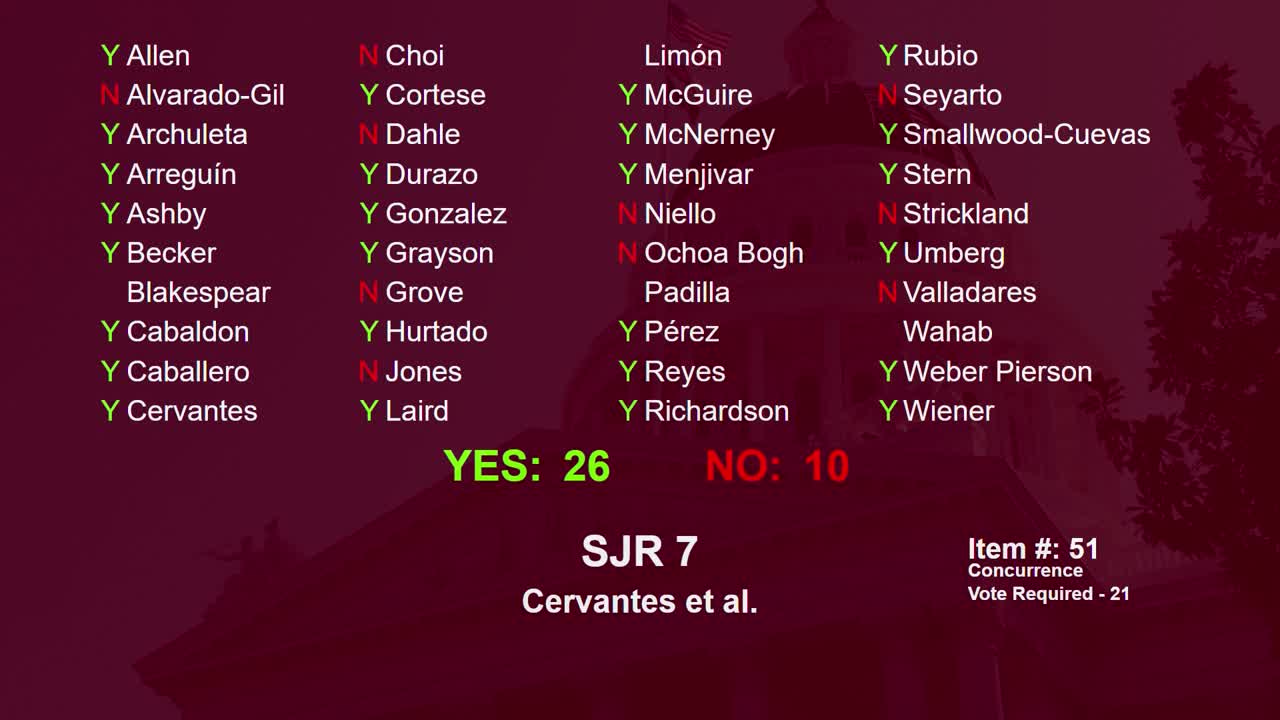 1MIN
Senate Floor
 1MIN
Assembly Floor
 2MIN
Senate Floor
 9MIN
Senate Standing Committee on Local Government
 27MIN
Senate Standing Committee on Revenue and Taxation
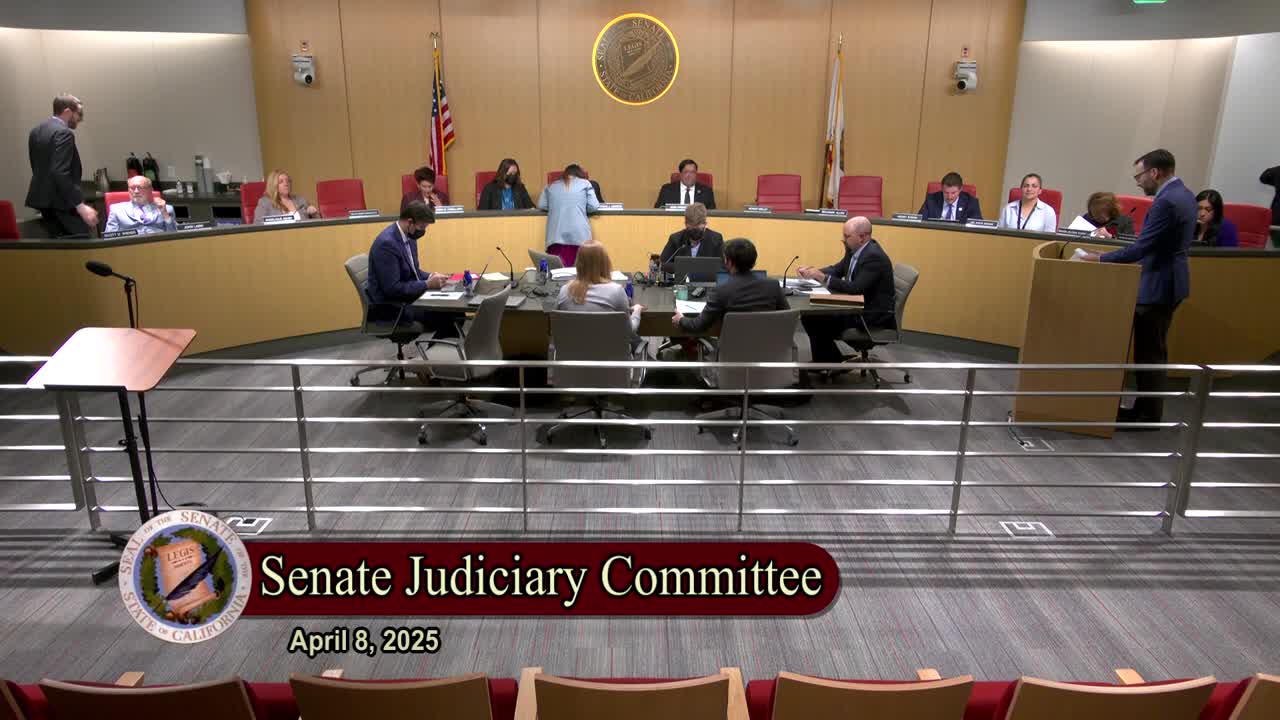 19MIN
Senate Standing Committee on Judiciary
Bill Author

Bill Co-Author(s):