SB 809: Employees and independent contractors: construction trucking.
- Session Year: 2025-2026
- House: Senate
- Latest Version Date: 2025-10-11
Current Status:
Passed
(2025-10-11: Chaptered by Secretary of State. Chapter 659, Statutes of 2025.)
Introduced
In Committee
Awaiting First Chamber Vote
Passed First Chamber
In Committee
Awaiting Second Chamber Vote
Passed Second Chamber
Enacted
(1)Existing law, as established in the case of Dynamex Operations W. v. Superior Court (2018) 4 Cal.5th 903 (Dynamex), creates a presumption that a worker who performs services for a hirer is an employee for purposes of claims for wages and benefits arising under wage orders issued by the Industrial Welfare Commission. Existing law requires a 3-part test, commonly known as the ABC test, to determine if workers are employees or independent contractors for those purposes.
Existing law establishes that, for purposes of the Labor Code, the Unemployment Insurance Code, and the wage orders of the Industrial Welfare Commission, a person providing labor or services for remuneration is considered an employee rather than an independent contractor unless the hiring entity demonstrates that the person is free from the control and direction of the hiring entity in connection with the performance of the work, the person performs work that is outside the usual course of the hiring entitys business, and the person is customarily engaged in an independently established trade, occupation, or business. This test is commonly known as the ABC test, as described above. Existing law charges the Labor Commissioner with the enforcement of labor laws, including worker classification.
Existing law exempts specified occupations and business relationships from the application of Dynamex and the provisions described above.
This bill would provide that mere ownership of a vehicle, including a personal vehicle or a commercial vehicle, used by a person in providing labor or services for remuneration does not make that person an independent contractor. The bill would state that this provision is declarative of existing law.
(2)Existing law establishes the Motor Carrier Employer Amnesty Program administered by the Labor Commissioner and the Employment Development Department. Pursuant to the program, notwithstanding any law, a motor carrier performing drayage services may be relieved of liability for statutory or civil penalties associated with the misclassification of commercial drivers as independent contractors if the motor carrier enters into a settlement agreement with the commissioner, with the cooperation and consent of the department, prior to January 1, 2017, whereby the motor carrier agrees to classify all of its commercial drivers as employees, and the settlement agreement contains prescribed components, including, but not limited to, an agreement by the motor carrier to pay all wages, benefits, and taxes owed, if any.
This bill would establish a similar program, known as the Construction Trucking Employer Amnesty Program, to be administered by the commissioner and the department. Under the bill, an eligible construction contractor would be relieved of liability for statutory or civil penalties, except as provided, associated with the misclassification of construction drivers as independent contractors, if the eligible construction contractor executes a settlement agreement negotiated with, or approved by, the commissioner prior to January 1, 2029, whereby the eligible construction contractor agrees to properly classify all drivers performing construction work on their behalf as employees and the settlement agreement contains prescribed components, including, but not limited to, an agreement by the construction contractor to pay all wages, benefits, and taxes owed, if any. If a construction driver declines to accept the terms of a settlement agreement, the bill would still require an eligible construction contractor to reclassify the construction driver as an employee and the construction driver would be precluded from pursuing a claim for civil or statutory penalties under specified provisions of law for a claim arising during the period of time covered by the settlement agreement.
(3)Existing law requires an employer to indemnify their employee for all necessary expenditures or losses incurred by the employee in direct consequence of the discharge of their duties, or of their obedience to the directions of the employer, as provided.
This bill would provide that the duty of an employer to indemnify their employee for all necessary expenses or losses applies to the use of a vehicle owned by an employee and used by that employee in the discharge of their duties. The bill would provide that, with respect to construction trucking, a commercial motor vehicle driver who owns the truck, tractor, trailer, or other commercial vehicle that they use in the discharge of their duties as an employee working for an employer would be entitled to reimbursement for the use, upkeep, and depreciation of that truck, tractor, trailer, or other commercial vehicle, as provided. The bill would state that specified provisions described above are declarative of existing law.
(1)Existing law, as established in the case of Dynamex Operations W. v. Superior Court (2018) 4 Cal.5th 903 (Dynamex), creates a presumption that a worker who performs services for a hirer is an employee for purposes of claims for wages and benefits arising under wage orders issued by the Industrial Welfare Commission. Existing law requires a 3-part test, commonly known as the ABC test, to determine if workers are employees or independent contractors for those purposes.
Existing law establishes that, for purposes of the Labor Code, the Unemployment Insurance Code, and the wage orders of the Industrial Welfare Commission, a person providing labor or services for remuneration is considered an employee rather than an independent contractor unless the hiring entity demonstrates that the person is free from the control and direction of the hiring entity in connection with the performance of the work, the person performs work that is outside the usual course of the hiring entitys business, and the person is customarily engaged in an independently established trade, occupation, or business. This test is commonly known as the ABC test, as described above. Existing law charges the Labor Commissioner with the enforcement of labor laws, including worker classification.
Existing law exempts specified occupations and business relationships from the application of Dynamex and the provisions described above.
This bill would provide that mere ownership of a vehicle, including a personal vehicle or a commercial vehicle, used by a person in providing labor or services for remuneration does not make that person an independent contractor.
(2)Existing law establishes the Motor Carrier Employer Amnesty Program administered by the Labor Commissioner and the Employment Development Department. Pursuant to the program, notwithstanding any law, a motor carrier performing drayage services may be relieved of liability for statutory or civil penalties associated with the misclassification of commercial drivers as independent contractors if the motor carrier enters into a settlement agreement with the commissioner, with the cooperation and consent of the department, prior to January 1, 2017, whereby the motor carrier agrees to classify all of its commercial drivers as employees, and the settlement agreement contains prescribed components, including, but not limited to, an agreement by the motor carrier to pay all wages, benefits, and taxes owed, if any.
This bill would establish a similar program, known as the Construction Trucking Employer Amnesty Program, to be administered by the commissioner and the department. Under the bill, an eligible construction contractor would be relieved of liability for statutory or civil penalties penalties, except as provided, associated with the misclassification of construction drivers as independent contractors, if the eligible construction contractor executes a settlement agreement negotiated with, or approved by, the commissioner prior to January 1, 2029, whereby the eligible construction contractor agrees to properly classify all drivers performing construction work on their behalf as employees and the settlement agreement contains prescribed components, including, but not limited to, an agreement by the construction contractor to pay all wages, benefits, and taxes owed, if any. If a construction driver declines to accept the terms of a settlement agreement, the bill would still require an eligible construction contractor to reclassify the construction driver as an employee and the construction driver would be precluded from pursuing a claim for civil or statutory penalties under specified provisions of law for a claim arising during the period of time covered by the settlement agreement.
(3)Existing law requires an employer to indemnify their employee for all necessary expenditures or losses incurred by the employee in direct consequence of the discharge of their duties, or of their obedience to the directions of the employer, as provided.
This bill would provide that the duty of an employer to indemnify their employee for all necessary expenses or losses applies to the use of a vehicle owned by an employee and used by that employee in the discharge of their duties. The bill would provide that, with respect to construction trucking, a commercial motor vehicle driver who owns the truck, tractor, trailer, or other commercial vehicle that they use in the discharge of their duties as an employee working for an employer would be entitled to reimbursement for the use, upkeep, and depreciation of that truck, tractor, trailer, or other commercial vehicle, as provided.
(1)Existing law, as established in the case of Dynamex Operations W. v. Superior Court (2018) 4 Cal.5th 903 (Dynamex), creates a presumption that a worker who performs services for a hirer is an employee for purposes of claims for wages and benefits arising under wage orders issued by the Industrial Welfare Commission. Existing law requires a 3-part test, commonly known as the ABC test, to determine if workers are employees or independent contractors for those purposes.
Existing law establishes that, for purposes of the Labor Code, the Unemployment Insurance Code, and the wage orders of the Industrial Welfare Commission, a person providing labor or services for remuneration is considered an employee rather than an independent contractor unless the hiring entity demonstrates that the person is free from the control and direction of the hiring entity in connection with the performance of the work, the person performs work that is outside the usual course of the hiring entitys business, and the person is customarily engaged in an independently established trade, occupation, or business. This test is commonly known as the ABC test, as described above. Existing law charges the Labor Commissioner with the enforcement of labor laws, including worker classification.
Existing law exempts specified occupations and business relationships from the application of Dynamex and the provisions described above.
This bill would provide that mere ownership of a vehicle, including a personal vehicle or a commercial vehicle, used by a person in providing labor or services for remuneration does not make that person an independent contractor.
(2)Existing law establishes the Motor Carrier Employer Amnesty Program administered by the Labor Commissioner and the Employment Development Department. Pursuant to the program, notwithstanding any law, a motor carrier performing drayage services may be relieved of liability for statutory or civil penalties associated with the misclassification of commercial drivers as independent contractors if the motor carrier enters into a settlement agreement with the commissioner, with the cooperation and consent of the department, prior to January 1, 2017, whereby the motor carrier agrees to classify all of its commercial drivers as employees, and the settlement agreement contains prescribed components, including, but not limited to, an agreement by the motor carrier to pay all wages, benefits, and taxes owed, if any.
This bill would establish a similar program, known as the Construction Trucking Employer Amnesty Program, to be administered by the commissioner and the department. Under the bill, an eligible construction contractor would be relieved of liability for statutory or civil penalties associated with the misclassification of construction drivers as independent contractors, if the eligible construction contractor executes a settlement agreement with the commissioner, with the cooperation and consent of the department, negotiated with, or approved by, the commissioner prior to January 1, 2029, whereby the eligible construction contractor agrees to properly classify all drivers performing construction work on their behalf as employees and the settlement agreement contains prescribed components, including, but not limited to, an agreement by the construction contractor to pay all wages, benefits, and taxes owed, if any.
(3)Existing law requires an employer to indemnify their employee for all necessary expenditures or losses incurred by the employee in direct consequence of the discharge of their duties, or of their obedience to the directions of the employer, as provided.
This bill would provide that the duty of an employer to indemnify their employee for all necessary expenses or losses applies to the use of a vehicle owned by an employee and used by that employee in the discharge of their duties. The bill would provide that, with respect to construction trucking, a commercial motor vehicle driver who owns the truck, tractor, trailer, or other commercial vehicle that they use in the discharge of their duties as an employee working for an employer would be entitled to reimbursement for the use, upkeep, and depreciation of that truck, tractor, trailer, or other commercial vehicle, as provided.
(1)Existing law, as established in the case of Dynamex Operations W. v. Superior Court (2018) 4 Cal.5th 903 (Dynamex), creates a presumption that a worker who performs services for a hirer is an employee for purposes of claims for wages and benefits arising under wage orders issued by the Industrial Welfare Commission. Existing law requires a 3-part test, commonly known as the ABC test, to determine if workers are employees or independent contractors for those purposes.
Existing law establishes that, for purposes of the Labor Code, the Unemployment Insurance Code, and the wage orders of the Industrial Welfare Commission, a person providing labor or services for remuneration is considered an employee rather than an independent contractor unless the hiring entity demonstrates that the person is free from the control and direction of the hiring entity in connection with the performance of the work, the person performs work that is outside the usual course of the hiring entitys business, and the person is customarily engaged in an independently established trade, occupation, or business. This test is commonly known as the ABC test, as described above. Existing law charges the Labor Commissioner with the enforcement of labor laws, including worker classification.
Existing law exempts specified occupations and business relationships from the application of Dynamex and the provisions described above.
This bill would provide that mere ownership of a vehicle, including a personal vehicle or a commercial vehicle, used by a person in providing labor or services for remuneration does not make that person an independent contractor.
(2)Existing law establishes the Motor Carrier Employer Amnesty Program administered by the Labor Commissioner and the Employment Development Department. Pursuant to the program, notwithstanding any law, a motor carrier performing drayage services may be relieved of liability for statutory or civil penalties associated with the misclassification of commercial drivers as independent contractors if the motor carrier enters into a settlement agreement with the commissioner, with the cooperation and consent of the department, prior to January 1, 2017, whereby the motor carrier agrees to classify all of its commercial drivers as employees, and the settlement agreement contains prescribed components, including, but not limited to, an agreement by the motor carrier to pay all wages, benefits, and taxes owed, if any.
This bill would establish a similar program, known as the Construction Trucking Employer Amnesty Program, to be administered by the commissioner and the department. Under the bill, an eligible construction contractor would be relieved of liability for statutory or civil penalties associated with the misclassification of construction drivers as independent contractors, if the eligible construction contractor executes a settlement agreement with the commissioner, with the cooperation and consent of the department, prior to January 1, 2027, 2029, whereby the eligible construction contractor agrees to properly classify all drivers performing construction work on their behalf as employees and the settlement agreement contains prescribed components, including, but not limited to, an agreement by the motor carrier construction contractor to pay all wages, benefits, and taxes owed, if any.
(3)Existing law requires an employer to indemnify their employee for all necessary expenditures or losses incurred by the employee in direct consequence of the discharge of their duties, or of their obedience to the directions of the employer, as provided.
This bill would provide that the duty of an employer to indemnify their employee for all necessary expenses or losses applies to the use of a vehicle owned by an employee and used by that employee in the discharge of their duties. The bill would provide that, with respect to construction trucking, a commercial motor vehicle driver who owns the truck, tractor, trailer, or other commercial vehicle that they use in the discharge of their duties as an employee working for an employer would be entitled to reimbursement for the use, upkeep, and depreciation of that truck, tractor, trailer, or other commercial vehicle, as provided.
(1)Existing law, as established in the case of Dynamex Operations W. v. Superior Court (2018) 4 Cal.5th 903 (Dynamex), creates a presumption that a worker who performs services for a hirer is an employee for purposes of claims for wages and benefits arising under wage orders issued by the Industrial Welfare Commission. Existing law requires a 3-part test, commonly known as the ABC test, to determine if workers are employees or independent contractors for those purposes.
Existing law establishes that, for purposes of the Labor Code, the Unemployment Insurance Code, and the wage orders of the Industrial Welfare Commission, a person providing labor or services for remuneration is considered an employee rather than an independent contractor unless the hiring entity demonstrates that the person is free from the control and direction of the hiring entity in connection with the performance of the work, the person performs work that is outside the usual course of the hiring entitys business, and the person is customarily engaged in an independently established trade, occupation, or business. This test is commonly known as the ABC test, as described above. Existing law charges the Labor Commissioner with the enforcement of labor laws, including worker classification.
Existing law exempts specified occupations and business relationships from the application of Dynamex and the provisions described above.
This bill would provide that mere ownership of a vehicle, including a personal vehicle or a commercial vehicle, or other tools, used by a person in providing labor or services for remuneration does not make that person an independent contractor.
(2)Existing law establishes the Motor Carrier Employer Amnesty Program administered by the Labor Commissioner and the Employment Development Department. Pursuant to the program, notwithstanding any law, a motor carrier performing drayage services may be relieved of liability for statutory or civil penalties associated with the misclassification of commercial drivers as independent contractors if the motor carrier enters into a settlement agreement with the commissioner, with the cooperation and consent of the department, prior to January 1, 2017, whereby the motor carrier agrees to classify all of its commercial drivers as employees, and the settlement agreement contains prescribed components, including, but not limited to, an agreement by the motor carrier to pay all wages, benefits, and taxes owed, if any.
This bill would establish a similar program, known as the Construction Trucking Employer Amnesty Program, to be administered by the commissioner and the department. Under the bill, an eligible construction contractor would be relieved of liability for statutory or civil penalties associated with the misclassification of construction drivers as independent contractors, if the eligible construction contractor executes a settlement agreement with the commissioner, with the cooperation and consent of the department, prior to January 1, 2027, whereby the eligible construction contractor agrees to properly classify all drivers performing construction work on their behalf as employees and the settlement agreement contains prescribed components, including, but not limited to, an agreement by the motor carrier to pay all wages, benefits, and taxes owed, if any.
(3)Existing law requires an employer to indemnify their employee for all necessary expenditures or losses incurred by the employee in direct consequence of the discharge of their duties, or of their obedience to the directions of the employer, as provided.
This bill would provide that the duty of an employer to indemnify their employee for all necessary expenses or losses applies to the use of a vehicle or other tools owned by an employee and used by that employee in the discharge of their duties. The bill would provide that, with respect to construction trucking, a commercial motor vehicle driver who owns the truck, tractor, trailer, or other commercial vehicle that they use in the discharge of their duties as an employee working for an employer would be entitled to reimbursement for the use, upkeep, and depreciation of that truck, tractor, trailer, or other commercial vehicle, as provided.
(a) The Labor Commissioner and the Employment Development Department shall administer the Construction Trucking Employer Amnesty Program pursuant to which, notwithstanding any other law, an eligible construction contractor shall be relieved of liability for statutory or civil penalties associated with the misclassification of construction drivers as independent contractors, as provided by this program, if the eligible construction contractor executes a settlement agreement negotiated with, or approved by, the Labor Commissioner whereby the eligible construction contractor agrees to, among other things, properly classify all drivers performing construction work on its behalf as employees.
(b)As used in this section, the following terms shall have the following meanings:
(1)(A)Construction contract means a contract, whether on a lump sum, time and material, cost plus, or other basis, to do any of the following:
(i)Erect, construct, alter, or repair any building or other structure, project, development, or other improvement on or to real property.
(ii)Erect, construct, alter, or repair any fixed works, including waterways and hydroelectric plants, steam and atomic electric generating plants, electrical transmission and distribution lines, telephone and telegraph lines, railroads, highways, airports, sewers and sewage disposal plants and systems, waterworks and water distribution systems, gas transmission and distribution systems, pipelines and other systems for the transmission of petroleum and other liquid or gaseous substances, refineries, and chemical plants.
(iii)Pave surfaces separately or in connection with any of the above works or projects.
(iv)Furnish and install the property becoming a part of a central heating, air-conditioning, or electrical system of a building or other structure, and furnish and install wires, ducts, pipes, vents, and other conduit imbedded in or securely affixed to the land or a structure on the land.
(B)Construction contract does not include either of the following:
(i)A contract for the sale, or for the sale and installation, of tangible personal property, including machinery and equipment.
(ii)The furnishing of tangible personal property under what is otherwise a construction contract if the person furnishing the property is not responsible under the construction contract for the final affixation or installation of the property furnished.
(2)Construction contractor means a person who agrees to perform and does perform a construction contract. Construction contractor includes subcontractors and specialty contractors and those engaged in building trades, including carpentry, bricklaying, cement work, steel work, plastering, drywall installation, sheet metal work, roofing, tile and terrazzo work, electrical work, plumbing, heating, air-conditioning, elevator installation and construction, painting, and persons installing floor coverings, including linoleum, floor tile, and wall-to-wall carpeting, by permanently affixing those coverings to a floor. Construction contractor includes any person required to be licensed under the Contractors State License Law (Chapter 9 (commencing with Section 7000) of Division 3 of the Business and Professions Code) and any person contracting with the federal government to perform a construction contract.
(3)Construction driver means a person who operates a motor vehicle to perform construction work on behalf of a construction contractor, utilizing a vehicle owned by the driver or a vehicle supplied by the construction contractor.
(4)Department means the Employment Development Department.
(5)Eligible construction contractor means a construction contractor that does not have either of the following on the date they apply to participate in the program:
(A)A civil lawsuit that was filed on or before December 31, 2025, pending against it in a state or federal court that alleges or involves a misclassification of a construction driver.
(B)A penalty assessed by the department pursuant to Section 1128 of the Unemployment Insurance Code that is final imposition of that penalty.
(6)Program means the Construction Trucking Employer Amnesty Program established by this section.
(c)(1)A construction contractor shall only apply to participate in the program by doing both of the following:
(A)Submitting an application to the Labor Commissioner, on a form provided by the Labor Commissioner. The application shall, at a minimum, require the construction contractor to establish they qualify as an eligible construction contractor.
(B)Reporting on the results of a self-audit in accordance with the guidelines provided by the Labor Commissioner.
(2)A construction contractor that voluntarily or as a result of a final disposition in a civil proceeding reclassified its construction drivers as employees on or before September 1, 2028, shall, in addition to other information requested by the Labor Commissioner, also submit with its application all of the following:
(A)Documentation demonstrating that the construction contractor reclassified their construction drivers as employees, including the commencement period applicable to the reclassification.
(B)The identification of each construction driver reclassified in the documents provided in subparagraph (A), the amounts paid to each construction driver to compensate for the previous misclassification, and the time period applicable to the amount paid to each construction driver prior to reclassification.
(C)A report of a self-audit for all construction drivers reclassified by the construction contractor identified in subparagraphs (A) and (B), and also include a separate self-audit report for any construction driver who is subject to reclassification, but is not identified in subparagraph (B).
(3)A proceeding or action against a construction contractor pursuant to Sections 2698 to 2699.5, inclusive, shall not be initiated after the construction contractor has submitted an application for participation in the program, but may be initiated if the construction contractors application is denied.
(4)If a construction contractors application to participate in the program is denied by the Labor Commissioner, the application or its submission shall not be considered an acknowledgment or admission by the construction contractor that they misclassified their construction drivers as independent contractors, and the application or its submission shall not be construed in any way to support an evidentiary inference that the construction contractor failed to properly classify their construction drivers as employees.
(d)The Labor Commissioner shall analyze the information provided pursuant to paragraph (2) of subdivision (c) for the purpose of evaluating the scope of a prior reclassification of an eligible construction contractors construction drivers to employees and has discretionary authority to determine whether the scope was sufficient to afford relief to the misclassified construction drivers.
(1)Before January 1, 2029, the Labor Commissioner, with the cooperation and consent of the department, may negotiate and execute a settlement agreement with an eligible construction contractor that applied to participate in the program. The Labor Commissioner shall not execute a settlement agreement on or after January 1, 2029.
(2)Before January 1, 2029, an eligible construction contractor may negotiate a settlement agreement with a labor union representing its drivers, or with any city attorney, and shall submit that settlement agreement to the Labor Commissioner, who shall review and may approve that settlement agreement under the program. The Labor Commissioner shall not approve a settlement agreement on or after January 1, 2029.
(e)Prior to the Labor Commissioner executing or approving a settlement agreement, an eligible construction contractor shall file their contribution returns and report unreported wages and taxes to the department for the time period the construction contractor seeks relief under the settlement agreement.
(f)A settlement agreement executed or approved by the Labor Commissioner involving an eligible construction contractor pursuant to the program shall require an eligible construction contractor to do all of the following:
(1)Pay all wages, benefits, and taxes owed, if any, to or in relation to all of its construction drivers reclassified from independent contractors to employees for the period of time from the first date of misclassification to the date the settlement agreement is executed, but not exceeding the applicable statute of limitations. The settlement shall include interest on unpaid taxes at the adjusted annual rate and by the method established pursuant to Section 19521 of the Revenue and Taxation Code and interest for unpaid wages at the rate of interest specified in subdivision (b) of Section 3289 of the Civil Code.
(2)Maintain any converted construction driver positions as employee positions.
(3)Consent that any future construction drivers hired to perform the same or similar duties as those employees converted pursuant to the settlement agreement shall be presumed to have employee status and that the eligible construction contractor shall have the burden to prove by clear and convincing evidence that they are not employees in any administrative or judicial proceeding in which their employment status is an issue.
(4)Immediately after the execution of the settlement agreement, secure the workers compensation coverage that is legally required for the construction drivers who were reclassified as employees, effective on or before the date the settlement agreement is executed.
(5)Provide the Labor Commissioner with proof of workers compensation insurance coverage in compliance with paragraph (4) within five days of securing the coverage.
(6)Pay the costs authorized by subdivision (g), if required.
(7)Perform any other requirements or provisions the Labor Commissioner and the department deem necessary to carry out the intent of this section, the program, or to enforce the settlement agreement.
(g)A settlement agreement may require an eligible construction contractor to pay the reasonable, actual costs of the Labor Commissioner and the department for their respective review, approval, and compliance monitoring of the settlement agreement. The costs shall be deposited into the Labor Enforcement and Compliance Fund. The portion of the costs attributable to the department shall be transferred to the department upon appropriation by the Legislature.
(h)The settlement agreement may include provisions for an eligible construction contractor to make installment payments of amounts due pursuant to paragraphs (1) and (6) of subdivision (f) in lieu of a full payment. The period of installment payments shall not exceed 24 months from the date the settlement agreement is signed. An installment payment agreement shall be included within the settlement agreement and charge interest on the outstanding amounts due for unpaid taxes at the adjusted annual rate and by the method established pursuant to Section 19521 of the Revenue and Taxation Code and due for unpaid wages at the rate of interest specified in subdivision (b) of Section 3289 of the Civil Code. Interest on amounts due shall be charged from the day after the date the settlement agreement is executed, which will be the new date of delinquency, until paid. The settlement agreement shall contain a provision that if a construction contractor fails, without good cause, to fully comply with terms of the settlement agreement authorizing installment payments, the settlement agreement shall be null and void and the total amount of tax, interest, and penalties for the time period covered by the settlement agreement shall be immediately due and payable.
(i)The Labor Commissioner and the department may share any information necessary to carry out the program. Sharing information pursuant to this subdivision shall not constitute a waiver of any applicable confidentiality requirements and the party receiving the information shall be subject to any existing confidentiality requirements for that information.
(j)(1) Notwithstanding any other law and pursuant to the program, an eligible construction contractor that executed and performed its obligations pursuant to a settlement agreement shall not be liable, and the Labor Commissioner or the department shall not enforce, any civil or statutory penalties under this code or the Unemployment Insurance Code resulting from the misclassification of employees, including, but not limited to, remedies available under subdivision (e) of Section 226, that might have become due and payable for the time period covered by the settlement agreement, except for the following penalties:
(A)A penalty assessed by the department under Section 1128 of the Unemployment Insurance Code that is final on the date of the settlement agreement is executed, unless the penalty is reversed by the California Unemployment Insurance Appeals Board.
(B)A penalty for an amount an eligible construction contractor admitted was based on fraud or made with the intent to evade the reporting requirements set forth in this division, Division 1 (commencing with Section 100) of the Unemployment Insurance Code, or authorized regulations.
(C)A penalty based on a violation of this division or Division 6 (commencing with Section 13000) of the Unemployment Insurance Code and either of the following:
(i)The eligible construction contractor was on notice of a criminal investigation due to a complaint having been filed or by written notice having been mailed to the eligible construction contractor informing the construction contractor that they are under criminal investigation.
(ii)A criminal court proceeding has already been initiated against the eligible construction contractor.
(2)(A) Notwithstanding any other law and pursuant to the program, an eligible construction contractor that executed and performed their obligations pursuant to a settlement agreement shall not be liable, and the Labor Commissioner or the department shall not enforce, any unpaid penalties or interest owed on unpaid penalties for which an eligible construction contractor may have been liable but that were not yet assessed by the department or by a court of competent jurisdiction on or before the date the settlement agreement was executed, pursuant to Sections 1112, 1112.5, 1126, and 1127 of the Unemployment Insurance Code for the tax reporting periods for which the settlement agreement is applicable, that may be owed as a result of the nonpayment of tax liabilities due to the misclassification of one or more construction drivers as independent contractors and the reclassification of these construction drivers as employees. Any penalties, and interest owed on penalties, established as a result of an assessment issued by the department or by a court of competent jurisdiction before the date the settlement agreement was executed shall not be waived pursuant to the program.
(B)For purposes of paragraph (1), state personal income taxes required to be withheld by Section 13020 of the Unemployment Insurance Code and owed by the construction contractor pursuant to Section 13070 of the Unemployment Insurance Code shall not be collected, if the eligible construction contractor issued an information return pursuant to Section 6041A of the Internal Revenue Code reporting payment or if the construction driver certifies that the state personal income tax has been paid or that the construction driver has reported to the Franchise Tax Board the payment against which the state personal income tax would have been imposed.
(3)A refund or credit for any penalty or interest paid prior to the date an eligible construction contractor applied to participate in the program shall not be granted.
(4)Except for violations described in Section 2119 of the Unemployment Insurance Code, the department shall not bring a criminal action for failing to report tax liabilities against an eligible construction contractor that executed and performed their obligations pursuant to a settlement agreement for the tax reporting periods subject to the settlement agreement.
(k)The statute of limitations on any claim or liability that might have been asserted against a construction contractor based on the construction contractor having misclassified a construction driver as an independent contractor shall be tolled from the date a construction contractor applies for participation in the program through the date the Labor Commissioner either denies the construction contractor participation in the program or the construction contractor, as an eligible construction contractor, has failed to perform an obligation under the settlement agreement, whichever is later.
(l)(1)The recovery obtained by the Labor Commissioner on behalf of a reclassified construction driver pursuant to a settlement agreement shall be tendered to the construction driver on the condition that the construction driver shall execute a release of all claims covered by the settlement agreement that the construction driver may have against the eligible construction contractor based on the eligible construction contractors failure to classify the construction driver as an employee.
(2)A construction driver shall not be under any obligation to accept the terms of a settlement agreement.
(A)If a construction driver declines to accept the terms of a settlement agreement, the construction driver shall not be bound by the settlement agreement, except that the eligible construction contractor shall still reclassify the construction driver as an employee and that construction driver shall be precluded from pursuing a claim for civil penalties or statutory penalties under the Labor Code Private Attorneys General Act of 2004 (Part 13 (commencing with Section 2698) of Division 2) for a claim arising during the period of time covered by the settlement agreement.
(B)If a construction driver does not accept the terms of a settlement agreement, the construction contractor shall be excused from performing their requirement under the settlement agreement to pay the amount acknowledged in the settlement agreement to be due to that construction driver.
(m)(1) If the Labor Commissioner determines an eligible construction contractor violated or failed to perform any of their obligations under a settlement agreement, the Labor Commissioner may file a civil action to enforce the settlement agreement.
(2)(A) If the Labor Commissioner files a civil action seeking only recovery of the amounts due to construction drivers under the settlement agreement, the Labor Commissioner may obtain judicial enforcement by filing a petition for entry of judgment for the liabilities due and remaining pursuant to the settlement agreement.
(B)After filing a petition pursuant to subparagraph (A), the Labor Commissioner may file an application for an order to show cause and serve it on the eligible construction contractor. Within 60 days of the date the Labor Commissioner filed the order to show cause, the court shall hold a hearing and enter a judgment. The judgment shall be in amounts which are due and owing to construction drivers pursuant to the settlement agreement with credits, if any, for applicable payments the eligible construction contractor made under the settlement agreement. A judgment entered pursuant to this paragraph shall not preclude subsequent action to recover civil penalties or statutory penalties by the Labor Commissioner, or by an employee pursuant to Sections 2698 to 2699.5, inclusive.
(3)If the court determines in any action filed by the Labor Commissioner that a construction contractor has violated or otherwise failed to perform any of their obligations under a settlement agreement, the court shall award the Labor Commissioner costs and reasonable attorneys fees.
SEC. 2.Section 2775.5 is added to the Labor Code, to read:2775.5.(a)Mere ownership of a vehicle, including a personal vehicle or a commercial vehicle, used by a person in providing labor or services for remuneration does not make that person an independent contractor. A person who owns a vehicle they use to provide labor or services, either as an individual or through a business entity they own, may be either an employee or an independent contractor depending on whether the conditions in paragraph (1) of subdivision (b) of Section 2775 are satisfied. If the conditions are not satisfied and the owner of the vehicle is an employee, the employee shall be reimbursed for use of the vehicle as described in Sections 2802 and 2802.2.
(b)This section is declarative of existing law.
SEC. 3.Section 2802.2 is added to the Labor Code, to read:2802.2.(a)Section 2802 applies to the use of a vehicle, including a personal vehicle or a commercial vehicle, owned by an employee and used by that employee in the discharge of their duties. This subdivision is declarative of existing law.
(b)(1)With respect to construction trucking, a commercial motor vehicle driver who owns the truck, tractor, trailer, or other commercial vehicle that they use in the discharge of their duties as an employee working for an employer is entitled to reimbursement for the use, upkeep, and depreciation of that truck, tractor, trailer, or other commercial vehicle. This subdivision applies whether the vehicle is owned by the driver as an individual or whether the vehicle is owned by the driver through a corporate entity. This paragraph is declarative of existing law.
(2)(A)The amount to be reimbursed for the use of the truck, tractor, or trailer shall be negotiated either by the driver and the employer, or by a labor union representing that driver and the employer. The amount negotiated shall be either a flat rate reimbursement or a per-mile reimbursement, but in no case shall the amount negotiated be less than the actual amount expended by the driver for a flat rate reimbursement or less than the standard mileage reimbursement rate set by the Internal Revenue Service for the time the services were provided for a per-mile reimbursement.
(B)An amount owed to a driver under this section may be paid directly to the driver in the drivers name, or may be paid to a corporate entity owned and controlled by the driver if the truck, tractor, or trailer is owned by the corporate entity rather than by the driver directly.
(a) The Labor Commissioner and the Employment Development Department shall administer the Construction Trucking Employer Amnesty Program pursuant to which, notwithstanding any other law, an eligible construction contractor shall be relieved of liability for statutory or civil penalties associated with the misclassification of construction drivers as independent contractors, as provided by this program, if the eligible construction contractor executes a settlement agreement negotiated with, or approved by, the Labor Commissioner whereby the eligible construction contractor agrees to, among other things, properly classify all drivers performing construction work on its behalf as employees.
(b)As used in this section, the following terms shall have the following meanings:
(1)(A)Construction contract means a contract, whether on a lump sum, time and material, cost plus, or other basis, to do any of the following:
(i)Erect, construct, alter, or repair any building or other structure, project, development, or other improvement on or to real property.
(ii)Erect, construct, alter, or repair any fixed works, including waterways and hydroelectric plants, steam and atomic electric generating plants, electrical transmission and distribution lines, telephone and telegraph lines, railroads, highways, airports, sewers and sewage disposal plants and systems, waterworks and water distribution systems, gas transmission and distribution systems, pipelines and other systems for the transmission of petroleum and other liquid or gaseous substances, refineries, and chemical plants.
(iii)Pave surfaces separately or in connection with any of the above works or projects.
(iv)Furnish and install the property becoming a part of a central heating, air-conditioning, or electrical system of a building or other structure, and furnish and install wires, ducts, pipes, vents, and other conduit imbedded in or securely affixed to the land or a structure on the land.
(B)Construction contract does not include either of the following:
(i)A contract for the sale, or for the sale and installation, of tangible personal property, including machinery and equipment.
(ii)The furnishing of tangible personal property under what is otherwise a construction contract if the person furnishing the property is not responsible under the construction contract for the final affixation or installation of the property furnished.
(2)Construction contractor means a person who agrees to perform and does perform a construction contract. Construction contractor includes subcontractors and specialty contractors and those engaged in building trades, including carpentry, bricklaying, cement work, steel work, plastering, drywall installation, sheet metal work, roofing, tile and terrazzo work, electrical work, plumbing, heating, air-conditioning, elevator installation and construction, painting, and persons installing floor coverings, including linoleum, floor tile, and wall-to-wall carpeting, by permanently affixing those coverings to a floor. Construction contractor includes any person required to be licensed under the Contractors State License Law (Chapter 9 (commencing with Section 7000) of Division 3 of the Business and Professions Code) and any person contracting with the federal government to perform a construction contract.
(3)Construction driver means a person who operates a motor vehicle to perform construction work on behalf of a construction contractor, utilizing a vehicle owned by the driver or a vehicle supplied by the construction contractor.
(4)Department means the Employment Development Department.
(5)Eligible construction contractor means a construction contractor that does not have either of the following on the date they apply to participate in the program:
(A)A civil lawsuit that was filed on or before December 31, 2025, pending against it in a state or federal court that alleges or involves a misclassification of a construction driver.
(B)A penalty assessed by the department pursuant to Section 1128 of the Unemployment Insurance Code that is final imposition of that penalty.
(6)Program means the Construction Trucking Employer Amnesty Program established by this section.
(c)(1)A construction contractor shall only apply to participate in the program by doing both of the following:
(A)Submitting an application to the Labor Commissioner, on a form provided by the Labor Commissioner. The application shall, at a minimum, require the construction contractor to establish they qualify as an eligible construction contractor.
(B)Reporting on the results of a self-audit in accordance with the guidelines provided by the Labor Commissioner.
(2)A construction contractor that voluntarily or as a result of a final disposition in a civil proceeding reclassified its construction drivers as employees on or before September 1, 2028, shall, in addition to other information requested by the Labor Commissioner, also submit with its application all of the following:
(A)Documentation demonstrating that the construction contractor reclassified their construction drivers as employees, including the commencement period applicable to the reclassification.
(B)The identification of each construction driver reclassified in the documents provided in subparagraph (A), the amounts paid to each construction driver to compensate for the previous misclassification, and the time period applicable to the amount paid to each construction driver prior to reclassification.
(C)A report of a self-audit for all construction drivers reclassified by the construction contractor identified in subparagraphs (A) and (B), and also include a separate self-audit report for any construction driver who is subject to reclassification, but is not identified in subparagraph (B).
(3)A proceeding or action against a construction contractor pursuant to Sections 2698 to 2699.5, inclusive, shall not be initiated after the construction contractor has submitted an application for participation in the program, but may be initiated if the construction contractors application is denied.
(4)If a construction contractors application to participate in the program is denied by the Labor Commissioner, the application or its submission shall not be considered an acknowledgment or admission by the construction contractor that they misclassified their construction drivers as independent contractors, and the application or its submission shall not be construed in any way to support an evidentiary inference that the construction contractor failed to properly classify their construction drivers as employees.
(d)The Labor Commissioner shall analyze the information provided pursuant to paragraph (2) of subdivision (c) for the purpose of evaluating the scope of a prior reclassification of an eligible construction contractors construction drivers to employees and has discretionary authority to determine whether the scope was sufficient to afford relief to the misclassified construction drivers.
(1)Before January 1, 2029, the Labor Commissioner, with the cooperation and consent of the department, may negotiate and execute a settlement agreement with an eligible construction contractor that applied to participate in the program. The Labor Commissioner shall not execute a settlement agreement on or after January 1, 2029.
(2)Before January 1, 2029, an eligible construction contractor may negotiate a settlement agreement with a labor union representing its drivers, or with any city attorney, and shall submit that settlement agreement to the Labor Commissioner, who shall review and may approve that settlement agreement under the program. The Labor Commissioner shall not approve a settlement agreement on or after January 1, 2029.
(e)Prior to the Labor Commissioner executing or approving a settlement agreement, an eligible construction contractor shall file their contribution returns and report unreported wages and taxes to the department for the time period the construction contractor seeks relief under the settlement agreement.
(f)A settlement agreement executed or approved by the Labor Commissioner involving an eligible construction contractor pursuant to the program shall require an eligible construction contractor to do all of the following:
(1)Pay all wages, benefits, and taxes owed, if any, to or in relation to all of its construction drivers reclassified from independent contractors to employees for the period of time from the first date of misclassification to the date the settlement agreement is executed, but not exceeding the applicable statute of limitations. The settlement shall include interest on unpaid taxes at the adjusted annual rate and by the method established pursuant to Section 19521 of the Revenue and Taxation Code and interest for unpaid wages at the rate of interest specified in subdivision (b) of Section 3289 of the Civil Code.
(2)Maintain any converted construction driver positions as employee positions.
(3)Consent that any future construction drivers hired to perform the same or similar duties as those employees converted pursuant to the settlement agreement shall be presumed to have employee status and that the eligible construction contractor shall have the burden to prove by clear and convincing evidence that they are not employees in any administrative or judicial proceeding in which their employment status is an issue.
(4)Immediately after the execution of the settlement agreement, secure the workers compensation coverage that is legally required for the construction drivers who were reclassified as employees, effective on or before the date the settlement agreement is executed.
(5)Provide the Labor Commissioner and the department with proof of workers compensation insurance coverage in compliance with paragraph (4) within five days of securing the coverage.
(6)Pay the costs authorized by subdivision (g), if required.
(7)Perform any other requirements or provisions the Labor Commissioner and the department deem necessary to carry out the intent of this section, the program, or to enforce the settlement agreement.
(g)A settlement agreement may require an eligible construction contractor to pay the reasonable, actual costs of the Labor Commissioner and the department for their respective review, approval, and compliance monitoring of the settlement agreement. The costs shall be deposited into the Labor Enforcement and Compliance Fund. The portion of the costs attributable to the department shall be transferred to the department upon appropriation by the Legislature.
(h)The settlement agreement may include provisions for an eligible construction contractor to make installment payments of amounts due pursuant to paragraphs (1) and (6) of subdivision (f) in lieu of a full payment. The period of installment payments shall not exceed 24 months from the date the settlement agreement is signed. An installment payment agreement shall be included within the settlement agreement and charge interest on the outstanding amounts due for unpaid taxes at the adjusted annual rate prescribed in Sections 1113 and 1129 of the Unemployment Insurance Code. and by the method established pursuant to Section 19521 of the Revenue and Taxation Code and due for unpaid wages at the rate of interest specified in subdivision (b) of Section 3289 of the Civil Code. Interest on amounts due shall be charged from the day after the date the settlement agreement is executed. executed, which will be the new date of delinquency, until paid. The settlement agreement shall contain a provision that if a construction contractor fails, without good cause, to fully comply with terms of the settlement agreement authorizing installment payments, the settlement agreement shall be null and void and the total amount of tax, interest, and penalties for the time period covered by the settlement agreement shall be immediately due and payable.
(i)The Labor Commissioner and the department may share any information necessary to carry out the program. Sharing information pursuant to this subdivision shall not constitute a waiver of any applicable confidentiality requirements and the party receiving the information shall be subject to any existing confidentiality requirements for that information.
(j)(1) Notwithstanding any other law and pursuant to the program, an eligible construction contractor that executed and performed its obligations pursuant to a settlement agreement shall not be liable, and the Labor Commissioner or the department shall not enforce, any civil or statutory penalties under this code or the Unemployment Insurance Code resulting from the misclassification of employees, including, but not limited to, remedies available under subdivision (e) of Section 226, that might have become due and payable for the time period covered by the settlement agreement, except for the following penalties:
(A)A penalty charged assessed by the department under Section 1128 of the Unemployment Insurance Code that is final on the date of the settlement agreement is executed, unless the penalty is reversed by the California Unemployment Insurance Appeals Board.
(B)A penalty for an amount an eligible construction contractor admitted was based on fraud or made with the intent to evade the reporting requirements set forth in this division division, Division 1 (commencing with Section 100) of the Unemployment Insurance Code, or authorized regulations.
(C)A penalty based on a violation of this division or Division 6 (commencing with Section 13000) of the Unemployment Insurance Code and either of the following:
(i)The eligible construction contractor was on notice of a criminal investigation due to a complaint having been filed or by written notice having been mailed to the eligible construction contractor informing the construction contractor that they are under criminal investigation.
(ii)A criminal court proceeding has already been initiated against the eligible construction contractor.
(2)(A) Notwithstanding any other law and pursuant to the program, an eligible construction contractor that executed and performed their obligations pursuant to a settlement agreement shall not be liable, and the Labor Commissioner or the department shall not enforce, any unpaid penalties or interest owed on unpaid penalties for which an eligible construction contractor may have been liable but that were not yet assessed by the department or by a court of competent jurisdiction on or before the date the settlement agreement was executed, pursuant to Sections 1112, 1112.5, 1126, and 1127 of the Unemployment Insurance Code for the tax reporting periods for which the settlement agreement is applicable, that may be owed as a result of the nonpayment of tax liabilities due to the misclassification of one or more construction drivers as independent contractors and the reclassification of these construction drivers as employees. Any penalties, and interest owed on penalties, established as a result of an assessment issued by the department or by a court of competent jurisdiction before the date the settlement agreement was executed shall not be waived pursuant to the program.
(B)For purposes of paragraph (1), state personal income taxes required to be withheld by Section 13020 of the Unemployment Insurance Code and owed by the construction contractor pursuant to Section 13070 of the Unemployment Insurance Code shall not be collected, if the eligible construction contractor issued an information return pursuant to Section 6041A of the Internal Revenue Code reporting payment or if the construction driver certifies that the state personal income tax has been paid or that the construction driver has reported to the Franchise Tax Board the payment against which the state personal income tax would have been imposed.
(3)A refund or credit for any penalty or interest paid prior to the date an eligible construction contractor applied to participate in the program shall not be granted.
(4)Except for violations described in Section 2119 of the Unemployment Insurance Code, the department shall not bring a criminal action for failing to report tax liabilities against an eligible construction contractor that executed and performed their obligations pursuant to a settlement agreement for the tax reporting periods subject to the settlement agreement.
(k)The statute of limitations on any claim or liability that might have been asserted against a construction contractor based on the construction contractor having misclassified a construction driver as an independent contractor shall be tolled from the date a construction contractor applies for participation in the program through the date the Labor Commissioner either denies the construction contractor participation in the program or the construction contractor, as an eligible construction contractor, has failed to perform an obligation under the settlement agreement, whichever is later.
(l)(1)The recovery obtained by the Labor Commissioner on behalf of a reclassified construction driver pursuant to a settlement agreement shall be tendered to the construction driver on the condition that the construction driver shall execute a release of all claims covered by the settlement agreement that the construction driver may have against the eligible construction contractor based on the eligible construction contractors failure to classify the construction driver as an employee.
(2)A construction driver shall not be under any obligation to accept the terms of a settlement agreement.
(A)If a construction driver declines to accept the terms of a settlement agreement, the construction driver shall not be bound by the settlement agreement, except that the eligible construction contractor shall still reclassify the construction driver as an employee and that construction driver shall be precluded from pursuing a claim for civil penalties or statutory penalties under the Labor Code Private Attorneys General Act of 2004 (Part 13 (commencing with Section 2698) of Division 2) for a claim arising during the period of time covered by the settlement agreement.
(B)If a construction driver does not accept the terms of a settlement agreement, the construction contractor shall be excused from performing their requirement under the settlement agreement to pay the amount acknowledged in the settlement agreement to be due to that construction driver.
(m)(1) If the Labor Commissioner determines an eligible construction contractor violated or failed to perform any of their obligations under a settlement agreement, the Labor Commissioner may file a civil action to enforce the settlement agreement.
(2)(A) If the Labor Commissioner files a civil action seeking only recovery of the amounts due to construction drivers under the settlement agreement, the Labor Commissioner may obtain judicial enforcement by filing a petition for entry of judgment for the liabilities due and remaining pursuant to the settlement agreement.
(B)After filing a petition pursuant to subparagraph (A), the Labor Commissioner may file an application for an order to show cause and serve it on the eligible construction contractor. Within 60 days of the date the Labor Commissioner filed the order to show cause, the court shall hold a hearing and enter a judgment. The judgment shall be in amounts which are due and owing to construction drivers pursuant to the settlement agreement with credits, if any, for applicable payments the eligible construction contractor made under the settlement agreement. A judgment entered pursuant to this paragraph shall not preclude subsequent action to recover civil penalties or statutory penalties by the Labor Commissioner, or by an employee pursuant to Sections 2698 to 2699.5, inclusive.
(3)If the court determines in any action filed by the Labor Commissioner that a construction contractor has violated or otherwise failed to perform any of their obligations under a settlement agreement, the court shall award the Labor Commissioner costs and reasonable attorneys fees.
SEC. 2.Section 2775.5 is added to the Labor Code, to read:2775.5.(a)Mere ownership of a vehicle, including a personal vehicle or a commercial vehicle, used by a person in providing labor or services for remuneration does not make that person an independent contractor. A person who owns a vehicle they use to provide labor or services, either as an individual or through a business entity they own, may be either an employee or an independent contractor depending on whether the conditions in paragraph (1) of subdivision (b) of Section 2775 are satisfied. If the conditions are not satisfied and the owner of the vehicle is an employee, the employee shall be reimbursed for use of the vehicle as described in Sections 2802 and 2802.2.
(b)This section is declarative of existing law.
SEC. 3.Section 2802.2 is added to the Labor Code, to read:2802.2.(a)Section 2802 applies to the use of a vehicle, including a personal vehicle or a commercial vehicle, owned by an employee and used by that employee in the discharge of their duties. This subdivision is declarative of existing law.
(b)(1)With respect to construction trucking, a commercial motor vehicle driver who owns the truck, tractor, trailer, or other commercial vehicle that they use in the discharge of their duties as an employee working for an employer is entitled to reimbursement for the use, upkeep, and depreciation of that truck, tractor, trailer, or other commercial vehicle. This subdivision applies whether the vehicle is owned by the driver as an individual or whether the vehicle is owned by the driver through a corporate entity. This paragraph is declarative of existing law.
(1)(2)(A)The amount to be reimbursed for the use of the truck, tractor, or trailer shall be negotiated either by the driver and the employer, or by a labor union representing that driver and the employer. The amount negotiated shall be either a flat rate reimbursement or a per-mile reimbursement, but in no case shall the amount negotiated be less than the actual amount expended by the driver for a flat rate reimbursement or less than the standard mileage reimbursement rate set by the Internal Revenue Service for the time the services were provided. provided for a per-mile reimbursement.
(2)(B)An amount owed to a driver under this section may be paid directly to the driver in the drivers name, or may be paid to a corporate entity owned and controlled by the driver if the truck, tractor, or trailer is owned by the corporate entity rather than by the driver directly.
(a) The Labor Commissioner and the Employment Development Department shall administer the Construction Trucking Employer Amnesty Program pursuant to which, notwithstanding any other law, an eligible construction contractor shall be relieved of liability for statutory or civil penalties associated with the misclassification of construction drivers as independent contractors, as provided by this program, if the eligible construction contractor executes a settlement agreement negotiated with, or approved by, the Labor Commissioner whereby the eligible construction contractor agrees to, among other things, properly classify all drivers performing construction work on its behalf as employees.
(b)As used in this section, the following terms shall have the following meanings:
(1)(A)Construction contract means a contract, whether on a lump sum, time and material, cost plus, or other basis, to do any of the following:
(i)Erect, construct, alter, or repair any building or other structure, project, development, or other improvement on or to real property.
(ii)Erect, construct, alter, or repair any fixed works, including waterways and hydroelectric plants, steam and atomic electric generating plants, electrical transmission and distribution lines, telephone and telegraph lines, railroads, highways, airports, sewers and sewage disposal plants and systems, waterworks and water distribution systems, gas transmission and distribution systems, pipelines and other systems for the transmission of petroleum and other liquid or gaseous substances, refineries, and chemical plants.
(iii)Pave surfaces separately or in connection with any of the above works or projects.
(iv)Furnish and install the property becoming a part of a central heating, air-conditioning, or electrical system of a building or other structure, and furnish and install wires, ducts, pipes, vents, and other conduit imbedded in or securely affixed to the land or a structure on the land.
(B)Construction contract does not include either of the following:
(i)A contract for the sale, or for the sale and installation, of tangible personal property, including machinery and equipment.
(ii)The furnishing of tangible personal property under what is otherwise a construction contract if the person furnishing the property is not responsible under the construction contract for the final affixation or installation of the property furnished.
(2)Construction contractor means a person who agrees to perform and does perform a construction contract. Construction contractor includes subcontractors and specialty contractors and those engaged in building trades, including carpentry, bricklaying, cement work, steel work, plastering, drywall installation, sheet metal work, roofing, tile and terrazzo work, electrical work, plumbing, heating, air-conditioning, elevator installation and construction, painting, and persons installing floor coverings, including linoleum, floor tile, and wall-to-wall carpeting, by permanently affixing those coverings to a floor. Construction contractor includes any person required to be licensed under the Contractors State License Law (Chapter 9 (commencing with Section 7000) of Division 3 of the Business and Professions Code) and any person contracting with the federal government to perform a construction contract.
(3)Construction driver means a person who operates a motor vehicle to perform construction work on behalf of a construction contractor, utilizing a vehicle owned by the driver or a vehicle supplied by the construction contractor.
(4)Department means the Employment Development Department.
(5)Eligible construction contractor means a construction contractor that does not have either of the following on the date they apply to participate in the program:
(A)A civil lawsuit that was filed on or before December 31, 2025, pending against it in a state or federal court that alleges or involves a misclassification of a construction driver.
(B)A penalty assessed by the department pursuant to Section 1128 of the Unemployment Insurance Code that is final imposition of that penalty.
(6)Program means the Construction Trucking Employer Amnesty Program established by this section.
(c)(1)A construction contractor shall only apply to participate in the program by doing both of the following:
(A)Submitting an application to the Labor Commissioner, on a form provided by the Labor Commissioner. The application shall, at a minimum, require the construction contractor to establish they qualify as an eligible construction contractor.
(B)Reporting on the results of a self-audit in accordance with the guidelines provided by the Labor Commissioner.
(2)A construction contractor that voluntarily or as a result of a final disposition in a civil proceeding reclassified its construction drivers as employees on or before January 1, 2029, September 1, 2028, shall, in addition to other information requested by the Labor Commissioner, also submit with its application all of the following:
(A)Documentation demonstrating that the construction contractor reclassified their construction drivers as employees, including the commencement period applicable to the reclassification.
(B)The identification of each construction driver reclassified in the documents provided in subparagraph (A), the amounts paid to each construction driver to compensate for the previous misclassification, and the time period applicable to the amount paid to each construction driver prior to reclassification.
(C)A report of a self-audit for all construction drivers reclassified by the construction contractor identified in subparagraphs (A) and (B), and also include a separate self-audit report for any construction driver who is subject to reclassification, but is not identified in subparagraph (B).
(3)A proceeding or action against a construction contractor pursuant to Sections 2698 to 2699.5, inclusive, shall not be initiated after the construction contractor has submitted an application for participation in the program, but may be initiated if the construction contractors application is denied.
(4)If a construction contractors application to participate in the program is denied by the Labor Commissioner, the application or its submission shall not be considered an acknowledgment or admission by the construction contractor that they misclassified their construction drivers as independent contractors, and the application or its submission shall not be construed in any way to support an evidentiary inference that the construction contractor failed to properly classify their construction drivers as employees.
(d)The Labor Commissioner shall analyze the information provided pursuant to paragraph (2) of subdivision (c) for the purpose of evaluating the scope of a prior reclassification of an eligible construction contractors construction drivers to employees and has discretionary authority to determine whether the scope was sufficient to afford relief to the misclassified construction drivers.
(1)Before January 1, 2029, the Labor Commissioner, with the cooperation and consent of the department, may negotiate and execute a settlement agreement with an eligible construction contractor that applied to participate in the program. The Labor Commissioner shall not execute a settlement agreement on or after January 1, 2029.
(2)Before January 1, 2029, an eligible construction contractor may negotiate a settlement agreement with a labor union representing its drivers, or with any city attorney, and shall submit that settlement agreement to the Labor Commissioner, who shall review and may approve that settlement agreement under the program. The Labor Commissioner shall not approve a settlement agreement on or after January 1, 2029.
(e)Prior to the Labor Commissioner executing or approving a settlement agreement, an eligible construction contractor shall file their contribution returns and report unreported wages and taxes for the time period the construction contractor seeks relief under the settlement agreement.
(f)A settlement agreement executed or approved by the Labor Commissioner involving an eligible construction contractor pursuant to the program shall require an eligible construction contractor to do all of the following:
(1)Pay all wages, benefits, and taxes owed, if any, to or in relation to all of its construction drivers reclassified from independent contractors to employees for the period of time from the first date of misclassification to the date the settlement agreement is executed, but not exceeding the applicable statute of limitations.
(2)Maintain any converted construction driver positions as employee positions.
(3)Consent that any future construction drivers hired to perform the same or similar duties as those employees converted pursuant to the settlement agreement shall be presumed to have employee status and that the eligible construction contractor shall have the burden to prove by clear and convincing evidence that they are not employees in any administrative or judicial proceeding in which their employment status is an issue.
(4)Immediately after the execution of the settlement agreement, secure the workers compensation coverage that is legally required for the construction drivers who were reclassified as employees, effective on or before the date the settlement agreement is executed.
(5)Provide the Labor Commissioner and the department with proof of workers compensation insurance coverage in compliance with paragraph (4) within five days of securing the coverage.
(6)Pay the costs authorized by subdivision (g), if required.
(7)Perform any other requirements or provisions the Labor Commissioner and the department deem necessary to carry out the intent of this section, the program, or to enforce the settlement agreement.
(g)A settlement agreement may require an eligible construction contractor to pay the reasonable, actual costs of the Labor Commissioner and the department for their respective review, approval, and compliance monitoring of the settlement agreement. The costs shall be deposited into the Labor Enforcement and Compliance Fund. The portion of the costs attributable to the department shall be transferred to the department upon appropriation by the Legislature.
(h)The settlement agreement may include provisions for an eligible construction contractor to make installment payments of amounts due pursuant to paragraphs (1) and (6) of subdivision (f) in lieu of a full payment. An installment payment agreement shall be included within the settlement agreement and charge interest on the outstanding amounts due at the rate prescribed in Sections 1113 and 1129 of the Unemployment Insurance Code. Interest on amounts due shall be charged from the day after the date the settlement agreement is executed. The settlement agreement shall contain a provision that if a construction contractor fails, without good cause, to fully comply with terms of the settlement agreement authorizing installment payments, the settlement agreement shall be null and void and the total amount of tax, interest, and penalties for the time period covered by the settlement agreement shall be immediately due and payable.
(i)The Labor Commissioner and the department may share any information necessary to carry out the program. Sharing information pursuant to this subdivision shall not constitute a waiver of any applicable confidentiality requirements and the party receiving the information shall be subject to any existing confidentiality requirements for that information.
(j)(1) Notwithstanding any other law and pursuant to the program, an eligible construction contractor that executed and performed its obligations pursuant to a settlement agreement shall not be liable, and the Labor Commissioner or the department shall not enforce, any civil or statutory penalties, penalties under this code or the Unemployment Insurance Code resulting from the misclassification of employees, including, but not limited to, remedies available under subdivision (e) of Section 226, that might have become due and payable for the time period covered by the settlement agreement, except for the following penalties:
(A)A penalty charged under Section 1128 of the Unemployment Insurance Code that is final on the date of the settlement agreement is executed, unless the penalty is reversed by the California Unemployment Insurance Appeals Board.
(B)A penalty for an amount an eligible construction contractor admitted was based on fraud or made with the intent to evade the reporting requirements set forth in this division or authorized regulations.
(C)A penalty based on a violation of this division or Division 6 (commencing with Section 13000) of the Unemployment Insurance Code and either of the following:
(i)The eligible construction contractor was on notice of a criminal investigation due to a complaint having been filed or by written notice having been mailed to the eligible construction contractor informing the construction contractor that they are under criminal investigation.
(ii)A criminal court proceeding has already been initiated against the eligible construction contractor.
(2)(A) Notwithstanding any other law and pursuant to the program, an eligible construction contractor that executed and performed their obligations pursuant to a settlement agreement shall not be liable, and the Labor Commissioner or the department shall not enforce, any unpaid penalties, and penalties or interest owed on unpaid penalties, penalties for which an eligible construction contractor may have been liable but that were not yet assessed by the department or by a court of competent jurisdiction on or before the date the settlement agreement was executed, pursuant to Sections 1112.5, 1126, and 1127 of the Unemployment Insurance Code for the tax reporting periods for which the settlement agreement is applicable, that are may be owed as a result of the nonpayment of tax liabilities due to the misclassification of one or more construction drivers as independent contractors and the reclassification of these construction drivers as employees, except that employees. Any penalties, and interest owed on penalties, established as a result of an assessment issued by the department or by a court of competent jurisdiction before the date the settlement agreement was executed shall not be waived pursuant to the program.
(B)For purposes of paragraph (1), state personal income taxes required to be withheld by Section 13020 of the Unemployment Insurance Code and owed by the construction contractor pursuant to Section 13070 of the Unemployment Insurance Code shall not be collected, if the eligible construction contractor issued an information return pursuant to Section 6041A of the Internal Revenue Code reporting payment or if the construction driver certifies that the state personal tax has been paid or that the construction driver has reported to the Franchise Tax Board the payment against which the state personal income tax would have been imposed.
(3)A refund or credit for any penalty or interest paid prior to the date an eligible construction contractor applied to participate in the program shall not be granted.
(4)Except for violations described in Section 2119 of the Unemployment Insurance Code, the department shall not bring a criminal action for failing to report tax liabilities against an eligible construction contractor that executed and performed their obligations pursuant to a settlement agreement for the tax reporting periods subject to the settlement agreement.
(k)The statute of limitations on any claim or liability that might have been asserted against a construction contractor based on the construction contractor having misclassified a construction driver as an independent contractor shall be tolled from the date a construction contractor applies for participation in the program through the date the Labor Commissioner either denies the construction contractor participation in the program or the construction contractor, as an eligible construction contractor, has failed to perform an obligation under the settlement agreement, whichever is later.
(l)(1)The recovery obtained by the Labor Commissioner on behalf of a reclassified construction driver pursuant to a settlement agreement shall be tendered to the construction driver on the condition that the construction driver shall execute a release of all claims covered by the settlement agreement that the construction driver may have against the eligible construction contractor based on the eligible construction contractors failure to classify the construction driver as an employee. A
(2)A construction driver shall not be under any obligation to accept the terms of a settlement agreement. If
(A)If a construction driver declines to accept the terms of a settlement agreement, the construction driver shall not be bound by the settlement agreement, except that the eligible construction contractor shall still reclassify the construction driver as an employee and that construction driver shall be precluded from pursuing a claim for civil penalties or statutory penalties covered by under the Labor Code Private Attorneys General Act of 2004 (Part 13 (commencing with Section 2698) of Division 2) for a claim arising during the period of time covered by the settlement agreement. If
(B)If a construction driver does not accept the terms of a settlement agreement, the construction contractor shall be excused from performing their requirement under the settlement agreement to pay the amount acknowledged in the settlement agreement to be due to that construction driver.
(m)(1) If the Labor Commissioner determines an eligible construction contractor violated or failed to perform any of their obligations under a settlement agreement, the Labor Commissioner may file a civil action to enforce the settlement agreement.
(2)(A) If the Labor Commissioner files a civil action seeking only recovery of the amounts due to construction drivers under the settlement agreement, the Labor Commissioner may obtain judicial enforcement by filing a petition for entry of judgment for the liabilities due and remaining pursuant to the settlement agreement.
(B)After filing a petition pursuant to subparagraph (A), the Labor Commissioner may file an application for an order to show cause and serve it on the eligible construction contractor. Within 60 days of the date the Labor Commissioner filed the order to show cause, the court shall hold a hearing and enter a judgment. The judgment shall be in amounts which are due and owing to construction drivers pursuant to the settlement agreement with credits, if any, for applicable payments the eligible construction contractor made under the settlement agreement. A judgment entered pursuant to this paragraph shall not preclude subsequent action to recover civil penalties or statutory penalties by the Labor Commissioner, or by an employee pursuant to Sections 2698 to 2699.5, inclusive.
(3)If the court determines in any action filed by the Labor Commissioner that a construction contractor has violated or otherwise failed to perform any of their obligations under a settlement agreement, the court shall award the Labor Commissioner costs and reasonable attorneys fees.
SEC. 2.Section 2775.5 is added to the Labor Code, to read:2775.5.Mere ownership of a vehicle, including a personal vehicle or a commercial vehicle, used by a person in providing labor or services for remuneration does not make that person an independent contractor. A person who owns a vehicle they use to provide labor or services, either as an individual or through a business entity they own, may be either an employee or an independent contractor depending on whether the conditions in paragraph (1) of subdivision (b) of Section 2775 are satisfied. If the conditions are not satisfied and the owner of the vehicle is an employee, the employee shall be reimbursed for use of the vehicle as described in Sections 2802 and 2802.2.
SEC. 3.Section 2802.2 is added to the Labor Code, to read:2802.2.(a)Section 2802 applies to the use of a vehicle, including a personal vehicle or a commercial vehicle, owned by an employee and used by that employee in the discharge of their duties.
(b)With respect to construction trucking, a commercial motor vehicle driver who owns the truck, tractor, trailer, or other commercial vehicle that they use in the discharge of their duties as an employee working for an employer is entitled to reimbursement for the use, upkeep, and depreciation of that truck, tractor, trailer, or other commercial vehicle. This subdivision applies whether the vehicle is owned by the driver as an individual or whether the vehicle is owned by the driver through a corporate entity.
(1)The amount to be reimbursed for the use of the truck, tractor, or trailer shall be negotiated either by the driver and the employer, or by a labor union representing that driver and the employer. The amount negotiated shall be either a flat rate reimbursement or a per-mile reimbursement, but in no case shall the amount negotiated be less than the actual amount expended by the driver or less than the standard mileage reimbursement rate set by the Internal Revenue Service for the time the services were provided.
(2)An amount owed to a driver under this section may be paid directly to the driver in the drivers name, or may be paid to a corporate entity owned and controlled by the driver if the truck, tractor, or trailer is owned by the corporate entity rather than by the driver directly.
(a) The Labor Commissioner and the Employment Development Department shall administer the Construction Trucking Employer Amnesty Program pursuant to which, notwithstanding any other law, an eligible construction contractor shall be relieved of liability for statutory or civil penalties associated with the misclassification of construction drivers as independent contractors, as provided by this program, if the eligible construction contractor executes a settlement agreement with negotiated with, or approved by, the Labor Commissioner whereby the eligible construction contractor agrees to, among other things, properly classify all drivers performing construction work on its behalf as employees.
(b)As used in this section, the following terms shall have the following meanings:
(1)(A)Construction contract means a contract, whether on a lump sum, time and material, cost plus, or other basis, to do any of the following:
(i)Erect, construct, alter, or repair any building or other structure, project, development, or other improvement on or to real property.
(ii)Erect, construct, alter, or repair any fixed works, including waterways and hydroelectric plants, steam and atomic electric generating plants, electrical transmission and distribution lines, telephone and telegraph lines, railroads, highways, airports, sewers and sewage disposal plants and systems, waterworks and water distribution systems, gas transmission and distribution systems, pipelines and other systems for the transmission of petroleum and other liquid or gaseous substances, refineries, and chemical plants.
(iii)Pave surfaces separately or in connection with any of the above works or projects.
(iv)Furnish and install the property becoming a part of a central heating, air-conditioning, or electrical system of a building or other structure, and furnish and install wires, ducts, pipes, vents, and other conduit imbedded in or securely affixed to the land or a structure on the land.
(B)Construction contract does not include either of the following:
(i)A contract for the sale, or for the sale and installation, of tangible personal property, including machinery and equipment.
(ii)The furnishing of tangible personal property under what is otherwise a construction contract if the person furnishing the property is not responsible under the construction contract for the final affixation or installation of the property furnished.
(2)Construction contractor means a person who agrees to perform and does perform a construction contract. Construction contractor includes subcontractors and specialty contractors and those engaged in building trades, including carpentry, bricklaying, cement work, steel work, plastering, drywall installation, sheet metal work, roofing, tile and terrazzo work, electrical work, plumbing, heating, air-conditioning, elevator installation and construction, painting, and persons installing floor coverings, including linoleum, floor tile, and wall-to-wall carpeting, by permanently affixing those coverings to a floor. Construction contractor includes any person required to be licensed under the Contractors State License Law (Chapter 9 (commencing with Section 7000) of Division 3 of the Business and Professions Code) and any person contracting with the federal government to perform a construction contract.
(3)Construction driver means a person who operates a motor vehicle to perform construction work on behalf of a construction contractor, utilizing a vehicle owned by the driver or a vehicle supplied by the construction contractor.
(4)Department means the Employment Development Department.
(5)Eligible construction contractor means a construction contractor that does not have either of the following on the date they apply to participate in the program:
(A)A civil lawsuit that was filed on or before December 31, 2025, pending against it in a state or federal court that alleges or involves a misclassification of a construction driver.
(B)A penalty assessed by the department pursuant to Section 1128 of the Unemployment Insurance Code that is final imposition of that penalty.
(6)Program means the Construction Trucking Employer Amnesty Program established by this section.
(c)(1)A construction contractor shall only apply to participate in the program by doing either both of the following:
(A)Submitting an application to the Labor Commissioner, on a form provided by the Labor Commissioner. The application shall, at a minimum, require the construction contractor to establish they qualify as an eligible construction contractor.
(B)Reporting on the results of a self-audit in accordance with the guidelines provided by the Labor Commissioner.
(2)A construction contractor that voluntarily or as a result of a final disposition in a civil proceeding reclassified its construction drivers as employees on or before January 1, 2026, 2029, shall, in addition to other information requested by the Labor Commissioner, also submit with its application all of the following:
(A)Documentation demonstrating that the construction contractor reclassified their construction drivers as employees, including the commencement period applicable to the reclassification.
(B)The identification of each construction driver reclassified in the documents provided in subparagraph (A), the amounts paid to each construction driver to compensate for the previous misclassification, and the time period applicable to the amount paid to each construction driver prior to reclassification.
(C)A report of a self-audit for all construction drivers reclassified by the construction contractor identified in subparagraphs (A) and (B), and also include a separate self-audit report for any construction driver who is subject to reclassification, but is not identified in subparagraph (B).
(3)A proceeding or action against a construction contractor pursuant to Sections 2698 to 2699.5, inclusive, shall not be initiated after the construction contractor has submitted an application for participation in the program, but may be initiated if the construction contractors application is denied.
(4)If a construction contractors application to participate in the program is denied by the Labor Commissioner, the application or its submission shall not be considered an acknowledgment or admission by the construction contractor that they misclassified their construction drivers as independent contractors, and the application or its submission shall not be construed in any way to support an evidentiary inference that the construction contractor failed to properly classify their construction drivers as employees.
(d)The Labor Commissioner shall analyze the information provided pursuant to paragraph (2) of subdivision (c) for the purpose of evaluating the scope of a prior reclassification of an eligible construction contractors construction drivers to employees and has discretionary authority to determine whether the scope was sufficient to afford relief to the misclassified construction drivers.
(e)(1)Before January 1, 2029, the Labor Commissioner, with the cooperation and consent of the department, may negotiate and execute a settlement agreement with an eligible construction contractor pursuant to the program that applied to participate in the program. The Labor Commissioner shall not execute a settlement agreement on or after January 1, 2029.
(2)Before January 1, 2029, an eligible construction contractor may negotiate a settlement agreement with a labor union representing its drivers, or with any city attorney, and shall submit that settlement agreement to the Labor Commissioner, who shall review and may approve that settlement agreement under the program. The Labor Commissioner shall not approve a settlement agreement on or after January 1, 2029.
(f)(e)Prior to the Labor Commissioner executing or approving a settlement agreement, an eligible construction contractor shall file their contribution returns and report unreported wages and taxes for the time period the construction contractor seeks relief under the settlement agreement.
(g)(f)A settlement agreement executed or approved by the Labor Commissioner and involving an eligible construction contractor pursuant to the program shall require an eligible construction contractor to do all of the following:
(1)Pay all wages, benefits, and taxes owed, if any, to or in relation to all of its construction drivers reclassified from independent contractors to employees for the period of time from the first date of misclassification to the date the settlement agreement is executed, but not exceeding the applicable statute of limitations.
(2)Maintain any converted construction driver positions as employee positions.
(3)Consent that any future construction drivers hired to perform the same or similar duties as those employees converted pursuant to the settlement agreement shall be presumed to have employee status and that the eligible construction contractor shall have the burden to prove by clear and convincing evidence that they are not employees in any administrative or judicial proceeding in which their employment status is an issue.
(4)Immediately after the execution of the settlement agreement, secure the workers compensation coverage that is legally required for the construction drivers who were reclassified as employees, effective on or before the date the settlement agreement is executed.
(5)Provide the Labor Commissioner and the department with proof of workers compensation insurance coverage in compliance with paragraph (4) within five days of securing the coverage.
(6)Pay the costs authorized by subdivision (h), (g), if required.
(7)Perform any other requirements or provisions the Labor Commissioner and the department deem necessary to carry out the intent of this section, the program, or to enforce the settlement agreement.
(h)(g)A settlement agreement may require an eligible construction contractor to pay the reasonable, actual costs of the Labor Commissioner and the department for their respective review, approval, and compliance monitoring of the settlement agreement. The costs shall be deposited into the Labor Enforcement and Compliance Fund. The portion of the costs attributable to the department shall be transferred to the department upon appropriation by the Legislature.
(i)(h)The settlement agreement may include provisions for an eligible construction contractor to make installment payments of amounts due pursuant to paragraphs (1) and (6) of subdivision (g) (f) in lieu of a full payment. An installment payment agreement shall be included within the settlement agreement and charge interest on the outstanding amounts due at the rate prescribed in Sections 1113 and 1129 of the Unemployment Insurance Code. Interest on amounts due shall be charged from the day after the date the settlement agreement is executed. The settlement agreement shall contain a provision that if a construction contractor fails, without good cause, to fully comply with terms of the settlement agreement authorizing installment payments, the settlement agreement shall be null and void and the total amount of tax, interest, and penalties for the time period covered by the settlement agreement shall be immediately due and payable.
(j)(i)The Labor Commissioner and the department may share any information necessary to carry out the program. Sharing information pursuant to this subdivision shall not constitute a waiver of any applicable confidentiality requirements and the party receiving the information shall be subject to any existing confidentiality requirements for that information.
(k)(j)(1) Notwithstanding any other law and pursuant to the program, an eligible construction contractor that executed and performed its obligations pursuant to a settlement agreement shall not be liable, and the Labor Commissioner or the department shall not enforce, any civil or statutory penalties, including, but not limited to, remedies available under subdivision (e) of Section 226, that might have become due and payable for the time period covered by the settlement agreement, except for the following penalties:
(A)A penalty charged under Section 1128 of the Unemployment Insurance Code that is final on the date of the settlement agreement is executed, unless the penalty is reversed by the California Unemployment Insurance Appeals Board.
(B)A penalty for an amount an eligible construction contractor admitted was based on fraud or made with the intent to evade the reporting requirements set forth in this division or authorized regulations.
(C)A penalty based on a violation of this division or Division 6 (commencing with Section 13000) of the Unemployment Insurance Code and either of the following:
(i)The eligible construction contractor was on notice of a criminal investigation due to a complaint having been filed or by written notice having been mailed to the eligible construction contractor informing the construction contractor that they are under criminal investigation.
(ii)A criminal court proceeding has already been initiated against the eligible construction contractor.
(2)(A) Notwithstanding any other law and pursuant to the program, an eligible construction contractor that executed and performed their obligations pursuant to a settlement agreement shall not be liable, and the Labor Commissioner or the department shall not enforce, any unpaid penalties, and interest owed on unpaid penalties, on or before the date the settlement agreement was executed, pursuant to Sections 1112.5, 1126, and 1127 of the Unemployment Insurance Code for the tax reporting periods for which the settlement agreement is applicable, that are owed as a result of the nonpayment of tax liabilities due to the misclassification of one or more construction drivers as independent contractors and the reclassification of these construction drivers as employees, except that penalties, and interest owed on penalties, established as a result of an assessment issued by the department before the date the settlement agreement was executed shall not be waived pursuant to the program.
(B)For purposes of paragraph (1), state personal income taxes required to be withheld by Section 13020 of the Unemployment Insurance Code and owed by the construction contractor pursuant to Section 13070 of the Unemployment Insurance Code shall not be collected, if the eligible construction contractor issued an information return pursuant to Section 6041A of the Internal Revenue Code reporting payment or if the construction driver certifies that the state personal tax has been paid or that the construction driver has reported to the Franchise Tax Board the payment against which the state personal income tax would have been imposed.
(3)A refund or credit for any penalty or interest paid prior to the date an eligible construction contractor applied to participate in the program shall not be granted.
(4)Except for violations described in Section 2119 of the Unemployment Insurance Code, the department shall not bring a criminal action for failing to report tax liabilities against an eligible construction contractor that executed and performed their obligations pursuant to a settlement agreement for the tax reporting periods subject to the settlement agreement.
(l)(k)The statute of limitations on any claim or liability that might have been asserted against a construction contractor based on the construction contractor having misclassified a construction driver as an independent contractor shall be tolled from the date a construction contractor applies for participation in the program through the date the Labor Commissioner either denies the construction contractor participation in the program or the construction contractor, as an eligible construction contractor, has failed to perform an obligation under the settlement agreement, whichever is later.
(m)(l)The recovery obtained by the Labor Commissioner on behalf of a reclassified construction driver pursuant to a settlement agreement shall be tendered to the construction driver on the condition that the construction driver shall execute a release of all claims the construction driver may have against the eligible construction contractor based on the eligible construction contractors failure to classify the construction driver as an employee. A construction driver shall not be under any obligation to accept the terms of a settlement agreement. If a construction driver declines to accept the terms of a settlement agreement, the construction driver shall not be bound by the settlement agreement, except that the eligible construction contractor shall still reclassify the construction driver as an employee and that construction driver shall be precluded from pursuing a claim for civil penalties or statutory penalties covered by the period of time covered by the settlement agreement. If a construction driver does not accept the terms of a settlement agreement, the construction contractor shall be excused from performing their requirement under the settlement agreement to pay the amount acknowledged in the settlement agreement to be due to that construction driver.
(n)(m)(1) If the Labor Commissioner determines an eligible construction contractor violated or failed to perform any of their obligations under a settlement agreement, the Labor Commissioner may file a civil action to enforce the settlement agreement.
(2)(A) If the Labor Commissioner files a civil action seeking only recovery of the amounts due to construction drivers under the settlement agreement, the Labor Commissioner may obtain judicial enforcement by filing a petition for entry of judgment for the liabilities due and remaining pursuant to the settlement agreement.
(B)After filing a petition pursuant to subparagraph (A), the Labor Commissioner may file an application for an order to show cause and serve it on the eligible construction contractor. Within 60 days of the date the Labor Commissioner filed the order to show cause, the court shall hold a hearing and enter a judgment. The judgment shall be in amounts which are due and owing to construction drivers pursuant to the settlement agreement with credits, if any, for applicable payments the eligible construction contractor made under the settlement agreement. A judgment entered pursuant to this paragraph shall not preclude subsequent action to recover civil penalties or statutory penalties by the Labor Commissioner, or by an employee pursuant to Sections 2698 to 2699.5, inclusive.
(3)If the court determines in any action filed by the Labor Commissioner that a construction contractor has violated or otherwise failed to perform any of their obligations under a settlement agreement, the court shall award the Labor Commissioner costs and reasonable attorneys fees.
SEC. 2.Section 2775.5 is added to the Labor Code, to read:2775.5.Mere ownership of a vehicle, including a personal vehicle or a commercial vehicle, used by a person in providing labor or services for remuneration does not make that person an independent contractor. A persons person who owns a vehicle they use to provide labor or services, either as an individual or through a business entity they own, may be either an employee or an independent contractor depending on whether the conditions in paragraph (1) of subdivision (b) of Section 2775 are satisfied. If the conditions are not satisfied and the owner of the vehicle is an employee, the employee shall be reimbursed for use of the vehicle as described in Sections 2802 and 2802.2.
SEC. 3.Section 2802.2 is added to the Labor Code, to read:2802.2.(a)Section 2802 applies to the use of a vehicle, including a personal vehicle or a commercial vehicle, owned by an employee and used by that employee in the discharge of their duties.
(b)With respect to construction trucking, a commercial motor vehicle driver who owns the truck, tractor, trailer, or other commercial vehicle that they use in the discharge of their duties as an employee working for an employer is entitled to reimbursement for the use, upkeep, and depreciation of that truck, tractor, trailer, or other commercial vehicle. This subdivision applies whether the vehicle is owned by the driver as an individual or whether the vehicle is owned by the driver through a corporate entity.
(1)The amount to be reimbursed for the use of the truck, tractor, or trailer shall be negotiated either by the driver and the employer, or by a labor union representing that driver and the employer. The amount negotiated shall be either a flat rate reimbursement or a per-mile reimbursement, but in no case shall the amount negotiated be less than the actual amount expended by the driver or less than the standard mileage reimbursement rate set by the Internal Revenue Service for the time the services were provided.
(2)An amount owed to a driver under this section may be paid directly to the driver in the drivers drivers name, or may be paid to a corporate entity owned and controlled by the driver if the truck, tractor, or trailer is owned by the corporate entity rather than by the driver directly.
(a) The Labor Commissioner and the Employment Development Department shall administer the Construction Trucking Employer Amnesty Program pursuant to which, notwithstanding any other law, an eligible construction contractor shall be relieved of liability for statutory or civil penalties associated with the misclassification of construction drivers as independent contractors, as provided by this program, if the eligible construction contractor executes a settlement agreement with the Labor Commissioner whereby the eligible construction contractor agrees to, among other things, properly classify all drivers performing construction work on its behalf as employees.
(b)As used in this section, the following terms shall have the following meanings:
(1)(A)Construction contract means a contract, whether on a lump sum, time and material, cost plus, or other basis, to do any of the following:
(i)Erect, construct, alter, or repair any building or other structure, project, development, or other improvement on or to real property.
(ii)Erect, construct, alter, or repair any fixed works, including waterways and hydroelectric plants, steam and atomic electric generating plants, electrical transmission and distribution lines, telephone and telegraph lines, railroads, highways, airports, sewers and sewage disposal plants and systems, waterworks and water distribution systems, gas transmission and distribution systems, pipelines and other systems for the transmission of petroleum and other liquid or gaseous substances, refineries, and chemical plants.
(iii)Pave surfaces separately or in connection with any of the above works or projects.
(iv)Furnish and install the property becoming a part of a central heating, air-conditioning, or electrical system of a building or other structure, and furnish and install wires, ducts, pipes, vents, and other conduit imbedded in or securely affixed to the land or a structure on the land.
(B)Construction contract does not include either of the following:
(i)A contract for the sale, or for the sale and installation, of tangible personal property, including machinery and equipment.
(ii)The furnishing of tangible personal property under what is otherwise a construction contract if the person furnishing the property is not responsible under the construction contract for the final affixation or installation of the property furnished.
(2)Construction contractor means a person who agrees to perform and does perform a construction contract. Construction contractor includes subcontractors and specialty contractors and those engaged in building trades, including carpentry, bricklaying, cement work, steel work, plastering, drywall installation, sheet metal work, roofing, tile and terrazzo work, electrical work, plumbing, heating, air-conditioning, elevator installation and construction, painting, and persons installing floor coverings, including linoleum, floor tile, and wall-to-wall carpeting, by permanently affixing those coverings to a floor. Construction contractor includes any person required to be licensed under the Contractors State License Law (Chapter 9 (commencing with Section 7000) of Division 3 of the Business and Professions Code) and any person contracting with the federal government to perform a construction contract.
(3)Construction driver means a person who operates a motor vehicle to perform construction work on behalf of a construction contractor, utilizing a vehicle owned by the driver or a vehicle supplied by the construction contractor.
(4)Department means the Employment Development Department.
(5)Eligible construction contractor means a construction contractor that does not have either of the following on the date they apply to participate in the program:
(A)A civil lawsuit that was filed on or before December 31, 2025, pending against it in a state or federal court that alleges or involves a misclassification of a construction driver.
(B)A penalty assessed by the department pursuant to Section 1128 of the Unemployment Insurance Code that is final imposition of that penalty.
(6)Program means the Construction Trucking Employer Amnesty Program established by this section.
(c)(1)A construction contractor shall only apply to participate in the program by doing either of the following:
(A)Submitting an application to the Labor Commissioner, on a form provided by the Labor Commissioner. The application shall, at a minimum, require the construction contractor to establish they qualify as an eligible construction contractor.
(B)Reporting on the results of a self-audit in accordance with the guidelines provided by the Labor Commissioner.
(2)A construction contractor that voluntarily or as a result of a final disposition in a civil proceeding reclassified its construction drivers as employees on or before January 1, 2026, shall, in addition to other information requested by the Labor Commissioner, also submit with its application all of the following:
(A)Documentation demonstrating that the construction contractor reclassified their construction drivers as employees, including the commencement period applicable to the reclassification.
(B)The identification of each construction driver reclassified in the documents provided in subparagraph (A), the amounts paid to each construction driver to compensate for the previous misclassification, and the time period applicable to the amount paid to each construction driver prior to reclassification.
(C)A report of a self-audit for all construction drivers reclassified by the construction contractor identified in subparagraphs (A) and (B), and also include a separate self-audit report for any construction driver who is subject to reclassification, but is not identified in subparagraph (B).
(3)A proceeding or action against a construction contractor pursuant to Sections 2698 to 2699.5, inclusive, shall not be initiated after the construction contractor has submitted an application for participation in the program, but may be initiated if the construction contractors application is denied.
(4)If a construction contractors application to participate in the program is denied by the Labor Commissioner, the application or its submission shall not be considered an acknowledgment or admission by the construction contractor that they misclassified their construction drivers as independent contractors, and the application or its submission shall not be construed in any way to support an evidentiary inference that the construction contractor failed to properly classify their construction drivers as employees.
(d)The Labor Commissioner shall analyze the information provided pursuant to paragraph (2) of subdivision (c) for the purpose of evaluating the scope of a prior reclassification of an eligible construction contractors construction drivers to employees and has discretionary authority to determine whether the scope was sufficient to afford relief to the misclassified construction drivers.
(e)Before January 1, 2027, 2029, the Labor Commissioner, with the cooperation and consent of the department, may negotiate and execute a settlement agreement with an eligible construction contractor pursuant to the program that applied to participate in the program. The Labor Commissioner shall not execute a settlement agreement on or after January 1, 2026. 2029.
(f)Prior to the Labor Commissioner executing a settlement agreement, an eligible construction contractor shall file their contribution returns and report unreported wages and taxes for the time period the construction contractor seeks relief under the settlement agreement.
(g)A settlement agreement executed by the Labor Commissioner and an eligible construction contractor pursuant to the program shall require an eligible construction contractor to do all of the following:
(1)Pay all wages, benefits, and taxes owed, if any, to or in relation to all of its construction drivers reclassified from independent contractors to employees for the period of time from the first date of misclassification to the date the settlement agreement is executed, but not exceeding the applicable statute of limitations.
(2)Maintain any converted construction driver positions as employee positions.
(3)Consent that any future construction drivers hired to perform the same or similar duties as those employees converted pursuant to the settlement agreement shall be presumed to have employee status and that the eligible construction contractor shall have the burden to prove by clear and convincing evidence that they are not employees in any administrative or judicial proceeding in which their employment status is an issue.
(4)Immediately after the execution of the settlement agreement, secure the workers compensation coverage that is legally required for the construction drivers who were reclassified as employees, effective on or before the date the settlement agreement is executed.
(5)Provide the Labor Commissioner and the department with proof of workers compensation insurance coverage in compliance with paragraph (4) within five days of securing the coverage.
(6)Pay the costs authorized by subdivision (h), if required.
(7)Perform any other requirements or provisions the Labor Commissioner and the department deem necessary to carry out the intent of this section, the program, or to enforce the settlement agreement.
(h)A settlement agreement may require an eligible construction contractor to pay the reasonable, actual costs of the Labor Commissioner and the department for their respective review, approval, and compliance monitoring of the settlement agreement. The costs shall be deposited into the Labor Enforcement and Compliance Fund. The portion of the costs attributable to the department shall be transferred to the department upon appropriation by the Legislature.
(i)The settlement agreement may include provisions for an eligible construction contractor to make installment payments of amounts due pursuant to paragraphs (1) and (6) of subdivision (g) in lieu of a full payment. An installment payment agreement shall be included within the settlement agreement and charge interest on the outstanding amounts due at the rate prescribed in Sections 1113 and 1129 of the Unemployment Insurance Code. Interest on amounts due shall be charged from the day after the date the settlement agreement is executed. The settlement agreement shall contain a provision that if a construction contractor fails, without good cause, to fully comply with terms of the settlement agreement authorizing installment payments, the settlement agreement shall be null and void and the total amount of tax, interest, and penalties for the time period covered by the settlement agreement shall be immediately due and payable.
(j)The Labor Commissioner and the department may share any information necessary to carry out the program. Sharing information pursuant to this subdivision shall not constitute a waiver of any applicable confidentiality requirements and the party receiving the information shall be subject to any existing confidentiality requirements for that information.
(k)(1) Notwithstanding any other law and pursuant to the program, an eligible construction contractor that executed and performed its obligations pursuant to a settlement agreement shall not be liable, and the Labor Commissioner or the department shall not enforce, any civil or statutory penalties, including, but not limited to, remedies available under subdivision (e) of Section 226, that might have become due and payable for the time period covered by the settlement agreement, except for the following penalties:
(A)A penalty charged under Section 1128 of the Unemployment Insurance Code that is final on the date of the settlement agreement is executed, unless the penalty is reversed by the California Unemployment Insurance Appeals Board.
(B)A penalty for an amount an eligible construction contractor admitted was based on fraud or made with the intent to evade the reporting requirements set forth in this division or authorized regulations.
(C)A penalty based on a violation of this division or Division 6 (commencing with Section 13000) of the Unemployment Insurance Code and either of the following:
(i)The eligible construction contractor was on notice of a criminal investigation due to a complaint having been filed or by written notice having been mailed to the eligible construction contractor informing the construction contractor that they are under criminal investigation.
(ii)A criminal court proceeding has already been initiated against the eligible construction contractor.
(2)(A) Notwithstanding any other law and pursuant to the program, an eligible construction contractor that executed and performed their obligations pursuant to a settlement agreement shall not be liable, and the Labor Commissioner or the department shall not enforce, any unpaid penalties, and interest owed on unpaid penalties, on or before the date the settlement agreement was executed, pursuant to Sections 1112.5, 1126, and 1127 of the Unemployment Insurance Code for the tax reporting periods for which the settlement agreement is applicable, that are owed as a result of the nonpayment of tax liabilities due to the misclassification of one or more construction drivers as independent contractors and the reclassification of these construction drivers as employees, except that penalties, and interest owed on penalties, established as a result of an assessment issued by the department before the date the settlement agreement was executed shall not be waived pursuant to the program.
(B)For purposes of paragraph (1), state personal income taxes required to be withheld by Section 13020 of the Unemployment Insurance Code and owed by the construction contractor pursuant to Section 13070 of the Unemployment Insurance Code shall not be collected, if the eligible construction contractor issued an information return pursuant to Section 6041A of the Internal Revenue Code reporting payment or if the construction driver certifies that the state personal tax has been paid or that the construction driver has reported to the Franchise Tax Board the payment against which the state personal income tax would have been imposed.
(3)A refund or credit for any penalty or interest paid prior to the date an eligible construction contractor applied to participate in the program shall not be granted.
(4)Except for violations described in Section 2119 of the Unemployment Insurance Code, the department shall not bring a criminal action for failing to report tax liabilities against an eligible construction contractor that executed and performed their obligations pursuant to a settlement agreement for the tax reporting periods subject to the settlement agreement.
(l)The statute of limitations on any claim or liability that might have been asserted against a construction contractor based on the construction contractor having misclassified a construction driver as an independent contractor shall be tolled from the date a construction contractor applies for participation in the program through the date the Labor Commissioner either denies the construction contractor participation in the program or the construction contractor, as an eligible construction contractor, has failed to perform an obligation under the settlement agreement, whichever is later.
(m)The recovery obtained by the Labor Commissioner on behalf of a reclassified construction driver pursuant to a settlement agreement shall be tendered to the construction driver on the condition that the construction driver shall execute a release of all claims the construction driver may have against the eligible construction contractor based on the eligible construction contractors failure to classify the construction driver as an employee. A construction driver shall not be under any obligation to accept the terms of a settlement agreement. If a construction driver declines to accept the terms of a settlement agreement, the construction driver shall not be bound by the settlement agreement, except that the eligible construction contractor shall still reclassify the construction driver as an employee and that construction driver shall be precluded from pursuing a claim for civil penalties or statutory penalties covered by the period of time covered by the settlement agreement. If a construction driver does not accept the terms of a settlement agreement, the construction contractor shall be excused from performing their requirement under the settlement agreement to pay the amount acknowledged in the settlement agreement to be due to that construction driver.
(n)(1) If the Labor Commissioner determines an eligible construction contractor violated or failed to perform any of their obligations under a settlement agreement, the Labor Commissioner may file a civil action to enforce the settlement agreement.
(2)(A) If the Labor Commissioner files a civil action seeking only recovery of the amounts due to construction drivers under the settlement agreement, the Labor Commissioner may obtain judicial enforcement by filing a petition for entry of judgment for the liabilities due and remaining pursuant to the settlement agreement.
(B)After filing a petition pursuant to subparagraph (A), the Labor Commissioner may file an application for an order to show cause and serve it on the eligible construction contractor. Within 60 days of the date the Labor Commissioner filed the order to show cause, the court shall hold a hearing and enter a judgment. The judgment shall be in amounts which are due and owing to construction drivers pursuant to the settlement agreement with credits, if any, for applicable payments the eligible construction contractor made under the settlement agreement. A judgment entered pursuant to this paragraph shall not preclude subsequent action to recover civil penalties or statutory penalties by the Labor Commissioner, or by an employee pursuant to Sections 2698 to 2699.5, inclusive.
(3)If the court determines in any action filed by the Labor Commissioner that a construction contractor has violated or otherwise failed to perform any of their obligations under a settlement agreement, the court shall award the Labor Commissioner costs and reasonable attorneys fees.
SEC. 2.Section 2775.5 is added to the Labor Code, to read:2775.5.Mere ownership of a vehicle, including a personal vehicle or a commercial vehicle, used by a person in providing labor or services for remuneration does not make that person an independent contractor. A persons who owns a vehicle they use to provide labor or services, either as an individual or through a business entity they own, may be either an employee or an independent contractor depending on whether the conditions in paragraph (1) of subdivision (b) of Section 2775 are satisfied. If the conditions are not satisfied and the owner of the vehicle is an employee, the employee shall be reimbursed for use of the vehicle as described in Sections 2802 and 2802.2.
SEC. 3.Section 2802.2 is added to the Labor Code, to read:2802.2.(a)Section 2802 applies to the use of a vehicle, including a personal vehicle or a commercial vehicle, owned by an employee and used by that employee in the discharge of their duties.
(b)With respect to construction trucking, a commercial motor vehicle driver who owns the truck, tractor, trailer, or other commercial vehicle that they use in the discharge of their duties as an employee working for an employer is entitled to reimbursement for the use, upkeep, and depreciation of that truck, tractor, trailer, or other commercial vehicle. This subdivision applies whether the vehicle is owned by the driver as an individual or whether the vehicle is owned by the driver through a corporate entity.
(1)The amount to be reimbursed for the use of the truck, tractor, or trailer shall be negotiated either by the driver and the employer, or by a labor union representing that driver and the employer. The amount negotiated shall be either a flat rate reimbursement or a per-mile reimbursement, but in no case shall the amount negotiated be less than the actual amount expended by the driver or less than the standard mileage reimbursement rate set by Internal Revenue Service for the time the services were provided.
(2)An amount owed to a driver under this section may be paid directly to the driver in the drivers name, or may be paid to a corporate entity owned and controlled by the driver if the truck, tractor, or trailer is owned by the corporate entity rather than by the driver directly.
(a) The Labor Commissioner and the Employment Development Department shall administer the Construction Trucking Employer Amnesty Program pursuant to which, notwithstanding any other law, an eligible construction contractor shall be relieved of liability for statutory or civil penalties associated with the misclassification of construction drivers as independent contractors, as provided by this program, if the eligible construction contractor executes a settlement agreement with the Labor Commissioner whereby the eligible construction contractor agrees to, among other things, properly classify all drivers performing construction work on its behalf as employees.
(b)As used in this section, the following terms shall have the following meanings:
(1)(A)Construction contract means a contract, whether on a lump sum, time and material, cost plus, or other basis, to do any of the following:
(i)Erect, construct, alter, or repair any building or other structure, project, development, or other improvement on or to real property.
(ii)Erect, construct, alter, or repair any fixed works, including waterways and hydroelectric plants, steam and atomic electric generating plants, electrical transmission and distribution lines, telephone and telegraph lines, railroads, highways, airports, sewers and sewage disposal plants and systems, waterworks and water distribution systems, gas transmission and distribution systems, pipelines and other systems for the transmission of petroleum and other liquid or gaseous substances, refineries, and chemical plants.
(iii)Pave surfaces separately or in connection with any of the above works or projects.
(iv)Furnish and install the property becoming a part of a central heating, air-conditioning, or electrical system of a building or other structure, and furnish and install wires, ducts, pipes, vents, and other conduit imbedded in or securely affixed to the land or a structure on the land.
(B)Construction contract does not include either of the following:
(i)A contract for the sale, or for the sale and installation, of tangible personal property, including machinery and equipment.
(ii)The furnishing of tangible personal property under what is otherwise a construction contract if the person furnishing the property is not responsible under the construction contract for the final affixation or installation of the property furnished.
(2)Construction contractor means a person who agrees to perform and does perform a construction contract. Construction contractor includes subcontractors and specialty contractors and those engaged in building trades, including carpentry, bricklaying, cement work, steel work, plastering, drywall installation, sheet metal work, roofing, tile and terrazzo work, electrical work, plumbing, heating, air-conditioning, elevator installation and construction, painting, and persons installing floor coverings, including linoleum, floor tile, and wall-to-wall carpeting, by permanently affixing those coverings to a floor. Construction contractor includes any person required to be licensed under the Contractors State License Law (Chapter 9 (commencing with Section 7000) of Division 3 of the Business and Professions Code) and any person contracting with the federal government to perform a construction contract.
(3)Construction driver means a person who operates a motor vehicle to perform construction work on behalf of a construction contractor, utilizing a vehicle owned by the driver or a vehicle supplied by the construction contractor.
(4)Department means the Employment Development Department.
(5)Eligible construction contractor means a construction contractor that does not have either of the following on the date they apply to participate in the program:
(A)A civil lawsuit that was filed on or before December 31, 2025, pending against it in a state or federal court that alleges or involves a misclassification of a construction driver.
(B)A penalty assessed by the department pursuant to Section 1128 of the Unemployment Insurance Code that is final imposition of that penalty.
(6)Program means the Construction Trucking Employer Amnesty Program established by this section.
(c)(1)A construction contractor shall only apply to participate in the program by doing either of the following:
(A)Submitting an application to the Labor Commissioner, on a form provided by the Labor Commissioner. The application shall, at a minimum, require the construction contractor to establish they qualify as an eligible construction contractor.
(B)Reporting on the results of a self-audit in accordance with the guidelines provided by the Labor Commissioner.
(2)A construction contractor that voluntarily or as a result of a final disposition in a civil proceeding reclassified its construction drivers as employees on or before January 1, 2026, shall, in addition to other information requested by the Labor Commissioner, also submit with its application all of the following:
(A)Documentation demonstrating that the construction contractor reclassified their construction drivers as employees, including the commencement period applicable to the reclassification.
(B)The identification of each construction driver reclassified in the documents provided in subparagraph (A), the amounts paid to each construction driver to compensate for the previous misclassification, and the time period applicable to the amount paid to each construction driver prior to reclassification.
(C)A report of a self-audit for all construction drivers reclassified by the construction contractor identified in subparagraphs (A) and (B), and also include a separate self-audit report for any construction driver who is subject to reclassification, but is not identified in subparagraph (B).
(3)A proceeding or action against a construction contractor pursuant to Sections 2698 to 2699.5, inclusive, shall not be initiated after the construction contractor has submitted an application for participation in the program, but may be initiated if the construction contractors application is denied.
(4)If a construction contractors application to participate in the program is denied by the Labor Commissioner, the application or its submission shall not be considered an acknowledgment or admission by the construction contractor that they misclassified their construction drivers as independent contractors, and the application or its submission shall not be construed in any way to support an evidentiary inference that the construction contractor failed to properly classify their construction drivers as employees.
(d)The Labor Commissioner shall analyze the information provided pursuant to paragraph (2) of subdivision (c) for the purpose of evaluating the scope of a prior reclassification of an eligible construction contractors construction drivers to employees and has discretionary authority to determine whether the scope was sufficient to afford relief to the misclassified construction drivers.
(e)Before January 1, 2027, the Labor Commissioner, with the cooperation and consent of the department, may negotiate and execute a settlement agreement with an eligible construction contractor pursuant to the program that applied to participate in the program. The Labor Commissioner shall not execute a settlement agreement on or after January 1, 2026.
(f)Prior to the Labor Commissioner executing a settlement agreement, an eligible construction contractor shall file their contribution returns and report unreported wages and taxes for the time period the construction contractor seeks relief under the settlement agreement.
(g)A settlement agreement executed by the Labor Commissioner and an eligible construction contractor pursuant to the program shall require an eligible construction contractor to do all of the following:
(1)Pay all wages, benefits, and taxes owed, if any, to or in relation to all of its construction drivers reclassified from independent contractors to employees for the period of time from the first date of misclassification to the date the settlement agreement is executed, but not exceeding the applicable statute of limitations.
(2)Maintain any converted construction driver positions as employee positions.
(3)Consent that any future construction drivers hired to perform the same or similar duties as those employees converted pursuant to the settlement agreement shall be presumed to have employee status and that the eligible construction contractor shall have the burden to prove by clear and convincing evidence that they are not employees in any administrative or judicial proceeding in which their employment status is an issue.
(4)Immediately after the execution of the settlement agreement, secure the workers compensation coverage that is legally required for the construction drivers who were reclassified as employees, effective on or before the date the settlement agreement is executed.
(5)Provide the Labor Commissioner and the department with proof of workers compensation insurance coverage in compliance with paragraph (4) within five days of securing the coverage.
(6)Pay the costs authorized by subdivision (h), if required.
(7)Perform any other requirements or provisions the Labor Commissioner and the department deem necessary to carry out the intent of this section, the program, or to enforce the settlement agreement.
(h)A settlement agreement may require an eligible construction contractor to pay the reasonable, actual costs of the Labor Commissioner and the department for their respective review, approval, and compliance monitoring of the settlement agreement. The costs shall be deposited into the Labor Enforcement and Compliance Fund. The portion of the costs attributable to the department shall be transferred to the department upon appropriation by the Legislature.
(i)The settlement agreement may include provisions for an eligible construction contractor to make installment payments of amounts due pursuant to paragraphs (1) and (6) of subdivision (g) in lieu of a full payment. An installment payment agreement shall be included within the settlement agreement and charge interest on the outstanding amounts due at the rate prescribed in Sections 1113 and 1129 of the Unemployment Insurance Code. Interest on amounts due shall be charged from the day after the date the settlement agreement is executed. The settlement agreement shall contain a provision that if a construction contractor fails, without good cause, to fully comply with terms of the settlement agreement authorizing installment payments, the settlement agreement shall be null and void and the total amount of tax, interest, and penalties for the time period covered by the settlement agreement shall be immediately due and payable.
(j)The Labor Commissioner and the department may share any information necessary to carry out the program. Sharing information pursuant to this subdivision shall not constitute a waiver of any applicable confidentiality requirements and the party receiving the information shall be subject to any existing confidentiality requirements for that information.
(k)(1) Notwithstanding any other law and pursuant to the program, an eligible construction contractor that executed and performed its obligations pursuant to a settlement agreement shall not be liable, and the Labor Commissioner or the department shall not enforce, any civil or statutory penalties, including, but not limited to, remedies available under subdivision (e) of Section 226, that might have become due and payable for the time period covered by the settlement agreement, except for the following penalties:
(A)A penalty charged under Section 1128 of the Unemployment Insurance Code that is final on the date of the settlement agreement is executed, unless the penalty is reversed by the California Unemployment Insurance Appeals Board.
(B)A penalty for an amount an eligible construction contractor admitted was based on fraud or made with the intent to evade the reporting requirements set forth in this division or authorized regulations.
(C)A penalty based on a violation of this division or Division 6 (commencing with Section 13000) of the Unemployment Insurance Code and either of the following:
(i)The eligible construction contractor was on notice of a criminal investigation due to a complaint having been filed or by written notice having been mailed to the eligible construction contractor informing the construction contractor that they are under criminal investigation.
(ii)A criminal court proceeding has already been initiated against the eligible construction contractor.
(2)(A) Notwithstanding any other law and pursuant to the program, an eligible construction contractor that executed and performed their obligations pursuant to a settlement agreement shall not be liable, and the Labor Commissioner or the department shall not enforce, any unpaid penalties, and interest owed on unpaid penalties, on or before the date the settlement agreement was executed, pursuant to Sections 1112.5, 1126, and 1127 of the Unemployment Insurance Code for the tax reporting periods for which the settlement agreement is applicable, that are owed as a result of the nonpayment of tax liabilities due to the misclassification of one or more construction drivers as independent contractors and the reclassification of these construction drivers as employees, except that penalties, and interest owed on penalties, established as a result of an assessment issued by the department before the date the settlement agreement was executed shall not be waived pursuant to the program.
(B)For purposes of paragraph (1), state personal income taxes required to be withheld by Section 13020 of the Unemployment Insurance Code and owed by the construction contractor pursuant to Section 13070 of the Unemployment Insurance Code shall not be collected, if the eligible construction contractor issued an information return pursuant to Section 6041A of the Internal Revenue Code reporting payment or if the construction driver certifies that the state personal tax has been paid or that the construction driver has reported to the Franchise Tax Board the payment against which the state personal income tax would have been imposed.
(3)A refund or credit for any penalty or interest paid prior to the date an eligible construction contractor applied to participate in the program shall not be granted.
(4)Except for violations described in Section 2119 of the Unemployment Insurance Code, the department shall not bring a criminal action for failing to report tax liabilities against an eligible construction contractor that executed and performed their obligations pursuant to a settlement agreement for the tax reporting periods subject to the settlement agreement.
(l)The statute of limitations on any claim or liability that might have been asserted against a construction contractor based on the construction contractor having misclassified a construction driver as an independent contractor shall be tolled from the date a construction contractor applies for participation in the program through the date the Labor Commissioner either denies the construction contractor participation in the program or the construction contractor, as an eligible construction contractor, has failed to perform an obligation under the settlement agreement, whichever is later.
(m)The recovery obtained by the Labor Commissioner on behalf of a reclassified construction driver pursuant to a settlement agreement shall be tendered to the construction driver on the condition that the construction driver shall execute a release of all claims the construction driver may have against the eligible construction contractor based on the eligible construction contractors failure to classify the construction driver as an employee. A construction driver shall not be under any obligation to accept the terms of a settlement agreement. If a construction driver declines to accept the terms of a settlement agreement, the construction driver shall not be bound by the settlement agreement, except that the eligible construction contractor shall still reclassify the construction driver as an employee and that construction driver shall be precluded from pursuing a claim for civil penalties or statutory penalties covered by the period of time covered by the settlement agreement. If a construction driver does not accept the terms of a settlement agreement, the construction contractor shall be excused from performing their requirement under the settlement agreement to pay the amount acknowledged in the settlement agreement to be due to that construction driver.
(n)(1) If the Labor Commissioner determines an eligible construction contractor violated or failed to perform any of their obligations under a settlement agreement, the Labor Commissioner may file a civil action to enforce the settlement agreement.
(2)(A) If the Labor Commissioner files a civil action seeking only recovery of the amounts due to construction drivers under the settlement agreement, the Labor Commissioner may obtain judicial enforcement by filing a petition for entry of judgment for the liabilities due and remaining pursuant to the settlement agreement.
(B)After filing a petition pursuant to subparagraph (A), the Labor Commissioner may file an application for an order to show cause and serve it on the eligible construction contractor. Within 60 days of the date the Labor Commissioner filed the order to show cause, the court shall hold a hearing and enter a judgment. The judgment shall be in amounts which are due and owing to construction drivers pursuant to the settlement agreement with credits, if any, for applicable payments the eligible construction contractor made under the settlement agreement. A judgment entered pursuant to this paragraph shall not preclude subsequent action to recover civil penalties or statutory penalties by the Labor Commissioner, or by an employee pursuant to Sections 2698 to 2699.5, inclusive.
(3)If the court determines in any action filed by the Labor Commissioner that a construction contractor has violated or otherwise failed to perform any of their obligations under a settlement agreement, the court shall award the Labor Commissioner costs and reasonable attorneys fees.
SEC. 2.Section 2775.5 is added to the Labor Code, to read:2775.5.Mere ownership of a vehicle, including a personal vehicle or a commercial vehicle, or other tools, used by a person in providing labor or services for remuneration does not make that person an independent contractor. A persons who owns a vehicle or other tools they use to provide labor or services, either as an individual or through a business entity they own, may be either an employee or an independent contractor depending on whether the conditions in paragraph (1) of subdivision (b) of Section 2775 are satisfied. If the conditions are not satisfied and the owner of the vehicle or other tools is an employee, the employee shall be reimbursed for use of the vehicle or other tools as described in Sections 2802 and 2802.2.
SEC. 3.Section 2802.2 is added to the Labor Code, to read:2802.2.(a)Section 2802 applies to the use of a vehicle, including a personal vehicle or a commercial vehicle, or other tools, owned by an employee and used by that employee in the discharge of their duties.
(b)With respect to construction trucking, a commercial motor vehicle driver who owns the truck, tractor, trailer, or other commercial vehicle that they use in the discharge of their duties as an employee working for an employer is entitled to reimbursement for the use, upkeep, and depreciation of that truck, tractor, trailer, or other commercial vehicle. This subdivision applies whether the vehicle is owned by the driver as an individual or whether the vehicle is owned by the driver through a corporate entity.
(1)The amount to be reimbursed for the use of the truck, tractor, or trailer shall be negotiated either by the driver and the employer, or by a labor union representing that driver and the employer. The amount negotiated shall be either a flat rate reimbursement or a per-mile reimbursement, but in no case shall the amount negotiated be less than the actual amount expended by the driver or less than the standard mileage reimbursement rate set by Internal Revenue Service for the time the services were provided.
(2)An amount owed to a driver under this section may be paid directly to the driver in the drivers name, or may be paid to a corporate entity owned and controlled by the driver if the truck, tractor, or trailer is owned by the corporate entity rather than by the driver directly.
|
Date
|
Status
|
|---|---|
| Oct 11, 2025 | Chaptered by Secretary of State. Chapter 659, Statutes of 2025. |
| Oct 11, 2025 | Approved by the Governor. |
| Sep 23, 2025 | Enrolled and presented to the Governor at 2 p.m. |
| Sep 13, 2025 | Assembly amendments concurred in. (Ayes 29. Noes 8. Page 3028.) Ordered to engrossing and enrolling. |
| Sep 12, 2025 | In Senate. Concurrence in Assembly amendments pending. |
| Sep 12, 2025 | Read third time. Passed. (Ayes 63. Noes 12. Page 3405.) Ordered to the Senate. |
| Sep 3, 2025 | Read second time. Ordered to third reading. |
| Sep 2, 2025 | Read second time and amended. Ordered to second reading. |
| Aug 29, 2025 | From committee: Do pass as amended. (Ayes 11. Noes 3.) (August 29). |
| Aug 20, 2025 | August 20 set for first hearing. Placed on APPR. suspense file. |
| Jul 16, 2025 | From committee: Do pass and re-refer to Com. on APPR. (Ayes 9. Noes 3.) (July 15). Re-referred to Com. on APPR. |
| Jul 10, 2025 | From committee: Do pass and re-refer to Com. on JUD. (Ayes 6. Noes 0.) (July 9). Re-referred to Com. on JUD. |
| Jul 10, 2025 | From committee with author's amendments. Read second time and amended. Re-referred to Com. on JUD. |
| Jun 5, 2025 | Referred to Coms. on L. & E. and JUD. |
| May 29, 2025 | In Assembly. Read first time. Held at Desk. |
| May 29, 2025 | Read third time. Passed. (Ayes 28. Noes 10. Page 1339.) Ordered to the Assembly. |
| May 27, 2025 | Read second time. Ordered to third reading. |
| May 23, 2025 | Read second time and amended. Ordered to second reading. |
| May 23, 2025 | From committee: Do pass as amended. (Ayes 5. Noes 1. Page 1214.) (May 23). |
| May 20, 2025 | Set for hearing May 23. |
| May 19, 2025 | May 19 hearing: Placed on APPR. suspense file. |
| May 9, 2025 | Set for hearing May 19. |
| May 6, 2025 | May 12 hearing postponed by committee. |
| May 2, 2025 | Set for hearing May 12. |
| Apr 29, 2025 | Set for hearing May 5. |
| Apr 29, 2025 | May 5 set for first hearing canceled at the request of author. |
| Apr 24, 2025 | Read second time and amended. Re-referred to Com. on APPR. |
| Apr 23, 2025 | From committee: Do pass as amended and re-refer to Com. on APPR. (Ayes 12. Noes 1. Page 838.) (April 22). |
| Apr 9, 2025 | Set for hearing April 22. |
| Apr 9, 2025 | From committee: Do pass and re-refer to Com. on JUD. (Ayes 4. Noes 1. Page 739.) (April 9). Re-referred to Com. on JUD. |
| Mar 28, 2025 | From committee with author's amendments. Read second time and amended. Re-referred to Com. on L., P.E. & R. |
| Mar 26, 2025 | Set for hearing April 9. |
| Mar 12, 2025 | Referred to Coms. on L., P.E. & R. and JUD. |
| Feb 24, 2025 | Read first time. |
| Feb 24, 2025 | From printer. May be acted upon on or after March 24. |
| Feb 21, 2025 | Introduced. To Com. on RLS. for assignment. To print. |
|
Date
|
Description
|
Location
|
Votes
|
|
|---|---|---|---|---|
| Sep 13, 2025 | Unfinished Business SB809 Durazo et al. Concurrence | Senate Floor |
Passed |
|
| Sep 12, 2025 | SB 809 Durazo Senate Third Reading By Ramos | Assembly Floor |
Passed |
|
| Sep 12, 2025 | Unfinished Business SB809 Durazo et al. Concurrence | Senate Floor |
Passed |
|
| Aug 29, 2025 | Do pass as amended. | Assembly Standing Committee on Appropriations |
Passed |
|
| Jul 15, 2025 | Do pass and be re-referred to the Committee on [Appropriations] | Assembly Standing Committee on Judiciary |
Passed |
|
| Jul 9, 2025 | Do pass and be re-referred to the Committee on [Judiciary] | Assembly Standing Committee on Labor and Employment |
Passed |
|
| May 29, 2025 | Senate 3rd Reading SB809 Durazo | Senate Floor |
Passed |
|
| May 23, 2025 | Do pass as amended | Senate Standing Committee on Appropriations |
Passed |
|
| May 19, 2025 | Placed on suspense file | Senate Standing Committee on Appropriations |
Passed |
|
| Apr 22, 2025 | Do pass as amended, but first amend, and re-refer to the Committee on [Appropriations] | Senate Standing Committee on Judiciary |
Passed |
|
| Apr 9, 2025 | Do pass, but first be re-referred to the Committee on [Judiciary] | Senate Standing Committee on Labor, Public Employment and Retirement |
Passed |
This list shows positions taken on this bill by organizations on the date displayed, which is linked to the original source.
Positions by individuals are not included.
|
Organization
|
Position
|
Date
|
|---|---|---|
| California Federation of Labor Unions | ** Support | |
| California Teamsters | ** Support | |
| State Building and Construction Trades Council of California | ** Support | |
| Western States Trucking Association | ** Against |
SENATE RULES COMMITTEE Office of Senate Floor Analyses (916) 651-1520 Fax: (916) 327-4478 | SB 809 |
UNFINISHED BUSINESS
Bill No: SB 809
Author: Durazo (D), et al.
Amended: 9/2/25
Vote: 21
SENATE LABOR, PUB. EMP. & RET. COMMITTEE: 4-1, 4/9/25
AYES: Smallwood-Cuevas, Cortese, Durazo, Laird
NOES: Strickland
SENATE JUDICIARY COMMITTEE: 12-1, 4/22/25
AYES: Umberg, Allen, Arreguín, Ashby, Caballero, Durazo, Laird, Stern, Valladares, Wahab, Weber Pierson, Wiener
NOES: Niello
SENATE APPROPRIATIONS COMMITTEE: 5-1, 5/23/25
AYES: Caballero, Cabaldon, Grayson, Richardson, Wahab
NOES: Seyarto
NO VOTE RECORDED: Dahle
SENATE FLOOR: 28-10, 5/29/25
AYES: Allen, Archuleta, Arreguín, Ashby, Becker, Blakespear, Cabaldon, Caballero, Cervantes, Cortese, Durazo, Gonzalez, Grayson, Hurtado, Laird, McGuire, McNerney, Menjivar, Padilla, Pérez, Richardson, Rubio, Smallwood-Cuevas, Stern, Umberg, Wahab, Weber Pierson, Wiener
NOES: Alvarado-Gil, Choi, Dahle, Grove, Jones, Niello, Ochoa Bogh, Seyarto, Strickland, Valladares
NO VOTE RECORDED: Limón, Reyes
ASSEMBLY FLOOR: 63-12, 9/12/25 - See last page for vote
SUBJECT: Employees and independent contractors: construction trucking
SOURCE: California Teamsters
State Building and Construction Trades Council of California
DIGEST:
This bill promotes compliance with the ABC test in the construction trucking industry by 1) creating the Construction Trucking Employee Amnesty Program (Program) to relieve eligible construction contractors of liability for statutory or civil penalties associated with misclassification, as specified and 2) establishing the use of a “two-check” system to compensate construction drivers.
Assembly Amendments
of 9/2/25 make technical changes to the Program and specify that provisions of the bill related to reimbursement for a worker’s use of their own vehicle are declarative of existing law.
ANALYSIS:
Existing law:
- Establishes within the Department of Industrial Relations (DIR) the Division of Labor Standards Enforcement under the direction of the Labor Commissioner (LC), and empowers the LC to ensure a just day’s pay in every work place and to promote justice through robust enforcement of labor laws. (Labor Code §79-107)
- Establishes within the Department of Industrial Relations (DIR) the Division of Labor Standards Enforcement (DLSE) under the direction of the Labor Commissioner (LC), and empowers the LC to ensure a just day’s pay in every work place and to promote justice through robust enforcement of labor laws. (Labor Code §79-107)
- Establishes a comprehensive set of protections for employees, including a time-sure minimum wage, meal and rest periods, workers’ compensation coverage in the event of an industrial injury, sick leave, disability insurance in the event of a non-industrial disability, paid family leave, and unemployment insurance. (Labor Code §§201, 226.7, 246, 512, 1182.12, and 3600 and UI Code §§1251 and 2601)
- Provides that for purposes of the Labor Code and the Unemployment Insurance Code, where another definition of “employee” is not otherwise specified, and for the wage orders of the Industrial Welfare Commission, a person providing labor or services for remuneration shall be considered an employee unless the hiring entity satisfies the 3-part ABC test (per Dynamex Operations West, Inc. v. Superior Court (2018) 4 Cal.5th 903):
- The person is free from the control and direction of the hiring entity in connection with the performance of the work, both under the contract for the performance of the work and in fact.
- The person performs work that is outside the usual course of the hiring entity’s business.
- The person is customarily engaged in an independently established trade, occupation, or business of the same nature as that involved in the work performed.
(Labor Code §2775)
- Exempts, until January 1, 2025, subcontractors providing construction trucking services for which a contractor’s license is not required from the ABC test provided the following criteria are satisfied:
- The subcontractor is a business entity formed as a sole proprietorship, partnership, limited liability company, limited liability partnership, or corporation.
- For work performed after January 1, 2020, the subcontractor is registered with DIR as a public works contractor pursuant to Section 1725.5, regardless of whether the subcontract involves public work.
- The subcontractor utilizes its own employees to perform the construction trucking services, unless the subcontractor is a sole proprietor who operates their own truck to perform the entire subcontract and holds a valid motor carrier permit issued by the Department of Motor Vehicles.
- The subcontractor negotiates and contracts with, and is compensated directly by, the licensed contractor.
(Labor Code §2781)
- Provides that until January 1, 2025, the definition of an employee as set forth in S. G. Borello & Sons, Inc. v. Department of Industrial Relations (1989) (Borello) shall apply to subcontractors providing construction trucking services, as long as they satisfy the requirements in 5), above. (Labor Code §2781)
- Establishes the Motor Carrier Employer Amnesty Program to relieve a motor carrier performing drayage services from liability for statutory or civil penalties associated with the misclassification of commercial drivers if the carrier enters into a settlement agreement. Authorized, until January 1, 2017, the LC to execute a settlement agreement pursuant to the program.
This bill:
- Directs the LC and EDD to administer the Construction Trucking Employer Amnesty Program (Program) pursuant to which, notwithstanding any other law, an eligible construction contractor shall be relieved of liability for statutory or civil penalties associated with the misclassification of construction drivers as independent contractors, if said contractor executes a settlement agreement negotiated with, or approved by, the LC where they agree to, among other things, properly classify all drivers performing construction work on their behalf as employees.
- Authorizes the LC and EDD to share any information necessary to carry out the Program, as specified.
- Defines “construction contract” as a contract, whether on a lump sum, time and material, cost plus, or other basis, to do any of the following:
- Erect, construct, alter, or repair any building or other structure, project, development, or other improvement on or to real property.
- Erect, construct, alter, or repair any fixed works, including, but not limited to waterways and hydroelectric plants.
- Pave surfaces separately or in connection with any of the above works or projects.
- Furnish and install the property becoming a part of a central heating, air-conditioning, or electrical system of a building or other structure, and furnish and install wires, ducts, pipes, vents, and other conduit imbedded in or securely affixed to the land or a structure on the land.
- Provides that a construction contract does not include either of the following:
- A contract for the sale, or for the sale and installation, of tangible personal property, including machinery and equipment.
- The furnishing of tangible personal property under what is otherwise a construction contract if the person furnishing the property is not responsible under the construction contract for the final affixation or installation of the property furnished.
- Defines “construction contractor” as a person who agrees to perform and does perform a construction contract. This includes subcontractors and specialty contractors and those engaged in building trades. This also includes any person required to be licensed under the Contractors’ State License Law and any person contracting with the federal government to perform a construction contract.
- Defines “construction driver” as a person who operates a motor vehicle to perform construction work on behalf of a construction contractor, utilizing a vehicle owned by the driver or a vehicle supplied by the construction contractor.
- Defines “eligible construction driver” as a construction contractor that does not have either of the following on the date they apply to participate in the Program:
- A civil lawsuit that was filed on or before December 31, 2025, pending against it in a state or federal court that alleges or involves a misclassification of a construction driver.
- A penalty assessed by EDD pursuant to Section 1128 of the Unemployment Insurance Code that is final imposition of that penalty.
- Requires a construction contractor to apply to participate in the Program by doing both of the following:
- Submitting an application to the LC, on a form provided by the LC. At minimum, the application must require the construction contractor to establish they qualify as an eligible construction contractor.
- Reporting on the results of a self-audit in accordance with the guidelines provided by the LC.
- Requires a construction contractor that voluntarily or as a result of a final disposition in a civil proceeding reclassified its construction drivers as employees on or before January 1, 2029 to, in addition to other information requested by the LC, also submit with their application all of the following:
- Documentation demonstrating that the construction contractor reclassified their construction drivers as employees, including the commencement period applicable to the reclassification.
- The identification of each construction driver reclassified in the documents provided above, the amounts paid to each construction driver to compensate for the previous misclassification, and the time period applicable to the amount paid to each construction driver prior to reclassification.
- A report of a self-audit for all construction drivers reclassified by the construction contractor, identified above, and a separate self-audit report for any construction driver who is subject to reclassification, but is not identified in the documents above.
- Requires the LC to analyze the information provided in 9), above, to evaluate the scope of a prior reclassification of an eligible construction contractor’s construction drivers to employees and to determine whether the scope was sufficient to afford relief to the misclassified construction drivers.
- Provides that a proceeding or action against a construction contractor pursuant to the Private Attorneys General Act shall not be initiated after the construction contractor has submitted an application, but may be initiated if the application is denied.
- Provides that if the LC denies a construction contractor’s application, the application or its submission is not considered an acknowledgment or admission by the construction contractor that they misclassified their construction drivers and the application or its submission shall not be construed in any way to support an evidentiary inference that the construction contractor failed to properly classify their construction drivers.
- Authorizes, before January 1, 2029, the LC, with the cooperation and consent of EDD, to negotiate and execute a settlement agreement with an eligible construction contractor that applied to participate in the Program. The Labor Commissioner shall not execute a settlement agreement on or after January 1, 2029.
- Provides that before January 1, 2029, an eligible construction contractor may negotiate a settlement agreement with a labor union representing its drivers, or with any city attorney, and shall submit that settlement agreement to the LC, who shall review and may approve that settlement agreement under the Program. The LC shall not approve a settlement agreement on or after January 1, 2029.
- Requires, prior to the LC executing or approving an agreement, an eligible construction contractor to file their contribution returns and report unreported wages and taxes for the time period the construction contractor seeks relief under the settlement agreement.
- Provides that a settlement agreement executed or approved by the LC involving an eligible construction contractor shall require an eligible construction contractor to do all of the following:
- Pay all wages, benefits, and taxes owed, if any, to or in relation to all of their construction drivers reclassified from independent contractors to employees for the period of time from the first date of misclassification to the date the settlement agreement is executed, but not exceeding the applicable statute of limitations. The settlement shall include interest on unpaid taxes at the adjusted annual rate and interest for unpaid wages, as specified.
- Maintain any converted construction driver positions as employee positions.
- Consent that any future construction drivers hired to perform the same or similar duties as those employees converted pursuant to the settlement agreement shall be presumed to have employee status and that the eligible construction contractor shall have the burden to prove by clear and convincing evidence that they are not employees in any administrative or judicial proceeding in which their employment status is an issue.
- Immediately after the execution of the settlement agreement, secure the workers’ compensation coverage that is legally required for the construction drivers who were reclassified as employees, effective on or before the date the settlement agreement is executed.
- Provide the LC and EDD with proof of workers’ compensation insurance coverage within five days of securing the coverage.
- Pay authorized costs, if required.
- Perform any other requirements or provisions the LC and EDD deem necessary to carry out the intent of these provisions, the Program, or to enforce the settlement agreement.
- Provides that a settlement agreement may require an eligible construction contractor to pay the reasonable, actual costs of the LC and EDD for their respective review, approval, and compliance monitoring of the settlement agreement. The costs shall be deposited into the Labor Enforcement and Compliance Fund. The portion of the costs attributable to EDD shall be transferred to EDD upon appropriation by the Legislature.
- Provides that a settlement agreement may include provisions for an eligible construction contractor to make installment payments in lieu of a full payment. The period of installment payments shall not exceed 24 months from the date the settlement agreement is signed. An installment payment agreement shall be included within the settlement agreement and charge interest on the outstanding amounts due for unpaid wages and taxes, as specified. Interest on amounts due shall be charged from the day after the settlement agreement is executed, which will be the new date of delinquency, until paid. If a construction contractor fails, without good cause, to fully comply with the installment payments, the settlement agreement shall be null and void and the total amount of tax, interest, and penalties for the time period covered by the settlement agreement shall be immediately due and payable.
- Provides that, notwithstanding any other law and pursuant to the Program, an eligible construction contractor that executed and performed their obligations pursuant to a settlement agreement shall not be liable, and the LC or EDD shall not enforce, any civil or statutory penalties, as specified, that might have become due and payable for the time period covered by the settlement agreement, except for the following penalties:
- A penalty assessed by EDD under Section 1128 of the Unemployment Insurance Code that is final on the date of the settlement agreement is executed, unless the penalty is reversed by the California Unemployment Insurance Appeals Board.
- A penalty for an amount an eligible construction contractor admitted was based on fraud or made with the intent to evade the reporting requirements set forth in Division 1 (commencing with Section 100) of the Unemployment Insurance Code or authorized regulations.
- A penalty based on a violation of Division 3 of the Labor Code or Division 6 of the Unemployment Insurance Code and either of the following:
- The eligible construction contractor was on notice of a criminal investigation due to a complaint having been filed or by written notice having been mailed to the eligible construction contractor informing the construction contractor that they are under criminal investigation.
- A criminal court proceeding has already been initiated against the eligible construction contractor.
- Provides that, notwithstanding any other law and pursuant to the Program, an eligible construction contractor that executed and performed their obligations pursuant to a settlement agreement shall not be liable, and the LC or EDD shall not enforce, any unpaid penalties or interest owed on unpaid penalties for which an eligible construction contractor may have been liable but that were not yet assessed by EDD or by a court of competent jurisdiction on or before the date the settlement agreement was executed, pursuant to Sections 1112. 1112.5, 1126, and 1127 of the Unemployment Insurance Code for the tax reporting periods for which the settlement agreement is applicable, except as specified. Any penalties, and interest owed on penalties, established as a result of an assessment issued by the department or by a court of competent jurisdiction before the date the settlement agreement was executed shall not be waived pursuant to the program.
- Prohibits a refund or credit for any penalty or interest paid prior to the date an eligible construction contractor applied to participate in the Program.
- Provides that except for violations described in Section 2119 of the Unemployment Insurance Code, EDD shall not bring a criminal action for failing to report tax liabilities against an eligible construction contractor that executed and performed their obligations pursuant to a settlement agreement.
- Provides that the statute of limitations on any claim or liability that might have been asserted against a construction contractor based on having misclassified a construction driver shall be tolled from the date a construction contractor applies for participation in the Program through the date the LC either denies the application or the construction contractor fails to perform an obligation under the settlement agreement, whichever is later.
- Provides that the recovery obtained by the LC on behalf of a reclassified construction driver pursuant to a settlement agreement shall be tendered to the construction driver on the condition that they execute a release of all claims covered by the settlement agreement that they may have against the eligible construction contractor based on misclassification.
- Provides that a construction driver is not under any obligation to accept the terms of a settlement agreement. If a construction driver declines to accept the terms, they shall not be bound by the settlement agreement, except that the eligible construction contractor shall still reclassify the driver and that construction driver shall be precluded from pursuing a claim for civil penalties or statutory penalties, as specified. If a construction driver does not accept the terms of a settlement agreement, the construction contractor is excused from performing their requirement under the settlement agreement to pay the amount acknowledged to be due to that construction driver.
- Authorizes the LC to file a civil action to enforce a settlement agreement, as specified.
- Provides that mere ownership of a vehicle, including a personal vehicle or a commercial vehicle, used by a person in providing labor or services for remuneration, does not make that person an independent contractor. A person who owns a vehicle they use to provide labor or services either as an individual or through a business entity they own, may be either an employee or an independent contractor depending on whether they satisfy the ABC test.
- Provides that if the ABC test is not satisfied the owner of the vehicle is an employee and shall be reimbursed for use of the vehicle, as specified.
- Declares that 27) and 28), above, are declarative of existing law.
- Provides that with respect to construction trucking, a commercial motor vehicle driver who owns the truck, tractor, trailer, or other commercial vehicle that they use in the discharge of their duties as an employee working for an employer is entitled to reimbursement for the use, upkeep, and depreciation of that truck, tractor, trailer, or other commercial vehicle. This is declarative of existing law.
- Provides that the amount to be reimbursed shall be negotiated either by the driver and the employer, or by a labor union representing that driver and the employer. The amount negotiated shall be either a flat rate reimbursement or a per-mile reimbursement, but in no case shall the amount negotiated be less than the actual amount expended by the driver for a flat rate reimbursement or less than the standard mileage reimbursement rate set by Internal Revenue Service for the time the services were provided for a per-mile reimbursement.
- Provides that an amount owed to a driver may be paid directly to the driver in their name, or may be paid to a corporate entity owned and controlled by the driver if the truck, tractor, or trailer is owned by the corporate entity rather than by the driver directly.
Background
Dynamex and AB 5. Within the Labor Code, the employer-employee relationship is essential when determining which rights and obligations are applicable in a given situation. California’s wage and hour laws (e.g., minimum wage, overtime, and meal and rest breaks), workplace safety laws, and retaliation laws protect employees, but not independent contractors. Additionally, employees can go to state agencies such as the LC’s Office to seek enforcement of these laws, whereas independent contractors must resolve their conflicts or enforce their contract through other means.
Employers lawfully using the independent contractor model trade control over working conditions, like worker supervision and availability, in exchange for being released from many of the primary obligations of being an employer. This includes paying overtime, remitting payroll taxes, securing workers’ compensation coverage, and ensuring a healthy and safe work environment. Unfortunately, this model creates incentives for employers to misclassify employees as independent contractors. On average, the state and federal government lose at least $3,000 in annual revenues for every misclassified employee. Misclassification deprives workers of their rights and livelihoods, reduces state revenue, and disadvantages law-abiding employers who have to compete with bad actors.
Disputes over worker misclassification culminated in a 2018 California Supreme Court decision, Dynamex Operations West, Inc. v. Superior Court (2018) 4 Cal.5th 903. Under Dynamex, a worker is considered an employee and not an independent contractor, unless the hiring entity satisfies all three of the following conditions (ABC test):
- The worker is free from the control and direction of the hirer in connection with the performance of the work, both under the contract for the performance of such work and in fact;
- The worker performs work that is outside the usual course of the hiring entity’s business; and
- The worker is customarily engaged in an independently established trade, occupation, or business of the same nature as the work performed for the hiring entity.
In 2019, AB 5 (Gonzalez, 2019) codified the Dynamex decision, by requiring the application of the ABC test to determine if workers in California are employees or independent contractors for purposes of the Labor Code, the Unemployment Insurance Code, and the Industrial Welfare Commission wage orders. AB 5 also provided specified industrial categories where the long-standing Borello test would remain the standard for determining who is an employee. Under Borello, the California Supreme Court created an 11 point “economic realities” test to determine whether someone could lawfully be considered an independent contractor.
Despite numerous legal challenges, including two opportunities for the Supreme Court to weigh in, AB 5 remains state law.
Construction Trucking. Construction truckers drive a large variety of construction equipment including tractor-trailers, flatbeds, mixer-trucks, dump trucks, fuel trucks, and water trucks. Many of these workers own the vehicle they use for their job. Up until January 1, 2025, subcontractors providing construction trucking services for which a contractor’s license is not required were exempt from the ABC test. That exemption has since expired, requiring the entire construction industry to comply with AB 5 and classify their drivers appropriately.
SB 809 would create the Program to relieve an eligible construction contractor of liability for statutory or civil penalties associated with the misclassification of construction drivers, if the contractor executes a settlement agreement with the LC where among other things, they agree to:
- Pay all wages, benefits, and taxes owed in relation to the reclassification of drivers for the period of time from the first date of misclassification to the date the settlement agreement is executed.
- Maintain any converted driver positions as employee positions.
- Secure workers’ compensation coverage.
Construction contractors that apply for the Program would have an opportunity to reclassify their drivers, without having to worry about statutory and civil penalties. This immunity is significant because civil penalties for misclassification can amount to significant sums, even for misclassifying one worker. That is because the misclassification necessarily results in violations of other labor laws like those regarding the minimum wage and overtime, violations that each can carry their own civil penalties. In addition, there is a civil penalty for the action of willfully misclassifying a worker itself, which allows for a civil penalty of between $5,000 and $25,000 per violation.
The Program proposed by SB 809 is nearly identical to the Motor Carrier Employer Amnesty Program established to address the misclassification of commercial drivers in the port drayage industry. The Motor Carrier Amnesty Program was authorized to execute settlement agreements from January 1, 2016 until January 1, 2017.
SB 809 would also establish a “two-check” system to pay newly reclassified construction truckers who own their own vehicle.
Two-Check System. Owning a vehicle used to provide labor or services, does not make a person an independent contractor. Legitimate independent contractors have to satisfy the ABC test, regardless of whether they own the vehicle or the tools they use in the course of employment. As mentioned above, SB 809 would establish the use of a “two-check” system to pay construction drivers who own the vehicle they use in the discharge of their duties. Under this system, construction contractors pay construction drivers with two separate checks. One check is to employ the driver and the other is for the use, upkeep, and depreciation of the driver’s vehicle. SB 809 would require either the driver and the employer, or a labor union representing that driver and the employer, to negotiate the reimbursement amount, as specified. Finally, this bill would also require reimbursement whether the vehicle is owned by the driver as an individual or whether the vehicle is owned by the driver through a corporate entity.
Related/Prior Legislation
AB 5 (Gonzalez, Chapter 296, Statutes of 2019) codified the decision of the California Supreme Court in Dynamex Operations West, Inc. v. Superior Court of Los Angeles (2018) requiring that employers prove that their workers can meet a 3 part (ABC) test in order to be lawfully classified as independent contractors, and exempted from the test certain professions and business-to-business relationships.
AB 621 (Hernández, Chapter 741, Statutes of 2015) created the Motor Carrier Employer Amnesty Program for port drayage companies that voluntarily execute a settlement agreement with the LC related to misclassification of employees. The Program created through this bill is nearly identical to the one proposed in SB 809.
FISCAL EFFECT: Appropriation: No Fiscal Com.: Yes Local: No
According to the Assembly Appropriations Committee:
- Costs of approximately $213,000 in the first year and $201,000 annually thereafter to the LC to negotiate or approve settlement agreements and pursue related enforcement actions (Labor Enforcement and Compliance Fund). The LC may partially recover costs to review a settlement agreement if the contractor agrees to pay such costs as part of the settlement.
- Minor and absorbable costs to EDD to help administer the Amnesty Program (General Fund (GF)). EDD notes that this bill may result in penalty and interest revenue loss of an unknown amount, but such losses may be offset by the recovery of unpaid taxes related to employee misclassification (special funds).
- Annual cost pressures (GF or Trial Court Trust Fund (TCTF)) of an unknown, but potentially significant amount, to the courts in additional workload by allowing the LC to file a civil action to enforce a settlement agreement and requiring the court to follow certain procedures to adjudicate such actions. It is unclear how many additional civil actions may be filed statewide, but the estimated workload cost of one hour of court time is $1,000. Although courts are not funded on the basis of workload, increased pressure on staff and the TCTF may create a demand for increased court funding from the GF to perform existing duties. The Budget Act of 2025 provides $82 million ongoing GF to the TCTF for court operations.
SUPPORT: (Verified 9/11/25)
California Teamsters (Co-source)
State Building and Construction Trades Council of California (Co-Source)
California Federation of Labor Unions
OPPOSITION: (Verified 9/11/25)
Western States Trucking Association
ARGUMENTS IN SUPPORT:
According to the sponsors of the measure, the California Teamsters and State Building and Construction Trades Council of California:
“SB 809 would provide legal amnesty to construction industry employers who use misclassified drivers-provided the employers opt into using a ‘two-check’ system for compensation of construction drivers.
The two-check system is a payment model in the trucking industry that ensures truck drivers are properly classified as employees rather than independent contractors. Under this system, trucking companies pay drivers with two separate checks: one check for their labor and one check for use of their commercial vehicle-this compensates drivers for their time, ensuring they receive at least minimum wage, overtime pay, and benefits, as well as expenses related to the truck, such as fuel, maintenance, and insurance.”
ARGUMENTS IN OPPOSITION:
The Western States Trucking Association opposes the measure, arguing that SB 809 will erode the ability for owner-operator trucking businesses to operate in California.
“Independent contractor owner-operators have been the backbone of the trucking industry for more than 75 years and have dutifully served a critical role in the transportation of goods that Americans continue to utilize on a daily basis throughout the country. WSTA’s owner-operators are fiercely protective of their independent contractor status, as the independent contractor model provides many unique advantages to them in the workforce, including increased entrepreneurial opportunities and earnings, as well as a more flexible work schedule…
Unfortunately, California continues to enact laws and regulations that thwart the ability for independent contractor owner-operators to be utilized, including with AB 5 (2019) and now with SB 809…
Instead of creating further obstacles to cost-effective construction, like with SB 809, the Legislature should focus its efforts on crafting a workable construction trucking carveout to the ABC test, which actually facilitates the use of legitimate owner-operators instead of abolishing them.”
ASSEMBLY FLOOR: 9/12/25 63-12
AYES: Addis, Aguiar-Curry, Ahrens, Alanis, Alvarez, Arambula, Ávila Farías, Bains, Bauer-Kahan, Bennett, Berman, Boerner, Bonta, Bryan, Calderon, Caloza, Carrillo, Chen, Connolly, Davies, Elhawary, Fong, Gabriel, Garcia, Gipson, Mark González, Haney, Harabedian, Hart, Jackson, Kalra, Krell, Lee, Lowenthal, McKinnor, Muratsuchi, Nguyen, Ortega, Pacheco, Papan, Patel, Pellerin, Petrie-Norris, Quirk-Silva, Ramos, Ransom, Celeste Rodriguez, Michelle Rodriguez, Rogers, Blanca Rubio, Schiavo, Schultz, Sharp-Collins, Solache, Soria, Stefani, Valencia, Wallis, Ward, Wicks, Wilson, Zbur, Rivas
NOES: DeMaio, Dixon, Ellis, Gallagher, Jeff Gonzalez, Hadwick, Hoover, Johnson, Macedo, Patterson, Sanchez, Tangipa
NO VOTE RECORDED: Castillo, Flora, Irwin, Lackey, Ta
Prepared by: Emma Bruce / L.,P.E. & R. / (916) 651-1556
7/23/26 11:50:25
**** END ****
SENATE RULES COMMITTEE Office of Senate Floor Analyses (916) 651-1520 Fax: (916) 327-4478 | SB 809 |
UNFINISHED BUSINESS
Bill No: SB 809
Author: Durazo (D), et al.
Amended: 9/2/25
Vote: 21
SENATE LABOR, PUB. EMP. & RET. COMMITTEE: 4-1, 4/9/25
AYES: Smallwood-Cuevas, Cortese, Durazo, Laird
NOES: Strickland
SENATE JUDICIARY COMMITTEE: 12-1, 4/22/25
AYES: Umberg, Allen, Arreguín, Ashby, Caballero, Durazo, Laird, Stern, Valladares, Wahab, Weber Pierson, Wiener
NOES: Niello
SENATE APPROPRIATIONS COMMITTEE: 5-1, 5/23/25
AYES: Caballero, Cabaldon, Grayson, Richardson, Wahab
NOES: Seyarto
NO VOTE RECORDED: Dahle
SENATE FLOOR: 28-10, 5/29/25
AYES: Allen, Archuleta, Arreguín, Ashby, Becker, Blakespear, Cabaldon, Caballero, Cervantes, Cortese, Durazo, Gonzalez, Grayson, Hurtado, Laird, McGuire, McNerney, Menjivar, Padilla, Pérez, Richardson, Rubio, Smallwood-Cuevas, Stern, Umberg, Wahab, Weber Pierson, Wiener
NOES: Alvarado-Gil, Choi, Dahle, Grove, Jones, Niello, Ochoa Bogh, Seyarto, Strickland, Valladares
NO VOTE RECORDED: Limón, Reyes
ASSEMBLY FLOOR: 52-11, 9/12/25 – Roll call vote not available.
SUBJECT: Employees and independent contractors: construction trucking
SOURCE: California Teamsters
State Building and Construction Trades Council of California
DIGEST:
This bill promotes compliance with the ABC test in the construction trucking industry by 1) creating the Construction Trucking Employee Amnesty Program (Program) to relieve eligible construction contractors of liability for statutory or civil penalties associated with misclassification, as specified and 2) establishing the use of a “two-check” system to compensate construction drivers.
Assembly Amendments
of 9/2/25 make technical changes to the Program and specify that provisions of the bill related to reimbursement for a worker’s use of their own vehicle are declarative of existing law.
ANALYSIS:
Existing law:
- Establishes within the Department of Industrial Relations (DIR) the Division of Labor Standards Enforcement under the direction of the Labor Commissioner (LC), and empowers the LC to ensure a just day’s pay in every work place and to promote justice through robust enforcement of labor laws. (Labor Code §79-107)
- Establishes within the Department of Industrial Relations (DIR) the Division of Labor Standards Enforcement (DLSE) under the direction of the Labor Commissioner (LC), and empowers the LC to ensure a just day’s pay in every work place and to promote justice through robust enforcement of labor laws. (Labor Code §79-107)
- Establishes a comprehensive set of protections for employees, including a time-sure minimum wage, meal and rest periods, workers’ compensation coverage in the event of an industrial injury, sick leave, disability insurance in the event of a non-industrial disability, paid family leave, and unemployment insurance. (Labor Code §§201, 226.7, 246, 512, 1182.12, and 3600 and UI Code §§1251 and 2601)
- Provides that for purposes of the Labor Code and the Unemployment Insurance Code, where another definition of “employee” is not otherwise specified, and for the wage orders of the Industrial Welfare Commission, a person providing labor or services for remuneration shall be considered an employee unless the hiring entity satisfies the 3-part ABC test (per Dynamex Operations West, Inc. v. Superior Court (2018) 4 Cal.5th 903):
- The person is free from the control and direction of the hiring entity in connection with the performance of the work, both under the contract for the performance of the work and in fact.
- The person performs work that is outside the usual course of the hiring entity’s business.
- The person is customarily engaged in an independently established trade, occupation, or business of the same nature as that involved in the work performed.
(Labor Code §2775)
- Exempts, until January 1, 2025, subcontractors providing construction trucking services for which a contractor’s license is not required from the ABC test provided the following criteria are satisfied:
- The subcontractor is a business entity formed as a sole proprietorship, partnership, limited liability company, limited liability partnership, or corporation.
- For work performed after January 1, 2020, the subcontractor is registered with DIR as a public works contractor pursuant to Section 1725.5, regardless of whether the subcontract involves public work.
- The subcontractor utilizes its own employees to perform the construction trucking services, unless the subcontractor is a sole proprietor who operates their own truck to perform the entire subcontract and holds a valid motor carrier permit issued by the Department of Motor Vehicles.
- The subcontractor negotiates and contracts with, and is compensated directly by, the licensed contractor.
(Labor Code §2781)
- Provides that until January 1, 2025, the definition of an employee as set forth in S. G. Borello & Sons, Inc. v. Department of Industrial Relations (1989) (Borello) shall apply to subcontractors providing construction trucking services, as long as they satisfy the requirements in 5), above. (Labor Code §2781)
- Establishes the Motor Carrier Employer Amnesty Program to relieve a motor carrier performing drayage services from liability for statutory or civil penalties associated with the misclassification of commercial drivers if the carrier enters into a settlement agreement. Authorized, until January 1, 2017, the LC to execute a settlement agreement pursuant to the program.
This bill:
- Directs the LC and EDD to administer the Construction Trucking Employer Amnesty Program (Program) pursuant to which, notwithstanding any other law, an eligible construction contractor shall be relieved of liability for statutory or civil penalties associated with the misclassification of construction drivers as independent contractors, if said contractor executes a settlement agreement negotiated with, or approved by, the LC where they agree to, among other things, properly classify all drivers performing construction work on their behalf as employees.
- Authorizes the LC and EDD to share any information necessary to carry out the Program, as specified.
- Defines “construction contract” as a contract, whether on a lump sum, time and material, cost plus, or other basis, to do any of the following:
- Erect, construct, alter, or repair any building or other structure, project, development, or other improvement on or to real property.
- Erect, construct, alter, or repair any fixed works, including, but not limited to waterways and hydroelectric plants.
- Pave surfaces separately or in connection with any of the above works or projects.
- Furnish and install the property becoming a part of a central heating, air-conditioning, or electrical system of a building or other structure, and furnish and install wires, ducts, pipes, vents, and other conduit imbedded in or securely affixed to the land or a structure on the land.
- Provides that a construction contract does not include either of the following:
- A contract for the sale, or for the sale and installation, of tangible personal property, including machinery and equipment.
- The furnishing of tangible personal property under what is otherwise a construction contract if the person furnishing the property is not responsible under the construction contract for the final affixation or installation of the property furnished.
- Defines “construction contractor” as a person who agrees to perform and does perform a construction contract. This includes subcontractors and specialty contractors and those engaged in building trades. This also includes any person required to be licensed under the Contractors’ State License Law and any person contracting with the federal government to perform a construction contract.
- Defines “construction driver” as a person who operates a motor vehicle to perform construction work on behalf of a construction contractor, utilizing a vehicle owned by the driver or a vehicle supplied by the construction contractor.
- Defines “eligible construction driver” as a construction contractor that does not have either of the following on the date they apply to participate in the Program:
- A civil lawsuit that was filed on or before December 31, 2025, pending against it in a state or federal court that alleges or involves a misclassification of a construction driver.
- A penalty assessed by EDD pursuant to Section 1128 of the Unemployment Insurance Code that is final imposition of that penalty.
- Requires a construction contractor to apply to participate in the Program by doing both of the following:
- Submitting an application to the LC, on a form provided by the LC. At minimum, the application must require the construction contractor to establish they qualify as an eligible construction contractor.
- Reporting on the results of a self-audit in accordance with the guidelines provided by the LC.
- Requires a construction contractor that voluntarily or as a result of a final disposition in a civil proceeding reclassified its construction drivers as employees on or before January 1, 2029 to, in addition to other information requested by the LC, also submit with their application all of the following:
- Documentation demonstrating that the construction contractor reclassified their construction drivers as employees, including the commencement period applicable to the reclassification.
- The identification of each construction driver reclassified in the documents provided above, the amounts paid to each construction driver to compensate for the previous misclassification, and the time period applicable to the amount paid to each construction driver prior to reclassification.
- A report of a self-audit for all construction drivers reclassified by the construction contractor, identified above, and a separate self-audit report for any construction driver who is subject to reclassification, but is not identified in the documents above.
- Requires the LC to analyze the information provided in 9), above, to evaluate the scope of a prior reclassification of an eligible construction contractor’s construction drivers to employees and to determine whether the scope was sufficient to afford relief to the misclassified construction drivers.
- Provides that a proceeding or action against a construction contractor pursuant to the Private Attorneys General Act shall not be initiated after the construction contractor has submitted an application, but may be initiated if the application is denied.
- Provides that if the LC denies a construction contractor’s application, the application or its submission is not considered an acknowledgment or admission by the construction contractor that they misclassified their construction drivers and the application or its submission shall not be construed in any way to support an evidentiary inference that the construction contractor failed to properly classify their construction drivers.
- Authorizes, before January 1, 2029, the LC, with the cooperation and consent of EDD, to negotiate and execute a settlement agreement with an eligible construction contractor that applied to participate in the Program. The Labor Commissioner shall not execute a settlement agreement on or after January 1, 2029.
- Provides that before January 1, 2029, an eligible construction contractor may negotiate a settlement agreement with a labor union representing its drivers, or with any city attorney, and shall submit that settlement agreement to the LC, who shall review and may approve that settlement agreement under the Program. The LC shall not approve a settlement agreement on or after January 1, 2029.
- Requires, prior to the LC executing or approving an agreement, an eligible construction contractor to file their contribution returns and report unreported wages and taxes for the time period the construction contractor seeks relief under the settlement agreement.
- Provides that a settlement agreement executed or approved by the LC involving an eligible construction contractor shall require an eligible construction contractor to do all of the following:
- Pay all wages, benefits, and taxes owed, if any, to or in relation to all of their construction drivers reclassified from independent contractors to employees for the period of time from the first date of misclassification to the date the settlement agreement is executed, but not exceeding the applicable statute of limitations. The settlement shall include interest on unpaid taxes at the adjusted annual rate and interest for unpaid wages, as specified.
- Maintain any converted construction driver positions as employee positions.
- Consent that any future construction drivers hired to perform the same or similar duties as those employees converted pursuant to the settlement agreement shall be presumed to have employee status and that the eligible construction contractor shall have the burden to prove by clear and convincing evidence that they are not employees in any administrative or judicial proceeding in which their employment status is an issue.
- Immediately after the execution of the settlement agreement, secure the workers’ compensation coverage that is legally required for the construction drivers who were reclassified as employees, effective on or before the date the settlement agreement is executed.
- Provide the LC and EDD with proof of workers’ compensation insurance coverage within five days of securing the coverage.
- Pay authorized costs, if required.
- Perform any other requirements or provisions the LC and EDD deem necessary to carry out the intent of these provisions, the Program, or to enforce the settlement agreement.
- Provides that a settlement agreement may require an eligible construction contractor to pay the reasonable, actual costs of the LC and EDD for their respective review, approval, and compliance monitoring of the settlement agreement. The costs shall be deposited into the Labor Enforcement and Compliance Fund. The portion of the costs attributable to EDD shall be transferred to EDD upon appropriation by the Legislature.
- Provides that a settlement agreement may include provisions for an eligible construction contractor to make installment payments in lieu of a full payment. The period of installment payments shall not exceed 24 months from the date the settlement agreement is signed. An installment payment agreement shall be included within the settlement agreement and charge interest on the outstanding amounts due for unpaid wages and taxes, as specified. Interest on amounts due shall be charged from the day after the settlement agreement is executed, which will be the new date of delinquency, until paid. If a construction contractor fails, without good cause, to fully comply with the installment payments, the settlement agreement shall be null and void and the total amount of tax, interest, and penalties for the time period covered by the settlement agreement shall be immediately due and payable.
- Provides that, notwithstanding any other law and pursuant to the Program, an eligible construction contractor that executed and performed their obligations pursuant to a settlement agreement shall not be liable, and the LC or EDD shall not enforce, any civil or statutory penalties, as specified, that might have become due and payable for the time period covered by the settlement agreement, except for the following penalties:
- A penalty assessed by EDD under Section 1128 of the Unemployment Insurance Code that is final on the date of the settlement agreement is executed, unless the penalty is reversed by the California Unemployment Insurance Appeals Board.
- A penalty for an amount an eligible construction contractor admitted was based on fraud or made with the intent to evade the reporting requirements set forth in Division 1 (commencing with Section 100) of the Unemployment Insurance Code or authorized regulations.
- A penalty based on a violation of Division 3 of the Labor Code or Division 6 of the Unemployment Insurance Code and either of the following:
- The eligible construction contractor was on notice of a criminal investigation due to a complaint having been filed or by written notice having been mailed to the eligible construction contractor informing the construction contractor that they are under criminal investigation.
- A criminal court proceeding has already been initiated against the eligible construction contractor.
- Provides that, notwithstanding any other law and pursuant to the Program, an eligible construction contractor that executed and performed their obligations pursuant to a settlement agreement shall not be liable, and the LC or EDD shall not enforce, any unpaid penalties or interest owed on unpaid penalties for which an eligible construction contractor may have been liable but that were not yet assessed by EDD or by a court of competent jurisdiction on or before the date the settlement agreement was executed, pursuant to Sections 1112. 1112.5, 1126, and 1127 of the Unemployment Insurance Code for the tax reporting periods for which the settlement agreement is applicable, except as specified. Any penalties, and interest owed on penalties, established as a result of an assessment issued by the department or by a court of competent jurisdiction before the date the settlement agreement was executed shall not be waived pursuant to the program.
- Prohibits a refund or credit for any penalty or interest paid prior to the date an eligible construction contractor applied to participate in the Program.
- Provides that except for violations described in Section 2119 of the Unemployment Insurance Code, EDD shall not bring a criminal action for failing to report tax liabilities against an eligible construction contractor that executed and performed their obligations pursuant to a settlement agreement.
- Provides that the statute of limitations on any claim or liability that might have been asserted against a construction contractor based on having misclassified a construction driver shall be tolled from the date a construction contractor applies for participation in the Program through the date the LC either denies the application or the construction contractor fails to perform an obligation under the settlement agreement, whichever is later.
- Provides that the recovery obtained by the LC on behalf of a reclassified construction driver pursuant to a settlement agreement shall be tendered to the construction driver on the condition that they execute a release of all claims covered by the settlement agreement that they may have against the eligible construction contractor based on misclassification.
- Provides that a construction driver is not under any obligation to accept the terms of a settlement agreement. If a construction driver declines to accept the terms, they shall not be bound by the settlement agreement, except that the eligible construction contractor shall still reclassify the driver and that construction driver shall be precluded from pursuing a claim for civil penalties or statutory penalties, as specified. If a construction driver does not accept the terms of a settlement agreement, the construction contractor is excused from performing their requirement under the settlement agreement to pay the amount acknowledged to be due to that construction driver.
- Authorizes the LC to file a civil action to enforce a settlement agreement, as specified.
- Provides that mere ownership of a vehicle, including a personal vehicle or a commercial vehicle, used by a person in providing labor or services for remuneration, does not make that person an independent contractor. A person who owns a vehicle they use to provide labor or services either as an individual or through a business entity they own, may be either an employee or an independent contractor depending on whether they satisfy the ABC test.
- Provides that if the ABC test is not satisfied the owner of the vehicle is an employee and shall be reimbursed for use of the vehicle, as specified.
- Declares that 27) and 28), above, are declarative of existing law.
- Provides that with respect to construction trucking, a commercial motor vehicle driver who owns the truck, tractor, trailer, or other commercial vehicle that they use in the discharge of their duties as an employee working for an employer is entitled to reimbursement for the use, upkeep, and depreciation of that truck, tractor, trailer, or other commercial vehicle. This is declarative of existing law.
- Provides that the amount to be reimbursed shall be negotiated either by the driver and the employer, or by a labor union representing that driver and the employer. The amount negotiated shall be either a flat rate reimbursement or a per-mile reimbursement, but in no case shall the amount negotiated be less than the actual amount expended by the driver for a flat rate reimbursement or less than the standard mileage reimbursement rate set by Internal Revenue Service for the time the services were provided for a per-mile reimbursement.
- Provides that an amount owed to a driver may be paid directly to the driver in their name, or may be paid to a corporate entity owned and controlled by the driver if the truck, tractor, or trailer is owned by the corporate entity rather than by the driver directly.
Background
Dynamex and AB 5. Within the Labor Code, the employer-employee relationship is essential when determining which rights and obligations are applicable in a given situation. California’s wage and hour laws (e.g., minimum wage, overtime, and meal and rest breaks), workplace safety laws, and retaliation laws protect employees, but not independent contractors. Additionally, employees can go to state agencies such as the LC’s Office to seek enforcement of these laws, whereas independent contractors must resolve their conflicts or enforce their contract through other means.
Employers lawfully using the independent contractor model trade control over working conditions, like worker supervision and availability, in exchange for being released from many of the primary obligations of being an employer. This includes paying overtime, remitting payroll taxes, securing workers’ compensation coverage, and ensuring a healthy and safe work environment. Unfortunately, this model creates incentives for employers to misclassify employees as independent contractors. On average, the state and federal government lose at least $3,000 in annual revenues for every misclassified employee. Misclassification deprives workers of their rights and livelihoods, reduces state revenue, and disadvantages law-abiding employers who have to compete with bad actors.
Disputes over worker misclassification culminated in a 2018 California Supreme Court decision, Dynamex Operations West, Inc. v. Superior Court (2018) 4 Cal.5th 903. Under Dynamex, a worker is considered an employee and not an independent contractor, unless the hiring entity satisfies all three of the following conditions (ABC test):
- The worker is free from the control and direction of the hirer in connection with the performance of the work, both under the contract for the performance of such work and in fact;
- The worker performs work that is outside the usual course of the hiring entity’s business; and
- The worker is customarily engaged in an independently established trade, occupation, or business of the same nature as the work performed for the hiring entity.
In 2019, AB 5 (Gonzalez, 2019) codified the Dynamex decision, by requiring the application of the ABC test to determine if workers in California are employees or independent contractors for purposes of the Labor Code, the Unemployment Insurance Code, and the Industrial Welfare Commission wage orders. AB 5 also provided specified industrial categories where the long-standing Borello test would remain the standard for determining who is an employee. Under Borello, the California Supreme Court created an 11 point “economic realities” test to determine whether someone could lawfully be considered an independent contractor.
Despite numerous legal challenges, including two opportunities for the Supreme Court to weigh in, AB 5 remains state law.
Construction Trucking. Construction truckers drive a large variety of construction equipment including tractor-trailers, flatbeds, mixer-trucks, dump trucks, fuel trucks, and water trucks. Many of these workers own the vehicle they use for their job. Up until January 1, 2025, subcontractors providing construction trucking services for which a contractor’s license is not required were exempt from the ABC test. That exemption has since expired, requiring the entire construction industry to comply with AB 5 and classify their drivers appropriately.
SB 809 would create the Program to relieve an eligible construction contractor of liability for statutory or civil penalties associated with the misclassification of construction drivers, if the contractor executes a settlement agreement with the LC where among other things, they agree to:
- Pay all wages, benefits, and taxes owed in relation to the reclassification of drivers for the period of time from the first date of misclassification to the date the settlement agreement is executed.
- Maintain any converted driver positions as employee positions.
- Secure workers’ compensation coverage.
Construction contractors that apply for the Program would have an opportunity to reclassify their drivers, without having to worry about statutory and civil penalties. This immunity is significant because civil penalties for misclassification can amount to significant sums, even for misclassifying one worker. That is because the misclassification necessarily results in violations of other labor laws like those regarding the minimum wage and overtime, violations that each can carry their own civil penalties. In addition, there is a civil penalty for the action of willfully misclassifying a worker itself, which allows for a civil penalty of between $5,000 and $25,000 per violation.
The Program proposed by SB 809 is nearly identical to the Motor Carrier Employer Amnesty Program established to address the misclassification of commercial drivers in the port drayage industry. The Motor Carrier Amnesty Program was authorized to execute settlement agreements from January 1, 2016 until January 1, 2017.
SB 809 would also establish a “two-check” system to pay newly reclassified construction truckers who own their own vehicle.
Two-Check System. Owning a vehicle used to provide labor or services, does not make a person an independent contractor. Legitimate independent contractors have to satisfy the ABC test, regardless of whether they own the vehicle or the tools they use in the course of employment. As mentioned above, SB 809 would establish the use of a “two-check” system to pay construction drivers who own the vehicle they use in the discharge of their duties. Under this system, construction contractors pay construction drivers with two separate checks. One check is to employ the driver and the other is for the use, upkeep, and depreciation of the driver’s vehicle. SB 809 would require either the driver and the employer, or a labor union representing that driver and the employer, to negotiate the reimbursement amount, as specified. Finally, this bill would also require reimbursement whether the vehicle is owned by the driver as an individual or whether the vehicle is owned by the driver through a corporate entity.
Related/Prior Legislation
AB 5 (Gonzalez, Chapter 296, Statutes of 2019) codified the decision of the California Supreme Court in Dynamex Operations West, Inc. v. Superior Court of Los Angeles (2018) requiring that employers prove that their workers can meet a 3 part (ABC) test in order to be lawfully classified as independent contractors, and exempted from the test certain professions and business-to-business relationships.
AB 621 (Hernández, Chapter 741, Statutes of 2015) created the Motor Carrier Employer Amnesty Program for port drayage companies that voluntarily execute a settlement agreement with the LC related to misclassification of employees. The Program created through this bill is nearly identical to the one proposed in SB 809.
FISCAL EFFECT: Appropriation: No Fiscal Com.: Yes Local: No
According to the Assembly Appropriations Committee:
- Costs of approximately $213,000 in the first year and $201,000 annually thereafter to the LC to negotiate or approve settlement agreements and pursue related enforcement actions (Labor Enforcement and Compliance Fund). The LC may partially recover costs to review a settlement agreement if the contractor agrees to pay such costs as part of the settlement.
- Minor and absorbable costs to EDD to help administer the Amnesty Program (General Fund (GF)). EDD notes that this bill may result in penalty and interest revenue loss of an unknown amount, but such losses may be offset by the recovery of unpaid taxes related to employee misclassification (special funds).
- Annual cost pressures (GF or Trial Court Trust Fund (TCTF)) of an unknown, but potentially significant amount, to the courts in additional workload by allowing the LC to file a civil action to enforce a settlement agreement and requiring the court to follow certain procedures to adjudicate such actions. It is unclear how many additional civil actions may be filed statewide, but the estimated workload cost of one hour of court time is $1,000. Although courts are not funded on the basis of workload, increased pressure on staff and the TCTF may create a demand for increased court funding from the GF to perform existing duties. The Budget Act of 2025 provides $82 million ongoing GF to the TCTF for court operations.
SUPPORT: (Verified 9/11/25)
California Teamsters (Co-source)
State Building and Construction Trades Council of California (Co-Source)
California Federation of Labor Unions
OPPOSITION: (Verified 9/11/25)
Western States Trucking Association
ARGUMENTS IN SUPPORT:
According to the sponsors of the measure, the California Teamsters and State Building and Construction Trades Council of California:
“SB 809 would provide legal amnesty to construction industry employers who use misclassified drivers-provided the employers opt into using a ‘two-check’ system for compensation of construction drivers.
The two-check system is a payment model in the trucking industry that ensures truck drivers are properly classified as employees rather than independent contractors. Under this system, trucking companies pay drivers with two separate checks: one check for their labor and one check for use of their commercial vehicle-this compensates drivers for their time, ensuring they receive at least minimum wage, overtime pay, and benefits, as well as expenses related to the truck, such as fuel, maintenance, and insurance.”
ARGUMENTS IN OPPOSITION:
The Western States Trucking Association opposes the measure, arguing that SB 809 will erode the ability for owner-operator trucking businesses to operate in California.
“Independent contractor owner-operators have been the backbone of the trucking industry for more than 75 years and have dutifully served a critical role in the transportation of goods that Americans continue to utilize on a daily basis throughout the country. WSTA’s owner-operators are fiercely protective of their independent contractor status, as the independent contractor model provides many unique advantages to them in the workforce, including increased entrepreneurial opportunities and earnings, as well as a more flexible work schedule…
Unfortunately, California continues to enact laws and regulations that thwart the ability for independent contractor owner-operators to be utilized, including with AB 5 (2019) and now with SB 809…
Instead of creating further obstacles to cost-effective construction, like with SB 809, the Legislature should focus its efforts on crafting a workable construction trucking carveout to the ABC test, which actually facilitates the use of legitimate owner-operators instead of abolishing them.”
Prepared by: Emma Bruce / L., P.E. & R. / (916) 651-1556
9/12/25 20:21:34
**** END ****
SENATE THIRD READING
STR Bill Id:SB 809
Author:(Durazo)
As Amended Ver:September 02, 2025
Majority vote
SUMMARY
Establishes the Construction Trucking Employer Amnesty Program (program) to relieve an eligible construction contractor of liability for statutory or civil penalties associated with the misclassification of construction drivers as independent contractors if the contractor executes a settlement agreement negotiated with, or approved by, the Labor Commissioner (LC) agreeing to properly classify all drivers as employees.
Major Provisions
Program requirements
- Requires a construction contractor that voluntarily or as a result of a final disposition in a civil proceeding reclassified its construction drivers as employees on or before January 1, 2029, to, in addition to other information requested by the LC, submit with its application all of the following:
- Documentation demonstrating that the construction contractor reclassified their construction drivers as employees, as specified, and information on the compensation paid for the misclassification.
- A report of a self-audit for all construction drivers reclassified by the construction contractor in a) above and include a separate self-audit report for any construction driver who is subject to reclassification, but is not covered in a) above.
- Prohibits the initiation of a proceeding or action against a construction contractor under the Private Attorneys General Act (PAGA) after the construction contractor has submitted an application for participation in the program, but permits it if the construction contractor′s application is denied.
- Provides that if a construction contractor′s application to participate in the program is denied by the LC, the application or its submission shall not be considered an acknowledgment or admission by the construction contractor that they misclassified their construction drivers.
The Settlement Agreement
- Authorizes the LC, before January 1, 2029, with the cooperation and consent of the EDD, to negotiate and execute a settlement agreement with an eligible construction contractor that applied to participate in the program.
- Prior to the LC executing or approving a settlement agreement, an eligible construction contractor shall file their contribution returns and report unreported wages and taxes to the EDD for the time period the construction contractor seeks relief under the settlement agreement.
- Authorizes an eligible construction contractor, before January 1, 2029, to negotiate a settlement agreement with a labor union representing its drivers, or with any city attorney, and to submit that settlement agreement to the LC, who shall review and may approve that settlement agreement under the program.
- States that a settlement agreement executed or approved by the LC involving an eligible construction contractor shall require an eligible construction contractor to do all of the following:
- Pay all wages, benefits, and taxes owed if any, to or in relation to all of its construction drivers reclassified from independent contractors to employees for the period of time from the first date of misclassification to the date the settlement agreement is executed.
- Maintain any converted construction driver positions as employee positions.
- Consent that any future construction drivers hired to perform the same or similar duties as those employees converted pursuant to the settlement agreement shall be presumed to have employee status, as prescribed.
- Secure the workers′ compensation coverage that is legally required for the construction drivers who were reclassified as employees, effective on or before the date the settlement agreement is executed and provide proof of the coverage, as specified.
- Pay the costs authorized by 7) below, if required.
- Provides that a settlement agreement may require an eligible construction contractor to pay the reasonable, actual costs of the LC and EDD for their respective review, approval, and compliance monitoring of the settlement agreement. The costs shall be deposited into the Labor Enforcement and Compliance Fund.
- Provides that the settlement agreement may include provisions for an eligible construction contractor to make installment payments of amounts due pursuant to 6) a) and 6) e) above in lieu of a full payment. The period of installment payments shall not exceed 24 months from the date the settlement agreement is signed.
Contractor Liability
- States that an eligible construction contractor that executed and performed its obligations pursuant to a settlement agreement shall not be liable, and the LC or the EDD shall not enforce, any civil or statutory penalties, as specified, that might have become due and payable for the time period covered by the settlement agreement, except for certain penalties or criminal charges related to matters covered by the Unemployment Insurance Code.
- Provides that an eligible construction contractor that executed and performed their obligations pursuant to a settlement agreement shall not be liable, and the LC or the EDD shall not enforce, any unpaid penalties, and interest owed on unpaid penalties, on or before the date the settlement agreement was executed, related to employer obligations to make employer and worker contributions for the tax reporting periods for which the settlement agreement is applicable, as specified.
- Provides for the tolling of the statute of limitations on any claim or liability that might have been asserted against a construction contractor based on misclassification during an unsuccessful program application process.
- States that a construction driver shall not be under any obligation to accept the terms of a settlement agreement. If a construction driver declines to accept the terms of a settlement agreement, the construction driver shall not be bound by the settlement agreement, except that the eligible construction contractor shall still reclassify the construction driver as an employee and that construction driver shall be precluded from pursuing a claim for civil penalties or statutory penalties covered by the period of time covered by the settlement agreement.
Enforcing the Settlement Agreement
- Authorizes, if the LC determines an eligible construction contractor violated or failed to perform their obligations under a settlement agreement, the LC to file a civil action to enforce the settlement agreement.
Reimbursement For Vehicle Expenses
- States that the ownership of a vehicle, including a personal vehicle or a commercial vehicle, used by a person in providing labor or services for remuneration does not make that person an independent contractor. A person who owns a vehicle they use to provide labor or services, either as an individual or through a business entity they own, may be either an employee or an independent contractor depending on whether the person meets the ABC test for employment status. This is declaratory of existing law.
- Provides that a commercial motor vehicle driver in construction trucking who owns the truck, tractor, trailer, or other commercial vehicle that they use in the discharge of their duties as an employee working for an employer is entitled to reimbursement for the use, upkeep, and depreciation of that truck, tractor, trailer, or other commercial vehicle. This applies whether the vehicle is owned by the driver as an individual or whether the vehicle is owned by the driver through a corporate entity. This provision is declaratory of existing law.
- The amount to be reimbursed for the use of the truck, tractor, or trailer shall be:
- Negotiated either by the driver and the employer, or by a labor union representing that driver and the employer.
- Either a flat rate reimbursement or a per-mile reimbursement, but in no case shall the amount negotiated be less than the actual amount expended by the driver or less than the IRS standard mileage reimbursement rate.
- The amount to be reimbursed for the use of the truck, tractor, or trailer shall be:
COMMENTS
See the Committee′s Policy Analysis.
According to the Author
According to the author, ″SB 809 addresses the ongoing misclassification of truck-owner drivers in California′s construction industry. For years, many of these drivers have been treated as independent contractors, excluding them from important employee protections such as overtime pay, benefits, and reimbursement for expenses.
When AB 5 in 2019 established the ABC test for worker classification, the construction trucking industry secured a temporary carve-out that expired at the end of 2024. Rather than use that time to adapt, many employers continued misclassifying drivers—prolonging harm and deepening inequality in the industry.
SB 809 provides a path forward. It allows employers to correct past misclassification by adopting the two-check system—compensating drivers with two checks, one for their labor and one for the use of their trucks. In return, employers may receive legal amnesty from certain penalties if they fulfill all wage, tax, and benefit obligations.
This bill promotes legal compliance, supports fair competition, and ensures that drivers are compensated properly for both their work and equipment.″
Arguments in Support
The State Building and Construction Trades Council of California, co-sponsor of the bill, states ″The two-check system is a payment model in the trucking industry that ensures truck drivers are properly classified as employees rather than independent contractors. Under this system, trucking companies pay drivers with two separate checks: one check for their labor, and one check for the use of their commercial vehicle. This compensates drivers for their time, ensuring they receive at least minimum wage, overtime pay, and benefits, as well as expenses related to the truck, such as fuel, maintenance, and insurance.
Trucking companies, trucking brokers, and contractors often misclassify drivers as independent contractors, forcing them to cover all operating expenses while depriving them of employee protections like overtime pay, workers′ compensation, unemployment benefits, and the right to unionize. The two-check system corrects this by clearly separating wages from expenses, making it easier to establish that drivers are employees. At the same time, these drivers, who have often made enormous personal investments in purchasing their vehicles, are separately compensated for the use of their equipment.
The two-check system challenges the exploitative ″lease-to-own″ or ″owner-operator″ models that leave many truckers in financial hardship. By making the distinction between wages and expenses transparent, it strengthens enforcement of labor laws, preventing companies from disguising employment relationships to cut costs at workers′ expense. Put simply—this important bill will help eliminate the misclassification of drivers in the construction industry.″
Arguments in Opposition
The Western States Trucking Association is opposed and states, ″Unfortunately, California continues to enact laws and regulations that thwart the ability for independent contractor owner-operators to be utilized, including with AB 5 (2019) and now with SB 809. Recognizing that the rigid ABC test was ill-fitting for much of today′s workforce, in particular owner-operator trucking companies working in the construction industry, the Legislature included within AB 5 a provision allowing subcontractors providing construction trucking services to instead continue to utilize the multi-factor approach found in the Borello test. While sensible in theory, this carveout proved too narrow and unworkable in practice, and was ultimately allowed to sunset on December 31, 2024.
In a state where the cost of building homes and projects continues to escalate, further jeopardizing affordability for Californians, the Legislature continues to drive these prices up by curtailing the use of independent contractor owner-operators within the construction industry. Instead of creating further obstacles to cost-effective construction, like with SB 809, the Legislature should focus its efforts on crafting a workable construction trucking carveout to the ABC test, which actually facilitates the use of legitimate owner-operators instead of abolishing them.″
FISCAL COMMENTS
According to the Assembly Appropriations Committee,
- Costs of approximately $213,000 in the first year and $201,000 annually thereafter to the LC to negotiate or approve settlement agreements and pursue related enforcement actions (Labor Enforcement and Compliance Fund). The LC may partially recover costs to review a settlement agreement if the contractor agrees to pay such costs as part of the settlement.
- Minor and absorbable costs to EDD to help administer the Amnesty Program (General Fund (GF)). EDD notes that this bill may result in penalty and interest revenue loss of an unknown amount, but such losses may be offset by the recovery of unpaid taxes related to employee misclassification (special funds).
- Annual cost pressures (GF or Trial Court Trust Fund (TCTF)) of an unknown, but potentially significant amount, to the courts in additional workload by allowing the LC to file a civil action to enforce a settlement agreement and requiring the court to follow certain procedures to adjudicate such actions. It is unclear how many additional civil actions may be filed statewide, but the estimated workload cost of one hour of court time is $1,000. Although courts are not funded on the basis of workload, increased pressure on staff and the TCTF may create a demand for increased court funding from the GF to perform existing duties. The Budget Act of 2025 provides $82 million ongoing GF to the TCTF for court operations.
VOTES
SENATE FLOOR: 28-10-2
YES: Allen, Archuleta, Arreguín, Ashby, Becker, Blakespear, Cabaldon, Caballero, Cervantes, Cortese, Durazo, Gonzalez, Grayson, Hurtado, Laird, McGuire, McNerney, Menjivar, Padilla, Pérez, Richardson, Rubio, Smallwood-Cuevas, Stern, Umberg, Wahab, Weber Pierson, Wiener
NO: Alvarado-Gil, Choi, Dahle, Grove, Jones, Niello, Ochoa Bogh, Seyarto, Strickland, Valladares
ABS, ABST OR NV: Limón, Reyes
ASM LABOR AND EMPLOYMENT: 6-0-1
YES: Ortega, Chen, Elhawary, Kalra, Lee, Ward
ABS, ABST OR NV: Flora
ASM JUDICIARY: 9-3-0
YES: Kalra, Bauer-Kahan, Bryan, Connolly, Harabedian, Pacheco, Papan, Stefani, Zbur
NO: Dixon, Macedo, Sanchez
ASM APPROPRIATIONS: 11-3-1
YES: Wicks, Arambula, Calderon, Caloza, Elhawary, Fong, Mark González, Ahrens, Pacheco, Pellerin, Solache
NO: Sanchez, Dixon, Tangipa
ABS, ABST OR NV: Ta
UPDATED
VERSION: September 02, 2025
CONSULTANT: Megan Lane / L. & E. / (916) 319-2091 FN: 0001436
SENATE THIRD READING
STR Bill Id:SB 809
Author:(Durazo)
As Amended Ver: August 29, 2025
Majority vote
SUMMARY
Establishes the Construction Trucking Employer Amnesty Program (program) to relieve an eligible construction contractor of liability for statutory or civil penalties associated with the misclassification of construction drivers as independent contractors if the contractor executes a settlement agreement negotiated with, or approved by, the Labor Commissioner (LC) agreeing to properly classify all drivers as employees.
Major Provisions
Program requirements
- Requires a construction contractor that voluntarily or as a result of a final disposition in a civil proceeding reclassified its construction drivers as employees on or before January 1, 2029, to, in addition to other information requested by the LC, submit with its application all of the following:
- Documentation demonstrating that the construction contractor reclassified their construction drivers as employees, as specified, and information on the compensation paid for the misclassification.
- A report of a self-audit for all construction drivers reclassified by the construction contractor in a) above and include a separate self-audit report for any construction driver who is subject to reclassification, but is not covered in a) above.
- Prohibits the initiation of a proceeding or action against a construction contractor under the Private Attorneys General Act (PAGA) after the construction contractor has submitted an application for participation in the program, but permits it if the construction contractor′s application is denied.
- Provides that if a construction contractor′s application to participate in the program is denied by the LC, the application or its submission shall not be considered an acknowledgment or admission by the construction contractor that they misclassified their construction drivers.
The Settlement Agreement
- Authorizes the LC, before January 1, 2029, with the cooperation and consent of the EDD, to negotiate and execute a settlement agreement with an eligible construction contractor that applied to participate in the program.
- Prior to the LC executing or approving a settlement agreement, an eligible construction contractor shall file their contribution returns and report unreported wages and taxes to the EDD for the time period the construction contractor seeks relief under the settlement agreement.
- Authorizes an eligible construction contractor, before January 1, 2029, to negotiate a settlement agreement with a labor union representing its drivers, or with any city attorney, and to submit that settlement agreement to the LC, who shall review and may approve that settlement agreement under the program.
- States that a settlement agreement executed or approved by the LC involving an eligible construction contractor shall require an eligible construction contractor to do all of the following:
- Pay all wages, benefits, and taxes owed if any, to or in relation to all of its construction drivers reclassified from independent contractors to employees for the period of time from the first date of misclassification to the date the settlement agreement is executed.
- Maintain any converted construction driver positions as employee positions.
- Consent that any future construction drivers hired to perform the same or similar duties as those employees converted pursuant to the settlement agreement shall be presumed to have employee status, as prescribed.
- Secure the workers′ compensation coverage that is legally required for the construction drivers who were reclassified as employees, effective on or before the date the settlement agreement is executed and provide proof of the coverage, as specified.
- Pay the costs authorized by 7) below, if required.
- Provides that a settlement agreement may require an eligible construction contractor to pay the reasonable, actual costs of the LC and EDD for their respective review, approval, and compliance monitoring of the settlement agreement. The costs shall be deposited into the Labor Enforcement and Compliance Fund.
- Provides that the settlement agreement may include provisions for an eligible construction contractor to make installment payments of amounts due pursuant to 6) a) and 6) e) above in lieu of a full payment. The period of installment payments shall not exceed 24 months from the date the settlement agreement is signed.
Contractor Liability
- States that an eligible construction contractor that executed and performed its obligations pursuant to a settlement agreement shall not be liable, and the LC or the EDD shall not enforce, any civil or statutory penalties, as specified, that might have become due and payable for the time period covered by the settlement agreement, except for certain penalties or criminal charges related to matters covered by the Unemployment Insurance Code.
- Provides that an eligible construction contractor that executed and performed their obligations pursuant to a settlement agreement shall not be liable, and the LC or the EDD shall not enforce, any unpaid penalties, and interest owed on unpaid penalties, on or before the date the settlement agreement was executed, related to employer obligations to make employer and worker contributions for the tax reporting periods for which the settlement agreement is applicable, as specified.
- Provides for the tolling of the statute of limitations on any claim or liability that might have been asserted against a construction contractor based on misclassification during an unsuccessful program application process.
- States that a construction driver shall not be under any obligation to accept the terms of a settlement agreement. If a construction driver declines to accept the terms of a settlement agreement, the construction driver shall not be bound by the settlement agreement, except that the eligible construction contractor shall still reclassify the construction driver as an employee and that construction driver shall be precluded from pursuing a claim for civil penalties or statutory penalties covered by the period of time covered by the settlement agreement.
Enforcing the Settlement Agreement
- Authorizes, if the LC determines an eligible construction contractor violated or failed to perform their obligations under a settlement agreement, the LC to file a civil action to enforce the settlement agreement.
Reimbursement For Vehicle Expenses
- States that the ownership of a vehicle, including a personal vehicle or a commercial vehicle, used by a person in providing labor or services for remuneration does not make that person an independent contractor. A person who owns a vehicle they use to provide labor or services, either as an individual or through a business entity they own, may be either an employee or an independent contractor depending on whether the person meets the ABC test for employment status. This is declaratory of existing law.
- Provides that a commercial motor vehicle driver in construction trucking who owns the truck, tractor, trailer, or other commercial vehicle that they use in the discharge of their duties as an employee working for an employer is entitled to reimbursement for the use, upkeep, and depreciation of that truck, tractor, trailer, or other commercial vehicle. This applies whether the vehicle is owned by the driver as an individual or whether the vehicle is owned by the driver through a corporate entity. This provision is declaratory of existing law.
- The amount to be reimbursed for the use of the truck, tractor, or trailer shall be:
- Negotiated either by the driver and the employer, or by a labor union representing that driver and the employer.
- Either a flat rate reimbursement or a per-mile reimbursement, but in no case shall the amount negotiated be less than the actual amount expended by the driver or less than the IRS standard mileage reimbursement rate.
- The amount to be reimbursed for the use of the truck, tractor, or trailer shall be:
COMMENTS
See the Committee′s Policy Analysis.
According to the Author
According to the author, ″SB 809 addresses the ongoing misclassification of truck-owner drivers in California′s construction industry. For years, many of these drivers have been treated as independent contractors, excluding them from important employee protections such as overtime pay, benefits, and reimbursement for expenses.
When AB 5 in 2019 established the ABC test for worker classification, the construction trucking industry secured a temporary carve-out that expired at the end of 2024. Rather than use that time to adapt, many employers continued misclassifying drivers—prolonging harm and deepening inequality in the industry.
SB 809 provides a path forward. It allows employers to correct past misclassification by adopting the two-check system—compensating drivers with two checks, one for their labor and one for the use of their trucks. In return, employers may receive legal amnesty from certain penalties if they fulfill all wage, tax, and benefit obligations.
This bill promotes legal compliance, supports fair competition, and ensures that drivers are compensated properly for both their work and equipment.″
Arguments in Support
The State Building and Construction Trades Council of California, co-sponsor of the bill, states ″The two-check system is a payment model in the trucking industry that ensures truck drivers are properly classified as employees rather than independent contractors. Under this system, trucking companies pay drivers with two separate checks: one check for their labor, and one check for the use of their commercial vehicle. This compensates drivers for their time, ensuring they receive at least minimum wage, overtime pay, and benefits, as well as expenses related to the truck, such as fuel, maintenance, and insurance.
Trucking companies, trucking brokers, and contractors often misclassify drivers as independent contractors, forcing them to cover all operating expenses while depriving them of employee protections like overtime pay, workers′ compensation, unemployment benefits, and the right to unionize. The two-check system corrects this by clearly separating wages from expenses, making it easier to establish that drivers are employees. At the same time, these drivers, who have often made enormous personal investments in purchasing their vehicles, are separately compensated for the use of their equipment.
The two-check system challenges the exploitative ″lease-to-own″ or ″owner-operator″ models that leave many truckers in financial hardship. By making the distinction between wages and expenses transparent, it strengthens enforcement of labor laws, preventing companies from disguising employment relationships to cut costs at workers′ expense. Put simply—this important bill will help eliminate the misclassification of drivers in the construction industry.″
Arguments in Opposition
The Western States Trucking Association is opposed and states, ″Unfortunately, California continues to enact laws and regulations that thwart the ability for independent contractor owner-operators to be utilized, including with AB 5 (2019) and now with SB 809. Recognizing that the rigid ABC test was ill-fitting for much of today′s workforce, in particular owner-operator trucking companies working in the construction industry, the Legislature included within AB 5 a provision allowing subcontractors providing construction trucking services to instead continue to utilize the multi-factor approach found in the Borello test. While sensible in theory, this carveout proved too narrow and unworkable in practice, and was ultimately allowed to sunset on December 31, 2024.
In a state where the cost of building homes and projects continues to escalate, further jeopardizing affordability for Californians, the Legislature continues to drive these prices up by curtailing the use of independent contractor owner-operators within the construction industry. Instead of creating further obstacles to cost-effective construction, like with SB 809, the Legislature should focus its efforts on crafting a workable construction trucking carveout to the ABC test, which actually facilitates the use of legitimate owner-operators instead of abolishing them.″
FISCAL COMMENTS
According to the Assembly Appropriations Committee,
- Costs of approximately $213,000 in the first year and $201,000 annually thereafter to the LC to negotiate or approve settlement agreements and pursue related enforcement actions (Labor Enforcement and Compliance Fund). The LC may partially recover costs to review a settlement agreement if the contractor agrees to pay such costs as part of the settlement.
- Minor and absorbable costs to EDD to help administer the Amnesty Program (General Fund (GF)). EDD notes that this bill may result in penalty and interest revenue loss of an unknown amount, but such losses may be offset by the recovery of unpaid taxes related to employee misclassification (special funds).
- Annual cost pressures (GF or Trial Court Trust Fund (TCTF)) of an unknown, but potentially significant amount, to the courts in additional workload by allowing the LC to file a civil action to enforce a settlement agreement and requiring the court to follow certain procedures to adjudicate such actions. It is unclear how many additional civil actions may be filed statewide, but the estimated workload cost of one hour of court time is $1,000. Although courts are not funded on the basis of workload, increased pressure on staff and the TCTF may create a demand for increased court funding from the GF to perform existing duties. The Budget Act of 2025 provides $82 million ongoing GF to the TCTF for court operations.
VOTES
SENATE FLOOR: 28-10-2
YES: Allen, Archuleta, Arreguín, Ashby, Becker, Blakespear, Cabaldon, Caballero, Cervantes, Cortese, Durazo, Gonzalez, Grayson, Hurtado, Laird, McGuire, McNerney, Menjivar, Padilla, Pérez, Richardson, Rubio, Smallwood-Cuevas, Stern, Umberg, Wahab, Weber Pierson, Wiener
NO: Alvarado-Gil, Choi, Dahle, Grove, Jones, Niello, Ochoa Bogh, Seyarto, Strickland, Valladares
ABS, ABST OR NV: Limón, Reyes
ASM LABOR AND EMPLOYMENT: 6-0-1
YES: Ortega, Chen, Elhawary, Kalra, Lee, Ward
ABS, ABST OR NV: Flora
ASM JUDICIARY: 9-3-0
YES: Kalra, Bauer-Kahan, Bryan, Connolly, Harabedian, Pacheco, Papan, Stefani, Zbur
NO: Dixon, Macedo, Sanchez
ASM APPROPRIATIONS: 11-3-1
YES: Wicks, Arambula, Calderon, Caloza, Elhawary, Fong, Mark González, Ahrens, Pacheco, Pellerin, Solache
NO: Sanchez, Dixon, Tangipa
ABS, ABST OR NV: Ta
UPDATED
VERSION: August 29, 2025
CONSULTANT: Megan Lane / L. & E. / (916) 319-2091 FN: 0001436
Date of Hearing: August 20, 2025
ASSEMBLY COMMITTEE ON APPROPRIATIONS
Buffy Wicks, Chair
SBPCA Bill Id:SB 809
Author:(Durazo) – As Amended Ver:July 10, 2025
Policy Committee: | Labor and Employment | Vote: | 6 - 0 |
Judiciary | 9 - 3 | ||
|
|
Urgency: No State Mandated Local Program: No Reimbursable: No
SUMMARY:
This bill establishes the Construction Trucking Employer Amnesty Program (Amnesty Program).
Specifically, this bill:
- Establishes the Amnesty Program administered by the Labor Commissioner (LC) and Employment Development Department (EDD). Under the program, an eligible construction contractor is relieved of liability for certain statutory or civil penalties associated with the misclassification of construction drivers as independent contractors, if the contractor executes a settlement agreement negotiated by the LC prior to January 1, 2029, whereby the contractor agrees to properly classify all drivers as employees and pay all wages, benefits, and taxes owed, among other requirements. The LC must develop an application form and guidelines for a self-audit a contractor must complete to participate in the program.
- Allows an eligible construction contractor to negotiate a settlement agreement with a city attorney or labor union representing drivers, and submit the agreement to the LC for review and potential approval under the Amnesty Program. The LC is prohibited from approving an agreement on or after January 1, 2029.
- Allows a settlement agreement to require a contractor to pay the reasonable, actual costs to the LC and EDD for the departments’ respective review of the settlement agreement.
- Allows the LC to file a civil action to enforce a settlement agreement if the LC determines a contractor violated their obligations under the agreement. A court must hold a hearing and enter a judgment within 60 days of certain filings by the LC.
- Provides that mere ownership of a vehicle used by a person in providing labor or services does not make that person an independent contractor.
- Provides that the duty of an employer to indemnify their employee for necessary expenses or losses applies to the use of a vehicle owned by the employee in their discharge of duties. The reimbursed amount for the use of a commercial truck, tractor, or trailer must be negotiated by the driver or driver’s labor union and the employer.
FISCAL EFFECT:
- Costs of approximately $213,000 in the first year and $201,000 annually thereafter to the LC to negotiate or approve settlement agreements and pursue related enforcement actions (Labor Enforcement and Compliance Fund). The LC may partially recover costs to review a settlement agreement if the contractor agrees to pay such costs as part of the settlement.
- Minor and absorbable costs to EDD to help administer the Amnesty Program (General Fund (GF)). EDD notes that this bill may result in penalty and interest revenue loss of an unknown amount, but such losses may be offset by the recovery of unpaid taxes related to employee misclassification (special funds).
- Annual cost pressures (GF or Trial Court Trust Fund (TCTF)) of an unknown, but potentially significant amount, to the courts in additional workload by allowing the LC to file a civil action to enforce a settlement agreement and requiring the court to follow certain procedures to adjudicate such actions. It is unclear how many additional civil actions may be filed statewide, but the estimated workload cost of one hour of court time is $1,000. Although courts are not funded on the basis of workload, increased pressure on staff and the TCTF may create a demand for increased court funding from the GF to perform existing duties. The Budget Act of 2025 provides $82 million ongoing GF to the TCTF for court operations.
COMMENTS:
- Purpose. According to the author:
SB 809 provides legal amnesty to construction industry employers who have misclassified truck-owner drivers as independent contractors. The bill encourages these employers to reclassify drivers as employees and properly compensate them for their labor and the use of their equipment under the “two-check” system.
- Background. Truck Driver Misclassification. Misclassification of an employee as an independent contractor prevents the worker from receiving certain legal protections, such as minimum wage requirements, meal and rest breaks, and overtime pay. Additionally, an employer is required to maintain certain workplace safety standards and is subject to per-employee payroll taxes that help fund unemployment insurance, among other public programs. Misclassification in the trucking industry also forces a truck driver to bear the costs and responsibility of purchasing and maintaining their own trucking vehicle.
Construction Trucking Exemption. AB 5 (Gonzalez), Chapter 296, Statutes of 2019, codified the “ABC” test the California Supreme Court ruled must be used to determine whether a worker is classified as an employee or independent contractor. However, AB 5 exempted from the ABC test, until January 1, 2025, certain construction truck drivers working as subcontractors. Such a driver, or “owner-operator,” must have had a written subcontract with a contractor, maintained a separate business location from the contractor, and had the authority to hire or fire service providers, among other conditions.
Now that the exemption has expired, AB 5 classifies these construction truck drivers as employees. This bill addresses potential subsequent misclassification in the industry by establishing the Amnesty Program to allow an eligible contractor to enter into a settlement agreement with the LC and avoid penalties if the contractor reclassifies drivers as employees and meets other requirements. This bill also requires an employer to reimburse an employee driver for the cost of the employee’s use of their own trucking vehicle, thus establishing a “two-check” compensation system for construction truck drivers (an employer provides compensation in the form of a paycheck and a second check reimbursing truck expenses).
- Support and Opposition. This bill is co-sponsored by the California Teamsters Public Affairs Council and the State Building and Construction Trades Council of California, with the former arguing, “SB 809 will provide meaningful protection to construction businesses while offering workers all the benefits they are entitled to under the law…this approach is the proverbial ‘carrot,’ not the stick.” This bill is also supported by another labor organization.
This bill is opposed by the Western States Trucking Association, which argues this bill “will further erode the ability for small owner-operator trucking businesses to operate in California” and create “further obstacles to cost-effective construction.”
Analysis Prepared by: Irene Ho / APPR. / (916) 319-2081
Date of Hearing: July 15, 2025
ASSEMBLY COMMITTEE ON JUDICIARY
Ash Kalra, Chair
SBPCA Bill Id:SB 809
Author:(Durazo) – As Amended Ver:July 10, 2025
SENATE VOTE: 28-10
SUBJECT: EMPLOYEES AND INDEPENDENT CONTRACTORS: CONSTRUCTION TRUCKING
KEY ISSUE: SHOULD THE LEGISLATURE ESTABLISH THE CONSTRUCTION TRUCKING EMPLOYER AMNESTY PROGRAM?
SYNOPSIS
Misclassification of a worker as an independent contractor, rather than an employee, can prevent the worker from legal protections, including minimum wage requirements, meal and rest breaks, and overtime pay. Additionally, employers are required to maintain certain workplace safety standards and unemployment insurance coverage for direct employees that are not required for independent contractors, and are subject to payroll taxes that help fund unemployment insurance, among other public programs. Since 2018, whether a worker is an independent contractor or an employee has generally been determined by the ABC-test, codified from the California Supreme Court’s decision in Dynamex by AB 5 (Gonzalez, Chap. 296, Stats. 2019). The construction industry has enjoyed a carve-out from AB 5 that applied a different standard, but that carve out, by its terms, sunset on January 1, 2025.
In light of the sunset, this bill proposes to address potential misclassification in the construction trucking industry in particular through two avenues. First, it proposes the Construction Trucking Employer Amnesty Program which would allow eligible contractors to enter into settlement agreements with the Labor Commissioner and avoid liability for penalties resulting from misclassification. Second, it would implement a “two-check” system to ensure drivers are reimbursed for the cost of the use of their vehicles.
This bill is co-sponsored by the California Teamsters Public Affairs Council and the State Building and Construction Trades Council of California (SBCTC). It is additionally supported by the California Federation of Labor Unions. It is opposed by the Western States Trucking Association (WSTA). This measure was previously heard by the Assembly Committee on Labor and Employment, where it was approved on a vote of 6-0.
SUMMARY: Establishes the Construction Trucking Employer Amnesty Program and implements a “two-check” system for construction trucking. Specifically, this bill:
- Requires the Labor Commissioner and the Employment Development Department to administer the Construction Trucking Employer Amnesty Program pursuant to which an eligible construction contractor is relieved of liability for statutory or civil penalties associated with the misclassification of construction drivers as independent contractors, as provided by this program, if the eligible construction contractor executes a settlement agreement negotiated with, or approved by, the Labor Commissioner whereby the eligible construction contractor agrees to, among other things, properly classify all drivers performing construction work on its behalf as employees.
- Defines various relevant terms for purposes of this program, including:
- “Construction contract” means a contract, whether on a lump sum, time and material, plus cost, or other basis, to do any of the specified work.
- “Construction contract” does not include either of the following :
- A contract for the sale, or for the sale and installation, of tangible personal property, including machinery and equipment;
- The furnishing of tangible personal property under what is otherwise a construction contract if the person furnishing the property is not responsible under the construction contract for the final affixation or installation of the property furnished.
- “Construction contractor” means a person who agrees to perform and does perform a construction contract. Construction contractor includes subcontractors and specialty contractors and those engaged in building trades. Construction contractor includes any person required to be licensed under the Contractors’ State License Law and any person contracting with the federal government to perform a construction contract.
- “Construction driver” means a person who operates a motor vehicle to perform construction work on behalf of a construction contractor, utilizing a vehicle owned by the driver or a vehicle supplied by the construction contractor.
- “Eligible construction contractor” means a construction contractor that does not have either of the following on the date they apply to participate in the program:
- A civil lawsuit that was filed on or before December 31, 2025, pending against it in a state or federal court that alleges or involved misclassification of a construction driver;
- A penalty assessed by the department pursuant to Section 1128 of the Unemployment Insurance Code that is final imposition of that penalty.
- Requires a construction contractor to participate in the program by doing both of the following:
- Submitting an application to the Labor Commissioner, on a form provided by the Labor Commissioner. Requires the application, at a minimum, to require the construction contractor to establish they qualify as an eligible construction contractor;
- Reporting on the results of a self-audit in accordance with the guidelines provided by the Labor Commissioner.
- Requires a construction contractor that voluntarily or as a result of a final disposition in a civil proceeding reclassified its construction drivers as employees on or before September 1, 2028 to, in addition to other information requested by the Labor Commissioner, also submit with its application all of the following:
- Documentation demonstrating that the construction contractor reclassified their construction drivers as employees, including the commencement period applicable to the reclassification;
- The identification of each construction driver reclassified in the documents provided, the amounts paid to each construction driver to compensate for the previous misclassification, and the time period applicable to the amount paid to each construction driver prior to reclassification;
- A report of a self-audit for all construction drivers reclassified by the construction contractor identified, and also include a separate self-audit report for any construction driver who is subject to reclassification but is not identified.
- Prohibits a proceeding or action against a construction contractor pursuant to the Private Attorneys General Act (PAGA) from being initiated after the construction contractor has submitted an application for participation in the program, but may be initiated if the construction contractor’s application is denied.
- Prevents the denial by the Labor Commissioner of a construction contractor’s application to participate in the program from being considered an acknowledgment or admission by the construction contractor that they misclassified their construction drivers as independent contractors, and the application or its submission from being construed in any way to support an evidentiary inference that the construction contractor failed to properly classify their construction drivers as employees.
- Requires the Labor Commissioner to analyze the information provided pursuant to the construction contractor’s application for the purpose of evaluating the scope of a prior reclassification of an eligible construction contractor’s construction drivers to employees and grants the Labor Commissioner discretionary authority to determine whether the scope was sufficient to afford relief to the misclassified construction drivers.
- Authorizes the Labor Commissioner, with the cooperation and consent of the department, before January 1, 2029 to negotiate and execute a settlement agreement with an eligible construction contractor that applied to participate in the program. Prohibits the Labor Commissioner from executing a settlement agreement on or after January 1, 2029.
- Authorizes, before January 1, 2029, an eligible construction contractor to negotiate a settlement agreement with a labor union representing its drivers, or with any city attorney, and requires them to submit that settlement agreement to the Labor Commissioner to review and approve that settlement agreement under the program. Prohibits the Labor Commissioner from approving a settlement agreement on or after January 1, 2029.
- Requires an eligible construction contractor to file their contribution returns and report unreported wages and taxes for the time period the construction contractor seeks relief under the settlement agreement before the Labor Commissioner executes or approves a settlement agreement.
- Requires a settlement agreement executed or approved by the Labor Commissioner involving an eligible construction contractor pursuant to the program to require an eligible construction contractor to do all of the following:
- Pay all wages, benefits, and taxes owed, if any, to or in relation to all of its construction drivers reclassified from independent contractors to employees for the period of time from the first date of misclassification to the date the settlement agreement is executed, but not exceeding the applicable statute of limitations;
- Maintain any converted construction driver positions as employee positions;
- Consent that any future construction drivers hired to perform the same or similar duties as those employees converted pursuant to the settlement agreement are presumed to have employee status and that the eligible construction contractor has the burden to prove by clear and convincing evidence that they are not employees in any administrative or judicial proceeding in which their employment status is an issue;
- Immediately after the execution of the settlement agreement, secure the workers’ compensation coverage that is legally required for the construction drivers who were reclassified as employees, effective on or before the date the settlement agreement is executed;
- Provide the Labor Commissioner and the department with proof of workers’ compensation insurance coverage within 5 days of securing the coverage;
- Pay the costs authorized if required;
- Perform any other requirements or provisions the Labor Commissioner and the department deem necessary to carry out the intent of this Act, the program, or to enforce the settlement agreement.
- Provides that a settlement agreement may require an eligible construction contractor to pay the reasonable, actual costs of the Labor Commissioner and the department for their respective review, approval, and compliance monitoring of the settlement agreement. Requires these costs to be deposited into the Labor Enforcement and Compliance Fund. Requires the portion of the costs attributable to the department to be transferred to the department upon appropriation by the Legislature.
- Authorizes a settlement agreement to include provisions for an eligible construction contractor to make installment payments of amounts due in lieu of a full payment. Requires an installment payment agreement to be included within the settlement agreement and charge interest on the outstanding amounts due at the rates prescribed in Sections 1113 and 1129 of the Unemployment Insurance Code. Requires interest on amounts due to be charged from the day after the date the settlement agreement is executed. Requires the settlement agreement to contain a provision that if a construction contractor fails, without good cause, to fully comply with the terms of the settlement agreement authorizing installment payments, the settlement agreement is null and void and the total amount of tax, interest, and penalties for the time period covered by the settlement agreement is immediately due and payable.
- Requires the Labor Commissioner and the department to share any information necessary to carry out the program. Establishes that sharing information pursuant to this subdivision does not constitute a waiver of any applicable confidentiality requirements and the party receiving the information is subject to any existing confidentiality requirements for that information.
- Excuses an eligible construction contractor that executed and performed its obligations pursuant to a settlement agreement from liability, and prohibits the Labor Commissioner or the department form enforcing, any civil or statutory penalties under the Labor Code or the Unemployment Insurance Code resulting from the misclassification of employees, including, but not limited to, remedies available under subdivision (e) of Section 226, that might have become due and payable for the time period covered by the settlement agreement, except for the following penalties:
- A penalty charged under Section 1128 of the Unemployment Insurance Code that is final on the date of the settlement agreement is executed, unless the penalty is reversed by the California Unemployment Insurance Appeals Board;
- A penalty for an amount an eligible construction contractor admitted was based on fraud or made with the intent to evade the reporting requirements set forth in this division or authorized regulations;
- A penalty based on a violation of this division or Division 6 of the Unemployment Insurance Code and either of the following:
- The eligible construction contractor was on notice of a criminal investigation due to a complaint having been filed or by written notice having been mailed to the eligible construction contractor informing the construction contractor that they are under criminal investigation;
- A criminal court proceeding has already been initiated against the eligible construction contractor.
- Excuses an eligible construction contractor that executed and performed their obligations pursuant to a settlement agreement from liability, and prohibits the Labor Commissioner or department from enforcing, any unpaid penalties or interest owed on unpaid penalties for which an eligible construction contractor may have been liable but that were not yet assessed by the department or by a court of competent jurisdiction on or before the date the settlement agreement was executed, pursuant to Sections 1112.5, 1126, and 1127 of the Unemployment Insurance Code for the tax reporting periods for which the settlement agreement is applicable, that may be owed as a result of the nonpayment of tax liabilities due to misclassification of one or more construction drivers as independent contractors and the reclassification of these construction drivers as employees. Any penalties, and interest owed on penalties, established as a result of an assessment issued by the department or by a court of competent jurisdiction before the date the settlement agreement was executed shall not be waived pursuant to the program.
- Prevents state personal income taxes required to be withheld by Section 13020 of the Unemployment Insurance Code and owed by the construction contractor pursuant to Section 13070 of the Unemployment Insurance Code from being collected, if the eligible construction contractor issued an information return pursuant to Section 6041A of the Internal Revenue Coe reporting payment or if the construction driver certifies that the state personal tax has been paid or that the construction driver has reported to the Franchise Tax Board the payment against which the state personal income tax would have been imposed.
- Prohibits a refund or credit for any penalty or interest paid prior to the date an eligible construction contractor applied to participate in the program from being granted.
- Prohibits the department from bringing a criminal action for failing to report tax liabilities against an eligible construction contractor that executed and performed their obligations pursuant to a settlement agreement for the tax reporting periods subject to the settlement agreement, except as specified.
- Tolls the statute of limitations on any claim or liability that might have been asserted against a construction contractor based on the construction contractor having misclassified a construction driver as an independent contractor from the date a construction contractor applies for participation in the program through the date the Labor Commissioner either denies the construction contractor participation in the program or the construction contractor, as an eligible construction contractor, has failed to perform an obligation under the settlement agreement, whichever is later.
- Requires the recovery obtained by the Labor Commissioner on behalf of a reclassified construction driver pursuant to a settlement agreement to be tendered to the construction driver on the condition that the construction driver executes a release of all claims covered by the settlement agreement that the construction driver may have against the eligible construction contractor based on the eligible construction contractor’s failure to reclassify the construction driver as an employee.
- Establishes that a construction driver is not under any obligation to accept the terms of a settlement agreement.
- Relieves a construction driver from being bound by the settlement agreement if the driver declines to accept the terms of the agreement, except that the eligible construction contractor must still reclassify the driver as an employee and that construction driver is precluded from pursuant a claim for civil penalties or statutory penalties under the Private Attorneys General Act for a claim arising during the period of time covered by the settlement agreement.
- Excuses the construction contractor from performing their requirement under the settlement agreement to pay the amount acknowledged in the settlement agreement to be due to a construction driver if that construction driver does not accept the terms of a settlement agreement.
- Authorizes the Labor Commissioner to file a civil action to enforce a settlement agreement if the Labor Commissioner determines an eligible construction contractor violated or failed to perform any of their obligations under that settlement agreement.
- Authorizes the Labor Commissioner to obtain judicial enforcement by filing a petition for entry of judgment for the liabilities due and remaining pursuant to the settlement agreement, if the Labor Commissioner files a civil action seeking only recovery of the amounts due to construction drivers under the settlement agreement.
- Following filing a petition for entry of judgment, authorizes the Labor Commissioner to file an application for an order to show cause and serve it on the eligible construction contractor. Requires the court to hold a hearing and enter a judgment within 60 days of the date the Labor Commissioner filed the order to show cause. Requires the judgment to be in amounts which are due and owing to construction drivers pursuant to the settlement agreement with credits, if any, for applicable payments the eligible construction contractor made under the settlement agreement. A judgment entered pursuant to this paragraph shall not preclude subsequent action to recover civil penalties or statutory penalties by the Labor Commissioner, or by an employee pursuant to the Private Attorneys General Act.
- Requires the court to award the Labor Commissioner costs and reasonable attorney’s fees if the court determines in any action filed by the Labor Commissioner that a construction contractor has violated or otherwise failed to perform any of their obligations under a settlement agreement.
- Establishes that mere ownership of a vehicle, including a personal vehicle or a commercial vehicle, used by a person in providing labor or services for remuneration does not make that person an independent contractor. A person who owns a vehicle they use to provide labor or services, either as an individual or through a business entity they own, may be either an employee or an independent contractor depending on whether the specified conditions are satisfied. If the conditions are not satisfied and the owner of the vehicle is an employee, the employee shall be reimbursed for use of the vehicle as specified.
- Applies Labor Code Section 2802 to the use of a vehicle, including a personal vehicle or commercial vehicle, owned by an employee and used by that employee in the discharge of their duties.
- Entitles a commercial motor vehicle driver who owns the truck, tractor, trailer, or other commercial vehicle they use in the discharge of their duties as an employee working for an employer to be reimbursement for the use, upkeep, and depreciation of that truck, tractor, trailer, or other commercial vehicle. This applies whether the vehicle is owned by the driver as an individual or whether the vehicle is owned by the driver through a corporate entity.
- Requires the amount to be reimbursed for the use of the truck, tractor, or trailer to be negotiated either by the driver and the employer, or by a labor union representing that driver and the employer. Requires the amount to be negotiated to be either a flat rate reimbursement or a per-mile reimbursement, but in no case shall the amount negotiated be less than the actual amount expended by the driver or less than the standard mileage reimbursement set by the Internal Revenue Service for the time the services were provided.
- Authorizes an amount owed to a driver pursuant to 29) – 32) to be paid directly to the driver in the driver’s name, or to be paid to a corporate entity owned and controlled by the driver if the truck, tractor, or trailer is owned by the corporate entity rather than by the driver directly.
EXISTING LAW:
- Establishes the Employment Development Department (EDD) and grants it the powers and duties necessary to administer the reporting, collection, refunding to the employer, and enforcement of taxes required to be withheld by employers, as specified. (Unemployment Insurance Code Section 301 et seq.)
- Establishes the Office of the Labor Commissioner (LC) within the Department of Industrial Relations (DIR), to enforce, among other things, wage and hour law, anti-retaliation provisions, and employer notice requirements. (Labor Code Section 79 et seq. All further statutory references are to the Labor Code unless otherwise noted.)
- Requires, for purposes of this code and the Unemployment Insurance Code, and for the purposes of wage orders of the Industrial Welfare Commission, a person providing labor or services for remuneration to be considered an employee rather than an independent contractor unless the hiring entity demonstrates that all of the following conditions are satisfied:
- The person is free from the control and direction of the hiring entity in connection with the performance of the work, both under the contract for the performance of the work and in fact.
- The person performs work that is outside the usual course of the hiring entity’s business.
- The person is customarily engaged in an independently established trade, occupation, or business of the same nature as that involved in the work performed. (Section 2775 (b)(1).)
- Specifies that, if a court rules that the ABC test described cannot be applied to a particular context outside of specified exceptions, the test that shall apply for determining employee or independent contractor status is the test provided in S.G. Borello & Sons v. Dept. of Industrial Relations (1989) 48 Cal. 3d 341. (Section 2775 (b)(3).)
- Requires an employer to indemnify his or her employee for all necessary expenditures or losses incurred by the employee in direct consequence of the discharge of his or her duties, or of his or her obedience to the directions of the employer, even though unlawful, unless the employee, at the time of obeying the directions, believed them to be unlawful. (Section 2802.)
- Establishes the Labor Code Private Attorneys General Act of 2004 and authorizes an aggrieved employee to recover a civil penalty through a civil action for a violation of the Labor Code that may be assessed and collected by the Labor and Workforce Development Agency. (Section 2698 et seq.)
FISCAL EFFECT: As currently in print this bill is keyed fiscal.
COMMENTS: Misclassification of a worker as an independent contractor rather than an employee can prevent the worker from legal protections, including minimum wage requirements, meal and rest breaks, and overtime pay. Additionally, employers are required to maintain certain workplace safety standards and unemployment insurance coverage for direct employees that are not required for independent contractors, and are subject to payroll taxes that help fund unemployment insurance among other public programs. While workers can file claims with the Labor Commissioner to allege violations of labor law, independent contractors do not have access to the Labor Commissioner and must typically use traditionally contract enforcement remedies instead. Misclassification can significantly impact not just individual workers’ economic outlook, but--given the loss of revenue from payroll taxes--the state’s economy, as well.
A brief history of independent contractors in the trucking industry. Prior to 2018, a worker’s status as an independent contractor or employee was determined through a multi-factor and fact-intensive test established in the California Supreme Court case S.G. Borello & Suns v. Department of Industrial Relations (1989) 48 Cal. 3d 341. The principal factor, referred to as the “control” test, reviewed “whether the person to whom service is rendered has the right to control the manner and means of accomplishing the result desired.” (Id. at p. 350.) However, the court in Borello also noted numerous additional factors that would supplement the “control” test including: the kind of occupation including whether the work is done under supervision or independently; the skill required for the work; whether the worker provides their own tools; the method of payment; whether the work is part of the regular course of business; and whether the parties themselves believe they are creating the relationship of employee-employer. (Id. at p. 351.)
In 2018, the California Supreme Court revisited the question of independent contractors vs. employees and instead adopted the streamlined “ABC” test for purposes of workers under the scope of Wage Order Nine relating to the transportation industry. Under the ABC test a worker is presumed to be an employee and may be…
classified as an independent contractor only if the hiring entity demonstrates a) that the worker is free from the control and direction of the hirer in connection with the performance of the work, both under the contract for the performance of the work and in fact; and (b) that the worker performs work that is outside the usual course of the hiring entity’s business; and (c) that the worker is customarily engaged in an independently established trade, occupation, or business of the same nature as that involved in the work performed. (Dynamex Operations W. v. Superior Court (2018) 4 Cal. 5th 903, 955-956.)
In 2019, AB 5 (Gonzalez, Chap. 296, Stats. 2019) codified the ABC test and applied it generally to all workers, with some exceptions. In 2020, AB 2257 (Gonzalez, Chap. 38, Stats. 2021) exempted a number of industries from the ABC test and (for some) applied individualized standards in order to allow those industries an opportunity to modify their business practices to ensure compliance with AB 5. One such exemption enacted via AB 2257 was for subcontractors in the construction industry. In order to qualify as an independent contractor, construction subcontractors had to satisfy Borello and meet a number of other criteria, including maintaining a license with the Contractors’ State License Board, maintaining a business location separate from that of the contractor, and typically engaging in work of the same nature as that of the work performed. (Section 2781 (a) – (g).) Construction trucking specifically received additional exemptions, and did not need to be licensed with the CSLB if they met additional requirements. These provisions were originally set to sunset in 2023, but were extended until January 1, 2025.
According to the author:
SB 809 provides legal amnesty to construction industry employers who have misclassified truck-owner drivers as independent contractors. The bill encourages these employers to reclassify drivers as employees and properly compensate them for their labor and the use of their equipment under the “two-check” system. This system ensures that drivers are paid for their work and reimbursed for expenses related to their trucks, such as fuel, maintenance, and insurance.
In light of the sunsetting of the construction trucking carve out in AB 5, this bill proposes to implement the “Construction Trucking Employer Amnesty Program.” The program would provide an avenue for a construction contractor to avoid liability for penalties resulting from misclassification of their construction drivers provided the contractor meets specified requirements. The bill is largely modeled after a similar program for port drayage truck operators enacted through AB 621 (Hernández, Chap. 741, Stats. 2015).
The Construction Trucking Employer Amnesty Program. In order to participate in the program, which is administered by the Labor Commissioner, a construction contractor must be eligible, as specified including by not having a civil lawsuit that was filed on or before December 31, 2025 pending in either state or federal court that includes claims of misclassification of a construction driver. The contractor must then submit their application to the Labor Commissioner and complete a self-audit as directed.
Assuming the contractor meets these requirements, the Labor Commissioner would then be authorized to enter into a settlement agreement with the contractor, or with the labor union representing the drivers or any city attorney, addressing the contractor’s legal obligations and protections. The settlement agreement is required to ensure the contractor pays all wages, benefits, and taxes owed, related to the drivers’ reclassification and agree that any future construction driver hired to do the same or similar work is presumed to be a direct employee rather than an independent contractor in any judicial proceeding where the worker’s status is at issue, among several additional requirements.
To incentivize contractors to participate in the program, a contractor who completes their obligations pursuant to the settlement agreement cannot held be liable for any civil or statutory penalties under either the Labor Code or Unemployment Insurance Code related to the misclassification of their drivers. It is important to note that this liability shield extends only to penalties resulting from misclassification. The contractor would continue to be liable for other penalties or any other available remedy resulting from violation of any other provisions of law. Contractors would also continue to be liable for a number of penalties specified under the bill, relating to intentional evasion of their legal obligations and specified criminal liability. Additionally, a construction contractor who complied with their obligations could avoid liability for any potential penalties that have not yet been assessed and that may have existed under specified provisions of the Unemployment Insurance Code related to tax liabilities. However, they would still be liable for any penalties that had been assessed, as of the date the settlement agreement was executed.
The recovery obtained by the Labor Commissioner through the settlement agreement would be directed to the affected drivers so long as the driver agrees to release all claims that they may have against the contractor that are covered by the settlement agreement. Importantly, a driver has the right to reject the settlement agreement. If the driver does so, the contractor is still obligated to reclassify the driver as an employee, and that driver is barred from initiating a claim under the Private Attorneys General Act for recovery of civil penalties. This bar applies only to claims arising during the time period covered by the settlement agreement. A driver who rejects the settlement agreement would still be able to pursue a PAGA claim for any violation occurring either before or after the period subject to the agreement.
Existing law imposes potentially significant penalties for misclassification of workers. Misclassification itself can give rise to a civil penalty of between $5,000 and $25,000 per violation, depending on the severity. (Labor Code Section 226.) Additionally, because a finding of misclassification necessarily implicates violations of other provisions of the Labor Code such as wage and hour requirements, employers are likely to be hit with additional penalties pursuant to numerous other statutory provisions. The potential relief from liability may very well be sufficient to entice construction contractors to participate in the program and voluntarily reclassify their drivers as employees.
Finally, the bill authorizes the Labor Commissioner to bring a civil action to enforce the terms of the settlement agreement in the event it determines the contractor failed to adhere to its terms, and seek recovery of the amount due minus any amounts the contractor had already paid, plus costs and reasonable attorney’s fees.
The “two-check” system. In addition to implementing the new program, SB 809 also proposes a new payment method to ensure contractors are adequately compensated. First the measure codifies a construction contractor’s obligation to compensate drivers for the use of their personal vehicle, regardless of whether they own the vehicle as an individual or through a corporate entity. The bill then requires the contractor to provide the drivers’ regular pay in one check, and the drivers’ reimbursement for the use, upkeep, and depreciation of the vehicle in another, hence “two-check.”
According to the sponsors, implementation of the “two-check” system will help ensure contractors do not, intentionally or otherwise, misclassify workers as independent contractors simply because they provide their own vehicle to complete assigned work.
ARGUMENTS IN SUPPORT: This bill is co-sponsored by the California Teamsters Public Affairs Council and the State Building and Construction Trades Council of California (SBCTC). It is additionally supported by the California Federation of Labor Unions. In support of the measure SBCTC submits:
The two-check system is a payment model in the trucking industry that ensures truck drivers are properly classified as employees rather than independent contractors. Under this system, trucking companies pay drivers with two separate checks: one check for their labor, and one check for the use of their commercial vehicle. This compensates drivers for their time, ensuring they receive at least minimum wage, overtime pay, and benefits, as well as expenses related to the truck, such as fuel, maintenance, and insurance.
Trucking companies, trucking brokers, and contractors often misclassify drivers as independent contractors, forcing them to cover all operating expenses while depriving them of employee protections like overtime pay, workers’ compensation, unemployment benefits, and the right to unionize. The two-check system corrects this by clearly separating wages from expenses, making it easier to establish that drivers are employees. At the same time, these drivers, who have often made enormous personal investments in purchasing their vehicles, are separately compensated for the use of their equipment.
The two-check system challenges the exploitative "lease-to-own" or "owner-operator" models that leave many truckers in financial hardship. By making the distinction between wages and expenses transparent, it strengthens enforcement of labor laws, preventing companies from disguising employment relationships to cut costs at workers’ expense. Put simply—this important bill will help eliminate the misclassification of drivers in the construction industry. AB 5 was a landmark California law enacted in 2019 to combat worker misclassification, particularly in industries like trucking, rideshare, and delivery services. The law codified the ABC test, a stricter standard for determining whether a worker is an employee or an independent contractor. At the time of enactment, the construction industry was given a five-year sunset to come into compliance with AB 5. That exemption expired at the end of 2024, and construction employers are now obligated to fully comply with the law.
SB 809 allows construction employers to meet their legal obligations through the implementation of the twocheck system. In return, these employers would be granted legal amnesty for their prolonged, and sometimes systemic misclassification of drivers. This will save employers in the construction industry tens to hundreds of millions of dollars in potential liability stemming from unpaid overtime, meal and rest break violations, failure to provide reimbursements and health benefits, and more. For these reasons, we believe that SB 809 will provide meaningful protection to construction businesses while offering workers all the benefits they are entitled to under the law.
ARGUMENTS IN OPPOSITION: This bill is opposed by the Western States Trucking Association (WSTA). They submit:
Independent contractor owner-operators have been the backbone of the trucking industry for more than 75 years and have dutifully served a critical role in the transportation of goods that Americans continue to utilize on a daily basis throughout the country. WSTA’s owner-operators – small, emerging, largely minority-owned businesses – are fiercely protective of their independent contractor status, as the independent contractor model provides many unique advantages to them in the workforce, including increased entrepreneurial opportunities and earnings, as well as a more flexible work schedule. For a hiring entity, the ability to hire an owner-operator to provide specialized skills or fulfill an urgent demand on a short-term or emergency project that simply exceeds the abilities of its employee workforce, is critical. And for customers – both government or private – legitimate independent contractors play an invaluable role in delivering projects safely, on time, and on budget.
Unfortunately, California continues to enact laws and regulations that thwart the ability for independent contractor owner-operators to be utilized, including with AB 5 (2019) and now with SB 809. Recognizing that the rigid ABC test was ill-fitting for much of today’s workforce, in particular owner-operator trucking companies working in the construction industry, the Legislature included within AB 5 a provision allowing subcontractors providing construction trucking services to instead continue to utilize the multi-factor approach found in the Borello test. While sensible in theory, this carveout proved too narrow and unworkable in practice, and was ultimately allowed to sunset on December 31, 2024.
In a state where the cost of building homes and projects continues to escalate, further jeopardizing affordability for Californians, the Legislature continues to drive these prices up by curtailing the use of independent contractor owner-operators within the construction industry. Instead of creating further obstacles to cost-effective construction, like with SB 809, the Legislature should focus its efforts on crafting a workable construction trucking carveout to the ABC test, which actually facilitates the use of legitimate owner-operators instead of abolishing them.
REGISTERED SUPPORT / OPPOSITION:
Support
California Teamsters Public Affairs Council (co-sponsor)
State Building & Construction Trades Council of California (co-sponsor)
California Federation of Labor Unions, AFL-CIO
Opposition
Western States Trucking Association
Analysis Prepared by: Manuela Boucher-de la Cadena / JUD. / (916) 319-2334
Date of Hearing: July 9, 2025
ASSEMBLY COMMITTEE ON LABOR AND EMPLOYMENT
Liz Ortega, Chair
SBPCA Bill Id:SB 809
Author:(Durazo) – As Amended Ver:May 23, 2025
SENATE VOTE: 28-10
SUBJECT: Employees and independent contractors: construction trucking
SUMMARY: Establishes the Construction Trucking Employer Amnesty Program (program) to relieve an eligible construction contractor of liability for statutory or civil penalties associated with the misclassification of construction drivers as independent contractors if the contractor executes a settlement agreement negotiated with, or approved by, the Labor Commissioner (LC) agreeing to properly classify all drivers as employees. Specifically, this bill:
Definitions
- Defines a “construction contract” to mean a contract, whether on a lump sum, time and material, cost plus, or other basis, to include, among other things, the erection, construction, alteration, or repair of any building or other structure on real property or any fixed works.
- Exempts from the definition of “construction contract” the following:
- A contract for the sale, or for the sale and installation, of tangible personal property, including machinery and equipment.
- The furnishing of tangible personal property under what is otherwise a construction contract if the person furnishing the property is not responsible under the construction contract for the final affixation or installation of the property furnished.
- Defines “construction contractor” to include subcontractors and specialty contractors and those engaged in building trades, as specified. Construction contractor also includes any person required to be licensed under the Contractors’ State License Law and any person contracting with the federal government to perform a construction contract.
- Defines “eligible construction contractor” to mean a construction contractor that does not have either of the following on the date they apply to participate in the program:
- A civil lawsuit that was filed on or before December 31, 2025, pending against it in a state or federal court that alleges or involves a misclassification of a construction driver.
- A penalty assessed by the EDD because of a failure by the employer to file payroll taxes due to fraud or an intent to evade the law that is final imposition of that penalty.
Program requirements
- States that a construction contractor shall only apply to participate in the program by doing both of the following:
- Submitting an application to the LC, on a form provided by the LC. The application shall, at a minimum, require the construction contractor to establish they qualify as an eligible construction contractor.
- Reporting on the results of a self-audit in accordance with the guidelines provided by the LC.
- Requires a construction contractor that voluntarily or as a result of a final disposition in a civil proceeding reclassified its construction drivers as employees on or before January 1, 2029, to, in addition to other information requested by the LC, submit with its application all of the following:
- Documentation demonstrating that the construction contractor reclassified their construction drivers as employees, as specified, and information on the compensation paid for the misclassification.
- A report of a self-audit for all construction drivers reclassified by the construction contractor in a) above and include a separate self-audit report for any construction driver who is subject to reclassification, but is not covered in a) above.
- Prohibits the initiation of a proceeding or action against a construction contractor after the construction contractor has submitted an application for participation in the program, but permits it if the construction contractor’s application is denied.
- Provides that if a construction contractor’s application to participate in the program is denied by the LC, the application or its submission shall not be considered an acknowledgment or admission by the construction contractor that they misclassified their construction drivers.
The Settlement Agreement
- Authorizes the LC, before January 1, 2029, with the cooperation and consent of the EDD, to negotiate and execute a settlement agreement with an eligible construction contractor that applied to participate in the program.
- Prior to the LC executing or approving a settlement agreement, an eligible construction contractor shall file their contribution returns and report unreported wages and taxes for the time period the construction contractor seeks relief under the settlement agreement.
- Authorizes an eligible construction contractor, before January 1, 2029, to negotiate a settlement agreement with a labor union representing its drivers, or with any city attorney, and to submit that settlement agreement to the LC, who shall review and may approve that settlement agreement under the program.
- States that a settlement agreement executed or approved by the LC involving an eligible construction contractor shall require an eligible construction contractor to do all of the following:
- Pay all wages, benefits, and taxes owed, if any, to or in relation to all of its construction drivers reclassified from independent contractors to employees for the period of time from the first date of misclassification to the date the settlement agreement is executed.
- Maintain any converted construction driver positions as employee positions.
- Consent that any future construction drivers hired to perform the same or similar duties as those employees converted pursuant to the settlement agreement shall be presumed to have employee status, as prescribed.
- Secure the workers’ compensation coverage that is legally required for the construction drivers who were reclassified as employees, effective on or before the date the settlement agreement is executed and provide proof of the coverage, as specified.
- Pay the costs authorized by 12) below, if required.
- Provides that a settlement agreement may require an eligible construction contractor to pay the reasonable, actual costs of the LC and EDD for their respective review, approval, and compliance monitoring of the settlement agreement. The costs shall be deposited into the Labor Enforcement and Compliance Fund.
- Provides that the settlement agreement may include provisions for an eligible construction contractor to make installment payments of amounts due pursuant to 11) a) and 11) e) above in lieu of a full payment.
Contractor Liability
- States that an eligible construction contractor that executed and performed its obligations pursuant to a settlement agreement shall not be liable, and the LC or the EDD shall not enforce, any civil or statutory penalties, as specified, that might have become due and payable for the time period covered by the settlement agreement, except for certain penalties or criminal charges related to matters covered by the Unemployment Insurance Code.
- Provides that an eligible construction contractor that executed and performed their obligations pursuant to a settlement agreement shall not be liable, and the LC or the EDD shall not enforce, any unpaid penalties, and interest owed on unpaid penalties, on or before the date the settlement agreement was executed, related to employer obligations to make employer and worker contributions for the tax reporting periods for which the settlement agreement is applicable, as specified.
- Provides for the tolling of the statute of limitations on any claim or liability that might have been asserted against a construction contractor based on misclassification during an unsuccessful program application process.
- States that a construction driver shall not be under any obligation to accept the terms of a settlement agreement. If a construction driver declines to accept the terms of a settlement agreement, the construction driver shall not be bound by the settlement agreement, except that the eligible construction contractor shall still reclassify the construction driver as an employee and that construction driver shall be precluded from pursuing a claim for civil penalties or statutory penalties covered by the period of time covered by the settlement agreement.
Enforcing the Settlement Agreement
- Authorizes, if the LC determines an eligible construction contractor violated or failed to perform their obligations under a settlement agreement, the LC to file a civil action to enforce the settlement agreement by filing a petition for entry of judgment for the liabilities due and remaining pursuant to the settlement agreement.
- Provides that a judgment entered pursuant to 18) above shall not preclude subsequent action to recover civil penalties or statutory penalties by the LC, or by an employee pursuant to the Private Attorneys General Act.
Reimbursement For Vehicle Expenses
- States that the ownership of a vehicle, including a personal vehicle or a commercial vehicle, used by a person in providing labor or services for remuneration does not make that person an independent contractor. A person who owns a vehicle they use to provide labor or services, either as an individual or through a business entity they own, may be either an employee or an independent contractor depending on whether the person meets the ABC test for employment status.
- Provides that a commercial motor vehicle driver in construction trucking who owns the truck, tractor, trailer, or other commercial vehicle that they use in the discharge of their duties as an employee working for an employer is entitled to reimbursement for the use, upkeep, and depreciation of that truck, tractor, trailer, or other commercial vehicle. This applies whether the vehicle is owned by the driver as an individual or whether the vehicle is owned by the driver through a corporate entity.
- The amount to be reimbursed for the use of the truck, tractor, or trailer shall be:
- Negotiated either by the driver and the employer, or by a labor union representing that driver and the employer.
- Either a flat rate reimbursement or a per-mile reimbursement, but in no case shall the amount negotiated be less than the actual amount expended by the driver or less than the IRS standard mileage reimbursement rate.
- The amount to be reimbursed for the use of the truck, tractor, or trailer shall be:
EXISTING LAW:
- Establishes the Office of the LC within the DIR, to enforce, among other things, wage and hour law, anti-retaliation provisions, and employer notice requirements. Labor Code §79 et seq.
- Establishes the EDD and grants it the powers and duties necessary to administer the reporting, collection, refunding to the employer, and enforcement of taxes required to be withheld by employers, as specified. Unemployment Insurance Code §301 et seq.
- Requires, for purposes of this code and the Unemployment Insurance Code, and for the purposes of wage orders of the Industrial Welfare Commission, a person providing labor or services for remuneration to be considered an employee rather than an independent contractor unless the hiring entity demonstrates that all of the following conditions are satisfied:
- The person is free from the control and direction of the hiring entity in connection with the performance of the work, both under the contract for the performance of the work and in fact.
- The person performs work that is outside the usual course of the hiring entity’s business.
- The person is customarily engaged in an independently established trade, occupation, or business of the same nature as that involved in the work performed. Labor Code §2775(b)(1).
- Requires an employer to indemnify his or her employee for all necessary expenditures or losses incurred by the employee in direct consequence of the discharge of his or her duties, or of his or her obedience to the directions of the employer, even though unlawful, unless the employee, at the time of obeying the directions, believed them to be unlawful. Labor Code Section §2802.
FISCAL EFFECT: According to the Senate Appropriations Committee,
- Administrative costs to the Department of Industrial Relations (DIR) have yet to be identified, but would minimally be in the hundreds of thousands of dollars annually (Labor Enforcement and Compliance Fund). Under the bill, construction contractors could pay for a portion of DIR’s costs related to settlement agreements. The magnitude is unknown.
- The Employment Development Department (EDD) estimates the cost to implement the bill would be minor and absorbable. This bill would waive penalties and interest owed by employers to EDD; consequently, it could result in a loss of revenue for EDD. The magnitude is unknown, but could be offset by the recovery of unpaid taxes due to employee misclassification.
- By authorizing the Labor Commissioner to enforce settlement agreements, as specified, this bill could result in an increased number of civil actions. Consequently, the bill could result in potentially significant cost pressures to the courts; the magnitude is unknown (Trial Court Trust Fund (TCTF)). The specific number of new actions that could be filed under the bill also is unknown; however, it generally costs about $10,500 to operate a courtroom for an eight hour day. Courts are not funded on the basis of workload, and increased pressure on TCTF may create a need for increased funding for courts from the General Fund. The proposed 2025-26 budget includes $40 million in ongoing support from the General Fund to help pay for increased trial court operation costs beginning in 2025-26.
COMMENTS: Note: This bill is double referred to the Assembly Judiciary Committee upon passage out of this Committee.
Construction Trucking and AB 5
Until January 1, 2025, construction truck drivers working as a subcontractor (known in the industry as owner-operators) were exempt from the three-part employment test under AB 5 provided they could meet certain requirements such as the subcontract was in writing, they were licensed by the Contractors State License Board, they maintained a separate business location from the work location of the contractor, and they had the authority to hire or fire other persons providing the services. With the expiration of the exemption, construction truck drivers must be classified as employees to comply with AB 5. As explained in the author’s statement below, despite this change in the law, many construction industry employers continue to classify their drivers as independent contractors, thereby skirting their obligations to provide them with employee-related benefits and protections.
Repercussions of misclassification:
Misclassification in trucking hurts workers by depriving them of the state employment protections that the Legislature has developed over decades, while also making them bear the costs and responsibility of truck purchase, maintenance, and upkeep. Drivers who are misclassified as independent contractors lose essential rights enjoyed by employees, such as the ability to file wage and benefit claims, and to be covered by workers’ compensation insurance.
Misclassification also hurts law-abiding employers. Employers who misclassify employees gain an unfair advantage, in part by avoiding their obligations to contribute to California safety net systems, such as workers’ compensation insurance and unemployment insurance. Additionally, misclassification impacts the State in that it deprives it of revenue and requires it to cover services when misclassified workers need to use the state’s social services.
The two-check system
This measure would create a two-check compensation system for construction truck drivers. The first check is the paycheck with the driver being paid as an employee and the second check is for the reimbursement of expenses related to the use of their truck for work. It doesn’t matter whether the driver owns their truck as an individual or it is owned by the driver through a corporate entity. The two-check system is not a novel concept and, according to the sponsors, is used by the public transit agency in New York City, in California’s film industry, and by certain port trucking companies.
According to the author, “SB 809 addresses the ongoing misclassification of truck-owner drivers in California’s construction industry. For years, many of these drivers have been treated as independent contractors, excluding them from important employee protections such as overtime pay, benefits, and reimbursement for expenses.
When AB 5 in 2019 established the ABC test for worker classification, the construction trucking industry secured a temporary carve-out that expired at the end of 2024. Rather than use that time to adapt, many employers continued misclassifying drivers—prolonging harm and deepening inequality in the industry.
SB 809 provides a path forward. It allows employers to correct past misclassification by adopting the two-check system—compensating drivers with two checks, one for their labor and one for the use of their trucks. In return, employers may receive legal amnesty from certain penalties if they fulfill all wage, tax, and benefit obligations.
This bill promotes legal compliance, supports fair competition, and ensures that drivers are compensated properly for both their work and equipment.”
In addition, the author believes this bill promotes equity solutions because “it is estimated that immigrants make up 41% of the construction workforce in California. While AB-5 included a carveout so that construction truckers would not be classified as employees, now that that carveout has expired it is time to pay truck owner-drivers properly, offering overtime pay, benefits, and other rights afforded to employees. For any companies that have not come into compliance since the sunset expired in 2024, who want to come into compliance and take the legal amnesty offered in this bill, they also have to pay any wages owed during the time they continued to misclassify employees.
Many contractors satisfy their Disadvantaged Business Enterprise program (DBE) requirements by using minority-owned owner-operator trucking businesses. By in large, these owner-operators are misclassified under California law. The “two-check” system uplifts these owner-operators by still allowing them to qualify as DBEs by registering their truck as its own business entity. Meanwhile, the owner-operator can get benefits they were previously ineligible for, in addition to fair compensation for the use of their vehicle. In other words, it specifically uplifts misclassified owner-operators from marginalized communities.”
Committee comments
Committee staff is informed that the Author plans to amend the bill subsequent to this committee to clarify certain provisions related to the parties’ liability upon entering a settlement agreement for the program. Of particular importance to this committee, the Author plans to amend proposed Labor Code Section 2750.9 (J)(1) to clarify that an eligible construction contractor who executed and performed its obligations under a settlement agreement is entitled to a waiver of civil or statutory penalties under the Labor Code or the Unemployment Insurance Code that are solely related to the misclassification of employees or related to remedies under Labor Code Section 226(e) (requiring itemized wage statements).
Arguments in Support
The State Building and Construction Trades Council of California, co-sponsor of the bill, states “The two-check system is a payment model in the trucking industry that ensures truck drivers are properly classified as employees rather than independent contractors. Under this system, trucking companies pay drivers with two separate checks: one check for their labor, and one check for the use of their commercial vehicle. This compensates drivers for their time, ensuring they receive at least minimum wage, overtime pay, and benefits, as well as expenses related to the truck, such as fuel, maintenance, and insurance.
Trucking companies, trucking brokers, and contractors often misclassify drivers as independent contractors, forcing them to cover all operating expenses while depriving them of employee protections like overtime pay, workers’ compensation, unemployment benefits, and the right to unionize. The two-check system corrects this by clearly separating wages from expenses, making it easier to establish that drivers are employees. At the same time, these drivers, who have often made enormous personal investments in purchasing their vehicles, are separately compensated for the use of their equipment.
The two-check system challenges the exploitative "lease-to-own" or "owner-operator" models that leave many truckers in financial hardship. By making the distinction between wages and expenses transparent, it strengthens enforcement of labor laws, preventing companies from disguising employment relationships to cut costs at workers’ expense. Put simply—this important bill will help eliminate the misclassification of drivers in the construction industry.”
Arguments in Opposition
The Western States Trucking Association is opposed and states, “Unfortunately, California continues to enact laws and regulations that thwart the ability for independent contractor owner-operators to be utilized, including with AB 5 (2019) and now with SB 809. Recognizing that the rigid ABC test was ill-fitting for much of today’s workforce, in particular owner-operator trucking companies working in the construction industry, the Legislature included within AB 5 a provision allowing subcontractors providing construction trucking services to instead continue to utilize the multi-factor approach found in the Borello test. While sensible in theory, this carveout proved too narrow and unworkable in practice, and was ultimately allowed to sunset on December 31, 2024.
In a state where the cost of building homes and projects continues to escalate, further jeopardizing affordability for Californians, the Legislature continues to drive these prices up by curtailing the use of independent contractor owner-operators within the construction industry. Instead of creating further obstacles to cost-effective construction, like with SB 809, the Legislature should focus its efforts on crafting a workable construction trucking carveout to the ABC test, which actually facilitates the use of legitimate owner-operators instead of abolishing them.”
Related and Prior Legislation
SB 703 (Richardson) of 2025 would require trucking companies and truck drivers to provide specified information to the Port of Long Beach and the Port of Los Angeles before entering the ports for the first time and on an annual basis; also requires the two ports to post specified information on their websites and provide information to the LC on a monthly basis regarding each truck that entered the ports. This bill is currently pending in the Assembly Transportation Committee.
AB 5 (Gonzalez) Chapter 296, Statutes of 2019 provides that for purposes of the provisions of the Labor Code, the Unemployment Insurance Code, and the wage orders of the Industrial Welfare Commission, a person providing labor or services for remuneration shall be considered an employee rather than an independent contractor unless the hiring entity demonstrates that the person is free from the control and direction of the hiring entity in connection with the performance of the work, the person performs work that is outside the usual course of the hiring entity’s business, and the person is customarily engaged in an independently established trade, occupation, or business.
REGISTERED SUPPORT / OPPOSITION:
Support
California Federation of Labor Unions, Afl-cio
California Teamsters Public Affairs Council
State Building & Construction Trades Council of California
Opposition
Western States Trucking Association
Analysis Prepared by: Megan Lane / L. & E. /
SENATE RULES COMMITTEE Office of Senate Floor Analyses (916) 651-1520 Fax: (916) 327-4478 | SB 809 |
THIRD READING
Bill No: SB 809
Author: Durazo (D)
Amended: 5/23/25
Vote: 21
SENATE LABOR, PUB. EMP. & RET. COMMITTEE: 4-1, 4/9/25
AYES: Smallwood-Cuevas, Cortese, Durazo, Laird
NOES: Strickland
SENATE JUDICIARY COMMITTEE: 12-1, 4/22/25
AYES: Umberg, Allen, Arreguín, Ashby, Caballero, Durazo, Laird, Stern, Valladares, Wahab, Weber Pierson, Wiener
NOES: Niello
SENATE APPROPRIATIONS COMMITTEE: 5-1, 5/23/25
AYES: Caballero, Cabaldon, Grayson, Richardson, Wahab
NOES: Seyarto
NO VOTE RECORDED: Dahle
SUBJECT: Employees and independent contractors: construction trucking
SOURCE: California Teamsters
State Building and Construction Trades Council of California
DIGEST:
This bill promotes compliance with the ABC test in the construction trucking industry by 1) creating the Construction Trucking Employee Amnesty Program to relieve eligible construction contractors of liability for statutory or civil penalties associated with misclassification, as specified and 2) establishing the use of a “two-check” system to compensate construction drivers.
ANALYSIS:
Existing law:
- Establishes within the Department of Industrial Relations (DIR) the Division of Labor Standards Enforcement under the direction of the Labor Commissioner (LC), and empowers the LC to ensure a just day’s pay in every work place and to promote justice through robust enforcement of labor laws. (Labor Code §79-107)
- Establishes within the Department of Industrial Relations (DIR) the Division of Labor Standards Enforcement (DLSE) under the direction of the Labor Commissioner (LC), and empowers the LC to ensure a just day’s pay in every work place and to promote justice through robust enforcement of labor laws. (Labor Code §79-107)
- Establishes a comprehensive set of protections for employees, including a time-sure minimum wage, meal and rest periods, workers’ compensation coverage in the event of an industrial injury, sick leave, disability insurance in the event of a non-industrial disability, paid family leave, and unemployment insurance. (Labor Code §§201, 226.7, 246, 512, 1182.12, and 3600 and UI Code §§1251 and 2601)
- Provides that for purposes of the Labor Code and the Unemployment Insurance Code, where another definition of “employee” is not otherwise specified, and for the wage orders of the Industrial Welfare Commission, a person providing labor or services for remuneration shall be considered an employee unless the hiring entity satisfies the 3-part ABC test (per Dynamex Operations West, Inc. v. Superior Court (2018) 4 Cal.5th 903):
- The person is free from the control and direction of the hiring entity in connection with the performance of the work, both under the contract for the performance of the work and in fact.
- The person performs work that is outside the usual course of the hiring entity’s business.
- The person is customarily engaged in an independently established trade, occupation, or business of the same nature as that involved in the work performed.
(Labor Code §2775)
- Exempts, until January 1, 2025, subcontractors providing construction trucking services for which a contractor’s license is not required from the ABC test provided the following criteria are satisfied:
- The subcontractor is a business entity formed as a sole proprietorship, partnership, limited liability company, limited liability partnership, or corporation.
- For work performed after January 1, 2020, the subcontractor is registered with DIR as a public works contractor pursuant to Section 1725.5, regardless of whether the subcontract involves public work.
- The subcontractor utilizes its own employees to perform the construction trucking services, unless the subcontractor is a sole proprietor who operates their own truck to perform the entire subcontract and holds a valid motor carrier permit issued by the Department of Motor Vehicles.
- The subcontractor negotiates and contracts with, and is compensated directly by, the licensed contractor.
(Labor Code §2781)
- Provides that until January 1, 2025, the definition of an employee as set forth in S. G. Borello & Sons, Inc. v. Department of Industrial Relations (1989) (Borello) shall apply to subcontractors providing construction trucking services, as long as they satisfy the requirements in 5), above. (Labor Code §2781)
- Establishes the Motor Carrier Employer Amnesty Program to relieve a motor carrier performing drayage services from liability for statutory or civil penalties associated with the misclassification of commercial drivers if the carrier enters into a settlement agreement. Authorized, until January 1, 2017, the LC to execute a settlement agreement pursuant to the program.
This bill:
- Directs the LC and EDD to administer the Construction Trucking Employer Amnesty Program (Program) pursuant to which, notwithstanding any other law, an eligible construction contractor shall be relieved of liability for statutory or civil penalties associated with the misclassification of construction drivers as independent contractors, if said contractor executes a settlement agreement negotiated with, or approved by, the LC where they agree to, among other things, properly classify all drivers performing construction work on their behalf as employees.
- Authorizes the LC and EDD to share any information necessary to carry out the Program, as specified.
- Defines “construction contract” as a contract, whether on a lump sum, time and material, cost plus, or other basis, to do any of the following:
- Erect, construct, alter, or repair any building or other structure, project, development, or other improvement on or to real property.
- Erect, construct, alter, or repair any fixed works, including, but not limited to waterways and hydroelectric plants.
- Pave surfaces separately or in connection with any of the above works or projects.
- Furnish and install the property becoming a part of a central heating, air-conditioning, or electrical system of a building or other structure, and furnish and install wires, ducts, pipes, vents, and other conduit imbedded in or securely affixed to the land or a structure on the land.
- Provides that a construction contract does not include either of the following:
- A contract for the sale, or for the sale and installation, of tangible personal property, including machinery and equipment.
- The furnishing of tangible personal property under what is otherwise a construction contract if the person furnishing the property is not responsible under the construction contract for the final affixation or installation of the property furnished.
- Defines “construction contractor” as a person who agrees to perform and does perform a construction contract. This includes subcontractors and specialty contractors and those engaged in building trades. This also includes any person required to be licensed under the Contractors’ State License Law and any person contracting with the federal government to perform a construction contract.
- Defines “construction driver” as a person who operates a motor vehicle to perform construction work on behalf of a construction contractor, utilizing a vehicle owned by the driver or a vehicle supplied by the construction contractor.
- Defines “eligible construction driver” as a construction contractor that does not have either of the following on the date they apply to participate in the Program:
- A civil lawsuit that was filed on or before December 31, 2025, pending against it in a state or federal court that alleges or involves a misclassification of a construction driver.
- A penalty assessed by EDD pursuant to Section 1128 of the Unemployment Insurance Code that is final imposition of that penalty.
- Requires a construction contractor to apply to participate in the Program by doing both of the following:
- Submitting an application to the LC, on a form provided by the LC. At minimum, the application must require the construction contractor to establish they qualify as an eligible construction contractor.
- Reporting on the results of a self-audit in accordance with the guidelines provided by the LC.
- Requires a construction contractor that voluntarily or as a result of a final disposition in a civil proceeding reclassified its construction drivers as employees on or before January 1, 2029 to, in addition to other information requested by the LC, also submit with their application all of the following:
- Documentation demonstrating that the construction contractor reclassified their construction drivers as employees, including the commencement period applicable to the reclassification.
- The identification of each construction driver reclassified in the documents provided above, the amounts paid to each construction driver to compensate for the previous misclassification, and the time period applicable to the amount paid to each construction driver prior to reclassification.
- A report of a self-audit for all construction drivers reclassified by the construction contractor, identified above, and a separate self-audit report for any construction driver who is subject to reclassification, but is not identified in the documents above.
- Requires the LC to analyze the information provided in 9), above, to evaluate the scope of a prior reclassification of an eligible construction contractor’s construction drivers to employees and to determine whether the scope was sufficient to afford relief to the misclassified construction drivers.
- Provides that a proceeding or action against a construction contractor pursuant to the Private Attorneys General Act shall not be initiated after the construction contractor has submitted an application, but may be initiated if the application is denied.
- Provides that if the LC denies a construction contractor’s application, the application or its submission is not considered an acknowledgment or admission by the construction contractor that they misclassified their construction drivers and the application or its submission shall not be construed in any way to support an evidentiary inference that the construction contractor failed to properly classify their construction drivers.
- Authorizes, before January 1, 2029, the LC, with the cooperation and consent of EDD, to negotiate and execute a settlement agreement with an eligible construction contractor that applied to participate in the Program. The Labor Commissioner shall not execute a settlement agreement on or after January 1, 2029.
- Provides that before January 1, 2029, an eligible construction contractor may negotiate a settlement agreement with a labor union representing its drivers, or with any city attorney, and shall submit that settlement agreement to the LC, who shall review and may approve that settlement agreement under the Program. The LC shall not approve a settlement agreement on or after January 1, 2029.
- Requires, prior to the LC executing or approving an agreement, an eligible construction contractor to file their contribution returns and report unreported wages and taxes for the time period the construction contractor seeks relief under the settlement agreement.
- Provides that a settlement agreement executed or approved by the LC involving an eligible construction contractor shall require an eligible construction contractor to do all of the following:
- Pay all wages, benefits, and taxes owed, if any, to or in relation to all of their construction drivers reclassified from independent contractors to employees for the period of time from the first date of misclassification to the date the settlement agreement is executed, but not exceeding the applicable statute of limitations.
- Maintain any converted construction driver positions as employee positions.
- Consent that any future construction drivers hired to perform the same or similar duties as those employees converted pursuant to the settlement agreement shall be presumed to have employee status and that the eligible construction contractor shall have the burden to prove by clear and convincing evidence that they are not employees in any administrative or judicial proceeding in which their employment status is an issue.
- Immediately after the execution of the settlement agreement, secure the workers’ compensation coverage that is legally required for the construction drivers who were reclassified as employees, effective on or before the date the settlement agreement is executed.
- Provide the LC and EDD with proof of workers’ compensation insurance coverage within five days of securing the coverage.
- Pay authorized costs, if required.
- Perform any other requirements or provisions the LC and EDD deem necessary to carry out the intent of these provisions, the Program, or to enforce the settlement agreement.
- Provides that a settlement agreement may require an eligible construction contractor to pay the reasonable, actual costs of the LC and EDD for their respective review, approval, and compliance monitoring of the settlement agreement. The costs shall be deposited into the Labor Enforcement and Compliance Fund. The portion of the costs attributable to EDD shall be transferred to EDD upon appropriation by the Legislature.
- Provides that a settlement agreement may include provisions for an eligible construction contractor to make installment payments in lieu of a full payment. An installment payment agreement shall be included within the settlement agreement and charge interest on the outstanding amounts due, as specified. If a construction contractor fails, without good cause, to fully comply with the installment payments, the settlement agreement shall be null and void and the total amount of tax, interest, and penalties for the time period covered by the settlement agreement shall be immediately due and payable.
- Provides that notwithstanding any other law and pursuant to the Program, an eligible construction contractor that executed and performed their obligations pursuant to a settlement agreement shall not be liable, and the LC or EDD shall not enforce, any civil or statutory penalties, as specified, that might have become due and payable for the time period covered by the settlement agreement, except for the following penalties:
- A penalty charged under Section 1128 of the Unemployment Insurance Code that is final on the date of the settlement agreement is executed, unless the penalty is reversed by the California Unemployment Insurance Appeals Board.
- A penalty for an amount an eligible construction contractor admitted was based on fraud or made with the intent to evade the reporting requirements set forth in Division 3 of the Labor Code or authorized regulations.
- A penalty based on a violation of Division 3 of the Labor Code or Division 6 of the Unemployment Insurance Code and either of the following:
- The eligible construction contractor was on notice of a criminal investigation due to a complaint having been filed or by written notice having been mailed to the eligible construction contractor informing the construction contractor that they are under criminal investigation.
- A criminal court proceeding has already been initiated against the eligible construction contractor.
- Provides that, notwithstanding any other law and pursuant to the Program, an eligible construction contractor that executed and performed their obligations pursuant to a settlement agreement shall not be liable, and the LC or EDD shall not enforce, any unpaid penalties, and interest owed on unpaid penalties, on or before the date the settlement agreement was executed, pursuant to Sections 1112.5, 1126, and 1127 of the Unemployment Insurance Code for the tax reporting periods for which the settlement agreement is applicable, except as specified.
- Prohibits a refund or credit for any penalty or interest paid prior to the date an eligible construction contractor applied to participate in the Program.
- Provides that except for violations described in Section 2119 of the Unemployment Insurance Code, EDD shall not bring a criminal action for failing to report tax liabilities against an eligible construction contractor that executed and performed their obligations pursuant to a settlement agreement.
- Provides that the statute of limitations on any claim or liability that might have been asserted against a construction contractor based on having misclassified a construction driver shall be tolled from the date a construction contractor applies for participation in the Program through the date the LC either denies the application or the construction contractor fails to perform an obligation under the settlement agreement, whichever is later.
- Provides that the recovery obtained by the LC on behalf of a reclassified construction driver pursuant to a settlement agreement shall be tendered to the construction driver on the condition that they execute a release of all claims they may have against the eligible construction contractor based on misclassification.
- Provides that a construction driver is not under any obligation to accept the terms of a settlement agreement. If a construction driver declines to accept the terms, they shall not be bound by the settlement agreement, except that the eligible construction contractor shall still reclassify the driver and that construction driver shall be precluded from pursuing a claim for civil penalties or statutory penalties, as specified. If a construction driver does not accept the terms of a settlement agreement, the construction contractor is excused from performing their requirement under the settlement agreement to pay the amount acknowledged to be due to that construction driver.
- Authorizes the LC to file a civil action to enforce a settlement agreement, as specified.
- Provides that mere ownership of a vehicle, including a personal vehicle or a commercial vehicle, used by a person in providing labor or services for remuneration does not make that person an independent contractor. A person who owns a vehicle they use to provide labor or services either as an individual or through a business entity they own, may be either an employee or an independent contractor depending on whether they satisfy the ABC test.
- Provides that if the ABC test is not satisfied the owner of the vehicle is an employee and shall be reimbursed for use of the vehicle, as specified.
- Provides that with respect to construction trucking, a commercial motor vehicle driver who owns the truck, tractor, trailer, or other commercial vehicle that they use in the discharge of their duties as an employee working for an employer is entitled to reimbursement for the use, upkeep, and depreciation of that truck, tractor, trailer, or other commercial vehicle.
- Provides that the amount to be reimbursed shall be negotiated either by the driver and the employer, or by a labor union representing that driver and the employer. The amount negotiated shall be either a flat rate reimbursement or a per-mile reimbursement, but in no case shall the amount negotiated be less than the actual amount expended by the driver or less than the standard mileage reimbursement rate set by Internal Revenue Service for the time the services were provided.
- Provides that an amount owed to a driver may be paid directly to the driver in their name, or may be paid to a corporate entity owned and controlled by the driver if the truck, tractor, or trailer is owned by the corporate entity rather than by the driver directly.
Background
Dynamex and AB 5. Within the Labor Code, the employer-employee relationship is essential when determining which rights and obligations are applicable in a given situation. California’s wage and hour laws (e.g., minimum wage, overtime, and meal and rest breaks), workplace safety laws, and retaliation laws protect employees, but not independent contractors. Additionally, employees can go to state agencies such as the LC’s Office to seek enforcement of these laws, whereas independent contractors must resolve their conflicts or enforce their contract through other means.
Employers lawfully using the independent contractor model trade control over working conditions, like worker supervision and availability, in exchange for being released from many of the primary obligations of being an employer. This includes paying overtime, remitting payroll taxes, securing workers’ compensation coverage, and ensuring a healthy and safe work environment. Unfortunately, this model creates incentives for employers to misclassify employees as independent contractors. On average, the state and federal government lose at least $3,000 in annual revenues for every misclassified employee. Misclassification deprives workers of their rights and livelihoods, reduces state revenue, and disadvantages law-abiding employers who have to compete with bad actors.
Disputes over worker misclassification culminated in a 2018 California Supreme Court decision, Dynamex Operations West, Inc. v. Superior Court (2018) 4 Cal.5th 903. Under Dynamex, a worker is considered an employee and not an independent contractor, unless the hiring entity satisfies all three of the following conditions (ABC test):
- The worker is free from the control and direction of the hirer in connection with the performance of the work, both under the contract for the performance of such work and in fact;
- The worker performs work that is outside the usual course of the hiring entity’s business; and
- The worker is customarily engaged in an independently established trade, occupation, or business of the same nature as the work performed for the hiring entity.
In 2019, AB 5 (Gonzalez, 2019) codified the Dynamex decision, by requiring the application of the ABC test to determine if workers in California are employees or independent contractors for purposes of the Labor Code, the Unemployment Insurance Code, and the Industrial Welfare Commission wage orders. AB 5 also provided specified industrial categories where the long-standing Borello test would remain the standard for determining who is an employee. Under Borello, the California Supreme Court created an 11 point “economic realities” test to determine whether someone could lawfully be considered an independent contractor.
Despite numerous legal challenges, including two opportunities for the Supreme Court to weigh in, AB 5 remains state law.
Construction Trucking. Construction truckers drive a large variety of construction equipment including tractor-trailers, flatbeds, mixer-trucks, dump trucks, fuel trucks, and water trucks. Many of these workers own the vehicle they use for their job. Up until January 1, 2025, subcontractors providing construction trucking services for which a contractor’s license is not required were exempt from the ABC test. That exemption has since expired, requiring the entire construction industry to comply with AB 5 and classify their drivers appropriately.
SB 809 would create the Program to relieve an eligible construction contractor of liability for statutory or civil penalties associated with the misclassification of construction drivers, if the contractor executes a settlement agreement with the LC where among other things, they agree to:
- Pay all wages, benefits, and taxes owed in relation to the reclassification of drivers for the period of time from the first date of misclassification to the date the settlement agreement is executed.
- Maintain any converted driver positions as employee positions.
- Secure workers’ compensation coverage.
Construction contractors that apply for the Program would have an opportunity to reclassify their drivers, without having to worry about statutory and civil penalties. This immunity is significant because civil penalties for misclassification can amount to significant sums, even for misclassifying one worker. That is because the misclassification necessarily results in violations of other labor laws like those regarding the minimum wage and overtime, violations that each can carry their own civil penalties. In addition, there is a civil penalty for the action of willfully misclassifying a worker itself, which allows for a civil penalty of between $5,000 and $25,000 per violation.
The Program proposed by SB 809 is nearly identical to the Motor Carrier Employer Amnesty Program established to address the misclassification of commercial drivers in the port drayage industry. The Motor Carrier Amnesty Program was authorized to execute settlement agreements from January 1, 2016 until January 1, 2017.
SB 809 would also establish a “two-check” system to pay newly reclassified construction truckers who own their own vehicle.
Two-Check System.Owning a vehicle used to provide labor or services, does not make a person an independent contractor. Legitimate independent contractors have to satisfy the ABC test, regardless of whether they own the vehicle or the tools they use in the course of employment. As mentioned above, SB 809 would establish the use of a “two-check” system to pay construction drivers who own the vehicle they use in the discharge of their duties. Under this system, construction contractors pay construction drivers with two separate checks. One check is to employ the driver and the other is for the use, upkeep, and depreciation of the driver’s vehicle. SB 809 would require either the driver and the employer, or a labor union representing that driver and the employer, to negotiate the reimbursement amount, as specified. Finally, this bill would also require reimbursement whether the vehicle is owned by the driver as an individual or whether the vehicle is owned by the driver through a corporate entity.
Related Legislation
AB 1561 (Committee on Labor and Employment, Chapter 422, Statutes of 2021) extended the sunset dates on the exemptions granted to licensed manicurists and construction trucking subcontractors under AB 5 (Gonzalez, Chapter 296, Statutes of 2019) to January 1, 2025, providing each industry three more years to determine compliance.
AB 5 (Gonzalez, Chapter 296, Statutes of 2019) codified the decision of the California Supreme Court in Dynamex Operations West, Inc. v. Superior Court of Los Angeles (2018) requiring that employers prove that their workers can meet a 3 part (ABC) test in order to be lawfully classified as independent contractors, and exempted from the test certain professions and business-to-business relationships.
AB 621 (Hernández, Chapter 741, Statutes of 2015) created the Motor Carrier Employer Amnesty Program for port drayage companies that voluntarily execute a settlement agreement with the LC related to misclassification of employees. The Program created through this bill is nearly identical to the one proposed in SB 809.
FISCAL EFFECT: Appropriation: No Fiscal Com.: Yes Local: No
According to the Senate Appropriations Committee:
- Administrative costs to the Department of Industrial Relations (DIR) have yet to be identified, but would minimally be in the hundreds of thousands of dollars annually (Labor Enforcement and Compliance Fund). Under the bill, construction contractors could pay for a portion of DIR’s costs related to settlement agreements. The magnitude is unknown.
- The Employment Development Department (EDD) estimates the cost to implement the bill would be minor and absorbable. This bill would waive penalties and interest owed by employers to EDD; consequently, it could result in a loss of revenue for EDD. The magnitude is unknown, but could be offset by the recovery of unpaid taxes due to employee misclassification.
- By authorizing the Labor Commissioner to enforce settlement agreements, as specified, this bill could result in an increased number of civil actions. Consequently, the bill could result in potentially significant cost pressures to the courts; the magnitude is unknown (Trial Court Trust Fund (TCTF)). The specific number of new actions that could be filed under the bill also is unknown; however, it generally costs about $10,500 to operate a courtroom for an eight-hour day. Courts are not funded on the basis of workload, and increased pressure on TCTF may create a need for increased funding for courts from the General Fund. The proposed 2025-26 budget includes $40 million in ongoing support from the General Fund to help pay for increased trial court operation costs beginning in 2025-26.
SUPPORT: (Verified 5/23/25)
California Teamsters (Co-source)
State Building and Construction Trades Council of California (Co-source)
California Federation of Labor Unions
OPPOSITION: (Verified 5/23/25)
Western States Trucking Association
ARGUMENTS IN SUPPORT:
According to the sponsors of the measure, the California Teamsters and State Building and Construction Trades Council of California:
“SB 809 would provide legal amnesty to construction industry employers who use misclassified drivers-provided the employers opt into using a ‘two-check’ system for compensation of construction drivers.
The two-check system is a payment model in the trucking industry that ensures truck drivers are properly classified as employees rather than independent contractors. Under this system, trucking companies pay drivers with two separate checks: one check for their labor and one check for use of their commercial vehicle-this compensates drivers for their time, ensuring they receive at least minimum wage, overtime pay, and benefits, as well as expenses related to the truck, such as fuel, maintenance, and insurance.”
ARGUMENTS IN OPPOSITION:
The Western States Trucking Association opposes the measure, arguing that SB 809 will erode the ability for owner-operator trucking businesses to operate in California.
“Independent contractor owner-operators have been the backbone of the trucking industry for more than 75 years and have dutifully served a critical role in the transportation of goods that Americans continue to utilize on a daily basis throughout the country. WSTA’s owner-operators are fiercely protective of their independent contractor status, as the independent contractor model provides many unique advantages to them in the workforce, including increased entrepreneurial opportunities and earnings, as well as a more flexible work schedule…
Unfortunately, California continues to enact laws and regulations that thwart the ability for independent contractor owner-operators to be utilized, including with AB 5 (2019) and now with SB 809…
Instead of creating further obstacles to cost-effective construction, like with SB 809, the Legislature should focus its efforts on crafting a workable construction trucking carveout to the ABC test, which actually facilitates the use of legitimate owner-operators instead of abolishing them.”
Prepared by: Emma Bruce / L., P.E. & R. / (916) 651-1556
5/27/25 15:13:22
**** END ****
SENATE COMMITTEE ON
Senator Anna Caballero, Chair
2025 - 2026 Regular Session
SB 809 (Durazo) - Employees and independent contractors: construction trucking
Version: | Policy Vote: |
Urgency: | Mandate: |
Hearing Date: | Consultant: |
Bill Summary:
SB 809 would create the Construction Trucking Employer Amnesty Program, as specified.
*********** ANALYSIS ADDENDUM – SUSPENSE FILE ***********
The following information is revised to reflect amendments
adopted by the committee on May 23, 2025
Fiscal Impact:
- Administrative costs to the Department of Industrial Relations (DIR) have yet to be identified, but would minimally be in the hundreds of thousands of dollars annually (Labor Enforcement and Compliance Fund). Under the bill, construction contractors could pay for a portion of DIR’s costs related to settlement agreements. The magnitude is unknown.
- The Employment Development Department (EDD) estimates the cost to implement the bill would be minor and absorbable. This bill would waive penalties and interest owed by employers to EDD; consequently, it could result in a loss of revenue for EDD. The magnitude is unknown, but could be offset by the recovery of unpaid taxes due to employee misclassification.
- By authorizing the Labor Commissioner to enforce settlement agreements, as specified, this bill could result in an increased number of civil actions. Consequently, the bill could result in potentially significant cost pressures to the courts; the magnitude is unknown (Trial Court Trust Fund (TCTF)). The specific number of new actions that could be filed under the bill also is unknown; however, it generally costs about $10,500 to operate a courtroom for an eight-hour day. Courts are not funded on the basis of workload, and increased pressure on TCTF may create a need for increased funding for courts from the General Fund. The proposed 2025-26 budget includes $40 million in ongoing support from the General Fund to help pay for increased trial court operation costs beginning in 2025-26.
Author Amendments:
Require the Labor Commissioner to review settlement agreements, as specified, and make clarifying changes.
-- END --
SENATE COMMITTEE ON
Senator Anna Caballero, Chair
2025 - 2026 Regular Session
SB 809 (Durazo) - Employees and independent contractors: construction trucking
Version: | Policy Vote: |
Urgency: | Mandate: |
Hearing Date: | Consultant: |
Bill Summary:
SB 809 would create the Construction Trucking Employer Amnesty Program, as specified.
Fiscal Impact:
- Administrative costs to the Department of Industrial Relations (DIR) have yet to be identified, but would minimally be in the hundreds of thousands of dollars annually (Labor Enforcement and Compliance Fund). Under the bill, construction contractors could pay for a portion of DIR’s costs related to settlement agreements. The magnitude is unknown.
- The Employment Development Department (EDD) estimates the cost to implement the bill would be minor and absorbable. This bill would waive penalties and interest owed by employers to EDD; consequently, it could result in a loss of revenue for EDD. The magnitude is unknown, but could be offset by the recovery of unpaid taxes due to employee misclassification.
- By authorizing the Labor Commissioner to enforce settlement agreements, as specified, this bill could result in an increased number of civil actions. Consequently, the bill could result in potentially significant cost pressures to the courts; the magnitude is unknown (Trial Court Trust Fund (TCTF)). The specific number of new actions that could be filed under the bill also is unknown; however, it generally costs about $10,500 to operate a courtroom for an eight-hour day. Courts are not funded on the basis of workload, and increased pressure on TCTF may create a need for increased funding for courts from the General Fund. The proposed 2025-26 budget includes $40 million in ongoing support from the General Fund to help pay for increased trial court operation costs beginning in 2025-26. The May Revision includes total funding of $5.2 billion ($3.2 billion General Fund) in 2025-26 for the Judicial Branch, of which $2.9 billion is provided to support trial court operations.
Background:
When an employer classifies an employee as an independent contractor, they can deny that employee the wage and hour, overtime, and other protections that classification as an employee provides. In addition, misclassifying workers as independent contractors allows employers to unlawfully charge employees for the tools required for their job, and deny them vital benefits. It also allows an employer who classifies their workers as independent contractors to avoid paying payroll taxes for those workers. In 2019, the Legislature passed AB 5 (Gonzalez, 2019), which codified the “ABC test” for determining whether an employee is an independent contractor:
- (A) The worker is free from the control and direction of the hirer in connection with the performance of the work, both under the contract for the performance of such work and in fact;
- (B) The worker performs work that is outside the usual course of the hiring entity’s business; and
- (C) The worker is customarily engaged in an independently established trade, occupation, or business of the same nature as the work performed for the hiring entity.
Construction truckers drive a large variety of construction equipment including tractor-trailers, flatbeds, mixer-trucks, dump trucks, fuel trucks, and water trucks. Many of these workers own the vehicle they use for their job. Up until January 1, 2025, subcontractors providing construction trucking services for which a contractor’s license is not required were exempt from the ABC test. Specifically, AB 5 included an exception for construction trucking which expired on January 1, 2025, requiring the entire construction industry to comply with AB 5 and classify their drivers appropriately.
Proposed Law:
This bill, among other things, would do the following:
- Require the Labor Commissioner (LC) and EDD to administer the Construction Trucking Employer Amnesty Program to provide an eligible construction contractor relief from liability for any statutory or civil penalties related to their misclassification of construction drivers through settlement agreements between the LC and the eligible construction contractor.
- Define, for the purpose of this bill's provisions:
- "Construction contract" to mean a contract, whether in a lump sum, time and material, cost plus, or other basis, to erect, construct, alter, or repair any building or structure or other improvement on or to real property, any fixed works, as defined, to pave surfaces, and to furnish and install the property to be part of a heating, air-conditioning, or electrical system.
- Excludes from this definition a contract for the sale, or sale and installation, of tangible real property, or the furnishing of tangible personal property under what is otherwise a construction contract if the person furnishing the property is not responsible under the construction contract for the final affixing or installing of the property.
- "Construction contractor" to mean a person who agrees to perform and performs a construction contract, including subcontractors and specialty contractors and those engaged in building trades, and to include any person required to be licensed under the Contractors' State License Law and any person contracting with the federal government for a construction contract.
- "Construction driver" to mean a person who operates a motor vehicle to perform construction work on behalf of a construction contractor, utilizing a vehicle that they own or a vehicle supplied by the construction contractor.
- "Eligible construction contractor" to mean a construction contractor who does not have either, on the date of application to the program: (1) a civil lawsuit pending against them alleging misclassification of a construction driver, if the lawsuit was filed on or before December 31, 2025, or (2) a final imposition of a penalty assessed by EDD pursuant to the Unemployment Insurance Code.
- "Construction contract" to mean a contract, whether in a lump sum, time and material, cost plus, or other basis, to erect, construct, alter, or repair any building or structure or other improvement on or to real property, any fixed works, as defined, to pave surfaces, and to furnish and install the property to be part of a heating, air-conditioning, or electrical system.
- Require a settlement agreement between the LC and an eligible construction contractor to require the contractor to:
- Pay all wages, benefits, and taxes owed to all of its construction drivers who are reclassified as employees under the program, from the first misclassification within the applicable statute of limitations to the date the settlement agreement is executed;
- Maintain all construction driver positions reclassified to employee positions as employee positions;
- Consent that any future construction drivers who are hired to perform the same or similar duties as those who were reclassified under the settlement be presumed to be employees, and that the contractor has the burden to prove by clear and convincing evidence that the new drivers are independent contractors in any judicial proceeding regarding their classification;
- Secure workers' compensation coverage that is legally required for reclassified construction drivers immediately after the execution of the settlement agreement, effective on or before the date the settlement agreement is executed;
- Provide the LC and EDD with proof of the workers' compensation insurance coverage obtained, within five days of securing such coverage;
- Pay any costs of the LC and EDD for the administration of the settlement agreement; and
- Perform any other requirements that the LC or EDD deem necessary to carry out the intent of the program or enforce the settlement agreement.
- Require that a construction contractor apply to participate in the program by either (1) submitting an application to the LC on a form provided by the LC which, at a minimum, establishes that the contractor qualifies as an eligible construction contractor, or (2) reporting to the LC the results of a self-audit in accordance to guidelines provided by the LC.
- Specify that a construction contractor that reclassifies its construction drivers as employees on or before January 1, 2026, either voluntarily or as a result of a final disposition in a civil proceeding, must also submit specified information with its application the following information, in addition to other information requested by the LC.
- Provide that the LC must analyze specified information to evaluate the scope of a prior reclassification of a construction contractor's drivers to employees, and that the LC has discretion to determine whether the scope was sufficient to provide relief to the misclassified construction drivers.
- Provide that, prior to the execution of a settlement agreement, within a specified timeframe, the construction contractor must file their contribution returns and report unreported wages and taxes for the time period covered by the settlement agreement.
- Provide that a settlement agreement pursuant to the program may require a construction contractor to pay the reasonable, actual costs of the LC and EDD for their respective review, approval, and compliance monitoring of the settlement agreement, and requires such costs to be deposited into the Labor Enforcement and Compliance Fund, with the portion of the costs attributable to EDD to be transferred to EDD upon appropriation of the Legislature.
- Permit the settlement agreement to include provisions for a construction contractor to make installment payments for the amounts of wages, benefits, taxes, and costs of the LC and EDD owed, with interest as provided. Require a settlement agreement that allows for installment payments to include a provision that, if the construction contractor fails without good cause to comply with the installment payments, the agreement is null and void and all costs due are due immediately and payable.
- Specify that an eligible construction contractor that executes and performs its obligations under a settlement agreement pursuant to the program shall not be liable for, and the LC and EDD may not enforce, any civil or statutory penalties that might have become due and payable for the time period covered by the settlement agreement, with specified exceptions.
- Specify that an eligible construction contractor that executes and performs their obligations under the settlement agreement may not be liable, and the LC and EDD may not enforce, any unpaid penalties and interest on or before the date the settlement agreement was executed for the tax reporting periods for which the settlement agreement is applicable, and owed as a result of the nonpayment of tax liabilities due to the misclassification of one or more construction drivers, except that penalties and interest established as a result of an assessment by EDD issued before the date the settlement agreement was executed may be enforced.
- Prohibit EDD from bringing a criminal action for failing to report tax liabilities against an eligible construction contractor that executed or performed their obligations pursuant to a settlement agreement for tax reporting periods under the agreement.
- Provide that the statute of limitation on any claim of liability that might have been asserted against a construction contractor for misclassification is tolled from the date that the contractor applies for the program, until either the date that the LC denies the application, or the construction contractor fails to perform an obligation under the settlement agreement.
- Require that any recovery of wages and benefits on behalf of a construction driver through the program may only be tendered to the construction driver on the condition that they release all claims they may have against the eligible construction contractor based on the contractor's misclassification of that driver, but specifies that a construction driver is not under obligation to accept the terms of a settlement agreement. Specifies that, if the construction driver declines the settlement agreement, they are not bound by it, except that they may not pursue a claim for civil or statutory penalties and that the construction contractor must still reclassify them as an employee. If the construction driver declines the settlement agreement, the construction contractor is excused from paying the amount due to the construction driver under the settlement agreement.
- Specify that, if the LC determines that an eligible construction contractor violated or failed to perform any obligations under the settlement agreement, the LC may file a civil action to enforce the agreement, and specifies that, if the LC files a civil action seeking only the amounts due to construction drivers under the settlement agreement, the LC may obtain judicial enforcement through an entry of judgment for the liabilities due and remaining pursuant to the settlement agreement. Specifies that, after filing an entry of judgment, the LC may file an application for an order to show cause, and that the court must hold a hearing within 60 days of the filing of the application and enter judgment. Requires the judgment to be in the amounts due and owing to construction drivers under the settlement agreement with credits for applicable payments made by the construction contractor. Specifies that a judgment does not preclude the LC or an employee from filing a subsequent action to recover civil or statutory penalties.
- Specify that, if the court determines that a construction contractor violated or otherwise failed to perform their obligations under the settlement agreement in a civil action filed by the LC to enforce the settlement agreement, the court must award the LC costs and reasonable attorney's fees.
- Specify that mere ownership of a vehicle, including a personal or commercial vehicle, for the purposes of providing labor or services for remuneration does not make the owner an independent contractor, and specifies that a person who owns a vehicle they use to provide labor or services may be either an employee or an independent contractor, as determined by the ABC test. Specify that, if an owner of a vehicle is an employee, the employee must be reimbursed for the use of their vehicle, as provided.
- Specify that, with respect to construction trucking, a commercial motor vehicle driver who owns the vehicle that they use in the discharge of their duties as an employee is entitled to reimbursement from their employer for the use, upkeep, and depreciation of that vehicle. Specifies that this requirement applies regardless of whether the vehicle is owned by the driver as an individual or through a corporate entity.
- Specify that the amount to be reimbursed for the use of the employee's vehicle must be negotiated either by the driver and the employer, or by a labor union representing the driver, and that the amount must be either a flat rate reimbursement or a per-mile reimbursement. Specify that the amount may not be less than the actual amount expended by the driver or the standard mileage reimbursement rate set by the Internal Revenue Service for the time period the services were provided.
Related Legislation:
- SB 527 (Alvarado-Gil) would add an exemption to the applicability of the ABC test and the holding of Dynamex Operations West, Inc. v. Court of Los Angeles (Dynamex) for a sports coach of an elementary or secondary private school or local educational agency when the coach does not perform any other services for the school or local educational agency beyond coaching, and instead applies the Borello test. The bill is currently pending in the Senate Labor, Public Employment, and Retirement Committee.
- AB 816 (Flora) would create an exemption to the to the applicability of the ABC test and the holding of Dynamex for a merchandiser contracting with bona fide business or hiring entities to provide stand-alone, in-store inventory and product placement services on behalf of retainers and brands. The bill is currently pending in the Assembly Labor and Employment Committee.
- AB 504 (Ta) would make permanent the exemption for manicurists from the ABC test and the holding of Dynamex. The bill is currently pending before the Assembly Labor and Employment Committee.
- AB 1561 (Assembly Committee on Labor and Employment, Chapter 422, Statutes of 2021) extended the repeal dates of various exemptions to the applicability of the ABC test in AB 5, and made other changes to the exemptions and exceptions within the law.
- AB 2257 (Lorena Gonzalez, Chapter 38, Statutes of 2020) reordered the provisions of AB 5 and made clarifications to the bona fide business-to-business exemption.
- AB 5 (Lorena Gonzalez, Chapter 296, Statutes of 2019) codified the ABC test in Dynamex for determining when an employee is actually an independent contractor, and expands the applicability of the test to all industries and workers in California, with specific industry and profession exemptions.
Staff Comments:
As noted above, this bill would create an amnesty program, and a two-check system for construction trucking drivers to provide construction contractors protection from liability for penalties associated with misclassifying their drivers if they pay owed wages, benefits, and taxes, and meet other requirements. Under the bill, the two-check system would require employee drivers to be paid two checks: one for their wages, and another for reimbursement of the costs of the use of their vehicle.
-- END --
Senator Thomas Umberg, Chair
2025-2026 Regular Session
Bill No: SB 809 (Author:Durazo)
Version: March 28, 2025
Hearing Date: April 22, 2025
Fiscal: Yes
Urgency: No
Consultant: ID
SUBJECT
Employees and independent contractors: construction trucking
DIGEST
This bill creates the Construction Trucking Employer Amnesty Program, through which an eligible construction contractor of construction trucking is relieved of liability for civil and statutory penalties related to the misclassification of their construction drivers if the construction contractor pays owed wages, benefits, and taxes, as specified.
EXECUTIVE SUMMARY
The misclassification of workers, in which an employer incorrectly classifies an employee as an independent contractor, is a serious problem in California. When an employer classifies an employee as an independent contractor, they can deny that employee the wage and hour, overtime, and other protections that classification as an employee provides. In addition, misclassifying workers as independent contractors allows employers to unlawfully charge employees for the tools required for their job, and deny them vital benefits. It also allows an employer who classifies their workers as independent contractors to avoid paying payroll taxes for those workers. In 2019, the Legislature passed AB 5 (Gonzalez, Ch. 296, Stats. 2019), which codified the “ABC test” for determining whether an employee is an independent contractor. AB 5 included an exception for construction trucking which expired on January 1, 2025. SB 809 aims to create an amnesty program, and a two-check system for construction trucking drivers to provide construction contractors protection from liability for penalties associated with misclassifying their drivers if they pay owed wages, benefits, and taxes, and meet other requirements. Under the bill, the two-check system would require employee drivers to be paid two checks: one for their wages, and another for reimbursement of the costs of the use of their vehicle. SB 809 is sponsored by the California Teamsters and the State Building and Construction Trades Council of California, and is supported by the California Federation of Labor Unions, AFL-CIO. It is opposed by the Western States Trucking Association. It passed the Senate Labor, Public Employment, and Retirement Committee by a vote of 4 to 1.
PROPOSED CHANGES TO THE LAW
Existing law:
- Specifies that, for the Labor and Unemployment Insurance Codes and wage orders of the Industrial Welfare Commission, a person providing labor or services for compensation is considered an employee, unless the hirer can demonstrate that:
- The person is free from the control and direction of the hirer in the performance of the work, both under the contract and in fact;
- The person performs work that is outside the usual course of the hirer’s business; and
- The person is customarily engaged in an independently established trade, occupation, or business of the same nature as that involved in the work performed. (Lab. Code § 2775(b).)
- Specifies that, if a court rules that the ABC test described in (1), above, cannot be applied to a particular context outside of specified exceptions, the test that shall apply for determining employee or independent contractor status is the test provided in S.G. Borello & Sons v. Dept. of Industrial Relations (1989) 48 Cal. 3d 341. (Lab. Code § 2775(b)(3).)
- Specifies that (1), above, and the holding in the Dynamex case do not apply, and instead the test described in the Borello case applies, to the following:
- a bona fide business-to-business contracting relationship when an individual acting as a sole proprietor, a partnership, limited liability company, limited liability partnership, or corporation contracts to provide services to another such business or to a public agency or quasi-public corporation, if specified requirements are met (Lab. Code § 2776);
- where an individual acting as a sole proprietor, or a partnership, limited liability company, limited liability partnership, or corporation provides services to clients through a referral agency, if the referral agency demonstrates certain criteria (Lab. Code § 2777);
- a contract for “professional services,” defined as marketing, administration of human services, travel agent services, graphic design, grant writing, fine artistry, services provided by an agent licensed by the United States Department of the Treasury, payment processing at an independent sales organization, photography and similar services, freelance writing or editing services, services related to books or other published materials, services by a licensed esthetician or similar profession, and other professional services, as defined, if certain factors are met (Lab. Code § 2778);
- where two individuals are contracting for providing services at the location of a stand-alone, non-recurring, or limited-duration event, if certain conditions are met (Lab. Code § 2779);
- specified occupations related to the creation, marketing, promotion, or distribution of sound recordings or musical composition, with exceptions (Lab. Code § 2780);
- a musician or musical group performing a live performance or an individual performance artist performing material that is their original work, as specified (Lab. Code § 2780(b)-(c));
- the relationship between a data aggregator and a research subject, under specified conditions (Lab. Code § 2782);
- a person providing insurance and financial services as a licensee of the Department of Insurance, a physician and similar medical professions, a lawyer, an architect, an engineer, a private investigator, an accountant, a securities broker-dealer or investment advisor, a direct insurance salesperson, a manufactured housing salesperson, a commercial fisher, a newspaper distributor, an individual engaged by an international exchange visitor program, and a competition judge, as specified (Lab. Code § 2783); and
- an individual providing motor club services, as specified. (Lab. Code § 2784.)
- Specifies that (1), above, and the holding in the Dynamex case do not apply, and instead the test described in the Borello case applies, to a contractor and individual performing work in the construction industry, if the following criteria are met:
- the subcontract is in writing;
- the subcontractor is licensed by the Contractors State License Board, and the work is within the scope of that license;
- the subcontractor has the required business license or business tax registration, if the subcontractor’s jurisdiction of domicile requires a subcontractor to have such a license or registration;
- the subcontractor maintains a business location that is separate from the business or work location of the contractor;
- the subcontractor has the authority to hire and to fire other persons to provide or assist in providing the services;
- the subcontractor assumes financial responsibility for errors or omissions in labor or services, as evidence; and
- the subcontractor is customarily engaged in an independently established business of the same nature as that involved in the work performed. (Lab. Code § 2781.)
- Specifies that, for the exception for the construction industry described in (4), above, the criteria that the subcontractor be licensed does not apply to a subcontractor providing construction trucking services for which a contractor’s license is not required, if:
- The subcontractor is a business entity formed as a sole proprietorship, partnership, limited liability company, limited liability partnership, or corporation;
- For work performed after January 1, 2020, the subcontractor is registered with the Department of Industrial Relations as a public works contractor;
- The subcontractor utilizes its own employees to perform the construction trucking services, or is a sole proprietor with a valid motor carrier permit who operates their own truck to perform the entire contract; and
- the subcontractor negotiates and contracts with, and is compensated directly by, the licensed contractor. (Lab. Code § 2781(h).)
- Specifies that the provisions related to construction trucking provided for in (5), above, only apply to work performed before January 1, 2025. (Lab. Code § 2781(h)(2).)
- Specifies that nothing in the provisions described in (5), above, prohibit an individual who owns their truck from working as an employee of a trucking company and utilizing that truck in the scope of that employment. Requires that an individual employee providing their own truck for use by an employer trucking company must be reimbursed for the reasonable expense of the use of their truck. (Lab. Code § 2781(h)(5).)
- Specifies that, in addition to any other remedies available, an action for injunctive relief to prevent the continued misclassification of employees may be brought against an employer by the Attorney General, a district attorney, a city attorney of a city with more than 750,000 residents, by a city attorney in a city and county, or by a city prosecutor in a city with a full-time city prosecutor. (Lab. Code § 2786.)
This bill:
- Requires the Labor Commissioner (LCO) and the EDD to administer the Construction Trucking Employer Amnesty Program to provide an eligible construction contractor relief from liability for any statutory or civil penalties related to their misclassification of construction drivers through settlement agreements between the LCO and the eligible construction contractor.
- Defines, for the purpose of this bill’s provisions:
- “Construction contract” to mean a contract, whether in a lump sum, time and material, cost plus, or other basis, to erect, construct, alter, or repair any building or structure or other improvement on or to real property, any fixed works, as defined, to pave surfaces, and to furnish and install the property to be part of a heating, air-conditioning, or electrical system.
- Excludes from this definition a contract for the sale, or sale and installation, of tangible real property, or the furnishing of tangible personal property under what is otherwise a construction contract if the person furnishing the property is not responsible under the construction contract for the final affixing or installing of the property.
- “Construction contractor” to mean a person who agrees to perform and performs a construction contract, including subcontractors and specialty contractors and those engaged in building trades, and to include any person required to be licensed under the Contractors’ State License Law and any person contracting with the federal government for a construction contract.
- “Construction driver” to mean a person who operates a motor vehicle to perform construction work on behalf of a construction contractor, utilizing a vehicle that they own or a vehicle supplied by the construction contractor.
- “Eligible construction contractor” to mean a construction contractor who does not have either, on the date of application to the program:
- A civil lawsuit pending against them alleging misclassification of a construction driver, if the lawsuit was filed on or before December 31, 2025;
- A final imposition of a penalty assessed by the EDD pursuant to the Unemployment Insurance Code.
- “Construction contract” to mean a contract, whether in a lump sum, time and material, cost plus, or other basis, to erect, construct, alter, or repair any building or structure or other improvement on or to real property, any fixed works, as defined, to pave surfaces, and to furnish and install the property to be part of a heating, air-conditioning, or electrical system.
- Requires a settlement agreement between the LCO and an eligible construction contractor to require the contractor to:
- pay all wages, benefits, and taxes owed to all of its construction drivers who are reclassified as employees under the program, from the first misclassification within the applicable statute of limitations to the date the settlement agreement is executed;
- maintain all construction driver positions reclassified to employee positions as employee positions;
- consent that any future construction drivers who are hired to perform the same or similar duties as those who were reclassified under the settlement be presumed to be employees, and that the contractor has the burden to prove by clear and convincing evidence that the new drivers are independent contractors in any judicial proceeding regarding their classification;
- secure workers’ compensation coverage that is legally required for reclassified construction drivers immediately after the execution of the settlement agreement, effective on or before the date the settlement agreement is executed;
- provide the LCO and the EDD with proof of the workers’ compensation insurance coverage obtained, within five days of securing such coverage;
- pay any costs of the LCO and EDD for the administration of the settlement agreement; and
- perform any other requirements that the LCO or EDD deem necessary to carry out the intent of the program or enforce the settlement agreement.
- Requires that a construction contractor apply to participate in the program by either:
- Submitting an application to the LCO on a form provided by the LCO which, at a minimum, establishes that the contractor qualifies as an eligible construction contractor; or
- Reporting to the LCO the results of a self-audit in accordance to guidelines provided by the LCO.
- Specifies that a construction contractor that reclassifies its construction drivers as employees on or before January 1, 2026, either voluntarily or as a result of a final disposition in a civil proceeding, must also submit with its application the following information, in addition to other information requested by the LCO:
- Documentation demonstrating that the construction contractor reclassified their construction drivers as employees and when;
- The identification of each construction driver reclassified, the amounts paid to each to compensate for the previous misclassification, and the time period applicable to the amount paid to each construction driver; and
- A report of a self-audit for all construction drivers reclassified, and a separate self-audit report for any construction drivers subject to reclassification but not included in the previous documentation.
- Provides that the LCO must analyze the information submitted pursuant to (5), above to evaluate the scope of a prior reclassification of a construction contractor’s drivers to employees, and that the LCO has discretion to determine whether the scope was sufficient to provide relief to the misclassified construction drivers.
- Specifies that a proceeding or action under the Private Attorneys’ General Act (PAGA) may not be initiated against a construction contractor after they have submitted an application for participation in the program, unless the application is denied.
- Specifies that, if the construction contractor’s application is denied, their application for the program or its submission may not be considered an acknowledgement or admission by the construction contractor that they misclassified their construction drivers, and cannot be construed in any way to support an evidentiary inference that the construction contractor failed to properly classify their construction drivers as employees.
- Provides that, prior to the execution of a settlement agreement, the construction contractor must file their contribution returns and report unreported wages and taxes for the time period covered by the settlement agreement.
- Provides that a settlement agreement pursuant to the program may require a construction contractor to pay the reasonable, actual costs of the LCO and the EDD for their respective review, approval, and compliance monitoring of the settlement agreement, and requires such costs to be deposited into the Labor Enforcement and Compliance Fund, with the portion of the costs attributable to the EDD to be transferred to the EDD upon appropriation of the Legislature.
- Permits the settlement agreement to include provisions for a construction contractor to make installment payments for the amounts of wages, benefits, taxes, and costs of the LCO and EDD owed, with interest as provided. Requires a settlement agreement that allows for installment payments to include a provision that, if the construction contractor fails without good cause to comply with the installment payments, the agreement is null and void and all costs due are due immediately and payable.
- Permits the LCO to share any information necessary to carry out the program, but that sharing such information does not constitute a waiver of any applicable confidentiality requirements, and the party receiving the information shall be subject to any existing confidentiality requirements for the information.
- Specifies that an eligible construction contractor that executes and performs its obligations under a settlement agreement pursuant to the program shall not be liable for, and the LCO and EDD may not enforce, any civil or statutory penalties that might have become due and payable for the time period covered by the settlement agreement. Exceptions for this provision are certain Unemployment Insurance Code penalties that were final on the date the settlement agreement was executed, unless reversed by the Unemployment Insurance Appeals Board, a penalty for an amount that the construction contractor admitted was based on fraud or made with intent to evade reporting requirements, and a penalty based on a violation of the Labor Code or Unemployment Insurance Code where the eligible construction driver was on notice of a criminal investigation against it and the criminal court proceeding has already been initiated against the construction contractor.
- Specifies that personal income taxes required to be withheld under the Unemployment Insurance Code and owed by the construction contractor may not be collected if the contractor issued an information return reporting payment, or if the construction driver certifies that the state personal tax has been paid or reported to the Franchise Tax Board.
- Specifies that an eligible construction contractor that executes and performs their obligations under the settlement agreement may not be liable, and the LCO and EDD may not enforce, any unpaid penalties and interest on or before the date the settlement agreement was executed for the tax reporting periods for which the settlement agreement is applicable, and owed as a result of the nonpayment of tax liabilities due to the misclassification of one or more construction drivers, except that penalties and interest established as a result of an assessment by the EDD issued before the date the settlement agreement was executed may be enforced.
- Prohibits a refund or credit for any penalty or interest paid by the construction contractor prior to the date the contractor applied to participate in the program.
- Prohibits the EDD from bringing a criminal action for failing to report tax liabilities against an eligible construction contractor that executed or performed their obligations pursuant to a settlement agreement for tax reporting periods under the agreement.
- Provides that the statute of limitation on any claim of liability that might have been asserted against a construction contractor for misclassification is tolled from the date that the contractor applies for the program, until either the date that the LCO denies the application, or the construction contractor fails to perform an obligation under the settlement agreement.
- Requires that any recovery of wages and benefits on behalf of a construction driver through the program may only be tendered to the construction driver on the condition that they release all claims they may have against the eligible construction contractor based on the contractor’s misclassification of that driver, but specifies that a construction driver is not under obligation to accept the terms of a settlement agreement. Specifies that, if the construction driver declines the settlement agreement, they are not bound by it, except that they may not pursue a claim for civil or statutory penalties and that the construction contractor must still reclassify them as an employee. If the construction driver declines the settlement agreement, the construction contractor is excused from paying the amount due to the construction driver under the settlement agreement.
- Specifies that, if the LCO determines that an eligible construction contractor violated or failed to perform any obligations under the settlement agreement, the LCO may file a civil action to enforce the agreement, and specifies that, if the LCO files a civil action seeking only the amounts due to construction drivers under the settlement agreement, the LCO may obtain judicial enforcement through an entry of judgment for the liabilities due and remaining pursuant to the settlement agreement. Specifies that, after filing an entry of judgment, the LCO may file an application for an order to show cause, and that the court must hold a hearing within 60 days of the filing of the application and enter judgment. Requires the judgment to be in the amounts due and owing to construction drivers under the settlement agreement with credits for applicable payments made by the construction contractor. Specifies that a judgment does not preclude the LCO or an employee from filing a subsequent action to recover civil or statutory penalties.
- Specifies that, if the court determines that a construction contractor violated or otherwise failed to perform their obligations under the settlement agreement in a civil action filed by the LCO to enforce the settlement agreement, the court must award the LCO costs and reasonable attorney’s fees.
- Specifies that mere ownership of a vehicle, including a personal or commercial vehicle, for the purposes of providing labor or services for remuneration does not make the owner an independent contractor, and specifies that a person who owns a vehicle they use to provide labor or services may be either an employee or an independent contractor, as determined by the ABC test. Specifies that, if an owner of a vehicle is an employee, the employee must be reimbursed for the use of their vehicle, as provided.
- Specifies that, with respect to construction trucking, a commercial motor vehicle driver who owns the vehicle that they use in the discharge of their duties as an employee is entitled to reimbursement from their employer for the use, upkeep, and depreciation of that vehicle. Specifies that this requirement applies regardless of whether the vehicle is owned by the driver as an individual or through a corporate entity.
- Specifies that the amount to be reimbursed for the use of the employee’s vehicle must be negotiated either by the driver and the employer, or by a labor union representing the driver, and that the amount must be either a flat rate reimbursement or a per-mile reimbursement. Specifies that the amount may not be less than the actual amount expended by the driver or the standard mileage reimbursement rate set by the Internal Revenue Service for the time period the services were provided.
- Requires reimbursement be paid directly to the driver in their name, or to a corporate entity owned and controlled by the driver, if the corporate entity owns the vehicle.
COMMENTS
- Author’s statement
According to the author:
SB 809 addresses a critical issue in California's construction industry: the misclassification of truck-owner drivers as independent contractors. This misclassification denies workers essential employee protections like overtime pay, workers’ compensation, and unemployment benefits, while also putting employers who follow the law at a competitive disadvantage. SB 809 seeks to incentivize employers to correct this issue by offering legal amnesty from penalties if they reclassify truck-owner drivers as employees and properly compensate them using the "two-check system."
The two-check system is a well-established model in the trucking industry, ensuring truck drivers who own their vehicles are compensated for both their labor and the use of their trucks. This system helps employers comply with California labor laws and ensures drivers are paid appropriately for both their time and operational expenses, such as fuel and maintenance.
The bill helps create a level playing field for construction employers by encouraging compliance and preventing a race to the bottom, where noncompliant employers undermine the integrity of the industry. By incentivizing proper classification rather than punishing past mistakes, SB 809 provides an opportunity for both workers and employers to move forward in a fair and legal manner.
- Worker misclassification is a major issue in California
Over the years, California has enacted a variety of laws aimed at protecting employees in the state and ensuring they can be made whole when they are wronged by their employer. These laws are designed to ensure that workers receive fair treatment and pay and are afforded dignity and respect. These laws help ensure that Californians can meet their basic needs and protect their right to just compensation for their labor. However, wage theft, in which an employer does not pay a worker the amount the worker is due, or does not pay the worker for all of their working hours, continues to be a major issue in the state. In fact, it is the largest form of theft in the nation.[1] Reports state that workers lost at least $338 million to wage theft in 2021.[2]
Wage theft and labor violations also can occur through misclassification of workers, in which an employer incorrectly classifies an employee as an independent contractor. When an employer classifies an employee as an independent contractor, they can deny that employee the wage and hour, overtime, and other protections that classification as an employee provides. In addition, it allows employers to unlawfully charge employees for the tools required for their job, and deny them vital benefits. It also allows an employer who classifies their workers as independent contractors to avoid paying payroll taxes for those workers. Likewise, independent contractors are unable to receive a variety of public benefits like unemployment insurance and workers’ compensation. One study found that 90 percent of businesses inspected by the state were out of compliance with worker classification laws.[3]
These labor violations cause serious harm. When an employer violates labor law, it places law-abiding employers at a disadvantage, and if violations are not enforced, it incentivizes a race to the bottom as employers try to compete with their competitors in the market. Moreover, those employees wronged by violations, or who have their wages stolen, lose thousands of dollars every year, hurting their pocketbooks and livelihoods. In 2020, hundreds of truckers in the Los Angeles and Long Beach ports won $30 million for wage theft and misclassification on claims that the workers were effectively paid less than the minimum wage.[4] Another report found that drivers hired as independent contractors reported 18% lower income than employee drivers, and that independent contractors were 2.5 times less likely to have health insurance and three times less likely to have retirement benefits than employee drivers.[5] Thus, when employers steal workers’ wages or misclassify their workers, workers suffer significant harms.
- The ABC Test and history of misclassification
The history of worker misclassification law in California is a long and contentious one. In early California history, common law distinguished between an employee and independent contractor based on the degree to which the hirer controlled the details of the hired person’s services.[6] This test was adopted into California employment law statutes that distinguished between employees and independent contractors for the purposes of coverage of the laws’ protections.
However, a series of California Supreme Court cases changed this landscape in the last thirty-five years. In the case S.G. Borello & Suns v. Department of Industrial Relations, the California Supreme Court adopted a multi-factor test that considered the original control of details as one factor along with a variety of other factors. (Borello 48 Cal. 3d 351.) Such a test was incredibly fact intensive and case specific, and courts and defendants in different contexts could emphasize different factors. No one factor was necessary or more important than others. Thus, its vagueness left workers and employers in the dark regarding who would be classified as employees in any one context, and allowed employers to more easily classify employees as independent contractors.
The California Supreme Court ultimately overturned its multi-factor test in Borello as unworkable in 2018, and instead adopted the ABC test. (Dynamex Operations W. v. Superior Court, (2018) 4 Cal. 5th 903, 956.) Under the ABC test, a person is an independent contractor when: they are free from the control and direction of their hirer, they perform work that is outside the usual course of business for the hirer, and they are customarily engaged in an independently established trade, occupation, or business of the same nature as the work performed. (Dynamex, 4 Cal. 5th 957.) A worker is presumed to be an employee, unless the employer demonstrates that all three factors exist.
However, that was not the end of the story. The Dynamex decision dealt specifically with Wage Order Nine of the Industrial Welfare Commission, which was a wage order specific to the wages, hours, and working conditions in the transportation industry. Thus, the Legislature enacted AB 5 (Gonzalez, Ch. 296, Stats. 2019) in 2019 to codify the ABC test in Dynamex and expand it to apply to most other industries and workers in California. AB 5 also included a number of exemptions for specific professions and industries, for which the previous multi-factor test in Borello and other requirements would apply instead. One exemption was for the construction industry, which provided an exemption when the contractor meets a number of criteria, including that the subcontractor is licensed by the Contractors State License Board, and the contracted-for work is within the scope of that license.
However, for subcontractors providing construction trucking services to contractors, this licensure requirement was specifically waived if the subcontractor met a number of additional requirements. Those requirements include that: the subcontractor is a sole proprietorship, limited liability company, limited liability partnership, or corporation; the subcontractor, for work performed after January 1, 2020, is registered as a public works contractor; the subcontractor uses their own employees or is a sole proprietor operating their own truck; and that the subcontractor negotiates and contracts with, and is compensated by, the licensed contractor. AB 5 limited this exemption to the licensure requirement for construction trucking subcontractors to work performed before January 1, 2022. Subsequent legislation extended this deadline to December 31, 2024. This date has now passed, with no additional extension.
- The Port Drayage Motor Carrier Amnesty Program
In response to reports of high rates of worker misclassification in the port drayage motor carrier industry, which is the industry of transporting goods a short distance to and from a port, the Legislature passed AB 621 (R. Hernandez, Ch. 741, Stats. 2015). AB 621 created the Motor Carrier Employer Amnesty Program, a voluntary program administered by the LCO to allow port drayage motor carriers to “come in from the cold” of misclassifying their drivers as independent contractors. It did so by relieving port drayage motor carriers of liability for the steep statutory and civil penalties that apply for misclassifying workers, if those motor carriers: reclassify their drivers as employees; pay all wages, benefits, and taxes owed to their drivers for the period in which they were classified as independent contractors; and agree that all future drivers performing the same or similar duties as the driver employees are presumed to be employees. (Lab. Code § 2750.8.) Through this program, AB 621 aimed to provide an incentive to and some protection for employers to comply with the law and reclassify their drivers as employees. Instead of potentially being subject to steep civil and statutory penalties for not being in compliance with labor law, AB 621 provided motor carriers the opportunity to come clean and pay their drivers what they should have had the drivers been classified as employees, thereby making their employees whole.
- SB 809 would create an amnesty program similar to that for Port Drayage Motor Carriers
SB 809 aims to provide a similar compliance incentive as AB 621, but for the context of construction trucking. In fact, many of its requirements mirror those for AB 621’s Motor Carrier Employer Amnesty Program. SB 809 would create the “Construction Trucking Employer Amnesty Program,” through which a construction contractor that successfully applies would be relieved of liability for any statutory or civil penalties associated with misclassification of its construction drivers. This immunity is significant because civil penalties for misclassification can amount to significant sums, even for misclassifying one worker. That is because the misclassification necessarily results in violations of other labor laws like those regarding the minimum wage and overtime, violations that each can carry their own civil penalties. In addition, there is a civil penalty for the action of willfully misclassifying a worker itself, which allows for a civil penalty of between $5,000 and $25,000 per violation. (Lab. Code § 226.8.) The Employment Development Department (EDD) also has the authority to assess a penalty of 15% of the amount of the deficiency if it determines that a misclassification resulted in a negligent or intentional disregard of the requirements to report and pay taxes for unemployment insurance. (Unemp. Ins. Code § 1127(a).)
SB 809’s amnesty program also would provide additional protections for contractors. It would provide that a contractor would not be liable for any penalties or interest charged thereon for the nonpayment of tax liabilities as a result of the contractor’s misclassification, except for any penalties and interest owed as a result of an assessment issued before the contractor entered into the program. Additionally, it provides that the Employment Development Department (EDD) may not bring a criminal action against a contractor in the amnesty program for failing to report tax liabilities regarding employees, except in limited circumstances. Lastly, SB 809 would prohibit any representative claims under PAGA from being initiated against a contractor who has submitted an application to enter the amnesty program, unless the application is denied.
To qualify for the program, a construction contractor would have to:
- reclassify its drivers as employees;
- pay the wages, benefits, and taxes owed their drivers due to classifying them as independent contractors;
- consent to the presumption that any future construction drivers hired to do same or similar work as the reclassified drivers are employees in any judicial proceeding in which the drivers’ worker status is at issue;
- obtain workers’ compensation coverage and provide proof to the LCO;
- pay the reasonable, actual costs of the LCO for the program, if required; and
- perform any other duties as required by the LCO.
SB 809 prescribes how a construction contractor would be able to apply for the amnesty program. The contractor would either submit to the LCO an application establishing that they do not have a civil lawsuit for misclassification pending against them and that they have no final penalty assessed against them for failing to file unemployment insurance returns or reports, or report the results of a self-audit. If a contractor reclassified its drivers prior to SB 809’s enactment, either voluntarily or due to a civil action, the contractor may also apply for the program, provided they submit additional documentation.
SB 809 specifically provides that an application for the amnesty program that is denied, or its submission, cannot be considered an acknowledgement or admission or used evidence of an inference that the contractor did in fact misclassify their drivers. This protection is meant to encourage construction contractors to apply for the program, and to provide some assurance that there will not be negative consequences for applying.
SB 809 does exclude some construction contractors, specifically those that have a pending lawsuit against them as of December 31, 2025, that claims misclassification. It also excludes any contractor that was assessed a penalty by EDD for not filing an unemployment insurance return in order to evade unemployment insurance contributions or commit fraud.
While SB 809 provides a number of protections, it also includes provisions that ensure the LCO or aggrieved drivers may still enforce the labor laws against a contractor who violates the requirements to remain in the program. It preserves drivers’ and the LCO’s claims of misclassification by tolling the statute of limitations on any such claim from the time a contractor applies for the program to when the application is either denied, or the contractor violates the agreement. This tolling would help ensure that, if the contractor ultimately fails to conform to the program requirements, an aggrieved driver or the LCO may still bring a civil action for misclassification, if they would have been able to when the contractor applied to be a part of the program. Additionally, while SB 809 requires a driver to release the contractor for all claims of misclassification in order to receive their unpaid past wages and damages under the program, it allows a driver to reject this release and retain their ability to pursue damages against their employer.
Lastly, SB 809 allows the LCO to enforce the agreements entered into with construction contractors pursuant to the program. It provides that the LCO may file a civil action to enforce the agreement if they determine that the contractor violated or failed to perform any part of the agreement. If the LCO files such a claim solely for the amounts due to a driver under the agreement, the LCO is permitted to obtain an entry of judgment and file an order to show cause. SB 809 would require a court to hold a hearing on the order to show cause within 60 days. If a court determines that the contractor did violate the agreement, it must award the LCO costs and reasonable attorney’s fees.
- The two-check system
The second innovative proposal made by SB 809 is to require that construction contractors pay their employee drivers through a “two-check” system. Under this system, a construction driver who uses the vehicle they own for their job must be reimbursed for the use, upkeep, and depreciation of their vehicle, and they must be paid directly for that reimbursement. Thus, the system is truly meant to be a “two-check” system, in that the employee driver would receive a check for their wages, and a separate check to reimburse them for the use of their vehicle. The reimbursement may either be a flat rate reimbursement, or a per-mile reimbursement, and must be no less that the actual amount of expenses to the driver of using their vehicle or the standard mileage reimbursement rate set by the Internal Revenue Services (IRS). The concept of a “two-check” is not entirely new, and is being implemented by at least one company that provides drivers for trucking companies.[7] Because it allows for drivers to be compensated separately for the use of their vehicle, it can operate as a hybrid system between the employee and the independent contractor, where the driver is an employee of the contractor but is paid for the leasing or use of their vehicle by the primary party using the contracting services.
SB 809’s program is a comprehensive system meant to ensure that construction drivers who were wrongly classified as independent contractors can recover what they are owed for that misclassification, as well as that construction drivers who are properly employees continue to be classified that way by program participants. It creates a regulatory regime that has both enforceability mechanisms as well as incentives for compliance, thereby providing the LCO tools to ensure contractors are complying with the program while also encouraging participating contractors to become compliant. SB 809 takes advantage of the fact that worker misclassification risks steep penalties under California law to push contractors to voluntarily reclassify their drivers.
It should be noted that construction contractors should already be in compliance with the ABC test, as the exemption for such contractors of construction trucking expired on January 1, 2025. Any misclassified driver, and the LCO, currently have a right to any claims for damages or statutory or civil penalties against any construction trucking contractor not in compliance with the ABC test or the narrow exemption for construction contractors. Such aggrieved drivers and the LCO do not need to wait to be made whole and enforce the law. However, considering that studies have shown that misclassification is still rampant in California, it is likely that SB 809’s amnesty could help at least some construction trucking contractors avoid liability. While it is difficult to predict how utilized the program will be, it may provide one avenue for ensuring compliance with the law, and for, in the words of the author, bringing noncompliant construction contractors “in from the cold.”
- Amendments
A provision of SB 809, relating to when the LCO may negotiate and execute settlement agreements with eligible construction contractors, includes conflicting dates. The author has agreed to amendments that will correct these dates and provide until January 1, 2029 for the LCO to enter into such settlement agreements. A full mock-up of the amendments is included at the end of this analysis.
- Arguments in support
The State Building and Construction Trades Council of California, AFL-CIO, is a sponsor of SB 809, and argues that:
The two-check system is a payment model in the trucking industry that ensures truck drivers are properly classified as employees rather than independent contractors. Under this system, trucking companies pay drivers with two separate checks: one check for their labor, and one check for use of their commercial vehicle. This compensates drivers for their time, ensuring they receive at least minimum wage, overtime pay, and benefits, as well as expenses related to the truck, such as fuel, maintenance, and insurance.
Trucking companies, trucking brokers, and contractors often misclassify drivers as independent contractors, forcing them to cover all operating expenses while depriving them of employee protections like overtime pay, workers’ compensation, unemployment benefits, and the right to unionize. The two-check system corrects this by clearly separating wages from expenses, making it easier to establish that drivers are employees. At the same time, these drivers, who have often made enormous personal investments in purchasing their vehicles, are separately compensated for the use of their equipment.
The two-check system challenges the exploitative "lease-to-own" or "owner-operator" models that leave many truckers in financial hardship. By making the distinction between wages and expenses transparent, it strengthens enforcement of labor laws, preventing companies from disguising employment relationships to cut costs at workers’ expense. Put simply—this important bill will help eliminate the misclassification of drivers in the construction industry.
AB 5 was a landmark California law enacted in 2019 to combat worker misclassification, particularly in industries like trucking, rideshare, and delivery services. The law codified the ABC test, a stricter standard for determining whether a worker is an employee or an independent contractor. At the time of enactment, the construction industry was given a five-year sunset to come into compliance with AB 5. That exemption expired at the end of 2024, and construction employers are now obligated to fully comply with the law.
SB 809 allows construction employers to meet their legal obligations through the implementation of the two-check system. In return, these employers would be granted legal amnesty for their prolonged, and sometimes systemic misclassification of drivers. This will save employers in the construction industry tens to hundreds of millions of dollars in potential liability stemming from unpaid overtime, meal and rest break violations, failure to provide reimbursements and health benefits, and more. For these reasons, we believe that SB 809 will provide meaningful protection to construction businesses while offering workers all the benefits they are entitled to under the law.
- Arguments in opposition
The Western States Trucking Association is opposed to SB 809, and argues that:
Independent contractor owner-operators have been the backbone of the trucking industry for more than 75 years and have dutifully served a critical role in the transportation of goods that Americans continue to utilize on a daily basis throughout the country. WSTA’s owner-operators are fiercely protective of their independent contractor status, as the independent contractor model provides many unique advantages to them in the workforce, including increased entrepreneurial opportunities and earnings, as well as a more flexible work schedule. For a hiring entity, the ability to hire an owner-operator to provide specialized skills or fulfill an urgent demand on a short-term or emergency project that simply exceeds the abilities of its employee workforce, is critical. And for customers – both government or private – legitimate independent contractors play an invaluable role in delivering projects safely, on time, and on budget.
Unfortunately, California continues to enact laws and regulations that thwart the ability for independent contractor owner-operators to be utilized, including with AB 5 (2019) and now with SB 809. Recognizing that the rigid ABC test was ill-fitting for much of today’s workforce, in particular owner-operator trucking companies working in the construction industry, the Legislature included within AB 5 a provision allowing subcontractors providing construction trucking services to instead continue to utilize the multi-factor approach found in the Borello test. While sensible in theory, this carve-out proved too narrow and unworkable in practice, and was ultimately allowed to sunset on December 31, 2024.
In a state where the cost of building homes and projects continues to escalate, further jeopardizing affordability for Californians, the Legislature continues to drive these prices up by curtailing the use of independent contractor owner-operators within the construction industry. Instead of creating further obstacles to cost-effective construction, like with SB 809, the Legislature should focus its efforts on crafting a workable construction trucking carve-out to the ABC test, which actually facilitates the use of legitimate owner-operators instead of abolishing them.
SUPPORT
State Building and Construction Trades Council of California, AFL-CIO (sponsor)
California Federation of Labor Unions, AFL-CIO
OPPOSITION
Western States Trucking Association
RELATED LEGISLATION
Pending Legislation:
SB 527 (Alvarado Gil, 2025) adds an exemption to the applicability of the ABC test and the holding of Dynamex Operations West, Inc. v. Court of Los Angeles (Dynamex) for a sports coach of an elementary or secondary private school or local educational agency when the coach does not perform any other services for the school or local educational agency beyond coaching, and instead applies the Borello test. SB 527 is currently pending before the Senate Labor, Public Employment, and Retirement Committee.
AB 816 (Flora, 2025) creates an exemption to the to the applicability of the ABC test and the holding of Dynamex for a merchandiser contracting with bona fide business or hiring entities to provide stand-alone, in-store inventory and product placement services on behalf of retainers and brands. AB 816 is currently pending in the Assembly Labor and Employment Committee.
AB 504 (Ta, 2025) makes permanent the exemption for manicurists from the ABC test and the holding of Dynamex. AB 504 is currently pending before the Assembly Labor and Employment Committee.
Prior Legislation:
AB 1561 (Assembly Committee on Labor and Employment, Ch. 422, Stats. 2021) extended the repeal dates of various exemptions to the applicability of the ABC test in AB 5 (Lorena Gonzalez, Ch. 296, Stats. 2019), and made other changes to the exemptions and exceptions within the law.
AB 2257 (Lorena Gonzalez, Ch. 38, Stats. 2020) reordered the provisions of AB 5 (Gonzalez, Ch. 296, Stats. 2019) and made clarifications to the bona fide business-to-business exemption.
AB 5 (Lorena Gonzalez, Ch. 296, Stats. 2019) codified the ABC test in Dynamex for determining when an employee is actually an independent contractor, and expands the applicability of the test to all industries and workers in California, with specific industry and profession exemptions.
PRIOR VOTES:
Senate Labor, Public Employment, and Retirement Committee (Ayes 4, Noes 1)
**************
Amended Mock-up for 2025-2026 SB-809 (Durazo (S))
(Amendments may be subject to technical changes by Legislative Counsel)
Mock-up based on Version Number 98 - Amended Senate 3/28/25
The people of the State of California do enact as follows:
SECTION 1. Section 2750.9 is added to the Labor Code, to read:
2750.9. (a) The Labor Commissioner and the Employment Development Department shall administer the Construction Trucking Employer Amnesty Program pursuant to which, notwithstanding any other law, an eligible construction contractor shall be relieved of liability for statutory or civil penalties associated with the misclassification of construction drivers as independent contractors, as provided by this program, if the eligible construction contractor executes a settlement agreement with the Labor Commissioner whereby the eligible construction contractor agrees to, among other things, properly classify all drivers performing construction work on its behalf as employees.
(b) As used in this section, the following terms shall have the following meanings:
(1) (A) “Construction contract” means a contract, whether on a lump sum, time and material, cost plus, or other basis, to do any of the following:
(i) Erect, construct, alter, or repair any building or other structure, project, development, or other improvement on or to real property.
(ii) Erect, construct, alter, or repair any fixed works, including waterways and hydroelectric plants, steam and atomic electric generating plants, electrical transmission and distribution lines, telephone and telegraph lines, railroads, highways, airports, sewers and sewage disposal plants and systems, waterworks and water distribution systems, gas transmission and distribution systems, pipelines and other systems for the transmission of petroleum and other liquid or gaseous substances, refineries, and chemical plants.
(iii) Pave surfaces separately or in connection with any of the above works or projects.
(iv) Furnish and install the property becoming a part of a central heating, air-conditioning, or electrical system of a building or other structure, and furnish and install wires, ducts, pipes, vents, and other conduit imbedded in or securely affixed to the land or a structure on the land.
(B) “Construction contract” does not include either of the following:
(i) A contract for the sale, or for the sale and installation, of tangible personal property, including machinery and equipment.
(ii) The furnishing of tangible personal property under what is otherwise a construction contract if the person furnishing the property is not responsible under the construction contract for the final affixation or installation of the property furnished.
(2) “Construction contractor” means a person who agrees to perform and does perform a construction contract. Construction contractor includes subcontractors and specialty contractors and those engaged in building trades, including carpentry, bricklaying, cement work, steel work, plastering, drywall installation, sheet metal work, roofing, tile and terrazzo work, electrical work, plumbing, heating, air-conditioning, elevator installation and construction, painting, and persons installing floor coverings, including linoleum, floor tile, and wall-to-wall carpeting, by permanently affixing those coverings to a floor. Construction contractor includes any person required to be licensed under the Contractors’ State License Law (Chapter 9 (commencing with Section 7000) of Division 3 of the Business and Professions Code) and any person contracting with the federal government to perform a construction contract.
(3) “Construction driver” means a person who operates a motor vehicle to perform construction work on behalf of a construction contractor, utilizing a vehicle owned by the driver or a vehicle supplied by the construction contractor.
(4) “Department” means the Employment Development Department.
(5) “Eligible construction contractor” means a construction contractor that does not have either of the following on the date they apply to participate in the program:
(A) A civil lawsuit that was filed on or before December 31, 2025, pending against it in a state or federal court that alleges or involves a misclassification of a construction driver.
(B) A penalty assessed by the department pursuant to Section 1128 of the Unemployment Insurance Code that is final imposition of that penalty.
(6) “Program” means the Construction Trucking Employer Amnesty Program established by this section.
(c) (1) A construction contractor shall only apply to participate in the program by doing either of the following:
(A) Submitting an application to the Labor Commissioner, on a form provided by the Labor Commissioner. The application shall, at a minimum, require the construction contractor to establish they qualify as an eligible construction contractor.
(B) Reporting on the results of a self-audit in accordance with the guidelines provided by the Labor Commissioner.
(2) A construction contractor that voluntarily or as a result of a final disposition in a civil proceeding reclassified its construction drivers as employees on or before January 1, 2026, shall, in addition to other information requested by the Labor Commissioner, also submit with its application all of the following:
(A) Documentation demonstrating that the construction contractor reclassified their construction drivers as employees, including the commencement period applicable to the reclassification.
(B) The identification of each construction driver reclassified in the documents provided in subparagraph (A), the amounts paid to each construction driver to compensate for the previous misclassification, and the time period applicable to the amount paid to each construction driver prior to reclassification.
(C) A report of a self-audit for all construction drivers reclassified by the construction contractor identified in subparagraphs (A) and (B), and also include a separate self-audit report for any construction driver who is subject to reclassification, but is not identified in subparagraph (B).
(3) A proceeding or action against a construction contractor pursuant to Sections 2698 to 2699.5, inclusive, shall not be initiated after the construction contractor has submitted an application for participation in the program, but may be initiated if the construction contractor’s application is denied.
(4) If a construction contractor’s application to participate in the program is denied by the Labor Commissioner, the application or its submission shall not be considered an acknowledgment or admission by the construction contractor that they misclassified their construction drivers as independent contractors, and the application or its submission shall not be construed in any way to support an evidentiary inference that the construction contractor failed to properly classify their construction drivers as employees.
(d) The Labor Commissioner shall analyze the information provided pursuant to paragraph (2) of subdivision (c) for the purpose of evaluating the scope of a prior reclassification of an eligible construction contractor’s construction drivers to employees and has discretionary authority to determine whether the scope was sufficient to afford relief to the misclassified construction drivers.
(e) Before January 1, 2029January 1, 2027, the Labor Commissioner, with the cooperation and consent of the department, may negotiate and execute a settlement agreement with an eligible construction contractor pursuant to the program that applied to participate in the program. The Labor Commissioner shall not execute a settlement agreement on or after January 1, 2029January 1, 2026.
(f) Prior to the Labor Commissioner executing a settlement agreement, an eligible construction contractor shall file their contribution returns and report unreported wages and taxes for the time period the construction contractor seeks relief under the settlement agreement.
(g) A settlement agreement executed by the Labor Commissioner and an eligible construction contractor pursuant to the program shall require an eligible construction contractor to do all of the following:
(1) Pay all wages, benefits, and taxes owed, if any, to or in relation to all of its construction drivers reclassified from independent contractors to employees for the period of time from the first date of misclassification to the date the settlement agreement is executed, but not exceeding the applicable statute of limitations.
(2) Maintain any converted construction driver positions as employee positions.
(3) Consent that any future construction drivers hired to perform the same or similar duties as those employees converted pursuant to the settlement agreement shall be presumed to have employee status and that the eligible construction contractor shall have the burden to prove by clear and convincing evidence that they are not employees in any administrative or judicial proceeding in which their employment status is an issue.
(4) Immediately after the execution of the settlement agreement, secure the workers’ compensation coverage that is legally required for the construction drivers who were reclassified as employees, effective on or before the date the settlement agreement is executed.
(5) Provide the Labor Commissioner and the department with proof of workers’ compensation insurance coverage in compliance with paragraph (4) within five days of securing the coverage.
(6) Pay the costs authorized by subdivision (h), if required.
(7) Perform any other requirements or provisions the Labor Commissioner and the department deem necessary to carry out the intent of this section, the program, or to enforce the settlement agreement.
(h) A settlement agreement may require an eligible construction contractor to pay the reasonable, actual costs of the Labor Commissioner and the department for their respective review, approval, and compliance monitoring of the settlement agreement. The costs shall be deposited into the Labor Enforcement and Compliance Fund. The portion of the costs attributable to the department shall be transferred to the department upon appropriation by the Legislature.
(i) The settlement agreement may include provisions for an eligible construction contractor to make installment payments of amounts due pursuant to paragraphs (1) and (6) of subdivision (g) in lieu of a full payment. An installment payment agreement shall be included within the settlement agreement and charge interest on the outstanding amounts due at the rate prescribed in Sections 1113 and 1129 of the Unemployment Insurance Code. Interest on amounts due shall be charged from the day after the date the settlement agreement is executed. The settlement agreement shall contain a provision that if a construction contractor fails, without good cause, to fully comply with terms of the settlement agreement authorizing installment payments, the settlement agreement shall be null and void and the total amount of tax, interest, and penalties for the time period covered by the settlement agreement shall be immediately due and payable.
(j) The Labor Commissioner and the department may share any information necessary to carry out the program. Sharing information pursuant to this subdivision shall not constitute a waiver of any applicable confidentiality requirements and the party receiving the information shall be subject to any existing confidentiality requirements for that information.
(k) (1) Notwithstanding any other law and pursuant to the program, an eligible construction contractor that executed and performed its obligations pursuant to a settlement agreement shall not be liable, and the Labor Commissioner or the department shall not enforce, any civil or statutory penalties, including, but not limited to, remedies available under subdivision (e) of Section 226, that might have become due and payable for the time period covered by the settlement agreement, except for the following penalties:
(A) A penalty charged under Section 1128 of the Unemployment Insurance Code that is final on the date of the settlement agreement is executed, unless the penalty is reversed by the California Unemployment Insurance Appeals Board.
(B) A penalty for an amount an eligible construction contractor admitted was based on fraud or made with the intent to evade the reporting requirements set forth in this division or authorized regulations.
(C) A penalty based on a violation of this division or Division 6 (commencing with Section 13000) of the Unemployment Insurance Code and either of the following:
(i) The eligible construction contractor was on notice of a criminal investigation due to a complaint having been filed or by written notice having been mailed to the eligible construction contractor informing the construction contractor that they are under criminal investigation.
(ii) A criminal court proceeding has already been initiated against the eligible construction contractor.
(2) (A) Notwithstanding any other law and pursuant to the program, an eligible construction contractor that executed and performed their obligations pursuant to a settlement agreement shall not be liable, and the Labor Commissioner or the department shall not enforce, any unpaid penalties, and interest owed on unpaid penalties, on or before the date the settlement agreement was executed, pursuant to Sections 1112.5, 1126, and 1127 of the Unemployment Insurance Code for the tax reporting periods for which the settlement agreement is applicable, that are owed as a result of the nonpayment of tax liabilities due to the misclassification of one or more construction drivers as independent contractors and the reclassification of these construction drivers as employees, except that penalties, and interest owed on penalties, established as a result of an assessment issued by the department before the date the settlement agreement was executed shall not be waived pursuant to the program.
(B) For purposes of paragraph (1), state personal income taxes required to be withheld by Section 13020 of the Unemployment Insurance Code and owed by the construction contractor pursuant to Section 13070 of the Unemployment Insurance Code shall not be collected, if the eligible construction contractor issued an information return pursuant to Section 6041A of the Internal Revenue Code reporting payment or if the construction driver certifies that the state personal tax has been paid or that the construction driver has reported to the Franchise Tax Board the payment against which the state personal income tax would have been imposed.
(3) A refund or credit for any penalty or interest paid prior to the date an eligible construction contractor applied to participate in the program shall not be granted.
(4) Except for violations described in Section 2119 of the Unemployment Insurance Code, the department shall not bring a criminal action for failing to report tax liabilities against an eligible construction contractor that executed and performed their obligations pursuant to a settlement agreement for the tax reporting periods subject to the settlement agreement.
(l) The statute of limitations on any claim or liability that might have been asserted against a construction contractor based on the construction contractor having misclassified a construction driver as an independent contractor shall be tolled from the date a construction contractor applies for participation in the program through the date the Labor Commissioner either denies the construction contractor participation in the program or the construction contractor, as an eligible construction contractor, has failed to perform an obligation under the settlement agreement, whichever is later.
(m) The recovery obtained by the Labor Commissioner on behalf of a reclassified construction driver pursuant to a settlement agreement shall be tendered to the construction driver on the condition that the construction driver shall execute a release of all claims the construction driver may have against the eligible construction contractor based on the eligible construction contractor’s failure to classify the construction driver as an employee. A construction driver shall not be under any obligation to accept the terms of a settlement agreement. If a construction driver declines to accept the terms of a settlement agreement, the construction driver shall not be bound by the settlement agreement, except that the eligible construction contractor shall still reclassify the construction driver as an employee and that construction driver shall be precluded from pursuing a claim for civil penalties or statutory penalties covered by the period of time covered by the settlement agreement. If a construction driver does not accept the terms of a settlement agreement, the construction contractor shall be excused from performing their requirement under the settlement agreement to pay the amount acknowledged in the settlement agreement to be due to that construction driver.
(n) (1) If the Labor Commissioner determines an eligible construction contractor violated or failed to perform any of their obligations under a settlement agreement, the Labor Commissioner may file a civil action to enforce the settlement agreement.
(2) (A) If the Labor Commissioner files a civil action seeking only recovery of the amounts due to construction drivers under the settlement agreement, the Labor Commissioner may obtain judicial enforcement by filing a petition for entry of judgment for the liabilities due and remaining pursuant to the settlement agreement.
(B) After filing a petition pursuant to subparagraph (A), the Labor Commissioner may file an application for an order to show cause and serve it on the eligible construction contractor. Within 60 days of the date the Labor Commissioner filed the order to show cause, the court shall hold a hearing and enter a judgment. The judgment shall be in amounts which are due and owing to construction drivers pursuant to the settlement agreement with credits, if any, for applicable payments the eligible construction contractor made under the settlement agreement. A judgment entered pursuant to this paragraph shall not preclude subsequent action to recover civil penalties or statutory penalties by the Labor Commissioner, or by an employee pursuant to Sections 2698 to 2699.5, inclusive.
(3) If the court determines in any action filed by the Labor Commissioner that a construction contractor has violated or otherwise failed to perform any of their obligations under a settlement agreement, the court shall award the Labor Commissioner costs and reasonable attorney’s fees.
SEC. 2. Section 2775.5 is added to the Labor Code, to read:
2775.5. Mere ownership of a vehicle, including a personal vehicle or a commercial vehicle, used by a person in providing labor or services for remuneration does not make that person an independent contractor. A persons who owns a vehicle they use to provide labor or services, either as an individual or through a business entity they own, may be either an employee or an independent contractor depending on whether the conditions in paragraph (1) of subdivision (b) of Section 2775 are satisfied. If the conditions are not satisfied and the owner of the vehicle is an employee, the employee shall be reimbursed for use of the vehicle as described in Sections 2802 and 2802.2.
SEC. 3. Section 2802.2 is added to the Labor Code, to read:
2802.2. (a) Section 2802 applies to the use of a vehicle, including a personal vehicle or a commercial vehicle, owned by an employee and used by that employee in the discharge of their duties.
(b) With respect to construction trucking, a commercial motor vehicle driver who owns the truck, tractor, trailer, or other commercial vehicle that they use in the discharge of their duties as an employee working for an employer is entitled to reimbursement for the use, upkeep, and depreciation of that truck, tractor, trailer, or other commercial vehicle. This subdivision applies whether the vehicle is owned by the driver as an individual or whether the vehicle is owned by the driver through a corporate entity.
(1) The amount to be reimbursed for the use of the truck, tractor, or trailer shall be negotiated either by the driver and the employer, or by a labor union representing that driver and the employer. The amount negotiated shall be either a flat rate reimbursement or a per-mile reimbursement, but in no case shall the amount negotiated be less than the actual amount expended by the driver or less than the standard mileage reimbursement rate set by Internal Revenue Service for the time the services were provided.
(2) An amount owed to a driver under this section may be paid directly to the driver in the drivers’ name, or may be paid to a corporate entity owned and controlled by the driver if the truck, tractor, or trailer is owned by the corporate entity rather than by the driver directly.
Brady Meixell & Ross Eisenbrey, Wage theft is a much bigger problem than other forms of theft – but workers remain mostly unprotected, Economic Policy Institute (Sept. 18, 2014), available at https://www.epi.org/publication/wage-theft-bigger-problem-forms-theft-workers/. ↑
Alejandro Lazo et al, When employers steal wages from workers, CalMatters (Jul. 25, 2022), available at https://calmatters.org/explainers/when-employers-steal-wages-from-workers/?series=unpaid-wages-california-workers. ↑
Policy Brief: Independent Contractor Misclassification Imposes Huge Costs on Workers and Federal and State Treasuries, National Employment Law Project, 3 (Oct. 2020). ↑
Margot Roosevelt, “Port truckers win $30 million in wage theft settlements,” Los Angeles Times (Oct. 13, 2021), available at https://www.latimes.com/business/story/2021-10-13/la-fi-port-trucker-xpo-settlements. ↑
Rebecca Smith et al, The Big Rig Overhaul: Restoring middle-class jobs at America’s ports through labor law enforcement¸ National Employment Law Project (Feb. 2014), available at https://www.nelp.org/insights-research/big-rig-overhaul-restoring-middle-class-jobs-at-americas-ports-thru-labor-law-enforcement/. ↑
S.G. Borrello & Sons v. Dept. of Industrial Relations, (1989) 48 Cal. 3d 341, 350. ↑
John Kingston, “TransForce offers ‘two-check’ solution to help independents comply with AB5,” FreightWaves (Jul. 25, 2022), https://www.freightwaves.com/news/transforce-offers-two-check-solution-to-help-independents-comply-with-ab5. ↑
SENATE COMMITTEE ON LABOR, PUBLIC EMPLOYMENT AND RETIREMENT
Senator Lola Smallwood-Cuevas, Chair
2025 - 2026 Regular
Bill No: SB 809 Hearing Date: April 9, 2025
Author: | Durazo | ||
Version: | March 28, 2025 | ||
Urgency: | No | Fiscal: | Yes |
Consultant: | Emma Bruce | ||
SUBJECT: Employees and independent contractors: construction trucking
KEY ISSUE
This bill promotes compliance with the ABC test in the construction trucking industry by 1) creating the Construction Trucking Employee Amnesty Program to relieve eligible construction contractors of liability for statutory or civil penalties associated with misclassification, as specified and 2) establishing the use of a “two-check” system to compensate construction drivers.
ANALYSIS
Existing law:
- Establishes within the Department of Industrial Relations (DIR) the Division of Labor Standards Enforcement under the direction of the Labor Commissioner (LC), and empowers the LC to ensure a just day’s pay in every work place and to promote justice through robust enforcement of labor laws. (Labor Code §79-107)
- Establishes within the Department of Industrial Relations (DIR) the Division of Labor Standards Enforcement (DLSE) under the direction of the Labor Commissioner (LC), and empowers the LC to ensure a just day’s pay in every work place and to promote justice through robust enforcement of labor laws. (Labor Code §79-107)
- Establishes a comprehensive set of protections for employees, including a time-sure minimum wage, meal and rest periods, workers’ compensation coverage in the event of an industrial injury, sick leave, disability insurance in the event of a non-industrial disability, paid family leave, and unemployment insurance. (Labor Code §§201, 226.7, 246, 512, 1182.12, and 3600 and UI Code §§1251 and 2601)
- Provides that for purposes of the Labor Code and the Unemployment Insurance Code, where another definition of “employee” is not otherwise specified, and for the wage orders of the Industrial Welfare Commission, a person providing labor or services for remuneration shall be considered an employee unless the hiring entity satisfies the 3-part ABC test (per Dynamex Operations West, Inc. v. Superior Court (2018) 4 Cal.5th 903):
- The person is free from the control and direction of the hiring entity in connection with the performance of the work, both under the contract for the performance of the work and in fact.
- The person performs work that is outside the usual course of the hiring entity’s business.
- The person is customarily engaged in an independently established trade, occupation, or business of the same nature as that involved in the work performed.
(Labor Code §2775)
- Exempts, until January 1, 2025, subcontractors providing construction trucking services for which a contractor’s license is not required from the ABC test provided the following criteria are satisfied:
- The subcontractor is a business entity formed as a sole proprietorship, partnership, limited liability company, limited liability partnership, or corporation.
- For work performed after January 1, 2020, the subcontractor is registered with DIR as a public works contractor pursuant to Section 1725.5, regardless of whether the subcontract involves public work.
- The subcontractor utilizes its own employees to perform the construction trucking services, unless the subcontractor is a sole proprietor who operates their own truck to perform the entire subcontract and holds a valid motor carrier permit issued by the Department of Motor Vehicles.
- The subcontractor negotiates and contracts with, and is compensated directly by, the licensed contractor.
(Labor Code §2781)
- Provides that until January 1, 2025, the definition of an employee as set forth in S. G. Borello & Sons, Inc. v. Department of Industrial Relations (1989) (Borello) shall apply to subcontractors providing construction trucking services, as long as they satisfy the requirements in 5), above. (Labor Code §2781)
- Establishes the Motor Carrier Employer Amnesty Program to relieve a motor carrier performing drayage services from liability for statutory or civil penalties associated with the misclassification of commercial drivers if the carrier enters into a settlement agreement. Authorized, until January 1, 2017, the LC to execute a settlement agreement pursuant to the program.
This bill:
Construction Trucking Employer Amnesty Program
- Directs the LC and EDD to administer the Construction Trucking Employer Amnesty Program (Program) pursuant to which, notwithstanding any other law, an eligible construction contractor shall be relieved of liability for statutory or civil penalties associated with the misclassification of construction drivers as independent contractors, if said contractor executes a settlement agreement with the LC where they agree to, among other things, properly classify all drivers performing construction work on their behalf as employees.
- Authorizes the LC and EDD to share any information necessary to carry out the Program, as specified.
Definitions
- Defines “construction contract” as a contract, whether on a lump sum, time and material, cost plus, or other basis, to do any of the following:
- Erect, construct, alter, or repair any building or other structure, project, development, or other improvement on or to real property.
- Erect, construct, alter, or repair any fixed works, including, but not limited to waterways and hydroelectric plants.
- Pave surfaces separately or in connection with any of the above works or projects.
- Furnish and install the property becoming a part of a central heating, air-conditioning, or electrical system of a building or other structure, and furnish and install wires, ducts, pipes, vents, and other conduit imbedded in or securely affixed to the land or a structure on the land.
- Provides that a construction contract does not include either of the following:
- A contract for the sale, or for the sale and installation, of tangible personal property, including machinery and equipment.
- The furnishing of tangible personal property under what is otherwise a construction contract if the person furnishing the property is not responsible under the construction contract for the final affixation or installation of the property furnished.
- Defines “construction contractor” as a person who agrees to perform and does perform a construction contract. This includes subcontractors and specialty contractors and those engaged in building trades. This also includes any person required to be licensed under the Contractors’ State License Law and any person contracting with the federal government to perform a construction contract.
- Defines “construction driver” as a person who operates a motor vehicle to perform construction work on behalf of a construction contractor, utilizing a vehicle owned by the driver or a vehicle supplied by the construction contractor.
- Defines “eligible construction driver” as a construction contractor that does not have either of the following on the date they apply to participate in the Program:
- A civil lawsuit that was filed on or before December 31, 2025, pending against it in a state or federal court that alleges or involves a misclassification of a construction driver.
- A penalty assessed by EDD pursuant to Section 1128 of the Unemployment Insurance Code that is final imposition of that penalty.
Program Application
- Requires a construction contractor to apply to participate in the Program by doing either of the following:
- Submitting an application to the LC, on a form provided by the LC. At minimum, the application must require the construction contractor to establish they qualify as an eligible construction contractor.
- Reporting on the results of a self-audit in accordance with the guidelines provided by the LC.
- Requires a construction contractor that voluntarily or as a result of a final disposition in a civil proceeding reclassified its construction drivers as employees on or before January 1, 2026 to, in addition to other information requested by the LC, also submit with their application all of the following:
- Documentation demonstrating that the construction contractor reclassified their construction drivers as employees, including the commencement period applicable to the reclassification.
- The identification of each construction driver reclassified in the documents provided above, the amounts paid to each construction driver to compensate for the previous misclassification, and the time period applicable to the amount paid to each construction driver prior to reclassification.
- A report of a self-audit for all construction drivers reclassified by the construction contractor, identified above, and a separate self-audit report for any construction driver who is subject to reclassification, but is not identified in the documents above.
- Requires the LC to analyze the information provided in 9), above, to evaluate the scope of a prior reclassification of an eligible construction contractor’s construction drivers to employees and to determine whether the scope was sufficient to afford relief to the misclassified construction drivers.
- Provides that a proceeding or action against a construction contractor pursuant to the Private Attorneys General Act shall not be initiated after the construction contractor has submitted an application, but may be initiated if the application is denied.
- Provides that if the LC denies a construction contractor’s application, the application or its submission is not considered an acknowledgment or admission by the construction contractor that they misclassified their construction drivers and the application or its submission shall not be construed in any way to support an evidentiary inference that the construction contractor failed to properly classify their construction drivers.
Program Settlement Agreements
- Authorizes, before January 1, 2027, the LC, with the cooperation and consent of EDD, to negotiate and execute a settlement agreement with an eligible construction contractor that applied to participate in the Program. The Labor Commissioner shall not execute a settlement agreement on or after January 1, 2026.
- Requires, prior to the LC executing an agreement, an eligible construction contractor to file their contribution returns and report unreported wages and taxes for the time period the construction contractor seeks relief under the settlement agreement.
- Provides that a settlement agreement executed by the LC and an eligible construction contractor shall require an eligible construction contractor to do all of the following:
- Pay all wages, benefits, and taxes owed, if any, to or in relation to all of their construction drivers reclassified from independent contractors to employees for the period of time from the first date of misclassification to the date the settlement agreement is executed, but not exceeding the applicable statute of limitations.
- Maintain any converted construction driver positions as employee positions.
- Consent that any future construction drivers hired to perform the same or similar duties as those employees converted pursuant to the settlement agreement shall be presumed to have employee status and that the eligible construction contractor shall have the burden to prove by clear and convincing evidence that they are not employees in any administrative or judicial proceeding in which their employment status is an issue.
- Immediately after the execution of the settlement agreement, secure the workers’ compensation coverage that is legally required for the construction drivers who were reclassified as employees, effective on or before the date the settlement agreement is executed.
- Provide the LC and EDD with proof of workers’ compensation insurance coverage within five days of securing the coverage.
- Pay authorized costs, if required.
- Perform any other requirements or provisions the LC and EDD deem necessary to carry out the intent of these provisions, the Program, or to enforce the settlement agreement.
- Provides that a settlement agreement may require an eligible construction contractor to pay the reasonable, actual costs of the LC and EDD for their respective review, approval, and compliance monitoring of the settlement agreement. The costs shall be deposited into the Labor Enforcement and Compliance Fund. The portion of the costs attributable to EDD shall be transferred to EDD upon appropriation by the Legislature.
- Provides that a settlement agreement may include provisions for an eligible construction contractor to make installment payments in lieu of a full payment. An installment payment agreement shall be included within the settlement agreement and charge interest on the outstanding amounts due, as specified. If a construction contractor fails, without good cause, to fully comply with the installment payments, the settlement agreement shall be null and void and the total amount of tax, interest, and penalties for the time period covered by the settlement agreement shall be immediately due and payable.
- Provides that notwithstanding any other law and pursuant to the Program, an eligible construction contractor that executed and performed their obligations pursuant to a settlement agreement shall not be liable, and the LC or EDD shall not enforce, any civil or statutory penalties, as specified, that might have become due and payable for the time period covered by the settlement agreement, except for the following penalties:
- A penalty charged under Section 1128 of the Unemployment Insurance Code that is final on the date of the settlement agreement is executed, unless the penalty is reversed by the California Unemployment Insurance Appeals Board.
- A penalty for an amount an eligible construction contractor admitted was based on fraud or made with the intent to evade the reporting requirements set forth in Division 3 of the Labor Code or authorized regulations.
- A penalty based on a violation of Division 3 of the Labor Code or Division 6 of the Unemployment Insurance Code and either of the following:
- The eligible construction contractor was on notice of a criminal investigation due to a complaint having been filed or by written notice having been mailed to the eligible construction contractor informing the construction contractor that they are under criminal investigation.
- A criminal court proceeding has already been initiated against the eligible construction contractor.
- Provides that, notwithstanding any other law and pursuant to the Program, an eligible construction contractor that executed and performed their obligations pursuant to a settlement agreement shall not be liable, and the LC or EDD shall not enforce, any unpaid penalties, and interest owed on unpaid penalties, on or before the date the settlement agreement was executed, pursuant to Sections 1112.5, 1126, and 1127 of the Unemployment Insurance Code for the tax reporting periods for which the settlement agreement is applicable, except as specified.
- Prohibits a refund or credit for any penalty or interest paid prior to the date an eligible construction contractor applied to participate in the Program.
- Provides that except for violations described in Section 2119 of the Unemployment Insurance Code, EDD shall not bring a criminal action for failing to report tax liabilities against an eligible construction contractor that executed and performed their obligations pursuant to a settlement agreement.
- Provides that the statute of limitations on any claim or liability that might have been asserted against a construction contractor based on having misclassified a construction driver shall be tolled from the date a construction contractor applies for participation in the Program through the date the LC either denies the application or the construction contractor fails to perform an obligation under the settlement agreement, whichever is later.
- Provides that the recovery obtained by the LC on behalf of a reclassified construction driver pursuant to a settlement agreement shall be tendered to the construction driver on the condition that they execute a release of all claims they may have against the eligible construction contractor based on misclassification.
- Provides that a construction driver is not under any obligation to accept the terms of a settlement agreement. If a construction driver declines to accept the terms, they shall not be bound by the settlement agreement, except that the eligible construction contractor shall still reclassify the driver and that construction driver shall be precluded from pursuing a claim for civil penalties or statutory penalties, as specified. If a construction driver does not accept the terms of a settlement agreement, the construction contractor is excused from performing their requirement under the settlement agreement to pay the amount acknowledged to be due to that construction driver.
- Authorizes the LC to file a civil action to enforce a settlement agreement, as specified.
Two-Check System
- Provides that mere ownership of a vehicle, including a personal vehicle or a commercial vehicle, used by a person in providing labor or services for remuneration does not make that person an independent contractor. A person who owns a vehicle they use to provide labor or services either as an individual or through a business entity they own, may be either an employee or an independent contractor depending on whether they satisfy the ABC test.
- Provides that if the ABC test is not satisfied the owner of the vehicle is an employee and shall be reimbursed for use of the vehicle, as specified.
- Provides that with respect to construction trucking, a commercial motor vehicle driver who owns the truck, tractor, trailer, or other commercial vehicle that they use in the discharge of their duties as an employee working for an employer is entitled to reimbursement for the use, upkeep, and depreciation of that truck, tractor, trailer, or other commercial vehicle.
- Provides that the amount to be reimbursed shall be negotiated either by the driver and the employer, or by a labor union representing that driver and the employer. The amount negotiated shall be either a flat rate reimbursement or a per-mile reimbursement, but in no case shall the amount negotiated be less than the actual amount expended by the driver or less than the standard mileage reimbursement rate set by Internal Revenue Service for the time the services were provided.
- Provides that an amount owed to a driver may be paid directly to the driver in their name, or may be paid to a corporate entity owned and controlled by the driver if the truck, tractor, or trailer is owned by the corporate entity rather than by the driver directly.
COMMENTS
1. Background:
Dynamex and AB 5
Within the Labor Code, the employer-employee relationship is essential when determining which rights and obligations are applicable in a given situation. California’s wage and hour laws (e.g., minimum wage, overtime, and meal and rest breaks), workplace safety laws, and retaliation laws protect employees, but not independent contractors. Additionally, employees can go to state agencies such as the LC’s Office to seek enforcement of these laws, whereas independent contractors must resolve their conflicts or enforce their contract through other means.
Employers lawfully using the independent contractor model trade control over working conditions, like worker supervision and availability, in exchange for being released from many of the primary obligations of being an employer. This includes paying overtime, remitting payroll taxes, securing workers’ compensation coverage, and ensuring a healthy and safe work environment. Unfortunately, this model creates incentives for employers to misclassify employees as independent contractors. On average, the state and federal government lose at least $3,000 in annual revenues for every misclassified employee.[1] Misclassification deprives workers of their rights and livelihoods, reduces state revenue, and disadvantages law-abiding employers who have to compete with bad actors.
Disputes over worker misclassification culminated in a 2018 California Supreme Court decision, Dynamex Operations West, Inc. v. Superior Court (2018) 4 Cal.5th 903. Under Dynamex, a worker is considered an employee and not an independent contractor, unless the hiring entity satisfies all three of the following conditions (ABC test):
(A) The worker is free from the control and direction of the hirer in connection with the performance of the work, both under the contract for the performance of such work and in fact;
(B) The worker performs work that is outside the usual course of the hiring entity’s business; and
(C) The worker is customarily engaged in an independently established trade, occupation, or business of the same nature as the work performed for the hiring entity.
In 2019, AB 5 (Gonzalez, 2019) codified the Dynamex decision, by requiring the application of the ABC test to determine if workers in California are employees or independent contractors for purposes of the Labor Code, the Unemployment Insurance Code, and the Industrial Welfare Commission wage orders. AB 5 also provided specified industrial categories where the long-standing Borello test would remain the standard for determining who is an employee. Under Borello, the California Supreme Court created an 11 point “economic realities” test to determine whether someone could lawfully be considered an independent contractor.
Despite numerous legal challenges, including two opportunities for the Supreme Court to weigh in, AB 5 remains state law.
Construction Trucking
Construction truckers drive a large variety of construction equipment including tractor-trailers, flatbeds, mixer-trucks, dump trucks, fuel trucks, and water trucks. Many of these workers own the vehicle they use for their job. Up until January 1, 2025, subcontractors providing construction trucking services for which a contractor’s license is not required were exempt from the ABC test. That exemption has since expired, requiring the entire construction industry to comply with AB 5 and classify their drivers appropriately.
SB 809 would create the Program to relieve an eligible construction contractor of liability for statutory or civil penalties associated with the misclassification of construction drivers, if the contractor executes a settlement agreement with the LC where among other things, they agree to:
- Pay all wages, benefits, and taxes owed in relation to the reclassification of drivers for the period of time from the first date of misclassification to the date the settlement agreement is executed.
- Maintain any converted driver positions as employee positions.
- Secure workers’ compensation coverage.
Construction contractors that apply for the Program would have an opportunity to reclassify their drivers, without having to worry about statutory and civil penalties.
The Program proposed by SB 809 is nearly identical to the Motor Carrier Employer Amnesty Program established to address the misclassification of commercial drivers in the port drayage industry. The Motor Carrier Amnesty Program was authorized to execute settlement agreements from January 1, 2016 until January 1, 2017.
SB 809 would also establish a “two-check” system to pay newly reclassified construction truckers who own their own vehicle.
Two-Check System
Owning a vehicle used to provide labor or services, does not make a person an independent contractor. Legitimate independent contractors have to satisfy the ABC test, regardless of whether they own the vehicle or the tools they use in the course of employment. As mentioned above, SB 809 would establish the use of a “two-check” system to pay construction drivers who own the vehicle they use in the discharge of their duties. Under this system, construction contractors pay construction drivers with two separate checks. One check is to employ the driver and the other is for the use, upkeep, and depreciation of the driver’s vehicle. SB 809 would require either the driver and the employer, or a labor union representing that driver and the employer, to negotiate the reimbursement amount, as specified. Finally, the bill would also require reimbursement whether the vehicle is owned by the driver as an individual or whether the vehicle is owned by the driver through a corporate entity.
2. Committee Comment:
The bill in print contains a drafting error that prohibits the LC from executing a settlement agreement. Specifically, the bill directs the LC to execute agreements before January 1, 2027, but it also prohibits the LC from executing an agreement on or after January 1, 2026 (§2750.9(e)). Due to the double referral and tight timeline, the author will address this issue in Senate Judiciary Committee.
3. Need for this bill?
According to the author:
“SB 809 provides legal amnesty to construction industry employers who have misclassified truck-owner drivers as independent contractors. The bill encourages these employers to reclassify drivers as employees and properly compensate them for their labor and the use of their equipment under the “two-check” system. This system ensures that drivers are paid for their work and reimbursed for expenses related to their trucks, such as fuel, maintenance, and insurance.”
4. Proponent Arguments:
According to the sponsors of the measure, the California Teamsters and State Building and Construction Trades Council of California:
“SB 809 would provide legal amnesty to construction industry employers who use misclassified drivers-provided the employers opt into using a ‘two-check’ system for compensation of construction drivers.
The two-check system is a payment model in the trucking industry that ensures truck drivers are properly classified as employees rather than independent contractors. Under this system, trucking companies pay drivers with two separate checks: one check for their labor and one check for use of their commercial vehicle-this compensates drivers for their time, ensuring they receive at least minimum wage, overtime pay, and benefits, as well as expenses related to the truck, such as fuel, maintenance, and insurance.
Trucking companies, trucking brokers, and contractors often misclassify drivers as independent contractors, forcing them to cover all operating expenses while depriving them of employee protections like overtime pay, workers' compensation, unemployment benefits, and the right to unionize. The two-check system corrects this by clearly separating wages from expenses, making it easier to establish that drivers are employees. At the same time, these drivers, who have often made enormous personal investments in purchasing their vehicles, are separately compensated for the use of their equipment.
The two-check system challenges the exploitative ‘lease-to-own’ or ‘owner-operator’ models that leave many truckers in financial hardship. By making the distinction between wages and expenses transparent, it strengthens enforcement of labor laws, preventing companies from disguising employment relationships to cut costs at workers' expense. Put simply-this important bill will help eliminate the misclassification of drivers in the construction industry.”
5. Opponent Arguments:
The Western States Trucking Association opposes the measure, arguing that SB 809 will erode the ability for owner-operator trucking businesses to operate in California.
“Independent contractor owner-operators have been the backbone of the trucking industry for more than 75 years and have dutifully served a critical role in the transportation of goods that Americans continue to utilize on a daily basis throughout the country. WSTA’s owner-operators are fiercely protective of their independent contractor status, as the independent contractor model provides many unique advantages to them in the workforce, including increased entrepreneurial opportunities and earnings, as well as a more flexible work schedule. For a hiring entity, the ability to hire an owner-operator to provide specialized skills or fulfill an urgent demand on a short-term or emergency project that simply exceeds the abilities of its employee workforce, is critical. And for customers – both government or private – legitimate independent contractors play an invaluable role in delivering projects safely, on time, and on budget.
Unfortunately, California continues to enact laws and regulations that thwart the ability for independent contractor owner-operators to be utilized, including with AB 5 (2019) and now with SB 809. Recognizing that the rigid ABC test was ill-fitting for much of today’s workforce, in particular owner-operator trucking companies working in the construction industry, the Legislature included within AB 5 a provision allowing subcontractors providing construction trucking services to instead continue to utilize the multi-factor approach found in the Borello test. While sensible in theory, this carveout proved too narrow and unworkable in practice, and was ultimately allowed to sunset on December 31, 2024…
Instead of creating further obstacles to cost-effective construction, like with SB 809, the Legislature should focus its efforts on crafting a workable construction trucking carveout to the ABC test, which actually facilitates the use of legitimate owner-operators instead of abolishing them.”
6. Double Referral:
This bill has been double referred and if approved by this Committee today, will be sent to Senate Judiciary Committee for a hearing.
7. Prior Legislation:
AB 1561 (Committee on Labor and Employment, Chapter 422, Statutes of 2021) extended the sunset dates on the exemptions granted to licensed manicurists and construction trucking subcontractors under AB 5 (Gonzalez, Chapter 296, Statutes of 2019) to January 1, 2025, providing each industry three more years to determine compliance.
AB 2257 (Gonzalez, Chapter 38, Statutes of 2020) recast and clarified the business-to-business referral agency, and professional services exemption to the 3-part ABC test for employment status and exempted additional occupations and business relationships.
AB 5 (Gonzalez, Chapter 296, Statutes of 2019) codified the decision of the California Supreme Court in Dynamex Operations West, Inc. v. Superior Court of Los Angeles (2018) requiring that employers prove that their workers can meet a 3 part (ABC) test in order to be lawfully classified as independent contractors, and exempted from the test certain professions and business-to-business relationships.
AB 621 (Hernández, Chapter 741, Statutes of 2015) created the Motor Carrier Employer Amnesty Program for port drayage companies that voluntarily execute a settlement agreement with the LC related to misclassification of employees. The Program created through this bill is nearly identical to the one proposed in SB 809.
SUPPORT
California Teamsters (Co-sponsor)
State Building and Construction Trades Council of California (Co-sponsor)
California Federation of Labor Unions
OPPOSITION
Western States Trucking Association
-- END --
Sara Hinkley, Annette Bernhardt, and Sarah Thomason, “Race to the Bottom: How Low-Road Subcontracting Affects Working Conditions in California’s Property Services Industry” (Center for Labor Research and Education, University of California, Berkeley, March 8, 2016), http://irle.berkeley.edu/race-to-the-bottom-how-low-road-subcontracting-affects-working-conditions-in-californias-property-services-industry/. ↑
Discussed in Hearing
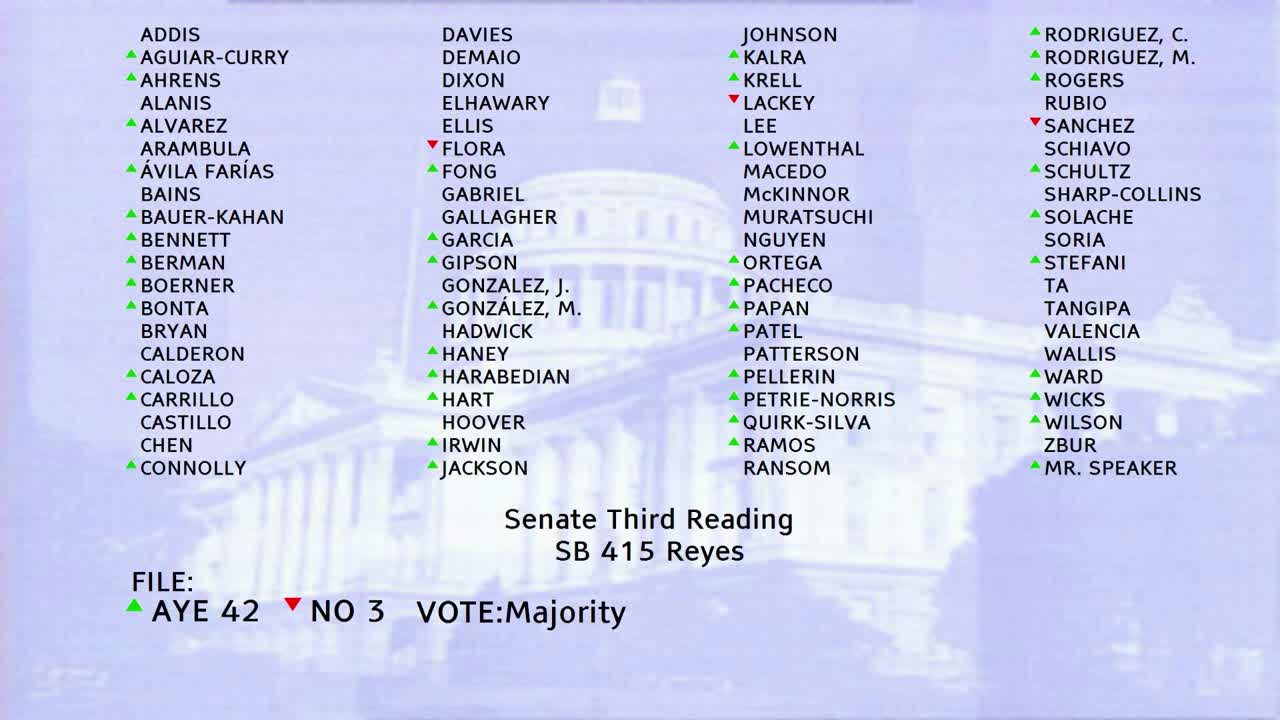 2MIN
Assembly Floor
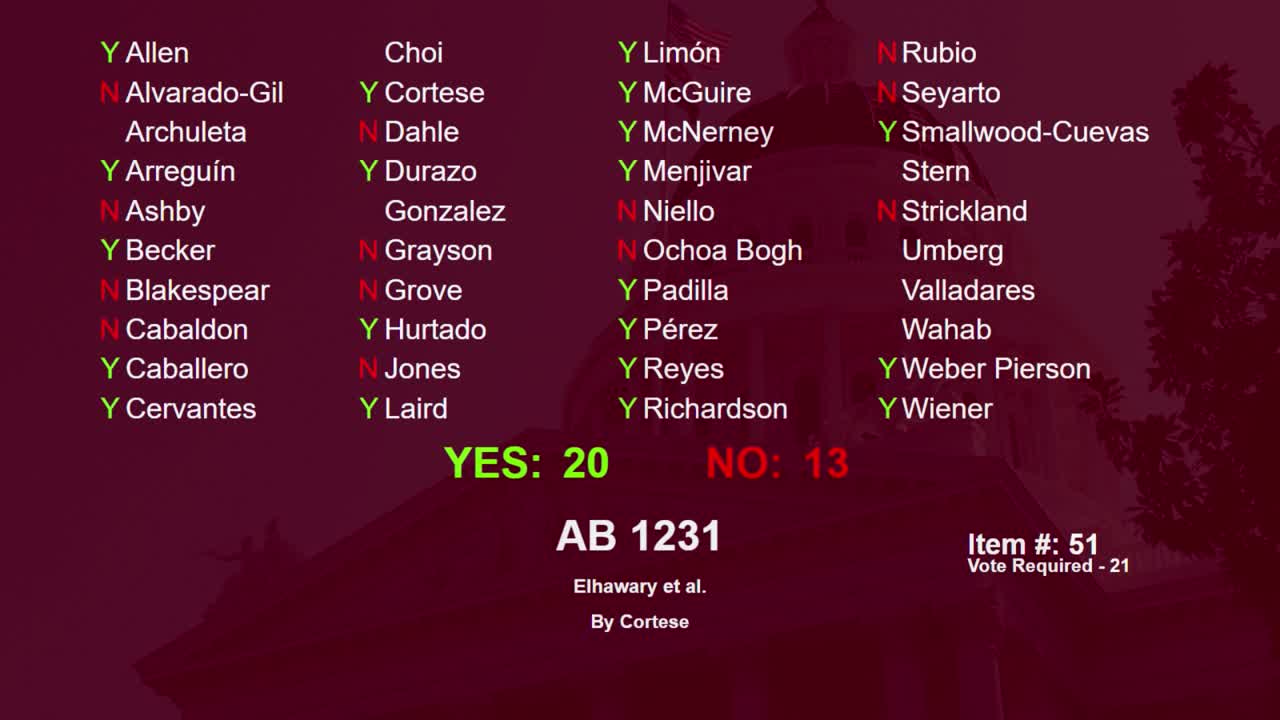 1MIN
Senate Floor
 2MIN
Assembly Standing Committee on Judiciary
 5MIN
Assembly Standing Committee on Labor and Employment
 2MIN
Senate Floor
 6MIN
Senate Standing Committee on Judiciary
 7MIN
Senate Standing Committee on Labor, Public Employment and Retirement
Bill Author

Bill Co-Author(s):
