SB 874: Medi-Cal: behavioral health treatment: stakeholder feedback.
- Session Year: 2025-2026
- House: Senate
- Latest Version Date: 2026-09-27
Current Status:
Passed
(2026-09-27: Chaptered by Secretary of State. Chapter 655, Statutes of 2026.)
Introduced
In Committee
Awaiting First Chamber Vote
Passed First Chamber
In Committee
Awaiting Second Chamber Vote
Passed Second Chamber
Enacted
Existing law establishes the Medi-Cal program, which is administered by the State Department of Health Care Services and under which qualified low-income individuals receive health care services. The Medi-Cal program is, in part, governed and funded by federal Medicaid program provisions.
Under existing law, to the extent required by the federal government and effective no sooner than required by the federal government, behavioral health treatment (BHT) is a covered service under the Medi-Cal program for individuals under 21 years of age.
This bill would require the department, by July 1, 2027, to ensure that certain individuals providing BHT services under Medi-Cal undergo criminal background checks. The bill would require the department to utilize existing stakeholder forums to seek stakeholder feedback and offer stakeholder comment opportunities to inform changes to coverage and billing policy for BHT services. The bill would encourage the department to affirmatively reach out to specified stakeholders as appropriate based on the topic at issue to ensure adequate feedback. Under the bill, stakeholder feedback would include, among other topics, clinical guidelines for the provision of BHT services, treatment plan requirements, requirements for the provision of center-based services compared to services provided elsewhere, and supervision of unlicensed and uncertified professionals, as specified.
The bill would require the department to maintain clear billing and coverage guidance for BHT services, as specified. The bill would require the department, on or before January 1, 2029, to publish on its internet website utilization data for BHT services, a synopsis of changes made as a result of stakeholder feedback, and recommendations for actions necessary to ensure that Medi-Cal reimbursement practices align with federal Medicaid program integrity requirements.
Existing law establishes the Medi-Cal program, which is administered by the State Department of Health Care Services and under which qualified low-income individuals receive health care services. The Medi-Cal program is, in part, governed and funded by federal Medicaid program provisions.
Under existing law, to the extent required by the federal government and effective no sooner than required by the federal government, behavioral health treatment (BHT) is a covered service under the Medi-Cal program for individuals under 21 years of age.
This bill would require the department, by July 1, 2027, to ensure that certain individuals providing BHT services under Medi-Cal undergo criminal background checks. The bill would require the department to utilize existing stakeholder forums to seek stakeholder feedback and offer stakeholder comment opportunities to inform changes to coverage and billing policy for BHT services. The bill would encourage the department to affirmatively reach out to specified stakeholders as appropriate based on the topic at issue to ensure adequate feedback. Under the bill, stakeholder feedback would include, among other topics, clinical guidelines for the provision of BHT services, treatment plan requirements, requirements for the provision of center-based services compared to services provided elsewhere, and supervision of unlicensed and uncertified professionals, as specified.
The bill would require the department to maintain clear billing and coverage guidance for BHT services, as specified. The bill would require the department, on or before January 1, 2029, to publish on its internet website utilization data for BHT services, a synopsis of changes made as a result of stakeholder feedback, and recommendations for actions necessary to ensure that Medi-Cal reimbursement practices align with federal Medicaid program integrity requirements.
Existing law provides for establishes the Medi-Cal program, which is administered by the State Department of Health Care Services, Services and under which qualified low-income individuals receive health care services. The Medi-Cal program is, in part, governed and funded by federal Medicaid Program provisions. Under program provisions.
Under existing law, to the extent required by the federal government and effective no sooner than required by the federal government, behavioral health treatment (BHT) is a covered service under the Medi-Cal program for individuals under 21 years of age.
This bill would require the department, on or before by July 1, 2027, to ensure that certain individuals providing BHT services under Medi-Cal undergo criminal background checks. The bill would require the department to convene a stakeholder workgroup made up of BHT providers, managed care plans, and consumers with autism, among others, to review the implementation of BHT services in Medi-Cal and to advise the department on, utilize existing stakeholder forums to seek stakeholder feedback and offer stakeholder comment opportunities to inform changes to coverage and billing policy for BHT services. The bill would encourage the department to affirmatively reach out to specified stakeholders as appropriate based on the topic at issue to ensure adequate feedback. Under the bill, stakeholder feedback would include, among other topics, clinical guidelines for the provision of BHT services, treatment plan requirements, requirements for the provision of center-based services compared to services provided elsewhere, and supervision of unlicensed and uncertified professionals, as specified. The
The bill would require the department, on or before January 1, 2028, to release and maintain clear clinical guidance for the provision of the BHT benefit, department to maintain clear billing and coverage guidance for BHT services, as specified. The bill would require the department, on or before January 1, 2029, to report to the legislature on the utilization of the BHT benefit, publish on its internet website utilization data for BHT services, a synopsis of changes made as a result of the stakeholder workgroup, stakeholder feedback, and recommendations for actions necessary to ensure that Medi-Cal reimbursement practices align with federal Medicaid program integrity requirements.
Existing law provides for the Medi-Cal program, which is administered by the State Department of Health Care Services, under which qualified low-income individuals receive health care services. The Medi-Cal program is, in part, governed and funded by federal Medicaid Program provisions. Under existing law, to the extent required by the federal government and effective no sooner than required by the federal government, behavioral health treatment (BHT) is a covered service under the Medi-Cal program for individuals under 21 years of age.
This bill would require the department, on or before July 1, 2027, to ensure that certain individuals providing BHT services under Medi-Cal undergo background checks. The bill would require the department to convene a stakeholder workgroup made up of BHT providers, managed care plans, and consumers with autism, among others, to review the implementation of BHT services in Medi-Cal and to advise the department on, among other topics, clinical guidelines for the provision of BHT services, treatment plan requirements, requirements for the provision of center-based services compared to services provided elsewhere, and supervision of unlicensed and uncertified professionals, as specified. The bill would require the department, on or before January 1, 2028, to release and maintain clear clinical guidance for the provision of the BHT benefit, as specified. The bill would require the department, on or before January 1, 2029, to report to the legislature on the utilization of the BHT benefit, a synopsis of changes made as a result of the stakeholder workgroup, and recommendations for actions necessary to ensure Medi-Cal reimbursement practices align with federal Medicaid program integrity requirements.
Existing law provides for the Medi-Cal program, which is administered by the State Department of Health Care Services, under which qualified low-income individuals receive health care services. The Medi-Cal program is, in part, governed and funded by federal Medicaid Program provisions. Under existing law, to the extent required by the federal government and effective no sooner than required by the federal government, behavioral health treatment (BHT) is a covered service under the Medi-Cal program for individuals under 21 years of age.
This bill would require the department, on or before July 1, 2027, to ensure that certain individuals providing BHT services under Medi-Cal undergo background checks. The bill would require the department to convene a stakeholder workgroup made up of BHT providers, managed care plans, and consumers with autism, among others, to review the implementation of BHT services in Medi-Cal and to advise the department on, among other topics, clinical guidelines for the provision of BHT services, treatment plan requirements, requirements for the provision of center-based services compared to services provided elsewhere, and supervision of unlicensed and uncertified professionals, as specified. The bill would require the department, on or before January 1, 2028, to release and maintain clear clinical guidance for the provision of the BHT benefit, as specified. The bill would require the department, on or before January 1, 2029, to report to the legislature on the utilization of the BHT benefit, a synopsis of changes made as a result of the stakeholder workgroup, and recommendations for actions necessary to ensure Medi-Cal reimbursement practices align with federal Medicaid program integrity requirements.
Existing law provides for the Medi-Cal program, which is administered by the State Department of Health Care Services, under which qualified low-income individuals receive health care services. The Medi-Cal program is, in part, governed and funded by federal Medicaid Program provisions. Under existing law, to the extent required by the federal government and effective no sooner than required by the federal government, behavioral health treatment (BHT) is a covered service under the Medi-Cal program for individuals under 21 years of age.
This bill would require the department, on or before July 1, 2027, to ensure that certain individuals providing BHT services under Medi-Cal undergo background checks. The bill would require the department to convene a stakeholder workgroup made up of BHT providers, managed care plans, and consumers with autism, among others, to review the implementation of BHT services in Medi-Cal and to advise the department on on, among other topics, clinical guidelines for the provision of BHT services, treatment plan requirements, requirements for the provision of center-based services compared to services provided elsewhere, and supervision of unlicensed and uncertified professionals, as specified. The bill would require the department, on or before April January 1, 2028, to release and maintain clear clinical guidance for the provision of the BHT benefit, as specified. The bill would require the department, on or before January 1, 2029, to report to the legislature on the utilization of the BHT benefit, a synopsis of changes made as a result of the stakeholder workgroup, and recommendations for actions necessary to ensure Medi-Cal reimbursement practices align with federal Medicaid program integrity requirements.
Existing law provides for the Medi-Cal program, which is administered by the State Department of Health Care Services, under which qualified low-income individuals receive health care services. The Medi-Cal program is, in part, governed and funded by federal Medicaid Program provisions. Under existing law, to the extent required by the federal government and effective no sooner than required by the federal government, behavioral health treatment (BHT) is a covered service under the Medi-Cal program for individuals under 21 years of age.
This bill would require the department, on or before July 1, 2027, to ensure that certain individuals providing BHT services under Medi-Cal undergo background checks. The bill would require the department to convene a stakeholder workgroup made up of BHT providers, managed care plans, and consumers with autism, among others, to review the implementation of BHT services in Medi-Cal and to advise the department on clinical guidelines for the provision of BHT services, treatment plan requirements, requirements for the provision of center-based services compared to services provided elsewhere, and supervision of unlicensed professionals, as specified. The bill would require the department, on or before April 1, 2028, to release and maintain clear clinical guidance for the provision of the BHT benefit, as specified. The bill would require the department, on or before January 1, 2029, to report to the legislature on the utilization of the BHT benefit, a synopsis of changes made as a result of the stakeholder workgroup, and recommendations for actions necessary to ensure Medi-Cal reimbursement practices align with federal Medicaid program integrity requirements.
Existing law specifies identification requirements for voter registration and voting.This bill would state the intent of the Legislature to enact legislation relating to voter identification requirements.Existing law specifies identification requirements for voter registration and voting.
This bill would state the intent of the Legislature to enact legislation relating to voter identification requirements.
(a)For purposes of this section, behavioral health treatment or BHT has the same meaning as set forth in Section 14132.56.
(b)(1)By July 1, 2027, the department shall ensure that any entity enrolled as a Medi-Cal provider that provides BHT services paid for by the Medi-Cal program conducts, or has a third-party conduct, a state and national criminal background check on its employees who interact with patients.
(2)Enrolled Medi-Cal providers shall maintain documentation demonstrating compliance with paragraph (1) and make it available to the department upon request or in the event of a state or federal audit.
(c)The department shall utilize existing stakeholder forums to seek stakeholder feedback and offer stakeholder comment opportunities to inform changes to coverage and billing policy for BHT services, including applied behavior analysis and other evidence-based interventions. The department is encouraged to affirmatively reach out to the following stakeholders as appropriate based on the topic at issue to ensure adequate feedback:
(1)BHT providers, which may include representatives of trade associations and licensing or certifying bodies, in addition to providers.
(2)Providers of other services to children with autism, including, but not limited to, speech and hearing specialists, occupational therapists, psychiatrists, and vision specialists.
(3)Managed care plans.
(4)Consumers with autism.
(5)Consumer advocates for organizations led by individuals with autism and organizations serving families of autistic children.
(d)The department may consult with the Department of Managed Health Care or invite that department to participate in any stakeholder forums, for the purposes of coordination with the commercial market.
(e)Stakeholder feedback shall include all of the following:
(1)Clinical guidelines for the provision of BHT services, including independent clinician assessment for treatment and reauthorization requirements.
(2)Treatment plan requirements, including the number of hours in a treatment plan, documentation of an individuals needs, and how treatment outcomes specific to the individual and the effectiveness of treatment are reviewed.
(3)Requirements for the provision of center-based services compared to services provided in the home, school, or otherwise in the childs natural environment to ensure that only services that qualify as BHT services are billed.
(4)Supervision of unlicensed and uncertified professionals, including the number of hours of supervision required, location of the supervisor, and number of unlicensed professionals whom a licensed or board-certified professional may supervise. Consideration shall also be given to how such supervision is monitored.
(5)Standardization of Medi-Cal managed care plan documentation requirements, including credentialing.
(6)Best practices in prioritizing quality care in contracting with BHT service providers.
(7)Feasibility of requiring fingerprint-based criminal background checks of BHT service providers.
(f)The department shall maintain clear billing and coverage guidance for BHT services described in Section 14132.56, which shall be consistent with federal Early and Periodic Screening, Diagnostic, and Treatment benefit requirements for individuals under 21 years of age and shall be informed and based on stakeholder feedback.
(g)On or before January 1, 2029, the department shall publish on its internet website utilization data for BHT services and a synopsis of the BHT services coverage policy, highlighting any changes made as a result of stakeholder feedback and any applicable recommendations for statutory, regulatory, or administrative actions necessary to ensure that Medi-Cal reimbursement practices align with federal Medicaid program integrity requirements.
(h)Notwithstanding Chapter 3.5 (commencing with Section 11340) of Part 1 of Division 3 of Title 2 of the Government Code, the department, without taking any further regulatory action, shall implement, interpret, or make specific this section by means of all-county letters, plan letters, plan or provider bulletins, or similar instructions.
(a)For purposes of this section, behavioral health treatment or BHT has the same meaning as set forth in Section 14132.56.
(b)(1)By July 1, 2027, the department shall ensure that any entity enrolled as a Medi-Cal provider that provides BHT services paid for by the Medi-Cal program conducts, or has a third-party conduct, a state and national criminal background check on its employees who interact with patients.
(2)Enrolled Medi-Cal providers shall maintain documentation demonstrating compliance with paragraph (1) and make it available to the department upon request or in the event of a state or federal audit.
(c)The department shall utilize existing stakeholder forums to seek stakeholder feedback and offer stakeholder comment opportunities to inform changes to coverage and billing policy for BHT services, including applied behavior analysis and other evidence-based interventions. The department is encouraged to affirmatively reach out to the following stakeholders as appropriate based on the topic at issue to ensure adequate feedback:
(1)BHT providers, which may include representatives of trade associations and licensing or certifying bodies, in addition to providers.
(2)Providers of other services to children with autism, including, but not limited to, speech and hearing specialists, occupational therapists, psychiatrists, and vision specialists.
(3)Managed care plans.
(4)Consumers with autism.
(5)Consumer advocates for organizations led by individuals with autism and organizations serving families of autistic children.
(d)The department may consult with the Department of Managed Health Care or invite that department to participate in any stakeholder forums, for the purposes of coordination with the commercial market.
(e)Stakeholder feedback shall include all of the following:
(1)Clinical guidelines for the provision of BHT services, including independent clinician assessment for treatment and reauthorization requirements.
(2)Treatment plan requirements, including the number of hours in a treatment plan, documentation of an individuals needs, and how treatment outcomes specific to the individual and the effectiveness of treatment are reviewed.
(3)Requirements for the provision of center-based services compared to services provided in the home, school, or otherwise in the childs natural environment to ensure that only services that qualify as BHT services are billed.
(4)Supervision of unlicensed and uncertified professionals, including the number of hours of supervision required, location of the supervisor, and number of unlicensed professionals whom a licensed or board-certified professional may supervise. Consideration shall also be given to how such supervision is monitored.
(5)Standardization of Medi-Cal managed care plan documentation requirements, including credentialing.
(6)Best practices in prioritizing quality care in contracting with BHT service providers.
(7)Feasibility of requiring fingerprint-based criminal background checks of BHT service providers.
(f)The department shall maintain clear billing and coverage guidance for BHT services described in Section 14132.56, which shall be consistent with federal Early and Periodic Screening, Diagnostic, and Treatment benefit requirements for individuals under 21 years of age and shall be informed and based on stakeholder feedback.
(g)On or before January 1, 2029, the department shall publish on its internet website utilization data for BHT services and a synopsis of the BHT services coverage policy, highlighting any changes made as a result of stakeholder feedback and any applicable recommendations for statutory, regulatory, or administrative actions necessary to ensure that Medi-Cal reimbursement practices align with federal Medicaid program integrity requirements.
(h)Notwithstanding Chapter 3.5 (commencing with Section 11340) of Part 1 of Division 3 of Title 2 of the Government Code, the department, without taking any further regulatory action, shall implement, interpret, or make specific this section by means of all-county letters, plan letters, plan or provider bulletins, or similar instructions.
(a)For the purposes of this section, behavioral health treatment or BHT has the same meaning as set forth in Section 14132.56.
(b)On or before (1)By July 1, 2027, the department shall ensure that any provider of entity enrolled as a Medi-Cal provider that provides BHT services paid for by the Medi-Cal program conducts conducts, or has a third-party conduct, a state and national criminal background check on its employees who interact with patients, according to departmental guidance. patients.
(2)Enrolled Medi-Cal providers shall maintain documentation demonstrating compliance with paragraph (1) and make it available to the department upon request or in the event of a state or federal audit.
(c)The department shall convene a stakeholder workgroup in the first quarter of the 2027 calendar year. The workgroup shall include all of the following: utilize existing stakeholder forums to seek stakeholder feedback and offer stakeholder comment opportunities to inform changes to coverage and billing policy for BHT services, including applied behavior analysis and other evidence-based interventions. The department is encouraged to affirmatively reach out to the following stakeholders as appropriate based on the topic at issue to ensure adequate feedback:
(1)BHT providers, which may include representatives of trade associations and licensing or certifying bodies, in addition to providers.
(2)Providers of other services to children with autism, including, but not limited to, speech and hearing specialists, occupational therapists, psychiatrists, and vision specialists.
(3)Managed care plans.
(4)Consumers with autism.
(5)Consumer advocates for organizations led by individuals with autism and organizations serving families of autistic children.
(6)(d)The department may consult with the Department of Managed Health Care or invite that department to the workgroup, participate in any stakeholder forums, for the purposes of coordination with the commercial market.
(d)The stakeholder workgroup shall review the implementation of BHT services in Medi-Cal, including applied behavior analysis and other evidence-based interventions. The workgroup shall advise the department on all of the following:(e)Stakeholder feedback shall include all of the following:
(1)Clinical guidelines for the provision of BHT services, including independent clinician assessment for treatment and reauthorization requirements.
(2)Treatment plan requirements, including the number of hours in a treatment plan, documentation of an individuals needs, and how treatment outcomes specific to the individual and the effectiveness of treatment are reviewed.
(3)Requirements for the provision of center-based services compared to services provided in the home, school, or otherwise in the childs natural environment to ensure that only services that qualify as BHT services are billed.
(4)Supervision of unlicensed and uncertified professionals, including the number of hours of supervision required, location of the supervisor, and number of unlicensed professionals whom a licensed or board-certified professional may supervise. Consideration shall also be given to how such supervision is monitored.
(5)Standardization of Medi-Cal managed care plan documentation requirements, including credentialing.
(6)Best practices in prioritizing quality care in contracting with BHT services service providers.
(7)Feasability Feasibility of requiring fingerprint-based criminal background checks of BHT service providers.
(e)The stakeholder workgroup shall meet no less than quarterly in the 2027 and 2028 calendar years. Workgroup meetings shall be open to the public and allow for public participation via comment or in writing.(f)On or before January 1, 2028, the department shall release and maintain clear clinical guidance for the provision of the BHT benefit described in Section 14132.56. The guidance shall be consistent with federal recommendations on BHT services and Early and Periodic Screening, Diagnostic, and Treatment services for individuals under 21 years of age and shall include any modifications based on input from the stakeholder workgroup.(g)On or before January 1, 2029, the department shall report to the Legislature and publish on its internet website, an analysis of the utilization of BHT services in California since 2014, a synopsis of changes made as a result of the stakeholder workgroup, and recommendations for statutory, regulatory, or administrative actions necessary to ensure Medi-Cal reimbursement practices align with federal Medicaid program integrity requirements. In creating this report, the department shall consider all of the following:(1)Whether BHT services reimbursed under the Medi-Cal program meet federal Medicaid requirements governing rehabilitative services and Early and Periodic Screening, Diagnostic, and Treatment services.(2)Whether the department and Medi-Cal managed care plans utilize uniform, publicly accessible, evidence-based clinical standards for determining medical necessity and treatment intensity.(3)Whether reimbursed services include documented functional impairments, measurable treatment goals, and periodic assessment of clinical progress sufficient to demonstrate that services constitute therapeutic interventions covered under the Medicaid program.(4)Whether the supervision standards for BHT services are equivalent to or greater than the supervision, observation, documentation, and clinical oversight requirements imposed on comparable health services in other allied health professions regulated under the Business and Professions Code.(5)Whether any statutory changes are needed to require a fingerprint-based background check on BHT service providers.(h)(1)The requirement for submitting a report imposed under subdivision (g) is inoperative on January 1, 2033, pursuant to Section 10231.5 of the Government Code.(2)A report to be submitted pursuant to subdivision (g) shall be submitted in compliance with Section 9795 of the Government Code.(f)The department shall maintain clear billing and coverage guidance for BHT services described in Section 14132.56, which shall be consistent with federal Early and Periodic Screening, Diagnostic, and Treatment benefit requirements for individuals under 21 years of age and shall be informed and based on stakeholder feedback.
(g)On or before January 1, 2029, the department shall publish on its internet website utilization data for BHT services and a synopsis of the BHT services coverage policy, highlighting any changes made as a result of stakeholder feedback and any applicable recommendations for statutory, regulatory, or administrative actions necessary to ensure that Medi-Cal reimbursement practices align with federal Medicaid program integrity requirements.
(i)(h)Notwithstanding Chapter 3.5 (commencing with Section 11340) of Part 1 of Division 3 of Title 2 of the Government Code, the department, without taking any further regulatory action, shall implement, interpret, or make specific this section by means of all-county letters, plan letters, plan or provider bulletins, or similar instructions.
(a)For the purposes of this section, behavioral health treatment or BHT has the same meaning as in Section 14132.56.
(b)On or before July 1, 2027, the department shall ensure that any individual providing BHT provider of BHT services paid for by the Medi-Cal program who does not hold a current and valid license issued by a California state licensing board requiring a fingerprint-based background check shall undergo a background check pursuant to Section 11105.3 of the Penal Code. The department shall specify to employers of individuals providing BHT services how this information is to be collected and shared with the department prior to that date. conducts a state and national criminal background check on its employees who interact with patients, according to departmental guidance.
(c)The department shall convene a stakeholder workgroup in the first quarter of the 2027 calendar year. The workgroup shall include all of the following:
(1)BHT providers, which may include representatives of trade associations and licensing or certifying bodies, in addition to providers.
(2)Providers of other services to children with autism, including, but not limited to, speech and hearing specialists, occupational therapists, psychiatrists, and vision specialists.
(3)Managed care plans.
(4)Consumers with autism.
(5)Consumer advocates for organizations led by individuals with autism and organizations serving families of autistic children.
(6)The department may consult with the Department of Managed Health Care or invite that department to the workgroup, for the purposes of coordination with the commercial market.
(d)The stakeholder workgroup shall review the implementation of BHT services in Medi-Cal, including applied behavior analysis and other evidence-based interventions. The workgroup shall advise the department on all of the following:
(1)Clinical guidelines for the provision of BHT services, including independent clinician assessment for treatment and reauthorization requirements.
(2)Treatment plan requirements, including the number of hours in a treatment plan, documentation of an individuals needs, and how treatment outcomes specific to the individual and the effectiveness of treatment are reviewed.
(3)Requirements for the provision of center-based services compared to services provided in the home, school, or otherwise in the childs natural environment to ensure only services that qualify as BHT services are billed.
(4)Supervision of unlicensed and uncertified professionals, including the number of hours of supervision required, location of the supervisor, and number of unlicensed professionals a licensed or board-certified professional may supervise. Consideration shall also be given to how such supervision is monitored.
(5)Standardization of Medi-Cal managed care plan documentation requirements, including credentialing.
(6)Best practices in prioritizing quality care in contracting with BHT services providers.
(7)Feasability of requiring fingerprint-based criminal background checks of BHT service providers.
(e)The stakeholder workgroup shall meet no less than quarterly in the 2027 and 2028 calendar years. Workgroup meetings shall be open to the public and allow for public participation via comment or in writing.
(f)On or before January 1, 2028, the department shall release and maintain clear clinical guidance for the provision of the BHT benefit described in Section 14132.56. The guidance shall be consistent with federal recommendations on BHT services and Early and Periodic Screening, Diagnostic, and Treatment services for individuals under 21 years of age and shall include any modifications based on input from the stakeholder workgroup.
(g)On or before January 1, 2029, the department shall report to the Legislature and publish on its internet website, an analysis of the utilization of BHT services in California since 2014, a synopsis of changes made as a result of the stakeholder workgroup, and recommendations for statutory, regulatory, or administrative actions necessary to ensure Medi-Cal reimbursement practices align with federal Medicaid program integrity requirements. In creating this report, the department shall consider all of the following:
(1)Whether BHT services reimbursed under the Medi-Cal program meet federal Medicaid requirements governing rehabilitative services and Early and Periodic Screening, Diagnostic, and Treatment services.
(2)Whether the department and Medi-Cal managed care plans utilize uniform, publicly accessible, evidence-based clinical standards for determining medical necessity and treatment intensity.
(3)Whether reimbursed services include documented functional impairments, measurable treatment goals, and periodic assessment of clinical progress sufficient to demonstrate that services constitute therapeutic interventions covered under the Medicaid program.
(4)Whether the supervision standards for BHT services are equivalent to or greater than the supervision, observation, documentation, and clinical oversight requirements imposed on comparable health services in other allied health professions regulated under the Business and Professions Code.
(5)Whether any statutory changes are needed to require a fingerprint-based background check on BHT service providers.
(h)(1)The requirement for submitting a report imposed under subdivision (g) is inoperative on January 1, 2033, pursuant to Section 10231.5 of the Government Code.
(2)A report to be submitted pursuant to subdivision (g) shall be submitted in compliance with Section 9795 of the Government Code.
(i)Notwithstanding Chapter 3.5 (commencing with Section 11340) of Part 1 of Division 3 of Title 2 of the Government Code, the department, without taking any further regulatory action, shall implement, interpret, or make specific this section by means of all-county letters, plan letters, plan or provider bulletins, or similar instructions.
(a)For the purposes of this section, behavioral health treatment or BHT has the same meaning as in Section 14132.56.
(b)On or before July 1, 2027, the department shall ensure that any individual providing BHT services paid for by the Medi-Cal program who does not hold a current and valid license issued by a California state licensing board requiring a fingerprint-based background check shall undergo a background check pursuant to Section 11105.3 of the Penal Code. The department shall specify to the providers employers of individuals providing BHT services how this information is to be collected and retained by shared with the department prior to that date.
(c)The department shall convene a stakeholder workgroup in the first quarter of the 2027 calendar year. The workgroup shall include all of the following:
(1)BHT providers, which may include representatives of trade associations and licensing or certifying bodies, in addition to providers.
(2)Providers of other services to children with autism, including, but not limited to, speech and hearing specialists, occupational therapists, psychiatrists, and vision specialists.
(3)Managed care plans.
(4)Consumers with autism.
(5)Consumer advocates for organizations led by individuals with autism and organizations serving families of autistic children.
(d)The stakeholder workgroup shall review the implementation of BHT services in Medi-Cal, including applied behavior analysis and other evidence-based interventions. The workgroup shall advise the department on all of the following:
(1)Clinical guidelines for the provision of BHT services, including independent clinician assessment for treatment and reauthorization requirements.
(2)Treatment plan requirements, including the number of hours in a treatment plan, documentation of an individuals needs, and how treatment outcomes specific to the individual and the effectiveness of treatment are reviewed.
(3)Requirements for the provision of center-based services compared to services provided in the home, school, or otherwise in the childs natural environment to ensure only services that qualify as BHT services are billed.
(4)Supervision of unlicensed and uncertified professionals, including the number of hours of supervision required, location of the supervisor, and number of unlicensed professionals a licensed or board-certified professional may supervise. Consideration shall also be given to how such supervision is monitored.
(5)Standardization of Medi-Cal managed care plan documentation requirements, including credentialing.
(6)Best practices in prioritizing quality care in contracting with BHT services providers.
(e)The stakeholder workgroup shall meet no less than quarterly in the 2027 and 2028 calendar years. Workgroup meetings shall be open to the public and allow for public participation via comment or in writing.
(f)On or before January 1, 2028, the department shall release and maintain clear clinical guidance for the provision of the BHT benefit described in Section 14132.56. The guidance shall be consistent with federal recommendations on BHT services and Early and Periodic Screening, Diagnostic, and Treatment services for individuals under 21 years of age and shall include any modifications based on input from the stakeholder workgroup.
(g)On or before January 1, 2029, the department shall report to the Legislature and publish on its internet website, an analysis of the utilization of BHT services in California since 2014, a synopsis of changes made as a result of the stakeholder workgroup, and recommendations for statutory, regulatory, or administrative actions necessary to ensure Medi-Cal reimbursement practices align with federal Medicaid program integrity requirements. In creating this report, the department shall consider all of the following:
(1)Whether BHT services reimbursed under the Medi-Cal program meet federal Medicaid requirements governing rehabilitative services and Early and Periodic Screening, Diagnostic, and Treatment services.
(2)Whether the department and Medi-Cal managed care plans utilize uniform, publicly accessible, evidence-based clinical standards for determining medical necessity and treatment intensity.
(3)Whether reimbursed services include documented functional impairments, measurable treatment goals, and periodic assessment of clinical progress sufficient to demonstrate that services constitute therapeutic interventions covered under the Medicaid program.
(4)Whether the supervision standards for BHT services are equivalent to or greater than the supervision, observation, documentation, and clinical oversight requirements imposed on comparable health services in other allied health professions regulated under the Business and Professions Code.
(h)(1)The requirement for submitting a report imposed under subdivision (g) is inoperative on January 1, 2033, pursuant to Section 10231.5 of the Government Code.
(2)A report to be submitted pursuant to subdivision (g) shall be submitted in compliance with Section 9795 of the Government Code.
(i)Notwithstanding Chapter 3.5 (commencing with Section 11340) of Part 1 of Division 3 of Title 2 of the Government Code, the department, without taking any further regulatory action, shall implement, interpret, or make specific this section by means of all-county letters, plan letters, plan or provider bulletins, or similar instructions.
(a)For the purposes of this section, behavioral health treatment or BHT has the same meaning as in Section 14132.56.
(b)On or before July 1, 2027, the department shall ensure that any individual providing BHT services paid for by the Medi-Cal program who does not hold a current and valid license issued by a California state licensing board requiring a fingerprint-based background check shall undergo a background check pursuant to Section 11105.3 of the Penal Code. The department shall specify to the providers how this information is to be collected and retained by the department prior to that date.
(c)The department shall convene a stakeholder workgroup in the first quarter of the 2027 calendar year. The workgroup shall include all of the following:
(1)BHT providers. providers, which may include representatives of trade associations and licensing or certifying bodies, in addition to providers.
(2)Providers of other services to children with autism, including, but not limited to, speech and hearing specialists, occupational therapists, psychiatrists, and vision specialists.
(3)Managed care plans.
(4)Consumers with autism.
(5)Consumer advocates for organizations led by individuals with autism. autism and organizations serving families of autistic children.
(d)The stakeholder workgroup shall review the implementation of BHT services in Medi-Cal, including applied behavior analysis and other evidence-based interventions. The workgroup shall advise the department on all of the following:
(1)Clinical guidelines for the provision of BHT services, including independent clinician assessment for treatment and reauthorization requirements.
(2)Treatment plan requirements, including the number of hours in a treatment plan, documentation of an individuals needs, and how treatment outcomes specific to the individual and the effectiveness of treatment are reviewed.
(3)Requirements for the provision of center-based services compared to services provided in the home, school, or otherwise in the childs natural environment to ensure only services that qualify as BHT services are billed.
(4)Supervision of unlicensed and uncertified professionals, including the number of hours of supervision required, location of the supervisor, and number of unlicensed professionals a licensed or board-certified professional may supervise. Consideration shall also be given to how such supervision is monitored.
(5)Standardization of Medi-Cal managed care plan documentation requirements, including credentialing.
(6)Best practices in prioritizing quality care in contracting with BHT services providers.
(e)The stakeholder workgroup shall meet no less than quarterly in the 2027 and 2028 calendar years. Workgroup meetings shall be open to the public and allow for public participation via comment or in writing.
(f)On or before April January 1, 2028, the department shall release and maintain clear clinical guidance for the provision of the BHT benefit described in Section 14132.56. The guidance shall be consistent with federal recommendations on BHT services and Early and Periodic Screening, Diagnostic, and Treatment services for individuals under 21 years of age and shall include any modifications based on input from the stakeholder workgroup.
(g)On or before January 1, 2029, the department shall report to the Legislature and publish on its internet website, an analysis of the utilization of BHT services in California since 2014, a synopsis of changes made as a result of the stakeholder workgroup, and recommendations for statutory, regulatory, or administrative actions necessary to ensure Medi-Cal reimbursement practices align with federal Medicaid program integrity requirements. In creating this report, the department shall consider all of the following:
(1)Whether BHT services reimbursed under the Medi-Cal program meet federal Medicaid requirements governing rehabilitative services and Early and Periodic Screening, Diagnostic, and Treatment services.
(2)Whether the department and Medi-Cal managed care plans utilize uniform, publicly accessible, evidence-based clinical standards for determining medical necessity and treatment intensity.
(3)Whether reimbursed services include documented functional impairments, measurable treatment goals, and periodic assessment of clinical progress sufficient to demonstrate that services constitute therapeutic interventions covered under the Medicaid program.
(4)Whether the supervision standards for BHT services are equivalent to or greater than the supervision, observation, documentation, and clinical oversight requirements imposed on comparable health services in other allied health professions regulated under the Business and Professions Code.
(h)(1)The requirement for submitting a report imposed under subdivision (g) is inoperative on January 1, 2033, pursuant to Section 10231.5 of the Government Code.
(2)A report to be submitted pursuant to subdivision (g) shall be submitted in compliance with Section 9795 of the Government Code.
(i)Notwithstanding Chapter 3.5 (commencing with Section 11340) of Part 1 of Division 3 of Title 2 of the Government Code, the department, without taking any further regulatory action, shall implement, interpret, or make specific this section by means of all-county letters, plan letters, plan or provider bulletins, or similar instructions.
(a)For the purposes of this section, behavioral health treatment or BHT has the same meaning as in Section 14132.56.
(b)On or before July 1, 2027, the department shall ensure that any individual providing BHT services paid for by the Medi-Cal program who does not hold a current and valid license issued by a California state licensing board requiring a fingerprint-based background check shall undergo a background check pursuant to Section 11105.3 of the Penal Code.
(c)The department shall convene a stakeholder workgroup in the first quarter of the 2027 calendar year. The workgroup shall include all of the following:
(1)BHT providers.
(2)Providers of other services to children with autism, including, but not limited to, speech and hearing specialists, occupational therapists, psychiatrists, and vision specialists.
(3)Managed care plans.
(4)Consumers with autism.
(5)Consumer advocates for organizations led by individuals with autism.
(d)The stakeholder workgroup shall review the implementation of BHT services in Medi-Cal, including applied behavior analysis and other evidence-based interventions. The workgroup shall advise the department on all of the following:
(1)Clinical guidelines for the provision of BHT services, including independent clinician assessment for treatment and reauthorization requirements.
(2)Treatment plan requirements, including the number of hours in a treatment plan, documentation of an individuals needs, and how treatment outcomes specific to the individual and the effectiveness of treatment are reviewed.
(3)Requirements for the provision of center-based services compared to services provided in the home, school, or otherwise in the childs natural environment to ensure only services that qualify as BHT services are billed.
(4)Supervision of unlicensed professionals, including the number of hours of supervision required, location of the supervisor, and number of unlicensed professionals a licensed or board-certified professional may supervise. Consideration shall also be given to how such supervision is monitored.
(5)Standardization of Medi-Cal managed care plan documentation requirements, including credentialing.
(6)Best practices in prioritizing quality care in contracting with BHT services providers.
(e)The stakeholder workgroup shall meet quarterly in the 2027 and 2028 calendar years. Workgroup meetings shall be open to the public and allow for public participation via comment or in writing.
(f)On or before April 1, 2028, the department shall release and maintain clear clinical guidance for the provision of the BHT benefit described in Section 14132.56. The guidance shall be consistent with federal recommendations on BHT services and Early and Periodic Screening, Diagnostic, and Treatment services for individuals under 21 years of age and shall include any modifications based on input from the stakeholder workgroup.
(g)On or before January 1, 2029, the department shall report to the Legislature and publish on its internet website, an analysis of the utilization of BHT services in California since 2014, a synopsis of changes made as a result of the stakeholder workgroup, and recommendations for statutory, regulatory, or administrative actions necessary to ensure Medi-Cal reimbursement practices align with federal Medicaid program integrity requirements. In creating this report, the department shall consider all of the following:
(1)Whether BHT services reimbursed under the Medi-Cal program meet federal Medicaid requirements governing rehabilitative services and Early and Periodic Screening, Diagnostic, and Treatment services.
(2)Whether the department and Medi-Cal managed care plans utilize uniform, publicly accessible, evidence-based clinical standards for determining medical necessity and treatment intensity.
(3)Whether reimbursed services include documented functional impairments, measurable treatment goals, and periodic assessment of clinical progress sufficient to demonstrate that services constitute therapeutic interventions covered under the Medicaid program.
(4)Whether the supervision standards for BHT services are equivalent to or greater than the supervision, observation, documentation, and clinical oversight requirements imposed on comparable health services in other allied health professions regulated under the Business and Professions Code.
(h)(1)The requirement for submitting a report imposed under subdivision (g) is inoperative on January 1, 2033, pursuant to Section 10231.5 of the Government Code.
(2)A report to be submitted pursuant to subdivision (g) shall be submitted in compliance with Section 9795 of the Government Code.
(i)Notwithstanding Chapter 3.5 (commencing with Section 11340) of Part 1 of Division 3 of Title 2 of the Government Code, the department, without taking any further regulatory action, shall implement, interpret, or make specific this section by means of all-county letters, plan letters, plan or provider bulletins, or similar instructions.
SECTION 1.It is the intent of the Legislature to enact legislation relating to voter identification requirements.It is the intent of the Legislature to enact legislation relating to voter identification requirements.
|
Date
|
Status
|
|---|---|
| Sep 27, 2026 | Chaptered by Secretary of State. Chapter 655, Statutes of 2026. |
| Sep 27, 2026 | Approved by the Governor. |
| Aug 27, 2026 | Enrolled and presented to the Governor at 4:30 p.m. |
| Aug 24, 2026 | Assembly amendments concurred in. (Ayes 40. Noes 0.) Ordered to engrossing and enrolling. |
| Aug 24, 2026 | Assembly amendments concurred in. (Ayes 40. Noes 0. Page 5686.) Ordered to engrossing and enrolling. |
| Aug 24, 2026 | Assembly amendments concurred in. (Ayes 39. Noes 0.) Ordered to engrossing and enrolling. |
| Aug 20, 2026 | In Senate. Concurrence in Assembly amendments pending. |
| Aug 20, 2026 | Read third time. Passed. (Ayes 78. Noes 0. Page 6306.) Ordered to the Senate. |
| Aug 20, 2026 | Read third time. Passed. Ordered to the Senate. |
| Aug 17, 2026 | Read second time. Ordered to third reading. |
| Aug 13, 2026 | Read second time and amended. Ordered to second reading. |
| Aug 13, 2026 | From committee: Do pass as amended. (Ayes 11. Noes 0.) (August 13). |
| Aug 13, 2026 | Assembly Rule 63 suspended. |
| Aug 5, 2026 | August 5 set for first hearing. Placed on suspense file. |
| Jul 2, 2026 | Read second time and amended. Re-referred to Com. on APPR. |
| Jul 2, 2026 | From committee: Do pass as amended and re-refer to Com. on APPR. (Ayes 9. Noes 0.) (June 30). |
| Jun 24, 2026 | From committee: Do pass and re-refer to Com. on PUB. S. (Ayes 15. Noes 0.) (June 23). Re-referred to Com. on PUB. S. |
| Jun 8, 2026 | June 16 set for first hearing canceled at the request of author. |
| Jun 3, 2026 | From committee with author's amendments. Read second time and amended. Re-referred to Com. on HEALTH. |
| May 26, 2026 | Referred to Coms. on HEALTH and PUB. S. |
| May 20, 2026 | In Assembly. Read first time. Held at Desk. |
| May 19, 2026 | Read third time. Passed. (Ayes 38. Noes 0.) Ordered to the Assembly. |
| May 19, 2026 | Read third time. Passed. (Ayes 38. Noes 0. Page 4342.) Ordered to the Assembly. |
| May 14, 2026 | Read second time. Ordered to third reading. |
| May 14, 2026 | From committee: Do pass. (Ayes 7. Noes 0.) (May 14). |
| May 14, 2026 | From committee: Do pass. (Ayes 7. Noes 0. Page 4255.) (May 14). |
| May 8, 2026 | Set for hearing May 14. |
| May 4, 2026 | May 4 hearing: Placed on APPR. suspense file. |
| Apr 28, 2026 | Set for hearing May 4. |
| Apr 23, 2026 | Read second time and amended. Re-referred to Com. on APPR. |
| Apr 22, 2026 | From committee: Do pass as amended and re-refer to Com. on APPR. (Ayes 6. Noes 0.) (April 21). |
| Apr 22, 2026 | From committee: Do pass as amended and re-refer to Com. on APPR. (Ayes 6. Noes 0. Page 3982.) (April 21). |
| Apr 16, 2026 | From committee: Do pass and re-refer to Com. on PUB. S. (Ayes 7. Noes 0.) (April 15). Re-referred to Com. on PUB. S. |
| Apr 16, 2026 | From committee: Do pass and re-refer to Com. on PUB. S. (Ayes 7. Noes 0. Page 3900.) (April 15). Re-referred to Com. on PUB. S. |
| Apr 14, 2026 | Set for hearing April 21 in PUB. S. pending receipt. |
| Mar 27, 2026 | Set for hearing April 15. |
| Mar 25, 2026 | Re-referred to Coms. on HEALTH and PUB. S. |
| Mar 17, 2026 | From committee with author's amendments. Read second time and amended. Re-referred to Com. on RLS. |
| Feb 11, 2026 | Referred to Com. on RLS. |
| Jan 7, 2026 | From printer. May be acted upon on or after February 6. |
| Jan 6, 2026 | Introduced. Read first time. To Com. on RLS. for assignment. To print. |
|
Date
|
Description
|
Location
|
Votes
|
|
|---|---|---|---|---|
| Aug 24, 2026 | Unfinished Business SB874 Weber Pierson Concurrence | Senate Floor |
Passed |
|
| Aug 20, 2026 | SB 874 Weber Pierson Senate Third Reading By Addis | Assembly Floor |
Passed |
|
| Aug 13, 2026 | Do pass as amended. | Assembly Standing Committee on Appropriations |
Passed |
|
| Jun 30, 2026 | Do pass as amended and be re-referred to the Committee on [Appropriations] | Assembly Standing Committee on Public Safety |
Passed |
|
| Jun 23, 2026 | Do pass and be re-referred to the Committee on [Public Safety] | Assembly Standing Committee on Health |
Passed |
|
| May 19, 2026 | Senate 3rd Reading SB874 Weber Pierson | Senate Floor |
Passed |
|
| May 14, 2026 | Do pass | Senate Standing Committee on Appropriations |
Passed |
|
| May 4, 2026 | Placed on suspense file | Senate Standing Committee on Appropriations |
Passed |
|
| Apr 21, 2026 | Do pass as amended, but first amend, and re-refer to the Committee on [Appropriations] | Senate Standing Committee on Public Safety |
Passed |
|
| Apr 15, 2026 | Do pass, but first be re-referred to the Committee on [Public Safety] | Senate Standing Committee on Health |
Passed |
This list shows positions taken on this bill by organizations on the date displayed, which is linked to the original source.
Positions by individuals are not included.
|
Organization
|
Position
|
Date
|
|---|---|---|
| 1 Private Individual | ** Against | |
| Autism Business Association | ** Support | |
| California Association For Behavior Analysis | ** Support | |
| California Association For Behavior Analysis | ** Support | |
| California Association Of Health Plans | ** Support | |
| California Association Of Health Plans | ** Support | |
| California Medical Association | ** Support | |
| California Medical Association | ** Support | |
| Doogri Institute | ** Against | |
| Doogri Institute | ** Against | |
| Local Health Plans Of California | ** Support | |
| Local Health Plans Of California | ** Support | |
| One individual | ** Support |
SENATE RULES COMMITTEE Office of Senate Floor Analyses (916) 651-4171 | SB 874 |
UNFINISHED BUSINESS
Bill No: SB 874
Author: Weber Pierson (D)
Amended: 8/13/26
Vote: 21
SENATE HEALTH COMMITTEE: 7-0, 4/15/26
AYES: Weber Pierson, Caballero, Durazo, Gonzalez, Padilla, Rubio, Smallwood-Cuevas
NO VOTE RECORDED: Valladares, Grove, Menjivar, Pérez
SENATE PUBLIC SAFETY COMMITTEE: 6-0, 4/21/26
AYES: Arreguín, Seyarto, Caballero, Cortese, Pérez, Wiener
SENATE APPROPRIATIONS COMMITTEE: 7-0, 5/14/26
AYES: Cervantes, Seyarto, Cabaldon, Dahle, Grayson, Richardson, Wahab
SENATE FLOOR: 38-0, 5/19/26
AYES: Allen, Alvarado-Gil, Archuleta, Arreguín, Ashby, Becker, Blakespear, Cabaldon, Caballero, Cervantes, Choi, Cortese, Dahle, Durazo, Gonzalez, Grayson, Grove, Jones, Laird, Limón, McGuire, McNerney, Menjivar, Ochoa Bogh, Padilla, Pérez, Reyes, Richardson, Rubio, Seyarto, Smallwood-Cuevas, Stern, Strickland, Umberg, Valladares, Wahab, Weber Pierson, Wiener
NO VOTE RECORDED: Hurtado, Niello
ASSEMBLY FLOOR: 78-0, 8/20/26 - See last page for vote
SUBJECT: Medi-Cal: behavioral health treatment: stakeholder feedback
SOURCE: Author
DIGEST:
This bill: (1) requires Department of Health Care Services (DHCS) to ensure that Medi-Cal providers of behavioral health treatment (BHT) services conduct background checks on their employees who interact with patients; (2) seek stakeholder feedback on specified topics to inform changes to coverage and billing policy for BHT services, maintain clear billing and coverage guidance on the provision of the BHT services; and, (3) publish on its website BHT utilization data and a synopsis of BHT coverage policy, highlighting any changes made as a result of stakeholder feedback and any recommended future changes by January 1, 2029.
Assembly Amendments:
- Change the background check requirements from a fingerprint-based background check conducted by the Department of Justice (DOJ) to a state and national criminal background check.
- Clarify how background check documentation is to be maintained.
- Replace a stakeholder workgroup with an obligation for DHCS to utilize existing stakeholder forums and offer comment opportunities. Authorize DHCS to reach out to specified stakeholders as appropriate based on the topic at issue to ensure adequate feedback.
- Authorize DHCS to consult with the Department of Managed Health Care (DMHC) or invite DMHC to participate in any stakeholder forums for the purposes of coordination with the commercial market.
- Adds to the list of topics for stakeholder feedback the feasibility of requiring fingerprint-based criminal background checks of BHT service providers.
- Replaces the obligation for DHCS to release and maintain a new clinical guidance as specified with an obligation to maintain clear billing and coverage guidance for BHT services that is informed by stakeholder feedback.
- Replaces a DHCS report to the Legislature on specified topics with a requirement for DHCS to publish BHT utilization data, a synopsis of the BHT services coverage policy, highlighting changes as a result of stakeholder feedback and applicable recommendations for statutory, regulatory, or administrative actions necessary to ensure that Medi-Cal reimbursement practices align with federal program integrity requirements.
ANALYSIS:
Existing law:
- Establishes the Medi-Cal program, administered by the DHCS, and under which qualified low-income individuals receive health care services. [Welfare & Institutions Code (WIC) §14000, et seq.]
- Establishes a schedule of benefits under the Medi-Cal program, which includes benefits required under federal law and benefits provided at the state’s option, both of which are funded with federal and state dollars. The scope of benefits includes the application of fluoride, or other appropriate fluoride treatment, as defined by DHCS, for children under age 17. [WIC §14132]
- Requires, under federal law, coverage for individuals under age 21 of all necessary health care, diagnostic services, treatment, and other measures to correct or ameliorate defects and physical and mental illnesses and conditions discovered by the screening services, whether or not such services are covered under the State plan, known as the Early and Periodic Screening, Diagnosis, and Treatment (EPSDT) benefit, and codifies this benefit in state law. [42 United States Code (USC) §1396(d) and WIC §14059.5]
- Further specifies that EPSDT services also include all age-specific assessments and services listed under the most current periodicity schedule by the American Academy of Pediatrics and Bright Futures, and any other medically necessary assessments and services that exceed those listed. [WIC §14149.95]
- Requires BHT to be a Medi-Cal covered service for individuals under 21 years of age only to the extent required by the federal government. [WIC §14132.56]
- Defines BHT as professional services and treatment programs, including applied behavior analysis (ABA) and evidence-based intervention programs, that develop or restore, to the maximum extent practicable, the functioning of an individual with pervasive developmental disorder or autism, and are administered by DHCS as described in the approved state plan. [WIC §14132.56]
- Requires DHCS to develop and define eligibility criteria, provider participation criteria, utilization controls, and delivery system structure for services under this section, subject to limitations allowable under federal law, in consultation with stakeholders. [WIC §14132.56]
This bill:
- Requires DHCS to ensure that any Medi-Cal provider of BHT services background checks its employees who interact with patients by July 1, 2027. Requires these providers to maintain documentation demonstrating compliance and make it available to DHCS upon request or in the event of a state or federal audit.
- Requires DHCS to utilize existing stakeholder forums to seek stakeholder feedback and offer stakeholder comment opportunities to inform changes to coverage and billing policy for BHT services, including ABA and other evidence-based interventions.
- Encourages DHCS to affirmatively reach out to the following stakeholders as appropriate based on the topic at issue to ensure adequate feedback: BHT providers, which may include representatives of trade associations and licensing or certifying bodies; providers of other services to children with autism, including speech and hearing specialists, occupational therapists, psychiatrists, and vision specialists; managed care plans; consumers with autism; and, consumer advocates for organizations led by individuals with autism and organizations serving families of autistic children. Authorizes DHCS to consult with DMHC as appropriate for purposes of coordinating with the commercial market.
- Requires the stakeholder feedback to be on the following topics:
- Clinical guidelines for the provision of BHT services, including independent clinician assessment for treatment and reauthorization requirements;
- Treatment plan requirements, including the number of hours in a treatment plan, documentation of an individual’s needs, and how treatment outcomes specific to the individual and the effectiveness of treatment are reviewed;
- Supervision of unlicensed and uncertified professionals, including the number of hours of supervision required, location of the supervisor, and number of unlicensed professionals a licensed or board certified professional may supervise;
- Standardization of Medi-Cal managed care plan requirements including credentialing;
- Best practices in prioritizing quality care in contracting with BHT service providers; and,
- Feasibility of requiring fingerprint-based criminal background checks of BHT service providers.
- Requires DHCS to maintain clear billing and coverage guidance for the provision of the BHT benefit consistent with federal recommendations on BHT services and EPSDT services for individuals under age 21 and including any modifications based on input from the stakeholder feedback.
- Requires DHCS post on its website utilization data for BHT services and a synopsis of the BHT services coverage policy, highlighting any changes made as a result of stakeholder feedback and any applicable recommendations for statutory, regulatory, or administrative actions necessary to ensure that Medi-Cal reimbursement practices align with federal Medicaid program integrity requirements.
- Authorizes DHCS to implement this bill via guidance rather than regulation.
Background
According to the author of this bill:
This bill strengthens oversight and standardization of BHT services in the Medi-Cal program. In recent years, utilization of these services has grown significantly, both in California and around the country, bringing greater federal scrutiny to the provision of these services through the Medicaid program. Some of this growth is by design, as California enacted several bills to reduce barriers to these services. This bill is a measured attempt to evaluate whether we have landed in the right place to ensure that families can access the services they need while at the same time protecting the program from potential waste or abuse. This bill requires background checks for BHT providers, requires DHCS to reach out to stakeholders to review service delivery, and directs DHCS to maintain clear billing and coverage guidance and report on utilization and policy changes.
Background on autism. According to the California Health Benefits Review Program (CHBRP) analysis of SB 562 (Portantino of 2022), autism spectrum disorder is a developmental disability characterized by deficits in social interactions and communication, sensory processing, stereotypic (repetitive) behaviors or interests, and sometimes cognitive function. Symptoms fall along a continuum, ranging from mild impairment to profound disability. Reliable diagnoses can be made by age two, though the median age is 51 months, with black children being diagnosed later than white children. The causes remain unknown though research into genetic etiology and environmental factors continues to be explored.
BHT. According to CHBRP, BHT aims to modify the behavior of individuals with autism spectrum disorder and improve their cognitive, language and social functioning by assessing environmental stimuli and reinforcing appropriate responses. Some treatment modalities are based primarily on behavioral theory (e.g. ABA), while others are based primarily on developmental theory or on a hybrid of behavioral and developmental theory. In its analysis for SB 562, CHBRP found evidence for the medical effectiveness of all of these modalities, though there were significant variations in how effective each modality was for particular outcomes. For example, some forms of BHT seemed better suited to improving language than others, while other forms seemed to improve adaptive behavior. It should be noted that BHT, in particular ABA, is not universally welcome in the autistic community. The Autistic Self Advocacy Network, for example, critiques ABA for the use of rewards and punishments to train autistic people to act non-autistic and stresses that any therapy should help the individuals get what they want and need, not what others think they need.
Medi-Cal coverage of BHT. According to the Centers for Medicare and Medicaid Services (CMS), the EPSDT benefit is more robust than the Medicaid benefit for adults, and the goal is to ensure that individual children get the health care they need when they need it—the right care to the right child at the right time in the right setting. All Medi-Cal plans must provide EPSDT preventive services, including screenings, designed to identify health and developmental issues as early as possible. In 2014, CMS stated in a FAQ that it does not endorse or require any particular treatment modality in reference to ABA services; however, states must adhere to long-standing EPSDT obligations, including providing medically necessary services available for the treatment of autism spectrum disorder. (A previous 2014 CMS informational bulletin laid out how ABA and other services could be covered by Medicaid.)
According to the Medi-Cal provider manual, Medi-Cal covers all medically necessary BHT services for Medi-Cal members with an autism spectrum disorder diagnosis or for members for whom a physician or psychologist determines BHT services are medically necessary regardless of diagnosis. BHT services are medically necessary if they will correct or ameliorate defects and physical and mental illnesses and conditions discovered through screening, as is required by the federal EPSDT standard. The manual also clarifies that BHT services that will maintain or improve a member’s current health condition, prevent a condition from worsening, or prevent the development of additional health problems are medically necessary services. These services include, but are not limited to, behavioral interventions, cognitive behavioral intervention, comprehensive behavioral treatment, language training, modeling, teaching natural strategies, parent training, peer training, pivotal response training, schedules, scripting, self-management, social skills package, and story-based interventions. The manual does exclude certain benefits such as respite, day care, recreational services, educational services, treatment that is solely vocational and or recreational, custodial care, services rendered by a parent, or services that are not evidence-based behavioral intervention practices. Compared to many other Medi-Cal services described in the provider manual, the scope of services covered under BHT is broad and the authorization requirements are minimal. However, once treatment begins, there are specific documentation requirements required for billing. Most BHT services are now provided through Medi-Cal managed care plans, as BHT services are a plan benefit and most children are now enrolled in plans. DHCS does have procedures for services provided through the fee-for-service system.
According to California’s state Medicaid plan, BHT services may be provided by three different levels of providers, ranging from licensed practitioners and board-certified behavior analysts to paraprofessionals with high school diplomas and competency training or certification. While at least master’s level professionals do all assessments, and only licensed or board-certified professionals do treatment plans, paraprofessionals provide many of the services themselves, under the supervision of the other professionals.
Recent federal scrutiny of ABA/BHT services. Starting in 2022, the Office of the Inspector General began a series of audits on Medicaid claims for ABA services following reports by federal and state agencies of questionable billing patterns by some ABA providers. To date, audits have been completed in Indiana, Wisconsin, Maine, and Colorado. In each case, all 100 of the sampled enrollee-months included payments for one or more claims that were improper or potentially improper, resulting in federal refund requests ranging from $12.2 million to $42.6 million. These audits focused largely on compliance issues such as documentation requirements, session notes, and billing for nontherapy time. At the same time, the Trump administration has begun intensely focusing on fraud in the Medicaid program. In a January 27, 2026 letter from CMS to Governor Newsom, CMS identified “early intensive developmental and behavioral intervention” services, among 13 other services, as a “high-risk” service that has been the focus of fraud investigations in Minnesota and questioned what activities California has undertaken related to these services. DHCS responded in a February 17, 2026 letter highlighting fraud investigations it had conducted tied to some of the other services highlighted and pointing to their national leadership in identifying fraud networks and copious efforts in program integrity, concluding that California’s primary focus areas for fraud are not necessarily the same as those found in other states.
FISCAL EFFECT: Appropriation: No Fiscal Com.: Yes Local: No
According to the Assembly Appropriations Committee, DHCS anticipates minor and absorbable costs; costs of an unknown, but potentially minor and absorbable, amount to the DOJ.
SUPPORT: (Verified 8/20/26)
California Association for Behavior Analysis
California Association of Health Plans
California Medical Association
Local Health Plans of California
One individual
OPPOSITION: (Verified 8/20/26)
Doogri Institute
ARGUMENTS IN SUPPORT: The Local Health Plans of California write that this bolsters patient safety by ensuring children with autism receive high-quality, safe, and accountable care. The California Association of Health Plans writes that in recent years they have seen an alarming trend of bad actors exploiting the system resulting in inappropriate utilization and increased health care spending and states that this bill represents a thoughtful and measured response to national trends to ensure that Medi-Cal coverage of ABA therapy is clinically appropriate. The California Association for Behavior Analysis writes this bill represents an important step toward improving access to and accountability within Medi-Cal BHT services by strengthening oversight, standardizing expectations, and promoting evidence-based, high-quality care.
ARGUMENTS IN OPPOSITION: Oppose unless amended. The Doogri Institute, an autistic-led activism organization, writes in opposition expressing concerns with the bills′ inclusion of ABA providers as stakeholders and questioning the efficacy and appropriateness of ABA therapy generally. They also request audits and investigations and make numerous suggested policy changes to the provision of ABA services.
ASSEMBLY FLOOR: 76-0, 8/20/26
AYES: Addis, Aguiar-Curry, Ahrens, Alanis, Alvarez, Arambula, Ávila Farías, Bains, Bauer-Kahan, Bennett, Berman, Boerner, Bonta, Bryan, Calderon, Caloza, Carrillo, Castillo, Connolly, Davies, DeMaio, Dixon, Elhawary, Ellis, Flora, Fong, Gabriel, Garcia, Gipson, Jeff Gonzalez, Mark González, Hadwick, Haney, Harabedian, Hart, Hoover, Irwin, Johnson, Kalra, Krell, Lackey, Lowenthal, Macedo, McKinnor, Muratsuchi, Nguyen, Ortega, Pacheco, Papan, Patel, Patterson, Pellerin, Petrie-Norris, Quirk-Silva, Ramos, Ransom, Celeste Rodriguez, Michelle Rodriguez, Rogers, Blanca Rubio, Sanchez, Schiavo, Schultz, Sharp-Collins, Solache, Soria, Stefani, Ta, Tangipa, Valencia, Wallis, Ward, Wicks, Wilson, Zbur, Rivas
NO VOTE RECORDED: Chen, Jackson, Lee
Prepared by: Jen Flory / HEALTH / (916) 651-4111
8/20/26 14:16:11
**** END ****
SENATE RULES COMMITTEE Office of Senate Floor Analyses (916) 651-4171 | SB 874 |
UNFINISHED BUSINESS
Bill No: SB 874
Author: Weber Pierson (D)
Amended: 8/13/26
Vote: 21
SENATE HEALTH COMMITTEE: 7-0, 4/15/26
AYES: Weber Pierson, Caballero, Durazo, Gonzalez, Padilla, Rubio, Smallwood-Cuevas
NO VOTE RECORDED: Valladares, Grove, Menjivar, Pérez
SENATE PUBLIC SAFETY COMMITTEE: 6-0, 4/21/26
AYES: Arreguín, Seyarto, Caballero, Cortese, Pérez, Wiener
SENATE APPROPRIATIONS COMMITTEE: 7-0, 5/14/26
AYES: Cervantes, Seyarto, Cabaldon, Dahle, Grayson, Richardson, Wahab
SENATE FLOOR: 38-0, 5/19/26
AYES: Allen, Alvarado-Gil, Archuleta, Arreguín, Ashby, Becker, Blakespear, Cabaldon, Caballero, Cervantes, Choi, Cortese, Dahle, Durazo, Gonzalez, Grayson, Grove, Jones, Laird, Limón, McGuire, McNerney, Menjivar, Ochoa Bogh, Padilla, Pérez, Reyes, Richardson, Rubio, Seyarto, Smallwood-Cuevas, Stern, Strickland, Umberg, Valladares, Wahab, Weber Pierson, Wiener
NO VOTE RECORDED: Hurtado, Niello
ASSEMBLY FLOOR: 78-0, 8/20/26 - See last page for vote
SUBJECT: Medi-Cal: behavioral health treatment: stakeholder feedback
SOURCE: Author
DIGEST:
This bill: (1) requires Department of Health Care Services (DHCS) to ensure that Medi-Cal providers of behavioral health treatment (BHT) services conduct background checks on their employees who interact with patients; (2) seek stakeholder feedback on specified topics to inform changes to coverage and billing policy for BHT services, maintain clear billing and coverage guidance on the provision of the BHT services; and, (3) publish on its website BHT utilization data and a synopsis of BHT coverage policy, highlighting any changes made as a result of stakeholder feedback and any recommended future changes by January 1, 2029.
Assembly Amendments:
- Change the background check requirements from a fingerprint-based background check conducted by the Department of Justice (DOJ) to a state and national criminal background check.
- Clarify how background check documentation is to be maintained.
- Replace a stakeholder workgroup with an obligation for DHCS to utilize existing stakeholder forums and offer comment opportunities. Authorize DHCS to reach out to specified stakeholders as appropriate based on the topic at issue to ensure adequate feedback.
- Authorize DHCS to consult with the Department of Managed Health Care (DMHC) or invite DMHC to participate in any stakeholder forums for the purposes of coordination with the commercial market.
- Adds to the list of topics for stakeholder feedback the feasibility of requiring fingerprint-based criminal background checks of BHT service providers.
- Replaces the obligation for DHCS to release and maintain a new clinical guidance as specified with an obligation to maintain clear billing and coverage guidance for BHT services that is informed by stakeholder feedback.
- Replaces a DHCS report to the Legislature on specified topics with a requirement for DHCS to publish BHT utilization data, a synopsis of the BHT services coverage policy, highlighting changes as a result of stakeholder feedback and applicable recommendations for statutory, regulatory, or administrative actions necessary to ensure that Medi-Cal reimbursement practices align with federal program integrity requirements.
ANALYSIS: Existing law:
- Establishes the Medi-Cal program, administered by the DHCS, and under which qualified low-income individuals receive health care services. [Welfare & Institutions Code (WIC) §14000, et seq.]
- Establishes a schedule of benefits under the Medi-Cal program, which includes benefits required under federal law and benefits provided at the state’s option, both of which are funded with federal and state dollars. The scope of benefits includes the application of fluoride, or other appropriate fluoride treatment, as defined by DHCS, for children under age 17. [WIC §14132]
- Requires, under federal law, coverage for individuals under age 21 of all necessary health care, diagnostic services, treatment, and other measures to correct or ameliorate defects and physical and mental illnesses and conditions discovered by the screening services, whether or not such services are covered under the State plan, known as the Early and Periodic Screening, Diagnosis, and Treatment (EPSDT) benefit, and codifies this benefit in state law. [42 United States Code (USC) §1396(d) and WIC §14059.5]
- Further specifies that EPSDT services also include all age-specific assessments and services listed under the most current periodicity schedule by the American Academy of Pediatrics and Bright Futures, and any other medically necessary assessments and services that exceed those listed. [WIC §14149.95]
- Requires BHT to be a Medi-Cal covered service for individuals under 21 years of age only to the extent required by the federal government. [WIC §14132.56]
- Defines BHT as professional services and treatment programs, including applied behavior analysis (ABA) and evidence-based intervention programs, that develop or restore, to the maximum extent practicable, the functioning of an individual with pervasive developmental disorder or autism, and are administered by DHCS as described in the approved state plan. [WIC §14132.56]
- Requires DHCS to develop and define eligibility criteria, provider participation criteria, utilization controls, and delivery system structure for services under this section, subject to limitations allowable under federal law, in consultation with stakeholders. [WIC §14132.56]
This bill:
- Requires DHCS to ensure that any Medi-Cal provider of BHT services background checks its employees who interact with patients by July 1, 2027. Requires these providers to maintain documentation demonstrating compliance and make it available to DHCS upon request or in the event of a state or federal audit.
- Requires DHCS to utilize existing stakeholder forums to seek stakeholder feedback and offer stakeholder comment opportunities to inform changes to coverage and billing policy for BHT services, including ABA and other evidence-based interventions.
- Encourages DHCS to affirmatively reach out to the following stakeholders as appropriate based on the topic at issue to ensure adequate feedback: BHT providers, which may include representatives of trade associations and licensing or certifying bodies; providers of other services to children with autism, including speech and hearing specialists, occupational therapists, psychiatrists, and vision specialists; managed care plans; consumers with autism; and, consumer advocates for organizations led by individuals with autism and organizations serving families of autistic children. Authorizes DHCS to consult with DMHC as appropriate for purposes of coordinating with the commercial market.
- Requires the stakeholder feedback to be on the following topics:
- Clinical guidelines for the provision of BHT services, including independent clinician assessment for treatment and reauthorization requirements;
- Treatment plan requirements, including the number of hours in a treatment plan, documentation of an individual’s needs, and how treatment outcomes specific to the individual and the effectiveness of treatment are reviewed;
- Supervision of unlicensed and uncertified professionals, including the number of hours of supervision required, location of the supervisor, and number of unlicensed professionals a licensed or board certified professional may supervise;
- Standardization of Medi-Cal managed care plan requirements including credentialing;
- Best practices in prioritizing quality care in contracting with BHT service providers; and,
- Feasibility of requiring fingerprint-based criminal background checks of BHT service providers.
- Requires DHCS to maintain clear billing and coverage guidance for the provision of the BHT benefit consistent with federal recommendations on BHT services and EPSDT services for individuals under age 21 and including any modifications based on input from the stakeholder feedback.
- Requires DHCS post on its website utilization data for BHT services and a synopsis of the BHT services coverage policy, highlighting any changes made as a result of stakeholder feedback and any applicable recommendations for statutory, regulatory, or administrative actions necessary to ensure that Medi-Cal reimbursement practices align with federal Medicaid program integrity requirements.
- Authorizes DHCS to implement this bill via guidance rather than regulation.
Background
According to the author of this bill:
This bill strengthens oversight and standardization of BHT services in the Medi-Cal program. In recent years, utilization of these services has grown significantly, both in California and around the country, bringing greater federal scrutiny to the provision of these services through the Medicaid program. Some of this growth is by design, as California enacted several bills to reduce barriers to these services. This bill is a measured attempt to evaluate whether we have landed in the right place to ensure that families can access the services they need while at the same time protecting the program from potential waste or abuse. This bill requires background checks for BHT providers, requires DHCS to reach out to stakeholders to review service delivery, and directs DHCS to maintain clear billing and coverage guidance and report on utilization and policy changes.
Background on autism. According to the California Health Benefits Review Program (CHBRP) analysis of SB 562 (Portantino of 2022), autism spectrum disorder is a developmental disability characterized by deficits in social interactions and communication, sensory processing, stereotypic (repetitive) behaviors or interests, and sometimes cognitive function. Symptoms fall along a continuum, ranging from mild impairment to profound disability. Reliable diagnoses can be made by age two, though the median age is 51 months, with black children being diagnosed later than white children. The causes remain unknown though research into genetic etiology and environmental factors continues to be explored.
BHT. According to CHBRP, BHT aims to modify the behavior of individuals with autism spectrum disorder and improve their cognitive, language and social functioning by assessing environmental stimuli and reinforcing appropriate responses. Some treatment modalities are based primarily on behavioral theory (e.g. ABA), while others are based primarily on developmental theory or on a hybrid of behavioral and developmental theory. In its analysis for SB 562, CHBRP found evidence for the medical effectiveness of all of these modalities, though there were significant variations in how effective each modality was for particular outcomes. For example, some forms of BHT seemed better suited to improving language than others, while other forms seemed to improve adaptive behavior. It should be noted that BHT, in particular ABA, is not universally welcome in the autistic community. The Autistic Self Advocacy Network, for example, critiques ABA for the use of rewards and punishments to train autistic people to act non-autistic and stresses that any therapy should help the individuals get what they want and need, not what others think they need.
Medi-Cal coverage of BHT. According to the Centers for Medicare and Medicaid Services (CMS), the EPSDT benefit is more robust than the Medicaid benefit for adults, and the goal is to ensure that individual children get the health care they need when they need it—the right care to the right child at the right time in the right setting. All Medi-Cal plans must provide EPSDT preventive services, including screenings, designed to identify health and developmental issues as early as possible. In 2014, CMS stated in a FAQ that it does not endorse or require any particular treatment modality in reference to ABA services; however, states must adhere to long-standing EPSDT obligations, including providing medically necessary services available for the treatment of autism spectrum disorder. (A previous 2014 CMS informational bulletin laid out how ABA and other services could be covered by Medicaid.)
According to the Medi-Cal provider manual, Medi-Cal covers all medically necessary BHT services for Medi-Cal members with an autism spectrum disorder diagnosis or for members for whom a physician or psychologist determines BHT services are medically necessary regardless of diagnosis. BHT services are medically necessary if they will correct or ameliorate defects and physical and mental illnesses and conditions discovered through screening, as is required by the federal EPSDT standard. The manual also clarifies that BHT services that will maintain or improve a member’s current health condition, prevent a condition from worsening, or prevent the development of additional health problems are medically necessary services. These services include, but are not limited to, behavioral interventions, cognitive behavioral intervention, comprehensive behavioral treatment, language training, modeling, teaching natural strategies, parent training, peer training, pivotal response training, schedules, scripting, self-management, social skills package, and story-based interventions. The manual does exclude certain benefits such as respite, day care, recreational services, educational services, treatment that is solely vocational and or recreational, custodial care, services rendered by a parent, or services that are not evidence-based behavioral intervention practices. Compared to many other Medi-Cal services described in the provider manual, the scope of services covered under BHT is broad and the authorization requirements are minimal. However, once treatment begins, there are specific documentation requirements required for billing. Most BHT services are now provided through Medi-Cal managed care plans, as BHT services are a plan benefit and most children are now enrolled in plans. DHCS does have procedures for services provided through the fee-for-service system.
According to California’s state Medicaid plan, BHT services may be provided by three different levels of providers, ranging from licensed practitioners and board-certified behavior analysts to paraprofessionals with high school diplomas and competency training or certification. While at least master’s level professionals do all assessments, and only licensed or board-certified professionals do treatment plans, paraprofessionals provide many of the services themselves, under the supervision of the other professionals.
Recent federal scrutiny of ABA/BHT services. Starting in 2022, the Office of the Inspector General began a series of audits on Medicaid claims for ABA services following reports by federal and state agencies of questionable billing patterns by some ABA providers. To date, audits have been completed in Indiana, Wisconsin, Maine, and Colorado. In each case, all 100 of the sampled enrollee-months included payments for one or more claims that were improper or potentially improper, resulting in federal refund requests ranging from $12.2 million to $42.6 million. These audits focused largely on compliance issues such as documentation requirements, session notes, and billing for nontherapy time. At the same time, the Trump administration has begun intensely focusing on fraud in the Medicaid program. In a January 27, 2026 letter from CMS to Governor Newsom, CMS identified “early intensive developmental and behavioral intervention” services, among 13 other services, as a “high-risk” service that has been the focus of fraud investigations in Minnesota and questioned what activities California has undertaken related to these services. DHCS responded in a February 17, 2026 letter highlighting fraud investigations it had conducted tied to some of the other services highlighted and pointing to their national leadership in identifying fraud networks and copious efforts in program integrity, concluding that California’s primary focus areas for fraud are not necessarily the same as those found in other states.
FISCAL EFFECT: Appropriation: No Fiscal Com.: Yes Local: No
According to the Assembly Appropriations Committee, DHCS anticipates minor and absorbable costs; costs of an unknown, but potentially minor and absorbable, amount to the DOJ.
SUPPORT: (Verified 8/20/26)
California Association for Behavior Analysis
California Association of Health Plans
California Medical Association
Local Health Plans of California
One individual
OPPOSITION: (Verified 8/20/26)
Doogri Institute
ARGUMENTS IN SUPPORT: The Local Health Plans of California write that this bolsters patient safety by ensuring children with autism receive high-quality, safe, and accountable care. The California Association of Health Plans writes that in recent years they have seen an alarming trend of bad actors exploiting the system resulting in inappropriate utilization and increased health care spending and states that this bill represents a thoughtful and measured response to national trends to ensure that Medi-Cal coverage of ABA therapy is clinically appropriate. The California Association for Behavior Analysis writes this bill represents an important step toward improving access to and accountability within Medi-Cal BHT services by strengthening oversight, standardizing expectations, and promoting evidence-based, high-quality care.
ARGUMENTS IN OPPOSITION: Oppose unless amended. The Doogri Institute, an autistic-led activism organization, writes in opposition expressing concerns with the bills′ inclusion of ABA providers as stakeholders and questioning the efficacy and appropriateness of ABA therapy generally. They also request audits and investigations and make numerous suggested policy changes to the provision of ABA services.
ASSEMBLY FLOOR: 78-0 8/20/26
AYES: Addis, Aguiar-Curry, Ahrens, Alanis, Alvarez, Arambula, Ávila Farías, Bains, Bauer-Kahan, Bennett, Berman, Boerner, Bonta, Bryan, Calderon, Caloza, Carrillo, Castillo, Connolly, Davies, DeMaio, Dixon, Elhawary, Ellis, Flora, Fong, Gabriel, Garcia, Gipson, Jeff Gonzalez, Mark González, Hadwick, Haney, Harabedian, Hart, Hoover, Irwin, Jackson, Johnson, Kalra, Krell, Lackey, Lee, Lowenthal, Macedo, McKinnor, Muratsuchi, Nguyen, Ortega, Pacheco, Papan, Patel, Patterson, Pellerin, Petrie-Norris, Quirk-Silva, Ramos, Ransom, Celeste Rodriguez, Michelle Rodriguez, Rogers, Blanca Rubio, Sanchez, Schiavo, Schultz, Sharp-Collins, Solache, Soria, Stefani, Ta, Tangipa, Valencia, Wallis, Ward, Wicks, Wilson, Zbur, Rivas
NO VOTE RECORDED: Chen
Prepared by: Jen Flory / HEALTH / (916) 651-4111
8/20/26 14:16:51
**** END ****
SENATE THIRD READING
STR Bill Id:SB 874
Author:(Weber Pierson)
As Amended Ver:August 13, 2026
Majority vote
SUMMARY
Requires the Department of Health Care Services (DHCS) to ensure individuals providing Behavioral Health Treatment (BHT) in the Medi-Cal program receive background checks, issue coverage and billing guidance on BHT in Medi-Cal, and accept stakeholder feedback, as specified, to inform the development of guidance and recommendations through discussion of various issues related to the provision of BHT, including clinical standards, appropriate use of services, and supervision.
Major Provisions
COMMENTS
According to the California Health Benefits Review Program (CHBRP), autism spectrum disorder (ASD) is a developmental disability characterized by deficits in social interactions and communication, sensory processing, stereotypic (repetitive) behaviors or interests, and sometimes cognitive function. The symptoms of ASD fall along a continuum, ranging from mild impairment to profound disability. ASD diagnoses are often made early in life, as individuals often demonstrate symptoms in early childhood. ASD can sometimes be detected by the age of 18 months, with reliable diagnoses by age two.
BHT. There is no cure for ASD; however, there is evidence that treatment, including BHT, may improve some symptoms. BHT aims to modify the behavior of individuals with ASD and improve their cognitive, language, and social functioning by assessing environmental stimuli and reinforcing appropriate responses. BHT includes treatments that use different theoretical frameworks, including those based on behavioral theory, those based on developmental theory that seek to strengthen emotional bonds and encourage children to learn through guided exploration, and those that are a hybrid of the two approaches.
Applied Behavior Analysis (ABA). Treatments based on behavioral theory, such as ABA, are the dominant treatment modality; they are the most commonly provided and have been the most widely studied. They use behavioral reinforcement to teach people with ASD basic social skills such as attention, compliance, and imitation. Comprehensive ABA therapy can include 30-40 hours of direct treatment a week, while more focused therapy may still consist of 10-25 hours a week, according to guidelines released by the Council of Autism Service Providers (CASP), a non-profit trade association of provider organizations serving individuals with ASD. CASP indicates these are the generally accepted standards of care, as well as billing standards, for ABA providers.
SB 946 and Commercial Coverage of BHT. SB 946 (Steinberg and Evans), Chapter 650, Statutes of 2011, requires health plans and health insurers in California to cover BHT for individuals with ASD. SB 946 also establishes a structure of ″qualified autism service providers″ (Board Certified Behavioral Analysts or specified licensed health professionals who can design and supervise treatment), as well as the qualifications of qualified autism service professionals and paraprofessionals who oversee and deliver treatment, respectively. Additionally, SB 946 specifies requirements of treatment plans, including that they must delineate measurable goals for a specific patient, be reviewed no less than once every six months, and be modified whenever appropriate.
Medi-Cal Coverage of BHT. In 2014, the federal Centers for Medicare and Medicaid Services released guidance requiring the coverage of BHT services pursuant to federal Early and Periodic Screening, Diagnostic, and Treatment (EPSDT) requirements. SB 870 (Committee on Budget and Fiscal Review), Chapter 40, Statutes of 2014, the health trailer bill for the 2014 Budget Act, codified coverage of BHT to the extent required by federal law. DHCS issued interim guidance in that same year requiring coverage of BHT. Prior to commercial and Medi-Cal coverage, eligible children with ASD accessed BHT through regional centers.
Effectiveness of ABA. CHBRP reviewed medical effectiveness of various BHT modalities, including ABA, in 2021 in their analysis of SB 562 (Portantino), a bill that sought to expand the types of BHT covered by commercial plans. CHBRP found evidence that BHT modalities based on behavioral theory, developmental theory, and hybrids of both theories improve outcomes for people with ASD. Prominent outcomes include improvements in communication, social skills, cognition, adaptive behavior, language, motor skills, play skills, and ASD symptom severity. However, CHBRP pointed out that many studies are observational or quasi-experimental studies that do not randomly assign participants to the intervention or control condition, and that some do not include any sort of comparison group, which decreases confidence in some studies′ findings.
In 2025, the National Academies of Sciences, Engineering, and Medicine convened a multidisciplinary committee of experts to study implementation of a pilot program to provide ABA within the federal military health benefits program, TRICARE. The committee found that ABA is supported by a substantial and growing body of evidence. However, the report notes, since autism is highly heterogeneous, with symptom presentation and needs varying from person to person, ABA will not be necessary for all. Some recent studies and metanalyses have also pointed toward the need for more personalized assessment of the appropriate ″dosage″ of ABA services, or the number of hours per week of therapy.
Private Equity Acquisition of ABA Providers. Private equity is a form of corporate ownership that often entails relying on loans to acquire a business, taking it private if not so already, and attempting to increase its value with the goal of selling it at a profit in three to seven years. A 2024 California Health Care Foundation report on private equity in health care concluded private equity acquisition of health care service providers is associated with a variety of negative outcomes. According to a letter published in JAMA Pediatrics in March 2026, private equity acquisition of autism service delivery sites accelerated between 2015 and 2024, the timeline studied by the authors. Market fragmentation, increasing diagnostic prevalence, and the potential to bill for a high volume of service per week make this industry attractive for private equity investment and consolidation.
Federal and Media Scrutiny of the Provision of ABA Services. According to the United States Health and Human Services (HHS) Office of Inspector General (OIG), over the past few years, some federal and state agencies have identified questionable billing patterns by some ABA providers as well as federal and state payments to providers for unallowable services. HHS OIG is auditing Medicaid claims for ABA services provided to children diagnosed with autism to determine whether a state Medicaid agency′s ABA payments complied with federal and state requirements. So far, reports issued by HHS OIG detail fee-for-service Medicaid payments for ABA therapy for Colorado, Maine, Wisconsin, and Indiana, with each report noting that all 100 sampled enrollee-months included payments for one or more claim lines that were improper or potentially improper. OIG notes tens of millions of dollars were likely improperly paid to ABA providers in each state. A May 2026 New York Times investigation concluded that the clinics providing ABA therapy often prioritize billing opportunities in ways that may harm children and overcharge the government.
Increasing Utilization of ABA Services and DHCS May Revision Proposal. Greater awareness and diagnosis of autism has led to more families seeking treatment for their children, and increased coverage of BHT by Medicaid programs and private insurers have increased provider supply. According to KFF, as of late last year, many states are trying to scale back spending on ABA therapy as their state Medicaid programs have seen spending balloon in recent years.
In May 2026, DHCS released a May Revision budget proposal to strengthen utilization management (UM) controls for ABA/BHT in Medi-Cal. According to DHCS, over time, utilization of these services has increased significantly, with some patterns consistent with overuse and misuse. Some of DHCS′ current UM policies around these benefits are less stringent than peer states and/or clinical guidelines regarding their use. DHCS proposes strengthening UM policies for ABA/BHT services by enabling managed care plans to establish utilization thresholds that would trigger review, require an ASD diagnosis for ABA services for ages 5 and over, and request clinical documentation. This proposal was approved as part of the 2026 Budget Act.
Background Checks. In addition to mandating coverage and codifying which providers can provide BHT services, SB 946 also required the Department of Managed Health Care to convene an Autism Advisory Task Force (Task Force) to develop recommendations regarding the appropriate qualifications, training and supervision for BHT providers of such treatment. The Task Force made a number of recommendations, including that all providers of autism services to be registered with the state′s TrustLine Registry or comparable system as a condition of employment and contracting with health plans. TrustLine uses the criminal history background check system to check the fingerprints of applicants, and checks for evidence of additional criminal records. However, this was never done at a statewide level, and subsequent efforts to license these providers, such as AB 1715 (Holden) of 2016, have been unsuccessful. Despite their intensive work with children, there is no statewide requirement that all individual service providers undergo a background check as a condition of providing Medi-Cal services, leaving it up to individual providers to ensure paraprofessionals and professionals they employ to deliver services meet appropriate standards. In their audits of other states′ ABA service delivery, the HHS OIG mentioned the lack of background checks as a potential quality-of-care issue that could have potentially put children in danger. This bill requires DHCS to ensure any individual directly providing BHT services paid for by the Medi-Cal program undergoes a background check.
According to the Author
This bill strengthens oversight and standardization of BHT services, including ABA in the Medi-Cal program. The author explains that in recent years, utilization of these services has grown significantly, both in California and around the country, bringing greater federal scrutiny to the provision of these services through the Medicaid program. Some of this growth is by design, as California enacted several bills to reduce barriers to these services. The author states that this bill requires background checks for providers not otherwise checked as part of their licensure and requires stakeholder input to inform changes to coverage and billing policy for BHT services. It also directs DHCS to maintain clear billing and coverage guidance for BHT services and report to the Legislature on utilization and program integrity. The author concludes this bill is a measured attempt to evaluate whether we have landed in the right place to ensure that families can access the services they need, while at the same time protecting the program from potential waste or abuse.
Arguments in Support
California Association of Health Plans (CAHP) writes in support that the workgroup reviewing implementation of ABA services in Medi-Cal will promote clinical appropriateness, accountability, and program integrity. CAHP notes utilization of ABA therapy has increased dramatically throughout the country and notes an alarming trend of bad actors exploiting the system, resulting in inappropriate utilization and increased health care spending. Local Health Plans of California notes in support that establishing clearer guardrails and statewide standards for the BHT benefit has the potential to generate long-term cost savings for the Medi-Cal program by reducing inappropriate utilization, minimizing administrative duplication, improving oversight, and promoting more consistent and effective delivery of services. California Association for Behavior Analysis states in support that this bill strengthens oversight, accountability, and clinical consistency.
Arguments in Opposition
The Doogri Institute is opposed to the bill unless amended, expressing concerns with the bills′ inclusion of ABA providers as stakeholders and questioning the efficacy and appropriateness of ABA therapy generally. They also request audits and investigations and make numerous suggested policy changes to the provision of ABA services.
FISCAL COMMENTS
According to the Assembly Committee on Appropriations:
- DHCS anticipates minor and absorbable costs.
- Costs of an unknown, but potentially minor and absorbable, amount to the Department of Justice.
VOTES
SENATE FLOOR: 38-0-2
YES: Allen, Alvarado-Gil, Archuleta, Arreguín, Ashby, Becker, Blakespear, Cabaldon, Caballero, Cervantes, Choi, Cortese, Dahle, Durazo, Gonzalez, Grayson, Grove, Jones, Laird, Limón, McGuire, McNerney, Menjivar, Ochoa Bogh, Padilla, Pérez, Reyes, Richardson, Rubio, Seyarto, Smallwood-Cuevas, Stern, Strickland, Umberg, Valladares, Wahab, Weber Pierson, Wiener
ABS, ABST OR NV: Hurtado, Niello
ASM HEALTH: 15-0-1
YES: Bonta, Sanchez, Addis, Aguiar-Curry, Ahrens, Caloza, Carrillo, Jeff Gonzalez, Mark González, Patel, Patterson, Celeste Rodriguez, Schiavo, Sharp-Collins, Stefani
ABS, ABST OR NV: Johnson
ASM PUBLIC SAFETY: 9-0-0
YES: Schultz, Alanis, Mark González, Haney, Harabedian, Lackey, Nguyen, Ramos, Sharp-Collins
ASM APPROPRIATIONS: 11-0-4
YES: Wicks, Arambula, Calderon, Caloza, Fong, Mark González, Krell, Pacheco, Pellerin, Sharp-Collins, Solache
ABS, ABST OR NV: Hoover, Dixon, Ta, Tangipa
UPDATED
VERSION: August 13, 2026
CONSULTANT: Lisa Murawski / HEALTH / (916) 319-2097 FN: 0003638
Date of Hearing: August 5, 2026
ASSEMBLY COMMITTEE ON APPROPRIATIONS
Buffy Wicks, Chair
SBPCA Bill Id:SB 874
Author:(Weber Pierson) – As Amended Ver:July 2, 2026
Policy Committee: | Health | Vote: | 15 - 0 |
Public Safety | 9 - 0 | ||
|
|
Urgency: No State Mandated Local Program: No Reimbursable: No
SUMMARY:
This bill requires the Department of Health Care Services (DHCS) to ensure individuals providing Behavioral Health Treatment (BHT) in the Medi-Cal program receive criminal background checks. The bill also requires DHCS to convene stakeholders to review implementation of BHT services in Medi-Cal and to provide advice on various aspects of Medi-Cal BHT services. The bill further requires DHCS to release clear clinical guidelines for the BHT benefit and to issue recommendations to the Legislature for any needed reforms to align reimbursement rules for BHT with federal program integrity standards.
More specifically, this bill:
- Requires DHCS, on or before July 1, 2027, to ensure any provider of BHT services paid for by the Medi-Cal program conducts a state and national criminal background check on its employees who interact with patients, according to departmental guidance.
- Requires DHCS to convene a stakeholder workgroup in the first quarter of the 2027 calendar year, and requires the workgroup to hold public meetings no less than quarterly in the 2027 and 2028 calendar years to advise DHCS on the following:
- Clinical guidelines for the provision of BHT services, including independent clinician assessments for treatment and reauthorization requirements.
- Treatment plan requirements, including the number of hours, documentation of an individual’s needs, and how treatment outcomes specific to the individual and the effectiveness of treatment are reviewed.
- Requirements for center-based services compared to services provided in the home, school, or otherwise in the child’s natural environment to ensure only BHT services are billed.
- Supervision of unlicensed and uncertified professionals, as specified.
- Standardization of Medi-Cal managed care plan documentation requirements, including credentialing.
- Best practices in prioritizing quality care in contracting with BHT services providers.
- Feasibility of requiring fingerprint-based criminal background checks of BHT service providers.
- Clinical guidelines for the provision of BHT services, including independent clinician assessments for treatment and reauthorization requirements.
- Requires the stakeholder workgroup to include BHT providers, providers of other services to children with autism, managed care plans, consumers with autism, and advocates for organizations led by individuals with autism and organizations serving families with autistic children.
- Requires DHCS, on or before January 1, 2028, to release and maintain clear clinical guidance for the provision of the BHT Medi-Cal benefit that (a) is consistent with federal recommendations on BHT services and Early and Periodic Screening, Diagnostic, and Treatment (EPSDT) services for individuals under 21 years of age and (b) includes any modifications based on input from the stakeholder workgroup.
- Requires DHCS, by January 1, 2029, to report to the Legislature and publish on its website an analysis of the utilization of BHT services in California since 2014, a synopsis of changes made as a result of the stakeholder workgroup, and recommendations for statutory, regulatory, or administrative actions necessary to ensure Medi-Cal reimbursement practices align with federal Medicaid program integrity requirements.
- Requires DHCS to consider specific questions in the development of the report described in item 5, above, including:
- Whether Medi-Cal-reimbursed BHT services meet federal Medicaid requirements governing rehabilitative services and EPSDT services.
- Whether DHCS and Medi-Cal managed care plans utilize uniform, publicly accessible, evidence-based clinical standards for determining medical necessity and treatment intensity.
- Whether reimbursed services include documented functional impairments, measurable treatment goals, and periodic assessment of clinical progress sufficient to demonstrate that services constitute therapeutic interventions covered under the Medicaid program.
- Whether the supervision standards for BHT services are equivalent to or greater than the supervision, observation, documentation, and clinical oversight requirements imposed on comparable health services in other allied health professions.
- Whether statutory changes are needed to require a fingerprint-based background check on BHT service providers.
- Allows DHCS to implement this bill through non-regulatory guidance.
FISCAL EFFECT:
DHCS estimates costs of $567,000 in fiscal year (FY) 2027-28 and $540,000 in FY 2028-29 for three additional staff positions to prepare for and attend the workgroup meetings, identify and analyze all pertinent Medi-Cal data necessary to evaluate BHT utilization, and analyze data for the workgroup and the report (50% General Fund, 50% federal funds).
The Department of Justice (DOJ) estimates costs of $653,000 in FY 2026-27, $982,000 in FY 2027-28, $761,000 in FY 2028-29, and $756,000 ongoing to process an increase in fingerprint background check requests (Fingerprint Fees Account). DOJ estimates it will need one additional staff to process problem resolutions and criminal justice agency chasing efforts for background check submission, as well as overtime resources to address the increased workload. DOJ requests delayed implementation to July 1, 2029 to allow for existing project completion. The cost estimate assumes implementation is not delayed.
COMMENTS:
- Purpose. According to the author:
[This bill] strengthens oversight and standardization of Behavioral Health Therapy (BHT) services, including Applied Behavioral Analysis (ABA) in the Medi-Cal program. In recent years, utilization of these services has grown significantly, both in California and around the country, bringing greater federal scrutiny to the provision of these services through the Medicaid program. Some of this growth is by design, as California enacted several bills to reduce barriers to these services. SB 874 is a measured attempt to evaluate whether we have landed in the right place to ensure that families can access the services they need while at the same time protecting the program from potential waste or abuse.
- Background. Medi-Cal BHT Services. According to the Medi-Cal provider manual, Medi-Cal covers all medically necessary BHT services for Medi-Cal members with an autism spectrum disorder diagnosis or for whom a physician or psychologist determines BHT services are medically necessary, regardless of diagnosis. BHT services are considered medically necessary if they will correct or ameliorate defects and physical and mental illnesses and conditions discovered through screening, as is required by the federal EPSDT standard. The manual also clarifies that BHT services that will maintain or improve a member’s current health condition, prevent a condition from worsening, or prevent the development of additional health problems are medically necessary services. These services include, but are not limited to, behavioral interventions, cognitive behavioral intervention, comprehensive behavioral treatment, language training, modeling, teaching natural strategies, parent training, peer training, pivotal response training, schedules, scripting, self-management, social skills package, and story-based interventions.
According to California’s state Medicaid plan, BHT services may be provided by three different levels of providers, ranging from licensed practitioners and board-certified behavior analysts to paraprofessionals with high school diplomas and competency training or certification. While at least master’s level professionals do all assessments, and only licensed or board-certified professionals do treatment plans, paraprofessionals provide many of the services themselves, under the supervision of the other professionals.
Federal Scrutiny of ABA/BHT Services. Starting in 2022, the Office of the Inspector General began a series of audits on Medicaid claims for ABA services following reports by federal and state agencies of questionable billing patterns by some ABA providers. Audits have been completed in Indiana, Wisconsin, Maine, and Colorado. In each case, millions of dollars in improper fee-for-service Medicaid payments were made for ABA provided to children diagnosed with autism. These audits focused largely on compliance issues such as documentation requirements, session notes, and billing for nontherapy time.
At the same time, the Trump administration has begun intensely focusing on fraud in the Medicaid program. In a January 27, 2026, letter from the federal Centers for Medicare & Medicaid Services (CMS) to Governor Newsom, CMS identified “early intensive developmental and behavioral intervention” services, among 13 other services, as a “high-risk” service that has been the focus of fraud investigations in Minnesota and questioned what activities California has undertaken related to these services. DHCS responded in a February 2026 letter highlighting fraud investigations it had conducted related to some of the other services identified and pointing to its national leadership in identifying fraud networks and extensive efforts in program integrity.
- Oppose Unless Amended. The Doogri Institute writes that the workgroup is flawed, as a significant part of the membership is industry stakeholders, whose impartiality cannot be meaningfully ensured. Doogri contends that oversight of BHT practices must be conducted by independent, licensed allied health professionals who are not financially or professionally tied to the industry being evaluated; only such professionals can objectively assess scope-of-practice boundaries, identify encroachment into regulated healthcare domains, and determine whether providers meet minimum standards of training in health and safety.
- Related Legislation. AB 277 (Alanis) requires a person who provides BHT for a behavioral health center, facility, or program, to undergo a background check unless the person is licensed and the licensure process included a fingerprint-based background check. AB 277 is pending in this committee.
AB 2233 (Ta) prohibits health plans (except Medi-Cal plans) from imposing hours limitations within an existing treatment plan’s six-month authorization period. AB 2233 is pending on the Senate Floor.
Analysis Prepared by: Allegra Kim / APPR. / (916) 319-2081
Date of Hearing: June 30, 2026
Deputy Chief Counsel: Stella Choe
ASSEMBLY COMMITTEE ON PUBLIC SAFETY
Nick Schultz, Chair
SBPCA Bill Id:SB 874
Author:(Weber Pierson) – As Amended Ver:June 3, 2026
As Proposed to be Amended in Committee
SUMMARY: Requires Department of Health Care Services (DHCS), on or before July 1, 2027, to ensure that any provider of behavioral health treatment (BHT) services paid for by Medi-Cal conducts a state and national criminal background check on its employees who interact with patients, according to departmental guidelines. Specifically, this bill:
- States that BHT has the same meaning as in existing law.
- Requires DHCS to convene a stakeholder workgroup in the first quarter of the 2027 calendar year which includes all of the following:
- BHT providers, which may include representatives of trade associations and licensing or certifying bodies, in addition to providers;
- Providers of other services to children with autism, including, but not limited to, speech and hearing specialists, occupational therapists, psychiatrists, and vision specialists;
- Managed care plans;
- Consumers with autism; and,
- Consumer advocates for organizations led by individuals with autism and organizations serving families of autistic children.
- Authorizes DHCS to consult with the Department of Managed Health Care (DMHC) or invite DMHC to the workgroup as well for purposes of coordination with the commercial market.
- States that the stakeholder workgroup shall review the implementation of BHT services in Medi-Cal, including applied behavior analysis and other evidence-based interventions.
- Requires the stakeholder workgroup to advise DHCS on all of the following:
- Clinical guidelines for the provision of BHT services, including independent clinician assessment for treatment and reauthorization requirements;
- Treatment plan requirements, including the number of hours in a treatment plan, documentation of an individual’s needs, and how treatment outcomes specific to the individual and the effectiveness of treatment are reviewed;
- Requirements for the provision of center-based services compared to services provided in the home, school, or otherwise in the child’s natural environment to ensure only services that qualify as BHT services are billed;
- Supervision of unlicensed and uncertified professionals, including the number of hours of supervision required, location of the supervisor, and number of unlicensed professionals a licensed or board-certified professional may supervise. Consideration shall also be given to how such supervision is monitored;
- Standardization of Medi-Cal managed care plan documentation requirements, including credentialing;
- Best practices in prioritizing quality care in contracting with BHT services providers; and,
- Feasibility of requiring fingerprint-based criminal background checks of BHT service providers.
- Provides that the stakeholder workgroup shall meet no less than quarterly in the 2027 and 2028 calendar years and requires meetings to be open to the public and allow for public participation.
- Requires, on or before January 1, 2028, DHCS to release and maintain clear clinical guidance for the provision of the BHT benefit.
- Requires the guidance to be consistent with federal recommendations on BHT services and Early and Periodic Screening, Diagnostic, and Treatment services for individuals under 21 years of age and shall include any modifications based on input from the stakeholder workgroup.
- States that, on or before January 1, 2029, DHCS hall report to the Legislature and publish on its internet website, an analysis of the utilization of BHT services in California since 2014, a synopsis of changes made as a result of the stakeholder workgroup, and recommendations for statutory, regulatory, or administrative actions necessary to ensure Medi-Cal reimbursement practices align with federal Medicaid program integrity requirements.
- Specifies that in creating this report to the Legislature, DHCS shall consider all of the following:
- Whether BHT services reimbursed under the Medi-Cal program meet federal Medicaid requirements governing rehabilitative services and Early and Periodic Screening, Diagnostic, and Treatment services;
- Whether DHCS and Medi-Cal managed care plans utilize uniform, publicly accessible, evidence-based clinical standards for determining medical necessity and treatment intensity;
- Whether reimbursed services include documented functional impairments, measurable treatment goals, and periodic assessment of clinical progress sufficient to demonstrate that services constitute therapeutic interventions covered under the Medicaid program;
- Whether the supervision standards for BHT services are equivalent to or greater than the supervision, observation, documentation, and clinical oversight requirements imposed on comparable health services in other allied health professions regulated under the Business and Professions Code; and,
- Whether any statutory changes are needed to require a fingerprint-based background check on BHT service providers.
- States, notwithstanding existing law, DHCS, without taking any further regulatory action, shall implement, interpret, or make specific the provisions of this bill by means of all-county letters, plan letters, plan or provider bulletins, or similar instructions.
EXISTING LAW:
- Requires the Department of Justice (DOJ) to maintain state summary criminal history information, as defined, and to furnish this information to various state and local government officers, officials, and other prescribed entities, if needed in the course of their duties. (Pen. Code, § 11105, subds. (a)-(b).)
- Defines “state summary criminal history information” to mean the master record of information compiled by the Attorney General pertaining to the identification and criminal history of a person, such as name, date of birth, physical description, fingerprints, photographs, dates of arrests, arresting agencies and booking numbers, charges, dispositions, sentencing information, and similar data about the person. (Pen. Code, § 11105, subd. (a)(2)(A).)
- Specifies that a fingerprint-based criminal history information check that is required pursuant to any statute to be requested from the DOJ. When a government agency or other entity requests such a criminal history check for purposes of employment, licensing, or certification, existing law requires the DOJ to disseminate specified information in response to the request, including information regarding convictions and arrests for which the applicant is presently awaiting trial. (Pen. Code, § 11105, subd. (u).)
- Authorizes a human resource agency or an employer to request from the Department of Justice (DOJ) records of all convictions or any arrest pending adjudication involving the specified offenses of a person who applies for a license, employment, or volunteer position, in which they would have supervisory or disciplinary power over a minor or any person under their care. Requires DOJ to furnish the information to the requesting employer and also send a copy of the information to the applicant. (Pen. Code, § 11105.3, subd. (a).)
- Requires a request for records to include the applicant’s fingerprints, which may be taken by the requester, and any other data specified by DOJ. Requires DOJ to forward requests received for federal criminal offender record information to the FBI to be searched for any record of arrests or convictions. (Pen. Code, § 11105.3, subd. (b).)
- Requires the agency or employer to notify the parents or guardians of any minor who will be supervised or disciplined by the employee or volunteer when a criminal convictions request reveals that a prospective employee or volunteer has been convicted of a violation or attempted violation of any sex offense requiring sex offender registration, except as specified; assault with intent to commit specified crimes, including sex offenses; statutory rape; child abuse and endangerment; inflicting cruel or inhuman corporal punishment on a child resulting in an injury; or willfully inflicts corporal injury resulting in a traumatic condition upon a victim, and where the agency or employer hires the prospective employee or volunteer. (Pen. Code, § 11105.3, subd. (c).)
- Requires DOJ to secure any criminal record of a person to determine whether the person has ever been convicted of nonconsensual touching of another, a sex offense against a minor, or of any felony that requires sex offender registration, or whether the person has been convicted or incarcerated within the last 10 years for child abuse and endangerment, inflicting cruel or inhuman corporal punishment on a child resulting in an injury, elder or dependent adult abuse, or theft, robbery, burglary, or any felony. Requires DOJ to provide a subsequent arrest notification, if both of the following conditions are met:
- An employer of the person requests the determination and submits fingerprints of the person to the DOJ. Provides that “employer” includes, but is not limited to, an in-home supportive services recipient; an aged or disabled adult who is ineligible for benefits, who receives care by, as specified; any recipient of personal care services under the Medi-Cal program; and any public authority or nonprofit consortium, as described.
- The person is unlicensed and provides nonmedical domestic or personal care to an aged or disabled adult in the adult’s own home. (Welf. & Inst. Code, § 15660, subd. (a).)
- Requires DOJ to notify the employer if it is found that the person has ever been convicted of the above specified offenses. Requires DOJ to notify the employer if no criminal record information has been recorded. (Welf. & Inst. Code, § 15660, subd. (b).)
- Establishes the Medi-Cal program, administered by DHCS, and under which qualified low-income individuals receive health care services. (Welf. & Inst. Code, § 14000, et seq.)
- Establishes a schedule of benefits under the Medi-Cal program, which includes benefits required under federal law and benefits provided at the state’s option, both of which are funded with federal and state dollars. The scope of benefits includes the application of fluoride, or other appropriate fluoride treatment, as defined by DHCS, for children under age 17. (Welf. & Inst. Code, § 14132.)
- Requires, under federal law, coverage for individuals under age 21 of all necessary health care, diagnostic services, treatment, and other measures to correct or ameliorate defects and physical and mental illnesses and conditions discovered by the screening services, whether or not such services are covered under the State plan, known as the Early and Periodic Screening, Diagnosis, and Treatment (EPSDT) benefit, and codifies this benefit in state law. (Welf. & Inst. Code, § 14059.5; 42 U.S.C. § 1396d.)
- Specifies that EPSDT services also include all age-specific assessments and services listed under the most current periodicity schedule by the American Academy of Pediatrics and Bright Futures, and any other medically necessary assessments and services that exceed those listed. (Welf. & Inst. Code, § 14149.95.)
- Requires BHT to be a Medi-Cal covered service for individuals under 21 years of age only to the extent required by the federal government. (Welf. & Inst. Code, § 14132.56.)
- Defines “BHT” as professional services and treatment programs, including applied behavior analysis (ABA) and evidence-based intervention programs, that develop or restore, to the maximum extent practicable, the functioning of an individual with pervasive developmental disorder or autism, and are administered by DHCS as described in the approved state plan. (Welf. & Inst. Code, § 14132.56.)
- Requires DHCS to develop and define eligibility criteria, provider participation criteria, utilization controls, and delivery system structure for services under this section, subject to limitations allowable under federal law, in consultation with stakeholders. (Welf. & Inst. Code, § 14132.56.)
FISCAL EFFECT: Unknown.
COMMENTS:
- Sponsor: Author-sponsored
- Author's Statement: According to the author, “SB 874 strengthens oversight and standardization of Behavioral Health Therapy (BHT) services, including Applied Behavioral Analysis (ABA) in the Medi-Cal program. In recent years, utilization of these services has grown significantly, both in California and around the country, bringing greater federal scrutiny to the provision of these services through the Medicaid program. Some of this growth is by design, as California enacted several bills to reduce barriers to these services. SB 874 is a measured attempt to evaluate whether we have landed in the right place to ensure that families can access the services they need while at the same time protecting the program from potential waste or abuse. SB 874 requires background checks for providers not otherwise checked as part of their licensure, establishes a stakeholder workgroup to review service delivery, and directs DHCS to issue clinical guidance and report to the Legislature on utilization and program integrity. Everyone who works directly with children with disabilities for extended periods of time should have a fingerprint-based background check.”
- Summary Criminal History Information: State summary criminal history information is the master record of information compiled by DOJ pertaining to the identification and criminal history of any person. This information includes name, date of birth, physical description, fingerprints, photographs, arrests, dispositions and similar data. (Pen. Code, § 11105, subd. (a).) Access to a person’s summary criminal history information is generally prohibited and only allowed to be disseminated if specifically authorized in statute. “The state constitutional right of privacy extends to protect defendants from unauthorized disclosure of criminal history records. [Citation.] These records are compiled without the consent of the subjects and disseminated without their knowledge. Therefore, custodians of the records, have a duty to ‘resist attempts at unauthorized disclosure and the person who is the subject of the record is entitled to expect that his right will be thus asserted.’” (Westbrook v. County of Los Angeles (1994) 27 Cal.App.4th 157, 165-66.)
DOJ is tasked with maintaining state summary criminal history information and requires the Attorney General to furnish state summary criminal history information only to statutorily authorized entities or individuals for employment, licensing, volunteering, etc. (Pen. Code, § 11105.) In addition to the specified entities authorized to receive state summary criminal history information, DOJ may furnish state summary criminal history information to other specified employers upon a showing of compelling need for the information and to any person or entity when they are required by statute to conduct a criminal background check to comply with requirements or exclusions expressly based upon specified criminal conduct. (Pen. Code, § 11105, subds. (a)(13) & (c).)
- Existing law provides that any fingerprint-based criminal history check required pursuant to any statute shall be requested by DOJ. The agency or entity authorized to receive criminal history information shall submit to DOJ fingerprint images and any related information required by DOJ for the purpose of obtaining information as to the existence and content of a record of state or federal arrests, as specified. (Pen. Code, § 11105, subd. (u)(1).) If requested, DOJ shall transmit fingerprint images and related information received pursuant to this section to the Federal Bureau of Investigation (FBI) for the purpose of obtaining a federal criminal history information check. DOJ shall review the information returned from the FBI, and compile and disseminate a response or a fitness determination, as appropriate, to the agency or entity identified that requested the information. (Pen. Code, § 11105, subd. (u)(2).)
- A separate existing statute states, notwithstanding any other law, that an employer or human resources agency may request from DOJ criminal records of a person involving specified offenses who applies for a license, employment, or volunteer position, in which they would have supervisory or disciplinary power over a minor or any person under their care, and further requires DOJ to furnish this information to the requester and applicant. (Pen. Code, § 11105.3, subd. (a).) The list of specified convictions includes sexual battery, a sex offense against a minor, or of any felony that requires sex offender registration, or if within the last 10 years the person was convicted or arrested for child abuse, elder abuse, or as the result of committing theft, burglary, or any felony. (Welf. & Inst. Code, § 15660, subd. (a).)
Additionally, under Welfare and Institutions Code section 15660, DOJ must secure any criminal record of a person to determine whether the person has ever been convicted of nonconsensual touching of another, a sex offense against a minor, or of any felony that requires sex offender registration, or whether the person has been convicted or incarcerated within the last 10 years for child abuse and endangerment, inflicting cruel or inhuman corporal punishment on a child resulting in an injury, elder or dependent adult abuse, or theft, robbery, burglary, or any felony. DOJ is also required to provide a subsequent arrest notification if both of the following conditions are met: (1) An employer of the person requests the determination and submits fingerprints of the person to the DOJ, as specified, and (2) the person is unlicensed and provides nonmedical domestic or personal care to an aged or disabled adult in the adult’s own home. (Welf. & Inst. Code, § 15660, subd. (a).)
DOJ must notify the employer if it is found that the person has ever been convicted of the above specified offenses. (Welf. & Inst. Code, § 15660, subd. (b).)
Under current law, some but not all of the providers authorized to provide BHT services are subject to a criminal background check. For example, paraprofessionals are not required to be licensed and often do not undergo a background check despite working with children, including unsupervised at times.
According to the Assembly Health Committee’s analysis of this bill: “In addition to mandating coverage and codifying which providers can provide BHT services, SB 946 also required the DMHC to convene an Autism Advisory Task Force (Task Force) by February 1, 2012, to develop recommendations regarding medically necessary BHT for individuals with ASD, as well as the appropriate qualifications, training and supervision for providers of such treatment. The Task Force made a number of recommendations, including that all providers of autism services to be registered with the state's TrustLine Registry or comparable system as a condition of employment and contracting with health plans. TrustLine uses the criminal history background check system to check the fingerprints of applicants, and checks for evidence of additional criminal records. However, this was never done at a statewide level, and subsequent efforts to license these providers, such as AB 1715 (Holden) of 2016, have been unsuccessful. Despite their intensive work with children, there is no statewide requirement that all individual service providers undergo a background check as a condition of providing Medi-Cal services, leaving it up to individual providers to ensure paraprofessionals and professionals they employ to deliver services meet appropriate standards. In their audits of other states’ ABA service delivery, the HHS OIG mentioned the lack of background checks as a potential quality-of-care issue that could have potentially put children in danger. This bill requires DHCS to ensure any individual providing BHT services paid for by the Medi-Cal program undergoes a background check and requires DHCS to specify to employers of such individuals how this information is to be collected and shared with DHCS.”
However, due to concerns about administration and feasibility of mandating a fingerprint-based background check for this population, this bill, as proposed to be amended in committee, would instead require DHCS to ensure, by July 1, 2027, that any provider of BHT services paid for by the Medi-Cal conducts a state and national criminal background check on its employees who interact with patients, according to departmental guidance. According to background information provided by the author’s office, many providers have indicated they are already conducting background checks on their employees, although it is unclear whether they are DOJ background checks or private background checks.
As discussed above, DOJ maintains criminal summary history information and will disseminate such information to statutorily authorized entities. This bill does not mandate a fingerprint-based background check conducted by DOJ. Instead, it requires DHCS to ensure that a background check is conducted in general which could include a background check conducted by a third-party private company. This requirement would have to follow departmental guidelines which may highlight those providers who are not otherwise required to be background checked through a licensing agency. Additionally, it appears that existing law pursuant to Penal Code Section 11105.3 authorizes some providers to request DOJ-level background checks on its employees if they would have supervisory or disciplinary power over a minor or any person under their care which would apply in many circumstances where BHT services are provided.
The bill would also further specify that the stakeholder workgroup shall explore the feasibility of requiring a fingerprint-based background check of BHT providers and to also include in the report to the Legislature whether statutory changes are needed to require a fingerprint-based background check of BHT providers.
- Medi-Cal Coverage of BHT: According to the Centers for Medicare and Medicaid Services (CMS), the EPSDT benefit is more robust than the Medicaid benefit for adults, and the goal is to ensure that individual children get the health care they need when they need it—the right care to the right child at the right time in the right setting. All Medi-Cal plans must provide EPSDT preventive services, including screenings, designed to identify health and developmental issues as early as possible. In 2014, CMS stated in a FAQ that it does not endorse or require any particular treatment modality in reference to ABA services; however, states must adhere to long-standing EPSDT obligations, including providing medically necessary services available for the treatment of autism spectrum disorder. (A previous 2014 CMS informational bulletin laid out how ABA and other services could be covered by Medicaid.)
According to the Medi-Cal provider manual, Medi-Cal covers all medically necessary BHT services for Medi-Cal members with an autism spectrum disorder diagnosis or for members for whom a physician or psychologist determines BHT services are medically necessary regardless of diagnosis. BHT services are medically necessary if they will correct or ameliorate defects and physical and mental illnesses and conditions discovered through screening, as is required by the federal EPSDT standard. The manual also clarifies that BHT services that will maintain or improve a member’s current health condition, prevent a condition from worsening, or prevent the development of additional health problems are medically necessary services. These services include, but are not limited to, behavioral interventions, cognitive behavioral intervention, comprehensive behavioral treatment, language training, modeling, teaching natural strategies, parent training, peer training, pivotal response training, schedules, scripting, self-management, social skills package, and story-based interventions. The manual does exclude certain benefits such as respite, day care, recreational services, educational services, treatment that is solely vocational and or recreational, custodial care, services rendered by a parent, or services that are not evidence-based behavioral intervention practices. Compared to many other Medi-Cal services described in the provider manual, the scope of services covered under BHT is broad and the authorization requirements are minimal. However, once treatment begins, there are specific documentation requirements required for billing. Most BHT services are now provided through Medi-Cal managed care plans, as BHT services are a plan benefit and most children are now enrolled in plans. DHCS does have procedures for services provided through the fee-for-service system.
According to California’s state Medicaid plan, BHT services may be provided by three different levels of providers, ranging from licensed practitioners and board-certified behavior analysts to paraprofessionals with high school diplomas and competency training or certification. While at least master’s level professionals do all assessments, and only licensed or board-certified professionals do treatment plans, paraprofessionals provide many of the services themselves, under the supervision of the other professionals.
- Recent Federal Scrutiny of ABA/BHT Services: Starting in 2022, the Office of the Inspector General began a series of audits on Medicaid claims for ABA services following reports by federal and state agencies of questionable billing patterns by some ABA providers.[1] To date, audits have been completed in Indiana, Wisconsin, Maine, and Colorado. (Ibid.) In each case, millions of dollars in improper fee-for-service Medicaid payments were made for ABA provided to children diagnosed with autism.[2] These audits focused largely on compliance issues such as documentation requirements, session notes, and billing for nontherapy time.
At the same time, the Trump administration has begun intensely focusing on fraud in the Medicaid program. In a January 27, 2026, letter from CMS to Governor Newsom, CMS identified “early intensive developmental and behavioral intervention” services, among 13 other services, as a “high-risk” service that has been the focus of fraud investigations in Minnesota and questioned what activities California has undertaken related to these services. DHCS responded in a February 17, 2026, letter highlighting fraud investigations it had conducted tied to some of the other services highlighted and pointing to their national leadership in identifying fraud networks and copious efforts in program integrity, concluding that California’s primary focus areas for fraud are not necessarily the same as those found in other states.[3]
This bill requires DHCS to convene a stakeholder workgroup to review the implementation of BHT services in the Medi-Cal program, release and maintain clinical guidance on the provision of the BHT services, and submit a report to the Legislature on the provision of BHT services by January 1, 2029.
- Argument in Support: According to California Association of Health Plans, “By establishing a workgroup at the Department of Health Care Servies (DHCS) to review implementation of these services and issue guidance, SB 874 will promote clinical appropriateness, accountability, and program integrity.
“Utilization of ABA therapy has increased dramatically throughout the nation, making it all the more important to ensure that appropriate safeguards are in place. In recent years, we have witnessed an alarming trend of bad actors exploiting the system – resulting in inappropriate utilization and increased health care spending.
“These concerns are well documented. The Office of Inspector General (OIG) conducted a state-by-state investigation of ABA therapy in the Medicaid program and in four of the audited states, the OIG found that state payments did not comply with federal and state requirements. In fact, nearly all of the sampled months audited included billing errors, prompting the OIG to recommend that each state issue a refund to the federal government. The Wall Street Journal also published a report on the rapid expansion of high-risk ABA providers and found that the number of companies providing ABA therapy nearly doubled between 2019 and 2023. The report found that direct state Medicaid payments grew from $660 million to $2.2 billion over the same period – with Managed Care Plans paying hundreds of millions of dollars beyond these amounts. Additionally, in 2022, a California provider had to pay $650,000 to resolve fraudulent billing allegations in Medi-Cal after they were found billing Medi-Cal for services never rendered.
“SB 874 represents a thoughtful and measured response to these national trends by ensuring that Medi-Cal’s coverage of ABA therapy is clinically appropriate and aligned with program goals. CAHP supports efforts to strengthen compliance, address operational challenges, and provide DHCS with the tools needed to safeguard the integrity of the Medi- Cal program.”
- Argument in Opposition: According to Doogri Institute, who is opposed unless amended, “The proposed workgroup under SB 874 is structurally flawed. A body composed in significant part of Behavioral Health Treatment (BHT) industry stakeholders presents a clear risk of self-dealing (see Appendix C, corrective action plan). When participants’ livelihoods depend on the outcome of the workgroup, impartiality cannot be meaningfully ensured. This is a structural conflict that undermines the credibility and defensibility of any resulting findings (see Appendix D, program integrity risks associated with BHT).
“Oversight of BHT practices must be conducted by independent, licensed allied health professionals who are not financially or professionally tied to the industry being evaluated. Only such professionals can objectively assess scope-of-practice boundaries, identify encroachment into regulated healthcare domains, and determine whether providers meet minimum standards of training in health and safety consistent with the Business and Professions Code (see Appendix B, documenting scope-of-practice gaps and childcare licensure deficiencies within BHT service delivery). This is not the time to formalize oversight through a process that lacks independence or methodological rigor, as federal scrutiny has already identified BHT billing as a high-risk category (see Appendix C; Appendix D, formal request for federal investigation of Medi-Cal ABA billing practices ) . California should be strengthening safeguards, not delegating evaluative authority to interested parties.”
- Related Legislation:
- AB 277 (Alanis) would require a person who provides “BHT,” as defined in existing law, for a behavioral health center, facility, or program, to undergo a background check except for a persons who holds a current and valid license issued by a California state licensing board, if the licensure process includes a finger-print based background check and the license is in good standing. AB 277 is pending a hearing Senate Appropriations Safety.
- AB 2796 (Committee on Public Safety) would make various changes to existing laws authorizing federal-level background checks to be conducted in relation to employment, volunteering and licensing. AB 2796 is pending a vote on the Assembly Floor.
- Prior Legislation:
- AB 1715 (Holden), of the 2015-16 Legislative session, would have established a Behavior Analyst category of licensure to be administered by the Board of Psychology. AB 1715 was held in the Senate Committee on Business, Professions, and Economic Development.
- SB 946 (Steinberg and Evans), Chapter 650, Statutes of 2011, required health plans and health insurers in California to cover BHT for individuals with autism spectrum disorder.
REGISTERED SUPPORT / OPPOSITION:
Support
California Association for Behavior Analysis
California Association of Health Plans
California Medical Association (CMA)
Local Health Plans of California
Opposition
Doogri Institute
1 Private Individual
Analysis Prepared by: Stella Choe / PUB. S. / (916) 319-3744
U.S. Dept. of Health and Human Services, Office of the Inspector General, Series: Audits of Medicaid Applied Behavior Analysis for Children Diagnosed With Autism (Jan. 24, 2022) https://oig.hhs.gov/reports/work-plan/browse-work-plan-projects/srs-a-25-029/. ↑
Ibid. ↑
https://www.dhcs.ca.gov/Program-Integrity/documents/California%27s-Response-to-CMS%27-Program-Integrity-Request.pdf ↑
Date of Hearing: June 23, 2026
ASSEMBLY COMMITTEE ON HEALTH
Mia Bonta, Chair
SBPCA Bill Id:SB 874
Author:(Weber Pierson) – As Amended Ver:June 3, 2026
SENATE VOTE: 38-0
SUBJECT: Medi-Cal: behavioral health treatment workgroup.
SUMMARY: Requires the Department of Health Care Services (DHCS) to ensure individuals providing Behavioral Health Treatment (BHT) in the Medi-Cal program receive background checks, issue clinical guidance on the provision of BHT in Medi-Cal, and issue recommendations to the Legislature for any needed reforms to align reimbursement rules for BHT with federal program integrity standards. Requires DHCS to convene a workgroup, as specified, to inform the development of guidance and recommendations through discussion of various issues related to the provision of BHT, including clinical standards, appropriate use of services, and supervision. Specifically, this bill:
- Requires, on or before July 1, 2027, DHCS to ensure any individual providing BHT services paid for by the Medi-Cal program, who does not hold a current and valid license issued by a California state licensing board requiring a fingerprint-based background check, undergoes a background check. Requires DHCS to specify to employers of such individuals how this information is to be collected and shared with DHCS prior to that date.
- Requires DHCS to convene a stakeholder workgroup, with specified membership, in the first quarter of the 2027 calendar year, and requires the workgroup to meet no less than quarterly in the 2027 and 2028 calendar year, to advise DHCS on all of the following:
- Clinical guidelines for the provision of BHT services, including independent clinician assessment for treatment and reauthorization requirements;
- Treatment plan requirements, including the number of hours in a treatment plan, documentation of an individual’s needs, and how treatment outcomes specific to the individual and the effectiveness of treatment are reviewed;
- Requirements for the provision of center-based services compared to services provided in the home, school, or otherwise in the child’s natural environment to ensure only services that qualify as BHT services are billed;
- Supervision of unlicensed and uncertified professionals, including the number of hours of supervision required, location of the supervisor, and number of unlicensed professionals a licensed or board-certified professional may supervise, as specified;
- Standardization of Medi-Cal managed care plan documentation requirements, including credentialing; and,
- Best practices in prioritizing quality care in contracting with BHT services providers.
- Requires the workgroup include all of the following:
- BHT providers, which may include representatives of trade associations and licensing or certifying bodies, in addition to providers;
- Providers of other services to children with autism, including, but not limited to, speech and hearing specialists, occupational therapists, psychiatrists, and vision specialists;
- Managed care plans;
- Consumers with autism; and,
- Consumer advocates for organizations led by individuals with autism and organizations serving families of autistic children.
- Requires DHCS to, on or before January 1, 2028, release and maintain clear clinical guidance for the provision of the BHT Medi-Cal benefit. Requires guidance to be consistent with federal recommendations on BHT services and Early and Periodic Screening, Diagnostic, and Treatment (EPSDT) services for individuals under 21 years of age and requires it to include any modifications based on input from the stakeholder workgroup.
- Requires DHCS to, on or before January 1, 2029, report to the Legislature and publish on its internet website an analysis of the utilization of BHT services in California since 2014, a synopsis of changes made as a result of the stakeholder workgroup, and recommendations for statutory, regulatory, or administrative actions necessary to ensure Medi-Cal reimbursement practices align with federal Medicaid program integrity requirements.
- Requires DHCS to consider all of the following in the development of the report described in 5) above:
- Whether BHT services reimbursed under the Medi-Cal program meet federal Medicaid requirements governing rehabilitative services and EPSDT services;
- Whether DHCS and Medi-Cal managed care plans utilize uniform, publicly accessible, evidence-based clinical standards for determining medical necessity and treatment intensity;
- Whether reimbursed services include documented functional impairments, measurable treatment goals, and periodic assessment of clinical progress sufficient to demonstrate that services constitute therapeutic interventions covered under the Medicaid program; and,
- Whether the supervision standards for BHT services are equivalent to or greater than the supervision, observation, documentation, and clinical oversight requirements imposed on comparable health services in other allied health professions regulated under the Business and Professions Code (BPC).
- Sunsets the requirement for submitting the report described in 5) above on January 1, 2033, and allows DHCS to implement this bill through non-regulatory guidance such as all-county letters, plan letters, plan or provider bulletins, or similar instructions.
EXISTING LAW:
- Establishes the Medi-Cal program, administered by DHCS, and under which qualified low-income individuals receive health care services. [Welfare and Institutions Code (WIC) § 14000, et seq.]
- Requires, under federal law, coverage for individuals under age 21 of all necessary health care, diagnostic services, treatment, and other measures to correct or ameliorate defects and physical and mental illnesses and conditions discovered by the screening services, whether or not such services are covered under the Medicaid state plan, known as the EPSDT benefit, and codifies this benefit in state law. [Title 42, United States Code § 1396d and WIC § 14132 (v)]
- Codifies the definition of medical necessity under Medi-Cal, including under EPSDT. [WIC § 14059.5]
- Further specifies that EPSDT services also include all age-specific assessments and services listed under the most current periodicity schedule by the American Academy of Pediatrics and Bright Futures, and any other medically necessary assessments and services that exceed those listed. [WIC § 14149.95]
- Requires BHT to be a Medi-Cal covered service for individuals under 21 years of age only to the extent required by the federal government. [WIC § 14132.56]
- Defines BHT as professional services and treatment programs, including applied behavior analysis (ABA) and evidence-based intervention programs, that develop or restore, to the maximum extent practicable, the functioning of an individual with pervasive developmental disorder or autism (now called autism spectrum disorder, or ASD), and are administered by DHCS as described in the Medicaid approved state plan. [WIC § 14132.56]
- Requires DHCS to develop and define eligibility criteria, provider participation criteria, utilization controls, and delivery system structure for services, subject to limitations allowable under federal law, in consultation with stakeholders. [WIC § 14132.56]
- Requires health care service plan contracts and health insurers that provide hospital, medical, or surgical coverage to also provide coverage for BHT for pervasive developmental disorder or autism. [Health and Safety Code (HSC) § 1374.73 and Insurance Code § 10144.51]
- Defines BHT as professional services and treatment programs, including applied behavior analysis and evidence-based behavior intervention programs, that develop or restore, to the maximum extent practicable, the functioning of an individual with pervasive developmental disorder or autism and that meet all of the following criteria:
- The treatment is prescribed by a physician or is developed by a psychologist;
- The treatment is provided under a treatment plan prescribed by a qualified autism service provider and is administered by a qualified autism service provider or a qualified autism service professional or paraprofessional under supervision, as specified;
- The treatment plan has measurable goals over a specific timeline that is developed and approved by the qualified autism service provider for the specific patient being treated, and which:
- Describes the patient’s behavioral health impairments or developmental challenges that are to be treated;
- Designs an intervention plan that includes the service type, number of hours, and parent participation needed to achieve the plan’s goal and objectives, and the frequency at which the patient’s progress is evaluated and reported;
- Provides intervention plans that utilize evidence-based practices, with demonstrated clinical efficacy in treating pervasive developmental disorder or autism; and,
- Discontinues intensive behavioral intervention services when the treatment goals and objectives are achieved or are no longer appropriate;
- The treatment plan is not used for purposes of providing or for the reimbursement of respite, daycare, or educational services and is not used to reimburse a parent for participating in the treatment program. [HSC § 1374.73]
- Requires the Department of Managed Health Care (DMHC), in consultation with the Department of Insurance, to convene an Autism Advisory Task Force by February 1, 2012, in collaboration with other agencies, departments, advocates, autism experts, health plan and health insurer representatives, and other entities and stakeholders that it deems appropriate, to develop recommendations and issue a report regarding BHT that is medically necessary for the treatment of individuals with autism or pervasive developmental disorder; addressing interventions that have demonstrated clinical efficacy; interventions that have measurable treatment outcomes; patient selection, monitoring, and duration of therapy; qualifications, training, and supervision of providers; adequate networks of providers; and education, training, and experience requirements for unlicensed individuals providing autism services. [HSC § 1374.74]
FISCAL EFFECT: According to the Senate Committee on Appropriations, unknown ongoing General Fund costs, likely hundreds of thousands, for DHCS to enforce Medi-Cal BHT provider background checks, develop and maintain guidance for Medi-Cal BHT services, and provide a report.
COMMENTS:
- PURPOSE OF THIS BILL. According to this author, this bill strengthens oversight and standardization of BHT services, including ABA in the Medi-Cal program. The author explains that in recent years, utilization of these services has grown significantly, both in California and around the country, bringing greater federal scrutiny to the provision of these services through the Medicaid program. Some of this growth is by design, as California enacted several bills to reduce barriers to these services. The author states that this bill requires background checks for providers not otherwise checked as part of their licensure, establishes a stakeholder workgroup to review service delivery, and directs DHCS to issue clinical guidance and report to the Legislature on utilization and program integrity. The author concludes this bill is a measured attempt to evaluate whether we have landed in the right place to ensure that families can access the services they need, while at the same time protecting the program from potential waste or abuse.
- BACKGROUND. According to the California Health Benefits Review Program (CHBRP), ASD is a developmental disability characterized by deficits in social interactions and communication, sensory processing, stereotypic (repetitive) behaviors or interests, and sometimes cognitive function. The symptoms of ASD fall along a continuum, ranging from mild impairment to profound disability. ASD diagnoses are often made early in life, as individuals often demonstrate symptoms in early childhood. ASD can sometimes be detected by the age of 18 months, with reliable diagnoses by age two.
- BHT. There is no cure for ASD; however, there is evidence that treatment, including BHT, may improve some symptoms. BHT aims to modify the behavior of individuals with ASD and improve their cognitive, language, and social functioning by assessing environmental stimuli and reinforcing appropriate responses. BHT includes treatments that use different theoretical frameworks, including those based on behavioral theory, those based on developmental theory that seek to strengthen emotional bonds and encourage children to learn through guided exploration, and those that are a hybrid of the two approaches.
- ABA. Treatments based on behavioral theory, such as ABA, are the dominant treatment modality; they are the most commonly provided and have been the most widely studied. They use behavioral reinforcement to teach people with ASD basic social skills such as attention, compliance, and imitation. Comprehensive ABA therapy can include 30-40 hours of direct treatment a week, while more focused therapy may still consist of 10-25 hours a week, according to guidelines released by the Council of Autism Service Providers (CASP), a non-profit trade association of provider organizations serving individuals with ASD. CASP indicates these are the generally accepted standards of care, as well as billing standards, for ABA providers.
- SB 946 and Commercial Coverage of BHT. SB 946 (Steinberg and Evans), Chapter 650, Statutes of 2011, requires health plans and health insurers in California to cover BHT for individuals with ASD. SB 946 also establishes a structure of “qualified autism service providers” (Board Certified Behavioral Analysts or specified licensed health professionals who can design and supervise treatment), as well as the qualifications of qualified autism service professionals and paraprofessionals who oversee and deliver treatment, respectively. Additionally, SB 946 specifies requirements of treatment plans, including that they must delineate measurable goals for a specific patient, be reviewed no less than once every six months, and be modified whenever appropriate.
- Medi-Cal Coverage of BHT. In 2014, the federal Centers for Medicare and Medicaid Services released guidance requiring the coverage of BHT services pursuant to federal EPSDT requirements. SB 870 (Committee on Budget and Fiscal Review), Chapter 40, Statutes of 2014, the health trailer bill for the 2014 Budget Act, codified coverage of BHT to the extent required by federal law. DHCS issued interim guidance in that same year requiring coverage of BHT. Prior to commercial and Medi-Cal coverage, eligible children with ASD accessed BHT through regional centers.
- Effectiveness of ABA. CHBRP reviewed medical effectiveness of a number of BHT modalities, including ABA, in 2021 in their analysis of SB 562 (Portantino), a bill that sought to expand the types of BHT covered by commercial plans. CHBRP found evidence that BHT modalities based on behavioral theory (ABA), developmental theory, and hybrids of both theories improve outcomes for people with ASD. Prominent outcomes include improvements in communication, social skills, cognition, adaptive behavior, language, motor skills, play skills, and ASD symptom severity. However, CHBRP pointed out that many studies are observational or quasi-experimental studies that do not randomly assign participants to the intervention or control condition, and that some do not include any sort of comparison group, which decreases confidence in some studies’ findings.
In 2025, the National Academies of Sciences, Engineering, and Medicine convened a multidisciplinary committee of experts to study implementation of a pilot program to provide ABA within the federal military health benefits program, TRICARE. The committee reviewed literature, analyzed TRICARE claims data, evaluated program policies and procedures, and heard directly from researchers, military families, and ABA providers. The committee found that ABA is supported by a substantial and growing body of evidence indicating positive outcomes in cognitive functioning, adaptive behavior, and other key domains for autistic individuals, and that both comprehensive programs and focused ABA practices meet the Department of Defense’s standards for reliable medical evidence and align with the evidence-based practice framework widely used in clinical care. However, the report notes, since autism is highly heterogeneous, with symptom presentation and needs varying from person to person, ABA will not be necessary for all.
Some recent studies and metanalyses have also pointed toward the need for more personalized assessment of the appropriate “dosage” of ABA services, or the number of hours per week of therapy. A 2025 study in Journal of Autism and Developmental Disorders, titled “Dosage in Applied Behavior Analysis: Effect on Adaptive Behavior, Goal Attainment, and Dangerous Behavior,” notes that while some studies support a dosage effect, other studies find no predictive relationship between ABA treatment hours and a range of child outcomes. The authors conclude that while more research in this area is needed to provide optimal hour ranges for different ASD subpopulations, its findings and the findings of several others published within the last decade reveal a need to revise the one-size-fits-all guideline of 30–40 treatment hours per week of ABA for young children across the autism spectrum.
- Private Equity Acquisition of ABA Providers. Private equity is a form of corporate ownership that often entails relying on loans to acquire a business, taking it private if not so already, and attempting to increase its value with the goal of selling it at a profit in three to seven years. A 2024 California Health Care Foundation report on private equity in health care concluded, based on a review of the evidence, that private equity acquisition of health care service providers is associated with a variety of negative outcomes, including higher costs for patients and insurers; lower patient satisfaction; mixed to worse quality of care; and worse financial outcomes for entities being acquired. According to a letter published in JAMA Pediatrics in March 2026, private equity acquisition of autism service delivery sites accelerated between 2015 and 2024, the timeline studied by the authors. Acquisitions of 574 sites were identified, including 97 in California. Private equity appeared more likely to enter states with higher autism prevalence and more generous insurance mandates. According to the Center for Economic and Policy Research and industry publications, the largest for-profit providers of autism services are private equity-owned, and private equity investment is driving consolidation of these providers. Market fragmentation, increasing diagnostic prevalence, and the potential to bill for a high volume of service per week make this industry attractive for private equity investment and consolidation.
- Federal and Media Scrutiny of the Provision of ABA Services. According to the United States Health and Human Services (HHS) Office of Inspector General (OIG), over the past few years, some federal and state agencies have identified questionable billing patterns by some ABA providers as well as federal and state payments to providers for unallowable services. HHS OIG is auditing Medicaid claims for ABA services provided to children diagnosed with autism to determine whether a state Medicaid agency's ABA payments complied with federal and state requirements. So far, reports issued by HHS OIG detail fee-for-service Medicaid payments for ABA therapy for Colorado, Maine, Wisconsin, and Indiana, with each report noting that all 100 sampled enrollee-months included payments for one or more claim lines that were improper or potentially improper. OIG notes tens of millions of dollars were likely improperly paid to ABA providers in each state.
According to the U.S. Attorney’s Office for the Southern District of California, in 2022, a company called Prism Behavioral Solutions paid $650,000 to resolve allegations that it billed Medi-Cal for services to autistic children without actually providing care to the children, according to a settlement agreement signed by Prism Behavioral Solutions, the United States, and the State of California.
A May 2026 New York Times investigation concluded that the clinics providing ABA therapy often prioritize billing opportunities in ways that may harm children and overcharge the government. The article, “Short Naps, Long Hours: How Autism Clinics Squeeze Medicaid Dollars Out of Preschoolers,” asserts that many clinics overprescribe hours and questions the efficacy of ABA. In a Letter to the Editor, the executive director of the Autistic Self Advocacy Network, agrees, stating, “Evidence for ABA’s effectiveness is limited and often low quality, and high-quality studies show that more treatment doesn’t cause better outcomes.” The Council of Autism Services Providers has responded to the article, noting that “we have to acknowledge and address the prevalence of bad actors, hold ourselves accountable, and work with states to improve oversight,” but also asserts the Times article draws sweeping, misguided conclusions about ABA’s efficacy for kids with autism and defends the science of ABA by pointing to recent reviews and metanalyses.
- Increasing Utilization of ABA Services and DHCS May Revision Proposal. Greater awareness and diagnosis of autism has led to more families seeking treatment for their children, and increased coverage of BHT by Medicaid programs and private insurers have increased provider supply. According to KFF, as of late last year, many states are trying to scale back spending on ABA therapy as their state Medicaid programs have seen spending balloon in recent years. Payments for the therapy in North Carolina, which were $122 million in fiscal year 2022, are projected to hit $639 million in fiscal 2026, a 423% increase. Nebraska saw a 1,700% jump in spending in recent years. Indiana saw a 2,800% rise.
In May 2026, DHCS released a May Revision budget proposal to strengthen utilization management (UM) controls for ABA/BHT in Medi-Cal. According to DHCS, over time, utilization of these services has increased significantly, with some patterns consistent with overuse and misuse. Some of DHCS’ current UM policies around these benefits are less stringent than peer states and/or clinical guidelines regarding their use. DHCS proposes strengthening UM policies for ABA/BHT services by enabling managed care plans to implement the following:
- Utilization thresholds: Establish thresholds that would trigger authorization reviews for services exceeding those defined thresholds (e.g., more than 25 hours per week), along with a defined exception process based on medical necessity. These thresholds are intended to align with clinical guidelines for appropriate levels of care. UM protocols could also establish various thresholds based on age when supported by the evidence base;
- ASD diagnosis requirement: Require an ASD diagnosis for members age 5 and older to receive ABA services, with provisional eligibility for children under age 5 and exceptions based on medical necessity; and,
- Clinical documentation review requirements: Enhance the ability to request supporting documentation, such as treatment plans and progress notes, to support medical necessity and authorizations.
At the time this analysis was published, the budget plan approved by both houses of the Legislature included these proposed UM restrictions for ABA/BHT.
This bill goes further than the May Revision proposal, requiring DHCS to perform a more comprehensive assessment of BHT and issue revised clinical guidance, conduct related stakeholder engagement, and issue recommendations for any further needed changes.
- Background Checks. In addition to mandating coverage and codifying which providers can provide BHT services, SB 946 also required the DMHC to convene an Autism Advisory Task Force (Task Force) by February 1, 2012, to develop recommendations regarding medically necessary BHT for individuals with ASD, as well as the appropriate qualifications, training and supervision for providers of such treatment. The Task Force made a number of recommendations, including that all providers of autism services to be registered with the state's TrustLine Registry or comparable system as a condition of employment and contracting with health plans. TrustLine uses the criminal history background check system to check the fingerprints of applicants, and checks for evidence of additional criminal records. However, this was never done at a statewide level, and subsequent efforts to license these providers, such as AB 1715 (Holden) of 2016, have been unsuccessful. Despite their intensive work with children, there is no statewide requirement that all individual service providers undergo a background check as a condition of providing Medi-Cal services, leaving it up to individual providers to ensure paraprofessionals and professionals they employ to deliver services meet appropriate standards. In their audits of other states’ ABA service delivery, the HHS OIG mentioned the lack of background checks as a potential quality-of-care issue that could have potentially put children in danger. This bill requires DHCS to ensure any individual providing BHT services paid for by the Medi-Cal program undergoes a background check and requires DHCS to specify to employers of such individuals how this information is to be collected and shared with DHCS.
- SUPPORT. California Association of Health Plans (CAHP) writes in support that the workgroup reviewing implementation of ABA services in Medi-Cal will promote clinical appropriateness, accountability, and program integrity. CAHP notes utilization of ABA therapy has increased dramatically throughout the country and notes an alarming trend of bad actors exploiting the system, resulting in inappropriate utilization and increased health care spending. Local Health Plans of California notes in support that establishing clearer guardrails and statewide standards for the BHT benefit has the potential to generate long-term cost savings for the Medi-Cal program by reducing inappropriate utilization, minimizing administrative duplication, improving oversight, and promoting more consistent and effective delivery of services. California Association for Behavior Analysis states in support that this bill strengthens oversight, accountability, and clinical consistency.
- OPPOSITION (UNLESS AMENDED). The Doogri Institute, an autistic-led activism organization, writes in opposition because the makeup of the stakeholder committee includes the BHT providers. The Doogri Institute believes the stakeholder committee should be made up of independent, licensed allied health professionals with no connection to the industry being evaluated. The Doogri Institute questions the efficacy and appropriateness of ABA therapy generally, and requests audits and investigations and makes numerous suggested policy changes to the provision of ABA services and other services for autistic individuals.
- RELATED LEGISLATION.
- AB 277 (Alanis) would require persons who provide BHT services to undergo a background check if they do not hold a current and valid license issued by a California state licensing board that requires a fingerprint-based background check. AB 277 is pending in the Senate Public Safety Committee.
- AB 375 (Nguyen) would expand the definition of “health care provider,” for purpose of telehealth services, to include a qualified autism service paraprofessional. AB 375 is pending in the Senate Appropriations Committee.
- AB 2233 (Ta) would prohibit health care plans (except Medi-Cal plans) from imposing hours limitations within an existing treatment plan’s six-month authorization period. AB 2233 is pending on the Senate Floor.
- PREVIOUS LEGISLATION.
- SB 402 (Valladares), Chapter 413, Statutes of 2025, moves the statutory framework outlining the qualifications for autism service providers from the Health and Safety Code and Insurance Code to the Business & Professions Code.
- AB 951 (Ta), Chapter 84, Statutes of 2025, prohibits a health plan or insurer from requiring an enrollee or insured previously diagnosed with PDD/A to receive a rediagnosis to maintain coverage for BHT for their condition.
- SB 562 (Portantino) of 2021 would have expanded the definition of BHT, for purposes of commercial health care coverage, to include programs based on behavioral, developmental, relationship-based, or other evidence-based models; authorized additional types of providers and professionals to provide BHT; and prohibited the setting, location, or time of treatment recommended by the autism services provider from being used as a reason to deny or reduce coverage for medically necessary services. SB 562 was vetoed by Governor Newsom, who expressed concern about the evidence basis for the expanded services and encouraged the author to pursue a licensing scheme for autism service providers to uphold standards and qualifications.
- SB 870 (Committee on Budget and Fiscal Review), Chapter 40, Statutes of 2014, codified Medi-Cal coverage for BHT.
- SB 946 (Steinberg), Chapter 650, Statutes of 2012, required commercial health plans and insurers to cover BHT, established definitions for the types of personnel who could deliver BHT, and created a task force to study related issues.
- POLICY COMMENT. As noted above, a stakeholder has raised concerns about the feasibility of implementing background checks as required in the bill, expressing that privacy restrictions in other areas of state law may pose a barrier for employers to share background check information with DHCS. The author has indicated a commitment to continued discussion on the background check requirement to ensure it is implemented effectively and efficiently. In addition, as this bill moves forward, the author is encouraged to consider how best practices and clinical guidelines issued by DHCS can inform standards of coverage in the commercial market, as appropriate, given such guidelines and best practices are certainly critical for the Medi-Cal program but could also be relevant for commercial coverage.
REGISTERED SUPPORT / OPPOSITION:
Support
California Association of Health Plans
California Medical Association
Local Health Plans of California
Opposition
One individual
Analysis Prepared by: Lisa Murawski / HEALTH / (916) 319-2097
SENATE RULES COMMITTEE Office of Senate Floor Analyses (916) 651-4171 | SB 874 |
THIRD READING
Bill No: SB 874
Author: Weber Pierson (D)
Amended: 4/23/26
Vote: 21
SENATE HEALTH COMMITTEE: 7-0, 4/15/26
AYES: Weber Pierson, Caballero, Durazo, Gonzalez, Padilla, Rubio, Smallwood-Cuevas
NO VOTE RECORDED: Valladares, Grove, Menjivar, Pérez
SENATE PUBLIC SAFETY COMMITTEE: 6-0, 4/21/26
AYES: Arreguín, Seyarto, Caballero, Cortese, Pérez, Wiener
SENATE APPROPRIATIONS COMMITTEE: 7-0, 5/14/26
AYES: Cervantes, Seyarto, Cabaldon, Dahle, Grayson, Richardson, Wahab
SUBJECT: Medi-Cal: behavioral health treatment workgroup
SOURCE: Author
DIGEST:
This bill requires Department of Health Care Services (DHCS) to ensure unlicensed providers of behavioral health treatment (BHT) services are fingerprinted; convene a stakeholder workgroup to review the implementation of BHT services in the Medi-Cal program in 2027 and 2028; release and maintain clinical guidance on the provision of the BHT services; and, submit a report to the Legislature on the provision of BHT services by January 1, 2029.
ANALYSIS:
Existing law:
- Establishes the Medi-Cal program, administered by the DHCS, and under which qualified low-income individuals receive health care services. [Welfare & Institutions Code (WIC) §14000, et seq.]
- Establishes a schedule of benefits under the Medi-Cal program, which includes benefits required under federal law and benefits provided at the state’s option, both of which are funded with federal and state dollars. The scope of benefits includes the application of fluoride, or other appropriate fluoride treatment, as defined by DHCS, for children under age 17. [WIC §14132]
- Requires, under federal law, coverage for individuals under age 21 of all necessary health care, diagnostic services, treatment, and other measures to correct or ameliorate defects and physical and mental illnesses and conditions discovered by the screening services, whether or not such services are covered under the State plan, known as the Early and Periodic Screening, Diagnosis, and Treatment (EPSDT) benefit, and codifies this benefit in state law. [42 United States Code (USC) §1396(d) and WIC §14059.5]
- Further specifies that EPSDT services also include all age-specific assessments and services listed under the most current periodicity schedule by the American Academy of Pediatrics and Bright Futures, and any other medically necessary assessments and services that exceed those listed. [WIC §14149.95]
- Requires BHT to be a Medi-Cal covered service for individuals under 21 years of age only to the extent required by the federal government. [WIC §14132.56]
- Defines BHT as professional services and treatment programs, including applied behavior analysis (ABA) and evidence-based intervention programs, that develop or restore, to the maximum extent practicable, the functioning of an individual with pervasive developmental disorder or autism, and are administered by DHCS as described in the approved state plan. [WIC §14132.56]
- Requires DHCS to develop and define eligibility criteria, provider participation criteria, utilization controls, and delivery system structure for services under this section, subject to limitations allowable under federal law, in consultation with stakeholders. [WIC §14132.56]
This bill:
- Requires DHCS to ensure that any individual providing BHT services paid for by Medi-Cal, who does not hold a current and valid license issued by a California state licensing board requiring a fingerprint-based background check, to undergo a background check conducted by the Department of Justice by July 1, 2027. Requires DHCS to specify to providers how this information is to be collected and maintained prior to July 1, 2027.
- Requires DHCS to convene a stakeholder workgroup, in the first quarter of 2027, made up of: BHT providers, which may include representatives of trade associations and licensing or certifying bodies; providers of other services to children with autism, including speech and hearing specialists, occupational therapists, psychiatrists, and vision specialists; managed care plans; consumers with autism; and, consumer advocates for organizations led by individuals with autism and organizations serving families of autistic children.
- Requires the stakeholder workgroup to review the implementation of BHT services in Medi-Cal, including applied behavior analysis (ABA) and other evidence-based interventions. Requires the workgroup to advise the DHCS on:
- Clinical guidelines for the provision of BHT services, including independent clinician assessment for treatment and reauthorization requirements;
- Treatment plan requirements, including the number of hours in a treatment plan, documentation of an individual’s needs, and how treatment outcomes specific to the individual and the effectiveness of treatment are reviewed;
- Supervision of unlicensed and uncertified professionals, including the number of hours of supervision required, location of the supervisor, and number of unlicensed professionals a licensed or board certified professional may supervise;
- Standardization of Medi-Cal managed care plan requirements including credentialing; and,
- Best practices in prioritizing quality care in contracting with BHT services providers.
- Requires the stakeholder workgroup to meet no less than quarterly in 2027 and 2028 and for meetings to be open to the public and to allow for public participation via comment or in writing.
- Requires DHCS to release and maintain clear clinical guidance for the provision of the BHT benefit consistent with federal recommendations on BHT services and EPSDT services for individuals under age 21 and including any modifications based on input from the stakeholder workgroup on or before January 1, 2028.
- Requires DHCS to report to the Legislature, and post on its website, an analysis of the utilization of BHT services since 2014, a synopsis of changes made as a result of the stakeholder workgroup, and recommendations for statutory, regulatory, or administrative actions necessary to ensure Medi-Cal reimbursement practices align with federal Medicaid program integrity requirements by January 1, 2029. Requires DHCS to consider the following in creating this report:
- Whether BHT services reimbursed under the Medi-Cal program meet federal Medicaid requirements governing rehabilitative services and EPSDT services;
- Whether DHCS and the Medi-Cal plans utilize uniform, publicly accessible, evidence-based clinical standards for determining medical necessity and treatment intensity;
- Whether reimbursed services include documented functional impairments, measurable treatment goals, and periodic assessment of clinical progress sufficient to demonstrate that services constitute therapeutic interventions covered under the Medicaid program; and,
- Whether the supervision standards for BHT services are equivalent to, or greater than, the supervision, observation, documentation, and clinical oversight requirements imposed on comparable health services in other allied health professions regulated under the Business and Professions Code.
- Authorizes DHCS to implement this bill via guidance rather than regulation.
Comments
According to the author of this bill:
This bill strengthens oversight and standardization of BHT services in the Medi-Cal program. In recent years, utilization of these services has grown significantly, both in California and around the country, bringing greater federal scrutiny to the provision of these services through the Medicaid program. Some of this growth is by design, as California enacted several bills to reduce barriers to these services. This bill is a measured attempt to evaluate whether we have landed in the right place to ensure that families can access the services they need while at the same time protecting the program from potential waste or abuse. This bill requires background checks for certain providers, establishes a stakeholder workgroup to review service delivery, and directs DHCS to issue clinical guidance and report to the Legislature on utilization and program integrity.
Background
Background on autism. According to the California Health Benefits Review Program (CHBRP) analysis of SB 562 (Portantino of 2022), autism spectrum disorder is a developmental disability characterized by deficits in social interactions and communication, sensory processing, stereotypic (repetitive) behaviors or interests, and sometimes cognitive function. Symptoms fall along a continuum, ranging from mild impairment to profound disability. Reliable diagnoses can be made by age two, though the median age is 51 months, with black children being diagnosed later than white children. The causes remain unknown though research into genetic etiology and environmental factors continues to be explored.
BHT. According to CHBRP, BHT aims to modify the behavior of individuals with autism spectrum disorder and improve their cognitive, language and social functioning by assessing environmental stimuli and reinforcing appropriate responses. Some treatment modalities are based primarily on behavioral theory (e.g. ABA), while others are based primarily on developmental theory or on a hybrid of behavioral and developmental theory. In its analysis for SB 562, CHBRP found evidence for the medical effectiveness of all of these modalities, though there were significant variations in how effective each modality was for particular outcomes. For example, some forms of BHT seemed better suited to improving language than others, while other forms seemed to improve adaptive behavior. It should be noted that BHT, in particular ABA, is not universally welcome in the autistic community. The Autistic Self Advocacy Network, for example, critiques ABA for the use of rewards and punishments to train autistic people to act non-autistic and stresses that any therapy should help the individuals get what they want and need, not what others think they need.
Medi-Cal coverage of BHT. According to the Centers for Medicare and Medicaid Services (CMS), the EPSDT benefit is more robust than the Medicaid benefit for adults, and the goal is to ensure that individual children get the health care they need when they need it—the right care to the right child at the right time in the right setting. All Medi-Cal plans must provide EPSDT preventive services, including screenings, designed to identify health and developmental issues as early as possible. In 2014, CMS stated in a FAQ that it does not endorse or require any particular treatment modality in reference to ABA services; however, states must adhere to long-standing EPSDT obligations, including providing medically necessary services available for the treatment of autism spectrum disorder. (A previous 2014 CMS informational bulletin laid out how ABA and other services could be covered by Medicaid.)
According to the Medi-Cal provider manual, Medi-Cal covers all medically necessary BHT services for Medi-Cal members with an autism spectrum disorder diagnosis or for members for whom a physician or psychologist determines BHT services are medically necessary regardless of diagnosis. BHT services are medically necessary if they will correct or ameliorate defects and physical and mental illnesses and conditions discovered through screening, as is required by the federal EPSDT standard. The manual also clarifies that BHT services that will maintain or improve a member’s current health condition, prevent a condition from worsening, or prevent the development of additional health problems are medically necessary services. These services include, but are not limited to, behavioral interventions, cognitive behavioral intervention, comprehensive behavioral treatment, language training, modeling, teaching natural strategies, parent training, peer training, pivotal response training, schedules, scripting, self-management, social skills package, and story-based interventions. The manual does exclude certain benefits such as respite, day care, recreational services, educational services, treatment that is solely vocational and or recreational, custodial care, services rendered by a parent, or services that are not evidence-based behavioral intervention practices. Compared to many other Medi-Cal services described in the provider manual, the scope of services covered under BHT is broad and the authorization requirements are minimal. However, once treatment begins, there are specific documentation requirements required for billing. Most BHT services are now provided through Medi-Cal managed care plans, as BHT services are a plan benefit and most children are now enrolled in plans. DHCS does have procedures for services provided through the fee-for-service system.
According to California’s state Medicaid plan, BHT services may be provided by three different levels of providers, ranging from licensed practitioners and board-certified behavior analysts to paraprofessionals with high school diplomas and competency training or certification. While at least master’s level professionals do all assessments, and only licensed or board-certified professionals do treatment plans, paraprofessionals provide many of the services themselves, under the supervision of the other professionals.
Recent federal scrutiny of ABA/BHT services. Starting in 2022, the Office of the Inspector General began a series of audits on Medicaid claims for ABA services following reports by federal and state agencies of questionable billing patterns by some ABA providers. To date, audits have been completed in Indiana, Wisconsin, Maine, and Colorado. In each case, all 100 of the sampled enrollee-months included payments for one or more claims that were improper or potentially improper, resulting in federal refund requests ranging from $12.2 million to $42.6 million. These audits focused largely on compliance issues such as documentation requirements, session notes, and billing for nontherapy time. At the same time, the Trump administration has begun intensely focusing on fraud in the Medicaid program. In a January 27, 2026 letter from CMS to Governor Newsom, CMS identified “early intensive developmental and behavioral intervention” services, among 13 other services, as a “high-risk” service that has been the focus of fraud investigations in Minnesota and questioned what activities California has undertaken related to these services. DHCS responded in a February 17, 2026 letter highlighting fraud investigations it had conducted tied to some of the other services highlighted and pointing to their national leadership in identifying fraud networks and copious efforts in program integrity, concluding that California’s primary focus areas for fraud are not necessarily the same as those found in other states.
FISCAL EFFECT: Appropriation: No Fiscal Com.: Yes Local: No
According to the Senate Appropriations Committee, this bill would have unknown ongoing General Fund costs, likely hundreds of thousands, for DHCS to enforce Medi-Cal BHT provider background checks, develop and maintain guidance for Medi-Cal BHT services, and provide a report.
SUPPORT: (Verified 5/14/26)
California Association for Behavior Analysis
California Association of Health Plans
Local Health Plans of California
One individual
OPPOSITION: (Verified 5/14/26)
Doogri Institute
ARGUMENTS IN SUPPORT: The Local Health Plans of California write that this bill takes meaningful steps to strengthen program integrity by requiring DHCS to convene a stakeholder workgroup to inform important clarifying guidance with regards to the delivery of BHT services. The bill also bolsters patient safety by ensuring children with autism receive high-quality, safe, and accountable care. The California Association of Health Plans writes that in recent years they have seen an alarming trend of bad actors exploiting the system resulting in inappropriate utilization and increased health care spending and states that this bill represents a thoughtful and measured response to national trends to ensure that Medi-Cal coverage of ABA therapy is clinically appropriate. The California Association for Behavior Analysis writes this bill represents an important step toward improving access to and accountability within Medi-Cal BHT services by strengthening oversight, standardizing expectations, and promoting evidence-based, high-quality care.
Support if amended. The Autism Business Association writes that they strongly support the provisions of this bill requiring background checks and the efforts to increase accountability and program integrity within the system, in particular the establishment of a stakeholder workgroup as such collaboration is the most effective way to develop clinical guidance. They maintain a “support if amended” requesting that they and other organizations be named to the workgroup, require specific utilization management standards, and increase the paraprofessional training requirement.
ARGUMENTS IN OPPOSITION: Oppose unless amended. The Doogri Institute, an autistic-led activism organization, writes in opposition because the makeup of the stakeholder committee includes the BHT providers. They believe the stakeholder committee should be made up of independent, licensed allied health professionals with no connection to the industry being evaluated. They also state that including consumers with autism or consumer advocates from organizations led by individuals with autism in the stakeholder workgroup reduces autistic individuals to tokenized roles. They include in their letter other requests for audits and investigations and many suggested policy changes to the provision of ABA services and other services for autistic individuals.
Prepared by: Jen Flory / HEALTH / (916) 651-4111
5/14/26 16:23:57
**** END ****
SENATE COMMITTEE ON
Senator Sabrina Cervantes, Chair
2025 - 2026 Regular Session
SB 874 (Weber Pierson) - Medi-Cal: behavioral health treatment workgroup
Version: | Policy Vote: |
Urgency: | Mandate: |
Hearing Date: | Consultant: |
Bill Summary:
SB 874 would require individuals providing Medi-Cal behavioral health treatment (BHT) services, as specified, to undergo a background check; and require the Department of Health Care Services (DHCS) to release and maintain clear clinical guidance for the provision of the Medi-Cal BHT benefit.
Fiscal Impact:
Unknown ongoing General Fund costs, likely hundreds of thousands, for the DHCS to enforce Medi-Cal BHT provider background checks, develop and maintain guidance for Medi-Cal BHT services, and provide a report.
Background:
According to the California Health Benefits Review Program (CHBRP), BHT aims to modify the behavior of individuals with autism spectrum disorder and improve their cognitive, language and social functioning by assessing environmental stimuli and reinforcing appropriate responses. Some treatment modalities are based primarily on behavioral theory, while others are based primarily on developmental theory or on a hybrid of behavioral and developmental theory.
The Medi-Cal program, administered by DHCS, provides health care services to qualified low-income individuals. According to the Medi-Cal provider manual, Medi-Cal covers all medically necessary BHT services for Medi-Cal members with an autism spectrum disorder diagnosis or for members for whom a physician or psychologist determines BHT services are medically necessary regardless of diagnosis. These services include, but are not limited to, behavioral interventions, cognitive behavioral intervention, comprehensive behavioral treatment, language training, modeling, teaching natural strategies, parent training, peer training, pivotal response training, schedules, scripting, self-management, social skills package, and story-based interventions.
According to California’s state Medicaid plan, BHT services may be provided by three different levels of providers, ranging from licensed practitioners and board-certified behavior analysts to paraprofessionals with high school diplomas and competency training or certification. While only licensed or board-certified professionals can perform certain services, paraprofessionals provide many of the services under the supervision of the other professionals.
Proposed Law:
Specific provisions of the bill would:
- Require DHCS to ensure that any individual providing BHT services paid for by the Medi-Cal program who does not hold a current and valid license issued by a California state licensing board requiring a fingerprint-based background check must undergo a background check, as specified.
- Require DHCS to convene a stakeholder workgroup, as specified, to review the implementation of BHT services in Medi-Cal, including applied behavior analysis and other evidence-based interventions.
- Require DHCS to release and maintain clear clinical guidance for the provision of the Medi-Cal BHT benefit, as specified.
- Require DHCS to report to the Legislature and publish on its internet website, an analysis of the utilization of BHT services in California since 2014, a synopsis of changes made as a result of the stakeholder workgroup, and recommendations for statutory, regulatory, or administrative actions necessary to ensure Medi-Cal reimbursement practices align with federal Medicaid program integrity requirements.
Related Legislation:
AB 277 (Alanis) would require certain persons who provide BHT services to undergo a background check. The bill is currently in the Senate.
AB 2233 (Ta) would prohibit health plans from imposing certain restrictions on BHT services. The bill is currently in the Senate.
-- END --
SENATE COMMITTEE ON PUBLIC SAFETY
Senator Jesse Arreguín, Chair
2025 - 2026 Regular
Bill No: SB 874 Hearing Date: April 21, 2026
Author: | Weber Pierson | ||
Version: | March 17, 2026 | ||
Urgency: | No | Fiscal: | Yes |
Consultant: | SJ | ||
Subject: Medi-Cal: behavioral health treatment workgroup
HISTORY
Source: Author
Prior Legislation: SB 1093 (Hurtado), Ch. 614, Stats. of 2022
SB 562 (Portantino), vetoed, 2022
Support: California Association of Health Plans; Local Health Plans of California; (if amended) Autism Business Association
Opposition: Doogri Institute
PURPOSE
The purpose of this bill is to require Department of Health Care Services (DHCS) to ensure unlicensed providers of behavioral health treatment (BHT) services are fingerprinted, convene a stakeholder workgroup to review the implementation of BHT services in the Medi-Cal program, release and maintain clinical guidance on the provision of the BHT services, and submit a report to the Legislature on the provision of BHT services by January 1, 2029.
Existing law authorizes a human resource agency or an employer to request from the Department of Justice (DOJ) records of all convictions or any arrest pending adjudication involving the specified offenses of a person who applies for a license, employment, or volunteer position, in which they would have supervisory or disciplinary power over a minor or any person under their care. Requires DOJ to furnish the information to the requesting employer and also send a copy of the information to the applicant. (Pen. Code, § 11105.3, subd. (a).)
Existing law requires a request for records to include the applicant’s fingerprints, which may be taken by the requester, and any other data specified by DOJ. Requires DOJ to forward requests received for federal criminal offender record information to the FBI to be searched for any record of arrests or convictions. (Pen. Code, § 11105.3, subd. (b).)
Existing law requires the agency or employer to notify the parents or guardians of any minor who will be supervised or disciplined by the employee or volunteer when a criminal convictions request reveals that a prospective employee or volunteer has been convicted of a violation or attempted violation of any sex offense requiring sex offender registration, except as specified; assault with intent to commit specified crimes, including sex offenses; statutory rape; child abuse and endangerment; inflicting cruel or inhuman corporal punishment on a child resulting in an injury; or willfully inflicts corporal injury resulting in a traumatic condition upon a victim, and where the agency or employer hires the prospective employee or volunteer. (Pen. Code, § 11105.3, subd. (c).)
Existing law requires DOJ to secure any criminal record of a person to determine whether the person has ever been convicted of nonconsensual touching of another, a sex offense against a minor, or of any felony that requires sex offender registration, or whether the person has been convicted or incarcerated within the last 10 years for child abuse and endangerment, inflicting cruel or inhuman corporal punishment on a child resulting in an injury, elder or dependent adult
abuse, or theft, robbery, burglary, or any felony. Requires DOJ to provide a subsequent arrest notification, if both of the following conditions are met:
- An employer of the person requests the determination and submits fingerprints of the person to the DOJ. Provides that “employer” includes, but is not limited to, an in-home supportive services recipient; an aged or disabled adult who is ineligible for benefits, who receives care by, as specified; any recipient of personal care services under the Medi-Cal program; and any public authority or nonprofit consortium, as described.
- The person is unlicensed and provides nonmedical domestic or personal care to an aged or disabled adult in the adult’s own home.
(Welf. & Inst. Code, § 15660, subd. (a).)
Existing law requires DOJ to notify the employer if it is found that the person has ever been convicted of the above specified offenses. Requires DOJ to notify the employer if no criminal record information has been recorded. (Welf. & Inst. Code, § 15660, subd. (b).)
Existing law establishes the Medi-Cal program, administered by the Department of Health Care Services (DHCS), and under which qualified low-income individuals receive health care services. (Welf. & Inst. Code, §§ 14000, et seq.)
Existing law establishes a schedule of benefits under the Medi-Cal program, which includes benefits required under federal law and benefits provided at the state’s option, both of which are funded with federal and state dollars. The scope of benefits includes the application of fluoride, or other appropriate fluoride treatment, as defined by DHCS, for children under age 17. (Welf. & Inst. Code, § 14132.)
Existing law requires, under federal law, coverage for individuals under age 21 of all necessary health care, diagnostic services, treatment, and other measures to correct or ameliorate defects and physical and mental illnesses and conditions discovered by the screening services, whether or not such services are covered under the State plan, known as the Early and Periodic Screening, Diagnosis, and Treatment (EPSDT) benefit, and codifies this benefit in state law. (Welf. & Inst. Code, §14059.5; 42 U.S.C. §1396d.)
Existing law specifies that EPSDT services also include all age-specific assessments and services listed under the most current periodicity schedule by the American Academy of Pediatrics and Bright Futures, and any other medically necessary assessments and services that exceed those listed. (Welf. & Inst. Code, § 14149.95.)
Existing law requires BHT to be a Medi-Cal covered service for individuals under 21 years of age only to the extent required by the federal government. (Welf. & Inst. Code, § 14132.56.)
Existing law defines BHT as professional services and treatment programs, including applied behavior analysis (ABA) and evidence-based intervention programs, that develop or restore, to the maximum extent practicable, the functioning of an individual with pervasive developmental disorder or autism, and are administered by DHCS as described in the approved state plan. (Welf. & Inst. Code, § 14132.56.)
Existing law requires DHCS to develop and define eligibility criteria, provider participation criteria, utilization controls, and delivery system structure for services under this section, subject to limitations allowable under federal law, in consultation with stakeholders. (Welf. & Inst. Code, § 14132.56.)
This bill provides that “behavioral health treatment” or “BHT” has the same meaning as it does in existing law.
This bill requires DHCS to ensure that any individual providing BHT services paid for by Medi-Cal, who does not hold a current and valid license issued by a California state licensing board requiring a fingerprint-based background check, to undergo a background check conducted by the Department of Justice by July 1, 2027.
This bill requires DHCS to convene a stakeholder workgroup, in the first quarter of 2027, made up of: BHT providers; providers of other services to children with autism, including speech and hearing specialists, occupational therapists, psychiatrists, and vision specialists; managed care plans; consumers with autism; and, consumer advocates for organizations led by individuals with autism.
This bill requires the stakeholder workgroup to review the implementation of BHT services in Medi-Cal, including ABA and other evidence-based interventions. Requires the workgroup to advise DHCS on:
- Clinical guidelines for the provision of BHT services, including independent clinician assessment for treatment and reauthorization requirements;
- Treatment plan requirements, including the number of hours in a treatment plan, documentation of an individual’s needs, and how treatment outcomes specific to the individual and the effectiveness of treatment are reviewed;
- Supervision of unlicensed professionals, including the number of hours of supervision required, location of the supervisor, and number of unlicensed professionals a licensed or board certified professional may supervise;
- Standardization of Medi-Cal managed care plan requirements including credentialing; and,
- Best practices in prioritizing quality care in contracting with BHT services providers.
This bill requires the stakeholder workgroup to meet quarterly in 2027 and 2028 and for meetings to be open to the public and to allow for public participation via comment or in writing.
This bill requires DHCS to release and maintain clear clinical guidance for the provision of the BHT benefit consistent with federal recommendations on BHT services and EPSDT services for individuals under age 21 and including any modifications based on input from the stakeholder workgroup on or before April 1, 2028.
This bill requires DHCS to report to the Legislature, and post on its website, an analysis of the utilization of BHT services since 2014, a synopsis of changes made as a result of the stakeholder workgroup, and recommendations for statutory, regulatory, or administrative actions necessary to ensure Medi-Cal reimbursement practices align with federal Medicaid program integrity requirements by January 1, 2029. Requires DHCS to consider the following in creating this report:
- Whether BHT services reimbursed under the Medi-Cal program meet federal Medicaid requirements governing rehabilitative services and EPSDT services;
- Whether DHCS and the Medi-Cal plans utilize uniform, publicly accessible, evidence-based clinical standards for determining medical necessity and treatment intensity;
- Whether reimbursed services include documented functional impairments, measurable treatment goals, and periodic assessment of clinical progress sufficient to demonstrate that services constitute therapeutic interventions covered under the Medicaid program; and,
- Whether the supervision standards for BHT services are equivalent to, or greater than, the supervision, observation, documentation, and clinical oversight requirements imposed on comparable health services in other allied health professions regulated under the Business and Professions Code.
This bill authorizes DHCS to implement this bill via guidance rather than regulation.
COMMENTS
- Need For This Bill
According to the author:
SB 874 strengthens oversight and standardization of Behavioral Health Therapy (BHT) services, including Applied Behavioral Analysis (ABA) in the Medi-Cal program. In recent years, utilization of these services has grown significantly, both in California and around the country, bringing greater federal scrutiny to the provision of these services through the Medicaid program. Some of this growth is by design, as California enacted several bills to reduce barriers to these services. SB 874 is a measured attempt to evaluate whether we have landed in the right place to ensure that families can access the services they need while at the same time protecting the program from potential waste or abuse. SB 874 requires background checks for certain providers, establishes a stakeholder workgroup to review service delivery, and directs DHCS to issue clinical guidance and report to the Legislature on utilization and program integrity.
- Background
BHT aims to modify the behavior of individuals with autism spectrum disorder and improve their cognitive, language, and social functioning by assessing environmental stimuli and reinforcing appropriate responses. According to the Senate Health Committee analysis of this bill:
According to the California Health Benefits Review Program (CHBRP), BHT aims to modify the behavior of individuals with autism spectrum disorder and improve their cognitive, language and social functioning by assessing environmental stimuli and reinforcing appropriate responses. Some treatment modalities are based primarily on behavioral theory (e.g. ABA), while others are based primarily on developmental theory or on a hybrid of behavioral and developmental theory. In its analysis for SB 562, CHBRP found evidence for the medical effectiveness of all of these modalities, though there were significant variations in how effective each modality was for particular outcomes. For example, some forms of BHT seemed better suited to improving language than others, while other forms seemed to improve adaptive behavior. It should be noted that BHT, in particular ABA, is not universally welcome in the autistic community. The Autistic Self Advocacy Network, for example, critiques ABA for the use of rewards and punishments to train autistic people to act non-autistic and stresses that any therapy should help the individuals get what they want and need, not what others think they need. (Sen. Com. on Health, Analysis of Sen. Bill No. 874 (2025-2026 Reg. Sess.) as amended Mar. 17, 2026, p. 3.)
Also, from the Senate Health Committee analysis:
According to the Centers for Medicare and Medicaid Services (CMS), the EPSDT benefit is more robust than the Medicaid benefit for adults, and the goal is to ensure that individual children get the health care they need when they need it—the right care to the right child at the right time in the right setting. All Medi-Cal plans must provide EPSDT preventive services, including screenings, designed to identify health and developmental issues as early as possible.
According to the Medi-Cal provider manual, Medi-Cal covers all medically necessary BHT services for Medi-Cal members with an autism spectrum disorder diagnosis or for members for whom a physician or psychologist determines BHT services are medically necessary regardless of diagnosis. BHT services are medically necessary if they will correct or ameliorate defects and physical and mental illnesses and conditions discovered through screening, as is required by the federal EPSDT standard. The manual also clarifies that BHT services that will maintain or improve a member’s current health condition, prevent a condition from worsening, or prevent the development of additional health problems are medically necessary services. … Compared to many other Medi-Cal services described in the provider manual, the scope of services covered under BHT is broad and the authorization requirements are minimal. However, once treatment begins, there are specific documentation requirements required for billing. Most BHT services are now provided through Medi-Cal managed care plans, as BHT services are a plan benefit and most children are now enrolled in plans.
According to California’s state Medicaid plan, BHT services may be provided by three different levels of providers, ranging from licensed practitioners and board-certified behavior analysts to paraprofessionals with high school diplomas and competency training or certification. While at least master’s level professionals do all assessments, and only licensed or board-certified professionals do treatment plans, paraprofessionals provide many of the services themselves, under the supervision of the other professionals.
help the individuals get what they want and need, not what others think they need. (Sen. Com. on Health, Analysis of Sen. Bill No. 874 (2025-2026 Reg. Sess.) as amended Mar. 17, 2026, p. 4.)
- Recent Federal Scrutiny of ABA/BHT Services
Starting in 2022, the Office of the Inspector General began a series of audits on Medicaid claims for ABA services following reports by federal and state agencies of questionable billing patterns by some ABA providers. (U.S. Dept. of Health and Human Services, Office of the Inspector General, Series: Audits of Medicaid Applied Behavior Analysis for Children Diagnosed With Autism (Jan. 24, 2022) <htpps://oig.hhs.gov/reports/work-plan/browse-work-plan-projects/srs-a-25-029/>.) To date, audits have been completed in Indiana, Wisconsin, Maine, and Colorado. (Ibid.) In each case, millions of dollars in improper fee-for-service Medicaid payments were made for ABA provided to children diagnosed with autism. (Ibid.) These audits focused largely on compliance issues such as documentation requirements, session notes, and billing for nontherapy time.
At the same time, the Trump administration has begun intensely focusing on fraud in the Medicaid program. In a January 27, 2026 letter from CMS to Governor Newsom, CMS identified “early intensive developmental and behavioral intervention” services, among 13 other services, as a “high-risk” service that has been the focus of fraud investigations in Minnesota and questioned what activities California has undertaken related to these services. DHCS responded in a February 17, 2026 letter highlighting fraud investigations it had conducted tied to some of the other services highlighted and pointing to their national leadership in identifying fraud networks and copious efforts in program integrity, concluding that California’s primary focus areas for fraud are not necessarily the same as those found in other states.[1]
This bill requires DHCS to convene a stakeholder workgroup to review the implementation of BHT services in the Medi-Cal program, release and maintain clinical guidance on the provision of the BHT services, and submit a report to the Legislature on the provision of BHT services by January 1, 2029.
- Background Checks
Existing law authorizes a human resource agency or an employer to request from DOJ records of all convictions or any arrest pending adjudication involving the specified offenses of a person who applies for a license, employment, or volunteer position, in which they would have supervisory or disciplinary power over a minor or any person under their care. (Pen. Code, § 11105.3, subd. (a).) A request for records must include the applicant’s fingerprints, which may be taken by the requester, and any other data specified by DOJ. (Pen. Code, § 11105.3, subd. (b).) The agency or employer must notify the parents or guardians of any minor who will be supervised or disciplined by the employee or volunteer when a criminal convictions request reveals that a prospective employee or volunteer has been convicted of a violation or attempted violation of any sex offense requiring sex offender registration, except as specified; assault with intent to commit specified crimes, including sex offenses; statutory rape; child abuse and endangerment; inflicting cruel or inhuman corporal punishment on a child resulting in an injury; or willfully inflicts corporal injury resulting in a traumatic condition upon a victim, and where the agency or employer hires the prospective employee or volunteer. (Pen. Code, § 11105.3, subd. (c).)
Under Welfare and Institutions Code section 15660, DOJ must secure any criminal record of a person to determine whether the person has ever been convicted of nonconsensual touching of another, a sex offense against a minor, or of any felony that requires sex offender registration, or whether the person has been convicted or incarcerated within the last 10 years for child abuse and endangerment, inflicting cruel or inhuman corporal punishment on a child resulting in an injury, elder or dependent adult abuse, or theft, robbery, burglary, or any felony. DOJ is also required to provide a subsequent arrest notification if both of the following conditions are met:
- An employer of the person requests the determination and submits fingerprints of the person to the DOJ. Provides that “employer” includes, but is not limited to, an in-home supportive services recipient; an aged or disabled adult who is ineligible for benefits, who receives care by , as specified; any recipient of personal care services under the Medi-Cal program; and any public authority or nonprofit consortium, as described.
- The person is unlicensed and provides nonmedical domestic or personal care to an aged or disabled adult in the adult’s own home.
(Welf. & Inst. Code, § 15660, subd. (a).)
DOJ must notify the employer if it is found that the person has ever been convicted of the above specified offenses. (Welf. & Inst. Code, § 15660, subd. (b).)
Under current law, some but not all of the providers authorized to provide BHT services are subject to a criminal background check. For example, paraprofessionals are not required to be licensed and often do not undergo a background check despite working with children, including unsupervised at times. This bill requires DHCS to ensure, by July 1, 2027, that any individual providing BHT services paid for by the Medi-Cal program who does not hold a current and valid license issued by a state licensing board requiring a fingerprint-based background check to undergo a background check pursuant to Penal Code section 11105.3.
- Amendments
The author has agreed to take a number of amendments within the Health Committee’s jurisdiction. However, given the timing of the two hearings on this bill, the amendments will be taken in this Committee. The amendments address minor, technical issues raised by providers and plans and are summarized as follows:
- Clarifying language specifying DHCS as the holder of information regarding fingerprint-based background checks;
- Language authorizing the inclusion of trade associations and licensing or certifying bodies and including organizations serving families of autistic children in the stakeholder workgroup;
- Conforming language regarding the supervision of unlicensed and uncertified professionals as a workgroup topic;
- Language authorizing more frequent meetings of the stakeholder workgroup; and,
- Language requiring the initial clinical guidance to be due no later than January 1, 2028.
- Argument in Support
The California Association of Health Plans writes:
SB 874 will promote clinical appropriateness, accountability, and program integrity.
Utilization of ABA therapy has increased dramatically throughout the nation, making it all the more important to ensure that appropriate safeguards are in place. In recent years, we have witnessed an alarming trend of bad actors exploiting the system – resulting in inappropriate utilization and increased health care spending
These concerns are well documented. The Office of Inspector General (OIG) recently started a state-by-state investigation of ABA therapy in the Medicaid program and in four of the audited states, the OIG found that state payments did not comply with federal and state requirements. In fact, nearly all of the sampled months audited included billing errors, prompting the OIG to recommend that each state issue a refund to the federal government. The Wall Street Journal also published a report on the rapid expansion of high-risk ABA providers and found that the number of companies providing ABA therapy nearly doubled between 2019 and 2023. The report found that direct state Medicaid payments grew from $660 million to $2.2 billion over the same period – with Managed Care Plans paying hundreds of millions of dollars beyond these amounts. Additionally, in 2022, a California provider had to pay $650,000 to resolve fraudulent billing allegations in Medi-Cal after they were found billing Medi-Cal for services never rendered.
SB 874 represents a thoughtful and measured response to these national trends by ensuring that Medi-Cal’s coverage of ABA therapy is clinically appropriate and aligned with program goals. CAHP supports efforts to strengthen compliance, address operational challenges, and provide DHCS with the tools needed to safeguard the integrity of the Medi- Cal program.
- Argument in Opposition
The Doogri Institute writes:
… Any framework adopted under SB 874 must be capable of withstanding federal audit, including clear independence from regulated entities and demonstrable program integrity safeguards.
The proposed workgroup under SB 874 is structurally flawed. A body composed in significant part of Behavioral Health Treatment (BHT) industry stakeholders presents a clear risk of self-dealing. When participants’ livelihoods depend on the outcome of the workgroup, impartiality cannot be meaningfully ensured. This is a structural conflict that undermines the credibility and defensibility of any resulting findings.
Oversight of BHT practices must be conducted by independent, licensed allied health professionals who are not financially or professionally tied to the industry being evaluated. Only such professionals can objectively assess scope-of-practice boundaries, identify encroachment into regulated healthcare domains, and determine whether providers meet minimum standards of training in health and safety consistent with the Business and Professions Code. This is not the time to formalize oversight through a process that lacks independence or methodological rigor, as federal scrutiny has already identified BHT billing as a high-risk category. California should be strengthening safeguards, not delegating evaluative authority to interested parties.
At a minimum, any review framework must require independent clinical record review of a statistically valid sample by licensed professionals with no financial affiliation to BHT providers or managed care plans, alongside quantitative analysis of Medi-Cal claims data to identify utilization patterns, service intensity, geographic variation, and outlier providers or plans. Without these core program integrity tools, the state cannot substantiate whether services meet federal rehabilitative and EPSDT standards, nor can it detect systemic risks related to overutilization, inconsistent medical necessity determinations, or potential fraud and abuse.
Finally, the proposed composition of the workgroup specifically lists “consumers with autism” and “consumer advocates for organizations led by individuals with autism.” Such characterization of Autistic members is both structurally inadequate and conceptually flawed. As written, it risks reducing Autistic individuals to tokenized roles that rely on unpaid emotional labor rather than recognizing them as qualified professionals capable of contributing to complex program integrity analysis. This work requires expertise in healthcare policy, Medicaid regulation, finance, and clinical standards. Notably, portions of these materials have already been transmitted to federal oversight authorities, including HHS-OIG and CMS, and are directly relevant to ongoing federal program integrity review.
Excluding Autistic experts (i.e. the policy analysts and auditors who offered a corrective action plan) from being explicitly recognized in those capacities, while instead categorizing them narrowly as “ consumers ” or “ advocates ,” is a devaluation of their professional and civic contributions and reinforces a hierarchy that places decision-making power elsewhere.
● Our original proposal submitted to the Senate Health Committee was intentionally designed to ensure both technical rigor and authentic representation, to include six representatives from California allied health professional associations and three from consumer-led organizations.
● A nine-member structure is efficient, reduces costs, and avoids procedural deadlock, while preserving the principle of meaningful participation.
The current draft departs from that intent and instead frames Autistic individuals as subjects of policy rather than participants in its design and evaluation.
For these reasons, we respectfully urge you to amend SB 874 and gain true stakeholder support.
-- END --
https://www.dhcs.ca.gov/Program-Integrity/documents/California%27s-Response-to-CMS%27-Program-Integrity-Request.pdf ↑
SENATE COMMITTEE ON HEALTH
Senator Dr. Akilah Weber Pierson, Chair
BILL NO: SB 874
AUTHOR: | Weber Pierson | ||
VERSION: | March 17, 2026 | ||
HEARING DATE: | April 15, 2026 | ||
CONSULTANT: | Jen Flory | ||
SUBJECT: Medi-Cal: behavioral health treatment workgroup
SUMMARY:
Requires Department of Health Care Services to ensure unlicensed providers of behavioral health treatment (BHT) services are fingerprinted; convene a stakeholder workgroup to review the implementation of BHT services in the Medi-Cal program in 2027 and 2028; release and maintain clinical guidance on the provision of the BHT services; and, submit a report to the Legislature on the provision of BHT services by January 1, 2029.
Existing law:
- Establishes the Medi-Cal program, administered by the Department of Health Care Services (DHCS), and under which qualified low-income individuals receive health care services. [WIC §14000, et seq.]
- Establishes a schedule of benefits under the Medi-Cal program, which includes benefits required under federal law and benefits provided at the state’s option, both of which are funded with federal and state dollars. The scope of benefits includes the application of fluoride, or other appropriate fluoride treatment, as defined by DHCS, for children under age 17. [WIC §14132]
- Requires, under federal law, coverage for individuals under age 21 of all necessary health care, diagnostic services, treatment, and other measures to correct or ameliorate defects and physical and mental illnesses and conditions discovered by the screening services, whether or not such services are covered under the State plan, known as the Early and Periodic Screening, Diagnosis, and Treatment (EPSDT) benefit, and codifies this benefit in state law. [42 USC §1396d and WIC §14059.5]
- Further specifies that EPSDT services also include all age-specific assessments and services listed under the most current periodicity schedule by the American Academy of Pediatrics and Bright Futures, and any other medically necessary assessments and services that exceed those listed. [WIC §14149.95]
- Requires BHT to be a Medi-Cal covered service for individuals under 21 years of age only to the extent required by the federal government. [WIC §14132.56]
- Defines BHT as professional services and treatment programs, including applied behavior analysis (ABA) and evidence-based intervention programs, that develop or restore, to the maximum extent practicable, the functioning of an individual with pervasive developmental disorder or autism, and are administered by DHCS as described in the approved state plan. [WIC §14132.56]
- Requires DHCS to develop and define eligibility criteria, provider participation criteria, utilization controls, and delivery system structure for services under this section, subject to limitations allowable under federal law, in consultation with stakeholders. [WIC §14132.56]
This bill:
- Requires DHCS to ensure that any individual providing BHT services paid for by Medi-Cal, who does not hold a current and valid license issued by a California state licensing board requiring a fingerprint-based background check, to undergo a background check conducted by the Department of Justice by July 1, 2027.
- Requires DHCS to convene a stakeholder workgroup, in the first quarter of 2027, made up of: BHT providers; providers of other services to children with autism, including speech and hearing specialists, occupational therapists, psychiatrists, and vision specialists; managed care plans; consumers with autism; and, consumer advocates for organizations led by individuals with autism.
- Requires the stakeholder workgroup to review the implementation of BHT services in Medi-Cal, including ABA and other evidence-based interventions. Requires the workgroup to advise the DHCS on:
- Clinical guidelines for the provision of BHT services, including independent clinician assessment for treatment and reauthorization requirements;
- Treatment plan requirements, including the number of hours in a treatment plan, documentation of an individual’s needs, and how treatment outcomes specific to the individual and the effectiveness of treatment are reviewed;
- Supervision of unlicensed professionals, including the number of hours of supervision required, location of the supervisor, and number of unlicensed professionals a licensed or board certified professional may supervise;
- Standardization of Medi-Cal managed care plan requirements including credentialing; and,
- Best practices in prioritizing quality care in contracting with BHT services providers.
- Requires the stakeholder workgroup to meet quarterly in 2027 and 2028 and for meetings to be open to the public and to allow for public participation via comment or in writing.
- Requires DHCS to release and maintain clear clinical guidance for the provision of the BHT benefit consistent with federal recommendations on BHT services and EPSDT services for individuals under age 21 and including any modifications based on input from the stakeholder workgroup on or before April 1, 2028.
- Requires DHCS to report to the Legislature, and post on its website, an analysis of the utilization of BHT services since 2014, a synopsis of changes made as a result of the stakeholder workgroup, and recommendations for statutory, regulatory, or administrative actions necessary to ensure Medi-Cal reimbursement practices align with federal Medicaid program integrity requirements by January 1, 2029. Requires DHCS to consider the following in creating this report:
- Whether BHT services reimbursed under the Medi-Cal program meet federal Medicaid requirements governing rehabilitative services and EPSDT services;
- Whether DHCS and the Medi-Cal plans utilize uniform, publicly accessible, evidence-based clinical standards for determining medical necessity and treatment intensity;
- Whether reimbursed services include documented functional impairments, measurable treatment goals, and periodic assessment of clinical progress sufficient to demonstrate that services constitute therapeutic interventions covered under the Medicaid program; and,
- Whether the supervision standards for BHT services are equivalent to, or greater than, the supervision, observation, documentation, and clinical oversight requirements imposed on comparable health services in other allied health professions regulated under the Business and Professions Code.
- Authorizes DHCS to implement this bill via guidance rather than regulation.
FISCAL EFFECT:
This bill has not been analyzed by a fiscal committee.
COMMENTS:
- Author’s statement. According to the author, this bill strengthens oversight and standardization of BHT services in the Medi-Cal program. In recent years, utilization of these services has grown significantly, both in California and around the country, bringing greater federal scrutiny to the provision of these services through the Medicaid program. Some of this growth is by design, as California enacted several bills to reduce barriers to these services. This bill is a measured attempt to evaluate whether we have landed in the right place to ensure that families can access the services they need while at the same time protecting the program from potential waste or abuse. This bill requires background checks for certain providers, establishes a stakeholder workgroup to review service delivery, and directs DHCS to issue clinical guidance and report to the Legislature on utilization and program integrity.
- Background on autism. According to the California Health Benefits Review Program (CHBRP) analysis of SB 562 (Portantino of 2022), autism spectrum disorder is a developmental disability characterized by deficits in social interactions and communication, sensory processing, stereotypic (repetitive) behaviors or interests, and sometimes cognitive function. Symptoms fall along a continuum, ranging from mild impairment to profound disability. Reliable diagnoses can be made by age two, though the median age is 51 months, with black children being diagnosed later than white children. The causes remain unknown though research into genetic etiology and environmental factors continues to be explored.
- BHT. According to CHBRP, BHT aims to modify the behavior of individuals with autism spectrum disorder and improve their cognitive, language and social functioning by assessing environmental stimuli and reinforcing appropriate responses. Some treatment modalities are based primarily on behavioral theory (e.g. ABA), while others are based primarily on developmental theory or on a hybrid of behavioral and developmental theory. In its analysis for SB 562, CHBRP found evidence for the medical effectiveness of all of these modalities, though there were significant variations in how effective each modality was for particular outcomes. For example, some forms of BHT seemed better suited to improving language than others, while other forms seemed to improve adaptive behavior. It should be noted that BHT, in particular ABA, is not universally welcome in the autistic community. The Autistic Self Advocacy Network, for example, critiques ABA for the use of rewards and punishments to train autistic people to act non-autistic and stresses that any therapy should help the individuals get what they want and need, not what others think they need.
- Medi-Cal coverage of BHT. According to the Centers for Medicare and Medicaid Services (CMS), the EPSDT benefit is more robust than the Medicaid benefit for adults, and the goal is to ensure that individual children get the health care they need when they need it—the right care to the right child at the right time in the right setting. All Medi-Cal plans must provide EPSDT preventive services, including screenings, designed to identify health and developmental issues as early as possible. In 2014, CMS stated in a FAQ that it does not endorse or require any particular treatment modality in reference to ABA services; however, states must adhere to long-standing EPSDT obligations, including providing medically necessary services available for the treatment of autism spectrum disorder. (A previous 2014 CMS informational bulletin laid out how ABA and other services could be covered by Medicaid.)
According to the Medi-Cal provider manual, Medi-Cal covers all medically necessary BHT services for Medi-Cal members with an autism spectrum disorder diagnosis or for members for whom a physician or psychologist determines BHT services are medically necessary regardless of diagnosis. BHT services are medically necessary if they will correct or ameliorate defects and physical and mental illnesses and conditions discovered through screening, as is required by the federal EPSDT standard. The manual also clarifies that BHT services that will maintain or improve a member’s current health condition, prevent a condition from worsening, or prevent the development of additional health problems are medically necessary services. These services include, but are not limited to, behavioral interventions, cognitive behavioral intervention, comprehensive behavioral treatment, language training, modeling, teaching natural strategies, parent training, peer training, pivotal response training, schedules, scripting, self-management, social skills package, and story-based interventions. The manual does exclude certain benefits such as respite, day care, recreational services, educational services, treatment that is solely vocational and or recreational, custodial care, services rendered by a parent, or services that are not evidence-based behavioral intervention practices. Compared to many other Medi-Cal services described in the provider manual, the scope of services covered under BHT is broad and the authorization requirements are minimal. However, once treatment begins, there are specific documentation requirements required for billing. Most BHT services are now provided through Medi-Cal managed care plans, as BHT services are a plan benefit and most children are now enrolled in plans. DHCS does have procedures for services provided through the fee-for-service system.
According to California’s state Medicaid plan, BHT services may be provided by three different levels of providers, ranging from licensed practitioners and board-certified behavior analysts to paraprofessionals with high school diplomas and competency training or certification. While at least master’s level professionals do all assessments, and only licensed or board-certified professionals do treatment plans, paraprofessionals provide many of the services themselves, under the supervision of the other professionals.
- Recent federal scrutiny of ABA/BHT services. Starting in 2022, the Office of the Inspector General began a series of audits on Medicaid claims for ABA services following reports by federal and state agencies of questionable billing patterns by some ABA providers. To date, audits have been completed in Indiana, Wisconsin, Maine, and Colorado. In each case, all 100 of the sampled enrollee-months included payments for one or more claims that were improper or potentially improper, resulting in federal refund requests ranging from $12.2 million to $42.6 million. These audits focused largely on compliance issues such as documentation requirements, session notes, and billing for nontherapy time. At the same time, the Trump administration has begun intensely focusing on fraud in the Medicaid program. In a January 27, 2026 letter from CMS to Governor Newsom, CMS identified “early intensive developmental and behavioral intervention” services, among 13 other services, as a “high-risk” service that has been the focus of fraud investigations in Minnesota and questioned what activities California has undertaken related to these services. DHCS responded in a February 17, 2026 letter highlighting fraud investigations it had conducted tied to some of the other services highlighted and pointing to their national leadership in identifying fraud networks and copious efforts in program integrity, concluding that California’s primary focus areas for fraud are not necessarily the same as those found in other states.
- Double referral. This bill is double referred. Should it pass out of this committee, it will be referred to the Senate Committee on Public Safety.
- Related legislation. AB 277 (Alanis) requires persons who provides BHT services to undergo a background check if they do not hold a current and valid license issued by a California state licensing board that requires a fingerprint-based background check. AB 277 is in the Senate Rules Committee.
AB 2233 (Ta) prohibits health care plans (except Medi-Cal plans) from imposing hours limitations within an existing treatment plan’s six-month authorization period. AB 2233 is pending in the Assembly Appropriations Committee.
- Support. The Local Health Plans of California write that this bill takes meaningful steps to strengthen program integrity by requiring DHCS to convene a stakeholder workgroup to inform important clarifying guidance with regards to the delivery of BHT services. The bill also bolsters patient safety by ensuring children with autism receive high-quality, safe, and accountable care. The California Association of Health Plans writes that in recent years they have seen an alarming trend of bad actors exploiting the system resulting in inappropriate utilization and increased health care spending and states that this bill represents a thoughtful and measured response to national trends to ensure that Medi-Cal coverage of ABA therapy is clinically appropriate. The California Association for Behavior Analysis writes this bill represents an important step toward improving access to and accountability within Medi-Cal BHT services by strengthening oversight, standardizing expectations, and promoting evidence-based, high-quality care.
- Support if amended. The Autism Business Association writes that they strongly support the provisions of this bill requiring background checks and the efforts to increase accountability and program integrity within the system, in particular the establishment of a stakeholder workgroup as such collaboration is the most effective way to develop clinical guidance. They maintain a “support if amended” requesting that they and other organizations be named to the workgroup, require specific utilization management standards, and increase the paraprofessional training requirement.
- Oppose unless amended. The Doogri Institute, an autistic-led activism organization, writes in opposition because the makeup of the stakeholder committee includes the BHT providers. They believe the stakeholder committee should be made up of independent, licensed allied health professionals with no connection to the industry being evaluated. They also state that including consumers with autism or consumer advocates from organizations led by individuals with autism in the stakeholder workgroup reduces autistic individuals to tokenized roles. They include in their letter other requests for audits and investigations and many suggested policy changes to the provision of ABA services and other services for autistic individuals.
- Amendments. The committee and author have agreed to the following amendments to address minor, technical issues raised by providers and plans that will be taken in the Senate Public Safety Committee:
- Clarifying language specifying DHCS as the holder of information regarding fingerprint-based background checks;
- Language authorizing the inclusion of trade associations and licensing or certifying bodies and including organizations serving families of autistic children in the stakeholder workgroup;
- Conforming language regarding the supervision of unlicensed and uncertified professionals as a workgroup topic;
- Language authorizing more frequent meetings of the stakeholder workgroup; and,
- Language requiring the initial clinical guidance to be due no later than January 1, 2028.
SUPPORT AND OPPOSITION:
Support: California Association for Behavior Analysis
California Association of Health Plans
Local Health Plans of California
Oppose: Doogri Institute (unless amended)
-- END --
Discussed in Hearing
 1MIN
Senate Floor
 1MIN
Assembly Floor
 6MIN
Assembly Standing Committee on Public Safety
 7MIN
Assembly Standing Committee on Health
 1MIN
Senate Floor
 7MIN
Senate Standing Committee on Public Safety
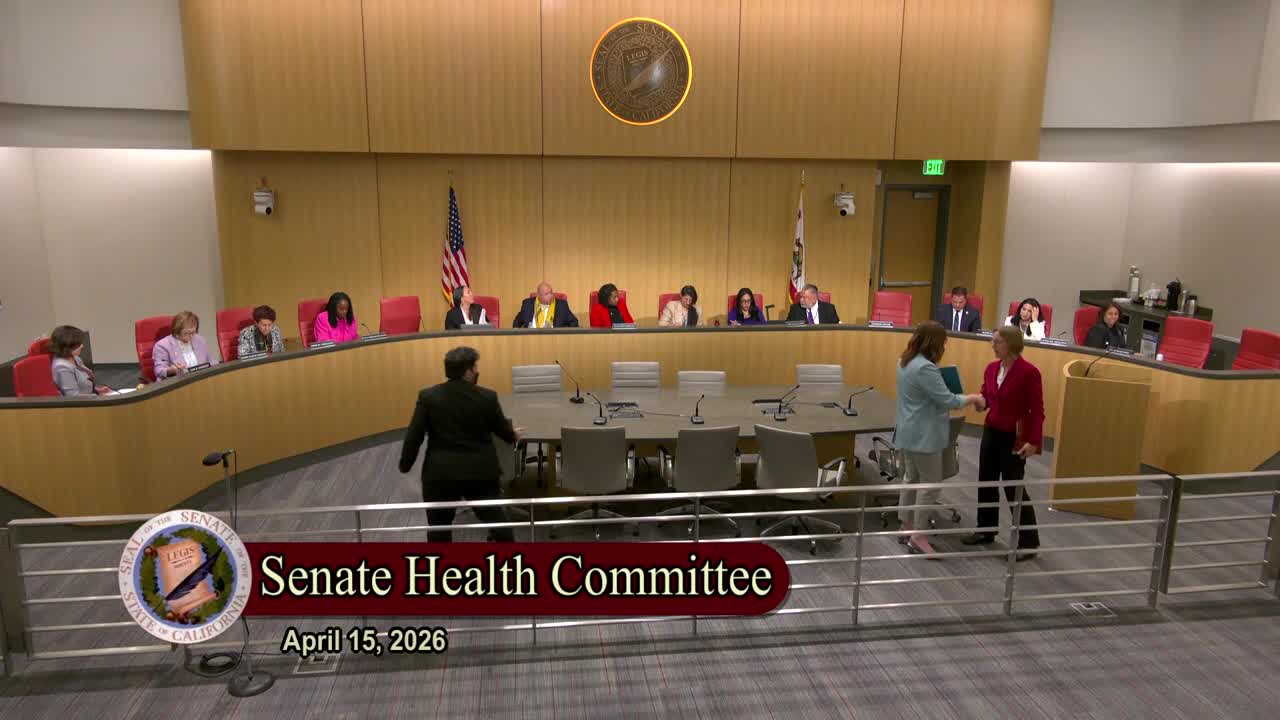 28MIN
Senate Standing Committee on Health
Bill Author

Bill Co-Author(s):