SB 939: Public employees’ retirement: service credit: payments.
- Session Year: 2025-2026
- House: Senate
- Latest Version Date: 2026-08-17
Current Status:
Passed
(2026-08-17: Chaptered by Secretary of State. Chapter 110, Statutes of 2026.)
Introduced
In Committee
Awaiting First Chamber Vote
Passed First Chamber
In Committee
Awaiting Second Chamber Vote
Passed Second Chamber
Enacted
(1)The Public Employees Retirement Law (PERL) creates the Public Employees Retirement System (PERS), which provides a defined benefit to members of the system based on final compensation, credited service, and age at retirement, subject to certain variations. PERL vests management and control of PERS in the Board of Administration.
Under that law, members may make certain elections, including elections to purchase service credit for various types of public service, upon payment of additional contributions. Existing law permits a member who retires before paying off the entire amount for service credit to pay the balance due by deductions from their retirement allowance equal to those authorized as payroll deductions, as specified. Under existing law, upon the death of that member, a survivor of the member, who is eligible for a monthly allowance, may elect to continue those deductions from the survivors allowance. Existing law authorizes the member, survivor, or beneficiary, as an alternative, on or after January 1, 2020, to elect to receive an allowance that is reduced by the actuarial equivalent of any balance remaining unpaid by the member.
This bill would limit that alternative option to elections made on or after January 1, 2020, with an initial effective date prior to January 1, 2028.
(2)Existing law provides that all elections taking effect on or after January 1, 2020, including elections for normal contributions, arrears contributions, absences, or public service become due and payable at the time of the members retirement or preretirement death.
This bill would require, for all elections with an effective date on or after January 1, 2028, except as specified, the members payment to be received by the system no later than 90 days after the members retirement effective date, or the survivor or beneficiarys payment to be received by the system no later than 90 days after the date the notification of balance due is mailed. For any balance not paid, the service credit included in the election would be reduced or eliminated, as specified.
This bill would also require all contributions or service credit adjustments required by law or agreement with an effective date on or after January 1, 2028, to become due and payable at the time of retirement or preretirement death. The bill would require the member, survivor, or beneficiary to have their allowance reduced by the actuarial equivalent of any balance remaining unpaid by the member.
(3)Existing law permits a member of PERS who has elected to receive credit for service and who retires for disability, including a safety member who retires due to industrial disability, to elect to cancel the installments prospectively, in accordance with certain provisions. Existing law specifies that, for an election taking place on or after January 1, 2020, the amount remaining for normal contributions, arrears, contributions, absences, or public service for the election becomes due and payable at the time of the members retirement or preretirement death and provides that in these circumstances the member, survivor, or beneficiary allowance is reduced by the actuarial equivalent of any balance remaining unpaid by the member.
This bill would require, for any election with an effective date on or after January 1, 2028, except as specified, the members payment to be received by the system no later than 90 days after the members retirement effective date, or the survivor or beneficiarys payment to be received by the system no later than 90 days after the date the notification of balance due is mailed. For any balance not paid, the service credit included in the election would be reduced or eliminated, as specified.
(4)Existing law specifies that an election by a member to receive credit for service under PERL is effective only if accompanied by a lump-sum payment or an authorization for payments, in accordance with regulations of the board. Existing law authorizes a member paying for credit for service in after-tax installments to suspend these payments for a period not to exceed 12 months, with payments automatically resuming at the end of the period, or earlier, if requested by the member. Under existing law, a member who retires during the suspension period may, prior to retirement, either make a lump-sum payment for the recalculated balance due or cancel installment payments, as specified. Existing law also provides a 3rd option, under which a member, on or after January 1, 2020, may elect to reduce their allowance by the actuarial equivalent of the recalculated balance remaining unpaid by the member. Under existing law, a members failure to make an election results in the resumption of installment payments as of the members retirement date, or for elections with an initial effective date on or after January 1, 2020, results in the allowance being reduced by the actuarial equivalent of the recalculated balance remaining unpaid by the member.
This bill would limit that 3rd option to elections made on or after January 1, 2020, with a initial effective date prior to January 1, 2028. The bill would provide that if a member fails to make an election, any balance remaining unpaid at the time of retirement would become due and payable, as specified.
(5)The PERL establishes retirement formulas, known as the Second Tier, modified First Tier, and First Tier, which are applicable to specified members of the retirement system. Effective January 1, 2000, a member who received service credit subject to Second Tier benefits may elect to become subject to First Tier benefits and contribution rates. That law requires a member who elects to become subject to First Tier benefits to deposit accumulated contributions the member withdrew while they were subject to Second Tier benefits, plus interest, as specified, or alternatively, the deposit requirement may be satisfied by an election to reduce the members allowance by the actuarial equivalent of any balance remaining unpaid by the member at the time of the members retirement or preretirement death.
This bill would make that alternative provision applicable only to elections made prior to January 1, 2028.
Existing law specifies that, for a member who elects to receive First Tier credit on or after January 1, 2020, any unpaid balance of that member is due and payable at the time of the members retirement or preretirement death, with the member, survivor, or beneficiarys allowance reduced by the actuarial equivalent of any balance remaining unpaid by the member.
This bill would require for an election on or after January 1, 2028, the members payment to be received by the system no later than 90 days after the members retirement effective date, or the survivor or beneficiarys payment to be received by the system no later than 90 days after the date the notification of balance due is mailed. For any balance not paid, the service credit included in the election would be adjusted, as specified.
The bill would make other related and clarifying changes.
(1)The Public Employees Retirement Law (PERL) creates the Public Employees Retirement System (PERS), which provides a defined benefit to members of the system based on final compensation, credited service, and age at retirement, subject to certain variations. PERL vests management and control of PERS in the Board of Administration.
Under that law, members may make certain elections, including elections to purchase service credit for various types of public service, upon payment of additional contributions. Existing law establishes procedures governing the treatment of unpaid balances under an election when a basic death benefit becomes payable before a member has completed making the total payment. Existing law establishes other procedures governing unpaid balances when a special death benefit is payable or a member retires for industrial disability. permits a member who retires before paying off the entire amount for service credit to pay the balance due by deductions from their retirement allowance equal to those authorized as payroll deductions, as specified. Under existing law, upon the death of that member, a survivor of the member, who is eligible for a monthly allowance, may elect to continue those deductions from the survivors allowance. Existing law authorizes the member, survivor, or beneficiary, as an alternative, on or after January 1, 2020, to elect to receive an allowance that is reduced by the actuarial equivalent of any balance remaining unpaid by the member.
Existing law provides that any unpaid balance at a members retirement for service or ordinary disability or at death, with respect to certain preretirement death benefits, may be subject to specified provisions governing service credit, when payment of the balance would not increase the allowance payable. This bill would specify that the above-described provision does not apply to industrial disability payments. The bill would make various other technical and nonsubstantive changes to the above provisions.This bill would limit that alternative option to elections made on or after January 1, 2020, with an initial effective date prior to January 1, 2028.
(2)Existing law provides that all elections taking effect on or after January 1, 2020, including elections for normal contributions, arrears contributions, absences, or public service become due and payable at the time of the members retirement or preretirement death.
This bill would require, for all elections with an effective date on or after January 1, 2028, except as specified, the members payment to be received by the system no later than 90 days after the members retirement effective date, or the survivor or beneficiarys payment to be received by the system no later than 90 days after the date the notification of balance due is mailed. For any balance not paid, the service credit included in the election would be reduced or eliminated, as specified.
This bill would also require all contributions or service credit adjustments required by law or agreement with an effective date on or after January 1, 2028, to become due and payable at the time of retirement or preretirement death. The bill would require the member, survivor, or beneficiary to have their allowance reduced by the actuarial equivalent of any balance remaining unpaid by the member.
(3)Existing law permits a member of PERS who has elected to receive credit for service and who retires for disability, including a safety member who retires due to industrial disability, to elect to cancel the installments prospectively, in accordance with certain provisions. Existing law specifies that, for an election taking place on or after January 1, 2020, the amount remaining for normal contributions, arrears, contributions, absences, or public service for the election becomes due and payable at the time of the members retirement or preretirement death and provides that in these circumstances the member, survivor, or beneficiary allowance is reduced by the actuarial equivalent of any balance remaining unpaid by the member.
This bill would require, for any election with an effective date on or after January 1, 2028, except as specified, the members payment to be received by the system no later than 90 days after the members retirement effective date, or the survivor or beneficiarys payment to be received by the system no later than 90 days after the date the notification of balance due is mailed. For any balance not paid, the service credit included in the election would be reduced or eliminated, as specified.
(4)Existing law specifies that an election by a member to receive credit for service under PERL is effective only if accompanied by a lump-sum payment or an authorization for payments, in accordance with regulations of the board. Existing law authorizes a member paying for credit for service in after-tax installments to suspend these payments for a period not to exceed 12 months, with payments automatically resuming at the end of the period, or earlier, if requested by the member. Under existing law, a member who retires during the suspension period may, prior to retirement, either make a lump-sum payment for the recalculated balance due or cancel installment payments, as specified. Existing law also provides a 3rd option, under which a member, on or after January 1, 2020, may elect to reduce their allowance by the actuarial equivalent of the recalculated balance remaining unpaid by the member. Under existing law, a members failure to make an election results in the resumption of installment payments as of the members retirement date, or for elections with an initial effective date on or after January 1, 2020, results in the allowance being reduced by the actuarial equivalent of the recalculated balance remaining unpaid by the member.
This bill would limit that 3rd option to elections made on or after January 1, 2020, with a initial effective date prior to January 1, 2028. The bill would provide that if a member fails to make an election, any balance remaining unpaid at the time of retirement would become due and payable, as specified.
(5)The PERL establishes retirement formulas, known as the Second Tier, modified First Tier, and First Tier, which are applicable to specified members of the retirement system. Effective January 1, 2000, a member who received service credit subject to Second Tier benefits may elect to become subject to First Tier benefits and contribution rates. That law requires a member who elects to become subject to First Tier benefits to deposit accumulated contributions the member withdrew while they were subject to Second Tier benefits, plus interest, as specified, or alternatively, the deposit requirement may be satisfied by an election to reduce the members allowance by the actuarial equivalent of any balance remaining unpaid by the member at the time of the members retirement or preretirement death.
This bill would make that alternative provision applicable only to elections made prior to January 1, 2028.
Existing law specifies that, for a member who elects to receive First Tier credit on or after January 1, 2020, any unpaid balance of that member is due and payable at the time of the members retirement or preretirement death, with the member, survivor, or beneficiarys allowance reduced by the actuarial equivalent of any balance remaining unpaid by the member.
This bill would require for an election on or after January 1, 2028, the members payment to be received by the system no later than 90 days after the members retirement effective date, or the survivor or beneficiarys payment to be received by the system no later than 90 days after the date the notification of balance due is mailed. For any balance not paid, the service credit included in the election would be adjusted, as specified.
The bill would make other related and clarifying changes.
The Public Employees Retirement Law (PERL) creates the Public Employees Retirement System (PERS), which provides a defined benefit to members of the system based on final compensation, credited service, and age at retirement, subject to certain variations. PERL vests management and control of PERS in the Board of Administration.
Under that law, members may make certain elections, including elections to purchase service credit for various types of public service, upon payment of additional contributions. Existing law establishes procedures governing the treatment of unpaid balances under an election when a basic death benefit becomes payable before a member has completed making the total payment. Existing law establishes other procedures governing unpaid balances when a special death benefit is payable or a member retires for industrial disability.
Existing law provides that any unpaid balance at a members retirement for service or ordinary disability or at death, with respect to certain preretirement death benefits, may be subject to specified provisions governing service credit, when payment of the balance would not increase the allowance payable.
This bill would specify that the above-described provision does not apply to industrial disability payments. The bill would make various other technical and nonsubstantive changes to the above provisions.
(a)If a basic death benefit becomes payable before the payment of the total amount the member elected to pay under any election with respect to normal contributions, arrears contributions, absences, or public service credit permitted under this part, the members entire compensation, or the service upon which that total amount was based, shall be included in the computation of the portion of the death benefit that is provided in subdivision (b) of Section 21532, and the unpaid balance of the total amount may not be paid to this system, nor may it be included in the members accumulated contributions that constitute a part of the basic death benefit.
(b)Any balance of any total amount remaining unpaid at the death of the member on account of whom a special death benefit is payable or at the retirement of a member for industrial disability may be subject to Section 21037 or 21039 when payment of the balance would not increase the allowance payable. When the balance of the amount remaining unpaid would increase the allowance payable, the balance shall become due and payable immediately, except that the survivor of a member who died under circumstances under which a special death benefit is payable and who had authorized payroll deductions may elect to continue those deductions from the survivor allowance in lieu of the lump-sum payment. If the balance is not paid, the portion of the unpaid amount representing contributions on compensation earned in the membership applicable to the member at the time of injury resulting in death or disability shall be deducted from the benefit otherwise payable and this system shall be discharged from any liability for any annuity or benefit with respect to any remainder of the unpaid contribution.
(c)Any balance of the total amount remaining unpaid at the time of retirement for service or disability, or at death, with respect to which a benefit is payable under Section 21546, may be subject to Section 21037 or 21039 when payment of the balance would not increase the allowance payable. When the balance of the amount remaining unpaid would increase the allowance payable, the balance shall become due and payable immediately, except that the survivor of a member who died under circumstances under which a benefit under Section 21546 is payable and who had authorized payroll deductions may elect to continue those deductions from the survivor allowance in lieu of a lump-sum payment of the balance due. If the balance is not paid, the service credit included in the election shall be reduced in proportion to the balance of the total amount remaining unpaid and any service credit dependent on completion of payments eliminated for purposes of computing the allowance but not for purposes of determining entitlement to an allowance.
(d)Notwithstanding any provision of subdivision (b) or (c), a member who retires before payment of the total amount which the member elected to pay, may elect to pay the balance due, or the total amount if no payroll deductions had been made prior to retirement, by deductions from the members retirement allowance equal to those which the member authorized as payroll deductions. In that case, service credit included in the election may not be reduced, nor may any prior service dependent on completion of payments be eliminated for purposes of computing the allowance. Any balance of the total amount remaining unpaid upon the death of the member shall be treated in the same manner as unpaid balances are treated if a special death benefit is payable, except that the survivor of a retired member who had authorized deductions from their retirement allowance in accordance with this subdivision, and who is eligible for a monthly allowance, may elect to continue those deductions from the survivors allowance in lieu of the lump-sum payment otherwise required. Alternatively, on or after January 1, 2020, for elections with an initial effective date prior to January 1, 2028, the member, survivor, or beneficiary may elect to receive an allowance that is reduced by the actuarial equivalent of any balance remaining unpaid by the member.
(e)Notwithstanding any other provision of this section, all elections with an effective date on or after January 1, 2020, and prior to January 1, 2028, including elections for normal contributions, arrears contributions, absences, or public service, shall become due and payable at the time of retirement or preretirement death. The member, survivor, or beneficiary shall have their allowance reduced by the actuarial equivalent of any balance remaining unpaid by the member. This subdivision does not apply to elections made under Section 21027 or 21029 for retired members.
(f)Notwithstanding any other provision of this section, all contributions or service credit adjustments required by law or agreement with an effective date on or after January 1, 2028, shall become due and payable at the time of retirement or preretirement death. The member, survivor, or beneficiary shall have their allowance reduced by the actuarial equivalent of any balance remaining unpaid by the member.
(g)Notwithstanding any other provision of this section, all elections with an effective date on or after January 1, 2028, including elections for normal contributions, arrears contributions, absences, or public service, shall become due and payable at the time of retirement or preretirement death. The members payment must be received by the system no later than 90 days after the members retirement effective date. The survivor or beneficiarys payment must be received by the system no later than 90 days after the date the notification of balance due is mailed. If the balance is not paid, the service credit included in the election shall be reduced in proportion to the balance of the total amount remaining unpaid and any service credit dependent on completion of payments eliminated for purposes of computing the allowance. This subdivision does not apply to elections made under Section 21027 or 21029 for retired members.
(h)Interest paid with respect to normal contributions, arrears contributions, absences, or public service credit permitted under this part, prior to date of retirement or death of the member, shall be credited to the members individual account. Interest paid after the date of retirement or death of the member shall be credited to the retirement fund pursuant to Section 20174.
SEC. 2.Section 21037 of the Government Code is amended to read:21037.Notwithstanding any other law, the following applies:
(a)A member who has elected to receive credit for service by contributing in installments and who retires for disability on or after January 1, 2004, when the election for service credit does not increase the members allowance payable, may elect to cancel the installments prospectively. The members election may be received by the system no more than 30 days after the date on which the members retirement for disability is approved. The effective date of the members election shall be the effective date of the members retirement for disability. No refund of contributions paid in installments prior to the effective date of the members election may be payable to a member or retired member as a result of an election made by a member pursuant to this section.
(b)A members election pursuant to this section shall be void, and installment payments shall resume, upon a members reinstatement from retirement for disability. The remaining balance due shall be recalculated to include interest during the disability retirement period.
(c)On or after January 1, 2004, the survivor of a member who elected to receive credit for service by contributing in installments, when the survivor is eligible to receive an allowance subject to Section 21541, may elect to cancel the installments prospectively when the election for service credit does not increase the survivors allowance payable. The survivors election shall be received by the system no more than 30 days after the members date of death. The effective date of the survivors election shall be the members date of death. No refund of contributions paid in installments prior to the members date of death may be payable as a result of an election made by a survivor pursuant to this section.
(d)A survivors election pursuant to this section shall be void, and installment payments shall resume, upon a determination that the death was not industrial, following payment of a temporary special death benefit allowance, provided that the survivor is then entitled to a monthly allowance under Section 21546, 21547, 21547.7, or 21548. The remaining balance due shall be recalculated to include interest during the temporary special death benefit period.
(e)A member who retired for disability prior to January 1, 2004, or the survivor of a deceased disability retiree who began receiving a postretirement death benefit allowance prior to January 1, 2004, or the survivor of a member who began receiving an allowance subject to Section 21541 prior to January 1, 2004, may elect to cancel installments prospectively when the election for service credit does not increase the allowance payable. The effective date of the election shall be the date that the election is received by this system. No refund of contributions paid in installments prior to the effective date of the election may be payable pursuant to this section.
(f)Notwithstanding any other provision of this section, any election with an effective date on or after January 1, 2020, and prior to January 1, 2028, shall be subject to subdivision (e) of Section 20776.
(g)Notwithstanding any other provision of this section, any election with an effective date on or after January 1, 2028, shall be subject to subdivision (g) of Section 20776.
SEC. 3.Section 21039 of the Government Code is amended to read:21039.(a)Notwithstanding any other law, a safety member, as defined in subdivision (b) of Section 20371, who has elected to receive credit for service by making contributions in installment payments and who retires or has retired due to industrial disability while making those payments, may elect to cancel the payments prospectively if the election to receive credit for service does not increase the members allowance payable. The effective date of the members election to cancel payments shall be the first day of the month following receipt of the election by the system. No refund of contributions paid in installments prior to the effective date of the members election to cancel the payments shall be payable to a member or retired member as a result of an election made by a member pursuant to this section.
(b)A members election pursuant to this section shall be void, and the installment payments shall resume, upon a members reinstatement from retirement for industrial disability. The remaining balance due shall be recalculated to include interest during the industrial disability retirement period.
(c)Except as set forth in subdivisions (d) and (e), nothing in this section shall be construed to limit any right or benefit granted pursuant to Section 20776 or 21037, as amended by Senate Bill 268 of the 200304 Regular Session.
(d)Notwithstanding any other provision of this section, any election with an effective date on or after January 1, 2020, and prior to January 1, 2028, shall be subject to subdivision (e) of Section 20776.
(e)Notwithstanding any other provision of this section, any election with an effective date on or after January 1, 2028, shall be subject to subdivision (g) of Section 20776.
SEC. 4.Section 21050 of the Government Code is amended to read:21050.(a)An election by a member to receive credit for service under this part, in addition to his or her current and prior service credit, shall be effective only if accompanied by a lump-sum payment or an authorization for payments, other than a lump-sum payment, in accordance with regulations of the board.
(b)If a member electing to receive credit for service under this part is authorized to pay for that service in installment payments beginning on or after January 1, 2004, the amount of the installment payments shall include an actuarial adjustment, as determined by the chief actuary, as necessary to take into account the provisions of Section 21037. The amount of the actuarial adjustment may not exceed one-half of 1 percent of the total installment payment.
(c)(1)A member authorized to pay for credit for service in after-tax installments may elect in writing, including by verified electronic transaction, at any time prior to retirement, to suspend after-tax installment payments for a period not to exceed 12 months. Installment payments shall automatically resume at the end of the suspension period, or earlier if requested by the member. A member may not elect an additional suspension of those installment payments for the same service for three years following the resumption of installment payments.
(2)The balance due at the end of a suspension period shall be recalculated to include interest accrued during the suspension.
(3)(A)A member who retires during the suspension period may, prior to retirement, elect to do one of the following:
(i)Make a lump-sum payment for the recalculated balance due.
(ii)Cancel installment payments in the manner specified in subdivision (d).
(iii)On or after January 1, 2020, for elections with an initial effective date prior to January 1, 2028, reduce the members allowance by the actuarial equivalent of the recalculated balance remaining unpaid by the member.
(B)If a member fails to make an election under subparagraph (A), Section 20776 shall apply to any balance remaining unpaid at the time of retirement.
(d)A member authorized to pay for credit for service in after-tax installments may elect in writing, including by verified electronic transaction, at any time prior to retirement, to prospectively cancel payment of the remaining unpaid balance for those installment payments.
(1)An election shall be effective upon the earlier of the members retirement date, or the first day of the month following approval by the system of the election.
(2)Service credited to the members account shall be reduced in proportion to the balance of the total amount remaining unpaid on the effective date of the cancellation. If the member elects to cancel during or at the end of a suspension period, the balance shall include any interest accrued and unpaid during the suspension period.
(3)Installment payments shall not be canceled for any of the following:
(A)Contribution or service credit adjustments required by law or agreement.
(B)A tier election pursuant to Article 2 (commencing with Section 21070) of Chapter 12 of Part 3 of Division 5 of Title 2.
(C)The purchase of service credit subject to a community property division by way of court judgment, domestic relations, or other court order or settlement agreement.
(e)If a member who has not elected to suspend installment payments pursuant to subdivision (c) fails to make after-tax installment payments when due for a period of 12 months, the board may cancel the remaining unpaid balance in the same manner and with the same effect as if the member had elected to cancel their installment payments pursuant to subdivision (d).
(f)Prior to retirement, a member may elect to purchase that portion of the service credit not credited to his or her account as a result of a cancellation executed pursuant to subdivision (d) or (e). A member shall not make an election for three years following the effective date of the cancellation unless the member retires before the conclusion of that period.
(1)A member who elects to purchase that service credit shall contribute an amount equal to the sum of the following:
(A)The remaining unpaid balance of the canceled installment payments.
(B)Interest from the effective date of the cancellation until the date of completion of payment.
(C)If the member elects to contribute in installment payments, interest on the unpaid balance of the amount payable, beginning on the date of the election to receive credit through completion of payments.
(2)Notwithstanding Section 575.1 of Title 2 of the California Code of Regulations, the interest rate applicable to the amount due for this election shall be the interest rate applicable to the canceled installment payments.
SEC. 5.Section 21073.1 of the Government Code is amended to read:21073.1.(a)Effective January 1, 2000, a member who elects to receive service credit under Section 21354.1, as authorized by Section 21073.7, for time during which the member received service credit subject to Section 21076 or 21077, shall deposit an amount equal to any accumulated contributions the member withdrew pursuant to Section 20737, plus the interest that would have been credited to the members account had the contributions not been withdrawn, and any contributions the member would have made, plus an amount equal to the interest that would have been credited to those contributions, had the member not been subject to Section 21076 or 21077. This deposit shall be made in a lump sum or by installments, with interest through the completion of payments, over that period and subject to minimum payment amounts as may be prescribed by regulations of the board. Alternatively, for an election prior to January 1, 2028, this deposit requirement may be satisfied by an election to reduce the members allowance by the actuarial equivalent of any balance remaining unpaid by the member at the time of retirement or preretirement death.
(b)Any unpaid balance with respect to an election with an effective date on or after January 1, 2020, shall become due and payable at the time of retirement or preretirement death.
(1)For elections prior to January 1, 2028, the member, survivor, or beneficiary shall have their allowance reduced by the actuarial equivalent of any balance remaining unpaid by the member.
(2)For elections on or after January 1, 2028, the members payment must be received by the system no later than 90 days after the members retirement effective date. The survivor or beneficiarys payment must be received by the system no later than 90 days after the date the notification of balance due is mailed. If the balance is not paid, the service credit included in the election shall be adjusted in proportion to the balance of the total amount remaining unpaid and any service credit dependent on completion of payments shall remain subject to Section 21076 or 21077.
(c)The board, in addition to its general rulemaking authority under Section 20121, may adopt regulations that implement this section. Those regulations shall be exempt from review by the Office of Administrative Law. However, the board shall transmit those regulations to the Office of Administrative Law for filing with the Secretary of State and publication in the California Code of Regulations.
(d)The amendments to this section enacted during the first year of the 19992000 Regular Session are subject to the limitations set forth in Section 21251.13.
(a)If a basic death benefit becomes payable before the payment of the total amount the member elected to pay under any election with respect to normal contributions, arrears contributions, absences, or public service credit permitted under this part, the members entire compensation, or the service upon which that total amount was based, shall be included in the computation of the portion of the death benefit that is provided in subdivision (b) of Section 21532, and the unpaid balance of the total amount may not be paid to this system, nor may it be included in the members accumulated contributions that constitute a part of the basic death benefit.
(b)Any balance of any total amount remaining unpaid at the death of the member on account of whom a special death benefit is payable or at the retirement of a member for industrial disability may be subject to Section 21037 or 21039 when payment of the balance would not increase the allowance payable. When the balance of the amount remaining unpaid would increase the allowance payable, the balance shall become due and payable immediately, except that the survivor of a member who died under circumstances under which a special death benefit is payable and who had authorized payroll deductions may elect to continue those deductions from the survivor allowance in lieu of the lump-sum payment. If the balance is not paid, the portion of the unpaid amount representing contributions on compensation earned in the membership applicable to the member at the time of injury resulting in death or disability shall be deducted from the benefit otherwise payable and this system shall be discharged from any liability for any annuity or benefit with respect to any remainder of the unpaid contribution.
(c)Any balance of the total amount remaining unpaid at the time of retirement for service or disability, or at death, with respect to which a benefit is payable under Section 21546, may be subject to Section 21037 or 21039 when payment of the balance would not increase the allowance payable. When the balance of the amount remaining unpaid would increase the allowance payable, the balance shall become due and payable immediately, except that the survivor of a member who died under circumstances under which a benefit under Section 21546 is payable and who had authorized payroll deductions may elect to continue those deductions from the survivor allowance in lieu of a lump-sum payment of the balance due. If the balance is not paid, the service credit included in the election shall be reduced proportionately in proportion to the balance of the total amount remaining unpaid and any service credit dependent on completion of payments eliminated for purposes of computing the allowance but not for purposes of determining entitlement to an allowance. This provision shall not apply to industrial disability payments.
(d)Notwithstanding any provision of subdivision (b) or (c), a member who retires before payment of the total amount which the member elected to pay, may elect to pay the balance due, or the total amount if no payroll deductions had been made prior to retirement, by deductions from the members retirement allowance equal to those which the member authorized as payroll deductions. In that case, service credit included in the election may not be reduced, nor may any prior service dependent on completion of payments be eliminated for purposes of computing the allowance. Any balance of the total amount remaining unpaid upon the death of the member shall be treated in the same manner as unpaid balances are treated if a special death benefit is payable, except that the survivor of a retired member who had authorized deductions from their retirement allowance in accordance with this subdivision, and who is eligible for a monthly allowance, may elect to continue those deductions from the survivors allowance in lieu of the lump-sum payment otherwise required. Alternatively, on or after January 1, 2020, for elections with an initial effective date prior to January 1, 2028, the member, survivor, or beneficiary may elect to receive an allowance that is reduced by the actuarial equivalent of any balance remaining unpaid by the member.
(e)Notwithstanding any other provision of this section, all elections with an effective date on or after January 1, 2020, and prior to January 1, 2028, including elections for normal contributions, arrears contributions, absences, or public service, shall become due and payable at the time of retirement or preretirement death. The member, survivor, or beneficiary shall have their allowance reduced by the actuarial equivalent of any balance remaining unpaid by the member. This subdivision does not apply to elections made under Section 21027 or 21029 for retired members.
(f)Notwithstanding any other provision of this section, all contributions or service credit adjustments required by law or agreement with an effective date on or after January 1, 2028, shall become due and payable at the time of retirement or preretirement death. The member, survivor, or beneficiary shall have their allowance reduced by the actuarial equivalent of any balance remaining unpaid by the member.
(g)Notwithstanding any other provision of this section, all elections with an effective date on or after January 1, 2028, including elections for normal contributions, arrears contributions, absences, or public service, shall become due and payable at the time of retirement or preretirement death. The members payment must be received by the system no later than 90 days after the members retirement effective date. The survivor or beneficiarys payment must be received by the system no later than 90 days after the date the notification of balance due is mailed. If the balance is not paid, the service credit included in the election shall be reduced in proportion to the balance of the total amount remaining unpaid and any service credit dependent on completion of payments eliminated for purposes of computing the allowance. This subdivision does not apply to elections made under Section 21027 or 21029 for retired members.
(f)(h)Interest paid with respect to normal contributions, arrears contributions, absences, or public service credit permitted under this part, prior to date of retirement or death of the member, shall be credited to the members individual account. Interest paid after the date of retirement or death of the member shall be credited to the retirement fund pursuant to Section 20174.
SEC. 2.Section 21037 of the Government Code is amended to read:21037.Notwithstanding any other provision of law, the following shall apply: applies:
(a)A member who has elected to receive credit for service by contributing in installments and who retires for disability on or after January 1, 2004, when the election for service credit does not increase the members allowance payable, may elect to cancel the installments prospectively. The members election may be received by the system no more than 30 days after the date on which the members retirement for disability is approved. The effective date of the members election shall be the effective date of the members retirement for disability. No refund of contributions paid in installments prior to the effective date of the members election may be payable to a member or retired member as a result of an election made by a member pursuant to this section.
(b)A members election pursuant to this section shall be void, and installment payments shall resume, upon a members reinstatement from retirement for disability. The remaining balance due shall be recalculated to include interest during the disability retirement period.
(c)On or after January 1, 2004, the survivor of a member who elected to receive credit for service by contributing in installments, when the survivor is eligible to receive an allowance subject to Section 21541, may elect to cancel the installments prospectively when the election for service credit does not increase the survivors allowance payable. The survivors election shall be received by the system no more than 30 days after the members date of death. The effective date of the survivors election shall be the members date of death. No refund of contributions paid in installments prior to the members date of death may be payable as a result of an election made by a survivor pursuant to this section.
(d)A survivors election pursuant to this section shall be void, and installment payments shall resume, upon a determination that the death was not industrial, following payment of a temporary special death benefit allowance, provided that the survivor is then entitled to a monthly allowance under Section 21546, 21547, 21547.7, or 21548. The remaining balance due shall be recalculated to include interest during the temporary special death benefit period.
(e)A member who retired for disability prior to January 1, 2004, or the survivor of a deceased disability retiree who began receiving a postretirement death benefit allowance prior to January 1, 2004, or the survivor of a member who began receiving an allowance subject to Section 21541 prior to January 1, 2004, may elect to cancel installments prospectively when the election for service credit does not increase the allowance payable. The effective date of the election shall be the date that the election is received by this system. No refund of contributions paid in installments prior to the effective date of the election may be payable pursuant to this section.
(f)Notwithstanding any other provision of this section, any election with an effective date on or after January 1, 2020, and prior to January 1, 2028, shall be subject to subdivision (e) of Section 20776.
(g)Notwithstanding any other provision of this section, any election with an effective date on or after January 1, 2028, shall be subject to subdivision (g) of Section 20776.
SEC. 3.Section 21039 of the Government Code is amended to read:21039.(a)Notwithstanding any other provision of law, a safety member, as defined in subdivision (b) of Section 20371, who has elected to receive credit for service by making contributions in installment payments and who retires or has retired due to industrial disability while making those payments, may elect to cancel the payments prospectively if the election to receive credit for service does not increase the members allowance payable. The effective date of the members election to cancel payments shall be the first day of the month following receipt of the election by the system. No refund of contributions paid in installments prior to the effective date of the members election to cancel the payments shall be payable to a member or retired member as a result of an election made by a member pursuant to this section.
(b)A members election pursuant to this section shall be void, and the installment payments shall resume, upon a members reinstatement from retirement for industrial disability. The remaining balance due shall be recalculated to include interest during the industrial disability retirement period.
(c)Except as set forth in subdivision (d), subdivisions (d) and (e), nothing in this section shall be construed to limit any right or benefit granted pursuant to Section 20776 or 21037, as amended by Senate Bill 268 of the 200304 Regular Session.
(d)Notwithstanding any other provision of this section, any election with an effective date on or after January 1, 2020, and prior to January 1, 2028, shall be subject to subdivision (e) of Section 20776.
(e)Notwithstanding any other provision of this section, any election with an effective date on or after January 1, 2028, shall be subject to subdivision (g) of Section 20776.
SEC. 4.Section 21050 of the Government Code is amended to read:21050.(a)An election by a member to receive credit for service under this part, in addition to his or her current and prior service credit, shall be effective only if accompanied by a lump-sum payment or an authorization for payments, other than a lump-sum payment, in accordance with regulations of the board.
(b)If a member electing to receive credit for service under this part is authorized to pay for that service in installment payments beginning on or after January 1, 2004, the amount of the installment payments shall include an actuarial adjustment, as determined by the chief actuary, as necessary to take into account the provisions of Section 21037. The amount of the actuarial adjustment may not exceed one-half of 1 percent of the total installment payment.
(c)(1)A member authorized to pay for credit for service in after-tax installments may elect in writing, including by verified electronic transaction, at any time prior to retirement, to suspend after-tax installment payments for a period not to exceed 12 months. Installment payments shall automatically resume at the end of the suspension period, or earlier if requested by the member. A member may not elect an additional suspension of those installment payments for the same service for three years following the resumption of installment payments.
(2)The balance due at the end of a suspension period shall be recalculated to include interest accrued during the suspension.
(3)(A)A member who retires during the suspension period may, prior to retirement, elect to do one of the following:
(i)Make a lump-sum payment for the recalculated balance due.
(ii)Cancel installment payments in the manner specified in subdivision (d).
(iii)On or after January 1, 2020, for elections with an initial effective date prior to January 1, 2028, reduce his or her the members allowance by the actuarial equivalent of the recalculated balance remaining unpaid by the member.
(B)Failure by a member to make an election under subparagraph (A) shall result in the resumption of installment payments as of his or her date of retirement, or for elections with an initial effective date on or after January 1, 2020, the member shall have his or her allowance reduced by the actuarial equivalent of the recalculated balance remaining unpaid by the member.(B)If a member fails to make an election under subparagraph (A), Section 20776 shall apply to any balance remaining unpaid at the time of retirement.
(d)A member authorized to pay for credit for service in after-tax installments may elect in writing, including by verified electronic transaction, at any time prior to retirement, to prospectively cancel payment of the remaining unpaid balance for those installment payments.
(1)An election shall be effective upon the earlier of the members retirement date, or the first day of the month following approval by the system of the election.
(2)Service credited to the members account shall be reduced in proportion to the balance of the total amount remaining unpaid on the effective date of the cancellation. If the member elects to cancel during or at the end of a suspension period, the balance shall include any interest accrued and unpaid during the suspension period.
(3)Installment payments shall not be canceled for any of the following:
(A)Contribution or service credit adjustments required by law or agreement.
(B)A tier election pursuant to Article 2 (commencing with Section 21070) of Chapter 12 of Part 3 of Division 5 of Title 2.
(C)The purchase of service credit subject to a community property division by way of court judgment, domestic relations, or other court order or settlement agreement.
(e)If a member who has not elected to suspend installment payments pursuant to subdivision (c) fails to make after-tax installment payments when due for a period of 12 months, the board may cancel the remaining unpaid balance in the same manner and with the same effect as if the member had elected to cancel his or her their installment payments pursuant to subdivision (d).
(f)Prior to retirement, a member may elect to purchase that portion of the service credit not credited to his or her account as a result of a cancellation executed pursuant to subdivision (d) or (e). A member shall not make an election for three years following the effective date of the cancellation unless the member retires before the conclusion of that period.
(1)A member who elects to purchase that service credit shall contribute an amount equal to the sum of the following:
(A)The remaining unpaid balance of the canceled installment payments.
(B)Interest from the effective date of the cancellation until the date of completion of payment.
(C)If the member elects to contribute in installment payments, interest on the unpaid balance of the amount payable, beginning on the date of the election to receive credit through completion of payments.
(2)Notwithstanding Section 575.1 of Title 2 of the California Code of Regulations, the interest rate applicable to the amount due for this election shall be the interest rate applicable to the canceled installment payments.
SEC. 5.Section 21073.1 of the Government Code is amended to read:21073.1.(a)Effective January 1, 2000, a member who elects to receive service credit under Section 21354.1, as authorized by Section 21073.7, for time during which the member received service credit subject to Section 21076 or 21077, shall deposit an amount equal to any accumulated contributions the member withdrew pursuant to Section 20737, plus the interest that would have been credited to the members account had the contributions not been withdrawn, and any contributions the member would have made, plus an amount equal to the interest that would have been credited to those contributions, had the member not been subject to Section 21076 or 21077. This deposit shall be made in a lump sum or by installments, with interest through the completion of payments, over that period and subject to minimum payment amounts as may be prescribed by regulations of the board. Alternatively, for an election prior to January 1, 2028, this deposit requirement may be satisfied by an election to reduce the members allowance by the actuarial equivalent of any balance remaining unpaid by the member at the time of retirement or preretirement death.
(b)Any unpaid balance with respect to an election with an effective date on or after January 1, 2020, shall become due and payable at the time of retirement or preretirement death. The
(1)For elections prior to January 1, 2028, the member, survivor, or beneficiary shall have his or her their allowance reduced by the actuarial equivalent of any balance remaining unpaid by the member.
(2)For elections on or after January 1, 2028, the members payment must be received by the system no later than 90 days after the members retirement effective date. The survivor or beneficiarys payment must be received by the system no later than 90 days after the date the notification of balance due is mailed. If the balance is not paid, the service credit included in the election shall be adjusted in proportion to the balance of the total amount remaining unpaid and any service credit dependent on completion of payments shall remain subject to Section 21076 or 21077.
(c)The board, in addition to its general rulemaking authority under Section 20121, may adopt regulations that implement this section. Those regulations shall be exempt from review by the Office of Administrative Law. However, the board shall transmit those regulations to the Office of Administrative Law for filing with the Secretary of State and publication in the California Code of Regulations.
(d)The amendments to this section enacted during the first year of the 19992000 Regular Session are subject to the limitations set forth in Section 21251.13.
(a)If a basic death benefit becomes payable before the payment of the total amount the member elected to pay under any election with respect to normal contributions, arrears contributions, absences, or public service credit permitted under this part, the members entire compensation, or the service upon which that total amount was based, as the case may be, shall be included in the computation of the portion of the death benefit that is provided in subdivision (b) of Section 21532, and the unpaid balance of the total amount may not be paid to this system, nor may it be included in the members accumulated contributions that constitute a part of the basic death benefit.
(b)Any balance of any total amount remaining unpaid at the death of the member on account of whom a special death benefit is payable or at the retirement of a member for industrial disability may be subject to Section 21037 when payment of the balance would not increase the allowance payable. When the balance of the amount remaining unpaid would increase the allowance payable, the balance shall become due and payable immediately, except that the survivor of a member who died under circumstances under which a special death benefit is payable and who had authorized payroll deductions may elect to continue those deductions from the survivor allowance in lieu of the lump-sum payment otherwise required. payment. If the balance is not paid, the portion of the unpaid amount representing contributions on compensation earned in the membership applicable to the member at the time of injury resulting in death or disability shall be deducted from the benefit otherwise payable and this system shall be discharged from any liability for any annuity or benefit with respect to any remainder of the unpaid contribution.
(c)Any balance of the total amount remaining unpaid at the time of retirement for service or ordinary disability, or at death, with respect to which a benefit is payable under Section 21546, may be subject to Section 21037 when payment of the balance would not increase the allowance payable. When the balance of the amount remaining unpaid would increase the allowance payable, the balance shall become due and payable immediately, except that the survivor of a member who died under circumstances under which a benefit under Section 21546 is payable and who had authorized payroll deductions may elect to continue those deductions from the survivor allowance in lieu of a lump-sum payment of the balance due. If the balance is not paid, the service credit included in the election shall be reduced proportionately and any service credit dependent on completion of payments eliminated for purposes of computing the allowance but not for purposes of determining entitlement to an allowance. This provision shall not apply to industrial disability payments.
(d)Notwithstanding any provision of subdivision (b) or (c), a member who retires before payment of the total amount which he or she the member elected to pay, may elect to pay the balance due, or the total amount if no payroll deductions had been made prior to retirement, by deductions from his or her the members retirement allowance equal to those which the member authorized as payroll deductions. In that case, service credit included in the election may not be reduced, nor may any prior service dependent on completion of payments be eliminated for purposes of computing the allowance. Any balance of the total amount remaining unpaid upon the death of the member shall be treated in the same manner as unpaid balances are treated if a special death benefit is payable, except that the survivor of a retired member who had authorized deductions from his or her their retirement allowance in accordance with this subdivision, and who is eligible for a monthly allowance, may elect to continue those deductions from the survivors allowance in lieu of the lump-sum payment otherwise required. Alternatively, on or after January 1, 2020, the member, survivor, or beneficiary may elect to receive an allowance that is reduced by the actuarial equivalent of any balance remaining unpaid by the member.
(e)Notwithstanding any other provision of this section, all elections with an effective date on or after January 1, 2020, including elections for normal contributions, arrears contributions, absences, or public service, shall become due and payable at the time of retirement or preretirement death. The member, survivor, or beneficiary shall have his or her their allowance reduced by the actuarial equivalent of any balance remaining unpaid by the member. This subdivision does not apply to elections made under Section 21027 or 21029 for retired members.
(f)Interest paid with respect to normal contributions, arrears contributions, absences, or public service credit permitted under this part, prior to date of retirement or death of the member, shall be credited to the members individual account. Interest paid after the date of retirement or death of the member shall be credited to the retirement fund pursuant to Section 20174.
|
Date
|
Status
|
|---|---|
| Aug 17, 2026 | Chaptered by Secretary of State. Chapter 110, Statutes of 2026. |
| Aug 17, 2026 | Approved by the Governor. |
| Aug 11, 2026 | Enrolled and presented to the Governor at 3 p.m. |
| Aug 6, 2026 | In Senate. Ordered to engrossing and enrolling. |
| Aug 6, 2026 | Read third time. Passed. (Ayes 74. Noes 1. Page 6078.) Ordered to the Senate. |
| Aug 6, 2026 | Read third time. Passed. Ordered to the Senate. |
| Jun 25, 2026 | Read second time. Ordered to third reading. |
| Jun 24, 2026 | From committee: Do pass. (Ayes 15. Noes 0.) (June 24). |
| Jun 10, 2026 | From committee: Do pass and re-refer to Com. on APPR. (Ayes 6. Noes 0.) (June 10). Re-referred to Com. on APPR. |
| May 11, 2026 | Referred to Com. on P. E. & R. |
| Apr 23, 2026 | In Assembly. Read first time. Held at Desk. |
| Apr 23, 2026 | Read third time. Passed. (Ayes 37. Noes 0. Page 4034.) Ordered to the Assembly. |
| Apr 23, 2026 | Read third time. Passed. (Ayes 37. Noes 0.) Ordered to the Assembly. |
| Apr 21, 2026 | Read second time. Ordered to consent calendar. |
| Apr 20, 2026 | From committee: Be ordered to second reading pursuant to Senate Rule 28.8 and ordered to consent calendar. |
| Apr 10, 2026 | Set for hearing April 20. |
| Apr 8, 2026 | From committee: Do pass and re-refer to Com. on APPR. with recommendation: To consent calendar. (Ayes 4. Noes 0.) (April 8). Re-referred to Com. on APPR. |
| Apr 8, 2026 | From committee: Do pass and re-refer to Com. on APPR. with recommendation: To consent calendar. (Ayes 4. Noes 0. Page 3794.) (April 8). Re-referred to Com. on APPR. |
| Mar 26, 2026 | Set for hearing April 8. |
| Mar 16, 2026 | From committee with author's amendments. Read second time and amended. Re-referred to Com. on L., P.E. & R. |
| Feb 11, 2026 | Referred to Com. on L., P.E. & R. |
| Jan 30, 2026 | From printer. May be acted upon on or after March 1. |
| Jan 29, 2026 | Introduced. Read first time. To Com. on RLS. for assignment. To print. |
|
Date
|
Description
|
Location
|
Votes
|
|
|---|---|---|---|---|
| Aug 6, 2026 | SB 939 Laird Senate Third Reading By McKinnor | Assembly Floor |
Passed |
|
| Jun 24, 2026 | Do pass. | Assembly Standing Committee on Appropriations |
Passed |
|
| Jun 10, 2026 | Do pass and be re-referred to the Committee on [Appropriations] | Assembly Standing Committee on Public Employment and Retirement |
Passed |
|
| Apr 23, 2026 | Consent Calendar 2nd SB939 Laird | Senate Floor |
Passed |
|
| Apr 8, 2026 | Do pass, but first be re-referred to the Committee on [Appropriations] with the recommendation: To Consent Calendar | Senate Standing Committee on Labor, Public Employment and Retirement |
Passed |
This list shows positions taken on this bill by organizations on the date displayed, which is linked to the original source.
Positions by individuals are not included.
|
Organization
|
Position
|
Date
|
|---|---|---|
| California Public Employees’ Retirement System | ** Support | |
| CalPERS | ** Support |
SENATE THIRD READING
STR Bill Id:SB 939
Author:(Laird)
As Amended Ver:March 16, 2026
Majority vote
SUMMARY
Limits the alternative payment options for members of the California Public Employees' Retirement System (CalPERS) to finance the balance due on a purchase of additional service credit through a permanent actuarial equivalent reduction (AER) to their pension allowance effective January 1, 2028. Thereafter, any outstanding balance on their service credit purchase must be paid in full at the time of retirement or death of the member. Otherwise, CalPERS must reduce the service credit in proportion to the outstanding balance.
Major Provisions
- Require all contributions or service credit adjustments required by law or agreement with an effective date on or after January 1, 2028, to become due and payable at the time of retirement or preretirement death, and the member, survivor, or beneficiary to have their allowance reduced by the actuarial equivalent of any balance remaining unpaid by the member, as specified.
- Require: (i) all elections with an effective date on or after January 1, 2028, including elections for normal contributions, arrears contributions, absences, or public service, to become due and payable at the time of retirement or preretirement death; and, (ii) the member's payment to be received by CalPERS no later than 90 days after the member's retirement effective date, or the survivor or beneficiary's payment to be receive by CalPERS no later than 90 days after the date the notification of balance due is mailed. Otherwise, the service credit included in the election must be reduced in proportion to the balance of the total amount remaining unpaid and any service credit dependent on completion of payment eliminated for purposes of computing the allowance, except as provided.
- Require, relating to the cancellation of an election upon disability retirement, special death, or industrial disability retirement, any election with an effective date on or after January 1, 2028, to be subject to the provisions in 2), above.
- Require, relating to service credit election and payment required, if the member or survivor does not pay the balance as specified, CalPERS to reduce the service credit election in proportion to the outstanding balance and, for purposes of computing the allowance, eliminate any service credit dependent on completion of payments.
- Provide, and in conformance with federal law, that this proposed statute's requirements do not apply to optional purchases for retired members who also actively served in the Armed Forces or Merchant Marines.
- Clarify that for elections prior to January 1, 2028, the member, survivor, or beneficiary must have their allowance reduced by the actuarial equivalent of any balance remaining unpaid by the member, and applies this proposed statute’s requirements to elections of specified installment payments on or after January 1, 2028.
COMMENTS
The Public Employees' Retirement Law, administered by CalPERS, allows eligible CalPERS members to purchase additional service credit, which increases their retirement benefits. Members can pay for this credit by lump sum, rollover from another retirement plan, or installments (up to 180 months). Since January 1, 2020, pursuant to Assembly Bill 2196 (Cooper, Statutes of 2018), if a member retires with an unpaid balance, they must pay it in full or elect an [AER], which permanently reduces their monthly retirement allowance to cover the remaining balance. However, administering the AER payment option has led to unintended results and administrative complexities that have increased administrative and member costs while adding cost pressures to the system. Specifically, the AER allows members to receive benefits for contributions that they have not yet paid into the system, which is contrary to CalPERS’ operations since they were not able to invest and compound the respective contributions. Further, the AER introduces significant risk and uncertainty to CalPERS. If the member outlives their assumed life expectancy, they will be overpaying for their service credit because AER is a permanent reduction. On the other hand, if the member passes away before their assumed life expectancy, the value of their increased benefit will remain unpaid, and the AER will then be passed onto the beneficiary. Due to this structure, CalPERS could have over $100 million at risk at any one time from AERs for just the redeposits and tier conversions. By discontinuing the AER, this bill reduces financial risk and system complications, ensuring that monthly benefits are fully funded at the time of retirement or soon after and reducing administrative load (CalPERS estimates [that it spends] approximately 800-900 staff hours annually processing the AER option). By eliminating the AER, CalPERS hopes to encourage members to purchase additional service credit earlier, as it benefits the system by enabling asset investment and compounding interest and will be less costly for members.
Please see the policy committee analysis for a full discussion of this bill.
According to the Author
"In 2020, CalPERS introduced AER, a new way for members to pay for service credits through permanent monthly benefit reductions. The AER option has led to adverse effects, including increased costs to the state and incentivizing retirees to purchase service credit later in life, at which point it is far more expensive. [This bill] discontinues the AER option for new service credit purchases, tier conversions, and redeposits elected on or after January 1, 2028, instead requiring it to be paid as a lump sum within 90 days of retirement [and] represents a measure of good governance, easing cost and administrative load for the state and encouraging retirees to purchase eligible service credit earlier."
Arguments in Support
Among other things, CalPERS states, "[t]his change aligns CalPERS service credit purchase payment options with all other public retirement systems and strengthens our financial policies by: (i) encouraging members to purchase service credit as early as possible to pay the lowest possible cost; (ii) ensuring service credit is paid in full and pre-funded at the time of retirement, reducing cost pressures on the system; and, (iii) reducing system complexity and cost."
Arguments in Opposition
None on file.
FISCAL COMMENTS
According to the Assembly Committee on Appropriations, this bill would result in no new state costs and likely administrative savings to CalPERS through reduced workload.
VOTES
SENATE FLOOR: 37-0-3
YES: Allen, Alvarado-Gil, Archuleta, Arreguín, Ashby, Becker, Blakespear, Cabaldon, Caballero, Cervantes, Choi, Cortese, Dahle, Durazo, Gonzalez, Grayson, Grove, Hurtado, Jones, Laird, Limón, McGuire, McNerney, Menjivar, Niello, Padilla, Pérez, Richardson, Rubio, Seyarto, Smallwood-Cuevas, Stern, Strickland, Umberg, Valladares, Weber Pierson, Wiener
ABS, ABST OR NV: Ochoa Bogh, Reyes, Wahab
ASM PUBLIC EMPLOYMENT AND RETIREMENT: 6-0-1
YES: McKinnor, Lackey, Alanis, Boerner, Nguyen, Michelle Rodriguez
ABS, ABST OR NV: Garcia
ASM APPROPRIATIONS: 15-0-0
YES: Wicks, Hoover, Aguiar-Curry, Calderon, Caloza, Dixon, Fong, Mark González, Krell, Pacheco, Pellerin, Sharp-Collins, Solache, Ta, Tangipa
UPDATED
VERSION: March 16, 2026
CONSULTANT: Michael Bolden / P. E. & R. / (916) 319-3957 FN: 0003202
Date of Hearing: June 24, 2026
ASSEMBLY COMMITTEE ON APPROPRIATIONS
Buffy Wicks, Chair
SBPCA Bill Id:SB 939
Author:(Laird) – As Amended Ver:March 16, 2026
Policy Committee: | Public Employment and Retirement | Vote: | 6 - 0 |
|
| ||
|
|
Urgency: No State Mandated Local Program: No Reimbursable: No
SUMMARY:
This bill requires a California Public Employees’ Retirement System (CalPERS) member, for a purchase of additional service credit through a permanent actuarial equivalent reduction (AER) to their pension allowance effective January 1, 2028, to pay the outstanding balance in full at the time of retirement or death.
FISCAL EFFECT:
No new state costs and likely administrative savings to CalPERS through reduced workload.
COMMENTS:
- Purpose. According to the author:
The AER option has led to adverse effects, including increased costs to the state and incentivizing retirees to purchase service credit later in life, at which point it is far more expensive. [This bill] discontinues the AER option for new service credit purchases, tier conversions, and redeposits elected on or after January 1, 2028, instead requiring it to be paid as a lump sum within 90 days of retirement [and] represents a measure of good governance, easing cost and administrative load for the state and encouraging retirees to purchase eligible service credit earlier.
Further, according to CalPERS, writing in support of this bill:
This change aligns CalPERS service credit purchase payment options with all other public retirement systems and strengthens our financial policies by: (i) encouraging members to purchase service credit as early as possible to pay the lowest possible cost; (ii) ensuring service credit is paid in full and pre-funded at the time of retirement, reducing cost pressures on the system; and, (iii) reducing system complexity and cost.
- Background. When a CalPERS member purchases or converts service credit through installment payments and then retires prior to paying off the service credit election, the member must pay the balance in full or have the monthly installment amount deducted from his or her retirement allowance through an AER. However, an AER may result in a member receiving benefits for contributions they have not yet paid into the system, which introduces liability and risk into the pension system. Further, in the event of the member’s death prior to their assumed life expectancy, the value of their increased benefit remains unpaid and is passed onto the beneficiary. This bill discontinues the AER option for any service credit purchases, tier conversions, or redeposits elected on or after January 1, 2028, and requires a member to pay the remaining balance in full within 90 days of the member’s retirement date. If the outstanding balance remains unpaid then CalPERS must reduce the service credit proportionately.
Analysis Prepared by: Aaron Heredia / APPR. / (916) 319-2081
Date of Hearing: June 10, 2026
ASSEMBLY COMMITTEE ON PUBLIC EMPLOYMENT AND RETIREMENT
Tina S. McKinnor, Chair
SBPCA Bill Id:SB 939
Author:(Laird) – As Amended Ver:March 16, 2026
SENATE VOTE: 37-0
SUBJECT: Public employees’ retirement: service credit: payments
SUMMARY: Limits the alternative payment options for members of the California Public Employees’ Retirement System (CalPERS) to finance the balance due on a purchase of additional service credit through a permanent actuarial equivalent reduction (AER) to their pension allowance effective January 1, 2028. Thereafter, any outstanding balance on their service credit purchase must be paid in full at the time of retirement or death of the member. Otherwise, CalPERS must reduce the service credit in proportion to the outstanding balance. Specifically, this bill:
- Requires all contributions or service credit adjustments required by law or agreement with an effective date on or after January 1, 2028, to become due and payable at the time of retirement or preretirement death, and the member, survivor, or beneficiary to have their allowance reduced by the actuarial equivalent of any balance remaining unpaid by the member, as specified.
- Requires: (i) all elections with an effective date on or after January 1, 2028, including elections for normal contributions, arrears contributions, absences, or public service, to become due and payable at the time of retirement or preretirement death; and, (ii) the member’s payment to be received by CalPERS no later than 90 days after the member’s retirement effective date, or the survivor or beneficiary’s payment to be receive by CalPERS no later than 90 days after the date the notification of balance due is mailed. Otherwise, the service credit included in the election must be reduced in proportion to the balance of the total amount remaining unpaid and any service credit dependent on completion of payment eliminated for purposes of computing the allowance, except as provided.
- Requires, relating to the cancellation of an election upon disability retirement, special death, or industrial disability retirement, any election with an effective date on or after January 1, 2028, to be subject to the provisions in “2),” above.
- Requires, relating to service credit election and payment required, if the member or survivor does not pay the balance as specified, CalPERS to reduce the service credit election in proportion to the outstanding balance and, for purposes of computing the allowance, eliminate any service credit dependent on completion of payments.
- Provides, and in conformance with federal law, that this proposed statute’s requirements do not apply to optional purchases for retired members who also actively served in the Armed Forces or Merchant Marines.
- Clarifies that for elections prior to January 1, 2028, the member, survivor, or beneficiary must have their allowance reduced by the actuarial equivalent of any balance remaining unpaid by the member, and applies this proposed statute’s requirements to elections of specified installment payments on or after January 1, 2028.
EXISTING LAW:
- Establishes the Public Employees’ Retirement Law (PERL), administered by CalPERS, to effect economy and efficiency in the public service by providing a means whereby employees who become superannuated or otherwise incapacitated may, without hardship or prejudice, be replaced by more capable employees, and to that end provide a retirement system consisting of retirement compensation and death benefits. (Sections 20000 et seq., Gov. Code.)
- Establishes, among other things, that the retirement board has sole and exclusive responsibility to administer the system in a manner that will assure prompt delivery of benefits and related services to the participants and their beneficiaries. (Section 17, art. XVI, Cal. Const.)
- Provides a CalPERS member a defined benefit retirement allowance upon the member’s retirement (or a lifetime allowance to the member’s survivor upon the member’s death) based upon the following factors: age, final compensation, and years of service, i.e., service credit. (Sections 21350 et seq., Gov. Code.)
- Provides a member with the option to purchase or convert additional service credit under specified provisions in order to increase the member’s pension allowance upon retirement. (Sections 20890 et seq., Gov. Code.)
- Requires that the member pay for the service credit purchase in one of three ways: (i) a lump sum payment; (ii) installment payments prior to retirement, or (iii) at retirement through a lifetime reduction to their pension benefit that is the outstanding balance of the service credit purchase AER. (Sections 20776, and 21050 et seq., Gov. Code.)
- Permits a member who elects to receive credit for service, but who retires for disability reasons, including a safety member who retires for industrial disability, to elect to prospectively cancel installments, as specified. (Sections 21037 et seq., Gov. Code.)
- Authorizes a member who pays for credit for service in after-tax installments to suspend these payments for up to 12 months, with the payments automatically resuming at the end of that period, or earlier, at the request of the member, and a member who retires during the period of payment suspension to, prior to retirement, either make a lump-sum payment for the recalculated balance due or cancel the installment payments, as specified. (Section 21050, Gov. Code.)
FISCAL EFFECT: This bill was passed by the Senate Committee on Appropriations pursuant to Senate Rule 28.8.
COMMENTS:
Information provided by the author states, “[the PERL] allows eligible CalPERS members to purchase additional service credit, which increases their retirement benefits. Members can pay for this credit by lump sum, rollover from another retirement plan, or installments (up to 180 months). Since January 1, 2020, pursuant to Assembly Bill 2196 (Cooper, Statutes of 2018), if a member retires with an unpaid balance, they must pay it in full or elect an [AER], which permanently reduces their monthly retirement allowance to cover the remaining balance. However, administering the AER payment option has led to unintended results and administrative complexities that have increased administrative and member costs while adding cost pressures to the system. Specifically, the AER allows members to receive benefits for contributions that they have not yet paid into the system, which is contrary to CalPERS’ operations since they were not able to invest and compound the respective contributions.
“Furthermore, the AER introduces significant risk and uncertainty to the pension system. If the member outlives their assumed life expectancy, they will be overpaying for their service credit because AER is a permanent reduction. On the other hand, if the member passes away before their assumed life expectancy, the value of their increased benefit will remain unpaid, and the AER will then be passed onto the beneficiary. Due to this structure, CalPERS could have over $100 million at risk at any one time from AERs for just the redeposits and tier conversions. By discontinuing the AER, this bill reduces financial risk and system complications, ensuring that monthly benefits are fully funded at the time of retirement or soon after and reducing administrative load (CalPERS estimates [that it spends] approximately 800-900 staff hours annually processing the AER option). Furthermore, by eliminating the AER, CalPERS hopes to encourage members to purchase additional service credit earlier, as it benefits the system by enabling asset investment and compounding interest and will be less costly for members.
“This bill simplifies the service credit payment options by discontinuing the AER option for any service credit purchases, tier conversions, or redeposits elected on or after January 1, 2028, instead requiring members to pay the remaining balance in full within 90 days of the member’s retirement date. If unable to pay, the service credit is prorated based on the amount paid, meaning they would only receive benefits for what they have already paid into the system. For CalPERS members currently enrolled in AER, their payment plan will remain the same and the AER will continue. Additionally, due to the delayed implementation, members will still have the opportunity to elect an AER until January 1, 2028. By implementing these changes, the bill would align CalPERS service credit purchase payment options with all other public retirement systems.”
Author’s Statement
“In 2020, the California Public Employees’ Retirement System (CalPERS) introduced Actuarial Equivalent Reduction (AER), a new way for members to pay for service credits through permanent monthly benefit reductions. The AER option has led to adverse effects, including increased costs to the state and incentivizing retirees to purchase service credit later in life, at which point it is far more expensive. [This bill] discontinues the AER option for new service credit purchases, tier conversions, and redeposits elected on or after January 1, 2028, instead requiring it to be paid as a lump sum within 90 days of retirement [and] represents a measure of good governance, easing cost and administrative load for the state and encouraging retirees to purchase eligible service credit earlier.”
Comments by Supporters
Among other things, CalPERS states, “[t]his change aligns CalPERS service credit purchase payment options with all other public retirement systems and strengthens our financial policies by: (i) encouraging members to purchase service credit as early as possible to pay the lowest possible cost; (ii) ensuring service credit is paid in full and pre-funded at the time of retirement, reducing cost pressures on the system; and, (iii) reducing system complexity and cost.”
Comments by Opponents
None on file.
Prior or Related Legislation
Chapter 168, Statute of 2018 (Assembly Bill 2196, Cooper) required any remaining balance due for a CalPERS optional service credit purchase be paid at the member’s retirement date or pre-retirement death, or the member must elect an AER to their retirement allowance.
REGISTERED SUPPORT / OPPOSITION:
Support
California Public Employees’ Retirement System (Sponsor)
Opposition
None to file.
Analysis Prepared by: Michael Bolden / P. E. & R. / (916) 319-3957
SENATE RULES COMMITTEE Office of Senate Floor Analyses (916) 651-4171 | SB 939 |
CONSENT
Bill No: SB 939
Author: Laird (D)
Amended: 3/16/26
Vote: 21
SENATE LABOR, PUB. EMP. & RET. COMMITTEE: 4-0, 4/8/26
AYES: Smallwood-Cuevas, Strickland, Cortese, Durazo
NO VOTE RECORDED: Laird
SENATE APPROPRIATIONS COMMITTEE: Senate Rule 28.8
SUBJECT: Public employees’ retirement: service credit: payments
SOURCE: California Public Employees’ Retirement System
DIGEST:
This bill repeals a payment option for a member of the California Public Employees’ Retirement System (CalPERS) to finance the balance due on a purchase of additional service credit through a permanent actuarial equivalent reduction (AER) to their pension allowance effective January 1, 2028. Thereafter, any outstanding balance on the service credit purchase must be paid in full at the time of retirement (or death of the member). Otherwise, CalPERS must reduce the service credit in proportion to the outstanding balance.
ANALYSIS:
Existing law:
- Provides a CalPERS member a defined benefit retirement allowance upon the member’s retirement (or a lifetime allowance to the member’s survivor upon the member’s death) based upon the following factors: age, final compensation, and years of service (i.e., service credit). (Government Code § 21350 et seq.)
- Provides a member with the option to purchase or convert additional service credit under specified provisions in order to increase the member’s pension allowance upon retirement. (Government Code § 20890 et seq.)
- Requires that the member pay for the service credit purchase in one of three ways: a lump sum payment, installment payments prior to retirement, or at retirement through a lifetime reduction to their pension benefit that is the actuarial equivalent of the outstanding balance of the service credit purchase (AER). (Government Code § 20776 and § 21050 et seq.)
- Permits a member who elects to receive credit for service, but who retires for disability reasons, including a safety member who retires for industrial disability, to elect to prospectively cancel installments, as specified. (Government Code § 21037 et seq)
- Authorizes a member who pays for credit for service in after-tax installments to suspend these payments for up to 12 months, with the payments automatically resuming at the end of that period, or earlier, at the request of the member. (Government Code § 21050)
- Specifies that a member who retires during the period of payment suspension may, prior to retirement, either make a lump-sum payment for the recalculated balance due or cancel the installment payments, as specified. (Government Code § 21050)
This bill:
- Provides that all contributions or service credit adjustments required by law or agreement with an effective date on or after January 1, 2028, shall become due and payable at the time of retirement or preretirement death. The member, survivor, or beneficiary shall have their allowance reduced by the actuarial equivalent of any balance remaining unpaid by the member, as specified.
- Requires that all elections with an effective date on or after January 1, 2028, including elections for normal contributions, arrears contributions, absences, or public service, shall become due and payable at the time of retirement or preretirement death.
- Requires the member’s payment to be received by CalPERS no later than 90 days after the member’s retirement effective date.
- Requires the survivor or beneficiary’s payment to be received by CalPERS no later than 90 days after CalPERS mails the date the notification of balance due.
- Requires, if the member or survivor does not pay the balance as specified, that CalPERS reduce the member’s service credit election in proportion to the outstanding balance and, for purposes of computing the allowance, eliminate any service credit dependent on completion of payments.
- Provides that this bill’s requirements, as specified, do not apply to optional purchases related to retired members of the armed forces and the merchant marine, in conformance with federal law.
- Applies the bill’s requirements to member elections of specified installment payments for elections effective January 1, 2028.
Comments
According to the author:
“In 2020, the state added Actuarial Equivalent Reduction (AER) as a service credit payment option. Now, if a member retires with an unpaid balance on their purchase of additional service credit, they must pay off the balance in full or elect an AER, which permanently reduces their monthly retirement allowance to cover the remaining balance and allows them to receive a benefit that includes all the newly purchased service credit.
However, this change in law has introduced undue cost pressures and uncertainties to CalPERS’ system and retirees. If a member elected in AER outlives their assumed life expectancy, they will be overpaying for their service credit because AER is a permanent reduction. On the other hand, if the member passes away before their assumed life expectancy, the value of their increased benefit will remain unpaid, and the AER will then be passed onto the beneficiary. Administratively, complexities arise in the transfer of the AER to a beneficiary, particularly if there are multiple. Additionally, AER allows members to receive benefits for contributions that they have not yet paid into the system, which is contrary to the goal to fully fund benefits at retirement.”
Related/Prior Legislation
AB 2196 (Cooper, Chapter 168, Statutes of 2018) required that any remaining balance due for a CalPERS optional service credit purchase be paid at the member’s retirement date or pre-retirement death, or the member must elect an actuarial equivalent reduction (AER) to their retirement allowance.
FISCAL EFFECT: Appropriation: No Fiscal Com.: Yes Local: No
SUPPORT: (Verified 4/20/2026)
California Public Employees’ Retirement System
OPPOSITION: (Verified 4/20/2026)
None received
ARGUMENTS IN SUPPORT:
According to CalPERS:
“This change aligns CalPERS service credit purchase payment options with all other public retirement systems and strengthens our financial policies by:
• Encouraging members to purchase service credit as early as possible to pay the lowest possible cost.
• Ensuring service credit is paid in full and pre-funded at the time of retirement, reducing cost pressures on the system.
• Reducing system complexity and cost.”
Prepared by: Glenn Miles / L., P.E. & R. / (916) 651-1556
4/21/26 16:19:35
**** END ****
SENATE COMMITTEE ON LABOR, PUBLIC EMPLOYMENT AND RETIREMENT
Senator Lola Smallwood-Cuevas, Chair
2025 - 2026 Regular
Bill No: SB 939 Hearing Date: April 8, 2026
Author: | Laird | ||
Version: | March 16, 2026 | ||
Urgency: | No | Fiscal: | Yes |
Consultant: | Glenn Miles | ||
SUBJECT: Public employees’ retirement: service credit: payments
KEY ISSUE
This bill would repeal a payment option for a member of the California Public Employees’ Retirement System (CalPERS) to finance the balance due on a purchase of additional service credit through a permanent actuarial equivalent reduction (AER) to their pension allowance effective January 1, 2028. Thereafter, any outstanding balance on the service credit purchase must be paid in full at the time of retirement (or death of the member). Otherwise, CalPERS must reduce the service credit in proportion to the outstanding balance.
ANALYSIS
Existing law:
- Provides a CalPERS member a defined benefit retirement allowance upon the member’s retirement (or a lifetime allowance to the member’s survivor upon the member’s death) based upon the following factors: age, final compensation, and years of service (i.e., service credit). (Government Code § 21350 et seq.)
- Provides a member with the option to purchase or convert additional service credit under specified provisions in order to increase the member’s pension allowance upon retirement. (Government Code § 20890 et seq.)
- Requires that the member pay for the service credit purchase in one of three ways: a lump sum payment, installment payments prior to retirement, or at retirement through a lifetime reduction to their pension benefit that is the actuarial equivalent of the outstanding balance of the service credit purchase (AER). (Government Code § 20776 and § 21050 et seq.)
- Permits a member who elects to receive credit for service, but who retires for disability reasons, including a safety member who retires for industrial disability, to elect to prospectively cancel installments, as specified. (Government Code § 21037 et seq)
- Authorizes a member who pays for credit for service in after-tax installments to suspend these payments for up to 12 months, with the payments automatically resuming at the end of that period, or earlier, at the request of the member. (Government Code § 21050)
- Specifies that a member who retires during the period of payment suspension may, prior to retirement, either make a lump-sum payment for the recalculated balance due or cancel the installment payments, as specified. (Government Code § 21050)
This bill:
- Provides that all contributions or service credit adjustments required by law or agreement with an effective date on or after January 1, 2028, shall become due and payable at the time of retirement or preretirement death. The member, survivor, or beneficiary shall have their allowance reduced by the actuarial equivalent of any balance remaining unpaid by the member, as specified.
- Requires that all elections with an effective date on or after January 1, 2028, including elections for normal contributions, arrears contributions, absences, or public service, shall become due and payable at the time of retirement or preretirement death.
- Requires the member’s payment to be received by CalPERS no later than 90 days after the member’s retirement effective date.
- Requires the survivor or beneficiary’s payment to be received by CalPERS no later than 90 days after CalPERS mails the date the notification of balance due.
- Requires, if the member or survivor does not pay the balance as specified, that CalPERS reduce the member’s service credit election in proportion to the outstanding balance and, for purposes of computing the allowance, eliminate any service credit dependent on completion of payments.
- Provides that this bill’s requirements, as specified, do not apply to optional purchases related to retired members of the armed forces and the merchant marine, in conformance with federal law.
- Applies the bill’s requirements to member elections of specified installment payments for elections effective January 1, 2028.
COMMENTS
1. Need for this bill?
According to the author:
“In 2020, the state added Actuarial Equivalent Reduction (AER) as a service credit payment option. Now, if a member retires with an unpaid balance on their purchase of additional service credit, they must pay off the balance in full or elect an AER, which permanently reduces their monthly retirement allowance to cover the remaining balance and allows them to receive a benefit that includes all the newly purchased service credit.
However, this change in law has introduced undue cost pressures and uncertainties to CalPERS’ system and retirees. If a member elected in AER outlives their assumed life expectancy, they will be overpaying for their service credit because AER is a permanent reduction. On the other hand, if the member passes away before their assumed life expectancy, the value of their increased benefit will remain unpaid, and the AER will then be passed onto the beneficiary. Administratively, complexities arise in the transfer of the AER to a beneficiary, particularly if there are multiple. Additionally, AER allows members to receive benefits for contributions that they have not yet paid into the system, which is contrary to the goal to fully fund benefits at retirement.”
2. Proponent Arguments
According to CalPERS,
“This change aligns CalPERS service credit purchase payment options with all other public retirement systems and strengthens our financial policies by:
• Encouraging members to purchase service credit as early as possible to pay the lowest possible cost.
• Ensuring service credit is paid in full and pre-funded at the time of retirement, reducing cost pressures on the system.
• Reducing system complexity and cost.”
3. Opponent Arguments:
None received.
4. Prior Legislation:
AB 2196 (Cooper, Chapter 168, Statutes of 2018) required that any remaining balance due for a CalPERS optional service credit purchase be paid at the member’s retirement date or pre-retirement death, or the member must elect an actuarial equivalent reduction (AER) to their retirement allowance.
SUPPORT
California Public Employees’ Retirement System
OPPOSITION
None received
-- END --
Discussed in Hearing
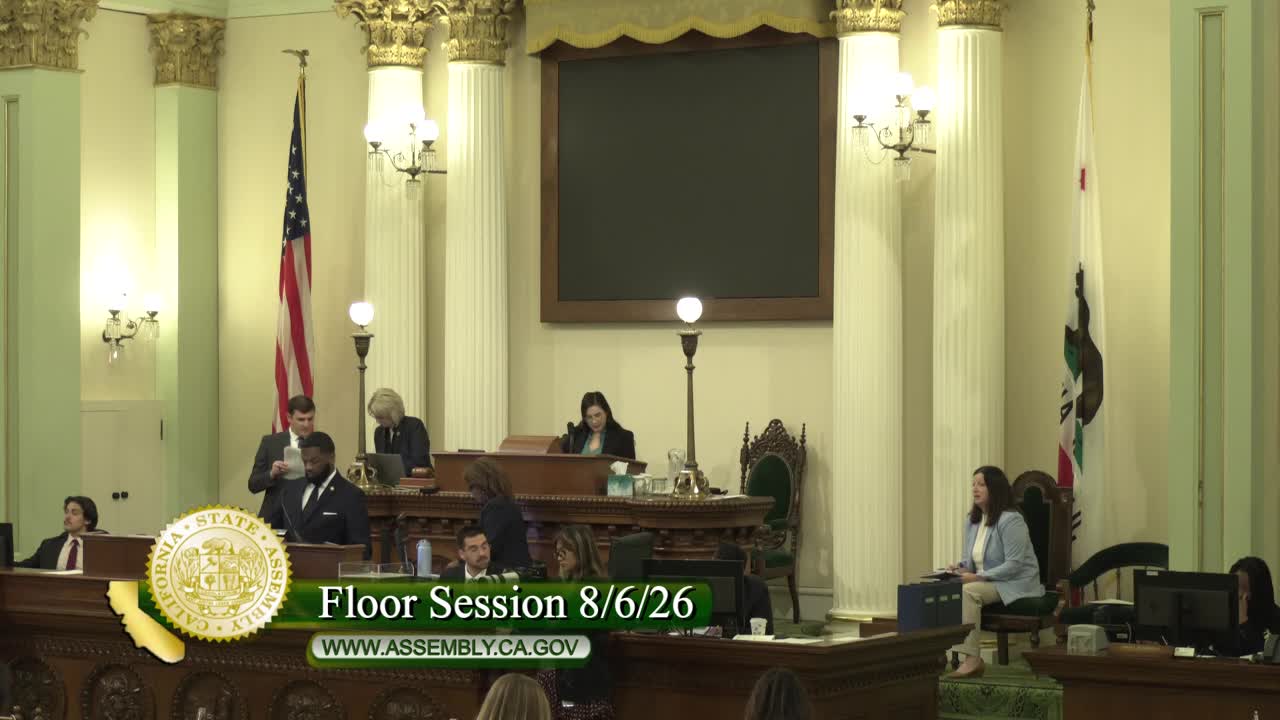 1MIN
Assembly Floor
 3MIN
Assembly Standing Committee on Public Employment and Retirement
Bill Author

Bill Co-Author(s):