SB 977: Chain restaurants: children’s meals.
- Session Year: 2025-2026
- House: Senate
- Latest Version Date: 2026-09-28
Current Status:
Passed
(2026-09-28: Chaptered by Secretary of State. Chapter 724, Statutes of 2026.)
Introduced
In Committee
Awaiting First Chamber Vote
Passed First Chamber
In Committee
Awaiting Second Chamber Vote
Passed Second Chamber
Enacted
What does this bill do?
The bill requires chain restaurants (20 or more locations) that sell kids' meals to offer at least one kids' meal that meets specific nutrition standards. The meal must have no more than 550 calories, 700 mg sodium, 10% of calories from saturated fat, 15 grams added sugar, zero trans fat, and must include at least two servings from categories like fruit, vegetables, low‑fat dairy, a meat or meat alternative, or whole grains. It also requires these chains to provide employees with training information on how to meet the new requirements.
The summary is provided by generative AI which can make mistakes. For original language, please view the details in the table below.
Existing law, the California Retail Food Code, establishes uniform health and sanitation standards for, and provides for regulation by the State Department of Public Health of, retail food facilities, as defined, and requires local enforcement agencies to enforce these provisions. Existing law requires a restaurant that sells a childrens meal that includes a beverage to make the default beverage water, sparkling water, or flavored water, as specified, or unflavored milk or a nondairy milk alternative, as specified. A violation of the codes provisions related to childrens meals is an infraction.
This bill would require a chain restaurant, as defined, that sells a childrens meal to offer at least one childrens meal that meets specified minimum nutrition standards, including, among others, that the meal not contain more than 550 calories and that the meal include at least 2 servings of specified types and quantities of food. The bill would require a chain restaurant that sells a childrens meal, on or before July 1, 2027, to include information to its employees on how to comply with those requirements.
By creating new crimes, the bill would impose a state-mandated local program.
The California Constitution requires the state to reimburse local agencies and school districts for certain costs mandated by the state. Statutory provisions establish procedures for making that reimbursement.
This bill would provide that no reimbursement is required by this act for a specified reason.
Existing law, the California Retail Food Code, establishes uniform health and sanitation standards for, and provides for regulation by the State Department of Public Health of, retail food facilities, as defined, and requires local enforcement agencies to enforce these provisions. Existing law requires a restaurant that sells a childrens meal that includes a beverage to make the default beverage water, sparkling water, or flavored water, as specified, or unflavored milk or a nondairy milk alternative, as specified. A violation of the codes provisions related to childrens meals is an infraction.
This bill would require a chain restaurant, as defined, that sells a childrens meal to offer at least one childrens meal that meets specified minimum nutrition standards, including, among others, that the meal not contain more than 550 calories and that the meal include at least 2 servings of specified types and quantities of food. The bill would also require the chain restaurant to include an icon or symbol on the menu to identify the childrens meal that meets those requirements. The bill would require a chain restaurant that sells a childrens meal, on or before July 1, 2027, to include information to its employees on how to comply with those requirements.
By creating new crimes, the bill would impose a state-mandated local program.
The California Constitution requires the state to reimburse local agencies and school districts for certain costs mandated by the state. Statutory provisions establish procedures for making that reimbursement.
This bill would provide that no reimbursement is required by this act for a specified reason.
Existing law, the California Retail Food Code, establishes uniform health and sanitation standards for, and provides for regulation by the State Department of Public Health of, retail food facilities, as defined, and requires local enforcement agencies to enforce these provisions. Existing law requires a restaurant that sells a childrens meal that includes a beverage to make the default beverage water, sparkling water, or flavored water, as specified, or unflavored milk or a nondairy milk alternative, as specified. A violation of the codes provisions related to childrens meals is an infraction.
This bill would require a chain restaurant, as defined, that sells a childrens meal to offer at least one childrens meal that meets specified minimum nutrition standards, including, among others, that the meal not contain more than 550 calories and that the meal include at least 2 servings of specified types and quantities of food. The bill would also require the chain restaurant to include an icon or symbol on the menu to identify the childrens meal that meets those requirements. The bill would require a chain restaurant that sells a childrens meal, on or before July 1, 2026, 2027, to include information to its employees on how to comply with those requirements.
By creating new crimes, the bill would impose a state-mandated local program.
The California Constitution requires the state to reimburse local agencies and school districts for certain costs mandated by the state. Statutory provisions establish procedures for making that reimbursement.
This bill would provide that no reimbursement is required by this act for a specified reason.
Existing law, the California Retail Food Code, establishes uniform health and sanitation standards for, and provides for regulation by the State Department of Public Health of, retail food facilities, as defined, and requires local enforcement agencies to enforce these provisions. Existing law requires a restaurant that sells a childrens meal that includes a beverage to make the default beverage water, sparkling water, or flavored water, as specified, or unflavored milk or a nondairy milk alternative, as specified. A violation of the codes provisions related to childrens meals is an infraction.
This bill would require a chain restaurant, as defined, that sells a childrens meal to offer at least one childrens meal that meets specified minimum nutrition standards, including, among others, that the meal not contain more than 550 calories and that the meal include at least 2 servings of specified types and quantities of food. The bill would also require the chain restaurant to include an icon or symbol on the menu to identify the childrens meal that meets those requirements. The bill would require a chain restaurant that sells a childrens meal, on or before July 1, 2026, to include information to its employees on how to comply with those requirements.
By creating new crimes, the bill would impose a state-mandated local program.
The California Constitution requires the state to reimburse local agencies and school districts for certain costs mandated by the state. Statutory provisions establish procedures for making that reimbursement.
This bill would provide that no reimbursement is required by this act for a specified reason.
For purposes of this chapter, the following terms have the following meanings:
(a)Chain restaurant means a restaurant or similar retail food establishment that is part of a chain with 20 or more locations doing business under the same name and offering for sale substantially the same menu items, regardless of the type of ownership of the locations.
(b)Childrens meal means a combination of food items and a beverage, or a single food item and a beverage, sold together at a single price, primarily intended for consumption by a child.
(c)Default beverage means the beverage automatically included or offered as part of a childrens meal, absent a specific request by the purchaser of the childrens meal for an alternative beverage.
(d)Restaurant means a retail food establishment that prepares, serves, and vends food directly to the consumer.
SEC. 2.Section 114379.35 is added to the Health and Safety Code, to read:114379.35.(a)The Legislature finds and declares that the nutrition standards in this section are informed by the Dietary Guidelines for Americans and the National Restaurant Associations 2021 Kids LiveWell 2.0 nutrition standards for childrens meals.
(b)A chain restaurant that sells a childrens meal shall offer at least one childrens meal that meets the following minimum nutrition standards:
(1)A childrens meal required to be offered by this section shall not contain more than any of the following:
(A)Five hundred fifty calories.
(B)Seven hundred milligrams of sodium.
(C)Ten percent of calories from saturated fat.
(D)Fifteen grams of added sugar.
(E)Zero grams of trans fat.
(2)A childrens meal required to be offered by this section shall include at least two of the following servings:
(A)A serving of one-half of a cup or more of fruit. For the purposes of this subparagraph, 100 percent fruit juice shall be considered a serving of fruit.
(B)A serving of one-half of a cup or more of vegetables.
(C)A serving of one-half of a cup or more nonfat or low-fat dairy.
(D)A serving of meat or a meat alternative equal to at least one of the following:
(i)One ounce of meat, poultry, or seafood.
(ii)One egg.
(iii)One-fourth of a cup of soy products or pulses, including beans, peas, or lentils.
(iv)Two tablespoons of nut butter.
(v)One ounce of nuts and seeds.
(E)A serving of eight or more grams of whole grains that meets at least one of the following conditions:
(i)The serving contains 50 percent or more of whole grain ingredients.
(ii)The first ingredient in the servings ingredient list, in descending order of predominance, is whole grains.
SEC. 3.Section 114379.36 is added to the Health and Safety Code, to read:114379.36.On or before July 1, 2027, a chain restaurant that sells a childrens meal shall include information on how to comply with the requirements of Section 114379.35 during any of the employees ongoing training program and a new employees training process.
SEC. 4.No reimbursement is required by this act pursuant to Section 6 of Article XIIIB of the California Constitution because the only costs that may be incurred by a local agency or school district will be incurred because this act creates a new crime or infraction, eliminates a crime or infraction, or changes the penalty for a crime or infraction, within the meaning of Section 17556 of the Government Code, or changes the definition of a crime within the meaning of Section 6 of Article XIIIB of the California Constitution.
For purposes of this chapter, the following terms have the following meanings:
(a)Chain restaurant means a restaurant or similar retail food establishment that is part of a chain with 20 or more locations doing business under the same name and offering for sale substantially the same menu items, regardless of the type of ownership of the locations.
(b)Childrens meal means a combination of food items and a beverage, or a single food item and a beverage, sold together at a single price, primarily intended for consumption by a child.
(c)Default beverage means the beverage automatically included or offered as part of a childrens meal, absent a specific request by the purchaser of the childrens meal for an alternative beverage.
(d)Restaurant means a retail food establishment that prepares, serves, and vends food directly to the consumer.
SEC. 2.Section 114379.35 is added to the Health and Safety Code, to read:114379.35.(a)The Legislature finds and declares that the nutrition standards in this section are informed by the Dietary Guidelines for Americans and the National Restaurant Associations 2021 Kids LiveWell 2.0 nutrition standards for childrens meals.
(b)A chain restaurant that sells a childrens meal shall offer at least one childrens meal that meets the following minimum nutrition standards:
(1)A childrens meal required to be offered by this section shall not contain more than any of the following:
(A)Five hundred fifty calories.
(B)Seven hundred milligrams of sodium.
(C)Ten percent of calories from saturated fat.
(D)Fifteen grams of added sugar.
(E)Zero grams of trans fat.
(2)A childrens meal required to be offered by this section shall include at least two of the following servings:
(A)A serving of one-half of a cup or more of fruit. For the purposes of this subparagraph, 100 percent fruit juice shall be considered a serving of fruit.
(B)A serving of one-half of a cup or more of vegetables.
(C)A serving of one-half of a cup or more nonfat or low-fat dairy.
(D)A serving of meat or a meat alternative equal to at least one of the following:
(i)One ounce of meat, poultry, or seafood.
(ii)One egg.
(iii)One-fourth of a cup of soy products or pulses, including beans, peas, or lentils.
(iv)Two tablespoons of nut butter.
(v)One ounce of nuts and seeds.
(E)A serving of eight or more grams of whole grains that meets at least one of the following conditions:
(i)The serving contains 50 percent or more of whole grain ingredients.
(ii)The first ingredient in the servings ingredient list, in descending order of predominance, is whole grains.
(c)A chain restaurant that sells childrens meals shall include an icon or symbol on the menu to identify the childrens meal that meets the requirements of this section. The icon or symbol and accompanying text shall be displayed prominently, clearly, and conspicuously next to or directly under the name of the healthy childrens meal, and at a height no smaller than the largest letter in the name of the item.SEC. 3.Section 114379.36 is added to the Health and Safety Code, to read:114379.36.On or before July 1, 2027, a chain restaurant that sells a childrens meal shall include information on how to comply with the requirements of Section 114379.35 during an any of the employees ongoing training program and a new employees training process.
SEC. 4.No reimbursement is required by this act pursuant to Section 6 of Article XIIIB of the California Constitution because the only costs that may be incurred by a local agency or school district will be incurred because this act creates a new crime or infraction, eliminates a crime or infraction, or changes the penalty for a crime or infraction, within the meaning of Section 17556 of the Government Code, or changes the definition of a crime within the meaning of Section 6 of Article XIIIB of the California Constitution.
For purposes of this chapter, the following terms have the following meanings:
(a)Chain restaurant means a restaurant or similar retail food establishment that is part of a chain with 20 or more locations doing business under the same name and offering for sale substantially the same menu items, regardless of the type of ownership of the locations.
(b)Childrens meal means a combination of food items and a beverage, or a single food item and a beverage, sold together at a single price, primarily intended for consumption by a child.
(c)Default beverage means the beverage automatically included or offered as part of a childrens meal, absent a specific request by the purchaser of the childrens meal for an alternative beverage.
(d)Restaurant means a retail food establishment that prepares, serves, and vends food directly to the consumer.
SEC. 2.Section 114379.35 is added to the Health and Safety Code, to read:114379.35.(a)The Legislature finds and declares that the nutrition standards in this section are informed by the Dietary Guidelines for Americans and the National Restaurant Associations 2021 Kids LiveWell 2.0 nutrition standards for childrens meals.
(b)A chain restaurant that sells a childrens meal shall offer at least one childrens meal that meets the following minimum nutrition standards:
(1)A childrens meal required to be offered by this section shall not contain more than any of the following:
(A)Five hundred fifty calories.
(B)Seven hundred milligrams of sodium.
(C)Ten percent of calories from saturated fat.
(D)Fifteen grams of added sugar.
(E)Zero grams of trans fat.
(2)A childrens meal required to be offered by this section shall include at least two of the following servings:
(A)A serving of one-half of a cup or more of fruit. For the purposes of this subparagraph, 100 percent fruit juice shall be considered a serving of fruit.
(B)A serving of one-half of a cup or more of vegetables.
(C)A serving of one-half of a cup or more nonfat or low-fat dairy.
(D)A serving of meat or a meat alternative equal to at least one of the following:
(i)One ounce of meat, poultry, or seafood.
(ii)One egg.
(iii)One-fourth of a cup of soy products or pulses, including beans, peas, or lentils.
(iv)Two tablespoons of nut butter.
(v)One ounce of nuts and seeds.
(E)A serving of eight of or more grams of whole grains that meets at least one of the following conditions:
(i)The serving contains 50 percent or more of whole grain ingredients.
(ii)The first ingredient in the servings ingredient list, in descending order of predominance, is whole grains.
(c)A chain restaurant that sells childrens meals shall include an icon or symbol on the menu to identify the childrens meal that meets the requirements of this section. The icon or symbol and accompanying text shall be displayed prominently, clearly, and conspicuously next to or directly under the name of the healthy childrens meal, and at a height no smaller than the largest letter in the name of the item.
SEC. 3.Section 114379.36 is added to the Health and Safety Code, to read:114379.36.On or before July 1, 2026, 2027, a chain restaurant that sells a childrens meal shall include information on how to comply with the requirements of Section 114379.35 during an employees ongoing training program and a new employees training process.
SEC. 4.No reimbursement is required by this act pursuant to Section 6 of Article XIIIB of the California Constitution because the only costs that may be incurred by a local agency or school district will be incurred because this act creates a new crime or infraction, eliminates a crime or infraction, or changes the penalty for a crime or infraction, within the meaning of Section 17556 of the Government Code, or changes the definition of a crime within the meaning of Section 6 of Article XIIIB of the California Constitution.
For purposes of this chapter, the following terms have the following meanings:
(a)Chain restaurant means a restaurant or similar retail food establishment that is part of a chain with 20 or more locations doing business under the same name and offering for sale substantially the same menu items, regardless of the type of ownership of the locations.
(a)(b)Childrens meal means a combination of food items and a beverage, or a single food item and a beverage, sold together at a single price, primarily intended for consumption by a child.
(b)(c)Default beverage means the beverage automatically included or offered as part of a childrens meal, absent a specific request by the purchaser of the childrens meal for an alternative beverage.
(c)(d)Restaurant means a retail food establishment that prepares, serves, and vends food directly to the consumer.
SEC. 2.Section 114379.35 is added to the Health and Safety Code, to read:114379.35.(a)The Legislature finds and declares that the nutrition standards in this section are informed by the Dietary Guidelines for Americans and the National Restaurant Associations 2021 Kids LiveWell 2.0 nutrition standards for childrens meals.
(b)A chain restaurant that sells a childrens meal shall offer at least one childrens meal that meets the following minimum nutrition standards:
(1)A childrens meal required to be offered by this section shall not contain more than any of the following:
(A)Five hundred fifty calories.
(B)Seven hundred milligrams of sodium.
(C)Ten percent of calories from saturated fat.
(D)Fifteen grams of added sugar.
(E)Zero grams of trans fat.
(2)A childrens meal required to be offered by this section shall include at least two of the following servings:
(A)A serving of one-half of a cup or more of fruit. For the purposes of this subparagraph, 100 percent fruit juice shall be considered a serving of fruit.
(B)A serving of one-half of a cup or more of vegetables.
(C)A serving of one-half of a cup or more nonfat or low-fat dairy.
(D)A serving of meat or a meat alternative equal to at least one of the following:
(i)One ounce of meat, poultry, or seafood.
(ii)One egg.
(iii)One-fourth of a cup of soy products or pulses, including beans, peas, or lentils.
(iv)Two tablespoons of nut butter.
(v)One ounce of nuts and seeds.
(E)A serving of eight of more grams of whole grains that meets at least one of the following conditions:
(i)The serving contains 50 percent or more of whole grain ingredients.
(ii)The first ingredient in the servings ingredient list, in descending order of predominance, is whole grains.
(c)A chain restaurant that sells childrens meals shall include an icon or symbol on the menu to identify the childrens meal that meets the requirements of this section. The icon or symbol and accompanying text shall be displayed prominently, clearly, and conspicuously next to or directly under the name of the healthy childrens meal, and at a height no smaller than the largest letter in the name of the item.
SEC. 3.Section 114379.36 is added to the Health and Safety Code, to read:114379.36.On or before July 1, 2026, a chain restaurant that sells a childrens meal shall include information on how to comply with the requirements of Section 114379.35 during an employees ongoing training program and a new employees training process.
SEC. 4.No reimbursement is required by this act pursuant to Section 6 of Article XIIIB of the California Constitution because the only costs that may be incurred by a local agency or school district will be incurred because this act creates a new crime or infraction, eliminates a crime or infraction, or changes the penalty for a crime or infraction, within the meaning of Section 17556 of the Government Code, or changes the definition of a crime within the meaning of Section 6 of Article XIIIB of the California Constitution.
|
Date
|
Status
|
|---|---|
| Sep 28, 2026 | Chaptered by Secretary of State. Chapter 724, Statutes of 2026. |
| Sep 28, 2026 | Approved by the Governor. |
| Aug 27, 2026 | Enrolled and presented to the Governor at 4:30 p.m. |
| Aug 24, 2026 | Assembly amendments concurred in. (Ayes 40. Noes 0.) Ordered to engrossing and enrolling. |
| Aug 24, 2026 | Assembly amendments concurred in. (Ayes 40. Noes 0. Page 5683.) Ordered to engrossing and enrolling. |
| Aug 24, 2026 | Assembly amendments concurred in. (Ayes 39. Noes 0.) Ordered to engrossing and enrolling. |
| Aug 19, 2026 | In Senate. Concurrence in Assembly amendments pending. |
| Aug 19, 2026 | Read third time. Passed. (Ayes 77. Noes 1. Page 6265.) Ordered to the Senate. |
| Aug 19, 2026 | Read third time. Passed. Ordered to the Senate. |
| Aug 13, 2026 | Read second time. Ordered to third reading. |
| Aug 13, 2026 | From committee: Do pass. (Ayes 14. Noes 1.) (August 13). |
| Aug 13, 2026 | Assembly Rule 63 suspended. |
| Aug 5, 2026 | August 5 set for first hearing. Placed on suspense file. |
| Jun 24, 2026 | From committee: Do pass and re-refer to Com. on APPR. with recommendation: To consent calendar. (Ayes 15. Noes 0.) (June 23). Re-referred to Com. on APPR. |
| Jun 15, 2026 | From committee with author's amendments. Read second time and amended. Re-referred to Com. on HEALTH. |
| May 11, 2026 | Referred to Com. on HEALTH. |
| Apr 30, 2026 | In Assembly. Read first time. Held at Desk. |
| Apr 30, 2026 | Read third time. Passed. (Ayes 36. Noes 0.) Ordered to the Assembly. |
| Apr 30, 2026 | Read third time. Passed. (Ayes 36. Noes 0. Page 4110.) Ordered to the Assembly. |
| Apr 16, 2026 | Ordered to third reading. |
| Apr 16, 2026 | From consent calendar on motion of Senator Weber Pierson. |
| Apr 14, 2026 | Read second time. Ordered to consent calendar. |
| Apr 13, 2026 | From committee: Be ordered to second reading pursuant to Senate Rule 28.8 and ordered to consent calendar. |
| Apr 13, 2026 | Set for hearing April 13. |
| Apr 10, 2026 | Set for hearing April 13. |
| Apr 6, 2026 | Read second time and amended. Re-referred to Com. on APPR. |
| Mar 26, 2026 | From committee: Do pass as amended and re-refer to Com. on APPR. with recommendation: To consent calendar. (Ayes 11. Noes 0.) (March 25). |
| Mar 26, 2026 | From committee: Do pass as amended and re-refer to Com. on APPR. with recommendation: To consent calendar. (Ayes 11. Noes 0. Page 3689.) (March 25). |
| Mar 9, 2026 | Set for hearing March 25. |
| Feb 11, 2026 | Referred to Com. on HEALTH. |
| Feb 5, 2026 | From printer. May be acted upon on or after March 7. |
| Feb 4, 2026 | Introduced. Read first time. To Com. on RLS. for assignment. To print. |
|
Date
|
Description
|
Location
|
Votes
|
|
|---|---|---|---|---|
| Aug 24, 2026 | Unfinished Business SB977 Weber Pierson Concurrence | Senate Floor |
Passed |
|
| Aug 19, 2026 | SB 977 Weber Pierson Senate Third Reading By Schiavo | Assembly Floor |
Passed |
|
| Aug 13, 2026 | Do pass. | Assembly Standing Committee on Appropriations |
Passed |
|
| Jun 23, 2026 | Do pass and be re-referred to the Committee on [Appropriations] with recommendation: To Consent Calendar | Assembly Standing Committee on Health |
Passed |
|
| Apr 30, 2026 | Senate 3rd Reading SB977 Weber Pierson | Senate Floor |
Passed |
|
| Mar 25, 2026 | Do pass as amended, but first amend, and re-refer to the Committee on [Appropriations] with the recommendation: To Consent Calendar | Senate Standing Committee on Health |
Passed |
This list shows positions taken on this bill by organizations on the date displayed, which is linked to the original source.
Positions by individuals are not included.
|
Organization
|
Position
|
Date
|
|---|---|---|
| American Diabetes Association | ** Support | |
| American Heart Association | ** Support | |
| California Medical Association | ** Support | |
| California State Alliance Of YmcaS | ** Support | |
| cleanearth4kids.org | ** Support | |
| First 5 California | ** Support | |
| Office of Kat Taylor | ** Support | |
| The Office of Kat Taylor | ** Support |
SENATE RULES COMMITTEE Office of Senate Floor Analyses (916) 651-4171 | SB 977 |
UNFINISHED BUSINESS
Bill No: SB 977
Author: Weber Pierson (D)
Amended: 6/15/26
Vote: 21
SENATE HEALTH COMMITTEE: 11-0, 3/25/26
AYES: Weber Pierson, Valladares, Caballero, Durazo, Gonzalez, Grove, Menjivar, Padilla, Pérez, Rubio, Smallwood-Cuevas
SENATE APPROPRIATIONS COMMITTEE: Senate Rule 28.8
SENATE FLOOR: 36-0, 4/30/26
AYES: Allen, Alvarado-Gil, Archuleta, Ashby, Becker, Blakespear, Cabaldon, Cervantes, Choi, Cortese, Dahle, Durazo, Gonzalez, Grayson, Grove, Hurtado, Jones, Laird, Limón, McGuire, McNerney, Menjivar, Niello, Ochoa Bogh, Padilla, Pérez, Reyes, Richardson, Rubio, Seyarto, Smallwood-Cuevas, Stern, Strickland, Umberg, Weber Pierson, Wiener
NO VOTE RECORDED: Arreguín, Caballero, Valladares, Wahab
ASSEMBLY FLOOR: 77-1, 8/19/26 - See last page for vote
SUBJECT: Chain restaurants: children’s meals
SOURCE: American Diabetes Association (co-source)
American Heart Association (co-source)
DIGEST:
This bill requires a chain restaurant that sells a children’s meal to offer at least one that meets specified nutritional requirements.
Assembly Amendments
delete the provision requiring a chain restaurant to include an icon or symbol on the menu to identify the children’s meal that meets the specified nutritional requirements of this bill.
ANALYSIS:
Existing law:
- Establishes the California Retail Food Code (CalCode) to provide for the regulation of retail food facilities. Health and sanitation standards are established at the state level through the CalCode, while enforcement is charged to local agencies, carried out by the 58 county environmental health departments, and four city environmental health departments (Berkeley, Long Beach, Pasadena, and Vernon). [Health and Safety Code (HSC) §113700, et seq.]
- Defines a “food facility” as an operation that stores, prepares, packages, serves, vends, or otherwise provides food for human consumption at the retail level. Excludes various entities from the definition of a “food facility,” including a cottage food operation, and a church, private club, or other nonprofit association that gives or sells food to its members and guests, and not to the general public, at an event that occurs no more than three days in any 90-day period. [HSC §113789]
- Requires a restaurant that sells children’s meals to make the default beverage offered with the children’s meal one of the following:
- Water, sparkling, or flavored water, with no added natural or artificial sweeteners;
- Unflavored milk; or,
- A nondairy milk alternative that contains no more than 130 calories per container or serving that meets the standards for the National School Lunch Program. [HSC §114379.20]
- Defines “children’s meal,” for purposes of the requirement in 3) above, as a combination of food items and a beverage, or a single food item and a beverage sold together at a single price intended primarily for consumption by a child. [HSC §114379.10]
- Specifies that the requirement in 3) above does not prohibit a restaurant’s ability to sell an alternative beverage instead of the default beverage offered with the meal, if requested by the purchaser. [HSC §114379.30]
- Specifies that a violation of the requirements described in 3) above is an infraction, with a first violation resulting in a notice of violation, a second violation within a five-year period from the initial notice of violation subject to a $250 fine, and a third or subsequent violation within a five-year period subject to a fine of up to $500. [HSC §114379.50]
- Requires a food facility, defined in federal law as a chain restaurant with 20 or more locations, to comply with federal menu labeling requirements that provide calorie and other nutritional information. Provides for local enforcement of the menu labeling requirement, and provides for a fine of between $50 and $500 for a first violation, between $100 and $1,000 for a second violation in a five-year period, and a fine of between $250 and $2,500 for subsequent violations. [HSC §114094]
This bill:
- Requires a chain restaurant that sells children’s meals to offer at least one that meets the following minimum nutrition standard:
- Does not contain more than: 550 calories; 700 milligrams of sodium; 10% of calories from saturated fat; 15 grams of added sugar; or, 0 grams of trans fat; or,
- Contains at least two of the following servings:
- One-half of a cup or more of fruit. Requires 100% fruit juice to be considered a serving of fruit for the purposes of this bill;
- One-half of a cup or more of vegetables;
- One-half of a cup or more nonfat or low-fat dairy;
- Meat or a meat alternative equal to at least one of the following: one ounce of meat, poultry, or seafood; one egg; one-fourth of a cup of soy products or pulses, including beans, peas, or lentils; two tablespoons of nut butter; or, one ounce of nuts and seeds; or,
- Eight or more grams of whole grains that meets at least one of the following conditions:
(1) The serving contains 50% or more of whole grain ingredients; or,
(2) The first ingredient in the serving’s ingredient list, in descending order of predominance, is whole grains.
- Requires a chain restaurant, by July 1, 2027, to include information on how to comply with the requirements of this bill during any employee’s ongoing training program and a new employee’s training process.
- Defines “chain restaurant” as a restaurant or similar retail food establishment that is part of a chain with 20 or more locations doing business under the same name and offering for sale substantially the same menu items, regardless of the type of ownership of the locations.
Background
According to the author of this bill:
“I am deeply committed to ensuring that all children in California have access to healthy meals that support their growth and development. As a physician, I’ve seen the alarming impact of poor nutrition on children’s health, and as a mother, I know how challenging it can be to find healthy options when dining out. Currently, our state faces a childhood obesity crisis, and we must take action now to reverse these trends. This bill is an important step forward by requiring chain restaurants to offer healthier meal options for children, helping families make better food choices. By setting clear nutritional standards and providing training for restaurant employees, we are making it easier for parents to provide healthy meals for their kids, no matter where they eat. I know how important it is to set our children up for a healthy future. This bill will help ensure that children’s meals not only meet basic nutritional standards but also support children’s long-term health. It’s time to prioritize our children’s well-being and take steps toward a healthier California for all.”
Information provided by the author’s office states that restaurants are a key source of food for families in California. Families with children consume food away from home four to five times a week on average. Between 2015 and 2018, children ages two to 11 years old consumed an average of 11.4% of their daily calories from fast food alone. While some chain restaurants such as McDonald’s have made their kids’ meals healthier, much of the food offered on restaurant children’s menus does not meet minimum nutrition standards for healthy meals. A 2018 analysis of kids’ meal combinations at the top 50 U.S. restaurant chains (as ranked by revenue) found that, among the chains with kids’ menus, 71.9% of kids’ meals did not meet expert nutrition standards for calories, total fat, saturated fat and trans fat combined, and sodium.
Childhood obesity. The Harvard T.H. Chan School of Public Health notes that a recent federal Centers for Disease Control and Prevention (CDC) report found that childhood obesity in the U.S. has reached its highest rate ever recorded. Between 2021 and 2023, 21.1% of American youth ages two to 19 were obese, whereas the same report in the 1970s found that between 1971 and 1974, just 5.2% of children and teens were obese. In the 2010s, obesity rates among youth ages two to five were on the decline, dropping from 12.1% between 2009 and 2010 to 9.4% between 2013 and 2014. In 2017, 40% of 5th graders, 38% of 7th graders, and 36% of 9th graders were overweight or obese for their age. Native Hawaiian, Pacific Islander, Latino and Black children had disproportionately higher rates of obesity than other racial and ethnic groups. Today, the rate for those aged two to five has jumped to 14.9%. According to the CDC, about one in five American children have obesity. Compared to children with healthy weight, children with obesity are at a higher risk for asthma, sleep apnea, bone and joint problems, type 2 diabetes, high blood pressure, and mental health concerns like depression and anxiety. Children with obesity are more likely to have obesity as adults. Adults with obesity have higher risks for stroke, many types of cancer, heart disease, type 2 diabetes, premature death and mental health issues. Factors that influence obesity include genes, eating patterns, physical activity levels, access to health care, and sleep routines. Also, conditions where we live, learn, work, and play affect access to healthy food and safe places to be physically active. The CDC states that though there is no one solution to addressing obesity, there are many ways parents and caregivers can help children have a healthy weight and set up lifelong healthy habits at home, such as: modeling a healthy eating pattern; being more physically active as a family; setting simple routines for better sleep; replacing screen time with family time; looking for childcare that supports healthy habits; and, finding a family healthy weight program.
Examples of restaurant kids’ meals policies. The Center for Science in the Public Interest notes that since 2010, various local governments and states have enacted policies regarding kids’ meals. In May 2010, Santa Clara County was the first to enact a policy restricting the type of beverage a kids’ meal could include if the meal comes with a toy or other incentive. The City and County of San Francisco enacted the same policy in November 2010. The City of Davis passed a default beverage policy (water, milk, or milk alternative) in June 2015, with the following local governments passing the same policy in 2016 and 2017: Stockton, Perris, Berkeley, Santa Clara County, Cathedral City, Long Beach, and Daly City. In 2018, California was the first state to implement a statewide default beverage bill via SB 1195 (Monning, Chapter 608, Statutes of 2018).
FISCAL EFFECT: Appropriation: No Fiscal Com.: Yes Local: Yes
According to the Assembly Appropriations Committee:
- The California Association of Environmental Health Administrators (CAEHA) anticipates the need for local environmental health agencies to hire specially trained staff to conduct the inspections, at a cost in the hundreds of thousands of dollars to $1 million per year, per jurisdiction, for a statewide total in the millions of dollars per year. CAEHA notes that due to the ubiquity of fast food restaurants, the workload to analyze their menus for compliance will be intense, especially in urban areas. If the Commission on State Mandates determines this bill imposes a reimbursable mandate, the state will be required to reimburse local governments for the costs of enforcing this bill (General Fund); and,
- No costs to the California Department of Public Health.
SUPPORT: (Verified 8/19/26)
American Diabetes Association (co-source)
American Heart Association (co-source)
California Medical Association
California State Alliance of YMCAs
CleanEarth4Kids.org
First 5 California
Office of Kat Taylor
OPPOSITION: (Verified 8/19/26)
None received
ARGUMENTS IN SUPPORT: The cosponsors of this bill, American Diabetes Association and the American Heart Association, state that this bill takes an important step toward improving the dietary environment for California’s children and protecting them from the associated early health risk factors. Both associations argue that not only will this bill help address those concerns by ensuring parents and guardians have at least one clearly identifiable, healthier children’s meal option, but it also addresses the issue of equity. National and local studies across the U.S. suggest that residents of low-income, minority, and rural neighborhoods are most often affected by poor access to supermarkets and healthy food. In contrast, the availability of fast-food restaurants and energy-dense foods has been found to be greater in lower-income and minority neighborhoods. These structural inequities shape children’s diets. They further argue that parents understand their kids’ needs and how to determine appropriate meals, but even the most informed parents cannot choose a healthier option if one doesn’t exist where they are dining. This bill preserves complete parental choice while expanding the range of options available to families in communities where nutritious choices are often limited. The California State Alliance of YMCAs states that Tufts University researchers assessed the children’s meal combinations available in the 10 largest quick-service and 10 largest full-service chain restaurants by sales in 2014, and found that less than one-third of these meal combinations at quick-service and one-quarter at full-service restaurants met expert recommendations for calories, fat, saturated fat, and sodium. Despite this limited availability, some chains do offer healthy children's meals, demonstrating that it is feasible.
ASSEMBLY FLOOR: 77-1, 8/19/26
Ayes: Addis, Aguiar-Curry, Ahrens, Alanis, Alvarez, Arambula, Ávila Farías, Bains, Bauer-Kahan, Bennett, Berman, Boerner, Bonta, Bryan, Calderon, Caloza, Carrillo, Castillo, Chen, Connolly, Davies, DeMaio, Dixon, Elhawary, Ellis, Flora, Fong, Gabriel, Garcia, Gipson, Jeff Gonzalez, Mark González, Hadwick, Haney, Harabedian, Hart, Hoover, Irwin, Jackson, Johnson, Kalra, Krell, Lackey, Lee, Lowenthal, Macedo, McKinnor, Muratsuchi, Nguyen, Ortega, Pacheco, Papan, Patel, Patterson, Pellerin, Petrie-Norris, Quirk-Silva, Ramos, Ransom, Celeste Rodriguez, Michelle Rodriguez, Rogers, Sanchez, Schiavo, Schultz, Sharp-Collins, Solache, Soria, Stefani, Ta, Valencia, Wallis, Ward, Wicks, Wilson, Zbur, Rivas.
Noes: Tangipa.
No Vote Recorded: Blanca Rubio.
Prepared by: Reyes Diaz / HEALTH / (916) 651-4111
8/19/26 14:44:32
**** END ****
SENATE THIRD READING
STR Bill Id:SB 977
Author:(Weber Pierson)
As Amended Ver:June 15, 2026
Majority vote
SUMMARY
Requires a chain restaurant that sells a children's meal to offer at least one children's meal that meets specified minimum nutrition standards including, among others, that the meal not contain more than 550 calories and that the meal include at least two servings of specified types and quantities of food.
Major Provisions
COMMENTS
Childhood obesity. Childhood obesity is a challenging public health concern. According to a 2023 continuing education activity published in the National Library of Medicine titled "Obesity Effects on Child Health," the prevalence of childhood obesity has alarmingly increased. The overall burden of obesity has almost tripled since 1975 and an eightfold increase in obesity burden in the 5 to 19 years age group has been noted between 1975 and 2016. According to the Department of Public Health's (DPH) Nutrition and Food Branch, between 2021 and 2022, 14.8% of children ages two to 11 were overweight for their age, and 37.1% adolescents ages 12 to 17 were overweight or obese. Obesity can lead to severe health conditions, including non-insulin-dependent diabetes, cardiovascular problems, bronchial asthma, obstructive sleep apnea, hypertension, hepatic steatosis, gastroesophageal reflux, and psychosocial issues.
Taste preferences are shaped at a young age. According to Healthy Eating Research, a national program of the Robert Wood Johnson Foundation, preferences for food are learned and acquired through experiences shaped by caregiving. Establishing healthy eating behaviors early in life is an important health promotion goal with long-lasting impacts. Childhood is a critical period for the development of eating behaviors and habits that last into adulthood and play a vital role in growth, development, overall health, and the prevention of obesity and other lifelong, diet-related chronic diseases.
Legislative landscape on menu labeling and children's meals. SB 1420 (Padilla), Chapter 600, Statutes of 2008 requires every food facility that is part of a chain of at least 20 food facilities with the same name that sell substantially the same menu items, to disclose to consumers specified nutritional information, including the calorie content, for all standard menu items. Subsequently, as part of the Patient Protection and Affordable Care Act of 2010 (ACA), the federal government enacted a similar requirement. Following the enactment of the ACA, the state menu labeling law was repealed (contingent on enactment of the federal implementing regulations) in order to have California conform to the similar federal requirements. Under the federal regulations, chain restaurants must disclose the number of calories contained in standard items on menus and menu boards. For self-service foods and foods on display, the calories must be listed in close proximity and clearly associated with the standard menu item. The restaurants must also provide, upon request, the following written information for standard menu items: total calories; total fat; saturated fat; trans fat; cholesterol; sodium; total carbohydrates; sugars; fiber; and, protein. In addition, two statements must be displayed on all forms of the menu or menu board, one indicating this written information is available upon request, and the other about daily calorie intake, indicating that 2,000 calories a day is used for general nutrition advice, but calorie needs may vary.
SB 1192 (Monning), Chapter 608, Statutes of 2018 requires restaurants that sell children's meals to make either water, milk, or a nondairy milk alternative the default beverage that is offered with the children's meal. This bill builds upon SB 1192 by requiring chain restaurants to offer a meal that meets specified nutrition requirements, which are based off Kids Live Well 2.0 standards.
Kids Live Well 2.0 Standards. According to its website, the National Restaurant Association launched Kids LiveWell (KLW) in 2011 to help parents and children select healthier menu options when dining out. Restaurants that participate in this voluntary program commit to offering healthful meal items for children with a particular focus on increasing consumption of fruits and vegetables, lean protein, whole grains, and low-fat dairy while limiting unhealthy fats, sugars, and sodium. The National Restaurant Association "relaunched" this effort in 2021, which they refer to as KLW 2.0, to better align with the current nutrition science. Restaurants participating in KLW agree to offer at least two children's meals (compared to just one under this bill) that meet the specified criteria. The limits on calories, calories from saturated fat, added sugars, and sodium, as well as the exclusion of trans fat, are the same in both this bill and KLW. Likewise, both KLW and this bill require the meals to include servings from at least two of five specified food groups, and that at least one of the servings must be a fruit or vegetable. KLW explicitly states that 100% fruit juice meets the requirements for a 1/2-cup serving of fruit. As such, this bill specifies that 100% fruit juice is considered a fruit.
According to the Author
The author states that she is deeply committed to ensuring that all children in California have access to healthy meals that support their growth and development. The author notes that as a physician, she has seen the alarming impact of poor nutrition on children's health, and as a mother, she knows how challenging it can be to find healthy options when dining out. The author asserts that currently, California faces a childhood obesity crisis, and the state must take action now to reverse these trends. The author continues that this bill will require chain restaurants to offer healthier meal options for children, helping families make better food choices when dining out. The author also states that by setting clear nutritional standards and providing training for restaurant employees, this bill makes it easier for parents to provide healthy meals for their kids, no matter where they eat. The author concludes that this bill will help ensure that children's meals not only meet basic nutritional standards but also support their long-term health and that it is time to prioritize our children's well-being and take steps toward a healthier California for all.
Arguments in Support
The American Heart Association (AHA) and the American Diabetes Association (ADA) are co-sponsors of this bill and state in support, this bill takes an important step toward improving the dietary environment for California's children and protecting them from early risk factors tied to type 2 diabetes, obesity, and cardiovascular disease. AHA and ADA continue that restaurants are a frequent source of food for American families, with families dining out at an average of four to five times each week. AHA and ADA continue that when children dine out, they tend to consume more calories, more sugars, more sugary drinks, and higher levels of saturated fat and sodium than they would at home. AHA and ADA state that excess consumption contributes to increased risk for high blood pressure, type 2 diabetes, and other chronic diseases later in life. AHA and ADA argue that this bill directly helps address these concerns by ensuring parents and guardians have at least one clearly identifiable, healthier children's meal that aligns with recommended dietary guidelines.
Arguments in Opposition
None to the current version of the bill.
FISCAL COMMENTS
According to the Assembly Appropriations Committee:
- The California Association of Environmental Health Administrators (CAEHA) anticipates the need for local environmental health agencies to hire specially trained staff to conduct the inspections, at a cost in the hundreds of thousands of dollars to $1 million per year, per jurisdiction, for a statewide total in the millions of dollars per year. CAEHA notes that due to the ubiquity of fast food restaurants, the workload to analyze their menus for compliance will be intense, especially in urban areas. If the Commission on State Mandates determines this bill imposes a reimbursable mandate, the state will be required to reimburse local governments for the costs of enforcing this bill (General Fund).
- No costs to the California Department of Public Health.
VOTES
SENATE FLOOR: 36-0-4
YES: Allen, Alvarado-Gil, Archuleta, Ashby, Becker, Blakespear, Cabaldon, Cervantes, Choi, Cortese, Dahle, Durazo, Gonzalez, Grayson, Grove, Hurtado, Jones, Laird, Limón, McGuire, McNerney, Menjivar, Niello, Ochoa Bogh, Padilla, Pérez, Reyes, Richardson, Rubio, Seyarto, Smallwood-Cuevas, Stern, Strickland, Umberg, Weber Pierson, Wiener
ABS, ABST OR NV: Arreguín, Caballero, Valladares, Wahab
ASM HEALTH: 15-0-1
YES: Bonta, Sanchez, Addis, Aguiar-Curry, Ahrens, Caloza, Carrillo, Jeff Gonzalez, Mark González, Patel, Patterson, Celeste Rodriguez, Schiavo, Sharp-Collins, Stefani
ABS, ABST OR NV: Johnson
ASM APPROPRIATIONS: 14-1-0
YES: Wicks, Hoover, Arambula, Calderon, Caloza, Dixon, Fong, Mark González, Krell, Pacheco, Pellerin, Sharp-Collins, Solache, Ta
NO: Tangipa
UPDATED
VERSION: June 15, 2026
CONSULTANT: Lara Flynn / HEALTH / (916) 319-2097 FN: 0003602
Date of Hearing: August 5, 2026
ASSEMBLY COMMITTEE ON APPROPRIATIONS
Buffy Wicks, Chair
SBPCA Bill Id:SB 977
Author:(Weber Pierson) – As Amended Ver:June 15, 2026
Policy Committee: | Health | Vote: | 15 - 0 |
|
| ||
|
|
Urgency: No State Mandated Local Program: Yes Reimbursable: Yes
SUMMARY:
This bill requires a chain restaurant that sells a children’s meal to offer at least one children’s meal that meets specified nutrition standards.
More specifically, this bill:
- Requires a chain restaurant that sells a children’s meal to offer at least one children’s meal that meets the requirements of this bill.
- Prohibits a children’s meal offered pursuant to this bill from containing more than any of the following: 550 calories, 700 milligrams of sodium, 10% of calories from saturated fat, 15 grams of added sugar, and zero grams of trans fat.
- Requires a children’s meal offered pursuant to this bill to include at least two of the following:
- One-half cup or more of fruit, including 100% fruit juice.
- One-half cup or more of vegetables.
- One-half cup or more nonfat or low-fat dairy.
- At least one of the following servings of protein:
- One ounce of meat, poultry, or seafood.
- One egg.
- One-fourth cup of soy products or pulses, including beans, peas, or lentils.
- Two tablespoons of nut butter.
- One ounce of nuts and seeds.
- One ounce of meat, poultry, or seafood.
- Eight or more grams of whole grains, as defined.
- One-half cup or more of fruit, including 100% fruit juice.
- Requires, on or before July 1, 2027, a chain restaurant that sells a children’s meal to include information on how to comply with the requirements of this bill during employee training.
- Defines, for purposes of this bill, “chain restaurant” to mean a restaurant or similar retail food establishment that is part of a chain with 20 or more locations doing business under the same name and offering for sale substantially the same menu items, regardless of the type of ownership of the locations.
FISCAL EFFECT:
The California Association of Environmental Health Administrators (CAEHA) anticipates the need for local environmental health agencies to hire specially trained staff to conduct the inspections, at a cost in the hundreds of thousands of dollars to $1 million per year, per jurisdiction, for a statewide total in the millions of dollars per year. CAEHA notes that due to the ubiquity of fast food restaurants, the workload to analyze their menus for compliance will be intense, especially in urban areas. If the Commission on State Mandates determines this bill imposes a reimbursable mandate, the state will be required to reimburse local governments for the costs of enforcing this bill (General Fund).
No costs to the California Department of Public Health.
COMMENTS:
- Purpose. This bill is sponsored by the American Heart Association and the American Diabetes Association. According to the author:
As a physician, I’ve seen the alarming impact of poor nutrition on children’s health, and as a mother, I know how challenging it can be to find healthy options when dining out...[O]ur state faces a childhood obesity crisis, and we must take action now to reverse these trends.
This bill will require chain restaurants to offer healthier meal options for children, helping families make better food choices when dining out. By setting clear nutritional standards and providing training for restaurant employees, we are making it easier for parents to provide healthy meals for their kids, no matter where they eat. This bill will help ensure that children’s meals not only meet basic nutritional standards but also support their long-term health.
- Background. SB 1420 (Padilla), Chapter 600, Statutes of 2008, requires a chain restaurant disclose to consumers specified nutritional information, including the calorie content, for all standard menu items. Subsequently, as part of the Patient Protection and Affordable Care Act of 2010 (ACA), the federal government enacted a similar requirement, and the state menu labeling law was repealed to have California conform to the federal requirements. The federal law requires chain restaurants disclose, among other things, the calorie content in standard items on menus and menu boards, and for self-service foods and foods on display, the calories must be listed in close proximity and clearly associated with the standard menu item. The restaurants must also provide, upon request, the following written information for standard menu items: total calories, total fat, saturated fat, trans fat, cholesterol, sodium, total carbohydrates, sugars, fiber, and protein.
The National Restaurant Association launched Kids LiveWell (KLW) in 2011 to help parents and children select healthier menu options when dining out. The National Restaurant Association “relaunched” this effort in 2021 to better align with current nutrition science. Restaurants participating in KLW agree to offer at least two children’s meals (compared to just one under this bill) that meet the specified criteria. The limits on calories, calories from saturated fat, added sugars, and sodium, as well as the exclusion of trans fat are the same in this bill and KLW. Likewise, both KLW and this bill require the meals to include servings from at least two of five specified food groups, and that at least one of the servings must be a fruit or vegetable, with 100% fruit juice meeting the requirement for a 1/2-cup serving of fruit.
- Implementation Concern. Recent amendments removed the requirement for a symbol that would designate the children’s menu item that is compliant with the provisions of this bill. CAEHA states that, without the symbol, it will be very time-intensive for inspectors to review all the permutations of menu items that would satisfy the requirements of this bill. CAEHA further contends inspectors are trained in food safety, not nutritional analysis, so either inspectors will need significant new training or counties will need to hire nutrition-trained staff.
Analysis Prepared by: Allegra Kim / APPR. / (916) 319-2081
Date of Hearing: June 23, 2026
ASSEMBLY COMMITTEE ON HEALTH
Mia Bonta, Chair
SBPCA Bill Id:SB 977
Author:(Weber Pierson) – As Amended Ver:June 15, 2026
SENATE VOTE: 36-0
SUBJECT: Chain restaurants: children’s meals.
SUMMARY: Requires a chain restaurant that sells a children’s meal to offer at least one children’s meal that meets specified minimum nutrition standards. Specifically, this bill:
- Requires a chain restaurant that sells a children’s meal to offer at least one children’s meal that meets the requirements of this bill.
- Prohibits a children’s meal required to be offered by this bill from containing more than any of the following:
- Five hundred fifty calories;
- Seven hundred milligrams of sodium;
- Ten percent of calories from saturated fat;
- Fifteen grams of added sugar; and,
- Zero grams of trans fat.
- Requires a children’s meal offered pursuant to this bill to include at least two of the following servings:
- A serving of one-half of a cup or more of fruit. Specifies that 100% fruit juice is considered a serving of fruit;
- A serving of one-half of a cup or more of vegetables;
- A serving of one-half of a cup or more nonfat or low-fat dairy;
- A serving of meat or a meat alternative equal to at least one of the following:
- One ounce of meat, poultry, or seafood;
- One egg;
- One-fourth of a cup of soy products or pulses (seeds of legumes), including beans, peas, or lentils;
- Two tablespoons of nut butter; or,
- One ounce of nuts and seeds.
- A serving of eight or more grams of whole grains that meets at least one of the following conditions:
- The serving contains 50% or more of whole grain ingredients; or,
- The first ingredient in the serving’s ingredient list, in descending order of predominance, is whole grains.
- Requires, on or before July 1, 2027, a chain restaurant that sells a children’s meal to include information on how to comply with the requirements of this bill during any of the employee’s ongoing training program and a new employee’s training process.
- Defines the following for purposes of this bill:
- “Chain restaurant” to mean a restaurant or similar retail food establishment that is part of a chain with 20 or more locations doing business under the same name and offering for sale substantially the same menu items, regardless of the type of ownership of the locations;
- “Children’s meal” to mean a combination of food items and a beverage, or a single food item and a beverage, sold together at a single price, primarily intended for consumption by a child;
- “Default beverage” to mean the beverage automatically included or offered as part of a children’s meal, absent a specific request by the purchaser of the children’s meal for an alternative beverage; and,
- “Restaurant” to mean a retail food establishment that prepares, serves, and vends food directly to the consumer.
- Finds and declares that the nutrition standards in this section are informed by the Dietary Guidelines for Americans and the National Restaurant Association’s 2021 Kids LiveWell 2.0 nutrition standards for children’s meals.
EXISTING LAW:
- Establishes the California Retail Food Code (CRFC) to provide for the regulation of retail food facilities. Health and sanitation standards are established at the state level through the CRFC, while enforcement is charged to local agencies, carried out by the 58 county environmental health departments, and four city environmental health departments (Berkeley, Long Beach, Pasadena, and Vernon). [Health and Safety Code (HSC) § 113700, et seq.]
- Defines a “food facility” as an operation that stores, prepares, packages, serves, vends, or otherwise provides food for human consumption at the retail level. Excludes various entities from the definition of a “food facility,” including a cottage food operation, and a church, private club, or other nonprofit association that gives or sells food to its members and guests, and not to the general public, at an event that occurs no more than three days in any 90-day period. [HSC § 113789]
- Requires a restaurant that sells children’s meals to make the default beverage offered with the children’s meal one of the following:
- Water, sparkling, or flavored water, with no added natural or artificial sweeteners;
- Unflavored milk; or,
- A nondairy milk alternative that contains no more than 130 calories per container or serving that meets the standards for the National School Lunch Program. [HSC § 114379.20]
- Defines “children’s meal,” for purposes of the requirement in 3) above, as a combination of food items and a beverage, or a single food item and a beverage sold together at a single price intended primarily for consumption by a child. [HSC § 114379.10]
- Specifies that the requirement in 3) above does not prohibit a restaurant’s ability to sell an alternative beverage instead of the default beverage offered with the meal, if requested by the purchaser. [HSC § 114379.30]
- Specifies that a violation of the requirements described in 3) above is an infraction, with a first violation resulting in a notice of violation, a second violation within a five-year period from the initial notice of violation subject to a $250 fine, and a third or subsequent violation within a five-year period subject to a fine of up to $500. [HSC § 114379.50]
- Requires a food facility, defined in federal law as a chain restaurant with 20 or more locations, to comply with federal menu labeling requirements that provide calorie and other nutritional information. Provides for local enforcement of the menu labeling requirement, and provides for a fine of between $50 and $500 for a first violation, between $100 and $1,000 for a second violation in a five-year period, and a fine of between $250 and $2,500 for subsequent violations. [HSC § 114094]
- Requires chain restaurants with 20 or more locations operating under the same business name with substantially the same menu, and “other similar” eating establishments, to provide nutrition information related to standard menu items. [Title 21, United States Code § 343(q)(5)(H)]
FISCAL EFFECT: According to the Senate Appropriations Committee, pursuant to Senate Rule 28.8, negligible state costs.
COMMENTS:
- PURPOSE OF THIS BILL. The author states that she is deeply committed to ensuring that all children in California have access to healthy meals that support their growth and development. The author notes that as a physician, she has seen the alarming impact of poor nutrition on children’s health, and as a mother, she knows how challenging it can be to find healthy options when dining out. The author asserts that currently, California faces a childhood obesity crisis, and the state must take action now to reverse these trends. The author states that this bill is an important step forward. The author continues that this bill will require chain restaurants to offer healthier meal options for children, helping families make better food choices when dining out. The author also states that by setting clear nutritional standards and providing training for restaurant employees, this bill makes it easier for parents to provide healthy meals for their kids, no matter where they eat. The author concludes that this bill will help ensure that children’s meals not only meet basic nutritional standards but also support their long-term health and that it is time to prioritize our children’s well-being and take steps toward a healthier California for all.
- BACKGROUND.
- Childhood obesity. Childhood obesity is a challenging public health concern. According to a 2023 continuing education activity published in the National Library of Medicine titled “Obesity Effects on Child Health,” the prevalence of childhood obesity has alarmingly increased. The overall burden of obesity has almost tripled since 1975 and an eightfold increase in obesity burden in the 5 to 19 years age group has been noted between 1975 and 2016. According to the State Department of Public Health’s Nutrition and Food Branch, between 2021 and 2022, 14.8% of children ages 2 to 11 were overweight for their age, and 37.1% adolescents ages 12 to 17 were overweight or obese. A 2025 study titled “Prevalence of Extremely Severe Obesity and Metabolic Dysfunction Among US Children and Adolescents,” published in JAMA Network Open found that the numbers of youth in the two highest body mass index classifications increased 2.5 times between 2008 and 2023.
Obesity can lead to severe health conditions, including non-insulin-dependent diabetes, cardiovascular problems, bronchial asthma, obstructive sleep apnea, hypertension, hepatic steatosis, gastroesophageal reflux, and psychosocial issues.
- Taste preferences are shaped at a young age. According to Healthy Eating Research, a national program of the Robert Wood Johnson Foundation, preferences for food are learned and acquired through experiences shaped by caregiving. Establishing healthy eating behaviors early in life is an important health promotion goal with long-lasting impacts. Childhood is a critical period for the development of eating behaviors and habits that last into adulthood and play a vital role in growth, development, overall health, and the prevention of obesity and other lifelong, diet-related chronic diseases.
- Legislative landscape on menu labeling and children’s meals. SB 1420 (Padilla), Chapter 600, Statutes of 2008 requires every food facility that is part of a chain of at least 20 food facilities with the same name that sell substantially the same menu items, to disclose to consumers specified nutritional information, including the calorie content, for all standard menu items. Subsequently, as part of the Patient Protection and Affordable Care Act of 2010 (ACA), the federal government enacted a similar requirement. Following the enactment of the ACA, the state menu labeling law was repealed (contingent on enactment of the federal implementing regulations) in order to have California conform to the similar federal requirements. Under the federal regulations, chain restaurants must disclose the number of calories contained in standard items on menus and menu boards. For self-service foods and foods on display, the calories must be listed in close proximity and clearly associated with the standard menu item. The restaurants must also provide, upon request, the following written information for standard menu items: total calories; total fat; saturated fat; trans fat; cholesterol; sodium; total carbohydrates; sugars; fiber; and, protein. In addition, two statements must be displayed on all forms of the menu or menu board, one indicating this written information is available upon request, and the other about daily calorie intake, indicating that 2,000 calories a day is used for general nutrition advice, but calorie needs may vary.
SB 1192 (Monning), Chapter 608, Statutes of 2018 requires restaurants that sell children’s meals to make either water, milk, or a nondairy milk alternative the default beverage that is offered with the children’s meal. This bill builds upon SB 1192 by requiring chain restaurants to offer a meal that meets specified nutrition requirements, which are based off Kids Live Well 2.0 standards.
- Kids Live Well 2.0 Standards. According to its website, the National Restaurant Association launched Kids LiveWell (KLW) in 2011 to help parents and children select healthier menu options when dining out. Restaurants that participate in this voluntary program commit to offering healthful meal items for children with a particular focus on increasing consumption of fruits and vegetables, lean protein, whole grains, and low-fat dairy while limiting unhealthy fats, sugars, and sodium. The National Restaurant Association “relaunched” this effort in 2021, which they refer to as KLW 2.0, to better align with the current nutrition science. Restaurants participating in KLW agree to offer at least two children’s meals (compared to just one under this bill) that meet the specified criteria. The limits on calories, calories from saturated fat, added sugars, and sodium, as well as the exclusion of trans fat, are the same in both this bill and KLW. Likewise, both KLW and this bill require the meals to include servings from at least two of five specified food groups, and that at least one of the servings must be a fruit or vegetable. KLW explicitly states that 100% fruit juice meets the requirements for a 1/2-cup serving of fruit. As such, this bill specifies that 100% fruit juice is considered a fruit.
- SUPPORT. The American Heart Association (AHA) and the American Diabetes Association (ADA) are co-sponsors of this bill and state in support, this bill takes an important step toward improving the dietary environment for California’s children and protecting them from early risk factors tied to type 2 diabetes, obesity, and cardiovascular disease. AHA and ADA continue that restaurants are a frequent source of food for American families, with families dining out at an average of four to five times each week. AHA and ADA continue that when children dine out, they tend to consume more calories, more sugars, more sugary drinks, and higher levels of saturated fat and sodium than they would at home. AHA and ADA state that excess consumption contributes to increased risk for high blood pressure, type 2 diabetes, and other chronic diseases later in life. AHA and ADA argue that this bill directly helps address these concerns by ensuring parents and guardians have at least one clearly identifiable, healthier children’s meal that aligns with recommended dietary guidelines. AHA and ADA note that parents understand their kids’ needs and how to determine appropriate meals, but even the most informed parent cannot choose a healthier option if none exists in the environment where they are dining. AHA and ADA conclude that this bill helps remove this barrier by ensuring that healthier options are available in the first place, preserving complete parental choice while expanding the range of options available to families in communities where nutritious choices are often limited.
- RELATED LEGISLATION. SB 869 (Weber Pierson) would require chain restaurants offering a standard menu beverage item with high added sugar content to display on its menus an added sugar icon immediately adjacent to those menu beverage items, and to include a factual warning statement explaining the added sugar icon, as specified. SB 869 is pending a hearing in the Assembly Health Committee.
- PREVIOUS LEGISLATION.
- SB 764 (Weber Pierson) of 2025 was substantially similar to this bill and would have required chain restaurants to offer at least one’s children’s meal that meets minimum nutrition standards. Would have required the chain restaurant to include an icon or symbol on the menu to identify that meal. Would have required a chain restaurant to include information on how to comply with SB 764 during an employee’s ongoing training program and a new employee’s training process. SB 764 was vetoed by Governor Newsom, who stated in part:
“This bill regulates restaurants in a way that is unnecessary and overly burdensome. Parents understand their children’s needs and how to determine appropriate meals for them when eating at restaurants.”
- SB 68 (Menjivar), Chapter 741, Statutes of 2025 requires a food facility that is subject to the federal disclosure provisions for nutrient content information to provide written notification of major food allergens contained as an ingredient in each menu item.
- SB 1192 (Monning), Chapter 608, Statutes of 2018 requires restaurants that sell children’s meals to make either water, unflavored milk, or a nondairy milk alternative the default beverage that is offered with the meal.
REGISTERED SUPPORT / OPPOSITION:
Support
American Diabetes Association (co-sponsor)
American Heart Association (co-sponsor)
California Medical Association (CMA)
California State Alliance of YMCAs
Cleanearth4kids.org
The Office of Kat Taylor
Opposition
None on file
Analysis Prepared by: Eliza Brooks / HEALTH / (916) 319-2097
SENATE RULES COMMITTEE Office of Senate Floor Analyses (916) 651-4171 | SB 977 |
THIRD READING
Bill No: SB 977
Author: Weber Pierson (D)
Amended: 4/6/26
Vote: 21
SENATE HEALTH COMMITTEE: 11-0, 3/25/26
AYES: Weber Pierson, Valladares, Caballero, Durazo, Gonzalez, Grove, Menjivar, Padilla, Pérez, Rubio, Smallwood-Cuevas
SENATE APPROPRIATIONS COMMITTEE: Senate Rule 28.8
SUBJECT: Chain restaurants: children’s meals
SOURCE: American Diabetes Association (co-source)
American Heart Association (co-source)
DIGEST:
This bill requires a chain restaurant that sells a children’s meal to offer at least one that meets specified nutritional requirements.
ANALYSIS:
Existing law:
- Establishes the California Retail Food Code (CalCode) to provide for the regulation of retail food facilities. Health and sanitation standards are established at the state level through the CalCode, while enforcement is charged to local agencies, carried out by the 58 county environmental health departments, and four city environmental health departments (Berkeley, Long Beach, Pasadena, and Vernon). [Health and Safety Code (HSC) §113700, et seq.]
- Defines a “food facility” as an operation that stores, prepares, packages, serves, vends, or otherwise provides food for human consumption at the retail level. Excludes various entities from the definition of a “food facility,” including a cottage food operation, and a church, private club, or other nonprofit association that gives or sells food to its members and guests, and not to the general public, at an event that occurs no more than three days in any 90-day period. [HSC §113789]
- Requires a restaurant that sells children’s meals to make the default beverage offered with the children’s meal one of the following:
- Water, sparkling, or flavored water, with no added natural or artificial sweeteners;
- Unflavored milk; or,
- A nondairy milk alternative that contains no more than 130 calories per container or serving that meets the standards for the National School Lunch Program. [HSC §114379.20]
- Defines “children’s meal,” for purposes of the requirement in 3) above, as a combination of food items and a beverage, or a single food item and a beverage sold together at a single price intended primarily for consumption by a child. [HSC §114379.10]
- Specifies that the requirement in 3) above does not prohibit a restaurant’s ability to sell an alternative beverage instead of the default beverage offered with the meal, if requested by the purchaser. [HSC §114379.30]
- Specifies that a violation of the requirements described in 3) above is an infraction, with a first violation resulting in a notice of violation, a second violation within a five-year period from the initial notice of violation subject to a $250 fine, and a third or subsequent violation within a five-year period subject to a fine of up to $500. [HSC §114379.50]
- Requires a food facility, defined in federal law as a chain restaurant with 20 or more locations, to comply with federal menu labeling requirements that provide calorie and other nutritional information. Provides for local enforcement of the menu labeling requirement, and provides for a fine of between $50 and $500 for a first violation, between $100 and $1,000 for a second violation in a five-year period, and a fine of between $250 and $2,500 for subsequent violations. [HSC §114094]
This bill:
- Requires a chain restaurant that sells children’s meals to offer at least one that meets the following minimum nutrition standard:
- Does not contain more than: 550 calories; 700 milligrams of sodium; 10% of calories from saturated fat; 15 grams of added sugar; or, 0 grams of trans fat; or,
- Contains at least two of the following servings:
- One-half of a cup or more of fruit. Requires 100% fruit juice to be considered a serving of fruit for the purposes of this bill;
- One-half of a cup or more of vegetables;
- One-half of a cup or more nonfat or low-fat dairy;
- Meat or a meat alternative equal to at least one of the following: one ounce of meat, poultry, or seafood; one egg; one-fourth of a cup of soy products or pulses, including beans, peas, or lentils; two tablespoons of nut butter; or, one ounce of nuts and seeds; or,
- Eight or more grams of whole grains that meets at least one of the following conditions:
(1) The serving contains 50% or more of whole grain ingredients; or,
(2) The first ingredient in the serving’s ingredient list, in descending order of predominance, is whole grains.
- Requires a chain restaurant to include an icon or symbol on the menu to identify the children’s meal that meets the requirements of this bill. Requires the icon or symbol and accompanying text to be displayed prominently, clearly, and conspicuously next to or directly under the name of the healthy children’s meal, and at a height no smaller than the largest letter in the name of the item.
- Requires a chain restaurant, by July 1, 2027, to include information on how to comply with the requirements of this bill during an employee’s ongoing training program and a new employee’s training process.
- Defines “chain restaurant” as a restaurant or similar retail food establishment that is part of a chain with 20 or more locations doing business under the same name and offering for sale substantially the same menu items, regardless of the type of ownership of the locations.
Comments
According to the author of this bill:
“I am deeply committed to ensuring that all children in California have access to healthy meals that support their growth and development. As a physician, I’ve seen the alarming impact of poor nutrition on children’s health, and as a mother, I know how challenging it can be to find healthy options when dining out. Currently, our state faces a childhood obesity crisis, and we must take action now to reverse these trends. This bill is an important step forward by requiring chain restaurants to offer healthier meal options for children, helping families make better food choices. By setting clear nutritional standards and providing training for restaurant employees, we are making it easier for parents to provide healthy meals for their kids, no matter where they eat. I know how important it is to set our children up for a healthy future. This bill will help ensure that children’s meals not only meet basic nutritional standards but also support children’s long-term health. It’s time to prioritize our children’s well-being and take steps toward a healthier California for all.”
Background
Information provided by the author’s office states that restaurants are a key source of food for families in California. Families with children consume food away from home four to five times a week on average. Between 2015 and 2018, children ages two to 11 years old consumed an average of 11.4% of their daily calories from fast food alone. While some chain restaurants such as McDonald’s have made their kids’ meals healthier, much of the food offered on restaurant children’s menus does not meet minimum nutrition standards for healthy meals. A 2018 analysis of kids’ meal combinations at the top 50 U.S. restaurant chains (as ranked by revenue) found that, among the chains with kids’ menus, 71.9% of kids’ meals did not meet expert nutrition standards for calories, total fat, saturated fat and trans fat combined, and sodium.
Childhood obesity. The Harvard T.H. Chan School of Public Health notes that a recent federal Centers for Disease Control and Prevention (CDC) report found that childhood obesity in the U.S. has reached its highest rate ever recorded. Between 2021 and 2023, 21.1% of American youth ages two to 19 were obese, whereas the same report in the 1970s found that between 1971 and 1974, just 5.2% of children and teens were obese. In the 2010s, obesity rates among youth ages two to five were on the decline, dropping from 12.1% between 2009 and 2010 to 9.4% between 2013 and 2014. In 2017, 40% of 5th graders, 38% of 7th graders, and 36% of 9th graders were overweight or obese for their age. Native Hawaiian, Pacific Islander, Latino and Black children had disproportionately higher rates of obesity than other racial and ethnic groups. Today, the rate for those aged two to five has jumped to 14.9%. According to the CDC, about one in five American children have obesity. Compared to children with healthy weight, children with obesity are at a higher risk for asthma, sleep apnea, bone and joint problems, type 2 diabetes, high blood pressure, and mental health concerns like depression and anxiety. Children with obesity are more likely to have obesity as adults. Adults with obesity have higher risks for stroke, many types of cancer, heart disease, type 2 diabetes, premature death and mental health issues. Factors that influence obesity include genes, eating patterns, physical activity levels, access to health care, and sleep routines. Also, conditions where we live, learn, work, and play affect access to healthy food and safe places to be physically active. The CDC states that though there is no one solution to addressing obesity, there are many ways parents and caregivers can help children have a healthy weight and set up lifelong healthy habits at home, such as: modeling a healthy eating pattern; being more physically active as a family; setting simple routines for better sleep; replacing screen time with family time; looking for childcare that supports healthy habits; and, finding a family healthy weight program.
Examples of restaurant kids’ meals policies. The Center for Science in the Public Interest notes that since 2010, various local governments and states have enacted policies regarding kids’ meals. In May 2010, Santa Clara County was the first to enact a policy restricting the type of beverage a kids’ meal could include if the meal comes with a toy or other incentive. The City and County of San Francisco enacted the same policy in November 2010. The City of Davis passed a default beverage policy (water, milk, or milk alternative) in June 2015, with the following local governments passing the same policy in 2016 and 2017: Stockton, Perris, Berkeley, Santa Clara County, Cathedral City, Long Beach, and Daly City. In 2018, California was the first state to implement a statewide default beverage bill via SB 1195 (Monning, Chapter 608, Statutes of 2018).
FISCAL EFFECT: Appropriation: No Fiscal Com.: Yes Local: Yes
Senate Rule 28.8
SUPPORT: (Verified 4/13/26)
American Diabetes Association (co-source)
American Heart Association (co-source)
California Medical Association
California State Alliance of YMCAs
OPPOSITION: (Verified 4/13/26)
None received
ARGUMENTS IN SUPPORT: The cosponsors of this bill, American Diabetes Association and the American Heart Association, state that this bill takes an important step toward improving the dietary environment for California’s children and protecting them from the associated early health risk factors. Both associations argue that not only will this bill help address those concerns by ensuring parents and guardians have at least one clearly identifiable, healthier children’s meal option, but it also addresses the issue of equity. National and local studies across the U.S. suggest that residents of low-income, minority, and rural neighborhoods are most often affected by poor access to supermarkets and healthy food. In contrast, the availability of fast-food restaurants and energy-dense foods has been found to be greater in lower-income and minority neighborhoods. These structural inequities shape children’s diets. They further argue that parents understand their kids’ needs and how to determine appropriate meals, but even the most informed parents cannot choose a healthier option if one doesn’t exist where they are dining. This bill preserves complete parental choice while expanding the range of options available to families in communities where nutritious choices are often limited. The California State Alliance of YMCAs states that Tufts University researchers assessed the children’s meal combinations available in the 10 largest quick-service and 10 largest full-service chain restaurants by sales in 2014, and found that less than one-third of these meal combinations at quick-service and one-quarter at full-service restaurants met expert recommendations for calories, fat, saturated fat, and sodium. Despite this limited availability, some chains do offer healthy children's meals, demonstrating that it is feasible.
Prepared by: Reyes Diaz / HEALTH / (916) 651-4111
4/20/26 11:48:39
**** END ****
SENATE RULES COMMITTEE Office of Senate Floor Analyses (916) 651-4171 | SB 977 |
CONSENT
Bill No: SB 977
Author: Weber Pierson (D)
Amended: 4/6/26
Vote: 21
SENATE HEALTH COMMITTEE: 11-0, 3/25/26
AYES: Weber Pierson, Valladares, Caballero, Durazo, Gonzalez, Grove, Menjivar, Padilla, Pérez, Rubio, Smallwood-Cuevas
SENATE APPROPRIATIONS COMMITTEE: Senate Rule 28.8
SUBJECT: Chain restaurants: children’s meals
SOURCE: American Diabetes Association (co-source)
American Heart Association (co-source)
DIGEST:
This bill requires a chain restaurant that sells a children’s meal to offer at least one that meets specified nutritional requirements.
ANALYSIS:
Existing law:
- Establishes the California Retail Food Code (CalCode) to provide for the regulation of retail food facilities. Health and sanitation standards are established at the state level through the CalCode, while enforcement is charged to local agencies, carried out by the 58 county environmental health departments, and four city environmental health departments (Berkeley, Long Beach, Pasadena, and Vernon). [Health and Safety Code (HSC) §113700, et seq.]
- Defines a “food facility” as an operation that stores, prepares, packages, serves, vends, or otherwise provides food for human consumption at the retail level. Excludes various entities from the definition of a “food facility,” including a cottage food operation, and a church, private club, or other nonprofit association that gives or sells food to its members and guests, and not to the general public, at an event that occurs no more than three days in any 90-day period. [HSC §113789]
- Requires a restaurant that sells children’s meals to make the default beverage offered with the children’s meal one of the following:
- Water, sparkling, or flavored water, with no added natural or artificial sweeteners;
- Unflavored milk; or,
- A nondairy milk alternative that contains no more than 130 calories per container or serving that meets the standards for the National School Lunch Program. [HSC §114379.20]
- Defines “children’s meal,” for purposes of the requirement in 3) above, as a combination of food items and a beverage, or a single food item and a beverage sold together at a single price intended primarily for consumption by a child. [HSC §114379.10]
- Specifies that the requirement in 3) above does not prohibit a restaurant’s ability to sell an alternative beverage instead of the default beverage offered with the meal, if requested by the purchaser. [HSC §114379.30]
- Specifies that a violation of the requirements described in 3) above is an infraction, with a first violation resulting in a notice of violation, a second violation within a five-year period from the initial notice of violation subject to a $250 fine, and a third or subsequent violation within a five-year period subject to a fine of up to $500. [HSC §114379.50]
- Requires a food facility, defined in federal law as a chain restaurant with 20 or more locations, to comply with federal menu labeling requirements that provide calorie and other nutritional information. Provides for local enforcement of the menu labeling requirement, and provides for a fine of between $50 and $500 for a first violation, between $100 and $1,000 for a second violation in a five-year period, and a fine of between $250 and $2,500 for subsequent violations. [HSC §114094]
This bill:
- Requires a chain restaurant that sells children’s meals to offer at least one that meets the following minimum nutrition standard:
- Does not contain more than: 550 calories; 700 milligrams of sodium; 10% of calories from saturated fat; 15 grams of added sugar; or, 0 grams of trans fat; or,
- Contains at least two of the following servings:
- One-half of a cup or more of fruit. Requires 100% fruit juice to be considered a serving of fruit for the purposes of this bill;
- One-half of a cup or more of vegetables;
- One-half of a cup or more nonfat or low-fat dairy;
- Meat or a meat alternative equal to at least one of the following: one ounce of meat, poultry, or seafood; one egg; one-fourth of a cup of soy products or pulses, including beans, peas, or lentils; two tablespoons of nut butter; or, one ounce of nuts and seeds; or,
- Eight or more grams of whole grains that meets at least one of the following conditions:
(1) The serving contains 50% or more of whole grain ingredients; or,
(2) The first ingredient in the serving’s ingredient list, in descending order of predominance, is whole grains.
- Requires a chain restaurant to include an icon or symbol on the menu to identify the children’s meal that meets the requirements of this bill. Requires the icon or symbol and accompanying text to be displayed prominently, clearly, and conspicuously next to or directly under the name of the healthy children’s meal, and at a height no smaller than the largest letter in the name of the item.
- Requires a chain restaurant, by July 1, 2027, to include information on how to comply with the requirements of this bill during an employee’s ongoing training program and a new employee’s training process.
- Defines “chain restaurant” as a restaurant or similar retail food establishment that is part of a chain with 20 or more locations doing business under the same name and offering for sale substantially the same menu items, regardless of the type of ownership of the locations.
Comments
According to the author of this bill:
“I am deeply committed to ensuring that all children in California have access to healthy meals that support their growth and development. As a physician, I’ve seen the alarming impact of poor nutrition on children’s health, and as a mother, I know how challenging it can be to find healthy options when dining out. Currently, our state faces a childhood obesity crisis, and we must take action now to reverse these trends. This bill is an important step forward by requiring chain restaurants to offer healthier meal options for children, helping families make better food choices. By setting clear nutritional standards and providing training for restaurant employees, we are making it easier for parents to provide healthy meals for their kids, no matter where they eat. I know how important it is to set our children up for a healthy future. This bill will help ensure that children’s meals not only meet basic nutritional standards but also support children’s long-term health. It’s time to prioritize our children’s well-being and take steps toward a healthier California for all.”
Background
Information provided by the author’s office states that restaurants are a key source of food for families in California. Families with children consume food away from home four to five times a week on average. Between 2015 and 2018, children ages two to 11 years old consumed an average of 11.4% of their daily calories from fast food alone. While some chain restaurants such as McDonald’s have made their kids’ meals healthier, much of the food offered on restaurant children’s menus does not meet minimum nutrition standards for healthy meals. A 2018 analysis of kids’ meal combinations at the top 50 U.S. restaurant chains (as ranked by revenue) found that, among the chains with kids’ menus, 71.9% of kids’ meals did not meet expert nutrition standards for calories, total fat, saturated fat and trans fat combined, and sodium.
Childhood obesity. The Harvard T.H. Chan School of Public Health notes that a recent federal Centers for Disease Control and Prevention (CDC) report found that childhood obesity in the U.S. has reached its highest rate ever recorded. Between 2021 and 2023, 21.1% of American youth ages two to 19 were obese, whereas the same report in the 1970s found that between 1971 and 1974, just 5.2% of children and teens were obese. In the 2010s, obesity rates among youth ages two to five were on the decline, dropping from 12.1% between 2009 and 2010 to 9.4% between 2013 and 2014. In 2017, 40% of 5th graders, 38% of 7th graders, and 36% of 9th graders were overweight or obese for their age. Native Hawaiian, Pacific Islander, Latino and Black children had disproportionately higher rates of obesity than other racial and ethnic groups. Today, the rate for those aged two to five has jumped to 14.9%. According to the CDC, about one in five American children have obesity. Compared to children with healthy weight, children with obesity are at a higher risk for asthma, sleep apnea, bone and joint problems, type 2 diabetes, high blood pressure, and mental health concerns like depression and anxiety. Children with obesity are more likely to have obesity as adults. Adults with obesity have higher risks for stroke, many types of cancer, heart disease, type 2 diabetes, premature death and mental health issues. Factors that influence obesity include genes, eating patterns, physical activity levels, access to health care, and sleep routines. Also, conditions where we live, learn, work, and play affect access to healthy food and safe places to be physically active. The CDC states that though there is no one solution to addressing obesity, there are many ways parents and caregivers can help children have a healthy weight and set up lifelong healthy habits at home, such as: modeling a healthy eating pattern; being more physically active as a family; setting simple routines for better sleep; replacing screen time with family time; looking for childcare that supports healthy habits; and, finding a family healthy weight program.
Examples of restaurant kids’ meals policies. The Center for Science in the Public Interest notes that since 2010, various local governments and states have enacted policies regarding kids’ meals. In May 2010, Santa Clara County was the first to enact a policy restricting the type of beverage a kids’ meal could include if the meal comes with a toy or other incentive. The City and County of San Francisco enacted the same policy in November 2010. The City of Davis passed a default beverage policy (water, milk, or milk alternative) in June 2015, with the following local governments passing the same policy in 2016 and 2017: Stockton, Perris, Berkeley, Santa Clara County, Cathedral City, Long Beach, and Daly City. In 2018, California was the first state to implement a statewide default beverage bill via SB 1195 (Monning, Chapter 608, Statutes of 2018).
FISCAL EFFECT: Appropriation: No Fiscal Com.: Yes Local: Yes
Senate Rule 28.8
SUPPORT: (Verified 4/13/26)
American Diabetes Association (co-source)
American Heart Association (co-source)
California Medical Association
California State Alliance of YMCAs
OPPOSITION: (Verified 4/13/26)
None received
ARGUMENTS IN SUPPORT: The cosponsors of this bill, American Diabetes Association and the American Heart Association, state that this bill takes an important step toward improving the dietary environment for California’s children and protecting them from the associated early health risk factors. Both associations argue that not only will this bill help address those concerns by ensuring parents and guardians have at least one clearly identifiable, healthier children’s meal option, but it also addresses the issue of equity. National and local studies across the U.S. suggest that residents of low-income, minority, and rural neighborhoods are most often affected by poor access to supermarkets and healthy food. In contrast, the availability of fast-food restaurants and energy-dense foods has been found to be greater in lower-income and minority neighborhoods. These structural inequities shape children’s diets. They further argue that parents understand their kids’ needs and how to determine appropriate meals, but even the most informed parents cannot choose a healthier option if one doesn’t exist where they are dining. This bill preserves complete parental choice while expanding the range of options available to families in communities where nutritious choices are often limited. The California State Alliance of YMCAs states that Tufts University researchers assessed the children’s meal combinations available in the 10 largest quick-service and 10 largest full-service chain restaurants by sales in 2014, and found that less than one-third of these meal combinations at quick-service and one-quarter at full-service restaurants met expert recommendations for calories, fat, saturated fat, and sodium. Despite this limited availability, some chains do offer healthy children's meals, demonstrating that it is feasible.
Prepared by: Reyes Diaz / HEALTH / (916) 651-4111
4/14/26 16:16:04
**** END ****
SENATE COMMITTEE ON HEALTH
Senator Dr. Akilah Weber Pierson, Chair
BILL NO: SB 977
AUTHOR: | Weber Pierson | ||
VERSION: | February 4, 2026 | ||
HEARING DATE: | March 25, 2026 | ||
CONSULTANT: | Reyes Diaz | ||
SUBJECT: Chain restaurants: children’s meals
SUMMARY:
Requires a chain restaurant that sells a children’s meal to offer at least one that meets specified nutritional requirements.
Existing law:
- Establishes the California Retail Food Code (CalCode) to provide for the regulation of retail food facilities. Health and sanitation standards are established at the state level through the CalCode, while enforcement is charged to local agencies, carried out by the 58 county environmental health departments, and four city environmental health departments (Berkeley, Long Beach, Pasadena, and Vernon). [HSC §113700, et seq.]
- Defines a “food facility” as an operation that stores, prepares, packages, serves, vends, or otherwise provides food for human consumption at the retail level. Excludes various entities from the definition of a “food facility,” including a cottage food operation, and a church, private club, or other nonprofit association that gives or sells food to its members and guests, and not to the general public, at an event that occurs no more than three days in any 90-day period. [HSC §113789]
- Requires a restaurant that sells children’s meals to make the default beverage offered with the children’s meal one of the following:
- Water, sparkling, or flavored water, with no added natural or artificial sweeteners;
- Unflavored milk; or,
- A nondairy milk alternative that contains no more than 130 calories per container or serving that meets the standards for the National School Lunch Program. [HSC §114379.20]
- Defines “children’s meal,” for purposes of the requirement in 3) above, as a combination of food items and a beverage, or a single food item and a beverage sold together at a single price intended primarily for consumption by a child. [HSC §114379.10]
- Specifies that the requirement in 3) above does not prohibit a restaurant’s ability to sell an alternative beverage instead of the default beverage offered with the meal, if requested by the purchaser. [HSC §114379.30]
- Specifies that a violation of the requirements described in 3) above is an infraction, with a first violation resulting in a notice of violation, a second violation within a five-year period from the initial notice of violation subject to a $250 fine, and a third or subsequent violation within a five-year period subject to a fine of up to $500. [HSC §114379.50]
- Requires a food facility, defined in federal law as a chain restaurant with 20 or more locations, to comply with federal menu labeling requirements that provide calorie and other nutritional information. Provides for local enforcement of the menu labeling requirement, and provides for a fine of between $50 and $500 for a first violation, between $100 and $1,000 for a second violation in a five-year period, and a fine of between $250 and $2,500 for subsequent violations. [HSC §114094]
This bill:
- Requires a chain restaurant that sells children’s meals to offer at least one that meets the following minimum nutrition standard:
- Does not contain more than: 550 calories; 700 milligrams of sodium; 10% of calories from saturated fat; 15 grams of added sugar; or, 0 grams of trans fat; or,
- Contains at least two of the following servings:
- One-half of a cup or more of fruit. Requires 100% fruit juice to be considered a serving of fruit for the purposes of this bill;
- One-half of a cup or more of vegetables;
- One-half of a cup or more nonfat or low-fat dairy;
- Meat or a meat alternative equal to at least one of the following: one ounce of meat, poultry, or seafood; one egg; one-fourth of a cup of soy products or pulses, including beans, peas, or lentils; two tablespoons of nut butter; or, one ounce of nuts and seeds; or,
- Eight or more grams of whole grains that meets at least one of the following conditions:
- The serving contains 50% or more of whole grain ingredients; or,
- The first ingredient in the serving’s ingredient list, in descending order of predominance, is whole grains.
- Requires a chain restaurant to include an icon or symbol on the menu to identify the children’s meal that meets the requirements of this bill. Requires the icon or symbol and accompanying text to be displayed prominently, clearly, and conspicuously next to or directly under the name of the healthy children’s meal, and at a height no smaller than the largest letter in the name of the item.
- Requires a chain restaurant, by July 1, 2026, to include information on how to comply with the requirements of this bill during an employee’s ongoing training program and a new employee’s training process.
- Defines “chain restaurant” as a restaurant or similar retail food establishment that is part of a chain with 20 or more locations doing business under the same name and offering for sale substantially the same menu items, regardless of the type of ownership of the locations.
FISCAL EFFECT:
This bill has not been analyzed by a fiscal committee.
COMMENTS:
- Author’s statement. According to the author, “I am deeply committed to ensuring that all children in California have access to healthy meals that support their growth and development. As a physician, I’ve seen the alarming impact of poor nutrition on children’s health, and as a mother, I know how challenging it can be to find healthy options when dining out. Currently, our state faces a childhood obesity crisis, and we must take action now to reverse these trends. This bill is an important step forward by requiring chain restaurants to offer healthier meal options for children, helping families make better food choices. By setting clear nutritional standards and providing training for restaurant employees, we are making it easier for parents to provide healthy meals for their kids, no matter where they eat. I know how important it is to set our children up for a healthy future. This bill will help ensure that children’s meals not only meet basic nutritional standards but also support children’s long-term health. It’s time to prioritize our children’s well-being and take steps toward a healthier California for all.”
- Background. Information provided by the author’s office states that restaurants are a key source of food for families in California. Families with children consume food away from home four to five times a week on average. Between 2015 and 2018, children ages two to 11 years old consumed an average of 11.4% of their daily calories from fast food alone. While some chain restaurants such as McDonald’s have made their kids’ meals healthier, much of the food offered on restaurant children’s menus does not meet minimum nutrition standards for healthy meals. A 2018 analysis of kids’ meal combinations at the top 50 U.S. restaurant chains (as ranked by revenue) found that, among the chains with kids’ menus, 71.9% of kids’ meals did not meet expert nutrition standards for calories, total fat, saturated fat and trans fat combined, and sodium.
- Childhood obesity. The Harvard T.H. Chan School of Public Health notes that a recent federal Centers for Disease Control and Prevention (CDC) report found that childhood obesity in the U.S. has reached its highest rate ever recorded. Between 2021 and 2023, 21.1% of American youth ages two to 19 were obese, whereas the same report in the 1970s found that between 1971 and 1974, just 5.2% of children and teens were obese. In the 2010s, obesity rates among youth ages two to five were on the decline, dropping from 12.1% between 2009 and 2010 to 9.4% between 2013 and 2014. In 2017, 40% of 5th graders, 38% of 7th graders, and 36% of 9th graders were overweight or obese for their age. Native Hawaiian, Pacific Islander, Latino and Black children had disproportionately higher rates of obesity than other racial and ethnic groups. Today, the rate for those aged two to five has jumped to 14.9%. According to the CDC, about one in five American children have obesity. Compared to children with healthy weight, children with obesity are at a higher risk for asthma, sleep apnea, bone and joint problems, type 2 diabetes, high blood pressure, and mental health concerns like depression and anxiety. Children with obesity are more likely to have obesity as adults. Adults with obesity have higher risks for stroke, many types of cancer, heart disease, type 2 diabetes, premature death and mental health issues. Factors that influence obesity include genes, eating patterns, physical activity levels, access to health care, and sleep routines. Also, conditions where we live, learn, work, and play affect access to healthy food and safe places to be physically active. The CDC states that though there is no one solution to addressing obesity, there are many ways parents and caregivers can help children have a healthy weight and set up lifelong healthy habits at home, such as: modeling a healthy eating pattern; being more physically active as a family; setting simple routines for better sleep; replacing screen time with family time; looking for childcare that supports healthy habits; and, finding a family healthy weight program.
- Examples of restaurant kids’ meals policies. The Center for Science in the Public Interest notes that since 2010, various local governments and states have enacted policies regarding kids’ meals. In May 2010, Santa Clara County was the first to enact a policy restricting the type of beverage a kids’ meal could include if the meal comes with a toy or other incentive. The City and County of San Francisco enacted the same policy in November 2010. The City of Davis passed a default beverage policy (water, milk, or milk alternative) in June 2015, with the following local governments passing the same policy in 2016 and 2017: Stockton, Perris, Berkeley, Santa Clara County, Cathedral City, Long Beach, and Daly City. In 2018, California was the first state to implement a statewide default beverage bill via SB 1195 (Monning, Chapter 608, Statutes of 2018).
- Related legislation. SB 869 (Weber Pierson) requires chain restaurants offering a standard menu beverage item with high added sugar content to display on its menus an added sugar icon immediately adjacent to those menu beverage items, and to include a factual warning statement explaining the added sugar icon. SB 869 is pending in the Senate Rules Committee.
- Prior legislation. SB 764 (Weber Pierson of 2025) was substantially similar to this bill. SB 764 was vetoed by Governor Newsom, who stated his administration has championed multiple efforts to ensure children in California are not only fed but also receive more nutritious meals, putting the state at the forefront of increasing nutritious, local foods in meals for children. However, this bill regulates restaurants in a way that is unnecessary and overly burdensome. Parents understand their children’s needs and how to determine appropriate meals for them when eating at restaurants.
SB 1192 (Monning, Chapter 608, Statutes of 2018) requires restaurants that sell children’s meals to make either water, unflavored milk, or a nondairy milk alternative the default beverage that is offered with the meal.
- Support. The cosponsors of this bill, American Diabetes Association and the American Heart Association, state that this bill takes an important step toward improving the dietary environment for California’s children and protecting them from the associated early health risk factors. Both associations argue that not only will this bill help address those concerns by ensuring parents and guardians have at least one clearly identifiable, healthier children’s meal option, but it also addresses the issue of equity. National and local studies across the U.S. suggest that residents of low-income, minority, and rural neighborhoods are most often affected by poor access to supermarkets and healthy food. In contrast, the availability of fast-food restaurants and energy-dense foods has been found to be greater in lower-income and minority neighborhoods. These structural inequities shape children’s diets. They further argue that parents understand their kids’ needs and how to determine appropriate meals, but even the most informed parents cannot choose a healthier option if one doesn’t exist where they are dining. This bill preserves complete parental choice while expanding the range of options available to families in communities where nutritious choices are often limited. The California State Alliance of YMCAs states that Tufts University researchers assessed the children’s meal combinations available in the 10 largest quick-service and 10 largest full-service chain restaurants by sales in 2014, and found that less than one-third of these meal combinations at quick-service and one-quarter at full-service restaurants met expert recommendations for calories, fat, saturated fat, and sodium. Despite this limited availability, some chains do offer healthy children's meals, demonstrating that it is feasible.
- Technical amendments. The author may wish to consider amendments to correct the following oversights:
- Change “July 1, 2026,” to “July 1, 2027,” to reflect the year this bill would go into effect should it be enacted; and,
- Change “of” to “or” in the provision requiring children’s meals to include a serving of eight or more grams of whole grains.
SEC. 2.
114379.35. (b) A chain restaurant that sells a children’s meal shall offer at least one children’s meal that meets the following minimum nutrition standards:
(2) A children’s meal required to be offered by this section shall include at least two of the following servings:
(E) A serving of eight of eight or more grams of whole grains that meets at least one of the following conditions:
SEC.3.
114379.36. On or before July 1, 2026, July 1, 2027, a chain restaurant that sells a children’s meal shall include information on how to comply with the requirements of Section 114379.35 during an employee’s ongoing training program and a new employee’s training process.
SUPPORT AND OPPOSITION:
Support: American Diabetes Association (co-sponsor)
American Heart Association (co-sponsor)
California State Alliance of YMCAs
Oppose: None received
-- END --
Discussed in Hearing
View Older Hearings
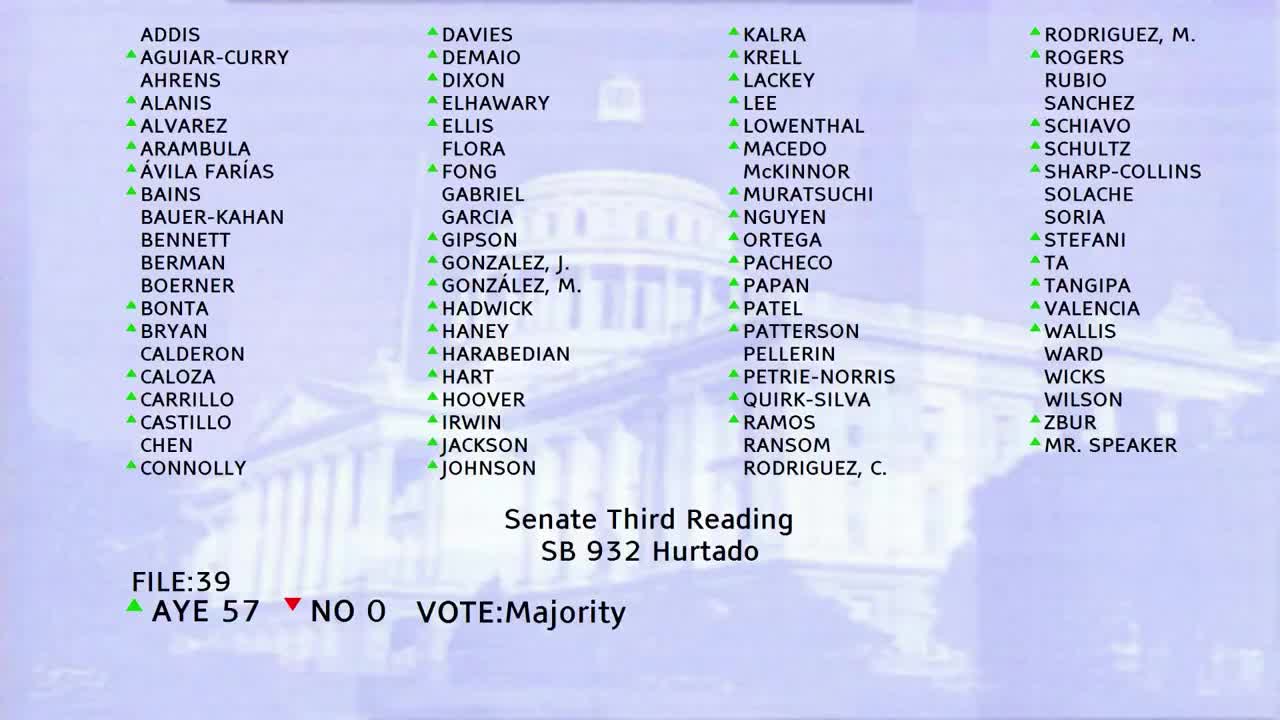
Bill Author

Bill Co-Author(s):