SCR 141: Women’s Equal Pay Day.
- Session Year: 2025-2026
- House: Senate
- Latest Version Date: 2026-04-21
Current Status:
Passed
(2026-04-21: Chaptered by Secretary of State. Res. Chapter 31, Statutes of 2026.)
Introduced
In Committee
Awaiting First Chamber Vote
Passed First Chamber
In Committee
Awaiting Second Chamber Vote
Passed Second Chamber
Enacted
This measure would recognize March 26, 2026, as Womens Equal Pay Day in California, in recognition of the need to eliminate the gender gap in earnings by women and to promote policies to ensure equal pay for all.
This measure would recognize March 26, 2026, as Womens Equal Pay Day in California, in recognition of the need to eliminate the gender gap in earnings by women and to promote policies to ensure equal pay for all.
This measure would recognize March 26, 2026, as Womens Equal Pay Day in California, in recognition of the need to eliminate the gender gap in earnings by women and to promote policies to ensure equal pay for all.
WHEREAS, More than 60 years after the passage of the federal Equal Pay Act of 1963, women, especially women of color, continue to suffer the consequences of unequal pay; and
WHEREAS, According to the United States Census Bureau, women who work full time year round make less than $0.81 for every dollar a man is paid; and
WHEREAS, According to the United States Department of Labor, the median salary for women in 2024 was $57,520, while men earned a median of salary of $71,090; and
WHEREAS, The wage gap for Black, Latina, and Native American women is under $0.66 for every dollar White, non-Hispanic men make; and
WHEREAS, Black and Hispanic women have the lowest median salary earnings, with Hispanic women earning an average of $46,380 and Black women earning an average of $51,660; and
WHEREAS, Four out of 10 women experience gender discrimination and are much more likely to work a part-time job compared to men; and
WHEREAS, Nearly 4 in 10 mothers are the primary breadwinners in their households, and nearly two-thirds of mothers are the primary or significant earners, making pay equity critical to the financial security of their families; and
WHEREAS, A lifetime of lower pay means women have less income to save for retirement and less income counted in a social security or pension benefit formula; and
WHEREAS, Women continue to be underrepresented in the fields of science, technology, engineering, mathematics, and business, as well as in managerial positions, and are overrepresented in teaching, assistant, and childcare occupations; and
WHEREAS, Fair pay in California would strengthen the security of individuals and families today, regardless of education or socioeconomic status, while enhancing our statewide economy; and
WHEREAS, March 26 symbolizes the day in 2026 when the wages paid to women catch up to the wages paid to males from the previous year nationwide; now, therefore, be it
Resolved by the Senate of the State of California, the Assembly thereof concurring, That the Legislature proclaims March 26, 2026, as Womens Equal Pay Day in California, in recognition of the need to eliminate the gender gap in earnings by women and to promote policies to ensure equal pay for all; and be it further
Resolved, That the Secretary of the Senate transmit copies of this resolution to the author for appropriate distribution.
|
Date
|
Status
|
|---|---|
| Apr 21, 2026 | Chaptered by Secretary of State. Res. Chapter 31, Statutes of 2026. |
| Apr 21, 2026 | Enrolled and filed with the Secretary of State at 2 p.m. |
| Apr 16, 2026 | In Senate. Ordered to engrossing and enrolling. |
| Apr 16, 2026 | Read. Adopted. Ordered to the Senate. |
| Apr 16, 2026 | Read. Adopted. (Ayes 68. Noes 0. Page 4686.) Ordered to the Senate. |
| Apr 13, 2026 | From committee: Be adopted. Ordered to consent calendar. (Ayes 10. Noes 0.) (April 13). |
| Apr 6, 2026 | Referred to Com. on RLS. |
| Mar 26, 2026 | In Assembly. Held at Desk. |
| Mar 26, 2026 | Read. Adopted. (Ayes 37. Noes 0. Page 3698.) Ordered to the Assembly. |
| Mar 26, 2026 | Read. Adopted. (Ayes 37. Noes 0.) Ordered to the Assembly. |
| Mar 18, 2026 | From committee: Ordered to third reading. |
| Mar 9, 2026 | Introduced. Referred to Com. on RLS. |
|
Date
|
Description
|
Location
|
Votes
|
|
|---|---|---|---|---|
| Apr 16, 2026 | SCR 141 Wahab Consent Calendar Second Day Regular Session | Assembly Floor |
Passed |
|
| Apr 13, 2026 | Be adopted. To Consent Calendar. | Assembly Standing Committee on Rules |
Passed |
|
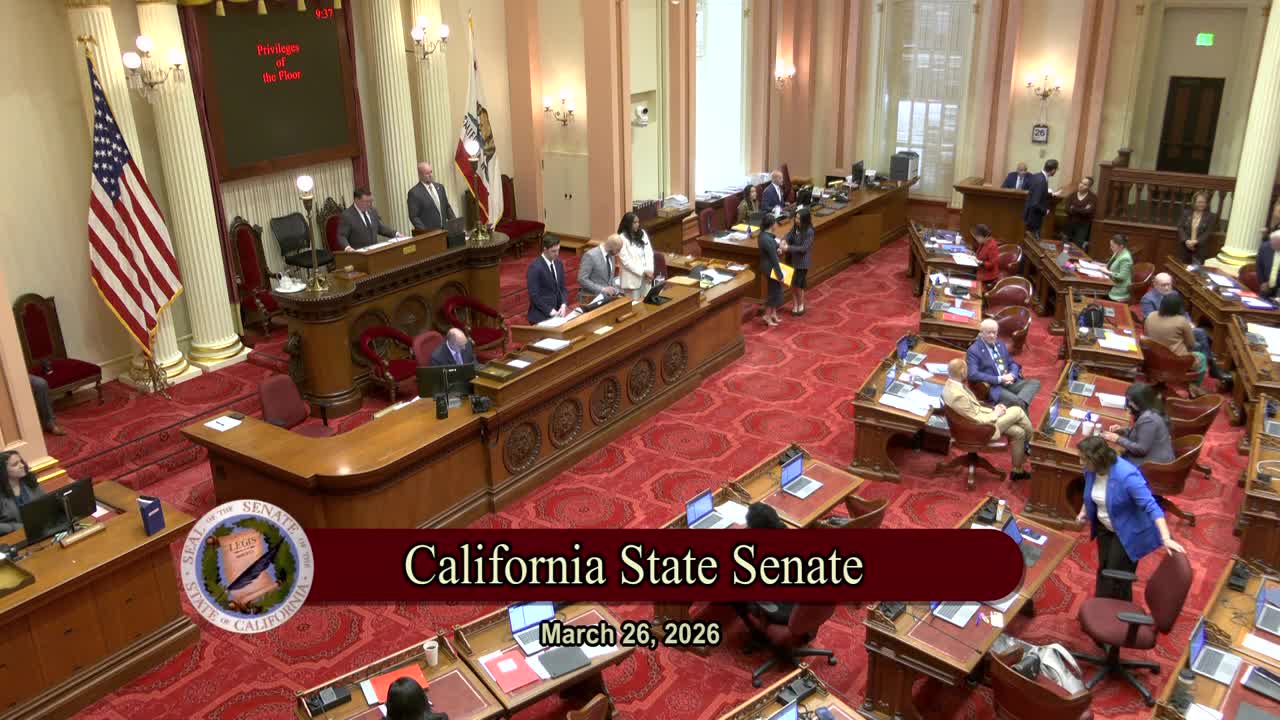
| Mar 26, 2026 | Senate 3rd Reading SCR141 Wahab et al. | Senate Floor |
Passed |
This list shows positions taken on this bill by organizations on the date displayed, which is linked to the original source.
Positions by individuals are not included.
Date of Hearing: April 13, 2026
ASSEMBLY COMMITTEE ON
, Chair
SBPCA Bill Id:
Author:() – As Ver:
SENATE VOTE:
SUBJECT:
SUMMARY: Proclaims March 26, 2026, as Women’s Equal Pay Day in California, in recognition of the need to eliminate the gender gap in earnings by women and to promote policies to ensure equal pay for all. Specifically, this resolution makes the following legislative findings:
- More than 60 years after the passage of the federal Equal Pay Act of 1963, women, especially women of color, continue to suffer the consequences of unequal pay.
- According to the United States Census Bureau, women who work full time year round make less than $0.81 for every dollar a man is paid. And, according to the United States Department of Labor, the median salary for women in 2024 was $57,520, while men earned a median of salary of $71,090.
- The wage gap for Black, Latina, and Native American women is under $0.66 for every dollar White, non-Hispanic men make.
- Four out of 10 women experience gender discrimination and are much more likely to work a part-time job compared to men. Nearly 4 in 10 mothers are the primary breadwinners in their households, making pay equity critical to the financial security of their families.
- Fair pay in California would strengthen the security of individuals and families today, regardless of education or socioeconomic status, while enhancing our statewide economy.
- March 26 symbolizes the day in 2026 when the wages paid to women catch up to the wages paid to males from the previous year nationwide.
FISCAL EFFECT: This resolution is keyed non-fiscal by Legislative Counsel.
REGISTERED SUPPORT / OPPOSITION:
Support
None on file
Opposition
None on file
Analysis Prepared by:
SENATE RULES COMMITTEE Office of Senate Floor Analyses (916) 651-4171 | SCR 141 |
THIRD READING
Bill No: SCR 141
Author: Wahab (D), et al.
Introduced: 3/9/26
Vote: 21
SUBJECT: Women’s Equal Pay Day
SOURCE: Author
DIGEST:
This resolution recognizes March 26, 2026, as Women’s Equal Pay Day in California, in recognition of the need to eliminate the gender gap in earnings by women and to promote policies to ensure equal pay for all.
ANALYSIS: This resolution makes the following legislative findings:
- More than 60 years after the passage of the federal Equal Pay Act of 1963, women, especially women of color, continue to suffer the consequences of unequal pay. March 26 symbolizes the day in 2026 when the wages paid to women catch up to the wages paid to males from the previous year nationwide.
- According to the United States Census Bureau, women who work full time year round make less than $0.81 for every dollar a man is paid. The wage gap for Black, Latina, and Native American women is under $0.66 for every dollar White, non-Hispanic men make.
- According to the United States Department of Labor, the median salary for women in 2024 was $57,520, while men earned a median of salary of $71,090. Black and Hispanic women have the lowest median salary earnings, with Hispanic women earning an average of $46,380 and Black women earning an average of $51,660.
- Four out of 10 women experience gender discrimination and are much more likely to work a part-time job compared to men. Nearly 4 in 10 mothers are the primary breadwinners in their households, and nearly two-thirds of mothers are the primary or significant earners, making pay equity critical to the financial security of their families.
- Fair pay in California would strengthen the security of individuals and families today, regardless of education or socioeconomic status, while enhancing our statewide economy.
This resolution proclaims March 26, 2026, as Women’s Equal Pay Day in California, in recognition of the need to eliminate the gender gap in earnings by women and to promote policies to ensure equal pay for all.
Related/Prior Legislation
ACR 53 (Bonta, Resolution Chapter 58, Statutes of 2025)
SR 31 (Wahab, 2025) – Adopted in Senate.
SCR 127 (Wahab, Resolution Chapter 79, Statutes of 2024)
SR 80 (Min, 2024) – Adopted in Senate.
HR 99 (Bains, 2024) – Adopted in Assembly.
ACR 42 (Addis, Resolution Chapter 44, Statutes of 2023)
FISCAL EFFECT: Appropriation: No Fiscal Com.: No Local: No
SUPPORT: (Verified 3/16/26)
None received
OPPOSITION: (Verified 3/16/26)
None received
Prepared by: Hunter Flynn / SFA / (916) 651-4171
3/18/26 13:52:51
**** END ****
Bill Author

Bill Co-Author(s):