SCR 184: Frontotemporal Degeneration Awareness Week.
- Session Year: 2025-2026
- House: Senate
- Latest Version Date: 2026-08-18
Current Status:
Passed
(2026-08-18: Chaptered by Secretary of State. Res. Chapter 181, Statutes of 2026.)
Introduced
In Committee
Awaiting First Chamber Vote
Passed First Chamber
In Committee
Awaiting Second Chamber Vote
Passed Second Chamber
Enacted
This measure would declare the week of September 28, 2026, to October 4, 2026, inclusive, as Frontotemporal Degeneration Awareness Week.
This measure would declare the week of September 28, 2026, to October 4, 2026, inclusive, as Frontotemporal Degeneration Awareness Week.
This measure would declare the week of September 28, 2026, to October 4, 2026, inclusive, as Frontotemporal Degeneration Awareness Week.
WHEREAS, It is the custom of the Legislature to recognize official weeks that are set aside to increase awareness of serious health conditions that affect the lives of citizens of California; and
WHEREAS, Attendant to that concern and in full accord with its longstanding traditions, it is the sense of the Legislature to memorialize and to proclaim the week of September 28, 2026, to October 4, 2026, inclusive, as Frontotemporal Degeneration Awareness Week in California, in conjunction with the observance of World FTD Awareness Week; and
WHEREAS, The Association for Frontotemporal Degeneration (AFTD) reports that Frontotemporal Degeneration (FTD) is a terminal and incurable neurodegenerative disease affecting the frontal and temporal lobes, causing impairments to speech, personality, behavior, and motor skills that constitutes a major public health concern; and
WHEREAS, It takes an average of 3.6 years from the initial symptoms to get an accurate diagnosis of FTD, with an average life expectancy of 7 to 13 years after the initial symptoms; and
WHEREAS, FTD strikes people as young as 21 years of age and as old as 80 years of age, with the largest percentage of those affected being in their 40s to 60s, rendering people in the prime of life unable to work or function normally; and
WHEREAS, FTD imposes average annual costs associated with care and living with the disease that are approximately double those of Alzheimers disease; and
WHEREAS, FTD is identified in the National Plan to Address Alzheimers Disease as a related dementia and included as a priority in the goals and strategies of the plan to achieve the vision of a nation free of Alzheimers disease and related dementias; and
WHEREAS, The California Master Plan for Aging incorporates recommendations from the Governors Task Force on Alzheimers (Disease) Prevention and Preparedness to help people and families living with Alzheimers disease and related dementia; and
WHEREAS, Approximately 40 percent of people with FTD have a family history of FTD or a related condition such as Amyotrophic Lateral Sclerosis (ALS), with about one-half of those found to have an inherited form accounted for by mutations in the Progranulin (GRN), C9orf72, Tau/MAPT, and several other rarer genes; and
WHEREAS, AFTD and the National Society of Genetic Counselors (NSGC) FTD/ALS Working Group recommends that all people diagnosed with FTD should be offered genetic counseling and testing; and
WHEREAS, FTD is often misdiagnosed as a psychiatric problem or other neurodegenerative disease because of the wide range of cognitive and behavioral symptoms and their young onset; and
WHEREAS, FTD often affects a persons ability to express emotions and to show affection and empathy for loved ones; and
WHEREAS, In the behavioral variant of FTD, a persons sense of social graces and appropriate behavior can be lost, and their personality may be significantly changed; and
WHEREAS, Furthermore, in the language variants of FTD (primary progressive aphasia), a person may have trouble producing speech and understanding grammar, lose the meaning of words or become hesitant in their speech, and may eventually become mute; and
WHEREAS, In the movement variants of FTD, a person may experience muscle weakness, falling, loss of balance, difficulty making speech, difficulty swallowing, or choking; and
WHEREAS, While there has never been a global epidemiology study of FTD, it is estimated that more than 60,000 people are affected in the United States today; and
WHEREAS, The AFTD is the leading national organization exclusively focused on the spectrum of FTD disorders with a mission to improve the quality of life of people affected by FTD and drive research to a cure; and
WHEREAS, It is imperative that there be greater awareness of this serious disease, and more must be done to increase activity at the local, state, and national levels; now, therefore, be it
Resolved by the Senate of the State of California, the Assembly thereof concurring, That the Legislature declares the week of September 28, 2026, to October 4, 2026, inclusive, as Frontotemporal Degeneration Awareness Week; and be it further
Resolved, That the Secretary of the Senate transmit copies of this resolution to the author for appropriate distribution.
|
Date
|
Status
|
|---|---|
| Aug 18, 2026 | Chaptered by Secretary of State. Res. Chapter 181, Statutes of 2026. |
| Aug 18, 2026 | Enrolled and filed with the Secretary of State at 1 p.m. |
| Aug 13, 2026 | In Senate. Ordered to engrossing and enrolling. |
| Aug 13, 2026 | Read. Adopted. Ordered to the Senate. |
| Aug 13, 2026 | Read. Adopted. (Ayes 72. Noes 0. Page 6160.) Ordered to the Senate. |
| Aug 6, 2026 | From committee: Be adopted. Ordered to consent calendar. (Ayes 8. Noes 0.) (August 6). |
| Aug 6, 2026 | Referred to Com. on RLS. |
| Aug 4, 2026 | In Assembly. Held at Desk. |
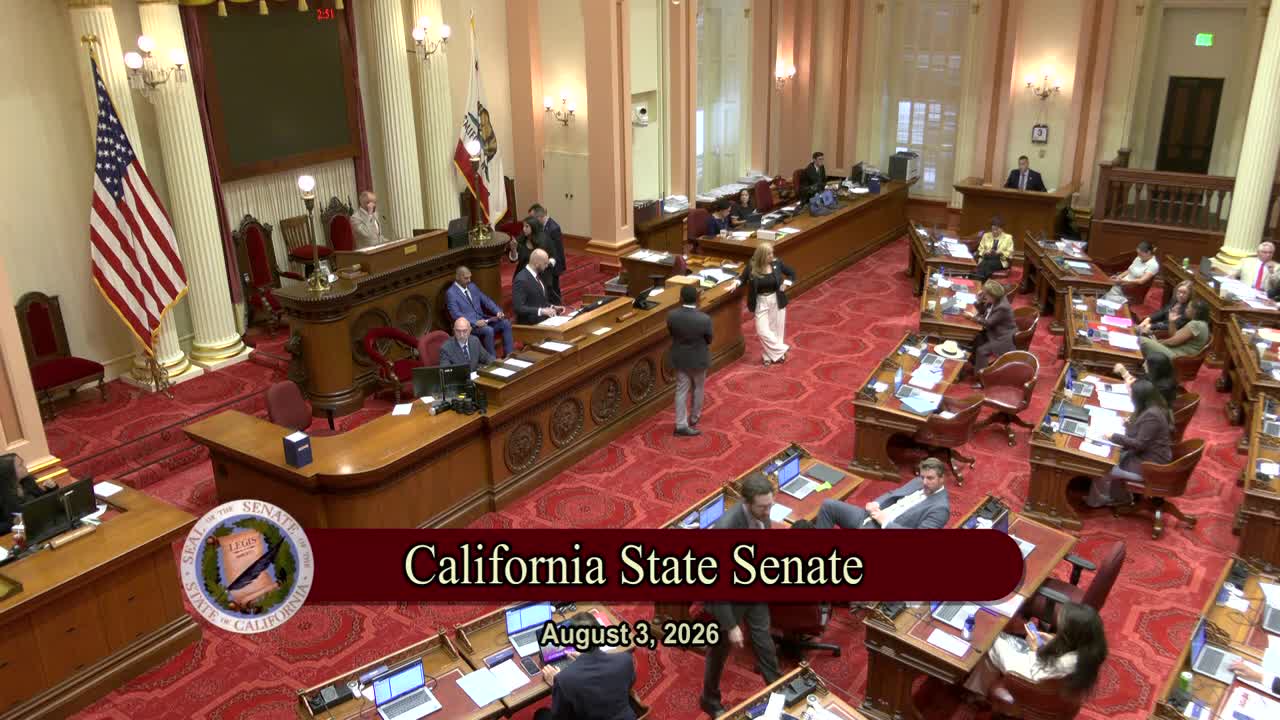
| Aug 3, 2026 | Read. Adopted. (Ayes 35. Noes 0.) Ordered to the Assembly. |
| Aug 3, 2026 | Read. Adopted. (Ayes 36. Noes 0. Page 5244.) Ordered to the Assembly. |
| Jun 15, 2026 | From committee: Ordered to third reading. |
| Jun 8, 2026 | Introduced. Referred to Com. on RLS. |
|
Date
|
Description
|
Location
|
Votes
|
|
|---|---|---|---|---|
| Aug 13, 2026 | SCR 184 Niello Consent Calendar Second Day Regular Session | Assembly Floor |
Passed |
|
| Aug 6, 2026 | Be adopted. To Consent Calendar. | Assembly Standing Committee on Rules |
Passed |
|
| Aug 3, 2026 | Senate 3rd Reading SCR184 Niello | Senate Floor |
Passed |
This list shows positions taken on this bill by organizations on the date displayed, which is linked to the original source.
Positions by individuals are not included.
Date of Hearing: August 6, 2026
ASSEMBLY COMMITTEE ON
, Chair
SBPCA Bill Id:
Author:() – As Ver:
SENATE VOTE:
SUBJECT:
SUMMARY: Declares the week of September 28, 2026, to October 4, 2026, inclusive, as Frontotemporal Degeneration Awareness Week. Specifically, this resolution makes the following legislative findings:
- Frontotemporal Degeneration (FTD) is a terminal and incurable neurodegenerative disease affecting the frontal and temporal lobes, causing impairments to speech, personality, behavior, and motor skills that constitutes a major public health concern.
- It takes an average of 3.6 years from start of symptoms to get an accurate diagnosis of FTD with an average life expectancy of 7 to 13 years after the initial symptoms. FTD strikes people as young as 21 and as old as 80, with the largest percentage of those affected being in their 40s to 60s, rendering people in the prime of life unable to work or function normally.
- FTD imposes average annual costs associated with care and living with the disease that are approximately double those of Alzheimer’s disease.
- FTD is identified in The National Plan to Address Alzheimer’s Disease as a related dementia and is included as a priority in the goals and strategies of the Plan to achieve the vision of a nation free of Alzheimer’s disease and related dementias.
- The California Master Plan for Aging incorporates all 10 recommendations from the Governor’s Task Force on Alzheimer’s Disease Prevention and Preparedness to help people and families living with Alzheimer’s and related dementia.
- It is imperative that there be greater awareness of this serious disease, and more must be done to increase activity at the local, state, and national levels.
FISCAL EFFECT: This resolution is keyed non-fiscal by Legislative Counsel.
REGISTERED SUPPORT / OPPOSITION:
Support
None on file
Opposition
None on file
Analysis Prepared by:
SENATE RULES COMMITTEE Office of Senate Floor Analyses (916) 651-4171 | SCR 184 |
THIRD READING
Bill No: SCR 184
Author: Niello (R)
Introduced: 6/8/26
Vote: 21
SUBJECT: Frontotemporal Degeneration Awareness Week
SOURCE: Author
DIGEST:
This resolution declares the week of September 28, 2026, to October 4, 2026, inclusive, as Frontotemporal Degeneration Awareness Week.
ANALYSIS: This resolution makes the following legislative findings:
- The Association for Frontotemporal Degeneration (AFTD) reports that Frontotemporal Degeneration (FTD) is a terminal and incurable neurodegenerative disease affecting the frontal and temporal lobes, causing impairments to speech, personality, behavior, and motor skills that constitutes a major public health concern.
- The California Master Plan for Aging incorporates recommendations from the Governor’s Task Force on Alzheimer’s (Disease) Prevention and Preparedness to help people and families living with Alzheimer’s disease and related dementia.
- Approximately 40% of people with FTD have a family history of FTD or a related condition such as Amyotrophic Lateral Sclerosis (ALS), with about one-half of those found to have an inherited form accounted for by mutations in the Progranulin (GRN), C9orf72, Tau/MAPT, and several other rarer genes.
- While there has never been a global epidemiology study of FTD, it is estimated that more than 60,000 people are affected in the United States today.
- It is imperative that there be greater awareness of this serious disease, and more must be done to increase activity at the local, state, and national levels.
This resolution declares the week of September 28, 2026, to October 4, 2026, inclusive, as Frontotemporal Degeneration Awareness Week.
Related/Prior Legislation
SCR 80 (Niello, Chapter 172, Statutes of 2025)
SCR 116 (Jones, Chapter 96, Statutes of 2024)
FISCAL EFFECT: Appropriation: No Fiscal Com.: No Local: No
SUPPORT: (Verified 6/12/26)
None received
OPPOSITION: (Verified 6/12/26)
None received
Prepared by: Destiny Bustos / SFA / (916) 651-4171
6/15/26 14:57:46
**** END ****
Bill Author

Bill Co-Author(s):