SCR 7: Permanent standard time.
- Session Year: 2025-2026
- House: Senate
- Latest Version Date: 2026-08-18
Current Status:
Passed
(2026-08-18: Chaptered by Secretary of State. Res. Chapter 178, Statutes of 2026.)
Introduced
In Committee
Awaiting First Chamber Vote
Passed First Chamber
In Committee
Awaiting Second Chamber Vote
Passed Second Chamber
Enacted
This measure would proclaim that the Legislature acknowledges the health benefits of permanent standard time.
This measure would proclaim that the Legislature acknowledges the health benefits of permanent standard time.
This measure would proclaim that the Legislature acknowledges the health benefits of permanent standard time.
WHEREAS, Changing clocks between standard time and daylight saving time is disruptive to health, safety, education, and the economy; and
WHEREAS, The California Medical Association, California Sleep Society, American Academy of Sleep Medicine, National Sleep Foundation, Sleep Research Society, and Society for Research on Biological Rhythms advise against permanent daylight saving time and recommend permanent standard time; and
WHEREAS, Daylight saving time is scientifically proven to contribute to medical errors, heart attacks, car accidents, and student health issues and absenteeism; and
WHEREAS, Permanent daylight saving time has historically been repealed due to its harm to health, safety, education, and economy soon after its trials during World War II and the 1970s oil crisis; and
WHEREAS, Socially disadvantaged individuals such as shift workers are disproportionally impacted by daylight saving time as their sleep patterns are most affected, and child care is harder to obtain for their families; and
WHEREAS, The Legislature passed Senate Bill 328 (Portantino) in 2019 in support of moving school start times to protect the importance of more sleep to students health; and
WHEREAS, Permanent standard time presents a positive impact on businesses as workers are showing up alert, healthy, productive, and on time and can perform their job duties safely; and
WHEREAS, Permanent standard time provides positive implications for religious groups as it relates to prayer times and fasting; and
WHEREAS, Federal law permits permanent standard time by exemption from daylight saving time as the only alternative to biannual changing of clocks; and
WHEREAS, Permanent standard time has historically proven to last without incident for decades; and
WHEREAS, Arizona, Hawaii, all United States territories, Mexico, and most nations already observe permanent standard time; and
WHEREAS, Many states, including, in the Pacific Time Zone, Nevada, Oregon, and Washington, are considering restoring permanent standard time; and
WHEREAS, Coordination with nearby states regarding timekeeping is essential to convenience of commerce; now, therefore, be it
Resolved by the Senate of the State of California, the Assembly thereof concurring, That the Legislature acknowledges the health benefits of permanent standard time; and be it further
Resolved, That the Secretary of the Senate transmit copies of this resolution to the author for appropriate distribution.
|
Date
|
Status
|
|---|---|
| Aug 18, 2026 | Chaptered by Secretary of State. Res. Chapter 178, Statutes of 2026. |
| Aug 18, 2026 | Enrolled and filed with the Secretary of State at 1 p.m. |
| Aug 13, 2026 | In Senate. Ordered to engrossing and enrolling. |
| Aug 13, 2026 | Read. Adopted. Ordered to the Senate. |
| Aug 13, 2026 | Read. Adopted. (Ayes 52. Noes 3. Page 6156.) Ordered to the Senate. |
| Jun 17, 2026 | From committee: Be adopted. Ordered to third reading. (Ayes 15. Noes 0.) (June 16). |
| Mar 16, 2026 | Referred to Com. on HEALTH. |
| Mar 3, 2025 | In Assembly. Held at Desk. |
| Mar 3, 2025 | Read. Adopted. (Ayes 24. Noes 6. Page 304.) Ordered to the Assembly. |
| Jan 22, 2025 | From committee: Ordered to third reading. |
| Dec 18, 2024 | Introduced. Referred to Com. on RLS. |
|
Date
|
Description
|
Location
|
Votes
|
|
|---|---|---|---|---|
| Aug 13, 2026 | SCR 7 Niello Senate Third Reading By Jeff Gonzalez | Assembly Floor |
Passed |
|
| Jun 16, 2026 | Be adopted. To third reading. | Assembly Standing Committee on Health |
Passed |
|
| Mar 3, 2025 | The committee on HSG recommend that the measure be PASSED, WITH AMENDMENTS. | Senate Floor |
Passed |
This list shows positions taken on this bill by organizations on the date displayed, which is linked to the original source.
Positions by individuals are not included.
|
Organization
|
Position
|
Date
|
|---|---|---|
| California Sleep Society | ** Support | |
| four individuals | ** Support | |
| Northwest Noggin | ** Support | |
| Northwest Noggin Neuroscience | ** Support | |
| Save Standard Time | ** Support |
SENATE THIRD READING
STR Bill Id:SCR 7
Author:(Niello)
As Introduced Ver:December 18, 2024
Majority vote
SUMMARY
Proclaims that the Legislature acknowledges the health benefits of permanent standard time, including: changing clocks between standard time and daylight saving time (DST) is disruptive to health, safety, education, and the economy; DST is scientifically proven to contribute to medical errors, heart attacks, car accidents, and student health issues and absenteeism; and permanent standard time has historically proven to last without incident for decades.
Major Provisions
COMMENTS
Daylight Saving Time (DST) vs. standard time. DST is commonly understood as "summer time" and standard time is commonly understood as "winter time." In California, DST, summer time, is observed during the time of year when clocks "spring forward," between the second Sunday of March and first Sunday of November, consistent with federal law. Standard time, or winter time, in California is observed during the time of year when clocks "fall back," between the first Sunday of November and second Sunday of March.
History of DST. The first modern DST was established during World War I as an effort to save energy and conserve fuel. In April of 1916, at 11:00 p.m., Germany and Austria advanced the hands of their clocks one hour and kept them that way until the following October. Many other nations—mostly in Europe but including Tasmania and some Canadian provinces as well—followed suit. Two years later, the United States also established in law DST and created a standard time. That law defined standard time zones and set summer DST to begin on March 31, 1918. The nation observed DST for seven months in 1918 and 1919 but ceased to do so when Congress repealed the DST law. Nonetheless, from February 9, 1942, to September 30, 1945, President Franklin Roosevelt instituted year-round DST, or "War Time." From 1945 to 1966, there was no federal law regarding DST, leaving it to states and localities to choose whether and when to observe DST. For several years Congress has considered legislation to move to permanent DST. The Sunshine Protection Act, which would make daylight saving time permanent year round unless states opt out, was folded into a motor vehicle safety bill that passed out of the House Energy and Commerce Committee on May 21, 2026 with a 48-1 vote. According to FactCheck.org, a 2022 poll by CBS News, 46% of Americans said they'd like DST all year around, while 33% preferred standard time all year around. Just 21% said they would like to keep switching back and forth. A Monmouth University poll that same year similarly found 44% of Americans favored year-round DST, while 13% favored year-round standard time and 35% said they’d like to keep changing the clocks twice a year. Currently, 19 states have enacted legislation to switch to year-round DST, if Congress votes to allow it, according to the National Conference of State Legislatures.
California Daylight Saving Time Act. California voters, in 1949, established The California Daylight Saving Time Act through the passage of Proposition 12. The proposition established standard time within California as the time which the federal government describes and designates as United States Pacific Standard Time (PST). The initiative also required that the state advance time one hour during the period from the last Sunday in April until the last Sunday in October. In the mid-1960s, Congress enacted The Uniform Time Act of 1966 to establish a uniform standard DST within each time zone. The act set DST to begin on the last Sunday of April and to end on the last Sunday of October. This act exempted any state from observing DST if the state passed a law that results in year-round observance of standard time. Two states—Arizona and Hawaii—have done so. Federal law does not, however, give states the option to observe DST year-round. In an effort to save energy, Congress passed the Energy Policy Act in 2005 to extend DST in the U.S. by three weeks in the spring and one week in the fall. This change created a conflict between California's DST law and the federal law on DST. However, since federal law provides states only two options: observe standard time throughout the year, or observe DST on federally mandated dates. California has observed the dates consistent with the adjusted federal dates.
Proposition 7. AB 807 (Chu), Chapter 60, Statutes of 2018, placed a ballot measure before voters to make changes to the state's observance of DST. Proposition 7 allows the Legislature, by a two-thirds vote, to make future changes to California's DST period, including applying year-round application of DST, if changes are consistent with federal law. Proposition 7 also conformed California DST to current federal law. To enact Proposition 7 the measure also repealed Proposition 12 of 1949, a ballot initiative that established DST in California. Proposition 7 passed with nearly 60% support.
Health benefits of standard time. In September 2025, Stanford Medicine reported a new study that found changing clocks twice a year disrupts circadian rhythms, leading to higher rates of stroke and obesity. Specifically, the study found that either permanent standard time or permanent DST would be healthier than our seasonal waffling, with permanent standard time benefitting the most people. According to Stanford Medicine, the researchers analyzed county-level data from the Centers for Disease Control and Prevention on the prevalence of arthritis, cancer, chronic obstructive pulmonary disease, coronary heart disease, depression, diabetes, obesity and stroke. Their models show that permanent standard time would lower the nationwide prevalence of obesity by 0.78 percentage points and the prevalence of stroke by 0.09 percentage points, conditions influenced by circadian health. These seemingly small percentage changes in common conditions would amount to 2.6 million fewer people with obesity and 300,000 fewer cases of stroke. Under permanent DST, the nationwide prevalence of obesity would decrease by 0.51 percentage points, or 1.7 million people, and stroke by 0.04 percentage points, or 220,000 cases.
According to the American Academy of Sleep Medicine (AASM), the U.S. attempted to adopt permanent DST in 1973 amid a nationwide energy crisis. During the first winter, complaints about prolonged darkness in the morning were rampant. Parents also had safety concerns because their children had to walk to school or wait for the bus in the dark. While the DST experiment was intended to last two years, it was so unpopular that Congress reverted the nation to standard time in the fall of 1974 after only 8 months. AASM states that the daily cycle of natural light and darkness is the most powerful timing cue to synchronize our body's internal clock. When we receive more light in the morning and darkness in the evening, our bodies and nature are better aligned, making it easier to wake up for our daily activities and easier to fall asleep at night.
According to the Author
This is a simple resolution expressing the well-known scientific and health facts around permanent standard time. The author contends that medical study after medical study shows that when we make the switch to daylight-saving, heart attacks, strokes, car accidents and medical errors go up. In addition, the switch has a negative effect on our youth. Which is why the legislature decided a few years ago to favor MORE sleep for our students when we moved school start time back. DST forces them to rise in the dark further disrupting their natural sleep. This is not beneficial for their health or studies. The author argues we perform better when we sleep well at night and having daylight exposure closer to when we wake up better aligns us with our circadian rhythm. All of these medical reasons are why the California Medical Association, California Sleep Society, American Academy of Sleep Medicine, National Sleep Foundation, Sleep Research Society, and Society for Research on Biological Rhythms advise against permanent DST and recommend permanent standard time.
Arguments in Support
Northwest Noggin supports this bill stating that our ability to sleep well, as we know from both research and experience, is profoundly impacted by light. Permanent standard time is best aligned with the natural circadian rhythms of our own brains and bodies, allowing us to wake up more days of the year in sunlight. Northwest Noggin argues that teenagers forced to rise in darkness are sleep-deprived, with serious consequences for brain development and mental health. Every major neurodegenerative disorder, including Parkinson's and Alzheimer's disease - is preceded by about a decade of poor sleep. Daylight savings (and no daylight is ever "saved") was already tried in this country during the energy crisis of the 1970s, and rapidly repealed after children died waiting for buses in darkness. Permanent standard time is the policy supported by all the sleep research and medical organizations in the country, including the American Medical Association, the Sleep Research Society, the American Academy of Neurology, the American Academy of Sleep Medicine and more.
Arguments in Opposition
None.
FISCAL COMMENTS
None.
VOTES
SENATE FLOOR: 24-6-9
YES: Alvarado-Gil, Ashby, Becker, Blakespear, Caballero, Choi, Dahle, Durazo, Gonzalez, Hurtado, Jones, Laird, Limón, McGuire, McNerney, Menjivar, Niello, Ochoa Bogh, Pérez, Seyarto, Umberg, Valladares, Wahab, Weber Pierson
NO: Cabaldon, Cervantes, Padilla, Richardson, Stern, Wiener
ABS, ABST OR NV: Allen, Archuleta, Arreguín, Cortese, Grayson, Grove, Reyes, Rubio, Smallwood-Cuevas
ASM HEALTH: 15-0-1
YES: Bonta, Chen, Addis, Aguiar-Curry, Ahrens, Caloza, Carrillo, Mark González, Patel, Patterson, Celeste Rodriguez, Sanchez, Schiavo, Sharp-Collins, Stefani
ABS, ABST OR NV: Johnson
UPDATED
VERSION: December 18, 2024
CONSULTANT: Logan Hess / HEALTH / (916) 319-2097 FN: 0003178
Date of Hearing: June 16, 2026
ASSEMBLY COMMITTEE ON HEALTH
Mia Bonta, Chair
SBPCA Bill Id:SCR 7
Author:(Niello) – As Introduced Ver:December 18, 2024
SENATE VOTE: 24-6
SUBJECT: Permanent standard time.
SUMMARY: Proclaims that the Legislature acknowledges the health benefits of permanent standard time. Specifically, this resolution:
- Makes findings and declarations including:
- Changing clocks between standard time and daylight saving time (DST) is disruptive to health, safety, education, and the economy;
- The California Medical Association, California Sleep Society, American Academy of Sleep Medicine, National Sleep Foundation, Sleep Research Society, and Society for Research on Biological Rhythms advise against permanent DST and recommend permanent standard time;
- DST is scientifically proven to contribute to medical errors, heart attacks, car accidents, and student health issues and absenteeism;
- Permanent DST has historically been repealed due to its harm to health, safety, education, and economy soon after its trials during World War II and the 1970s oil crisis;
- Socially disadvantaged individuals such as shift workers are disproportionally impacted by DST as their sleep patterns are most affected, and child care is harder to obtain for their families;
- The Legislature passed Senate Bill 328 (Portantino) in 2019 in support of moving school start times to protect the importance of more sleep to students’ health;
- Permanent standard time presents a positive impact on businesses as workers are showing up alert, healthy, productive, and on time and can perform their job duties safely;
- Permanent standard time provides positive implications for religious groups as it relates to prayer times and fasting;
- Federal law permits permanent standard time by exemption from DST as the only alternative to biannual changing of clocks;
- Permanent standard time has historically proven to last without incident for decades;
- Arizona, Hawaii, all United States territories, Mexico, and most nations already observe permanent standard time;
- Many states, including, in the Pacific Time Zone, Nevada, Oregon, and Washington, are considering restoring permanent standard time; and,
- Coordination with nearby states regarding timekeeping is essential to convenience of commerce.
- Resolves by the Senate of the State of California, the Assembly thereof concurring, that the Legislature acknowledges the health benefits of permanent standard time.
- Resolves that the Secretary of the Senate transmit copies of this resolution to the author for appropriate distribution.
EXISTING LAW:
- Establishes, under federal law, the standard time of the United States for each of nine zones and advances the standard time of each zone by one hour during the period commencing at 2:00 a.m. on the second Sunday of March of each year and ending at 2:00 a.m. on the first Sunday of November of each year. Establishes the standard time within California is that of the fifth zone designated by federal law as Pacific Standard Time (PST). Prohibits a state from setting its standard time to year-round DST. (15 United States Code § 260, et seq.)
- Establishes the standard time for California, consistent with federal law, is PST, and sets DST to begin at 2:00 a.m. on the second Sunday of March of each year and end at 2:00 a.m. on the first Sunday of November of each year. Authorizes the Legislature, by a two-thirds vote, to change the dates and times of the DST period, consistent with federal law, and if federal law authorizes the state to provide for the year-round application of DST. (Government Code § 6808)
FISCAL EFFECT: None. This resolution is currently keyed non-fiscal.
COMMENTS:
- PURPOSE OF THIS BILL. According to the author, this is a simple resolution expressing the well-known scientific and health facts around permanent standard time. The author contends that medical study after medical study shows that when we make the switch to daylight-saving, heart attacks, strokes, car accidents and medical errors go up. In addition, the switch has a negative effect on our youth. Which is why the legislature decided a few years ago to favor MORE sleep for our students when we moved school start time back. DST forces them to rise in the dark further disrupting their natural sleep. This is not beneficial for their health or studies. The author argues we perform better when we sleep well at night and having daylight exposure closer to when we wake up better aligns us with our circadian rhythm. All of these medical reasons are why the California Medical Association, California Sleep Society, American Academy of Sleep Medicine, National Sleep Foundation, Sleep Research Society, and Society for Research on Biological Rhythms advise against permanent DST and recommend permanent standard time.
- BACKGROUND.
- DST vs. standard time. DST is commonly understood as “summer time” and standard time is commonly understood as “winter time.” In California, DST, summer time, is observed during the time of year when clocks “spring forward,” between the second Sunday of March and first Sunday of November, consistent with federal law. Standard time, or winter time, in California is observed during the time of year when clocks “fall back,” between the first Sunday of November and second Sunday of March.
- History of DST. The first modern DST was established during World War I as an effort to save energy and conserve fuel. In April of 1916, at 11:00 p.m., Germany and Austria advanced the hands of their clocks one hour and kept them that way until the following October. Many other nations—mostly in Europe but including Tasmania and some Canadian provinces as well—followed suit. Two years later, the United States also established in law DST and created a standard time. That law defined standard time zones and set summer DST to begin on March 31, 1918. The nation observed DST for seven months in 1918 and 1919 but ceased to do so when Congress repealed the DST law. Nonetheless, from February 9, 1942, to September 30, 1945, President Franklin Roosevelt instituted year-round DST, or “War Time.” From 1945 to 1966, there was no federal law regarding DST, leaving it to states and localities to choose whether and when to observe DST. For several years Congress has considered legislation to move to permanent DST. The Sunshine Protection Act, which would make daylight saving time permanent year round unless states opt out, was folded into a motor vehicle safety bill that passed out of the House Energy and Commerce Committee on May 21, 2026 with a 48-1 vote. According to FactCheck.org, a 2022 poll by CBS News, 46% of Americans said they’d like DST all year around, while 33% preferred standard time all year around. Just 21% said they would like to keep switching back and forth. A Monmouth University poll that same year similarly found 44% of Americans favored year-round DST, while 13% favored year-round standard time and 35% said they’d like to keep changing the clocks twice a year. Currently, 19 states have enacted legislation to switch to year-round DST, if Congress votes to allow it, according to the National Conference of State Legislatures.
- California Daylight Saving Time Act. California voters, in 1949, established The California Daylight Saving Time Act through the passage of Proposition 12. The proposition established standard time within California as the time which the federal government describes and designates as United States PST. The initiative also required that the state advance time one hour during the period from the last Sunday in April until the last Sunday in October. In the mid-1960s, Congress enacted The Uniform Time Act of 1966 to establish a uniform standard DST within each time zone. The act set DST to begin on the last Sunday of April and to end on the last Sunday of October. This act exempted any state from observing DST if the state passed a law that results in year-round observance of standard time. Two states—Arizona and Hawaii—have done so. Federal law does not, however, give states the option to observe DST year-round. In an effort to save energy, Congress passed the Energy Policy Act in 2005 to extend DST in the U.S. by three weeks in the spring and one week in the fall. This change created a conflict between California’s DST law and the federal law on DST. However, since federal law provides states only two options: observe standard time throughout the year, or observe DST on federally mandated dates. California has observed the dates consistent with the adjusted federal dates.
- Proposition 7. AB 807 (Chu), Chapter 60, Statutes of 2018, placed a ballot measure before voters to make changes to the state’s observance of DST. Proposition 7 allows the Legislature, by a two-thirds vote, to make future changes to California’s DST period, including applying year-round application of DST, if changes are consistent with federal law. Proposition 7 also conformed California DST to current federal law. To enact Proposition 7 the measure also repealed Proposition 12 of 1949, a ballot initiative that established DST in California. Proposition 7 passed with nearly 60% support.
- Health benefits of standard time. In September 2025, Stanford Medicine reported a new study that found changing clocks twice a year disrupts circadian rhythms, leading to higher rates of stroke and obesity. Specifically, the study found that either permanent standard time or permanent DST would be healthier than our seasonal waffling, with permanent standard time benefitting the most people. According to Stanford Medicine, the researchers analyzed county-level data from the Centers for Disease Control and Prevention on the prevalence of arthritis, cancer, chronic obstructive pulmonary disease, coronary heart disease, depression, diabetes, obesity and stroke. Their models show that permanent standard time would lower the nationwide prevalence of obesity by 0.78 percentage points and the prevalence of stroke by 0.09 percentage points, conditions influenced by circadian health. These seemingly small percentage changes in common conditions would amount to 2.6 million fewer people with obesity and 300,000 fewer cases of stroke. Under permanent DST, the nationwide prevalence of obesity would decrease by 0.51 percentage points, or 1.7 million people, and stroke by 0.04 percentage points, or 220,000 cases.
According to the American Academy of Sleep Medicine (AASM), the U.S. attempted to adopt permanent DST in 1973 amid a nationwide energy crisis. During the first winter, complaints about prolonged darkness in the morning were rampant. Parents also had safety concerns because their children had to walk to school or wait for the bus in the dark. While the DST experiment was intended to last two years, it was so unpopular that Congress reverted the nation to standard time in the fall of 1974 after only 8 months. AASM states that the daily cycle of natural light and darkness is the most powerful timing cue to synchronize our body’s internal clock. When we receive more light in the morning and darkness in the evening, our bodies and nature are better aligned, making it easier to wake up for our daily activities and easier to fall asleep at night.
- SUPPORT. Northwest Noggin supports this bill stating that our ability to sleep well, as we know from both research and experience, is profoundly impacted by light. Permanent standard time is best aligned with the natural circadian rhythms of our own brains and bodies, allowing us to wake up more days of the year in sunlight. Northwest Noggin argues that teenagers forced to rise in darkness are sleep-deprived, with serious consequences for brain development and mental health. Every major neurodegenerative disorder, including Parkinson's and Alzheimer’s disease - is preceded by about a decade of poor sleep. Daylight savings (and no daylight is ever “saved”) was already tried in this country during the energy crisis of the 1970s, and rapidly repealed after children died waiting for buses in darkness. Permanent standard time is the policy supported by all the sleep research and medical organizations in the country, including the American Medical Association, the Sleep Research Society, the American Academy of Neurology, the American Academy of Sleep Medicine and more.
- RELATED LEGISLATION. SB 1197 (Niello) would repeal DST and makes permanent year-round Standard Time. Would require, if the federal government adopts permanent DST, the state to conform to that federal adoption. SB 1197 was held on the Senate Appropriations Committee suspense file.
- PREVIOUS LEGISLATION.
- SB 51 (Niello) of 2025, would have repealed DST and made year-round Standard Time permanent. SB 51 was held in the Senate Appropriations Committee.
- SB 1413 (Niello) of 2024, would have required year-long standard time and required the California Energy Commission to prepare and submit a report, on or before February 1, 2027, to the Legislature assessing the near-term and long-term impacts of observing year-round standard time on energy demand and supply. SB 1413 died without a vote on the Assembly Floor.
- AJR 33 (Chu) of 2020, was a measure to urge Congress and the President to enact legislation that would have allowed a state to adopt DST year-round. AJR 33 was never heard.
- AB 7 (Chu) of 2019, was an urgency measure that would have established year-round DST effective immediately once the federal government authorizes such a change. AB 7 was held in the Senate Energy, Utilities, and Communications Committee.
- AB 807 (Chu) Chapter 60, Statutes of 2018, directed the Secretary of State to place an initiative on the ballot to allow voters to decide whether to authorize the Legislature, by a two-thirds vote of the members, to make changes to the state’s observance of DST consistent with, and to the extent authorized by, federal law. AB 807 was approved as Proposition 7.
- AB 385 (Chu) of 2016, would have repealed the DST Act and would have authorized the Legislature by majority vote to amend the law for the application of permanent (year-round) DST, if authorized by federal law. AB 385 failed passage on the Senate Floor.
- AJR 28 (Obernolte), Chapter 167, Statutes of 2016, urged Congress and the President to enact legislation that would allow states to adopt permanent (year-round) DST.
- SJRX2 1 (Karnette), Chapter 1, Statutes of 2001, requested Congress to approve legislation that allows a state to uniformly apply DST year-round.
REGISTERED SUPPORT / OPPOSITION:
Support
California Sleep Society
Northwest Noggin Neuroscience
Save Standard Time
Four individuals
Opposition
None on file
Analysis Prepared by: Logan Hess / HEALTH / (916) 319-2097
SENATE RULES COMMITTEE Office of Senate Floor Analyses (916) 651-1520 Fax: (916) 327-4478 | SCR 7 |
THIRD READING
Bill No: SCR 7
Author: Niello (R)
Introduced: 12/18/24
Vote: 21
SUBJECT: Permanent standard time
SOURCE: Author
DIGEST:
This resolution proclaims that the Legislature acknowledges the health benefits of permanent standard time.
ANALYSIS: This resolution makes the following legislative findings:
- The California Medical Association, California Sleep Society, American Academy of Sleep Medicine, National Sleep Foundation, Sleep Research Society, and Society for Research on Biological Rhythms advise against permanent daylight saving time and recommend permanent standard time.
- Changing clocks between standard time and daylight saving time is disruptive to health, safety, education, and the economy. The Legislature passed Senate Bill 328 (Portantino) in 2019 in support of moving school start times to protect the importance of more sleep to students’ health.
- Permanent standard time presents a positive impact on businesses as workers are showing up alert, healthy, productive, and on time and can perform their job duties safely. Permanent standard time provides positive implications for religious groups as it relates to prayer times and fasting.
This resolution proclaims that the Legislature acknowledges the health benefits of permanent standard time.
FISCAL EFFECT: Appropriation: No Fiscal Com.: No Local: No
SUPPORT: (Verified 1/17/25)
None received
OPPOSITION: (Verified 1/17/25)
None received
Prepared by: Aizenia Randhawa / SFA / (916) 651-1520
1/22/25 13:41:13
**** END ****
Discussed in Hearing
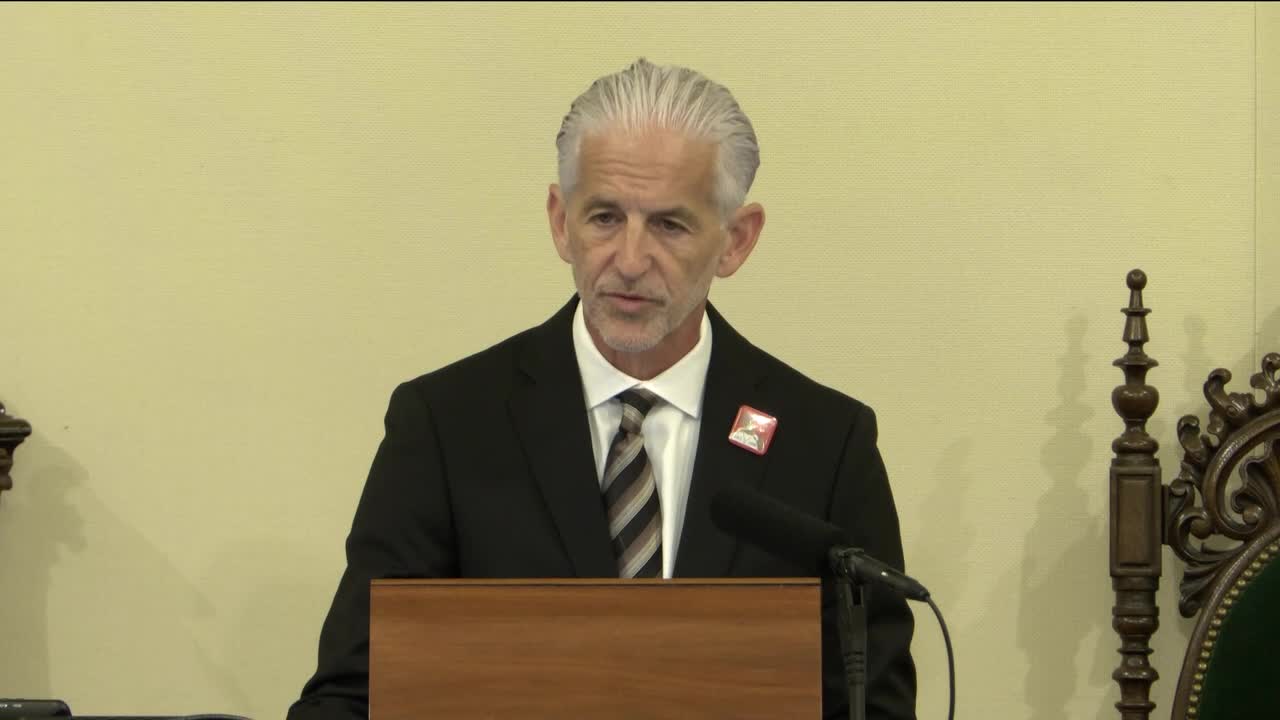 9MIN
Assembly Floor
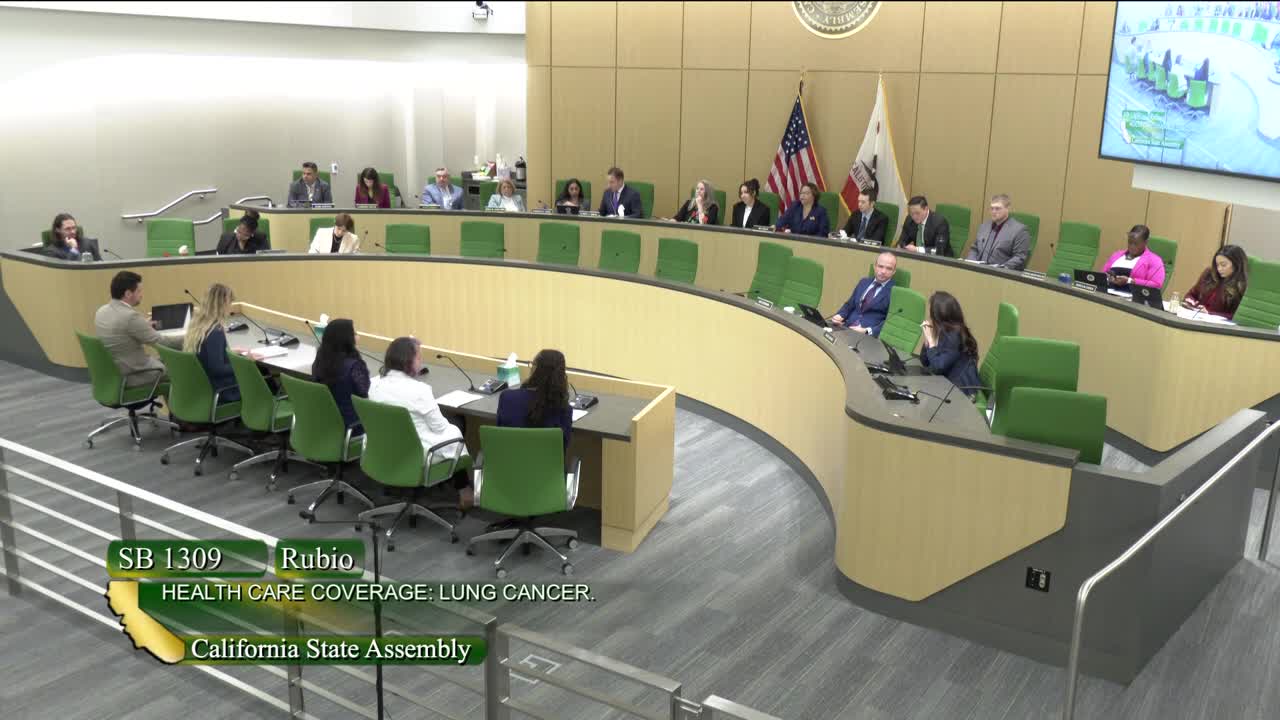 6MIN
Assembly Standing Committee on Health
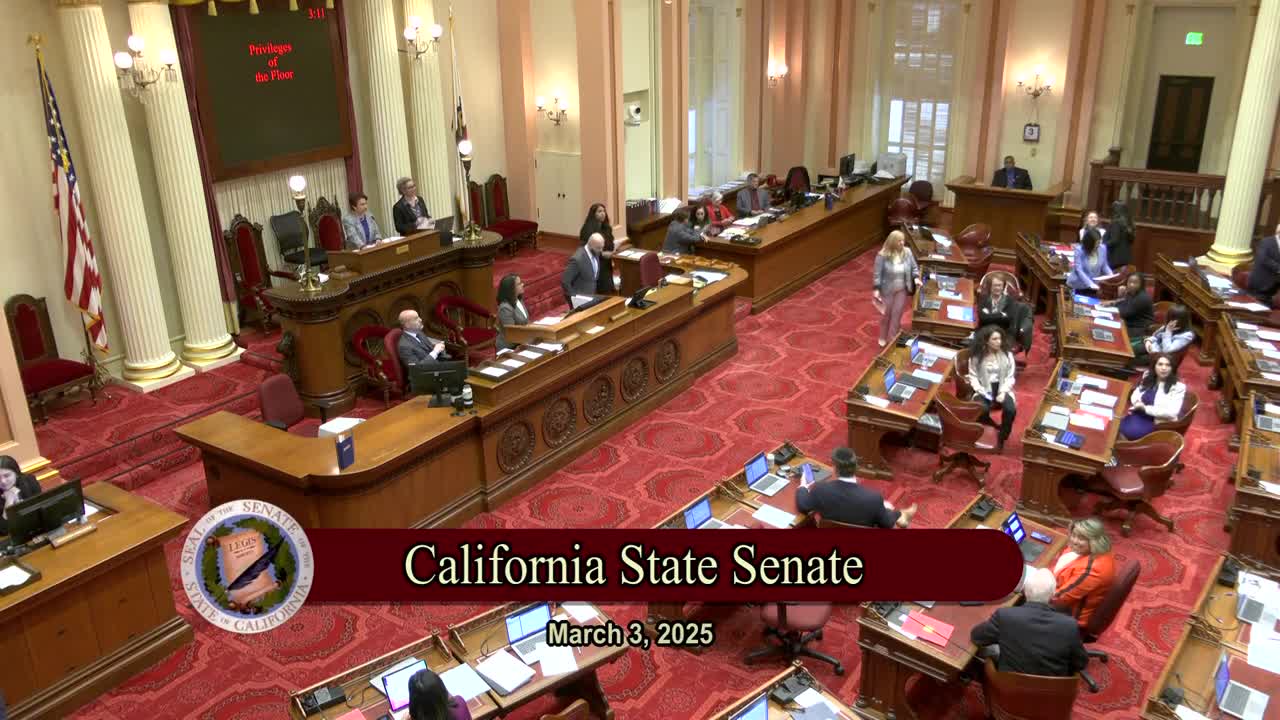 13MIN
Senate Floor
Bill Author
Bill Co-Author(s):