SJR 13: Transboundary flow pollution: United States-Mexico-Canada Agreement.
- Session Year: 2025-2026
- House: Senate
- Latest Version Date: 2026-07-02
Current Status:
Passed
(2026-07-02: Chaptered by Secretary of State. Res. Chapter 144, Statutes of 2026.)
Introduced
In Committee
Awaiting First Chamber Vote
Passed First Chamber
In Committee
Awaiting Second Chamber Vote
Passed Second Chamber
Enacted
This measure would request the United States, at the 2026 joint review of the United States-Mexico-Canada Agreement (USMCA), to secure and publicly adopt measurable and sustained commitments from the parties to eliminate chronic transboundary sewage discharges into the Tijuana River watershed and the flow of untreated sewage, industrial effluent, and toxic pollutants through the New River from Mexicali into the County of Imperial. The measure would further request that the United States commit to automatic nonrenewal of the USMCA should there be a failure of establishing commitments, benchmarks, and timelines relating to specific numeric discharge-reduction benchmarks for both the Tijuana River watershed and the New River, investment into and enforceable timelines for completion of wastewater infrastructure projects, and annual public reporting on compliance.
This measure would request the United States, at the 2026 joint review of the United States-Mexico-Canada Agreement (USMCA), to secure and publicly adopt measurable and sustained commitments from the parties to eliminate chronic transboundary sewage discharges into the Tijuana River watershed and the flow of untreated sewage, industrial effluent, and toxic pollutants through the New River from Mexicali into the County of Imperial. The measure would further request that the United States commit to automatic nonrenewal of the USMCA should there be a failure of establishing commitments, benchmarks, and timelines relating to specific numeric discharge-reduction benchmarks for both the Tijuana River watershed and the New River, investment into and enforceable timelines for completion of wastewater infrastructure projects, and annual public reporting on compliance.
This measure would request the United States, at the 2026 joint review of the United States-Mexico-Canada Agreement (USMCA), to secure and publicly adopt measurable and sustained commitments from the parties to eliminate chronic transboundary sewage discharges into the Tijuana River watershed and the flow of untreated sewage, industrial effluent, and toxic pollutants through the New River from Mexicali into the County of Imperial. The measure would further request that the United States commit to automatic nonrenewal of the USMCA should there be a failure of establishing commitments, benchmarks, and timelines relating to specific numeric discharge-reduction benchmarks for both the Tijuana River watershed and the New River, investment into and enforceable timelines for completion of wastewater infrastructure projects, and annual public reporting on compliance.
WHEREAS, The adoption of the North American Free Trade Agreement (NAFTA) in 1994 marked a major shift in trade and economic engagement among the United States, Mexico, and Canada; and
WHEREAS, Following NAFTA, trade between California and Mexico grew substantially, with California importing billions of dollars in goods annually, including transportation equipment, electronics, agricultural products, and manufactured goods, while California exports to Mexico also increased, supporting hundreds of thousands of jobs; and
WHEREAS, This growth spurred a rapid expansion of manufacturing facilities in northern Mexico, particularly export-oriented maquiladora plants along the California-Mexico border that became major hubs for cross-border manufacturing and trade; and
WHEREAS, The rapid concentration of industrial and residential activity in northern Mexico has placed increasing demands on wastewater, stormwater, and environmental infrastructure that was not designed to handle the scale of development and waste generated, contributing to pollution flows into the Tijuana River Valley and New River; and
WHEREAS, These transboundary pollution flows have forced prolonged beach closures in the County of San Diego, harmed local tourism and small businesses, jeopardized the health of residents in border communities, and disrupted United States Navy training operations; and
WHEREAS, Border communities, disproportionately composed of working-class communities and communities of color, bear the brunt of the contamination, raising serious environmental justice concerns; and
WHEREAS, The New River, originating in Mexicali, Baja California, and flowing north across the international border through Calexico into the County of Imperial, before emptying into the Salton Sea, is among the most severely polluted waterways in North America, carrying untreated and partially treated sewage, industrial effluent, agricultural runoff, and toxic contaminants, with fecal coliform levels documented at nearly 800 times the federal legal limit; and
WHEREAS, No comparable federal statutory commitment or dedicated appropriation exists for the New River while the California congressional delegation and state partners have secured over $650,000,000 in federal funding for the Tijuana River and the South Bay International Wastewater Treatment Plant, and yet the problem persists; and
WHEREAS, The United States-Mexico-Canada Agreement (USMCA), that went into effect on July 1, 2020, was negotiated to update and modernize the trade framework established under NAFTA, including provisions related to environmental protection and cross-border cooperation; and
WHEREAS, Chapter 24 of the USMCA contains binding environmental commitments, including obligations to effectively enforce environmental laws and address transboundary pollution; and
WHEREAS, Section 821 of the USMCA Implementation Act (Public Law 116-113) directs the United States Environmental Protection Agency to plan, design, construct, operate, and maintain high-priority wastewater treatment works in the Tijuana River Valley, and the United States Congress appropriated $300,000,000 for this purpose, reflecting federal recognition of the regions rapid industrial and economic growth; and
WHEREAS, Despite these commitments, transboundary sewage discharges into the Tijuana River watershed have continued at significant levels since the agreement entered into force, with more than 100,000,000,000 gallons of toxic effluent flowing into the United States in the last five years, demonstrating that existing enforcement mechanisms and infrastructure have failed to protect California communities; and
WHEREAS, The USMCA includes a six-year joint review mechanism, and the first review is scheduled to occur in 2026, presenting an opportunity to evaluate environmental performance and ensure that transboundary pollution obligations are being enforced; and
WHEREAS, The progress achieved through bipartisan federal engagement demonstrates that meaningful action is possible, and the 2026 joint review presents an opportunity to ensure that existing commitments are fully realized and that the region does not experience chronic toxic transboundary sewage pollution; and
WHEREAS, The ongoing sewage crises in the Tijuana River Valley and New River undermines the environmental integrity and enforceability of the USMCA and threatens the health, economic stability, and environmental well-being of Californians; and
WHEREAS, California is the nations leading state for trade with Mexico and Canada, and the California-Mexico border region is one of the most economically integrated and highly populated binational regions in the world, with trade, labor mobility, and supply chains dependent on functional border infrastructure and environmental conditions; and
WHEREAS, Trade agreements must not enable or ignore environmental harm to border communities and must include accountability and ensure compliance with environmental obligations; and
WHEREAS, The Trump administration signed a Memorandum of Understanding with Mexico in July of 2025, fast-tracked a 10,000,000-gallon-per-day expansion of the South Bay International Wastewater Treatment Plant in the first 100 days, and concluded International Boundary and Water Commission Minute 333 in December of 2025 committing Mexico to additional infrastructure projects and accountability measures for the Tijuana River; and
WHEREAS, The United States Environmental Protection Agency administrator Lee Zeldin has visited San Diego to survey the Tijuana River sewage crisis twice and the administration has pledged a 100% solution to stop raw sewage from crossing the border; and
WHEREAS, The USMCA presents an opportunity for the Trump administration to secure that solution through enforceable commitments; now, therefore, be it
Resolved by the Senate and the Assembly of the State of California, jointly, That the Legislature urges the United States, at the 2026 USMCA joint review, to secure and publicly adopt measurable and sustained commitments from the parties to eliminate chronic transboundary sewage discharges into the Tijuana River watershed and the flow of untreated sewage, industrial effluent, and toxic pollutants through the New River from Mexicali into the County of Imperial; and be it further
Resolved, That the measurable and sustained commitments should include, at a minimum, specific numeric discharge-reduction benchmarks for both the Tijuana River watershed and the New River, investment into and enforceable timelines for completion of wastewater infrastructure projects, and annual public reporting on compliance; and be it further
Resolved, That the United States commit to automatic nonrenewal of the USMCA should there be a failure of establishing commitments, benchmarks, and timelines; and be it further
Resolved, That the Secretary of the Senate transmit copies of this resolution to the President and Vice President of the United States, to the Speaker of the House of Representatives, to the Minority Leader of the House of Representatives, to the Majority Leader of the Senate, to the Minority Leader of the Senate, to each Senator and Representative from California in the Congress of the United States, to the Governor, and to the United States Trade Representative.
|
Date
|
Status
|
|---|---|
| Jul 2, 2026 | Chaptered by Secretary of State. Res. Chapter 144, Statutes of 2026. |
| Jul 2, 2026 | Enrolled and filed with the Secretary of State at 3 p.m. |
| Jun 22, 2026 | In Senate. Ordered to engrossing and enrolling. |
| Jun 22, 2026 | Read. Adopted. Ordered to the Senate. |
| Jun 22, 2026 | Read. Adopted. (Ayes 71. Noes 0. Page 5795.) Ordered to the Senate. |
| Jun 17, 2026 | From committee: Be adopted. Ordered to consent calendar. (Ayes 6. Noes 0.) (June 16). |
| May 26, 2026 | Referred to Com. on E.S & T.M. |
| May 20, 2026 | In Assembly. Held at Desk. |
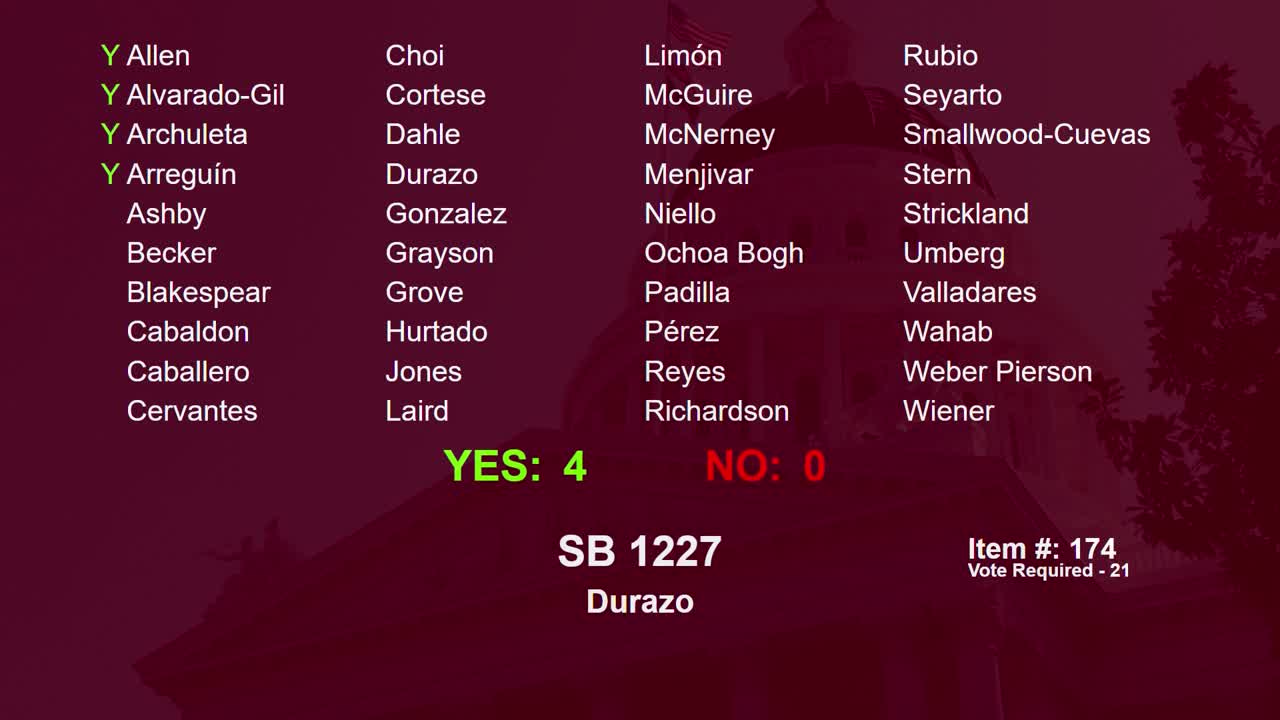
| May 19, 2026 | Read. Adopted. (Ayes 38. Noes 0. Page 4353.) Ordered to the Assembly. |
| May 19, 2026 | Read. Adopted. (Ayes 38. Noes 0.) Ordered to the Assembly. |
| Apr 22, 2026 | From committee: Be adopted. Ordered to third reading. (Ayes 6. Noes 0. Page 4010.) (April 22). |
| Apr 22, 2026 | From committee: Be adopted. Ordered to third reading. (Ayes 6. Noes 0.) (April 22). |
| Apr 17, 2026 | Set for hearing April 22. |
| Apr 8, 2026 | Re-referred to Com. on E.Q. |
| Mar 24, 2026 | Introduced. Referred to Com. on RLS. |
|
Date
|
Description
|
Location
|
Votes
|
|
|---|---|---|---|---|
| Jun 22, 2026 | SJR 13 Padilla Consent Calendar Second Day Regular Session | Assembly Floor |
Passed |
|
| Jun 16, 2026 | Be adopted. To Consent Calendar. | Assembly Standing Committee on Environmental Safety and Toxic Materials |
Passed |
|
| May 19, 2026 | Senate 3rd Reading SJR13 Padilla et al. | Senate Floor |
Passed |
|
| Apr 22, 2026 | Be adopted. Ordered to third reading | Senate Standing Committee on Environmental Quality |
Passed |
This list shows positions taken on this bill by organizations on the date displayed, which is linked to the original source.
Positions by individuals are not included.
|
Organization
|
Position
|
Date
|
|---|---|---|
| Alianza Coachella Valley | ** Support | |
| Boys & Girls Club of South County | ** Support | |
| California Outdoor Recreation Partnership | ** Support | |
| Coastal Defenders | ** Support | |
| Environmental Center of San Diego | ** Support | |
| Imperial Valley Equity & Justice Coalition | ** Support | |
| la Cooperativa Campesina de California | ** Support | |
| Latino Outdoors | ** Support | |
| League of Women Voters of San Diego | ** Support | |
| Los Amigos De LA Comunidad, INC. | ** Support | |
| Outdoor Outreach | ** Support | |
| Project Kolika | ** Support | |
| San Diego Bird Alliance | ** Support | |
| San Diego State University | ** Support | |
| SanDiego350 | ** Support | |
| Sierra Club | ** Support | |
| Sierra Service Project | ** Support | |
| Stop the Sewage | ** Support | |
| Surfrider Foundation San Diego Chapter | ** Support | |
| Tijuana River Coalition | ** Support | |
| Tijuana River Coaliton | ** Support | |
| Tribal Sacred Waters, INC | ** Support | |
| Un Mar De Colores | ** Support | |
| Wildcoast | ** Support | |
| YMCA of San Diego County | ** Support | |
| Youth Will | ** Support |
Date of Hearing: June 16, 2026
ASSEMBLY COMMITTEE ON ENVIRONMENTAL SAFETY AND TOXIC MATERIALS
Damon Connolly, Chair
SBPCA Bill Id:SJR 13
Author:(Padilla) – As Introduced Ver:March 24, 2026
SENATE VOTE: 38-0
SUBJECT: Transboundary flow pollution: United States-Mexico-Canada Agreement
SUMMARY: Makes a number of declarations regarding the origins and impacts of transboundary pollution flows from Mexico into California via the Tijuana and New Rivers; urges the United States (U.S.) to adopt, at an upcoming review of the United States-Mexico-Canada Agreement (USMCA), commitments to eliminate chronic transboundary sewage discharges, and resolves that the U.S. commit to automatic nonrenewal of the USMCA if these commitments are not established. Specifically, this bill:
- Makes the following declarations:
- Following adoption of the North American Free Trade Agreement (NAFTA), trade between California and Mexico grew substantially, spurring the rapid expansion of manufacturing facilities in northern Mexico;
- The rapid concentration of industrial and residential activity in northern Mexico has placed increasing demands on wastewater, stormwater, and environmental infrastructure that was not designed to handle the scale of development and waste generated, contributing to pollution flows into the Tijuana River Valley and New River;
- Transboundary pollution flows have forced prolonged beach closures in San Diego County, harmed local tourism and small businesses, jeopardized the health of residents in border communities, and disrupted United States Navy training operations;
- Border communities, disproportionately composed of working-class communities and communities of color, bear the brunt of contamination, raising serious environmental justice concerns;
- The USMCA was negotiated to update and modernize the trade framework established under NAFTA, including provisions related to environmental protection and cross-border cooperation;
- Despite these commitments, transboundary sewage discharges into the Tijuana River watershed have continued at significant levels, demonstrating that existing enforcement mechanisms and infrastructure have failed to protect California communities; and,
- The USMCA includes a six-year joint review mechanism, and the first review is scheduled to occur in 2026, presenting an opportunity to evaluate environmental performance and ensure that transboundary pollution obligations are being enforced.
- Resolves that the Legislature urges the U.S., at the 2026 USMCA joint review, to secure and publicly adopt measurable and sustained commitments from the parties to eliminate chronic transboundary sewage discharges into the Tijuana River watershed and the flow of untreated sewage, industrial effluent, and toxic pollutants through the New River.
- Resolves that measurable and sustained commitments should include, at a minimum, specific numeric discharge-reduction benchmarks for both the Tijuana River watershed and the New River, investment into and enforceable timelines for completion of wastewater infrastructure projects, and annual public reporting on compliance.
- Resolves that the U.S. commit to automatic nonrenewal of the USMCA, should there be a failure of establishing commitments, benchmarks, and timelines.
EXISTING LAW:
- Approves and implements the USMCA between the U.S., the United Mexican States, and Canada. (19 United States Code (USC) § 4501, et seq.)
- Requires the U.S. Environmental Protection Agency (US EPA) to carry out the planning, design, construction, operation, and maintenance of high-priority treatment works in the portion of the Tijuana River watershed that is in the U.S., to treat wastewater, nonpoint sources of pollution, and related matters resulting from international transboundary water flows originating in Mexico. (19 USC § 4731)
- Requires—upon an appropriation of funds from the Legislature—the California Environmental Protection Agency (CalEPA) and the California Natural Resources Agency, including their subsidiary agencies, to collaborate to create a Tijuana River Valley Watershed Action Plan, known as the Tijuana River Plan, as specified. (Public Resources Code § 71107)
- Establishes the California-Mexico Border Relations Council to, among other duties, coordinate activities of state agencies related to cross-border programs, initiatives, projects, and partnerships, to improve the effectiveness of state and local efforts that are of concern between California and Mexico. (Government Code § 99522-99523)
FISCAL EFFECT: Unknown.
COMMENTS:
Need for the bill: According to the author:
"Trade agreements must not ignore environmental harm and the real public threat increased economic activity has on our border communities. Ensuring renewal of the USMCA must depend on measurable progress. Our federal government must secure real and meaningful protection for our community. By halting all discussion of extensions until we have clear commitments from Mexico to address this crisis, we can finally take real steps towards ending this generations long injustice. Economic prosperity cannot come at the expense of California's environment and communities' health."
The Tijuana River watershed: According to the San Diego Regional Water Quality Control Board, the Tijuana River watershed is a large binational watershed of approximately 1,750 square miles that lies across the California-Mexico border. A large portion of the watershed (approximately 75%) is within Mexico and encompasses the densely urbanized city of Tijuana, Mexico. The watershed drains into the Tijuana River Estuary in the U.S. and ultimately to the Pacific Ocean in the city of Imperial Beach.
Land uses in the watershed are diverse, from largely undeveloped open space in the upper watershed to highly-urbanized, residential, commercial, military, and industrial areas in the lower watershed. Over the past 30 years, Tijuana, Mexico has experienced tremendous population and industrial growth, along with rapid urbanization, which has strained the aging Mexican sewage infrastructure. Emerging sewage infrastructure inadequacies have created recurring pollution problems on both sides of the California-Mexico border. At times, sewage generated on the Mexico side of the watershed travels north into California through the Tijuana River or other cross-border canyon tributaries in the Tijuana River Valley. The sewage flows degrade water quality in the Tijuana River Estuary and adjacent coastal waters, and also pose a significant public health risk to residents and visitors along both sides of the border.
While significant improvements in wastewater treatment have, in recent years, improved water quality on both sides of the border, stormwater flows continue to bring substantial amounts of sediment, trash, and other contaminants into the valley, which impairs water quality, jeopardizes public health, threatens life and property from flooding, degrades valuable habitats, and impacts recreational opportunities for residents and visitors.
The New River Waterway: The New River is a transboundary river that flows from Mexicali, Mexico into the City of Calexico in California and drains into the Salton Sea. According to the Colorado River Basin Regional Water Quality Control Board, although discharges from U.S. sources are treated and disinfected to meet state and federal standards, the water entering the U.S. contains raw sewage; industrial, domestic, and agricultural wastes; trash; and other solid pollutants, owing mostly to Mexicali’s overburdened and deteriorating infrastructure. Bacteria from fecal matter, present in raw sewage flowing from Mexicali, accounts for the highest concentration of waste. This results in a serious threat to public health and ecosystems, and hinders economic development in the Imperial Valley. The U.S. and Mexico acknowledged the New River's poor quality as far back as the 1940s, but took little action until 1980, and only after the situation had worsened due to a population boom and industrial development in Mexicali.
Human health implications of transboundary pollution. The "Clean Water Report," released by the Surfrider Foundation in 2024, details findings from tests conducted on water samples collected from coastal sites across the U.S. According to the report, Imperial Beach in the San Diego region is one among ten beaches in the country that consistently have high bacteria levels, with 100% of samples collected from Imperial Beach in 2023 failing to meet state health standards for bacteria in recreational waters. The report also states:
"Every day, millions of gallons of contaminated water carrying stormwater runoff, raw sewage, harmful chemicals, and trash traverse the U.S./Mexico border through the Tijuana River Watershed and flow out into the Pacific Ocean in Imperial Beach. Additionally, the San Antonio de los Buenos Wastewater Treatment Plant just south of the border discharges approximately 35 million gallons of untreated sewage into the Pacific Ocean each day. Currents associated with the Southern California Bight carry this pollution up the coast during the summer, causing widespread illnesses on both sides of the border and forcing beach closures throughout South San Diego County…This public health and environmental justice emergency has been going on for decades and it’s only getting worse, especially with climate change-related storm events further stressing the already inadequate and failing regional wastewater infrastructure."
According to the Imperial County Public Health Department, the New River has been characterized as one of the most polluted rivers in the U.S. and has, for decades, constituted one of the largest public health issues in the region. Between 1998 and 2010, the federal Agency for Toxic Substances and Disease Registry entered into cooperative agreements with the state of California to investigate the human health implications of pollution in the New River. The resulting series of investigations led the California Department of Public Health to recommend that the public avoid contact with and ingestion of New River water sediments and limit consumption of sport fish from the New River, largely due to the presence of fecal bacteria and other pathogens.
California State Legislature’s work on border river water quality: Over the last twenty years, the California State Legislature has made multiple investments, passed legislation, and held several informational hearings focused on highlighting and addressing the serious pollution and public health issues associated with the New River and Tijuana River watershed. Despite these efforts, major challenges persist, in large part because much of the pollution originates across the international border, in Mexico. State investments since 2017 have included:
- 2017: Reappropriation of $2.1 million from the 2014 California Wildlife, Coastal, and Park Land Conservation Fund of 1988 for acquisition of lands in the Tijuana River Valley;
- 2019: Appropriation of $15 million for Tijuana River pollution control;
- 2020: Appropriation of $18 million from the General Fund and $10 million from Proposition 68 water bond funds for the New River Project;
- 2021: Appropriation of $20 million to improve water quality in border rivers; and,
- 2022: Appropriation of $15 million for border rivers cleanup.
In June 2026, the California State Legislature included in its proposed budget plan a $1 million ongoing appropriation to establish a Border Water Quality Protection Unit (Unit) at the San Diego Regional Water Quality Control Board. The Unit would address cross-border pollution from Mexico and support the protection of human health, water quality, and beneficial uses associated with the Tijuana River and Estuary, and near-shore Pacific Ocean.
The USMCA: The USMCA is a free trade agreement that outlines rules for duty-free trade and establishes commitments on non-tariff issues, including labor, environment, investment, digital trade, and services. In 2020, the USMCA replaced NAFTA, which was established in 1994 to lower trade barriers and accelerate U.S. trade with Mexico and Canada. Chapter 24 of the USMCA aims to promote high levels of environmental protection and effective enforcement of environmental laws to address trade-related environmental issues. In alignment with these objectives, the USMCA requires the US EPA to carry out the planning, design, construction, operation, and maintenance of high priority treatment works to treat transboundary pollution in the Tijuana River watershed.
The USMCA is set to terminate in 2036, unless each participating party confirms that it wishes to continue the agreement for a new 16-year term, in accordance with specified procedures. As part of the procedure, the Free Trade Commission (FTC), composed of government representatives of each party, is required to meet on the sixth anniversary of the establishment of the USMCA to conduct a "joint review" of the operation of the USMCA and to decide on any recommendations for action. The first joint review is scheduled to take place on July 1, 2026. Parties may provide recommendations to the FTC at least one month before the joint review takes place. Additionally, each party is to confirm if it wishes to extend the USMCA for another 16-year period. If extended, another joint review will take place six years after the extension is granted. If any party does not confirm its wish to extend the USMCA, then the FTC is required to conduct a joint review every year for the remainder of the 16-year term of the USMCA.
This resolution: SJR 13 makes a number of declarations regarding the origins and impacts of transboundary pollution flows into California and urges the U.S. to adopt, at an upcoming review of the USMCA, commitments to eliminate chronic transboundary sewage discharges. If these commitments are not established, SJR 13 resolves that the U.S. commit to automatic nonrenewal of the USMCA.
Arguments in support: According to the Tijuana River Coalition, comprised of more than 65 nonprofit and community-based organizations:
"Since the adoption of NAFTA in 1994, cross-border trade between California and Mexico has grown substantially, including transportation equipment, electronics, agricultural products, and manufactured goods. This rapid economic expansion has outpaced existing wastewater, stormwater, and environmental infrastructure, resulting in chronic pollution in the Tijuana River Valley and the New River through regular contaminated discharges. These discharges threaten public health in border communities, raise serious environmental justice concerns for working-class families and communities of color, and leave waterways heavily contaminated, with fecal coliform levels in the New River nearly 800 times the federal legal limit…
Trade agreements must not ignore environmental harm or the real public threats that increased economic activity poses to border communities. SJR 13 would call for any renewal of the USMCA to be contingent on measurable progress in addressing transboundary pollution, ensuring that economic integration under the agreement is matched by protections for California communities. By linking renewal to numeric benchmarks, infrastructure timelines, and public reporting, SJR 13 would make clear that continued trade growth under the USMCA should not come at the expense of public health, environmental quality, or community wellbeing.
Investment in water and wastewater infrastructure is not merely an environmental or public health issue; it is a strategic economic and regional security imperative."
Arguments in opposition: None on file.
Related legislation:
- SJR 18 (Padilla, Chapter 175, Statutes of 2024). Makes declarations regarding health impacts associated with pollution in the Tijuana River, and requests that the federal Centers for Disease Control and Prevention investigate health concerns raised by this pollution.
- AJR 12 (Alvarez, Chapter 201, Statutes of 2024). Urges the U.S. Congress and President Joseph R. Biden to fully fund the US EPA's Comprehensive Infrastructure Solution for the Tijuana River due to ongoing impacts to public health, the environment, and the local economy caused by cross-border pollution; urges President Joseph R. Biden to declare a national emergency due to those ongoing impacts; and urges President Joseph R. Biden and the U.S. Congress to provide funding to address ongoing cross-border pollution impacting the New River.
- SB 1178 (Padilla, 2024). Would have required the State Water Resources Control Board (State Water Board) to establish regulations for compliance entities, as defined, that govern annual reporting of waste discharges, as specified; would have required compliance entities to place a warning label on products sold in California; would have established the California Water Quality and Public Health Impact Fund (Fund); and would have required administrative penalties authorized under SB 1178 to be deposited into the Fund. This bill was held on the suspense file in the Assembly Appropriations Committee.
- AB 1567 (E. Garcia, 2023). Would have enacted the Safe Drinking Water, Wildfire Prevention, Drought Preparation, Flood Protection, Extreme Heat Mitigation, and Workforce Development Bond Act of 2024, which would have authorized the issuance of $15.1 billion in bonds to finance safe drinking water, wildfire prevention, drought preparation, flood protection, extreme heat mitigation, and workforce development program projects. At least $50 million each would have been made available for the Tijuana River Border Pollution Control Project and the New River Water Quality, Public Health, and River Parkway Development Program. This bill died in the Senate Natural Resources and Water Committee.
- AB 1597 (Alvarez, 2023). Would have allowed funds, upon appropriation, to be made available to CalEPA for the North American Development Bank, to fund loans, grants, and direct expenditures for projects addressing water quality issues in California-Mexico cross-border watersheds, as provided. This bill was held on the suspense file in the Senate Appropriations Committee.
- SB 253 (Wiener, Chapter 382, Statutes of 2023). Requires any partnership, corporation, limited liability company, or other U.S. business entity with total annual revenues in excess of $1 billion and that does business in California to publicly report their annual greenhouse gas emissions, as specified by the California Air Resources Board.
- AB 2248 (E. Garcia, Ward, 2022). Would have provided $100 million to the State Water Board from the state's General Fund, upon appropriation by the Legislature, for grants and direct expenditures to address water quality problems arising in California-Mexico cross-border rivers. This bill was vetoed by Governor Gavin Newsom.
- SJR 22 (Hueso, Chapter 241, Statutes of 2018). Urges the federal government and the U.S. Section of the International Boundary and Water Commission to take immediate action to adequately address cross-border pollution in the Tijuana River Valley.
- SB 507 (Hueso, Chapter 542, Statutes of 2017). Authorizes funds granted to the County of San Diego in the 2014 Budget Act to be available for development, improvement, rehabilitation, protection, restoration, and studies of natural and park lands in the Tijuana River Valley.
- AB 1059 (E. Garcia, Chapter 584, Statutes of 2015). Requires the Office of Environmental Health Hazard Assessment to update its CalEnviroScreen 2.0 tool by using any relevant environmental data relating to known impacts of air pollution, water pollution, and toxic sites on the environmental quality of the communities in the California-Mexico border region.
- AB 965 (E. Garcia, Chapter 668, Statutes of 2015). Requires the California-Mexico Border Relations Council to establish the New River Water Quality, Public Health, and River Parkway Development Program to coordinate funding for, and the implementation of, recommendations from the New River Strategic Plan. Provides the Border Relations Council with a consultative and coordinating role on the development, implementation, and funding of specified border-related projects.
- SCR 90 (Hueso, Chapter 80, Statutes of 2014). Declares the Legislature’s intent to work with the Tijuana River Valley Recovery Team to take various actions to protect and preserve the Tijuana River Valley; encourage collaboration with the team to protect and enhance natural resources through improved management of sediment and trash, flood control, ecosystem management, and recreation and education; and promote bilateral ties with Mexico.
- AB 1079 (V. M. Pérez, Chapter 382, Statutes of 2009). Required the Border Relations Council to create a strategic plan to study, monitor, remediate, and enhance the New River’s water quality to protect human health and develop a river parkway suitable for public use and enjoyment.
- AB 3021 (Núñez, Chapter 621, Statutes of 2006). Establishes the Border Relations Council to serve as the central organizing body for overseeing and collaborating on California- Mexico border issues.
REGISTERED SUPPORT / OPPOSITION:
Support
Alianza Coachella Valley
Boys & Girls Club of South County
California Outdoor Recreation Partnership
Coastal Defenders
Environmental Center of San Diego
Imperial Valley Equity & Justice Coalition
LA Cooperativa Campesina De California
Latino Outdoors
League of Women Voters of San Diego
Los Amigos de la Comunidad, INC.
Outdoor Outreach
Project Kolika
San Diego Bird Alliance
San Diego State University
SanDiego350
Sierra Club
Sierra Service Project
Stop the Sewage
Surfrider Foundation San Diego Chapter
Tijuana River Coalition
Tribal Sacred Waters, INC
Un Mar De Colores
WildCoast
YMCA of San Diego County
Youth Will
Opposition
None on file.
Analysis Prepared by: Naomi Ondrasek / E.S. & T.M. / (916) 319-3965
SENATE RULES COMMITTEE Office of Senate Floor Analyses (916) 651-4171 | SJR 13 |
THIRD READING
Bill No: SJR 13
Author: Padilla (D), et al.
Introduced: 3/24/26
Vote: 21
SENATE ENVIRONMENTAL QUALITY COMMITTEE: 6-0, 4/22/26
AYES: Blakespear, Valladares, Allen, Gonzalez, Hurtado, Menjivar
NO VOTE RECORDED: Dahle
SUBJECT: Transboundary flow pollution: United States-Mexico-Canada Agreement
SOURCE: Author
DIGEST:
This resolution urges the United States to secure specified commitments regarding transboundary pollution at the 2026 United States-Mexico-Canada Agreement (USMCA) joint review.
ANALYSIS:
Existing federal law:
- Authorizes the President of the United States to enter into a trade agreement, as specified, with foreign countries providing for the reduction or elimination of a duty, restriction, barrier, or other distortion, as specified, and the prohibition or limitation on the imposition of such barrier or other distortion. (19 United States Code (USC) § 4202(b))
- Approves and implements the USMCA between the United States, the United Mexican States, and Canada. (19 USC § 4501 et seq.)
- Requires the U.S. Environmental Protection Agency (U.S. EPA) to carry out the planning, design, construction, operation, and maintenance of high-priority treatment works in the portion of the Tijuana River watershed that is in the United States to treat wastewater, nonpoint sources of pollution, and related matters resulting from international transboundary water flows originating in Mexico. (19 USC § 4731)
This Resolution:
- Makes the following findings:
- The North American Free Trade Agreement (NAFTA) marked a major shift in trade and economic engagement among the United States, Mexico, and Canada, that led to rapid expansion of manufacturing facilities in northern Mexico.
- The rapid concentration of industrial and residential activities in northern Mexico placed increasing demands on wastewater, stormwater, and environmental infrastructure, and contributed to transboundary pollution flows into the Tijuana River Valley and New River.
- The transboundary pollution flows have forced beach closures, harmed local tourism and small businesses, jeopardized the health of residents, and disrupted United States Navy training operations in the County of San Diego.
- The contamination from transboundary pollution raises serious environmental justice concerns, as pollution impacts border communities that are disproportionately composed of working-class communities and communities of color.
- The USMCA was negotiated to update and modernize the trade framework under NAFTA, including provisions related to environmental protection and cross-border cooperation.
- Despite commitments under the USMCA, transboundary pollution has continued, with more than 100 billion gallons entering the United States in the last five years.
- The USMCA includes a six-year joint review mechanism, with the first review scheduled in 2026, presenting an opportunity to ensure that existing commitments resolving transboundary pollution are fully realized.
- The transboundary sewage crisis undermines the environmental integrity and enforceability of the USMCA and threatens the health, economic stability, and environmental well-being of Californians.
- The Trump administration signed a Memorandum of Understanding with Mexico in 2025, concluded International Boundary and Water Commission Minute 333, and pledged a “100% solution” to stop transboundary pollution.
- The USMCA presents an opportunity for the Trump administration to secure that solution through enforceable commitments.
- Resolves, on behalf of the Senate and the Assembly of the State of California, jointly, that:
- The Legislature urges the United States to secure and publicly adopt measurable and sustained commitments to eliminate transboundary sewage discharges into the Tijuana River watershed and New River at the 2026 USMCA joint review.
- The measurable and sustained commitments secured and adopted at the 2026 USMCA joint review include at minimum:
- Specific numeric discharge-reduction benchmarks;
- Investment into—and enforceable timelines for—completion of wastewater infrastructure projects; and
- Annual public reporting on compliance.
- The United States commit to automatic nonrenewal of the USMCA if there is a failure of establishing commitments, benchmarks, and timelines.
Background
- United States-Mexico-Canada Agreement (USMCA). The USMCA is a free trade agreement that outlines rules for duty-free trade and establishes commitments on non-tariff issues, including labor, environment, investment, digital trade, and services. USMCA created a more balanced, reciprocal trade, benefitting American workers, farmers and agriculture, and the economy through new protections.[1] The Agreement became effective in July 2020 and replaced the North American Free Trade Agreement (NAFTA), which was established in 1994. NAFTA was a comprehensive free trade agreement that lowered trade barriers and accelerated trade with Mexico and Canada.[2]
- Addressing transboundary pollution. For decades, millions of gallons of untreated sewage and stormwater runoff have frequently polluted the Tijuana River Valley and the New River near the United States-Mexico border. Rapid population growth, industrial development, and urbanization driven by foreign investment in Mexico, which was exacerbated by the establishment of NAFTA, have overwhelmed aging and underfunded sewage infrastructure leading to structural failures. These failures and the limited capacity of the systems have resulted in cross-border, or transboundary flows consisting of raw sewage, industrial chemicals, stormwater, pesticides, and trash that spill into California’s coastal waters, decimate the environment, disrupt local and regional economies, and impact the public health of border communities. Over the years, there have been binational efforts to implement infrastructure improvements.
Chapter 24 of USMCA aimed to promote high levels of environmental protection and effective enforcement of environmental laws in addressing trade-related environmental issues.[3] In alignment with these objectives, the provisions of Section 821 of USMCA require the Administrator of the U.S. EPA to carry out the planning, design, construction, operation, and maintenance of high priority treatment works to treat transboundary pollution in the Tijuana River watershed within the United States.[4]
Congress has appropriated hundreds of millions of dollars through the provisions of USMCA Section 821 to fund and administer the Border Water Infrastructure Program (BWIP), which facilitates infrastructure implementation along the border to address drinking water and sanitation issues.4,[5],[6],[7],[8]
In 2021, the U.S. EPA developed a Comprehensive Infrastructure Solution, focused primarily on the Tijuana River Valley, that would guide efforts for years to come. This included a suite of binational infrastructure improvement projects that could significantly improve the conditions in the Tijuana River Valley. [9] In 2022, the U.S. EPA and its Mexican counterpart signed the Statement of Intent, which created a framework for implementing a Comprehensive Infrastructure Solution that specified near-term (2022-2027) and long-term projects, and identified resources.[10] The International Boundary and Water Commission, which has worked to address water quality and sanitation issues across the border since 1944, has issued a series of “Minutes” since its inception, outlining actions to meet their obligations. Most recently issued in December 2025, Minute 333 demonstrates a commitment to continue implementing the projects within the Comprehensive Infrastructure Solution and additional actions to mitigate the impacts of transboundary pollution. The Trump administration has also reaffirmed its commitments under previous Minutes and additional obligations through a July 2025 MOU with Mexico.
Throughout the implementation of the Comprehensive Infrastructure Solution, projects have experienced funding shortfalls and delays. However, both the United States and Mexico have continued to make progress and commit funding to complete the projects that would help resolve the severity of the transboundary pollution. Nevertheless, it is a long road ahead.
- USMCA joint review. As outlined in Article 34.7 of the USMCA, the Agreement is set to terminate in 2036, unless each participating party confirms that it wishes to continue the Agreement for a new 16-year term, in accordance with specified procedures.[11] As part of the procedure, the Free Trade Commission (FTC), composed of government representatives of each party, is required to meet on the sixth anniversary of the establishment of the USMCA to conduct a “joint review” of the operation of the USMCA and decide on any recommendations for action.
The first joint review is scheduled to take place on July 1, 2026. Parties may provide recommendations for the FTC to take action at least one month before the joint review takes place. Additionally, each party is to confirm if it wishes to extend the USMCA for another 16-year period, and if extended, another joint review will take place six years after the extension is granted. If any party does not confirm its wish to extend the USMCA, then the FTC is required to conduct a joint review every year for the remainder of the 16-year term of the Agreement.11,[12]
The establishment of the joint review provision was controversial. Members of Congress were concerned that conducting joint reviews would create uncertainty that could discourage private investment and harm U.S. businesses. Other Members argued that the joint review provision would allow Congress to exert greater oversight with periodic review.12
This resolution urges the United States to secure and adopt measurable and enforceable commitments within USMCA to eliminate the flow of transboundary sewage into the Tijuana and New River watersheds at the joint review. The proposed revisions to the USMCA outlined in this resolution are likely a few of many desired revisions to the USMCA, and the joint review does provide an opportunity for the United States to revise the USMCA in negotiation with the other parties and for Congress to provide input.
Comments
- Purpose of Bill. According to the author, “Trade agreements must not ignore environmental harm and the real public threat increased economic activity has on our border communities. Ensuring renewal of the USMCA must depend on measurable progress. Our federal government must secure real and meaningful protection for our community. By halting all discussion of extensions until we have clear commitments from Mexico to address this crisis, we can finally take real steps towards ending this generations long injustice. Economic prosperity cannot come at the expense of California’s environment and communities’ health.”
- Time is of the essence. As described in the background section above, the first 6-year joint review is scheduled for July 1, 2026. The United States will need to provide recommendations to the FTC at least one month prior to this date for the recommendations to be considered. Considering the steps of the legislative process this resolution must still go through, it would likely not be transmitted in time to be formally considered by any of its federal recipients ahead of the joint review.
Even if this resolution is not formally adopted in time, federal advocacy informed by its contents can still happen prior to these deadlines. Regardless, the resolution may still have a tangible impact, as it is possible that a party to the USMCA may not decide to extend the USMCA. In that case, the next joint review would likely be scheduled for July 1, 2027, which would present another opportunity to more formally include the proposed commitments in the USMCA. Depending on the timing of this resolution and the actions taken at the 2026 joint review, the author may wish to consider amending the resolution accordingly.
- Adopting measurable commitments. This resolution urges the United States to ensure measurable commitments to eliminate transboundary sewage are part of the revisions made to the USMCA during the joint review. Some of the measurable commitments include, at minimum, specific numeric discharge-reduction benchmarks and enforceable timelines for completion of wastewater infrastructure projects. If these commitments are not adopted, the United States is urged to commit to automatic nonrenewal of the USMCA.
The request for these revisions merits careful consideration. If the commitments are considered unrealistic by the federal government, the Legislature risks denial of the request proposed by this resolution. For instance, adopting a specific numeric discharge-reduction benchmark could be considered challenging. The extent of discharge is dependent on the condition of the wastewater infrastructure, which is contingent on the progress made with the Comprehensive Infrastructure Solution as well as the ability to sufficiently perform operation and maintenance, all of which requires substantial amounts of funding. Targeted reductions could be estimated in broad ranges to account for this, but the benchmarks would also need to take into account local climate and weather patterns, which introduces a higher level of uncertainty. Heavy rain events tend to lead to 10’s of billions of gallons of transboundary pollution in a short period of time. Any numeric benchmark adopted may best be measured for dry-weather flows.
Timelines for infrastructure improvements may be a more reasonable commitment, but these timelines are already indicated in the Minutes issued by the IBWC and other previous agreements. And as with any capital improvement project, progress may be impeded by delays or unexpected funding constraints. This may present issues if these timelines are to be enforceable. What would the consequences be if a deadline isn’t met and to whom would they apply? If penalties were established, would they be established against a certain party in the Agreement or with other entities? Would there be implications for the other provisions of USMCA? What would be the broader implications of enforcement? The need for accountability is understandable, but the cost at which that accountability comes needs to be understood.
Future renewal of the USMCA could be called into question if the federal government decided to pursue these measurable commitments as proposed and they could not be achieved for any reason. This has broader implications beyond these two crises, which signals how high this issue should be prioritized, yet it may not be. But it might also be of consideration to ensure such proposed commitments could ultimately be agreed on first domestically, then internationally.
Related/Prior Legislation
AJR 16 (Alvarez, 2025) urges Congress and the United States President to fully fund the Comprehensive Infrastructure Solution and take additional specified actions to address ongoing transboundary pollution. This bill is awaiting hearing in this committee.
SJR 18 (Padilla, Chapter 175, Statutes of 2024) made a number of declarations regarding health impacts associated with pollution in the Tijuana River, and requests that the federal Centers for Disease Control and Prevention (CDC) investigate health concerns raised by this pollution.
AJR 12 (Alvarez, Chapter 201, Statutes of 2024) urged Congress and the United States President to fully fund the Comprehensive Infrastructure Solution and address ongoing transboundary pollution impacting the New River and urged the United States President to declare a national emergency due to the impacts of transboundary pollution.
SB 867 (Allen, Chapter 83, Statutes of 2024) enacted the Safe Drinking Water, Wildfire Prevention, Drought Preparedness, and Clean Air Bond Act of 2024 authorizing the issuance of bonds in the amount of $10 billion to finance projects including, but not limited to drought, flood, and water resilience, coastal resilience, park creation, outdoor access, and clean air programs.
AB 1597 (Alvarez, 2023) would have authorized funds made available to the California Environmental Protection Agency (CalEPA) for North American Development Bank for loans, grants, and expenditures to address water quality problems arising in the California-Mexico cross-border watersheds. This bill was placed on the suspense file in the Senate Appropriations Committee.
SJR 22 (Hueso, Chapter 241, Statutes of 2018). Urges the federal government and the U.S. Section of the IBWC to take immediate action to adequately address cross-border pollution in the Tijuana River Valley.
FISCAL EFFECT: Appropriation: No Fiscal Com.: No Local: No
SUPPORT: (Verified 4/22/26)
Alianza Coachella Valley
Boys & Girls Club of South County
California Outdoor Recreation Partnership
Coastal Defenders
Environmental Center of San Diego
Imperial Valley Equity & Justice Coalition
LA Cooperativa Campesina De California
Latino Outdoors
Los Amigos De LA Comunidad, INC.
Outdoor Outreach
Project Kolika
San Diego State University
Sandiego350
Sierra Club
Sierra Service Project
Stop the Sewage
Surfrider Foundation San Diego Chapter
Tijuana River Coaliton
Un Mar De Colores
Wildcoast
YMCA of San Diego County
OPPOSITION: (Verified 4/22/26)
None received
Prepared by: Taylor McKie / E.Q. / (916) 651-4108
4/22/26 16:26:28
**** END ****
Office of the United States Trade Representative. (n.d.). United States-Mexico-Canada Agreement. ↑
Congressional Research Service. (2017). The North American Free Trade Agreement (NAFTA). ↑
United States Trade Representative. (2020). USMCA Chapter 24: Environment. ↑
U.S. Environmental Protection Agency. (2025). Tijuana River Watershed Provisions in United States-Mexico-Canada Agreement (USMCA). ↑
Jennewein, C. (2019). New USMCA Trade Deal Includes $300 Million to Stop Tijuana River Pollution. ↑
Department of State, Foreign Operations, and Related Programs Appropriations Act, H.R.4665, 118th Congress 2023-2024 Session, (2023). ↑
Water Resources Development Act, H.R.8812, 118th Congress 2023-2024 Session. ↑
American Relief Act, H.R.10545, 118th Congress 2023-2024 Session. ↑
U.S. Environmental Protection Agency. (2021) EPA Announces Holistic Approach to Address Water Pollution from the Tijuana River Watershed. ↑
U.S. Environmental Protection Agency and Comisión Nacional del Agua. (2022). Statement of Intent. ↑
United States Trade Representative. (2020). USMCA Chapter 34: Final Provisions. ↑
Congressional Research Service. (2026). USMCA Joint Review: Process and Role of Congress. ↑
SENATE COMMITTEE ON ENVIRONMENTAL QUALITY
Senator Blakespear, Chair
2025 - 2026 Regular
Bill No: SJR 13
Author: | Padilla | ||
Version: | 3/24/2026 | Hearing Date: | 4/22/2026 |
Urgency: |
| Fiscal: | No |
Consultant: | Taylor McKie | ||
SUBJECT: Transboundary flow pollution: United States-Mexico-Canada Agreement
DIGEST: This resolution urges the United States to secure specified commitments regarding transboundary pollution at the 2026 United States-Mexico-Canada Agreement (USMCA) joint review.
ANALYSIS:
Existing federal law:
- Authorizes the President of the United States to enter into a trade agreement, as specified, with foreign countries providing for the reduction or elimination of a duty, restriction, barrier, or other distortion, as specified, and the prohibition or limitation on the imposition of such barrier or other distortion. (19 USC § 4202(b))
- Approves and implements the USMCA between the United States, the United Mexican States, and Canada. (19 USC § 4501 et seq.)
- Requires the U.S. Environmental Protection Agency (U.S. EPA) to carry out the planning, design, construction, operation, and maintenance of high-priority treatment works in the portion of the Tijuana River watershed that is in the United States to treat wastewater, nonpoint sources of pollution, and related matters resulting from international transboundary water flows originating in Mexico. (19 USC § 4731)
This Resolution:
- Makes the following findings:
- The North American Free Trade Agreement (NAFTA) marked a major shift in trade and economic engagement among the United States, Mexico, and Canada, that led to rapid expansion of manufacturing facilities in northern Mexico.
- The rapid concentration of industrial and residential activities in northern Mexico placed increasing demands on wastewater, stormwater, and environmental infrastructure, and contributed to transboundary pollution flows into the Tijuana River Valley and New River.
- The transboundary pollution flows have forced beach closures, harmed local tourism and small businesses, jeopardized the health of residents, and disrupted United States Navy training operations in the County of San Diego.
- The contamination from transboundary pollution raises serious environmental justice concerns, as pollution impacts border communities that are disproportionately composed of working-class communities and communities of color.
- The USMCA was negotiated to update and modernize the trade framework under NAFTA, including provisions related to environmental protection and cross-border cooperation.
- Despite commitments under the USMCA, transboundary pollution has continued, with more than 100 billion gallons entering the United States in the last five years.
- The USMCA includes a six-year joint review mechanism, with the first review scheduled in 2026, presenting an opportunity to ensure that existing commitments resolving transboundary pollution are fully realized.
- The transboundary sewage crisis undermines the environmental integrity and enforceability of the USMCA and threatens the health, economic stability, and environmental well-being of Californians.
- The Trump administration signed a Memorandum of Understanding with Mexico in 2025, concluded International Boundary and Water Commission Minute 333, and pledged a “100% solution” to stop transboundary pollution.
- The USMCA presents an opportunity for the Trump administration to secure that solution through enforceable commitments.
- Resolves, on behalf of the Senate and the Assembly of the State of California, jointly, that:
- The Legislature urges the United States to secure and publicly adopt measurable and sustained commitments to eliminate transboundary sewage discharges into the Tijuana River watershed and New River at the 2026 USMCA joint review.
- The measurable and sustained commitments secured and adopted at the 2026 USMCA joint review include at minimum:
- Specific numeric discharge-reduction benchmarks;
- Investment into—and enforceable timelines for—completion of wastewater infrastructure projects; and
- Annual public reporting on compliance.
- The United States commit to automatic nonrenewal of the USMCA if there is a failure of establishing commitments, benchmarks, and timelines.
- The Legislature urges the United States to secure and publicly adopt measurable and sustained commitments to eliminate transboundary sewage discharges into the Tijuana River watershed and New River at the 2026 USMCA joint review.
Background
- United States-Mexico-Canada Agreement (USMCA). The USMCA is a free trade agreement that outlines rules for duty-free trade and establishes commitments on non-tariff issues, including labor, environment, investment, digital trade, and services. USMCA created a more balanced, reciprocal trade, benefitting American workers, farmers and agriculture, and the economy through new protections.[1] The Agreement became effective in July 2020 and replaced the North American Free Trade Agreement (NAFTA), which was established in 1994. NAFTA was a comprehensive free trade agreement that lowered trade barriers and accelerated trade with Mexico and Canada.[2]
- Addressing transboundary pollution. For decades, millions of gallons of untreated sewage and stormwater runoff have frequently polluted the Tijuana River Valley and the New River near the United States-Mexico border. Rapid population growth, industrial development, and urbanization driven by foreign investment in Mexico, which was exacerbated by the establishment of NAFTA, have overwhelmed aging and underfunded sewage infrastructure leading to structural failures. These failures and the limited capacity of the systems have resulted in cross-border, or transboundary flows consisting of raw sewage, industrial chemicals, stormwater, pesticides, and trash that spill into California’s coastal waters, decimate the environment, disrupt local and regional economies, and impact the public health of border communities. Over the years, there have been binational efforts to implement infrastructure improvements.
Chapter 24 of USMCA aimed to promote high levels of environmental protection and effective enforcement of environmental laws in addressing trade-related environmental issues.[3] In alignment with these objectives, the provisions of Section 821 of USMCA require the Administrator of the U.S. EPA to carry out the planning, design, construction, operation, and maintenance of high priority treatment works to treat transboundary pollution in the Tijuana River watershed within the United States.[4]
Congress has appropriated hundreds of millions of dollars through the provisions of USMCA Section 821 to fund and administer the Border Water Infrastructure Program (BWIP), which facilitates infrastructure implementation along the border to address drinking water and sanitation issues.4,[5],[6],[7],[8]
In 2021, the U.S. EPA developed a Comprehensive Infrastructure Solution, focused primarily on the Tijuana River Valley, that would guide efforts for years to come. This included a suite of binational infrastructure improvement projects that could significantly improve the conditions in the Tijuana River Valley. [9] In 2022, the U.S. EPA and its Mexican counterpart signed the Statement of Intent, which created a framework for implementing a Comprehensive Infrastructure Solution that specified near-term (2022-2027) and long-term projects, and identified resources.[10] The International Boundary and Water Commission, which has worked to address water quality and sanitation issues across the border since 1944, has issued a series of “Minutes” since its inception, outlining actions to meet their obligations. Most recently issued in December 2025, Minute 333 demonstrates a commitment to continue implementing the projects within the Comprehensive Infrastructure Solution and additional actions to mitigate the impacts of transboundary pollution. The Trump administration has also reaffirmed its commitments under previous Minutes and additional obligations through a July 2025 MOU with Mexico.
Throughout the implementation of the Comprehensive Infrastructure Solution, projects have experienced funding shortfalls and delays. However, both the United States and Mexico have continued to make progress and commit funding to complete the projects that would help resolve the severity of the transboundary pollution. Nevertheless, it is a long road ahead.
- USMCA joint review. As outlined in Article 34.7 of the USMCA, the Agreement is set to terminate in 2036, unless each participating party confirms that it wishes to continue the Agreement for a new 16-year term, in accordance with specified procedures.[11] As part of the procedure, the Free Trade Commission (FTC), composed of government representatives of each party, is required to meet on the sixth anniversary of the establishment of the USMCA to conduct a “joint review” of the operation of the USMCA and decide on any recommendations for action.
The first joint review is scheduled to take place on July 1, 2026. Parties may provide recommendations for the FTC to take action at least one month before the joint review takes place. Additionally, each party is to confirm if it wishes to extend the USMCA for another 16-year period, and if extended, another joint review will take place six years after the extension is granted. If any party does not confirm its wish to extend the USMCA, then the FTC is required to conduct a joint review every year for the remainder of the 16-year term of the Agreement.11,[12]
The establishment of the joint review provision was controversial. Members of Congress were concerned that conducting joint reviews would create uncertainty that could discourage private investment and harm U.S. businesses. Other Members argued that the joint review provision would allow Congress to exert greater oversight with periodic review.12
This resolution urges the United States to secure and adopt measurable and enforceable commitments within USMCA to eliminate the flow of transboundary sewage into the Tijuana and New River watersheds at the joint review. The proposed revisions to the USMCA outlined in this resolution are likely a few of many desired revisions to the USMCA, and the joint review does provide an opportunity for the United States to revise the USMCA in negotiation with the other parties and for Congress to provide input.
Comments
- Purpose of Bill. According to the author, “Trade agreements must not ignore environmental harm and the real public threat increased economic activity has on our border communities. Ensuring renewal of the USMCA must depend on measurable progress. Our federal government must secure real and meaningful protection for our community. By halting all discussion of extensions until we have clear commitments from Mexico to address this crisis, we can finally take real steps towards ending this generations long injustice. Economic prosperity cannot come at the expense of California’s environment and communities’ health.”
- Time is of the essence. As described in the background section above, the first 6-year joint review is scheduled for July 1, 2026. The United States will need to provide recommendations to the FTC at least one month prior to this date for the recommendations to be considered. Considering the steps of the legislative process this resolution must still go through, it would likely not be transmitted in time to be formally considered by any of its federal recipients ahead of the joint review.
Even if this resolution is not formally adopted in time, federal advocacy informed by its contents can still happen prior to these deadlines. Regardless, the resolution may still have a tangible impact, as it is possible that a party to the USMCA may not decide to extend the USMCA. In that case, the next joint review would likely be scheduled for July 1, 2027, which would present another opportunity to more formally include the proposed commitments in the USMCA. Depending on the timing of this resolution and the actions taken at the 2026 joint review, the author may wish to consider amending the resolution accordingly.
- Adopting measurable commitments. This resolution urges the United States to ensure measurable commitments to eliminate transboundary sewage are part of the revisions made to the USMCA during the joint review. Some of the measurable commitments include, at minimum, specific numeric discharge-reduction benchmarks and enforceable timelines for completion of wastewater infrastructure projects. If these commitments are not adopted, the United States is urged to commit to automatic nonrenewal of the USMCA.
The request for these revisions merits careful consideration. If the commitments are considered unrealistic by the federal government, the Legislature risks denial of the request proposed by this resolution. For instance, adopting a specific numeric discharge-reduction benchmark could be considered challenging. The extent of discharge is dependent on the condition of the wastewater infrastructure, which is contingent on the progress made with the Comprehensive Infrastructure Solution as well as the ability to sufficiently perform operation and maintenance, all of which requires substantial amounts of funding. Targeted reductions could be estimated in broad ranges to account for this, but the benchmarks would also need to take into account local climate and weather patterns, which introduces a higher level of uncertainty. Heavy rain events tend to lead to 10’s of billions of gallons of transboundary pollution in a short period of time. Any numeric benchmark adopted may best be measured for dry-weather flows.
Timelines for infrastructure improvements may be a more reasonable commitment, but these timelines are already indicated in the Minutes issued by the IBWC and other previous agreements. And as with any capital improvement project, progress may be impeded by delays or unexpected funding constraints. This may present issues if these timelines are to be enforceable. What would the consequences be if a deadline isn’t met and to whom would they apply? If penalties were established, would they be established against a certain party in the Agreement or with other entities? Would there be implications for the other provisions of USMCA? What would be the broader implications of enforcement? The need for accountability is understandable, but the cost at which that accountability comes needs to be understood.
Future renewal of the USMCA could be called into question if the federal government decided to pursue these measurable commitments as proposed and they could not be achieved for any reason. This has broader implications beyond these two crises, which signals how high this issue should be prioritized, yet it may not be. But it might also be of consideration to ensure such proposed commitments could ultimately be agreed on first domestically, then internationally.
Related/Prior Legislation
AJR 16 (Alvarez, 2025) urges Congress and the United States President to fully fund the Comprehensive Infrastructure Solution and take additional specified actions to address ongoing transboundary pollution. This bill is awaiting hearing in this committee.
SJR 18 (Padilla, Chapter 175, Statutes of 2024) made a number of declarations regarding health impacts associated with pollution in the Tijuana River, and requests that the federal Centers for Disease Control and Prevention (CDC) investigate health concerns raised by this pollution.
AJR 12 (Alvarez, Chapter 201, Statutes of 2024) urged Congress and the United States President to fully fund the Comprehensive Infrastructure Solution and address ongoing transboundary pollution impacting the New River and urged the United States President to declare a national emergency due to the impacts of transboundary pollution.
SB 867 (Allen, Chapter 83, Statutes of 2024) enacted the Safe Drinking Water, Wildfire Prevention, Drought Preparedness, and Clean Air Bond Act of 2024 authorizing the issuance of bonds in the amount of $10 billion to finance projects including, but not limited to drought, flood, and water resilience, coastal resilience, park creation, outdoor access, and clean air programs.
AB 1597 (Alvarez, 2023) would have authorized funds made available to the California Environmental Protection Agency (CalEPA) for North American Development Bank for loans, grants, and expenditures to address water quality problems arising in the California-Mexico cross-border watersheds. This bill was placed on the suspense file in the Senate Appropriations Committee.
AB 2248 (Eduardo Garcia, 2022) would have made $100 million available from the General Fund to the State Water Board for grants and direct expenditures to address water quality problems arising in the California-Mexico cross-border rivers. This bill was vetoed by Governor Newsom.
SB 1301 (Hueso, Chapter 368, Statutes of 2020) required CalEPA and the California Natural Resources Agency to collaborate to create a Tijuana River Valley Watershed Action Plan to be reviewed and updated on a 3-year cycle.
SB 690 (Hueso, Chapter 381, Statutes of 2019) encouraged the State Coastal Conservancy to prioritize projects identified in feasibility studies conducted by the County of San Diego for the Tijuana River Valley when expending funds to address transboundary flows and pollution in the Tijuana River Valley.
SJR 22 (Hueso, Chapter 241, Statutes of 2018). Urges the federal government and the U.S. Section of the IBWC to take immediate action to adequately address cross-border pollution in the Tijuana River Valley.
AB 965 (Eduardo Garcia, Chapter 668, Statutes of 2015) established the New River Wate Quality, Public Health, and River Parkway Development Program to coordinate funding and implementation for environmental and health projects and purposes relating to the California-Mexico border region.
SOURCE:
Author
SUPPORT:
Alianza Coachella Valley
Boys & Girls Club of South County
California Outdoor Recreation Partnership
Coastal Defenders
Environmental Center of San Diego
Imperial Valley Equity & Justice Coalition
LA Cooperativa Campesina De California
Latino Outdoors
Los Amigos De LA Comunidad, INC.
Outdoor Outreach
Project Kolika
San Diego State University
Sandiego350
Sierra Club
Sierra Service Project
Surfrider Foundation San Diego Chapter
Tijuana River Coaliton
Un Mar De Colores
Wildcoast
YMCA of San Diego County
OPPOSITION:
None received
-- END --
Office of the United States Trade Representative. (n.d.). United States-Mexico-Canada Agreement. ↑
Congressional Research Service. (2017). The North American Free Trade Agreement (NAFTA). ↑
United States Trade Representative. (2020). USMCA Chapter 24: Environment. ↑
U.S. Environmental Protection Agency. (2025). Tijuana River Watershed Provisions in United States-Mexico-Canada Agreement (USMCA). ↑
Jennewein, C. (2019). New USMCA Trade Deal Includes $300 Million to Stop Tijuana River Pollution. ↑
Department of State, Foreign Operations, and Related Programs Appropriations Act, H.R.4665, 118th Congress 2023-2024 Session, (2023). ↑
Water Resources Development Act, H.R.8812, 118th Congress 2023-2024 Session. ↑
American Relief Act, H.R.10545, 118th Congress 2023-2024 Session. ↑
U.S. Environmental Protection Agency. (2021) EPA Announces Holistic Approach to Address Water Pollution from the Tijuana River Watershed. ↑
U.S. Environmental Protection Agency and Comisión Nacional del Agua. (2022). Statement of Intent. ↑
United States Trade Representative. (2020). USMCA Chapter 34: Final Provisions. ↑
Congressional Research Service. (2026). USMCA Joint Review: Process and Role of Congress. ↑
Discussed in Hearing
 1MIN
Senate Floor
 9MIN
Senate Standing Committee on Environmental Quality
 8SEC
Senate Standing Committee on Environmental Quality
Bill Author