SJR 14: World War II Nurses Congressional Gold Medal Act.
- Session Year: 2025-2026
- House: Senate
- Latest Version Date: 2026-08-11
Current Status:
Passed
(2026-08-11: Chaptered by Secretary of State. Res. Chapter 167, Statutes of 2026.)
Introduced
In Committee
Awaiting First Chamber Vote
Passed First Chamber
In Committee
Awaiting Second Chamber Vote
Passed Second Chamber
Enacted
This measure would urge the United States Congress to act favorably in regard to legislation, Senate Bill 2195 and House of Representatives Bill 4901 to award the Congressional Gold Medal to the World War II members of the United States Army Nurse Corps and the United States Navy Nurse Corps.
This measure would urge the United States Congress to act favorably in regard to legislation, Senate Bill 2195 and House of Representatives Bill 4901 to award the Congressional Gold Medal to the World War II members of the United States Army Nurse Corps and the United States Navy Nurse Corps.
This measure would urge the United States Congress to act favorably in regard to legislation, Senate Bill 2195 and House of Representatives Bill 4901 to award the Congressional Gold Medal to the World War II members of the United States Army Nurse Corps and the United States Navy Nurse Corps.
WHEREAS, During World War II, more than 59,000 United States Army nurses and 14,000 United States Navy nurses volunteered to serve, providing critical medical care in combat zones, aboard hospital ships, and on evacuation aircraft, often under fire and in extreme conditions; and
WHEREAS, These nurses endured bombings, sniper attacks, and captivity as prisoners of war, while continuing to care for wounded service members with skill and compassion, contributing to a historically low mortality rate among United States soldiers; and
WHEREAS, Their service extended beyond the battlefield to postwar humanitarian missions, including caring for victims of the atomic bombings in Hiroshima and preventing disease outbreaks in refugee camps across Europe; and
WHEREAS, The World War II nurses included women of diverse racial and ethnic backgrounds, such as African American, Chinese American, and Japanese American, and nurses from the United States territories of Guam, Hawaii, and the Commonwealth of the Philippines, who overcame discrimination to serve honorably and heroically; and
WHEREAS, Despite their valor, many of these nurses served without full military status, equal pay, or veteran benefits, and their contributions have not been adequately recognized; and
WHEREAS, Federal Senate Bill 2195, introduced by Senator Tammy Baldwin and cosponsored by Senators Steve Daines and Ben Ray Lujan, and House of Representatives Bill 4901, introduced by Representative Elise Stefanik and cosponsored by Representatives Christopher Deluzio and Jen Kiggans, seek to honor these nurses with a Congressional Gold Medal, one of the highest civilian honors in the United States; and
WHEREAS, The State of California is home to thousands of veterans and military families who honor the legacy of these nurses and advocate for recognition of their extraordinary service, sacrifice, and contributions to military medicine and humanitarian missions; now, therefore, be it
Resolved by the Senate and the Assembly of the State of California, jointly, That the Legislature urges each Senator and Representative from California in the Congress of the United States to quickly cosponsor S.2195 and H.R. 4901, and for the Congress of the United States to act favorably on legislation to award a Congressional Gold Medal to the women who served in World War II as members of the United States Army Nurse Corps and the United States Navy Nurse Corps; and be it further
Resolved, That the Secretary of the Senate transmit copies of this resolution to each Senator and Representative from California in the Congress of the United States, to the Speaker of the House of Representatives, to the Majority Leader of the Senate, and to the President and Vice President of the United States.
|
Date
|
Status
|
|---|---|
| Aug 11, 2026 | Chaptered by Secretary of State. Res. Chapter 167, Statutes of 2026. |
| Aug 11, 2026 | Enrolled and filed with the Secretary of State at 1 p.m. |
| Aug 4, 2026 | In Senate. Ordered to engrossing and enrolling. |
| Aug 3, 2026 | Read. Adopted. Ordered to the Senate. |
| Aug 3, 2026 | Read. Adopted. (Ayes 74. Noes 0. Page 6040.) Ordered to the Senate. |
| Jul 1, 2026 | From committee: Be adopted. Ordered to consent calendar. (Ayes 8. Noes 0.) (June 30). |
| Jun 22, 2026 | Referred to Com. on M. & V.A. |
| Jun 18, 2026 | In Assembly. Held at Desk. |
| Jun 18, 2026 | Read. Adopted. (Ayes 37. Noes 0. Page 4858.) Ordered to the Assembly. |
| Jun 18, 2026 | Read. Adopted. (Ayes 37. Noes 0.) Ordered to the Assembly. |
| Jun 9, 2026 | From committee: Be adopted. Ordered to third reading. (Ayes 5. Noes 0. Page 4620.) (June 8). |
| Jun 9, 2026 | From committee: Be adopted. Ordered to third reading. (Ayes 5. Noes 0.) (June 8). |
| Jun 8, 2026 | Set for hearing June 8. |
| Apr 29, 2026 | Re-referred to Com. on M. & V.A. |
| Apr 22, 2026 | Introduced. Referred to Com. on RLS. |
|
Date
|
Description
|
Location
|
Votes
|
|
|---|---|---|---|---|
| Aug 3, 2026 | SJR 14 Cabaldon Consent Calendar Second Day Regular Session | Assembly Floor |
Passed |
|
| Jun 30, 2026 | Be adopted. To Consent Calendar. | Assembly Standing Committee on Military and Veterans Affairs |
Passed |
|
| Jun 18, 2026 | Senate 3rd Reading SJR14 Cabaldon et al. | Senate Floor |
Passed |
|
| Jun 8, 2026 | Be adopted. Ordered to third reading | Senate Standing Committee on Military and Veterans Affairs |
Passed |
This list shows positions taken on this bill by organizations on the date displayed, which is linked to the original source.
Positions by individuals are not included.
Date of Hearing: June 30, 2026
ASSEMBLY COMMITTEE ON MILITARY AND VETERANS AFFAIRS
Pilar Schiavo, Chair
SBPCA Bill Id:SJR 14
Author:(Cabaldon) – As Introduced Ver:April 22, 2026
SENATE VOTE: 37-0
SUBJECT: World War II Nurses Congressional Gold Medal Act.
SUMMARY: Urges California’s Congressional delegation to support federal legislation awarding the Congressional Gold Medal to the members of the United States (U.S.) Army Nurse Corps (ANC) and Navy Nurse Corps (NNC) who served during World War II. Specifically, this resolution:
- Urges California’s Congressional delegation to cosponsor and support Senate Bill 2195 and House Resolution 4901, federal legislation that would award the Congressional Gold Medal to the World War II members of the ANC and NNC.
- Recognizes the service and sacrifices of military nurses:
- During World War II, over 59,000 U.S. Army nurses and 14,000 U.S. Navy nurses volunteered to provide essential medical care in combat zones and aboard hospital ships, often under challenging and dangerous conditions.
- These nurses faced bombings, sniper fire, and imprisonment yet continued to deliver compassionate care, contributing to a notably low mortality rate among U.S. soldiers.
- Their service extended into postwar humanitarian efforts, including caring for victims of the atomic bombings in Hiroshima and preventing disease outbreaks in European refugee camps.
- The group of nurses represented diverse racial and ethnic backgrounds, including African American, Chinese American, and Japanese American, as well as nurses from U.S. territories, who faced and overcame discrimination to serve honorably.
- Resolves that despite their remarkable service, many nurses lacked full military status, equal pay, and veteran benefits, and their contributions remain significantly underrecognized.
EXISTING LAW:
- Authorizes Congress to award the Congressional Gold Medal to individuals or groups whose achievements or service have had a significant impact on the history and culture of the United States.
- Recognizes the Congressional Gold Medal as one of the highest civilian honors awarded by the United States Congress.
- Authorizes the Congressional Gold Medal is authorized on an ad hoc basis. Requires every individual or group medal to be created through specific, stand-alone legislation passed by Congress and signed into law by the President
FISCAL EFFECT: None.
COMMENTS:
- PURPOSE OF THIS RESOLUTION. According to the author: “The act of honoring those who served is not merely ceremonial; it is an affirmation of the values a society holds dear. More than 73,000 women answered their country's call during World War II, serving as Army and Navy nurses in combat zones, aboard hospital ships, and in prisoner-of-war camps, often without full military status, equal pay, or the veteran benefits their service had plainly earned. Their sacrifice is California's story too, and SJR 14 urges California's Congressional delegation to cosponsor and advance federal legislation awarding these women the Congressional Gold Medal.”
- BACKGROUND.
- Nurse Corps. The ANC and NNC are vital, commissioned medical branches that provide essential healthcare to service members and their families. Both boast historic legacies spanning over a century, evolving from wartime volunteers to modern, highly trained clinical specialists and healthcare executives.
- ANC. The ANC was established on February 2, 1901, making it the oldest military nursing service in our nation. The ANC was organized in response to the challenges posed by the Spanish-American War, with a mission to combat the tropical disease epidemics that threatened our brave soldiers and citizens alike. In a testament to their dedicated service, nurses were granted “relative rank” in 1920, and by 1947, the Army-Navy Nurses Act elevated them to permanent commissioned officer status, securing their rightful place in the ranks of our Armed Forces. Today, the Army Nurse Corps stands strong, comprised entirely of registered nurses and advanced practice nurses dedicated to managing medical-surgical care, excelling in flight nursing, and providing critical support in field hospitals around the globe.
- NNC. Founded on May 13, 1908, the original group of 20 women known as the "Sacred Twenty" paved the way for an extraordinary legacy. Initially an all-female unit, the NNC broke barriers by commissioning its first male officers in 1965. In a significant move in 1947, the Army-Navy Nurses Act granted Navy nurses enduring commissioned ranks, paralleling their Army counterparts. Today, Navy nurses are an integral part of military operations, serving at over 250 naval facilities worldwide, including aboard the renowned hospital ships, the USNS Comfort and USNS Mercy. Their commitment continues to impact lives across the globe.
- Congressional Gold Medal. Congress has honored distinguished individuals through gold medals for over 200 years, starting with military leaders in 1776 and later including figures like Sir Winston Churchill and Mother Teresa. The process for awarding these medals involves a specified format that includes design, minting, and presentation, with consultations from the Citizens Coinage Advisory Committee and the U.S. Commission of Fine Arts. After the design is finalized by the Secretary of the Treasury, a ceremony is held for the recipient. Interest has grown in reviewing the authorization and award process, with options for Congress to adjust specific honorees, design elements, and rules governing the issuance of gold medals.
REGISTERED SUPPORT / OPPOSITION:
Support
None on file.
Opposition
None on file.
Analysis Prepared by: Patty Patten / M. & V.A. / (916) 319-3550
SENATE RULES COMMITTEE Office of Senate Floor Analyses (916) 651-4171 | SJR 14 |
THIRD READING
Bill No: SJR 14
Author: Cabaldon (D), et al.
Introduced: 4/22/26
Vote: 21
SENATE MILITARY & VETERANS COMMITTEE: 5-0, 6/8/26
AYES: Archuleta, Grove, McNerney, Menjivar, Umberg
SUBJECT: World War II Nurses Congressional Gold Medal Act
SOURCE: Author
DIGEST:
This resolution urges California’s Congressional delegation to support federal legislation awarding the Congressional Gold Medal to the members of the United States Army Nurse Corps and Navy Nurse Corps who served during World War II.
ANALYSIS:
Existing law:
- Authorizes Congress to award the Congressional Gold Medal to individuals or groups whose achievements or service have had a significant impact on the history and culture of the United States.
- Recognizes the Congressional Gold Medal as one of the highest civilian honors awarded by the United States Congress.
This bill:
- Urges California’s Congressional delegation to cosponsor and support Senate Bill 2195 and House Resolution 4901, federal legislation that would award the Congressional Gold Medal to the World War II members of the United States Army Nurse Corps and Navy Nurse Corps.
- Recognizes the service and sacrifices of military nurses who served during World War II in combat zones, aboard hospital ships, evacuation aircraft, military hospitals, and prisoner-of-war camps.
Background
During World War II, more than 73,000 women served in the United States Army Nurse Corps and Navy Nurse Corps. These nurses provided critical medical care to wounded service members in combat theaters throughout Europe, the Pacific, and other operational areas around the world.
Army and Navy nurses served as military personnel and commissioned officers within the Armed Forces. Although they were noncombat personnel, many served in frontline conditions and were exposed to bombings, sniper attacks, disease outbreaks, and prisoner-of-war captivity while continuing to care for injured troops.
Military nurses played a significant role in improving battlefield survival rates and maintaining military medical operations during the war. Their service also extended beyond active combat operations into postwar humanitarian and recovery efforts, including care for victims of the atomic bombings in Hiroshima and medical support in refugee camps throughout Europe.
At the time, opportunities for women in military service were limited. Nursing represented one of the few military career fields in which women could serve close to combat operations as commissioned officers. Despite their wartime service, many women who served in military nursing roles did not initially receive equal status, compensation, or veterans benefits comparable to those received by male service members.
The Congressional Gold Medal represents one of Congress’s most significant forms of national recognition. The honor dates back to the American Revolution, when Congress first used the medal to recognize extraordinary service to the nation. Unlike military decorations awarded through the Department of Defense, the Congressional Gold Medal is authorized through an act of Congress and signed into law by the President. Each medal is individually designed by the United States Mint to commemorate the specific achievements, service, or contributions of the recipient.
Comments
According to the author: “The act of honoring those who served is not merely ceremonial; it is an affirmation of the values a society holds dear. More than 73,000 women answered their country's call during World War II, serving as Army and Navy nurses in combat zones, aboard hospital ships, and in prisoner-of-war camps, often without full military status, equal pay, or the veteran benefits their service had plainly earned. Their sacrifice is California's story too, and SJR 14 urges California's Congressional delegation to cosponsor and advance federal legislation awarding these women the Congressional Gold Medal.”
FISCAL EFFECT: Appropriation: No Fiscal Com.: No Local: No
SUPPORT: (Verified 6/9/26)
None received
OPPOSITION: (Verified 6/9/26)
Prepared by: Diego Nelson / M.&V.A. / (916) 651-1503
6/10/26 16:52:24
**** END ****
SENATE COMMITTEE ON MILITARY AND VETERANS AFFAIRS
Senator Bob Archuleta, Chair
2025 - 2026 Regular
Bill No: SJR 14 Hearing Date: 6/8/26
Author: | Cabaldon | ||
Version: | 4/22/26 | ||
Urgency: |
| Fiscal: | No |
Consultant: | Diego Nelson | ||
Subject: World War II Nurses Congressional Gold Medal Act
DESCRIPTION
Summary:
This resolution urges California’s Congressional delegation to support federal legislation awarding the Congressional Gold Medal to the members of the United States Army Nurse Corps and Navy Nurse Corps who served during World War II.
Existing law:
- Authorizes Congress to award the Congressional Gold Medal to individuals or groups whose achievements or service have had a significant impact on the history and culture of the United States.
- Recognizes the Congressional Gold Medal as one of the highest civilian honors awarded by the United States Congress.
This bill:
- Urges California’s Congressional delegation to cosponsor and support Senate Bill 2195 and House Resolution 4901, federal legislation that would award the Congressional Gold Medal to the World War II members of the United States Army Nurse Corps and Navy Nurse Corps.
- Recognizes the service and sacrifices of military nurses who served during World War II in combat zones, aboard hospital ships, evacuation aircraft, military hospitals, and prisoner-of-war camps.
BACKGROUND
During World War II, more than 73,000 women served in the United States Army Nurse Corps and Navy Nurse Corps. These nurses provided critical medical care to wounded service members in combat theaters throughout Europe, the Pacific, and other operational areas around the world.
Army and Navy nurses served as military personnel and commissioned officers within the Armed Forces. Although they were noncombat personnel, many served in frontline conditions and were exposed to bombings, sniper attacks, disease outbreaks, and prisoner-of-war captivity while continuing to care for injured troops.
Military nurses played a significant role in improving battlefield survival rates and maintaining military medical operations during the war. Their service also extended beyond active combat operations into postwar humanitarian and recovery efforts, including care for victims of the atomic bombings in Hiroshima and medical support in refugee camps throughout Europe.
At the time, opportunities for women in military service were limited. Nursing represented one of the few military career fields in which women could serve close to combat operations as commissioned officers. Despite their wartime service, many women who served in military nursing roles did not initially receive equal status, compensation, or veterans benefits comparable to those received by male service members.
The Congressional Gold Medal represents one of Congress’s most significant forms of national recognition. The honor dates back to the American Revolution, when Congress first used the medal to recognize extraordinary service to the nation. Unlike military decorations awarded through the Department of Defense, the Congressional Gold Medal is authorized through an act of Congress and signed into law by the President. Each medal is individually designed by the United States Mint to commemorate the specific achievements, service, or contributions of the recipient.
COMMENT
According to the author: “The act of honoring those who served is not merely ceremonial; it is an affirmation of the values a society holds dear. More than 73,000 women answered their country's call during World War II, serving as Army and Navy nurses in combat zones, aboard hospital ships, and in prisoner-of-war camps, often without full military status, equal pay, or the veteran benefits their service had plainly earned. Their sacrifice is California's story too, and SJR 14 urges California's Congressional delegation to cosponsor and advance federal legislation awarding these women the Congressional Gold Medal.”
The Congressional Gold Medal is one of the highest civilian honors awarded by Congress and is used to recognize individuals or groups whose contributions have had a lasting impact on American history or society. In recent decades, Congress has used the medal to recognize World War II service groups whose contributions were historically overlooked or insufficiently recognized, including the Tuskegee Airmen, Navajo Code Talkers, Women Airforce Service Pilots, and the “Six Triple Eight” Central Postal Directory Battalion.
SJR 14 seeks to recognize the extraordinary contributions of the women who served in the Army Nurse Corps and Navy Nurse Corps during World War II and to urge Congress to formally honor their service with the Congressional Gold Medal. During the war, more than 59,000 women served in the Army Nurse Corps, while more than 11,000 served in the Navy Nurse Corps, reflecting the rapid expansion of military nursing after the United States entered the war. These nurses provided lifesaving care to American service members under dangerous and demanding wartime conditions, including in field and evacuation hospitals, aboard hospital ships, on medical evacuation aircraft, on hospital trains, and in prisoner-of-war camps. Army and Navy nurses served closer to combat than in prior conflicts and became an essential part of the military medical evacuation system that moved wounded troops from the battlefield to higher levels of care. Their work helped reduce wartime mortality among wounded service members and contributed to major advances in military medicine, evacuation care, and trauma treatment.
Today, only a handful of the women who served in the World War II Nurse Corps are believed to still be living. According to the advocacy coalition supporting the related congressional effort, only five living World War II military nurses have been identified, underscoring the urgency of providing national recognition while surviving members of this population may still receive it. Despite serving under military authority and, by 1944, being recognized as commissioned officers, their contributions have received comparatively limited national recognition. SJR 14 argues that their service, sacrifice, and role in saving the lives of American troops warrant formal recognition by Congress.
POSITIONS
Sponsor: Author.
Support: None
Oppose: None
-- END --
Discussed in Hearing
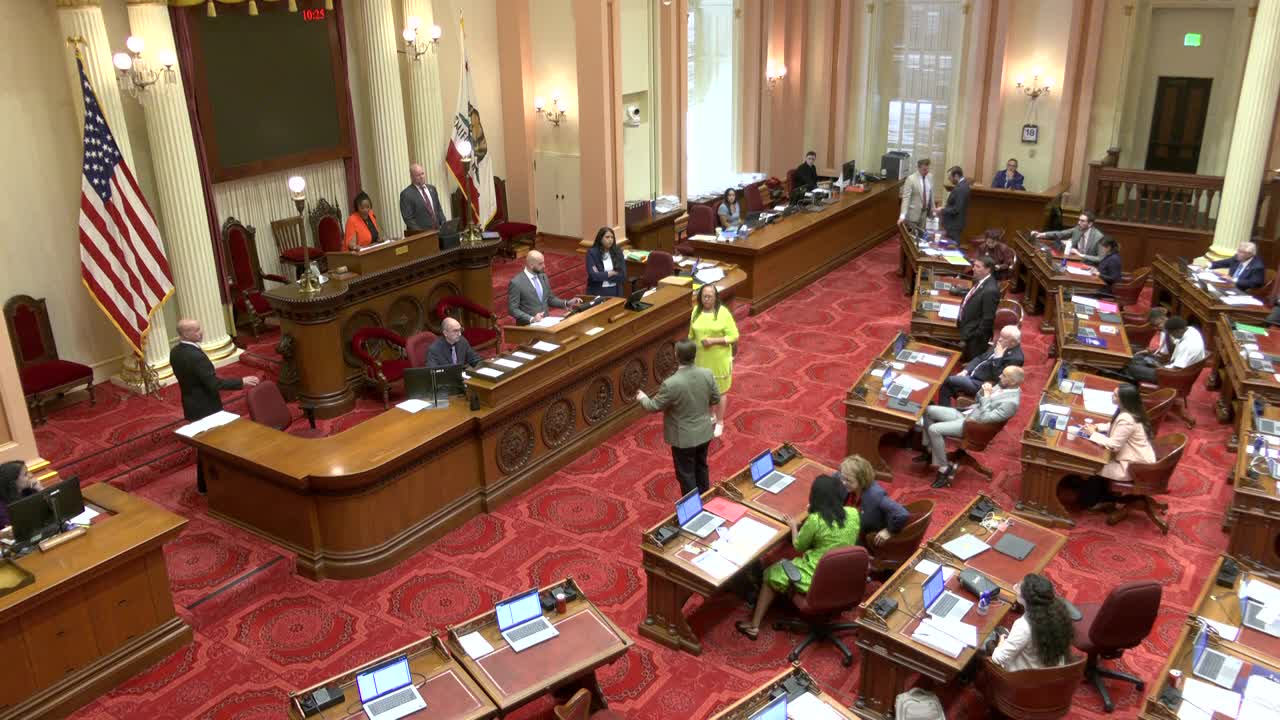 3MIN
Senate Floor
 12MIN
Senate Standing Committee on Military and Veterans Affairs
Bill Author