SJR 18: Campaign finance reform.
- Session Year: 2025-2026
- House: Senate
- Latest Version Date: 2026-08-24
Current Status:
Passed
(2026-08-24: Chaptered by Secretary of State. Res. Chapter 207, Statutes of 2026.)
Introduced
In Committee
Awaiting First Chamber Vote
Passed First Chamber
In Committee
Awaiting Second Chamber Vote
Passed Second Chamber
Enacted
This measure would memorialize the Legislatures strong disagreement with the decision of the United States Supreme Court in Citizens United v. Federal Election Commission and encourage states to adopt policies to limit the powers of corporations to contribute to political campaigns, consistent with the United States Constitution.
This measure would memorialize the Legislatures strong disagreement with the decision of the United States Supreme Court in Citizens United v. Federal Election Commission and encourage states to adopt policies to limit the powers of corporations to contribute to political campaigns, consistent with the United States Constitution.
This measure would memorialize the Legislatures strong disagreement with the decision of the United States Supreme Court in Citizens United v. Federal Election Commission and encourage states to adopt policies to limit the powers of corporations to contribute to political campaigns. campaigns, consistent with the United States Constitution.
This measure would memorialize the Legislatures strong disagreement with the decision of the United States Supreme Court in Citizens United v. Federal Election Commission and encourage states to limit the powers of corporations to contribute to political campaigns.
WHEREAS, The protections afforded by the First Amendment to the United States Constitution to the people of our nation are fundamental to our democracy; and
WHEREAS, The First Amendment to the United States Constitution was intended to protect the free speech rights of natural persons; and
WHEREAS, Corporations are not people but, instead, are entities created by the laws of states and nations; and
WHEREAS, For the past five decades, starting with the decision in Buckley v. Valeo (1976) 424 U.S. 1, a divided United States Supreme Court has transformed the First Amendment into a powerful tool for corporations seeking to evade and invalidate democratically enacted reforms; and
WHEREAS, The United States Supreme Courts transformation culminated in their Citizens United v. Federal Election Commission (2010) 558 U.S. 310 opinion; and
WHEREAS, The United States Supreme Courts opinion in Citizens United v. Federal Election Commission overturned longstanding precedent prohibiting corporations from spending their general treasury funds in our elections; and
WHEREAS, Justice Stevens concurring and dissenting opinion in Citizens United v. Federal Election Commission, joined by Justices Ginsburg, Breyer, and Sotomayor, noted that corporations have special advantages not enjoyed by natural persons, such as limited liability, perpetual life, and favorable treatment of the accumulation and distribution of assets, that allow them to spend prodigious sums on campaign messages, often in favor of policies that harm natural persons; and
WHEREAS, The United States Supreme Courts opinion in Citizens United v. Federal Election Commission has unleashed a torrent of corporate money in our political process, including from independent expenditure-only political action committees, known as Super PACs, and dark money funds from groups that do not disclose their donors and that may come from foreign sources, unmatched by any campaign expenditure totals in United States history; and
WHEREAS, According to the Brennan Center for Justice, nearly $2 billion of dark money was spent during the 2024 federal election cycle; and
WHEREAS, Citizens United v. Federal Election Commission prevents states from enforcing state laws and state constitutional provisions separating corporate money from elections; and
WHEREAS, The United States Supreme Courts opinion in Citizens United v. Federal Election Commission represents a serious and direct threat to our democracy; and
WHEREAS, The general public and political leaders in the United States have recognized, since the founding of our country, that the interests of corporations do not always correspond with the public interest and, therefore, the political influence of corporations should be limited; and
WHEREAS, In 1816, Thomas Jefferson wrote, I hope we shall ... crush in [its] birth the aristocracy of our monied corporations which dare already to challenge our government to a trial of strength and bid defiance to the laws of our country; and
WHEREAS, Legislators have a duty to protect democracy and guard against threats to the integrity of our elections; and
WHEREAS, Montana and several other states are pursuing ballot initiatives and legislation to limit the power of corporations operating within the state to contribute to political campaigns; now, therefore, be it
Resolved by the Senate and the Assembly of the State of California, jointly, That the Legislature of the State of California respectfully but strongly disagrees with the majority opinion of the United States Supreme Court in Citizens United v. Federal Election Commission and encourages states to adopt policies to limit the powers of corporations to contribute to political campaigns, consistent with the United States Constitution; and be it further
Resolved, That the Secretary of the Senate transmit copies of this resolution to the President and Vice President of the United States, the Speaker of the House of Representatives, the Minority Leader of the House of Representatives, the Majority Leader of the United States Senate, the Minority Leader of the United States Senate, and to each Senator and Representative from California in the Congress of the United States.
WHEREAS, The protections afforded by the First Amendment to the United States Constitution to the people of our nation are fundamental to our democracy; and
WHEREAS, The First Amendment to the United States Constitution was designed intended to protect the free speech rights of people, not corporations; natural persons; and
WHEREAS, Corporations are not people but, instead, are entities created by the laws of states and nations; and
WHEREAS, For the past five decades, starting with the decision in Buckley v. Valeo, Valeo (1976) 424 U.S. 1, a divided United States Supreme Court has transformed the First Amendment into a powerful tool for corporations seeking to evade and invalidate democratically enacted reforms; and
WHEREAS, This corporate misuse of the First Amendment and the United States Constitution reached an extreme conclusion in the The United States Supreme Courts ruling transformation culminated in their Citizens United v. Federal Election Commission (2010) 558 U.S. 310; 310 opinion; and
WHEREAS, The United States Supreme Courts ruling opinion in Citizens United v. Federal Election Commission overturned longstanding precedent prohibiting corporations from spending their general treasury funds in our elections; and
WHEREAS, The opinion of the four dissenting justices Justice Stevens concurring and dissenting opinion in Citizens United v. Federal Election Commission Commission, joined by Justices Ginsburg, Breyer, and Sotomayor, noted that corporations have special advantages not enjoyed by natural persons, such as limited liability, perpetual life, and favorable treatment of the accumulation and distribution of assets, that allow them to spend prodigious sums on campaign messages that have little or no correlation with the beliefs held by messages, often in favor of policies that harm natural persons; and
WHEREAS, The United States Supreme Courts ruling opinion in Citizens United v. Federal Election Commission has unleashed a torrent of corporate money in our political process, including from independent expenditure-only political action committees, known as Super PACs, and dark money funds from groups that do not disclose their donors and that may come from foreign sources, unmatched by any campaign expenditure totals in United States history; and
WHEREAS, According to the Brennan Center for Justice, nearly $2 billion of dark money was spent during the 2024 federal election cycle; and
WHEREAS, Citizens United v. Federal Election Commission purports to invalidate prevents states from enforcing state laws and state constitutional provisions separating corporate money from elections; and
WHEREAS, The United States Supreme Courts ruling opinion in Citizens United v. Federal Election Commission represents a serious and direct threat to our democracy; and
WHEREAS, The general public and political leaders in the United States have recognized, since the founding of our country, that the interests of corporations do not always correspond with the public interest and, therefore, the political influence of corporations should be limited; and
WHEREAS, In 1816, Thomas Jefferson wrote, I hope we shall ... crush in [its] birth the aristocracy of our monied corporations which dare already to challenge our government to a trial of strength and bid defiance to the laws of our country; and
WHEREAS, Notwithstanding the decision in Citizens United v. Federal Election Commission, legislators Legislators have a duty to protect democracy and guard against the potentially detrimental effects of corporate spending in local, state, and federal threats to the integrity of our elections; and
WHEREAS, Montana and several other states are pursuing ballot initiatives and legislation to limit the power of corporations operating within the state to contribute to political campaigns; now, therefore, be it
Resolved by the Senate and the Assembly of the State of California, jointly, That the Legislature of the State of California respectfully but strongly disagrees with the majority opinion of the United States Supreme Court in Citizens United v. Federal Election Commission and encourages states to adopt policies to limit the powers of corporations to contribute to political campaigns; campaigns, consistent with the United States Constitution; and be it further
Resolved, That the Secretary of the Senate transmit copies of this resolution to the President and Vice President of the United States, the Speaker of the House of Representatives, the Minority Leader of the House of Representatives, the Majority Leader of the United States Senate, the Minority Leader of the United States Senate, and to each Senator and Representative from California in the Congress of the United States.
WHEREAS, The protections afforded by the First Amendment to the United States Constitution to the people of our nation are fundamental to our democracy; and
WHEREAS, The First Amendment to the United States Constitution was designed to protect the free speech rights of people, not corporations; and
WHEREAS, Corporations are not people but, instead, are entities created by the laws of states and nations; and
WHEREAS, For the past five decades, starting with the decision in Buckley v. Valeo, (1976) 424 U.S. 1, a divided United States Supreme Court has transformed the First Amendment into a powerful tool for corporations seeking to evade and invalidate democratically enacted reforms; and
WHEREAS, This corporate misuse of the First Amendment and the United States Constitution reached an extreme conclusion in the United States Supreme Courts ruling in Citizens United v. Federal Election Commission (2010) 558 U.S. 310; and
WHEREAS, The United States Supreme Courts ruling in Citizens United v. Federal Election Commission overturned longstanding precedent prohibiting corporations from spending their general treasury funds in our elections; and
WHEREAS, The opinion of the four dissenting justices in Citizens United v. Federal Election Commission noted that corporations have special advantages not enjoyed by natural persons, such as limited liability, perpetual life, and favorable treatment of the accumulation and distribution of assets, that allow them to spend prodigious sums on campaign messages that have little or no correlation with the beliefs held by natural persons; and
WHEREAS, The United States Supreme Courts ruling in Citizens United v. Federal Election Commission has unleashed a torrent of corporate money in our political process, including from independent expenditure-only political committees, known as Super PACs, and dark money funds from groups that do not disclose their donors and that may come from foreign sources, unmatched by any campaign expenditure totals in United States history; and
WHEREAS, According to the Brennan Center for Justice, nearly $2 billion of dark money was spent during the 2024 federal election cycle; and
WHEREAS, Citizens United v. Federal Election Commission purports to invalidate state laws and state constitutional provisions separating corporate money from elections; and
WHEREAS, The United States Supreme Courts ruling in Citizens United v. Federal Election Commission represents a serious and direct threat to our democracy; and
WHEREAS, The general public and political leaders in the United States have recognized, since the founding of our country, that the interests of corporations do not always correspond with the public interest and, therefore, the political influence of corporations should be limited; and
WHEREAS, In 1816, Thomas Jefferson wrote, I hope we shall ... crush in [its] birth the aristocracy of our monied corporations which dare already to challenge our government to a trial of strength and bid defiance to the laws of our country; and
WHEREAS, Notwithstanding the decision in Citizens United v. Federal Election Commission, legislators have a duty to protect democracy and guard against the potentially detrimental effects of corporate spending in local, state, and federal elections; and
WHEREAS, Montana and several other states are pursuing ballot initiatives and legislation to limit the power of corporations to contribute to political campaigns; now, therefore, be it
Resolved by the Senate and the Assembly of the State of California, jointly, That the Legislature of the State of California respectfully but strongly disagrees with the majority opinion of the United States Supreme Court in Citizens United v. Federal Election Commission and encourages states to limit the powers of corporations to contribute to political campaigns; and be it further
Resolved, That the Secretary of the Senate transmit copies of this resolution to the President and Vice President of the United States, the Speaker of the House of Representatives, the Minority Leader of the House of Representatives, the Majority Leader of the United States Senate, the Minority Leader of the United States Senate, and to each Senator and Representative from California in the Congress of the United States.
|
Date
|
Status
|
|---|---|
| Aug 24, 2026 | Chaptered by Secretary of State. Res. Chapter 207, Statutes of 2026. |
| Aug 24, 2026 | Enrolled and filed with the Secretary of State at 1 p.m. |
| Aug 18, 2026 | In Senate. Ordered to engrossing and enrolling. |
| Aug 17, 2026 | Read. Adopted. (Ayes 55. Noes 15. Page 6209.) Ordered to the Senate. |
| Aug 17, 2026 | Read. Adopted. Ordered to the Senate. |
| Jul 1, 2026 | From committee: Be adopted. Ordered to third reading. (Ayes 6. Noes 2.) (July 1). |
| Jun 15, 2026 | Referred to Com. on ELECTIONS. |
| Jun 11, 2026 | In Assembly. Held at Desk. |
| Jun 11, 2026 | Read. Adopted. (Ayes 28. Noes 8. Page 4698.) Ordered to the Assembly. |
| Jun 11, 2026 | Read. Adopted. (Ayes 28. Noes 8.) Ordered to the Assembly. |
| Jun 10, 2026 | From committee: Be adopted. Ordered to third reading. (Ayes 10. Noes 2.) (June 9). |
| Jun 10, 2026 | From committee: Be adopted. Ordered to third reading. (Ayes 10. Noes 2. Page 4645.) (June 9). |
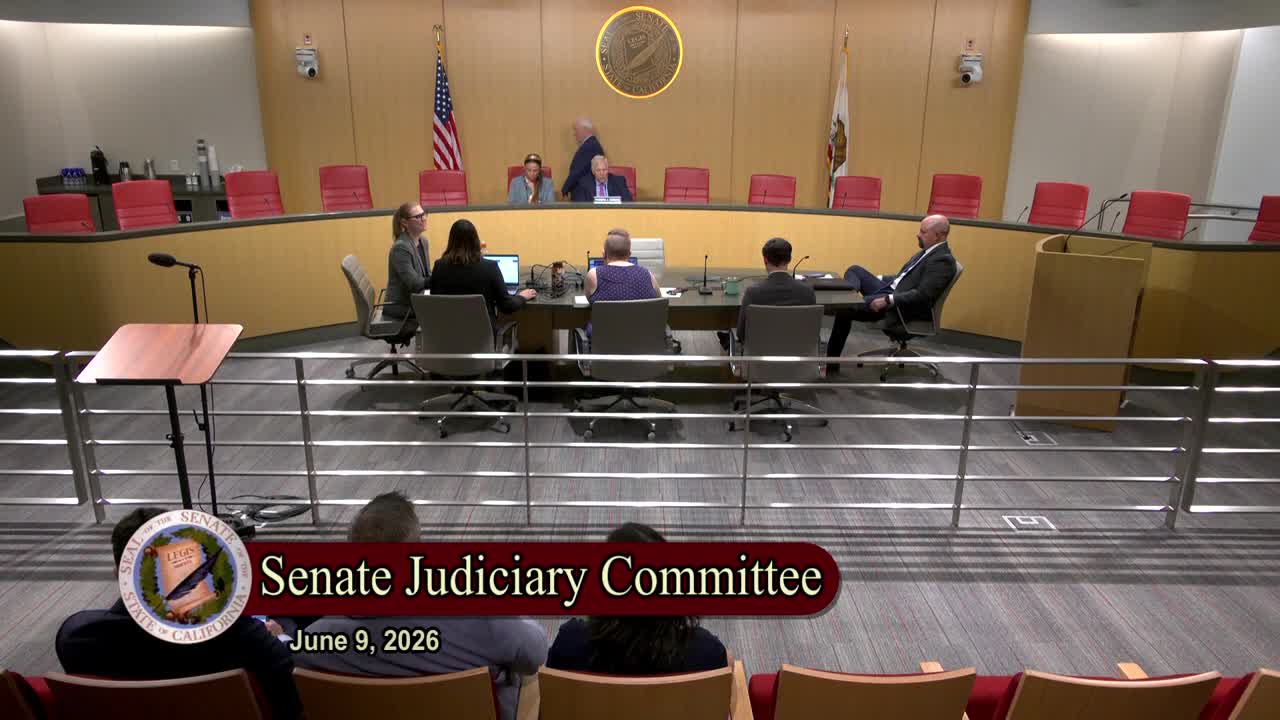
| Jun 9, 2026 | From committee: Be adopted and re-refer to Com. on JUD. (Ayes 4. Noes 0.) (June 9). Re-referred to Com. on JUD. |
| Jun 9, 2026 | From committee: Be adopted and re-refer to Com. on JUD. (Ayes 4. Noes 0. Page 4643.) (June 9). Re-referred to Com. on JUD. |
| Jun 2, 2026 | From committee with author's amendments. Read second time and amended. Re-referred to Com. on E. & C.A. |
| Jun 2, 2026 | Set for hearing June 9 in JUD. pending receipt. |
| May 27, 2026 | Re-referred to Coms. on E. & C.A. and JUD. |
| May 27, 2026 | Re-referred to Com. on E. & C.A. |
| May 14, 2026 | Introduced. Referred to Com. on RLS. |
|
Date
|
Description
|
Location
|
Votes
|
|
|---|---|---|---|---|
| Aug 17, 2026 | SJR 18 McNerney Senate Third Reading By Rogers | Assembly Floor |
Passed |
|
| Jul 1, 2026 | Be adopted. To third reading. | Assembly Standing Committee on Elections |
Passed |
|
| Jun 11, 2026 | Senate 3rd Reading SJR18 McNerney et al. | Senate Floor |
Passed |
|
| Jun 9, 2026 | Be adopted. Ordered to third reading | Senate Standing Committee on Judiciary |
Passed |
|
| Jun 9, 2026 | Be adopted, but first be re-referred to the Committee on [Judiciary] | Senate Standing Committee on Elections and Constitutional Amendments |
Passed |
This list shows positions taken on this bill by organizations on the date displayed, which is linked to the original source.
Positions by individuals are not included.
|
Organization
|
Position
|
Date
|
|---|---|---|
| CASS Democracy Reform Working Group | ** Support | |
| Consumer Watchdog | ** Support | |
| Indivisible Ca: Statestrong | ** Support |
SENATE THIRD READING
STR Bill Id:SJR 18
Author:(McNerney)
As Amended Ver:June 2, 2026
Majority vote
SUMMARY
Expresses the Legislature's disagreement with the United States (US) Supreme Court's decision in Citizens United v. Federal Elections Commission (Citizens United). Encourages states to adopt policies to limit the powers of corporations to contribute to political campaigns.
Major Provisions
- States the Legislature's respectful but strong disagreement with the majority opinion of the US Supreme Court in Citizens United. Encourages states to adopt policies to limit the powers of corporations to contribute to political campaigns, consistent with the US Constitution.
- Makes various findings and declarations, including the following:
- For the past five decades, starting with the decision in Buckley v. Valeo (1976) 424 U.S. 1, a divided US Supreme Court has transformed the First Amendment into a powerful tool for corporations seeking to evade and invalidate democratically enacted reforms.
- The US Supreme Court's transformation culminated in the Citizens United opinion.
- Justice Stevens' concurring and dissenting opinion in Citizens United noted that corporations have special advantages not enjoyed by natural persons, such as limited liability, perpetual life, and favorable treatment of the accumulation and distribution of assets, that allow them to spend prodigious sums on campaign messages, often in favor of policies that harm natural persons.
- The US Supreme Court's opinion in Citizens United has unleashed a torrent of corporate money in our political process, including from "dark money" funds from groups that do not disclose their donors and that may come from foreign sources.
- Citizens United prevents states from enforcing state laws and state constitutional provisions separating corporate money from elections.
- Montana and several other states are pursuing ballot initiatives and legislation to limit the power of corporations operating within the state to contribute to political campaigns.
COMMENTS
State and federal courts have repeatedly held that the giving and spending of campaign money involves the exercise of free speech. The US Supreme Court found in Buckley v. Valeo (1976), 424 US 1, that any "restriction on the amount of money a person or group can spend on political communication during a campaign necessarily reduces the quantity of expression by restricting the number of issues discussed, the depth of their exploration, and the size of the audience reached." The Supreme Court in Buckley ruled that expenditure limits during a campaign were unconstitutional for this reason. In the same case, however, the court upheld campaign contribution limits, noting that "[b]y contrast with a limitation on expenditures for political expression, a limitation upon the amount that any one person or group may contribute to a candidate or political committee entails only a marginal restriction upon the contributor's ability to engage in free communication."
In January 2010, the US Supreme Court issued its decision in Citizens United v. Federal Election Commission (2010) 558 U.S. 310. The case involved a nonprofit corporation, Citizens United, which sought to air television commercials promoting a film critical of then-Senator and presidential candidate Hillary Clinton. At the time, federal law prohibited corporations and labor unions from using general treasury funds to finance "electioneering communications" or communications that expressly advocated the election or defeat of a candidate. Citizens United was concerned that broadcasting the advertisements could expose it to civil and criminal penalties.
In its decision, the Supreme Court struck down the 63-year old law that prohibited corporations and unions from using their general treasury funds to make independent expenditures (IEs) in federal elections, finding that the law unconstitutionally abridged the freedom of speech.
Less than three months later, a federal appellate court further expanded the scope of permissible campaign spending in SpeechNow.org v. FEC (2010) 599 F.3d 686. In that case, the US Court of Appeals for the District of Columbia Circuit ruled that federal contribution limits were unconstitutional when applied to contributions made by individuals to groups engaged solely in IEs.
The court relied heavily on the reasoning of Citizens United, particularly its conclusion that IEs, unlike direct contributions to candidates, do not create a risk or appearance of quid pro quo corruption. Because such expenditures do not present a sufficiently compelling governmental interest to justify restrictions on First Amendment rights, the court concluded that contributions to organizations making only IEs likewise could not be restricted.
Specifically, the court stated that "in light of the Court's holding [in Citizens United] as a matter of law that IEs do not corrupt or create the appearance of quid pro quo corruption, contributions to groups that make only IEs also cannot corrupt or create the appearance of corruption." The SpeechNow.org decision is widely recognized as establishing the legal framework for Super PACs—political action committees that may raise unlimited contributions for the purpose of making IEs in federal elections.
One clause of this resolution references efforts in Montana and other states to limit corporate spending in political campaigns through a novel legal approach. Rather than directly regulating campaign contributions or expenditures, these proposals seek to restrict political spending by redefining the powers granted to corporations under state law.
In Montana, proponents have been collecting signatures to qualify a ballot initiative for the November election that would expressly limit the powers of "artificial persons," including corporations. The measure would provide that such powers do not include the ability to spend money on political candidates or ballot issues. Any entity that violates the law would forfeit its ability to conduct business in Montana.
Supporters contend that the Montana proposal would withstand constitutional scrutiny because it does not directly regulate political speech or impose campaign finance restrictions. Instead, it limits the powers that corporations receive as a condition of operating under state law. In May, Hawaii enacted legislation based on a similar concept and inspired by the Montana initiative. The law is scheduled to take effect on July 1, 2027. Last month, a legal challenge to the measure was filed in the US District Court for the District of Hawaii.
Similarly, AB 1984 (Rogers) of the current legislative session, seeks to amend California law to provide that corporations do not possess the authority to engage in political spending. That bill is pending in the Assembly Banking and Finance Committee, where it received a hearing for testimony only earlier this year.
Given the US Supreme Court's longstanding skepticism toward restrictions on corporate political spending, it remains uncertain whether this novel strategy of limiting corporate powers, rather than directly regulating political expenditures, will survive judicial review.
Please see the policy committee analysis for a full discussion of this resolution.
According to the Author
"This year marks the 50-year anniversary of the landmark Buckley v. Valeo decision, where the Supreme Court decided that campaign expenditure limits are unconstitutional. This decision, paired with the Citizens United decision in 2010, has led to the proliferation of corporate money in our political system. The amount of dark money spent on elections continues to grow every election cycle. This broken campaign finance system has prevented us from addressing some of the biggest issues facing our state and our country. Dark money has also made government more responsive to corporate interests than the public, increased cynicism among voters, and corroded the very institutions we are meant to protect. SJR 18 sends a message that the California Legislature stands against the Citizens United decision and encourages states to limit the power of corporations to contribute to political campaigns."
Arguments in Support
In support of this resolution, Consumer Watchdog writes, "This year marks the 50-year anniversary of the Buckley v. Valeo decision, where the United States Supreme Court ruled that placing limits on independent expenditures violated the First Amendment of the U.S. Constitution. This decision equated the power to spend on political campaigns with the guaranteed right to freedom of speech. This precedent paved the way for the Citizens United decision in 2010, which established that corporations have the same rights of people, including freedom of speech… A 2014 study from the Cambridge University Press found that 'business interests have substantial independent impacts on U.S. government policy, while average citizens and mass-based interest groups have little or no independent influence.' SJR 18 resolves that the California State Legislature strongly disagrees with the Citizens United decision and encourages states to limit the power of corporations to contribute to political campaigns."
Arguments in Opposition
None received.
FISCAL COMMENTS
None. This measure is keyed non-fiscal by the Legislative Counsel.
VOTES
SENATE FLOOR: 28-8-4
YES: Allen, Archuleta, Arreguín, Ashby, Becker, Blakespear, Cabaldon, Caballero, Cervantes, Cortese, Durazo, Grayson, Hurtado, Laird, Limón, McGuire, McNerney, Menjivar, Padilla, Reyes, Richardson, Rubio, Smallwood-Cuevas, Stern, Umberg, Wahab, Weber Pierson, Wiener
NO: Choi, Dahle, Grove, Jones, Niello, Ochoa Bogh, Seyarto, Valladares
ABS, ABST OR NV: Alvarado-Gil, Gonzalez, Pérez, Strickland
ASM ELECTIONS: 6-2-0
YES: Pellerin, Bennett, Berman, Elhawary, Solache, Stefani
NO: Johnson, Ellis
UPDATED
VERSION: June 2, 2026
CONSULTANT: Ethan Jones / ELECTIONS / (916) 319-2094 FN: 0003270
Date of Hearing: July 1, 2026
ASSEMBLY COMMITTEE ON ELECTIONS
Gail Pellerin, Chair
SBPCA Bill Id:SJR 18
Author:(McNerney) – As Amended Ver:June 2, 2026
SENATE VOTE: 28-8
SUBJECT: Campaign finance reform.
SUMMARY: Expresses the Legislature’s disagreement with the United States (US) Supreme Court’s decision in Citizens United v. Federal Elections Commission (Citizens United). Encourages states to adopt policies to limit the powers of corporations to contribute to political campaigns. Specifically, this measure:
- States the Legislature’s respectful but strong disagreement with the majority opinion of the US Supreme Court in Citizens United. Encourages states to adopt policies to limit the powers of corporations to contribute to political campaigns, consistent with the US Constitution.
- Makes various findings and declarations, including the following:
- The First Amendment to the US Constitution was intended to protect the free speech rights of natural persons.
- Corporations are not people but, instead, are entities created by the laws of states and nations.
- For the past five decades, starting with the decision in Buckley v. Valeo (1976) 424 U.S. 1, a divided US Supreme Court has transformed the First Amendment into a powerful tool for corporations seeking to evade and invalidate democratically enacted reforms.
- The US Supreme Court’s transformation culminated in the Citizens United opinion.
- Justice Stevens’ concurring and dissenting opinion in Citizens United noted that corporations have special advantages not enjoyed by natural persons, such as limited liability, perpetual life, and favorable treatment of the accumulation and distribution of assets, that allow them to spend prodigious sums on campaign messages, often in favor of policies that harm natural persons.
- The US Supreme Court’s opinion in Citizens United has unleashed a torrent of corporate money in our political process, including from “dark money” funds from groups that do not disclose their donors and that may come from foreign sources.
- According to the Brennan Center for Justice, nearly $2 billion of dark money was spent during the 2024 federal election cycle.
- Citizens United prevents states from enforcing state laws and state constitutional provisions separating corporate money from elections.
- Montana and several other states are pursuing ballot initiatives and legislation to limit the power of corporations operating within the state to contribute to political campaigns.
- The First Amendment to the US Constitution was intended to protect the free speech rights of natural persons.
EXISTING LAW prohibits Congress and the states from making any law abridging the freedom of speech. (US Constitution, First and Fourteenth Amendments)
FISCAL EFFECT: None. This measure is keyed non-fiscal by the Legislative Counsel.
COMMENTS:
- Purpose of the Measure: According to the author:
This year marks the 50-year anniversary of the landmark Buckley v. Valeo decision, where the Supreme Court decided that campaign expenditure limits are unconstitutional. This decision, paired with the Citizens United decision in 2010, has led to the proliferation of corporate money in our political system. The amount of dark money spent on elections continues to grow every election cycle. This broken campaign finance system has prevented us from addressing some of the biggest issues facing our state and our country. Dark money has also made government more responsive to corporate interests than the public, increased cynicism among voters, and corroded the very institutions we are meant to protect. SJR 18 sends a message that the California Legislature stands against the Citizens United decision and encourages states to limit the power of corporations to contribute to political campaigns.
- Campaign Spending and the First Amendment: State and federal courts have repeatedly held that the giving and spending of campaign money involves the exercise of free speech. The US Supreme Court found in Buckley v. Valeo (1976), 424 US 1, that any "restriction on the amount of money a person or group can spend on political communication during a campaign necessarily reduces the quantity of expression by restricting the number of issues discussed, the depth of their exploration, and the size of the audience reached." The Supreme Court in Buckley ruled that expenditure limits during a campaign were unconstitutional for this reason. In the same case, however, the court upheld campaign contribution limits, noting that "[b]y contrast with a limitation on expenditures for political expression, a limitation upon the amount that any one person or group may contribute to a candidate or political committee entails only a marginal restriction upon the contributor's ability to engage in free communication."
- Citizens United v. FEC and SpeechNow.org v. FEC: In January 2010, the US Supreme Court issued its decision in Citizens United v. Federal Election Commission (2010) 558 U.S. 310. The case involved a nonprofit corporation, Citizens United, which sought to air television commercials promoting a film critical of then-Senator and presidential candidate Hillary Clinton. At the time, federal law prohibited corporations and labor unions from using general treasury funds to finance "electioneering communications" or communications that expressly advocated the election or defeat of a candidate. Citizens United was concerned that broadcasting the advertisements could expose it to civil and criminal penalties.
In its decision, the Supreme Court struck down the 63-year old law that prohibited corporations and unions from using their general treasury funds to make independent expenditures (IEs) in federal elections, finding that the law unconstitutionally abridged the freedom of speech.
Less than three months later, a federal appellate court further expanded the scope of permissible campaign spending in SpeechNow.org v. FEC (2010) 599 F.3d 686. In that case, the US Court of Appeals for the District of Columbia Circuit ruled that federal contribution limits were unconstitutional when applied to contributions made by individuals to groups engaged solely in IEs.
The court relied heavily on the reasoning of Citizens United, particularly its conclusion that IEs, unlike direct contributions to candidates, do not create a risk or appearance of quid pro quo corruption. Because such expenditures do not present a sufficiently compelling governmental interest to justify restrictions on First Amendment rights, the court concluded that contributions to organizations making only IEs likewise could not be restricted.
Specifically, the court stated that “in light of the Court’s holding [in Citizens United] as a matter of law that IEs do not corrupt or create the appearance of quid pro quo corruption, contributions to groups that make only IEs also cannot corrupt or create the appearance of corruption.” The SpeechNow.org decision is widely recognized as establishing the legal framework for Super PACs—political action committees that may raise unlimited contributions for the purpose of making IEs in federal elections.
- California Regulation of Corporate Campaign Spending: Although Citizens United and SpeechNow.org significantly altered campaign finance law at the federal level and in many states, neither decision had a direct effect on California’s campaign finance laws. California law did not prohibit corporations or labor unions from making IEs, nor did it limit contributions to committees that engaged exclusively in IEs. (While these decisions did not directly implicate California’s state campaign finance rules, they did affect certain campaign finance regulations adopted by local jurisdictions within the state.)
Moreover, California law permits certain forms of corporate political activity that existing court precedents suggest could lawfully be restricted. Notably, California allows corporations to make direct contributions to candidates for elective office. In contrast, federal law prohibits direct corporate contributions to candidates for federal office, including candidates for President, Vice President, the US Senate, and the US House of Representatives. According to information from the National Conference of State Legislatures, 23 states similarly prohibit direct corporate contributions to candidates.
Aside from expressing disagreement with the Supreme Court’s decision in Citizens United, the only operative provision of this resolution urges states to limit the powers of corporations to contribute to political campaigns consistent with the US Constitution. Given that California itself does not prohibit corporate contributions to political campaigns and historically has imposed few restrictions on corporate campaign spending—even before Citizens United and SpeechNow.org—questions may arise regarding the consistency of urging states to adopt restrictions that California has not implemented. - Restrictions on Corporate Powers and Related Legislation: One clause of this resolution references efforts in Montana and other states to limit corporate spending in political campaigns through a novel legal approach. Rather than directly regulating campaign contributions or expenditures, these proposals seek to restrict political spending by redefining the powers granted to corporations under state law.
In Montana, proponents have been collecting signatures to qualify a ballot initiative for the November election that would expressly limit the powers of “artificial persons,” including corporations. The measure would provide that such powers do not include the ability to spend money on political candidates or ballot issues. Any entity that violates the law would forfeit its ability to conduct business in Montana.
Supporters contend that the Montana proposal would withstand constitutional scrutiny because it does not directly regulate political speech or impose campaign finance restrictions. Instead, it limits the powers that corporations receive as a condition of operating under state law. In May, Hawaii enacted legislation based on a similar concept and inspired by the Montana initiative. The law is scheduled to take effect on July 1, 2027. Last month, a legal challenge to the measure was filed in the US District Court for the District of Hawaii.
Similarly, AB 1984 (Rogers) of 2026, seeks to amend California law to provide that corporations do not possess the authority to engage in political spending. That bill is pending in the Assembly Banking and Finance Committee, where it received a hearing for testimony only earlier this year.
Given the US Supreme Court’s longstanding skepticism toward restrictions on corporate political spending, it remains uncertain whether this novel strategy of limiting corporate powers, rather than directly regulating political expenditures, will survive judicial review.
- Arguments in Support: In support of this resolution, Consumer Watchdog writes:
This year marks the 50-year anniversary of the Buckley v. Valeo decision, where the United States Supreme Court ruled that placing limits on independent expenditures violated the First Amendment of the U.S. Constitution. This decision equated the power to spend on political campaigns with the guaranteed right to freedom of speech. This precedent paved the way for the Citizens United decision in 2010, which established that corporations have the same rights of people, including freedom of speech.
Since the Supreme Court’s 2010 decision, Super PACs and dark money organizations have spent billions influencing elections while shielding donors from public scrutiny. The result has been a political system where corporate interests wield extraordinary influence over policymaking, often at the expense of average citizens.
A 2014 study from the Cambridge University Press found that “business interests have substantial independent impacts on U.S. government policy, while average citizens and mass-based interest groups have little or no independent influence.”
SJR 18 resolves that the California State Legislature strongly disagrees with the Citizens United decision and encourages states to limit the power of corporations to contribute to political campaigns.
- Previous Legislation: AJR 22 (Wieckowski), Resolution Chapter 69, Statutes of 2012, memorializes the Legislature’s disagreement with the decision of the US Supreme Court in Citizens United, and called upon Congress to propose and send to the states for ratification a constitutional amendment to overturn Citizens United.
AJR 32 (Allen) of 2012, would have petitioned Congress to call a federal constitutional convention for the sole purpose of amending the US Constitution to limit corporate personhood and declare that money does not constitute speech. AJR 32 failed passage in the Assembly Judiciary Committee.
AJR 1 (Gatto), Resolution Chapter 77, Statutes of 2014, petitioned Congress to call a federal constitutional convention for the sole purpose of proposing an amendment to the US Constitution that limits corporate personhood for purposes of campaign finance and political speech and declares that money does not constitute speech.
SB 254 (Allen), Chapter 20, Statutes of 2016, placed an advisory measure on the November 8, 2016, general election ballot asking voters whether California’s elected officials should use their constitutional authority to propose and ratify one or more amendments to the US Constitution to overturn Citizens United. SB 254 appeared on the ballot as Proposition 59 and was approved by the voters by a margin of 53%-47%.
SJR 1 (Wiener), Resolution Chapter 174, Statutes of 2025, rescinded all applications by the Legislature for Congress to call a convention for proposing amendments to the US Constitution, including the application resulting from AJR 1 (Gatto) of 2014.
REGISTERED SUPPORT / OPPOSITION:
Support
Consumer Watchdog
Indivisible CA: StateStrong
Opposition
None on file.
Analysis Prepared by: Ethan Jones / ELECTIONS / (916) 319-2094
SENATE RULES COMMITTEE Office of Senate Floor Analyses (916) 651-4171 | SJR 18 |
THIRD READING
Bill No: SJR 18
Author: McNerney (D), et al.
Amended: 6/2/26
Vote:
SENATE JUDICIARY COMMITTEE: 10-2, 6/9/26
AYES: Umberg, Allen, Ashby, Caballero, Durazo, Laird, Reyes, Wahab, Weber Pierson, Wiener
NOES: Niello, Valladares
NO VOTE RECORDED: Stern
SENATE ELECTIONS & C.A. COMMITTEE: 4-0, 6/9/26
AYES: Wiener, Allen, Cervantes, Umberg
NO VOTE RECORDED: Choi
SUBJECT: Campaign finance reform
SOURCE: Author
DIGEST:
This joint resolution memorializes the California Legislature’s strong disagreement with the majority opinion of the United States Supreme Court in Citizens United v. Federal Election Commission and encourages states to limit the powers of corporations to contribute to political campaigns.
ANALYSIS:
Existing law pursuant to Amendment I of the United States Constitution, and as applied to the states by Amendment XIV of the United States Constitution, provides neither Congress nor the states may enact any law abridging the freedom of speech.
Existing law, pursuant to rulings by the United States Supreme Court, provides:
- Pursuant to Buckley v. Valeo (1976) laws limiting election expenditures are unconstitutional, as such limits contravene the First Amendment’s guarantee of freedom of speech. The court opined that such a restriction on spending for political communication necessarily reduces the quantity of expression.
- Pursuant to Citizens United v. Federal Election Commission (2010) the government may not, under the Amendment I, suppress political speech based on the speaker’s corporate identity. This decision allows unlimited spending by corporations on election-related matters.
This joint resolution:
- Memorializes the California Legislature’s strong disagreement with the majority opinion of the United States Supreme Court in Citizens United.
- Encourages states to adopt policies to limit the powers of corporations to contribute to political campaigns in a manner consistent with the United States Constitution.
Background
Citizens United. Citizens United is a nonprofit corporation that during the 2008 primary election campaign made a documentary critical of then U.S. Presidential Candidate Hillary Clinton. When planning to run commercials advertising the documentary, which was to be made available via on-demand television, Citizens United filed in federal court to make sure that the Federal Election Commission could not rule that ads and airing the documentary were illegal under federal campaign finance law. The law, known as the McCain-Feingold Act, forbade specified expenditures by corporations, including nonprofit corporations, to influence elections within certain timeframes.
As a result of this filing, the U.S. Supreme Court ultimately ruled in Citizens United v. Federal Election Commission that restricting spending on election-related matters violated the First Amendment’s freedom of speech that all persons, including corporations, possess. This decision sparked an enduring controversy over corporate personhood and its attendant rights. Some viewed the ruling as a defense of the right of free speech with many others criticizing the decision as giving corporations outsized political power by allowing corporations to spend unlimited sums for or against political candidates so long as those expenditures were made independently of the campaigns.
Comments
- Author’s Statement. This year marks the 50-year anniversary of the landmark Buckley v. Valeo decision, where the Supreme Court decided that campaign expenditure limits are unconstitutional. This decision, paired with the Citizens United decision in 2010, has led to the proliferation of corporate money in our political system. The amount of dark money spent on elections continues to grow every election cycle. This broken campaign finance system has prevented us from addressing some of the biggest issues facing our state and our country.
Dark money has also made government more responsive to corporate interests than the public, increased cynicism among voters, and corroded the very institutions we are meant to protect. This resolution sends a message that the California Legislature stands against the Citizens United decision and encourages states to limit the power of corporations to contribute to political campaigns.
- Montana. Proponents of a statutory initiative in Montana, which is called “The Montana Plan,” are currently collecting signatures to qualify the initiative for a ballot this year. The initiative would create a new Montana law prohibiting corporations from spending money on political candidates or ballot issues. Rather than addressing the issues raised by the Supreme Court in its Citizens United decision, in which the court opined that the power to spend money in elections is tantamount to free speech, this initiative limits what a corporate charter can include in Montana.
In short, the Montana initiative amends the State Constitution of Montana to define corporations as “artificial persons” and then declares:
Any language in articles of incorporation, organization, association, or other organizational documents purporting to directly or indirectly confer Election-Activity authority or Ballot-Issue-Activity authority to Artificial Persons is void.
The initiative thus works through the state’s authority to regulate corporations through the charter process, rather than taking on a corporation’s free speech rights and likely running afoul of the Citizen’s United decision.
- Hawaii. Last month, the State of Hawaii enacted a law that redefines corporations in such a manner as to preclude them from spending on elections. This new law will take effect on July 1, 2027. The initiative in Montana inspired the legislation in Hawaii, which states in its text:
…the purpose of this Act is to: …[r]eaffirm that artificial persons created under state law possess only those powers that are necessary or convenient to carry out lawful business and organizational purposes, and that those powers do not include the power to spend money or contribute anything of value to influence elections or ballot measures….
- Powers of States. In general, it is unclear what power states would have in the current legal environment to reduce the power of corporations to influence elections, given that the courts have conferred full First Amendment rights onto corporations. The Montana approach, which should the initiative become law, will take effect on January 1, 2027, could provide a first test of the ability of states to limit the powers of corporations to contribute to political campaigns, as this resolution encourages states to do.
Related/Prior Legislation
SJR 1 (Wiener, Resolution Chapter 174, Statutes of 2025) rescinds all applications by the Legislature for the United States Congress to call a convention for proposing amendments to the United States Constitution, including the application resulting from AJR 1 (Gatto) of 2014.
AJR 1 (Gatto, Resolution Chapter 77, Statutes of 2014) submitted California’s application to Congress to call for a constitutional convention for the sole purpose of proposing an amendment to the U.S. Constitution that: (1) limits corporate personhood for purposes of campaign finance and political speech; and (2) declares that money does not constitute speech and may be legislatively limited.
AJR 22 (Wieckowski, Resolution Chapter 69, Statutes of 2012) memorializes the Legislature’s disagreement with the decision of the United States Supreme Court in Citizens United v. Federal Election Commission, and called upon the United States Congress to propose and send to the states for ratification a constitutional amendment to overturn Citizens United v. Federal Election Commission and to restore constitutional rights and fair elections to the people.
AJR 32 (Allen) of 2012 would have petitioned Congress to call a federal convention for the purpose of amending the U.S. Constitution hopefully solely to limit corporate personhood and declare that money does not constitute speech. This measure failed passage in the Assembly Committee on Judiciary.
FISCAL EFFECT: Appropriation: No Fiscal Com.: No Local: No
SUPPORT: (Verified 6/10/26)
CASS Democracy Reform Working Group
Consumer Watchdog
Indivisible CA: StateStrong
OPPOSITION: (Verified 6/10/26)
Prepared by: Carrie Cornwell / E. & C.A. / (916) 651-4106
6/10/26 17:00:59
**** END ****
Senator Thomas Umberg, Chair
2025-2026 Regular Session
Bill No: SJR 18 (Author:McNerney)
Version: June 2, 2026
Hearing Date: June 9, 2026
Fiscal: No
Urgency:
Consultant: AWM
SUBJECT
Campaign finance reform
DIGEST
This resolution memorializes the Legislature’s strong disagreement with the decision of the United States Supreme Court in Citizens United v. Federal Elections Commission (2010) 558 U.S. 310 (Citizens United) and encourages states to limit the powers of corporations to contribute to political campaigns.
This resolution is sponsored by the author and is supported by Consumer Watchdog. The Committee has not received timely opposition to this bill. The Senate Elections and Constitutional Amendments Committee is set to hear this resolution on the morning of this Committee’s afternoon hearing.
SUMMARY
Existing constitutional law:
- Provides that the U.S. Constitution, the laws of the United States, and treaties made by the United States are the supreme law of the land. (U.S. Const., art. VI, cl. 2.)
- Provides that Congress shall make no law abridging the freedom of speech, or the right of the people to peaceably assemble, and to petition the government for redress of grievances. (U.S. Const., 1st amend. (the First Amendment) & 14th amends.; see Gitlow v. People of State of New York (1925) 268 U.S. 652, 666 (First Amendment guarantees apply to the states through the due process clause of the Fourteenth Amendment).)
- Provides that every person may freely speak, write, and publish their sentiments on all subjects, and that a law may not restrain or abridge liberty of speech. (Cal. Const., art. I, § 2 (Section 2).)
Existing federal law establishes limits on the amounts that an individual, candidate committee, political action committee (PAC), or party committee may donate to a candidate committee, PAC, or party committee in federal elections. (52 U.S.C. § 30125; see also 11 C.F.R., pt. 300, §§ 300.1 et seq.)
Existing state law establishes limits on the amounts an individual, business entity, committee, or PAC may contribute to a candidate or officeholder in a statewide election or a committee or PAC; these limits also apply in local elections unless the city or county has enacted its own law addressing contribution limits. (Gov. Code, tit. 9, ch. 5, art. 3, §§ 85300 et seq.)
This resolution:
- Declares that:
- The protections afforded by the First Amendment to the United States Constitution to the people of our nation are fundamental to our democracy.
- The First Amendment to the United States Constitution was intended to protect the free speech rights of natural persons.
- For the past five decades, starting with the decision in Buckley v. Valeo (1976) 424 U.S. 1, a divided United States Supreme Court has transformed the First Amendment into a powerful tool for corporations seeking to evade and invalidate democratically enacted reforms.
- The United States Supreme Court’s transformation culminated in their Citizens United opinion.
- The United States Supreme Court’s ruling in Citizens United overturned longstanding precedent prohibiting corporations from spending their general treasury funds in our elections.
- Justice Stevens’ concurring and dissenting opinion in Citizens United, joined by Justices Ginsburg, Breyer, and Sotomayor, noted that corporations have special advantages not enjoyed by natural persons, such as limited liability, perpetual life, and favorable treatment of the accumulation and distribution of assets, that allow them to spend prodigious sums on campaign messages, often in favor of policies that harm natural persons.
- The United States Supreme Court’s opinion in Citizens United has unleashed a torrent of corporate money into our political process, including from independent expenditure-only political action committees, known as Super PACs, and “dark money” funds from groups that do not disclose their donors and that may come from foreign sources, unmatched by any campaign expenditure totals in United States history.
- According to the Brennan Center for Justice, nearly $2 billion of dark money was spent during the 2024 federal election cycle.
- Citizens United prevents states from enforcing state laws and state constitutional provisions separating corporate money from elections.
- The United States Supreme Court’s opinion in Citizens United represents a serious and direct threat to our democracy.
- The general public and political leaders have recognized, since the founding of our country, that the interests of corporations do not always correspond with the public interest and, therefore, the political influence of corporations should be limited.
- In 1816, Thomas Jefferson wrote, “I hope we shall…crush in [its] birth the aristocracy of our monied corporations which dare already to challenge our government to a trial of strength and bid defiance to the laws of our country.”
- Legislators have a duty to protect democracy and guard against threats to the integrity of our elections.
- Montana and several other states are pursuing ballot initiatives and legislation to limit the power of corporations operating within the state to contribute to political campaigns.
- States that it is resolved:
- By the Senate and the Assembly of California, jointly, that the Legislature of the State of California respectfully but strongly agrees with the majority opinion of the United States Supreme Court in Citizens United and encourages states to limit the powers of corporations to contribute to political campaigns, consistent with the United States Constitution.
- That the Secretary of the Senate transmit copies of this resolution to the President and Vice President of the United States, the Speaker of the House of Representatives, the Minority Leader of the House of Representatives, the Majority Leader of the United States Senate, the Minority Leader of the United States Senate, and to each Senator and Representative from California in the Congress of the United States.
COMMENTS
- Author’s comment
According to the author:
This year marks the 50-year anniversary of the landmark Buckley v. Valeo decision, where the Supreme Court decided that campaign expenditure limits are unconstitutional. This decision, paired with the Citizens United decision in 2010, has led to the proliferation of corporate money in our political system. The amount of dark money spent on elections continues to grow every election cycle. This broken campaign finance system has prevented us from addressing some of the biggest issues facing our state and our country. Dark money has also made government more responsive to corporate interests than the public, increased cynicism among voters, and corroded the very institutions we are meant to protect. SJR 18 sends a message that the California Legislature stands against the Citizens United decision and encourages states to limit the power of corporations to contribute to political campaigns.
2. Background on the United States Supreme Court’s evolving approach to corporate elections expenditures
After the Watergate scandal, which revealed how much donor money could influence politics, Congress passed the Federal Election Campaign Act of 1974 (the Act) to overhaul campaign laws and reduce corruption in elections.[1] Among other things, the bill created the Federal Election Commission (FEC) and set limits on how much a person could contribute to, or expend on behalf of, candidates, and how much a candidate could spend on their own behalf.[2] The passage of the Act commenced a 52-year fight over money, particularly corporate money, in politics.
In 1976, the United States Supreme Court held in Buckley v. Valeo that the Act’s candidate and independent expenditure limits violated the First Amendment to the United States Constitution.[3] The Court, in a per curium opinion, took the position that the expenditure of money is speech, not conduct, and therefore that restricting contributions and expenditures “necessarily reduces the quantity of expression by restricting the number of issues discussed, the depth of their exploration, and the size of the audience reached.”[4] The Court upheld, however, the contribution limits, stating that “[a] limitation on the amount of money a person may give to a candidate or campaign organization…involves little direct restraint on his [sic] political communication, for it permits the symbolic expression of support evidenced by a contribution but does not in any way infringe the contributor’s freedom to discuss candidates and issues.”[5] Two years later, the Court reaffirmed this approach in First National Bank of Boston v. Bellotti, holding that a state cannot prohibit a corporation from making contributions or expenditures relating to a ballot measure unless the measure materially affects the property, business, or assets of the corporation.[6]
The next two significant Supreme Court cases addressing money in politics were more tolerant of campaign restrictions than Buckley. In Austin v. Michigan Chamber of Commerce, the Court upheld a Michigan law prohibiting corporations from using corporate treasury funds for independent expenditures to support or oppose candidates for state office.[7] And in McConnell v. FEC, the Court considered, and largely upheld, the Bipartisan Campaign Reform Act of 2002 (BCRA), which updated federal election law “ ‘to purge national politics of what was conceived to be the pernicious influence of “big money” campaign contributions.’ ”[8] The Court upheld the BCRA’s soft-money contribution limits, provisions treating electioneering communications that were “coordinated” with a campaign as contributions to that campaign, and provisions requiring a corporation or union to use a segregated fund, rather than general funds, to finance electioneering communications, among others.[9] The only piece of the BCRA the Court struck down was the prohibition on campaign donations by minors.[10] In reaching this conclusion, the Austin majority opinion noted that Congressional bans on corporate election contributions dated back to 1907, after President Theodore Roosevelt called for such a ban in his 1905 State of the Union address.[11]
In 2010, the Court veered back towards Buckley in Citizens United.[12] The Supreme Court originally granted certiorari and heard oral argument on narrow questions relating to whether a full-length anti-Hillary Clinton film should be treated as an electioneering communication that could not be broadcast during election periods.[13] After oral argument, Chief Justice John Roberts initially assigned the majority opinion to himself and planned to write a narrow opinion in favor of the petitioner.[14] Justice Kennedy, however, wanted the opinion to invalidate existing Supreme Court precedent, and eventually convinced the other conservative justices to join him, even though the parties had not briefed the court or had the chance to argue the question.[15] Justice Stevens, tasked with writing the dissenting opinion, threatened to publicly accuse the Chief Justice of violating the Court’s procedures to reach his desired outcome; only then did the Court order supplemental briefing and oral argument on whether to overrule Austin and McConnell.[16] Unsurprisingly, then, the Court’s majority opinion answered in the affirmative, holding that Austin was incorrect and that the First Amendment does not permit a restriction on corporate political speech on the basis of the speaker’s corporate identity.[17] Citizens United thus opened the floodgates to unlimited corporate independent expenditures in elections.
Justice Stevens, joined by Justices Ginsburg, Breyer, and Sotomayor, concurred in part and dissented in part to the majority’s opinion in Citizens United.[18] These four justices argued that, “[i]n the context of election to public office, the distinction between corporate and human speakers is significant” because corporations are “not actually members” of our society:
[C]orporations have no consciences, no beliefs, no feelings, no thoughts, no desires. Corporations help structure and facilitate the activities of human beings, to be sure, and their “personhood” often serves as a useful legal fiction. But they are not themselves members of “We the People” by whom and for whom our Constitution was established.[19]
Justice Stevens went on to explain that restrictions on corporate speech do not, in fact, restrict the speech of any actual person, because it is only “derivative speech, speech by proxy,” for the persons causing the corporation to act.[20] He also set forth evidence that the majority opinion’s approach toward corporate speech rights was ahistorical and inconsistent with the Framers’ treatment of corporations.[21]
3. This resolution memorializes the Legislature’s disagreement with Citizens United and encourages states to limit the power of corporations to contribute to political campaigns
Since Citizens United, outside campaign spending has skyrocketed. According to Open Secrets, a nonprofit organization that tracks campaign expenditures, corporations, individuals, and other groups spent $92,024,619 in the 2012 national election, and $1,460,549,194 in the 2024 national election.[22] These figures represent only direct spending and do not account for Super PACs, whose spending was $609,925,369 in 2012 and $2,688,997,939 in 2024.[23]
This resolution recognizes the corrupting influence that unlimited corporate spending has had on our elections and expresses the Legislature’s disagreement with the majority’s opinion in Citizens United. The resolution also recognizes that some states are experimenting with legislation to limit corporate political expenditures through the transformation of the corporate form, and encourages states to continue adopting policies to limit corporate elections expenditures consistent with the United States Constitution.
4. Arguments in support
According to Consumer Watchdog:
This year marks the 50-year anniversary of the Buckley v. Valeo decision, where the United States Supreme Court ruled that placing limits on independent expenditures violated the First Amendment of the U.S. Constitution. This decision equated the power to spend on political campaigns with the guaranteed right to freedom of speech. This precedent paved the way for the Citizens United decision in 2010, which established that corporations have the same rights of people, including freedom of speech.
Since the Supreme Court’s 2010 decision, Super PACs and dark money organizations have spent billions influencing elections while shielding donors from public scrutiny. The result has been a political system where corporate interests wield extraordinary influence over policymaking, often at the expense of average citizens.
A 2014 study from the Cambridge University Press found that “business interests have substantial independent impacts on U.S. government policy, while average citizens and mass-based interest groups have little or no independent influence.”
SUPPORT
Consumer Watchdog
OPPOSITION
None received
RELATED LEGISLATION
Pending legislation: AB 1984 (Rogers, 2026) redefines the powers of a corporation incorporated under the laws of, or authorized to do business in, California to provide that such corporations do not have the right to engage in political spending, except as expressly provided by law for political committees. AB 1984 is pending before the Assembly Banking and Finance Committee.
Prior legislation:
SB 254 (Allen, Ch. 20, Stats. 2016) placed a ballot measure on the November 8, 2016, ballot asking voters whether California’s elected officials should use their constitutional authority to propose and ratify one or more amendments to the United States Constitution to overturn Citizens United. SB 254 was placed on the ballot as Proposition 59 and was approved by the voters.
SB 1272 (Lieu, Ch. 175, Stats. 2014) called a special election, consolidated with the November 4, 2014, statewide general election, to pose to the voters an advisory question asking whether the Congress of the United States should propose, and the California Legislature should ratify, an amendment or amendments to the United States Constitution to overturn Citizens United. The California Supreme Court ordered the Secretary of State not to place the measure on the ballot in 2014 pending a determination as to whether the Legislature has the authority to place an advisory question on the ballot; although the Supreme Court ultimately ruled in the Legislature’s favor, the opinion came down after the November 2014 election, so the voters did not have the opportunity to vote on the issue. (See Howard Jarvitz Taxpayers Ass’n v. Soto (2016) 62 Cal.4th 486.)
AB 644 (Wieckowski, 2013) was largely similar to SB 1272 (Lieu, Ch. 175, Stats. 2014), except that it would have placed the advisory question on the regular ballot, not through a special election. AB 644 died in the Assembly Elections and Redistricting Committee.
**************
See Pub. L. No. 93-443, 88 Stats. 1263 (1974). ↑
Ibid. ↑
(1976) 424 U.S. 1, 19, . ↑
Id. at pp. 18-19. ↑
Id. at pp. 20-21. ↑
(1978) 435 U.S. 765, 795. ↑
(1990) 494 U.S. 652, 655, overruled by Citizens United v. Federal Elections Commission (2010) 558 U.S. 310, 319. ↑
(2003) 540 U.S. 115. ↑
Id. at pp. 136-137. ↑
Id. at p. 232. ↑
Id. at pp. 115-116. ↑
Citizens United, supra, 558 U.S. at pp. 365-366. ↑
See Citizens United v. FEC, United States Supreme Court Docket No. 08-205, Questions Presented, available at https://www.supremecourt.gov/search.aspx?filename=/docketfiles/08-205.htm. All links in this analysis are current as of June 4, 2026. ↑
Toobin, Money Unlimited (May 14, 2012) The New Yorker, available at https://www.newyorker.com/magazine/2012/05/21/money-unlimited. ↑
Ibid. The justices who planned to join Kennedy were Chief Justice Roberts and Justices Scalia, Thomas, and Alito. (Ibid.) ↑
Ibid.; see Citizens United v. FEC, United States Supreme Court Docket No. 08-205, Questions Presented, supra. ↑
Citizens United, supra, 558 U.S. at p. 365. The Court opened the floodgates further in McCutcheon v. FEC (2014) 572 U.S. 185, 193, when a divided Court invalidated the BRCA’s aggregate election expenditure limits. (Id. at pp. 193 (plur. opn. of Scalia, J.), 229 (conc. opn. of Thomas. J.).) Justice Thomas, who concurred in the judgment only, argued that all contribution limits, not just the aggregate limit, should be abolished. (Id. at p. 231 (conc. opn. of Thomas, J.).) ↑
Citizens United, supra, 558 U.S. at p. 393 (conc. and diss. opn. of Stevens, J.). ↑
Id. at p. 465. ↑
Id. at p. 466. ↑
Id. at pp. 428-430 (“As a matter of original expectations, then, it seems absurd to think that the First Amendment prohibits legislatures from taking into account the corporate identity of a sponsor of electoral advocacy. As a matter of original meaning, it likewise seems baseless—unless one evaluates the First Amendment's “principles,” or its “purpose,” at such a high level of generality that the historical understandings of the Amendment cease to be a meaningful constraint on the judicial task” (internal citations omitted)). ↑
See Open Secrets, Outside Spending, Total by Type of Spender for 2012 & 2024, https://www.opensecrets.org/outside-spending/summary. ↑
Ibid. ↑
SENATE COMMITTEE ON
ELECTIONS AND CONSTITUTIONAL AMENDMENTS
Senator Scott Wiener, Chair
2025 - 2026 Regular
Bill No: Hearing Date: 6/9/26
Author: | |||
Version: | Amended | ||
Urgency: | No | Fiscal: | |
Consultant: | |||
Subject:
DIGEST
This resolution memorializes the California Legislature’s strong disagreement with the majority opinion of the United States Supreme Court in Citizens United v. Federal Election Commission and encourages states to limit the powers of corporations to contribute to political campaigns.
ANALYSIS
Existing law pursuant to Amendment I of the United States Constitution, and as applied to the states by Amendment XIV of the United States Constitution, provides neither Congress nor the states may enact any law abridging the freedom of speech.
Existing law, pursuant to rulings by the United States Supreme Court, provides:
- Pursuant to Buckley v. Valeo (1976) laws limiting election expenditures are unconstitutional, as such limits contravene the First Amendment’s guarantee of freedom of speech. The court opined that such a restriction on spending for political communication necessarily reduces the quantity of expression.
- Pursuant to Citizens United v. Federal Election Commission (2010) the government may not, under the Amendment I, suppress political speech based on the speaker’s corporate identity. This decision allows unlimited spending by corporations on election-related matters.
This resolution:
- Memorializes the California Legislature’s strong disagreement with the majority opinion of the United States Supreme Court in Citizens United.
- Encourages states to adopt policies to limit the powers of corporations to contribute to political campaigns in a manner consistent with the United States Constitution.
BACKGROUND
Citizens United. Citizens United is a nonprofit corporation that during the 2008 primary election campaign made a documentary critical of then U.S. Presidential Candidate Hillary Clinton. When planning to run commercials advertising the documentary, which was to be made available via on-demand television, Citizens United filed in federal court to make sure that the Federal Election Commission could not rule that ads and airing the documentary were illegal under federal campaign finance law. The law, known as the McCain-Feingold Act, forbade specified expenditures by corporations, including nonprofit corporations, to influence elections within certain timeframes.
As a result of this filing, the U.S. Supreme Court ultimately ruled in Citizens United v. Federal Election Commission that restricting spending on election-related matters violated the First Amendment’s freedom of speech that all persons, including corporations, possess. This decision sparked an enduring controversy over corporate personhood and its attendant rights. Some viewed the ruling as a defense of the right of free speech with many others criticizing the decision as giving corporations outsized political power by allowing corporations to spend unlimited sums for or against political candidates so long as those expenditures were made independently of the campaigns.
COMMENTS
- Author’s Statement. This year marks the 50-year anniversary of the landmark Buckley v. Valeo decision, where the Supreme Court decided that campaign expenditure limits are unconstitutional. This decision, paired with the Citizens United decision in 2010, has led to the proliferation of corporate money in our political system. The amount of dark money spent on elections continues to grow every election cycle. This broken campaign finance system has prevented us from addressing some of the biggest issues facing our state and our country.
Dark money has also made government more responsive to corporate interests than the public, increased cynicism among voters, and corroded the very institutions we are meant to protect. This resolution sends a message that the California Legislature stands against the Citizens United decision and encourages states to limit the power of corporations to contribute to political campaigns.
- Montana. Proponents of a statutory initiative in Montana, which is called “The Montana Plan,” are currently collecting signatures to qualify the initiative for a ballot this year. The initiative would create a new Montana law prohibiting corporations from spending money on political candidates or ballot issues. Rather than addressing the issues raised by the Supreme Court in its Citizens United decision, in which the court opined that the power to spend money in elections is tantamount to free speech, this initiative limits what a corporate charter can include in Montana.
In short, the Montana initiative amends the State Constitution of Montana to define corporations as “artificial persons” and then declares:
Any language in articles of incorporation, organization, association, or other organizational documents purporting to directly or indirectly confer Election-Activity authority or Ballot-Issue-Activity authority to Artificial Persons is void.
The initiative thus works through the state’s authority to regulate corporations through the charter process, rather than taking on a corporation’s free speech rights and likely running afoul of the Citizen’s United decision.
- Hawaii. Last month, the State of Hawaii enacted a law that redefines corporations in such a manner as to preclude them from spending on elections. This new law will take effect on July 1, 2027. The initiative in Montana inspired the legislation in Hawaii, which states in its text:
…the purpose of this Act is to: …[r]eaffirm that artificial persons created under state law possess only those powers that are necessary or convenient to carry out lawful business and organizational purposes, and that those powers do not include the power to spend money or contribute anything of value to influence elections or ballot measures….
- Powers of States. In general, it is unclear what power states would have in the current legal environment to reduce the power of corporations to influence elections, given that the courts have conferred full First Amendment rights onto corporations. The Montana approach, which should the initiative become law, will take effect on January 1, 2027, could provide a first test of the ability of states to limit the powers of corporations to contribute to political campaigns, as this resolution encourages states to do.
- Double referral. Should this resolution pass this committee, it will next be heard in the Committee on Judiciary.
RELATED/PRIOR LEGISLATION
SJR 1 (Wiener), Resolution Chapter 174, Statutes of 2025, rescinds all applications by the Legislature for the United States Congress to call a convention for proposing amendments to the United States Constitution, including the application resulting from AJR 1 (Gatto) of 2014.
AJR 1 (Gatto), Resolution Chapter 77, Statutes of 2014, submitted California’s application to Congress to call for a constitutional convention for the sole purpose of proposing an amendment to the U.S. Constitution that: (1) limits corporate personhood for purposes of campaign finance and political speech; and (2) declares that money does not constitute speech and may be legislatively limited.
AJR 22 (Wieckowski), Resolution Chapter 69, Statutes of 2012, memorializes the Legislature’s disagreement with the decision of the United States Supreme Court in Citizens United v. Federal Election Commission, and called upon the United States Congress to propose and send to the states for ratification a constitutional amendment to overturn Citizens United v. Federal Election Commission and to restore constitutional rights and fair elections to the people.
AJR 32 (Allen) of 2012 would have petitioned Congress to call a federal convention for the purpose of amending the U.S. Constitution hopefully solely to limit corporate personhood and declare that money does not constitute speech. This measure failed passage in the Assembly Committee on Judiciary.
POSITIONS
Sponsor: Author
Support: CASS Democracy Reform Working Group
Consumer Watchdog
Indivisible CA: StateStrong
Oppose: None received
-- END --
Discussed in Hearing
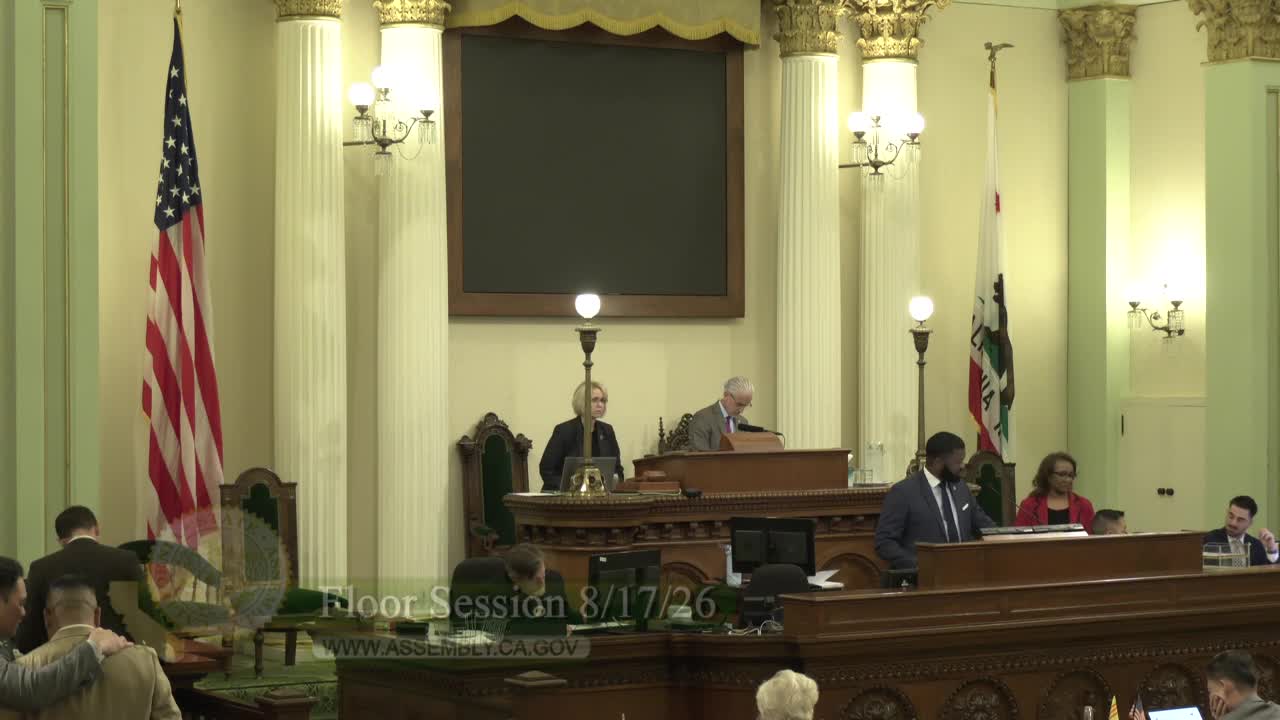 3MIN
Assembly Floor
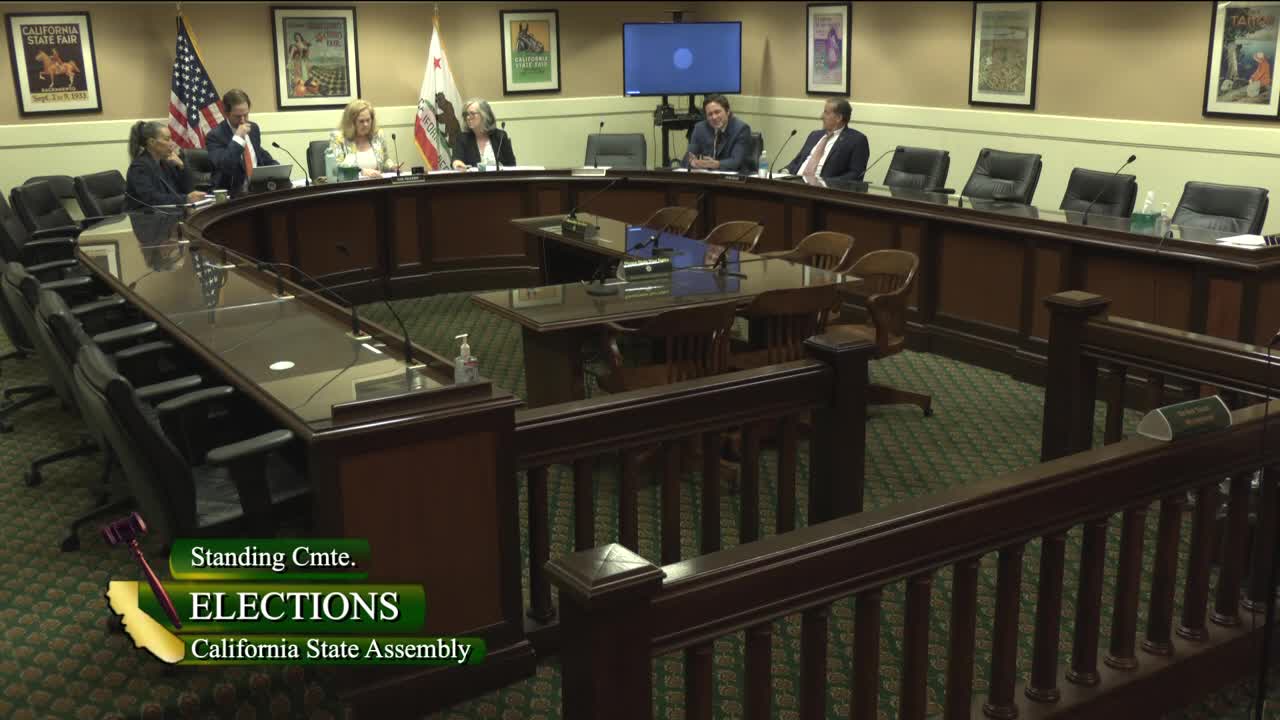 8MIN
Assembly Standing Committee on Elections
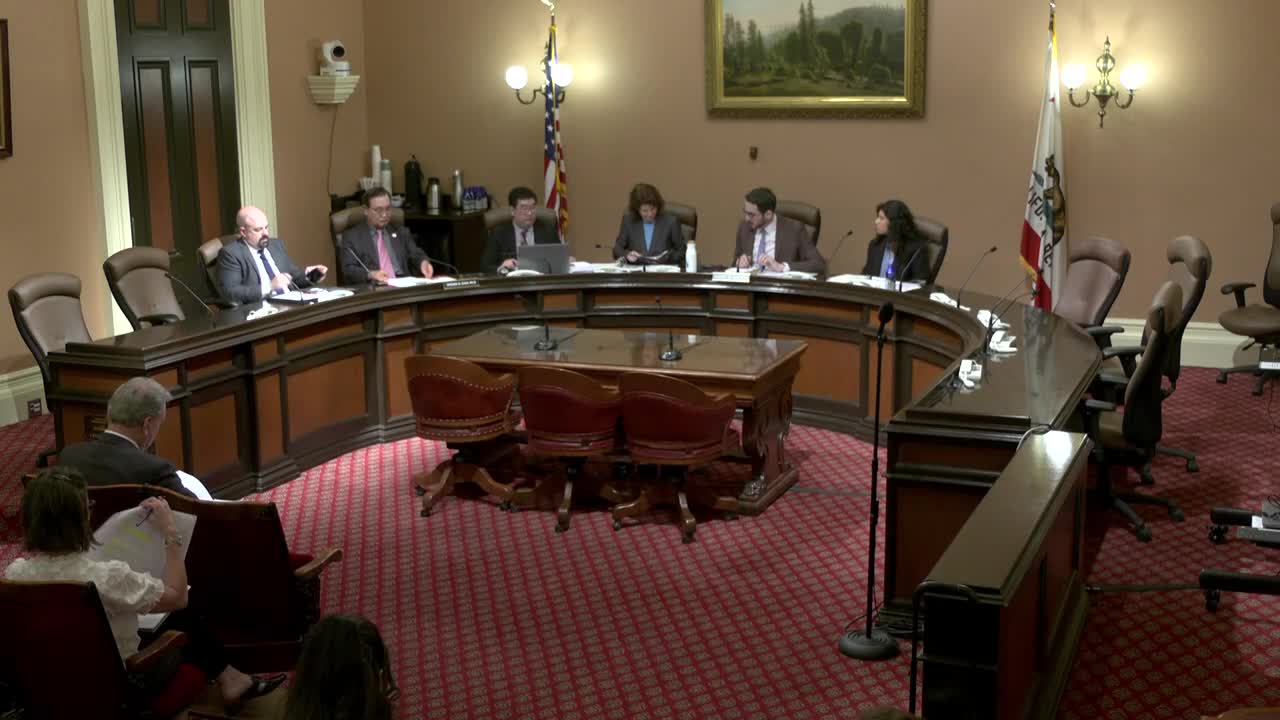 15MIN
Senate Standing Committee on Elections and Constitutional Amendments
 5MIN
Senate Standing Committee on Judiciary
Bill Author